EP0752672B1 - Information processing system enabling access to different types of files and control method for the same - Google Patents
Information processing system enabling access to different types of files and control method for the same Download PDFInfo
- Publication number
- EP0752672B1 EP0752672B1 EP96110855A EP96110855A EP0752672B1 EP 0752672 B1 EP0752672 B1 EP 0752672B1 EP 96110855 A EP96110855 A EP 96110855A EP 96110855 A EP96110855 A EP 96110855A EP 0752672 B1 EP0752672 B1 EP 0752672B1
- Authority
- EP
- European Patent Office
- Prior art keywords
- file
- information processing
- processing device
- demand
- server information
- Prior art date
- Legal status (The legal status is an assumption and is not a legal conclusion. Google has not performed a legal analysis and makes no representation as to the accuracy of the status listed.)
- Expired - Lifetime
Links
Images






Classifications
-
- G—PHYSICS
- G06—COMPUTING OR CALCULATING; COUNTING
- G06F—ELECTRIC DIGITAL DATA PROCESSING
- G06F17/00—Digital computing or data processing equipment or methods, specially adapted for specific functions
- G06F17/40—Data acquisition and logging
-
- G—PHYSICS
- G06—COMPUTING OR CALCULATING; COUNTING
- G06F—ELECTRIC DIGITAL DATA PROCESSING
- G06F16/00—Information retrieval; Database structures therefor; File system structures therefor
- G06F16/10—File systems; File servers
-
- Y—GENERAL TAGGING OF NEW TECHNOLOGICAL DEVELOPMENTS; GENERAL TAGGING OF CROSS-SECTIONAL TECHNOLOGIES SPANNING OVER SEVERAL SECTIONS OF THE IPC; TECHNICAL SUBJECTS COVERED BY FORMER USPC CROSS-REFERENCE ART COLLECTIONS [XRACs] AND DIGESTS
- Y10—TECHNICAL SUBJECTS COVERED BY FORMER USPC
- Y10S—TECHNICAL SUBJECTS COVERED BY FORMER USPC CROSS-REFERENCE ART COLLECTIONS [XRACs] AND DIGESTS
- Y10S707/00—Data processing: database and file management or data structures
- Y10S707/953—Organization of data
- Y10S707/959—Network
-
- Y—GENERAL TAGGING OF NEW TECHNOLOGICAL DEVELOPMENTS; GENERAL TAGGING OF CROSS-SECTIONAL TECHNOLOGIES SPANNING OVER SEVERAL SECTIONS OF THE IPC; TECHNICAL SUBJECTS COVERED BY FORMER USPC CROSS-REFERENCE ART COLLECTIONS [XRACs] AND DIGESTS
- Y10—TECHNICAL SUBJECTS COVERED BY FORMER USPC
- Y10S—TECHNICAL SUBJECTS COVERED BY FORMER USPC CROSS-REFERENCE ART COLLECTIONS [XRACs] AND DIGESTS
- Y10S707/00—Data processing: database and file management or data structures
- Y10S707/99951—File or database maintenance
- Y10S707/99952—Coherency, e.g. same view to multiple users
Definitions
- the present invention relates to a file access means for an information processing device, a control method for the file access means and a storage medium for storing programs for controlling the file access means, and particularly to an information processing system having a different-type file access means which is suitably used to access commonly-used files on plural different types of file systems throughout a network, a control method for controlling the information processing system and a storage medium for storing programs to control the information processing system.
- Recent development and propagation of information processing devices such as personal computers, etc. have promoted the use of a data storage manner which is different from a conventional data storage manner.
- users' program files, data files, etc. have been separately and independently stored on respective users' magnetic storage devices for every user's information processing device.
- the users' program files, data files, etc. are collectively stored in a large-capacity magnetic storage device to enable users having respective information processing devices to commonly use the data.
- a server information processing device having a file server program therein is connected through a network to plural client information processing devices, each of which is provided with a client program to access the server information processing device, whereby a file on the server information processing device is accessed from and used by each client information processing device.
- a file server program is generally provided with a user identifying mechanism and a file access authorization setting/checking mechanism which is based on the user identification.
- the client information processing device when the file server programs of the plural server information processing devices are of different types, the client information processing device must be provided with client programs which are matched to the respective types of the file server programs. Therefore, there may occur various problems such as that the different types of client programs cannot coexist, that memories required for the operation must be designed in a large hardware scale and that an operating manner is varied in accordance with an access target.
- a file operating program for transmitting a file on a second server information processing device to a first server information processing device is provided on the first server information processing device, and a file access demand program for instructing the transmission of the file is further provided on a client information processing device.
- a user first starts the file operating program on the first server information processing device by using the file access demand program to perform data transmission of a file from the second server information processing device to the first server information processing device before the file is used on the basis of an instruction from an application or the like. Thereafter, the file thus transmitted is accessed as a file on the first server information processing device.
- the file operating program is also instructed to execute the file transmission from the first server information processing device to the second server information processing device by using the file access demand program again. With this operation, the same effect as a direct access of the file on the second server information processing can be obtained. Accordingly, there can be obtained an effect that it is unnecessary to mount plural different client programs on the client information processing device.
- the first server information processing device has no information on the directory structure of the files on the second server information processing device, so that the files on the second file server information processing device cannot be displayed in the form of a file list by using a file list display program created for the first file server program.
- An object of the present invention is to provide an information processing system which can keep substantially the same operation performance level as a case of accessing a file on a server information processing device having a single file server program, even when accessing files on plural server information processing devices having different file server programs, thereby enabling access to different types of files, a control method for controlling the information processing system, and a storage medium for storing programs to control the information processing system.
- An information processing system includes a first server information processing device having a first file server program which enables files to be commonly used, a second server information processing device having a second file server program which has a different access interface to the commonly-usable files from the first file server program, and a network for connecting the first and second server information processing devices, at least one client information processing device having a client program which accesses the commonly-usable files on the first server information processing device through the first file server program, wherein the first server information processing device includes access means for performing access processing to files managed by the second server information processing device (hereinafter referred to as "different-type files"), and the second server information processing device includes service means for receiving a processing demand transmitted from the access means to perform the processing corresponding to the processing demand, the access means including directory synchronizing means for detecting information on the structure of at least a part of the directory structure of the different-type files through the service means to create, in accordance with the detected information, a
- the detection of the information is performed, for example, periodically, whereby the directory structure on the second server information processing device is periodically copied onto the first server information processing device.
- the information processing system as described above further includes storage means for storing a synchronizing time at which previous directory synchronization is performed, and search means for search different-type files which are updated after the time at which the previous directory synchronization is performed, and transmitting only information of updated files found by the search process from the second server information processing device to the first server information processing device, wherein the copy of the directory structure of the different-type files which is added to the directory structure of the first server information processing device is updated in accordance with the updated files.
- the directory synchronizing means creates a copy of a normal file on the first server information processing device
- data of the file is not copied, and the file is created, for example, as a sparse file which is defined as a file having no content.
- the information processing system can include a second network for connecting the first and second server information processing devices, and the second server information processing device includes service means which is activated in correspondence with the access means, and wherein the access means receives a processing demand to a file transmitted from each client program to judge whether the processing demand contains a processing demand to files managed by the second file server program (hereinafter referred to as "different-type files"), and converts the processing demand to the different-type files contained in the processing demand to a second processing demand which is usable in the second file server program and then transmits the second processing demand thus converted to the second server information processing device if the processing demand to the different-type files is contained, and the service means receives the second processing demand transmitted from the first server information processing device and performs a predetermined processing in accordance with the second processing demand.
- different-type files files managed by the second file server program
- the access means includes hook means for hooking an access to a different-type file transmitted from each client program, file copy means for copying data of a file concerned into a directory structure managed by the first file server program through the service means when the access is an open demand to the different-type files, copy back means for returning/rewriting the file copied by the file copy means through the service means to the second server information device, and copy back start means for starting the copy back means as another process when the access is a close demand to the different-type files.
- the name of the copied file, read-open and write-open numbers of the file, a copy back waiting flag, an open waiting flag, a deletion waiting flag, etc. are stored and the execution of the copy back processing is controlled in accordance with the status at that time.
- a control method for the information processing system comprises the steps of detecting information on the structure of at least a part of the directory structure of the different-type file, creating a copy of the directory structure of files which are managed by the second server information processing device, with a format which can be managed by the first file server program, adding the copy of the directory structure thus created into the directory structure of files managed by the first file server program, and updating the copy of the directory structure of the different-type file every time the detection of the information is performed at a predetermined timing.
- the control method for the information processing system further comprises the steps of hooking an access to files managed by the second server information processing device (hereinafter referred to as "different-type files") transmitted from the client program, copying the data of a file concerned into the directory structure managed by the first file server program when the access is an open demand to the different-type file, returning/rewriting the file copied by the file copy means to the original file through the service means, and starting the copy back means as another process when the access is a close demand to the different-type files.
- different-type files files managed by the second server information processing device
- the first file server program can manage not only files to be inherently managed by itself, but also files copied from different-type files which are managed by the second server program or can perform the processing corresponding to the access demand.
- a user can access not only the files which are managed by the first server file program, but also files which are managed by the second file server program.
- the directory synchronizing means periodically copies at least a part of the directory structure on the second server information processing device into the directory structure of the first server information processing device, and thus if a list of files on the first information processing device is displayed, the information on a list of files on the second information processing device can be also obtained at the same time.
- the directory synchronizing means sets normal files other than directory files to sparse files having no contents, in file creating process on the first server information processing device which is performed when the directory synchronizing means copies the directory structure of the second server information processing device onto the first server information processing device. Therefore, the storage capacity on a magnetic disk of the first information processing device which is used by the file can be reduced to a very small size irrespective of the file size displayed as a file list.
- the search means detects whether a file has been altered, for example by comparing the latest update date of the file on the second server information processing device with a previous synchronizing time at which previous directory synchronization was performed and which is stored in the storage means, and transmits to the first server information processing device only information on files which have been updated since the time at which the previous directory synchronization was performed. According to the information on the updated files, the update means updates the copy of the directory structure of the different-type file which is added into the directory structure of the first server information processing device.
- the hook means hooks the access demand to the file system of the first server information processing device to judge whether the access demand is an open demand, a close demand or a deletion demand to a file in the copy of the directory structure of the different-type files which are copied and created from the client information processing device by the directory synchronizing means.
- the access demand is judged to be the open demand
- the data which are the entity of the file and stored in the file are copied from the second server information processing device to the first server information processing device. At this time, it is checked whether data already exist in the file concerned. Only if no data exist, the copying operation is performed.
- the read-open number or the write-open number of the file is set on the basis of the condition that the open demand is a read mode or write mode.
- the access demand is judged to be the deletion demand by the hook means, it is checked whether the file concerned exists, and further it is checked whether the copy back waiting flag is set. If the copy back waiting flag is set, the deletion waiting flag is set.
- the read open number and the write-open number of the copy file table means are subjected to a subtraction operation in accordance with an open mode of the demanded file under the close operation concerned. As a result, if the write-open number is equal to zero, the copy back means is started as another process and the hook processing itself is finished.
- the copy back means sets the copy back waiting flag, and then it waits for a predetermined time while monitoring if the open waiting flag or the deletion waiting flag is set. If the deletion waiting flag is set during the waiting time as described above, the subsequent copy back processing is ceased. On the other hand, if the open waiting flag is set, it performs the copy back processing of returning/rewriting the file copied in the first server information processing device to the second server information processing device without waiting the completion of the waiting time.
- the copying processing can be effectively performed even when plural users use the same file at the same time. Further, when plural users are using a file or the file is opened again after closed, it can be subsequently used without making the file a sparse file. When the deletion is performed on a file immediately after the file is closed, no copy back is required.
- the copy back means operates in the background as another process. Therefore, the close demand from the client information processing device is finished without waiting for the completion of the copy back means, so that a user can immediately perform subsequent processing.
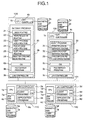
- the system of this embodiment includes a first client information processing device 110, a second client information processing device 140, a first server information processing device 120 and a second server information processing device 130.
- Each of the client information processing devices 110 and 140 and the server information processing devices 120 and 130 is respectively equipped with a central processing unit (CPU) 1a (1d, 1b, 1c), a memory 2a (2d, 2b, 2c), a LAN controller 3a (3d, 3b, 3c), a disk controller 4a (4d, 4b, 4c), and a magnetic disk 5a (5d, 5b, 5c).
- CPU central processing unit
- the respective information processing devices are connected to one another through a local area network (LAN) 101, and the communication can be performed among these information processing devices through each LAN controller 3.
- LAN local area network
- a LAN is used as the network, but, the communication network for connecting the respective information processing device in the present invention is not limited to a LAN, and various communication networks such as a wide area network (WAN), etc. may be used.
- WAN wide area network
- An operating system program (OS) 6a, a client program 7a for a file server program 9b, and an application program 8a are loaded onto a memory 2a of the client information processing device 110 from a magnetic disk 5a when the client information processing device 110 is activated. Further, an operating system program (OS) 6d, a client program 7d for a file server program 9c and an application program 8d are loaded from a magnetic disk 5d into a memory 2d of the client information processing device 140 when the client information processing device 140 is activated.
- a gateway program 20, an operating system (OS) 6b and a first file server program 9b are loaded from a magnetic disk 5b into a memory 2b of the first server information processing device 120 when the first server information processing device 120 is activated. Further, an agent program 30, an operating system (OS) 6c and a second file server program 9c are loaded from a magnetic disk 5c into a memory 2c of the second server information processing device 130 when the second server information processing device 130 is activated.
- These programs can be stored on a storage medium such as a hard disk device, a floppy disk device or the like from/into which information can be read/written by a computer.
- the gateway program 20 and the agent program 30 of these programs which are loaded to these servers correspond to the main elements of the present invention, and the other elements are used in the conventional file server system.
- each server information processing device may be stored with such a gateway program and agent program so that an access to and from the other server information processing device can be performed.
- a user of the client information processing device 110 logs into the file server program 9b of the server information processing device 120 through the client program 7a to access commonly-usable files (hereinafter referred to as "common files”) on the magnetic disk 5b from the application program 8a.
- commonly-usable files hereinafter referred to as "common files”.
- a user in the system, a user can access the common files on the magnetic disk 5c using the same method as the access to the common files on the magnetic disk 5b.
- the gateway program 20 includes a main routine 21 for performing initialization and termination processing, a remote log-in routine 22 for detecting user's log-in to the first file server program 9b and instructing an automatic log-in to the second file server program 9c, a user process routine 23 for performing the automatic log-in for each user, a file access hook routine 24 for hooking a file access request from the user and redirecting the access request from the user to the second server information processing device 130, a copy back routine 25 for returning/rewriting into the second server information processing device 130 a file which is copied from the second server information processing device 130 onto the first server information processing device 120 and then corrected (changed), and a directory synchronizing routine 26 for creating, on the first server information processing device 120, the same structure as an indicated part of the director structure on the second server information processing device 130.
- the agent program 30 includes a remote log-in service routine 31 for receiving a log-in demand from the user process routine 23, a user process service routine 32 which is started when the log-in demand is received to perform the log-in to the second file server program 9c and then respond to the file access request from each user which is re-directed by the file access hook routine 24, and a directory synchronization service routine 33 for transmitting the directory structure information of the second server information processing device 130 to the first server information processing device 120 in response to the demand from the directory synchronizing routine 26.
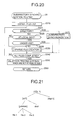
- Fig. 21 is a diagram showing an example of the directory structure of files which are created on the magnetic disk 5b of the first server information processing device 120 before the gateway program 20 is started.
- a file whose file name is illustrated as being surrounded by parentheses "[]" corresponds to a directory file, and the directory file contains file information on those files which are linked to one another under the directory file.
- Fig. 22 is a diagram showing an example of the directory structure of those files which are created on the magnetic disk 5c of the second server information processing device 130.
- the directory structure of files on the magnetic disk 5b of the first server information processing device 120 is designed as shown in Fig. 23, for example.
- a portion of the directory structure which is surrounded by a broken line in Fig. 23 corresponds to a copy of a subordinate directory structure which extends subordinately from "research/hard" in the directory structure on the second server information processing device 130 shown in Fig. 22 by the function of the directory synchronizing routine 26 as described above.
- the files in the copied directory structure are created on the magnetic disk 5b as normal files which are managed through the OS 6b by the file server program 9b. Accordingly, a part of the directory structure on the second server information processing device 130 can be checked as a part of the directory structure on the first server information processing device 120 by the application software 8a on the client information processing device 110.
- the data of the normal files are not copied from the second server information processing device 130 to the first server information processing device 120, and these normal files are made as sparse files each of which contains only dummy data of 1 byte.
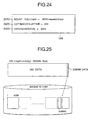
- Fig. 25 shows the structure of the sparse file.
- a file of VOL1/mpd1/circ/log1 has a file size of 524950 bytes, but has only data of one byte which is written at 524950-th byte from the head.
- the head block and the final block actually use the storage area on the magnetic disk 5b, and the other blocks use no storage area on the magnetic disk 5b.
- the block size is set to 4096 bytes
- the storage capacity of the magnetic disk 5b which is actually used by the normal file (sparse file) needs only 8192 bytes which correspond to twice of 4096 bytes although the file size is set to 524950 bytes.
- the file size as file information is allowed to reflect the size of the original of the copy, and the use storage capacity of the magnetic disk 5b can be reduced.
- the access to the file data from the application program 8a of the client information processing device 110 is performed as follows.
- the file access hook routine 24 of the gateway program 20 detects a file open demand for a file from the application program 8a and then copies and overwrites the data of the file from the second server information processing device 130 onto the corresponding sparse file on the first server information processing device 120.
- the read/write access to the file from the application program 8a after the file is opened is performed without using the gateway program 20.
- the file concerned on the first information processing device is reset as the sparse file as described above.
- the copy back processing is performed under the background with no connection with a user once a start instruction of the copy back is issued. Therefore, the application program 8a can perform subsequent processing without waiting for the copy back processing. Further, the copy back processing is not started immediately after the file is closed, but is started after a predetermined time elapses. This predetermined time is referred to as "copy back delay time".
- Fig. 24 shows an example of a gateway parameter setting file 199 which is created by a system manager and stored on the magnetic disk 5b.
- a first line (2410) in Fig. 24 indicates which part of the directory structure on the second information processing device 130 should be allocated to which directory on the first information processing device 120.
- the directory structure named as "SRV2" which is located below “research/hard” of the second server information processing device 130 is allocated to "VOL1/mpd1" of the first server information processing device 120.
- a second line (2420) indicates a copy back delay time corresponding to a period from the time when the application program 8a closes a file until the time when the copy back routine 25 starts the copy back of the file. In this case, the second line indicates 500 milliseconds.
- a third line (2430) indicates a time interval for directory synchronization. In this case, the time interval is set to 6000 milliseconds, that is, ten minutes.
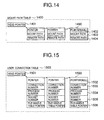
- Fig. 14 shows a mount path table 1400.
- the mount path table 1400 contains information which is described in the gateway parameter setting file 199 and represents which part of the directory structure on the second information processing device 130 should be allocated to which directory on the first information processing device 120.
- the mount path table 1400 has a linear list structure which comprises plural nodes 1490 and a head pointer 1401 indicating a first node.
- Each node 1490 is provided with a pointer 1402 indicating a subsequent node, a mount path 1403 which is a path for a directory of the first information processing device 120, and a remote path 1404 which is a path for a directory of the second information processing device 130.
- the pointer 1402 of the last node is provided with "NULL" indicating "empty".
- Fig. 15 shows a user connection table 1500.
- the user connection table 1500 comprises a head pointer 1501 indicating a first node, and plural nodes 1590 which are allocated to respective log-in users.
- Each node 1590 includes a pointer 1502 indicating a subsequent node, a connection number 1503 which is allocated to a log-in user by the first file server program 9b, a process number 1504 of a user process which is activated and allocated on a user basis by the log-in routine 22, a socket number 1505 with which the user process communicates with the user service routine 32 of the agent program 30, and a file handle table pointer 1506 which is a pointer to the file handle table 1600 for storing information of files on the second information processing device 130 which are being used by respective users.
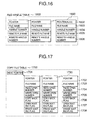
- Fig. 16 shows an example of file handle table 1600. This table is created for every user, and each node 1690 of the table includes a pointer 1602 indicating a subsequent node, a file name 1603 containing a path name on the first information processing device 120, a file handle number 1604 which is given from the OS 6b when the file concerned is opened, a remote file name 1605 containing a path name on the second information processing device 130, and a remote file handle number 1606 which is given from the OS 6c when the file concerned is opened.
- a pointer 1602 indicating a subsequent node
- a file name 1603 containing a path name on the first information processing device 120
- a file handle number 1604 which is given from the OS 6b when the file concerned is opened
- a remote file name 1605 containing a path name on the second information processing device 130
- a remote file handle number 1606 which is given from the OS 6c when the file concerned is opened.
- Fig. 17 shows a copy file table 1700 indicating information on files whose data are temporarily copied from the second information processing device to the first information processing device.
- the copy file table 1700 comprises a head pointer 1701 indicating a first node, and plural nodes 1790 each corresponding to each file as described above.
- Each node 1790 includes a pointer 1702 indicating a subsequent node, a file name 1703 containing a path name on the first information processing device 120, a read open number 1704 indicating the number of times the file has been opened in a read mode on the first information processing device 120, a write open number 1705 indicating the number of times the file has been opened in a write mode on the first information processing device 120, a copy back flag 1706 indicating that the file concerned is copied back to the second information processing device 130, an open waiting flag 1707 indicating that there is a process which is waiting for the opening of the file concerned, and a deletion waiting flag 1708 indicating that there is a process which is waiting for the deletion of the file concerned.
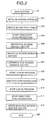
- step 201 system variables such as the head pointer 1501 of the user connection table 1500, etc. are initialized.
- step 203 the mount path table 1400 is created by referring to the gateway parameter setting file 199 which is created beforehand by a system manager and stored on the magnetic disk 5b.
- step 204 the directory synchronizing routine 26 is started as a new process, and a part of the directory structure on the magnetic disk 5c of the second information processing device 130 is reproduced on the magnetic disk 5b of the first information processing device 120 in accordance with the corresponding relationship which is set in the mount path table 1400.
- the respective processes are performed in parallel by the time slice function of the OS.
- steps 205 to 207 in order to hook a file access demand issued from the file server program 9b or the like, a service vector of a function call to the file system of the OS 6b is rewritten.
- the service vector is a branch destination address to be referred to by a software interruption command of the CPU 1b which is executed when the function call is issued.
- the service vector of the function call which is set by the OS 6b in step 205 is obtained, and in step 206 the service vector is stored as system variables.
- step 207 an entry address of the file access hook routine 24 in the gateway program 20 is set as a new file access service vector, thereafter the setting operation for hooking the file access demand is finished.
- step 208 the log-in routine 22 is started as a new process to start a log-in monitoring operation from the user.
- the process keeps itself under a sleep state to wait for a stop command.
- the initialization of the gateway program 20 is finished, and the user is allowed to access files on the second information processing device 130.
- step 210 a signal to finish the log-in routine 22 is transmitted to the log-in process, and likewise, an end instruction to the directory synchronizing process is transmitted in step 211.
- step 212 the file access service vector which is rewritten in step 207 is returned to the original value which is saved in step 206, thereafter finishing the main routine 21.
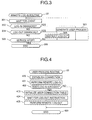
- step 301 the process is on standby while monitoring events such as user's log-in or log-out to the file server program 9b, the log-in process stop instruction from the main routine 21 as described above, etc.
- the event it is judged in step 302 whether the event is the user's log-in. If it is the user's log-in, the user process routine 23 is started as a new process in step 303.
- step 302 determines whether the event is the user's log-in. If it is the user's log-out, the process executes the step 305, and if not, the process executes the step 306.
- step 305 the user connection table 1500 as described above is referred to so that the user process number 1504 is checked on the basis of the connection number 1503 of a log-out demander, and a log-out instruction signal is transmitted to the process concerned.
- step 306 it is judged whether the occurring event is the service stop instruction. If it is the service stop instruction, the log-in process is finished. If it is an event other than the stop instruction, the process waits for the event in step 301.
- step 400 a socket is first created for the remote log-in service routine 31 of the agent program 30 on the second information processing device 130 to establish a new communication connection. Subsequently, in step 401, the log-in to the second file server program 9c is requested to the remote log-in service routine 31.
- the remote log-in service routine 31 first starts the user process service routine 32 as a new process, and performs the log-in at this stage.
- the user process service routine 32 transmits the log-in result to the user process routine 23 by using socket which is taken over from the remote log-in service routine 31.
- the log-in result is judged. If the result is the success in log-in, the process performs the processing subsequent to the step 403. If the result is the failure in log-in, the user process routine is finished.
- step 403 a new node 1590 is added to the user connection table 1500 to set new values to the connection number 1503, the process number 1504, the socket number 1505 and the file handle table pointer 1506.
- step 404 the process waits under a sleep state until it receives a log-out instruction from the log-in routine 22.
- step 405 the log-out from the second file server program 9c is requested to the user process service routine 32, and performed. After the log-out, the user process routine 23 is finished.
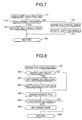
- this routine is called every time the function call to the file system of the OS 6b is issued.
- step 501 it is checked in step 501 whether the connection number of a file access demander is in the user connection table 1500. If the connection number is judged not to exist in the user connection table 1500, it is judged not to be a demander (user) which is a file-access re-direct target. Therefore, in step 560, an original vector is called and inherent processing is performed, thereafter returning to a caller of this routine in step 599.
- step 502 it is checked whether a file to which a file access demand is made (hereinafter referred to as "demand file”) is contained in a directory portion on which the directory of the second information processing device 130 is mounted. This check is performed by referring to the mount path table 1400 and comparing the mount path 1403 and the complete path name of the demand file.
- demand file a file to which a file access demand is made
- the file access demand is the close demand, not the file name, but the file handle number is delivered.
- the head pointer of the file handle table 1600 of the user concerned is obtained from the file handle table pointer 1506 of the user connection table 1500, and subsequently it is checked whether the corresponding file handle number 1604 exists in the file handle table 1600 which is indicated by the pointer. If the file is not a target file, the original vector is called in step 560 to perform the original processing, thereafter returning to the caller of this routine in step 599.
- steps 505, 510, 520, 530 and 540 it is judged whether the demand is any one of a file open demand, a file close demand, a file deletion demand, a directory creation demand and a directory deletion demand.
- the open pre-hook routine 50 is first called in step 506.
- step 507 it is judged whether the call result is an error. If it is judged to be the error, the process skips the subsequent step 508.
- step 508 by referring to the saved original file access service vector to call the address thereof, the open processing is demanded to the file system of the OS 6b (hereinafter, such an operation is merely referred to as "call original vector").
- step 509 the open post-hook routine 51 is called, thereafter returning to the caller of the file open in step 599.
- step 512 it is judged whether the call as described above is an error. If it is the error, the process skips the subsequent step 513. In step 513, the original vector is called, thereafter returning to the caller of the file close in step 599. The same processing as the file close is performed for the
- the file access demand to the OS 6b is hooked, so that each processing routine to re-direct to the file access of the second information processing device can be called.
- a new node 1690 is first added to the file handle table 1600 in step 603.
- step 605 it is checked whether the demanded file name exits in the file names 1703 of the respective nodes 1790 of the copy file table 1700. If it exists, the copy back flag 1706 of the node 1790 concerned is referred to. If the node is under copy back, the open waiting for flag 1707 of the node 1790 is set in step 606 and the copy back flag 1706 of the node concerned is monitored in step 607, thereafter waiting the finish of the copy back. When the copy back is finished, the open waiting flag 1707 is released in step 608. The judgment result of the step 605 indicates that the node is not under copy back, the steps 606, 607 and 608 are not performed.
- the open mode of the demand file is converted to an equivalent open mode which can be received by the second file server program 9c and can serve as an open mode of the demander.
- the open mode is defined as a mode indicating whether a file should be opened in the read mode or in the write mode, whether a file should be created if no file exists, and whether an exclusive control operation is performed.
- step 612 the open of the file on the second information processing device 130 which corresponds to the demand file is requested to the user process service routine 32 of the agent program 30. At this time, the open mode after the conversion as described above is used.
- step 613 When receiving the result of the open from the user process service routine 32, it is judged in step 613 whether the open succeeds. If the open fails, a step 660 is executed.
- step 660 the cause of the failure is investigated. If the open fails because the open file number exceeds a predetermined value, the process waits in step 661, and then returns to the step 612 to retry. If the open fails owing to a different cause, in step 665, an error code is set, thereafter returning to the caller in step 699.
- This retry processing is needed for the following reasons. That is, the numbers of simultaneously-openable files which are permitted by the first OS 6b and the second OS 6c respectively are different from each other, and since plural copy back routines 25 are performed in a multiprocess, files whose number is larger than the number of the files which are opened through the file server program 9b are actually opened at the same time. If the open succeeds in step 613, the file handle number transmitted from the user process service routine 32 at the open time is stored into the remote file handle number 1605 of the node 1690 concerned of the file handle table 1600 in step 615.
- step 620 the copy file table 1700 is searched to check whether the data of the demanded file have been already copied from the second information processing device 130 to the first information processing device 120. If the data have been already copied, a step 650 is executed. If the data have not yet been copied, a step 622 is executed.
- the data of the demanded file are copied from the second information processing device 130 onto the first information processing device 120.
- the open of the demanded file is instructed to the OS 6b of the first information processing device 120. If there is no file, a file is newly created.
- the data of the file concerned are read out from the second information processing device 130. The read-out operation is performed through the user process service routine 32.
- the read-out data are written into the demanded file which is made a sparse file on the first information processing device 130 in step 626.
- step 627 it is judged whether the copy of all the contents is completed. If it is not completed, the steps 625 to 627 are repetitively executed.
- the close of the demanded file is instructed to the OS 6b of the first information processing device 120.
- step 631 a new node 1790 is added to the copy file table 1700 and a file name 1703 on the first information processing device 120 is set.
- step 650 1 is added to one or both of the read open number and the write open number of the node 1790.
- step 710 by calling the original vector before this routine is called, it is checked whether the file open to the executed OS 6b is normally completed. If it is judged to be normally completed, a step 720 is executed. In step 720, the file handle number which is returned from the OS 6b through the file open as described above is stored in the local file handle number 1604 of the node 1690 concerned of the file handle table 1600.
- step 730 the step 730 and subsequent steps are executed to deletion information of registration to each table.
- the node 1690 concerned of the file handle table 1600 which is added in the open pre-hook routine 50 is deleted.
- step 731 the read open number 1704 and the write open number 1705 of the copy file table 1700 which are counted up in the open pre-hook routine 50 are returned to the values before the count-up. After the processing as described above, the process returns to the caller in step 799, and the open post-hook routine 51 is finished.
- step 810 it is checked whether a demanded file name exists in the file name 1703 of each node 1790 of the copy file table 1700. If the demanded file name exists, the copy back flag 1706 of the node 1790 is referred to. If the reference result indicates that the node is under copy back, the deletion waiting flag 1707 of the node 1790 concerned is set in step 820, and monitors the copy back flag of the node concerned in step 830, waiting for the completion of the copy back.
- step 840 is executed.
- step 840 the deletion of the file on the second information processing device 130 which corresponds to the demanded file is requested to the user process service routine 32 of the agent program 30.
- step 850 it is judged whether the deletion is normally finished. If it is abnormally finished, an error code is set in step 860, and the process returns to the caller in step 899.
- step 910 it is checked whether the demanded file name exists in the file name 1703 of each node 1790 of the copy file table 1700. If it is judged to exist, the copy back flag 1706 of the node is referred to. If the reference result indicates that the node is under copy back, the copy back flag 1706 of the node concerned is monitored in step 920, and waits for the completion of the copy back.
- step 930 If the node is not under copy back or the copy back is finished, the copy back flag 1706 is set in step 930. Subsequently, in step 940, the copy back routine 25 is newly started as a new process, and the process returns to the caller in step 999.
- step 1010 the creation of the directory on the second information processing device 130 which corresponds to the demanded directory is requested to the user process service routine 32 of the agent program 30.
- step 1020 it is checked whether the creation is normally finished. If the creation is abnormally finished, an error code is set in step 1030, and the process returns to he caller in step 1099.
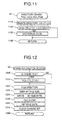
- the process flow of the directory deletion pre-hook routine 55 will be described with reference to Fig. 11.
- This routine is similar to the directory creation pre-hook routine 54 except that the creation is replaced by the deletion, and thus the description thereof is omitted.
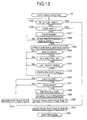
- step 1305 it is first checked whether the deletion waiting flag 1708 of the node 1790 concerned of the copy file table 1700 is set. If it is set, the control is shifted to step 1360 without performing the following copy back processing. If the deletion waiting flag 1708 is not set, it is judged in step 1306 whether the open waiting flag 1707 of the node 1790 is set. If the open waiting flag 1707 is judged to be set, the control is shifted to step 1320.
- the process waits for a predetermined time in step 1307, and it is judged in step 1308 whether the time which is set as the copy back delay time has elapsed. If the copy delay time has not elapsed, the process returns to the step 1305.
- the lapse time is a time which is counted from the start of the copy back routine.
- the waiting time in the step 1307 is set to one-tenth of the copy back delay time or less.
- the step 1320 is executed.
- the read open number 1704 and the write open number 1705 of the copy file table are subjected to subtraction processing according to the open mode of the demanded file. That is, if the mode is set to only the read mode, "1" is subtracted from the read open number 1704. If the mode is set to only the write mode, "1" is subtracted from the write open number 1705. If the mode is set to the read write mode, "1" is subtracted from each of the read open number 1704 and the write open number 1705.
- step 1330 it is judged in step 1330 whether the demanded file is under the write open state.
- step 1331 on the basis of file information such as archive bits or the like which are provided by the OS 6b, it is judged whether the write-in operation for the file has been performed.
- step 1332 by judging whether the write open number 1705 is equal to zero, it is judged whether the write open is the last one. As a result of the above judgment, only if the write open is the last one and the write-in operation into the file has been performed, the copy back of the step 1333 is performed. If not so, the copy back as described above is not performed.
- the copy back of the step 1333 means a processing of returning/rewriting a copy of the demanded file created on the first information processing device 120 to the second information processing device 130. This processing is performed through the user process routine 32 of the agent program 30.
- step 1350 a judgment on the last close is made in step 1350. This judgment can be easily performed by judging whether both of the read open number 1704 and the write open number 1705 are equal to zero.
- step 1351 it is judged whether the open waiting flag 1707 of the copy file table 1700 is set. If it is the last close and the open waiting flag is not set, the steps 1352 and 1355 are performed.
- step 1352 the file size of the demanded file which is created on the first information processing device 120 is obtained, and it is made a sparse file in step 1355 to erase the content while keeping the file size.
- step 1358 the node 1790 concerned is erased from the copy file table 1700, and in step 1370 the copy back flag 1706 of the node 1790 concerned of the copy file tale 1700 is cleared. Finally, in step 1360 the node 1690 concerned is erased from the file handle table 1600, and the copy back process itself is finished in step 1399.
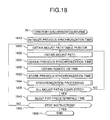
- the synchronizing time which was previously set in step 1810 (hereinafter referred to as "previous synchronizing time") is initialized (i.e., it is set to 0 year, 0 month, 0 hour, 0 minute, 0 second).
- the head pointer 1401 of the mount path table 1400 is obtained in step 1820.
- the data pair of the mount path 1403 and the remote path 1404 are obtained from the node 1490 which is indicated by the obtained pointer.
- the previous synchronizing time is obtained in step 1831 to inquire of the OS 6c of the second information processing device 130 about the time in step 1832, and the time which is obtained through the inquiry in step 1833 is stored as a new previous synchronizing time.
- the synchronization executing processing routine 27 is called in step 1834 to perform the synchronization processing to one mount path while using the mount path and the remote path obtained in step 1830 and the previous synchronizing time obtained in step 1831 as an argument.
- step 1835 whether the synchronization of all the mount paths is completed is judged by checking whether the pointer 1402 of the node 1490 of the mount path table 1400 which is referred to is "NULL". If the synchronization of all the mount paths is not finished, the step 1830 and the subsequent steps are executed again. If the synchronization of all the mount paths is finished, the process is kept under sleep in step 1840 for the time indicated by the directory synchronization interval time or until the signal indicating the stop instruction is received from the main routine 21.
- step 1850 it is judged whether the release from the sleep is caused by the stop instruction. If it is so, the directory synchronization routine is finished. If not so, the step 1820 and the subsequent steps are repetitively performed.
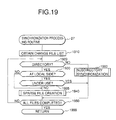
- step 1910 the previous synchronizing time and the remote path which are delivered as the argument to this routine are delivered to the directory synchronizing service routine 33 of the agent program 30 on the second information processing device, and a list of the names, the file size and the file dates of files which are in a subordinate hierarchical portion of the remote path (containing directory files) and have been updated subsequently to the previous synchronizing time are received as a change file list.
- step 1920 the files and the directories listed are processed one by one.
- step 1920 it is judged whether it is a directory file. If it is a directory file, the subdirectory synchronizing routine 28 is called in step 1960 to synchronize all the subordinate hierarchical portions of the directory.
- step 1930 it is judged whether the file has already existed in the corresponding mount path on the first information processing device 120. If the file does not exist, the step 1940 is performed. If the file exists, the step 1935 is performed.
- step 1935 it is searched whether the file concerned is registered in the copy file table 1700, and by this check it is judged whether the file concerned is under use. If the file concerned is registered in the copy file table 1700, the file is judged to be under use, and thus the process skips the creation of the sparse file of the step 1940.
- step 1940 the sparse file making routine 60 is called by using the file name, the file size and the file date as an argument to erase the content of the file concerned and set the file size and the file date.
- step 1950 it is judged whether the synchronization of all the files of the updated file list which is obtained in step 1910 is finished, and the step 1920 and the subsequent steps are repeated until the synchronization is completed. If the synchronization is completed, the process returns to the caller in step 1999.
- step 2010 the file list beneath the directory which is received as an argument is obtained from the directory synchronization service routine 33 of the agent program 30 on the second information processing device.
- This list contains information on the name, the date and the size of each of the files and the directories.
- step 2020 the files and the directories of the file list are processed one by one.
- step 2020 it is judged whether the file concerned is a directory file. If the file concerned is a directory file, the subdirectory synchronizing routine 28 is recursively called. If the file concerned is a file, in step 2025, it is checked whether the file concerned has already existed in the corresponding mount path on the first information processing device 120. If the file concerned does not exist, a step 2030 is executed. On the other hand, if not so, a step 2026 is executed.
- step 2026 it is searched whether the file concerned is registered in the copy file table 1700, and it is judged on the basis of the above search whether the file concerned is under use. If the file concerned is registered in the copy file table 1700, the file concerned is judged to be under use, and thus the process skips the sparse file making processing in step 2030. If the file concerned is not under use, the sparse file making routine 60 is called in step 2030 by using the name, the size and the date of the file as an argument to erase the content of the file concerned and set the file size and the file date.
- step 2040 it is judged whether the synchronization of all the files of the file directory list which is obtained in step 2010 is finished, and the step 2020 and the subsequent steps are repeated until the synchronization is finished.
- the synchronization of all the files is finished, it is checked whether the files or directories which do not exist in the file directory list exist in the directory concerned at a local side in step 2050. If the files or directories exist, all the files or directories are erased. Thereafter, the above processing is finished, and the process returns to the caller in step 2099.
- step 1205 it is checked whether a file having a file name which is received as an argument exists. If it exists, the file is erased in step 1210. Subsequently, a file is newly created in step 1220. In step 1225, the file pointer is shifted by an amount corresponding to the file size which is received as an argument, and dummy data of one byte are written in step 1230. Thereafter, the file concerned is closed in step 1235.
- step 1240 the date of the file concerned is changed to a date which is received as an argument, and in step 1245 a change bit which is one type of file attribute information is cleared. Thereafter, the processing of making the sparse file is completed, and the process returns to the caller in step 1299.
- the remote log-in service routine 31 which receives a log-in demand from the user process routine 23 of the gateway program 20 as described above will be described with reference to Fig. 26.
- step 2601 the process waits while monitoring an event such as a log-in demand or a service stop instruction from the user process routine 23.
- an event such as a log-in demand or a service stop instruction from the user process routine 23.
- step 2602 it is judged whether the event is the log-in demand. If it is the log-in demand, in step 2603 the user process service routine 32 is started as a new process to start the execution of the log-in from this stage.
- step 2602 it is judged whether the occurring event is the service stop instruction. If it is the service stop instruction, the process goes to a step 2699, and this processing is finished. If it is an event other than the service stop instruction, the process returns to the step 2601 to wait for the event.
- step 2603 of the remote log-in service routine 31 This processing is started in step 2603 of the remote log-in service routine 31, and waits for the event in step 2701.
- the events which are re-directed to this routine contain various types of file access demands from the file access hook routine 24, log-in and log-out demands from the remote log-in routine 22, etc.
- step 2740 a return code to transmit the processing result to each type demand is set by using the socket which is succeeded from the remote log-in service routine 31.
- step 2741 the result of the processing which contains the return code is transmitted to the first server information processing device 120 through the socket to transmit the result to the issuer of the event, and then the process returns to the step 2701 to wait for an event.
- the process goes to a step 2799 to finish this routine. If the event is an event other than the service stop instruction, the process returns to the step 2701 to wait for an event.
- This processing serves to creates a change file list on the directory structure of the second server information processing device 130 in accordance with the processing of the step 1910 of the synchronization executing processing routine 27 in response to a demand from the directory synchronizing routine 26 of the gateway program 20, and returns the created list.
- the process waits for an event in step 2801, and in step 2802 it is judged whether the event is a updated file obtaining instruction from the step 1910 of the synchronization executing processing routine 27. If the event is judged to be the updated file obtaining instruction, in step 2803 the updated file list is initialized, and in steps 2804 to 2807 a updated file list is created on the basis of the previous synchronization time which is contained as an argument in the updated file obtaining instruction and the remote path 1404 of the mount path table 1400.
- step 2804 files and subdirectory files which are located at the subordinate hierarchical portion side of the remote path 1404 contained in the argument and contained in the directory structure of the second server information processing device 130 are successively searched, and in step 2805 it is judged whether the change has been made on each file subsequently to the synchronization time. If the change is judged to be made, in step 2806 the name of the corresponding file is added to the change file list. If the change is judged not to be made, the process goes to a step 2807. In step 2807, it is judged whether the search has been completed on all the files which are targets to be searched, and the above processing is repeated until the search has been completed.
- step 2808 the change file list which is obtained through the processing of the steps 2804 to 2807 is transmitted to the first server information processing device 120, and returned to the synchronization execution processing routine 27.
- the process goes to a step 2899 to finish this routine. If the event is an event other than the service stop instruction, the process returns to the step 2801 to wait for an event.
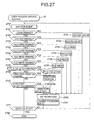
- the first server information processing device, the second server information processing device and the client information processing device perform the gateway program, the agent program and the client program respectively to realize the processing of the flowcharts shown in Figs. 2 to 13, Figs. 18 to 20 and Figs. 26 to 28.
- These programs can be stored in a storage medium from which information can be read out by a computer, such as a hard disk device, a floppy disk device or a CD-ROM device.
- the first server information processing device, the second server information processing device and the client information processing device read in the programs from the storage medium, and execute the programs.
- an information processing system and a control method therefor in which the same operation performance as the case where an access is made to files on a server information processing device having a single file server program can be kept even when an access is made to files on plural server information processing devices having different file server programs.
- a file list display program for the first information processing device can be directly used by periodically copying the directory structure on the second server information processing device onto the first server information processing device.
- the normal files other than the directory files are made sparse files having no contents, whereby the capacity of the magnetic disk of the first information processing device which are used by the files can be reduced.
- the present invention only the files which have been changed after the previous directory synchronization execution time are set as synchronization processing targets. Therefore, the information amount to be transmitted from the second server information processing device to the first server information processing device can be reduced, so that the processing speed can be increased and the LAN traffic can be reduced.
- the copy processing can be prevented from being inefficiently carried out even when plural users use the same file at the same time. Further, when plural users are using a file or the file is re-opened after closed, the file concerned is not made a sparse file, and a copy file can be subsequently used. When a file is erased after closed, an unnecessary copy back is not required to be performed.
- the copy back means is operated under the background as another process, so that the close demand from the client information processing device is finished without waiting for completion of the copy back means. Therefore, the next processing can be immediately performed.
- the speed of the access processing to the files on the second server information processing device which are output from the client information processing device can be increased, and the LAN traffic can be reduced.
Landscapes
- Engineering & Computer Science (AREA)
- Theoretical Computer Science (AREA)
- Physics & Mathematics (AREA)
- General Engineering & Computer Science (AREA)
- Databases & Information Systems (AREA)
- General Physics & Mathematics (AREA)
- Data Mining & Analysis (AREA)
- Computer Hardware Design (AREA)
- Mathematical Physics (AREA)
- Software Systems (AREA)
- Information Retrieval, Db Structures And Fs Structures Therefor (AREA)
- Computer And Data Communications (AREA)
- Information Transfer Between Computers (AREA)
Applications Claiming Priority (3)
| Application Number | Priority Date | Filing Date | Title |
|---|---|---|---|
| JP17001995 | 1995-07-05 | ||
| JP17001995A JP3335801B2 (ja) | 1995-07-05 | 1995-07-05 | 異種ファイルへのアクセスを可能とする情報処理システム及びその制御方法 |
| JP170019/95 | 1995-07-05 |
Publications (2)
| Publication Number | Publication Date |
|---|---|
| EP0752672A1 EP0752672A1 (en) | 1997-01-08 |
| EP0752672B1 true EP0752672B1 (en) | 2001-11-21 |
Family
ID=15897098
Family Applications (1)
| Application Number | Title | Priority Date | Filing Date |
|---|---|---|---|
| EP96110855A Expired - Lifetime EP0752672B1 (en) | 1995-07-05 | 1996-07-04 | Information processing system enabling access to different types of files and control method for the same |
Country Status (5)
| Country | Link |
|---|---|
| US (1) | US5832510A (enExample) |
| EP (1) | EP0752672B1 (enExample) |
| JP (1) | JP3335801B2 (enExample) |
| KR (1) | KR100257061B1 (enExample) |
| DE (1) | DE69617112T2 (enExample) |
Families Citing this family (68)
| Publication number | Priority date | Publication date | Assignee | Title |
|---|---|---|---|---|
| US5918013A (en) | 1996-06-03 | 1999-06-29 | Webtv Networks, Inc. | Method of transcoding documents in a network environment using a proxy server |
| US5812857A (en) * | 1996-08-28 | 1998-09-22 | Extended Systems, Inc. | Field configurable embedded computer system |
| US5974425A (en) * | 1996-12-17 | 1999-10-26 | Oracle Corporation | Method and apparatus for reapplying changes to a database |
| US6490584B2 (en) * | 1997-11-26 | 2002-12-03 | International Business Machines Corporation | User-centered push methods and system |
| JP3507681B2 (ja) * | 1998-01-08 | 2004-03-15 | インターナショナル・ビジネス・マシーンズ・コーポレーション | 情報処理方法及び情報処理装置、情報処理システム、情報処理装置を制御するプログラムを格納した記憶媒体 |
| KR19990079216A (ko) * | 1998-04-02 | 1999-11-05 | 윤종용 | 인터넷상에서 데이터베이스의 공유방법 |
| US6324544B1 (en) * | 1998-10-21 | 2001-11-27 | Microsoft Corporation | File object synchronization between a desktop computer and a mobile device |
| US6363385B1 (en) * | 1999-06-29 | 2002-03-26 | Emc Corporation | Method and apparatus for making independent data copies in a data processing system |
| US7634453B1 (en) | 1999-08-13 | 2009-12-15 | Storage Technology Corporation | Distributed file data location |
| US6636897B1 (en) * | 1999-09-28 | 2003-10-21 | Microsoft Corporation | Selective information subset synchronization based on single user action |
| WO2001098952A2 (en) * | 2000-06-20 | 2001-12-27 | Orbidex | System and method of storing data to a recording medium |
| JP3750504B2 (ja) * | 2000-08-09 | 2006-03-01 | セイコーエプソン株式会社 | データ更新方法および情報処理装置 |
| US7089311B2 (en) * | 2001-01-31 | 2006-08-08 | International Business Machines Corporation | Methods, systems and computer program products for resuming SNA application-client communications after loss of an IP network connection |
| US7546305B2 (en) * | 2001-04-13 | 2009-06-09 | Oracle International Corporation | File archival |
| US6889233B2 (en) * | 2001-06-18 | 2005-05-03 | Microsoft Corporation | Selective file purging for delete or rename |
| JP4175789B2 (ja) * | 2001-07-05 | 2008-11-05 | 株式会社日立製作所 | 記憶装置のファイルレベルリモートコピー方法 |
| JP3776769B2 (ja) * | 2001-08-08 | 2006-05-17 | 株式会社東芝 | ファイルサーバシステムおよびその制御方法 |
| GB2387001B (en) * | 2001-10-22 | 2005-02-02 | Apple Computer | Intelligent interaction between media player and host computer |
| JP3779592B2 (ja) * | 2001-10-31 | 2006-05-31 | 株式会社東芝 | 情報記憶制御装置 |
| JP3975480B2 (ja) * | 2001-12-20 | 2007-09-12 | ソニー株式会社 | 情報処理装置および方法、記録媒体、並びにプログラム |
| CN100444128C (zh) * | 2002-02-27 | 2008-12-17 | 科学园株式会社 | 计算机文件系统驱动器的控制方法和计算机系统 |
| US7680849B2 (en) | 2004-10-25 | 2010-03-16 | Apple Inc. | Multiple media type synchronization between host computer and media device |
| US8150937B2 (en) | 2004-10-25 | 2012-04-03 | Apple Inc. | Wireless synchronization between media player and host device |
| JP4170702B2 (ja) * | 2002-08-05 | 2008-10-22 | 株式会社Pfu | ファイル管理システム並びにプログラム |
| US7571206B2 (en) | 2002-08-12 | 2009-08-04 | Equallogic, Inc. | Transparent request routing for a partitioned application service |
| US6947950B2 (en) * | 2002-11-06 | 2005-09-20 | Oracle International Corporation | Techniques for managing multiple hierarchies of data from a single interface |
| JP2004178254A (ja) * | 2002-11-27 | 2004-06-24 | Hitachi Ltd | 情報処理システム、ストレージシステム、記憶デバイス制御装置、及びプログラム |
| US7890477B2 (en) * | 2003-08-20 | 2011-02-15 | Total Training Network, Inc. | Systems and methods for providing digital content |
| JP4577118B2 (ja) * | 2005-06-24 | 2010-11-10 | ブラザー工業株式会社 | サービス提供システム、クライアント、サーバおよびプログラム |
| US7937393B2 (en) | 2005-11-28 | 2011-05-03 | Commvault Systems, Inc. | Systems and methods for classifying and transferring information in a storage network |
| US20070185926A1 (en) | 2005-11-28 | 2007-08-09 | Anand Prahlad | Systems and methods for classifying and transferring information in a storage network |
| US20200257596A1 (en) | 2005-12-19 | 2020-08-13 | Commvault Systems, Inc. | Systems and methods of unified reconstruction in storage systems |
| US8930496B2 (en) | 2005-12-19 | 2015-01-06 | Commvault Systems, Inc. | Systems and methods of unified reconstruction in storage systems |
| US7769719B2 (en) * | 2006-01-05 | 2010-08-03 | International Business Machines Corporation | File system dump/restore by node numbering |
| JP4857992B2 (ja) * | 2006-07-31 | 2012-01-18 | 富士ゼロックス株式会社 | 電子ファイル変換プログラム、電子ファイル変換装置、及び電子ファイル変換システム。 |
| US7882077B2 (en) | 2006-10-17 | 2011-02-01 | Commvault Systems, Inc. | Method and system for offline indexing of content and classifying stored data |
| US8370442B2 (en) | 2008-08-29 | 2013-02-05 | Commvault Systems, Inc. | Method and system for leveraging identified changes to a mail server |
| US20080228771A1 (en) | 2006-12-22 | 2008-09-18 | Commvault Systems, Inc. | Method and system for searching stored data |
| US8850140B2 (en) * | 2007-01-07 | 2014-09-30 | Apple Inc. | Data backup for mobile device |
| US8631088B2 (en) * | 2007-01-07 | 2014-01-14 | Apple Inc. | Prioritized data synchronization with host device |
| US10083184B2 (en) | 2007-01-07 | 2018-09-25 | Apple Inc. | Widget synchronization in accordance with synchronization preferences |
| US8738588B2 (en) * | 2007-03-26 | 2014-05-27 | International Business Machines Corporation | Sequential media reclamation and replication |
| US8296301B2 (en) | 2008-01-30 | 2012-10-23 | Commvault Systems, Inc. | Systems and methods for probabilistic data classification |
| US7836174B2 (en) | 2008-01-30 | 2010-11-16 | Commvault Systems, Inc. | Systems and methods for grid-based data scanning |
| US8024719B2 (en) * | 2008-11-03 | 2011-09-20 | Advanced Micro Devices, Inc. | Bounded hash table sorting in a dynamic program profiling system |
| US8204853B2 (en) * | 2008-11-17 | 2012-06-19 | Microsoft Corporation | Maintaining client data integrity in a distributed environment using asynchronous data submission |
| US8171067B2 (en) * | 2009-06-11 | 2012-05-01 | International Business Machines Corporation | Implementing an ephemeral file system backed by a NFS server |
| US8442983B2 (en) | 2009-12-31 | 2013-05-14 | Commvault Systems, Inc. | Asynchronous methods of data classification using change journals and other data structures |
| US8738648B2 (en) * | 2010-06-28 | 2014-05-27 | At&T Mobility Ii Llc | System and method for delivery of business information through an electronic address book |
| US8719264B2 (en) | 2011-03-31 | 2014-05-06 | Commvault Systems, Inc. | Creating secondary copies of data based on searches for content |
| JP2013161451A (ja) * | 2012-02-08 | 2013-08-19 | Canon Inc | 情報処理装置、情報処理方法、およびプログラム |
| JP5723812B2 (ja) * | 2012-03-16 | 2015-05-27 | 株式会社 日立産業制御ソリューションズ | ファイルサーバ、データ入出力方法、i/oフックモジュールプログラム及びi/o代行デーモンプログラム |
| US8892523B2 (en) | 2012-06-08 | 2014-11-18 | Commvault Systems, Inc. | Auto summarization of content |
| US9279250B2 (en) | 2013-12-24 | 2016-03-08 | Awi Licensing Company | Low density acoustical panels |
| US10706101B2 (en) | 2016-04-14 | 2020-07-07 | Advanced Micro Devices, Inc. | Bucketized hash tables with remap entries |
| US10540516B2 (en) | 2016-10-13 | 2020-01-21 | Commvault Systems, Inc. | Data protection within an unsecured storage environment |
| US10389810B2 (en) | 2016-11-02 | 2019-08-20 | Commvault Systems, Inc. | Multi-threaded scanning of distributed file systems |
| US10922189B2 (en) | 2016-11-02 | 2021-02-16 | Commvault Systems, Inc. | Historical network data-based scanning thread generation |
| US10984041B2 (en) | 2017-05-11 | 2021-04-20 | Commvault Systems, Inc. | Natural language processing integrated with database and data storage management |
| US10642886B2 (en) | 2018-02-14 | 2020-05-05 | Commvault Systems, Inc. | Targeted search of backup data using facial recognition |
| US20190251204A1 (en) | 2018-02-14 | 2019-08-15 | Commvault Systems, Inc. | Targeted search of backup data using calendar event data |
| US10931656B2 (en) | 2018-03-27 | 2021-02-23 | Oracle International Corporation | Cross-region trust for a multi-tenant identity cloud service |
| US11165634B2 (en) | 2018-04-02 | 2021-11-02 | Oracle International Corporation | Data replication conflict detection and resolution for a multi-tenant identity cloud service |
| US11258775B2 (en) * | 2018-04-04 | 2022-02-22 | Oracle International Corporation | Local write for a multi-tenant identity cloud service |
| US12019774B2 (en) * | 2018-04-19 | 2024-06-25 | Murata Machinery, Ltd. | Exclusive control system and exclusive control method |
| US11159469B2 (en) | 2018-09-12 | 2021-10-26 | Commvault Systems, Inc. | Using machine learning to modify presentation of mailbox objects |
| US11669321B2 (en) | 2019-02-20 | 2023-06-06 | Oracle International Corporation | Automated database upgrade for a multi-tenant identity cloud service |
| US11494417B2 (en) | 2020-08-07 | 2022-11-08 | Commvault Systems, Inc. | Automated email classification in an information management system |
Family Cites Families (25)
| Publication number | Priority date | Publication date | Assignee | Title |
|---|---|---|---|---|
| US4714995A (en) * | 1985-09-13 | 1987-12-22 | Trw Inc. | Computer integration system |
| JPS63100562A (ja) * | 1986-10-17 | 1988-05-02 | Hitachi Ltd | フアイルシステム管理方式 |
| US4897782A (en) * | 1987-10-19 | 1990-01-30 | International Business Machines Corporation | Local cache structure for maintaining updated file characteristics in a file sharing system |
| CA1323448C (en) * | 1989-02-24 | 1993-10-19 | Terrence C. Miller | Method and apparatus for translucent file system |
| CA2014799A1 (en) * | 1989-05-08 | 1990-11-08 | John W. Whisler | System and method for reading and writing disks formatted for an operating system foreign to the host computer |
| JPH0375954A (ja) * | 1989-08-18 | 1991-03-29 | Fuji Xerox Co Ltd | ネットワークシステム |
| CA2046723C (en) * | 1990-07-11 | 1998-11-24 | Robert Charles Pike | Distributed computing system |
| US5280610A (en) * | 1990-08-14 | 1994-01-18 | Digital Equipment Corporation | Methods and apparatus for implementing data bases to provide object-oriented invocation of applications |
| JPH04313126A (ja) * | 1991-04-11 | 1992-11-05 | Nec Corp | 分散ファイルシステムのファイル入出力方式 |
| CA2067633C (en) * | 1991-07-24 | 1996-10-01 | Eric Jonathan Bauer | Method and apparatus for accessing a computer-based file system |
| US5377323A (en) * | 1991-09-13 | 1994-12-27 | Sun Microsytems, Inc. | Apparatus and method for a federated naming system which can resolve a composite name composed of names from any number of disparate naming systems |
| JPH0619771A (ja) * | 1992-04-20 | 1994-01-28 | Internatl Business Mach Corp <Ibm> | 異種のクライアントによる共用ファイルのファイル管理機構 |
| US5627996A (en) * | 1992-08-19 | 1997-05-06 | At&T | Method and apparatus for accessing the same computer file using different file name formats |
| US5555388A (en) * | 1992-08-20 | 1996-09-10 | Borland International, Inc. | Multi-user system and methods providing improved file management by reading |
| JPH06290096A (ja) * | 1993-03-31 | 1994-10-18 | Matsushita Electric Ind Co Ltd | パス名解決装置 |
| JPH0713845A (ja) * | 1993-06-23 | 1995-01-17 | Hitachi Ltd | ネットワークシステム |
| WO1995013580A1 (en) * | 1993-11-09 | 1995-05-18 | Arcada Software | Data backup and restore system for a computer network |
| JPH07182221A (ja) * | 1993-11-12 | 1995-07-21 | Hitachi Ltd | リモートファイルシステム及びファイル管理方法 |
| JPH07152623A (ja) * | 1993-11-29 | 1995-06-16 | Nippon Telegr & Teleph Corp <Ntt> | ファイルシステムおよびそのアクセス方法 |
| US5548726A (en) * | 1993-12-17 | 1996-08-20 | Taligeni, Inc. | System for activating new service in client server network by reconfiguring the multilayer network protocol stack dynamically within the server node |
| JPH086825A (ja) * | 1994-06-17 | 1996-01-12 | Hitachi Ltd | ファイル生成方法 |
| US5603019A (en) * | 1994-07-25 | 1997-02-11 | International Business Machines Corporation | Takeover technique for networked virtual filesystems |
| US5642501A (en) * | 1994-07-26 | 1997-06-24 | Novell, Inc. | Computer method and apparatus for asynchronous ordered operations |
| JPH0895835A (ja) * | 1994-09-26 | 1996-04-12 | Hitachi Software Eng Co Ltd | ファイルスペースの予約方法 |
| JP3417746B2 (ja) * | 1995-11-22 | 2003-06-16 | 新日本製鐵株式会社 | 薄板連続鋳造方法 |
-
1995
- 1995-07-05 JP JP17001995A patent/JP3335801B2/ja not_active Expired - Fee Related
-
1996
- 1996-07-03 US US08/675,055 patent/US5832510A/en not_active Expired - Fee Related
- 1996-07-04 KR KR1019960027009A patent/KR100257061B1/ko not_active Expired - Fee Related
- 1996-07-04 EP EP96110855A patent/EP0752672B1/en not_active Expired - Lifetime
- 1996-07-04 DE DE69617112T patent/DE69617112T2/de not_active Expired - Fee Related
Also Published As
| Publication number | Publication date |
|---|---|
| EP0752672A1 (en) | 1997-01-08 |
| JP3335801B2 (ja) | 2002-10-21 |
| DE69617112D1 (de) | 2002-01-03 |
| KR100257061B1 (ko) | 2000-05-15 |
| DE69617112T2 (de) | 2002-06-06 |
| US5832510A (en) | 1998-11-03 |
| JPH0922374A (ja) | 1997-01-21 |
| KR970007689A (ko) | 1997-02-21 |
Similar Documents
| Publication | Publication Date | Title |
|---|---|---|
| US5832510A (en) | Information processing system enabling access to different types of files, control method for the same and storage medium for storing programs to control the same | |
| EP1148416B1 (en) | Computer system and snapshot data management method | |
| JP4437870B2 (ja) | 分散型トランザクション処理システムと方法 | |
| US7363330B1 (en) | Work monitor with file synchronization | |
| US6862632B1 (en) | Dynamic RDF system for transferring initial data between source and destination volume wherein data maybe restored to either volume at same time other data is written | |
| US9037816B1 (en) | Reversing a communication path between storage devices | |
| US7107294B2 (en) | Method and apparatus for interrupting updates to a database to provide read-only access | |
| US5778349A (en) | Method of processing input/output request in computer system including a plurality of subsystems | |
| US8209507B2 (en) | Storage device and information management system | |
| US7143253B2 (en) | Remote copy system | |
| US7921093B2 (en) | Information processing apparatus and information processing method | |
| JPH11508071A (ja) | 実時間データ保護システムおよび方法 | |
| JP2003503793A (ja) | 共用システムファイルを保護するシステム及び方法 | |
| JPH0683746A (ja) | 分散情報処理システム | |
| US7058662B2 (en) | Maintenance of data integrity during transfer among computer networks | |
| US6810447B2 (en) | Hierarchical approach to identifying changing device characteristics | |
| US20030220950A1 (en) | Database controlling system | |
| JP2000082003A (ja) | 異種ファイルへのアクセスを可能とする情報処理システム及びその制御方法 | |
| JPH1063557A (ja) | 分散ファイルの同期方式 | |
| US20050268188A1 (en) | Backup method, backup system, disk controller and backup program | |
| JP2830826B2 (ja) | 分散ファイルの同期システムと方法 | |
| JPH10124419A (ja) | クライアントサーバーシステムにおけるソフトウェア及びデータの整合配布方法 | |
| US6950965B2 (en) | Program processing device and program recovery method | |
| JP2002366449A (ja) | ファイルアクセス制御方法、装置、及びプログラム | |
| JPH07152629A (ja) | ファイル管理装置 |
Legal Events
| Date | Code | Title | Description |
|---|---|---|---|
| PUAI | Public reference made under article 153(3) epc to a published international application that has entered the european phase |
Free format text: ORIGINAL CODE: 0009012 |
|
| 17P | Request for examination filed |
Effective date: 19960718 |
|
| AK | Designated contracting states |
Kind code of ref document: A1 Designated state(s): DE FR GB |
|
| 17Q | First examination report despatched |
Effective date: 19990805 |
|
| GRAG | Despatch of communication of intention to grant |
Free format text: ORIGINAL CODE: EPIDOS AGRA |
|
| GRAG | Despatch of communication of intention to grant |
Free format text: ORIGINAL CODE: EPIDOS AGRA |
|
| GRAH | Despatch of communication of intention to grant a patent |
Free format text: ORIGINAL CODE: EPIDOS IGRA |
|
| GRAH | Despatch of communication of intention to grant a patent |
Free format text: ORIGINAL CODE: EPIDOS IGRA |
|
| GRAA | (expected) grant |
Free format text: ORIGINAL CODE: 0009210 |
|
| AK | Designated contracting states |
Kind code of ref document: B1 Designated state(s): DE FR GB |
|
| REG | Reference to a national code |
Ref country code: GB Ref legal event code: IF02 |
|
| REF | Corresponds to: |
Ref document number: 69617112 Country of ref document: DE Date of ref document: 20020103 |
|
| ET | Fr: translation filed | ||
| PLBE | No opposition filed within time limit |
Free format text: ORIGINAL CODE: 0009261 |
|
| STAA | Information on the status of an ep patent application or granted ep patent |
Free format text: STATUS: NO OPPOSITION FILED WITHIN TIME LIMIT |
|
| 26N | No opposition filed | ||
| PGFP | Annual fee paid to national office [announced via postgrant information from national office to epo] |
Ref country code: FR Payment date: 20040623 Year of fee payment: 9 |
|
| PGFP | Annual fee paid to national office [announced via postgrant information from national office to epo] |
Ref country code: GB Payment date: 20040630 Year of fee payment: 9 |
|
| PGFP | Annual fee paid to national office [announced via postgrant information from national office to epo] |
Ref country code: DE Payment date: 20040903 Year of fee payment: 9 |
|
| PG25 | Lapsed in a contracting state [announced via postgrant information from national office to epo] |
Ref country code: GB Free format text: LAPSE BECAUSE OF NON-PAYMENT OF DUE FEES Effective date: 20050704 |
|
| PG25 | Lapsed in a contracting state [announced via postgrant information from national office to epo] |
Ref country code: DE Free format text: LAPSE BECAUSE OF NON-PAYMENT OF DUE FEES Effective date: 20060201 |
|
| GBPC | Gb: european patent ceased through non-payment of renewal fee |
Effective date: 20050704 |
|
| PG25 | Lapsed in a contracting state [announced via postgrant information from national office to epo] |
Ref country code: FR Free format text: LAPSE BECAUSE OF NON-PAYMENT OF DUE FEES Effective date: 20060331 |
|
| REG | Reference to a national code |
Ref country code: FR Ref legal event code: ST Effective date: 20060331 |