EP0740211B1 - Wässrig entwickelbare, mehrschichtige, durch Licht abbildbare, dauerhafte Überzugsmittel für gedruckte Schaltungen - Google Patents
Wässrig entwickelbare, mehrschichtige, durch Licht abbildbare, dauerhafte Überzugsmittel für gedruckte Schaltungen Download PDFInfo
- Publication number
- EP0740211B1 EP0740211B1 EP19960106704 EP96106704A EP0740211B1 EP 0740211 B1 EP0740211 B1 EP 0740211B1 EP 19960106704 EP19960106704 EP 19960106704 EP 96106704 A EP96106704 A EP 96106704A EP 0740211 B1 EP0740211 B1 EP 0740211B1
- Authority
- EP
- European Patent Office
- Prior art keywords
- alkyl
- acid
- molecular weight
- permanent coating
- layer
- Prior art date
- Legal status (The legal status is an assumption and is not a legal conclusion. Google has not performed a legal analysis and makes no representation as to the accuracy of the status listed.)
- Expired - Lifetime
Links
- 238000000576 coating method Methods 0.000 title claims description 54
- 229920001577 copolymer Polymers 0.000 claims description 77
- 239000000758 substrate Substances 0.000 claims description 55
- 239000011230 binding agent Substances 0.000 claims description 54
- 239000011248 coating agent Substances 0.000 claims description 45
- 125000000217 alkyl group Chemical group 0.000 claims description 37
- 229910000679 solder Inorganic materials 0.000 claims description 35
- 150000001732 carboxylic acid derivatives Chemical class 0.000 claims description 31
- 125000003118 aryl group Chemical group 0.000 claims description 28
- 239000008199 coating composition Substances 0.000 claims description 28
- NIXOWILDQLNWCW-UHFFFAOYSA-N 2-Propenoic acid Natural products OC(=O)C=C NIXOWILDQLNWCW-UHFFFAOYSA-N 0.000 claims description 27
- 150000002148 esters Chemical group 0.000 claims description 23
- 239000000178 monomer Substances 0.000 claims description 23
- 125000001997 phenyl group Chemical group [H]C1=C([H])C([H])=C(*)C([H])=C1[H] 0.000 claims description 21
- SMZOUWXMTYCWNB-UHFFFAOYSA-N 2-(2-methoxy-5-methylphenyl)ethanamine Chemical compound COC1=CC=C(C)C=C1CCN SMZOUWXMTYCWNB-UHFFFAOYSA-N 0.000 claims description 20
- DAKWPKUUDNSNPN-UHFFFAOYSA-N Trimethylolpropane triacrylate Chemical compound C=CC(=O)OCC(CC)(COC(=O)C=C)COC(=O)C=C DAKWPKUUDNSNPN-UHFFFAOYSA-N 0.000 claims description 19
- PPBRXRYQALVLMV-UHFFFAOYSA-N Styrene Chemical compound C=CC1=CC=CC=C1 PPBRXRYQALVLMV-UHFFFAOYSA-N 0.000 claims description 18
- 239000005056 polyisocyanate Substances 0.000 claims description 17
- 229920001228 polyisocyanate Polymers 0.000 claims description 17
- JOYRKODLDBILNP-UHFFFAOYSA-N Ethyl urethane Chemical compound CCOC(N)=O JOYRKODLDBILNP-UHFFFAOYSA-N 0.000 claims description 14
- IISBACLAFKSPIT-UHFFFAOYSA-N bisphenol A Chemical compound C=1C=C(O)C=CC=1C(C)(C)C1=CC=C(O)C=C1 IISBACLAFKSPIT-UHFFFAOYSA-N 0.000 claims description 14
- 239000003431 cross linking reagent Substances 0.000 claims description 14
- JIGUQPWFLRLWPJ-UHFFFAOYSA-N Ethyl acrylate Chemical compound CCOC(=O)C=C JIGUQPWFLRLWPJ-UHFFFAOYSA-N 0.000 claims description 13
- VVQNEPGJFQJSBK-UHFFFAOYSA-N Methyl methacrylate Chemical compound COC(=O)C(C)=C VVQNEPGJFQJSBK-UHFFFAOYSA-N 0.000 claims description 13
- PNJWIWWMYCMZRO-UHFFFAOYSA-N pent‐4‐en‐2‐one Natural products CC(=O)CC=C PNJWIWWMYCMZRO-UHFFFAOYSA-N 0.000 claims description 13
- VZCYOOQTPOCHFL-UHFFFAOYSA-N trans-butenedioic acid Natural products OC(=O)C=CC(O)=O VZCYOOQTPOCHFL-UHFFFAOYSA-N 0.000 claims description 12
- OFOBLEOULBTSOW-UHFFFAOYSA-N Propanedioic acid Natural products OC(=O)CC(O)=O OFOBLEOULBTSOW-UHFFFAOYSA-N 0.000 claims description 11
- RTZKZFJDLAIYFH-UHFFFAOYSA-N Diethyl ether Chemical group CCOCC RTZKZFJDLAIYFH-UHFFFAOYSA-N 0.000 claims description 10
- CERQOIWHTDAKMF-UHFFFAOYSA-N Methacrylic acid Chemical compound CC(=C)C(O)=O CERQOIWHTDAKMF-UHFFFAOYSA-N 0.000 claims description 10
- 125000004432 carbon atom Chemical group C* 0.000 claims description 10
- 125000002887 hydroxy group Chemical group [H]O* 0.000 claims description 10
- 150000008064 anhydrides Chemical class 0.000 claims description 9
- 125000003178 carboxy group Chemical group [H]OC(*)=O 0.000 claims description 9
- VZCYOOQTPOCHFL-UPHRSURJSA-N maleic acid Chemical compound OC(=O)\C=C/C(O)=O VZCYOOQTPOCHFL-UPHRSURJSA-N 0.000 claims description 9
- 239000011976 maleic acid Substances 0.000 claims description 9
- JAHNSTQSQJOJLO-UHFFFAOYSA-N 2-(3-fluorophenyl)-1h-imidazole Chemical compound FC1=CC=CC(C=2NC=CN=2)=C1 JAHNSTQSQJOJLO-UHFFFAOYSA-N 0.000 claims description 8
- INQDDHNZXOAFFD-UHFFFAOYSA-N 2-[2-(2-prop-2-enoyloxyethoxy)ethoxy]ethyl prop-2-enoate Chemical compound C=CC(=O)OCCOCCOCCOC(=O)C=C INQDDHNZXOAFFD-UHFFFAOYSA-N 0.000 claims description 8
- SOGAXMICEFXMKE-UHFFFAOYSA-N Butylmethacrylate Chemical compound CCCCOC(=O)C(C)=C SOGAXMICEFXMKE-UHFFFAOYSA-N 0.000 claims description 8
- CERQOIWHTDAKMF-UHFFFAOYSA-M Methacrylate Chemical compound CC(=C)C([O-])=O CERQOIWHTDAKMF-UHFFFAOYSA-M 0.000 claims description 8
- BAPJBEWLBFYGME-UHFFFAOYSA-N Methyl acrylate Chemical compound COC(=O)C=C BAPJBEWLBFYGME-UHFFFAOYSA-N 0.000 claims description 8
- 125000005037 alkyl phenyl group Chemical group 0.000 claims description 8
- 125000004093 cyano group Chemical group *C#N 0.000 claims description 8
- LVHBHZANLOWSRM-UHFFFAOYSA-N methylenebutanedioic acid Natural products OC(=O)CC(=C)C(O)=O LVHBHZANLOWSRM-UHFFFAOYSA-N 0.000 claims description 8
- VEORPZCZECFIRK-UHFFFAOYSA-N 3,3',5,5'-tetrabromobisphenol A Chemical compound C=1C(Br)=C(O)C(Br)=CC=1C(C)(C)C1=CC(Br)=C(O)C(Br)=C1 VEORPZCZECFIRK-UHFFFAOYSA-N 0.000 claims description 7
- NIXOWILDQLNWCW-UHFFFAOYSA-M Acrylate Chemical compound [O-]C(=O)C=C NIXOWILDQLNWCW-UHFFFAOYSA-M 0.000 claims description 7
- UOGPKCHLHAWNIY-UHFFFAOYSA-N [2-hydroxy-3-(2-hydroxy-3-prop-2-enoyloxypropoxy)propyl] prop-2-enoate Chemical compound C=CC(=O)OCC(O)COCC(O)COC(=O)C=C UOGPKCHLHAWNIY-UHFFFAOYSA-N 0.000 claims description 7
- 229940106691 bisphenol a Drugs 0.000 claims description 7
- FQPSGWSUVKBHSU-UHFFFAOYSA-N methacrylamide Chemical compound CC(=C)C(N)=O FQPSGWSUVKBHSU-UHFFFAOYSA-N 0.000 claims description 7
- 125000002496 methyl group Chemical group [H]C([H])([H])* 0.000 claims description 7
- OMIGHNLMNHATMP-UHFFFAOYSA-N 2-hydroxyethyl prop-2-enoate Chemical compound OCCOC(=O)C=C OMIGHNLMNHATMP-UHFFFAOYSA-N 0.000 claims description 6
- VZCYOOQTPOCHFL-OWOJBTEDSA-N Fumaric acid Chemical compound OC(=O)\C=C\C(O)=O VZCYOOQTPOCHFL-OWOJBTEDSA-N 0.000 claims description 6
- 230000002378 acidificating effect Effects 0.000 claims description 6
- HNEGQIOMVPPMNR-IHWYPQMZSA-N citraconic acid Chemical compound OC(=O)C(/C)=C\C(O)=O HNEGQIOMVPPMNR-IHWYPQMZSA-N 0.000 claims description 6
- 229940018557 citraconic acid Drugs 0.000 claims description 6
- ZDQNWDNMNKSMHI-UHFFFAOYSA-N 1-[2-(2-prop-2-enoyloxypropoxy)propoxy]propan-2-yl prop-2-enoate Chemical compound C=CC(=O)OC(C)COC(C)COCC(C)OC(=O)C=C ZDQNWDNMNKSMHI-UHFFFAOYSA-N 0.000 claims description 5
- 229930194542 Keto Chemical group 0.000 claims description 5
- HVVWZTWDBSEWIH-UHFFFAOYSA-N [2-(hydroxymethyl)-3-prop-2-enoyloxy-2-(prop-2-enoyloxymethyl)propyl] prop-2-enoate Chemical compound C=CC(=O)OCC(CO)(COC(=O)C=C)COC(=O)C=C HVVWZTWDBSEWIH-UHFFFAOYSA-N 0.000 claims description 5
- 150000001252 acrylic acid derivatives Chemical class 0.000 claims description 5
- 150000001408 amides Chemical class 0.000 claims description 5
- JZMPIUODFXBXSC-UHFFFAOYSA-N ethyl carbamate;prop-2-enoic acid Chemical compound OC(=O)C=C.OC(=O)C=C.CCOC(N)=O JZMPIUODFXBXSC-UHFFFAOYSA-N 0.000 claims description 5
- 125000000468 ketone group Chemical group 0.000 claims description 5
- 125000000101 thioether group Chemical group 0.000 claims description 5
- 125000004178 (C1-C4) alkyl group Chemical group 0.000 claims description 4
- GTELLNMUWNJXMQ-UHFFFAOYSA-N 2-ethyl-2-(hydroxymethyl)propane-1,3-diol;prop-2-enoic acid Polymers OC(=O)C=C.OC(=O)C=C.OC(=O)C=C.CCC(CO)(CO)CO GTELLNMUWNJXMQ-UHFFFAOYSA-N 0.000 claims description 4
- FIHBHSQYSYVZQE-UHFFFAOYSA-N 6-prop-2-enoyloxyhexyl prop-2-enoate Chemical compound C=CC(=O)OCCCCCCOC(=O)C=C FIHBHSQYSYVZQE-UHFFFAOYSA-N 0.000 claims description 4
- WOBHKFSMXKNTIM-UHFFFAOYSA-N Hydroxyethyl methacrylate Chemical compound CC(=C)C(=O)OCCO WOBHKFSMXKNTIM-UHFFFAOYSA-N 0.000 claims description 4
- CQEYYJKEWSMYFG-UHFFFAOYSA-N butyl acrylate Chemical compound CCCCOC(=O)C=C CQEYYJKEWSMYFG-UHFFFAOYSA-N 0.000 claims description 4
- SUPCQIBBMFXVTL-UHFFFAOYSA-N ethyl 2-methylprop-2-enoate Chemical compound CCOC(=O)C(C)=C SUPCQIBBMFXVTL-UHFFFAOYSA-N 0.000 claims description 4
- 229920002818 (Hydroxyethyl)methacrylate Polymers 0.000 claims description 3
- GNSFRPWPOGYVLO-UHFFFAOYSA-N 3-hydroxypropyl 2-methylprop-2-enoate Chemical compound CC(=C)C(=O)OCCCO GNSFRPWPOGYVLO-UHFFFAOYSA-N 0.000 claims description 3
- 125000001931 aliphatic group Chemical group 0.000 claims description 3
- 238000007334 copolymerization reaction Methods 0.000 claims description 3
- 239000001530 fumaric acid Substances 0.000 claims description 3
- FHLPGTXWCFQMIU-UHFFFAOYSA-N [4-[2-(4-prop-2-enoyloxyphenyl)propan-2-yl]phenyl] prop-2-enoate Chemical compound C=1C=C(OC(=O)C=C)C=CC=1C(C)(C)C1=CC=C(OC(=O)C=C)C=C1 FHLPGTXWCFQMIU-UHFFFAOYSA-N 0.000 claims description 2
- 125000002947 alkylene group Chemical group 0.000 claims description 2
- LDHQCZJRKDOVOX-NSCUHMNNSA-N crotonic acid Chemical compound C\C=C\C(O)=O LDHQCZJRKDOVOX-NSCUHMNNSA-N 0.000 claims description 2
- 125000002768 hydroxyalkyl group Chemical group 0.000 claims description 2
- LDHQCZJRKDOVOX-UHFFFAOYSA-N trans-crotonic acid Natural products CC=CC(O)=O LDHQCZJRKDOVOX-UHFFFAOYSA-N 0.000 claims description 2
- 125000004400 (C1-C12) alkyl group Chemical group 0.000 claims 1
- KNSXNCFKSZZHEA-UHFFFAOYSA-N [3-prop-2-enoyloxy-2,2-bis(prop-2-enoyloxymethyl)propyl] prop-2-enoate Chemical compound C=CC(=O)OCC(COC(=O)C=C)(COC(=O)C=C)COC(=O)C=C KNSXNCFKSZZHEA-UHFFFAOYSA-N 0.000 claims 1
- 239000010410 layer Substances 0.000 description 96
- 239000010408 film Substances 0.000 description 63
- 239000002253 acid Substances 0.000 description 37
- 239000011247 coating layer Substances 0.000 description 34
- XEKOWRVHYACXOJ-UHFFFAOYSA-N Ethyl acetate Chemical compound CCOC(C)=O XEKOWRVHYACXOJ-UHFFFAOYSA-N 0.000 description 33
- -1 polyethylene terephthalate Polymers 0.000 description 30
- 239000000203 mixture Substances 0.000 description 26
- 238000012360 testing method Methods 0.000 description 26
- OKKJLVBELUTLKV-UHFFFAOYSA-N Methanol Chemical compound OC OKKJLVBELUTLKV-UHFFFAOYSA-N 0.000 description 21
- 239000000126 substance Substances 0.000 description 21
- RYGMFSIKBFXOCR-UHFFFAOYSA-N Copper Chemical compound [Cu] RYGMFSIKBFXOCR-UHFFFAOYSA-N 0.000 description 20
- 239000010949 copper Substances 0.000 description 19
- 229910052802 copper Inorganic materials 0.000 description 19
- KFZMGEQAYNKOFK-UHFFFAOYSA-N Isopropanol Chemical compound CC(C)O KFZMGEQAYNKOFK-UHFFFAOYSA-N 0.000 description 15
- 239000013039 cover film Substances 0.000 description 15
- 238000003475 lamination Methods 0.000 description 15
- 239000000243 solution Substances 0.000 description 15
- 238000012545 processing Methods 0.000 description 13
- 150000001875 compounds Chemical class 0.000 description 12
- 239000000463 material Substances 0.000 description 12
- BWHMMNNQKKPAPP-UHFFFAOYSA-L potassium carbonate Chemical compound [K+].[K+].[O-]C([O-])=O BWHMMNNQKKPAPP-UHFFFAOYSA-L 0.000 description 12
- 238000011161 development Methods 0.000 description 11
- 230000018109 developmental process Effects 0.000 description 11
- PCHJSUWPFVWCPO-UHFFFAOYSA-N gold Chemical compound [Au] PCHJSUWPFVWCPO-UHFFFAOYSA-N 0.000 description 11
- 229910052737 gold Inorganic materials 0.000 description 11
- 239000010931 gold Substances 0.000 description 11
- 238000007747 plating Methods 0.000 description 10
- 229920000728 polyester Polymers 0.000 description 10
- 230000005855 radiation Effects 0.000 description 10
- 229920002799 BoPET Polymers 0.000 description 9
- 125000005395 methacrylic acid group Chemical group 0.000 description 9
- 229920000058 polyacrylate Polymers 0.000 description 9
- 229920000642 polymer Polymers 0.000 description 9
- CDBYLPFSWZWCQE-UHFFFAOYSA-L sodium carbonate Substances [Na+].[Na+].[O-]C([O-])=O CDBYLPFSWZWCQE-UHFFFAOYSA-L 0.000 description 9
- 229940096522 trimethylolpropane triacrylate Drugs 0.000 description 9
- CSCPPACGZOOCGX-UHFFFAOYSA-N Acetone Chemical compound CC(C)=O CSCPPACGZOOCGX-UHFFFAOYSA-N 0.000 description 8
- 239000000945 filler Substances 0.000 description 8
- 239000012948 isocyanate Chemical class 0.000 description 8
- 150000002513 isocyanates Chemical class 0.000 description 8
- 238000000034 method Methods 0.000 description 8
- VYPSYNLAJGMNEJ-UHFFFAOYSA-N Silicium dioxide Chemical compound O=[Si]=O VYPSYNLAJGMNEJ-UHFFFAOYSA-N 0.000 description 7
- 230000032798 delamination Effects 0.000 description 7
- 229920002120 photoresistant polymer Polymers 0.000 description 7
- 229910000029 sodium carbonate Inorganic materials 0.000 description 7
- ZWEHNKRNPOVVGH-UHFFFAOYSA-N 2-Butanone Chemical compound CCC(C)=O ZWEHNKRNPOVVGH-UHFFFAOYSA-N 0.000 description 6
- HEMHJVSKTPXQMS-UHFFFAOYSA-M Sodium hydroxide Chemical compound [OH-].[Na+] HEMHJVSKTPXQMS-UHFFFAOYSA-M 0.000 description 6
- OPLZHVSHWLZOCP-UHFFFAOYSA-N [2-hydroxy-3-[2-hydroxy-3-(2-methylprop-2-enoyloxy)propoxy]propyl] 2-methylprop-2-enoate Chemical compound CC(=C)C(=O)OCC(O)COCC(O)COC(=O)C(C)=C OPLZHVSHWLZOCP-UHFFFAOYSA-N 0.000 description 6
- 239000000853 adhesive Substances 0.000 description 6
- 230000001070 adhesive effect Effects 0.000 description 6
- 230000007547 defect Effects 0.000 description 6
- 230000007613 environmental effect Effects 0.000 description 6
- 239000007788 liquid Substances 0.000 description 6
- 238000004519 manufacturing process Methods 0.000 description 6
- 229910000027 potassium carbonate Inorganic materials 0.000 description 6
- 239000002904 solvent Substances 0.000 description 6
- LEJBBGNFPAFPKQ-UHFFFAOYSA-N 2-(2-prop-2-enoyloxyethoxy)ethyl prop-2-enoate Chemical compound C=CC(=O)OCCOCCOC(=O)C=C LEJBBGNFPAFPKQ-UHFFFAOYSA-N 0.000 description 5
- XFCMNSHQOZQILR-UHFFFAOYSA-N 2-[2-(2-methylprop-2-enoyloxy)ethoxy]ethyl 2-methylprop-2-enoate Chemical compound CC(=C)C(=O)OCCOCCOC(=O)C(C)=C XFCMNSHQOZQILR-UHFFFAOYSA-N 0.000 description 5
- DGAQECJNVWCQMB-PUAWFVPOSA-M Ilexoside XXIX Chemical compound C[C@@H]1CC[C@@]2(CC[C@@]3(C(=CC[C@H]4[C@]3(CC[C@@H]5[C@@]4(CC[C@@H](C5(C)C)OS(=O)(=O)[O-])C)C)[C@@H]2[C@]1(C)O)C)C(=O)O[C@H]6[C@@H]([C@H]([C@@H]([C@H](O6)CO)O)O)O.[Na+] DGAQECJNVWCQMB-PUAWFVPOSA-M 0.000 description 5
- 108091092920 SmY RNA Proteins 0.000 description 5
- 241001237710 Smyrna Species 0.000 description 5
- 125000002843 carboxylic acid group Chemical group 0.000 description 5
- 238000005530 etching Methods 0.000 description 5
- 238000011156 evaluation Methods 0.000 description 5
- 239000003999 initiator Substances 0.000 description 5
- 239000012766 organic filler Substances 0.000 description 5
- 239000002245 particle Substances 0.000 description 5
- 230000008569 process Effects 0.000 description 5
- 239000000047 product Substances 0.000 description 5
- YXIWHUQXZSMYRE-UHFFFAOYSA-N 1,3-benzothiazole-2-thiol Chemical compound C1=CC=C2SC(S)=NC2=C1 YXIWHUQXZSMYRE-UHFFFAOYSA-N 0.000 description 4
- VVBLNCFGVYUYGU-UHFFFAOYSA-N 4,4'-Bis(dimethylamino)benzophenone Chemical compound C1=CC(N(C)C)=CC=C1C(=O)C1=CC=C(N(C)C)C=C1 VVBLNCFGVYUYGU-UHFFFAOYSA-N 0.000 description 4
- 239000004698 Polyethylene Substances 0.000 description 4
- QAOWNCQODCNURD-UHFFFAOYSA-N Sulfuric acid Chemical compound OS(O)(=O)=O QAOWNCQODCNURD-UHFFFAOYSA-N 0.000 description 4
- KYPYTERUKNKOLP-UHFFFAOYSA-N Tetrachlorobisphenol A Chemical compound C=1C(Cl)=C(O)C(Cl)=CC=1C(C)(C)C1=CC(Cl)=C(O)C(Cl)=C1 KYPYTERUKNKOLP-UHFFFAOYSA-N 0.000 description 4
- 230000032683 aging Effects 0.000 description 4
- RWCCWEUUXYIKHB-UHFFFAOYSA-N benzophenone Chemical compound C=1C=CC=CC=1C(=O)C1=CC=CC=C1 RWCCWEUUXYIKHB-UHFFFAOYSA-N 0.000 description 4
- 239000012965 benzophenone Substances 0.000 description 4
- 125000004386 diacrylate group Chemical group 0.000 description 4
- 150000002009 diols Chemical class 0.000 description 4
- 239000000975 dye Substances 0.000 description 4
- 238000005538 encapsulation Methods 0.000 description 4
- RRAMGCGOFNQTLD-UHFFFAOYSA-N hexamethylene diisocyanate Chemical compound O=C=NCCCCCCN=C=O RRAMGCGOFNQTLD-UHFFFAOYSA-N 0.000 description 4
- 239000004615 ingredient Substances 0.000 description 4
- IQPQWNKOIGAROB-UHFFFAOYSA-N isocyanate group Chemical group [N-]=C=O IQPQWNKOIGAROB-UHFFFAOYSA-N 0.000 description 4
- 150000002734 metacrylic acid derivatives Chemical class 0.000 description 4
- WHIVNJATOVLWBW-UHFFFAOYSA-N n-butan-2-ylidenehydroxylamine Chemical compound CCC(C)=NO WHIVNJATOVLWBW-UHFFFAOYSA-N 0.000 description 4
- 229920000573 polyethylene Polymers 0.000 description 4
- 229920001721 polyimide Polymers 0.000 description 4
- 239000002243 precursor Substances 0.000 description 4
- 230000001681 protective effect Effects 0.000 description 4
- 230000004044 response Effects 0.000 description 4
- XLYOFNOQVPJJNP-UHFFFAOYSA-N water Substances O XLYOFNOQVPJJNP-UHFFFAOYSA-N 0.000 description 4
- UPMLOUAZCHDJJD-UHFFFAOYSA-N 4,4'-Diphenylmethane Diisocyanate Chemical compound C1=CC(N=C=O)=CC=C1CC1=CC=C(N=C=O)C=C1 UPMLOUAZCHDJJD-UHFFFAOYSA-N 0.000 description 3
- 239000004593 Epoxy Substances 0.000 description 3
- QIGBRXMKCJKVMJ-UHFFFAOYSA-N Hydroquinone Chemical compound OC1=CC=C(O)C=C1 QIGBRXMKCJKVMJ-UHFFFAOYSA-N 0.000 description 3
- 239000005058 Isophorone diisocyanate Substances 0.000 description 3
- 239000004642 Polyimide Substances 0.000 description 3
- OKKRPWIIYQTPQF-UHFFFAOYSA-N Trimethylolpropane trimethacrylate Chemical compound CC(=C)C(=O)OCC(CC)(COC(=O)C(C)=C)COC(=O)C(C)=C OKKRPWIIYQTPQF-UHFFFAOYSA-N 0.000 description 3
- 239000002390 adhesive tape Substances 0.000 description 3
- 230000002411 adverse Effects 0.000 description 3
- 150000001298 alcohols Chemical class 0.000 description 3
- 125000004103 aminoalkyl group Chemical group 0.000 description 3
- 239000000440 bentonite Substances 0.000 description 3
- 229910000278 bentonite Inorganic materials 0.000 description 3
- SVPXDRXYRYOSEX-UHFFFAOYSA-N bentoquatam Chemical compound O.O=[Si]=O.O=[Al]O[Al]=O SVPXDRXYRYOSEX-UHFFFAOYSA-N 0.000 description 3
- ISAOCJYIOMOJEB-UHFFFAOYSA-N benzoin Chemical compound C=1C=CC=CC=1C(O)C(=O)C1=CC=CC=C1 ISAOCJYIOMOJEB-UHFFFAOYSA-N 0.000 description 3
- 239000003795 chemical substances by application Substances 0.000 description 3
- 238000003776 cleavage reaction Methods 0.000 description 3
- 230000000052 comparative effect Effects 0.000 description 3
- 230000001143 conditioned effect Effects 0.000 description 3
- 238000001723 curing Methods 0.000 description 3
- 239000008367 deionised water Substances 0.000 description 3
- 229910021641 deionized water Inorganic materials 0.000 description 3
- IVJISJACKSSFGE-UHFFFAOYSA-N formaldehyde;1,3,5-triazine-2,4,6-triamine Chemical class O=C.NC1=NC(N)=NC(N)=N1 IVJISJACKSSFGE-UHFFFAOYSA-N 0.000 description 3
- 230000009477 glass transition Effects 0.000 description 3
- 239000000852 hydrogen donor Substances 0.000 description 3
- 238000007654 immersion Methods 0.000 description 3
- NIMLQBUJDJZYEJ-UHFFFAOYSA-N isophorone diisocyanate Chemical compound CC1(C)CC(N=C=O)CC(C)(CN=C=O)C1 NIMLQBUJDJZYEJ-UHFFFAOYSA-N 0.000 description 3
- YRDNVESFWXDNSI-UHFFFAOYSA-N n-(2,4,4-trimethylpentan-2-yl)prop-2-enamide Chemical compound CC(C)(C)CC(C)(C)NC(=O)C=C YRDNVESFWXDNSI-UHFFFAOYSA-N 0.000 description 3
- 239000000049 pigment Substances 0.000 description 3
- 229920000139 polyethylene terephthalate Polymers 0.000 description 3
- 239000005020 polyethylene terephthalate Substances 0.000 description 3
- 230000007017 scission Effects 0.000 description 3
- 239000000377 silicon dioxide Substances 0.000 description 3
- 230000009974 thixotropic effect Effects 0.000 description 3
- DVKJHBMWWAPEIU-UHFFFAOYSA-N toluene 2,4-diisocyanate Chemical compound CC1=CC=C(N=C=O)C=C1N=C=O DVKJHBMWWAPEIU-UHFFFAOYSA-N 0.000 description 3
- 238000012546 transfer Methods 0.000 description 3
- 239000013638 trimer Substances 0.000 description 3
- AFBBKYQYNPNMAT-UHFFFAOYSA-N 1h-1,2,4-triazol-1-ium-3-thiolate Chemical compound SC=1N=CNN=1 AFBBKYQYNPNMAT-UHFFFAOYSA-N 0.000 description 2
- BEWCNXNIQCLWHP-UHFFFAOYSA-N 2-(tert-butylamino)ethyl 2-methylprop-2-enoate Chemical compound CC(=C)C(=O)OCCNC(C)(C)C BEWCNXNIQCLWHP-UHFFFAOYSA-N 0.000 description 2
- HWSSEYVMGDIFMH-UHFFFAOYSA-N 2-[2-[2-(2-methylprop-2-enoyloxy)ethoxy]ethoxy]ethyl 2-methylprop-2-enoate Chemical compound CC(=C)C(=O)OCCOCCOCCOC(=O)C(C)=C HWSSEYVMGDIFMH-UHFFFAOYSA-N 0.000 description 2
- FLFWJIBUZQARMD-UHFFFAOYSA-N 2-mercapto-1,3-benzoxazole Chemical compound C1=CC=C2OC(S)=NC2=C1 FLFWJIBUZQARMD-UHFFFAOYSA-N 0.000 description 2
- 229940054266 2-mercaptobenzothiazole Drugs 0.000 description 2
- JWAZRIHNYRIHIV-UHFFFAOYSA-N 2-naphthol Chemical compound C1=CC=CC2=CC(O)=CC=C21 JWAZRIHNYRIHIV-UHFFFAOYSA-N 0.000 description 2
- QZPSOSOOLFHYRR-UHFFFAOYSA-N 3-hydroxypropyl prop-2-enoate Chemical compound OCCCOC(=O)C=C QZPSOSOOLFHYRR-UHFFFAOYSA-N 0.000 description 2
- AGWWTUWTOBEQFE-UHFFFAOYSA-N 4-methyl-1h-1,2,4-triazole-5-thione Chemical compound CN1C=NN=C1S AGWWTUWTOBEQFE-UHFFFAOYSA-N 0.000 description 2
- GDGIVSREGUOIJZ-UHFFFAOYSA-N 5-amino-3h-1,3,4-thiadiazole-2-thione Chemical compound NC1=NN=C(S)S1 GDGIVSREGUOIJZ-UHFFFAOYSA-N 0.000 description 2
- HRPVXLWXLXDGHG-UHFFFAOYSA-N Acrylamide Chemical compound NC(=O)C=C HRPVXLWXLXDGHG-UHFFFAOYSA-N 0.000 description 2
- VTYYLEPIZMXCLO-UHFFFAOYSA-L Calcium carbonate Chemical compound [Ca+2].[O-]C([O-])=O VTYYLEPIZMXCLO-UHFFFAOYSA-L 0.000 description 2
- 229910021591 Copper(I) chloride Inorganic materials 0.000 description 2
- 239000005057 Hexamethylene diisocyanate Substances 0.000 description 2
- CSNNHWWHGAXBCP-UHFFFAOYSA-L Magnesium sulfate Chemical compound [Mg+2].[O-][S+2]([O-])([O-])[O-] CSNNHWWHGAXBCP-UHFFFAOYSA-L 0.000 description 2
- 229920000877 Melamine resin Polymers 0.000 description 2
- 235000000126 Styrax benzoin Nutrition 0.000 description 2
- 244000028419 Styrax benzoin Species 0.000 description 2
- 235000008411 Sumatra benzointree Nutrition 0.000 description 2
- ATJFFYVFTNAWJD-UHFFFAOYSA-N Tin Chemical compound [Sn] ATJFFYVFTNAWJD-UHFFFAOYSA-N 0.000 description 2
- 229910052770 Uranium Inorganic materials 0.000 description 2
- XLOMVQKBTHCTTD-UHFFFAOYSA-N Zinc monoxide Chemical compound [Zn]=O XLOMVQKBTHCTTD-UHFFFAOYSA-N 0.000 description 2
- YRKCREAYFQTBPV-UHFFFAOYSA-N acetylacetone Chemical compound CC(=O)CC(C)=O YRKCREAYFQTBPV-UHFFFAOYSA-N 0.000 description 2
- 239000003513 alkali Substances 0.000 description 2
- 239000012670 alkaline solution Substances 0.000 description 2
- PNEYBMLMFCGWSK-UHFFFAOYSA-N aluminium oxide Inorganic materials [O-2].[O-2].[O-2].[Al+3].[Al+3] PNEYBMLMFCGWSK-UHFFFAOYSA-N 0.000 description 2
- 150000001412 amines Chemical class 0.000 description 2
- 239000007864 aqueous solution Substances 0.000 description 2
- 239000002585 base Substances 0.000 description 2
- 229960002130 benzoin Drugs 0.000 description 2
- 230000000903 blocking effect Effects 0.000 description 2
- WERYXYBDKMZEQL-UHFFFAOYSA-N butane-1,4-diol Chemical compound OCCCCO WERYXYBDKMZEQL-UHFFFAOYSA-N 0.000 description 2
- 150000001735 carboxylic acids Chemical class 0.000 description 2
- 230000015556 catabolic process Effects 0.000 description 2
- BGTFCAQCKWKTRL-YDEUACAXSA-N chembl1095986 Chemical compound C1[C@@H](N)[C@@H](O)[C@H](C)O[C@H]1O[C@@H]([C@H]1C(N[C@H](C2=CC(O)=CC(O[C@@H]3[C@H]([C@@H](O)[C@H](O)[C@@H](CO)O3)O)=C2C=2C(O)=CC=C(C=2)[C@@H](NC(=O)[C@@H]2NC(=O)[C@@H]3C=4C=C(C(=C(O)C=4)C)OC=4C(O)=CC=C(C=4)[C@@H](N)C(=O)N[C@@H](C(=O)N3)[C@H](O)C=3C=CC(O4)=CC=3)C(=O)N1)C(O)=O)=O)C(C=C1)=CC=C1OC1=C(O[C@@H]3[C@H]([C@H](O)[C@@H](O)[C@H](CO[C@@H]5[C@H]([C@@H](O)[C@H](O)[C@@H](C)O5)O)O3)O[C@@H]3[C@H]([C@@H](O)[C@H](O)[C@@H](CO)O3)O[C@@H]3[C@H]([C@H](O)[C@@H](CO)O3)O)C4=CC2=C1 BGTFCAQCKWKTRL-YDEUACAXSA-N 0.000 description 2
- 238000006243 chemical reaction Methods 0.000 description 2
- 239000004927 clay Substances 0.000 description 2
- 238000004140 cleaning Methods 0.000 description 2
- 239000003086 colorant Substances 0.000 description 2
- OXBLHERUFWYNTN-UHFFFAOYSA-M copper(I) chloride Chemical compound [Cu]Cl OXBLHERUFWYNTN-UHFFFAOYSA-M 0.000 description 2
- 229940045803 cuprous chloride Drugs 0.000 description 2
- 238000006731 degradation reaction Methods 0.000 description 2
- 150000001990 dicarboxylic acid derivatives Chemical class 0.000 description 2
- 125000005442 diisocyanate group Chemical group 0.000 description 2
- 239000000539 dimer Substances 0.000 description 2
- 230000000694 effects Effects 0.000 description 2
- 229920001971 elastomer Polymers 0.000 description 2
- 239000000806 elastomer Substances 0.000 description 2
- 238000004049 embossing Methods 0.000 description 2
- 239000011152 fibreglass Substances 0.000 description 2
- 238000009472 formulation Methods 0.000 description 2
- 235000011087 fumaric acid Nutrition 0.000 description 2
- 125000000524 functional group Chemical group 0.000 description 2
- 238000005227 gel permeation chromatography Methods 0.000 description 2
- 239000001046 green dye Substances 0.000 description 2
- 235000019382 gum benzoic Nutrition 0.000 description 2
- 125000000623 heterocyclic group Chemical group 0.000 description 2
- 229910052739 hydrogen Inorganic materials 0.000 description 2
- 238000003384 imaging method Methods 0.000 description 2
- 238000010348 incorporation Methods 0.000 description 2
- 239000003112 inhibitor Substances 0.000 description 2
- 239000002648 laminated material Substances 0.000 description 2
- FPYJFEHAWHCUMM-UHFFFAOYSA-N maleic anhydride Chemical compound O=C1OC(=O)C=C1 FPYJFEHAWHCUMM-UHFFFAOYSA-N 0.000 description 2
- 229910052757 nitrogen Inorganic materials 0.000 description 2
- 239000005022 packaging material Substances 0.000 description 2
- 230000000704 physical effect Effects 0.000 description 2
- 229920001610 polycaprolactone Polymers 0.000 description 2
- 239000004632 polycaprolactone Substances 0.000 description 2
- 229920006267 polyester film Polymers 0.000 description 2
- 238000006116 polymerization reaction Methods 0.000 description 2
- 229920001296 polysiloxane Polymers 0.000 description 2
- 239000004814 polyurethane Substances 0.000 description 2
- 229920002635 polyurethane Polymers 0.000 description 2
- 230000002028 premature Effects 0.000 description 2
- WQGWDDDVZFFDIG-UHFFFAOYSA-N pyrogallol Chemical class OC1=CC=CC(O)=C1O WQGWDDDVZFFDIG-UHFFFAOYSA-N 0.000 description 2
- 150000004053 quinones Chemical class 0.000 description 2
- 230000009467 reduction Effects 0.000 description 2
- 230000035945 sensitivity Effects 0.000 description 2
- 239000007787 solid Substances 0.000 description 2
- 241000894007 species Species 0.000 description 2
- 230000003595 spectral effect Effects 0.000 description 2
- 238000003860 storage Methods 0.000 description 2
- 238000012719 thermal polymerization Methods 0.000 description 2
- LGPAKRMZNPYPMG-UHFFFAOYSA-N (3-hydroxy-2-prop-2-enoyloxypropyl) prop-2-enoate Chemical compound C=CC(=O)OC(CO)COC(=O)C=C LGPAKRMZNPYPMG-UHFFFAOYSA-N 0.000 description 1
- OAKFFVBGTSPYEG-UHFFFAOYSA-N (4-prop-2-enoyloxycyclohexyl) prop-2-enoate Chemical compound C=CC(=O)OC1CCC(OC(=O)C=C)CC1 OAKFFVBGTSPYEG-UHFFFAOYSA-N 0.000 description 1
- UTOVMEACOLCUCK-SNAWJCMRSA-N (e)-4-butoxy-4-oxobut-2-enoic acid Chemical compound CCCCOC(=O)\C=C\C(O)=O UTOVMEACOLCUCK-SNAWJCMRSA-N 0.000 description 1
- GFNDFCFPJQPVQL-UHFFFAOYSA-N 1,12-diisocyanatododecane Chemical compound O=C=NCCCCCCCCCCCCN=C=O GFNDFCFPJQPVQL-UHFFFAOYSA-N 0.000 description 1
- MYWOJODOMFBVCB-UHFFFAOYSA-N 1,2,6-trimethylphenanthrene Chemical compound CC1=CC=C2C3=CC(C)=CC=C3C=CC2=C1C MYWOJODOMFBVCB-UHFFFAOYSA-N 0.000 description 1
- QKOWXXDOHMJOMQ-UHFFFAOYSA-N 1,3,5-tris(6-isocyanatohexyl)biuret Chemical compound O=C=NCCCCCCNC(=O)N(CCCCCCN=C=O)C(=O)NCCCCCCN=C=O QKOWXXDOHMJOMQ-UHFFFAOYSA-N 0.000 description 1
- CWABICBDFJMISP-UHFFFAOYSA-N 1,3,5-tris(prop-1-en-2-yl)benzene Chemical compound CC(=C)C1=CC(C(C)=C)=CC(C(C)=C)=C1 CWABICBDFJMISP-UHFFFAOYSA-N 0.000 description 1
- VZWWZEJXAIOUFX-UHFFFAOYSA-N 1,3-bis(3-isocyanato-4-methylphenyl)urea Chemical compound C1=C(N=C=O)C(C)=CC=C1NC(=O)NC1=CC=C(C)C(N=C=O)=C1 VZWWZEJXAIOUFX-UHFFFAOYSA-N 0.000 description 1
- PCHXZXKMYCGVFA-UHFFFAOYSA-N 1,3-diazetidine-2,4-dione Chemical compound O=C1NC(=O)N1 PCHXZXKMYCGVFA-UHFFFAOYSA-N 0.000 description 1
- NQPJDJVGBDHCAD-UHFFFAOYSA-N 1,3-diazinan-2-one Chemical compound OC1=NCCCN1 NQPJDJVGBDHCAD-UHFFFAOYSA-N 0.000 description 1
- YHMYGUUIMTVXNW-UHFFFAOYSA-N 1,3-dihydrobenzimidazole-2-thione Chemical compound C1=CC=C2NC(S)=NC2=C1 YHMYGUUIMTVXNW-UHFFFAOYSA-N 0.000 description 1
- 150000005208 1,4-dihydroxybenzenes Chemical class 0.000 description 1
- SIZPGZFVROGOIR-UHFFFAOYSA-N 1,4-diisocyanatonaphthalene Chemical compound C1=CC=C2C(N=C=O)=CC=C(N=C=O)C2=C1 SIZPGZFVROGOIR-UHFFFAOYSA-N 0.000 description 1
- SBJCUZQNHOLYMD-UHFFFAOYSA-N 1,5-Naphthalene diisocyanate Chemical compound C1=CC=C2C(N=C=O)=CC=CC2=C1N=C=O SBJCUZQNHOLYMD-UHFFFAOYSA-N 0.000 description 1
- ASOKPJOREAFHNY-UHFFFAOYSA-N 1-Hydroxybenzotriazole Chemical compound C1=CC=C2N(O)N=NC2=C1 ASOKPJOREAFHNY-UHFFFAOYSA-N 0.000 description 1
- KFQPRNVTVMCYEH-UHFFFAOYSA-N 1-amino-3-(4-methoxyphenoxy)propan-2-ol Chemical compound COC1=CC=C(OCC(O)CN)C=C1 KFQPRNVTVMCYEH-UHFFFAOYSA-N 0.000 description 1
- INOGLHRUEYDAHX-UHFFFAOYSA-N 1-chlorobenzotriazole Chemical compound C1=CC=C2N(Cl)N=NC2=C1 INOGLHRUEYDAHX-UHFFFAOYSA-N 0.000 description 1
- 150000000211 1-dodecanols Chemical class 0.000 description 1
- QXVYTPLRWBDUNZ-UHFFFAOYSA-N 1-imidazol-1-ylimidazole Chemical compound C1=NC=CN1N1C=NC=C1 QXVYTPLRWBDUNZ-UHFFFAOYSA-N 0.000 description 1
- LRZPQLZONWIQOJ-UHFFFAOYSA-N 10-(2-methylprop-2-enoyloxy)decyl 2-methylprop-2-enoate Chemical compound CC(=C)C(=O)OCCCCCCCCCCOC(=O)C(C)=C LRZPQLZONWIQOJ-UHFFFAOYSA-N 0.000 description 1
- RHNJVKIVSXGYBD-UHFFFAOYSA-N 10-prop-2-enoyloxydecyl prop-2-enoate Chemical compound C=CC(=O)OCCCCCCCCCCOC(=O)C=C RHNJVKIVSXGYBD-UHFFFAOYSA-N 0.000 description 1
- WJFKNYWRSNBZNX-UHFFFAOYSA-N 10H-phenothiazine Chemical compound C1=CC=C2NC3=CC=CC=C3SC2=C1 WJFKNYWRSNBZNX-UHFFFAOYSA-N 0.000 description 1
- JHGWYTWADRWKPW-UHFFFAOYSA-N 18-hydroxyoctadecyl prop-2-enoate Chemical compound OCCCCCCCCCCCCCCCCCCOC(=O)C=C JHGWYTWADRWKPW-UHFFFAOYSA-N 0.000 description 1
- MIGVPIXONIAZHK-UHFFFAOYSA-N 2,2-dimethylpropane-1,3-diol;prop-2-enoic acid Chemical compound OC(=O)C=C.OC(=O)C=C.OCC(C)(C)CO MIGVPIXONIAZHK-UHFFFAOYSA-N 0.000 description 1
- PUGOMSLRUSTQGV-UHFFFAOYSA-N 2,3-di(prop-2-enoyloxy)propyl prop-2-enoate Chemical compound C=CC(=O)OCC(OC(=O)C=C)COC(=O)C=C PUGOMSLRUSTQGV-UHFFFAOYSA-N 0.000 description 1
- VZDIRINETBAVAV-UHFFFAOYSA-N 2,4-diisocyanato-1-methylcyclohexane Chemical compound CC1CCC(N=C=O)CC1N=C=O VZDIRINETBAVAV-UHFFFAOYSA-N 0.000 description 1
- MKCQPZUQENGUHZ-UHFFFAOYSA-N 2-(1H-imidazol-2-yl)-1,2,3,4,4,5-hexakis-phenylimidazolidine Chemical class C1(=CC=CC=C1)C1C(N(C(N1C1=CC=CC=C1)(C=1NC=CN1)C1=CC=CC=C1)C1=CC=CC=C1)(C1=CC=CC=C1)C1=CC=CC=C1 MKCQPZUQENGUHZ-UHFFFAOYSA-N 0.000 description 1
- JIKLHPABSSKSFV-UHFFFAOYSA-N 2-(2-chlorophenyl)-1-[2-(2-chlorophenyl)-4,5-diphenylimidazol-2-yl]-4,5-diphenylimidazole Chemical group Clc1ccccc1-c1nc(c(-c2ccccc2)n1C1(N=C(C(=N1)c1ccccc1)c1ccccc1)c1ccccc1Cl)-c1ccccc1.Clc1ccccc1-c1nc(c(-c2ccccc2)n1C1(N=C(C(=N1)c1ccccc1)c1ccccc1)c1ccccc1Cl)-c1ccccc1 JIKLHPABSSKSFV-UHFFFAOYSA-N 0.000 description 1
- JKNCOURZONDCGV-UHFFFAOYSA-N 2-(dimethylamino)ethyl 2-methylprop-2-enoate Chemical compound CN(C)CCOC(=O)C(C)=C JKNCOURZONDCGV-UHFFFAOYSA-N 0.000 description 1
- LJRSZGKUUZPHEB-UHFFFAOYSA-N 2-[2-(2-prop-2-enoyloxypropoxy)propoxy]propyl prop-2-enoate Chemical compound C=CC(=O)OC(C)COC(C)COC(C)COC(=O)C=C LJRSZGKUUZPHEB-UHFFFAOYSA-N 0.000 description 1
- UHFFVFAKEGKNAQ-UHFFFAOYSA-N 2-benzyl-2-(dimethylamino)-1-(4-morpholin-4-ylphenyl)butan-1-one Chemical compound C=1C=C(N2CCOCC2)C=CC=1C(=O)C(CC)(N(C)C)CC1=CC=CC=C1 UHFFVFAKEGKNAQ-UHFFFAOYSA-N 0.000 description 1
- VTWDKFNVVLAELH-UHFFFAOYSA-N 2-methylcyclohexa-2,5-diene-1,4-dione Chemical compound CC1=CC(=O)C=CC1=O VTWDKFNVVLAELH-UHFFFAOYSA-N 0.000 description 1
- KFJDQPJLANOOOB-UHFFFAOYSA-N 2h-benzotriazole-4-carboxylic acid Chemical class OC(=O)C1=CC=CC2=NNN=C12 KFJDQPJLANOOOB-UHFFFAOYSA-N 0.000 description 1
- GGRBZHPJKWFAFZ-UHFFFAOYSA-N 3,4-bis(2-methylprop-2-enoyloxy)butyl 2-methylprop-2-enoate Chemical compound CC(=C)C(=O)OCCC(OC(=O)C(C)=C)COC(=O)C(C)=C GGRBZHPJKWFAFZ-UHFFFAOYSA-N 0.000 description 1
- RBTBFTRPCNLSDE-UHFFFAOYSA-N 3,7-bis(dimethylamino)phenothiazin-5-ium Chemical compound C1=CC(N(C)C)=CC2=[S+]C3=CC(N(C)C)=CC=C3N=C21 RBTBFTRPCNLSDE-UHFFFAOYSA-N 0.000 description 1
- HTWRFCRQSLVESJ-UHFFFAOYSA-N 3-(2-methylprop-2-enoyloxy)propyl 2-methylprop-2-enoate Chemical compound CC(=C)C(=O)OCCCOC(=O)C(C)=C HTWRFCRQSLVESJ-UHFFFAOYSA-N 0.000 description 1
- FLBUPMRFQUKGBK-UHFFFAOYSA-N 3-(tert-butylamino)propyl prop-2-enoate Chemical compound CC(C)(C)NCCCOC(=O)C=C FLBUPMRFQUKGBK-UHFFFAOYSA-N 0.000 description 1
- AYKYXWQEBUNJCN-UHFFFAOYSA-N 3-methylfuran-2,5-dione Chemical compound CC1=CC(=O)OC1=O AYKYXWQEBUNJCN-UHFFFAOYSA-N 0.000 description 1
- OFNISBHGPNMTMS-UHFFFAOYSA-N 3-methylideneoxolane-2,5-dione Chemical compound C=C1CC(=O)OC1=O OFNISBHGPNMTMS-UHFFFAOYSA-N 0.000 description 1
- GFLJTEHFZZNCTR-UHFFFAOYSA-N 3-prop-2-enoyloxypropyl prop-2-enoate Chemical compound C=CC(=O)OCCCOC(=O)C=C GFLJTEHFZZNCTR-UHFFFAOYSA-N 0.000 description 1
- JIGUICYYOYEXFS-UHFFFAOYSA-N 3-tert-butylbenzene-1,2-diol Chemical class CC(C)(C)C1=CC=CC(O)=C1O JIGUICYYOYEXFS-UHFFFAOYSA-N 0.000 description 1
- XOJWAAUYNWGQAU-UHFFFAOYSA-N 4-(2-methylprop-2-enoyloxy)butyl 2-methylprop-2-enoate Chemical compound CC(=C)C(=O)OCCCCOC(=O)C(C)=C XOJWAAUYNWGQAU-UHFFFAOYSA-N 0.000 description 1
- QUTBKTUHIQFLPI-UHFFFAOYSA-N 4-[2-(4-hydroxyphenyl)propan-2-yl]phenol;2-methylprop-2-enoic acid Chemical compound CC(=C)C(O)=O.CC(=C)C(O)=O.C=1C=C(O)C=CC=1C(C)(C)C1=CC=C(O)C=C1 QUTBKTUHIQFLPI-UHFFFAOYSA-N 0.000 description 1
- IKZMAWGJPJMWJG-UHFFFAOYSA-N 4-[2-(4-hydroxyphenyl)propan-2-yl]phenol;prop-2-enoic acid Chemical compound OC(=O)C=C.OC(=O)C=C.C=1C=C(O)C=CC=1C(C)(C)C1=CC=C(O)C=C1 IKZMAWGJPJMWJG-UHFFFAOYSA-N 0.000 description 1
- DBCAQXHNJOFNGC-UHFFFAOYSA-N 4-bromo-1,1,1-trifluorobutane Chemical compound FC(F)(F)CCCBr DBCAQXHNJOFNGC-UHFFFAOYSA-N 0.000 description 1
- NDWUBGAGUCISDV-UHFFFAOYSA-N 4-hydroxybutyl prop-2-enoate Chemical compound OCCCCOC(=O)C=C NDWUBGAGUCISDV-UHFFFAOYSA-N 0.000 description 1
- PZBQVZFITSVHAW-UHFFFAOYSA-N 5-chloro-2h-benzotriazole Chemical compound C1=C(Cl)C=CC2=NNN=C21 PZBQVZFITSVHAW-UHFFFAOYSA-N 0.000 description 1
- NKYDKCVZNMNZCM-UHFFFAOYSA-N 5-chloro-3h-1,3-benzothiazole-2-thione Chemical compound ClC1=CC=C2SC(S)=NC2=C1 NKYDKCVZNMNZCM-UHFFFAOYSA-N 0.000 description 1
- XAMCLRBWHRRBCN-UHFFFAOYSA-N 5-prop-2-enoyloxypentyl prop-2-enoate Chemical compound C=CC(=O)OCCCCCOC(=O)C=C XAMCLRBWHRRBCN-UHFFFAOYSA-N 0.000 description 1
- HOASVNMVYBSLSU-UHFFFAOYSA-N 6-ethoxy-3h-1,3-benzothiazole-2-thione Chemical compound CCOC1=CC=C2N=C(S)SC2=C1 HOASVNMVYBSLSU-UHFFFAOYSA-N 0.000 description 1
- LCFVJGUPQDGYKZ-UHFFFAOYSA-N Bisphenol A diglycidyl ether Chemical compound C=1C=C(OCC2OC2)C=CC=1C(C)(C)C(C=C1)=CC=C1OCC1CO1 LCFVJGUPQDGYKZ-UHFFFAOYSA-N 0.000 description 1
- NLZUEZXRPGMBCV-UHFFFAOYSA-N Butylhydroxytoluene Chemical compound CC1=CC(C(C)(C)C)=C(O)C(C(C)(C)C)=C1 NLZUEZXRPGMBCV-UHFFFAOYSA-N 0.000 description 1
- BVKZGUZCCUSVTD-UHFFFAOYSA-L Carbonate Chemical compound [O-]C([O-])=O BVKZGUZCCUSVTD-UHFFFAOYSA-L 0.000 description 1
- UFHFLCQGNIYNRP-UHFFFAOYSA-N Hydrogen Chemical compound [H][H] UFHFLCQGNIYNRP-UHFFFAOYSA-N 0.000 description 1
- OWYWGLHRNBIFJP-UHFFFAOYSA-N Ipazine Chemical compound CCN(CC)C1=NC(Cl)=NC(NC(C)C)=N1 OWYWGLHRNBIFJP-UHFFFAOYSA-N 0.000 description 1
- FBOZXECLQNJBKD-ZDUSSCGKSA-N L-methotrexate Chemical compound C=1N=C2N=C(N)N=C(N)C2=NC=1CN(C)C1=CC=C(C(=O)N[C@@H](CCC(O)=O)C(O)=O)C=C1 FBOZXECLQNJBKD-ZDUSSCGKSA-N 0.000 description 1
- 229920000168 Microcrystalline cellulose Polymers 0.000 description 1
- KYIMHWNKQXQBDG-UHFFFAOYSA-N N=C=O.N=C=O.CCCCCC Chemical class N=C=O.N=C=O.CCCCCC KYIMHWNKQXQBDG-UHFFFAOYSA-N 0.000 description 1
- SGXQOOUIOHVMEJ-UHFFFAOYSA-N N=C=O.N=C=O.CCCCCCCCCCCC Chemical class N=C=O.N=C=O.CCCCCCCCCCCC SGXQOOUIOHVMEJ-UHFFFAOYSA-N 0.000 description 1
- 102100032884 Neutral amino acid transporter A Human genes 0.000 description 1
- 101710160582 Neutral amino acid transporter A Proteins 0.000 description 1
- BPQQTUXANYXVAA-UHFFFAOYSA-N Orthosilicate Chemical compound [O-][Si]([O-])([O-])[O-] BPQQTUXANYXVAA-UHFFFAOYSA-N 0.000 description 1
- 206010034972 Photosensitivity reaction Diseases 0.000 description 1
- 239000004952 Polyamide Substances 0.000 description 1
- 239000004721 Polyphenylene oxide Substances 0.000 description 1
- 239000004743 Polypropylene Substances 0.000 description 1
- KWYUFKZDYYNOTN-UHFFFAOYSA-M Potassium hydroxide Chemical compound [OH-].[K+] KWYUFKZDYYNOTN-UHFFFAOYSA-M 0.000 description 1
- 229920006362 Teflon® Polymers 0.000 description 1
- XSTXAVWGXDQKEL-UHFFFAOYSA-N Trichloroethylene Chemical compound ClC=C(Cl)Cl XSTXAVWGXDQKEL-UHFFFAOYSA-N 0.000 description 1
- XTXRWKRVRITETP-UHFFFAOYSA-N Vinyl acetate Chemical compound CC(=O)OC=C XTXRWKRVRITETP-UHFFFAOYSA-N 0.000 description 1
- QPFDUGRTQRCHHR-UHFFFAOYSA-N [11-(carbamoylamino)-4,9-dioxododecan-2-yl]urea Chemical compound NC(=O)NC(C)CC(=O)CCCCC(=O)CC(C)NC(N)=O QPFDUGRTQRCHHR-UHFFFAOYSA-N 0.000 description 1
- TVGGFVNRRGKACD-UHFFFAOYSA-N [2,2,4-trimethyl-3-(2-methylprop-2-enoyloxy)pentyl] 2-methylprop-2-enoate Chemical compound CC(=C)C(=O)OC(C(C)C)C(C)(C)COC(=O)C(C)=C TVGGFVNRRGKACD-UHFFFAOYSA-N 0.000 description 1
- JUDXBRVLWDGRBC-UHFFFAOYSA-N [2-(hydroxymethyl)-3-(2-methylprop-2-enoyloxy)-2-(2-methylprop-2-enoyloxymethyl)propyl] 2-methylprop-2-enoate Chemical compound CC(=C)C(=O)OCC(CO)(COC(=O)C(C)=C)COC(=O)C(C)=C JUDXBRVLWDGRBC-UHFFFAOYSA-N 0.000 description 1
- YKTSYUJCYHOUJP-UHFFFAOYSA-N [O--].[Al+3].[Al+3].[O-][Si]([O-])([O-])[O-] Chemical compound [O--].[Al+3].[Al+3].[O-][Si]([O-])([O-])[O-] YKTSYUJCYHOUJP-UHFFFAOYSA-N 0.000 description 1
- 238000009825 accumulation Methods 0.000 description 1
- 150000001241 acetals Chemical class 0.000 description 1
- 150000004729 acetoacetic acid derivatives Chemical class 0.000 description 1
- 150000008065 acid anhydrides Chemical group 0.000 description 1
- 150000003926 acrylamides Chemical class 0.000 description 1
- 150000001253 acrylic acids Chemical class 0.000 description 1
- 229920006243 acrylic copolymer Polymers 0.000 description 1
- 239000002318 adhesion promoter Substances 0.000 description 1
- 150000001299 aldehydes Chemical class 0.000 description 1
- 125000003545 alkoxy group Chemical group 0.000 description 1
- 125000005907 alkyl ester group Chemical group 0.000 description 1
- 125000000746 allylic group Chemical group 0.000 description 1
- XYLMUPLGERFSHI-UHFFFAOYSA-N alpha-Methylstyrene Chemical compound CC(=C)C1=CC=CC=C1 XYLMUPLGERFSHI-UHFFFAOYSA-N 0.000 description 1
- VXAUWWUXCIMFIM-UHFFFAOYSA-M aluminum;oxygen(2-);hydroxide Chemical compound [OH-].[O-2].[Al+3] VXAUWWUXCIMFIM-UHFFFAOYSA-M 0.000 description 1
- 125000003368 amide group Chemical group 0.000 description 1
- 239000003963 antioxidant agent Substances 0.000 description 1
- 230000003078 antioxidant effect Effects 0.000 description 1
- QVGXLLKOCUKJST-UHFFFAOYSA-N atomic oxygen Chemical compound [O] QVGXLLKOCUKJST-UHFFFAOYSA-N 0.000 description 1
- 230000008901 benefit Effects 0.000 description 1
- QRUDEWIWKLJBPS-UHFFFAOYSA-N benzotriazole Chemical compound C1=CC=C2N[N][N]C2=C1 QRUDEWIWKLJBPS-UHFFFAOYSA-N 0.000 description 1
- 239000012964 benzotriazole Substances 0.000 description 1
- KYPIPCWVZKRJDD-UHFFFAOYSA-N benzotriazole-1-carboxylic acid Chemical compound C1=CC=C2N(C(=O)O)N=NC2=C1 KYPIPCWVZKRJDD-UHFFFAOYSA-N 0.000 description 1
- 125000001743 benzylic group Chemical group 0.000 description 1
- 229950011260 betanaphthol Drugs 0.000 description 1
- 125000000484 butyl group Chemical group [H]C([*])([H])C([H])([H])C([H])([H])C([H])([H])[H] 0.000 description 1
- 235000010354 butylated hydroxytoluene Nutrition 0.000 description 1
- 229910000019 calcium carbonate Inorganic materials 0.000 description 1
- 238000003490 calendering Methods 0.000 description 1
- 239000004202 carbamide Substances 0.000 description 1
- 229920002678 cellulose Polymers 0.000 description 1
- 239000007795 chemical reaction product Substances 0.000 description 1
- 239000002131 composite material Substances 0.000 description 1
- 239000011889 copper foil Substances 0.000 description 1
- 238000005520 cutting process Methods 0.000 description 1
- WQPDQJCBHQPNCZ-UHFFFAOYSA-N cyclohexa-2,4-dien-1-one Chemical class O=C1CC=CC=C1 WQPDQJCBHQPNCZ-UHFFFAOYSA-N 0.000 description 1
- 230000001419 dependent effect Effects 0.000 description 1
- KORSJDCBLAPZEQ-UHFFFAOYSA-N dicyclohexylmethane-4,4'-diisocyanate Chemical compound C1CC(N=C=O)CCC1CC1CCC(N=C=O)CC1 KORSJDCBLAPZEQ-UHFFFAOYSA-N 0.000 description 1
- DENRZWYUOJLTMF-UHFFFAOYSA-N diethyl sulfate Chemical compound CCOS(=O)(=O)OCC DENRZWYUOJLTMF-UHFFFAOYSA-N 0.000 description 1
- 229940008406 diethyl sulfate Drugs 0.000 description 1
- JXCHMDATRWUOAP-UHFFFAOYSA-N diisocyanatomethylbenzene Chemical compound O=C=NC(N=C=O)C1=CC=CC=C1 JXCHMDATRWUOAP-UHFFFAOYSA-N 0.000 description 1
- VAYGXNSJCAHWJZ-UHFFFAOYSA-N dimethyl sulfate Chemical compound COS(=O)(=O)OC VAYGXNSJCAHWJZ-UHFFFAOYSA-N 0.000 description 1
- WNAHIZMDSQCWRP-UHFFFAOYSA-N dodecane-1-thiol Chemical compound CCCCCCCCCCCCS WNAHIZMDSQCWRP-UHFFFAOYSA-N 0.000 description 1
- 238000005553 drilling Methods 0.000 description 1
- 238000005516 engineering process Methods 0.000 description 1
- 150000002118 epoxides Chemical class 0.000 description 1
- UIWXSTHGICQLQT-UHFFFAOYSA-N ethenyl propanoate Chemical compound CCC(=O)OC=C UIWXSTHGICQLQT-UHFFFAOYSA-N 0.000 description 1
- 150000002170 ethers Chemical class 0.000 description 1
- RJUVPCYAOBNZAX-VOTSOKGWSA-N ethyl (e)-3-(dimethylamino)-2-methylprop-2-enoate Chemical compound CCOC(=O)C(\C)=C\N(C)C RJUVPCYAOBNZAX-VOTSOKGWSA-N 0.000 description 1
- 125000001495 ethyl group Chemical group [H]C([H])([H])C([H])([H])* 0.000 description 1
- STVZJERGLQHEKB-UHFFFAOYSA-N ethylene glycol dimethacrylate Substances CC(=C)C(=O)OCCOC(=O)C(C)=C STVZJERGLQHEKB-UHFFFAOYSA-N 0.000 description 1
- 238000001125 extrusion Methods 0.000 description 1
- 239000012530 fluid Substances 0.000 description 1
- 150000002238 fumaric acids Chemical class 0.000 description 1
- 239000011521 glass Substances 0.000 description 1
- 239000001257 hydrogen Substances 0.000 description 1
- RAXXELZNTBOGNW-UHFFFAOYSA-N imidazole Substances C1=CNC=N1 RAXXELZNTBOGNW-UHFFFAOYSA-N 0.000 description 1
- 150000002460 imidazoles Chemical class 0.000 description 1
- 230000006872 improvement Effects 0.000 description 1
- 239000010954 inorganic particle Substances 0.000 description 1
- ZFSLODLOARCGLH-UHFFFAOYSA-N isocyanuric acid Chemical group OC1=NC(O)=NC(O)=N1 ZFSLODLOARCGLH-UHFFFAOYSA-N 0.000 description 1
- 150000002576 ketones Chemical class 0.000 description 1
- 150000003951 lactams Chemical class 0.000 description 1
- 238000010030 laminating Methods 0.000 description 1
- CDOSHBSSFJOMGT-UHFFFAOYSA-N linalool Chemical compound CC(C)=CCCC(C)(O)C=C CDOSHBSSFJOMGT-UHFFFAOYSA-N 0.000 description 1
- 229910052943 magnesium sulfate Inorganic materials 0.000 description 1
- 235000019341 magnesium sulphate Nutrition 0.000 description 1
- ZADYMNAVLSWLEQ-UHFFFAOYSA-N magnesium;oxygen(2-);silicon(4+) Chemical compound [O-2].[O-2].[O-2].[Mg+2].[Si+4] ZADYMNAVLSWLEQ-UHFFFAOYSA-N 0.000 description 1
- 230000014759 maintenance of location Effects 0.000 description 1
- 150000002688 maleic acid derivatives Chemical class 0.000 description 1
- 150000002689 maleic acids Chemical class 0.000 description 1
- 150000002690 malonic acid derivatives Chemical class 0.000 description 1
- 229910052751 metal Inorganic materials 0.000 description 1
- 239000002184 metal Substances 0.000 description 1
- 229910044991 metal oxide Inorganic materials 0.000 description 1
- 125000005397 methacrylic acid ester group Chemical group 0.000 description 1
- 125000000956 methoxy group Chemical group [H]C([H])([H])O* 0.000 description 1
- NKHAVTQWNUWKEO-IHWYPQMZSA-N methyl hydrogen fumarate Chemical compound COC(=O)\C=C/C(O)=O NKHAVTQWNUWKEO-IHWYPQMZSA-N 0.000 description 1
- 229960000907 methylthioninium chloride Drugs 0.000 description 1
- 235000019813 microcrystalline cellulose Nutrition 0.000 description 1
- 239000008108 microcrystalline cellulose Substances 0.000 description 1
- 229940016286 microcrystalline cellulose Drugs 0.000 description 1
- 230000004048 modification Effects 0.000 description 1
- 238000012986 modification Methods 0.000 description 1
- 229910052901 montmorillonite Inorganic materials 0.000 description 1
- OMNKZBIFPJNNIO-UHFFFAOYSA-N n-(2-methyl-4-oxopentan-2-yl)prop-2-enamide Chemical compound CC(=O)CC(C)(C)NC(=O)C=C OMNKZBIFPJNNIO-UHFFFAOYSA-N 0.000 description 1
- AWDYCSUWSUENQK-UHFFFAOYSA-N n-decylprop-2-enamide Chemical compound CCCCCCCCCCNC(=O)C=C AWDYCSUWSUENQK-UHFFFAOYSA-N 0.000 description 1
- XQPVIMDDIXCFFS-UHFFFAOYSA-N n-dodecylprop-2-enamide Chemical compound CCCCCCCCCCCCNC(=O)C=C XQPVIMDDIXCFFS-UHFFFAOYSA-N 0.000 description 1
- SWPMNMYLORDLJE-UHFFFAOYSA-N n-ethylprop-2-enamide Chemical compound CCNC(=O)C=C SWPMNMYLORDLJE-UHFFFAOYSA-N 0.000 description 1
- AWGZKFQMWZYCHF-UHFFFAOYSA-N n-octylprop-2-enamide Chemical compound CCCCCCCCNC(=O)C=C AWGZKFQMWZYCHF-UHFFFAOYSA-N 0.000 description 1
- XFHJDMUEHUHAJW-UHFFFAOYSA-N n-tert-butylprop-2-enamide Chemical compound CC(C)(C)NC(=O)C=C XFHJDMUEHUHAJW-UHFFFAOYSA-N 0.000 description 1
- KKFHAJHLJHVUDM-UHFFFAOYSA-N n-vinylcarbazole Chemical compound C1=CC=C2N(C=C)C3=CC=CC=C3C2=C1 KKFHAJHLJHVUDM-UHFFFAOYSA-N 0.000 description 1
- 150000005002 naphthylamines Chemical class 0.000 description 1
- KERTUBUCQCSNJU-UHFFFAOYSA-L nickel(2+);disulfamate Chemical compound [Ni+2].NS([O-])(=O)=O.NS([O-])(=O)=O KERTUBUCQCSNJU-UHFFFAOYSA-L 0.000 description 1
- 239000012299 nitrogen atmosphere Substances 0.000 description 1
- 150000002832 nitroso derivatives Chemical class 0.000 description 1
- 125000002347 octyl group Chemical group [H]C([*])([H])C([H])([H])C([H])([H])C([H])([H])C([H])([H])C([H])([H])C([H])([H])C([H])([H])[H] 0.000 description 1
- 239000003960 organic solvent Substances 0.000 description 1
- 150000002923 oximes Chemical class 0.000 description 1
- 239000001301 oxygen Substances 0.000 description 1
- 229910052760 oxygen Inorganic materials 0.000 description 1
- NWVVVBRKAWDGAB-UHFFFAOYSA-N p-methoxyphenol Chemical compound COC1=CC=C(O)C=C1 NWVVVBRKAWDGAB-UHFFFAOYSA-N 0.000 description 1
- WXZMFSXDPGVJKK-UHFFFAOYSA-N pentaerythritol Chemical compound OCC(CO)(CO)CO WXZMFSXDPGVJKK-UHFFFAOYSA-N 0.000 description 1
- 230000035699 permeability Effects 0.000 description 1
- 150000002989 phenols Chemical class 0.000 description 1
- 229950000688 phenothiazine Drugs 0.000 description 1
- 230000036211 photosensitivity Effects 0.000 description 1
- 239000003504 photosensitizing agent Substances 0.000 description 1
- 229920003223 poly(pyromellitimide-1,4-diphenyl ether) Polymers 0.000 description 1
- 229920002647 polyamide Polymers 0.000 description 1
- 229920006149 polyester-amide block copolymer Polymers 0.000 description 1
- 229920000570 polyether Polymers 0.000 description 1
- 229920005596 polymer binder Polymers 0.000 description 1
- 239000002491 polymer binding agent Substances 0.000 description 1
- 229920006254 polymer film Polymers 0.000 description 1
- 229920005862 polyol Polymers 0.000 description 1
- 229920000098 polyolefin Polymers 0.000 description 1
- 150000003077 polyols Chemical class 0.000 description 1
- 229920001155 polypropylene Polymers 0.000 description 1
- 229920006316 polyvinylpyrrolidine Polymers 0.000 description 1
- NRTDAKURTMLAFN-UHFFFAOYSA-N potassium;gold(3+);tetracyanide Chemical compound [K+].[Au+3].N#[C-].N#[C-].N#[C-].N#[C-] NRTDAKURTMLAFN-UHFFFAOYSA-N 0.000 description 1
- 239000000843 powder Substances 0.000 description 1
- 238000002360 preparation method Methods 0.000 description 1
- 150000003138 primary alcohols Chemical class 0.000 description 1
- 125000001436 propyl group Chemical group [H]C([*])([H])C([H])([H])C([H])([H])[H] 0.000 description 1
- 239000011253 protective coating Substances 0.000 description 1
- 238000004080 punching Methods 0.000 description 1
- 229940079877 pyrogallol Drugs 0.000 description 1
- 238000005956 quaternization reaction Methods 0.000 description 1
- 150000003254 radicals Chemical class 0.000 description 1
- 239000012744 reinforcing agent Substances 0.000 description 1
- 238000000518 rheometry Methods 0.000 description 1
- 239000005060 rubber Substances 0.000 description 1
- 229920006395 saturated elastomer Polymers 0.000 description 1
- 238000007650 screen-printing Methods 0.000 description 1
- 150000003333 secondary alcohols Chemical class 0.000 description 1
- 238000007086 side reaction Methods 0.000 description 1
- 229910052814 silicon oxide Inorganic materials 0.000 description 1
- 238000004088 simulation Methods 0.000 description 1
- 239000002356 single layer Substances 0.000 description 1
- PUZPDOWCWNUUKD-UHFFFAOYSA-M sodium fluoride Chemical compound [F-].[Na+] PUZPDOWCWNUUKD-UHFFFAOYSA-M 0.000 description 1
- 238000005476 soldering Methods 0.000 description 1
- 239000007921 spray Substances 0.000 description 1
- 238000005507 spraying Methods 0.000 description 1
- 230000035882 stress Effects 0.000 description 1
- 229920006132 styrene block copolymer Polymers 0.000 description 1
- 150000003440 styrenes Chemical class 0.000 description 1
- 125000001424 substituent group Chemical group 0.000 description 1
- 229920003051 synthetic elastomer Polymers 0.000 description 1
- 229920005572 synthetic flexible polymer Polymers 0.000 description 1
- UGNWTBMOAKPKBL-UHFFFAOYSA-N tetrachloro-1,4-benzoquinone Chemical compound ClC1=C(Cl)C(=O)C(Cl)=C(Cl)C1=O UGNWTBMOAKPKBL-UHFFFAOYSA-N 0.000 description 1
- 150000005326 tetrahydropyrimidines Chemical class 0.000 description 1
- 238000001029 thermal curing Methods 0.000 description 1
- 239000003017 thermal stabilizer Substances 0.000 description 1
- 239000002562 thickening agent Substances 0.000 description 1
- RUELTTOHQODFPA-UHFFFAOYSA-N toluene 2,6-diisocyanate Chemical compound CC1=C(N=C=O)C=CC=C1N=C=O RUELTTOHQODFPA-UHFFFAOYSA-N 0.000 description 1
- 150000003852 triazoles Chemical class 0.000 description 1
- 150000003673 urethanes Chemical class 0.000 description 1
- 229920001567 vinyl ester resin Polymers 0.000 description 1
- 125000000391 vinyl group Chemical group [H]C([*])=C([H])[H] 0.000 description 1
- 229920002554 vinyl polymer Polymers 0.000 description 1
- 239000003039 volatile agent Substances 0.000 description 1
- 239000000080 wetting agent Substances 0.000 description 1
- 239000011787 zinc oxide Substances 0.000 description 1
Classifications
-
- G—PHYSICS
- G03—PHOTOGRAPHY; CINEMATOGRAPHY; ANALOGOUS TECHNIQUES USING WAVES OTHER THAN OPTICAL WAVES; ELECTROGRAPHY; HOLOGRAPHY
- G03F—PHOTOMECHANICAL PRODUCTION OF TEXTURED OR PATTERNED SURFACES, e.g. FOR PRINTING, FOR PROCESSING OF SEMICONDUCTOR DEVICES; MATERIALS THEREFOR; ORIGINALS THEREFOR; APPARATUS SPECIALLY ADAPTED THEREFOR
- G03F7/00—Photomechanical, e.g. photolithographic, production of textured or patterned surfaces, e.g. printing surfaces; Materials therefor, e.g. comprising photoresists; Apparatus specially adapted therefor
- G03F7/004—Photosensitive materials
-
- H—ELECTRICITY
- H05—ELECTRIC TECHNIQUES NOT OTHERWISE PROVIDED FOR
- H05K—PRINTED CIRCUITS; CASINGS OR CONSTRUCTIONAL DETAILS OF ELECTRIC APPARATUS; MANUFACTURE OF ASSEMBLAGES OF ELECTRICAL COMPONENTS
- H05K3/00—Apparatus or processes for manufacturing printed circuits
- H05K3/22—Secondary treatment of printed circuits
- H05K3/28—Applying non-metallic protective coatings
- H05K3/285—Permanent coating compositions
- H05K3/287—Photosensitive compositions
-
- G—PHYSICS
- G03—PHOTOGRAPHY; CINEMATOGRAPHY; ANALOGOUS TECHNIQUES USING WAVES OTHER THAN OPTICAL WAVES; ELECTROGRAPHY; HOLOGRAPHY
- G03F—PHOTOMECHANICAL PRODUCTION OF TEXTURED OR PATTERNED SURFACES, e.g. FOR PRINTING, FOR PROCESSING OF SEMICONDUCTOR DEVICES; MATERIALS THEREFOR; ORIGINALS THEREFOR; APPARATUS SPECIALLY ADAPTED THEREFOR
- G03F7/00—Photomechanical, e.g. photolithographic, production of textured or patterned surfaces, e.g. printing surfaces; Materials therefor, e.g. comprising photoresists; Apparatus specially adapted therefor
-
- G—PHYSICS
- G03—PHOTOGRAPHY; CINEMATOGRAPHY; ANALOGOUS TECHNIQUES USING WAVES OTHER THAN OPTICAL WAVES; ELECTROGRAPHY; HOLOGRAPHY
- G03F—PHOTOMECHANICAL PRODUCTION OF TEXTURED OR PATTERNED SURFACES, e.g. FOR PRINTING, FOR PROCESSING OF SEMICONDUCTOR DEVICES; MATERIALS THEREFOR; ORIGINALS THEREFOR; APPARATUS SPECIALLY ADAPTED THEREFOR
- G03F7/00—Photomechanical, e.g. photolithographic, production of textured or patterned surfaces, e.g. printing surfaces; Materials therefor, e.g. comprising photoresists; Apparatus specially adapted therefor
- G03F7/004—Photosensitive materials
- G03F7/09—Photosensitive materials characterised by structural details, e.g. supports, auxiliary layers
- G03F7/095—Photosensitive materials characterised by structural details, e.g. supports, auxiliary layers having more than one photosensitive layer
-
- Y—GENERAL TAGGING OF NEW TECHNOLOGICAL DEVELOPMENTS; GENERAL TAGGING OF CROSS-SECTIONAL TECHNOLOGIES SPANNING OVER SEVERAL SECTIONS OF THE IPC; TECHNICAL SUBJECTS COVERED BY FORMER USPC CROSS-REFERENCE ART COLLECTIONS [XRACs] AND DIGESTS
- Y10—TECHNICAL SUBJECTS COVERED BY FORMER USPC
- Y10S—TECHNICAL SUBJECTS COVERED BY FORMER USPC CROSS-REFERENCE ART COLLECTIONS [XRACs] AND DIGESTS
- Y10S428/00—Stock material or miscellaneous articles
- Y10S428/901—Printed circuit
-
- Y—GENERAL TAGGING OF NEW TECHNOLOGICAL DEVELOPMENTS; GENERAL TAGGING OF CROSS-SECTIONAL TECHNOLOGIES SPANNING OVER SEVERAL SECTIONS OF THE IPC; TECHNICAL SUBJECTS COVERED BY FORMER USPC CROSS-REFERENCE ART COLLECTIONS [XRACs] AND DIGESTS
- Y10—TECHNICAL SUBJECTS COVERED BY FORMER USPC
- Y10T—TECHNICAL SUBJECTS COVERED BY FORMER US CLASSIFICATION
- Y10T428/00—Stock material or miscellaneous articles
- Y10T428/24—Structurally defined web or sheet [e.g., overall dimension, etc.]
- Y10T428/24802—Discontinuous or differential coating, impregnation or bond [e.g., artwork, printing, retouched photograph, etc.]
-
- Y—GENERAL TAGGING OF NEW TECHNOLOGICAL DEVELOPMENTS; GENERAL TAGGING OF CROSS-SECTIONAL TECHNOLOGIES SPANNING OVER SEVERAL SECTIONS OF THE IPC; TECHNICAL SUBJECTS COVERED BY FORMER USPC CROSS-REFERENCE ART COLLECTIONS [XRACs] AND DIGESTS
- Y10—TECHNICAL SUBJECTS COVERED BY FORMER USPC
- Y10T—TECHNICAL SUBJECTS COVERED BY FORMER US CLASSIFICATION
- Y10T428/00—Stock material or miscellaneous articles
- Y10T428/24—Structurally defined web or sheet [e.g., overall dimension, etc.]
- Y10T428/24802—Discontinuous or differential coating, impregnation or bond [e.g., artwork, printing, retouched photograph, etc.]
- Y10T428/24917—Discontinuous or differential coating, impregnation or bond [e.g., artwork, printing, retouched photograph, etc.] including metal layer
-
- Y—GENERAL TAGGING OF NEW TECHNOLOGICAL DEVELOPMENTS; GENERAL TAGGING OF CROSS-SECTIONAL TECHNOLOGIES SPANNING OVER SEVERAL SECTIONS OF THE IPC; TECHNICAL SUBJECTS COVERED BY FORMER USPC CROSS-REFERENCE ART COLLECTIONS [XRACs] AND DIGESTS
- Y10—TECHNICAL SUBJECTS COVERED BY FORMER USPC
- Y10T—TECHNICAL SUBJECTS COVERED BY FORMER US CLASSIFICATION
- Y10T428/00—Stock material or miscellaneous articles
- Y10T428/31504—Composite [nonstructural laminate]
- Y10T428/31786—Of polyester [e.g., alkyd, etc.]
- Y10T428/31797—Next to addition polymer from unsaturated monomers
Definitions
- the present invention is directed to an aqueous processable, photoimageable element for use as a permanent coating for the protection of printed circuitry that is comprised of multiple layers of photoimageable compositions.
- Photopolymerizable resist materials are known, for example, from U.S. Patent Nos. 3,469,982 and 3,547,730, which describe a film resist with a sandwich structure in the form of a photopolymerizable layer between a cover sheet and a temporary support.
- This film resist can, for instance, be laminated on a copper base, exposed imagewise and developed with organic solvents or aqueous solutions, whereby a defined resist layer is formed.
- the copper base for a printed circuit board is rigid, with limited flexibility of just a few degrees, such as the conventional copper-clad fiberglass epoxy laminates.
- printed circuits are being prepared on highly flexible film substrates to form electronic packages which may be folded and refolded one or more times to fit a specified configuration or a dynamic mechanical operation.
- the defined resist layer thus produced can now be selectively etched, electroplated or treated with solder on the substrate.
- Particularly high demands are placed on photoresist films if they are used as permanent coatings that function as solder resists or masks.
- the developed, photopolymerized layer must withstand temperatures up to 300°C without degradation, loss of adhesion or accumulation of residues contained in or on the molten solder.
- U.S. Patent 4,987,054 discloses a photopolymerizable formulation yielding improved properties containing an acid copolymeric binder wherein a copolymer structural unit is the half acid/amide of a dicarboxylic acid.
- the disclosed formulations are used with conventional rigid printed circuit boards, processed with wholly aqueous alkaline solutions and are storage stable.
- European Patent Application EP 430,175 discloses a photopolymeric system similar to U.S. 4,987,054.
- WO 93/17368 discloses an aqueous processable, photoimageable, permanent coating for printed circuits comprising (a) a cobinder consisting of a low molecular weight amic acid copolymer and a high molecular weight carboxylic acid-containing copolymer, (b) an acrylated urethane monomer component, (c) a photoinitiator system, and (d) a thermal crosslinking agent.
- the coating compositions of the present invention do not contain an amic acid copolymer binder component and have reduced tack when compared to the coatings disclosed in WO 93/17368.
- Solvent developable multiple layer photoresist films for use in the etching of printed circuit detail are also known.
- U.S. 4,349,620 discloses a multilayer photosensitive film for use in the protection of printed circuits wherein the photosensitive layers consist of a plurality of layers having different properties, i.e. greater adhesion to a copper surface provided by one layer and greater toughness and reduced adhesion to a temporary support provided by the other layer.
- U.S. 4,352,870 discloses a two-layer photoresist film wherein improved photo resolution is obtained through the resist layer closer to the substrate having a greater photosensitivity.
- U.S. 4,506,004 discloses an improved printed circuit board obtained by means of a two-layer composite coating.
- An inner adhesive photopolymer layer is applied to the PCB in the liquid state displacing air from the PCB surface.
- a dry film solder mask is then temporarily adhered to the underside of a screen printing frame and applied onto the liquid layer prior to processing of the photopolymer layer.
- the laminated dry film solder mask is exposed through a phototransparency to harden the light struck dry film solder mask and light struck inner layer photopolymer, thereby cojoining the dry film solder mask, inner layer and PCB surface.
- a solvent exposure step removes unexposed dry film solder mask and unexposed inner layer photopolymer.
- a photoimageable, aqueous processable, permanent coating for use with flexible circuitry that can be made with conventional, lower cost photoforming manufacturing processes that have higher resolution capability, and wherein the flexible circuits can be subjected to flexural stress and yet maintain functionality.
- the present invention relates to an aqueous processable, multilayer, photoimageable, permanent coating element, which comprises:
- the present invention relates to a photoimageable permanent coating composition that has sufficiently low tack to avoid premature adhesion when placed in contact with a printed circuit substrate, but yet develops good adhesion to the substrate upon application of heat and pressure during lamination.
- the coating composition effectively encapsulates raised relief structures without air entrapment and can be rapidly developed in aqueous 1% sodium or potassium carbonate in less than 5 minutes at 40°C.
- the coating composition also has acceptable end-use properties such as resistance to multiple 260°C solder exposures for 2 to 6 seconds, resistance to gold plating baths and other permanent coating properties as described in the Institute for Printed Circuits (IPC) Solder Mask 840B Specification.
- the present invention provides an overall balance of desirable properties by using at least two different layers of photoimageable permanent coatings.
- the layer of photoimageable coating in contact with the printed circuit substrate, or first layer contains at least 5 parts by weight of an amphoteric binder which provides a layer having sufficiently low tack to avoid premature adhesion to the printed circuit substrate but develops good adhesion to the circuit substrate upon application of heat and pressure during lamination.
- the composition of the second and subsequent layers is formulated for obtaining the solder resistance and the end-use properties mentioned above.
- the combination of the first and second layers is more effective than a single layer of the same total thickness and the entire composition of these multiple layers.
- the first layer of photoimageable permanent coating may be adjacent to a support film or a cover film.
- the first layer is applied by conventional means to the temporary support film from a solution and then dried.
- the second layer of photoimageable permanent coating may be applied as a solution or a preformed layer to the exposed surface of the first layer by conventional means to obtain high adhesion between these two layers.
- the second layer also may be applied as a solution to the temporary support film, and then the first layer may be applied as a solution or a preformed layer to the exposed surface of the second layer by conventional means to obtain high adhesion between the two layers.
- a temporary support film is preferably laminated to the exposed surface of the second layer, or a cover film is laminated to the exposed surface of the first layer, respectively, so that the first and second photoimageable permanent coating layers are sandwiched between and protected by the support film and the cover film.
- the first layer should release from its protective cover layer before the second layer releases from its protective support layer.
- the cover film Upon removal of the cover film, the first layer can be applied to the printed circuitry while the second layer still remains protected.
- the first layer which is in contact with the circuit substrate usually copper and dielectric, has low adhesion to the circuit substrate under ambient conditions, but develops high adhesion upon application of heat and pressure such as during vacuum or roll lamination processing.
- the first layer has high adhesion to the second layer, so that after lamination under heat and pressure, the remaining protective support film can be removed from the second layer without delamination between the two layers or between the first layer and the circuit substrate.
- the first and second layers are developable with about the same concentration of aqueous alkaline solution, such as 1% sodium or potassium carbonate in less than 5 minutes at 40°C, so that the entire thickness of the first and second layers can be washed away in a single development step to leave a resist image of both layers on the substrate surface.
- aqueous alkaline solution such as 1% sodium or potassium carbonate
- the combined thickness of the photoimageable layers depends on the relief pattern on the surface of the circuit substrate. Generally, the total thickness will be no greater than 125 microns (5 mils). When the permanent coating composition is used in vacuum or roll lamination, the total thickness will generally be no greater than 76 microns (3 mils). Normally, the first layer will comprise from 0.1 to 30%, preferably from 1 to 10%, of the combined layer thickness.
- the first layer of photoimageable permanent coating preferably, contains from 5 to 25 parts by weight of amphoteric binder, from 30 to 80 parts by weight of carboxyl containing copolymer binder, from 5 to 30 parts by weight of an ethylenically unsaturated monomer; and from 0.5 to 10 parts by weight of a photoinitiator or photoinitiator system.
- the second layer of photoimageable permanent coating preferably, contains from 20 to 80 parts by weight of a cobinder system comprising a low molecular weight copolymer component having carboxylic acid functionality and a high molecular weight carboxylic acid containing copolymer, from 10 to 40 parts by weight of an acrylated urethane monomer component; from 0.5 to 10 parts by weight of a photoinitiator or photoinitiator system; and from 5 to 25 parts by weight of a blocked polyisocyanate crosslinking agent.
- a cobinder system comprising a low molecular weight copolymer component having carboxylic acid functionality and a high molecular weight carboxylic acid containing copolymer, from 10 to 40 parts by weight of an acrylated urethane monomer component; from 0.5 to 10 parts by weight of a photoinitiator or photoinitiator system; and from 5 to 25 parts by weight of a blocked polyisocyanate crosslinking agent.
- the temporary support film which preferably has a high degree of dimensional stability to temperature changes, may be selected from a wide variety of polyamides, polyolefins, polyesters, vinyl polymers and cellulose esters, and may have a thickness ranging from 6 to 200 microns.
- a particularly preferred support film is polyethylene terephthalate having a thickness of about 25 microns.
- the temporary support film can be surface treated to improve release properties with substances such as silicones. At least one surface of the support film may have a matte surface obtained by incorporation of filler particles in, or embossing the surface of, the temporary support film.
- the photoimageable permanent coating layer may be protected by a removable cover film to prevent blocking when it is stored in roll form which is removed prior to lamination.
- the protective cover film may be selected from the same group of high polymer films described for the temporary support film, supra, and may have the same wide range of thicknesses.
- At least one surface of the cover film may have a matte surface obtained either by incorporation of filler particles in, or embossing the surface of, the cover film.
- amphoteric polymers which are necessary components of the first layer of the photoimageable compositions of the invention are copolymers derived from the copolymerization of (1) at least one basic comonomer which is an acrylic or methacrylic acrylamide or methacrylamide, an aminoalkyl acrylate or methacrylate or mixture of any of these; (2) at least one acidic comonomer containing one or more carboxyl groups and (3) at least one further comonomer which is acrylic or methacrylic in character.
- the applicable N-substituted acrylamides or methacrylamides are substituted with alkyl radicals containing from 1-12 carbon atoms.
- alkyl radicals containing from 1-12 carbon atoms include N-ethyl acrylamide, N-tertiary-butyl acrylamide, N-n-octyl acrylamide, N-tertiary-octyl acrylamide, N-decyl acrylamide, N-dodecyl acrylamide, as well as the corresponding methacrylamides.
- Suitable aminoalkyl compounds are the (C 1-4 ) alkyl (C 2-4 ) aminoalkyl acrylates and methacrylates.
- Suitable acidic comonomers for the amphoteric polymers used in the invention are those having at least one available carboxylic acid group. These include acrylic acid, methacrylic acid, crotonic acid, itaconic acid, maleic acid, fumaric acid and the C 1 -C 4 alkyl half esters of maleic and fumaric acids, such as methyl hydrogen maleate and butyl hydrogen fumarate as well as any other acidic monomers which are capable of being copolymerized with the particular copolymer system.
- any of the following acrylic and methacrylic comonomers can be used: acrylic and methacrylic acid esters of aliphatic alcohols having from 1 to 12 carbon atoms such as methyl, ethyl, propyl, butyl, octyl and lauryl alcohols; hydroxyalkyl esters of acrylic and methacrylic acids such as hydroxypropyl acrylate and methacrylate, hydroxybutyl acrylate and methacrylate, hydroxystearyl acrylate and methacrylate, and hydroxyethyl acrylate and methacrylate; alkyl (C 1 -C 4 ) amino alkyl (C 2 -C 4 ) esters of acrylic and methacrylic acids such as N, N'-diethylaminoethyl acrylate, N-terti
- Preferred amphoteric copolymers are those containing from about 30-60 parts by weight of the N-substituted acrylamide or methacrylamide, from 10-20 parts by weight of the acidic comonomer, and up to 55 parts by weight of at least one copolymerizable comonomer; these percentages being based on the total weight of the copolymer.
- the parts by weight given herein are to be taken so that the comonomers of the copolymer will total to 100 parts.
- the carboxyl containing copolymer binder used in the first layer of photoimageable permanent coating contains the structural unit of the formula wherein R 1 is H or alkyl, R 2 is phenyl or -CO 2 R 3 ; and R 3 is H or alkyl, which is unsubstituted or substituted with one or more hydroxy groups.
- Suitable comonomers which form the structural unit of the copolymer include styrene and unsaturated carboxylic acids and their derivatives, such as (meth)acrylic acid and (meth)acrylates.
- the copolymer binder used in the first layer can be formed by direct copolymerization of one or more ethylenically unsaturated dicarboxylic acid anhydrides with one or more of the comonomers described above.
- Suitable ethylenically unsaturated dicarboxylic acid anhydrides are, for example, maleic anhydride, itaconic acid anhydride and citraconic acid anhydride.
- the copolymer binder containing acid anhydride functionality can be reacted with primary or secondary alcohols or amines.
- the binder contains sufficient carboxylic acid groups to render the permanent coating processable in aqueous alkaline developer.
- the coating layer will be removed in portions which are not exposed to radiation but will be substantially unaffected in exposed portions during development by aqueous alkaline liquids, such as wholly aqueous solutions containing 1% sodium or potassium carbonate by weight for a time period of five minutes at a temperature of 40°C.
- the acid number of the copolymer binder used in the first photopolymerizable permanent coating layer should be 40 to 160, preferably 60 to 150, to also optimize adhesion to the printed circuit substrate.
- the permanent coating requires that the binder material have a glass transition temperature less than 100°C.
- the binder material for the first photopolymerizable permanent coating layer should have a glass transition temperature preferably from 30°C to 100°C. If the Tg of the binder material is less than 30°C, adherence to the support film can be too high for desired release.
- Suitable monomers which can be used as the sole monomer or in combination with others include acrylate and methacrylate derivatives of alcohols, isocyanates, esters, epoxides and the like. Examples are diethylene glycol diacrylate, trimethylolpropane triacrylate, pentaerythritol triacrylate, polyoxyethylated and polyoxypropylated trimethylolpropane triacrylate and trimethacrylate and similar compounds as disclosed in U.S.
- Patent 3,380,831 di-(3-methacryloxy-2-hydroxypropyl) ether of tetrachloro-bisphenol-A, di-(2-methacryloxyethyl) ether of tetrachloro-bisphenol-A, di-(3-methacryloxy-2-hydroxypropyl) ether of tetrabromobisphenol-A, di-(2-methacryloxyethyl) ether of tetrabromo-bisphenol-A, triethylene glycol dimethacrylate, trimethylol propane triacrylate, polycaprolactone diacrylate, and aliphatic and aromatic urethane oligomeric di(meth)acrylates from Sartomer, West Chester, PA and Ebecryl® 6700 available from UCB Chemicals, Smyrna, GA.
- a particularly preferred class of comonomers is hexamethylene glycol diacrylate, triethylene glycol diacrylate, tripropylene glycol diacrylate, trimethylolpropane triacrylate, polyoxyethylated trimethylolpropane triacrylate, polyoxypropylated trimethylolpropane triacrylate, pentaerythritol tri- and tetraacrylate, bisphenol-A diacrylate, di-(3-acryloxy-2-hydroxypropyl) ether of bisphenol-A, di-(3-acryloxy-2-hydroxypropyl) ether of tetrabromo-bisphenol-A, or methacrylate analogues thereof as well as aliphatic urethane diacrylates CN 961 and CN 964, and aromatic urethane diacrylates CN 971 and CN 972 available from Sartomer, West Chester, PA.
- the quantity of total monomer is generally 5 to 30 parts by weight relative to the total components of the first photoimageable permanent coating layer.
- the cobinder system used in the second photoimageable coating layer comprises a low molecular weight copolymer binder component containing from 2 to 50% by weight of at least one carboxylic acid-containing structural unit, and from 50 to 98% by weight of at least one structural unit A of the formula: wherein R 4 is H, alkyl, phenyl or aryl, preferably H or CH 3 ; R 5 is H, CH 3 , phenyl, aryl, -COOR 6 , -CONR 7 R 8 or -CN, preferably phenyl, -COOR 6 or -CONR 7 R 8 ; and R 6 , R 7 and R 8 independently are H, alkyl or aryl, which is unsubstituted or substituted with one or more hydroxy, ester, keto, ether or thioether groups, preferably unsubstituted or hydroxy substituted alkyl or aryl groups.
- Particularly preferred ethylenically unsaturated carboxylic acids are acrylic acid and methacrylic acid.
- the proportion of carboxylic acid-containing structural unit in the low molecular weight copolymer binder ranges from 2 to 50% by weight, and preferably from 5 to 25% by weight.
- the molecular weight of the carboxylic acid-containing low molecular weight copolymer binder is in the range of 3,000 to 15,000, as measured by Gel Permeation Chromatography (GPC), preferably from 4,000 to 10,000.
- Suitable comonomers which form the structural unit A of the carboxylic acid containing low molecular weight copolymer binder include styrene, substituted styrenes, and unsaturated carboxylic acid derivatives, such as, for example, esters and amides of acrylic and methacrylic acids.
- Methyl methacrylate, ethyl methacrylate, butyl methacrylate, methacrylamide, methyl acrylate, ethyl acrylate, butyl acrylate, acrylamide, hydroxyethyl acrylate, hydroxyethyl methacrylate and styrene are preferred.
- the cobinder system additionally contains at least one high molecular weight carboxylic acid-containing copolymer binder component to modify coated film integrity, adhesion, hardness, oxygen permeability, moisture sensitivity, and other mechanical or chemical properties required during its processing or end use.
- Suitable high molecular weight copolymer cobinders which are used in combination with the low molecular weight carboxylic acid containing copolymer binder component, include monomers which form structural units B: wherein R 9 is H, alkyl, -CN, phenyl, alkylphenyl or aryl; R 10 is phenyl, alkylphenyl, aryl, -COOR 11 or -CONR 7 R 8 ; R 11 is H or alkyl; R 7 and R 8 independently are H, alkyl, or aryl which is unsubstituted or substituted with one or more hydroxy, ester, keto, ether, or thioether groups, preferably unsubstituted or hydroxy substituted alkyl or aryl groups.
- the carboxylic acid-containing structural unit of the acid-containing high molecular weight copolymer binder component can be formed from any ethylenically unsaturated carboxylic acid, or carboxylic acid precursor comonomer that subsequently can be reacted to form the acid, and which will polymerize to form the desired high molecular weight copolymer.
- suitable ethylenically unsaturated carboxylic acid or carboxylic acid precursor comonomers include acrylic and methacrylic acids; maleic acid; maleic acid half ester or anhydride; itaconic acid; itaconic acid half ester or anhydride; citraconic acid; citraconic acid half ester or anhydride; and substituted analogues thereof.
- the proportion of the low molecular weight acid-containing copolymer binder component ranges from 2 to 50 weight %, and the proportion of the high molecular weight carboxylic acid copolymer binder component ranges from 50 to 98 weight %, based on the total weight of the cobinder system.
- the cobinder system comprising low and high molecular weight carboxylic acid-containing copolymer binder components, is critical for imparting desired properties to the second photoimageable coating layer.
- the low molecular weight carboxylic acid-containing binder component helps achieve end-use properties, such as encapsulation of circuit patterns without air entrapment, fast development in aqueous carbonate developer, flexibility, adhesion, resistance to environmental conditions, and resistance to alkali etching or plating solutions.
- the high molecular weight copolymer binder component is required for film integrity and flexibility of the cured film.
- a preferred cobinder system comprises an admixture of from 2 to 50 % by weight, most preferably from 4 to 45 % by weight, of an acid-containing low molecular weight copolymer component having a molecular weight ranging from 3,000 to 15,000, most preferably from 4,000 to 10,000, an acid number of from 5 to 400, most preferably from 30 to 200 and a Tg of less than 50° and preferably less than 25°C, and from 50 to 98% by weight, preferably from 55 to 96% by weight of an acid-containing high molecular weight copolymer component having a molecular weight ranging from 40,000 to 500,000, most preferably from 100,000 to 250,000, an acid number of from 35 to 400, preferably from 50 to 200, and a Tg of 25° to 100°C, preferably from 30° to 55°C.
- the optimum ratio of low molecular weight copolymer to high molecular weight copolymer ranges from 0.05 to 0.55, preferably from 0.1 to 0.3.
- a particularly preferred cobinder system comprises an admixture of 11.8% by weight of an acid-containing low molecular weight copolymer component having a monomer composition of 92/8 (by weight) ethyl acrylate/acrylic acid, a molecular weight of 7,000, an acid number of 63, and a Tg of -14°C, and 88.2% by weight of an acid-containing high molecular weight copolymer component having a monomer composition of 32/58/10 (by weight) methyl methacrylate/ethyl acrylate/acrylic acid, a molecular weight of 200,000, an acid number of 80, and a Tg of 37°C.
- An acrylated urethane is an essential component of the second photoimageable coating layer, since it imparts increased flexibility to the cured layer and reduces brittleness. Many factors influence the properties (e.g. glass transition temperature) and thus performance of urethane structures in a particular application. These factors include diisocyanate type, diol type (i.e. polyester, polyesteramide, polyether), diol molecular weight, codiols (i.e. short chain diols), ratio of diol to codiol, as well as the amount of branching and molecular weight of the resultant polyurethane. Properties after acrylation will vary correspondingly.
- the acrylated urethane is present in an amount of from 5 to 30 parts by weight and contains at least one acrylate or methacrylate group.
- Preferred types of acrylated urethanes have the general formula: wherein Q 1 and Q 4 are aromatic groups which may be unsubstituted or substituted by lower alkyl groups and which can contain a lower alkylene group as a connecting member; Q 2 and Q 3 are independently polyoxyalkylene containing 1 to 10 carbon atoms; Q 5 and Q 6 are independently alkyl of 1 to 3 carbon atoms or H, and n is at least one.
- urethane diacrylate which is the reaction product of toluene diisocyanate with a polyol with the end isocyanate groups end-capped with hydroxyethyl acrylate.
- the acrylated urethane may also include diacrylates and triacrylates which are carboxylated to provide acid numbers ranging from 1 to 50 or more and molecular weights ranging from 500 to 5000.
- Carboxylated urethane diacrylates and triacrylates are particularly advantageous since they provide cleaner development in aqueous basic developer.
- Suitable comonomers which can be used in combination with the acrylated urethane include the following: 1,5-pentanediol diacrylate, diethylene glycol diacrylate, hexamethylene glycol diacrylate, 1,3-propanediol diacrylate, decamethylene glycol diacrylate, decamethylene glycol dimethacrylate, 1,4-cyclohexanediol diacrylate, 2,2-dimethylol-propane diacrylate, glycerol diacrylate, tripropylene glycol diacrylate, glycerol triacrylate, trimethylolpropane triacrylate, pentaerythritol triacrylate, polyoxyethylated trimethylolpropane triacrylate and trimethacrylate and similar compounds as disclosed in U.S.
- Patent 3,380,831 2,2-di(p-hydroxyphenyl)-propane diacrylate, pentaerythritol tetraacrylate, 2,2-di-(p-hydroxyphenyl)-propane dimethacrylate, triethylene glycol diacrylate, polyoxyethyl-2,2-di-(p-hydroxyphenyl)-propane dimethacrylate, di-(3-methacryloxy-2-hydroxypropyl)ether of bisphenol-A, di-(2-methacryloxyethyl) ether of bisphenol-A, di-(3-acryloxy-2-hydroxypropyl) ether of bisphenol-A, di-(2- acryloxyethyl) ether of bisphenol-A, di-(3-methacryloxy-2-hydroxypropyl) ether of tetrachlorobisphenol-A, di-(2-methacryloxyethyl) ether of tetrachloro-bisphenol-A, di-(3-
- a particularly preferred class of comonomers is hydroxy C 1 -C 10 -alkyl acrylate, hexamethylene glycol diacrylate, triethylene glycol diacrylate, tripropylene glycol diacrylate, pentaerythritol triacrylate, trimethylolpropane triacrylate, polyoxyethylated trimethylolpropane triacrylate, di-(3-acryloxy-2-hydroxypropyl) ether of bisphenol-A, di-(3-acryloxy-2-hydroxypropyl) ether of tetrabromo-bisphenol-A, or methacrylate analogues thereof.
- the photoinitiator system used in the first and second photoimageable coating layers contains one or more initiator compounds that directly furnish free-radicals when activated by actinic radiation.
- the system also may contain a sensitizer that is activated by the actinic radiation, causing the initiator compound to furnish the free-radicals.
- the sensitizer may extend spectral response into the near ultraviolet, visible, and near infrared spectral regions.
- Sensitizers useful with photoinitiators include methylene blue and those disclosed in U.S. Patents 3,554,753; 3,563,750; 3,563,751; 3,647,467; 3,652,275; 4,162,162; 4,268,667; 4,351,893; 4,454,218; 4,535,052; and 4,565,769.
- a preferred group of sensitizers include the bis(p-dialkyl-aminobenzylidene) ketones disclosed in Baum et al, U.S. Patent 3,652,275, and the arylidene aryl ketones disclosed in Dueber, U.S. Patent 4,162,162.
- Preferred photoinitiator systems are 2,4,5-triphenylimidazolyl dimers in combination with chain transfer agents, or hydrogen donors, such as are disclosed in U.S. Patents 3,479,185; 3,784,557; 4,311,783; and 4,622,286.
- Preferred hexaarylbiimidazoles (HABI) are 2- o -chlorosubstituted hexaphenyl-biimidazoles in which the other positions on the phenyl radicals are unsubstituted or substituted with chloro, methyl or methoxy.
- the most preferred initiator is o -Cl-HABI, i.e., 1,1'-biimidazole, 2,2'-bis( o -chlorophenyl)-4,4',5,5'-tetraphenyl-imidazole dimer.
- Suitable hydrogen donor compounds for use in systems containing both biimidazole type initiator and N-vinyl carbazole are 5-chloro-2-mercaptobenzo-thiazole; 2-mercaptobenzothiazole; 1H-1,2,4-triazole-3-thiol; 6-ethoxy-2- mercaptobenzo-thiazole; 4-methyl-4H-1,2,4-triazole-3-thiol; 1- dodecanethiol; and mixtures thereof.
- a particularly preferred class of photoinitiators and photosensitizers are benzophenone, Michler's ketone, ethyl Michler's ketone, p-dialkylaminobenzaldehydes, p-dialkylaminobenzoate alkyl esters, polynuclear quinones, thioxanthones, hexaarylbiimidazoles, cyclohexadienones, benzoin, benzoin dialkyl ethers, or combinations thereof where alkyl contains 1 to 4 carbon atoms.
- a photoinitiator system in the first photoimageable permanent coating layer that has an absorbence maximum at about the absorbence minimum for the second photoimageable layer. In this manner, sufficient incident exposure radiation will be able to pass through the second layer to expose the first layer in a similar time period as for the second layer.
- a thermally activated crosslinking agent is used in the second photoimageable coating layer to improve mechanical or chemical properties of the coating.
- the crosslinking agent crosslinks with reactive functional groups, such as hydroxyl, carboxyl, amine and amide groups, which are present in the binders and other ingredients in the coating formulation.
- reactive functional groups such as hydroxyl, carboxyl, amine and amide groups, which are present in the binders and other ingredients in the coating formulation.
- the presence of the proper crosslink imparts the capability to withstand molten solder temperatures and improves chemical resistance or other mechanical or chemical properties required in the end-use product.
- the preferred crosslinking agent used herein is a blocked polyisocyanate which has a cleavage temperature of at least 100°C, or a mixture of polyisocyanates of this type.
- this is to be understood as meaning a blocked polyisocyanate in which at least half of the blocked isocyanate groups are deblocked at a temperature of at least 100°C and are thereby available for reaction with the isocyanate-reactive functional groups of the other components of the photoimageable coating.
- the polyisocyanate on which the blocked component is based may be any aliphatic, cycloaliphatic, aromatic or arylaliphatic compounds having at least two, preferably two to four, isocyanate groups and which may have further substituents which are inert to isocyanate groups, such as alkyl or alkoxy groups.
- 2,4-diisocyanatotoluene and technical grade mixtures thereof with 2,6-diisocyanatotoluene, 1,5-diisocyanatonaphthalene, 1,4-diisocyanatonaphthalene, 4,4'-diisocyanatodiphenylmethane and technical grade mixtures of various diisocyanatodiphenylmethanes (for example the 4,4'- and 2,4'-isomers) , diisocyanato-m-xylylene, N,N'-di(4-methyl-3-isocyanatophenyl)urea, 1,6-diisocyanatohexane, 1,12-diisocyanatododecane, 3,3,5-trimethyl-1-isocyanatomethylcyclohexane(isophorone diisocyanate), trimethyl-1,6-trimethyl-1,6-diisocyana
- the polyisocyanates may be blocked by various radicals.
- suitable blocking components are beta-dicarbonyl compounds, such as malonates, acetoacetates or 2,4-pentanedione, or hydroxamates, triazoles, imidazoles, tetrahydropyrimidines, lactams, oximes, ketoximes, low molecular weight alcohols, or phenols or thiophenols.
- the blocked polyisocyanate may also be a urethanized, carbodiimidated, biurecized, or dimerized or trimerized polyisocyanate, a trimer containing an isocyanurate ring, a biscyclic urea compound, a polymeric isocyanate, a copolymer of two or more diisocyanates, or other forms of polyisocyanates which are inactive below 100°C, so long as their cleavage temperature is at least 100°C.
- Examples of these are urethanized 4,4'-diisocyanato-diphenylmethane, carbodiimidated 4,4'-diisocyanatodiphenylmethane, uretdione of 2,4-diisocyanatotoluene, the trimer of diisocyan-atotoluene, N,N',N"-tri(6-isocyanatohexyl)-biuret, isophorone diisocyanate, trimeric hexane diisocyanates, trimeric dodecane diisocyanates, adipoyl bis(propylene urea), and azelaoyl bis(propylene urea).
- Preferred blocked polyisocyanates have a cleavage temperature between 100°C to 200°C.
- Particularly preferred herein are methylethyl ketoxime blocked 1,6-diisocyanatohexane trimers and methylethyl ketoxime blocked isophorone diisocyanate.
- the amount of blocked polyisocyanate crosslinking agent used in the second photoimageable layer ranges from 5 to 25 parts by weight relative to the total amount of components in the second coating layer.
- the photoimageable coating compositions of the present invention are distinguished, surprisingly, by higher elongation and better chemical resistance at lower cure temperature.
- the cured coatings maintain their flexibility after cure, whereas coatings using melamine-formaldehyde crosslinking agents require a 20°C higher cure temperature to obtain the same flex stability after cure, and sometimes lose some of this flexibility while aging under cool and/or dry conditions.
- the cure temperature should be as low as possible above 100°C, since flexible circuits undergo more distortion at higher cure temperatures.
- the aqueous processable, photoimageable permanent coating compositions may contain a preformed macromolecular elastomeric component as an organic filler.
- This elastomeric component typically is present as a separate micro-phase in the aqueous processable permanent coating composition, and as such is believed to be functioning as an elastomeric filler for the composition.
- organic components typically contain substantially no acidic groups and consequently are insoluble in aqueous, alkaline developer solutions.
- dispersibility in the permanent coating composition and aqueous, alkaline developer solutions may be improved by incorporating sufficient carboxylic acid groups into the organic filler component if improvement in such development is required.
- organic fillers which may be used include synthetic flexible polymers and rubbers, e.g., butadiene-co-acrylonitrile, acrylonitrile-co-butadiene-co-styrene, methacrylate-co-acrylonitrile-co-butadiene-co-styrene copolymers, and styrene-co-butadiene-co-styrene, styrene-co-isoprene-co-styrene block copolymers; saturated polyurethanes; poly(methyl-methacrylate-co-butylacrylate); and the like.
- Further examples of organic filler components include conventional elastomers as defined on page 232 of "Hackh's Chemical Dictionary" Fourth Edition, Edited by J. Grant, McGraw-Hill Book
- the permanent coating compositions may also contain other organic fillers or inorganic particulates to modify the mechanical or chemical properties required during processing or end use.
- Suitable fillers include organic or inorganic reinforcing agents which are essentially transparent as disclosed in U.S. Patent 2,760,863, e.g., organophilic silica bentonite, silica, and powdered glass having a particle size less than 0.4 micrometer; inorganic thixotropic materials as disclosed in U.S.
- Patent 3,525,615 such as boehmite alumina, clay mixtures of highly thixotropic silicate oxide such as bentonite and finely divided thixotropic gel containing 99.5% silica with 0.5% mixed metallic oxide; microcrystalline thickeners as disclosed in U.S. Patent 3,754,920 such as microcrystalline cellulose and microcrystalline silicas, clays, alumina, bentonite, kalonites, attapultites, and montmorillonites; finely divided powders having a particle size of 0.5 to 10 micrometers as disclosed in U.S.
- Patent 3,891,441 such as silicon oxide, zinc oxide, and other commercially available pigments; and the binder-associated, transparent, inorganic particles as disclosed in European Patent Application 87113013.4 such as magnesium silicate (talc), aluminum silicate (clay), calcium carbonate and alumina.
- the filler is transparent to actinic radiation to preclude adverse effects during imaging exposure.
- the filler may be colloidal or have an average particle size of 0.5 micrometers or more in diameter.
- the filler may be present in the first, second or both photoimageable permanent coating layers at 0 to 30 parts by weight of the permanent coating layer composition.
- the permanent coating compositions may also contain a heterocyclic or mercaptan compound to improve adhesion of the coatings to the metal circuit pattern during processing or in the end-use product.
- Suitable adhesion promotors include heterocyclics such as those disclosed in Hurley et al, U.S. Patent 3,622,334, Jones, U.S. Patent 3,645,772, and Weed, U.S. Patent 4,710,262.
- Preferred adhesion promoters include benzotriazole, 5-chloro-benzotriazole, 1-chloro-benzotriazole, 1-carboxy-benzotriazole, 1-hydroxy-benzotriazole, 2-mercapto benzoxazole, 1H-1,2,4-triazole-3-thiol, 5-amino-1,3,4-thiadiazole-2-thiol, and mercapto-benzimidazole.
- compositions may also be present in the permanent coating to modify the physical properties of the film.
- Such components include: thermal stabilizers, colorants such as dyes and pigments, coating aids, wetting agents, release agents, and the like.
- Thermal polymerization inhibitors that can be used in the permanent coating compositions are: Irganox® 1010, p-methoxyphenol, hydroquinone, and alkyl and aryl-substituted hydroquinones and quinones, tert-butyl catechol, pyrogallol, copper resinate, naphthylamines, beta-naphthol, cuprous chloride, 2,6-di-tert-butyl-p-cresol, phenothiazine, p-toluquinone and chloranil.
- thermal polymerization inhibitors are the nitroso compounds disclosed in U.S. 4,168,982.
- Various dyes and pigments may be added to increase the visibility of the resist image. Any colorant used, however, should preferably be transparent to the actinic radiation used.
- the multilayer permanent coating of the invention can be used as a solder mask to protect printed circuits during subsequent processing, primarily solder operations, and/or from environmental effects during use. Permanent coatings also are used as intermediate insulative layers, with or without development, in the manufacture of multilayer printed circuits.
- a multilayer, permanent coating element of this invention with the photoimageable layers typically between 10 and 125 micrometers (0.4 and 5 mils) thick, is applied to a printed circuit substrate which typically is a printed circuit relief pattern on a substrate that is semi-rigid, such as fiberglass reinforced epoxy, or on a flexible film substrate based on polyimide or polyester film.
- the applied multilayer, photopolymerizable, permanent coating element is then imagewise exposed to actinic radiation to harden or insolubilize exposed areas. Any unexposed areas are then completely removed typically with an alkaline, aqueous sodium or potassium carbonate developer solution which selectively dissolves, strips or otherwise disperses the unexposed areas without adversely affecting the integrity or adhesion of the exposed areas.
- the developed permanent resist image is first treated to further cure or harden it by baking at elevated temperatures, such as one hour at 150° C., by additional uniform exposure to actinic radiation or a combination thereof to produce a circuit board having a cured permanent resist layer covering all areas except unexposed areas that have been removed by development. Electrical components are then inserted into the through-holes or positioned on surface mount areas and soldered in place to form the packaged electrical component.
- a pre-formed, dry-film, photoimageable permanent coating layer is applied from a multi-ply, transfer, coverlay element using the lamination process as described in Celeste, U.S. Patent 3,469,982.
- the multilayer, permanent coating element comprises a temporary support film, a first layer of a photoimageable permanent coating composition of the invention and a second layer of a photoimageable permanent coating composition of the combined invention with the photoimageable layers typically between 10 to 125 micrometers (0.4 to 5 mils) thick when used over printed circuit substrates.
- the cover film if present, is first removed and the uncovered permanent coating surface of the first photoimageable layer is laminated to the pre-cleaned copper printed circuit surface of the substrate using heat and/or pressure, e.g., with a conventional hot-roll laminator.
- the laminate is typically imagewise exposed to actinic radiation through the temporary support film, in some instances, the temporary support may be removed before imaging to improve resolution and other such properties.
- measures must be taken to eliminate entrapped air, e.g., from around circuit lines. Entrapped air is eliminated by the vacuum lamination process of Friel U.S. Patent 4,127,436, or by the grooved roll lamination process of Collier et al., U.S. Patent 4,071,367.
- Printed circuits must withstand a variety of tests that are dependent on the application of the circuits, which in turn governs the type of material used as the circuit substrate.
- a stringent application is for flexible printed circuits which require a fold or bend for a particular space requirement, such as a camera or video cassette recorder (VCR), and may require the capability of surviving multiple bends, such as in a computer disc drive.
- VCR video cassette recorder
- a flexible circuit is combined with a rigid circuit to form a flexrigid multilayer printed circuit.
- the end use tests for flexible circuits focus on adhesion and the capability to withstand single or multiple bends.
- accelerated aging is a useful test to simulate the practical concern of film aging on standing at ambient conditions for an extended period of time. The accelerated aging by exposure of the film to heat and humidity is effective for identifying film components that may oxidize or otherwise degrade more quickly than others.
- the tests that are used to support the Examples in this application are described herein.
- Coverlay is laminated onto a rigid substrate, then timed when placed through a 1% sodium carbonate or potassium carbonate developer solution (which should be at the same temperature as that used in actual processing, typically 40°C). The total "time to clear” is reported in seconds, beginning from the time the sample enters the developer and ending at the time at which all of the unexposed coverlay is washed off of the substrate.
- the substrate and coverlay chosen for this test should represent those in end-use applications.
- the substrate is typically a circuit pattern and is processed with the coverlay exactly as is done in actual manufacturing.
- the sample is evaluated using 10X magnification for any haloing and/or delaminations, which constitute a failure.
- the sample is cross-sectioned along the edge of a circuit line and evaluated using magnification to ensure that coverlay adequately covers the area with no "soda-strawing" defects.
- All of the examples of the invention passed the encapsulation test.
- Test substrates are selected to duplicate the material typically used for end-use, and are processed to mirror actual processing.
- Test substrates are either chemically cleaned substrates or substrates used without any pre-cleaning or etching of the copper surface.
- the samples that are chemically cleaned are cleaned in a series of steps with immersion first in Versa Clean® 415 for 2 minutes at 45° to 50°C followed by immersion for 30 seconds in a deionized water bath.
- the samples are then immersed in Sure Etch® 550 micro etching solution for one minute at 35°C, followed by a deionized water rinse for 30 seconds.
- the samples are finally immersed in 10% sulfuric acid solution at room temperature for 30 seconds and given a final deionized water rinse. Samples are dried and placed immediately in a nitrogen atmosphere until used.
- test areas are a blank copper area and a blank adhesive area. Specimens are tested “after cure” as well as “after solder” exposure, which simulates solder exposure during PCB fabrication. Typical "after solder” specimens are floated in 288°C 60/40 tin/lead solder for 30 seconds. Residual solder is then removed before evaluation. All specimens are scored with a 10 blade Gardco blade, then the sample is rotated 90° and rescored so that a cross-hatch pattern comprised of 100 squares is cut into the coverlay surface. Adhesive tape is applied and rubbed to ensure good contact, then pulled away at a 90° angle in a smooth fluid motion. The sample is examined using 10X magnification for defects, typically delamination or microcracks. Pick off from the cutting blade of 1-2% is not considered a failure but >2% pickoff is a failed sample.
- the substrate to be used for this test is typically a MIT flexural endurance pattern.
- the MIT pattern is a meander pattern that has alternating one mm lines and spaces in the region of the testing. The sample is creased perpendicular to the direction of the lines and spaces.
- the substrate is typically the same type as that used in the actual product application. The thickness and type of substrate (copper, adhesive) and the processing steps (pre-clean, lamination, cure, solder exposure) are duplicated so that the evaluation reflects a true simulation.
- a TecLam_ LF9110 substrate is used with copper etched off of one side.
- a Riston® photoresist is applied to one side of the double side clad and the copper is etched off of the other side using ammoniacal cuprous chloride solution at 58°C.
- the Riston® film is then exposed to the MIT pattern, unexposed photoresist is developed away in 1% sodium carbonate solution and the exposed resist is stripped in potassium hydroxide solution to reveal the copper meander pattern.
- Samples are bent and creased by hand 90° perpendicular to the lines and spaces in 10 different areas of each sample, then examined using 10X magnification for defects such as cracks or delaminations. Any reported defects constitute a failure. Samples are evaluated "after cure” and "after solder", in which case samples are floated, coverlay side up, in 288°C 60/40 tin/lead solder for 30 seconds, then cooled to room temperature and evaluated as described above.
- This test is designed to measure the number of folds to failure of etched flexible printed wiring circuit patterns processed with photoimageable coverlay.
- Samples for evaluation are typically MIT flex endurance patterns.
- the artwork for the test pattern has 0.04 inch wide traces on 0.08 inch centers meandering to make six tracks on a 5 inch x 5 inch specimen.
- the substrate to be used for this test is typically of the same type as that used in the actual product application, i.e. the same thickness, type and thickness (copper, adhesive).
- the photoimageable processing steps pre-clean, lamination, cure, solder exposure
- Flexural endurance is measured using a MIT Folding Endurance Tester.
- the specimen is attached to the apparatus so that the sample is flexed perpendicular to the circuit lines.
- a 500 g weight is attached.
- the sample rotates back and forth, 135° in each direction, at a rate of 175 double bends per minute.
- the MIT Flexural Endurance Tester counts the flex repetitions until the sample is severed at the crease. The number of cycles registered on the counter is then recorded as the endurance factor for the material under test.
- This test is designed to analyze any degradation in film properties when exposed to chemicals in the photoimaging processing steps.
- Coverlay is processed on a circuit-patterned substrate (circuitry and substrate used should be of the same type as that found in actual use).
- Each sample is immersed for up to 15 minutes in a chemical typically used in processing. These chemicals include plating chemicals such as 10% NaOH, 10% HCl, 10% H 2 SO 4 and cleaning solvents such as methyl ethyl ketone (MEK), trichloroethylene (TCE) and isopropanol (IPA).
- MEK methyl ethyl ketone
- TCE trichloroethylene
- IPA isopropanol
- This test is designed to analyze changes in the hardness of the coverlay after exposure to isopropyl alcohol. Coverlay is processed onto a blank substrate. After curing, the substrate is evaluated for pencil hardness according to ASTM D-3363. The reported value is then compared with a substrate that was immersed in isopropanol for 10 minutes, blotted dry and evaluated using the same method.
- This test is designed to determine the resistance of the cured film to gold plating. Samples are placed for 3 minutes in 5% Metex® cleaner, followed by a 10 ⁇ -in. etch in 25% Preposit® 746. The etched samples are plated in Copper Gleem® (PCM+) to 1 mil thickness at 30 amps/square foot for 36 minutes, plated to 0.2 mil thickness in nickel sulfamate at 30 amps/square foot for 8 minutes, and plated to 0.04 mil (1 micron) thickness in gold potassium cyanide at 5 amps/square foot for 8 minutes. After gold plating the samples are examined for the effect of residue on the copper before gold plating which reduces the smoothness and uniformity of the gold surface.
- PCM+ Copper Gleem®
- adhesive tape is placed over the plated gold circuit traces and quickly pulled away to assess adhesion.
- Adhesive tape is also placed over the coverlay and pulled in the same way to assess adhesion after gold plating. Samples pass when less than 1% of gold or coverlay is removed.
- the coating is laminated on Teflon® sheet, exposed at 500 mj/sq cm, developed at 40°C for two times the time to develop non-imaged material, air dried and cured for one hour at 170°C.
- the samples are cut into one-half inch wide strips with a JDC precision Sample Cutter (Thwing-Albert Instrument Co.). Samples tested as unconditioned material are placed into a zip-lock bag until testing. Samples that are conditioned are placed in a nitrogen-purged 100°C oven, the temperature is held for one hour, and then the samples are allowed to slowly cool to room temperature over a three hour period.
- the samples are placed in a desiccator with dry magnesium sulfate, and held in this dry condition until tested on an Instron tester according to ASTM D-882-83 (Method A).
- the percent elongation is computed from the stress-strain data using Instron software Series IX Automated Materials Testing System 1.02C.
- the T g is 70°C, the molecular weight is 180M and the acid number is 100 Elvacite® 2627 Copolymer of methyl methacrylate, ethyl acrylate and methacrylic acid (51/29/20) having a T g of 87°C, molecular weight of 40M and the acid number is 127 Acrylic polymer #1 Pentapolymer of N-tertiaryoctylacrylamide, methyl methacrylate, acrylic acid, hydroxypropyl methacrylate, and tertiary-butylaminoethyl methacrylate (40/35/16/5/4) having a Tg of 120°C, a molecular weight of 50M, and an acid number of 118 Acrylic polymer #2 Copolymer of methyl methacrylate, ethyl acrylate and acrylic acid (61.7/25.7/12.6) having a T g of 80.8°C, a molecular weight of 171M and acid number of 91 Acrylic polymer #3 Copoly
- Low MW copolymers Carboset® 515 Acrylic acid containing polymer having a T g of -14°C, a molecular weight of 7M and an acid number of 63 from B. F. Goodrich, Cleveland, OH Low MW copolymer #1 Copolymer of ethyl acrylate and acrylic acid (83/17) having a T g of 2.3°C, a molecular weight (M w ) of 6400, and an acid number of 117 Low MW copolymer #2 Copolymer of ethyl acrylate, acrylic acid and methyl methacrylate (73/17/10) having a T g of 12.4°C, a molecular weight of 8600, and an acid number of 114 Monomers Ebecryl® 3704 Diacrylate of bisphenol-A-diglycidyl ether from UCB Chemicals, Smyrna, GA.
- Ebecryl® 6700 Urethane diacrylate from UCB Chemicals, Smyrna, GA. TMPTA Trimethylolpropane triacrylate from UCB Chemicals Corp., Smyrna, GA TRPGDA Tripropylene glycol diacrylate from UCB-Chemicals Corp., Smyrna, GA Thermal Crosslinking Agents
- Blocked isocyanate #1 Hexamethylene diisocyanate based polyisocyanate blocked with methyl ethyl ketoxime and dissolved at 75% solids in ethyl acetate
- Blocked isocyanate #2 Hexamethylene diisocyanate based polyisocyanate blocked with methyl ethyl ketoxime and dissolved at 75% solids in ethyl acetate
- Initiators o-Cl HABI Hexaarylbiimidazole EMK Ethyl Michler's Ketone Irgacure® 369 2-benzyl
- the coating components were mixed in the designated solvents to provide the proper solution rheology for applying the first and second coating layers.
- the liquid photoimageable compositions were converted to dry films using a machine coater such as a Pilot Coater or an extrusion die coater.
- a machine coater such as a Pilot Coater or an extrusion die coater.
- the liquid compositions were either extrusion-die coated or were coated using a 10 mil doctor knife onto a Mylar® polyester support film.
- a three-zone dryer with each zone 15 feet in length and with dryer temperatures of 500C, 98°C, and 115°C and a line speed of 20 feet per minute was typically used.
- a removable, 1 mil thick polyethylene coversheet was used to protect the coated substrate during storage.
- Example 1 the first permanent coating layer was coated to a thickness of 1 micrometer onto a 92A Mylar® polyester support film.
- the second permanent coating layer was then coated on top of the first layer to a thickness of 2 mils, air dried at elevated temperature and the exposed side of the second layer laminated to a 92D Mylar® polyester film.
- Example 2 the second permanent coating layer was coated to a thickness of 2 mils onto a 92D Mylar® polyester support film and then the first permanent coating layer was coated on top of the second coating layer to a thickness of 1 micrometer. A 1 mil thick double side matte polyethylene cover film was laminated to the exposed side of the first layer.
- the permanent coating layers were laminated to circuit boards by using a DuPont solder mask vacuum laminator (SMVL) at 65°C lamination temperature.
- the permanent coating layers, once laminated to circuit boards, were processed by imagewise exposure at 500 mj/cm2; spray development at 43°C for two times the time to clear unexposed boards (41 seconds for Example 1 and 47 seconds for Example 2) in 1% aqueous sodium or potassium carbonate; and thermal curing at 150°C for 1 hour.
- SMVL DuPont solder mask vacuum laminator
- Second layer Component Example 1 (% by weight) Example 2 (% by weight) Acetone 45.0 45.0 Methanol 45.0 45.0 Acrylic polymer #1 1.77 1.77 Elvacite® 2627 7.05 7.05 5-ATT 0.02 0.02 TMPTA 0.90 0.90 Irgacure® 369 0.26 0,26
- Second layer Component Example 1 (% by weight) Example 2 (% by weight) Methanol 19.95 19.95 Ethyl acetate 30.23 30.23 Blocked isocyanate #1 5.16 5.16 Ebecryl® 6700 75% in ethyl acetate 12.04 12.04 Ebecryl® 3704 75% in ethyl acetate 10.09 10,09 Carboset® 515 2.15 2.15 5-ATT 0.09 0.09 o-Cl HABI 0.21 0.21 EMK 0.04 0.04 Irganox® 1010 0.21 0.21 Benzophenone 1.20 1.20 DayGlo® HMO15A19 1.29 1.29 PVP K-120 1.29 1.29 Carboset® 5
- Example 3 was processed as previously described for Example 2.
- the second permanent coating layer was coated to a thickness of 2 mils on a 92A Mylar® polyester support film and then the first permanent coating layer was coated on top of the second layer to a thickness of 1.5 micrometers.
- a 1 mil thick double side matte polyethylene cover film was laminated to the exposed side of the first layer.
- Example 4 the first permanent coating layer was coated on a 92A Mylar® polyester support film to an average thickness of 1.9 micrometer and the second layer was coated on top of the first layer to a thickness of 2.0 mils. A 1 mil 92D Mylar® polyester cover film was laminated to the exposed side of the second layer. An increased amount of TMPTA was used in the first layer but a very low tack surface was still obtained. Tack was assessed by folding the film back on itself and pulling the film apart to see if and how readily the film released.
- Second Layer Component Example 4 (% by weight) Dowanol® PM 45.0 Acetone 22.5 Methanol 22.5 Acrylic polymer #1 1.65 Elvacite® 2627 6.56 Ebecryl® 6700 1.50 Irgacure® 369 0.26 CBT 0.02 Second Layer: Component Example 4 (% by weight) Methanol 20.01 Ethyl acetate 30.16 Blocked isocyanate #2 5.16 Ebecryl® 6700 75% in ethyl acetate 12.04 Ebacryl® 3704 75% in ethyl acetate 10.09 Carboset® 515 2.15 5-ATT 0.09 o-Cl HABI 0.22 EMK 0.04 Irganox® 1010 0.22 Benzophenone 1.20 DayGlo® HM015A19 1.29 PVP K-120 1.29 Carboset® 525 16.04 Property Example 4 Time-to-clear (sec) 39 Stepwedge response 5-11 Cure conditions 170°C/l hr Bend & Crease Substrate
- Examples 5 to 7 illustrate multilayer coating compositions of the invention that have very low tack because in the first permanent coating layer of 2.0 micrometer thickness high Tg binders and low levels of photoactive acrylate monomers are present.
- the second permanent coating layer of Example 3 was coated on each of the first coating layers.
- a 1 mil 92D Mylar® polyester support film was laminated to the exposed. surface of the second layer.
- Example 5 (% by weight)
- Example 6 (% by weight)
- Example 7 (% by weight)
- Dowanol® PM 45.0 45.0 45.0 Acetone 22.5 22.5 22.5 Methanol 22.5 22.5 22.5
- Elvacite® 2627 7.06 6.76 6.76 TRPEGA 0.89 0 0
- Irgacure® 369 0.26 0 0 TMPTA 0 1.27 1.27
- Low MW copolymer #1 0 0.26 0
- Low MW copolymer #2 0 0 0.26
- Examples 5 to 7 provide a low tack level and delaminate after film is folded back on itself. These examples, as well as Examples 1 to 4, illustrate compositions that have low enough tack that film will not stick to itself irreversibly and will not prematurely tack down to the circuit substrate before vacuum is applied during SMVL lamination.
- Comparative Examples 1C to 5C the first permanent coating of 2.0 micrometer thickness was coated on a 92A Mylar® polyester support film and then the second permanent coating layer of Example 3 was coated over the top of the first layer.
- the multilayer coating compositions disadvantageously provided a tacky surface which caused the film to tack to itself when folded over and allowed the film to pre-tack to circuit substrates or other surfaces after the cover film was removed.
- These comparative examples used lower Tg binder in the first permanent coating.
Landscapes
- Engineering & Computer Science (AREA)
- Physics & Mathematics (AREA)
- General Physics & Mathematics (AREA)
- Architecture (AREA)
- Structural Engineering (AREA)
- Manufacturing & Machinery (AREA)
- Microelectronics & Electronic Packaging (AREA)
- Paints Or Removers (AREA)
- Laminated Bodies (AREA)
- Non-Metallic Protective Coatings For Printed Circuits (AREA)
Claims (8)
- Wässrig verarbeitbares, mehrschichtiges, zur Bilderzeugung durch Licht geeignetes, permanentes Beschichtungselement, das eine niedrige Klebrigkeit aufweist, wenn es mit einer gedruckten Schaltung in Kontakt gebracht wird, und nach dem Härten dazu fähig ist, geschmolzenem Lötmittel zu widerstehen, umfassend:(a) einen temporären Trägerfilm;(b) eine erste Schicht einer zur Bilderzeugung durch Licht geeigneten, permanenten Beschichtungs-Zusammensetzung, umfassend:(i) ein amphoteres Bindemittel;(ii) ein carboxylgruppenhaltiges Copolymer-Bindemittel der Formelwobei R1 H oder ein Alkyl ist; R2 Phenyl oder -CO2R3 ist und R3 H oder ein Alkyl ist, das unsubstituiert oder durch eine oder mehrere Hydroxygruppen substituiert ist;
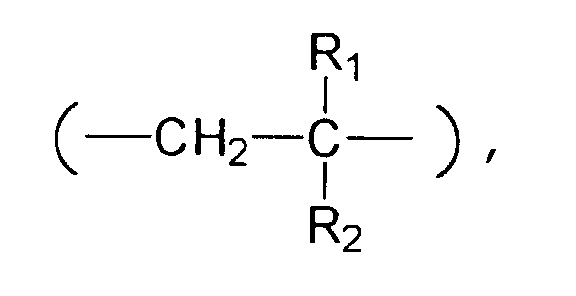 (iii) eine Monomerkomponente, die wenigstens zwei ethylenisch ungesättigte Gruppen enthält; und(iv) einen Photoinitiator oder ein Photoinitiator-System;(c) eine zweite Schicht einer zur Bilderzeugung durch Licht geeigneten, permanenten Beschichtungs-Zusammensetzung, umfassend:(i) ein Hilfsbindemittelsystem, umfassend wenigstens eine Copolymer-Bindemittelkomponente mit niedriger Molmasse, die eine Molmasse von 3000 bis 15 000 aufweist und 2 bis 50 Gew.-% wenigstens einer carbonsäurehaltigen Struktureinheit und 50 bis 98 Gew.-1 wenigstens einer Struktureinheit der Formelenthält, wobei R4 H, ein Alkyl, Phenyl oder Aryl ist; R5 H, CH3, Phenyl, ein Aryl, -COOR6, -CONR7R8 oder -CN ist und R6, R7 und R8 unabhängig H, ein Alkyl oder Aryl sind, das unsubstituiert ist oder durch eine oder mehrere Hydroxy-, Ester-, Keto-, Ether- oder Thioethergruppen substituiert ist; und wenigstens eine carbonsäurehaltige Copolymer-Bindemittelkomponente mit hoher Molmasse, die eine Molmasse von 40 000 bis 500 000 aufweist und Struktureinheiten der Formel
 umfaßt, wobei R9 H, ein Alkyl, -CN, Phenyl, ein Alkylphenyl oder Aryl ist; R10 ein Phenyl, Alkylphenyl, Aryl, -COOR11 oder -CONR7R8 ist; R11 H oder ein Alkyl ist und wobei das Alkyl 1 bis 8 Kohlenstoffatome enthält;
 (ii) eine acrylierte monomere Urethankomponente;(iii) einen Photoinitiator oder ein Photoinitiator-System und(iv) ein blockiertes Polyisocyanat-Vernetzungsmittel.
 - Mehrschichtiges, permanentes Beschichtungselement nach Anspruch 1, wobei das amphotere Bindemittel ein Copolymer umfaßt, das aus der Copolymerisation von (a) 30 bis 60 Gew.-Teilen eines N-C1-12-Alkylacrylamids oder -methacrylacmids oder eines C1-4-Alkylaminoalkylacrylats oder -methacrylats; (b) 10 bis 20 Gew.-Teilen eines sauren Comonomers, ausgewählt aus der Gruppe bestehend aus Acrylsäure, Methacrylsäure, Crotonsäure, Itaconsäure, Maleinsäure, Fumarsäure und den C1-4-Alkylhalbestern von Maleinsäure und Fumarsäure und (c) 20 bis 25 Gew.-Teilen eines Comonomers, ausgewählt aus der Gruppe bestehend aus C1-C12-Alkyl(meth) acrylaten, C2-4-Hydroxyalkyl(meth)acrylaten und Hydroxystearyl(meth)acrylaten stammt, wobei die Gewichtsteile des Comonomers insgesamt 100 Teile ergeben.
- Mehrschichtiges, permanentes Beschichtungselement nach Anspruch 1, wobei die Monomerkomponente aus der Gruppe bestehend aus Hexamethylenglycoldiacrylat, Triethylenglycoldiacrylat, Tripropylenglycoldiacrylat, Pentaerythrittriacrylat, Trimethylolpropantriacrylat, polyoxyethyliertem Trimethylolpropantriacrylat, Pentaerythrittriacrylat, Pentaerythrittetraacrylat, Bisphenol-A-diacrylat, dem Di-(3-acryloxy-2-hydroxypropyl) ether von Bisphenol-A, dem Di-(3-acryloxy-2-hydroxypropyl)ether von Tetrabrom-Bisphenol-A, aliphatischem Urethandiacrylat und aromatischem Urethandiacrylat ausgewählt ist.
- Mehrschichtiges, permanentes Beschichtungselement nach Anspruch 1, wobei die carbonsäurehaltige Struktureinheit der Copolymer-Bindemittelkomponente mit niedriger Molmasse Acrylsäure, Methacrylsäure, Maleinsäure, ein Maleinsäurehalbester oder Maleinsäureanhydrid, Itaconsäure, einen Itaconsäurehalbester oder Itaconsäureanhydrid, Citraconsäure oder einen Citraconsäurehalbester oder Citraconsäureanhydrid umfaßt.
- Mehrschichtiges, permanentes Beschichtungselement nach Anspruch 1, wobei die Struktureinheit (A) der Copolymer-Bindemittelkomponente mit niedriger Molmasse Styrol oder Ester und Amide von Acrylsäure und Methacrylsäure umfaßt.
- Mehrschichtiges, permanentes Beschichtungselement nach Anspruch 1, wobei die Struktureinheit (B) der carbonsäurehaltigen Copolymer-Bindemittelkomponente mit hoher Molmasse Styrol, Methacrylsäure, Methylmethacrylat, Ethylmethacrylat, Butylmethacrylat, Acrylsäure, Methylacrylat, Ethylacrylat, Butylacrylat, Hydroxyethylacrylat, Hydroxyethylmethacrylat oder Hydroxypropylmethacrylat umfaßt.
- Mehrschichtiges, permanentes Beschichtungselement nach Anspruch 1, wobei die acrylierte, monomere Urethan-Komponente die Struktur:aufweist, wobei n wenigstens 1 ist; Q1 und Q4 aromatische Gruppen sind, die unsubstituiert oder durch Niederalkylgruppen substituiert sein können und die eine Niederalkylengruppe als Verbindungsglied enthalten können; Q2 und Q3 unabhängig ein Polyoxyalkylen sind, das 1 bis 10 Kohlenstoffatome enthält; Q5 und Q6 unabhängig ein Alkyl mit 1 bis 3 Kohlenstoffatomen oder H sind.

- Biegsame gedruckte Schaltung, umfassend:wobei die erste photopolymerisierbare Schicht (a) sich neben der elektrisch leitfähigen Schaltkreisstruktur befindet.(1) ein biegsames Substrat;(2) eine elektrisch leitfähige, gedruckte Schaltungsstruktur auf wenigstens einer Seite des biegsamen Substrats und(3) eine mehrschichtige, permanente Beschichtung, die auf die elektrisch leitfähige Struktur aufgebracht ist, umfassend:(a) eine erste Schicht einer zur Bilderzeugung durch Licht geeigneten, permanenten Beschichtungs-Zusammensetzung, umfassend:(i) ein amphoteres Bindemittel;(ii) ein carboxylgruppenhaltiges Copolymer-Bindemittel der Formelwobei R1 H oder ein Alkyl ist; R2 Phenyl oder -CO2R3 ist und R3 H oder ein Alkyl ist, das unsubstituiert oder durch eine oder mehrere Hydroxygruppen substituiert ist;
 (iii) eine Monomerkomponente, die wenigstens zwei ethylenisch ungesättigte Gruppen enthält; und(iv) einen Photoinitiator oder ein Photoinitiator-System;(b) eine zweite Schicht einer zur Bilderzeugung durch Licht geeigneten, permanenten Beschichtungs-Zusammensetzung, umfassend:(i) ein Hilfsbindemittelsystem, umfassend wenigstens eine Copolymer-Bindemittelkomponente mit niedriger Molmasse, die eine Molmasse von 3000 bis 15 000 aufweist und 2 bis 50 Gew.-% wenigstens einer carbonsäurehaltigen Struktureinheit und 50 bis 98 Gew.-% wenigstens einer Struktureinheit der Formelenthält, wobei R4 H, ein Alkyl, Phenyl oder Aryl ist; R5 H, CH3, Phenyl, ein Aryl, -COOR6, -CONR7R8 oder -CN ist und R6, R7 und R8 unabhängig H, ein Alkyl oder Aryl sind, das unsubstituiert ist oder durch eine oder mehrere Hydroxy-, Ester-, Keto-, Ether- oder Thioethergruppen substituiert ist; und wenigstens eine carbonsäurehaltige Copolymer-Bindemittelkomponente mit hoher Molmasse, die eine Molmasse von 40 000 bis 500 000 aufweist und Struktureinheiten der Formel
 umfaßt, wobei R9 H, ein Alkyl, -CN, Phenyl, ein Alkylphenyl oder Aryl ist; R10 ein Phenyl, Alkylphenyl, Aryl, -COOR11 oder -CONR7R8 ist; R11 H oder ein Alkyl ist und wobei das Alkyl 1 bis 8 Kohlenstoffatome enthält;
 (ii) eine acrylierte monomere Urethankomponente;(iii) einen Photoinitiator oder ein Photoinitiator-System und(iv) ein blockiertes Polyisocyanat-Vernetzungsmittel;
Applications Claiming Priority (2)
| Application Number | Priority Date | Filing Date | Title |
|---|---|---|---|
| US08/431,376 US5643657A (en) | 1995-04-28 | 1995-04-28 | Aqueous processable, multilayer, photoimageable permanent coatings for printed circuits |
| US431376 | 1995-04-28 |
Publications (2)
| Publication Number | Publication Date |
|---|---|
| EP0740211A1 EP0740211A1 (de) | 1996-10-30 |
| EP0740211B1 true EP0740211B1 (de) | 1999-08-18 |
Family
ID=23711674
Family Applications (1)
| Application Number | Title | Priority Date | Filing Date |
|---|---|---|---|
| EP19960106704 Expired - Lifetime EP0740211B1 (de) | 1995-04-28 | 1996-04-27 | Wässrig entwickelbare, mehrschichtige, durch Licht abbildbare, dauerhafte Überzugsmittel für gedruckte Schaltungen |
Country Status (5)
| Country | Link |
|---|---|
| US (1) | US5643657A (de) |
| EP (1) | EP0740211B1 (de) |
| JP (1) | JP3585644B2 (de) |
| KR (1) | KR100208109B1 (de) |
| DE (1) | DE69603774T2 (de) |
Families Citing this family (25)
| Publication number | Priority date | Publication date | Assignee | Title |
|---|---|---|---|---|
| DE69729843T2 (de) * | 1996-11-28 | 2005-08-25 | Kaneka Corp. | Verfahren zur Herstellung eines (Meth)acrylpolymers mit endständiger Hydroxylgruppe und dieses Polymer |
| US6284309B1 (en) | 1997-12-19 | 2001-09-04 | Atotech Deutschland Gmbh | Method of producing copper surfaces for improved bonding, compositions used therein and articles made therefrom |
| SG85613A1 (en) * | 1998-02-06 | 2002-01-15 | Morton Int Inc | Photoimageable compositions having hydrophilic binder polymers and hydrophilic monomers |
| US6037096A (en) * | 1998-05-26 | 2000-03-14 | International Business Machines Corporation | Film composition and method for a planar surface atop a plated through hole |
| US6489042B2 (en) * | 1998-12-23 | 2002-12-03 | 3M Innovative Properties Company | Photoimageable dielectric material for circuit protection |
| US6542379B1 (en) | 1999-07-15 | 2003-04-01 | International Business Machines Corporation | Circuitry with integrated passive components and method for producing |
| US6521844B1 (en) | 1999-10-29 | 2003-02-18 | International Business Machines Corporation | Through hole in a photoimageable dielectric structure with wired and uncured dielectric |
| JP2001240842A (ja) * | 2000-02-28 | 2001-09-04 | Nitto Denko Corp | 紫外線硬化型粘着剤組成物とその粘着シ―ト類 |
| JP2003005359A (ja) * | 2001-06-27 | 2003-01-08 | Hitachi Chem Co Ltd | 高解像・高密着性の感光性樹脂組成物及びその用途 |
| JP2003035953A (ja) * | 2001-07-23 | 2003-02-07 | Hitachi Chem Co Ltd | 高密度・高解像度用の感光性樹脂組成物及びその用途 |
| GB0221893D0 (en) * | 2002-09-20 | 2002-10-30 | Avecia Ltd | Process |
| US20040058276A1 (en) * | 2002-09-23 | 2004-03-25 | Dueber Thomas E. | Halo resistent, photoimagable coverlay compositions, having, advantageous application and removal properties, and methods relating thereto |
| WO2004035546A1 (en) * | 2002-10-15 | 2004-04-29 | Showa Denko K. K. | Hexaarylbiimidazole compounds and photopolymerization initiator compositions containing the same |
| KR100468096B1 (ko) * | 2002-10-25 | 2005-01-26 | 손창민 | 광 셔터용 조성물 |
| EP1489460A3 (de) * | 2003-06-20 | 2008-07-09 | FUJIFILM Corporation | Lichtempfindlicher Bogen mit einer Unterlage sowie einer ersten und einer zweiten lichtempfindlichen Schicht |
| EP1507171A3 (de) * | 2003-08-15 | 2008-03-05 | FUJIFILM Corporation | Lichtempfindlicher Bogen mit einer Unterlage, einer ersten und einer zweiten lichtempfindlichen Schicht sowie einer Barriereschicht |
| US7220490B2 (en) * | 2003-12-30 | 2007-05-22 | E. I. Du Pont De Nemours And Company | Polyimide based adhesive compositions useful in flexible circuit applications, and compositions and methods relating thereto |
| US7524617B2 (en) * | 2004-11-23 | 2009-04-28 | E.I. Du Pont De Nemours And Company | Low-temperature curable photosensitive compositions |
| JP2006243546A (ja) * | 2005-03-04 | 2006-09-14 | Fuji Photo Film Co Ltd | パターン形成材料、並びにパターン形成装置及びパターン形成方法 |
| US8816012B2 (en) | 2010-08-18 | 2014-08-26 | Ferro Corporation | Curable acrylate based printing medium |
| CN104039862B (zh) * | 2011-12-15 | 2017-12-22 | 太阳化学公司 | 硫化物扩展型环氧树脂及其阻隔涂料应用 |
| JP6343439B2 (ja) * | 2013-09-30 | 2018-06-13 | 太陽インキ製造株式会社 | プリント配線板用硬化型組成物、これを用いた硬化塗膜及びプリント配線板 |
| JP6538432B2 (ja) * | 2014-09-01 | 2019-07-03 | 日東電工株式会社 | 透明導電性フィルム用キャリアフィルム及び積層体 |
| US11634358B2 (en) | 2018-01-03 | 2023-04-25 | Ferro Corporation | Polycarbonate diol coating composition for caustic and UV resistance |
| CN116755290A (zh) * | 2023-05-17 | 2023-09-15 | 珠海市能动科技光学产业有限公司 | 一种高附着力的阻焊干膜光阻剂及其制备方法与应用 |
Family Cites Families (14)
| Publication number | Priority date | Publication date | Assignee | Title |
|---|---|---|---|---|
| US3547730A (en) * | 1966-12-16 | 1970-12-15 | Du Pont | Machine for making resist images |
| US3469982A (en) * | 1968-09-11 | 1969-09-30 | Jack Richard Celeste | Process for making photoresists |
| JPS592018B2 (ja) * | 1975-03-26 | 1984-01-17 | 住友化学工業株式会社 | カイリヨウサレタカンコウセイジユシソセイブツカラナルゲンケイ |
| US4349620A (en) * | 1979-06-15 | 1982-09-14 | E. I. Du Pont De Nemours And Company | Solvent developable photoresist film |
| US4352870A (en) * | 1979-11-27 | 1982-10-05 | Bell Telephone Laboratories, Incorporated | High resolution two-layer resists |
| US4506004A (en) * | 1982-04-01 | 1985-03-19 | Sullivan Donald F | Printed wiring board |
| DE3134123A1 (de) * | 1981-08-28 | 1983-03-17 | Hoechst Ag, 6000 Frankfurt | Durch strahlung polymerisierbares gemisch und daraushergestelltes photopolymerisierbares kopiermaterial |
| US4621043A (en) * | 1983-01-31 | 1986-11-04 | E. I. Du Pont De Nemours And Company | Storage stable photopolymerizable composition |
| US4937172A (en) * | 1986-12-02 | 1990-06-26 | E. I. Du Pont De Nemours And Company | Photopolymerizable composition having superior adhesion, articles and processes |
| DE3814567A1 (de) * | 1988-04-29 | 1989-11-09 | Du Pont Deutschland | Photopolymerisierbare zusammensetzungen mit carboxylgruppen enthaltenden bindemitteln |
| JP2700933B2 (ja) * | 1989-11-28 | 1998-01-21 | 日本石油株式会社 | 永久保護膜用樹脂組成物および永久保護膜の製造方法 |
| JPH04274428A (ja) * | 1991-03-01 | 1992-09-30 | Nippon Paint Co Ltd | オフセット印刷用感光性組成物 |
| EP0628180B1 (de) * | 1992-02-24 | 1998-09-16 | E.I. Du Pont De Nemours And Company | Flexible, wässrig entwickelbare, durch licht abblidbare dauerhafte ueberzugsmittel fuer gedruckte schaltungen |
| US5288589A (en) * | 1992-12-03 | 1994-02-22 | Mckeever Mark R | Aqueous processable, multilayer, photoimageable permanent coatings for printed circuits |
-
1995
- 1995-04-28 US US08/431,376 patent/US5643657A/en not_active Expired - Lifetime
-
1996
- 1996-04-24 JP JP12627496A patent/JP3585644B2/ja not_active Expired - Fee Related
- 1996-04-27 KR KR1019960013347A patent/KR100208109B1/ko not_active Expired - Fee Related
- 1996-04-27 EP EP19960106704 patent/EP0740211B1/de not_active Expired - Lifetime
- 1996-04-27 DE DE69603774T patent/DE69603774T2/de not_active Expired - Fee Related
Also Published As
| Publication number | Publication date |
|---|---|
| KR100208109B1 (ko) | 1999-07-15 |
| EP0740211A1 (de) | 1996-10-30 |
| US5643657A (en) | 1997-07-01 |
| DE69603774D1 (de) | 1999-09-23 |
| KR960038485A (ko) | 1996-11-21 |
| JPH095992A (ja) | 1997-01-10 |
| DE69603774T2 (de) | 1999-12-09 |
| JP3585644B2 (ja) | 2004-11-04 |
Similar Documents
| Publication | Publication Date | Title |
|---|---|---|
| US5643657A (en) | Aqueous processable, multilayer, photoimageable permanent coatings for printed circuits | |
| EP0860742B1 (de) | Flexible, flammhemmende fotopolymerisierbare Zusammensetzung zur Beschichtung von Leiterplatten | |
| EP0740210B1 (de) | Flexible, wässrig entwickelbare, durch Licht abbildbare, dauerhafte Überzugsmittel für gedruckte Schaltungen | |
| EP0628180B1 (de) | Flexible, wässrig entwickelbare, durch licht abblidbare dauerhafte ueberzugsmittel fuer gedruckte schaltungen | |
| US5288589A (en) | Aqueous processable, multilayer, photoimageable permanent coatings for printed circuits | |
| US5405731A (en) | Aqueous processable, multilayer, photoimageable permanent coatings for printed circuits | |
| EP0822448B1 (de) | Flexible, flammhemmende fotopolymerisierbare Zusammensetzung zur Beschichtung von Leiterplatten | |
| EP1400545A2 (de) | Lichtempfindliche Zusammensetzungen für in Plattierungsbädern chemisch beständige Deckschichten | |
| EP0676669B1 (de) | Flexible, wäsrigentwickelbare, durch Licht abbildbare, dauerhafte Überzugsmittel für gedruckte Schaltungen | |
| JP3716040B2 (ja) | 印刷回路用の水系処理可能で光画像化可能な耐久性多層被覆材 | |
| EP0740212B1 (de) | Auf photographischem Weg aufzeichnende und durch Wasser entwickelbare, dauerhafte Mehrschichtbeschichtungen für Leiterplatten | |
| DE69703289T2 (de) | Anordnung zum verschliessen eines geschlossenen produktionssytem | |
| KR960016317B1 (ko) | 인쇄회로소자용 수가공성 광화상 처리식 유연성 영구 코팅 | |
| CN117687268B (zh) | 感光性树脂组合物、感光干膜和覆铜板 |
Legal Events
| Date | Code | Title | Description |
|---|---|---|---|
| PUAI | Public reference made under article 153(3) epc to a published international application that has entered the european phase |
Free format text: ORIGINAL CODE: 0009012 |
|
| AK | Designated contracting states |
Kind code of ref document: A1 Designated state(s): DE FR GB |
|
| 17P | Request for examination filed |
Effective date: 19970109 |
|
| GRAG | Despatch of communication of intention to grant |
Free format text: ORIGINAL CODE: EPIDOS AGRA |
|
| 17Q | First examination report despatched |
Effective date: 19980825 |
|
| GRAG | Despatch of communication of intention to grant |
Free format text: ORIGINAL CODE: EPIDOS AGRA |
|
| GRAH | Despatch of communication of intention to grant a patent |
Free format text: ORIGINAL CODE: EPIDOS IGRA |
|
| GRAH | Despatch of communication of intention to grant a patent |
Free format text: ORIGINAL CODE: EPIDOS IGRA |
|
| GRAA | (expected) grant |
Free format text: ORIGINAL CODE: 0009210 |
|
| AK | Designated contracting states |
Kind code of ref document: B1 Designated state(s): DE FR GB |
|
| ET | Fr: translation filed | ||
| REF | Corresponds to: |
Ref document number: 69603774 Country of ref document: DE Date of ref document: 19990923 |
|
| PLBE | No opposition filed within time limit |
Free format text: ORIGINAL CODE: 0009261 |
|
| STAA | Information on the status of an ep patent application or granted ep patent |
Free format text: STATUS: NO OPPOSITION FILED WITHIN TIME LIMIT |
|
| 26N | No opposition filed | ||
| REG | Reference to a national code |
Ref country code: GB Ref legal event code: IF02 |
|
| PGFP | Annual fee paid to national office [announced via postgrant information from national office to epo] |
Ref country code: FR Payment date: 20080312 Year of fee payment: 13 Ref country code: DE Payment date: 20080502 Year of fee payment: 13 |
|
| PGFP | Annual fee paid to national office [announced via postgrant information from national office to epo] |
Ref country code: GB Payment date: 20080430 Year of fee payment: 13 |
|
| GBPC | Gb: european patent ceased through non-payment of renewal fee |
Effective date: 20090427 |
|
| REG | Reference to a national code |
Ref country code: FR Ref legal event code: ST Effective date: 20091231 |
|
| PG25 | Lapsed in a contracting state [announced via postgrant information from national office to epo] |
Ref country code: DE Free format text: LAPSE BECAUSE OF NON-PAYMENT OF DUE FEES Effective date: 20091103 |
|
| PG25 | Lapsed in a contracting state [announced via postgrant information from national office to epo] |
Ref country code: GB Free format text: LAPSE BECAUSE OF NON-PAYMENT OF DUE FEES Effective date: 20090427 Ref country code: FR Free format text: LAPSE BECAUSE OF NON-PAYMENT OF DUE FEES Effective date: 20091222 |