EP0722472B1 - Polyester film - Google Patents
Polyester film Download PDFInfo
- Publication number
- EP0722472B1 EP0722472B1 EP94930628A EP94930628A EP0722472B1 EP 0722472 B1 EP0722472 B1 EP 0722472B1 EP 94930628 A EP94930628 A EP 94930628A EP 94930628 A EP94930628 A EP 94930628A EP 0722472 B1 EP0722472 B1 EP 0722472B1
- Authority
- EP
- European Patent Office
- Prior art keywords
- polyester
- film
- heat
- mol
- layer
- Prior art date
- Legal status (The legal status is an assumption and is not a legal conclusion. Google has not performed a legal analysis and makes no representation as to the accuracy of the status listed.)
- Expired - Lifetime
Links
- 229920006267 polyester film Polymers 0.000 title abstract description 6
- 229920000728 polyester Polymers 0.000 claims abstract description 95
- LYCAIKOWRPUZTN-UHFFFAOYSA-N Ethylene glycol Chemical compound OCCO LYCAIKOWRPUZTN-UHFFFAOYSA-N 0.000 claims abstract description 57
- KKEYFWRCBNTPAC-UHFFFAOYSA-N Terephthalic acid Chemical compound OC(=O)C1=CC=C(C(O)=O)C=C1 KKEYFWRCBNTPAC-UHFFFAOYSA-N 0.000 claims abstract description 38
- 239000010410 layer Substances 0.000 claims abstract description 23
- 238000007789 sealing Methods 0.000 claims abstract description 17
- 229920000139 polyethylene terephthalate Polymers 0.000 claims abstract description 16
- 239000005020 polyethylene terephthalate Substances 0.000 claims abstract description 16
- ORLQHILJRHBSAY-UHFFFAOYSA-N [1-(hydroxymethyl)cyclohexyl]methanol Chemical compound OCC1(CO)CCCCC1 ORLQHILJRHBSAY-UHFFFAOYSA-N 0.000 claims abstract description 13
- -1 polyethylene terephthalate Polymers 0.000 claims abstract description 12
- 230000004927 fusion Effects 0.000 claims abstract description 10
- 238000002425 crystallisation Methods 0.000 claims description 21
- 230000008025 crystallization Effects 0.000 claims description 21
- 238000002844 melting Methods 0.000 claims description 8
- 230000008018 melting Effects 0.000 claims description 8
- 239000012793 heat-sealing layer Substances 0.000 claims description 7
- 239000000155 melt Substances 0.000 claims description 3
- 239000011248 coating agent Substances 0.000 claims 1
- 238000000576 coating method Methods 0.000 claims 1
- 238000001035 drying Methods 0.000 abstract description 6
- 239000000203 mixture Substances 0.000 abstract description 6
- 239000002356 single layer Substances 0.000 abstract description 6
- YIMQCDZDWXUDCA-UHFFFAOYSA-N [4-(hydroxymethyl)cyclohexyl]methanol Chemical compound OCC1CCC(CO)CC1 YIMQCDZDWXUDCA-UHFFFAOYSA-N 0.000 description 17
- 229920001634 Copolyester Polymers 0.000 description 14
- 239000013068 control sample Substances 0.000 description 13
- 238000000034 method Methods 0.000 description 10
- 239000000523 sample Substances 0.000 description 7
- 238000012360 testing method Methods 0.000 description 7
- 239000008188 pellet Substances 0.000 description 6
- 229920000642 polymer Polymers 0.000 description 5
- QQVIHTHCMHWDBS-UHFFFAOYSA-N isophthalic acid Chemical compound OC(=O)C1=CC=CC(C(O)=O)=C1 QQVIHTHCMHWDBS-UHFFFAOYSA-N 0.000 description 4
- 229920001577 copolymer Polymers 0.000 description 3
- MTHSVFCYNBDYFN-UHFFFAOYSA-N diethylene glycol Chemical compound OCCOCCO MTHSVFCYNBDYFN-UHFFFAOYSA-N 0.000 description 3
- 239000011521 glass Substances 0.000 description 3
- 230000009477 glass transition Effects 0.000 description 3
- 239000002245 particle Substances 0.000 description 3
- QPFMBZIOSGYJDE-UHFFFAOYSA-N 1,1,2,2-tetrachloroethane Chemical compound ClC(Cl)C(Cl)Cl QPFMBZIOSGYJDE-UHFFFAOYSA-N 0.000 description 2
- 230000006835 compression Effects 0.000 description 2
- 238000007906 compression Methods 0.000 description 2
- 239000006059 cover glass Substances 0.000 description 2
- 238000011156 evaluation Methods 0.000 description 2
- 150000002334 glycols Chemical class 0.000 description 2
- 239000000463 material Substances 0.000 description 2
- 239000002184 metal Substances 0.000 description 2
- 239000005022 packaging material Substances 0.000 description 2
- 238000004806 packaging method and process Methods 0.000 description 2
- 229920003023 plastic Polymers 0.000 description 2
- 239000004033 plastic Substances 0.000 description 2
- 238000001374 small-angle light scattering Methods 0.000 description 2
- 239000002904 solvent Substances 0.000 description 2
- 239000000758 substrate Substances 0.000 description 2
- 238000009864 tensile test Methods 0.000 description 2
- VGGSQFUCUMXWEO-UHFFFAOYSA-N Ethene Chemical compound C=C VGGSQFUCUMXWEO-UHFFFAOYSA-N 0.000 description 1
- 239000005977 Ethylene Substances 0.000 description 1
- 229920002302 Nylon 6,6 Polymers 0.000 description 1
- ISWSIDIOOBJBQZ-UHFFFAOYSA-N Phenol Chemical compound OC1=CC=CC=C1 ISWSIDIOOBJBQZ-UHFFFAOYSA-N 0.000 description 1
- 229910000831 Steel Inorganic materials 0.000 description 1
- 239000002253 acid Substances 0.000 description 1
- 150000007513 acids Chemical class 0.000 description 1
- 230000002411 adverse Effects 0.000 description 1
- 125000005907 alkyl ester group Chemical group 0.000 description 1
- 238000009835 boiling Methods 0.000 description 1
- CDQSJQSWAWPGKG-UHFFFAOYSA-N butane-1,1-diol Chemical compound CCCC(O)O CDQSJQSWAWPGKG-UHFFFAOYSA-N 0.000 description 1
- 125000003178 carboxy group Chemical group [H]OC(*)=O 0.000 description 1
- 238000005266 casting Methods 0.000 description 1
- QYQADNCHXSEGJT-UHFFFAOYSA-N cyclohexane-1,1-dicarboxylate;hydron Chemical compound OC(=O)C1(C(O)=O)CCCCC1 QYQADNCHXSEGJT-UHFFFAOYSA-N 0.000 description 1
- 239000002274 desiccant Substances 0.000 description 1
- 150000001991 dicarboxylic acids Chemical class 0.000 description 1
- 230000009977 dual effect Effects 0.000 description 1
- 230000032050 esterification Effects 0.000 description 1
- 238000005886 esterification reaction Methods 0.000 description 1
- 238000001125 extrusion Methods 0.000 description 1
- CPBQJMYROZQQJC-UHFFFAOYSA-N helium neon Chemical compound [He].[Ne] CPBQJMYROZQQJC-UHFFFAOYSA-N 0.000 description 1
- ACCCMOQWYVYDOT-UHFFFAOYSA-N hexane-1,1-diol Chemical compound CCCCCC(O)O ACCCMOQWYVYDOT-UHFFFAOYSA-N 0.000 description 1
- 229920001519 homopolymer Polymers 0.000 description 1
- 229920000554 ionomer Polymers 0.000 description 1
- 238000003475 lamination Methods 0.000 description 1
- 230000028161 membrane depolarization Effects 0.000 description 1
- 150000001457 metallic cations Chemical class 0.000 description 1
- 238000002156 mixing Methods 0.000 description 1
- KYTZHLUVELPASH-UHFFFAOYSA-N naphthalene-1,2-dicarboxylic acid Chemical compound C1=CC=CC2=C(C(O)=O)C(C(=O)O)=CC=C21 KYTZHLUVELPASH-UHFFFAOYSA-N 0.000 description 1
- SLCVBVWXLSEKPL-UHFFFAOYSA-N neopentyl glycol Chemical compound OCC(C)(C)CO SLCVBVWXLSEKPL-UHFFFAOYSA-N 0.000 description 1
- 239000000123 paper Substances 0.000 description 1
- 239000011087 paperboard Substances 0.000 description 1
- 239000002985 plastic film Substances 0.000 description 1
- 229920006255 plastic film Polymers 0.000 description 1
- 238000006068 polycondensation reaction Methods 0.000 description 1
- 229920001225 polyester resin Polymers 0.000 description 1
- 239000004645 polyester resin Substances 0.000 description 1
- 238000002407 reforming Methods 0.000 description 1
- 239000010959 steel Substances 0.000 description 1
- 230000001954 sterilising effect Effects 0.000 description 1
- 238000004659 sterilization and disinfection Methods 0.000 description 1
- 238000009966 trimming Methods 0.000 description 1
- 239000002699 waste material Substances 0.000 description 1
- 239000002023 wood Substances 0.000 description 1
Images

Classifications
-
- B—PERFORMING OPERATIONS; TRANSPORTING
- B32—LAYERED PRODUCTS
- B32B—LAYERED PRODUCTS, i.e. PRODUCTS BUILT-UP OF STRATA OF FLAT OR NON-FLAT, e.g. CELLULAR OR HONEYCOMB, FORM
- B32B27/00—Layered products comprising a layer of synthetic resin
- B32B27/36—Layered products comprising a layer of synthetic resin comprising polyesters
-
- B—PERFORMING OPERATIONS; TRANSPORTING
- B32—LAYERED PRODUCTS
- B32B—LAYERED PRODUCTS, i.e. PRODUCTS BUILT-UP OF STRATA OF FLAT OR NON-FLAT, e.g. CELLULAR OR HONEYCOMB, FORM
- B32B27/00—Layered products comprising a layer of synthetic resin
- B32B27/06—Layered products comprising a layer of synthetic resin as the main or only constituent of a layer, which is next to another layer of the same or of a different material
- B32B27/08—Layered products comprising a layer of synthetic resin as the main or only constituent of a layer, which is next to another layer of the same or of a different material of synthetic resin
-
- C—CHEMISTRY; METALLURGY
- C08—ORGANIC MACROMOLECULAR COMPOUNDS; THEIR PREPARATION OR CHEMICAL WORKING-UP; COMPOSITIONS BASED THEREON
- C08G—MACROMOLECULAR COMPOUNDS OBTAINED OTHERWISE THAN BY REACTIONS ONLY INVOLVING UNSATURATED CARBON-TO-CARBON BONDS
- C08G63/00—Macromolecular compounds obtained by reactions forming a carboxylic ester link in the main chain of the macromolecule
- C08G63/02—Polyesters derived from hydroxycarboxylic acids or from polycarboxylic acids and polyhydroxy compounds
- C08G63/12—Polyesters derived from hydroxycarboxylic acids or from polycarboxylic acids and polyhydroxy compounds derived from polycarboxylic acids and polyhydroxy compounds
- C08G63/16—Dicarboxylic acids and dihydroxy compounds
- C08G63/18—Dicarboxylic acids and dihydroxy compounds the acids or hydroxy compounds containing carbocyclic rings
- C08G63/199—Acids or hydroxy compounds containing cycloaliphatic rings
-
- C—CHEMISTRY; METALLURGY
- C08—ORGANIC MACROMOLECULAR COMPOUNDS; THEIR PREPARATION OR CHEMICAL WORKING-UP; COMPOSITIONS BASED THEREON
- C08J—WORKING-UP; GENERAL PROCESSES OF COMPOUNDING; AFTER-TREATMENT NOT COVERED BY SUBCLASSES C08B, C08C, C08F, C08G or C08H
- C08J5/00—Manufacture of articles or shaped materials containing macromolecular substances
- C08J5/18—Manufacture of films or sheets
-
- B—PERFORMING OPERATIONS; TRANSPORTING
- B32—LAYERED PRODUCTS
- B32B—LAYERED PRODUCTS, i.e. PRODUCTS BUILT-UP OF STRATA OF FLAT OR NON-FLAT, e.g. CELLULAR OR HONEYCOMB, FORM
- B32B2307/00—Properties of the layers or laminate
- B32B2307/30—Properties of the layers or laminate having particular thermal properties
- B32B2307/31—Heat sealable
-
- B—PERFORMING OPERATIONS; TRANSPORTING
- B32—LAYERED PRODUCTS
- B32B—LAYERED PRODUCTS, i.e. PRODUCTS BUILT-UP OF STRATA OF FLAT OR NON-FLAT, e.g. CELLULAR OR HONEYCOMB, FORM
- B32B2307/00—Properties of the layers or laminate
- B32B2307/70—Other properties
- B32B2307/702—Amorphous
-
- B—PERFORMING OPERATIONS; TRANSPORTING
- B32—LAYERED PRODUCTS
- B32B—LAYERED PRODUCTS, i.e. PRODUCTS BUILT-UP OF STRATA OF FLAT OR NON-FLAT, e.g. CELLULAR OR HONEYCOMB, FORM
- B32B2367/00—Polyesters, e.g. PET, i.e. polyethylene terephthalate
-
- C—CHEMISTRY; METALLURGY
- C08—ORGANIC MACROMOLECULAR COMPOUNDS; THEIR PREPARATION OR CHEMICAL WORKING-UP; COMPOSITIONS BASED THEREON
- C08J—WORKING-UP; GENERAL PROCESSES OF COMPOUNDING; AFTER-TREATMENT NOT COVERED BY SUBCLASSES C08B, C08C, C08F, C08G or C08H
- C08J2367/00—Characterised by the use of polyesters obtained by reactions forming a carboxylic ester link in the main chain; Derivatives of such polymers
- C08J2367/02—Polyesters derived from dicarboxylic acids and dihydroxy compounds
-
- Y—GENERAL TAGGING OF NEW TECHNOLOGICAL DEVELOPMENTS; GENERAL TAGGING OF CROSS-SECTIONAL TECHNOLOGIES SPANNING OVER SEVERAL SECTIONS OF THE IPC; TECHNICAL SUBJECTS COVERED BY FORMER USPC CROSS-REFERENCE ART COLLECTIONS [XRACs] AND DIGESTS
- Y10—TECHNICAL SUBJECTS COVERED BY FORMER USPC
- Y10T—TECHNICAL SUBJECTS COVERED BY FORMER US CLASSIFICATION
- Y10T428/00—Stock material or miscellaneous articles
- Y10T428/13—Hollow or container type article [e.g., tube, vase, etc.]
- Y10T428/1352—Polymer or resin containing [i.e., natural or synthetic]
- Y10T428/1397—Single layer [continuous layer]
-
- Y—GENERAL TAGGING OF NEW TECHNOLOGICAL DEVELOPMENTS; GENERAL TAGGING OF CROSS-SECTIONAL TECHNOLOGIES SPANNING OVER SEVERAL SECTIONS OF THE IPC; TECHNICAL SUBJECTS COVERED BY FORMER USPC CROSS-REFERENCE ART COLLECTIONS [XRACs] AND DIGESTS
- Y10—TECHNICAL SUBJECTS COVERED BY FORMER USPC
- Y10T—TECHNICAL SUBJECTS COVERED BY FORMER US CLASSIFICATION
- Y10T428/00—Stock material or miscellaneous articles
- Y10T428/24—Structurally defined web or sheet [e.g., overall dimension, etc.]
- Y10T428/24942—Structurally defined web or sheet [e.g., overall dimension, etc.] including components having same physical characteristic in differing degree
- Y10T428/2495—Thickness [relative or absolute]
-
- Y—GENERAL TAGGING OF NEW TECHNOLOGICAL DEVELOPMENTS; GENERAL TAGGING OF CROSS-SECTIONAL TECHNOLOGIES SPANNING OVER SEVERAL SECTIONS OF THE IPC; TECHNICAL SUBJECTS COVERED BY FORMER USPC CROSS-REFERENCE ART COLLECTIONS [XRACs] AND DIGESTS
- Y10—TECHNICAL SUBJECTS COVERED BY FORMER USPC
- Y10T—TECHNICAL SUBJECTS COVERED BY FORMER US CLASSIFICATION
- Y10T428/00—Stock material or miscellaneous articles
- Y10T428/28—Web or sheet containing structurally defined element or component and having an adhesive outermost layer
- Y10T428/2813—Heat or solvent activated or sealable
- Y10T428/2817—Heat sealable
- Y10T428/2826—Synthetic resin or polymer
-
- Y—GENERAL TAGGING OF NEW TECHNOLOGICAL DEVELOPMENTS; GENERAL TAGGING OF CROSS-SECTIONAL TECHNOLOGIES SPANNING OVER SEVERAL SECTIONS OF THE IPC; TECHNICAL SUBJECTS COVERED BY FORMER USPC CROSS-REFERENCE ART COLLECTIONS [XRACs] AND DIGESTS
- Y10—TECHNICAL SUBJECTS COVERED BY FORMER USPC
- Y10T—TECHNICAL SUBJECTS COVERED BY FORMER US CLASSIFICATION
- Y10T428/00—Stock material or miscellaneous articles
- Y10T428/28—Web or sheet containing structurally defined element or component and having an adhesive outermost layer
- Y10T428/2848—Three or more layers
-
- Y—GENERAL TAGGING OF NEW TECHNOLOGICAL DEVELOPMENTS; GENERAL TAGGING OF CROSS-SECTIONAL TECHNOLOGIES SPANNING OVER SEVERAL SECTIONS OF THE IPC; TECHNICAL SUBJECTS COVERED BY FORMER USPC CROSS-REFERENCE ART COLLECTIONS [XRACs] AND DIGESTS
- Y10—TECHNICAL SUBJECTS COVERED BY FORMER USPC
- Y10T—TECHNICAL SUBJECTS COVERED BY FORMER US CLASSIFICATION
- Y10T428/00—Stock material or miscellaneous articles
- Y10T428/28—Web or sheet containing structurally defined element or component and having an adhesive outermost layer
- Y10T428/2852—Adhesive compositions
-
- Y—GENERAL TAGGING OF NEW TECHNOLOGICAL DEVELOPMENTS; GENERAL TAGGING OF CROSS-SECTIONAL TECHNOLOGIES SPANNING OVER SEVERAL SECTIONS OF THE IPC; TECHNICAL SUBJECTS COVERED BY FORMER USPC CROSS-REFERENCE ART COLLECTIONS [XRACs] AND DIGESTS
- Y10—TECHNICAL SUBJECTS COVERED BY FORMER USPC
- Y10T—TECHNICAL SUBJECTS COVERED BY FORMER US CLASSIFICATION
- Y10T428/00—Stock material or miscellaneous articles
- Y10T428/31504—Composite [nonstructural laminate]
- Y10T428/31786—Of polyester [e.g., alkyd, etc.]
Definitions
- the present invention relates to polyester film, both monolayer and multilayer.
- the film comprises at least one layer of a heat-sealing polyester which is crystallizable to the extent of allowing mixtures thereof to be made with other crystallizable polyesters for crystallization without sticking.
- the heat-sealing polyester is polyethylene terephthalate modified with about 7-15 mol % cyclohexanedimethanol.
- PET polyethylene terephthalate
- PET readily crystallizable polyethylene terephthalate
- amorphous polyesters can be extruded with crystallizable polyesters to improve performance of the film. Performance improvements over monolayer crystallizable polyester films include high temperature sealing, solvent sealing, and lower cutting force during trimming. Crystallizable polyesters used as a heat-sealing layer often results in poor performance. Amorphous polyester resins cause problems when being handled as waste material (hereinafter sometimes called "regrind") which is generated during processing. When mixed with crystalline polyester pellets and dried at a temperature above the glass transition temperature of the amorphous polyester, the regrind softens and sticks together, forming large clumps. These clumps make drying of the regrind very difficult and cause significant problems with air flow in a dryer and also when feeding to an extruder.
- regrind waste material
- Some techniques for overcoming this sticking problem include melting the regrind with crystallizable polyesters using devices specially equipped fcr this process and then reforming the extrudate into pellets that can later be thermally crystallized. Although this technique may alleviate the sticking problems, the cost can be relatively expensive.
- This invention provides a polyester composition which offers advantages due to its heat-sealability, while at the same time crystallize to sufficient levels to allow mixing and drying with crystallizable polyesters.
- Polyesters containing repeat units from terephthalic acid, ethylene glycol and cyclohexanedimethanol are known in the art. For example, see U. S. Patent Nos. 4,373,002; 4,091,150; 4,405,400; 4,011,358; 4,765,999; 4,399,179; 4,946,743; 4,375,494 and 2,901,466. Some of the films disclosed in these patents are oriented. In others, the heat-sealing layer is not as described and claimed herein. For example, U. S. Patent No.
- 4,765,999 discloses a dual layered film wherein the heat-sealing layer is a polyester having repeat units from terephthalic acid, ethylene glycol and 1,4-cyclohexanedimethanol.
- This heat-sealing polyester contains a greater number of repeat units from 1,4-cyclohexanedimethanol (30 mol%) than claimed herein, making the heat-sealing layer too difficult to crystallize and thus, would result in sticking when mixed with other polyesters during crystallization.
- Japanese Patent 62,222,845 discloses a laminated heat-sealable polyester film comprised of (1) a crystallizable PET containing up to 10 mol % of comonomer that has a heat of fusion of at least 29.3 J/g (7 cal/g) and (2) a PET copolymer containing 10 - 20 mol % isophthalic acid that has a heat of fusion of up to 20.92 J/g (5 cal/g).
- the film is oriented and used for pouches for boiling food for sterilization.
- An important relation between the layers is the refraction index. A preferred range is disclosed for optimum properties.
- This patent does not address regrind nor the crystallizability of the second layer. Furthermore, it does not mention the use of PET copolymers containing 1,4-cyclohexanedimethanol.
- Japanese Patent 60,253,545 discloses a laminated polyester film for shrink-packaging comprised of (1) a copolyester modified with 5 to 50 mol % 1,4-cyclohexanedimethanol and (2) PET.
- the total thickness of the copolyester layer is 20-70% of the entire structure.
- An important property of the film is shrinkage. Again, this patent does not address regrind nor the crystallizability of the copolyester layer.
- EPA 517,171 discloses a polyester packaging material of terephthalic acid, 75-95 mol % ethylene glycol (EG), 5-25 mol % cyclohexanedimethanol (CHDM) and 5-30 wt % of an ethylenic copolymer ionomer "in which at least a part of carboxyl groups of an ethylene unsaturated carboxylic acid copolymer is neutralized with a metallic cation.”
- EG ethylene glycol
- CHDM cyclohexanedimethanol
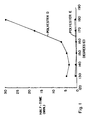
- Fig. 1 - A graphical representation of a plot of half-times of crystallization versus temperature.
- Fig. 2 - A graphical representation of a plot of half-times of crystallization versus level of 1,4-cyclohexanedimethanol.
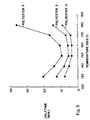
- Fig. 3 - A graphical representation of a plot of half-times of crystallization versus temperature.
- a non-oriented film of an amorphous, heat-sealing, polyester consisting essentially of repeat units from terephthalic acid, 85 - 93 mol % ethylene glycol and 15 - 7 mol % cyclohexanedimethanol, wherein said polyester has a crystallization half-time greater than 2 minutes and a melting heat of fusion greater than 2.092 J/g (0.5 cal/g).
- a non-oriented film comprising
- the monolayer film described above is useful in that it is readily heat-sealable to various substrates such as paper, paperboard, plastic, metal and wood, but at the same time is slowly crystallizable such that it can be reground or chopped into particles and crystallized with virgin material to an extent that sticking of particles is not a problem. It is useful as packaging material, such as in fabricated boxes, food trays and blister packaging.
- the film may be used as such or may be molded, thermoformed, or the like to make articles such as trays. Also, it may be extruded or coextruded directly into mold cavities.
- polyethylene terephthalate modified with 3.5 mol % 1,4-cyclohexanedimethanol is too readily crystallizable and heat-sealability is poor.
- polyethylene terephthalate modified with about 30 mol % 1,4-cyclohexanedimethanol is so difficult to crystallize, sticking problems are encountered when crystallization with other polyesters is attempted.
- the term "readily crystallizable” is preferably defined as when the crystallization half-time from the glassy state is in the range of 2 minutes, more preferably 1 minute, or less.
- slowly crystallizable is preferably defined as when the crystallization half-time from the glassy state is in the range of 2 minutes or greater, preferably 3 minutes or greater.
- the technique for following the rate of crystallization consists primarily in following the increase in depolarization of plane-polarized light by the polyester.
- the method used in this invention is primarily that shown in "A New Method for Following Rapid Rates of Crystallization", I. Poly (hexamethylene adipamide), J. H. Magill, Polymer, Vol. 2, page 221-233 (1961) with the exception that Magill uses a polarizing microscope as the source of light and light-collection lenses.
- a helium-neon laser [with a small angle light scattering technique (SALS)] was used as was shown by Adams and Stein in J. Polymer Sci. A2, Vol. 6 (1962).
- Crystallization from the "glass or glassy state” is a term well-known in the art. For instance, it is discussed in J. Polymer Science, Vol. 118, p. 334 (1980) by R. S. Stern and A. Misra.
- Crystallization half-times are measured at the time in which the transmitted intensity is half of the maximum intensity achieved.
- the method used is generally as follows:
- the layer which is essentially polyethylene terephthalate provides strength, support, and potentially lower cost to the film.
- essentially polyethylene terephthalate polyethylene terephthalate homopolymer or a copolymer having up to a total of about 10 mol % repeat units from one or more other conventional dicarboxylic acids, glycols, or combinations thereof.
- the more conventional acids are terephthalic acid, isophthalic acid, naphthalene dicarboxylic acid, cyclohexanedicarboxylic acid and the like or their alkyl esters.
- Included as examples of the more conventional glycols are diethylene glycol, butanediol, hexanediol, neopentyl glycol, etc.
- the cyclohexanedimethanol may be 1,4- or 1,3-isomers and may be cis, trans, or a mixture thereof.
- the polyesters may be mixtures of polyesters achieving the aforementioned level of cyclohexanedimethanol.
- polyester The readily crystallizable polyester and the heat-sealing polyester are produced by esterification and polycondensation techniques well known in the art.
- polyester we intend to include copolyester.
- the "crystallizable polyester”, as defined by this invention, is further characterized by having a melting point greater than 238°C and a melt heat of fusion of greater than 37.66 J/g (9 cal/g) as measured by a differential scanning calorimeter, using a scan rate of about 20°C/min.
- the monolayer film may be produced by conventional extrusion or casting techniques.
- the multilayered films may be produced by conventional coextrusion, lamination, or the like.
- the readily crystallizable layer may have a layer of the heat-sealable layer applied to one or both sides.
- the film may be of any convenient thickness, but total thickness will normally be between 0.127 and 1.27 mm (5 and 50 mil). Normally, the heat-sealing polyester in multilayered films will account for 5-50% of the total thickness of the film.
- Polyyester B is a copolyester having repeat units from terephthalic acid, about 90 mol % ethylene glycol and about 10 mol % 1,4-cyclohexanedimethanol, a slowly crystallizable copolyester having good heat sealability and an I.V. of about 0.68 dL/g.
- Polyyester C is a crystallizable polyester having an I.V. of about 0.76 dL/g, and having repeat units from terephthalic acid, 96.5 mol % ethylene glycol and 3.5 mol % 1,4-cyclohexanedimethanol.
- Polymers D is a crystallizable polyester having repeat units from terephthalic acid, 88 mol % ethylene glycol and 12 mol % 1,4-cyclohexanedimethanol
- Polyyester E is a crystallizable polyester having repeat units from a crystallizable polyester having repeat units from terephthalic acid, 98.5 mol % ethylene glycol and 1.5 mol % 1,4-cyclohexanedimethanol
- Polyyester F is a crystallizable polyester having repeat units from terephthalic acid, 84.9 mol % ethylene glycol and 15.1 mol % 1,4-cyclohexanedimethanol.
- Polymers G is a crystallizable polyester having repeat units from terephthalic acid, 87.6 mol % ethylene glycol and 12.4 mol % 1,4-cyclohexanedimethanol.
- Polyyester H is crystallizable polyester having repeat units from terephthalic acid, 89.3 mol % ethylene glycol and 10.7 mol % 1,4-cyclohexanedimethanol.
- the first 11 examples were prepared with a 3.5" Welex (main) extruder and a 1.5" Davis Standard (satellite) extruder in conjunction with a 3 layer Dow feed block.
- Example 1 A 0.254 mm (10 mil) film was extruded fran Polyester A. One 0.0254 mm (mil (0.001")) of Polyester B was coextruded on each side of the 0.254 mm (10 mil) structure.
- a control sample was also prepared by coextruding 1 mil of Polyester C on each side of the 10 mil film.
- the film structures were then evaluated for high temperature heat sealing properties.
- the test consisted of sealing films to themselves using a heated bar at 191°C (375°F) for 2 seconds with 413.7 kPa (60 psi) bar pressure. Samples were cut to produce a 2.54 cm by 10.16 cm (one inch by 4 inch) test specimen. Bond strengths were determined using an Instron tensile testing machine to pull the bonded specimens at a 180° angle. The results, measured in grams/mm, unexpectantly indicated about a 30 % improvement in peel strength with samples made from the coextruded modified polyester as compared to the control (125.3 g/mm versus 96.1 g/mm).
- Example 2 An 0.203-mm (8-mil) film was extruded from Polyester A. 0.051 mm (two mils (0.002")) of Polyester B, as described in Example 1, were coextruded on each side of the 0.203-mm (8-mil) structure.
- a control sample was also prepared by coextruding 2 mils of Polyester C on each side of the 8-mil film.
- the films were heat sealed and tested as described in Example 1.
- the coextruded modified copolyester unexpectedly, had about a 50% higher peel strength as compared to the control sample (207.6 g/mm versus 137.3 g/mm).
- Example 3 A 0.152-mm (6-mil) film was extruded from Polyester A. 0.076 mm (three mils (0.003")) of Polyester B, as described in Example 1, were coextruded on each side of the 0.152-mm (6-mil) structure.
- a control sample was also prepared by coextruding 0.076 mm (3 mils) of Polyester C on each side of the 0.152-mm (6-mil) film.
- the films were heat sealed and tested as described in Example 1.
- the coextruded modified copolyester surprisingly, had about a 290% higher peel strength as compared to the control sample (193.4 g/mm versus 49.5 g/mm). This significant increase in peel strength was totally unexpected.
- Example 4 Films were coextruded as described in Example 1.
- a control sample was also prepared as described in Example 1.
- the film structures were then evaluated for high temperature heat sealing properties.
- the test consisted of sealing the films to 0.254 mm (10 mil) substrates made from Polyester D using a heated bar at 191°C (375°F) for 2 seconds with 413.7 kPa (60 psi) bar pressure. Samples were cut to produce a 2.54 cm by 10.16 cm (one-inch by 4-inch) test specimen. Bond strengths were determined using an Instron tensile testing machine to pull the bonded specimens at a 180° angle. The results, measured in grams/mm, unexpectantly indicated about a 32% improvement in peel strength with samples made from the coextruded modified polyester, as described in this invention, as compared to the control (141.4 g/mm versus 107.3 g/mm).
- Example 5 Films were coextruded as described in Example 2. A control sample was also prepared as described in Example 2. The films were heat sealed and tested as described in Example 4. The results unexpectantly showed about a 36% increase in peel strength with samples made from the coextruded modified polyester, as described in this invention, as compared to the control (136.5 g/mm versus 100.4 g/mm).
- Example 6 Films were coextruded as described in Example 3.
- a control sample was also prepared as described in Example 3.
- the films were heat sealed and tested as described in Example 4.
- Example 7 A 10-mil film was extruded from Polyester A, a crystallizable polyester. 0.0254 mm (one mil (0.001"))of Polyester B was coextruded on each side of the 0.254-mm (10-mil) film. A control sample was also prepared as described in Example 1.
- the films were heat sealed and tested as described in Example 1.
- Example 8 A 0.152-mm (6-mil) film was extruded from Polyester A, a crystallizable polyester. 0.076 mm (three mils (0.003")) of Polyester B was coextruded on each side of the 0.152-mm (6-mil) film. A control sample was also prepared as described in Example 3.
- the films were heat sealed and tested as described in Example 1.
- Example 9 A 0.254-mm (10-mil) film was extruded from Polyester A. 0.0254 mm (one mil (0.001")) of a modified copolyester, containing about 100 mol % terephthalic acid, about 85 mol % ethylene glycol and about 15 mol % 1,4-cyclohexanedimethanol, was coextruded on each side of the 0.254-mm (10-mil) film. A control sample was also prepared as described in Example 1.
- the films were heat sealed and tested as described in Example 4.
- Example 10 A 0.152-mm (6-mil) film was extruded from Polyester A. 0.076 mm (three mils (0.003")) of a modified copolyester, as described in Example 9, was coextruded on each side of the 0.152-mm (6-mil) film. A control sample was also prepared as described in Example 3.
- the films were heat sealed and tested as described in Example 4.
- Example 11 Film samples as prepared in Example 1, with a control sample consisting of Polyester A, coextruded with an amorphous copolyester (Polyester D), were put through a regrind operation for the purpose of conducting drying evaluations.
- the regrind had a bulk density of 231-339 g/l (15-22 lb/ft 3 ), compared to 847 g/l (55 lb/ft 3 ) for virgin crystallizable polyester pellets, which have already been crystallized.
- Regrind from each film sample was tumble blended with the virgin crystallizable polyester pellets, using a 50/50 weight ratio of regrind to pellets in the mixture.
- a ConAir crystallizer/dryer hopper utilizing desiccant air at 149°C (300°F) was used to evaluate the drying and recrystallizing of the amorphous regrind mixed with virgin crystallizable polyester pellets.
- the evaluation unexpectantly showed that modified copolyesters that show a melting heat of fusion greater than 2.092 J/g (0.5 cal/g) (as measured in a DSC at 20°C/min) will not stick in a dynamic dryer set at crystalline polyester drying temperatures.
- the highly modified control regrind sample which showed no melting heat of fusion, stuck together and prevented plug flow of the material through the hopper, which is highly undesirable.
- Example 12 - Single layer films were prepared using a 8.9 cm (3.5") Welex extruder and a 3 roll stack nip polish take-up unit.
- the films were 1.27 mm (50 mils (0.050")) in thickness and consisted of the modified copolyester, containing about 100 mol % terephthalic acid, about 88 mol % ethylene glycol and about 12 mol % 1,4-cyclohexanedimethanol, and Polyester C as the control.
- Example 13 The samples for Polyesters D-H were prepared as in Example 1.
- Inherent viscosity is determined herein using 0.50 grams of polymer per 100 mL of a solvent consisting of 60% by weight phenol and 40% by weight tetrachloroethane.
Landscapes
- Chemical & Material Sciences (AREA)
- Organic Chemistry (AREA)
- Engineering & Computer Science (AREA)
- Polymers & Plastics (AREA)
- Health & Medical Sciences (AREA)
- Chemical Kinetics & Catalysis (AREA)
- Medicinal Chemistry (AREA)
- Manufacturing & Machinery (AREA)
- Materials Engineering (AREA)
- Laminated Bodies (AREA)
- Manufacture Of Macromolecular Shaped Articles (AREA)
- Organic Insulating Materials (AREA)
- Wire Bonding (AREA)
- Wrappers (AREA)
- Extrusion Moulding Of Plastics Or The Like (AREA)
- Polyesters Or Polycarbonates (AREA)
Applications Claiming Priority (3)
| Application Number | Priority Date | Filing Date | Title |
|---|---|---|---|
| US133550 | 1993-10-07 | ||
| US08/133,550 US5484632A (en) | 1993-10-07 | 1993-10-07 | Non-oriented, heat-sealing polyester film |
| PCT/US1994/011348 WO1995009885A1 (en) | 1993-10-07 | 1994-10-06 | Polyester film |
Publications (2)
| Publication Number | Publication Date |
|---|---|
| EP0722472A1 EP0722472A1 (en) | 1996-07-24 |
| EP0722472B1 true EP0722472B1 (en) | 1998-02-25 |
Family
ID=22459161
Family Applications (1)
| Application Number | Title | Priority Date | Filing Date |
|---|---|---|---|
| EP94930628A Expired - Lifetime EP0722472B1 (en) | 1993-10-07 | 1994-10-06 | Polyester film |
Country Status (14)
| Country | Link |
|---|---|
| US (1) | US5484632A (enExample) |
| EP (1) | EP0722472B1 (enExample) |
| JP (1) | JPH09503538A (enExample) |
| KR (1) | KR960704967A (enExample) |
| CN (1) | CN1066748C (enExample) |
| AT (1) | ATE163440T1 (enExample) |
| AU (1) | AU681717B2 (enExample) |
| CA (1) | CA2172384A1 (enExample) |
| DE (1) | DE69408685T2 (enExample) |
| DK (1) | DK0722472T3 (enExample) |
| ES (1) | ES2113129T3 (enExample) |
| IL (1) | IL111192A0 (enExample) |
| SG (1) | SG47983A1 (enExample) |
| WO (1) | WO1995009885A1 (enExample) |
Families Citing this family (49)
| Publication number | Priority date | Publication date | Assignee | Title |
|---|---|---|---|---|
| US6623821B1 (en) * | 1995-03-31 | 2003-09-23 | E. I. Du Pont De Nemours And Company | Heat-shrinkable, heat-sealable polyester film for packaging |
| US5597891A (en) * | 1995-08-01 | 1997-01-28 | Eastman Chemical Company | Process for producing polyester articles having low acetaldehyde content |
| US5972445A (en) * | 1996-01-17 | 1999-10-26 | Mitsubishi Chemical Corporation | Multilayer polyester sheet |
| US6846440B2 (en) * | 1998-03-17 | 2005-01-25 | Eastman Chemical Company | Polyester resin compositions for calendering |
| US6068910A (en) | 1998-03-17 | 2000-05-30 | Eastman Chemical Company | Polyester resin compositions for calendering |
| US5958581A (en) * | 1998-04-23 | 1999-09-28 | Hna Holdings, Inc. | Polyester film and methods for making same |
| US6140422A (en) | 1998-04-23 | 2000-10-31 | E.I. Dupont De Nemours And Company | Polyesters including isosorbide as a comonomer blended with other thermoplastic polymers |
| US6025061A (en) * | 1998-04-23 | 2000-02-15 | Hna Holdings, Inc. | Sheets formed from polyesters including isosorbide |
| US6063465A (en) * | 1998-04-23 | 2000-05-16 | Hna Holdings, Inc. | Polyester container and method for making same |
| US6063464A (en) * | 1998-04-23 | 2000-05-16 | Hna Holdings, Inc. | Isosorbide containing polyesters and methods for making same |
| US6063495A (en) * | 1998-04-23 | 2000-05-16 | Hna Holdings, Inc. | Polyester fiber and methods for making same |
| US5959066A (en) * | 1998-04-23 | 1999-09-28 | Hna Holdings, Inc. | Polyesters including isosorbide as a comonomer and methods for making same |
| US6126992A (en) * | 1998-04-23 | 2000-10-03 | E.I. Dupont De Nemours And Company | Optical articles comprising isosorbide polyesters and method for making same |
| FI982372A7 (fi) * | 1998-11-02 | 2000-05-03 | Enso Oyj | Päällystetty kartonki, menetelmä sen valmistamiseksi sekä siitä saatuja tuotteita |
| GB9902299D0 (en) * | 1999-02-02 | 1999-03-24 | Du Pont | Polymeric film |
| US20030039783A1 (en) * | 2001-03-30 | 2003-02-27 | Stafford Steven Lee | Polyesters and polyester containers having a reduced coefficient of friction and improved clarity |
| US7030181B2 (en) * | 2001-04-11 | 2006-04-18 | Eastman Chemical Company | Films prepared from plasticized polyesters |
| US7285587B2 (en) * | 2002-12-20 | 2007-10-23 | Eastman Chemical Company | Flame retardant polyester compositions for calendering |
| US7422794B2 (en) * | 2003-10-21 | 2008-09-09 | Digimarc Corporation | Document laminate formed from different polyester materials |
| WO2005042250A1 (ja) * | 2003-10-30 | 2005-05-12 | Mitsubishi Plastics, Inc. | カード用シート及びカード |
| US7235623B2 (en) * | 2003-11-26 | 2007-06-26 | Eastman Chemical Company | Polyester compositions for calendering |
| US7354653B2 (en) * | 2003-12-18 | 2008-04-08 | Eastman Chemical Company | High clarity films with improved thermal properties |
| US7482420B2 (en) * | 2004-03-24 | 2009-01-27 | Construction Research & Technology Gmbh | Silane-terminated polyurethanes with high strength and high elongation |
| CN100548664C (zh) * | 2004-03-31 | 2009-10-14 | 东丽株式会社 | 层压薄膜 |
| US8079470B2 (en) * | 2004-05-18 | 2011-12-20 | Anthony Trajkovich | Heat sealable laminating film |
| US8071695B2 (en) * | 2004-11-12 | 2011-12-06 | Eastman Chemical Company | Polyeste blends with improved stress whitening for film and sheet applications |
| US20070003746A1 (en) * | 2005-06-30 | 2007-01-04 | Solutia, Inc. | Polymer interlayers comprising poly(cyclohexanedimethylene terephthalate-co-ethylene terephthalate) copolyester |
| US8114504B2 (en) * | 2005-11-08 | 2012-02-14 | Toray Industires, Inc. | Polyester laminated film and transfer foil |
| US9289795B2 (en) | 2008-07-01 | 2016-03-22 | Precision Coating Innovations, Llc | Pressurization coating systems, methods, and apparatuses |
| US20100015456A1 (en) * | 2008-07-16 | 2010-01-21 | Eastman Chemical Company | Thermoplastic formulations for enhanced paintability toughness and melt process ability |
| CN101367285B (zh) * | 2008-08-30 | 2012-01-04 | 富维薄膜(山东)有限公司 | 聚酯薄膜及其制造方法 |
| DE102008046780A1 (de) | 2008-09-11 | 2010-03-18 | Mitsubishi Polyester Film Gmbh | Siegelfähige Polyesterfolie |
| US20100280152A1 (en) * | 2009-04-29 | 2010-11-04 | Spartech Corporation | Thermoformable and RF Sealable Plastic Packaging Material |
| EP2491067B1 (en) * | 2009-10-19 | 2015-09-09 | Eastman Chemical Company | Radio-frequency sealable polymer and articles thereof |
| US8734909B2 (en) * | 2010-03-10 | 2014-05-27 | Eastman Chemical Company | Methods and apparatus for coating substrates |
| CN103153619B (zh) * | 2010-09-14 | 2015-11-25 | 杜邦泰吉恩胶卷美国有限公司 | 可热成型的共聚多酯层合物 |
| TWI423999B (zh) * | 2011-11-25 | 2014-01-21 | Ind Tech Res Inst | 非晶系共聚酯、軟性基材、及光學膜 |
| CN104170098B (zh) * | 2012-03-14 | 2017-03-01 | 东洋纺株式会社 | 太阳能电池背面密封片材及太阳能电池组件 |
| US9616457B2 (en) | 2012-04-30 | 2017-04-11 | Innovative Coatings, Inc. | Pressurization coating systems, methods, and apparatuses |
| US8865261B2 (en) | 2012-12-06 | 2014-10-21 | Eastman Chemical Company | Extrusion coating of elongated substrates |
| DE102013016857A1 (de) * | 2013-10-10 | 2015-04-16 | Klöckner Pentaplast Gmbh | Mehrlagige Schrumpffolie aus Polyester mit verbesserten Verarbeitungseigenschaften |
| US9920526B2 (en) | 2013-10-18 | 2018-03-20 | Eastman Chemical Company | Coated structural members having improved resistance to cracking |
| US9744707B2 (en) | 2013-10-18 | 2017-08-29 | Eastman Chemical Company | Extrusion-coated structural members having extruded profile members |
| JP6913521B2 (ja) * | 2017-06-09 | 2021-08-04 | 株式会社アズ | 機能性布帛およびその製造方法 |
| US10384854B2 (en) | 2017-06-28 | 2019-08-20 | Bemis Company, Inc. | Packaging sheet for elevated-temperature use |
| KR20200040615A (ko) * | 2018-10-10 | 2020-04-20 | 에스케이케미칼 주식회사 | 내화학성 및 투명도가 우수한 폴리에스테르 공중합체 |
| TWI727665B (zh) | 2020-02-19 | 2021-05-11 | 南亞塑膠工業股份有限公司 | 可回收蒸煮袋及其可回收蒸煮聚酯膜 |
| KR20240050424A (ko) | 2021-08-31 | 2024-04-18 | 이스트만 케미칼 컴파니 | 게르마늄 촉매로 제조된, 1,4-사이클로헥산다이메탄올을 포함하는 코폴리에스터 |
| WO2024118612A1 (en) | 2022-11-30 | 2024-06-06 | Klöckner Pentaplast Of America, Inc. | Heat-shrinkable films and related systems and methods |
Family Cites Families (19)
| Publication number | Priority date | Publication date | Assignee | Title |
|---|---|---|---|---|
| BE592181A (enExample) * | 1955-12-22 | |||
| US4011358A (en) * | 1974-07-23 | 1977-03-08 | Minnesota Mining And Manufacturing Company | Article having a coextruded polyester support film |
| CH641406A5 (de) * | 1979-07-30 | 1984-02-29 | Tetra Pak Dev | Heisssiegelbares laminat und verfahren zu dessen herstellung. |
| JPS57123050A (en) * | 1980-12-01 | 1982-07-31 | Toray Industries | Polyester composite film |
| US4375494A (en) * | 1980-03-12 | 1983-03-01 | Imperial Chemical Industries Plc | Polyester film composites |
| US4447595A (en) * | 1982-09-07 | 1984-05-08 | The Goodyear Tire & Rubber Company | Polyterephthalates and copolymers thereof having high clarity and process for making same |
| JPS60253545A (ja) * | 1984-05-29 | 1985-12-14 | 大倉工業株式会社 | 収縮包装用ポリエステル積層フイルム |
| US4765999A (en) * | 1985-07-26 | 1988-08-23 | Presto Products, Incorporated | Polyester/copolyester coextruded packaging film |
| US4625707A (en) * | 1985-10-23 | 1986-12-02 | Westinghouse Electric Corp. | Core drill apparatus |
| JPS62222845A (ja) * | 1986-03-25 | 1987-09-30 | 東レ株式会社 | 熱融着性ポリエステルフイルム |
| US4946743A (en) * | 1987-06-26 | 1990-08-07 | Reynolds Consumer Products, Inc. | Nonoriented polyester films for lidding stock with modified heat seal layer |
| JPH0650522B2 (ja) * | 1988-09-22 | 1994-06-29 | インターナショナル・ビジネス・マシーンズ・コーポレーション | 表示システム |
| JPH0733064B2 (ja) * | 1988-12-07 | 1995-04-12 | ダイアホイルヘキスト株式会社 | ポリエステル系収縮フィルム |
| JP2730197B2 (ja) * | 1989-07-14 | 1998-03-25 | ダイアホイルヘキスト株式会社 | 易ヒートシール性積層ポリエステルフィルム |
| US5034263A (en) * | 1989-11-27 | 1991-07-23 | Eastman Kodak Company | Film laminate |
| US5382652A (en) * | 1991-04-01 | 1995-01-17 | Toyo Boseki Kabushiki Kaisha | Polyester resin, compositions thereof and sealant made therefrom |
| US5137402A (en) * | 1991-04-11 | 1992-08-11 | The Gleason Works | Rotary ring cutter |
| US5310787A (en) * | 1991-06-04 | 1994-05-10 | Du Pont-Mitsui Polychemicals Co., Ltd. | Polyester packaging material |
| US5340907A (en) * | 1993-06-28 | 1994-08-23 | Eastman Chemical Company | Copolyester of cyclohexanedimethanol and process for producing such polyester |
-
1993
- 1993-10-07 US US08/133,550 patent/US5484632A/en not_active Expired - Fee Related
-
1994
- 1994-10-06 WO PCT/US1994/011348 patent/WO1995009885A1/en not_active Ceased
- 1994-10-06 KR KR1019960701762A patent/KR960704967A/ko not_active Withdrawn
- 1994-10-06 CA CA002172384A patent/CA2172384A1/en not_active Abandoned
- 1994-10-06 EP EP94930628A patent/EP0722472B1/en not_active Expired - Lifetime
- 1994-10-06 ES ES94930628T patent/ES2113129T3/es not_active Expired - Lifetime
- 1994-10-06 DE DE69408685T patent/DE69408685T2/de not_active Expired - Fee Related
- 1994-10-06 CN CN94194186A patent/CN1066748C/zh not_active Expired - Fee Related
- 1994-10-06 AU AU79687/94A patent/AU681717B2/en not_active Expired - Fee Related
- 1994-10-06 DK DK94930628T patent/DK0722472T3/da active
- 1994-10-06 SG SG1996005881A patent/SG47983A1/en unknown
- 1994-10-06 AT AT94930628T patent/ATE163440T1/de not_active IP Right Cessation
- 1994-10-06 JP JP7511020A patent/JPH09503538A/ja not_active Withdrawn
- 1994-10-07 IL IL111192A patent/IL111192A0/xx unknown
Also Published As
| Publication number | Publication date |
|---|---|
| EP0722472A1 (en) | 1996-07-24 |
| AU7968794A (en) | 1995-05-01 |
| CA2172384A1 (en) | 1995-04-13 |
| US5484632A (en) | 1996-01-16 |
| DE69408685D1 (de) | 1998-04-02 |
| IL111192A0 (en) | 1995-06-29 |
| WO1995009885A1 (en) | 1995-04-13 |
| AU681717B2 (en) | 1997-09-04 |
| DE69408685T2 (de) | 1998-06-18 |
| ES2113129T3 (es) | 1998-04-16 |
| JPH09503538A (ja) | 1997-04-08 |
| DK0722472T3 (da) | 1998-09-28 |
| ATE163440T1 (de) | 1998-03-15 |
| KR960704967A (ko) | 1996-10-09 |
| SG47983A1 (en) | 1998-04-17 |
| CN1066748C (zh) | 2001-06-06 |
| CN1138342A (zh) | 1996-12-18 |
Similar Documents
| Publication | Publication Date | Title |
|---|---|---|
| AU681717B2 (en) | Non-oriented, heat-sealing polyester film | |
| EP1984177B1 (en) | Polyester film | |
| KR100564063B1 (ko) | 산소차단성이높은이축연신된폴리에스테르필름,이의제조방법,이로부터제조된절연재및당해필름을사용한포장방법 | |
| US7211306B2 (en) | Peelable polyester film with self-venting, process for its production and its use | |
| US7205040B2 (en) | Peelable polyester film having improved oxygen barrier, process for its production and its use | |
| US6383585B2 (en) | Sealable polyester film with high oxygen barrier, its use and process for its production | |
| US7396578B2 (en) | Adhesion-promoted , heatsealable and peelable polyester film, process for its production and its use | |
| US7144615B2 (en) | Coextruded, hot-sealable and peelable polyester film, process for its production and its use | |
| US20050121822A1 (en) | Process for producing a coextruded, peelable polyester film | |
| US7141293B2 (en) | Coextruded, hot-sealable and peelable polyester film having high peeling resistance, process for its production and its use | |
| US20040213967A1 (en) | Coextruded, heatsealable and peelable polyester film, process for its production and its use | |
| US7186452B2 (en) | Coextruded, hot-sealable and peelable polyester film having high peeling resistance, process for its production and its use | |
| US20050019559A1 (en) | Coextruded, hotsealable and peelable polyester film having easy peelability, process for its production and its use | |
| US20040229060A1 (en) | Coextruded, heatsealable and peelable polyester film, process for its production and its use | |
| US20050042441A1 (en) | Coextruded, heatsealable and peelable polyester film, process for its production and its use | |
| US20050173050A1 (en) | Process for producing a heatsealable and peelable polyester film | |
| KR20040091574A (ko) | 강한 필특성을 갖는 공압출, 열시일성, 필러블폴리에스테르 필름, 그 제조 방법 및 그 용도 | |
| US20200079064A1 (en) | Heat-sealable polyester film for production of ready-meal trays, process for its production, and use of the film | |
| US7288312B2 (en) | Coextruded, hot-sealable and peelable polyester film having low peeling resistance, process for its production and its use | |
| US7442427B2 (en) | Coextruded, hot-sealable and peelable polyester film, process for its production and its use | |
| US20040213968A1 (en) | Coextruded, heatsealable and peelable polyester film, process for its production and its use | |
| US7223459B2 (en) | Coextruded, hot-sealable and peelable polyester film, process for its production and its use | |
| US20070237950A1 (en) | Polyester Film with Low Mechanical Strength | |
| US11136175B2 (en) | Pack made of polyester with a thermoformable lower film and a sealable and peelable upper film, use thereof, and process for its production | |
| JP2003220678A (ja) | 手切れ性に優れた積層二軸延伸ポリエステルフィルム |
Legal Events
| Date | Code | Title | Description |
|---|---|---|---|
| PUAI | Public reference made under article 153(3) epc to a published international application that has entered the european phase |
Free format text: ORIGINAL CODE: 0009012 |
|
| 17P | Request for examination filed |
Effective date: 19960321 |
|
| AK | Designated contracting states |
Kind code of ref document: A1 Designated state(s): AT BE CH DE DK ES FR GB GR IE IT LI LU NL PT SE |
|
| 17Q | First examination report despatched |
Effective date: 19960711 |
|
| GRAG | Despatch of communication of intention to grant |
Free format text: ORIGINAL CODE: EPIDOS AGRA |
|
| GRAG | Despatch of communication of intention to grant |
Free format text: ORIGINAL CODE: EPIDOS AGRA |
|
| GRAH | Despatch of communication of intention to grant a patent |
Free format text: ORIGINAL CODE: EPIDOS IGRA |
|
| GRAH | Despatch of communication of intention to grant a patent |
Free format text: ORIGINAL CODE: EPIDOS IGRA |
|
| GRAA | (expected) grant |
Free format text: ORIGINAL CODE: 0009210 |
|
| AK | Designated contracting states |
Kind code of ref document: B1 Designated state(s): AT BE CH DE DK ES FR GB GR IE IT LI LU NL PT SE |
|
| PG25 | Lapsed in a contracting state [announced via postgrant information from national office to epo] |
Ref country code: LI Free format text: LAPSE BECAUSE OF FAILURE TO SUBMIT A TRANSLATION OF THE DESCRIPTION OR TO PAY THE FEE WITHIN THE PRESCRIBED TIME-LIMIT Effective date: 19980225 Ref country code: IT Free format text: LAPSE BECAUSE OF FAILURE TO SUBMIT A TRANSLATION OF THE DESCRIPTION OR TO PAY THE FEE WITHIN THE PRESCRIBED TIME-LIMIT;WARNING: LAPSES OF ITALIAN PATENTS WITH EFFECTIVE DATE BEFORE 2007 MAY HAVE OCCURRED AT ANY TIME BEFORE 2007. THE CORRECT EFFECTIVE DATE MAY BE DIFFERENT FROM THE ONE RECORDED. Effective date: 19980225 Ref country code: GR Free format text: LAPSE BECAUSE OF FAILURE TO SUBMIT A TRANSLATION OF THE DESCRIPTION OR TO PAY THE FEE WITHIN THE PRESCRIBED TIME-LIMIT Effective date: 19980225 Ref country code: CH Free format text: LAPSE BECAUSE OF FAILURE TO SUBMIT A TRANSLATION OF THE DESCRIPTION OR TO PAY THE FEE WITHIN THE PRESCRIBED TIME-LIMIT Effective date: 19980225 Ref country code: BE Free format text: LAPSE BECAUSE OF FAILURE TO SUBMIT A TRANSLATION OF THE DESCRIPTION OR TO PAY THE FEE WITHIN THE PRESCRIBED TIME-LIMIT Effective date: 19980225 Ref country code: AT Free format text: LAPSE BECAUSE OF FAILURE TO SUBMIT A TRANSLATION OF THE DESCRIPTION OR TO PAY THE FEE WITHIN THE PRESCRIBED TIME-LIMIT Effective date: 19980225 |
|
| REF | Corresponds to: |
Ref document number: 163440 Country of ref document: AT Date of ref document: 19980315 Kind code of ref document: T |
|
| REG | Reference to a national code |
Ref country code: CH Ref legal event code: EP |
|
| REF | Corresponds to: |
Ref document number: 69408685 Country of ref document: DE Date of ref document: 19980402 |
|
| REG | Reference to a national code |
Ref country code: ES Ref legal event code: FG2A Ref document number: 2113129 Country of ref document: ES Kind code of ref document: T3 |
|
| ET | Fr: translation filed | ||
| PG25 | Lapsed in a contracting state [announced via postgrant information from national office to epo] |
Ref country code: SE Free format text: LAPSE BECAUSE OF FAILURE TO SUBMIT A TRANSLATION OF THE DESCRIPTION OR TO PAY THE FEE WITHIN THE PRESCRIBED TIME-LIMIT Effective date: 19980525 Ref country code: PT Free format text: LAPSE BECAUSE OF FAILURE TO SUBMIT A TRANSLATION OF THE DESCRIPTION OR TO PAY THE FEE WITHIN THE PRESCRIBED TIME-LIMIT Effective date: 19980525 |
|
| REG | Reference to a national code |
Ref country code: IE Ref legal event code: FG4D Free format text: 79022 |
|
| REG | Reference to a national code |
Ref country code: CH Ref legal event code: PL |
|
| REG | Reference to a national code |
Ref country code: DK Ref legal event code: T3 |
|
| PG25 | Lapsed in a contracting state [announced via postgrant information from national office to epo] |
Ref country code: LU Free format text: LAPSE BECAUSE OF NON-PAYMENT OF DUE FEES Effective date: 19981006 Ref country code: IE Free format text: LAPSE BECAUSE OF NON-PAYMENT OF DUE FEES Effective date: 19981006 Ref country code: DK Free format text: LAPSE BECAUSE OF NON-PAYMENT OF DUE FEES Effective date: 19981006 |
|
| PG25 | Lapsed in a contracting state [announced via postgrant information from national office to epo] |
Ref country code: ES Free format text: LAPSE BECAUSE OF NON-PAYMENT OF DUE FEES Effective date: 19981007 |
|
| PLBE | No opposition filed within time limit |
Free format text: ORIGINAL CODE: 0009261 |
|
| STAA | Information on the status of an ep patent application or granted ep patent |
Free format text: STATUS: NO OPPOSITION FILED WITHIN TIME LIMIT |
|
| 26N | No opposition filed | ||
| PG25 | Lapsed in a contracting state [announced via postgrant information from national office to epo] |
Ref country code: NL Free format text: LAPSE BECAUSE OF NON-PAYMENT OF DUE FEES Effective date: 19990501 |
|
| NLV4 | Nl: lapsed or anulled due to non-payment of the annual fee |
Effective date: 19990501 |
|
| REG | Reference to a national code |
Ref country code: DK Ref legal event code: EBP |
|
| REG | Reference to a national code |
Ref country code: GB Ref legal event code: IF02 |
|
| REG | Reference to a national code |
Ref country code: ES Ref legal event code: FD2A Effective date: 19991113 |
|
| PGFP | Annual fee paid to national office [announced via postgrant information from national office to epo] |
Ref country code: GB Payment date: 20040915 Year of fee payment: 11 |
|
| PGFP | Annual fee paid to national office [announced via postgrant information from national office to epo] |
Ref country code: FR Payment date: 20041004 Year of fee payment: 11 |
|
| PGFP | Annual fee paid to national office [announced via postgrant information from national office to epo] |
Ref country code: DE Payment date: 20041029 Year of fee payment: 11 |
|
| PG25 | Lapsed in a contracting state [announced via postgrant information from national office to epo] |
Ref country code: GB Free format text: LAPSE BECAUSE OF NON-PAYMENT OF DUE FEES Effective date: 20051006 |
|
| PG25 | Lapsed in a contracting state [announced via postgrant information from national office to epo] |
Ref country code: DE Free format text: LAPSE BECAUSE OF NON-PAYMENT OF DUE FEES Effective date: 20060503 |
|
| GBPC | Gb: european patent ceased through non-payment of renewal fee |
Effective date: 20051006 |
|
| PG25 | Lapsed in a contracting state [announced via postgrant information from national office to epo] |
Ref country code: FR Free format text: LAPSE BECAUSE OF NON-PAYMENT OF DUE FEES Effective date: 20060630 |
|
| REG | Reference to a national code |
Ref country code: FR Ref legal event code: ST Effective date: 20060630 |