EP0714407B1 - Composition and methods using nitroxides to avoid oxygen toxicity - Google Patents
Composition and methods using nitroxides to avoid oxygen toxicity Download PDFInfo
- Publication number
- EP0714407B1 EP0714407B1 EP94927922A EP94927922A EP0714407B1 EP 0714407 B1 EP0714407 B1 EP 0714407B1 EP 94927922 A EP94927922 A EP 94927922A EP 94927922 A EP94927922 A EP 94927922A EP 0714407 B1 EP0714407 B1 EP 0714407B1
- Authority
- EP
- European Patent Office
- Prior art keywords
- hemoglobin
- nitroxide
- stabilized
- oxygen
- based solution
- Prior art date
- Legal status (The legal status is an assumption and is not a legal conclusion. Google has not performed a legal analysis and makes no representation as to the accuracy of the status listed.)
- Expired - Lifetime
Links
Images



Classifications
-
- B—PERFORMING OPERATIONS; TRANSPORTING
- B82—NANOTECHNOLOGY
- B82Y—SPECIFIC USES OR APPLICATIONS OF NANOSTRUCTURES; MEASUREMENT OR ANALYSIS OF NANOSTRUCTURES; MANUFACTURE OR TREATMENT OF NANOSTRUCTURES
- B82Y5/00—Nanobiotechnology or nanomedicine, e.g. protein engineering or drug delivery
-
- A—HUMAN NECESSITIES
- A61—MEDICAL OR VETERINARY SCIENCE; HYGIENE
- A61K—PREPARATIONS FOR MEDICAL, DENTAL OR TOILETRY PURPOSES
- A61K38/00—Medicinal preparations containing peptides
- A61K38/16—Peptides having more than 20 amino acids; Gastrins; Somatostatins; Melanotropins; Derivatives thereof
- A61K38/41—Porphyrin- or corrin-ring-containing peptides
- A61K38/42—Haemoglobins; Myoglobins
-
- A—HUMAN NECESSITIES
- A61—MEDICAL OR VETERINARY SCIENCE; HYGIENE
- A61K—PREPARATIONS FOR MEDICAL, DENTAL OR TOILETRY PURPOSES
- A61K45/00—Medicinal preparations containing active ingredients not provided for in groups A61K31/00 - A61K41/00
- A61K45/06—Mixtures of active ingredients without chemical characterisation, e.g. antiphlogistics and cardiaca
-
- A—HUMAN NECESSITIES
- A61—MEDICAL OR VETERINARY SCIENCE; HYGIENE
- A61K—PREPARATIONS FOR MEDICAL, DENTAL OR TOILETRY PURPOSES
- A61K47/00—Medicinal preparations characterised by the non-active ingredients used, e.g. carriers or inert additives; Targeting or modifying agents chemically bound to the active ingredient
- A61K47/50—Medicinal preparations characterised by the non-active ingredients used, e.g. carriers or inert additives; Targeting or modifying agents chemically bound to the active ingredient the non-active ingredient being chemically bound to the active ingredient, e.g. polymer-drug conjugates
- A61K47/51—Medicinal preparations characterised by the non-active ingredients used, e.g. carriers or inert additives; Targeting or modifying agents chemically bound to the active ingredient the non-active ingredient being chemically bound to the active ingredient, e.g. polymer-drug conjugates the non-active ingredient being a modifying agent
- A61K47/52—Medicinal preparations characterised by the non-active ingredients used, e.g. carriers or inert additives; Targeting or modifying agents chemically bound to the active ingredient the non-active ingredient being chemically bound to the active ingredient, e.g. polymer-drug conjugates the non-active ingredient being a modifying agent the modifying agent being an inorganic compound, e.g. an inorganic ion that is complexed with the active ingredient
-
- A—HUMAN NECESSITIES
- A61—MEDICAL OR VETERINARY SCIENCE; HYGIENE
- A61K—PREPARATIONS FOR MEDICAL, DENTAL OR TOILETRY PURPOSES
- A61K47/00—Medicinal preparations characterised by the non-active ingredients used, e.g. carriers or inert additives; Targeting or modifying agents chemically bound to the active ingredient
- A61K47/50—Medicinal preparations characterised by the non-active ingredients used, e.g. carriers or inert additives; Targeting or modifying agents chemically bound to the active ingredient the non-active ingredient being chemically bound to the active ingredient, e.g. polymer-drug conjugates
- A61K47/51—Medicinal preparations characterised by the non-active ingredients used, e.g. carriers or inert additives; Targeting or modifying agents chemically bound to the active ingredient the non-active ingredient being chemically bound to the active ingredient, e.g. polymer-drug conjugates the non-active ingredient being a modifying agent
- A61K47/62—Medicinal preparations characterised by the non-active ingredients used, e.g. carriers or inert additives; Targeting or modifying agents chemically bound to the active ingredient the non-active ingredient being chemically bound to the active ingredient, e.g. polymer-drug conjugates the non-active ingredient being a modifying agent the modifying agent being a protein, peptide or polyamino acid
- A61K47/64—Drug-peptide, drug-protein or drug-polyamino acid conjugates, i.e. the modifying agent being a peptide, protein or polyamino acid which is covalently bonded or complexed to a therapeutically active agent
- A61K47/6445—Haemoglobin
-
- A—HUMAN NECESSITIES
- A61—MEDICAL OR VETERINARY SCIENCE; HYGIENE
- A61K—PREPARATIONS FOR MEDICAL, DENTAL OR TOILETRY PURPOSES
- A61K47/00—Medicinal preparations characterised by the non-active ingredients used, e.g. carriers or inert additives; Targeting or modifying agents chemically bound to the active ingredient
- A61K47/50—Medicinal preparations characterised by the non-active ingredients used, e.g. carriers or inert additives; Targeting or modifying agents chemically bound to the active ingredient the non-active ingredient being chemically bound to the active ingredient, e.g. polymer-drug conjugates
- A61K47/51—Medicinal preparations characterised by the non-active ingredients used, e.g. carriers or inert additives; Targeting or modifying agents chemically bound to the active ingredient the non-active ingredient being chemically bound to the active ingredient, e.g. polymer-drug conjugates the non-active ingredient being a modifying agent
- A61K47/68—Medicinal preparations characterised by the non-active ingredients used, e.g. carriers or inert additives; Targeting or modifying agents chemically bound to the active ingredient the non-active ingredient being chemically bound to the active ingredient, e.g. polymer-drug conjugates the non-active ingredient being a modifying agent the modifying agent being an antibody, an immunoglobulin or a fragment thereof, e.g. an Fc-fragment
- A61K47/6891—Pre-targeting systems involving an antibody for targeting specific cells
- A61K47/6895—Rescue therapy; Agonist-antagonist; Antidotes; Targeted rescue or protection, e.g. by folic acid-folinic acid or conjugated to antibodies
-
- A—HUMAN NECESSITIES
- A61—MEDICAL OR VETERINARY SCIENCE; HYGIENE
- A61K—PREPARATIONS FOR MEDICAL, DENTAL OR TOILETRY PURPOSES
- A61K47/00—Medicinal preparations characterised by the non-active ingredients used, e.g. carriers or inert additives; Targeting or modifying agents chemically bound to the active ingredient
- A61K47/50—Medicinal preparations characterised by the non-active ingredients used, e.g. carriers or inert additives; Targeting or modifying agents chemically bound to the active ingredient the non-active ingredient being chemically bound to the active ingredient, e.g. polymer-drug conjugates
- A61K47/69—Medicinal preparations characterised by the non-active ingredients used, e.g. carriers or inert additives; Targeting or modifying agents chemically bound to the active ingredient the non-active ingredient being chemically bound to the active ingredient, e.g. polymer-drug conjugates the conjugate being characterised by physical or galenical forms, e.g. emulsion, particle, inclusion complex, stent or kit
-
- A—HUMAN NECESSITIES
- A61—MEDICAL OR VETERINARY SCIENCE; HYGIENE
- A61K—PREPARATIONS FOR MEDICAL, DENTAL OR TOILETRY PURPOSES
- A61K49/00—Preparations for testing in vivo
- A61K49/0002—General or multifunctional contrast agents, e.g. chelated agents
-
- A—HUMAN NECESSITIES
- A61—MEDICAL OR VETERINARY SCIENCE; HYGIENE
- A61K—PREPARATIONS FOR MEDICAL, DENTAL OR TOILETRY PURPOSES
- A61K49/00—Preparations for testing in vivo
- A61K49/06—Nuclear magnetic resonance [NMR] contrast preparations; Magnetic resonance imaging [MRI] contrast preparations
- A61K49/20—Nuclear magnetic resonance [NMR] contrast preparations; Magnetic resonance imaging [MRI] contrast preparations containing free radicals, e.g. trityl radical for overhauser
-
- A—HUMAN NECESSITIES
- A61—MEDICAL OR VETERINARY SCIENCE; HYGIENE
- A61K—PREPARATIONS FOR MEDICAL, DENTAL OR TOILETRY PURPOSES
- A61K9/00—Medicinal preparations characterised by special physical form
- A61K9/10—Dispersions; Emulsions
- A61K9/127—Synthetic bilayered vehicles, e.g. liposomes or liposomes with cholesterol as the only non-phosphatidyl surfactant
-
- A—HUMAN NECESSITIES
- A61—MEDICAL OR VETERINARY SCIENCE; HYGIENE
- A61P—SPECIFIC THERAPEUTIC ACTIVITY OF CHEMICAL COMPOUNDS OR MEDICINAL PREPARATIONS
- A61P7/00—Drugs for disorders of the blood or the extracellular fluid
- A61P7/08—Plasma substitutes; Perfusion solutions; Dialytics or haemodialytics; Drugs for electrolytic or acid-base disorders, e.g. hypovolemic shock
-
- C—CHEMISTRY; METALLURGY
- C07—ORGANIC CHEMISTRY
- C07K—PEPTIDES
- C07K14/00—Peptides having more than 20 amino acids; Gastrins; Somatostatins; Melanotropins; Derivatives thereof
- C07K14/435—Peptides having more than 20 amino acids; Gastrins; Somatostatins; Melanotropins; Derivatives thereof from animals; from humans
- C07K14/76—Albumins
-
- C—CHEMISTRY; METALLURGY
- C07—ORGANIC CHEMISTRY
- C07K—PEPTIDES
- C07K14/00—Peptides having more than 20 amino acids; Gastrins; Somatostatins; Melanotropins; Derivatives thereof
- C07K14/795—Porphyrin- or corrin-ring-containing peptides
- C07K14/805—Haemoglobins; Myoglobins
-
- C—CHEMISTRY; METALLURGY
- C07—ORGANIC CHEMISTRY
- C07K—PEPTIDES
- C07K16/00—Immunoglobulins [IG], e.g. monoclonal or polyclonal antibodies
-
- A—HUMAN NECESSITIES
- A61—MEDICAL OR VETERINARY SCIENCE; HYGIENE
- A61K—PREPARATIONS FOR MEDICAL, DENTAL OR TOILETRY PURPOSES
- A61K38/00—Medicinal preparations containing peptides
-
- Y—GENERAL TAGGING OF NEW TECHNOLOGICAL DEVELOPMENTS; GENERAL TAGGING OF CROSS-SECTIONAL TECHNOLOGIES SPANNING OVER SEVERAL SECTIONS OF THE IPC; TECHNICAL SUBJECTS COVERED BY FORMER USPC CROSS-REFERENCE ART COLLECTIONS [XRACs] AND DIGESTS
- Y10—TECHNICAL SUBJECTS COVERED BY FORMER USPC
- Y10S—TECHNICAL SUBJECTS COVERED BY FORMER USPC CROSS-REFERENCE ART COLLECTIONS [XRACs] AND DIGESTS
- Y10S530/00—Chemistry: natural resins or derivatives; peptides or proteins; lignins or reaction products thereof
- Y10S530/827—Proteins from mammals or birds
- Y10S530/829—Blood
Definitions
- This invention relates to the use of nitroxide compounds that are used with hemoglobin, to alleviate the toxic effects of oxygen-related species in a living organism.
- this invention discloses compounds and methods featuring nitroxides associated with physiologically compatible cell-free hemoglobin solutions for use as a red cell substitute and for alleviation and prevention of damage and oxidative stress caused by free radicals.
- HBOC hemoglobin-based oxygen carriers
- the red blood cells are the major component of blood and contain the body's oxygen transport system. It has long been recognized that the most important characteristic of a blood substitute is the ability to carry oxygen.
- the red blood cells are able to carry oxygen because the primary component of the red cells is hemoglobin, which functions as the oxygen carrier.
- hemoglobin which functions as the oxygen carrier.
- Most of the products undergoing clinical testing as blood substitutes contain hemoglobin that has been separated from the red blood cell membranes and the remaining constituents of the red blood cells and has been purified to remove essentially all contaminants.
- hemoglobin when hemoglobin is removed from the red cells and placed in solution in its native form, it is unstable and rapidly dissociates into its constituent subunits. For this reason, the hemoglobin used in a hemoglobin-based oxygen carrier (HBOC) must be stabilized to prevent dissociation in solution.
- HBOC hemoglobin-based oxygen carrier
- hemoglobin in the red cells binds oxygen molecules as the blood passes through the lungs and delivers the oxygen molecules throughout the body to meet the demands of the body's normal metabolic function.
- the atmospheric oxygen that most living beings must breathe to survive is a scientific and medical paradox.
- almost all living organisms require oxygen for life.
- a variety of toxic oxygen-related chemical species are produced during normal oxygen metabolism.
- red cells Apart from oxygen transport by the hemoglobin continued therein, a less recognized characteristic of the red cells is that they contain a specific set of enzymes which are capable of detoxifying oxygen-related chemical species produced as by-products of oxygen metabolism. Without the protection of these specific enzyme systems, autoxidation of hemoglobin would lead to deterioration and destruction of the red cells. In the body, however, the reserve capacity of the enzyme systems in the red cells protects the body from oxygen toxicity by converting the superoxide anion generated during normal metabolism to non-toxic species and thereby controls the level of oxidative stress. However, if this enzyme system breaks down, the integrity of the red cells will be damaged. A lesion of the gene that produces one of the enzymes in the protective system in the red blood cells will cause an observable pathological condition.
- glucose-6-phosphate dehydrogenase deficiency a genetic disorder of red cells, is responsible for hydrogen peroxide induced hemolytic anemia. This disorder is due to the inability of the affected cells to maintain NAD(P)H levels sufficient for the reduction of oxidized glutathione resulting in inadequate detoxification of hydrogen peroxide through glutathione peroxidase (P. Hochstein, Free Radical Biology & Medicine, 5:387 (1988)).
- the protective enzyme system of the red blood cells converts the toxic superoxide anion molecule to a non-toxic form in a two-step chemical pathway.
- the first step of the pathway is the conversion of the superoxide anion to hydrogen peroxide by the enzyme superoxide dismutase (SOD) (See Equation [2]).
- SOD superoxide dismutase
- the red cells contain another enzyme, catalase, which converts hydrogen peroxide to water as the second step of the pathway ( See Equation [3]).
- Red cells are also capable of detoxifying hydrogen peroxide and other toxic organoperoxides using the enzyme glutathione peroxidase which reacts with glutathione to convert hydrogen peroxide and organoperoxides to water.
- Red cells also contain an enzyme to prevent the build up of the met-hemoglobin produced by the auto-oxidation of hemoglobin.
- the enzyme met-hemoglobin reductase converts met-hemoglobin back to the native form of hemoglobin. Therefore, in the body, the toxic effects of the auto-oxidation of hemoglobin are prevented by specific enzyme-based reaction pathways that eliminate the unwanted by-products of oxygen metabolism.
- HBOC hemoglobin-based oxygen carriers
- the principle method by which the existing HBOC solutions are manufactured is through the removal of hemoglobin from the red cells and subsequent purification to remove all non-hemoglobin proteins and other impurities that may cause an adverse reaction during transfusion (See United States Patent Nos. 4,780,210; 4,831,012; and 4,925,574).
- the substantial destruction or removal of the oxygen detoxification enzyme systems is an unavoidable result of the existing isolation and purification processes that yield the purified hemoglobin used in most HBOCs.
- pure hemoglobin instead of isolating and purifying hemoglobin from red cells, pure hemoglobin has been produced using recombinant techniques.
- recombinant human hemoglobin is also highly purified and does not contain the oxygen detoxification systems found in the red cells.
- the development of sophisticated techniques to create a highly purified hemoglobin solution is a mixed blessing because the purification processes remove the detrimental impurities and the beneficial oxygen detoxification enzymes normally present in the red cells and ultimately contributes to oxygen-related toxicity.
- nitric oxide nitric oxide
- the hemoglobin can also depress the vasorelaxant action of nitric oxide by reacting with nitric oxide to yield the corresponding nitrosyl-heme (NO-heme) adduct.
- NO-heme nitrosyl-heme
- deoxy-hemoglobin is known to bind nitric oxide with an affinity which is several orders of magnitude higher than that of carbon monoxide.
- the antagonism of the vasorelaxant effect of nitric oxide by hemoglobin appears to be dependent on the cell membrane permeability of hemoglobin.
- hemoglobin did not reverse the effect of L-arginine which is the precursor of nitric oxide.
- L-arginine which is the precursor of nitric oxide.
- hemoglobin is the most effective inhibitor of L-arginine induced cyclic-GMP formation mediated by nitric oxide.
- Hemoglobin is also known to antagonize both endothelium-dependent vascular relaxation ( Martin W. et. al. J. Pharmacol. Exp. Ther. 232: 708 (1985)) as well as NO-elicited vascular smooth muscle relaxation (Grueter C.A. et. al. J. Cyclic. Nucleotide Res. 5:211 (1979)).
- Attempts have been made to limit the extravasation and hypertensive effect of hemoglobin by chemically stabilizing, polymerizing, encapsulating, or conjugating the hemoglobin in the HBOCs to prolong the circulation time. Therefore, although the current HBOCs are relatively membrane impermeable and able to transport oxygen, the HBOC solutions do not have the capability of preventing the reaction between superoxide anion and nitric oxide when transfused.
- An ideal solution to the toxicity problems of the existing blood substitutes would be a hemoglobin-based formulation that combines the oxygen-transport function of the existing HBOCs with the oxygen detoxification function of the red cells.
- SOD superoxide dismutase
- Nitroxide(s) stable nitroxide free radicals
- Nitroxide(s) to provide the oxygen detoxification function of the red cells to hemoglobin-based blood substitutes and to alleviate oxidative stress to avoid biological damage associated with free radical toxicity, including inflammation, post-ischemic reperfusion injury, ionizing radiation, and the aging process.
- Nitroxides are stable free radicals that are shown to have antioxidant catalytic activities which mimic those of superoxide dismutase (SOD), and which when existing in vivo , can interact with other substances to perform catalase-mimic activity.
- SOD superoxide dismutase
- nitroxides have been used in electron spin resonance spectroscopy as "spin labels" for studying conformational and motional characteristics of biomacromolecules. Nitroxides have also been used to detect reactive free radical intermediates because their chemical structure provides a stable unpaired electron with well defined hyperfine interactions. In addition, nitroxides have been observed to act as enzyme mimics; certain low molecular weight nitroxides have been identified to mimic the activity of superoxide dismutase (SOD). (A. Samuni et. al. J. Biol. Chem. 263:17921 (1988)) and catalase (R.J. Mehlhorn et. al., Free Rad. Res. Comm., 17:157 (1992)). According to the article of R.
- SOD superoxide dismutase
- nitroxides that are permeable to cell membranes are capable of short-term protection of mammalian cells against cytotoxicity from superoxide anion generated by hypoxanthine/xanthine oxidase and from hydrogen peroxide exposure.
- nitroxide-labelled macromolecule as an antioxidant enzyme mimic, therefore, lies in the possibility of achieving high nitroxide levels (and hence activity) with acceptable safety.
- nitroxides Most of the nitroxides studied to date in living organisms have been relatively low molecular weight compounds which can easily permeate across cell membranes into body tissues.
- nitroxides are covalently attached to macromolecules to alleviate free radical toxicity while confining the nitroxide to the location, i.e. , the vascular compartment, where their utility in reacting with free radicals is optimized.
- nitroxides have been covalently bound to hemoglobin molecules for the purpose of studying cooperative oxygen binding mechanisms of hemoglobin, nitroxides have not been used in connection with hemoglobin that is specially formulated for use with blood substitutes. Experimental results are presented below to demonstrate that nitroxides may be attached to stabilized, polymerized, and conjugated hemoglobin for use as a blood substitute because the nitroxide reacts with free radicals.
- nitroxide-labelled hemoglobin with free radicals also suggests that other biologically compatible macromolecules with a substantial plasma half-life may be labelled with nitroxides to advantageously provide resistance to or protection from oxidative stress or toxicity caused by free radical chemical species.
- nitroxides can be chemically bound to biological macromolecules, including hemoglobin, serum albumin, immunoglobulins, and liposomes.
- biological macromolecules including hemoglobin, serum albumin, immunoglobulins, and liposomes.
- nitroxides simply as molecular probes for biophysical research; nitroxide-labeled macromolecules have not been specially formulated for use as therapeutic substances.
- This invention discloses compositions and methods using stable nitroxides in connection with hemoglobin-containing solutions.
- stable nitroxides are used with hemoglobin-containing solutions to create several formulations for a blood substitute that will possess the oxygen detoxification function of the red cells.
- These formulations may be described herein as hemoglobin-based red cell substitutes (HRCs) because the oxygen transport capability of the hemoglobin-based oxygen carriers (HBOC) is enhanced by providing the oxygen detoxification function of the body's red cells.
- HRCs hemoglobin-based red cell substitutes
- HBOC hemoglobin-based oxygen carriers
- the HRCS formulations described herein will alleviate the oxidative stress originating from the generation of the superoxide anion in the existing HBOC solutions, and upon transfusion, will diminish the destruction of nitric oxide, the endothelium-derived relaxing factor (EDRF). If the destruction of EDRF is prevented, the problem of vasoconstriction and systemic hypertension that are observed when the existing HBOC solutions are infused into a patient will be substantially alleviated.
- EDRF endothelium-derived relaxing factor
- the HRCS formulations and nitroxide-labelled hemoglobin described below retard the formation of toxic oxygen-related species by causing a nitroxide to function as a "superoxide oxidase," an enzyme-like reaction not known to occur in the red cells.
- the nitroxide prevents the accumulation of the undesirable superoxide anion generated from the auto-oxidation of hemoglobin (See Equation [1]).
- the superoxide anion is oxidized back into molecular oxygen without proceeding to the formation of hydrogen peroxide. This is accomplished in part by creating a storage condition wherein the concentration of nitroxide greatly exceeds that of oxygen. Used in the manner disclosed herein, the nitroxide prevents the cascade of undesirable oxidative reactions that begin with the formation of the superoxide anion. Furthermore, the physiologically compatible HRCS solutions described here will offer advantages over the existing HBOC solutions because the nitroxide will mimic the enzymatic activity of superoxide dismutase and catalase after the formulations described herein are infused into a patient.
- compositions using nitroxide in connection with a physiologically compatible hemoglobin solutions include: 1) nitroxide covalently linked to hemoglobin that is stabilized by chemical or recombinant cross-linking, 2) nitroxide covalently linked to polymerized hemoglobin, in particular, in 2, 4, and 8 molar equivalents of nitroxide, and (3) nitroxide covalently bound to conjugated hemoglobin.
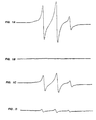
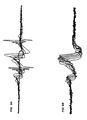
- Figures 1A and 1B show the electron spin resonance spectra of 4-amino-TEMPO labelled o-raffinose polymerized hemoglobin recorded on (A) day 1 and (B) day 30 (TEMPO: 2,2,6,6 tetramethylpiperidine-1-oxyl).
- Figure 1C is the spectra of the sample in Figure 1A diluted with equal volume of unlabelled hemoglobin recorded on day 1.
- Figure 1D is the sample in Figure 1C recorded on day 30.
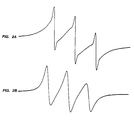
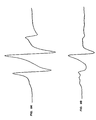
- Figures 2A and 2B are, respectively, the electron spin resonance spectra demonstrating covalent attachment of 4-(2-bromoacetamido)-TEMPO to ⁇ -aminohexyl-agarose and 4-amino-TEMPO to 1,4-bis (2:3-Epoxypropoxy) butane-activated agarose.
- Figures 3A and 3B are electron spin resonance spectra demonstrating successful covalent attachment of 4-(2-Bromoacetamido)-TEMPO and 3-maleimido-PROXYL to 3,5-bis-bromosilicyl-bisfumarate (DBBF) cross-linked or diaspirin cross-linked human hemoglobin.
- DBBF 3,5-bis-bromosilicyl-bisfumarate
- Figure 4A is an ESR spectra of 4-(2-bromoacetamido)-TEMPO.
- Figure 4B is an ESR spectra of 4-(2-bromoacetamido)-TEMPO-labelled HBOC.
- Figure 4C is an ESR spectra of 15 ND 17 TEMPOL in Lactated Ringer's solution recorded at room temperature.
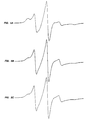
- Figure 5 is an ESR spectra of 4-(2-bromoacetamido)-TEMPO-labelled HBOC with different molar ratios of nitroxides to Hb; Fig. 5A 2:1, Fig. 5B 4:1 and Fig. 5C 8:1.
- the instrument sensitivity were decreased proportionately from Fig. 5A to Fig. 5B to Fig. 5C to record the spectra so that the center peak (Mo) would be shown to have similar peak height.
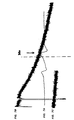
- Figure 6 is an ESR spectrum of a mixture of 4-(2-bromoacetamido)-TEMPO labelled HBOC and 15 ND 17 -TEMPOL wherein the center peak (see down arrow) of the former and the high field peak (see up-arrow) of the latter were adjusted to similar intensity. This is a superimposition of ESR spectrum from Fig. 4B and Fig. 4C.
- Figure 7 is a plasma half-life of 4-(2-bromoacetamido)-TEMPO-labelled HBOC in mouse.
- Fig. 7A is the ESR spectrum of the nitroxide signal recorded from the mouse tail approximately 10 minutes after i.v. infusion of 0.5 ml of the sample shown in Fig. 6.
- Fig. 7B is the time dependent (scan time 30 minutes) decrease in the center peak (Mo) signal intensity of Fig. 7A recorded at 10 times of the instrument sensitivity.
- Fig. 7C is a continuation of Fig. 7B at the end of its scan.
- Figure 8 is a plasma half-life of a mixture of 4-(2-bromoacetamido)-TEMPO-labelled HBOC (8g/dl of Hb and 8:1 TEMPO to Hb) and 15 ND 17 TEMPOL (0.5 ml in a 32 g. mouse) recorded from the mouse tail with a cannula for immediate recording of the infused nitroxides.
- the ESR spectrum of the sample prior to injection is shown in Fig. 6.
- Fig. 8A is a series of 5 ESR spectrum recorded at 0.5 minute intervals, the magnetic field strength was increased by 2 Gauss in between each scan to display the decrease in signal intensity as a function of time.
- Fig. 8B is the continuation from Fig. 8A of repeated recording of a series of 6 ESR spectrum at the same time intervals except that the magnetic field strength was decreased by 2 Gauss in between each scan.
- Figures 9A and 9B are electron spin resonance spectra demonstrating 4-amino-TEMPO labelled and o-raffinose cross-linked and polymerized human hemoglobin and 3-maleimido-PROXYL labelled DBBF-hemoglobin polymerized with glutaldehyde.
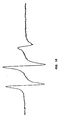
- Figure 10 is the electron spin resonance spectrum of nitroxide-labelled hemoglobin labelled with 4-amino-TEMPO and conjugated with dextran.
- hemoglobin is used generally herein to describe oxy-, carboxy-, carbonmonoxy-, and deoxy-hemoglobin except as otherwise noted by the context of the description.
- the hemoglobin used with this invention may be human, recombinant or animal in origin and is obtained and purified by known techniques.
- the hemoglobin may be covalently bound to pyridoxal groups of pyridoxal-5'-phosphate or ring opened adenosine triphosphate (o-ATP) by reaction with the aldehyde groups and cross-linked derivatives of hemoglobin.
- the cross-linked derivatives may include polyfunctional, heterobifunctional and homobifunctional cross-linking regents such as dialdehyde, polyaldehyde, diepoxide, polyepoxide, activated polycarboxyl and dicarboxyl groups, for example, 3,5-bis-bromosilicyl-bisfumarate, and TEMPO succinate or TOPS See (U.S. Patent No. 4,240,797) cyclodextrans and their anionic (e.g. , sulfate) cross-linked hemoglobin as well as polymerized hemoglobin. All hemoglobin solutions described herein for use with this invention are physiologically compatible. The hemoglobin solutions are cell-free to remove pyrogens, endotoxins, and other contaminants.
- cross-linking regents such as dialdehyde, polyaldehyde, diepoxide, polyepoxide, activated polycarboxyl and dicarboxyl groups, for example, 3,5-bis-bromosilicyl-
- nitroxide is used herein to describe stable nitroxide free radicals, their precursors, and their derivatives thereof including the corresponding hydroxylamine derivative where the oxygen atoms are replaced with a hydroxyl group and exist in hydrogen halide form.
- chloride salt form of the hydroxylamine derivatives are preferred.
- the unpaired electron of a nitroxide is stable in part because the nitrogen nucleus is attached to two carbon atoms which are substituted with strong electron donors. With the partial negative charge on the oxygen of the N-0 bond, the two adjacent carbon atoms together localize the unpaired electron on the nitrogen nucleus.
- Nitroxides may have either a heterocyclic or linear structure.
- the fundamental criterion is a stable free radical. Structurally, nitroxides of the following formula are preferred where R 1 - R 4 are electron donors and A is the remaining members of a heterocyclic ring.
- A represents the remaining carbon atoms of a 5-membered (pyrrolidinyl or PROXYL with one double bond, i.e. , pyrroline) or a 6-membered (piperidinyl or TEMPO) heterocyclic structure and in which one carbon atoms may be substituted with an oxygen atom (oxazolinyl or DOXYL) and certain hydrogen atoms may be substituted with up to two bromine atoms.
- stable isotopes may be utilized (e.g., N 15 , deuterium). Substitution at the ⁇ carbons should be such that the unpaired electron is maintained substantially in a ⁇ p orbital configuration.
- R 1 through R 4 are alkyls (straight and branched chain) or aryl groups but are preferred to be methyl or ethyl groups.
- the substituent groups on the alpha carbons in any nitroxide should be strong electron donors to enhance stability, thus methyl (CH 3 ) groups or ethyl (C 2 H 5 ) groups are preferred although other longer carbon chain species could be used. In practice, stearic considerations may limit the scope of the nitroxide compounds that are practical and economical.
- the preferred nitroxides used with this invention include nitroxides having the following structure:
- nitroxide compounds may be represented basically by the structural formula assuming that the R group is selected from among the configurations which preserve the stability of the free radical.
- nitroxides which can be employed in this invention are structurally diverse because the requisite property of the nitroxides is their ability to influence the course of the superoxide anion cascade in HRCS by mimicking the superoxide oxidase, superoxide dismutase, and catalase activities without substantially being consumed in the process.
- the nitroxide should be physiologically acceptable at a minimum concentration required to alleviate oxygen toxicity in the HRCS.
- the relatively low toxicity of nitroxides has encouraged their development as contrasting agent in NMR imaging ( See U.S. Patent Nos. 4,834,964; 4,863,717; 5,104,641).
- purified hemoglobin compositions contain at least 99% hemoglobin by weight of total protein, a total phospholipid content of less than about 3ug/ml, less than lug/ml of either phosphatidylserine or phosphatidylethanolamine and an inactive heme pigment of less than 6%.
- the purified hemoglobin solutions which are useful in this invention can be prepared using a variety of conventional techniques, including but are not limited to, those disclosed in Cheung et. al., Anal Biochem 137:481-484 (1984), De Venuto et. al., J. Lab. Clin. fertil. 89:509-516 (1977), and Lee, et. al., Vith International Symposium on Blood Substitutes, San Diego, CA Mar. 17-20 Abstract H51 (1993).
- the purified hemoglobin solutions used in this invention should be essentially free of oxygen.
- Hemoglobin in solution may be deoxygenated by admixture with a chemical reducing agent which causes the hemoglobin to release oxygen and to be maintained in a substantially deoxygenated state.
- a preferred method for deoxygenating a hemoglobin solution is performed by exposing a hemoglobin solution to an inert, essentially oxygen-free gas, such as nitrogen or carbon monoxide to cause removal of bound oxygen from the hemoglobin and conversion of the hemoglobin in solution to a form such as deoxy-hemoglobin or carbonmonoxy-hemoglobin that lacks oxygen.
- hemoglobin may be exposed to a vacuum or gas through a membrane that is permeable to oxygen yet impermeable to hemoglobin.
- a hemoglobin solution may be passed through a diffusion cell having a membrane wall along which hemoglobin flows and through which oxygen is capable of passing, but hemoglobin is not.
- Inert gas is circulated along the side of the membrane wall opposite the hemoglobin solution causing the removal of oxygen and the conversion of the hemoglobin in solution to the deoxygenated state.
- the deoxy-hemoglobin is maintained in an essentially oxygen-free environment during nitroxide labelling, cross-linking, polymerization, or conjugation.
- a nitroxide is covalently attached to the hemoglobin. Normally at least one, and preferably more than one, nitroxide will be covalently attached to a single hemoglobin molecule.
- the nitroxide may be covalently attached to the hemoglobin at any of several sites on the hemoglobin molecule including:
- a nitroxide may also be bound to any residual aldehyde, epoxy, or activated carboxyl groups of a divalent- or a multivalent-cross-linker involved in the cross-linking and polymerization of hemoglobin or at any residual reactive groups on an agent such as dextran (Dx) or hydroxylethylstarch (HES) or polyoxyethylene (POE) used to conjugate hemoglobin.
- Dx dextran
- HES hydroxylethylstarch
- POE polyoxyethylene
- the hemoglobin in an HBOC solution is slowly auto-oxidized by oxygen to form met-hemoglobin and the superoxide anion.
- the superoxide anion thus formed will reduce the nitroxide to a hydroxylamine derivative, and the superoxide anion will be oxidized to form molecular oxygen by the following reaction.
- Equation [4] The conversion of superoxide anion to molecular oxygen described in Equation [4] prevents the accumulation of superoxide anion and the subsequent formation of hydrogen peroxide.
- This activity described herein as a "superoxide oxidase" activity, will be most effective when the initial oxygen content in the composition is kept to a minimum, the composition is stored in an essentially oxygen free environment and the nitroxide concentration is sufficient to prevent the formation of superoxide anion and hydrogen peroxide. Therefore, storage of the HRCS in an essentially oxygen-free container is preferred.
- Container systems that permit a solution to be stored in an oxygen free environment are well known because many non-hemoglobin based intravenous solutions are sensitive to oxygen.
- a glass container that is purged of oxygen during the filling and sealing process may be used.
- flexible plastic containers are available that may be enclosed in an overwrap to seal against oxygen. Basically, any container that prevents oxygen from interacting with hemoglobin in solution may be used.
- Equation 4 represents that the conversion of nitroxide to its diamagnetic hydroxyl derivative is coupled to the conversion of the superoxide anion back to molecular oxygen.
- the experimental evidence in support of such a conversion is shown in Figures 1A and 1B.
- the electron spin resonance spectrum of TEMPO covalently attached to the hemoglobin ( Figure 1A) was converted to its diamagnetic derivatives which result in the complete disappearance of the resonance peaks after storage of the sample for 30 days at 4°C ( Figure 1B).
- the nitroxide is considered to have performed a "superoxide oxidase"-like activity when it is converted to its hydroxylamine derivative in the presence of hemoglobin.
- the "superoxide dismutase" activity of a nitroxide in an HBOC solution is demonstrated by showing the reconversion of the hydroxylamine derivative back to a nitroxide (See Equation [5] together with Equation [4]). Knowing that under the experimental conditions described in Figures 1A and 1B the nitroxide is fully converted to hydroxylamine (See Equation [4]), the nitroxide may be regenerated by simply providing more superoxide anion as shown in Equation 5. To demonstrate this reaction mechanism, the relative concentration of hemoglobin (and thus superoxide anion) to the nitroxide is increased by diluting the sample in Figure 1A with an equal volume of unlabelled hemoglobin.
- the number of nitroxide molecules per hemoglobin molecule may be in the range of approximately 1-40 and for specific labelling is most preferably about 2. However, the nitroxide-hemoglobin ratio should be kept to a minimum due to pharmacokinetic, toxicological and immunological considerations.
- a nitroxide such as 3-maleimido-PROXYL is covalently bound to hemoglobin in solution by first preparing a 100mM solution of the nitroxide in ethanol as the carrier solvent. Two(2) molar equivalents of the nitroxide to hemoglobin was added directly with mixing to a DCL-Hb (8g/dl) in Lactated Ringers.
- the reaction mixture was allowed to react at 22°C with agitation until greater than 90% of the nitroxide was covalently linked to the DCL-Hb,usually within one hour.
- the unreacted nitroxide was then removed with a cross-flow membrane filtration system having a molecular-weight cut-off of 30,000 daltons by washing three(3) times with 10 volumes of Lactated Ringers.
- the retantate hemoglobin concentration is adjusted to between 7-14 g/dl, sterile filtered, and stored at 4°C. After transfusion, when the HRCS is fully oxygenated, the nitroxide is expected to function as a SOD-mimic and secondly as a catalase-mimic.
- nitroxides have been covalently bound to hemoglobin to study the cooperative oxygen binding properties of the hemoglobin molecule itself.
- nitroxides have not been used with stabilized, i.e. , cross-linked, or polymerized, encapsulated, or conjugated hemoglobin solution that are physiologically compatible.
- stabilized i.e. , cross-linked, or polymerized, encapsulated, or conjugated hemoglobin solution that are physiologically compatible.
- the known chemistry of hemoglobin and nitroxides suggests that it is possible to perform similar nitroxide-labelling of hemoglobin that has been chemically cross-linked or cross-linked through recombinant techniques by selecting an available site on the hemoglobin molecule that is not blocked by the particular compound used to stabilize, polymerize, or conjugate the hemoglobin molecule(s).
- nitroxide-labeling technology demonstrated here in the example of nitroxide-HBOC is readily applied to the production of other nitroxide-labelled macromolecules with useful antioxidant enzyme-mimetic activities, for example nitroxide-labelled serum albumin and nitroxide-labelled immunoglobulin.
- nitroxide-labelled serum albumin and nitroxide-labelled immunoglobulin.
- Forms of serum albumin which can readily be labelled by nitroxide by this technology are monomeric (normal) albumin, and albumin homodimers, oligomers, and aggregates (microspheres).
- the antioxidant enzyme mimic effect of a nitroxide-labelled hemoglobin has utility in other applications, medical or otherwise, where antioxidant catalysis is useful.
- hemoglobin is intramolecularly stabilized by chemical or recombinant cross-linking of its subunits.
- "Stabilized" hemoglobin is referred herein to describe hemoglobin monomers that are stabilized by chemical or recombinant cross-linking and also to describe dimers, trimers, and larger oligomers whose constituent hemoglobin molecules are stabilized by cross-linking with cyclodextrans and their sulfated derivatives.
- a preferred technique and best mode for attaching nitroxide to stabilized hemoglobin is by the covalent attachment of the nitroxide to the ⁇ -93 sulfhydryl groups of the two ⁇ -chains of stabilized hemoglobin.
- hemoglobin-based oxygen carriers have been developed that are stabilized through chemical cross-linking with DBBF, diaspirin cross-linked hemoglobin and hemoglobin that is stabilized and oligomerized with o-raffinose.
- the ring opened sugars described in my United States Patent No. 4,857,636 yield polyvalent aldehydes derived from disaccharides, oligosaccharides, or, preferably, trisaccharides such as o-raffinose. These compounds function both to provide intramolecular stabilization (cross-linking) and intermolecular polymerization.
- the polyvalent aldehydes may be used to produce "stabilized" hemoglobin as defined above without polymerization.
- a nitroxide may be covalently bound to the stabilized hemoglobin or the polymerized hemoglobin. Therefore, the hemoglobin-based solutions that are stabilized using the polyvalent aldehydes are considered in the present embodiment as a "stabilized" hemoglobin and in the subsequent embodiment as a polymerized hemoglobin.
- DBBF-Hb is reacted with two types of nitroxides (TEMPO and PROXYL) which contain two types of sulfhydro group specific functional groups and have the following structural formula:
- DBBF-Hb is prepared by cross-linking purified deoxygenated hemoglobin in solution with bis(3,5 dibromosalicyl)fumarate by known techniques, and the resulting product is purified by column chromatography.
- the covalent attachment of 3-maleimido (2,2,5,5 -tetramethyl pyrrolidine-N-Oxyl) [3-maleimido-PROXYL] is accomplished by adding 2 molar equivalents of this nitroxide using methanol as the carrier solvent at a concentration of approximately 100mM of 3-maleimido-PROXYL to lml of DBBF-Hb at a concentration of approximately 8 g/dl in Lactate Ringers.
- the DBBF-Hb is allowed to react at 22-23°C for approximately 30 minutes with mixing.
- the extent of cross-linking is estimated from the percent disappearance of the electron spin resonance signal intensity of the unreacted nitroxide.
- the reaction mixture was washed three (3) times with a 10 volume excess of Lactated Ringers using a Filtron stire cell with a 30 kilodalton cut-off nominal molecular weight limits (NMWL) polyethylene sulfone (PES) membrane (Filtron Technology Co.).
- NMWL nominal molecular weight limits
- PES polyethylene sulfone
- Figure 3A shows the electron spin resonance spectra of 4-(2-bromoacetamido)-TEMPO labelled DBBF-Hb.
- the electron spin resonance spectrum of DBBF-Hb that is similarly labelled with 3-maleimido-PROXYL is shown in Figure 3B.
- the nitroxide is covalently linked to the lone sulfhydro group on the two ⁇ -globin chains of hemoglobin.
- the nitroxide to hemoglobin-bound oxygen ratio is approximately 200 to 1 at 99.00% deoxy-hemoglobin because there are two nitroxides attached to the two ⁇ -globin chains of the hemoglobin.
- the deoxygenated HRCS picks up oxygen in the lung and the nitroxide to hemoglobin-bound oxygen ratio becomes approximately 1 to 2 at 100% oxygenation because there are four oxygen molecules bound to the four globin chains of the hemoglobin with the two nitroxides remaining on the ⁇ -globin chains.
- DBBF-Hb may also be covalently labelled with a spacer group (e.g., an extra methyl group) between the maleimido and PROXYL moieties (i.e., 3-maleimidomethyl-PROXYL) which would exhibit a resonance spectrum similar to that of Figure 3B.
- a spacer group e.g., an extra methyl group
- nitroxides may be covalently attached to specific amino-groups in the DPG binding site (e.g., ⁇ -Val-1 ⁇ -Lys-82 and ⁇ -Lys-99) or may be attached to the remaining 40-plus surface lysine ⁇ -amino groups on hemoglobin.
- Isothiocyanate derivatives of the TEMPO and PROXYL nitroxides are also reactive with the amino group.
- 4-isothiocyanate-TEMPO may be added to hemoglobin at a molar ratio of approximately 10:1. Resonance spectrum (not shown) of hemoglobin labelled with this nitroxide at other sites is similar to that shown in Figure 3A.
- DBBF-Hb The ability to attach nitroxides at several sites of DBBF-Hb suggests that recombinant hemoglobin that is stabilized with alpha-globin dimers (D. Looker et.al. NATURE 356:258 (1992)) may be similarly labelled with a nitroxide. It is also possible to prepare a DBBF analogue of a nitroxide labelled cross-linking agent such as a TEMPO labelled succinate (See U.S. Patent No. 4,240,797).
- a nitroxide labelled cross-linking agent such as a TEMPO labelled succinate
- Figure 4 is ESR spectra of (A) 2-(bromoacetamido)-TEMPO, (B) 2-(bromoacetamido)-TEMPO-labelled HBOC and (C) 15 ND 17 TEMPOL (TEMPOL: 4-hydroxy-2,2,6,6-tetramethylpiperidine-1-oxyl) in Lactated Ringer's solution recorded at room temperature.
- the difference in Figure 4A and 4B represents the difference in the mobility of a small molecular weight nitroxide to that of a nitroxide covalently attached to a macromolecule such as hemoglobin.
- Figure 4C shows that a stable isotope nitrogen 15 N with a nuclear spin of 1/2 yields two resonance peaks and that natural-isotopic 14 N with a nuclear spin of 1 yields three resonance peaks (compare (4A to 4C).
- the separation of these resonance peaks is used to demonstrate the enzyme-mimic and in vivo and in vitro oxidation/reduction reactions of small and macromolecular weight nitroxides.
- Nitroxide labelled HBOC with different molar ratios of nitroxide to hemoglobin are prepared as follows. 2, 4, and 8 molar equivalents of 4- (2-bromoacetamido) -TEMPO, were added as solid powder directly into three separate 15 ml Vacutainers in a clean hood. After replacing the rubber septum, 4-(2-bromoacetamido)-TEMPO was subsequently dissolved in 200 ul chloroform. The Vacutainers were then connected to high vacuum (5 mm Hg) via a 27 gauge needle through the rubber septum and the chloroform was removed leaving a thin film of 4-(2-bromoacetamido)-TEMPO coating the lower half of the Vacutainer.
- the solutions were allowed to react at room temperature with intermittent vortex mixing at approximately 5 minute intervals for 1/2 hour (not all solids were dissolved in the 4 and 8 molar ratios of nitroxide to hemoglobin), the Vacutainers were then left at 4 degrees C in a refrigerator over night. Vortex mixing at room temperature was resumed the next morning for another 1/2 hour until all solids of 4-(2-bromoacetamido)-TEMPO had visually disappeared from the surface of the Vacutainer.
- the reaction mixtures and the control were then transferred to a sterile dialyzing tube and dialyzed against Lactated Ringers until no unlabelled free 4-(2-bromoacetamido)-TEMPO electron spin resonance (ESR) signals could be detected.
- ESR electron spin resonance
- the ESR spectra of 4-(2-bromoacetamido)-TEMPO-labelled HBOC at 2, 4, and 8 molar equivalents 4-(2-bromoacetamido)-TEMPO to Hb are shown in Figures 5A-5C respectively.
- the ESR spectra are essentially the same with or without dialysis indicating the covalent labeling is quantitative.
- the two SH- groups on the beta globulin chains appear to be the site of covalent attachment in the case of HBOC (this can be confirmed by selective blocking of 4-(2-bromoacetamido)-TEMPO labeling with N-ethyl-maleimide or globulin chain analysis by reverse phase HPLC). It is noteworthy that the ESR signal intensity (peak Mo) ratios for 2, 4, and 8 are in approximately the same ratio as the spectra were recorded at proportionately decreasing instrument sensitivity.
- the preferred molar of nitroxide to hemoglobin in the blood substitute formulations is 8:1 as described below.
- an ESR spectrum of a mixture of 4-(2-bromoacetamide)-TEMPO-labelled HBOC and 15 ND 17 -TEMPOL wherein the center peak of the 4-(2-bromoacetamido)-TEMPO (indicated by down arrow) and the high field peak of 15 ND 17 -TEMPOL (indicated by the up-arrow) were adjusted to similar intensity.
- the separation of the resonance peaks permits the simultaneous monitoring of free radical or enzyme mimic activities involving the small molecular weight nitroxide (TEMPOL) and its macromolecular conjugate in both in vitro and in vivo (murine) reactions.
- the in vivo plasma half-life of the two nitroxides was compared by referring to the unique spectral characteristics of the different nitroxides. Specifically, the in vivo ESR studies of hemoglobin-based solutions, on the mouse were performed using a nitroxide to hemoglobin ratio of 8:1 (see Fig. 5C) to take advantage of its high ESR signal intensity.
- the approximate plasma half-life of a small molecular weight nitroxide 15 ND 17 -TEMPOL see Fig.
- a cannula consisting of a 30 gauge hypodermic needle attached to a one foot length of polyethylene tubing was inserted into the tail vein and held in place by cyanoacrylate glue.
- the cannulated mouse was transferred under anesthesia to a 50 ml conical centrifuge tube modified to allow the tail to protrude from the conical end and to allow a continuous flow of anesthetic gas from the opening end of the tube.
- the tail was inserted into a plastic tube which was then fitted into a TE 102 cavity.
- the cannula was flushed periodically with heparin (100 unit/ml) to ensure patency.
- the cannula was near the root of the tail and was kept outside of the ESR cavity so that a pure signal from the tail could be measured immediately after bolus injection.
- 0.5 ml of samples see Fig. 8
- the spectrometer was set for a repeat scanning mode at 1/2 in. intervals ( see Figs. 8A and 8B).
- Fig. 8A the magnetic field was increased by two Gauss
- Fig. 8B the magnetic field was decreased by two Gauss, to superimpose the resonance spectra.
- the 15 ND 17 -TEMPOL signal disappeared within 2.5 minutes after injection.
- the 4-(2-bromoacetamido)-TEMPOL-labelled HBOC also decreased at a similar rate.
- Fig. 8B shows that the nitroxide-labelled to macromolecules such as HBOC has considerably longer plasma half-life as compared to small molecular weight nitroxide (e.g. , 15 ND 17 -TEMPOL).
- hemoglobin polymers While it is possible to produce dimers of stabilized hemoglobin from cross-linked monomers, it is also possible to produce hemoglobin polymers from stabilized or native hemoglobin. Solutions of hemoglobin polymers contain a mixture of monomers, dimers, trimers, tetramers, and other oligomers. Solutions containing polymerized hemoglobins used as an HBOC generally have longer plasma circulation times and higher oxygen carrying capacities as compared to stabilized monomeric hemoglobin. Such polymerized hemoglobin may be prepared by a number of pathways using several different polymerizing agents. ( See , U.S. Pat. Nos. 4,001,200, 4,857,636, and 4,826,811) .
- the preferred method of introducing a nitroxide to a solution of polymerized hemoglobin is again by covalently attaching a nitroxide to the ⁇ -93 sulfhydryl groups cf the two ⁇ -globin chains of hemoglobin. These sulfhydryl groups are not known to be -involved in the stabilization or polymerization processes. Consequently, the nitroxide is preferably covalently attached to hemoglobin before the stabilization and pclymerization of the hemoglobin monomers.
- nitroxide is covalently attached to DBBF-Hb according to the procedure described in the first embodiment above, followed by polymerization with glutaldehyde according to the procedure described in Sehgal et. al. U. S. Patent No. 4,826,811.
- Figure 4B is an electron spin resonance spectra of the DBBF-Hb labelled with 3-maleimido-PROXYL and polymerized with glutaldehyde.
- DBBF-Hb that is polymerized with glutaldehyde may be labelled with 4-(2-bromoacetamido)-TEMPO by the same method.
- a polymerized hemoglobin intermediate such as a glutaldehyde-polymerized, an o-raffinose-polymerized, or an o-cyclodextran-polymerized hemoglobin intermediate that contains unreacted aldehyde groups, may be used for covalent attachment of either 4-amino-TEMPO or 3-amino-PROXYL via reductive amination to yield a nitroxide-labelled hemoglobin polymer.
- reductive amination the sequence and timing of the reaction are important.
- the 4-amino-TEMPO is added to glutaldehyde-polymerized hemoglobin after completion of polymerization, but prior to the reduction reaction that results in covalent attachment of the nitroxide to the polymerized hemoglobin.
- the nitroxide labelling of a o-raffinose polymerized hemoglobin may be accomplished by the addition of either 4-amino-TEMPO or 3-amino-PROXYL prior to reductive amination.
- 4-amino-TEMPO labelled o-raffinose polymerized hemoglobin is prepared according to the procedure described in my United States Patent No.
- hemoglobin may be cross-linked and polymerized using polyvalent aldehydes derived from disaccharides or ring-opened sugars including, oligosaccharides, or preferably, trisaccharides such as o-raffinose. Likewise, monosaccharides may be used to stabilize and polymerize hemoglobin although the higher molecular weight sugars are preferred.
- the resonance spectrum of a dialyzed and washed o-raffinose polymerized hemoglobin labelled with 4-amino-TEMPO was shown in Figure 9A.
- it is desirable to increase the valance of the polyaldehyde of the cross-linker with the use of ⁇ -cyclodextran, ⁇ -cyclodextran, and ⁇ -cyclodextran, as well as their sulfate derivatives which represents 6-, 7-, and 8-cyclized glucose molecules, the ring opened ⁇ -cyclodextran, ⁇ -cyclodextran, and ⁇ -cyclodextran have 12, 14, and 16 reactive aldehyde groups respectively.
- ring-opened cross-linkers can be used to cross-link and polymerize hemoglobin to produce polymerized hemoglobin which is rich in oligomers.
- the unreacted aldehyde, as described above, may be utilized to covalently attached to an amino-nitroxide, for example, 4-amino-TEMPO or 3-amino-PROXYL.
- the ring-opened sulfate derivatives for example, the sulfated ⁇ -cyclodextran will be an effective cross-linker for two additional reasons: (1) the sulfate groups will mimic the activity of DPG in lowering the oxygen affinity of the cross-linked hemoglobin, thus improving oxygen transport properties, and (2) the sulfate groups will serve as affinity labels which will complex multiple ( e.g.
- the aldehyde groups on the cyclodextran will be brought to close proximity with the NH 2 groups within the DPG binding sites, thus promoting the covalent intra-subunit and inter-molecular cross-linking of hemoglobin resulting in an increased yield of hemoglobin oligomers.
- the ring-opened cyclodextran polymerized and nitroxide-labelled hemoglobin will also have improved yield and composition as compared to o-raffinose and glutaldehyde polymerized hemoglobin.
- a physiologically compatible solution of conjugated hemoglobin is produced by forming a conjugate of hemoglobin and a biocompatible macromolecule used as a plasma expander.
- Plasma expanders such as dextran (Dx), polyoxyethylene (POE), hydroxylethyl starch (HES), are used to increase the circulation half life of hemoglobin in the body.
- Dx dextran
- POE polyoxyethylene
- HES hydroxylethyl starch
- the hemoglobin molecules together with the biocompatible macromolecule are collectively referred to as a hemoglobin conjugate.
- There are a number of convenient methods to incorporate a nitroxide into a hemoglobin conjugate For example, one may simply substitute the hemoglobin to be conjugated with a nitroxide-labelled hemoglobin such as TEMPO labelled DBBF-Hb.
- 4-Amino-TEMPO labelled dextran conjugated hemoglobin is prepared in accord with the procedure described by Tam et. al. (Proc. Natl. Acad. Sci., 73:2128 (1976)). Initially, an 8% hemoglobin solution in 0.15 M NaCl and 5 mM phosphate buffer, pH 7.4 is conjugated to periodate-oxidized dextran to form a Schiff-base intermediate. Twenty molar equivalents of 4-amino-TEMPO is added to hemoglobin to form the Schiff-base between the nitroxide and the remaining reactive aldehyde groups on the dextran. After a 30 minute of incubation at 4°C, a 50 molar equivalent of dimethylamine borane in water is added.
- the solution is incubated for a further 2 hours at 4°C. Afterwards, the solution is dialyzed, reconstituted with Lactate Ringers buffer and sterile filtered with Filtron membrane filtration units (Filtron Technology Co.).
- the electron spin resonance spectrum of the 4-amino-TEMPO labelled dextran-conjugated hemoglobin is a sharp asymmetric triplet reflecting a high degree of motional freedom (See Figure 11).
- the increased mobility of the TEMPO covalently attached to the Dextran is consistent with the nitroxide linked to a flexible polysaccharide dextran chain as compared to that of a tightly folded hemoglobin molecule (See Figures 3A and 3B).
- resonance spectrum in Figure 11 demonstrates that a novel nitroxide labelled dextran conjugated hemoglobin has been prepared.
Landscapes
- Health & Medical Sciences (AREA)
- Chemical & Material Sciences (AREA)
- Life Sciences & Earth Sciences (AREA)
- General Health & Medical Sciences (AREA)
- Medicinal Chemistry (AREA)
- Veterinary Medicine (AREA)
- Engineering & Computer Science (AREA)
- Public Health (AREA)
- Animal Behavior & Ethology (AREA)
- Epidemiology (AREA)
- Pharmacology & Pharmacy (AREA)
- Bioinformatics & Cheminformatics (AREA)
- Organic Chemistry (AREA)
- Proteomics, Peptides & Aminoacids (AREA)
- Molecular Biology (AREA)
- Biophysics (AREA)
- Gastroenterology & Hepatology (AREA)
- Immunology (AREA)
- Biochemistry (AREA)
- Genetics & Genomics (AREA)
- Nanotechnology (AREA)
- Nuclear Medicine, Radiotherapy & Molecular Imaging (AREA)
- Toxicology (AREA)
- Inorganic Chemistry (AREA)
- Dispersion Chemistry (AREA)
- Biotechnology (AREA)
- General Engineering & Computer Science (AREA)
- Medical Informatics (AREA)
- Crystallography & Structural Chemistry (AREA)
- Radiology & Medical Imaging (AREA)
- Zoology (AREA)
- Diabetes (AREA)
- Hematology (AREA)
- General Chemical & Material Sciences (AREA)
- Chemical Kinetics & Catalysis (AREA)
- Medicines That Contain Protein Lipid Enzymes And Other Medicines (AREA)
- Medicinal Preparation (AREA)
- Pharmaceuticals Containing Other Organic And Inorganic Compounds (AREA)
- Organic Low-Molecular-Weight Compounds And Preparation Thereof (AREA)
- Food Preservation Except Freezing, Refrigeration, And Drying (AREA)
Priority Applications (1)
| Application Number | Priority Date | Filing Date | Title |
|---|---|---|---|
| EP96116519A EP0770627A1 (en) | 1993-08-16 | 1994-08-16 | Composition and methods using nitroxides to avoid oxygen toxicity |
Applications Claiming Priority (5)
| Application Number | Priority Date | Filing Date | Title |
|---|---|---|---|
| US10754393A | 1993-08-16 | 1993-08-16 | |
| US107543 | 1993-08-16 | ||
| US08/291,590 US5591710A (en) | 1993-08-16 | 1994-08-15 | Compositions and methods utilizing nitroxides to avoid oxygen toxicity, particularly in stabilized, polymerized, conjugated, or encapsulated hemoglobin used as a red cell substitute |
| US291590 | 1994-08-15 | ||
| PCT/US1994/009246 WO1995005397A1 (en) | 1993-08-16 | 1994-08-16 | Composition and methods using nitroxides to avoid oxygen toxicity |
Related Child Applications (1)
| Application Number | Title | Priority Date | Filing Date |
|---|---|---|---|
| EP96116519A Division EP0770627A1 (en) | 1993-08-16 | 1994-08-16 | Composition and methods using nitroxides to avoid oxygen toxicity |
Publications (2)
| Publication Number | Publication Date |
|---|---|
| EP0714407A1 EP0714407A1 (en) | 1996-06-05 |
| EP0714407B1 true EP0714407B1 (en) | 1998-02-11 |
Family
ID=22317141
Family Applications (2)
| Application Number | Title | Priority Date | Filing Date |
|---|---|---|---|
| EP94927922A Expired - Lifetime EP0714407B1 (en) | 1993-08-16 | 1994-08-16 | Composition and methods using nitroxides to avoid oxygen toxicity |
| EP96116519A Withdrawn EP0770627A1 (en) | 1993-08-16 | 1994-08-16 | Composition and methods using nitroxides to avoid oxygen toxicity |
Family Applications After (1)
| Application Number | Title | Priority Date | Filing Date |
|---|---|---|---|
| EP96116519A Withdrawn EP0770627A1 (en) | 1993-08-16 | 1994-08-16 | Composition and methods using nitroxides to avoid oxygen toxicity |
Country Status (12)
| Country | Link |
|---|---|
| US (5) | US5591710A (enExample) |
| EP (2) | EP0714407B1 (enExample) |
| JP (1) | JP3628019B2 (enExample) |
| CN (3) | CN1046635C (enExample) |
| AT (1) | ATE163186T1 (enExample) |
| CA (1) | CA2169178A1 (enExample) |
| DE (1) | DE69408539T2 (enExample) |
| DK (1) | DK0714407T3 (enExample) |
| ES (1) | ES2114227T3 (enExample) |
| GR (1) | GR3026609T3 (enExample) |
| TW (2) | TW381022B (enExample) |
| WO (1) | WO1995005397A1 (enExample) |
Families Citing this family (61)
| Publication number | Priority date | Publication date | Assignee | Title |
|---|---|---|---|---|
| US6605619B1 (en) | 1992-03-20 | 2003-08-12 | The United States Of America As Represented By The Secretary Of The Department Of Health And Human Services | Nitroxides as protectors against oxidatives stress |
| TW381022B (en) * | 1993-08-16 | 2000-02-01 | Hsia Jen Chang | Compositions and methods utilizing nitroxides to avoid oxygen toxicity, particularly in stabilized, polymerized, conjugated, or encapsulated hemoglobin used as a red cell substitute |
| US5840701A (en) * | 1993-08-16 | 1998-11-24 | Hsia; Jen-Chang | Compositions and methods utilizing nitroxides in combination with biocompatible macromolecules |
| SG95590A1 (en) * | 1995-03-31 | 2003-04-23 | Synzyme Technologies Inc | Compositions and method utilizing nitroxides in combination with biocompatible macromolecules |
| JPH10501823A (ja) * | 1995-04-10 | 1998-02-17 | バクスター、インターナショナル、インコーポレイテッド | クモ膜下出血の治療における架橋ヘモグロビンの使用 |
| DE19514088A1 (de) * | 1995-04-13 | 1996-10-17 | Deutsches Krebsforsch | Konjugat zur Behandlung von Entzünduns-, Infektions- und/oder Hauterkrankungen |
| US6149891A (en) * | 1995-05-31 | 2000-11-21 | Israel Humanitarian Foundation Ltd. | X-ray contrast medium and method for protecting against harmful effects thereof |
| WO1998034955A1 (en) * | 1997-02-06 | 1998-08-13 | Duke University Medical Center | No-modified hemoglobins and uses therefor |
| US6627738B2 (en) * | 1995-09-15 | 2003-09-30 | Duke University | No-modified hemoglobins and uses therefor |
| US6911427B1 (en) | 1995-09-15 | 2005-06-28 | Duke University | No-modified hemoglobins and uses therefore |
| US6197745B1 (en) * | 1995-09-15 | 2001-03-06 | Duke University | Methods for producing nitrosated hemoglobins and therapeutic uses therefor |
| IL126376A (en) * | 1996-03-28 | 2009-09-22 | Northfield Lab | Acellular red blood product cell substitutes, their preparation and uses thereof |
| US6547781B1 (en) * | 1996-04-09 | 2003-04-15 | Cynsure, Inc. | Ultra-long flashlamp-excited pulse dye laser for therapy and method therefor |
| EP1011710B1 (en) * | 1997-02-28 | 2005-08-17 | The Regents of the University of California | Methods and compositions for optimization of oxygen transport by cell-free systems |
| US5814601A (en) * | 1997-02-28 | 1998-09-29 | The Regents Of The University Of California | Methods and compositions for optimization of oxygen transport by cell-free systems |
| US6623472B1 (en) * | 1997-08-16 | 2003-09-23 | Orthogen Gentechnologic. Gmbh | Method for inducing therapeutically-effective proteins |
| US6096759A (en) * | 1997-09-19 | 2000-08-01 | Georgetown University | Method for treating essential hypertension |
| US6347627B1 (en) * | 1998-04-23 | 2002-02-19 | Pioneer Inventions, Inc. | Nitrous oxide based oxygen supply system |
| JP2000230000A (ja) | 1999-02-08 | 2000-08-22 | Hokkaido Univ | 一酸化窒素代謝物−ポリオキシアルキレン−ヘモグロビン結合体 |
| CA2266174A1 (en) * | 1999-03-18 | 2000-09-18 | Hemosol Inc. | Hemoglobin-antioxidant conjugates |
| US6894150B1 (en) | 1999-10-01 | 2005-05-17 | Ross Walden Tye | Non-pyrogenic, endotoxin-free, stroma-free tetrameric hemoglobin |
| WO2001034648A1 (en) * | 1999-11-12 | 2001-05-17 | Baxter International, Inc. | Reduced side-effect hemoglobin compositions |
| DE10011163A1 (de) * | 2000-02-28 | 2001-09-13 | Ew Handels & Consulting Gmbh | Verfahren zur Diagnose und/oder Überwachung physiologischer oder pathologischer Veränderungen im menschlichen oder tierischen Körper und ESR-Spektrometer zur Durchführung des Verfahrens |
| WO2002026231A1 (en) * | 2000-09-26 | 2002-04-04 | Georgetown University | Use of nitroxides for the treatment of vascular disorders in a diabetic mammal |
| US20030045461A1 (en) * | 2001-09-06 | 2003-03-06 | Jen-Chang Hsia | Composition and methods of esterified nitroxides gated with carboxylic acids |
| US20050164915A1 (en) | 2002-04-01 | 2005-07-28 | Sangart, Inc. | Compositions for oxygen transport comprising a high oxygen affinity modified hemoglobin |
| US20030153491A1 (en) * | 2002-01-11 | 2003-08-14 | Winslow Robert M. | Methods and compositions for oxygen transport comprising a high oxygen affinity modified hemoglobin |
| JP3912206B2 (ja) * | 2002-07-05 | 2007-05-09 | 株式会社日立製作所 | 筒内直接燃料噴射装置用燃料ポンプ |
| US8030459B2 (en) | 2002-07-19 | 2011-10-04 | The General Hospital Corporation | Oxime conjugates and methods for their formation and use |
| EP1562975A2 (en) * | 2002-10-25 | 2005-08-17 | Yissum Research Development Company Of The Hebrew University Of Jerusalem | Steroid compounds comprising superoxide dismutase mimic groups and nitric oxide donor groups, and their use in the preparation of medicaments |
| BRPI0407106A (pt) * | 2003-01-29 | 2006-01-24 | Northfield Lab | Soluções de hemoglobina polimerizadas com quantidade reduzida de tetrâmero e método para preparação |
| CA2523565A1 (en) * | 2003-04-25 | 2004-11-11 | Mitos Incorporated | Prophylactic pretreatment with antioxidants |
| WO2004100995A1 (en) * | 2003-05-15 | 2004-11-25 | Hemosol Lp | Targeted delivery of anti-viral compounds through hemoglobin bioconjugation |
| US7589107B2 (en) * | 2003-05-19 | 2009-09-15 | Othera Holding, Inc. | Amelioration of vitrectomy-induced cataracts |
| KR20060109947A (ko) | 2003-11-20 | 2006-10-23 | 오쎄라 파마슈티걸즈, 인크. | 황반 변성 및 다른 안과 질환의 개선 |
| US20080312283A1 (en) * | 2005-05-26 | 2008-12-18 | Othera Pharmaceuticals, Inc. | Use of Hydroxylamine Derivates for Inhibiting Vitrectomy-Induced Cataracts |
| DE102005031206A1 (de) * | 2005-07-01 | 2007-01-11 | Rovi Gmbh & Co. Kosmetische Rohstoffe Kg | Verfahren zur Untersuchung von Liposomen |
| US20090004159A1 (en) * | 2006-01-24 | 2009-01-01 | The Board Of Trustees Of The University Of Illinoi | Polymerized Hemoglobin Media and Its Use in Isolation and Transplantation of Islet Cells |
| WO2008021577A2 (en) * | 2006-01-24 | 2008-02-21 | The Board Of Trustees Of The University Of Illinois | Polymerized hemoglobin media and its use in isolation and transplantation of islet cells |
| US20070197599A1 (en) * | 2006-02-02 | 2007-08-23 | Matier William L | Hydroxylamines and derivatives as anti-angiogenic agents |
| US20070197593A1 (en) * | 2006-02-22 | 2007-08-23 | Matier William L | Hydroxylamines and derivatives for treatment of inflammatory conditions of the liver |
| US7494974B2 (en) * | 2006-10-24 | 2009-02-24 | Ikor, Inc. | Carboxymethylated cross-linked tetrameric hemoglobin |
| US7504377B2 (en) * | 2006-10-23 | 2009-03-17 | Ikor, Inc. | Nitric oxide-blocked cross-linked tetrameric hemoglobin |
| EP2099463B1 (en) | 2006-11-07 | 2014-07-16 | The General Hospital Corporation | Attenuation of vasoactive oxygen carrier-induced vasoconstriction |
| WO2008101195A2 (en) * | 2007-02-16 | 2008-08-21 | Othera Holding, Inc. | Drug resistance reversal in neoplastic disease |
| JP2010519259A (ja) | 2007-02-22 | 2010-06-03 | オセラ ホールディングス、インク. | ヒドロキシルアミン化合物およびそれらの使用方法 |
| US8273857B2 (en) * | 2009-09-22 | 2012-09-25 | Jen-Chang Hsia | Compositions and methods of use of neurovascular protective multifunctional polynitroxylated pegylated carboxy hemoglobins for transfusion and critical care medicine |
| US7989593B1 (en) | 2010-05-27 | 2011-08-02 | Bing Lou Wong | Method for the preparation of a high-temperature stable oxygen-carrier-containing pharmaceutical composition and the use thereof |
| US8048856B1 (en) | 2010-06-23 | 2011-11-01 | Billion King, Ltd. | Treatment methods using a heat stable oxygen carrier-containing pharmaceutical composition |
| US7932356B1 (en) | 2010-06-23 | 2011-04-26 | Bing Lou Wong | Method for the preparation of a heat stable oxygen carrier-containing pharmaceutical composition |
| US8084581B1 (en) | 2011-04-29 | 2011-12-27 | Bing Lou Wong | Method for removing unmodified hemoglobin from cross-linked hemoglobin solutions including polymeric hemoglobin with a high temperature short time heat treatment apparatus |
| US20130052232A1 (en) | 2011-08-31 | 2013-02-28 | Bing Lou Wong | Method for the preparation of a heat stable oxygen carrier-containing composition facilating beta-beta cross-linking |
| JP6389125B2 (ja) | 2011-11-07 | 2018-09-12 | ザ ジェネラル ホスピタル コーポレイション | 赤血球の処理法 |
| CN102559592B (zh) * | 2011-12-26 | 2014-04-16 | 四川农业大学 | 一种鱼红细胞氧化应激模型的建立方法 |
| US20150094267A1 (en) | 2012-04-03 | 2015-04-02 | Kim D. Vandegriff | Succinimide-activated nitroxyl compounds and methods for the use thereof for nitroxylation of proteins |
| PL2968478T3 (pl) * | 2013-03-15 | 2019-01-31 | University Of Pittsburgh - Of The Commonwealth System Of Higher Education | Kompozycje i sposoby do leczenia karboksyhemoglobinemii |
| EP3655019A4 (en) | 2017-07-18 | 2021-04-21 | Virtech Bio, Inc. | BLUTER SUBSTITUTES CONTAINING HEMOGLOBIN AND PROCESS FOR THEIR PRODUCTION |
| US10597597B1 (en) | 2018-09-12 | 2020-03-24 | Exxonmobil Research And Engineering Company | Fuel high temperature antioxidant additive |
| US11136516B2 (en) | 2018-12-07 | 2021-10-05 | Exxonmobil Research And Engineering Company | Motor gasoline with improved octane and method of use |
| WO2020117522A1 (en) | 2018-12-07 | 2020-06-11 | Exxonmobil Research And Engineering Company | Fuel high temperature antioxidant additive |
| CN112546206A (zh) * | 2020-12-30 | 2021-03-26 | 云锦华彰(北京)生物科技有限公司 | 一种人源性血红蛋白类氧载体的制备方法及其产品和应用 |
Citations (1)
| Publication number | Priority date | Publication date | Assignee | Title |
|---|---|---|---|---|
| US4863717A (en) * | 1986-11-10 | 1989-09-05 | The State Of Oregon Acting By And Through The State Board Of Higher Education On Behalf Of The University Of Oregon | Methods for circumventing the problem of free radial reduction associated with the use of stable nitroxide free radicals as contrast agents for magnetic reasonance imaging |
Family Cites Families (56)
| Publication number | Priority date | Publication date | Assignee | Title |
|---|---|---|---|---|
| US3959287A (en) * | 1972-07-10 | 1976-05-25 | Syva Company | Ligand determination of spin labeled compounds by receptor displacement |
| DE2449885C3 (de) * | 1974-10-21 | 1980-04-30 | Biotest-Serum-Institut Gmbh, 6000 Frankfurt | Verfahren zur Herstellung von chemisch modifizierten haltbaren Hämoglobinpräparaten sowie das nach diesem Verfahren hergestellte modifizierte Hämoglobinpräparat |
| US4001200A (en) * | 1975-02-27 | 1977-01-04 | Alza Corporation | Novel polymerized, cross-linked, stromal-free hemoglobin |
| US4061736A (en) * | 1975-02-02 | 1977-12-06 | Alza Corporation | Pharmaceutically acceptable intramolecularly cross-linked, stromal-free hemoglobin |
| US4001401A (en) * | 1975-02-02 | 1977-01-04 | Alza Corporation | Blood substitute and blood plasma expander comprising polyhemoglobin |
| US4053590A (en) * | 1975-02-27 | 1977-10-11 | Alza Corporation | Compositions of matter comprising macromolecular hemoglobin |
| US4136093A (en) * | 1976-04-23 | 1979-01-23 | Biotest-Serum-Institut Gmbh | Hemoglobin preparation with increased oxygen release |
| US4240797A (en) * | 1977-10-18 | 1980-12-23 | The Governing Council Of The University Of Toronto | Assay for reserve bilirubin binding capacity |
| JPS6023084B2 (ja) * | 1979-07-11 | 1985-06-05 | 味の素株式会社 | 代用血液 |
| JPS5716815A (en) * | 1980-07-02 | 1982-01-28 | Ajinomoto Co Inc | Oxygen transporting agent for artificial blood |
| US4563349A (en) * | 1980-07-30 | 1986-01-07 | Takeda Chemical Industries, Ltd. | Superoxide dismutase, its immobilized form, and their production and use |
| JPS5739854A (en) * | 1980-08-25 | 1982-03-05 | Terumo Corp | Hollow fiber type artificial lung building in heat exchanger |
| US4401652A (en) * | 1980-12-31 | 1983-08-30 | Allied Corporation | Process for the preparation of stroma-free hemoglobin solutions |
| JPS57206622A (en) * | 1981-06-10 | 1982-12-18 | Ajinomoto Co Inc | Blood substitute |
| US4873191A (en) * | 1981-06-12 | 1989-10-10 | Ohio University | Genetic transformation of zygotes |
| US4473496A (en) * | 1981-09-14 | 1984-09-25 | The United States Of America As Represented By The Secretary Of The Army | Intramolecularly crosslinked hemoglobin |
| US4529719A (en) * | 1983-05-04 | 1985-07-16 | Tye Ross W | Modified crosslinked stroma-free tetrameric hemoglobin |
| US4473494A (en) * | 1983-05-04 | 1984-09-25 | The United States Of America As Represented By The Secretary Of The Army | Preparation of stroma-free, non-heme protein-free hemoglobin |
| DE3328365A1 (de) * | 1983-08-03 | 1985-02-21 | Schering AG, 1000 Berlin und 4709 Bergkamen | Neue diagnostische mittel |
| US4831012A (en) * | 1984-03-23 | 1989-05-16 | Baxter International Inc. | Purified hemoglobin solutions and method for making same |
| US4598064A (en) * | 1984-06-27 | 1986-07-01 | University Of Iowa Research Foundation | Alpha-alpha cross-linked hemoglobins |
| US4600531A (en) * | 1984-06-27 | 1986-07-15 | University Of Iowa Research Foundation | Production of alpha-alpha cross-linked hemoglobins in high yield |
| US4622294A (en) * | 1985-02-08 | 1986-11-11 | Kung Viola T | Liposome immunoassay reagent and method |
| US4584130A (en) * | 1985-03-29 | 1986-04-22 | University Of Maryland | Intramolecularly cross-linked hemoglobin and method of preparation |
| EP0206448B1 (en) * | 1985-06-19 | 1990-11-14 | Ajinomoto Co., Inc. | Hemoglobin combined with a poly(alkylene oxide) |
| CA1244349A (en) * | 1985-06-26 | 1988-11-08 | Jen-Chang Hsia | Purification of hemoglobin and modified hemoglobin by affinity chromatography |
| GB8522535D0 (en) * | 1985-09-11 | 1985-10-16 | Amersham Int Plc | Contrast agent |
| GB8600582D0 (en) * | 1986-01-10 | 1986-02-19 | Ca Minister Nat Defence | Purifying biological materials |
| EP0235526A3 (de) * | 1986-01-29 | 1988-03-23 | Leipziger Arzneimittelwerk GmbH | Aktivierte Polymerfestkörper und Verfahren zu ihrer Herstellung |
| US5104641A (en) * | 1986-03-07 | 1992-04-14 | M.R.I., Inc. | Nitroxide NMR contrast enhancing agents and their use in NMR imaging |
| US5256397A (en) * | 1986-03-07 | 1993-10-26 | M.R.I., Inc. | 2,2,5,5-tetrasubstituted-pyrrolidine-1-oxyl compounds useful as MRI agents |
| US4834964A (en) * | 1986-03-07 | 1989-05-30 | M.R.I., Inc. | Use of charged nitroxides as NMR image enhancing agents for CSF |
| US4959305A (en) * | 1986-06-18 | 1990-09-25 | Miles Inc. | Reversible immobilization of assay reagents in a multizone test device |
| US4826811A (en) * | 1986-06-20 | 1989-05-02 | Northfield Laboratories, Inc. | Acellular red blood cell substitute |
| FR2602774B1 (fr) * | 1986-07-29 | 1990-10-19 | Atta | Nouvelles molecules amphiphiles polyhydroxylees et perfluoroalkylees ayant des proprietes tensioactives |
| US4911929A (en) * | 1986-08-29 | 1990-03-27 | The United States Of America As Represented By The Secretary Of The Navy | Blood substitute comprising liposome-encapsulated hemoglobin |
| DE3636590A1 (de) * | 1986-10-28 | 1988-05-26 | Braun Melsungen Ag | Blutersatzmittel |
| WO1988005044A1 (en) * | 1986-12-29 | 1988-07-14 | Pharmacia Ab | Nitroxide compounds for the preparation of a pharmaceutical composition intended for the prophylaxis and treatment of ischemic cell damage |
| GB8710598D0 (en) * | 1987-05-05 | 1987-06-10 | Star Medical Diagnostics Ltd | Hemoglobin based blood substitute |
| ATE110954T1 (de) * | 1988-01-29 | 1994-09-15 | Peter H Proctor | Haarwachstumanregung mit nitroxyd und anderen radikalen. |
| GB8808305D0 (en) * | 1988-04-08 | 1988-05-11 | Nycomed As | Compositions |
| US5023072A (en) * | 1988-08-10 | 1991-06-11 | University Of New Mexico | Paramagnetic/superparamagnetic/ferromagnetic sucrose sulfate compositions for magnetic resonance imaging of the gastrointestinal tract |
| US5061688A (en) * | 1988-08-19 | 1991-10-29 | Illinois Institute Of Technology | Hemoglobin multiple emulsion |
| US5149425A (en) * | 1988-11-09 | 1992-09-22 | Chembiomed, Ltd. | Affinity supports for hemoperfusion |
| US5314681A (en) * | 1988-12-23 | 1994-05-24 | Nycomed Innovation Ab | Composition of positive and negative contrast agents for electron spin resonance enhanced magnetic resonance imaging |
| US5080645A (en) * | 1989-10-31 | 1992-01-14 | Hanig Joseph P | Procedure for reducing the body burden of HIV (AIDS) and other blood borne infections |
| US5234903A (en) * | 1989-11-22 | 1993-08-10 | Enzon, Inc. | Chemically modified hemoglobin as an effective, stable non-immunogenic red blood cell substitute |
| DK0787492T3 (da) * | 1990-03-16 | 2004-02-02 | Us Secretary United States Dep | Anvendelse af nitroxider og oxazolidiner til beskyttelse mod ioniserende stråling og oxidativt stress |
| US5368840A (en) * | 1990-04-10 | 1994-11-29 | Imarx Pharmaceutical Corp. | Natural polymers as contrast media for magnetic resonance imaging |
| US5114932A (en) * | 1990-11-30 | 1992-05-19 | Runge Thomas M | Hyperosmolar oxyreplete hemosubstitute |
| US5290919A (en) * | 1992-08-28 | 1994-03-01 | The University Of Maryland Baltimore | Hemoglobin intramolecularly cross-linked with trivalent reagents |
| US5407657A (en) * | 1992-09-22 | 1995-04-18 | Unger; Evan C. | Hybrid magnetic resonance contrast agents |
| US5362478A (en) * | 1993-03-26 | 1994-11-08 | Vivorx Pharmaceuticals, Inc. | Magnetic resonance imaging with fluorocarbons encapsulated in a cross-linked polymeric shell |
| US5494030A (en) * | 1993-08-12 | 1996-02-27 | Trustees Of Dartmouth College | Apparatus and methodology for determining oxygen in biological systems |
| TW381022B (en) * | 1993-08-16 | 2000-02-01 | Hsia Jen Chang | Compositions and methods utilizing nitroxides to avoid oxygen toxicity, particularly in stabilized, polymerized, conjugated, or encapsulated hemoglobin used as a red cell substitute |
| US5741893A (en) * | 1993-08-16 | 1998-04-21 | Hsia; Jen-Chang | Compositions and methods utilizing nitroxides in combination with biocompatible macromolecules |
-
1993
- 1993-09-09 TW TW082107408A patent/TW381022B/zh active
-
1994
- 1994-08-15 US US08/291,590 patent/US5591710A/en not_active Expired - Lifetime
- 1994-08-16 WO PCT/US1994/009246 patent/WO1995005397A1/en not_active Ceased
- 1994-08-16 DE DE69408539T patent/DE69408539T2/de not_active Expired - Fee Related
- 1994-08-16 EP EP94927922A patent/EP0714407B1/en not_active Expired - Lifetime
- 1994-08-16 JP JP50714895A patent/JP3628019B2/ja not_active Expired - Fee Related
- 1994-08-16 CA CA002169178A patent/CA2169178A1/en not_active Abandoned
- 1994-08-16 CN CN94193809A patent/CN1046635C/zh not_active Expired - Fee Related
- 1994-08-16 AT AT94927922T patent/ATE163186T1/de not_active IP Right Cessation
- 1994-08-16 DK DK94927922T patent/DK0714407T3/da active
- 1994-08-16 EP EP96116519A patent/EP0770627A1/en not_active Withdrawn
- 1994-08-16 ES ES94927922T patent/ES2114227T3/es not_active Expired - Lifetime
-
1995
- 1995-10-12 US US08/541,228 patent/US5811005A/en not_active Expired - Fee Related
-
1997
- 1997-01-06 US US08/777,274 patent/US5789376A/en not_active Expired - Lifetime
-
1998
- 1998-04-10 GR GR980400805T patent/GR3026609T3/el unknown
- 1998-07-30 TW TW087112426A patent/TW529949B/zh active
- 1998-08-03 US US09/128,375 patent/US6048967A/en not_active Expired - Lifetime
-
1999
- 1999-02-15 CN CN99102348A patent/CN1229677A/zh not_active Withdrawn
- 1999-02-15 CN CN99102347A patent/CN1228962A/zh not_active Withdrawn
-
2000
- 2000-04-10 US US09/545,661 patent/US6323175B1/en not_active Expired - Fee Related
Patent Citations (1)
| Publication number | Priority date | Publication date | Assignee | Title |
|---|---|---|---|---|
| US4863717A (en) * | 1986-11-10 | 1989-09-05 | The State Of Oregon Acting By And Through The State Board Of Higher Education On Behalf Of The University Of Oregon | Methods for circumventing the problem of free radial reduction associated with the use of stable nitroxide free radicals as contrast agents for magnetic reasonance imaging |
Non-Patent Citations (1)
| Title |
|---|
| Free Rad Res Comms 12-13 (1991) 187-194 * |
Also Published As
| Publication number | Publication date |
|---|---|
| CN1133050A (zh) | 1996-10-09 |
| ATE163186T1 (de) | 1998-02-15 |
| JP3628019B2 (ja) | 2005-03-09 |
| HK1007858A1 (en) | 1999-04-23 |
| DK0714407T3 (da) | 1998-09-28 |
| WO1995005397A1 (en) | 1995-02-23 |
| JPH09501681A (ja) | 1997-02-18 |
| TW381022B (en) | 2000-02-01 |
| EP0714407A1 (en) | 1996-06-05 |
| US6048967A (en) | 2000-04-11 |
| US5811005A (en) | 1998-09-22 |
| GR3026609T3 (en) | 1998-07-31 |
| EP0770627A1 (en) | 1997-05-02 |
| TW529949B (en) | 2003-05-01 |
| DE69408539T2 (de) | 1998-06-18 |
| CN1228962A (zh) | 1999-09-22 |
| US6323175B1 (en) | 2001-11-27 |
| CN1229677A (zh) | 1999-09-29 |
| CN1046635C (zh) | 1999-11-24 |
| CA2169178A1 (en) | 1995-02-23 |
| US5789376A (en) | 1998-08-04 |
| US5591710A (en) | 1997-01-07 |
| ES2114227T3 (es) | 1998-05-16 |
| DE69408539D1 (de) | 1998-03-19 |
Similar Documents
| Publication | Publication Date | Title |
|---|---|---|
| US6048967A (en) | Compositions and methods utilizing nitroxides to avoid oxygen toxicity, particularly in stabilized, polymerized, conjugated, or encapsulated hemoglobin used as a red cell substitute | |
| US5725839A (en) | Compositions and methods utilizing nitroxides in combination with biocompatible macromolecules for ERI or MRI | |
| US5840701A (en) | Compositions and methods utilizing nitroxides in combination with biocompatible macromolecules | |
| US6458758B1 (en) | Compositions and methods utilizing nitroxides in combination with biocompatible macromolecules | |
| US5741893A (en) | Compositions and methods utilizing nitroxides in combination with biocompatible macromolecules | |
| US5824781A (en) | Compositions and methods utilizing nitroxides in combination with biocompatible macromolecules | |
| US5804561A (en) | Compositions and methods utilizing nitroxides in combination with biocompatible macromolecules | |
| US5817632A (en) | Compositions and methods utilizing nitroxides in combination with biocompatible macromolecules | |
| US5807831A (en) | Compositions and methods utilizing nitroxides in combination with biocompatible macromolecules | |
| US5767089A (en) | Compositions and methods utilizing nitroxides in combination with biocompatible macromolecules | |
| DeVenuto | Modified hemoglobin solution as a resuscitation fluid | |
| US5998361A (en) | Polymerized hemoglobin | |
| KR100676264B1 (ko) | 헤모글로빈-항산화제 콘쥬게이트 | |
| HK1007858B (en) | Composition and methods using nitroxides to avoid oxygen toxicity | |
| JP2008074876A (ja) | ニトロキシドを生体適合性高分子と併用する組成物および方法 | |
| WO1999018979A1 (en) | Storage-stable hemoglobin composition | |
| HK1011695A (en) | Composition and methods using nitroxides to avoid oxygen toxicity | |
| TW492866B (en) | A pharmaceutical composition for treatment or diagnosis of ischemia reperfusion injury | |
| HK1024620A (en) | Composition and methods using nitroxides to avoid oxygen toxicity | |
| Winslow | Artificial Cells, Blood Substitutes, and Immobilization Biotechnology. Volume 22, Number 3, 1994. | |
| Wang | Acetylated Hemoglobin Bis-Tetramers: From Chemical Designs to Physiological Impacts |
Legal Events
| Date | Code | Title | Description |
|---|---|---|---|
| PUAI | Public reference made under article 153(3) epc to a published international application that has entered the european phase |
Free format text: ORIGINAL CODE: 0009012 |
|
| 17P | Request for examination filed |
Effective date: 19960315 |
|
| AK | Designated contracting states |
Kind code of ref document: A1 Designated state(s): AT BE CH DE DK ES FR GB GR IE IT LI LU MC NL PT SE |
|
| 17Q | First examination report despatched |
Effective date: 19960611 |
|
| GRAG | Despatch of communication of intention to grant |
Free format text: ORIGINAL CODE: EPIDOS AGRA |
|
| GRAH | Despatch of communication of intention to grant a patent |
Free format text: ORIGINAL CODE: EPIDOS IGRA |
|
| GRAH | Despatch of communication of intention to grant a patent |
Free format text: ORIGINAL CODE: EPIDOS IGRA |
|
| RAP1 | Party data changed (applicant data changed or rights of an application transferred) |
Owner name: SYNZYME TECHNOLOGIES, INC. |
|
| RIN1 | Information on inventor provided before grant (corrected) |
Inventor name: HSIA, JEN-CHANG |
|
| GRAA | (expected) grant |
Free format text: ORIGINAL CODE: 0009210 |
|
| AK | Designated contracting states |
Kind code of ref document: B1 Designated state(s): AT BE CH DE DK ES FR GB GR IE IT LI LU MC NL PT SE |
|
| REF | Corresponds to: |
Ref document number: 163186 Country of ref document: AT Date of ref document: 19980215 Kind code of ref document: T |
|
| XX | Miscellaneous (additional remarks) |
Free format text: TEILANMELDUNG 96116519.8 EINGEREICHT AM 15/10/96. |
|
| REG | Reference to a national code |
Ref country code: CH Ref legal event code: EP |
|
| REG | Reference to a national code |
Ref country code: CH Ref legal event code: NV Representative=s name: PATMED AG |
|
| REF | Corresponds to: |
Ref document number: 69408539 Country of ref document: DE Date of ref document: 19980319 |
|
| ITF | It: translation for a ep patent filed | ||
| ET | Fr: translation filed | ||
| REG | Reference to a national code |
Ref country code: ES Ref legal event code: FG2A Ref document number: 2114227 Country of ref document: ES Kind code of ref document: T3 |
|
| REG | Reference to a national code |
Ref country code: IE Ref legal event code: FG4D Free format text: 78899 |
|
| REG | Reference to a national code |
Ref country code: PT Ref legal event code: SC4A Free format text: AVAILABILITY OF NATIONAL TRANSLATION Effective date: 19980511 |
|
| REG | Reference to a national code |
Ref country code: DK Ref legal event code: T3 |
|
| PLBE | No opposition filed within time limit |
Free format text: ORIGINAL CODE: 0009261 |
|
| STAA | Information on the status of an ep patent application or granted ep patent |
Free format text: STATUS: NO OPPOSITION FILED WITHIN TIME LIMIT |
|
| 26N | No opposition filed | ||
| REG | Reference to a national code |
Ref country code: GB Ref legal event code: IF02 |
|
| PGFP | Annual fee paid to national office [announced via postgrant information from national office to epo] |
Ref country code: PT Payment date: 20020730 Year of fee payment: 9 |
|
| PGFP | Annual fee paid to national office [announced via postgrant information from national office to epo] |
Ref country code: SE Payment date: 20020806 Year of fee payment: 9 |
|
| PGFP | Annual fee paid to national office [announced via postgrant information from national office to epo] |
Ref country code: AT Payment date: 20020813 Year of fee payment: 9 |
|
| PGFP | Annual fee paid to national office [announced via postgrant information from national office to epo] |
Ref country code: LU Payment date: 20020814 Year of fee payment: 9 Ref country code: DK Payment date: 20020814 Year of fee payment: 9 |
|
| PGFP | Annual fee paid to national office [announced via postgrant information from national office to epo] |
Ref country code: CH Payment date: 20020815 Year of fee payment: 9 |
|
| PGFP | Annual fee paid to national office [announced via postgrant information from national office to epo] |
Ref country code: GR Payment date: 20020822 Year of fee payment: 9 |
|
| PGFP | Annual fee paid to national office [announced via postgrant information from national office to epo] |
Ref country code: ES Payment date: 20020826 Year of fee payment: 9 |
|
| PGFP | Annual fee paid to national office [announced via postgrant information from national office to epo] |
Ref country code: IE Payment date: 20020827 Year of fee payment: 9 |
|
| PGFP | Annual fee paid to national office [announced via postgrant information from national office to epo] |
Ref country code: NL Payment date: 20020829 Year of fee payment: 9 |
|
| PGFP | Annual fee paid to national office [announced via postgrant information from national office to epo] |
Ref country code: MC Payment date: 20020902 Year of fee payment: 9 |
|
| PGFP | Annual fee paid to national office [announced via postgrant information from national office to epo] |
Ref country code: BE Payment date: 20021018 Year of fee payment: 9 |
|
| PG25 | Lapsed in a contracting state [announced via postgrant information from national office to epo] |
Ref country code: LU Free format text: LAPSE BECAUSE OF NON-PAYMENT OF DUE FEES Effective date: 20030816 Ref country code: AT Free format text: LAPSE BECAUSE OF NON-PAYMENT OF DUE FEES Effective date: 20030816 |
|
| PG25 | Lapsed in a contracting state [announced via postgrant information from national office to epo] |
Ref country code: SE Free format text: LAPSE BECAUSE OF NON-PAYMENT OF DUE FEES Effective date: 20030817 |
|
| PG25 | Lapsed in a contracting state [announced via postgrant information from national office to epo] |
Ref country code: IE Free format text: LAPSE BECAUSE OF NON-PAYMENT OF DUE FEES Effective date: 20030818 Ref country code: ES Free format text: LAPSE BECAUSE OF NON-PAYMENT OF DUE FEES Effective date: 20030818 |
|
| PG25 | Lapsed in a contracting state [announced via postgrant information from national office to epo] |
Ref country code: MC Free format text: LAPSE BECAUSE OF NON-PAYMENT OF DUE FEES Effective date: 20030831 Ref country code: LI Free format text: LAPSE BECAUSE OF NON-PAYMENT OF DUE FEES Effective date: 20030831 Ref country code: CH Free format text: LAPSE BECAUSE OF NON-PAYMENT OF DUE FEES Effective date: 20030831 Ref country code: BE Free format text: LAPSE BECAUSE OF NON-PAYMENT OF DUE FEES Effective date: 20030831 |
|
| PG25 | Lapsed in a contracting state [announced via postgrant information from national office to epo] |
Ref country code: DK Free format text: LAPSE BECAUSE OF NON-PAYMENT OF DUE FEES Effective date: 20030901 |
|
| BERE | Be: lapsed |
Owner name: *SYNZYME TECHNOLOGIES INC. Effective date: 20030831 |
|
| PG25 | Lapsed in a contracting state [announced via postgrant information from national office to epo] |
Ref country code: PT Free format text: LAPSE BECAUSE OF NON-PAYMENT OF DUE FEES Effective date: 20040229 |
|
| PG25 | Lapsed in a contracting state [announced via postgrant information from national office to epo] |
Ref country code: NL Free format text: LAPSE BECAUSE OF NON-PAYMENT OF DUE FEES Effective date: 20040301 |
|
| PG25 | Lapsed in a contracting state [announced via postgrant information from national office to epo] |
Ref country code: GR Free format text: LAPSE BECAUSE OF NON-PAYMENT OF DUE FEES Effective date: 20040303 |
|
| REG | Reference to a national code |
Ref country code: DK Ref legal event code: EBP |
|
| EUG | Se: european patent has lapsed | ||
| REG | Reference to a national code |
Ref country code: CH Ref legal event code: PL |
|
| NLV4 | Nl: lapsed or anulled due to non-payment of the annual fee |
Effective date: 20040301 |
|
| REG | Reference to a national code |
Ref country code: PT Ref legal event code: MM4A Free format text: LAPSE DUE TO NON-PAYMENT OF FEES Effective date: 20040229 |
|
| REG | Reference to a national code |
Ref country code: IE Ref legal event code: MM4A |
|
| REG | Reference to a national code |
Ref country code: ES Ref legal event code: FD2A Effective date: 20030818 |
|
| PGFP | Annual fee paid to national office [announced via postgrant information from national office to epo] |
Ref country code: FR Payment date: 20050809 Year of fee payment: 12 |
|
| PGFP | Annual fee paid to national office [announced via postgrant information from national office to epo] |
Ref country code: GB Payment date: 20050810 Year of fee payment: 12 |
|
| PGFP | Annual fee paid to national office [announced via postgrant information from national office to epo] |
Ref country code: DE Payment date: 20050811 Year of fee payment: 12 |
|
| PG25 | Lapsed in a contracting state [announced via postgrant information from national office to epo] |
Ref country code: IT Free format text: LAPSE BECAUSE OF NON-PAYMENT OF DUE FEES Effective date: 20050816 |
|
| PG25 | Lapsed in a contracting state [announced via postgrant information from national office to epo] |
Ref country code: DE Free format text: LAPSE BECAUSE OF NON-PAYMENT OF DUE FEES Effective date: 20070301 |
|
| GBPC | Gb: european patent ceased through non-payment of renewal fee |
Effective date: 20060816 |
|
| REG | Reference to a national code |
Ref country code: FR Ref legal event code: ST Effective date: 20070430 |
|
| PG25 | Lapsed in a contracting state [announced via postgrant information from national office to epo] |
Ref country code: GB Free format text: LAPSE BECAUSE OF NON-PAYMENT OF DUE FEES Effective date: 20060816 |
|
| PG25 | Lapsed in a contracting state [announced via postgrant information from national office to epo] |
Ref country code: FR Free format text: LAPSE BECAUSE OF NON-PAYMENT OF DUE FEES Effective date: 20060831 |