EP0714046B1 - Antihalation/acutance system for photothermographic materials - Google Patents
Antihalation/acutance system for photothermographic materials Download PDFInfo
- Publication number
- EP0714046B1 EP0714046B1 EP95307652A EP95307652A EP0714046B1 EP 0714046 B1 EP0714046 B1 EP 0714046B1 EP 95307652 A EP95307652 A EP 95307652A EP 95307652 A EP95307652 A EP 95307652A EP 0714046 B1 EP0714046 B1 EP 0714046B1
- Authority
- EP
- European Patent Office
- Prior art keywords
- wavelength
- dyes
- photothermographic
- dye
- maximum
- Prior art date
- Legal status (The legal status is an assumption and is not a legal conclusion. Google has not performed a legal analysis and makes no representation as to the accuracy of the status listed.)
- Expired - Lifetime
Links
- 239000000463 material Substances 0.000 title description 29
- 239000000975 dye Substances 0.000 description 60
- 230000009102 absorption Effects 0.000 description 21
- 238000010521 absorption reaction Methods 0.000 description 21
- 239000012925 reference material Substances 0.000 description 12
- 238000012360 testing method Methods 0.000 description 12
- 230000035945 sensitivity Effects 0.000 description 8
- 238000000862 absorption spectrum Methods 0.000 description 7
- 230000005855 radiation Effects 0.000 description 7
- CSCPPACGZOOCGX-UHFFFAOYSA-N Acetone Chemical compound CC(C)=O CSCPPACGZOOCGX-UHFFFAOYSA-N 0.000 description 6
- 238000003384 imaging method Methods 0.000 description 6
- 238000000034 method Methods 0.000 description 6
- 230000003287 optical effect Effects 0.000 description 6
- 238000004020 luminiscence type Methods 0.000 description 5
- 230000001235 sensitizing effect Effects 0.000 description 5
- 230000003595 spectral effect Effects 0.000 description 5
- 239000004372 Polyvinyl alcohol Substances 0.000 description 4
- 238000002835 absorbance Methods 0.000 description 4
- 238000000576 coating method Methods 0.000 description 4
- 230000000694 effects Effects 0.000 description 4
- 235000019422 polyvinyl alcohol Nutrition 0.000 description 4
- 229920002451 polyvinyl alcohol Polymers 0.000 description 4
- 238000000926 separation method Methods 0.000 description 4
- 229910052709 silver Inorganic materials 0.000 description 4
- 239000004332 silver Substances 0.000 description 4
- 239000011248 coating agent Substances 0.000 description 3
- 239000000243 solution Substances 0.000 description 3
- BQCADISMDOOEFD-UHFFFAOYSA-N Silver Chemical compound [Ag] BQCADISMDOOEFD-UHFFFAOYSA-N 0.000 description 2
- 239000006096 absorbing agent Substances 0.000 description 2
- 239000000203 mixture Substances 0.000 description 2
- -1 silver halide Chemical class 0.000 description 2
- 239000011550 stock solution Substances 0.000 description 2
- 239000002390 adhesive tape Substances 0.000 description 1
- 230000009286 beneficial effect Effects 0.000 description 1
- 230000005540 biological transmission Effects 0.000 description 1
- 238000004061 bleaching Methods 0.000 description 1
- 239000007844 bleaching agent Substances 0.000 description 1
- 239000003054 catalyst Substances 0.000 description 1
- 229920006217 cellulose acetate butyrate Polymers 0.000 description 1
- 239000003638 chemical reducing agent Substances 0.000 description 1
- 238000010276 construction Methods 0.000 description 1
- 238000011109 contamination Methods 0.000 description 1
- 230000007423 decrease Effects 0.000 description 1
- 239000000839 emulsion Substances 0.000 description 1
- 230000007717 exclusion Effects 0.000 description 1
- DZVCFNFOPIZQKX-LTHRDKTGSA-M merocyanine Chemical compound [Na+].O=C1N(CCCC)C(=O)N(CCCC)C(=O)C1=C\C=C\C=C/1N(CCCS([O-])(=O)=O)C2=CC=CC=C2O\1 DZVCFNFOPIZQKX-LTHRDKTGSA-M 0.000 description 1
- 239000007800 oxidant agent Substances 0.000 description 1
- 229920000728 polyester Polymers 0.000 description 1
- 238000012372 quality testing Methods 0.000 description 1
- 238000002791 soaking Methods 0.000 description 1
- GGCZERPQGJTIQP-UHFFFAOYSA-N sodium;9,10-dioxoanthracene-2-sulfonic acid Chemical compound [Na+].C1=CC=C2C(=O)C3=CC(S(=O)(=O)O)=CC=C3C(=O)C2=C1 GGCZERPQGJTIQP-UHFFFAOYSA-N 0.000 description 1
- 238000001228 spectrum Methods 0.000 description 1
- ANRHNWWPFJCPAZ-UHFFFAOYSA-M thionine Chemical compound [Cl-].C1=CC(N)=CC2=[S+]C3=CC(N)=CC=C3N=C21 ANRHNWWPFJCPAZ-UHFFFAOYSA-M 0.000 description 1
- WFKWXMTUELFFGS-UHFFFAOYSA-N tungsten Chemical compound [W] WFKWXMTUELFFGS-UHFFFAOYSA-N 0.000 description 1
- 229910052721 tungsten Inorganic materials 0.000 description 1
- 239000010937 tungsten Substances 0.000 description 1
- 238000005406 washing Methods 0.000 description 1
- XLYOFNOQVPJJNP-UHFFFAOYSA-N water Substances O XLYOFNOQVPJJNP-UHFFFAOYSA-N 0.000 description 1
- 229910052724 xenon Inorganic materials 0.000 description 1
- FHNFHKCVQCLJFQ-UHFFFAOYSA-N xenon atom Chemical compound [Xe] FHNFHKCVQCLJFQ-UHFFFAOYSA-N 0.000 description 1
Images


Classifications
-
- G—PHYSICS
- G03—PHOTOGRAPHY; CINEMATOGRAPHY; ANALOGOUS TECHNIQUES USING WAVES OTHER THAN OPTICAL WAVES; ELECTROGRAPHY; HOLOGRAPHY
- G03C—PHOTOSENSITIVE MATERIALS FOR PHOTOGRAPHIC PURPOSES; PHOTOGRAPHIC PROCESSES, e.g. CINE, X-RAY, COLOUR, STEREO-PHOTOGRAPHIC PROCESSES; AUXILIARY PROCESSES IN PHOTOGRAPHY
- G03C1/00—Photosensitive materials
- G03C1/494—Silver salt compositions other than silver halide emulsions; Photothermographic systems ; Thermographic systems using noble metal compounds
- G03C1/498—Photothermographic systems, e.g. dry silver
- G03C1/49836—Additives
- G03C1/49845—Active additives, e.g. toners, stabilisers, sensitisers
- G03C1/49854—Dyes or precursors of dyes
-
- C—CHEMISTRY; METALLURGY
- C09—DYES; PAINTS; POLISHES; NATURAL RESINS; ADHESIVES; COMPOSITIONS NOT OTHERWISE PROVIDED FOR; APPLICATIONS OF MATERIALS NOT OTHERWISE PROVIDED FOR
- C09B—ORGANIC DYES OR CLOSELY-RELATED COMPOUNDS FOR PRODUCING DYES, e.g. PIGMENTS; MORDANTS; LAKES
- C09B23/00—Methine or polymethine dyes, e.g. cyanine dyes
- C09B23/0008—Methine or polymethine dyes, e.g. cyanine dyes substituted on the polymethine chain
- C09B23/0016—Methine or polymethine dyes, e.g. cyanine dyes substituted on the polymethine chain the substituent being a halogen atom
-
- C—CHEMISTRY; METALLURGY
- C09—DYES; PAINTS; POLISHES; NATURAL RESINS; ADHESIVES; COMPOSITIONS NOT OTHERWISE PROVIDED FOR; APPLICATIONS OF MATERIALS NOT OTHERWISE PROVIDED FOR
- C09B—ORGANIC DYES OR CLOSELY-RELATED COMPOUNDS FOR PRODUCING DYES, e.g. PIGMENTS; MORDANTS; LAKES
- C09B23/00—Methine or polymethine dyes, e.g. cyanine dyes
- C09B23/0066—Methine or polymethine dyes, e.g. cyanine dyes the polymethine chain being part of a carbocyclic ring,(e.g. benzene, naphtalene, cyclohexene, cyclobutenene-quadratic acid)
-
- C—CHEMISTRY; METALLURGY
- C09—DYES; PAINTS; POLISHES; NATURAL RESINS; ADHESIVES; COMPOSITIONS NOT OTHERWISE PROVIDED FOR; APPLICATIONS OF MATERIALS NOT OTHERWISE PROVIDED FOR
- C09B—ORGANIC DYES OR CLOSELY-RELATED COMPOUNDS FOR PRODUCING DYES, e.g. PIGMENTS; MORDANTS; LAKES
- C09B23/00—Methine or polymethine dyes, e.g. cyanine dyes
- C09B23/02—Methine or polymethine dyes, e.g. cyanine dyes the polymethine chain containing an odd number of >CH- or >C[alkyl]- groups
- C09B23/08—Methine or polymethine dyes, e.g. cyanine dyes the polymethine chain containing an odd number of >CH- or >C[alkyl]- groups more than three >CH- groups, e.g. polycarbocyanines
- C09B23/083—Methine or polymethine dyes, e.g. cyanine dyes the polymethine chain containing an odd number of >CH- or >C[alkyl]- groups more than three >CH- groups, e.g. polycarbocyanines five >CH- groups
-
- C—CHEMISTRY; METALLURGY
- C09—DYES; PAINTS; POLISHES; NATURAL RESINS; ADHESIVES; COMPOSITIONS NOT OTHERWISE PROVIDED FOR; APPLICATIONS OF MATERIALS NOT OTHERWISE PROVIDED FOR
- C09B—ORGANIC DYES OR CLOSELY-RELATED COMPOUNDS FOR PRODUCING DYES, e.g. PIGMENTS; MORDANTS; LAKES
- C09B23/00—Methine or polymethine dyes, e.g. cyanine dyes
- C09B23/02—Methine or polymethine dyes, e.g. cyanine dyes the polymethine chain containing an odd number of >CH- or >C[alkyl]- groups
- C09B23/08—Methine or polymethine dyes, e.g. cyanine dyes the polymethine chain containing an odd number of >CH- or >C[alkyl]- groups more than three >CH- groups, e.g. polycarbocyanines
- C09B23/086—Methine or polymethine dyes, e.g. cyanine dyes the polymethine chain containing an odd number of >CH- or >C[alkyl]- groups more than three >CH- groups, e.g. polycarbocyanines more than five >CH- groups
-
- Y—GENERAL TAGGING OF NEW TECHNOLOGICAL DEVELOPMENTS; GENERAL TAGGING OF CROSS-SECTIONAL TECHNOLOGIES SPANNING OVER SEVERAL SECTIONS OF THE IPC; TECHNICAL SUBJECTS COVERED BY FORMER USPC CROSS-REFERENCE ART COLLECTIONS [XRACs] AND DIGESTS
- Y10—TECHNICAL SUBJECTS COVERED BY FORMER USPC
- Y10S—TECHNICAL SUBJECTS COVERED BY FORMER USPC CROSS-REFERENCE ART COLLECTIONS [XRACs] AND DIGESTS
- Y10S430/00—Radiation imagery chemistry: process, composition, or product thereof
- Y10S430/145—Infrared
-
- Y—GENERAL TAGGING OF NEW TECHNOLOGICAL DEVELOPMENTS; GENERAL TAGGING OF CROSS-SECTIONAL TECHNOLOGIES SPANNING OVER SEVERAL SECTIONS OF THE IPC; TECHNICAL SUBJECTS COVERED BY FORMER USPC CROSS-REFERENCE ART COLLECTIONS [XRACs] AND DIGESTS
- Y10—TECHNICAL SUBJECTS COVERED BY FORMER USPC
- Y10S—TECHNICAL SUBJECTS COVERED BY FORMER USPC CROSS-REFERENCE ART COLLECTIONS [XRACs] AND DIGESTS
- Y10S430/00—Radiation imagery chemistry: process, composition, or product thereof
- Y10S430/146—Laser beam
Definitions
- the invention relates to antihalation/acutance systems used in methods of imaging a photographic medium, in particular by exposure to a source of narrow band radiation.
- non-sensitizing absorbers are incorporated either within the media (an acutance dye) or in a separate layer (an antihalation layer).
- antihalation or acutance dyes are selected to have an absorption spectrum which matches that of the spectral response of the imaging media (see US-A-4 581 325, EP-A-0 377 961 and US-A-5 135 842). This is the case when a broad band source is used, for example, daylight, tungsten bulbs or xenon arcs, so that reflected or scattered light of any wavelength that would be capable of imaging the media may be absorbed.
- LEDs light emitting diodes
- any absorber used for purposes of acutance or antihalation in photothermographic materials must either be substantially invisible to the naked eye (as is possible in the case of infrared sensitive materials), or must be bleachable under the thermal processing conditions.
- the "invisible” approach is described in US-A-4 581 325 and EP-A-0 377 961, and the "bleachable” approach is disclosed in US-A-5 135 842.
- Non-sensitizing dyes are also used for the improvement of colour separation in multilayer photographic systems where the layers are sensitized to different wavelengths.
- a typical colour negative film for example, contains blue-, green-, and red-sensitive layers, with the blue-sensitive layer outermost and the red-sensitive layer nearest the base.
- a yellow filter which absorbs any blue light passing through the outermost layer, and transmits light of other wavelengths. This not only provides an antihalation effect for the outer layer, but also prevents unwanted exposure of the inner layers by blue light since photographic emulsions are inherently sensitive to blue light.
- a magenta filter is positioned below the green layer to provide antihalation for that layer and to prevent unwanted exposure of the red layer.
- False colour address materials typically comprise two or more photosensitive layers sensitized to different parts of the infrared (and/or visible) and are designed for exposure by two or more independently modulated sources such as lasers or LEDS. Cross-talk between layers is minimized by filters or by controlling the speed of each layer relative to the others (and adjusting the intensity of each source accordingly) or by a combination of these methods, see EP-A-0 479 167 and EP-A-0 502 508.
- Dyes are selected for colour separation purposes to match as closely as possible the absorption spectrum of the dye to the spectral response of the layer immediately above it. It has been considered important to minimize absorption at longer wavelengths to avoid desensitizing lower layers.
- a photothermographic material comprising a photothermographic medium associated with two or more non-sensitizing antihalation or acutance dyes for that medium, said dyes having absorption maxima at different wavelengths such that the difference in wavelength between the maxima of longest and shortest wavelength is at least 20 nm, the wavelength of maximum absorbance of at least one of said dyes being greater than the wavelength of maximum sensitivity of said photothermographic medium.
- a method of imaging a photothermographic material as defined above comprising exposing said material to a source of narrow band radiation, wherein said two or more dyes provide an absorption maximum ( ⁇ max) within 10nm of the wavelength of maximum output of said narrow band source and an optical density of at least 0.05 at a wavelength ( ⁇ max +50)nm.
- non-sensitising dyes is used to describe those dyes which do not extend the spectral sensitivity of the medium because of its presence in the element.
- the absorption maxima at different wavelengths is preferably such that the difference in wavelength between the maxima of longest and shortest wavelength is at least 30 nm, more preferably at least 50 nm.
- the preferred exposure source is a laser diode with an output in the range 700-900 nm, more preferably 750-850 nm.
- the output of the source should be at or near the sensitivity maximum of the media (e.g. within 50 nm thereof).
- the dyes must be capable of providing an acutance or antihalation effect towards the photothermographic medium, and hence may be present in the same layer as the photothermographic medium, in an adjacent layer, or in a non-adjacent layer, providing only transparent, non-light-sensitive layer(s) intervene.
- the dyes and the photothermographic medium may be coated on opposite sides of a transparent base.
- the media are of the dry silver type comprising a light-insensitive organic silver salt oxidising agent in reactive association with a light-sensitive silver halide catalyst and a reducing agent.
- the wavelength of maximum sensitivity of the media may lie anywhere in the visible or near infrared region of the spectrum, but is preferably >600 nm, more preferably >700 nm, and most preferably around 800 nm.
- the photothermographic media of the invention have at least two antihalation or acutance dyes which contribute significant absorbance (at least 0.05, preferably at least 0.1 OD) at wavelengths substantially in excess (e.g., by 50 nm or more) of the wavelength of intended exposure. This extra absorbance is found to provide significant improvements in image sharpness.
- the sensitizing dye(s), acutance dye(s) and antihalation dye(s) in the media is re-emitted at longer wavelengths in the form of luminescence (i.e., fluorescence or phosphorescence).
- Dry silver materials may be particularly prone to luminescence because a considerable proportion of the sensitizing dye remains "free” (i.e., is not adsorbed on the surface of the silver halide grains), and hence is more likely to fluoresce.
- Typical photothermographic (and especially IR-sensitized photothermographic) media exhibit a fairly flat spectral response (i.e., although maximum sensitivity is at W nm, there will be significant sensitivity at W+50 or even W+100 nm), and so the luminescence is capable of generating "secondary" image density, some of which will be in areas adjacent to the intended image areas, leading to loss of sharpness.
- the present invention minimizes the effect of luminescence.
- the antihalation dyes must provide a strong absorption (e.g., an OD of 0.3 or more) at the exposing wavelength in order to absorb radiation that is scattered or reflected within the media, as is the case with conventional materials.
- the dyes do not provide an OD of more than 1.0 at the exposing wavelength.
- the dyes must provide an optical density of at least 0.05 at wavelengths at least 50 nm greater than the exposing wavelength.
- the shortest wavelength of maximum absorbance of the dyes is preferably within 20 nm, more preferably 10 nm of the wavelength of maximum sensitivity of the photothermographic medium.
- optical density at wavelengths 50nm greater than the exposing wavelength While there is no particular upper limit to the optical density at wavelengths 50nm greater than the exposing wavelength, in practice there is little or no benefit to be gained from said optical density being greater than about 50% of the optical density at the exposing wavelength.
- This absorption profile is most readily provided by choosing a first dye with absorption maximum matched to the exposing radiation, and adding appropriate amounts of one or more additional dyes with absorption maxima at longer wavelengths, e.g., by at least 20 nm.
- a single dye may be used provided it has the appropriate absorption profile. Since most of the known IR dyes have absorption spectra which are the opposite of what is required (i.e., they fall off steeply at longer wavelengths, but decline more gradually towards the visible), the use of two or more dyes is preferred. In the preferred infrared-sensitive photothermographic embodiments, the "extra" absorption may provide very little visible coloration, and hence not have to be bleachable.
- the invention may provide improved colour separation in multilayer, multicolour photothermographic constructions, especially false-colour addressed materials.
- a filter may be required to absorb light intended for the upper layer(s) to prevent it causing spurious image density in the bottom layer.
- the dyes used for these purposes luminesce, with the re-emitted radiation being shifted to longer wavelengths, there is a greater likelihood of unwanted exposure of the bottom layer and so colour separation is degraded.
- the dye of shortest wavelength absorption maximum preferably has a sharp absorption peak, matching the output of the exposure source, while the dye(s) of longer wavelength absorption maxima have broader, less intense absorption spectra.
- Any of the conventional dye classes may be used, such as cyanine, merocyanine, polymethine or squarylium. "Rigidized” derivatives (e.g., having bridging groups on the polymethine chain) are preferred where a sharp absorption peak is desired.
- the dyes may be used in exactly the same way as conventional antihalation and acutance dyes, i.e., they may be dispersed within the light-sensitive media, coated as an underlayer, coated on the backside of the base or coated as a top layer, or they may be present in more than one of these locations. It is not necessary for all the dyes to be present in the same layer.
- the methods and materials of the invention may be used with essentially any photothermographic medium, but are particularly suited to infrared-sensitive photothermographic materials, including both black and white materials (as described, for example, in UK Patent Appln. No. 9305324.7) and colour materials (as described, for example, in EP-A-0479167, EP-A-0502508, and US-A-4619892).
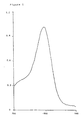
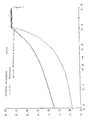
- Figure 1 shows the absorption spectrum of the reference film.
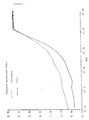
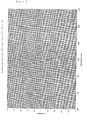
- Figure 2 shows microdensitometer plots for the reference material for various points along a 10 step wedge image (790 nm) exposure.
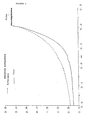
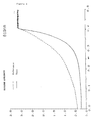
- Figure 3-7 show microdensitometer plots for the test materials of examples 2-6 respectively and the reference material.
- Figure 8 shows the absorption spectrum of the dye mixture used in Example 3.
- Test materials were prepared by coating further antihalation layers on the reverse side of the reference material, with or without prior removal of the existing backcoat, or on top of the media, or both, as described below.
- Test exposures were carried out through narrow cut filters (790 and 810 nm) with rigorous exclusion of stray light of other wavelengths. Processing was carried out at 121°C for 25 seconds.
- a 10-step density wedge was used as the contact target (10cm x 0.4cm), and the exposure time for each sample was adjusted to give the same effective exposure up the step wedge.
- the DlogE curves obtained via exposure through a standard 0 - 4 continuous wedge were used as references for the exposure control.
- the reference material was given 400 seconds exposure through the 790nm filter and 400 seconds through the 810nm filter, and exposure times for the other coatings were adjusted accordingly.
- the antihalation layer(s) were removed and the image scanned widthwise with a scanning microdensitometer in order to examine edge-spread effects. This provided plots of optical density vs. distance in which the steepness of the curve reflected the sharpness of the image.
- Figure 2 shows microdensitometer plots for the reference material at various points along the 10-step wedge image (790nm exposure).
- the image quality clearly declines at higher densities, indicating that halation is occurring, despite the presence of an antihalation dye matching the exposure wavelength.
- PVOH polyvinylalcohol, MW 12500
- Dye (1) 0.008g
- Dye (2) 0.015g
- Figure 4 shows the microdensitometer trace for this material (curve A) and the reference material (curve B), both exposed at 810nm.
- test material was prepared as in Example 3, but reducing the quantity of Dye (1) to 0.006g. This provided a dye density of 0.7 at 790nm, which is significantly lower than the corresponding figure for the reference material (1.13). Nevertheless, the test material provided the sharper image on exposure at 790nm, as shown by the microdensitometer traces in figure 5, once again demonstrating the beneficial effect of the additional longer wavelength dye.
- Dye (3) (0.006g) was dissolved in 20g PVOH stock solution and coated on top of the photosensitive layer of the reference material (50 microns wet thickness), leaving the existing antihalation backcoat in place. A similar coating of PVOH alone was made to provide a control material.
- Figure 6 shows the microdensitometer traces obtained for exposure of these samples at 810nm, and the test material clearly gave the sharper image.
- Example 5 was repeated, substituting Dye (1) (0.005g) for Dye (3), providing a test material with Dye (1) coated on both sides, with no other antihalation dye present.
- Dye (1) 0.005g
- Dye (3) a test material with Dye (1) coated on both sides, with no other antihalation dye present.
- image quality 810nm exposure
Landscapes
- Chemical & Material Sciences (AREA)
- Organic Chemistry (AREA)
- Engineering & Computer Science (AREA)
- Materials Engineering (AREA)
- Physics & Mathematics (AREA)
- General Physics & Mathematics (AREA)
- Non-Silver Salt Photosensitive Materials And Non-Silver Salt Photography (AREA)
Applications Claiming Priority (2)
| Application Number | Priority Date | Filing Date | Title |
|---|---|---|---|
| GB9423571 | 1994-11-22 | ||
| GB9423571A GB9423571D0 (en) | 1994-11-22 | 1994-11-22 | Antihalation/acutance system for photographic materials |
Publications (3)
| Publication Number | Publication Date |
|---|---|
| EP0714046A2 EP0714046A2 (en) | 1996-05-29 |
| EP0714046A3 EP0714046A3 (en) | 1996-08-21 |
| EP0714046B1 true EP0714046B1 (en) | 1999-06-16 |
Family
ID=10764799
Family Applications (1)
| Application Number | Title | Priority Date | Filing Date |
|---|---|---|---|
| EP95307652A Expired - Lifetime EP0714046B1 (en) | 1994-11-22 | 1995-10-27 | Antihalation/acutance system for photothermographic materials |
Country Status (5)
| Country | Link |
|---|---|
| US (1) | US6479220B1 (enExample) |
| EP (1) | EP0714046B1 (enExample) |
| JP (1) | JP3623566B2 (enExample) |
| DE (1) | DE69510306T2 (enExample) |
| GB (1) | GB9423571D0 (enExample) |
Families Citing this family (2)
| Publication number | Priority date | Publication date | Assignee | Title |
|---|---|---|---|---|
| JP2008241934A (ja) * | 2007-03-26 | 2008-10-09 | Fujifilm Corp | 熱現像感光材料及びそれを用いた画像形成方法 |
| US20150321637A1 (en) * | 2014-03-14 | 2015-11-12 | Vernon John Lowe | Reinforcement Strip for Use in Airbags and Methods of Their Manufacture |
Family Cites Families (13)
| Publication number | Priority date | Publication date | Assignee | Title |
|---|---|---|---|---|
| DE3375704D1 (en) * | 1982-08-20 | 1988-03-24 | Minnesota Mining & Mfg | Photographic elements incorporating antihalation and/or acutance dyes |
| GB8422069D0 (en) | 1984-08-31 | 1984-10-31 | Minnesota Mining & Mfg | Photographic elements |
| US4619892A (en) | 1985-03-08 | 1986-10-28 | Minnesota Mining And Manufacturing Company | Color photographic element containing three silver halide layers sensitive to infrared |
| GB8610615D0 (en) * | 1986-04-30 | 1986-06-04 | Minnesota Mining & Mfg | Sensitisers |
| GB8830168D0 (en) | 1988-12-23 | 1989-02-22 | Minnesota Mining & Mfg | Infrared-sensitive photographic materials incorporating antihalation and/or acutance dye |
| GB8913444D0 (en) | 1989-06-12 | 1989-08-02 | Minnesota Mining & Mfg | Thermal dye bleach construction |
| DE69126085T2 (de) | 1990-09-28 | 1997-08-28 | Fuji Photo Film Co Ltd | Wärmeentwickelbares lichtempfindliches Farbmaterial vom Farbdiffusionübertragungstyp |
| DE69231449T2 (de) | 1991-03-05 | 2001-01-11 | Fuji Photo Film Co., Ltd. | Wärmeentwickelbares farbphotographisches Diffusionsübertragungsmaterial |
| JP3084454B2 (ja) | 1991-04-23 | 2000-09-04 | コニカ株式会社 | ハロゲン化銀写真感光材料 |
| US5401620A (en) * | 1992-03-19 | 1995-03-28 | Fuji Photo Film Co., Ltd. | Silver halide photographic material for laser exposure |
| JP3616130B2 (ja) * | 1993-06-04 | 2005-02-02 | イーストマン コダック カンパニー | 感赤外線性光熱写真ハロゲン化銀要素及び画像形成性媒体の露光方法 |
| CA2184271A1 (en) * | 1994-02-28 | 1995-08-31 | James R. Miller | Sensitizers for photothermographic elements |
| US5380635A (en) * | 1994-02-28 | 1995-01-10 | Minnesota Mining And Manufacturing Company | Dihydroperimidine squarylium dyes as antihalation and acutance materials for photographic and photothermographic articles |
-
1994
- 1994-11-22 GB GB9423571A patent/GB9423571D0/en not_active Ceased
-
1995
- 1995-10-25 US US08/548,213 patent/US6479220B1/en not_active Expired - Fee Related
- 1995-10-27 DE DE69510306T patent/DE69510306T2/de not_active Expired - Fee Related
- 1995-10-27 EP EP95307652A patent/EP0714046B1/en not_active Expired - Lifetime
- 1995-11-16 JP JP29825395A patent/JP3623566B2/ja not_active Expired - Fee Related
Also Published As
| Publication number | Publication date |
|---|---|
| JP3623566B2 (ja) | 2005-02-23 |
| EP0714046A2 (en) | 1996-05-29 |
| US6479220B1 (en) | 2002-11-12 |
| DE69510306T2 (de) | 1999-11-04 |
| JPH08220687A (ja) | 1996-08-30 |
| DE69510306D1 (de) | 1999-07-22 |
| EP0714046A3 (en) | 1996-08-21 |
| GB9423571D0 (en) | 1995-01-11 |
Similar Documents
| Publication | Publication Date | Title |
|---|---|---|
| KR950000200B1 (ko) | 방사선-감지 요소, 착색된 중간색조의 화상형성 방법 및 노광장치 | |
| EP0748465B1 (en) | Dihydroperimidine squarylium dyes as antihalation and acutance materials for photographic and photothermographic articles | |
| US5350664A (en) | Photographic elements for producing blue, green, and red exposure records of the same hue and methods for the retrieval and differentiation of the exposure records | |
| US5418119A (en) | Photographic elements for producing blue, green and red exposure records of the same hue | |
| US5350650A (en) | Methods for the retrieval of blue, green and red exposure records of the same hue from a photographic element containing emissive interlayers | |
| KR940009426B1 (ko) | 색채 사진 부재 | |
| JPH06194785A5 (enExample) | ||
| US4391884A (en) | Process for the production of a photographic color image by the silver dye bleach process and suitable color photographic material therefor | |
| JPH06194784A5 (enExample) | ||
| US6479220B1 (en) | Antihalation/acutance system for photothermographic materials | |
| EP0942322A1 (en) | Camera and film for recording overlapping images | |
| US6509126B1 (en) | Photothermographic element comprising a fluorescent dye and methods of image formation | |
| US5298379A (en) | Radiation sensitive element with absorber dye to enhance spectral sensitivity range | |
| JPH08220687A5 (enExample) | ||
| US4814827A (en) | Photographic color proofing apparatus | |
| JP2004503825A (ja) | 高い走査性を得るためのハロゲン化銀含有フォトサーモグラフィー要素 | |
| US6521394B1 (en) | Fluorescent photothermographic imaging element comprising coupling agent | |
| JPS62295048A (ja) | 連続的色調のカラ−像形成法 | |
| US5474881A (en) | Silver halide photographic light sensitive element for medical radiography | |
| GB2294777A (en) | Photographic colour material | |
| JP2002062612A (ja) | 保護された現像主薬の混合物を含むフォトサーモグラフ要素 | |
| AU456163B2 (en) | Photographic materials and processes | |
| JPH02108040A (ja) | ハロゲン化銀写真感光材料 | |
| JP2003066572A (ja) | 画像形成要素 | |
| JPH06316674A (ja) | インドレニントリカルボシアニン染料 |
Legal Events
| Date | Code | Title | Description |
|---|---|---|---|
| PUAI | Public reference made under article 153(3) epc to a published international application that has entered the european phase |
Free format text: ORIGINAL CODE: 0009012 |
|
| AK | Designated contracting states |
Kind code of ref document: A2 Designated state(s): DE FR GB IT |
|
| PUAL | Search report despatched |
Free format text: ORIGINAL CODE: 0009013 |
|
| AK | Designated contracting states |
Kind code of ref document: A3 Designated state(s): DE FR GB IT |
|
| 17P | Request for examination filed |
Effective date: 19970120 |
|
| 17Q | First examination report despatched |
Effective date: 19970523 |
|
| GRAG | Despatch of communication of intention to grant |
Free format text: ORIGINAL CODE: EPIDOS AGRA |
|
| GRAG | Despatch of communication of intention to grant |
Free format text: ORIGINAL CODE: EPIDOS AGRA |
|
| GRAH | Despatch of communication of intention to grant a patent |
Free format text: ORIGINAL CODE: EPIDOS IGRA |
|
| GRAH | Despatch of communication of intention to grant a patent |
Free format text: ORIGINAL CODE: EPIDOS IGRA |
|
| GRAA | (expected) grant |
Free format text: ORIGINAL CODE: 0009210 |
|
| AK | Designated contracting states |
Kind code of ref document: B1 Designated state(s): DE FR GB IT |
|
| REF | Corresponds to: |
Ref document number: 69510306 Country of ref document: DE Date of ref document: 19990722 |
|
| ET | Fr: translation filed | ||
| ITF | It: translation for a ep patent filed | ||
| PLBE | No opposition filed within time limit |
Free format text: ORIGINAL CODE: 0009261 |
|
| STAA | Information on the status of an ep patent application or granted ep patent |
Free format text: STATUS: NO OPPOSITION FILED WITHIN TIME LIMIT |
|
| 26N | No opposition filed | ||
| REG | Reference to a national code |
Ref country code: GB Ref legal event code: 732E |
|
| PGFP | Annual fee paid to national office [announced via postgrant information from national office to epo] |
Ref country code: GB Payment date: 20000918 Year of fee payment: 6 |
|
| PGFP | Annual fee paid to national office [announced via postgrant information from national office to epo] |
Ref country code: FR Payment date: 20001009 Year of fee payment: 6 |
|
| REG | Reference to a national code |
Ref country code: FR Ref legal event code: TP |
|
| PG25 | Lapsed in a contracting state [announced via postgrant information from national office to epo] |
Ref country code: GB Free format text: LAPSE BECAUSE OF NON-PAYMENT OF DUE FEES Effective date: 20011027 |
|
| REG | Reference to a national code |
Ref country code: GB Ref legal event code: IF02 |
|
| GBPC | Gb: european patent ceased through non-payment of renewal fee |
Effective date: 20011027 |
|
| PG25 | Lapsed in a contracting state [announced via postgrant information from national office to epo] |
Ref country code: FR Free format text: LAPSE BECAUSE OF NON-PAYMENT OF DUE FEES Effective date: 20020628 |
|
| REG | Reference to a national code |
Ref country code: FR Ref legal event code: ST |
|
| PG25 | Lapsed in a contracting state [announced via postgrant information from national office to epo] |
Ref country code: IT Free format text: LAPSE BECAUSE OF NON-PAYMENT OF DUE FEES Effective date: 20051027 |
|
| PGFP | Annual fee paid to national office [announced via postgrant information from national office to epo] |
Ref country code: DE Payment date: 20051031 Year of fee payment: 11 |
|
| PG25 | Lapsed in a contracting state [announced via postgrant information from national office to epo] |
Ref country code: DE Free format text: LAPSE BECAUSE OF NON-PAYMENT OF DUE FEES Effective date: 20070501 |