EP0686919B1 - An apparatus and method for granting control of a bus during the hot-docking of a dockable computer. - Google Patents
An apparatus and method for granting control of a bus during the hot-docking of a dockable computer. Download PDFInfo
- Publication number
- EP0686919B1 EP0686919B1 EP95303396A EP95303396A EP0686919B1 EP 0686919 B1 EP0686919 B1 EP 0686919B1 EP 95303396 A EP95303396 A EP 95303396A EP 95303396 A EP95303396 A EP 95303396A EP 0686919 B1 EP0686919 B1 EP 0686919B1
- Authority
- EP
- European Patent Office
- Prior art keywords
- bus
- computer
- docking
- arbiter
- signal
- Prior art date
- Legal status (The legal status is an assumption and is not a legal conclusion. Google has not performed a legal analysis and makes no representation as to the accuracy of the status listed.)
- Expired - Lifetime
Links
Images


Classifications
-
- G—PHYSICS
- G06—COMPUTING OR CALCULATING; COUNTING
- G06F—ELECTRIC DIGITAL DATA PROCESSING
- G06F13/00—Interconnection of, or transfer of information or other signals between, memories, input/output devices or central processing units
- G06F13/38—Information transfer, e.g. on bus
- G06F13/40—Bus structure
- G06F13/4063—Device-to-bus coupling
- G06F13/4068—Electrical coupling
- G06F13/4081—Live connection to bus, e.g. hot-plugging
-
- G—PHYSICS
- G06—COMPUTING OR CALCULATING; COUNTING
- G06F—ELECTRIC DIGITAL DATA PROCESSING
- G06F1/00—Details not covered by groups G06F3/00 - G06F13/00 and G06F21/00
- G06F1/16—Constructional details or arrangements
- G06F1/1613—Constructional details or arrangements for portable computers
- G06F1/1632—External expansion units, e.g. docking stations
-
- G—PHYSICS
- G06—COMPUTING OR CALCULATING; COUNTING
- G06F—ELECTRIC DIGITAL DATA PROCESSING
- G06F13/00—Interconnection of, or transfer of information or other signals between, memories, input/output devices or central processing units
- G06F13/14—Handling requests for interconnection or transfer
- G06F13/36—Handling requests for interconnection or transfer for access to common bus or bus system
- G06F13/362—Handling requests for interconnection or transfer for access to common bus or bus system with centralised access control
- G06F13/364—Handling requests for interconnection or transfer for access to common bus or bus system with centralised access control using independent requests or grants, e.g. using separated request and grant lines
-
- G—PHYSICS
- G06—COMPUTING OR CALCULATING; COUNTING
- G06F—ELECTRIC DIGITAL DATA PROCESSING
- G06F13/00—Interconnection of, or transfer of information or other signals between, memories, input/output devices or central processing units
- G06F13/38—Information transfer, e.g. on bus
- G06F13/40—Bus structure
- G06F13/4004—Coupling between buses
- G06F13/4027—Coupling between buses using bus bridges
- G06F13/4031—Coupling between buses using bus bridges with arbitration
Definitions
- the present invention relates generally to a computer system such as a computer system including a processor, a bus arbiter, and several bus masters coupled together on at least one bus, and more particularly to a bus arbiter for granting control of the at least one bus to one of the bus masters in response to an external requirement or event, as is the docking of the computer system to a host station.
- Computer systems generally include a number of peripheral devices coupled together on a bus.
- the peripheral devices perform a variety of data storage, computational, data manipulation, display, control and audio functions for the computer system.
- the peripheral devices are often bus masters--devices which are capable of initiating a read or a write transaction on the bus.
- the peripheral devices initiate and complete transactions on the bus as they efficiently perform their respective operations without unnecessarily burdening the CPU, other peripheral devices or other system resources.
- Bus arbiters generally include a number of request-input and grant-output pairs, each pair associated with a particular bus master.
- a bus master needs to access the bus to perform an operation, it provides a bus request signal to the bus arbiter.
- the bus arbiter determines that the requesting bus master may have access to the bus, the bus master provides a grant signal.
- the bus master receives the bus grant signal, the bus master has access to the bus and performs the operation.
- the bus arbiter determines which master should be granted access and which master should be denied access.
- the arbiter follows a fixed or rotational priority scheme when granting access to the bus.
- a fixed priority scheme assigns a priority order to each bus master and grants ownership of the bus in accordance with that priority order;
- a rotational priority scheme changes the priority order of each bus master over time in accordance with an algorithm, program or other method.
- Prior art bus arbiters whether fixed or rotational, employ a fairness scheme (lock control) which overrides the priority scheme and temporarily reassigns the priority order to prevent a locking error on the bus.
- a locking error may be a lockout, deadlock, livelock or other arbitration condition which causes errors or inefficiencies on the bus. Locking errors may even cause fatal system errors or hardware crashes.
- Lockout errors can permanently prohibit a peripheral device from obtaining access to the bus.
- a lower priority bus master may be locked out if two high priority bus masters on a peripheral component interconnect (PCI) bus attempt simultaneously to access the lower priority bus master when it is locked (being held for the exclusive use of an initiator of an access).
- PCI peripheral component interconnect
- the fairness scheme countermands the priority scheme and guarantees the lower priority bus master access to the bus.
- Deadlocks and livelocks occur when each of two bus masters must wait for a response from the other before an operation on the bus can be completed. Such a deadlock or livelock can be due to locked/exclusive bus transactions in combination with write back cache transactions. Also, deadlocks and livelocks may occur when an access is unable to be completed because other bus masters are utilizing necessary system resources.
- the fairness scheme even overrides a fixed priority scheme to prevent locking errors. Therefore, prior art arbiters are not capable of guaranteeing a particular bus master access to the bus in a particular amount of time (a time-bound access) because the fairness scheme can override the access by the particular bus master. Thus, although the fairness scheme is necessary to prevent locking errors, the fairness scheme disadvantageously prevents the bus arbiter from providing an exclusive (highest priority), non-preemptive (non-interruptable) bus access in the case of a docking event.
- Particular computer systems such as dockable computer systems and audio-capable computer systems are subject to decreased performance or even catastrophic failure if the systems do not respond immediately to an external situation (requirement or event).
- a particular peripheral device must be given access to the bus for the system to respond to the external situation. Because the external situation often demands an immediate response, a bus arbiter is needed which provides an exclusive, non-preemptive access to the bus so the particular peripheral device may quickly respond to the external situation.
- an external event such as a docking event in a dockable computer system requires a peripheral device or CPU undertake protective measures to prevent signaling failures, bus crashes and component damage caused by physically connecting or disconnecting active buses of the system.
- the active buses of the dockable computer system may be advantageously protected by a docking agent, CPU, or other circuitry which quiets the active buses in response to the docking event.
- Exemplary docking agents, CPUs and other circuitry are discussed in United States patent application Serial No. 08/217,951, filed March 25, 1994, entitled “An Apparatus and Method for Achieving Hot Docking Capabilities for Dockable Computer.”
- the docking agent must receive ownership of the bus as soon as possible. Any time spent waiting for the bus arbiter to grant ownership is disadvantageous because the docking event may have to be delayed until ownership is granted. Further, prior art bus arbiters may preempt the control of the bus by the docking agent during the docking event thereby causing a catastrophic failure. Thus, there is a need for a dockable computer system which includes a bus arbiter optimized for responding to an impending docking event.
- bus arbiter which is able to grant access to the bus in response to an external event or requirement. More particularly, there is a need for a bus arbiter which includes a dedicated request/grant pair which provides exclusive and non-interruptable access to the bus.
- EP-A-0 674 275 a document considered under Art. 54(3) EPC, EP-A-0 426 134 and COMPUTER ARCHITECTURE NEWS, vol. 20, no. 2, May 1992 New York, NY, US, p. 300-307, B.P. AICHINGER 'Futurebus+ as an I/O Bus: Profile B'.
- the computer system includes a bus arbiter having a primary acknowledge output coupled with a particular one of the peripheral devices.
- the bus arbiter provides a PRIMARY ACKNOWLEDGE signal on the primary acknowledge output in response to the external condition.
- the particular one of the plurality of the peripheral devices, the docking agent receives access to the bus when the PRIMARY ACKNOWLEDGE signal is provided within a predetermined time.
- the bus arbiter for use in a computer system having a bus, a first master, the docking agent, and a plurality of second bus masters.
- the first bus master and the plurality of the second bus masters are coupled to the bus.
- the bus arbiter includes a primary request input coupled to the first bus master, a plurality of secondary request inputs coupled to the plurality of the second bus masters, a primary acknowledge circuit coupled to the primary request input, a secondary logic circuit coupled to the plurality of the secondary request inputs, and a lock monitor circuit coupled to the secondary logic circuit and a bus.
- the secondary logic circuit has a secondary output coupled to the primary logic circuit, and the lock monitor circuit provides a fairness signal.
- the secondary logic circuit provides a secondary select signal at the secondary output in accordance with a plurality of SECONDARY REQUEST signals received at the plurality of the secondary request inputs and the fairness signal.
- the primary logic circuit provides a primary select signal in response to a PRIMARY REQUEST signal on the primary request input and the secondary select signal.
- the primary logic circuit grants access to the bus in accordance with the primary select signal.
- the primary select signal grants access to the first bus master when the PRIMARY REQUEST signal is received.
- a dockable computer system comprised of a host computer unit including a station bus and a mobile computer unit including a unit bus.
- the dockable computer system is capable of residing in a docked state in which the mobile computer unit is operatively associated with the host computer station and an undocked state in which the mobile computer unit is physically separate from the host computer station.
- the dockable computer system also includes a docking agent which is coupled to the unit bus and provides a quiet request signal in response to the system changing between states.
- the improvement includes a bus arbiter having a quiet bus request input coupled to the docking agent. The bus arbiter grants control of the unit bus to the docking agent in response to the QUIET BUS request signal.
- the portable computer includes a docking agent coupled to the computer bus for quieting the computer bus, peripheral devices coupled to the computer bus, a bus arbiter for granting access to the computer bus, and a notice circuit for generating a notice signal in response to docking or undocking the portable computer.
- the computer bus is physically, electrically coupled to the host bus when the portable computer is docked with the host station.
- the method comprises the steps of granting time-bound access to the computer bus to the docking agent in response to the notice signal, the docking agent quieting the computer bus in response to being granted access by the bus arbiter, coupling or uncoupling the host bus and the computer bus, and allowing the peripherals to have access to the computer bus after the host bus and computer bus are coupled or uncoupled.
- the dockable computer system includes a notice circuit before providing a notice signal when the dockable computer system is about to change states, and a host station including a host bus coupled to a host connector.
- the portable computer includes a computer connector, a computer bus coupled to the computer connector, a docking agent coupled to the computer bus and a bus arbiter.
- the host connector is physically coupled to the portable connector when the dockable computer system is in the docked state, and the host connector is physically separate from the computer connector when the dockable computer system is in the undocked state.
- the docking agent includes a quiet request output and provides a quiet request signal.
- the bus arbiter is coupled to the quiet request output and grants ownership of the computer bus to the docking agent in response to the quiet request signal.
- the bus arbiter is employed in a dockable computer system and grants access to the bus to a docking agent in response to a docking event.
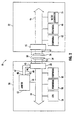
- FIG. 1 is a schematic block diagram of a dockable computer system 10 including a portable computer 20 and a docking (host) station 22.
- Portable computer 20 is a mobile computer unit including a CPU 26, a system bus 24, a bus arbiter 38 and a docking agent 32.
- Portable computer 20 can also include a peripheral device 28 and a peripheral device 30.
- System bus 24 couples CPU 26, peripheral device 28, peripheral device 30 and docking agent 32.
- An external connector 34 is also coupled with system bus 24.
- System bus 24 can be a CPU-to-memory bus, an I/O bus, a standard bus, PCI bus, a sub-bus, a span bus or any other type of bus functionally operative in the microcomputer environment.
- components of computer system 10 can be coupled together via bridges, sub-buses and other conductors (not shown), and CPU 26 can be coupled to bus 24 via a host/PCI bus bridge (not shown).
- Docking station 22 includes a docking control circuit 44 coupled to a docking bus 46. Docking station 22 can also include a microcontroller 35, a peripheral device 40 and a peripheral device 42. Microcontroller 35 can be replaced by a more powerful microprocessor as warranted by applications for system 10, and it is within the scope of the present invention to utilize a minicomputer as the host system should the user so desire. Docking station 22 is a host station which can have superior, equal or inferior computing power compared to portable computer 20.
- Docking bus 46 couples docking control circuit 44, microcontroller 35, peripheral device 40 and peripheral device 42.
- An external connector 36 is also coupled to docking bus 46.
- Docking bus 46 can be a host-to-memory bus, an I/O bus, a standard bus, a PCI bus, a sub-bus, a span bus or any other type of bus as noted generally above.
- docking station 22 receives portable computer 20 so dockable computer system 10 operates as a single desktop computer or an integrated computer system.
- external connectors 34 and 36 are physically coupled.
- CPU 26 can electrically communicate with components in docking station 22 such as peripheral device 42, peripheral device 40, or microcontroller 35 via system bus 24, connectors 34 and 36, and docking bus 46.
- dockable computer system 10 When dockable computer system 10 is about to change states (a docking event), dockable computer system 10 preferably provides an ADVANCE NOTICE signal warning of the impending docking event.
- docking control circuit 44 includes circuitry for sensing an impending docking event and for communicating the ADVANCE NOTICE signal across a communication link 50, as described below.
- the ADVANCE NOTICE signal can be provided on system bus 24, docking bus 46, communication link 50, or various control lines in dockable computer system 10.
- communication link 50 preferably provides an infrared ADVANCE NOTICE (warning) signal which is received by docking agent 32.
- Communication link 50 can be an electromagnetic communication link, long pin interface, or wireless communication link such as those disclosed in U.S. patent application Serial No. 08/217,952, filed March 25, 1994, and entitled, "Dockable Computer System Capable of Electric and Electromagnetic Communication", assigned to the assignee of the present invention.
- portable computer 20 or docking station 22 can provide a software-actuated ADVANCE NOTICE signal or a user-actuated ADVANCE NOTICE signal.
- Docking agent 32 operates to quiet or render inactive system bus 24 before it and docking bus 46 are physically coupled or uncoupled during a docking event. Docking agent 32 is shown as an off-line device which may or may not be involved in the non-docking operations of portable computer 20. Docking agent 32 operates similarly to a PCI agent device, host agent device, standard agent device or other device capable of quieting a bus.
- Docking agent 32 quiets system bus 24 generally by ensuring that there are no active transfers occurring on bus 24 by asserting bus ownership over system bus 24, asserting bus mastership over bus 24, performing a software idle subroutine, performing an interrupt service routine which idles bus 24, or rendering bus 24 inactive.
- Docking agent 32 is preferably designed along the lines of that circuitry described in United States patent application Serial No. 08/217,951, filed March 25, 1994, entitled "An Apparatus and Method for Achieving Hot Docking Capabilities for a Dockable Computer System.”
- Bus arbiter 38 is integrated within CPU 26 and includes a quiet request input 40 coupled to a quiet request control line 47 and a quiet acknowledge output 42 coupled to a quiet acknowledge control line 49.
- CPU 26 is able to monitor bus activity on bus 24 via a bus input 27.
- Bus input 27 preferably includes control lines for receiving signals such as a FRAME signal and an IRDY (Initiator Ready) signal utilized by the PCI protocol which indicate a transaction is occurring on bus 24.
- Docking agent 32 includes a quiet acknowledge input 44 coupled to quiet acknowledge control line 49, and a quiet request output 43 coupled to quiet request control line 47.
- Bus arbiter 38 is advantageously integrated with CPU 26 so bus arbiter 38 is capable of disconnecting current bus cycles by providing an idle, stop, halt or other bus cycle control command to CPU 26 and peripheral devices 28 and 30.
- bus arbiter 38 may signal CPU 26 or a bus bridge (not shown) to disconnect the current bus cycle.
- Bus arbiter 38 can also be integrated with other components such as a host or PCI bus bridge (not shown).
- Bus arbiter 38 generally assigns ownership of bus 24 to peripheral device 28, peripheral device 30, peripheral device 40 and peripheral device 42 in accordance with a fixed or rotational priority scheme and a fairness scheme.
- the fairness scheme overrides the fixed or rotational priority scheme to prevent locking errors such as lockouts, livelocks and deadlocks.
- Docking agent 32 provides a quiet request (primary request) signal on quiet request control line 47 in response to receiving the ADVANCE NOTICE signal on communication link 50.
- Bus arbiter 38 receives the QUIET REQUEST signal and deasserts all grants given to other bus masters such as CPU 26 and peripheral devices 28 and 30. After the current bus transaction on bus 24 is completed, bus arbiter 38 grants bus ownership to docking agent 32 by providing a quiet acknowledge (primary acknowledge) signal across quiet acknowledge control line 49.
- Docking agent 32 is able to quiet system bus 24 in response to receiving the QUIET ACKNOWLEDGE signal on quiet acknowledge control line 49.
- bus arbiter 38 may grant CPU 26 ownership of bus 24 for CPU-based bus quieting techniques.
- the QUIET ACKNOWLEDGE signal can advantageously indicate that there are no active transfers occurring on bus 24. Because bus arbiter 38 has the capability to wait for the end of the current bus transaction, bus arbiter 38 may be configured to issue the QUIET ACKNOWLEDGE signal only when bus 24 is completely idle (docking state safe). Thus, bus arbiter 38 may signal docking agent 32 that bus 24 is quiet by providing the QUIET ACKNOWLEDGE signal and eliminate the need for additional bus cycle monitoring circuitry.
- bus arbiter 38 provides docking agent 32 access to bus 24 within a predetermined time essentially to guarantee ownership of bus 24 to docking agent 32 upon request.
- access refers to a high priority or primary access which allows agent 32 to gain control of bus 24 in an appropriate amount of time so that bus 24 may be prepared for the docking event.
- Bus arbiter 38 provides the access, preferably by employing a priority scheme which grants exclusive, non-interruptible access to bus 24 in response to the QUIET REQUEST signal. This priority scheme grants the exclusive, non-interruptible access despite the action of the fairness scheme and allows docking agent 32 to be granted access to bus 24 when other high priority bus masters such as CPU 26 and peripheral devices 28 and 30 contend for bus 24.
- exclusive, non-interruptible access prevents other bus masters such as CPU 26, device 28, device 30, device 40 and device 42 from removing bus ownership from docking agent 32.
- this access ensures that bus 24 may be quieted in a minimum amount of time so catastrophic failure is avoided as bus 24 is docked or undocked with docking bus 46.
- Bus arbiter 38 may grant access to bus 24 in a particular amount of real time, such as less than 0.5 seconds. An access within 0.5 seconds assures that the user is not subject to a perceptible delay as system 10 changes states.
- bus arbiter 38 may grant access to bus 24 by waiting a particular number of bus transactions or clock cycles, by immediately disconnecting the current bus cycle, by comparing a time-of-day clock to a schedule, or by a software or user configured timing scheme.
- bus arbiter 38 is capable of granting an advantageous access to bus 24 in response to an external situation, thereby essentially guaranteeing access by agent 32 in an adequate amount of time.
- Bus arbiter 38 is also capable of initiating a BACKOFF signal which causes the current bus master to complete its bus transaction in a particular number of bus cycles, thereby advantageously accelerating the granting of access to docking agent 32.
- the BACKOFF signal prevents bus masters such as CPU 26, peripheral devices 28 and 30 and even peripheral devices 40 and 42 from maintaining bus ownership for a prolonged period of time after docking agent 32 requests bus ownership.
- the BACKOFF signal can ensure that bus arbiter 38 grants a time bound access to docking agent 32.
- Portable computer 20 and docking station 22 illustrated in Figure 2 operate similarly to dockable computer system 10 discussed with reference to Figure 1.
- dockable computer system 10 in Figure 2 includes a docking agent 33 and a docking control circuit 45 shown to be in-line devices and a bus arbiter 52 shown to be a stand-alone, off-line device.
- Docking agent 32 and docking control circuit 44 may be utilized with bus arbiter 52 in Figure 2.
- bus arbiter 52 may be integrated with CPU 26 thereby enabling bus arbiter 52 to disconnect current bus cycles on bus 24.
- Docking agent 33 is coupled between system bus 24 and a connector bus 25.
- Docking control circuit 45 is coupled between a connector bus 47 and docking bus 46.
- Connector bus 25 is coupled to external connector 34 and connector bus 47 is coupled to external connector 36.
- Docking agent 33 quiets connector bus 25 when system 10 is about to change states.
- Docking control circuit 45 also quiets connector bus 47 when system 10 is about to change states.
- Docking agent 33 and docking control circuit 45 additionally quiet system bus 24 and docking bus 46.
- Docking agent 33 and docking control circuit 45 operate as in-line devices and can isolate connector bus 25 from system bus 24 and connector bus 47 from docking bus 46.
- Docking agent 33 and docking control circuit 45 preferably include filter capability, drive capability, voltage level translation capability and buffering capability. Buffering capability can include tri-stated inputs and outputs for isolating buses 24 and 46 by utilizing a high impedance state.
- Bus arbiter 52 operates similarly to bus arbiter 38 and includes a bus input 41 which enables bus arbiter 52 to monitor the activity on bus 24.
- Bus arbiter 32 provides a priority scheme for granting access to bus 24 or bus 25 to docking agent 33 within a predetermined time.
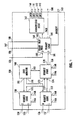
- FIG 3 illustrates a bus arbiter 100 which is appropriate for use in a system 90.
- System 90 may be similar to system 10 or system 60 illustrated in Figures 1 - 3.
- Bus arbiter 100 includes a primary (quiet) request input 106 coupled to a primary request line 112, and secondary request inputs 134, 135, 136 and 137.
- Bus arbiter 100 also includes a primary (quiet) acknowledge output 108 coupled to a primary acknowledge line 115 and secondary acknowledge outputs 140, 141, 142 and 143.
- An agent 104 is coupled to primary request line 112 and primary acknowledge line 114.
- Agent 104 is a bus master similar to docking agent 32 or docking agent 33 ( Figure 1-2).
- Bus arbiter 100 is also coupled to a peripheral device 114 via a secondary request line 124 and secondary acknowledge line 128, a peripheral device 118 via a secondary request line 125 and a secondary acknowledge line 129, a peripheral device 120 via a secondary request line 126 and a secondary acknowledge line 130, and a peripheral device 122 via a secondary request line 127 and a secondary acknowledge line 131.
- Secondary acknowledge outputs 140 - 143 are coupled to secondary acknowledge lines 128 - 131, respectively; secondary request inputs 134 - 137 are coupled to secondary request lines 124 - 127, respectively.
- Peripheral devices 114, 118, 120 and 122 are bus masters coupled to bus 92.
- Arbiter 100 also includes a bus monitoring input 110 coupled to bus 92.
- Agent 104 is coupled to bus 92 at a bus input 107 and includes an external input 105.
- Bus arbiter 100 can also include a request/grant pair (not shown) coupled to a CPU such as CPU 26 (not shown).
- bus arbiter 100 receives SECONDARY REQUEST signals on secondary request inputs 134-137.
- Bus arbiter 100 employs a fixed or rotational priority scheme and a fairness scheme which services the SECONDARY REQUEST signals and grants bus ownership to one of peripheral devices 114, 118, 120, and 122.
- Bus arbiter 100 monitors the transactions on bus 102 by receiving signals on bus monitor input 110.
- Bus arbiter 100 provides SECONDARY ACKNOWLEDGE signals to peripheral devices 114, 118, 120, and 122 on secondary acknowledge lines 128-131, respectively, in response to the transactions on bus 102, the rotational or fixed priority scheme and the fairness scheme.
- Bus arbiter 100 is configured to provide a time-bound access to bus 92 in response to a PRIMARY REQUEST signal on primary request line 112.
- Arbiter 100 essentially is capable of guaranteeing agent 104 access to bus 102 in a particular amount of time after receiving the PRIMARY REQUEST signal despite the operation of the rotational or fixed priority scheme and the fairness scheme.
- bus arbiter 100 receives the PRIMARY REQUEST signal on primary request line 112 at primary request input 106, bus arbiter 100 provides a PRIMARY ACKNOWLEDGE signal at primary acknowledge line 115.
- Agent 104 is thus given access to bus 102 within a predetermined time.
- access refers to a high priority access which allows agent 104 to respond to the external situation in a predetermined amount of time.
- Agent 104 may provide the PRIMARY REQUEST signal in response to an external signal such as a notice signal provided on external input 105.
- agent 104 may provide the PRIMARY REQUEST signal in response to a timer or other device which indicates an external condition requiring agent 104 to access bus 102.
- external conditions include a docking event.
- Figure 4 illustrates a more detailed diagram of bus arbiter 100 including a request logic circuit 150, a request logic circuit 152, a request logic circuit 156, a lock monitor 160, a primary logic circuit 164 and an acknowledge circuit 162.
- Request logic circuit 150 is coupled to secondary request inputs 134 and 135, and request logic circuit 152 is coupled to secondary request inputs 136 and 137.
- Bus arbiter 100 also includes a FRAME input 180 and an IRDY input 186 as part of bus monitor input 107.
- Each of request logic circuits 150, 152 and 156 includes a priority select input 166 and a rotate enable input 168 coupled to an arbiter configuration register (not shown) which allows the fixed and rotational schemes of arbiter 100 to be programmatically configured and controlled.
- Logic circuits 150, 152, 154 and 164 are custom logic designs which implement a two input priority scheme.
- the custom logic design of circuit 150 can implement a fixed priority scheme which selects secondary request input 134 when inputs 134 and 135 compete. In this scheme, the custom logic design utilizes logic gates to ignore input 135 whenever the SECONDARY REQUEST signal on input 134 is asserted.
- Request logic circuit 150 determines the priority of any contending SECONDARY REQUEST signals on secondary request inputs 134 and 135 and provides the highest priority request signal at an output 170. Similarly, request logic circuit 156 provides the highest priority request signal of the SECONDARY REQUEST signals on secondary request inputs 136 and 137 at an output 171. Request logic circuit 156 receives the signals on outputs 170 and 171 at inputs 173 and 174, respectively, and provides the highest priority request signal of the signals on outputs 170 and 171 at an output 178.
- Lock monitor 160 preferably provides a fairness scheme, algorithm or other override circuit for ensuring that locking errors such as lockouts, deadlocks or livelocks do not occur in system 90. Such locking errors may occur due to combinations of write-back cache transactions and locked/exclusive bus transactions and are disadvantageous because certain peripheral devices, such as devices 114, 118, 120 and 122 ( Figure 4), may be permanently denied access bus 92. Also, such locking errors can cause a malfunction on bus 92 and even a hardware failure of system 90. Lock monitor 160 preferably provides a fairness signal at outputs 190, 191 and 192. The priority scheme of circuits 150, 152 and 156 is adjusted according to the fairness signal so locking errors do not occur.
- lock monitor 160 is advantageously capable of overriding the priority scheme of circuits 150, 152 and 156 and granting access to a particular peripheral device in the group of devices 114, 118, 120 and 122, to ensure that bus 92 is not susceptible to a locking error.
- Primary logic circuit 132 receives the signal on output 178 at an input 181.
- the signal on output 178 is indicative of the highest priority device of devices 114, 118, 120 and 122 in accordance with the priority scheme of logic circuits 150, 152 and 156 and the fairness scheme of lock monitor 160.
- Primary logic circuit 164 receives the signal on output 178 at input 181 and the PRIMARY REQUEST signal at an input 182.
- Primary logic circuit 164 provides the signal at input 181 to output 183 if a PRIMARY REQUEST signal is not present at primary request input 106.
- Acknowledge circuit 162 receives a signal at output 183 and provides the appropriate SECONDARY ACKNOWLEDGE signal to the proper peripheral device in the group of devices 114, 118, 120 and 122 on secondary acknowledge outputs 140-143.
- Acknowledge circuit 162 is preferably a decoder or other logic device for translating the signal on output 183 to an appropriate SECONDARY ACKNOWLEDGE signal on one of secondary acknowledge outputs 140-143. If there is no signal at output 183, acknowledge circuit 162 removes all SECONDARY ACKNOWLEDGE signals on output 140-143.
- Primary logic circuit 164 removes the signal on output 183 in response to the PRIMARY REQUEST signal on primary request input 106 and provides a PRIMARY ACKNOWLEDGE signal at primary acknowledge output 108 when the current bus cycle is complete. Primary logic circuit 164 ignores the signal at input 181 and ensures that the fairness scheme is overridden when there is a PRIMARY REQUEST signal at input 182. Thus, the primary logic circuit 164 provides agent 104 access to bus 92 within a predetermined time.
- Primary logic circuit 164 may also advantageously provide a BACKOFF signal at a BACKOFF input 149 to accelerate the completion of the current bus transaction on bus 92.
- primary logic circuit 164 may be configured to provide the BACKOFF signal in response to receiving the PRIMARY REQUEST signal when FRAME input 186 and IRDY input 188 indicate bus 92 is currently being accessed by a CPU (not shown) or one of peripheral devices 114, 118, 120 and 122.
- primary logic circuit 164 may utilize other bus monitoring techniques for determining whether bus 92 is currently being used.
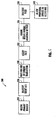
- FIG. 5 is a flow chart of the operation of bus arbiter 38, 52, 78 or 100.
- external situation 300 is discussed with reference to Figures 4 and bus arbiter 100.
- External situation 300 may involve coupling or uncoupling of bus 92 to a bus of a docking station (docking event) in system 90.
- Agent 104 preferably receives an external signal at external input 105 when external situation 300 is initiated. Alternatively, agent 104 may internally monitor external situation 300. Agent 104 preferably provides the PRIMARY REQUEST signal to primary request line 112 in response to the external signal or internal monitoring. Bus arbiter 100 deasserts all SECONDARY ACKNOWLEDGE signals provided on any secondary acknowledge lines 128-131 in response to the PRIMARY REQUEST signal (at block 226). More particularly, when primary logic circuit 164 receives the PRIMARY REQUEST signal at input 182, primary logic circuit 164 removes the signal at output 183. Acknowledge circuit 102 removes all signals on outputs 140-143 in response to the removal of the signal at output 183.
- bus arbiter 100 monitors bus 92 at bus input 107 to determine the end of a current bus transaction occurring on bus 92 (at block 328). More particularly, bus arbiter 100 determines if either the FRAME signal at FRAME input 186 or the IRDY signal at IRDY input 188 is asserted. According to PCI protocol, if either signal is asserted, the current bus transaction is occurring on bus 92. When both the FRAME and IRDY signal are absent, the current bus transaction is complete.
- Bus arbiter 100 may advantageously provide a BACKOFF signal at output 149 to accelerate the termination of the current bus transaction or simply wait for the current transaction to be completed.
- the BACKOFF signal is received by the bus masters such as devices 114, 118, 120 and 122 in system 90. Preferably the bus masters terminate their bus transaction in a particular number of bus cycles in response to the BACKOFF signal.
- bus arbiter 100 asserts a PRIMARY ACKNOWLEDGE signal at primary acknowledge output 108 (at block 232). Agent 104 preferably gains access of bus 92 in response to receiving the PRIMARY ACKNOWLEDGE signal.
- Bus arbiter 100 ignores all requests provided by the CPU and peripheral devices 114, 118, 120 and 122 as long as the PRIMARY REQUEST signal is received at primary request input 106 (at block 336). After agent 104 or other circuitry determines that access to bus 92 is no longer needed to service the external situation, agent 104 removes the PRIMARY REQUEST signal provided at primary request line 112. When arbiter 100 determines that the PRIMARY REQUEST signal has been deasserted at primary request input 100, bus arbiter 100 deasserts the PRIMARY ACKNOWLEDGE signal at quiet acknowledge output 114 (at block 338).
- bus arbiter 100 After the PRIMARY ACKNOWLEDGE signal is deasserted, bus arbiter 100 allows the CPU and peripheral device 114, 118, 120 and 122 to access bus 92 in response to SECONDARY REQUEST signals on secondary request lines 124-127 (at block 340). Thus, after external situation 300 is serviced, bus arbiter 100 provides normal bus arbitration operations for system 90.
Landscapes
- Engineering & Computer Science (AREA)
- Theoretical Computer Science (AREA)
- General Engineering & Computer Science (AREA)
- Physics & Mathematics (AREA)
- General Physics & Mathematics (AREA)
- Computer Hardware Design (AREA)
- Human Computer Interaction (AREA)
- Bus Control (AREA)
- Information Transfer Systems (AREA)
Applications Claiming Priority (2)
| Application Number | Priority Date | Filing Date | Title |
|---|---|---|---|
| US08/255,663 US5632020A (en) | 1994-03-25 | 1994-06-09 | System for docking a portable computer to a host computer without suspending processor operation by a docking agent driving the bus inactive during docking |
| US255663 | 1994-06-09 |
Publications (2)
| Publication Number | Publication Date |
|---|---|
| EP0686919A1 EP0686919A1 (en) | 1995-12-13 |
| EP0686919B1 true EP0686919B1 (en) | 2000-08-09 |
Family
ID=22969351
Family Applications (1)
| Application Number | Title | Priority Date | Filing Date |
|---|---|---|---|
| EP95303396A Expired - Lifetime EP0686919B1 (en) | 1994-06-09 | 1995-05-22 | An apparatus and method for granting control of a bus during the hot-docking of a dockable computer. |
Country Status (5)
| Country | Link |
|---|---|
| US (1) | US5632020A (enExample) |
| EP (1) | EP0686919B1 (enExample) |
| JP (1) | JPH08166923A (enExample) |
| AT (1) | ATE195379T1 (enExample) |
| DE (1) | DE69518276T2 (enExample) |
Families Citing this family (46)
| Publication number | Priority date | Publication date | Assignee | Title |
|---|---|---|---|---|
| US5598537A (en) * | 1994-03-25 | 1997-01-28 | Advanced Micro Devices, Inc. | Apparatus and method for driving a bus to a docking safe state in a dockable computer system including a docking station and a portable computer |
| US6137476A (en) * | 1994-08-25 | 2000-10-24 | International Business Machines Corp. | Data mouse |
| ATE288107T1 (de) | 1995-03-07 | 2005-02-15 | Mobility Electronics Inc | System und verfahren für die erweiterung eines computers |
| USRE39052E1 (en) | 1995-03-07 | 2006-03-28 | Tao Logic Systems Llc | System and method for expansion of a computer |
| KR0151663B1 (ko) * | 1995-05-17 | 1998-10-15 | 김광호 | 체결상태 감지장치를 갖는 도킹 스테이션 및 휴대용 컴퓨터 동작 모드 제어방법 |
| US6549942B1 (en) * | 1995-05-25 | 2003-04-15 | Audiohighway.Com | Enhanced delivery of audio data for portable playback |
| JPH09147545A (ja) | 1995-09-19 | 1997-06-06 | Ricoh Co Ltd | メモリカードおよび情報処理装置 |
| US6591374B1 (en) * | 1995-12-22 | 2003-07-08 | Cisco Technology, Inc. | Method and apparatus for forcing system components to temporarily enter a standby mode of operation during switching events |
| US6493782B1 (en) * | 1996-01-16 | 2002-12-10 | Texas Instruments Incorporated | Method for performing hot docking of a portable computer into a docking station |
| JP3293733B2 (ja) * | 1996-01-29 | 2002-06-17 | 甲府日本電気株式会社 | 共通バス制御装置 |
| US5944807A (en) * | 1996-02-06 | 1999-08-31 | Opti Inc. | Compact ISA-bus interface |
| US6370546B1 (en) * | 1996-04-08 | 2002-04-09 | Sony Corporation | First information processing device directly accessing, updating second information process device and vice versa via transmission bus management authority |
| US5933609A (en) * | 1996-04-08 | 1999-08-03 | Vlsi Technology, Inc. | Method and system for hot docking a portable computer to a docking station via the primary PCI bus |
| US5941965A (en) * | 1996-05-16 | 1999-08-24 | Electronics Accessory Specialists International, Inc. | Universal docking station |
| US5864708A (en) * | 1996-05-20 | 1999-01-26 | Croft; Daniel I. | Docking station for docking a portable computer with a wireless interface |
| US5954809A (en) * | 1996-07-19 | 1999-09-21 | Compaq Computer Corporation | Circuit for handling distributed arbitration in a computer system having multiple arbiters |
| US5873000A (en) * | 1996-07-19 | 1999-02-16 | Compaq Computer Corporation | System incorporating hot docking and undocking capabilities without requiring a standby or suspend mode by placing local arbiters of system and base into idle state |
| US5999997A (en) * | 1996-07-26 | 1999-12-07 | Compaq Computer Corporation | Two computers cooperating via interconnected busses |
| US5948047A (en) * | 1996-08-29 | 1999-09-07 | Xybernaut Corporation | Detachable computer structure |
| KR100286374B1 (ko) * | 1996-10-29 | 2001-04-16 | 윤종용 | 오디오제어기능을 갖는 컴퓨터 시스템 및 그 제어방법 |
| US5889964A (en) * | 1996-11-21 | 1999-03-30 | Intel Corporation | Method and apparatus for docking and undocking a notebook computer to and from a docking station while the notebook computer is in an active state |
| AU6869998A (en) | 1997-03-26 | 1998-10-20 | Via, Inc. | Wearable computer packaging configurations |
| KR100315910B1 (ko) * | 1997-11-24 | 2002-02-19 | 윤종용 | 써스펜드모드를이용한보조기억장치교체방법 |
| US6068496A (en) * | 1998-03-09 | 2000-05-30 | 3Com Corporation | Sliding door for a dock port |
| US7734852B1 (en) * | 1998-08-06 | 2010-06-08 | Ahern Frank W | Modular computer system |
| JP3026796B1 (ja) * | 1998-10-16 | 2000-03-27 | インターナショナル・ビジネス・マシーンズ・コーポレイション | コンピュータと周辺デバイスの接続装置および接続方法 |
| US6460106B1 (en) | 1998-10-20 | 2002-10-01 | Compaq Information Technologies Group, L.P. | Bus bridge for hot docking in a portable computer system |
| KR100561379B1 (ko) | 1999-01-08 | 2006-03-16 | 삼성전자주식회사 | 도킹 시스템의 전원공급장치 및 장애로부터 안전한 도킹 시스템 |
| US7472215B1 (en) * | 1999-03-31 | 2008-12-30 | International Business Machines Corporation | Portable computer system with thermal enhancements and multiple power modes of operation |
| US6594719B1 (en) * | 2000-04-19 | 2003-07-15 | Mobility Electronics Inc. | Extended cardbus/pc card controller with split-bridge ™technology |
| US6421232B2 (en) | 2000-08-02 | 2002-07-16 | Xybernaut Corporation | Dual FPD and thin client |
| US6728722B1 (en) | 2000-08-28 | 2004-04-27 | Sun Microsystems, Inc. | General data structure for describing logical data spaces |
| US6865579B1 (en) | 2000-08-28 | 2005-03-08 | Sun Microsystems, Inc. | Simplified thread control block design |
| US6859852B2 (en) | 2000-09-08 | 2005-02-22 | Texas Instruments Incorporated | Immediate grant bus arbiter for bus system |
| US6549399B2 (en) | 2000-12-15 | 2003-04-15 | Palm, Inc. | Door mechanism for handheld computer |
| US6976108B2 (en) * | 2001-01-31 | 2005-12-13 | Samsung Electronics Co., Ltd. | System on a chip having a system bus, an external bus, and a bus arbiter with programmable priorities for both buses, software, and method for assigning programmable priorities |
| KR100685095B1 (ko) * | 2001-10-22 | 2007-02-22 | 엘지전자 주식회사 | 도킹 시스템과의 버스 연결을 위한 본체 시스템 및 그제어 방법 |
| US6868468B2 (en) * | 2002-02-14 | 2005-03-15 | Standard Microsystems Corporation | Switchable hot-docking interface for a portable computer for hot-docking the portable computer to a docking station |
| US7043588B2 (en) * | 2002-05-24 | 2006-05-09 | Dell Products L.P. | Information handling system featuring multi-processor capability with processor located in docking station |
| US20040034730A1 (en) * | 2002-08-16 | 2004-02-19 | Te-Hua Yu | System and device for hot docking and undocking |
| US20040117793A1 (en) * | 2002-12-17 | 2004-06-17 | Sun Microsystems, Inc. | Operating system architecture employing synchronous tasks |
| US20050198152A1 (en) * | 2004-02-12 | 2005-09-08 | International Business Machines Corporation | Computer with a personal digital assistant |
| US7917679B2 (en) * | 2005-02-18 | 2011-03-29 | Standard Microsystems Corporation | Trusted LPC docking interface for docking notebook computers to a docking station |
| JP2006301770A (ja) * | 2005-04-18 | 2006-11-02 | Toshiba Corp | 情報処理装置および動作制御方法 |
| TWI463322B (zh) * | 2009-08-06 | 2014-12-01 | Asustek Comp Inc | 具有雙主機之電腦系統 |
| US8706936B2 (en) | 2011-11-14 | 2014-04-22 | Arm Limited | Integrated circuit having a bus network, and method for the integrated circuit |
Citations (1)
| Publication number | Priority date | Publication date | Assignee | Title |
|---|---|---|---|---|
| EP0674275A1 (en) * | 1994-03-25 | 1995-09-27 | Advanced Micro Devices, Inc. | An apparatus and method for achieving hot docking capabilities for a dockable computer system |
Family Cites Families (24)
| Publication number | Priority date | Publication date | Assignee | Title |
|---|---|---|---|---|
| US4530069A (en) * | 1982-08-20 | 1985-07-16 | Universal Data, Inc. | Expandable data communication system utilizing hand-held terminal |
| US4769764A (en) * | 1986-08-11 | 1988-09-06 | Isaac Levanon | Modular computer system with portable travel unit |
| US4999787A (en) * | 1988-07-15 | 1991-03-12 | Bull Hn Information Systems Inc. | Hot extraction and insertion of logic boards in an on-line communication system |
| US5195183A (en) * | 1989-01-31 | 1993-03-16 | Norand Corporation | Data communication system with communicating and recharging docking apparatus for hand-held data terminal |
| US5030128A (en) * | 1989-03-06 | 1991-07-09 | Dynabook Technologies Corporation | Docking module |
| US5052943A (en) * | 1989-03-23 | 1991-10-01 | Norand Corporation | Recharging and data retrieval apparatus |
| US5210855A (en) * | 1989-06-09 | 1993-05-11 | International Business Machines Corporation | System for computer peripheral bus for allowing hot extraction on insertion without disrupting adjacent devices |
| US4969830A (en) * | 1989-06-12 | 1990-11-13 | Grid Systems Corporation | Connection between portable computer components |
| JPH0366420U (enExample) * | 1989-10-31 | 1991-06-27 | ||
| JPH03269608A (ja) * | 1990-03-20 | 1991-12-02 | Toshiba Corp | 携帯型コンピュータの拡張ユニット |
| JPH04617A (ja) * | 1990-04-18 | 1992-01-06 | Sootec:Kk | 携帯型コンピュータの機能拡張用ステーション |
| JP3245861B2 (ja) * | 1990-11-19 | 2002-01-15 | セイコーエプソン株式会社 | ドッキングシステム |
| US5265238A (en) * | 1991-01-25 | 1993-11-23 | International Business Machines Corporation | Automatic device configuration for dockable portable computers |
| US5353417A (en) * | 1991-05-28 | 1994-10-04 | International Business Machines Corp. | Personal computer with bus interface controller coupled directly with local processor and input/output data buses and for anticipating memory control changes on arbitration for bus access |
| US5187645A (en) * | 1991-06-07 | 1993-02-16 | Ergo Computing, Inc. | Portable computer with docking connector for peripheral devices |
| US5317697A (en) * | 1991-07-31 | 1994-05-31 | Synernetics Inc. | Method and apparatus for live insertion and removal of electronic sub-assemblies |
| US5241542A (en) * | 1991-08-23 | 1993-08-31 | International Business Machines Corporation | Battery efficient operation of scheduled access protocol |
| JPH0821015B2 (ja) * | 1992-01-20 | 1996-03-04 | インターナショナル・ビジネス・マシーンズ・コーポレイション | コンピュータならびにそのシステム再構成化装置および方法 |
| US5323291A (en) * | 1992-10-15 | 1994-06-21 | Apple Computer, Inc. | Portable computer and docking station having an electromechanical docking/undocking mechanism and a plurality of cooperatively interacting failsafe mechanisms |
| US5313596A (en) * | 1993-01-05 | 1994-05-17 | Dell Usa Lp | Motorized portable computer/expansion chassis docking system |
| US5511171A (en) * | 1993-02-26 | 1996-04-23 | 3Com Corporation | Apparatus for live bus insertion of add-on devices |
| US5526493A (en) * | 1993-06-03 | 1996-06-11 | Dell Usa | Docking detection and suspend circuit for portable computer/expansion chassis docking system |
| EP0637793A1 (en) * | 1993-07-28 | 1995-02-08 | AT&T GLOBAL INFORMATION SOLUTIONS INTERNATIONAL INC. | Docking station for portable computer |
| US5488572A (en) * | 1994-05-04 | 1996-01-30 | Compaq Computer Corp. | Portable computer system for docking to an expansion base unit |
-
1994
- 1994-06-09 US US08/255,663 patent/US5632020A/en not_active Expired - Lifetime
-
1995
- 1995-05-22 DE DE69518276T patent/DE69518276T2/de not_active Expired - Lifetime
- 1995-05-22 AT AT95303396T patent/ATE195379T1/de active
- 1995-05-22 EP EP95303396A patent/EP0686919B1/en not_active Expired - Lifetime
- 1995-06-08 JP JP7141754A patent/JPH08166923A/ja active Pending
Patent Citations (1)
| Publication number | Priority date | Publication date | Assignee | Title |
|---|---|---|---|---|
| EP0674275A1 (en) * | 1994-03-25 | 1995-09-27 | Advanced Micro Devices, Inc. | An apparatus and method for achieving hot docking capabilities for a dockable computer system |
Also Published As
| Publication number | Publication date |
|---|---|
| DE69518276D1 (de) | 2000-09-14 |
| JPH08166923A (ja) | 1996-06-25 |
| EP0686919A1 (en) | 1995-12-13 |
| ATE195379T1 (de) | 2000-08-15 |
| DE69518276T2 (de) | 2001-03-29 |
| US5632020A (en) | 1997-05-20 |
Similar Documents
| Publication | Publication Date | Title |
|---|---|---|
| US5632020A (en) | System for docking a portable computer to a host computer without suspending processor operation by a docking agent driving the bus inactive during docking | |
| JP3231596B2 (ja) | 待ち時間及びシャドー・タイマを有するバス・システム | |
| US5887194A (en) | Locking protocol for peripheral component interconnect utilizing master device maintaining assertion of lock signal after relinquishing control of bus such that slave device remains locked | |
| EP0730234B1 (en) | Bus master arbitration circuitry having multiple arbiters | |
| US6070215A (en) | Computer system with improved transition to low power operation | |
| EP0343770B1 (en) | Multi-bus microcomputer system with bus arbitration | |
| US5603050A (en) | Direct memory access controller having programmable timing | |
| US5471590A (en) | Bus master arbitration circuitry having improved prioritization | |
| US5619661A (en) | Dynamic arbitration system and method | |
| JP3526920B2 (ja) | コンピュータシステム、ならびに周辺バスクロック信号を制御するためのシステムおよび方法 | |
| US5471625A (en) | Method and apparatus for entering a low-power mode and controlling an external bus of a data processing system during low-power mode | |
| US5797020A (en) | Bus master arbitration circuitry having improved prioritization | |
| CA2160500C (en) | Pci/isa bridge having an arrangement for responding to pci bridge address parity errors for internal pci slaves in the pci/isa bridge | |
| US5954809A (en) | Circuit for handling distributed arbitration in a computer system having multiple arbiters | |
| US5625824A (en) | Circuit for selectively preventing a microprocessor from posting write cycles | |
| US6397279B1 (en) | Smart retry system that reduces wasted bus transactions associated with master retries | |
| WO2001037106A1 (en) | Bus arbitration in low power system | |
| US5793995A (en) | Bus system for shadowing registers | |
| US6026460A (en) | Method and apparatus for sequencing system bus grants and disabling a posting buffer in a bus bridge to improve bus efficiency | |
| US6163826A (en) | Method and apparatus for non-concurrent arbitration of multiple busses | |
| US5764933A (en) | Deadlock prevention in a two bridge system by flushing write buffers in the first bridge | |
| US6625683B1 (en) | Automatic early PCI transaction retry | |
| JPH10177544A (ja) | 1次装置および2次装置に対するデータ・バスの許可を平等にする方法および装置 | |
| JPH10320349A (ja) | プロセッサ及び当該プロセッサを用いるデータ転送システム | |
| US7051140B2 (en) | Connector that enables aggregation of independent system resources across PCI/PCI-X bus and interlocked method for aggregating independent system resources across PCI/PCI-X bus |
Legal Events
| Date | Code | Title | Description |
|---|---|---|---|
| PUAI | Public reference made under article 153(3) epc to a published international application that has entered the european phase |
Free format text: ORIGINAL CODE: 0009012 |
|
| AK | Designated contracting states |
Kind code of ref document: A1 Designated state(s): AT BE DE DK ES FR GB GR IE IT LU NL PT SE |
|
| 17P | Request for examination filed |
Effective date: 19960320 |
|
| 17Q | First examination report despatched |
Effective date: 19981209 |
|
| RTI1 | Title (correction) |
Free format text: AN APPARATUS AND METHOD FOR GRANTING CONTROL OF A BUS DURING THE HOT-DOCKING OF A DOCKABLE COMPUTER. |
|
| RTI1 | Title (correction) |
Free format text: AN APPARATUS AND METHOD FOR GRANTING CONTROL OF A BUS DURING THE HOT-DOCKING OF A DOCKABLE COMPUTER. |
|
| RTI1 | Title (correction) |
Free format text: AN APPARATUS AND METHOD FOR GRANTING CONTROL OF A BUS DURING THE HOT-DOCKING OF A DOCKABLE COMPUTER. |
|
| RTI1 | Title (correction) |
Free format text: AN APPARATUS AND METHOD FOR GRANTING CONTROL OF A BUS DURING THE HOT-DOCKING OF A DOCKABLE COMPUTER. |
|
| GRAG | Despatch of communication of intention to grant |
Free format text: ORIGINAL CODE: EPIDOS AGRA |
|
| RTI1 | Title (correction) |
Free format text: AN APPARATUS AND METHOD FOR GRANTING CONTROL OF A BUS DURING THE HOT-DOCKING OF A DOCKABLE COMPUTER. |
|
| GRAG | Despatch of communication of intention to grant |
Free format text: ORIGINAL CODE: EPIDOS AGRA |
|
| GRAH | Despatch of communication of intention to grant a patent |
Free format text: ORIGINAL CODE: EPIDOS IGRA |
|
| GRAH | Despatch of communication of intention to grant a patent |
Free format text: ORIGINAL CODE: EPIDOS IGRA |
|
| GRAA | (expected) grant |
Free format text: ORIGINAL CODE: 0009210 |
|
| AK | Designated contracting states |
Kind code of ref document: B1 Designated state(s): AT BE DE DK ES FR GB GR IE IT LU NL PT SE |
|
| PG25 | Lapsed in a contracting state [announced via postgrant information from national office to epo] |
Ref country code: NL Free format text: LAPSE BECAUSE OF FAILURE TO SUBMIT A TRANSLATION OF THE DESCRIPTION OR TO PAY THE FEE WITHIN THE PRESCRIBED TIME-LIMIT Effective date: 20000809 Ref country code: IT Free format text: LAPSE BECAUSE OF FAILURE TO SUBMIT A TRANSLATION OF THE DESCRIPTION OR TO PAY THE FEE WITHIN THE PRE;WARNING: LAPSES OF ITALIAN PATENTS WITH EFFECTIVE DATE BEFORE 2007 MAY HAVE OCCURRED AT ANY TIME BEFORE 2007. THE CORRECT EFFECTIVE DATE MAY BE DIFFERENT FROM THE ONE RECORDED.SCRIBED TIME-LIMIT Effective date: 20000809 Ref country code: GR Free format text: LAPSE BECAUSE OF NON-PAYMENT OF DUE FEES Effective date: 20000809 Ref country code: FR Free format text: LAPSE BECAUSE OF FAILURE TO SUBMIT A TRANSLATION OF THE DESCRIPTION OR TO PAY THE FEE WITHIN THE PRESCRIBED TIME-LIMIT Effective date: 20000809 Ref country code: ES Free format text: THE PATENT HAS BEEN ANNULLED BY A DECISION OF A NATIONAL AUTHORITY Effective date: 20000809 Ref country code: BE Free format text: LAPSE BECAUSE OF FAILURE TO SUBMIT A TRANSLATION OF THE DESCRIPTION OR TO PAY THE FEE WITHIN THE PRESCRIBED TIME-LIMIT Effective date: 20000809 Ref country code: AT Free format text: LAPSE BECAUSE OF FAILURE TO SUBMIT A TRANSLATION OF THE DESCRIPTION OR TO PAY THE FEE WITHIN THE PRESCRIBED TIME-LIMIT Effective date: 20000809 |
|
| REF | Corresponds to: |
Ref document number: 195379 Country of ref document: AT Date of ref document: 20000815 Kind code of ref document: T |
|
| REG | Reference to a national code |
Ref country code: IE Ref legal event code: FG4D |
|
| REF | Corresponds to: |
Ref document number: 69518276 Country of ref document: DE Date of ref document: 20000914 |
|
| PG25 | Lapsed in a contracting state [announced via postgrant information from national office to epo] |
Ref country code: SE Free format text: LAPSE BECAUSE OF FAILURE TO SUBMIT A TRANSLATION OF THE DESCRIPTION OR TO PAY THE FEE WITHIN THE PRESCRIBED TIME-LIMIT Effective date: 20001109 Ref country code: PT Free format text: LAPSE BECAUSE OF FAILURE TO SUBMIT A TRANSLATION OF THE DESCRIPTION OR TO PAY THE FEE WITHIN THE PRESCRIBED TIME-LIMIT Effective date: 20001109 Ref country code: DK Free format text: LAPSE BECAUSE OF FAILURE TO SUBMIT A TRANSLATION OF THE DESCRIPTION OR TO PAY THE FEE WITHIN THE PRESCRIBED TIME-LIMIT Effective date: 20001109 |
|
| NLV1 | Nl: lapsed or annulled due to failure to fulfill the requirements of art. 29p and 29m of the patents act | ||
| EN | Fr: translation not filed | ||
| PG25 | Lapsed in a contracting state [announced via postgrant information from national office to epo] |
Ref country code: LU Free format text: LAPSE BECAUSE OF NON-PAYMENT OF DUE FEES Effective date: 20010522 Ref country code: IE Free format text: LAPSE BECAUSE OF NON-PAYMENT OF DUE FEES Effective date: 20010522 |
|
| PLBE | No opposition filed within time limit |
Free format text: ORIGINAL CODE: 0009261 |
|
| STAA | Information on the status of an ep patent application or granted ep patent |
Free format text: STATUS: NO OPPOSITION FILED WITHIN TIME LIMIT |
|
| 26N | No opposition filed | ||
| REG | Reference to a national code |
Ref country code: GB Ref legal event code: IF02 |
|
| REG | Reference to a national code |
Ref country code: IE Ref legal event code: MM4A |
|
| PGFP | Annual fee paid to national office [announced via postgrant information from national office to epo] |
Ref country code: GB Payment date: 20140521 Year of fee payment: 20 |
|
| PGFP | Annual fee paid to national office [announced via postgrant information from national office to epo] |
Ref country code: DE Payment date: 20140515 Year of fee payment: 20 |
|
| REG | Reference to a national code |
Ref country code: DE Ref legal event code: R071 Ref document number: 69518276 Country of ref document: DE |
|
| REG | Reference to a national code |
Ref country code: GB Ref legal event code: PE20 Expiry date: 20150521 |
|
| PG25 | Lapsed in a contracting state [announced via postgrant information from national office to epo] |
Ref country code: GB Free format text: LAPSE BECAUSE OF EXPIRATION OF PROTECTION Effective date: 20150521 |