EP0682065B1 - Inhibierte ungesättigte Polyesterharze - Google Patents
Inhibierte ungesättigte Polyesterharze Download PDFInfo
- Publication number
- EP0682065B1 EP0682065B1 EP95105322A EP95105322A EP0682065B1 EP 0682065 B1 EP0682065 B1 EP 0682065B1 EP 95105322 A EP95105322 A EP 95105322A EP 95105322 A EP95105322 A EP 95105322A EP 0682065 B1 EP0682065 B1 EP 0682065B1
- Authority
- EP
- European Patent Office
- Prior art keywords
- unsaturated polyester
- polyester resins
- ppm
- tert
- acid
- Prior art date
- Legal status (The legal status is an assumption and is not a legal conclusion. Google has not performed a legal analysis and makes no representation as to the accuracy of the status listed.)
- Expired - Lifetime
Links
Classifications
-
- C—CHEMISTRY; METALLURGY
- C08—ORGANIC MACROMOLECULAR COMPOUNDS; THEIR PREPARATION OR CHEMICAL WORKING-UP; COMPOSITIONS BASED THEREON
- C08K—Use of inorganic or non-macromolecular organic substances as compounding ingredients
- C08K5/00—Use of organic ingredients
- C08K5/01—Hydrocarbons
Definitions
- the invention relates to unsaturated polyester resins which form molding materials can be cured with a low tendency to yellowing can.
- Unsaturated polyester resins are often used as fine layers of gelcoats), Lacquers, coating materials and for corrugated sheets, Light panels, skylights and similar applications are used.
- the molding material covers all of it Usage life remains in an optically perfect condition.
- the yellowing of the molding material due to is particularly undesirable Warmth, light or weather. Has this tendency to yellowing so far the use of UP resins on less demanding Limited applications.
- the object of the invention was therefore therein, unsaturated polyester resins with the lowest possible tendency to yellowing to provide without the cheap price and the favorable processing properties (e.g. long pot life with the Processing).
- Unsaturated polyester resins usually contain inhibitors for stabilization against premature gelling and for targeted Adjustment of reactivity. It has been shown that most common phenolic inhibitors, e.g. Hydroquinone and hydroquinone derivatives promote yellowing.
- Unsaturated polyesters A are the usual condensation products from polyvalent, especially dibasic carboxylic acids and their esterifiable derivatives, especially their Anhydrides, and polyvalent, especially dihydric Alcohols, which may contain additional monovalent residues Carboxylic acids, monohydric alcohols or residues of hydroxycarboxylic acids included, with at least part of the residues have ethylenically unsaturated copolymerizable groups got to.
- glycol component preferably ethylene glycol, propylene glycol and / or neopentyl glycol.
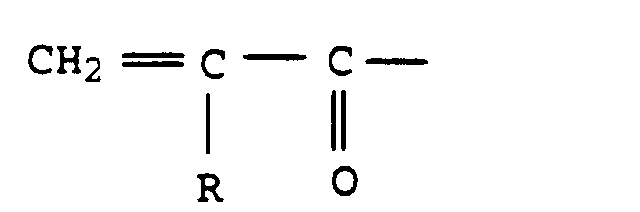
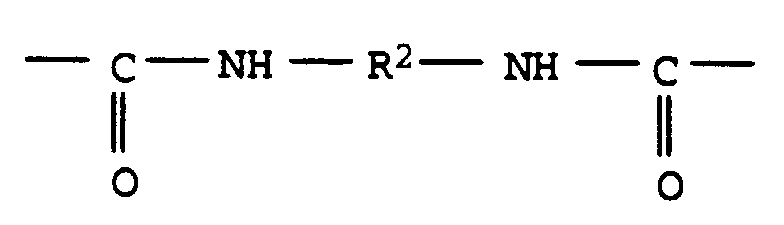
- Vinyl esters are generally understood to be reaction products of polyepoxides with unsaturated monocarboxylic acids, preferably Methacrylic acid. These resins are used, for example, in U.S. Patents 3,066,112 and 3,179,623, preferred Vinyl ester resins based on bisphenol A for use come. They are characterized by high toughness and good Chemical resistance with limited heat resistance out. Vinyl ester resins made from epoxy novolak resins and (Meth) acrylic acid, as used for example in the US Pat. No. 3,256,226, on the other hand, have higher ones Heat resistance, but lower toughness.
- the unsaturated polyester resins contain as a monomer Styrene.
- the polyester: styrene ratio is preferably between 20:80 and 90:10, especially between 50:50 and 75:25.
- Styrene as a comonomer can be partly replaced by others usual ethylenically polymerizable monomers are replaced, e.g. Vinyl compounds such as substituted styrenes, esters of acrylic and methacrylic acid or allyl compounds, such as Diallyl phthalate.
- the unsaturated polyester resins contain 100 to 20,000 ppm, preferably 1,000 to 10,000 ppm, 1,1-diphenylethylene.
- conventional inhibitors can be present in small amounts.
- a preferred inhibitor combination consists of 1,000 to 2,000 ppm 1,1-diphenylethylene and 20 to 200 ppm 4-tert-butyl catechol.
- the resins of the invention can also contain further conventional additives D, such as reinforcing fibers, e.g. Glass and carbon fibers; Fillers e.g. Chalk, Quartz, alumina hydrate; Thixotropic agents; Lubricants like e.g. Stearates; Initiators, e.g. tert-butyl perethyl hexanoate, Benzoyl peroxide or tert-butyl perbenzoate for thermosetting or methyl ethyl ketone peroxide, acetylacetone peroxide or cyclohexanone peroxide for cold hardening, in combination with hardening accelerators, e.g. Cobalt complexes or aromatic amines; Photoinitiators such as benzoin ethers, benzil ketals or acylphosphine oxides.
- additives D such as reinforcing fibers, e.g. Glass and carbon fibers; Fillers e.g
- the resins according to the invention are used to produce such molded articles used, where yellowing would be annoying.
- melt viscosity 980 mPa ⁇ s (measured at 100 ° C, 10,000 s -1 ) and an acid number of 25.2 mg KOH / g polymer is achieved.
- the polyester is cooled to 120 ° C. and mixed with 1841 g of styrene, in which 9.993 g (1900 ppm) of 2,6-di-tert-butyl-p-cresol are dissolved.
- a 3 to 4 mm thick pure resin plate (300 g resin + 3 g of tert-butyl perethylhexanoate), which cured at 80 ° C for 1 h becomes.
- the test plate is then 7 d at 120 ° C in a forced air cabinet stored; the yellowing becomes visual by comparison different test plates.
- the table shows the inhibitors used for adjustment the amount of inhibitor necessary for the reactivity of the resin and compiled the yellowing determined in the yellowing test. Reactivity is required, which is a hardening time of 7.75 ⁇ 0.75 min (according to DIN 16 945).
- Reactivity measurement 100 g of resin are mixed intensively with 15 g of styrene and 1.725 g of tert-butyl perethylhexanoate and cured at 80 ° C in accordance with DIN 16 945.
- the resin in Example 9 had already gelled after 4 1/2 minutes.
Landscapes
- Chemical & Material Sciences (AREA)
- Health & Medical Sciences (AREA)
- Chemical Kinetics & Catalysis (AREA)
- Medicinal Chemistry (AREA)
- Polymers & Plastics (AREA)
- Organic Chemistry (AREA)
- Macromonomer-Based Addition Polymer (AREA)
Description

- einem polyfunktionellen Isocyanat,
- gegebenenfalls einem mehrwertigen Alkohol,
- gegebenenfalls einem mehrwertigen Amin,
- einem Hydroxyalkyl-(meth)acrylat,
1.000 bis 2.000 ppm 1,1-Diphenylethylen und
20 bis 200 ppm 4-tert.Butylbrenzkatechin.
| Bsp | Inhibitor | Inhibitormenge [ppm] | Vergilbung nach 7 d [120°C] |
| 1 | Hydrochinon | 100 | stark |
| 2 | Chinhydron | 50 | stark |
| 3 | p-Benzochinon | 50 | stark |
| 4 | Hydrochinonmonomethylether | 750 | stark |
| 5 | 4,4'-Thio-bis-(2-tert.-butyl-5-methyl-phenol) | 1000 | stark |
| 6 | 4,4'-Butyliden-bis-(2-tert.-butyl-5-methyl-phenol) | 2000 | stark |
| 7 | 1,1-Diphenylethylen | 2500 | gering |
| 8 | 1,1-Diphenylethylen | 1500 | gering |
| 4-tert.Butylbrenzkatechin | 100 | ||
| 9 | ohne Inhibitor | gering |
Claims (6)
- Ungesättigte Polyesterharze mit geringer Vergilbungsneigung, enthaltenddadurch gekennzeichnet, daß der Inhibitor 1,1-Diphenylethylen ist.A. einen ungesättigten Polyester,B. ein copolymerisierbares Monomeres,C. 100 bis 20.000 ppm, bezogen auf A + B, eines Inhibitors, sowieD. übliche Zusatzstoffe,
- Ungesättigte Polyesterharze nach Anspruch 1, dadurch gekennzeichnet, daß sie als Inhibitoren
1.000 bis 2.000 ppm 1,1-Diphenylethylen und
20 bis 200 ppm 4-tert.Butylbrenzkatechin enthalten. - Ungesättigte Polyesterharze nach Anspruch 1, dadurch gekennzeichnet, daß der ungesättigte Polyester A ein Kondensationsprodukt vona) Fumarsäure, gegebenenfalls zusammen mit Adipinsäure, Phthalsäure, Isophthalsäure und/oder Terephthalsäure einerseits undb) Ethylenglykol, Propylenglykol und/oder Neopentylglykol andererseits ist.
- Ungesättigte Polyesterharze nach Anspruch 1, dadurch gekennzeichnet, daß das copolymerisierbare Monomer B Styrol ist.
- Ungesättigte Polyesterharze nach Anspruch 1, dadurch gekennzeichnet, daß sie zusätzlich eine Kombination aus einem primären Antioxidanz und einem sekundären Antioxidanz enthalten.
- Ungesättigte Polyesterharze nach Anspruch 5, dadurch gekennzeichnet, daß sieenthalten.a) 100 bis 3.000 ppm, bezogen auf A + B, 2,6-Di-tert.-butyl-p-Kresol oder 3-(3,5-Di-tert.-butyl-4-hydroxyphenyl)propionsäureoktadecylether undb) 50 bis 500 ppm Triphenylphosphit oder ein Trialkylderivat des Triphenylphosphits
Applications Claiming Priority (2)
| Application Number | Priority Date | Filing Date | Title |
|---|---|---|---|
| DE4413437A DE4413437A1 (de) | 1994-04-18 | 1994-04-18 | Ungesättigte Polyesterharze |
| DE4413437 | 1994-04-18 |
Publications (2)
| Publication Number | Publication Date |
|---|---|
| EP0682065A1 EP0682065A1 (de) | 1995-11-15 |
| EP0682065B1 true EP0682065B1 (de) | 1998-01-14 |
Family
ID=6515779
Family Applications (1)
| Application Number | Title | Priority Date | Filing Date |
|---|---|---|---|
| EP95105322A Expired - Lifetime EP0682065B1 (de) | 1994-04-18 | 1995-04-08 | Inhibierte ungesättigte Polyesterharze |
Country Status (2)
| Country | Link |
|---|---|
| EP (1) | EP0682065B1 (de) |
| DE (2) | DE4413437A1 (de) |
Families Citing this family (1)
| Publication number | Priority date | Publication date | Assignee | Title |
|---|---|---|---|---|
| CA3126443A1 (en) * | 2019-01-09 | 2020-07-16 | Aoc, Llc | Binder composition for fiberglass |
Family Cites Families (2)
| Publication number | Priority date | Publication date | Assignee | Title |
|---|---|---|---|---|
| DE2402178C2 (de) * | 1974-01-17 | 1985-04-04 | Bayer Ag, 5090 Leverkusen | Rieselfähige, schwundarm aushärtbare ungesättigte Polyesterformmassen |
| SU493482A1 (ru) * | 1974-06-04 | 1975-11-28 | Предприятие П/Я А-7345 | Способ получени карбоцепных полимеров |
-
1994
- 1994-04-18 DE DE4413437A patent/DE4413437A1/de not_active Withdrawn
-
1995
- 1995-04-08 EP EP95105322A patent/EP0682065B1/de not_active Expired - Lifetime
- 1995-04-08 DE DE59501243T patent/DE59501243D1/de not_active Expired - Fee Related
Also Published As
| Publication number | Publication date |
|---|---|
| DE59501243D1 (de) | 1998-02-19 |
| EP0682065A1 (de) | 1995-11-15 |
| DE4413437A1 (de) | 1995-10-19 |
Similar Documents
| Publication | Publication Date | Title |
|---|---|---|
| DE69931956T2 (de) | Ungesättigte polyesterharze | |
| DE2542314C2 (de) | Verfahren zur Herstellung von Lösungen urethanmodifizierter Acrylate und deren Verwendung | |
| DE69922843T2 (de) | Ungesättigte polyesterharzzusammensetungen mit vermindertem monomergehalt | |
| DE3643007A1 (de) | Haertbare polyesterformmassen | |
| DE2534039A1 (de) | Niedrigprofil-formkompositionen | |
| DE2657808C2 (de) | Schrumpfarm härtbare Polyesterformmassen und Verfahren zu ihrer Herstellung | |
| CH496042A (de) | Wärmehärtende Vinylester Harzmischung, Verfahren zur deren Herstellung und deren Verwendung | |
| EP0682065A1 (de) | Inhibierte ungesättigte Polyesterharze | |
| EP0171591B1 (de) | Lagerfähige schwundarm härtbare ungesättigte Polyesterharze | |
| EP0722995A2 (de) | Ungesättigte Polyesterharze enthaltende Mischungen und ihre Verwendung | |
| EP0779349A2 (de) | Überzugsmittel, Verfahren zur Herstellung von Mehrschichtüberzügen und Verwendung des Überzugsmittels | |
| DE2502218C3 (de) | Herstellung von nicht vergrünenden Formteilen oder Überzügen | |
| DE2302842A1 (de) | Formmassen auf basis ungesaettigter polyester, anpolymerisierbarer vinylmonomerer und celluloseester | |
| DE3127780A1 (de) | Ungesaettigte polyesterharzmasse | |
| EP0275034B1 (de) | Ungesättigte DCPD-Polyesterharze mit erhöhter Härtungsaktivität | |
| DE3801454A1 (de) | Styrolarme ungesaettigte polyesterharze | |
| EP0310972B1 (de) | Unter dem Einfluss von Radikalen härtbare Mischungen und ihre Verwendung als Spachtelmassen | |
| DE2402178A1 (de) | Rieselfaehige, schwundarm aushaertbare ungesaettigte polyesterformmassen | |
| EP0640654A1 (de) | Thixotrope ungesättigte Polyesterharze | |
| DE3807931A1 (de) | Elastomermodifizierte ungesaettigte polyesterharze | |
| EP0152028A2 (de) | Härtbare Polyesterformmassen | |
| EP0545176B1 (de) | Härtbare Formmassen auf Basis von ungesättigten Polyester | |
| DE1669687C3 (de) | Verfahren zur Herstellung von hellen Formteilen oder Überzügen aus Polyester- Formmassen | |
| EP0622417A2 (de) | Verdunstungsarme ungesättigte Polyesterharze | |
| DE3742832A1 (de) | Up-harzformmassen mit verringerter styrolemission |
Legal Events
| Date | Code | Title | Description |
|---|---|---|---|
| PUAI | Public reference made under article 153(3) epc to a published international application that has entered the european phase |
Free format text: ORIGINAL CODE: 0009012 |
|
| AK | Designated contracting states |
Kind code of ref document: A1 Designated state(s): DE ES FR GB IT NL |
|
| 17P | Request for examination filed |
Effective date: 19951002 |
|
| GRAG | Despatch of communication of intention to grant |
Free format text: ORIGINAL CODE: EPIDOS AGRA |
|
| 17Q | First examination report despatched |
Effective date: 19970311 |
|
| RAP1 | Party data changed (applicant data changed or rights of an application transferred) |
Owner name: DSM RESINS B.V. |
|
| GRAG | Despatch of communication of intention to grant |
Free format text: ORIGINAL CODE: EPIDOS AGRA |
|
| GRAH | Despatch of communication of intention to grant a patent |
Free format text: ORIGINAL CODE: EPIDOS IGRA |
|
| GRAH | Despatch of communication of intention to grant a patent |
Free format text: ORIGINAL CODE: EPIDOS IGRA |
|
| GRAA | (expected) grant |
Free format text: ORIGINAL CODE: 0009210 |
|
| AK | Designated contracting states |
Kind code of ref document: B1 Designated state(s): DE ES FR GB IT NL |
|
| PG25 | Lapsed in a contracting state [announced via postgrant information from national office to epo] |
Ref country code: NL Free format text: LAPSE BECAUSE OF FAILURE TO SUBMIT A TRANSLATION OF THE DESCRIPTION OR TO PAY THE FEE WITHIN THE PRESCRIBED TIME-LIMIT Effective date: 19980114 Ref country code: IT Free format text: LAPSE BECAUSE OF FAILURE TO SUBMIT A TRANSLATION OF THE DESCRIPTION OR TO PAY THE FEE WITHIN THE PRE;WARNING: LAPSES OF ITALIAN PATENTS WITH EFFECTIVE DATE BEFORE 2007 MAY HAVE OCCURRED AT ANY TIME BEFORE 2007. THE CORRECT EFFECTIVE DATE MAY BE DIFFERENT FROM THE ONE RECORDED.SCRIBED TIME-LIMIT Effective date: 19980114 Ref country code: GB Free format text: LAPSE BECAUSE OF FAILURE TO SUBMIT A TRANSLATION OF THE DESCRIPTION OR TO PAY THE FEE WITHIN THE PRESCRIBED TIME-LIMIT Effective date: 19980114 Ref country code: FR Free format text: LAPSE BECAUSE OF FAILURE TO SUBMIT A TRANSLATION OF THE DESCRIPTION OR TO PAY THE FEE WITHIN THE PRESCRIBED TIME-LIMIT Effective date: 19980114 Ref country code: ES Free format text: THE PATENT HAS BEEN ANNULLED BY A DECISION OF A NATIONAL AUTHORITY Effective date: 19980114 |
|
| REF | Corresponds to: |
Ref document number: 59501243 Country of ref document: DE Date of ref document: 19980219 |
|
| EN | Fr: translation not filed | ||
| NLV1 | Nl: lapsed or annulled due to failure to fulfill the requirements of art. 29p and 29m of the patents act | ||
| GBV | Gb: ep patent (uk) treated as always having been void in accordance with gb section 77(7)/1977 [no translation filed] |
Effective date: 19980114 |
|
| PLBE | No opposition filed within time limit |
Free format text: ORIGINAL CODE: 0009261 |
|
| STAA | Information on the status of an ep patent application or granted ep patent |
Free format text: STATUS: NO OPPOSITION FILED WITHIN TIME LIMIT |
|
| 26N | No opposition filed | ||
| PG25 | Lapsed in a contracting state [announced via postgrant information from national office to epo] |
Ref country code: DE Free format text: LAPSE BECAUSE OF NON-PAYMENT OF DUE FEES Effective date: 19990202 |