EP0674670B1 - Dilute process for the preparation of ethylene/alpha-olefin copolymer using metallocene catalyst systems - Google Patents
Dilute process for the preparation of ethylene/alpha-olefin copolymer using metallocene catalyst systems Download PDFInfo
- Publication number
- EP0674670B1 EP0674670B1 EP94905379A EP94905379A EP0674670B1 EP 0674670 B1 EP0674670 B1 EP 0674670B1 EP 94905379 A EP94905379 A EP 94905379A EP 94905379 A EP94905379 A EP 94905379A EP 0674670 B1 EP0674670 B1 EP 0674670B1
- Authority
- EP
- European Patent Office
- Prior art keywords
- ethylene
- olefin
- feed
- reactor
- polymer
- Prior art date
- Legal status (The legal status is an assumption and is not a legal conclusion. Google has not performed a legal analysis and makes no representation as to the accuracy of the status listed.)
- Expired - Lifetime
Links
- VGGSQFUCUMXWEO-UHFFFAOYSA-N Ethene Chemical compound C=C VGGSQFUCUMXWEO-UHFFFAOYSA-N 0.000 title claims abstract description 156
- 239000005977 Ethylene Substances 0.000 title claims abstract description 156
- 239000004711 α-olefin Substances 0.000 title claims abstract description 79
- 238000000034 method Methods 0.000 title claims abstract description 65
- 230000008569 process Effects 0.000 title claims abstract description 57
- 239000012968 metallocene catalyst Substances 0.000 title claims description 35
- 238000002360 preparation method Methods 0.000 title description 3
- 229920000089 Cyclic olefin copolymer Polymers 0.000 title description 2
- 238000006243 chemical reaction Methods 0.000 claims abstract description 79
- VXNZUUAINFGPBY-UHFFFAOYSA-N 1-Butene Chemical compound CCC=C VXNZUUAINFGPBY-UHFFFAOYSA-N 0.000 claims description 107
- 229920000642 polymer Polymers 0.000 claims description 101
- 239000000178 monomer Substances 0.000 claims description 52
- 239000003085 diluting agent Substances 0.000 claims description 41
- 239000000376 reactant Substances 0.000 claims description 34
- 238000010992 reflux Methods 0.000 claims description 29
- QQONPFPTGQHPMA-UHFFFAOYSA-N propylene Natural products CC=C QQONPFPTGQHPMA-UHFFFAOYSA-N 0.000 claims description 24
- 239000007788 liquid Substances 0.000 claims description 20
- 125000004805 propylene group Chemical group [H]C([H])([H])C([H])([*:1])C([H])([H])[*:2] 0.000 claims description 20
- 229920001577 copolymer Polymers 0.000 claims description 18
- -1 vapor Substances 0.000 claims description 18
- 238000009835 boiling Methods 0.000 claims description 17
- 239000000470 constituent Substances 0.000 claims description 17
- 238000001816 cooling Methods 0.000 claims description 17
- 239000007791 liquid phase Substances 0.000 claims description 15
- 150000001875 compounds Chemical class 0.000 claims description 14
- 150000001993 dienes Chemical class 0.000 claims description 8
- YWAKXRMUMFPDSH-UHFFFAOYSA-N pentene Chemical compound CCCC=C YWAKXRMUMFPDSH-UHFFFAOYSA-N 0.000 claims description 7
- 239000012808 vapor phase Substances 0.000 claims description 6
- 229930195733 hydrocarbon Natural products 0.000 claims description 2
- 150000002430 hydrocarbons Chemical class 0.000 claims description 2
- 239000003054 catalyst Substances 0.000 abstract description 66
- 238000007334 copolymerization reaction Methods 0.000 abstract description 8
- 230000000694 effects Effects 0.000 abstract description 5
- 239000000047 product Substances 0.000 description 50
- NNPPMTNAJDCUHE-UHFFFAOYSA-N isobutane Chemical compound CC(C)C NNPPMTNAJDCUHE-UHFFFAOYSA-N 0.000 description 44
- 239000000203 mixture Substances 0.000 description 26
- 239000007789 gas Substances 0.000 description 24
- 239000001282 iso-butane Substances 0.000 description 22
- 239000011541 reaction mixture Substances 0.000 description 22
- KAKZBPTYRLMSJV-UHFFFAOYSA-N Butadiene Chemical compound C=CC=C KAKZBPTYRLMSJV-UHFFFAOYSA-N 0.000 description 21
- 239000000243 solution Substances 0.000 description 21
- 238000002156 mixing Methods 0.000 description 20
- 150000001336 alkenes Chemical class 0.000 description 19
- XLYOFNOQVPJJNP-UHFFFAOYSA-N water Substances O XLYOFNOQVPJJNP-UHFFFAOYSA-N 0.000 description 17
- IJGRMHOSHXDMSA-UHFFFAOYSA-N Atomic nitrogen Chemical compound N#N IJGRMHOSHXDMSA-UHFFFAOYSA-N 0.000 description 15
- 238000006116 polymerization reaction Methods 0.000 description 15
- 238000010791 quenching Methods 0.000 description 14
- 239000002904 solvent Substances 0.000 description 14
- 238000012546 transfer Methods 0.000 description 14
- 239000003446 ligand Substances 0.000 description 13
- JRZJOMJEPLMPRA-UHFFFAOYSA-N olefin Natural products CCCCCCCC=C JRZJOMJEPLMPRA-UHFFFAOYSA-N 0.000 description 13
- YXFVVABEGXRONW-UHFFFAOYSA-N Toluene Chemical compound CC1=CC=CC=C1 YXFVVABEGXRONW-UHFFFAOYSA-N 0.000 description 12
- 238000009826 distribution Methods 0.000 description 12
- 238000004519 manufacturing process Methods 0.000 description 12
- 125000004432 carbon atom Chemical group C* 0.000 description 11
- 239000001257 hydrogen Substances 0.000 description 11
- 229910052739 hydrogen Inorganic materials 0.000 description 11
- VQTUBCCKSQIDNK-UHFFFAOYSA-N Isobutene Chemical group CC(C)=C VQTUBCCKSQIDNK-UHFFFAOYSA-N 0.000 description 10
- 150000003624 transition metals Chemical group 0.000 description 10
- UFHFLCQGNIYNRP-UHFFFAOYSA-N Hydrogen Chemical compound [H][H] UFHFLCQGNIYNRP-UHFFFAOYSA-N 0.000 description 9
- IAQRGUVFOMOMEM-UHFFFAOYSA-N butene Natural products CC=CC IAQRGUVFOMOMEM-UHFFFAOYSA-N 0.000 description 9
- 229910052799 carbon Inorganic materials 0.000 description 9
- 238000005984 hydrogenation reaction Methods 0.000 description 9
- 231100000614 poison Toxicity 0.000 description 9
- ATUOYWHBWRKTHZ-UHFFFAOYSA-N Propane Chemical compound CCC ATUOYWHBWRKTHZ-UHFFFAOYSA-N 0.000 description 8
- 125000000058 cyclopentadienyl group Chemical group C1(=CC=CC1)* 0.000 description 8
- VNWKTOKETHGBQD-UHFFFAOYSA-N methane Chemical compound C VNWKTOKETHGBQD-UHFFFAOYSA-N 0.000 description 8
- 229910052757 nitrogen Inorganic materials 0.000 description 8
- 229910052723 transition metal Inorganic materials 0.000 description 8
- 239000002574 poison Substances 0.000 description 7
- OKTJSMMVPCPJKN-UHFFFAOYSA-N Carbon Chemical compound [C] OKTJSMMVPCPJKN-UHFFFAOYSA-N 0.000 description 6
- 239000012190 activator Substances 0.000 description 6
- 238000010923 batch production Methods 0.000 description 6
- 230000008901 benefit Effects 0.000 description 6
- 230000015572 biosynthetic process Effects 0.000 description 6
- 239000000463 material Substances 0.000 description 6
- CPOFMOWDMVWCLF-UHFFFAOYSA-N methyl(oxo)alumane Chemical compound C[Al]=O CPOFMOWDMVWCLF-UHFFFAOYSA-N 0.000 description 6
- 125000000217 alkyl group Chemical group 0.000 description 5
- IJDNQMDRQITEOD-UHFFFAOYSA-N n-butane Chemical compound CCCC IJDNQMDRQITEOD-UHFFFAOYSA-N 0.000 description 5
- 239000012071 phase Substances 0.000 description 5
- 229920006395 saturated elastomer Polymers 0.000 description 5
- IAQRGUVFOMOMEM-ONEGZZNKSA-N trans-but-2-ene Chemical compound C\C=C\C IAQRGUVFOMOMEM-ONEGZZNKSA-N 0.000 description 5
- 238000005033 Fourier transform infrared spectroscopy Methods 0.000 description 4
- 239000004698 Polyethylene Substances 0.000 description 4
- 239000002270 dispersing agent Substances 0.000 description 4
- 125000002573 ethenylidene group Chemical group [*]=C=C([H])[H] 0.000 description 4
- OFBQJSOFQDEBGM-UHFFFAOYSA-N n-pentane Natural products CCCCC OFBQJSOFQDEBGM-UHFFFAOYSA-N 0.000 description 4
- 229920000573 polyethylene Polymers 0.000 description 4
- 238000012545 processing Methods 0.000 description 4
- 239000001294 propane Substances 0.000 description 4
- 238000004064 recycling Methods 0.000 description 4
- YHQXBTXEYZIYOV-UHFFFAOYSA-N 3-methylbut-1-ene Chemical compound CC(C)C=C YHQXBTXEYZIYOV-UHFFFAOYSA-N 0.000 description 3
- RGSFGYAAUTVSQA-UHFFFAOYSA-N Cyclopentane Chemical compound C1CCCC1 RGSFGYAAUTVSQA-UHFFFAOYSA-N 0.000 description 3
- 241000196324 Embryophyta Species 0.000 description 3
- OKKJLVBELUTLKV-UHFFFAOYSA-N Methanol Chemical compound OC OKKJLVBELUTLKV-UHFFFAOYSA-N 0.000 description 3
- HEMHJVSKTPXQMS-UHFFFAOYSA-M Sodium hydroxide Chemical compound [OH-].[Na+] HEMHJVSKTPXQMS-UHFFFAOYSA-M 0.000 description 3
- DKGAVHZHDRPRBM-UHFFFAOYSA-N Tert-Butanol Chemical compound CC(C)(C)O DKGAVHZHDRPRBM-UHFFFAOYSA-N 0.000 description 3
- LPIQUOYDBNQMRZ-UHFFFAOYSA-N cyclopentenylidene Natural products C1CC=CC1 LPIQUOYDBNQMRZ-UHFFFAOYSA-N 0.000 description 3
- 238000010790 dilution Methods 0.000 description 3
- 239000012895 dilution Substances 0.000 description 3
- 238000004821 distillation Methods 0.000 description 3
- ZSWFCLXCOIISFI-UHFFFAOYSA-N endo-cyclopentadiene Natural products C1C=CC=C1 ZSWFCLXCOIISFI-UHFFFAOYSA-N 0.000 description 3
- 239000012530 fluid Substances 0.000 description 3
- 229910052736 halogen Inorganic materials 0.000 description 3
- 150000002367 halogens Chemical class 0.000 description 3
- 125000005842 heteroatom Chemical group 0.000 description 3
- 150000002431 hydrogen Chemical class 0.000 description 3
- 125000004435 hydrogen atom Chemical group [H]* 0.000 description 3
- 230000000737 periodic effect Effects 0.000 description 3
- 230000000171 quenching effect Effects 0.000 description 3
- 229930195734 saturated hydrocarbon Natural products 0.000 description 3
- 150000003623 transition metal compounds Chemical class 0.000 description 3
- 125000000391 vinyl group Chemical group [H]C([*])=C([H])[H] 0.000 description 3
- KWKAKUADMBZCLK-UHFFFAOYSA-N 1-octene Chemical compound CCCCCCC=C KWKAKUADMBZCLK-UHFFFAOYSA-N 0.000 description 2
- MHNNAWXXUZQSNM-UHFFFAOYSA-N 2-methylbut-1-ene Chemical compound CCC(C)=C MHNNAWXXUZQSNM-UHFFFAOYSA-N 0.000 description 2
- UGFAIRIUMAVXCW-UHFFFAOYSA-N Carbon monoxide Chemical compound [O+]#[C-] UGFAIRIUMAVXCW-UHFFFAOYSA-N 0.000 description 2
- OTMSDBZUPAUEDD-UHFFFAOYSA-N Ethane Chemical compound CC OTMSDBZUPAUEDD-UHFFFAOYSA-N 0.000 description 2
- RRHGJUQNOFWUDK-UHFFFAOYSA-N Isoprene Chemical compound CC(=C)C=C RRHGJUQNOFWUDK-UHFFFAOYSA-N 0.000 description 2
- LSDPWZHWYPCBBB-UHFFFAOYSA-N Methanethiol Chemical compound SC LSDPWZHWYPCBBB-UHFFFAOYSA-N 0.000 description 2
- BZLVMXJERCGZMT-UHFFFAOYSA-N Methyl tert-butyl ether Chemical compound COC(C)(C)C BZLVMXJERCGZMT-UHFFFAOYSA-N 0.000 description 2
- 239000000654 additive Substances 0.000 description 2
- 229910052782 aluminium Inorganic materials 0.000 description 2
- XAGFODPZIPBFFR-UHFFFAOYSA-N aluminium Chemical compound [Al] XAGFODPZIPBFFR-UHFFFAOYSA-N 0.000 description 2
- 239000001273 butane Substances 0.000 description 2
- 238000004364 calculation method Methods 0.000 description 2
- 229910002091 carbon monoxide Inorganic materials 0.000 description 2
- JJWKPURADFRFRB-UHFFFAOYSA-N carbonyl sulfide Chemical compound O=C=S JJWKPURADFRFRB-UHFFFAOYSA-N 0.000 description 2
- 238000004523 catalytic cracking Methods 0.000 description 2
- 238000010924 continuous production Methods 0.000 description 2
- 125000004122 cyclic group Chemical group 0.000 description 2
- 238000011161 development Methods 0.000 description 2
- 230000018109 developmental process Effects 0.000 description 2
- 238000010586 diagram Methods 0.000 description 2
- 230000001747 exhibiting effect Effects 0.000 description 2
- 238000007306 functionalization reaction Methods 0.000 description 2
- 238000004817 gas chromatography Methods 0.000 description 2
- 125000001183 hydrocarbyl group Chemical group 0.000 description 2
- 230000006872 improvement Effects 0.000 description 2
- 239000011261 inert gas Substances 0.000 description 2
- QWTDNUCVQCZILF-UHFFFAOYSA-N isopentane Chemical compound CCC(C)C QWTDNUCVQCZILF-UHFFFAOYSA-N 0.000 description 2
- 239000000314 lubricant Substances 0.000 description 2
- 230000007246 mechanism Effects 0.000 description 2
- 229910052751 metal Inorganic materials 0.000 description 2
- 239000002184 metal Substances 0.000 description 2
- 230000007096 poisonous effect Effects 0.000 description 2
- 230000002000 scavenging effect Effects 0.000 description 2
- 241000894007 species Species 0.000 description 2
- 238000004611 spectroscopical analysis Methods 0.000 description 2
- 238000004230 steam cracking Methods 0.000 description 2
- 229920002554 vinyl polymer Polymers 0.000 description 2
- 239000002699 waste material Substances 0.000 description 2
- ZOICEQJZAWJHSI-UHFFFAOYSA-N (2,3,4,5,6-pentafluorophenyl)boron Chemical compound [B]C1=C(F)C(F)=C(F)C(F)=C1F ZOICEQJZAWJHSI-UHFFFAOYSA-N 0.000 description 1
- PMJHHCWVYXUKFD-SNAWJCMRSA-N (E)-1,3-pentadiene Chemical compound C\C=C\C=C PMJHHCWVYXUKFD-SNAWJCMRSA-N 0.000 description 1
- VQOXUMQBYILCKR-UHFFFAOYSA-N 1-Tridecene Chemical compound CCCCCCCCCCCC=C VQOXUMQBYILCKR-UHFFFAOYSA-N 0.000 description 1
- AFFLGGQVNFXPEV-UHFFFAOYSA-N 1-decene Chemical compound CCCCCCCCC=C AFFLGGQVNFXPEV-UHFFFAOYSA-N 0.000 description 1
- CRSBERNSMYQZNG-UHFFFAOYSA-N 1-dodecene Chemical compound CCCCCCCCCCC=C CRSBERNSMYQZNG-UHFFFAOYSA-N 0.000 description 1
- GQEZCXVZFLOKMC-UHFFFAOYSA-N 1-hexadecene Chemical compound CCCCCCCCCCCCCCC=C GQEZCXVZFLOKMC-UHFFFAOYSA-N 0.000 description 1
- LIKMAJRDDDTEIG-UHFFFAOYSA-N 1-hexene Chemical compound CCCCC=C LIKMAJRDDDTEIG-UHFFFAOYSA-N 0.000 description 1
- HFDVRLIODXPAHB-UHFFFAOYSA-N 1-tetradecene Chemical compound CCCCCCCCCCCCC=C HFDVRLIODXPAHB-UHFFFAOYSA-N 0.000 description 1
- 238000001644 13C nuclear magnetic resonance spectroscopy Methods 0.000 description 1
- BKOOMYPCSUNDGP-UHFFFAOYSA-N 2-methylbut-2-ene Chemical compound CC=C(C)C BKOOMYPCSUNDGP-UHFFFAOYSA-N 0.000 description 1
- WSSSPWUEQFSQQG-UHFFFAOYSA-N 4-methyl-1-pentene Chemical compound CC(C)CC=C WSSSPWUEQFSQQG-UHFFFAOYSA-N 0.000 description 1
- RWSOTUBLDIXVET-UHFFFAOYSA-N Dihydrogen sulfide Chemical compound S RWSOTUBLDIXVET-UHFFFAOYSA-N 0.000 description 1
- LCGLNKUTAGEVQW-UHFFFAOYSA-N Dimethyl ether Chemical compound COC LCGLNKUTAGEVQW-UHFFFAOYSA-N 0.000 description 1
- 238000005481 NMR spectroscopy Methods 0.000 description 1
- NINIDFKCEFEMDL-UHFFFAOYSA-N Sulfur Chemical compound [S] NINIDFKCEFEMDL-UHFFFAOYSA-N 0.000 description 1
- QCWXUUIWCKQGHC-UHFFFAOYSA-N Zirconium Chemical compound [Zr] QCWXUUIWCKQGHC-UHFFFAOYSA-N 0.000 description 1
- DDDRMZMSFMQPPC-UHFFFAOYSA-L [Cl-].[Cl-].C1C=CC=C2C([Zr+2])CCC21 Chemical compound [Cl-].[Cl-].C1C=CC=C2C([Zr+2])CCC21 DDDRMZMSFMQPPC-UHFFFAOYSA-L 0.000 description 1
- 150000000475 acetylene derivatives Chemical class 0.000 description 1
- 230000001154 acute effect Effects 0.000 description 1
- 230000006978 adaptation Effects 0.000 description 1
- 230000000996 additive effect Effects 0.000 description 1
- 238000013019 agitation Methods 0.000 description 1
- 150000001298 alcohols Chemical class 0.000 description 1
- 150000001335 aliphatic alkanes Chemical class 0.000 description 1
- 125000003342 alkenyl group Chemical group 0.000 description 1
- 150000001345 alkine derivatives Chemical class 0.000 description 1
- 125000005234 alkyl aluminium group Chemical group 0.000 description 1
- 125000002877 alkyl aryl group Chemical group 0.000 description 1
- IYABWNGZIDDRAK-UHFFFAOYSA-N allene Chemical compound C=C=C IYABWNGZIDDRAK-UHFFFAOYSA-N 0.000 description 1
- 230000003466 anti-cipated effect Effects 0.000 description 1
- 238000013459 approach Methods 0.000 description 1
- 239000008346 aqueous phase Substances 0.000 description 1
- 239000007864 aqueous solution Substances 0.000 description 1
- 150000004945 aromatic hydrocarbons Chemical class 0.000 description 1
- 125000003710 aryl alkyl group Chemical group 0.000 description 1
- 125000004429 atom Chemical group 0.000 description 1
- 230000005587 bubbling Effects 0.000 description 1
- 239000006227 byproduct Substances 0.000 description 1
- 230000003197 catalytic effect Effects 0.000 description 1
- 150000001768 cations Chemical class 0.000 description 1
- 239000012295 chemical reaction liquid Substances 0.000 description 1
- 239000003153 chemical reaction reagent Substances 0.000 description 1
- 238000004587 chromatography analysis Methods 0.000 description 1
- 238000004891 communication Methods 0.000 description 1
- 230000006835 compression Effects 0.000 description 1
- 238000007906 compression Methods 0.000 description 1
- 239000000356 contaminant Substances 0.000 description 1
- 238000011109 contamination Methods 0.000 description 1
- 229920006037 cross link polymer Polymers 0.000 description 1
- 230000007423 decrease Effects 0.000 description 1
- 239000002283 diesel fuel Substances 0.000 description 1
- AFABGHUZZDYHJO-UHFFFAOYSA-N dimethyl butane Natural products CCCC(C)C AFABGHUZZDYHJO-UHFFFAOYSA-N 0.000 description 1
- 229910001873 dinitrogen Inorganic materials 0.000 description 1
- 238000004090 dissolution Methods 0.000 description 1
- 238000001035 drying Methods 0.000 description 1
- 125000001495 ethyl group Chemical group [H]C([H])([H])C([H])([H])* 0.000 description 1
- 229920001038 ethylene copolymer Polymers 0.000 description 1
- 238000001704 evaporation Methods 0.000 description 1
- 230000008020 evaporation Effects 0.000 description 1
- 230000007717 exclusion Effects 0.000 description 1
- 239000012467 final product Substances 0.000 description 1
- 238000004508 fractional distillation Methods 0.000 description 1
- 238000005194 fractionation Methods 0.000 description 1
- 238000010528 free radical solution polymerization reaction Methods 0.000 description 1
- 239000002737 fuel gas Substances 0.000 description 1
- 229910052732 germanium Inorganic materials 0.000 description 1
- GNPVGFCGXDBREM-UHFFFAOYSA-N germanium atom Chemical compound [Ge] GNPVGFCGXDBREM-UHFFFAOYSA-N 0.000 description 1
- DMEGYFMYUHOHGS-UHFFFAOYSA-N heptamethylene Natural products C1CCCCCC1 DMEGYFMYUHOHGS-UHFFFAOYSA-N 0.000 description 1
- 229920006158 high molecular weight polymer Polymers 0.000 description 1
- 239000012456 homogeneous solution Substances 0.000 description 1
- BHEPBYXIRTUNPN-UHFFFAOYSA-N hydridophosphorus(.) (triplet) Chemical compound [PH] BHEPBYXIRTUNPN-UHFFFAOYSA-N 0.000 description 1
- 229910000037 hydrogen sulfide Inorganic materials 0.000 description 1
- 230000002209 hydrophobic effect Effects 0.000 description 1
- 238000010348 incorporation Methods 0.000 description 1
- 239000003999 initiator Substances 0.000 description 1
- 238000002347 injection Methods 0.000 description 1
- 239000007924 injection Substances 0.000 description 1
- 150000008040 ionic compounds Chemical class 0.000 description 1
- 150000002500 ions Chemical class 0.000 description 1
- 238000002955 isolation Methods 0.000 description 1
- 229920000092 linear low density polyethylene Polymers 0.000 description 1
- 239000004707 linear low-density polyethylene Substances 0.000 description 1
- 238000004811 liquid chromatography Methods 0.000 description 1
- 229920001684 low density polyethylene Polymers 0.000 description 1
- 239000004702 low-density polyethylene Substances 0.000 description 1
- 239000003879 lubricant additive Substances 0.000 description 1
- 239000010687 lubricating oil Substances 0.000 description 1
- FPYJFEHAWHCUMM-UHFFFAOYSA-N maleic anhydride Chemical compound O=C1OC(=O)C=C1 FPYJFEHAWHCUMM-UHFFFAOYSA-N 0.000 description 1
- 239000000155 melt Substances 0.000 description 1
- 150000002739 metals Chemical class 0.000 description 1
- 125000002496 methyl group Chemical group [H]C([H])([H])* 0.000 description 1
- TVMXDCGIABBOFY-UHFFFAOYSA-N n-Octanol Natural products CCCCCCCC TVMXDCGIABBOFY-UHFFFAOYSA-N 0.000 description 1
- 230000007935 neutral effect Effects 0.000 description 1
- 125000004433 nitrogen atom Chemical group N* 0.000 description 1
- CCCMONHAUSKTEQ-UHFFFAOYSA-N octadec-1-ene Chemical compound CCCCCCCCCCCCCCCCC=C CCCMONHAUSKTEQ-UHFFFAOYSA-N 0.000 description 1
- 125000002347 octyl group Chemical group [H]C([*])([H])C([H])([H])C([H])([H])C([H])([H])C([H])([H])C([H])([H])C([H])([H])C([H])([H])[H] 0.000 description 1
- 239000003924 oil dispersant Substances 0.000 description 1
- 239000011368 organic material Substances 0.000 description 1
- 230000003647 oxidation Effects 0.000 description 1
- 238000007254 oxidation reaction Methods 0.000 description 1
- 150000002926 oxygen Chemical class 0.000 description 1
- PJLHTVIBELQURV-UHFFFAOYSA-N pentadecene Natural products CCCCCCCCCCCCCC=C PJLHTVIBELQURV-UHFFFAOYSA-N 0.000 description 1
- 125000004817 pentamethylene group Chemical class [H]C([H])([*:2])C([H])([H])C([H])([H])C([H])([H])C([H])([H])[*:1] 0.000 description 1
- QMMOXUPEWRXHJS-UHFFFAOYSA-N pentene-2 Natural products CCC=CC QMMOXUPEWRXHJS-UHFFFAOYSA-N 0.000 description 1
- PMJHHCWVYXUKFD-UHFFFAOYSA-N piperylene Natural products CC=CC=C PMJHHCWVYXUKFD-UHFFFAOYSA-N 0.000 description 1
- 239000002685 polymerization catalyst Substances 0.000 description 1
- 229920000098 polyolefin Polymers 0.000 description 1
- 239000002516 radical scavenger Substances 0.000 description 1
- 150000003254 radicals Chemical group 0.000 description 1
- 230000007420 reactivation Effects 0.000 description 1
- 230000009257 reactivity Effects 0.000 description 1
- 230000004044 response Effects 0.000 description 1
- 238000009738 saturating Methods 0.000 description 1
- 229910052710 silicon Inorganic materials 0.000 description 1
- 239000010703 silicon Substances 0.000 description 1
- 238000001542 size-exclusion chromatography Methods 0.000 description 1
- 239000011877 solvent mixture Substances 0.000 description 1
- 238000003860 storage Methods 0.000 description 1
- 150000004763 sulfides Chemical class 0.000 description 1
- 229910052717 sulfur Inorganic materials 0.000 description 1
- 239000011593 sulfur Substances 0.000 description 1
- 239000000725 suspension Substances 0.000 description 1
- 125000000383 tetramethylene group Chemical group [H]C([H])([*:1])C([H])([H])C([H])([H])C([H])([H])[*:2] 0.000 description 1
- 238000004448 titration Methods 0.000 description 1
- IMFACGCPASFAPR-UHFFFAOYSA-N tributylamine Chemical compound CCCCN(CCCC)CCCC IMFACGCPASFAPR-UHFFFAOYSA-N 0.000 description 1
- 230000008016 vaporization Effects 0.000 description 1
- 239000004034 viscosity adjusting agent Substances 0.000 description 1
- 238000003260 vortexing Methods 0.000 description 1
- 238000004065 wastewater treatment Methods 0.000 description 1
- 229910052726 zirconium Inorganic materials 0.000 description 1
Images


Classifications
-
- C—CHEMISTRY; METALLURGY
- C08—ORGANIC MACROMOLECULAR COMPOUNDS; THEIR PREPARATION OR CHEMICAL WORKING-UP; COMPOSITIONS BASED THEREON
- C08F—MACROMOLECULAR COMPOUNDS OBTAINED BY REACTIONS ONLY INVOLVING CARBON-TO-CARBON UNSATURATED BONDS
- C08F210/00—Copolymers of unsaturated aliphatic hydrocarbons having only one carbon-to-carbon double bond
- C08F210/16—Copolymers of ethene with alpha-alkenes, e.g. EP rubbers
-
- B—PERFORMING OPERATIONS; TRANSPORTING
- B01—PHYSICAL OR CHEMICAL PROCESSES OR APPARATUS IN GENERAL
- B01J—CHEMICAL OR PHYSICAL PROCESSES, e.g. CATALYSIS OR COLLOID CHEMISTRY; THEIR RELEVANT APPARATUS
- B01J19/00—Chemical, physical or physico-chemical processes in general; Their relevant apparatus
- B01J19/18—Stationary reactors having moving elements inside
-
- B—PERFORMING OPERATIONS; TRANSPORTING
- B01—PHYSICAL OR CHEMICAL PROCESSES OR APPARATUS IN GENERAL
- B01J—CHEMICAL OR PHYSICAL PROCESSES, e.g. CATALYSIS OR COLLOID CHEMISTRY; THEIR RELEVANT APPARATUS
- B01J8/00—Chemical or physical processes in general, conducted in the presence of fluids and solid particles; Apparatus for such processes
- B01J8/18—Chemical or physical processes in general, conducted in the presence of fluids and solid particles; Apparatus for such processes with fluidised particles
- B01J8/24—Chemical or physical processes in general, conducted in the presence of fluids and solid particles; Apparatus for such processes with fluidised particles according to "fluidised-bed" technique
- B01J8/38—Chemical or physical processes in general, conducted in the presence of fluids and solid particles; Apparatus for such processes with fluidised particles according to "fluidised-bed" technique with fluidised bed containing a rotatable device or being subject to rotation or to a circulatory movement, i.e. leaving a vessel and subsequently re-entering it
- B01J8/382—Chemical or physical processes in general, conducted in the presence of fluids and solid particles; Apparatus for such processes with fluidised particles according to "fluidised-bed" technique with fluidised bed containing a rotatable device or being subject to rotation or to a circulatory movement, i.e. leaving a vessel and subsequently re-entering it with a rotatable device only
-
- C—CHEMISTRY; METALLURGY
- C08—ORGANIC MACROMOLECULAR COMPOUNDS; THEIR PREPARATION OR CHEMICAL WORKING-UP; COMPOSITIONS BASED THEREON
- C08F—MACROMOLECULAR COMPOUNDS OBTAINED BY REACTIONS ONLY INVOLVING CARBON-TO-CARBON UNSATURATED BONDS
- C08F2/00—Processes of polymerisation
- C08F2/04—Polymerisation in solution
- C08F2/06—Organic solvent
-
- B—PERFORMING OPERATIONS; TRANSPORTING
- B01—PHYSICAL OR CHEMICAL PROCESSES OR APPARATUS IN GENERAL
- B01J—CHEMICAL OR PHYSICAL PROCESSES, e.g. CATALYSIS OR COLLOID CHEMISTRY; THEIR RELEVANT APPARATUS
- B01J2219/00—Chemical, physical or physico-chemical processes in general; Their relevant apparatus
- B01J2219/00049—Controlling or regulating processes
- B01J2219/00051—Controlling the temperature
- B01J2219/00074—Controlling the temperature by indirect heating or cooling employing heat exchange fluids
- B01J2219/00087—Controlling the temperature by indirect heating or cooling employing heat exchange fluids with heat exchange elements outside the reactor
- B01J2219/00103—Controlling the temperature by indirect heating or cooling employing heat exchange fluids with heat exchange elements outside the reactor in a heat exchanger separate from the reactor
-
- B—PERFORMING OPERATIONS; TRANSPORTING
- B01—PHYSICAL OR CHEMICAL PROCESSES OR APPARATUS IN GENERAL
- B01J—CHEMICAL OR PHYSICAL PROCESSES, e.g. CATALYSIS OR COLLOID CHEMISTRY; THEIR RELEVANT APPARATUS
- B01J2219/00—Chemical, physical or physico-chemical processes in general; Their relevant apparatus
- B01J2219/00049—Controlling or regulating processes
- B01J2219/00051—Controlling the temperature
- B01J2219/00074—Controlling the temperature by indirect heating or cooling employing heat exchange fluids
- B01J2219/00105—Controlling the temperature by indirect heating or cooling employing heat exchange fluids part or all of the reactants being heated or cooled outside the reactor while recycling
- B01J2219/00108—Controlling the temperature by indirect heating or cooling employing heat exchange fluids part or all of the reactants being heated or cooled outside the reactor while recycling involving reactant vapours
-
- B—PERFORMING OPERATIONS; TRANSPORTING
- B01—PHYSICAL OR CHEMICAL PROCESSES OR APPARATUS IN GENERAL
- B01J—CHEMICAL OR PHYSICAL PROCESSES, e.g. CATALYSIS OR COLLOID CHEMISTRY; THEIR RELEVANT APPARATUS
- B01J2219/00—Chemical, physical or physico-chemical processes in general; Their relevant apparatus
- B01J2219/00761—Details of the reactor
- B01J2219/00763—Baffles
- B01J2219/00765—Baffles attached to the reactor wall
- B01J2219/00768—Baffles attached to the reactor wall vertical
-
- Y—GENERAL TAGGING OF NEW TECHNOLOGICAL DEVELOPMENTS; GENERAL TAGGING OF CROSS-SECTIONAL TECHNOLOGIES SPANNING OVER SEVERAL SECTIONS OF THE IPC; TECHNICAL SUBJECTS COVERED BY FORMER USPC CROSS-REFERENCE ART COLLECTIONS [XRACs] AND DIGESTS
- Y02—TECHNOLOGIES OR APPLICATIONS FOR MITIGATION OR ADAPTATION AGAINST CLIMATE CHANGE
- Y02P—CLIMATE CHANGE MITIGATION TECHNOLOGIES IN THE PRODUCTION OR PROCESSING OF GOODS
- Y02P20/00—Technologies relating to chemical industry
- Y02P20/50—Improvements relating to the production of bulk chemicals
- Y02P20/582—Recycling of unreacted starting or intermediate materials
-
- Y—GENERAL TAGGING OF NEW TECHNOLOGICAL DEVELOPMENTS; GENERAL TAGGING OF CROSS-SECTIONAL TECHNOLOGIES SPANNING OVER SEVERAL SECTIONS OF THE IPC; TECHNICAL SUBJECTS COVERED BY FORMER USPC CROSS-REFERENCE ART COLLECTIONS [XRACs] AND DIGESTS
- Y10—TECHNICAL SUBJECTS COVERED BY FORMER USPC
- Y10S—TECHNICAL SUBJECTS COVERED BY FORMER USPC CROSS-REFERENCE ART COLLECTIONS [XRACs] AND DIGESTS
- Y10S526/00—Synthetic resins or natural rubbers -- part of the class 520 series
- Y10S526/943—Polymerization with metallocene catalysts
Definitions
- This invention relates to a continuous process for the polymerization of ethylene and ⁇ -olefins with a metallocene catalyst system using dilute ⁇ -olefin feed.
- Olefin polymerizations can be broadly differentiated as occurring in solution, suspension, or in the gas phase.
- operating conditions can vary quite broadly depending on such variables as the concentration of the reactants in the total feed, the nature of the catalyst system employed, the desired molecular weight of the polymer, and the desired monomer/comonomer ratio within the final polymer.
- the hydrogen treatment at least partially saturates the terminal double bonds in the product, thereby significantly reducing or destroying the polymer's utility for most functionalization reactions, e.g., those used in the production of dispersants.
- Saturated polymers have limited applicability for use in subsequent fuctionalization techniques (e.g., by "ene” reaction with maleic anhydride) which rely on a high terminal double bond content to achieve functionalization.
- a single phase system is achieved by operating at temperatures and pressures sufficiently high to compress the ethylene and make it dense enough to dissolve the polymer product therein. This produces a homogeneous solution of polymer in reactant.
- the process is run adiabatically (heat is not removed), making temperature control difficult. Since the molecular weight of the product is directly related to temperature, failure to maintain constant temperature throughout the reaction process results in increased polydispersity (or Molecular Weight Distribution, MWD). Temperature control becomes increasingly more difficult at higher conversions in an adiabatic system. Consequently, conversions in the high temperature/high pressure process are kept to a minimum. For polymers having molecular weight of 100,000 or more, variations of ⁇ 1,000 or so have little effect on MWD. For polymers on the order of 10,000 molecular weight and below, however, such variations are extremely disadvantageous.
- a low conversion system requires the recycling of ethylene and comonomer out of the product stream and back into the reactor.
- a recycle system is disclosed in PCT Application No. EP92100377 (Publication No. WO 92/14766) wherein unreacted ethylene must be separated out of the product stream and then repressurized into the reactor vessel.
- catalyst since catalyst is present in the recycle and ethylene is extremely self-reactive, the problem of ethylenic polymerization arises, thereby necessitating the use of a catalyst "killer" that can suppress polymerization in the recycle stream.
- KAMINSKY et al., U.S. Patent No. 4,542,199, describes a batch process wherein pure ethylene and an ⁇ -olefin are introduced into a pressure vessel containing a metallocene dissolved in toluene.
- LUKER U.S. Patent No. 5,023,388 refers to a batch process, wherein the metallocene is dissolved in diesel oil in the presence of large quantities of ⁇ -olefin and ethylene and hydrogen gas at 7 bar. The molecular weight distribution of the product is reported to be 2.8.
- Elastic substantially linear olefin polymers are described in WO 93/08221 which have processability similar to highly branched low density polyethylene, but the strength and toughness of linear low density polyethylene.
- the application of such polymers is for the conventional fabrication of films, fibres and moulded articles.
- TSUTSUI et at., EP 447,035 published September 18, 1991, refers to a series of batch processes, wherein ethylene is first polymerized or copolymerized with ⁇ -olefin in a first batch under concentrated or dilute conditions; the product is isolated; and then the product is introduced into a subsequent batch process with ethylene or an ⁇ -olefin. The process may be continued to a third round of batch processing. Reactants may be relatively concentrated in one batch, yet relatively dilute in the next or vice-versa.
- reaction temperature is increased (e.g., above the critical temperature of ethylene at 9.2°C (48.5°F)
- the ethylene mass transfer problem becomes more acute since the solubility of ethylene will be more difficult, thereby reducing gas/liquid phase mixing.
- evaporatively cooled reactors In addition to ethylene imbalance in the vapor space and mass transfer problems, evaporatively cooled reactors also lead to the associated problem of reactor fouling and polyethylene segment formation. More specifically, because ethylene and ⁇ -olefins possess different reactivities, they co-polymerize at different rates. Moreover, because ethylene reacts with itself so much faster than with ⁇ -olefins, the copolymerization of ethylene with ⁇ -olefins can result in polymers having large crystalline polyethylene segments randomly interspersed with occasional ⁇ -olefin moieties.
- the conventional solution to controlling polymer ethylene content when using Ziegler-Natta catalysts, has been to regulate the concentrations of ethylene and ⁇ -olefin in the reaction mixture.
- a large excess of propylene e.g., greater than 10:1 mole ratio, is necessary in the catalyst-containing solution in the reactor.
- a copolymerization conducted in a solution containing about equal amounts of ethylene and propylene produces a copolymer so high in ethylene content, that under ordinary Ziegler-Natta polymerization conditions, e.g., about -20° to about 80°C., it would not be soluble in the saturated hydrocarbon solvents used as the polymerization medium.
- ethylene and propylene for example, are polymerized in a reactor having both liquid and vapor phases, the mole or weight ratio of propylene to ethylene in the vapor phase is typically far less than the corresponding propylene to ethylene ratio in the liquid phase because of the greater volatility of ethylene. For example, if the propylene to ethylene mole ratio in the liquid phase is about 10:1, the propylene to ethylene mole ratio in the vapor phase above it may be only about 1:1 to about 3:1.
- Uniformity of ethylene monomer incorporation is also a function of the mass transfer of ethylene into the reaction zone, i.e., uniform mixing of the co-monomers.
- compositional distribution is also a function of the mass transfer of ethylene into the reaction zone, i.e., uniform mixing of the co-monomers.
- the reflux condensate returning to the reactor will typically have sufficiently high ethylene concentrations that reactor agitation of fresh and recycled ethylene alone will not suffice to prevent insoluble polymers having randomly high ethylene content from forming and clogging up the system.
- the earlier application WO 93/08221 discloses a process for producing an ethylene/1-octene copolymer by continuously providing a diluent mixture comprising 1-octene in C8 - C10 saturated hydrocarbons and admixing the feed stream with ethylene.
- the single feed stream and the metallocene catalyst is continuously introduced into the reaction zone.
- the copolymer has a molecular weight distribution M w /M n of from 1.5 - 2.5 and a melt index of 0,01 - 1000 g/10 min, preferably 0,01 - 10 g/10 min.
- a process for continuously producing copolymer comprising monomer units derived from ethylene and ⁇ -olefin in the presence of a metallocene catalyst system and in a reaction zone containing liquid phase which comprises:
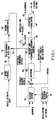
- Figure 1 is a flow diagram of the dilute feed polymer process.
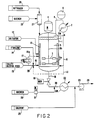
- Figure 2 is a schematic view of the reflux boiling reactor system.
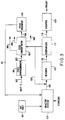
- Figure 3 is a schematic view of preferred dilute feed polymer production process.
- Figure 4 is a graphic representation of the mass flows of the process of Figure 3.
- Figure 5 is a graphic representation of the mass flows of a variation on the process of Figure 3.
- R 1 in the above formula is alkyl of from 1 to 8 carbon atoms, and more preferably is alkyl of from 1 to 2 carbon atoms.
- useful comonomers with ethylene include propylene, butene-1, pentene-1, 4-methylpentene-1, hexene-1, octene-1, decene-1, dodecene-1, tridecene-1, tetradecene-1, pentadecene-1, hexadecene-1, heptadecene-1, octadecene-1, nonadecene-1 and mixtures thereof (e.g., mixtures of propylene and butene-1, and the like).
- the ethylene content of the polymers prepared in accordance with this invention is in the range of between 5 and 70 wt. % (e.g., 11 to 70 wt. %), and, preferably between 15 and 50 wt. % (e.g., 15 to 45 wt. %).
- the process of the present invention is controlled to make polymer having a number average molecular weight of not greater than 15,000 and typically from 300 to 15,000 (e.g., from 300 to 10,000), preferably from 900 to 8,000; more preferably from 1,000 to 5,000 (e.g., from 1,000 to 3,000).
- the number average molecular weight for such polymers can be determined by several known techniques. A convenient method for such determination is by size exclusion chromatography (also known as get permeation chromatography, GPC) which additionally provides molecular weight distribution information (see W.W. Yau, J.J. Kirkland and D.D. Bly, "Modern Size Exclusion Liquid Chromatography", John Wiley and Sons, New York, 1979).
- the polymers produced in the process of this invention preferably exhibit a degree of crystallinity such that they are essentially amorphous.
- the polymers produced in this invention are further characterized in that up to about 95% or more of the polymer chains possess terminal ethenylidene-type unsaturation.
- the chain length of the T 1 alkyl group will vary depending on the comonomer(s) selected for use in the polymerization.
- a minor amount of the polymer chains can contain terminal vinyl unsaturation, i.e.
- POLY-CH CH 2
- the polymer products of this inventive process comprise chains which can be saturated by hydrogen, but preferably contain polymer chains wherein at least 30, preferably at least 50, more preferably at least 60, and most preferably at least 75 percent (e.g. 75-98%), of which exhibit terminal ethenylidene (vinylidene) unsaturation.
- the percentage of polymer chains exhibiting terminal ethenylidene unsaturation may be determined by Fourier Transform Infrared (FTIR) spectroscopic analysis, titration, proton (H)NMR, or C 13 NMR.
- FTIR Fourier Transform Infrared
- the molecular weight distribution (Mw/Mn) of the copolymers will be typically less than 5, preferably less than 4, and most preferably less than 3, e.g. between 1.5 and 2.5.
- the ⁇ -olefin monomers are derived from dilute ⁇ -olefin containing refinery streams, such as Raffinate-2, and are butene-1 and propylene. Most preferred is the copolymerization of butene-1 with ethylene for the production of ethylene/butene-1 polymers (hereinafter referred to as EB or EB-1 Polymers) useful in the manufacture of dispersants.
- EB or EB-1 Polymers ethylene/butene-1 polymers
- the ethylene content of the most preferred EB polymers is typically in the range of from 15 to 50 (e.g. 17 to 50), more preferably from 15 to 48 (e.g. 30 to 45), and or more preferably from 17 to 45 (e.g. 17 to 30) weight percent.
- the balance of the polymer content is substantially based upon units derived from butene-1.
- the butene-1 content is typically from 95 to 50 (e.g., 90 to 50), more preferably from 95 to 55 (95 to 65), and most preferably from 90 to 65 (e.g. 90 to 70) weight percent based on the total polymer weight.
- the EB polymers of this invention may optionally contain minor or trace amounts (e.g. up to 5 wt.
- olefins other than ethylene and butene-1 since the reactant streams which may be used to prepare the EB polymers may contain such olefins as isobutylene, isopentene, butene-2, and butadiene. Similar considerations apply for other than EB copolymerization as well.
- the process of the present invention utilizes a metallocene catalyst system.
- metallocenes are extremely unreactive with non-terminal olefins, and terminal olefins which lack at least one hydrogen atom on the second carbon (e.g., isobutylene), at least two hydrogens on the third carbon (e.g., isopentene), or at least one hydrogen on the fourth carbon (e.g., 4,4-dimethylpentene-1).
- Raffinate-2 e.g.
- 2-butenes, and isobutylene are essentially non-reactive in a metallocene system and become suitable diluents for use in the present process which need not be separated from the feed.
- Other constituents such as butadiene are made non-reactive or non-poisonous by pre-saturating the double bonds with hydrogen.
- the process of this invention can be utilized with catalyst in which the catalyst is preferably a bulky ligand transition metal compound.
- the bulky ligand may contain a multiplicity of bonded atoms, preferably carbon atoms, forming a group which may be cyclic with one or more optional heteroatoms.
- the bulky ligand may be a cyclopentadienyl derivative which can be mono- or polynuclear.
- One or more bulky ligands may be bonded to the transition metal atom.
- the transition metal atom may be a Group IV, V or VI transition metal ("Group” refers to an identified group of the Periodic Table of Elements, comprehensively presented in "Advanced Inorganic Chemistry," F.A. Cotton, G.
- ligands may be bonded to the transition metal, preferably detachable by a cocatalyst such as a hydrocarbyl or halogen leaving group.
- the catalyst is derivable from a compound of the formula [L] m M [X] n wherein L is the bulky ligand, X is the leaving group, M is the transition metal and m and n are such that the total ligand valency corresponds to the transition metal valency.
- the catalyst is four coordinate such that the compound is ionizable to a 1 + valency state.
- the ligands L and X may be bridged to each other and if two ligands L and/or X are present, they may be bridged.
- the metallocenes may be full-sandwich compounds having two ligands L which are cyclopentadienyl groups or half-sandwich compounds having one ligand L only which is a cyclopentadienyl group.
- the term "metallocene” is defined to contain one or more cyclopentadienyl moiety in combination with a transition metal of the Periodic Table of Elements.
- the terms "cocatalysts or activators” are used interchangeably and are defined to be any compound or component which can activate a bulky ligand transition metal compound.
- the activators generally contain a metal of Group II and III of the Periodic Table of Elements.
- the bulky transition metal compound are metallocenes, which are activated by trialkylaluminum compounds, alumoxanes both linear and cyclic, or ionizing ionic activators or compounds such as tri (n-butyl) ammonium tetra (pentafluorophenyl) boron, which ionize the neutral metallocene compound.
- Such ionizing compounds may contain an active proton, or some other cation associated with but not coordinated, or only loosely coordinated to the remaining ion of the ionizing ionic compound.
- Such compounds are described in EP-A-0520 732, EP-A-0 277 003 and EP-A-0 277 004 published August 3, 1988, and U.S. Patent Nos. 5,153,157; 5,198,401 and 5,241,025.
- Specific teachings directed to bis(cyclopentadienyl) ionic activated systems can be found in U.S. Patent No. 5,153,157.
- the metallocene catalyst component can be a monocyclopentadienyl heteroatom containing compound.
- This heteroatom is activated by either an alumoxane or an ionic activator to form an active polymerization catalyst system to produce polymers useful in this invention.
- catalyst systems are described in, for example, PCT International Publication WO 92/00333 published January 9, 1992, U.S. Patent Nos. 5,057,475; 5,096,867; 5,055,438 and 5,227,440 and EP-A-0 420 436, WO 91/04257.
- the metallocene catalysts useful in this invention can include non-cyclopentadienyl catalyst components, or ancillary ligands such as boroies or carbollides in combination with a transition metal.
- the catalysts and catalyst systems may be those described in U.S. Patent No. 5,064,802 and PCT publications WO 93/08221 and WO 93/08199 published April 29, 1993.
- the catalyst system of the invention may be, optionally, prepolymerized or used in conjunction with an additive or scavenging component to enhance catalytic productivity; a scavenging component such as an organoaluminum or alkyl aluminum reagent.
- the process of the present invention is continuous, employs a dilute feed, and is operated to achieve a high conversion of ⁇ -olefin and ethylene as defined herein.
- the ethylene/ ⁇ -olefin product is controlled to have a number average molecular weight of not greater than 15,000 using a metallocene catalyst system as described above.
- continuous means that monomer feed is continuously introduced into the reaction zone and resultant product continuously withdrawn.
- the diluent can be any non-reactive (under the conditions employed) material which preferably is: (i) capable of being liquified under reaction conditions; (ii) capable of dissolving at least the ⁇ -olefin monomer employed; and (iii) capable of dissolving or at least suspending the polymer product under reaction conditions such that viscosity buildup is sufficiently minimized to the extent that the mass transfer rate of the ethylene needed to homogeneously distribute ethylene throughout the reaction zone is at least equal to and preferably is greater than, the reaction rate at which ethylene is consumed in the polymerization reaction.
- Suitable but less preferred diluents include such solvents as alkanes, aromatic hydrocarbons, and nonreactive alkenes. It is contemplated that the non-reactive diluents comprise typically at least 30, preferably at least 40, and most preferably at least 50 weight % of the ⁇ -olefin feed stream and the diluent can range typically from 30 to 90 preferably from 40 percent to 80, and most preferably from 50 to 60 weight % of the ⁇ -olefin feed stream before admixture with ethylene.
- the diluents are naturally present in various refinery streams containing ⁇ -olefin monomer reactants; to be useful such streams must contain at least one ⁇ -olefin as the reactive constituent.
- these streams typically will contain non-reactive constituents which have a similar carbon number to the ⁇ -olefin.
- the similarity in carbon number causes the non-reactive constituents to have similar boiling points to the ⁇ -olefin. Consequently, the non-reactive constituents will vaporize together with the ⁇ -olefin and not only dilute the ⁇ -olefin in the vapor space, but also the ethylene. This dilution effect decreases the mass transfer resistance of the reactive monomers in the vapor space, particularly ethylene.
- a preferred diluent will contain components comprising typically at least 50, preferably at least 75, and most preferably at least 95 weight %, and typically from 50 to 100, preferably from 75 to 100, and most preferably from 95 to 100 weight % thereof, having a boiling point at the reaction conditions of typically within ⁇ 20°C, preferably within ⁇ 15°C, and most preferably within ⁇ 10°C of the average boiling point of the ⁇ -olefin constituents of the feed.
- Representative of such refinery streams are those which contain butene-1, propylene or C 5 ⁇ -olefin.
- Preferred butene-1 containing streams are referred to herein as Raffinate-2 streams.
- Raffinate-2 is typically derived from either butane/butene catalytic cracking refinery streams (BB-streams) or Raffinate-1 which, in turn, is derived from butadiene crude produced by steam cracking plants.
- BB-streams butane/butene catalytic cracking refinery streams
- Raffinate-1 which, in turn, is derived from butadiene crude produced by steam cracking plants.
- the composition of Raffinate-2 can vary widely, depending upon the source, e.g., (weight %): Component Crude Butadiene Raff-2 From Crude BB Raff-2 From BB Raff-1 BUTADIENE 43.5 ⁇ 20 0 - 5 0.3 ⁇ .15 0.4 ⁇ 0.2 0.1 ⁇ .05 ISOBUTYLENE 25.2 ⁇ 10 0 - 5 12.6 ⁇ 6 0.2 ⁇ 0.1 44.6 ⁇ 20 BUTENE-1 15.5 ⁇ 8 49.5 ⁇ 25 13.6 ⁇ 6 15.4 ⁇ 7 27.4 ⁇ 15 CIS-BUTENE-2 2.0 ⁇ 1 6.4 ⁇ 3 9.0 ⁇ 4 10.2 ⁇ 5 3.5 ⁇ 1.5 TRANS-BUTENE-2 6.2 ⁇ 3 19.6 ⁇ 10 13.8 ⁇ 6 15.6 ⁇ 7 10.9 ⁇ 5 N-BUTANE 4.6 ⁇ 2 14.7 ⁇ 7 10.5 ⁇ 5 12.0 ⁇ 6 8.1 ⁇ 4 ISOBUTANE 2.9 ⁇ 1.5 9.4 ⁇ 4 36.7 ⁇ 15 42.1 ⁇ 20 5.2 ⁇ 2.5 OTHER 0.1 ⁇ 0.5 (a) 0.2 ⁇ 0.1 3.5 ⁇ 1.5 4.1 ⁇ 2 0.2 ⁇ .
- Typical commercially available butene-1 concentrations in Raffinate-2 range from about 15 to about 55 weight %.
- the above butene-1 containing refinery streams are preferred for making ethylene/butene-1 copolymer (EB-1) which has been found to be highly effective as a backbone for the production of lubricants, oil dispersants, and viscosity modifiers.
- EB-1 ethylene/butene-1 copolymer
- the instant invention may also make use of BB streams and Raffinate-1 directly, since isobutylene is almost entirely unreactive with metallocene catalyst systems.
- the practitioner has the option of either acquiring Raffinate-2 and running it through the process of the instant invention or first acquiring either Raffinate-1 or a BB stream, running it through the process, and then shipping the resultant isobutylene-enriched stream on to an MTBE plant or other end use.
- Raffinate-2 is the more preferred.
- the use of crude butadiene streams directly is not desired since it would waste butadiene during hydrogenation.
- dilute ⁇ -olefin containing streams can be prepared by separately combining pure ⁇ -olefin and one or more pure diluents, e.g. pure isobutane, such as those typically found in the above refinery streams.
- Dilute refinery propene streams known in the industry as “C3 streams”
- dilute refinery pentene streams known as “C5 streams”
- C3 streams Dilute refinery propene streams
- C5 streams dilute refinery pentene streams
- Propylene 55 ⁇ 20
- Propane 34 ⁇ 15
- Ethylene 2 ⁇ 1
- Ethane 8 ⁇ 4
- *Other 1 ⁇ .5 (Other includes methane, acetylenes, propadiene trace C4's and C5's, and trace polar compounds such as water, carbonyl sulfide, methyl mercaptan, and hydrogen sulfide).
- Component Range (weight %) 2-METHYL-BUTENE-1 9.0 ⁇ 4 3-METHYL-BUTENE-1 1.6 ⁇ 1 PENTENE-1 5.1 ⁇ 2 2-METHYL-BUTENE-2 14.9 ⁇ 7 PENTENE-2 15.4 ⁇ 7 ISOPRENE 0.7 ⁇ .3 ISOPENTANE 36.2 ⁇ 15 n-PENTANE 5.5 ⁇ 2 CYCLOPENTANE 0.6 ⁇ .3 CYCLOPENTENE 1.5 ⁇ .75 PIPERYLENE 0.9 ⁇ .4 C6 OLEFINS 1.5 ⁇ .75 C6 ALKYLS 3.5 ⁇ 1.5 C7s AND C8s 2.0 ⁇ 1 OTHERS 1.6 ⁇ 1
- Pentene-1 and cyclopentene are the most reactive components of a C5 stream in the presence of a metallocene catalyst system and are easily separated from each other by distillation and are easily concentrated.
- a constituent e.g. of the refinery stream, qualifies as a diluent under reaction conditions depends on whether it is non-reactive which in turn depends or the type of pretreatment to which the feed is subjected.
- Non-reactive when used in conjunction with diluent is meant that less than 5 wt.%, preferably less than 3 wt.%, and most preferably less than 1 wt.% of the constituent present in the feed is incorporated into the polymer product and the constituent does not totally deactivate the metallocene catalyst system.
- any saturated hydrocarbon constituent will qualify as diluent as well as highly unreactive (in the presence of a metallocene catalyst system) unsaturated constituents such as butene-2 and isobutylene.
- Materials such as butadiene tend to deactivate the catalyst. Hence, it is preferred that they be removed or at least partially saturated by hydrogenation. Once saturated, the butadiene becomes part of the diluent as butane, butene-2, or reactive butene-1.
- the process of the invention is controlled to achieve high ethylene and ⁇ -olefin conversion. Conversion is directly proportional to monomer concentration, catalyst concentration and residence time. Accordingly, the above parameters are controlled to achieve an ethylene conversion of at least 70%, preferably at least 80%, and most preferably at least 90% and can range from 70% to 100%, preferably from 80% to 100% and most preferably from 90% to 100% (e.g., 90-95%).
- the ⁇ -olefin conversion is controlled to be at least 30%, e.g., at least 40%, preferably at least 50%, and most preferably at least 60% and can range typically from 30% to 95%, preferably from 40% to 90% and most preferably from 50% to 90%.
- the particular ⁇ -olefin conversion employed depends in part on the ethylene content sought to be imparted to the polymer and hence on the ethylene concentration in the mixed feed. For example, at low ethylene content the ⁇ -olefin conversion typically will be lower than for high ethylene content feeds. While high conversion can be achieved by any combination of process conditions affecting conversion, it is preferred to maintain a low catalyst concentration and low monomer concentration and attain high conversion with a long residence time.
- the ethylene conversion is controlled in a manner such that the ratio of the weight % of ethylene in the vapor phase to the weight % of ethylene in the reactant feed stream is typically not greater than 1.2:1, preferably less than 1:1 and most preferably from 0.1:1 to 0.7:1 (e.g. 0.1:1 to 0.5:1).
- the monomer in the reaction mixture is kept low through the use of the diluent in the feed and operating at high conversions.
- the catalyst concentration is typically held just above the poison level due to cost of the catalyst.
- the feed is treated to remove most if not all catalyst poisons. Minor poison contamination can be accommodated by increasing the catalyst system concentration with the excess used to remove the poison by reaction therewith. Accordingly, while any effective catalyst concentration can be employed it is contemplated that such effective amounts will be sufficient to achieve a weight ratio of metallocene catalyst system to polymer product of typically from 1 x 10 -4 :1 to 7 x 10 -4 :1.
- Residence time total true volume of liquiud in reactor total volume/time of liquid exiting reactor wherein gas bubble volume in the liquid is subtracted from apparent volume of liquid in reactor to obtain true volume. Accordingly, typical residence times can vary typically from 0.1 to 5 hrs., preferably from 0.5 to 4 hrs., and more preferably from 1 to 3 hrs.
- Reaction temperature and pressure are preferably controlled to liquify the diluent and ⁇ -olefin.
- the reaction temperature is typically selected to be above the critical temperature of ethylene but below the critical temperature of the ⁇ -olefin feed and/or diluent. Accordingly, while any effective temperature can be employed it is contemplated that such effective temperatures for a feed containing butene-1 will range typically from 30 to 150°C, preferably from 50 to 120°C, and most preferably from 60 to 110°C.
- the critical temperature of propylene and propane are 92.42°C (198.36°F) and 96.7°C (206.06°F) respectively, so the typical range of reaction temperatures would be 30 to 96, and preferably from 60 to 92°C.
- the critical temperature of the feed components in the reactor places an upper limit on temperature when using a boiling reactor since the reflux mechanism becomes useless if nearly all or all of the feed flashes into the reactor vessel and there remains no liquid phase to reflux.
- the operation above the critical temperature of the major reactor constituents must be compensated for by assisting or eliminating the reflux mechanism altogether and relying on alternative cooling means, such as jacket cooling or internal cooling coils.
- the boiling reactor represents the preferred method for temperature control. Variations on the boiling reactor configuration include internal reflux, e.g. using cooling coils inserted into the vapor space or an external system wherein vapor is removed from the vapor space and introduced to an external reflux apparatus, the vapor condensed and the condensate returned to the reactor and/or feed.
- Alternative non-reflux temperature control means include pumparound cooling where liquid is removed from the reactor, cooled, and then returned to the reactor. Pumparound cooling offers the added advantage of being able to return cooled liquid to the reactor using high pressure pumps to also provide mixing of reactor contents with high speed jets.
- Reactor pressures are typically controlled to maintain the diluent and ⁇ -olefin in a liquid form at the selected temperature.
- the pressure is selected to obtain boiling of the diluent/ ⁇ -olefin reactor constituents at the reaction temperature. Accordingly while any effective pressure can be employed it is contemplated that such effective pressures for butene-1 feeds will range typically from 2.4 to 39 Atm, preferably from 4.4 to 28 Atm, and most preferably from 5.6 to 23.5 Atm.
- the reaction mixture is preferably vigorously mixed by any suitable means such as impeller, jet pump, or vigorous boiling or combinations thereof. Baffles and strategic placement of feed input can be employed to further facilitate mixing.
- the molecular weight distribution (Mw/Mn) of the polymer is broadened by variations of: temperature, monomer concentration, and catalyst concentration.
- FIG. 1 there is depicted a schematic diagram of the overall process scheme.
- a dilute propylene, butene, or pentene refinery feed is piped to a diene removal system 50. It is desirable to remove or saturate any dienes that may contaminate the feed since dienes tend to either poison metallocene catalyst systems, crosslink polymer chains, or both. Alkynes are also poisonous and must be removed or saturated.
- this step in the process is an option since dilute refinery streams vary widely in composition and, therefore, may have virtually no diene concentration or, in fact, none at all.
- the next step in the process is to carry the refinery stream to a concentration system 51 where more volatile (“lights”) and less volatile (“heavies”) components as well as catalyst-poisoning polar compounds, such as water, sulfides, alcohols, and nitrogen, sulfur, and oxygen derivatives in general may be removed so as to bring the weight percent of the olefin monomer in relation to the nonreactive diluents to within the range desired.
- a recycle stream 52 may be combined with the input stream 53. The source of this recycle stream will be discussed below in connection with the diluent removal system 65.
- a scavenger bed system 54 that removes any remaining catalyst poisons and filters out any particulates.
- the resulting pretreated dilute refinery feed is piped to the preferred boiling reactor system 55 depicted in more detail in Figure 2 and co-polymerized with ethylene.
- a reactor vessel 1 having an external reflux condenser 2 in fluid communication therewith via gas space 6, conduit 8, and condensate return conduit 10.
- Analyzer means 9 monitors the concentrations of unreacted gaseous reactants flowing from the gas space to condenser 2 through line 8.
- an agitator 3 having one or more blades 3a and driven via a rotating shaft 3b affixed to a motor 4.
- a gas space 6 over a liquid reaction phase 5 within the reactor vessel 1.
- the gas/liquid interface 7 is depicted by a wavy line.
- Baffles 13 are provided to increase turbulent mixing and eliminate vortexing of the liquid phase by creating axial mixing patterns.
- the metallocene catalyst system is fed into the reactor through line 12.
- Ethylene in liquid, vapor, or liquid/vapor form is fed through line 14 and liquified dilute ⁇ -olefin is fed through line 15.
- the olefin feeds are mixed at a juncture 29 prior to injection into the reactor vessel through line 16, the purpose being to dissolve the pure ethylene feed into the diluent prior to contact with the catalyst, so as to prevent the ethylene from unduly reacting with itself rather than the ⁇ -olefin.
- a pre-cooler (not shown) may be employed at this point to aid in dissolving gaseous ethylene in the diluent.
- predissolving may be further enhanced by running the reflux line 10 to the juncture 29 via an extension 11 rather than injecting the reflux directly into the reactor vessel.
- the reflux is usually more dilute and higher in olefin monomer concentration relative to ethylene concentration, than in the feed.
- a heat exchanger 17 may be employed to bring the reaction mixture up to operating temperature by injecting a heated, dilute, ⁇ -olefin feed through line 16a.
- a heated, dilute, ⁇ -olefin feed may be injected.
- an emergency quench vessel 27 filled via a quench feed 26 and pressurized by an inert gas line 28, which may rapidly inject its contents into the reactor in the event of a runaway reaction.
- a cooling heat-exchanger 22 is employed to recondense any diluent that may have flashed. Gases in the reactor output would reduce the efficiency of the centrifugal pump 23 that drives the product stream line 24. Also, lowering the temperature of the product stream to produce a single liquid phase is desirable when mixing with a quench solution. For especially viscous products, such as those with high ethylene content and/or high molecular weights, it may be desirable to add solvent via a solvent feed 25 to the product stream.
- the quenched polymer solution is passed through a deashing system 59 where metallic components from the spent catalyst and possibly the quench solution are removed. Note that if a supported catalyst system is used, the quenching and deashing steps would be replaced with a catalyst removal, reactivation, and recycle system.
- the mixture/solution of diluents, polymer product, and unreacted reactants is carried to a diluent removal process 65 where preferably three streams result: the first, nearly pure polymer product 60; the second, unreacted olefin monomer dissolved in diluent 62, preferably more dilute than the refinery feed entering the concentration system 53 for the situations where the dilute refinery feed entering the concentration system is already more concentrated in olefin monomer than desired; and a third 64 composed of "superlights" such as trace unreacted ethylene, methane, nitrogen, and the like.
- the second stream 62 may be used to dilute excessively viscous polymer solution resulting from the reactor system 55 as described above.
- this stream may be diverted as an unreacted olefin monomer recycle 52 or otherwise disposed of, 63.
- the unreacted olefin monomers may be diverted for other uses, such as to a refinery for processing. Since virtually all of the ethylene is reacted, the third gaseous stream 64 containing only trace amounts of this material and other "lights" may be used as fuel gas or sent to a flare, absent some other use.
- the nearly pure polymer product at this point will nevertheless contain traces of diluent and unreacted olefin dissolved within it as well as small amounts of extremely low molecular weight "light" polymers. Also, trace quantities of water will be present where the quench was in aqueous solution.
- the product stream is sent to a stripping process 66 via Line 60 which eliminates the last of the water, reactants, and solvents.
- the "light" polymers are sent via Line 67 to the refinery pipestills to be reintroduced into the cracker and the now nearly pure polymer product emerges from line 68 to be piped to a holding vessel.
- FIG. 3 there is seen a preferred embodiment of the process of Figure 1, here shown for the specific case of a Raffinate-2 feed.
- the overall industrial process may be broken down into eight subsystems -- a Feed Hydrogenation System, a Feed Concentration System, a Feed Treater, a Reactor System, a Catalyst Preparation System, a Deashing System, a Debutanizer, and a Stripper System.
- the dilute ⁇ -olefin stream enters the Feed Hydrogenation System 101 through input Line 102 and is immediately passed through one or more coalescing units which cause emulsified water to coalesce into large water droplets.
- the stream is then heated to about 55°C and pressurized with hydrogen at about 17 atmospheres from a hydrogen feed in the presence of a catalyst inside one or more hydrogenation vessels. The result is that the 1,3 butadienes in the raw feed are reduced to n-butane and butene-2.
- the hydrogenated feed from the Hydrogenation System is fed into the Feed Concentration System 104 through Line 103 and introduced into a first fractional distillation tower wherein the fractionation process removes the "light" materials (i.e., the materials more volatile than the C4's).
- a water trap or "boot” on a distillate drum removes any water from the hydrogenated feed.
- Gaseous lights such as methane, ethylene, ethane, propylene, propane, and insignificant amounts of hydrogen, carbon monoxide, isobutane, isobutylene and butene-1 are vented via Line 105. Some water vapor will also exit this route.
- Liquid isobutane having methane, C2's, and C3's dissolved therein along with small amounts of the C4's and methanol, di-methyl ether, and trace water is recovered via Line 106.
- the effluent from the bottom of the first distillation tower will have virtually no detectable amounts of organic materials having less than 4 carbon atoms.
- This stream is introduced into a second distillation tower which removes the "heavy" components, e.g. primarily cis and trans butene-2, small amounts of the other C4's, and virtually all of the pentanes, pentenes, MTBE, and tert-butyl alcohol which are removed via Line 108.
- the parameters of the concentration system are adjusted to the composition of the hydrogenated feed; hence, analyzers are preferred on the input and reflux lines of the fractional distillers to monitor the C4 compositions.
- the output of the Concentration System is preferably nearly 100 percent C4's, 30 percent to 50 percent comprising butene-1. and is fed via Line 109 through one or more treatment vessels in the Feed Treater 110 and exits via Line 111 to the Reactor System 112.
- the purpose of the feed treater is to guard against the possibility of unexpected or unknown contaminants in the material stream that could conceivably make it through the Feed Concentration System.
- the Reactor System 112 is as described with regard to Figure 2.
- the metallocene catalyst system is supplied to the Reactor System 112 from Catalyst System 113.
- metallocene catalyst component is fed into a mixing vessel.
- Cocatalyst (activator) stored in one or more cocatalyst vessels is fed into the same mixing vessel by the force of a pressurized nitrogen line.
- the N 2 gas is first passed through a drying vessel since water vapor will inactivate the preferred catalyst mixture of metallocene and MAO as well as many other catalysts.
- the nitrogen also pressurizes the mixture and provides an inert gas layer above the fluid level therein.
- the catalyst and cocatalyst mixture are mixed in the mixing vessel and the resulting catalyst mixture continuously fed into the Reactor System 112 by pump via Line 114.
- Line 116 receives a quench feed into Line 116, the quench comprising (for metallocene/MAO catalyst mixtures) aqueous base, such as NaOH. Base destroys the catalyst and cocatalyst and renders the metals (ash) water-soluble.
- aqueous base such as NaOH. Base destroys the catalyst and cocatalyst and renders the metals (ash) water-soluble.
- the quenched polymer mix flows through a first baffled orifice mixer. This creates turbulence in the fluid flow and causes the ash to dissolve in the water. This mix then enters a first settling vessel, wherein the aqueous component settles to the bottom and the polymer and solvents float thereon.
- the aqueous portion flows down to a disengaging drum, but about 95 percent of this flow is diverted for recirculation to the settling vessel.
- the hydrophobic phase flows out the top of the first settling vessel, is mixed with pure water, e.g., steam condensate, and passes through a second set of orifice mixers on its way to a second settling vessel. Again, about 95 percent of the aqueous phase emanating from the bottom of this vessel is diverted for recirculation to the 2nd settling vessel, while the remainder joins the flow for recirculation to the first settling vessel. Residual ash-containing aqueous effluent from the disengaging drum is treated in a wastewater treatment facility.
- the deashed polymer solvent mixture then exits the second vessel and enters the Debutanizer 117 via Line 118.
- the polymer/solvent stream entering the Debutanizer is heated to about 150°C by a heat exchanger and then injected into a debutanization tower.
- unreacted butenes and C4 solvents vaporize upward (as well as trace amounts of very light low MW polymers) while the polymer product flows out the bottom.
- the polymer still has substantial amounts of C4's mixed with it, about 3 to 5 percent by weight. Therefore, the bottom product flow is passed through one or more heat exchangers to increase the temperature to about 230°C and flashed into a flash drum.
- the hot C4's and light polymer are returned to the debutanizer and the nearly purified polymer product flows to the Stripper System 120 via line 119.
- the C4's vaporizing out the top of the debutanizer are fed to a condenser. Uncondensed gases are vented.
- the condensate flows into a reflux drum having a water trap to catch residual H 2 O from the deashing process.
- the condensate can be fed back into the debutanizer, or diverted to the Feed Concentration System for recycle and/or to the reactor outlet via line 125 for further dilution of viscous product such as high MW polymer with high ethylene content.
- the nearly pure product enters a stripper tower 120 via Line 119.
- the last of the C4's and catalyst solvents are vaporized and recondensed in a condenser system. Gases are vented, while liquid hydrocarbons are returned to the refinery.
- the polymer is drawn out the bottom of the stripper by a pump, passed through a final particulate filter, and tranferred to a storage vessel or to an additional processing system.
- R-2 shows the composition of a hypothetical Raffinate-2 comprising about 17 percent by weight of butene-1, 79 percent unreactive isobutane, n-butane, and 2-butenes, and 4 percent of other components including dienes, C3's and C5's.
- R-2 shows the composition of a hypothetical Raffinate-2 comprising about 17 percent by weight of butene-1, 79 percent unreactive isobutane, n-butane, and 2-butenes, and 4 percent of other components including dienes, C3's and C5's.
- the feed is about 5 percent ethylene by weight and 38 percent butene-1.
- the composition of the vapor space, and hence the reflux, is shown in column FX. As can be seen, very little ethylene appears in the reflux.
- Column RX depicts effluent from the reactor assuming a 50 percent butene-1 conversion. About 45 wt percent of the mass is polymer product. Since the product is low in ethylene content, it is anticipated that the product will not be further diluted. Hence, after a quench of aqueous base, as shown in column Q, the relative masses are virtually unchanged with water comprising about one tenth of one percent of the total mass.
- the effluent from the deashing process is virtually identical to that after the quench in terms of relative weights as shown in column DA.
- column DB it can be seen in column DB that, after the product stream flows through the debutanizer, the product comprises about 98 percent of the flow with the bulk of the remainder consisting of light polymers of less than about 500 molecular weight.
- the effect of the stripping tower is seen in column ST, wherein the final product is pure.
- Figure 5 shows the relative masses of the production flow for the case where the product is 45 percent ethylene by weight and the butene-1 conversion is expected to be 80 percent. This process differs from that in Figure 4 in that recycling is not employed so column H2 and CF are identical. Also, because of the high ethylene content of the product and attendant higher viscosity, solvents from the debutanizer will be recycled back to the reactor effluent to dilute the flow, as shown in column Q.
- Isobutane was also injected as an agitator flush through the lower bearing of the agitator shaft.
- the 757 ⁇ 1 dm 3 (200 gallon) vessel was equipped with a three-turbine agitator having two upper 12 inch diameter axial turbines having blades that forced the reaction solution downward and a bottom-most 12 inch diameter radial turbine having blades that forced the solution outward and upward.
- the catalyst system employed a metallocene component of dimethyl silanyl bls (tetrahydroindenyl) zirconium dichloride and an activator of methyl aluminoxane characterized as having a molecular weight of 1,000 and an aluminum content of 5.93 mole %.
- the methylaluminoxane (MAO) is provided as a 10 wt % solution in toluene to which is added the metallocene component to give a final mixture containing 89.87 wt % toluene, 0.15 wt % metallocene component, and 9.98 wt % MAO.
- Noncondensed gas recycle Kgs -1 (lb./hr.). 47 - 50 Noncondensed gas recycle (wt.%) of nitrogen, ethylene. butene-1, and isobutane, respectively. 51 Amount of noncondensable gas, Kgs -1 (lb/hr.) vented from the reflux system. 52 Ratio of ethylene to isobutane in the vapor space as measured by gas chromatography. 53 Ratio of butene-1 to isobutane in the vapor space as measured by gas chromatography. 54 - 57 Weight fraction in the vapor space of nitrogen, ethylene, butene-1, and isobutane, respectively.
Landscapes
- Chemical & Material Sciences (AREA)
- Organic Chemistry (AREA)
- Chemical Kinetics & Catalysis (AREA)
- Medicinal Chemistry (AREA)
- Health & Medical Sciences (AREA)
- Polymers & Plastics (AREA)
- Combustion & Propulsion (AREA)
- Engineering & Computer Science (AREA)
- Addition Polymer Or Copolymer, Post-Treatments, Or Chemical Modifications (AREA)
- Transition And Organic Metals Composition Catalysts For Addition Polymerization (AREA)
- Polymerisation Methods In General (AREA)
- Organic Low-Molecular-Weight Compounds And Preparation Thereof (AREA)
- Low-Molecular Organic Synthesis Reactions Using Catalysts (AREA)
Applications Claiming Priority (3)
| Application Number | Priority Date | Filing Date | Title |
|---|---|---|---|
| US99269092A | 1992-12-17 | 1992-12-17 | |
| US992690 | 1992-12-17 | ||
| PCT/US1993/012102 WO1994013715A1 (en) | 1992-12-17 | 1993-12-10 | Dilute process for the preparation of ethylene/alpha-olefin copolymer using metallocene catalyst systems |
Publications (2)
| Publication Number | Publication Date |
|---|---|
| EP0674670A1 EP0674670A1 (en) | 1995-10-04 |
| EP0674670B1 true EP0674670B1 (en) | 1999-02-17 |
Family
ID=25538636
Family Applications (1)
| Application Number | Title | Priority Date | Filing Date |
|---|---|---|---|
| EP94905379A Expired - Lifetime EP0674670B1 (en) | 1992-12-17 | 1993-12-10 | Dilute process for the preparation of ethylene/alpha-olefin copolymer using metallocene catalyst systems |
Country Status (16)
| Country | Link |
|---|---|
| US (1) | US5705577A (enExample) |
| EP (1) | EP0674670B1 (enExample) |
| JP (1) | JP3256543B2 (enExample) |
| KR (1) | KR950704376A (enExample) |
| CN (1) | CN1040332C (enExample) |
| AT (1) | ATE176790T1 (enExample) |
| AU (1) | AU676266B2 (enExample) |
| BR (1) | BR9307676A (enExample) |
| CA (1) | CA2110654C (enExample) |
| DE (1) | DE69323561T2 (enExample) |
| ES (1) | ES2129119T3 (enExample) |
| IL (1) | IL107928A0 (enExample) |
| MX (1) | MX9307959A (enExample) |
| SG (1) | SG48209A1 (enExample) |
| WO (1) | WO1994013715A1 (enExample) |
| ZA (1) | ZA939408B (enExample) |
Families Citing this family (119)
| Publication number | Priority date | Publication date | Assignee | Title |
|---|---|---|---|---|
| CA2187667C (en) * | 1994-06-09 | 2005-08-09 | Albert Rossi | Dilute process for the polymerization of non-ethylene .alpha.-olefin homopolymers and copolymers using metallocene catalyst systems |
| US6300451B1 (en) * | 1994-10-24 | 2001-10-09 | Exxon Chemical Patents Inc. | Long-chain branched polymers and their production |
| FI952098A7 (fi) * | 1995-05-02 | 1996-11-03 | Borealis As | LLDPE-polymeerien valmistusmenetelmä |
| NL1000687C2 (en) * | 1995-06-29 | 1996-12-31 | Dsm Nv | Ethylene-~a-olefin(-diene) copolymer for prodn. of thermoplastic elastomers |
| JPH11509881A (ja) * | 1995-06-29 | 1999-08-31 | ディーエスエム エヌ.ブイ. | エラストマー状コポリマー |
| US5652202A (en) * | 1995-08-15 | 1997-07-29 | Exxon Chemical Patents Inc. | Lubricating oil compositions |
| US5558802A (en) * | 1995-09-14 | 1996-09-24 | Exxon Chemical Patents Inc | Multigrade crankcase lubricants with low temperature pumpability and low volatility |
| US6015779A (en) | 1996-03-19 | 2000-01-18 | Energy & Environmental International, L.C. | Methods for forming amorphous ultra-high molecular weight polyalphaolefin drag reducing agents |
| US5959044A (en) * | 1996-07-08 | 1999-09-28 | Villar; Juan Carlos | Method of controlling continuous ethylene-limited metallocene-catalyzed copolymerization systems |
| KR100564499B1 (ko) | 1997-02-07 | 2006-03-29 | 엑손모빌 케미칼 패턴츠 인코포레이티드 | 분지된 올레핀 공중합체로부터 제조된 열가소성 엘라스토머 조성물 |
| US6100224A (en) * | 1997-10-01 | 2000-08-08 | Exxon Chemical Patents Inc | Copolymers of ethylene α-olefin macromers and dicarboxylic monomers and derivatives thereof, useful as additives in lubricating oils and in fuels |
| US6051631A (en) * | 1998-06-10 | 2000-04-18 | Phillips Petroleum Company | Process for treating fluid streams |
| WO2001021675A1 (en) * | 1999-09-23 | 2001-03-29 | Bp Amoco Corporation | Oligomer oils and their manufacture |
| WO2002028914A2 (en) * | 2000-10-06 | 2002-04-11 | Carnegie Mellon University | A catalyst system for controlled polymerization |
| US6815011B2 (en) | 2000-11-27 | 2004-11-09 | Energy & Environmental International, L.C. | Alpha olefin monomer partitioning agents for drag reducing agents and methods of forming drag reducing agents using alpha olefin monomer partitioning agents |
| US6855674B2 (en) * | 2000-12-22 | 2005-02-15 | Infineum International Ltd. | Hydroxy aromatic Mannich base condensation products and the use thereof as soot dispersants in lubricating oil compositions |
| US6730750B2 (en) | 2001-01-16 | 2004-05-04 | Energy & Environmental International, L.C. | Methods for forming amorphous ultra-high molecular weight polyolefins for use as drag reducing agents |
| US7012046B2 (en) * | 2001-06-08 | 2006-03-14 | Eaton Gerald B | Drag reducing agent slurries having alfol alcohols and processes for forming drag reducing agent slurries having alfol alcohols |
| ATE369909T1 (de) | 2001-06-13 | 2007-09-15 | Beta Technologie Ag | Massenpolymerisation-reaktoren und verfahren zur polymerisation |
| US20030236177A1 (en) * | 2002-03-05 | 2003-12-25 | Wu Margaret May-Som | Novel lubricant blend composition |
| US8318993B2 (en) | 2002-03-05 | 2012-11-27 | Exxonmobil Research And Engineering Company | Lubricant blend composition |
| US20040052690A1 (en) * | 2002-09-12 | 2004-03-18 | Eaton Gerald B. | Polymerization reactant injection system |
| WO2004031250A1 (en) * | 2002-10-02 | 2004-04-15 | Dow Global Technologies Inc. | Liquid and gel-like low molecular weight ethylene polymers |
| US7550528B2 (en) | 2002-10-15 | 2009-06-23 | Exxonmobil Chemical Patents Inc. | Functionalized olefin polymers |
| US7223822B2 (en) | 2002-10-15 | 2007-05-29 | Exxonmobil Chemical Patents Inc. | Multiple catalyst and reactor system for olefin polymerization and polymers produced therefrom |
| US7541402B2 (en) | 2002-10-15 | 2009-06-02 | Exxonmobil Chemical Patents Inc. | Blend functionalized polyolefin adhesive |
| KR101113341B1 (ko) | 2002-10-15 | 2012-09-27 | 엑손모빌 케미칼 패턴츠 인코포레이티드 | 올레핀 중합용 다중 촉매 시스템 및 이로부터 제조된중합체 |
| US7893174B2 (en) * | 2004-03-05 | 2011-02-22 | Carnegie Mellon University | Atom transfer radical polymerization process |
| US7485603B2 (en) | 2005-02-18 | 2009-02-03 | Infineum International Limited | Soot dispersants and lubricating oil compositions containing same |
| EP1728848B1 (en) | 2005-06-01 | 2013-08-07 | Infineum International Limited | Use of unsaturated olefin polymers to improve the compatibility between nitrile rubber seals and lubricating oil compositions |
| WO2007011462A1 (en) | 2005-07-19 | 2007-01-25 | Exxonmobil Chemical Patents Inc. | Lubricants from mixed alpha-olefin feeds |
| CA2615895C (en) | 2005-07-19 | 2012-10-30 | Exxonmobil Chemical Patents Inc. | Lubricants from mixed alpha-olefin feeds |
| EP1748038A1 (en) * | 2005-07-29 | 2007-01-31 | Linde AG | Method for preparing linear alpha-olefins |
| US8273823B2 (en) | 2005-08-23 | 2012-09-25 | Carnegie Mellon University | Atom transfer radical polymerization in microemulsion and true emulsion polymerization processes |
| DE602006017416D1 (de) * | 2005-08-26 | 2010-11-18 | Univ Carnegie Mellon | Polymerisationsverfahren mit katalysatorreaktivierung |
| US8535514B2 (en) * | 2006-06-06 | 2013-09-17 | Exxonmobil Research And Engineering Company | High viscosity metallocene catalyst PAO novel base stock lubricant blends |
| US8501675B2 (en) * | 2006-06-06 | 2013-08-06 | Exxonmobil Research And Engineering Company | High viscosity novel base stock lubricant viscosity blends |
| US8299007B2 (en) * | 2006-06-06 | 2012-10-30 | Exxonmobil Research And Engineering Company | Base stock lubricant blends |
| US8834705B2 (en) | 2006-06-06 | 2014-09-16 | Exxonmobil Research And Engineering Company | Gear oil compositions |
| US8921290B2 (en) | 2006-06-06 | 2014-12-30 | Exxonmobil Research And Engineering Company | Gear oil compositions |
| US8513169B2 (en) | 2006-07-18 | 2013-08-20 | Infineum International Limited | Lubricating oil compositions |
| JP5555490B2 (ja) * | 2006-07-19 | 2014-07-23 | エクソンモービル・ケミカル・パテンツ・インク | メタロセン触媒を用いたポリオレフィンの製造方法 |
| WO2008057163A2 (en) * | 2006-10-09 | 2008-05-15 | Carnegie Mellon University | Preparation of functional gel particles with a dual crosslink network |
| WO2008081638A1 (ja) * | 2006-12-28 | 2008-07-10 | Mitsubishi Chemical Corporation | α-オレフィン低重合体の製造方法 |
| US7786057B2 (en) | 2007-02-08 | 2010-08-31 | Infineum International Limited | Soot dispersants and lubricating oil compositions containing same |
| WO2008148000A1 (en) * | 2007-05-23 | 2008-12-04 | Carnegie Mellon University | Atom transfer dispersion polymerization |
| WO2009023353A1 (en) * | 2007-05-23 | 2009-02-19 | Carnegie Mellon University | Hybrid particle composite structures with reduced scattering |
| US8999903B2 (en) | 2007-06-08 | 2015-04-07 | Infineum International Limited | Additives and lubricating oil compositions containing same |
| EP2075264B1 (en) | 2007-12-26 | 2016-09-28 | Infineum International Limited | Method of forming polyalkene substituted carboxylic acid compositions |
| US20090186784A1 (en) | 2008-01-22 | 2009-07-23 | Diggs Nancy Z | Lubricating Oil Composition |
| US20090203559A1 (en) | 2008-02-08 | 2009-08-13 | Bera Tushar Kanti | Engine Lubrication |
| CN101977944A (zh) | 2008-03-31 | 2011-02-16 | 埃克森美孚化学专利公司 | 剪切稳定的高粘度pao的制备 |
| US8802797B2 (en) | 2008-06-20 | 2014-08-12 | Exxonmobil Chemical Patents Inc. | Vinyl-terminated macromonomer oligomerization |
| US8283428B2 (en) | 2008-06-20 | 2012-10-09 | Exxonmobil Chemical Patents Inc. | Polymacromonomer and process for production thereof |
| US8394746B2 (en) * | 2008-08-22 | 2013-03-12 | Exxonmobil Research And Engineering Company | Low sulfur and low metal additive formulations for high performance industrial oils |
| US8399586B2 (en) * | 2008-09-05 | 2013-03-19 | Exxonmobil Research And Engineering Company | Process for feeding ethylene to polymerization reactors |
| US8247358B2 (en) * | 2008-10-03 | 2012-08-21 | Exxonmobil Research And Engineering Company | HVI-PAO bi-modal lubricant compositions |
| US8962764B2 (en) | 2009-03-27 | 2015-02-24 | Carnegie Mellon University | Preparation of functional star macromolecules |
| US20100256026A1 (en) * | 2009-04-03 | 2010-10-07 | Margaret May-Som Wu | Lubricant composition containing Ethylene-Alpha Olefin Copolymer viscosity modifier |
| SG174925A1 (en) | 2009-04-07 | 2011-11-28 | Infineum Int Ltd | Marine engine lubrication |
| EP2290041B1 (en) | 2009-08-24 | 2012-08-29 | Infineum International Limited | Use of an ashless borated dispersant |
| US8716201B2 (en) * | 2009-10-02 | 2014-05-06 | Exxonmobil Research And Engineering Company | Alkylated naphtylene base stock lubricant formulations |
| CN102666806B (zh) | 2009-12-24 | 2015-09-16 | 埃克森美孚化学专利公司 | 用于生产新型合成基础油料的方法 |
| US8748362B2 (en) * | 2010-02-01 | 2014-06-10 | Exxonmobile Research And Engineering Company | Method for improving the fuel efficiency of engine oil compositions for large low and medium speed gas engines by reducing the traction coefficient |
| US8642523B2 (en) * | 2010-02-01 | 2014-02-04 | Exxonmobil Research And Engineering Company | Method for improving the fuel efficiency of engine oil compositions for large low and medium speed engines by reducing the traction coefficient |
| US8598103B2 (en) * | 2010-02-01 | 2013-12-03 | Exxonmobil Research And Engineering Company | Method for improving the fuel efficiency of engine oil compositions for large low, medium and high speed engines by reducing the traction coefficient |
| US8728999B2 (en) * | 2010-02-01 | 2014-05-20 | Exxonmobil Research And Engineering Company | Method for improving the fuel efficiency of engine oil compositions for large low and medium speed engines by reducing the traction coefficient |
| US8759267B2 (en) * | 2010-02-01 | 2014-06-24 | Exxonmobil Research And Engineering Company | Method for improving the fuel efficiency of engine oil compositions for large low and medium speed engines by reducing the traction coefficient |
| JP5471629B2 (ja) * | 2010-03-10 | 2014-04-16 | 株式会社島津製作所 | 液体クロマトグラフ用分析システム及び該分析システムの制御プログラム |
| US9815915B2 (en) | 2010-09-03 | 2017-11-14 | Exxonmobil Chemical Patents Inc. | Production of liquid polyolefins |
| WO2012091965A1 (en) | 2010-12-17 | 2012-07-05 | Carnegie Mellon University | Electrochemically mediated atom transfer radical polymerization |
| US8623974B2 (en) | 2011-03-25 | 2014-01-07 | Exxonmobil Chemical Patents Inc. | Branched vinyl terminated polymers and methods for production thereof |
| US8501894B2 (en) | 2011-03-25 | 2013-08-06 | Exxonmobil Chemical Patents Inc. | Hydrosilyation of vinyl macromers with metallocenes |
| US8318998B2 (en) | 2011-03-25 | 2012-11-27 | Exxonmobil Chemical Patents Inc. | Enhanced catalyst performance for production of vinyl terminated propylene and ethylene/propylene macromers |
| US8669326B2 (en) | 2011-03-25 | 2014-03-11 | Exxonmobil Chemical Patents Inc. | Amine functionalized polyolefin and methods for preparation thereof |
| US8455597B2 (en) | 2011-03-25 | 2013-06-04 | Exxonmobil Chemical Patents Inc. | Catalysts and methods of use thereof to produce vinyl terminated polymers |
| US8841397B2 (en) | 2011-03-25 | 2014-09-23 | Exxonmobil Chemical Patents Inc. | Vinyl terminated higher olefin polymers and methods to produce thereof |
| US8835563B2 (en) | 2011-03-25 | 2014-09-16 | Exxonmobil Chemical Patents Inc. | Block copolymers from silylated vinyl terminated macromers |
| US8669330B2 (en) | 2011-03-25 | 2014-03-11 | Exxonmobil Chemical Patents Inc. | Olefin triblock polymers via ring-opening metathesis polymerization |
| US8785562B2 (en) | 2011-03-25 | 2014-07-22 | Exxonmobil Chemical Patents Inc. | Amphiphilic block polymers prepared by alkene metathesis |
| US8426659B2 (en) | 2011-03-25 | 2013-04-23 | Exxonmobil Chemical Patents Inc. | Vinyl terminated higher olefin polymers and methods to produce thereof |
| US8940839B2 (en) | 2011-03-25 | 2015-01-27 | Exxonmobil Chemical Patents Inc. | Diblock copolymers prepared by cross metathesis |
| US8399724B2 (en) | 2011-03-25 | 2013-03-19 | Exxonmobil Chemical Patents Inc. | Vinyl terminated higher olefin copolymers and methods to produce thereof |
| ITMI20110854A1 (it) * | 2011-05-16 | 2012-11-17 | Fastech S R L | Processo in soluzione per la produzione di elastomeri epdm e reattore di polimerizzazione per l'uso in detto processo. |
| EP2747753B1 (en) | 2011-08-22 | 2023-03-29 | Carnegie Mellon University | Atom transfer radical polymerization under biologically compatible conditions |
| WO2013109371A1 (en) | 2012-01-17 | 2013-07-25 | Exxonmobil Chemical Patents Inc. | Process for production of liquid polyolefins |
| EP2814921B1 (en) | 2012-02-17 | 2017-11-08 | The Lubrizol Corporation | Mixtures of olefin-ester copolymer with polyolefin as viscosity modifier |
| EP2814919A2 (en) | 2012-02-17 | 2014-12-24 | The Lubrizol Corporation | Lubricating composition including esterified copolymer and low dispersant levels suitable for driveline applications |
| WO2013126745A2 (en) | 2012-02-23 | 2013-08-29 | Carnegie Mellon University | Ligands designed to provide highly active catalyst complexes |
| US20150240183A1 (en) | 2012-09-24 | 2015-08-27 | The Lubrizol Corporation | Lubricant comprising a mixture of an olefin-ester copolymer with an ethylene alpha-olefin copolymer |
| EP2727984B1 (en) | 2012-11-02 | 2019-01-23 | Infineum International Limited | Marine engine lubrication |
| ES2586531T3 (es) | 2012-11-21 | 2016-10-17 | Infineum International Limited | Lubricación de motor marino |
| ES2608805T3 (es) | 2013-02-07 | 2017-04-17 | Infineum International Limited | Lubricación de motor marino |
| ES2646051T3 (es) | 2013-09-24 | 2017-12-11 | Infineum International Limited | Lubricación de motores marinos |
| US11034912B2 (en) | 2014-04-29 | 2021-06-15 | Infineum International Limited | Lubricating oil compositions |
| US9879202B2 (en) | 2014-12-04 | 2018-01-30 | Infineum International Limited | Marine engine lubrication |
| US10364404B2 (en) | 2014-12-04 | 2019-07-30 | Infineum International Limited | Marine engine lubrication |
| EP3029133B1 (en) | 2014-12-04 | 2017-03-15 | Infineum International Limited | Marine engine lubrication |
| US9982070B2 (en) | 2015-01-12 | 2018-05-29 | Carnegie Mellon University | Aqueous ATRP in the presence of an activator regenerator |
| US10351488B2 (en) | 2016-08-02 | 2019-07-16 | Exxonmobil Chemical Patents Inc. | Unsaturated polyalpha-olefin materials |
| WO2018026406A1 (en) | 2016-08-02 | 2018-02-08 | Exxonmobil Chemical Patents Inc. | Unsaturated polyalpha-olefin materials |
| US10882932B2 (en) | 2016-10-05 | 2021-01-05 | Exxonmobil Chemical Patents Inc. | Sterically hindered metallocenes, synthesis and use |
| US10584297B2 (en) | 2016-12-13 | 2020-03-10 | Afton Chemical Corporation | Polyolefin-derived dispersants |
| WO2018132582A1 (en) | 2017-01-12 | 2018-07-19 | Carnegie Mellon University | Surfactant assisted formation of a catalyst complex for emulsion atom transfer radical polymerization processes |
| EP3369802B1 (en) | 2017-03-01 | 2019-07-10 | Infineum International Limited | Improvements in and relating to lubricating compositions |
| WO2018182982A2 (en) | 2017-03-28 | 2018-10-04 | Exxonmobil Chemical Patents Inc. | Metallocene-catalyzed polyalpha-olefins |
| WO2018182984A1 (en) | 2017-03-28 | 2018-10-04 | Exxonmobil Chemical Patents Inc. | Metallocene compounds |
| RU2768169C2 (ru) | 2017-04-27 | 2022-03-23 | Шелл Интернэшнл Рисерч Маатсхаппий Б.В. | Смазочная композиция |
| ES2778707T3 (es) | 2017-06-30 | 2020-08-11 | Infineum Int Ltd | Proceso antiincrustante para refinerías |
| EP3461877B1 (en) | 2017-09-27 | 2019-09-11 | Infineum International Limited | Improvements in and relating to lubricating compositions08877119.1 |
| US10731103B2 (en) | 2017-12-11 | 2020-08-04 | Infineum International Limited | Low ash and ash-free acid neutralizing compositions and lubricating oil compositions containing same |
| WO2020060691A1 (en) | 2018-09-17 | 2020-03-26 | Exxonmobil Chemical Patents Inc. | Processes to produce poly alpha-olefin trimers |
| CN111349461B (zh) | 2018-12-20 | 2023-08-29 | 英菲诺姆国际有限公司 | 油防结垢和/或防沥青质附聚法 |
| EP3835392B1 (en) | 2018-12-20 | 2023-03-01 | Infineum International Limited | Hydrocarbon marine fuel oil |
| CN114502521B (zh) | 2019-08-09 | 2026-03-24 | 埃克森美孚化学专利公司 | 使用可溶于非芳族烃的活化剂生产低粘度聚α-烯烃的方法 |
| US11661465B2 (en) | 2019-10-28 | 2023-05-30 | Exxonmobil Chemical Patents Inc. | Dimer selective metallocene catalysts, non-aromatic hydrocarbon soluble activators, and processes to produce poly alpha-olefin oligmers therewith |
| ES2994164T3 (en) | 2021-11-15 | 2025-01-20 | Infineum Int Ltd | Improvements in marine fuels |
| US20240301274A1 (en) | 2023-03-10 | 2024-09-12 | Infineum International Limited | Asphaltene deposition control |
| EP4716678A1 (en) | 2023-05-22 | 2026-04-01 | ExxonMobil Technology and Engineering Company | Process for activating metallocene catalysts in reactor to increase catalyst productivity in pao production |
Family Cites Families (32)
| Publication number | Priority date | Publication date | Assignee | Title |
|---|---|---|---|---|
| US3637616A (en) * | 1967-08-15 | 1972-01-25 | Du Pont | Ethylene copolymerization process |
| US3706719A (en) * | 1971-10-06 | 1972-12-19 | Du Pont | Process for the polymerization of monomers |
| CA1002244A (en) * | 1971-10-15 | 1976-12-21 | E.I. Du Pont De Nemours And Company | ETHYLENE/.alpha.-OLEFIN COPOLYMERIZATION PROCESS |
| DE3127133A1 (de) * | 1981-07-09 | 1983-01-27 | Hoechst Ag, 6000 Frankfurt | Verfahren zur herstellung von polyolefinen und deren copolymerisaten |
| EP0112081A1 (en) * | 1982-12-04 | 1984-06-27 | BP Chemicals Limited | Polymerisation process |
| GB2131441B (en) * | 1982-12-04 | 1986-01-29 | Bp Chem Int Ltd | Ethylene-butene-1 copolymers |
| ZA844157B (en) * | 1983-06-06 | 1986-01-29 | Exxon Research Engineering Co | Process and catalyst for polyolefin density and molecular weight control |
| CA1263498A (en) * | 1985-03-26 | 1989-11-28 | Mitsui Chemicals, Incorporated | Liquid ethylene-type random copolymer, process for production thereof, and use thereof |
| US4668834B1 (en) * | 1985-10-16 | 1996-05-07 | Uniroyal Chem Co Inc | Low molecular weight ethylene-alphaolefin copolymer intermediates |
| EP0260999A1 (en) * | 1986-09-19 | 1988-03-23 | Exxon Chemical Patents Inc. | High pressure, high temperature polymerization of ethylene |
| US5084534A (en) * | 1987-06-04 | 1992-01-28 | Exxon Chemical Patents, Inc. | High pressure, high temperature polymerization of ethylene |
| JPH072617B2 (ja) * | 1986-12-01 | 1995-01-18 | 三井石油化学工業株式会社 | 皮膚外用剤 |
| US4767806A (en) * | 1987-01-05 | 1988-08-30 | Uniroyal Chemical Company, Inc. | Carboxyl modified olefinic copolymer composition |
| DE3743322A1 (de) * | 1987-12-21 | 1989-06-29 | Hoechst Ag | Polyethylenwachs und verfahren zu seiner herstellung |
| US5128056A (en) * | 1988-08-01 | 1992-07-07 | Exxon Chemical Patents Inc. | Ethylene alpha-olefin copolymer substituted amino phenol mannich base lubricant dispersant additives |
| US5200103A (en) * | 1988-08-01 | 1993-04-06 | Exxon Chemical Patents Inc. | Ethylene alpha-olefin copolymer substituted Mannich base lubricant dispsersant additives |
| CA2034759C (en) * | 1988-08-01 | 2003-06-03 | Won R. Song | Novel ethylene alpha-olefin polymer substituted mono- and dicarboxylic acid dispersant additives |
| US5017299A (en) * | 1988-08-01 | 1991-05-21 | Exxon Chemical Patents, Inc. | Novel ethylene alpha-olefin copolymer substituted Mannich base lubricant dispersant additives |
| MX172794B (es) * | 1988-08-01 | 1994-01-13 | Exxon Chemical Patents Inc | Mejoras en composicion de aditivos dispersante lubricadores a base de novedosos polimeros etilen alfa-olefinicos sustituidos con acidos mono y dicarboxilicos y proceso para producirlos |
| CA2000182C (en) * | 1988-10-27 | 1999-04-06 | Lynn H. Slaugh | Ethylene oligomerization process and catalyst |
| JP2730939B2 (ja) * | 1988-12-27 | 1998-03-25 | 三井化学株式会社 | エチレン・α―オレフィンランダム共重合体の製造方法 |
| GB9002133D0 (en) * | 1990-01-31 | 1990-03-28 | Exxon Chemical Patents Inc | Fuel oil additives and compositions |
| US5225092A (en) * | 1990-02-01 | 1993-07-06 | Exxon Chemical Patents Inc. | Ethylene alpha-olefin polymer substituted amine dispersant additives |
| CA2034694C (en) * | 1990-02-01 | 2003-04-08 | Antonio Gutierrez | Ethylene alpha-olefin polymer substituted mannich base useful as multifunctional viscosity index improver for oleaginous composition |
| US5275747A (en) * | 1990-02-01 | 1994-01-04 | Exxon Chemical Patents Inc. | Derivatized ethylene alpha-olefin polymer useful as multifunctional viscosity index improver additive for oleaginous composition |
| US5151204A (en) * | 1990-02-01 | 1992-09-29 | Exxon Chemical Patents Inc. | Oleaginous compositions containing novel ethylene alpha-olefin polymer viscosity index improver additive |
| TW206240B (enExample) * | 1990-02-13 | 1993-05-21 | Mitsui Petroleum Chemicals Ind | |
| US5272236A (en) * | 1991-10-15 | 1993-12-21 | The Dow Chemical Company | Elastic substantially linear olefin polymers |
| GB9103527D0 (en) * | 1991-02-20 | 1991-04-10 | Exxon Chemical Patents Inc | Hp catalyst killer |
| US5278272A (en) * | 1991-10-15 | 1994-01-11 | The Dow Chemical Company | Elastic substantialy linear olefin polymers |
| US5162466A (en) * | 1991-12-31 | 1992-11-10 | Union Carbide Chemicals & Plastics Technology Corporation | Use of methylene-bridged derivatives of cyclopentadienyl dicarbollide complexes of titanium, zirconium and hafnium as polymerization catalysts |
| EP0552946B1 (en) * | 1992-01-23 | 1997-04-16 | Mitsui Petrochemical Industries, Ltd. | Ethylene/alpha-olefin/7-methyl-1,6-octadiene copolymer rubber and composition of the same |
-
1993
- 1993-12-03 CA CA002110654A patent/CA2110654C/en not_active Expired - Fee Related
- 1993-12-07 IL IL107928A patent/IL107928A0/xx unknown
- 1993-12-10 JP JP51446094A patent/JP3256543B2/ja not_active Expired - Fee Related
- 1993-12-10 AT AT94905379T patent/ATE176790T1/de not_active IP Right Cessation
- 1993-12-10 DE DE69323561T patent/DE69323561T2/de not_active Expired - Fee Related
- 1993-12-10 SG SG1996007908A patent/SG48209A1/en unknown
- 1993-12-10 KR KR1019950702184A patent/KR950704376A/ko not_active Abandoned
- 1993-12-10 AU AU59508/94A patent/AU676266B2/en not_active Ceased
- 1993-12-10 EP EP94905379A patent/EP0674670B1/en not_active Expired - Lifetime
- 1993-12-10 BR BR9307676-2A patent/BR9307676A/pt not_active Application Discontinuation
- 1993-12-10 WO PCT/US1993/012102 patent/WO1994013715A1/en not_active Ceased
- 1993-12-10 ES ES94905379T patent/ES2129119T3/es not_active Expired - Lifetime
- 1993-12-15 MX MX9307959A patent/MX9307959A/es not_active Application Discontinuation
- 1993-12-15 ZA ZA939408A patent/ZA939408B/xx unknown
- 1993-12-17 CN CN93112850A patent/CN1040332C/zh not_active Expired - Fee Related
-
1996
- 1996-05-23 US US08/652,185 patent/US5705577A/en not_active Expired - Lifetime
Also Published As
| Publication number | Publication date |
|---|---|
| MX9307959A (es) | 1994-08-31 |
| ATE176790T1 (de) | 1999-03-15 |
| AU5950894A (en) | 1994-07-04 |
| CN1091435A (zh) | 1994-08-31 |
| ES2129119T3 (es) | 1999-06-01 |
| CN1040332C (zh) | 1998-10-21 |
| ZA939408B (en) | 1995-06-15 |
| DE69323561T2 (de) | 1999-09-23 |
| SG48209A1 (en) | 1998-04-17 |
| IL107928A0 (en) | 1994-04-12 |
| CA2110654A1 (en) | 1994-06-18 |
| CA2110654C (en) | 2006-03-21 |
| EP0674670A1 (en) | 1995-10-04 |
| JP3256543B2 (ja) | 2002-02-12 |
| JPH08504478A (ja) | 1996-05-14 |
| AU676266B2 (en) | 1997-03-06 |
| WO1994013715A1 (en) | 1994-06-23 |
| BR9307676A (pt) | 1999-09-08 |
| US5705577A (en) | 1998-01-06 |
| DE69323561D1 (de) | 1999-03-25 |
| KR950704376A (ko) | 1995-11-20 |
Similar Documents
| Publication | Publication Date | Title |
|---|---|---|
| AU676266B2 (en) | Dilute process for the preparation of ethylene/alpha-olefin copolymer using metallocene catalyst systems | |
| WO1994013715A9 (en) | Dilute process for the preparation of ethylene/alpha-olefin copolymer using metallocene catalyst systems | |
| US5859159A (en) | Dilute process for the polymerization of non-ethylene α-olefin homopolymers and copolymers using metallocene catalyst systems | |
| CN107488242B (zh) | 使用微通道反应器和茂金属催化体系聚合线性α-烯烃方法 | |
| JP2009543927A5 (enExample) | ||
| KR100367273B1 (ko) | 다정분자량분포를나타내는중합체의제조공정 | |
| CN112250781B (zh) | 一种聚烯烃生产过程牌号切换方法 | |
| KR100245204B1 (ko) | 고온의 에틸렌 중합에서 촉매의 활성화 | |
| EP0606303A1 (en) | CONTROL OF A POLYMERIZATION PROCESS IN ETHYLENE SOLUTION. | |
| JPH02115204A (ja) | オレフィン重合体の製造方法 | |
| EP0764175B1 (en) | Dilute process for the polymerization of non-ethylene alpha-olefin homopolymers and copolymers using metallocene catalyst systems | |
| US20230331641A1 (en) | Process For Production of Linear Alpha Olefins With Parallel Reactors | |
| US12024479B2 (en) | Methods for operating ethylene oligomerization reactor systems with an integrated ultrasonic flow meter | |
| US7666957B2 (en) | Polymerization process | |
| KR20060127404A (ko) | 올레핀의 액상 중합 방법 | |
| CN1170858C (zh) | 低分子量聚异丁烯的制备方法 | |
| US12084529B2 (en) | Methods of stabilizing hydrogenation catalysts | |
| US20240018069A1 (en) | A process for producing alpha olefins | |
| CN119119333A (zh) | 高分子量聚线性α-烯烃及其制备方法 | |
| CN116615402A (zh) | 用于生产α-烯烃的方法 |
Legal Events
| Date | Code | Title | Description |
|---|---|---|---|
| PUAI | Public reference made under article 153(3) epc to a published international application that has entered the european phase |
Free format text: ORIGINAL CODE: 0009012 |
|
| 17P | Request for examination filed |
Effective date: 19950710 |
|
| AK | Designated contracting states |
Kind code of ref document: A1 Designated state(s): AT BE CH DE DK ES FR GB GR IE IT LI LU MC NL PT SE |
|
| 17Q | First examination report despatched |
Effective date: 19960401 |
|
| GRAG | Despatch of communication of intention to grant |
Free format text: ORIGINAL CODE: EPIDOS AGRA |
|
| GRAG | Despatch of communication of intention to grant |
Free format text: ORIGINAL CODE: EPIDOS AGRA |
|
| GRAH | Despatch of communication of intention to grant a patent |
Free format text: ORIGINAL CODE: EPIDOS IGRA |
|
| GRAH | Despatch of communication of intention to grant a patent |
Free format text: ORIGINAL CODE: EPIDOS IGRA |
|
| GRAA | (expected) grant |
Free format text: ORIGINAL CODE: 0009210 |
|
| AK | Designated contracting states |
Kind code of ref document: B1 Designated state(s): AT BE CH DE DK ES FR GB GR IE IT LI LU MC NL PT SE |
|
| PG25 | Lapsed in a contracting state [announced via postgrant information from national office to epo] |
Ref country code: SE Free format text: THE PATENT HAS BEEN ANNULLED BY A DECISION OF A NATIONAL AUTHORITY Effective date: 19990217 Ref country code: LI Free format text: LAPSE BECAUSE OF FAILURE TO SUBMIT A TRANSLATION OF THE DESCRIPTION OR TO PAY THE FEE WITHIN THE PRESCRIBED TIME-LIMIT Effective date: 19990217 Ref country code: GR Free format text: LAPSE BECAUSE OF NON-PAYMENT OF DUE FEES Effective date: 19990217 Ref country code: CH Free format text: LAPSE BECAUSE OF FAILURE TO SUBMIT A TRANSLATION OF THE DESCRIPTION OR TO PAY THE FEE WITHIN THE PRESCRIBED TIME-LIMIT Effective date: 19990217 Ref country code: AT Free format text: LAPSE BECAUSE OF FAILURE TO SUBMIT A TRANSLATION OF THE DESCRIPTION OR TO PAY THE FEE WITHIN THE PRESCRIBED TIME-LIMIT Effective date: 19990217 |
|
| REF | Corresponds to: |
Ref document number: 176790 Country of ref document: AT Date of ref document: 19990315 Kind code of ref document: T |
|
| ITF | It: translation for a ep patent filed | ||
| REG | Reference to a national code |
Ref country code: CH Ref legal event code: EP |
|
| REG | Reference to a national code |
Ref country code: IE Ref legal event code: FG4D |
|
| REF | Corresponds to: |
Ref document number: 69323561 Country of ref document: DE Date of ref document: 19990325 |
|
| ET | Fr: translation filed | ||
| PG25 | Lapsed in a contracting state [announced via postgrant information from national office to epo] |
Ref country code: PT Free format text: LAPSE BECAUSE OF FAILURE TO SUBMIT A TRANSLATION OF THE DESCRIPTION OR TO PAY THE FEE WITHIN THE PRESCRIBED TIME-LIMIT Effective date: 19990517 Ref country code: DK Free format text: LAPSE BECAUSE OF FAILURE TO SUBMIT A TRANSLATION OF THE DESCRIPTION OR TO PAY THE FEE WITHIN THE PRESCRIBED TIME-LIMIT Effective date: 19990517 |
|
| REG | Reference to a national code |
Ref country code: ES Ref legal event code: FG2A Ref document number: 2129119 Country of ref document: ES Kind code of ref document: T3 |
|
| PG25 | Lapsed in a contracting state [announced via postgrant information from national office to epo] |
Ref country code: LU Free format text: LAPSE BECAUSE OF NON-PAYMENT OF DUE FEES Effective date: 19991210 Ref country code: IE Free format text: LAPSE BECAUSE OF NON-PAYMENT OF DUE FEES Effective date: 19991210 |
|
| PLBE | No opposition filed within time limit |
Free format text: ORIGINAL CODE: 0009261 |
|
| STAA | Information on the status of an ep patent application or granted ep patent |
Free format text: STATUS: NO OPPOSITION FILED WITHIN TIME LIMIT |
|
| 26N | No opposition filed | ||
| PG25 | Lapsed in a contracting state [announced via postgrant information from national office to epo] |
Ref country code: MC Free format text: LAPSE BECAUSE OF NON-PAYMENT OF DUE FEES Effective date: 20000630 |
|
| REG | Reference to a national code |
Ref country code: IE Ref legal event code: MM4A |
|
| PG25 | Lapsed in a contracting state [announced via postgrant information from national office to epo] |
Ref country code: ES Free format text: LAPSE BECAUSE OF NON-PAYMENT OF DUE FEES Effective date: 20001211 |
|
| REG | Reference to a national code |
Ref country code: GB Ref legal event code: IF02 |
|
| REG | Reference to a national code |
Ref country code: ES Ref legal event code: FD2A Effective date: 20010113 |
|
| PGFP | Annual fee paid to national office [announced via postgrant information from national office to epo] |
Ref country code: NL Payment date: 20061108 Year of fee payment: 14 |
|
| PGFP | Annual fee paid to national office [announced via postgrant information from national office to epo] |
Ref country code: IT Payment date: 20061231 Year of fee payment: 14 |
|
| PGFP | Annual fee paid to national office [announced via postgrant information from national office to epo] |
Ref country code: BE Payment date: 20070109 Year of fee payment: 14 |
|
| PGFP | Annual fee paid to national office [announced via postgrant information from national office to epo] |
Ref country code: DE Payment date: 20071228 Year of fee payment: 15 |
|
| BERE | Be: lapsed |
Owner name: *EXXON CHEMICAL PATENTS INC. Effective date: 20071231 |
|
| NLV4 | Nl: lapsed or anulled due to non-payment of the annual fee |
Effective date: 20080701 |
|
| PG25 | Lapsed in a contracting state [announced via postgrant information from national office to epo] |
Ref country code: BE Free format text: LAPSE BECAUSE OF NON-PAYMENT OF DUE FEES Effective date: 20071231 |
|
| PG25 | Lapsed in a contracting state [announced via postgrant information from national office to epo] |
Ref country code: NL Free format text: LAPSE BECAUSE OF NON-PAYMENT OF DUE FEES Effective date: 20080701 |
|
| PG25 | Lapsed in a contracting state [announced via postgrant information from national office to epo] |
Ref country code: IT Free format text: LAPSE BECAUSE OF NON-PAYMENT OF DUE FEES Effective date: 20071210 |
|
| PG25 | Lapsed in a contracting state [announced via postgrant information from national office to epo] |
Ref country code: DE Free format text: LAPSE BECAUSE OF NON-PAYMENT OF DUE FEES Effective date: 20090701 |
|
| PGFP | Annual fee paid to national office [announced via postgrant information from national office to epo] |
Ref country code: FR Payment date: 20101203 Year of fee payment: 18 |
|
| PGFP | Annual fee paid to national office [announced via postgrant information from national office to epo] |
Ref country code: GB Payment date: 20101123 Year of fee payment: 18 |
|
| GBPC | Gb: european patent ceased through non-payment of renewal fee |
Effective date: 20111210 |
|
| REG | Reference to a national code |
Ref country code: FR Ref legal event code: ST Effective date: 20120831 |
|
| PG25 | Lapsed in a contracting state [announced via postgrant information from national office to epo] |
Ref country code: GB Free format text: LAPSE BECAUSE OF NON-PAYMENT OF DUE FEES Effective date: 20111210 |
|
| PG25 | Lapsed in a contracting state [announced via postgrant information from national office to epo] |
Ref country code: FR Free format text: LAPSE BECAUSE OF NON-PAYMENT OF DUE FEES Effective date: 20120102 |