EP0610322B1 - Genes d'helicobacter pylori necessaires pour la regulation et la maturation de l'urease et leur utilisation - Google Patents
Genes d'helicobacter pylori necessaires pour la regulation et la maturation de l'urease et leur utilisation Download PDFInfo
- Publication number
- EP0610322B1 EP0610322B1 EP92922373A EP92922373A EP0610322B1 EP 0610322 B1 EP0610322 B1 EP 0610322B1 EP 92922373 A EP92922373 A EP 92922373A EP 92922373 A EP92922373 A EP 92922373A EP 0610322 B1 EP0610322 B1 EP 0610322B1
- Authority
- EP
- European Patent Office
- Prior art keywords
- pylori
- sequence
- urease
- ureg
- nucleotide
- Prior art date
- Legal status (The legal status is an assumption and is not a legal conclusion. Google has not performed a legal analysis and makes no representation as to the accuracy of the status listed.)
- Expired - Lifetime
Links
Images







Classifications
-
- C—CHEMISTRY; METALLURGY
- C07—ORGANIC CHEMISTRY
- C07K—PEPTIDES
- C07K16/00—Immunoglobulins [IG], e.g. monoclonal or polyclonal antibodies
- C07K16/40—Immunoglobulins [IG], e.g. monoclonal or polyclonal antibodies against enzymes
-
- A—HUMAN NECESSITIES
- A61—MEDICAL OR VETERINARY SCIENCE; HYGIENE
- A61P—SPECIFIC THERAPEUTIC ACTIVITY OF CHEMICAL COMPOUNDS OR MEDICINAL PREPARATIONS
- A61P1/00—Drugs for disorders of the alimentary tract or the digestive system
- A61P1/04—Drugs for disorders of the alimentary tract or the digestive system for ulcers, gastritis or reflux esophagitis, e.g. antacids, inhibitors of acid secretion, mucosal protectants
-
- A—HUMAN NECESSITIES
- A61—MEDICAL OR VETERINARY SCIENCE; HYGIENE
- A61P—SPECIFIC THERAPEUTIC ACTIVITY OF CHEMICAL COMPOUNDS OR MEDICINAL PREPARATIONS
- A61P31/00—Antiinfectives, i.e. antibiotics, antiseptics, chemotherapeutics
- A61P31/04—Antibacterial agents
-
- A—HUMAN NECESSITIES
- A61—MEDICAL OR VETERINARY SCIENCE; HYGIENE
- A61P—SPECIFIC THERAPEUTIC ACTIVITY OF CHEMICAL COMPOUNDS OR MEDICINAL PREPARATIONS
- A61P35/00—Antineoplastic agents
-
- C—CHEMISTRY; METALLURGY
- C07—ORGANIC CHEMISTRY
- C07K—PEPTIDES
- C07K14/00—Peptides having more than 20 amino acids; Gastrins; Somatostatins; Melanotropins; Derivatives thereof
- C07K14/195—Peptides having more than 20 amino acids; Gastrins; Somatostatins; Melanotropins; Derivatives thereof from bacteria
- C07K14/205—Peptides having more than 20 amino acids; Gastrins; Somatostatins; Melanotropins; Derivatives thereof from bacteria from Campylobacter (G)
-
- C—CHEMISTRY; METALLURGY
- C12—BIOCHEMISTRY; BEER; SPIRITS; WINE; VINEGAR; MICROBIOLOGY; ENZYMOLOGY; MUTATION OR GENETIC ENGINEERING
- C12N—MICROORGANISMS OR ENZYMES; COMPOSITIONS THEREOF; PROPAGATING, PRESERVING, OR MAINTAINING MICROORGANISMS; MUTATION OR GENETIC ENGINEERING; CULTURE MEDIA
- C12N9/00—Enzymes; Proenzymes; Compositions thereof; Processes for preparing, activating, inhibiting, separating or purifying enzymes
- C12N9/14—Hydrolases (3)
- C12N9/78—Hydrolases (3) acting on carbon to nitrogen bonds other than peptide bonds (3.5)
- C12N9/80—Hydrolases (3) acting on carbon to nitrogen bonds other than peptide bonds (3.5) acting on amide bonds in linear amides (3.5.1)
-
- C—CHEMISTRY; METALLURGY
- C12—BIOCHEMISTRY; BEER; SPIRITS; WINE; VINEGAR; MICROBIOLOGY; ENZYMOLOGY; MUTATION OR GENETIC ENGINEERING
- C12Q—MEASURING OR TESTING PROCESSES INVOLVING ENZYMES, NUCLEIC ACIDS OR MICROORGANISMS; COMPOSITIONS OR TEST PAPERS THEREFOR; PROCESSES OF PREPARING SUCH COMPOSITIONS; CONDITION-RESPONSIVE CONTROL IN MICROBIOLOGICAL OR ENZYMOLOGICAL PROCESSES
- C12Q1/00—Measuring or testing processes involving enzymes, nucleic acids or microorganisms; Compositions therefor; Processes of preparing such compositions
- C12Q1/68—Measuring or testing processes involving enzymes, nucleic acids or microorganisms; Compositions therefor; Processes of preparing such compositions involving nucleic acids
- C12Q1/6876—Nucleic acid products used in the analysis of nucleic acids, e.g. primers or probes
- C12Q1/6888—Nucleic acid products used in the analysis of nucleic acids, e.g. primers or probes for detection or identification of organisms
- C12Q1/689—Nucleic acid products used in the analysis of nucleic acids, e.g. primers or probes for detection or identification of organisms for bacteria
-
- A—HUMAN NECESSITIES
- A61—MEDICAL OR VETERINARY SCIENCE; HYGIENE
- A61K—PREPARATIONS FOR MEDICAL, DENTAL OR TOILETRY PURPOSES
- A61K38/00—Medicinal preparations containing peptides
Definitions
- H. pylori also known as H. pylori
- H. pylori is a gram-negative bacterium found exclusively to date on the surface of the stomach lining of the human body, and more particularly around the lesions of the craters of gastric ulcers. and duodenal. This bacterium was originally called Campylobacter pyloridis (Warren et al (1983) Lancet 1. 1273-1275).
- H. pylori is sensitive to an acidic pH environment but can tolerate acidity in the presence of physiological urea levels (Marshall et al (1990) Gastroenterol 99 : 697-702).
- urea in the form of carbon dioxide and ammonia which are released into the microenvironment of the bacterium
- H. pylori urease is believed to allow survival of the bacterium in the acid environment of the stomach.
- Recently studies in animal models have provided evidence suggesting that urease is an important factor in colonization of the gastric mucosa (Eaton et al (1991) Infect Immun 59 : 2470-2475). Urease is also suspected to cause damage either directly or indirectly to the gastric mucosa.
- H. pylori Helicobacter pylori
- H. pylori is currently recognized as the etiological agent of antral gastritis and appears to be one of the co-factors required for the development of ulcers. Moreover, it appears that the development of gastric carcinomas may be associated with the presence of H. pylori .
- Urease is therefore one of the most important determinants of pathogenicity, and the construction of isogenic strains of H. pylori specifically inactivated in the genes responsible for the expression of urease, whether it is structures or accessory genes, are of primary importance to clarify the role of urease in the colonization step, and for an application to the construction of strains usable to protect individuals in a vaccination process, for example by the construction attenuated strains.
- urease genes had been located on a 34 kb fragment of the H. pylori chromosome and had been associated with a region of 4.2 kb present in this fragment.
- Four genes designated ureA , ureB , ureC and ureD were associated with this region of 4.2 kb. This region yielded a urease-positive phenotype when the 4.2 kb DNA was transferred via a shuttle vector into Campylobacter jejuni .
- the inventors have succeeded in determining what are the elements, both from the genetic point of view and from the point of view of the culture conditions, necessary for the expression in E. coli of urease activity as obtained in H. pylori .
- They have identified and isolated several genes that will sometimes be referred to hereinafter as the "accessory genes" of urease, which allow the functional expression of urease in E. coli and determine the maturation and regulation of urease in H. pylori .
- the invention thus relates to a set of five new genes that are determinant or at least likely to be involved in the functional expression of urease in H. pylori and in E. coli , as well as each of these genes considered in isolation and independently of the others. Genoa. It also relates to this set of genes, possibly modified, in association with the structural genes designated ureA , ureB , ureC and ureD of urease and described in the publication (Labigne et al (1991) J. Bacteriol 173 : 1920-1931).
- the invention also relates to novel means for detecting in vitro H. pylori infection , as well as compositions that can be used for protection against H. pylori infection .
- the invention therefore relates to a nucleotide sequence, characterized in that it consists of or in that it comprises at least one of the nucleic sequences corresponding to the genes called ureE , ureF , ureG , ureH , ureI and responding to the sequences nucleotides presented below: or, any part of at least one of these nucleic sequences.
- a nucleotide sequence according to the invention is consisting of either DNA or RNA.
- the invention also relates to a nucleotide sequence modified with respect to the nucleotide sequence described above, by deletion, addition, substitution or inversion of one or more nucleotides, in such a way that the functional properties of the polypeptides encoded by these modified genes are either conserved or attenuated, or even deleted, with respect to the properties of the UreE, UreF, UreG, UreH or UreI polypeptides as expressed by H. pylori , or in such a way that this sequence does not express a polypeptide in H. pylori .
- Such fragments advantageously have at least 15 nucleotides, preferably at least 20 nucleotides.
- ureE , ureF , ureG , ureH and ureI are present on a chromosome of H. pylori ; these genes are so-called accessory genes in relation to the urease structure genes ( ureA , ureB ). In contrast to the structural genes, the accessory genes are not necessary for the formation of the urease enzyme. On the other hand, they intervene in the functional expression of urease as expressed in H. pylori , by means of regulation and / or maturation of the urease formed. Urease is indeed expressed in the form of an inactive apoenzyme before undergoing a stage of maturation within H. pylori , a step which confers on it its form of functional enzyme.
- the inventors have furthermore found that the presence of these five accessory genes is essential for the expression of functional urease in E. coli cells previously transformed with the structural genes ureA , ureB , ureC and ureD .
- interesting nucleotide sequences encode polypeptides having a functional homology with the natural UreE, UreF, UreG, UreH and UreI polypeptides. This homology between polypeptides, is appreciated with respect to the capacity of these polypeptides, to function within H. pylori , such as natural UreE, UreF, UreG, UreH and UreI polypeptides and consequently to contribute to the formation of the polypeptide. functional urease from the apoenzyme.
- This functional homology can be detected by carrying out the following test: 10 9 bacteria are resuspended in 1 ml of urea-indole medium and incubated at 37 ° C.
- the hydrolysis of urea leads to the release of ammonia, which by increasing the pH, induces a change of color from orange to red fuchsia.
- nucleotide sequences can be used in the context of the invention, corresponding to all the nucleic sequences corresponding to the genes ureE , ureF , ureG , ureH or ureI , these sequences being modified so that the The polypeptides for which they encode no longer possess the capacity of the natural polypeptides to allow the production of a functional urease in H. pylori or, if appropriate, in another species. In this case, it is sought to reduce or eliminate the functional properties of the natural polypeptides, as expressed by H. pylori .
- Implantation in the stomach of an animal, preferably the gnotobiotic piglet, of the recombinant strain was tested using the technique described by Eaton et al (1991 Infect Immun 59 : 2470-2475).
- a nucleotide sequence as defined above may be associated with the nucleic sequences corresponding to the ureA and ureB structure genes encoding the urease subunits in H. pylori .
- this nucleotide sequence is associated with the ureA , ureB , ureC and / or ureD genes encoding urease in H. pylori .
- the different genes can be located on separate replicons.
- the invention also relates to a particular nucleotide sequence corresponding to the following sequence:
- the invention also relates to any sequence of DNA which comprises this nucleotide sequence.
- nucleotide sequences according to the invention with the above definitions can enter in the constitution of probes, when they are marked, for example at their 5 'and / or 3' ends, by a substance that can be detected.
- a substance that can be detected As It is possible to cite radioactive isotopes, enzymes, chemical or chemiluminescent markers, fluorochromes, haptens or antibodies, base analogs or physical markers. These markers may be attached to a solid support for example a particulate support or membrane, like magnetic beads.
- radioactive phosphorus 32 p
- 32 p radioactive phosphorus
- a nucleotide probe according to the invention comprises any fragment of the genes described, for example fragments of about 45 nucleotides.
- Preferred probes according to the invention consist of fragments originating from the ureH gene or, preferably, from the ureI gene.
- a primer is characterized in that it comprises a nucleotide fragment as derived from a previously described sequence, comprising from about 18 to about 30, preferably from about 25 to about 30 nucleotides.
- a primer can be used in gene amplification reactions, for example according to a chain polymerization technique.
- primers of the invention are taken in combination two by two, so as to hybridize in conditions determined with the 5 'and 3' ends respective nucleotide fragments to be amplified.
- the amplification techniques that can be used in the context of the invention comprise, for example, the PCR (Polymerase Chain Reaction) technique described in the European patent applications of Cetus (No. 200363, 201184 and 229701), or else the "Q ⁇ ” technique. Replicase "described in Biotechnology (Vol 6 , October 1988).
- nucleotide sequences according to the invention are hybridizing sequences in stringent conditions as defined above with a sequence defined in the previous pages or a sequence complementary to these sequences.
- nucleotide sequences and vectors of the invention may also be used for the expression of other H. pylori genes or sequences or other strains in H. pylori or other hosts such as E. coli , adenovirus.
- the invention further provides a polypeptide characterized in that it corresponds to one of the UreE, UreF, UreG, UreH or UreI polypeptides shown in FIG. 4, to any part of at least one of these polypeptides.
- the invention is aimed in particular at any modified polypeptide provided that it has functional homology with the original UreE, UreF, UreG, UreH or UreI polypeptide as expressed by H. pylori , or, conversely, modified by deletion, addition , substitution or inversion of one or more amino acids, to reduce or eliminate its functional properties with respect to the urease activity as expressed by H. pylori .
- the UreE, UreF, UreG, UreH and UreI polypeptides are particularly involved in the regulation and maturation of urease in H. pylori .
- Another polypeptide according to the invention is that which responds to the following sequence of 11 amino acids:
- polypeptides of the invention and in particular the polypeptide whose sequence is given above, can be used for the production of polyclonal or monoclonal antibodies, or for the detection of antibodies in a biological sample infected with H. pylori .
- Monoclonal antibodies can be prepared by the hybridoma technique or by the techniques known to prepare human antibodies.
- the invention also relates to anti-idiotypic antibodies.
- Antibodies against the chain of 11 acids amines above could be implemented in the part of a reaction blocking the maturation of urease.
- the invention further relates to the use of monoclonal or polyclonal antibodies in compositions for treating H. pylori infection .
- the subject of the invention is also vectors recombinants characterized in that they contain a DNA sequence of the invention.
- vectors recombinants can for example be cosmids or plasmids.
- a particularly advantageous vector for carrying out the invention is characterized in that it is the plasmid pILL753 contained in E. coli HB101 deposited at the CNCM (National Collection of Microorganism Cultures, Paris France) on October 3, 1991 under the number I-1148.
- Another particularly advantageous recombinant vector is characterized in that it is the plasmid pILL763 contained in E. coli HB101 deposited at the CNCM on October 3, 1991 under the number I-1149.
- the subject of the invention is also a cellular host recombinant (or recombinant cell strain), characterized in that it is transformed by a sequence nucleotide corresponding to the definitions above data.
- This transformed cell host must allow the expression of the nucleotide sequence of accessory urease genes, if necessary modified according to the previous definitions.
- a recombinant cell host is a strain of H. pylori modified by one of the previously defined nucleotide sequences, and modified in such a way that the products of the modified accessory genes which it expresses, contribute to attenuate the effects of urease, especially its pathogenic effects.
- such a recombinant strain can be obtained by mutation of H. pylori N6 strain deposited at the NCIMB (National Collections of Industrial and Marine Bacteria LTD) in Great Britain, June 26, 1992, under the number NCIMB 40512, mutation being performed on at least one of the ureE , ureF , ureG , ureH or ureI genes, and / or at one or more of the structural genes, for example ureA or ureB .
- NCIMB National Collections of Industrial and Marine Bacteria LTD
- recombinant strains and in particular recombinant H. pylori strains whose urease activity is attenuated according to the criteria determined above will preferably be formed.
- particularly advantageous recombinant N6 strains are those that achieve a urease-negative phenotype and comprise at least one of the genes ureE, ureF, ureG, ureH or mutated ureI.
- Inactivation of the ureI gene makes it possible, for example, to prepare H. pylori urease-negative strains.
- certain mutations within ureI make it possible to obtain a urease-negative phenotype in H. pylori , whereas the products of the ureA and ureB genes are expressed. This is for example the mutation No. 8 described in the examples.
- E.coli will be used to carry out mutations in the ureE , ureF , ureG , ureH or ureI genes previously inserted in this strain, for example via a plasmid.
- the mutated genes can then be introduced into another host cell, for example in H. pylori to allow allelic replacement and create a mutation.
- deletion of the ureI gene in a recombinant E. coli cell according to the invention does not alter the urease-positive phenotype as long as the other conditions for the expression of this phenotype are met.
- the recombinant E. coli strain may moreover be used to produce the UreE, UreF, UreG, UreH or UreI polypeptides and purify them by conventional techniques.
- Recombinant H. pylori strains with attenuated urease activity, can also be used for the transport and expression of heterologous genes, for example cholera or salmonella genes.
- this electroporation technique can be modified by deleting the step of perform an electrical shock at the cells to transform.
- the invention provides means for protecting against H. pylori infection and in particular by administering immunogenic compositions containing a recombinant cell strain characterized by attenuated urease activity.
- immunogenic compositions can be used in human medicine.
- An immunogenic composition may contain strains such as H. pylori cells whose urease activity is attenuated by insertion into the strain of a nucleotide sequence according to the invention, comprising at least one sequence corresponding to the genes ureE , ureF , ureG , ureH or ureI , optionally modified to reduce urease activity.
- It can generally be any host capable of producing an attenuated urease, for example by mutation of the nucleotide sequences of one or more genes ureA , ureB , ureC , ureD , ureE , ureF , ureG , ureH or ureI or by expression of a truncated form of a polypeptide involved in the structure, maturation or regulation of urease.
- an internal control added to the sample makes it possible to detect the presence of "false negatives" among the samples. Indeed, when the internal control specific probe does not detect an amplification product, it is likely to be in the presence of a sample containing a Taq polymerase inhibitor, which inhibits the amplification of DNA or cDNA. H. pylori . In this case, different dilutions of the tested sample may make it possible to demonstrate the presence of nucleic acid of H. pylori .
- primers incorporated into the control internal are not necessarily those of the invention. However, the choice of other primers can cause a decrease in sensitivity.
- samples such as biopsies, gastric juice or possibly saliva or stool will be used.
- This kit can also be used for water pollution controls or checks on food.
- bringing the tested sample into contact is preceded by a step of treating the sample so as to extract the nucleic acid therefrom.
- the process involves a step prior to the implementation contact with the primers consisting of a treatment of the nucleic acid of the sample with a reversal transcriptase, to obtain cDNA synthesis from any RNA present in the sample tested.
- nucleotide sequences of the invention can be obtained either by extraction of the H. pylori nucleic acid and digestion with selected endonucleases and purification, or by chemical synthesis.
- nucleic acid fragments By way of example, for the synthesis of such nucleic acid fragments, mention may be made of the phosphotriester method, as described by Narang, SA et al in Meth. of Enzymol., 68 , 90 (1979). Another suitable method for the preparation of nucleotide fragments is the phosphotriester method as described by Brown EL et al, in Meth. of Enzymol., 68 , 109 (1979).
- This preparation can also be carried out by an automated process, for example using diethylphosphoramidites as starting components, and in this case the synthesis can be carried out according to the description of Beaucage et al, Tetrahedron Letters (1981), 22 , 1859-1862.
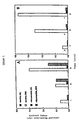
- Boxes prepared with either an L-agar medium (ML) or a minimum medium M9 supplemented with 10 mM L-arginine (MM) were each inoculated with an aliquot of 100 ⁇ l of culture and suspended (10 8 bacteria / ml) in sterile NaCl, 0.85%.
- the dishes were incubated aerobically or microaerobically at (A) 30 ° C or (B) 37 ° C and activity measurements were made in a timely manner. Asterisks indicate that no urease activity has been detected.
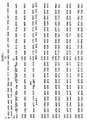
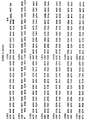
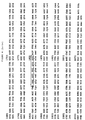
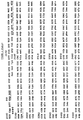
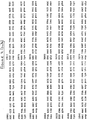
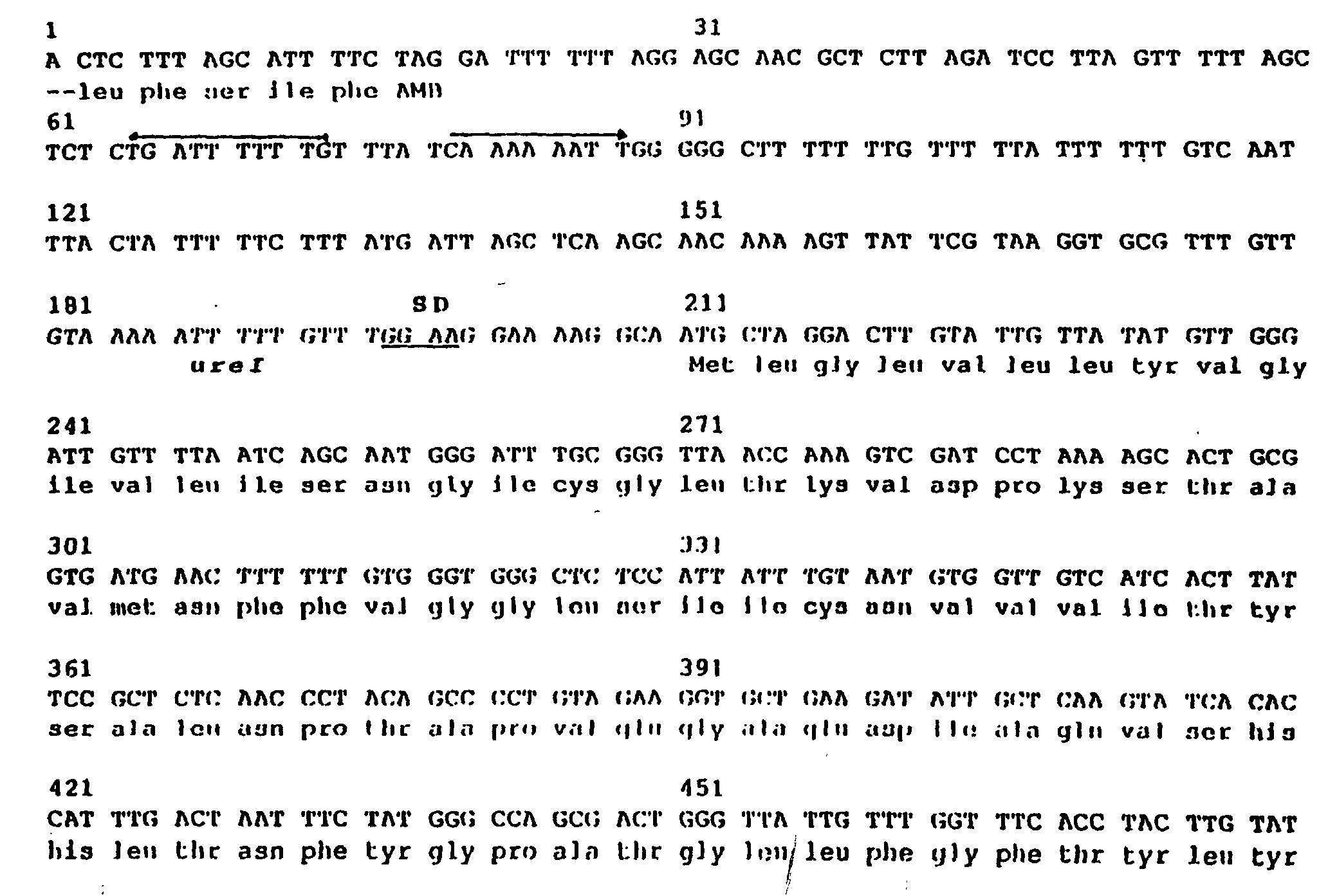
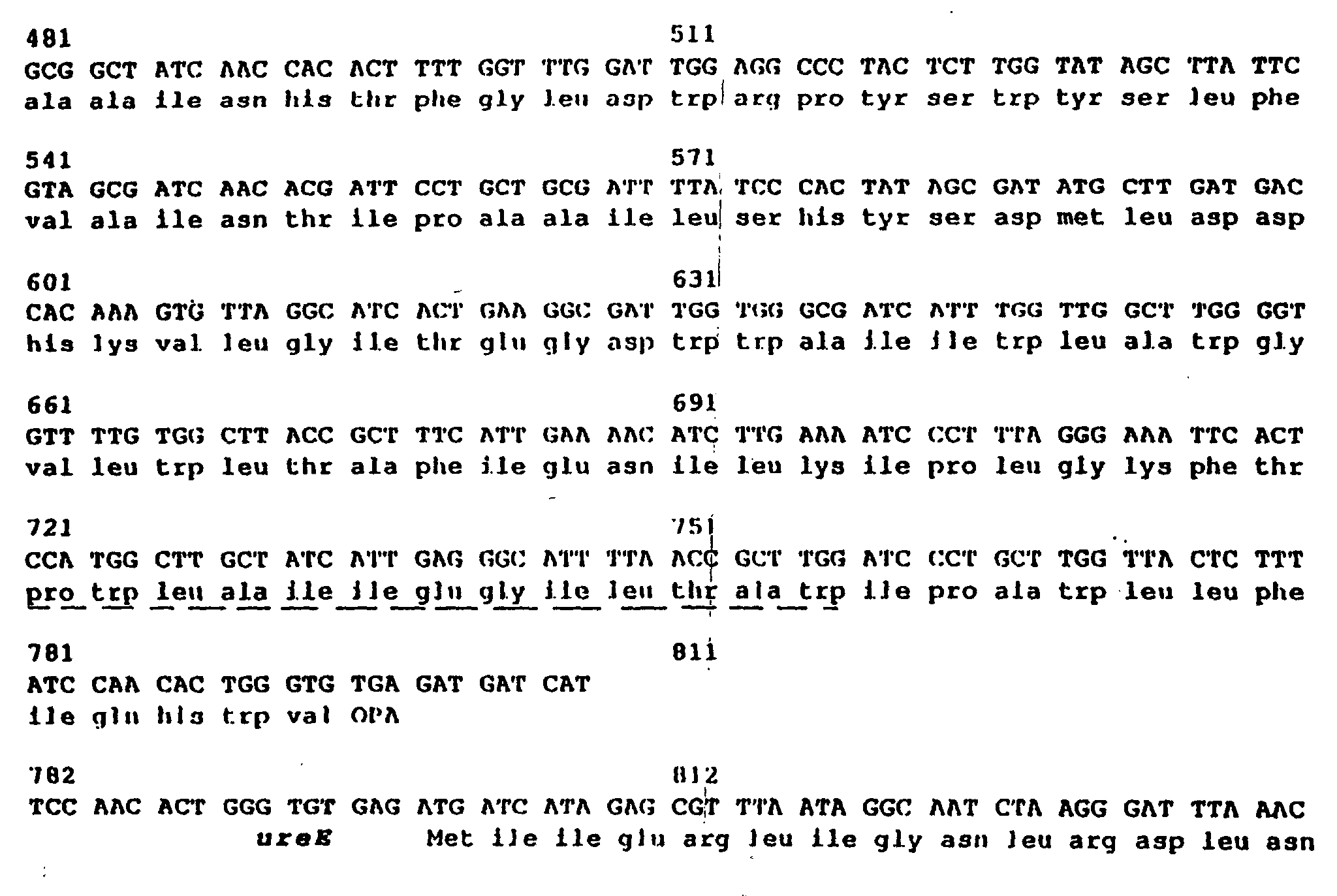
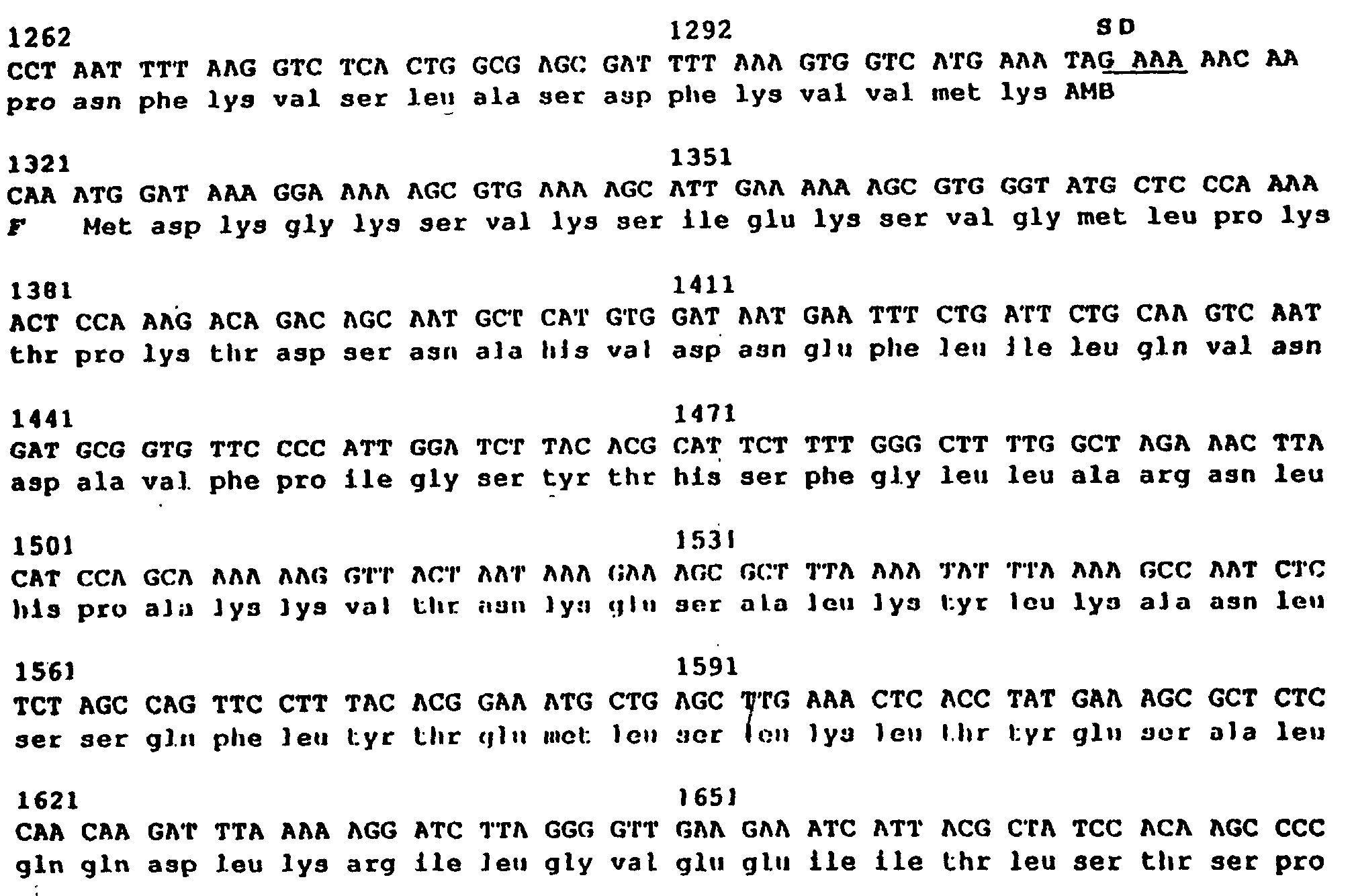
- Figure 3 DNA sequence of accessory genes of H. pylori urease
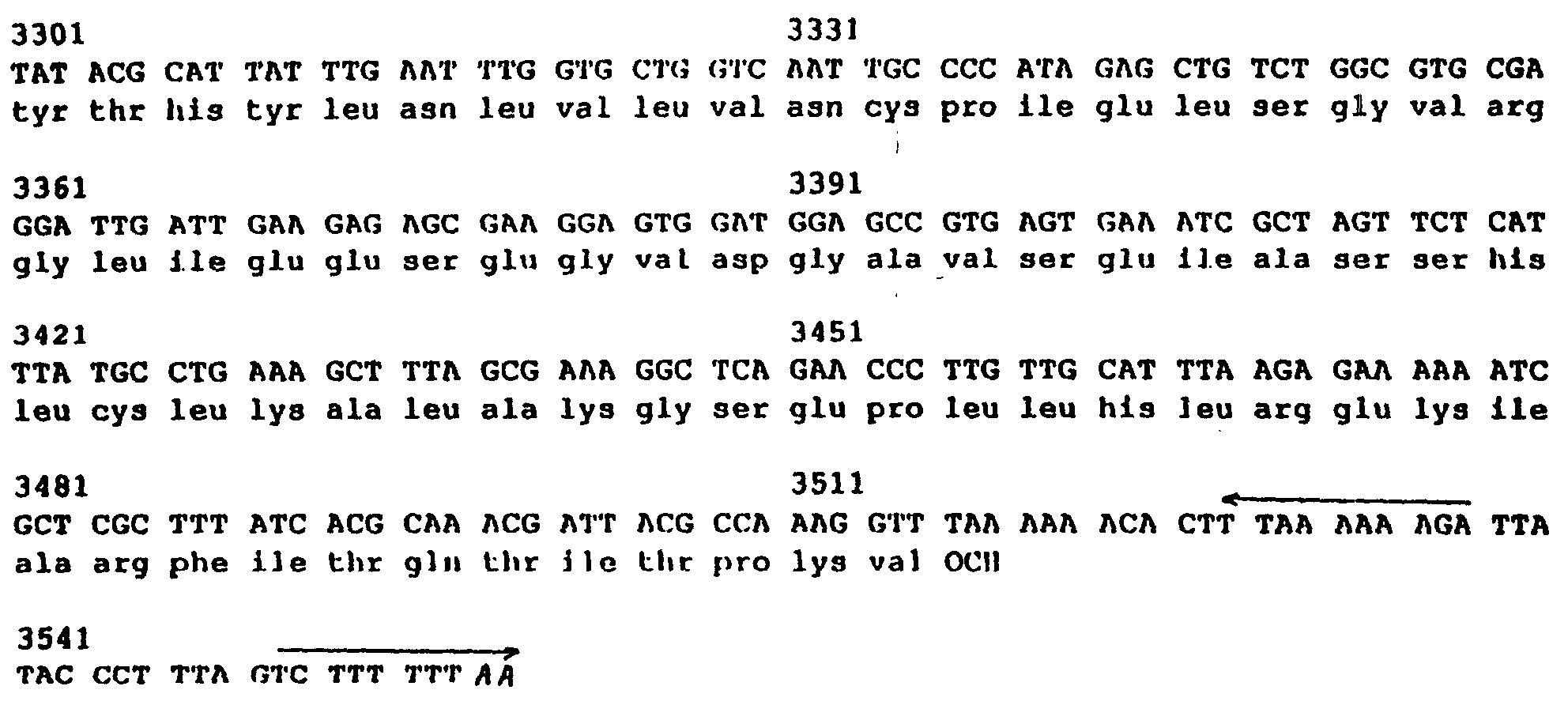
- Figure 4 Nucleotide sequence of accessory genes of H. pylori urease
- the numbers at the top of the sequence indicate the position of the nucleotides.
- the predicted amino acid sequences, in sequential order are: UreI (bp 211 to 795), UreE (bp 800 to 1309), UreF (bp 1324 to 2091), UreG (bp 2123 to 2719), and UreH ( bp 2722-3516).
- Potential ribosome binding sequences (Shine-Dalgarno, SD sites) are underlined.
- the framed sequences correspond to the promoter-like sequences ( ⁇ 54) and the arrows above the sequence indicate the loop structures with the elements of a rho-independent transcription end signal (Rosenberg et al (1979) Annu. Rev. Genet 13 : 319-359).
- the dots under the amino acid sequence correspond to the binding domain of the DNA ( ureI ) or ATP of the protein ( ureG ) (Higgins et al (1985) EMBO J. 4 : 1033-1040 and Pabo et al. al (1984) Ann Rev. Biochem 53 : 293-321).
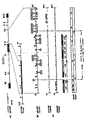
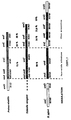
- Figure 5 Genetic organization of the urease operon
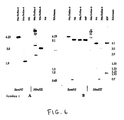
- FIG. 8 Restriction profiles after enzymatic digestion of the total DNAs of the mutated strains 85P, N6 and N6 (urease - )
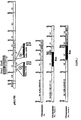
- Figures 9 and 10 Genomic organization of the 4 genes ure in the genomes of the 85P and N6 strains.
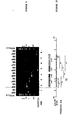
- the specific DNA fragments have been amplified from DNA chromosome extract isolates 85P and N6 of H. pylori using 8 pairs of primers according to the figure 10.
- the amplification products were separated by electrophoresis on a 1.4% agarose gel.
- the values of each side of the gel corresponds to dimensions (in kilobases) of the scale of 1 kb used as standard.
- the star indicates in the plasmid pILL570 the sites of restriction that were changed during the vector construction.
- H. pylori 85P was isolated from a patient with gastritis and corresponds to the strain described in Labigne et al (J. Bacteriol 173 : 1920-1931 (1991)).
- E.coli MC1061 Maniatis et al (1983), Molecular cloning a laboratory manual, Cold Spring Harbor Laboratory, Cold Spring Harbor NY) was used as a host in cloning experiments and E.coli HB101 ( HsdR hsdM reA supE44 lacZ4 LeuB6 proA2 thi - 1 Sm ) (Boyer et al (1969) J. Mol Biol 41 : 459-472) was used as a host for the quantitative analysis of urease expression.
- the vectors and hybrids used in this study are shown in Table 1.
- the antibiotic concentrations for the selection of the transformants were as follows (in milligrams per liter): kanamycin: 20, tetracycline: 8, ampicillin: 100, spectinomycin: 100, carbenicillin: 100.
- For the expression of urease activity the E.
- Restriction endonuclease digests, tip filling, and other routine DNA manipulations were performed according to standard techniques of Maniatis et al. (Maniatis et al (1983), Molecular cloning a laboratory manual, Cold Spring Harbor Laboratory, Cold Spring Harbor NY). Partial digestions with Sau3A were made at 20 ° C so as to slow the enzymatic activity. Restriction endonucleases, the large fragment of DNA polymerase I, T4 DNA polymerase (used to blunt the ends of the fragments), and T4 DNA ligase were provided by Amersham Corp. Calf intestinal alkaline phosphatase was provided by Pharmacia.
- the DNA fragments were separated by electrophoresis on horizontal blocks of gel containing 1 or 1.4% agarose and treated in Tris-acetate or Tris-phosphate buffers (Maniatis et al (1983), Molecular cloning a laboratory Cold Spring Harbor Laboratory, Cold Spring Harbor NY). A 1 kb scale (Bethesda Research Laboratories) was used as the molecular weight standard. Electroelution of the DNA fragments from the agarose gels containing ethidium bromide (0.4 ⁇ g / ml) was carried out as previously described (J. Bacteriol 173 : 1920-1931 (1991), Labigne et al).
- the detection of the urease activity was carried out by resuspension of 10 9 bacteria in 1 ml of urea-indole medium (Diagnostic Pasteur) and incubation at 37 ° C. for variable periods.
- the release of ammonia due to urease activity raised the pH causing a shift from orange to red.
- the urease activity was measured according to the Berthelot reaction, according to a modification of the procedure previously described (Ferrero et al (1991) Microb, Ecol Hlth Dis 4 : 121-134). Briefly, the bacteria were collected from agar plates in 2.0 ml of sterile 0.85% NaCl and centrifuged at 12,000 rpm for 10 minutes at 4 ° C. The pellets were washed twice in 0.85% NaCl and resuspended in 100 mM sodium phosphate buffer (pH 7.4) containing 10 mM EDTA (PEB). To prepare the ultrasound-treated extracts, the cells were lysed by four 30-second pulses with a Branson Sonifier Model 450 set at 30 W, 50% cycle.
- Protein concentrations were determined according to the Bradford test (Sigma Chemicals). For solubilize proteins in cell extracts whole cell suspensions prepared in TPEs were centrifuged and the pellets were suspension in octyl- ⁇ -D-glucopyranoside solution, in order to establish a final concentration in detergent (in the dye reagent) of 0.1-0.2% (w / v).
- MiniTn3-Km delivery system was used to produce mutations by random insertion into the DNA fragment cloned into pILL570.
- Suitable DNA fragments were cloned into M13mp19 and M13mp18 (Meissing et al (1982) Gene 19 : 269-276) to independently read the two complementary strands.
- Clones containing the insertion fragments were identified using X-Gal (5-bromo-4-chloro-3-indolyl- ⁇ -D-galactopyranoside) and isopropyl- ⁇ -D-thiogalactopyranoside.
- the single strands of the recombinant plasmids M13mp18 and M13mp19 were obtained according to the polyethylene glycol method (Sanger et al (1980) J. Mol Biol 143 : 161-178).
- Sequencing was performed according to the dideoxynucleotide chain stopping method (Sanger et al (1977) Proc Natl Acad Sci USA 74 : 5463-5467) using the Sequenase kit (United States Biochemical corp .). Double-stranded DNA sequencing was also performed by chain stopping with dideoxynucleotides with the Sequenase kit by using purified plasmid DNA on a cesium chloride gradient (Zhang et al (1988) Nucleic Acids Research 16 : 1220). ).
- Samples of 3 ⁇ g of DNA were first denatured with 1M NaOH solution (total volume 20 ⁇ l) and then neutralized with 2 ⁇ l of 2 M ammonium acetate (pH 4.6).
- the DNA was precipitated after the addition of 60 ⁇ l of 100% ice-cold ethanol, incubation at -70 ° C. for 10 minutes and centrifugation at 4 ° C. for 20 minutes. After washing with 60 ⁇ l of ice cold 80% ethanol, the pellet was resuspended in 10 ⁇ l of sequencing buffer containing 0.5 pmol of the primer and incubated for 3 minutes at 65 ° C. After an incubation period of 30 minutes at room temperature, sequencing was performed.
- E. coli transformants harboring the cosmid pILL585 were plated on minimal glucose medium M9 supplemented with 0.2% 1-glutamine (as sole source of nitrogen) or medium L, and incubated at 37 ° C. for 48 hours. The transformants were then screened for urease activity according to a qualitative colorimetric assay performed in urea-indole medium. The activity was observed only in E. coli HB101 transformants that had undergone several passages (more than 5 passages) on the minimum medium at 37 ° C. under aerobic conditions. These are the conditions that were used for the qualitative determination of urease expression in E. coli clones. No urease activity was detected in the transformants grown on a nitrogen-rich medium.
- E. coli strain HB101 with the plasmid pILL590 containing a fragment of 4.2 kb, identified as the minimum region necessary for the expression of urease in C. jejuni (Labigne et al (1991) J. Bacteriol 173 : 1920-1931) in E. coli cells, even after culture and passage in a nitrogen source concentration limiting medium. This implies that the genes present on the cosmid, but absent from the plasmid pILL590, are necessary for the expression of urease in E. coli .
- pILL753 a recombinant plasmid called pILL753.
- This plasmid contained an 11.2 kb insert fragment.
- the BamHI and Hind III recognition sites were mapped relative to the Eco R1 and Pst I single restriction sites of the pILL570 vector (FIG. 1).
- Comparison of the restriction map of plasmid pILL753 with that of the previously described recombinant plasmid pILL590 demonstrated that the pILL753 insertion fragment had an additional 4.6 kb DNA fragment located downstream of the four urease genes previously identified in plasmid pILL590 (ie ureA , ureB , ureC and ureD ).
- Urease activity was optimal in cultures performed on medium supplemented with L-arginine. Urease activity was not detected in the cultures carried out on a medium rich in nitrogen.
- pILL753 derivatives bearing the MiniTn3-Km transposable element were first isolated according to a procedure previously described (see Materials and Methods). E.coli HB101 transformants carrying the transposons were all screened for urease activity. They were called pILL753 :: x where x denotes the insertion site of MiniTn3-Km as it appears on the map of figure 1. Of the 24 insertions chosen for the analysis, 10 derivatives had totally lost the capacity hydrolyzed urea (2, 3, 4, 5, 6, 10, 11, 12, 13 and 14), while 14 retained the urease-positive phenotype.
- the cells carrying this plasmid express a comparatively low urease activity (Table 2).
- the pILL763 plasmid was obtained by cloning the restriction fragment Cla I- Pst I of plasmid pILL753 pILL570 :: 1 in the linearised vector. This construct, in which a 1.75 kb DNA fragment containing the ureC and ureD genes, previously described, was deleted, expressed urease activity approximately twice as strong as cells harboring pILL753. In no case did deletions or insertions lead to constitutive urease activity.
- ORFs open reading frames
- Urease activity ( ⁇ mol urea / min / mg) pILL753 - 0.86 ⁇ 0.39 pILL753 :: 3 ureA degraded neg pILL753 :: 6 ureB degraded neg pILL753 :: 8 ureI degraded 1.1 ⁇ 0.23 pILL753 :: 10 ureF degraded neg pILL753 :: 11 ureG degraded neg pILL753 :: 13 ureH degraded neg pILL753 :: 16 downstream insertion ureH 0.66 ⁇ 0.11 pILL763 ureC and ureD deleted 2.14 ⁇ 0.16 pILL768 deletion 3 'downstream from ureH 0.57 ⁇ 0.28
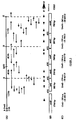
- Figure 5 shows a comparison of three regions coding for urease, for several species of bacteria and shows the similarities as well as the peculiarities of each.
- the degree of relatedness, in terms of genetic organization and coded polypeptides, is stronger between P. mirabilis and K. aerogenes than for each of them with respect to H. pylori .
- H. pylori UreG polypeptide showed strong similarity to that of K. aerogenes (92% retention and 59% identity)
- the degrees of (conservation and identity) between UreE and UreF polypeptides of H. pylori and K. aerogenes were: (33% and 14%), (44% and 11.6%), respectively.
- Mulrooney et al found that K.
- H. pylori urease has some unique elements which are as follows: first the ureC , ureD , ureI genes are unique for H. pylori . Then the urease region consists of three gene blocks that are transcribed in the same direction and have an intergenic region of 420 bp between ureD and ureA and 200 bp between ureB and ureI . This suggests a particular genetic organization for H. pylori , in which the three gene blocks can be independently regulated.
Landscapes
- Chemical & Material Sciences (AREA)
- Health & Medical Sciences (AREA)
- Organic Chemistry (AREA)
- Life Sciences & Earth Sciences (AREA)
- General Health & Medical Sciences (AREA)
- Genetics & Genomics (AREA)
- Proteomics, Peptides & Aminoacids (AREA)
- Medicinal Chemistry (AREA)
- Engineering & Computer Science (AREA)
- Zoology (AREA)
- Wood Science & Technology (AREA)
- Biochemistry (AREA)
- Molecular Biology (AREA)
- Bioinformatics & Cheminformatics (AREA)
- Biophysics (AREA)
- Analytical Chemistry (AREA)
- Biotechnology (AREA)
- Immunology (AREA)
- General Engineering & Computer Science (AREA)
- Microbiology (AREA)
- Pharmacology & Pharmacy (AREA)
- Animal Behavior & Ethology (AREA)
- Public Health (AREA)
- Nuclear Medicine, Radiotherapy & Molecular Imaging (AREA)
- General Chemical & Material Sciences (AREA)
- Chemical Kinetics & Catalysis (AREA)
- Veterinary Medicine (AREA)
- Biomedical Technology (AREA)
- Gastroenterology & Hepatology (AREA)
- Physics & Mathematics (AREA)
- Communicable Diseases (AREA)
- Oncology (AREA)
- Measuring Or Testing Involving Enzymes Or Micro-Organisms (AREA)
- Micro-Organisms Or Cultivation Processes Thereof (AREA)
- Enzymes And Modification Thereof (AREA)
- Medicines Containing Antibodies Or Antigens For Use As Internal Diagnostic Agents (AREA)
- Peptides Or Proteins (AREA)
- Compounds Of Unknown Constitution (AREA)
- Preparation Of Compounds By Using Micro-Organisms (AREA)
- Distillation Of Fermentation Liquor, Processing Of Alcohols, Vinegar And Beer (AREA)
Description



- des fragments des susdites séquences, ayant conservé la capacité de coder pour des polypeptides ayant une homologie fonctionnelle avec les polypeptides tels qu'obtenus par expression d'un gène choisi parmi ureE, ureF, ureG ou ureI, dans H. pylori ;
- des fragments codant pour toute partie des polypeptides ci-dessus tels qu'obtenus chez H. pylori, et en particulier codant pour des peptides ou des parties de polypeptides reconnus par des anticorps dirigés contre H. pylori ou capables de se comporter comme des haptènes ou des immunogènes ;
- des fragments des susdites séquences dépourvus de la capacité de coder pour les polypeptides de H. pylori tels qu'exprimés à partir des gènes ureE, ureF, ureG, ureH ou ureI ;
- des fragments codant pour des polypeptides ou peptides ayant des propriétés atténuées, voire supprimées par rapport aux propriétés des polypeptides codés par les gènes ureE, ureF, ureG, ureH ou ureI de H. pylori.
- l'enchaínement ureE correspondant aux nucléotides 800 à 1309 de la séquence de la figure 4, ou tout fragment de cet enchaínement dès lors qu'il hybride dans des conditions stringentes c'est à dire à 68°C dans 6 x SSC milieu de Denhard ou à 37°C dans 5 x SSC 50% Formamide avec l'enchaínement ureE ou avec la séquence complémentaire à cet enchaínement,
- l'enchaínement ureF correspondant aux nucléotides 1324 à 2091 de la séquence de la figure 4, ou tout fragment de cet enchaínement dès lors qu'il hybride dans des conditions stringentes c'est à dire à 68°C dans 6 x SSC milieu de Denhard ou à 37°C dans 5 x SSC 50% Formamide avec l'enchaínement ureF ou avec la séquence complémentaire à cet enchaínement,
- l'enchaínement ureG correspondant aux nucléotides 2123 à 2719 de la séquence de la figure 4, ou tout fragment de cet enchaínement dès lors qu'il hybride dans des conditions stringentes c'est à dire à 68°C dans 6 x SSC milieu de Denhard ou à 37°C dans 5 x SSC 50% Formamide avec l'enchaínement ureG ou avec la séquence complémentaire à cet enchaínement,
- l'enchaínement ureH correspondant aux nucléotides 2722 à 3516 de la séquence de la figure 4, ou tout fragment de cet enchaínement dès lors qu'il hybride dans des conditions stringentes c'est à dire à 68°C dans 6 x SSC milieu de Denhard ou à 37°C dans 5 x SSC 50% Formamide avec l'enchaínement ureH ou avec la séquence complémentaire à cet enchaínement,
- l'enchaínement ureI correspondant aux nucléotides 211 à 795 de la séquence de la figure 4, ou tout fragment de cet enchaínement dès lors qu'il hybride dans des conditions stringentes c'est à dire à 68°C dans 6 x SSC milieu de Denhard ou à 37°C dans 5 x SSC 50% Formamide avec l'enchaínement ureI ou avec la séquence complémentaire à cet enchaínement.


- la souche ainsi mutée conserve la capacité de déclencher une réponse immunitaire ;
- la souche ainsi mutée est dépourvue d'activité uréasique.
- au moins un couple d'amorces nucléotidiques répondant aux critères ci-dessus, capables d'hybrider aux extrémités 5' et en 3' d'un fragment nucléotidique spécifique d'au moins une séquence nucléique correspondant à un gène choisi parmi ureE, ureF, ureG, ureH ou ureI,
- des réactifs nécessaires à l'extraction des acides nucléiques à partir de l'échantillon traité,
- des réactifs pour effectuer la polymérisation dudit fragment nucléotidique, à partir des amorces nucléotidiques, notamment des enzymes de polymérisation, en quantité suffisante pour réaliser l'amplification du fragment que l'on souhaite amplifier,
- au moins un enchaínement de nucléotides pouvant être utilisé comme sonde et capable d'hybrider dans des conditions déterminées avec le fragment d'ADN amplifié,
- le cas échéant des moyens pour révéler l'hybridation.
- un contrôle interne de la réaction d'amplification par exemple constitué par un acide nucléique éventuellement porté par un plasmide, ledit acide nucléique pouvant aisément être détecté par hybridation, par exemple du fait qu'il contient un gène de résistance à un antibiotique, ou du fait qu'il est constitué par de l'ADN chromosomique de N6, ledit fragment étant en outre muni à ces deux extrémités d'au moins une amorce d'amplification, ces amorces étant ou non choisies parmi les amorces de l'invention, et
- une sonde capable d'hybrider avec l'acide nucléique contenu dans le contrôle interne,
- le cas échéant, une réverse transcriptase pour obtenir de l'ADNc à partir de l'ARN éventuellement présent dans l'échantillon testé.
- une quantité déterminée de sondes selon la définition précédente,
- un milieu approprié pour la réalisation d'une réaction d'hybridation entre l'acide nucléique de H. pylori à détecter et la sonde,
- des réactifs pour la détection des hybrides éventuellement formés.
- la mise en contact de l'échantillon à tester dont l'ADN et/ou de l'ARN a été préalablement rendu accessible, avec une sonde précédemment définie, dans des conditions permettant l'hybridation de l'acide nucléique avec la sonde;
- la mise en évidence d'une réaction d'hybridation éventuelle entre l'acide nucléique et la sonde.

| Mutagénèse de l'ADN cloné de H. pylori et effet sur l'activité uréasique dans les clones de E.coli HB101 mis en culture dans des conditions limitantes en asote | ||
| Plasmide | Génotype différent de E.coliHB101 pILL753 | Valeurs moyennes Activité uréase (µmol urea/min/mg) |
| pILL753 | - | 0,86 ± 0,39 |
| pILL753::3 | ureA dégradée | neg |
| pILL753::6 | ureB dégradée | neg |
| pILL753::8 | ureI dégradée | 1,1 ± 0,23 |
| pILL753::10 | ureF dégradée | neg |
| pILL753::11 | ureG dégradée | neg |
| pILL753::13 | ureH dégradée | neg |
| pILL753::16 | insertion en aval ureH | 0,66 ± 0,11 |
| pILL763 | ureC et ureD délétées | 2,14 ± 0,16 |
| pILL768 | délétion en 3' en aval de ureH | 0,57 ± 0,28 |
- Souches utilisées pour les expériences d'électroporation : plusieurs souches isolées de biopsies ont été testées pour leur aptitude à être électroporées incluant la souche 85P décrite dans la publication de Labigne et al - 1991 précitée, à partir de laquelle le clonage initial des gènes de l'uréase a été réalisé. Une seule souche désignée N6 déposée à la CNCM sous le numéro I-1150 le 3 Octobre 1991, a donné des résultats positifs.
- Création des mutants dans le fragment cloné du chromosome de H. pylori, souche 85P : les mutants sont préparés par mutagénèse à l'aide d'un transposon (MiniTn3-Km) qui permet l'insertion au hasard de l'élément (élément de transposition). Le site d'insertion de chacun des éléments de transposition a été défini par analyses de restriction des plasmides dérivés (cf figure 1).
- Electroporation : 1010 cellules de H. pylori ont été récoltées sur gélose au sang (10% de sang de cheval) lavées dans une solution de glycérol/sucrose (15% v/v et 9% w/v) et resuspendues sous un volume de 50 µl à 4°C. 500 ng d'ADN plasmidique purifié sur CsCl et dialysé extemporanément contre de l'eau distillée ont été ajoutés sous un volume de 1 µl aux cellules à 4°C. Après 1 minute sur la glace les cellules d'ADN ont été transférées dans une cuvette d'électroporation prérefroidie à -20°C (BioRad réf : 165-2086, de 0,2 cm de largeur), puis placées dans l'appareil "Gene pulser Apparatus - BioRad) pour lequel il a été fixé les paramètres suivants : 25F, 2.5kV et 200 ohms. Après avoir délivré l'impulsion électrique avec des constantes de temps 4,5 à 5 msec, les bactéries ont été resuspendues dans 100 µl de tampon SOC (2% Bacto tryptone, 0,5% Bacto yeast extract, 10 mM NaCl, 2,5 mM KC1, 10 mM MgCl2, 10 mM MgSO4, 20 mM glucose), et inoculées sur gélose au sang non sélective (sans kanamycine, mais incluant vancomycine, trimethoprime, polymixine, acide nalidixique, amphotéricine B) pendant 48 heures à 37°C sous atmosphère microaérophile. Les bactéries sont ensuite récoltées, resuspendues dans un volume de milieu Brucella (0,5 ml) et 100 µl de la suspension sont étalés sur boites de gélose au sang sélective (incluant 20 µg/ml de kanamycine et le coktail antibiotique décrit ci-dessus). La croissance de bactéries transformées et résistantes à la kanamycine apparaít après 4 jours d'incubation à 37°C en atmosphère microaérophile.
- bien que "uréase négative" les souches ont les propriétés biochimiques caractéristiques des bactéries appartenant à l'espèce H. pylori (oxydase, catalase, sensibilité à l'oxygène);
- les bactéries mères (N6) (CNCM n°I-1150) et les bactéries isogéniques N6::TnKm-3 et N6::TnKm-4 ont les mêmes profils de restriction après digestion enzymatique des ADN totaux (cf figure 8);
- après amplification enzymatique à l'aide des primers spécifiques de H. pylori et séquençage du produit amplifié, les mêmes séquences nucléotidiques ont été trouvées alors que des souches indépendantes de H. pylori ne présentent jamais la même séquence, mais au contraire un polymorphisme génique important;
- l'analyse par hybridation type Southern des profils de restriction par BamHI et HindIII des ADN des souches parentales et mutées témoigne du remplacement des gènes (figure 7 et son interprétation figure 6). Une des difficultés rencontrées provient du fait que la souche transformée (N6) n'est pas celle à partir de laquelle le clonage des gènes de l'uréase a été réalisé, cette dernière souche étant la souche 85P et que les sites de restriction HindIII et BamHI ne sont pas conservés d'une souche à l'autre : une sonde correspondant au fragment de 8,1 kb provenant de pILL590 (figure 1) montre clairement des profils de restrictions HindIII qui diffèrent entre N6 et 85P (figure 9), en particulier absence des fragments de 1,25 kb et 1,15 kb. Par contre les fragments HindIII de 4,1 kb et BamHI de 5,1 et de 1,3 kb sont conservés. Il a donc été vérifié par amplification enzymatique (PCR) à l'aide d'oligonucléotides répartis sur l'ensemble de la région correspondant aux gènes ureA, ureB, ureC et ureD) que les produits d'amplification 1 à 6 montrés figure 10 étaient les mêmes dans les deux souches, et que l'absence des sites de restrictions HindIII reflétait le polymorphisme génique et non un réarrangement majeur de la région uréase. Une telle vérification faite, il est possible de confirmer sans ambiguïté le remplacement génique de l'allèle sauvage par l'allèle muté dans les deux mutants créés.
- enfin il a été vérifié par immunobuvardage à l'aide d'anticorps anti-uréase, ou anti H. pylori préparés chez le lapin, ou anti-H. pylori présents dans le sérum de patients infectés par H. pylori, que les souches mutées N6::TnKm-3 etN6::TnKm-4 n'exprimaient plus le polypeptide de 61 kDaltons codé par le gène ureB et donc que le gène ureB de ces souches avait bien été interrompu (figure 11).
Claims (35)
- Séquence nucléotidique, caractérisée en ce qu'il s'agit de(a) une ou plusieurs des séquences nucléotidiques constituées par les gènes appelés ureE, ureF, ureG, ureH et ureI tels que présentés à la figure 4, ou(b) une séquence d'au moins 15 nucléotides codant pour toute partie de l'un des polypeptides UreE, UreF, UreG, UreH ou UreI reconnue par des anticorps dirigés contre H. pylori ou capable de se comporter comme un haptène ou un immunogène,(c) une séquence d'au moins 15 nucléotides homologue d'une séquence d'un gène ureE, ureF, ureG, ureH ou ureI tel que défini en (a) et hybridant dans des conditions stringentes avec cette séquence, ladite séquence homologue étant modifiée par délétion, addition, substitution ou inversion d'un ou plusieurs nucléotides de telle façon que le polypeptide codé par cette séquence modifiée conserve une même contribution à la formation d'une uréase fonctionnelle chez H. pylori que celle observée pour le polypeptide correspondant codé par la séquence non modifiée du gène ureE, ureF, ureG, ureH, ou ureI, tel qu'exprimé chez H. pylori,(d) une séquence complémentaire de l'une des séquences nucléotidiques définies en (a), (b) ou (c).
- Séquence nucléotidique, caractérisée en ce qu'elle est constituée par l'ensemble des séquences nucléotidiques des gènes ureE, ureF, ureG, ureH et ureI tels que présentés à la figure 4, ou, l'ensemble formé par des séquences nucléotidiques variantes correspondant à ces gènes modifiés par délétion, addition, substitution ou inversion d'un ou plusieurs nucléotides, indépendamment les uns des autres, de telle façon que l'ensemble de ces variantes code pour des polypeptides conservant une même contribution à la formation d'une uréase fonctionnelle chez H. pylori que celle observée avec l'ensemble des polypeptides correspondants codés par les séquences non modifiées des gènes ureE, ureF, ureG, ureH ou ureI, tels qu'exprimés chez H. pylori, ou une séquence complémentaire de l'une des séquences définies ci-dessus.
- Séquence nucléotidique, caractérisée en ce qu'il s'agit d'une séquence d'une taille d'au moins 15 nucléotides hybridant dans des conditions stringentes avec une séquence d'un gène ureE, ureF, ureG ou ureH selon la revendication 1, ou leur séquence complémentaire, ladite séquence étant modifiée par délétion, addition, substitution ou inversion d'un ou plusieurs nucléotides de telle façon que cette séquence ne permet pas l'expression d'une uréase fonctionnelle chez une souche de H. pylori mutée par remplacement allèlique de sa séquence sauvage par ladite séquence nucléotidique correspondante.
- Séquence nucléotidique selon la revendication 1 ou 2, caractérisée en ce qu'elle est nécessaire à l'expression de l'uréase fonctionnelle dans des cellules de E. coli préalablement transformées avec les gènes de structure ureA, ureB, ureC et ureD.
- Séquence nucléotidique selon la revendication 3, caractérisée en ce qu'elle est associée aux séquences nucléiques correspondant aux gènes de structure ureA et ureB codant pour les sous-unités uréasiques chez H. pylori.
- Séquence nucléotidique selon la revendication 3, caractérisée en ce qu'elle est associée aux gènes ureA, ureB, ureC et/ou ureD codant pour l'uréase chez H. pylori.
- Séquence nucléotidique selon l'une des revendications 1 ou 2, caractérisée en ce qu'il s'agit de l'enchaínement ureE correspondant aux nucléotides 800 à 1309 de la séquence de la figure 4, ou à tout fragment de cet enchaínement dès lors qu'il hybride dans des conditions stringentes avec l'enchaínement ureE ou avec la séquence complémentaire.
- Séquence nucléotidique selon l'une des revendications 1 ou 2, caractérisée en ce qu'il s'agit de l'enchaínement ureF correspondant aux nucléotides 1324 à 2091 de la séquence de la figure 4, ou à tout fragment de cet enchaínement dès lors qu'il hybride dans des conditions stringentes avec l'enchaínement ureF ou avec la séquence complémentaire.
- Séquence nucléotidique selon l'une des revendications 1 ou 2, caractérisée en ce qu'il s'agit de l'enchaínement ureG correspondant aux nucléotides 2123 à 2719 de la séquence de la figure 4, ou à tout fragment de cet enchaínement dès lors qu'il hybride dans des conditions stringentes avec l'enchaínement ureG ou avec la séquence complémentaire.
- Séquence nucléotidique selon l'une des revendications 1 ou 2, caractérisée en ce qu'il s'agit de l'enchaínement ureH correspondant aux nucléotides 2722 à 3516 de la séquence de la figure 4, ou à tout fragment de cet enchaínement dès lors qu'il hybride dans des conditions stringentes avec l'enchaínement ureH ou avec la séquence complémentaire.
- Séquence nucléotidique selon l'une des revendications 1 ou 2, caractérisée en ce qu'il s'agit de l'enchaínement ureI correspondant aux nucléotides 211 à 795 de la séquence de la figure 4, ou à tout fragment de cet enchaínement dès lors qu'il hybride dans des conditions stringentes avec l'enchaínement ureI ou avec la séquence complémentaire.
- Séquence nucléotidique selon la revendication 7. caractérisée en ce qu'il s'agit de l'enchaínement nucléotidique suivant ou en ce qu'il comprend cet enchaínement :

- Sonde nucléotidique caractérisée en ce qu'elle est constituée par une séquence nucléotidique selon l'une quelconque des revendications 1 à 12, ladite séquence étant marquée.
- Amorce nucléotidique, caractérisée en ce qu'elle comprend un fragment nucléotidique d'une séquence selon l'une quelconque des revendications 1 à 12, ledit fragment comprenant environ, 18 à environ 30, de préférence environ 25 à environ 30 nucléotides, et étant capable d'hybrider aux extrémités 5' et 3' d'un fragment nucléotidique spécifique d'au moins un gène choisi parmi ureE, ureF, ureG ou ureH, pour l'utilisation dans une réaction d'amplification génique.
- Utilisation d'une amorce selon la revendication 14, pour la détedion in vitro d'une infection par H. pylori, à partir d'un échantillon biologique et à l'issue de réactions d'amplification génique.
- Utilisation d'une sonde selon la revendication 13, pour la détection in vitro dans un échantillon biologique, d'une infection par H. pylori, le cas échéant à l'issue de réactions d'amplification génique.
- Polypeptide, caractérisé en ce qu'il s'agiti) de l'un des polypeptides UreE, UreF, UreG, UreH ou UreI présenté à la figure 4, ou,ii) toute partie d'au moins un des polypeptides définis en (i) et conservant une même contribution à la formation d'une uréase fonctionnelle chez H. pylori que celle observée pour les polypeptides correspondants non modifiés UreE, UreF; UreG, UreH et UreI tels qu'exprimés chez H. pylori,iii) toute partie d'au moins un des polypeptides définis en (i) reconnue par des anticorps dirigés contre H. pylori ou capable de se comporter comme un haptène ou un immunogène.
- Polypeptide selon la revendication 17, modifié par délétion, addition, substitution ou inversion d'un ou plusieurs acides aminés, dès lors qu'il conserve une même contribution à la formation d'un uréase fonctionnelle chez H. pylori que celle observée pour les polypeptides UreE, UreF, UreG, UreH, et UreI tels qu'exprimés chez H. pylori.
- Vecteur recombinant, caractérisé en ce qu'il contient une séquence selon la revendication 3.
- Vecteur recombinant selon la revendication 19, caractérisé en ce qu'il s'agit d'un cosmide ou d'un plasmide.
- Vecteur recombinant selon la revendication 19 ou 20, caractérisé en ce qu'il s'agit du plasmide pILL753 contenu dans E. coli HB101, déposé à la CNCM le 3 octobre 1991 sous le numéro I-1148.
- Vecteur recombinant selon la revendication 19 ou 20, caractérisé en ce qu'il s'agit du plasmide pILL763 contenu dans E. coli HB101 déposé à la CNCM le 3 octobre 1991 sous le numéro I-1149.
- Souche de H. pylori recombinante, caractérisée en ce qu'elle présente une mutation au niveau d'au moins un gène choisi parmi les gènes ureE, ureF, ureG, ureH ou ureI présenté à la figure 4, dans des conditions telles que la souche recombinante exprime un phénotype uréase-négatif, ou présente une atténuation de l'activité uréasique par rapport à la même souche non mutée.
- Souche de H. pylori recombinante selon la revendication 23, caractérisée en ce qu'elle est mutée au niveau du gène ureG.
- Souche de H. pylori recombinante selon la revendication 23 ou 24. caractérisée en ce qu'il s'agit de la souche N6 (NCIMB n°40512) mutée.
- Souche de H. pylori recombinante selon l'une des revendications 23 à 25, caractérisée en ce qu'elle comprend une séquence nucléotidique selon la revendication 3.
- Souche de H. pylori recombinante selon la revendication 25, caractérisée en qu'il s'agit d'une souche N6 mutée au niveau de l'un au moins des gènes ureE, ureF, ureG, ureH ou ureI par remplacement allèlique de sa séquence sauvage par la séquence modifiée correspondante selon la revendication 3. de telle sorte que son activité uréasique est atténuée par rapport à la même souche non mutée.
- Hôte cellulaire recombinant, différent de H. pylori, caractérisé en ce qu'il est transformé par une séquence selon l'une quelconque des revendications 1 à 12 ou un vecteur recombinant selon l'une des revendications 19 à 22, dans des conditions permettant son expression dans l'hôte.
- Hôte cellulaire recombinant selon la revendication 28, caractérisé en ce qu'il s'agit d'une souche E. coli recombinante.
- Composition immunogène, caractérisée en ce qu'elle contient un hôte cellulaire recombinant selon l'une quelconque des revendications 28 à 29 ou une souche de H. pylori recombinante selon l'une quelconque des revendications 23 à 27.
- Kit pour le diagnostic in vitro d'une infection par H. pylori sur un échantillon biologique déterminé, caractérisé en ce qu'il comprend :au moins un couple d'amorces nucléotidiques selon la revendication capables d'hybrider aux extrémités 5' et 3' d'un fragment nucléotidique spécifique d'au moins un gène choisi parmi ureE, ureF, ureG, ureH, ou ureI,des réactifs nécessaires à l'extraction des acides nucléiques à partir de l'échantillon traité,des réactifs pour effectuer la polymérisation dudit fragment nucléotidique, à partir des amorces nucléotidiques, notamment des enzymes de polymérisation, en quantité suffisante pour réaliser l'amplification du fragment que l'on souhaite amplifier,au moins un enchaínement de nucléotides pouvant être utilisé comme sonde et capable d'hybrider dans des conditions déterminées avec le fragment nucléotidique amplifié,le cas échéant des moyens pour révéler l'hybridation.
- Kit pour le diagnostic in vitro d'une infection par H. pylori, caractérisé en ce qu'il comprend :une quantité déterminée de sonde selon la revendication 13,un milieu approprié pour la réalisation d'une réaction d'hybridation entre l'acide nucléique de H. pylori à détecter et la sonde,des réactifs pour la détection des hybrides éventuellement formés.
- Anticorps polyclonal ou monoclonal, caractérisé en ce qu'il reconnaít un polypeptide selon l'une quelconque des revendications 17 ou 18.
- Composition pour le traitement d'une infection par H. pylori, caractérisée en ce qu'elle contient un anticorps selon la revendication 33.
- Polypeptide constitué par l'enchaínement : Ala Lys Ile Cys Tyr Glu Ile Gly Asn Arg His.
Priority Applications (1)
| Application Number | Priority Date | Filing Date | Title |
|---|---|---|---|
| DK92922373T DK0610322T3 (da) | 1991-10-03 | 1992-10-02 | Helicobacter pylori-gener, der er nödvendige til regulering og modning af urease, samt anvendelse heraf |
Applications Claiming Priority (3)
| Application Number | Priority Date | Filing Date | Title |
|---|---|---|---|
| FR9112198 | 1991-10-03 | ||
| FR9112198A FR2682122B1 (fr) | 1991-10-03 | 1991-10-03 | Nouveaux genes d'helicobacter pylori. leur utilisation pour la preparation de souches recombinantes de h. pylori. |
| PCT/FR1992/000921 WO1993007273A1 (fr) | 1991-10-03 | 1992-10-02 | Genes d'helicobacter pylori necessaires pour la regulation et la maturation de l'urease et leur utilisation |
Publications (2)
| Publication Number | Publication Date |
|---|---|
| EP0610322A1 EP0610322A1 (fr) | 1994-08-17 |
| EP0610322B1 true EP0610322B1 (fr) | 2005-06-08 |
Family
ID=9417566
Family Applications (1)
| Application Number | Title | Priority Date | Filing Date |
|---|---|---|---|
| EP92922373A Expired - Lifetime EP0610322B1 (fr) | 1991-10-03 | 1992-10-02 | Genes d'helicobacter pylori necessaires pour la regulation et la maturation de l'urease et leur utilisation |
Country Status (10)
| Country | Link |
|---|---|
| US (3) | US5986051A (fr) |
| EP (1) | EP0610322B1 (fr) |
| JP (3) | JPH07500010A (fr) |
| AT (1) | ATE297467T1 (fr) |
| CA (1) | CA2120527C (fr) |
| DE (1) | DE69233522T2 (fr) |
| ES (1) | ES2243920T3 (fr) |
| FR (1) | FR2682122B1 (fr) |
| SG (1) | SG52561A1 (fr) |
| WO (1) | WO1993007273A1 (fr) |
Families Citing this family (32)
| Publication number | Priority date | Publication date | Assignee | Title |
|---|---|---|---|---|
| FR2682122B1 (fr) * | 1991-10-03 | 1995-06-09 | Pasteur Institut | Nouveaux genes d'helicobacter pylori. leur utilisation pour la preparation de souches recombinantes de h. pylori. |
| US5866375A (en) * | 1991-10-31 | 1999-02-02 | Chiron S.P.A. | Method for the culture of microorganisms of the genera helicobacter, campylobacter and arcobacter employing culture media comprising cyclodextrins |
| MX9301706A (es) * | 1992-04-13 | 1994-05-31 | Oravax Inc | Composicion de vacuna para el tratamiento de la infeccion por helicobacter. |
| AU4924893A (en) * | 1992-09-16 | 1994-04-12 | Galagen, Inc. | Antibody treatment of (helicobacter pylori) |
| US5972336A (en) * | 1992-11-03 | 1999-10-26 | Oravax Merieux Co. | Urease-based vaccine against helicobacter infection |
| US5843460A (en) * | 1993-05-19 | 1998-12-01 | Institut Pasteur | Immunogenic compositions against helicobacter infection, polypeptides for use in the compositions, and nucleic acid sequences encoding said polypeptides |
| WO1995014093A1 (fr) * | 1993-05-19 | 1995-05-26 | Institut Pasteur | Compositions immunogenes dirigees contre les infections par helicobacter, polypeptides utilisables dans ces compositions, et sequences d'acides nucleiques codant ces polypeptides |
| JP3919812B2 (ja) * | 1993-07-27 | 2007-05-30 | シーエスエル、リミテッド | H.ピロリ関連胃十二指腸疾患の治療 |
| WO1996033220A1 (fr) * | 1995-04-21 | 1996-10-24 | Csl Limited | Antigenes protecteurs d'helicobacter |
| TR199701538T1 (xx) * | 1995-06-07 | 1998-03-21 | Astra Aktiebolag | Helibakter pilor'un n�kleik asit ve amino asit sekanslar�. |
| FR2736360B1 (fr) * | 1995-07-04 | 1997-09-05 | Pasteur Institut | Clonage et caracterisation du gene fiba de h.pylori, production de souches aflagellees |
| GB2307987A (en) * | 1995-12-06 | 1997-06-11 | Univ Manchester | Epitopes of the urease of Helicobacter pylori as dignostic agents; pharmaceuticals comprising such epitopes or the antibodies thereto |
| EP0835928A1 (fr) * | 1996-10-11 | 1998-04-15 | Max-Planck-Gesellschaft zur Förderung der Wissenschaften e.V. Berlin | Vaccin vivant d'hélicobacter pylori |
| US6248551B1 (en) * | 1997-03-28 | 2001-06-19 | Institut Pasteur | Helicobacter aliphatic amidase AmiE polypeptides, and DNA sequences encoding those polypeptides |
| JP3430853B2 (ja) * | 1997-04-11 | 2003-07-28 | 株式会社ゲン・コーポレーション | 胃炎、胃潰瘍および十二指腸潰瘍の予防剤並びに治療剤 |
| US6190667B1 (en) * | 1998-06-30 | 2001-02-20 | Institut Pasteur | Methods of inhibiting Helicobacter pylori |
| EP1173560A1 (fr) | 1999-04-30 | 2002-01-23 | Hybrigenics S.A. | Collection d'adn procaryote d'helicobacter pylori permettant l'identification des interactions proteine-proteine utilisable pour deux systemes hybrides et applications |
| ES2346043T3 (es) | 2002-04-05 | 2010-10-08 | Institut Pasteur | Identificacion de las regiones rd1 y rd5 asociadas con la virulencia que permite el desarrollo de vacunas mejoradas de m. bovis bcg y m. microti. |
| US20040142343A1 (en) * | 2002-08-16 | 2004-07-22 | Yung-Fu Chang | Helicobacter bizzozeronii urease genes and their uses in diagnostic and treatment methods |
| US20050009037A1 (en) * | 2002-08-16 | 2005-01-13 | Yung-Fu Chang | Helicobacter bizzozeronii outer membrane protein encoding gene and its use in diagnostic and treatment methods |
| CA2517899A1 (fr) | 2003-03-06 | 2004-09-16 | Children's Hospital, Inc. | Genes d'un isolat de l'otite moyenne de haemophilus influenzae non typable |
| WO2005038029A2 (fr) * | 2003-10-10 | 2005-04-28 | Promega Corporation | Biocapteur de la luciferase |
| US8029777B2 (en) | 2004-08-13 | 2011-10-04 | Marshall Barry J | Helicobacter system and uses thereof |
| EP1789094B1 (fr) * | 2004-08-13 | 2014-12-10 | MARSHALL, Barry J. | Vecteur d'administration bactérien |
| EP2004813B1 (fr) | 2006-04-03 | 2015-06-03 | Promega Corporation | Biocapteurs à base de luciférase permutée et non-permutée capable de se lier à des nucléotides cycliques |
| EP2281046B1 (fr) | 2008-05-19 | 2012-01-25 | Promega Corporation | Biocapteurs de luciférase pour l'ampc |
| EP2569423B1 (fr) | 2010-05-11 | 2015-12-02 | Promega Corporation | Biocapteurs de protéase mutante dotés de caractéristiques de détection améliorées |
| US9290794B2 (en) | 2010-05-11 | 2016-03-22 | Promega Corporation | Mutant protease biosensors with enhanced detection characteristics |
| US9115363B2 (en) * | 2011-03-09 | 2015-08-25 | Ondek Pty Ltd | Gene expression and eradication system in Helicobacter pylori |
| CN104962541A (zh) * | 2015-03-31 | 2015-10-07 | 芜湖康卫生物科技有限公司 | 口服重组幽门螺杆菌疫苗的纯化工艺 |
| CN109536628B (zh) * | 2019-01-21 | 2020-10-13 | 北京大学第三医院(北京大学第三临床医学院) | 一种胃幽门螺杆菌特异性分子标记及检测试剂盒 |
| CN113652494A (zh) * | 2021-09-30 | 2021-11-16 | 山西康健恩生物科技有限公司 | 一种检测幽门螺杆菌的探针、引物组和试剂盒 |
Family Cites Families (15)
| Publication number | Priority date | Publication date | Assignee | Title |
|---|---|---|---|---|
| US4785086A (en) * | 1985-01-17 | 1988-11-15 | Integrated Genetics, Inc. | Test for Campylobacter |
| DE3686362T2 (de) * | 1985-06-13 | 1993-02-11 | Marshall Barry James | Verfahren zur behandlung von magen-darmstoerungen. |
| US5459041A (en) * | 1988-02-18 | 1995-10-17 | Enteric Research Laboratories, Inc. | Campylobacter pylori antigens and uses thereof for detection of Campylobacter pylori infection |
| FR2637612B1 (fr) * | 1988-10-06 | 1993-09-10 | Pasteur Institut | Sequences de nucleotides codant pour une proteine a activite ureasique |
| GB8928625D0 (en) * | 1989-12-19 | 1990-02-21 | 3I Res Expl Ltd | H.pylori dna probes |
| FR2682122B1 (fr) * | 1991-10-03 | 1995-06-09 | Pasteur Institut | Nouveaux genes d'helicobacter pylori. leur utilisation pour la preparation de souches recombinantes de h. pylori. |
| MX9301706A (es) * | 1992-04-13 | 1994-05-31 | Oravax Inc | Composicion de vacuna para el tratamiento de la infeccion por helicobacter. |
| US5972336A (en) * | 1992-11-03 | 1999-10-26 | Oravax Merieux Co. | Urease-based vaccine against helicobacter infection |
| US5843460A (en) * | 1993-05-19 | 1998-12-01 | Institut Pasteur | Immunogenic compositions against helicobacter infection, polypeptides for use in the compositions, and nucleic acid sequences encoding said polypeptides |
| US5498528A (en) * | 1994-06-10 | 1996-03-12 | King; Wing | Detection of helicobacter pylori |
| US5527678A (en) * | 1994-10-21 | 1996-06-18 | Vanderbilt University | CagB and CagC genes of helicobacter pylori and related compositions |
| KR19990008155A (ko) * | 1995-04-28 | 1999-01-25 | 랜스 고든 | 다가, 재조합 우레아제 백신 |
| AR003125A1 (es) * | 1995-06-01 | 1998-07-08 | Astra Ab | Antigenos bacterianos para el diagnostico de infecciones con helicobacter pylori, una molecula de adn que lo codifica, un vector, una celula huesped,procedimiento para producir el polipeptido, composiciones para vacunas adecuadas para uso terapeutico y profilactico, el uso del polipeptido en la |
| EP0745674B1 (fr) * | 1995-06-02 | 2006-07-05 | Eisai Co., Ltd. | Polypeptides d'Helicobacter, leur préparation et utilisation |
| WO1996040893A1 (fr) * | 1995-06-07 | 1996-12-19 | Astra Aktiebolag | Sequences d'acide nucleique et d'acides amines concernant helicobacter pylori, utilisees a des fins diagnostiques et therapeutiques |
-
1991
- 1991-10-03 FR FR9112198A patent/FR2682122B1/fr not_active Expired - Lifetime
-
1992
- 1992-10-02 DE DE69233522T patent/DE69233522T2/de not_active Expired - Lifetime
- 1992-10-02 US US08/211,312 patent/US5986051A/en not_active Expired - Lifetime
- 1992-10-02 WO PCT/FR1992/000921 patent/WO1993007273A1/fr not_active Ceased
- 1992-10-02 ES ES92922373T patent/ES2243920T3/es not_active Expired - Lifetime
- 1992-10-02 SG SG1996006081A patent/SG52561A1/en unknown
- 1992-10-02 EP EP92922373A patent/EP0610322B1/fr not_active Expired - Lifetime
- 1992-10-02 CA CA002120527A patent/CA2120527C/fr not_active Expired - Fee Related
- 1992-10-02 JP JP5506666A patent/JPH07500010A/ja active Pending
- 1992-10-02 AT AT92922373T patent/ATE297467T1/de active
-
1995
- 1995-06-07 US US08/472,285 patent/US6027878A/en not_active Expired - Fee Related
- 1995-06-07 US US08/472,929 patent/US6271017B1/en not_active Expired - Fee Related
-
2002
- 2002-02-14 JP JP2002037307A patent/JP3581352B2/ja not_active Expired - Fee Related
-
2003
- 2003-03-10 JP JP2003063703A patent/JP2004121216A/ja active Pending
Also Published As
| Publication number | Publication date |
|---|---|
| FR2682122A1 (fr) | 1993-04-09 |
| ATE297467T1 (de) | 2005-06-15 |
| DE69233522T2 (de) | 2006-03-16 |
| JP2004121216A (ja) | 2004-04-22 |
| DE69233522D1 (de) | 2005-07-14 |
| JP2002315589A (ja) | 2002-10-29 |
| SG52561A1 (en) | 1998-09-28 |
| US6271017B1 (en) | 2001-08-07 |
| WO1993007273A1 (fr) | 1993-04-15 |
| US6027878A (en) | 2000-02-22 |
| JPH07500010A (ja) | 1995-01-05 |
| JP3581352B2 (ja) | 2004-10-27 |
| CA2120527C (fr) | 2008-12-02 |
| US5986051A (en) | 1999-11-16 |
| FR2682122B1 (fr) | 1995-06-09 |
| ES2243920T3 (es) | 2005-12-01 |
| CA2120527A1 (fr) | 1993-04-15 |
| EP0610322A1 (fr) | 1994-08-17 |
Similar Documents
| Publication | Publication Date | Title |
|---|---|---|
| CA2120527C (fr) | Genes d'helicobacter pylori necessaires pour la regulation et la maturation de l'urease et leur utilisation | |
| CA2260079C (fr) | Adn et proteines ou peptides specifiques des bacteries de l'espece neisseria meningitidis, leurs procedes d'obtention et leurs applications biologiques | |
| Mobley | Urease | |
| AU723063B2 (en) | Multimeric, recombinant urease vaccine | |
| CA2301374A1 (fr) | Sequences nucleiques de polypeptides exportes de mycobacteries, vecteurs les comprenant et applications au diagnostic et a la prevention de la tuberculose | |
| CA2203116A1 (fr) | Recepteurs d'hemoglobine obtenus a partir de neisseriae | |
| EP0389347A1 (fr) | Vaccins contre les bactéries septicémiques | |
| AU734635B2 (en) | Helicobacter pylori live vaccine | |
| CA2165393C (fr) | Vaccin de type acellulaire anti-bordetella | |
| FR2651505A1 (fr) | Fragments d'acides nucleiques derives d'un genome de mycobacterie appropriee, leurs applications dans le diagnostic des infections a mycobacteries et plasmides contenant lesdits fragments. | |
| US6762051B2 (en) | Methods of inhibiting helicobacter pylori | |
| WO1992019720A1 (fr) | Souches recombinantes immunogenes de b. anthracis - compositions immunogenes les contenant | |
| FR2780733A1 (fr) | Polynucleotide, vecteur et cellule hote le contenant, polypeptide correspondant, procede pour leur production et leur utilisation | |
| EP0787796B9 (fr) | Epitopes protecteurs de l'adényl cyclase-hémolysine (AC-Hly). leur application au traitement ou à la prévention des infections par Bordetella | |
| EP0752473B1 (fr) | Clonage et caractérisation du gène flbA de H. pylori; production de souches aflagellées | |
| CA2195804A1 (fr) | Nouvelle topoisomerase iv, sequences nucleotidiques correspondantes et leurs utilisations | |
| WO2000001825A1 (fr) | ANTIGENE D'HELICOBACTER (η-GLUTAMYLTRANSPEPTIDASE) ET SEQUENCES CODANT POUR CET ANTIGENE | |
| AU762563B2 (en) | Multimeric, recombinant urease vaccine | |
| Rickard | Coaggregation between aquatic biofilm bacteria | |
| Thomas | Integrons and integron-related antibiotic resistance in acinetobacter | |
| Ragnhildstveit et al. | CLONING, SEQUENCING, OVEREXPRESSION AND PURIFICATION OF A TYPE II DEHYDROQUINASE FROM | |
| EP1305447A2 (fr) | Acides nucleiques et proteines d'e. coli pathogenes , et leurs utilisations |
Legal Events
| Date | Code | Title | Description |
|---|---|---|---|
| PUAI | Public reference made under article 153(3) epc to a published international application that has entered the european phase |
Free format text: ORIGINAL CODE: 0009012 |
|
| 17P | Request for examination filed |
Effective date: 19940402 |
|
| AK | Designated contracting states |
Kind code of ref document: A1 Designated state(s): AT BE CH DE DK ES FR GB GR IE IT LI LU MC NL SE |
|
| 17Q | First examination report despatched |
Effective date: 20010731 |
|
| GRAP | Despatch of communication of intention to grant a patent |
Free format text: ORIGINAL CODE: EPIDOSNIGR1 |
|
| GRAS | Grant fee paid |
Free format text: ORIGINAL CODE: EPIDOSNIGR3 |
|
| GRAA | (expected) grant |
Free format text: ORIGINAL CODE: 0009210 |
|
| AK | Designated contracting states |
Kind code of ref document: B1 Designated state(s): AT BE CH DE DK ES FR GB GR IE IT LI LU MC NL SE |
|
| REG | Reference to a national code |
Ref country code: GB Ref legal event code: FG4D Free format text: NOT ENGLISH |
|
| REG | Reference to a national code |
Ref country code: CH Ref legal event code: EP |
|
| REF | Corresponds to: |
Ref document number: 69233522 Country of ref document: DE Date of ref document: 20050714 Kind code of ref document: P |
|
| REG | Reference to a national code |
Ref country code: IE Ref legal event code: FG4D Free format text: LANGUAGE OF EP DOCUMENT: FRENCH |
|
| REG | Reference to a national code |
Ref country code: CH Ref legal event code: NV Representative=s name: SCHNEIDER FELDMANN AG PATENT- UND MARKENANWAELTE |
|
| REG | Reference to a national code |
Ref country code: SE Ref legal event code: TRGR Ref country code: GR Ref legal event code: EP Ref document number: 20050402398 Country of ref document: GR |
|
| GBT | Gb: translation of ep patent filed (gb section 77(6)(a)/1977) |
Effective date: 20050905 |
|
| REG | Reference to a national code |
Ref country code: DK Ref legal event code: T3 |
|
| REG | Reference to a national code |
Ref country code: ES Ref legal event code: FG2A Ref document number: 2243920 Country of ref document: ES Kind code of ref document: T3 |
|
| PLBE | No opposition filed within time limit |
Free format text: ORIGINAL CODE: 0009261 |
|
| STAA | Information on the status of an ep patent application or granted ep patent |
Free format text: STATUS: NO OPPOSITION FILED WITHIN TIME LIMIT |
|
| 26N | No opposition filed |
Effective date: 20060309 |
|
| PGFP | Annual fee paid to national office [announced via postgrant information from national office to epo] |
Ref country code: FR Payment date: 20091116 Year of fee payment: 18 |
|
| PGFP | Annual fee paid to national office [announced via postgrant information from national office to epo] |
Ref country code: MC Payment date: 20100920 Year of fee payment: 19 Ref country code: IE Payment date: 20100927 Year of fee payment: 19 |
|
| PGFP | Annual fee paid to national office [announced via postgrant information from national office to epo] |
Ref country code: SE Payment date: 20100921 Year of fee payment: 19 Ref country code: LU Payment date: 20100921 Year of fee payment: 19 |
|
| PGFP | Annual fee paid to national office [announced via postgrant information from national office to epo] |
Ref country code: GR Payment date: 20100921 Year of fee payment: 19 Ref country code: GB Payment date: 20100923 Year of fee payment: 19 |
|
| PGFP | Annual fee paid to national office [announced via postgrant information from national office to epo] |
Ref country code: NL Payment date: 20100921 Year of fee payment: 19 Ref country code: DK Payment date: 20100922 Year of fee payment: 19 Ref country code: AT Payment date: 20100917 Year of fee payment: 19 |
|
| PGFP | Annual fee paid to national office [announced via postgrant information from national office to epo] |
Ref country code: DE Payment date: 20101012 Year of fee payment: 19 Ref country code: CH Payment date: 20101013 Year of fee payment: 19 |
|
| PGFP | Annual fee paid to national office [announced via postgrant information from national office to epo] |
Ref country code: IT Payment date: 20101027 Year of fee payment: 19 Ref country code: BE Payment date: 20101105 Year of fee payment: 19 |
|
| PGFP | Annual fee paid to national office [announced via postgrant information from national office to epo] |
Ref country code: ES Payment date: 20101025 Year of fee payment: 19 |
|
| PG25 | Lapsed in a contracting state [announced via postgrant information from national office to epo] |
Ref country code: FR Free format text: LAPSE BECAUSE OF NON-PAYMENT OF DUE FEES Effective date: 20101102 |
|
| REG | Reference to a national code |
Ref country code: FR Ref legal event code: ST Effective date: 20110630 |
|
| BERE | Be: lapsed |
Owner name: INSTITUT *PASTEUR Effective date: 20111031 Owner name: INSTITUT NATIONAL DE LA SANTE ET DE LA ECHERCHE ME Effective date: 20111031 |
|
| REG | Reference to a national code |
Ref country code: NL Ref legal event code: V1 Effective date: 20120501 |
|
| PG25 | Lapsed in a contracting state [announced via postgrant information from national office to epo] |
Ref country code: MC Free format text: LAPSE BECAUSE OF NON-PAYMENT OF DUE FEES Effective date: 20111031 |
|
| REG | Reference to a national code |
Ref country code: CH Ref legal event code: PL |
|
| REG | Reference to a national code |
Ref country code: GR Ref legal event code: ML Ref document number: 20050402398 Country of ref document: GR Effective date: 20120503 |
|
| GBPC | Gb: european patent ceased through non-payment of renewal fee |
Effective date: 20111002 |
|
| REG | Reference to a national code |
Ref country code: DK Ref legal event code: EBP |
|
| REG | Reference to a national code |
Ref country code: SE Ref legal event code: EUG |
|
| PG25 | Lapsed in a contracting state [announced via postgrant information from national office to epo] |
Ref country code: BE Free format text: LAPSE BECAUSE OF NON-PAYMENT OF DUE FEES Effective date: 20111031 Ref country code: LI Free format text: LAPSE BECAUSE OF NON-PAYMENT OF DUE FEES Effective date: 20111031 Ref country code: DE Free format text: LAPSE BECAUSE OF NON-PAYMENT OF DUE FEES Effective date: 20120501 Ref country code: NL Free format text: LAPSE BECAUSE OF NON-PAYMENT OF DUE FEES Effective date: 20120501 Ref country code: CH Free format text: LAPSE BECAUSE OF NON-PAYMENT OF DUE FEES Effective date: 20111031 |
|
| REG | Reference to a national code |
Ref country code: IE Ref legal event code: MM4A |
|
| REG | Reference to a national code |
Ref country code: DE Ref legal event code: R119 Ref document number: 69233522 Country of ref document: DE Effective date: 20120501 |
|
| PG25 | Lapsed in a contracting state [announced via postgrant information from national office to epo] |
Ref country code: GB Free format text: LAPSE BECAUSE OF NON-PAYMENT OF DUE FEES Effective date: 20111002 Ref country code: IT Free format text: LAPSE BECAUSE OF NON-PAYMENT OF DUE FEES Effective date: 20111002 Ref country code: GR Free format text: LAPSE BECAUSE OF NON-PAYMENT OF DUE FEES Effective date: 20120503 |
|
| PG25 | Lapsed in a contracting state [announced via postgrant information from national office to epo] |
Ref country code: DK Free format text: LAPSE BECAUSE OF NON-PAYMENT OF DUE FEES Effective date: 20111031 Ref country code: SE Free format text: LAPSE BECAUSE OF NON-PAYMENT OF DUE FEES Effective date: 20111003 Ref country code: IE Free format text: LAPSE BECAUSE OF NON-PAYMENT OF DUE FEES Effective date: 20111002 |
|
| REG | Reference to a national code |
Ref country code: AT Ref legal event code: MM01 Ref document number: 297467 Country of ref document: AT Kind code of ref document: T Effective date: 20111002 |
|
| PG25 | Lapsed in a contracting state [announced via postgrant information from national office to epo] |
Ref country code: AT Free format text: LAPSE BECAUSE OF NON-PAYMENT OF DUE FEES Effective date: 20111002 |
|
| PG25 | Lapsed in a contracting state [announced via postgrant information from national office to epo] |
Ref country code: ES Free format text: LAPSE BECAUSE OF NON-PAYMENT OF DUE FEES Effective date: 20111003 |
|
| REG | Reference to a national code |
Ref country code: ES Ref legal event code: FD2A Effective date: 20130530 |
|
| PG25 | Lapsed in a contracting state [announced via postgrant information from national office to epo] |
Ref country code: LU Free format text: LAPSE BECAUSE OF NON-PAYMENT OF DUE FEES Effective date: 20111002 |