EP0608795A1 - Method for enzymatic determination of substrate after enzymatically removing galactose - Google Patents
Method for enzymatic determination of substrate after enzymatically removing galactose Download PDFInfo
- Publication number
- EP0608795A1 EP0608795A1 EP94100933A EP94100933A EP0608795A1 EP 0608795 A1 EP0608795 A1 EP 0608795A1 EP 94100933 A EP94100933 A EP 94100933A EP 94100933 A EP94100933 A EP 94100933A EP 0608795 A1 EP0608795 A1 EP 0608795A1
- Authority
- EP
- European Patent Office
- Prior art keywords
- galactose
- anhydroglucitol
- enzyme reaction
- sample
- reaction
- Prior art date
- Legal status (The legal status is an assumption and is not a legal conclusion. Google has not performed a legal analysis and makes no representation as to the accuracy of the status listed.)
- Withdrawn
Links
- 238000000034 method Methods 0.000 title claims abstract description 107
- 229930182830 galactose Natural products 0.000 title claims abstract description 53
- 239000000758 substrate Substances 0.000 title claims abstract description 13
- 230000002255 enzymatic effect Effects 0.000 title 1
- 238000006911 enzymatic reaction Methods 0.000 claims abstract description 23
- MPCAJMNYNOGXPB-SLPGGIOYSA-N 1,5-anhydro-D-glucitol Chemical group OC[C@H]1OC[C@H](O)[C@@H](O)[C@@H]1O MPCAJMNYNOGXPB-SLPGGIOYSA-N 0.000 claims description 51
- 102000048120 Galactokinases Human genes 0.000 claims description 29
- 108700023157 Galactokinases Proteins 0.000 claims description 29
- 108010014369 galactose dehydrogenase Proteins 0.000 claims description 25
- 108010015133 Galactose oxidase Proteins 0.000 claims description 17
- WQZGKKKJIJFFOK-GASJEMHNSA-N Glucose Natural products OC[C@H]1OC(O)[C@H](O)[C@@H](O)[C@@H]1O WQZGKKKJIJFFOK-GASJEMHNSA-N 0.000 claims description 16
- 239000008103 glucose Substances 0.000 claims description 16
- ZKHQWZAMYRWXGA-KQYNXXCUSA-J ATP(4-) Chemical compound C1=NC=2C(N)=NC=NC=2N1[C@@H]1O[C@H](COP([O-])(=O)OP([O-])(=O)OP([O-])([O-])=O)[C@@H](O)[C@H]1O ZKHQWZAMYRWXGA-KQYNXXCUSA-J 0.000 claims description 15
- ZKHQWZAMYRWXGA-UHFFFAOYSA-N Adenosine triphosphate Natural products C1=NC=2C(N)=NC=NC=2N1C1OC(COP(O)(=O)OP(O)(=O)OP(O)(O)=O)C(O)C1O ZKHQWZAMYRWXGA-UHFFFAOYSA-N 0.000 claims description 15
- BAWFJGJZGIEFAR-NNYOXOHSSA-N NAD zwitterion Chemical compound NC(=O)C1=CC=C[N+]([C@H]2[C@@H]([C@H](O)[C@@H](COP([O-])(=O)OP(O)(=O)OC[C@@H]3[C@H]([C@@H](O)[C@@H](O3)N3C4=NC=NC(N)=C4N=C3)O)O2)O)=C1 BAWFJGJZGIEFAR-NNYOXOHSSA-N 0.000 claims description 14
- 229950006238 nadide Drugs 0.000 claims description 13
- 229930027945 nicotinamide-adenine dinucleotide Natural products 0.000 claims description 13
- 102000004316 Oxidoreductases Human genes 0.000 claims description 6
- 108090000854 Oxidoreductases Proteins 0.000 claims description 6
- QVGXLLKOCUKJST-UHFFFAOYSA-N atomic oxygen Chemical compound [O] QVGXLLKOCUKJST-UHFFFAOYSA-N 0.000 claims description 6
- 239000001301 oxygen Substances 0.000 claims description 6
- 229910052760 oxygen Inorganic materials 0.000 claims description 6
- 238000006395 oxidase reaction Methods 0.000 claims description 2
- XJLXINKUBYWONI-NNYOXOHSSA-N NADP zwitterion Chemical compound NC(=O)C1=CC=C[N+]([C@H]2[C@@H]([C@H](O)[C@@H](COP([O-])(=O)OP(O)(=O)OC[C@@H]3[C@H]([C@@H](OP(O)(O)=O)[C@@H](O3)N3C4=NC=NC(N)=C4N=C3)O)O2)O)=C1 XJLXINKUBYWONI-NNYOXOHSSA-N 0.000 claims 1
- 102000004190 Enzymes Human genes 0.000 abstract description 9
- 108090000790 Enzymes Proteins 0.000 abstract description 9
- 102000005548 Hexokinase Human genes 0.000 description 27
- 108700040460 Hexokinases Proteins 0.000 description 27
- 238000003379 elimination reaction Methods 0.000 description 24
- 230000008030 elimination Effects 0.000 description 22
- 238000011088 calibration curve Methods 0.000 description 19
- 238000006243 chemical reaction Methods 0.000 description 19
- 230000001419 dependent effect Effects 0.000 description 18
- 239000000523 sample Substances 0.000 description 15
- 239000000243 solution Substances 0.000 description 14
- XJLXINKUBYWONI-NNYOXOHSSA-O NADP(+) Chemical compound NC(=O)C1=CC=C[N+]([C@H]2[C@@H]([C@H](O)[C@@H](COP(O)(=O)OP(O)(=O)OC[C@@H]3[C@H]([C@@H](OP(O)(O)=O)[C@@H](O3)N3C4=NC=NC(N)=C4N=C3)O)O2)O)=C1 XJLXINKUBYWONI-NNYOXOHSSA-O 0.000 description 13
- 239000003153 chemical reaction reagent Substances 0.000 description 13
- 210000002966 serum Anatomy 0.000 description 13
- 239000007853 buffer solution Substances 0.000 description 7
- BGFTWECWAICPDG-UHFFFAOYSA-N 2-[bis(4-chlorophenyl)methyl]-4-n-[3-[bis(4-chlorophenyl)methyl]-4-(dimethylamino)phenyl]-1-n,1-n-dimethylbenzene-1,4-diamine Chemical compound C1=C(C(C=2C=CC(Cl)=CC=2)C=2C=CC(Cl)=CC=2)C(N(C)C)=CC=C1NC(C=1)=CC=C(N(C)C)C=1C(C=1C=CC(Cl)=CC=1)C1=CC=C(Cl)C=C1 BGFTWECWAICPDG-UHFFFAOYSA-N 0.000 description 6
- 108010070600 Glucose-6-phosphate isomerase Proteins 0.000 description 6
- 102000005731 Glucose-6-phosphate isomerase Human genes 0.000 description 6
- MHAJPDPJQMAIIY-UHFFFAOYSA-N Hydrogen peroxide Chemical compound OO MHAJPDPJQMAIIY-UHFFFAOYSA-N 0.000 description 6
- TWRXJAOTZQYOKJ-UHFFFAOYSA-L Magnesium chloride Chemical compound [Mg+2].[Cl-].[Cl-] TWRXJAOTZQYOKJ-UHFFFAOYSA-L 0.000 description 6
- ISWSIDIOOBJBQZ-UHFFFAOYSA-N Phenol Chemical compound OC1=CC=CC=C1 ISWSIDIOOBJBQZ-UHFFFAOYSA-N 0.000 description 6
- FAPWRFPIFSIZLT-UHFFFAOYSA-M Sodium chloride Chemical compound [Na+].[Cl-] FAPWRFPIFSIZLT-UHFFFAOYSA-M 0.000 description 6
- XLYOFNOQVPJJNP-UHFFFAOYSA-N water Chemical compound O XLYOFNOQVPJJNP-UHFFFAOYSA-N 0.000 description 6
- 102000006942 B-Cell Maturation Antigen Human genes 0.000 description 5
- 108010008014 B-Cell Maturation Antigen Proteins 0.000 description 5
- 239000012895 dilution Substances 0.000 description 5
- 238000010790 dilution Methods 0.000 description 5
- 238000002474 experimental method Methods 0.000 description 5
- 239000008055 phosphate buffer solution Substances 0.000 description 5
- 239000000126 substance Substances 0.000 description 5
- 102000003992 Peroxidases Human genes 0.000 description 4
- 102000012435 Phosphofructokinase-1 Human genes 0.000 description 4
- 108010022684 Phosphofructokinase-1 Proteins 0.000 description 4
- 238000002835 absorbance Methods 0.000 description 4
- DTBNBXWJWCWCIK-UHFFFAOYSA-N phosphoenolpyruvic acid Chemical compound OC(=O)C(=C)OP(O)(O)=O DTBNBXWJWCWCIK-UHFFFAOYSA-N 0.000 description 4
- 239000008213 purified water Substances 0.000 description 4
- 108010001816 pyranose oxidase Proteins 0.000 description 4
- WQZGKKKJIJFFOK-SVZMEOIVSA-N (+)-Galactose Chemical compound OC[C@H]1OC(O)[C@H](O)[C@@H](O)[C@H]1O WQZGKKKJIJFFOK-SVZMEOIVSA-N 0.000 description 3
- 230000002407 ATP formation Effects 0.000 description 3
- 101710184216 Cardioactive peptide Proteins 0.000 description 3
- 102000004420 Creatine Kinase Human genes 0.000 description 3
- 108010042126 Creatine kinase Proteins 0.000 description 3
- SDKQRNRRDYRQKY-UHFFFAOYSA-N Dioxacarb Chemical compound CNC(=O)OC1=CC=CC=C1C1OCCO1 SDKQRNRRDYRQKY-UHFFFAOYSA-N 0.000 description 3
- 108010021582 Glucokinase Proteins 0.000 description 3
- 102000030595 Glucokinase Human genes 0.000 description 3
- 102000013009 Pyruvate Kinase Human genes 0.000 description 3
- 108020005115 Pyruvate Kinase Proteins 0.000 description 3
- 229910001629 magnesium chloride Inorganic materials 0.000 description 3
- 108010077372 mast cell degranulating peptide Proteins 0.000 description 3
- 239000000203 mixture Substances 0.000 description 3
- 108040007629 peroxidase activity proteins Proteins 0.000 description 3
- 239000011780 sodium chloride Substances 0.000 description 3
- RLFWWDJHLFCNIJ-UHFFFAOYSA-N 4-aminoantipyrine Chemical compound CN1C(C)=C(N)C(=O)N1C1=CC=CC=C1 RLFWWDJHLFCNIJ-UHFFFAOYSA-N 0.000 description 2
- 102100025514 ATP-dependent 6-phosphofructokinase, platelet type Human genes 0.000 description 2
- PAYRUJLWNCNPSJ-UHFFFAOYSA-N Aniline Chemical compound NC1=CC=CC=C1 PAYRUJLWNCNPSJ-UHFFFAOYSA-N 0.000 description 2
- DRBBFCLWYRJSJZ-UHFFFAOYSA-N N-phosphocreatine Chemical compound OC(=O)CN(C)C(=N)NP(O)(O)=O DRBBFCLWYRJSJZ-UHFFFAOYSA-N 0.000 description 2
- 101710171243 Peroxidase 10 Proteins 0.000 description 2
- 230000002159 abnormal effect Effects 0.000 description 2
- WQZGKKKJIJFFOK-PHYPRBDBSA-N alpha-D-galactose Chemical compound OC[C@H]1O[C@H](O)[C@H](O)[C@@H](O)[C@H]1O WQZGKKKJIJFFOK-PHYPRBDBSA-N 0.000 description 2
- 238000003556 assay Methods 0.000 description 2
- 239000012153 distilled water Substances 0.000 description 2
- 230000000694 effects Effects 0.000 description 2
- 229930029653 phosphoenolpyruvate Natural products 0.000 description 2
- 239000012086 standard solution Substances 0.000 description 2
- PYHRZPFZZDCOPH-QXGOIDDHSA-N (S)-amphetamine sulfate Chemical compound [H+].[H+].[O-]S([O-])(=O)=O.C[C@H](N)CC1=CC=CC=C1.C[C@H](N)CC1=CC=CC=C1 PYHRZPFZZDCOPH-QXGOIDDHSA-N 0.000 description 1
- PHOLIFLKGONSGY-CSKARUKUSA-N (e)-(3-methyl-1,3-benzothiazol-2-ylidene)hydrazine Chemical compound C1=CC=C2S\C(=N\N)N(C)C2=C1 PHOLIFLKGONSGY-CSKARUKUSA-N 0.000 description 1
- QKNYBSVHEMOAJP-UHFFFAOYSA-N 2-amino-2-(hydroxymethyl)propane-1,3-diol;hydron;chloride Chemical compound Cl.OCC(N)(CO)CO QKNYBSVHEMOAJP-UHFFFAOYSA-N 0.000 description 1
- LUWXFFQEVIABHC-UHFFFAOYSA-N 3-[2-[bis(4-chlorophenyl)methyl]-4-[3-[bis(4-chlorophenyl)methyl]-4-(2-carboxyethylamino)anilino]anilino]propanoic acid Chemical compound C1=C(C(C=2C=CC(Cl)=CC=2)C=2C=CC(Cl)=CC=2)C(NCCC(=O)O)=CC=C1NC(C=1)=CC=C(NCCC(O)=O)C=1C(C=1C=CC(Cl)=CC=1)C1=CC=C(Cl)C=C1 LUWXFFQEVIABHC-UHFFFAOYSA-N 0.000 description 1
- 108030003650 6-phosphofructokinases Proteins 0.000 description 1
- 101710157736 ATP-dependent 6-phosphofructokinase Proteins 0.000 description 1
- 101710136471 ATP-dependent 6-phosphofructokinase subunit gamma Proteins 0.000 description 1
- 101710130684 ATP-dependent 6-phosphofructokinase, liver type Proteins 0.000 description 1
- 101710134928 ATP-dependent 6-phosphofructokinase, muscle type Proteins 0.000 description 1
- 101710125293 ATP-dependent 6-phosphofructokinase, platelet type Proteins 0.000 description 1
- 102000009027 Albumins Human genes 0.000 description 1
- 108010088751 Albumins Proteins 0.000 description 1
- 239000004382 Amylase Substances 0.000 description 1
- 102000013142 Amylases Human genes 0.000 description 1
- 108010065511 Amylases Proteins 0.000 description 1
- IKECFYHQIOKZOE-UHFFFAOYSA-N C(=O)(O)CNC(=O)N1C2=CC=C(C=C2SC=2C=C(C=CC12)NC)NC Chemical compound C(=O)(O)CNC(=O)N1C2=CC=C(C=C2SC=2C=C(C=CC12)NC)NC IKECFYHQIOKZOE-UHFFFAOYSA-N 0.000 description 1
- 229930091371 Fructose Natural products 0.000 description 1
- RFSUNEUAIZKAJO-ARQDHWQXSA-N Fructose Chemical compound OC[C@H]1O[C@](O)(CO)[C@@H](O)[C@@H]1O RFSUNEUAIZKAJO-ARQDHWQXSA-N 0.000 description 1
- 239000005715 Fructose Substances 0.000 description 1
- LABWFKZNXLWHGQ-SVZMEOIVSA-N Galacto-hexodialdose Chemical compound OC1O[C@H](C=O)[C@H](O)[C@H](O)[C@H]1O LABWFKZNXLWHGQ-SVZMEOIVSA-N 0.000 description 1
- 239000006173 Good's buffer Substances 0.000 description 1
- 102100029237 Hexokinase-4 Human genes 0.000 description 1
- 101710198395 Hexokinase-4 Proteins 0.000 description 1
- FYYHWMGAXLPEAU-UHFFFAOYSA-N Magnesium Chemical compound [Mg] FYYHWMGAXLPEAU-UHFFFAOYSA-N 0.000 description 1
- 108700020962 Peroxidase Proteins 0.000 description 1
- 108091000080 Phosphotransferase Proteins 0.000 description 1
- 101710131002 Probable ATP-dependent 6-phosphofructokinase Proteins 0.000 description 1
- ZTOJFFHGPLIVKC-CLFAGFIQSA-N abts Chemical compound S/1C2=CC(S(O)(=O)=O)=CC=C2N(CC)C\1=N\N=C1/SC2=CC(S(O)(=O)=O)=CC=C2N1CC ZTOJFFHGPLIVKC-CLFAGFIQSA-N 0.000 description 1
- 238000005273 aeration Methods 0.000 description 1
- RNBGYGVWRKECFJ-ZXXMMSQZSA-N alpha-D-fructofuranose 1,6-bisphosphate Chemical compound O[C@H]1[C@H](O)[C@](O)(COP(O)(O)=O)O[C@@H]1COP(O)(O)=O RNBGYGVWRKECFJ-ZXXMMSQZSA-N 0.000 description 1
- HXXFSFRBOHSIMQ-FPRJBGLDSA-N alpha-D-galactose 1-phosphate Chemical compound OC[C@H]1O[C@H](OP(O)(O)=O)[C@H](O)[C@@H](O)[C@H]1O HXXFSFRBOHSIMQ-FPRJBGLDSA-N 0.000 description 1
- 235000019418 amylase Nutrition 0.000 description 1
- WQZGKKKJIJFFOK-VFUOTHLCSA-N beta-D-glucose Chemical compound OC[C@H]1O[C@@H](O)[C@H](O)[C@@H](O)[C@@H]1O WQZGKKKJIJFFOK-VFUOTHLCSA-N 0.000 description 1
- 239000012472 biological sample Substances 0.000 description 1
- 239000003638 chemical reducing agent Substances 0.000 description 1
- 238000004587 chromatography analysis Methods 0.000 description 1
- 239000010941 cobalt Substances 0.000 description 1
- 229910017052 cobalt Inorganic materials 0.000 description 1
- GUTLYIVDDKVIGB-UHFFFAOYSA-N cobalt atom Chemical compound [Co] GUTLYIVDDKVIGB-UHFFFAOYSA-N 0.000 description 1
- 238000004737 colorimetric analysis Methods 0.000 description 1
- 238000004440 column chromatography Methods 0.000 description 1
- 150000001875 compounds Chemical class 0.000 description 1
- 230000008878 coupling Effects 0.000 description 1
- 238000010168 coupling process Methods 0.000 description 1
- 238000005859 coupling reaction Methods 0.000 description 1
- 206010012601 diabetes mellitus Diseases 0.000 description 1
- 229940025237 fructose 1,6-diphosphate Drugs 0.000 description 1
- 238000005342 ion exchange Methods 0.000 description 1
- 239000011777 magnesium Substances 0.000 description 1
- 229910052749 magnesium Inorganic materials 0.000 description 1
- 229910001425 magnesium ion Inorganic materials 0.000 description 1
- 159000000003 magnesium salts Chemical class 0.000 description 1
- WPBNNNQJVZRUHP-UHFFFAOYSA-L manganese(2+);methyl n-[[2-(methoxycarbonylcarbamothioylamino)phenyl]carbamothioyl]carbamate;n-[2-(sulfidocarbothioylamino)ethyl]carbamodithioate Chemical compound [Mn+2].[S-]C(=S)NCCNC([S-])=S.COC(=O)NC(=S)NC1=CC=CC=C1NC(=S)NC(=O)OC WPBNNNQJVZRUHP-UHFFFAOYSA-L 0.000 description 1
- 239000003550 marker Substances 0.000 description 1
- 229910052751 metal Inorganic materials 0.000 description 1
- 239000002184 metal Substances 0.000 description 1
- VADCBWWRVPBNGE-UHFFFAOYSA-N n-methyl-3,7-bis(methylamino)phenothiazine-10-carboxamide Chemical compound CNC1=CC=C2N(C(=O)NC)C3=CC=C(NC)C=C3SC2=C1 VADCBWWRVPBNGE-UHFFFAOYSA-N 0.000 description 1
- 229940101270 nicotinamide adenine dinucleotide (nad) Drugs 0.000 description 1
- 102000020233 phosphotransferase Human genes 0.000 description 1
- 239000000049 pigment Substances 0.000 description 1
- 239000011541 reaction mixture Substances 0.000 description 1
- 150000003839 salts Chemical class 0.000 description 1
- -1 sodium chloride Chemical class 0.000 description 1
- 239000003381 stabilizer Substances 0.000 description 1
Images



Classifications
-
- C—CHEMISTRY; METALLURGY
- C12—BIOCHEMISTRY; BEER; SPIRITS; WINE; VINEGAR; MICROBIOLOGY; ENZYMOLOGY; MUTATION OR GENETIC ENGINEERING
- C12Q—MEASURING OR TESTING PROCESSES INVOLVING ENZYMES, NUCLEIC ACIDS OR MICROORGANISMS; COMPOSITIONS OR TEST PAPERS THEREFOR; PROCESSES OF PREPARING SUCH COMPOSITIONS; CONDITION-RESPONSIVE CONTROL IN MICROBIOLOGICAL OR ENZYMOLOGICAL PROCESSES
- C12Q1/00—Measuring or testing processes involving enzymes, nucleic acids or microorganisms; Compositions therefor; Processes of preparing such compositions
- C12Q1/54—Measuring or testing processes involving enzymes, nucleic acids or microorganisms; Compositions therefor; Processes of preparing such compositions involving glucose or galactose
-
- C—CHEMISTRY; METALLURGY
- C12—BIOCHEMISTRY; BEER; SPIRITS; WINE; VINEGAR; MICROBIOLOGY; ENZYMOLOGY; MUTATION OR GENETIC ENGINEERING
- C12Q—MEASURING OR TESTING PROCESSES INVOLVING ENZYMES, NUCLEIC ACIDS OR MICROORGANISMS; COMPOSITIONS OR TEST PAPERS THEREFOR; PROCESSES OF PREPARING SUCH COMPOSITIONS; CONDITION-RESPONSIVE CONTROL IN MICROBIOLOGICAL OR ENZYMOLOGICAL PROCESSES
- C12Q1/00—Measuring or testing processes involving enzymes, nucleic acids or microorganisms; Compositions therefor; Processes of preparing such compositions
- C12Q1/26—Measuring or testing processes involving enzymes, nucleic acids or microorganisms; Compositions therefor; Processes of preparing such compositions involving oxidoreductase
- C12Q1/32—Measuring or testing processes involving enzymes, nucleic acids or microorganisms; Compositions therefor; Processes of preparing such compositions involving oxidoreductase involving dehydrogenase
-
- C—CHEMISTRY; METALLURGY
- C12—BIOCHEMISTRY; BEER; SPIRITS; WINE; VINEGAR; MICROBIOLOGY; ENZYMOLOGY; MUTATION OR GENETIC ENGINEERING
- C12Q—MEASURING OR TESTING PROCESSES INVOLVING ENZYMES, NUCLEIC ACIDS OR MICROORGANISMS; COMPOSITIONS OR TEST PAPERS THEREFOR; PROCESSES OF PREPARING SUCH COMPOSITIONS; CONDITION-RESPONSIVE CONTROL IN MICROBIOLOGICAL OR ENZYMOLOGICAL PROCESSES
- C12Q1/00—Measuring or testing processes involving enzymes, nucleic acids or microorganisms; Compositions therefor; Processes of preparing such compositions
- C12Q1/48—Measuring or testing processes involving enzymes, nucleic acids or microorganisms; Compositions therefor; Processes of preparing such compositions involving transferase
-
- Y—GENERAL TAGGING OF NEW TECHNOLOGICAL DEVELOPMENTS; GENERAL TAGGING OF CROSS-SECTIONAL TECHNOLOGIES SPANNING OVER SEVERAL SECTIONS OF THE IPC; TECHNICAL SUBJECTS COVERED BY FORMER USPC CROSS-REFERENCE ART COLLECTIONS [XRACs] AND DIGESTS
- Y10—TECHNICAL SUBJECTS COVERED BY FORMER USPC
- Y10T—TECHNICAL SUBJECTS COVERED BY FORMER US CLASSIFICATION
- Y10T436/00—Chemistry: analytical and immunological testing
- Y10T436/25—Chemistry: analytical and immunological testing including sample preparation
- Y10T436/25125—Digestion or removing interfering materials
Definitions
- the present invention relates to a method for the quantitative determination of a specific component in a sample using an enzyme reaction.
- the method of the present invention is useful in clinical assays.
- galactose present in the sample often disturbs accurate determination of the specific component.
- galactose prior to the quantitative determination, galactose is preferably first decomposed or converted into a substance which does not disturb the determination.
- EP-A-213279 U.S. Patent No. 4,810,640 discloses a method for quantitatively determining 1,5-anhydroglucitol which comprises: (1) reacting 1,5-anhydroglucitol in a sample with oxidase, and (2) determining the amount of the oxygen consumed, the hydrogen peroxide formed, or the reductant of an electron acceptor formed as a result of the oxidase reaction.
- oxidases using 1,5-anhydroglucitol as substrate have low substrate specificity, and they also react with galactose in the samples. Therefore, it is undesirable to apply these methods to samples containing a large amount of galactose.
- a specific component to be determined in a sample containing galactose can be accurately determined by: converting galactose into a substance which does not disturb the determination by utilizing an enzyme reaction in which galactose is used as the substrate; and thereafter determining the specific component by using another enzyme reaction.
- Fig. 1 shows the calibration curve for 1,5-anhydroglucitol obtained by the galactokinase method in combination with the hexokinase method.
- Fig. 2 shows the calibration curve for 1,5-anhydroglucitol obtained by the NAD-dependent galactose dehydrogenase method in combination with the hexokinase method.
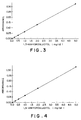
- Fig. 3 shows the calibration curve for 1,5-anhydroglucitol obtained by the NADP-dependent galactose dehydrogenase method in combination with the hexokinase method.
- Fig. 4 shows the calibration curve for 1,5-anhydroglucitol obtained by the galactose oxidase method in combination with the hexokinase method.
- Fig. 5 shows the calibration curve for 1,5-anhydroglucitol obtained by the galactokinase method.
- Fig. 6 shows the calibration curve for 1,5-anhydroglucitol obtained by the NAD-dependent galactose dehydrogenase method.
- Fig. 7 shows the calibration curve for 1,5-anhydroglucitol obtained by the NADP-dependent galactose dehydrogenase method.
- Fig. 8 shows the calibration curve for 1,5-anhydroglucitol obtained by the galactose oxidase method.
- the conversion of galactose into a substance which does not disturb the determination of the specific component can be achieved by an enzyme reaction wherein galactose is used as the substrate, for example, a reaction utilizing the action of galactokinase (EC 2.7.1.6) in the presence of adenosine triphosphate (ATP); a reaction utilizing the action of galactose dehydrogenase (EC 1.1.1.48; EC 1.1.1.120) in the presence of nicotinamide adenine dinucleotide phosphate (NADP) or nicotinamide adenine dinucleotide (NAD); and a reaction utilizing the action of galactose oxidase (EC 1.1.3.9) in the presence of oxygen.
- a reaction utilizing the action of galactokinase EC 2.7.1.6
- ATP adenosine triphosphate
- NADP nicotinamide adenine dinucleotide phosphate
- the present invention is effective in all cases where the quantitative determination of the specific component in a sample by an enzyme reaction is made less accurate by the presence of galactose in the sample. That is, the method of the present invention can be effectively applied when the quantitative determination of the specific component utilizes an enzyme which also acts on galactose. The method of the present invention may also be applied effectively when the quantitative determination of the specific component generates galactose.
- 1,5-Anhydroglucitol is an example of a case in which the enzyme used for the quantitative determination also acts on galactose.
- Fructose and amylase are examples of a case in which the enzyme used for the quantitative determination generates galactose [Kyowa Medex products information, p.111-112, published by Kyowa Medex Co., Ltd. (1991)].
- a sample which may contain galactose is added to a buffer solution, and to this mixture are added (1) 0.1-10 mg/ml ATP and 1-100 units/ml galactokinase (EC 2.7.1.6) (galactokinase method), (2) 0.1-10 mg/ml NAD and 1-100 units/ml galactose dehydrogenase (EC 1.1.1.48) (NAD-dependent galactose dehydrogenase method), (3) 0.1-10 mg/ml NADP and 1-100 units/ml galactose dehydrogenase (EC 1.1.1.120) (NADP-dependent galactose dehydrogenase method), or (4) 1-100 units/ml galactose oxidase (EC 1.1.3.9) in the presence of oxygen (galactose oxidase method), to carry out a reaction at 5-40°C for 1-30 minutes, preferably 3-10 minutes. Ideally, the reaction is carried out a reaction at 5-40°C for 1
- buffer solutions of pH 5-10 such as a phosphate buffer solution, a Tris-HCl buffer solution, and a Good's buffer solution may be used.
- a salt such as sodium chloride, a stabilizer such as albumin, and a metal such as manganese, magnesium or cobalt.
- the oxygen already dissolved in the buffer solution is usually adequate. However, additional oxygen may be provided by aeration if necessary.
- galactose in the sample is converted to galactose-1-phosphate (galactokinase method); galactone-1,4-lactone (NAD-dependent or NADP-dependent galactose dehydrogenase method); or galacto-hexodialdose (galactose oxidase method).
- an ATP production system such as pyruvate kinase (0.5-50 U/ml) and phosphoenol pyruvate (0.1-10 mg/ml) (Japanese Published Unexamined Patent Application No. 104298/90) or creatine kinase (1-100 U/ml) may be added to produce ATP in the reaction mixture, whereby the amount of ATP to be added can be minimized.
- a reagent necessary for the quantitative determination of the component to be determined is added to the sample. Then the component is quantitatively determined either by measuring the amount of the product of enzyme reaction or by measuring the change of the amount of a substance known to be utilized by the enzyme reaction.
- the enzyme reaction for galactose elimination may preferably be combined with the glucose-elimination method disclosed in Japanese Published Unexamined Patent Application No. 104298/90 or a glucose-elimination method in which hexokinase, phosphohexose isomerase and 6-phosphofructokinase are made to act on glucose in the presence of ATP to convert glucose to fructose-1,6-diphosphate (hexokinase method).
- hexokinase method a glucose-elimination method in which hexokinase, phosphohexose isomerase and 6-phosphofructokinase are made to act on glucose in the presence of ATP to convert glucose to fructose-1,6-diphosphate.
- glucose existing in the sample to be determined is efficiently removed by treating the sample with Mg ion, ATP, phosphoenolpyruvic acid and pyruvate kinase, and hexokinase or glucokinase.
- adenosine triphosphate, hexokinase, phosphohexose isomerase and 6-phosphofructokinase are added to the glucose-containing sample, and the reaction is carried out at 15-50°C for 1-30 minutes, preferably 3-10 minutes, in the presence of a magnesium salt if necessary.
- the enzymes and their amounts to be used are 0.5-50 U/ml hexokinase (EC 2.7.1.1) or hexokinase Type IV (glucokinase: EC 2.7.1.2) as hexokinase, 1-100 U/ml D-glucose-6-phosphate-ketol isomerase (EC 5.3.1.9) as phosphohexose isomerase, and 1-100 U/ml phosphohexokinase (EC 2.7.1.11) as 6-phosphofructokinase. All of these enzymes are commercially available and easily acquirable. In addition, ATP is used at a concentration of 0.1-10 mg/ml.
- the quantitative determination of 1,5-anhydroglucitol in the sample is described below.
- the present invention may also be utilized in the quantitative determination of any other specific component, the accuracy of which is otherwise disturbed by the presence of galactose.
- 1,5-anhydroglucitol may be carried out by any known method therefor. For example, 1,5-anhydroglucitol is acted on by oxidase and the resulting hydrogen peroxide is reacted with a chromogen in the presence of peroxidase. Then the amount of 1,5-anhydroglucitol is determined by measuring the absorbance of the reaction solution in the visible region.
- oxidase As the oxidase, sorbose oxidase (EC 1.1.3.11) (10-1000 U/ml), pyranose oxidase (EC 1.1.3.10) (1-100 U/ml), and the like may be used. Peroxidase (EC 1.11.1.7) is used at a concentration of 1-100 U/ml. As the buffer solution, those which are described above may be used.
- any compound which produces a color when oxidized in the presence of peroxidase can be used.
- a coupling system may be used which comprises 4-aminoantipyrine or 3-methyl-2-benzothiazolinonehydrazone, and phenol or a derivative thereof or aniline or a derivative thereof.
- a substance which produces a highly sensitive pigment is preferred, and examples thereof include 2,2'-azino-bis(3-ethylbenzothiazoline-6-sulfonic acid), bis[3-bis(4-chlorophenyl)methyl-4-dimethylaminophenyl]amine (hereinafter "BCMA”) (EP-A-124287), bis[3-bis(4-chlorophenyl)methyl-4-carboxyethylaminophenyl]amine (EP-A-124287), 10-N-methylcarbamoyl-3,7-dimethylamino-10H-phenothiazine (hereinafter "MCDP”) (EP-A-38205) and 10-N-carboxymethylcarbamoyl-3,7-dimethylamino-10H-phenothiazine (hereinafter "CCAP”) (EP-A-38205).
- the amount of the chromogen to be used is 1-1000 molar equivalents based on the hydrogen peroxide
- the reaction is carried out at 15-50°C for 3-30 minutes, preferably 5-10 minutes.
- the 1,5-anhydroglucitol and galactose contents of normal serum are about 2 mg/dl and 1 mg/dl, respectively.
- the galactose level in abnormal serum obtained from patients is as high as 30 mg/dl and the presence of galactose at such high level disturbs quantitative determination of 1,5-anhydroglucitol. Therefore, a process which can decompose over 30 mg/dl galactose is clinically useful.
- the following experiments were performed under the conditions that the 1,5-anhydroglucitol content was 2 mg/dl (the same level as normal serum) and the galactose content was 100 mg/dl (about three times the level of abnormal serum).
- the experiment was carried out using three types of samples: (1) purified water, (2) 2 mg/dl 1,5-anhydroglucitol, and (3) 2 mg/dl 1,5-anhydroglucitol containing 100 mg/dl galactose.
- the amount of 1,5-anhydroglucitol in the test samples was determined by the methods described in Example 1 (combination of the galactokinase method and the hexokinase method), Example 3 (combination of the NAD-dependent galactose dehydrogenase method and the hexokinase method), Example 5 (combination of the NADP-dependent galactose dehydrogenase method and the hexokinase method), and Example 7 (combination of the galactose oxidase method and the hexokinase method).
- Table 1 shows that, in the presence of galactose, the amount of 1,5-anhydroglucitol can be precisely determined only by the methods according to the present invention.
- the experiment was carried out using three types of samples: (1) purified water, (2) 2 mg/dl 1,5-anhydroglucitol, and (3) 2 mg/dl 1,5-anhydroglucitol containing 100 mg/dl galactose.
- the amount of 1,5-anhydroglucitol in the test samples was determined by the methods described in Example 13 (the galactokinase method), Example 14 (the NAD-dependent galactose dehydrogenase method), Example 15 (the NADP-dependent galactose dehydrogenase method), and Example 16 (the galactose oxidase method).
- Table 2 shows that, in the presence of galactose, the amount of 1,5-anhydroglucitol can be precisely determined only by the methods according to the present invention.
- Example 1 (Combined use of the hexokinase method for elimination of glucose and the galactokinase method for elimination of galactose)
- 1,5-anhydroglucitol product of Sigma Co.
- Reagent solution 1 (2.25 ml) was added to 0.05 ml of each of the dilutions and to 0.05 ml of distilled water as the blank, and the reaction was carried out at 37°C for 10 minutes. Then, 0.75 ml of Reagent solution 2 was added thereto and the reaction was carried out at 37°C for 5 minutes. After the reaction, the absorbance at 755 nm was measured, and a calibration curve was obtained. The calibration curve is shown in Fig. 1.
- Example 2 The same procedure as in Example 1 was repeated, except that a serum containing 2.53 mg/dl 1,5-anhydroglucitol (determined by colorimetry using a column) was used instead of the 1,5-anhydroglucitol standard dilutions.
- the amount of 1,5-anhydroglucitol in the serum was calculated based on the absorbance at 755 nm and the calibration curve obtained in Example 1, and was found to be 2.56 mg/dl.
- Example 3 (Combined use of the hexokinase method for elimination of glucose and the NAD-dependent galactose dehydrogenase method for elimination of galactose)
- Example 2 The same procedure as in Example 1 was repeated, except that 5 units/ml galactose dehydrogenase (EC 1.1.1.48) and 5 mg/ml NAD were used instead of galactokinase.
- the obtained calibration curve is shown in Fig. 2.
- the amount of 1,5-anhydroglucitol in the serum used in Example 2 was determined according to the method in Example 3, and was found to be 2.54 mg/dl.
- Example 5 (Combined use of the hexokinase method for elimination of glucose and the NADP-dependent galactose dehydrogenase method for elimination of galactose)
- the amount of 1,5-anhydroglucitol in the serum used in Example 2 was determined according to the method in Example 5, and was found to be 2.55 mg/dl.
- Example 7 (Combined use of the hexokinase method for elimination of glucose and the galactose oxidase method for elimination of galactose)
- the amount of 1,5-anhydroglucitol in the serum used in Example 2 was determined according to the method in Example 7, and was found to be 2.60 mg/dl.
- Example 9 (Combined use of the hexokinase method for elimination of glucose and the galactokinase method for elimination of galactose, with ATP formation by the pyruvic kinase reaction)
- the amount of 1,5-anhydroglucitol in the serum used in Example 2 was determined by the same method as in Example 1, except that the amount of ATP added was reduced to 0.5 mg/ml and 5 units/ml pyruvate kinase and 1 mg/ml phosphoenol pyruvate were added. The amount was determined to be 2.55 mg/dl.
- Example 10 (Combined use of the hexokinase method for elimination of glucose and the galactokinase method for elimination of galactose, with ATP formation by the creatine kinase reaction)
- the amount of 1,5-anhydroglucitol in the serum used in Example 2 was determined by the same method as in Example 1, except that the amount of ATP added was reduced to 0.5 mg/ml and 10 units/ml creatine kinase and 1 mg/ml of creatine phosphate were added. The amount was determined to be 2.56 mg/ml.
- Example 11 (Combined use of the hexokinase method for elimination of glucose and the galactokinase method for elimination of galactose, with MCDP)
- the amount of 1,5-anhydroglucitol in the serum used in Example 2 was determined by the same method as in Example 1, except that 0.1 mg/ml MCDP was used instead of BCMA. The amount was determined to be 2.52 mg/ml.
- Example 12 (Combined use of the hexokinase method for elimination of glucose and the galactokinase method for elimination of galactose, with CCAP)
- the amount of 1,5-anhydroglucitol in the serum used in Example 2 was determined by the same method as in Example 1, except that 0.1 mg/ml CCAP was used instead of BCMA. The amount was determined to be 2.54 mg/ml.
- 1,5-anhydroglucitol product of Sigma Co.
- Reagent solution 3 (2.25 ml) was added to 0.05 ml of each of the dilutions and to 0.05 ml of distilled water as the blank, and the reaction with the galactose-eliminating enzyme was carried out at 37°C for 10 minutes.
- 0.75 ml of Reagent solution 4 was added thereto, and the reaction with the enzyme for the 1,5-anhydroglucitol determination was carried out at 37°C for 5 minutes.
- the absorbance at 755 nm was measured, and a calibration curve was obtained. The calibration curve is shown in Fig. 5.
Landscapes
- Chemical & Material Sciences (AREA)
- Organic Chemistry (AREA)
- Life Sciences & Earth Sciences (AREA)
- Health & Medical Sciences (AREA)
- Zoology (AREA)
- Wood Science & Technology (AREA)
- Proteomics, Peptides & Aminoacids (AREA)
- Engineering & Computer Science (AREA)
- Microbiology (AREA)
- Biochemistry (AREA)
- Physics & Mathematics (AREA)
- Molecular Biology (AREA)
- Biotechnology (AREA)
- Biophysics (AREA)
- Analytical Chemistry (AREA)
- Immunology (AREA)
- Bioinformatics & Cheminformatics (AREA)
- General Engineering & Computer Science (AREA)
- General Health & Medical Sciences (AREA)
- Genetics & Genomics (AREA)
- Emergency Medicine (AREA)
- Measuring Or Testing Involving Enzymes Or Micro-Organisms (AREA)
Applications Claiming Priority (2)
| Application Number | Priority Date | Filing Date | Title |
|---|---|---|---|
| JP11925/93 | 1993-01-27 | ||
| JP01192593A JP3170377B2 (ja) | 1993-01-27 | 1993-01-27 | 物質の測定法 |
Publications (1)
| Publication Number | Publication Date |
|---|---|
| EP0608795A1 true EP0608795A1 (en) | 1994-08-03 |
Family
ID=11791267
Family Applications (1)
| Application Number | Title | Priority Date | Filing Date |
|---|---|---|---|
| EP94100933A Withdrawn EP0608795A1 (en) | 1993-01-27 | 1994-01-24 | Method for enzymatic determination of substrate after enzymatically removing galactose |
Country Status (4)
| Country | Link |
|---|---|
| US (1) | US5426033A (enExample) |
| EP (1) | EP0608795A1 (enExample) |
| JP (1) | JP3170377B2 (enExample) |
| CA (1) | CA2114199A1 (enExample) |
Families Citing this family (8)
| Publication number | Priority date | Publication date | Assignee | Title |
|---|---|---|---|---|
| NZ328976A (en) * | 1996-02-20 | 1999-06-29 | Kyowa Hakko Kogyo Kk | Quantitative determination of 1,5-anhydroglucitol using an enzyme (typically trehalase) |
| US5871949A (en) * | 1996-12-04 | 1999-02-16 | Daiichi Pure Chemicals Co., Ltd. | Method of quantitative assay for 1,5-anhydroglucitol and reagent for quantitative assay |
| WO2003075383A2 (en) * | 2002-02-28 | 2003-09-12 | Us Nanocorp, Inc. | Solid oxide fuel cell components and method of manufacture thereof |
| EP1895303B1 (en) * | 2005-06-13 | 2011-05-11 | Nippon Kayaku Kabushiki Kaisha | Method of assaying 1, 5-anhydroglucitol by using whole blood |
| CA2655890A1 (en) * | 2006-06-22 | 2007-12-27 | Ikeda Food Research Co., Ltd. | Method of determining 1,5-anhydroglucitol, and reagent composition for determining 1,5-anhydroglucitol |
| CN101558296B (zh) * | 2006-12-14 | 2013-12-11 | 日本化药株式会社 | 用于测定全血中的1,5-脱水葡萄糖醇的方法以及用于所述方法的传感器芯片和测定试剂盒 |
| JP5068825B2 (ja) * | 2007-11-05 | 2012-11-07 | 日本化薬株式会社 | バイオセンサ |
| CN112159833B (zh) * | 2020-06-04 | 2022-12-23 | 三诺生物传感股份有限公司 | 一种消除内源性葡萄糖干扰的试剂及其应用和方法 |
Citations (7)
| Publication number | Priority date | Publication date | Assignee | Title |
|---|---|---|---|---|
| US4220503A (en) * | 1978-04-28 | 1980-09-02 | The Yellow Springs Instrument Co., Inc. | Stabilization of activated galactose oxidase enzyme |
| JPS57163482A (en) * | 1981-03-31 | 1982-10-07 | Snow Brand Milk Prod Co Ltd | Novel yeast having specific saccharide utilization |
| EP0213279A2 (en) * | 1985-05-28 | 1987-03-11 | Nippon Kayaku Kabushiki Kaisha | Method of quantitative assay for 1,5-anhydroglucitol |
| EP0261591A2 (en) * | 1986-09-22 | 1988-03-30 | Nippon Kayaku Kabushiki Kaisha | Method for assaying 1,5-anhydroglucitol and kit therefor |
| JPH02104298A (ja) * | 1988-10-12 | 1990-04-17 | Amano Pharmaceut Co Ltd | 1,5−アンヒドログルシトールの定量法 |
| DE4242794A1 (en) * | 1991-12-18 | 1993-06-24 | Nitto Boseki Co Ltd | Quantitative automated determn. of 1,5-anhydro:glucitol - using pyranose oxidase from Basidiomycetes fungi no.52 |
| DE4321807A1 (de) * | 1992-06-30 | 1994-01-13 | Nitto Boseki Co Ltd | Verfahren zur quantitativen Bestimmung von 1,5-Anhydroglucitol |
Family Cites Families (1)
| Publication number | Priority date | Publication date | Assignee | Title |
|---|---|---|---|---|
| ATE4328T1 (de) * | 1980-09-19 | 1983-08-15 | Boehringer Mannheim Gmbh | Verfahren und reagens zur bestimmung von glycerin. |
-
1993
- 1993-01-27 JP JP01192593A patent/JP3170377B2/ja not_active Expired - Fee Related
-
1994
- 1994-01-24 EP EP94100933A patent/EP0608795A1/en not_active Withdrawn
- 1994-01-25 US US08/186,045 patent/US5426033A/en not_active Expired - Fee Related
- 1994-01-25 CA CA002114199A patent/CA2114199A1/en not_active Abandoned
Patent Citations (7)
| Publication number | Priority date | Publication date | Assignee | Title |
|---|---|---|---|---|
| US4220503A (en) * | 1978-04-28 | 1980-09-02 | The Yellow Springs Instrument Co., Inc. | Stabilization of activated galactose oxidase enzyme |
| JPS57163482A (en) * | 1981-03-31 | 1982-10-07 | Snow Brand Milk Prod Co Ltd | Novel yeast having specific saccharide utilization |
| EP0213279A2 (en) * | 1985-05-28 | 1987-03-11 | Nippon Kayaku Kabushiki Kaisha | Method of quantitative assay for 1,5-anhydroglucitol |
| EP0261591A2 (en) * | 1986-09-22 | 1988-03-30 | Nippon Kayaku Kabushiki Kaisha | Method for assaying 1,5-anhydroglucitol and kit therefor |
| JPH02104298A (ja) * | 1988-10-12 | 1990-04-17 | Amano Pharmaceut Co Ltd | 1,5−アンヒドログルシトールの定量法 |
| DE4242794A1 (en) * | 1991-12-18 | 1993-06-24 | Nitto Boseki Co Ltd | Quantitative automated determn. of 1,5-anhydro:glucitol - using pyranose oxidase from Basidiomycetes fungi no.52 |
| DE4321807A1 (de) * | 1992-06-30 | 1994-01-13 | Nitto Boseki Co Ltd | Verfahren zur quantitativen Bestimmung von 1,5-Anhydroglucitol |
Non-Patent Citations (4)
| Title |
|---|
| Biochim. Biophys. Acat, 1968, vol. 167, pp.:501-510 * |
| DATABASE WPI Week 199021, Derwent World Patents Index; Class B04, AN 1990-161279 * |
| DATABASE WPI Week 8246, Derwent World Patents Index; AN 82-98356E * |
| Enzyme Nomenclature, IUB, 1979, p.:56-57; N.Y., USA Academic Press * |
Also Published As
| Publication number | Publication date |
|---|---|
| CA2114199A1 (en) | 1994-07-28 |
| US5426033A (en) | 1995-06-20 |
| JPH06217799A (ja) | 1994-08-09 |
| JP3170377B2 (ja) | 2001-05-28 |
Similar Documents
| Publication | Publication Date | Title |
|---|---|---|
| Matsubara et al. | Spectrophotometric determination of hydrogen peroxide with titanium 2-((5-bromopyridyl) azo)-5-(N-propyl-N-sulfopropylamino) phenol reagent and its application to the determination of serum glucose using glucose oxidase | |
| US5426033A (en) | Method for enzymatic determination of substrate after enzymatically removing galactose | |
| CN112159833B (zh) | 一种消除内源性葡萄糖干扰的试剂及其应用和方法 | |
| US6309852B1 (en) | Method and reagent for quantitative determination of 1,5-anhydroglucitol | |
| EP0639646B1 (en) | High precision determination of d-glucose-6-phosphate and composition therefor | |
| JPH02104298A (ja) | 1,5−アンヒドログルシトールの定量法 | |
| US5486458A (en) | Method of quantitative assay for 1,5-anhydroglucitol | |
| EP0727495A2 (en) | Quantitation of inorganic phosphate and trehalose | |
| US6268166B1 (en) | Method of quantitative assay for 1,5-anhydroglucitol | |
| US5468621A (en) | Method of quantitative assay for 1,5-anhydroglucitol | |
| JP2711721B2 (ja) | グルコースを含有する試料中の1,5―アンヒドログルシトールの定量法 | |
| EP0513914A1 (en) | Stabilization of the enzyme urate oxidase in liquid form | |
| KR20070050023A (ko) | 만노스의 정량법 | |
| US5834227A (en) | Kit for assaying creatine kinase | |
| JP3217180B2 (ja) | 物質の測定法 | |
| JPH026520B2 (enExample) | ||
| JP2665673B2 (ja) | グルコースを含有する試料中の1,5−アンヒドログルシトールの測定法 | |
| EP0071087B1 (en) | Improved determination of creatine phosphokinase in body fluids | |
| JPH0576397A (ja) | 物質の測定法 | |
| EP0386237B1 (en) | Enzyme assay of biological substances | |
| EP0496412A2 (en) | Method for highly sensitive determination of NADH using NADH kinase | |
| KR100715924B1 (ko) | 1,5-안하이드로글루시톨의 정량 분석법 및 시약 | |
| JPH07108236B2 (ja) | 1,5−アンヒドログルシトールの定量法 | |
| JPH09173097A (ja) | 1,5−アンヒドログルシトールの定量方法 | |
| JPH06261789A (ja) | 物質の測定法 |
Legal Events
| Date | Code | Title | Description |
|---|---|---|---|
| PUAI | Public reference made under article 153(3) epc to a published international application that has entered the european phase |
Free format text: ORIGINAL CODE: 0009012 |
|
| AK | Designated contracting states |
Kind code of ref document: A1 Designated state(s): AT BE CH DE DK ES FR GB GR IE IT LI LU MC NL PT SE |
|
| 17P | Request for examination filed |
Effective date: 19950113 |
|
| 17Q | First examination report despatched |
Effective date: 19971013 |
|
| GRAH | Despatch of communication of intention to grant a patent |
Free format text: ORIGINAL CODE: EPIDOS IGRA |
|
| STAA | Information on the status of an ep patent application or granted ep patent |
Free format text: STATUS: THE APPLICATION IS DEEMED TO BE WITHDRAWN |
|
| 18D | Application deemed to be withdrawn |
Effective date: 20021231 |