EP0591789A2 - Protein, das einem Wasserkanal bildet und dessen Gen - Google Patents
Protein, das einem Wasserkanal bildet und dessen Gen Download PDFInfo
- Publication number
- EP0591789A2 EP0591789A2 EP19930115462 EP93115462A EP0591789A2 EP 0591789 A2 EP0591789 A2 EP 0591789A2 EP 19930115462 EP19930115462 EP 19930115462 EP 93115462 A EP93115462 A EP 93115462A EP 0591789 A2 EP0591789 A2 EP 0591789A2
- Authority
- EP
- European Patent Office
- Prior art keywords
- wch
- water channel
- kidney
- protein molecules
- cdna
- Prior art date
- Legal status (The legal status is an assumption and is not a legal conclusion. Google has not performed a legal analysis and makes no representation as to the accuracy of the status listed.)
- Withdrawn
Links
Images




Classifications
-
- A—HUMAN NECESSITIES
- A61—MEDICAL OR VETERINARY SCIENCE; HYGIENE
- A61K—PREPARATIONS FOR MEDICAL, DENTAL OR TOILETRY PURPOSES
- A61K9/00—Medicinal preparations characterised by special physical form
- A61K9/10—Dispersions; Emulsions
- A61K9/127—Synthetic bilayered vehicles, e.g. liposomes or liposomes with cholesterol as the only non-phosphatidyl surfactant
- A61K9/1271—Non-conventional liposomes, e.g. PEGylated liposomes or liposomes coated or grafted with polymers
-
- C—CHEMISTRY; METALLURGY
- C07—ORGANIC CHEMISTRY
- C07K—PEPTIDES
- C07K14/00—Peptides having more than 20 amino acids; Gastrins; Somatostatins; Melanotropins; Derivatives thereof
- C07K14/435—Peptides having more than 20 amino acids; Gastrins; Somatostatins; Melanotropins; Derivatives thereof from animals; from humans
- C07K14/705—Receptors; Cell surface antigens; Cell surface determinants
-
- A—HUMAN NECESSITIES
- A61—MEDICAL OR VETERINARY SCIENCE; HYGIENE
- A61K—PREPARATIONS FOR MEDICAL, DENTAL OR TOILETRY PURPOSES
- A61K38/00—Medicinal preparations containing peptides
Definitions
- This invention relates to a gene and protein molecules forming a vasopressin-regulated water channel WCH-1 localized in the kidney collecting tubule.
- Urine concentration is mandatory for most mammals in order to prevent loss of body water. Concentrated urine is produced, in response to vasopressin, by the transepithelial water recovery from the lumen of the kidney collecting tubule through high water permeable membranes (Orloff, J. & Handler, J. S. Am. J. Med. 42, 757 - 768 (1967); Knepper, M. A. & Rector, F. C. Jr. in The Kidney (eds Brenner, B. M. & Rector, F. C. Jr.) 445 - 482 (W. B. Saunders, Philadelphia, (1991))).
- vasopressin regulates water permeability by endo- and exocytosis of water channels from and to the apical membrane (Handler, J. S. Am. J. Physiol. 255, F375 - F382 (1988); Harris, H. W. Jr., Strange, K. & Zeidel, M. L. J. Clin. Invest. 88, 1 - 8 (1991)).
- CHIP 28 is a water channel in red blood cell membranes (RBC) and in kidney proximal tubule (Preston, G. M., Carrol, T. P., Guggino, W. B. & Agre, P. Science 256, 385 - 387 (1992)).
- RBC red blood cell membranes
- CHIP 28 is not expressed in the collecting tubule (Denker, B. M., Smith, B. L., Kuhajda, F. P. & Agre, P. J. Biol. Chem. 263, 15634 -15642 (1988)).
- an artificial membrane is provided in which the water channel of the present invention is incorporated.
- a screening method for water diuretics may be established, while a high water-permeable artificial membrane and liposome into which the WCH-1 protein has been incorporated may be produced.
- WCH-1 means a vasopressin-regulated water channel localized in the kidney collecting tubule, while the gene capable of expressing such water channel is termed WCH-1 gene.
- the above object may be achieved by isolation of a WCH-1 cDNA probe, Escherichia coli producing WCH-1 protein molecules, WCH-1 protein molecules produced by the Escherichia coil, and a method for producing the WCH-1 protein molecules. Besides, the lipid membrane in which the WCH-1 protein is incorporated is produced.
- the clone of the WCH-1 cDNA is obtainable by
- a WCH-1 mRNA probe obtainable by employing the WCH-1 cDNA probe as a template.
- a WCH-1 protein molecule constituting a water channel localized in the kidney collecting tubule
- WCH-1 protein molecule constituting a vasopressin-regulated water channel.
- Escherichia coli producing WCH-1 protein molecules expressed by the WCH-1 gene, constituting a water channel localized in the kidney collecting tubule, or Escherichia coli producing WCH-1 protein molecule, expressed by the WCH-1 gene, constituting a vasopressin-regulated water channel
- the Escherichia coli have been deposited at the Microorganism Laboratory of the Agency of Industrial Science and Technology, Ministry of International Trade and Industry, 1-3, Higashi 1-chome, Tsukuba-shi, Ibaraki-ken 305, Japan, under designation for identification of "Escherichia Coil rWCH-1 under deposition number of FERM P-13171).
- the WCH-1 protein molecule produced by said Escherichia coli.
- a method for producing the WCH-1 protein molecule wherein the WCH-1 protein molecule is obtainable using said Escherichia coli.
- said Escherichia coli is :
- a lipid membrane containing the WCH-1 protein molecule A lipid membrane containing the WCH-1 protein molecule.
- Liposome formed of a lipid membrane containing the WCH-1 protein molecules.
- WCH-1 is a new water channel of the apical membrane of the kidney collecting tubule.
- WCH-1 is identical up to 42 % in amino acid sequence to CHIP 28.
- WCH-1 transcripts are detected only in the kidney collecting tubule.
- Im- munohistochemically WCH-1 is localized to the apical region of the kidney collecting tubule cells.
- Expression of WCH-1 in Xenopus oocytes markedly increased osmotic water permeability.
- dehydration markedly stimulates WCH-1 mRNA in rat kidney, without stimulating CHIP 28 mRNA.
- the functional expression by WCH-1 and the limited localization of WCH-1 to the apical region of the kidney collecting tubule suggest that WCH-1 is the vasopressin-regulated water channel.
- Rat kidney medulla poly(A) + RNA was submitted to reverse transcription and 30 cycles of PCR with 5 /1.M each of two degenerate primers, and synthesized based on conserved amino acid sequences of the MIP family (Leu-Asn-Pro-Ala-Val-Thr, Asn-Pro-Ala-Arg-Ser-Phe, respectively) (Wistow, G. J. Pisano, M. M. & Chepelinsky, A. B. Trends Biochem. Sci. 16, 170 - 171 (1991)).
- the cycle comprised a denaturation step at 94°C for 1 minute, annealing at 50 °C for one minute and extension at 72 ° C for three minutes, followed by a final extension for 7 minutes.
- a band of - 370 bp PCR products was isolated by gel electrophoresis and subcloned into the plasmid vector PCR 1000 (Invitrogen). 24 clones were sequenced using the fluorescence DNA sequencer 373A (Applied Biosystems) with -21 M13 and M13R fluorescent primers.
- a clone (pMWC41) was obtained with a 369 bp insert of 58 % nucleotide sequence identity and 45 % deduced amino acid sequence identity to human CHIP 28.
- prCHIP 28 Another clone (prCHIP 28) was a 369 bp insert of 88 % nucleotide sequence identity and 95 % deduced amino acid sequence identity to human CHIP 28.
- the clone pMWC41 was used to screen a 2 x 10 7 recombinant rat kidney cDNA library constructed in the Not-I/Sal-I site of the xgt 22 vector (BRL). Under stringent condition (hybridization at 6 x SSPE, 50 % formamide, 42 ° C; washing at 2 x SSC, 0.5 % SDS, 42 ° C), a positive clone (WCH-1 ) was isolated with - 1.4 kb insert.
- the cDNA insert was subcloned into the Not-I/Sal-I site of the pSPORT vector (BRL) and the base sequence as well as the amino acid sequence was determined by the Sanger dideoxynucleotide chain termination method using Sequenase (USB).
- Fig. 10 shows the sequence for WCH-1.
- Fig. 10 shows nucleotide sequence for the WCH-1 cDNA and alignment of its deduced amino acid sequence with that of human CHIP 28 (Preston, G. M. & Agre, P. Proc. Natl. Acad. Sci. USA. 88, 11110 - 11114 (1991)). conserveed residues are shown in boxes and deduced transmembrane domains (Kyte, J. & Doolittle, R. F. J. Mol. Biol. 157, 105 - 132 (1982)) are underlined.
- V, + and • indicate phosphorylation sites for cAMP-dependent protein kinase, for protein kinase C and for casein kinase II, respectively.
- the poly(A) + track at the end of the cDNA begins at the 14th base after the AATAAA cleavage and polyadenylation sequence.
- the first ATG was determined as an initiation codon on the basis of the Kozak's consensus A at position -3 (Kozak, M. Nucl. Acid Res. 15, 8127 - 8146 (1987)) and the sequence identity of the first seven amino acids to human MIP (Pisano, M. M. & Chepelinsky, A. B. Genomics 11, 981 - 990 (1991)).
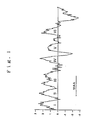
- Fig. 1 shows the hydropathy profile of the deduced amino-acid sequence of the WCH-1.
- the mean hydrophobicity index was computed according to the algorithm of Kyte and Doolittle (Kyte, J. & Doolittle, R. F. J. Mol. Biol. 157, 105 - 132 (1982)) with a window of 12 residues.
- Hydropathy analysis of the translated protein indicated the presence of the six transmembrane domains similar to CHIP 28. Deduced membrane- spanning domains are numbered from I to VI.
- RNA extracted from several tissues was enriched for poly(A) + tracts and 10 ⁇ g per lane was electrophoresed on agarose gels containing formaldehyde. Equal loading and absence of degradation was checked by staining with ethidium bromide. After transfer to nylon membranes, blots were hybridized under high stringency with the WCH-1 cDNA labeled with 32 P, and autoradiographed for 24 to 120 hours.
- RT-PCR of dissected nephron segments was performed as described in Moriyama, T., Murphy, H. R., Murtin, B. M. & Garcia-Perez, A. Am. J. Physiol, 258, F1470 - F1474 (1990) and Terada, Y. et al. Am. J. Physiol. 261, F1080 - F1087 (1991). Briefly, 2 mm of dissected nephron segments were submitted to reverse transcription (RT) with random primer.
- Synthesized cDNA was used for 40 cycles of PCR reaction (94 ° C for 1 minute, 60 ° C for 1 minute, 72 ° C for 3 minutes), with specific 18nt primers for WCH-1 (5'-TGGGATCTATTTCACCGG- 3', bases 522 - 539, and 5'- ACAGGCACTCGGGATCAC- 3', bases 1216 - 1233).
- PCR products were electrophoresed in 2 % agarose, stained with ethidium bromide, and photographed.
- DNA was denatured and transfered to nylon membranes and hybridized with WCH-1 cDNA labeled with 32p .
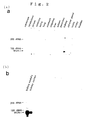
- Fig. 2 shows photographs of localization of WCH-1.
- Fig. 2 a shows Northern blot analysis of WCH-1 expression in different rat tissues, showing WCH-1 transcripts detected only in the lane containing rat kidney mRNA. WCH-1 transcripts were also not detected in lanes other than kidney mRNA by longer autoradiographic exposure up to 120 hours (data not shown).
- Fig. 2 b shows Northern blot analysis of WCH-1 expression in sliced sections of rat kidney cortex and medulla. In addition to a major transcript of - 1.5 Kb, larger transcripts of 2.8 Kb and 4.4 Kb were detected. These may represent alternative splicing or polyadenylation variants.
- Fig. 3 shows agarose gel electrophoresis of RT-PCR products for WCH-1 mRNA on dissected nephron segments. 712 bp bands for WCH-1 were detected in lanes on CCD, OMCD, IMCD.
- PCT proximal convoluted tubule
- TDL thin descending limb of Henle's loop
- TAL thin ascending limb of Henle's loop
- MAL medullary thick ascending limb
- CCD cortical collecting tubule
- OMCD outer medullary collecting tubule
- IMCD inner medullary collecting tubule
- RT (-) reaction without reverse transcriptase.
- PCR products of 712 bp specific for WCH-1 was detected only in the cortical, and the outer and inner medullary collecting tubule segments, suggesting the limited expression of WCH-1 mRNA in the collecting tubule.
- Fig. 4 shows the rat kidney medulla portion incubated with anti-WCH1/C by the above procedure with a magnification factor of 100.
- Fig. 5 shows the rat kidney medulla portion incubated with anti-WCH1/C which has been pre-incubated with a corresponding peptide immunogen, with a magnification factor of 100. Specificity of the antibody staining was confirmed by the disappearance of the staining (Fig. 5), by the preincubation with the peptide immunogen, which staining was observed in the apical domain of the cells of the collecting tubule (Fig. 4).
- Fig. 6 shows the rat's medullar portion incubated with anti-WCH-1, with a high magnification factor of 400.
- Fig. 7 shows the rat's kidney cortical portion incubated with anti-WCH1/C, with a magnification factor of 100.
- Immunofluorescence staining was observed only in the cortical and medullar collecting tubules but not observed in other nephron segments inclusive of proximal tubule, thin descending tubule or thin ascending limb (Fig. 4 and 7). Specificity of the antibody staining was confirmed by the lack of staining of the sections when antiserum was preincubated with the corresponding peptide immunogen (Fig. 5).
- volume increase caused by an imposed osmotic gradient was measured using videomicroscopy (Zhang, R. & Verkman, A. S. Am. J. Physiol. 260, C26 - C34 (1991)).
- Capped cRNA was synthesized from WCH-1 in pSPORT vector using T7 RNA polymerase after linearization of the pSPORT vector.
- Oocytes were obtained from female Xenopus laevis and prepared as described in Dascal, N. CRC Crit. Rev. Biochem. 22, 317 - 373 (1987), then injected with 20 ng of water or 20 ng of WCH-1 RNA (1 ⁇ g/ ⁇ l) and incubated at 18 °C. After 24 hours of incubation, the oocytes were transferred from 200 mOsm Barth's buffer to 70 mOsm Barth's buffer and osmotic volume increase was observed at 24 ° C by videomicroscopy (Zhang, R. & Verkman, A.
- the oocytes were viewed by light transmitted through an Olympus phase-contrast microscope and imaged on a Hamamatsu SIT camera connected to ARGUS-200 image processing system. Images were obtained and stored at 20 sec intervals.
- oocytes were incubated in Barth's buffer containing 0.3 mM HgC1 2 for 5 minutes prior to Pf measurements.
- the recovery of the inhibition by reducing agents was examined by 15 minutes incubation in a Barth's buffer containing 5 mM ⁇ -mercaptoethanol following 5-minute incubation in HgCI 2 .
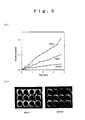
- Fig. 8 shows an increase in osmotic water permeability of Xenopus oocytes, in which WCH-1 RNA has been injected.
- Fig. 8 shows time-dependent volume increase of oocytes injected with 20 ng WCH-1 RNA (WCH-1) and with water (Control).
- Fig. 8 b shows microphotographs of oocytes injected with WCH-1 RNA or with water (Control). Photos were taken in 20 sec intervals, shown in the order of left-to-right and top-to- bottom.
- Osmotic water permeability (Pf) was 25.1 ⁇ 1.7 (mean ⁇ SEM) x 10- 4 cm/s in oocytes injected with water and 83.9 ⁇ 18.2 x 10- 4 cm/s in oocytes injected with WCH-1.
- the osmotic water permeability coefficient (Pf) in WCH-1-injected oocytes was 3.5 times greater than Pf in water-injected oocytes.
- the activation energy (Ea) for osmotic water permeability of oocytes injected with WCH-1 cRNA, estimated from the Arrhenius Plot of Pf measured at 10 to 28 ° C was 3.6 ⁇ 0.8 kcal/mol (n 12), which is comparable to those reported for water channels in RBC and kidney proximal and collecting tubules (Verkman, A. S. Annu. Rev. Physiol. 54, 97 - 108 (1992)).
- endosomal water channel protein could only partially be expressed in the plasma membrane because of the non-specific targetting of foreign protein in the egg (Dascal, N. CRC Crit. Rev. Biochem. 22, 317 - 373 (1987); Sigel, E. J. Membrane Biol. 117, 201 - 221 (1990)).
- Fig. 9 shows the results of Northern blot analysis of the regulation of WCH-1 and CHIP 28 mRNA abundance after prolonged water deprivation in Rat kidney.
- the antidiuretic action of vasopressin includes rapid increases in water permeability of the collecting tubule by inserting water channels into the apical membrane (Ganote, C. E. et al. J. Cell Biol. 36, 355 - 367 (1968); Kuwahara, M., Berry. C. A. & Verkman. A. S. Biophys. J. 54, 595 - 602 (1988); Verkman, A. S. Annu. Rev. Physiol. 54, 97 - 108 (1992)), and an increased urinary concentration capacity by amplifying the countercurrent multiplication system and the corticomedullary osmolality gradient (Knepper, M. A. & Rector, F. C. Jr.
- Kidney eds Brenner, B. M. & Rector, F. C. Jr. 445 - 482 (W. B. Saunders, Philadelphia, 1991); Kirk, K. L. & Schafer, J. A. in the Kidney: Physiologh and Pathophysiology (eds Seldin, D. W. & Giebisch, G.) 1693 - 1725 (Raven Press, New, York, 1992)).
- vasopressin may also increase maximal water permeability by increasing the synthesis of water channels in the collecting tubule.
- vasopressin causes enormous increase in osmotic water permeability of the apical membrane of the collecting tubule from basal level, comparable to that of other biological membranes that do not contain water channels (Verkman, A. S. Annu. Rev. Physiol. 54, 97 - 108 (1992); Kuwahara, M., Berry. C. A. & Verkman. A. S. Biophys. J. 54, 595 - 602 (1988)), all or at least the majority of water channels in the apical membrane are considered to be vasopressin regulated.
- WCH-1 is indeed the vasopressin-regulated water channel of the apical and endosomal membranes of the collecting tubule.
- Cyclic plasmid pSPORT is sectioned with restrictive enzymes Not-I and Sal-I, and WCH-1 cDNA is inserted into the sectioned sites.
- the plasmid into which WCH-1 gene has been recombined is introduced into an Escherichia coli DH10 ⁇ strain for transformation.
- the transformation of host by the recombinant DNA may be realized by the known method of Cohen, S.N. et al., Proc. Natl. Acad. Sci., USA., 69, 2110 (1972) or a similar method.
- the produced transformant or recombinant is cultivated on a known medium, such as (ampicillin- containing) L-broth medium.
- IPTG is added during cultivation in order for the promotor to be operated more effectively during a certain predetermined period following bacterial proliferation. After IPTG addition, cultivation is continued usually for 3 to 4 hours at 37 °C. After the cultivation, bacteria are collected by any known method, suspended in a buffer solution and ruptured. WCH-1 protein is purified by known methods, such as column chromatography.
- a screening method for water diuretics utilizing a substance in which the WCH-1 protein is expressed such as following screening methods for water diuretics, may be established.
- Escherichia coli having the WCH-1 recombinant plasmid according to the present invention and substances which are specifically linked to such protein are screened.
- An artificial membrane in which the WCH-1 protein is incorporated (Bear, C. E. et al., Cell, 68, 809 - 818 (1992)) exhibits high water permeability and may be used in a number of ways. For example,
- the WCH-1 protein incorporated into liposome as a type of the lipid membrane may also be used in a variety of ways.
- the WCH-1 protein incorporated into liposome as a type of the lipid membrane may also be used in a variety of ways.
- the WCH-1 protein incorporated into liposome as a type of the lipid membrane may also be used in a variety of ways. For example,
- liposome containing high osmotic pressure substances is ingested, body water is captured into liposome and ultimately excreted as feces, in other words, water discharge into feces is promoted.
- the liposome may be used as a water absorbant.
- the liposome containing high osmotic pressure substances exhibit high water absorption properties. Therefore, if a large quantity of the liposome are filled between paper cells of a paper product, such paper product is markedly improved in water adsorptive properties, and hence may be used as a diaper or a sanitary napkin.
- the liposome into which WCH-1 protein is incorporated may be produced by any of known methods.
- common methods there are a freezing melting method (M. Kasahara, P. C. Hinkle, J. Biol.
- the size and properties (i.e. single- or multi-layered) of the liposome are suitably selected depending on lipid types.
- the WCH-1 protein, the lipid (preferably as a mixture with phospholipid) and a surfactant are mixed together and agitated ultrasonically.
- the surfactant is removed by dialysis or gel filtration to produce liposome into which is incorporated the WCH-1 protein.
- the so-treated mass is diluted with 50 mM MgC1 2 - 100 mM tris-hydrochloric acid buffer solution (pH 7.5) and water to produce liposomes in which WCH-1 protein is incorporated in the form of 8 mg lipid in 1 ml of 2 mM MgC1 2 - 10 mM tris-hydrochloric acid buffer solution.
- the WCH-1 protein may be expressed on the cell membrane by transplanting the plasmid in which WCH-1 cDNA is incorporated on the cell medium or by injecting WCH-1 mRNA into oocytes, as shown in the above exemplification.
Landscapes
- Health & Medical Sciences (AREA)
- Chemical & Material Sciences (AREA)
- Life Sciences & Earth Sciences (AREA)
- Organic Chemistry (AREA)
- Medicinal Chemistry (AREA)
- General Health & Medical Sciences (AREA)
- Immunology (AREA)
- Gastroenterology & Hepatology (AREA)
- Epidemiology (AREA)
- Public Health (AREA)
- Veterinary Medicine (AREA)
- Cell Biology (AREA)
- Pharmacology & Pharmacy (AREA)
- Toxicology (AREA)
- Zoology (AREA)
- Animal Behavior & Ethology (AREA)
- Biochemistry (AREA)
- Biophysics (AREA)
- Genetics & Genomics (AREA)
- Molecular Biology (AREA)
- Proteomics, Peptides & Aminoacids (AREA)
- Dispersion Chemistry (AREA)
- Micro-Organisms Or Cultivation Processes Thereof (AREA)
- Peptides Or Proteins (AREA)
- Preparation Of Compounds By Using Micro-Organisms (AREA)
Applications Claiming Priority (4)
| Application Number | Priority Date | Filing Date | Title |
|---|---|---|---|
| JP27915792 | 1992-09-25 | ||
| JP279157/92 | 1992-09-25 | ||
| JP4357838A JPH06225764A (ja) | 1992-09-25 | 1992-12-25 | 水チャネル |
| JP357838/92 | 1992-12-25 |
Publications (2)
| Publication Number | Publication Date |
|---|---|
| EP0591789A2 true EP0591789A2 (de) | 1994-04-13 |
| EP0591789A3 EP0591789A3 (en) | 1996-06-26 |
Family
ID=26553196
Family Applications (1)
| Application Number | Title | Priority Date | Filing Date |
|---|---|---|---|
| EP93115462A Withdrawn EP0591789A3 (en) | 1992-09-25 | 1993-09-24 | Protein forming a water channel and gene therefor |
Country Status (3)
| Country | Link |
|---|---|
| US (2) | US5785986A (de) |
| EP (1) | EP0591789A3 (de) |
| JP (1) | JPH06225764A (de) |
Families Citing this family (1)
| Publication number | Priority date | Publication date | Assignee | Title |
|---|---|---|---|---|
| JP2003508087A (ja) * | 1999-09-03 | 2003-03-04 | ヒューマン ジノーム サイエンシーズ, インコーポレイテッド | 29個のヒト癌関連タンパク質 |
-
1992
- 1992-12-25 JP JP4357838A patent/JPH06225764A/ja not_active Withdrawn
-
1993
- 1993-09-24 EP EP93115462A patent/EP0591789A3/en not_active Withdrawn
-
1995
- 1995-05-23 US US08/448,160 patent/US5785986A/en not_active Expired - Fee Related
- 1995-05-23 US US08/447,554 patent/US5661003A/en not_active Expired - Lifetime
Non-Patent Citations (4)
| Title |
|---|
| BIOCHEMICAL AND BIOPHYSICAL RESEARCH COMMUNICATIONS, 1993, 2, 654-659, XP002001371 TONGHUI MA ET AL: * |
| BIOCHEMISTRY, AUG 25 1992, 31 (33) P7436-40, UNITED STATES, XP002001370 ZEIDEL ML ET AL: "Reconstitution of functional water channels in liposomes containing purified red cell CHIP28 protein." * |
| NATURE, vol. 361, 11 February 1993, LONDON GB, pages 549-552, XP002001372 PP.549-552;FUSHIMI K;UCHIDA S;HARA Y;HIRATA Y;MARUMO F;SASAKI S: "Cloning and expression of apical membrane water channel of rat kidney tubule" * |
| PROC NATL ACAD SCI U S A, DEC 15 1991, 88 (24) P11110-4, UNITED STATES, XP002001369 PRESTON GM ET AL: "Isolation of the cDNA for erythrocyte integral membrane protein of 28 kilodaltons: member of an ancient channel family." * |
Also Published As
| Publication number | Publication date |
|---|---|
| US5785986A (en) | 1998-07-28 |
| EP0591789A3 (en) | 1996-06-26 |
| JPH06225764A (ja) | 1994-08-16 |
| US5661003A (en) | 1997-08-26 |
Similar Documents
| Publication | Publication Date | Title |
|---|---|---|
| KR100631766B1 (ko) | 폴리펩티드, 그 폴리펩티드를 암호화하는 cDNA 및그들의 용도 | |
| Larsen et al. | Molecular cloning and expression of ps20 growth inhibitor: a novel WAP-type “four-disulfide core” domain protein expressed in smooth muscle | |
| JP3096739B2 (ja) | Hla分子によって提示される単離ノナペプチドとその使用 | |
| JPH09507744A (ja) | 新規の核分裂リンタンパク質:ミトシン | |
| AU684577B2 (en) | Chaperonin 10 | |
| US5859189A (en) | Peptides and polypeptides derived from the submaxillary gland of the rat, corresponding polyclonal and monoclonal antibodies, corresponding hybridomas and uses of these products for diagnosis, for detection or therapeutic purposes | |
| JP2000512490A (ja) | 樹状細胞のレセプター | |
| KR100629185B1 (ko) | 인간 리조포스파티드산 수용체 물질 및 그 용도 | |
| US20030069181A1 (en) | Alternative splice forms of proteins as basis for multiple therapeutic modalities | |
| CA1339992C (en) | Anticoagulant polypeptede | |
| JP4118336B2 (ja) | メルトリン | |
| EA001201B1 (ru) | Пептиды антисекреторного фактора, регулирующие патологические изменения проницаемости | |
| ES2293900T3 (es) | Identificacion y caracterizacion molecular de proteinas, expresadas en las glandulas salivales de la garrapata. | |
| FR2664613A1 (fr) | Sequence peptidique immunogene d'echinococcus granulosus, sequence d'adn codant pour cette sequence peptidique et applications diagnostiques et therapeutiques. | |
| JPWO1997031109A1 (ja) | メルトリン | |
| JP3851818B2 (ja) | 角質層の単離ポリペプチドとその使用 | |
| US6372890B1 (en) | Water-soluble polypeptides | |
| EP1118622A1 (de) | Neue antikörper, arzneistoffe die diese enthalten und methoden zum screening von verbindungen unter verwendung dieser antikörper | |
| JP2002519303A (ja) | 脂質動員性を有する糖タンパク質およびその治療的適用 | |
| US5785986A (en) | Water channel | |
| EP0452433A1 (de) | Cytolyseinhibitor-proteine (cli) und für diese proteine kodierende dna-sequenzen | |
| RU2186783C2 (ru) | Кроличья антисыворотка, ингибирующая транспорт катионных аминокислот, и содержащая ее фармацевтическая композиция | |
| JP2004041174A (ja) | 免疫グロブリン遺伝子スーパーファミリーのメンバーpigrl−1 | |
| BE1000175A3 (fr) | Vaccins contre le melanome. | |
| JP2001523113A (ja) | ナトリウムチャンネルレセプター |
Legal Events
| Date | Code | Title | Description |
|---|---|---|---|
| PUAI | Public reference made under article 153(3) epc to a published international application that has entered the european phase |
Free format text: ORIGINAL CODE: 0009012 |
|
| AK | Designated contracting states |
Kind code of ref document: A2 Designated state(s): BE CH DE FR GB LI |
|
| RIN1 | Information on inventor provided before grant (corrected) |
Inventor name: MARUMO, FUMIAKI Inventor name: SASAKI, SEI Inventor name: UCHIDA, SHINICHI Inventor name: FUSHIMI, KIYOHIDE |
|
| PUAL | Search report despatched |
Free format text: ORIGINAL CODE: 0009013 |
|
| AK | Designated contracting states |
Kind code of ref document: A3 Designated state(s): BE CH DE FR GB LI |
|
| 17P | Request for examination filed |
Effective date: 19961223 |
|
| 17Q | First examination report despatched |
Effective date: 19980522 |
|
| 18D | Application deemed to be withdrawn |
Effective date: 19990608 |