EP0585075B1 - System zum Verteilen sequentiell ausgegebener Druckseiten in individuell und variabel zuweisbare Sammelfächer - Google Patents
System zum Verteilen sequentiell ausgegebener Druckseiten in individuell und variabel zuweisbare Sammelfächer Download PDFInfo
- Publication number
- EP0585075B1 EP0585075B1 EP19930306609 EP93306609A EP0585075B1 EP 0585075 B1 EP0585075 B1 EP 0585075B1 EP 19930306609 EP19930306609 EP 19930306609 EP 93306609 A EP93306609 A EP 93306609A EP 0585075 B1 EP0585075 B1 EP 0585075B1
- Authority
- EP
- European Patent Office
- Prior art keywords
- bin
- sheet
- job
- output
- sheets
- Prior art date
- Legal status (The legal status is an assumption and is not a legal conclusion. Google has not performed a legal analysis and makes no representation as to the accuracy of the status listed.)
- Expired - Lifetime
Links
- 230000003287 optical effect Effects 0.000 claims description 30
- 238000001514 detection method Methods 0.000 claims description 12
- 230000004044 response Effects 0.000 claims description 8
- 230000005540 biological transmission Effects 0.000 description 24
- 230000008859 change Effects 0.000 description 14
- 230000006870 function Effects 0.000 description 11
- 238000000034 method Methods 0.000 description 11
- 239000007858 starting material Substances 0.000 description 7
- 230000007246 mechanism Effects 0.000 description 4
- 238000013479 data entry Methods 0.000 description 3
- 230000008569 process Effects 0.000 description 3
- 238000012545 processing Methods 0.000 description 3
- 238000000926 separation method Methods 0.000 description 3
- 239000000853 adhesive Substances 0.000 description 2
- 230000001070 adhesive effect Effects 0.000 description 2
- 238000004891 communication Methods 0.000 description 2
- 238000003825 pressing Methods 0.000 description 2
- 235000010724 Wisteria floribunda Nutrition 0.000 description 1
- 230000002159 abnormal effect Effects 0.000 description 1
- 230000000694 effects Effects 0.000 description 1
- 239000006260 foam Substances 0.000 description 1
- 230000010365 information processing Effects 0.000 description 1
- 238000002372 labelling Methods 0.000 description 1
- 230000007257 malfunction Effects 0.000 description 1
- 230000005055 memory storage Effects 0.000 description 1
- 238000012986 modification Methods 0.000 description 1
- 230000004048 modification Effects 0.000 description 1
- 230000006855 networking Effects 0.000 description 1
- 239000013307 optical fiber Substances 0.000 description 1
- 230000002093 peripheral effect Effects 0.000 description 1
- 230000009467 reduction Effects 0.000 description 1
- 230000000717 retained effect Effects 0.000 description 1
- 239000000758 substrate Substances 0.000 description 1
- 230000007723 transport mechanism Effects 0.000 description 1
- 238000011144 upstream manufacturing Methods 0.000 description 1
- 230000000007 visual effect Effects 0.000 description 1
- 238000011179 visual inspection Methods 0.000 description 1
- 230000001755 vocal effect Effects 0.000 description 1
Images


Classifications
-
- H—ELECTRICITY
- H04—ELECTRIC COMMUNICATION TECHNIQUE
- H04N—PICTORIAL COMMUNICATION, e.g. TELEVISION
- H04N1/00—Scanning, transmission or reproduction of documents or the like, e.g. facsimile transmission; Details thereof
- H04N1/00567—Handling of original or reproduction media, e.g. cutting, separating, stacking
-
- H—ELECTRICITY
- H04—ELECTRIC COMMUNICATION TECHNIQUE
- H04N—PICTORIAL COMMUNICATION, e.g. TELEVISION
- H04N1/00—Scanning, transmission or reproduction of documents or the like, e.g. facsimile transmission; Details thereof
- H04N1/00567—Handling of original or reproduction media, e.g. cutting, separating, stacking
- H04N1/00631—Ejecting or stacking
- H04N1/00633—Ejecting or stacking selectively to one of a plurality of output trays
-
- H—ELECTRICITY
- H04—ELECTRIC COMMUNICATION TECHNIQUE
- H04N—PICTORIAL COMMUNICATION, e.g. TELEVISION
- H04N1/00—Scanning, transmission or reproduction of documents or the like, e.g. facsimile transmission; Details thereof
- H04N1/00567—Handling of original or reproduction media, e.g. cutting, separating, stacking
- H04N1/00641—Sorting, reordering or inverting
-
- H—ELECTRICITY
- H04—ELECTRIC COMMUNICATION TECHNIQUE
- H04N—PICTORIAL COMMUNICATION, e.g. TELEVISION
- H04N1/00—Scanning, transmission or reproduction of documents or the like, e.g. facsimile transmission; Details thereof
- H04N1/00962—Input arrangements for operating instructions or parameters, e.g. updating internal software
- H04N1/00968—Input arrangements for operating instructions or parameters, e.g. updating internal software by scanning marks on a sheet
-
- H—ELECTRICITY
- H04—ELECTRIC COMMUNICATION TECHNIQUE
- H04N—PICTORIAL COMMUNICATION, e.g. TELEVISION
- H04N1/00—Scanning, transmission or reproduction of documents or the like, e.g. facsimile transmission; Details thereof
- H04N1/44—Secrecy systems
- H04N1/4406—Restricting access, e.g. according to user identity
- H04N1/4413—Restricting access, e.g. according to user identity involving the use of passwords, ID codes or the like, e.g. PIN
-
- H—ELECTRICITY
- H04—ELECTRIC COMMUNICATION TECHNIQUE
- H04N—PICTORIAL COMMUNICATION, e.g. TELEVISION
- H04N1/00—Scanning, transmission or reproduction of documents or the like, e.g. facsimile transmission; Details thereof
- H04N1/44—Secrecy systems
- H04N1/4446—Hiding of documents or document information
-
- H—ELECTRICITY
- H04—ELECTRIC COMMUNICATION TECHNIQUE
- H04N—PICTORIAL COMMUNICATION, e.g. TELEVISION
- H04N1/00—Scanning, transmission or reproduction of documents or the like, e.g. facsimile transmission; Details thereof
- H04N1/44—Secrecy systems
- H04N1/4446—Hiding of documents or document information
- H04N1/446—Enclosing, i.e. retaining in an enclosure, or locking up
Definitions
- a job sorting or "mailboxing" system in which sheets are coded in a manner which can be optically read by the "mailbox” sorter unit itself to thereby direct sheets into a particular bin, or set of bins.
- the sorter or "mailbox” unit can obtain information solely from reading a control sheet within a sequence of other commonly inputted sheets (from a physical sheet output source such as a facsimile or other printer) to control a desired storage destination of the accompanying sequence of sheets.
- a physical sheet output source such as a facsimile or other printer
- printing jobs can be sorted by job senders, users or addressees, without normally requiring any operator presence or local keying. It also allows for a sorter module that is universal, in the sense that the sorter module doesn't care where the sheets it receives come from. It can automatically obtain all needed information indicating a job's desired bin destination solely from a physical control sheet handled like any other sheet to send the job sheets to that indicated bin. [As discussed herein, job or addressee "mailboxing" is not “sorting” in the common or usual sense of collating plural identical copy sheets by sequentially placing them in different bins, even if similar hardware may be employed.]
- a facsimile or other printer output sheet sorting system capable of independently handling and separating different jobs for different addressees automatically and simply, without requiring connection to a computer system, complex software, electric image memory storage, or special facsimile operations or procedures.
- a simple, easily marked, cover sheet (leader sheet or job sheet) for the facsimile transmitted document may be used, which cover sheet is compatible and/or interchangeable with existing facsimile document cover sheets.
- a conventionally facsimile received hard copy of such a marked cover sheet of a facsimile transmitted plural page document may be fed into and optically read by a separate multi-bin mailboxing unit to automatically control the particular bin assignment and bin destination of the cover sheet and its accompanying plural page document job sheets.
- a method and apparatus for sorting received facsimile, or other printer, documents wherein a simple, uncritical code pattern located on a transmitted and printed cover sheet for a document is used to designate a particular physical destination for the printed document sheets. More specifically, further disclosed is a method and apparatus for bin coding in which a user bin number and a number of pages associated with a job are marked on a cover sheet before it is transmitted and are read by a code reader in a simple mailbox device at the receiving station.
- the disclosed unit can be a universal stand-alone unit that may be attached to, or even simply moved next to, the output of almost any conventional facsimile machine or networked electronic mail printer, or other printer. No electrical or mechanical linkages or interconnections are required. [However, as additionally disclosed in the example below, if desired, a common telephone line can be shared with a facsimile machine for additional features.]
- the marked cover sheet need not be read by either the input image scanner or the image receiver, the facsimile system or any image printer. Thus, there is no need until after the facsimile transmission has been regularly printed in hard copy to electrically and/or optically separate or distinguish encoded control indicia on the cover sheet from regular text or image data. The latter is required by many other much more complex systems requiring image storage and software manipulation, examples of which are cited below.
- another disclosed aspect of the present system can be to provide convenient discrete locked bins security for received facsimile hard copies for several different recipients, or shared user printer jobs. That is, also disclosed in the example hereinbelow is electronically controlled bin locking for private bins security. This allows plural shared facsimile or printer recipients to share the same conventional facsimile receiver or other printer without disclosing, compromising or commingling their separate jobs and/or correspondence.
- the present system does not require tedious and error prone marking of ten or more separate boxes or other indicia corresponding to all 10 digits of a recipient telephone number and/or name, etc..
- the disclosed system at the facsimile transmission end uses merely a simple non-critical FAX transmittal cover sheet which can be easily repeatedly reproduced and transmitted by customers. It is usable even after several generations of copies, since it is quite insensitive to copying distortion errors, unlike many bar code pattern type systems.
- the subject cover sheet is usable like, and as, an ordinary facsimile cover sheet.
- simple non-critical manual marking in as little as one or two areas of an otherwise conventional facsimile transmittal cover sheet by the sender of any facsimile document can provide job output separated by addressee at the receiving facsimile area with an exemplary disclosed automatic output sorting unit. Only a one or two digit bin number need be encoded for the disclosed system, not an entire telephone number. Facsimile job separation upon receipt can be done simply by placing a couple of dark marks in pen or pencil on a standardized simple code pattern facsimile transmission cover sheet indicating the recipient's bin number. (Also, preferably another two marks for the number of sheets being sent to the designated bin). This disclosed exemplary unit can then automatically place the received facsimile job into a designated or assigned lockable bin, and, in coordination, if desired, even place a telephone call to the addressee recipient binholder indicating a facsimile receipt by that binholder.
- the disclosed embodiment provides a stand-alone "mailbox” or addressable sorter which can automatically sort and file conventional facsimile output documents (conventional "hard copies", i.e., physical sheets) in discrete designated bins, which can be secured. Yet, as further disclosed, these locked bins can be easily individually unlocked electrically to provide almost instant access to the secured hard copies.
- recipients do not need to stand by facsimile receivers awaiting confidential facsimile messages to avoid their being read, or even accidentally taken, by other users. [Note that typical facsimile receivers simply commonly stack all received documents for all recipients together into one tray.]
- This disclosed system allows for confidential facsimile transmissions across the whole facsimile machine population, not limited to any particular machine or product line.
- the shared same unit and system can further provide automatic telephone notification of facsimile message or other electronic mail arrivals to individual recipients. That is, further disclosed in the example below is an automatic dialer system software relating the indicated bin numbers with storable (retained) user's phone numbers. Thus, the numerous advance or subsequent voice phone calls presently being made to indicate facsimile transmissions can be avoided.
- the present invention which is defined in claim 1 provides a system for separating the physical outputted job sheets sequentially outputted by a printer, such as a printer of a facsimile receiving apparatus, into separate job sheets sets for separate designed recipients of eg faxed documents transmitted thereto, comprising an output job sorting accessory unit, said accessory unit including: sheet input means positionable at said sheet output of said printer to sequentially receive said output sheets therefrom and feed them in a sheet feeding path into said input means, plural discrete output sheet collection bins, control means for electronically assigning discrete bin numbers to respective ones of said output sheet collection bins, and for variably electronically assigning said discrete bin numbers to discrete designated recipients, optical sensing means in said sheet input means, operatively connecting with said control means for detecting unique marked area encoding which corresponds to a said bin number on an output sheet in said feeding path in said input means and for determining if a detected encoding corresponds to a bin number assigned to a designated recipient, and sheet bin selection and feeding means, controlled by said determination
- Said output job sorting unit may have bin locking means for restricting access to individual said bins thereof, with electrical bin unlocking means operatively connecting with said control means.
- Said job sorting unit may also have a keypad for data entry controlling said electrical unlocking means by unlocking at least one said bin in response to entry of an access code on said data entry keypad if said access code has been preprogrammed in said control means to unlock said bin.
- Said bin locking and unlocking means may comprise a common repositionable unlatching means for said bins which is integral said sheet bin selection and feeding means.
- said detectable marked areas on a facsimile output sheet are detectable if they are within preset minor plural parallel elongated areas of said sheet feeding path of said sheet input means extending in the feeding direction of a facsimile output sheet in said sheet input means.
- Less than three marked areas may provide said detection of an assigned bin number on a facsimile output sheet by said unit.
- At least one additional marked area may indicate to said optical sensing means and said control means the number of sheets in the transmitted document job.
- As few as two marked areas may provide for said detection of an assigned bin number on a facsimile output sheet by said unit and the number of sheet to be fed into said assigned bin.
- Said areas to be marked may be indicated on a preprinted facsimile cover sheet which further includes preprinted spaced dark code identification marks associated therewith on said cover sheet form but separately optically detectable as a code pattern.
- Said control means and said plural discrete facsimile output sheet collection bins may further include means for relatively offset stacking of plural documents fed to the same said bin in response to detecting identically marked area encoding corresponding to the same said bin number on a subsequent facsimile output sheet in said feeding path in said input means, irrespective of intervening detected differently marked said output sheets.
- Said means for relatively offset stacking of plural documents fed to the same said bin may comprise means for laterally offsetting said bins and means for variably actuating said means for laterally offsetting said bins with said control means.
- the system may be used for separating the outputted plural physical sheet jobs from the output of an electronically shared users document job printer, which may comprise a facsimile receiver printer, into separate job sets for separate designed recipients of documents jobs electronically transmitted into said printer, the system comprising: a variably encoded physical cover sheet outputted by said printer at said same output in advance of said outputted sheets of a said printer output job, said cover sheet being variably encoded with marked areas indicative of a bin number and a job sheet count number for said printer output job, and a printer output job sheet sorting accessory unit, said job sorting accessory unit including, sheet input means positionable at said sheet output of said job printer to sequentially receive said output job sheets therefrom and feed them in a sheet feeding path into said sheet input means, plural discrete job output sheet collection bins, control means for electronically assigning discrete said bin numbers to respective said job printer output sheet collection bins, and for electronically assigning different said discrete bin numbers to different said shared users of said job printer, optical sensing means in said sheet input means and operative
- the accessory unit may have bin locking means for restricting access to individual said bins thereof, and electrical bin unlocking means operatively connecting with said control means for unlocking said locking means for at least one said bin in response to entry of a bin access code.
- the accessory unit may be an independent mailbox unit not requiring any electronic connection to said job printer to operate therewith.
- the marked areas encoded on said cover sheet provides for said detection of an assigned bin number and the number of sheets in the job following said cover sheet to be fed to a designated bin by said job sorting accessory unit, and are printed by said printer using the optically readable printing indicia used to print said job output sheets.
- the number of said output sheets sequentially following a so encoded cover sheet which is fed to one said discrete collection bin by said sheet bin selection and feeding means corresponds to said number of sheets in the job encoded on said preceding cover sheet.
- Less than five unique said marked areas encoded on said cover sheet may provide for said detection of an assigned bin number and the number of sheets in the job following said cover sheet to be fed to a designated bin by said job sorting accessory unit.
- Said input means may include sheet side shifting means for lateral movement of said printer output sheets in said feeding path in said input means into a side registered sensing position for said optical sensing means for said detecting of uniquely marked area encoding corresponding to a said bin number.
- said detectable marked areas on a said cover sheet are detectable if they are within preset minor plural parallel areas of said sheet feeding path of said sheet input means extending in the feeding direction of a printer output sheet in said sheet input means, and wherein there are at least two said parallel rows of areas in which said marked areas are detectable, and wherein said optical sensing means and said control means look for dark markings only within minor areas of said rows spaced along said feeding direction, which spacing is indicated by detectable spacing markers, and wherein a said marked area in one of said two rows is read as a single digit, and wherein a said marked area in the other of said two rows is read therewith as a tens digit so as to provide a document number for ten or more document sheets to be fed to said indicated bin.
- the system may be used for separating the outputted plural physical sheet jobs from the output of an electronically shared users document job printer, which printer comprises, but is not limited to, a facsimile receiver printer, into separate job sets for separate designed recipients of documents jobs electronically transmitted to said printer, the system comprising a variably encoded physical job cover sheet outputted by said printer at said same output in advance of said outputted sheets of a said printer output job, said job cover sheet being variably encoded with marked areas indicative of a bin number and a job sheet count number for said printer output job; and a printer output job sheet sorting and remote recipient notifying accessory unit, said accessory unit including; sheet input means positionable at said sheet output of said job printer to sequentially receive said output job sheets therefrom and feed them in a sheet feeding path into said sheet input means; plural discrete job output sheet collection bins; control means for electronically assigning discrete said bin numbers to respective said job output sheet collection bins, and for electronically assigning different said discrete bin numbers to different said shared users of said job printer;
- the accessory unit may have bin locking means for restricting access to individual said bins thereof, and electrical bin unlocking means operatively connecting with said control means for unlocking said locking means for at least one said bin in response to entry of a bin access code.
- the unlocking means may include a keypad for unlocking an individual said bin in response to entry of an access code pre-programmed on said keypad.
- the telephone number may also be pre-programmed on said same keypad.
- the accessory unit may be an independent mailboxing unit not requiring any electronic connection to said job printer to operate therewith.
- the marked areas encoded on said job cover sheet provides for said detection of an assigned bin number and the number of sheets in the job following said cover sheet to be fed to a designated bin by said job sorting accessory unit, and said cover sheet is printed by said printer using the optically readable printing indicia used to print said other job output sheets.
- the number of said output sheets sequentially following a so encoded cover sheet which is fed to one said discrete collection bin by said sheet bin selection and feeding means corresponds to said number of sheets in the job encoded on said preceding cover sheet.
- Less than five unique said marked areas encoded on said cover sheet may provide for said detection of said assigned bin number and the number of output sheets in the job following said cover sheet to be fed to a designated bin by said job sorting accessory unit.
- said detectable marked areas on a said cover sheet are detectable if they are within preset minor plural parallel areas of said sheet feeding path of said sheet input means extending in the feeding direction of a printer output sheet in said sheet input means, and wherein there are at least two said parallel rows of areas in which said marked areas are detectable, and wherein said optical sensing means and said control means look for dark markings only within minor areas of said rows spaced along said feeding direction, which spacing is indicated by detectable spacing markers, and wherein a said marked area in one of said two rows is read as a single digit, and wherein a said marked area in the other of said two rows is read therewith as a tens digit so as to provide a document number for ten or more document sheets to be fed to said indicated bin.
- the said input means may include sheet side shifting means for lateral movement of said printer output sheets in said feeding path in said input means into a side registered sensing position for said optical sensing means for said detecting of uniquely marked area encoding corresponding to a said bin number.
- the printer may be a commercial facsimile receiver.
- the cover sheet may be a facsimile received copy of an original of said cover sheet pre-marked with a said bin number and then electronically transmitted from facsimile transmitting apparatus by a facsimile job sender to a recipient designated by a known said bin number.
- the system may further include means for feeding said output sheets to an open common output sheet collection bin if no said bin number encoding is so detected.
- PaperWorksTMTM product utilizes a special encoded fine pattern of special marks ("glyphs"), electronically recognized as such using PC computer software by the facsimile electronic image receiver. It was initially configured to operate on a conventional personal computer having a conventional internal fax card and a modem, electronic mail system or other network connection to telecommunications, and running "Windows”TM software.
- a "PaperWorks”TM fax form carries a coded identification region which, upon scanning, may be decoded by an appropriate processing system. This coded identification allows the system to determine which of several different pre-stored forms the received form is, and what its page layout is. From this, the system can also extract the necessary user-entered information from the form to facilitate processing.
- control sheet image An important feature of the "PaperWorks"TM system is the use of data defining a control sheet image to provide information in accordance with which operations are performed on data defining a sequence of images [data defining images, not actual physical sheets of a medium].
- the control sheet image can include information indicating a destination to which the fax server then transmits data defining said sequence of images.
- PaperWorksTM can respond to a fax transmission of a form that has checkable boxes, each needing only one mark to indicate desired recipients of a requested fax transmission.
- a user can mark check-boxes on a cover sheet form to indicate the recipients to whom a fax transmission is requested, where those recipients facsimile numbers were previously programmed in the PC in a recipients index.
- the form can alternatively or also include plural check boxes that are plurally marked with a recipient's entire fax telephone number. More specifically, when the special form is transmitted to the user's fax server (the user's PC with a fax card and "PaperWorks"TM software), the fax server can cause fax transmissions to the indicated recipients.
- the fax server can do this by decoding machine readable marks on the form to obtain an identifier of the form; using the form identifier to retrieve a pre-stored form description; using the form description to determine which parts of the form are fields with check boxes that could indicate recipients; analyzing the contents of each recipient's check box to see whether it is marked; and then making the requested fax transmission to each recipient whose check box is marked.
- the last steps involves PC auto-dialing of telephone numbers of other faxes directed from marked indicia on the faxed "smart" "stored document distribution form," which form can be faxed from a PC receiver, as further described below.
- the PC fax card dials a fax number, either read from a form or previously stored in the PC's fax card memory.
- a user's fax server receives a fax transmission of a document that is not preceded by a "PaperWorks"TM form
- the fax server treats the document as ordinary fax mail. That is, if a document is sent to the PC without a cover form, the PC will normally route the fax image as a document into the PC electronic in-mailbox, thereafter alerting the user of new mail.
- An icon on the PC screen display may be modified to indicate that such fax mail has been received, and list these documents when the user requests a listing of fax mail. The user can then display or print the document.
- a remote user with access only to a fax machine may, simply by faxing a blank sheet to his or her own PC (which has been appropriately programmed to run upon receipt of an instruction from its fax card) start the system.
- the PC's "PaperWorks”TM (PW) software can interpret the faxed blank sheet as a request by the user for a starter form.
- PW then creates a starter form by assembling instruction fields and user selectable items within those fields, and organizes the form according to a form description language.
- the particular layout of the starter form is stored, along with an identifier, such as a number.
- the identifier is added to the form layout as coded indicia ("glyphs").
- the remote user's fax machine functions as a printer.
- the remote user may then request by fax from his or her PC further forms allowing him or her to retrieve, store, distribute or delete documents in his or her PC. Assume he or she selects the "retrieve" option, by checking on the starter form a list of retrievable items desired. He or she dials her PC again, and faxes to it the now marked-up starter form.
- the PC identifies the received document as a form and finds and decodes the glyphs, obtaining the form identifier therefrom.
- the PC is able to determine what the remote user wants next - in this example a retrieve list form.
- This form is constructed and faxed back to the remote user in a manner similar to that described above.
- the remote user receives handout documents at a remote meeting and wishes to fax them back to his or her home office.
- the remote user obtains a starter form by fax from his or her PC, and indicates on it that he or she wants to store documents.
- the form can also have a region which allows he or she to "name" the document being stored with a handwritten file name. This allows naming or labeling of a document without requiring access to any keyboard (OCR/OMR need not be performed on this handwritten file name).
- the remote user then faxes this form as a cover sheet for and with the handouts to his or her PC.
- the PW software causes the handouts to be stored as an image file in the PC with the associated handwritten file name.
- the remote user may also wish to distribute these handouts to others. This is facilitated by a PW form which allows the remote user to indicate thereon a document stored on his or her PC and to indicate fax destinations for that document.
- Each such form carries an identifier of itself and also user modifiable fields for allowing a user to cause one or more actions to occur based on marks imparted on the form.
- the receiving computer's software interprets and acts upon them.
- U.S.-A-5,115,326 states, e.g., in part, in its Abstract: "A fax message transmitted by a facsimile transmitter includes bar coded headers in its first page. At least one of these headers contains the name of an addressee that is also a user on a network. A fax server receiving the incoming fax message inspects the first page of the incoming facsimile to locate the bar coded headers. If a TO: header is found it is used to determine the corresponding E-mail address, and the fax is automatically routed as E-mail on the network to the addressee. ... The fax server or some other application running on a computer served by the network may be the addressee".
- U.S. Patent US-A-5,051,779 is on a generalized job control sheet, utilizing a special encoded fine, critical, pattern of special marks which must be electronically recognized and read comprising (necessarily pre-printed) line drawings with a certain low correlative angle to longitudinal and transverse directions of the sheet, with the appearance of a varied pattern fine slash marks of two alternating angles.
- Said US-A-5,051,779 is of particular interest in that it provides for single marking of a "FAX Number” "Registered Name” indicated area on the control sheet, and also two “Number of Copies” area selections from a column thereof.
- This job sheet is apparently for an input image scanner for either a printer or a facsimile system, although the latter is only briefly noted.
- the "User Handbook, Version 3.01" ⁇ 1988, for the Xerox "FaxMaster 21" product indicates that it can automatically load hours of multi-page, multi-destination, facsimile transmission documents, and send them all with a few simple keystrokes, and can retrieve document from multiple locations, print them at the hub, store them on disk for later printout, or forward them to other facsimile terminals [automated store and forward]. It provides electronic mail capability by storing documents for retrieval by remote network users. It provides confidential [electronic] mailboxes, enabling secure document reception for only authorized personnel. It utilizes a personal computer with software, and can use remote touch-tone telephone access to the hub unit.
- E-A-0 354 703 A2 discloses a multi-functional information processing apparatus with an image scanner, telephone or facsimile function and performing facsimile or regular calling in accordance with key word searches. It can also be controlled by a business card reader (image scanner) reading telephone numbers on regular business cards.
- a first object of this invention is to provide an equipment which is attached to a facsimile receiver and which identifies, upon receipt of a piece of correspondence through a facsimile system . . .
- Fig. 1 and Cols. 3 - 4 generally verbally indicate that an OCR or mark sensor can read or sense on the arrived facsimile correspondence the number of an ultimate address if it is in a specific location or or with a special prefix or suffix signal.
- Col. 4 further states that an endless tape recorder transmits a recorded message including a notice of the arrival of correspondence at the facsimile receiver.
- Job control sheets for printer control - bar code printed copy sheets readable by an image input scanner for a printer to control printer operations - are known, for example, from U.S. patents US-A-4,602,776; US-A-4,970,554; US-A-4,757,348; US-A-5,126,858; and US-A-4,987,447.
- Hand-marked copier job control sheets, with bar code identifiers, fed as and with documents to be imaged are disclosed in Xerox Corporation US-A-4,248,528.
- U.S. Patent US-A-3,804,005 discloses a method of controlling a reprography machine [offset plate printer] wherein a code is formed along at least one edge of a master.
- the code contains instructions as to a number of copies to be made from each master and a manner in which the copies are to be distributed.
- a computer apparatus which is responsive to the code is provided for carrying out the instructions. See, e.g., Figs. 2 and 3.
- U.S. Patent US-A-4,352,012 discloses a header sheet for use with an automatic image communication transmissions system, (facsimile).
- the header sheet includes a peripheral border 11 of regularly spaced hash marks on both its front and back faces to identify the sheet as a header sheet.
- a data area of the header sheet comprises two basic portions: a first sender identification area 20, and a second addressee identification area 30.
- the data areas are coded by their positions in a raster scan for interpretation by the communication system to control a transmission operation.
- the data areas comprises a number of defined oval areas 51 to be marked by a user with pen or pencil, in accordance with information intended. See Fig. 1.
- the header sheet is scanned by a scanner at the transmission end before transmission.
- U.S. Patent US-A-4,430,563 discloses a data processing form for providing control information to apparatus, such as facsimile machines, having a scanner.
- the form has darkened areas which establish a row and column format with an elongate edge mark for each row.
- the edge marks extend to the edge of the form. Areas to be filled in by a user are defined using some of the darkened areas
- the form format minimizes software needed for circuitry used to process information obtained from the form.
- U.S. Patent US-A-4,38,101 discloses a duplex laser printer which prints discrete bar type codes on copy sheets in process for pagination control information.
- In-bin set tampers another way of providing set offsetting, are disclosed, e.g., in US-A-5,044,625, -3,860,127; -4,134,672; -4,477,218; -4,480,825; -4,616,821; and -4,925,172, and art cited therein.
- Printer products observed with integral open sorter bins include the Canon NP-9030 sold for several years with a sorter option; the Kyocera F-2010 and F-3010 laser printers with their 5 bin sorter option (1988?); and Océ van der Grinten Corporation's recently commercially displayed "6750" and "6800” printers configurable with either 20 or 40 bin optional programmable sorter/mailboxes.
- mailbox refers to handling or sorting physical or hard copy sheets, not electronic images or documents, which are much easier to manipulate.
- a "mailbox” may more specifically, as in the example herein, refer to temporarily or permanently assigning a unique and predetermined electronic address to respective ones of plural bins of sorter-like equipment for a copier, printer or facsimile machine output, and enabling a particular user's output of one or more jobs to be directed into one or more selected bins so assigned. It may or may not include means for locking the bins and unlocking access thereto, as indicated above and as in the example herein.
- a mailbox for a laser or other electronic page input printer may desirably stack pre collated sets of sheets into a selected bin, rather than additionally or alternatively functioning as a normal collator or sorter, since the electronic printer can normally more easily reorder and recirculate the pages being copied to copy them in precollated order rather than making plural directly sequential copies of each page requiring post-collation in a sorter or collator.
- a desirable additional feature for mailboxing systems is to staple or otherwise bind, fasten or finish the sheets of each job together, so that plural finished sets are removable as such from the user's bin(s), maintained neatly stacked and separated from other jobs by being fastened. This can be done by pre-compiling and stapling sets before they are placed into designated mailbox bins, as in the above-cited US-A-5,098,074. Alternatively, it could be done by using in-bin stapling, which is well know for sorters.
- Prior art on lockable and unlockable copier or printer bins or mail boxes for the output sheets thereof includes the above-cited EP-A-0 241 273 showing a reproducing machine with lockable and unlockable bins which can be selected by the user for receiving copy sheets, precollated or uncollated. It teaches alternatively remote user or laser printer input, with copy bin lock boxes, and central computer display bin electrical bin unlocking entry and control usable herewith. Further as to bin locking, US-A-4,470,356 discloses a lockbox insertable and removable from an output bin. A security door is closed to allow removal of the box.
- US-A-4,437,660 discloses a scanning mechanism for scanning individualized output bins collecting laser printer output for determining bin availability, the degree of fullness, and whether or not a lockbox is positioned in the bin.
- U.S. Defensive Publication No. T102,102 entitled “Access Controlled Copier” Published August 3, 1982 by Albert Bolle, et. al. discloses sorter bins which can be locked to the user by means of a badge reader or the like. The user-entered identification data is entered and recorded on the first copy which is delivered to the locked sorter bin or bins.
- US-A-4,414,579 discloses a secured mailbox located at the bottom of the collator. Xerox Corporation reportedly provided modified copier sorters with locked bins for at least the U.S. State Department many years ago.
- art relating to sorter bin assignment schemes wherein the bins have an associated LCD or the like type of visual display includes US-A-3,905,594; US-A-4,437,660 noted above; US-A-4,501,419; and U.S. Defensive Publication T102,102; and also Japanese Application No. S 59-55424, published as JP-A-60-167054.
- sheet or “hard copy” refers to a usually flimsy sheet of paper, plastic, or other such conventional individual physical image substrate, and not to electronic images.
- set or "job”.
- a “job” may also refer to one or more documents or sets of documents beings sent to or received by a particular addressee or designee.
- document is used ambiguously in the art by others to refer to either a single page or multi-page set or job, especially (but not always) as that which being transmitted or copied. "Original” is more specifically used for the latter.
- Facsimile or the common abbreviation “Fax”
- “facsimile” can also encompass “electronic mail” and/or system or network interconnected printers, networked with remote terminals and/or scanners, and remote printers, or the like, unless indicated otherwise.
- Plural mode (multi-function) combined normal printing and facsimile message receiver printing capability printers are known, and examples thereof are cited near the end of this specification.
- Facsimile can be sent and received by "fax cards” in PC's (personal computers) as well as with conventional stand-alone facsimile machines
- the term "printer” encompasses hard copy output from various input sources, including facsimile, and conventionally refers to electronic document images input, versus a light-lens copier to which physical originals must be brought to be directly fed and imaged.
- the term "electronic mail” also has various broad meanings, and can include transmission by either external telephone lines, and/or shared internal networks using optical fiber, twisted wire pairs, coaxial cable, wireless transmissions, or other networking media, or combinations thereof, of documents for electronic remote terminal displays and/or printer hardcopy printouts, to any of the numerous addresses designated in the transmitted document.
- the presently disclosed apparatus may be readily operated and controlled in a conventional manner with conventional control systems. It is well known in general and preferable to program and execute such control functions and logic with conventional software instructions for conventional microprocessors. This is taught by the various patents and various commercial facsimile machines, copiers and sorters. Such software may of course vary depending on the particular function and the particular software system and the particular microprocessor or microcomputer system being utilized, but will be available to or readily programmable by those skilled in the applicable arts without undue experimentation from either verbal functional descriptions, such as those provided herein, or prior knowledge of those functions which are conventional, together with general knowledge in the software and computer arts. Controls may alternatively be provided utilizing various other known or suitable hard-wired logic or switching systems.
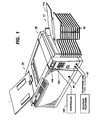
- a stand-alone facsimile or printer output job sorting unit 10 with plural bins 11, controlled by a marked cover sheet 12 (Fig. 2).
- the conventionally facsimile-received hard copy of the marked cover sheet 12 of a facsimile transmitted plural page document is fed into and optically read by the separate unit or sorter 10 to automatically control the particular bin 11 assignment and bin 11 destination of the cover sheet 12 and its accompanying plural page document job sheets.
- the sorter unit 10 reads the lead (cover) sheet 12 of the job, and directs that sheet and all other subsequent sheets of that job (indicated by the job sheet count indicator) to the bin number indicated on that lead or cover sheet 12.
- the disclosed unit 10 can be a universal stand-alone unit that is attached to, or even simply moved next to, the output of almost any conventional facsimile machine, such as 14 illustrated, or an electronic mail or other printer such as 16 illustrated. (On some facsimile receivers or printers, it may be necessary or desirable to first remove an existing output catch tray. That output tray is often an easily removable "hung on” plastic unit, as in the Xerox Corporation "Telecopier® 7020" facsimile unit, which is similar to the facsimile unit 14 illustrated in Fig. 1.) No electrical or mechanical linkages or interconnections are required.
- a common telephone line (the existing line for the facsimile machine) can be shared by the unit 10 with the facsimile machine 14 for additional features.
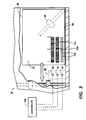
- All control information is obtained solely by optically reading the markings in marking areas of a received cover sheet 12 with an optical sensor array 30 in the unit 10 input area 20.
- This sensor array 30 comprises sensors 31, 32, 33 transverse the sheet path, adjacent one side of that input path area 20.
- the sensor array 30 is shown in the initial position of the unit 10 sheet input path, it could be located anywhere in the common sheet input path upstream of the area of the bins entrances where the sheets are separated by bin decision gate or gates.
- the job sorting unit 10 can take sheets inputted at input area 20 from various facsimile outputs 14a or other printer outputs 16, or multi-functional such units.
- the input 20 may, if desired, be provided with a pivotal or otherwise vertically adjustable input ramp, to align with various outputs.
- the input 20 may include, for example, a top input flexible frictional flapper or other top feeder (or normal forces ski) 22, and/or a bottom input feeder 24 such as the conventional frictional sheet transport belts feeder 24 illustrated. Since the output of the facsimile or other printer may be acquired sequentially as individual sheets as it outputs (before it stacks) no sheet separator is required for the unit 10, and thus a very simple input feeder can be used.
- the sorter unit 10 feeder may be simply actuated by sensing the entrance of a sheet.
- the further feeding may be done by the pre-existing roller and belt nips of the unit 10, which include feeding the sheet into conventional bin selection and feeding means, such as the illustrated movable belt 56 including or carrying a moving gate or sheet deflector 56a for deflecting the sheet into a selected bin by moving the belt 56 so that the moving gate 56a is adjacent the selected bin or tray 11 entrance.
- bin selection and feeding means such as the illustrated movable belt 56 including or carrying a moving gate or sheet deflector 56a for deflecting the sheet into a selected bin by moving the belt 56 so that the moving gate 56a is adjacent the selected bin or tray 11 entrance.
- each bin 11 except the top bin 11a is partially or fully enclosed, with a normally locked door 52 openable on one side (or end).
- the input area 20 of the unit 10 further includes the optical sensor array 30, further described herein. It may be fixed or pivotally mounted over or under the sheet path through the input 20, preferably adjacent a sheet side or edge guide 28 extending along one side of this sheet input path. As shown, a skewed foam roller on a flexible shaft or other suitable sheet side registration drive 26 [note the prior art cited above] may be provided to move the sheet laterally (transversely) against the side guide 28 as well as further downstream into the unit 10.
- a conventional numerical keypad 102 and adjacent LCD or other operator display 104 are operatively connected with the controller 100, as will be described.
- the cover sheet 12, with its printed code area patterns, may be provided in the product package and uncritically reproduced by customers.
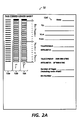
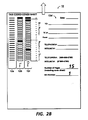
- the exemplary cover sheet 12 here (see Fig. 2) has a first pre-printed code pattern 12a of dark lines aligned in a column in the sheet movement direction, along one side of the sheet, which pattern 12a is used as a reference for code line or positional identification, as will be further described below.
- Two rows of relatively large, wide, associated "marking boxes" 12b and 12c are also used for the code pattern here, providing for easy marking and large skew latitude.
- the code pattern needs to be properly located and oriented with respect to a corner of the cover sheet which will be properly aligned and registered when entering the device for passing the optical sensors that read the code pattern.
- the code pattern Since the cover sheets having the code pattern may be reproduced by copying or faxing, the code pattern may become overly skewed in such copying and, therefore, invalid.
- the range of acceptable margins of the code pattern, as defined from the edges of the cover sheet, is indicated on the cover sheet between minimum and maximum limits as represented by a short and a long line width, respectively.
- the code reading software is written for identifying the bin number and number of sheets from code boxes 12b, 12c, even if slightly skewed, only partially filled in, unevenly spaced, or stretched.
- the illustrated coding method uses a code pattern having a first column of equally spaced darkened boxes 12a, and second and third columns 12b and 12c of equally spaced boxes with relatively large open rectangular areas uncritically defining marking areas for any dark marks, or their absence. These three columns of boxes 12a, 12b, and 12c are aligned in parallel with the paper path direction, and all the rows thereof are perpendicular to that movement direction.
- the code pattern is placed and aligned near a lead edge corner of a cover sheet 12 of a document set to be transmitted by facsimile. Functionally, this code pattern is divided into three segments in the sheet movement direction.
- the first segment consists of the three pre-darkened (pre-printed) boxes across the first row, which are read first by the code sensors 31, 32, 33 in the mailbox device 10 in order to define marking characteristics of a receiving facsimile machine.
- first column 12a marks read with sensor 31 as references for detecting the allowable position, width and intensity of an optical signal
- subsequent boxes in the remaining two segments of 12b and 12c can be read regardless of any small variations in the magnification or reduction of a received facsimile image which contains the code pattern.
- the second and third segments of columns 12b and 12c are used for coding and identifying a bin number and the number of documents in the job, respectively.
- the second column 12b here is marked for the "tens" digit
- the third column 12c is marked for the "ones" digit.
- the principle of identifying the bin number and the number of sheets in this example is as follows.
- the reference positions of the pre-darkened boxes of the first column 12a detected by the corresponding first sensor 31 are used to search for only darkened boxes marked selectively in designated row locations along the second and third columns 12b and 12c.
- each time the first sensor 31 detects each darkened box 12a passing by it it triggers each of the other two sensors 32 and 33 to check whether the box in 12b and 12c in that row under their sensor coverage is darkened.
- the orders or row positions of the darkened (marked) boxes detected in the second and third columns 12b and 12c determine the bin number and the number of sheets in the job.
- characteristics of the code pattern can conventionally be built into the software program for checking the validity of the code pattern.
- the differences between the widths of the first column 12a marks and that of the boxes in the second and third columns 12b and 12c, the number of the darkened boxes in the first column, as well as other specific locations of darkened areas can all be used individually and in combinations as a whole for verifying the code pattern.
- the sheet passing the optical sensor array 30 is not a cover sheet, even if it has intermittent dark image areas in the code pattern areas passing the sensors, it is virtually impossible that both the beginning and ending positions of the dark image areas would correspond to a correct cover sheet code on-off signal pattern for the first respective spaced pattern 12a or a one or two digit (only) bin number and page number.
- any jobs with a sheet which cannot be properly read are preferably simply default directed to the top or open bin. Thus, that does not cause a stoppage or jam.
- the sorter unit 10 can be conventional, even commercially available (e.g., the Minolta S-10 II sorter), except as modified as described herein, there is no need to describe herein its conventional feeding and gating arrangements whereby inputted sheets are fed to and gated into selected bins, by separate associated bin gates or, as here, a moving gate or sheet deflector mechanism, as is well known in the art. Shown here is a movable belt 56 system for a moving sheet deflector 56a to selectably deflect sheets from a vertical feed belt transport system into the selected bin, in a well known manner.
- this system may also be desirably integrated into a bin locking system.
- a simple ten bin sorter unit can be easily slightly modified to leave one open or public bin and provide up to nine addressable locked bins. These may be provided with, e.g., up to 90 programmable associated phone numbers dialing automatically upon receipt of a cover sheet designating a bin.
- the top bin or tray 11a of the sorter 10 is, conventionally, the open or "public" bin, since it is not limited in stack height by any overlying tray.
- sorter bin units 10 can be extended or serially connected to provide more bins, if desired.
- any or all of the facsimile output sheets can be hand-fed or loaded into the unit, and it can still function as desired.
- a conventional stacked set sheet separation feeder can be optionally provided at the input 20 in that case, or in a parallel input, if desired.
- the sorter or "mailbox" unit 10 here can be conventionally plugged into the existing fax telephone line 61, and a short standard telephone line connector wire 64 then connected between this unit and the fax machine 14 telephone line input connector, so that they can both share the same telephone line 61.
- the unit 10 is desirably conventionally, independently, electrically powered simply by conventionally plugging into the power line.
- the cover sheet does not have to be marked with codes for whole telephone numbers - only brief codes for the bin number and number of sheets. Sensors in the receiving device do not need to read whole telephone number codes - they only need to read one or two indicia marked to indicate a bin number and the number of sent sheets.
- the associated conventional microprocessor memory unit here is non volatile and is used for storing the bin numbers and corresponding phone numbers until they are changed by the users. They are not erased when receiving new fax.
- the present device is primarily for storing fax documents in designated bins, for which phone numbers can also be assigned, as described subsequently below.
- control software can interrupt a fax transmission upon detecting an attempted (marked) but invalid code pattern receipt, to warn the fax sender, or call a designated local key operator.
- the unit can be programmed to call a preprogrammed telephone number of a key operator in the event of a paper jam or other malfunction.
- the optical sensors in the unit may be under the input paper path, in a gap or apertures in the conventional paper path lower baffle.
- the unit can also have 3 more sensors similarly positional above the paper path.
- an optional inverter or alternate input path with a natural inversion in it before the sensors may be provided.
- keyboard as used herein is intended to encompass any simple or low cost type of conventional numeric or alphanumeric keyboard, CRT touch-screen areas, or other keystroke capturing devices, or voice input alternatives.
- an additional disclosed optional feature (which is the further subject of another application by the same inventor), utilizing most of the same apparatus and system, is for the receipt of a fax or other addressed printer output with an encoded cover sheet "read" by the receiving fax system to also automatically dial the designated recipient's telephone number, controlled by the same receiving fax coding system, using its same phone line 61, and then play a recorded message telling the designated recipient to go pick up his fax or other such transmitted document.
- This autodialing and bin receipt massaging concept may also be used for an automatic electronic mail or other printer.
- Schematically shown here is a telephone dialer 60 including a message recorder 62 controlled by controller 100.
- the message recorder 62 may be a simple standard endless loop cassette tape recorder, or a digital recording chip, with preprogrammed or microphone input of a short standard message or other voice "speaker" devices.
- Automatic dialers are also widely commercially available, and thus, neither it nor the recorder need be further described here. Integral dialing and speaking modules are also available.
- a limited number of repeat message replays can be provided, (terminable by a hang-up by the receiving telephone) so as to allow time for the recorded answering message on the receiver's answering machine to play and still receive the unit 10 receipt message on recorder 62.
- a system of message transmittal which listens and waits for a preset silence period, or for the answering machine's beep tone, before playing the recorded message, can be used.
- an electronic mail note so indicating can be sent to the user's terminal over the network therefor, if unit 10 is connected thereto.
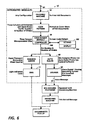
- the entire operation of the exemplary fax sorter unit 10 here may be controlled by an integral conventional low cost microprocessor chip controller 100, conventionally programmable with software, which has ample capability and flexibility for the above functions and also various other functions.
- the software can be written to address the following special situations as follows:
- subsequent received FAX sheets will be sent to a public bin or tray.
- the recipient may be so informed by a phone message, if a bin number was indicated).
- the software can be written to continue to send all subsequent received sheets to the same locked bin if the time lapse between received sheets is within a preset time limit. i.e., the system can assume these sheets are either a follow-up or continuing document for the same recipient, or that the number of sheets encoded on the cover sheet was less than the actual number of sheets in the document sent.
- the software can decide that the job send is complete after a preset brief waiting time (a given time limit) has passed. E.g., a few seconds without any further facsimile page receipts. If desired, during this waiting time or pause, the fax machine input can be made "busy" so as not to receive new jobs, by the sorter device controlling the phone line. After this preset brief waiting time, the software will regard the next incoming fax page as the start of a new job. [As noted, a new received coded cover sheet will also signal the end of the prior faxed document.]
- a preset brief waiting time a given time limit
- One operative example used a modified (as described) commercial Minolta S-10 II ten bin sorter (illustrated herein) operatively associated with an unmodified commercial Xerox Corporation "Telecopier® 7020" facsimile machine.
- Passwords can be changed at any time desired, except during receipt of a fax transmission. [The machine as shipped can have four-number passwords pre-assigned to the respective bins, e.g., 1111, 2222, 3333, etc.]. Passwords are required to be entered to change the existing bin "owner" information, as well as for unlocking any locked bin.
- the information which can be entered includes the desired new bin password as well as a telephone number to be dialed upon receiving a fax for that bin.
- the unit Whenever the unit is displaying (on the connected LC or other display associated with the keypad) the "Waiting for a sheet...Hit any key for menu” prompt, it is ready to change such user information. [Any time it is desired to return to this initial state from a subsequent menu, simply do not press any keys, and after approximately eight to ten seconds the system will automatically return (default) to this initial menu.] By pressing any key on the key pad the displayed prompt will change to "Enter Password:" At this point, one may enter a valid, current password. Conventionally, as one types a password, an "*" (asterisk) will appear to show key input has been received. If there is no match found for the entered password, the display will briefly show “Access Denied” and then return to its normal above-indicated awaiting fax sheet input status.
- the next menu will then be displayed, consisting of a choice of "1 Unlock tray” and "2 Change user info”. Pressing the number 2 on the keypad then accesses the user information changing menu.
- the displayed prompt now reads "Change: 1 Password 2 Ph 3 Both”. Entering a 1 will allow the password to be changed, entering a 2 will allow a change in the telephone number, and entering a 3 will change both the password and telephone number. If one selects 1 at this point, the menu will now prompt to enter four digits for the new password Note that the new password will not be displayed as entered. Instead, " ⁇ " will be displayed, conventionally.
- the next prompt will ask to verify the new password by entering the same four digits that were entered the first time. If you make the same entry twice, the password will be changed, and the display will briefly notify you of the change. However, if you have failed to enter the same password twice, the display will notify you there was not a match and the password will not be changed.
- the method of changing the phone number that is associated with a bin is accomplished in the same manner as described above, except for choosing "2 Change user info", instead of 1 when prompted for the item to change as described above.
- the next thing to appear on the display after selecting 2 will be "New phone #". Just the digits as one would dial them are entered. For example, if you would like another local company to be notified when you received a fax, you would enter that company's local telephone number, e.g., 2549100 only, with no hyphens and only seven digits (no area codes). There is no need to press an "enter” key, because after the seventh number is entered the number can be automatically saved. If an error is made while entering the new number, do not press any more keys.
- the initially assigned four number passwords can be changed by following the steps indicated in the menu.
- a control software an old password can be replaced by a new password and the software matches the password entered by a user with the one saved in the memory for that bin. Matching of the two passwords prompts a locking mechanism to unlock the specific bin. Different passwords are needed for different bins.
- a locking means such as the one 50 to be described, can allow several bins be opened one by one after entering their passwords respectively.
- a password is entered to a specific bin number, which, in this example, is related to a specific distance that a moving gate unlocking means such as belt notch 58 will travel from a home position to reach the bin latch 54 location by stepper motor or servo motor controlled movement of the belt 56.
- An alternative system of changing passwords or bin assignments is to use the cover sheet 12, rather than a keypad.
- a pre-arranged, specially marked (abnormal) code pattern on the cover sheet can be read by the controller to tell it to read other subsequent marks on the same or a subsequent cover sheet 12 so as to enter that information into memory as a new password or bin assignment, rather than be normally read as a job bin sorting cover sheet.
- bin one is the unlocked public bin, where fax mail that lacks coding is directed, and access is allowed by anyone to this bin.
- the user can press any key on the keypad 102 while the sorter unit is in the ready mode. One will then be prompted on display 104 to enter the password. Then, simply enter the four number password associated (by pre-programming as indicated above) with the bin one desires to unlock. Incorrect password entry will cause the sorter to display "Access denied" and return to the ready state. If the password entered is legitimate, the menu will then be displayed "1 Unlock tray 2 Change user info". Choose a 1 on the keypad.
- the display will then show "Unlocking tray” and the number of the tray currently unlocked.
- the lower line of the display 104 will now contain the statement “Hold key until done”.
- the gate for that bin can be held “unlocked” until you have completed removing the fax mail from that bin and released the key.
- the system automatically re-locks and returns to the ready state approximately eight to ten seconds after the key is released.
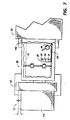
- an electrical locking means can be linked to the pre-existing moving belt 56 and a control 100 software that governs the delivery of sheets to designated bins.
- a movable flexible timing belt 56 is aligned under the latches 54 of the bin 11 doors 52. Instead of being slideable, these latches 54 here are fixed to the bin doors 52.
- the belt 56 has a notch 58 on one edge which can be moved up and down to serve as a locking and unlocking means for the door latches 54 of the bins 11.
- the notch 58 moves with the belt 56, and is positioned at a designated bin location so that the belt does not block that latch 54 of that designated bin 11, so that that particular door 52 can be opened.
- the other bin doors are held locked by the un-notched areas of the belt 56 retaining all the other door latches 54.
- the belt 56 is entrained by the bin apertures 57 through which it passes, or other retainers, so that it cannot be pulled out by pulling on any locked door 52.
- the movement of the notched belt 56 is commanded by the keystroke actions entered in accordance with the password of the electronic lock associated with the bin number.
- a separate key operator accessible mechanical unlocking system for all the bins 11 (as by pivoting open the entire unit 10), can be provided in case of jams or power failures.]
- this bin locking and unlocking system 50 requires much less hardware then separate, individual solenoid or cam operated latches for each bin.
- belt 56 which, as noted, can also be used to provide bin gating for sheet deflection bin selection.
- the bin locking system 50 may, if desired, further optionally include lighting indicator lamps on or adjacent the bin door 52 being unlocked, to direct the user to the bin door 52 of the bin 11 to be opened and unloaded, as indicated in Fig. 6. [Note, in this regard, the bin indicator light prior art cited above.]
- the present system is also usable for and applicable to electronic mail hardcopy prints and/or other networked or shared user document printers in general.
- the printer can electronically recognize the sender or user terminal sending the printing job from network or document electronic information already available in said job.
- the printer can electronically recognize the sender or user terminal sending the printing job from network or document electronic information already available in said job.
- Such shared printers may also have alternate scanner or floppy disk document inputs.
- combined facsimile and digital printing or copying can be provided in one single unit. Note, e.g., U.S.-A-4,947,345; -3,597,071; -5,038,218; -5,012,892; and -4,623,244.
- Such plural mode printers are commercially available, e.g., the Fuji Xerox Co. Ltd. "Able” machine series (AbleTM 3311, etc.) and Canon “Navigator”.
- Fuji Xerox Co. Ltd. "Able” machine series AbleTM 3311, etc.
- Canon "Navigator” existing Xerox Corporation "ViewPoint”TM shared networked printers already automatically print the particular print job sender's name on a self-generated printed job cover sheet, and also electronically notifies the job sender via the network if there is a printing problem.
- Such pre-existing printer cover sheet generators also print onto each job cover sheet the number of sheets in that job.
- printers may be additionally programmed to add (print) a recognizable unique code pattern to the existing job cover sheet printed for that job (from, e.g., a pre-programmed addressee look-up table), which cover sheet, when fed into this same type of "mailbox" sorter unit 10 (or another), can be read to cause the cover sheet and the other subsequent sheets of that job to be directed into a pre-assigned (preprogrammed) mailbox bin for that user or job originator, just as described above for facsimile output.
- other printer copy sets may be directed in the same manner to other bins with other printed cover sheet code patterns generated from the electronic job directions sent to the printer by the network user.
- a readable code pattern onto output sheets from a printer
- examples are provided in the above-cited job ticket (job control sheet) printing patents, U.S.-A-4,970,554, -4,757,348, and -4,987,447.
- the readable code pattern is desirably printed by the regular existing printer image processor which prints the document images on the job sheets output.
- an on-line extra "annunciator" printer for small areas of the copy sheets in the output path such as commercially available thermal bar code printers or ink jet printers, may be used.
- the designated printer or printers and addressees may be changed or forwarded by an intermediate terminal and/or programmed software, which here can be used to change the bin addresses.
- the job or cover sheet may contain additional encoded information for other copy or distribution controls.
Landscapes
- Engineering & Computer Science (AREA)
- Multimedia (AREA)
- Signal Processing (AREA)
- Collation Of Sheets And Webs (AREA)
Claims (12)
- Ein System zum Trennen physikalischer Auftragsblätter von dem Ausgang eines Dokumentdruckers (14), wie eines Drukkers eines Faksimileempfangsgeräts, in getrennte Auftragssätze für getrennte, bezeichnete Empfänger, wobei das System umfaßt:eine Ausgangs-Auftragssortierzusatzeinheit (10), wobei die genannte Zusatzeinheit einschließt;eine Blatteingangsvorrichtung (20), die an dem genannten Blattausgang des genannten Druckers positionierbar ist, um sequentiell die genannten Ausgangsblätter davon zu erhalten und sie einem Blattzuführweg in die genannte Eingangsvorrichtung zuzuführen,mehrere einzelne Ausgangs-Blattsammelfächer (11)eine Steuereinrichtung (100), um elektronisch einzelne Fachnummern entsprechenden der genannten Ausgangs-Blattsammelfächer zuzuordnen und elektronisch die genannten einzelnen Fachnummern einzelnen, bezeichneten Empfängern zuzuordnen,eine optische Fühlereinrichtung (30) in der genannten Blatteingangsvorrichtung, die betriebsmäßig mit der genannten Steuereinrichtung zum Bestimmen einer eindeutigen, markierten Bereichscodierung verbunden ist, die einer genannten Fachnummer auf einem Ausgangsblatt in dem genannten Zuführweg in der genannten Eingangsvorrichtung entspricht, und zum Bestimmen, ob eine erfaßte Codierung einer Fachnummer entspricht, die einem bezeichneten Empfänger zugeordnet ist,und eine Blattfachauswähl- und Zuführvorrichtung (56), die durch die genannte Bestimmung der genannten optischen Fühlereinrichtung und der genannten Steuereinrichtung gesteuert wird, um selektiv der Reihe nach Ausgangsblätter von der genannten Blatteingangsvorrichtung einem bezeichneten der genannten Ausgangs-Blattsammelfächer nach einer Erfassung einer markierten Bereichscodierung durch die genannte optische Fühlereinrichtung und die genannte Steuereinrichtung zuzuführen, die einer Fachnummer, die dem genannten bezeichneten Fach zugeordnet ist, für einen bezeichneten Empfänger entspricht.
- Ein System, wie in Anspruch 1 beansprucht, in dem ein veränderlich codiertes, physikalisches Deckblatt (12) von dem genannten Drucker an dem genannten selben Ausgang vor den genannten Auftragsblättern ausgegeben wird, wobei das genannte Deckblatt veränderlich mit markierten Bereichen (12b, 12c) codiert ist, die eine Fachnummer und eine Auftragsblattanzahl für den genannten Ausgangsauftrag des Druckers angeben.
- Ein System, wie in Anspruch 2 beansprucht, das ferner einschließt:eine automatische Telefonwähleinrichtung, die mit der genannten Steuereinrichtung verbunden ist;die genannte Steuereinrichtung fähig ist, vorprogrammierte Telefonnummern einzugeben und nicht flüchtig zu speichern, die elektronisch entsprechenden der genannten zugeordneten Fachnummern zugeordnet werden;die genannte automatische Telefonwähleinrichtung automatisch durch die genannte optische Fühlereinrichtung und die genannte Steuereinrichtung in Reaktion auf das genannte Erfassen von wenigstens einem markierten Bereich eines genannten Auftragsdeckblatts automatisch betätigt wird, der einer genannten zugeordneten Fachnummer entspricht, wenn es dort wenigstens eine genannte vorprogrammierte Telefonnummer gibt, die dieser Fachnummer zugeordnet ist;die genannte automatische Telefonwähleinrichtung automatisch die genannte vorprogrammierte Telefonnummer für die genannte Fachnummer bei der genannten Betätigung wählt; unddes weiteren eine Empfangsmitteilungseinrichtung zum elektronischen Übertragen einer voraufgezeichneten Mitteilung einschließt, die angibt, daß ein Druckerausgangsauftrag von der genannten Zusatzeinheit empfangen worden ist, wobei die genannte Empfangsmitteilungseinrichtung in Koordinierung mit der genannten Betätigung der genannten automatischen Telefonwähleinrichtung durch die genannte Steuereinrichtung betätigt wird, um automatisch die genannte voraufgezeichnete Mitteilung zu der genannten Telefonnummer zu übertragen, die für die genannte zugeordnete Fachnummer für das genannte Fach vorprogrammiert ist, dem die genannten Ausgangsblätter durch die genannte Fachauswähl- und Zuführvorrichtung zugeführt worden sind.
- Ein Auftragstrennsystem für den Ausgang eines Druckers, wie in Anspruch 2 oder Anspruch 3 beansprucht, worin die genannten eindeutig markierten Bereiche, die auf dem genannten Auftragsdeckblatt codiert sind, die genannte Erfassung einer zugeordneten Fachnummer und der Anzahl der Blätter in dem dem genannten Deckblatt folgenden Auftrag liefern, die einem bezeichneten Fach durch die genannte Auftragssortierzusatzeinheit zugeführt werden sollen, und das genannte Deckblatt durch den genannten Drucker gedruckt wird, der die optisch lesbaren Druckzeichen verwendet, die verwendet werden, die anderen Auftragsausgangsblätter zu drucken.
- Ein System, wie in irgendeinem der Ansprüche 2 bis 4 beansprucht, worin weniger als fünf einzige genannte markierte Bereiche, die auf dem genannten Auftragsdeckblatt codiert sind, die genannte Erfassung der zugeordneten Fachnummer und der Anzahl der Blätter in dem dem genannten Deckblatt folgenden Auftrag liefern, die einem bezeichneten Fach durch die genannte Auftragssortierzusatzeinheit zugeführt werden sollen.
- Ein System, wie in irgendeinem der Ansprüche 2 bis 5 beansprucht, worin das genannte Deckblatt eine durch Faksimile empfangene Kopie eines Original des genannten Deckblatts ist, das mit der genannten Fachnummer vormarkiert ist und dann elektronisch von einem Faksimilesendegerät durch einen Faksimileauftragsabsender zu einem Empfänger übertragen wird, der durch eine bekannte genannte Fachnummer bezeichnet ist.
- Ein System, wie in irgendeinem der vorhergehenden Ansprüche beansprucht, worin die genannte Zusatzeinheit des weiteren eine Verriegelungsvorrichtung (50), um den Zugang zu einzelnen der genannten Fächer davon zu beschränken, mit einer elektrischen Entriegelungsvorrichtung einschließt, die ein Tastenfeld (102) zum Entriegeln eines einzelnen genannten Faches in Reaktion auf die Eingabe eines auf dem genannten Tastenfeld vorprogrammierten Zugriffscodes einschließt.
- Ein System wie in Anspruch 7 beansprucht, wenn von Anspruch 3 abhängig, worin die genannten Telefonnummern auch auf demselben Tastenfeld vorprogrammiert werden.
- Ein System, wie in irgendeinem der vorhergehenden Ansprüche beansprucht, worin die genannte Zusatzeinheit eine unabhängige Briefboxeinheit ist, die keinerlei elektronische Steuerverbindung mit dem Drucker verlangt, um mit ihm zu arbeiten.
- Ein System, wie in irgendeinem der vorhergehenden Ansprüche beansprucht, worin die genannten erfaßbaren, markierten Bereiche auf einem Ausgangsblatt erfaßbar sind, wenn sie innerhalb voreingestellter, kleiner, mehrerer, paralleler, länglicher Bereiche des genannten Blattzuführweges der genannten Blatteingangsvorrichtung sind, die sich in der Zuführrichtung eines Ausgangsblattes in die genannte Blatteingangsvorrichtung erstrecken, und worin es wenigstens zwei genannte parallele Reihen von Bereichen gibt, in denen die genannten markierten Bereiche erfaßbar sind, und worin die genannte optische Fühlereinrichtung und die genannte Steuereinrichtung nach dunklen Markierungen nur innerhalb der kleinen Bereiche der genannten Reihen sehen, die entlang der genannten Zuführrichtung beabstandet sind, wobei der Abstand durch erfaßbare Abstandsmarkierungen (12a) angegeben ist, und worin ein genannter markierter Bereich in einer der genannten zwei Reihen als eine einzelne Ziffer gelesen wird, und worin ein genannter markierter Bereich in der anderen der genannten zwei Reihen zusammen damit als eine Zehnerziffer gelesen wird, um eine Vorlagenzahl für zehn oder mehrere Dokumentblätter bereitzustellen, die dem genannten angegebenen Fach zugeführt werden sollen.
- Ein System, wie in irgendeinem der vorhergehenden Ansprüche beansprucht, worin, wenn keine markierten Bereiche, die irgendeinem bezeichneten Fach entsprechen, durch die genannte optische Einrichtung erfaßte werden, Ausgangsblätter, die von der genannten Zusatzeinheit empfangen werden, durch die genannte Fachauswählvorrichtung zu einem so bezeichnten, offenen Fach (11a) gelenkt werden.
- Ein System, wie in irgendeinem der vorhergehenden Ansprüche beansprucht, worin die genannte Eingangseinrichtung eine Blattseiten-Verschiebungsvorrichtung zur seitlichen Bewegung von Ausgangsblättern in dem genannten Zuführweg in der genannten Eingangseinrichtung in eine Seiten ausgerichtete Erfassungsposition für die genannte optische Fühlereinrichtung für das genannte Erfassen der markierten Bereichscodierung einschließt, die einer genannten Fachnummer entspricht.
Applications Claiming Priority (4)
| Application Number | Priority Date | Filing Date | Title |
|---|---|---|---|
| US933640 | 1992-08-24 | ||
| US07/933,640 US5513013A (en) | 1992-08-24 | 1992-08-24 | Facsimile output job sorting unit and system |
| US933831 | 1992-08-24 | ||
| US07/933,831 US5295181A (en) | 1992-08-24 | 1992-08-24 | Automatic facsimile output recipient telephoning system |
Publications (2)
| Publication Number | Publication Date |
|---|---|
| EP0585075A1 EP0585075A1 (de) | 1994-03-02 |
| EP0585075B1 true EP0585075B1 (de) | 1997-11-05 |
Family
ID=27130044
Family Applications (1)
| Application Number | Title | Priority Date | Filing Date |
|---|---|---|---|
| EP19930306609 Expired - Lifetime EP0585075B1 (de) | 1992-08-24 | 1993-08-20 | System zum Verteilen sequentiell ausgegebener Druckseiten in individuell und variabel zuweisbare Sammelfächer |
Country Status (2)
| Country | Link |
|---|---|
| EP (1) | EP0585075B1 (de) |
| DE (2) | DE69315021T4 (de) |
Families Citing this family (9)
| Publication number | Priority date | Publication date | Assignee | Title |
|---|---|---|---|---|
| ES2098101T3 (es) * | 1993-04-27 | 1997-04-16 | Xerox Corp | Sistema de encasillado para alimentar hojas procedentes de un dispositivo de salida a casillas de buzon seleccionadas. |
| EP1096774B1 (de) * | 1995-01-24 | 2005-03-30 | Canon Kabushiki Kaisha | Bilderzeugungssystem mit Sortiereinheit |
| JP3160177B2 (ja) | 1995-03-06 | 2001-04-23 | 松下電器産業株式会社 | ファクシミリ型電子メール装置 |
| US6885470B1 (en) | 1995-03-06 | 2005-04-26 | Matsushita Electric Industrial Co., Ltd. | Electronic mail system |
| US5921537A (en) * | 1996-03-14 | 1999-07-13 | Sharp Kabushiki Kaisha | Post-processing apparatus of digital image forming apparatus |
| EP1395033B1 (de) * | 1996-04-12 | 2007-11-28 | Matsushita Electric Industrial Co., Ltd. | Elektronisches Postsystem |
| US5721826A (en) * | 1996-05-03 | 1998-02-24 | Automated Resource Management | Reprographic data transfer system |
| MXPA05006609A (es) * | 2002-12-19 | 2005-08-16 | Burke James | Sistema y metodo para enrutar correos de voz/video/fax y ver un documento de fax. |
| JP2006005911A (ja) | 2004-05-19 | 2006-01-05 | Ricoh Co Ltd | 画像形成装置の省エネモード制御方法 |
Family Cites Families (9)
| Publication number | Priority date | Publication date | Assignee | Title |
|---|---|---|---|---|
| JPS5757079A (en) * | 1980-09-24 | 1982-04-06 | Hitachi Ltd | Confidential facsimile device |
| JPS57136865A (en) * | 1981-02-18 | 1982-08-24 | Fujitsu Ltd | Facsimile terminal |
| JPS5860868A (ja) * | 1981-10-07 | 1983-04-11 | Nec Corp | フアクシミリ通信装置 |
| JPS58173959A (ja) * | 1982-04-05 | 1983-10-12 | Fuji Xerox Co Ltd | 情報用紙振分装置 |
| DE3506828A1 (de) * | 1985-02-27 | 1986-08-28 | Buchmann Rudolf Ch | Verfahren zur sicherstellung der geheimhaltung sowie zu seiner anwendung erforderliche vorrichtungen zur geschuezten behandlung von im telematikkommunikationsverkehr zu handhabender informationsunterlagen |
| WO1989010602A1 (fr) * | 1988-04-28 | 1989-11-02 | Ralf Oertzen | Dispositif de distribution du papier |
| US4941170A (en) * | 1989-03-20 | 1990-07-10 | Tandem Computers Incorporated | Facsimile transmissions system |
| US5291592A (en) * | 1989-05-15 | 1994-03-01 | Sharp Kabushiki Kaisha | System having document scanner for optically scanning information whereby a first information contains control information indicating a number of sheets to be scanned |
| US5091790A (en) * | 1989-12-29 | 1992-02-25 | Morton Silverberg | Multipurpose computer accessory for facilitating facsimile communication |
-
1993
- 1993-08-20 EP EP19930306609 patent/EP0585075B1/de not_active Expired - Lifetime
- 1993-08-20 DE DE1993615021 patent/DE69315021T4/de not_active Expired - Lifetime
- 1993-08-20 DE DE1993615021 patent/DE69315021D1/de not_active Expired - Fee Related
Also Published As
| Publication number | Publication date |
|---|---|
| DE69315021T2 (de) | 1998-06-10 |
| DE69315021T4 (de) | 1998-10-22 |
| EP0585075A1 (de) | 1994-03-02 |
| DE69315021D1 (de) | 1997-12-11 |
Similar Documents
| Publication | Publication Date | Title |
|---|---|---|
| US5513013A (en) | Facsimile output job sorting unit and system | |
| US5295181A (en) | Automatic facsimile output recipient telephoning system | |
| US5435544A (en) | Printer mailbox system signaling overdue removals of print jobs from mailbox bins | |
| US5308058A (en) | Mailbox security door with automatic set lifter | |
| US5328169A (en) | Mailbox or sorter bin use sensing system | |
| US5390910A (en) | Modular multifunctional mailbox unit with interchangeable sub-modules | |
| US5342034A (en) | Mailbox/compiler architecture | |
| US5547178A (en) | Printer mailbox split jobs overflow banner sheet indicator system | |
| US7190480B2 (en) | Method and apparatus for organizing scanned images | |
| JP3449565B2 (ja) | 複数ジョブセット分割装置 | |
| EP0398185B1 (de) | Vorrichtung zur elektronischen Dokumentenablage unter Verwendung eines Markierblatts | |
| US8744298B2 (en) | Image output device which, when authentication media are read by authentication device, executes jobs stored in storage medium on the basis of result of authentication | |
| EP0585075A1 (de) | Einheit und System zum Sortieren der Aufträge von Faksimileausgaben | |
| JPH0592865A (ja) | 記録装置及び情報処理システム | |
| JPH0993376A (ja) | ディジタル複写機 | |
| EP0622694B1 (de) | Briefverteilungssystem und Sortierer zum Zuführen von Blättern von einer Ausgabestelle zu absperrbaren Postfächern | |
| JP4225958B2 (ja) | 画像読取装置及びそれを備えてなる画像形成装置 | |
| JP3596238B2 (ja) | ドキュメント仕分け装置 | |
| JP2801855B2 (ja) | メールボックスビンからの印刷ジョブの取り忘れを合図する印刷装置メールボックスシステム | |
| JP2645505B2 (ja) | 印字装置 | |
| JPS6012859A (ja) | フアクシミリ・複写機・ソ−タ複合装置 | |
| JP3682190B2 (ja) | 画像形成装置 | |
| JP3492352B2 (ja) | オフラインプリント方法およびプリント装置 | |
| JPS62163453A (ja) | 画像処理装置 | |
| JPS61290860A (ja) | 複数宛先自動送信型フアクシミリ装置 |
Legal Events
| Date | Code | Title | Description |
|---|---|---|---|
| PUAI | Public reference made under article 153(3) epc to a published international application that has entered the european phase |
Free format text: ORIGINAL CODE: 0009012 |
|
| AK | Designated contracting states |
Kind code of ref document: A1 Designated state(s): DE FR GB |
|
| 17P | Request for examination filed |
Effective date: 19940901 |
|
| GRAG | Despatch of communication of intention to grant |
Free format text: ORIGINAL CODE: EPIDOS AGRA |
|
| 17Q | First examination report despatched |
Effective date: 19961219 |
|
| GRAH | Despatch of communication of intention to grant a patent |
Free format text: ORIGINAL CODE: EPIDOS IGRA |
|
| GRAH | Despatch of communication of intention to grant a patent |
Free format text: ORIGINAL CODE: EPIDOS IGRA |
|
| GRAA | (expected) grant |
Free format text: ORIGINAL CODE: 0009210 |
|
| AK | Designated contracting states |
Kind code of ref document: B1 Designated state(s): DE FR GB |
|
| REF | Corresponds to: |
Ref document number: 69315021 Country of ref document: DE Date of ref document: 19971211 |
|
| ET | Fr: translation filed | ||
| PLBE | No opposition filed within time limit |
Free format text: ORIGINAL CODE: 0009261 |
|
| STAA | Information on the status of an ep patent application or granted ep patent |
Free format text: STATUS: NO OPPOSITION FILED WITHIN TIME LIMIT |
|
| 26N | No opposition filed | ||
| PGFP | Annual fee paid to national office [announced via postgrant information from national office to epo] |
Ref country code: FR Payment date: 20010810 Year of fee payment: 9 |
|
| PGFP | Annual fee paid to national office [announced via postgrant information from national office to epo] |
Ref country code: DE Payment date: 20010813 Year of fee payment: 9 |
|
| PGFP | Annual fee paid to national office [announced via postgrant information from national office to epo] |
Ref country code: GB Payment date: 20010815 Year of fee payment: 9 |
|
| REG | Reference to a national code |
Ref country code: GB Ref legal event code: IF02 |
|
| PG25 | Lapsed in a contracting state [announced via postgrant information from national office to epo] |
Ref country code: GB Free format text: LAPSE BECAUSE OF NON-PAYMENT OF DUE FEES Effective date: 20020820 |
|
| PG25 | Lapsed in a contracting state [announced via postgrant information from national office to epo] |
Ref country code: DE Free format text: LAPSE BECAUSE OF NON-PAYMENT OF DUE FEES Effective date: 20030301 |
|
| GBPC | Gb: european patent ceased through non-payment of renewal fee |
Effective date: 20020820 |
|
| PG25 | Lapsed in a contracting state [announced via postgrant information from national office to epo] |
Ref country code: FR Free format text: LAPSE BECAUSE OF NON-PAYMENT OF DUE FEES Effective date: 20030430 |
|
| REG | Reference to a national code |
Ref country code: FR Ref legal event code: ST |