EP0550750B1 - Semiconductor wafer heat treatment method - Google Patents
Semiconductor wafer heat treatment method Download PDFInfo
- Publication number
- EP0550750B1 EP0550750B1 EP91916605A EP91916605A EP0550750B1 EP 0550750 B1 EP0550750 B1 EP 0550750B1 EP 91916605 A EP91916605 A EP 91916605A EP 91916605 A EP91916605 A EP 91916605A EP 0550750 B1 EP0550750 B1 EP 0550750B1
- Authority
- EP
- European Patent Office
- Prior art keywords
- heat treatment
- wafers
- temperature
- semiconductor
- single crystal
- Prior art date
- Legal status (The legal status is an assumption and is not a legal conclusion. Google has not performed a legal analysis and makes no representation as to the accuracy of the status listed.)
- Expired - Lifetime
Links
- 238000010438 heat treatment Methods 0.000 title claims description 94
- 238000000034 method Methods 0.000 title claims description 31
- 239000004065 semiconductor Substances 0.000 title claims description 31
- 235000012431 wafers Nutrition 0.000 claims description 59
- QVGXLLKOCUKJST-UHFFFAOYSA-N atomic oxygen Chemical compound [O] QVGXLLKOCUKJST-UHFFFAOYSA-N 0.000 claims description 46
- 229910052760 oxygen Inorganic materials 0.000 claims description 46
- 239000001301 oxygen Substances 0.000 claims description 46
- 239000013078 crystal Substances 0.000 claims description 44
- 238000001556 precipitation Methods 0.000 claims description 32
- 238000005247 gettering Methods 0.000 claims description 9
- 239000010453 quartz Substances 0.000 claims description 3
- VYPSYNLAJGMNEJ-UHFFFAOYSA-N silicon dioxide Inorganic materials O=[Si]=O VYPSYNLAJGMNEJ-UHFFFAOYSA-N 0.000 claims description 3
- 239000000155 melt Substances 0.000 claims description 2
- XUIMIQQOPSSXEZ-UHFFFAOYSA-N Silicon Chemical compound [Si] XUIMIQQOPSSXEZ-UHFFFAOYSA-N 0.000 description 10
- 229910052710 silicon Inorganic materials 0.000 description 10
- 239000010703 silicon Substances 0.000 description 10
- 238000004088 simulation Methods 0.000 description 10
- 238000004519 manufacturing process Methods 0.000 description 7
- 230000007547 defect Effects 0.000 description 5
- 238000007796 conventional method Methods 0.000 description 2
- 238000009792 diffusion process Methods 0.000 description 2
- 239000002019 doping agent Substances 0.000 description 2
- 230000000694 effects Effects 0.000 description 2
- 239000012535 impurity Substances 0.000 description 2
- 238000011282 treatment Methods 0.000 description 2
- ZOXJGFHDIHLPTG-UHFFFAOYSA-N Boron Chemical compound [B] ZOXJGFHDIHLPTG-UHFFFAOYSA-N 0.000 description 1
- OAICVXFJPJFONN-UHFFFAOYSA-N Phosphorus Chemical compound [P] OAICVXFJPJFONN-UHFFFAOYSA-N 0.000 description 1
- 230000002411 adverse Effects 0.000 description 1
- 229910052796 boron Inorganic materials 0.000 description 1
- 239000007795 chemical reaction product Substances 0.000 description 1
- 230000008030 elimination Effects 0.000 description 1
- 238000003379 elimination reaction Methods 0.000 description 1
- 238000002474 experimental method Methods 0.000 description 1
- 239000000463 material Substances 0.000 description 1
- 238000005259 measurement Methods 0.000 description 1
- 229910052698 phosphorus Inorganic materials 0.000 description 1
- 239000011574 phosphorus Substances 0.000 description 1
- 239000007787 solid Substances 0.000 description 1
- 239000000758 substrate Substances 0.000 description 1
- 238000012360 testing method Methods 0.000 description 1
- 238000007669 thermal treatment Methods 0.000 description 1
Images





Classifications
-
- H—ELECTRICITY
- H01—ELECTRIC ELEMENTS
- H01L—SEMICONDUCTOR DEVICES NOT COVERED BY CLASS H10
- H01L21/00—Processes or apparatus adapted for the manufacture or treatment of semiconductor or solid state devices or of parts thereof
- H01L21/02—Manufacture or treatment of semiconductor devices or of parts thereof
- H01L21/04—Manufacture or treatment of semiconductor devices or of parts thereof the devices having potential barriers, e.g. a PN junction, depletion layer or carrier concentration layer
- H01L21/18—Manufacture or treatment of semiconductor devices or of parts thereof the devices having potential barriers, e.g. a PN junction, depletion layer or carrier concentration layer the devices having semiconductor bodies comprising elements of Group IV of the Periodic Table or AIIIBV compounds with or without impurities, e.g. doping materials
- H01L21/30—Treatment of semiconductor bodies using processes or apparatus not provided for in groups H01L21/20 - H01L21/26
- H01L21/322—Treatment of semiconductor bodies using processes or apparatus not provided for in groups H01L21/20 - H01L21/26 to modify their internal properties, e.g. to produce internal imperfections
- H01L21/3221—Treatment of semiconductor bodies using processes or apparatus not provided for in groups H01L21/20 - H01L21/26 to modify their internal properties, e.g. to produce internal imperfections of silicon bodies, e.g. for gettering
- H01L21/3225—Thermally inducing defects using oxygen present in the silicon body for intrinsic gettering
Definitions
- the present invention relates to a heat treatment method of semiconductor wafers, particularly a wafer obtained by slicing a silicon single crystal produced by a pulling method, and more particularly to a technique for controlling the precipitation amount of oxygen in the wafer.
- a silicon single crystal for example, by a pulling method
- oxygen of about 10 x 10 17 - 20 x 10 17 atoms/cc (old ASTM) is taken into the pulled crystal.
- the oxygen taken into the crystal is supersaturated and precipitated by heat treatment, thereby to create micro defects in the crystal.
- Such defects caused by the precipitation of oxygen can be a gettering site of impurities.
- Gettering which utilizes the defects caused by oxygen precipitation is called intrinsic gettering (hereinafter referred to as IG) which is widely used as a clean gettering method.
- IG intrinsic gettering
- Precise control of the amount of the oxygen precipitation is required.
- the amount of oxygen precipitation by heat treatment usually varies according to the thermal history of the crystal in the course of the pulling Process.
- This report shows the conditions of heat treatment for silicon wafers having various initial interstitial oxygen concentrations (hereafter referred to as initial Oi) such as 1,050 °C for 16 hours, or 750 °C for 4 hours and then 1,050 °C for 16 hours (see Table 1 for the conditions).
- initial Oi initial interstitial oxygen concentrations
- delta Oi difference of interstitial oxygen concentrations
- Fig. 8 shows the yield of devices with respect to delta Oi as a result of the simulation heat treatment.
- IG heat treatment a plurality of wafers having substantially the same initial Oi is subjected to IG heat treatment at 650 °C for 60 minutes as is performed conventionally.
- the delta Oi varies from wafer to wafer, and cannot always fall within the range.
- the delta Oi draws a S-curve with respect to the initial Oi, but the variance is large.
- EP-A-0 165 364 from which the precharacterizing part of claim 1 starts, describes a method of performing heat treatment to perform intrinsic gettering on semiconductor wafers obtained by slicing a semiconductor single crystal grown from a melt contained in a quartz crucible by a pulling method.
- semiconductor wafers are sorted into different groups according to the concentration of the initial oxygen within the semiconductor wafers. For each group of semiconductors a different heat treatment temperature-time-profile is selected and the semiconductor wafers are subjected to the heat treatment according to the heat treatment temperature-time-profile selected for the respective group of semiconductor wafers.
- EP-A-0 020 993 describes a method for indirectly measuring the oxygen concentration of semiconductor wafers.
- the resistivity of a semiconductor wafer is measured prior to a heat treatment process and after the process, the change of resistivity being an indication of the amount of initial oxygen prior to the heat treatment process.
- EP-A-0 030 457 describes a method of manufacturing a semiconductor wafer in which the semiconductor wafer is treated in a two-step heat treatment process to perform an intrinsic gettering.
- semiconductor wafers are annealed in a first treatment step at a temperature of 950 °C to 1 300 °C in a non-oxydising atmosphere to bring about diffusion out of oxygen near the surfaces of the semiconductor wafers. Then, the semiconductor wafers are annealed at a temperature in the range of 600 °C to 800 °C to have microdefects created in the interior of the semiconductor wafers.
- microdefects of a high density capable of gettering grow in the interior of the semiconductor wafers to be microdefects of comparatively larger size. Near the surfaces, microdefects such as stacking defects are not created because the oxygen density is low.
- thermal donors Some of the oxygen taken into a crystal by the pulling method becomes donors in the crystal according to the thermal history during the pulling operation. This is called thermal donors.
- the results of various experiments exhibit that the thermal donors facilitate the creation of oxygen precipitation defects in the crystal and that a change (delta Oi) before the IG heat treatment of the initial Oi and after the IG heat treatment greatly varies according to the thermal donor concentration in the crystal.
- the present invention has been made in view of this fact, and is characterized in that a wafer is subjected to IG heat treatment under heat treatment conditions determined according to the thermal donor concentration in the crystal directly after being pulled, thereby to cause the change (delta Oi) after the heat treatment relative to the initial Oi before thermal treatment to fall within a desired range.
- the thermal donor concentration is measured as follows.
- a thermal donor is produced when some of the oxygen taken into the crystal becomes donors according to the thermal history of the pulling process. Meanwhile, the resistivity of the crystal is determined by impurities such as phosphorus and boron which are added to the crystal beforehand. Since the resistivity of the crystal is changed according to the concentration of the thermal donors generated in the crystal, the thermal donor concentration can be determined by measuring the resistivity of the crystal. The thermal donors are eliminated by heat treatment at about 650 °C for about 30 minutes.
- the thermal donor concentration in a crystal directly after being pulled can be measured by measuring the resistivity of the crystal directly after being pulled, measuring the resistivity of the crystal after the donor eliminating process at about 650 °C for about 30 minutes and calculating the difference between the resistivities of the crystal before and after the heat treatment of the donor eliminating process.
- the difference between the resistivities before and after the donor elimination can be considered to correspond to the thermal donor concentration.
- the Present invention provides IG heat treatment conditions, i.e., heat treatment conditions determined according to the thermal donor concentration, which are to be employed in place of the conventional conditions so as to cause the variance of the delta Oi during the device manufacturing process to fall within a desired range with high controllability and hence improve the yield of the devices.
- IG heat treatment conditions i.e., heat treatment conditions determined according to the thermal donor concentration
- the IG heat treatment conditions comprise temperature condition and time condition.
- the delta Oi is likely to be changed due to other factors. Accordingly, control is easier by changing the time alone.
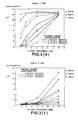
- wafers are prepared by slicing the respective portions having different thermal donor concentrations of a silicon single crystal manufactured by Czochralski method, and the relation between the IG heat treatment conditions (temperature and time conditions) and the oxygen precipitation amount delta Oi after simulation heat treatment is obtained.
- IG heat treatment conditions under which a target oxygen precipitation amount is given to a wafer are determined.
- the resistivities, before and after the IG heat treatment, of wafers taken out from respective portions of a silicon single crystal produced by Czochralski method are converted to dopant concentrations using ASTM (F723-82), and the thermal donor concentration is calculated from the difference between these dopant concentrations.
- the IG heat treatment is conducted in which temperature and time are changed between 550 and 700 °C and between 1 and 8 hours, respectively. Thereafter, the wafers are subjected to different simulation heat treatments as follows:
- Figs. 3(a) - (f) show the oxygen precipitation amounts for respective conditions.
- IG heat treatment conditions temperature, time
- IG heat treatment using the conditions thus determined serves to equalize the oxygen precipitation amount of the single crystal and hence improve the yield of the devices.
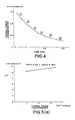
- the initial Oi in a silicon single crystal pulled by CZ method is approximately (16 ⁇ 0.5) x 10 17 atoms/cc and the thermal donor concentrations throughout the length of the pulled single crystal are as shown in Fig. 4.
- Table 2 shows the average values of the thermal donor concentrations for each block over the length of the single crystal. Thermal donor concentration 1.3 1.0 0.7 0.4 0.3 0.2 (x 10 15 atoms/cc)
- the optimal oxygen precipitation amount delta Oi for producing devices is more than 8 x 10 17 atoms/cc after simulation heat treatment for heat treatment A; 4 x 10 17 - 6 x 10 17 atoms/cc after simulation heat treatment for heat treatment B; and 3 x 10 17 atoms/cc or less after heat after heat treatment for heat treatment C
- the average thermal donor concentration from the top side of the single crystal to the respective blocks is as shown in Table 2. Therefore, by corresponding these values to the values in Figs. 3(a) - (f), the optimal conditions for the IG heat treatment are obtained as shown in Table 3. Temperature °C 625 625 625 625 625 625 625 Time hour 1.5 2.0 2.5 2.7 2.8 3.0
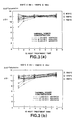
- Figs. 2(a) - (c) show the relationship between oxygen precipitation amount delta Oi and initial Oi in each of the wafers which are uniformly subjected to conventional IG heat treatment at 650° C for 2.5 hours.
- the yield of devices using wafers produced by the method of this embodiment is improved by about 10 % compared to devices using wafers produced in the conventional method.
- a so-called 2-step IG which includes outward diffusion of oxygen by a high temperature (usually higher than 1,100°C) heat treatment and subsequently a low temperature heat treatment is also applicable.
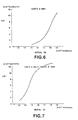
- Fig. 9 illustrates the relationship between the thermal donor concentration and oxygen precipitation amount in the case of a 2-step IG application in which a 2-step IG treatment at a higher temperature (1,175°C) and a lower temperature (700°C) is performed and then a simulation for heat treatment C is performed.
- the oxygen precipitation amount increases as the thermal donor concentration increases as in the former embodiment.
- the time for lower temperature heat treatment performed after high temperature heat treatment is required to be reduced even in the 2-step IG. It is important that the conditions of the low temperature heat treatment should be calculated according to the concentration of the thermal donors in the same manner as described above.
- the IG heat treatment is performed under the conditions determined according to the thermal donor concentration in the pulled crystal.
Landscapes
- Engineering & Computer Science (AREA)
- Physics & Mathematics (AREA)
- Condensed Matter Physics & Semiconductors (AREA)
- General Physics & Mathematics (AREA)
- Manufacturing & Machinery (AREA)
- Computer Hardware Design (AREA)
- Microelectronics & Electronic Packaging (AREA)
- Power Engineering (AREA)
- Crystals, And After-Treatments Of Crystals (AREA)
- Liquid Deposition Of Substances Of Which Semiconductor Devices Are Composed (AREA)
Applications Claiming Priority (3)
| Application Number | Priority Date | Filing Date | Title |
|---|---|---|---|
| JP250226/90 | 1990-09-21 | ||
| JP2250226A JPH0750713B2 (ja) | 1990-09-21 | 1990-09-21 | 半導体ウェーハの熱処理方法 |
| PCT/JP1991/001259 WO1992005579A1 (fr) | 1990-09-21 | 1991-09-20 | Procede de traitement thermique de tranches de semi-conducteurs |
Publications (3)
| Publication Number | Publication Date |
|---|---|
| EP0550750A1 EP0550750A1 (en) | 1993-07-14 |
| EP0550750A4 EP0550750A4 (cg-RX-API-DMAC7.html) | 1994-01-19 |
| EP0550750B1 true EP0550750B1 (en) | 1999-05-19 |
Family
ID=17204718
Family Applications (1)
| Application Number | Title | Priority Date | Filing Date |
|---|---|---|---|
| EP91916605A Expired - Lifetime EP0550750B1 (en) | 1990-09-21 | 1991-09-20 | Semiconductor wafer heat treatment method |
Country Status (5)
| Country | Link |
|---|---|
| US (1) | US5385115A (cg-RX-API-DMAC7.html) |
| EP (1) | EP0550750B1 (cg-RX-API-DMAC7.html) |
| JP (1) | JPH0750713B2 (cg-RX-API-DMAC7.html) |
| DE (1) | DE69131252T2 (cg-RX-API-DMAC7.html) |
| WO (1) | WO1992005579A1 (cg-RX-API-DMAC7.html) |
Families Citing this family (13)
| Publication number | Priority date | Publication date | Assignee | Title |
|---|---|---|---|---|
| JP3011982B2 (ja) * | 1990-09-14 | 2000-02-21 | コマツ電子金属株式会社 | 半導体装置の製造方法 |
| JP2613498B2 (ja) * | 1991-03-15 | 1997-05-28 | 信越半導体株式会社 | Si単結晶ウエーハの熱処理方法 |
| JPH0684925A (ja) * | 1992-07-17 | 1994-03-25 | Toshiba Corp | 半導体基板およびその処理方法 |
| JP3232168B2 (ja) * | 1993-07-02 | 2001-11-26 | 三菱電機株式会社 | 半導体基板およびその製造方法ならびにその半導体基板を用いた半導体装置 |
| US5593494A (en) * | 1995-03-14 | 1997-01-14 | Memc Electronic Materials, Inc. | Precision controlled precipitation of oxygen in silicon |
| KR100240023B1 (ko) * | 1996-11-29 | 2000-01-15 | 윤종용 | 반도체 웨이퍼 열처리방법 및 이에 따라 형성된 반도체 웨이퍼 |
| DE69908965T2 (de) * | 1998-10-14 | 2004-05-13 | Memc Electronic Materials, Inc. | Wärmegetempertes einkristallines silizium mit niedriger fehlerdichte |
| TWI290182B (en) * | 2004-01-27 | 2007-11-21 | Sumco Techxiv Corp | Method for predicting precipitation behavior of oxygen in silicon single crystal, determining production parameter thereof, and storage medium storing program for predicting precipitation behavior of oxygen in silicon single crystal |
| WO2006125069A2 (en) * | 2005-05-19 | 2006-11-23 | Memc Electronic Materials, Inc. | A high resistivity silicon structure and a process for the preparation thereof |
| FR2964459B1 (fr) * | 2010-09-02 | 2012-09-28 | Commissariat Energie Atomique | Procede de cartographie de la concentration en oxygene |
| US20150294868A1 (en) * | 2014-04-15 | 2015-10-15 | Infineon Technologies Ag | Method of Manufacturing Semiconductor Devices Containing Chalcogen Atoms |
| JP6716344B2 (ja) * | 2016-06-01 | 2020-07-01 | グローバルウェーハズ・ジャパン株式会社 | シリコンウェーハの熱処理方法 |
| JP6878188B2 (ja) * | 2017-07-26 | 2021-05-26 | グローバルウェーハズ・ジャパン株式会社 | シリコンウェーハの抵抗率測定方法 |
Family Cites Families (11)
| Publication number | Priority date | Publication date | Assignee | Title |
|---|---|---|---|---|
| US4140570A (en) * | 1973-11-19 | 1979-02-20 | Texas Instruments Incorporated | Method of growing single crystal silicon by the Czochralski method which eliminates the need for post growth annealing for resistivity stabilization |
| JPS583374B2 (ja) * | 1977-06-15 | 1983-01-21 | 超エル・エス・アイ技術研究組合 | シリコン単結晶の処理方法 |
| FR2435818A1 (fr) * | 1978-09-08 | 1980-04-04 | Ibm France | Procede pour accroitre l'effet de piegeage interne des corps semi-conducteurs |
| FR2460479A1 (fr) * | 1979-06-29 | 1981-01-23 | Ibm France | Procede de caracterisation de la teneur en oxygene des barreaux de silicium tires selon la methode czochralski |
| JPS5680139A (en) * | 1979-12-05 | 1981-07-01 | Chiyou Lsi Gijutsu Kenkyu Kumiai | Manufacture of semiconductor device |
| JPS5830137A (ja) * | 1981-08-18 | 1983-02-22 | Toshiba Corp | ウエ−ハの製造方法 |
| JPS6066827A (ja) * | 1983-09-24 | 1985-04-17 | Mitsubishi Metal Corp | シリコンウエハ−中への結晶欠陥導入制御法 |
| EP0165364B1 (fr) * | 1984-06-20 | 1988-09-07 | International Business Machines Corporation | Procédé de standardisation et de stabilisation de tranches semiconductrices |
| US4622082A (en) * | 1984-06-25 | 1986-11-11 | Monsanto Company | Conditioned semiconductor substrates |
| US5066599A (en) * | 1989-07-27 | 1991-11-19 | Fujitsu Limited | Silicon crystal oxygen evaluation method using fourier transform infrared spectroscopy (ftir) and semiconductor device fabrication method using the same |
| US5096839A (en) * | 1989-09-20 | 1992-03-17 | Kabushiki Kaisha Toshiba | Silicon wafer with defined interstitial oxygen concentration |
-
1990
- 1990-09-21 JP JP2250226A patent/JPH0750713B2/ja not_active Expired - Lifetime
-
1991
- 1991-09-20 DE DE69131252T patent/DE69131252T2/de not_active Expired - Lifetime
- 1991-09-20 US US08/030,356 patent/US5385115A/en not_active Expired - Lifetime
- 1991-09-20 WO PCT/JP1991/001259 patent/WO1992005579A1/ja not_active Ceased
- 1991-09-20 EP EP91916605A patent/EP0550750B1/en not_active Expired - Lifetime
Also Published As
| Publication number | Publication date |
|---|---|
| DE69131252T2 (de) | 2000-02-24 |
| JPH04130732A (ja) | 1992-05-01 |
| EP0550750A1 (en) | 1993-07-14 |
| JPH0750713B2 (ja) | 1995-05-31 |
| US5385115A (en) | 1995-01-31 |
| DE69131252D1 (de) | 1999-06-24 |
| EP0550750A4 (cg-RX-API-DMAC7.html) | 1994-01-19 |
| WO1992005579A1 (fr) | 1992-04-02 |
Similar Documents
| Publication | Publication Date | Title |
|---|---|---|
| KR100240023B1 (ko) | 반도체 웨이퍼 열처리방법 및 이에 따라 형성된 반도체 웨이퍼 | |
| EP0503816B1 (en) | Heat treatment of Si single crystal | |
| EP0550750B1 (en) | Semiconductor wafer heat treatment method | |
| US5611855A (en) | Method for manufacturing a calibration wafer having a microdefect-free layer of a precisely predetermined depth | |
| KR100622622B1 (ko) | 에피텍셜 실리콘 단결정 웨이퍼의 제조 방법 및 에피텍셜 실리콘단결정 웨이퍼 | |
| US7521382B2 (en) | High resistivity silicon structure and a process for the preparation thereof | |
| KR100781728B1 (ko) | 실리콘 단결정 제조조건을 결정하는 방법 및 실리콘 웨이퍼 제조방법 | |
| US5505157A (en) | Low hydrogen-content silicon crystal with few micro-defects caused from annealing, and its manufacturing methods | |
| JP2000044389A (ja) | エピタキシャルシリコン単結晶ウエ―ハの製造方法及びエピタキシャルシリコン単結晶ウエ―ハ | |
| KR100722089B1 (ko) | 실리콘 단결정 잉곳의 점결함 분포를 측정하는 방법 | |
| KR20190009354A (ko) | 실리콘 웨이퍼의 평가 방법 및 제조 방법 | |
| EP0419044B1 (en) | Single crystal silicon | |
| JP4218681B2 (ja) | シリコン単結晶基板の製造方法及び抵抗特性測定方法並びに抵抗特性保証方法 | |
| US4401506A (en) | Process for producing semiconductor device | |
| KR101001981B1 (ko) | 에피텍셜 성장용 실리콘 웨이퍼 및 에피텍셜 웨이퍼 및 그제조방법 | |
| EP0137209A2 (en) | Silicon wafer and its application in producing integrated circuit devices | |
| JP4302879B2 (ja) | 酸素析出物核形成中心の制御された分布を有するシリコンウエハの製造方法 | |
| EP0552366B1 (en) | Semiconductor device manufacturing process | |
| JP2000072595A (ja) | ボロンドープシリコン単結晶ウエーハ及びエピタキシャルシリコンウエーハ及びこれらの製造方法 | |
| JPH04298042A (ja) | 半導体の熱処理方法 | |
| CN115280472B (zh) | 单晶硅基板中的施主浓度的控制方法 | |
| JP2903520B2 (ja) | シリコン単結晶の評価方法 | |
| JPH0469422B2 (cg-RX-API-DMAC7.html) | ||
| US4401505A (en) | Method of increasing minority carrier lifetime in silicon web or the like | |
| Mikkelsen Jr | The chemistry of oxygen in silicon |
Legal Events
| Date | Code | Title | Description |
|---|---|---|---|
| PUAI | Public reference made under article 153(3) epc to a published international application that has entered the european phase |
Free format text: ORIGINAL CODE: 0009012 |
|
| 17P | Request for examination filed |
Effective date: 19930317 |
|
| AK | Designated contracting states |
Kind code of ref document: A1 Designated state(s): DE GB NL |
|
| A4 | Supplementary search report drawn up and despatched |
Effective date: 19931203 |
|
| AK | Designated contracting states |
Kind code of ref document: A4 Designated state(s): DE GB NL |
|
| 17Q | First examination report despatched |
Effective date: 19950804 |
|
| GRAG | Despatch of communication of intention to grant |
Free format text: ORIGINAL CODE: EPIDOS AGRA |
|
| GRAG | Despatch of communication of intention to grant |
Free format text: ORIGINAL CODE: EPIDOS AGRA |
|
| GRAH | Despatch of communication of intention to grant a patent |
Free format text: ORIGINAL CODE: EPIDOS IGRA |
|
| GRAH | Despatch of communication of intention to grant a patent |
Free format text: ORIGINAL CODE: EPIDOS IGRA |
|
| GRAA | (expected) grant |
Free format text: ORIGINAL CODE: 0009210 |
|
| AK | Designated contracting states |
Kind code of ref document: B1 Designated state(s): DE GB NL |
|
| PG25 | Lapsed in a contracting state [announced via postgrant information from national office to epo] |
Ref country code: NL Free format text: LAPSE BECAUSE OF FAILURE TO SUBMIT A TRANSLATION OF THE DESCRIPTION OR TO PAY THE FEE WITHIN THE PRESCRIBED TIME-LIMIT Effective date: 19990519 |
|
| REF | Corresponds to: |
Ref document number: 69131252 Country of ref document: DE Date of ref document: 19990624 |
|
| PG25 | Lapsed in a contracting state [announced via postgrant information from national office to epo] |
Ref country code: GB Free format text: LAPSE BECAUSE OF NON-PAYMENT OF DUE FEES Effective date: 19990920 |
|
| PLBE | No opposition filed within time limit |
Free format text: ORIGINAL CODE: 0009261 |
|
| STAA | Information on the status of an ep patent application or granted ep patent |
Free format text: STATUS: NO OPPOSITION FILED WITHIN TIME LIMIT |
|
| 26N | No opposition filed | ||
| GBPC | Gb: european patent ceased through non-payment of renewal fee |
Effective date: 19990920 |
|
| PGFP | Annual fee paid to national office [announced via postgrant information from national office to epo] |
Ref country code: DE Payment date: 20100915 Year of fee payment: 20 |
|
| REG | Reference to a national code |
Ref country code: DE Ref legal event code: R071 Ref document number: 69131252 Country of ref document: DE |
|
| REG | Reference to a national code |
Ref country code: DE Ref legal event code: R071 Ref document number: 69131252 Country of ref document: DE |
|
| PG25 | Lapsed in a contracting state [announced via postgrant information from national office to epo] |
Ref country code: DE Free format text: LAPSE BECAUSE OF EXPIRATION OF PROTECTION Effective date: 20110921 |