EP0549922B1 - N-Aryl-substituierte Poly(meth)acrylimide - Google Patents
N-Aryl-substituierte Poly(meth)acrylimide Download PDFInfo
- Publication number
- EP0549922B1 EP0549922B1 EP92120882A EP92120882A EP0549922B1 EP 0549922 B1 EP0549922 B1 EP 0549922B1 EP 92120882 A EP92120882 A EP 92120882A EP 92120882 A EP92120882 A EP 92120882A EP 0549922 B1 EP0549922 B1 EP 0549922B1
- Authority
- EP
- European Patent Office
- Prior art keywords
- amine
- reaction
- polymer
- polymers
- wie
- Prior art date
- Legal status (The legal status is an assumption and is not a legal conclusion. Google has not performed a legal analysis and makes no representation as to the accuracy of the status listed.)
- Expired - Lifetime
Links
- 229920000642 polymer Polymers 0.000 claims description 31
- 238000006243 chemical reaction Methods 0.000 claims description 18
- 239000000203 mixture Substances 0.000 claims description 17
- 150000001412 amines Chemical class 0.000 claims description 16
- 150000004982 aromatic amines Chemical class 0.000 claims description 14
- NIXOWILDQLNWCW-UHFFFAOYSA-N 2-Propenoic acid Natural products OC(=O)C=C NIXOWILDQLNWCW-UHFFFAOYSA-N 0.000 claims description 11
- CERQOIWHTDAKMF-UHFFFAOYSA-N Methacrylic acid Chemical compound CC(=C)C(O)=O CERQOIWHTDAKMF-UHFFFAOYSA-N 0.000 claims description 9
- 125000003837 (C1-C20) alkyl group Chemical group 0.000 claims description 8
- SMZOUWXMTYCWNB-UHFFFAOYSA-N 2-(2-methoxy-5-methylphenyl)ethanamine Chemical compound COC1=CC=C(C)C=C1CCN SMZOUWXMTYCWNB-UHFFFAOYSA-N 0.000 claims description 8
- 125000004178 (C1-C4) alkyl group Chemical group 0.000 claims description 6
- 150000002148 esters Chemical class 0.000 claims description 5
- 238000004519 manufacturing process Methods 0.000 claims description 5
- 125000000229 (C1-C4)alkoxy group Chemical group 0.000 claims description 4
- 229910052736 halogen Inorganic materials 0.000 claims description 4
- 150000002367 halogens Chemical class 0.000 claims description 4
- 125000005915 C6-C14 aryl group Chemical group 0.000 claims description 3
- UFHFLCQGNIYNRP-UHFFFAOYSA-N Hydrogen Chemical compound [H][H] UFHFLCQGNIYNRP-UHFFFAOYSA-N 0.000 claims description 3
- 125000002496 methyl group Chemical group [H]C([H])([H])* 0.000 claims description 3
- 239000001257 hydrogen Substances 0.000 claims description 2
- 229910052739 hydrogen Inorganic materials 0.000 claims description 2
- 239000000835 fiber Substances 0.000 claims 1
- PAYRUJLWNCNPSJ-UHFFFAOYSA-N Aniline Chemical compound NC1=CC=CC=C1 PAYRUJLWNCNPSJ-UHFFFAOYSA-N 0.000 description 28
- PAFZNILMFXTMIY-UHFFFAOYSA-N cyclohexylamine Chemical compound NC1CCCCC1 PAFZNILMFXTMIY-UHFFFAOYSA-N 0.000 description 26
- OKKJLVBELUTLKV-UHFFFAOYSA-N Methanol Chemical compound OC OKKJLVBELUTLKV-UHFFFAOYSA-N 0.000 description 15
- 229920003229 poly(methyl methacrylate) Polymers 0.000 description 9
- BAPJBEWLBFYGME-UHFFFAOYSA-N Methyl acrylate Chemical compound COC(=O)C=C BAPJBEWLBFYGME-UHFFFAOYSA-N 0.000 description 8
- 239000002253 acid Substances 0.000 description 8
- -1 aliphatic amines Chemical class 0.000 description 8
- 238000000034 method Methods 0.000 description 8
- 238000000465 moulding Methods 0.000 description 8
- 229910052757 nitrogen Inorganic materials 0.000 description 8
- 239000004926 polymethyl methacrylate Substances 0.000 description 8
- VVQNEPGJFQJSBK-UHFFFAOYSA-N Methyl methacrylate Chemical compound COC(=O)C(C)=C VVQNEPGJFQJSBK-UHFFFAOYSA-N 0.000 description 6
- SECXISVLQFMRJM-UHFFFAOYSA-N N-Methylpyrrolidone Chemical compound CN1CCCC1=O SECXISVLQFMRJM-UHFFFAOYSA-N 0.000 description 6
- 150000003949 imides Chemical class 0.000 description 6
- RUFPHBVGCFYCNW-UHFFFAOYSA-N 1-naphthylamine Chemical compound C1=CC=C2C(N)=CC=CC2=C1 RUFPHBVGCFYCNW-UHFFFAOYSA-N 0.000 description 5
- 150000003141 primary amines Chemical class 0.000 description 5
- 239000000243 solution Substances 0.000 description 5
- 239000002904 solvent Substances 0.000 description 5
- QGZKDVFQNNGYKY-UHFFFAOYSA-N Ammonia Chemical compound N QGZKDVFQNNGYKY-UHFFFAOYSA-N 0.000 description 4
- IJGRMHOSHXDMSA-UHFFFAOYSA-N Atomic nitrogen Chemical compound N#N IJGRMHOSHXDMSA-UHFFFAOYSA-N 0.000 description 4
- RTZKZFJDLAIYFH-UHFFFAOYSA-N Diethyl ether Chemical compound CCOCC RTZKZFJDLAIYFH-UHFFFAOYSA-N 0.000 description 4
- IAZDPXIOMUYVGZ-UHFFFAOYSA-N Dimethylsulphoxide Chemical compound CS(C)=O IAZDPXIOMUYVGZ-UHFFFAOYSA-N 0.000 description 4
- LFQSCWFLJHTTHZ-UHFFFAOYSA-N Ethanol Chemical compound CCO LFQSCWFLJHTTHZ-UHFFFAOYSA-N 0.000 description 4
- ZMXDDKWLCZADIW-UHFFFAOYSA-N N,N-Dimethylformamide Chemical compound CN(C)C=O ZMXDDKWLCZADIW-UHFFFAOYSA-N 0.000 description 4
- 238000009835 boiling Methods 0.000 description 4
- 239000003054 catalyst Substances 0.000 description 4
- 238000002474 experimental method Methods 0.000 description 4
- AWJUIBRHMBBTKR-UHFFFAOYSA-N isoquinoline Chemical compound C1=NC=CC2=CC=CC=C21 AWJUIBRHMBBTKR-UHFFFAOYSA-N 0.000 description 4
- BHAAPTBBJKJZER-UHFFFAOYSA-N p-anisidine Chemical compound COC1=CC=C(N)C=C1 BHAAPTBBJKJZER-UHFFFAOYSA-N 0.000 description 4
- JVZRCNQLWOELDU-UHFFFAOYSA-N 4-Phenylpyridine Chemical compound C1=CC=CC=C1C1=CC=NC=C1 JVZRCNQLWOELDU-UHFFFAOYSA-N 0.000 description 3
- NLXLAEXVIDQMFP-UHFFFAOYSA-N Ammonia chloride Chemical compound [NH4+].[Cl-] NLXLAEXVIDQMFP-UHFFFAOYSA-N 0.000 description 3
- YMWUJEATGCHHMB-UHFFFAOYSA-N Dichloromethane Chemical compound ClCCl YMWUJEATGCHHMB-UHFFFAOYSA-N 0.000 description 3
- QOSSAOTZNIDXMA-UHFFFAOYSA-N Dicylcohexylcarbodiimide Chemical compound C1CCCCC1N=C=NC1CCCCC1 QOSSAOTZNIDXMA-UHFFFAOYSA-N 0.000 description 3
- XTHFKEDIFFGKHM-UHFFFAOYSA-N Dimethoxyethane Chemical compound COCCOC XTHFKEDIFFGKHM-UHFFFAOYSA-N 0.000 description 3
- KWYHDKDOAIKMQN-UHFFFAOYSA-N N,N,N',N'-tetramethylethylenediamine Chemical compound CN(C)CCN(C)C KWYHDKDOAIKMQN-UHFFFAOYSA-N 0.000 description 3
- SMWDFEZZVXVKRB-UHFFFAOYSA-N Quinoline Chemical compound N1=CC=CC2=CC=CC=C21 SMWDFEZZVXVKRB-UHFFFAOYSA-N 0.000 description 3
- HEMHJVSKTPXQMS-UHFFFAOYSA-M Sodium hydroxide Chemical compound [OH-].[Na+] HEMHJVSKTPXQMS-UHFFFAOYSA-M 0.000 description 3
- 150000008064 anhydrides Chemical group 0.000 description 3
- 125000003178 carboxy group Chemical group [H]OC(*)=O 0.000 description 3
- 125000004122 cyclic group Chemical group 0.000 description 3
- 238000006358 imidation reaction Methods 0.000 description 3
- 239000000155 melt Substances 0.000 description 3
- 239000000178 monomer Substances 0.000 description 3
- UBQKCCHYAOITMY-UHFFFAOYSA-N pyridin-2-ol Chemical compound OC1=CC=CC=N1 UBQKCCHYAOITMY-UHFFFAOYSA-N 0.000 description 3
- 230000035484 reaction time Effects 0.000 description 3
- 238000012360 testing method Methods 0.000 description 3
- 125000000008 (C1-C10) alkyl group Chemical group 0.000 description 2
- AVQQQNCBBIEMEU-UHFFFAOYSA-N 1,1,3,3-tetramethylurea Chemical compound CN(C)C(=O)N(C)C AVQQQNCBBIEMEU-UHFFFAOYSA-N 0.000 description 2
- OWRCNXZUPFZXOS-UHFFFAOYSA-N 1,3-diphenylguanidine Chemical compound C=1C=CC=CC=1NC(=N)NC1=CC=CC=C1 OWRCNXZUPFZXOS-UHFFFAOYSA-N 0.000 description 2
- ZFPGARUNNKGOBB-UHFFFAOYSA-N 1-Ethyl-2-pyrrolidinone Chemical compound CCN1CCCC1=O ZFPGARUNNKGOBB-UHFFFAOYSA-N 0.000 description 2
- JBIJLHTVPXGSAM-UHFFFAOYSA-N 2-naphthylamine Chemical compound C1=CC=CC2=CC(N)=CC=C21 JBIJLHTVPXGSAM-UHFFFAOYSA-N 0.000 description 2
- RMHQDKYZXJVCME-UHFFFAOYSA-N 2-pyridin-4-ylpyridine Chemical group N1=CC=CC=C1C1=CC=NC=C1 RMHQDKYZXJVCME-UHFFFAOYSA-N 0.000 description 2
- MKARNSWMMBGSHX-UHFFFAOYSA-N 3,5-dimethylaniline Chemical compound CC1=CC(C)=CC(N)=C1 MKARNSWMMBGSHX-UHFFFAOYSA-N 0.000 description 2
- DBOLXXRVIFGDTI-UHFFFAOYSA-N 4-benzylpyridine Chemical compound C=1C=NC=CC=1CC1=CC=CC=C1 DBOLXXRVIFGDTI-UHFFFAOYSA-N 0.000 description 2
- XKRFYHLGVUSROY-UHFFFAOYSA-N Argon Chemical compound [Ar] XKRFYHLGVUSROY-UHFFFAOYSA-N 0.000 description 2
- KAKZBPTYRLMSJV-UHFFFAOYSA-N Butadiene Chemical compound C=CC=C KAKZBPTYRLMSJV-UHFFFAOYSA-N 0.000 description 2
- SOGAXMICEFXMKE-UHFFFAOYSA-N Butylmethacrylate Chemical compound CCCCOC(=O)C(C)=C SOGAXMICEFXMKE-UHFFFAOYSA-N 0.000 description 2
- CURLTUGMZLYLDI-UHFFFAOYSA-N Carbon dioxide Chemical compound O=C=O CURLTUGMZLYLDI-UHFFFAOYSA-N 0.000 description 2
- JJHHIJFTHRNPIK-UHFFFAOYSA-N Diphenyl sulfoxide Chemical compound C=1C=CC=CC=1S(=O)C1=CC=CC=C1 JJHHIJFTHRNPIK-UHFFFAOYSA-N 0.000 description 2
- ZRALSGWEFCBTJO-UHFFFAOYSA-N Guanidine Chemical compound NC(N)=N ZRALSGWEFCBTJO-UHFFFAOYSA-N 0.000 description 2
- VEXZGXHMUGYJMC-UHFFFAOYSA-N Hydrochloric acid Chemical compound Cl VEXZGXHMUGYJMC-UHFFFAOYSA-N 0.000 description 2
- DGAQECJNVWCQMB-PUAWFVPOSA-M Ilexoside XXIX Chemical compound C[C@@H]1CC[C@@]2(CC[C@@]3(C(=CC[C@H]4[C@]3(CC[C@@H]5[C@@]4(CC[C@@H](C5(C)C)OS(=O)(=O)[O-])C)C)[C@@H]2[C@]1(C)O)C)C(=O)O[C@H]6[C@@H]([C@H]([C@@H]([C@H](O6)CO)O)O)O.[Na+] DGAQECJNVWCQMB-PUAWFVPOSA-M 0.000 description 2
- BAVYZALUXZFZLV-UHFFFAOYSA-N Methylamine Chemical compound NC BAVYZALUXZFZLV-UHFFFAOYSA-N 0.000 description 2
- FXHOOIRPVKKKFG-UHFFFAOYSA-N N,N-Dimethylacetamide Chemical compound CN(C)C(C)=O FXHOOIRPVKKKFG-UHFFFAOYSA-N 0.000 description 2
- SVYKKECYCPFKGB-UHFFFAOYSA-N N,N-dimethylcyclohexylamine Chemical compound CN(C)C1CCCCC1 SVYKKECYCPFKGB-UHFFFAOYSA-N 0.000 description 2
- SUAKHGWARZSWIH-UHFFFAOYSA-N N,N‐diethylformamide Chemical compound CCN(CC)C=O SUAKHGWARZSWIH-UHFFFAOYSA-N 0.000 description 2
- PPBRXRYQALVLMV-UHFFFAOYSA-N Styrene Chemical compound C=CC1=CC=CC=C1 PPBRXRYQALVLMV-UHFFFAOYSA-N 0.000 description 2
- 229910021529 ammonia Inorganic materials 0.000 description 2
- ADCOVFLJGNWWNZ-UHFFFAOYSA-N antimony trioxide Chemical compound O=[Sb]O[Sb]=O ADCOVFLJGNWWNZ-UHFFFAOYSA-N 0.000 description 2
- 125000003118 aryl group Chemical group 0.000 description 2
- 230000015572 biosynthetic process Effects 0.000 description 2
- 229920001577 copolymer Polymers 0.000 description 2
- QVQGTNFYPJQJNM-UHFFFAOYSA-N dicyclohexylmethanamine Chemical compound C1CCCCC1C(N)C1CCCCC1 QVQGTNFYPJQJNM-UHFFFAOYSA-N 0.000 description 2
- 229960001760 dimethyl sulfoxide Drugs 0.000 description 2
- 230000009477 glass transition Effects 0.000 description 2
- TXXWBTOATXBWDR-UHFFFAOYSA-N n,n,n',n'-tetramethylhexane-1,6-diamine Chemical compound CN(C)CCCCCCN(C)C TXXWBTOATXBWDR-UHFFFAOYSA-N 0.000 description 2
- FRQONEWDWWHIPM-UHFFFAOYSA-N n,n-dicyclohexylcyclohexanamine Chemical compound C1CCCCC1N(C1CCCCC1)C1CCCCC1 FRQONEWDWWHIPM-UHFFFAOYSA-N 0.000 description 2
- 125000004971 nitroalkyl group Chemical group 0.000 description 2
- LYGJENNIWJXYER-UHFFFAOYSA-N nitromethane Chemical compound C[N+]([O-])=O LYGJENNIWJXYER-UHFFFAOYSA-N 0.000 description 2
- RZXMPPFPUUCRFN-UHFFFAOYSA-N p-toluidine Chemical compound CC1=CC=C(N)C=C1 RZXMPPFPUUCRFN-UHFFFAOYSA-N 0.000 description 2
- LFSXCDWNBUNEEM-UHFFFAOYSA-N phthalazine Chemical compound C1=NN=CC2=CC=CC=C21 LFSXCDWNBUNEEM-UHFFFAOYSA-N 0.000 description 2
- 239000002798 polar solvent Substances 0.000 description 2
- 229920000058 polyacrylate Polymers 0.000 description 2
- 238000002360 preparation method Methods 0.000 description 2
- 239000000047 product Substances 0.000 description 2
- 239000011541 reaction mixture Substances 0.000 description 2
- 238000007127 saponification reaction Methods 0.000 description 2
- 239000011734 sodium Substances 0.000 description 2
- 229910052708 sodium Inorganic materials 0.000 description 2
- ODZPKZBBUMBTMG-UHFFFAOYSA-N sodium amide Chemical compound [NH2-].[Na+] ODZPKZBBUMBTMG-UHFFFAOYSA-N 0.000 description 2
- 239000000126 substance Substances 0.000 description 2
- HXJUTPCZVOIRIF-UHFFFAOYSA-N sulfolane Chemical compound O=S1(=O)CCCC1 HXJUTPCZVOIRIF-UHFFFAOYSA-N 0.000 description 2
- 150000003606 tin compounds Chemical class 0.000 description 2
- XOLBLPGZBRYERU-UHFFFAOYSA-N tin dioxide Chemical compound O=[Sn]=O XOLBLPGZBRYERU-UHFFFAOYSA-N 0.000 description 2
- 238000002834 transmittance Methods 0.000 description 2
- XLYOFNOQVPJJNP-UHFFFAOYSA-N water Substances O XLYOFNOQVPJJNP-UHFFFAOYSA-N 0.000 description 2
- 125000006702 (C1-C18) alkyl group Chemical group 0.000 description 1
- FFJWPGGBISIFHI-UHFFFAOYSA-N 1-methylnaphthalen-2-amine Chemical compound C1=CC=C2C(C)=C(N)C=CC2=C1 FFJWPGGBISIFHI-UHFFFAOYSA-N 0.000 description 1
- VHLVYPQCBYDNKM-UHFFFAOYSA-N 18,18-dimethylnonadecylazanium;chloride Chemical compound [Cl-].CC(C)(C)CCCCCCCCCCCCCCCCC[NH3+] VHLVYPQCBYDNKM-UHFFFAOYSA-N 0.000 description 1
- KWVPRPSXBZNOHS-UHFFFAOYSA-N 2,4,6-Trimethylaniline Chemical compound CC1=CC(C)=C(N)C(C)=C1 KWVPRPSXBZNOHS-UHFFFAOYSA-N 0.000 description 1
- XIRRDAWDNHRRLB-UHFFFAOYSA-N 2,6-dibromoaniline Chemical compound NC1=C(Br)C=CC=C1Br XIRRDAWDNHRRLB-UHFFFAOYSA-N 0.000 description 1
- FOYHNROGBXVLLX-UHFFFAOYSA-N 2,6-diethylaniline Chemical compound CCC1=CC=CC(CC)=C1N FOYHNROGBXVLLX-UHFFFAOYSA-N 0.000 description 1
- XZXYQEHISUMZAT-UHFFFAOYSA-N 2-[(2-hydroxy-5-methylphenyl)methyl]-4-methylphenol Chemical compound CC1=CC=C(O)C(CC=2C(=CC=C(C)C=2)O)=C1 XZXYQEHISUMZAT-UHFFFAOYSA-N 0.000 description 1
- QVEMWYGBLHQEAK-UHFFFAOYSA-N 2-ethylbutanamide Chemical compound CCC(CC)C(N)=O QVEMWYGBLHQEAK-UHFFFAOYSA-N 0.000 description 1
- RUMACXVDVNRZJZ-UHFFFAOYSA-N 2-methylpropyl 2-methylprop-2-enoate Chemical compound CC(C)COC(=O)C(C)=C RUMACXVDVNRZJZ-UHFFFAOYSA-N 0.000 description 1
- CFVWNXQPGQOHRJ-UHFFFAOYSA-N 2-methylpropyl prop-2-enoate Chemical compound CC(C)COC(=O)C=C CFVWNXQPGQOHRJ-UHFFFAOYSA-N 0.000 description 1
- XEFRNCLPPFDWAC-UHFFFAOYSA-N 3,4,5-trimethoxyaniline Chemical compound COC1=CC(N)=CC(OC)=C1OC XEFRNCLPPFDWAC-UHFFFAOYSA-N 0.000 description 1
- WNRGWPVJGDABME-UHFFFAOYSA-N 3,5-Dimethoxyaniline Chemical compound COC1=CC(N)=CC(OC)=C1 WNRGWPVJGDABME-UHFFFAOYSA-N 0.000 description 1
- UQRLKWGPEVNVHT-UHFFFAOYSA-N 3,5-dichloroaniline Chemical compound NC1=CC(Cl)=CC(Cl)=C1 UQRLKWGPEVNVHT-UHFFFAOYSA-N 0.000 description 1
- WDFQBORIUYODSI-UHFFFAOYSA-N 4-bromoaniline Chemical compound NC1=CC=C(Br)C=C1 WDFQBORIUYODSI-UHFFFAOYSA-N 0.000 description 1
- QSNSCYSYFYORTR-UHFFFAOYSA-N 4-chloroaniline Chemical compound NC1=CC=C(Cl)C=C1 QSNSCYSYFYORTR-UHFFFAOYSA-N 0.000 description 1
- KRZCOLNOCZKSDF-UHFFFAOYSA-N 4-fluoroaniline Chemical compound NC1=CC=C(F)C=C1 KRZCOLNOCZKSDF-UHFFFAOYSA-N 0.000 description 1
- WKBOTKDWSSQWDR-UHFFFAOYSA-N Bromine atom Chemical compound [Br] WKBOTKDWSSQWDR-UHFFFAOYSA-N 0.000 description 1
- 101100037762 Caenorhabditis elegans rnh-2 gene Proteins 0.000 description 1
- ZAMOUSCENKQFHK-UHFFFAOYSA-N Chlorine atom Chemical compound [Cl] ZAMOUSCENKQFHK-UHFFFAOYSA-N 0.000 description 1
- MHZGKXUYDGKKIU-UHFFFAOYSA-N Decylamine Chemical compound CCCCCCCCCCN MHZGKXUYDGKKIU-UHFFFAOYSA-N 0.000 description 1
- XBPCUCUWBYBCDP-UHFFFAOYSA-N Dicyclohexylamine Chemical compound C1CCCCC1NC1CCCCC1 XBPCUCUWBYBCDP-UHFFFAOYSA-N 0.000 description 1
- JIGUQPWFLRLWPJ-UHFFFAOYSA-N Ethyl acrylate Chemical compound CCOC(=O)C=C JIGUQPWFLRLWPJ-UHFFFAOYSA-N 0.000 description 1
- KMTRUDSVKNLOMY-UHFFFAOYSA-N Ethylene carbonate Chemical compound O=C1OCCO1 KMTRUDSVKNLOMY-UHFFFAOYSA-N 0.000 description 1
- PXGOKWXKJXAPGV-UHFFFAOYSA-N Fluorine Chemical compound FF PXGOKWXKJXAPGV-UHFFFAOYSA-N 0.000 description 1
- WJYIASZWHGOTOU-UHFFFAOYSA-N Heptylamine Chemical compound CCCCCCCN WJYIASZWHGOTOU-UHFFFAOYSA-N 0.000 description 1
- GYCMBHHDWRMZGG-UHFFFAOYSA-N Methylacrylonitrile Chemical compound CC(=C)C#N GYCMBHHDWRMZGG-UHFFFAOYSA-N 0.000 description 1
- CHJJGSNFBQVOTG-UHFFFAOYSA-N N-methyl-guanidine Natural products CNC(N)=N CHJJGSNFBQVOTG-UHFFFAOYSA-N 0.000 description 1
- REYJJPSVUYRZGE-UHFFFAOYSA-N Octadecylamine Chemical compound CCCCCCCCCCCCCCCCCCN REYJJPSVUYRZGE-UHFFFAOYSA-N 0.000 description 1
- ZLMJMSJWJFRBEC-UHFFFAOYSA-N Potassium Chemical compound [K] ZLMJMSJWJFRBEC-UHFFFAOYSA-N 0.000 description 1
- VBIIFPGSPJYLRR-UHFFFAOYSA-M Stearyltrimethylammonium chloride Chemical compound [Cl-].CCCCCCCCCCCCCCCCCC[N+](C)(C)C VBIIFPGSPJYLRR-UHFFFAOYSA-M 0.000 description 1
- UKLDJPRMSDWDSL-UHFFFAOYSA-L [dibutyl(dodecanoyloxy)stannyl] dodecanoate Chemical compound CCCCCCCCCCCC(=O)O[Sn](CCCC)(CCCC)OC(=O)CCCCCCCCCCC UKLDJPRMSDWDSL-UHFFFAOYSA-L 0.000 description 1
- 125000002015 acyclic group Chemical group 0.000 description 1
- 125000005210 alkyl ammonium group Chemical group 0.000 description 1
- 230000029936 alkylation Effects 0.000 description 1
- 238000005804 alkylation reaction Methods 0.000 description 1
- XYLMUPLGERFSHI-UHFFFAOYSA-N alpha-Methylstyrene Chemical compound CC(=C)C1=CC=CC=C1 XYLMUPLGERFSHI-UHFFFAOYSA-N 0.000 description 1
- 238000007098 aminolysis reaction Methods 0.000 description 1
- 235000019270 ammonium chloride Nutrition 0.000 description 1
- UKFWSNCTAHXBQN-UHFFFAOYSA-N ammonium iodide Chemical compound [NH4+].[I-] UKFWSNCTAHXBQN-UHFFFAOYSA-N 0.000 description 1
- 229940107816 ammonium iodide Drugs 0.000 description 1
- YCSBALJAGZKWFF-UHFFFAOYSA-N anthracen-2-amine Chemical compound C1=CC=CC2=CC3=CC(N)=CC=C3C=C21 YCSBALJAGZKWFF-UHFFFAOYSA-N 0.000 description 1
- 239000000010 aprotic solvent Substances 0.000 description 1
- 229910052786 argon Inorganic materials 0.000 description 1
- QVGXLLKOCUKJST-UHFFFAOYSA-N atomic oxygen Chemical compound [O] QVGXLLKOCUKJST-UHFFFAOYSA-N 0.000 description 1
- GDTBXPJZTBHREO-UHFFFAOYSA-N bromine Substances BrBr GDTBXPJZTBHREO-UHFFFAOYSA-N 0.000 description 1
- 229910052794 bromium Inorganic materials 0.000 description 1
- FPCJKVGGYOAWIZ-UHFFFAOYSA-N butan-1-ol;titanium Chemical compound [Ti].CCCCO.CCCCO.CCCCO.CCCCO FPCJKVGGYOAWIZ-UHFFFAOYSA-N 0.000 description 1
- YHWCPXVTRSHPNY-UHFFFAOYSA-N butan-1-olate;titanium(4+) Chemical compound [Ti+4].CCCC[O-].CCCC[O-].CCCC[O-].CCCC[O-] YHWCPXVTRSHPNY-UHFFFAOYSA-N 0.000 description 1
- CQEYYJKEWSMYFG-UHFFFAOYSA-N butyl acrylate Chemical compound CCCCOC(=O)C=C CQEYYJKEWSMYFG-UHFFFAOYSA-N 0.000 description 1
- 235000013877 carbamide Nutrition 0.000 description 1
- 229910002092 carbon dioxide Inorganic materials 0.000 description 1
- 239000001569 carbon dioxide Substances 0.000 description 1
- 150000007942 carboxylates Chemical group 0.000 description 1
- 239000007795 chemical reaction product Substances 0.000 description 1
- 239000000460 chlorine Substances 0.000 description 1
- 229910052801 chlorine Inorganic materials 0.000 description 1
- 150000001875 compounds Chemical class 0.000 description 1
- 238000007796 conventional method Methods 0.000 description 1
- HBGGBCVEFUPUNY-UHFFFAOYSA-N cyclododecanamine Chemical compound NC1CCCCCCCCCCC1 HBGGBCVEFUPUNY-UHFFFAOYSA-N 0.000 description 1
- VXVVUHQULXCUPF-UHFFFAOYSA-N cycloheptanamine Chemical compound NC1CCCCCC1 VXVVUHQULXCUPF-UHFFFAOYSA-N 0.000 description 1
- HSOHBWMXECKEKV-UHFFFAOYSA-N cyclooctanamine Chemical compound NC1CCCCCCC1 HSOHBWMXECKEKV-UHFFFAOYSA-N 0.000 description 1
- NISGSNTVMOOSJQ-UHFFFAOYSA-N cyclopentanamine Chemical compound NC1CCCC1 NISGSNTVMOOSJQ-UHFFFAOYSA-N 0.000 description 1
- 238000007872 degassing Methods 0.000 description 1
- JGFBRKRYDCGYKD-UHFFFAOYSA-N dibutyl(oxo)tin Chemical compound CCCC[Sn](=O)CCCC JGFBRKRYDCGYKD-UHFFFAOYSA-N 0.000 description 1
- 125000004177 diethyl group Chemical group [H]C([H])([H])C([H])([H])* 0.000 description 1
- SBZXBUIDTXKZTM-UHFFFAOYSA-N diglyme Chemical compound COCCOCCOC SBZXBUIDTXKZTM-UHFFFAOYSA-N 0.000 description 1
- SWSQBOPZIKWTGO-UHFFFAOYSA-N dimethylaminoamidine Natural products CN(C)C(N)=N SWSQBOPZIKWTGO-UHFFFAOYSA-N 0.000 description 1
- 238000004821 distillation Methods 0.000 description 1
- JRBPAEWTRLWTQC-UHFFFAOYSA-N dodecylamine Chemical compound CCCCCCCCCCCCN JRBPAEWTRLWTQC-UHFFFAOYSA-N 0.000 description 1
- 238000001035 drying Methods 0.000 description 1
- 238000000921 elemental analysis Methods 0.000 description 1
- 230000008030 elimination Effects 0.000 description 1
- 238000003379 elimination reaction Methods 0.000 description 1
- 150000002170 ethers Chemical class 0.000 description 1
- SUPCQIBBMFXVTL-UHFFFAOYSA-N ethyl 2-methylprop-2-enoate Chemical compound CCOC(=O)C(C)=C SUPCQIBBMFXVTL-UHFFFAOYSA-N 0.000 description 1
- 230000007717 exclusion Effects 0.000 description 1
- 238000001125 extrusion Methods 0.000 description 1
- 229910052731 fluorine Inorganic materials 0.000 description 1
- 239000011737 fluorine Substances 0.000 description 1
- 239000007789 gas Substances 0.000 description 1
- 150000002357 guanidines Chemical class 0.000 description 1
- 239000001307 helium Substances 0.000 description 1
- 229910052734 helium Inorganic materials 0.000 description 1
- SWQJXJOGLNCZEY-UHFFFAOYSA-N helium atom Chemical compound [He] SWQJXJOGLNCZEY-UHFFFAOYSA-N 0.000 description 1
- GNOIPBMMFNIUFM-UHFFFAOYSA-N hexamethylphosphoric triamide Chemical compound CN(C)P(=O)(N(C)C)N(C)C GNOIPBMMFNIUFM-UHFFFAOYSA-N 0.000 description 1
- 229920001519 homopolymer Polymers 0.000 description 1
- BUHXFUSLEBPCEB-UHFFFAOYSA-N icosan-1-amine Chemical compound CCCCCCCCCCCCCCCCCCCCN BUHXFUSLEBPCEB-UHFFFAOYSA-N 0.000 description 1
- 239000011261 inert gas Substances 0.000 description 1
- 238000001746 injection moulding Methods 0.000 description 1
- LVHBHZANLOWSRM-UHFFFAOYSA-N itaconic acid Chemical class OC(=O)CC(=C)C(O)=O LVHBHZANLOWSRM-UHFFFAOYSA-N 0.000 description 1
- 150000002688 maleic acid derivatives Chemical class 0.000 description 1
- 125000005395 methacrylic acid group Chemical group 0.000 description 1
- DQNOIKMHTBFYTD-UHFFFAOYSA-N n,n,2,3-tetrachloroaniline Chemical compound ClN(Cl)C1=CC=CC(Cl)=C1Cl DQNOIKMHTBFYTD-UHFFFAOYSA-N 0.000 description 1
- HTDCNKTXDLRMHZ-UHFFFAOYSA-N n,n-dibutylcyclohexanamine Chemical group CCCCN(CCCC)C1CCCCC1 HTDCNKTXDLRMHZ-UHFFFAOYSA-N 0.000 description 1
- AJFDBNQQDYLMJN-UHFFFAOYSA-N n,n-diethylacetamide Chemical compound CCN(CC)C(C)=O AJFDBNQQDYLMJN-UHFFFAOYSA-N 0.000 description 1
- VLKZOEOYAKHREP-UHFFFAOYSA-N n-Hexane Chemical group CCCCCC VLKZOEOYAKHREP-UHFFFAOYSA-N 0.000 description 1
- IOQPZZOEVPZRBK-UHFFFAOYSA-N octan-1-amine Chemical compound CCCCCCCCN IOQPZZOEVPZRBK-UHFFFAOYSA-N 0.000 description 1
- 230000003287 optical effect Effects 0.000 description 1
- 239000001301 oxygen Substances 0.000 description 1
- 229910052760 oxygen Inorganic materials 0.000 description 1
- PNJWIWWMYCMZRO-UHFFFAOYSA-N pent‐4‐en‐2‐one Natural products CC(=O)CC=C PNJWIWWMYCMZRO-UHFFFAOYSA-N 0.000 description 1
- 238000001558 permutation test Methods 0.000 description 1
- KIHQWOBUUIPWAN-UHFFFAOYSA-N phenanthren-9-amine Chemical compound C1=CC=C2C(N)=CC3=CC=CC=C3C2=C1 KIHQWOBUUIPWAN-UHFFFAOYSA-N 0.000 description 1
- 238000006116 polymerization reaction Methods 0.000 description 1
- 239000011591 potassium Substances 0.000 description 1
- 229910052700 potassium Inorganic materials 0.000 description 1
- BDAWXSQJJCIFIK-UHFFFAOYSA-N potassium methoxide Chemical compound [K+].[O-]C BDAWXSQJJCIFIK-UHFFFAOYSA-N 0.000 description 1
- 238000001556 precipitation Methods 0.000 description 1
- HKJYVRJHDIPMQB-UHFFFAOYSA-N propan-1-olate;titanium(4+) Chemical compound CCCO[Ti](OCCC)(OCCC)OCCC HKJYVRJHDIPMQB-UHFFFAOYSA-N 0.000 description 1
- NHARPDSAXCBDDR-UHFFFAOYSA-N propyl 2-methylprop-2-enoate Chemical compound CCCOC(=O)C(C)=C NHARPDSAXCBDDR-UHFFFAOYSA-N 0.000 description 1
- PNXMTCDJUBJHQJ-UHFFFAOYSA-N propyl prop-2-enoate Chemical compound CCCOC(=O)C=C PNXMTCDJUBJHQJ-UHFFFAOYSA-N 0.000 description 1
- RUOJZAUFBMNUDX-UHFFFAOYSA-N propylene carbonate Chemical compound CC1COC(=O)O1 RUOJZAUFBMNUDX-UHFFFAOYSA-N 0.000 description 1
- 230000001681 protective effect Effects 0.000 description 1
- 150000003254 radicals Chemical class 0.000 description 1
- 230000009257 reactivity Effects 0.000 description 1
- 230000000630 rising effect Effects 0.000 description 1
- 150000003335 secondary amines Chemical class 0.000 description 1
- 238000007086 side reaction Methods 0.000 description 1
- 238000005245 sintering Methods 0.000 description 1
- 239000011877 solvent mixture Substances 0.000 description 1
- 238000006467 substitution reaction Methods 0.000 description 1
- SJMYWORNLPSJQO-UHFFFAOYSA-N tert-butyl 2-methylprop-2-enoate Chemical compound CC(=C)C(=O)OC(C)(C)C SJMYWORNLPSJQO-UHFFFAOYSA-N 0.000 description 1
- ISXSCDLOGDJUNJ-UHFFFAOYSA-N tert-butyl prop-2-enoate Chemical compound CC(C)(C)OC(=O)C=C ISXSCDLOGDJUNJ-UHFFFAOYSA-N 0.000 description 1
- 150000003512 tertiary amines Chemical class 0.000 description 1
- 150000003609 titanium compounds Chemical class 0.000 description 1
Classifications
-
- C—CHEMISTRY; METALLURGY
- C08—ORGANIC MACROMOLECULAR COMPOUNDS; THEIR PREPARATION OR CHEMICAL WORKING-UP; COMPOSITIONS BASED THEREON
- C08F—MACROMOLECULAR COMPOUNDS OBTAINED BY REACTIONS ONLY INVOLVING CARBON-TO-CARBON UNSATURATED BONDS
- C08F8/00—Chemical modification by after-treatment
- C08F8/48—Isomerisation; Cyclisation
-
- C—CHEMISTRY; METALLURGY
- C08—ORGANIC MACROMOLECULAR COMPOUNDS; THEIR PREPARATION OR CHEMICAL WORKING-UP; COMPOSITIONS BASED THEREON
- C08F—MACROMOLECULAR COMPOUNDS OBTAINED BY REACTIONS ONLY INVOLVING CARBON-TO-CARBON UNSATURATED BONDS
- C08F8/00—Chemical modification by after-treatment
- C08F8/30—Introducing nitrogen atoms or nitrogen-containing groups
- C08F8/32—Introducing nitrogen atoms or nitrogen-containing groups by reaction with amines
-
- C—CHEMISTRY; METALLURGY
- C08—ORGANIC MACROMOLECULAR COMPOUNDS; THEIR PREPARATION OR CHEMICAL WORKING-UP; COMPOSITIONS BASED THEREON
- C08F—MACROMOLECULAR COMPOUNDS OBTAINED BY REACTIONS ONLY INVOLVING CARBON-TO-CARBON UNSATURATED BONDS
- C08F2800/00—Copolymer characterised by the proportions of the comonomers expressed
- C08F2800/20—Copolymer characterised by the proportions of the comonomers expressed as weight or mass percentages
Definitions
- the invention further relates to a process for the preparation of these polymers, their use for the production of moldings and moldings from these polymers.
- PMMA polymethyl methacrylates
- acrylic molding compounds have insufficient heat resistance.
- One of the possible solutions is to increase the glass transition temperature by polymer-analogous reaction of, for example, PMMA with primary amines (imidation) with the formation of cyclic imide structures.
- EP-B 234,726 describes a process for reacting methacrylic polymers with anhydrous amines in the presence of a solvent mixture (aromatic / alcohol) at temperatures up to 350 ° C., whereby aromatic amines are also claimed. Due to the low reactivity of the aromatic amines, however, very long reaction times and high temperatures are necessary. This usually leads to strongly discolored reaction products with a high yellow index. Furthermore, under these conditions, part of the primary amine is alkylated by the alcohol with elimination of water. The water of reaction released then leads to saponification of carboxylate groups and thus to an undesirable increase in the acid number in the product.
- a solvent mixture aromatic / alcohol
- US Pat. No. 4,246,374 describes a process for the reaction of PMMA with anhydrous aromatic amines (solvent-free) on an extruder (melt process).
- aniline and tetrachloroaniline are reacted with PMMA.
- the less reactive aromatic amines are also less suitable for the imidization reaction in this process. Because the drastic increase in the residence time in the reaction zone leads to an uneconomical use of the extruders used and to a discolored product.
- the object of the invention was therefore to provide polymethacrylimides with aromatic N substitution with a reduced acid number and an improved yellow index.
- the polymers based on C1-C20 alkyl esters of methacrylic acid and acrylic acid mean both homopolymers and copolymers, the copolymers may contain other ethylenically unsaturated comonomers.
- C1-C20 alkyl esters of methacrylic acid are preferably the C1-C4 alkyl esters such as methyl methacrylate (“MMA”), ethyl methacrylate, propyl methacrylate, n-butyl methacrylate, isobutyl methacrylate and tert-butyl methacrylate, with methyl methacrylate being particularly preferred, and mixtures thereof Monomers.
- MMA methyl methacrylate
- ethyl methacrylate propyl methacrylate
- n-butyl methacrylate isobutyl methacrylate and tert-butyl methacrylate
- methyl methacrylate being particularly preferred, and mixtures thereof Monomers.
- C1-C20-alkyl esters of acrylic acid the C1-C4-alkyl esters such as methyl acrylate ("MA”), ethyl acrylate, propyl acrylate, n-butyl acrylate, isobutyl acrylate and tert-butyl acrylate, with methyl acrylate being particularly preferred, and mixtures of these monomers are preferably used .
- MA methyl acrylate
- ethyl acrylate propyl acrylate
- n-butyl acrylate isobutyl acrylate and tert-butyl acrylate
- mixtures of these monomers are preferably used .
- the polymers can be prepared in one or more stages, and in the case of multi-stage polymerization, at least the outer stage must contain groups which can be imidized.
- the polymers are composed of more than 50, preferably more than 80% by weight of C1-C20 alkyl esters of methacrylic acid and acrylic acid. According to previous observations, polymers of 80 to 100% by weight methyl methacrylate and 0 to 20% by weight have proven to be particularly advantageous. Methyl acrylate with a molecular weight (weight average M w ) of 20,000 to 300,000 g / mol proven.
- the aromatic primary amine, R3NH2 is a C6-C14 arylamine which can be substituted up to three times with C1-C4-alkyl, C1-C4-alkoxy and halogen such as fluorine, chlorine and bromine.
- all amines with a pk b value ⁇ 9 can be used to accelerate the reaction.
- Examples include primary amines such as C1-C20-alkylamines, C5-C12-cycloalkylamines, secondary amines such as di- (C1-C18-alkyl) amines and di- (C5-C8-cycloalkyl) amines, for example diethyl, dipropyl, Dibutyl and dicyclohexylamine, and ammonia, preferably ammonia and primary amines such as cyclohexylamine.
- Primary amines with a boiling point of 100 to 250 ° C such as C7-C20-alkylamines, for example heptylamine, octylamine, decylamine, dodecylamine, stearylamine and eicosylamine, and C5-C12-cycloalkylamines such as cyclopentylamine, cyclohexylamine, cycloheptylamine and cyclooctylamine are particularly preferably used Cyclododecylamine, a.
- C7-C20-alkylamines for example heptylamine, octylamine, decylamine, dodecylamine, stearylamine and eicosylamine
- C5-C12-cycloalkylamines such as cyclopentylamine, cyclohexylamine, cycloheptylamine and cyclooctylamine are particularly preferably used
- the reaction is usually carried out in such a way that a mixture consisting of acrylate polymer, aromatic amine and catalyst is heated to boiling in a solvent with the exclusion of oxygen.
- the alcohol formed in the reaction usually methanol, is preferably distilled off continuously in order to suppress side reactions such as ether formation, amine alkylation and ester saponification.
- the polymer according to the invention is generally isolated by customary methods, for example by precipitation, preferably in methanol, and then drying.
- reaction can also be carried out in the melt without a solvent, but the embodiment in solution is preferred.
- the aromatic amine can be initially introduced at the start of the reaction or, for example, added continuously as it is consumed.
- the weight ratio of aromatic amine to acrylate polymer used is generally selected in the range from 100: 1 to 0.1: 1, preferably from 20: 1 to 1: 1.
- the molar ratio of aromatic amine to catalyst is generally in the range from 2: 1 to 1000: 1, preferably from 5: 1 to 100: 1.
- the weight ratio of solvent to polymer used is generally in the range from 1: 1 to 100: 1, preferably from 1: 1 to 10: 1.
- the reaction temperature is generally chosen in the range from 50 to 350 ° C., preferably in the range from 150 to 250 ° C.
- the usual inert gases such as nitrogen, argon, helium or carbon dioxide are generally used as the protective gas atmosphere.
- the reaction pressure is usually not critical.
- the solution is generally employed in the range from 80 to 250 kPa, preferably under atmospheric pressure.
- the choice of the pH range is also not critical and is usually above 7 because of the amine used.
- the reaction time is generally in the range from 0.01 to 100 h, preferably 0.05 to 50 h.
- reaction can optionally be further accelerated by adding known aminolysis catalysts in amounts in the range from 0.01 to 10% by weight, based on the polymer used.
- the N-aryl substituted poly (meth) acrylimide can be processed by conventional methods, e.g. by injection molding, extrusion or sintering for the production of moldings.
- the poly (meth) acrylimides and moldings according to the invention have an acid number (content of free carboxyl and anhydride groups) of 0,5 0.5 equivalents per kilogram of polymer. As a result, very good values in flow behavior, chemical resistance and stress crack resistance are achieved.
- N-aryl-substituted poly (meth) acrylimides according to the invention show good optical quality values due to a transmittance of ⁇ 85% and a yellow index (according to DIN 5036) of ⁇ 15.
- the polymers according to the invention can be used to produce thermoplastically processable molding compositions with high heat resistance.
- Example 2 Analogously to Example 1, 200 g of PMMA (same composition as in Example 1) were reacted with 1.2 mol of a mixture of aromatic amine and catalyst (see Table 2) and worked up as indicated above.
- Example 10 (comparison to Example 9)
- Example 9 The experiment from Example 9 was repeated with the difference that pure aniline was used instead of the amine mixture.
- the glass transition temperature Tg of the polymers was determined by the DSC method (ASTM D 3418-82) on a DSC-30 device from Mettler.
- the content of carboxyl and anhydride groups was determined titrimetrically.
- 0.3 g of polymer was dissolved in 75 ml of a 1: 1 mixture of dichloromethane and methanol and the mixture was mixed with an excess, based on the carboxyl and anhydride groups, of a measured volume of a 0.1 N sodium hydroxide solution. Excess base was then titrated to neutrality with 0.1 N hydrochloric acid, the end point being determined potentiometrically.
- the acid content was then determined from the difference, in equivalents, the base added and the amount of acid consumed, the acid value being corrected by subtracting the blank solvent value (determined by carrying out the determination without polymer).
- the acid number (“SZ”) was then calculated as the acid content in equivalents per kilogram of imidizable polymer.
Landscapes
- Chemical & Material Sciences (AREA)
- General Chemical & Material Sciences (AREA)
- Health & Medical Sciences (AREA)
- Chemical Kinetics & Catalysis (AREA)
- Medicinal Chemistry (AREA)
- Polymers & Plastics (AREA)
- Organic Chemistry (AREA)
- Addition Polymer Or Copolymer, Post-Treatments, Or Chemical Modifications (AREA)
- Macromolecular Compounds Obtained By Forming Nitrogen-Containing Linkages In General (AREA)
Description
- Die Erfindung betrifft ein Polymerisat, enthaltend im wesentlichen wiederkehrende Einheiten der Formel I
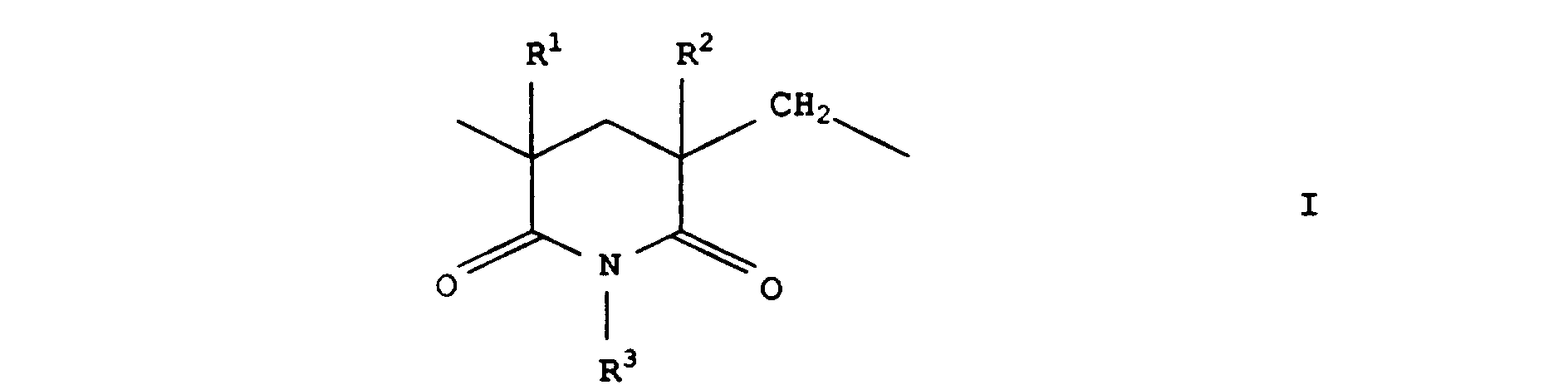
- R¹ und R
- für Wasserstoff oder Methyl stehen und
- R³
- C₆-C₁₄-Aryl, das bis zu dreifach mit Resten, ausgewählt aus der Gruppe bestehend aus C₁-C₄-Alkyl, C₁-C₄-Alkoxy und Halogen substituiert sein kann, bedeutet,
- Ferner betrifft die Erfindung ein Verfahren zur Herstellung dieser Polymerisate, deren Verwendung zur Herstellung von Formkörpern sowie Formkörper aus diesen Polymerisaten.
- Polymere auf Basis von C₁-C₂₀-Alkylestern ausgewählt aus der Gruppe bestehend aus Methacrylsäure und Acrylsäure, wovon die am häufigsten verwendeten Vertreter Methylmethacrylat und Methylacrylat sind, zeichnen sich durch eine hervorragende Transparenz und Witterungsstabilität aus. Aus diesen Gründen verwendet man Polymethylmethacrylate ("PMMA") beispielsweise für die Herstellung optisch anspruchsvoller Teile wie Linsen sowie für Lampenabdeckungen.
- Für eine ganze Reihe von Anwendungen besitzen solche Acrylat-Formmassen jedoch eine zu geringe Wärmeformbeständigkeit. Eine der möglichen Lösungen besteht in der Erhöhung der Glasübergangstemperatur durch polymeranaloge Umsetzung beispielsweise von PMMA mit primären Aminen (Imidierung) unter Ausbildung cyclischer Imidstrukturen.
- In der EP-B 234,726 wird ein Verfahren zur Umsetzung von Methacrylpolymeren mit wasserfreien Aminen in Gegenwart eines Lösungsmittelgemisches (Aromat/Alkohol) bei Temperaturen bis zu 350°C beschrieben, wobei auch aromatische Amine beansprucht werden. Aufgrund der geringen Reaktivität der aromatischen Amine sind jedoch sehr lange Reaktionszeiten und hohe Temperaturen notwendig. Dies führt in der Regel zu stark verfärbten Reaktionsprodukten mit einem hohen Gelbindex. Desweiteren wird unter diesen Bedingungen ein Teil des primären Amins vom Alkohol unter Wasserabspaltung alkyliert. Das freigewordene Reaktionswasser führt anschließend zu einer Verseifung von Carboxylat-Gruppen und somit zu einer unerwünschten Erhöhung der Säurezahl im Produkt.
- In der US-A 4,246,374 wird ein Prozeß zur Umsetzung von PMMA mit wasserfreien aromatischen Aminen (lösungsmittelfrei) auf einem Extruder (Schmelzeprozeß) beschrieben. In den Beispielen 37 und 43 dieser Schrift werden Anilin bzw. Tetrachloranilin mit PMMA umgesetzt. Im Vergleich zu den aliphatischen Aminen (Methylamin, Cyclohexylamin) sind auch bei diesem Verfahren die weniger reaktiven aromatischen Amine für die Imidisierungsreaktion schlechter geeignet. Denn die drastische Verlängerung der Verweilzeit in der Reaktionszone führt zu einer unwirtschaftlichen Nutzung der verwendeten Extruder sowie zu einem verfärbten Produkt.
- Der Erfindung lag daher die Aufgabe zugrunde, Polymethacrylimide mit aromatischer N-Substitution mit einer verminderten Säurezahl und einem verbesserten Gelbindex zur Verfügung zu stellen.
- Demgemäß wurden die eingangs definierten Polymerisate gefunden.
- Außerdem wurden ein Verfahren zur Herstellung dieser Polymerisate, deren Verwendung zur Herstellung von Formkörpern sowie Formkörper, erhältlich aus diesen Polymerisaten, gefunden.
- Unter den Polymerisaten auf Basis von C₁-C₂₀-Alkylestern der Methacrylsäure und Acrylsäure sind sowohl Homo- als auch Copolymere zu verstehen, wobei die Copolymeren andere ethylenisch ungesättigten Comonomere enthalten können.
- Als C₁-C₂₀-Alkylester der Methacrylsäure kommen bevorzugt die C₁-C₄-Alkylester wie Methylmethacrylat ("MMA"), Ethylmethacrylat, Propylmethacrylat, n-Butylmethacrylat, Isobutylmethacrylat und tert.-Butylmethacrylat in Betracht, wobei Methylmethacrylat besonders bevorzugt ist, sowie Mischungen dieser Monomeren.
- Als C₁-C₂₀-Alkylester der Acrylsäure verwendet man bevorzugt die C₁-C₄-Alkylester wie Methylacrylat ("MA"), Ethylacrylat, Propylacrylat, n-Butylacrylat, Isobutylacrylat und tert.-Butylacrylat, wobei Methylacrylat besonders bevorzugt ist, sowie Mischungen dieser Monomeren.
- Als ethylenisch ungesättigte Comonomere kann man Acrylsäure, Methacrylsäure, Maleinsäurederivate wie Imide und C₁-C₁₀-Alkylester, Itaconsäurederivate wie Imide und C₁-C₁₀-Alkylester, Acryl- und Methacrylnitril, Styrol, α-Methylstyrol, Ethylen, Propylen und Butadien sowie Mischungen dieser Monomeren einsetzen.
- Die Polymerisate können ein- oder mehrstufig hergestellt werden, wobei bei mehrstufiger Polymerisation wenigstens die äußere Stufe Gruppen enthalten muß, die imidiert werden können.
- Im allgemeinen sind die Polymerisate zu mehr als 50, bevorzugt zu mehr als 80 Gew.-% aus C₁-C₂₀-Alkylestern der Methacrylsäure und Acrylsäure aufgebaut. Als besonders vorteilhaft haben sich nach bisherigen Beobachtungen Polymerisate aus 80 bis 100 Gew.-% Methylmethacrylat und 0 bis 20 Gew.-% Methylacrylat mit einem Molekulargewicht (Gewichtsmittelwert Mw) von 20.000 bis 300.000 g/mol erwiesen.
- Als aromatisches primäres Amin, R³NH₂, verwendet man ein C₆-C₁₄-Arylamin, das bis zu dreifach mit C₁-C₄-Alkyl, C₁-C₄-Alkoxy und Halogen wie Fluor, Chlor und Brom substituiert sein kann.
- Beispielhaft seien genannt Anilin, 2-, 3-, 4-Methylanilin, 2,3-, 2,4-, 2,5-, 2,6-, 3,4-, 3,5-Dimethylanilin, 2,6-Diethylanilin, 2,4,6-Trimethylanilin, 2-, 3-, 4-Methoxyanilin, 2,4-, 2,5-, 3,4-, 3,5-Dimethoxyanilin, 3,4,5-Trimethoxyanilin, 2-, 3-, 4-Chloranilin, 2,3-, 2,4-, 2,5-, 2,6-, 3,4-, 3,5-Dichloranilin, 2-, 3-, 4-Bromanilin, 2,4-, 2,5-, 2,6-Dibromanilin, 2-, 3-, 4-Fluoranilin, 1-, 2-Aminonaphthalin, l-Amino-2-methyl-naphthalin, 2-Amino-l-methyl-naphthalin, 1-, 2-Aminoanthracen, 9-Aminophenanthren, bevorzugt Anilin, 4-Methoxyanilin, 1- und 2-Aminonaphthalin.
- Zur Beschleunigung der Reaktion kann man nach bisherigen Beobachtungen alle Amine mit einem pkb-Wert ≤9, bevorzugt solche mit einem pKb-Wert ≤6, einsetzen. Beispielhaft seien genannt primäre Amine wie C₁-C₂₀-Alkylamine, C₅-C₁₂-Cycloalkylamine, sekundäre Amine wie Di-(C₁-C₁₈-alkyl)amine und Di-(C₅-C₈-cycloalkyl)amine, beispielsweise Diethyl-, Dipropyl-, Dibutyl- und Dicyclohexylamin, und Ammoniak, bevorzugt Ammoniak und primäre Amine wie Cyclohexylamin. Besonders bevorzugt setzt man primäre Amine mit einem Siedepunkt von 100 bis 250°C wie C₇-C₂₀-Alkylamine, z.B. Heptylamin, Octylamin, Decylamin, Dodecylamin, Stearylamin und Eicosylamin, und C₅-C₁₂-Cycloalkylamine wie Cyclopentylamin, Cyclohexylamin, Cycloheptylamin, Cyclooctylamin und Cyclododecylamin, ein.
- Die Reaktion führt man in der Regel so durch, daß man eine Mischung bestehend aus Acrylat-Polymer, aromatischem Amin und Katalysator in einem Lösungsmittel unter Sauerstoffausschluß zum Sieden erhitzt. Bevorzugt destilliert man dabei den bei der Reaktion entstehenden Alkohol, in der Regel Methanol, kontinuierlich ab, um Nebenreaktionen wie Ether-Bildung, Amin-Alkylierung und Ester-Verseifung zu unterdrükken.
- Gegen Ende der Reaktion kann man gegebenenfalls überschüssiges Amin ebenfalls destillativ entfernen. Nach beendeter Umsetzung isoliert man im allgemeinen das erfindungsgemäße Polymer nach üblichen Methoden, beispielsweise durch Ausfällen, bevorzugt in Methanol, und anschließendes Trocknen. Es ist zum Beispiel ebenfalls möglich, das erfindungsgemäße Polymer zu isolieren, indem man das Reaktionsgemisch durch Behandeln auf einem Entgasungsextruder von den niedermolekularen Begleitstoffen wie Lösungsmittel, Amin und Alkohol befreit.
- Man kann die Umsetzung auch ohne Lösungsmittel in der Schmelze durchführen, jedoch ist die Ausführungsform in Lösung bevorzugt.
- Das aromatische Amin kann man dabei gleich zu Beginn der Reaktion vorlegen oder beispielsweise kontinuierlich in dem Maße wie es verbraucht wird zugeben.
- Das Gewichtsverhältnis von eingesetztem aromatischem Amin zu Acrylat-Polymer wählt man in der Regel im Bereich von 100:1 bis 0,1:1, bevorzugt von 20:1 bis 1:1.
- Das Molverhältnis von aromatischem Amin zu Katalysator liegt im allgemeinen im Bereich von 2:1 bis 1000:1, bevorzugt von 5:1 bis 100:1.
- Als Lösungsmittel kann man prinzipiell alle aprotischen, polaren Lösungsmittel wie
- N,N'-disubstituierte, cyclische oder acyclische Carbonsäureamide wie Dimethylformamid, Diethylformamid, Dimethylacetamid, Diethylacetamid
- N-Methyl-2-pyrrolidon, N-Ethyl-2-pyrrolidon
- N,N,N',N'-tetrasubstituierte, cyclische oder acyclische Harnstoffe wie Tetramethylharnstoff
- N-substituierte, cyclische oder acyclische (Poly)Amine wie Dicyclohexylmethylamin, Dimethylcyclohexylamin, N,N,N',N'-Tetramethylethylendiamin, N,N,N',N'-Tetramethylhexamethylendiamin
- hochsiedende Ether wie Ethylenglykoldimethylether, Diethylenglykoldimethylether
- Alkylencarbonate wie Ethylencarbonat, Propylencarbonat
- sowie andere übliche aprotische und polare Lösungsmittel wie Hexamethylphosphorsäuretriamid, Nitroalkane wie Nitromethan, Dimethylsulfoxid, Diphenylsulfoxid und Sulfolan verwenden, wobei N-Methylpyrrolidon bevorzugt ist.
- Das Gewichtsverhältnis von verwendetem Lösungsmittel zu Polymer liegt in der Regel im Bereich von 1:1 bis 100:1, bevorzugt von 1:1 bis 10:1.
- Die Reaktionstemperatur wählt man im allgemeinen im Bereich von 50 bis 350°C, bevorzugt im Bereich von 150 bis 250°C.
- Als Schutzgasatmosphäre verwendet man in der Regel die üblichen Inertgase wie Stickstoff, Argon, Helium oder Kohlendioxid.
- Der Reaktionsdruck ist in der Regel unkritisch. Man arbeitet in Lösung im allgemeinen im Bereich von 80 bis 250 kPa, bevorzugt unter Atmosphärendruck.
- Die Wahl des pH-Bereiches ist ebenfalls unkritisch und liegt wegen des eingesetzten Amins in der Regel oberhalb von 7.
- Die Reaktionszeit liegt in der Regel im Bereich von 0,01 bis 100 h, bevorzugt 0,05 bis 50 h.
- Desweiteren kann man gegebenenfalls die Reaktion durch Zusatz bekannter Aminolysekatalysatoren in Mengen im Bereich von 0,01 bis 10 Gew.-%, bezogen auf das eingesetzte Polymer, weiter beschleunigen.
- Beispielhaft seien genannt
- tertiäre Amine wie Tricyclohexylamin,
- substituierte Guanidine wie 1,1,3,3-Tetramethyl- und 1,3-Diphenylguanidin
- tetrasubstituierte Alkylammoniumverbindungen wie Trimethylstearylammoniumchlorid
- organische Titanverbindungen wie Tetrapropoxytitan, Tetrabutoxytitan
- organische Zinnverbindungen wie Dibutylzinnoxid, Dibutylzinndidodecanat
- aromatische Amine und Imide wie Chinolin, Isochinolin, 4-Benzylpyridin, 4-Phenylpyridin, 2-Hydroxypyridin, 1,3-, 1,4- und 2,3-Benzodiazin, 2,2'-, 2,3'- und 2,4'-Bipyridyl,
- Imide wie N,N'-Dicyclohexylcarbodiimid
- sowie Antimontrioxid, Zinndioxid, Natriumamid, Natrium- und Kaliumalkoholate wie Natrium- und Kaliummethanolat, Ammoniumchlorid und Ammoniumiodid.
- Das N-Aryl-substituierte Poly(meth)acrylimid kann man nach üblichen Methoden verarbeiten, z.B. durch Spritzguß, Extrusion oder Sintern zur Herstellung von Formkörpern.
- Die erfindungsgemäßen Poly(meth)acrylimide und Formkörper weisen eine Säurezahl (Gehalt an freien Carboxyl- und Anhydrid-Gruppen) von ≤ 0,5 Äquivalenten pro Kilogramm Polymer auf. Hierdurch werden sehr gute Werte im Fließverhalten, in der chemischen Beständigkeit und in der Spannungsrißbeständigkeit erreicht.
- Durch einen Transmissionsgrad von ≥ 85% und einem Gelbindex (nach DIN 5036) von ≤ 15 zeigen die erfindungsgemäßen N-Aryl-substituierten Poly(meth)acrylimide gute optische Qualitätswerte.
- Mit den erfindungsgemäßen Polymerisaten lassen sich thermoplastisch verarbeitbare Formmassen mit hoher Wärmeformbeständigkeit herstellen.
- In einem Reaktionsgefäß mit Füllkörperkolonne wurde eine Mischung aus 200 g PMMA (aus 99 Gew.-% MMA und 1 Gew.-% MA mit einem mittleren Molekulargewicht (Mw) von 115 000 g/mol), 103 g (1,1 mol) Anilin, 10 g (0,1 mol) Cyclohexylamin und 600 g N-Methylpyrrolidon unter Stickstoff zum Sieden erhitzt. Nach etwa 30 min war das gesamte Polymer gelöst und die Innentemperatur betrug 140°C. Nach insgesamt 90 min Reaktionszeit wurde das entstandene Methanol kontinuierlich aus dem Reaktionsgemisch abdestilliert, wobei im Verlauf der weiteren Reaktion die Innentemperatur auf 200°C anstieg. Das gebildete Polymethacrylimid wurde in Methanol ausgefällt und anschließend getrocknet.
- Die Ergebnisse des Versuchs sind Tabelle 1 zu entnehmen.
- Analog zu Beispiel 1 wurden 200 g PMMA (gleiche Zusammensetzung wie in Beispiel 1) mit jeweils 1,2 mol einer Mischung aus aromatischem Amin und Katalysator (s. Tabelle 2) umgesetzt und wie oben angegeben aufgearbeitet.
- Die genauen Versuchsmengen und die Ergebnisse der Versuche sind Tabelle 1 zu entnehmen.
- Auf einem Zweiwellenextruder (ZSK-40) mit gleichlaufenden, kämmenden Schnecken wurden 10 kg/h PMMA (gleiche Zusammensetzung wie in Beispiel 1) kontinuierlich bei einer Temperatur von 270°C mit 5 kg/h einer Mischung aus 80 mol-% Anilin und 20 mol-% Cyclohexylamin zur Reaktion gebracht. Nach der Reaktionszone wurde die Polymerschmelze auf dem gleichen Extruder entgast und granuliert.
- Die Ergebnisse des Versuchs sind Tabelle 1 zu entnehmen.
- Der Versuch aus Beispiel 9 wurde wiederholt mit dem Unterschied, daß anstelle des Amingemisches reines Anilin verwendet wurde.
- Die Ergebnisse des Versuchs sind Tabelle 1 zu entnehmen.
Tabelle 1: Beispiele 1 - 10, Imidierung in Lösung und in der Schmelze Beispiel ArNH₂ (mol) RNH₂ (mol) N-Gehalt1)(%) 1 Anilin (1,1) Cyclohexylamin (0,1) 3,8 2 Anilin (1,0) Cyclohexylamin (0,2) 4,8 3 Anilin (0,7) Cyclohexylamin (0,5) 5,4 4 (Vergl.) Anilin (1,2) - (0,0) 2,3 5 1-Aminonaphthalin (1,0) Cyclohexylamin (0,2) 3,1 6 (Vergl.) 1-Aminonaphthalin (1,2) - (0,0) 1,3 7 4-Methoxyanilin (1,0) Cyclohexylamin (0,2) 3,6 8 (Vergl.) 4-Methoxyanilin (1,2) - (0,0) 2,0 9 Anilin (0,8) Cyclohexylamin (0,2) 3,2 10(Vergl.) Anilin (1,0) - (0,0) 1,8 1) N-Gehalt aus Elementaranalyse - Analog zu Beispiel 1 wurden jeweils 1,5 Mol Anilin, Cyclohexylamin und eine Mischung aus Anilin und Cyclohexylamin (1,2/0,3 mol) mit 200 g PMMA umgesetzt.
- Die Ergebnisse der Qualitätsprüfungen sind Tabelle 2 zu entnehmen.
- Die Bestimmung der Glasübergangstemperatur Tg der Polymere erfolgte nach der DSC-Methode (ASTM D 3418-82) auf einem DSC-30-Gerät der Fa. Mettler.
- Der Gehalt an Carboxyl- und Anhydrid-Gruppen wurde titrimetrisch bestimmt. Hierzu wurden 0,3 g Polymer in 75 ml eines 1:1 Gemisches aus Dichlormethan und Methanol gelöst und die Mischung mit einem Überschuß, bezogen auf die Carboxyl- und Anhydrid-Gruppen, eines abgemessenen Volumens einer 0,1 N Natriumhydroxid-Lösung versetzt. Anschließend wurde Überschüssige Base mit 0,1 N Salzsäure zur Neutralität titriert, wobei der Endpunkt potentiometrisch bestimmt wurde.
- Der Gehalt an Säure wurde dann aus der Differenz, in Äquivalenten, der zugefügten Base und der verbrauchten Menge Säure bestimmt, wobei der Säurewert durch Subtraktion des Lösungsmittel-Blindwertes korrigiert wurde (ermittelt durch Ausführung der Bestimmung ohne Polymer).
- Die Säurezahl ("SZ") wurde dann als Gehalt an Säure in Äquivalenten pro Kilogramm imidisierbares Polymer berechnet.
- Der Yi-Gelbindex wurde gemäß DIN 6 167 an Rundscheiben (0̸ = 80 mm, d = 6 mm) bestimmt.
- Der Lichttransmissionsgrad wurde gemäß DIN 5 036 an 1 mm dicken Probekörpern (Rundscheiben 0̸ = 80 mm, d = 6 mm) durchgeführt.

R³NH₂ II
in Gegenwart eines Amins mit einem pKb-Wertes ≤ 9.
Claims (4)
- Polymerisat, enthaltend im wesentlichen wiederkehrende Einheiten der Formel I
 R¹ und R für Wasserstoff oder Methyl stehen undR³ C₆-C₁₄-Aryl, das bis zu dreifach mit Resten, ausgewählt aus der Gruppe bestehend aus C₁-C₄-Alkyl, C₁-C₄-Alkoxy und Halogen substituiert sein kann, bedeutet,erhältlich durch Umsetzen von Polymeren auf Basis von C₁-C₂₀-Alkylestern der Methacrylsäure oder Acrylsäure oder Mischungen solcher Ester mit einem aromatischen Amin der allgemeinen Formel II
R³NH₂ II
in Gegenwart eines Amins mit einem pKb-Wert ≤ 9. - Verfahren zur Herstellung eines Polymerisates gemäß Anspruch 1 durch Umsetzen eines Polymeren auf Basis von C₁-C₂₀-Alkylestern der Methacrylsäure oder Acrylsäure oder Mischungen solcher Ester mit einem aromatischen Amin der allgemeinen Formel II
R³NH₂ II
dadurch gekennzeichnet, daß man die Umsetzung in Gegenwart eines Amins mit einem pKb-Wertes ≤ 9 durchführt. - Verwendung der Polymerisate gemäß Anspruch 1 zur Herstellung von Formkörpern, Fasern und Folien.
- Formkörper, erhältlich aus Polymerisaten gemäß Anspruch 1.
Applications Claiming Priority (2)
| Application Number | Priority Date | Filing Date | Title |
|---|---|---|---|
| DE4142572 | 1991-12-21 | ||
| DE4142572A DE4142572A1 (de) | 1991-12-21 | 1991-12-21 | N-aryl-substituierte poly(meth)acrylimide |
Publications (2)
| Publication Number | Publication Date |
|---|---|
| EP0549922A1 EP0549922A1 (de) | 1993-07-07 |
| EP0549922B1 true EP0549922B1 (de) | 1996-05-22 |
Family
ID=6447886
Family Applications (1)
| Application Number | Title | Priority Date | Filing Date |
|---|---|---|---|
| EP92120882A Expired - Lifetime EP0549922B1 (de) | 1991-12-21 | 1992-12-08 | N-Aryl-substituierte Poly(meth)acrylimide |
Country Status (3)
| Country | Link |
|---|---|
| US (2) | US5378765A (de) |
| EP (1) | EP0549922B1 (de) |
| DE (2) | DE4142572A1 (de) |
Families Citing this family (3)
| Publication number | Priority date | Publication date | Assignee | Title |
|---|---|---|---|---|
| US6089968A (en) | 1997-05-28 | 2000-07-18 | Acraloc Corporation | Loin knife assembly for automatic loin puller apparatus |
| IT1392389B1 (it) * | 2008-12-19 | 2012-03-02 | Eni Spa | Polimeri immidizzati contenenti gruppi luminescenti e metodo per il loro ottenimento |
| JP6253655B2 (ja) * | 2013-08-30 | 2017-12-27 | 株式会社日本触媒 | (メタ)アクリル系樹脂 |
Family Cites Families (8)
| Publication number | Priority date | Publication date | Assignee | Title |
|---|---|---|---|---|
| DE1088231B (de) * | 1958-03-22 | 1960-09-01 | Roehm & Haas Gmbh | Verfahren zur Herstellung Stickstoff enthaltender Derivate der Polymethacrylsaeure |
| CA1106541A (en) * | 1975-11-19 | 1981-08-04 | Richard M. Kopchik | Imidized acrylic polymers |
| US4246374A (en) * | 1979-04-23 | 1981-01-20 | Rohm And Haas Company | Imidized acrylic polymers |
| CA1279747C (en) * | 1986-01-23 | 1991-01-29 | Hisao Anzai | Methacrylate resin composition and process for its preparation |
| IT1216757B (it) * | 1988-02-25 | 1990-03-08 | Vedril Spa | Procedimento per la preparazione di polimeri acrilici immidizzati. |
| JPH02178308A (ja) * | 1988-12-29 | 1990-07-11 | Mitsubishi Rayon Co Ltd | メタクリルイミド含有重合体 |
| EP0461224B1 (de) * | 1989-12-29 | 1996-09-11 | Lucky Ltd. | Verfahren zur herstellung von hitzebeständigem und transparentem acrylharz |
| DE4002904A1 (de) * | 1990-02-01 | 1991-08-08 | Roehm Gmbh | Verfahren zum imidieren eines methacrylester-polymerisats |
-
1991
- 1991-12-21 DE DE4142572A patent/DE4142572A1/de not_active Withdrawn
-
1992
- 1992-12-08 DE DE59206370T patent/DE59206370D1/de not_active Expired - Lifetime
- 1992-12-08 EP EP92120882A patent/EP0549922B1/de not_active Expired - Lifetime
-
1993
- 1993-11-12 US US08/151,049 patent/US5378765A/en not_active Expired - Fee Related
-
1994
- 1994-04-18 US US08/228,642 patent/US5395898A/en not_active Expired - Fee Related
Also Published As
| Publication number | Publication date |
|---|---|
| DE4142572A1 (de) | 1993-06-24 |
| EP0549922A1 (de) | 1993-07-07 |
| US5378765A (en) | 1995-01-03 |
| DE59206370D1 (de) | 1996-06-27 |
| US5395898A (en) | 1995-03-07 |
Similar Documents
| Publication | Publication Date | Title |
|---|---|---|
| DE3880330T2 (de) | Copolymere aus vinylalkohol und acrylaten. | |
| DE3650346T2 (de) | Im wesentlichen homogene thermoplastische Copolymere statistische Zusammensetzung aus Vinylalkohol und Polyalkylenoxyacrylaten. | |
| JPS63234002A (ja) | メタクリルイミド単位含有メタクリル樹脂組成物およびその製法 | |
| DE3878752T2 (de) | Copolymere aus vinylalkohol und fluor enthaltende acrylatmonomere. | |
| EP0654066B1 (de) | Transparente formmassen aus glutarimidhaltigen polymeren un styrol-acrylnitril-copolymeren | |
| EP0656374A2 (de) | Polymethacrylat-Formmasse mit hoher Wärmeformbeständigkeit und hoher Stabilität gegen thermischen Abbau | |
| DE69028521T2 (de) | Verfahren zur herstellung von hitzebeständigem und transparentem acrylharz | |
| EP0576877B1 (de) | Polymethacryl- und Polyacrylimide mit verbesserter Eigenfarbe | |
| EP0548641B1 (de) | Poly(meth)acrylimide | |
| EP0549922A1 (de) | N-Aryl-substituierte Poly(meth)acrylimide | |
| EP0344699B1 (de) | Verfahren zur Polymerisation von Monoacrylatpentabrombenzylester | |
| DE1208489B (de) | Verfahren zum Vernetzen von AEthylenhomo- oder -mischpolymerisaten | |
| EP0015237A1 (de) | Homo- und Copolymerisate von Vinyläthern von Polyalkylpiperidinolen und deren Verwendung als Stabilisatoren für Kunststoffe | |
| EP0581177B1 (de) | Verfahren zur Imidierung von Polymeren auf Basis von Estern der Methacryl- und Acrylsäure | |
| EP0561230B1 (de) | Polymethacrylimide mit hoher Wärmeformbeständigkeit | |
| EP0577002B1 (de) | Polymethacrylimide mit hoher Wärmeformbeständigkeit | |
| EP0557793B1 (de) | Verfahren zur Erzeugung teilchenförmiger Poly(meth)acrylimid-Polymerisate | |
| EP0548657A1 (de) | Poly(meth)acrylimide mit unterschiedlicher N-Substitution | |
| EP0533082B1 (de) | Verfahren zur Herstellung von Polymethacrylimid-Polymeren | |
| EP0050811B1 (de) | Verfahren zur Herstellung anionischer Copolymerisate aus cyclischen Kohlensäureestern und Lactamen und deren Verwendung | |
| DE4419906C2 (de) | Anhydridgruppen enthaltende lösliche unvernetzte Polymere und ihre Verwendung | |
| CH505155A (de) | Verfahren zur Herstellung von faserbildenden Acrylnitrilpolymerisaten | |
| JPS6241205A (ja) | 透明性及び耐熱性に優れたメタクリルイミド含有重合体の製法 | |
| DE2140389C3 (de) | Copolymere eines Perfluorbinyläthers | |
| JPS6241206A (ja) | 透明性及び耐熱性に優れたメタクリルイミド含有重合体を製造する方法 |
Legal Events
| Date | Code | Title | Description |
|---|---|---|---|
| PUAI | Public reference made under article 153(3) epc to a published international application that has entered the european phase |
Free format text: ORIGINAL CODE: 0009012 |
|
| AK | Designated contracting states |
Kind code of ref document: A1 Designated state(s): BE DE FR GB NL |
|
| 17P | Request for examination filed |
Effective date: 19930608 |
|
| 17Q | First examination report despatched |
Effective date: 19941228 |
|
| GRAH | Despatch of communication of intention to grant a patent |
Free format text: ORIGINAL CODE: EPIDOS IGRA |
|
| GRAA | (expected) grant |
Free format text: ORIGINAL CODE: 0009210 |
|
| AK | Designated contracting states |
Kind code of ref document: B1 Designated state(s): BE DE FR GB NL |
|
| REF | Corresponds to: |
Ref document number: 59206370 Country of ref document: DE Date of ref document: 19960627 |
|
| GBT | Gb: translation of ep patent filed (gb section 77(6)(a)/1977) |
Effective date: 19960701 |
|
| ET | Fr: translation filed | ||
| PLBE | No opposition filed within time limit |
Free format text: ORIGINAL CODE: 0009261 |
|
| STAA | Information on the status of an ep patent application or granted ep patent |
Free format text: STATUS: NO OPPOSITION FILED WITHIN TIME LIMIT |
|
| 26N | No opposition filed | ||
| PGFP | Annual fee paid to national office [announced via postgrant information from national office to epo] |
Ref country code: FR Payment date: 20001117 Year of fee payment: 9 |
|
| PGFP | Annual fee paid to national office [announced via postgrant information from national office to epo] |
Ref country code: NL Payment date: 20001123 Year of fee payment: 9 |
|
| PGFP | Annual fee paid to national office [announced via postgrant information from national office to epo] |
Ref country code: GB Payment date: 20001201 Year of fee payment: 9 |
|
| PGFP | Annual fee paid to national office [announced via postgrant information from national office to epo] |
Ref country code: DE Payment date: 20001216 Year of fee payment: 9 |
|
| PGFP | Annual fee paid to national office [announced via postgrant information from national office to epo] |
Ref country code: BE Payment date: 20010122 Year of fee payment: 9 |
|
| PG25 | Lapsed in a contracting state [announced via postgrant information from national office to epo] |
Ref country code: GB Free format text: LAPSE BECAUSE OF NON-PAYMENT OF DUE FEES Effective date: 20011208 |
|
| PG25 | Lapsed in a contracting state [announced via postgrant information from national office to epo] |
Ref country code: DE Free format text: LAPSE BECAUSE OF THE APPLICANT RENOUNCES Effective date: 20011218 |
|
| PG25 | Lapsed in a contracting state [announced via postgrant information from national office to epo] |
Ref country code: BE Free format text: LAPSE BECAUSE OF NON-PAYMENT OF DUE FEES Effective date: 20011231 |
|
| REG | Reference to a national code |
Ref country code: GB Ref legal event code: IF02 |
|
| BERE | Be: lapsed |
Owner name: BASF A.G. Effective date: 20011231 |
|
| PG25 | Lapsed in a contracting state [announced via postgrant information from national office to epo] |
Ref country code: NL Free format text: LAPSE BECAUSE OF NON-PAYMENT OF DUE FEES Effective date: 20020701 |
|
| GBPC | Gb: european patent ceased through non-payment of renewal fee |
Effective date: 20011208 |
|
| PG25 | Lapsed in a contracting state [announced via postgrant information from national office to epo] |
Ref country code: FR Free format text: LAPSE BECAUSE OF NON-PAYMENT OF DUE FEES Effective date: 20020830 |
|
| NLV4 | Nl: lapsed or anulled due to non-payment of the annual fee |
Effective date: 20020701 |
|
| REG | Reference to a national code |
Ref country code: FR Ref legal event code: ST |