EP0533407A2 - Koordination einer heterogenen Transaktion - Google Patents
Koordination einer heterogenen Transaktion Download PDFInfo
- Publication number
- EP0533407A2 EP0533407A2 EP92308270A EP92308270A EP0533407A2 EP 0533407 A2 EP0533407 A2 EP 0533407A2 EP 92308270 A EP92308270 A EP 92308270A EP 92308270 A EP92308270 A EP 92308270A EP 0533407 A2 EP0533407 A2 EP 0533407A2
- Authority
- EP
- European Patent Office
- Prior art keywords
- transaction
- processing
- transaction processing
- sna
- protocol
- Prior art date
- Legal status (The legal status is an assumption and is not a legal conclusion. Google has not performed a legal analysis and makes no representation as to the accuracy of the status listed.)
- Withdrawn
Links
Images





Classifications
-
- H—ELECTRICITY
- H04—ELECTRIC COMMUNICATION TECHNIQUE
- H04L—TRANSMISSION OF DIGITAL INFORMATION, e.g. TELEGRAPHIC COMMUNICATION
- H04L9/00—Cryptographic mechanisms or cryptographic arrangements for secret or secure communications; Network security protocols
- H04L9/40—Network security protocols
Definitions
- This invention is generally related to providing a mechanism for converting transaction processing protocols between a distributed network using a UNIX system (UNIX is a registered trademark of AT&T), such as the AIX operating system (AIX is a registered trademark of IBM Corp.), and a distributed system using a Systems Network Architecture (SNA) environment.
- UNIX is a registered trademark of AT&T
- AIX is a registered trademark of IBM Corp.
- SNA Systems Network Architecture
- These networks may include a plurality of interconnected computer workstations, such as the RISC/System 6000, manufactured by IBM Corp. (RISC/System 6000 is a trademark of IBM Corp.), or other similar data processing systems.
- the AIX distributed transaction processing system conforms to the X/Open Portability Guide proposal that specifies implementation of a Two Phase Commit/Presumed Abort (2PC/PA) Protocol.
- the IBM SNA Syncpoint facility is an IBM standard for a distributed transaction processing environment that specifies implementation of a Two Phase Commit/Presume None (2PC/PN) Protocol.
- the protocols differ in the mechanism for identifying the operations that mark the actions which are to be treated as a group, and the mechanism for recovering from failure within the distributed environment.
- a protocol conversion problem exists when the two networks are interconnected in a transaction processing environment, i.e. the coordination of a transaction across resources in both the AIX network and the SNA network.
- Traditional solutions to this problem include: (1) restricting transactional operations to a homogenous transaction environment, i.e limiting transaction processing to either the AIX or SNA network; (2) defining a standard, such as the International Standards organization Transaction Processing Facility (ISO/TP) and map the transaction processing within the non-compatible networks to that standard, i.e. map SNA and AIX to ISO/TP; and (3) providing only limited shared access between the two non-compatible networks, i.e. provide a communications converter between AIX and SNA, but no Two Phase Commit.
- ISO/TP International Standards organization Transaction Processing Facility
- the present invention provides a mechanism which allows transparent transaction processing to occur between distributed networks using the AIX or SNA protocols.
- the present invention is essentially a bridge which will convert protocols received from one distributed environment into protocols which can be handled by the other distributed environment.
- the present invention will convert between the AIX standard of Presumed Abort (2PC/PA) and SNA standard of Presume None (2PC/PN). Broadly, the Presumed Abort Protocol will optimize operations by reducing the number of messages between sites participating in the transaction, and the amount of transaction state information maintained at a site.
- the present invention will generate any messages needed and maintain transaction status information in order to satisfy a Standard Two Phase Commit/Presume None protocol, when sites within a SNA network are participating in an AIX transaction. Further, the present invention will discard, or ignore (filter) any extraneous messages which are received while sites within an AIX network are participating in a SNA transaction.
- the AIX and SNA transaction processing systems use unique identifiers to distinguish transaction operations. For example a logical unit of work identifier (LUWID) is used by a SNA transaction processing system.
- LWID logical unit of work identifier
- the rules by which the identifiers are generated and maintained differ between the protocols.
- the rules by which application programs delineate transactions differ between protocols.
- the presume abort 2PC used by AIX only allows the application that started the transaction to issue a COMMIT_TRANSACTION message.
- a COMMIT_TRANSACTION can be initiated from anywhere in the distributed transaction processing system. Therefore, the present invention provides for a facility in the AIX network to allow migration of the transaction coordination responsibility in response to a commitment request from SNA.
- the present invention provides conversion for the recovery function which is implemented when transaction resources become isolated from one another.
- SNA optimizes to minimize the message flows, thus resynchronization between the participating transaction sites occurs by specialized flows to exchange logs and by comparing transaction states across the sites, whereas AIX merely redrives existing 2PC logic.
- FIG. 1 a block diagram is shown which illustrates the structure of the present invention.
- An AIX operating system program application 1 is shown which runs on an AIX distributed network 3, which includes a transaction processing facility 2.
- a SNA program application 6 runs in conjunction with a SNA distributed processing environment 8.
- These two distributed networks are connected via a transaction processing bridge 4 which functions to convert the respective transaction processing protocols of each system into protocols which can be utilized by the other system.
- the Two Phase Commit/Presumed Abort protocol of AIX and the Two Phase Commit/Presume Nothing protocol of SNA differ in that the Two phase Commit/Presumed Abort presumes that in the absence of any information regarding a transaction's outcome the transaction is aborted.
- Bridge 4 is a part of the AIX environment and provides transparency between users of the AIX and SNA transaction processing systems. In some instances, the transaction processing bridge 4 will generate messages needed by one of the distributed transaction processing environments. Also the bridge 4 may serve as a buffer, or filter to delete messages generated by one of the transaction processing environments which are not required by the other. Further, bridge 4 transfers, or ignores transaction state information between the AIX and SNA distributed systems. Whether the bridge transfers the state information, or ignores it depends upon the direction of the flow of information between the two systems. Thus, in this manner it can be seen how transaction processing bridge 4 provides for transparency between users of applications running on either the AIX distributed network or SNA distributed network.
- Figure 8 also shows the transaction processing structure wherein a transaction, implemented by one of the applications 1,6 is processed across both the AIX and SNA networks such that resources 31 and 41, e.g. files, database programs and the like, can be utilized.
- the AIX transaction coordinator 40 and associated resources 41 are capable of being used in conjunction with the SNA resources 31.
- the SNA transaction coordinator 30 is capable of utilizing the SNA resources 31 and the AIX resources 41. This utilization of the other network's resources is transparent to the applications 1,6 and the transaction being processed.
- Figures 2 and 3 show how the AIX and SNA transaction processing protocols, which are a set of rules and commands that define the respective protocols, are bidirectionally converted from one to the other.
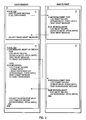
- Figure 2 is a chart illustrating the message flow between an AIX transaction coordinator 10 and an AIX participant 12.
- an AIX system utilizes a Two Phase Commit Presumed Abort transaction processing protocol.
- Block 11 represents phase one of the coordinator Two Phase Commit/Presumed Abort protocol.
- PREPARE messages are sent by the coordinator 10 to all participants 12. The participants then determine if the operation of the transaction can be guaranteed. If so, and the decision is COMMIT, then the participants log READY (ready entry, coordinator identity and pertinent data, e.g.
- phase one of participants Two Phase Commit/presumed Abort protocol have determined that the transaction is to be aborted.
- ABORT is logged in the record and the ABORT message is sent to the transaction coordinator 10 which collects READY/ABORT messages at the end of the first phase of the Two Phase Commit/Presumed Abort protocol.
- the transaction coordinator 10 determines during phase two (block 14) if an ABORT or TIMEOUT message has been received. TIMEOUT occurs where no action has been taken during a particular time interval and is treated the same as ABORT. If ABORT or TIMEOUT occurs, ABORT is recorded and sent to all participants 12 which have previously indicated ready.
- participant 12 If all sites respond READY, i.e. all sites guarantee that the operations performed can be made permanent, then COMMIT is logged with a COMMIT entry and a READY participant list is generated. Subsequently, the COMMIT message is sent to all READY participants.
- the involvement of participant 12 at block 15 includes receiving the ABORT or COMMIT message, sent by transaction coordinator 10, and if the decision is to COMMIT, then COMMIT transaction is logged and an acknowledge message is sent to the transaction coordinator 10. Otherwise ABORT is logged in the record and the process for the participant 12 ends. Finally, coordinator 10 collects all acknowledge messages from participants 12, logs COMPLETE in the record and ends the transaction.
- FIG. 3 shows the transaction processing protocols used by the SNA system which is a 2PC/PN protocol.
- Reference numeral 16 represents the SNA transaction coordinator which initiates phase one of the Two Phase Commit protocol (block 19) by implementing a log PREPARE record operation which includes preparing a PREPARE entry and participant list.
- the PREPARE message is then sent to all SNA participants 18. Participants 18 then determine at block 20 whether the decision is to COMMIT and if so this decision is logged as READY (ready entry, coordinator identity and lock list). This action by participant 18 at block 20 is similar to the action taken by an AIX participant when a PREPARE message is received (block 13, Fig. 2).
- the READY message is then sent to the transaction coordinator 16. Otherwise the decision is considered to be ABORT and ABORT is logged with the ABORT message being sent to the SNA transaction coordinator 16.
- READY or ABORT messages are then collected by the coordinator 16 and the operations within block 19 end.
- the transaction coordinator 16 determines if any messages indicate the transaction is to be aborted or a timeout has occurred. If so, the ABORT record is logged. That is, an ABORT entry is entered and the participant list is updated. The ABORT message is sent to all of the transaction participants 18 that have indicated a READY state. Otherwise, all messages are considered to be COMMIT in which case the log is updated to reflect the COMMIT message by entering a COMMIT identifier and updating the participant list. The COMMIT message is then sent to all participants.
- Block 22 shows the responsibility of participant 18 in the presume nothing transaction processing protocol. Participant 18 receives and logs COMMIT or ABORT in the record and returns an ACKNOWLEDGE message to coordinator 16 which then collects all acknowledge messages from participants and COMPLETE is logged in the record.
- a bidirectional conversion of messages occurs between the AIX and SNA networks and will include converting transaction processing information which encompasses transaction state (status) information, as well as transaction identifier information from one network to the other.
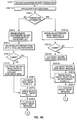
- Figures 4A-4C show the steps and procedures which must be utilized by the bridge 4 in order to provide protocol transparency between AIX and SNA distributed systems, by bidirectionally converting transaction processing state information for each protocol into transaction processing state information associated with the other protocol. That is, AIX transaction processing state information is converted into SNA transaction processing state information and SNA TP state information is converted into AIX TP state information.
- an application operating in conjunction with either the SNA or AIX distributed network performs a group of operations as a transaction and the transaction service initiates the transaction protocol.
- the application concludes its work, and at step 2 the 2PC protocol determines whether the transaction coordinator is designated within the AIX distributed system or the SNA distributed system. Assuming that the transaction coordinator is designated within the AIX distributed system, bridge 4 then assembles the coordinator information associated with a 2PC/PN protocol which includes creation of a log of a PREPARE record, i.e. PREPARE entry identification and a list of participants to be included in the transaction. It can be seen from Figure 2 (block 11) that the AIX transaction service does not maintain such a log, however this information is required by SNA.
- bridge 4 must generate this log in order for the SNA participants to have access to information needed during transaction processing and recovery.
- the bridge relays the PREPARE message from the AIX transaction coordinator to all SNA participants.
- Steps 5-7 show the COMMIT protocol used during phase 1 by the SNA participants.
- Bridge 4 then relays the READY or ABORT messages from the SNA participants to the AIX transaction coordinator (step 8), which collects all READY or ABORT messages at step 9.
- Steps 10, 11 and 14 illustrate processing which occurs at the AIX transaction coordinator during phase two of the transaction processing.
- bridge 4 relays any ABORT messages from the AIX transaction coordinator to all ready SNA participants. Further, at step 15, bridge 4 sends any COMMIT message to all SNA participants.
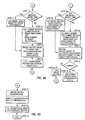
- the COMMIT message is logged by the SNA participant and an acknowledgment is sent to the transaction coordinator.
- Bridge 4 relays this acknowledgement to the AIX transaction coordinator at step 17.
- the transaction coordinator collects ACKNOWLEDGE messages from all participants, discards any received ABORT responses and logs COMPLETE in the record, and the process ends at step 19.
- bridge 4 relays the PREPARE message from the transaction coordinator to all participants (step 20).
- Steps 21, 22 and 25 indicate the 2PC/PA protocol utilized within the AIX participant during transaction processing (block 13, Figure 2).
- the bridge 4 relays any ABORT and READY messages from AIX participants.
- the transaction coordinator collects all READY and ABORT messages and steps 28-30 indicate transaction processing operations contained in phase two of the 2PC/PN protocol (see block 21, Figure 3).
- bridge 4 relays any ABORT message from the SNA transaction coordinator to all participants that have indicated a READY state.
- Bridge 4 at step 31 also relays the COMMIT message to those participants which have indicated a READY state.
- Steps 32-34 show processing which is implemented by an AIX participant during the second phase of the 2PC/PA protocol (block 15, Figure 2). Subsequent to step 34 the present invention proceeds to step 17 where the bridge 4 relays an ACKNOWLEDGE message to the transaction coordinator and generates an ABORT message, if appropriate, for communication to the transaction coordinator. At step 18 the SNA transaction coordinator collects all acknowledge messages and logs complete. Step 19 ends the transaction.
- FIG. 5 shows steps required to be implemented by bridge 4 during a recovery process wherein transaction coordinators have become isolated from transaction participants such as when communications failures, or the like exist.
- This recovery process includes exchanging status information between the AIX and SNA networks to ensure that the transaction being processed can be reconstructed after failure.
- state information and transaction identifier information (discussed below) for the transaction must be compared and exchanged by bridge 4.
- Bridge 4 begins resynchronization of any participating SNA transaction sites, and generates any messages required to meet the SNA resynchronization protocol. Comparing state information between the transaction coordinator and participating resources allows the exchange of information to be synchronized. These messages may include commands which will ensure the sites all have confirmed they are utilizing consistent transaction information, i.e. same site state table (EXCHANGE_LOG_NAME) and actually exchange transaction information (COMPARE_STATES). By an exchange of information, the transaction state is reconstructed to that state prior to failure. In this manner the transaction is recovered by examining a transaction information state table, maintained by the SNA transaction coordinator, for appropriate responses.
- EXCHANGE_LOG_NAME same site state table
- COMPARE_STATES actually exchange transaction information
- the present invention then implements all high-level flows of transaction state information between the bridge 4 and SNA network.
- the state information flows between bridge 4 and the AIX network transaction service are discrete communications
- the state information flowing between the SNA transaction network and bridge 4 is bundled together as one communication (high-level flow).
- Figure 8 illustrates this information flow and shows a recovery look up table 5 which is provided in bridge 4, that allows the bundled SNA 2PC/PN communication to be separated into the discrete state information recognizable by an AIX transaction service, i.e. ABORT, COMMIT, PREPARE.
- an AIX transaction service i.e. ABORT, COMMIT, PREPARE.
- the discrete state information must be bundled by bridge 4 (again using the look up table 5) before being communicated to SNA.
- Step 4 will determine whether the resynchronization is complete. Step 5 then determines if communications have been established and whether recovery is complete. If recovery has been completed the process ends at step 6. However, if at step 4 resynchronization is not complete then the process returns to step 3 and bridge 4 generates other messages required to complete the resynchronization protocol. Similarly, if at step 5 communication has not been reestablished the process returns to step 1 and recovery is again initiated by the application program.
- bridge 4 of the present invention is the ability to bidirectionally convert transaction identifiers from the AIX or SNA network into the type of identifiers used within the other network, i.e. AIX transaction identifiers converted to SNA identifiers and SNA identifiers converted to AIX identifiers.
- AIX transaction identifiers converted to SNA identifiers and SNA identifiers converted to AIX identifiers are implemented using rules which dictate the semantics of how the identifiers are updated.
- a presume nothing protocol seeks to minimize the flow of state information, by bundling messages as previously discussed (see Figure 8), whereas presumed abort protocol always transmits individual identifiers, i.e. unbundled information, and eliminates messages to update the identifiers.
- each SNA participant is incremented, or updated at each transaction demarcation point, thus keeping all participants synchronized.
- a totally AIX network uses demarcation points, i.e. individual unbundled transaction state information to keep track of participant status.
- the SNA network 8 updates the state information, while the AIX system 2 must "map" the state information back to bridge 4 such that the AIX and SNA transaction processing systems are in synchronization.
- FIG 6 represents the steps which must be implemented by the bridge 4 in order to accomplish conversion of transaction identifiers between the two interconnected distributed networks (see Fig. 8).
- a program application begins a transaction which requires identification conversion (step 2).
- Step 3 determines whether the transaction coordinator is within the SNA or AIX network, i.e. whether the respective transaction origination and destination is from/to the AIX or SNA networks. If the message destination is an SNA network (AIX origination), bridge 4 receives the AIX transaction identifier from a participating AIX site 2 (step 4).
- Bridge 4 maps the AIX transaction identifier to an identifier for use in the SNA system, at step 5, by using a transaction identifier (TID) look up table 10, and logical unit of work identifier (LUWID) look up table 12, for SNA IDs.
- TID transaction identifier
- LOWID logical unit of work identifier
- the corresponding SNA identifier is then sent to the SNA transaction processing system 8 and ultimately to all transaction participating SNA sites (step 6).
- the AIX transaction processing system sends an AIX TID each time any data is transferred between sites.
- the LUWID is only sent between SNA sites with the initial data transfer for a transaction.
- the SNA coordinator increments the LUWID at the conclusion of the transaction, e.g.
- Syncpoint (COMMIT, BACKOUT)
- the identifier conversion process determines at step 6a if the transaction is complete and if so, the SNA LUWID is incremented (step 6b), indicating the next transaction is to be processed. If the transaction in not complete, the method returns to step 3.
- step 3 If at step 3 it is determined that the transaction message origination is from the SNA network (destination is the AIX network), then the bridge 4 will receive a SNA identifier from the participating SNA transaction site (step 9). Bridge 4 then maps the SNA identifier onto an AIX transaction identifier by using look up tables 10,12, or the like (step 10). At step 10a, bridge 4 sends the TID, derived from mapping the LUWID, to participating AIX sites. At step 11, the bridge 4 identifies any specific SNA events such as Syncpoint (COMMIT, ABORT, BACKOUT). In order to accomplish the identification of specific events and synchronization between SNA and AIX participants at step 11, bridge 4 continues to maintain tables 10,12 which include state information regarding AIX participants (step 12).
- Syncpoint COMMIT, ABORT, BACKOUT
- step 13 the conversion process continues to step 6a and determines if the transaction is complete. If so, step 6b increments the LUWID and the process ends at step 7, or returns to step 3 for additional processing.
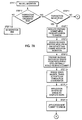
- FIGS 7A-7B represent the processes which must be implemented by bridge 4 in order to maintain transparency between an AIX and SNA distributed processing network, regarding the assignment of the transaction coordination (migration) aspect contained in the SNA protocol.
- the present invention allows migration of transaction coordination transparently between the AIX and the SNA networks.
- step 1 migration of a transaction is initiated and step 2 the bridge 4 determines whether the transaction termination was originated in the SNA network. If the termination originated in the AIX network then it can be seen that no migration commands will be implemented, since transaction migration is not provided in AIX. and the process ends at step 3.
- bridge 4 must resolve any protocol conversion problems which may arise when the transaction coordination responsibility is migrated. If at step 4 the transaction initiator is in the SNA network, then no protocol discrepancy exists. In an SNA only network there is an expectation of migration, while in an AIX network no provision for migration exists. Therefore, these conflicts will only arise when an SNA transaction system requests transaction coordination responsibility, and an AIX site has initiated the transaction. Assuming this is the case, special handling is required by rerouting the PREPARE/COMMIT messages from the program application to the bridge, for interpretation prior to relay to the transaction manager (step 7).
- a preliminary stage is added to the 2PC/PN protocol to inform the transaction manager that another site wishes to assume coordination responsibility.
- the SNA coordinator has received a PREPARE message from the SNA participants which is then sent to, and received by bridge 4 (step 8). Since a PREPARE message has been received from the network by bridge 4, rather than a COMMIT message from the application (which is the usual case) the previously noted preliminary stage is implemented and bridge 4 then issues a MIGRATE_TRANSACTION message (command) to the AIX transaction coordinator 40 (step 10).
- MIGRATE_TRANSACTION is a new command, to accommodate this SNA feature, thus a facility is provided by the present invention which allows recognition of migration of a transaction from the AIX system.
- the present invention is enabled by sending COMMIT to bridge 4 which thereby allows bridge 4 to migrate coordination responsibility (i.e. COMMIT and TRANSACTION_MIGRATION).
- the COMMIT message from the application is then relayed to the AIX transaction manager (i.e. transaction manager of AIX resources only) at step 13.
- the AIX transaction manager i.e. transaction manager of AIX resources only
- step 13b the AIX transaction manager prepares for normal Two-Phase Commit/Presumed Abort protocol (step 13b) after which the process continues to step 18 and ends.
- the AIX transaction manager did receive a MIGRATE command preceding a COMMIT message, then a request has been made from the SNA system that coordination responsibility of the entire transaction be migrated.
- MIGRATE_TRANSACTION not preceded by MIGRATE_TRANSACTION does not allow coordination migration to occur.
- the original SNA transaction coordinator is receiving messages which make it react in the same manner as any other SNA participating resource site.
- the AIX transaction coordinator issues a PREpARE message to the bridge.
- This PREPARE message is effectively the same as a READY which is then relayed to the SNA participant sites, including the former SNA transaction coordinator which is now acting as any other participant (step 15).
- a COMMIT message is sent to the bridge 4, from the SNA transaction coordinator which then relays this response to the AIX transaction coordinator.
- the AIX coordinator then sends an ACKNOWLEDGE message to the bridge which is relayed on to the SNA coordinator and the migrated transaction ends at step 18.
- the present invention allows an AIX transaction coordinator to be used for coordinating the 2PC protocol when the SNA distributed transaction processing system implements a MIGRATE_TRANSACTION operation.
Landscapes
- Engineering & Computer Science (AREA)
- Computer Security & Cryptography (AREA)
- Computer Networks & Wireless Communication (AREA)
- Signal Processing (AREA)
- Computer And Data Communications (AREA)
- Communication Control (AREA)
- Use Of Switch Circuits For Exchanges And Methods Of Control Of Multiplex Exchanges (AREA)
- Information Retrieval, Db Structures And Fs Structures Therefor (AREA)
- Data Exchanges In Wide-Area Networks (AREA)
Applications Claiming Priority (2)
| Application Number | Priority Date | Filing Date | Title |
|---|---|---|---|
| US76154191A | 1991-09-18 | 1991-09-18 | |
| US761541 | 1991-09-18 |
Publications (1)
| Publication Number | Publication Date |
|---|---|
| EP0533407A2 true EP0533407A2 (de) | 1993-03-24 |
Family
ID=25062523
Family Applications (1)
| Application Number | Title | Priority Date | Filing Date |
|---|---|---|---|
| EP92308270A Withdrawn EP0533407A2 (de) | 1991-09-18 | 1992-09-11 | Koordination einer heterogenen Transaktion |
Country Status (3)
| Country | Link |
|---|---|
| US (1) | US5428771A (de) |
| EP (1) | EP0533407A2 (de) |
| JP (1) | JPH0797782B2 (de) |
Cited By (3)
| Publication number | Priority date | Publication date | Assignee | Title |
|---|---|---|---|---|
| WO1998002992A1 (en) * | 1996-07-15 | 1998-01-22 | Telia Ab | A secure signalling protocol emulator system |
| WO1999054817A3 (en) * | 1998-04-22 | 2000-01-06 | Unisys Corp | Method and apparatus for enabling a component in a first transaction processing environment to access a resource in another environment |
| US6519615B1 (en) | 1996-10-11 | 2003-02-11 | Sun Microsystems, Inc. | Method and system for leasing storage |
Families Citing this family (65)
| Publication number | Priority date | Publication date | Assignee | Title |
|---|---|---|---|---|
| JP2675968B2 (ja) * | 1992-08-20 | 1997-11-12 | インターナショナル・ビジネス・マシーンズ・コーポレイション | 加入者分散2相コミット・プロトコルの拡張機能 |
| US6330629B1 (en) * | 1993-02-11 | 2001-12-11 | Hitachi, Ltd. | Information processing system |
| US5687369A (en) * | 1993-09-02 | 1997-11-11 | International Business Machines Corporation | Selecting buckets for redistributing data between nodes in a parallel database in the incremental mode |
| US5706429A (en) * | 1994-03-21 | 1998-01-06 | International Business Machines Corporation | Transaction processing system and method |
| JPH08180001A (ja) * | 1994-04-12 | 1996-07-12 | Mitsubishi Electric Corp | 通信方式及び通信方法及びネットワークインタフェース |
| US5758256A (en) * | 1995-06-07 | 1998-05-26 | Hughes Electronics Corporation | Method of transporting speech information in a wireless cellular system |
| GB2303474A (en) * | 1995-07-19 | 1997-02-19 | Ibm | Optimized synchronisation procedure |
| US5790809A (en) * | 1995-11-17 | 1998-08-04 | Mci Corporation | Registry communications middleware |
| GB9603582D0 (en) | 1996-02-20 | 1996-04-17 | Hewlett Packard Co | Method of accessing service resource items that are for use in a telecommunications system |
| US5826014A (en) | 1996-02-06 | 1998-10-20 | Network Engineering Software | Firewall system for protecting network elements connected to a public network |
| US5898830A (en) * | 1996-10-17 | 1999-04-27 | Network Engineering Software | Firewall providing enhanced network security and user transparency |
| US6016505A (en) * | 1996-04-30 | 2000-01-18 | International Business Machines Corporation | Program product to effect barrier synchronization in a distributed computing environment |
| US5768538A (en) * | 1996-04-30 | 1998-06-16 | International Business Machines Corporation | Barrier synchronization method wherein members dynamic voting controls the number of synchronization phases of protocols and progression to each new phase |
| US6052712A (en) * | 1996-04-30 | 2000-04-18 | International Business Machines Corporation | System for barrier synchronization wherein members dynamic voting controls the number of synchronization phases of protocols and progression to each subsequent phase |
| GB2313456A (en) * | 1996-05-24 | 1997-11-26 | Ibm | Heterogeneous operations with differing transaction protocols |
| JP3636399B2 (ja) * | 1996-05-29 | 2005-04-06 | 富士通株式会社 | プロトコル変換システム及びプロトコル変換方法 |
| US5894478A (en) * | 1996-07-24 | 1999-04-13 | Lucent Technologies Inc. | Protocol converter and router for multi-mode wireless data communications |
| GB2316777B (en) * | 1996-08-31 | 2000-10-04 | Ibm | Operating a transaction manager with a non-compliant resource manager |
| US6289393B1 (en) | 1996-09-03 | 2001-09-11 | Insession Inc. | System, method and article of manufacture for transaction processing and monitoring of independent interacts |
| US6038587A (en) * | 1996-09-03 | 2000-03-14 | Insession, Inc. | System, method and article of manufacture for universal transaction processing over multiple transaction processing systems |
| US6151637A (en) * | 1996-09-04 | 2000-11-21 | Insession, Inc. | System, method and article of manufacture for dynamic addition of new components to a universal transaction processing system |
| US6442618B1 (en) * | 1996-09-23 | 2002-08-27 | Insession, Inc. | System, method and article of manufacture for universal transaction processing |
| US6097950A (en) * | 1996-12-27 | 2000-08-01 | Telefonaktiebolaget Lm Ericsson (Publ) | Method and system for global roaming in a cellular telecommunications system |
| US5924095A (en) * | 1997-02-05 | 1999-07-13 | Oracle Corporation | Processing distributed transactions in heterogeneous computing environments using two-phase commit |
| US6061714A (en) * | 1997-05-07 | 2000-05-09 | International Business Machines Corporation | Persistent cache synchronization and start up system |
| US6170017B1 (en) * | 1997-05-08 | 2001-01-02 | International Business Machines Corporation | Method and system coordinating actions among a group of servers |
| US5920863A (en) * | 1997-05-31 | 1999-07-06 | International Business Machines Corporation | System and method for supporting transactions for a thin client lacking a persistent store in a distributed object-oriented environment |
| US5940818A (en) * | 1997-06-30 | 1999-08-17 | International Business Machines Corporation | Attribute-based access for multi-dimensional databases |
| US6111893A (en) * | 1997-07-31 | 2000-08-29 | Cisco Technology, Inc. | Universal protocol conversion |
| US6967972B1 (en) | 1997-07-31 | 2005-11-22 | Cisco Technology, Inc. | Universal protocol conversion |
| US6151390A (en) * | 1997-07-31 | 2000-11-21 | Cisco Technology, Inc. | Protocol conversion using channel associated signaling |
| US6006258A (en) | 1997-09-12 | 1999-12-21 | Sun Microsystems, Inc. | Source address directed message delivery |
| US5953719A (en) * | 1997-09-15 | 1999-09-14 | International Business Machines Corporation | Heterogeneous database system with dynamic commit procedure control |
| US6334114B1 (en) * | 1997-10-31 | 2001-12-25 | Oracle Corporation | Method and apparatus for performing transactions in a stateless web environment which supports a declarative paradigm |
| US6650632B1 (en) | 1998-06-30 | 2003-11-18 | Cisco Technology, Inc. | Feature transparency in a telecommunications network |
| GB2339622A (en) * | 1998-07-15 | 2000-02-02 | Ibm | Client/server computing with transactional interface between legacy and non-legacy systems |
| US6728958B1 (en) | 1998-07-31 | 2004-04-27 | Hewlett-Packard Development Company, L.P. | Volatile resource manager with pre-prepare notification |
| US6266698B1 (en) * | 1998-07-31 | 2001-07-24 | Compaq Computer Corporation | Logging of transaction branch information for implementing presumed nothing and other protocols |
| US6570869B1 (en) | 1998-09-30 | 2003-05-27 | Cisco Technology, Inc. | Communicating voice over a packet-switching network |
| JP3583657B2 (ja) * | 1998-09-30 | 2004-11-04 | 株式会社東芝 | 中継装置及び通信装置 |
| US6658022B1 (en) | 1998-09-30 | 2003-12-02 | Cisco Technology, Inc. | Signaling protocol for controlling voice calls in a packet switching network |
| US7212522B1 (en) | 1998-09-30 | 2007-05-01 | Cisco Technology, Inc. | Communicating voice over a packet-switching network |
| US7159005B1 (en) | 1998-10-16 | 2007-01-02 | International Business Machines Corporation | Methods, systems and computer program products for restartable multiplexed file transfers |
| US6243715B1 (en) | 1998-11-09 | 2001-06-05 | Lucent Technologies Inc. | Replicated database synchronization method whereby primary database is selected queries to secondary databases are referred to primary database, primary database is updated, then secondary databases are updated |
| US6401136B1 (en) | 1998-11-13 | 2002-06-04 | International Business Machines Corporation | Methods, systems and computer program products for synchronization of queue-to-queue communications |
| US6279041B1 (en) | 1998-11-13 | 2001-08-21 | International Business Machines Corporation | Methods, systems and computer program products for differencing data communications using a message queue |
| US6671704B1 (en) * | 1999-03-11 | 2003-12-30 | Hewlett-Packard Development Company, L.P. | Method and apparatus for handling failures of resource managers in a clustered environment |
| US6411981B1 (en) | 1999-03-12 | 2002-06-25 | Compaq Computer Corporation | Method and apparatus for conducting a transaction between homogeneous and/or heterogeneous transaction processing systems using asynchronous pull of a transaction transfer |
| US6680952B1 (en) | 1999-06-01 | 2004-01-20 | Cisco Technology, Inc. | Method and apparatus for backhaul of telecommunications signaling protocols over packet-switching networks |
| US6502088B1 (en) | 1999-07-08 | 2002-12-31 | International Business Machines Corporation | Method and system for improved access to non-relational databases |
| US6536000B1 (en) * | 1999-10-15 | 2003-03-18 | Sun Microsystems, Inc. | Communication error reporting mechanism in a multiprocessing computer system |
| US6772413B2 (en) | 1999-12-21 | 2004-08-03 | Datapower Technology, Inc. | Method and apparatus of data exchange using runtime code generator and translator |
| FI116871B (fi) * | 2000-09-18 | 2006-03-15 | Portalify Oy | Tiedonvälitysjärjestelmä, menetelmä tiedon välittämiseksi, palvelutuote sekä palvelutuotteen käyttö |
| US6975595B2 (en) * | 2001-04-24 | 2005-12-13 | Atttania Ltd. | Method and apparatus for monitoring and logging the operation of a distributed processing system |
| US6950437B2 (en) * | 2001-04-24 | 2005-09-27 | Atitania Ltd. | System and method for transmission of information between locations on a computer network with the use of unique packets |
| EP1540477A2 (de) * | 2002-09-12 | 2005-06-15 | International Business Machines Corporation | System zur integration nicht-transaktionaler resourcen in eine verteilte transaktion |
| US7512732B1 (en) * | 2003-11-03 | 2009-03-31 | Coware, Inc. | Method of protocol conversion between synchronous protocols that are suitable for synthesis |
| US7526489B2 (en) * | 2003-11-18 | 2009-04-28 | International Business Machines Corporation | Methods to integrate user-defined operations into a database |
| JP4334534B2 (ja) * | 2005-11-29 | 2009-09-30 | 株式会社東芝 | ブリッジ装置及びブリッジシステム |
| US9027030B2 (en) | 2007-11-29 | 2015-05-05 | Red Hat, Inc. | Commit-one-phase distributed transactions with multiple starting participants |
| US8352421B2 (en) * | 2008-05-28 | 2013-01-08 | Red Hat, Inc. | Recording distributed transactions using probabalistic data structures |
| US7873604B2 (en) * | 2008-05-29 | 2011-01-18 | Red Hat, Inc. | Batch recovery of distributed transactions |
| FR2944366B1 (fr) * | 2009-04-09 | 2012-02-03 | Bull Sas | Procede et dispositif permettant l'execution de composants transactionnels heterogenes |
| US8238538B2 (en) | 2009-05-28 | 2012-08-07 | Comcast Cable Communications, Llc | Stateful home phone service |
| US11314544B2 (en) * | 2015-02-09 | 2022-04-26 | Red Hat, Inc. | Transaction log for audit purposes |
Family Cites Families (16)
| Publication number | Priority date | Publication date | Assignee | Title |
|---|---|---|---|---|
| US4507751A (en) * | 1982-06-21 | 1985-03-26 | International Business Machines Corporation | Method and apparatus for logging journal data using a log write ahead data set |
| US4648061A (en) * | 1982-11-09 | 1987-03-03 | Machines Corporation, A Corporation Of New York | Electronic document distribution network with dynamic document interchange protocol generation |
| US4688170A (en) * | 1983-09-22 | 1987-08-18 | Tau Systems Corporation | Communications network for communicating with computers provided with disparate protocols |
| JPS62500887A (ja) * | 1984-10-23 | 1987-04-09 | テレベルケツト | 異なったネットワ−ク構造に属する設備間の通信方式 |
| US4677611A (en) * | 1985-02-25 | 1987-06-30 | Itt Corporation | Apparatus and method for executing communication protocol conversions |
| US4787028A (en) * | 1985-09-03 | 1988-11-22 | Ncr Corporation | Multicommunication protocol controller |
| US4819159A (en) * | 1986-08-29 | 1989-04-04 | Tolerant Systems, Inc. | Distributed multiprocess transaction processing system and method |
| US5065311A (en) * | 1987-04-20 | 1991-11-12 | Hitachi, Ltd. | Distributed data base system of composite subsystem type, and method fault recovery for the system |
| US4893307A (en) * | 1988-02-29 | 1990-01-09 | International Business Machines Corporation | Method and apparatus for linking SNA terminals to an SNA host over a packet switched communications network |
| US5142622A (en) * | 1989-01-31 | 1992-08-25 | International Business Machines Corporation | System for interconnecting applications across different networks of data processing systems by mapping protocols across different network domains |
| JPH02308644A (ja) * | 1989-05-23 | 1990-12-21 | Toshiba Corp | 通信プロトコル変換装置 |
| JPH02310665A (ja) * | 1989-05-25 | 1990-12-26 | Toshiba Corp | 分散トランザクション処理システム |
| US5095421A (en) * | 1989-08-17 | 1992-03-10 | International Business Machines Corporation | Transaction processing facility within an operating system environment |
| US5261089A (en) * | 1990-05-16 | 1993-11-09 | International Business Machines Corporation | Optimization of commit procedures by utilizing a two-phase commit procedure only when necessary |
| US5329626A (en) * | 1990-10-23 | 1994-07-12 | Digital Equipment Corporation | System for distributed computation processing includes dynamic assignment of predicates to define interdependencies |
| US5258982A (en) * | 1991-05-07 | 1993-11-02 | International Business Machines Corporation | Method of excluding inactive nodes from two-phase commit operations in a distributed transaction processing system |
-
1992
- 1992-08-05 JP JP4209245A patent/JPH0797782B2/ja not_active Expired - Lifetime
- 1992-09-11 EP EP92308270A patent/EP0533407A2/de not_active Withdrawn
-
1994
- 1994-05-19 US US08/245,845 patent/US5428771A/en not_active Expired - Fee Related
Cited By (4)
| Publication number | Priority date | Publication date | Assignee | Title |
|---|---|---|---|---|
| WO1998002992A1 (en) * | 1996-07-15 | 1998-01-22 | Telia Ab | A secure signalling protocol emulator system |
| US6519615B1 (en) | 1996-10-11 | 2003-02-11 | Sun Microsystems, Inc. | Method and system for leasing storage |
| WO1999054817A3 (en) * | 1998-04-22 | 2000-01-06 | Unisys Corp | Method and apparatus for enabling a component in a first transaction processing environment to access a resource in another environment |
| US6157927A (en) * | 1998-04-22 | 2000-12-05 | Unisys Corporation | Methods and apparatus for enabling a component in a first transaction processing environment to access a resource in another environment that is under the control of an Xatmi complaint transaction manager |
Also Published As
| Publication number | Publication date |
|---|---|
| US5428771A (en) | 1995-06-27 |
| JPH0797782B2 (ja) | 1995-10-18 |
| JPH05219136A (ja) | 1993-08-27 |
Similar Documents
| Publication | Publication Date | Title |
|---|---|---|
| US5428771A (en) | Transparent transaction coordination between distributed networks having different communication protocols | |
| JP3268534B2 (ja) | 保護された資源の同期点管理を行うコンピュータ・システム | |
| JP3293839B2 (ja) | 作業ユニットに合わせてコミット範囲を調整するコンピュータ・システム | |
| JP2691080B2 (ja) | 同期点回復手段を有するコンピュータ装置 | |
| US7149761B2 (en) | System and method for managing the synchronization of replicated version-managed databases | |
| US6769003B2 (en) | Parallel logging method for transaction processing system | |
| CA2205725C (en) | Preventing conflicts in distributed systems | |
| JP2691081B2 (ja) | コンピュータ・ネットワーク | |
| US5363121A (en) | Multiple protocol communication interface for distributed transaction processing | |
| JP2583027B2 (ja) | トランザクション・メッセージを処理するための装置、システムおよび方法 | |
| EP0477123B1 (de) | Verfahren zur Verwaltung von Arbeitseinheitidentifizierern in einem verteilten Transaktionsverarbeitungssystem | |
| US5768587A (en) | Operating a transaction manager with a non-compliant resource manager | |
| US7814176B2 (en) | System and method for processing transactions in a multisystem database environment | |
| JPH0831043B2 (ja) | コミット手順の非同期的再同期化実行装置および方法 | |
| JPH087690B2 (ja) | コミット手順におけるエラー・コードおよびエラー記述情報の処理装置および方法 | |
| JPH087691B2 (ja) | コンピュータ・システム及びアプリケーションプログラム実行方法 | |
| JPH04229335A (ja) | コミット手順の最適化方法 | |
| WO1995010805A1 (en) | Message transmission across a network | |
| Harangozó | An approach to describing a data link level protocol with a formal language | |
| JP2643356B2 (ja) | 分散システムにおけるトランザクション整合性保証制御方法 | |
| CN113938381A (zh) | 一种通用简单的网管和网元配置同步的方法和系统 | |
| JPH02122362A (ja) | 分散データ管理システム | |
| JPH02260055A (ja) | コンピュータ間ファイル転送方式 | |
| JPH0756783A (ja) | 分散型電文処理システム | |
| US20090319593A1 (en) | Optimized Message Format for Synchronization Flows Between Transaction Processing Systems |
Legal Events
| Date | Code | Title | Description |
|---|---|---|---|
| PUAI | Public reference made under article 153(3) epc to a published international application that has entered the european phase |
Free format text: ORIGINAL CODE: 0009012 |
|
| AK | Designated contracting states |
Kind code of ref document: A2 Designated state(s): DE FR GB |
|
| 17P | Request for examination filed |
Effective date: 19930716 |
|
| 18W | Application withdrawn |
Withdrawal date: 19960726 |