EP0504706B1 - Neuartige Erdalkalimetall-Heptandionat-Verbindungen - Google Patents
Neuartige Erdalkalimetall-Heptandionat-Verbindungen Download PDFInfo
- Publication number
- EP0504706B1 EP0504706B1 EP92104036A EP92104036A EP0504706B1 EP 0504706 B1 EP0504706 B1 EP 0504706B1 EP 92104036 A EP92104036 A EP 92104036A EP 92104036 A EP92104036 A EP 92104036A EP 0504706 B1 EP0504706 B1 EP 0504706B1
- Authority
- EP
- European Patent Office
- Prior art keywords
- alkaline earth
- compounds
- compound
- earth metal
- general formula
- Prior art date
- Legal status (The legal status is an assumption and is not a legal conclusion. Google has not performed a legal analysis and makes no representation as to the accuracy of the status listed.)
- Expired - Lifetime
Links
- 150000001875 compounds Chemical class 0.000 title claims description 83
- 229910052784 alkaline earth metal Inorganic materials 0.000 title claims description 53
- 150000001342 alkaline earth metals Chemical class 0.000 title claims description 47
- 238000000034 method Methods 0.000 claims description 39
- 239000007789 gas Substances 0.000 claims description 38
- XLYOFNOQVPJJNP-UHFFFAOYSA-N water Substances O XLYOFNOQVPJJNP-UHFFFAOYSA-N 0.000 claims description 33
- 238000000151 deposition Methods 0.000 claims description 31
- 239000000758 substrate Substances 0.000 claims description 31
- 229910052751 metal Inorganic materials 0.000 claims description 26
- 239000002184 metal Substances 0.000 claims description 26
- 229910052788 barium Chemical group 0.000 claims description 25
- DSAJWYNOEDNPEQ-UHFFFAOYSA-N barium atom Chemical group [Ba] DSAJWYNOEDNPEQ-UHFFFAOYSA-N 0.000 claims description 25
- 239000012298 atmosphere Substances 0.000 claims description 21
- 239000011575 calcium Substances 0.000 claims description 16
- -1 diketone compound Chemical class 0.000 claims description 13
- 150000002739 metals Chemical class 0.000 claims description 12
- 239000000203 mixture Substances 0.000 claims description 12
- 239000002904 solvent Substances 0.000 claims description 12
- 229910052712 strontium Inorganic materials 0.000 claims description 12
- CIOAGBVUUVVLOB-UHFFFAOYSA-N strontium atom Chemical group [Sr] CIOAGBVUUVVLOB-UHFFFAOYSA-N 0.000 claims description 12
- OYPRJOBELJOOCE-UHFFFAOYSA-N Calcium Chemical group [Ca] OYPRJOBELJOOCE-UHFFFAOYSA-N 0.000 claims description 10
- 229910052791 calcium Inorganic materials 0.000 claims description 10
- 239000010949 copper Substances 0.000 claims description 10
- 238000000425 proton nuclear magnetic resonance spectrum Methods 0.000 claims description 10
- 238000004519 manufacturing process Methods 0.000 claims description 8
- 229910052802 copper Inorganic materials 0.000 claims description 7
- 229910052727 yttrium Inorganic materials 0.000 claims description 7
- VWQVUPCCIRVNHF-UHFFFAOYSA-N yttrium atom Chemical compound [Y] VWQVUPCCIRVNHF-UHFFFAOYSA-N 0.000 claims description 7
- RYGMFSIKBFXOCR-UHFFFAOYSA-N Copper Chemical compound [Cu] RYGMFSIKBFXOCR-UHFFFAOYSA-N 0.000 claims description 6
- 229910001860 alkaline earth metal hydroxide Inorganic materials 0.000 claims description 5
- 239000012159 carrier gas Substances 0.000 claims description 5
- 239000000725 suspension Substances 0.000 claims description 5
- 229910000287 alkaline earth metal oxide Inorganic materials 0.000 claims description 4
- YRAJNWYBUCUFBD-UHFFFAOYSA-N 2,2,6,6-tetramethylheptane-3,5-dione Chemical compound CC(C)(C)C(=O)CC(=O)C(C)(C)C YRAJNWYBUCUFBD-UHFFFAOYSA-N 0.000 claims description 3
- 125000005594 diketone group Chemical group 0.000 claims description 3
- 230000003301 hydrolyzing effect Effects 0.000 claims description 3
- XLYOFNOQVPJJNP-UHFFFAOYSA-M hydroxide Chemical compound [OH-] XLYOFNOQVPJJNP-UHFFFAOYSA-M 0.000 claims description 3
- 238000002488 metal-organic chemical vapour deposition Methods 0.000 claims 2
- 150000002894 organic compounds Chemical class 0.000 claims 2
- KLKRGCUPZROPPO-UHFFFAOYSA-N 2,2,6-trimethylheptane-3,5-dione Chemical compound CC(C)C(=O)CC(=O)C(C)(C)C KLKRGCUPZROPPO-UHFFFAOYSA-N 0.000 claims 1
- CEGGECULKVTYMM-UHFFFAOYSA-N 2,6-dimethylheptane-3,5-dione Chemical compound CC(C)C(=O)CC(=O)C(C)C CEGGECULKVTYMM-UHFFFAOYSA-N 0.000 claims 1
- 230000004580 weight loss Effects 0.000 description 42
- 238000001704 evaporation Methods 0.000 description 30
- 230000008020 evaporation Effects 0.000 description 29
- 230000008021 deposition Effects 0.000 description 28
- 238000000354 decomposition reaction Methods 0.000 description 23
- 239000007858 starting material Substances 0.000 description 17
- 238000010438 heat treatment Methods 0.000 description 16
- 238000005259 measurement Methods 0.000 description 15
- 239000012808 vapor phase Substances 0.000 description 13
- 210000002381 plasma Anatomy 0.000 description 11
- 239000012071 phase Substances 0.000 description 10
- 238000002474 experimental method Methods 0.000 description 9
- 239000007787 solid Substances 0.000 description 9
- 238000012360 testing method Methods 0.000 description 9
- 238000004458 analytical method Methods 0.000 description 8
- 230000005855 radiation Effects 0.000 description 8
- 230000007423 decrease Effects 0.000 description 7
- 239000012153 distilled water Substances 0.000 description 7
- 230000001590 oxidative effect Effects 0.000 description 7
- TWNQGVIAIRXVLR-UHFFFAOYSA-N oxo(oxoalumanyloxy)alumane Chemical compound O=[Al]O[Al]=O TWNQGVIAIRXVLR-UHFFFAOYSA-N 0.000 description 7
- 239000000047 product Substances 0.000 description 7
- 239000011541 reaction mixture Substances 0.000 description 7
- 239000000243 solution Substances 0.000 description 7
- OKKJLVBELUTLKV-UHFFFAOYSA-N Methanol Chemical compound OC OKKJLVBELUTLKV-UHFFFAOYSA-N 0.000 description 6
- ZSWFCLXCOIISFI-UHFFFAOYSA-N endo-cyclopentadiene Natural products C1C=CC=C1 ZSWFCLXCOIISFI-UHFFFAOYSA-N 0.000 description 6
- 239000012299 nitrogen atmosphere Substances 0.000 description 6
- 239000002887 superconductor Substances 0.000 description 6
- 238000002076 thermal analysis method Methods 0.000 description 6
- LFQSCWFLJHTTHZ-UHFFFAOYSA-N Ethanol Chemical compound CCO LFQSCWFLJHTTHZ-UHFFFAOYSA-N 0.000 description 5
- 238000000921 elemental analysis Methods 0.000 description 5
- 239000011261 inert gas Substances 0.000 description 5
- IJGRMHOSHXDMSA-UHFFFAOYSA-N Atomic nitrogen Chemical compound N#N IJGRMHOSHXDMSA-UHFFFAOYSA-N 0.000 description 4
- CURLTUGMZLYLDI-UHFFFAOYSA-N Carbon dioxide Chemical compound O=C=O CURLTUGMZLYLDI-UHFFFAOYSA-N 0.000 description 4
- 150000001341 alkaline earth metal compounds Chemical class 0.000 description 4
- QVGXLLKOCUKJST-UHFFFAOYSA-N atomic oxygen Chemical compound [O] QVGXLLKOCUKJST-UHFFFAOYSA-N 0.000 description 4
- QVQLCTNNEUAWMS-UHFFFAOYSA-N barium oxide Chemical compound [Ba]=O QVQLCTNNEUAWMS-UHFFFAOYSA-N 0.000 description 4
- 230000015572 biosynthetic process Effects 0.000 description 4
- 238000000576 coating method Methods 0.000 description 4
- 229910052574 oxide ceramic Inorganic materials 0.000 description 4
- 239000011224 oxide ceramic Substances 0.000 description 4
- 229910052760 oxygen Inorganic materials 0.000 description 4
- 239000001301 oxygen Substances 0.000 description 4
- 238000002360 preparation method Methods 0.000 description 4
- 229910052761 rare earth metal Inorganic materials 0.000 description 4
- 238000003756 stirring Methods 0.000 description 4
- UHOVQNZJYSORNB-UHFFFAOYSA-N Benzene Chemical compound C1=CC=CC=C1 UHOVQNZJYSORNB-UHFFFAOYSA-N 0.000 description 3
- 239000005749 Copper compound Substances 0.000 description 3
- IAZDPXIOMUYVGZ-UHFFFAOYSA-N DMSO Substances CS(C)=O IAZDPXIOMUYVGZ-UHFFFAOYSA-N 0.000 description 3
- RTAQQCXQSZGOHL-UHFFFAOYSA-N Titanium Chemical compound [Ti] RTAQQCXQSZGOHL-UHFFFAOYSA-N 0.000 description 3
- YXFVVABEGXRONW-UHFFFAOYSA-N Toluene Chemical compound CC1=CC=CC=C1 YXFVVABEGXRONW-UHFFFAOYSA-N 0.000 description 3
- ZUDYPQRUOYEARG-UHFFFAOYSA-L barium(2+);dihydroxide;octahydrate Chemical compound O.O.O.O.O.O.O.O.[OH-].[OH-].[Ba+2] ZUDYPQRUOYEARG-UHFFFAOYSA-L 0.000 description 3
- 238000006243 chemical reaction Methods 0.000 description 3
- 238000005229 chemical vapour deposition Methods 0.000 description 3
- 239000011248 coating agent Substances 0.000 description 3
- 150000001880 copper compounds Chemical class 0.000 description 3
- 238000001035 drying Methods 0.000 description 3
- VLKZOEOYAKHREP-UHFFFAOYSA-N n-Hexane Chemical compound CCCCCC VLKZOEOYAKHREP-UHFFFAOYSA-N 0.000 description 3
- 239000003960 organic solvent Substances 0.000 description 3
- 150000002910 rare earth metals Chemical class 0.000 description 3
- 238000005245 sintering Methods 0.000 description 3
- 239000010936 titanium Substances 0.000 description 3
- 229910052719 titanium Inorganic materials 0.000 description 3
- 239000005751 Copper oxide Substances 0.000 description 2
- 229910021591 Copper(I) chloride Inorganic materials 0.000 description 2
- RTZKZFJDLAIYFH-UHFFFAOYSA-N Diethyl ether Chemical compound CCOCC RTZKZFJDLAIYFH-UHFFFAOYSA-N 0.000 description 2
- LYCAIKOWRPUZTN-UHFFFAOYSA-N Ethylene glycol Chemical compound OCCO LYCAIKOWRPUZTN-UHFFFAOYSA-N 0.000 description 2
- OFBQJSOFQDEBGM-UHFFFAOYSA-N Pentane Chemical compound CCCCC OFBQJSOFQDEBGM-UHFFFAOYSA-N 0.000 description 2
- WYURNTSHIVDZCO-UHFFFAOYSA-N Tetrahydrofuran Chemical compound C1CCOC1 WYURNTSHIVDZCO-UHFFFAOYSA-N 0.000 description 2
- 125000000217 alkyl group Chemical group 0.000 description 2
- RQPZNWPYLFFXCP-UHFFFAOYSA-L barium dihydroxide Chemical compound [OH-].[OH-].[Ba+2] RQPZNWPYLFFXCP-UHFFFAOYSA-L 0.000 description 2
- 229910001863 barium hydroxide Inorganic materials 0.000 description 2
- AXCZMVOFGPJBDE-UHFFFAOYSA-L calcium dihydroxide Chemical compound [OH-].[OH-].[Ca+2] AXCZMVOFGPJBDE-UHFFFAOYSA-L 0.000 description 2
- 239000000920 calcium hydroxide Substances 0.000 description 2
- 229910001861 calcium hydroxide Inorganic materials 0.000 description 2
- 125000004432 carbon atom Chemical group C* 0.000 description 2
- 239000001569 carbon dioxide Substances 0.000 description 2
- 229910002092 carbon dioxide Inorganic materials 0.000 description 2
- 239000000969 carrier Substances 0.000 description 2
- 230000000052 comparative effect Effects 0.000 description 2
- 238000001816 cooling Methods 0.000 description 2
- 229910000431 copper oxide Inorganic materials 0.000 description 2
- OXBLHERUFWYNTN-UHFFFAOYSA-M copper(I) chloride Chemical compound [Cu]Cl OXBLHERUFWYNTN-UHFFFAOYSA-M 0.000 description 2
- 125000000058 cyclopentadienyl group Chemical group C1(=CC=CC1)* 0.000 description 2
- 238000005137 deposition process Methods 0.000 description 2
- 238000005516 engineering process Methods 0.000 description 2
- 150000004677 hydrates Chemical class 0.000 description 2
- 150000002527 isonitriles Chemical class 0.000 description 2
- 238000002844 melting Methods 0.000 description 2
- 230000008018 melting Effects 0.000 description 2
- 229910044991 metal oxide Inorganic materials 0.000 description 2
- 150000004706 metal oxides Chemical class 0.000 description 2
- 229910052757 nitrogen Inorganic materials 0.000 description 2
- 150000002902 organometallic compounds Chemical class 0.000 description 2
- 230000001105 regulatory effect Effects 0.000 description 2
- IATRAKWUXMZMIY-UHFFFAOYSA-N strontium oxide Chemical compound [O-2].[Sr+2] IATRAKWUXMZMIY-UHFFFAOYSA-N 0.000 description 2
- VEALVRVVWBQVSL-UHFFFAOYSA-N strontium titanate Chemical compound [Sr+2].[O-][Ti]([O-])=O VEALVRVVWBQVSL-UHFFFAOYSA-N 0.000 description 2
- 239000000126 substance Substances 0.000 description 2
- 238000005979 thermal decomposition reaction Methods 0.000 description 2
- 125000004169 (C1-C6) alkyl group Chemical group 0.000 description 1
- MGWGWNFMUOTEHG-UHFFFAOYSA-N 4-(3,5-dimethylphenyl)-1,3-thiazol-2-amine Chemical compound CC1=CC(C)=CC(C=2N=C(N)SC=2)=C1 MGWGWNFMUOTEHG-UHFFFAOYSA-N 0.000 description 1
- UGLYDUCXBADBBH-UHFFFAOYSA-N C(C)(C)(C)[N+]#[C-].FC(C(C)(C)O[Cu])(F)F Chemical compound C(C)(C)(C)[N+]#[C-].FC(C(C)(C)O[Cu])(F)F UGLYDUCXBADBBH-UHFFFAOYSA-N 0.000 description 1
- LMHWKWMYVOOLPC-UHFFFAOYSA-N C1(C=CC=C1)[Cu] Chemical compound C1(C=CC=C1)[Cu] LMHWKWMYVOOLPC-UHFFFAOYSA-N 0.000 description 1
- KXLQKLHQHMUKTL-UHFFFAOYSA-N CC(C)(C)O[Cu].CC(C)(C)P(F)F Chemical compound CC(C)(C)O[Cu].CC(C)(C)P(F)F KXLQKLHQHMUKTL-UHFFFAOYSA-N 0.000 description 1
- PIEGRQXCXWMSIX-UHFFFAOYSA-N CC(C)(C)O[Cu].CCN(CC)P(F)F Chemical compound CC(C)(C)O[Cu].CCN(CC)P(F)F PIEGRQXCXWMSIX-UHFFFAOYSA-N 0.000 description 1
- SIHOPMZWNYZBGH-UHFFFAOYSA-N CC(C)(C)O[Cu].FP(F)c1ccccc1 Chemical compound CC(C)(C)O[Cu].FP(F)c1ccccc1 SIHOPMZWNYZBGH-UHFFFAOYSA-N 0.000 description 1
- ZTDGJODOFHTTPC-UHFFFAOYSA-N CP(C)C.CC(C)(O[Cu])C(F)(F)F Chemical compound CP(C)C.CC(C)(O[Cu])C(F)(F)F ZTDGJODOFHTTPC-UHFFFAOYSA-N 0.000 description 1
- WGDHTDFRAIVIOR-UHFFFAOYSA-N CP(C)C.FC(F)(F)C(O[Cu])(C(F)(F)F)C(F)(F)F Chemical compound CP(C)C.FC(F)(F)C(O[Cu])(C(F)(F)F)C(F)(F)F WGDHTDFRAIVIOR-UHFFFAOYSA-N 0.000 description 1
- 229920000049 Carbon (fiber) Polymers 0.000 description 1
- UGFAIRIUMAVXCW-UHFFFAOYSA-N Carbon monoxide Chemical compound [O+]#[C-] UGFAIRIUMAVXCW-UHFFFAOYSA-N 0.000 description 1
- BVKZGUZCCUSVTD-UHFFFAOYSA-L Carbonate Chemical compound [O-]C([O-])=O BVKZGUZCCUSVTD-UHFFFAOYSA-L 0.000 description 1
- QPLDLSVMHZLSFG-UHFFFAOYSA-N Copper oxide Chemical compound [Cu]=O QPLDLSVMHZLSFG-UHFFFAOYSA-N 0.000 description 1
- WHXSMMKQMYFTQS-UHFFFAOYSA-N Lithium Chemical compound [Li] WHXSMMKQMYFTQS-UHFFFAOYSA-N 0.000 description 1
- CTQNGGLPUBDAKN-UHFFFAOYSA-N O-Xylene Chemical compound CC1=CC=CC=C1C CTQNGGLPUBDAKN-UHFFFAOYSA-N 0.000 description 1
- CBENFWSGALASAD-UHFFFAOYSA-N Ozone Chemical compound [O-][O+]=O CBENFWSGALASAD-UHFFFAOYSA-N 0.000 description 1
- ATJFFYVFTNAWJD-UHFFFAOYSA-N Tin Chemical compound [Sn] ATJFFYVFTNAWJD-UHFFFAOYSA-N 0.000 description 1
- 239000007983 Tris buffer Substances 0.000 description 1
- 238000002083 X-ray spectrum Methods 0.000 description 1
- QCWXUUIWCKQGHC-UHFFFAOYSA-N Zirconium Chemical compound [Zr] QCWXUUIWCKQGHC-UHFFFAOYSA-N 0.000 description 1
- BTGZYWWSOPEHMM-UHFFFAOYSA-N [O].[Cu].[Y].[Ba] Chemical compound [O].[Cu].[Y].[Ba] BTGZYWWSOPEHMM-UHFFFAOYSA-N 0.000 description 1
- 238000009825 accumulation Methods 0.000 description 1
- 150000007824 aliphatic compounds Chemical class 0.000 description 1
- 150000001338 aliphatic hydrocarbons Chemical class 0.000 description 1
- 239000003125 aqueous solvent Substances 0.000 description 1
- 150000004945 aromatic hydrocarbons Chemical class 0.000 description 1
- 150000001553 barium compounds Chemical class 0.000 description 1
- JRPBQTZRNDNNOP-UHFFFAOYSA-N barium titanate Chemical compound [Ba+2].[Ba+2].[O-][Ti]([O-])([O-])[O-] JRPBQTZRNDNNOP-UHFFFAOYSA-N 0.000 description 1
- 229910002113 barium titanate Inorganic materials 0.000 description 1
- 238000007630 basic procedure Methods 0.000 description 1
- 229910052797 bismuth Inorganic materials 0.000 description 1
- JCXGWMGPZLAOME-UHFFFAOYSA-N bismuth atom Chemical compound [Bi] JCXGWMGPZLAOME-UHFFFAOYSA-N 0.000 description 1
- 150000001622 bismuth compounds Chemical class 0.000 description 1
- 229910000416 bismuth oxide Inorganic materials 0.000 description 1
- 238000001354 calcination Methods 0.000 description 1
- 229940043430 calcium compound Drugs 0.000 description 1
- 150000001674 calcium compounds Chemical class 0.000 description 1
- BRPQOXSCLDDYGP-UHFFFAOYSA-N calcium oxide Chemical compound [O-2].[Ca+2] BRPQOXSCLDDYGP-UHFFFAOYSA-N 0.000 description 1
- 239000000292 calcium oxide Substances 0.000 description 1
- ODINCKMPIJJUCX-UHFFFAOYSA-N calcium oxide Inorganic materials [Ca]=O ODINCKMPIJJUCX-UHFFFAOYSA-N 0.000 description 1
- DOOFPPIHJGRIGW-ATMONBRVSA-L calcium;(z)-2,2,6,6-tetramethyl-5-oxohept-3-en-3-olate Chemical compound [Ca+2].CC(C)(C)C(\[O-])=C\C(=O)C(C)(C)C.CC(C)(C)C(\[O-])=C\C(=O)C(C)(C)C DOOFPPIHJGRIGW-ATMONBRVSA-L 0.000 description 1
- 239000004917 carbon fiber Substances 0.000 description 1
- 229910002091 carbon monoxide Inorganic materials 0.000 description 1
- 238000010000 carbonizing Methods 0.000 description 1
- 239000000919 ceramic Substances 0.000 description 1
- 239000004020 conductor Substances 0.000 description 1
- 239000000470 constituent Substances 0.000 description 1
- ZKXWKVVCCTZOLD-UHFFFAOYSA-N copper;4-hydroxypent-3-en-2-one Chemical compound [Cu].CC(O)=CC(C)=O.CC(O)=CC(C)=O ZKXWKVVCCTZOLD-UHFFFAOYSA-N 0.000 description 1
- TYIXMATWDRGMPF-UHFFFAOYSA-N dibismuth;oxygen(2-) Chemical compound [O-2].[O-2].[O-2].[Bi+3].[Bi+3] TYIXMATWDRGMPF-UHFFFAOYSA-N 0.000 description 1
- 239000003989 dielectric material Substances 0.000 description 1
- 238000009826 distribution Methods 0.000 description 1
- 230000000694 effects Effects 0.000 description 1
- 230000005611 electricity Effects 0.000 description 1
- 150000002170 ethers Chemical class 0.000 description 1
- 239000000835 fiber Substances 0.000 description 1
- 238000001914 filtration Methods 0.000 description 1
- 239000011888 foil Substances 0.000 description 1
- 239000011521 glass Substances 0.000 description 1
- 150000002334 glycols Chemical class 0.000 description 1
- 229910052735 hafnium Inorganic materials 0.000 description 1
- VBJZVLUMGGDVMO-UHFFFAOYSA-N hafnium atom Chemical compound [Hf] VBJZVLUMGGDVMO-UHFFFAOYSA-N 0.000 description 1
- DGCTVLNZTFDPDJ-UHFFFAOYSA-N heptane-3,5-dione Chemical compound CCC(=O)CC(=O)CC DGCTVLNZTFDPDJ-UHFFFAOYSA-N 0.000 description 1
- 150000004679 hydroxides Chemical class 0.000 description 1
- WGCNASOHLSPBMP-UHFFFAOYSA-N hydroxyacetaldehyde Natural products OCC=O WGCNASOHLSPBMP-UHFFFAOYSA-N 0.000 description 1
- 230000006698 induction Effects 0.000 description 1
- 150000002484 inorganic compounds Chemical class 0.000 description 1
- 229910010272 inorganic material Inorganic materials 0.000 description 1
- 229910052746 lanthanum Inorganic materials 0.000 description 1
- FZLIPJUXYLNCLC-UHFFFAOYSA-N lanthanum atom Chemical compound [La] FZLIPJUXYLNCLC-UHFFFAOYSA-N 0.000 description 1
- 150000002604 lanthanum compounds Chemical class 0.000 description 1
- 239000003446 ligand Substances 0.000 description 1
- 239000007791 liquid phase Substances 0.000 description 1
- 229910052744 lithium Inorganic materials 0.000 description 1
- LZWQNOHZMQIFBX-UHFFFAOYSA-N lithium;2-methylpropan-2-olate Chemical compound [Li+].CC(C)(C)[O-] LZWQNOHZMQIFBX-UHFFFAOYSA-N 0.000 description 1
- 239000000395 magnesium oxide Substances 0.000 description 1
- CPLXHLVBOLITMK-UHFFFAOYSA-N magnesium oxide Inorganic materials [Mg]=O CPLXHLVBOLITMK-UHFFFAOYSA-N 0.000 description 1
- AXZKOIWUVFPNLO-UHFFFAOYSA-N magnesium;oxygen(2-) Chemical compound [O-2].[Mg+2] AXZKOIWUVFPNLO-UHFFFAOYSA-N 0.000 description 1
- 239000000463 material Substances 0.000 description 1
- 125000002496 methyl group Chemical group [H]C([H])([H])* 0.000 description 1
- 238000002156 mixing Methods 0.000 description 1
- ZLDHYRXZZNDOKU-UHFFFAOYSA-N n,n-diethyl-3-trimethoxysilylpropan-1-amine Chemical compound CCN(CC)CCC[Si](OC)(OC)OC ZLDHYRXZZNDOKU-UHFFFAOYSA-N 0.000 description 1
- 150000004767 nitrides Chemical class 0.000 description 1
- JCXJVPUVTGWSNB-UHFFFAOYSA-N nitrogen dioxide Inorganic materials O=[N]=O JCXJVPUVTGWSNB-UHFFFAOYSA-N 0.000 description 1
- 230000003287 optical effect Effects 0.000 description 1
- 230000003647 oxidation Effects 0.000 description 1
- 238000007254 oxidation reaction Methods 0.000 description 1
- WKMKTIVRRLOHAJ-UHFFFAOYSA-N oxygen(2-);thallium(1+) Chemical compound [O-2].[Tl+].[Tl+] WKMKTIVRRLOHAJ-UHFFFAOYSA-N 0.000 description 1
- 239000003208 petroleum Substances 0.000 description 1
- 150000003018 phosphorus compounds Chemical class 0.000 description 1
- 238000006303 photolysis reaction Methods 0.000 description 1
- 230000015843 photosynthesis, light reaction Effects 0.000 description 1
- 239000004033 plastic Substances 0.000 description 1
- 229920003023 plastic Polymers 0.000 description 1
- 125000002924 primary amino group Chemical group [H]N([H])* 0.000 description 1
- 150000002909 rare earth metal compounds Chemical class 0.000 description 1
- 125000000467 secondary amino group Chemical group [H]N([*:1])[*:2] 0.000 description 1
- 238000003980 solgel method Methods 0.000 description 1
- 238000001228 spectrum Methods 0.000 description 1
- 150000003438 strontium compounds Chemical class 0.000 description 1
- UUCCCPNEFXQJEL-UHFFFAOYSA-L strontium dihydroxide Chemical compound [OH-].[OH-].[Sr+2] UUCCCPNEFXQJEL-UHFFFAOYSA-L 0.000 description 1
- 229910001866 strontium hydroxide Inorganic materials 0.000 description 1
- UJPWWRPNIRRCPJ-UHFFFAOYSA-L strontium;dihydroxide;octahydrate Chemical compound O.O.O.O.O.O.O.O.[OH-].[OH-].[Sr+2] UJPWWRPNIRRCPJ-UHFFFAOYSA-L 0.000 description 1
- 125000001424 substituent group Chemical group 0.000 description 1
- 239000006228 supernatant Substances 0.000 description 1
- 238000003786 synthesis reaction Methods 0.000 description 1
- FAGLEPBREOXSAC-UHFFFAOYSA-N tert-butyl isocyanide Chemical compound CC(C)(C)[N+]#[C-] FAGLEPBREOXSAC-UHFFFAOYSA-N 0.000 description 1
- 125000001302 tertiary amino group Chemical group 0.000 description 1
- YLQBMQCUIZJEEH-UHFFFAOYSA-N tetrahydrofuran Natural products C=1C=COC=1 YLQBMQCUIZJEEH-UHFFFAOYSA-N 0.000 description 1
- 229910052716 thallium Inorganic materials 0.000 description 1
- BKVIYDNLLOSFOA-UHFFFAOYSA-N thallium Chemical compound [Tl] BKVIYDNLLOSFOA-UHFFFAOYSA-N 0.000 description 1
- 150000003476 thallium compounds Chemical class 0.000 description 1
- 229910003438 thallium oxide Inorganic materials 0.000 description 1
- 238000002230 thermal chemical vapour deposition Methods 0.000 description 1
- 229910052718 tin Inorganic materials 0.000 description 1
- 150000003609 titanium compounds Chemical class 0.000 description 1
- 238000012546 transfer Methods 0.000 description 1
- 238000010792 warming Methods 0.000 description 1
- 239000002699 waste material Substances 0.000 description 1
- 239000008096 xylene Substances 0.000 description 1
- 229910021521 yttrium barium copper oxide Inorganic materials 0.000 description 1
- 229910052726 zirconium Inorganic materials 0.000 description 1
Images


Classifications
-
- C—CHEMISTRY; METALLURGY
- C07—ORGANIC CHEMISTRY
- C07C—ACYCLIC OR CARBOCYCLIC COMPOUNDS
- C07C49/00—Ketones; Ketenes; Dimeric ketenes; Ketonic chelates
- C07C49/92—Ketonic chelates
-
- C—CHEMISTRY; METALLURGY
- C07—ORGANIC CHEMISTRY
- C07C—ACYCLIC OR CARBOCYCLIC COMPOUNDS
- C07C45/00—Preparation of compounds having >C = O groups bound only to carbon or hydrogen atoms; Preparation of chelates of such compounds
- C07C45/77—Preparation of chelates of aldehydes or ketones
-
- C—CHEMISTRY; METALLURGY
- C23—COATING METALLIC MATERIAL; COATING MATERIAL WITH METALLIC MATERIAL; CHEMICAL SURFACE TREATMENT; DIFFUSION TREATMENT OF METALLIC MATERIAL; COATING BY VACUUM EVAPORATION, BY SPUTTERING, BY ION IMPLANTATION OR BY CHEMICAL VAPOUR DEPOSITION, IN GENERAL; INHIBITING CORROSION OF METALLIC MATERIAL OR INCRUSTATION IN GENERAL
- C23C—COATING METALLIC MATERIAL; COATING MATERIAL WITH METALLIC MATERIAL; SURFACE TREATMENT OF METALLIC MATERIAL BY DIFFUSION INTO THE SURFACE, BY CHEMICAL CONVERSION OR SUBSTITUTION; COATING BY VACUUM EVAPORATION, BY SPUTTERING, BY ION IMPLANTATION OR BY CHEMICAL VAPOUR DEPOSITION, IN GENERAL
- C23C16/00—Chemical coating by decomposition of gaseous compounds, without leaving reaction products of surface material in the coating, i.e. chemical vapour deposition [CVD] processes
- C23C16/22—Chemical coating by decomposition of gaseous compounds, without leaving reaction products of surface material in the coating, i.e. chemical vapour deposition [CVD] processes characterised by the deposition of inorganic material, other than metallic material
- C23C16/30—Deposition of compounds, mixtures or solid solutions, e.g. borides, carbides, nitrides
- C23C16/40—Oxides
- C23C16/404—Oxides of alkaline earth metals
-
- C—CHEMISTRY; METALLURGY
- C23—COATING METALLIC MATERIAL; COATING MATERIAL WITH METALLIC MATERIAL; CHEMICAL SURFACE TREATMENT; DIFFUSION TREATMENT OF METALLIC MATERIAL; COATING BY VACUUM EVAPORATION, BY SPUTTERING, BY ION IMPLANTATION OR BY CHEMICAL VAPOUR DEPOSITION, IN GENERAL; INHIBITING CORROSION OF METALLIC MATERIAL OR INCRUSTATION IN GENERAL
- C23C—COATING METALLIC MATERIAL; COATING MATERIAL WITH METALLIC MATERIAL; SURFACE TREATMENT OF METALLIC MATERIAL BY DIFFUSION INTO THE SURFACE, BY CHEMICAL CONVERSION OR SUBSTITUTION; COATING BY VACUUM EVAPORATION, BY SPUTTERING, BY ION IMPLANTATION OR BY CHEMICAL VAPOUR DEPOSITION, IN GENERAL
- C23C16/00—Chemical coating by decomposition of gaseous compounds, without leaving reaction products of surface material in the coating, i.e. chemical vapour deposition [CVD] processes
- C23C16/22—Chemical coating by decomposition of gaseous compounds, without leaving reaction products of surface material in the coating, i.e. chemical vapour deposition [CVD] processes characterised by the deposition of inorganic material, other than metallic material
- C23C16/30—Deposition of compounds, mixtures or solid solutions, e.g. borides, carbides, nitrides
- C23C16/40—Oxides
- C23C16/408—Oxides of copper or solid solutions thereof
-
- Y—GENERAL TAGGING OF NEW TECHNOLOGICAL DEVELOPMENTS; GENERAL TAGGING OF CROSS-SECTIONAL TECHNOLOGIES SPANNING OVER SEVERAL SECTIONS OF THE IPC; TECHNICAL SUBJECTS COVERED BY FORMER USPC CROSS-REFERENCE ART COLLECTIONS [XRACs] AND DIGESTS
- Y10—TECHNICAL SUBJECTS COVERED BY FORMER USPC
- Y10S—TECHNICAL SUBJECTS COVERED BY FORMER USPC CROSS-REFERENCE ART COLLECTIONS [XRACs] AND DIGESTS
- Y10S505/00—Superconductor technology: apparatus, material, process
- Y10S505/725—Process of making or treating high tc, above 30 k, superconducting shaped material, article, or device
- Y10S505/734—From organometallic precursors, e.g. acetylacetonates
Definitions
- the invention relates to novel alkaline earth metal heptanedionate compounds, a process for their preparation and a process for their use for the deposition of layers containing alkaline earth metal.
- alkaline earth metal heptanedionate compounds known and commercially available still have disadvantages. For example, they show an uneven weight loss or evaporation behavior such that the weight loss or evaporation rate soon drops from relatively high initial values to relatively small values.
- the object of the invention is to provide alkaline earth metal heptanedionate compounds with advantageous properties, in particular with regard to their use in the MCOVD (metal organic chemical vapor deposition) method. This object is achieved by the alkaline earth metal heptanedionate compounds according to the invention.
- the present invention relates to novel vaporizable compounds of the general formula M (R) 2 (I) wherein M is calcium, strontium or barium and R is 2,6-dimethyl-3,5-heptanedionate, 2,2,6-trimethyl-3,5-heptanedionate or 2,2,6,6-tetramethyl-3,5-heptanedionate means which are characterized in that a signal for water protons is not detectable in the 1 H-NMR spectrum.
- 3,5-heptanedione denotes compounds with the basic structure CCC (O) -CC (O) -CC.
- 3,5-heptanedionate denotes compounds of the above basic structure, in which, however, a proton is abstracted and which therefore have a negative charge.
- the alkaline earth metal heptanedionate compounds according to the invention differ of the compounds known to date and commonly used in the art.
- Preferred compounds of the general formula (I) are those in which R denotes 2,2,6,6-tetramethyl-3,5-heptanedionate.
- M is preferably barium.
- Particularly preferred compounds are calcium, strontium or barium bis (2,2,6,6-tetramethyl-3,5-heptanedionate), in particular barium bis (2,2,6,6-tetramethyl-3,5) -heptanedionate), Ba (TMHD) 2 for short.
- a particularly advantageous property in which the compounds according to the invention differ from already known compounds of this type is the uniform weight loss or evaporation rate in a vacuum at elevated temperature.
- a sample of the barium bis (2,2,6,6-tetramethyl-3,5-heptanedionate) according to the invention, Ba (TMHD) 2 is heated to a temperature of 200 ° C. under reduced pressure in a nitrogen atmosphere and the percentage is determined Weight loss, based in each case on the originally used weight of the sample as 100% by weight, it is found that the ratio of the percentage weight loss within the first hour after reaching the temperature of 200 ° C. and within the sixth hour after reaching the temperature of 200 ° C is about 1.5: 1.
- One divides the measuring time after reaching the temperature in 6 periods of 1 hour each, the ratios of the percentage weight loss in one period compared to the following period are within a fluctuation range of 0.7: 1 to 1.5: 1.
- the absolute value of the weight loss of the Ba (TMHD) 2 according to the invention is approximately (3 ⁇ 0.5)% by weight, based on the total weight of the sample at the start of the experiment, for a period of at least 6 hours after reaching a temperature of approximately 200 ° C. .
- the weight loss, for example, of the compounds according to the invention Ca (TMHD) 2 and Sr (TMHD) 2 is equally uniform.
- a sample of the Ca (TMHD) 2 according to the invention is heated to a temperature of 200 ° C. under reduced pressure in a nitrogen atmosphere and the percentage decrease in weight, based in each case on the originally used weight of the sample as 100% by weight at the start of the experiment, is provided it is found that the percentage of weight loss within the second hour after reaching the temperature of 200 ° C and the percentage of weight loss within the sixth hour after reaching the temperature of 200 ° C have a ratio of about 0.6: 1. If the measurement duration is divided into six periods of 1 hour each after reaching the temperature, the ratio of the percentage weight loss in the first period and the percentage weight loss in the second period is 5.6: 1.
- the ratios of the percentage weight loss in the second, third, fourth and fifth period and the weight loss in the subsequent period lie within an advantageously small range of fluctuation from approximately 0.55: 1 to 1.2: 1.
- the absolute value of the weight loss of the Ca (TMHD) 2 according to the invention is about (0.56 ⁇ 0.16)% by weight, based on the total weight of the sample, for a period of at least 5 hours after reaching a temperature of about 200 ° C .
- the evaporation rate of the compounds according to the invention is also advantageously constant over a long period of time. If, for example, the evaporation rate of the compounds according to the invention, measured in mg / min, at 220 ° C. in vacuo over a period of 6 hours is determined, it is found that the evaporation rate after 6 hours is still approximately 69% of the original evaporation rate. In addition, the waste is very uniform.
- the present invention further provides a process for the preparation of the compound of the general formula (I) according to the invention.
- This process is characterized in that a solution or suspension of the compound of the metal M in water or in a water-containing, water-miscible solvent is mixed with the diketone, the product formed is separated off and dried in vacuo at a temperature of at most 60 ° C. until water protons are no longer detectable in the 1 H-NMR spectrum.
- the compound to be investigated is expediently dissolved in an anhydrous, in particular deuterated, solvent, e.g. D6-DMSO.
- Oxides and in particular hydroxides for example calcium hydroxide, strontium hydroxide, barium hydroxide and corresponding hydrates or calcium oxide, strontium oxide or barium oxide are particularly suitable.
- Water or mixtures of water with water-miscible organic solvents are used as solvents.
- solvents for example, mixtures of water with short-chain aliphatic alcohols, for example methanol or ethanol, can be used.
- Water which contains no organic solvents is particularly preferably used.
- the molar ratio of alkaline earth metal compound to heptanedione compound is advantageously 1: 2 to 1: 2.05.
- the solution or suspension of the alkaline earth metal compound is expediently placed in the solvent and the heptanedione compound is added with vigorous stirring. If desired, the reaction mixture can be stirred further to complete the reaction, for example up to 24 hours at elevated temperature.
- TMHD TMHD 2
- a post-reaction phase with stirring for 8 to 12 hours at a temperature of 40 to 50 ° C in the reaction mixture has proven to be advantageous.
- the product can then be separated from the supernatant liquid phase at room temperature.
- Known methods are used for this purpose, it is advisable to filter through a suction filter in a water jet vacuum.
- the product is then advantageously washed with distilled water and largely vacuumed dry.
- the subsequent drying is expediently carried out at the lowest possible pressure, e.g. ⁇ 1 bar, through.
- the drying temperature which, as already mentioned, should be a maximum of 60 ° C, is expediently between 40 and 50 ° C.
- alkaline earth metal heptanedionates of the general formula (I) obtainable by the process according to the invention can be used for all those fields of application in which such metal heptanedionates are usually used.
- the compounds are particularly well suited for use in a process for the deposition of layers containing alkaline earth metal.
- substrates by surface coating, for example using the MOCVD process, in such a way that their surface has certain functional properties. For example, layers that conduct electricity or are semiconductive, e.g. Apply conductor tracks.
- the present invention also relates to a process for the deposition of layers containing alkaline earth metal using the compounds of the general formula (I) according to the invention.
- the process according to the invention for the deposition of layers containing alkaline earth metal using alkaline earth metal diketonate compounds is characterized in that a compound of the general formula (I) is used as the alkaline earth metal diketonate compound.
- M (R) 2 (I) wherein M is calcium, strontium or barium and R is 2,6-dimethyl-3,5-heptanedionate, 2,2,6-trimethyl-3,5-heptanedionate or 2,2,6,6-tetramethyl-3,5-heptanedionate means and in whose 1 H-NMR spectrum water protons are undetectable, used.
- alkaline earth metal encompasses calcium, strontium, barium or mixtures thereof, the alkaline earth metals in oxidation state 0, i.e. may be contained in the layers in metallic form, or may also be present in part or in full in the form of, in particular, inorganic compounds, for example as oxide, hydroxide, carbonate or nitride.
- M preferably means barium.
- Barium bis (2,2,6,6-tetramethyl-3,5-heptanedionate) is very particularly preferably used to deposit a layer containing barium.
- the person skilled in the art applies the compound of the formula (I) to the substrate without solvent or, preferably, dissolved in a solvent and decomposes the compound.
- a solvent polar or non-polar aprotic organic solvents, which can have coordinating properties if desired, can be used.
- Aliphatic hydrocarbons such as pentane or petroleum ether, aromatic hydrocarbons such as benzene or toluene or ethers such as tetrahydrofuran are suitable, for example.
- aliphatic alcohols for example methanol, ethanol, glycol or glycol derivatives, furthermore in particular aliphatic compounds with one, two or more primary, secondary or tertiary amino groups.
- the substrate is then immersed in the compound solution in a known manner.
- the starting compound or a corresponding solution can also be sprayed onto the substrate, for example. In this way, large areas can always be coated very quickly.
- the compound applied to the substrate is decomposed to deposit an alkaline earth metal-containing layer, if desired under reduced pressure.
- the decomposition is preferably effected thermally. This can be done by introducing the substrate coated with the starting compound into a correspondingly heated chamber, by heating the substrate before, during and / or after applying the starting compound to the specified temperature range.
- the thermal decomposition can also be caused by radiation, for example by means of a laser which works in the UV range, in the infrared range or in the range of visible light and heats up the support.
- the decomposition can also be carried out by photolysis.
- the photolytic decomposition can be brought about by a laser operated at the corresponding wavelength or by a UV lamp.
- the decomposition can also be carried out plasma-induced, for example by low-pressure plasmas, e.g. a direct current or alternating current plasma (low frequency, medium frequency, high frequency, microwave plasma) or glow discharge plasma.
- low-pressure plasmas e.g. a direct current or alternating current plasma (low frequency, medium frequency, high frequency, microwave plasma) or glow discharge plasma.
- the plasma-induced decomposition takes place in known plasma reactors, for example tubular, tunnel, parallel plate or coronary discharge reactors.
- the decomposition in the plasma is usually carried out at reduced pressure, for example below 10 mbar, e.g. performed between 10 ⁇ 2 and 1mbar. In this way, substrates with relatively low thermal stability, for example plastics, can also be coated.
- Another embodiment of the method according to the invention for the deposition of layers containing alkaline earth metal relates to the decomposition of the starting compound in the gas or vapor phase. Because of the uniform evaporation, the compounds according to the invention are particularly suitable for this embodiment.
- the deposition from the gas or vapor phase (in the vapor phase, in addition to the gaseous starting compound, portions of the condensed starting compound are also present in the finest distribution) enables the deposition of particularly well-adhering, uniform, thin layers.
- the pressure in the vapor phase or gas phase can be more or less high.
- the total pressure can also be higher up to normal pressure. It is useful to work at reduced pressure, for example at 10 ⁇ 2 to 10 mbar, preferably at 0.1 to 1 mbar.
- the decomposition of the starting compound in the vapor phase or gas phase is advantageously carried out in the manner of an MOCVD (metal organic chemical vapor deposition) process.
- MOCVD metal organic chemical vapor deposition
- EP-A 297 348 (which deals with other coatings) gives the person skilled in the art detailed information on how such a method is to be carried out and which apparatus can be used.
- the decomposition from the gas or vapor phase is expediently carried out in a pressure-resistant, evacuable device.
- the substrate to be coated is introduced into this device.
- an atmosphere is created which contains the starting compound of the general formula (I) containing alkaline earth metal.
- inert gas or reactive gas can be present in the gas space of the device.
- the starting compound is introduced into the device in solid form together with the substrate to be coated and is only converted into the gas or vapor phase in the device.
- initially only the substrate is introduced into the pressure-resistant device and the starting compound which is already in gaseous or vapor form is introduced continuously or discontinuously into the device via a special line.
- a carrier gas can also be used here.
- the conversion of the starting compound into the gas or vapor phase can be assisted by heating and, if desired, by adding a carrier gas.
- the decomposition takes place according to known methods. It is therefore possible to effect the decomposition thermally, by the action of a plasma and / or photolytically.
- the thermal decomposition from the gas or vapor phase is usually carried out in such a way that the walls of the device are kept cold and the substrate is heated to a temperature at which the desired layer is deposited on the substrate.
- the person skilled in the art can easily determine the required minimum temperature for the connection used in each case by means of simple orientation tests.
- the temperature to which the substrate is heated is usually above approximately 80 ° C.
- the temperature is, for example, above 200 ° C.
- the substrates can be heated in a customary manner, for example by resistance heating, induction heating, electrical heating devices such as heating coils or the like.
- the heating of the substrates can also be induced by radiation energy.
- Laser radiation energy is particularly suitable for this. For example, you can use lasers that work in the visible light range, in the UV range or in the IR range. Lasers have the advantage that they can be focused more or less and therefore can specifically heat certain, limited areas or points of the substrate.
- the thermal CVD process is usually carried out under negative pressure, it is self-evident for the person skilled in the art to provide pressure-resistant apparatuses such as those used in vacuum technology.
- the apparatus expediently have heatable gas lines for the organometallic compound or the inert gas, which can be shut off Openings for gas inlet and gas outlet, optionally openings for supplying a carrier or reactive gas, temperature measuring devices, if desired an opening for supplying the organometallic compound, a device for heating the substrate, a pump suitable for generating the desired negative pressure, etc.
- the substrate can be heated by means of the radiation energy.
- a very simple, expedient device for carrying out the method is shown in FIG. 1. It comprises a glass tube 3 connected to an inert gas supply line 1 via a shut-off valve 2, which is arranged concentrically in a tubular heating furnace 4 which has two heating zones 5 and 6 ("two-zone tube furnace"). The other side of the tube is connected to a vacuum pump 8 via a cold trap 7.
- the starting compound is introduced into the first heating zone, which is on the side of the inert gas feed line.
- the substrate is placed in the second heating zone, which is on the side of the vacuum pump.
- the decomposition can also be effected photolytically.
- the decomposition can be induced by plasma.
- use is made, for example, of a direct current, high frequency, microwave or glow discharge plasma.
- the photolytic decomposition can be effected by using a laser operating with a suitable wavelength.
- the thickness of the layers essentially depends on the time period during which the deposition is carried out, on the partial pressure in the gas space, and on the deposition temperature. More or less thin layers can be produced, for example layers with a thickness of up to 20 micrometers, for example between 100 A and 20 micrometers. Depending on the desired layer thickness, the person skilled in the art can determine the time period and deposition temperature required to produce a layer of a certain thickness by means of orientation tests.
- the decomposition can also be effected photolytically, e.g. by a UV lamp or by a laser working with a suitable wavelength.
- the gas space surrounding the substrate contains the starting or gaseous starting compound. It has already been mentioned above that an inert gas or a reactive gas can also be contained in the gas atmosphere. Depending on the type of implementation, alkaline earth metal-containing layers are deposited which contain the alkaline earth metal in metallic form or in the form of certain chemical compounds.
- the starting compound is decomposed without the addition of a reactive gas, layers containing alkaline earth metal are deposited which essentially contain the alkaline earth metal in the form of oxide.
- the substrates coated in this way can be subjected to an aftertreatment.
- a reducing atmosphere can be allowed to act in order to produce layers which contain the alkaline earth metal in metallic form.
- Substrates coated in this way can be used, for example, as getters.
- One way of post-treatment is to expose the layers to a hydrolyzing atmosphere.
- a layer is initially formed that contains an alkaline earth metal hydroxide.
- Alkaline earth metal hydroxides are also known to be very reactive and can be converted to alkaline earth metal carbonate, for example with carbon dioxide.
- Alkaline earth metal carbonate in turn, but also alkaline earth metal hydroxide, can be converted into alkaline earth metal oxide by calcining. In this way it is possible to produce substrates coated with alkaline earth metal hydroxide, alkaline earth metal carbonate or alkaline earth metal oxide. Substrates coated in this way can be used, for example, as optical layers.
- the decomposition is carried out in a reactive gas atmosphere, in particular an oxidizing atmosphere.
- a reactive gas atmosphere in particular an oxidizing atmosphere.
- the decomposition is expediently carried out in the presence of an oxidizing gas atmosphere containing, for example, oxygen, nitrogen dioxide or ozone.
- Layers containing alkaline earth metal then form, which contain the alkaline earth metal in the form of alkaline earth metal oxide.
- a hydrolyzing or carbonizing atmosphere for example in the presence of water and carbon dioxide.
- the intermediate alkaline earth metal carbonate or hydroxide is then calcined to metal oxide.
- the deposited layers can, if desired, also be subjected to an aftertreatment, in particular an oxidizing aftertreatment.
- the method according to the invention is also suitable for the deposition of layers which contain one or more other metals in addition to the alkaline earth metal.
- This embodiment of the deposition process according to the invention is characterized in that one or more compounds of other metals and a compound of the general formula (I) are decomposed simultaneously or in succession for the deposition of layers containing alkaline earth metal which furthermore contain one or more other metals.
- mixtures which, in addition to a starting compound of the general formula (I), contain any known decomposable compounds. It is particularly preferably decomposed to form layers which contain the alkaline earth metal and the further metal or metals in the form of the metal oxides.
- decomposable titanium compounds such as titanium alcoholates or titanium ⁇ -diketonates can be used, and layers containing alkaline earth metal titanates, in particular barium titanate, can be deposited.
- modified alkaline earth metal titanates can also be produced.
- part of the barium can be replaced by lead, calcium or strontium and part of the titanium by tin, zirconium or hafnium. It is then expedient to start from ⁇ -diketonates of these compounds.
- separating from the condensed Phase can work in the manner of the known sol-gel process.
- the titanates produced here have dielectric properties and the substrates coated with these dielectrics can be used in electrical and sensor technology.
- the compounds of the formula (I) according to the invention are also suitable for use in a deposition process according to the invention, carried out from the condensed phase, for producing alkaline earth metal-containing oxidic mixtures, the chemical composition of known high-temperature superconducting ceramics, for example of the rare earth metal-alkaline earth metal-copper type.
- the chemical composition of known high-temperature superconducting ceramics for example of the rare earth metal-alkaline earth metal-copper type.
- oxide for example, ⁇ -diketonates of yttrium and copper and a barium compound of the general formula (I) can be mixed, decomposed, aftertreated if necessary with oxygen and tempered if desired. An yttrium-barium-copper oxide is then obtained.
- modified mixtures can also be prepared by replacing some of the yttrium, barium and / or copper compounds with decomposable compounds of other metals, for example calcium compounds according to the invention or known, strontium compounds according to the invention or known, lanthanum compounds, bismuth compounds, thallium compounds or others Rare earth metal compounds.
- decomposable compounds of other metals for example calcium compounds according to the invention or known, strontium compounds according to the invention or known, lanthanum compounds, bismuth compounds, thallium compounds or others Rare earth metal compounds.
- the desired molar ratio of the metals can be adjusted in a simple manner when mixing.
- the compounds of the general formula (I) according to the invention are particularly suitable for deposition in the gas or vapor phase because they have a very uniform evaporation rate.
- the compounds of the formula (I) according to the invention are very particularly suitable for the production of layers which, in their chemical composition, correspond to high-temperature oxide-ceramic superconductors, in particular those of the rare earth metal, alkaline earth metal, copper oxide type. Particularly thin, well-adhering, uniform layers can be produced from the gas or vapor phase.
- the carriers usually used in CVD processes are used as carriers.
- superconducting layers for example strontium titanate, aluminum oxide, magnesium oxide or other known usable materials can be used as the carrier.
- These substrates can be formed, for example, in the form of fibers, for example as carbon fibers, in the form of tapes, foils, tubes or in the form of plates.
- oxide-ceramic high-temperature superconductors for example those of the rare earth-alkaline earth metal-copper oxide type such as Y1Ba2Cu3O x , where x is about 6.8 to 6.95
- the various metal layers are expediently separated one after the other.
- the deposition of the alkaline earth metal is carried out here using the method according to the invention.
- a copper-containing layer is first deposited by evaporating a known vaporizable copper compound, for example copper acetylacetonate, copper-TMHD or cyclopentadienyl-copper trialkylphosphine complexes, under reduced pressure and a temperature between room temperature and about 300 ° C. or higher deposits oxidizing gas atmosphere on the carrier.
- a known vaporizable copper compound for example copper acetylacetonate, copper-TMHD or cyclopentadienyl-copper trialkylphosphine complexes
- the copper compounds of the general formula RO-Cu-L (II) known from German patent application DE-A 41 22 449 are also very well suited for the deposition of copper-containing layers.
- R especially means branched Alkyl with 3 to 6 carbon atoms
- L stands for t-butylisonitrile, carbon monoxide and certain trivalent phosphorus compounds.
- Compounds of this type can be easily prepared by first reacting the lithium alcoholate in question with copper (I) chloride to give the intermediate RO-Cu and allowing it to react further with the ligand L to give the desired compound of the general formula (II).
- the compounds t-butoxy-copper-t-butyldifluorophosphine, t-butoxy-copper-phenyldifluorophosphane, t-butoxy-copper-diethylaminodifluorophosphane, 2-trifluoromethylpropane-2-oxy-copper-t-butylisonitrile are particularly suitable, in particular, from that patent application , 2-trifluoromethylpropane-2-oxy-copper-trimethylphosphine, perfluoro-t-butoxy-copper-t-butylisonitrile and perfluoro-t-butoxy-copper-trimethylphosphine.
- R-Cu-L (III) The compounds of the general formula R-Cu-L (III) described as useful in German patent application DE-A 41 24 686 are also very suitable.
- R stands for cyclopentadienyl or cyclopentadienyl substituted by 1 to 5 substituents, in particular alkyl having 1 to 5 carbon atoms.
- L stands for (C1-C6-alkyl) isonitrile or arylisonitrile.
- Compounds of this type can be prepared by reacting anhydrous copper (I) chloride with t-BuOLi to t-BuO-Cu, with an isonitrile, for example t-BuNC to t-BuO-Cu-t-BuNC.
- This intermediate compound is then converted into the desired compound of the general formula (III) by means of cyclopentadiene or a substituted cyclopentadiene.
- C5H5-Cu-t-BuNC for example, is very suitable.
- the layer containing rare earth is expediently separated.
- compounds of yttrium are evaporated, in particular ⁇ -diketonates such as yttrium tris (2,2,6,6-tetramethyl-3,5-heptanedionate).
- a compound of the general formula (I) according to the invention is evaporated and decomposed to separate the layer containing alkaline earth metal Barium-bis-2,2,6,6-tetramethyl-3,5-heptanedione.
- the decomposition temperature is about 500 ° C to 700 ° C.
- the sequence of layer deposition described above can also be changed.
- the coating is then tempered to transfer the deposited oxide layer into a high-temperature superconductor.
- Modified oxide ceramic layers can be produced in a completely analogous manner by replacing all or part of the yttrium with strontium, lanthanum, thallium, bismuth or other metals. In addition or instead, the entire barium or a part thereof can be replaced by other alkaline earth metals. Metal ⁇ -diketonates are expediently used.
- the compounds of the general formula (I) in which M denotes calcium or strontium are used for the deposition of layers containing alkaline earth metal which contain other alkaline earth metals in addition to barium or instead of barium.
- superconductors based on thallium oxide or bismuth oxide can also be produced.
- the thickness of the deposited superconducting layer is advantageously approximately 5 to 20 micrometers.
- the moisture yield was 40.5 g.
- the pre-dried product was then dried in an oil pump vacuum at about 10 ⁇ 2 to 10 ⁇ 3 Torr with warming up to 50 to 55 ° C (oil bath heating) for 4 hours.
- the yield was 33.5 g (95.7% of theory).
- a sample of 81.00 mg of the Ba (TMHD) 2 according to the invention prepared in Example 1 was placed in an aluminum oxide crucible and introduced into the thermal analysis apparatus.
- Aluminum oxide (56.00 mg) served as reference.
- the atmosphere in the apparatus was nitrogen, the pressure was 10 torr.
- the temperature in the analysis apparatus was brought to 200.degree. This temperature was reached after half an hour.
- the change in the weight of the sample, starting with the introduction of the sample into the thermal analysis apparatus, was recorded over a period of approximately 460 minutes using a pen.
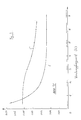
- the associated graph is shown in Fig. 2.
- the test duration from time 0 (introduction of the sample into the analysis apparatus) to the termination of the test after approximately 470 minutes is plotted in the unit "min".
- the weight loss during the test is plotted in the left ordinate in the form of negative percentages, in each case based on the total weight of the sample originally used.
- the right ordinate indicates the temperature.
- the original weight of the sample placed in the analysis apparatus was arbitrarily set to 0.
- a sample with a weight loss of "-10"% corresponds to a sample that still has 90% by weight of its original weight.
- the associated curve, which represents the weight loss over the duration of the experiment is designated "TG” in FIG. 2.
- the curve which shows the temperature profile during the test is designated "Temp" in FIG. 2.
- the device essentially comprised an evacuable vessel which was connected to a vacuum pump and a gas feed line through which a carrier gas could be introduced into the vessel.
- the carrier gas could be heated to a predetermined temperature via a gas preheater.
- the vessel was also gas-tightly connected to a microbalance, the measurement signals of which acted on a recorder via electronics and a computer. The temperature of the sample could be checked and regulated via the gas preheating and appropriate thermocouples.
- test sample was placed in a small crucible in the evacuable vessel in such a way that the crucible was suspended in a free-floating manner on a thread which was connected to the microbalance, so that weight losses acted on the microbalance.
- the gas preheating was regulated in such a way that the test sample had a temperature of 220 ° C.
- a vacuum (10 mbar) was then created with an oil pump.
- the weight changes in the measurement sample registered by the microbalance were converted by the computer into an evaporation rate in the units mg / min and recorded by the recorder.
- the evaporation rate drops between the measuring time t 1 and t 4 from 0.052 mg / min to 0.036 mg / min. This means that 51 ⁇ 2 hours after the start of the measurement the evaporation rate is still 69.2% of the original value. In addition, the evaporation rate decreases uniformly. Because of this only slight, and also uniform decrease in the evaporation rate, the Ba (TMHD) 2 according to the invention is very well suited for use in CVD synthesis.
- the Ba (TMHD) 2 was mixed with 100 ml of hexane and a further 8 ml of TMHD (7.16 g, corresponding to 0.0384 mol) was added. The reaction mixture was then stirred again at a temperature of 50 ° C. for 8 hours and then dried under a high vacuum, as described above. Elemental analysis: Ba [%] about. 27.25 found 27.4
- Example 1 The apparatus described in Example 1 was used to determine the rate of evaporation.
- Example 1 Again, the Netzsch apparatus used in Example 1 was used. The weight loss was carried out a) in an air atmosphere and b) in a nitrogen atmosphere.
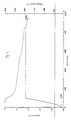
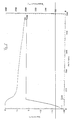
- Example 3 To determine the weight loss, a sample of 93.00 mg of the Ca (TMHD) 2 according to the invention prepared in Example 3 was placed in an aluminum oxide crucible and introduced into the thermal analysis apparatus. Aluminum oxide (90.00 mg) served as reference. As said, the atmosphere in the apparatus consisted of air, the pressure was about 10 torr. After the sample had been introduced, the temperature in the analytical apparatus was brought to 200 ° C. within half an hour. The change in the weight of the sample was recorded as described in Example 1 over a period of 460 minutes using a pen. The associated graph is shown in FIG. 4. The curve which shows the weight loss over the duration of the experiment is again designated "TG" and the curve of the temperature profile is termed "Temp".
- the weight loss per unit of time is very uniform as early as 30 minutes (t a ) after the predetermined temperature of 200 ° C. has been reached in the subsequent 330 minutes.
- the absolute amount of weight loss per hour is in the range of (0.56 ⁇ 0.16)% by weight. Because of this small fluctuation range, the Ca (TMHD) 2 according to the invention can be used very advantageously in CVD processes.
- TMHD gaseous Cu
- strontium titanate support gaseous Cu
- Y (TMHD) 3 was thermally decomposed to form a layer which essentially contained yttrium as an oxide.
- Ba (TMHD) 2 prepared according to Example 1 was evaporated and introduced into the CVD apparatus. During the decomposition, a layer was deposited on the carrier heated to 600 ° C. which essentially contained the barium in the form of the oxide.
Landscapes
- Chemical & Material Sciences (AREA)
- Organic Chemistry (AREA)
- Inorganic Chemistry (AREA)
- General Chemical & Material Sciences (AREA)
- Chemical Kinetics & Catalysis (AREA)
- Engineering & Computer Science (AREA)
- Materials Engineering (AREA)
- Mechanical Engineering (AREA)
- Metallurgy (AREA)
- Chemical Vapour Deposition (AREA)
- Organic Low-Molecular-Weight Compounds And Preparation Thereof (AREA)
Description
- Die Erfindung bezieht sich auf neuartige Erdalkalimetall-Heptandionat-Verbindungen, ein Verfahren zu ihrer Herstellung und ein Verfahren zu ihrer Anwendung zur Abscheidung Erdalkalimetall enthaltender Schichten.
- Aus der wissenschaftlichen Literatur sind Erdalkalimetall-Heptandionat-Verbindungen der allgemeinen Formel (I), M(R)₂, worin M Calcium, Strontium oder Barium und R 2,6-Dimethyl-3,5-heptandionat, 2,2,6-Trimethyl-3,5-heptandionat bzw. 2,2,6,6-Tetramethyl-3,5-heptandionat bedeutet, bereits bekannt.
- Es ist auch bereits bekannt, daß diese Verbindungen verdampfbar sind und deshalb zur Abscheidung von Erdalkalimetall enthaltenden Schichten, beispielsweise bei der Herstellung supraleitender, oxidkeramischer Schichten verwendet werden können. Die bislang bekannten und im Handel erhältlichen Erdalkalimetall-Heptandionat-Verbindungen weisen jedoch noch Nachteile auf. Sie zeigen beispielsweise ein ungleichmäßiges Gewichtsabnahme- bzw. Verdampfungsverhalten derart, daß die Gewichtsabnahme bzw. Verdampfungsrate von relativ hohen Anfangswerten bald auf relativ kleine Werte absinkt.
- Aufgabe der Erfindung ist es, Erdalkalimetall-Heptandionat-Verbindungen mit vorteilhaften Eigenschaften, insbesondere im Hinblick auf die Anwendung in der MCOVD(metal organic chemical vapour deposition-)Methode, anzugeben. Diese Aufgabe wird durch die erfindungsgemäßen Erdalkalimetall-Heptandionat-Verbindungen gelöst.
- Ein Gegenstand der vorliegenden Erfindung sind neue verdampfbare Verbindungen der allgemeinen Formel
M(R)₂ (I)
worin M Calcium, Strontium oder Barium und R 2,6-Dimethyl-3,5-heptandionat, 2,2,6-Trimethyl-3,5-heptandionat oder 2,2,6,6-Tetramethyl-3,5-heptandionat bedeutet, welche dadurch gekennzeichnet sind, daß im ¹H-NMR-Spektrum ein Signal für Wasserprotonen nicht nachweisbar ist. - Der Begriff "3,5-Heptandion" bezeichnet Verbindungen mit der Grundstruktur
C-C-C(O)-C-C(O)-C-C.
- Der Begriff "3,5-Heptandionat" bezeichnet Verbindungen obiger Grundstruktur, bei welchen jedoch ein Proton abstrahiert ist und die deshalb eine negative Ladung aufweisen.
- Selbst bei einem hohen Signal-Rausch-Verhältnis, beispielsweise >600, ist ein Wassersignal nicht zu identifizieren. Selbstverständlich muß man in einem wasserfreien Lösungsmittel messen, insbesondere in deuterierten Lösungsmitteln wie D₆-Dimethylsulfoxid.
- In dieser Eigenschaft, daß nämlich in einer Lösung der erfindungsgemäßen Verbindungen in einem nichtwäßrigen Lösungsmittel im ¹H-NMR-Spektrum selbst bei Messung in Geräten, die nach dem FT-(Fourier-Transform-)Prinzip und hoher Spektrenakkumulation mit entsprechend hohem Signal-Rauschverhältnis der Methylprotonen arbeiten, ein Signal für Wasserprotonen nicht nachweisbar ist, unterscheiden sich die erfindungsgemäßen Erdalkalimetall-Heptandionat-Verbindungen von den bislang bekannten und in der Technik üblicherweise verwendeten Verbindungen.
- Bevorzugte Verbindungen der allgemeinen Formel (I) sind solche, in welchen R 2,2,6,6-Tetramethyl-3,5-heptandionat bedeutet.
- Vorzugsweise bedeutet M Barium.
- Besonders bevorzugte Verbindungen sind Calcium-, Strontium- bzw. Barium-bis(2,2,6,6-tetramethyl-3,5-heptandionat), insbesondere Barium-bis(2,2,6,6-tetramethyl-3,5-heptandionat), kurz Ba(TMHD)₂ genannt.
- Es ist bekannt, daß Metall-Diketonate in den verschiedenen Aggregatzuständen in monomerer, oligomerer bzw. polymerer Form vorliegen können. Die allgemeine Formel (I) soll nicht nur monomere, sondern auch oligomere bzw. polymere Formen der erfindungsgemäßen Verbindungen mit umfassen.
- Eine besonders vorteilhafte Eigenschaft, in welcher sich die erfindungsgemäßen Verbindungen von bereits bekannten Verbindungen dieser Art unterscheiden, ist die gleichförmige Gewichtsabnahme bzw. Verdampfungsrate im Vakuum bei erhöhter Temperatur.
- Erhitzt man beispielsweise eine Probe des erfindungsgemäßen Barium-bis(2,2,6,6-tetramethyl-3,5-heptandionats), Ba(TMHD)₂, bei vermindertem Druck in Stickstoffatmosphäre auf eine Temperatur von 200 °C und bestimmt die prozentuale Gewichtsabnahme, jeweils bezogen auf das ursprünglich eingesetzte Gewicht der Probe als 100 Gew.-%, so stellt man fest, daß das Verhältnis der prozentualen Gewichtsabnahme innerhalb der ersten Stunde nach Erreichen der Temperatur von 200 °C und innerhalb der sechsten Stunde nach Erreichen der Temperatur von 200 °C bei etwa 1,5:1 liegt. Teilt man die Meßdauer nach Erreichen der Temperatur in 6 Perioden von jeweils 1 Stunde, so liegen die Verhältnisse der prozentualen Gewichtsabnahme einer Periode verglichen mit der darauffolgenden Periode innerhalb einer Schwankungsbreite von 0,7:1 bis 1,5:1. Der absolute Wert der Gewichtsabnahme des erfindungsgemäßen Ba(TMHD)₂ beträgt während eines Zeitraumes von mindestens 6 Stunden nach Erreichen einer Temperatur von etwa 200 °C etwa (3 ± 0,5) Gew.-%, bezogen auf das Gesamtgewicht der Probe bei Versuchsbeginn.
- Ebenso gleichförmig ist die Gewichtsabnahme beispielsweise der erfindungsgemäßen Verbindungen Ca(TMHD)₂ und Sr(TMHD)₂.
- Erhitzt man beispielsweise eine Probe des erfindungsgemäßen Ca(TMHD)₂ bei vermindertem Druck in Stickstoffatmosphäre auf eine Temperatur von 200 °C und bestimmt die prozentuale Gewichtsabnahme, jeweils bezogen auf das ursprünglich eingesetzte Gewicht der Probe als 100 Gew.-% bei Versuchsbeginn, so stellt man fest, daß der Wert der prozentualen Gewichtsabnahme innerhalb der zweiten Stunde nach Erreichen der Temperatur von 200 °C und der Wert der Gewichtsabnahmen innerhalb der sechsten Stunde nach Erreichen der Temperatur von 200 °C ein Verhältnis von etwa 0,6:1 aufweisen. Teilt man die Meßdauer nach Erreichen der Temperatur in sechs Perioden von jeweils 1 Stunde, so liegt das Verhältnis der prozentualen Gewichtsabnahme der ersten Periode und der prozentualen Gewichtsabnahme der zweiten Periode zwar bei 5,6:1. Die Verhältnisse der prozentualen Gewichtsabnahme der zweiten, dritten, vierten und fünften Periode und der Gewichtsabnahme der jeweils darauffolgenden Periode liegen innerhalb einer vorteilhaft geringen Schwankungsbreite von etwa 0,55:1 bis 1,2:1. Der absolute Wert der Gewichtsabnahme des erfindungsgemäßen Ca(TMHD)₂ beträgt während eines Zeitraumes von mindestens 5 Stunden nach Erreichen einer Temperatur von etwa 200 °C etwa (0,56 ± 0,16) Gew.-%, bezogen auf das Gesamtgewicht der Probe.
- Eine solche gleichförmige Gewichtsabnahme ist mit bekannten Heptandionat-Verbindungen nicht zu erreichen. Bei diesen wird vielmehr eine sehr starke prozentuale Gewichtsabnahme innerhalb der ersten Stunde und eine geringere Gewichtsabnahme ab der zweiten Stunde nach Erreichen der Aufheiztemperatur von 200 °C beobachtet. Vorteilhaft konstant über einen langen Zeitraum ist auch die Verdampfungsrate der erfindungsgemäßen Verbindungen. Bestimmt man beispielsweise die Verdampfungsrate der erfindungsgemäßen Verbindungen, gemessen in mg/min, bei 220 °C im Vakuum über einen Zeitraum von 6 Stunden, so stellt man fest, daß die Verdampfungsrate nach 6 Stunden noch etwa 69 % der ursprünglichen Verdampfungsrate beträgt. Zudem ist der Abfall sehr gleichförmig. Eine solch konstante Verdampfungrate ist mit bekannten Erdalkalimetall-Heptandionaten nicht erreichbar. Bei den bekannten Verbindungen wird ein viel stärkerer Abfall beobachtet und häufig auch eine nicht konstante Änderung der Verdampfungsrate. Üblicherweise nimmt die Verdampfungsrate nämlich bei bekannten Verbindungen innerhalb von 2 Stunden besonders stark ab. Eine nach 6 Stunden gemessene Verdampfungsphase von 60 % und mehr der ursprünglich gemessenen Verdampfungsrate ist ebenfalls eine Eigenschaft, in der sich die neuen Verbindungen von bekannten Verbindungen unterscheiden.
- Ein weiterer Gegenstand der vorliegenden Erfindung ist ein Verfahren zur Herstellung der erfindungsgemäßen Verbindung der allgemeinen Formel (I). Dieses Verfahren ist dadurch gekennzeichnet, daß man eine Lösung oder Suspension der Verbindung des Metalles M in Wasser oder in einem wasserhaltigen, mit Wasser mischbaren Lösungsmittel mit dem Diketon versetzt, das gebildete Produkt abtrennt und im Vakuum bei einer Temperatur von maximal 60 °C trocknet, bis im ¹H-NMR-Spektrum Wasserprotonen nicht mehr nachweisbar sind.
- Für die Aufnahme eines ¹H-NMR-Spektrums löst man die zu untersuchende Verbindung zweckmäßig in einem wasserfreien, insbesondere deuterierten Lösungsmittel, z.B. D₆-DMSO.
- Man kann verschiedene anorganische oder organische Erdalkalimetallverbindungen als Ausgangsverbindungen einsetzen. Besonders geeignet sind Oxide und insbesondere Hydroxide, beispielsweise Calciumhydroxid, Strontiumhydroxid, Bariumhydroxid sowie entsprechende Hydrate bzw. Calciumoxid, Strontiumoxid oder Bariumoxid. Zur Herstellung von Verbindungen der allgemeinen Formel (I), in welchen M Barium bedeutet, geht man besonders zweckmäßig von Bariumhydroxid-Octahydrat aus. Selbstverständlich könnte man auch vom wasserfreien Bariumhydroxid oder Bariumhydroxid-Monohydrat oder anderen Hydraten ausgehen, ebenso von Bariumoxid.
- Als Lösungsmittel verwendet man Wasser oder Gemische von Wasser mit wassermischbaren organischen Lösungsmitteln. Beispielsweise kann man Gemische von Wasser mit kurzkettigen aliphatischen Alkoholen, beispielsweise Methanol oder Ethanol, verwenden. Besonders bevorzugt verwendet man Wasser, das keine organischen Lösungsmittel enthält.
- Das Molverhältnis von Erdalkalimetallverbindung zu Heptandion-Verbindung beträgt zweckmäßig 1:2 bis 1:2,05. Zweckmäßig legt man die Lösung bzw. Suspension der Erdalkaliverbindung im Lösungsmittel vor und gibt die Heptandion-Verbindung unter intensivem Rühren zu. Gewünschtenfalls kann man das Reaktionsgemisch zur Vervollständigung der Umsetzung weiterrühren, beispielsweise bis zu 24 Stunden bei erhöhter Temperatur. Für die Herstellung von Ba(TMHD)₂ hat sich eine Nachreaktionsphase unter Rühren von 8 bis 12 Stunden bei 40 bis 50 °C Temperatur in der Reaktionsmischung als vorteilhaft erwiesen.
- Das Produkt kann dann bei Raumtemperatur von der überstehenden flüssigen Phase abgetrennt werden. Hierzu bedient man sich bekannter Methoden, zweckmäßig filtriert man im Wasserstrahlvakuum über eine Nutsche. Vorteilhaft wird das Produkt dann mit destilliertem Wasser nachgewaschen und weitgehend trockengesaugt. Die anschließende Trocknung führt man zweckmäßig bei möglichst geringem Druck, z.B. < 1 Bar, durch. Die Temperatur bei der Trocknung, die wie oben schon gesagt maximal 60 °C betragen soll, liegt zweckmäßig zwischen 40 und 50 °C.
- Die nach dem erfindungsgemäßen Verfahren erhältlichen Erdalkalimetall-Heptandionate der allgemeinen Formel (I) können für all jene Anwendungsbereiche verwendet werden, in welchen solche Metall-Heptandionate üblicherweise verwendet werden. Besonders gut geeignet sind die Verbindungen jedoch zur Anwendung in einem Verfahren zur Abscheidung von Erdalkalimetall enthaltenden Schichten.
- Es ist bereits bekannt, Substrate durch Oberflächenbeschichtung, beispielsweise nach dem MOCVD-Verfahren, so zu modifizieren, daß ihre Oberfläche bestimmte funktionale Eigenschaften aufweist. Beispielsweise kann man den elektrischen Strom leitende oder halbleitende Schichten, z.B. Leiterbahnen aufbringen.
- Ein Verfahren zur Abscheidung von Erdalkalimetall enthaltenden Schichten unter Anwendung der erfindungsgemäßen Verbindungen der allgemeinen Formel (I) ist ebenfalls Gegenstand der vorliegenden Erfindung.
- Das erfindungsgemäße Verfahren zur Abscheidung von Erdalkalimetall enthaltenden Schichten unter Verwendung von Erdalkalimetall-Diketonat-Verbindungen ist dadurch gekennzeichnet, daß man als Erdalkalimetall-Diketonat-Verbindung eine Verbindung der allgemeinen Formel (I)
M(R)₂ (I)
worin M Calcium, Strontium oder Barium und R 2,6-Dimethyl-3,5-heptandionat, 2,2,6-Trimethyl-3,5-heptandionat oder 2,2,6,6-Tetramethyl-3,5-heptandionat bedeutet und in deren ¹H-NMR-Spektrum Wasserprotonen nicht nachweisbar sind, verwendet. - Der Begriff "Erdalkalimetall" umfaßt Calcium, Strontium, Barium oder deren Gemische, wobei die Erdalkalimetalle in der Oxidationsstufe 0, d.h. in metallischer Form in den Schichten enthalten sein können, oder teilweise oder vollständig auch in Form von insbesondere anorganischen Verbindungen vorliegen können, beispielsweise als Oxid, Hydroxid, Carbonat oder Nitrid.
- Bevorzugt setzt man in einem solchen Verfahren Verbindungen ein, in welchen R 2,2,6,6-Tetramethyl-3,5-heptandionat bedeutet.
- M bedeutet bevorzugt Barium.
- Zur Abscheidung einer Barium enthaltenden Schicht verwendet man ganz besonders bevorzugt Barium-bis(2,2,6,6-tetramethyl-3,5-heptandionat).
- Die Abscheidung kann der Fachmann aus der kondensierten Phase oder auch aus der Gas- bzw. Dampfphase vornehmen. Für den Fachmann ist dabei selbstverständlich, daß er gewünschtenfalls nicht nur eine bestimmte Verbindung der allgemeinen Formel (I), sondern auch Gemische solcher Verbindungen, in denen M, R oder beide variieren, einsetzen kann.
- Zur Abscheidung aus der kondensierten Phase bringt der Fachmann die Verbindung der Formel (I) ohne Lösungsmittel oder vorzugsweise in einem Lösungsmittel gelöst auf dem Substrat auf und zersetzt die Verbindung. Als Lösungsmittel können polare oder unpolare, aprotische organische Lösungsmittel, die gewünschtenfalls koordinierende Eigenschaften aufweisen können, verwendet werden. Geeignet sind beispielsweise aliphatische Kohlenwasserstoffe wie Pentan oder Petrolbenzin, aromatische Kohlenwasserstoffe wie Benzol oder Toluol oder Ether wie Tetrahydrofuran. Weiterhin geeignet sind einbasige oder mehrbasige, insbesondere aliphatische Alkohole, z.B. Methanol, Ethanol, Glykol oder Glykolderivate, ferner insbesondere aliphatische Verbindungen mit einer, zwei oder mehr primären, sekundären oder tertiären Aminogruppen. Das Substrat wird dann in bekannter Weise in die Lösung der Verbindung eingetaucht. Man kann die Ausgangsverbindung oder eine entsprechende Lösung auch beispielsweise auf das Substrat aufsprühen. Auf diese Weise gelingt es immer auch große Flächen sehr schnell zu beschichten.
- Dann erfolgt die Zersetzung der auf dem Substrat aufgebrachten Verbindung zur Abscheidung einer Erdalkalimetall enthaltenden Schicht, gewünschtenfalls unter vermindertem Druck. Bevorzugt bewirkt man die Zersetzung thermisch. Dies kann durch Einbringen des mit der Ausgangsverbindung beschichteten Substrat in eine entsprechend beheizte Kammer, durch Heizen des Substrates vor, während und/oder nach dem Aufbringen der Ausgangsverbindung auf den angegebenen Temperaturbereich erfolgen.
- Die thermische Zersetzung kann auch strahlungsinduziert bewirkt werden, beispielsweise durch einen Laser, der im UV-Bereich, im Infrarotbereich oder im Bereich des sichtbaren Lichts arbeitet und den Träger aufheizt.
- Gewünschtenfalls kann die Zersetzung auch durch Photolyse erfolgen. Die photolytische Zersetzung kann durch einen bei der entsprechenden Wellenlänge betriebenen Laser oder eine UV-Lampe bewirkt werden.
- Die Zersetzung kann man auch plasmainduziert durchführen, beispielsweise durch Niederdruckplasmen, z.B. ein Gleichstrom- oder Wechselstromplasma (Niederfrequenz-, Mittelfrequenz, Hochfrequenz-, Mikrowellenplasma) oder Glimmentladungsplasma. Die plasmainduzierte Zersetzung erfolgt in bekannten Plasmareaktoren, beispielsweise Rohr-, Tunnel-, Parallelplatten- oder Koronarentladungsreaktoren. Die Zersetzung im Plasma wird üblicherweise bei erniedrigtem Druck, beispielsweise unterhalb von 10 mbar, z.B. zwischen 10⁻² und 1mbar durchgeführt. Auf diese Weise lassen sich beispielsweise auch Substrate mit verhältnismäßig geringer Thermostabilität, beispielsweise Kunststoffe, beschichten.
- Der Fachmann kann durch Zusatz eines Reaktivgases die Form, in welcher das Erdalkalimetall in der Schicht vorliegt, beeinflussen. Dies, sowie die Möglichkeit der gleichzeitigen Abscheidung anderer Metalle oder der sukzessiven Abscheidung weiterer Metalle wird noch erläutert.
- Eine andere Ausführungsform des erfindungsgemäßen Verfahrens zur Abscheidung Erdalkalimetall enthaltender Schichten betrifft die Zersetzung der Ausgangsverbindung in der Gas- bzw. Dampfphase. Für diese Ausführungsform sind die erfindungsgemäßen Verbindungen aufgrund der gleichförmigen Verdampfung besonders gut geeignet. Die Abscheidung aus der Gas- bzw. Dampfphase (in der Dampfphase sind neben der gasförmig vorliegenden Ausgangsverbindung auch noch Anteile der kondensiert vorliegenden Ausgangsverbindung in feinster Verteilung enthalten) ermöglicht die Abscheidung besonders gut haftender, gleichmäßiger, dünner Schichten.
- Der Druck in der Dampfphase bzw. Gasphase kann mehr oder weniger hoch sein. Man kann beispielsweise bei einem Druck arbeiten, der dem Dampfdruck der verwendeten Ausgansverbindung bei der Arbeitstemperatur entspricht. Der Gesamtdruck kann aber auch höher sein, bis hin zum Normaldruck. Zweckmäßig arbeitet man bei vermindertem Druck, beispielsweise bei 10⁻² bis 10 mbar, vorzugsweise bei 0,1 bis 1 mbar.
- Die Zersetzung der Ausgangsverbindung in der Dampfphase oder Gasphase führt man zweckmäßig nach Art eines MOCVD (metal organic chemical vapour deposition-)Verfahren durch.
- Die prinzipielle Vorgehensweise zur Beschichtung von Substraten unter Anwendung von MOCVD-Verfahren sowie geeignete Apparaturen dafür sind bekannt. Die EP-A 297 348 (die sich mit anderen Beschichtungen befaßt) gibt dem Fachmann ausführliche Hinweise, wie ein solches Verfahren durchzuführen ist und welche Apparaturen verwendbar sind.
- Die Zersetzung aus der Gas- bzw. Dampfphase wird zweckmäßig in einer druckfesten, evakuierbaren Vorrichtung durchgeführt. In diese Vorrichtung wird das zu beschichtende Substrat eingebracht. Bei vermindertem Druck wird eine Atmosphäre erzeugt, welche die Erdalkalimetall enthaltende Ausgangsverbindung der allgemeinen Formel (I) enthält. Neben der gas- bzw. dampfförmigen Ausgangsverbindung kann gewünschtenfalls Inertgas oder Reaktivgas im Gasraum der Vorrichtung vorhanden sein.
- In einer Variante wird die Ausgangsverbindung in fester Form zusammen mit dem zu beschichtenden Substrat in die Vorrichtung eingebracht und erst in der Vorrichtung in die Gas- bzw. Dampfphase überführt.
- In einer anderen, bevorzugten Variante wird zunächst nur das Substrat in die druckfeste Vorrichtung eingebracht und die bereits gas- bzw. dampfförmig vorliegende Ausgangsverbindung über eine besondere Leitung kontinuierlich oder diskontinuierlich in die Vorrichtung eingebracht. Hier kann ebenfalls ein Trägergas angewendet werden.
- Die Überführung der Ausgangsverbindung in die Gas- bzw. Dampfphase kann man durch Erwärmen und gewünschtenfalls durch Zusatz eines Trägergases unterstützen.
- Die Zersetzung erfolgt nach bekannten Methoden. Es ist also möglich, die Zersetzung thermisch, durch Einwirkung eines Plasmas und/oder photolytisch zu bewirken.
- Die thermische Zersetzung aus der Gas- bzw. Dampfphase führt man üblicherweise so durch, daß die Wände der Vorrichtung kalt gehalten werden und das Substrat auf eine Temperatur erhitzt wird, bei welcher sich die gewünschte Schicht auf dem Substrat abscheidet. Der Fachmann kann durch einfache orientierende Versuche für die jeweils eingesetzte Verbindung die notwendige Mindesttemperatur leicht bestimmen. Üblicherweise liegt die Temperatur, auf welche das Substrat erhitzt wird, oberhalb von etwa 80 °C. Für die Zersetzung von erfindungsgemäßem Ba(TMHD)₂ liegt die Temperatur beispielsweise bei oberhalb von 200 °C.
- Die Beheizung der Substrate kann in üblicher Weise erfolgen, beispielsweise durch Widerstandsheizung, Induktionsheizung, elektrische Heizeinrichtungen wie Heizwendeln oder ähnlichem. Die Aufheizung der Substrate kann auch durch Strahlungsenergie induziert werden. Hierfür eignet sich insbesondere Laserstrahlungsenergie. Beispielsweise kann man Laser verwenden, die im Bereich des sichtbaren Lichts, im UV-Bereich oder im IR-Bereich arbeiten. Laser besitzen den Vorteil, daß man sie mehr oder weniger fokussieren kann und daher gezielt bestimmte, begrenzte Bereiche oder Punkte des Substrates erhitzen kann.
- Da das thermische CVD-Verfahren üblicherweise bei Unterdruck durchgeführt wird, ist es für den Fachmann selbstverständlich, druckfeste Apparaturen vorzusehen, wie sie in der Vakuumtechnik verwendet werden. Die Apparaturen weisen zweckmäßigerweise beheizbare Gasleitungen für die metallorganische Verbindung oder das Inertgas, absperrbare Öffnungen für Gasein- und Gasauslaß auf, gegebenenfalls Öffnungen zur Zuführung eines Trägers oder Reaktivgases, Temperaturmeßeinrichtungen, gewünschtenfalls eine Öffnung für die Zuführung der metallorganischen Verbindung, eine Einrichtung für die Aufheizung des Substrats, eine zur Erzeugung des gewünschten Unterdruckes geeignete Pumpe etc. Für den Fall der Durchführung eines durch Strahlungsenergie induzierten CVD-Verfahrens muß auch noch eine Strahlungsquelle vorhanden sein, die Strahlung im Bereich des sichtbaren Lichtes, des Infrarot- oder Ultraviolett-Bereiches abgibt. Besonders geeignet sind entsprechende Laser-Strahlungsenergiequellen. Mittels der Strahlungsenergie kann das Substrat aufgeheizt werden. Eine sehr einfache, zweckmäßige Vorrichtung zur Verfahrensdurchführung ist in Fig. 1 wiedergegeben. Sie umfaßt ein mit einer Inertgaszuleitung 1 über ein absperrbares Ventil 2 verbundenes Glasrohr 3, das konzentrisch in einem röhrenförmig aufgebauten Heizofen 4 angeordnet ist, welcher zwei Heizzonen 5 und 6 aufweist ("Zweizonenröhrenofen"). Die andere Seite des Rohres ist über eine Kühlfalle 7 mit einer Vakuumpumpe 8 verbunden.
- In die erste Heizzone, die auf der Seite der Inertgaszuleitung liegt, wird die Ausgangsverbindung eingebracht. In die zweite Heizzone, die auf der Seite der Vakuumpumpe liegt, bringt man das Substrat ein.
- Wie schon gesagt, kann die Zersetzung auch photolytisch bewirkt werden. Beispielsweise kann man die Zersetzung plasmainduziert bewirken. Man verwendet wie vorstehend schon beschrieben beispielsweise ein Gleichstrom-, Hochfrequenz-, Mikrowellen- oder Glimmentladungsplasma. Weiterhin kann man die photolytische Zersetzung bewirken, indem man einen mit geeigneter Wellenlänge arbeitenden Laser verwendet.
- Ohne daß hier eine Erklärung für die Bildung von Schichten durch Zersetzung der Erdalkalimetallverbindungen gegeben werden soll, wird angenommen, daß Gase bzw. Dämpfe der Verbindung auf das erhitzte Substrat gelangen und dort unter Bildung der Erdalkalimetall enthaltenden Schichten zersetzt werden. Die Dicke der Schichten ist im wesentlichen abhängig von der Zeitdauer, während welcher die Abscheidung durchgeführt wird, vom Partialdruck im Gasraum, und von der Abscheidungstemperatur. Es lassen sich mehr oder weniger dünne Schichten erzeugen, beispielsweise Schichten mit einer Dicke von bis zu 20 Mikrometer, beispielsweise zwischen 100 A und 20 Mikrometer. Je nach gewünschter Schichtdicke kann der Fachmann durch orientierende Versuche die zur Erzeugung einer Schicht bestimmter Dicke notwendige Zeitdauer und Abscheidungstemperatur bestimmen.
- Wie schon gesagt, kann die Zersetzung auch photolytisch bewirkt werden, z.B. durch eine UV-Lampe oder durch einen mit geeigneter Wellenlänge arbeitenden Laser.
- Der das Substrat umgebende Gasraum enthält die gas- bzw. dampfförmig vorliegende Ausgangsverbindung. Es wurde bereits weiter oben erwähnt, daß weiterhin ein Inertgas oder ein Reaktivgas in der Gasatmosphäre enthalten sein kann. Abhängig von der Art der Durchführung werden Erdalkalimetall enthaltende Schichten abgeschieden, die das Erdalkalimetall in metallischer Form oder aber in Form bestimmter chemischer Verbindungen enthalten.
- Zersetzt man die Ausgangsverbindung ohne Zusatz eines Reaktivgases, so scheiden sich Erdalkalimetall enthaltende Schichten ab, die das Erdalkalimetall im wesentlichen in Form von Oxid enthalten.
- Die derart beschichteten Substrate können einer Nachbehandlung unterworfen werden.
- Zur Erzeugung von Schichten, welche das Erdalkalimetall in metallischer Form enthalten, kann man eine reduzierende Atmosphäre einwirken lassen.
- Derartig beschichtete Substrate sind beispielsweise als Getter verwendbar.
- Eine Möglichkeit der Nachbehandlung sieht vor, die Schichten einer hydrolysierenden Atmosphäre auszusetzen. Mit Wasser bildet sich zunächst eine Schicht, die ein Erdalkalimetallhydroxid enthält. Erdalkalimetallhydroxide sind bekanntermaßen ebenfalls sehr reaktiv und können beispielsweise mit Kohlendioxid in Erdalkalimetallcarbonat umgewandelt werden. Erdalkalimetallcarbonat wiederum, aber auch Erdalkalihydroxid, kann durch Kalzinieren in Erdalkalimetalloxid überführt werden. Auf diese Weise ist es möglich, mit Erdalkalimetallhydroxid, Erdalkalimetallcarbonat oder Erdalkalimetalloxid beschichtete Substrate herzustellen. Derartig beschichtete Substrate sind beispielsweise verwendbar als optische Schichten.
- In einer anderen Ausführungsform führt man die Zersetzung in einer Reaktivgasatmosphäre, insbesondere einer oxidierenden Atmosphäre durch. Anhand der bevorzugten Ausführungsform des erfindungsgemäßen Verfahrens zur Abscheidung Erdalkalimetall enthaltender Schichten, nämlich der Zersetzung in einer oxidierenden Gasatmosphäre, wird diese Variante weiter erläutert. Zweckmäßig führt man die Zersetzung in Anwesenheit einer oxidierenden, beispielsweise Sauerstoff, Stickstoffdioxid oder Ozon enthaltenden Gasatmosphäre durch. Es bilden sich dann Erdalkalimetall enthaltende Schichten, welche das Erdalkalimetall in Form von Erdalkalimetalloxid enthalten. Alternativ kann man auch in einer hydrolysierenden oder carbonisierenden Atmosphäre arbeiten, beispielsweise in Anwesenheit von Wasser und Kohlendioxid. Das intermediär entstehende Erdalkalimetallcarbonat oder Hydroxid wird dann zu Metalloxid kalziniert. Einfacher ist es jedoch, die Zersetzung in Anwesenheit einer insbesondere Sauerstoff enthaltenden Atmosphäre durchzuführen.
- Im Anschluß an die Abscheidung in der oxidierenden Reaktivgasatmosphäre kann man gewünschtenfalls die abgeschiedenen Schichten noch einer Nachbehandlung, insbesondere einer oxidierenden Nachbehandlung, unterwerfen.
- Das erfindungsgemäße Verfahren eignet sich auch zur Abscheidung von Schichten, welche neben dem Erdalkalimetall ein oder mehrere andere Metalle enthalten. Diese Ausführungsform des erfindungsgemäßen Abscheidungsverfahrens ist dadurch gekennzeichnet, daß man zur Abscheidung von Erdalkalimetall enthaltenden Schichten, welche weiterhin ein oder mehrere andere Metalle enthalten, eine oder mehrere Verbindungen anderer Metalle und eine Verbindung der allgemeinen Formel (I) gleichzeitig oder nacheinander zersetzt.
- Sofern man die Abscheidung aus kondensierter Phase vornimmt, verwendet man Gemische, die neben einer Ausgangsverbindung der allgmeinen Formel (I) beliebige bekannte zersetzbare Verbindungen enthalten. Besonders bevorzugt zersetzt man unter Bildung von Schichten, die das Erdalkalimetall und das oder die weiteren Metalle in Form der Metalloxide enthalten. Hierzu kann man, wie oben beschrieben, in Reaktivgasatmosphäre arbeiten und gewünschtenfalls die beschichteten Substrate einer oxidierenden Nachbehandlung unterwerfen. Beispielsweise kann man zersetzbare Titanverbindungen etwa Titanalkoholate oder Titan-β-Diketonate einsetzen und Erdalkalimetalltitanate, insbesondere Bariumtitanat, enthaltende Schichten abscheiden. Natürlich kann man auch modifizierte Erdalkalimetalltitanate herstellen. Beispielsweise kann man einen Teil des Bariums durch Blei, Calcium oder Strontium und einen Teil des Titans durch Zinn, Zirkonium oder Hafnium ersetzen. Man geht dann zweckmäßig von β-Diketonaten dieser Verbindungen aus. Bei der Abscheidung aus der kondensierten Phase kann man nach Art des bekannten Sol-Gel-Verfahrens arbeiten.
- Die hierbei hergestellten Titanate besitzen dielektrische Eigenschaften und die mit diesen Dielektrika beschichteten Substrate können in der Elektro- und Sensortechnik verwendet werden.
- Weiterhin eignen sich die erfindungsgemäßen Verbindungen der Formel (I) auch zur Anwendung in einem erfindungsgemäßen, aus der kondensierten Phase durchgeführten Abscheidungsverfahren zur Herstellung von Erdalkalimetall enthaltenden oxidischen Gemischen, die in ihrer chemichen Zusammensetzung bekannten hochtemperatursupraleitenden Keramiken, beispielsweise des Typs Seltenerdmetall-Erdalkalimetall-Kupfer-Oxid entsprechen. Beispielsweise kann man β-Diketonate von Yttrium und Kupfer und eine Bariumverbindung der allgemeinen Formel (I) mischen, zersetzen, gewünschtenfalls mit Sauerstoff nachbehandeln und gewünschtenfalls tempern. Man erhält dann ein Yttrium-Barium-Kupfer-Oxid.
- Gewünschtenfalls kann man auch modifizierte Gemische herstellen, indem man einen Teil der Yttrium-, Barium- und/oder Kupferverbindungen durch zersetzbare Verbindungen anderer Metalle ersetzt, beispielsweise durch erfindungsgemäße oder bekannte Calciumverbindungen, erfindungsgemäße oder bekannte Strontiumverbindungen, durch Lanthanverbindungen, Wismutverbindungen, Thalliumverbindungen oder durch andere Seltenerdmetallverbindungen. Das gewünschte Molverhältnis der Metalle kann beim Vermischen auf einfache Weise eingestellt werden.
- Besonders gut eignen sich die erfindungsgemäßen Verbindungen der allgemeinen Formel (I) zur Abscheidung in der Gas- bzw. Dampfphase, weil sie eine sehr gleichförmige Verdampfungsrate besitzen.
- Ganz besonders gut eignen sich die erfindungsgemäßen Verbindungen der Formel (I) zur Herstellung von Schichten, die in ihrer chemischen Zusammensetzung oxidkeramischen Hochtemperatursupraleitern entsprechen, insbesondere solchen des Seltenerdmetall-Erdalkalimetall-Kupfer-Oxid-Typs. Aus der Gas- bzw. Dampfphase lassen sich besonders dünne, guthaftende, gleichförmige Schichten erzeugen.
- Als Träger verwendet man die bei CVD-Verfahren üblicherweise verwendeten Träger. Zur Abscheidung supraleitender Schichten kann man als Träger beispielsweise Strontiumtitanat, Aluminiumoxid, Magnesiumoxid oder andere bekanntermaßen verwendbare Materialien verwenden. Diese Substrate können beispielsweise in Form von Fasern, beispielsweise als Kohlenstoffasern, in Form von Bändern, Folien, Rohren oder in Form von Platten ausgebildet sein.
- Zur Abscheidung von oxidkeramischen Hochtemperatursupraleitern, beispielsweise solchen des Seltenerdmetall-Erdalkalimetall-Kupfer-Oxid-Typs wie Y₁Ba₂Cu₃Ox, worin x etwa 6,8 bis 6,95 bedeutet, scheidet man zweckmäßig die verschiedenen Metallschichten nacheinander ab. Die Abscheidung des Erdalkalimetalls erfolgt hierbei nach dem erfindungsgemäßen Verfahren.
- Vorteilhafterweise scheidet man zunächst eine Kupfer enthaltende Schicht ab, indem man eine bekannte verdampfbare Kupfer-Verbindung, beispielsweise Kupferacetylacetonat, Kupfer-TMHD oder Cyclopentadienyl-Kupfer-Trialkylphosphinkomplexe, bei vermindertem Druck und einer Temperatur zwischen Raumtemperatur und etwa 300 °C oder höher verdampft und aus oxidierender Gasatmosphäre auf dem Träger abscheidet.
- Sehr gut geeignet zur Abscheidung Kupfer enthaltender Schichten sind auch die aus der deutschen Patentanmeldung DE-A 41 22 449 bekannten Kupferverbindungen der allgemeinen Formel RO-Cu-L (II). R bedeutet insbesondere verzweigtes Alkyl mit 3 bis 6 C-Atomen, L steht für t-Butylisonitril, Kohlenmonoxid sowie bestimmte dreiwertige Phosphorverbindungen. Verbindungen dieser Art lassen sich leicht herstellen, indem man das betreffende Lithium-Alkoholat zunächst mit Kupfer(I)chlorid zum Zwischenprodukt RO-Cu umsetzt und dieses mit dem Liganden L zu der gewünschten Verbindung der allgemeinen Formel (II) weiter reagieren läßt. Sehr gut geeignet sind insbesondere die aus jener Patentanmeldung bekannten Verbindungen t-Butoxy-Kupfer-t-butyldifluorphosphan, t-Butoxy-Kupfer-phenyldifluorphosphan, t-Butoxy-Kupfer-diethylaminodifluorphosphan, 2-Trifluormethylpropan-2-oxy-Kupfer-t-butylisonitril, 2-Trifluormethylpropan-2-oxy-Kupfer-trimethylphosphan, Perfluor-t-Butoxy-Kupfer-t-butylisonitril und Perfluor-t-Butoxy-Kupfer-trimethylphosphan.
- Sehr gut geeignet sind auch die in der deutschen Patentanmeldung DE-A 41 24 686 als brauchbar beschriebenen Verbindungen der allgemeinen Formel R-Cu-L (III). Hier steht R für Cyclopentadienyl oder durch 1 bis 5 Substituenten, insbesondere Alkyl mit 1 bis 5 C-Atomen substituiertes Cyclopentadienyl. L steht für (C₁-C₆-Alkyl)isonitril oder Arylisonitril. Verbindungen dieser Art lassen sich herstellen, indem man wasserfreies Kupfer(I)chlorid mit t-BuOLi zu t-BuO-Cu umsetzt, dies mit einem Isonitril, beispielsweise t-BuNC zu t-BuO-Cu-t-BuNC umsetzt. Diese Zwischenverbindung wird dann mittels Cyclopentadien bzw. einem substituierten Cyclopentadien in die gewünschte Verbindung der allgemeinen Formel (III) überführt. Sehr gut geeignet ist beispielsweise C₅H₅-Cu-t-BuNC. Nach Abscheidung der Kupfer enthaltenden Schicht scheidet man zweckmäßig die Seltenerdmetall enthaltende Schicht ab. Beispielsweise verdampft man Verbindungen des Yttriums, insbesondere β-Diketonate wie Yttrium-tris(2,2,6,6-tetramethyl-3,5-heptandionat). Nach der Zersetzung dieser Verbindungen verdampft und zersetzt man zur Abscheidung der Erdalkalimetall enthaltenden Schicht eine erfindungsgemäße Verbindung der allgemeinen Formel (I), beispielsweise Barium-bis-2,2,6,6-tetramethyl-3,5-heptandion. Die Zersetzungstemperatur beträgt etwa 500 °C bis 700 °C.
- Gewünschtenfalls kann die vorstehend beschriebene Reihenfolge der Schichtabscheidung auch verändert werden. Zur Überführung der abgeschiedenen Oxidschicht in einem Hochtemperatursupraleiter wird die Beschichtung dann noch getempert.
- In völlig analoger Weise können modifizierte oxidkeramische Schichten hergestellt werden, indem man das gesamte Yttrium oder einen Teil davon durch Strontium, Lanthan, Thallium, Wismut oder andere Metalle ersetzt. Zusätzlich oder stattdessen kann man auch das gesamte Barium bzw. einen Teil davon durch andere Erdalkalimetalle ersetzen. Zweckmäßig verwendet man Metall-β-Diketonate. Zur Abscheidung Erdalkalimetall enthaltender Schichten, die zusätzlich zu Barium oder anstelle von Barium andere Erdalkalimetalle enthalten, verwendet man die erfindungsgemäßen Verbindungen der allgemeinen Formel (I), in welchen M Calcium bzw. Strontium bedeutet.
- Auf diese Weise kann man neben gegebenenfalls modifizierten Supraleitern des Seltenerdmetall-Erdalkalimetall-Kuprat-Typs auch Supraleiter auf Thalliumoxid- bzw. Wismutoxid-Basis herstellen.
- Abgesehen von der vorstehend beschriebenen Methode, Hochtemperatursupraleiter durch sukzessive Abscheidung von Schichten zu erzeugen, kann man natürlich auch von Gemischen ausgehen und dann homogene Schichten abscheiden.
- Ferner kann man außer der vorstehend beschriebenen Abscheidung aus der Gas- bzw. Dampfphase auch, wie weiter oben beschrieben, aus der kondensierten Phase abscheiden.
- Die Dicke der abgeschiedenen supraleitenden Schicht beträgt zweckmäßig etwa 5 bis 20 Mikrometer.
- Die folgenden Beispiele sollen die Erfindung weiter erläutern, ohne sie in ihrem Umfang einzuschränken.
- In einem 250 ml-Rundkolben wurden 22,08 g Bariumhydroxid-Octahydrat (0,07 mol) in 120 ml destilliertem Wasser aufgeschlämmt. Zu der weißen Suspension wurden 25,8 g (0,14 mol) 2,2,6,6-Tetramethyl-3,5-heptandion zugetropft. Es bildete sich ein weißer Feststoff. Die Reaktionsmischung wurde noch 10 Stunden lang bei 50 °C Ölbadtemperatur weitergerührt. Das weiße Produkt wurde dann nach dem Abkühlen auf Raumtemperatur über eine Nutsche abfiltriert. Zur Beschleunigung der Filtration wurde ein Wasserstrahlvakuum angelegt. Der abfiltrierte Feststoff wurde dann mit destilliertem Wasser nachgewaschen und im Wasserstrahlvakuum weitgehend trockengesaugt. Die Feuchtausbeute betrug 40,5 g. Das vorgetrocknete Produkt wurde dann im Ölpumpenvakuum bei etwa 10⁻² bis 10⁻³ Torr unter Aufwärmen auf 50 bis 55 °C (Ölbadheizung) 4 Stunden lang getrocknet. Die Ausbeute betrug 33,5 g (95,7 % d.Th.).
Elementaranalyse: Ba ber. 27,25 % gef. 27,1 % - Im ¹H-NMR-Spektrum einer Lösung des erfindungsgemäßen Ba(TMHD)₂ in D₆-DMSO war auch bei einem Signal-Rausch-Verhältnis von >600 kein Signal für H₂O-Protonen identifizierbar.
- Röntgenspektrum: 2 Theta = 23,99°; 16,7°; 6,3°; 7,0°;
(ausgewählte Peaks) 7,4 °; 5,6°. - Verwendete Apparatur: NETZSCH Simultane Thermoanalysenapparatur STA 409
- Zur Bestimmung der Gewichtsabnahme wurde eine Probe von 81,00 mg des in Beispiel 1 hergestellten erfindungsgemäßen Ba(TMHD)₂ in einen Aluminiumoxidtiegel gegeben und in die Thermoanalysenapparatur eingebracht. Als Referenz diente Aluminiumoxid (56,00 mg). Die Atmosphäre in der Apparatur bestand aus Stickstoff, der Druck betrug 10 Torr. Nach Einbringen der Probe wurde die Temperatur in der Analysenapparatur auf 200 °C gebracht. Diese Temperatur wurde nach einer halben Stunde erreicht. Die Veränderung des Gewichts der Probe wurde, beginnend mit dem Einbringen der Probe in die Thermoanalysenapparatur, über einen Zeitraum von etwa 460 Minuten mittels eines Schreibers aufgezeichnet. Der zugehörige Graph ist in Fig. 2 wiedergegeben. In der Abszisse ist in der Einheit "min" die Versuchsdauer vom Zeitpunkt 0 (Einbringen der Probe in die Analysenapparatur) bis zum Abbruch des Versuchs nach etwa 470 Minuten aufgetragen. In der linken Ordinate ist die Gewichtsabnahme während des Versuches in Form negativer Prozentzahlen, jeweils bezogen auf das ursprünglich eingesetzte Gesamtgewicht der Probe, aufgetragen. Die rechte Ordinate gibt die Temperatur an. Das ursprüngliche Gewicht der in die Analysenapparatur eingebrachten Probe wurde willkürlich gleich 0 gesetzt. Eine Probe mit einer Gewichtsabnahme von "-10" % entspricht dann einer Probe, die noch 90 Gew.-% ihres ursprünglichen Gewichtes aufweist. Die zugehörige Kurve, die die Gewichtsabnahme über die Versuchsdauer wiedergibt, ist in der Fig. 2 mit "TG" bezeichnet. Die Kurve, die den Temperaturverlauf während des Versuches wiedergibt, ist in der Fig. 2 mit "Temp" bezeichnet.
- In der Tabelle 1 sind aus der Fig. 2 entnehmbare Werte für die Gewichtsabnahme der Probe und die korrespondierenden, daraus berechneten Restgewichte der Probe zu bestimmten Meßzeitpunkten t₀, t₁ etc. zusammengestellt.
Tabelle 1 Meßzeitpunkt (min) Gew.-Abnahme der Probe (Gew.-%) ber. Restgewicht der Probe (Gew.-%) t₀* 0 0 100 t₁** 50 - 3,5 96,5 t₂ 110 - 7 93 t₃ 170 -10 90 t₄ 230 -12,5 87,5 t₅ 290 -15 85 t₆ 350 -18 82 t₇ 410 -21,5 78,5 * t₀ = Zeitpunkt des Versuchsbeginns ** t₁ = Erreichen der vorbestimmten Temperatur in der Analysenapparatur (200 °C) - Aus Tabelle 1 ist zu entnehmen, daß während einer Versuchsdauer von 410 Minuten die Gewichtsabnahme pro Zeiteinheit in einem nur gering schwankenden Bereich liegt. So beträgt die durchschnittliche Gewichtsabnahme zwischen dem Zeitpunkt t₁ (Erreichen der vorbestimmten Temperatur in der Analysenapparatur) bis zum Zeitpunkt t₇ etwa -18 Gew.-%. Die durchschnittliche Gewichtsabnahme zwischen zwei aufeinanderfolgenden Meßzeitpunkten beträgt dann bezogen auf das Gewicht der Probe zum Zeitpunkt t₀ (Versuchsbeginn), etwa -3 Gew.-%. Ein Blick in die Tabelle 1 zeigt, daß die tatsächliche Gewichtsabnahme zwischen zwei aufeinanderfolgenden Meßzeitpunkten zwischen -2,5 Gew.-% (Differenz der Ergebnisse zum Meßzeitpunkt t₃ und t₄ bzw. t₄ und t₅) und -3,5 Gew.-% (Gewichtsabnahme zwischen den Meßzeitpunkten t₁ und t₂ bzw. t₆ und t₇) schwankt. Eine solch geringe Schwankungsbreite ist sehr vorteilhaft bei der Anwendung in CVD-Verfahren.
- Im wesentlichen umfaßte die Vorrichtung ein evakuierbares Gefäß, das mit einer Vakuumpumpe verbunden war sowie mit einer Gaszuleitung, durch die ein Trägergas in das Gefäß eingeleitet werden konnte. Über eine Gasvorheizung konnte das Trägergas auf eine vorgegebene Temperatur erhitzt werden. Das Gefäß war weiterthin gasdicht mit einer Mikrowaage verbunden, deren Meßsignale über eine Elektronik und einen Rechner auf einen Schreiber einwirkten. Die Temperatur der Probe konnte über die Gasvorheizung und entsprechende Thermoelemente kontrolliert und geregelt werden.
- Die Meßprobe wurde in einem kleinen Tiegel in das evakuierbare Gefäß eingebracht, und zwar derart, daß der Tiegel freischwebend an einem Faden aufgehängt war, der mit der Mikrowaage verbunden war, so daß Gewichtsabnahmen auf die Mikrowaage einwirkten. Die Gasvorheizung wurde derart reguliert, daß die Meßprobe eine Temperatur von 220 °C aufwies. Mit einer Ölpumpe wurde dann ein Vakuum (10 mbar) erzeugt. Die von der Mikrowaage registrierten Gewichtsänderungen in der Meßprobe wurden vom Rechner in eine Verdampfungsrate in den Einheiten mg/min umgewandelt und vom Schreiber aufgezeichnet. In Fig. 3, Graph I ist der Verlauf der Verdampfungsrate einer Probe des in Beispiel 1 hergestellten Ba(TMHD)₂ bei 220 °C während einer Zeitdauer von 6 Stunden wiedergegeben. In Tabelle 2 sind aus der Fig. 3 entnehmbare Zahlenwerte für die Verdampfungsrate nach etwa 30 Minuten sowie nach 1, 2, 3, 4, 5 und 6 Stunden aufgelistet.
Tabelle 2 Meßzeitpunkt (h) Verdampfungsrate (mg/min) t₀* 0 -- t₁ 0,5 0,052 t₂ 1 0,0518 t₃ 2 0,050 t₄ 3 0,047 t₅ 4 0,041 t₆ 5 0,038 t₇ 6 0,036 * t₀ = Beginn der Messung - Wie der Tabelle 2 zu entnehmen ist, sinkt die Verdampfungsrate zwischen dem Meßzeitpunkt t₁ und t₇ von 0,052 mg/min auf 0,036 mg/min. Das bedeutet, daß 5½ Stunden nach Beginn der Messung die Verdampfungsrate noch immer 69,2 % des ursprünglichen Wertes beträgt. Außerdem nimmt die Verdampfungsrate gleichförmig ab. Aufgrund dieser nur geringfügigen, zudem gleichförmigen Abnahme der Verdampfungsrate ist das erfindungsgemäße Ba(TMHD)₂ sehr gut für die Anwendung bei der CVD-Synthese geeignet.
- In einem 250 ml-Rundkolben wurden 37,8 g Bariumhydroxid-Octahydrat (0,12 mol) vorgelegt. Über einen Tropftrichter wurden 50 ml 2,2,6,6-Tetramethyl-3,5-heptandion (0,24 mol) zugetropft. Dann wurden 70 ml Xylol zugegeben. Das Reaktionsgemisch wurde dann mittels eines Ölbades auf 50 °C erhitzt und 10 Stunden lang bei dieser Temperatur gerührt. Anschließend wurde die Ölbadtemperatur auf 60 °C gebracht und flüchtige Bestandteile am Hochvakuum abgedampft.
Trockenausbeute: 57,5 g (95 % der Theorie) - Gemäß der Elementaranalyse war 1 % mehr Barium als berechnet in der Probe enthalten. Daher wurde das hergestellte Ba(TMHD)₂ mit 100 ml Hexan versetzt und weitere 8 ml TMHD (7,16 g, entsprechend 0,0384 mol) zugegeben. Dann wurde das Reaktionsgemisch bei einer Temperatur von 50 °C noch einmal 8 Stunden gerührt und anschließend am Hochvakuum, wie oben beschrieben, getrocknet.
Elementaranalyse: Ba [%] ber. 27,25 gef. 27,4 - Im ¹H-NMR-Spektrum einer Lösung des Produkts in D₆-DMSO ist deutlich ein Signal von Protonen des Wassers zu identifizieren.
- Es wurde die in Beispiel 1 beschriebene Apparatur zur Bestimmung der Verdampfungsrate verwendet.
- Die Durchführung erfolgte analog zu der in Beispiel 1 beschriebenen Durchführung. Der Verlauf der Verdampfungsrate ist in Fig. 3, Graph II wiedergegeben. Die daraus berechneten Meßergebnisse sind in Tabelle 3 zusammengestellt.
Tabelle 3 (Vergleichsbeispiel 2) Meßzeitpunkt (h) Verdampfungsrate (mg/min) t₀* 0,5 0,065 t₁ 1 0,045 t₂ 2 0,031 t₃ 3 0,027 t₄ 4 0,0245 t₅ 5 0,024 t₆ 6 0,024 * t₀ = Beginn der Messung - Aus der Tabelle ist zu entnehmen, daß die Verdampfungsrate von ursprünglich 0,065 mg/min nach 5½ Stunden auf einen Wert von nur noch 0,024 mg/min abgefallen ist. Dies sind nur noch 37 % des ursprünglichen Wertes. Außerdem ist der Abfall der Verdampfungsrate anfangs sehr groß. Ein solch starker, ungleichförmiger Abfall ist sehr unvorteilhaft bei der Anwendung.
- In einem 250 ml-Rundkolben wurden 3,7 g Calciumhydroxid (0,05 mol) in etwa 100 ml destilliertem Wasser aufgeschlämmt. Zu der weißen Suspension wurden unter Rühren 18,4 g TMHD (0,1 mol) zugetropft. Es bildete sich ein weißer Feststoff. Die Reaktionsmischung wurde dann mittels eines Ölbades auf eine Temperatur von 50 °C gebracht und 10 Stunden lang bei dieser Temperatur gerührt. Nach dem Abkühlen auf Raumtemperatur wurde das weiße Produkt über eine Nutsche abfiltriert und mit destilliertem Wasser nachgewaschen. Die Feuchtausbeute nach dem weitgehenden Trockensaugen im Wasserstrahlvakuum betrug 25,0 g. Anschließend wurde der Feststoff mittels eines auf 50 °C temperierten Ölbades erwärmt und im Hochvakuum (Ölpumpe) bei etwa 10⁻² bis 10⁻³ Torr getrocknet.
Trockenausbeute: 18,8 g (94 % der Theorie) - Unmittelbar nach der Herstellung: bei 255 °C Bildung einer trüben Schmelze.
- Nach 30 Tagen: Sinterung bei 245 °C, Bildung einer trüben Schmelze bei 250 °C.
Elementaranalyse: Ca ber. 9,86 gef. 10,2 - Es wurde wiederum die auch in Beispiel 1 verwendete Apparatur der Firma Netzsch eingesetzt. Die Gewichtsabnahme wurde a) in einer Luftatmosphäre und b) in einer Stickstoffatmosphäre durchgeführt.
- Zur Bestimmung der Gewichtsabnahme wurde eine Probe von 93,00 mg des in Beispiel 3 hergestellten erfindungsgemäßen Ca(TMHD)₂ in einem Aluminiumoxidtiegel gegeben und in die Thermoanalysenapparatur eingebracht. Als Referenz diente Aluminiumoxid (90,00 mg). Die Atmosphäre in der Apparatur bestand wie gesagt aus Luft, der Druck betrug etwa 10 Torr. Nach Einbringen der Probe wurde die Temperatur in der Analysenapparatur binnen einer halben Stunde auf 200 °C gebracht. Die Veränderung des Gewichts der Probe wurde wie schon in Beispiel 1 beschrieben über einen Zeitraum von 460 Minuten mittels eines Schreibers aufgezeichnet. Der zugehörige Graph ist in Fig. 4 wiedergegeben. Die Kurve, die die Gewichtsabnahme über die Versuchsdauer wiedergibt, ist wiederum mit "TG" und die Kurve des Temperaturverlaufes mit "Temp" bezeichnet.
- In der Tabelle 4 sind aus der Fig. 4 entnehmbare Werte für die Gewichtsabnahme der Probe und die korrespondierenden, daraus berechneten Restgewichte der Probe zu bestimmten Meßzeitpunkten t₀, t₁ etc. zusammengestellt.
Tabelle 4 Meßzeitpunkt (min) Gew.-Abnahme der Probe (Gew.-%) ber. Restgewicht der Probe (Gew.-%) t₀* 0 0 100 t₁** 50 - 0,77 99,23 ta 80 - 3 97 t₂ 110 - 3,7 96,3 t₃ 170 - 4,3 95,7 t₄ 230 - 4,8 95,2 t₅ 290 - 5,5 94,5 t₆ 350 - 6,1 93,9 t₇ 410 - 6,5 93,5 * t₀ = Zeitpunkt des Versuchsbeginns ** t₁ = Erreichen der vorbestimmten Temperatur in der Analysenapparatur (200 °C) - Aus Tabelle 4 ist zu entnehmen, daß bereits 30 Minuten (ta) nach Erreichen der vorgegebenen Temperatur von 200 °C in den darauffolgenden 330 Minuten die Gewichtsabnahme pro Zeiteinheit sehr gleichmäßig ist. Der absolute Betrag der Gewichtsabnahme pro Stunde liegt im Bereich von (0,56 ± 0,16) Gew.-%. Aufgrund dieser geringen Schwankungsbreite kann das erfindungsgemäße Ca(TMHD)₂ sehr vorteilhaft in CVD-Verfahren eingesetzt werden.
- Diesmal wurde eine Probe von 83,00 mg des in Beispiel 3 hergestellten erfindungsgemäßen Ca(TMHD)₂ in einen Aluminiumoxidtiegel gegeben und in die Thermoanalysenapparatur eingebracht. Als Referenz diente Aluminiumoxid (89,00 mg). Die Atmosphäre in der Apparatur bestand aus Stickstoff, der Druck betrug etwa 10 Torr. Nach Einbringen der Probe wurde die Temperatur in der Analysenapparatur binnen einer halben Stunde auf etwa 200 °C gebracht. Die Veränderung des Gewichts der Probe wurde, beginnend mit dem Einbringen der Probe in die Thermoanalysenapparatur, über einen Zeitraum von etwa 460 Minuten mittels eines Schreibers aufgezeichnet. Der zugehörige Graph ist in Fig. 5 wiedergegeben. Die Kurve, die die Gewichtsabnahme über die Versuchsdauer wiedergibt, ist in der Fig. 5 wiederum mit "TG", und die den Temperaturverlauf wiedergebende Kurve mit "Temp" bezeichnet.
- In der Tabelle 5 sind aus der Fig. 5 entnehmbare Werte für die Gewichtsabnahme der Probe und die korrespondierenden, daraus berechneten Restgewichte der Probe zu bestimmten Meßzeitpunkten t₀, t₁ etc. zusammengestellt.
Tabelle 5 Meßzeitpunkt (min) Gew.-Abnahme der Probe (Gew.-%) ber. Restgewicht der Probe (Gew.-%) t₀* 0 0 100 t₁** 50 - 1,1 98,9 ta 80 - 3,3 96,7 t₂ 110 - 3,9 96,1 t₃ 170 - 4,2 95,8 t₄ 230 - 4,45 95,55 t₅ 290 - 4,9 95,1 t₆ 350 - 5,3 94,7 t₇ 410 - 5,8 94,2 * = Zeitpunkt des Versuchsbeginns ** = Erreichen der vorgestimmten Temperatur in der Analysenapparatur (200 °C) - Aus Tabelle 5 ist zu entnehmen, daß auch in Stickstoffatmosphäre die Gewichtsabnahme pro Zeiteinheit über einen Verlauf von mehreren Stunden nur gering schwankt. Zwar ist in den ersten 30 Minuten nach Erreichen der vorgegebenen Temperatur von 200 °C noch eine überdurchschnittlich starke Gewichtsabnahme der Probe zu beobachten. Etwa 1 Stunde nach Erreichen der vorgegebenen Temperatur verdampft die Probe sehr gleichförmig. Der absolute Wert der Gewichtsabnahme liegt in einem Bereich von etwa (0,38 ± 0,17) Gew.-% pro Stunde. Die Anwendung im CVD-Verfahren ist somit auch in Stickstoffatmosphäre sehr vorteilhaft.
- In einem 250 ml-Rundkolben wurden 11,69 g Strontiumhydroxid-Octahydrat (0,044 mol) in etwa 100 ml destilliertem Wasser aufgeschlämmt. Unter Rühren wurden dann 16,22 g TMHD (0,088 mol) zugetropft. Es fiel ein Feststoff aus. Dieser Feststoff wurde mit einem Spatel zerkleinert und die Reaktionsmischung dann noch 10 Stunden lang unter Erhitzen mit einem auf 50 °C temperierten Ölbad weitergerührt. Der Feststoff wurde danach mit einer Nutsche abfiltriert, mit destilliertem Wasser gewaschen und mit einer Wasserstrahlpumpe vorgetrocknet. Die Feuchtausbeute betrug 24,2 g. Anschließend wurde der Feststoff unter Erwärmen mit einem auf 50 °C temperierten Ölbad im Ölpumpenvakuum bei etwa 10⁻² bis 10⁻³ Torr getrocknet.
Ausbeute: 18,7 g (93,5 % der Theorie).Elementaranalyse: Sr ber. 19,29 gef. 20,1 - Sintern bei 140 °C, bilden einer weißlichen, trüben Schmelze bei 250 °C.
- Nach 30 Tagen: Sintern bei 145 °C, bilden einer weißgelben, trüben Schmelze bei 240 °C.
- In eine CVD-Apparatur wurde zunächst gasförmiges Cu(TMHD)₂ in die Apparatur eingeleitet und auf einem Strontiumtitanatträger unter Bildung einer Schicht zersetzt, welche Kupfer im wesentlichen als Oxid enthielt. Anschließend wurde Y(TMHD)₃ thermisch unter Bildung einer Schicht zersetzt, welche Yttrium im wesentlichen als Oxid enthielt.
- Schließlich wurde nach Beispiel 1 hergestelltes, erfindungsgemäßes Ba(TMHD)₂ verdampft und in die CVD-Apparatur eingeleitet. Es wurde bei der Zersetzung auf dem auf 600 °C erhitzten Träger eine Schicht abgeschieden, die das Barium im wesentlichen in Form des Oxids enthielt.
- Anschließend wurde in sauerstoffhaltiger Atmosphäre getempert.
Claims (15)
- Verdampfbare Verbindungen der allgemeinen Formel (I)
M(R)₂ (I)
worin M Calcium, Strontium oder Barium und R 2,6-Dimethyl-3,5-heptandionat, 2,2,6-Trimethyl-3,5-heptandionat oder 2,2,6,6-Tetramethyl-3,5-heptandionat bedeutet, dadurch gekennzeichnet, daß im ¹H-NMR-Spektrum ein Signal für Wasserprotonen nicht nachweisbar ist. - Verbindungen nach Anspruch 1, dadurch gekennzeichnet, daß R 2,2,6,6-Tetramethyl-3,5-heptandionat bedeutet.
- Verbindungen nach Anspruch 1 oder 2, dadurch gekennzeichnet, daß M Barium bedeutet.
- Gemische zur Anwendung bei MOCVD-(metal organic chemical vapour deposition-)Verfahren, dadurch gekennzeichnet, daß sie eine oder mehrere verdampfbare Verbindungen der allgemeinen Formel (I), nach einem der Ansprüche 1 bis 3, und eine oder mehrere verdampfbare organische Verbindungen anderer Metalle enthalten.
- Gemische nach Anspruch 4, dadurch gekennzeichnet, daß sie verdampfbare Verbindungen der allgemeinen Formel (I) und eine oder mehrere verdampfbare organische Verbindungen von Yttrium und Kupfer enthalten.
- Verfahren zur Herstellung von Verbindungen der allgemeinen Formel (I)
M(R)₂ (I)
worin M Calcium, Strontium oder Barium und R 2,6-Dimethyl-3,5-heptandionat, 2,2,6-Trimethyl-3,5-heptandionat oder 2,2,6,6-Tetramethyl-3,5-heptandionat bedeuten durch Umsetzen einer Verbindung des Metalles M in einem Lösungsmittel mit der Diketonverbindung 2,6-Dimethyl-3,5-heptandion, 2,2,6-Trimethyl-3,5-heptandion bzw. 2,2,6,6-Tetramethyl-3,5-heptandion und Isolieren der gebildeten Verbindung der Formel (I), dadurch gekennzeichnet, daß man eine Lösung oder Suspension der Verbindung des Metalles M in Wasser oder in einem wasserhaltigen, mit Wasser mischbaren Lösungsmittel, mit dem Diketon versetzt, das gebildete Produkt abtrennt und im Vakuum bei einer Temperatur von maximal 60 °C trocknet, bis im ¹H-NMR-Spektrum Wasserprotonen nicht mehr nachweisbar sind. - Verfahren nach Anspruch 6, dadurch gekennzeichnet, daß man als Verbindung des Metalles M ein Hydroxid oder Oxid des Metalls M verwendet.
- Verfahren nach Anspruch 6 oder 7, dadurch gekennzeichnet, daß man die Verbindung des Metalles M und die Diketon-Verbindung im Molverhältnis von 1:2 bis 1:2,05 einsetzt.
- Verfahren zur Abscheidung einer Erdalkalimetall enthaltenden Schicht auf einem Substrat durch Zersetzung einer Erdalkalimetall-Diketonat-Verbindung, dadurch gekennzeichnet, daß man als Erdalkalimetall-Diketonat-Verbindung eine Verbindung der allgemeinen Formel (I)
M(R)₂ (I)
worin M Calcium, Strontium oder Barium und R 2,6-Dimethyl-3,5-heptandionat, 2,2,6-Trimethyl-3,5-heptandionat oder 2,2,6,6-Tetramethyl-3,5-heptandionat bedeutet und in deren ¹H-NMR-Spektrum Wasserprotonen nicht nachweisbar sind, verwendet. - Verfahren nach Anspruch 9, dadurch gekennzeichnet, daß R 2,2,6,6-Tetramethyl-3,5-heptandionat bedeutet.
- Verfahren nach Anspruch 9 oder 10, dadurch gekennzeichnet, daß M Barium bedeutet.
- Verfahren nach einem der Ansprüche 9 bis 11, dadurch gekennzeichnet, daß man die Verbindung der allgemeinen Formel (I) in der Gas- oder Dampfphase zersetzt.
- Verfahren nach Anspruch 12, dadurch gekennzeichnet, daß man die Verbindung der allgemeinen Formel (I) unter vermindertem Druck, gewünschtenfalls unter Anwendung eines Trägergases, in die Gas- oder Dampfphase überführt und bei vermindertem Druck zersetzt.
- Verfahren nach einem der Ansprüche 9 bis 13, dadurch gekennzeichnet, daß man zur Abscheidung von Erdalkalimetall enthaltenden Schichten, welche das Erdalkalimetall in Form von Erdalkalimetalloxid, Erdalkalimetallhydroxid oder Erdalkalimetallcarbonat enthalten, eine Nachbehandlung in einer reaktiven Atmosphäre, vorzugsweise einer oxidierenden, hydrolysierenden und/oder carbonisierenden Gasatmosphäre durchführt.
- Verfahren nach einem der vorhergehenden Ansprüche, dadurch gekennzeichnet, daß man zur Abscheidung von Erdalkalimetall enthaltenden Schichten, welche weiterhin ein anderes Metall oder mehrere andere Metalle enthalten, eine oder mehrere Verbindungen anderer Metalle und eine Verbindung der allgemeinen Formel (I) gleichzeitig oder nacheinander zersetzt.
Applications Claiming Priority (2)
| Application Number | Priority Date | Filing Date | Title |
|---|---|---|---|
| DE4108731A DE4108731A1 (de) | 1991-03-18 | 1991-03-18 | Neuartige erdalkalimetall-heptandionat-verbindungen |
| DE4108731 | 1991-03-18 |
Publications (2)
| Publication Number | Publication Date |
|---|---|
| EP0504706A1 EP0504706A1 (de) | 1992-09-23 |
| EP0504706B1 true EP0504706B1 (de) | 1995-06-21 |
Family
ID=6427541
Family Applications (1)
| Application Number | Title | Priority Date | Filing Date |
|---|---|---|---|
| EP92104036A Expired - Lifetime EP0504706B1 (de) | 1991-03-18 | 1992-03-10 | Neuartige Erdalkalimetall-Heptandionat-Verbindungen |
Country Status (4)
| Country | Link |
|---|---|
| US (2) | US5451434A (de) |
| EP (1) | EP0504706B1 (de) |
| JP (1) | JPH05239066A (de) |
| DE (2) | DE4108731A1 (de) |
Families Citing this family (16)
| Publication number | Priority date | Publication date | Assignee | Title |
|---|---|---|---|---|
| DE4108731A1 (de) * | 1991-03-18 | 1992-09-24 | Solvay Barium Strontium Gmbh | Neuartige erdalkalimetall-heptandionat-verbindungen |
| US6214105B1 (en) * | 1995-03-31 | 2001-04-10 | Advanced Technology Materials, Inc. | Alkane and polyamine solvent compositions for liquid delivery chemical vapor deposition |
| US6344079B1 (en) * | 1995-03-31 | 2002-02-05 | Advanced Technology Materials, Inc. | Alkane and polyamine solvent compositions for liquid delivery chemical vapor deposition |
| US5916359A (en) * | 1995-03-31 | 1999-06-29 | Advanced Technology Materials, Inc. | Alkane and polyamine solvent compositions for liquid delivery chemical vapor deposition |
| US6444264B2 (en) * | 1995-03-31 | 2002-09-03 | Advanced Technology Materials, Inc. | Method for liquid delivery CVD utilizing alkane and polyamine solvent compositions |
| JP3094868B2 (ja) * | 1995-09-07 | 2000-10-03 | 三菱マテリアル株式会社 | 高純度誘電体薄膜の作製方法 |
| NL1004867C2 (nl) * | 1996-12-20 | 1998-06-23 | Tno | Met vezels versterkt bio-keramisch composietmateriaal. |
| US6248392B1 (en) | 1996-12-20 | 2001-06-19 | Nederlandse Organisatie Voor Toegepast-Natuurwetenschappelijk Ondersoek Tno | Method for manufacturing a fiber-reinforced bioactive ceramic implant |
| WO1998046617A1 (en) | 1997-04-17 | 1998-10-22 | The President And Fellows Of Harvard College | Liquid precursor for formation of metal oxides |
| JP2000026362A (ja) * | 1998-07-10 | 2000-01-25 | Daicel Chem Ind Ltd | β−ジケト化合物のアルカリ土類金属塩の製造方法 |
| JP2002527528A (ja) * | 1998-10-21 | 2002-08-27 | プレジデント・アンド・フェロウズ・オブ・ハーバード・カレッジ | アルカリ土類金属を含有する材料を形成するための液体化合物 |
| GB9917189D0 (en) * | 1999-07-23 | 1999-09-22 | Inorgtech Ltd | Metalorganic chemical vapour deposition precursor |
| FR2798381A1 (fr) * | 1999-09-14 | 2001-03-16 | Rhodia Chimie Sa | Preparation de chelates de calcium en presence d'un solvant de type alcool |
| US6472337B1 (en) * | 2001-10-30 | 2002-10-29 | Sharp Laboratories Of America, Inc. | Precursors for zirconium and hafnium oxide thin film deposition |
| DE10229040A1 (de) * | 2002-06-28 | 2004-01-29 | Solvay Barium Strontium Gmbh | Neue Erdalkalimetallkomplexe und ihre Verwendung |
| DE602004026889D1 (de) * | 2003-09-19 | 2010-06-10 | Akzo Nobel Nv | Metallisierung von substrat(en) durch ein flüssigkeit/ - dampfabscheidungsverfahren |
Family Cites Families (18)
| Publication number | Priority date | Publication date | Assignee | Title |
|---|---|---|---|---|
| DE297348C (de) * | ||||
| US3098863A (en) * | 1959-10-15 | 1963-07-23 | Du Pont | Nickel and cobalt chelates of ortho-hydroxybenzophenones |
| US3946057A (en) * | 1972-05-03 | 1976-03-23 | Union Carbide Corporation | Preparation of metal complexes of 1,3-diketones |
| US4127361A (en) * | 1976-11-29 | 1978-11-28 | S.A.E.S. Getters S.P.A. | Air-bakeable water-proof getter device and method of manufacturing same |
| US4251233A (en) * | 1979-03-05 | 1981-02-17 | University Patents, Inc. | Liquid hydrocarbon-soluble rare earth chelates prepared from the novel ligand 2,2,7-trimethyl-3,5-octanedione and fuels containing same |
| EP0055459A1 (de) * | 1980-12-29 | 1982-07-07 | Rikuun Electric co. | Verfahren zur Herstellung von Oxiden durch chemische Dampf-Abscheidung (CVD) |
| US4915988A (en) * | 1988-06-22 | 1990-04-10 | Georgia Tech Research Corporation | Chemical vapor deposition of group IIA metals and precursors therefor |
| US5140003A (en) * | 1989-03-22 | 1992-08-18 | Siemens Aktiengesellschaft | Method for manufacturing layers from an oxide-ceramic superconductor material on a substrate using a cvd-process |
| US5139999A (en) * | 1990-03-08 | 1992-08-18 | President And Fellows Of Harvard College | Chemical vapor deposition process where an alkaline earth metal organic precursor material is volatilized in the presence of an amine or ammonia and deposited onto a substrate |
| US5028724A (en) * | 1990-03-30 | 1991-07-02 | Air Products And Chemicals, Inc. | Synthesis of volatile fluorinated and non-fluorinated metal-beta-ketonate and metal-beta-ketoiminato complexes |
| US4970093A (en) * | 1990-04-12 | 1990-11-13 | University Of Colorado Foundation | Chemical deposition methods using supercritical fluid solutions |
| US5225561A (en) * | 1990-07-06 | 1993-07-06 | Advanced Technology Materials, Inc. | Source reagent compounds for MOCVD of refractory films containing group IIA elements |
| US5280012A (en) * | 1990-07-06 | 1994-01-18 | Advanced Technology Materials Inc. | Method of forming a superconducting oxide layer by MOCVD |
| US5453494A (en) * | 1990-07-06 | 1995-09-26 | Advanced Technology Materials, Inc. | Metal complex source reagents for MOCVD |
| EP0472897B1 (de) * | 1990-07-27 | 1994-12-14 | Kali-Chemie Aktiengesellschaft | Verfahren zur Abscheidung einer Kupfer enthaltenden Schicht II |
| JPH04232271A (ja) * | 1990-07-27 | 1992-08-20 | Kali Chem Ag | 銅を含有する層の基板上への析出方法 |
| DE4122449A1 (de) * | 1990-07-27 | 1992-01-30 | Kali Chemie Ag | Verfahren zur abscheidung einer kupfer enthaltenden schicht i |
| DE4108731A1 (de) * | 1991-03-18 | 1992-09-24 | Solvay Barium Strontium Gmbh | Neuartige erdalkalimetall-heptandionat-verbindungen |
-
1991
- 1991-03-18 DE DE4108731A patent/DE4108731A1/de not_active Withdrawn
-
1992
- 1992-03-10 DE DE59202582T patent/DE59202582D1/de not_active Expired - Fee Related
- 1992-03-10 EP EP92104036A patent/EP0504706B1/de not_active Expired - Lifetime
- 1992-03-17 JP JP4059882A patent/JPH05239066A/ja active Pending
-
1993
- 1993-11-29 US US08/158,374 patent/US5451434A/en not_active Expired - Fee Related
-
1995
- 1995-06-15 US US08/490,997 patent/US5518536A/en not_active Expired - Fee Related
Non-Patent Citations (2)
| Title |
|---|
| CHEMICAL ABSTRACTS, vol. 114, no. 26, 1. Juli 1991, Columbus, Ohio, US; abstract no. 258508X, M. LESKELA ET AL.: 'Thermoanalytical and mass spectrometric studies on volatile beta-diketone chelates.' Seite 786 ;Spalte L ; and Thermochim. Acta, 1991, 175(1), 91-8 * |
| CHEMICAL ABSTRACTS, vol. 116, no. 6, 10. Februar 1992, Columbus, Ohio, US; abstract no. 50311M, N.P. KUZ'MINA ET AL.: 'Barium dipivaloylmethanate - starting compound for obtaining high temperature superconducting films by deposition from gas phase.' Seite 630 ;Spalte L ; and Zh. Neorg. Khim. 1991, 36(11),2739-44 * |
Also Published As
| Publication number | Publication date |
|---|---|
| DE4108731A1 (de) | 1992-09-24 |
| DE59202582D1 (de) | 1995-07-27 |
| US5518536A (en) | 1996-05-21 |
| EP0504706A1 (de) | 1992-09-23 |
| US5451434A (en) | 1995-09-19 |
| JPH05239066A (ja) | 1993-09-17 |
Similar Documents
| Publication | Publication Date | Title |
|---|---|---|
| EP0504706A1 (de) | Neuartige Erdalkalimetall-Heptandionat-Verbindungen | |
| DE4202889C2 (de) | Verfahren zur Abscheidung von ein Metall der ersten Übergangsmetallreihe oder Aluminium enthaltenden Schichten und 1,3-Diketiminato-Metall-Verbindungen | |
| DE69730076T2 (de) | Verfahren zur Herstellung eines Bi-beschichteten ferroelektrischen dünnen Films | |
| US20030012876A1 (en) | Atomic layer deposition method using a novel group IV metal precursor | |
| DE3330695C2 (de) | ||
| DE68924487T2 (de) | Verfahren zur herstellung von supraleitern und deren vorläufern. | |
| WO1989007666A1 (en) | Method of forming superconducting materials | |
| DE3880816T2 (de) | Komplexverbindungen zur bildung von duennfilmen aus supraleitenden oxyden und verfahren zur bildung von duennfilmen aus supraleitenden oxyden. | |
| US4982019A (en) | Volatile divalent metal alkoxides | |
| EP0472897B1 (de) | Verfahren zur Abscheidung einer Kupfer enthaltenden Schicht II | |
| DE69808755T2 (de) | Vorprodukt für cvd | |
| EP0388754B1 (de) | Verfahren zur Herstellung von Schichten aus einem oxidkeramischen Supraleitermaterial auf einem Substrat mittels CVD-Prozess | |
| US5319118A (en) | Volatile barium precursor and use of precursor in OMCVD process | |
| EP1184365A2 (de) | Metall-Vorläufer der Gruppe IV und ein Chemical-Vapor-Deposition-Verfahren mit diesem | |
| DE4120344A1 (de) | Verfahren zur abscheidung von titan, zirkonium oder hafnium enthaltenden schichten | |
| DE3734069A1 (de) | Verfahren zur abscheidung von schichten aus einem oxidkeramischen supraleitermaterial auf einem substrat | |
| US5786025A (en) | Ba and/or Sr titanate films by organic chemical vapor deposition | |
| DE4221659C2 (de) | Flüchtige, metallorganische Alkoxide und ihre Verwendung zur Herstellung von Mikrokompositen aus Keramik und Metall | |
| DE4122473A1 (de) | Verfahren zur abscheidung von titan, zirkonium oder hafnium enthaltenden schichten | |
| EP0468396B1 (de) | Verfahren zur Abscheidung einer Kupfer enthaltenden Schicht I | |
| DE3905417C2 (de) | Verfahren zur Herstellung von dünnen Niob- und/oder Nioboxidfilmen | |
| DE4318310A1 (de) | Verfahren zur Herstellung von Übergangsmetallen bzw. deren Oxiden | |
| Saikia et al. | Synthesis of Cu–Cr diketo, sublimable, eutectic composite complex, rod crystals from LDH as suitable MOCVD precursor of CuCr2O4 catalysts upon ceramic preforms for N2O decomposition | |
| EP0540983A2 (de) | Verfahren zur Abscheidung von Molybdän oder Wolfram enthaltenden Schichten | |
| Archer et al. | Synthesis, characterization and reactivity of crown ether adducts of barium carboxylates: Ba (O2CCH3) 2 (18-crown-6)· 4H2O and Ba (O2C (CH2) 4CO2)(18-crown-6)· 8H2O |
Legal Events
| Date | Code | Title | Description |
|---|---|---|---|
| PUAI | Public reference made under article 153(3) epc to a published international application that has entered the european phase |
Free format text: ORIGINAL CODE: 0009012 |
|
| AK | Designated contracting states |
Kind code of ref document: A1 Designated state(s): DE FR GB IT |
|
| 17P | Request for examination filed |
Effective date: 19921105 |
|
| 17Q | First examination report despatched |
Effective date: 19940530 |
|
| GRAA | (expected) grant |
Free format text: ORIGINAL CODE: 0009210 |
|
| AK | Designated contracting states |
Kind code of ref document: B1 Designated state(s): DE FR GB IT |
|
| ITF | It: translation for a ep patent filed | ||
| REF | Corresponds to: |
Ref document number: 59202582 Country of ref document: DE Date of ref document: 19950727 |
|
| ET | Fr: translation filed | ||
| GBT | Gb: translation of ep patent filed (gb section 77(6)(a)/1977) |
Effective date: 19950918 |
|
| PLBE | No opposition filed within time limit |
Free format text: ORIGINAL CODE: 0009261 |
|
| STAA | Information on the status of an ep patent application or granted ep patent |
Free format text: STATUS: NO OPPOSITION FILED WITHIN TIME LIMIT |
|
| 26N | No opposition filed | ||
| PGFP | Annual fee paid to national office [announced via postgrant information from national office to epo] |
Ref country code: FR Payment date: 19980216 Year of fee payment: 7 |
|
| PGFP | Annual fee paid to national office [announced via postgrant information from national office to epo] |
Ref country code: GB Payment date: 19980302 Year of fee payment: 7 |
|
| PGFP | Annual fee paid to national office [announced via postgrant information from national office to epo] |
Ref country code: DE Payment date: 19980312 Year of fee payment: 7 |
|
| PG25 | Lapsed in a contracting state [announced via postgrant information from national office to epo] |
Ref country code: GB Free format text: LAPSE BECAUSE OF NON-PAYMENT OF DUE FEES Effective date: 19990310 |
|
| GBPC | Gb: european patent ceased through non-payment of renewal fee |
Effective date: 19990310 |
|
| PG25 | Lapsed in a contracting state [announced via postgrant information from national office to epo] |
Ref country code: FR Free format text: LAPSE BECAUSE OF NON-PAYMENT OF DUE FEES Effective date: 19991130 |
|
| REG | Reference to a national code |
Ref country code: FR Ref legal event code: ST |
|
| PG25 | Lapsed in a contracting state [announced via postgrant information from national office to epo] |
Ref country code: DE Free format text: LAPSE BECAUSE OF NON-PAYMENT OF DUE FEES Effective date: 20000101 |
|
| PG25 | Lapsed in a contracting state [announced via postgrant information from national office to epo] |
Ref country code: IT Free format text: LAPSE BECAUSE OF NON-PAYMENT OF DUE FEES;WARNING: LAPSES OF ITALIAN PATENTS WITH EFFECTIVE DATE BEFORE 2007 MAY HAVE OCCURRED AT ANY TIME BEFORE 2007. THE CORRECT EFFECTIVE DATE MAY BE DIFFERENT FROM THE ONE RECORDED. Effective date: 20050310 |