EP0496397B1 - Méthode pour la formation d'une image utilisant une composition photosensible contenant halogénure d'argent, réducteur, composé polymérisable et une substance capable de libérer un inhibiteur de polymérisation - Google Patents
Méthode pour la formation d'une image utilisant une composition photosensible contenant halogénure d'argent, réducteur, composé polymérisable et une substance capable de libérer un inhibiteur de polymérisation Download PDFInfo
- Publication number
- EP0496397B1 EP0496397B1 EP92101086A EP92101086A EP0496397B1 EP 0496397 B1 EP0496397 B1 EP 0496397B1 EP 92101086 A EP92101086 A EP 92101086A EP 92101086 A EP92101086 A EP 92101086A EP 0496397 B1 EP0496397 B1 EP 0496397B1
- Authority
- EP
- European Patent Office
- Prior art keywords
- group
- light
- compound
- sensitive material
- polymerization inhibitor
- Prior art date
- Legal status (The legal status is an assumption and is not a legal conclusion. Google has not performed a legal analysis and makes no representation as to the accuracy of the status listed.)
- Expired - Lifetime
Links
- 239000000463 material Substances 0.000 title claims description 160
- 150000001875 compounds Chemical class 0.000 title claims description 150
- -1 silver halide Chemical class 0.000 title claims description 95
- 238000000034 method Methods 0.000 title claims description 76
- 229910052709 silver Inorganic materials 0.000 title claims description 64
- 239000004332 silver Substances 0.000 title claims description 64
- 239000003112 inhibitor Substances 0.000 title claims description 43
- 238000006116 polymerization reaction Methods 0.000 title claims description 38
- 239000003638 chemical reducing agent Substances 0.000 title claims description 34
- 239000003094 microcapsule Substances 0.000 claims description 56
- 239000002243 precursor Substances 0.000 claims description 38
- 238000010438 heat treatment Methods 0.000 claims description 32
- 125000000217 alkyl group Chemical group 0.000 claims description 27
- 125000003118 aryl group Chemical group 0.000 claims description 27
- 239000001257 hydrogen Substances 0.000 claims description 17
- 229910052739 hydrogen Inorganic materials 0.000 claims description 17
- 125000002924 primary amino group Chemical group [H]N([H])* 0.000 claims description 15
- 125000001424 substituent group Chemical group 0.000 claims description 15
- 125000003710 aryl alkyl group Chemical group 0.000 claims description 13
- 125000000753 cycloalkyl group Chemical group 0.000 claims description 13
- 125000000623 heterocyclic group Chemical group 0.000 claims description 13
- 150000002431 hydrogen Chemical group 0.000 claims description 13
- 125000002252 acyl group Chemical group 0.000 claims description 11
- 125000005843 halogen group Chemical group 0.000 claims description 11
- 125000003545 alkoxy group Chemical group 0.000 claims description 10
- 125000004104 aryloxy group Chemical group 0.000 claims description 10
- 125000004442 acylamino group Chemical group 0.000 claims description 9
- 125000000304 alkynyl group Chemical group 0.000 claims description 9
- 125000005110 aryl thio group Chemical group 0.000 claims description 9
- 125000000472 sulfonyl group Chemical group *S(*)(=O)=O 0.000 claims description 9
- 125000003342 alkenyl group Chemical group 0.000 claims description 8
- 125000004453 alkoxycarbonyl group Chemical group 0.000 claims description 8
- 125000004414 alkyl thio group Chemical group 0.000 claims description 8
- 125000002947 alkylene group Chemical group 0.000 claims description 8
- 125000003917 carbamoyl group Chemical group [H]N([H])C(*)=O 0.000 claims description 8
- 125000004093 cyano group Chemical group *C#N 0.000 claims description 8
- 125000000449 nitro group Chemical group [O-][N+](*)=O 0.000 claims description 8
- 230000000269 nucleophilic effect Effects 0.000 claims description 8
- 125000004423 acyloxy group Chemical group 0.000 claims description 7
- 125000005161 aryl oxy carbonyl group Chemical group 0.000 claims description 7
- 125000003178 carboxy group Chemical group [H]OC(*)=O 0.000 claims description 7
- 125000006296 sulfonyl amino group Chemical group [H]N(*)S(*)(=O)=O 0.000 claims description 6
- 125000003396 thiol group Chemical group [H]S* 0.000 claims description 6
- QVGXLLKOCUKJST-UHFFFAOYSA-N atomic oxygen Chemical group [O] QVGXLLKOCUKJST-UHFFFAOYSA-N 0.000 claims description 5
- 239000001301 oxygen Substances 0.000 claims description 5
- 229910052760 oxygen Inorganic materials 0.000 claims description 5
- UFHFLCQGNIYNRP-UHFFFAOYSA-N Hydrogen Chemical compound [H][H] UFHFLCQGNIYNRP-UHFFFAOYSA-N 0.000 claims description 4
- NINIDFKCEFEMDL-UHFFFAOYSA-N Sulfur Chemical compound [S] NINIDFKCEFEMDL-UHFFFAOYSA-N 0.000 claims description 4
- 230000008030 elimination Effects 0.000 claims description 4
- 238000003379 elimination reaction Methods 0.000 claims description 4
- 229910052717 sulfur Inorganic materials 0.000 claims description 4
- 239000011593 sulfur Substances 0.000 claims description 4
- 125000001997 phenyl group Chemical group [H]C1=C([H])C([H])=C(*)C([H])=C1[H] 0.000 claims description 2
- 239000010410 layer Substances 0.000 description 67
- 239000000049 pigment Substances 0.000 description 49
- 239000000203 mixture Substances 0.000 description 47
- 238000011161 development Methods 0.000 description 37
- 230000008569 process Effects 0.000 description 31
- 239000000839 emulsion Substances 0.000 description 24
- 229920000642 polymer Polymers 0.000 description 24
- 238000002360 preparation method Methods 0.000 description 24
- 239000006185 dispersion Substances 0.000 description 23
- 239000000243 solution Substances 0.000 description 23
- 239000000126 substance Substances 0.000 description 20
- 239000007864 aqueous solution Substances 0.000 description 19
- 229920005989 resin Polymers 0.000 description 17
- 239000011347 resin Substances 0.000 description 17
- XLYOFNOQVPJJNP-UHFFFAOYSA-N water Substances O XLYOFNOQVPJJNP-UHFFFAOYSA-N 0.000 description 17
- 239000000123 paper Substances 0.000 description 15
- 150000003839 salts Chemical class 0.000 description 15
- QAOWNCQODCNURD-UHFFFAOYSA-N sulfuric acid Substances OS(O)(=O)=O QAOWNCQODCNURD-UHFFFAOYSA-N 0.000 description 13
- 239000004094 surface-active agent Substances 0.000 description 13
- 229920003169 water-soluble polymer Polymers 0.000 description 13
- XEKOWRVHYACXOJ-UHFFFAOYSA-N Ethyl acetate Chemical compound CCOC(C)=O XEKOWRVHYACXOJ-UHFFFAOYSA-N 0.000 description 12
- 239000011230 binding agent Substances 0.000 description 11
- 238000006243 chemical reaction Methods 0.000 description 11
- 229920001577 copolymer Polymers 0.000 description 11
- 239000012463 white pigment Substances 0.000 description 11
- 108010010803 Gelatin Proteins 0.000 description 10
- 230000015572 biosynthetic process Effects 0.000 description 10
- 239000003795 chemical substances by application Substances 0.000 description 10
- 230000006870 function Effects 0.000 description 10
- 239000008273 gelatin Substances 0.000 description 10
- 229920000159 gelatin Polymers 0.000 description 10
- 235000019322 gelatine Nutrition 0.000 description 10
- 235000011852 gelatine desserts Nutrition 0.000 description 10
- 238000011160 research Methods 0.000 description 10
- 239000002253 acid Substances 0.000 description 9
- 239000004816 latex Substances 0.000 description 9
- 229920000126 latex Polymers 0.000 description 9
- 239000007788 liquid Substances 0.000 description 9
- 239000003505 polymerization initiator Substances 0.000 description 9
- 230000003595 spectral effect Effects 0.000 description 9
- 229920002554 vinyl polymer Polymers 0.000 description 9
- 239000004372 Polyvinyl alcohol Substances 0.000 description 8
- 239000013078 crystal Substances 0.000 description 8
- 239000003999 initiator Substances 0.000 description 8
- 229920002451 polyvinyl alcohol Polymers 0.000 description 8
- 239000000047 product Substances 0.000 description 8
- GGCZERPQGJTIQP-UHFFFAOYSA-N sodium;9,10-dioxoanthracene-2-sulfonic acid Chemical compound [Na+].C1=CC=C2C(=O)C3=CC(S(=O)(=O)O)=CC=C3C(=O)C2=C1 GGCZERPQGJTIQP-UHFFFAOYSA-N 0.000 description 8
- 238000012719 thermal polymerization Methods 0.000 description 8
- 238000000576 coating method Methods 0.000 description 7
- 239000012153 distilled water Substances 0.000 description 7
- 239000000975 dye Substances 0.000 description 7
- 238000003825 pressing Methods 0.000 description 7
- 229920002134 Carboxymethyl cellulose Polymers 0.000 description 6
- 229920000877 Melamine resin Polymers 0.000 description 6
- HEMHJVSKTPXQMS-UHFFFAOYSA-M Sodium hydroxide Chemical compound [OH-].[Na+] HEMHJVSKTPXQMS-UHFFFAOYSA-M 0.000 description 6
- ZMANZCXQSJIPKH-UHFFFAOYSA-N Triethylamine Chemical compound CCN(CC)CC ZMANZCXQSJIPKH-UHFFFAOYSA-N 0.000 description 6
- 235000010948 carboxy methyl cellulose Nutrition 0.000 description 6
- 239000011248 coating agent Substances 0.000 description 6
- 238000004040 coloring Methods 0.000 description 6
- 229910052736 halogen Inorganic materials 0.000 description 6
- 150000002367 halogens Chemical class 0.000 description 6
- 230000003993 interaction Effects 0.000 description 6
- 230000005855 radiation Effects 0.000 description 6
- 230000035945 sensitivity Effects 0.000 description 6
- 239000007787 solid Substances 0.000 description 6
- 239000008307 w/o/w-emulsion Substances 0.000 description 6
- XEEYBQQBJWHFJM-UHFFFAOYSA-N Iron Chemical compound [Fe] XEEYBQQBJWHFJM-UHFFFAOYSA-N 0.000 description 5
- 239000004698 Polyethylene Substances 0.000 description 5
- BQCADISMDOOEFD-UHFFFAOYSA-N Silver Chemical compound [Ag] BQCADISMDOOEFD-UHFFFAOYSA-N 0.000 description 5
- 229910052782 aluminium Inorganic materials 0.000 description 5
- XAGFODPZIPBFFR-UHFFFAOYSA-N aluminium Chemical compound [Al] XAGFODPZIPBFFR-UHFFFAOYSA-N 0.000 description 5
- 229920002678 cellulose Polymers 0.000 description 5
- ZRALSGWEFCBTJO-UHFFFAOYSA-N guanidine group Chemical group NC(=N)N ZRALSGWEFCBTJO-UHFFFAOYSA-N 0.000 description 5
- 229920000573 polyethylene Polymers 0.000 description 5
- 150000003254 radicals Chemical class 0.000 description 5
- 239000007962 solid dispersion Substances 0.000 description 5
- 229920001169 thermoplastic Polymers 0.000 description 5
- 239000004416 thermosoftening plastic Substances 0.000 description 5
- CSCPPACGZOOCGX-UHFFFAOYSA-N Acetone Chemical compound CC(C)=O CSCPPACGZOOCGX-UHFFFAOYSA-N 0.000 description 4
- VTYYLEPIZMXCLO-UHFFFAOYSA-L Calcium carbonate Chemical compound [Ca+2].[O-]C([O-])=O VTYYLEPIZMXCLO-UHFFFAOYSA-L 0.000 description 4
- RTZKZFJDLAIYFH-UHFFFAOYSA-N Diethyl ether Chemical compound CCOCC RTZKZFJDLAIYFH-UHFFFAOYSA-N 0.000 description 4
- 229920002472 Starch Polymers 0.000 description 4
- XLOMVQKBTHCTTD-UHFFFAOYSA-N Zinc monoxide Chemical compound [Zn]=O XLOMVQKBTHCTTD-UHFFFAOYSA-N 0.000 description 4
- 239000000654 additive Substances 0.000 description 4
- 150000001409 amidines Chemical group 0.000 description 4
- 239000012736 aqueous medium Substances 0.000 description 4
- 238000009826 distribution Methods 0.000 description 4
- WSFSSNUMVMOOMR-UHFFFAOYSA-N formaldehyde Substances O=C WSFSSNUMVMOOMR-UHFFFAOYSA-N 0.000 description 4
- 239000011521 glass Substances 0.000 description 4
- 229910052751 metal Inorganic materials 0.000 description 4
- 239000002184 metal Substances 0.000 description 4
- 150000002739 metals Chemical class 0.000 description 4
- 150000007530 organic bases Chemical class 0.000 description 4
- 239000002245 particle Substances 0.000 description 4
- 229920002401 polyacrylamide Polymers 0.000 description 4
- 229920000728 polyester Polymers 0.000 description 4
- 150000003378 silver Chemical class 0.000 description 4
- ZUNKMNLKJXRCDM-UHFFFAOYSA-N silver bromoiodide Chemical compound [Ag].IBr ZUNKMNLKJXRCDM-UHFFFAOYSA-N 0.000 description 4
- 239000008107 starch Substances 0.000 description 4
- 235000019698 starch Nutrition 0.000 description 4
- 239000001993 wax Substances 0.000 description 4
- WEVYAHXRMPXWCK-UHFFFAOYSA-N Acetonitrile Chemical compound CC#N WEVYAHXRMPXWCK-UHFFFAOYSA-N 0.000 description 3
- NIXOWILDQLNWCW-UHFFFAOYSA-M Acrylate Chemical compound [O-]C(=O)C=C NIXOWILDQLNWCW-UHFFFAOYSA-M 0.000 description 3
- 235000008733 Citrus aurantifolia Nutrition 0.000 description 3
- YMWUJEATGCHHMB-UHFFFAOYSA-N Dichloromethane Chemical compound ClCCl YMWUJEATGCHHMB-UHFFFAOYSA-N 0.000 description 3
- 239000004354 Hydroxyethyl cellulose Substances 0.000 description 3
- 229920000663 Hydroxyethyl cellulose Polymers 0.000 description 3
- OKKJLVBELUTLKV-UHFFFAOYSA-N Methanol Chemical compound OC OKKJLVBELUTLKV-UHFFFAOYSA-N 0.000 description 3
- 239000004793 Polystyrene Substances 0.000 description 3
- 235000011941 Tilia x europaea Nutrition 0.000 description 3
- DHKHKXVYLBGOIT-UHFFFAOYSA-N acetaldehyde Diethyl Acetal Natural products CCOC(C)OCC DHKHKXVYLBGOIT-UHFFFAOYSA-N 0.000 description 3
- 150000001241 acetals Chemical class 0.000 description 3
- 125000000129 anionic group Chemical group 0.000 description 3
- IISBACLAFKSPIT-UHFFFAOYSA-N bisphenol A Chemical compound C=1C=C(O)C=CC=1C(C)(C)C1=CC=C(O)C=C1 IISBACLAFKSPIT-UHFFFAOYSA-N 0.000 description 3
- 239000001913 cellulose Substances 0.000 description 3
- 239000004927 clay Substances 0.000 description 3
- 239000011162 core material Substances 0.000 description 3
- 230000009849 deactivation Effects 0.000 description 3
- 150000002148 esters Chemical class 0.000 description 3
- 125000004435 hydrogen atom Chemical group [H]* 0.000 description 3
- 235000019447 hydroxyethyl cellulose Nutrition 0.000 description 3
- 239000004571 lime Substances 0.000 description 3
- FPYJFEHAWHCUMM-UHFFFAOYSA-N maleic anhydride Chemical class O=C1OC(=O)C=C1 FPYJFEHAWHCUMM-UHFFFAOYSA-N 0.000 description 3
- 238000002844 melting Methods 0.000 description 3
- 230000008018 melting Effects 0.000 description 3
- 125000005395 methacrylic acid group Chemical class 0.000 description 3
- VLKZOEOYAKHREP-UHFFFAOYSA-N n-Hexane Chemical compound CCCCCC VLKZOEOYAKHREP-UHFFFAOYSA-N 0.000 description 3
- 239000003960 organic solvent Substances 0.000 description 3
- 230000003647 oxidation Effects 0.000 description 3
- 238000007254 oxidation reaction Methods 0.000 description 3
- 150000002989 phenols Chemical class 0.000 description 3
- 229920000058 polyacrylate Polymers 0.000 description 3
- 229920006122 polyamide resin Polymers 0.000 description 3
- 229920001225 polyester resin Polymers 0.000 description 3
- 239000004645 polyester resin Substances 0.000 description 3
- 229920000139 polyethylene terephthalate Polymers 0.000 description 3
- 239000005020 polyethylene terephthalate Substances 0.000 description 3
- 229920006254 polymer film Polymers 0.000 description 3
- 229920002223 polystyrene Polymers 0.000 description 3
- 229920005749 polyurethane resin Polymers 0.000 description 3
- 229920000036 polyvinylpyrrolidone Polymers 0.000 description 3
- 239000001267 polyvinylpyrrolidone Substances 0.000 description 3
- 235000013855 polyvinylpyrrolidone Nutrition 0.000 description 3
- 239000000843 powder Substances 0.000 description 3
- 230000001105 regulatory effect Effects 0.000 description 3
- SQGYOTSLMSWVJD-UHFFFAOYSA-N silver(1+) nitrate Chemical compound [Ag+].[O-]N(=O)=O SQGYOTSLMSWVJD-UHFFFAOYSA-N 0.000 description 3
- 239000002904 solvent Substances 0.000 description 3
- 229920001059 synthetic polymer Polymers 0.000 description 3
- WFKWXMTUELFFGS-UHFFFAOYSA-N tungsten Chemical compound [W] WFKWXMTUELFFGS-UHFFFAOYSA-N 0.000 description 3
- 229910052721 tungsten Inorganic materials 0.000 description 3
- 239000010937 tungsten Substances 0.000 description 3
- 150000005208 1,4-dihydroxybenzenes Chemical class 0.000 description 2
- TXBCBTDQIULDIA-UHFFFAOYSA-N 2-[[3-hydroxy-2,2-bis(hydroxymethyl)propoxy]methyl]-2-(hydroxymethyl)propane-1,3-diol Chemical compound OCC(CO)(CO)COCC(CO)(CO)CO TXBCBTDQIULDIA-UHFFFAOYSA-N 0.000 description 2
- 244000215068 Acacia senegal Species 0.000 description 2
- 239000005995 Aluminium silicate Substances 0.000 description 2
- SOGAXMICEFXMKE-UHFFFAOYSA-N Butylmethacrylate Chemical compound CCCCOC(=O)C(C)=C SOGAXMICEFXMKE-UHFFFAOYSA-N 0.000 description 2
- 239000004215 Carbon black (E152) Substances 0.000 description 2
- LFQSCWFLJHTTHZ-UHFFFAOYSA-N Ethanol Chemical compound CCO LFQSCWFLJHTTHZ-UHFFFAOYSA-N 0.000 description 2
- 229920000084 Gum arabic Polymers 0.000 description 2
- VEXZGXHMUGYJMC-UHFFFAOYSA-N Hydrochloric acid Chemical compound Cl VEXZGXHMUGYJMC-UHFFFAOYSA-N 0.000 description 2
- 229920002153 Hydroxypropyl cellulose Polymers 0.000 description 2
- CSNNHWWHGAXBCP-UHFFFAOYSA-L Magnesium sulfate Chemical compound [Mg+2].[O-][S+2]([O-])([O-])[O-] CSNNHWWHGAXBCP-UHFFFAOYSA-L 0.000 description 2
- PCLIMKBDDGJMGD-UHFFFAOYSA-N N-bromosuccinimide Chemical compound BrN1C(=O)CCC1=O PCLIMKBDDGJMGD-UHFFFAOYSA-N 0.000 description 2
- 239000002202 Polyethylene glycol Substances 0.000 description 2
- 239000004642 Polyimide Substances 0.000 description 2
- 239000004743 Polypropylene Substances 0.000 description 2
- 229920002396 Polyurea Polymers 0.000 description 2
- 206010070834 Sensitisation Diseases 0.000 description 2
- VYPSYNLAJGMNEJ-UHFFFAOYSA-N Silicium dioxide Chemical compound O=[Si]=O VYPSYNLAJGMNEJ-UHFFFAOYSA-N 0.000 description 2
- FAPWRFPIFSIZLT-UHFFFAOYSA-M Sodium chloride Chemical compound [Na+].[Cl-] FAPWRFPIFSIZLT-UHFFFAOYSA-M 0.000 description 2
- PPBRXRYQALVLMV-UHFFFAOYSA-N Styrene Chemical compound C=CC1=CC=CC=C1 PPBRXRYQALVLMV-UHFFFAOYSA-N 0.000 description 2
- GWEVSGVZZGPLCZ-UHFFFAOYSA-N Titan oxide Chemical compound O=[Ti]=O GWEVSGVZZGPLCZ-UHFFFAOYSA-N 0.000 description 2
- SMEGJBVQLJJKKX-HOTMZDKISA-N [(2R,3S,4S,5R,6R)-5-acetyloxy-3,4,6-trihydroxyoxan-2-yl]methyl acetate Chemical compound CC(=O)OC[C@@H]1[C@H]([C@@H]([C@H]([C@@H](O1)O)OC(=O)C)O)O SMEGJBVQLJJKKX-HOTMZDKISA-N 0.000 description 2
- 235000010489 acacia gum Nutrition 0.000 description 2
- 239000000205 acacia gum Substances 0.000 description 2
- 230000001133 acceleration Effects 0.000 description 2
- 229940081735 acetylcellulose Drugs 0.000 description 2
- NIXOWILDQLNWCW-UHFFFAOYSA-N acrylic acid group Chemical class C(C=C)(=O)O NIXOWILDQLNWCW-UHFFFAOYSA-N 0.000 description 2
- 150000001253 acrylic acids Chemical class 0.000 description 2
- 235000012211 aluminium silicate Nutrition 0.000 description 2
- 239000002216 antistatic agent Substances 0.000 description 2
- TZCXTZWJZNENPQ-UHFFFAOYSA-L barium sulfate Chemical compound [Ba+2].[O-]S([O-])(=O)=O TZCXTZWJZNENPQ-UHFFFAOYSA-L 0.000 description 2
- 230000005540 biological transmission Effects 0.000 description 2
- 229910000019 calcium carbonate Inorganic materials 0.000 description 2
- OSGAYBCDTDRGGQ-UHFFFAOYSA-L calcium sulfate Chemical compound [Ca+2].[O-]S([O-])(=O)=O OSGAYBCDTDRGGQ-UHFFFAOYSA-L 0.000 description 2
- 150000001732 carboxylic acid derivatives Chemical class 0.000 description 2
- 229920002301 cellulose acetate Polymers 0.000 description 2
- 238000007385 chemical modification Methods 0.000 description 2
- 125000004386 diacrylate group Chemical group 0.000 description 2
- LQZZUXJYWNFBMV-UHFFFAOYSA-N dodecan-1-ol Chemical compound CCCCCCCCCCCCO LQZZUXJYWNFBMV-UHFFFAOYSA-N 0.000 description 2
- 230000000694 effects Effects 0.000 description 2
- 238000000605 extraction Methods 0.000 description 2
- 239000000706 filtrate Substances 0.000 description 2
- IVJISJACKSSFGE-UHFFFAOYSA-N formaldehyde;1,3,5-triazine-2,4,6-triamine Chemical compound O=C.NC1=NC(N)=NC(N)=N1 IVJISJACKSSFGE-UHFFFAOYSA-N 0.000 description 2
- 229930195733 hydrocarbon Natural products 0.000 description 2
- 150000002430 hydrocarbons Chemical class 0.000 description 2
- 150000002433 hydrophilic molecules Chemical class 0.000 description 2
- 239000001863 hydroxypropyl cellulose Substances 0.000 description 2
- 235000010977 hydroxypropyl cellulose Nutrition 0.000 description 2
- 239000001866 hydroxypropyl methyl cellulose Substances 0.000 description 2
- 229920003088 hydroxypropyl methyl cellulose Polymers 0.000 description 2
- 235000010979 hydroxypropyl methyl cellulose Nutrition 0.000 description 2
- 230000006872 improvement Effects 0.000 description 2
- NLYAJNPCOHFWQQ-UHFFFAOYSA-N kaolin Chemical compound O.O.O=[Al]O[Si](=O)O[Si](=O)O[Al]=O NLYAJNPCOHFWQQ-UHFFFAOYSA-N 0.000 description 2
- 125000005647 linker group Chemical group 0.000 description 2
- 239000004973 liquid crystal related substance Substances 0.000 description 2
- QJGQUHMNIGDVPM-UHFFFAOYSA-N nitrogen group Chemical group [N] QJGQUHMNIGDVPM-UHFFFAOYSA-N 0.000 description 2
- QWVGKYWNOKOFNN-UHFFFAOYSA-N o-cresol Chemical compound CC1=CC=CC=C1O QWVGKYWNOKOFNN-UHFFFAOYSA-N 0.000 description 2
- GLDOVTGHNKAZLK-UHFFFAOYSA-N octadecan-1-ol Chemical compound CCCCCCCCCCCCCCCCCCO GLDOVTGHNKAZLK-UHFFFAOYSA-N 0.000 description 2
- LYRFLYHAGKPMFH-UHFFFAOYSA-N octadecanamide Chemical compound CCCCCCCCCCCCCCCCCC(N)=O LYRFLYHAGKPMFH-UHFFFAOYSA-N 0.000 description 2
- 150000002894 organic compounds Chemical class 0.000 description 2
- 239000007800 oxidant agent Substances 0.000 description 2
- 229920000172 poly(styrenesulfonic acid) Polymers 0.000 description 2
- 239000004417 polycarbonate Substances 0.000 description 2
- 229920000515 polycarbonate Polymers 0.000 description 2
- 229920001223 polyethylene glycol Polymers 0.000 description 2
- 229920001721 polyimide Polymers 0.000 description 2
- 229920001155 polypropylene Polymers 0.000 description 2
- 229940005642 polystyrene sulfonic acid Drugs 0.000 description 2
- BWHMMNNQKKPAPP-UHFFFAOYSA-L potassium carbonate Chemical compound [K+].[K+].[O-]C([O-])=O BWHMMNNQKKPAPP-UHFFFAOYSA-L 0.000 description 2
- 125000006239 protecting group Chemical group 0.000 description 2
- 239000011241 protective layer Substances 0.000 description 2
- 150000004053 quinones Chemical class 0.000 description 2
- 230000009467 reduction Effects 0.000 description 2
- 238000006722 reduction reaction Methods 0.000 description 2
- 238000010992 reflux Methods 0.000 description 2
- 230000005070 ripening Effects 0.000 description 2
- 230000008313 sensitization Effects 0.000 description 2
- 230000001235 sensitizing effect Effects 0.000 description 2
- 239000003381 stabilizer Substances 0.000 description 2
- 238000003786 synthesis reaction Methods 0.000 description 2
- 239000000454 talc Substances 0.000 description 2
- 229910052623 talc Inorganic materials 0.000 description 2
- VZGDMQKNWNREIO-UHFFFAOYSA-N tetrachloromethane Chemical compound ClC(Cl)(Cl)Cl VZGDMQKNWNREIO-UHFFFAOYSA-N 0.000 description 2
- 229920005992 thermoplastic resin Polymers 0.000 description 2
- OGIDPMRJRNCKJF-UHFFFAOYSA-N titanium oxide Inorganic materials [Ti]=O OGIDPMRJRNCKJF-UHFFFAOYSA-N 0.000 description 2
- 238000012546 transfer Methods 0.000 description 2
- 125000000391 vinyl group Chemical group [H]C([*])=C([H])[H] 0.000 description 2
- 239000003232 water-soluble binding agent Substances 0.000 description 2
- 150000003751 zinc Chemical class 0.000 description 2
- 239000011787 zinc oxide Substances 0.000 description 2
- GQZOELHKUYCOKJ-UHFFFAOYSA-N (2-methylphenyl) 4-chlorobenzoate Chemical compound CC1=CC=CC=C1OC(=O)C1=CC=C(Cl)C=C1 GQZOELHKUYCOKJ-UHFFFAOYSA-N 0.000 description 1
- MYWOJODOMFBVCB-UHFFFAOYSA-N 1,2,6-trimethylphenanthrene Chemical compound CC1=CC=C2C3=CC(C)=CC=C3C=CC2=C1C MYWOJODOMFBVCB-UHFFFAOYSA-N 0.000 description 1
- 150000005206 1,2-dihydroxybenzenes Chemical class 0.000 description 1
- WACRZVHHXDZWRU-UHFFFAOYSA-N 1,3-dioxolane;prop-2-enoic acid Chemical compound C1COCO1.OC(=O)C=C WACRZVHHXDZWRU-UHFFFAOYSA-N 0.000 description 1
- HSOOIVBINKDISP-UHFFFAOYSA-N 1-(2-methylprop-2-enoyloxy)butyl 2-methylprop-2-enoate Chemical compound CC(=C)C(=O)OC(CCC)OC(=O)C(C)=C HSOOIVBINKDISP-UHFFFAOYSA-N 0.000 description 1
- KBPLFHHGFOOTCA-UHFFFAOYSA-N 1-Octanol Chemical compound CCCCCCCCO KBPLFHHGFOOTCA-UHFFFAOYSA-N 0.000 description 1
- IXPNQXFRVYWDDI-UHFFFAOYSA-N 1-methyl-2,4-dioxo-1,3-diazinane-5-carboximidamide Chemical compound CN1CC(C(N)=N)C(=O)NC1=O IXPNQXFRVYWDDI-UHFFFAOYSA-N 0.000 description 1
- VOBUAPTXJKMNCT-UHFFFAOYSA-N 1-prop-2-enoyloxyhexyl prop-2-enoate Chemical compound CCCCCC(OC(=O)C=C)OC(=O)C=C VOBUAPTXJKMNCT-UHFFFAOYSA-N 0.000 description 1
- JVVRJMXHNUAPHW-UHFFFAOYSA-N 1h-pyrazol-5-amine Chemical class NC=1C=CNN=1 JVVRJMXHNUAPHW-UHFFFAOYSA-N 0.000 description 1
- MQCPOLNSJCWPGT-UHFFFAOYSA-N 2,2'-Bisphenol F Chemical class OC1=CC=CC=C1CC1=CC=CC=C1O MQCPOLNSJCWPGT-UHFFFAOYSA-N 0.000 description 1
- FTALTLPZDVFJSS-UHFFFAOYSA-N 2-(2-ethoxyethoxy)ethyl prop-2-enoate Chemical compound CCOCCOCCOC(=O)C=C FTALTLPZDVFJSS-UHFFFAOYSA-N 0.000 description 1
- GOXQRTZXKQZDDN-UHFFFAOYSA-N 2-Ethylhexyl acrylate Chemical compound CCCCC(CC)COC(=O)C=C GOXQRTZXKQZDDN-UHFFFAOYSA-N 0.000 description 1
- CCXNTWORIKPNTE-UHFFFAOYSA-N 2-[5,5-bis(hydroxymethyl)-1,3-dioxan-2-yl]-2-methylpropan-1-ol prop-2-enoic acid Chemical compound C(C=C)(=O)O.C(C=C)(=O)O.C(C=C)(=O)O.OCC(C)(C)C1OCC(CO1)(CO)CO CCXNTWORIKPNTE-UHFFFAOYSA-N 0.000 description 1
- FDSUVTROAWLVJA-UHFFFAOYSA-N 2-[[3-hydroxy-2,2-bis(hydroxymethyl)propoxy]methyl]-2-(hydroxymethyl)propane-1,3-diol;prop-2-enoic acid Chemical compound OC(=O)C=C.OC(=O)C=C.OC(=O)C=C.OC(=O)C=C.OC(=O)C=C.OCC(CO)(CO)COCC(CO)(CO)CO FDSUVTROAWLVJA-UHFFFAOYSA-N 0.000 description 1
- JKFYKCYQEWQPTM-UHFFFAOYSA-N 2-azaniumyl-2-(4-fluorophenyl)acetate Chemical compound OC(=O)C(N)C1=CC=C(F)C=C1 JKFYKCYQEWQPTM-UHFFFAOYSA-N 0.000 description 1
- ROPDSOYFYJCSTC-UHFFFAOYSA-N 2-phenoxyundecyl prop-2-enoate Chemical compound CCCCCCCCCC(COC(=O)C=C)OC1=CC=CC=C1 ROPDSOYFYJCSTC-UHFFFAOYSA-N 0.000 description 1
- SBPHKWNOKKNYKP-UHFFFAOYSA-N 2-phenylethenesulfinic acid Chemical compound OS(=O)C=CC1=CC=CC=C1 SBPHKWNOKKNYKP-UHFFFAOYSA-N 0.000 description 1
- AGBXYHCHUYARJY-UHFFFAOYSA-N 2-phenylethenesulfonic acid Chemical compound OS(=O)(=O)C=CC1=CC=CC=C1 AGBXYHCHUYARJY-UHFFFAOYSA-N 0.000 description 1
- 125000003903 2-propenyl group Chemical group [H]C([*])([H])C([H])=C([H])[H] 0.000 description 1
- GGHLXLVPNZMBQR-UHFFFAOYSA-N 3,5-dichlorobenzoyl chloride Chemical compound ClC(=O)C1=CC(Cl)=CC(Cl)=C1 GGHLXLVPNZMBQR-UHFFFAOYSA-N 0.000 description 1
- USGNZHHNWYDCTC-UHFFFAOYSA-N 4-amino-1,4-dihydropyrazol-5-one Chemical class NC1C=NNC1=O USGNZHHNWYDCTC-UHFFFAOYSA-N 0.000 description 1
- PLIKAWJENQZMHA-UHFFFAOYSA-N 4-aminophenol Chemical class NC1=CC=C(O)C=C1 PLIKAWJENQZMHA-UHFFFAOYSA-N 0.000 description 1
- DBCAQXHNJOFNGC-UHFFFAOYSA-N 4-bromo-1,1,1-trifluorobutane Chemical compound FC(F)(F)CCCBr DBCAQXHNJOFNGC-UHFFFAOYSA-N 0.000 description 1
- RKIDDEGICSMIJA-UHFFFAOYSA-N 4-chlorobenzoyl chloride Chemical compound ClC(=O)C1=CC=C(Cl)C=C1 RKIDDEGICSMIJA-UHFFFAOYSA-N 0.000 description 1
- JHWGFJBTMHEZME-UHFFFAOYSA-N 4-prop-2-enoyloxybutyl prop-2-enoate Chemical compound C=CC(=O)OCCCCOC(=O)C=C JHWGFJBTMHEZME-UHFFFAOYSA-N 0.000 description 1
- DUFPUPLYCLGLJA-UHFFFAOYSA-N 6-amino-5-hydroxy-1h-pyrimidin-4-one Chemical class NC=1N=CNC(=O)C=1O DUFPUPLYCLGLJA-UHFFFAOYSA-N 0.000 description 1
- GZVHEAJQGPRDLQ-UHFFFAOYSA-N 6-phenyl-1,3,5-triazine-2,4-diamine Chemical compound NC1=NC(N)=NC(C=2C=CC=CC=2)=N1 GZVHEAJQGPRDLQ-UHFFFAOYSA-N 0.000 description 1
- KXDAEFPNCMNJSK-UHFFFAOYSA-N Benzamide Chemical compound NC(=O)C1=CC=CC=C1 KXDAEFPNCMNJSK-UHFFFAOYSA-N 0.000 description 1
- FCDUPMXWYSZRJC-UHFFFAOYSA-N C1(=CC=CC=C1)OC(CC)=O.[Ag] Chemical compound C1(=CC=CC=C1)OC(CC)=O.[Ag] FCDUPMXWYSZRJC-UHFFFAOYSA-N 0.000 description 1
- 108010076119 Caseins Proteins 0.000 description 1
- 239000004375 Dextrin Substances 0.000 description 1
- 229920001353 Dextrin Polymers 0.000 description 1
- 238000005698 Diels-Alder reaction Methods 0.000 description 1
- 239000004593 Epoxy Substances 0.000 description 1
- 238000012695 Interfacial polymerization Methods 0.000 description 1
- VQTUBCCKSQIDNK-UHFFFAOYSA-N Isobutene Chemical group CC(C)=C VQTUBCCKSQIDNK-UHFFFAOYSA-N 0.000 description 1
- 229920000161 Locust bean gum Polymers 0.000 description 1
- CERQOIWHTDAKMF-UHFFFAOYSA-N Methacrylic acid Chemical class CC(=C)C(O)=O CERQOIWHTDAKMF-UHFFFAOYSA-N 0.000 description 1
- VVQNEPGJFQJSBK-UHFFFAOYSA-N Methyl methacrylate Chemical compound COC(=O)C(C)=C VVQNEPGJFQJSBK-UHFFFAOYSA-N 0.000 description 1
- CHJJGSNFBQVOTG-UHFFFAOYSA-N N-methyl-guanidine Natural products CNC(N)=N CHJJGSNFBQVOTG-UHFFFAOYSA-N 0.000 description 1
- CQZFUIQNIUJVMD-UHFFFAOYSA-N OC(=O)C=C.OC(=O)C=C.CCC1(CO)COC(C(C)(C)CO)OC1 Chemical compound OC(=O)C=C.OC(=O)C=C.CCC1(CO)COC(C(C)(C)CO)OC1 CQZFUIQNIUJVMD-UHFFFAOYSA-N 0.000 description 1
- 108010058846 Ovalbumin Proteins 0.000 description 1
- 229920002845 Poly(methacrylic acid) Polymers 0.000 description 1
- ZLMJMSJWJFRBEC-UHFFFAOYSA-N Potassium Chemical compound [K] ZLMJMSJWJFRBEC-UHFFFAOYSA-N 0.000 description 1
- GOOHAUXETOMSMM-UHFFFAOYSA-N Propylene oxide Chemical compound CC1CO1 GOOHAUXETOMSMM-UHFFFAOYSA-N 0.000 description 1
- 239000004373 Pullulan Substances 0.000 description 1
- 229920001218 Pullulan Polymers 0.000 description 1
- WTKZEGDFNFYCGP-UHFFFAOYSA-N Pyrazole Chemical compound C=1C=NNC=1 WTKZEGDFNFYCGP-UHFFFAOYSA-N 0.000 description 1
- JUJWROOIHBZHMG-UHFFFAOYSA-N Pyridine Chemical compound C1=CC=NC=C1 JUJWROOIHBZHMG-UHFFFAOYSA-N 0.000 description 1
- NRCMAYZCPIVABH-UHFFFAOYSA-N Quinacridone Chemical compound N1C2=CC=CC=C2C(=O)C2=C1C=C1C(=O)C3=CC=CC=C3NC1=C2 NRCMAYZCPIVABH-UHFFFAOYSA-N 0.000 description 1
- 229910006074 SO2NH2 Inorganic materials 0.000 description 1
- 239000006087 Silane Coupling Agent Substances 0.000 description 1
- 229910021607 Silver chloride Inorganic materials 0.000 description 1
- 229910021612 Silver iodide Inorganic materials 0.000 description 1
- 229920002125 Sokalan® Polymers 0.000 description 1
- 235000000126 Styrax benzoin Nutrition 0.000 description 1
- 244000028419 Styrax benzoin Species 0.000 description 1
- QAOWNCQODCNURD-UHFFFAOYSA-L Sulfate Chemical compound [O-]S([O-])(=O)=O QAOWNCQODCNURD-UHFFFAOYSA-L 0.000 description 1
- 235000008411 Sumatra benzointree Nutrition 0.000 description 1
- ZJCCRDAZUWHFQH-UHFFFAOYSA-N Trimethylolpropane Chemical compound CCC(CO)(CO)CO ZJCCRDAZUWHFQH-UHFFFAOYSA-N 0.000 description 1
- DAKWPKUUDNSNPN-UHFFFAOYSA-N Trimethylolpropane triacrylate Chemical compound C=CC(=O)OCC(CC)(COC(=O)C=C)COC(=O)C=C DAKWPKUUDNSNPN-UHFFFAOYSA-N 0.000 description 1
- OKKRPWIIYQTPQF-UHFFFAOYSA-N Trimethylolpropane trimethacrylate Chemical compound CC(=C)C(=O)OCC(CC)(COC(=O)C(C)=C)COC(=O)C(C)=C OKKRPWIIYQTPQF-UHFFFAOYSA-N 0.000 description 1
- XSQUKJJJFZCRTK-UHFFFAOYSA-N Urea Chemical compound NC(N)=O XSQUKJJJFZCRTK-UHFFFAOYSA-N 0.000 description 1
- 229920001807 Urea-formaldehyde Polymers 0.000 description 1
- QYKIQEUNHZKYBP-UHFFFAOYSA-N Vinyl ether Chemical class C=COC=C QYKIQEUNHZKYBP-UHFFFAOYSA-N 0.000 description 1
- 235000010724 Wisteria floribunda Nutrition 0.000 description 1
- 229910021536 Zeolite Inorganic materials 0.000 description 1
- 239000005083 Zinc sulfide Chemical class 0.000 description 1
- GQPVFBDWIUVLHG-UHFFFAOYSA-N [2,2-bis(hydroxymethyl)-3-(2-methylprop-2-enoyloxy)propyl] 2-methylprop-2-enoate Chemical compound CC(=C)C(=O)OCC(CO)(CO)COC(=O)C(C)=C GQPVFBDWIUVLHG-UHFFFAOYSA-N 0.000 description 1
- ULQMPOIOSDXIGC-UHFFFAOYSA-N [2,2-dimethyl-3-(2-methylprop-2-enoyloxy)propyl] 2-methylprop-2-enoate Chemical compound CC(=C)C(=O)OCC(C)(C)COC(=O)C(C)=C ULQMPOIOSDXIGC-UHFFFAOYSA-N 0.000 description 1
- JUDXBRVLWDGRBC-UHFFFAOYSA-N [2-(hydroxymethyl)-3-(2-methylprop-2-enoyloxy)-2-(2-methylprop-2-enoyloxymethyl)propyl] 2-methylprop-2-enoate Chemical compound CC(=C)C(=O)OCC(CO)(COC(=O)C(C)=C)COC(=O)C(C)=C JUDXBRVLWDGRBC-UHFFFAOYSA-N 0.000 description 1
- SJOOOZPMQAWAOP-UHFFFAOYSA-N [Ag].BrCl Chemical compound [Ag].BrCl SJOOOZPMQAWAOP-UHFFFAOYSA-N 0.000 description 1
- WTFDOFUQLJOTJQ-UHFFFAOYSA-N [Ag].C#C Chemical compound [Ag].C#C WTFDOFUQLJOTJQ-UHFFFAOYSA-N 0.000 description 1
- XCFIVNQHHFZRNR-UHFFFAOYSA-N [Ag].Cl[IH]Br Chemical compound [Ag].Cl[IH]Br XCFIVNQHHFZRNR-UHFFFAOYSA-N 0.000 description 1
- HOLVRJRSWZOAJU-UHFFFAOYSA-N [Ag].ICl Chemical compound [Ag].ICl HOLVRJRSWZOAJU-UHFFFAOYSA-N 0.000 description 1
- YKTSYUJCYHOUJP-UHFFFAOYSA-N [O--].[Al+3].[Al+3].[O-][Si]([O-])([O-])[O-] Chemical class [O--].[Al+3].[Al+3].[O-][Si]([O-])([O-])[O-] YKTSYUJCYHOUJP-UHFFFAOYSA-N 0.000 description 1
- 150000008062 acetophenones Chemical class 0.000 description 1
- 150000003926 acrylamides Chemical class 0.000 description 1
- 239000013543 active substance Substances 0.000 description 1
- 230000010933 acylation Effects 0.000 description 1
- 238000005917 acylation reaction Methods 0.000 description 1
- 238000012644 addition polymerization Methods 0.000 description 1
- 238000007259 addition reaction Methods 0.000 description 1
- GZCGUPFRVQAUEE-SLPGGIOYSA-N aldehydo-D-glucose Chemical compound OC[C@@H](O)[C@@H](O)[C@H](O)[C@@H](O)C=O GZCGUPFRVQAUEE-SLPGGIOYSA-N 0.000 description 1
- 125000001931 aliphatic group Chemical group 0.000 description 1
- 229910052784 alkaline earth metal Inorganic materials 0.000 description 1
- 150000001342 alkaline earth metals Chemical class 0.000 description 1
- 230000029936 alkylation Effects 0.000 description 1
- 238000005804 alkylation reaction Methods 0.000 description 1
- WNROFYMDJYEPJX-UHFFFAOYSA-K aluminium hydroxide Chemical class [OH-].[OH-].[OH-].[Al+3] WNROFYMDJYEPJX-UHFFFAOYSA-K 0.000 description 1
- PNEYBMLMFCGWSK-UHFFFAOYSA-N aluminium oxide Inorganic materials [O-2].[O-2].[O-2].[Al+3].[Al+3] PNEYBMLMFCGWSK-UHFFFAOYSA-N 0.000 description 1
- 125000003277 amino group Chemical group 0.000 description 1
- 125000004397 aminosulfonyl group Chemical group NS(=O)(=O)* 0.000 description 1
- 229940051880 analgesics and antipyretics pyrazolones Drugs 0.000 description 1
- 150000001448 anilines Chemical class 0.000 description 1
- PYKYMHQGRFAEBM-UHFFFAOYSA-N anthraquinone Natural products CCC(=O)c1c(O)c2C(=O)C3C(C=CC=C3O)C(=O)c2cc1CC(=O)OC PYKYMHQGRFAEBM-UHFFFAOYSA-N 0.000 description 1
- 150000004056 anthraquinones Chemical class 0.000 description 1
- 238000003491 array Methods 0.000 description 1
- 125000004429 atom Chemical group 0.000 description 1
- 150000003851 azoles Chemical class 0.000 description 1
- AYJRCSIUFZENHW-DEQYMQKBSA-L barium(2+);oxomethanediolate Chemical compound [Ba+2].[O-][14C]([O-])=O AYJRCSIUFZENHW-DEQYMQKBSA-L 0.000 description 1
- 239000011324 bead Substances 0.000 description 1
- 230000008901 benefit Effects 0.000 description 1
- 239000000440 bentonite Substances 0.000 description 1
- 229910000278 bentonite Inorganic materials 0.000 description 1
- SVPXDRXYRYOSEX-UHFFFAOYSA-N bentoquatam Chemical compound O.O=[Si]=O.O=[Al]O[Al]=O SVPXDRXYRYOSEX-UHFFFAOYSA-N 0.000 description 1
- 239000012965 benzophenone Substances 0.000 description 1
- 150000008366 benzophenones Chemical class 0.000 description 1
- 150000001565 benzotriazoles Chemical class 0.000 description 1
- 125000003236 benzoyl group Chemical group [H]C1=C([H])C([H])=C(C([H])=C1[H])C(*)=O 0.000 description 1
- GCTPMLUUWLLESL-UHFFFAOYSA-N benzyl prop-2-enoate Chemical compound C=CC(=O)OCC1=CC=CC=C1 GCTPMLUUWLLESL-UHFFFAOYSA-N 0.000 description 1
- 239000001055 blue pigment Substances 0.000 description 1
- 239000001058 brown pigment Substances 0.000 description 1
- CQEYYJKEWSMYFG-UHFFFAOYSA-N butyl acrylate Chemical compound CCCCOC(=O)C=C CQEYYJKEWSMYFG-UHFFFAOYSA-N 0.000 description 1
- 239000000378 calcium silicate Substances 0.000 description 1
- 229910052918 calcium silicate Inorganic materials 0.000 description 1
- OYACROKNLOSFPA-UHFFFAOYSA-N calcium;dioxido(oxo)silane Chemical compound [Ca+2].[O-][Si]([O-])=O OYACROKNLOSFPA-UHFFFAOYSA-N 0.000 description 1
- 239000004202 carbamide Substances 0.000 description 1
- 239000001768 carboxy methyl cellulose Substances 0.000 description 1
- 150000001735 carboxylic acids Chemical class 0.000 description 1
- 239000008112 carboxymethyl-cellulose Substances 0.000 description 1
- 239000005018 casein Substances 0.000 description 1
- BECPQYXYKAMYBN-UHFFFAOYSA-N casein, tech. Chemical compound NCCCCC(C(O)=O)N=C(O)C(CC(O)=O)N=C(O)C(CCC(O)=N)N=C(O)C(CC(C)C)N=C(O)C(CCC(O)=O)N=C(O)C(CC(O)=O)N=C(O)C(CCC(O)=O)N=C(O)C(C(C)O)N=C(O)C(CCC(O)=N)N=C(O)C(CCC(O)=N)N=C(O)C(CCC(O)=N)N=C(O)C(CCC(O)=O)N=C(O)C(CCC(O)=O)N=C(O)C(COP(O)(O)=O)N=C(O)C(CCC(O)=N)N=C(O)C(N)CC1=CC=CC=C1 BECPQYXYKAMYBN-UHFFFAOYSA-N 0.000 description 1
- 235000021240 caseins Nutrition 0.000 description 1
- 239000013522 chelant Substances 0.000 description 1
- 239000007795 chemical reaction product Substances 0.000 description 1
- 238000006757 chemical reactions by type Methods 0.000 description 1
- 229910052801 chlorine Inorganic materials 0.000 description 1
- 125000001309 chloro group Chemical group Cl* 0.000 description 1
- FCSHDIVRCWTZOX-DVTGEIKXSA-N clobetasol Chemical compound C1CC2=CC(=O)C=C[C@]2(C)[C@]2(F)[C@@H]1[C@@H]1C[C@H](C)[C@@](C(=O)CCl)(O)[C@@]1(C)C[C@@H]2O FCSHDIVRCWTZOX-DVTGEIKXSA-N 0.000 description 1
- 238000005354 coacervation Methods 0.000 description 1
- 239000000084 colloidal system Substances 0.000 description 1
- 239000003086 colorant Substances 0.000 description 1
- 238000007796 conventional method Methods 0.000 description 1
- 238000001816 cooling Methods 0.000 description 1
- IPHJYJHJDIGARM-UHFFFAOYSA-M copper phthalocyaninesulfonic acid, dioctadecyldimethylammonium salt Chemical compound [Cu+2].CCCCCCCCCCCCCCCCCC[N+](C)(C)CCCCCCCCCCCCCCCCCC.C=1C(S(=O)(=O)[O-])=CC=C(C(=NC2=NC(C3=CC=CC=C32)=N2)[N-]3)C=1C3=NC([C]1C=CC=CC1=1)=NC=1N=C1[C]3C=CC=CC3=C2[N-]1 IPHJYJHJDIGARM-UHFFFAOYSA-M 0.000 description 1
- 230000008878 coupling Effects 0.000 description 1
- 238000010168 coupling process Methods 0.000 description 1
- 238000005859 coupling reaction Methods 0.000 description 1
- KBLWLMPSVYBVDK-UHFFFAOYSA-N cyclohexyl prop-2-enoate Chemical compound C=CC(=O)OC1CCCCC1 KBLWLMPSVYBVDK-UHFFFAOYSA-N 0.000 description 1
- WUESWDIHTKHGQA-UHFFFAOYSA-N cyclohexylurea Chemical compound NC(=O)NC1CCCCC1 WUESWDIHTKHGQA-UHFFFAOYSA-N 0.000 description 1
- 238000006114 decarboxylation reaction Methods 0.000 description 1
- 230000007547 defect Effects 0.000 description 1
- 238000006356 dehydrogenation reaction Methods 0.000 description 1
- 238000011033 desalting Methods 0.000 description 1
- 238000013461 design Methods 0.000 description 1
- 235000019425 dextrin Nutrition 0.000 description 1
- MHJAJDCZWVHCPF-UHFFFAOYSA-L dimagnesium phosphate Chemical compound [Mg+2].OP([O-])([O-])=O MHJAJDCZWVHCPF-UHFFFAOYSA-L 0.000 description 1
- 229910000395 dimagnesium phosphate Inorganic materials 0.000 description 1
- SWSQBOPZIKWTGO-UHFFFAOYSA-N dimethylaminoamidine Natural products CN(C)C(N)=N SWSQBOPZIKWTGO-UHFFFAOYSA-N 0.000 description 1
- HNPSIPDUKPIQMN-UHFFFAOYSA-N dioxosilane;oxo(oxoalumanyloxy)alumane Chemical compound O=[Si]=O.O=[Al]O[Al]=O HNPSIPDUKPIQMN-UHFFFAOYSA-N 0.000 description 1
- 238000005401 electroluminescence Methods 0.000 description 1
- 238000010894 electron beam technology Methods 0.000 description 1
- 230000001804 emulsifying effect Effects 0.000 description 1
- 239000003822 epoxy resin Substances 0.000 description 1
- 125000002573 ethenylidene group Chemical group [*]=C=C([H])[H] 0.000 description 1
- 125000005677 ethinylene group Chemical group [*:2]C#C[*:1] 0.000 description 1
- STVZJERGLQHEKB-UHFFFAOYSA-N ethylene glycol dimethacrylate Substances CC(=C)C(=O)OCCOC(=O)C(C)=C STVZJERGLQHEKB-UHFFFAOYSA-N 0.000 description 1
- 239000005038 ethylene vinyl acetate Substances 0.000 description 1
- 238000011156 evaluation Methods 0.000 description 1
- 238000002474 experimental method Methods 0.000 description 1
- 238000001125 extrusion Methods 0.000 description 1
- 239000000835 fiber Substances 0.000 description 1
- 239000010419 fine particle Substances 0.000 description 1
- MSYLJRIXVZCQHW-UHFFFAOYSA-N formaldehyde;6-phenyl-1,3,5-triazine-2,4-diamine Chemical compound O=C.NC1=NC(N)=NC(C=2C=CC=CC=2)=N1 MSYLJRIXVZCQHW-UHFFFAOYSA-N 0.000 description 1
- 125000002485 formyl group Chemical class [H]C(*)=O 0.000 description 1
- 125000000524 functional group Chemical group 0.000 description 1
- 230000005251 gamma ray Effects 0.000 description 1
- 239000007789 gas Substances 0.000 description 1
- 230000009477 glass transition Effects 0.000 description 1
- 239000001056 green pigment Substances 0.000 description 1
- LHGVFZTZFXWLCP-UHFFFAOYSA-N guaiacol Chemical compound COC1=CC=CC=C1O LHGVFZTZFXWLCP-UHFFFAOYSA-N 0.000 description 1
- 235000019382 gum benzoic Nutrition 0.000 description 1
- 150000004820 halides Chemical class 0.000 description 1
- RBTKNAXYKSUFRK-UHFFFAOYSA-N heliogen blue Chemical compound [Cu].[N-]1C2=C(C=CC=C3)C3=C1N=C([N-]1)C3=CC=CC=C3C1=NC([N-]1)=C(C=CC=C3)C3=C1N=C([N-]1)C3=CC=CC=C3C1=N2 RBTKNAXYKSUFRK-UHFFFAOYSA-N 0.000 description 1
- 150000002391 heterocyclic compounds Chemical class 0.000 description 1
- 150000002429 hydrazines Chemical class 0.000 description 1
- 230000002209 hydrophobic effect Effects 0.000 description 1
- 125000002887 hydroxy group Chemical group [H]O* 0.000 description 1
- 125000004029 hydroxymethyl group Chemical group [H]OC([H])([H])* 0.000 description 1
- 238000011065 in-situ storage Methods 0.000 description 1
- 230000002401 inhibitory effect Effects 0.000 description 1
- 150000002484 inorganic compounds Chemical class 0.000 description 1
- 239000001023 inorganic pigment Substances 0.000 description 1
- 229910052742 iron Inorganic materials 0.000 description 1
- 230000001788 irregular Effects 0.000 description 1
- 239000012948 isocyanate Substances 0.000 description 1
- 150000002513 isocyanates Chemical class 0.000 description 1
- PXZQEOJJUGGUIB-UHFFFAOYSA-N isoindolin-1-one Chemical compound C1=CC=C2C(=O)NCC2=C1 PXZQEOJJUGGUIB-UHFFFAOYSA-N 0.000 description 1
- 229910000464 lead oxide Inorganic materials 0.000 description 1
- CDOSHBSSFJOMGT-UHFFFAOYSA-N linalool Chemical compound CC(C)=CCCC(C)(O)C=C CDOSHBSSFJOMGT-UHFFFAOYSA-N 0.000 description 1
- 235000010420 locust bean gum Nutrition 0.000 description 1
- 239000000711 locust bean gum Substances 0.000 description 1
- ZLNQQNXFFQJAID-UHFFFAOYSA-L magnesium carbonate Chemical compound [Mg+2].[O-]C([O-])=O ZLNQQNXFFQJAID-UHFFFAOYSA-L 0.000 description 1
- 239000001095 magnesium carbonate Substances 0.000 description 1
- 229910000021 magnesium carbonate Inorganic materials 0.000 description 1
- VTHJTEIRLNZDEV-UHFFFAOYSA-L magnesium dihydroxide Chemical compound [OH-].[OH-].[Mg+2] VTHJTEIRLNZDEV-UHFFFAOYSA-L 0.000 description 1
- 239000000347 magnesium hydroxide Substances 0.000 description 1
- 229910001862 magnesium hydroxide Inorganic materials 0.000 description 1
- 239000000395 magnesium oxide Substances 0.000 description 1
- CPLXHLVBOLITMK-UHFFFAOYSA-N magnesium oxide Inorganic materials [Mg]=O CPLXHLVBOLITMK-UHFFFAOYSA-N 0.000 description 1
- GVALZJMUIHGIMD-UHFFFAOYSA-H magnesium phosphate Chemical compound [Mg+2].[Mg+2].[Mg+2].[O-]P([O-])([O-])=O.[O-]P([O-])([O-])=O GVALZJMUIHGIMD-UHFFFAOYSA-H 0.000 description 1
- 239000004137 magnesium phosphate Substances 0.000 description 1
- 229910000157 magnesium phosphate Inorganic materials 0.000 description 1
- 229960002261 magnesium phosphate Drugs 0.000 description 1
- 235000010994 magnesium phosphates Nutrition 0.000 description 1
- 229910052943 magnesium sulfate Inorganic materials 0.000 description 1
- 235000019341 magnesium sulphate Nutrition 0.000 description 1
- AXZKOIWUVFPNLO-UHFFFAOYSA-N magnesium;oxygen(2-) Chemical compound [O-2].[Mg+2] AXZKOIWUVFPNLO-UHFFFAOYSA-N 0.000 description 1
- 238000004519 manufacturing process Methods 0.000 description 1
- 238000005259 measurement Methods 0.000 description 1
- 230000007246 mechanism Effects 0.000 description 1
- 239000002609 medium Substances 0.000 description 1
- JDSHMPZPIAZGSV-UHFFFAOYSA-N melamine Chemical compound NC1=NC(N)=NC(N)=N1 JDSHMPZPIAZGSV-UHFFFAOYSA-N 0.000 description 1
- 239000012528 membrane Substances 0.000 description 1
- FQPSGWSUVKBHSU-UHFFFAOYSA-N methacrylamide Chemical class CC(=C)C(N)=O FQPSGWSUVKBHSU-UHFFFAOYSA-N 0.000 description 1
- YDKNBNOOCSNPNS-UHFFFAOYSA-N methyl 1,3-benzoxazole-2-carboxylate Chemical compound C1=CC=C2OC(C(=O)OC)=NC2=C1 YDKNBNOOCSNPNS-UHFFFAOYSA-N 0.000 description 1
- 229920000609 methyl cellulose Polymers 0.000 description 1
- 239000001923 methylcellulose Substances 0.000 description 1
- 235000010981 methylcellulose Nutrition 0.000 description 1
- 239000000178 monomer Substances 0.000 description 1
- GOQYKNQRPGWPLP-UHFFFAOYSA-N n-heptadecyl alcohol Natural products CCCCCCCCCCCCCCCCCO GOQYKNQRPGWPLP-UHFFFAOYSA-N 0.000 description 1
- 239000005445 natural material Substances 0.000 description 1
- 125000000018 nitroso group Chemical group N(=O)* 0.000 description 1
- 239000003921 oil Substances 0.000 description 1
- 239000001053 orange pigment Substances 0.000 description 1
- 150000007524 organic acids Chemical class 0.000 description 1
- 235000005985 organic acids Nutrition 0.000 description 1
- 150000001451 organic peroxides Chemical class 0.000 description 1
- 230000001590 oxidative effect Effects 0.000 description 1
- TWNQGVIAIRXVLR-UHFFFAOYSA-N oxo(oxoalumanyloxy)alumane Chemical compound O=[Al]O[Al]=O TWNQGVIAIRXVLR-UHFFFAOYSA-N 0.000 description 1
- YEXPOXQUZXUXJW-UHFFFAOYSA-N oxolead Chemical compound [Pb]=O YEXPOXQUZXUXJW-UHFFFAOYSA-N 0.000 description 1
- NWVVVBRKAWDGAB-UHFFFAOYSA-N p-methoxyphenol Chemical compound COC1=CC=C(O)C=C1 NWVVVBRKAWDGAB-UHFFFAOYSA-N 0.000 description 1
- 150000004989 p-phenylenediamines Chemical class 0.000 description 1
- 230000036961 partial effect Effects 0.000 description 1
- 150000002978 peroxides Chemical class 0.000 description 1
- 125000002080 perylenyl group Chemical group C1(=CC=C2C=CC=C3C4=CC=CC5=CC=CC(C1=C23)=C45)* 0.000 description 1
- CSHWQDPOILHKBI-UHFFFAOYSA-N peryrene Natural products C1=CC(C2=CC=CC=3C2=C2C=CC=3)=C3C2=CC=CC3=C1 CSHWQDPOILHKBI-UHFFFAOYSA-N 0.000 description 1
- 238000005191 phase separation Methods 0.000 description 1
- 235000011007 phosphoric acid Nutrition 0.000 description 1
- 150000003016 phosphoric acids Chemical class 0.000 description 1
- IEQIEDJGQAUEQZ-UHFFFAOYSA-N phthalocyanine Chemical compound N1C(N=C2C3=CC=CC=C3C(N=C3C4=CC=CC=C4C(=N4)N3)=N2)=C(C=CC=C2)C2=C1N=C1C2=CC=CC=C2C4=N1 IEQIEDJGQAUEQZ-UHFFFAOYSA-N 0.000 description 1
- 229920003023 plastic Polymers 0.000 description 1
- 239000004033 plastic Substances 0.000 description 1
- 229920000191 poly(N-vinyl pyrrolidone) Polymers 0.000 description 1
- 229920002006 poly(N-vinylimidazole) polymer Polymers 0.000 description 1
- 229920001200 poly(ethylene-vinyl acetate) Polymers 0.000 description 1
- 239000004584 polyacrylic acid Substances 0.000 description 1
- 229920006350 polyacrylonitrile resin Polymers 0.000 description 1
- 229920000647 polyepoxide Polymers 0.000 description 1
- 229920001228 polyisocyanate Polymers 0.000 description 1
- 239000005056 polyisocyanate Substances 0.000 description 1
- 229920000193 polymethacrylate Polymers 0.000 description 1
- 229920005862 polyol Polymers 0.000 description 1
- 229920001451 polypropylene glycol Polymers 0.000 description 1
- 229920002635 polyurethane Polymers 0.000 description 1
- 239000004814 polyurethane Substances 0.000 description 1
- 239000004800 polyvinyl chloride Substances 0.000 description 1
- 229920000915 polyvinyl chloride Polymers 0.000 description 1
- 229920006316 polyvinylpyrrolidine Polymers 0.000 description 1
- 239000011148 porous material Substances 0.000 description 1
- 239000011591 potassium Substances 0.000 description 1
- 229910052700 potassium Inorganic materials 0.000 description 1
- 229910000027 potassium carbonate Inorganic materials 0.000 description 1
- 238000001556 precipitation Methods 0.000 description 1
- 238000012545 processing Methods 0.000 description 1
- 235000018102 proteins Nutrition 0.000 description 1
- 108090000623 proteins and genes Proteins 0.000 description 1
- 102000004169 proteins and genes Human genes 0.000 description 1
- 235000019423 pullulan Nutrition 0.000 description 1
- NDGRWYRVNANFNB-UHFFFAOYSA-N pyrazolidin-3-one Chemical class O=C1CCNN1 NDGRWYRVNANFNB-UHFFFAOYSA-N 0.000 description 1
- IZMJMCDDWKSTTK-UHFFFAOYSA-N quinoline yellow Chemical compound C1=CC=CC2=NC(C3C(C4=CC=CC=C4C3=O)=O)=CC=C21 IZMJMCDDWKSTTK-UHFFFAOYSA-N 0.000 description 1
- 238000001953 recrystallisation Methods 0.000 description 1
- 239000001054 red pigment Substances 0.000 description 1
- 238000006479 redox reaction Methods 0.000 description 1
- 230000002829 reductive effect Effects 0.000 description 1
- 238000007151 ring opening polymerisation reaction Methods 0.000 description 1
- 238000005096 rolling process Methods 0.000 description 1
- 150000003872 salicylic acid derivatives Chemical class 0.000 description 1
- 239000004576 sand Substances 0.000 description 1
- 239000013049 sediment Substances 0.000 description 1
- 239000004065 semiconductor Substances 0.000 description 1
- 238000010898 silica gel chromatography Methods 0.000 description 1
- 229910052814 silicon oxide Inorganic materials 0.000 description 1
- ADZWSOLPGZMUMY-UHFFFAOYSA-M silver bromide Chemical compound [Ag]Br ADZWSOLPGZMUMY-UHFFFAOYSA-M 0.000 description 1
- 229940045105 silver iodide Drugs 0.000 description 1
- HKZLPVFGJNLROG-UHFFFAOYSA-M silver monochloride Chemical compound [Cl-].[Ag+] HKZLPVFGJNLROG-UHFFFAOYSA-M 0.000 description 1
- 239000000344 soap Substances 0.000 description 1
- 235000010413 sodium alginate Nutrition 0.000 description 1
- 239000000661 sodium alginate Substances 0.000 description 1
- 229940005550 sodium alginate Drugs 0.000 description 1
- 239000011780 sodium chloride Substances 0.000 description 1
- 238000001694 spray drying Methods 0.000 description 1
- 238000005507 spraying Methods 0.000 description 1
- 229940037312 stearamide Drugs 0.000 description 1
- 229920003048 styrene butadiene rubber Polymers 0.000 description 1
- 150000003440 styrenes Chemical class 0.000 description 1
- 150000003455 sulfinic acids Chemical class 0.000 description 1
- 125000000475 sulfinyl group Chemical group [*:2]S([*:1])=O 0.000 description 1
- 238000004381 surface treatment Methods 0.000 description 1
- 239000000725 suspension Substances 0.000 description 1
- 238000005979 thermal decomposition reaction Methods 0.000 description 1
- JOUDBUYBGJYFFP-FOCLMDBBSA-N thioindigo Chemical compound S\1C2=CC=CC=C2C(=O)C/1=C1/C(=O)C2=CC=CC=C2S1 JOUDBUYBGJYFFP-FOCLMDBBSA-N 0.000 description 1
- ILWRPSCZWQJDMK-UHFFFAOYSA-N triethylazanium;chloride Chemical compound Cl.CCN(CC)CC ILWRPSCZWQJDMK-UHFFFAOYSA-N 0.000 description 1
- 229920001567 vinyl ester resin Polymers 0.000 description 1
- 238000004078 waterproofing Methods 0.000 description 1
- 229910052724 xenon Inorganic materials 0.000 description 1
- FHNFHKCVQCLJFQ-UHFFFAOYSA-N xenon atom Chemical compound [Xe] FHNFHKCVQCLJFQ-UHFFFAOYSA-N 0.000 description 1
- 239000001052 yellow pigment Substances 0.000 description 1
- 239000010457 zeolite Substances 0.000 description 1
- 229910052984 zinc sulfide Inorganic materials 0.000 description 1
- DRDVZXDWVBGGMH-UHFFFAOYSA-N zinc;sulfide Chemical class [S-2].[Zn+2] DRDVZXDWVBGGMH-UHFFFAOYSA-N 0.000 description 1
Classifications
-
- G—PHYSICS
- G03—PHOTOGRAPHY; CINEMATOGRAPHY; ANALOGOUS TECHNIQUES USING WAVES OTHER THAN OPTICAL WAVES; ELECTROGRAPHY; HOLOGRAPHY
- G03F—PHOTOMECHANICAL PRODUCTION OF TEXTURED OR PATTERNED SURFACES, e.g. FOR PRINTING, FOR PROCESSING OF SEMICONDUCTOR DEVICES; MATERIALS THEREFOR; ORIGINALS THEREFOR; APPARATUS SPECIALLY ADAPTED THEREFOR
- G03F7/00—Photomechanical, e.g. photolithographic, production of textured or patterned surfaces, e.g. printing surfaces; Materials therefor, e.g. comprising photoresists; Apparatus specially adapted therefor
- G03F7/004—Photosensitive materials
- G03F7/027—Non-macromolecular photopolymerisable compounds having carbon-to-carbon double bonds, e.g. ethylenic compounds
- G03F7/028—Non-macromolecular photopolymerisable compounds having carbon-to-carbon double bonds, e.g. ethylenic compounds with photosensitivity-increasing substances, e.g. photoinitiators
- G03F7/0285—Silver salts, e.g. a latent silver salt image
-
- Y—GENERAL TAGGING OF NEW TECHNOLOGICAL DEVELOPMENTS; GENERAL TAGGING OF CROSS-SECTIONAL TECHNOLOGIES SPANNING OVER SEVERAL SECTIONS OF THE IPC; TECHNICAL SUBJECTS COVERED BY FORMER USPC CROSS-REFERENCE ART COLLECTIONS [XRACs] AND DIGESTS
- Y10—TECHNICAL SUBJECTS COVERED BY FORMER USPC
- Y10S—TECHNICAL SUBJECTS COVERED BY FORMER USPC CROSS-REFERENCE ART COLLECTIONS [XRACs] AND DIGESTS
- Y10S430/00—Radiation imagery chemistry: process, composition, or product thereof
- Y10S430/156—Precursor compound
-
- Y—GENERAL TAGGING OF NEW TECHNOLOGICAL DEVELOPMENTS; GENERAL TAGGING OF CROSS-SECTIONAL TECHNOLOGIES SPANNING OVER SEVERAL SECTIONS OF THE IPC; TECHNICAL SUBJECTS COVERED BY FORMER USPC CROSS-REFERENCE ART COLLECTIONS [XRACs] AND DIGESTS
- Y10—TECHNICAL SUBJECTS COVERED BY FORMER USPC
- Y10S—TECHNICAL SUBJECTS COVERED BY FORMER USPC CROSS-REFERENCE ART COLLECTIONS [XRACs] AND DIGESTS
- Y10S430/00—Radiation imagery chemistry: process, composition, or product thereof
- Y10S430/165—Thermal imaging composition
Definitions
- the present invention relates to an image forming method which comprises the steps of imagewise exposing to light a light-senstive material which comprises a support and a light-sensitive layer provided thereon, said light-sensitive layer containing silver halide, a reducing agent and ethylenically unsaturated polymerizable compound.
- a light-sensitive material comprises a support and a light-sensitive layer provided thereon containing silver halide, a reducing agent and a polymerizable compound.
- the light-sensitive material is used for a method in which a polymerizable compound is polymerized by a reducing agent to form a polymer image.
- a polymerization inhibitor is formed from an oxidation product of a reducing agent within the area where the latent image of the silver halide has been formed.
- the light-sensitive material used for this embodiment further contains a thermal polymerization initiator or a photopolymerization initiator.
- the polymerizable compound is polymerized by the thermal polymerization initiator or the photopolymerization initiator within the area where the latent image of the silver halide has not been formed.
- a preferable embodiment of the above-described light-sensitive material and the image forming method using the material are proposed in JP-A-61-27542 and 61-278849.
- the light-sensitive material at least the polymerizable compound and the color image forming substance of the components are contained together within the same microcapsules.
- the light-sensitive material having microcapsules containing the components gives an image of high quality.
- US-A-4,983,489 and JP-A-62-264041 and 2-262661 disclose a light-sensitive material containing a development inhibitor releasing (DIR) compound.
- DIR development inhibitor releasing
- An example of the DIR compound is an acid precursor which reacts with a base or neutralizes a base to reduce the base concentration in the light-sensitive layer and to terminate the excess development reaction.
- Another example is a compound which interacts with silver and a silver halide to inhibit the excess development reaction after a proper development is achieved.
- the light-sensitive material containing the DIR compound is improved in the stability of the image quality against the variation of the development conditions, such as the temperature and the development time.
- DIR development inhibitor releasing
- DE-A-4 006 991 discloses an image-forming method in which a reducing agent is used which should release a polymerization inhibitor, i.e., an oxidizing product of the reducing agent, whereby a latent image of silver halide is developed with the reducing agent by forming the oxidized product.
- a polymerization inhibitor i.e., an oxidizing product of the reducing agent
- the oxidation product is formed merely within the area where the latent image of silver halide has been formed.
- a polymer image is formed within the area where the oxidation product has not been formed and therefore, the function of the oxidized product of the reducing agent depends on the image forming reaction.
- EP-A-0 334 386 describes an image forming method employing a light-sensitive material comprising a support and a light-sensitive layer provided thereon which contains a silver halide, a reducing agent, an ethylenically unsaturated polymerizable compound and a specific development inhibitor precursor.
- the image forming method comprises heat-developing the light-sensitive material after or simultaneously with imagewise exposure of the material so as to imagewise polymerize the polymerizable compound in the presence of a development inhibitor released from the precursor in the course of the heat development.
- the image forming method may also be performed under such condition that a liquid such as water is contained in the light-sensitive layer of the light-sensitive material within the specific amount.
- the present inventors studied the light-sensitive material containing the DIR compound, and noted some problems.
- the effect of the DIR compound (the improvement of the stability of an image quality) is still unsatisfactory.
- An excess development reaction sometimes proceeds depending upon the variation of the development conditions such as the temperature and the development time. In such cases, the contrast of the obtained image is insufficient.
- the DIR compound is merely effective in forming an image of hard gradation. It is technically difficult to adjust quantitatively the function of the DIR compound. Accordingly, it is not appropriate to use the DIR compound for forming an image of soft gradation, which requires a delicate adjustment.
- An object of the present invention is to provide an image forming method which forms an image having a high contrast improved in the stability of an image quality against the variation of the development conditions and which forms a clear image of soft gradation.
- PIR compound a polymerization inhibitor releasing compound
- an image forming method which comprises the steps of imagewise exposing to light a light-sensitive material which comprises a support and a light-sensitive layer provided thereon, said light-sensitive layer containing silver halide, a reducing agent and an ethylenically unsaturated polymerizable compound, wherein the light-sensitive material further contains a polymerization inhibitor releasing compound which has a function of releasing a polymerization inhibitor when the compound is heated or reacted with a base; and simultaneously or thereafter heating the light-sensitive material from the side of the support, whereby the light-sensitive layer is developed, the polymerizable compound is imagewise polymerized, and a polymerization inhibitor is released from the polymerization inhibitor releasing compound all over the light-sensitive layer independent of image.
- the present inventors surprisingly found that the polymerization inhibitor releasing (PIR) compound is more effective than the known development inhibitor releasing (DIR) compound. Accordingly, the light-sensitive material of the present invention forms an image having a high contrast improved in the stability of an image quality against the variation of the development conditions.
- PIR polymerization inhibitor releasing
- the light-sensitive material of the invention can form a clear image of soft gradation
- the light-sensitive material of the present invention is characterized in the polymerization inhibitor releasing compound.
- the silver halide, the reducing agent, the polymerizable compound and the PIR compound are contained in the light-sensitive layer.
- the light-sensitive layer may comprise two or more layers, for example a silver halide layer containing the silver halide and a polymerizable layer containing the polymerizable compound.
- the components of the light-sensitive layer are preferably contained in microcapsules which are dispersed in the light-sensitive layer.
- the light-sensitive material preferably further contains a base or base precursor.
- the base precursor is preferred to the base.
- the base precursor is preferably contained in the microcapsules.
- the base is preferably arranged outside the microcapsules.
- the PIR compound uniformly releases a polymerization inhibitor in the development process.
- the term of the "uniformly" means that the inhibitor is released all over the light-sensitive layer independent of image (whether the latent image of silver halide is formed or not).
- polymerization inhibitor to be released by the PIR compound examples include but not limited to "Polymer Handbook” (J. Brandrup and E. H. Immergut) 2nd ed. pp. II-53 - 54. According to the reaction mechanism, the polymerization inhibitor can be classified into the three groups (1), (2) and (3).
- the active side of the polymerization inhibitor is blocked by designing the molecule of the inhibitor.
- the inhibitors of (1) and (2) are suitable for constructing the polymerization inhibitor releasing compound used in the present invention. Namely, the PIR compound is easily prepared from the inhibitor of (1) or (2).
- the inhibitor of (1) can be converted into a PIR compound by substituting the hydrogen to be abstracted with a protective group.
- the inhibitor of (2) can also be converted into a PIR compound by chemically modifying the unsaturated bond to which a radical is added. Various chemical modifications can be used. The chemical modification is described in J.F.W.
- the PIR compound has a function of releasing a polymerization inhibitor when the compound is heated or reacted with a base.
- the compound requires a heat (a heated condition) or a base (a basic condition) for releasing a polymerization inhibitor.
- the compound may require both of the heat and the base.
- the PIR compound releases a polymerization inhibitor when the compound is heated
- the PIR compound is preferably heated by a heat development process.
- the heating temperature is preferably the same as the temperature of the heat development.
- the heating temperature is preferably in the range of 60 to 260 °C, and more preferably in the range of 80 to 180 °C.
- the heating time is preferably in the range of 0.1 to 5 seconds.
- an intermediate may intervene between the PIR compound and the base.
- another component of the light-sensitive layer is reacted with a base to form a nucleophilic compound, and the PIR compound is reacted with the nucleophilic compound to release a polymerization inhibitor.
- the reaction containing an intermediate is also included in the expression "when the compound reacted with a base" in the present invention.
- the PIR compound is preferably represented by the following formulas (I) - (V).
- Z is a group having a property of reacting with a base or a nucleophilic compound to break the bond of O-Z or X-Z.
- Z include an acyl group, carbamoyl, ⁇ -sulfonylmethyl group, ⁇ -sulfonylethyl group, ⁇ -cyanoethyl group, an alkoxycarbonyl group, a sulfonyl group, hydroxymethyl.
- R 1 is hydrogen, an alkyl group, a cycloalkyl group, an aryl group, an aralkyl group, an alkenyl group, an alkynyl group, an alkoxy group, an aryloxy group, a heterocyclic group, an acyl group, carboxyl, carbamoyl, an alkoxycarbonyl group, an aryloxycarbonyl group, an acyloxy group, a sulfonyloxy group, amino, an acylamino group, a sulfonylamino group, cyano, nitro, an alkylthio group, an arylthio group, a mercapto group, a sulfonyl group, sulfo, sulfamoyl or a halogen atom.
- the alkyl group, the alkylene group, the aryl group and the amino represented by R 1 may have one or more substituent groups.
- substituent groups include an alkyl group, an aryl group, a halogen atom, an alkoxy group, an aryloxy group, an acyl group, hydroxyl and cyano.
- m is an integer of 0 to 5.
- R 1 may be combined with each other to form a ring.
- Each of “l” and “n” independently is an integer of 0 to 4, and the sum of “l” and “n” is 1 or more.
- Z is a group having a property of reacting with a base or a nucleophilic compound to break the bond of X-Z. Examples of Z are the same as those shown in the formula (I).
- Each of X and Y independently is oxygen, sulfur or -CR 6 R 7 - wherein each of R 6 and R 7 independently is hydrogen, an alkyl group or an aryl group.
- L is an elimination group.
- L include a halogen atom, a sulfonyl group, a sulfonyloxy group, an alkoxy group, an aryloxy group, an arylthio group, an alkylthio group, an acylamino group, an acyloxy group and a sulfonylamino group.
- R 1 is hydrogen, an alkyl group, a cycloalkyl group, an aryl group, an aralkyl group, an alkenyl group, an alkynyl group, an alkoxy group, an aryloxy group, a heterocyclic group, an acyl group, carboxyl, carbamoyl, an alkoxycarbonyl group, an aryloxycarbonyl group, an acyloxy group, a sulfonyloxy group, amino, an acylamino group, a sulfonylamino group, cyano, nitro, an alkylthio group, an arylthio group, a mercapto group, a sulfonyl group, sulfo, sulfamoyl or a halogen atom.
- the alkyl group, the alkylene group, the aryl group and the amino represented by R 1 , R 6 and R 7 may have one or more substituent groups. Examples of the substituent groups are the same as those shown in the formula (I).
- L is an elimination group. Examples of L are the same as those shown in the formulas (II-1) and (II-2).
- A is an electron attractive group.
- Examples of A include cyano, nitro, a sulfonyl group, carbamoyl, sulfamoyl, an alkoxycarbonyl group, an aryloxycarbonyl group, a heterocyclic group and a halogen atom.
- D is hydrogen, an alkoxy group, an aryloxy group, an alkyl group, an aryl group, an aralkyl group, a cycloalkyl group, an alkylthio group, an arylthio group, an acylamino group, amino and a halogen atom.
- R 2 and R 3 independently is an alkyl group, a cycloalkyl group, an aralkyl group, an aryl group, an acyl group and hydrogen.
- the alkyl group, the alkylene group, the aryl group and the amino group represented by D, R 2 and R 3 may have one or more substituent groups. Examples of the substituent groups are the same as those shown in the formula (I).
- the groups represented by A, D, R 2 and R 3 may be combined with each other to form a ring.
- R 1 is hydrogen, an alkyl group, a cycloalkyl group, an aryl group, an aralkyl group, an alkenyl group, an alkynyl group, an alkoxy group, an aryloxy group, a heterocyclic group, an acyl group, carboxyl, carbamoyl, an alkoxycarbonyl group, an aryloxycarbonyl group, an acyloxy group, a sulfonyloxy group, amino, an acylamino group, a sulfonylamino group, cyano, nitro, an alkylthio group, an arylthio group, a mercapto group, a sulfonyl group, sulfo, sulfamoyl or a halogen atom.
- Q is oxygen, sulfur or -CR 6 R 7 - wherein each of R 6 and R 7 independently is hydrogen, an alkyl group or an aryl group.
- the alkyl group, the alkylene group, the aryl group and the amino represented by R 1 , R 6 and R 7 may have one or more substituent groups. Examples of the substituent groups are the same as those shown in the formula (I).
- m is an integer of 0 to 5.
- R 1 may be combined with each other to form a ring.
- each of R 4 and R 5 independently is an alkylene group or another divalent group which forms 5-or 6-membered ring. At least one of R 4 and R 5 is the alkylene group. Benzene ring may be condensed with R 4 or R 5 .
- PIR compounds can be easily synthesized by the known methods, for example acylation of the corresponding phenols or anilines, alkylation of the corresponding halides or Diels-Alder reaction of the corresponding quinones.
- the amount of the PIR compound of the invention to be added can be varied in a wide range, but generally it is in the range of 0.001-50 wt.% and preferably 0.01-10 wt.% based on the amount of the polymerizable compound. Further, two or more PIR compounds of the invention can be also used in combination.
- a silver halide, a color image forming substance (optionally used), a polymerizable compound, a reducing agent, and a base and/or a base precursor, which are components of the light-sensitive material of the invention, are described below in detail.
- Examples of the silver halide used in the light-sensitive material of the invention include silver chloride, silver bromide, silver iodide, silver chlorobromide, silver chloroiodide, silver iodobromide and silver chloroiodobromide in the form of grains.
- the silver halide grains may be of various crystal forms, for example, a regular crystal form such as hexahedron, octahedron, dodecahedron or tetradecahedron, an irregular form such as spherical form or tubular form, a form having crystalline defect such as a twinning plane, and a mixed form thereof.
- the silver halide grains may be extremely small sized grains having a grain diameter of not more than 0.01 ⁇ m, or may be relatively large sized grains having a grain diameter of projected area up to 10 ⁇ m.
- the silver halide emulsion may be a polydispersed emulsion or a monodispersed emulsion described in US-A-3,574,628 and 3,655,394, and GB-B-1,413,748.
- a tubular grain having an aspect ratio of not less than approx. 5 can be also employed.
- the tubular silver halide grains can be easily prepared by processes described in Gutoff, "Photographic Science and Engineering, Vol. 14, pp. 248-257 (1970)", US-A-4,434,226, 4,414,310, 4,433,048 and 4,439,520, and GB-B-2,112,157.
- the individual grains may have a homogeneous halogen composition or a heterogeneous halogen composition in which the composition varies from the outer surface portion to the inside portion, or may be a multi-layer structure.
- the silver halide grains may be bonded with other silver halide grains having different halogen composition through epitaxial bonding, or may be bonded with compounds other than the silver halide such as silver rhodanate and lead oxide.
- Two or more kinds of silver halide grains which differ in halogen composition, crystal habit, grain size, and/or other features from each other can be employed in combination.
- the silver halide photographic emulsions employable in the light-sensitive material of the invention can be prepared by processes described, for example, in "Research Disclosure (RD), No. 17,643, pp. 22-23 (Dec. 1978), (Emulsion preparation and types) and No. 18,716, p. 648.
- the silver halide emulsion is generally used after subjecting it to physical ripening, chemical ripening and spectral sensitization.
- Various additives employable in those stages are described in Research Disclosure, No. 17,643 and No. 18,716. The relevant parts in the literature are described below in the form of a table.
- silver halide grains having a relatively low fogging value It is preferred to use silver halide grains having a relatively low fogging value.
- a copolymer composed of a hydrophilic repeating unit and a hydrophobic repeating unit is preferably dissolved in the polymerizable compound.
- the color image forming substance there is no specific limitation with respect to the color image forming substance, and various kinds of substances are available.
- the color image forming substance include colored substance (i.e., dyes and pigments) and non-colored or almost non-colored substance (i.e., color former or dye- or pigment-precursor) which develops to give a color by an external energy (e.g., heating, pressing or light irradiation) or by other components (i.e., color developer).
- the color image forming substance preferably is a colored substance such as a dye or a pigment.
- the pigments can be classified based on the color difference into white pigment, black pigment, yellow pigment, orange pigment, brown pigment, red pigment, violet pigment, blue pigment, green pigment, fluorescent pigment, metallic powder pigment, and polymeric linking dyestuff.
- a pigment include insoluble azo pigment, azolake pigment, condensed azo pigment, chelate azo pigment, phthalocyanine pigment, anthraquinone pigment, perylene and perynone pigment, thioindigo pigment, quinacridone pigment, dioxadine pigment, isoindolinone pigment, quinophthalone pigment, color lake pigment, azine pigment, nitroso pigment, nitro pigment, natural pigment, fluorescent pigment and inorganic pigment.
- the pigment particles used for the invention may have non-treated surface and may be surface treated.
- the methods of surface treatment include a method having the step of coating with a resin or a wax, a method having the step of attaching of a surface active agent or a method having the step of connecting an active substance (e.g., a silane coupling agent, an epoxy compound and polyisocyanate) onto the surface of the pigment.
- an active substance e.g., a silane coupling agent, an epoxy compound and polyisocyanate
- the diameter of the pigment particles preferably is in the range of 0.01 to 10 ⁇ m, more preferably 0.05 to 1 ⁇ m in the measurement after the particles are dispersed in the polymerizable compound.
- the pigment is preferably used in an amount of 5 to 60 parts by weight, based on 100 parts by weight of the polymerizable compound.
- the pigment particles can be dispersed in the same manner as in a known dispersing technique such as preparation of ink or toner.
- dispersing devices are available. Examples of the dispersing device include a sand mill, an attritor, a pearl mill, a supermill, a ball mill, an impeller, a disperser, a KD mill, a colloid mill, a dynatron, a three-rolls mill and a pressure kneader.
- the dispersing devices are described in "New Application and Technique of Pigment", CMC Shuppan (ed. 1986).
- the polymerizable compounds used in the light-sensitive material generally are compounds having an ethylenically unsaturated group.
- Examples of the compounds having an ethylenically unsaturated group which can be used for the light-sensitive material include acrylic acids, salts of acrylic acids, acrylic esters, acrylamides, methacrylic acid, salts of methacrylic acids, methacrylic esters, methacrylamides, maleic anhydride, maleic esters, itaconic esters, styrenes, vinyl ethers, vinyl esters, N-vinyl heterocyclic compounds, allyl ethers, allyl esters, and derivatives thereof.
- acrylic esters which are preferably used, include n-butyl acrylate, cyclohexyl acrylate, 2-ethylhexyl acrylate, benzyl acrylate, furfuryl acrylate, ethoxyethoxyethyl acrylate, tricyclodecanyloxyl acrylate, nonylphenyloxyethyl acrylate, 1,3-dioxolan acrylate, hexanediol diacrylate, butanediol diacrylate, neopentylglycol diacrylate, tricyclodecandimethylol diacrylate, trimethylolpropane triacrylate, pentaerythritol tetraacrylate, dipentaerythritol pentaacrylate, dipentaerythritol hexacrylate, diacrylate of polyoxyethylenated bisphenol A, 2-(2-hydroxy-1,1-d
- methacrylic esters examples include methyl methacrylate, butyl methacrylate, ethylene glycol dimethacrylate, butanediol dimethacrylate, neopentylglycol dimethacrylate, trimethylolpropane trimethacrylate, pentaerythritol trimethacrylate, pentaerythritol tetramethacrylate and dimethacrylate of polyoxyalkylenated bisphenol A.
- the polymerizable compounds can be used singly or in combination of two or more compounds. Further, polymerizable compounds in which a polymerizable functional group such as a vinyl group or a vinylidene group is introduced into a chemical structure of the below-described reducing agent can be also employed as the polymerizable compound.
- Examples of the reducing agents employable for the invention include hydrazines, hydroquinones, catechols, p-aminophenols, p-phenylenediamines, 3-pyrazolidones, 3-aminopyrazoles, 4-amino-5-pyrazolones, 5-aminouracils, 4,5-dihydroxy-6-aminopyrimidines, reductones, aminoreductones, o- or p-sulfonamidophenols, o- or p-sulfonamidonaphthols, 2,4-disulfonamidephenols, 2,4-disulfonamidenaphthols, o- or p-acylaminophenols, 2-sulfonamidoindanones, 4-sulfonamido-5-pyrazolones, 3-sulfonamidoindoles, sulfonamidopyrazolobenzimidazoles, ⁇ -sulfonamidoketone
- reducing agents those having a basic nature, which form a salt with an acid, can be used in the form of a salt with an appropriate acid.
- the reducing agent can be used in the light-sensitive material in an amount of wide range, but generally the amount thereof is in the range of 0.1 to 1,500 mole %, preferably in the range of 10 to 300 mole %, based on the amount of the silver salt.
- the light-sensitive material contains a base or a base precursor as an image formation accelerator.
- a base precursor which can release a base when it is heated, is preferably used in view of preservability.
- the base precursor used in the present invention includes various inorganic or organic compounds (decarboxylation type, thermal decomposition type, reaction type and complex salt-formation type).
- the base precursor employable in the invention preferably releases a base at a temperature ranging from 50 to 200 °C, mcre preferably from 80 to 180 °C.
- the base precursor preferably has a solubility in water of not more than 1 % at 25 °C to be incorporated into microcapsules. Followings are such preferable base precursors.
- microcapsules there is no specific limitation on the preparation of microcapsules, and any known processes can be employed. Examples of the processes for preparing microcapsules in.0 clude a process using coacervation of hydrophilic wall-forming materials (US-A-2,800,457 and 2,800,458); an interfacial polymerization process (US-A-3,287,154, GB-B-990,443, and JP-B-38-19574, 42-446 and 42-771); a process using precipitation of polymers (US-A-3,418,250 and 3,660,304); a process of using isocyanate-polyol wall-materials (US-A-3,796,669); a process of using isocyanate wall-materials (US-A-3,914,511), and a process of using amino-aldehyde resins (US-A-4,001,140, 4,087,376, 4,089,802 and 4,025,455, and JP-A-62-209439,
- amino-aldehyde resins examples include a ureaformaldehyde resin, a urea-formaldehyde-resorcinol resin, a melamine-formaldehyde resin, an acetoguanamine-formaldehyde resin and a benzoguanamine-formaldehyde resin.
- examples of the processes for preparing microcapsules include an in situ process using polymerization of monomers (JP-B-36-9168 and JP-A-51-9079); a polymerization dispersing and cooling process (GB-B-927,807 and 965,074); and a spray-drying process (US-A-3,111,407 and GB-B-930,422).
- a process for encapsulating oily droplets of the polymerizable compound is not limited to the above-mentioned ones, but a process of emulsifying core materials and then forming a polymeric membrane as a microcapsule shell over the core material is particularly preferred.
- a light-sensitive material using microcapsules having a shell of a polyamide resin and/or a polyester resin is described in JP-A-62-209437.
- a light-sensitive material using microcapsules having a shell of a polyurea resin and/or a polyurethane resin is described in JP-A-62-209438.
- a light-sensitive material using microcapsules having a gelatin shell is described in JP-A-62-209440.
- a light-sensitive material using microcapsules having an epoxy resin shell is described in JP-A-62-209441.
- a light-sensitive material using microcapsules having a shell of a complex resin containing a polyamide resin and a polyurea resin is described in JP-A-62-209447.
- a light-sensitive material using microcapsules having a shell of a complex resin containing a polyurethane resin and a polyester resin is described in JP-A-62-209442.
- a melamine-formaldehyde resin, of which fine microcapsules can be made, is particularly preferred in the invention.
- JP-A-1-37782 discloses a microcapsule provided with a polymer shell of a polymeric compound (e.g., a melamine-formaldehyde resin) around a film composed of a reaction product of a water-soluble polymer having a sulfinyl group and a polymerizable compound having an ethylenic unsaturated group.
- a polymeric compound e.g., a melamine-formaldehyde resin
- This fine microcapsule can be preferably employed in the invention.
- the amount of residual aldehyde is preferably regulated to be below a certain value.
- a mean grain size of microcapsules is preferably within the range of 3 to 20 ⁇ m. It is preferred that the grain sizes of microcapsules be homogeneously dispersed in the range above a certain value. The ratio between the thickness and the grain size of a microcapsule is preferably within a certain range.
- the above-described mean grain size of the silver halide is preferably not more than one fifth of the mean grain size of microcapsules, and more preferably it is not more than one tenth.
- a homogeneous and smooth image can be obtained by regulating the mean grain size of the silver halide not to be more than one fifth of the mean grain size of microcapsules.
- the silver halide is preferably contained within the shell of the microcapsule.
- the light-sensitive material containing such a silver halide is described in Japanese Patent Provisional Publication No. 62(1987)-169147.
- a solid base precursor may be directly dispersed in a polymerizable compound.
- a base precursor be dispersed in water, and that the dispersion be then emulsified in a polymerizable compound.
- a nonionic or amphoteric water soluble polymer is preferably dissolved in water in which the base precursor is dispersed.
- nonionic water soluble polymers examples include polyvinyl alcohol, polyvinyl pyrrolidone, polyacrylamide, polymethylvinyl ether, polyacryloylmorpholine, polyhydroxyethylacrylate, polyhydroxyethylmethacrylate-co-acrylamide, hydroxyethyl cellulose, hydroxypropyl cellulose and methylcellulose.
- An example of the amphoteric water soluble polymer is gelatin.
- the water soluble polymer is preferably used in an amount of 0.1 to 100 weight % based on the amount of the base precursor, and more preferably 1 to 50 weight %.
- the base precursor is preferably contained in the dispersion in an amount of 5 to 60 weight %, and more preferably of 10 to 50 weight %.
- the base precursor is preferably used in an amount of 2 to 50 weight % based on the amount of the polymerizable compound, and more preferably 5 to 30 weight %.
- a nonionic or anionic water soluble polymer is preferably contained in the aqueous medium.
- the amount of oily liquid is preferably within the range of 10 to 120 weight %, more preferably 20 to 90 weight %, based on the amount of the aqueous medium.
- nonionic water soluble polymer examples include polyvinyl alcohol, polyvinyl pyrrolidone, polyacrylamide, polymethylvinyl ether, polyacryloylmorpholine, polyhydroxyethylacrylate, polyhydroxyethylmethacrylate-co-acrylamide, hydroxyethyl cellulose, hydroxypropyl cellulose and methylcellulose.
- anionic water soluble polymer examples include polystyrenesulfinic acid, a salt of a copolymer of styrenesulfinic acid, a salt of polystyrenesulfonic acid, a copolymer of styrenesulfonic acid, a salt of polyvinyl sulfate, a salt of polyvinylsulfonic acid, a copolymer of maleic anhydride and styrene, and a copolymer of maleic anhydride and isobutylene.
- the aqueous medium preferably contains the anionic water soluble polymer in an amount of 0.01 to 5 weight %, and more preferably 0.1 to 2 weight %.
- a hydrophilic compound is preferably dissolved in a polymerizable compound to reduce the solubility of the base precursor in the polymerizable compound.
- the hydrophilic group of the compound include -OH, -SO 2 NH 2 , -CONH 2 and -NHCONH 2 .
- the hydrophilic compound include polyethylene glycol, polypropylene glycol, benzoic amide, cyclohexylurea, octyl alcohol, dodecyl alcohol, stearyl alcohol and stearamide.
- materials having good heat conductivity are preferably used because the light-sensitive material is heated from the side of the support (i.e., the side on which the light-sensitive layer is not provided) in the developing stage.
- Examples of the materials employable for the preparation of the support include glasses, ordinary papers, fine paper, coat paper, cast-coat paper, synthetic papers, metals and analogues thereof, films (e.g., polyester) on which metals (e.g., aluminum) are deposited, various films made of polyester, polyethylene, polypropylene, acetyl cellulose, cellulose ester, polyvinyl acetal, polystyrene, polycarbonate, polyethylene terephthalate and polyimide, and papers laminated with resin or polymer (e.g., polyethylene).
- films e.g., polyester
- metals e.g., aluminum
- the support is preferably made of a polymer film.
- the thickness of the support is not more than 50 ⁇ m in view of the above-mentioned heat conductivity.
- the image forming method of the invention comprises at least the steps of imagewise exposing, heating and pressing the material, and therefore the light-sensitive material is preferably used in the form of a continuous belt. Since the continuous belt of the material is subject to operations such as transferring, heating, pressing and rolling up, the physical strength and thermal properties to endure the operations are desired.
- a polymer film is preferably used for the support in view of the physical strength (e.g., tensile strength, elasticity, rigidity), and further the film having the thickness of not more than 50 ⁇ m, which has good heat conductivity, is particularly preferable.
- a film having the thickness of more than 50 ⁇ m has poor heat conductivity, and therefore it is difficult to shorten the development process.
- a film having the thickness of not more than 10 ⁇ m is not preferable in view of the physical strength.
- a subbing layer described in Japanese Patent Provisional Publication 61(1986)-113058 be provided or that an aluminum film be deposited onto the polymer support.
- the most preferable support used for the present invention is a polymer film of which thickness is not more than 50 ⁇ m and onto which an aluminum film is provided.
- the binder employable for the light-sensitive material can be included in the light-sensitive layer singly or in combination.
- a water-soluble binder is preferably employed.
- a typical water-soluble binder is transparent or semi-transparent one, of which examples include natural substances such as gelatin, gelatin derivatives, cellulose derivatives, starch and gum arabic; and synthetic polymer substances such as polyvinyl alcohol, polyvinyl pyrrolidone and water-soluble polyvinyl compound (e.g., acrylamide polymer).
- One of the other examples of synthetic polymer substances is a dispersing vinyl compound which increases the size-stability of photographic materials in form of latex.
- a light-sensitive material using a binder is described in JP-A-61-69062, and a light-sensitive material using a binder and microcapsules together with is described in JP-A-62-209525.
- An organometalic salt can be used as an oxidizing agent in combination with silver halide in the invention.
- An organic silver salt is most preferably employed.
- organosilver salt oxidizing agent examples include benzotriazoles, aliphatic acids and other compounds described in US-A-4,500,626 (columns 52-53). Also effectively employable are silver salts of carboxylic acids having alkynyl group (e.g., silver phenylpropionate) described in JP-A-60-113235 and acetylene silver salt described in JP-A-61-349044 and 64-57256.
- the organic silver salts can be used singly or in combination of two or more kinds.
- the above-mentioned organic silver salt can be used with a light-sensitive silver halide in an amount of 0.01 to 10 mole, preferably 0.01 to 1 mole, per 1 mole of the silver halide.
- the total amount of the organic silver salt and the silver halide is generally within a range of 1 mg/m 2 - 10 g/m 2 in terms of the amount of silver metal.
- the antismudging agent employable for the light-sensitive material is preferably used in form of solid grains at room temperature.
- Concrete examples of the antismudging agent employable for the light-sensitive material include starch grains described in GB-B-1,232,347, fine powder of polymer US-A-3,625,736, microcapsules containing no color developing agent described in GB-B-1,235,991, fine powder of cellulose described in US-A-2,711,357 and inorganic grains such as talc, kaolin, bentonite, pagodite, zinc oxide, titanium oxide, alumina.
- a mean grain size of the above-mentioned grains is preferably within the range of 3 to 50 ⁇ m, more preferably 5 to 40 ⁇ m, in terms of volume mean diameter. In the case where oily droplets are encapsulated, it is effective that the size of the grain is larger than that of the microcapsule.
- Image formation accelerators have the functions such as 1) accelerating the transfer of a base or a base precursor, 2) accelerating the reaction of a reducing agent and a silver salt, 3) accelerating the passivating reaction of coloring substances by polymerization.
- the image formation accelerators can be classified into base or base precursor, nucleophilic compounds, oils, heat solvents, surface active agents, compounds having interactions with silver or silver salts, compounds having deoxidization function and other compounds.
- these substances generally have complex functions, so each of them usually has some acceleration effects, which are described in US-A-4,678,739 (columns 38-40) and JP-A-62-209443 in detail.
- a thermal polymerization initiator or a photopolymerization initiator may be contained in the light-sensitive layer. Further, the thermal polymerization initiator or the photopolymerization initiator may also be contained in the image-receiving material to harden the transferred image.
- thermal polymerization initiator examples include azo compounds, organic peroxides, inorganic peroxides and sulfinic acids.
- the thermal polymerization initiator is described in "Addition Polymerization and Ring Opening Polymerization", pp.6-18, edited by the Editorial Committee of High Polymer Experimental Study of the High Polymer Institute, published by Kyoritsu Shuppan (1983).
- photopolymerization initiator examples include benzophenones, acetophenones, benzoins and thioxanthones.
- the photopolymerization initiator is described in "Ultraviolet Ray Hardening System", pp.63-147, edited by the General Technical Center (1989).
- Various surface active agents are employable for the light-sensitive material for various purposes, such as aiding the coating process, increasing facility of peeling off, increasing slipperiness, preventing electrification and accelerating development. Concrete examples of the surface active agent are described in JP-A-62-173463 and 62-183457.
- An antistatic agent is employable for the light-sensitive materials to prevent electrifying. Antistatic agents are described in Research Disclosure Vol. 176, No. 17643, pp. 27 (November 1978).
- a dye or a pigment may be added to the light-sensitive layer of the light-sensitive materials.
- the light-sensitive material of which light-sensitive layer contains a white pigment is described in JP-A-63-29748.
- the microcapsules may contain a coloring matter having a property of being decolored by heating or irradiation with light.
- the coloring matter having a property of being decolored by heating or irradiation with light can play the role corresponding to yellow filter in the conventional silver salt photography system.
- the light-sensitive material using such coloring matter having a property of being decolored by heating or irradiation with light is described in Japanese Patent Provisional Publication No. 63(1988)-974940.
- the solvent is preferably contained in microcapsules other than those containing polymerizable compound.
- the light-sensitive material using an organic solvent compatible with a polymerizable compound contained in microcapsules is described in JP-A-62-209524.
- Silver halide grains adsorbing water soluble vinyl polymer can be also employed.
- Such light-sensitive material using water soluble vinyl polymer is described in JP-A-62-91652.
- Examples of an optional layer provided in a light-sensitive material include an image-receiving layer, a heating layer, an anti-electrifying layer, an anti-curling layer, a peeling layer, a cover sheet or a protective layer and an anti-halation layer (a coloring layer).
- the light-sensitive materials having a heating layer, having a cover sheet or a protective layer and having an anti-halation layer (a coloring layer) is described in JP-A-61-294434, 62-210447 and 63-101842, respectively. Further, other optional layers and their concrete embodiments are described in the above-mentioned publications.
- anti-fogging agents and photographic stabilizers are employable for the light-sensitive material of the invention.
- examples include azoles and azaindenes described in Research Disclosure No. 17643, pp. 24-25 (1978), nitrogen-containing carbonic acids and phosphoric acids described in JP-A-59-168442, mercapto compounds and their salts with metals described in JP-A-59-111636 and acetylene compounds described in JP-A-62-87957.
- Various development terminators can be employable for the light-sensitive materials to obtain an image of constant quality independent of the temperature and the process of development treatment.
- a development terminator means a compound which interacts with silver or silver salts to inhibit the development, or a compound which neutralizes or reacts with a base to reduce the base concentration to terminate the development.
- a development terminator include an acid precursor which emits an acid by heating, an electrophilic compound which substitutes a chlorine atom existing together with by heating, a nitrogen-including heterocyclic compound, a mercapto compound and a precursor thereof.
- An image-receiving material is generally used with the light-sensitive material of the invention.
- the image-receiving material is described below.
- the image-receiving material may comprise a support alone, but preferably an image-receiving layer is provided on the support.
- a support of the image-receiving material is not particularly restricted, and materials for the above-described support of a light-sensitive material can be also employed.
- examples of them include glasses, ordinary papers, fine paper, coat paper, cast-coat paper, synthetic papers, metals and analogues thereof, various films made of polyester, polyethylene, polypropylene, acetyl cellulose, cellulose ester, polyvinyl acetal, polystyrene, polycarbonate, polyethylene terephthalate and polyimide, and papers laminated with resin or polymer (e.g., polyethylene).
- the surface of the material preferably has a certain smoothness.
- An image-receiving layer of an image-receiving material comprises a white pigment, a binder and other additives.
- a white pigment itself or space among the white pigment grains accepts a polymerizable compound.
- Examples of the white pigment employable for an image-receiving layer include inorganic white pigments such as oxides (e.g., silicon oxide, titanium oxide, zinc oxide, magnesium oxide and aluminum oxide), salts of alkaline earth metals (magnesium sulfate, barium sulfate, calcium sulfate, magnesium carbonate, barium carbonate, calcium carbonate, calcium silicate, magnesium hydroxide, magnesium phosphate and magnesium hydrogenphosphate), aluminum silicate, aluminum hydroxide, zinc sulfide, various kinds of clay, talc, kaolin, zeolite, acid clay, soluble clay and glass; organic white pigments such as polyethylene, polystyrene, benzoguanamine resin, urea-formalin resin, melamine-formalin resin and polyamide resin.
- the white pigment above-described can be used in the invention singly or in combination.
- a white pigment which can absorb a high amount of a polymerizable compound is preferably used.
- a water-soluble polymer As the binder, a water-soluble polymer, a polymer latex and a polymer soluble in an organic solvent are employed.
- the water-soluble polymer include cellulose derivatives such as carboxymethylcellulose, hydroxyethylcellulose and methylcellulose; proteins such as gelatin, phthalated gelatin, casein and egg albumin; starch and its derivatives such as dextrin and etherificated starch; synthetic polymers such as polyvinyl alcohol, partial acetal of polyvinyl alcohol, poly-N-vinyl pyrrolidone, polyacrylic acid, polymethacrylic acid, polyacrylamide, polyvinyl imidazole, polyvinyl pyrazole and polystyrenesulfonic acid; and others such as locust bean gum, pullulan, gum arabic and sodium alginate.
- polymer latex examples include styrene-butadiene copolymer latex, methyl methacrylate-butadiene copolymer latex, polyacrylate latex, polymethacrylate latex, acrylate-methacrylate copolymer latex and ethylene-vinyl acetate copolymer latex.
- polymer soluble in an organic solvent examples include polyester resin, polyurethane resin, polyvinyl chloride resin and polyacrylonitrile resin.
- the binders can be used singly or in combination. A combination of two or more binders can be employed to cause a phase separation in the image-receiving layer.
- a mean grain size of the white pigment is within a range of 0.1 to 20 ⁇ m, preferably 0.1 to 10 ⁇ m.
- the amount of the pigment is in the range of 0.1 to 60 g, preferably 0.5 to 30 g.
- the weight ratio of the white pigment to a binder preferably is in the range of 0.01 to 0.4, and more preferably 0.03 to 0.3.
- the image-receiving layer may further contain various components other than the white pigment and the binder.
- a color developer can be contained in the image-receiving layer in a color formation system in which a color former and the color developer are used.
- the color developer include phenols, organic acids and salts, and esters.
- Zinc salt of a salicylic acid derivative is preferred in the case where a leuco dye is used as a color image forming substance (color former).
- Zinc salt of 3,5-di- ⁇ -methylbenzylsalicylic acid is particularly preferred.
- the color developer is preferably contained in the image-receiving layer in a coating amount of 0.1 to 50 g/m 2 , and more preferably 0.5 to 20 g/m 2 .
- thermoplastic compound may be contained in the image-receiving layer.
- the image-receiving layer itself is preferably composed of an agglomerate of fine particles of the thermoplastic compound (i.e., granular thermoplastic compound).
- the image-receiving layer having this constitution has such advantages that the formation of a transferred image can be readily done and that a glossy image can be obtained under heating after the image formation.
- thermoplastic compounds any known thermoplastic resins (plastics) and waxes can be employed.
- the glass transition point of the thermoplastic resin or the melting point of the wax is preferably not higher than 200 °C.
- a photopolymerization initiator or a thermal polymerization initiator may be contained in the image-receiving layer.
- the color image forming substance is transferred onto the image-receiving material together with the unpolymerized polymerizable compound. Therefore, the photopolymerization initiator or the thermal polymerization initiator can be incorporated into the image-receiving layer to cure the unpolymerized polymerizable compound smoothly.
- the steps include: imagewise exposing the light-sensitive material; simultaneously or thereafter heating the material from the side of the support (the side on which the light-sensitive layer is not provided); superposing and pressing a light-receiving material on the surface of the light-sensitive layer provided on the light-sensitive material.
- the light-sensitive material is imagewise exposed to a radiation containing visible light to obtain a latent image of the silver halide.
- the kind of light source or the amount of radiation employed in the exposure can be selected depending on a light-sensitive wavelength (or intensified wavelength in the case of spectral sensitization) of the silver halide and a sensitivity of the light-sensitive material.
- Examples of the radiation include natural light, ultraviolet light, visible light and infrared light.
- Examples of such low energy radiation light source include a fluorescent lamp, a tungsten lamp, a halogen lamp, a xenon flash lamp, various lasers (e.g., a gas laser, a solid laser, a chemical laser and a semiconductor laser), a light emission diode, a plasma emitting tube and FOT.
- a high energy radiation such as X-ray, ⁇ -ray and electron beam is also available in special cases.
- the light-sensitive material contains two or more microcapsules which are different from each other with respect to the spectral sensitivity. Accordingly, the light-sensitive material is exposed to two or more spectral lights to form a full color image.
- the light source should be selected in consideration of the light-sensitive wavelength as is mentioned above. Further, it is preferably considered whether the image information is converted into an electrical signal or not (digital or analog). The processing speed of the system, the size of the image recording apparatus and the electric power of the apparatus are also important factors in the selection of the light source.
- the image information is not converted into an electrical signal (for example, when a subject such as a landscape and a portrait is directly photographed, when an original image is directly copied, or when a positive such as a reversal film is exposed to light)
- exposure devices for a camera, a printer, an enlarging apparatus and a copying machine are available.
- a two-dimensional image can be exposed to light by one shot using this exposure device. Further, the image can also be scanned through a slit. An original image can be enlarged or reduced.
- a fluorescent lamp or a tungsten lamp is a preferred light source.
- a monochromatic light such as a laser is also available if two or more lights are used in combination.
- the image information is an electrical signal
- two or more monochromatic lights such as a light emission diode or a laser can be used in combination as a light source.
- the combination is determined in consideration of the spectral sensitivity of the heat developing color light-sensitive material.
- various known display devices CRT, liquid crystal display, electroluminescence display, electrochromic display and plasma display
- the image information is an image signal such as a signal obtained by a video camera or an electron still camera, a television signal (e.g., a signal regulated by Japan Television Signal Standards (NTSC)), a signal consisting of many image elements obtained by scanning an original image, and a signal stored in a recording material such as a magnetic tape or disk.
- NTSC Japan Television Signal Standards
- two or more monochromatic lights are used in combination in consideration of the spectral sensitivity of the light-sensitive material.
- two or more light sources such as LED, a laser and a fluorescent lamp may be used in combination.
- the light sources may be the same or different.
- the spectral sensitivity of the light-sensitive material usually contains R (Red), G (Green) and B (Blue).
- Light sources of UV (Ultraviolet) and IR (Infrared) have also recently been available.
- examples of the combination of the spectral sensitivity include (G, R, IR), (R, short wave IR, long wave IR), (short wave UV, medium wave UV, long wave UV) and (UV, B, G).
- a combination of different light sources such as two kinds of LED and a laser is available.
- a light emitting tube or element can be used in a scanning exposure with respect to individual colors.
- Arrays such as a LED array, a liquid crystal shutter array and a magneto-optical element shutter array can be used to increase the speed of the exposure.
- the display devices such as CRT include a monochromatic device and a color device. If a multiple exposure is carried out using some filters, even a monochromatic device can form a color image. Such system is also available.
- a conventional two-dimensional display device can be used as a one-dimensional device such as FOT.
- the display device and a scanner are used in combination, the displayed image can be divided into two or more parts.
- a latent image is formed in the silver halide contained in microcapsules.
- a heating process to develop the image is carried out in the image forming method in which the light-sensitive material of the invention is used.
- the light-sensitive material of the invention is heated from the side of the support (the side on which the light-sensitive layer is not provided).
- Heating in the heat development process can be conducted in various known manners.
- a heating layer which is arranged on the light-sensitive material can be used as the heating means.
- the light-sensitive material can be heated on a hot plate, an iron or a heat roller.
- the material can be heated between a heat roller and a belt.
- the whole surface of the light-sensitive material may be heated by a heater which is larger than the light-sensitive material.
- the light-sensitive material may also be heated by scanning the material with a small heater (e.g., hot plate, heat roller, heat drum).
- the light-sensitive material can be heated although the material is not in contact with a heater.
- the light-sensitive material may be heated with an electromagnetic wave, an infrared ray or a hot air.
- the light-sensitive material is heated from the side of the support (the side on which the light-sensitive layer is not provided).
- the side of the light-sensitive layer is usually open to the air.
- the side of the layer may be covered with an adiabatic material to maintain the heating temperature. In this case, it is necessary to handle carefully the adiabatic material. If the adiabatic material is pressed on the light-sensitive material at a high pressure (10 kg/cm 2 or more), the microcapsules contained in the light-sensitive layer tend to be ruptured.
- the light-sensitive material is heated preferably at an interval of 0.1 second or more.
- the heating temperature usually ranges from 60 to 260 °C, preferably from 80 to 180 °C.
- the heating time is in the range of 0.1 to 5 seconds.
- a color image can be obtained on an image-receiving material by pressing the light-sensitive material on the image-receiving material to transfer the unpolymerized polymerizable compound to the image-receiving material.
- any known pressing methods can be employed.
- the light-sensitive material and the image-receiving material may be sandwiched between press plates such as a presser or they may be transferred using a pressure roller such as a nip roll to apply a pressure to them.
- a dot-impact device can be also employed to give intermittently a pressure to them.
- a pressure may be applied to the light-sensitive material and the image-receiving material by spraying a high-pressure air by means of an air gun or using an ultrasonic wave-generating device or a piezoelectric element.
- the light-sensitive material and the image-receiving material are preferably pressed at a pressure of not less than 500 kg/cm 2 , and preferably not less than 800 kg/cm 2 .
- the materials are pressed while heating or after heating.
- the temperature is within the range of 15-120 °C, preferably 30-100 °C.
- the speed of pressing and image-transferring is preferably within the range of 10-100 mm/sec.
- the image forming method of the invention can be used for color photography, printing and copy (e.g., computer-graphic hard copy and xerox copy).
- the present invention provides a compact and inexpensive image forming system such as a copying machine and a printer.
- the following Liquids I and II were added simultaneously at the same feed rate at the constant pAg value of 8.5 at 60 °C over 45 minutes according to the control double jet method. After that, the pH value was adjusted to 6.0 using 1N NaOH and then 4.8 g of the following compound (ATR-1) and 480 mg of the following compound (SB-1) were added. After 20 minutes, to the resulting mixture were further added 100 ml of an aqueous solution containing 4.1 g of KI at the same feed rate over 3 minutes.
- a 300 ml dispersion container Into a 300 ml dispersion container were added 110 g of 5.4 % aqueous solution of lime-treated gelatin, 20 g of 5 % aqueous solution of polyethylene glycol (average molecular weight: 2,000), 70 g of the base precursor (BG-1) and 200 ml of glass beads of which diameters were within a range of 0.5-0.75 mm. The resulting mixture was stirred at 3,000 r.p.m. for 30 minutes using a Dynomill, and then the pH value was adjusted to 6.5 using 2N sulfuric acid to obtain a solid dispersion (KB-1) of the base precursor (BG-1) of which grain size was not more than 1.0 ⁇ m.
- a thin aluminum layer deposited on a polyethylene terephthalate film (thickness: 25 ⁇ m) was coated according to the extrusion method. Then the coated layer of the solution was dried at 60 °C. The dried coated film was rolled up under the conditions of 25 °C and 65%rh so that the coated surface might be inside.
- a light-sensitive material (101) as a comparison example was prepared. The obtained light-sensitive material (101) was stored under the conditions of 25 °C and 55%rh in a sealed aluminum laminated bag.
- each of the values in parenthesis means the PIR compound and each of the values outside parenthesis means the amount of the PIR compound (in gram).
- a mixture of 240 g of calcium carbonate (tradename: PC700, available from Shiraishi Industrial Co., Ltd.), 5.6 g of the following surface active agent (poize 520, available from Kao Co., Ltd.) and 354.4 g of water was stirred at 8,000 r.p.m. for 3 minutes using a dispersing device (tradename: Ultra Disperser LK-41, Yamato Science Co., Ltd.).
- a dispersing device tradename: Ultra Disperser LK-41, Yamato Science Co., Ltd.
- a coating solution for an image-receiving layer was prepared.
- the coating solution was uniformly applied onto a paper having a basis weight of 80 g/m 2 (i.e., a paper having a fiber length distribution [defined by JIS-P-8207] in which the sum of weight percent of 24 mesh residue and 42 mesh residue is within a range of 30-60 %, as described in Japanese Patent Provisional Publication No. 63(1988)-186239) in an amount of 65 g/m 2 , and the coated layer of the solution was dried at 60 °C to prepare an image-receiving material (RS-1).
- a paper having a basis weight of 80 g/m 2 i.e., a paper having a fiber length distribution [defined by JIS-P-8207] in which the sum of weight percent of 24 mesh residue and 42 mesh residue is within a range of 30-60 %, as described in Japanese Patent Provisional Publication No. 63(1988)-186239
- the following experiments were carried out under the conditions of 25 °C and 50% rh.
- the light-sensitive material (101) taken out from the sealed bag was exposed to light at color temperature of 3,100 K using a halogen lamp through filters of: a step wedge in which the transmission density is changed from 0 to 4.0, ND filter in which the transmission density is 1.0 and CC filters of yellow and magenta (available from Fuji Photo Film Co., Ltd.) so that the gray balance might be adjusted.
- the exposed light-sensitive material (101) was then heated from the side of the support at 150 and 155 °C for 2 seconds by means of a thermal developer having an exhaust device.
- the light-sensitive material was superposed on the image-receiving material (RS-1) so that the coated layers of both materials might be in contact with each other, and they were passed through a pressure roller (diameter: 3 cm) having a pressure of 1,200 kg/cm 2 at the rate of 2 cm/sec.
- the light-sensitive material was then removed from the image-receiving material to form a clear positive image on the image-receiving material.
- the density of the image obtained by the light-sensitive material of the invention varies little with the variation of the temperature of development treatment.
- the light-sensitive material of the invention always provides an image of good quality even if the temperature of development treatment varies.
- the light-sensitive material of the invention provides an image of constant quality independently of the process of development treatment.
Landscapes
- Physics & Mathematics (AREA)
- Spectroscopy & Molecular Physics (AREA)
- General Physics & Mathematics (AREA)
- Photosensitive Polymer And Photoresist Processing (AREA)
- Materials For Photolithography (AREA)
- Non-Silver Salt Photosensitive Materials And Non-Silver Salt Photography (AREA)
- Silver Salt Photography Or Processing Solution Therefor (AREA)
Claims (10)
- Procédé de formation d'image, qui comprend les étapes de :exposition sous forme d'image à la lumière d'un matériau photosensible qui comprend un support et une couche photosensible disposée dessus, ladite couche photosensible contenant un halogénure d'argent, un agent réducteur et un composé polymérisable à insaturation éthylénique, dans lequel le matériau photosensible contient en outre un composé libérant un inhibiteur de polymérisation qui a pour fonction de libérer un inhibiteur de polymérisation quand le composé est chauffé ou mis à réagir avec une base ; etsimultanément ou subséquemment, chauffage du matériau photosensible à partir du côté du support, grâce à quoi la couche photosensible est développée, le composé polymérisable est polymérisé sous forme d'image, et un inhibiteur de polymérisation est libéré à partir du composé libérant un inhibiteur de polymérisation en recouvrant toute la couche photosensible indépendamment de l'image.
- Procédé de formation d'image selon la revendication 1, dans lequel l'halogénure d'argent, l'agent réducteur, le composé polymérisable et le composé libérant un inhibiteur de polymérisation sont contenus dans des microcapsules qui sont dispersées dans la couche photosensible.
- Procédé de formation d'image selon la revendication 2, dans lequel le matériau photosensible contient en outre un précurseur de base qui est contenu dans les microcapsules, et une base est libérée à partir du précurseur de base à l'étape de chauffage du matériau photosensible.
- Procédé de formation d'image selon la revendication 2, dans lequel le matériau photosensible contient en outre une base qui est disposée à l'extérieur des microcapsules.
- Procédé de formation d'image selon la revendication 1, dans lequel le composé libérant un inhibiteur de polymérisation a la formule (I)dans laquelle Z est un groupe ayant la propriété de réagir avec une base ou un composé nucléophile pour rompre la liaison de O-Z ou N-Z ; R1 est l'hydrogène, un groupe alkyle, un groupe cycloalkyle, un groupe aryle, un groupe aralkyle, un groupe alcényle, un groupe alcynyle, un groupe alcoxy, un groupe aryloxy, un groupe hétérocyclique, un groupe acyle, carboxyle, carbamoyle, un groupe alcoxycarbonyle, un groupe aryloxycarbonyle, un groupe acyloxy, un groupe sulfonyloxy, amino, un groupe acylamino, un groupe sulfonylamino, cyano, nitro, un groupe alkylthio, un groupe arylthio, un groupe mercapto, un groupe sulfonyle, sulfo, sulfamoyle ou un atome d'halogène ; le groupe alkyle, le groupe aryle et l'amino représentés par R1 peuvent avoir un ou plusieurs groupes substituants ; R2 est un groupe alkyle, un groupe cycloalkyle, un groupe aralkyle, un groupe aryle, un groupe acyle ou l'hydrogène ; le groupe alkyle et le groupe aryle représentés par R2 peuvent avoir un ou plusieurs groupes substituants ; "m" est un entier de 0 à 5 ; quand "m" vaut 2 ou plus, les groupes représentés par R1 peuvent être combinés entre eux pour former un cycle ; chacun de "l" et "n" est indépendamment un entier de 0 à 4 ; et la somme de "l" et "n" est de 1 ou plus.

- Procédé de formation d'image selon la revendication 1, dans lequel le composé libérant un inhibiteur de polymérisation a la formule (II-1) ou (II-2) :dans laquelle Z est un groupe ayant la propriété de réagir avec une base ou un composé nucléophile pour rompre la liaison de X-Z ; chacun de X et Y est indépendamment l'oxygène, le soufre ou -CR6R7- où chacun de R6 et R7 est indépendamment l'hydrogène, un groupe alkyle ou un groupe aryle ; L est un groupe d'élimination ; R1 est l'hydrogène, un groupe alkyle, un groupe cycloalkyle, un groupe aryle, un groupe aralkyle, un groupe alcényle, un groupe alcynyle, un groupe alcoxy, un groupe aryloxy, un groupe hétérocyclique, un groupe acyle, carboxyle, carbamoyle, un groupe alcoxycarbonyle, un groupe aryloxycarbonyle, un groupe acyloxy, un groupe sulfonyloxy, amino, un groupe acylamino, un groupe sulfonylamino, cyano, nitro, un groupe alkylthio, un groupe arylthio, un groupe mercapto, un groupe sulfonyle, sulfo, sulfamoyle ou un atome d'halogène ; le groupe alkyle, le groupe aryle et l'amino représentés par R1, R6 et R7 peuvent avoir un ou plusieurs groupes substituants ; "m" est un entier de 0 à 4 ; et quand "m" vaut 2 ou plus, les groupes représentés par R1 peuvent être combinés entre eux pour former un cycle.
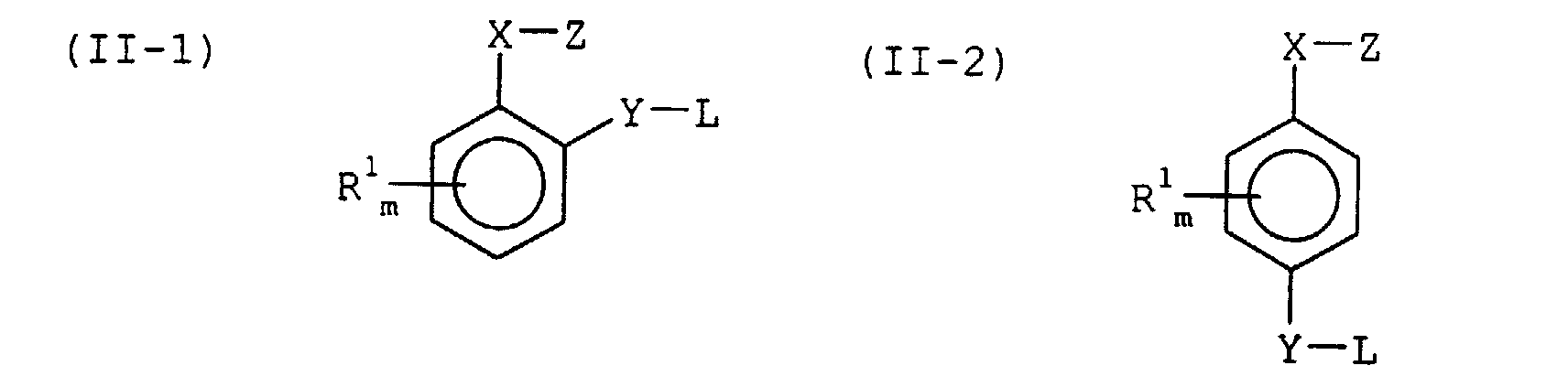
- Procédé de formation d'image selon la revendication 1, dans lequel le composé libérant un inhibiteur de polymérisation a la formule (III-1) ou (III-2) :où L est un groupe d'élimination ; A est un groupe capteur d'électrons ; D est l'hydrogène, un groupe alcoxy, un groupe aryloxy, un groupe alkyle, un groupe aryle, un groupe aralkyle, un groupe cycloalkyle, un groupe alkylthio, un groupe arylthio, un groupe acylamino, amino et un atome d'halogène ; chacun de R2 et R3 est indépendamment un groupe alkyle, un groupe cycloalkyle, un groupe aralkyle, un groupe aryle, un groupe acyle et l'hydrogène ; le groupe alkyle, le groupe aryle et l'amino représentés par D, R2 et R3 peuvent avoir un ou plusieurs groupes substituants, "p" est un entier de 0 à 3 ; et les groupes représentés par A, D, R2 et R3 peuvent être combinés entre eux pour former un cycle.1)
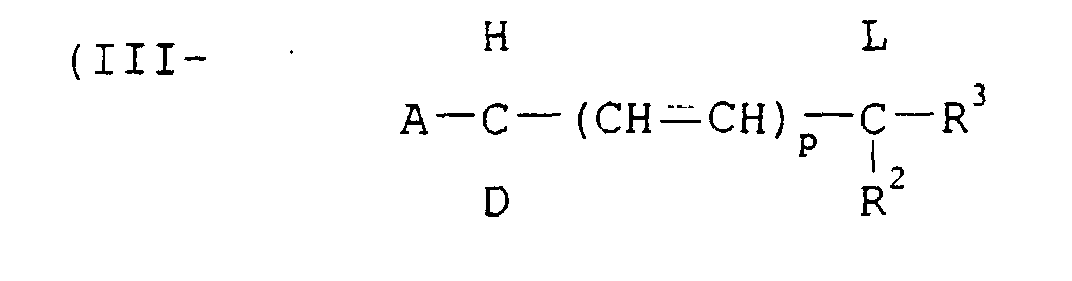 2)
2)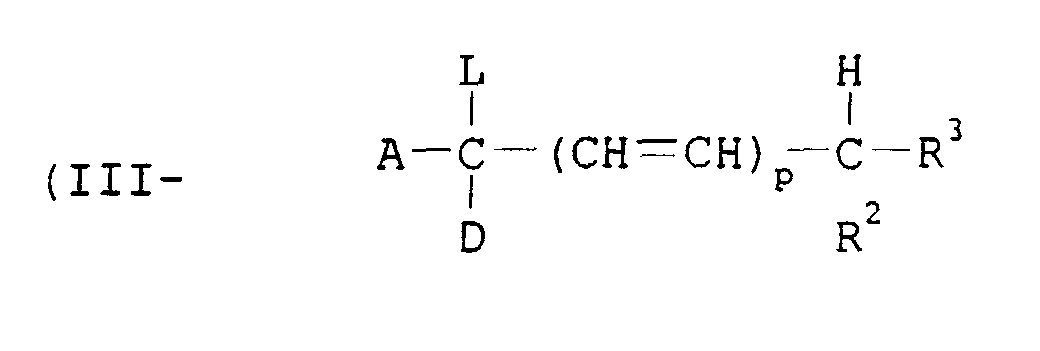
- Procédé de formation d'image selon la revendication 1, dans lequel le composé libérant un inhibiteur de polymérisation a la formule (IV) :dans laquelle R1 est l'hydrogène, un groupe alkyle, un groupe cycloalkyle, un groupe aryle, un groupe aralkyle, un groupe alcényle, un groupe alcynyle, un groupe alcoxy, un groupe aryloxy, un groupe hétérocyclique, un groupe acyle, carboxyle, carbamoyle, un groupe alcoxycarbonyle, un groupe aryloxycarbonyle, un groupe acyloxy, un groupe sulfonyloxy, amino, un groupe acylamino, un groupe sulfonylamino, cyano, nitro, un groupe alkylthio, un groupe arylthio, un groupe mercapto, un groupe sulfonyle, sulfo, sulfamoyle ou un atome d'halogène ; Q est l'oxygène, le soufre ou -CR6R7 où chacun de R6 et R7 est indépendamment l'hydrogène, un groupe alkyle ou un groupe aryle ; le groupe alkyle, le groupe aryle et l'amino représentés par R1, R6 et R7 peuvent avoir un ou plusieurs groupes substituants ; "m" est un entier de 0 à 4 ; quand "m" vaut 2 ou plus, les groupes représentés par R1 peuvent être combinés entre eux pour former un cycle ; et Z est un groupe ayant pour propriété de réagir avec une base ou un composé nucléophile pour rompre la liaison de N-Z.

- Procédé de formation d'image selon la revendication 1, dans lequel le composé libérant un inhibiteur de polymérisation a la formule (V) :dans laquelle chacun de R4 et R5 est indépendamment un groupe alkylène ou un autre groupe divalent qui forme un cycle à 5 ou 6 chaínons, et au moins l'un de R4 et R6 est le groupe alkylène ; et le cycle benzénique peut être condensé avec R4 ou R5.

- Procédé de formation d'image selon la revendication 1, dans lequel la quantité du composé libérant un inhibiteur de polymérisation contenu dans le matériau photosensible est située dans la plage allant de 0,001 à 50 % en poids par rapport à la quantité du composé polymérisable.
Applications Claiming Priority (2)
| Application Number | Priority Date | Filing Date | Title |
|---|---|---|---|
| JP3021411A JP2696434B2 (ja) | 1991-01-23 | 1991-01-23 | 画像形成方法 |
| JP21411/91 | 1991-01-23 |
Publications (2)
| Publication Number | Publication Date |
|---|---|
| EP0496397A1 EP0496397A1 (fr) | 1992-07-29 |
| EP0496397B1 true EP0496397B1 (fr) | 1999-05-06 |
Family
ID=12054285
Family Applications (1)
| Application Number | Title | Priority Date | Filing Date |
|---|---|---|---|
| EP92101086A Expired - Lifetime EP0496397B1 (fr) | 1991-01-23 | 1992-01-23 | Méthode pour la formation d'une image utilisant une composition photosensible contenant halogénure d'argent, réducteur, composé polymérisable et une substance capable de libérer un inhibiteur de polymérisation |
Country Status (4)
| Country | Link |
|---|---|
| US (1) | US5563017A (fr) |
| EP (1) | EP0496397B1 (fr) |
| JP (1) | JP2696434B2 (fr) |
| DE (1) | DE69229066T2 (fr) |
Cited By (2)
| Publication number | Priority date | Publication date | Assignee | Title |
|---|---|---|---|---|
| US20120231390A1 (en) * | 2009-11-12 | 2012-09-13 | Canon Kabushiki Kaisha | Method of fixing toner image |
| CN111960988A (zh) * | 2020-10-21 | 2020-11-20 | 南京工业职业技术大学 | 一种基于激基缔合物发光的新型热活化延迟荧光材料及其应用 |
Families Citing this family (12)
| Publication number | Priority date | Publication date | Assignee | Title |
|---|---|---|---|---|
| US5870422A (en) * | 1997-07-09 | 1999-02-09 | Trw Inc. | Gain generator for high-energy chemical lasers |
| JP4220607B2 (ja) * | 1999-01-28 | 2009-02-04 | 富士フイルム株式会社 | 色素前駆体、画像形成材料、および画像形成方法 |
| CA2295197A1 (fr) | 1999-09-08 | 2001-03-08 | Appleton Papers Inc. | Materiau d'enregistrement thermosensible |
| US6566301B2 (en) | 2000-01-05 | 2003-05-20 | Appleton Papers Inc. | Thermally-responsive record material |
| US6835691B2 (en) | 2000-01-05 | 2004-12-28 | Appleton Papers Inc. | Thermally-responsive record material |
| JP4919598B2 (ja) * | 2002-06-06 | 2012-04-18 | 株式会社 キャンバス | Dna損傷誘発性細胞周期g2チェックポイントを排除し、そして/またはdna損傷処置の抗癌活性を増強する化合物 |
| JP4610237B2 (ja) * | 2004-06-18 | 2011-01-12 | 富士フイルム株式会社 | 平版印刷版原版 |
| US20060084005A1 (en) * | 2004-10-19 | 2006-04-20 | Eastman Kodak Company | Means to enable slitting of micro-encapsulated media |
| US8148565B2 (en) | 2005-08-19 | 2012-04-03 | Dow Corning Toray Company, Ltd. | Method of manufacturing an organic silicon compound that contains a methacryloxy group or an acryloxy group |
| WO2017135085A1 (fr) * | 2016-02-05 | 2017-08-10 | 富士フイルム株式会社 | Dispersion aqueuse, son procédé de production et procédé de formation d'image |
| AU2017214830B2 (en) * | 2016-02-05 | 2019-08-29 | Fujifilm Corporation | Aqueous dispersion, method for manufacturing the same, and image forming method |
| JP7471818B2 (ja) | 2016-08-18 | 2024-04-22 | ヴィダック ファーマ リミテッド | ピペラジン誘導体、医薬組成物、及びその使用方法 |
Family Cites Families (21)
| Publication number | Priority date | Publication date | Assignee | Title |
|---|---|---|---|---|
| US3387667A (en) | 1965-12-20 | 1968-06-11 | Int Harvester Co | Agricultural bed-shaping implement |
| US4168982A (en) * | 1976-06-01 | 1979-09-25 | E. I. Du Pont De Nemours And Company | Photopolymerizable compositions containing nitroso dimers to selectively inhibit thermal polymerization |
| JPS6127542A (ja) | 1984-07-13 | 1986-02-07 | トマス・エル・バイア−ズ | 写真フイルム上の像を修正するための装置 |
| JPS6173145A (ja) | 1984-09-18 | 1986-04-15 | Fuji Photo Film Co Ltd | 画像記録方法 |
| JPS6169062A (ja) | 1984-09-12 | 1986-04-09 | Fuji Photo Film Co Ltd | 画像形成法 |
| EP0174634B1 (fr) | 1984-09-12 | 1987-12-09 | Fuji Photo Film Co., Ltd. | Méthode pour obtenir des images |
| EP0202490B1 (fr) | 1985-04-22 | 1988-09-21 | Fuji Photo Film Co., Ltd. | Méthode de formation d'une image de polymère et matériau d'enregistrement d'image à cet effet |
| JPS61260241A (ja) | 1985-05-15 | 1986-11-18 | Fuji Photo Film Co Ltd | 画像記録方法 |
| JPS61278849A (ja) | 1985-06-04 | 1986-12-09 | Fuji Photo Film Co Ltd | 画像記録方法 |
| JPS62264041A (ja) | 1985-10-12 | 1987-11-17 | Fuji Photo Film Co Ltd | 感光材料 |
| JPS63186229A (ja) * | 1987-01-28 | 1988-08-01 | Fuji Photo Film Co Ltd | 感光材料 |
| JPH0690514B2 (ja) * | 1987-06-18 | 1994-11-14 | 富士写真フイルム株式会社 | 画像形成方法 |
| US4983489A (en) | 1988-03-25 | 1991-01-08 | Fuji Photo Film Co., Ltd. | Image-forming method using silver halide and polymerizable compound with development inhibitor releaser |
| JPH0734111B2 (ja) * | 1988-08-31 | 1995-04-12 | 富士写真フイルム株式会社 | 感光材料 |
| JPH02141757A (ja) | 1988-11-24 | 1990-05-31 | Fuji Photo Film Co Ltd | 記録材料及び記録方法 |
| JPH02141756A (ja) | 1988-11-24 | 1990-05-31 | Fuji Photo Film Co Ltd | 記録材料及び記録方法 |
| JPH02262661A (ja) | 1989-01-10 | 1990-10-25 | Fuji Photo Film Co Ltd | 感光材料 |
| JP2524523B2 (ja) | 1989-02-06 | 1996-08-14 | 富士写真フイルム株式会社 | 画像記録方法 |
| JP2524524B2 (ja) * | 1989-03-07 | 1996-08-14 | 富士写真フイルム株式会社 | 画像記録方法 |
| JP3687667B2 (ja) | 2003-07-28 | 2005-08-24 | 松下電工株式会社 | 金属光造形用金属粉末 |
| JP4511149B2 (ja) | 2003-10-14 | 2010-07-28 | 西川ゴム工業株式会社 | ドアウエザーストリップの取付構造 |
-
1991
- 1991-01-23 JP JP3021411A patent/JP2696434B2/ja not_active Expired - Fee Related
-
1992
- 1992-01-23 DE DE69229066T patent/DE69229066T2/de not_active Expired - Fee Related
- 1992-01-23 EP EP92101086A patent/EP0496397B1/fr not_active Expired - Lifetime
-
1994
- 1994-01-10 US US08/180,787 patent/US5563017A/en not_active Expired - Fee Related
Cited By (2)
| Publication number | Priority date | Publication date | Assignee | Title |
|---|---|---|---|---|
| US20120231390A1 (en) * | 2009-11-12 | 2012-09-13 | Canon Kabushiki Kaisha | Method of fixing toner image |
| CN111960988A (zh) * | 2020-10-21 | 2020-11-20 | 南京工业职业技术大学 | 一种基于激基缔合物发光的新型热活化延迟荧光材料及其应用 |
Also Published As
| Publication number | Publication date |
|---|---|
| US5563017A (en) | 1996-10-08 |
| JPH04238353A (ja) | 1992-08-26 |
| DE69229066D1 (de) | 1999-06-10 |
| DE69229066T2 (de) | 1999-11-11 |
| EP0496397A1 (fr) | 1992-07-29 |
| JP2696434B2 (ja) | 1998-01-14 |
Similar Documents
| Publication | Publication Date | Title |
|---|---|---|
| EP0496397B1 (fr) | Méthode pour la formation d'une image utilisant une composition photosensible contenant halogénure d'argent, réducteur, composé polymérisable et une substance capable de libérer un inhibiteur de polymérisation | |
| US5246811A (en) | Image forming method of pressing light-sensitive material on image receiving material | |
| US4939064A (en) | Light-sensitive material containing silver halide, reducing agent, polymerizable compound and base precursor compound | |
| US5328800A (en) | Color image forming method using silver halide, reducing agent, polymerizable compound and colorant | |
| EP0523565B1 (fr) | Matériau photosensible contenant de l'halogénure d'argent, un agent réducteur, un composé polymérisable et une substance formatrice d'une image en couleurs | |
| US5196288A (en) | Image forming method of exposing and heating light-sensitive material comprising light-sensitive layer provided on support | |
| US5137797A (en) | Image recording material containing salicylic acid developer and image recording process employing the same | |
| US5264316A (en) | Light-sensitive material containing silver halide, reducing agent, polymerizable compound and base precursor | |
| US5254428A (en) | Process for preparation of light-sensitive microcapsule | |
| EP0422662B1 (fr) | Matériau photosensible contenant un halogénure d'argent, un agent réducteur, un composé photopolymérisable, un formateur de couleur, un précurseur de base et un composé polaire | |
| US5164277A (en) | Light-sensitive material containing silver halide, reducing agent and polymerizable compound | |
| US5227274A (en) | Process for preparation of light-sensitive material containing microcapsules | |
| US4983489A (en) | Image-forming method using silver halide and polymerizable compound with development inhibitor releaser | |
| US5252423A (en) | Light-sensitive material containing silver halide reducing agent, polymerizable compound, color image forming substance, base precursor and polar compound | |
| US5192639A (en) | Light-sensitive material containing silver halide, reducing agent, polymerizable compound and chromium molybdenum or tungsten compound | |
| US4927730A (en) | Light-sensitive material containing silver halide, reducing agent and polymerizable compound | |
| JPH0369950A (ja) | 画像形成方法 | |
| JPH04235556A (ja) | 感光性マイクロカプセルの製造方法およびそれを用い た感光材料 | |
| JPH04260040A (ja) | 受像材料およびそれを用いた画像形成方法 | |
| JPH04265152A (ja) | マイクロカプセルの製造方法 | |
| JPH0553312A (ja) | マイクロカプセルの調製法およびマイクロカプセルを 用いた感光材料 | |
| JPH04177350A (ja) | 感光材料 | |
| JPH05150449A (ja) | カラー画像形成用感光材料 | |
| JPH04247230A (ja) | マイクロカプセルの製造方法およびそれを用いた感光材料 | |
| JPH04212959A (ja) | マイクロカプセルの製造方法およびそれを用いた感光材料 |
Legal Events
| Date | Code | Title | Description |
|---|---|---|---|
| PUAI | Public reference made under article 153(3) epc to a published international application that has entered the european phase |
Free format text: ORIGINAL CODE: 0009012 |
|
| AK | Designated contracting states |
Kind code of ref document: A1 Designated state(s): DE FR GB NL |
|
| 17P | Request for examination filed |
Effective date: 19920911 |
|
| 17Q | First examination report despatched |
Effective date: 19951214 |
|
| GRAG | Despatch of communication of intention to grant |
Free format text: ORIGINAL CODE: EPIDOS AGRA |
|
| GRAG | Despatch of communication of intention to grant |
Free format text: ORIGINAL CODE: EPIDOS AGRA |
|
| GRAH | Despatch of communication of intention to grant a patent |
Free format text: ORIGINAL CODE: EPIDOS IGRA |
|
| GRAH | Despatch of communication of intention to grant a patent |
Free format text: ORIGINAL CODE: EPIDOS IGRA |
|
| GRAA | (expected) grant |
Free format text: ORIGINAL CODE: 0009210 |
|
| RAP1 | Party data changed (applicant data changed or rights of an application transferred) |
Owner name: FUJI PHOTO FILM CO., LTD. |
|
| AK | Designated contracting states |
Kind code of ref document: B1 Designated state(s): DE FR GB NL |
|
| PG25 | Lapsed in a contracting state [announced via postgrant information from national office to epo] |
Ref country code: NL Free format text: LAPSE BECAUSE OF FAILURE TO SUBMIT A TRANSLATION OF THE DESCRIPTION OR TO PAY THE FEE WITHIN THE PRESCRIBED TIME-LIMIT Effective date: 19990506 |
|
| REF | Corresponds to: |
Ref document number: 69229066 Country of ref document: DE Date of ref document: 19990610 |
|
| ET | Fr: translation filed | ||
| PLBE | No opposition filed within time limit |
Free format text: ORIGINAL CODE: 0009261 |
|
| STAA | Information on the status of an ep patent application or granted ep patent |
Free format text: STATUS: NO OPPOSITION FILED WITHIN TIME LIMIT |
|
| 26N | No opposition filed | ||
| REG | Reference to a national code |
Ref country code: GB Ref legal event code: IF02 |
|
| PGFP | Annual fee paid to national office [announced via postgrant information from national office to epo] |
Ref country code: FR Payment date: 20041206 Year of fee payment: 14 |
|
| PGFP | Annual fee paid to national office [announced via postgrant information from national office to epo] |
Ref country code: GB Payment date: 20050104 Year of fee payment: 14 |
|
| PGFP | Annual fee paid to national office [announced via postgrant information from national office to epo] |
Ref country code: DE Payment date: 20050225 Year of fee payment: 14 |
|
| PG25 | Lapsed in a contracting state [announced via postgrant information from national office to epo] |
Ref country code: GB Free format text: LAPSE BECAUSE OF NON-PAYMENT OF DUE FEES Effective date: 20060123 |
|
| PG25 | Lapsed in a contracting state [announced via postgrant information from national office to epo] |
Ref country code: FR Free format text: LAPSE BECAUSE OF NON-PAYMENT OF DUE FEES Effective date: 20060131 |
|
| PG25 | Lapsed in a contracting state [announced via postgrant information from national office to epo] |
Ref country code: DE Free format text: LAPSE BECAUSE OF NON-PAYMENT OF DUE FEES Effective date: 20060801 |
|
| GBPC | Gb: european patent ceased through non-payment of renewal fee |
Effective date: 20060123 |
|
| REG | Reference to a national code |
Ref country code: FR Ref legal event code: ST Effective date: 20060929 |