EP0488317A2 - Substance liant la thrombine et procédé de préparation - Google Patents
Substance liant la thrombine et procédé de préparation Download PDFInfo
- Publication number
- EP0488317A2 EP0488317A2 EP91120438A EP91120438A EP0488317A2 EP 0488317 A2 EP0488317 A2 EP 0488317A2 EP 91120438 A EP91120438 A EP 91120438A EP 91120438 A EP91120438 A EP 91120438A EP 0488317 A2 EP0488317 A2 EP 0488317A2
- Authority
- EP
- European Patent Office
- Prior art keywords
- thrombin
- amino acids
- represent
- nucleotide sequence
- binding substance
- Prior art date
- Legal status (The legal status is an assumption and is not a legal conclusion. Google has not performed a legal analysis and makes no representation as to the accuracy of the status listed.)
- Granted
Links
Images
Classifications
-
- C—CHEMISTRY; METALLURGY
- C07—ORGANIC CHEMISTRY
- C07K—PEPTIDES
- C07K14/00—Peptides having more than 20 amino acids; Gastrins; Somatostatins; Melanotropins; Derivatives thereof
- C07K14/435—Peptides having more than 20 amino acids; Gastrins; Somatostatins; Melanotropins; Derivatives thereof from animals; from humans
- C07K14/745—Blood coagulation or fibrinolysis factors
- C07K14/7455—Thrombomodulin
-
- C—CHEMISTRY; METALLURGY
- C07—ORGANIC CHEMISTRY
- C07K—PEPTIDES
- C07K14/00—Peptides having more than 20 amino acids; Gastrins; Somatostatins; Melanotropins; Derivatives thereof
- C07K14/435—Peptides having more than 20 amino acids; Gastrins; Somatostatins; Melanotropins; Derivatives thereof from animals; from humans
-
- A—HUMAN NECESSITIES
- A61—MEDICAL OR VETERINARY SCIENCE; HYGIENE
- A61K—PREPARATIONS FOR MEDICAL, DENTAL OR TOILETRY PURPOSES
- A61K38/00—Medicinal preparations containing peptides
Definitions
- the present invention relates to a novel thrombin-binding substance, a DNA fragment encoding the amino acid sequence of said thrombin-binding substance, a recombinant vector comprising said DNA fragment, a transformed cell harboring said recombinant vector, an anticoagulant composition comprising said thrombin-binding substance which has platelet aggregation inhibitory activity, and a process for the preparation of said thrombin-binding substance.
- thrombin activates Protein C which is said to act on the fibrinolytic and anticoagulant systems and that there is a certain substance in extracts of rabbit lung tissues which functions as a coenzyme for the activation mechanism.
- thrombomodulin N. L. Esmon et al, J . Biological Chemistry , 257 , (2), 859-864 (1982)
- the present inventors previously discovered two types of thrombin-binding substances in human urine. They are different from the above-mentioned substances; having smaller molecular weights, i.e., about 39,000 and 31,000 under nonreducing conditions.
- the present inventors filed a patent application on these substances (Japanese Patent Laid-open (kokai) No. 146898/1988).
- the present inventors separated two types of thrombin-binding substances (A) and (B) from human urine and a culture broth of cells derived from human tissues, and established a process for producing large amounts of these thrombin-binding substances in a stable manner.
- the present inventors previously filed patent applications on the thrombin-binding substances and the process (European Patent Publication No. 455,681).
- the present inventors obtained a human urine derived thrombin-binding substance using a recombinant DNA technique (r-UTM) and filed a patent application on this process (Japanese Patent Application No. 54446/1991).
- Thrombomodulin from rabbit lungs is known to increase the activity of antithrombin III [K. T. Preissner et al, J . Biological Chemistry , 265 , 4915-4922 (1990)]. Such an activity, however, is not possessed by thrombomodulin from bovine [H. V. Jakubowski et al, J . Biological Chemistry , 261 , 3876 (1986)], and thrombomodulin from human placenta inhibits the activity of antithrombin III [K. Hirahara et al, Thrombo . Res ., 57 , 117-126 (1990)].
- thrombomodulins produced by genetic manipulation techniques are known in the art. One is known to increase the activity of antithrombin III and another is known to possess no such capability [K. Nawa et al, Biochem . Biophys . Res ., 171 , 729-737 (1990)]. These thrombomodulins, however, are known to inhibit the thrombin coagulation in platelet which plays an important role in the blood coagulation system, but not to have an ADP coagulation effect [N. L. Esmon, J . Biological Chemistry , 258 , 12238-12242 (1983)].
- a transformant prepared by transforming a host cell with a recombinant vector into which a DNA fragment obtained by combining a specific DNA fragment at the 3'-end of a DNA fragment encoding a thrombin-binding substance derived from human urine is combined can produce a thrombin-binding substance derived from human urine capable of increasing an antithrombin III activity and inhibiting platelet aggregation.
- an object of the present invention is to provide a novel thrombin-binding substance having the following amino acid sequence (hereinafter referred to as "Sequence A”), a DNA fragment having the nucleotide sequence encoding Sequence A, a recombinant vector comprising said DNA fragment and a replicable vector, and a transformed cell harboring said recombinant vector.
- Sequence A amino acid sequence
- X1 and X2 represent acidic amino acids
- Y1 and Y2 represent any arbitrary amino acids.
- Another object of the present invention is to provide an anticoagulant composition comprising said thrombin-binding substance and exhibiting platelet aggregation inhibitory activity.
- Still another object of the present invention is to provide a process for the preparation of said thrombin-binding substance.
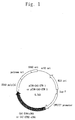
- Figure 1 is a scheme illustrating the structure of expression vector, pCDM-GAG-UTM1 and pCDM-GAG-UTM2, of the present invention.
- the thrombin-binding substance of the present invention can be prepared, for example, according to the following process.
- a template DNA is first prepared by cutting a human placenta genome DNA with a suitable restriction endonuclease.
- the template DNA is screened using, as a probe, a DNA primer synthesized referring to a nucleotide sequence of a known human thrombomodulin gene [Shirai, T et al, J . Biochem , 103 , 281-285 (1988)].
- the DNA thus produced is fragmented with a suitable restriction endonuclease, and DNA fragments thus obtained are ligated with a cloning vector to transform the microorganism.
- a plasmid DNA is extracted from the transformant and treated with a restriction endonuclease to produce a DNA fragment containing 1404 bases encoding the thrombin-binding substance derived from human urine.
- Typical examples of DNA fragments of the present invention are those having a nucleotide sequence of SEQ ID No. 3 and SEQ ID No. 4. The DNA fragments of the present invention, however, are not limited to them.
- Any DNA fragments capable of encoding an amino acid sequence constituting the thrombin-binding substance which is the target of the present invention i.e., the Sequence A, preferably SEQ ID No. 1 and SEQ ID No. 2, are included in the present invention.
- the construction of the recombinant vector containing the DNA fragment of the present invention may be carried out by connecting the DNA fragment of the present invention with a replicable expression vector.
- procaryotes typically E . coli
- yeasts typically insect viruses, vertebrate viruses, etc.
- the recombinant expression vector be constructed from the following nucleotide sequences (1) to (7) in this order toward the downstream direction of the transcription.
- a plasmid DNA is preferably used as a vector, for instance, a plasmid which can multiply itself, e.g., in E . coli as a host microorganism, and can express the inserted gene by transforming mammalian cells.
- a plasmid DNA comprises nucleotide sequences required for the plasmid to multiply itself in E . coli , such as a nucleotide sequence acting as a replicator of ColEI plasmid series, a nucleotide sequence acting as a promoter in mammalian cells, a gene functioning as a selection marker of the transformed E . coli , and a gene functioning as a selection marker of the transformed mammalian cells.
- a replicator nucleotide sequence such as SV40 ori, polyoma ori, or HSV ori which functions in mammalian cells.
- promoters are promoters, e.g., cytomegalovirus, SV40, polyoma virus, bovine papilloma virus, adenovirus, etc; retrovirus LTR, e.g., MMTV; a promoter of metallothionein gene, and the like.
- E . coli selection markers are ampicillin resistant genes, kanamycin resistant genes, tetracycline resistant genes, chloramphenicol resistant genes, and the like.
- mammalian cell selection markers are neomycin resistant genes, hygromycin B resistant genes, thymidine kinase genes, dihydrofolate reductase genes, xanthine-guanine phosphoribosyl transferase genes, and the like. These genes can be used either singly or in combination of two or more.
- Incorporation of the DNA fragment of the present invention into the above vectors can be carried out by cutting a DNA containing the DNA fragment with a suitable restriction endonuclease, optionally, adding a suitable linker, and combining it with the vector which is cut by a suitable restriction endonuclease.
- Restriction endonucleases which can be used here are, for example, Eco RI, Sph I, Pst I, Hind III, Bam HI, Xho I, Xba I, Ban III, Sma I, Nco I, and the like.
- Nucleotide modification enzymes such as exonuclease III, Bal31, SI nuclease, exonuclease VII, mungbean nuclease, DNA polymerase, and the like can also be used.
- a linker Eco RI linker, Sma I linker, Nco I linker, Bam HI linker, Xho I linker, Hind III linker, Pst I linker, Sph I linker, Xbal I linker, or the like may be used.
- Transformed cells which can efficiently produce the recombinant vector and/or thrombin-binding substance of the present invention can be obtained by introducing the expression recombinant vector obtained by the above method into host cells by means of the competent cell method, the protoplast method, the calcium phosphate coprecipitation method, the electroporation method, the DEAE dextran method, the lipofectin method, or the like.
- Unicellular organisms, such as bacteria and yeasts, cultured insect cells, cultured vertebrate cells, and the like are preferably used as host cells for obtaining the transformant.
- Various mutants of E are preferably used as host cells for obtaining the transformant.
- coli K12 strain e.g., HB101, C600K, JM101, JM103, JM105, JM109, MV1034, MV1184, MC1061/P3, and the like, are preferably used as E . coli host cells.
- mammalian cells are COS cells, CHO cells, L cells, C127 cells, NIH3T3 cells, HeLa cells, and the like.
- the thrombin-binding substance can be obtained by cultivating the transformant thus obtained, extracting and separating it from the cultivated cells or the culture broth.
- Various natural or artificial media can be used for the cultivation of the transformed cells.
- the media preferably contain carbon sources such as sugars, alcohols, and salts of organic acids; nitrogen sources such as protein mixtures, amino acids, and ammonium salts; and inorganic salts.
- vitamins and antibiotics corresponding to the selection marker genes may preferably be included. If the vector is of the type of which the expression can be controlled, it is necessary to add a procedure for inducing the expression in the course of the cultivation. After the cultivation, the culture broth is centrifuged to separate culture liquid from the cells.
- the cells are destroyed by means of freeze-thaw, ultrasonic treatment, French press, enzyme treatment, homogenizing, or the like, and the thrombin-binding substance is dissolved by using EDTA, surfactants, urea, guanidine hydrochloride, or the like.
- a purified thrombin-binding substance can be obtained by submitting the culture liquid or the cell extract containing the thrombin-binding substance thus prepared to column chromatography. Ion-exchange chromatography, affinity chromatography, e.g., that using the monoclonal antibody described in Japanese Patent Laid-open (kokai) No. 45398/1989, gel filtration chromatography, or the like can be used either independently or in combination.
- thrombin-binding substances thus obtained those having the amino acid sequence of SEQ ID No. 1 or SEQ ID No. 2 possess the following characteristic.
- amino acid sequence is considered to be those shown in SEQ ID Nos. 1 and 2.
- pH 3-4 determined by the isoelectric electrophoresis method using ampholite.
- Two or more sugars are considered to be attached to the thrombin-binding substances from the molecular weight. Based on the amino acid sequence, one of the sugars is considered to be an acidic polysaccharide attached to Ser (474).
- Injection preparations are typical examples of the composition comprising the thrombin-binding substance of the present invention as an anticoagulant agent.
- a preferable form of such injection preparations is a freeze-dried powder which can be dissolved into distilled water or physiological saline each time it is administered.
- Intravenous injection is a preferable manner by which the preparation is administered.
- a dose depends on the symptoms of the patient, the body weight, and the like, a preferable dose is 10 ⁇ g/kg to 10 mg/kg.
- the thrombin-binding substance of the present invention induces no abnormality with the dose of the above range. It is a quite safe substance.
- Primer #1 having the sequence of SEQ ID No. 5 and primer #2 having the sequence of SEQ ID No. 6 were synthesized by using a DNA synthesizer (ABI Model 381A) referring to the nucleotide sequence of human thrombomodulin gene [Shirai, T et al, J . Biochem , 103 , 281-285 (1988)].
- a template DNA was prepared by digesting a human placenta genome DNA (a product of Clonetech Co.) with Bam HI.
- the gene amplification was carried out in the reaction solution of the following formulation using Quick Thermo System (Model QTS-10M: trademark, manufactured by Japan Genetic Co.) by the repetition of 30 cycles of incubation; one cycle consisted of incubation at 94°C for 2 minutes, at 50°C for 3 minutes, and at 72°C for 4 minutes. After the reaction, a portion of the reaction product was sampled to confirm amplification of the target DNA band by the agarose gel electrophoresis.
- Quick Thermo System Model QTS-10M: trademark, manufactured by Japan Genetic Co.
- ⁇ Reaction Solution Distilled water 71 ⁇ l Buffer solution * 10 ⁇ l dNTP mixed solution (2.5 mM) 8 ⁇ l Primer #1 (20 ⁇ M) 5 ⁇ l Primer #2 (20 ⁇ M) 5 ⁇ l Template DNA (1 ⁇ g/ ⁇ l) 1 ⁇ l AmpliTaq (5 units/ ⁇ l) 0.5 ⁇ l * Buffer solution: 0.1 M potassium chloride 0.1 M Tris-HCl buffer (pH 8.3) 0.1% gelatin 15 mM magnesium chloride
- DNA was collected from the reaction solution by the ethanol precipitation, digested with Xho I and Kpn I and subjected to the agarose gel electrophoresis to obtain 1.57 kb Xho I- Kpn I fragments.
- the vector for the cloning pUC118 [Vieira, J. and Messing, J., Methods Enzymol ., 153 , 3-11 (1987)] was digested with Hind II, connected with Xho I linker, and further digested with Xho I and Kpn I to obtain vector fragments by the agarose gel electrophoresis.
- the vector fragments and the 1.57 kb Xho I- Kpn I fragments were ligated and E . coli MV1034 [Vieira, J. and Messing, J., Methods Enzymol ., 153 , 3-11 (1987)] was transformed with the ligated DNA.
- Plasmid DNA was extracted from the transformant thus obtained and digested with restriction endonuclease. In this manner, 6 clones holding a plasmid to which the 1.57 kb Xho I- Kpn I fragment derived from human thrombomodulin gene was inserted were selected.
- nucleotide sequences of the inserted fragments in clones revealed 1 to 3 mutated sites in each fragment. Then, 0.31 kb Xho I- Sma I fragment from clone 2, 0.65 kb Sma I- Mlu I fragment from clone 1, and 0.62 kb Mlu I- Kpn I fragment from clone 4, all without mutated sites, were recombined with the abovementioned vector fragment to obtain plasmid pUCTM/XHO-KPN containing an inserted fragment of the human thrombomodulin gene with the correct sequence.
- the pUCTM/XHO-KPN was digested with Xho I and Kpn I to prepare a 1.57 kb Xho I- Kpn I fragment derived from a human thrombomodulin gene.
- This 1.57 kb fragment was ligated with a mammalian cell expression vector CDM8 (a product of Invitrogen Co.) which had been digested with Xho I and dephosphorylated together with linkers $1, $2, $3, and $4.
- CDM8 a product of Invitrogen Co.
- the 1.57 kb fragment was also ligated with Xho I digested and dephosphorylated CDM8 with linkers $1, $2, $5, and $6.
- E . coli MC1061/P3 [Seed, B.
- Plasmid DNAs were extracted from the transformants thus prepared and digested with restriction endonucleases to confirm the direction and the site of the insertion. 1.68 kb fragments containing the DNA fragment of the present invention were cut out by Xho I from 8 clones which showed the correct direction of insertion and the correct restriction endonuclease map. The nucleotide sequences of all clones were found to have the sequence of SEQ ID No. 13 or 14, confirming that the expression vectors were correctly constructed.
- the expression vector of the present invention thus obtained were named pCDM-GAG-UTM1 and pCDM-GAG-UTM2 ( Figure 1), and the transformant harboring the vectors were named E . coli MC1061/P3 (pCDM-GAG-UTM1) and E . coli MC1061/P3 (pCDM-GAG-UTM2).
- Example 3 Expression of the thrombin-binding substance by the cultured mammalian cells ⁇
- COS7 cells were transfected with pCDM-GAG-UTM1 or pCDM-GAG-UTM2 by the DEAE-Dextran method [Seed, B. and Aruffo, A., Proc. Natl. Acad. Sci., USA, 84 , 3365-3369 (1987)].
- 5x10⁵ cells were inoculated into a 60 mm culture dish and, on the next day, the culture medium was aspirated and replaced by 2 ml of Dulbecco's-modified minimum essential medium (DMEM) containing 10% Nu-serum.
- DMEM Dulbecco's-modified minimum essential medium
- the culture medium obtained by the above procedure was passed through a 1 ml Sepharose 4B (2 mg IgG/ml resin) column with which monoclonal antibody A-73 (Japanese Patent Laid-open (kokai) No. 45398/1989; 2 mg IgG/ml resin) was combined.
- the column was washed with (1) 2 ml of 0.02 M Tris-HCl buffer (pH 7.4) containing 0.1 M NaCl, (2) 20 ml of 0.02 M Tris-HCl buffer (pH 7.4) containing 1 M NaCl and0.05% Tween 20, and (3) 5 ml of 0.02 M Tris-HCl buffer (pH 7.4) containing 1 M NaCl, followed by elution with 5 ml of 0.02 M Tris-HCl buffer (pH 7.4) containing 2 M sodium thiocyanate, 5 mM EDTA, and 1 M NaCl.
- the eluate was dialyzed against 50 mM acetate buffer containing 0.1 M NaCl (pH 4.5) and applied on a column of Mono-Q sepharose. The column was washed with the same buffer and eluted with linear gradient of 0.1 to 2 M NaCl in 50 mM acetate buffer (pH 4.5) to obtain purified thrombin-binding substances (r-GAG-UTM1 and r-GAG-UTM2).
- Example 4 Expression of the thrombin-binding substance by the cultured mammalian cells ⁇
- CHO ⁇ K1 cells were transfected with pCDM-GAG-UTM1 by the calcium phosphate method [Gorman, C., "DNA Cloning” IRL Press, England, vol. 2, 143-190 (1985)].
- 5x10⁵ CHO ⁇ K1 cells were inoculated into a 10 cm petri dish and, on the next day, the culture medium (Ham F12 medium containing 10% FCS, hereinafter referred to as Medium) was exchanged. Four (4) hours thereafter, a coprecipitate of DNA and calcium phosphate was added.
- the coprecipitate used here was prepared according to the following manner.
- r-GAG-UTM1 The secreted thrombin-binding substance (r-GAG-UTM1) was quantitatively analyzed to select high producing clones. The cloning was further carried out on the selected clone by the limiting dilution method.
- the transformed cells thus obtained was named CHO-GUTM 1-8 and deposited with Fermentation Research Institute, Agency of Industrial Science and Technology (FERM P-3260).
- the transformed cell CHO-GUTM 1-8 was cultured in UC202 medium (a product of Nissui Pharmaceutical Co.) containing 1% FCS in a 225 cm2 flask to become confluent, following which the medium was replaced by 50 ml of UC202 medium without containing FCS. After 1 week, the culture supernatant was collected and the same amount of the fresh medium not containing FCS was added. After the cultivation of a further 1 week, the culture supernatant was collected and confirmed to contain 3-4 ⁇ g/ml thrombin-binding substance therein secreted.
- UC202 medium a product of Nissui Pharmaceutical Co.
- the purified thrombin-binding substance was obtained according to the same procedure of the later part of Example 3.
- the SDS-PAGE was performed according to the Laemmli's method ( Nature , 227 , 680-685) on the purified thrombin-binding substances.
- the protein was transferred onto a PVDF membrane according to the Matsudaira's method [ J . Biol . Chem ., 262 ( 21 ), 10035-10038].
- the PVDF membrane was then reacted in 0.05 M Tris-HCl buffer (TBS) containing 0.1% bovine serum albumin and 0.1 M NaCl at room temperature for 2 hours.
- TBS Tris-HCl buffer
- r-UTM and r-GAG-UTM1 and 2 which are the thrombin-binding substances of the present invention, 0.1 ⁇ g/ml each, were treated with 5 ⁇ l of chondroitinase (10 mU, a product of Seikagaku Kogyo K.K.) at 37°C for 40 minutes.
- the immunoblotting was carried out in the same manner as in Example 5 to confirm the presence of chondroitin sulfate type glycosaminoglycan covalent bonds in the thrombin-binding substances of the present invention.
- r-UTM and r-GAG-UTM1 and 2 of the thrombin-binding substance of the present invention 2.5 ⁇ g/ml each, were mixed with human fibrinogen (2.5 mg/ml) and human antithrombin III (0 or 250 ⁇ g/ml), and dissolved in 5 mM solution of CaCl2.
- Bovine thrombin 0.5 U/ml was added to the solutions to measure the clotting time. The results are shown in Table 1. TABLE 1 Control (sec.) r-UTM (sec.) r-GAG-UTM1 (sec.) r-GAG-UTM2 (sec.) ATIII (-) 43.3 61.8 77.2 80.1 ATIII (+) 49.5 80.8 >400 >400
- Table I demonstrates that the thrombin-binding substances of the present invention delay blood coagulation by combining with thrombin. A remarkable promotion of the anti-coagulant activity of the thrombin-binding substances by the presence of antithrombin III are also shown.
- r-UTM (9-90 nM), r-GAG-UTM1, or r-GAG-UTM2 of the thrombin-binding substance of the present invention (9-90 nM), dissolved in a solution of bovine fibrinogen (1 mg/ml) in 20 mM Tris-HCl buffer (pH 7.4) containing 0.15 M NaCl, was mixed with bovine thrombin (18 nM) to measure the time required for the coagulation. 50% inhibitory concentrations (IC50) were determined from the calibration curve prepared by using bovine thrombin of various concentrations. The results are shown in Table 2. TABLE 2 IC50 (nM) r-UTM 80 r-GAG-UTM1 16 r-GAG-UTM2 15
- r-UTM exhibited no aggregation inhibitory activity within the tested concentration range (10 ⁇ 6-10 ⁇ 8 M).
- a catheter was inserted into the right femoral vein of Wistar rats (male) under anesthesia, and through the catheter were rapidly administered 1 mg/ml/kg of the tested compounds, r-GAG-UTM1 and r-UTM.
- Blood samples 0.1 ml each, taken before the administration and 1, 3, 6, 10, 20, 30, 60, and 120 minutes after the administration were mixed with heparin and served as plasma samples for the determination of the blood concentration.
- the measurement of the blood concentration was performed according to the sandwich ELISA method using an anti-human thrombin-binding monoclonal antibody.
- thrombin-binding substances of the present invention promote antithrombin III activity and inhibit platelet aggregation, and by themselves possess antithrombin activity. Thus, they are useful as an effective component of anticoagulant agents. Furthermore, the thrombin-binding substance of the present invention can be produced inexpensively in a large scale.
Landscapes
- Health & Medical Sciences (AREA)
- Chemical & Material Sciences (AREA)
- Life Sciences & Earth Sciences (AREA)
- Organic Chemistry (AREA)
- Proteomics, Peptides & Aminoacids (AREA)
- Molecular Biology (AREA)
- Biochemistry (AREA)
- Biophysics (AREA)
- General Health & Medical Sciences (AREA)
- Genetics & Genomics (AREA)
- Medicinal Chemistry (AREA)
- Gastroenterology & Hepatology (AREA)
- Zoology (AREA)
- Toxicology (AREA)
- Hematology (AREA)
- Medicines That Contain Protein Lipid Enzymes And Other Medicines (AREA)
- Peptides Or Proteins (AREA)
- Micro-Organisms Or Cultivation Processes Thereof (AREA)
- Preparation Of Compounds By Using Micro-Organisms (AREA)
- Medicines Containing Material From Animals Or Micro-Organisms (AREA)
- Reinforced Plastic Materials (AREA)
- Liquid Developers In Electrophotography (AREA)
- Transition And Organic Metals Composition Catalysts For Addition Polymerization (AREA)
- Adhesives Or Adhesive Processes (AREA)
- Manufacture Of Macromolecular Shaped Articles (AREA)
- Portable Nailing Machines And Staplers (AREA)
Applications Claiming Priority (4)
| Application Number | Priority Date | Filing Date | Title |
|---|---|---|---|
| JP33572090 | 1990-11-30 | ||
| JP335720/90 | 1990-11-30 | ||
| JP30271/91 | 1991-02-25 | ||
| JP3027191 | 1991-02-25 |
Publications (3)
| Publication Number | Publication Date |
|---|---|
| EP0488317A2 true EP0488317A2 (fr) | 1992-06-03 |
| EP0488317A3 EP0488317A3 (en) | 1993-03-17 |
| EP0488317B1 EP0488317B1 (fr) | 1995-06-14 |
Family
ID=26368600
Family Applications (1)
| Application Number | Title | Priority Date | Filing Date |
|---|---|---|---|
| EP91120438A Expired - Lifetime EP0488317B1 (fr) | 1990-11-30 | 1991-11-28 | Substance liant la thrombine et procédé de préparation |
Country Status (16)
| Country | Link |
|---|---|
| EP (1) | EP0488317B1 (fr) |
| KR (1) | KR970001684B1 (fr) |
| AT (1) | ATE123811T1 (fr) |
| AU (2) | AU8803891A (fr) |
| CA (1) | CA2056005C (fr) |
| DE (1) | DE69110419T2 (fr) |
| ES (1) | ES2075927T3 (fr) |
| FI (1) | FI104254B (fr) |
| HU (1) | HU215532B (fr) |
| IE (1) | IE68876B1 (fr) |
| IL (2) | IL100093A0 (fr) |
| MX (1) | MX9102273A (fr) |
| NO (1) | NO180306C (fr) |
| NZ (1) | NZ240782A (fr) |
| PT (1) | PT99632B (fr) |
| TW (1) | TW200491B (fr) |
Cited By (1)
| Publication number | Priority date | Publication date | Assignee | Title |
|---|---|---|---|---|
| EP0915340A1 (fr) * | 1997-11-07 | 1999-05-12 | Dade Behring Marburg GmbH | Procédé pour déterminer le potentiel anticoagulent d'un échantillon |
-
1990
- 1990-11-20 IL IL100093A patent/IL100093A0/xx unknown
-
1991
- 1991-11-20 IL IL100093A patent/IL100093A/xx active IP Right Grant
- 1991-11-21 AU AU88038/91A patent/AU8803891A/en not_active Abandoned
- 1991-11-22 IE IE406691A patent/IE68876B1/en not_active IP Right Cessation
- 1991-11-22 KR KR1019910020865A patent/KR970001684B1/ko not_active Expired - Fee Related
- 1991-11-22 CA CA002056005A patent/CA2056005C/fr not_active Expired - Fee Related
- 1991-11-26 FI FI915571A patent/FI104254B/fi not_active IP Right Cessation
- 1991-11-27 TW TW080109350A patent/TW200491B/zh active
- 1991-11-28 ES ES91120438T patent/ES2075927T3/es not_active Expired - Lifetime
- 1991-11-28 PT PT99632A patent/PT99632B/pt not_active IP Right Cessation
- 1991-11-28 MX MX9102273A patent/MX9102273A/es not_active IP Right Cessation
- 1991-11-28 EP EP91120438A patent/EP0488317B1/fr not_active Expired - Lifetime
- 1991-11-28 AT AT91120438T patent/ATE123811T1/de not_active IP Right Cessation
- 1991-11-28 DE DE69110419T patent/DE69110419T2/de not_active Expired - Fee Related
- 1991-11-28 NZ NZ240782A patent/NZ240782A/xx unknown
- 1991-11-29 HU HU913737A patent/HU215532B/hu not_active IP Right Cessation
- 1991-11-29 NO NO914719A patent/NO180306C/no not_active IP Right Cessation
-
1993
- 1993-02-09 AU AU32888/93A patent/AU656453B2/en not_active Ceased
Non-Patent Citations (3)
| Title |
|---|
| BIOCHEMICAL AND BIOPHYSICAL RESEARCH COMMUNICATIONS vol. 171, no. 2, 14 September 1990, DULUTH, MINNESOTA US pages 729 - 737 K. NAWA ET AL. 'PRESENCE AND FUNCTION OF CHONDROITIN-4-SULFATE ON RECOMBINANT HUMAN SOLUBLE THROMBOMODULIN' * |
| JOURNAL OF BIOLOGICAL CHEMISTRY. (MICROFILMS) vol. 264, no. 9, 25 March 1989, BALTIMORE, MD US pages 4872 - 4876 K. SUZUKI ET AL. 'A Domain Composed of Epidermal Growth Factor-like Structures of Human Thrombomodulin Is Essential for Thrombin Binding and for Protein C Activation' * |
| JOURNAL OF BIOLOGICAL CHEMISTRY. (MICROFILMS) vol. 265, no. 9, 25 March 1990, BALTIMORE, MD US pages 4915 - 4922 K.T. PREISSNER ET AL. 'Domain Structure of the Endothelial Cell Receptor Thrombomodulin as Deduced from Modulation of Its Anticoagulant Functions' * |
Cited By (1)
| Publication number | Priority date | Publication date | Assignee | Title |
|---|---|---|---|---|
| EP0915340A1 (fr) * | 1997-11-07 | 1999-05-12 | Dade Behring Marburg GmbH | Procédé pour déterminer le potentiel anticoagulent d'un échantillon |
Also Published As
| Publication number | Publication date |
|---|---|
| IE914066A1 (en) | 1992-06-03 |
| NO914719L (no) | 1992-06-01 |
| IL100093A (en) | 1997-07-13 |
| HU215532B (hu) | 1999-01-28 |
| ES2075927T3 (es) | 1995-10-16 |
| NO180306B (no) | 1996-12-16 |
| AU3288893A (en) | 1993-04-22 |
| IE68876B1 (en) | 1996-07-24 |
| CA2056005C (fr) | 2001-09-11 |
| NO180306C (no) | 1997-03-26 |
| FI104254B1 (fi) | 1999-12-15 |
| CA2056005A1 (fr) | 1992-05-31 |
| NZ240782A (en) | 1993-05-26 |
| TW200491B (fr) | 1993-02-21 |
| MX9102273A (es) | 1992-06-01 |
| HUT62329A (en) | 1993-04-28 |
| EP0488317B1 (fr) | 1995-06-14 |
| NO914719D0 (no) | 1991-11-29 |
| HU913737D0 (en) | 1992-02-28 |
| KR970001684B1 (ko) | 1997-02-13 |
| FI104254B (fi) | 1999-12-15 |
| AU656453B2 (en) | 1995-02-02 |
| IL100093A0 (en) | 1992-08-18 |
| AU8803891A (en) | 1992-06-04 |
| EP0488317A3 (en) | 1993-03-17 |
| FI915571L (fi) | 1992-05-31 |
| DE69110419D1 (de) | 1995-07-20 |
| FI915571A0 (fi) | 1991-11-26 |
| ATE123811T1 (de) | 1995-06-15 |
| PT99632B (pt) | 1999-05-31 |
| DE69110419T2 (de) | 1996-03-21 |
| PT99632A (pt) | 1992-10-30 |
| KR920009847A (ko) | 1992-06-25 |
Similar Documents
| Publication | Publication Date | Title |
|---|---|---|
| JP3122127B2 (ja) | 抗凝血タンパク質 | |
| US5726147A (en) | Human mutant tissue factor compositions useful as tissue factor antagonists | |
| Hirata et al. | ADP ribosyl cyclase activity of a novel bone marrow stromal cell surface molecule, BST-1 | |
| DE69126205T2 (de) | Oxidationsresistente analoga des thrombomodulins | |
| US7030223B2 (en) | Megakaryocyte stimulating factors | |
| US5516659A (en) | Truncated thrombomodulin, recombinant production thereof, and therapeutic agent | |
| EP0312598A1 (fr) | Peptide servant a accelerer l'activation de la proteine c avec de la thrombine | |
| US5238919A (en) | Peptides that inhibit von Willebrand Factor binding to the platelet SPIB receptor | |
| JP2002509691A (ja) | 生物学的活性が改変された組換えタンパク質多量体の製造及び使用 | |
| US5354664A (en) | DNA encoding a human thrombomodulin having a modified glycosaminoglycan (GAG) binding site | |
| EP0488317B1 (fr) | Substance liant la thrombine et procédé de préparation | |
| CA2037499A1 (fr) | Preparation d'une substance liant la thrombine | |
| JP3534434B2 (ja) | トロンボモジュリン類発現用シグナルペプチド | |
| AU651330B2 (en) | Novel proteins with oncostatin M activity and process for their preparation | |
| JP2553425B2 (ja) | トロンビン結合性物質及びその製造法 | |
| WO1992006999A1 (fr) | Fragments therapeutiques du factor de von willebrand | |
| HK1066827A (en) | Megakaryocyte stimulating factors | |
| IE83805B1 (en) | Erythropoietin analogs | |
| HK1075258A (en) | Megakaryocyte stimulating factors | |
| HK1050537A (en) | A recombinant human factor viii derivative |
Legal Events
| Date | Code | Title | Description |
|---|---|---|---|
| PUAI | Public reference made under article 153(3) epc to a published international application that has entered the european phase |
Free format text: ORIGINAL CODE: 0009012 |
|
| AK | Designated contracting states |
Kind code of ref document: A2 Designated state(s): AT BE CH DE DK ES FR GB GR IT LI LU NL SE |
|
| PUAL | Search report despatched |
Free format text: ORIGINAL CODE: 0009013 |
|
| AK | Designated contracting states |
Kind code of ref document: A3 Designated state(s): AT BE CH DE DK ES FR GB GR IT LI LU NL SE |
|
| 17P | Request for examination filed |
Effective date: 19930219 |
|
| 17Q | First examination report despatched |
Effective date: 19940722 |
|
| GRAA | (expected) grant |
Free format text: ORIGINAL CODE: 0009210 |
|
| AK | Designated contracting states |
Kind code of ref document: B1 Designated state(s): AT BE CH DE DK ES FR GB GR IT LI LU NL SE |
|
| PG25 | Lapsed in a contracting state [announced via postgrant information from national office to epo] |
Ref country code: NL Free format text: LAPSE BECAUSE OF NON-PAYMENT OF DUE FEES Effective date: 19950614 Ref country code: LI Effective date: 19950614 Ref country code: GR Free format text: LAPSE BECAUSE OF FAILURE TO SUBMIT A TRANSLATION OF THE DESCRIPTION OR TO PAY THE FEE WITHIN THE PRESCRIBED TIME-LIMIT Effective date: 19950614 Ref country code: DK Effective date: 19950614 Ref country code: CH Effective date: 19950614 Ref country code: BE Effective date: 19950614 |
|
| REF | Corresponds to: |
Ref document number: 123811 Country of ref document: AT Date of ref document: 19950615 Kind code of ref document: T |
|
| REF | Corresponds to: |
Ref document number: 69110419 Country of ref document: DE Date of ref document: 19950720 |
|
| ET | Fr: translation filed | ||
| ITF | It: translation for a ep patent filed | ||
| PG25 | Lapsed in a contracting state [announced via postgrant information from national office to epo] |
Ref country code: SE Effective date: 19950914 |
|
| REG | Reference to a national code |
Ref country code: CH Ref legal event code: PL |
|
| REG | Reference to a national code |
Ref country code: ES Ref legal event code: FG2A Ref document number: 2075927 Country of ref document: ES Kind code of ref document: T3 |
|
| PG25 | Lapsed in a contracting state [announced via postgrant information from national office to epo] |
Ref country code: LU Free format text: LAPSE BECAUSE OF NON-PAYMENT OF DUE FEES Effective date: 19951130 |
|
| NLV1 | Nl: lapsed or annulled due to failure to fulfill the requirements of art. 29p and 29m of the patents act | ||
| PLBE | No opposition filed within time limit |
Free format text: ORIGINAL CODE: 0009261 |
|
| STAA | Information on the status of an ep patent application or granted ep patent |
Free format text: STATUS: NO OPPOSITION FILED WITHIN TIME LIMIT |
|
| 26N | No opposition filed | ||
| REG | Reference to a national code |
Ref country code: GB Ref legal event code: IF02 |
|
| PGFP | Annual fee paid to national office [announced via postgrant information from national office to epo] |
Ref country code: AT Payment date: 20041022 Year of fee payment: 14 |
|
| PGFP | Annual fee paid to national office [announced via postgrant information from national office to epo] |
Ref country code: GB Payment date: 20041116 Year of fee payment: 14 |
|
| PGFP | Annual fee paid to national office [announced via postgrant information from national office to epo] |
Ref country code: DE Payment date: 20041122 Year of fee payment: 14 |
|
| PGFP | Annual fee paid to national office [announced via postgrant information from national office to epo] |
Ref country code: FR Payment date: 20041124 Year of fee payment: 14 |
|
| PGFP | Annual fee paid to national office [announced via postgrant information from national office to epo] |
Ref country code: ES Payment date: 20041130 Year of fee payment: 14 |
|
| PG25 | Lapsed in a contracting state [announced via postgrant information from national office to epo] |
Ref country code: IT Free format text: LAPSE BECAUSE OF NON-PAYMENT OF DUE FEES;WARNING: LAPSES OF ITALIAN PATENTS WITH EFFECTIVE DATE BEFORE 2007 MAY HAVE OCCURRED AT ANY TIME BEFORE 2007. THE CORRECT EFFECTIVE DATE MAY BE DIFFERENT FROM THE ONE RECORDED. Effective date: 20051128 Ref country code: GB Free format text: LAPSE BECAUSE OF NON-PAYMENT OF DUE FEES Effective date: 20051128 Ref country code: AT Free format text: LAPSE BECAUSE OF NON-PAYMENT OF DUE FEES Effective date: 20051128 |
|
| PG25 | Lapsed in a contracting state [announced via postgrant information from national office to epo] |
Ref country code: ES Free format text: LAPSE BECAUSE OF NON-PAYMENT OF DUE FEES Effective date: 20051129 |
|
| PG25 | Lapsed in a contracting state [announced via postgrant information from national office to epo] |
Ref country code: DE Free format text: LAPSE BECAUSE OF NON-PAYMENT OF DUE FEES Effective date: 20060601 |
|
| GBPC | Gb: european patent ceased through non-payment of renewal fee |
Effective date: 20051128 |
|
| PG25 | Lapsed in a contracting state [announced via postgrant information from national office to epo] |
Ref country code: FR Free format text: LAPSE BECAUSE OF NON-PAYMENT OF DUE FEES Effective date: 20060731 |
|
| REG | Reference to a national code |
Ref country code: FR Ref legal event code: ST Effective date: 20060731 |
|
| REG | Reference to a national code |
Ref country code: ES Ref legal event code: FD2A Effective date: 20051129 |