EP0476589B1 - Mehrschichtiges, Leiter enthaltendes Substrat und Herstellungsverfahren dafür - Google Patents
Mehrschichtiges, Leiter enthaltendes Substrat und Herstellungsverfahren dafür Download PDFInfo
- Publication number
- EP0476589B1 EP0476589B1 EP91115755A EP91115755A EP0476589B1 EP 0476589 B1 EP0476589 B1 EP 0476589B1 EP 91115755 A EP91115755 A EP 91115755A EP 91115755 A EP91115755 A EP 91115755A EP 0476589 B1 EP0476589 B1 EP 0476589B1
- Authority
- EP
- European Patent Office
- Prior art keywords
- bis
- phenyl
- formula
- copper
- wiring substrate
- Prior art date
- Legal status (The legal status is an assumption and is not a legal conclusion. Google has not performed a legal analysis and makes no representation as to the accuracy of the status listed.)
- Expired - Lifetime
Links
Images

Classifications
-
- H—ELECTRICITY
- H10—SEMICONDUCTOR DEVICES; ELECTRIC SOLID-STATE DEVICES NOT OTHERWISE PROVIDED FOR
- H10W—GENERIC PACKAGES, INTERCONNECTIONS, CONNECTORS OR OTHER CONSTRUCTIONAL DETAILS OF DEVICES COVERED BY CLASS H10
- H10W70/00—Package substrates; Interposers; Redistribution layers [RDL]
- H10W70/60—Insulating or insulated package substrates; Interposers; Redistribution layers
- H10W70/611—Insulating or insulated package substrates; Interposers; Redistribution layers for connecting multiple chips together
-
- C—CHEMISTRY; METALLURGY
- C08—ORGANIC MACROMOLECULAR COMPOUNDS; THEIR PREPARATION OR CHEMICAL WORKING-UP; COMPOSITIONS BASED THEREON
- C08L—COMPOSITIONS OF MACROMOLECULAR COMPOUNDS
- C08L79/00—Compositions of macromolecular compounds obtained by reactions forming in the main chain of the macromolecule a linkage containing nitrogen with or without oxygen or carbon only, not provided for in groups C08L61/00 - C08L77/00
- C08L79/04—Polycondensates having nitrogen-containing heterocyclic rings in the main chain; Polyhydrazides; Polyamide acids or similar polyimide precursors
- C08L79/08—Polyimides; Polyester-imides; Polyamide-imides; Polyamide acids or similar polyimide precursors
- C08L79/085—Unsaturated polyimide precursors
-
- H—ELECTRICITY
- H05—ELECTRIC TECHNIQUES NOT OTHERWISE PROVIDED FOR
- H05K—PRINTED CIRCUITS; CASINGS OR CONSTRUCTIONAL DETAILS OF ELECTRIC APPARATUS; MANUFACTURE OF ASSEMBLAGES OF ELECTRICAL COMPONENTS
- H05K3/00—Apparatus or processes for manufacturing printed circuits
- H05K3/46—Manufacturing multilayer circuits
- H05K3/4611—Manufacturing multilayer circuits by laminating two or more circuit boards
- H05K3/4623—Manufacturing multilayer circuits by laminating two or more circuit boards the circuit boards having internal via connections between two or more circuit layers before lamination, e.g. double-sided circuit boards
-
- H—ELECTRICITY
- H10—SEMICONDUCTOR DEVICES; ELECTRIC SOLID-STATE DEVICES NOT OTHERWISE PROVIDED FOR
- H10W—GENERIC PACKAGES, INTERCONNECTIONS, CONNECTORS OR OTHER CONSTRUCTIONAL DETAILS OF DEVICES COVERED BY CLASS H10
- H10W90/00—Package configurations
- H10W90/401—Package configurations characterised by multiple insulating or insulated package substrates, interposers or RDLs
-
- H—ELECTRICITY
- H05—ELECTRIC TECHNIQUES NOT OTHERWISE PROVIDED FOR
- H05K—PRINTED CIRCUITS; CASINGS OR CONSTRUCTIONAL DETAILS OF ELECTRIC APPARATUS; MANUFACTURE OF ASSEMBLAGES OF ELECTRICAL COMPONENTS
- H05K2201/00—Indexing scheme relating to printed circuits covered by H05K1/00
- H05K2201/09—Shape and layout
- H05K2201/09209—Shape and layout details of conductors
- H05K2201/095—Conductive through-holes or vias
- H05K2201/09536—Buried plated through-holes, i.e. plated through-holes formed in a core before lamination
-
- H—ELECTRICITY
- H05—ELECTRIC TECHNIQUES NOT OTHERWISE PROVIDED FOR
- H05K—PRINTED CIRCUITS; CASINGS OR CONSTRUCTIONAL DETAILS OF ELECTRIC APPARATUS; MANUFACTURE OF ASSEMBLAGES OF ELECTRICAL COMPONENTS
- H05K3/00—Apparatus or processes for manufacturing printed circuits
- H05K3/46—Manufacturing multilayer circuits
- H05K3/4611—Manufacturing multilayer circuits by laminating two or more circuit boards
- H05K3/4626—Manufacturing multilayer circuits by laminating two or more circuit boards characterised by the insulating layers or materials
Definitions
- This invention relates to a multi-layer wiring substrate for directly mounting chips or chip carriers which is used in various electronic devices, and a process for producing the same.
- Multi-layer wiring substrates for directly mounting chips or chip carriers require heat resistance of higher than 300°C, preferably 320°C or higher, more preferably 350°C or higher, for soldering chips or chip carriers thereon different from ordinary multi-layer printed wiring boards (usually heat resistance of 220°C or higher).
- module wiring substrates there have been used ceramic wiring substrates and multi-layer wiring substrates obtained by laminating polyimide films or a ceramic wiring substrate by the so-called sequential laminating method.
- the ceramic wiring substrates have a molding temperature of as high as 1200°C to 1500°C, it is impossible to use a copper conductor having a melting point lower than such a temperature and having lower electrical resistance. Further, drilling of very fine holes is difficult and misregistration at the time of multi-layer lamination is large due to molding shrinkage of 15 to 20%, resulting in failing to obtain high density mounting. In addition, since the relative dielectric constant is as high as 6 to 9, undesirable influences are made on the signal transfer rate of the module wiring substrates.
- the multi-layer wiring substrates obtained by laminating several polyimide insulating layers on a ceramic multi-layer substrate by the sequential laminating method Japanese Patent Unexamined Publication Nos.
- Japanese Patent Unexamined Publication No. 2-45998 discloses a multi-layer wiring substrate suitable as the module substrate obtained by siamese lamination of a wiring substrate obtained by forming conductors on a dehydration condensation type polyimide film using an organic adhesive including polyimide.
- the polyimide film is excellent in flexibility but poor in adhesiveness to the copper conductor. Further, when two polyimide films are to be adhered, since adhesive has poor high temperature fluidity, it does not flow into spaces of 20 to 50 ⁇ m between patterns, resulting in producing voids between patterns, producing blisters between the layers (films) and making the resulting laminate easily peel.
- solder heat resistance of higher than 300°C, more preferably higher than 320°C, which temperature is necessary for directly mounting chips or chip carriers cannot be obtained.
- polyether imides having a heat resistance of, for example, 100° to 300°C are disclosed in U.S. Patent No. 4,460,783. But said U.S. Patent only discloses the use of such polyether imides for forming shaped articles and is quite silent on using such polyether imides for the module wiring substrates requiring special properties different from shaped articles.
- Japanese Patent Unexamined Publication No. 2-127408 discloses an etherimide composition comprising an ether unsaturated bisimide compound and a fluorine-containing amine derivative, which can be used as a material for forming a laminate, a packaging material of semiconductor devices, etc. But this reference is quite silent on whether such a composition is suitable for forming the module wiring substrates or not, since the solder heat resistance test at 300°C is only disclosed therein.
- the present invention provides a multi-layer wiring substrate for directly mounting chips or chip carriers obtained by laminating a plurality of circuit substrates via adhesive layers, each circuit substrate comprising an insulating layer at least one surface of which has a conductor circuit thereon, and at least one of said insulating layer and said adhesive layer being the cured product of an ether imide compound of the formula: wherein R 1 , R 2 , R 3 and R 4 are independently a hydrogen atom, an alkyl group having 1 to 6 carbon atoms, an alkoxy group having 1 to 6 carbon atoms, or a halogen atom, R 5 and R 6 are independently a hydrogen atom, a methyl group, an ethyl group, a trifluoromethyl group or a trichloromethyl group, and D is a residue of dicarboxylic acid having one or more ethylenically unsaturated double bonds.
- the present invention also provides a process for producing such a multi-layer wiring substrate.
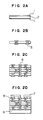
- Figs. 1A to 1D are cross-sectional views explaining steps for producing one example of the multi-layer wiring substrate of the present invention.
- Figs. 2A to 2D are cross-sectional views explaining steps for producing another example of the multi-layer wiring substrate of the present invention.
- the multi-layer wiring substrate for directly mounting chips or chip carriers (module wiring substrate) of the present invention obtained by laminating a plurality of circuit substrates via adhesive layers, each circuit substrate comprising an insulating layer at least one surface of which has a conductor circuit thereon, is characterized in that at least one of said insulating layer and said adhesive layer is a cured product of an ether imide compound of the formula: wherein R 1 , R 2 , R 3 and R 4 are independently a hydrogen atom, an alkyl group having 1 to 6 carbon atoms, an alkoxy group having 1 to 6 carbon atoms, or a halogen atom such as chlorine, bromine, etc., R 5 and R 6 are independently a hydrogen atom, a methyl group, an ethyl group, a trifluoromethyl group or a trichloromethyl group, and D is a residue of dicarboxylic acid having one or more ethylenically unsaturated double bonds.
- the ether imide compound of the formula (I) can be produced by reacting an ether linkage-containing diamine compound of the formula: wherein R 1 through R 6 are as defined above, with an acid anhydride of the formula: wherein D is as defined above, in an organic solvent preferably at -10° to +40°C for 0.5 to 10 hours to yield an ether maleic amic acid of the formula: wherein R 1 through R 6 and D are as defined above, followed by dehydration ring closure to form imide rings, preferably at 60° to 120°C for about 0.5 to 3 hours.
- Examples of the ethylenically unsaturated dicarboxylic acid anhydride of the formula (III) are maleic anhydride, citraconic anhydride, itaconic anhydride, pyrocinchonic anhydride, dichloromaleic anhydride, etc.
- organic solvent examples include dimethylformamide, dimethylacetamide, dimethylsulfoxide, N-methyl-pyrrolidone, N-methyl caprolactam, tetrahydrofuran, dioxane, acetone, diethyl ketone, methyl ethyl ketone, toluene, etc.
- the ether imide compound of the formula (I) can be used together with one or more aromatic cyanamide compounds, cyanurate compounds and cyanate compounds.
- the aromatic cyanamide compound can preferably be used in an amount of 30% by weight or less based on the total weight of the aromatic cyanamide compound and the ether imide compound of the formula (I), in order to obtain a cured product satisfying the objects of the present invention such as excellent heat resistance.
- the cyanurate compound can preferably be used in an amount of 40% by weight or less based on the total weight of the cyanurate compound and the ether imide compound of the formula (I) in order to obtain a cured product satisfying the objects of the present invention such as excellent heat resistance.
- the cyanate compound can preferably be used in an amount of 40% or less based on the total weight of the cyanate compound and the ether imide compound of the formula (I) in order to obtain a cured product satisfying the objects of the present invention such as excellent heat resistance.
- a multi-layer wiring substrate for directly mounting chips or chip carriers as defined in claim 1, can be produced by
- the multi-layer copper-clad laminate obtained in the step (c) can be piled on a ceramic wiring substrate via an adhesive layer obtained from the ether imide compound of the formula (I), followed by molding at 250°C or lower under pressure, e.g. 0.5 to 10 kg/cm 2 .
- the ether imide compound of the formula (I) can be used in the form of a powder, but the use of it in the form of a solution dissolved in an organic solvent is by far preferable due to improvement in productivity, improvement of high temperature fluidity of the resin in the insulating layer and the adhesive layer containing the compound of the formula (I).
- a copper-clad laminate can be formed by sandwiching the ether imide compound of the formula (I) alone or together with one or more compounds mentioned above by a pair of electrolytic copper foils and heating for curing.
- a spacer around the sample in order to obtain the uniform thickness, it is preferable to form a spacer around the sample and to form a laminate with heating under pressure.
- the compound of the formula (I) When the compound of the formula (I) is used as a powder, it can be melted by heating at 100° to 150°C for 5 to 60 minutes, followed by heating at 180° to 250°C for 60 to 240 minutes for curing.
- the compound of the formula (I) When the compound of the formula (I) is used as a solution, said compound dissolved in an organic solvent such as those mentioned above used for the production of the desired compounds, is uniformly coated on roughened surfaces of the electrolytic copper foil and heated at 80° to 150°C for 10 to 180 minutes to form a prepolymer, which is further heated in a constant temperature bath to remove the solvent. Then, another roughened surface of electrolytic copper foil is piled thereon, followed by curing with heating at 180° to 250°C under pressure of 5 to 40 kg/cm 2 .
- an organic solvent such as those mentioned above used for the production of the desired compounds
- the use of the solution of the compound of the formula (I) is by for better than the use of the powder, considering the productivity, prevention of voids among patterns of the multi-layer wiring substrate, etc.
- a polymerization initiator to the compound of the formula (I).
- organic peroxides such as benzoyl peroxide, p-chlorobenzoyl peroxide, 2,5-dimethyl-2,5-di(t-butyl peroxy)hexine-3, 2,4-dichlorobenzoyl peroxide, caprylyl peroxide, lauroyl peroxide, acetyl peroxide, methyl ethyl ketone peroxide, cyclohexanone peroxide, bis(1-hydroxycyclohexyl peroxide), hydroxybutyl peroxide, t-butyl hydroperoxide, p-menthane hydroperoxide, t-butyl perbenzoate, t-butyl peracetate, t-butyl peroctoate, t-butyl peroxybutylate, t-
- the resulting copper-clad laminate is drilled to form holes, followed by electroless plating to form an electroconductive layer on the inner wall of each hole. As a result, a wiring substrate is obtained.
- the resulting multi-layer substrate in a desired number of laminated form thereof is piled on a ceramic wiring board, adhesive layers containing the ether imide compound of the formula (I) being placed between individual multi-layer substrates and between the lowest multi-layer substrate and the ceramic wiring board, followed by heating at 250°C or lower under pressure for curing to finally obtain the multi-layer wiring substrate.
- the resulting multi-layer wiring substrate has advantages in that since the ether imide compound of the formula (I) melts at the time of heating for curing, adhesiveness to the conductor is excellent, and since the cured product does not decompose at 350°C or less, connection to chips or chip carriers using solder becomes possible. Further, since the relative dielectric constant is as low as 3.5 or less, and no misregistration of individual substrates takes place, the multi-layer wiring substrate of the present invention is particularly useful for directly mounting chips or chip carriers thereon.
- the multi-layer wiring substrate for directly mounting chips and chip carriers of the present invention is excellent in adhesiveness to the copper conductors as well as adhesiveness between substrates, while showing excellent high temperature fluidity so as to fill spaces of 20 to 50 ⁇ m between patterns without forming very fine voids.
- the resulting powder was sandwiched by a pair of electrolytic copper foils of 9 ⁇ m thick and attaching aluminum (so as to contact roughened surfaces of copper foils with the organic powder), and heated at 170°C for 30 minutes and 250°C for 120 minutes, under a pressure of 5 kg/cm 2 using a spacer with the predetermined thickness so as to obtain a uniform film thickness.
- a copper-clad laminate was produced.
- Example 2 The same starting materials as used in Example 1 were stirred in a 500-ml flask equipped with a reflux condenser at 100° to 130°C for 120 minutes to give a transparent solution.
- the resulting solution was coated on a roughened surface of an electrolytic copper foil of 9 ⁇ m and attaching aluminum, and dried at 110°C for 20 minutes in a drier. Then, a roughened surface of another electrolytic copper foil was piled on the solution-coated surface and heated under pressure in the same manner as described in Example 1 to give a copper-clad laminate.
- the resulting varnish was coated on a glass plate uniformly using an applicator, dried at 80° to 100°C for 30 to 60 minutes to form a film.
- the film was peeled off from the glass plate and fixed to an iron frame and maintained at 200°C, 300°C and 400°C for each 1 hour, to form a polyimide film of 20 to 30 ⁇ m thick.
- the resulting film was coated with a catalyst for electroless copper plating and subjected to electroless copper plating to give a copper-clad laminate having the copper film of 10 ⁇ m thick.
- the resulting varnish was coated on a glass plate uniformly using an applicator and dried at 80° to 100°C for 30 to 60 minutes to form a film.
- the film was peeled off from the glass plate and fixed to an iron frame and heated at 200°C, 300°C and 400°C for each 1 hour to form a polyimide film of 20 to 30 ⁇ m thick.
- a copper-clad laminate having a copper film of 10 ⁇ m thereon by electroless copper plating was prepared in the same manner as described in Comparative Example 1.
- a test piece of 25 mm width and 100 mm length was cut from a sample so as to retain a copper film at the central portion of 10 mm among the size of 25 mm.
- the copper film was peeled off vertically at a rate of 50 mm/min to evaluate the adhesive strength.
- test piece of 5 mm length and 5 mm width were cut and floated on a molten solder bath heated at 260°C or 350°C and a time required for producing blisters in the copper film was measured.
- a resin layer of 50 mm length and 50 mm width was cut from a sample and subjected to attachment of electrodes of 40 mm in diameter on both sides thereof to measure electrostatic capacity according to JIS C-6481. Then, the relative dielectric constant was calculated.
- the copper-clad laminates according to the present invention are excellent in the adhesive strength, and the solder heat resistance (particularly at 350°C). Further, since the relative dielectric constants are small, the signal transfer rate is also excellent.
- the resulting solution was coated on a roughened surface of an electrolytic copper foil of 9 ⁇ m thick and attaching alumina and dried at 140°C for 20 minutes in a constant temperature bath. Then, another electrolytic copper foil of 9 ⁇ m thick and attaching alumina was piled on the solution coated surface and heated under pressure in the same manner as described in Example 1 to give a copper-clad laminate.
- the above-mentioned solution was coated on a glass plate of 100 mm length, 100 mm width and 2 mm thickness uniformly and heated at 140°C for 20 minutes, 170°C for 60 minutes and 250°C for 120 minutes in a constant temperature bath to give a film.
- the resulting solution was coated on a roughened surface of an aluminum attached electrolytic copper foil of 9 ⁇ m thickness and dried at 140°C for 20 minutes in a constant temperature bath. Then, another aluminum-attached electrolytic copper foil of 9 ⁇ m thickness was piled on the solution coated surface and heated under pressure in the same manner as described in Example 1 to give a copper-clad laminate.
- the above-mentioned solution was coated on a glass plate of 100 mm length, 100 mm width and 2 mm thickness uniformly and heated at 140°C for 20 minutes, 170°C for 60 minutes and 250°C for 120 minutes in a constant temperature bath to give a film.
- the resulting solution was coated on a roughened surface of an aluminum-attached electrolytic copper foil of 9 ⁇ m thick and dried at 140°C for 20 minutes in a constant temperature bath. Then, another aluminum-attached electrolytic copper foil of 9 ⁇ m thickness was piled on the solution coated surface and heated under pressure in the same manner as described in Example 1 to give a copper-clad laminate.
- the above-mentioned solution was coated on a glass plate of 100 mm length, 100 mm width, and 2 mm thickness uniformly and heated at 140°C for 20 minutes, 170°C for 60 minutes and 250°C for 120 minutes in a constant temperature bath to give a film.
- the resulting solution was coated on a roughened surface of an aluminum-attached electrolytic copper foil of 9 ⁇ m thick and dried at 140°C for 20 minutes in a constant temperature bath. Then, another aluminum-attached electrolytic copper foil of 9 ⁇ m thickness was piled on the solution coated surface and heated under pressure in the same manner as described in Example 1 to give a copper-clad laminate.
- the above-mentioned solution was coated on a glass plate of 100 mm length, 100 mm width, and 2 mm thickness uniformly and heated at 140°C for 20 minutes, 170°C for 60 minutes and 250°C for 120 minutes in a constant temperature bath to give a film.
- the films were taken off from the glass plate using a single-edge knife and generation of cracks on the films was observed by the naked eye.
- Weight change of the films was measured using a high speed differential thermal balance (TGD-7000RH type, mfd. by Shinku Riko K.K.) wherein 10 mg of a sample was heated at a temperature rise rate of 5°C/min under an air flow rate of 100 cm 2 /min. The temperature showing 5% weight loss was defined as the thermal decomposition temperature.
- TTD-7000RH type mfd. by Shinku Riko K.K.
- the copper-clad laminates according to the present invention are excellent in the adhesive strength (for copper) and the solder heat resistance (at 350°C). Further, the films of the present invention handly generate cracks and are excellent in flexibility. In addition, the films of the present invention are high in the thermal decomposition temperature and thus stable in properties.
- the copper surfaces of the copper-clad laminate obtained in Example 1 were roughened in an aqueous solution of ferric chloride in a concentration of 200 ml/l (liquid temperature 45°C) for 15 seconds, followed by dipping in an aqueous solution (72°C) of NaOH (15 g/l), NaPO 4 ⁇ 12H 2 O (30 g/l) and NaClO 2 (90 g/l) for 120 seconds to form organic oxidized films on the surfaces.
- Example 2 Five sheets of the thus treated were piled while inserting the organic powder obtained in Example 1 among individual layers and heated under pressure at 170°C for 30 minutes and 250°C for 120 minutes, each at 5 kg/cm 2 to give a multi-layer copper-clad laminate.
- Example 2 The copper-clad laminate obtained in Example 2 was treated in the same manner as described in Example 8 to form organic oxidized films.
- Example 2 the varnish obtained in Example 2 was uniformly coated on one surface of the thus obtained films, followed by drying at 110°C for 20 minutes in a drier.
- Example 3 The copper-clad laminate obtained in Example 3 was treated in the same manner as described in Example 8 to form organic oxidized films on the copper surfaces.
- Example 3 the varnish obtained in Example 3 was uniformly coated on one surface of the thus obtained films, followed by drying at 140°C for 20 minutes in a drier.
- Example 4 The copper-clad laminate obtained in Example 4 was treated in the same manner as described in Example 8 to form organic oxidized films.
- Example 4 the varnish obtained in Example 4 was uniformly coated on one surface of the thus obtained films, followed by drying at 140°C for 20 minutes in a drier.
- Example 4 The copper-clad laminate obtained in Example 4 was treated in the same manner as described in Example 8 to form organic oxidized films.
- Electroconductive patterns were formed on an alumina plate by electroless plating. Then, the varnish obtained in Comparative Example 1 was coated thereon, dried at 80° to 100°C for 30 to 60 minutes, and heated at 200°C, 300°C and 400°C for each 1 hour to form insulating films. The surfaces were made flat by mechanical processing. This process was repeated 5 times to give a multi-layer laminate by the so-called sequential lamination method.
- test pieces 50 mm length and 50 mm width were subjected to cooling at -50°C for 25 minutes, raising the temperature for 20 minutes, and heating at 120°C for 25 minutes, and repeat of this one cycle 10 or 30 times. The number of test pieces bringing about interlaminar peeling among 10 test pieces was counted.
- a double-sided copper-clad laminate was formed by laminating aluminum-attached copper foil 1 on both sides of an insulating layer 2 of 30 ⁇ m thick formed by the same method as described in Example 2.
- Fig. 1B the aluminum attached to the copper-clad laminate was removed in a solution of NaOH (concentration: 100 g/l). Then, holes 3 having a diameter of 80 ⁇ m were formed by excimer laser, followed by formation of a copper film of 20 ⁇ m by electroless plating on the inner walls of the holes and the copper foils and etching with cupric chloride to form circuit patterns.
- the pattern surfaces were roughened with an aqueous solution of ferric chloride (concentration: 200 ml/l) for 15 seconds, followed by dipping in an aqueous solution of NaOH (15 g/l), NaPO ⁇ 12H 2 O (30 g/l) and NaClO 2 (90 g/l) at 72°C for 120 seconds to form organic oxidized films on the surfaces.
- Fig. 1C the varnish obtained in Example 3 was uniformly coated on one surface of the thus treated copper-clad laminate obtained in Fig. 1B and dried at 140°C for 20 minutes in a drier. Three layers of thus coated laminates were piled and heated at 170°C for 30 minutes and 250°C for 120 minutes, each under a pressure of 5 kg/cm 2 to form a multi-layer copper-clad laminate. Then, through-holes 4 were formed by a conventional method. In Fig. 1C, the lamination of three layers is exemplified, but it is possible to laminate 40 layers or more.
- Fig. 1D the varnish obtained in Example 3 was uniformly coated on a ceramic multi-layer substrate 6 having pins 5 for connecting to outer circuits, followed by drying at 140°C for 20 minutes. Then, the multi-layer copper-clad laminate obtained in Fig. 1C was adhered to the varnish-coated surface and heated at 170°C for 30 minutes and 250°C for 120 minutes, each under a pressure of 5 kg/cm 2 to give a multi-layer wiring substrate.
- Figs. 2A to 2D illustrate another example of producing the multi-layer wiring substrate of the present invention.
- a transparent solution obtained by stirring the same starting material composition as used in Example 1 in a 500-ml flask equipped with a reflux condenser at 100 to 130°C for 120 minutes was coated on a roughened surface of an aluminum-attached electrolytic copper foil 1 of 9 ⁇ m thick and dried at 110°C for 20 minutes in a drier to form an insulating layer 2.
- the same electrolytic copper foil 1 as mentioned above was piled and heated at 170°C for 30 minutes and 250°C for 120 minutes, each under a pressure of 5 kg/cm 2 to give a copper-clad laminate having the insulating layer 2 of 20 ⁇ m thick.
- Fig. 2B the aluminum on the copper-clad laminate was removed with an aqueous solution of NaOH (concentration 100 g/l). Then, holes 3 having a diameter of 40 ⁇ m were formed by excimer laser, followed by formation of a copper film of 8 ⁇ m by electroless plating on the inner walls of the holes and the copper foils and etching with cupric chloride to form circuit patterns. Then, organic oxidized films were formed on the pattern surfaces in the same manner as described in Example 12.
- Fig. 2C the varnish obtained in Example 3 was uniformly coated on one surface of the thus treated copper-clad laminate obtained in Fig. 2B and dried at 140°C for 20 minutes in a drier. Three layers of thus coated laminates were piled and heated at 170°C for 30 minutes and 250°C for 120 minutes, each under a pressure of 5 kg/cm 2 to form a multi-layer copper-clad laminate. Then, through-holes 4 were formed by a conventional method. In Fig. 2C, the lamination of three layers is exemplified, but it is possible to laminate 40 layers or more.
- Fig. 2D the varnish obtained in Example 3 was uniformly coated on a chip carrier 9 of 0.5 mm aqueous and dried at 140°C for 20 minutes in a drier. Then, the multi-layer copper-clad laminate obtained in Fig. 2C was piled on the varnish coated surface and heated at 170°C for 30 minutes and 250°C for 120 minutes, each under a pressure of 0.5 kg/cm 2 to form a chip carrier type multi-layer copper-clad laminate. Then, LSIs 7 were connected with solder 8 to give a semiconductor module.
- the multi-layer wiring substrate for directly mounting chips or chip carrier excellent in adhesive strength between circuit conductors and insulating layers and between insulating layers.
Landscapes
- Chemical & Material Sciences (AREA)
- Engineering & Computer Science (AREA)
- Medicinal Chemistry (AREA)
- Health & Medical Sciences (AREA)
- Microelectronics & Electronic Packaging (AREA)
- Chemical Kinetics & Catalysis (AREA)
- Manufacturing & Machinery (AREA)
- Polymers & Plastics (AREA)
- Organic Chemistry (AREA)
- Macromolecular Compounds Obtained By Forming Nitrogen-Containing Linkages In General (AREA)
- Laminated Bodies (AREA)
- Production Of Multi-Layered Print Wiring Board (AREA)
- Manufacturing Of Printed Wiring (AREA)
- Polymers With Sulfur, Phosphorus Or Metals In The Main Chain (AREA)
Claims (6)
- Mehrlagenverdrahtungssubstrat für die direkte Montage von Chips oder Chipträgern, erhalten durch Laminieren mehrerer Schaltungssubstrate mit Hilfe von Haftschichten zwischen diesen Schaltungssubstraten, wobei jedes Schaltungssubstrat eine Isolierschicht umfaßt, die mindestens eine mit einer Leiterschaltung versehene Oberfläche aufweist, und mindestens eine der Isolierschichten und Haftschichten aus einem gehärteten Produkt einer Etherimidverbindung der folgenden Formel
 - R1, R2, R3 und R4 unabhängig Wasserstoff, C1-6-Alkyl, eine C1-6-Alkoxy oder ein Halogenatom,- R5 und R6 unabhängig Wasserstoff, Methyl, Ethyl, Trifluormethyl oder Trichlormethyl, und- D einen Dicarbonsäurerest mit einer oder mehreren ethylenisch ungesättigten Doppelbindungen.
 - Mehrschichtenverdrahtungssubstrat nach Anspruch 1,
dadurch gekennzeichnet, daß
es auf einem keramischen Verdrahtungssubstrat mit Hilfe einer darauf erzeugte Haftschicht gestapelt ist, die aus der Etherimidverbindung der Formel (I) hergestellt wurde. - Mehrschichtenverdrahtungssubstrat nach einem der Ansprüche 1 und 2,
dadurch gekennzeichnet, daß
das gehärtete Produkt außerdem enthält:- eine oder mehrere aromatische Cyanamidverbindungen,- eine oder mehrere Cyanuratverbindungen,- eine oder mehrere Cyanatverbindungen. - Verfahren zur Herstellung des Mehrlagenverdrahtungssubstrats nach Anspruch 1, das folgende Schritte umfaßt:(a) Aufbringen einer Etherimidverbindung der Formel (I) oder einer Zusammensetzung, die die Etherimidverbindung der Formel (I) enthält, auf mindestens eine aufgerauhte Oberfläche einer elektrolytischen Kupferfolie, worauf Erwärmen auf 250 °C oder darunter unter Druck unter Erzeugung eines kupferbeschichteten Laminats,(b) Erzeugen eines Schaltungsmusters auf dem kupferbeschichteten Laminat durch Ätzen,(c) Übereinanderstapeln mehrerer mit Schaltungsmustern versehener kupferbeschichteter Laminate, die nach den Schritten (a) und (b) hergestellt wurden, mit Hilfe von dazwischenliegenden Haftschichten, die die Etherimidverbindung der Formel (I) enthalten und(d) Formen bei 250 °C oder einer niedrigeren Temperatur unter Druck.
- Verfahren nach Anspruch 4,
dadurch gekennzeichnet, daß
es ferner den folgenden Schritt umfaßt, bei dem das in Schritt (c) erhaltene Mehrschichtensubstrat mit Hilfe einer dazwischenliegenden Haftschicht, die aus der Etherimidverbindung der Formel (I) erhalten wurde, auf einem keramischen Vedrahtungssubstrat gestapelt wird, worauf das Formen bei 250 °C oder einer niedrigeren Temperatur unter Druck folgt. - Verfahren nach Anspruch 4 oder 5,
dadurch gekennzeichnet, daß
die Etherimidverbindung der Formel (I) oder die Zusammensetzung, die die Etherimidverbindung der Formel (I) enthält, in Form eines in einem organischen Lösungsmittel gelösten Lackes verwendet wird, worauf die Entfernung des Lösungsmittels folgt.
Applications Claiming Priority (2)
| Application Number | Priority Date | Filing Date | Title |
|---|---|---|---|
| JP252311/90 | 1990-09-21 | ||
| JP2252311A JPH0777297B2 (ja) | 1990-09-21 | 1990-09-21 | 多層配線基板およびその製法 |
Publications (3)
| Publication Number | Publication Date |
|---|---|
| EP0476589A2 EP0476589A2 (de) | 1992-03-25 |
| EP0476589A3 EP0476589A3 (en) | 1993-09-15 |
| EP0476589B1 true EP0476589B1 (de) | 1996-06-12 |
Family
ID=17235488
Family Applications (1)
| Application Number | Title | Priority Date | Filing Date |
|---|---|---|---|
| EP91115755A Expired - Lifetime EP0476589B1 (de) | 1990-09-21 | 1991-09-17 | Mehrschichtiges, Leiter enthaltendes Substrat und Herstellungsverfahren dafür |
Country Status (3)
| Country | Link |
|---|---|
| EP (1) | EP0476589B1 (de) |
| JP (1) | JPH0777297B2 (de) |
| DE (1) | DE69120183T2 (de) |
Cited By (1)
| Publication number | Priority date | Publication date | Assignee | Title |
|---|---|---|---|---|
| US6132852A (en) * | 1998-03-13 | 2000-10-17 | Hitachi, Ltd. | Multilayer wiring substrate and method for production thereof |
Families Citing this family (2)
| Publication number | Priority date | Publication date | Assignee | Title |
|---|---|---|---|---|
| US5483100A (en) * | 1992-06-02 | 1996-01-09 | Amkor Electronics, Inc. | Integrated circuit package with via interconnections formed in a substrate |
| JPH08250827A (ja) * | 1995-03-08 | 1996-09-27 | Shinko Electric Ind Co Ltd | 半導体装置用パッケージ及びその製造方法並びに半導体装置 |
Family Cites Families (6)
| Publication number | Priority date | Publication date | Assignee | Title |
|---|---|---|---|---|
| DE2204957A1 (de) * | 1972-02-03 | 1973-08-09 | Aeg Isolier Kunststoff | Verfahren zur herstellung von mehrschichtleiterplatten |
| JPS56103162A (en) * | 1980-01-21 | 1981-08-18 | Hitachi Ltd | Ether-imide and its preparation |
| JPS57145397A (en) * | 1981-03-04 | 1982-09-08 | Hitachi Ltd | Method of producing multilayer printed circuit board |
| JPS6061254A (ja) * | 1983-09-13 | 1985-04-09 | 三菱樹脂株式会社 | ポリエ−テルイミド−金属積層体の製造法 |
| JPH0719936B2 (ja) * | 1985-04-24 | 1995-03-06 | 株式会社日立製作所 | 配線板 |
| JPH0813863B2 (ja) * | 1988-11-07 | 1996-02-14 | 株式会社日立製作所 | エーテルイミド系組成物及び用途 |
-
1990
- 1990-09-21 JP JP2252311A patent/JPH0777297B2/ja not_active Expired - Lifetime
-
1991
- 1991-09-17 EP EP91115755A patent/EP0476589B1/de not_active Expired - Lifetime
- 1991-09-17 DE DE69120183T patent/DE69120183T2/de not_active Expired - Fee Related
Cited By (1)
| Publication number | Priority date | Publication date | Assignee | Title |
|---|---|---|---|---|
| US6132852A (en) * | 1998-03-13 | 2000-10-17 | Hitachi, Ltd. | Multilayer wiring substrate and method for production thereof |
Also Published As
| Publication number | Publication date |
|---|---|
| DE69120183D1 (de) | 1996-07-18 |
| JPH04130795A (ja) | 1992-05-01 |
| EP0476589A2 (de) | 1992-03-25 |
| JPH0777297B2 (ja) | 1995-08-16 |
| EP0476589A3 (en) | 1993-09-15 |
| DE69120183T2 (de) | 1996-12-19 |
Similar Documents
| Publication | Publication Date | Title |
|---|---|---|
| JP4528093B2 (ja) | 少なくとも2つの異種のポリアミド層と導電層とを有し、エレクトロニクスタイプの用途に有用な多層基板、およびそれに関連する組成物 | |
| US4937133A (en) | Flexible base materials for printed circuits | |
| KR100963376B1 (ko) | 폴리이미드 제조방법 및 이에 의하여 제조된 폴리이미드 | |
| JP6559027B2 (ja) | ポリアミド酸、ポリイミド、樹脂フィルム及び金属張積層板 | |
| JP2019014062A (ja) | 積層体、フレキシブル金属張積層板、およびフレキシブルプリント回路基板 | |
| JP2006045388A (ja) | 絶縁性接着シートおよびその利用 | |
| JPWO2001076866A1 (ja) | 積層体およびこれを用いた多層配線板 | |
| KR20110035620A (ko) | 폴리이미드 필름 | |
| US5686191A (en) | Thin film wiring board | |
| EP0476589B1 (de) | Mehrschichtiges, Leiter enthaltendes Substrat und Herstellungsverfahren dafür | |
| KR102452787B1 (ko) | 필름, 금속박 적층판, 플렉시블 기판, 필름의 제조 방법, 금속박 적층판의 제조 방법, 및 플렉시블 기판의 제조 방법 | |
| KR101016889B1 (ko) | 수지 조성물 및 금속 적층판 | |
| JP4805173B2 (ja) | 多層積層体及びフレキシブル銅張積層板の製造方法 | |
| JPH05110218A (ja) | リサイクル可能な積層板及びそれを用いたプリント配線板 | |
| JP7813170B2 (ja) | 高誘電率かつ低誘電正接なポリイミドフィルム、多層ポリイミドフィルム、フレキシブル金属張積層体ならびに、フレキシブルプリント基板 | |
| JP6558755B2 (ja) | ポリアミド酸、ポリイミド、樹脂フィルム及び金属張積層板 | |
| JP5069844B2 (ja) | プリント配線板用絶縁フィルムの製造方法、ポリイミド/銅積層体及びプリント配線板 | |
| KR102521460B1 (ko) | 연성금속박적층체, 이를 포함하는 연성인쇄회로기판 및 폴리이미드 전구체 조성물 | |
| JP2023146680A (ja) | ポリアミド酸、ポリイミド、ポリイミドフィルムならびに多層フィルム | |
| JP2006305966A (ja) | 積層体及びプリント配線板 | |
| JP2001342270A (ja) | 耐熱性ボンディングシートの製造方法及び耐熱性ボンディングシートを用いた銅張積層板 | |
| JP2023047876A (ja) | ポリイミド前駆体とポリイミドフィルムの製造方法、ポリイミドフィルムならびに多層フィルム | |
| JP2006077158A (ja) | ポリイミドベンゾオキサゾールフィルム | |
| JPS62215627A (ja) | 付加型イミド樹脂プレポリマ−の製法 | |
| JPS62143931A (ja) | 付加型イミド樹脂プレポリマ− |
Legal Events
| Date | Code | Title | Description |
|---|---|---|---|
| PUAI | Public reference made under article 153(3) epc to a published international application that has entered the european phase |
Free format text: ORIGINAL CODE: 0009012 |
|
| AK | Designated contracting states |
Kind code of ref document: A2 Designated state(s): DE FR GB |
|
| PUAL | Search report despatched |
Free format text: ORIGINAL CODE: 0009013 |
|
| AK | Designated contracting states |
Kind code of ref document: A3 Designated state(s): DE FR GB |
|
| 17P | Request for examination filed |
Effective date: 19930804 |
|
| 17Q | First examination report despatched |
Effective date: 19940901 |
|
| GRAH | Despatch of communication of intention to grant a patent |
Free format text: ORIGINAL CODE: EPIDOS IGRA |
|
| GRAA | (expected) grant |
Free format text: ORIGINAL CODE: 0009210 |
|
| AK | Designated contracting states |
Kind code of ref document: B1 Designated state(s): DE FR GB |
|
| PGFP | Annual fee paid to national office [announced via postgrant information from national office to epo] |
Ref country code: FR Payment date: 19960716 Year of fee payment: 6 |
|
| REF | Corresponds to: |
Ref document number: 69120183 Country of ref document: DE Date of ref document: 19960718 |
|
| ET | Fr: translation filed | ||
| PLBE | No opposition filed within time limit |
Free format text: ORIGINAL CODE: 0009261 |
|
| STAA | Information on the status of an ep patent application or granted ep patent |
Free format text: STATUS: NO OPPOSITION FILED WITHIN TIME LIMIT |
|
| 26N | No opposition filed | ||
| PG25 | Lapsed in a contracting state [announced via postgrant information from national office to epo] |
Ref country code: FR Free format text: THE PATENT HAS BEEN ANNULLED BY A DECISION OF A NATIONAL AUTHORITY Effective date: 19970930 |
|
| REG | Reference to a national code |
Ref country code: FR Ref legal event code: ST |
|
| PGFP | Annual fee paid to national office [announced via postgrant information from national office to epo] |
Ref country code: GB Payment date: 20010828 Year of fee payment: 11 |
|
| PGFP | Annual fee paid to national office [announced via postgrant information from national office to epo] |
Ref country code: DE Payment date: 20010928 Year of fee payment: 11 |
|
| REG | Reference to a national code |
Ref country code: GB Ref legal event code: IF02 |
|
| PG25 | Lapsed in a contracting state [announced via postgrant information from national office to epo] |
Ref country code: GB Free format text: LAPSE BECAUSE OF NON-PAYMENT OF DUE FEES Effective date: 20020917 |
|
| PG25 | Lapsed in a contracting state [announced via postgrant information from national office to epo] |
Ref country code: DE Free format text: LAPSE BECAUSE OF NON-PAYMENT OF DUE FEES Effective date: 20030401 |
|
| GBPC | Gb: european patent ceased through non-payment of renewal fee |
Effective date: 20020917 |