EP0474313B1 - Nukleotidsequenz, die für ein Aussenmembran-Protein von Neisseria meningitidis kodiert und Verwendung dieses Proteins zur Herstellung von Impfstoffen - Google Patents
Nukleotidsequenz, die für ein Aussenmembran-Protein von Neisseria meningitidis kodiert und Verwendung dieses Proteins zur Herstellung von Impfstoffen Download PDFInfo
- Publication number
- EP0474313B1 EP0474313B1 EP91202291A EP91202291A EP0474313B1 EP 0474313 B1 EP0474313 B1 EP 0474313B1 EP 91202291 A EP91202291 A EP 91202291A EP 91202291 A EP91202291 A EP 91202291A EP 0474313 B1 EP0474313 B1 EP 0474313B1
- Authority
- EP
- European Patent Office
- Prior art keywords
- protein
- meningitidis
- nucleotide sequence
- amino acid
- acid sequence
- Prior art date
- Legal status (The legal status is an assumption and is not a legal conclusion. Google has not performed a legal analysis and makes no representation as to the accuracy of the status listed.)
- Expired - Lifetime
Links
Images

Classifications
-
- C—CHEMISTRY; METALLURGY
- C12—BIOCHEMISTRY; BEER; SPIRITS; WINE; VINEGAR; MICROBIOLOGY; ENZYMOLOGY; MUTATION OR GENETIC ENGINEERING
- C12Y—ENZYMES
- C12Y108/00—Oxidoreductases acting on sulfur groups as donors (1.8)
- C12Y108/01—Oxidoreductases acting on sulfur groups as donors (1.8) with NAD+ or NADP+ as acceptor (1.8.1)
- C12Y108/01004—Dihydrolipoyl dehydrogenase (1.8.1.4), i.e. lipoamide-dehydrogenase
-
- A—HUMAN NECESSITIES
- A61—MEDICAL OR VETERINARY SCIENCE; HYGIENE
- A61P—SPECIFIC THERAPEUTIC ACTIVITY OF CHEMICAL COMPOUNDS OR MEDICINAL PREPARATIONS
- A61P31/00—Antiinfectives, i.e. antibiotics, antiseptics, chemotherapeutics
- A61P31/04—Antibacterial agents
-
- C—CHEMISTRY; METALLURGY
- C07—ORGANIC CHEMISTRY
- C07K—PEPTIDES
- C07K14/00—Peptides having more than 20 amino acids; Gastrins; Somatostatins; Melanotropins; Derivatives thereof
- C07K14/195—Peptides having more than 20 amino acids; Gastrins; Somatostatins; Melanotropins; Derivatives thereof from bacteria
- C07K14/22—Peptides having more than 20 amino acids; Gastrins; Somatostatins; Melanotropins; Derivatives thereof from bacteria from Neisseriaceae (F)
-
- C—CHEMISTRY; METALLURGY
- C07—ORGANIC CHEMISTRY
- C07K—PEPTIDES
- C07K16/00—Immunoglobulins [IG], e.g. monoclonal or polyclonal antibodies
- C07K16/12—Immunoglobulins [IG], e.g. monoclonal or polyclonal antibodies against material from bacteria
- C07K16/1203—Gram-negative bacteria
- C07K16/1217—Neisseriaceae (F)
-
- C—CHEMISTRY; METALLURGY
- C07—ORGANIC CHEMISTRY
- C07K—PEPTIDES
- C07K16/00—Immunoglobulins [IG], e.g. monoclonal or polyclonal antibodies
- C07K16/40—Immunoglobulins [IG], e.g. monoclonal or polyclonal antibodies against enzymes
-
- C—CHEMISTRY; METALLURGY
- C12—BIOCHEMISTRY; BEER; SPIRITS; WINE; VINEGAR; MICROBIOLOGY; ENZYMOLOGY; MUTATION OR GENETIC ENGINEERING
- C12N—MICROORGANISMS OR ENZYMES; COMPOSITIONS THEREOF; PROPAGATING, PRESERVING, OR MAINTAINING MICROORGANISMS; MUTATION OR GENETIC ENGINEERING; CULTURE MEDIA
- C12N9/00—Enzymes; Proenzymes; Compositions thereof; Processes for preparing, activating, inhibiting, separating or purifying enzymes
- C12N9/0004—Oxidoreductases (1.)
- C12N9/0051—Oxidoreductases (1.) acting on a sulfur group of donors (1.8)
-
- C—CHEMISTRY; METALLURGY
- C12—BIOCHEMISTRY; BEER; SPIRITS; WINE; VINEGAR; MICROBIOLOGY; ENZYMOLOGY; MUTATION OR GENETIC ENGINEERING
- C12N—MICROORGANISMS OR ENZYMES; COMPOSITIONS THEREOF; PROPAGATING, PRESERVING, OR MAINTAINING MICROORGANISMS; MUTATION OR GENETIC ENGINEERING; CULTURE MEDIA
- C12N9/00—Enzymes; Proenzymes; Compositions thereof; Processes for preparing, activating, inhibiting, separating or purifying enzymes
- C12N9/10—Transferases (2.)
- C12N9/1025—Acyltransferases (2.3)
- C12N9/1029—Acyltransferases (2.3) transferring groups other than amino-acyl groups (2.3.1)
-
- A—HUMAN NECESSITIES
- A61—MEDICAL OR VETERINARY SCIENCE; HYGIENE
- A61K—PREPARATIONS FOR MEDICAL, DENTAL OR TOILETRY PURPOSES
- A61K39/00—Medicinal preparations containing antigens or antibodies
-
- C—CHEMISTRY; METALLURGY
- C07—ORGANIC CHEMISTRY
- C07K—PEPTIDES
- C07K2319/00—Fusion polypeptide
-
- C—CHEMISTRY; METALLURGY
- C07—ORGANIC CHEMISTRY
- C07K—PEPTIDES
- C07K2319/00—Fusion polypeptide
- C07K2319/01—Fusion polypeptide containing a localisation/targetting motif
- C07K2319/035—Fusion polypeptide containing a localisation/targetting motif containing a signal for targeting to the external surface of a cell, e.g. to the outer membrane of Gram negative bacteria, GPI- anchored eukaryote proteins
-
- C—CHEMISTRY; METALLURGY
- C07—ORGANIC CHEMISTRY
- C07K—PEPTIDES
- C07K2319/00—Fusion polypeptide
- C07K2319/40—Fusion polypeptide containing a tag for immunodetection, or an epitope for immunisation
Definitions
- the present invention is in the field of Genetic Engineering and Biotechnology. More in particular, the invention is related to a nucleotide sequence obtained from the pathogenic bacterium Neisseria meningitidis, which nucleotide sequence codes for a protein belonging to the outer membrane of said bacterium. Said protein is cloned and expressed in the host Escherichia coli. The characteristics of this protein as well as its capacity to induce immunologically active antibodies (bactericidal antibodies) in its natural host, allow its use in vaccine preparations against pathogenic strains of this microorganism.
- N. meningitidis The gram-negative bacterium N. meningitidis is responsible for one of every three cases of bacterial meningitidis in the world. It was described for the first time by Anton Weichselbaum in 1887 (I. DeVoe, 1982, Microbiol. Revs. 46: 162-190), and man (i.e. human beings) is its only natural host up to date.
- the polysaccharide corresponding to N. meningitidis serogroup B is poorly immunogenic (E. Gotschlich et al., 1969, J. Exp. Med. 129: 1349-1365) and induces a poor response of IgM of low specificity (W. Zollinger et al., 1979, J. Clin. Invest. 63: 836-848).
- N. meningitidis include phospholipids, lipopolysaccharides (LPS or endotoxins), pili proteins and others.
- LPS lipopolysaccharides
- Different immunotypes of LPS have been described for N. meningitidis (W. Zollinger and R. Mandrell, 1977, Infect. Immun. 18: 424-433; C.M. Tsai et al., 1983, J. Bacteriol. 155: 498-504) and immunogenicity using non-toxic derivatives was assayed (H. Jennings et al., 1984, Infect. Immun. 43: 407-412) but their variability (H. Schneider et al., 1984, Infect. Immun. 45: 544-549) and pyrogenicity (when it is conjugated to lipid A) are limiting factors up to now.
- strains of N. meningitidis are subdivided in serotypes according to the presence of specific epitopes in the majoritary protein P1/P2 and in subtypes according to other epitopes in protein P1 (C. Frasch et al., 1985, Rev. Infect. Dis. 7: 504-510).
- this type of vaccine starts with the multiplication in an appropiate culture of a microorganism which is highly pathogenic, with the associated biological risk of handling directly the bacteria.
- this kind of preparation contains lipopolysaccharides, a contaminant that, although it may increase the product's effectiveness, shows at the same time undesirable secondary effects because of its powerful pyrogenicity.
- its variation in minor antigenic components, which form part of the preparation cannot be controlled in the different batches, which makes it difficult to follow important parameters related to the reactogenicity and immunogenicity.
- the protein P1 located in the outer membrane of N. meningitidis is one of the best characterized and studied antigens. This protein presents no variability within the same strain. However, there are more than 17 types of proteins P1 in Neisseria which have differences in three variable regions, this being the basis of the classification of N. in different subtypes.
- This protein is very immunogenic in humans (W.D. Zollinger and R.E. Mandrell, 1983, Med. Trop. 43:143-147), eliciting protective antibodies (E. Wedege and L.O. Froholm, 1986, Infect. Immun. 51: 571-578; K. Saukkonen et al, 1987, Microb. Pathogen. 3:261-267), that give it a special importance in vaccine preparations.
- Some subtypes of proteins P1 have been cloned in E. coli, starting from genomic libraries (A.K. Barlow et al., 1989, Molec. Microb. 3:131-139) or using the PCR technique (S. Butcher et al., VIIth International Congress of Neisseria, R.C. Seid, Patent Application WO 90/06696; Brian Mc Guinness et al., 1990, J. Exp. Med. 171:1871-1882, M.C.J. Maiden et al., VIIth International Conference of Neisseria, Berlin, Sept. 9-14, 1990, and 1991, Molec. Microb. 3:727; J.
- This invention is related to a nucleotide sequence coding for a protein having a molecular weight of about 64 kilodaltons. This sequence has been found in all N. meningitidis serotypes and serogroups tested, as verified by nucleic acid hybridization, Western-bloting, Dot-blot and ELISA.
- a technical object of this invention is the identification of a nucleotide sequence which codes for a highly conserved protein and is common to the majority of pathogenic strains of Neisseria (named P64k), in order to obtain the protein by a recombinant way with a high grade of purity and in commercially useful quantities, so that it can be employed in diagnostic methods and as an integrating part of a vaccine preparation of broad spectrum of protection.
- the invention provides a recombinant polynucleotide, comprising a nucleotide sequence coding for a protein P64k of Neisseria meningitidis, said protein P64k essentially having the amino acid sequence shown in SEQ ID NO:1.
- said nucleotide sequence coding for the protein P64k of N. meningitidis essentially consists of the nucleotide sequence shown in SEQ ID NO:1.
- the recombinant polynucleotide may further comprise a nucleotide sequence of a cloning or expression vector.
- the invention also provides a transformed microorganism containing a recombinant polynucleotide as defined above, preferably a transformed microorganism which is capable of expressing the protein P64k of N. meningitidis.
- the transformed microorganism is an Escherichia coli strain, e.g. E. coli strain HB101, transformed with an expression vector containing a nucleotide sequence coding for the protein P64k of N. meningitidis, e.g. the expression vector pM-6.
- the invention also provides a recombinant proteinaceous substance, comprising an amino acid sequence corresponding to the amino acid sequence of a protein P64k of N. meningitidis, said protein P64k essentially having the amino acid sequence shown in SEQ ID NO:1.
- Said recombinant proteinaceous substance may essentially consist of protein P64k, or be a fusion protein or a protein/polysaccharide conjugate comprising the amino acid sequence of protein P64k of N. meningitidis.
- the invention further provides a vaccine composition, comprising a recombinant protein as defined above, together with a suitable carrier, diluent or adjuvant.
- the invention provides a monoclonal antibody, raised against a recombinant proteinaceous substance as defined above and capable of binding a protein P64k of N. meningitidis.
- the invention also provides a process for preparing a protein P64k of Neisseria meningitidis, or a fusion protein comprising protein P64k, said protein P64k essentially having the amino acid sequence shown in SEQ ID NO:1, comprising the steps of transforming a microorganism with an expression vector containing a nucleotide sequence coding for said protein P64k, or said fusion protein, culturing the transformed microorganism to obtain expression of said protein P64k, or said fusion protein, and isolating said expression product.
- One novel aspect of this invention is the gene isolated from the N. meningitidis strain B:4:P1.15, which was named M-6 and has as a principal characteristic its stability in E. coli vectors. This gene does not produce adverse effects on the host, allowing to obtain yields of over 25 % of total protein (ratio of P64k to total protein from host strain). On the other hand, it has been demonstrated by Southern and Western Blot hybridizations (E. Southern, 1975, J. Mol. Biol. 98: 503-527 and W. Burnette, 1981, Anal. Biochem. 12: 195-203) that protein P64k is present in all the following studied strains of N. meningitidis:
- the protein is not present in N. cinerea, N. lactamica, N. sicca and N. flavescens, but these are not of interest because they are not pathogenic.
- the protein having a molecular weight of about 64 kDa can be localized by electron microscopy in the outer membrane of N. meningitidis. Therefore, this antigen is an exposed antigen which is favorable for use in a vaccine preparation.
- the protein was recognized in Western blot immunoidentification experiments with sera from convalescents and individuals vaccinated with the conventional Cuban vaccine Va-Mengoc-BC (Centro Nacional de Biopreparados, Havana, Cuba). This aspect guarantees the immunogenicity of the antigen and at the same time confirms its presence within the high molecular weight protein fraction constituent of this vaccine, which is responsible of the lasting immune response to the disease.
- the protein which is an object of this invention, produces antibodies with a broad bactericidal spectrum (different serogroupes, serotypes and subtypes), a characteristic which has not been reported previously for any protein from N. meningitidis.
- This protein obtained in high levels in E. coli becomes an important candidate for the improvement of immunogenicity when expressed as a fusion protein with other proteins. It could also increase the expression by conferring enhanced stability and suitability in the molecular structure during transcription and translation processes. Belonging to Neisseria, this protein can also be fused to other proteins from Neisseria in order to obtain vaccine preparations against this microorganism with increased immunogenicity. These fusion proteins are also objects of this invention.
- the gene M-6 obtained from a genomic library of the strain N. meningitidis B:4:P1.15 showed a great homology with sequences of lipoamide-dehydrogenases and acetyl-transferases from other microorganisms and higher organisms.
- An important object of this invention is the nucleotide sequence which codes for the M-6 gene (SEQ ID NO:1 of the Sequence Listing) whose product is the protein P64k.
- This gene was derived from the genome of the strain B385 isolated in Cuba (N. meningitidis B:4:P1.15), by the construction of a genomic library in the phage EMBL 3.
- the recombinant DNA including the gene M-6 constitutes another object of this invention, which includes the phage lambda, the plasmid pM-3 and the expression vector pM-6 for expression in bacteria.
- the M-6 gene was cloned under the tryptophane promotor and using its own termination signal of transcription and a linkage fragment between M-6 and the cloning site NcoI which adds the following nucleotide sequence at the 5' end:
- N-terminal of the protein P64k encoded by the M-6 gene inserted in plasmid pM-6 which adds 5 aminoacids to the N-terminal of the original protein corresponds to:
- Another object of this invention are the microorganisms resulting from the transformation of E. coli strain HB 101 with the pM-6 vector, which are characterized by the expression of high levels of protein P64k, good viability and great stability.
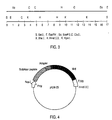
- the transformed clone of E. coli was denominated HBM64 (Fig. 2), and presents levels of expression of P64k higher than 25 % in relation to the total protein of the cell (Fig. 6).
- the antigen obtained from the isolated sequence was very useful in the preparation of different types of potential vaccine preparations, like bivalent vaccines with a broad immunoprotective spectrum, e.g., protein-polysaccharide conjugates, fusion proteins, etc.
- the DNA of about 60 kb was subjected to a partial digestion with the enzyme Sau 3A, obtaining a population of fragments of about 15 kb.
- This majoritary fraction was isolated and purified by separation in agarose gel (T. Maniatis et al., 1982, Molecular Cloning: A Laboratory Manual. Cold Spring Harbor Lab.: Cold Spring Harbor NY).
- the library was screened by immunoidentification (R. Young and R. Davis, 1983, PNAS USA 80: 1194-1198) using rabbit serum obtained against a preparation of proteins belonging to the outer membrane of the strain N. meningitidis B:4:P1.15.
- the clones were analyzed by Western-blot (Burnette, 1981) and the expression of the P64k protein with a molecular weight of about 70 kDa was detected.
- the resulting recombinant phage was named 31.
- the Western blot was also made using a mixture of sera from convalescents of meningococcemia, free of antibodies from E. coli, obtaining the same result as that using hyperimmunized rabbit sera.
- the 17 kb insert corresponding to the phage isolated from the library was cloned in the plasmid pUC18 after separation from the phage's arms using the enzyme SalI. This resulted in the construction pM-1 (Fig. 2), that was subjected to restriction analysis (Fig. 3).
- the sequence of the insert in pM-3 was determined by the method of Sanger (F. Sanger et al., 1977, PNAS USA 74: 5463-5467).
- the plasmid pM-3 (Fig. 2) was linearized with the enzyme EcoRI and successive suppressions of the gene were carried out, incubating the sample with the nucleases ExoIII and S1.
- the resulting fragments were separated from the rest of the vector pUC18 by cutting with the restriction enzyme HindIII and were cloned fused to a stabilizator fragment (European patent application EP-A-0 416 673), using an Xba-blunt adapter to conserve the XbaI site of the stabilizator gene:
- the insert sequences were established using Sanger's Method (F. Sanger et al., 1977, PNAS USA 74: 5463-5467). From the obtained sequences the approximate molecular weight of the protein encoded by this gene was deduced.
- the fusion region between the proteins was localized in the gene sequences.
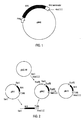
- NcoI-XbaI fragment corresponding to the stabilizing peptide coding sequence, was deleted from pILM-25, obtaining a non-fused protein expressed under the tryptophan promoter with it's original terminator from the N. Meningitidis B:4:P1.15, according to the pM-6 construction ( Figure 1).
- the pM-6 plasmid was transformed in different strains of E. coli like W3110, JA-221, HB-101, LE-392 and MC-1061, and the expression of P64k was compared. The best results were obtained in W3110, JA-221 and HB-101. These strains were chosen to scale up fermentation, and expression levels up to 25 % of total cell proteins were obtained.
- the P64k protein was desalted by gel filtration chromatography (PD-10, Pharmacia), eluted with water and monitored at 280 nm. The protein fraction was concentrated to 0.5 nM/ ⁇ l. One ⁇ l of this solution was applied to a PVDF (polyvinylidene difluoride, Millipore) filter, previously activated with methanol.
- PD-10 gel filtration chromatography
- PVDF polyvinylidene difluoride, Millipore
- the Edman degradation was made using the Knauer's Automatic Sequencer, model 810, connected to a HPLC (High Performance Liquid Chromatography) system, so as to detect the phenylthiohydantoin derivatives of the aminoacids (PTH-aminoacids).
- the standard procedure of sequencing as recommended by the manufacturer of the equipment was followed.
- the separation of the PTH-aminoacids was performed in a reverse phase column C-18 (5 ⁇ m), 250 mm x 2 mm (Merck), eluted with an acetonitrile gradient (B buffer) in sodium acetate (A buffer), prepared according to the manufacturers, with a 200 ⁇ l/minute flow and at 42°C.
- the PTH-aminoacids were detected at 269 nm.
- the bactericidal test against B385 (B:4:P1.15) was made according to the procedure described by Larrick et al. (Scand. J. Immunol. 32, 1990, 121-128) with modifications. With this objective, a mixture was made of a) a suspension of bacteria, cultured under special conditions (1-5 colony forming units/1), b) Gey's balanced salt solution, c) rabbit sera (3 to 4 weeks) as a source of complement and d) pooled sera from mice, immunized against protein P64k in Aluminium Hydroxyde Gel, and inactivated at 56°C for 30 minutes. The immunization of mice was carried out according to an immunization scheme of 3 doses of 20 ⁇ g each.
- the proportions used in the aforementioned mixture were 1:2:1:1 in a total volume of 125 ⁇ l.
- the mixture was incubated at 37°C during 1 hour and plated in fresh Mueller Hinton Agar (Oxoid, London) supplemented with 5 % calf serum (CubaVet, Habana). The counting of surviving colonies was done after 18 hours of incubation of the plates in an atmosphere of 5 % CO 2 at 37°C.
- the bactericidal titer was considered as the maximum serum dilution necessary to render a 50 % inhibition of bacterial growth, with respect to the same mixture without the test serum. It was found that 1:20 serum dilution still maintains its bactericidal activity. As negative controls (non bactericidal at 1:2 dilution) pooled sera from mice immunized with Aluminum Hydroxyde Gel, and pooled sera from mice immunized with cuban Hepatitis B recombinant vaccine, were used. The bactericidal effect was specific to the anti-P64k antibodies.
- the bactericidal test against different strains of N. meningitidis was made using:
- the anti-P64k monoclonal antibodies have significant bactericidal titers against different serogroups (A, B and C), serotypes (4, 14, 13, 15 and NT) and subtypes (7, 15, 16 and NT) of bacteria.
- Fusion protein M-14 (P64k and P1.15)
- the gene coding for P1.15 protein was cloned using the Polymerase Chain Reaction (PCR).
- PCR Polymerase Chain Reaction
- the sites for gene fusion of P1.15 with M-6 are the following: *: N does not belong to any of the fusion proteins and was created by the genetic construction.
- the resulting fusion protein (M-14) was expressed in E. coli using a plasmid vector under the tryptophan promoter, to levels higher than 10 % of total cell protein.
- the protein was recognized by bactericidal monoclonal antibodies, and anti-P1.15 and P64k polyclonal antibodies, in Western-Blot.
- the protein P64k was conjugated with the polysaccharide from Haemophilus influenzae using the reductive amination method.
- the Haemophilus influenzae polysaccharide (Polyribosyl ribitol phosphate, PRP) was purified by the cold phenol method described by Frasch, 1990 (in: Bacterial Vaccines, 1990, Alan R. Liss, Inc., pp. 123-145). The final contamination of PRP with proteins or nucleic acids was less than 1 %.
- This polysaccharide was degraded using the method of Parikh et al. 1974 (Methods in Enzymol.
- the conjugate is obtained by mixing protein and polyssacharide in a 1 : 1 ratio (w/w), adding sodium cyanoborohydride and subjecting the mixture to an incubation, first for 48 hours at 4°C and later at 37°C for 24 hours.
- the high molecular weight complex which contains the resulting conjugate with protein-polysaccharide in a 1 : 2.3 ratio, can be separated from the non reactive contaminants by HPLC.
- Antibody titers against P64k protein were measured in solid phase Enzyme Linked Immunosorbent Assay (ELISA), using P64k at 5 mg/ml to coat the polystyrene plate.
- the antibody titers against HBsAg were determined by a Commercial ELISA (Organon Teknika, Boxtel).
- Figure 5 shows the dynamics of antibody response against protein P64k, using sera diluted 1/10 000. The response against P64k is not interfered by the presence of the other antigen.
- Figure 6 shows the titers against HBsAg after each dosis. The titers against this protein are not diminished by the presence of P64k in the preparation. High titers are obtained against both antigens in the same vaccine preparation.
Landscapes
- Chemical & Material Sciences (AREA)
- Health & Medical Sciences (AREA)
- Organic Chemistry (AREA)
- Life Sciences & Earth Sciences (AREA)
- Genetics & Genomics (AREA)
- General Health & Medical Sciences (AREA)
- Biochemistry (AREA)
- Medicinal Chemistry (AREA)
- Molecular Biology (AREA)
- Wood Science & Technology (AREA)
- Zoology (AREA)
- Bioinformatics & Cheminformatics (AREA)
- Engineering & Computer Science (AREA)
- Proteomics, Peptides & Aminoacids (AREA)
- Biophysics (AREA)
- General Engineering & Computer Science (AREA)
- Biotechnology (AREA)
- Immunology (AREA)
- Biomedical Technology (AREA)
- Microbiology (AREA)
- Gastroenterology & Hepatology (AREA)
- Nuclear Medicine, Radiotherapy & Molecular Imaging (AREA)
- Pharmacology & Pharmacy (AREA)
- Animal Behavior & Ethology (AREA)
- Public Health (AREA)
- Veterinary Medicine (AREA)
- Communicable Diseases (AREA)
- General Chemical & Material Sciences (AREA)
- Chemical Kinetics & Catalysis (AREA)
- Oncology (AREA)
- Medicines Containing Antibodies Or Antigens For Use As Internal Diagnostic Agents (AREA)
- Peptides Or Proteins (AREA)
- Preparation Of Compounds By Using Micro-Organisms (AREA)
- Micro-Organisms Or Cultivation Processes Thereof (AREA)
Claims (11)
- Rekombinantes Polynucleotid, das eine Nucleotidsequenz umfaßt, die für ein Protein P64k von Neisseria meningitidis codiert, wobei das Protein P64k im wesentlichen die in SEQ ID NO:1 gezeigte Aminosäuresequenz aufweist.
- Rekombinantes Polynucleotid gemäß Anspruch 1, wobei die Nucleotidsequenz, die für das Protein P64k von N. meningitidis codiert, im wesentlichen aus der in SEQ ID NO:1 gezeigten Nucleotidsequenz besteht.
- Rekombinantes Polynucleotid gemäß Anspruch 1 oder 2, das weiterhin eine Nucleotidsequenz eines Klonierungs- oder Expressionsvektors umfaßt.
- Transformierter Mikroorganismus, der ein rekombinantes Polynucleotid gemäß einem der Ansprüche 1 bis 3 enthält.
- Transformierter Mikroorganismus gemäß Anspruch 4, der das Protein P64k von N. meningitidis zu exprimieren vermag.
- Transformierter Mikroorganismus gemäß Anspruch 5, bei dem es sich um einen Escherichia-coli-Stamm handelt, der mit einem Expressionsvektor transformiert ist, der eine Nucleotidsequenz enthält, die für das Protein P64k von N. meningitidis codiert.
- Rekombinante Proteinsubstanz, die eine Aminosäuresequenz umfaßt, die der Aminosäuresequenz eines Proteins P64k von N. meningitidis entspricht, wobei das Protein P64k im wesentlichen die in SEQ ID NO:1 gezeigte Aminosäuresequenz aufweist.
- Rekombinante Proteinsubstanz gemäß Anspruch 7, bei der es sich um ein Fusionsprotein oder ein Protein/Polysaccharid-Konjugat handelt, das die Aminosäuresequenz von Protein P64k von N. meningitidis umfaßt.
- Impfstoffzusammensetzung, die ein rekombinantes Protein gemäß Anspruch 7 oder 8 zusammen mit einem geeigneten Träger, Verdünnungsmittel oder Hilfsstoff umfaßt.
- Monoklonaler Antikörper, der gegen eine rekombinante Proteinsubstanz gemäß Anspruch 7 oder 8 entwickelt wurde und in der Lage ist, ein Protein P64k von N. meningitidis zu binden.
- Verfahren zur Herstellung eines Proteins P64k von Neisseria meningitidis oder eines Fusionsproteins, das das Protein P64k umfaßt, wobei das Protein P64k im wesentlichen die in SEQ ID NO:1 gezeigte Aminosäuresequenz aufweist, umfassend die Schritte des Transformierens eines Mikroorganismus mit einem Expressionsvektor, der eine Nucleotidsequenz enthält, die für das Protein P64k oder das Fusionsprotein codiert, des Kultivierens des transformierten Mikroorganismus, so daß das Protein P64k oder das Fusionsprotein exprimiert wird, und des Isolierens des Expressionsprodukts.
Applications Claiming Priority (2)
| Application Number | Priority Date | Filing Date | Title |
|---|---|---|---|
| CU14590 | 1990-09-07 | ||
| CU90145A CU22302A1 (es) | 1990-09-07 | 1990-09-07 | Secuencia nucleotidica codificante para una proteina de la membrana externa de neisseria meningitidis y uso de dicha proteina en preparados vacunales |
Publications (3)
| Publication Number | Publication Date |
|---|---|
| EP0474313A2 EP0474313A2 (de) | 1992-03-11 |
| EP0474313A3 EP0474313A3 (en) | 1993-02-24 |
| EP0474313B1 true EP0474313B1 (de) | 1997-04-23 |
Family
ID=5459451
Family Applications (1)
| Application Number | Title | Priority Date | Filing Date |
|---|---|---|---|
| EP91202291A Expired - Lifetime EP0474313B1 (de) | 1990-09-07 | 1991-09-06 | Nukleotidsequenz, die für ein Aussenmembran-Protein von Neisseria meningitidis kodiert und Verwendung dieses Proteins zur Herstellung von Impfstoffen |
Country Status (15)
| Country | Link |
|---|---|
| US (1) | US5286484A (de) |
| EP (1) | EP0474313B1 (de) |
| JP (1) | JP3253327B2 (de) |
| AR (1) | AR245778A1 (de) |
| AT (1) | ATE152175T1 (de) |
| AU (1) | AU657487B2 (de) |
| CA (1) | CA2050749C (de) |
| CU (1) | CU22302A1 (de) |
| DE (1) | DE69125769T2 (de) |
| ES (1) | ES2103295T3 (de) |
| FI (1) | FI103511B (de) |
| GR (1) | GR3024127T3 (de) |
| IL (1) | IL99401A (de) |
| NO (1) | NO913524D0 (de) |
| RU (1) | RU2132383C1 (de) |
Cited By (2)
| Publication number | Priority date | Publication date | Assignee | Title |
|---|---|---|---|---|
| US7273611B1 (en) | 1995-03-17 | 2007-09-25 | Id Biomedical Corporation | Proteinase K resistant surface protein of neisseria meningitidis |
| US8053410B2 (en) | 2002-06-21 | 2011-11-08 | Novo Nordisk Health Care A/G | Pegylated factor VII glycoforms |
Families Citing this family (48)
| Publication number | Priority date | Publication date | Assignee | Title |
|---|---|---|---|---|
| US7118757B1 (en) * | 1988-12-19 | 2006-10-10 | Wyeth Holdings Corporation | Meningococcal class 1 outer-membrane protein vaccine |
| AT402367B (de) * | 1990-10-11 | 1997-04-25 | Immuno Ag | Pharmazeutische zubereitung auf basis von lys-plasminogen |
| US5439808A (en) * | 1993-07-23 | 1995-08-08 | North American Vaccine, Inc. | Method for the high level expression, purification and refolding of the outer membrane group B porin proteins from Neisseria meningitidis |
| WO1996000233A1 (en) * | 1994-06-24 | 1996-01-04 | Children's Hospital And Medical Center | Escherichia coli o157:h7 epithelial adhesin |
| US5545553A (en) * | 1994-09-26 | 1996-08-13 | The Rockefeller University | Glycosyltransferases for biosynthesis of oligosaccharides, and genes encoding them |
| US5747287A (en) * | 1995-04-28 | 1998-05-05 | North American Vaccine, Inc. | Method for the high level expression, purification and refolding of the outer membrane group B porin proteins from Neisseria meningitidis |
| CU22559A1 (es) * | 1996-01-17 | 1999-05-03 | Ct Ingenieria Genetica Biotech | Sistema de expresión de antígenos heterologos en e. coli como proteínas de fusión |
| WO1998009990A1 (en) * | 1996-09-04 | 1998-03-12 | Takara Shuzo Co., Ltd. | Fungal antigens and process for producing the same |
| EP1047784B2 (de) * | 1998-01-14 | 2015-03-18 | Novartis Vaccines and Diagnostics S.r.l. | Antigene aus neisseria meningitidis |
| EP1073748A2 (de) * | 1998-04-29 | 2001-02-07 | American Cyanamid Company | Impstoffe die rekombinantes pilin gegen neisseria gonorrhoeae oder neisseria meningitidis enthalten |
| EP2261338A3 (de) * | 1998-05-01 | 2012-01-04 | Novartis Vaccines and Diagnostics, Inc. | Antigene und Zusammensetzungen gegen Neisseria meningitidis |
| US6693186B2 (en) * | 1998-09-01 | 2004-02-17 | Antex Biologics Inc | Neisseria meningitidis polypeptide, nucleic acid sequence and uses thereof |
| US6756493B1 (en) * | 1998-09-01 | 2004-06-29 | Antex Biologics, Inc. | Nucleic acid sequence and uses thereof |
| BR9914374A (pt) * | 1998-10-09 | 2002-09-17 | Chiron Corp | Sequências genÈmicas de neisseria e métodos para seu uso |
| US6610306B2 (en) | 1998-10-22 | 2003-08-26 | The University Of Montana | OMP85 protein of neisseria meningitidis, compositions containing the same and methods of use thereof |
| ES2310776T3 (es) * | 1998-10-22 | 2009-01-16 | The University Of Montana | Composiciones de vacuna que comprenden proteinas omp de neisseria gonorrhoeae y de neisseria meningitidis. |
| WO2000023595A1 (en) * | 1998-10-22 | 2000-04-27 | The University Of Montana | Omp85 proteins of neisseria gonorrhoeae and neisseria meningitidis, compositions containing same and methods of use thereof |
| EP1939215A1 (de) | 1998-10-22 | 2008-07-02 | The University of Montana | Omp85-Proteien von Neisseria Gonorrhoeae und Neisseria Meningitidis, Zusammensetzungen damit und ihre Verwendungsverfahren |
| NZ521531A (en) | 2000-02-28 | 2005-12-23 | Chiron S | Heterologous expression of neisserial proteins |
| EP1274732A1 (de) * | 2000-04-20 | 2003-01-15 | Max-Planck-Gesellschaft zur Förderung der Wissenschaften e.V. | Sekretorisches tyrosine phosphatase aus mykobakterium |
| CU23077A1 (es) * | 2000-12-06 | 2005-08-17 | Centro Inmunologia Molecular | Composicion vacunal que contiene factor de crecimiento transformante (tgf-alfa). su uso en la terapia de enfermedades malignas |
| CU23245A1 (es) | 2001-07-16 | 2007-10-17 | Inst De Medicina Tropical Pedr | CADENAS QUIMéRICAS CODIFICANTES PARA PROTEINAS INDUCTORAS DE EFECTOS CONTRA VIRUS. PREPARADOS UTILIZANDO PROTEINAS QUIMéRICAS |
| GB0121591D0 (en) * | 2001-09-06 | 2001-10-24 | Chiron Spa | Hybrid and tandem expression of neisserial proteins |
| US7214660B2 (en) | 2001-10-10 | 2007-05-08 | Neose Technologies, Inc. | Erythropoietin: remodeling and glycoconjugation of erythropoietin |
| US7696163B2 (en) | 2001-10-10 | 2010-04-13 | Novo Nordisk A/S | Erythropoietin: remodeling and glycoconjugation of erythropoietin |
| US7173003B2 (en) | 2001-10-10 | 2007-02-06 | Neose Technologies, Inc. | Granulocyte colony stimulating factor: remodeling and glycoconjugation of G-CSF |
| US20060057160A1 (en) * | 2002-08-02 | 2006-03-16 | Ralph Biemans | Vaccine composition |
| GB0220194D0 (en) * | 2002-08-30 | 2002-10-09 | Chiron Spa | Improved vesicles |
| HUE031886T2 (en) * | 2002-10-11 | 2017-08-28 | Glaxosmithkline Biologicals Sa | Polypeptide vaccines for extensive protection against hypervirulent meningococcal lines |
| AU2003281909A1 (en) * | 2002-11-14 | 2004-06-03 | Instituto Finlay. Centro De Investigacion-Produccion De Vacunas Y Sueros. | Method of obtaining conjugate vaccines and vaccine compositions containing same |
| NZ542094A (en) | 2003-03-14 | 2008-12-24 | Neose Technologies Inc | Branched polymer conjugates comprising a peptide and water-soluble polymer chains |
| PL1615945T3 (pl) | 2003-04-09 | 2012-03-30 | Ratiopharm Gmbh | Sposoby glikopegylacji i białka/peptydy wytwarzane tymi sposobami |
| EP1613261A4 (de) | 2003-04-09 | 2011-01-26 | Novo Nordisk As | Intrazelluläre bildung von peptidkonjugaten |
| US9005625B2 (en) | 2003-07-25 | 2015-04-14 | Novo Nordisk A/S | Antibody toxin conjugates |
| US20080305992A1 (en) | 2003-11-24 | 2008-12-11 | Neose Technologies, Inc. | Glycopegylated erythropoietin |
| NZ548123A (en) | 2004-01-08 | 2010-05-28 | Novo Nordisk As | O-linked glycosylation of peptides |
| NZ550533A (en) * | 2004-04-30 | 2010-02-26 | Novartis Vaccines & Diagnostic | Meningococcal conjugate vaccination comprising N. meningitidis and diphtheria toxin |
| US20080300173A1 (en) | 2004-07-13 | 2008-12-04 | Defrees Shawn | Branched Peg Remodeling and Glycosylation of Glucagon-Like Peptides-1 [Glp-1] |
| WO2006031811A2 (en) | 2004-09-10 | 2006-03-23 | Neose Technologies, Inc. | Glycopegylated interferon alpha |
| WO2006050247A2 (en) | 2004-10-29 | 2006-05-11 | Neose Technologies, Inc. | Remodeling and glycopegylation of fibroblast growth factor (fgf) |
| CU23297A1 (es) * | 2004-11-16 | 2008-07-24 | Ct De Inmunologa A Molecular | Formulaciones inmunoterapã0/00uticas para la inducciã"n de autoanticuerpos bloqueadores de la uniã"n de interleucina-2 a su receptor. su uso en el tratamiento del cã ncer |
| US20070105755A1 (en) | 2005-10-26 | 2007-05-10 | Neose Technologies, Inc. | One pot desialylation and glycopegylation of therapeutic peptides |
| CU23578A1 (es) | 2005-09-16 | 2010-09-30 | Ct Ingenieria Genetica Biotech | Proteína de la cápsida del virus dengue inductora de respuesta protectora y composición vacunal |
| WO2007056191A2 (en) | 2005-11-03 | 2007-05-18 | Neose Technologies, Inc. | Nucleotide sugar purification using membranes |
| CU23630A1 (es) | 2006-10-30 | 2011-02-24 | Ct Ingenieria Genetica Biotech | Moléculas peptídicas quiméricas con propiedades antivirales contra los virus de la familia flaviviridae |
| HRP20130382T1 (hr) | 2007-04-03 | 2013-05-31 | Biogenerix Ag | Postupci lijeäśenja pomoä†u glikopegiliranog g-csf |
| CA2690611C (en) | 2007-06-12 | 2015-12-08 | Novo Nordisk A/S | Improved process for the production of nucleotide sugars |
| PL2257311T3 (pl) | 2008-02-27 | 2014-09-30 | Novo Nordisk As | Koniugaty cząsteczek czynnika VIII |
Family Cites Families (2)
| Publication number | Priority date | Publication date | Assignee | Title |
|---|---|---|---|---|
| US4459286A (en) * | 1983-01-31 | 1984-07-10 | Merck & Co., Inc. | Coupled H. influenzae type B vaccine |
| RU2023448C1 (ru) * | 1987-07-30 | 1994-11-30 | Сентро Насьональ Де Биопрепарадос | Способ получения вакцины против различных патогенных серотипов менингита нейссера группы в |
-
1990
- 1990-09-07 CU CU90145A patent/CU22302A1/es unknown
-
1991
- 1991-09-03 FI FI914129A patent/FI103511B/fi active
- 1991-09-04 IL IL9940191A patent/IL99401A/xx not_active IP Right Cessation
- 1991-09-05 CA CA002050749A patent/CA2050749C/en not_active Expired - Fee Related
- 1991-09-05 US US07/754,918 patent/US5286484A/en not_active Expired - Lifetime
- 1991-09-05 AU AU83683/91A patent/AU657487B2/en not_active Ceased
- 1991-09-06 AT AT91202291T patent/ATE152175T1/de active
- 1991-09-06 RU SU5001752A patent/RU2132383C1/ru not_active IP Right Cessation
- 1991-09-06 EP EP91202291A patent/EP0474313B1/de not_active Expired - Lifetime
- 1991-09-06 DE DE69125769T patent/DE69125769T2/de not_active Expired - Fee Related
- 1991-09-06 NO NO913524A patent/NO913524D0/no unknown
- 1991-09-06 AR AR91320611A patent/AR245778A1/es active
- 1991-09-06 ES ES91202291T patent/ES2103295T3/es not_active Expired - Lifetime
- 1991-09-07 JP JP25587291A patent/JP3253327B2/ja not_active Expired - Fee Related
-
1997
- 1997-07-16 GR GR970401777T patent/GR3024127T3/el unknown
Cited By (6)
| Publication number | Priority date | Publication date | Assignee | Title |
|---|---|---|---|---|
| US7273611B1 (en) | 1995-03-17 | 2007-09-25 | Id Biomedical Corporation | Proteinase K resistant surface protein of neisseria meningitidis |
| US7749499B2 (en) | 1995-03-17 | 2010-07-06 | Id Biomedical Corporation | Proteinase K resistant surface protein of Neisseria meningitidis |
| US7776335B2 (en) | 1995-03-17 | 2010-08-17 | Id Biomedical Corporation | Proteinase K resistant surface protein of Neisseria meningitidis |
| US7786286B2 (en) | 1995-03-17 | 2010-08-31 | Id Biomedical Corporation | Proteinase K resistant surface protein of Neisseria meningitidis |
| US7833717B2 (en) | 1995-03-17 | 2010-11-16 | Id Biomedical Corporation | Proteinase K resistant surface protein of Neisseria meningitidis |
| US8053410B2 (en) | 2002-06-21 | 2011-11-08 | Novo Nordisk Health Care A/G | Pegylated factor VII glycoforms |
Also Published As
| Publication number | Publication date |
|---|---|
| CA2050749A1 (en) | 1992-03-08 |
| RU2132383C1 (ru) | 1999-06-27 |
| CA2050749C (en) | 2002-07-02 |
| ATE152175T1 (de) | 1997-05-15 |
| FI103511B1 (fi) | 1999-07-15 |
| GR3024127T3 (en) | 1997-10-31 |
| IL99401A0 (en) | 1992-08-18 |
| FI914129A7 (fi) | 1992-03-08 |
| JPH06169779A (ja) | 1994-06-21 |
| FI914129A0 (fi) | 1991-09-03 |
| AU8368391A (en) | 1992-03-12 |
| AR245778A1 (es) | 1994-02-28 |
| IL99401A (en) | 2003-12-10 |
| CU22302A1 (es) | 1995-01-31 |
| FI103511B (fi) | 1999-07-15 |
| JP3253327B2 (ja) | 2002-02-04 |
| ES2103295T3 (es) | 1997-09-16 |
| AU657487B2 (en) | 1995-03-16 |
| DE69125769T2 (de) | 1997-11-27 |
| US5286484A (en) | 1994-02-15 |
| NO913524D0 (no) | 1991-09-06 |
| EP0474313A3 (en) | 1993-02-24 |
| EP0474313A2 (de) | 1992-03-11 |
| DE69125769D1 (de) | 1997-05-28 |
Similar Documents
| Publication | Publication Date | Title |
|---|---|---|
| EP0474313B1 (de) | Nukleotidsequenz, die für ein Aussenmembran-Protein von Neisseria meningitidis kodiert und Verwendung dieses Proteins zur Herstellung von Impfstoffen | |
| KR100361562B1 (ko) | 프로테이나제k에대해내성을갖는네이쎄리아메닝기티디스의표면단백질 | |
| EP0649435B1 (de) | Membran-assoziierte immunogene proteine des mycobakterien | |
| Heckels | Structure and function of pili of pathogenic Neisseria species | |
| JP4827196B2 (ja) | 髄膜炎菌類タンパク質nmb1870のドメインおよびエピトープ | |
| US20120039942A1 (en) | Outer membrane vesicles and uses thereof | |
| JP2001204482A (ja) | 肺炎球菌タンパクの構造遺伝子 | |
| CA2167677A1 (en) | Method for the high level expression, purification and refolding of the outer membrane group b porin proteins from neisseria meningitidis | |
| JP2001508758A (ja) | グループbナイセリア・メニンギチジス外膜(mb3)タンパク質の酵母からの発現およびワクチン | |
| JPH0866198A (ja) | 肺炎球菌の表面タンパクaのエピトープ領域 | |
| US8114971B2 (en) | Nucleic acid molecules encoding proteins which impart the adhesion of Neisseria cells to human cells | |
| US6994854B1 (en) | Protective epitopes of adenyl cyclase-haemolysin (AC-Hly), their application to the treatment or to the prevention of bordetella infections | |
| EP0734451B1 (de) | ENTEROTOXINE VON SHIGELLA FLEXNERI 2a | |
| JPH11501003A (ja) | ノンタイプアブルヘモフィルスの高分子量表面タンパク | |
| WO1994008013A1 (en) | Pilin variants and uses thereof | |
| KR20080108576A (ko) | Nmb0606 단백질을 포함하는 약학적 조성물 | |
| NO304188B1 (no) | Nukleotidsekvens som koder for et ytre membranprotein fra Neisseria meningitt | |
| KR20060124625A (ko) | 단백질 nmb0928 및 약학적 제형에서의 이의 용도 | |
| KR101713635B1 (ko) | 비브리오 패혈증균의 시스테인 단백질 분해효소 도메인 유래 재조합 단백질 및 이의 용도 | |
| AU762316B2 (en) | Proteinase K resistant surface protein of neisseria meningitidis | |
| CN101443037A (zh) | 包含蛋白质nma0939的药物组合物 | |
| HK1014991B (en) | Proteinase k resistant surface protein of neisseria meningitidis | |
| KR20060123759A (ko) | 단백질 nmb1125 및 약학적 제제에서의 이들의 용도 |
Legal Events
| Date | Code | Title | Description |
|---|---|---|---|
| PUAI | Public reference made under article 153(3) epc to a published international application that has entered the european phase |
Free format text: ORIGINAL CODE: 0009012 |
|
| AK | Designated contracting states |
Kind code of ref document: A2 Designated state(s): AT BE CH DE DK ES FR GB GR IT LI LU NL SE |
|
| RIN1 | Information on inventor provided before grant (corrected) |
Inventor name: HOUSSEIN SOSA, MANUEL SELMAN Inventor name: HERRERA MARTINEZ, LUIS S. CENTRO INGENIERIA Inventor name: MORERA CORDOVA, VIVIAN Inventor name: GRILLO, JUAN MORALES Inventor name: FERNANDEZ MASO, JULIO RAUL Inventor name: NIETO, GERARDO GUILLEN Inventor name: RODRIGUEZ, RICARDO SILVA Inventor name: NOVOA PEREZ, LIDIA INES |
|
| PUAL | Search report despatched |
Free format text: ORIGINAL CODE: 0009013 |
|
| AK | Designated contracting states |
Kind code of ref document: A3 Designated state(s): AT BE CH DE DK ES FR GB GR IT LI LU NL SE |
|
| 17P | Request for examination filed |
Effective date: 19930322 |
|
| 17Q | First examination report despatched |
Effective date: 19940715 |
|
| GRAG | Despatch of communication of intention to grant |
Free format text: ORIGINAL CODE: EPIDOS AGRA |
|
| GRAH | Despatch of communication of intention to grant a patent |
Free format text: ORIGINAL CODE: EPIDOS IGRA |
|
| GRAH | Despatch of communication of intention to grant a patent |
Free format text: ORIGINAL CODE: EPIDOS IGRA |
|
| GRAA | (expected) grant |
Free format text: ORIGINAL CODE: 0009210 |
|
| AK | Designated contracting states |
Kind code of ref document: B1 Designated state(s): AT BE CH DE DK ES FR GB GR IT LI LU NL SE |
|
| PG25 | Lapsed in a contracting state [announced via postgrant information from national office to epo] |
Ref country code: LI Effective date: 19970423 Ref country code: AT Effective date: 19970423 Ref country code: CH Effective date: 19970423 Ref country code: DK Effective date: 19970423 |
|
| REF | Corresponds to: |
Ref document number: 152175 Country of ref document: AT Date of ref document: 19970515 Kind code of ref document: T |
|
| REG | Reference to a national code |
Ref country code: CH Ref legal event code: EP |
|
| REF | Corresponds to: |
Ref document number: 69125769 Country of ref document: DE Date of ref document: 19970528 |
|
| ET | Fr: translation filed | ||
| PG25 | Lapsed in a contracting state [announced via postgrant information from national office to epo] |
Ref country code: LU Free format text: LAPSE BECAUSE OF NON-PAYMENT OF DUE FEES Effective date: 19970906 |
|
| REG | Reference to a national code |
Ref country code: ES Ref legal event code: FG2A Ref document number: 2103295 Country of ref document: ES Kind code of ref document: T3 |
|
| PG25 | Lapsed in a contracting state [announced via postgrant information from national office to epo] |
Ref country code: BE Free format text: LAPSE BECAUSE OF NON-PAYMENT OF DUE FEES Effective date: 19970930 |
|
| REG | Reference to a national code |
Ref country code: GR Ref legal event code: FG4A Free format text: 3024127 |
|
| REG | Reference to a national code |
Ref country code: CH Ref legal event code: PL |
|
| PLBE | No opposition filed within time limit |
Free format text: ORIGINAL CODE: 0009261 |
|
| STAA | Information on the status of an ep patent application or granted ep patent |
Free format text: STATUS: NO OPPOSITION FILED WITHIN TIME LIMIT |
|
| BERE | Be: lapsed |
Owner name: CENTRO DE INGENIERIA GENETICA Y BIOTECNOLOGIA Effective date: 19970930 |
|
| 26N | No opposition filed | ||
| REG | Reference to a national code |
Ref country code: GB Ref legal event code: IF02 |
|
| PGFP | Annual fee paid to national office [announced via postgrant information from national office to epo] |
Ref country code: NL Payment date: 20080915 Year of fee payment: 18 Ref country code: FR Payment date: 20080731 Year of fee payment: 18 Ref country code: IT Payment date: 20080819 Year of fee payment: 18 |
|
| PGFP | Annual fee paid to national office [announced via postgrant information from national office to epo] |
Ref country code: GB Payment date: 20080910 Year of fee payment: 18 |
|
| PGFP | Annual fee paid to national office [announced via postgrant information from national office to epo] |
Ref country code: DE Payment date: 20081002 Year of fee payment: 18 |
|
| PGFP | Annual fee paid to national office [announced via postgrant information from national office to epo] |
Ref country code: SE Payment date: 20080909 Year of fee payment: 18 Ref country code: ES Payment date: 20081028 Year of fee payment: 18 |
|
| PGFP | Annual fee paid to national office [announced via postgrant information from national office to epo] |
Ref country code: GR Payment date: 20080904 Year of fee payment: 18 |
|
| REG | Reference to a national code |
Ref country code: NL Ref legal event code: V1 Effective date: 20100401 |
|
| EUG | Se: european patent has lapsed | ||
| GBPC | Gb: european patent ceased through non-payment of renewal fee |
Effective date: 20090906 |
|
| REG | Reference to a national code |
Ref country code: FR Ref legal event code: ST Effective date: 20100531 |
|
| PG25 | Lapsed in a contracting state [announced via postgrant information from national office to epo] |
Ref country code: NL Free format text: LAPSE BECAUSE OF NON-PAYMENT OF DUE FEES Effective date: 20100401 Ref country code: DE Free format text: LAPSE BECAUSE OF NON-PAYMENT OF DUE FEES Effective date: 20100401 Ref country code: FR Free format text: LAPSE BECAUSE OF NON-PAYMENT OF DUE FEES Effective date: 20090930 |
|
| PG25 | Lapsed in a contracting state [announced via postgrant information from national office to epo] |
Ref country code: GR Free format text: LAPSE BECAUSE OF NON-PAYMENT OF DUE FEES Effective date: 20100406 |
|
| PG25 | Lapsed in a contracting state [announced via postgrant information from national office to epo] |
Ref country code: GB Free format text: LAPSE BECAUSE OF NON-PAYMENT OF DUE FEES Effective date: 20090906 |
|
| PG25 | Lapsed in a contracting state [announced via postgrant information from national office to epo] |
Ref country code: IT Free format text: LAPSE BECAUSE OF NON-PAYMENT OF DUE FEES Effective date: 20090906 |
|
| PG25 | Lapsed in a contracting state [announced via postgrant information from national office to epo] |
Ref country code: SE Free format text: LAPSE BECAUSE OF NON-PAYMENT OF DUE FEES Effective date: 20090907 |
|
| REG | Reference to a national code |
Ref country code: ES Ref legal event code: FD2A Effective date: 20110708 |
|
| PG25 | Lapsed in a contracting state [announced via postgrant information from national office to epo] |
Ref country code: ES Free format text: LAPSE BECAUSE OF NON-PAYMENT OF DUE FEES Effective date: 20110628 |
|
| PG25 | Lapsed in a contracting state [announced via postgrant information from national office to epo] |
Ref country code: ES Free format text: LAPSE BECAUSE OF NON-PAYMENT OF DUE FEES Effective date: 20090907 |