EP0454022B1 - Catalyst and process for dehydrogenation and dehydrocyclization - Google Patents
Catalyst and process for dehydrogenation and dehydrocyclization Download PDFInfo
- Publication number
- EP0454022B1 EP0454022B1 EP91106432A EP91106432A EP0454022B1 EP 0454022 B1 EP0454022 B1 EP 0454022B1 EP 91106432 A EP91106432 A EP 91106432A EP 91106432 A EP91106432 A EP 91106432A EP 0454022 B1 EP0454022 B1 EP 0454022B1
- Authority
- EP
- European Patent Office
- Prior art keywords
- catalyst
- composition
- support
- metal
- dehydrogenation
- Prior art date
- Legal status (The legal status is an assumption and is not a legal conclusion. Google has not performed a legal analysis and makes no representation as to the accuracy of the status listed.)
- Expired - Lifetime
Links
- 239000003054 catalyst Substances 0.000 title claims description 89
- 238000000034 method Methods 0.000 title claims description 35
- 238000006356 dehydrogenation reaction Methods 0.000 title claims description 30
- 230000008569 process Effects 0.000 title claims description 28
- 239000000203 mixture Substances 0.000 claims description 53
- XFWJKVMFIVXPKK-UHFFFAOYSA-N calcium;oxido(oxo)alumane Chemical compound [Ca+2].[O-][Al]=O.[O-][Al]=O XFWJKVMFIVXPKK-UHFFFAOYSA-N 0.000 claims description 33
- 229910052751 metal Inorganic materials 0.000 claims description 33
- 239000002184 metal Substances 0.000 claims description 33
- -1 zinc aluminate Chemical class 0.000 claims description 32
- BASFCYQUMIYNBI-UHFFFAOYSA-N platinum Chemical compound [Pt] BASFCYQUMIYNBI-UHFFFAOYSA-N 0.000 claims description 30
- 229930195733 hydrocarbon Natural products 0.000 claims description 25
- 150000002430 hydrocarbons Chemical class 0.000 claims description 25
- 229910052725 zinc Inorganic materials 0.000 claims description 22
- 239000011701 zinc Substances 0.000 claims description 22
- ATJFFYVFTNAWJD-UHFFFAOYSA-N Tin Chemical compound [Sn] ATJFFYVFTNAWJD-UHFFFAOYSA-N 0.000 claims description 15
- 229910052697 platinum Inorganic materials 0.000 claims description 15
- 229910052718 tin Inorganic materials 0.000 claims description 9
- 150000001875 compounds Chemical class 0.000 claims description 8
- 239000007788 liquid Substances 0.000 claims description 6
- 230000003197 catalytic effect Effects 0.000 claims description 5
- 229910052732 germanium Inorganic materials 0.000 claims description 4
- GNPVGFCGXDBREM-UHFFFAOYSA-N germanium atom Chemical compound [Ge] GNPVGFCGXDBREM-UHFFFAOYSA-N 0.000 claims description 4
- 125000004432 carbon atom Chemical group C* 0.000 claims description 2
- 238000006243 chemical reaction Methods 0.000 description 22
- ATUOYWHBWRKTHZ-UHFFFAOYSA-N Propane Chemical compound CCC ATUOYWHBWRKTHZ-UHFFFAOYSA-N 0.000 description 16
- 239000004215 Carbon black (E152) Substances 0.000 description 14
- 230000000694 effects Effects 0.000 description 11
- 150000002739 metals Chemical class 0.000 description 9
- 239000000047 product Substances 0.000 description 9
- 239000000463 material Substances 0.000 description 8
- TVMXDCGIABBOFY-UHFFFAOYSA-N octane Chemical compound CCCCCCCC TVMXDCGIABBOFY-UHFFFAOYSA-N 0.000 description 8
- 239000001294 propane Substances 0.000 description 8
- 238000012360 testing method Methods 0.000 description 8
- 230000008901 benefit Effects 0.000 description 7
- UFHFLCQGNIYNRP-UHFFFAOYSA-N Hydrogen Chemical compound [H][H] UFHFLCQGNIYNRP-UHFFFAOYSA-N 0.000 description 6
- 238000002156 mixing Methods 0.000 description 6
- 239000007795 chemical reaction product Substances 0.000 description 5
- 239000001257 hydrogen Substances 0.000 description 5
- 229910052739 hydrogen Inorganic materials 0.000 description 5
- QQONPFPTGQHPMA-UHFFFAOYSA-N propylene Natural products CC=C QQONPFPTGQHPMA-UHFFFAOYSA-N 0.000 description 5
- 125000004805 propylene group Chemical group [H]C([H])([H])C([H])([*:1])C([H])([H])[*:2] 0.000 description 5
- 230000006870 function Effects 0.000 description 4
- PCHJSUWPFVWCPO-UHFFFAOYSA-N gold Chemical compound [Au] PCHJSUWPFVWCPO-UHFFFAOYSA-N 0.000 description 4
- 229910052737 gold Inorganic materials 0.000 description 4
- 239000010931 gold Substances 0.000 description 4
- OKKJLVBELUTLKV-UHFFFAOYSA-N Methanol Chemical compound OC OKKJLVBELUTLKV-UHFFFAOYSA-N 0.000 description 3
- BZLVMXJERCGZMT-UHFFFAOYSA-N Methyl tert-butyl ether Chemical compound COC(C)(C)C BZLVMXJERCGZMT-UHFFFAOYSA-N 0.000 description 3
- 150000001242 acetic acid derivatives Chemical class 0.000 description 3
- 150000001335 aliphatic alkanes Chemical class 0.000 description 3
- 229940045985 antineoplastic platinum compound Drugs 0.000 description 3
- 238000013459 approach Methods 0.000 description 3
- 235000013844 butane Nutrition 0.000 description 3
- 238000007906 compression Methods 0.000 description 3
- 230000006835 compression Effects 0.000 description 3
- 238000013461 design Methods 0.000 description 3
- 238000010586 diagram Methods 0.000 description 3
- 150000004679 hydroxides Chemical class 0.000 description 3
- 238000005470 impregnation Methods 0.000 description 3
- 238000004519 manufacturing process Methods 0.000 description 3
- IJDNQMDRQITEOD-UHFFFAOYSA-N n-butane Chemical compound CCCC IJDNQMDRQITEOD-UHFFFAOYSA-N 0.000 description 3
- JRZJOMJEPLMPRA-UHFFFAOYSA-N olefin Natural products CCCCCCCC=C JRZJOMJEPLMPRA-UHFFFAOYSA-N 0.000 description 3
- 150000002894 organic compounds Chemical class 0.000 description 3
- 150000003058 platinum compounds Chemical class 0.000 description 3
- 230000009467 reduction Effects 0.000 description 3
- 230000008929 regeneration Effects 0.000 description 3
- 238000011069 regeneration method Methods 0.000 description 3
- 229910052709 silver Inorganic materials 0.000 description 3
- 239000004332 silver Substances 0.000 description 3
- XEEYBQQBJWHFJM-UHFFFAOYSA-N Iron Chemical compound [Fe] XEEYBQQBJWHFJM-UHFFFAOYSA-N 0.000 description 2
- PXHVJJICTQNCMI-UHFFFAOYSA-N Nickel Chemical compound [Ni] PXHVJJICTQNCMI-UHFFFAOYSA-N 0.000 description 2
- KDLHZDBZIXYQEI-UHFFFAOYSA-N Palladium Chemical compound [Pd] KDLHZDBZIXYQEI-UHFFFAOYSA-N 0.000 description 2
- 239000002253 acid Substances 0.000 description 2
- 150000001336 alkenes Chemical class 0.000 description 2
- PNEYBMLMFCGWSK-UHFFFAOYSA-N aluminium oxide Inorganic materials [O-2].[O-2].[O-2].[Al+3].[Al+3] PNEYBMLMFCGWSK-UHFFFAOYSA-N 0.000 description 2
- 239000007864 aqueous solution Substances 0.000 description 2
- 239000002585 base Substances 0.000 description 2
- 230000009286 beneficial effect Effects 0.000 description 2
- 239000011575 calcium Substances 0.000 description 2
- 229910052791 calcium Inorganic materials 0.000 description 2
- 150000004649 carbonic acid derivatives Chemical class 0.000 description 2
- 239000000571 coke Substances 0.000 description 2
- 230000008021 deposition Effects 0.000 description 2
- 239000003085 diluting agent Substances 0.000 description 2
- 238000011143 downstream manufacturing Methods 0.000 description 2
- 238000009472 formulation Methods 0.000 description 2
- 150000004820 halides Chemical class 0.000 description 2
- 150000002736 metal compounds Chemical class 0.000 description 2
- 150000002823 nitrates Chemical class 0.000 description 2
- 150000003891 oxalate salts Chemical class 0.000 description 2
- 238000011084 recovery Methods 0.000 description 2
- 230000004044 response Effects 0.000 description 2
- 238000000926 separation method Methods 0.000 description 2
- SQGYOTSLMSWVJD-UHFFFAOYSA-N silver(1+) nitrate Chemical compound [Ag+].[O-]N(=O)=O SQGYOTSLMSWVJD-UHFFFAOYSA-N 0.000 description 2
- QGZKDVFQNNGYKY-UHFFFAOYSA-O Ammonium Chemical compound [NH4+] QGZKDVFQNNGYKY-UHFFFAOYSA-O 0.000 description 1
- OYPRJOBELJOOCE-UHFFFAOYSA-N Calcium Chemical compound [Ca] OYPRJOBELJOOCE-UHFFFAOYSA-N 0.000 description 1
- OKTJSMMVPCPJKN-UHFFFAOYSA-N Carbon Chemical compound [C] OKTJSMMVPCPJKN-UHFFFAOYSA-N 0.000 description 1
- XTEGARKTQYYJKE-UHFFFAOYSA-M Chlorate Chemical class [O-]Cl(=O)=O XTEGARKTQYYJKE-UHFFFAOYSA-M 0.000 description 1
- VEXZGXHMUGYJMC-UHFFFAOYSA-M Chloride anion Chemical compound [Cl-] VEXZGXHMUGYJMC-UHFFFAOYSA-M 0.000 description 1
- 229910003771 Gold(I) chloride Inorganic materials 0.000 description 1
- 229910003803 Gold(III) chloride Inorganic materials 0.000 description 1
- DGAQECJNVWCQMB-PUAWFVPOSA-M Ilexoside XXIX Chemical compound C[C@@H]1CC[C@@]2(CC[C@@]3(C(=CC[C@H]4[C@]3(CC[C@@H]5[C@@]4(CC[C@@H](C5(C)C)OS(=O)(=O)[O-])C)C)[C@@H]2[C@]1(C)O)C)C(=O)O[C@H]6[C@@H]([C@H]([C@@H]([C@H](O6)CO)O)O)O.[Na+] DGAQECJNVWCQMB-PUAWFVPOSA-M 0.000 description 1
- VQTUBCCKSQIDNK-UHFFFAOYSA-N Isobutene Chemical group CC(C)=C VQTUBCCKSQIDNK-UHFFFAOYSA-N 0.000 description 1
- MUBZPKHOEPUJKR-UHFFFAOYSA-N Oxalic acid Chemical compound OC(=O)C(O)=O MUBZPKHOEPUJKR-UHFFFAOYSA-N 0.000 description 1
- ZLMJMSJWJFRBEC-UHFFFAOYSA-N Potassium Chemical compound [K] ZLMJMSJWJFRBEC-UHFFFAOYSA-N 0.000 description 1
- XBDQKXXYIPTUBI-UHFFFAOYSA-N Propionic acid Chemical class CCC(O)=O XBDQKXXYIPTUBI-UHFFFAOYSA-N 0.000 description 1
- KJTLSVCANCCWHF-UHFFFAOYSA-N Ruthenium Chemical compound [Ru] KJTLSVCANCCWHF-UHFFFAOYSA-N 0.000 description 1
- BQCADISMDOOEFD-UHFFFAOYSA-N Silver Chemical compound [Ag] BQCADISMDOOEFD-UHFFFAOYSA-N 0.000 description 1
- QAOWNCQODCNURD-UHFFFAOYSA-L Sulfate Chemical compound [O-]S([O-])(=O)=O QAOWNCQODCNURD-UHFFFAOYSA-L 0.000 description 1
- XLOMVQKBTHCTTD-UHFFFAOYSA-N Zinc monoxide Chemical compound [Zn]=O XLOMVQKBTHCTTD-UHFFFAOYSA-N 0.000 description 1
- VEFOGWVXEBSPOE-UHFFFAOYSA-N [O-][N+]([O-])=O.[O-][N+]([O-])=O.O.O Chemical compound [O-][N+]([O-])=O.[O-][N+]([O-])=O.O.O VEFOGWVXEBSPOE-UHFFFAOYSA-N 0.000 description 1
- 238000010521 absorption reaction Methods 0.000 description 1
- 239000000654 additive Substances 0.000 description 1
- 230000000996 additive effect Effects 0.000 description 1
- 150000001298 alcohols Chemical class 0.000 description 1
- 150000001339 alkali metal compounds Chemical class 0.000 description 1
- 229910052784 alkaline earth metal Inorganic materials 0.000 description 1
- 230000029936 alkylation Effects 0.000 description 1
- 238000005804 alkylation reaction Methods 0.000 description 1
- 239000003125 aqueous solvent Substances 0.000 description 1
- 150000001491 aromatic compounds Chemical class 0.000 description 1
- 125000003118 aryl group Chemical group 0.000 description 1
- QVGXLLKOCUKJST-UHFFFAOYSA-N atomic oxygen Chemical compound [O] QVGXLLKOCUKJST-UHFFFAOYSA-N 0.000 description 1
- IXSUHTFXKKBBJP-UHFFFAOYSA-L azanide;platinum(2+);dinitrite Chemical compound [NH2-].[NH2-].[Pt+2].[O-]N=O.[O-]N=O IXSUHTFXKKBBJP-UHFFFAOYSA-L 0.000 description 1
- 229910052788 barium Inorganic materials 0.000 description 1
- DSAJWYNOEDNPEQ-UHFFFAOYSA-N barium atom Chemical compound [Ba] DSAJWYNOEDNPEQ-UHFFFAOYSA-N 0.000 description 1
- SXDBWCPKPHAZSM-UHFFFAOYSA-M bromate Chemical class [O-]Br(=O)=O SXDBWCPKPHAZSM-UHFFFAOYSA-M 0.000 description 1
- 239000001273 butane Substances 0.000 description 1
- 238000001354 calcination Methods 0.000 description 1
- 229910017052 cobalt Inorganic materials 0.000 description 1
- 239000010941 cobalt Substances 0.000 description 1
- GUTLYIVDDKVIGB-UHFFFAOYSA-N cobalt atom Chemical compound [Co] GUTLYIVDDKVIGB-UHFFFAOYSA-N 0.000 description 1
- 229910052593 corundum Inorganic materials 0.000 description 1
- 150000001923 cyclic compounds Chemical class 0.000 description 1
- ZFTFAPZRGNKQPU-UHFFFAOYSA-N dicarbonic acid Chemical compound OC(=O)OC(O)=O ZFTFAPZRGNKQPU-UHFFFAOYSA-N 0.000 description 1
- 230000007613 environmental effect Effects 0.000 description 1
- 150000002170 ethers Chemical class 0.000 description 1
- 230000002349 favourable effect Effects 0.000 description 1
- 239000000446 fuel Substances 0.000 description 1
- 239000007789 gas Substances 0.000 description 1
- RJHLTVSLYWWTEF-UHFFFAOYSA-K gold trichloride Chemical compound Cl[Au](Cl)Cl RJHLTVSLYWWTEF-UHFFFAOYSA-K 0.000 description 1
- XLYOFNOQVPJJNP-UHFFFAOYSA-M hydroxide Chemical compound [OH-] XLYOFNOQVPJJNP-UHFFFAOYSA-M 0.000 description 1
- 230000006872 improvement Effects 0.000 description 1
- 238000010348 incorporation Methods 0.000 description 1
- 229910052741 iridium Inorganic materials 0.000 description 1
- GKOZUEZYRPOHIO-UHFFFAOYSA-N iridium atom Chemical compound [Ir] GKOZUEZYRPOHIO-UHFFFAOYSA-N 0.000 description 1
- 229910052742 iron Inorganic materials 0.000 description 1
- 150000002576 ketones Chemical class 0.000 description 1
- 239000012528 membrane Substances 0.000 description 1
- 238000006263 metalation reaction Methods 0.000 description 1
- 230000004048 modification Effects 0.000 description 1
- 238000012986 modification Methods 0.000 description 1
- OFBQJSOFQDEBGM-UHFFFAOYSA-N n-pentane Natural products CCCCC OFBQJSOFQDEBGM-UHFFFAOYSA-N 0.000 description 1
- 229910052759 nickel Inorganic materials 0.000 description 1
- 229910052762 osmium Inorganic materials 0.000 description 1
- SYQBFIAQOQZEGI-UHFFFAOYSA-N osmium atom Chemical compound [Os] SYQBFIAQOQZEGI-UHFFFAOYSA-N 0.000 description 1
- TWNQGVIAIRXVLR-UHFFFAOYSA-N oxo(oxoalumanyloxy)alumane Chemical compound O=[Al]O[Al]=O TWNQGVIAIRXVLR-UHFFFAOYSA-N 0.000 description 1
- 239000001301 oxygen Substances 0.000 description 1
- 229910052760 oxygen Inorganic materials 0.000 description 1
- 150000002927 oxygen compounds Chemical class 0.000 description 1
- 229910052763 palladium Inorganic materials 0.000 description 1
- 239000012188 paraffin wax Substances 0.000 description 1
- 239000008188 pellet Substances 0.000 description 1
- 229910052700 potassium Inorganic materials 0.000 description 1
- 239000011591 potassium Substances 0.000 description 1
- 238000004064 recycling Methods 0.000 description 1
- 229910052703 rhodium Inorganic materials 0.000 description 1
- 239000010948 rhodium Substances 0.000 description 1
- MHOVAHRLVXNVSD-UHFFFAOYSA-N rhodium atom Chemical compound [Rh] MHOVAHRLVXNVSD-UHFFFAOYSA-N 0.000 description 1
- 229910052707 ruthenium Inorganic materials 0.000 description 1
- 229930195734 saturated hydrocarbon Natural products 0.000 description 1
- 238000007086 side reaction Methods 0.000 description 1
- CQLFBEKRDQMJLZ-UHFFFAOYSA-M silver acetate Chemical compound [Ag+].CC([O-])=O CQLFBEKRDQMJLZ-UHFFFAOYSA-M 0.000 description 1
- 229940071536 silver acetate Drugs 0.000 description 1
- 229940100890 silver compound Drugs 0.000 description 1
- 150000003379 silver compounds Chemical class 0.000 description 1
- LFAGQMCIGQNPJG-UHFFFAOYSA-N silver cyanide Chemical compound [Ag+].N#[C-] LFAGQMCIGQNPJG-UHFFFAOYSA-N 0.000 description 1
- 229940098221 silver cyanide Drugs 0.000 description 1
- 229910001961 silver nitrate Inorganic materials 0.000 description 1
- 229960001516 silver nitrate Drugs 0.000 description 1
- 229910052708 sodium Inorganic materials 0.000 description 1
- 239000011734 sodium Substances 0.000 description 1
- 239000000243 solution Substances 0.000 description 1
- 229910052596 spinel Inorganic materials 0.000 description 1
- 239000011029 spinel Substances 0.000 description 1
- 238000013179 statistical model Methods 0.000 description 1
- 238000003860 storage Methods 0.000 description 1
- 150000003892 tartrate salts Chemical class 0.000 description 1
- 125000000383 tetramethylene group Chemical group [H]C([H])([*:1])C([H])([H])C([H])([H])C([H])([H])[*:2] 0.000 description 1
- 150000003606 tin compounds Chemical class 0.000 description 1
- 229930195735 unsaturated hydrocarbon Natural products 0.000 description 1
- 229910001845 yogo sapphire Inorganic materials 0.000 description 1
Images
Classifications
-
- C—CHEMISTRY; METALLURGY
- C07—ORGANIC CHEMISTRY
- C07C—ACYCLIC OR CARBOCYCLIC COMPOUNDS
- C07C5/00—Preparation of hydrocarbons from hydrocarbons containing the same number of carbon atoms
- C07C5/32—Preparation of hydrocarbons from hydrocarbons containing the same number of carbon atoms by dehydrogenation with formation of free hydrogen
- C07C5/373—Preparation of hydrocarbons from hydrocarbons containing the same number of carbon atoms by dehydrogenation with formation of free hydrogen with simultaneous isomerisation
- C07C5/393—Preparation of hydrocarbons from hydrocarbons containing the same number of carbon atoms by dehydrogenation with formation of free hydrogen with simultaneous isomerisation with cyclisation to an aromatic six-membered ring, e.g. dehydrogenation of n-hexane to benzene
- C07C5/41—Catalytic processes
- C07C5/415—Catalytic processes with metals
- C07C5/417—Catalytic processes with metals of the platinum group
-
- B—PERFORMING OPERATIONS; TRANSPORTING
- B01—PHYSICAL OR CHEMICAL PROCESSES OR APPARATUS IN GENERAL
- B01J—CHEMICAL OR PHYSICAL PROCESSES, e.g. CATALYSIS OR COLLOID CHEMISTRY; THEIR RELEVANT APPARATUS
- B01J23/00—Catalysts comprising metals or metal oxides or hydroxides, not provided for in group B01J21/00
- B01J23/38—Catalysts comprising metals or metal oxides or hydroxides, not provided for in group B01J21/00 of noble metals
- B01J23/54—Catalysts comprising metals or metal oxides or hydroxides, not provided for in group B01J21/00 of noble metals combined with metals, oxides or hydroxides provided for in groups B01J23/02 - B01J23/36
- B01J23/56—Platinum group metals
- B01J23/60—Platinum group metals with zinc, cadmium or mercury
-
- B—PERFORMING OPERATIONS; TRANSPORTING
- B01—PHYSICAL OR CHEMICAL PROCESSES OR APPARATUS IN GENERAL
- B01J—CHEMICAL OR PHYSICAL PROCESSES, e.g. CATALYSIS OR COLLOID CHEMISTRY; THEIR RELEVANT APPARATUS
- B01J23/00—Catalysts comprising metals or metal oxides or hydroxides, not provided for in group B01J21/00
- B01J23/38—Catalysts comprising metals or metal oxides or hydroxides, not provided for in group B01J21/00 of noble metals
- B01J23/54—Catalysts comprising metals or metal oxides or hydroxides, not provided for in group B01J21/00 of noble metals combined with metals, oxides or hydroxides provided for in groups B01J23/02 - B01J23/36
- B01J23/56—Platinum group metals
- B01J23/62—Platinum group metals with gallium, indium, thallium, germanium, tin or lead
-
- B—PERFORMING OPERATIONS; TRANSPORTING
- B01—PHYSICAL OR CHEMICAL PROCESSES OR APPARATUS IN GENERAL
- B01J—CHEMICAL OR PHYSICAL PROCESSES, e.g. CATALYSIS OR COLLOID CHEMISTRY; THEIR RELEVANT APPARATUS
- B01J23/00—Catalysts comprising metals or metal oxides or hydroxides, not provided for in group B01J21/00
- B01J23/38—Catalysts comprising metals or metal oxides or hydroxides, not provided for in group B01J21/00 of noble metals
- B01J23/54—Catalysts comprising metals or metal oxides or hydroxides, not provided for in group B01J21/00 of noble metals combined with metals, oxides or hydroxides provided for in groups B01J23/02 - B01J23/36
- B01J23/56—Platinum group metals
- B01J23/62—Platinum group metals with gallium, indium, thallium, germanium, tin or lead
- B01J23/622—Platinum group metals with gallium, indium, thallium, germanium, tin or lead with germanium, tin or lead
-
- C—CHEMISTRY; METALLURGY
- C07—ORGANIC CHEMISTRY
- C07C—ACYCLIC OR CARBOCYCLIC COMPOUNDS
- C07C5/00—Preparation of hydrocarbons from hydrocarbons containing the same number of carbon atoms
- C07C5/32—Preparation of hydrocarbons from hydrocarbons containing the same number of carbon atoms by dehydrogenation with formation of free hydrogen
-
- C—CHEMISTRY; METALLURGY
- C07—ORGANIC CHEMISTRY
- C07C—ACYCLIC OR CARBOCYCLIC COMPOUNDS
- C07C5/00—Preparation of hydrocarbons from hydrocarbons containing the same number of carbon atoms
- C07C5/32—Preparation of hydrocarbons from hydrocarbons containing the same number of carbon atoms by dehydrogenation with formation of free hydrogen
- C07C5/321—Catalytic processes
- C07C5/324—Catalytic processes with metals
-
- C—CHEMISTRY; METALLURGY
- C07—ORGANIC CHEMISTRY
- C07C—ACYCLIC OR CARBOCYCLIC COMPOUNDS
- C07C5/00—Preparation of hydrocarbons from hydrocarbons containing the same number of carbon atoms
- C07C5/32—Preparation of hydrocarbons from hydrocarbons containing the same number of carbon atoms by dehydrogenation with formation of free hydrogen
- C07C5/327—Formation of non-aromatic carbon-to-carbon double bonds only
- C07C5/333—Catalytic processes
- C07C5/3335—Catalytic processes with metals
-
- Y—GENERAL TAGGING OF NEW TECHNOLOGICAL DEVELOPMENTS; GENERAL TAGGING OF CROSS-SECTIONAL TECHNOLOGIES SPANNING OVER SEVERAL SECTIONS OF THE IPC; TECHNICAL SUBJECTS COVERED BY FORMER USPC CROSS-REFERENCE ART COLLECTIONS [XRACs] AND DIGESTS
- Y02—TECHNOLOGIES OR APPLICATIONS FOR MITIGATION OR ADAPTATION AGAINST CLIMATE CHANGE
- Y02P—CLIMATE CHANGE MITIGATION TECHNOLOGIES IN THE PRODUCTION OR PROCESSING OF GOODS
- Y02P20/00—Technologies relating to chemical industry
- Y02P20/50—Improvements relating to the production of bulk chemicals
- Y02P20/52—Improvements relating to the production of bulk chemicals using catalysts, e.g. selective catalysts
Definitions
- This invention relates to catalytic dehydrogenation and dehydrocyclization of organic compounds. In another aspect, it relates to dehydrogenation and dehydrocyclization processes. In yet another aspect, it relates to dehydrogenation and dehydrocyclization catalysts.
- One possible response to the changing composition of the gasoline pool is for industry to dehydrogenate low molecular weight alkanes to alkenes that can be used as a feedstock in downstream processes, such as the HF alkylation and methyl tertiary butyl ether (MTBE) processes, by which high octane, low vapor pressure gasoline blending components can be produced.
- a further response is to dehydrocyclize low octane, light paraffins to high octane aromatics.
- MTBE which involves reacting the isobutylene produced from the dehydrogenation process with methanol, provides a source of oxygen in gasoline when used as a gasoline blending component thereby helping to meet the various regulations which may require the addition of oxygen compounds.
- a catalyst composition for the dehydrogenation of alkanes comprising a Group VIII metal on a support of the spinel type, preferably zinc aluminate, and preferably further comprising a Group Ia metal, is known from US-Patent 3,880,776.
- hydrocarbon feed to the reactor can be diluted with steam.
- the mixing of the hydrocarbon feed with steam has the effect of lowering the partial pressure of the hydrogen produced from the reaction and that of the hydrocarbon thus shifting the equilibrium conditions within the reactor toward greater conversion of the feedstock.
- Additional benefits from the use of steam are that it can provide a portion of the heat of reaction required and it can retard the rate of coke deposition on the catalyst.
- expensive compression of products can be avoided since elevated pressures can be employed and steam can be readily condensed after dehydrogenation is effected.
- the novel method for improving the activity of a dehydrogenation or dehydrocyclization catalyst is generally performed by combining with a support composition comprising zinc aluminate and certain Group VIII metals as a catalyst, calcium aluminate in any manner known to the art; and, optionally, certain Group IA, Group IIA, Group IIB, lead, tin, germanium, gold or silver as promoters of the activity of the supported Group VIII metal catalyst.
- This invention further includes a process for the dehydrogenation and dehydrocyclization of hydrocarbon utilizing the novel step of adding calcium aluminate to a catalyst composition for the purpose of improving conversion and selectivity.
- the catalyst activity and selectivity of this invention can be improved by combining in any manner known to the art, certain Group VIII metals or metal compounds capable of reduction to the metal and mixtures of two or more thereof and zinc aluminate with calcium aluminate.
- Group VIII metals or similar language, specifically include iron, cobalt, nickel, ruthenium, rhodium, palladium, osmium, iridium, and platinum. Platinum, which is very effective, is preferred.
- the Group VIII metal content of the catalyst can be in the range of from about 0.01 to about 5 weight percent of the support and, in a preferred embodiment, it is in the range of from about 0.1 to about 1 weight percent of the support. Throughout this application the term "weight percent of the support" means parts by weight per 100 parts by weight of support material.
- platinum group metal compound that produces the desired results can be used.
- the platinum compounds will be used as nonlimiting examples. It is to be understood that similar compounds of the other platinum group metals can be used. Examples of simple or noncoordination compounds that can be used are platinic chloride, chloroplatinic acid, ammonium chloroplatinate, and the like.
- Nonlimiting examples of coordination platinum compounds that can be used are: platinum amminoacetate, platinum dimethyl dioxime, tetraammineplatinum hydroxide, platinum diammine dinitrate, platinum tetraammine dihydroxide, platinum diammine dihydroxide, platinum hexammine dihydroxide, platinum hexammine tetrahydroxide, platinum diammine tetrahydroxide, platinum diammine dihydroxide dinitrate, platinum diammine tetranitrate, platinum diammine dinitrite, platinum tetraammine dicarbonate, platinum diammine oxalate, and the like. Additionally, many complex or coordination divalent and tetravelent platinum compounds are known and can be used.
- the catalyst composition can contain a tin group metal including lead, tin, germanium and mixtures of two or more thereof as a promoter.
- the tin component can be deposited with the Group VIII metal component upon the catalyst support, separately or together, by any manner known in the art such as by deposition from aqueous and non-aqueous solution of tin halides, nitrates, oxalates, acetates, oxides, hydroxides and the like.
- the tin group metal can exist in the range upwardly to about 5 weight percent of said support and, in a preferred embodiment, it can exist in the range of from about 0.1 to about 1.5 weight percent of said support.
- tin group metal in compound form is fully within the scope of this invention
- some convenient tin group compounds are the halides, nitrates, oxalates, acetates, carbonates, propionates, tartrates, bromates, chlorates, oxides, hydroxides, and the like of tin, germanium and lead.
- Tin, itself, is the preferred tin group metal and impregnation of the catalyst support with tin compounds such as the stannous halides is particularly effective and convenient.
- the catalyst composition can further include, with or without the tin group metal, a Group IA or Group II metal or metal compound as a promoter.
- a Group IA or Group II metal or metal compound as a promoter.
- the amount of each alkali metal compound or combination of compounds can exist in the range upwardly to about 5 weight percent of the support; however, in a preferred embodiment, a range from about 0.1 to about 1 weight percent of said support is used.
- Convenient compounds which can be used are the carbonates, acetates, and hydroxides and the like of sodium, barium, potassium, calcium, and the like.
- Another promoter metal which can be used in an embodiment of this invention is a metal selected from the group consisting of gold, silver and mixtures thereof.
- This promoter metal may or may not be used in combination with the tin group promoter metals, Group IA, or Group II promoter metals.
- the amount of gold, silver or mixtures of such to be used as a promoter is in the approximate range of from about 0.1 to about 5 weight percent of the support.
- Suitable gold and silver compounds include, but are not limited to, auric chloride, auric sulfate, aurous chloride, tetrachlorauric acid, silver nitrate, silver acetate, silver cyanide and the like.
- the support material of this invention comprises a mixture of zinc aluminate and calcium aluminate.
- the support can be prepared by any method known in the art. While the prior art teaches that the most effective support composition is zinc aluminate, the novel method of this invention gives a catalyst, when included with the Group VIII metals or promoter metals, or both, having greater activity and selectivity than those of a catalyst using exclusively a zinc aluminate support.
- a further advantage from having a catalyst support mixture of zinc aluminate and calcium aluminate is that the addition of calcium aluminate improves the crush strength of the base material.
- any suitable amount of calcium aluminate can be present in the support material.
- calcium aluminate is added so as to be present in the range of from about 5 weight percent to about 25 weight percent of the support.
- the content of calcium aluminate is in the range of from about 10 weight percent to about 18 weight percent.
- the 25 weight percent content limitation for the presence of calcium aluminate appears to be a critical limit for this component of the novel composition. As the presence of calcium aluminate increases, it becomes increasingly more difficult to regenerate the composition once it has become spent; however, the greater the proportion of the composition that is calcium aluminate the greater the activity and selectivity of the composition. Additionally, the crush strength of the composition is improved with increasing amounts of calcium aluminate present.
- the 25 weight percent limitation appears to be close to the maximum permisible amount of calcium aluminate that can be present while still giving a composition having the desireable properties of improved crush strength and improved catalyst activity and selecitivity.
- paraffins containing five carbons or less are dehydrogenated to the respective olefin compounds, and paraffins containing six or more carbon atoms can be dehydrocyclized to cyclic and aromatic compounds or they can be dehydrogenated to olefin compounds.
- paraffin hydrocarbons are first preheated and vaporized and mixed with steam with the thus formed mixture being passed over a bed of the novel catalyst composition of this invention.
- the mole ratio of steam mixed with the hydrocarbon can be in the range of from about 2 to about 30 moles of steam per mole of hydrocarbon; preferably, however, the mole ratio will be in the range of from about 2 to about 10.
- the presence of steam as a diluent provides a benefit by reducing the partial pressure of the hydrocarbons and hydrogen present in the reactor and thereby shifting the equilibrium conditions within the reactor toward greater conversion of the hydrocarbons.
- a preferred approach to utilizing the inventive process is to pass the vaporized, steam diluted hydrocarbon through either a single or a plurality of fixed bed tube reactors. Because the dehydrogenation reaction is generally an endothermic reaction, to maintain a near isothermal reaction, heat must be added. It has been found that the most favorable reaction kinetics can be achieved by operating the reactor non-adiabatically. In this mode of operation, it is preferred that the reactor be of the tubular type with the heat source being external to the tubes of the reactor which may, for example, be the firebox of a gas fired heater. Any number of tube reactors may be used, but it is preferred that a multiplicity of tubes be used where one or more tubes may be removed from service for the purpose of regeneration of the catalyst simultaneously while the other tubes remain in operation.
- One design configuration using the novel process of this invention is to have eight reactor furnaces each of which is associated and operated in conjunction with a reactor section.
- Each reactor section can include a plurality of as many as 150 individual reactor tubes. Of the eight reactor sections, it is preferred that seven of the reactor operating sections be in operation while one of the reactor sections is simultaneously undergoing regeneration.
- the dehydrogenation reactor operating conditions are set so as to optimize the process by taking into account such factors as the type of feedstock being processed, operating costs, product values, and product yields.
- LHSV liquid hourly space velocity
- the volume of liquid hydrocarbon is determined at standard conditions of 60°F and atmospheric pressure
- the volume of catalyst is determined by the volume of the catalyst contained within the reactor vessel.
- the reactor pressure can range from below atmospheric pressure to about 300 psia.
- the operating pressure of the reactor in order to improve conversion, but an advantage from operating the reactor at higher operating pressures is that the compression ratio of the downstream reactor effluent compression can be minimized by a higher operating pressure thereby providing certain design and operating benefits.
- the optimum operating pressure is determined by taking into account all these considerations.
- the reactor temperature it can range from about 482°C (900°F) to about 621°C (1150°F) depending upon the type of hydrocarbon being processed and other constraints. Generally, the higher the operating temperature the greater the conversion.
- the reactor effluent is passed through a feed/effluent heat exchanger or a series of feed/effluent heat exchangers in which heat contained within the reactor effluent stream is exchanged with incoming hydrocarbon feed that is being charged to the tube reactors.
- the reactor effluent is passed through a steam section in which superheated steam is produced for use in a steam expander.
- the reactor effluent leaving the steam generation section is optionally passed through a reboiler exchanger followed by an exchange of heat with incoming hydrocarbon feed in the feed preheat section.
- the use of a reboiler exchanger will depend upon the feedstock to the process.
- the process effluent is further transferred through a series of phase separators and heat exchangers where condensate is separated from the hydrocarbons and uncondensed steam and is returned to the steam generation section for reuse.
- the final vaporous product effluent is compressed prior to being charged to a recovery system where the final olefin and aromatic products, light ends, and hydrogen are recovered.
- hydrogen gas can optionally be recovered by any suitable means, including, for example, separation membranes, lean oil/rich oil systems, cryogenic processes and pressure swing absorption systems, depending upon the economic value of the hydrogen and its potential downstream uses.
- the light ends recovered and any unrecovered hydrogen can be used as a fuel source in the reactor furnace.
- the final end-product is treated and sent to storage or to other downstream processes.
- Catalyst A was formulated by mixing 10 percent calcium aluminate and 90 percent zinc aluminate
- catalyst B was formulated by mixing 18 percent calcium aluminate and 82 percent zinc aluminate.
- the calcium aluminate used in catalyst A was a commercially produced product of Lone Star Lafarge, Inc. known by its tradename Secar® 71 calcium aluminate.
- the calcium aluminate used in catalyst B was a commercially produced product of Alcoa® known by its tradename CA-25 calcium aluminate.
- the two calcium aluminates are produced by different manufacturing techniques and have slightly different compositions which may account for some of the differences in the properties between catalyst A and catalyst B as hereinafter is described.
- the zinc aluminate used in all catalyst was prepared by mixing zinc oxide (ZnO) with a fumed alumina (Al2O3), which is manufactured and is commercially available from Degussa Corporation as its product known as aluminum oxide C, and calcining the mixture at a temperature of about 843°C (1550°F) for a period of five hours.
- Each catalyst base was impregnated by conventional means with platinum metal catalyst and a tin metal promoter.
- the resulting catalyst was formed into 4-8 mesh catalyst pellets and packed into a two-inch diameter reactor equipped with thermocouples for measuring the reactor bed temperature and for obtaining an axial and a radial temperature profile within said bed.
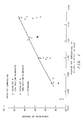
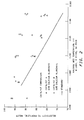
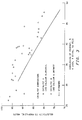
- FIGS. 1, 2 and 3 are provided to graphically present the test run results and show a comparison of the test results for the novel catalyst compositions with the standard 100 percent zinc aluminate support catalyst.
- the solid lines on each FIG. represents the predicted performance of the standard catalyst based upon an empirical statistical model developed from data generated from eighty-three test runs using the 100 percent zinc aluminate support catalyst.
- the data points on each FIG. show the test run results for Catalyst A and for Catalyst B.
- FIG. 2 shows the percent conversion of propane as a function of average reactor bed temperature for each of the three catalysts tested. As can be seen from the data, conversion increases with increasing temperature.
- the relationship between propane selectivity to propylene and reactor temperature for each of the three catalysts is presented in FIG. 3.
- FIG. 3 The relationship between propane selectivity to propylene and reactor temperature for each of the three catalysts is presented in FIG. 3.
- FIG. 3 shows that, generally, at a given reactor temperature, Catalyst A and Catalyst B both give a higher percent selectivity than the standard catalyst.
- FIG. 3 shows the relationship between the selectivity of each of the three catalysts and conversion. Generally, at a fixed percent propane conversion, both Catalyst A and Catalyst B give a higher percent selectivity than the standard catalyst.
- the test results unexpectedly show that the selectivity of the dehydrogenation of propane to propylene can be improved by using a catalyst having a mixture of calcium aluminate and zinc aluminate support rather than the traditional catalyst support mixture of 100 percent zinc aluminate.
- the catalytic selectivity improves as the amount of calcium aluminate is increased, however above about 25 weight percent calcium aluminate, the catalyst becomes increasingly difficult to regenerate. It is believed that catalyst A and B represent near optimum mixtures balancing improved performance with suitable regeneration characteristics.
Landscapes
- Chemical & Material Sciences (AREA)
- Organic Chemistry (AREA)
- Chemical Kinetics & Catalysis (AREA)
- Engineering & Computer Science (AREA)
- Materials Engineering (AREA)
- Organic Low-Molecular-Weight Compounds And Preparation Thereof (AREA)
- Low-Molecular Organic Synthesis Reactions Using Catalysts (AREA)
- Catalysts (AREA)
Applications Claiming Priority (2)
| Application Number | Priority Date | Filing Date | Title |
|---|---|---|---|
| US513407 | 1990-04-23 | ||
| US07/513,407 US5073662A (en) | 1990-04-23 | 1990-04-23 | Catalyst and process for dehydrogenation and dehydrocyclization |
Publications (2)
| Publication Number | Publication Date |
|---|---|
| EP0454022A1 EP0454022A1 (en) | 1991-10-30 |
| EP0454022B1 true EP0454022B1 (en) | 1995-02-15 |
Family
ID=24043134
Family Applications (1)
| Application Number | Title | Priority Date | Filing Date |
|---|---|---|---|
| EP91106432A Expired - Lifetime EP0454022B1 (en) | 1990-04-23 | 1991-04-22 | Catalyst and process for dehydrogenation and dehydrocyclization |
Country Status (16)
| Country | Link |
|---|---|
| US (1) | US5073662A (da) |
| EP (1) | EP0454022B1 (da) |
| JP (1) | JP2577830B2 (da) |
| KR (1) | KR960006925B1 (da) |
| AR (1) | AR247348A1 (da) |
| AT (1) | ATE118471T1 (da) |
| AU (1) | AU632677B2 (da) |
| BR (1) | BR9101540A (da) |
| CA (1) | CA2033715C (da) |
| DE (1) | DE69107325T2 (da) |
| DK (1) | DK0454022T3 (da) |
| ES (1) | ES2068419T3 (da) |
| FI (1) | FI116290B (da) |
| GR (1) | GR3015729T3 (da) |
| MX (1) | MX167017B (da) |
| NO (1) | NO300489B1 (da) |
Families Citing this family (23)
| Publication number | Priority date | Publication date | Assignee | Title |
|---|---|---|---|---|
| US5220091A (en) * | 1992-02-26 | 1993-06-15 | Phillips Petroleum Company | Alkane dehydrogenation |
| US5482615A (en) * | 1993-03-11 | 1996-01-09 | Exxon Research And Engineering Company | Noble metal/ZN-A1203 reforming catalysts with enhanced reforming performance (C-2714) |
| US5344805A (en) * | 1993-05-03 | 1994-09-06 | Phillips Petroleum Company | Platinum and tin-containing catalyst and use thereof in alkane dehydrogenation |
| US5877369A (en) * | 1997-10-23 | 1999-03-02 | Phillips Petroleum Company | Hydrocarbon conversion catalyst composition and processes therefor and therewith |
| AU2001278449A1 (en) * | 2000-06-14 | 2001-12-24 | Basf Aktiengesellschaft | Method for producing acrolein and/or acrylic acid |
| UY28921A1 (es) * | 2004-05-28 | 2005-06-30 | Mintek | Catalizador y produccion y uso del mismo |
| WO2010069548A1 (de) * | 2008-12-18 | 2010-06-24 | Uhde Gmbh | Variation der zinnimprägnierung eines katalysators zur alkandehydrierung |
| AU2011258422C1 (en) | 2010-05-24 | 2017-03-30 | Lummus Technology Llc | Nanowire catalysts |
| EA029867B1 (ru) | 2011-05-24 | 2018-05-31 | Силурия Текнолоджиз, Инк. | Катализаторы для нефтехимического катализа |
| HK1202275A1 (en) | 2011-11-29 | 2015-09-25 | Siluria Technologies, Inc. | Nanowire catalysts and methods for their use and preparation |
| US9446397B2 (en) | 2012-02-03 | 2016-09-20 | Siluria Technologies, Inc. | Method for isolation of nanomaterials |
| US20140121433A1 (en) * | 2012-05-24 | 2014-05-01 | Siluria Technologies, Inc. | Catalytic forms and formulations |
| EP2712674A1 (en) * | 2012-09-27 | 2014-04-02 | Saudi Basic Industries Corporation | Catalyst composition for the dehydrogenation of alkanes |
| CA2902192C (en) | 2013-03-15 | 2021-12-07 | Siluria Technologies, Inc. | Catalysts for petrochemical catalysis |
| CA2947483C (en) | 2014-05-02 | 2023-08-01 | Siluria Technologies, Inc. | Heterogeneous catalysts |
| HUE054014T2 (hu) | 2014-09-17 | 2021-08-30 | Lummus Technology Inc | Katalizátorok metán oxidatív csatolására és etán oxidatív dehidrogenálására |
| WO2018053145A1 (en) * | 2016-09-16 | 2018-03-22 | Lummus Technology Inc. | Integrated propane dehydrogenation process |
| US11040338B2 (en) | 2016-12-06 | 2021-06-22 | Sabic Global Technologies B.V. | Process of preparing catalyst; platinum-tin on zinc aluminate-calcium aluminate-zeolite catalyst for selective light alkane dehydrogenation |
| AU2020215051B2 (en) | 2019-01-30 | 2026-02-05 | Lummus Technology Llc | Catalysts for oxidative coupling of methane |
| US11654420B2 (en) | 2020-07-03 | 2023-05-23 | Council Of Scientific & Industrial Research | Process and catalyst for low temperature non-oxidative dehydrogenation of propane to propylene |
| WO2022138746A1 (ja) * | 2020-12-24 | 2022-06-30 | Eneos株式会社 | シクロペンタジエンの製造方法 |
| BR112023025118A2 (pt) | 2021-06-02 | 2024-02-20 | Exxonmobil Chemical Patents Inc | Processos para regeneração de catalisadores e para aperfeiçoamento de alcanos e/ou hidrocarbonetos alquil aromáticos |
| KR20260030166A (ko) | 2023-07-10 | 2026-03-05 | 엑손모빌 테크놀로지 앤드 엔지니어링 컴퍼니 | 촉매를 재생 및 환원하고 알칸 및/또는 알킬 방향족 탄화수소를 고도화하기 위한 공정 |
Family Cites Families (5)
| Publication number | Priority date | Publication date | Assignee | Title |
|---|---|---|---|---|
| US3461183A (en) * | 1967-11-08 | 1969-08-12 | Phillips Petroleum Co | Catalytic dehydrogenation process |
| US3880776A (en) * | 1971-06-10 | 1975-04-29 | Phillips Petroleum Co | Highly calcined support for catalytic dehydrogenation |
| US4229602A (en) * | 1978-12-04 | 1980-10-21 | Phillips Petroleum Company | Dehydrocyclization process |
| US4902849A (en) * | 1989-02-06 | 1990-02-20 | Phillips Petroleum Company | Dehydrogenation process |
| US4926005A (en) * | 1989-05-17 | 1990-05-15 | Phillips Petroleum Company | Dehydrogenation process |
-
1990
- 1990-04-23 US US07/513,407 patent/US5073662A/en not_active Expired - Lifetime
-
1991
- 1991-01-07 CA CA002033715A patent/CA2033715C/en not_active Expired - Fee Related
- 1991-03-28 AU AU73917/91A patent/AU632677B2/en not_active Expired
- 1991-04-17 BR BR919101540A patent/BR9101540A/pt not_active IP Right Cessation
- 1991-04-17 KR KR1019910006157A patent/KR960006925B1/ko not_active Expired - Lifetime
- 1991-04-17 MX MX025391A patent/MX167017B/es unknown
- 1991-04-18 JP JP3086466A patent/JP2577830B2/ja not_active Expired - Lifetime
- 1991-04-19 AR AR91319497A patent/AR247348A1/es active
- 1991-04-22 FI FI911947A patent/FI116290B/fi not_active IP Right Cessation
- 1991-04-22 ES ES91106432T patent/ES2068419T3/es not_active Expired - Lifetime
- 1991-04-22 EP EP91106432A patent/EP0454022B1/en not_active Expired - Lifetime
- 1991-04-22 AT AT91106432T patent/ATE118471T1/de not_active IP Right Cessation
- 1991-04-22 NO NO911576A patent/NO300489B1/no not_active IP Right Cessation
- 1991-04-22 DK DK91106432.7T patent/DK0454022T3/da active
- 1991-04-22 DE DE69107325T patent/DE69107325T2/de not_active Expired - Lifetime
-
1995
- 1995-04-10 GR GR950400862T patent/GR3015729T3/el unknown
Also Published As
| Publication number | Publication date |
|---|---|
| MX167017B (es) | 1993-02-22 |
| KR910018077A (ko) | 1991-11-30 |
| AR247348A1 (es) | 1994-12-29 |
| DE69107325T2 (de) | 1995-06-14 |
| JPH04225835A (ja) | 1992-08-14 |
| EP0454022A1 (en) | 1991-10-30 |
| DK0454022T3 (da) | 1995-04-10 |
| CA2033715C (en) | 2000-08-08 |
| JP2577830B2 (ja) | 1997-02-05 |
| NO911576L (no) | 1991-10-24 |
| KR960006925B1 (ko) | 1996-05-25 |
| NO300489B1 (no) | 1997-06-09 |
| US5073662A (en) | 1991-12-17 |
| FI911947A0 (fi) | 1991-04-22 |
| GR3015729T3 (en) | 1995-07-31 |
| AU7391791A (en) | 1992-01-02 |
| NO911576D0 (no) | 1991-04-22 |
| ATE118471T1 (de) | 1995-03-15 |
| FI116290B (fi) | 2005-10-31 |
| DE69107325D1 (de) | 1995-03-23 |
| FI911947L (fi) | 1991-10-24 |
| CA2033715A1 (en) | 1991-10-24 |
| AU632677B2 (en) | 1993-01-07 |
| BR9101540A (pt) | 1991-12-10 |
| ES2068419T3 (es) | 1995-04-16 |
Similar Documents
| Publication | Publication Date | Title |
|---|---|---|
| EP0454022B1 (en) | Catalyst and process for dehydrogenation and dehydrocyclization | |
| US10486140B2 (en) | Catalytic composition and process for the dehydrogenation of butenes or mixtures of butanes and butenes to give 1,3-butadiene | |
| US3887495A (en) | Catalyst particularly useful for dehydrogenating saturated hydrocarbons | |
| US4886928A (en) | Hydrocarbon dehydrogenation process | |
| US5143888A (en) | Group VIII catalyst supported on mixture of zinc aluminate and calcium aluminate | |
| US4827066A (en) | Dehydrogenation of dehydrogenatable hydrocarbons | |
| WO2010009076A2 (en) | Catalyst for dehydrogenation of hydrocarbons | |
| CN101511756A (zh) | 制备邻二甲苯的方法 | |
| EP3100784A1 (en) | Catalyst and method for aromatization of c3-c4 gases, light hydrocarbon fractions and aliphatic alcohols, as well as mixtures thereof | |
| EP0361767B1 (en) | Process for the conversion of a c2-c6 aliphatic hydrocarbon into naphthenic hydrocarbons | |
| US3980721A (en) | Catalyst particularly useful for dehydrogenating saturated hydrocarbons | |
| US7094942B2 (en) | Carbon dioxide promoted dehydrogenation process for olefins | |
| US5436383A (en) | Process for the dehydrogenation of aliphatic hydrocarbons saturated into olefinic hydrocarbons | |
| US6124228A (en) | Mazzite supported catalyst | |
| US20250025860A1 (en) | Catalyst Compositions and Processes for Making and Using Same | |
| JP2025520887A (ja) | 触媒を焼成する方法 | |
| JP2025510068A (ja) | 触媒組成物並びにその製造及び使用プロセス | |
| WO2025174477A1 (en) | Catalyst compositions comprising homogenously distributed promoter and processes for making and using same | |
| CN120981290A (zh) | 催化剂体系以及制备和使用该催化剂体系的方法 | |
| CN118354845A (zh) | 催化剂组合物及其制造和使用方法 | |
| HK1237707B (en) | Process for the dehydrogenation of butenes or mixtures of butanes and butenes to give 1,3-butadiene | |
| HK1199223B (en) | Catalytic composition and process for the dehydrogenation of butenes or mixtures of butanes and butenes to give 1,3-butadiene | |
| HK1237707A1 (en) | Process for the dehydrogenation of butenes or mixtures of butanes and butenes to give 1,3-butadiene | |
| BR122019015817B1 (pt) | Processo para a desidrogenação de butenos ou misturas de butanos e butenos para fornecer 1,3-butadieno |
Legal Events
| Date | Code | Title | Description |
|---|---|---|---|
| PUAI | Public reference made under article 153(3) epc to a published international application that has entered the european phase |
Free format text: ORIGINAL CODE: 0009012 |
|
| AK | Designated contracting states |
Kind code of ref document: A1 Designated state(s): AT BE CH DE DK ES FR GB GR IT LI LU NL SE |
|
| 17P | Request for examination filed |
Effective date: 19920331 |
|
| 17Q | First examination report despatched |
Effective date: 19940520 |
|
| GRAA | (expected) grant |
Free format text: ORIGINAL CODE: 0009210 |
|
| AK | Designated contracting states |
Kind code of ref document: B1 Designated state(s): AT BE CH DE DK ES FR GB GR IT LI LU NL SE |
|
| REF | Corresponds to: |
Ref document number: 118471 Country of ref document: AT Date of ref document: 19950315 Kind code of ref document: T |
|
| ITF | It: translation for a ep patent filed | ||
| REF | Corresponds to: |
Ref document number: 69107325 Country of ref document: DE Date of ref document: 19950323 |
|
| REG | Reference to a national code |
Ref country code: DK Ref legal event code: T3 |
|
| ET | Fr: translation filed | ||
| REG | Reference to a national code |
Ref country code: ES Ref legal event code: FG2A Ref document number: 2068419 Country of ref document: ES Kind code of ref document: T3 |
|
| REG | Reference to a national code |
Ref country code: GR Ref legal event code: FG4A Free format text: 3015729 |
|
| PLBE | No opposition filed within time limit |
Free format text: ORIGINAL CODE: 0009261 |
|
| STAA | Information on the status of an ep patent application or granted ep patent |
Free format text: STATUS: NO OPPOSITION FILED WITHIN TIME LIMIT |
|
| 26N | No opposition filed | ||
| REG | Reference to a national code |
Ref country code: CH Ref legal event code: PUE Owner name: PHILLIPS PETROLEUM COMPANY TRANSFER- KRUPP UHDE GM |
|
| REG | Reference to a national code |
Ref country code: GB Ref legal event code: 732E |
|
| REG | Reference to a national code |
Ref country code: FR Ref legal event code: TP |
|
| NLS | Nl: assignments of ep-patents |
Owner name: KRUPP UHDE GMBH |
|
| REG | Reference to a national code |
Ref country code: GB Ref legal event code: IF02 |
|
| PGFP | Annual fee paid to national office [announced via postgrant information from national office to epo] |
Ref country code: LU Payment date: 20030401 Year of fee payment: 13 |
|
| PG25 | Lapsed in a contracting state [announced via postgrant information from national office to epo] |
Ref country code: LU Free format text: LAPSE BECAUSE OF NON-PAYMENT OF DUE FEES Effective date: 20040422 |
|
| PGFP | Annual fee paid to national office [announced via postgrant information from national office to epo] |
Ref country code: SE Payment date: 20050412 Year of fee payment: 15 Ref country code: CH Payment date: 20050412 Year of fee payment: 15 |
|
| PGFP | Annual fee paid to national office [announced via postgrant information from national office to epo] |
Ref country code: AT Payment date: 20050414 Year of fee payment: 15 |
|
| PGFP | Annual fee paid to national office [announced via postgrant information from national office to epo] |
Ref country code: GR Payment date: 20050421 Year of fee payment: 15 |
|
| PGFP | Annual fee paid to national office [announced via postgrant information from national office to epo] |
Ref country code: BE Payment date: 20050509 Year of fee payment: 15 |
|
| PG25 | Lapsed in a contracting state [announced via postgrant information from national office to epo] |
Ref country code: AT Free format text: LAPSE BECAUSE OF NON-PAYMENT OF DUE FEES Effective date: 20060422 |
|
| PG25 | Lapsed in a contracting state [announced via postgrant information from national office to epo] |
Ref country code: SE Free format text: LAPSE BECAUSE OF NON-PAYMENT OF DUE FEES Effective date: 20060423 |
|
| PG25 | Lapsed in a contracting state [announced via postgrant information from national office to epo] |
Ref country code: CH Free format text: LAPSE BECAUSE OF NON-PAYMENT OF DUE FEES Effective date: 20060430 Ref country code: BE Free format text: LAPSE BECAUSE OF NON-PAYMENT OF DUE FEES Effective date: 20060430 Ref country code: LI Free format text: LAPSE BECAUSE OF NON-PAYMENT OF DUE FEES Effective date: 20060430 |
|
| REG | Reference to a national code |
Ref country code: CH Ref legal event code: PL |
|
| EUG | Se: european patent has lapsed | ||
| BERE | Be: lapsed |
Owner name: *KRUPP UHDE G.M.B.H. Effective date: 20060430 |
|
| PG25 | Lapsed in a contracting state [announced via postgrant information from national office to epo] |
Ref country code: GR Free format text: LAPSE BECAUSE OF NON-PAYMENT OF DUE FEES Effective date: 20061102 |
|
| PGFP | Annual fee paid to national office [announced via postgrant information from national office to epo] |
Ref country code: GB Payment date: 20100331 Year of fee payment: 20 |
|
| PGFP | Annual fee paid to national office [announced via postgrant information from national office to epo] |
Ref country code: ES Payment date: 20100426 Year of fee payment: 20 Ref country code: DK Payment date: 20100413 Year of fee payment: 20 Ref country code: FR Payment date: 20100506 Year of fee payment: 20 |
|
| PGFP | Annual fee paid to national office [announced via postgrant information from national office to epo] |
Ref country code: DE Payment date: 20100423 Year of fee payment: 20 Ref country code: NL Payment date: 20100413 Year of fee payment: 20 Ref country code: IT Payment date: 20100426 Year of fee payment: 20 |
|
| REG | Reference to a national code |
Ref country code: DE Ref legal event code: R071 Ref document number: 69107325 Country of ref document: DE |
|
| REG | Reference to a national code |
Ref country code: NL Ref legal event code: V4 Effective date: 20110422 |
|
| REG | Reference to a national code |
Ref country code: DK Ref legal event code: EUP |
|
| REG | Reference to a national code |
Ref country code: GB Ref legal event code: PE20 Expiry date: 20110421 |
|
| PG25 | Lapsed in a contracting state [announced via postgrant information from national office to epo] |
Ref country code: NL Free format text: LAPSE BECAUSE OF EXPIRATION OF PROTECTION Effective date: 20110422 Ref country code: GB Free format text: LAPSE BECAUSE OF EXPIRATION OF PROTECTION Effective date: 20110421 |
|
| REG | Reference to a national code |
Ref country code: ES Ref legal event code: FD2A Effective date: 20120510 |
|
| PG25 | Lapsed in a contracting state [announced via postgrant information from national office to epo] |
Ref country code: ES Free format text: LAPSE BECAUSE OF EXPIRATION OF PROTECTION Effective date: 20110423 |
|
| PG25 | Lapsed in a contracting state [announced via postgrant information from national office to epo] |
Ref country code: DE Free format text: LAPSE BECAUSE OF EXPIRATION OF PROTECTION Effective date: 20110422 |