EP0443335A1 - Recombinant pox virus plasmid containing a multi-functional DNA cassette - Google Patents
Recombinant pox virus plasmid containing a multi-functional DNA cassette Download PDFInfo
- Publication number
- EP0443335A1 EP0443335A1 EP91100773A EP91100773A EP0443335A1 EP 0443335 A1 EP0443335 A1 EP 0443335A1 EP 91100773 A EP91100773 A EP 91100773A EP 91100773 A EP91100773 A EP 91100773A EP 0443335 A1 EP0443335 A1 EP 0443335A1
- Authority
- EP
- European Patent Office
- Prior art keywords
- promoter
- plasmid
- plasmid according
- virus
- pox virus
- Prior art date
- Legal status (The legal status is an assumption and is not a legal conclusion. Google has not performed a legal analysis and makes no representation as to the accuracy of the status listed.)
- Withdrawn
Links
- 239000013612 plasmid Substances 0.000 title claims abstract description 97
- 241000700605 Viruses Species 0.000 title claims abstract description 81
- 108090000623 proteins and genes Proteins 0.000 claims abstract description 76
- 108091028043 Nucleic acid sequence Proteins 0.000 claims abstract description 40
- 102000004169 proteins and genes Human genes 0.000 claims abstract description 36
- 239000003550 marker Substances 0.000 claims abstract description 19
- 108020004705 Codon Proteins 0.000 claims abstract description 10
- 230000000295 complement effect Effects 0.000 claims abstract description 5
- 108020004414 DNA Proteins 0.000 claims description 34
- 108090000765 processed proteins & peptides Proteins 0.000 claims description 26
- 238000010367 cloning Methods 0.000 claims description 22
- 241000700618 Vaccinia virus Species 0.000 claims description 21
- 102000004196 processed proteins & peptides Human genes 0.000 claims description 21
- 229920001184 polypeptide Polymers 0.000 claims description 15
- 238000013519 translation Methods 0.000 claims description 14
- 238000004519 manufacturing process Methods 0.000 claims description 13
- 238000000034 method Methods 0.000 claims description 12
- 238000004113 cell culture Methods 0.000 claims description 11
- 230000008569 process Effects 0.000 claims description 11
- 102000004190 Enzymes Human genes 0.000 claims description 10
- 108090000790 Enzymes Proteins 0.000 claims description 10
- 229940088598 enzyme Drugs 0.000 claims description 10
- 240000004808 Saccharomyces cerevisiae Species 0.000 claims description 9
- 244000052769 pathogen Species 0.000 claims description 9
- 229960005486 vaccine Drugs 0.000 claims description 9
- 108020004440 Thymidine kinase Proteins 0.000 claims description 8
- 208000004006 Tick-borne encephalitis Diseases 0.000 claims description 8
- 206010046865 Vaccinia virus infection Diseases 0.000 claims description 8
- 208000007089 vaccinia Diseases 0.000 claims description 8
- 239000013615 primer Substances 0.000 claims description 7
- 230000010076 replication Effects 0.000 claims description 7
- 108010039209 Blood Coagulation Factors Proteins 0.000 claims description 6
- 102000015081 Blood Coagulation Factors Human genes 0.000 claims description 6
- 239000003114 blood coagulation factor Substances 0.000 claims description 6
- 208000030507 AIDS Diseases 0.000 claims description 5
- 241000894006 Bacteria Species 0.000 claims description 5
- 108090000935 Antithrombin III Proteins 0.000 claims description 4
- 102000004411 Antithrombin III Human genes 0.000 claims description 4
- 108010071619 Apolipoproteins Proteins 0.000 claims description 4
- 102000007592 Apolipoproteins Human genes 0.000 claims description 4
- 101150021185 FGF gene Proteins 0.000 claims description 4
- 108090000288 Glycoproteins Proteins 0.000 claims description 4
- 102000003886 Glycoproteins Human genes 0.000 claims description 4
- 108010007267 Hirudins Proteins 0.000 claims description 4
- 102000007625 Hirudins Human genes 0.000 claims description 4
- 101000611183 Homo sapiens Tumor necrosis factor Proteins 0.000 claims description 4
- 102000015336 Nerve Growth Factor Human genes 0.000 claims description 4
- 108010025020 Nerve Growth Factor Proteins 0.000 claims description 4
- 201000005702 Pertussis Diseases 0.000 claims description 4
- 108010051456 Plasminogen Proteins 0.000 claims description 4
- 102000013566 Plasminogen Human genes 0.000 claims description 4
- 101800004937 Protein C Proteins 0.000 claims description 4
- 102000017975 Protein C Human genes 0.000 claims description 4
- 229940096437 Protein S Drugs 0.000 claims description 4
- 102000029301 Protein S Human genes 0.000 claims description 4
- 108010066124 Protein S Proteins 0.000 claims description 4
- 108010076504 Protein Sorting Signals Proteins 0.000 claims description 4
- 101800001700 Saposin-D Proteins 0.000 claims description 4
- 206010043376 Tetanus Diseases 0.000 claims description 4
- 239000003242 anti bacterial agent Substances 0.000 claims description 4
- 229960005348 antithrombin iii Drugs 0.000 claims description 4
- 210000003719 b-lymphocyte Anatomy 0.000 claims description 4
- 208000002672 hepatitis B Diseases 0.000 claims description 4
- 229940006607 hirudin Drugs 0.000 claims description 4
- WQPDUTSPKFMPDP-OUMQNGNKSA-N hirudin Chemical compound C([C@@H](C(=O)N[C@@H](CCC(O)=O)C(=O)N[C@@H](CCC(O)=O)C(=O)N[C@@H]([C@@H](C)CC)C(=O)N1[C@@H](CCC1)C(=O)N[C@@H](CCC(O)=O)C(=O)N[C@@H](CCC(O)=O)C(=O)N[C@@H](CC=1C=CC(OS(O)(=O)=O)=CC=1)C(=O)N[C@@H](CC(C)C)C(=O)N[C@@H](CCC(N)=O)C(O)=O)NC(=O)[C@H](CC(O)=O)NC(=O)CNC(=O)[C@H](CC(O)=O)NC(=O)[C@H](CC(N)=O)NC(=O)[C@H](CC=1NC=NC=1)NC(=O)[C@H](CO)NC(=O)[C@H](CCC(N)=O)NC(=O)[C@H]1N(CCC1)C(=O)[C@H](CCCCN)NC(=O)[C@H]1N(CCC1)C(=O)[C@@H](NC(=O)CNC(=O)[C@H](CCC(O)=O)NC(=O)CNC(=O)[C@@H](NC(=O)[C@@H](NC(=O)[C@H]1NC(=O)[C@H](CCC(N)=O)NC(=O)[C@H](CC(N)=O)NC(=O)[C@H](CCCCN)NC(=O)[C@H](CCC(O)=O)NC(=O)CNC(=O)[C@H](CC(O)=O)NC(=O)[C@H](CO)NC(=O)CNC(=O)[C@H](CC(C)C)NC(=O)[C@H]([C@@H](C)CC)NC(=O)[C@@H]2CSSC[C@@H](C(=O)N[C@@H](CCC(O)=O)C(=O)NCC(=O)N[C@@H](CO)C(=O)N[C@@H](CC(N)=O)C(=O)N[C@H](C(=O)N[C@H](C(NCC(=O)N[C@@H](CCC(N)=O)C(=O)NCC(=O)N[C@@H](CC(N)=O)C(=O)N[C@@H](CCCCN)C(=O)N2)=O)CSSC1)C(C)C)NC(=O)[C@H](CC(C)C)NC(=O)[C@H]1NC(=O)[C@H](CC(C)C)NC(=O)[C@H](CC(N)=O)NC(=O)[C@H](CCC(N)=O)NC(=O)CNC(=O)[C@H](CO)NC(=O)[C@H](CCC(O)=O)NC(=O)[C@H]([C@@H](C)O)NC(=O)[C@@H](NC(=O)[C@H](CC(O)=O)NC(=O)[C@@H](NC(=O)[C@H](CC=2C=CC(O)=CC=2)NC(=O)[C@@H](NC(=O)[C@@H](N)C(C)C)C(C)C)[C@@H](C)O)CSSC1)C(C)C)[C@@H](C)O)[C@@H](C)O)C1=CC=CC=C1 WQPDUTSPKFMPDP-OUMQNGNKSA-N 0.000 claims description 4
- 230000002209 hydrophobic effect Effects 0.000 claims description 4
- 101150066555 lacZ gene Proteins 0.000 claims description 4
- 201000004792 malaria Diseases 0.000 claims description 4
- 239000012528 membrane Substances 0.000 claims description 4
- 229960000856 protein c Drugs 0.000 claims description 4
- 230000004936 stimulating effect Effects 0.000 claims description 4
- 108010047303 von Willebrand Factor Proteins 0.000 claims description 4
- 102100036537 von Willebrand factor Human genes 0.000 claims description 4
- 229960001134 von willebrand factor Drugs 0.000 claims description 4
- 206010019973 Herpes virus infection Diseases 0.000 claims description 3
- 229940088710 antibiotic agent Drugs 0.000 claims description 3
- 230000000890 antigenic effect Effects 0.000 claims description 3
- 230000008827 biological function Effects 0.000 claims description 3
- 239000000032 diagnostic agent Substances 0.000 claims description 3
- 229940039227 diagnostic agent Drugs 0.000 claims description 3
- 239000003155 DNA primer Substances 0.000 claims description 2
- 102000004357 Transferases Human genes 0.000 claims description 2
- 108090000992 Transferases Proteins 0.000 claims description 2
- 230000002779 inactivation Effects 0.000 claims description 2
- 238000002703 mutagenesis Methods 0.000 claims description 2
- 231100000350 mutagenesis Toxicity 0.000 claims description 2
- LWGJTAZLEJHCPA-UHFFFAOYSA-N n-(2-chloroethyl)-n-nitrosomorpholine-4-carboxamide Chemical compound ClCCN(N=O)C(=O)N1CCOCC1 LWGJTAZLEJHCPA-UHFFFAOYSA-N 0.000 claims description 2
- ZXXTYLFVENEGIP-UHFFFAOYSA-N 2-amino-3,7-dihydropurin-6-one;3,7-dihydropurine-2,6-dione Chemical compound O=C1NC(N)=NC2=C1NC=N2.O=C1NC(=O)NC2=C1NC=N2 ZXXTYLFVENEGIP-UHFFFAOYSA-N 0.000 claims 1
- 208000037404 Central European encephalitis Diseases 0.000 claims 1
- 108091026890 Coding region Proteins 0.000 claims 1
- YQYJSBFKSSDGFO-UHFFFAOYSA-N Epihygromycin Natural products OC1C(O)C(C(=O)C)OC1OC(C(=C1)O)=CC=C1C=C(C)C(=O)NC1C(O)C(O)C2OCOC2C1O YQYJSBFKSSDGFO-UHFFFAOYSA-N 0.000 claims 1
- 102000006601 Thymidine Kinase Human genes 0.000 claims 1
- 101150004676 VGF gene Proteins 0.000 claims 1
- 230000003213 activating effect Effects 0.000 claims 1
- 230000002238 attenuated effect Effects 0.000 claims 1
- 230000000415 inactivating effect Effects 0.000 claims 1
- 239000008194 pharmaceutical composition Substances 0.000 claims 1
- 238000003776 cleavage reaction Methods 0.000 abstract description 19
- 230000007017 scission Effects 0.000 abstract description 19
- 238000003780 insertion Methods 0.000 abstract description 10
- 230000037431 insertion Effects 0.000 abstract description 10
- 108091081024 Start codon Proteins 0.000 abstract description 6
- 230000014621 translational initiation Effects 0.000 abstract 2
- 210000004027 cell Anatomy 0.000 description 24
- 108091008146 restriction endonucleases Proteins 0.000 description 24
- 239000012634 fragment Substances 0.000 description 18
- 238000010276 construction Methods 0.000 description 15
- 230000006798 recombination Effects 0.000 description 14
- 238000005215 recombination Methods 0.000 description 14
- 230000014616 translation Effects 0.000 description 13
- 230000008901 benefit Effects 0.000 description 12
- 230000006870 function Effects 0.000 description 12
- 239000000427 antigen Substances 0.000 description 8
- 108091007433 antigens Proteins 0.000 description 8
- 102000036639 antigens Human genes 0.000 description 8
- 239000013598 vector Substances 0.000 description 8
- 239000000203 mixture Substances 0.000 description 6
- 238000013518 transcription Methods 0.000 description 6
- 230000035897 transcription Effects 0.000 description 6
- 102000004163 DNA-directed RNA polymerases Human genes 0.000 description 5
- 108090000626 DNA-directed RNA polymerases Proteins 0.000 description 5
- 238000001727 in vivo Methods 0.000 description 5
- 210000004962 mammalian cell Anatomy 0.000 description 5
- 230000009466 transformation Effects 0.000 description 5
- LRFVTYWOQMYALW-UHFFFAOYSA-N 9H-xanthine Chemical compound O=C1NC(=O)NC2=C1NC=N2 LRFVTYWOQMYALW-UHFFFAOYSA-N 0.000 description 4
- 241000588724 Escherichia coli Species 0.000 description 4
- 241000713772 Human immunodeficiency virus 1 Species 0.000 description 4
- 239000002773 nucleotide Substances 0.000 description 4
- 125000003729 nucleotide group Chemical group 0.000 description 4
- BICGOULMPJLRQV-MYINAIGISA-N 1-[(2s,4s,5r)-2-bromo-4-hydroxy-5-(hydroxymethyl)oxolan-2-yl]pyrimidine-2,4-dione Chemical compound C1[C@H](O)[C@@H](CO)O[C@@]1(Br)N1C(=O)NC(=O)C=C1 BICGOULMPJLRQV-MYINAIGISA-N 0.000 description 3
- 101000807236 Human cytomegalovirus (strain AD169) Membrane glycoprotein US3 Proteins 0.000 description 3
- 241001465754 Metazoa Species 0.000 description 3
- 101710163270 Nuclease Proteins 0.000 description 3
- 108091034117 Oligonucleotide Proteins 0.000 description 3
- JLCPHMBAVCMARE-UHFFFAOYSA-N [3-[[3-[[3-[[3-[[3-[[3-[[3-[[3-[[3-[[3-[[3-[[5-(2-amino-6-oxo-1H-purin-9-yl)-3-[[3-[[3-[[3-[[3-[[3-[[5-(2-amino-6-oxo-1H-purin-9-yl)-3-[[5-(2-amino-6-oxo-1H-purin-9-yl)-3-hydroxyoxolan-2-yl]methoxy-hydroxyphosphoryl]oxyoxolan-2-yl]methoxy-hydroxyphosphoryl]oxy-5-(5-methyl-2,4-dioxopyrimidin-1-yl)oxolan-2-yl]methoxy-hydroxyphosphoryl]oxy-5-(6-aminopurin-9-yl)oxolan-2-yl]methoxy-hydroxyphosphoryl]oxy-5-(6-aminopurin-9-yl)oxolan-2-yl]methoxy-hydroxyphosphoryl]oxy-5-(6-aminopurin-9-yl)oxolan-2-yl]methoxy-hydroxyphosphoryl]oxy-5-(6-aminopurin-9-yl)oxolan-2-yl]methoxy-hydroxyphosphoryl]oxyoxolan-2-yl]methoxy-hydroxyphosphoryl]oxy-5-(5-methyl-2,4-dioxopyrimidin-1-yl)oxolan-2-yl]methoxy-hydroxyphosphoryl]oxy-5-(4-amino-2-oxopyrimidin-1-yl)oxolan-2-yl]methoxy-hydroxyphosphoryl]oxy-5-(5-methyl-2,4-dioxopyrimidin-1-yl)oxolan-2-yl]methoxy-hydroxyphosphoryl]oxy-5-(5-methyl-2,4-dioxopyrimidin-1-yl)oxolan-2-yl]methoxy-hydroxyphosphoryl]oxy-5-(6-aminopurin-9-yl)oxolan-2-yl]methoxy-hydroxyphosphoryl]oxy-5-(6-aminopurin-9-yl)oxolan-2-yl]methoxy-hydroxyphosphoryl]oxy-5-(4-amino-2-oxopyrimidin-1-yl)oxolan-2-yl]methoxy-hydroxyphosphoryl]oxy-5-(4-amino-2-oxopyrimidin-1-yl)oxolan-2-yl]methoxy-hydroxyphosphoryl]oxy-5-(4-amino-2-oxopyrimidin-1-yl)oxolan-2-yl]methoxy-hydroxyphosphoryl]oxy-5-(6-aminopurin-9-yl)oxolan-2-yl]methoxy-hydroxyphosphoryl]oxy-5-(4-amino-2-oxopyrimidin-1-yl)oxolan-2-yl]methyl [5-(6-aminopurin-9-yl)-2-(hydroxymethyl)oxolan-3-yl] hydrogen phosphate Polymers Cc1cn(C2CC(OP(O)(=O)OCC3OC(CC3OP(O)(=O)OCC3OC(CC3O)n3cnc4c3nc(N)[nH]c4=O)n3cnc4c3nc(N)[nH]c4=O)C(COP(O)(=O)OC3CC(OC3COP(O)(=O)OC3CC(OC3COP(O)(=O)OC3CC(OC3COP(O)(=O)OC3CC(OC3COP(O)(=O)OC3CC(OC3COP(O)(=O)OC3CC(OC3COP(O)(=O)OC3CC(OC3COP(O)(=O)OC3CC(OC3COP(O)(=O)OC3CC(OC3COP(O)(=O)OC3CC(OC3COP(O)(=O)OC3CC(OC3COP(O)(=O)OC3CC(OC3COP(O)(=O)OC3CC(OC3COP(O)(=O)OC3CC(OC3COP(O)(=O)OC3CC(OC3COP(O)(=O)OC3CC(OC3COP(O)(=O)OC3CC(OC3CO)n3cnc4c(N)ncnc34)n3ccc(N)nc3=O)n3cnc4c(N)ncnc34)n3ccc(N)nc3=O)n3ccc(N)nc3=O)n3ccc(N)nc3=O)n3cnc4c(N)ncnc34)n3cnc4c(N)ncnc34)n3cc(C)c(=O)[nH]c3=O)n3cc(C)c(=O)[nH]c3=O)n3ccc(N)nc3=O)n3cc(C)c(=O)[nH]c3=O)n3cnc4c3nc(N)[nH]c4=O)n3cnc4c(N)ncnc34)n3cnc4c(N)ncnc34)n3cnc4c(N)ncnc34)n3cnc4c(N)ncnc34)O2)c(=O)[nH]c1=O JLCPHMBAVCMARE-UHFFFAOYSA-N 0.000 description 3
- 150000001413 amino acids Chemical class 0.000 description 3
- 230000003321 amplification Effects 0.000 description 3
- 102000005936 beta-Galactosidase Human genes 0.000 description 3
- 108010005774 beta-Galactosidase Proteins 0.000 description 3
- 238000011161 development Methods 0.000 description 3
- 101150106093 gpt gene Proteins 0.000 description 3
- RQFCJASXJCIDSX-UUOKFMHZSA-N guanosine 5'-monophosphate Chemical compound C1=2NC(N)=NC(=O)C=2N=CN1[C@@H]1O[C@H](COP(O)(O)=O)[C@@H](O)[C@H]1O RQFCJASXJCIDSX-UUOKFMHZSA-N 0.000 description 3
- 235000013928 guanylic acid Nutrition 0.000 description 3
- 230000003053 immunization Effects 0.000 description 3
- 238000002649 immunization Methods 0.000 description 3
- 238000003199 nucleic acid amplification method Methods 0.000 description 3
- OPIFSICVWOWJMJ-AEOCFKNESA-N 5-bromo-4-chloro-3-indolyl beta-D-galactoside Chemical compound O[C@@H]1[C@@H](O)[C@@H](O)[C@@H](CO)O[C@H]1OC1=CNC2=CC=C(Br)C(Cl)=C12 OPIFSICVWOWJMJ-AEOCFKNESA-N 0.000 description 2
- 241000206602 Eukaryota Species 0.000 description 2
- 241000725303 Human immunodeficiency virus Species 0.000 description 2
- XQFRJNBWHJMXHO-RRKCRQDMSA-N IDUR Chemical compound C1[C@H](O)[C@@H](CO)O[C@H]1N1C(=O)NC(=O)C(I)=C1 XQFRJNBWHJMXHO-RRKCRQDMSA-N 0.000 description 2
- 102100034353 Integrase Human genes 0.000 description 2
- 101710172711 Structural protein Proteins 0.000 description 2
- 241000710771 Tick-borne encephalitis virus Species 0.000 description 2
- 101800003344 Vaccinia growth factor Proteins 0.000 description 2
- 239000000654 additive Substances 0.000 description 2
- 238000006243 chemical reaction Methods 0.000 description 2
- 239000003593 chromogenic compound Substances 0.000 description 2
- 230000002708 enhancing effect Effects 0.000 description 2
- 108010078428 env Gene Products Proteins 0.000 description 2
- 238000011049 filling Methods 0.000 description 2
- 239000000499 gel Substances 0.000 description 2
- UYTPUPDQBNUYGX-UHFFFAOYSA-N guanine Chemical compound O=C1NC(N)=NC2=C1N=CN2 UYTPUPDQBNUYGX-UHFFFAOYSA-N 0.000 description 2
- FDGQSTZJBFJUBT-UHFFFAOYSA-N hypoxanthine Chemical compound O=C1NC=NC2=C1NC=N2 FDGQSTZJBFJUBT-UHFFFAOYSA-N 0.000 description 2
- 208000015181 infectious disease Diseases 0.000 description 2
- 238000002955 isolation Methods 0.000 description 2
- 230000004060 metabolic process Effects 0.000 description 2
- HPNSFSBZBAHARI-UHFFFAOYSA-N micophenolic acid Natural products OC1=C(CC=C(C)CCC(O)=O)C(OC)=C(C)C2=C1C(=O)OC2 HPNSFSBZBAHARI-UHFFFAOYSA-N 0.000 description 2
- 229960000951 mycophenolic acid Drugs 0.000 description 2
- HPNSFSBZBAHARI-RUDMXATFSA-N mycophenolic acid Chemical compound OC1=C(C\C=C(/C)CCC(O)=O)C(OC)=C(C)C2=C1C(=O)OC2 HPNSFSBZBAHARI-RUDMXATFSA-N 0.000 description 2
- 238000012163 sequencing technique Methods 0.000 description 2
- 229940075420 xanthine Drugs 0.000 description 2
- VUDQSRFCCHQIIU-UHFFFAOYSA-N 1-(3,5-dichloro-2,6-dihydroxy-4-methoxyphenyl)hexan-1-one Chemical compound CCCCCC(=O)C1=C(O)C(Cl)=C(OC)C(Cl)=C1O VUDQSRFCCHQIIU-UHFFFAOYSA-N 0.000 description 1
- PQGCEDQWHSBAJP-TXICZTDVSA-N 5-O-phosphono-alpha-D-ribofuranosyl diphosphate Chemical compound O[C@H]1[C@@H](O)[C@@H](O[P@](O)(=O)OP(O)(O)=O)O[C@@H]1COP(O)(O)=O PQGCEDQWHSBAJP-TXICZTDVSA-N 0.000 description 1
- 241000283690 Bos taurus Species 0.000 description 1
- 241000195493 Cryptophyta Species 0.000 description 1
- 102000053602 DNA Human genes 0.000 description 1
- 102000016928 DNA-directed DNA polymerase Human genes 0.000 description 1
- 108010014303 DNA-directed DNA polymerase Proteins 0.000 description 1
- 241000224495 Dictyostelium Species 0.000 description 1
- 108010042407 Endonucleases Proteins 0.000 description 1
- 102000004533 Endonucleases Human genes 0.000 description 1
- 101001091269 Escherichia coli Hygromycin-B 4-O-kinase Proteins 0.000 description 1
- 108700039887 Essential Genes Proteins 0.000 description 1
- 241000710831 Flavivirus Species 0.000 description 1
- 108700039691 Genetic Promoter Regions Proteins 0.000 description 1
- GRRNUXAQVGOGFE-UHFFFAOYSA-N Hygromycin-B Natural products OC1C(NC)CC(N)C(O)C1OC1C2OC3(C(C(O)C(O)C(C(N)CO)O3)O)OC2C(O)C(CO)O1 GRRNUXAQVGOGFE-UHFFFAOYSA-N 0.000 description 1
- 108010091358 Hypoxanthine Phosphoribosyltransferase Proteins 0.000 description 1
- 102000018251 Hypoxanthine Phosphoribosyltransferase Human genes 0.000 description 1
- UGQMRVRMYYASKQ-UHFFFAOYSA-N Hypoxanthine nucleoside Natural products OC1C(O)C(CO)OC1N1C(NC=NC2=O)=C2N=C1 UGQMRVRMYYASKQ-UHFFFAOYSA-N 0.000 description 1
- 229930010555 Inosine Natural products 0.000 description 1
- UGQMRVRMYYASKQ-KQYNXXCUSA-N Inosine Chemical compound O[C@@H]1[C@H](O)[C@@H](CO)O[C@H]1N1C2=NC=NC(O)=C2N=C1 UGQMRVRMYYASKQ-KQYNXXCUSA-N 0.000 description 1
- 108010052285 Membrane Proteins Proteins 0.000 description 1
- 102000018697 Membrane Proteins Human genes 0.000 description 1
- 241000700629 Orthopoxvirus Species 0.000 description 1
- 241000224485 Physarum Species 0.000 description 1
- 241001505332 Polyomavirus sp. Species 0.000 description 1
- 102000009572 RNA Polymerase II Human genes 0.000 description 1
- 108010009460 RNA Polymerase II Proteins 0.000 description 1
- 108020005091 Replication Origin Proteins 0.000 description 1
- 241000235070 Saccharomyces Species 0.000 description 1
- 241000187747 Streptomyces Species 0.000 description 1
- 101001091268 Streptomyces hygroscopicus Hygromycin-B 7''-O-kinase Proteins 0.000 description 1
- 230000005867 T cell response Effects 0.000 description 1
- 108010003533 Viral Envelope Proteins Proteins 0.000 description 1
- 108700005077 Viral Genes Proteins 0.000 description 1
- 108010027570 Xanthine phosphoribosyltransferase Proteins 0.000 description 1
- 239000013543 active substance Substances 0.000 description 1
- 239000002671 adjuvant Substances 0.000 description 1
- 239000011543 agarose gel Substances 0.000 description 1
- 230000037354 amino acid metabolism Effects 0.000 description 1
- 238000004458 analytical method Methods 0.000 description 1
- 230000001580 bacterial effect Effects 0.000 description 1
- 230000003115 biocidal effect Effects 0.000 description 1
- 230000015572 biosynthetic process Effects 0.000 description 1
- 210000004369 blood Anatomy 0.000 description 1
- 239000008280 blood Substances 0.000 description 1
- 239000000872 buffer Substances 0.000 description 1
- 229910000389 calcium phosphate Inorganic materials 0.000 description 1
- 239000001506 calcium phosphate Substances 0.000 description 1
- 235000011010 calcium phosphates Nutrition 0.000 description 1
- 230000001413 cellular effect Effects 0.000 description 1
- 230000007541 cellular toxicity Effects 0.000 description 1
- 239000002299 complementary DNA Substances 0.000 description 1
- 238000009833 condensation Methods 0.000 description 1
- 230000005494 condensation Effects 0.000 description 1
- HAAZLUGHYHWQIW-KVQBGUIXSA-N dGTP Chemical compound C1=NC=2C(=O)NC(N)=NC=2N1[C@H]1C[C@H](O)[C@@H](COP(O)(=O)OP(O)(=O)OP(O)(O)=O)O1 HAAZLUGHYHWQIW-KVQBGUIXSA-N 0.000 description 1
- 230000006378 damage Effects 0.000 description 1
- 230000002950 deficient Effects 0.000 description 1
- 230000037430 deletion Effects 0.000 description 1
- 238000012217 deletion Methods 0.000 description 1
- 230000001419 dependent effect Effects 0.000 description 1
- 230000008021 deposition Effects 0.000 description 1
- 238000001514 detection method Methods 0.000 description 1
- 230000029087 digestion Effects 0.000 description 1
- 238000004520 electroporation Methods 0.000 description 1
- 239000003623 enhancer Substances 0.000 description 1
- 239000013604 expression vector Substances 0.000 description 1
- 230000004927 fusion Effects 0.000 description 1
- 238000010353 genetic engineering Methods 0.000 description 1
- 239000004226 guanylic acid Substances 0.000 description 1
- 238000002744 homologous recombination Methods 0.000 description 1
- 230000006801 homologous recombination Effects 0.000 description 1
- GRRNUXAQVGOGFE-NZSRVPFOSA-N hygromycin B Chemical compound O[C@@H]1[C@@H](NC)C[C@@H](N)[C@H](O)[C@H]1O[C@H]1[C@H]2O[C@@]3([C@@H]([C@@H](O)[C@@H](O)[C@@H](C(N)CO)O3)O)O[C@H]2[C@@H](O)[C@@H](CO)O1 GRRNUXAQVGOGFE-NZSRVPFOSA-N 0.000 description 1
- 229940097277 hygromycin b Drugs 0.000 description 1
- 230000002163 immunogen Effects 0.000 description 1
- 238000000338 in vitro Methods 0.000 description 1
- 230000002458 infectious effect Effects 0.000 description 1
- 206010022000 influenza Diseases 0.000 description 1
- 230000002401 inhibitory effect Effects 0.000 description 1
- 229960003786 inosine Drugs 0.000 description 1
- 230000010354 integration Effects 0.000 description 1
- JEIPFZHSYJVQDO-UHFFFAOYSA-N iron(III) oxide Inorganic materials O=[Fe]O[Fe]=O JEIPFZHSYJVQDO-UHFFFAOYSA-N 0.000 description 1
- YOBAEOGBNPPUQV-UHFFFAOYSA-N iron;trihydrate Chemical compound O.O.O.[Fe].[Fe] YOBAEOGBNPPUQV-UHFFFAOYSA-N 0.000 description 1
- 230000002045 lasting effect Effects 0.000 description 1
- 239000002502 liposome Substances 0.000 description 1
- 108020004999 messenger RNA Proteins 0.000 description 1
- 244000005700 microbiome Species 0.000 description 1
- 102000035118 modified proteins Human genes 0.000 description 1
- 108091005573 modified proteins Proteins 0.000 description 1
- 238000010369 molecular cloning Methods 0.000 description 1
- 229940031348 multivalent vaccine Drugs 0.000 description 1
- 230000035772 mutation Effects 0.000 description 1
- 210000004897 n-terminal region Anatomy 0.000 description 1
- 230000003472 neutralizing effect Effects 0.000 description 1
- 108020004707 nucleic acids Proteins 0.000 description 1
- 150000007523 nucleic acids Chemical class 0.000 description 1
- 102000039446 nucleic acids Human genes 0.000 description 1
- 239000011022 opal Substances 0.000 description 1
- 230000008520 organization Effects 0.000 description 1
- 239000002245 particle Substances 0.000 description 1
- 230000001717 pathogenic effect Effects 0.000 description 1
- 229910052698 phosphorus Inorganic materials 0.000 description 1
- 239000011574 phosphorus Substances 0.000 description 1
- 230000008488 polyadenylation Effects 0.000 description 1
- 238000001556 precipitation Methods 0.000 description 1
- 239000002243 precursor Substances 0.000 description 1
- 238000001243 protein synthesis Methods 0.000 description 1
- 210000003705 ribosome Anatomy 0.000 description 1
- 210000002966 serum Anatomy 0.000 description 1
- 238000002741 site-directed mutagenesis Methods 0.000 description 1
- 241000894007 species Species 0.000 description 1
- 239000003381 stabilizer Substances 0.000 description 1
- 230000001629 suppression Effects 0.000 description 1
- 238000003786 synthesis reaction Methods 0.000 description 1
- 210000001519 tissue Anatomy 0.000 description 1
- 230000005945 translocation Effects 0.000 description 1
- QORWJWZARLRLPR-UHFFFAOYSA-H tricalcium bis(phosphate) Chemical compound [Ca+2].[Ca+2].[Ca+2].[O-]P([O-])([O-])=O.[O-]P([O-])([O-])=O QORWJWZARLRLPR-UHFFFAOYSA-H 0.000 description 1
- 241001529453 unidentified herpesvirus Species 0.000 description 1
- 241000712461 unidentified influenza virus Species 0.000 description 1
- 241001430294 unidentified retrovirus Species 0.000 description 1
- 210000003501 vero cell Anatomy 0.000 description 1
- 230000035899 viability Effects 0.000 description 1
- 239000013603 viral vector Substances 0.000 description 1
- 230000003612 virological effect Effects 0.000 description 1
Images


Classifications
-
- C—CHEMISTRY; METALLURGY
- C12—BIOCHEMISTRY; BEER; SPIRITS; WINE; VINEGAR; MICROBIOLOGY; ENZYMOLOGY; MUTATION OR GENETIC ENGINEERING
- C12N—MICROORGANISMS OR ENZYMES; COMPOSITIONS THEREOF; PROPAGATING, PRESERVING, OR MAINTAINING MICROORGANISMS; MUTATION OR GENETIC ENGINEERING; CULTURE MEDIA
- C12N15/00—Mutation or genetic engineering; DNA or RNA concerning genetic engineering, vectors, e.g. plasmids, or their isolation, preparation or purification; Use of hosts therefor
- C12N15/09—Recombinant DNA-technology
- C12N15/63—Introduction of foreign genetic material using vectors; Vectors; Use of hosts therefor; Regulation of expression
- C12N15/79—Vectors or expression systems specially adapted for eukaryotic hosts
- C12N15/85—Vectors or expression systems specially adapted for eukaryotic hosts for animal cells
- C12N15/86—Viral vectors
-
- A—HUMAN NECESSITIES
- A61—MEDICAL OR VETERINARY SCIENCE; HYGIENE
- A61P—SPECIFIC THERAPEUTIC ACTIVITY OF CHEMICAL COMPOUNDS OR MEDICINAL PREPARATIONS
- A61P31/00—Antiinfectives, i.e. antibiotics, antiseptics, chemotherapeutics
- A61P31/12—Antivirals
-
- C—CHEMISTRY; METALLURGY
- C12—BIOCHEMISTRY; BEER; SPIRITS; WINE; VINEGAR; MICROBIOLOGY; ENZYMOLOGY; MUTATION OR GENETIC ENGINEERING
- C12N—MICROORGANISMS OR ENZYMES; COMPOSITIONS THEREOF; PROPAGATING, PRESERVING, OR MAINTAINING MICROORGANISMS; MUTATION OR GENETIC ENGINEERING; CULTURE MEDIA
- C12N2710/00—MICROORGANISMS OR ENZYMES; COMPOSITIONS THEREOF; PROPAGATING, PRESERVING, OR MAINTAINING MICROORGANISMS; MUTATION OR GENETIC ENGINEERING; CULTURE MEDIA dsDNA viruses
- C12N2710/00011—Details
- C12N2710/24011—Poxviridae
- C12N2710/24111—Orthopoxvirus, e.g. vaccinia virus, variola
- C12N2710/24141—Use of virus, viral particle or viral elements as a vector
- C12N2710/24143—Use of virus, viral particle or viral elements as a vector viral genome or elements thereof as genetic vector
Definitions
- the invention relates to a recombinant plasmid, containing at least one replicon (oril), at least one selection marker (sml), at least one promoter (prl) and DNA sequences from a pox virus genome flanking this promoter, a process for the production of a recombinant pox virus, a recombinant pox virus, the use of the recombinant pox virus, a cell line, a peptide or polypeptide, a composition, a vaccine and a virus-vaccine, a diagnostic agent and the use of the vaccines.
- SV40 has a comparatively small genome with 5.3 kb, whose organization is relatively well known.
- the small genome of this virus has certainly, on the one hand, the advantage that it can be manipulated in targeted fashion if suited restriction endonucleases are used, however, on the other hand, it has the disadvantage that the cloning capacity is greatly restricted by a correspondingly small virus envelope and by the compact partly overlapping arrangement of essential genes.
- the vaccinia virus is an orthopox virus having a linear genome of double-stranded DNA of about 185 kb.
- the size of the vacinia virus genome makes the construction of recombinant genomes by cleavage with restriction endonucleases and subsequent ligation with suited foreign DNA impossible. Even if this process would be practicable, the production of viruses with the recombinant genome would require the presence of a helper virus, since the virus DNA manipulated in vitro itself is not infectious.
- the transcription of the vaccinia virus requires i.a.
- vaccinia virus has special promoters recognized by the virus-coded RNA polymerase. This means a further difficulty in the construction of recombinants which are to express foreign genes inserted into the vaccinia virus genome in eucaryotic cells.
- the use of vaccinia viruses as expression vectors thus requires that the transcription and replication can be carried out by vaccinia-inherent enzymes independently of the host, i.e. that, on the one hand, no essential virus regions may be affected by the cloning and that, on the other hand, genes provided for expression must be under the control of vaccinia promoters.
- a process comprising two steps is used in general, in which first a plasmid is constructed which contains the desired foreign gene in combination with a vaccinia virus promoter and this recombinant plasmid is inserted in vivo into the vaccinia virus genome by means of homologous recombination between virus and plasmid DNA.
- a recombinant vaccinia virus is e.g. described in the EP-A-0243029, which has been constructed according to the principle described above and is used for the expression of the HIV-1 env protein.
- the plasmid pSC25 used in said European patent application is a vector which is extremely suited for the intended expression of the env protein.
- plasmids pSC25 and the parental plasmid pSC11, are completely unsuited for further development, i.e. for insertion of further and other foreign DNA.
- pSC25 on the one hand, has no further acceptable cloning site, and in the precursor plasmid pSC11, on the other hand, just a single SmaI site is indicated.
- a cloning into a SmaI site requires in most cases a manipulation of the restriction fragments which are inserted into the site, since SmaI is a restriction enzyme producing blunt ends. It is moreover not possible to clone gene fragments in the plasmid pSC11, which do not contain any translation signals of their own, i.e. a start or stop codon.
- plasmid pSC11 shows many advantages for the cloning of incomplete genes, gene fragments or even synthetic DNA, its use requires extensive and troublesome construction processes.
- This object is accomplished by a recombinant plasmid according to the preamble of the main claim by arranging a multi-functional DNA sequence cassette downstream of the promoter (prl).
- the recombinant plasmid according to the invention was a multi-functional DNA sequence cassette arranged downstream of the promoter.
- This construction offers the advantage that different functional sequences can be inserted according to any set problem. It is e.g. conceivable to use sequence cassettes which use the start codon GUG, which is used less frequently in addition to the translation start codon AUG which occurs most frequently. It is equally possible to use cassettes with one or several stop codons which may be the same or different to prevent any possibly occurring amber, ochre or opal suppression.
- the systems permits moreover the insertion of polyadenylation signals and other signal structures in each case in addition to the insertion of the desired foreign gene or gene fragment.
- the plasmid according to the invention contains in its multi-functional DNA sequence cassette preferably multiple cloning sites.
- Customary cloning sites for hexamer recognizing rectriction endonucleases are preferred here which produce sticky ends.
- the use of such restriction endonuclease cleavage sites makes the targeted cloning of DNA fragments from the genome of every desired organism possible.
- the restriction endonuclease cleavage sites contained in the multi-functional DNA sequence cassettes are preferably selected in such fashion that they are cleavage sites for commercially available restriction endonucleases, whose use is also recommendable under economic view-points.
- restriction endonuclease cleavage sites are the cleavage sites for the enzymes Ste I, Avr II, Sal I, Acc I, Hind II, Spe I, Nhe I.
- cleavage sites for all known restriction endonucleases can be used according to the invention.
- the usability of individual restriction endonucleases is at best restricted by the fact that further cleavage sites are already present for this very restriction endonuclease in the plasmid according to the invention.
- the multi-functional DNA sequence cassette provides translation start codons and translation stop codons.
- these codons are disposed in such fashion that they flank a number of customary restriction endonuclease recognition sites. This means for instance that the sequence ATG is inserted in such fashion in the 5' region of the restriction endonuclease cleavage sites that a cloning in the subsequent cleavage sites in several different frames is possible.
- several translation stop codons should be disposed, namely also in such fashion that they terminate a translation possible in all conceivable frames. It is preferred that different stop codons succeed each other to ensure the translation termination a 100%.
- a promoter is already made available by the multi-functional DNA sequence cassette.
- a further promoter pr2
- pr2 a further promoter
- It offers itself to use promoters which can for instance be induced or have, in other respect, an advantage over the already existing promoter (pr1).
- the multi-functional DNA sequence cassette can moreover be constructed in such fashion that it contains enhancing DNA sequences in the 5' or 3' region of the mcs (multiple cloning sites).
- enhancing sequences have been known above all from viruses, e.g. from SV40, from the polyoma virus, the papova virus and others. sequences are concerned which are capable of replacing e.g. the function of the 72-base-pair-long repetition from SV40 DNA. DNA sequences with enhancer function identified so far have a length of from only a few base pairs to 72 base pairs.
- DNA sequences can be incorporated into the multi-functional DNA sequence cassette, which can either code for the hydrophobic membrane anchor or for a desired signal peptide which consists mostly of a hydrophilic N-terminal region and a subsequent hydrophobic share.
- a person skilled in the art knows a number possible usable signal peptides for this from the literature.
- the multi-functional DNA sequence cassette contains sequences at its 5' and/or 3' end which are complementary to known oligonucleotide primers.
- oligonucleotide primers Generally customary oligonucleotides for sequencing can e.g. be concerned.
- sequences with complementarity to known primers disposed on the 5' and/or 3' end correspond to such sequences which are e.g. recognized by the SP6 polymerase or the T7 polymerase.
- Known primers which link for instance to the Sp6 or T7 promoter region are 5'-CACATACGATTTAGG-3' (15-mer) and/or 5'-ATCGAAATTAATACG-3' (15-mer).
- the construction of the plasmid according to the invention is preferably carried out in customarily used microorganisms, e.g. in procaryotic organisms, preferably in gram-negative bacteria.
- the plasmid according to the invention contains sequence regions which are necessary for replication and amplification in respectively desired procaryontes e.g. a replication origin in addition to its functions necessary for recombination in the cytoplasma of a eucaryotic tic cell.
- a replicon making the replication of a plasmid in the procaryot: possible is customarily used as oril.
- the construction of the recombinant plasmid that transformation and amplification of the recombinant plasmid are carried out in gram-negative bacteria, e.g. in Escherichia coli. Therefore the Col E 1 replicon from Escherichia coli is an especially preferred replicon.
- yeast must be indicated as preferred organism; yeasts are well characterized eukaryontic organisms which are comparatively easy to handle.
- a replicon to be used with preference would be e.g. the replicon of the 2 ⁇ plasmid from Saccharomyces.
- the steps necessary for the construction of the plasmid according to the invention, e.g. the selection of transformed bacteria is facilitated by the use of a suited selection marker.
- a preferred selection marker in the transformation of procaryontes e.g. the inactivation of antibiotics.
- a person skilled in the art knows a plurality of resistance genes for the expression of antibiotics-inactivating proteins in gram-negative and gram-positive organisms.
- the construction of the recombinant plasmid is carried out in the eucaryotes, e.g. yeast
- genes from the amino acid or nucleic acid metabolism of yeast can be used as customary selection markers.
- selection can be carried out with respect to such transformed yeast which are capable of expressing the metabolism gene deficient in the transformed strain.
- Isolated yeast genes may likewise serve for complementation of amino acid metabolism mutants in several eucaryotic organisms, e.g. primitive algae, Physarum or Dictyostelium.
- an especially strong promoter is used as promoter pr1 to intensify the expression of the desired foreign gene. It is necessary to use a promoter which is recognized by the pox RNA polymerase in the pox system. As already mentioned, the transcription of pox genes takes place in the cytoplasma of the eucaryotic cell and is carried out exclusively by pox-inherent RNA polymerases.
- An especially preferred promoter is the vaccinia promoter p7.5, which is responsible for a polypeptide with a molecular weight of 7.5 kD in the wild-type vaccinia virus.
- This promoter has the particularity that the expression of the gene controlled by it takes place at almost each time of the vaccinia replication cycle.
- the promoter p7.5 is the single characterized promoter, of which it is known at present that it makes a uniform expression possible over the entire life cycle of vaccinia.
- the promoter p7.5 is replaced by chemically synthetized promoters or by promoters changed by mutagenesis, which can also be recognized by the pox-inherent RNA polymerase.
- the promoter p7.5 can e.g. be changed in a manner known to a person skilled in the art by exchanging individual bases, the effectivness of the changed promoter can be tested in vivo and such a changed promoter can possibly be incorporated into the plasmid according to the invention.
- the integrity of the virus genome must not be destroyed by the recombination of the plasmid according to the invention with the wild-type pox virus, i.e. the integration of foreign DNA following from the recombination must not desturb any essential virus gene. It is already established to use a DNA region from the thymidine kinase gene of the vaccinia virus as the sequence serving for recombination.
- the thymidine kinase gene is a gene present in the wild-type virus, but not essential at all in normal eucaryotic host cells, which is already isolated. If two fragments of this gene are used as flanking regions for a DNA fragment intended for the insertion into the pox virus, one finds this DNA fragment at the corresponding sites of the virus thymidine kinase gene after recombination.
- thymidine kinase gene has the special advantage that in the case of the simultaneous use of TK ⁇ host cells a bromodesoxyuridine selection can be carried out after transformation with the plasmid according to the invention.
- a bromodesoxyuridine selection can be carried out after transformation with the plasmid according to the invention.
- Such cells can be identified in simple fashion in which the function of the thymidine kinase gene of the wild-type virus has been destroyed by recombination of the intracellularly present, intact vaccinia virus with the plasmid according to the invention.
- DNA sequences from other, non-essential regions instead of non-essential regions of the pox virus genome from the thymidine kinase gene.
- the prerequisite for the use of a specific DNA region is only that the destruction of the corresponding viral copy must not impair the viability of the recombinant virus.
- the plasmid according to the invention contains preferably a second selection marker (sm2) which serves for the identification of infected cells.
- the lacZ gene is used as the second selection marker.
- the expression of the gene product of the lacZ gene, the ⁇ -galactosidase can be easily detected by means of the chromogenic substrate 5-bromo-4-chloro-3-indolyl- ⁇ -D-galactopyranoside (x-gal) so that cells transformed with the plasmid according to the invention can be identified relatively easily in a cell culture.
- the expression of the second selection marker must also be under the control of a pox virus promoter. Any other promoter functioning in the pox virus system can of course also be used.
- a promoter used with preference for these purposes is the "late" promoter p11, which codes for a polypeptide with a molecular weight of 11 kD in the wild-type vaccinia virus.
- P11 is also a strong promoter which brings about the expression of a sufficient amount of ⁇ -galactosidase so that it is possible to detect the enzyme with the said chromogenic substrate.
- a dominant selection marker is e.g. the gpt gene which codes for the xanthine guanine phosphoribosyl transferase.
- This enzyme is a gene product from E. coli analogous to the hypoxanthine guanine phosphoribosyl transferase from mammalian cells. Like the mammalian cell enzyme, it catalyzes the condensation of phosphoribosyl pyrophosphate with hypoxanthine or guanine to inosine or guanylic acid (IMP and/or GMP).
- the bacterial enzyme has, however, moreover also the property of being able to phosphorylate xanthine to XMP, a reaction which the enzyme from mammalian cell cannot carry out or only carries out poorly.
- a recombinant virus which carries the gpt gene can therefore enable mammalian cells infected with this virus to synthesize GMP and thus dGTP and DNA by the provision of XMP in the presence of mycophenolic acid, while the synthesis of XMP by the mycophenolic acid is inhibited in non-infected cells, the utilization of the offered xanthine is, however, not possible due to the different specificity of the analogous mammalian cell enzyme.
- Hygromycin-B is an antibiotic synthetized from Streptomyces, which inhibits the protein synthesis both in the prokaryont and in the eucaryote by inhibiting the ribosomal translocation and thus interferes with the aminoacyl-t-RNA recognition.
- This antibiotic agent can be inactivated by a phosphorus transferase isolated from E. coli.
- the plasmid made available according to the invention can be used for the cloning of complete genes.
- the redundancy of promoters, which occurs possibly with this, is insignificant inasmuch as only the pox-inherent promoter will be recognized in the cytoplasma of a cell infected with the pox virus inasmuch as it is known so far.
- the plasmid according to the invention serves with preference for the cloning of sequences which do no longer contain any endogenous transcription or translation start signals. This applies e.g. to the targeted cloning of exclusively functional regions of a protein and/or the cloning of antigenic determinants.
- the cloning of such fragments gains increasing importance above all in connection with the production of vaccines.
- the replication function of the virus produced by means of recombination with the plasmid according to the invention can be reduced by the insertion of a complete gene or the cell may be prematurely damaged to too great an extent. In many cases only parts of the proteins are moreover only necessary for specific tasks.
- the DNA inserted into the plasmid according to the invention can be both of natural and synthetic origin.
- the DNA of natural origin will preferably be either directly a genomic DNA e.g. isolated from the genome of procaryotes,, or cDNA of more complex, eucaryotic genes.
- a pecularity of the pox virus system is that so far it has not been possible to detect any splicing of mRNA. This is presumably attributable to the fact that all virus-dependent processes take place in the cytoplasma of the infected cell, while the cellular splicing apparatus is located in the nucleus. Therefore care must be taken in the construction of the plasmids which are to be used for recombination with the vaccinia virus that intron-free DNA is used in the case of the use of eucaryotic genes.
- synthetic DNA will be previously composed of oligonucleotides produced synthetically and subsequently transferred into the plasmid according to the invention.
- the use of synthetic DNA has the advantage that it can already be modified in accordance with the later requirements during the production and that the restriction cleavage sites used later for the cloning can be incorporated at the termini.
- a connection of synthetic and natural DNA is possible owing to the fact that a further cassette is inserted into the already existing mcs which contains the restriction endonuclease cleavage sites necessary for the special cloning problem.
- Proteins to be cloned with preference are proteins or their derivatives from pathogens, which can e.g. be used for immunization purposes. Examples of this are pertussis, tetanus, malaria, AIDS, tick-borne encephalitis, hepatitis B and herpes infections. This enumeration is of course not exclusive. In most cases the proteins to be used for immunization will induce neutralizing antibodies and/or a T cell response.
- a further field for the use of the plasmid according to the invention for the production of recombinant pox viruses is the production of proteins with the biological functions of at least one of the following proteins: one of the coagulation factors II, VIII, IX, XII, XIII von Willebrand factor, protein C and S, antithrombin III, plasminogen, hirudin, NGF, FGF, TNF, B-cell stimulating factors, proteins from the interleukine group, apolipoproteins or glycoproteins or non-structural proteins from viruses.
- An essential advantage of the isolation of these proteins from the pox virus expression system is the fact that e.g. the coagulation factors which are conventionally isolated from blood sera will not be contaminated with other viruses, e.g.
- AIDS viruses The isolation of these factors from the cell culture moreover makes a concentration on a large scale possible.
- the production of recombinant pox virus using the plasmid according to the invention is carried out in vivo by means of the recombination of the flanking pox virus sequences, i.e. preferably of the thymidine kinase gene sequences, of the plasmid with the pox virus.
- the originally intact viral gene is destroyed and thus inactivated by the recombination.
- the plasmid according to the invention is pSC11-Orth.
- pSC11-Orth is a derivative of the known plasmid pSC11; the pattern of its construction is shown in Fig. 2.
- pSC11-Orth was deposited with the DSM in Braunschweig on January 9, 1990 and received the deposition number DSM 5734.
- telomere shortening virus e.g. a vaccinia virus adapted to laboratory requirements, in particular a vaccine strain.
- a functioning pox virus e.g. a vaccinia virus adapted to laboratory requirements, in particular a vaccine strain.
- Preferred viruses are attentuated viruses, e.g. such strains whose hr (human host range) gene or VGF (vaccinia growth factor) gene is inactive due to complete or partial deletion or mutation. Examples of such viruses are described in Altenburger et al., Arch. Virol. 105, pages 15 to 27, 1989 and C. Kaplan, Arch. Virol. 106, pages 127 to 139, 1989.
- Recombinant pox viruses are formed by the recombination, which contain, in addition to the natural pox components, a foreign gene or parts thereof being under the control of an additional promoter as a function of the nature of the plasmid used according to the invention. As a function of the nature of the promoter, this foreign gene is transcribed either during the early or late transcription phase of the virus or over the entire transcription time.
- the aforementioned pox viruses are vaccinia viruses in a preferred embodiment.
- the vaccinia virus system is already characterized very well and offers great advantages in view of the wealth of available knowledge.
- the pox viruses accordinging to the invention can be used for the expression of DNA sequences foreign to the pox-virus as already mentioned.
- the pox virus system does not only offer the advantage of an efficient expression, but moreover the advantage, as opposed to the expression in procaryotes, that the formed products are correctly modified.
- the formed transcripts are translated in the cytoplasma of the infected cell and subsequently post-translationally modified, i.e. e.g. glycosylated, carboxylated or acetylated.
- the system according to the invention can therefore be used for the expression of eukaryontic DNA sequences foreign to the pox-virus and leads to authentically modified proteins.
- Proteins which can be produced with preference with this system are e.g., as already mentioned above, functional proteins from pathogens.
- the recombinant pox viruses code as a function of the plasmid used for recombination for proteins or their derivatives from pathogens or, however, also for parts of such proteins.
- Important pathogens whose proteins can be produced in this fashion are e.g. pertussis, tetanus, malaria, AIDS, tick-borne encephalitis, hepatitis B and herpes.
- the coagulation factors II, VIII, IX, XII, XIII, von Willebrand factor, protein C and S, antithrombin III, plasminogen, hirudin, NGF, FGF, TNF, B-cell stimulating factors, proteins from the interleukine group, apolipoproteins or glycoproteins or non-structural proteins, e.g. of the FSME virus can furthermore be produced with this system.
- the recombinant vaccinia viruses according to the invention can be kept in cell cultures. It is advisable for a lasting keeping to freeze or lyophilize the cell cultures infected with the viruses according to the invention.
- a cell culture to be used with preference consists of TK ⁇ cells or Vero cells for the making available of larger amounts of viruses, e.g. cells of the line TK ⁇ 143 (CNCM; I-732).
- the peptide or polypeptide coded by the foreign DNA is synthetized in the cell cultures according to the invention continuously or only at determined times of the virus cycle as a function of the used promoter.
- the peptides or polypeptides produced in this fashion can be isolated from the cells in a manner known to a person skilled in the art and purified according to customary processes of protein chemistry.
- a special advantage of the system is that proteins expressed under the control of the promoter p7.5 can be incorporated into the outer membrane , if they have anchor sequences or the like, and then they can thus already be recognized as antigens.
- the peptides or polypeptides according to the invention are suited for the production of a composition which may contain optionally only one of the produced protein species, but also several ones, to produce thus e.g. a polyvalent vaccine.
- the composition may contain physiologically tolerable additives in addition to the peptides or polypeptides, whose nature will depend on the intended use of the composition. Possible additives are e.g. adjuvants, stabilizers, buffers or osmotically active substances.
- compositions according to the invention can then be used for the production of a vaccine.
- this vaccine can be intended for the application both in man and in animals, e.g. domestic animals and domestic cattle.
- composition according to the invention can furthermore be used as a diagnostic agent.
- a detection of antibodies against specific proteins of a pathogenic virus in infected individuals would e. g. be possible by an antigen/antibody reaction between the peptide or polypeptide produced according to the invention and the serum of the human or animal patient.
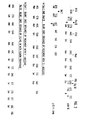
- Fig. 1A shows the 57 bp-insert which is inserted into the vector PSC11 according to the invention.
- Various restriction endonuclease cleavage sites usable for the production of recombinant plasmids are indicated in the drawing and moreover the sequence regions which hybridize with an SP6 primer or T7 primer; the translation start codon contained in the 57 bp-insert and stop codons are marked in various frames.
- Fig. 1B shows a sequence gel on which the sequence of the insert has been checked, on the one hand, using the SP6 primer (lefthand sample) and, on the other hand, using the T7 primer.
- the sequence gel shows clearly that the plasmid pSC11-Orth according to the invention contains the 57-base-pair sequence
- Fig. 2 shows the construction pattern on which the construction and identification of the plasmid pSC11-Orth has been based.
- Fig. 3 illustrates the insertion of a DNA sequence described in example 2, which codes for part of the surface antigen of HIV-1.
- the HIV-1 sequences are constructed with the respective vector sequences by italics.
- Fig. 4 illustrates the example 3, in which the insertion of a DNA sequence which codes for part of the surface antigen glycoprotein E of the FSME virus, is described.
- a synthetic adaptor had to be inserted in this case to maintain the translation frame.
- This adaptor is contrasted with the sequences of the plasmid according to the invention by bold type.
- the sequences originating from the TBE virus are represented in italics.
- the DNA of the pSC11-Orth plasmid was linearized with the restriction endonuclease SalI.
- the projecting 5' ends in the pSC11-Orth formed after linearizing with the restriction endonuclease were degraded with S1 nuclease to receive a PvuII/BglII fragment (Hahn et al., Nature 312, pages 166 to 169, 1984) from the plasmid pBH10 (Ratner et al., Aids Res. and Human Retroviruses 3 , pages 57 to 65, 1987) which codes for part of the surface antigen gp160.
- the DNA was inserted for ligations with the HIV-specific PvuII/BglII fragment (536 bp).
- the BglII end of the PvuII/BglII fragment was either treated with S1 nuclease or filled with Klenow DNA polymerase to obtain a blunt clonable 3' end (the 5' terminal PvuII cleavage site is already blunt).
- the ATG originates from pSC11-Orth. If the Klenow polymerase is used for filling, amino acids are additionally obtained at the 3' end.
- stop codons originate from the pSC11-Orth; after filling of the BglII cleavage site the translation ends at stop 1 (cf. Fig. 1) after digestion of protruding single-stranded sequences with S1 nuclease at stop 3.
- the correct orientation of the HIV insert was confirmed by means of the analysis with various restriction endonucleases.
- the DNA of the pSC11-Orth plasmid was linearized with the restriction endonuclease SalI and dephosporylated.
- the sequence region coding for part of the glycoprotein E was cleaved out from the cDNA-clone pA5 (DSM 4382; Mandl et al., Virology 166, pages 197 to 205, 1988) of the TBE virus with the restriction endonuclease PvuII and the formed fragment was isolated from the agarose gel. Inserting this PvuII fragment into the SalI site of the plasmid would not result in a translatable nucleotide sequence.
- the adaptor having 10 nucleotides was at first ligated via blunt ends with the PvuII fragment. Thereupon it was possible to form the desired construct with the protruding SalI ends of the adaptor and the pSC11-Orth vector linearized with SalI in a second step. A translatable nucleotide sequence was formed which has, however, four or five additional amino acids at the 5' end and at the 3' end of the FSME sequence. In order to confirm the orientation of the FSME fragment with respect to the vector, the DNA was analyzed with further restriction endonucleases. The translation is abandoned at stop 2 in this construct.
Landscapes
- Health & Medical Sciences (AREA)
- Life Sciences & Earth Sciences (AREA)
- Genetics & Genomics (AREA)
- Engineering & Computer Science (AREA)
- Organic Chemistry (AREA)
- Chemical & Material Sciences (AREA)
- Bioinformatics & Cheminformatics (AREA)
- General Engineering & Computer Science (AREA)
- Wood Science & Technology (AREA)
- Biotechnology (AREA)
- Zoology (AREA)
- Biomedical Technology (AREA)
- Virology (AREA)
- General Health & Medical Sciences (AREA)
- Medicinal Chemistry (AREA)
- Molecular Biology (AREA)
- Public Health (AREA)
- Physics & Mathematics (AREA)
- Animal Behavior & Ethology (AREA)
- Pharmacology & Pharmacy (AREA)
- Biophysics (AREA)
- Nuclear Medicine, Radiotherapy & Molecular Imaging (AREA)
- General Chemical & Material Sciences (AREA)
- Veterinary Medicine (AREA)
- Plant Pathology (AREA)
- Chemical Kinetics & Catalysis (AREA)
- Microbiology (AREA)
- Oncology (AREA)
- Communicable Diseases (AREA)
- Biochemistry (AREA)
- Micro-Organisms Or Cultivation Processes Thereof (AREA)
- Medicines Containing Antibodies Or Antigens For Use As Internal Diagnostic Agents (AREA)
- Measuring Or Testing Involving Enzymes Or Micro-Organisms (AREA)
- Medicines That Contain Protein Lipid Enzymes And Other Medicines (AREA)
Applications Claiming Priority (2)
| Application Number | Priority Date | Filing Date | Title |
|---|---|---|---|
| DE4002521 | 1990-01-29 | ||
| DE4002521A DE4002521A1 (de) | 1990-01-29 | 1990-01-29 | Rekombinantes plasmid |
Publications (1)
| Publication Number | Publication Date |
|---|---|
| EP0443335A1 true EP0443335A1 (en) | 1991-08-28 |
Family
ID=6398977
Family Applications (1)
| Application Number | Title | Priority Date | Filing Date |
|---|---|---|---|
| EP91100773A Withdrawn EP0443335A1 (en) | 1990-01-29 | 1991-01-22 | Recombinant pox virus plasmid containing a multi-functional DNA cassette |
Country Status (8)
| Country | Link |
|---|---|
| EP (1) | EP0443335A1 (cs) |
| JP (1) | JPH0515374A (cs) |
| CA (1) | CA2034564A1 (cs) |
| CS (1) | CS18991A2 (cs) |
| DE (1) | DE4002521A1 (cs) |
| FI (1) | FI910426L (cs) |
| HU (1) | HUT61331A (cs) |
| NO (1) | NO910331L (cs) |
Cited By (2)
| Publication number | Priority date | Publication date | Assignee | Title |
|---|---|---|---|---|
| WO2000073479A1 (en) | 1999-05-28 | 2000-12-07 | The Government Of The United States Of America, As Represented By The Secretary, Department Of Health And Human Services | A combined growth factor-deleted and thymidine kinase-deleted vaccinia virus vector |
| RU2180352C2 (ru) * | 1999-11-24 | 2002-03-10 | Государственный научный центр вирусологии и биотехнологии "Вектор" | ФРАГМЕНТ ГЕНОМА ВИРУСА ОСПЫ КУР ШТАММА "К", СОДЕРЖАЩИЙ ГЕН ТИМИДИНКИНАЗЫ, РЕКОМБИНАНТНЫЕ ПЛАЗМИДНЫЕ ДНК pTK1FPV И pTK2FPV, СОДЕРЖАЩИЕ ЭТУ ПОСЛЕДОВАТЕЛЬНОСТЬ, И РЕКОМБИНАНТНАЯ ПЛАЗМИДНАЯ ДНК pINTFPV1, ОБЛАДАЮЩАЯ СПОСОБНОСТЬЮ ИНТЕГРИРОВАТЬСЯ В ГЕНОМ ВИРУСА ОСПЫ КУР |
Citations (5)
| Publication number | Priority date | Publication date | Assignee | Title |
|---|---|---|---|---|
| EP0206920A1 (fr) * | 1985-06-18 | 1986-12-30 | Transgene S.A. | Vecteur d'expression de l'interféron- gamma dans les cellules de mammifère, procédé pour sa mise en oeuvre, produit obtenu et composition pharmaceutique contenant l'interféron- gamma |
| WO1988002022A1 (en) * | 1986-09-22 | 1988-03-24 | Commonwealth Scientific And Industrial Research Or | Recombinant poxviruses |
| EP0284791A1 (de) * | 1987-03-20 | 1988-10-05 | IMMUNO Aktiengesellschaft | DNA- und RNA-Moleküle des westlichen Subtyps des FSME-Virus, Polypeptide, die von diesen Molekülen codiert werden, und deren Verwendung |
| WO1989003879A1 (en) * | 1987-10-23 | 1989-05-05 | National Research Development Corporation | Fowlpox virus promoters |
| WO1989008716A1 (en) * | 1988-03-18 | 1989-09-21 | The United States Of America, As Represented By Th | Novel recombinant vaccinia virus expression vectors and method of selecting same |
-
1990
- 1990-01-29 DE DE4002521A patent/DE4002521A1/de not_active Withdrawn
-
1991
- 1991-01-18 CA CA002034564A patent/CA2034564A1/en not_active Abandoned
- 1991-01-22 EP EP91100773A patent/EP0443335A1/en not_active Withdrawn
- 1991-01-28 CS CS91189A patent/CS18991A2/cs unknown
- 1991-01-28 HU HU91289A patent/HUT61331A/hu unknown
- 1991-01-29 JP JP3216684A patent/JPH0515374A/ja not_active Withdrawn
- 1991-01-29 NO NO91910331A patent/NO910331L/no unknown
- 1991-01-29 FI FI910426A patent/FI910426L/fi unknown
Patent Citations (5)
| Publication number | Priority date | Publication date | Assignee | Title |
|---|---|---|---|---|
| EP0206920A1 (fr) * | 1985-06-18 | 1986-12-30 | Transgene S.A. | Vecteur d'expression de l'interféron- gamma dans les cellules de mammifère, procédé pour sa mise en oeuvre, produit obtenu et composition pharmaceutique contenant l'interféron- gamma |
| WO1988002022A1 (en) * | 1986-09-22 | 1988-03-24 | Commonwealth Scientific And Industrial Research Or | Recombinant poxviruses |
| EP0284791A1 (de) * | 1987-03-20 | 1988-10-05 | IMMUNO Aktiengesellschaft | DNA- und RNA-Moleküle des westlichen Subtyps des FSME-Virus, Polypeptide, die von diesen Molekülen codiert werden, und deren Verwendung |
| WO1989003879A1 (en) * | 1987-10-23 | 1989-05-05 | National Research Development Corporation | Fowlpox virus promoters |
| WO1989008716A1 (en) * | 1988-03-18 | 1989-09-21 | The United States Of America, As Represented By Th | Novel recombinant vaccinia virus expression vectors and method of selecting same |
Cited By (5)
| Publication number | Priority date | Publication date | Assignee | Title |
|---|---|---|---|---|
| WO2000073479A1 (en) | 1999-05-28 | 2000-12-07 | The Government Of The United States Of America, As Represented By The Secretary, Department Of Health And Human Services | A combined growth factor-deleted and thymidine kinase-deleted vaccinia virus vector |
| US7208313B2 (en) | 1999-05-28 | 2007-04-24 | United States Of America As Represented By The Secretary Of The Department Of Health And Human Services | Combined growth factor-deleted and thymidine kinase-deleted vaccinia virus vector |
| EP2325321A1 (en) * | 1999-05-28 | 2011-05-25 | THE GOVERNMENT OF THE UNITED STATES OF AMERICA as represented by the SECRETARY OF THE DEPARTMENT OF HEALTH AND HUMAN SERVICES | A combined growth factor-deleted and thymidine kinase-deleted vaccinia virus vector |
| US8506947B2 (en) | 1999-05-28 | 2013-08-13 | The United States Of America As Represented By The Secretary Of The Department Of Health And Human Services | Vaccinia virus expression vector for selective replication in a tumor cell and introduction of exogenous nucleotide sequence into a tumor cell |
| RU2180352C2 (ru) * | 1999-11-24 | 2002-03-10 | Государственный научный центр вирусологии и биотехнологии "Вектор" | ФРАГМЕНТ ГЕНОМА ВИРУСА ОСПЫ КУР ШТАММА "К", СОДЕРЖАЩИЙ ГЕН ТИМИДИНКИНАЗЫ, РЕКОМБИНАНТНЫЕ ПЛАЗМИДНЫЕ ДНК pTK1FPV И pTK2FPV, СОДЕРЖАЩИЕ ЭТУ ПОСЛЕДОВАТЕЛЬНОСТЬ, И РЕКОМБИНАНТНАЯ ПЛАЗМИДНАЯ ДНК pINTFPV1, ОБЛАДАЮЩАЯ СПОСОБНОСТЬЮ ИНТЕГРИРОВАТЬСЯ В ГЕНОМ ВИРУСА ОСПЫ КУР |
Also Published As
| Publication number | Publication date |
|---|---|
| CS18991A2 (en) | 1991-09-15 |
| FI910426A7 (fi) | 1991-07-30 |
| DE4002521A1 (de) | 1991-08-01 |
| HUT61331A (en) | 1992-12-28 |
| NO910331L (no) | 1991-07-30 |
| JPH0515374A (ja) | 1993-01-26 |
| FI910426A0 (fi) | 1991-01-29 |
| FI910426L (fi) | 1991-07-30 |
| CA2034564A1 (en) | 1991-07-30 |
| NO910331D0 (no) | 1991-01-29 |
| HU910289D0 (en) | 1991-08-28 |
Similar Documents
| Publication | Publication Date | Title |
|---|---|---|
| US20240100151A1 (en) | Variant strain-based coronavirus vaccines | |
| JP5777199B2 (ja) | ポックスウイルスゲノムに挿入された相同遺伝子を発現させる組換えポックスウイルス | |
| JP3194751B2 (ja) | シチメンチョウの組換えヘルペスウイルスおよび該ウイルス由来の生菌ベクターワクチン | |
| EP3407910B1 (en) | Recombinant modified vaccinia virus ankara (mva) equine encephalitis virus vaccine | |
| US6869793B2 (en) | Recombinant MVA virus expressing dengue virus antigens, and the use thereof in vaccines | |
| US20030013076A1 (en) | Parapoxvirus vectors | |
| KR20050083839A (ko) | 두개 이상의 우두 ati 프로모터를 포함하는 재조합폭스바이러스 | |
| Zemba et al. | Construction of infectious feline foamy virus genomes: cat antisera do not cross-neutralize feline foamy virus chimera with serotype-specific Env sequences | |
| EP0753581A1 (en) | Improved recombinant eukaryotic cytoplasmic viruses, method for their production and their use as vaccines | |
| CA1340473C (en) | Method for isolating herpes virus thymidine kinase-encoding dna | |
| US5324664A (en) | Herpes virus thymidien kinase-encoding DNA | |
| JP3529146B2 (ja) | 組み換え体ネコヘルペスウイルスワクチン | |
| JP3529134B2 (ja) | 組換えネコヘルペスウイルスのベクターワクチン | |
| JPH10507066A (ja) | ニワトリ感染性貧血ウイルスワクチン | |
| CN1318592C (zh) | O型口蹄疫病毒dna疫苗及其制备方法 | |
| US20230203536A1 (en) | Coronavirus rna replicons and use thereof as vaccines | |
| JPH0515374A (ja) | 組換えプラスミド | |
| CN116549627A (zh) | 基于腺病毒载体的广谱新冠疫苗及其应用 | |
| WO2002083896A2 (en) | Recombinant segmented negative strand virus with a duplicated 3' noncoding flanking sequence, and therapeutic compositions containing the same | |
| US20040265324A1 (en) | Recombinant MVA virus expressing dengue virus antigens, and the use thereof in vaccines | |
| CN114058644A (zh) | 一种可以逃逸体内存在的既有抗痘苗病毒中和抗体的重组痘苗病毒载体 | |
| EP0859846A1 (en) | Rabies recombinant adenovirus | |
| Carroll | Expression analysis and immunogenicity of human immunodeficiency virus type 1 envelope glycoprotein in vaccinia virus | |
| JP3458880B2 (ja) | 組み換え体、多価組み換え体、及びその作製方法 | |
| WO2003043654A1 (en) | Recombinant vaccinia virus vaccine |
Legal Events
| Date | Code | Title | Description |
|---|---|---|---|
| PUAI | Public reference made under article 153(3) epc to a published international application that has entered the european phase |
Free format text: ORIGINAL CODE: 0009012 |
|
| AK | Designated contracting states |
Kind code of ref document: A1 Designated state(s): AT BE CH DE DK ES FR GB IT LI LU NL SE |
|
| 17P | Request for examination filed |
Effective date: 19910911 |
|
| STAA | Information on the status of an ep patent application or granted ep patent |
Free format text: STATUS: THE APPLICATION IS DEEMED TO BE WITHDRAWN |
|
| 18D | Application deemed to be withdrawn |
Effective date: 19940801 |