EP0414808B1 - VERFAHREN ZUM SCREENEN EINER EXPRESSIONS-cDNA-KLONBANK ZUR AUFFINDUNG VON POLYNUKLEOTIDEN - Google Patents
VERFAHREN ZUM SCREENEN EINER EXPRESSIONS-cDNA-KLONBANK ZUR AUFFINDUNG VON POLYNUKLEOTIDEN Download PDFInfo
- Publication number
- EP0414808B1 EP0414808B1 EP89906669A EP89906669A EP0414808B1 EP 0414808 B1 EP0414808 B1 EP 0414808B1 EP 89906669 A EP89906669 A EP 89906669A EP 89906669 A EP89906669 A EP 89906669A EP 0414808 B1 EP0414808 B1 EP 0414808B1
- Authority
- EP
- European Patent Office
- Prior art keywords
- sequence
- cdna
- eco
- lambda
- protein
- Prior art date
- Legal status (The legal status is an assumption and is not a legal conclusion. Google has not performed a legal analysis and makes no representation as to the accuracy of the status listed.)
- Expired - Lifetime
Links
- 239000002299 complementary DNA Substances 0.000 title claims abstract description 37
- 238000000034 method Methods 0.000 title claims abstract description 27
- 108091033319 polynucleotide Proteins 0.000 title claims abstract description 8
- 102000040430 polynucleotide Human genes 0.000 title claims abstract description 8
- 239000002157 polynucleotide Substances 0.000 title claims abstract description 8
- 238000012216 screening Methods 0.000 title abstract description 4
- 230000008569 process Effects 0.000 title description 6
- 108090000623 proteins and genes Proteins 0.000 claims abstract description 45
- 102000004169 proteins and genes Human genes 0.000 claims abstract description 38
- 239000013566 allergen Substances 0.000 claims abstract description 13
- 230000004071 biological effect Effects 0.000 claims abstract description 5
- 108700026244 Open Reading Frames Proteins 0.000 claims abstract description 4
- 230000000172 allergic effect Effects 0.000 claims abstract 2
- 208000010668 atopic eczema Diseases 0.000 claims abstract 2
- 239000013612 plasmid Substances 0.000 claims description 27
- 241000588724 Escherichia coli Species 0.000 claims description 26
- 102000037865 fusion proteins Human genes 0.000 claims description 8
- 108020001507 fusion proteins Proteins 0.000 claims description 8
- 238000004519 manufacturing process Methods 0.000 claims description 6
- 230000002009 allergenic effect Effects 0.000 claims description 3
- 239000000376 reactant Substances 0.000 claims 2
- 230000007850 degeneration Effects 0.000 claims 1
- 244000005700 microbiome Species 0.000 claims 1
- 238000001514 detection method Methods 0.000 abstract description 6
- LFQSCWFLJHTTHZ-UHFFFAOYSA-N Ethanol Chemical compound CCO LFQSCWFLJHTTHZ-UHFFFAOYSA-N 0.000 description 68
- XLYOFNOQVPJJNP-UHFFFAOYSA-N water Chemical compound O XLYOFNOQVPJJNP-UHFFFAOYSA-N 0.000 description 55
- 239000012634 fragment Substances 0.000 description 54
- 108010054576 Deoxyribonuclease EcoRI Proteins 0.000 description 49
- 108020004414 DNA Proteins 0.000 description 44
- 239000000872 buffer Substances 0.000 description 39
- FAPWRFPIFSIZLT-UHFFFAOYSA-M Sodium chloride Chemical compound [Na+].[Cl-] FAPWRFPIFSIZLT-UHFFFAOYSA-M 0.000 description 38
- 239000000499 gel Substances 0.000 description 31
- 238000012163 sequencing technique Methods 0.000 description 26
- 210000004027 cell Anatomy 0.000 description 23
- 239000000203 mixture Substances 0.000 description 23
- LENZDBCJOHFCAS-UHFFFAOYSA-N tris Chemical compound OCC(N)(CO)CO LENZDBCJOHFCAS-UHFFFAOYSA-N 0.000 description 21
- TWRXJAOTZQYOKJ-UHFFFAOYSA-L Magnesium chloride Chemical compound [Mg+2].[Cl-].[Cl-] TWRXJAOTZQYOKJ-UHFFFAOYSA-L 0.000 description 20
- 239000007983 Tris buffer Substances 0.000 description 20
- 108091032973 (ribonucleotides)n+m Proteins 0.000 description 19
- 239000008188 pellet Substances 0.000 description 19
- 239000011780 sodium chloride Substances 0.000 description 19
- ISWSIDIOOBJBQZ-UHFFFAOYSA-N Phenol Chemical compound OC1=CC=CC=C1 ISWSIDIOOBJBQZ-UHFFFAOYSA-N 0.000 description 18
- QKNYBSVHEMOAJP-UHFFFAOYSA-N 2-amino-2-(hydroxymethyl)propane-1,3-diol;hydron;chloride Chemical compound Cl.OCC(N)(CO)CO QKNYBSVHEMOAJP-UHFFFAOYSA-N 0.000 description 17
- 238000006243 chemical reaction Methods 0.000 description 17
- 239000000284 extract Substances 0.000 description 17
- HEDRZPFGACZZDS-UHFFFAOYSA-N Chloroform Chemical compound ClC(Cl)Cl HEDRZPFGACZZDS-UHFFFAOYSA-N 0.000 description 16
- XSQUKJJJFZCRTK-UHFFFAOYSA-N Urea Chemical compound NC(N)=O XSQUKJJJFZCRTK-UHFFFAOYSA-N 0.000 description 16
- 230000029087 digestion Effects 0.000 description 15
- 239000000243 solution Substances 0.000 description 15
- KCXVZYZYPLLWCC-UHFFFAOYSA-N EDTA Chemical compound OC(=O)CN(CC(O)=O)CCN(CC(O)=O)CC(O)=O KCXVZYZYPLLWCC-UHFFFAOYSA-N 0.000 description 12
- 238000000605 extraction Methods 0.000 description 12
- 238000011534 incubation Methods 0.000 description 12
- 238000003786 synthesis reaction Methods 0.000 description 12
- 206010020751 Hypersensitivity Diseases 0.000 description 11
- 238000002372 labelling Methods 0.000 description 11
- RTZKZFJDLAIYFH-UHFFFAOYSA-N Diethyl ether Chemical compound CCOCC RTZKZFJDLAIYFH-UHFFFAOYSA-N 0.000 description 10
- 239000008346 aqueous phase Substances 0.000 description 10
- 238000010790 dilution Methods 0.000 description 10
- 239000012895 dilution Substances 0.000 description 10
- 229910001629 magnesium chloride Inorganic materials 0.000 description 10
- 239000002773 nucleotide Substances 0.000 description 10
- 102100034343 Integrase Human genes 0.000 description 9
- 108010058966 bacteriophage T7 induced DNA polymerase Proteins 0.000 description 9
- 230000009466 transformation Effects 0.000 description 9
- 229920000936 Agarose Polymers 0.000 description 8
- CSNNHWWHGAXBCP-UHFFFAOYSA-L Magnesium sulfate Chemical compound [Mg+2].[O-][S+2]([O-])([O-])[O-] CSNNHWWHGAXBCP-UHFFFAOYSA-L 0.000 description 8
- KWYHDKDOAIKMQN-UHFFFAOYSA-N N,N,N',N'-tetramethylethylenediamine Chemical compound CN(C)CCN(C)C KWYHDKDOAIKMQN-UHFFFAOYSA-N 0.000 description 8
- PXIPVTKHYLBLMZ-UHFFFAOYSA-N Sodium azide Chemical compound [Na+].[N-]=[N+]=[N-] PXIPVTKHYLBLMZ-UHFFFAOYSA-N 0.000 description 8
- 208000026935 allergic disease Diseases 0.000 description 8
- KWGKDLIKAYFUFQ-UHFFFAOYSA-M lithium chloride Chemical compound [Li+].[Cl-] KWGKDLIKAYFUFQ-UHFFFAOYSA-M 0.000 description 8
- 125000003729 nucleotide group Chemical group 0.000 description 8
- 239000011550 stock solution Substances 0.000 description 8
- 239000000725 suspension Substances 0.000 description 8
- 238000005406 washing Methods 0.000 description 8
- 239000000020 Nitrocellulose Substances 0.000 description 7
- 108010092799 RNA-directed DNA polymerase Proteins 0.000 description 7
- FJWGYAHXMCUOOM-QHOUIDNNSA-N [(2s,3r,4s,5r,6r)-2-[(2r,3r,4s,5r,6s)-4,5-dinitrooxy-2-(nitrooxymethyl)-6-[(2r,3r,4s,5r,6s)-4,5,6-trinitrooxy-2-(nitrooxymethyl)oxan-3-yl]oxyoxan-3-yl]oxy-3,5-dinitrooxy-6-(nitrooxymethyl)oxan-4-yl] nitrate Chemical compound O([C@@H]1O[C@@H]([C@H]([C@H](O[N+]([O-])=O)[C@H]1O[N+]([O-])=O)O[C@H]1[C@@H]([C@@H](O[N+]([O-])=O)[C@H](O[N+]([O-])=O)[C@@H](CO[N+]([O-])=O)O1)O[N+]([O-])=O)CO[N+](=O)[O-])[C@@H]1[C@@H](CO[N+]([O-])=O)O[C@@H](O[N+]([O-])=O)[C@H](O[N+]([O-])=O)[C@H]1O[N+]([O-])=O FJWGYAHXMCUOOM-QHOUIDNNSA-N 0.000 description 7
- 230000007815 allergy Effects 0.000 description 7
- 238000000137 annealing Methods 0.000 description 7
- 238000013459 approach Methods 0.000 description 7
- 230000015572 biosynthetic process Effects 0.000 description 7
- 238000005119 centrifugation Methods 0.000 description 7
- VHJLVAABSRFDPM-QWWZWVQMSA-N dithiothreitol Chemical compound SC[C@@H](O)[C@H](O)CS VHJLVAABSRFDPM-QWWZWVQMSA-N 0.000 description 7
- 238000003780 insertion Methods 0.000 description 7
- 230000037431 insertion Effects 0.000 description 7
- 239000003550 marker Substances 0.000 description 7
- 229920001220 nitrocellulos Polymers 0.000 description 7
- 229940079938 nitrocellulose Drugs 0.000 description 7
- 210000002966 serum Anatomy 0.000 description 7
- 235000018185 Betula X alpestris Nutrition 0.000 description 6
- 235000018212 Betula X uliginosa Nutrition 0.000 description 6
- LZZYPRNAOMGNLH-UHFFFAOYSA-M Cetrimonium bromide Chemical compound [Br-].CCCCCCCCCCCCCCCC[N+](C)(C)C LZZYPRNAOMGNLH-UHFFFAOYSA-M 0.000 description 6
- 102000012410 DNA Ligases Human genes 0.000 description 6
- 108010061982 DNA Ligases Proteins 0.000 description 6
- KFZMGEQAYNKOFK-UHFFFAOYSA-N Isopropanol Chemical compound CC(C)O KFZMGEQAYNKOFK-UHFFFAOYSA-N 0.000 description 6
- FZNCGRZWXLXZSZ-CIQUZCHMSA-N Voglibose Chemical compound OCC(CO)N[C@H]1C[C@](O)(CO)[C@@H](O)[C@H](O)[C@H]1O FZNCGRZWXLXZSZ-CIQUZCHMSA-N 0.000 description 6
- 239000004202 carbamide Substances 0.000 description 6
- HAAZLUGHYHWQIW-KVQBGUIXSA-N dGTP Chemical compound C1=NC=2C(=O)NC(N)=NC=2N1[C@H]1C[C@H](O)[C@@H](COP(O)(=O)OP(O)(=O)OP(O)(O)=O)O1 HAAZLUGHYHWQIW-KVQBGUIXSA-N 0.000 description 6
- 229920002401 polyacrylamide Polymers 0.000 description 6
- 238000002360 preparation method Methods 0.000 description 6
- 150000003839 salts Chemical class 0.000 description 6
- 208000035285 Allergic Seasonal Rhinitis Diseases 0.000 description 5
- 241000196324 Embryophyta Species 0.000 description 5
- 108091034057 RNA (poly(A)) Proteins 0.000 description 5
- 238000004458 analytical method Methods 0.000 description 5
- 230000001580 bacterial effect Effects 0.000 description 5
- 238000012512 characterization method Methods 0.000 description 5
- 230000009089 cytolysis Effects 0.000 description 5
- 238000003119 immunoblot Methods 0.000 description 5
- 238000002955 isolation Methods 0.000 description 5
- BPHPUYQFMNQIOC-NXRLNHOXSA-N isopropyl beta-D-thiogalactopyranoside Chemical compound CC(C)S[C@@H]1O[C@H](CO)[C@H](O)[C@H](O)[C@H]1O BPHPUYQFMNQIOC-NXRLNHOXSA-N 0.000 description 5
- 239000007788 liquid Substances 0.000 description 5
- 230000001320 lysogenic effect Effects 0.000 description 5
- LWJROJCJINYWOX-UHFFFAOYSA-L mercury dichloride Chemical compound Cl[Hg]Cl LWJROJCJINYWOX-UHFFFAOYSA-L 0.000 description 5
- 238000001556 precipitation Methods 0.000 description 5
- HRPVXLWXLXDGHG-UHFFFAOYSA-N Acrylamide Chemical compound NC(=O)C=C HRPVXLWXLXDGHG-UHFFFAOYSA-N 0.000 description 4
- 102000053602 DNA Human genes 0.000 description 4
- 102000004190 Enzymes Human genes 0.000 description 4
- 108090000790 Enzymes Proteins 0.000 description 4
- ZMXDDKWLCZADIW-UHFFFAOYSA-N N,N-Dimethylformamide Chemical compound CN(C)C=O ZMXDDKWLCZADIW-UHFFFAOYSA-N 0.000 description 4
- 239000002202 Polyethylene glycol Substances 0.000 description 4
- 238000002123 RNA extraction Methods 0.000 description 4
- 239000011543 agarose gel Substances 0.000 description 4
- AIYUHDOJVYHVIT-UHFFFAOYSA-M caesium chloride Chemical compound [Cl-].[Cs+] AIYUHDOJVYHVIT-UHFFFAOYSA-M 0.000 description 4
- 229910052799 carbon Inorganic materials 0.000 description 4
- SUYVUBYJARFZHO-RRKCRQDMSA-N dATP Chemical compound C1=NC=2C(N)=NC=NC=2N1[C@H]1C[C@H](O)[C@@H](COP(O)(=O)OP(O)(=O)OP(O)(O)=O)O1 SUYVUBYJARFZHO-RRKCRQDMSA-N 0.000 description 4
- SUYVUBYJARFZHO-UHFFFAOYSA-N dATP Natural products C1=NC=2C(N)=NC=NC=2N1C1CC(O)C(COP(O)(=O)OP(O)(=O)OP(O)(O)=O)O1 SUYVUBYJARFZHO-UHFFFAOYSA-N 0.000 description 4
- RGWHQCVHVJXOKC-SHYZEUOFSA-J dCTP(4-) Chemical compound O=C1N=C(N)C=CN1[C@@H]1O[C@H](COP([O-])(=O)OP([O-])(=O)OP([O-])([O-])=O)[C@@H](O)C1 RGWHQCVHVJXOKC-SHYZEUOFSA-J 0.000 description 4
- NHVNXKFIZYSCEB-XLPZGREQSA-N dTTP Chemical compound O=C1NC(=O)C(C)=CN1[C@@H]1O[C@H](COP(O)(=O)OP(O)(=O)OP(O)(O)=O)[C@@H](O)C1 NHVNXKFIZYSCEB-XLPZGREQSA-N 0.000 description 4
- 238000010348 incorporation Methods 0.000 description 4
- 229910052943 magnesium sulfate Inorganic materials 0.000 description 4
- 235000019341 magnesium sulphate Nutrition 0.000 description 4
- 229920001223 polyethylene glycol Polymers 0.000 description 4
- 239000011541 reaction mixture Substances 0.000 description 4
- ATHGHQPFGPMSJY-UHFFFAOYSA-N spermidine Chemical compound NCCCCNCCCN ATHGHQPFGPMSJY-UHFFFAOYSA-N 0.000 description 4
- 239000006228 supernatant Substances 0.000 description 4
- 210000001519 tissue Anatomy 0.000 description 4
- OWEGMIWEEQEYGQ-UHFFFAOYSA-N 100676-05-9 Natural products OC1C(O)C(O)C(CO)OC1OCC1C(O)C(O)C(O)C(OC2C(OC(O)C(O)C2O)CO)O1 OWEGMIWEEQEYGQ-UHFFFAOYSA-N 0.000 description 3
- 108091003079 Bovine Serum Albumin Proteins 0.000 description 3
- UXVMQQNJUSDDNG-UHFFFAOYSA-L Calcium chloride Chemical compound [Cl-].[Cl-].[Ca+2] UXVMQQNJUSDDNG-UHFFFAOYSA-L 0.000 description 3
- ZHNUHDYFZUAESO-UHFFFAOYSA-N Formamide Chemical compound NC=O ZHNUHDYFZUAESO-UHFFFAOYSA-N 0.000 description 3
- GUBGYTABKSRVRQ-PICCSMPSSA-N Maltose Natural products O[C@@H]1[C@@H](O)[C@H](O)[C@@H](CO)O[C@@H]1O[C@@H]1[C@@H](CO)OC(O)[C@H](O)[C@H]1O GUBGYTABKSRVRQ-PICCSMPSSA-N 0.000 description 3
- OKKJLVBELUTLKV-UHFFFAOYSA-N Methanol Chemical compound OC OKKJLVBELUTLKV-UHFFFAOYSA-N 0.000 description 3
- 108091034117 Oligonucleotide Proteins 0.000 description 3
- 229920001213 Polysorbate 20 Polymers 0.000 description 3
- 206010048908 Seasonal allergy Diseases 0.000 description 3
- 108020004682 Single-Stranded DNA Proteins 0.000 description 3
- VMHLLURERBWHNL-UHFFFAOYSA-M Sodium acetate Chemical compound [Na+].CC([O-])=O VMHLLURERBWHNL-UHFFFAOYSA-M 0.000 description 3
- 150000001413 amino acids Chemical group 0.000 description 3
- ROOXNKNUYICQNP-UHFFFAOYSA-N ammonium persulfate Chemical compound [NH4+].[NH4+].[O-]S(=O)(=O)OOS([O-])(=O)=O ROOXNKNUYICQNP-UHFFFAOYSA-N 0.000 description 3
- 229960000723 ampicillin Drugs 0.000 description 3
- AVKUERGKIZMTKX-NJBDSQKTSA-N ampicillin Chemical compound C1([C@@H](N)C(=O)N[C@H]2[C@H]3SC([C@@H](N3C2=O)C(O)=O)(C)C)=CC=CC=C1 AVKUERGKIZMTKX-NJBDSQKTSA-N 0.000 description 3
- 108010005774 beta-Galactosidase Proteins 0.000 description 3
- 229940098773 bovine serum albumin Drugs 0.000 description 3
- 239000001110 calcium chloride Substances 0.000 description 3
- 235000011148 calcium chloride Nutrition 0.000 description 3
- 229910001628 calcium chloride Inorganic materials 0.000 description 3
- 238000010367 cloning Methods 0.000 description 3
- 230000000295 complement effect Effects 0.000 description 3
- 239000010432 diamond Substances 0.000 description 3
- 238000001502 gel electrophoresis Methods 0.000 description 3
- 229920000159 gelatin Polymers 0.000 description 3
- 235000019322 gelatine Nutrition 0.000 description 3
- 239000006166 lysate Substances 0.000 description 3
- 239000000463 material Substances 0.000 description 3
- 108020004707 nucleic acids Proteins 0.000 description 3
- 102000039446 nucleic acids Human genes 0.000 description 3
- 150000007523 nucleic acids Chemical class 0.000 description 3
- 239000002245 particle Substances 0.000 description 3
- 239000012071 phase Substances 0.000 description 3
- 201000004338 pollen allergy Diseases 0.000 description 3
- 239000000256 polyoxyethylene sorbitan monolaurate Substances 0.000 description 3
- 235000010486 polyoxyethylene sorbitan monolaurate Nutrition 0.000 description 3
- 230000002285 radioactive effect Effects 0.000 description 3
- 239000000523 sample Substances 0.000 description 3
- 229920006395 saturated elastomer Polymers 0.000 description 3
- 235000017281 sodium acetate Nutrition 0.000 description 3
- 208000024891 symptom Diseases 0.000 description 3
- 238000011282 treatment Methods 0.000 description 3
- 238000011144 upstream manufacturing Methods 0.000 description 3
- 238000001262 western blot Methods 0.000 description 3
- HVAUUPRFYPCOCA-AREMUKBSSA-N 2-O-acetyl-1-O-hexadecyl-sn-glycero-3-phosphocholine Chemical compound CCCCCCCCCCCCCCCCOC[C@@H](OC(C)=O)COP([O-])(=O)OCC[N+](C)(C)C HVAUUPRFYPCOCA-AREMUKBSSA-N 0.000 description 2
- OSBLTNPMIGYQGY-UHFFFAOYSA-N 2-amino-2-(hydroxymethyl)propane-1,3-diol;2-[2-[bis(carboxymethyl)amino]ethyl-(carboxymethyl)amino]acetic acid;boric acid Chemical compound OB(O)O.OCC(N)(CO)CO.OC(=O)CN(CC(O)=O)CCN(CC(O)=O)CC(O)=O OSBLTNPMIGYQGY-UHFFFAOYSA-N 0.000 description 2
- OPIFSICVWOWJMJ-AEOCFKNESA-N 5-bromo-4-chloro-3-indolyl beta-D-galactoside Chemical compound O[C@@H]1[C@@H](O)[C@@H](O)[C@@H](CO)O[C@H]1OC1=CNC2=CC=C(Br)C(Cl)=C12 OPIFSICVWOWJMJ-AEOCFKNESA-N 0.000 description 2
- USFZMSVCRYTOJT-UHFFFAOYSA-N Ammonium acetate Chemical compound N.CC(O)=O USFZMSVCRYTOJT-UHFFFAOYSA-N 0.000 description 2
- 239000005695 Ammonium acetate Substances 0.000 description 2
- 235000009109 Betula pendula Nutrition 0.000 description 2
- 241000219430 Betula pendula Species 0.000 description 2
- BTBUEUYNUDRHOZ-UHFFFAOYSA-N Borate Chemical compound [O-]B([O-])[O-] BTBUEUYNUDRHOZ-UHFFFAOYSA-N 0.000 description 2
- 108010017826 DNA Polymerase I Proteins 0.000 description 2
- 102000004594 DNA Polymerase I Human genes 0.000 description 2
- 241000701959 Escherichia virus Lambda Species 0.000 description 2
- 108010010803 Gelatin Proteins 0.000 description 2
- 102100036263 Glutamyl-tRNA(Gln) amidotransferase subunit C, mitochondrial Human genes 0.000 description 2
- DHMQDGOQFOQNFH-UHFFFAOYSA-N Glycine Chemical compound NCC(O)=O DHMQDGOQFOQNFH-UHFFFAOYSA-N 0.000 description 2
- NTYJJOPFIAHURM-UHFFFAOYSA-N Histamine Chemical compound NCCC1=CN=CN1 NTYJJOPFIAHURM-UHFFFAOYSA-N 0.000 description 2
- 101001001786 Homo sapiens Glutamyl-tRNA(Gln) amidotransferase subunit C, mitochondrial Proteins 0.000 description 2
- 206010020649 Hyperkeratosis Diseases 0.000 description 2
- 101710203526 Integrase Proteins 0.000 description 2
- 102000003960 Ligases Human genes 0.000 description 2
- 108090000364 Ligases Proteins 0.000 description 2
- 239000008118 PEG 6000 Substances 0.000 description 2
- 108010003541 Platelet Activating Factor Proteins 0.000 description 2
- 229920002584 Polyethylene Glycol 6000 Polymers 0.000 description 2
- 108010076504 Protein Sorting Signals Proteins 0.000 description 2
- 208000003251 Pruritus Diseases 0.000 description 2
- 102000007056 Recombinant Fusion Proteins Human genes 0.000 description 2
- 108010008281 Recombinant Fusion Proteins Proteins 0.000 description 2
- MEFKEPWMEQBLKI-AIRLBKTGSA-N S-adenosyl-L-methioninate Chemical compound O[C@@H]1[C@H](O)[C@@H](C[S+](CC[C@H](N)C([O-])=O)C)O[C@H]1N1C2=NC=NC(N)=C2N=C1 MEFKEPWMEQBLKI-AIRLBKTGSA-N 0.000 description 2
- 108091027568 Single-stranded nucleotide Proteins 0.000 description 2
- 239000008051 TBE buffer Substances 0.000 description 2
- IQFYYKKMVGJFEH-XLPZGREQSA-N Thymidine Chemical compound O=C1NC(=O)C(C)=CN1[C@@H]1O[C@H](CO)[C@@H](O)C1 IQFYYKKMVGJFEH-XLPZGREQSA-N 0.000 description 2
- 229940043376 ammonium acetate Drugs 0.000 description 2
- 235000019257 ammonium acetate Nutrition 0.000 description 2
- 208000006673 asthma Diseases 0.000 description 2
- 102000005936 beta-Galactosidase Human genes 0.000 description 2
- 238000009835 boiling Methods 0.000 description 2
- 238000010804 cDNA synthesis Methods 0.000 description 2
- 230000008859 change Effects 0.000 description 2
- 229910003460 diamond Inorganic materials 0.000 description 2
- 201000010099 disease Diseases 0.000 description 2
- 208000037265 diseases, disorders, signs and symptoms Diseases 0.000 description 2
- 239000000428 dust Substances 0.000 description 2
- 230000000694 effects Effects 0.000 description 2
- 238000001962 electrophoresis Methods 0.000 description 2
- 238000010828 elution Methods 0.000 description 2
- 239000012149 elution buffer Substances 0.000 description 2
- 238000012869 ethanol precipitation Methods 0.000 description 2
- ZMMJGEGLRURXTF-UHFFFAOYSA-N ethidium bromide Chemical compound [Br-].C12=CC(N)=CC=C2C2=CC=C(N)C=C2[N+](CC)=C1C1=CC=CC=C1 ZMMJGEGLRURXTF-UHFFFAOYSA-N 0.000 description 2
- 229960005542 ethidium bromide Drugs 0.000 description 2
- 238000011156 evaluation Methods 0.000 description 2
- 239000008273 gelatin Substances 0.000 description 2
- 235000011852 gelatine desserts Nutrition 0.000 description 2
- 239000011521 glass Substances 0.000 description 2
- 239000012145 high-salt buffer Substances 0.000 description 2
- 239000011539 homogenization buffer Substances 0.000 description 2
- 238000000338 in vitro Methods 0.000 description 2
- 230000001965 increasing effect Effects 0.000 description 2
- 230000006698 induction Effects 0.000 description 2
- 238000009434 installation Methods 0.000 description 2
- PHTQWCKDNZKARW-UHFFFAOYSA-N isoamylol Chemical compound CC(C)CCO PHTQWCKDNZKARW-UHFFFAOYSA-N 0.000 description 2
- 239000012160 loading buffer Substances 0.000 description 2
- 239000012528 membrane Substances 0.000 description 2
- 238000007069 methylation reaction Methods 0.000 description 2
- 210000004400 mucous membrane Anatomy 0.000 description 2
- 238000004806 packaging method and process Methods 0.000 description 2
- 244000000003 plant pathogen Species 0.000 description 2
- 238000013492 plasmid preparation Methods 0.000 description 2
- 238000002264 polyacrylamide gel electrophoresis Methods 0.000 description 2
- 230000037452 priming Effects 0.000 description 2
- 238000000926 separation method Methods 0.000 description 2
- 239000012064 sodium phosphate buffer Substances 0.000 description 2
- 238000001179 sorption measurement Methods 0.000 description 2
- 239000008223 sterile water Substances 0.000 description 2
- 238000012360 testing method Methods 0.000 description 2
- 238000010257 thawing Methods 0.000 description 2
- 238000012795 verification Methods 0.000 description 2
- 239000011534 wash buffer Substances 0.000 description 2
- 102000040650 (ribonucleotides)n+m Human genes 0.000 description 1
- BFSVOASYOCHEOV-UHFFFAOYSA-N 2-diethylaminoethanol Chemical compound CCN(CC)CCO BFSVOASYOCHEOV-UHFFFAOYSA-N 0.000 description 1
- 240000002245 Acer pensylvanicum Species 0.000 description 1
- 235000006760 Acer pensylvanicum Nutrition 0.000 description 1
- QTBSBXVTEAMEQO-UHFFFAOYSA-M Acetate Chemical compound CC([O-])=O QTBSBXVTEAMEQO-UHFFFAOYSA-M 0.000 description 1
- 229920001817 Agar Polymers 0.000 description 1
- 102000002260 Alkaline Phosphatase Human genes 0.000 description 1
- 108020004774 Alkaline Phosphatase Proteins 0.000 description 1
- 235000003261 Artemisia vulgaris Nutrition 0.000 description 1
- 240000006891 Artemisia vulgaris Species 0.000 description 1
- DPWDPEVGACCWTC-SRVKXCTJSA-N Asn-Tyr-Ser Chemical compound [H]N[C@@H](CC(N)=O)C(=O)N[C@@H](CC1=CC=C(O)C=C1)C(=O)N[C@@H](CO)C(O)=O DPWDPEVGACCWTC-SRVKXCTJSA-N 0.000 description 1
- 206010003645 Atopy Diseases 0.000 description 1
- DWRXFEITVBNRMK-UHFFFAOYSA-N Beta-D-1-Arabinofuranosylthymine Natural products O=C1NC(=O)C(C)=CN1C1C(O)C(O)C(CO)O1 DWRXFEITVBNRMK-UHFFFAOYSA-N 0.000 description 1
- 241001520764 Betula pubescens Species 0.000 description 1
- 101100322245 Caenorhabditis elegans des-2 gene Proteins 0.000 description 1
- CURLTUGMZLYLDI-UHFFFAOYSA-N Carbon dioxide Chemical compound O=C=O CURLTUGMZLYLDI-UHFFFAOYSA-N 0.000 description 1
- 108020004705 Codon Proteins 0.000 description 1
- 108020004635 Complementary DNA Proteins 0.000 description 1
- 235000001543 Corylus americana Nutrition 0.000 description 1
- 240000007582 Corylus avellana Species 0.000 description 1
- 235000007466 Corylus avellana Nutrition 0.000 description 1
- 206010011224 Cough Diseases 0.000 description 1
- 108010014303 DNA-directed DNA polymerase Proteins 0.000 description 1
- 102000016928 DNA-directed DNA polymerase Human genes 0.000 description 1
- 206010013786 Dry skin Diseases 0.000 description 1
- 101100284813 Escherichia coli (strain K12) hflC gene Proteins 0.000 description 1
- 101100338813 Escherichia coli (strain K12) hflK gene Proteins 0.000 description 1
- 206010015993 Eyelid oedema Diseases 0.000 description 1
- 239000001828 Gelatine Substances 0.000 description 1
- 208000034826 Genetic Predisposition to Disease Diseases 0.000 description 1
- 239000004471 Glycine Substances 0.000 description 1
- 244000188413 Ilex verticillata Species 0.000 description 1
- DGAQECJNVWCQMB-PUAWFVPOSA-M Ilexoside XXIX Chemical compound C[C@@H]1CC[C@@]2(CC[C@@]3(C(=CC[C@H]4[C@]3(CC[C@@H]5[C@@]4(CC[C@@H](C5(C)C)OS(=O)(=O)[O-])C)C)[C@@H]2[C@]1(C)O)C)C(=O)O[C@H]6[C@@H]([C@H]([C@@H]([C@H](O6)CO)O)O)O.[Na+] DGAQECJNVWCQMB-PUAWFVPOSA-M 0.000 description 1
- FFEARJCKVFRZRR-BYPYZUCNSA-N L-methionine Chemical compound CSCC[C@H](N)C(O)=O FFEARJCKVFRZRR-BYPYZUCNSA-N 0.000 description 1
- 235000003805 Musa ABB Group Nutrition 0.000 description 1
- 240000008790 Musa x paradisiaca Species 0.000 description 1
- 108091028043 Nucleic acid sequence Proteins 0.000 description 1
- 241000283973 Oryctolagus cuniculus Species 0.000 description 1
- 235000015266 Plantago major Nutrition 0.000 description 1
- 241000209504 Poaceae Species 0.000 description 1
- 239000012494 Quartz wool Substances 0.000 description 1
- 239000013614 RNA sample Substances 0.000 description 1
- 208000036071 Rhinorrhea Diseases 0.000 description 1
- 206010039101 Rhinorrhoea Diseases 0.000 description 1
- 102100037968 Ribonuclease inhibitor Human genes 0.000 description 1
- 206010070834 Sensitisation Diseases 0.000 description 1
- 108091081024 Start codon Proteins 0.000 description 1
- QAOWNCQODCNURD-UHFFFAOYSA-L Sulfate Chemical compound [O-]S([O-])(=O)=O QAOWNCQODCNURD-UHFFFAOYSA-L 0.000 description 1
- 239000004098 Tetracycline Substances 0.000 description 1
- 239000007984 Tris EDTA buffer Substances 0.000 description 1
- JLCPHMBAVCMARE-UHFFFAOYSA-N [3-[[3-[[3-[[3-[[3-[[3-[[3-[[3-[[3-[[3-[[3-[[5-(2-amino-6-oxo-1H-purin-9-yl)-3-[[3-[[3-[[3-[[3-[[3-[[5-(2-amino-6-oxo-1H-purin-9-yl)-3-[[5-(2-amino-6-oxo-1H-purin-9-yl)-3-hydroxyoxolan-2-yl]methoxy-hydroxyphosphoryl]oxyoxolan-2-yl]methoxy-hydroxyphosphoryl]oxy-5-(5-methyl-2,4-dioxopyrimidin-1-yl)oxolan-2-yl]methoxy-hydroxyphosphoryl]oxy-5-(6-aminopurin-9-yl)oxolan-2-yl]methoxy-hydroxyphosphoryl]oxy-5-(6-aminopurin-9-yl)oxolan-2-yl]methoxy-hydroxyphosphoryl]oxy-5-(6-aminopurin-9-yl)oxolan-2-yl]methoxy-hydroxyphosphoryl]oxy-5-(6-aminopurin-9-yl)oxolan-2-yl]methoxy-hydroxyphosphoryl]oxyoxolan-2-yl]methoxy-hydroxyphosphoryl]oxy-5-(5-methyl-2,4-dioxopyrimidin-1-yl)oxolan-2-yl]methoxy-hydroxyphosphoryl]oxy-5-(4-amino-2-oxopyrimidin-1-yl)oxolan-2-yl]methoxy-hydroxyphosphoryl]oxy-5-(5-methyl-2,4-dioxopyrimidin-1-yl)oxolan-2-yl]methoxy-hydroxyphosphoryl]oxy-5-(5-methyl-2,4-dioxopyrimidin-1-yl)oxolan-2-yl]methoxy-hydroxyphosphoryl]oxy-5-(6-aminopurin-9-yl)oxolan-2-yl]methoxy-hydroxyphosphoryl]oxy-5-(6-aminopurin-9-yl)oxolan-2-yl]methoxy-hydroxyphosphoryl]oxy-5-(4-amino-2-oxopyrimidin-1-yl)oxolan-2-yl]methoxy-hydroxyphosphoryl]oxy-5-(4-amino-2-oxopyrimidin-1-yl)oxolan-2-yl]methoxy-hydroxyphosphoryl]oxy-5-(4-amino-2-oxopyrimidin-1-yl)oxolan-2-yl]methoxy-hydroxyphosphoryl]oxy-5-(6-aminopurin-9-yl)oxolan-2-yl]methoxy-hydroxyphosphoryl]oxy-5-(4-amino-2-oxopyrimidin-1-yl)oxolan-2-yl]methyl [5-(6-aminopurin-9-yl)-2-(hydroxymethyl)oxolan-3-yl] hydrogen phosphate Polymers Cc1cn(C2CC(OP(O)(=O)OCC3OC(CC3OP(O)(=O)OCC3OC(CC3O)n3cnc4c3nc(N)[nH]c4=O)n3cnc4c3nc(N)[nH]c4=O)C(COP(O)(=O)OC3CC(OC3COP(O)(=O)OC3CC(OC3COP(O)(=O)OC3CC(OC3COP(O)(=O)OC3CC(OC3COP(O)(=O)OC3CC(OC3COP(O)(=O)OC3CC(OC3COP(O)(=O)OC3CC(OC3COP(O)(=O)OC3CC(OC3COP(O)(=O)OC3CC(OC3COP(O)(=O)OC3CC(OC3COP(O)(=O)OC3CC(OC3COP(O)(=O)OC3CC(OC3COP(O)(=O)OC3CC(OC3COP(O)(=O)OC3CC(OC3COP(O)(=O)OC3CC(OC3COP(O)(=O)OC3CC(OC3COP(O)(=O)OC3CC(OC3CO)n3cnc4c(N)ncnc34)n3ccc(N)nc3=O)n3cnc4c(N)ncnc34)n3ccc(N)nc3=O)n3ccc(N)nc3=O)n3ccc(N)nc3=O)n3cnc4c(N)ncnc34)n3cnc4c(N)ncnc34)n3cc(C)c(=O)[nH]c3=O)n3cc(C)c(=O)[nH]c3=O)n3ccc(N)nc3=O)n3cc(C)c(=O)[nH]c3=O)n3cnc4c3nc(N)[nH]c4=O)n3cnc4c(N)ncnc34)n3cnc4c(N)ncnc34)n3cnc4c(N)ncnc34)n3cnc4c(N)ncnc34)O2)c(=O)[nH]c1=O JLCPHMBAVCMARE-UHFFFAOYSA-N 0.000 description 1
- 230000004913 activation Effects 0.000 description 1
- GFFGJBXGBJISGV-UHFFFAOYSA-N adenyl group Chemical group N1=CN=C2N=CNC2=C1N GFFGJBXGBJISGV-UHFFFAOYSA-N 0.000 description 1
- 239000008272 agar Substances 0.000 description 1
- 208000030961 allergic reaction Diseases 0.000 description 1
- 229910001870 ammonium persulfate Inorganic materials 0.000 description 1
- BFNBIHQBYMNNAN-UHFFFAOYSA-N ammonium sulfate Chemical compound N.N.OS(O)(=O)=O BFNBIHQBYMNNAN-UHFFFAOYSA-N 0.000 description 1
- 229910052921 ammonium sulfate Inorganic materials 0.000 description 1
- 235000011130 ammonium sulphate Nutrition 0.000 description 1
- 239000012935 ammoniumperoxodisulfate Substances 0.000 description 1
- 229940124599 anti-inflammatory drug Drugs 0.000 description 1
- 238000000376 autoradiography Methods 0.000 description 1
- IQFYYKKMVGJFEH-UHFFFAOYSA-N beta-L-thymidine Natural products O=C1NC(=O)C(C)=CN1C1OC(CO)C(O)C1 IQFYYKKMVGJFEH-UHFFFAOYSA-N 0.000 description 1
- 230000005540 biological transmission Effects 0.000 description 1
- UDSAIICHUKSCKT-UHFFFAOYSA-N bromophenol blue Chemical compound C1=C(Br)C(O)=C(Br)C=C1C1(C=2C=C(Br)C(O)=C(Br)C=2)C2=CC=CC=C2S(=O)(=O)O1 UDSAIICHUKSCKT-UHFFFAOYSA-N 0.000 description 1
- 239000007853 buffer solution Substances 0.000 description 1
- 229940041514 candida albicans extract Drugs 0.000 description 1
- 235000011089 carbon dioxide Nutrition 0.000 description 1
- 238000004113 cell culture Methods 0.000 description 1
- 239000001913 cellulose Substances 0.000 description 1
- 229920002678 cellulose Polymers 0.000 description 1
- 235000013339 cereals Nutrition 0.000 description 1
- 239000005482 chemotactic factor Substances 0.000 description 1
- 108091036078 conserved sequence Proteins 0.000 description 1
- 238000001816 cooling Methods 0.000 description 1
- 238000012217 deletion Methods 0.000 description 1
- 230000037430 deletion Effects 0.000 description 1
- 238000004925 denaturation Methods 0.000 description 1
- 230000036425 denaturation Effects 0.000 description 1
- UWGIJJRGSGDBFJ-UHFFFAOYSA-N dichloromethylsilane Chemical compound [SiH3]C(Cl)Cl UWGIJJRGSGDBFJ-UHFFFAOYSA-N 0.000 description 1
- 239000013024 dilution buffer Substances 0.000 description 1
- 238000001035 drying Methods 0.000 description 1
- 230000005684 electric field Effects 0.000 description 1
- 230000002255 enzymatic effect Effects 0.000 description 1
- LRMHFDNWKCSEQU-UHFFFAOYSA-N ethoxyethane;phenol Chemical compound CCOCC.OC1=CC=CC=C1 LRMHFDNWKCSEQU-UHFFFAOYSA-N 0.000 description 1
- 239000011536 extraction buffer Substances 0.000 description 1
- 230000013595 glycosylation Effects 0.000 description 1
- 238000006206 glycosylation reaction Methods 0.000 description 1
- 238000000227 grinding Methods 0.000 description 1
- 239000005337 ground glass Substances 0.000 description 1
- 238000010438 heat treatment Methods 0.000 description 1
- 229960001340 histamine Drugs 0.000 description 1
- 210000003630 histaminocyte Anatomy 0.000 description 1
- 238000009169 immunotherapy Methods 0.000 description 1
- 230000002779 inactivation Effects 0.000 description 1
- 230000001939 inductive effect Effects 0.000 description 1
- 208000021267 infertility disease Diseases 0.000 description 1
- 230000002757 inflammatory effect Effects 0.000 description 1
- 239000007924 injection Substances 0.000 description 1
- 238000002347 injection Methods 0.000 description 1
- 230000007803 itching Effects 0.000 description 1
- 101150066555 lacZ gene Proteins 0.000 description 1
- 150000002617 leukotrienes Chemical class 0.000 description 1
- 238000005259 measurement Methods 0.000 description 1
- 210000004379 membrane Anatomy 0.000 description 1
- 229910000372 mercury(II) sulfate Inorganic materials 0.000 description 1
- 108020004999 messenger RNA Proteins 0.000 description 1
- 229930182817 methionine Natural products 0.000 description 1
- 229960004452 methionine Drugs 0.000 description 1
- 230000011987 methylation Effects 0.000 description 1
- 238000002156 mixing Methods 0.000 description 1
- ZIUHHBKFKCYYJD-UHFFFAOYSA-N n,n'-methylenebisacrylamide Chemical compound C=CC(=O)NCNC(=O)C=C ZIUHHBKFKCYYJD-UHFFFAOYSA-N 0.000 description 1
- 230000007935 neutral effect Effects 0.000 description 1
- 101150072645 pea gene Proteins 0.000 description 1
- 238000005191 phase separation Methods 0.000 description 1
- 239000008363 phosphate buffer Substances 0.000 description 1
- 108010024226 placental ribonuclease inhibitor Proteins 0.000 description 1
- 229920003023 plastic Polymers 0.000 description 1
- 239000004033 plastic Substances 0.000 description 1
- 238000007747 plating Methods 0.000 description 1
- 230000008488 polyadenylation Effects 0.000 description 1
- 229920000642 polymer Polymers 0.000 description 1
- 239000002244 precipitate Substances 0.000 description 1
- 239000000047 product Substances 0.000 description 1
- 239000013558 reference substance Substances 0.000 description 1
- 210000002345 respiratory system Anatomy 0.000 description 1
- 230000004044 response Effects 0.000 description 1
- 108091008146 restriction endonucleases Proteins 0.000 description 1
- 239000003161 ribonuclease inhibitor Substances 0.000 description 1
- 230000008313 sensitization Effects 0.000 description 1
- 238000009589 serological test Methods 0.000 description 1
- 230000035939 shock Effects 0.000 description 1
- 210000003491 skin Anatomy 0.000 description 1
- 229910052708 sodium Inorganic materials 0.000 description 1
- 239000011734 sodium Substances 0.000 description 1
- FQENQNTWSFEDLI-UHFFFAOYSA-J sodium diphosphate Chemical compound [Na+].[Na+].[Na+].[Na+].[O-]P([O-])(=O)OP([O-])([O-])=O FQENQNTWSFEDLI-UHFFFAOYSA-J 0.000 description 1
- 238000002415 sodium dodecyl sulfate polyacrylamide gel electrophoresis Methods 0.000 description 1
- 239000001488 sodium phosphate Substances 0.000 description 1
- 229910000162 sodium phosphate Inorganic materials 0.000 description 1
- 229940048086 sodium pyrophosphate Drugs 0.000 description 1
- YIVJSMIYMAOVSJ-UHFFFAOYSA-N sodium;phosphono dihydrogen phosphate Chemical compound [Na+].OP(O)(=O)OP(O)(O)=O YIVJSMIYMAOVSJ-UHFFFAOYSA-N 0.000 description 1
- 239000007787 solid Substances 0.000 description 1
- 229940063673 spermidine Drugs 0.000 description 1
- 238000003756 stirring Methods 0.000 description 1
- 239000012089 stop solution Substances 0.000 description 1
- 238000003860 storage Methods 0.000 description 1
- 239000000126 substance Substances 0.000 description 1
- 229960002180 tetracycline Drugs 0.000 description 1
- 229930101283 tetracycline Natural products 0.000 description 1
- 235000019364 tetracycline Nutrition 0.000 description 1
- 150000003522 tetracyclines Chemical class 0.000 description 1
- 235000019818 tetrasodium diphosphate Nutrition 0.000 description 1
- 239000001577 tetrasodium phosphonato phosphate Substances 0.000 description 1
- 230000001225 therapeutic effect Effects 0.000 description 1
- 238000002560 therapeutic procedure Methods 0.000 description 1
- 229940104230 thymidine Drugs 0.000 description 1
- 238000004448 titration Methods 0.000 description 1
- 238000012546 transfer Methods 0.000 description 1
- 238000000844 transformation Methods 0.000 description 1
- 230000009261 transgenic effect Effects 0.000 description 1
- 239000001226 triphosphate Substances 0.000 description 1
- 235000011178 triphosphate Nutrition 0.000 description 1
- UNXRWKVEANCORM-UHFFFAOYSA-N triphosphoric acid Chemical compound OP(O)(=O)OP(O)(=O)OP(O)(O)=O UNXRWKVEANCORM-UHFFFAOYSA-N 0.000 description 1
- RYFMWSXOAZQYPI-UHFFFAOYSA-K trisodium phosphate Chemical compound [Na+].[Na+].[Na+].[O-]P([O-])([O-])=O RYFMWSXOAZQYPI-UHFFFAOYSA-K 0.000 description 1
- NLIVDORGVGAOOJ-MAHBNPEESA-M xylene cyanol Chemical compound [Na+].C1=C(C)C(NCC)=CC=C1C(\C=1C(=CC(OS([O-])=O)=CC=1)OS([O-])=O)=C\1C=C(C)\C(=[NH+]/CC)\C=C/1 NLIVDORGVGAOOJ-MAHBNPEESA-M 0.000 description 1
- 239000012138 yeast extract Substances 0.000 description 1
- DGVVWUTYPXICAM-UHFFFAOYSA-N β‐Mercaptoethanol Chemical compound OCCS DGVVWUTYPXICAM-UHFFFAOYSA-N 0.000 description 1
Images



Classifications
-
- G—PHYSICS
- G01—MEASURING; TESTING
- G01N—INVESTIGATING OR ANALYSING MATERIALS BY DETERMINING THEIR CHEMICAL OR PHYSICAL PROPERTIES
- G01N33/00—Investigating or analysing materials by specific methods not covered by groups G01N1/00 - G01N31/00
- G01N33/48—Biological material, e.g. blood, urine; Haemocytometers
- G01N33/50—Chemical analysis of biological material, e.g. blood, urine; Testing involving biospecific ligand binding methods; Immunological testing
- G01N33/68—Chemical analysis of biological material, e.g. blood, urine; Testing involving biospecific ligand binding methods; Immunological testing involving proteins, peptides or amino acids
-
- C—CHEMISTRY; METALLURGY
- C07—ORGANIC CHEMISTRY
- C07K—PEPTIDES
- C07K14/00—Peptides having more than 20 amino acids; Gastrins; Somatostatins; Melanotropins; Derivatives thereof
- C07K14/415—Peptides having more than 20 amino acids; Gastrins; Somatostatins; Melanotropins; Derivatives thereof from plants
-
- G—PHYSICS
- G01—MEASURING; TESTING
- G01N—INVESTIGATING OR ANALYSING MATERIALS BY DETERMINING THEIR CHEMICAL OR PHYSICAL PROPERTIES
- G01N33/00—Investigating or analysing materials by specific methods not covered by groups G01N1/00 - G01N31/00
- G01N33/48—Biological material, e.g. blood, urine; Haemocytometers
- G01N33/50—Chemical analysis of biological material, e.g. blood, urine; Testing involving biospecific ligand binding methods; Immunological testing
- G01N33/53—Immunoassay; Biospecific binding assay; Materials therefor
- G01N33/5308—Immunoassay; Biospecific binding assay; Materials therefor for analytes not provided for elsewhere, e.g. nucleic acids, uric acid, worms, mites
Definitions
- the invention relates to a method for screening an expression cDNA clone bank for finding polynucleotides which code in their open reading frame for proteins whose biological activity as allergens corresponds to the plant allergens occurring in nature.
- the pollen proteins cause a release of inflammatory substances, such as histamine, leukotrienes, chemotactic factors, platelet activating factor (PAF) and others, through the connection with IgE molecules on the surface of mast cells in mucous membranes and lead to one typical clinical picture (hay fever, pollen asthma), which is called an allergic reaction of type I.
- the pollen proteins have been obtained in that the pollen is collected by complex processes, whereby it should be borne in mind that the collected pollen is usually a mixture of different plant pollen, which then has to be separated, cleaned and worked up in complex processes. Furthermore, with the known methods it is almost impossible to obtain large amounts of a pure pollen protein.
- the allergy-causing proteins are present in various concentrations on and in the pollen, often depending on the climate, season and weather. Therefore, when using non-standardized extracts, the individual circumstances of the patient are addressed in many cases little consideration, which is reflected in poor therapeutic success.
- the invention has for its object to provide a method of the type mentioned, with which the allergens usable for allergic reactions or the polynucleotides coding for them can be found in a simple and specific manner.
- this object is achieved in that the proteins expressed in the expression cDNA clone bank are identified by means of IgE antibodies derived from allergy sera. In this way, those proteins and the polynucleotides coding for them are specifically recorded which are responsible for the allergic reactions.
- the cDNA clone coding for the main birch allergen described below, Bet v I is highly homologous to the pea-inducing gene (55% identity, 70% homology of the sequence without gaps).
- the pea gene is not active in healthy tissue, but is expressed in large quantities when in contact with plant pathogens. It is therefore to be expected that this highly conserved gene can be used to protect transgenic plants against plant pathogens.
- RNA precipitated after this time was pelleted at 4 ° C. and 15,000 g in an Eppendorf centrifuge. The pellet was washed with 0.5 ml of 2.5 M NaCl, the RNA was again pelleted as above and the washing process repeated. The pellet was then washed three times with 0.5 ml of 70% EtOH, dried and dissolved in 360 ⁇ l of sterile water. The RNA was precipitated by adding 40 ⁇ l of 2M NaAc, pH 5.8 and 1 ml of absolute EtOH at ⁇ 20 ° C. overnight. The RNA was pelleted again, the pellet washed twice with 0.5 ml 70% EtOH, dried and dissolved in 100 ⁇ l sterile water. The RNA was stored at -20 ° C.
- CTAB cetyltrimethylammonium bromide
- the aqueous phase was in a second tube transferred and a tenth volume of 10% CTAB solution added (10% CTAB, 0.7 M NaCl). This was followed by another CI extraction.
- An equal volume of precipitation buffer (1% CTAB, 50 mM Tris, 10 mM EDTA, pH 8.0) was added to the withdrawn aqueous phase and mixed well. The solution was left to stand at room temperature for 30 minutes, then the nucleic acids were centrifuged off in an SS-34 rotor for 5 minutes at 3000 g. The pellet was dissolved in 10 ml of 1 M buffered CsCl solution (50 mM Tris, 5 mM EDTA, 50 mM NaCl, pH 8.0).
- Centrifugation was carried out over a cushion of 5.7 M buffered CsCl (2 ml, 50 mM Tris, 5 mM EDTA, 50 mM NaCl, pH 8.0) for 18 to 20 hours at 120,000 g in a "swingout" rotor.
- the RNA was found in the pellet, was dissolved in sterile H2O, precipitated and stored at -20 ° C.
- 500 mg of pollen were ground in a grinding bowl with finely ground glass dust under liquid N2.
- 10 ml PCI 10 ml homogenization buffer (10 mM Tris, 200 mM NaCl, 5 mM HgCl2, pH 9.0) and 0.5 ml 20% SDS. It was constantly rubbed in until the mixture, which was initially frozen, liquefied. This mixture was then transferred to an SS-34 centrifuge tube and placed on ice. The grater was washed with 5 ml homogenization buffer and 1% SDS. The solution was mixed vigorously in centrifugation tubes with constant intercooling on ice for 10 minutes and then centrifuged for 10 minutes at 3,000 g and 4 ° C.
- nucleic acids were precipitated by addition of 10 vol% 3 M NaAc, pH 4.8 and 250 vol% absolute EtOH at -20 ° C overnight. After 10 minutes of centrifugation at 12,000 g and 4 ° C, the pellet was washed once with 70% EtOH, without detaching it from the wall of the centrifugation tube and dissolved in a small amount of H2O and distributed to Eppendorf vessels. Another precipitation is carried out by adding 10 vol% 3 M NaAc, pH 4.8 and 250 vol% absolute EtOH.
- Enrichment of poly (A) +RNA in all cases (1, 2 and 3) was carried out using the following method: The RNA was centrifuged out of the precipitation for 10 minutes in an Eppendorf centrifuge at 15,000 g and 4 ° C. The pellet was dried in a desiccator for 10 minutes and then resuspended in 300 ul sterile H2O on ice.
- Oligo dT cellulose was well suspended in 0.1 M KOH. This suspension was poured into a 1 ml plastic column sealed with quartz wool and filled to 3/4. The column was then washed with 5 ml of 0.1 M KOH and rinsed with water until a neutral pH was reached. The column was equilibrated with 4 ml loading buffer (0.5 M LiCl, 10 mM Tris.HCl, pH 7.5, 1 mM EDTA, 0.1% SDS).
- 4 ml loading buffer 0.5 M LiCl, 10 mM Tris.HCl, pH 7.5, 1 mM EDTA, 0.1% SDS.
- RNA sample was adjusted to a 0.5 M LiCl concentration with a 5 M LiCl solution, denatured at 60 ° C. for 10 minutes and then rapidly cooled on dry ice.
- the sample was applied to the column, washed with 1 ml loading buffer and applied again to the column.
- the column was then rinsed with 5 ml middle rinse buffer (10 mM Tris.HCl, pH 7.5, 1 mM EDTA, 0.15 mM LiCl, 0.1% SDS).
- the poly (A) + RNA-containing fraction was eluted by rinsing the column with 8 ⁇ 300 ⁇ l portions of elution buffer heated to 60 ° C. (2 mM EDTA, pH 8.0, 0.1% SDS).
- the RNA was precipitated by adding 3 M NaAc, pH 4.8, to a concentration of 0.3 M and 300 vol% absolute EtOH at -20 ° C. overnight.
- the excess linker molecules must be separated in order not to interfere with the cloning.
- commercially available columns were used, which were washed with 6 ml of STE buffer (5.84 g of NaCl, 1.21 g of Tris, 0.37 g of EDTA / 1, pH 8.0) and equilibrated. 100 ul of Eco RI digested and linked cDNA was applied to the column. 200 ul portions with STE buffer were eluted from the column and collected separately in Eppendorf tubes. The activity of the individual samples was counted (Cerenkov) and the fractions with the highest count were pooled.
- the cDNA of these fractions was precipitated by adding 10 vol% 3 M NaAc and 250 vol% absolute EtOH at -20 ° C overnight.
- the precipitated cDNA was centrifuged for 30 minutes in an Eppendorfer centrifuge at 15,000 g and dissolved in sterile H2O to a concentration of 50 ng / ul.
- the lambda gt 11 vector allows the controlled expression of the recombinant protein in the form of a fusion protein with the beta-galactosidase.
- Y 1090 host cells were prepared as described above, infected with phages and plated on LB-amp plates (diameter 145 mm) in such a way that a density of 20,000 plaques / plate was reached. The plates were incubated for 3-4 hours at 43 ° C until the plaques appeared.
- the plates with the plaques were covered with nitrocellulose filters (diameter 132 mm, soaked in 10 mM IPTG and then dried) and incubated at 37 ° C. for 3 hours (induction of expression).
- nitrocellulose membranes on which the fusion protein was also adsorbed were then carefully removed.
- a phage dilution (1.25 x 10⁸ plaque forming units / ml) were pipetted.
- the phages were adsorbed onto the Y 1089 cells for 20 minutes at room temperature.
- the E. coli cells infected in this way were plated on LB amp plates at a density of approximately 5 cells / cm.
- the plates were incubated overnight at 32 ° C. Single colonies were picked and spread on 2 separate LB amp plates. One plate was incubated at 32 ° C and one at 43 ° C. Lysogenic Y 1089 cells grew at 32 ° C but not at 43 ° C.
- 100 ml LB medium were inoculated with a single colony of a recombinant lysogenic E. coli Y 1089.
- the culture was left Grow to an OD 600 of 0.5, then quickly raise the temperature to 42 ° C.
- the culture was held at 42 ° C for 20 minutes.
- the addition of IPTG to a concentration of 10 mM led to the expression of the fusion protein.
- the culture was incubated for 60 minutes at 537 ° C, the cells were then harvested at room temperature.
- the cell pellet was resuspended in 1/30 of the original culture volume in phosphate buffer (50 mM sodium phosphate buffer, pH 7.5) and immediately frozen in liquid N2. Thawing in a 37 ° C water bath led to complete lysis of the induced lysogenic bacterial cells.
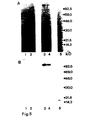
- the biological activity (IgE binding) of the fusion protein was determined by means of Western blot / immunoblot (FIG. 5A, B). Proteins separated by SDS-PAGE (12% homogeneous polyacrylamide gel, 5% stacking gel) (500 ⁇ g total protein extract from recombinant lysogenic E. coli cells per lane) were transferred to a nitrocellulose membrane in an electric field at 150 mA for 4 hours (transfer buffer: 25 mM Tris.HCl, 192 mM glycine, 20% methanol, pH 8.3). The nitrocellulose was cut into strips and free binding sites were saturated for 30 minutes at room temperature with the following buffer: 50 mM sodium phosphate, pH 7.5, 0.5% Tween 20, 0.5% BSA, 0.05% NaN3.
- the nitrocellulose support was overlaid with allergy serum which was diluted in the buffer corresponding to the buffer used to saturate the free binding sites.
- allergen-specific IgE the allergy serum was diluted 1: 4 in this buffer.
- the nitrocellulose strips were incubated with the diluted serum or undiluted supernatant overnight at 4 ° C. in a rocking motion. The strips thus incubated were then washed three times in the buffer used to saturate the free binding sites.
- the strips were incubated for 12 hours at room temperature with 1 J anti-human IgE. This anti-IgE was diluted 1: 4 in the buffer mentioned above, which was additionally 20 mM sodium azide and contained 0.4% gelatin.
- the two Eco-RI interfaces were used for the electrophoretic isolation of the insertion fragment first interfaces, namely SacI and KpnI selected.
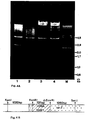
- the distances between the insert (Eco RI) end and the two restriction endonucleases SacI and KpnI are 1020 base pairs on the KpnI side and 1060 base pairs on the SacI side (see FIG. 4).
- an E. coli strain XLI-Blue (recAI, endAI, gyrA96, thi, hsdR17 (rk ⁇ mk+) supE44, relAI, lambda, lac, (F'proAB , lac IqZ delM15, TN10)), which enables selection of insert-carrying Bluescript plasmids by the beta-galactosidase blue-white color indicator system (see IV 8).
- E. coli XLI Blue was made "competent" with 100 mM CaCl2 at 0 ° C: 50 ml of an exponential culture (XLI Blue in LB-tet (tetracycline: 20 mg / l)) were pelleted at an OD of 460 at 600 nm .
- the E. coli pellet was first suspended in 50 ml ice-cold 100 mM CaCl2, centrifuged after a further incubation (20 minutes at 0 °) and resuspended in 5 ml 100 mM CaCl2. After 4 hours at 0 ° C the transformation was carried out:
- the plasmid DNA was isolated from these precultures in a plasmid "mini" preparation according to the alkaline lysis method and the presence of the 2.8 kb insert was then checked by KpnI / SacI control digestion. Two positive clones - one SK+ and one SK ⁇ variant (2.8 SK+ and 2.8 SK ⁇ ) - were selected in order to produce a plasmid "maxi" preparation.
- the plasmid preparation according to the alkaline lysis method was prepared from 300 ml of XLI-Blue transformants inoculated with LB medium.
- the plasmid DNA was separated from the RNA by differential polyethylene glycol (PEG) precipitation followed by phenol ether extraction and isopropanol precipitation.
- PEG polyethylene glycol
- the purified plasmid DNA of 2.8 SK+ and 2.8 SK ⁇ was dissolved after pelleting, washing in 75% ethanol and repelleting in 10 ⁇ l of water, and an aliquot of 1 ⁇ l of it was applied to a gel for hen gene determination. Accordingly, the concentration of the DNA was 1-2 ⁇ g / ⁇ l.
- the annealing mixture was taken up in a glass capillary, which was sealed at both ends. This was treated in boiling water for 5 minutes, then quickly immersed in alcohol at -70 ° C., left there for 5 minutes, then brought to 65 ° C. and then slowly cooled to 35 ° C. This procedure separates the double strands and attaches the primers.
- the 4 annealing approaches were introduced from the capillaries into reaction vessels.
- reaction tubes (A, G, C, T), each with 2.5 ⁇ l of “termination mix” (8 ⁇ M of each dideoxy (dd) nucleotide), were brought to 37 ° C. per batch. 3.5 ⁇ l each of these were pipetted into the corresponding labeling reaction batches, which leads to the incorporation of the dd nucleotides and thus ends the strand extension.
- the reaction was terminated by adding 4 ⁇ l of a stop solution (98.5% formamide, 0.05% bromophenol blue, 0.05% xylene cyanol, 0.5x TE, pH 8).
- the samples were kept at -20 ° C until applied to the gel, which was preceded by heating the samples to 75-85 ° C for strand denaturation for 2 minutes.
- the gel was energized at 2000 volts 1 hour before sample application in order to create a temperature of at least 50 ° C. necessary for DNA naturation.
- the samples were 2 Heated for minutes at 80 ° C, the gel pockets rinsed well to remove urea polymers.
- the batches with the 1: 2 diluted dnucleotide "labeling mixture" were separated on 2 4-lane runs (AGCT). Between these runs was the time between the application and expiration of the blue marker and another hour. After the blue marker had run out twice more, the 1:10 dilution was applied to 4 strips as above and allowed to run until the blue marker had reached the lower edge of the gel. 2 ⁇ l was applied per bag, the voltage was 1500-2000 volts. After electrophoresis was complete, the gel was applied to Whatman DEAE paper, dried in vacuo at 80 ° C. and exposed without an intensifying film.
- Bgl II digestion creates two 5 'overhanging ends. 5 '.. A..GATCT..3'. These are used by the reverse transcriptase (RT) as the starting point for a 31 P-alpha-dATP labeling from 5 'to 3'. Subsequent digestion with SacI yields 2 radioactively labeled fragments.
- RT reverse transcriptase
- the RT approach was set to a concentration of 10 mM Tris and 10 mM MgCl2 and thus made SacI compatible.
- the digestion was incubated at 37 ° C for one hour.
- the elution of the two fragments was carried out from an agarose gel according to the procedure described under VIII 1. After phenolization and ether extraction of the aqueous phase twice, the two eluates were divided into 5 reaction vessels each followed by ethanol precipitation of the labeled fragments at -70 ° C.
- the DNA fragments (small fragment: approx. 1400 bp, large fragment: approx. 4300 bp) were washed with 70% ethanol and pelleted (5 pellets / fragment each) and sequenced according to Maxam & Gilbert. After the sequencing process had ended, the pellets obtained from the 5 batches (G, G + A, C + T, C, A + C) were measured individually according to Cerenkov and then at least 12 ⁇ l - formamide stop buffer was dissolved in different volumes, so that each mixture had the same amount of radioactivity / ul. The finished samples were stored at -20 ° C.
- This second sequencing round made it possible to fill in the gaps at the insert ends and to remove a large part of the ambiguities.
- the subfragment-bearing SK+ and SK ⁇ Bluescript plasmids were isolated from the transformants of both ligations by plasmid preparation according to the alkaline lysis method.
- the single-stranded DNA was washed with 70% ethanol after the PEG treatment, pelleted and dissolved in 10 ⁇ l of H2O. After gel control of aliquots (1 ⁇ l), 7.5 ⁇ l DNA was used in the annealing reaction at approximately 400-600 ng / batch.
- the d-nucleotide dilution for the labeling reaction was made with 1.5 (d-nucleotide stock solution in H2O), the labeling was done with 3P-alpha-dATP. All further steps were identical to those already described in the first sequenase sequencing.
- the termination mixtures were separated into two four-lane (ACGT) runs, between which the time period for the blue marker to run out twice lay. A 6% gel was used.
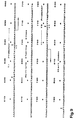
- the length of the cDNA insert is 727 bases (Fig. 10).
- Bases 1-11 i.e. the bases up to the intersection of the (T-deleted) Eco RI site at positions 11-15, and the bases 739-744, i.e. the bases from the intersection of the (intact) Eco RI site to the end of the sequence come from phage lambda gtll.
- the sequence coding for Bet v I is characterized in FIG. 10 by the start and end of the amino acid sequence running parallel to the nucleotide sequence.
- the encoded protein has a calculated MW of 17,570.
- the sequence begins with the base triplet ATG (position 65-67) coding for the amino acid (AS) methionine and ends with the base triplet TAA (position 545-547). These two triplets are and end codons defined.
- the reading frame is open from ATG to TAA.
- the protein sequence obtained from this nucleotide sequence corresponds to the AS sequence of the Bet v I protein which was sequenced from the N-terminus to the AS 35.
- This AS triplet is a potential glycosylation site.
- the DNA sequence of Bet v I shows high homology with a disease-resistant gene of the pea, as was already discussed in the introduction.
- the change in the Eco RI site at position 11 was caused by a deletion of a thymidine.
- GCC ATC ATG is a signal sequence described in the literature, the A being in the minus-3 position being constant, but the other bases being able to differ (Lutcke et al., EMBO J. 6, 43-48, 1987).
- the end of the cDNA is characterized by a 29 A poly-adenyl sequence.
- the base sequence from position 693-698 AAT AAA. is as one for the polyadenylation essential consensus signal sequence described in the literature (M. Birnstiel et al., Cell 41, 349, 19 ..). The above data shows:
- the entire mRNA was cloned over cDNA.
- the reading frame is open.
- the above sequence is the complete gene of the Bet v I protein .
Landscapes
- Health & Medical Sciences (AREA)
- Life Sciences & Earth Sciences (AREA)
- Chemical & Material Sciences (AREA)
- Engineering & Computer Science (AREA)
- Molecular Biology (AREA)
- Immunology (AREA)
- Biomedical Technology (AREA)
- Hematology (AREA)
- Urology & Nephrology (AREA)
- General Health & Medical Sciences (AREA)
- Biochemistry (AREA)
- Medicinal Chemistry (AREA)
- Analytical Chemistry (AREA)
- Food Science & Technology (AREA)
- Microbiology (AREA)
- Physics & Mathematics (AREA)
- Cell Biology (AREA)
- Biotechnology (AREA)
- Proteomics, Peptides & Aminoacids (AREA)
- General Physics & Mathematics (AREA)
- Pathology (AREA)
- Organic Chemistry (AREA)
- Biophysics (AREA)
- Gastroenterology & Hepatology (AREA)
- Genetics & Genomics (AREA)
- Botany (AREA)
- Tropical Medicine & Parasitology (AREA)
- Measuring Or Testing Involving Enzymes Or Micro-Organisms (AREA)
- Preparation Of Compounds By Using Micro-Organisms (AREA)
- Peptides Or Proteins (AREA)
- Micro-Organisms Or Cultivation Processes Thereof (AREA)
- Saccharide Compounds (AREA)
- Pharmaceuticals Containing Other Organic And Inorganic Compounds (AREA)
Description
- Die Erfindung bezieht sich auf ein Verfahren zum Screenen einer Expressions-cDNA-Klonbank zur Auffindung von Polynukleotiden, die in ihrem offenen Leserahmen für Proteine kodieren, deren biologische Aktivität als Allergene den in der Natur vorkommenden Pflanzenallergenen entsprechen.
- Mindestens 10% der Bevölkerung leiden zu verschiedenen Zeiten des Lebens und in verschiedenem Ausmaß an Pollenallergien. Die Patienten klagen zur Zeit des Pollenfluges über Juckreiz in der Nase, juckende und gerötete Augen, Schnupfen, Lidödeme, öfters auch Husten und Asthmabeschwerden. Vorwiegend leichte, durch Wind übertragene Pollen cringen zu den Schleimhäuten der Augen und des Respirationstraktes der Menschen vor, werden lokal teilweise aufgelöst und führen bei Patienten mit genetischer Disposition, sogenannten Atopikern, zur Sensibilisierung und damit zu erhöhter Produktion von IgE-Antikörpern gerichtet gegen verschiedene Proteine aus den Pollen. Es handelt sich dabei in den Monaten Februar bis April um die Pollen von Bäumen, wie z. B. Erle, Hasel, Birke, in den Monaten Mai, Juni und Juli, um die Pollen von Gräsern und Getreiden sowie in den Monaten Juli und August um die Pollen von Unkräutern, wie Beifuß, Wegerich, Ampfer und Gänsefuß. Bei neuerlichem Kontakt verursachen die Pollenproteine (Allergene) durch Verbindung mit IgE-Molekülen an der Oberfläche von Mastzellen in Schleimhäuten eine Freisetzung von Entzündungsstoffen, wie Histamin, Leukotrienen, chemotaktischen Faktoren, plättchenaktivierendem Faktor (PAF) u. a., und führen zu einem typischen Krankheitsbild (Heuschnupfen, Pollenasthma), welches als allergische Reaktion vom Typ I bezeichnet wird.
- Die unangenehmen bis gefährlichen Wirkungen einer Pollenallergie werden seit Jahrzehnten mit antiinflammatorischen Medikamenten und/oder mit Hilfe der sogenannten Hyposensibiisierung behandelt. Letztere besteht in der Zufuhr von krankheitsauslösenden Pollenproteinen in langsam steigender Dosierung in Form von Injektionen, oder, bei Kindern, in der Gabe von Tropfen bis zur Erreichung einer deutlichen Abnahme der Symptome (Eintreten einer Toleranz). Diese Form der Immuntherapie gilt auf Grund ihrer Erfolge als Basis jeder Therapie einer Pollenallergie mit ausgeprägter Symptomatik. Voraussetzung für einen guten Erfolg für derartige Behandlungen ist allerdings, daß eine Diagnostik, die Hautteste, serologische Teste u. dgl. umfaßt, mit genau definierten Pollenextrakten vorgenommen werden kann, und daß die Behandlung mit dem die Pollenallergie auslösenden Proteinen in adäquaten, exakt zu bestimmenden Konzentrationen vorgenommen wird. Bisher werden die Pollenproteine dadurch erhalten, daß durch aufwendige Verfahren die Pollen gesammelt werden, wobei zu bedenken ist, daß die gesammelten Pollen in der Regel eine Mischung unterschiedlichster Pflanzenpollen darstellen, die anschließend in aufwendigen Verfahren entmischt, gereinigt und aufgearbeitet werden müssen. Weiters ist es mit den bekannten Verfahren nahezu unmöglich, größere Mengen eines reinen Pollen-proteins zu erhalten. Die eine Allergie hervorrufenden Proteine sind nämlich in unterschiedlichsten Konzentrationen an und in den Pollen zugegen, oft abhängig von Klima, Jahreszeit und Wetter. Daher wird bei Verwendung von nicht standardisierten Extrakten in vielen Fällen den individuellen Gegebenheiten der Patienten zu wenig Rechnung getragen, was sich in mangelhaften Therapieerfolgen widerspiegelt.
- Breiteneder H. et al., 1988, Int. Arch. Allergy Appl. Immunol Vol 87, S.19-24, hat schon die Isolierung und Charackterisierung vom in RRA aus Betula Verrucosa pollen mittels IgE Bindung von in Vitro Transiliationsprodukten offenbart, jedoch weder ein Verfahren zur Auffindung von pollenallergenen Kodierenden cDNA's offenbart noch suggeriert.
- Der Erfindung liegt die Aufgabe zugrunde, ein Verfahren der eingangs genannten Art zu schaffen, mit welchem die für allergische Reaktionen einsetzbaren Allergene bzw. die für sie kodierenden Polynukleotide auf einfache und spezifische Weise aufzufinden sind.
- Erfindungsgemäß wird diese Aufgabe dadurch gelöst, daß die in der Expressions-cDNA-Klonbank exprimierten Proteine mittels aus Allergikerseren stammenden IgE-Antikörpern identifiziert werden. Dadurch werden gezielt jene Proteine und die für sie kodierenden Polynukleotide erfaßt, die für die allergischen Reaktionen verantwortlich sind.
- Der cDNA-Klon, der für das im folgenden beschriebene Hauptallergen der Birke, Bet v I, codiert, ist in hohem Maße homolog zum dem Krankheitsresistenz der Erbse hervorrufenden Gen (55% Identität, 70% Homologie der Sequenz ohne Lücken). Das Erbsengen ist in gesundem Gewebe nicht aktiv, wird jedoch bei Kontakt mit Pflanzenpathogenen in großer Menge exprimiert. Es ist daher zu erwarten, daß dieses in hohem Maße konservierte Gen zum Schutz transgener Pflanzen gegen Planzenpathogene eingesetzt werden kann.
-
- 1) Blättern
- 2) Infloreszenzen, Wurzeln und Kallusgewebe
- 3) Pollen
von Betula verrucosa - 5g Blattmaterial, aufbewahrt bei minus 70° C oder frisch gepflückt und in flüssigem N₂ transportiert, wurde in einer mit N₂ gekühlten Mühle zu Staub zermahlen. Dieser wurde in eine Reibschale transferiert und folgende Lösungen wurden hinzugefügt:
- 1) 8 ml Tris(hydroxymethyl)-aminomethan/Natrium-docdecylsulfat (Tris/SDS) Puffer (0,1 M Tris.HCl pH 8.0, 1% w/v SDS)
- 2) 4 ml mit 1 M Tris.HCl, pH 8,0, gepuffertes Phenol
- 3) 4 ml CHCl₃/Isoamylalkahol (24:1) = CI
Das zerriebene Gewebe wurde in dieser Hischung (1-3) zu einer feinen Suspension aufgerührt, in Corex-Röhrchen transferiert, kräftig gemischt und in einer Sorvallzentrifuge 5 Minuten bei 6800 g und 4° C zentrifugiert. Es folgte eine nochmalige PCI(Phenol-CHCl₃-Isoamylalkohol)-Extraktion der wäßrigen Phase, eine Phasentrennung durch Zentrifugation bei 3000 g für 5 Minuten und nochmalige CHCl₃-Extraktion der wäßrigen Phase. Zu dieser wurden 10 vol% 2M CH₃COONa (NaAc) pH 5,8 und 250 vol% absolutes Ethanol (EtOH) zugegeben und die gesamten Nukleinsäuren über Nacht bei-20° C gefällt. - Diese wurden 10 Minuten in einem Beckmann JS13-1 "swing out" Rotor bei 3000 g und 4° C abzentrifugiert, der überstand verworfen, das Pellet mit 70% EtOH gewaschen und in einem Exsiccator getrocknet. Das Pellet wurde anschließend in 2 ml H₂O aufgelöst und in Eppendorfgefäße transferiert. Darauf folgt die Zugabe von 150 mg festem NaCl/ml und Aufbewahrung der Lösung bei 4° C für 5 Stunden.
- Die nach dieser Zeit ausgefallene RNA wurde bei 4° C und 15.000 g in einer Eppendorf Zentrifuge pelletiert. Das Pellet wurde mit 0,5 ml 2,5 M Nacl gewaschen, die RNA wiederum wie oben pelletiert und der Waschvorgang wiederholt. Anschließend wurde das Pellet dreimal mit 0,5 ml 70% EtOH gewaschen, getrocknet und in 360 ul sterilem Wasser gelöst. Die Fällung der RNA erfolgte durch Zugabe von 40 ul 2M NaAc, pH 5,8 und 1 ml absolutem EtOH bei -20° C über Nacht. Die RNA wurde wiederum pelletiert, das Pellet zweimal mit 0,5 ml 70% EtOH gewaschen, getrocknet und in 100 ul sterilem Wasser gelöst. Die Aufbewahrung der RNA erfolgte bei -20° C.
- 30 g Pflanzenmaterial wurde in flüssigem N₂ zerrieben und mit gleichem Volumen kochenden Extraktionspuffer (2% CTAB, 100 mM Tris.HCl, pH 7,8, 20 mM EDTA, 1,4 M NaCl, 1% beta-Mercaptoäthanol) übergossen. Die Temperatur der Lösung wurde im Wasserbad unter Rühren auf 50° C gebracht, das Gemisch in SS-34 Zentrifugenröhrchen transferiert und mit gleichem Volumen CHCl₃:Isoamyl-alkohol (24:1, CI) versetzt und vorsichtig vermengt. Zentrifugation erfolgte 10 Minuten bei 17.400 g in einer Sorvall SS-34 Zentrifuge bei Raumtemperatur. Die wäßrige Phase wurde in ein zweites Röhrchen transferiert und ein Zehntel Volumen 10% CTAB-Lösung zugegeben (10% CTAB, 0,7 M NaCl). Darauf folgte eine nochmalige CI-Extraktion. Zur abgehobenen wäßrigen Phase wurde ein gleiches Volumen Präzipitationspuffer (1% CTAB, 50 mM Tris, 10 mM EDTA, pH 8,0) zugegeben und gut gemischt. Die Lösung wurde 30 Minuten bei Raumtemperatur stehengelassen, dann die Nukleinsäuren in einem SS-34 Rotor für 5 Minuten bei 3000 g abzentrifugiert. Das Pellet wurde in 10 ml 1 M gepufferter CsCl Lösung (50 mM Tris, 5 mM EDTA, 50 mM NaCl, pH 8,0) gelöst. Es erfolgte eine Zentrifugation über einem Polster aus 5,7 M gepuffertem CsCl (2 ml, 50 mM Tris, 5 mM EDTA, 50 mM NaCl, pH 8,0) für 18 bis 20 Stunden bei 120.000 g in einem "swingout" Rotor. Die RNA fand sich im Pellet, wurde in sterilem H₂O gelöst, gefällt und bei-20° C aufbewahrt.
- 500 mg Pollen wurden in einer Reibschale mit feinstzerriebenem Glasstaub unter flüssigem N₂ zermahlen. Es erfolgte eine sofortige Zugabe von: 10 ml PCI, 10 ml Homogenisierungspuffer (10 mM Tris, 200 mM NaCl, 5 mM HgCl₂, pH 9,0) und 0,5 ml 20 % SDS. Es wurde bis zur Verflüssigung des anfangs noch gefrorenen Gemisches ständig weitergerieben. Dieses Gemisch wurde dann in ein SS-34 Zentrifugationsröhrchen transferiert und auf Eis gestellt. Die Reibschale wurde mit 5 ml Homogenisierungspuffer und 1 % SDS nachgewaschen. Die Lösung wurde in Zentrifugationsröhrchen unter ständiger Zwischenkühlung auf Eis 10 Minuten kräftig gemischt und danach 10 Minuten bei 3.000 g und 4° C zentrifugiert. Es folgte eine zweimalige PCI- und eine einmalige CI-Extraktion der wäßrigen Phase. Fällung der Nukleinsäuren erfolgte durch Zugabe von 10 vol% 3 M NaAc, pH 4,8 und 250 vol% absolutem EtOH bei-20° C über Nacht. Nach 10 minütiger Zentrifugation bei 12.000 g und 4° C wurde das Pellet einmal mit 70% EtOH gewaschen, ohne es von der Wand des Zentrifugationsröhrchens abzulösen und in geringer Menge H₂O gelöst und auf Eppendorfgefäße verteilt. Eine erneute Fällung erfolgt durch Zugabe von 10 vol% 3 M NaAc, pH 4,8 und 250 vol% absolutem EtOH.
- Anreicherung von poly (A)⁺RNA in allen Fällen (1, 2 und 3) erfolgte nach folgender Methode:
Die RNA wurde für 10 Minuten in einer Eppendorf Zentrifuge bei 15.000 g und 4°C aus der Fällung abzentrifugiert. Das Pellet wurde in einem Exsiccator 10 Minuten getrocknet und anschließend in 300 ul sterilem H₂O auf Eis resuspendiert. - Oligo dT-Zellulose wurde in 0,1 M KOH gut suspendiert. Diese Suspension wurde in eine 1 ml fassende, mit Quarzwolle verschlossene Plastiksäule gegossen und diese zu 3/4 gefüllt. Anschließend wurde die Säule mit 5 ml 0,1 M KOH gewaschen und mit Wasser bis zur Erreichung eines neutralen pH-Wertes gespült. Die Säule wurde mit 4 ml Ladepuffer (0,5 M LiCl, 10 mM Tris.HCl, pH 7,5, 1 mM EDTA, 0,1% SDS) äquilibriert.
- Die RNA-Probe wurde mit einer 5 M LiCl-Lösung auf eine 0,5 M LiCl-Konzentration eingestellt, bei 60°C für 10 Minuten denaturiert und dann auf Trockeneis rasch abgekühlt. Die Probe wurde auf die Säule aufgetragen, mit 1 ml Ladepuffer nachgewaschen und nochmals auf die Säule aufgetragen. Anschließend wurde die Säule mit 5 ml middle rinse" Puffer (10 mM Tris.HCl, pH 7,5, 1 mM EDTA, 0,15 mM LiCl, 0,1% SDS) gespült.
- Die Elution der poly(A)⁺ RNA-haltige Fraktion erfolgte durch Spülen der Säule mit 8 x 300 ul Portionen von auf 60°C erwärmtem Elutionspuffer (2 mM EDTA, pH 8,0, 0,1% SDS). Die RNA wurde durch Zugabe von 3 M NaAc, pH 4,8, zu einer Konzentration von 0,3 M und 300 vol% absolutem EtOH bei -20°C über Nacht gefällt.
- erfolgte durch
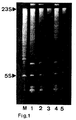
- a) Auftragen der Gesamt-RNA auf ein Polyacrylamid(6%)-Harnstoff(50%)gel und Elektrophorese unter Verwendung von 5S-, 16S-und 23S-RNAs als Vergleichsubstanzen (Fig. 1).
- b) Bestimmung der poly(A)⁺ RNA-haltigen Fraktion nach oligo-dT-Säule erfolgte durch Auftragen von Aliquots auf 1% Agaroseplatten mit 0,5 ug Ethidiumbromid/ml und Sichtbarmachung der Dots auf einem UV-Transilluminator.
- 1 ug poly(A)⁺ RNA wurde zur cDNA-Synthese in folgender Reaktion eingesetzt:
- a) Synthese des ersten Stranges:
- 4 ul 5 x Puffer für die Synthese des ersten Stranges (250 mM Tris.HCl, pH 8,3, 250 mM KCl, 50 mM MgCl₂, 50 mM Dithiothreit)
- 1 ul 20 mM Natriumpyrophosphat
- 1 ul humaner plazentaler RNAse-Inhibitor (20 U/ul)
- 2 ul Desoxynukleotidtriphosphat-Mix (dATP, dGTP, dTTP: 10 mM; dCTP: 5mM)
- 1 ul oligo dT (12-18) 1,6 mg/ml
- 0,5 ul alpha ³P-dCTP (5 uCi)
- H₂O ad 20 ul
Nach Mischen erfolgte die Zugabe von 20 U reverser Transkriptase und danach Inkubation bei 42° C für 60 Minuten. Die Messung der Synthese des ersten Stranges ergab einen typischen Einbau von 100.000 cpm/ug RNA. - b) Synthese des zweiten Stranges
- 20 ul Reaktionsgemisch von a)
- 20 ul 5x Puffer für die Synthese des 2. Stranges (100 mM Tris.HCl , pH 7,5, 0,5 M KCl, 25 mM HgCl₂, 50 mM (NH₄)₂SO₄, 50 mM Dithiothreit)
- 5 ul alpha ³P-dCTP (50 uCi)
- 0,8 U Ribonuclease H aus E. coli
- 23 U DNA Polymerase I aus E. coli
- H₂O ad 100 ul
- Mischen und Inkubieren: 12° C für 60 Minuten, 22° C für 60 Minuten, danach 70° C für 10 Minuten. Es folgte ein Abkühlen des Reaktionsgemisches auf Eis, Zugabe von 2,0 U T4 DNA-Polymerase und Inkubation bei 37° C für 10 Minuten (Hier konnte wie oben ein Aliquot zur Messung des radioaktiven Einbaues in den 2. Strang entnommen werden; es ergab sich ein Einbau von 90% des Einbaues in den ersten Strang).
- Im weiteren erfolgte eine 2 malige PCI-Extraktion und eine einmalige CI-Extraktion der doppelsträngigen cDNA. Gefällt wurde mit dem gleichen Volumen 4 M NH₄-Acetat und 200 vol% absolutem EtOH für 20 Minuten bei -70° C. Die cDNA wurde für 10 Minuten bei 15.000 g und 4° C abzentrifugiert, das Pellet in 100 ul sterilem H₂O gelöst und nochmals - wie oben angegeben - gefällt. Das wiederum abzentrifugierte Pellet wurde mit 500 ul 70% EtOH gewaschen, 5 Minuten wie oben zentrifugiert und in 20 ul ster. H₂O gelöst.
-
- 1 ug cDNA in 10 ul sterilem H₂O
- 4 ul 5 x Eco RI-Methylase-Puffer (250 mM Tris.HCl, pH 7,5, 5 mM EDTA, 25 mM Dithiothreit)
- 2 ul 100 uM S-adenosyl-L-methionin (Stocklösung: 10 mM S-adenosyl-L-methionin in 10 mM CH₃COONa-Puffer, pH 5,0. Verdünnung 1:10⁻ in sterilem H₂O kurz vor Gebrauch).
- 4 ul steriles H₂O
- 20 U Eco RI Methylase
- Inkubation bei 37° C für 60 Minuten, Enzymaktivierung bei 70° C für 10 Minuten.
-
- 20 ul Methylierungsreaktion von 1)
- 3 ul 10x Ligationspuffer (500 mM Tris.HCl, pH 7,5, 100 mM MgCl₂, 200 mM Dithiothreit, 50 mM ATP, 50 ug /ml bovines Serumalbumin)
- 2 ul Eco RI-Linker (0,5 ug/ul)
- 5 ul steriles H₂O
- 5 U T4 DNA-Ligase
- Inkubation bei 15° C 16-20 Stunden. Mit Hilfe der T4 DNA-Ligase wurden die Eco RI-Linker an beiden Enden der cDNA ligiert.
- Dadurch wurde ein einziges Eco RI "sticky end" an jedem Terminus der cDNA geschaffen und überschüssige Linkermoleküle entfernt. Reaktion:
- 30 ul Reaktionsgemisch aus 2)
- 10 ul 10x Eco RI Puffer
- 60 ul steriles H₂O
- 100 U Eco RI (1M Tris.HCl, pH 7,5, 0,5 M NaCl, 0,1 M MgCl₂)
- Vor der Insertion der cDNA in lambda gt 11 müssen die überschüssigen Linkermoleküle abgetrennt werden, um nicht mit der Klonierung zu interferieren. Zur Trennung wurden kommerziell erhältliche Säulen verwendet, die mit 6 ml STE Puffer (5,84 g NaCl, 1,21 g Tris, 0,37 g EDTA/1, pH 8,0) gewaschen und äquilibriert wurden. 100 ul mit Eco RI verdaute und gelinkerte cDNA wurden auf die Säule aufgetragen. Es wurden 200 ul Portionen mit STE Puffer von der Säule eluiert und separat in Eppendorfgefäßen aufgefangen. Die Aktivität der einzelnen Proben wurde gezählt (Cerenkov) und die Fraktionen mit dem höchsten Zählergebnis vereinigt. Die Fällung der cDNA dieser Fraktionen erfolgte durch Zugabe von 10 vol% 3 M NaAc und 250 vol% absolutem EtOH bei -20° C über Nacht. Die gefällte cDNA wurde 30 Minuten in einer Eppendorferzentrifuge bei 15.000 g abzentrifugiert und in sterilem H₂O zu einer Konzentration von 50 ng/ul gelöst.
- Die lambda gt 11 DNA war bereits mit Eco RI geschnitten und mit alkalischer Phosphatase dephosphoryliert (Clontech RI-lambda gtll, Cat. No. 6331-1) und somit für die Ligationsreaktion bereit:
- 200 ng cDNA
- 1 ug lambda gt 11 Arme
- 1 ug 10x Ligationspuffer (wie unter IV, 2.)
- H₂O ad 10 ul
- 2.5 U T4 DNA Ligase
- Rasches Auftauen der beiden Extrakte (Sonic extract = SE, vom induzierten "prehead donor" BHB 2690; Freeze / Thaw extract = FTE, vom induzierten "packaging protein donor" BHB 2688). Der gesamte Ligationsansatz wurde zum aufgetauten FTE gegeben und 15 ul SE dazu pipettiert und mit der Pipette vorsichtig gemischt. Inkubation für 2 Stunden bei Raumtemperatur. Danach erfolgte die Zugabe von 500 ul Phagenverdünnungspuffer (500 mg NaCl, 200 mg MgSO₄, 5 ml 1 M Tris. HCl, pH 7,5). Aufbewahrung der Phagensuspension erfolgte bei 4° C.
- E. coli Y 1090 (ATCC no. 37196 = E. coli delta lac.U.169proA⁺ delta lon araD139 strA hflA150 (chr::Tn10) (pMC9)) wurde auf einer LB-amp Platte (1000 ml bestehend aus 10 g Trypton, 5 g Hefeextrakt, 10 g NaCl, 15 g Agar-Agar, 100 mg Ampicillin, pH 7,5) ausgestrichen und über Nacht bei 37° C inkubiert. Einzelkolonien wurden gepickt und in 4 ml LB-amp-Medium unter Zusatz von 0,4 % Maltose über Nacht bei 37° C inkubiert. Die über-Nacht-Kultur wurde abzentrifugiert und in 1 ml 10 mM HgSO₄ resuspendiert. Diese Zellen waren für die Phagenadsorption bereit und konnten bei 4° C aufbewahrt werden.
- Es wurde eine Verdünnungsreihe der Phagensuspension (nach dem Packaging) in 10er Schritten angefertigt. Je 100 ul Y 1090 Zellen in 10 mM MgSO₄, wurden mit je 10 ul Phagensuspension der entsprechenden Verdünnung vermischt. Die Präadsorption der Phagen-partikel an die Wirtszellen erfolgte für 20 Minuten bei Raumtemperatur. Anschließend erfolgte die Zugabe von:
- a) 2 ul Ampicillin (25 mg/ml)
- b) 10 ul 100 mM IPTG (Isopropyl-beta-D-thiogalaktopyranosid, gelöst in sterilem H₂O)
- c) 10 ul einer 2%igen X-gal-Lösung (20 mg 5-Bromo-4-chloro-3-indolyl-beta-D-galaktopyranosid in 1 ml Dimethylformamid) pro ml
- d) 4 ml 0,6 % Agarose in H₂O (bei 47° C im Wasserbad gehalten)
- Der lambda gt 11 Vektor erlaubt die kontrollierte Expression des rekombinanten Proteins in Form eines Fusionsproteins mit der beta-Galaktosidase.
- Y 1090 Wirtszellen wurden wie oben beschrieben vorbereitet, mit Phagen infiziert und auf LB-amp-Platten (Durchmesser 145 mm) so ausplattiert, daß eine Dichte von 20.000 Plaques/Platte erreicht wurde. Die Platten wurden für 3-4 Stunden bei 43° C inkubiert, bis die Plaques in Erscheinung traten.
- Die Platten mit den Plaques wurden mit Nitrozellulosefiltern (Durchmesser 132 mm, in 10 mM IPTG getränkt und anschließend getrocknet) überlegt und bei 37° C für 3 Stunden inkubiert (Induktion der Expression). Anschließend wurden die Nitrozeilulosemembranen, an denen auch die Fusionsprotein adsorbiert waren, vorsichtig abgezogen.
- Screening mit Patienten IgE
- i) Abwaschen der Agarosenpartikel: die Nitrozellulosefilter wurden mit 50 ml GP (50 mM Natriumphosphatpuffer, pH 7,5, 0,5% Tween 20, 0,5% w/v Rinderserumalbumin, 0,05% NaN₃) überschichtet und für 5 Minuten bei 200 rpm auf einem Rundschüttler geschwenkt. Der Puffer wurde abgeschüttet und der Vorgang wiederholt.
- ii) Absättigung der freien Bindungsstellen erfolgte mit 25 ml GP für mindestens 30 Minuten bei Raumtemperatur unter leichtem Schwenken
- iii) 1. Antikörper
Das ausgewählte Serum eines Allergikers, dessen IgE-Antikörper das Hauptallergen der Birke (Bet v I), ein 17,5 kD Protein, erkennen, wurde 1:10 in GP verdünnt; mit dieser Serumverdünnung wurden die Blots über Nacht bei 4° C unter leichtem Schwenken inkubiert. - iv) Waschen der Blots
3 maliges vorsichtiges Waschen der Blots erfolgte mit je 30 ml GP bei Raumtemperatur, wobei beim letzten Waschvorgang die Blots für mindestens 30 Minuten mit dem Puffer geschwenkt wurden. Anschließend wurde der Puffer abgegossen. - v) Radioaktiver 2. Antikörper
- 26 ml Lösung pro Rundfilter bestehend aus:
- 2,6 ml ¹⁵J markiertes anti-human IgE (Pharmacia Int., 300 000 cpm/ml)
- 23,4 ml GP (s.o.)
- 234 ul Gelatine (100 ul/10 ml GP)
- vi) Waschen der Blots
Die Blots wurden 3x mit je 30 ml GP gewaschen, wobei beim letzten Waschvorgang die Pufferlösung wieder für 30 Minuten über den Blotsn geschwenkt wurde. - vii) Trocknen der Blots und Exposition
Nach Trocknung der Blots erfolgte der autoradiographische Nachweis der lambda gt 11 Klone mit dem für Bet v I kodieren-dem Insert durch Exposition mit einem Kodak XR Röntgenfilm für 72 Stunden bei -70° C. - Aufgrund der hohen Plaquedichten mußten 2 Reklonierungsschritte zur Anreicherung der positiven Klone durchgeführt werden. Es wurden Phagenstanzen der positiven Plaques und davon Phagensuspensionen angefertigt. Diese wurden wiederum auf die Konzentration der Phagen titriert. Mit Hilfe des Immunoscreenings wurden erneut die positiven Klone bestimmt. Es konnte eine Anreicherung bis zu 95 % erzielt werden (Fig. 2).
-
- a) Herstellung eines "liquid lysate"
Ein singulärer Plaque wurde in 500 ul 10 mM MgSO₄ für mindestens 2 Stunden bei 4° C ausgelaugt. 100 ul dieses Phageneluates wurden mit 100 ul E. coli Y 1090 Zellen in 10 mM HgSO₄ vermischt und 20 Minuten bei Raumtemperatur zur Adsorption der Phagen an die Wirtszellen stehengelassen. Diese Mischung wurde in 50 ml LB-Medium transferiert. Die Bakterienzellen wurden bei 32° C bis zu einer OD 600 von 0,5-0,6 anwachsen gelassen. Anschließend wurde die Temperatur der Zellkultur im Wasserbad rasch auf 42° C gebracht und für weitere 20 Minuten im Luftbadschüttler bei 42° C gehalten. Danach wurde die Kultur so lange bei 37° C inkubiert, bis die Lyse der Bakterienzellen abgeschlossen war. Eventuell noch intakte Bakterienzellen wurden durch die Zugabe von 10 ul CHCl₃ lysiert. Das Lysat wurde 10 Minuten bei 10.000 rpm in einem SS-34 Rotor abzentrifugiert. Der überstand, der die Phagenpartikel enthielt, konnte bei 4° C aufbewahrt werden. Zu den 50 ml Phagenlysat wurden 10 ul DNAse (5mg/ml) und 25 ul RNAse (10 mg/ml) zugegeben und eine Stunde bei 37° C inkubiert. Die Phagen wurden danach 1,5 Stunden bei 30.000 rpm in einem Beckmann SW-27 Rotor pelletiert. Das Pellet wurde in 200 ul 50 mM Tris.HCl, pH 8,0 resuspendiert. Die Phenolextraktion erfolgte durch Zugabe gleichen Volumens gepufferten Phenols. Die Suspension mußte für 20 Minuten kräftig geschüttelt und anschließend für 2 Minuten abzentrifugiert werden. Die Phenolextraktion war zu wiederholen. Zur wäßrigen Phase wurden 200 ul CHCl₃ zugegeben, gut gemischt und kurz zentrifugiert. Dieser Vorgang war ebenfalls zu wiederholen. Durch die Zugabe von 20 ul 3 M NaAc und 600 vol% absolutem EtOH zur wäßrigen Phase wurde die Phagen-DNA bei Raumtemperatur präzipitiert. Nach 10 minütiger Zentrifugation wurde das Pellet mit 1 ml 70% EtOH gewaschen, dann getrocknet und in 200 ul sterilem H₂O resuspendiert. - b) Restriktionsanalyse
1 ug lambda gt 11 DNA wurde mit Eco RI verdaut. Da das Insert nicht aus dem Vektor geschnitten werden konnte, mußten die beiden der Insertionsstelle nächstliegenden Restriktionserkennungsstellen gewählt werden: KpnI und SacI (siehe Lambda gt 11 Restriktionskarte, Fig. 3). Dadurch gelang es, ein 2,8 kb großes DNA-Fragment aus dem Vektor zu schneiden (Fig. 4A, Bahn 1; Fig. 4B), das zusätzlich zum Insert rechts und links je 1.000 bp an ursprünglicher lambda-Sequenz enthielt (Fig. 4B). Ein Doppelverdau mit KpnI/Eco RI bzw. SacI/Eco RI zeigte, daß tatsächlich nur eine der beiden Eco RI Erkennungssequenzen verändert worden war, und zwar die der SacI-Schnittstelle näher liegende. Es wurde auf diese Weise ein 1,75 kbp großes Eco RI - SacI Fragment erhalten (Fig. 4A, Bahn 3, mit Doppelkaro markiert). Zum Subklonieren in das Bluescript Plasmid wurde das 2,8 kb KpnI-SacI Fragment verwendet (Fig. 4A, Bahn 1, mit Karo markiert). - Zum Nachweis der biologischen Aktivität (IgE-Bindungskapazität) des in lambda gt 11 hergestellten Fusionproteins dienten folgende Methoden:
- Einzel kolonien von Y 1089 (ATCC no. 37196 = E. coli delta lac U169 proA⁺ delta lon araD139 strA hflA 150 (chr::Tn10)(pMC9)) wurden in 10 ml LB amp Medium mit O,4% Maltose inokuliert und über Nacht bei 37° C anwachsen gelassen. 1 ml dieser übernachtkultur wurde in 50 ml auf 37° C vorgewärmtem LB amp - Maltose-Medium transferiert und bis zu einer OD 600 von 0,5 hochgezogen. Danach erfolgte eine Zugabe von 1 vol% 1 M MgSO₄ zur Kultur und eine Aufteilung in 100 ul Portionen. Dazu wurden 50 ul einer Phagenverdünnung (1,25 x 10⁸ plaque forming units/ml) pipettiert. Die Adsorption der Phagen an die Y 1089 Zellen fand für 20 Minuten bei Raumtemperatur statt. Die so infizierten E. coli Zellen wurden auf LB amp Platten in einer Dichte von ungefähr 5 Zellen/cm ausplattiert. Die Platten wurden über Nacht bei 32° C inkubiert. Einzelkolonien wurden gepickt und auf 2 separate LB amp Platten ausgestrichen. Eine Platte wurde bei 32° C und eine bei 43° C inkubiert. Lysogene Y 1089 Zellen wuchsen bei 32° C, aber nicht bei 43° C.
- 100 ml LB Medium wurden mit einer Einzelkolonie eines rekombinanten lysogenen E. coli Y 1089 inokuliert. Man ließ die Kultur auf eine OD 600 von 0,5 heranwachsen, erhöhte dann die Temperatur rasch auf 42° C. Die Kultur wurde 20 Minuten bei 42° C gehalten. Die Zugabe von IPTG zu einer Konzentration von 10 mM führte zur Expression des Fusionsproteins. Die Kultur wurde 60 Minuten bei 537°C inkubiert, die Zellen anschließend bei Raumtemperatur geerntet. Das Zellpellet wurde in 1/30 des ursprünglichen Kulturvolumens in Phosphatpuffer (50 mM Natriumphosphatbuffer, pH 7,5) resuspendiert und sofort in flüssigem N₂ eingefroren. Auftauen in einem 37° C Wasserbad führte zu einer kompletten Lyse der induzierten lysogenen Bakterienzellen.
- Die biologische Aktivität (IgE-Bindung) des Fusionsproteins wurde mittels Westernblot/Immunoblot erfaßt (Fig. 5A, B). Mittels SDS-PAGE (12%iges homogenes Polyacrylamidgel, 5%iges Stackinggel) aufgetrennte Proteine (500 ug Gesamtproteinextrakt aus rekombinanten lysogenen E. coli Zellen pro Bahn) wurden im elektrischen Feld bei 150 mA über 4 Stunden auf eine Nitrozellulosemembran transferiert (Transferpuffer: 25 mM Tris.HCl, 192 mM Glycin, 20 % Methanol, pH 8,3). Die Nitrozellulose wurde in Streifen geschnitten, und freie Bindungsstellen wurden 30 Minuten bei Raumtemperatur mit folgendem Puffer abgesättigt: 50 mM Natriumphosphat, pH 7,5, 0,5% Tween 20, 0,5% BSA, 0,05% NaN₃.
- Der Nitrozelluloseträger wurde mit Allergikerserum überschichtet, welches in dem Puffer verdünnt war, der dem zur Absättigung der freien Bindungsstellen verwendeten Puffer entsprach. Zur Bestimmung von allergenspezifischem IgE wurde das Allergikerserum in diesem Puffer 1:4 verdünnt. Die Nitrozellulosestreifen wurden jeweils mit dem verdünnten Serum bzw. unverdünnten überstand über Nacht bei 4° C in schaukelnder Bewegung inkubiert. Die so inkubierten Streifen wurden nun dreimal in den für die Absättigung der freien Bindungsstellen verwendeten Puffer gewaschen. Für die Bestimmung des allergenspezifischen IgE wurden die Streifen für 12 Stunden bei Raumtemperatur mit ¹⁵J anti-Human-IgE inkubiert. Dieses anti-IgE wurde im oben angegebenen Puffer 1:4 verdünnt, der zusätzlich 20 mM an Natriumazid war und 0,4 % Gelatine enthielt.
- In der weiteren Folge wurden für die elektrophoretische Isolierung des Insertionsfragmentes, die den beiden Eco-RI-Schnittstellen zunächstgelegenen Schnittstellen, nämlich SacI und KpnI gewählt. Die Abstände zwischen Insert-(Eco RI-) Ende und den beiden Restriktionsendonukleasen SacI und KpnI betragen auf der KpnI-Seite 1020, auf der SacI-Seite 1060 Basenpaare (siehe Fig. 4).
-
- a) In zwei Durchgängen wurden auf 1%igen Agarosegelen folgende Verdaue aufgetrennt:
- Je 20 ug recombinante lambda gtll-DNA (plus 2,8 kb Insert) in 20 ul H₂O
- 20 ul 10 x Puffer ("low salt P.": 10 mM Tris, pH 7,5, 10 mM MgCl₂, 100 ug/ml BSA)
- 60 U KpnI
- 160 ul H₂O
- Gesamtvolumen: 200 ul
Die Mischung wurde 3 Stunden bei 37°C inkubiert. Für den unmittelbar anschließenden SacI-Verdau wurde die NaCl-Konzentration durch Zugabe von 2 ul 4 M NaCl in H₂O auf 40 mM eingestellt; dies entspricht annähernd dem für SacI optimalen "Medium Salt Puffer" Mileu. Hierauf wurden 60 U SacI zugegeben und der Verdau weitere 3 Stunden bei 37°C inkubiert.
Die Größe von 750 bp für das cDNA-Insert ergab sich aus der Differenz der Länge des tatsächlichen Fragmentes von 2830 Basenpaaren mit der Länge des aus der lambda gtll Restriktions-Karte zu berechnenden KpnI-SacI-Abschnittes von 2080 Basenpaaren. Das erhaltene Fragment wurde nun für die genauere Charakterisierung der klonierten cDNA in ein geeignetes "Multipurpose-Plasmid", nämlich das Bluescript-Plasmid (Fig. 6) zwecks Sequenzierung von zirkulärer Doppelstrang- und Einzelstrang-DNA ligiert. - b) Elution des Fragments
Die im UV-Licht aufgrund der Ethidiumbromideinlagerung gut sichtbaren DNA-Banden auf der Höhe von 2,8 kb wurden auf DE81 Whatman-Filter, die durch Schlitze den Gelfragmenten auf der Anodenseite vorgeschalten wurden, aufgebracht. Die Filterstücke wurden mit je 2x 300 ul low salt Waschpuffer (0,2 M NaCl, 10 mM Tris, 1 mM EDTA, pH 8,0) gewaschen und dann mit 2 x 300 ul high salt Elutionspuffer (1 M NaCl, sonst wie Waschpuffer) daraus die DNA eluiert. Nach 2maliger Phenol- und Etherextraktion der wäßrigen Phase mit anschließender Ethanolfällung über Nacht bei -20°C wurde die DNA pelletiert (15 000 g, 20 Minuten), mit 70%igem Ethanol gewaschen, wieder pelletiert (15 000 g, 10 Minuten) und im Vakuum getrocknet. Die gesamte Menge der eluierten 2,8 kb Fragmente beider Gele wurde in insgesamt 10 ul Wasser gelöst und vereinigt. Ein Aliquot (0,7 ul) wurde zur quantitativen Beurteilung auf ein 1%iges Agarosegel aufgetragen. Die erhaltene Bande von 2,8 kb ließ auf eine Gesamtmenge von 200-300 ng für beide Fragmente bei einer Konzentration von 20-30 ug/ml schließen. Daher wurde die Ligation in Bluescript als Voraussetzung für alle weiteren Charakterisierungsschritte durchgeführt. - Je 2 ug/2 ul Plasmid (SK⁺ bzw. SK⁻) wurden mit je 30 U KpnI und SacI (wie unter VIII 1 a beschrieben) verdaut.
- Die verdaute Plasmid DNA wurde (wie unter VIII 1 b beschrieben) gewaschen, pelletiert, getrocknet und in je 5 ul H₂O gelöst. Zur Ligation in das Bluescript-Plasmid wurden zu je 4,8 ul eluiertem und gereinigtem 2,8 kb-Fragment
- 5 ul Plasmid (SK⁺ bzw. SK⁻)
- 2 ul dATP (100 mM)
- 2 ul 10x Ligasepuffer (500 mM Tris, pH 7,4, 100 mM HgCl₂, 10 mM Spermidin)
- 0,5 ul T4 DNA Ligase (5 U/ul)
- 6 ul H₂O
- Für die Transformation wurde ein für das Bluescript-Plasmid geeigneter E. coli-Stamm, XLI-Blue (recAI, endAI, gyrA96, thi, hsdR17 (rk⁻mk⁺) supE44, relAI, lambda-, lac-, (F'proAB, lac IqZ delM15, TN10)), gewählt, der eine Selektion Insert-tragender Bluescript-Plasmide durch das beta-Galaktosidase-blau-weiß-Farbindikatorsystem ermöglicht (siehe IV 8).
- E. coli XLI Blue wurde mit 100 mM CaCl₂ bei 0°C "kompetent" gemacht: 50 ml einer exponentiellen Kultur (XLI Blue in LB-tet (Tetracyclin: 20 mg/l)) wurden bei einer OD von 460 bei 600 nm pelletiert. Das E. coli-Pellet wurde zuerst in 50 ml eiskaltem 100 mM CaCl₂ suspendiert, nach einer weiteren Inkubation (20 Minuten bei 0°) abzentrifugiert und in 5 ml 100 mM CaCl₂ resuspendiert. Nach 4 Stunden bei 0°C wurde die Transformation durchgeführt:
- Je 1/5 der beiden unter VIII 2 b beschriebenen Ligaseansätze wurde mit 100 ul kompetenter XLI-Blue-Zellen, die anderen 4/5 mit 200 ul kompetenter Zellen bei 0°C eine Stunde inkubiert. Durch einen anschließenden zweiminütigen Hitzeschock der E. coli-Bakterien bei 42°C kommt es zu einer Aufnahme der Plasmid-DNA durch die Bakterienwand.
Nach Ausplattieren der Transformationsgemische auf LB-tet-Platten und 18-24 stündiger Inkubation bei 37°C wurden eine Serie weißer Kolonien aus SK⁺ und SK⁻ Transformanten in Vorkultur gebracht. In einer Plasmid-"Mini "-Präparation nach Methode der alkalischen Lyse wurde aus diesen Vorkulturen die Plasmid-DNA isoliert und anschließend durch KpnI/SacI Kontrollverdau das Vorhandensein des 2,8 kb Inserts überprüft. Zwei positive Klone - je eine SK⁺ und eine SK⁻ Variante (2,8 SK⁺ bzw. 2,8 SK⁻) - wurden ausgewählt, um davon eine Plasmid-"Maxi"-Präparation herzustellen. - Die Plasmidpräparation nach Methode der alkalischen Lyse wurde aus 300 ml XLI-Blue-Transformanten beimpftem LB-Medium hergestellt. Eine Trennung der Plasmid-DNA von der RNA wurde durch differentielle Polyethylenglycol (PEG) Fällung mit anschließender Phenolätherextraktion und Isopropanolfällung vorgenommen.
- Für die Sequenzierung wurden 2 käuflich erworbene lambda gt11-Primer als Ausgangspunkt der enzymatischen Synthese von Komplementärstrangabschnitten verwendet.
- 1.) Ein 15 Basen langes Einzelstrangnukleptid mit der Sequenzvom Hersteller als lambda gt11-Primer bezeichnet, das 12 Basen von der EcoRI-Insertionsstelle entfernt auf dem der SacI Schnittstelle zugekehrten lambda gt11-Arm anlagert (Fig. 7)

- 2.) Ein 15 Basen langes Einzelstrangnukleotid mit der Sequenzals lambda gt11 Reverse-Primer bezeichnet, das 7 Basen von der Eco RI-Schnittstelle entfernt auf dem der KpnI Schnittstelle zugekehrten lambda gt11-Arm anlagert (Fig. 7).

- Damit war die Möglichkeit gegeben, das Insert von beiden Seiten her jeweils komplementär zu sequenzieren, und dadurcn die gesamte Nukleotidsequenz des Fragmentes zu erhalten. Die gereinigte Plasmid-DNA von 2,8 SK⁺ und 2,8 SK⁻ wurde nach Pelletierung, Waschen in 75%igem Ethanol und Repelletierung in 10 ul Wasser gelöst, und ein Aliquot von 1 ul davon zur Hengenbestimmung auf einem Gel aufgetragen. Demnach war die Konzentration der DNA 1-2 ug/ul.
-
- Annealing-Ansatz: Gesamtvol. 10 ul
- 2 ul Plasmid-DNA (1-2 ug/ul)
- 2 ul H₂O
- 2 ul Sequenzierpuffer (200 mM Tris, pH 7,5, 100 mM MgCl₂, 250 mM NaCl)
- 1 ul Primer (0,67 pMol/ul)
- Die Annealing Mixtur wurde in eine Glaskapillare aufgenommen, die beidendig zugeschmolzen wurde. Diese wurde 5 Minuten im kochenden Wasser behandelt, dann rasch in -70°C kalten Alkohol getaucht, dort 5 Minuten belassen, danach auf 65°C gebracht und dann langsam auf 35°C abgekühlt. Diese Prozedur bewirkt eine Trennung der Doppel stränge und Anlagerung der Primer.
- Es wurden 4 Annealing Ansätze hergestellt, je 2 mit Primer und Reverse-Primer.
- Für die Labelling Reaktion wurde die "Labelling Stock-Lösung" sowohl für die Primer- als auch für die Reverse -Primer-Sequenzierung 1:2 bzw. 1:10 verdünnt. Die 1:2-und 1:10-Ansätze beziehen sich auf die relative Menge der desoxy (d)Nukleotide im Gemisch. Die 1:10-Verdünnung wurde für kurze Strangstücke zur besseren Auflösung der Anfangssequenzen verwendet, die 1:2-Verdünnung für längere Strangstücke.
- Labelling Stock-Lösung:
- 7,5 uM dGTP 7,5 uM dCTP 7,5 uM dTTP
- Die 4 Annealing Ansätze wurde aus den Kapillaren in Reaktionsgefäße eingebracht.
- Zu je 10 ul Annealingmixtur wurden
- 1 ul 0,1 M Dithiothreit (DTT)
- 2 ul dNukleotidverdünnung (je 1:2 und 1:10 für Primer und Reverse-Primer)
- 0,5 ul ³P-alpha-dATP (1 mCi/ml)
- 2 ul Sequenase (1:8 in TE verdünnt)
- Pro Ansatz wurden 4 Reaktionsröhrchen (A, G, C, T) mit je 2,5 ul "termination mix" (8 uM jedes didesoxy (dd) Nukleotids) auf 37°C gebracht. In diese wurden je 3,5 ul aus der entsprechenden Labelling-Reaktionsansätze pipettiert, was zu einem Einbau der ddNukleotide führt und damit die Strangverlängerung beendet. Die Reaktion wurde nach einer 5 minütigen Inkubation bei 37°C durch Zugabe von je 4 ul einer Stopplösung (98,5% Formamid, 0,05% Bromphenolblau, 0,05% Xylencyanol, 0,5x TE, pH 8) beendet. Die Proben wurden bis zum Auftragen auf das Gel, dem eine 2 minütige Erhitzung der Proben auf 75 bis 85°C zur Strangdenaturierung vorausgeht, bei -20°C aufbewahrt.
-
- 97,5 ml 6%ige Acrylamid (AA) Stammlösung
- 2,5 ml 20x TBE Puffer (1 M Tris, pH 7,5, M Borat, 20 mM EDTA)
- 220 ul Amoniumpersulfat (APDS), 25%ig in H₂O
- 50 ul Tetramethylethylendiamin (TEMED)
- (6%ige AA-Stamm-Lösung:
- 57 g Acrylamid,
- 3 g Bisacrylamid,
- 481 g Harnstoff)
- Das Gel wurde 1 Stunde vor Probenauftragung bei 2000 Volt unter Spannung gesetzt, um eine für die DNA-Naturierung notwendige Temperatur von mindestens 50°C zu schaffen. Die Proben wurden 2 Minuten auf 80°C erhitzt, die Geltaschen gut ausgespült, um Harnstoffpolymerisate zu entfernen. Die Ansätze mit der 1:2 verdünnten dNukleotid "Labelling-Mixture" wurden auf je 2 4-bahnigen Durchläufen (AGCT) aufgetrennt. Zwischen diesen Durchlaufen lag die Zeitspanne zwischen Auftragen und Auslaufen des Blaumarkers und einer weitere Stunde. Nach weiterem 2maligen Auslaufen des Blaumarkers wurde die 1:10 Verdünnung wie oben auf 4 Bahnen aufgetragen und laufen gelassen, bis der Blaumarker den unteren Rand des Gels erreicht hatte. Pro Tasche wurden 2 ul aufgetragen, die Spannung betrug 1500-2000 Volt. Nach Beendigung der Elektrophorese wurde das Gel auf Whatman DEAE-Papier aufgebracht, bei 80°C im Vakuum getrocknet und ohne verstärkerfolie exponiert.
- Die sich aus dieser ersten Sequenasereaktion ergebende Sequenz des Inserts was bereits bezüglich der Länge fast vollständig, da die überlappung im mittleren Abschnitt des Inserts vcn beiden Seiten her gelesen werden konnte (Fig. 8). Nach einer Restriktionsanalyse der bereits vorhandenen Sequenzierdaten wurden einige wichtige singuläre 6-Basenschnittstellen ausgewählt, um eine Subklonierung der entsprechenden Fragmente mit anschließender Subsequenzierung vorzunehmen. Dies war notwendig, weil die vorhandene Sequenz noch Unklarheiten aufwies, Widersprüchlichkeiten zwischen komplementären Strangabschnitten zeigte, bzw. Lücken im Anfangsbereich beider Insertenden. Die ausgewählten Schnittstellen waren:
- 1.) Bcl I: T G A T C A
- 2.) Bgl II: A G A T C A
- 3.) BamH I: G G A T C C
- In Kontrollverdauen wurde die Richtigkeit der Sequenz der Bgl II und BamH I Schnittstelle durch Gelelektrophorese (1% Agarose) bestätigt. Sowohl 2,8 SK⁺- als auch 2,8 SK⁻-Fragmente wurden mit den Enzymkombinationen KpnI/Bgl II, Eco RI/Bgl II bzw. BamH I/Eco RI verdaut. Die erhaltenen Fragmente von ca. 1400 bp, 380 bp bzw. 350 bp waren mit den aus der Genkarte von SK bzw. vom 2,8 kb Fragment errechneten Bandenlängen kompatibel. Abweichungen von ±30 Basenpaaren waren aus Gründen der Sequenzunyollstandigkeit noch möglich.
- Zur Bestätigung der erhaltenen Sequenzierdaten bzw. Korrektur der Unklarheiten wurden nun folgende Versuchsanordnungen durchgeführt:
- Prinzip: Durch Bgl II Verdau entstehen zwei 5'-überhängende Enden. 5'..A..GATCT..3'. Diese werden von der reversen Transkriptase (RT) als Ausgangspunkt für eine ³P-alpha-dATP Markierung von 5'nach 3' verwendet. Anschließendes Nachverdauen mit SacI ergibt 2 radioaktiv markierte Fragmente.
-
- 1.) Ein kurzes Bgl II / SacI-Fragment von ca. 1400 bp
- 2.) Ein langes von Bgl II ausgehend, das Restplasmid umfassende Fragment von ca. 4300 bp.
- 20 ul DNA (1 ug/ul)
- 5 ul 10x RT Puffer
- 3 ul ³P-alpha-dATP (1mCi/ml)
- 5 ul dGTP (10 mM)
- 1 ul BSA (50 mg/ml)
- 2 ul RT (20 U/ul)
- 14 ul H₂O
- Anschließend wurde mit SacI nachverdaut. Dazu wurde der RT-Ansatz auf eine Konzentration von 10 mM Tris und 10 mM MgCl₂ eingestellt und damit SacI-kompatibel gemacht. Der Verdau wurde eine Stunde bei bei 37°C inkubiert.
- Die Elution der beiden Fragmente wurde nach unter VIII 1 beschriebener Vorschrift aus einem Agarosegel durchgeführt. Nach Phenolisierung und 2-maliger Etherextraktion der wäßrigen Phase erfolgte die Aufteilung der beiden Eluate auf je 5 Reaktionsgefäße mit anschließender Ethanolfällung der markierten Fragmente bei -70°C.
- Die DNA-Fragmente (kleines Fragment: ca. 1400 bp, großes Fragment: ca. 4300 bp) wurden mit 70%igem Ethanol gewaschen und pelletiert (je 5 Pellets/Fragment) und nach Maxam & Gilbert sequenziert. Nach Beendigung des Sequenziervorganges wurden die aus den 5 Ansätzen (G, G+A, C+T, C, A+C) erhaltenen Pellets einzeln nach Cerenkov gemessen und danach in unterschiedlichen Voluminamindestens jedoch 12 ul - Formamid-stop-Puffer gelöst, sodaß jedes Gemisch gleich viel Radioaktivität/ul aufwies. Die fertigen Proben wurden bei -20°C aufbewahrt.
- Durch Auftragen auf Polyacrylamid (PAA)/Harnstoff-Gele mit unterschiedlicher AA-Konzentration (6 %ig bzw. 20 %ig) wurde eine bessere Auflösung in den Anfangssequenzen erreicht.
- 20 %iges Gel für 60 ml: 20 % AA stock: 197 g AA
- 1,5 ml 20x TBE Puffer, 3 g BisAA
- 58,5 ml 20 %ige AA stocksolution 481 g Harnstoff
- 90 ul 25%iges APDS (Ammoniumperoxodisulfat)
- 40 ul TEMED (N,N,N',N'-Tetramethylethylendiamin)
- Durch diesen zweiten Sequenzierdurchgang konnten die Lücken an den Insertenden ergänzt und ein großer Teil der Unklarheiten beseitigt werden.
- Das Ziel war es, die Veränderung der nicht schneidbaren Eco RI-Schnittstelle genau zu beschreiben. Deshalb wurde eine singuläre HincII-Schnittstelle ausgewählt, die 126 Basen außerhalb dieser Eco RI-Schnittstelle entfernt auf dem der SacI-Schnittstelle zugewandten lambda-gt11-Arm liegt.
- a) BamHI/HincII Verdau
- i) von 2,8 SK⁺: 3 ug DNA wurden mit je 15 U BamHI und HincII in high salt Puffer (HS) verdaut,
- ii) von SK⁺ und SK⁻: je 2 ug SK⁺ bzw. SK⁻ wurden von je 10 U BamHI und HincII in HS Puffer verdaut. Die Inkubation erfolgte bei 37°C über Nacht.
- b) Nach Pelletierung der beiden DNA Fällungen erfolgten Ligation und Transformation in XLI blue (wie unter VIII 2 b und c beschrieben).
-
- a.) Eco RI/Bgl II-Verdau
- i) von 2,8 SK⁺: 12 ug 2,8 SK⁺ DNA wurden mit je 60 U Eco und Bgl II in HS Puffer verdaut
- ii) Von SK⁺ und SK⁻: je 2 ug SK⁺ bzw. SK⁻ wurden von 10 U BamHI und 10 U Bgl II in HS Puffer verdaut. Die Inkubationen wurden über 3 Stunden bei 37°C durchgeführt.
Nach Gelelektrophorese wurde das Eco RI/Bgl II Fragment eluiert (wie unter VIII 1 b) und mit den Eco RI/BamHI verdauten SK⁺- und SK⁻-Plasmiden (wie unter XI 1 a beschrieben) mit Ethanol gefällt. - b.) Ligation und Tansformation erfolgten wie unter VIII 2 b und c beschrieben.
- Durch Plasmidpreparation nach Methode der alkalischen Lyse wurde aus den Transformanten beider Ligationen die Subfragment-tragenden SK⁺- und SK⁻-Bluescript-Plasmide isoliert.
-
- 1.) BamHI/HincII zur Bestätigung der BamHI/HincII-Insertion
- 2.) Eco RI/XbaI zur Bestätigung der Eco RI/Bgl II-Insertion (die Bgl II-Stelle war durch Ligierung mit der BamHI-Schnittstelle nicht mehr schneidbar)
Beide Verdaue wurden auf Agarose-Gelesen aufgetrennt. Dadurch konnten Ligation und Transformation beider Subfragmente in SK⁺ bzw. SK⁻ dokumentiert werden. Gleichzeitig konnten die Ausgangsklone für die Einzelstrangsequenzierung nach qualitativen und quantitativen Kriterien ausgewählt werden. - Je ein SK⁺ und SK⁻ Subklon mit dem BamHI/HincII- bzw. dem Eco RI/BglII-Fragment wurde in 2,5 ml Vorkultur (LB/amp/tet) über Nacht bei 37°C vermehrt. Daraus wurden mit je 50 ul wieder 2,5 ml LB beimpft. Nach 30 Minuten bei 37°C wurden je 10 ul des Bluescript- Helferphagen R408 mit einem Titer von 5,5 x 10(10) plaque forming units/ml zugegeben und die 4 Kulturen 8 Stunden bei 37°C geschüttelt. Anschließend wurden je 1,2 ml in Reaktionsröhrchen transferiert und 15 Minuten bei 15 000 g zentrifugiert. Die Einzelstrangvarianten der Insert-tragenden Plasmide
- Eco RI/BamHI SK⁺ ligiert mit Eco RI/Bgl II-Fragment
- Eco RI/BamHI SK⁻ ligiert mit Eco RI/Bgl II-Fragment
- HincII/BamHI SK⁺ ligiert mit HincII/BamHI-Fragment
- HincII/BamHI SK⁻ liegiert mit HincII/BamHI-Fragment
- Als Primer für das Einzelstrangsequenzieren mit Sequenase wurden 2 käufliche Oligonukleotide verwendet, die Abschnitten des Bluescript-LacZ Gens zu beiden Seiten des Polylinkers entsprechen.
- 1.) T3-Primer: ein 17 Basen langes Oligonukleotid mit der Sequenzauf der SacI-Seite des SK LacZ-Genes dem Polylinker vorgeschaltet, für die Primingreaktion mit den SK⁻-Rekombinanten (Fig. 9).

- 2.) T7-Primer: ein 17 Basen langes Oligonukleotid mit der Sequenzauf der KpnI-Seite dem Polylinker vorgelagert, für die Primingreaktion mit den SK⁺-Rekombinanten (Fig. 9).

- Die Einzelstrang DNA wurden nach der PEG-Behandlung mit 70%igem Ethanol gewaschen, pelletiert und in 10 ul H₂O gelöst. Nach Gelkontrolle von Aliquoten (1 ul) wurden je 7,5 ul DNA mit etwa 400-600 ng/Ansatz in die Annealingreaktion eingesetzt. Die dNukleotidverdünnung für die Labellingreaktion wurde mit 1,5 (dNukleotid-Stammlösung in H₂O) angesetzt, die Markierung erfolgte mit ³P-alpha-dATP. Alle weiteren Schritte waren identisch mit den bereits in der ersten Sequenasesequenzierung beschriebenen. Die Terminationsgemische wurden in je 2 vierbahnigen (ACGT) Durchläufen, zwischen denen jeweils die Zeitspanne für das zweimalige Auslaufen des Blaumarkers lag, aufgetrennt. Es wurde ein 6 %iges Gel verwendet.
- Die durch die Einzelstrang-Sequenzierung durch Sequenase nunmehr vollständige dreifach kontrollierte Nukleotidsequenz des Hauptallergens der Birke Bet v I ist Fig. 10 zu entnehmen.
- Die Länge des cDNA Inserts beträgt 727 Basen (Fig. 10). Die Basen 1-11, d.h. die Basen bis zur Schnittstelle der (T-deletierten) Eco RI-Stelle an den Positionen 11-15, und die Basen 739-744, d.h. die Basen von der Schnittstelle der (intakten) Eco RI-Stelle bis zum Sequenzende, stammen vom Phagen lambda gtll.
- Die für Bet v I kodierende Sequenz ist in Fig. 10 durch Beginn und Ende der zur Nukleotidsequenz parallel laufenden Aminosäuresequenz gekennzeichnet. Das kodierte Protein weist ein errechnetes MG von 17.570 auf. Die Sequenz beginnt mit dem für die Aminosäure (AS) Methionin kodierenden Basentriplett ATG (Position 65-67) und endet mit dem Basentriplett TAA (Position 545-547). Diese beiden Tripletts sind durch den genetischen Code als Anfangs- und Endcodons definiert. Von ATG bis TAA ist der Leserahmen offen.
- Die aus dieser Nukleotidsequenz erhaltene Proteinsequenz stimmt überein mit der AS-Sequenz des Proteins Bet v I, das bis zur AS 35 vom N-Terminus sequenziert wurde.
- Die Basentripletts von Position 311 bis Position 319 kodieren für die AS: Asn-Tyr-Ser. Es handelt sich bei diesem AS-Triplett um eine potentielle Glykosylierungsstelle.
- Die DNA-Sequenz von Bet v I zeigt hohe Homologie mit einem Krankheitsresistenz hervorrufenden Gen der Erbse, wie dies bereits in der Einleitung erörtert wurde.
- Die Veränderung der Eco RI-Stelle an Position 11 wurde durch eine Deletion eines Thymidin hervorgerufen.
- Bei den unmittelbar dem Startcodon vorangehenden Basen: GCC ATC ATG handelt es sich um eine in der Literatur beschriebene Signalsequenz, wobei das in minus-3-Position stehende A konstant ist, die anderen Basen aber differieren können (Lutcke et al., EMBO J. 6, 43-48, 1987).
- Das Ende der cDNA ist durch eine poly-Adenylsequenz von 29 A charakterisiert.
- Die Basensequenz von Position 693-698 AAT AAA. ist als eine für die Polyadenylierung wesentliche Konsensus-Signalsequenz in der Literatur beschrieben (M. Birnstiel et al., Cell 41, 349, 19..). Aus obigen Daten geht hervor:
- Es wurde die gesamte mRNA über cDNA kloniert. Der Leserahmen ist offen. Es handelt sich bei oben angeführter Sequenz um das vollständige Gen des Proteins Bet v I.
-
- Fig. 1. RNA-Charakterisierung auf 6% Polyacrylamid - 50% Harnstoffgel. M: Marker. 1-5: unabhängige RNA Isolationen aus männlichen Infloreszenzen.
- Fig. 2. Detektion positiver Insert-tragender Klone mittels IgE-Antikörpern aus Allergikerseren.
- 1) 1. Detektionsschritt: 2 positive Klone (Pfeil) weitergezogen
- 2) Reklonierung der positiven Klone
- Fig. 3. Restriktionskarte des Phagen lambda gt11. Pfeil (mit Stern) markiert die Insertionsstelle für die cDNA.
-
Fig. 4 A.
- 1) lambda gt11 DNA mit Insert (KpnI/SacI-verdaut): 2,8 kbp KpnI/SacI-Fragment (Karo).
- 2) lambda gt11 DNA ohne Insert (KpnI/SacI-verdaut): 2,08 kbp KpnI/SacI-Fragment (Karo).
- 3) lambda gt11 DNA mit Insert (SacI/Eco RI-verdaut): 1,06 kbp SacI/Eco RI-Fragment (Doppelkaro).
- 4) lambda gt11 DNA ohne Insert (SacI/Eco RI-verdaut): 1,8 kbp SacI/Eco RI-Fragment (Doppelkaro).
- 5) lambdaWildtyp-DNAPstI verdaut.
- Fig. 4 B. Ausschnitt aus dem lambda gt11 Genom mit dem cDNA-Insert, den beiden Eco RI-Schnittstellen (die der SacI-Stelle näher liegende ist deletiert) und den flankierenden KpnI- und SacI-Schnittstellen. Der Anteil des lac Z-Gens ist durch Punkte unterlegt.
- Fig. 5. Western-/Immunoblot
- A) Immunoblot mit Allergikerserum; Detektion mit ¹⁵J-anti IgE.
- 1) Proteinextrakt aus E. coli Y 1089
- 2) Proteinextrakt aus E. coli Y 1089 infiziert mit Lambda gt11 ohne Insert
- 3) Proteinextrakt aus E. coli Y 1089 infiziert mit lambda gt11 Insert-tragend (Klon HB6)
- 4) Proteinextrakt aus E. coli Y 1089 infiziert mit lambda gt11 Insert-tragend (Klon HB8)
- 5) Birkenpollenextrakt BP VIII D
- B) Immunoblot mit monoklonalem Antikörper Bip 1; Detektion mit anti-Maus IgG (Kaninchen) und ¹⁵J-anti-Kaninchen Ig.
- 1) Proteinextrakt aus E. coli Y 1089
- 2) Proteinextrakt aus E. coli Y 1089 infiziert mit lambda gt11 ohne Insert
- 3) Proteinextrakt aus E. coli Y 1089 infiziert mit lambda gt11 Insert-tragend (Klon HB6)
- 4) Proteinextrakt aus E. coli Y 1089 infiziert mit lambda gt11 Insert-tragend (Klon HB8)
- 5) Birkenpollenextrakt BP VIII D
- A) Immunoblot mit Allergikerserum; Detektion mit ¹⁵J-anti IgE.
- Fig. 6. Restriktionskarte des Plasmides pBluescript SK(+/-).
- Fig. 7. Ausschnitt aus dem 2,8 kb-Fragment zur Darstellung des cDNA-Inserts mit lambda gt11-Sequenzier-Primern; die Pfeile weisen in Syntheserichtung.
- Fig. 8. Autoradiographie des Sequenziergels nach der ersten Sequenzierung des cDNA-Inserts mit Hilfe der Lambda-gt11-Primer und Sequenase; radioaktives Isotop: ³P.
- Fig. 9. Ausschnitt aus dem lacZ-Gen des Bluescriptplasmids. Dargestellt ist der Bereich vom T7-Promotor bis zum T3-Promotor. Dazwischen liegt der Polylinker. Anfangs und Ende der beiden Primer sind durch Pfeile angedeutet.
- Fig. 10. Darstellung der endgültigen Sequenz des cDNA-Inserts.
Claims (8)
- Verfahren zur Auffindung von Polynukleotiden, die in ihrem offenen Leserahmen für Proteine kodieren, deren biologische Aktivität als Allergene den in der Natur vorkommenden Pflanzenallergenen entsprechen, dadurch gekennzeichnet, daß aus Pflanzengewebe eine cDNA-Klonbank erzeugt wird, daß durch Expression dieser Klonbank Proteine erzeugt werden, welche mit Allergikerseren zur Ermittlung der mit IgE-Antikörpern reagierenden Proteine in Kontakt gebracht werden, und daß allergene-Fusionsproteine nachgewiesen werden mittels Bindung von anti-IgE an allergene-Fusionsproteine/IgE complexen.
- Verfahren zur Herstellung eines im Verfahren nach Anspruch 1 einsetzbaren Reaktanten, dadurch gekennzeichnet, daß das für das identifizierte Protein kodierende Polynukleotid in lambda-gt11-Phagen inseriert wird.
- Verfahren zur Herstellung eines im Verfahren nach Anspruch 1 einsetzbaren Reaktanten, dadurch gekennzeichnet, daß das für das identifizierte Protein kodierende Polynukleotid in das Plasmid "Bluescript SK (+/-)" inseriert wird.
- Verfahren nach Anspruch 2 oder 3, dadurch gekennzeichnet, daß der erzeugte Vektor in einem einzelligen Mikroorganismus, insbesondere E.coli, zur Expression gebracht wird.
- cDNA die nach dem Verfahren nach Anspruch 1 gescreent wurde, dadurch gekennzeichnet, daß sie für die durch die Sequenz festlegten allergen wirksamen Epitope des Proteins kodiert, wobei sie dem affenen Leserahmen der in Fig 10 wiedergegebenen Sequenz entspricht.
- cDNA nach Anspruch 5, dadurch gekennzeichnet, daß sie die in Fig. 10 wiedergegebene Sequenz oder Teilsequenzen daraus aufweist.
- cDNA nach Anspruch 5 oder 6, dadurch gekennzeichnet, daß sie eine der mit der Sequenz gemäß Fig. 10 unter stringenten Bedingungen hybridisierende Sequenz aufweist und für das nach dem Verfahren gemäß Anspruch 1 identifizierte Protein kodiert.
- cDNA nach Anspruch 5 oder 6, dadurch gekennzeichnet, daß sie eine durch Degeneration der Sequenz gemäß Fig. 10 abgeleitete Sequenz aufweist und für das nach dem Verfahren gemäß Anspruch 1 identifizierte Protein kodiert.
Applications Claiming Priority (3)
| Application Number | Priority Date | Filing Date | Title |
|---|---|---|---|
| AT2554/88 | 1988-10-14 | ||
| AT2554/88A AT393137B (de) | 1988-10-14 | 1988-10-14 | Verfahren zum screenen einer expressions-cdna- klonbank zur auffindung von polynukleotiden |
| PCT/AT1989/000058 WO1990004025A1 (de) | 1988-10-14 | 1989-06-13 | VERFAHREN ZUM SCREENEN EINER EXPRESSIONS-cDNA-KLONBANK ZUR AUFFINDUNG VON POLYNUKLEOTIDEN |
Publications (2)
| Publication Number | Publication Date |
|---|---|
| EP0414808A1 EP0414808A1 (de) | 1991-03-06 |
| EP0414808B1 true EP0414808B1 (de) | 1996-04-17 |
Family
ID=3536358
Family Applications (1)
| Application Number | Title | Priority Date | Filing Date |
|---|---|---|---|
| EP89906669A Expired - Lifetime EP0414808B1 (de) | 1988-10-14 | 1989-06-13 | VERFAHREN ZUM SCREENEN EINER EXPRESSIONS-cDNA-KLONBANK ZUR AUFFINDUNG VON POLYNUKLEOTIDEN |
Country Status (10)
| Country | Link |
|---|---|
| US (2) | US5837550A (de) |
| EP (1) | EP0414808B1 (de) |
| AT (2) | AT393137B (de) |
| AU (1) | AU637976B2 (de) |
| CA (1) | CA1339411C (de) |
| DE (1) | DE58909660D1 (de) |
| DK (1) | DK172642B1 (de) |
| FI (1) | FI105344B (de) |
| NO (1) | NO307188B1 (de) |
| WO (1) | WO1990004025A1 (de) |
Families Citing this family (11)
| Publication number | Priority date | Publication date | Assignee | Title |
|---|---|---|---|---|
| ES2165345T3 (es) * | 1987-07-10 | 2002-03-16 | Syngenta Participations Ag | Resistencia virica inducible en plantas. |
| AU659509B2 (en) * | 1988-03-23 | 1995-05-18 | University Of Melbourne, The | Ryegrass pollen allergen |
| FI921524L (fi) * | 1990-08-08 | 1992-04-07 | Biomay Biotech Prod | Alpollenallergener och anvaendning av dessa. |
| DK0495064T3 (da) * | 1990-08-13 | 2001-10-15 | Biomay Prod & Handel | Birkepollenallergen P14 til diagnose og terapi af allergiske sygdomme |
| US20030202980A1 (en) * | 1995-12-29 | 2003-10-30 | Caplan Michael J. | Methods and reagents for decreasing clinical reaction to allergy |
| US7879977B2 (en) | 1998-01-31 | 2011-02-01 | University Of Arkansas | Methods and reagents for decreasing clinical reaction to allergy |
| ATE430199T1 (de) | 1998-01-31 | 2009-05-15 | Univ Arkansas | Verfahren und reagenzien zur verminderung der klinischen reaktion zur allergie |
| US8246945B2 (en) | 2000-04-06 | 2012-08-21 | University Of Arkansas | Methods and reagents for decreasing clinical reaction to allergy |
| US20050063994A1 (en) * | 2000-04-06 | 2005-03-24 | Caplan Michael J. | Methods and reagents for decreasing clinical reaction to allergy |
| EP1272213B1 (de) | 2000-04-06 | 2006-03-08 | SEER Pharmaceuticals, LLC. | Microbielles wirkstoffabgabesystem |
| JP5710978B2 (ja) | 2007-11-08 | 2015-04-30 | ネオジェニックス オンコロジー, インコーポレイテッド | 結腸癌および膵臓癌に対する組み換えモノクローナル抗体および対応抗原 |
Family Cites Families (3)
| Publication number | Priority date | Publication date | Assignee | Title |
|---|---|---|---|---|
| US4721668A (en) * | 1984-07-25 | 1988-01-26 | Lifecodes Corporation | Pre-electrophoretic nucleic acid hybridization |
| BRPI0708750A2 (pt) * | 2006-03-15 | 2011-06-28 | Qualcomm Inc | sistema de navegação global por satélite |
| EP2054737B1 (de) * | 2006-08-11 | 2014-09-24 | Sierra Nevada Corporation | Verfahren zur fusion mehrerer gps-messtypen zu einer gewichteten kleinstquadratlösung |
-
1988
- 1988-10-14 AT AT2554/88A patent/AT393137B/de not_active IP Right Cessation
-
1989
- 1989-06-13 EP EP89906669A patent/EP0414808B1/de not_active Expired - Lifetime
- 1989-06-13 WO PCT/AT1989/000058 patent/WO1990004025A1/de not_active Ceased
- 1989-06-13 DE DE58909660T patent/DE58909660D1/de not_active Expired - Lifetime
- 1989-06-13 AU AU37537/89A patent/AU637976B2/en not_active Expired
- 1989-06-13 AT AT89906669T patent/ATE136931T1/de not_active IP Right Cessation
- 1989-06-26 CA CA000603955A patent/CA1339411C/en not_active Expired - Lifetime
-
1990
- 1990-06-12 FI FI902942A patent/FI105344B/fi active IP Right Grant
- 1990-06-12 NO NO902604A patent/NO307188B1/no not_active IP Right Cessation
- 1990-06-14 DK DK199001457A patent/DK172642B1/da not_active IP Right Cessation
-
1994
- 1994-06-07 US US08/255,127 patent/US5837550A/en not_active Expired - Lifetime
-
1995
- 1995-06-06 US US08/470,877 patent/US5786466A/en not_active Expired - Lifetime
Non-Patent Citations (4)
| Title |
|---|
| INT. ARCHS. ALLERGY APPL. IMMUNOLOGY, Band 85, 1988; W.R. THOMAS et al., Seiten 127-129 * |
| JOURNAL OF ALLERGY & CLINICAL IMMUNOLOGY, Band 81, Nr. 1, Januar 1988, St. Louis, MO (US); T.W. HATTON et al., Seite 183, Nr. 58 * |
| JOURNAL OF EXPERIMENTAL MEDICINE, Band 167, 1988; K.Y. CHUA et al., Seiten 175-182 * |
| PROCEEDINGS OF THE NATL. ACADEMY OF SCIENCES USA, Band 85, 1988, Washington, DC (US); K. SI YUN FANG et al., Seiten 895-899 * |
Also Published As
| Publication number | Publication date |
|---|---|
| WO1990004025A1 (de) | 1990-04-19 |
| FI902942A0 (fi) | 1990-06-12 |
| AU3753789A (en) | 1990-05-01 |
| FI105344B (fi) | 2000-07-31 |
| US5837550A (en) | 1998-11-17 |
| EP0414808A1 (de) | 1991-03-06 |
| DK145790A (da) | 1990-06-14 |
| ATA255488A (de) | 1991-01-15 |
| US5786466A (en) | 1998-07-28 |
| CA1339411C (en) | 1997-09-02 |
| AT393137B (de) | 1991-08-26 |
| DK145790D0 (da) | 1990-06-14 |
| NO902604D0 (no) | 1990-06-12 |
| ATE136931T1 (de) | 1996-05-15 |
| NO902604L (no) | 1990-08-14 |
| DE58909660D1 (de) | 1996-05-23 |
| NO307188B1 (no) | 2000-02-21 |
| AU637976B2 (en) | 1993-06-17 |
| DK172642B1 (da) | 1999-03-29 |
Similar Documents
| Publication | Publication Date | Title |
|---|---|---|
| DE3588199T2 (de) | Lymphokin-Herstellung und -Reinigung | |
| DE68912441T2 (de) | Nichtessentielle Geflügelpockenvirus-Regionen. | |
| DE68929545T2 (de) | Pollen Allergene | |
| AT393137B (de) | Verfahren zum screenen einer expressions-cdna- klonbank zur auffindung von polynukleotiden | |
| WO1993024513A1 (en) | Gastrointestinal defensins, cdna sequences and method for the production and use thereof | |
| EP0256321A1 (de) | Expressionsprodukte des menschilchen Papillomvirus Typ 18, für diese Proteine spezifische Antikörper und diese Antikörper bzw. entsprechende DNA enthaltende Diagnostika | |
| DE69712124T2 (de) | Hormones de croissance humaines mutantes et leur utilisation | |
| DE69233311T2 (de) | Weidelgraspollen-allergen | |
| EP0725792B1 (de) | VERFAHREN ZUR HERSTELLUNG REKOMBINANTER PilC-PROTEINE | |
| DE68927104T2 (de) | Gentherapie unter verwendung von genschmelzen für genetische und erworbene störungen | |
| DE69626387T2 (de) | Antagonisten von humanem interleukin-6, welche zur bindung mit gp 130 unfähig sind und ihre verwendung in der herstellung von pharmazeutische zusammensetzungen | |
| DE69033054T2 (de) | Männliche blüten-spezifische gensequenzen | |
| DE3619720A1 (de) | Hauptglykoprotein des menschlichen cytomegalovirus, seine herstellung und verwendung | |
| DE69105811T2 (de) | Verfahren zur Extraktion von bestimmten Nukleinsäurefragmenten. | |
| EP1287142B1 (de) | Nukleinsaure-molekul umfassend eine fur ein sdf-1 gamma chemokin,einen neuropeptid-prakursor oder mindestens ein neuropeptid kodierende nukleinsauresequenz | |
| EP0805204B1 (de) | Nebenhoden-spezifisches Rezeptorprotein und dessen Verwendung | |
| DE69233330T2 (de) | Verwendung eines inhibitors der tau/neurofilament proteinkinase pk40 | |
| EP0564532B1 (de) | Von proteinen des hepatitis c-virus abgeleitete polypeptide und deren verwendung | |
| DE69331268T2 (de) | Modifizierte-Granulocyte-Makrophage-Kolonie-stimulierender-Faktor-Gen und seine Expression in Hefe | |
| EP1068323B1 (de) | Rekombinantes hauptallergen des pollens von artemisia vulgaris (beifuss) | |
| DE60317189T2 (de) | ALLERGEN AUS BEIFUß-POLLEN | |
| DE69322960T2 (de) | Empfängnisverhütender impfstoff | |
| EP1123392B1 (de) | Das gen prv-1 und dessen verwendung | |
| DE4339533C2 (de) | Nachweisverfahren für hdm-2 spezifische Antikörper | |
| DE19627193A1 (de) | Rekombinantes myxomatisches Virus |
Legal Events
| Date | Code | Title | Description |
|---|---|---|---|
| PUAI | Public reference made under article 153(3) epc to a published international application that has entered the european phase |
Free format text: ORIGINAL CODE: 0009012 |
|
| 17P | Request for examination filed |
Effective date: 19900619 |
|
| AK | Designated contracting states |
Kind code of ref document: A1 Designated state(s): AT BE CH DE FR GB IT LI LU NL SE |
|
| 17Q | First examination report despatched |
Effective date: 19931115 |
|
| GRAH | Despatch of communication of intention to grant a patent |
Free format text: ORIGINAL CODE: EPIDOS IGRA |
|
| GRAA | (expected) grant |
Free format text: ORIGINAL CODE: 0009210 |
|
| AK | Designated contracting states |
Kind code of ref document: B1 Designated state(s): AT BE CH DE FR GB IT LI LU NL SE |
|
| REF | Corresponds to: |
Ref document number: 136931 Country of ref document: AT Date of ref document: 19960515 Kind code of ref document: T |
|
| REG | Reference to a national code |
Ref country code: CH Ref legal event code: PFA Free format text: BIOMAY PRODUKTIONS- UND HANDELSGESELLSCHAFT M.B.H.;BIOMAY BIOTECHNIK PRODUKTIONS- UND HANDELSGESELLSCHAFT M.B.H. TRANSFER- BIOMAY PRODUKTIONS- UND HANDELSGESELLSCHAFT M.B.H. * BIOMAY BIOTECHNIK PRODUKTIONS- UND HANDELSGESELLSCHAFT M.B.H. TRANSFER- BIOMAY PRODUKTIONS- UND HANDELSGESELLSCHAFT M.B.H.;BIOMAY BIOTECHNIK PRODUKTIONS- UND HANDELSGESELLSCHAFT M.B.H. |
|
| REF | Corresponds to: |
Ref document number: 58909660 Country of ref document: DE Date of ref document: 19960523 |
|
| RAP2 | Party data changed (patent owner data changed or rights of a patent transferred) |
Owner name: BIOMAY PRODUKTIONS- UND HANDELSGESELLSCHAFT M.B. |
|
| PG25 | Lapsed in a contracting state [announced via postgrant information from national office to epo] |
Ref country code: AT Effective date: 19960613 |
|
| ITF | It: translation for a ep patent filed | ||
| NLT2 | Nl: modifications (of names), taken from the european patent patent bulletin |
Owner name: "BIOMAY" PRODUKTIONS- UND HANDELSGESELLSCHAFT M.B. |
|
| REG | Reference to a national code |
Ref country code: CH Ref legal event code: NV Representative=s name: DR. PETER FILLINGER PATENTANWALT |
|
| ET | Fr: translation filed | ||
| GBT | Gb: translation of ep patent filed (gb section 77(6)(a)/1977) |
Effective date: 19960815 |
|
| PLBE | No opposition filed within time limit |
Free format text: ORIGINAL CODE: 0009261 |
|
| STAA | Information on the status of an ep patent application or granted ep patent |
Free format text: STATUS: NO OPPOSITION FILED WITHIN TIME LIMIT |
|
| 26N | No opposition filed | ||
| K2C3 | Correction of patent specification (complete document) published |
Effective date: 19960417 |
|
| NLR4 | Nl: receipt of corrected translation in the netherlands language at the initiative of the proprietor of the patent | ||
| ET1 | Fr: translation filed ** revision of the translation of the patent or the claims | ||
| REG | Reference to a national code |
Ref country code: GB Ref legal event code: IF02 |
|
| PGFP | Annual fee paid to national office [announced via postgrant information from national office to epo] |
Ref country code: LU Payment date: 20080620 Year of fee payment: 20 Ref country code: CH Payment date: 20080620 Year of fee payment: 20 |
|
| PGFP | Annual fee paid to national office [announced via postgrant information from national office to epo] |
Ref country code: BE Payment date: 20080619 Year of fee payment: 20 Ref country code: IT Payment date: 20080611 Year of fee payment: 20 |
|
| PGFP | Annual fee paid to national office [announced via postgrant information from national office to epo] |
Ref country code: SE Payment date: 20080623 Year of fee payment: 20 Ref country code: DE Payment date: 20080618 Year of fee payment: 20 Ref country code: NL Payment date: 20080618 Year of fee payment: 20 |
|
| PGFP | Annual fee paid to national office [announced via postgrant information from national office to epo] |
Ref country code: FR Payment date: 20080619 Year of fee payment: 20 |
|
| PGFP | Annual fee paid to national office [announced via postgrant information from national office to epo] |
Ref country code: GB Payment date: 20080619 Year of fee payment: 20 |
|
| REG | Reference to a national code |
Ref country code: FR Ref legal event code: ST Effective date: 20090228 |
|
| REG | Reference to a national code |
Ref country code: CH Ref legal event code: PL |
|
| BE20 | Be: patent expired |
Owner name: *BIOMAY PRODUKTIONS- UND HANDELSGESELLSCHAFT M.B.H Effective date: 20090613 |
|
| REG | Reference to a national code |
Ref country code: GB Ref legal event code: PE20 Expiry date: 20090612 |
|
| PG25 | Lapsed in a contracting state [announced via postgrant information from national office to epo] |
Ref country code: NL Free format text: LAPSE BECAUSE OF EXPIRATION OF PROTECTION Effective date: 20090613 |
|
| NLV7 | Nl: ceased due to reaching the maximum lifetime of a patent |
Effective date: 20090613 |
|
| EUG | Se: european patent has lapsed | ||
| PG25 | Lapsed in a contracting state [announced via postgrant information from national office to epo] |
Ref country code: GB Free format text: LAPSE BECAUSE OF EXPIRATION OF PROTECTION Effective date: 20090612 |