EP0384875B1 - Asynchrone Objektvorgreifung zwischen Rechnersystemen in zusammen arbeitenden Verarbeitungssystemen - Google Patents
Asynchrone Objektvorgreifung zwischen Rechnersystemen in zusammen arbeitenden Verarbeitungssystemen Download PDFInfo
- Publication number
- EP0384875B1 EP0384875B1 EP90480004A EP90480004A EP0384875B1 EP 0384875 B1 EP0384875 B1 EP 0384875B1 EP 90480004 A EP90480004 A EP 90480004A EP 90480004 A EP90480004 A EP 90480004A EP 0384875 B1 EP0384875 B1 EP 0384875B1
- Authority
- EP
- European Patent Office
- Prior art keywords
- work station
- data
- retention
- host processor
- processing system
- Prior art date
- Legal status (The legal status is an assumption and is not a legal conclusion. Google has not performed a legal analysis and makes no representation as to the accuracy of the status listed.)
- Expired - Lifetime
Links
Images

Classifications
-
- G—PHYSICS
- G06—COMPUTING OR CALCULATING; COUNTING
- G06F—ELECTRIC DIGITAL DATA PROCESSING
- G06F15/00—Digital computers in general; Data processing equipment in general
- G06F15/16—Combinations of two or more digital computers each having at least an arithmetic unit, a program unit and a register, e.g. for a simultaneous processing of several programs
- G06F15/163—Interprocessor communication
Definitions
- the present invention relates to distributed processing and more particularly to interchange of data in a communication system having one or more host processors connected for cooperative interaction with a plurality of intelligent terminals or work stations.
- Cooperative processing is well known in the art, illustrative of which are systems such as those depicted in Fig. 1 hereof, wherein a host processor is operative in a purely reactive mode to requests for objects (data and processing routines) requested by the connected terminal/work stations. While such systems provide substantial economies of equipment by providing for the sharing of selected computational features at a consolidated level, (i.e., at a host processor) they nevertheless require two flows of information for each item communicated from the host to a connected terminal/work station:
- items requested by a given work station from the host are automatically retained in the storage of such work station in accordance with a predetermined order of priority.
- objects are retained in memory at the work station until either: 1. a pre-determined period of time has passed without their being used; or 2. until the available memory at the terminal/work station is full and a higher priority item seeks entry thereto, thereby reducing response time and improving efficiency.
- Steps progress operatively in descending order from top to bottom and represent, by vertical column, the host processor, terminal/work station and user respectively.
- action begins with starting of the host system and the terminal/work station(s) respectively.
- start symbols 10 and 20 are represented by start symbols 10 and 20.
- object item arrives As represented by the descriptor "object item arrives", symbol 12. This is accomplished in accordance with generally known techniques. After arrival, the object item is stored at the host for later retrieval when a request is subsequently received from the user for such item.
- the work station When a user elects to view the object, e.g., object 1 as noted by symbol 40, he or she makes an appropriate entry, normally by manipulation of a keyboard or the like; and in response thereto, the work station develops and sends to the host a request for the object as denoted by symbol 21. Upon receiving such an input, the work station circuits transmit a request for the object over communication link 22 to the host processor with a request that the identified object be sent to the work station. This then is accomplished as represented by communication link 23, and the work station equipment accepts the requested object and then displays it to the user as noted by symbol 24. The items may be temporarily retained at the work station until the memory capacity is needed for the next item.
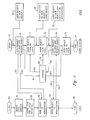
- the inventive system includes a host and one or more work stations. These are presented in a form similar to that of Fig. 1, and are activated by start-up which is indicated by symbols 50 and 70 respectively.
- objects are received and are represented by "object item arrives", symbol 51.
- the memory 52 stores the object item in accordance with principles known in the prior art. The object is thus available for transmission to a work station upon request.
- the host is conditioned to respond to a specific request from a work station and to send the object to the work station as represented by symbol 56.
- circuits at the work stations are equipped with sufficient storage capacity to store and retain objects ordinarily desired and/or used by the work station operators. Accordingly, after an object item has been received by circuits 71 or 75, it is stored in storage 63 (which is symbolic of memory or DASD at each work station) where it remains until, because of inactivity or need for replacement by an object of higher priority, it is erased therefrom. Paths inter-connecting circuits 71, and 75 with memory 63 are identified by communication paths 61 and 65.
- Fig. 2 displays of requested objects, e.g., mail, to the user are identified by symbols 73, 74 and 76.
- symbols 73, 74 and 76 are representative of a number of different showings of the same or different objects.
- a work station user may select to view an object that is either currently resident within local storage 63 or which must be summoned from the host. However, it is not necessary for the user to know where the data is stored.
- Symbol 80 represents selection by the work station user to view one or more objects resident in host storage 52
- symbol 81 identifies selection by the user of viewing the same object(s) which by then has been stored in work station storage 63
- symbol 82 identifies selection by the user of a different object (e.g., object 2) which must be summoned from the host processor.
- two modes of operation are provided whereby the user can select items that are currently in the host only or in the host and work station storage.
- a user selects to view an object, such as object 1. This is represented by symbol 80.
- circuits 71 interrogate local storage 63 via conducting path 61 to ascertain whether or not the requested item is currently in local storage. If not, it then communicates via conductor 53 to host circuits 56 which respond by communicating the requested information via conducting path 54, to circuits 71 whence it is then shown to the user as indicated by symbol 73.
- the item of information is communicated via path 61 to storage 63, where it is stored in accordance with the hereinafter described hierarchy of priorities.
- circuits 71 found the requested information currently in storage 63, it would have resulted in the communication of such information via communication link 62, to circuits exemplified by symbol 73 for display to the user.
- the item is now stored within storage 63, when a user subsequently selects to view the same object as represented by symbol 81, the requested object is communicated from storage 63 to circuits 74 via link 70. The object is then displayed to the user.
- circuits as represented by symbol 75 are activated to send a request via communication link 59, to circuits 57 where they are effective to result in the transmission of the requested data via link 60, to circuits 75.
- the object is then shown to the user as represented by symbol 76.
- circuits represented by symbol 75 prior to sending a request to the host via communication links 59, circuits represented by symbol 75 interrogate storage 63, via link 65, to ensure that the requested object is not already in storage locally. If such should be the case, the requested object data is transmitted to circuit 76, by a link represented by symbol 64. If not then the object is obtained from the host via link 60, and the object will be stored in storage 63 via link 65.
- Fig. 3 three categories of information are shown for which the principles of the invention are particularly efficacious. These are “directory”, “electronic mail” and “library”.
- the directory 90 is for providing the user with a list of items such as names, addresses and telephone numbers which are of sufficient interest to the user to justify their inclusion in such a list.
- a directory may include other items of information such as routing information building locations and the like which are necessary or desirable in identifying and/or achieving effective communication with a designee.
- Electronic mail 93 is provided for storage of selected items of mail which are newly arrived, designated by the user for retention, or are being maintained at the work station for a predetermined or indeterminate interval of time.
- Library 91 symbolizes a storehouse of information such as articles of interest, references, bibliographies and the like; although it may, at the discretion of the user, include other kinds of information which the user designates for inclusion. Such items often include substantial quantities of data, and consequently their presence locally avoids the necessity of repetitively communication substantial quantities of such data between the host and local work stations.
- a hierarchy of data retention priorities may be established. Such priority may be tailored to meet the requirements of the local user, but optionally provides for at least interim storage of the most recently received item which, if necessary because of overcrowding of available storage space, will displace an item or items of lowest priority.
- the order of hierarchies then is basically time and use dependent in that recent use establishes or re-establishes a higher position within the priority queue, whereas lack of use gradually lowers the level of priority until an item, because of non-use, is displaced by a newly arrived item.
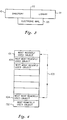
- Fig. 4 illustrates the preferred hierarchy of retention priorities, preferably employed in practicing the invention.
- the most recently used object is accorded the highest priority for retention, whereas the most remotely used object is accorded the lowest retention priority.
- the replaced 101 becomes 105 as it is decreased in position to the second highest location as shown in the figure.
- all of the items in the queue descend one position, resulting in the elimination of the lowest item 102 which then is lost from local memory.
- item 102 were to be used, it would then be raised to the highest priority.
- the most used data is stored at the work station locations and is immediately available thereat, thereby reducing the number of interactive communications required to support user needs and resulting in a corresponding improvement in efficiency and time reduction.
Landscapes
- Engineering & Computer Science (AREA)
- Computer Hardware Design (AREA)
- Theoretical Computer Science (AREA)
- Software Systems (AREA)
- Physics & Mathematics (AREA)
- General Engineering & Computer Science (AREA)
- General Physics & Mathematics (AREA)
- Computer And Data Communications (AREA)
- Information Transfer Between Computers (AREA)
- Multi Processors (AREA)
- Data Exchanges In Wide-Area Networks (AREA)
Claims (8)
- Datenverarbeitungssystem, das folgendes aufweist:(a) einen Host,(b) eine mit dem Host verbundene Datenstation,(c) mit dem Host verbundenes Mittel zum Eingeben von Datenobjekten in den Host,(d) Hostprozessormittel, das auf Anforderungen von der Datenstation reagiert, um angeforderte der Datenobjekte an die Datenstation zu übertragen,(e) Datenstationspeichermittel, das auf das Empfangen der angeforderten der Datenobjekte an der Datenstation reagiert, um die angeforderten der Datenobjekte an der Datenstation zu speichern, und das gekennzeichnet ist durch(f) Mittel an der Datenstation zum Erstellen von Aufbewahrungsprioritäten in dem Datenstationspeichermittel für die angeforderten der Datenobjekte gemäß einer vorherbestimmten Reihenfolge der Aufbewahrung, basierend auf der Häufigkeit der Verwendung der Datenobjekte, wobei die Datenobjekte automatisch in dem Datenstationspeichermittel gemäß ihrer jeweiligen erstellten Aufbewahrungspriorität aufbewahrt werden, bis eine vorherbestimmte Zeit abgelaufen ist oder bis der verfügbare Speicher voll ist und ein Objekt mit höherer Priorität Eingang dazu sucht.
- Datenverarbeitungssystem gemäß Anspruch 1, in dem der Host Hostspeichermittel zum Speichern der Datenobjekte an dem Host enthält.
- Datenverarbeitungssystem gemäß Anspruch 1, in dem der Host Hostspeichermittel zum Speichern der Datenobjekte enthält.
- Datenverarbeitungssystem gemäß Anspruch 1, in dem die vorherbestimmte Reihenfolge des Aufbewahrens umfaßt, daß dem zuletzt empfangenen Datenobjekt eine höchste Stufe der Aufbewahrungspriorität zugeschrieben wird.
- Datenverarbeitungssystem gemäß Anspruch 1, in dem die vorherbestimmte Reihenfolge des Aufbewahrens umfaßt, daß dem zuletzt verwendeten Datenobjekt eine vorherbestimmte höhere Stufe der Aufbewahrungspriorität zugeschrieben wird.
- Datenverarbeitungssystem gemäß Anspruch 1, in dem die vorherbestimmte Reihenfolge des Aufbewahrens umfaßt, daß dem zuletzt empfangenen Datenobjekt eine vorherbestimmte höchste Stufe der Aufbewahrungspriorität und dem zuletzt verwendeten Datenobjekt eine vorherbestimmte höhere Stufe der Aufbewahrungspriorität zugeschrieben wird.
- Datenverarbeitungssystem gemäß Anspruch 6, das weiterhin Mittel enthält, um dem am weitesten entfernt verwendeten Datenobjekt eine niedrigste Stufe der Aufbewahrungspriorität zuzuschreiben.
- Datenverarbeitungssystem gemäß Anspruch 1, das weiterhin Mittel enthält, die an der Datenstation wirksam werden, wenn ein angefordertes Datenobjekt nicht innerhalb des Datenstationspeichermittels gespeichert ist, um das angeforderte Datenobjekt von dem Host anzufordern.
Applications Claiming Priority (2)
| Application Number | Priority Date | Filing Date | Title |
|---|---|---|---|
| US312222 | 1989-02-21 | ||
| US07/312,222 US5220516A (en) | 1989-02-21 | 1989-02-21 | Asynchronous staging of objects between computer systems in cooperative processing systems |
Publications (3)
| Publication Number | Publication Date |
|---|---|
| EP0384875A2 EP0384875A2 (de) | 1990-08-29 |
| EP0384875A3 EP0384875A3 (de) | 1992-08-05 |
| EP0384875B1 true EP0384875B1 (de) | 1997-09-24 |
Family
ID=23210440
Family Applications (1)
| Application Number | Title | Priority Date | Filing Date |
|---|---|---|---|
| EP90480004A Expired - Lifetime EP0384875B1 (de) | 1989-02-21 | 1990-01-03 | Asynchrone Objektvorgreifung zwischen Rechnersystemen in zusammen arbeitenden Verarbeitungssystemen |
Country Status (4)
| Country | Link |
|---|---|
| US (1) | US5220516A (de) |
| EP (1) | EP0384875B1 (de) |
| JP (1) | JPH073662B2 (de) |
| DE (1) | DE69031476T2 (de) |
Families Citing this family (23)
| Publication number | Priority date | Publication date | Assignee | Title |
|---|---|---|---|---|
| WO1992000654A1 (en) * | 1990-06-25 | 1992-01-09 | Barstow David R | A method for encoding and broadcasting information about live events using computer simulation and pattern matching techniques |
| US7373587B1 (en) | 1990-06-25 | 2008-05-13 | Barstow David R | Representing sub-events with physical exertion actions |
| US5325310A (en) * | 1992-06-26 | 1994-06-28 | International Business Machines Corporation | Method and system for persistant electronic mail reply processing |
| US5550976A (en) * | 1992-12-08 | 1996-08-27 | Sun Hydraulics Corporation | Decentralized distributed asynchronous object oriented system and method for electronic data management, storage, and communication |
| US5787285A (en) * | 1995-08-15 | 1998-07-28 | International Business Machines Corporation | Apparatus and method for optimizing applications for multiple operational environments or modes |
| US5768511A (en) * | 1995-09-18 | 1998-06-16 | International Business Machines Corporation | Method and system for managing objects in networked computer system with action performed in the server and object updated in the client |
| US6256774B1 (en) * | 1996-12-06 | 2001-07-03 | Sun Microsystems, Inc. | Methods, systems, and computer program products for storing, loading, analyzing, and sharing references to recently used objects |
| CA2278709A1 (en) * | 1997-01-27 | 1998-08-13 | Benjamin Slotznick | System for delivering and displaying primary and secondary information |
| AU1391999A (en) | 1997-11-12 | 1999-05-31 | Benjamin Slotznick | Automatically switching a user's interface from a program to another program while the first is processing |
| AU749314B2 (en) | 1998-05-15 | 2002-06-20 | Unicast Communications Corporation | A technique for implementing browser-initiated network-distributed advertising and for interstitially displaying an advertisement |
| US7278153B1 (en) * | 2000-04-12 | 2007-10-02 | Seachange International | Content propagation in interactive television |
| US7475404B2 (en) | 2000-05-18 | 2009-01-06 | Maquis Techtrix Llc | System and method for implementing click-through for browser executed software including ad proxy and proxy cookie caching |
| US8086697B2 (en) | 2005-06-28 | 2011-12-27 | Claria Innovations, Llc | Techniques for displaying impressions in documents delivered over a computer network |
| GB2395041A (en) * | 2001-08-14 | 2004-05-12 | Bloomberg Lp | Distribution and mapping of financial records from data stream |
| US7603341B2 (en) | 2002-11-05 | 2009-10-13 | Claria Corporation | Updating the content of a presentation vehicle in a computer network |
| US7741866B2 (en) * | 2003-12-23 | 2010-06-22 | Nxp B.V. | Load-aware circuit arrangement |
| US8255413B2 (en) | 2004-08-19 | 2012-08-28 | Carhamm Ltd., Llc | Method and apparatus for responding to request for information-personalization |
| US8078602B2 (en) | 2004-12-17 | 2011-12-13 | Claria Innovations, Llc | Search engine for a computer network |
| US7693863B2 (en) | 2004-12-20 | 2010-04-06 | Claria Corporation | Method and device for publishing cross-network user behavioral data |
| US8073866B2 (en) | 2005-03-17 | 2011-12-06 | Claria Innovations, Llc | Method for providing content to an internet user based on the user's demonstrated content preferences |
| US7776478B2 (en) * | 2005-07-15 | 2010-08-17 | Cymbet Corporation | Thin-film batteries with polymer and LiPON electrolyte layers and method |
| US20100251337A1 (en) * | 2009-03-27 | 2010-09-30 | International Business Machines Corporation | Selective distribution of objects in a virtual universe |
| CN110781129B (zh) * | 2019-09-12 | 2022-02-22 | 苏州浪潮智能科技有限公司 | 一种fpga异构加速卡集群中的资源调度方法、设备及介质 |
Family Cites Families (13)
| Publication number | Priority date | Publication date | Assignee | Title |
|---|---|---|---|---|
| GB1504112A (en) * | 1976-03-17 | 1978-03-15 | Ibm | Interactive enquiry systems |
| US4292669A (en) * | 1978-02-28 | 1981-09-29 | Burroughs Corporation | Autonomous data communications subsystem |
| JPS57169865A (en) * | 1981-04-14 | 1982-10-19 | Fuji Xerox Co Ltd | Picture information storage device |
| US4471427A (en) * | 1981-12-01 | 1984-09-11 | Burroughs Corporation | Direct memory access logic system for a data transfer network |
| US4636946A (en) * | 1982-02-24 | 1987-01-13 | International Business Machines Corporation | Method and apparatus for grouping asynchronous recording operations |
| EP0090137A3 (de) * | 1982-03-29 | 1986-12-03 | International Business Machines Corporation | Zugriffsteuerungsanordnung für Digitaldatenspeichergerät |
| US4649533A (en) * | 1983-10-25 | 1987-03-10 | Keycom Electronic Publishing | Method and apparatus for retrieving remotely located information |
| GB8425375D0 (en) * | 1984-10-08 | 1984-11-14 | Gen Electric Co Plc | Data communication systems |
| JPS61208124A (ja) * | 1985-03-12 | 1986-09-16 | Oki Electric Ind Co Ltd | 分散デ−タベ−ス管理システムにおける結合演算処理方式 |
| US4713780A (en) * | 1985-04-15 | 1987-12-15 | Express Communications, Inc. | Electronic mail |
| US4750135A (en) * | 1986-05-01 | 1988-06-07 | Reuters Limited | Method for dynamically creating a receiver definable local trading instrument displayable record from a remotely transmitted trading instrument common data stream |
| US4933846A (en) * | 1987-04-24 | 1990-06-12 | Network Systems Corporation | Network communications adapter with dual interleaved memory banks servicing multiple processors |
| US4972368A (en) * | 1988-03-04 | 1990-11-20 | Stallion Technologies, Pty. Ltd. | Intelligent serial I/O subsystem |
-
1989
- 1989-02-21 US US07/312,222 patent/US5220516A/en not_active Expired - Lifetime
- 1989-12-20 JP JP1328620A patent/JPH073662B2/ja not_active Expired - Fee Related
-
1990
- 1990-01-03 EP EP90480004A patent/EP0384875B1/de not_active Expired - Lifetime
- 1990-01-03 DE DE69031476T patent/DE69031476T2/de not_active Expired - Fee Related
Also Published As
| Publication number | Publication date |
|---|---|
| DE69031476T2 (de) | 1998-03-26 |
| JPH073662B2 (ja) | 1995-01-18 |
| EP0384875A3 (de) | 1992-08-05 |
| JPH02247767A (ja) | 1990-10-03 |
| EP0384875A2 (de) | 1990-08-29 |
| DE69031476D1 (de) | 1997-10-30 |
| US5220516A (en) | 1993-06-15 |
Similar Documents
| Publication | Publication Date | Title |
|---|---|---|
| US5220516A (en) | Asynchronous staging of objects between computer systems in cooperative processing systems | |
| EP0384876B1 (de) | Versenden von Objekten im voraus in einer Umgebung mit veteilten Komponenten | |
| US5309509A (en) | Graphical user interface workstation | |
| US5406643A (en) | Method and apparatus for selecting between a plurality of communication paths | |
| US5483631A (en) | Communication network management system for displaying operation states of network elements on a remote display unit | |
| US4949373A (en) | Host load balancing | |
| US6185605B1 (en) | Electronic mail system spontaneously forwarding an electronic mail to a receiving communication terminal | |
| US4555781A (en) | Conversational video system having local network control | |
| US20040019513A1 (en) | Communication system for managing hotel operations | |
| JPH06152638A (ja) | クライアント・サーバシステムおよびメール着信・再生制御方法 | |
| JPH06232940A (ja) | 通信システムとその動作方法 | |
| EP0644483A1 (de) | Rechnersystem und Verfahren zur Ausführung von mehreren Aufgaben | |
| JPH0635821A (ja) | 共同作業装置 | |
| US7577741B2 (en) | Network communication apparatus for providing a user with a paging message | |
| CN114598662A (zh) | 消息队列集群联邦管理系统以及方法 | |
| KR100482283B1 (ko) | 가입전화설치 관리시스템에서의 비대칭 디지털 가입자수용장치 관리방법 | |
| US7170990B2 (en) | Autonomous dispatcher method and apparatus | |
| EP0511143A1 (de) | Verfahren und Vorrichtung für die automatisierte Bestimmung der Fähigkeit eines Softwaremoduls in einem Datenverarbeitungssystem | |
| EP0488706B1 (de) | System zur Auswahl von Übertragungsleitungen | |
| JP2932581B2 (ja) | ポーリング・セレクティング方法 | |
| CN113824767A (zh) | 餐饮服务系统和餐饮服务指令显示方法 | |
| JPH0484591A (ja) | 電子交換機の代表選択処理装置 | |
| JPH0793126A (ja) | データ表示システム及びデータ表示制御方法 | |
| JPS63176077A (ja) | 蓄積デ−タの管理方式 | |
| JPS58115535A (ja) | デバイス間均等サ−ビス処理方式 |
Legal Events
| Date | Code | Title | Description |
|---|---|---|---|
| PUAI | Public reference made under article 153(3) epc to a published international application that has entered the european phase |
Free format text: ORIGINAL CODE: 0009012 |
|
| AK | Designated contracting states |
Kind code of ref document: A2 Designated state(s): DE FR GB |
|
| 17P | Request for examination filed |
Effective date: 19901210 |
|
| PUAL | Search report despatched |
Free format text: ORIGINAL CODE: 0009013 |
|
| AK | Designated contracting states |
Kind code of ref document: A3 Designated state(s): DE FR GB |
|
| 17Q | First examination report despatched |
Effective date: 19960429 |
|
| GRAG | Despatch of communication of intention to grant |
Free format text: ORIGINAL CODE: EPIDOS AGRA |
|
| GRAH | Despatch of communication of intention to grant a patent |
Free format text: ORIGINAL CODE: EPIDOS IGRA |
|
| GRAH | Despatch of communication of intention to grant a patent |
Free format text: ORIGINAL CODE: EPIDOS IGRA |
|
| GRAA | (expected) grant |
Free format text: ORIGINAL CODE: 0009210 |
|
| AK | Designated contracting states |
Kind code of ref document: B1 Designated state(s): DE FR GB |
|
| REF | Corresponds to: |
Ref document number: 69031476 Country of ref document: DE Date of ref document: 19971030 |
|
| ET | Fr: translation filed | ||
| PLBE | No opposition filed within time limit |
Free format text: ORIGINAL CODE: 0009261 |
|
| STAA | Information on the status of an ep patent application or granted ep patent |
Free format text: STATUS: NO OPPOSITION FILED WITHIN TIME LIMIT |
|
| 26N | No opposition filed | ||
| REG | Reference to a national code |
Ref country code: GB Ref legal event code: IF02 |
|
| PGFP | Annual fee paid to national office [announced via postgrant information from national office to epo] |
Ref country code: DE Payment date: 20061220 Year of fee payment: 18 |
|
| REG | Reference to a national code |
Ref country code: GB Ref legal event code: 746 Effective date: 20071206 |
|
| PG25 | Lapsed in a contracting state [announced via postgrant information from national office to epo] |
Ref country code: DE Free format text: LAPSE BECAUSE OF NON-PAYMENT OF DUE FEES Effective date: 20080801 |
|
| PGFP | Annual fee paid to national office [announced via postgrant information from national office to epo] |
Ref country code: GB Payment date: 20090128 Year of fee payment: 20 |
|
| REG | Reference to a national code |
Ref country code: GB Ref legal event code: PE20 Expiry date: 20100102 |
|
| PG25 | Lapsed in a contracting state [announced via postgrant information from national office to epo] |
Ref country code: GB Free format text: LAPSE BECAUSE OF EXPIRATION OF PROTECTION Effective date: 20100102 |
|
| PGFP | Annual fee paid to national office [announced via postgrant information from national office to epo] |
Ref country code: FR Payment date: 20080830 Year of fee payment: 20 |