EP0361069B1 - Benzimidazol-2-carbonsäureanilide, ihre Verwendung als Lichtschutzmittel für organisches Material und mit diesen Aniliden stabilisiertes organisches Material - Google Patents
Benzimidazol-2-carbonsäureanilide, ihre Verwendung als Lichtschutzmittel für organisches Material und mit diesen Aniliden stabilisiertes organisches Material Download PDFInfo
- Publication number
- EP0361069B1 EP0361069B1 EP89115338A EP89115338A EP0361069B1 EP 0361069 B1 EP0361069 B1 EP 0361069B1 EP 89115338 A EP89115338 A EP 89115338A EP 89115338 A EP89115338 A EP 89115338A EP 0361069 B1 EP0361069 B1 EP 0361069B1
- Authority
- EP
- European Patent Office
- Prior art keywords
- alkyl
- interrupted
- alkylene
- phenylalkyl
- phenyl
- Prior art date
- Legal status (The legal status is an assumption and is not a legal conclusion. Google has not performed a legal analysis and makes no representation as to the accuracy of the status listed.)
- Expired - Lifetime
Links
- 239000011368 organic material Substances 0.000 title claims description 11
- 239000000203 mixture Substances 0.000 title description 13
- XOZHJGPWRAFSMY-UHFFFAOYSA-N n-phenyl-1h-benzimidazole-2-carboxamide Chemical class N=1C2=CC=CC=C2NC=1C(=O)NC1=CC=CC=C1 XOZHJGPWRAFSMY-UHFFFAOYSA-N 0.000 title description 5
- 229940051881 anilide analgesics and antipyretics Drugs 0.000 title 1
- 150000003931 anilides Chemical class 0.000 title 1
- 230000003711 photoprotective effect Effects 0.000 title 1
- -1 C7-C15-phenylalkyl Chemical class 0.000 claims description 108
- 150000001875 compounds Chemical class 0.000 claims description 53
- 125000001997 phenyl group Chemical class [H]C1=C([H])C([H])=C(*)C([H])=C1[H] 0.000 claims description 24
- 125000006702 (C1-C18) alkyl group Chemical group 0.000 claims description 16
- 229920000642 polymer Polymers 0.000 claims description 12
- 125000002496 methyl group Chemical group [H]C([H])([H])* 0.000 claims description 11
- 229920002635 polyurethane Polymers 0.000 claims description 11
- 239000004814 polyurethane Substances 0.000 claims description 11
- 125000000113 cyclohexyl group Chemical group [H]C1([H])C([H])([H])C([H])([H])C([H])(*)C([H])([H])C1([H])[H] 0.000 claims description 10
- 125000004400 (C1-C12) alkyl group Chemical group 0.000 claims description 9
- 125000000043 benzamido group Chemical group [H]N([*])C(=O)C1=C([H])C([H])=C([H])C([H])=C1[H] 0.000 claims description 9
- 229910052801 chlorine Inorganic materials 0.000 claims description 9
- 229910052739 hydrogen Inorganic materials 0.000 claims description 9
- 125000001495 ethyl group Chemical group [H]C([H])([H])C([H])([H])* 0.000 claims description 8
- 239000004611 light stabiliser Substances 0.000 claims description 7
- 125000000951 phenoxy group Chemical class [H]C1=C([H])C([H])=C(O*)C([H])=C1[H] 0.000 claims description 7
- 125000004956 cyclohexylene group Chemical group 0.000 claims description 6
- 125000001624 naphthyl group Chemical group 0.000 claims description 6
- 239000004952 Polyamide Substances 0.000 claims description 5
- 125000001231 benzoyloxy group Chemical group C(C1=CC=CC=C1)(=O)O* 0.000 claims description 5
- 229920002647 polyamide Polymers 0.000 claims description 5
- 229920000728 polyester Polymers 0.000 claims description 5
- 239000004925 Acrylic resin Substances 0.000 claims description 4
- 229920000178 Acrylic resin Polymers 0.000 claims description 4
- 125000001797 benzyl group Chemical group [H]C1=C([H])C([H])=C(C([H])=C1[H])C([H])([H])* 0.000 claims description 4
- 125000003493 decenyl group Chemical group [H]C([*])=C([H])C([H])([H])C([H])([H])C([H])([H])C([H])([H])C([H])([H])C([H])([H])C([H])([H])C([H])([H])[H] 0.000 claims description 4
- 239000000463 material Substances 0.000 claims description 4
- 125000001117 oleyl group Chemical group [H]C([*])([H])C([H])([H])C([H])([H])C([H])([H])C([H])([H])C([H])([H])C([H])([H])C([H])([H])/C([H])=C([H])\C([H])([H])C([H])([H])C([H])([H])C([H])([H])C([H])([H])C([H])([H])C([H])([H])C([H])([H])[H] 0.000 claims description 4
- 125000004193 piperazinyl group Chemical group 0.000 claims description 4
- 125000004642 (C1-C12) alkoxy group Chemical group 0.000 claims description 3
- 125000001140 1,4-phenylene group Chemical group [H]C1=C([H])C([*:2])=C([H])C([H])=C1[*:1] 0.000 claims description 3
- 238000000576 coating method Methods 0.000 claims description 3
- 125000002757 morpholinyl group Chemical group 0.000 claims description 3
- 125000003386 piperidinyl group Chemical group 0.000 claims description 3
- 125000000719 pyrrolidinyl group Chemical group 0.000 claims description 3
- 229920001169 thermoplastic Polymers 0.000 claims description 3
- 239000004416 thermosoftening plastic Substances 0.000 claims description 3
- 125000004955 1,4-cyclohexylene group Chemical group [H]C1([H])C([H])([H])C([H])([*:1])C([H])([H])C([H])([H])C1([H])[*:2] 0.000 claims description 2
- 229920000877 Melamine resin Polymers 0.000 claims description 2
- 229920000122 acrylonitrile butadiene styrene Polymers 0.000 claims description 2
- 239000011248 coating agent Substances 0.000 claims description 2
- 229920001059 synthetic polymer Polymers 0.000 claims description 2
- 125000004178 (C1-C4) alkyl group Chemical group 0.000 claims 4
- 125000006833 (C1-C5) alkylene group Chemical group 0.000 claims 4
- 125000004169 (C1-C6) alkyl group Chemical group 0.000 claims 3
- RWRDLPDLKQPQOW-UHFFFAOYSA-N Pyrrolidine Chemical compound C1CCNC1 RWRDLPDLKQPQOW-UHFFFAOYSA-N 0.000 claims 3
- GLUUGHFHXGJENI-UHFFFAOYSA-N diethylenediamine Natural products C1CNCCN1 GLUUGHFHXGJENI-UHFFFAOYSA-N 0.000 claims 3
- 125000000229 (C1-C4)alkoxy group Chemical group 0.000 claims 2
- NQRYJNQNLNOLGT-UHFFFAOYSA-N Piperidine Chemical compound C1CCNCC1 NQRYJNQNLNOLGT-UHFFFAOYSA-N 0.000 claims 2
- PXBRQCKWGAHEHS-UHFFFAOYSA-N dichlorodifluoromethane Chemical compound FC(F)(Cl)Cl PXBRQCKWGAHEHS-UHFFFAOYSA-N 0.000 claims 2
- 125000006178 methyl benzyl group Chemical group 0.000 claims 2
- 125000002853 C1-C4 hydroxyalkyl group Chemical group 0.000 claims 1
- YNAVUWVOSKDBBP-UHFFFAOYSA-N Morpholine Natural products C1COCCN1 YNAVUWVOSKDBBP-UHFFFAOYSA-N 0.000 claims 1
- 229920001807 Urea-formaldehyde Polymers 0.000 claims 1
- XECAHXYUAAWDEL-UHFFFAOYSA-N acrylonitrile butadiene styrene Chemical compound C=CC=C.C=CC#N.C=CC1=CC=CC=C1 XECAHXYUAAWDEL-UHFFFAOYSA-N 0.000 claims 1
- GZCGUPFRVQAUEE-SLPGGIOYSA-N aldehydo-D-glucose Chemical compound OC[C@@H](O)[C@@H](O)[C@H](O)[C@@H](O)C=O GZCGUPFRVQAUEE-SLPGGIOYSA-N 0.000 claims 1
- IVJISJACKSSFGE-UHFFFAOYSA-N formaldehyde;1,3,5-triazine-2,4,6-triamine Chemical compound O=C.NC1=NC(N)=NC(N)=N1 IVJISJACKSSFGE-UHFFFAOYSA-N 0.000 claims 1
- OKKJLVBELUTLKV-UHFFFAOYSA-N Methanol Chemical class OC OKKJLVBELUTLKV-UHFFFAOYSA-N 0.000 description 43
- 238000004458 analytical method Methods 0.000 description 31
- OKTJSMMVPCPJKN-UHFFFAOYSA-N Carbon Chemical compound [C] OKTJSMMVPCPJKN-UHFFFAOYSA-N 0.000 description 22
- YXFVVABEGXRONW-UHFFFAOYSA-N Toluene Chemical compound CC1=CC=CC=C1 YXFVVABEGXRONW-UHFFFAOYSA-N 0.000 description 20
- 238000000034 method Methods 0.000 description 20
- 239000000047 product Substances 0.000 description 20
- ZMXDDKWLCZADIW-UHFFFAOYSA-N N,N-Dimethylformamide Chemical compound CN(C)C=O ZMXDDKWLCZADIW-UHFFFAOYSA-N 0.000 description 19
- FYSNRJHAOHDILO-UHFFFAOYSA-N thionyl chloride Chemical compound ClS(Cl)=O FYSNRJHAOHDILO-UHFFFAOYSA-N 0.000 description 16
- 238000002844 melting Methods 0.000 description 15
- 230000008018 melting Effects 0.000 description 15
- XLYOFNOQVPJJNP-UHFFFAOYSA-N water Substances O XLYOFNOQVPJJNP-UHFFFAOYSA-N 0.000 description 15
- 238000006243 chemical reaction Methods 0.000 description 13
- 239000011541 reaction mixture Substances 0.000 description 13
- JOXIMZWYDAKGHI-UHFFFAOYSA-N toluene-4-sulfonic acid Chemical compound CC1=CC=C(S(O)(=O)=O)C=C1 JOXIMZWYDAKGHI-UHFFFAOYSA-N 0.000 description 13
- RHXSYTACTOMVLJ-UHFFFAOYSA-N 1H-benzimidazole-2-carboxylic acid Chemical class C1=CC=C2NC(C(=O)O)=NC2=C1 RHXSYTACTOMVLJ-UHFFFAOYSA-N 0.000 description 12
- YMWUJEATGCHHMB-UHFFFAOYSA-N Dichloromethane Chemical compound ClCCl YMWUJEATGCHHMB-UHFFFAOYSA-N 0.000 description 12
- XEKOWRVHYACXOJ-UHFFFAOYSA-N Ethyl acetate Chemical compound CCOC(C)=O XEKOWRVHYACXOJ-UHFFFAOYSA-N 0.000 description 12
- BWHMMNNQKKPAPP-UHFFFAOYSA-L potassium carbonate Chemical compound [K+].[K+].[O-]C([O-])=O BWHMMNNQKKPAPP-UHFFFAOYSA-L 0.000 description 12
- 125000006539 C12 alkyl group Chemical group [H]C([H])([H])C([H])([H])C([H])([H])C([H])([H])C([H])([H])C([H])([H])C([H])([H])C([H])([H])C([H])([H])C([H])([H])C([H])([H])C([H])([H])* 0.000 description 11
- 239000007787 solid Substances 0.000 description 11
- 239000000243 solution Substances 0.000 description 11
- 239000003381 stabilizer Substances 0.000 description 11
- 239000005457 ice water Substances 0.000 description 10
- 0 *C(CC1)=CCC1NC(c1nc(cccc2)c2c(*)c1)=O Chemical compound *C(CC1)=CCC1NC(c1nc(cccc2)c2c(*)c1)=O 0.000 description 9
- 239000003921 oil Substances 0.000 description 9
- 150000003254 radicals Chemical class 0.000 description 9
- 239000002904 solvent Substances 0.000 description 9
- VEXZGXHMUGYJMC-UHFFFAOYSA-N Hydrochloric acid Chemical compound Cl VEXZGXHMUGYJMC-UHFFFAOYSA-N 0.000 description 8
- UIIMBOGNXHQVGW-UHFFFAOYSA-M Sodium bicarbonate Chemical compound [Na+].OC([O-])=O UIIMBOGNXHQVGW-UHFFFAOYSA-M 0.000 description 8
- MJABXZWILYUAEB-UHFFFAOYSA-N benzimidazole-1-carboxylic acid Chemical class C1=CC=C2N(C(=O)O)C=NC2=C1 MJABXZWILYUAEB-UHFFFAOYSA-N 0.000 description 8
- 239000000460 chlorine Substances 0.000 description 8
- 125000000217 alkyl group Chemical group 0.000 description 7
- 239000003963 antioxidant agent Substances 0.000 description 7
- 235000006708 antioxidants Nutrition 0.000 description 7
- DNIAPMSPPWPWGF-UHFFFAOYSA-N Propylene glycol Chemical compound CC(O)CO DNIAPMSPPWPWGF-UHFFFAOYSA-N 0.000 description 6
- ZXEKIIBDNHEJCQ-UHFFFAOYSA-N isobutanol Chemical compound CC(C)CO ZXEKIIBDNHEJCQ-UHFFFAOYSA-N 0.000 description 6
- 235000015320 potassium carbonate Nutrition 0.000 description 6
- 229910000027 potassium carbonate Inorganic materials 0.000 description 6
- 229920005989 resin Polymers 0.000 description 6
- 239000011347 resin Substances 0.000 description 6
- 239000000654 additive Substances 0.000 description 5
- 150000001408 amides Chemical class 0.000 description 5
- 150000001412 amines Chemical class 0.000 description 5
- 238000004061 bleaching Methods 0.000 description 5
- 150000002148 esters Chemical class 0.000 description 5
- 125000004108 n-butyl group Chemical group [H]C([H])([H])C([H])([H])C([H])([H])C([H])([H])* 0.000 description 5
- 239000012074 organic phase Substances 0.000 description 5
- 239000003973 paint Substances 0.000 description 5
- 125000003884 phenylalkyl group Chemical group 0.000 description 5
- 229920003023 plastic Polymers 0.000 description 5
- 239000004033 plastic Substances 0.000 description 5
- 230000000087 stabilizing effect Effects 0.000 description 5
- 239000000725 suspension Substances 0.000 description 5
- 238000005809 transesterification reaction Methods 0.000 description 5
- LFQSCWFLJHTTHZ-UHFFFAOYSA-N Ethanol Chemical compound CCO LFQSCWFLJHTTHZ-UHFFFAOYSA-N 0.000 description 4
- LYCAIKOWRPUZTN-UHFFFAOYSA-N Ethylene glycol Chemical compound OCCO LYCAIKOWRPUZTN-UHFFFAOYSA-N 0.000 description 4
- 239000007832 Na2SO4 Substances 0.000 description 4
- CDBYLPFSWZWCQE-UHFFFAOYSA-L Sodium Carbonate Chemical compound [Na+].[Na+].[O-]C([O-])=O CDBYLPFSWZWCQE-UHFFFAOYSA-L 0.000 description 4
- PMZURENOXWZQFD-UHFFFAOYSA-L Sodium Sulfate Chemical compound [Na+].[Na+].[O-]S([O-])(=O)=O PMZURENOXWZQFD-UHFFFAOYSA-L 0.000 description 4
- JZRIIAYLOPWOHN-UHFFFAOYSA-N benzimidazole-1-carboxamide Chemical compound C1=CC=C2N(C(=O)N)C=NC2=C1 JZRIIAYLOPWOHN-UHFFFAOYSA-N 0.000 description 4
- WERYXYBDKMZEQL-UHFFFAOYSA-N butane-1,4-diol Chemical compound OCCCCO WERYXYBDKMZEQL-UHFFFAOYSA-N 0.000 description 4
- 238000001816 cooling Methods 0.000 description 4
- PAFZNILMFXTMIY-UHFFFAOYSA-N cyclohexylamine Chemical compound NC1CCCCC1 PAFZNILMFXTMIY-UHFFFAOYSA-N 0.000 description 4
- 150000002009 diols Chemical class 0.000 description 4
- 238000001035 drying Methods 0.000 description 4
- 125000002887 hydroxy group Chemical group [H]O* 0.000 description 4
- 125000001449 isopropyl group Chemical group [H]C([H])([H])C([H])(*)C([H])([H])[H] 0.000 description 4
- 239000004922 lacquer Substances 0.000 description 4
- 238000004519 manufacturing process Methods 0.000 description 4
- 239000002244 precipitate Substances 0.000 description 4
- 238000012545 processing Methods 0.000 description 4
- 229910052938 sodium sulfate Inorganic materials 0.000 description 4
- 235000011152 sodium sulphate Nutrition 0.000 description 4
- 125000000999 tert-butyl group Chemical group [H]C([H])([H])C(*)(C([H])([H])[H])C([H])([H])[H] 0.000 description 4
- QGZKDVFQNNGYKY-UHFFFAOYSA-N Ammonia Chemical compound N QGZKDVFQNNGYKY-UHFFFAOYSA-N 0.000 description 3
- WVDDGKGOMKODPV-UHFFFAOYSA-N Benzyl alcohol Chemical compound OCC1=CC=CC=C1 WVDDGKGOMKODPV-UHFFFAOYSA-N 0.000 description 3
- KWYUFKZDYYNOTN-UHFFFAOYSA-M Potassium hydroxide Chemical compound [OH-].[K+] KWYUFKZDYYNOTN-UHFFFAOYSA-M 0.000 description 3
- GOOHAUXETOMSMM-UHFFFAOYSA-N Propylene oxide Chemical compound CC1CO1 GOOHAUXETOMSMM-UHFFFAOYSA-N 0.000 description 3
- HEMHJVSKTPXQMS-UHFFFAOYSA-M Sodium hydroxide Chemical compound [OH-].[Na+] HEMHJVSKTPXQMS-UHFFFAOYSA-M 0.000 description 3
- 239000006096 absorbing agent Substances 0.000 description 3
- 150000001298 alcohols Chemical class 0.000 description 3
- 239000011230 binding agent Substances 0.000 description 3
- 125000000484 butyl group Chemical group [H]C([*])([H])C([H])([H])C([H])([H])C([H])([H])[H] 0.000 description 3
- 239000007859 condensation product Substances 0.000 description 3
- MTHSVFCYNBDYFN-UHFFFAOYSA-N diethylene glycol Chemical compound OCCOCCO MTHSVFCYNBDYFN-UHFFFAOYSA-N 0.000 description 3
- 125000004494 ethyl ester group Chemical group 0.000 description 3
- 239000001257 hydrogen Substances 0.000 description 3
- 125000004435 hydrogen atom Chemical class [H]* 0.000 description 3
- 238000002156 mixing Methods 0.000 description 3
- 125000001280 n-hexyl group Chemical group C(CCCCC)* 0.000 description 3
- 229910052757 nitrogen Inorganic materials 0.000 description 3
- 125000002071 phenylalkoxy group Chemical group 0.000 description 3
- 229920001223 polyethylene glycol Polymers 0.000 description 3
- 238000002360 preparation method Methods 0.000 description 3
- 235000017557 sodium bicarbonate Nutrition 0.000 description 3
- 229910000030 sodium bicarbonate Inorganic materials 0.000 description 3
- 239000000758 substrate Substances 0.000 description 3
- 238000005406 washing Methods 0.000 description 3
- KBPLFHHGFOOTCA-UHFFFAOYSA-N 1-Octanol Chemical compound CCCCCCCCO KBPLFHHGFOOTCA-UHFFFAOYSA-N 0.000 description 2
- 125000004343 1-phenylethyl group Chemical group [H]C1=C([H])C([H])=C(C([H])=C1[H])C([H])(*)C([H])([H])[H] 0.000 description 2
- 238000005160 1H NMR spectroscopy Methods 0.000 description 2
- YIWUKEYIRIRTPP-UHFFFAOYSA-N 2-ethylhexan-1-ol Chemical compound CCCCC(CC)CO YIWUKEYIRIRTPP-UHFFFAOYSA-N 0.000 description 2
- WRMNZCZEMHIOCP-UHFFFAOYSA-N 2-phenylethanol Chemical compound OCCC1=CC=CC=C1 WRMNZCZEMHIOCP-UHFFFAOYSA-N 0.000 description 2
- 125000000094 2-phenylethyl group Chemical group [H]C1=C([H])C([H])=C(C([H])=C1[H])C([H])([H])C([H])([H])* 0.000 description 2
- DVFGEIYOLIFSRX-UHFFFAOYSA-N 3-(2-ethylhexoxy)propan-1-amine Chemical compound CCCCC(CC)COCCCN DVFGEIYOLIFSRX-UHFFFAOYSA-N 0.000 description 2
- YEJRWHAVMIAJKC-UHFFFAOYSA-N 4-Butyrolactone Chemical compound O=C1CCCO1 YEJRWHAVMIAJKC-UHFFFAOYSA-N 0.000 description 2
- CSCPPACGZOOCGX-UHFFFAOYSA-N Acetone Chemical compound CC(C)=O CSCPPACGZOOCGX-UHFFFAOYSA-N 0.000 description 2
- PAYRUJLWNCNPSJ-UHFFFAOYSA-N Aniline Chemical compound NC1=CC=CC=C1 PAYRUJLWNCNPSJ-UHFFFAOYSA-N 0.000 description 2
- IJGRMHOSHXDMSA-UHFFFAOYSA-N Atomic nitrogen Chemical compound N#N IJGRMHOSHXDMSA-UHFFFAOYSA-N 0.000 description 2
- GAWIXWVDTYZWAW-UHFFFAOYSA-N C[CH]O Chemical group C[CH]O GAWIXWVDTYZWAW-UHFFFAOYSA-N 0.000 description 2
- IAYPIBMASNFSPL-UHFFFAOYSA-N Ethylene oxide Chemical compound C1CO1 IAYPIBMASNFSPL-UHFFFAOYSA-N 0.000 description 2
- LRHPLDYGYMQRHN-UHFFFAOYSA-N N-Butanol Chemical compound CCCCO LRHPLDYGYMQRHN-UHFFFAOYSA-N 0.000 description 2
- OAICVXFJPJFONN-UHFFFAOYSA-N Phosphorus Chemical compound [P] OAICVXFJPJFONN-UHFFFAOYSA-N 0.000 description 2
- 239000002202 Polyethylene glycol Substances 0.000 description 2
- WQDUMFSSJAZKTM-UHFFFAOYSA-N Sodium methoxide Chemical compound [Na+].[O-]C WQDUMFSSJAZKTM-UHFFFAOYSA-N 0.000 description 2
- PPBRXRYQALVLMV-UHFFFAOYSA-N Styrene Chemical compound C=CC1=CC=CC=C1 PPBRXRYQALVLMV-UHFFFAOYSA-N 0.000 description 2
- NINIDFKCEFEMDL-UHFFFAOYSA-N Sulfur Chemical compound [S] NINIDFKCEFEMDL-UHFFFAOYSA-N 0.000 description 2
- 125000003342 alkenyl group Chemical group 0.000 description 2
- 125000003545 alkoxy group Chemical group 0.000 description 2
- 125000002947 alkylene group Chemical group 0.000 description 2
- IYABWNGZIDDRAK-UHFFFAOYSA-N allene Chemical group C=C=C IYABWNGZIDDRAK-UHFFFAOYSA-N 0.000 description 2
- 230000003078 antioxidant effect Effects 0.000 description 2
- WGQKYBSKWIADBV-UHFFFAOYSA-N benzylamine Chemical compound NCC1=CC=CC=C1 WGQKYBSKWIADBV-UHFFFAOYSA-N 0.000 description 2
- 150000001732 carboxylic acid derivatives Chemical class 0.000 description 2
- 239000003054 catalyst Substances 0.000 description 2
- FOCAUTSVDIKZOP-UHFFFAOYSA-N chloroacetic acid Chemical compound OC(=O)CCl FOCAUTSVDIKZOP-UHFFFAOYSA-N 0.000 description 2
- 229940106681 chloroacetic acid Drugs 0.000 description 2
- 229920001577 copolymer Polymers 0.000 description 2
- 150000004985 diamines Chemical class 0.000 description 2
- JQVDAXLFBXTEQA-UHFFFAOYSA-N dibutylamine Chemical compound CCCCNCCCC JQVDAXLFBXTEQA-UHFFFAOYSA-N 0.000 description 2
- 239000000839 emulsion Substances 0.000 description 2
- 238000001914 filtration Methods 0.000 description 2
- 238000010348 incorporation Methods 0.000 description 2
- 201000006747 infectious mononucleosis Diseases 0.000 description 2
- ZFSLODLOARCGLH-UHFFFAOYSA-N isocyanuric acid Chemical compound OC1=NC(O)=NC(O)=N1 ZFSLODLOARCGLH-UHFFFAOYSA-N 0.000 description 2
- 150000002596 lactones Chemical class 0.000 description 2
- JDSHMPZPIAZGSV-UHFFFAOYSA-N melamine Chemical compound NC1=NC(N)=NC(N)=N1 JDSHMPZPIAZGSV-UHFFFAOYSA-N 0.000 description 2
- 125000000956 methoxy group Chemical group [H]C([H])([H])O* 0.000 description 2
- JLEJCNOTNLZCHQ-UHFFFAOYSA-N methyl 2-chloropropanoate Chemical compound COC(=O)C(C)Cl JLEJCNOTNLZCHQ-UHFFFAOYSA-N 0.000 description 2
- OJHVSVKKRBFAEY-UHFFFAOYSA-N methyl benzimidazole-1-carboxylate Chemical compound C1=CC=C2N(C(=O)OC)C=NC2=C1 OJHVSVKKRBFAEY-UHFFFAOYSA-N 0.000 description 2
- LUOOPIHVXHZLOP-UHFFFAOYSA-N n-(4-ethoxyphenyl)-1h-benzimidazole-2-carboxamide Chemical compound C1=CC(OCC)=CC=C1NC(=O)C1=NC2=CC=CC=C2N1 LUOOPIHVXHZLOP-UHFFFAOYSA-N 0.000 description 2
- 125000003136 n-heptyl group Chemical group [H]C([H])([H])C([H])([H])C([H])([H])C([H])([H])C([H])([H])C([H])([H])C([H])([H])* 0.000 description 2
- 125000000740 n-pentyl group Chemical group [H]C([H])([H])C([H])([H])C([H])([H])C([H])([H])C([H])([H])* 0.000 description 2
- 125000004123 n-propyl group Chemical group [H]C([H])([H])C([H])([H])C([H])([H])* 0.000 description 2
- IOQPZZOEVPZRBK-UHFFFAOYSA-N octan-1-amine Chemical compound CCCCCCCCN IOQPZZOEVPZRBK-UHFFFAOYSA-N 0.000 description 2
- 125000002347 octyl group Chemical group [H]C([*])([H])C([H])([H])C([H])([H])C([H])([H])C([H])([H])C([H])([H])C([H])([H])C([H])([H])[H] 0.000 description 2
- 230000003287 optical effect Effects 0.000 description 2
- 150000002989 phenols Chemical class 0.000 description 2
- 229910052698 phosphorus Inorganic materials 0.000 description 2
- 239000011574 phosphorus Substances 0.000 description 2
- 229920002492 poly(sulfone) Polymers 0.000 description 2
- 229920002401 polyacrylamide Polymers 0.000 description 2
- 229920000058 polyacrylate Polymers 0.000 description 2
- 229920000515 polycarbonate Polymers 0.000 description 2
- 239000004417 polycarbonate Substances 0.000 description 2
- 229920000151 polyglycol Polymers 0.000 description 2
- 239000010695 polyglycol Substances 0.000 description 2
- 229920000193 polymethacrylate Polymers 0.000 description 2
- 229920000098 polyolefin Polymers 0.000 description 2
- 229920002223 polystyrene Polymers 0.000 description 2
- 229920002451 polyvinyl alcohol Polymers 0.000 description 2
- 125000002914 sec-butyl group Chemical group [H]C([H])([H])C([H])([H])C([H])(*)C([H])([H])[H] 0.000 description 2
- 239000011734 sodium Substances 0.000 description 2
- 235000017550 sodium carbonate Nutrition 0.000 description 2
- 229910000029 sodium carbonate Inorganic materials 0.000 description 2
- 230000006641 stabilisation Effects 0.000 description 2
- 238000011105 stabilization Methods 0.000 description 2
- 229910052717 sulfur Inorganic materials 0.000 description 2
- 239000011593 sulfur Substances 0.000 description 2
- ZIBGPFATKBEMQZ-UHFFFAOYSA-N triethylene glycol Chemical compound OCCOCCOCCO ZIBGPFATKBEMQZ-UHFFFAOYSA-N 0.000 description 2
- 229920002554 vinyl polymer Polymers 0.000 description 2
- WEXKMBZQRXRWGX-UHFFFAOYSA-N (2,2,6,6-tetramethylpiperidin-1-yl) 2-[bis[2-oxo-2-(2,2,6,6-tetramethylpiperidin-1-yl)oxyethyl]amino]acetate Chemical compound CC1(C)CCCC(C)(C)N1OC(=O)CN(CC(=O)ON1C(CCCC1(C)C)(C)C)CC(=O)ON1C(C)(C)CCCC1(C)C WEXKMBZQRXRWGX-UHFFFAOYSA-N 0.000 description 1
- HJIAMFHSAAEUKR-UHFFFAOYSA-N (2-hydroxyphenyl)-phenylmethanone Chemical class OC1=CC=CC=C1C(=O)C1=CC=CC=C1 HJIAMFHSAAEUKR-UHFFFAOYSA-N 0.000 description 1
- GPOGLVDBOFRHDV-UHFFFAOYSA-N (2-nonylphenyl) dihydrogen phosphite Chemical compound CCCCCCCCCC1=CC=CC=C1OP(O)O GPOGLVDBOFRHDV-UHFFFAOYSA-N 0.000 description 1
- GVJHHUAWPYXKBD-IEOSBIPESA-N (R)-alpha-Tocopherol Natural products OC1=C(C)C(C)=C2O[C@@](CCC[C@H](C)CCC[C@H](C)CCCC(C)C)(C)CCC2=C1C GVJHHUAWPYXKBD-IEOSBIPESA-N 0.000 description 1
- GAWAYYRQGQZKCR-REOHCLBHSA-N (S)-2-chloropropanoic acid Chemical compound C[C@H](Cl)C(O)=O GAWAYYRQGQZKCR-REOHCLBHSA-N 0.000 description 1
- QGLWBTPVKHMVHM-KTKRTIGZSA-N (z)-octadec-9-en-1-amine Chemical compound CCCCCCCC\C=C/CCCCCCCCN QGLWBTPVKHMVHM-KTKRTIGZSA-N 0.000 description 1
- VNQNXQYZMPJLQX-UHFFFAOYSA-N 1,3,5-tris[(3,5-ditert-butyl-4-hydroxyphenyl)methyl]-1,3,5-triazinane-2,4,6-trione Chemical compound CC(C)(C)C1=C(O)C(C(C)(C)C)=CC(CN2C(N(CC=3C=C(C(O)=C(C=3)C(C)(C)C)C(C)(C)C)C(=O)N(CC=3C=C(C(O)=C(C=3)C(C)(C)C)C(C)(C)C)C2=O)=O)=C1 VNQNXQYZMPJLQX-UHFFFAOYSA-N 0.000 description 1
- JDLQSLMTBGPZLW-UHFFFAOYSA-N 1-(1-hydroxyethyl)-2,2,6,6-tetramethylpiperidin-4-ol Chemical compound CC(O)N1C(C)(C)CC(O)CC1(C)C JDLQSLMTBGPZLW-UHFFFAOYSA-N 0.000 description 1
- VXNZUUAINFGPBY-UHFFFAOYSA-N 1-Butene Chemical group CCC=C VXNZUUAINFGPBY-UHFFFAOYSA-N 0.000 description 1
- NFDXQGNDWIPXQL-UHFFFAOYSA-N 1-cyclooctyldiazocane Chemical compound C1CCCCCCC1N1NCCCCCC1 NFDXQGNDWIPXQL-UHFFFAOYSA-N 0.000 description 1
- AFFLGGQVNFXPEV-UHFFFAOYSA-N 1-decene Chemical group CCCCCCCCC=C AFFLGGQVNFXPEV-UHFFFAOYSA-N 0.000 description 1
- CRSBERNSMYQZNG-UHFFFAOYSA-N 1-dodecene Chemical group CCCCCCCCCCC=C CRSBERNSMYQZNG-UHFFFAOYSA-N 0.000 description 1
- 125000004818 1-methylbutylene group Chemical group [H]C([H])([H])C([H])([*:1])C([H])([H])C([H])([H])C([H])([H])[*:2] 0.000 description 1
- 125000004809 1-methylpropylene group Chemical group [H]C([H])([H])C([H])([*:1])C([H])([H])C([H])([H])[*:2] 0.000 description 1
- IHBLBMDDUQOYLA-UHFFFAOYSA-N 1-octadecyl-3-[4-[[4-(octadecylcarbamoylamino)phenyl]methyl]phenyl]urea Chemical compound C1=CC(NC(=O)NCCCCCCCCCCCCCCCCCC)=CC=C1CC1=CC=C(NC(=O)NCCCCCCCCCCCCCCCCCC)C=C1 IHBLBMDDUQOYLA-UHFFFAOYSA-N 0.000 description 1
- KWKAKUADMBZCLK-UHFFFAOYSA-N 1-octene Chemical group CCCCCCC=C KWKAKUADMBZCLK-UHFFFAOYSA-N 0.000 description 1
- HYZJCKYKOHLVJF-UHFFFAOYSA-N 1H-benzimidazole Chemical compound C1=CC=C2NC=NC2=C1 HYZJCKYKOHLVJF-UHFFFAOYSA-N 0.000 description 1
- FTVFPPFZRRKJIH-UHFFFAOYSA-N 2,2,6,6-tetramethylpiperidin-4-amine Chemical class CC1(C)CC(N)CC(C)(C)N1 FTVFPPFZRRKJIH-UHFFFAOYSA-N 0.000 description 1
- GFTPLFVZKMIYAP-UHFFFAOYSA-N 2-(1h-benzimidazol-1-ium-2-yl)acetate Chemical compound C1=CC=C2NC(CC(=O)O)=NC2=C1 GFTPLFVZKMIYAP-UHFFFAOYSA-N 0.000 description 1
- OAYXUHPQHDHDDZ-UHFFFAOYSA-N 2-(2-butoxyethoxy)ethanol Chemical compound CCCCOCCOCCO OAYXUHPQHDHDDZ-UHFFFAOYSA-N 0.000 description 1
- SBASXUCJHJRPEV-UHFFFAOYSA-N 2-(2-methoxyethoxy)ethanol Chemical compound COCCOCCO SBASXUCJHJRPEV-UHFFFAOYSA-N 0.000 description 1
- FJGQBLRYBUAASW-UHFFFAOYSA-N 2-(benzotriazol-2-yl)phenol Chemical class OC1=CC=CC=C1N1N=C2C=CC=CC2=N1 FJGQBLRYBUAASW-UHFFFAOYSA-N 0.000 description 1
- NIXOWILDQLNWCW-UHFFFAOYSA-N 2-Propenoic acid Natural products OC(=O)C=C NIXOWILDQLNWCW-UHFFFAOYSA-N 0.000 description 1
- NGNBDVOYPDDBFK-UHFFFAOYSA-N 2-[2,4-di(pentan-2-yl)phenoxy]acetyl chloride Chemical compound CCCC(C)C1=CC=C(OCC(Cl)=O)C(C(C)CCC)=C1 NGNBDVOYPDDBFK-UHFFFAOYSA-N 0.000 description 1
- ZNQVEEAIQZEUHB-UHFFFAOYSA-N 2-ethoxyethanol Chemical compound CCOCCO ZNQVEEAIQZEUHB-UHFFFAOYSA-N 0.000 description 1
- 125000000954 2-hydroxyethyl group Chemical group [H]C([*])([H])C([H])([H])O[H] 0.000 description 1
- QCDWFXQBSFUVSP-UHFFFAOYSA-N 2-phenoxyethanol Chemical compound OCCOC1=CC=CC=C1 QCDWFXQBSFUVSP-UHFFFAOYSA-N 0.000 description 1
- 125000003903 2-propenyl group Chemical group [H]C([*])([H])C([H])=C([H])[H] 0.000 description 1
- GUCMKIKYKIHUTM-UHFFFAOYSA-N 3,3,5,5-tetramethyl-1-[2-(3,3,5,5-tetramethyl-2-oxopiperazin-1-yl)ethyl]piperazin-2-one Chemical compound O=C1C(C)(C)NC(C)(C)CN1CCN1C(=O)C(C)(C)NC(C)(C)C1 GUCMKIKYKIHUTM-UHFFFAOYSA-N 0.000 description 1
- AIBRSVLEQRWAEG-UHFFFAOYSA-N 3,9-bis(2,4-ditert-butylphenoxy)-2,4,8,10-tetraoxa-3,9-diphosphaspiro[5.5]undecane Chemical compound CC(C)(C)C1=CC(C(C)(C)C)=CC=C1OP1OCC2(COP(OC=3C(=CC(=CC=3)C(C)(C)C)C(C)(C)C)OC2)CO1 AIBRSVLEQRWAEG-UHFFFAOYSA-N 0.000 description 1
- PZRWFKGUFWPFID-UHFFFAOYSA-N 3,9-dioctadecoxy-2,4,8,10-tetraoxa-3,9-diphosphaspiro[5.5]undecane Chemical compound C1OP(OCCCCCCCCCCCCCCCCCC)OCC21COP(OCCCCCCCCCCCCCCCCCC)OC2 PZRWFKGUFWPFID-UHFFFAOYSA-N 0.000 description 1
- XKGRXBQGCQJOHQ-UHFFFAOYSA-N 3-(benzimidazol-1-yl)propanoic acid Chemical compound C1=CC=C2N(CCC(=O)O)C=NC2=C1 XKGRXBQGCQJOHQ-UHFFFAOYSA-N 0.000 description 1
- UPMLOUAZCHDJJD-UHFFFAOYSA-N 4,4'-Diphenylmethane Diisocyanate Chemical compound C1=CC(N=C=O)=CC=C1CC1=CC=C(N=C=O)C=C1 UPMLOUAZCHDJJD-UHFFFAOYSA-N 0.000 description 1
- IRBRKNDBYUBKIR-UHFFFAOYSA-N 4-(2-methylbenzimidazol-1-yl)butanoic acid Chemical compound C1=CC=C2N(CCCC(O)=O)C(C)=NC2=C1 IRBRKNDBYUBKIR-UHFFFAOYSA-N 0.000 description 1
- VSAWBBYYMBQKIK-UHFFFAOYSA-N 4-[[3,5-bis[(3,5-ditert-butyl-4-hydroxyphenyl)methyl]-2,4,6-trimethylphenyl]methyl]-2,6-ditert-butylphenol Chemical compound CC1=C(CC=2C=C(C(O)=C(C=2)C(C)(C)C)C(C)(C)C)C(C)=C(CC=2C=C(C(O)=C(C=2)C(C)(C)C)C(C)(C)C)C(C)=C1CC1=CC(C(C)(C)C)=C(O)C(C(C)(C)C)=C1 VSAWBBYYMBQKIK-UHFFFAOYSA-N 0.000 description 1
- SXIFAEWFOJETOA-UHFFFAOYSA-N 4-hydroxy-butyl Chemical group [CH2]CCCO SXIFAEWFOJETOA-UHFFFAOYSA-N 0.000 description 1
- PLLBRTOLHQQAQQ-UHFFFAOYSA-N 8-methylnonan-1-ol Chemical compound CC(C)CCCCCCCO PLLBRTOLHQQAQQ-UHFFFAOYSA-N 0.000 description 1
- NIXOWILDQLNWCW-UHFFFAOYSA-M Acrylate Chemical compound [O-]C(=O)C=C NIXOWILDQLNWCW-UHFFFAOYSA-M 0.000 description 1
- 239000005995 Aluminium silicate Substances 0.000 description 1
- NLZUEZXRPGMBCV-UHFFFAOYSA-N Butylhydroxytoluene Chemical compound CC1=CC(C(C)(C)C)=C(O)C(C(C)(C)C)=C1 NLZUEZXRPGMBCV-UHFFFAOYSA-N 0.000 description 1
- XKOLJAXBLWPHNW-UHFFFAOYSA-N CC(C)(C1CC=C(C)CC1)C1CC=C(C)CC1 Chemical compound CC(C)(C1CC=C(C)CC1)C1CC=C(C)CC1 XKOLJAXBLWPHNW-UHFFFAOYSA-N 0.000 description 1
- WLWCXXTYGZIDDR-UHFFFAOYSA-N CC(CC1)CCC1C(C)(C)C1CCC(C)CC1 Chemical compound CC(CC1)CCC1C(C)(C)C1CCC(C)CC1 WLWCXXTYGZIDDR-UHFFFAOYSA-N 0.000 description 1
- UHRASWZLCRHSJE-UHFFFAOYSA-N CC1(NC(CC(C1)C(C(C(C(C(=O)O)(C1CC(NC(C1)(C)C)(C)C)C1CC(NC(C1)(C)C)(C)C)C(=O)O)C(=O)O)(C(=O)O)C1CC(NC(C1)(C)C)(C)C)(C)C)C Chemical compound CC1(NC(CC(C1)C(C(C(C(C(=O)O)(C1CC(NC(C1)(C)C)(C)C)C1CC(NC(C1)(C)C)(C)C)C(=O)O)C(=O)O)(C(=O)O)C1CC(NC(C1)(C)C)(C)C)(C)C)C UHRASWZLCRHSJE-UHFFFAOYSA-N 0.000 description 1
- ZAMOUSCENKQFHK-UHFFFAOYSA-N Chlorine atom Chemical compound [Cl] ZAMOUSCENKQFHK-UHFFFAOYSA-N 0.000 description 1
- 229940126062 Compound A Drugs 0.000 description 1
- NLDMNSXOCDLTTB-UHFFFAOYSA-N Heterophylliin A Natural products O1C2COC(=O)C3=CC(O)=C(O)C(O)=C3C3=C(O)C(O)=C(O)C=C3C(=O)OC2C(OC(=O)C=2C=C(O)C(O)=C(O)C=2)C(O)C1OC(=O)C1=CC(O)=C(O)C(O)=C1 NLDMNSXOCDLTTB-UHFFFAOYSA-N 0.000 description 1
- FXHOOIRPVKKKFG-UHFFFAOYSA-N N,N-Dimethylacetamide Chemical compound CN(C)C(C)=O FXHOOIRPVKKKFG-UHFFFAOYSA-N 0.000 description 1
- SECXISVLQFMRJM-UHFFFAOYSA-N N-Methylpyrrolidone Chemical compound CN1CCCC1=O SECXISVLQFMRJM-UHFFFAOYSA-N 0.000 description 1
- 229920002292 Nylon 6 Polymers 0.000 description 1
- 229920000305 Nylon 6,10 Polymers 0.000 description 1
- 229920002302 Nylon 6,6 Polymers 0.000 description 1
- CTQNGGLPUBDAKN-UHFFFAOYSA-N O-Xylene Chemical compound CC1=CC=CC=C1C CTQNGGLPUBDAKN-UHFFFAOYSA-N 0.000 description 1
- JKIJEFPNVSHHEI-UHFFFAOYSA-N Phenol, 2,4-bis(1,1-dimethylethyl)-, phosphite (3:1) Chemical compound CC(C)(C)C1=CC(C(C)(C)C)=CC=C1OP(OC=1C(=CC(=CC=1)C(C)(C)C)C(C)(C)C)OC1=CC=C(C(C)(C)C)C=C1C(C)(C)C JKIJEFPNVSHHEI-UHFFFAOYSA-N 0.000 description 1
- 239000005062 Polybutadiene Substances 0.000 description 1
- 239000004721 Polyphenylene oxide Substances 0.000 description 1
- 239000004793 Polystyrene Substances 0.000 description 1
- 229920002396 Polyurea Polymers 0.000 description 1
- 239000004372 Polyvinyl alcohol Substances 0.000 description 1
- VYPSYNLAJGMNEJ-UHFFFAOYSA-N Silicium dioxide Chemical compound O=[Si]=O VYPSYNLAJGMNEJ-UHFFFAOYSA-N 0.000 description 1
- KDYFGRWQOYBRFD-UHFFFAOYSA-N Succinic acid Natural products OC(=O)CCC(O)=O KDYFGRWQOYBRFD-UHFFFAOYSA-N 0.000 description 1
- ZJCCRDAZUWHFQH-UHFFFAOYSA-N Trimethylolpropane Chemical compound CCC(CO)(CO)CO ZJCCRDAZUWHFQH-UHFFFAOYSA-N 0.000 description 1
- 239000007983 Tris buffer Substances 0.000 description 1
- SAMOITCGMRRXJU-UHFFFAOYSA-N [3-(2-hydroxybenzoyl)phenyl]-(2-hydroxyphenyl)methanone Chemical class OC1=CC=CC=C1C(=O)C1=CC=CC(C(=O)C=2C(=CC=CC=2)O)=C1 SAMOITCGMRRXJU-UHFFFAOYSA-N 0.000 description 1
- LDPIYMXXLHVPNV-UHFFFAOYSA-N [3-[2-(3,5-ditert-butyl-4-hydroxyphenyl)propanoyloxy]-2,2-bis[2-(3,5-ditert-butyl-4-hydroxyphenyl)propanoyloxymethyl]propyl] 2-(3,5-ditert-butyl-4-hydroxyphenyl)propanoate Chemical compound C=1C(C(C)(C)C)=C(O)C(C(C)(C)C)=CC=1C(C)C(=O)OCC(COC(=O)C(C)C=1C=C(C(O)=C(C=1)C(C)(C)C)C(C)(C)C)(COC(=O)C(C)C=1C=C(C(O)=C(C=1)C(C)(C)C)C(C)(C)C)COC(=O)C(C)C1=CC(C(C)(C)C)=C(O)C(C(C)(C)C)=C1 LDPIYMXXLHVPNV-UHFFFAOYSA-N 0.000 description 1
- UKLDJPRMSDWDSL-UHFFFAOYSA-L [dibutyl(dodecanoyloxy)stannyl] dodecanoate Chemical compound CCCCCCCCCCCC(=O)O[Sn](CCCC)(CCCC)OC(=O)CCCCCCCCCCC UKLDJPRMSDWDSL-UHFFFAOYSA-L 0.000 description 1
- RSWGJHLUYNHPMX-ONCXSQPRSA-N abietic acid Chemical compound C([C@@H]12)CC(C(C)C)=CC1=CC[C@@H]1[C@]2(C)CCC[C@@]1(C)C(O)=O RSWGJHLUYNHPMX-ONCXSQPRSA-N 0.000 description 1
- 238000010521 absorption reaction Methods 0.000 description 1
- 238000000862 absorption spectrum Methods 0.000 description 1
- 239000002253 acid Substances 0.000 description 1
- 150000001252 acrylic acid derivatives Chemical class 0.000 description 1
- 125000002252 acyl group Chemical group 0.000 description 1
- 230000000996 additive effect Effects 0.000 description 1
- 239000000853 adhesive Substances 0.000 description 1
- 230000001070 adhesive effect Effects 0.000 description 1
- 150000001299 aldehydes Chemical class 0.000 description 1
- 125000001931 aliphatic group Chemical group 0.000 description 1
- 125000004450 alkenylene group Chemical group 0.000 description 1
- 125000005036 alkoxyphenyl group Chemical group 0.000 description 1
- 229940087168 alpha tocopherol Drugs 0.000 description 1
- 235000012211 aluminium silicate Nutrition 0.000 description 1
- 229910021529 ammonia Inorganic materials 0.000 description 1
- 239000002216 antistatic agent Substances 0.000 description 1
- 239000008346 aqueous phase Substances 0.000 description 1
- 125000003118 aryl group Chemical group 0.000 description 1
- 150000007514 bases Chemical class 0.000 description 1
- 235000010233 benzoic acid Nutrition 0.000 description 1
- 150000001559 benzoic acids Chemical class 0.000 description 1
- 235000019445 benzyl alcohol Nutrition 0.000 description 1
- 230000015572 biosynthetic process Effects 0.000 description 1
- SMISHRXKWQZCCQ-UHFFFAOYSA-N bis(1,2,2,6,6-pentamethylpiperidin-3-yl) decanedioate Chemical compound CC1(C)N(C)C(C)(C)CCC1OC(=O)CCCCCCCCC(=O)OC1C(C)(C)N(C)C(C)(C)CC1 SMISHRXKWQZCCQ-UHFFFAOYSA-N 0.000 description 1
- YWDBZVIHZORXHG-UHFFFAOYSA-N bis(2,2,6,6-tetramethylpiperidin-1-yl) decanedioate Chemical compound CC1(C)CCCC(C)(C)N1OC(=O)CCCCCCCCC(=O)ON1C(C)(C)CCCC1(C)C YWDBZVIHZORXHG-UHFFFAOYSA-N 0.000 description 1
- FPCJKVGGYOAWIZ-UHFFFAOYSA-N butan-1-ol;titanium Chemical compound [Ti].CCCCO.CCCCO.CCCCO.CCCCO FPCJKVGGYOAWIZ-UHFFFAOYSA-N 0.000 description 1
- 239000001273 butane Substances 0.000 description 1
- KDYFGRWQOYBRFD-NUQCWPJISA-N butanedioic acid Chemical compound O[14C](=O)CC[14C](O)=O KDYFGRWQOYBRFD-NUQCWPJISA-N 0.000 description 1
- 125000005569 butenylene group Chemical group 0.000 description 1
- 125000004106 butoxy group Chemical group [*]OC([H])([H])C([H])([H])C(C([H])([H])[H])([H])[H] 0.000 description 1
- 125000006226 butoxyethyl group Chemical group 0.000 description 1
- 235000010354 butylated hydroxytoluene Nutrition 0.000 description 1
- 235000013877 carbamide Nutrition 0.000 description 1
- 239000006229 carbon black Substances 0.000 description 1
- 150000001733 carboxylic acid esters Chemical class 0.000 description 1
- 150000001735 carboxylic acids Chemical class 0.000 description 1
- 230000015556 catabolic process Effects 0.000 description 1
- 230000003197 catalytic effect Effects 0.000 description 1
- UOCJDOLVGGIYIQ-PBFPGSCMSA-N cefatrizine Chemical group S([C@@H]1[C@@H](C(N1C=1C(O)=O)=O)NC(=O)[C@H](N)C=2C=CC(O)=CC=2)CC=1CSC=1C=NNN=1 UOCJDOLVGGIYIQ-PBFPGSCMSA-N 0.000 description 1
- 238000010382 chemical cross-linking Methods 0.000 description 1
- 150000001805 chlorine compounds Chemical class 0.000 description 1
- 238000004140 cleaning Methods 0.000 description 1
- 239000008199 coating composition Substances 0.000 description 1
- 239000000470 constituent Substances 0.000 description 1
- 238000007796 conventional method Methods 0.000 description 1
- 125000000582 cycloheptyl group Chemical group [H]C1([H])C([H])([H])C([H])([H])C([H])([H])C([H])(*)C([H])([H])C1([H])[H] 0.000 description 1
- 125000000640 cyclooctyl group Chemical group [H]C1([H])C([H])([H])C([H])([H])C([H])([H])C([H])(*)C([H])([H])C([H])([H])C1([H])[H] 0.000 description 1
- 125000001511 cyclopentyl group Chemical group [H]C1([H])C([H])([H])C([H])([H])C([H])(*)C1([H])[H] 0.000 description 1
- 125000002704 decyl group Chemical group [H]C([H])([H])C([H])([H])C([H])([H])C([H])([H])C([H])([H])C([H])([H])C([H])([H])C([H])([H])C([H])([H])C([H])([H])* 0.000 description 1
- 238000006731 degradation reaction Methods 0.000 description 1
- 238000011161 development Methods 0.000 description 1
- 239000012973 diazabicyclooctane Substances 0.000 description 1
- 239000012975 dibutyltin dilaurate Substances 0.000 description 1
- SZXQTJUDPRGNJN-UHFFFAOYSA-N dipropylene glycol Chemical compound OCCCOCCCO SZXQTJUDPRGNJN-UHFFFAOYSA-N 0.000 description 1
- PWWSSIYVTQUJQQ-UHFFFAOYSA-N distearyl thiodipropionate Chemical compound CCCCCCCCCCCCCCCCCCOC(=O)CCSCCC(=O)OCCCCCCCCCCCCCCCCCC PWWSSIYVTQUJQQ-UHFFFAOYSA-N 0.000 description 1
- 230000000694 effects Effects 0.000 description 1
- 239000003995 emulsifying agent Substances 0.000 description 1
- 239000003822 epoxy resin Substances 0.000 description 1
- 230000032050 esterification Effects 0.000 description 1
- 238000005886 esterification reaction Methods 0.000 description 1
- 125000001301 ethoxy group Chemical group [H]C([H])([H])C([H])([H])O* 0.000 description 1
- 125000005448 ethoxyethyl group Chemical group [H]C([H])([H])C([H])([H])OC([H])([H])C([H])([H])* 0.000 description 1
- 238000001704 evaporation Methods 0.000 description 1
- 230000008020 evaporation Effects 0.000 description 1
- 239000000835 fiber Substances 0.000 description 1
- 239000000945 filler Substances 0.000 description 1
- 239000000706 filtrate Substances 0.000 description 1
- 239000003063 flame retardant Substances 0.000 description 1
- 239000003365 glass fiber Substances 0.000 description 1
- 150000002334 glycols Chemical class 0.000 description 1
- 229910052736 halogen Inorganic materials 0.000 description 1
- 150000002367 halogens Chemical class 0.000 description 1
- LNEPOXFFQSENCJ-UHFFFAOYSA-N haloperidol Chemical compound C1CC(O)(C=2C=CC(Cl)=CC=2)CCN1CCCC(=O)C1=CC=C(F)C=C1 LNEPOXFFQSENCJ-UHFFFAOYSA-N 0.000 description 1
- WGCNASOHLSPBMP-UHFFFAOYSA-N hydroxyacetaldehyde Natural products OCC=O WGCNASOHLSPBMP-UHFFFAOYSA-N 0.000 description 1
- 125000005113 hydroxyalkoxy group Chemical group 0.000 description 1
- 125000002768 hydroxyalkyl group Chemical group 0.000 description 1
- 239000012442 inert solvent Substances 0.000 description 1
- 238000009434 installation Methods 0.000 description 1
- 125000000959 isobutyl group Chemical group [H]C([H])([H])C([H])(C([H])([H])[H])C([H])([H])* 0.000 description 1
- IQPQWNKOIGAROB-UHFFFAOYSA-N isocyanate group Chemical group [N-]=C=O IQPQWNKOIGAROB-UHFFFAOYSA-N 0.000 description 1
- NLYAJNPCOHFWQQ-UHFFFAOYSA-N kaolin Chemical compound O.O.O=[Al]O[Si](=O)O[Si](=O)O[Al]=O NLYAJNPCOHFWQQ-UHFFFAOYSA-N 0.000 description 1
- 239000000314 lubricant Substances 0.000 description 1
- 229940056960 melamin Drugs 0.000 description 1
- 239000000155 melt Substances 0.000 description 1
- 239000006078 metal deactivator Substances 0.000 description 1
- 125000005394 methallyl group Chemical group 0.000 description 1
- LKUBWDNDGBVKFK-UHFFFAOYSA-N methyl 1h-benzimidazole-2-carboxylate Chemical compound C1=CC=C2NC(C(=O)OC)=NC2=C1 LKUBWDNDGBVKFK-UHFFFAOYSA-N 0.000 description 1
- AUSCECWIAVKEKL-UHFFFAOYSA-N methyl 2-[2-[(4-ethoxyphenyl)carbamoyl]-1h-benzimidazol-4-yl]propanoate Chemical compound C1=CC(OCC)=CC=C1NC(=O)C1=NC2=CC=CC(C(C)C(=O)OC)=C2N1 AUSCECWIAVKEKL-UHFFFAOYSA-N 0.000 description 1
- UQGFUQHGCBVBHA-UHFFFAOYSA-N methyl 2-[2-[(4-ethoxyphenyl)carbamoyl]benzimidazol-1-yl]acetate Chemical compound C1=CC(OCC)=CC=C1NC(=O)C1=NC2=CC=CC=C2N1CC(=O)OC UQGFUQHGCBVBHA-UHFFFAOYSA-N 0.000 description 1
- QABLOFMHHSOFRJ-UHFFFAOYSA-N methyl 2-chloroacetate Chemical compound COC(=O)CCl QABLOFMHHSOFRJ-UHFFFAOYSA-N 0.000 description 1
- BHQQXAOBIZQEGI-UHFFFAOYSA-N methyl 2-chlorobutanoate Chemical compound CCC(Cl)C(=O)OC BHQQXAOBIZQEGI-UHFFFAOYSA-N 0.000 description 1
- 150000004702 methyl esters Chemical class 0.000 description 1
- 238000000465 moulding Methods 0.000 description 1
- LYLQJTSHZYGWBO-UHFFFAOYSA-N n-(1h-benzimidazol-2-yl)benzamide Chemical class N=1C2=CC=CC=C2NC=1NC(=O)C1=CC=CC=C1 LYLQJTSHZYGWBO-UHFFFAOYSA-N 0.000 description 1
- 150000002816 nickel compounds Chemical class 0.000 description 1
- XZPUTNZHTQVTHG-UHFFFAOYSA-N nonanethioic s-acid Chemical compound CCCCCCCCC(O)=S XZPUTNZHTQVTHG-UHFFFAOYSA-N 0.000 description 1
- 239000002667 nucleating agent Substances 0.000 description 1
- SSDSCDGVMJFTEQ-UHFFFAOYSA-N octadecyl 3-(3,5-ditert-butyl-4-hydroxyphenyl)propanoate Chemical compound CCCCCCCCCCCCCCCCCCOC(=O)CCC1=CC(C(C)(C)C)=C(O)C(C(C)(C)C)=C1 SSDSCDGVMJFTEQ-UHFFFAOYSA-N 0.000 description 1
- 150000002924 oxiranes Chemical class 0.000 description 1
- NFHFRUOZVGFOOS-UHFFFAOYSA-N palladium;triphenylphosphane Chemical compound [Pd].C1=CC=CC=C1P(C=1C=CC=CC=1)C1=CC=CC=C1.C1=CC=CC=C1P(C=1C=CC=CC=1)C1=CC=CC=C1.C1=CC=CC=C1P(C=1C=CC=CC=1)C1=CC=CC=C1.C1=CC=CC=C1P(C=1C=CC=CC=1)C1=CC=CC=C1 NFHFRUOZVGFOOS-UHFFFAOYSA-N 0.000 description 1
- LGOPTUPXVVNJFH-UHFFFAOYSA-N pentadecanethioic s-acid Chemical compound CCCCCCCCCCCCCCC(O)=S LGOPTUPXVVNJFH-UHFFFAOYSA-N 0.000 description 1
- 125000004817 pentamethylene group Chemical group [H]C([H])([*:2])C([H])([H])C([H])([H])C([H])([H])C([H])([H])[*:1] 0.000 description 1
- 239000012071 phase Substances 0.000 description 1
- 239000002530 phenolic antioxidant Substances 0.000 description 1
- 229960005323 phenoxyethanol Drugs 0.000 description 1
- AQSJGOWTSHOLKH-UHFFFAOYSA-N phosphite(3-) Chemical class [O-]P([O-])[O-] AQSJGOWTSHOLKH-UHFFFAOYSA-N 0.000 description 1
- 239000000049 pigment Substances 0.000 description 1
- 239000004014 plasticizer Substances 0.000 description 1
- 229920000233 poly(alkylene oxides) Polymers 0.000 description 1
- 229920002239 polyacrylonitrile Polymers 0.000 description 1
- 229920002857 polybutadiene Polymers 0.000 description 1
- 229920001707 polybutylene terephthalate Polymers 0.000 description 1
- 229920000647 polyepoxide Polymers 0.000 description 1
- 229920000570 polyether Polymers 0.000 description 1
- 229920000139 polyethylene terephthalate Polymers 0.000 description 1
- 239000005020 polyethylene terephthalate Substances 0.000 description 1
- 229920001228 polyisocyanate Polymers 0.000 description 1
- 239000005056 polyisocyanate Substances 0.000 description 1
- 229920005862 polyol Polymers 0.000 description 1
- 150000003077 polyols Chemical class 0.000 description 1
- 229920006380 polyphenylene oxide Polymers 0.000 description 1
- 229920001296 polysiloxane Polymers 0.000 description 1
- 239000011736 potassium bicarbonate Substances 0.000 description 1
- 235000015497 potassium bicarbonate Nutrition 0.000 description 1
- 229910000028 potassium bicarbonate Inorganic materials 0.000 description 1
- TYJJADVDDVDEDZ-UHFFFAOYSA-M potassium hydrogencarbonate Chemical compound [K+].OC([O-])=O TYJJADVDDVDEDZ-UHFFFAOYSA-M 0.000 description 1
- 235000011118 potassium hydroxide Nutrition 0.000 description 1
- 239000002243 precursor Substances 0.000 description 1
- 125000002924 primary amino group Chemical group [H]N([H])* 0.000 description 1
- QQONPFPTGQHPMA-UHFFFAOYSA-N propylene Natural products CC=C QQONPFPTGQHPMA-UHFFFAOYSA-N 0.000 description 1
- 125000004805 propylene group Chemical group [H]C([H])([H])C([H])([*:1])C([H])([H])[*:2] 0.000 description 1
- 230000005855 radiation Effects 0.000 description 1
- 238000010992 reflux Methods 0.000 description 1
- 150000003335 secondary amines Chemical class 0.000 description 1
- 238000007493 shaping process Methods 0.000 description 1
- 235000011121 sodium hydroxide Nutrition 0.000 description 1
- 210000002023 somite Anatomy 0.000 description 1
- 239000007858 starting material Substances 0.000 description 1
- 238000003756 stirring Methods 0.000 description 1
- 125000001424 substituent group Chemical group 0.000 description 1
- 238000003786 synthesis reaction Methods 0.000 description 1
- 239000000454 talc Substances 0.000 description 1
- 229910052623 talc Inorganic materials 0.000 description 1
- 125000001973 tert-pentyl group Chemical group [H]C([H])([H])C([H])([H])C(*)(C([H])([H])[H])C([H])([H])[H] 0.000 description 1
- 238000012360 testing method Methods 0.000 description 1
- LVEOKSIILWWVEO-UHFFFAOYSA-N tetradecyl 3-(3-oxo-3-tetradecoxypropyl)sulfanylpropanoate Chemical compound CCCCCCCCCCCCCCOC(=O)CCSCCC(=O)OCCCCCCCCCCCCCC LVEOKSIILWWVEO-UHFFFAOYSA-N 0.000 description 1
- 229920001187 thermosetting polymer Polymers 0.000 description 1
- AOBORMOPSGHCAX-DGHZZKTQSA-N tocofersolan Chemical compound OCCOC(=O)CCC(=O)OC1=C(C)C(C)=C2O[C@](CCC[C@H](C)CCC[C@H](C)CCCC(C)C)(C)CCC2=C1C AOBORMOPSGHCAX-DGHZZKTQSA-N 0.000 description 1
- 229960000984 tocofersolan Drugs 0.000 description 1
- CYRMSUTZVYGINF-UHFFFAOYSA-N trichlorofluoromethane Chemical compound FC(Cl)(Cl)Cl CYRMSUTZVYGINF-UHFFFAOYSA-N 0.000 description 1
- WGKLOLBTFWFKOD-UHFFFAOYSA-N tris(2-nonylphenyl) phosphite Chemical compound CCCCCCCCCC1=CC=CC=C1OP(OC=1C(=CC=CC=1)CCCCCCCCC)OC1=CC=CC=C1CCCCCCCCC WGKLOLBTFWFKOD-UHFFFAOYSA-N 0.000 description 1
- HBYRZSMDBQVSHO-UHFFFAOYSA-N tris(2-tert-butyl-4-methylphenyl) phosphite Chemical compound CC(C)(C)C1=CC(C)=CC=C1OP(OC=1C(=CC(C)=CC=1)C(C)(C)C)OC1=CC=C(C)C=C1C(C)(C)C HBYRZSMDBQVSHO-UHFFFAOYSA-N 0.000 description 1
- 229920006337 unsaturated polyester resin Polymers 0.000 description 1
- 150000003672 ureas Chemical class 0.000 description 1
- 125000000391 vinyl group Chemical group [H]C([*])=C([H])[H] 0.000 description 1
- 239000008096 xylene Substances 0.000 description 1
- 239000002076 α-tocopherol Substances 0.000 description 1
- 235000004835 α-tocopherol Nutrition 0.000 description 1
Classifications
-
- C—CHEMISTRY; METALLURGY
- C07—ORGANIC CHEMISTRY
- C07D—HETEROCYCLIC COMPOUNDS
- C07D235/00—Heterocyclic compounds containing 1,3-diazole or hydrogenated 1,3-diazole rings, condensed with other rings
- C07D235/02—Heterocyclic compounds containing 1,3-diazole or hydrogenated 1,3-diazole rings, condensed with other rings condensed with carbocyclic rings or ring systems
- C07D235/04—Benzimidazoles; Hydrogenated benzimidazoles
- C07D235/24—Benzimidazoles; Hydrogenated benzimidazoles with hetero atoms or with carbon atoms having three bonds to hetero atoms with at the most one bond to halogen, e.g. ester or nitrile radicals, directly attached in position 2
-
- C—CHEMISTRY; METALLURGY
- C07—ORGANIC CHEMISTRY
- C07D—HETEROCYCLIC COMPOUNDS
- C07D405/00—Heterocyclic compounds containing both one or more hetero rings having oxygen atoms as the only ring hetero atoms, and one or more rings having nitrogen as the only ring hetero atom
- C07D405/02—Heterocyclic compounds containing both one or more hetero rings having oxygen atoms as the only ring hetero atoms, and one or more rings having nitrogen as the only ring hetero atom containing two hetero rings
- C07D405/06—Heterocyclic compounds containing both one or more hetero rings having oxygen atoms as the only ring hetero atoms, and one or more rings having nitrogen as the only ring hetero atom containing two hetero rings linked by a carbon chain containing only aliphatic carbon atoms
-
- C—CHEMISTRY; METALLURGY
- C08—ORGANIC MACROMOLECULAR COMPOUNDS; THEIR PREPARATION OR CHEMICAL WORKING-UP; COMPOSITIONS BASED THEREON
- C08K—Use of inorganic or non-macromolecular organic substances as compounding ingredients
- C08K5/00—Use of organic ingredients
- C08K5/16—Nitrogen-containing compounds
- C08K5/34—Heterocyclic compounds having nitrogen in the ring
- C08K5/3442—Heterocyclic compounds having nitrogen in the ring having two nitrogen atoms in the ring
- C08K5/3445—Five-membered rings
- C08K5/3447—Five-membered rings condensed with carbocyclic rings
Definitions
- a compound In order to meet today's requirements, a compound must have excellent compatibility with or high solubility in numerous polymeric substrates and high thermal stability. In addition, the connection should not emerge from the plastics during high-temperature processing. In particular, the development of low-solvent coating formulations (e.g. high-solids coatings) requires the stabilizers to be readily soluble in the corresponding solvents. Furthermore, good solubility, particularly in the polyetherol or polyesterol components, is required for use in polyurethanes.
- the compounds of formula (I) according to the invention are effective light stabilizers for organic materials, e.g. for a large number of polymers. They are incorporated into the polymers using conventional methods.
- the benzimidazole-2-carboxylic acid anilides (I) of the invention are readily to very readily soluble in polymers such as plastics and paint binders and are accordingly extremely compatible with these media. They draw are also characterized by low volatility and low tendency to crystallize. The compounds (I) are still stable at the temperatures required for incorporation.
- R1 and R2 e.g. To name: hydrogen, chlorine, methyl, ethyl, n- and i-propyl, n-butyl, i-butyl, t-butyl, methoxy, ethoxy, propoxy and butoxy, as well as phenyl, benzyl, ⁇ -methylbenzyl and ⁇ , ⁇ -Dimethylbenzyl.
- R1 and R2 are hydrogen, methyl, methoxy and ethoxy.
- R3 and R4 are hydrogen, C1- to C12-alkyl, by -O- one or more times interrupted C3- to C10-alkyl, C1- to C12-alkoxy, by -O-one or more times interrupted C4- to C12-alkoxy , C7 to C9 phenylalkyl, phenoxy, C7 to C7 phenylalkoxy, C1 to C12 alkylcarbonylamino, benzoylamino, C1 to C12 alkanoyloxy and benzoyloxy are preferred.
- X preferably represents methylene, ethylene, n-propylene, n-butylene, n-pentylene, i-propylene, 1-methylpropylene or 1-methylbutylene, in particular methylene, ethylene or propylene.
- R5 depends on whether n stands for 1 or 2.
- R6, R7, R8, R9, R10 and R11 e.g. into consideration methyl, ethyl, i-propyl, n-butyl, sec.-butyl, t-butyl, t-amyl, n-hexyl, 2-ethylhexyl, n-octyl, 1,1,3,3-tetramethylbutyl, n -Decyl, n-dodecyl, 1,1,7,7-tetramethyloctyl, n-octadecyl.
- R6, R7, R8, R9 and R11 are as C5 to C12 cycloalkyl e.g. To name: cyclopentyl, cyclohexyl, cycloheptyl, cyclooctyl or cyclodecyl.
- the cycloalkyl radical can also be substituted by OH.
- R7, R8 and R9 can e.g. the following alkenyl radicals mean: allyl, methallyl, 2-n-hexenyl, 4-n-octenyl, oleyl, decenyl.
- R6 come as alkenyl e.g. the alkenyl radicals mentioned for R7, R8 and R9, furthermore vinyl, 10-n-undecenyl and 9-n-octadecenyl, the radicals mentioned for R6 also being able to be substituted by OH.
- R6, R7 and R8 are to be mentioned for example in particular: methyloxyethyl, ethoxyethyl, butoxyethyl, butoxypropyl, CH3OCH2CH2OCH2CH2-, CH3CH2OCH2CH2OCH2CH2 -, C4H9OCH2CH2OCH2CH2-, dodecyloxypropyl, 2-hydroxyethyl, 2-hydroxypropyl, 4-hydroxybutyl, 6-hydroxyhexyl, -CH2CH2-NH-C4H9, -CH2CH2CH2-NH-C8H17, R6 can also be phenoxyethyl.
- Suitable phenylalkyl for R6, R9, R10 and R11 are the radicals mentioned for R7 and R8, which radicals can be the same or different.
- R7, R8 and R9 can also represent phenyl, ⁇ -naphthyl or ⁇ -naphthyl.
- R12 and R14 e.g. considered: ethylene, propylene, butylene, hexylene and octylene.
- R13 come as C2-C12 alkylene e.g. the alkylene radicals and decylene and dodecylene mentioned for R12 and R14.
- R12 e.g. Butenylene
- R12 and R14 the following can be mentioned, for example, as C8- to C1 Maschinentube interrupted by -O-: -CH2CH2OCH2CH2-, -CH2CH2OCH2CH2OCH2CH2-, -CH2CH2OCH2CH2OCH2CH2OCH2CH2-,
- the compounds of the formula (I) according to the invention are preferably prepared from benzimidazole-2-carboxylic acid anilides of the formula (II), the preparation of which is e.g. in EP-A-0 284 828.
- X is, for example, for C2-C5 -Alkylene, such as ethylene, propylene, butylene or pentylene, takes place.
- the radical Y is preferably Br, and in particular Cl.
- the reactions according to a) are preferably carried out in inert solvents such as dimethylformamide, dimethylacetamide, N-methylpyrrolidone or ethylene glycol diethers using an auxiliary base such as K2CO3, Na2CO3, KHCO3, NaHCO3, at temperatures between 60 and 140 ° C, preferably between 80 and 120 ° C , carried out.
- inert solvents such as dimethylformamide, dimethylacetamide, N-methylpyrrolidone or ethylene glycol diethers
- an auxiliary base such as K2CO3, Na2CO3, KHCO3, NaHCO3, at temperatures between 60 and 140 ° C, preferably between 80 and 120 ° C , carried out.
- the reaction according to b) is preferably carried out in an excess of the lactone (IV) in the presence of basic compounds, such as NaOH, KOH, Na2CO3 or K2CO3, at temperatures between 150 and 200 ° C.
- basic compounds such as NaOH, KOH, Na2CO3 or K2CO3, at temperatures between 150 and 200 ° C.
- the compounds (I) according to the invention are accordingly outstanding for stabilizing polyesters such as polyethylene terephthalate, polybutylene terephthalate or their copolymers, of polyamides, e.g. Nylon-6, Nylon-6,6, Nylon-6,10 and others and copolymers of MF and UF resins, of hot-crosslinkable and thermoplastic acrylic resins and of polyurethanes.
- Compounds (I) are very particularly suitable for stabilizing paints which contain such polymers.
- the materials stabilized with (I) can be converted into the forms customary for use by known processes, e.g. to films, fibers, tapes, profiles, or as a binder for paints, adhesives, putties or molding compounds.
- the compounds of the formula I can be used together with 0.1 to 5, preferably 0.5 to 3% by weight of further customary additives, such as antioxidants, further light stabilizers, or mixtures thereof.
- antioxidants such as 2- (2'-hydroxyphenyl) benzotriazoles, 2,4-bis (2'-hydroxyphenyl) -6-alkyl-s-triazines, 2-hydroxybenzophenones, 1,3-bis (2'-hydroxybenzoyl) benzenes, esters of optionally substituted benzoic acids, acrylates, also nickel compounds, sterically hindered amines, metal deactivators, phosphites, peroxide-destroying compounds, polyamide stabilizers, basic co-stabilizers, nucleating agents and other additives such as plasticizers , Lubricants, emulsifiers, fillers, carbon black, kaolin, talc, glass fibers, pigments, optical brighteners, flame retardants and antistatic agents.
- UV absorbers and light stabilizers such as 2- (2'-hydroxyphenyl) benzotriazoles, 2,4-bis (2'-hydroxyphenyl) -6-alkyl-s-triazines, 2-hydroxybenzophenones,
- the compounds of the formula (I) are also outstandingly suitable for protecting ABS polymers and in particular polyurethanes which are derived from polyethers, polyesters and polybutadiene with terminal hydroxyl groups and aliphatic or aromatic polyisocyanates, and also their precursors against degradation by thermal and in particular by exposure to light.
- An improved stabilizing effect can be achieved if a known antioxidant, e.g. uses a compound based on sterically hindered phenols or a costabilizer containing sulfur or phosphorus.
- Such phenolic antioxidants include e.g. 2,6-di-tert-butyl-4-methylphenol, n-octadecyl- ⁇ - (3,5-di-tert-butyl-4-hydroxyphenyl) propionate, 1,1,3-tris- (2nd -methyl-4-hydroxy-5-tert-butyl-phenyl) -butane, 1,3,5-trimethyl-2,4,6-tris- (3,5-di-tert-butyl-4-hydroxy -benzyl) -benzene, 1,3,5-tris- (3,5-di-tert-butyl-4-hydroxybenzyl) -isocyanurate, 1,3,5-tris- [3,5-di-tert.
- phosphorus-containing antioxidants e.g. To name: Tis (nonylphenyl) phosphite, distearylpentaerythritol diphosphite, tris (2,4-di-tert-butyl-phenyl) -phosphite, tris- (2-tert-butyl-4-methylphenyl) -phosphite, bis - (2,4-di-tert-butylphenyl) pentaerythritol diphosphite, tetrakis (2,4-di-tert-butylphenyl) -4,4'-biphenylene diphosphite.
- Antioxidants containing sulfur are e.g. Dilaurylthiodipropionat, Dimyristylthiodipropionat, Distearylthiodipropionat, Pentaerythrittetrakis- ( ⁇ -laurylthiopropionat), Pentaerythrittetrakis- ( ⁇ -hexyl-thiopropionate).
- a particularly good stabilization is obtained if at least one light stabilizer from the class of sterically hindered amines is added to the compounds of the formulas (I) in the usual concentration.
- a very particularly good stabilization of polyurethanes is obtained if the polyurethane is stabilized with a mixture of at least one compound of the formula (I), at least one of the abovementioned antioxidants and at least one of the sterically hindered amine compounds.
- the low volatility especially when combined with good substrate compatibility and solubility, allows the compounds according to the invention to be incorporated into the polymer without problems, which is also excellently stabilized after processing at higher temperatures.
- the high substrate compatibility of the compounds (I) according to the invention permits the processing and use of the stabilized products at higher temperatures and an extended service life of the products at normal temperatures. These properties prevent unwanted exudation of the stabilizer during processing, which otherwise often leads to damage to the production system.
- chloropropionic acid is used instead of chloroacetic acid in the process described in Example 1, the corresponding benzimidazole-N-propionic acid of the formula is obtained with a melting point of 205 ° C (dec.)
- esters according to the invention were prepared analogously to Example 18 by transesterification of the corresponding methyl benzimidazole-1-carboxylate with the corresponding alcohols:
- benzimidazole-1-carboxylic acid esters according to the invention were prepared by using 2-phenylethanol, 2-phenoxyethanol, ethylene glycol ethyl ether, diethylene glycol methyl ether and diethylene glycol butyl ether:
- Example 31 Analogously to Example 31, the following higher molecular weight benzimidazole-1-carboxylic acid esters were prepared by transesterifying the corresponding methyl benzimidazole carboxylate with polyglycols and glycol ethers:
- a suspension of 73.4 g of 1- (3-carboxypropoxypropyl) 4'-ethoxy-benzimidazole-2-carboxylic acid anilide (compound from Example 3) and 400 ml of n-butyl triglycol are added to 26.2 g at -5 to 0 ° C Thionyl chloride added dropwise.
- the reaction mixture is 0.5 hours at room temperature and 2.5 hours Stirred at 80 ° C and then added to 1.5 l of ice water. It is adjusted to pH 7-8 with NaHCO3 and extracted 3 times with 500 ml of ethyl acetate.
- the combined organic phases are washed with 500 ml of water, dried over Na2SO4 and cleaned using activated carbon and bleaching earth.
- Thionyl chloride was added dropwise at 10 to 15 ° C. to a solution of 18.4 g of the product from Example 3 and 14.2 g of di-n-butylamine in 180 ml of toluene. After 1.5 h at 40 ° C and 6 h at 80 ° C, a mixture of 300 ml of ice water and 100 ml of 10% hydrochloric acid was poured. The separated organic phase was extracted with 300 ml of 10% hydrochloric acid and then with saturated sodium bicarbonate solution. The organic phase was boiled out twice with 7.5 g of activated carbon and 7.5 g of bleaching earth for 1 hour.
- Example 57 Analogously to Example 57, the amides of the following formula are obtained by reacting the product from Example 3 with amines and thionyl chloride in toluene:
- a polyol component of the composition 41.9 parts of a polyetherol with an OH number of 29.0, which was obtained by adding propylene oxide and ethylene oxide to propylene glycol and has approximately 84% primary hydroxyl groups and 42.5 parts with a polyetherol with an OH number of 27, 0, which was obtained by adding propylene oxide and ethylene oxide to trimethylolpropane and has approximately 88% primary hydroxyl groups and 8.1 parts of 1,4-butanediol and 1.724 parts of a 25% solution of diazabicyclooctane in 1,4-butanediol and 0.016 parts of dibutyltin dilaurate and 0.1 part of the OS 710 silicone stabilizer from Bayer and 5.49 parts of Frigen 11 and 0.17 part of water were mixed with the specified stabilizers and in a mixing ratio of 100: 48.5 with a prepolymer containing 23.0% isocyanate groups at 25 ° C.
- the NCO prepolymer was prepared from 87.17 parts of 4,4'-diphenylmethane diisocyanate and 4.83 parts of a polyetherol with the OH number of 250, which was obtained by adding propylene oxide to propylene glycol and 8.0 parts of dipropylene glycol.
- Table 3 stabilizer Concentration [%] YI according to ASTM D 1925 0 h 96 h 3.1 0 (control) - 5.0 32.5 3.2 Connect from Ex. 27 0.5 + A 0.5 4.2 21.1 + B **) 0.25 3.3 Connect from Ex. 19 0.5 + A 0.5 5.9 20.6 + B **) 0.25 3.4 Connect from Ex. 28 0.5 + A 0.5 5.0 22.8 + B **) 0.25 3.5 connect from Ex. 10 0.5 + A 0.5 3.2 16.2 + B 0.25 **)
- B Mixture of 1 part by weight of ⁇ -tocopherol and 10 parts by weight of tris (nonylphenyl) phosphite
- Example 4 The samples listed in Table 4 were produced and exposed by the method described in Example 1. Mixtures of 0.5% UV absorber, 0.5% sterically hindered amine (compound A from application example 1) and 0.25% antioxidant (triethylene glycol bis-3- (3-t-butyl-4- hydroxy-5-methylphenyl) propionate) used. Polyethylene glycol with an average molecular weight of 300.
- the finished lacquer solution is doctored onto a quartz glass (layer thickness approx. 40 »m) and baked at 140 ° C for 5 hours.
- absorption spectra are recorded before and after stoving and the loss from the decrease in optical density at the absorption maximum is determined.
- Table 5 stabilizer Percentage loss after 5 h at 140 ° C 5.1 Connection from Ex. 6 7 5.2 Connection from Ex. 20 5 5.3 Connection from Ex. 25 6.3 5.4 Connection from Ex. 32 2.7 5.5 Connection from Ex. 34 3.7 5.6 Connection from Ex. 36 5 5.7 Connection from Ex. 39 4th 5.8 Connection from Ex. 40 4th 5.9 Connection from Ex. 42 4th 5.10 Connection from Ex. 51 6
Landscapes
- Chemical & Material Sciences (AREA)
- Organic Chemistry (AREA)
- Health & Medical Sciences (AREA)
- Chemical Kinetics & Catalysis (AREA)
- Medicinal Chemistry (AREA)
- Polymers & Plastics (AREA)
- Plural Heterocyclic Compounds (AREA)
- Paints Or Removers (AREA)
- Organic Low-Molecular-Weight Compounds And Preparation Thereof (AREA)
- Compositions Of Macromolecular Compounds (AREA)
- Pharmaceuticals Containing Other Organic And Inorganic Compounds (AREA)
Description
- Aus den US-PS 3 907 700 und 4 011 236 sind bereits Lichtschutzmittel für Kunststoffe auf Benzimidazol-Basis bekannt. Es handelt sich dabei um N-(Benzimidazol-2-yl)-phenylcarboxamide der Formel (X)

Diese Stabilisatoren sind zum Teil nur nach aufwendigen verfahren herstellbar. Außerdem zeigen sie in besonders strahlungsempfindlichen Kunststoffen, wie z.B. Polyurethanen, eine nicht ausreichende Lichtschutzwirkung. Weiterhin sind diese Verbindungen größtenteils schwer löslich und relativ flüchtig. Sie neigen zur Kristallisation und Migration. Diese ungünstigen Eigenschaften stören stark bei der Verwendung in Kunststoffen bzw. Lacken, wie Automobillacken. - Um den heutigen Erfordernissen zu genügen, muß eine Verbindung eine ausgezeichnete Verträglichkeit mit bzw. eine hohe Löslichkeit in zahlreichen polymeren Substraten sowie eine hohe thermische Beständigkeit aufweisen. Außerdem soll die Verbindung bei der Hochtemperaturverarbeitung nicht aus den Kunststoffen austreten. Besonders die Entwicklung lösungsmittelarmer Beschichtungsformulierungen (z.B. High solids-Lacke) erfordert eine gute Löslichkeit der Stabilisatoren in den entsprechenden Lösungsmitteln. Weiterhin wird für eine Anwendung in Polyurethanen eine gute Löslichkeit insbesondere in den Polyetherol- bzw. Polyesterol-Komponenten gefordert.
- Gegenstand der vorliegenden Erfindung sind Verbindungen der Formel I

in der - R¹ und R²
- unabhängig voneinander für H, Cl, C₁- bis C₄-Alkyl, C₁- bis C₄-Alkoxy, für gegebenenfalls durch C₁- bis C₄-Alkyl oder C₁- bis C₄-Alkoxy substituiertes Phenyl oder C₇- bis C₉-Phenalkyl,
- R³ und R⁴
- unabhängig voneinander für H, C₁- bis C₁₈-Alkyl, durch -O- ein- oder mehrfach unterbrochenes C₃- bis C₁₈-Alkyl, C₁- bis C₁₈-Alkoxy, durch -O- ein- oder mehrfach unterbrochenes C₄- bis C₁₈-Alkoxy, gegebenenfalls durch C₁- bis C₄-Alkyl oder durch C₁- bis C₄-Alkoxy substituiertes Phenyl, C₇- bis C₁₅-Phenylalkyl, Phenoxy, C₇- bis C₁₅-Phenylalkyloxy, für C₁- bis C₄-Hydroxyalkyl, C₁- bis C₄-Hydroxyalkoxy, C₁- bis C₁₂-Alkylcarbonylamino, C₁- bis C₁₂-Alkanoyloxy, Benzoylamino oder Benzoyloxy oder R³ und R⁴ zusammen für Methylendioxy oder Ethylendioxy,
- X
- für C₁- bis C₅-Alkylen,
- n
- für 1 oder 2 und
- R⁵
-
- a) - wenn n = 1 ist - für
Cl, -OR⁶ oder
- b) - wenn n = 2 ist - für einen zweiwertigen Rest der Formeln -O-R¹²-O- oder

- a) - wenn n = 1 ist - für
- R⁶
- H, gegebenenfalls durch 1 bis 3 OH-Gruppen oder durch -O-COR⁹ substituiertes C₁-C₁₈-Alkyl, durch -O-, -NR⁹- ein- oder mehrfach unterbrochenes C₃-C₁₈-Alkyl, das gegebenenfalls durch -OH substituiert ist, gegebenenfalls durch OH substituiertes C₅-C₁₂-Cycloalkyl, gegebenenfalls durch OH substituiertes C₂-C₁₈-Alkenyl, C₇-C₁₅-Phenylalkyl, Phenoxyethyl,

- R⁷ und R⁸
- unabhängig- voneinander H, C₁-C₁₈-Alkyl, durch O, -NR⁹-ein- oder mehrfach unterbrochenes C₃-C₁₈-Alkyl, C₅-C₁₂-Cycloalkyl, Phenyl, Naphthyl, C₃-C₁₈-Alkenyl, C₇-C₁₅-Phenylalkyl, C₂-C₄-Hydroxyalkyl oder

- R⁹
- H, C₁-C₁₈-Alkyl, C₅-C₁₂-Cycloalkyl, C₃-C₈-Alkenyl, Decenyl, Oleyl, Phenyl, Naphthyl oder C₇-C₁₈-Phenylalkyl,
- R¹⁰
- H, C₁- bis C₁₈-Alkyl, C₇-C₁₈-Phenylalkyl, gegebenenfalls substituiertes Phenyl oder -CH₂OR¹¹,
- R¹¹
- C₁- bis C₁₈-Alkyl, C₃- bis C₁₈-Alkenyl, C₅- bis C₁₂-Cycloalkyl, Phenyl, C₇- bis C₁₅-Phenylalkyl,
- R¹²
- C₂- bis C₈-Alkylen, C₄- bis C₈-Alkenylen, Cyclohexylen, durch -O-ein-oder mehrfach unterbrochenes C₄- bis C₁₈-Alkylen,

- R¹³
- gegebenenfalls durch -O- ein- oder mehrfach unterbrochenes C₂-bis C₁₂-Alkylen, Cyclohexylen,

- R¹⁴
- C₂- bis C₈-Alkylen, durch -O- ein- oder mehrfach unterbrochenes C₄-bis C₁₈-Alkylen, 1,3- oder 1,4-Cyclohexylen, 1,3- oder 1,4-Phenylen,

- Die erfindungsgemäßen Verbindungen der Formel (I) sind wirksame Lichtstabilisatoren für organische Materialien, so z.B. für eine große Anzahl von Polymeren. Sie werden nach üblichen Verfahren in die Polymeren eingearbeitet.
- Die Benzimidazol-2-carbonsäureanilide (I) der Erfindung sind in Polymeren wie Kunststoffen und Lackbindemittel gut bis sehr gut löslich und sind dementsprechend hervorragend mit diesen Medien verträglich. Sie zeichnen sich außerdem durch geringe Flüchtigkeit und durch geringe Neigung zur Kristallisation aus. Die Verbindungen (I) sind weiterhin bei den zur Einarbeitung erforderlichen Temperaturen stabil.
- Für R¹ und R² sind im einzelnen z.B. zu nennen: Wasserstoff, Chlor, Methyl, Ethyl, n-und i-Propyl, n-Butyl, i-Butyl, t-Butyl, Methoxy, Ethoxy, Propoxy und Butoxy, sowie Phenyl, Benzyl, α-Methylbenzyl und α,α-Dimethylbenzyl.
- Vorzugsweise stehen R¹ und R² für Wasserstoff, Methyl, Methoxy und Ethoxy.
- Für R³ und R⁴ sind Wasserstoff, C₁- bis C₁₂-Alkyl, durch -O-einfach oder mehrfach unterbrochenes C₃- bis C₁₀-Alkyl, C₁- bis C₁₂-Alkoxy, durch -O-ein oder mehrfach unterbrochenes C₄- bis C₁₂-Alkoxy, C₇- bis C₉-Phenylalkyl, Phenoxy, C₇- bis C₉-Phenylalkoxy, C₁- bis C₁₂-Alkylcarbonylamino, Benzoylamino, C₁- bis C₁₂-Alkanoyloxy und Benzoyloxy bevorzugt.
- Für R³ und R⁴ sind zusammen Methylendioxy oder Ethylendioxy zu nennen.
- Neben den bestimmt genannten Substituenten für R³ und R⁴ sind im einzelnen z.B. zu nennen:
- α)
- C₁-C₁₂-Alkyl wie Methyl, Ethyl, n- und i-Propyl, n-Butyl, 2-Butyl, tert.-Butyl, n-Pentyl, tert.-Pentyl, n-Hexyl, n-Heptyl, n-Octyl, 2-Ethyl-hexyl, n-Nonyl, n-Decyl und n-Dodecyl;
- β)
- C₁-C₁₂-Alkoxy wie Methoxy, Ethoxy, i-Propoxy, n-Butoxy, n-Pentoxy, i-Pentoxy, n-Hexoxy, n-Heptoxy, n-Octoxy, 2-Ethylhexoxy, n-Nonoxy, n-Decoxy und n-Dodecoxy;
- γ)
- Phenylalkoxy wie Benzyloxy, 2-Phenylethoxy, 3-Phenylpropoxy.
- Besonders bevorzugt sind Verbindungen I, bei denen
- R³
- für H und
- R⁴
- für C₁- bis C₁₂-Alkyl, C₁- bis C₁₂-Alkoxy, Phenoxy, C₁- bis C₁₂-Alkylcarbonylamino, Benzoylamino, C₁- bis C₁₂-Alkanoyloxy stehen.
- X steht vorzugsweise für Methylen, Ethylen, n-Propylen, n-Butylen, n-Pentylen, i-Propylen, 1-Methylpropylen oder 1-Methylbutylen, insbesondere für Methylen, Ethylen oder Propylen.
- Die Bedeutung von R⁵ ist davon abhängig, ob n für 1 oder 2 steht.
- Als C₁-C₁₈-Alkyl kommen für R⁶, R⁷, R⁸, R⁹, R¹⁰ und R¹¹ z.B. in Betracht Methyl, Ethyl, i-Propyl, n-Butyl, sec.-Butyl, t-Butyl, t-Amyl, n-Hexyl, 2-Ethylhexyl, n-Octyl, 1,1,3,3-Tetramethylbutyl, n-Decyl, n-Dodecyl, 1,1,7,7-Tetramethyloctyl, n-Octadecyl.
- Für R⁶, R⁷, R⁸, R⁹ und R¹¹ sind als C₅- bis C₁₂-Cycloalkyl z.B. zu nennen: Cyclopentyl, Cyclohexyl, Cycloheptyl, Cyclooctyl oder Cyclodecyl. Im Falle von R⁶ kann der Cycloalkylrest auch durch OH substituiert sein.
- R⁷, R⁸ und R⁹ können z.B. folgende Alkenylreste bedeuten: Allyl, Methallyl, 2-n-Hexenyl, 4-n-Octenyl, Oleyl, Decenyl.
- Für R⁶ kommen als Alkenyl z.B. die für R⁷, R⁸ und R⁹ genannten Alkenylreste, weiterhin Vinyl, 10-n-Undecenyl und 9-n-Octadecenyl in Betracht, wobei die für R⁶ genannten Reste auch durch OH-substituiert sein können.
- Als C₃- bis C₁₈-Alkyl, welches durch -O- oder -NR⁹- unterbrochen und gegebenenfalls durch OH substituiert ist, sind für R⁶, R⁷ und R⁸ z.B. im einzelnen zu nennen: Methyloxyethyl, Ethoxyethyl, Butoxyethyl, Butoxypropyl, CH₃OCH₂CH₂OCH₂CH₂-, CH₃CH₂OCH₂CH₂OCH₂CH₂-, C₄H₉OCH₂CH₂OCH₂CH₂-, Dodecyloxypropyl, 2-Hydroxyethyl, 2-Hydroxypropyl, 4-Hydroxybutyl, 6-Hydroxyhexyl, -CH₂CH₂-NH-C₄H₉, -CH₂CH₂CH₂-NH-C₈H₁₇,

R⁶ kann außerdem auch Phenoxyethyl sein. - Bedeuten
- R⁷ und R⁸
- C₂-C₄-Hydroxyalkyl, so können es die folgenden Reste sein: Hydroxyethyl, Hydroxypropyl, Hydroxybutyl.
- R⁷ und R⁸
- können z.B. folgende C₇- bis C₁₅-Phenylalkylreste bedeuten: Benzyl, 1-Phenylethyl, 2-Phenylethyl, 1-Phenylpropyl, α,α-Dimethylbenzyl.
- Als Phenylalkyl kommen für R⁶, R⁹, R¹⁰ und R¹¹ die für R⁷ und R⁸ genannten Reste in Betracht, wobei diese Reste gleich oder verschieden sein können.
- R⁷, R⁸ und R⁹ können außerdem für Phenyl, α-Naphthyl oder β-Naphthyl stehen.
- Als C₂- bis C₈-Alkylen kommen für R¹² und R¹⁴ z.B. in Betracht: Ethylen, Propylen, Butylen, Hexylen und Octylen.
- Für R¹³ kommen als C₂-C₁₂-Alkylen z.B. die für R¹² und R¹⁴ genannten Alkylenreste und Decylen und Dodecylen in Betracht.
- Als C₄- bis C₈-Alkenylen kommt für R¹² z.B. Butenylen in Betracht.
- Für R¹² und R¹⁴ sind als durch -O- unterbrochenes C₄- bis C₁₈-Alkylen z.B. zu nennen:
-CH₂CH₂OCH₂CH₂- ,
-CH₂CH₂OCH₂CH₂OCH₂CH₂- , -CH₂CH₂OCH₂CH₂OCH₂CH₂OCH₂CH₂- ,
- Besonders bevorzugt sind Verbindungen der Formel (I), in der R¹, R², R³, R⁴ und X für die vorstehend als bevorzugt genannten Reste und
- n
- für 1 und
- R⁵
- für -OR⁶ oder

- R⁶
- geradkettiges oder verzweigtes C₁- bis C₁₂-Alkyl, durch -O-unterbrochenes, geradkettiges oder verzweigtes C₃- bis C₁₈-Alkyl, Phenoxyethyl, Cyclohexyl oder

- R⁷ und R⁸
- unabhängig voneinander geradkettiges oder verzweigtes C₄- bis C₁₂-Alkyl, durch -O- unterbrochenes, geradkettiges oder verzweigtes C₃- bis C₁₈-Alkyl oder Cyclohexyl,
- R¹⁰
- geradkettiges oder verzweigtes C₁- bis C₁₂-Alkyl, oder -CH₂OR¹¹ und
- R¹¹
- geradkettiges oder verzweigtes C₁- bis C₁₂-Alkyl oder Cyclohexyl bedeuten.
- Weiterhin sind solche Verbindungen der Formel (I) besonders bevorzugt, in der R¹, R², R³, R⁴ und X für die vorstehend als bevorzugt genannten Reste und
- n
- für 2 und
- R⁵
- für einen zweiwertigen Rest der Formeln -O-R¹²-O- oder

- R⁹
- H oder C₁- bis C₈-Alkyl,
- R¹²
- C₂- bis C₆-Alkylen, durch -O- unterbrochenes C₄- bis C₁₀-Alkylen oder

- R¹³
- geradkettiges oder verzweigtes C₂- bis C₁₂-Alkylen, und
- R¹⁴
- C₂- bis C₆-Alkylen oder durch -O- unterbrochenes C₄- bis C₁₀-Alkylen bedeuten, wobei die gegebenenfalls durch -O- unterbrochenen Alkylenreste linear oder verzweigt sein können.
- Bei der Herstellung der erfindungsgemäßen Verbindungen der Formel (I) geht man vorzugsweise von Benzimidazol-2-carbonsäureaniliden der Formel (II) aus, deren Darstellung z.B. in der EP-A-0 284 828 beschrieben ist.
- Die Synthese der Benzimidazolcarbonsäuren der Formel (I) mit R⁶ = H kann nach Weg a) durch Umsetzung mit Halogenalkylencarbonsäuren der Formel (III) oder nach Weg b) durch Reaktion mit Lactonen der Formel (IV), in der X z.B. für C₂-C₅-Alkylen wie Ethylen, Propylen, Butylen oder Pentylen steht, erfolgen.

Der Rest Y steht vorzugsweise für Br, und insbesondere für Cl. Die Umsetzungen nach a) werden bevorzugt in inerten Lösungsmitteln wie Dimethylformamid, Dimethylacetamid, N-Methylpyrrolidon oder Ethylenglykoldiethern unter Verwendung einer Hilfsbase, wie K₂CO₃, Na₂CO₃, KHCO₃, NaHCO₃, bei Temperaturen zwischen 60 und 140°C, vorzugsweise zwischen 80 und 120°C, durchgeführt. - Die Umsetzung nach b) erfolgt vorzugsweise in einem Überschuß des Lactons (IV) in Gegenwart von basischen Verbindungen, wie NaOH, KOH, Na₂CO₃ oder K₂CO₃, bei Temperaturen zwischen 150 und 200°C.
- Die die nach obigen Verfahren erhältlichen Benzimidazolcarbonsäuren (Ia) können nach folgenden Verfahren in Verbindungen (I) mit R⁶H überführt werden:

- 1) Veresterung der Carbonsäure (Ia) mit Alkoholen der Formel R⁶OH, wobei der Rest

Verwendet man Diole HO-R¹²-OH, wobei für R¹² der Rest
- 2) Umsetzung der Benzimidazolcarbonsäuren (Ia) mit einem Epoxid (V) nach folgendem Formelschema:

- 3) Überführung der Benzimidazolcarbonsäuren (Ia) nach bekannten Verfahren in die Säurechloride der Formel I (R⁵ = Cl, n = 1). Hierzu suspendiert man die entsprechende Benzimidazolcarbonsäure (Ia) z.B. in Toluol in Gegenwart einer katalytischen Menge Dimethylformamid, gibt den 2,5-fachen Überschuß an Thionylchlorid zu und rührt bei 80 °C bis zum Ende der Reaktion. Das Säurechlorid fällt aus und wird abgesaugt und mit Ligroin gewaschen.
Als Ausgangsverbindungen für die Herstellung weiterer Verbindungen (I) kommen auch die nach 1) erhältlichen Benzimidazol-1-alkylester, insbesondere die mit niedermolekularen Alkylgruppen, wie Methyl und Ethyl, in Frage, die auch nach folgenden Verfahren hergestellt werden können:- 1a) Umsetzung von Benzimidazol-2-carbonsäureaniliden (II) mit Halogenalkylencarbonsäureester der Formel (VI)
Y-X-COOR⁶ (VI),
oder im Falle von X = -CH₂CH₂- durch Umsetzen mit Acrylsäurealkylestern der Formel (VII)
H₂C = CH-COOR⁶ (VII).
Die so erhältlichen niedermolekularen Benzimidazol-1-carbonsäureester (I) können nach folgenden Verfahren weiter umgesetzt werden.
- 1a) Umsetzung von Benzimidazol-2-carbonsäureaniliden (II) mit Halogenalkylencarbonsäureester der Formel (VI)
- 4) Umesterung nach 1) oder 1a) erhältlichen Benzimidazol-1-carbonsäuremethylester (I) im Falle von n = 1 mit Alkoholen der Formel R⁶-OH in Gegenwart eines Umesterungskatalysators, wie Tetrabutylorthotitanat, Li-Amid, Na-Methylat oder p-Toluolsulfonsäure, unter Abdestillieren des gebildeten Methanols. Man erhält so höhermolekulare Benzimidazol-1-carbonsäureester (I).
In analoger Weise können auch Umesterungen der nach 1) oder 1a) erhältichen Ester (I) mit Diolen der Formel HO-R¹²-OH durchgeführt werden, wobei Verbindungen (I) mit n = 2 erhalten werden. Die Molmenge an Diol wird entsprechend der Reaktionsgleichung auf die Hälfte herabgesetzt.
Zur Herstellung der Benzimidazol-1-carbonsäureamide der Formel I geht man folgendermaßen vor: - 5) Umsetzung von Benzimidazol-1-carbonsäureestern, bevorzugt Methyl- oder Ethylester, gegebenenfalls in Gegenwart von Katalysatoren, z.B. Li-Amid oder Na-Methylat, mit Ammoniak oder einem primären oder sekundären Amin der Formel

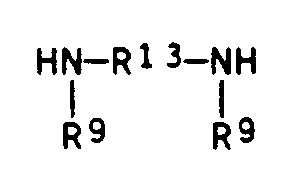
Eine weitere Herstellungsmöglichkeit der Benzimidazol-1-carbonsäureamide besteht darin Benzimidazol-2-carbonsäuranilide (II) mit einem Halogencarbonsäureamid der Formel (VIII)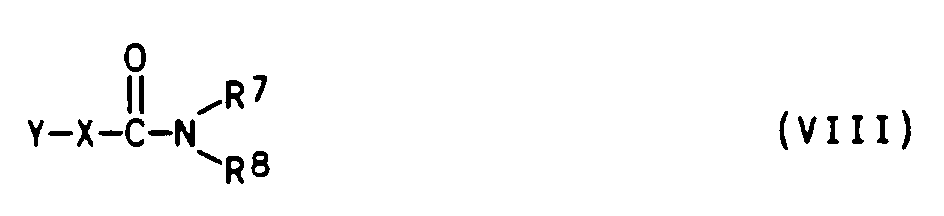

Die Amide der Formel (VIII) und (IX) können nach bekannten Verfahren, beispielsweise durch Reaktionen der entsprechenden Halogencarbonsäurechloride mit den oben beschriebenen primären oder sekundären Mono- oder Diaminen, hergestellt werden. - 6) Die Benzimidazol-1-carbonsäuren (Ia) können über im Lack enthaltende Bindemittel in PES-Harze oder Epoxidharze eingebaut und verankert werden. Der Einbau ist sowohl bei der Herstellung der Harze als auch bei der chemischen Vernetzung der Lackharze beim Einbrennvorgang möglich.
Die Einarbeitung kann beispielsweise durch Einmischen der Verbindungen (I) und gegebenenfalls weiterer Additive in die Schmelze nach in der Technik üblichen Verfahren vor oder während der Formgebung, oder auch durch Aufbringen der gelösten oder dispergierten Verbindungen auf das Polymere direkt oder durch Einmischen in eine Lösung, Suspension oder Emulsion des Polymeren, wobei gegebenenfalls das Lösungsmittel nachträglich entfernt werden kann, z.B. durch Verdunsten erfolgen.
Als Polymere kommen z.B. in Betracht: Polyolefine, Polystyrol, Styrolpolymerisate, halogenhaltige Vinylpolymere, Polyacrylate, Polymethacrylate, Polyacrylamide, Polyacrylnitril, Polyvinylalkohol und dessen Acylderivate, Polyacetate, Polyalkylenoxide, Polyphenylenoxide, Polyurethane und Polyharnstoffe, Polysulfone, Polyamide, Polyester, Polycarbonate, vernetzte Polymere aus Aldehyden und Phenolen, Harnstoffe oder Melamin, ungesättigte Polyesterharze, Alkyldharze, duroplastische und thermoplastische Acrylharze.
Gegenstand dieser Erfindung sind somit auch stabilisierte organische Materialien, insbesondere synthetische Polymere, welche 0,05 bis 10, vorzugsweise 0,1 bis 5 Gew.-% einer oder mehrerer Verbindungen der Formel (I) enthalten (bezogen auf das organische Material).
Die erfindungsgemäßen Verbindungen sind nicht nur wirksame Lichtschutzmittel, sondern aufgrund ihrer geringen Flüchtigkeit bei hoher Temperatur auch hervorragend zum Stabilisieren von Polymeren geeignet, welche bei hohen Temperaturen verarbeitet werden müssen. - Die erfindungsgemäßen Verbindungen (I) sind dementsprechend hervorragend zum Stabilisieren von Polyestern wie Polyethylenterephthalat, Polybutylenterephthalat oder deren Copolymeren, von Polyamiden, z.B. Nylon-6, Nylon-6,6, Nylon-6,10 u.a. sowie von Copolymeren von MF- und UF-Harzen, von heißvernetzbaren und thermoplastischen Acrylharzen und von Polyurethanen geeignet.
- Ganz besonders geeignet sind Verbindungen (I) zum Stabilisieren von Lacken, die derartige Polymere enthalten.
- Die mit (I) stabilisierten Materialien können nach bekannten Verfahren in die für die Anwendung üblichen Formen überführt werden, z.B. zu Folien, Fasern, Bändchen, Profile, oder als Bindemittel für Lacke, Klebstoffe, Kitte oder Formmassen verwendet werden.
- In der Praxis können die Verbindungen der Formel I zusammen mit 0,1 bis 5, vorzugsweise 0,5 bis 3 Gew.-% an weiteren üblichen Zusatzstoffen, wie Antioxidantien, weitere Lichtstabilisatoren, oder Gemischen davon angewendet werden.
- Solche üblichen Zusatzstoffe sind z.B.: Antioxidantien, UV-Absorber und Lichtschutzmittel wie 2-(2'-Hydroxyphenyl)-benztriazole, 2,4-Bis-(2'-hydroxyphenyl)-6-alkyl-s-triazine, 2-Hydroxybenzophenone, 1,3-Bis-(2'-hydroxybenzoyl)-benzole, Ester von gegebenenfalls substituierten Benzoesäuren, Acrylate, außerdem Nickelverbindungen, sterisch gehinderte Amine, Metalldesaktivatoren, Phosphite, peroxidzerstörende Verbindungen, Polyamidstabilisatoren, basische Co-Stabilisatoren, Nukleierungsmittel und sonstige Zusätze wie Weichmacher, Gleitmittel, Emulgatoren, Füllstoffe, Ruß, Kaolin, Talk, Glasfasern, Pigmente, optische Aufheller, Flammschutzmittel und Antistatica.
- Die Verbindungen der Formel (I) eignen sich auch hervorragend zum Schutz von ABS-Polymeren und insbesondere von Polyurethanen, die sich von Polyethern, Polyestern und Polybutadien mit endständigen Hydroxylgruppen und aliphatischen oder aromatischen Polyisocyanaten ableiten, sowie deren Vorprodukte gegen Abbau durch Wärme- und insbesondere durch Lichteinwirkung.
- Eine verbesserte stabilisierende Wirkung erzielt man, wenn man zusätzlich ein bekanntes Antioxidans, z.B. eine Verbindung auf der Basis sterisch gehinderter Phenole oder einen Schwefel oder Phosphor enthaltenden Costabilisator verwendet.
- Als derartiger phenolische Antioxidationsmittel kommen z.B. 2,6-Di-tert.-butyl-4-methylphenol, n-Octadecyl-β-(3,5-di-tert.-butyl-4-hydroxyphenyl)-propionat, 1,1,3-Tris-(2-methyl-4-hydroxy-5-tert.-butyl-phenyl)-butan, 1,3,5-Trimethyl-2,4,6-tris-(3,5-di-tert.-butyl-4-hydroxy-benzyl)-benzol, 1,3,5-Tris-(3,5-di-tert.-butyl-4-hydroxybenzyl)-isocyanurat, 1,3,5-Tris-[3,5-di-tert.-butyl-4-hydroxyphenyl-propionyloxy-ethyl]-isocyanurat, 1,3,5-Tris-(2,6-di-methyl-3-hydroxy-4-tert.-butylbenzyl)-isocyanurat, Pentaerythrit-tetrakis-[-(3,5-di-tert.-butyl-4-hydroxy-phenyl)-propionat] in Betracht.
- Als phosphorhaltige Antioxidantien sind z.B. zu nennen: Tis-(nonylphenyl)-phosphit, Distearylpentaerythritdiphosphit, Tris-(2,4-di-tert.-butyl-phenyl)-phosphit, Tris-(2-tert.-butyl-4-methylphenyl)-phosphit, Bis-(2,4-di-tert.-butylphenyl)-pentaerythritdiphosphit, Tetrakis-(2,4-di-tert.-butylphenyl)-4,4'-biphenylendiphosphit.
- Als Schwefel enthaltende Antioxidationsmittel sind z.B. Dilaurylthiodipropionat, Dimyristylthiodipropionat, Distearylthiodipropionat, Pentaerythrittetrakis-(β-laurylthiopropionat), Pentaerythrittetrakis-(β-hexyl-thiopropionat) zu nennen.
- Eine besonders gute Stabilisierung erhält man, wenn man zu den Verbindungen der Formeln (I) noch mindestens einen Lichtstabilisator aus der Verbindungsklasse der sterisch gehinderten Amine in üblicher Konzentration zusetzt.
- Als sterisch gehinderte Amine kommen z. B. in Betracht: Bis-(2,2,6,6-tetramethylpiperidyl)-sebacat, Bis-(1,2,2,6,6-pentamethylpiperidyl)-sebacat, Bis(-(1,2,2,6,6-pentamethylpiperidyl)-ester, das Kondensationsprodukt von 1-Hydroxyethyl-2,2,6,6-tetramethyl-4-hydroxypiperidin und Bernsteinsäure, das Kondensationsprodukt von N,N'-(2,2,6,6-Tetramethylpiperidyl)-hexamethylendiamin und 4-tert.-Octylamino-2,6-dichlor-1,3,5-s-triazin, Tris-(2,2,6,6-Tetramethylpiperidyl)-nitrilotriacetat, Tetrakis-(2,2,6,6-tetramethyl-4-piperidyl)-1,2,3,4-butan-tetracarbonsäure, 1,1'-(1,2-Ethandiyl)-bis-(3,3,5,5-tetramethylpiperazinon), die Kondensationsprodukte von 4-Amino-2,2,6,6-tetramethylpiperidinen und Tetramethylolacetylendiharnstoffen.
- Eine ganz besonders gute Stabilisierung von Polyurethanen erhält man, wenn das Polyurethan mit einem Gemisch aus mindestens einer Verbindung der Formel (I), mindestens einem der oben genannten Antioxidantien und mindestens einer der sterisch gehinderten Aminverbindungen stabilisiert wird.
- Die Schwerflüchigkeit, insbesondere wenn diese mit guter Substratverträglichkeit und Löslichkeit kombiniert ist, erlaubt die unproblematische Einarbeitung der erfindungsgemäßen Verbindungen in das Polymer, das auch nach der Verarbeitung bei höheren Temperaturen hervorragend stabilisiert ist.
- Die hohe Substratverträglichkeit der erfindungsgemäßen Verbindungen (I) zusammen mit der bereits diskutierten Schwerflüchtigkeit gestattet die Verarbeitung und Verwendung der stabilisierten Produkte bei höheren Temperaturen, sowie eine verlängerte Gebrauchsdauer der Produkte bei üblichen Temperaturen. Durch diese Eigenschaften wird das unerwünschte Ausschwitzen des Stabilisators während der Verarbeitung verhindert, was sonst häufig zu Schädigungen der Produktionsanlage führt.
- Die folgenden Beispiele sollen die Erfindung zusätzlich erläutern.
- 112,4 g (0,4 Mol) 4'-Ethoxy-benzimidazol-2-carbonsäureanilid und 165,6 g K₂CO₃ werden in 600 ml Dimethylformamid suspendiert und auf 95 bis 100°C erhitzt. Bei dieser Temperatur werden im Verlauf von 150 Minuten 57 g Chloressigsäure portionsweise in die Reaktionsmischung eingetragen und weitere 5 Stunden gerührt. Zur Aufarbeitung wird das Reaktionsgemisch in 3 l Wasser gegossen. Der pH-Wert wird durch Zugabe von K₂CO₃ auf 11 eingestellt, die ungelösten Bestandteile werden abfiltriert und das Filtrat durch Zugabe von konzentrierter Salzsäure bis zu einem pH-Wert von 1 angesäuert. Das ausgefallene Produkt wird abgesaugt und mit Wasser gut gewaschen. Es werden 78,4 g eines schwach gelben Feststoffes der Formel

mit einem Schmelzpunkt von 234 - 236°C (Zers.) erhalten.Analyse: C₁₈ H₁₇ N₃ O₄ (339,4) Ber.: C 63,72 H 5,02 N 12,39 O 18,87 Gef.: C 63,4 H 5,1 N 12,2 O 18,7 - Verwendet man in dem in Beispiel 1 beschriebenen Verfahren Chlorpropionsäure anstelle Chloressigsäure, so erhält man die entsprechende Benzimidazol-N-propionsäure der Formel

mit dem Schmelzpunkt 205°C (Zers.) - 140,5 g (0,5 Mol) 4'-Ethoxy-benzimidazol-2-carbonsäureanilid und 82,8 g K₂CO₃ werden in 600 ml γ-Butyrolacton suspendiert und 4 Stunden bei 150°C gerührt. Anschließend wird die Reaktionsmischung auf 4 l Wasser gegossen, mit Aktivkohle versetzt und 1 Stunde nachgerührt. Nach dem Filtrieren wird unter Zusatz von Eis und durch Zugabe von konzentrierter Salzsäure (pH = 2 bis 3) die Carbonsäure ausgefällt, abgesaugt und mit Wasser gewaschen. Es werden 162 g eines farblosen Produktes der Formel

vom Schmp.: 172 bis 175°C isoliert.Analyse: C₂₀ H₂₁ N₃ O₄ (367,4) Ber.: C 65,39 H 5,73 N 11,44 O 17,44 Gef.: C 64,7 H 5,9 N 10,9 O 18,3 - 338 g 4'-Ethoxy-benzimidazol-2-carbonsäureanilid, 200 g K₂CO₃ und 174 g Chloressigsäuremethylester werden in 800 ml Dimethylformamid 75 Minuten auf 90 bis 95°C unter Rühren erhitzt. Die Reaktionsmischung wird dann heiß abgesaugt und mit ca. 200 ml heißem Dimethylformamid nachgewaschen. Die erhaltene Lösung wird mit Aktivkohle behandelt und in 10 l Methanol eingerührt. Der ausgefallene Niederschlag wird abgesaugt, mit Methanol gewaschen und bei 80°C getrocknet. Man erhält 258 g des Methylesters mit der Formel

mit dem Schmp.: 140 - 141°C.Analyse: C₁₉ H₁₉ N₃ O₄ (353,4) Ber.: C 64,58 H 5,39 N 11,90 O 18,13 Gef.: C 64,6 H 5,6 N 11,9 O 18,0 - 169 g 4'-Ethoxy-benzimidazol-2-carbonsäureanilid, 100 g K₃CO₃ und 98 g Chlorpropionsäuremethylester werden in 500 ml Dimethylformamid 3,5 Stunden auf 90 bis 95°C erhitzt. Die Aufarbeitung erfolgt nach der in Beispiel 4 beschriebenen Verfahrensweise. Die Fällung des Produktes wird in 4 l Methanol unter Zusatz von 1 kg Eis durchgeführt. Nach Absaugen, Waschen und Trocknen werden 188,1 g eines farblosen Feststoffes der Formel

mit Schmp.: 121 - 122°C isoliert.Analyse: C₂₀ H₂₁ N₃ O₄ (367,4) Ber.: C 65,39 H 5,73 N 11,44 O 17,44 Gef.: C 65,5 H 5,8 N 11,3 O 17,5 - Verwendet man Chlorbuttersäuremethylester anstelle von Chlorpropionsäuremethylester, so erhält man nach der in Beipiel 5 beschriebenen Verfahrensweise den Benzimidazol-N-buttersäure-methylester der Formel

mit dem Schmp.: 110 - 111°C.Analyse: C₂₁ H₂₃ N₃ O₄ (381,4) Ber.: C 66,14 H 6.04 N 11,02 O 16.80 Gef.: C 65,8 H 6,1 N 11,1 O 16,8 - Analog den in Beispiel 4 bis 5 beschriebenen Verfahrensweisen wurden die in Tabelle 1 aufgeführten Benzimidazol-1-carbonsäureester hergestellt.

Tabelle 1 Bsp. R⁴ R⁶ Fp[°C] Analyse C H N O 7 H C₂H₅ 136 - 8 ber. 66,87 5,27 13,0 14,86 gef. 67,2 5,5 12,9 14,5 8 OCH₃ CH₃ 170 - 1 ber. 63,72 5,02 12,38 18,88 gef. 63,5 5,2 12,5 18,5 9 OC₂H₅ C₂H₅ 132 - 3 ber. 65,39 5,73 11,44 17,44 gef. 65,3 5,9 11,5 17,4 10 OC₂H₅ t-C₄H₉ 145 - 8 ber. 66,83 6,34 10,63 16,20 gef. 67,1 6,4 10,4 16,0 11 OC₂H₅ n-C₁₂H₂₅ 88 - 90 ber. 70,96 8,14 8,28 12,62 gef. 70,9 8,3 8,1 12,4 12 OC₂H₅ n-C₁₆H₃₃ 82 - 83 ber. 72,41 8,76 7,46 11,36 gef. 72,7 8,8 7,3 11,4 13 OC₂H₅ n-C₁₈H₃₇ 82 ber. 73,09 9,04 7,11 10,82 gef. 72,9 9,3 6,6 11,2 14 NHCOCH(C₂H₅)C₄H₉ t-C₄H₉ 62 - 5 ber. 68,25 7,37 11,38 13,00 gef. 68,1 7,4 11,6 13,4 - 36,7 g (1-(3-Carboxypropyl)-4'-ethoxy-benzimidazol-2-carbonsäureanilid (Verbindung aus Bsp. 3) werden in 400 ml absoluten Ethanol suspendiert. Bei -5 bis 0°C tropft man 13,1 g Thionylchlorid zu, rührt 2 Stunden bei Raumtemperatur und weitere 4 Stunden bei 40 bis 45°C. Die Reaktionsmischung wird auf 1 l Eiswasser gegossen und mit NaHCO₃ neutralisiert. Der ausgefallene Feststoff wird abgesaugt und mit Wasser gut gewaschen. Man erhält 37,6 g des Ethylesters mit der Formel
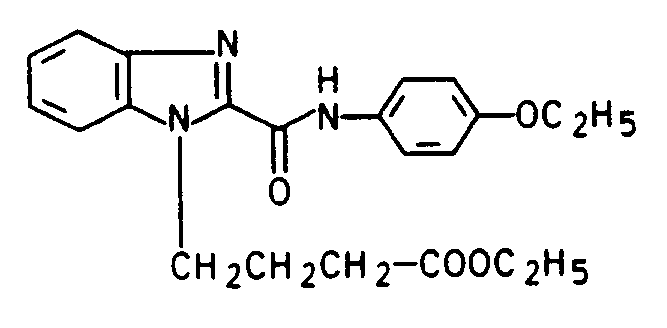
mit dem Schmp.: 94 - 95°C. - Zu einer Suspension von 36,7 g 1-(3-Carboxypropyl)-4'-ethoxy-benzimidazol-2-carbonsäureanilid in 300 ml 2-Ethylhexanol werden 13,1 g Thionylchlorid unter Eiskühlung zugetropft. Das Reaktionsgemisch wird 2 Stunden bei Raumtemperatur und 4 Stunden bei 50 bis 55°C gerührt. Die Suspension wird abgesaugt, mit Ligroin gewaschen, und der erhaltene Rückstand in 500 ml Essigsäureethylester gelöst. Die Lösung wird mit einer gesättigten NaHCO₃-Lösung und zweimal mit ca. 500 ml Wasser gewaschen, über Na₂SO₄ getrocknet und anschließend mit Aktivkohle und Bleicherde gereinigt. Nach dem Abdestillieren der Lösungsmittel verbleiben 41,0 g eines farblosen Produktes der Formel

mit dem Schmp.: 56 - 60°C.Analyse: C₂₈ H₃₇ N₃ O₄ (395,5) Ber.: C 70,14 H 7,73 N 8,77 O 13,36 Gef.: C 70,3 H 7,9 N 8,5 O 13,4 - 17,7 g 1-Carbomethoxymethyl-4'-ethoxy-benzimidazol-2-carbonsäureanilid (Verbindung aus Beispiel 4) werden in 100 ml Isobutanol unter Zusatz von 0,4 g Natriummethylat 2 Stunden auf 100 bis 105°C erhitzt. Das überschüssige Isobutanol wird im Vakuum abgezogen, der Rückstand in Wasser aufgerührt und abgesaugt. Der erhaltene Feststoff wird in 400 ml Aceton gelöst, die Lösung mit Aktivkohle gereinigt und auf 1,5 l Eiswasser gegossen. Nach dem Absaugen, Waschen und Trocknen werden 13,5 g farbloses Produkt der Formel

mit einem Schmelzpunkt von 80 - 84°C isoliert.Analyse: C₂₂ H₂₅ N₃ O₄ (395,5) Ber.: C 66,83 H 6,33 N 10,63 O 16,21 Gef.: C 66,8 H 6,5 N 10,7 O 16.0 - 17,7 g 1-Carbomethoxymethyl-4'-ethoxy-benzimidazol-2-carbonsäureanilid (Verbindung aus Bsp. 4) werden zusammen mit 80 ml 1-Octanol und 6 g p-Toluolsulfonsäure 7,5 Stunden auf 120 bsi 125°C erhitzt. Die Reaktionsmischung wird in 300 ml Toluol aufgenommen, dreimal mit 800 ml Wasser ausgeschüttelt, und die Toluolphase über Na₂SO₄ getrocknet. Nach dem Reinigen mit Aktivkohle und Bleicherde wird das Lösungsmittel und der überschüssige Alkohol im Vakuum abdestilliert. Man erhält 21,2 g eines schwach gelben Öles mit der Formel

das bei längerem Stehen wachsartig erstarrt (Schmp.: 80 - 81°C)Analyse: C₂₆ H₃₃ N₃ O₄ (451,6) Ber.: C 69,18 H 7,32 N 9,31 O 14,19 Gef.: C 69,1 H 7,2 N 8,9 O 14,0 - Analog Beispiel 18 wurden die folgenden erfindungsgemäßen Ester durch Umesterung der entsprechenden Benzimidazol-1-carbonsäuremethylester mit den entsprechenden Alkoholen hergestellt:
-
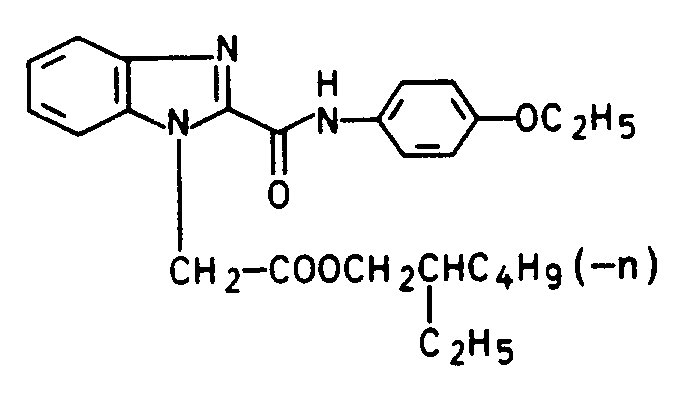
Farbloses Wachs Schmp.: 48 - 51°C.Analyse: C₂₆ H ₃₃ N₃ O₄ (451,6) Ber.: C 69,18 H 7,32 N 9,31 O 14,19 Gef.: C 69,2 H 7,5 N 8,7 O 14,0 -

Schmelzpunkt: 77 - 79°C.Analyse: C₂₇ H₃₅ N₃ O₄ (465,7) Ber.: C 69,67 H 7,53 N 9,03 O 13,77 Gef.: C 69,4 H 7,7 N 8,8 O 13,6 -

Schmp.: 67 - 69°C.Analyse: C₂₇ H₃₅ N₃ O₄ (465,7) Ber.: C 69,67 H 7,53 N 9,03 O 13,77 Gef.: C 69,5 H 7,7 N 8,9 O 14,0 -

Schmelzpunkt: 108 - 109°C.Analyse: C₂₂ H₂₅ N₃ O₄ (395,5) Ber.: C 66,82 H 6,37 N 10,63 O 16,18 Gef.: C 66,9 H 6,4 N 10,6 O 16,0 - Eingesetzter Alkohol = 1 : 1-Gemisch aus Isobutanol und n-Butanol

1 : 1 Gemisch (¹H-NMR-analytisch)Analyse: C₂₄ H₂₉ N₃ O₄ (423,6) Ber.: C 68,08 H 6,86 N 9,93 O 15,13 Gef.: C 68,0 H 7,0 N 9,9 O 15,1 - 17,7 g 1-Carbomethoxymethyl-4'-ethoxy-benzimidazol-2-carbonsäureanilid und 6 g p-Toluolsulfonsäure werden in 60 ml Benzylalkohol 4 Stunden auf 135 bis 140°C erhitzt. Die Reaktionsmischung wird auf 50°C abgekühlt und in ca. 500 ml Methanol gegeben. Durch langsamen Zusatz von 250 ml Eiswasser wird der Benzylester ausgefällt und 15 Minuten nachgerührt. Das farblose Produkt wird abgesaugt, mit Methanol und Ligroin gewaschen. Man erhält 16,3 g eines Feststoffes der Formel

mit dem Schmp.: 130 - 131°C.Analyse: C₂₅ H₂₃ N₃ O₄ (429,6) Ber.: C 69,93 H 5,37 N 9,79 O 14,91 Gef.: C 70,1 H 5,6 N 9,7 O 14,5 - Nach der in Beispiel 24 beschriebenen Verfahrensweise wurden durch Verwendung von 2-Phenylethanol, 2-Phenoxyethanol, Ethylenglykolethylether Diethylenglykolmethylether und Diethylenglykolbutylether die folgenden erfindungsgemäßen Benzimidazol-1-carbonsäureester hergestellt:


- 17,0 g 1-Carboxymethyl-4'-ethoxy-benzimidazol-2-carbonsäureanilid (aus Beisp. 1) und 2,7 g Diethylenglykol werden unter Zusatz von 5 g p-Toluolsulfonsäure in 200 ml Toluol 16 Stunden unter Rückfluß erhitzt. Das Lösungsmittel wird im Vakuum abdestilliert, der Rückstand in 500 ml Methanol heiß gelöst und mit Aktivkohle gereinigt. Unter Zusatz von 400 ml Eiswasser wird das Produkt gefällt, abgesaugt und mit Wasser gewaschen. Es werden 10,5 g eines schwach gelben Produktes der Formel

mit dem Schmp.: 160°C isoliert.Analyse: C₄₀ H₄₀ N₆ O₉ (748,9) Ber.: C 64,17 H 5,35 N 11,23 O 19,23 Gef.: C 63,9 H 5,4 N 11,3 O 19,1 - 38,1 g 1-Carbomethoxypropyl-4'-ethoxy-benzimidazol-2-carbonsäureanilid (Verbindung aus Beisp. 6) und 12 g p-Toluolsulfonsäure werden in 100 ml Triethylenglykol 4,5 Stunden auf 140 bis 145°C erhitzt. Anschließend gießt man die Reaktionsmischung auf 1 l Eiswasser und extrahiert die wässrige Phase mit zweimal 500 ml Essigester. Die organische Phase wird mit Wasser gewaschen, über Na₂SO₄ getrocknet und mit Aktivkohle gereinigt. Nach dem Abdestillieren des Lösungsmittels im Vakuum erhält man 41 g eines Produktes der Formel

in Form eines hellgelben Öles.Analyse: C₂₆ H₃₃ N₃ O₇ (499,6) Ber.: C 62,52 H 6,62 N 8,42 O 22,44 Gef.: C 62,7 H 6,7 N 8,4 O 22,5 - Analog Beispiel 31 wurden durch Umestern der entsprechenden Benzimidazol-carbonsäuremethylester mit Polyglykolen und Glykolethern folgende höhermolekulare Benzimidazol-1-carbonsäureester hergestellt:
-

Hellgelbes Harz.Analyse: C₂₄ H₂₉ N₃ O₇ (471,5) Ber.: C 61,14 H 6,17 N 8,91 O 23,78 Gef.: C 61,1 H 6,2 N 9,0 O 23,9 -
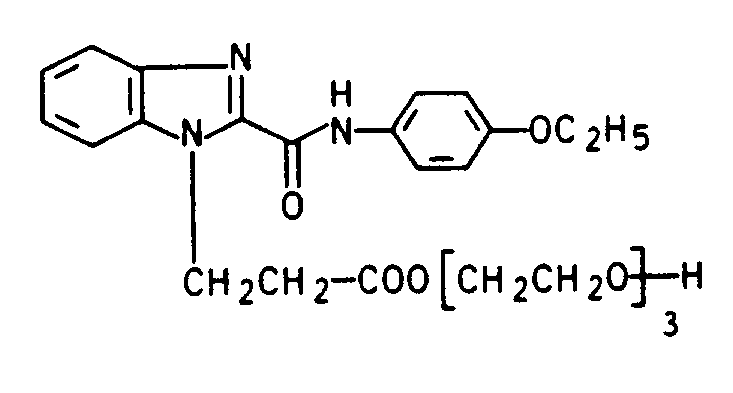
Gelbliches Öl
Analyse: C₂₅ H₂₁ N₃ O₇ (485,5)
UV(CH₂Cl₂): λmax (ε · 10⁻³) = 312 nm (22,4) -

Gelbliches Öl
Analyse: C₂₇ H₃₅ N₃ O₆ (497,6)
UV(CH₂Cl₂): λmax (ε · 10⁻³) = 312 nm (21,6) -

Gelbliches ÖlAnalyse: C₂₆ H₃₃ N₃ O₅ (467,5) Ber.: C 66,81 H 7,07 N 8,99 O 17,13 Gef.: C 66,4 H 7,3 N 9,0 O 17,5 -

Gelbes Öl.
Analyse: C₂₈ H₃₇ N₃ O₆ (511,6)
UV(CH₂Cl₂): λmax (ε · 10⁻³) = 312 nm (23,0) - Durch Umesterung mit Polyethylenglykolen analog Beispiel 31 erhält man die folgenden Polyethylenglykolester der entsprechenden Benzimidazol-1-carbonsäuren, die in Form hellgelber Harze oder Öle nach der in Beispiel 31 beschriebenen Methode isoliert werden. Nach ¹H-NMR-Analyse liegen diese Verbindungen fast ausschließlich als Monoester der folgenden Formel vor.

Bsp. X mittleres Molekulargewicht der Polyglykols gefundene Analysenwerte C H N O 37 CH₂ 200 m = 4,560,8 6,7 8,2 24,9 38 (CH₂)₂ 200 62,1 6,6 8,5 23,5 39 (CH₂)₃ 200 61,7 6,8 7,8 23,9 40 CH₂ 300 m = 6,860,0 6,8 7,3 26,2 41 (CH₂)₂ 300 60,7 6,9 7,2 25,1 42 (CH₂)₃ 300 61,0 7,2 6,9 25,2 43 CH₂ 400 m = 9,159,1 7,1 6,2 27,6 44 (CH₂)₂ 400 59,9 7,3 6,3 26,9 45 (CH₂)₃ 400 60,4 7,4 6,3 26,6 - 35,3 g 1-Carbomethoxymethyl-4'-ethoxy-benzimidazol-2-carbonsäureanilid (Verbindung aus Bsp. 4) werden mit 130 ml Cyclohexylamin unter Stickstoff 2,5 Stunden auf 130 °C erhitzt, wobei das entstehende Methanol abdestilliert wird. Nach dem Abkühlen wird mit 250 ml Methanol verdünnt, das ausgefallene Produkt abgesaugt und mit Methanol gewaschen. Man erhält 20,3 g eines farblosen Feststoffes der Formel

mit dem Schmp.: 239°C.Analyse: C₂₄ H₂₈ N₄ O₃ (420,3) Ber.: C 68,54 H 6,71 N 13,33 O 11,42 Gef.: C 68,7 H 6,9 N 13,2 O 11,2 UV(CH₂Cl₂): λmax) (ε · 10⁻³) = 314 nm (19,6) - Nach der in Beispiel 46 beschriebenen Verfahrensweise erhält man mit Benzylamin ein Produkt der Formel

mit dem Schmp.: 198 - 200°C.Analyse: C₂₅ H₂₄ N₄ O₃ (428,5) Ber.: C 70,09 H 5,61 N 13,08 O 11,22 Gef.: C 70,4 H 5,8 N 13,2 O 10,8 - Verwendet man nach Beispiel 46 Anilin statt Cyclohexylamin, so erhält man das 1-Carboxyanilido-methyl-benzimidazol der Formel

mit dem Schmp.: 246 - 248°C.Analyse: C₂₄ H₂₂ N₄ O₃ (414,3) Ber.: C 69,57 H 5,32 N 13,52 O 11,59 Gef.: C 69,6 H 5,4 N 13,4 O 11,4 - 35,3 g 1-Carbomethoxymethyl-4'-ethoxy-benzimidazol-2-carbonsäureanilid (Verbindung aus Bsp. 4) werden in 70 ml 3-(2-Ethylhexoxy)-propylamin 4,5 Stunden bei einer Temperatur von 135 bis 140°C gerührt. Die Reaktionsmischung wird nach dem Abkühlen auf ca. 80°C in 1000 ml Methanol gegossen. Durch langsame Zugabe von 600 ml Eiswasser wird das Produkt ausgefällt, abgesaugt und mit Wasser gewaschen. Der erhaltene Rückstand wird nochmals in 500 ml Methanol in der Hitze gelöst, mit Aktivkohle behandelt, und wieder durch Zugabe von 600 ml Eiswasser gefällt. Nach dem Absaugen, Waschen und Trocknen resultieren 43,0 g farbloser Feststoff mit der Formel

und dem Schmp.: 140 - 141°C.Analyse: C₂₉ H₄₀ N₄ O₄ (508,7) Ber.: C 68,50 H 7,88 N 11.02 O 12,6 Gef.: C 68,2 H 8,0 N 10,9 O 12,2 - Durch Umsetzen von 1-Carbomethoxyethyl-4'-ethoxy-benzimidazol-2-carbonsäureanilid (aus Bsp. 5) mit 3-(2-Ethylhexoxy)-propylamin analog Beispiel 49 erhält man die Verbindung der Formel

mit dem Schmp.: 118 - 119 °C.Analyse: C₃₀ H₄₂ N₄ O₄ (522,7) Ber.: C 68, 96 H 8,05 N 10,73 O 12,26 Gef.: C 69,1 H 8,2 N 10,6 O 12,3 - Analog Beispiel 49 und 50 wird aus 1-Carbomethoxypropyl-4'-ethoxybenzimidazol-2-carbonsäureanilid (aus Bsp. 6) die Verbindung der Formel

mit dem Schmp.: 108 - 110°C erhalten.Analyse: C₃₁ H₄₄ N₄ O₄ (536,8) Ber.: C 69,40 H 8,22 N 10,44 O 11,94 Gef.: C 69,2 H 8,4 N 10,3 O 11,9 - 57,2 g 1-Carbomethoxypropyl-4'-ethoxybenzimidazol-2-carbonsäureanilid (Verbindung aus Bsp. 6) und 12 g p-Toluolsulfonsäure werden in 230 ml Iso-Decanol 3 Stunden bei 140°C gerührt. Die heiße Reaktionsmischung wird in 1 l Eiswasser gegossen und anschließend mit 500 ml Essigsäureethylester extrahiert. Die organische Phase wäscht man zweimal mit 500 ml Wasser und reinigt sie dann mit Aktivkohle und Bleicherde. Das Lösungsmittel wird im Vakuum abdestilliert und man erhält 69 g eines schwach gelben Öles, das dem Produkt mit der Formel

entspricht.
C₃₀H₄₁N₃O₄ (509,4)
UV (CH₂Cl₂): λmax. (ε · 10⁻³) = 313 nm (20,8). - Zu einer Suspension aus 73,4 g 1-(3-Carboxypropoxypropyl)4'-ethoxy-benzimidazol-2-carbonsäureanilid (Verbindung aus Bsp. 3) und 400 ml n-Butyltriglykol werden bei -5 bis 0°C 26,2 g Thionylchlorid zugetropft. Die Reaktionsmischung wird 0,5 Stunden bei Raumtemperatur und 2,5 Stunden bei 80°C gerührt und anschließend auf 1,5 l Eiswasser gegeben. Man stellt mit NaHCO₃ auf pH 7 - 8 und extrahiert 3mal mit 500 ml Essigsäureethylester. Die vereinigten organischen Phasen werden mit 500 ml Wasser gewaschen, über Na₂SO₄ getrocknet und mittels Aktivkohle und Bleicherde gereinigt. Nach dem Einengen im Vakuum verbleiben 105 g eines gelblichen Öles, das dem Produkt mit der Formel

entspricht.
C₃₀H₄₁N₃O₄ (555,3)
UV (CH₂Cl₂): λmax. (ε · 10⁻³) = 313 nm (19,1). - 38,1 g des Produkt aus Beispiel 6 wurden in 100 ml n-Octylamin 7,5 h auf 140 bis 145°C erhitzt. Nach Abdestillieren von ca. 20 ml n-Octylamin wurde die Reaktionsmischung mit 700 ml Ligroin versetzt, der ausgefallene Niederschlag abgesaugt, mit Ligroin gewaschen und getrocknet. Man erhielt 41,4 g der Verbindung der Formel

als farblosen Feststoff von Schmp. 137 bis 138°C .Analyse: C₂₈H₃₈N₄O₃ (478,3) Ber.: C 70,25 H 8,01 N 11,71 O 10,03 Gef.: C 70,1 H 8,3 N 11,8 O 10,2 - 30,5 g des Produktes aus Beispiel 6 wurden in 100 ml Oleylamin 13 h auf 140 bis 145°C erhitzt. Nach Abkühlen auf 70°C wurde die Reaktion in 800 ml Methanol gegossen und 1 h gerüht. Der ausgefallene Niederschlag wurde abgesaugt, mit Methanol gewaschen und bei 50°C in Vakuum getrocknet. Man erhielt 25,5 g Verbindung der Formel

als farblosen Feststoff vom Schmp. 114 bis 116°C . - In eine Lösung von 18,4 g des Produktes aus Beispiel 3 und 14,2 g Di-n-butylamin in 180 ml Toluol wurden bei 10 bis 15°C Thionylchlorid zugetropft. Nach 1,5 h bei 40°C und 6 h bei 80°C wurde eine Mischung aus 300 ml Eiswasser und 100 ml 10 %iger Salzsäure gegossen. Die abgetrennte organische Phase wurde mit 300 ml 10 %iger Salzsäure und anschließend mit gesättigter Natriumhydrogencarbonatlösung ausgeschüttelt. Die organische Phase wurde 2 mal mit je 7,5 g Aktivkohle und 7,5 g Bleicherde 1 h lang ausgekocht. Nach dem Filtrieren wurde das Lösungsmittel im Wasserstrahlvakuum abdestilliert und der Rückstand aus 450 ml Ligroin umkristallisiert. Man erhielt nach Absaugen und Trocknen 13,3 g der Verbindung der Formel

als farblosen Feststoff von Schmp. 78 bis 80°C. - Analog Beispiel 57 erhält man durch Umsetzung des Produkts aus Beispiel 3 mit Aminen und Thionylchlorid in Toluol die Amide der folgenden Formel:

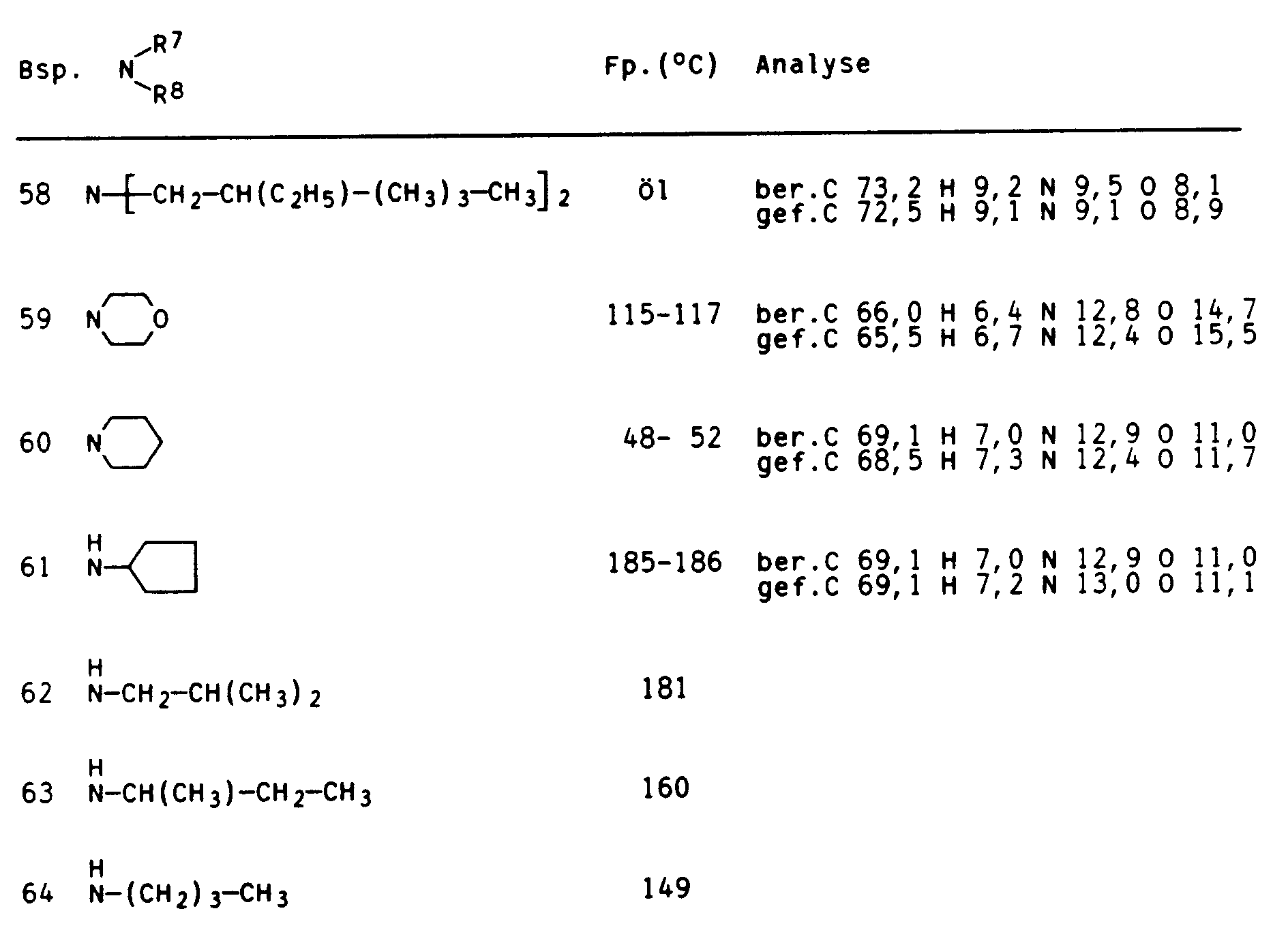
- Eine Polyolkomponente der Zusammensetzung 41,9 Teile eines Polyetherols der OH-Zahl von 29,0 das durch Addition von Propylenoxid und Ethylenoxid an Propylenglykol erhalten wurde und ungefähr 84 % primäre Hydroxylgruppen besitzt und 42,5 Teile eines Polyetherols der OH-Zahl von 27,0, das durch Addition von Propylenoxid und Ethylenoxid an Trimethylolpropan erhalten wurde und ungeführ 88 % primäre Hydroxylgruppen besitzt und 8,1 Teile 1,4-Butandiol und 1,724 Teile 25 %ige Lösung von Diazabicyclooctan in 1,4-Butandiol und 0,016 Teile Dibutylzinndilaurat und 0,1 Teile des Siliconstabilisators OS 710 der Firma Bayer und 5,49 Teile Frigen 11 und 0.17 Teile Wasser wurde mit den angegebenen Stabilisatoren versetzt und im Mischungsverhältnis 100 : 48,5 mit einem 23,0 %-isocyanatgruppenhaltigen Prepolymeren bei 25°C Komponenten- und Werkzeugtemperatur zu Prüfplatten verschäumt. Das NCO-Prepolymer wurde hergestellt aus 87,17 Teilen 4,4'-Diphenylmethandiisocyanat und 4,83 Teilen eines Polyetherols mit der OH-Zahl von 250, das durch Addition von Propylenoxid an Propylenglykol erhalten wurde und 8,0 Teile Dipropylenglykol.
- Die Proben wurden im Xenotest® 450 belichtet und an den Proben der Yellowness Index (YI) gemäß ASTM D 1925 bestimmt. Die Ergebnisse sind in der Tabelle 2 zusammengestellt.
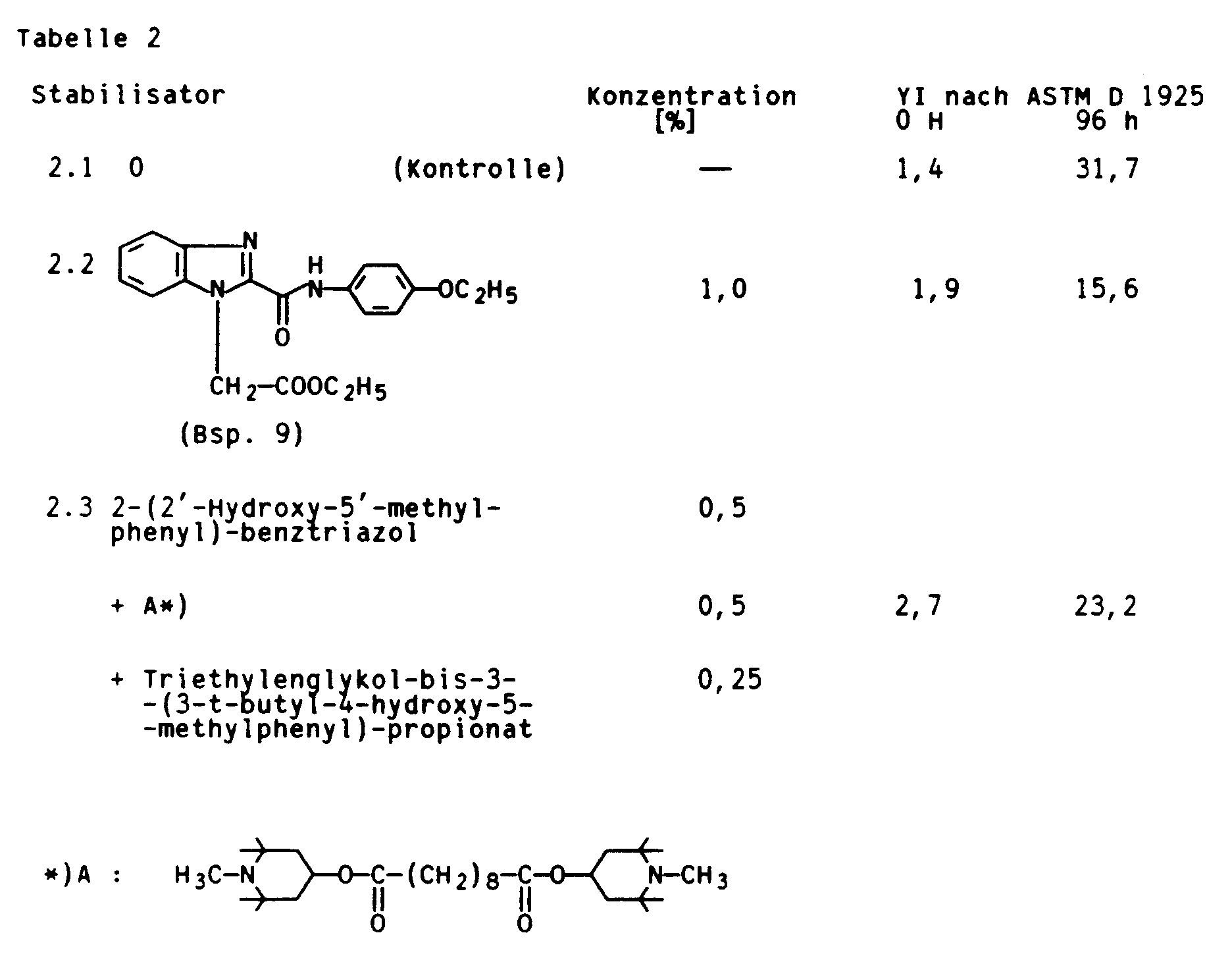
- Die folgenden in Tabelle 3 aufgeführten Proben wurden analog Anwendungsbeispiel 1 präpariert und geprüft.
Tabelle 3 Stabilisator Konzentration [%] YI nach ASTM D 1925 0 H 96 h 3.1 0 (Kontrolle) - 5,0 32,5 3.2 Verbind. aus Bsp. 27 0,5 + A 0,5 4,2 21,1 + B**) 0,25 3.3 Verbind. aus Bsp. 19 0,5 + A 0,5 5,9 20,6 + B**) 0,25 3.4 Verbind. aus Bsp. 28 0,5 + A 0,5 5,0 22,8 + B**) 0,25 3.5 verbind. aus Bsp. 10 0,5 + A 0,5 3,2 16,2 + B 0,25 **) B : Gemisch aus 1 Gew.-Teil α-Tocopherol und 10 Gew.-Teilen Tris(nonyl-phenyl)phosphit - Nach der im Anwendungsbeispel 1 beschriebenen Methode wurden die in Tabelle 4 aufgeführten Proben hergestellt und belichtet. Zur Stabilisierung wurden jeweils Gemische aus 0,5 % UV-Absorber, 0,5 % sterisch gehindertem Amin (Verbindung A aus Anwendungsbeispiel 1) und 0,25 % Antioxidans (Triethylenglykol-bis-3-(3-t-butyl-4-hydroxy-5-methylphenyl)-propionat) verwendet.

Polyethylenglykol der mittleren Molekülmasse von 300. - Jeweils 0,4 g des in Tabelle 5 angegebenen Stabilisators werden in 55,6 g spritzfertigem Klarlack, bestehend aus 1500 Teilen Acrylat-Einbrennlack und 167 Teilen Xylol, bis zur vollständigen Lösung eingerührt.
- Die fertige Lacklösung wird auf ein Quarzglas aufgerakelt (Schichtdicke ca. 40 »m) und 5 Stunden bei 140°C eingebrannt. Zur Bestimmung des Verlustes an UV-Absorber während des Einbrennvorganges werden vor und nach dem Einbrennen Absorptionsspektren aufgenommen und der Verlust aus der Abnahme der optischen Dichte im Absorptionsmaximum bestimmt.
Tabelle 5 Stabilisator Prozentualer Verlust nach 5 h bei 140°C 5.1 Verbindung aus Bsp. 6 7 5.2 Verbindung aus Bsp. 20 5 5.3 Verbindung aus Bsp. 25 6,3 5.4 Verbindung aus Bsp. 32 2,7 5.5 Verbindung aus Bsp. 34 3,7 5.6 Verbindung aus Bsp. 36 5 5.7 Verbindung aus Bsp. 39 4 5.8 Verbindung aus Bsp. 40 4 5.9 Verbindung aus Bsp. 42 4 5.10 Verbindung aus Bsp. 51 6
Claims (11)
- Verbindungen der Formel I
 R¹ und R² unabhängig voneinander für H, Cl, C₁- bis C₄-Alkyl, C₁- bis C₄-Alkoxy, für gegebenenfalls durch C₁- bis C₄-Alkyl oder C₁- bis C₄-Alkoxy substituiertes Phenyl oder C₇- bis C₉-Phenalkyl,R³ und R⁴ unabhängig voneinander für H, C₁- bis C₁₈-Alkyl, durch -O- ein- oder mehrfach unterbrochenes C₃- bis C₁₈-Alkyl, C₁- bis C₁₈-Alkoxy, durch -O- ein- oder mehrfach unterbrochenes C₄- bis C₁₈-Alkoxy, gegebenenfalls durch C₁- bis C₄-Alkyl oder durch C₁- bis C₄-Alkoxy substituiertes Phenyl, C₇- bis C₁₅-Phenylalkyl, Phenoxy, C₇- bis C₁₅-Phenylalkyloxy, für C₁- bis C₄-Hydroxyalkyl, C₁- bis C₄-Hydroxyalkoxy, C₁- bis C₁₂-Alkylcarbonylamino, C₁- bis C₁₂-Alkanoyloxy, Benzoylamino oder Benzoyloxy oder R³ und R⁴ zusammen für Methylendioxy oder Ethylendioxy,X für C₁- bis C₅-Alkylen,n für 1 oder 2 undR⁵worina) - wenn n = 1 ist - für
Cl, -OR⁶ oder b) - wenn n = 2 ist - für
einen zweiwertigen Rest der Formeln
-O-R¹²-O- oder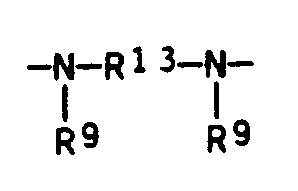 R⁶ H, gegebenenfalls durch 1 bis 3 OH-Gruppen oder durch -O-COR⁹ substituiertes C₁-C₁₈-Alkyl, durch -O-, -NR⁹- ein- oder mehrfach unterbrochenes C₃-C₁₈-Alkyl, das gegebenenfalls durch -OH substituiert ist, gegebenenfalls durch OH substituiertes C₅-C₁₂-Cycloalkyl, gegebenenfalls durch OH substituiertes C₂-C₁₈-Alkenyl, C₇-C₁₅-Phenylalkyl, Phenoxyethyl,
 R⁷ und R⁸ unabhängig voneinander H, C₁-C₁₈-Alkyl, durch O, -NR⁹-ein- oder mehrfach unterbrochenes C₃-C₁₈-Alkyl, C₅-C₁₂-Cycloalkyl, Phenyl, Naphthyl, C₃-C₁₈-Alkenyl, C₇-C₁₅-Phenylalkyl, C₂-C₄-Hydroxyalkyl oder
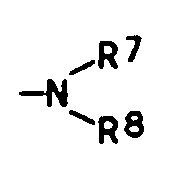 R⁹ H, C₁-C₁₈-Alkyl, C₅-C₁₂-Cycloalkyl, C₃-C₈-Alkenyl, Decenyl, Oleyl, Phenyl, Naphthyl oder C₇-C₁₈-Phenylalkyl,R¹⁰ H, C₁- bis C₁₈-Alkyl, C₇-C₁₈-Phenylalkyl, gegebenenfalls substituiertes Phenyl oder -CH₂OR¹¹,R¹¹ C₁- bis C₁₈-Alkyl, C₃- bis C₁₈-Alkenyl, C₅- bis C₁₂-Cycloalkyl, Phenyl, C₇- bis C₁₅-Phenylalkyl,R¹² C₂- bis C₈-Alkylen, C₄- bis C₈-Alkenylen, Cyclohexylen, durch -O-ein-oder mehrfach unterbrochenes C₄- bis C₁₈-Alkylen,
 R¹³ gegebenenfalls durch -O- ein- oder mehrfach unterbrochenes C₂-bis C₁₂-Alkylen, Cyclohexylen,
 R¹⁴ C₂- bis C₈-Alkylen, durch -O- ein- oder mehrfach unterbrochenes C₄-bis C₁₈-Alkylen, 1,3- oder 1,4-Cyclohexylen, 1,3- oder 1,4-Phenylen,
- Verbindungen nach Anspruch 1, dadurch gekennzeichnet, daß R¹ und R² unabhängig voneinander für H, Cl, C₁- bis C₄-Alkyl, C₁- bis C₄-Alkoxy, C₇- bis C₉-Phenylalkyl,R³ und R⁴ unabhängig voneinander für H, C₁- bis C₁₂-Alkyl, C₁- bis C₁₂-Alkoxy, durch -O- ein- oder mehrfach unterbrochenes C₃- bis C₁₀-Alkyl oder C₃- bis C₁₀-Alkoxy für C₇- bis C₉-Phenylalkyl, C₇- bis C₉-Phenylalkoxy, Phenoxy, C₁- bis C₁₂-Alkylcarbonyloxy, Benzoyloxy, C₁- bis C₁₂-Alkylcarbonylamino, Benzoylamino oder R³ und R⁴ zusammen für Methlyendioxy oder Ethylendioxy undX für C₁ bis C₅-Alkylen stehen.
- Verbindungen gemäß Anspruch 2, dadurch gekennzeichnet, daßn für 1 undR⁵ für
-OR⁶ oder R⁶ H, C₁- bis C₁₈-Alkyl, das gegebenenfalls durch -OH oder -OCOR⁹ substituiert ist, durch -O- ein- oder mehrfach unterbrochenes C₃- bis C₁₈-Alkyl, das gegebenenfalls durch -OH substituiert ist, gegebenenfalls durch -OH substituiertes C₅- bis C₁₂-Cycloalkyl oder C₂- bis C₁₈-Alkenyl, C₇- bis C₁₅-Phenylalkyl, Phenoxyethyl,
 R⁷ und R⁸ unabhängig voneinander für H, C₁- bis C₁₂-Alkyl, durch -O-, -NR⁹- ein- oder mehrfach unterbrochenes C₃- bis C₁₈-Alkyl, C₅- bis C₁₂-Cycloalkyl, Phenyl, C₇- bis C₁₅-Phenylalkyl oder C₂- bis C₄-Hydroxyalkyl, oder
 R⁹ H, C₁- bis C₄-Alkyl, C₅- bis C₁₂-Cycloalkyl, Phenyl oder Benzyl,R¹⁰ H, C₁- bis C₁₂-Alkyl oder-CH₂OR¹¹ undR¹¹ C₁- bis C₁₂-Alkyl, C₅- bis C₁₀-Cycloalkyl, Phenyl oder C₇- bis C₉-Phenylalkyl bedeuten.
 - Verbindungen nach Anspruch 2, dadurch gekennzeichnet, daßn für 2 undR⁵ für einen zweiwertigen Rest der Formeln
-O-R¹²-O- oder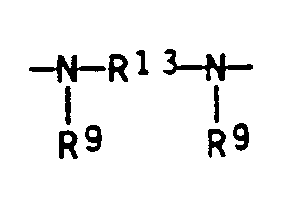 R⁹ H, C₁- bis C₁₈-Alkyl, Cyclohexyl,R¹² C₂- bis C₈-Alkylen, durch -O- ein- oder mehrfach unterbrochenes C₄- bis C₁₈-Alkylen oder
 R¹³ gegebenenfalls durch -O- ein oder mehrfach unterbrochenes C₂- bis C₁₂-Alkylen, Cyclohexylen,
 R¹⁴ C₂- bis C₈-Alkylen, durch -O- ein- oder mehrfach unterbrochenes C₄- bis C₁₈-Alkylen, 1,3- oder 1,4-Cyclohexylen, 1,3- oder 1,4-Phenylen,
- Verbindungen nach Anspruch 1, dadurch gekennzeichnet, daßR¹ und R² unabhängig voneinander für H, Cl, Methyl, Ethyl, Methoxy, Ethoxy, Benzyl, Methylbenzyl oder α,α-Dimethylbenzyl,R³ und R⁴ unabhängig voneinander für H, C₁- bis C₆-Alkyl, C₁- bis C₈-Alkoxy, C₇- bis C₉-Phenylalkyl, C₇- bis C₉-Phenylalkoxy, Phenoxy, Benzoyloxy, C₁- bis C₆-Alkanoyloxy, C₁- bis C₆-Alkanoylamino oder Benzoylamino oder R³ und R⁴ zusammen für Methylendioxy oder Ethylendioxy,X für C₁- bis C₅-Alkylen,n für 1 undR⁵ für -OR⁶ oder
 R⁶ H, C₁- bis C₁₈-Alkyl, durch -O- einfach oder mehrfach unterbrochenes C₃- bis C₁₈-Alkyl, das gegebenenfalls durch -OH substituiert ist, gegebenenfalls durch -OH substituiertes C₅- bis C₁₂-Cycloalkyl, C₂- bis C₁₈-Alkenyl, C₇- bis C₉-Phenylalkyl, Phenoxyethyl,
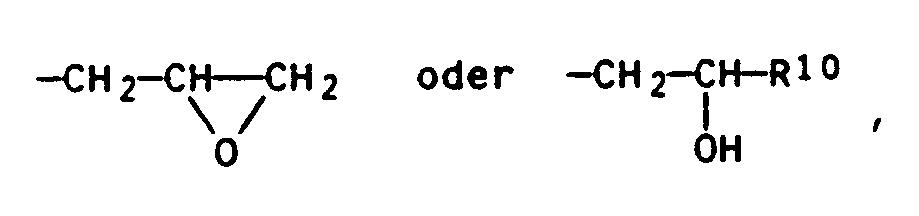 R⁷ und R⁸ H und der andere Rest R⁷ und R⁸ C₁- bis C₁₂-Alkyl, durch -O-, -NR⁹- ein- oder mehrfach unterbrochenes C₃- bis C₁₈-Alkyl, C₅- bis C₁₂-Cycloalkyl, Phenyl, C₉-Phenylalkyl oder C₂- bis C₄-Hydroxyalkyl, C₂- bis C₄-Hydroxyalkyl,R⁹ H oder C₁- bis C₄-Alkyl,R¹⁰ H, C₁- bis C₁₂-Alkyl oder -CH₂OR¹¹ undR¹¹ C₁- bis C₁₂-Alkyl, C₃- bis C₄-Alkenyl, Cyclohexyl, Phenyl oder C₇- bis C₉-Phenylalkyl bedeuten.
 - Verbindungen nach Anspruch 1, dadurch gekennzeichnet, daßR¹ und R² unabhängig voneinander für H, Cl, Methyl, Ethyl, Methoxy, Ethoxy, Benzyl, Methylbenzyl oder α,α-Dimethylbenzyl,R³ und R⁴ unabhängig voneinander für H, C₁- bis C₆-Alkyl, C₁- bis C₈-Alkoxy, C₇- bis C₉-Phenylalkyl, C₇- bis C₉-Phenylalkoxy, Phenoxy, Benzoyloxy, C₁- bis C₆-Alkanoyloxy, C₁- bis C₆-Alkanoylamino oder Benzoylamino oder R³ und R⁴ zusammen für Methylendioxy oder Ethylendioxy,X für C₁- bis C₅-Alkylen,n für 2 undR⁵ für einen zweiwertigen Rest der Formeln
-O-R¹²-O- oder R⁹ H, C₁- bis C₆-Alkyl oder Cyclohexyl,R¹² C₂- bis C₆-Alkylen oder durch -O- ein- oder mehrfach unterbrochenes C₄- bis C₁₈-Alkylen undR¹³ gegebenenfalls durch -O- ein- oder mehrfach unterbrochenes C₂-bis C₁₂-Alkylen oder Cyclohexylen bedeuten.
 - Verwendung der Verbindungen gemäß Anspruch 1, 2, 3, 4, 5 oder 6 als Lichtschutzmittel für organische Materialien.
- Stabilisiertes organisches Material, enthaltend 0,05 bis 10 Gew.-% - bezogen auf das organische Material - einer oder mehrerer Verbindungen gemäß Anspruch 1, 2, 3, 4, 5 oder 6.
- Stabilisiertes organisches Material nach Anspruch 8, dadurch gekennzeichnet, daß das Material ein synthetisches Polymer ist.
- Stabilisiertes organisches Material gemäß Anspruch 9, dadurch gekennzeichnet, daß das Polymer ein Polyester, Polyamid, heißvernetzbares Acrylharz, thermoplastisches Acrylharz, MF- oder UF-Harz, ABS oder ein Polyurethan ist.
- Lack, enthaltend stabilisiertes organisches Material gemäß Anspruch 10.
Applications Claiming Priority (2)
| Application Number | Priority Date | Filing Date | Title |
|---|---|---|---|
| DE3828535A DE3828535A1 (de) | 1988-08-23 | 1988-08-23 | Benzimidazol-2-carbonsaeureanilide, ihre verwendung als lichtschutzmittel fuer organisches material und mit diesen aniliden stabilisiertes organisches material |
| DE3828535 | 1988-08-23 |
Publications (2)
| Publication Number | Publication Date |
|---|---|
| EP0361069A1 EP0361069A1 (de) | 1990-04-04 |
| EP0361069B1 true EP0361069B1 (de) | 1994-06-15 |
Family
ID=6361391
Family Applications (1)
| Application Number | Title | Priority Date | Filing Date |
|---|---|---|---|
| EP89115338A Expired - Lifetime EP0361069B1 (de) | 1988-08-23 | 1989-08-19 | Benzimidazol-2-carbonsäureanilide, ihre Verwendung als Lichtschutzmittel für organisches Material und mit diesen Aniliden stabilisiertes organisches Material |
Country Status (5)
| Country | Link |
|---|---|
| US (2) | US4981975A (de) |
| EP (1) | EP0361069B1 (de) |
| JP (1) | JPH02174764A (de) |
| CA (1) | CA1317297C (de) |
| DE (2) | DE3828535A1 (de) |
Cited By (1)
| Publication number | Priority date | Publication date | Assignee | Title |
|---|---|---|---|---|
| US11566026B2 (en) | 2016-12-22 | 2023-01-31 | Incyte Corporation | Heterocyclic compounds as immunomodulators |
Families Citing this family (28)
| Publication number | Priority date | Publication date | Assignee | Title |
|---|---|---|---|---|
| EP1646614A4 (de) * | 2003-07-01 | 2008-09-10 | Merck & Co Inc | Ophthalmische zusammensetzungen zur behandlung der okularen hypertonie |
| US20050069692A1 (en) * | 2003-09-25 | 2005-03-31 | Koichi Ito | Method for coating porous polyurethane resin |
| EP1742637A4 (de) * | 2004-04-23 | 2011-06-08 | Paratek Pharm Innc | Verbindungen für transkriptionsfaktor-modulation und verfahren zu ihrer verwendung |
| WO2010124097A2 (en) * | 2009-04-22 | 2010-10-28 | Paratek Pharmaceuticals, Inc. | Transcription factor modulating compounds and methods of use thereof |
| KR101435496B1 (ko) * | 2012-10-22 | 2014-08-28 | 한국과학기술연구원 | 미토콘드리아 기능 조절제로서의 벤즈이미다졸 유도체 |
| EP3313846B1 (de) * | 2015-06-25 | 2020-05-06 | Promega Corporation | Thienopyrroleverbindungen unde deren verwendungen als inhibitoren von oplophorus-luciferasen |
| US20170107216A1 (en) | 2015-10-19 | 2017-04-20 | Incyte Corporation | Heterocyclic compounds as immunomodulators |
| MD3377488T2 (ro) | 2015-11-19 | 2023-02-28 | Incyte Corp | Compuși heterociclici ca imunomodulatori |
| ES2916874T3 (es) | 2015-12-17 | 2022-07-06 | Incyte Corp | Derivados de N-fenil-piridina-2-carboxamida y su uso como moduladores de la interacción proteína/proteína PD-1/PD-L1 |
| CA3009474A1 (en) | 2015-12-22 | 2017-06-29 | Incyte Corporation | Heterocyclic compounds as immunomodulators |
| ES2906460T3 (es) | 2016-05-06 | 2022-04-18 | Incyte Corp | Compuestos heterocíclicos como inmunomoduladores |
| EP3464279B1 (de) | 2016-05-26 | 2021-11-24 | Incyte Corporation | Heterocyclische verbindungen als immunmodulatoren |
| SG11201811414TA (en) | 2016-06-20 | 2019-01-30 | Incyte Corp | Heterocyclic compounds as immunomodulators |
| MA45669A (fr) | 2016-07-14 | 2019-05-22 | Incyte Corp | Composés hétérocycliques utilisés comme immunomodulateurs |
| US20180057486A1 (en) | 2016-08-29 | 2018-03-01 | Incyte Corporation | Heterocyclic compounds as immunomodulators |
| US10308644B2 (en) | 2016-12-22 | 2019-06-04 | Incyte Corporation | Heterocyclic compounds as immunomodulators |
| WO2018119286A1 (en) | 2016-12-22 | 2018-06-28 | Incyte Corporation | Bicyclic heteroaromatic compounds as immunomodulators |
| WO2018119221A1 (en) | 2016-12-22 | 2018-06-28 | Incyte Corporation | Pyridine derivatives as immunomodulators |
| JP7161475B2 (ja) | 2016-12-28 | 2022-10-26 | プロメガ コーポレイション | 官能化nanoluc阻害剤 |
| SMT202300065T1 (it) | 2018-03-30 | 2023-05-12 | Incyte Corp | Composti eterociclici come immunomodulatori |
| CN112752756B (zh) | 2018-05-11 | 2024-06-25 | 因赛特公司 | 作为PD-L1免疫调节剂的四氢-咪唑并[4,5-c]吡啶衍生物 |
| TW202115059A (zh) | 2019-08-09 | 2021-04-16 | 美商英塞特公司 | Pd—1/pd—l1抑制劑之鹽 |
| JP7559059B2 (ja) | 2019-09-30 | 2024-10-01 | インサイト・コーポレイション | 免疫調節剤としてのピリド[3,2-d]ピリミジン化合物 |
| EP4058461A1 (de) | 2019-11-11 | 2022-09-21 | Incyte Corporation | Salze und kristalline formen eines pd-1/pd-l1-inhibitors |
| IL302590A (en) | 2020-11-06 | 2023-07-01 | Incyte Corp | Process for preparing PD-1/PD-L1 inhibitor and salts and crystalline forms thereof |
| US11760756B2 (en) | 2020-11-06 | 2023-09-19 | Incyte Corporation | Crystalline form of a PD-1/PD-L1 inhibitor |
| US11780836B2 (en) | 2020-11-06 | 2023-10-10 | Incyte Corporation | Process of preparing a PD-1/PD-L1 inhibitor |
| CN114933742B (zh) * | 2020-11-11 | 2025-01-24 | 绍兴瑞康生物科技有限公司 | 空间位阻可调型弱碱光稳定剂及其制备方法和应用 |
Family Cites Families (7)
| Publication number | Priority date | Publication date | Assignee | Title |
|---|---|---|---|---|
| NL6913261A (de) * | 1968-09-09 | 1970-03-11 | ||
| US4011236A (en) * | 1968-09-09 | 1977-03-08 | Merck & Co., Inc. | N-(benzimidazol-2-yl)arylcarboxamides as ultraviolet (uv) light absorbers |
| US3740413A (en) * | 1970-05-15 | 1973-06-19 | American Home Prod | 2-benzimidazolecarboxamides |
| US3661925A (en) * | 1970-05-15 | 1972-05-09 | American Home Prod | Process for the preparation of 2-benzimidazolecarboxamides |
| US3752765A (en) * | 1971-08-05 | 1973-08-14 | Shell Oil Co | Dibenzimidazole diurea grease thickening agents |
| AU604506B2 (en) * | 1986-10-09 | 1990-12-20 | Wellcome Foundation Limited, The | 1-(substituted alkenyl) benzimidazole derivatives |
| DE3708292A1 (de) * | 1987-03-14 | 1988-09-29 | Basf Ag | Gegen einwirkung von licht stabilisierte polymere sowie neue imidazol-2-carbonsaeureanilide |
-
1988
- 1988-08-23 DE DE3828535A patent/DE3828535A1/de not_active Withdrawn
-
1989
- 1989-08-11 US US07/392,300 patent/US4981975A/en not_active Expired - Fee Related
- 1989-08-16 CA CA000608455A patent/CA1317297C/en not_active Expired - Fee Related
- 1989-08-19 EP EP89115338A patent/EP0361069B1/de not_active Expired - Lifetime
- 1989-08-19 DE DE58907885T patent/DE58907885D1/de not_active Expired - Lifetime
- 1989-08-23 JP JP1215142A patent/JPH02174764A/ja active Pending
-
1990
- 1990-05-18 US US07/525,049 patent/US4985566A/en not_active Expired - Fee Related
Cited By (1)
| Publication number | Priority date | Publication date | Assignee | Title |
|---|---|---|---|---|
| US11566026B2 (en) | 2016-12-22 | 2023-01-31 | Incyte Corporation | Heterocyclic compounds as immunomodulators |
Also Published As
| Publication number | Publication date |
|---|---|
| US4981975A (en) | 1991-01-01 |
| EP0361069A1 (de) | 1990-04-04 |
| US4985566A (en) | 1991-01-15 |
| DE58907885D1 (de) | 1994-07-21 |
| DE3828535A1 (de) | 1990-03-08 |
| JPH02174764A (ja) | 1990-07-06 |
| CA1317297C (en) | 1993-05-04 |
Similar Documents
| Publication | Publication Date | Title |
|---|---|---|
| EP0361069A1 (de) | Benzimidazol-2-carbonsäureanilide, ihre Verwendung als Lichtschutzmittel für organisches Material und mit diesen Aniliden stabilisiertes organisches Material | |
| EP0284828B1 (de) | Gegen Einwirkung von Licht stabilisierte Polymere sowie neue Imidazol-2-carbonsäure-anilide | |
| EP0316582A1 (de) | 4-Formylaminopiperidinderivate, deren Verwendung als Stabilisatoren und damit stabilisiertes organisches Material | |
| EP0213570B1 (de) | Glykolurilderivate und ihre Verwendung als Stabilisatoren für Polymere | |
| EP0029522A1 (de) | s-Triazinderivate, ihre Herstellung aus Halogentriazinylaminen und Polyaminen, und ihre Verwendung als Stabilisatoren | |
| JPH0399060A (ja) | 立体障害性アミン、及びニトロン部分の両方を含むポリマー安定剤 | |
| DE2719132A1 (de) | Modifizierte polyurethane mit erhoehter lichtbestaendigkeit | |
| EP0044499B1 (de) | Triazinylaminotriazine, ihre Herstellung, ihre Verwendung zum Stabilisieren von synthetischen Polymeren sowie die mit ihnen stabilisierten Produkte | |
| EP0070436A1 (de) | Stabilisatorhaltige Reaktivkomponenten für PU-Schaumstoffe, neue Stabilisatoren und ein Verfahren zur Herstellung der Stabilisatoren | |
| EP0358025B1 (de) | N-substituierte Benzimidazol-2-carbonsäureanilide, deren Verwendung als Lichtschutzmittel, insbesondere Polymere und diese Anilide enthaltendes organisches Material | |
| DE1670332A1 (de) | Neue Aryl-1,3,5-triazine,Verfahren zu deren Herstellung und Verwendung | |
| EP0176604B1 (de) | Hochmolekulare piperidingruppenhaltige Ester, Verfahren zu ihrer Herstellung, ihre Verwendung als Stabilisatoren für Polymere, sowie diese Verbindungen enthaltende Polymere | |
| EP0272589B1 (de) | Polyalkylpiperidinderivate mit Alkylenbrücken und ihre Verwendung als Stabilisator | |
| EP0349862B1 (de) | 2,6-Polyalkyl-piperidin-4-amide, deren Verwendung als Stabilisatoren, insbesondere für Kunststoffe, sowie diese Amide enthaltendes organisches Material | |
| EP0108709A2 (de) | Neue Polyalkylpiperidinverbindungen | |
| DE2849444A1 (de) | Beta aminocrotonsaeurepiperidylester, verfahren zu ihrer herstellung und ihre verwendung als lichtschutzmittel | |
| EP0358016B1 (de) | 2,6-Polyalkylpiperidinsubstituierte Benzimidazol-2-carbonsäureanilide und deren Verwendung zum Stabilisieren von organischem Material | |
| EP0272590B1 (de) | Glykolurilderivate und ihre Verwendung als Stabilisatoren für Polymere | |
| EP0272588B1 (de) | Acetylendiharndstoffderivate und ihre Verwendung zum Stabilisieren von Kunststoffen | |
| DE19618197A1 (de) | Neue sterisch gehinderte Piperidinderivate als Lichtschutzmittel für Polymere | |
| EP0742808A1 (de) | Kondensations- und additionspolymere mit n,n'-verbrückten bis-tetramethylpiperidinyloxy-gruppierungen | |
| WO1993011111A1 (de) | POLYALKYLPIPERIDINGRUPPEN ENHALTENDEN β-AMINOACRYLSÄURE-ESTER-DERIVATE | |
| EP3686240A1 (de) | Hydrolysestabilisierte polyethylenterephthalat (pet) haltige zusammensetzungen | |
| EP0481300A2 (de) | Polyalkylpiperidinderivate und deren Verwendung als Lichtschutzmittel | |
| EP0399278A2 (de) | Heterocyclische Amidinderivate |
Legal Events
| Date | Code | Title | Description |
|---|---|---|---|
| PUAI | Public reference made under article 153(3) epc to a published international application that has entered the european phase |
Free format text: ORIGINAL CODE: 0009012 |
|
| 17P | Request for examination filed |
Effective date: 19900127 |
|
| AK | Designated contracting states |
Kind code of ref document: A1 Designated state(s): BE CH DE ES FR GB IT LI NL |
|
| 17Q | First examination report despatched |
Effective date: 19911213 |
|
| GRAA | (expected) grant |
Free format text: ORIGINAL CODE: 0009210 |
|
| AK | Designated contracting states |
Kind code of ref document: B1 Designated state(s): BE CH DE ES FR GB IT LI NL |
|
| PG25 | Lapsed in a contracting state [announced via postgrant information from national office to epo] |
Ref country code: NL Effective date: 19940615 Ref country code: ES Free format text: THE PATENT HAS BEEN ANNULLED BY A DECISION OF A NATIONAL AUTHORITY Effective date: 19940615 Ref country code: BE Effective date: 19940615 |
|
| REF | Corresponds to: |
Ref document number: 58907885 Country of ref document: DE Date of ref document: 19940721 |
|
| PGFP | Annual fee paid to national office [announced via postgrant information from national office to epo] |
Ref country code: FR Payment date: 19940722 Year of fee payment: 6 |
|
| PGFP | Annual fee paid to national office [announced via postgrant information from national office to epo] |
Ref country code: CH Payment date: 19940725 Year of fee payment: 6 |
|
| ITF | It: translation for a ep patent filed | ||
| GBT | Gb: translation of ep patent filed (gb section 77(6)(a)/1977) |
Effective date: 19940713 |
|
| PGFP | Annual fee paid to national office [announced via postgrant information from national office to epo] |
Ref country code: GB Payment date: 19940815 Year of fee payment: 6 |
|
| PGFP | Annual fee paid to national office [announced via postgrant information from national office to epo] |
Ref country code: DE Payment date: 19940816 Year of fee payment: 6 |
|
| ET | Fr: translation filed | ||
| NLV1 | Nl: lapsed or annulled due to failure to fulfill the requirements of art. 29p and 29m of the patents act | ||
| PLBE | No opposition filed within time limit |
Free format text: ORIGINAL CODE: 0009261 |
|
| STAA | Information on the status of an ep patent application or granted ep patent |
Free format text: STATUS: NO OPPOSITION FILED WITHIN TIME LIMIT |
|
| 26N | No opposition filed | ||
| PG25 | Lapsed in a contracting state [announced via postgrant information from national office to epo] |
Ref country code: DE Effective date: 19950811 |
|
| PG25 | Lapsed in a contracting state [announced via postgrant information from national office to epo] |
Ref country code: GB Effective date: 19950819 |
|
| PG25 | Lapsed in a contracting state [announced via postgrant information from national office to epo] |
Ref country code: LI Effective date: 19950831 Ref country code: CH Effective date: 19950831 |
|
| REG | Reference to a national code |
Ref country code: CH Ref legal event code: PL |
|
| GBPC | Gb: european patent ceased through non-payment of renewal fee |
Effective date: 19950819 |
|
| PG25 | Lapsed in a contracting state [announced via postgrant information from national office to epo] |
Ref country code: FR Effective date: 19960430 |
|
| REG | Reference to a national code |
Ref country code: FR Ref legal event code: ST |
|
| PG25 | Lapsed in a contracting state [announced via postgrant information from national office to epo] |
Ref country code: IT Free format text: LAPSE BECAUSE OF NON-PAYMENT OF DUE FEES;WARNING: LAPSES OF ITALIAN PATENTS WITH EFFECTIVE DATE BEFORE 2007 MAY HAVE OCCURRED AT ANY TIME BEFORE 2007. THE CORRECT EFFECTIVE DATE MAY BE DIFFERENT FROM THE ONE RECORDED. Effective date: 20050819 |