EP0346094A1 - Prepolymer of aromatic polythiazole - Google Patents
Prepolymer of aromatic polythiazole Download PDFInfo
- Publication number
- EP0346094A1 EP0346094A1 EP89305738A EP89305738A EP0346094A1 EP 0346094 A1 EP0346094 A1 EP 0346094A1 EP 89305738 A EP89305738 A EP 89305738A EP 89305738 A EP89305738 A EP 89305738A EP 0346094 A1 EP0346094 A1 EP 0346094A1
- Authority
- EP
- European Patent Office
- Prior art keywords
- aromatic
- prepolymer
- polythiazole
- reaction
- acid
- Prior art date
- Legal status (The legal status is an assumption and is not a legal conclusion. Google has not performed a legal analysis and makes no representation as to the accuracy of the status listed.)
- Withdrawn
Links
- 125000003118 aryl group Chemical group 0.000 title claims abstract description 41
- -1 aromatic diaminodithiol compound salt Chemical class 0.000 claims abstract description 31
- NBIIXXVUZAFLBC-UHFFFAOYSA-N phosphoric acid Substances OP(O)(O)=O NBIIXXVUZAFLBC-UHFFFAOYSA-N 0.000 claims abstract description 31
- 150000001990 dicarboxylic acid derivatives Chemical class 0.000 claims abstract description 21
- 238000000034 method Methods 0.000 claims abstract description 19
- 229910000147 aluminium phosphate Inorganic materials 0.000 claims abstract description 12
- 238000006116 polymerization reaction Methods 0.000 claims description 28
- 229920000137 polyphosphoric acid Polymers 0.000 claims description 23
- 229920000642 polymer Polymers 0.000 claims description 18
- 238000010438 heat treatment Methods 0.000 claims description 13
- 239000002131 composite material Substances 0.000 claims description 12
- LXEJRKJRKIFVNY-UHFFFAOYSA-N terephthaloyl chloride Chemical group ClC(=O)C1=CC=C(C(Cl)=O)C=C1 LXEJRKJRKIFVNY-UHFFFAOYSA-N 0.000 claims description 10
- 239000011159 matrix material Substances 0.000 claims description 5
- 239000000203 mixture Substances 0.000 claims description 5
- 238000002156 mixing Methods 0.000 claims description 4
- 239000003960 organic solvent Substances 0.000 claims description 4
- 150000007942 carboxylates Chemical group 0.000 claims 1
- 150000002825 nitriles Chemical group 0.000 claims 1
- 230000000379 polymerizing effect Effects 0.000 abstract description 4
- 239000000047 product Substances 0.000 description 23
- 235000011007 phosphoric acid Nutrition 0.000 description 17
- 238000006243 chemical reaction Methods 0.000 description 14
- HSAOVLDFJCYOPX-UHFFFAOYSA-N 2-[4-(1,3-benzothiazol-2-yl)phenyl]-1,3-benzothiazole Chemical compound C1=CC=C2SC(C3=CC=C(C=C3)C=3SC4=CC=CC=C4N=3)=NC2=C1 HSAOVLDFJCYOPX-UHFFFAOYSA-N 0.000 description 13
- 230000000052 comparative effect Effects 0.000 description 11
- 238000002329 infrared spectrum Methods 0.000 description 10
- 238000007363 ring formation reaction Methods 0.000 description 9
- KKEYFWRCBNTPAC-UHFFFAOYSA-N Terephthalic acid Chemical compound OC(=O)C1=CC=C(C(O)=O)C=C1 KKEYFWRCBNTPAC-UHFFFAOYSA-N 0.000 description 8
- 238000003756 stirring Methods 0.000 description 7
- 238000002411 thermogravimetry Methods 0.000 description 7
- OKKJLVBELUTLKV-UHFFFAOYSA-N Methanol Chemical compound OC OKKJLVBELUTLKV-UHFFFAOYSA-N 0.000 description 6
- UIIMBOGNXHQVGW-UHFFFAOYSA-M Sodium bicarbonate Chemical compound [Na+].OC([O-])=O UIIMBOGNXHQVGW-UHFFFAOYSA-M 0.000 description 6
- 125000003277 amino group Chemical group 0.000 description 6
- 239000002904 solvent Substances 0.000 description 6
- 238000004458 analytical method Methods 0.000 description 5
- 150000003839 salts Chemical class 0.000 description 5
- 239000000243 solution Substances 0.000 description 5
- XLYOFNOQVPJJNP-UHFFFAOYSA-N water Substances O XLYOFNOQVPJJNP-UHFFFAOYSA-N 0.000 description 5
- XKRFYHLGVUSROY-UHFFFAOYSA-N Argon Chemical compound [Ar] XKRFYHLGVUSROY-UHFFFAOYSA-N 0.000 description 4
- 230000009102 absorption Effects 0.000 description 4
- 238000010521 absorption reaction Methods 0.000 description 4
- 239000007864 aqueous solution Substances 0.000 description 4
- 239000012153 distilled water Substances 0.000 description 4
- QQVIHTHCMHWDBS-UHFFFAOYSA-N isophthalic acid Chemical compound OC(=O)C1=CC=CC(C(O)=O)=C1 QQVIHTHCMHWDBS-UHFFFAOYSA-N 0.000 description 4
- 238000003828 vacuum filtration Methods 0.000 description 4
- KEQGZUUPPQEDPF-UHFFFAOYSA-N 1,3-dichloro-5,5-dimethylimidazolidine-2,4-dione Chemical compound CC1(C)N(Cl)C(=O)N(Cl)C1=O KEQGZUUPPQEDPF-UHFFFAOYSA-N 0.000 description 3
- HVXLKRWRWNFGBA-UHFFFAOYSA-N 2,5-diaminobenzene-1,4-dithiol;dihydrochloride Chemical compound Cl.Cl.NC1=CC(S)=C(N)C=C1S HVXLKRWRWNFGBA-UHFFFAOYSA-N 0.000 description 3
- VEXZGXHMUGYJMC-UHFFFAOYSA-N Hydrochloric acid Chemical compound Cl VEXZGXHMUGYJMC-UHFFFAOYSA-N 0.000 description 3
- HEMHJVSKTPXQMS-UHFFFAOYSA-M Sodium hydroxide Chemical compound [OH-].[Na+] HEMHJVSKTPXQMS-UHFFFAOYSA-M 0.000 description 3
- FZWLAAWBMGSTSO-UHFFFAOYSA-N Thiazole Chemical group C1=CSC=N1 FZWLAAWBMGSTSO-UHFFFAOYSA-N 0.000 description 3
- BHXFKXOIODIUJO-UHFFFAOYSA-N benzene-1,4-dicarbonitrile Chemical compound N#CC1=CC=C(C#N)C=C1 BHXFKXOIODIUJO-UHFFFAOYSA-N 0.000 description 3
- 125000002915 carbonyl group Chemical group [*:2]C([*:1])=O 0.000 description 3
- 239000007795 chemical reaction product Substances 0.000 description 3
- XTHPWXDJESJLNJ-UHFFFAOYSA-N chlorosulfonic acid Substances OS(Cl)(=O)=O XTHPWXDJESJLNJ-UHFFFAOYSA-N 0.000 description 3
- 150000001991 dicarboxylic acids Chemical class 0.000 description 3
- 238000000113 differential scanning calorimetry Methods 0.000 description 3
- HPGJOUYGWKFYQW-UHFFFAOYSA-N diphenyl benzene-1,4-dicarboxylate Chemical compound C=1C=C(C(=O)OC=2C=CC=CC=2)C=CC=1C(=O)OC1=CC=CC=C1 HPGJOUYGWKFYQW-UHFFFAOYSA-N 0.000 description 3
- 125000001997 phenyl group Chemical group [H]C1=C([H])C([H])=C(*)C([H])=C1[H] 0.000 description 3
- 229910000030 sodium bicarbonate Inorganic materials 0.000 description 3
- 235000017557 sodium bicarbonate Nutrition 0.000 description 3
- 125000003396 thiol group Chemical group [H]S* 0.000 description 3
- UXVMQQNJUSDDNG-UHFFFAOYSA-L Calcium chloride Chemical compound [Cl-].[Cl-].[Ca+2] UXVMQQNJUSDDNG-UHFFFAOYSA-L 0.000 description 2
- SECXISVLQFMRJM-UHFFFAOYSA-N N-Methylpyrrolidone Chemical compound CN1CCCC1=O SECXISVLQFMRJM-UHFFFAOYSA-N 0.000 description 2
- 229910052786 argon Inorganic materials 0.000 description 2
- 239000001110 calcium chloride Substances 0.000 description 2
- 229910001628 calcium chloride Inorganic materials 0.000 description 2
- 150000001718 carbodiimides Chemical class 0.000 description 2
- 150000001875 compounds Chemical class 0.000 description 2
- ZUOUZKKEUPVFJK-UHFFFAOYSA-N diphenyl Chemical compound C1=CC=CC=C1C1=CC=CC=C1 ZUOUZKKEUPVFJK-UHFFFAOYSA-N 0.000 description 2
- 229920006351 engineering plastic Polymers 0.000 description 2
- 239000012065 filter cake Substances 0.000 description 2
- 239000011521 glass Substances 0.000 description 2
- 239000000463 material Substances 0.000 description 2
- 230000000269 nucleophilic effect Effects 0.000 description 2
- 150000003016 phosphoric acids Chemical class 0.000 description 2
- XHXFXVLFKHQFAL-UHFFFAOYSA-N phosphoryl trichloride Chemical compound ClP(Cl)(Cl)=O XHXFXVLFKHQFAL-UHFFFAOYSA-N 0.000 description 2
- 230000009257 reactivity Effects 0.000 description 2
- 238000006798 ring closing metathesis reaction Methods 0.000 description 2
- 239000000126 substance Substances 0.000 description 2
- DLYUQMMRRRQYAE-UHFFFAOYSA-N tetraphosphorus decaoxide Chemical compound O1P(O2)(=O)OP3(=O)OP1(=O)OP2(=O)O3 DLYUQMMRRRQYAE-UHFFFAOYSA-N 0.000 description 2
- 0 *c(cc1N)c(*)cc1S Chemical compound *c(cc1N)c(*)cc1S 0.000 description 1
- VEXZGXHMUGYJMC-UHFFFAOYSA-M Chloride anion Chemical compound [Cl-] VEXZGXHMUGYJMC-UHFFFAOYSA-M 0.000 description 1
- PKSFOMAXEWUAGZ-UHFFFAOYSA-N NC(CCC(C1)C(CCC2N)CC2S)C1S Chemical compound NC(CCC(C1)C(CCC2N)CC2S)C1S PKSFOMAXEWUAGZ-UHFFFAOYSA-N 0.000 description 1
- DWUUPAUTLKFPLO-UHFFFAOYSA-N Nc(c(S)c1)cc(N)c1S Chemical compound Nc(c(S)c1)cc(N)c1S DWUUPAUTLKFPLO-UHFFFAOYSA-N 0.000 description 1
- 239000002253 acid Substances 0.000 description 1
- 150000007513 acids Chemical class 0.000 description 1
- 239000003513 alkali Substances 0.000 description 1
- 125000003368 amide group Chemical group 0.000 description 1
- 239000012298 atmosphere Substances 0.000 description 1
- 230000015572 biosynthetic process Effects 0.000 description 1
- 235000010290 biphenyl Nutrition 0.000 description 1
- 239000004305 biphenyl Substances 0.000 description 1
- 239000006227 byproduct Substances 0.000 description 1
- 125000003178 carboxy group Chemical group [H]OC(*)=O 0.000 description 1
- 230000018044 dehydration Effects 0.000 description 1
- 238000006297 dehydration reaction Methods 0.000 description 1
- 239000006185 dispersion Substances 0.000 description 1
- GNOIPBMMFNIUFM-UHFFFAOYSA-N hexamethylphosphoric triamide Chemical compound CN(C)P(=O)(N(C)C)N(C)C GNOIPBMMFNIUFM-UHFFFAOYSA-N 0.000 description 1
- 150000003840 hydrochlorides Chemical class 0.000 description 1
- 230000003993 interaction Effects 0.000 description 1
- 238000003402 intramolecular cyclocondensation reaction Methods 0.000 description 1
- 150000002500 ions Chemical class 0.000 description 1
- 238000005259 measurement Methods 0.000 description 1
- 239000007769 metal material Substances 0.000 description 1
- 230000003472 neutralizing effect Effects 0.000 description 1
- 239000012299 nitrogen atmosphere Substances 0.000 description 1
- 229920001778 nylon Polymers 0.000 description 1
- 229920002120 photoresistant polymer Polymers 0.000 description 1
- 229920003023 plastic Polymers 0.000 description 1
- 239000004033 plastic Substances 0.000 description 1
- 239000011736 potassium bicarbonate Substances 0.000 description 1
- 229910000028 potassium bicarbonate Inorganic materials 0.000 description 1
- 235000015497 potassium bicarbonate Nutrition 0.000 description 1
- TYJJADVDDVDEDZ-UHFFFAOYSA-M potassium hydrogencarbonate Chemical compound [K+].OC([O-])=O TYJJADVDDVDEDZ-UHFFFAOYSA-M 0.000 description 1
- 229940086066 potassium hydrogencarbonate Drugs 0.000 description 1
- 230000035484 reaction time Effects 0.000 description 1
- 235000011121 sodium hydroxide Nutrition 0.000 description 1
- 238000003786 synthesis reaction Methods 0.000 description 1
- 150000003503 terephthalic acid derivatives Chemical class 0.000 description 1
- 238000002076 thermal analysis method Methods 0.000 description 1
- 238000005979 thermal decomposition reaction Methods 0.000 description 1
- 230000004580 weight loss Effects 0.000 description 1
Images



Classifications
-
- C—CHEMISTRY; METALLURGY
- C08—ORGANIC MACROMOLECULAR COMPOUNDS; THEIR PREPARATION OR CHEMICAL WORKING-UP; COMPOSITIONS BASED THEREON
- C08G—MACROMOLECULAR COMPOUNDS OBTAINED OTHERWISE THAN BY REACTIONS ONLY INVOLVING UNSATURATED CARBON-TO-CARBON BONDS
- C08G75/00—Macromolecular compounds obtained by reactions forming a linkage containing sulfur with or without nitrogen, oxygen, or carbon in the main chain of the macromolecule
- C08G75/32—Polythiazoles; Polythiadiazoles
Definitions
- the present invention relates to a method of stably producing prepolymers of aromatic polythiazoles which can be converted by heating into rigid, high-strength aromatic polymers having excellent heat resistance, mechanical properties, chemical resistance, electric properties, etc.
- aromatic polythiazole has been produced from an aromatic dimercaptodiamine compound and a dicarboxylic acid derivative, particularly a chloride thereof. Because of its excellent mechanical strength, the aromatic polythiazole is expected to be used as a plastic material substituting for metal materials, alone or in combination with other engineering plastics.
- polymer blend-type composite materials having so-called interstitial structure (molecular composite materials) by dispersing so-called rigid, high-strength aromatic polymers such as aromatic polythiazole in soft matrix polymers finely to the extent of molecular level dispersion. Since the unidirectional orientation of the molecular chains of rigid, high-strength polymers in order to increase their strength is not performed in such molecular composite materials, the molecular composite materials show little anisotropy and excellent mechanical strength, heat resistance, solvent resistance, etc.
- the prepolymers of aromatic polythiazole have generally been produced by heating mixtures of aromatic diaminodithiol compounds or their salts and dicarboxylic acids or their derivatives in the presence of polyphosphoric acids, etc. at a temperature of 160°C or higher.
- the polymerization reaction often proceeds to form polythiazoles. Therefore, various attempts have been made to provide the prepolymer of aromatic polythiazole.
- Japanese Patent Laid-Open No. 60-223824 discloses a method of producing polythiazole prepolymers by reacting aromatic and/or heterocyclic diaminodithiol compounds with dicarboxylic acids in the presence of carbodiimide.
- the actually formed polythiazole prepolymers are those having low molecular weights, suitable for photoresists, despite the description that the reaction proceeds at such a temperature that the prepolymers are not converted to inactive ring-closed products.
- the above low-molecular weight prepolymers are not suitable as prepolymers of high-strength polymers which are to be used in molecular composite materials.
- an object of the present invention is to provide a method of stably and efficiently producing a prepolymer of aromatic polythiazole which can be converted by heating to a rigid, high-strength aromatic polymer having excellent thermal stability, mechanical strength and chemical resistance by intramolecular ring closure.
- a prepolymer of aromatic polythiazole can be stably formed by polymerizing an aromatic diaminodithiol compound salt and a dicarboxylic acid derivative in the presence of a phosphoric acid compound at a relatively low temperature.
- the present invention is based on the above finding.
- the method of producing a prepolymer of aromatic polythiazole according to the present invention comprises the step of polymerizing the aromatic diaminodithiol compound salt and the dicarboxylic acid derivative in the presence of a phosphoric acid compound at a temperature of 70-140 °C.
- the aromatic diaminodithiol compound which may be used in the form of a salt in the present invention is a compound having amino groups and thiol groups on both sides of its aromatic residual group, and the aromatic residual group may be not only a benzene ring but also any aromatic ring in which 2 or more benzene rings are condensed. Further, the aromatic residual group may be those having 2 or more benzene rings bonded to each other, such as biphenyl. The amino groups and the thiol groups on both sides may be bonded to the aromatic residual group R1 symmetrically with respect to its axis or its central point. Typical examples of such aromatic diaminodithiol compounds are:
- aromatic diaminodithiol compounds are used in the form of salts such as hydrochlorides to increase their reactivities.
- dicarboxylic acid derivatives used in the present invention include those having carboxylic groups substituted as follows:
- the residual groups of the above dicarboxylic acid derivatives are preferably aromatic groups.
- a preferred example of such dicarboxylic acids is terephthalic acid.
- solvents such as N-methyl-2-pyrrolidone, hexamethylphosphoric triamide, etc. containing phosphoric acid compounds.
- phosphoric acid compounds such as polyphosphoric acids may be used as solvents.
- a salt of the aromatic diaminodithiol compound in the case where a salt of the aromatic diaminodithiol compound is used, it may be dissolved in an alkali aqueous solution to remove counter ions of the salt, thereby increasing its reactivity.
- the alkalis which may be used in the aqueous solution include sodium hydrogen carbonate, potassium hydrogen carbonate, sodium hydroxide, etc.
- the alkalis have a function of neutralizing by-products such as HCl generated in the polymerization reaction, thereby increasing the reaction rate.
- the phosphoric acid compound is added to the reaction system.
- the preferred phosphoric acid compound is polyphosphoric acid.
- Polyphosphoric acid which is also called condensed phosphoric acid, may usually be produced by heating phosphoric acid together with diphosphorus pentoxide (P2O5), by dehydration of orthophosphoric acid by heating, by heating diphosphorus pentoxide in pure water, by a high-temperature reaction between orthophosphoric acid and phosphorus oxychloride, etc.
- the concentration of polyphosphoric acid is expressed as a percentage which is obtained assuming that orthophosphoric acid is 100%. This percentage is called orthophosphoric acid percentage.
- polyphosphoric acid reacts with the amino groups of the aromatic diaminodithiol compound and the carboxyl groups of the dicarboxylic acid derivative. Accordingly, polyphosphoric acid preferably exists in an amount of 2 mol or more per 1 mol of each aromatic diaminodithiol compound and each dicarboxylic acid derivative. Particularly preferable is to use polyphosphoric acid as a solvent.
- polymerization reaction of the aromatic diaminodithiol compound salt and the dicarboxylic acid derivative is carried out at a relatively low temperature.
- the polymerization temperature in the present invention is 70-140°C. It is critical that the upper limit of the polymerization temperature is 140°C. If it is higher than 140°C, the ring closure reaction of the prepolymer would take place, leading to polythiazole. On the other hand, if it is lower than 70°C, a sufficient polymerization reaction would not take place, and the resulting prepolymer would have a low polymerization degree.
- the preferred polymerization temperature is 80-130°C.
- reaction time is not particularly restricted, but it may generally be 6-18 hours or so.
- the prepolymer of aromatic polythiazole having a large polymerization degree can be obtained without causing a ring closure reaction.
- the inherent viscosity of the resulting prepolymer of aromatic polythiazole is generally about 0.2-2.0 in chlorosulfonic acid at 30°C.
- reaction (3) the amino groups are bonded to PPA, and the less nucleophilic thiol groups react with the carbonyl groups.
- reaction (4) since the amino groups have a smaller interaction with PPA than with other acids such as hydrochloric acid, the amino groups are sufficiently nucleophilic, reacting with the carbonyl groups.
- the prepolymer of aromatic polythiazole thus obtained may be washed and dried by a known method.
- the polythiazole prepolymer produced according to the method of the present invention provides polythiazole, which is a rigid, high-strength aromatic polymer, by the ring closure reaction by a heat treatment as exemplified below.
- the aromatic diaminodithiol compound salt and the dicarboxylic acid derivative are subjected to a polymerization reaction at a relatively low temperature (70-140°C) in the presence of a phosphoric acid compound, the prepolymer of aromatic polythiazole having a large polymerization degree can be obtained without causing a ring closure reaction.
- terephthalic acid dichloride manufactured by Tokyo Kasei K.K., purity 98% or more
- polyphosphoric acid Added thereto were 1.656 g of terephthalic acid dichloride (manufactured by Tokyo Kasei K.K., purity 98% or more) and 10 g of polyphosphoric acid, and stirring was conducted at 110°C for 2 hours.
- reaction solution was added to 500 ml of distilled water, sufficiently stirred, subjected to vacuum filtration by a glass filter (17G4), mixed with an aqueous solution of sodium hydrogen carbonate and then left to stand over night. Next, the same vacuum filtration was conducted, and the filter cake was washed with distilled water several times and then with high grade methanol. It was finally dried at room temperature in vacuum for 48 hours to provide the reaction product.
- Example 2 Instead of terephthalic acid dichloride in Example 1, 1.355 g of terephthalic acid was used, and stirring was continued at 120°C until terephthalic acid was fully dissolved. After that, the resulting solution was heated to 160°C and stirred for 2 hours. Under the same conditions as in Example 1 except for those described above, the polymerization reaction was conducted.
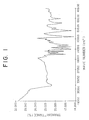
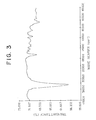
- Figs. 1 and 3 show their infrared spectra
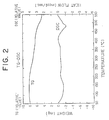
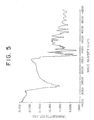
- Figs. 2 and 4 show the results of their thermogravimetric analysis (TG) and differential scanning calorimetry (DSC).
- Fig. 3 shows an absorption at 1634 cm ⁇ 1 due to the thiazole ring
- Fig. 1 shows absorptions at 3431 cm ⁇ 1 and 1700-1400 cm ⁇ 1 due to the amide groups and an absorption at 1605 cm ⁇ 1 due to the carbonyl group.
- the graph of Fig. 3 is substantially the same as an infrared spectrum of poly-p-phenylenebenzobisthiazole.
- Example 1 is a prepolymer of poly-p-phenylenebenzobisthiazole having no thiazole ring while the product in Comparative Example 1 is poly-p-phenylenebenzobisthiazole formed by the ring closure reaction of the prepolymer.
- thermogravimetric analyses in Figs. 2 and 4. Specifically, the product in Example 1 underwent a weight decrease from about 200°C (Fig. 2), while the product in Comparative Example 1 scarcely underwent such a weight decrease (Fig. 4).
- Example 1 prepolymer of poly-p-phenylenebenzobisthiazole
- the polymerization reaction was conducted under the same conditions as in Example 1 except for changing the temperature condition from 110°C in Example 1 to 90°C after mixing 2,5-diamino-1,4-benzendithiol dihydrochloride, polyphosphoric acid and terephthalic acid dichloride.
- the polymerization reaction was conducted in the same manner as in Example 2 except for changing the temperature condition from 90°C to 130 °C.
- the polymerization reaction was conducted in the same manner as in Example 1 except for changing the stirring time under the temperature condition of 110°C after mixing 2,5-diamino-1,4-benzendithiol dihydrochloride, polyphosphoric acid and terephthalic acid dichloride.
- Inherent viscosity was measured in chlorosulfonic acid at 30°C on the prepolymer obtained in Example 1 as well as on a prepolymer obtained under the same conditions as in Example 1 by using as a dicarboxylic acid derivative terephthalonitrile and diphenyl terephthalate, respectively. The measurement of the inherent viscosity was conducted after heating each prepolymer at 110°C for 2 hours. The results are shown in Table 1.
- Table 1 Dicarboxylic Acid Derivative Inherent Viscosity ⁇ inh (dl/g) Terephthalic Acid Dichloride 0.24 Terephthalonitrile 0.12 Diphenyl Terephthalate 0.09
- terephthalic acid dichloride any of terephthalic acid dichloride, terephthalonitrile and diphenyl terephthalate can form the prepolymer of poly-p-phenylenebenzobisthiazole, and that terephthalic acid dichloride is the most effective as a terephthalic acid derivative.
- the polymerization reaction was conducted under the same conditions as in Example 1 except for substituting terephthalic acid for terephthalic acid dichloride. As a result, substantially no polymerization product was obtained.
- reaction solution was added to 500 ml of distilled water, sufficiently stirred, subjected to vacuum filtration by a glass filter (17G4), mixed with an aqueous solution of sodium hydrogen carbonate and then left to stand over night. Next, the same vacuum filtration was conducted, and the resulting filter cake was washed with distilled water several times and then with high grade methanol. It was finally dried at room temperature in vacuum for 48 hours to provide the reaction product.
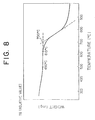
- the reaction product was measured with respect to TGA at a temperature elevation rate of 20°C/min in N2. The results are shown in Fig. 8. It is clear from Fig. 8 that its thermal decomposition start temperature was 700°C, suggesting that it is m-phenylene-type poly-p-phenylene benzobisthiazole. Since its weight loss is as small as 4% compared to 12% which is a theoretical value, it may be presumed that partial ring closure took place in this product. Accordingly, the polymerization reaction should be conducted at a lower temperature. This is also suggested by the fact that this product shows complicated infrared spectrum.
- the method of producing the prepolymer of aromatic polythiazole according to the present invention uses an aromatic diaminodithiol compound salt and a dicarboxylic acid derivative, which can react with a phosphoric acid compound at 140°C or lower, and comprises the step of polymerizing them in the presence of a phosphoric acid compound at as low a temperature as 70-140°C at which the ring closure reaction of the thiazole ring does not take place, the prepolymer of aromatic polythiazole can be obtained stably.
- the prepolymers of aromatic polythiazole obtained by the method of the present invention may be uniformly mixed with matrix polymers or their prepolymers in organic solvents, and subjected to a ring closure reaction by heating to provide molecular composite materials.
- the resulting molecular composite materials have good mechanical properties, heat resistance, solvent resistance, etc. Because of such good properties, they can be used as high-strength, heat-resistant engineering plastic materials for automobile parts, aircraft parts, etc.
Landscapes
- Chemical & Material Sciences (AREA)
- Health & Medical Sciences (AREA)
- Chemical Kinetics & Catalysis (AREA)
- Medicinal Chemistry (AREA)
- Polymers & Plastics (AREA)
- Organic Chemistry (AREA)
- Polymers With Sulfur, Phosphorus Or Metals In The Main Chain (AREA)
- Polyamides (AREA)
Applications Claiming Priority (2)
| Application Number | Priority Date | Filing Date | Title |
|---|---|---|---|
| JP140807/88 | 1988-06-08 | ||
| JP63140807A JPH01311127A (ja) | 1988-06-08 | 1988-06-08 | 芳香族ポリチアゾールの前駆物質の製造方法 |
Publications (1)
| Publication Number | Publication Date |
|---|---|
| EP0346094A1 true EP0346094A1 (en) | 1989-12-13 |
Family
ID=15277195
Family Applications (1)
| Application Number | Title | Priority Date | Filing Date |
|---|---|---|---|
| EP89305738A Withdrawn EP0346094A1 (en) | 1988-06-08 | 1989-06-07 | Prepolymer of aromatic polythiazole |
Country Status (3)
| Country | Link |
|---|---|
| US (1) | US4945153A (enExample) |
| EP (1) | EP0346094A1 (enExample) |
| JP (1) | JPH01311127A (enExample) |
Cited By (2)
| Publication number | Priority date | Publication date | Assignee | Title |
|---|---|---|---|---|
| EP0457419A3 (en) * | 1990-05-15 | 1992-02-19 | Honda Giken Kogyo Kabushiki Kaisha | Method of producing an aromatic polythiazole |
| EP0474462A1 (en) * | 1990-09-03 | 1992-03-11 | Honda Giken Kogyo Kabushiki Kaisha | Method of producing a molecular composite material |
Families Citing this family (2)
| Publication number | Priority date | Publication date | Assignee | Title |
|---|---|---|---|---|
| US5276128A (en) * | 1991-10-22 | 1994-01-04 | The Dow Chemical Company | Salts of polybenzazole monomers and their use |
| US5322916A (en) * | 1993-03-16 | 1994-06-21 | The Dow Chemical Company | Method for the preparation of amide oligomers and polybenzazole polymers therefrom |
Citations (2)
| Publication number | Priority date | Publication date | Assignee | Title |
|---|---|---|---|---|
| DE1908789A1 (de) * | 1968-02-22 | 1969-09-25 | Nat Res Dev | Aromatische Polyamide,Verfahren zu ihrer Herstellung und ihre Verwendung |
| US4359567A (en) * | 1981-10-02 | 1982-11-16 | The United States Of America As Represented By The Secretary Of The Air Force | Thermooxidatively stable articulated p-benzobisoxazole and p-benzobisthiazole polymers |
Family Cites Families (2)
| Publication number | Priority date | Publication date | Assignee | Title |
|---|---|---|---|---|
| US4606875A (en) * | 1983-04-11 | 1986-08-19 | Celanese Corporation | Process for preparing shaped articles of rigid rod heterocyclic liquid crystalline polymers |
| DE3411659A1 (de) * | 1984-03-29 | 1985-10-03 | Siemens AG, 1000 Berlin und 8000 München | Verfahren zur herstellung von polyoxazol- und polythiazol-vorstufen |
-
1988
- 1988-06-08 JP JP63140807A patent/JPH01311127A/ja active Granted
-
1989
- 1989-06-07 EP EP89305738A patent/EP0346094A1/en not_active Withdrawn
- 1989-06-07 US US07/362,513 patent/US4945153A/en not_active Expired - Fee Related
Patent Citations (2)
| Publication number | Priority date | Publication date | Assignee | Title |
|---|---|---|---|---|
| DE1908789A1 (de) * | 1968-02-22 | 1969-09-25 | Nat Res Dev | Aromatische Polyamide,Verfahren zu ihrer Herstellung und ihre Verwendung |
| US4359567A (en) * | 1981-10-02 | 1982-11-16 | The United States Of America As Represented By The Secretary Of The Air Force | Thermooxidatively stable articulated p-benzobisoxazole and p-benzobisthiazole polymers |
Cited By (3)
| Publication number | Priority date | Publication date | Assignee | Title |
|---|---|---|---|---|
| EP0457419A3 (en) * | 1990-05-15 | 1992-02-19 | Honda Giken Kogyo Kabushiki Kaisha | Method of producing an aromatic polythiazole |
| EP0474462A1 (en) * | 1990-09-03 | 1992-03-11 | Honda Giken Kogyo Kabushiki Kaisha | Method of producing a molecular composite material |
| US5192480A (en) * | 1990-09-03 | 1993-03-09 | Honda Giken Kogyo Kabushiki Kaisha | Method of producing molecular composite material including aromatic polythiazole |
Also Published As
| Publication number | Publication date |
|---|---|
| JPH01311127A (ja) | 1989-12-15 |
| JPH048451B2 (enExample) | 1992-02-17 |
| US4945153A (en) | 1990-07-31 |
Similar Documents
| Publication | Publication Date | Title |
|---|---|---|
| US4698415A (en) | Method for the preparation of polyarylene sulfide with aqueous polyethylene glycol mixture | |
| JPS62232437A (ja) | ポリフエニレンスルフイド樹脂の製造方法 | |
| EP0346094A1 (en) | Prepolymer of aromatic polythiazole | |
| JP3123724B2 (ja) | ポリ(アルキル−p−チオフェノキシフェニルスルホニウム塩)化合物 | |
| US4948867A (en) | Interfacial method of producing prepolymer of aromatic polythiazole | |
| JPH01256531A (ja) | 成形材料 | |
| US5233017A (en) | Benzobisthiazole polymers with thiophene moieties | |
| US5218081A (en) | Method of producing aromatic polythiazole | |
| Podkoscielny et al. | Linear polythioesters. VII. Products of interfacial polycondensation of 1, 4‐di (mercaptomethyl)‐2, 3, 5, 6‐tetramethylbenzene with some aliphatic acid dichlorides | |
| IE72205B1 (en) | Process for preparing artomatic polyamides of high hydrolysis resistance | |
| US3669928A (en) | Process for the production of high molecular weight polybenzoxazinones | |
| EP0514157A2 (en) | Composite material | |
| JPH023809B2 (enExample) | ||
| Imai et al. | Preparation and properties of ordered and random polyamide‐esters from 4‐(4‐amino‐α, α‐dimethylbenzyl) phenol and aromatic diacyl chlorides | |
| JPH0457698B2 (enExample) | ||
| JPH0621166B2 (ja) | ポリベンズ(オキシまたはチオ)アゾ−ルの製造法 | |
| JPS61204218A (ja) | 芳香族ポリアミドの製造方法 | |
| US3642711A (en) | Amide oxadiazole polymers and polymer precursors | |
| JPH0570593A (ja) | 芳香族ポリチオエーテルの製造方法 | |
| EP0805173A1 (en) | Method for production of polybenzazole | |
| JPS61192714A (ja) | 芳香族ポリアミドの製造方法 | |
| JPH04261428A (ja) | ポリカルボジイミド及びその製造方法 | |
| JPH09324050A (ja) | 芳香族ポリベンゾチアゾール及びその製造方法 | |
| JPH0455434A (ja) | ポリアリーレンスルフィドの製造法 | |
| KR920009694B1 (ko) | 폴리아릴레이트 수지 |
Legal Events
| Date | Code | Title | Description |
|---|---|---|---|
| PUAI | Public reference made under article 153(3) epc to a published international application that has entered the european phase |
Free format text: ORIGINAL CODE: 0009012 |
|
| AK | Designated contracting states |
Kind code of ref document: A1 Designated state(s): DE FR GB IT |
|
| 17P | Request for examination filed |
Effective date: 19900214 |
|
| 17Q | First examination report despatched |
Effective date: 19920702 |
|
| STAA | Information on the status of an ep patent application or granted ep patent |
Free format text: STATUS: THE APPLICATION IS DEEMED TO BE WITHDRAWN |
|
| 18D | Application deemed to be withdrawn |
Effective date: 19930826 |