EP0342587B1 - Thienotriazolodiazepine und ihre pharmazeutische Verwendung - Google Patents
Thienotriazolodiazepine und ihre pharmazeutische Verwendung Download PDFInfo
- Publication number
- EP0342587B1 EP0342587B1 EP89108752A EP89108752A EP0342587B1 EP 0342587 B1 EP0342587 B1 EP 0342587B1 EP 89108752 A EP89108752 A EP 89108752A EP 89108752 A EP89108752 A EP 89108752A EP 0342587 B1 EP0342587 B1 EP 0342587B1
- Authority
- EP
- European Patent Office
- Prior art keywords
- compound
- formula
- phenyl
- hydroxy
- ethyl
- Prior art date
- Legal status (The legal status is an assumption and is not a legal conclusion. Google has not performed a legal analysis and makes no representation as to the accuracy of the status listed.)
- Expired - Lifetime
Links
- 0 CC([C@](*)*=C(*)c1c(*=*)[n]c(*)c1*)=O Chemical compound CC([C@](*)*=C(*)c1c(*=*)[n]c(*)c1*)=O 0.000 description 7
Classifications
-
- C—CHEMISTRY; METALLURGY
- C07—ORGANIC CHEMISTRY
- C07D—HETEROCYCLIC COMPOUNDS
- C07D495/00—Heterocyclic compounds containing in the condensed system at least one hetero ring having sulfur atoms as the only ring hetero atoms
- C07D495/12—Heterocyclic compounds containing in the condensed system at least one hetero ring having sulfur atoms as the only ring hetero atoms in which the condensed system contains three hetero rings
- C07D495/14—Ortho-condensed systems
-
- A—HUMAN NECESSITIES
- A61—MEDICAL OR VETERINARY SCIENCE; HYGIENE
- A61P—SPECIFIC THERAPEUTIC ACTIVITY OF CHEMICAL COMPOUNDS OR MEDICINAL PREPARATIONS
- A61P11/00—Drugs for disorders of the respiratory system
-
- A—HUMAN NECESSITIES
- A61—MEDICAL OR VETERINARY SCIENCE; HYGIENE
- A61P—SPECIFIC THERAPEUTIC ACTIVITY OF CHEMICAL COMPOUNDS OR MEDICINAL PREPARATIONS
- A61P29/00—Non-central analgesic, antipyretic or antiinflammatory agents, e.g. antirheumatic agents; Non-steroidal antiinflammatory drugs [NSAID]
-
- A—HUMAN NECESSITIES
- A61—MEDICAL OR VETERINARY SCIENCE; HYGIENE
- A61P—SPECIFIC THERAPEUTIC ACTIVITY OF CHEMICAL COMPOUNDS OR MEDICINAL PREPARATIONS
- A61P3/00—Drugs for disorders of the metabolism
- A61P3/04—Anorexiants; Antiobesity agents
-
- A—HUMAN NECESSITIES
- A61—MEDICAL OR VETERINARY SCIENCE; HYGIENE
- A61P—SPECIFIC THERAPEUTIC ACTIVITY OF CHEMICAL COMPOUNDS OR MEDICINAL PREPARATIONS
- A61P37/00—Drugs for immunological or allergic disorders
- A61P37/08—Antiallergic agents
-
- A—HUMAN NECESSITIES
- A61—MEDICAL OR VETERINARY SCIENCE; HYGIENE
- A61P—SPECIFIC THERAPEUTIC ACTIVITY OF CHEMICAL COMPOUNDS OR MEDICINAL PREPARATIONS
- A61P7/00—Drugs for disorders of the blood or the extracellular fluid
- A61P7/02—Antithrombotic agents; Anticoagulants; Platelet aggregation inhibitors
-
- A—HUMAN NECESSITIES
- A61—MEDICAL OR VETERINARY SCIENCE; HYGIENE
- A61P—SPECIFIC THERAPEUTIC ACTIVITY OF CHEMICAL COMPOUNDS OR MEDICINAL PREPARATIONS
- A61P7/00—Drugs for disorders of the blood or the extracellular fluid
- A61P7/10—Antioedematous agents; Diuretics
-
- A—HUMAN NECESSITIES
- A61—MEDICAL OR VETERINARY SCIENCE; HYGIENE
- A61P—SPECIFIC THERAPEUTIC ACTIVITY OF CHEMICAL COMPOUNDS OR MEDICINAL PREPARATIONS
- A61P9/00—Drugs for disorders of the cardiovascular system
Definitions
- Benveniste et al. found a factor which strongly induced platelet aggregation from rabbit basophils, and named it platelet-activating factor (hereinunder referred to as PAF) in 1972.
- PAF platelet-activating factor
- Hanahan et al. identified that the factor was a phosphoglyceride of the alkyl ether type having an acetyl group in the 2-position, i.e. 1-o-hexadecyl or octadecyl-2-acetyl-sn-glyceryl-3-phosphorylcholine, in 1980.
- PAF The physiological role of PAF has been intensively investigated, and it has been known that PAF was an important factor of various physiological reactions inclusive of platelet aggregation, reduction in blood pressure, immediate allergic reaction, contraction of smooth muscle, inflammation, pain, edema, as well as alteration in the respiratory, cardiovascular and venous systems.
- PAF-antagonistic activity-possessing compounds are considered to be very useful for various PAF-induced diseases such as inflammatory diseases, allergic diseases, anaphylactic shocks, septic shocks, vascular diseases as DIC, myocardial diseases, asthma, pulmonary edema or adult respiratory diseases.
- EP-A 194416 also discloses that thienotriazolo-1,4-diazepine-2-carboxylic acid amide compounds represented by 4-(2-chlorophenyl)-9-methyl-6H-thieno[3,2-f]-[1,2,4]triazolo[4,3-a][1,4]diazepine-2-propionic acid morpholide exhibit antagonistic activity on PAF.
- the present invention provides novel and pharmaceutically useful thieno[3,2-f][1,2,4]triazolo[4,3-a][1,4]-diazepine compounds substituted by hydroxylated and/or carbonylated aralkyl group at the 2-position of said nucleus or pharmaceutically acceptable acid addition salts thereof, and pharmaceutical uses thereof as PAF-antagonists.
- Said compounds possess not only effectiveness by oral administration and long-lasting effect, but also less inhibitory effect on the central nervous system as well as low toxicity.
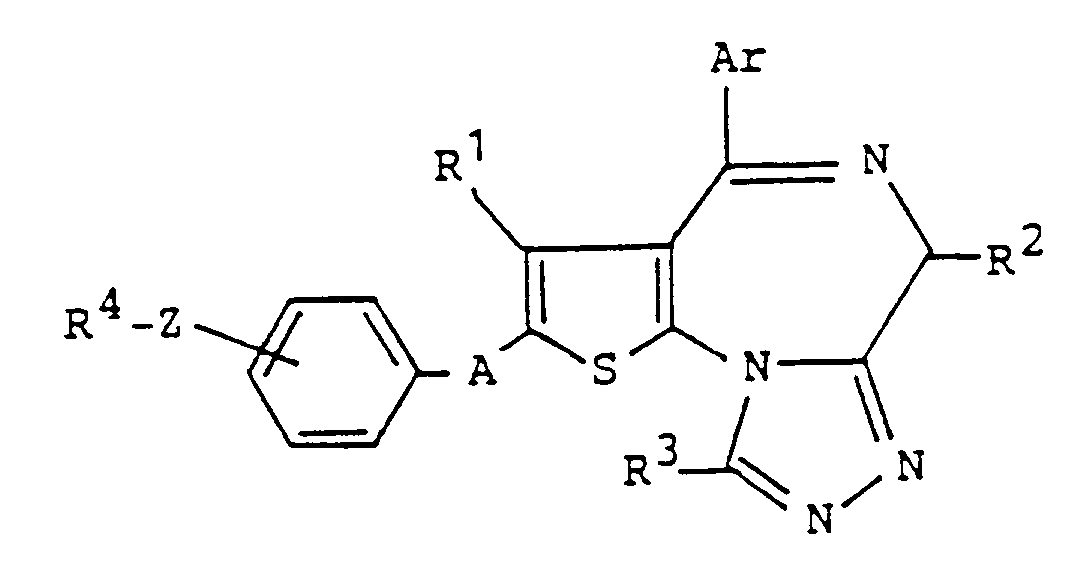
- the present invention relates to a thienotriazolodiazepine compound of the formula: or a pharmaceutically acceptable acid addition salt thereof, wherein Ar is pyridyl, phenyl or phenyl substituted by one to three halogen, hydroxy, straight or branched chain alkyl having 1 to 8 carbon atoms and/or straight or branched chain alkoxy having 1 to 8 carbon atoms; R 1 , R 2 and R 3 are the same or different and each is hydrogen, straight or branched chain alkyl having 1 to 8 carbon atoms or trifluoromethyl; R 4 is hydroxy, straight or branched chain alkyl having 1 to 8 carbon atoms, straight or branched chain alkyl having 1 to 8 carbon atoms which is substituted by at least one hydroxy, phenyl, aralkyl, phenyl substituted by one to three halogen, hydroxy, straight or branched chain alkyl having 1 to 8 carbon atoms and/or straight or branched
- pyridyl means 2-pyridyl, 3-pyridyl or 4-pyridyl; halogen means chlorine, fluorine, bromine or iodine; straight or branched chain alkyl having 1 to 8 carbon atoms means, for example, methyl, ethyl, propyl, isopropyl, butyl, isobutyl, tert-butyl, pentyl, isopentyl, 1-ethylpropyl, 1-methylbutyl, hexyl, 1-methylpentyl, heptyl, 4-methylhexyl, 1-ethylpentyl, 1,4-dimethylpentyl, octyl, 6-methylheptyl or 2-ethylhexyl; straight or branched chain alkoxy having 1 to 8 carbon atoms means, for example, methoxy, ethoxy, propoxy, isopropoxy, butoxy, isobutoxy,
- the pharmaceutically acceptable acid addition salts of the compounds of formula (I) include salts with an inorganic acid (e.g. hydrochloric acid, sulfuric acid, phosphoric acid, hydrobromic acid and nitric acid) or an organic acid (e.g. maleic acid, fumaric acid, malic acid, tartaric acid, succinic acid, citric acid, acetic acid, lactic acid, methanesulfonic acid, p-toluenesulfonic acid or pamoic acid).
- an inorganic acid e.g. hydrochloric acid, sulfuric acid, phosphoric acid, hydrobromic acid and nitric acid
- an organic acid e.g. maleic acid, fumaric acid, malic acid, tartaric acid, succinic acid, citric acid, acetic acid, lactic acid, methanesulfonic acid, p-toluenesulfonic acid or pamoic acid.
- Preferred compounds of the present invention are the compounds 4-(2-chlorophenyl)-2-[2-(4-hydroxymethylphenyl)ethyl]-6,9-dimethyl-6H-thieno[3,2-f][1,2,4]triazolo[4,3-a][1,4]diazepine,4-(2-chlorophenyl)-2-[2-(4-(1-hydroxy-2-methylpropyl)phenyl)ethyl]-6,9-dimethyl-6H-thieno[3,2-f][1,2,4]triazolo[4,3-a][1,4]diazepine, 4-(2-chlorophenyl)-2-[2-(4-(2-hydroxy-2-methylpropyI)phenyl)ethyl]-6,9-dimethy1-6H-thieno[3,2-f][1,2,4]-triazolo[4,3-a][1,4]diazepine, 4-(2-chloropheny
- the compounds of formula (I) of the present invention can be prepared by the following methods.
- thionating agent includes, for example, phosphorus pentasulfide and Lawesson reagent, i.e. 2,4-bis(4-methoxyphenyl)-1,2,3,4-dithiadiphosphetan-2,4-disulfide, and a reactive derivative of the compound of formula (11) includes, for example, a carboxylic acid halide (e.g. carboxylic acid chloride or carboxylic acid bromide), a carboxylic acid anhydride, a mixed acid anhydride (e.g. lower alkyl carbonate with mixed acid anhydride or mixed acid anhydride with alkyl phosphate), a lower alkyl ester (e.g. methyl ester or ethyl ester) and an active ester (e.g. benzyl ester, p-nitrobenzyl ester, p-nitrophenyl ester or p-chlorophenyl ester).
- a carboxylic acid halide
- reaction of the compound of formula (7) with the thionating agent is usually carried out at 30-100 ° C in an inert solvent (e.g. pyridine, dimethylaniline, benzene, toluene, xylene, tetrahydrofuran, chloroform, dioxane or a mixed solvent thereof).
- an inert solvent e.g. pyridine, dimethylaniline, benzene, toluene, xylene, tetrahydrofuran, chloroform, dioxane or a mixed solvent thereof.
- the reaction of the compound of formula (8) with the compound of formula (9) is usually carried out at a temperature of from room temperature to the refluxing temperature of the employed solvent in an inert solvent (e.g. benzene, toluene, xylene, tetrahydrofuran, dioxane, methanol, ethanol, propanol or isopropyl alcohol) in the presence of an organic acid (e.g. acetic acid or propionic acid), an inorganic acid (e.g. hydrochloric acid or sulfuric acid) or silica gel.
- an inert solvent e.g. benzene, toluene, xylene, tetrahydrofuran, dioxane, methanol, ethanol, propanol or isopropyl alcohol
- an organic acid e.g. acetic acid or propionic acid
- an inorganic acid e.g. hydrochloric acid or sulfuric acid
- silica gel
- reaction of the compound of formula (8) with hydrazine or hydrate thereof is usually carried out at 0-40 ° C in an inert solvent (e.g. methanol, ethanol, propanol, isopropyl alcohol, butanol or tetrahydrofuran).
- an inert solvent e.g. methanol, ethanol, propanol, isopropyl alcohol, butanol or tetrahydrofuran.
- the reaction of the compound of formula (10) with the compound of formula (11) or reactive derivative thereof or with the compound of formula (12) is usually carried out at a temperature of from room temperature to the refluxing temperature of the employed solvent in an inert solvent (e.g. benzene, toluene, xylene, tetrahydrofuran or dioxane), preferably, in the presence of an organic acid (e.g. acetic acid or propionic acid), an inorganic acid (e.g. hydrochloric acid, sulfuric acid or phosphoric acid) or silica gel.
- an inert solvent e.g. benzene, toluene, xylene, tetrahydrofuran or dioxane
- an organic acid e.g. acetic acid or propionic acid
- an inorganic acid e.g. hydrochloric acid, sulfuric acid or phosphoric acid
- a compound of the formula: wherein R 4 ' is straight or branched chain alkyl having 1 to 8 carbon atoms, phenyl, aralkyl, substituted phenyl or substituted aralkyl and other symbols are as defined above, can be prepared by reacting the compound of formula (I-a) with a mild oxidizing agent (e.g. manganese dioxide or pyridine chromate), and reacting the thus obtained compound of the formula: wherein each symbol is as defined above, with the Grignard reagent of formula: wherein X 1 is chlorine, bromine or iodine and R 4 ' is as defined above, or an organic lithium compound of the formula: wherein R 4 ' is as defined above.
- a mild oxidizing agent e.g. manganese dioxide or pyridine chromate
- the reaction of the compound of formula (I-a) with the oxidizing agent is carried out in a suitable solvent (e.g. acetone, dichloromethane, dichloroethane, tetrahydrofuran or dioxane) at 0-100°C for 30 minutes to 5 hours.
- a suitable solvent e.g. acetone, dichloromethane, dichloroethane, tetrahydrofuran or dioxane
- the reaction of the compound of formula (13) to the compound of formula (I-b-1) is carried out in a suitable solvent (e.g. tetrahydrofuran, dioxane or diethyl ether) at 0-50 °C for 30 minutes to 2 hours.
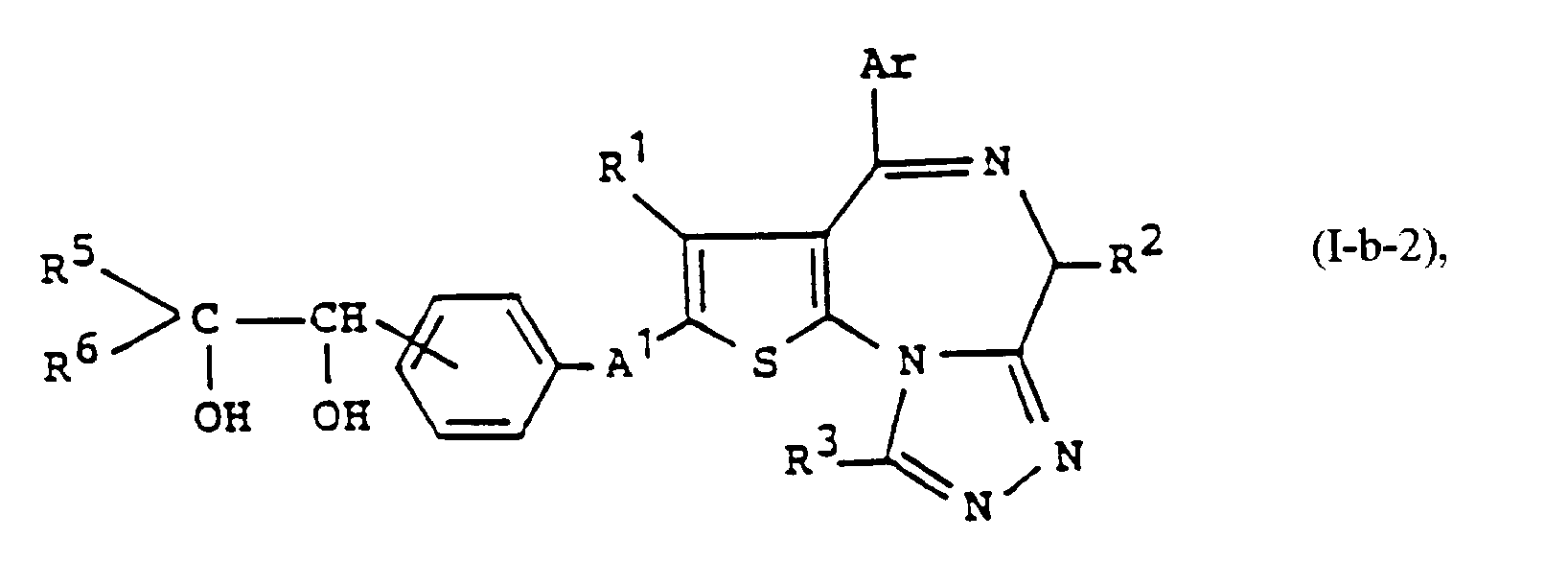
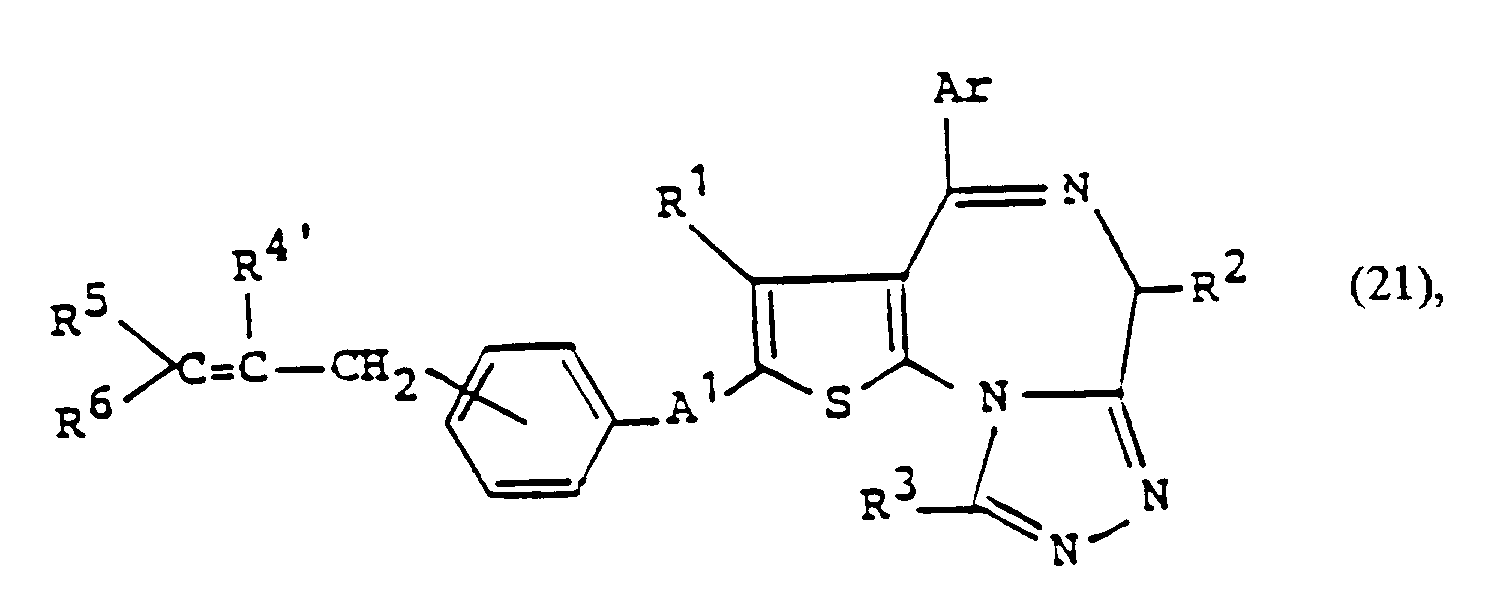
- a compound of the formula: wherein R 5 and R 6 are the same or different and each is hydrogen, straight or branched chain alkyl having 1 to 5 carbon atoms, phenyl, aralkyl, substituted phenyl or substituted aralkyl with the proviso that both of R 5 and R 6 are not hydrogen and other symbols are as defined above, can be prepared by reacting the above-mentioned compound of formula (13) with the Wittig reagent of formula: wherein R 7 is straight or branched chain alkyl having 1 to 8 carbon atoms, straight or branched chain alkoxy having 1 to 8 carbon atoms or phenyl and other symbols are as defined above, and reacting the thus obtained compound of formula: wherein each symbol is as defined above, with the oxidizing agent, i.e. osmium tetroxide.
- the oxidizing agent i.e. osmium tetroxide.
- the reaction of the compound of formula (13) with the Wittig reagent is carried out in a suitable solvent (e.g. dimethylsulfoxide, tetrahydrofuran, benzene, toluene, xylene or hexane) at 0-50 ° C for 1 to 5 hours.
- a suitable solvent e.g. dimethylsulfoxide, tetrahydrofuran, benzene, toluene, xylene or hexane
- reaction of the compound of formula (17) with the oxidizing agent is carried out in a suitable solvent (e.g. dioxane, tetrahydrofuran or pyridine) at 0-50 °C for 1 to 10 hours.
- a suitable solvent e.g. dioxane, tetrahydrofuran or pyridine
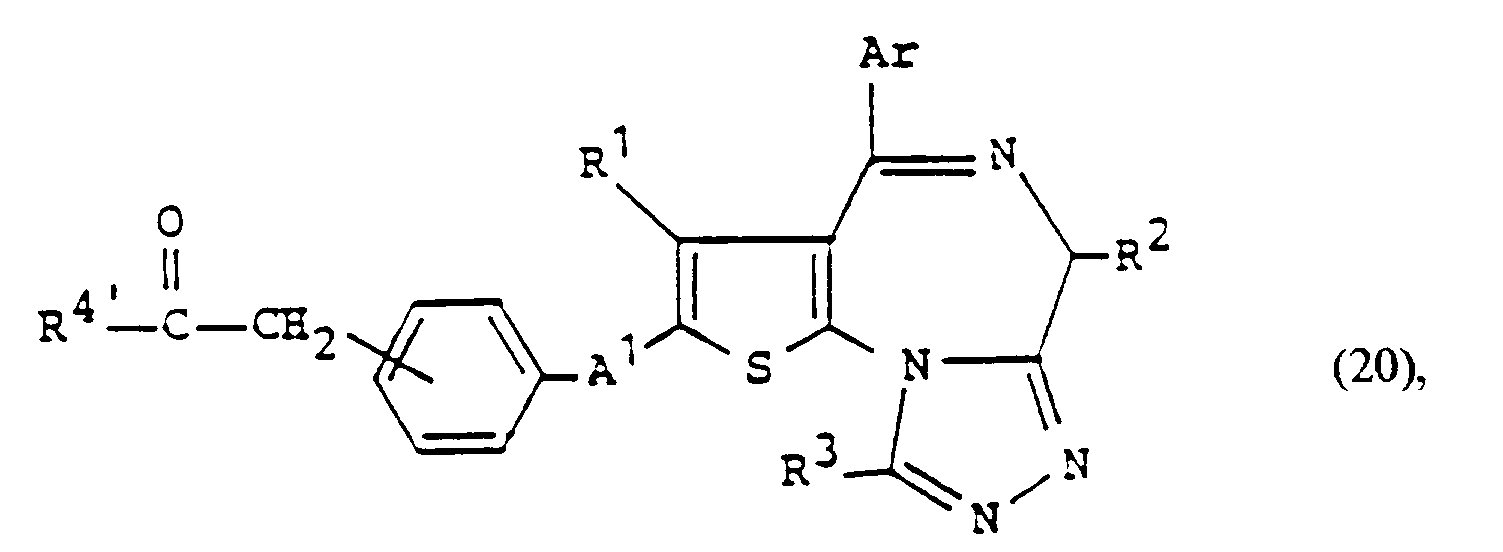
- a compound of the formula: wherein each symbol is as defined above, can be prepared by reacting the above-mentioned compound of formula (I-b-2) with an oxidizing agent (e.g. manganese dioxide, pyridine chromate, dimethylsulfoxide-acetic anhydride, silver nitrate or periodic acid).
- an oxidizing agent e.g. manganese dioxide, pyridine chromate, dimethylsulfoxide-acetic anhydride, silver nitrate or periodic acid.
- the reaction is carried out in a suitable solvent (e.g. acetone, methylene chloride, dichloroethane or acetic acid) at 0-50 ° C for 1 to 5 hours.
- a suitable solvent e.g. acetone, methylene chloride, dichloroethane or acetic acid
- a compound of the formula: wherein each symbol is as defined above can be prepared by reacting the above-mentioned compound of formula (I-a) with a compound such as thionyl chloride, phosphorus tribromide or phosphorus oxychloride, reacting the thus obtained compound of formula: wherein X 2 is halogen such as chlorine or bromine and other symbols are as defined above, with sodium cyanide or potassium cyanide, reacting a compound of the formula: wherein each symbol is as defined above, with the Grignard reagent of formula (14) or the organic lithium compound of formula (15), and then reacting the thus obtained compound of the formula: wherein each symbol is as defined above, with the Grignard reagent of formula (14) or the organic lithium compound of formula (15).
- the reaction of the compound of formula (I-a) to the compound of formula (18) is carried out in a suitable solvent (e.g. dioxane, chloroform, dichloroethane, dichloromethane, tetrahydrofuran or diethyl ether) in the presence or absence of an acid scavenger such as pyridine, triethylamine, dimethylaniline, sodium hydrogencarbonate or potassium carbonate at 0-50 ° C for 30 minutes to 3 hours.
- a suitable solvent e.g. dioxane, chloroform, dichloroethane, dichloromethane, tetrahydrofuran or diethyl ether
- an acid scavenger such as pyridine, triethylamine, dimethylaniline, sodium hydrogencarbonate or potassium carbonate at 0-50 ° C for 30 minutes to 3 hours.
- the reaction of the compound of formula (18) with sodium cyanide or potassium cyanide is carried out in a suitable solvent (e.
- the reaction with the Grignard reagent or organic lithium compound is carried out in a suitable solvent (e.g. diethyl ether, tetrahydrofuran, dioxane or hexane) at 0-50 °C for 30 minutes to 5 hours.
- a suitable solvent e.g. diethyl ether, tetrahydrofuran, dioxane or hexane
- a compound of the formula: wherein each symbol is as defined above can be prepared by reacting the above-mentioned compound of formula (20) with the Wittig reagent of formula (16), and subjecting the thus obtained compound of formula: wherein each symbol is as defined above, to the hydroboration reaction described in Organic Reaction, Vol. 13, p. 1-54 or reacting with 9-Borabicyclo[3.3.1 ]none.
- the reaction of the compound of formula (20) with the Wittig reagent is carried out in a suitable solvent (e.g. dimethylsulfoxide, tetrahydrofuran, benzene, toluene, xylene or hexane) at 0-50 °C for 1 to 5 hours.
- a suitable solvent e.g. dimethylsulfoxide, tetrahydrofuran, benzene, toluene, xylene or hexane
- the hydroxylation reaction of the compound of formula (21) is carried out under a nitrogen atmosphere in a suitable solvent such as methyl ether, tetrahydrofuran or diethylene glycol dimethyl ether at 0-50 °C for 3 to 10 hours.
- a compound of the formula: wherein each symbol is as defined above, can be prepared by reacting the above-mentioned compound of formula (21) with an oxidizing agent, i.e. osmium tetroxide.
- an oxidizing agent i.e. osmium tetroxide.
- the reaction is carried out in a suitable solvent (e.g. dioxane, tetrahydrofuran or pyridine) at 0-50 °C for 1 to 10 hours.
- a suitable solvent e.g. dioxane, tetrahydrofuran or pyridine
- a compound of the formula: wherein A 2 is straight alkylene having 1 to 7 carbon atoms, alkylene substituted by straight or branched chain alkyl having 1 to 8 carbon atoms or straight or branched chain alkylene substituted by 1 to 2 hydroxy groups, can be prepared by reacting a compound of the formula: wherein each symbol is as defined above, with a compound of the formula: wherein R 8 is straight or branched chain alkyl having 1 to 8 carbon atoms, phenyl or substituted phenyl and M is sodium or potassium, subjecting the thus obtained compound of formula: wherein each symbol is as defined above, to hydrolysis, reacting the obtained compound of formula: wherein each symbol is as defined above, with the oxidizing agent (e.g.
- the hydroxy protecting group Q includes, for example, methoxymethyl (MOM), methylthiomethyl (MTM), benzyloxymethyl, tetrahydropyranyl (THP), ethoxyethyl, benzyl, p-nitrobenzyl, trimethylsilyl (TMS), tert-butyldimethylsilyl (TBDMS) or 2-methoxyethoxymethyl (MEM).
- MOM methoxymethyl
- MTM methylthiomethyl
- THP tetrahydropyranyl
- TMS trimethylsilyl
- TDMS tert-butyldimethylsilyl
- MEM 2-methoxyethoxymethyl
- the reaction of the compound of formula (22) with the compound of formula (23) is carried out in a suitable solvent (e.g. ethanol, methanol, isopropyl alcohol, dimethylsulfoxide or dimethylformamide) at room temperature to 100°C for 3 to 24 hours.
- a suitable solvent e.g. ethanol, methanol, isopropyl alcohol, dimethylsulfoxide or dimethylformamide
- the hydrolysis of the compound of formula (24) is carried out in a solvent (e.g. methanol or ethanol) at room temperature to 50 ° C for 1 to 5 hours.
- the reaction of the compound of formula (25) with the oxidizing agent is carried out in a suitable solvent (e.g. acetone, dichloromethane, dichloroethane, tetrahydrofuran or dioxane) at 0-100 ° C for 30 minutes to 5 hours.
- the reaction of the compound of formula (26) with the Grignard reagent (27) is carried out in a suitable solvent (e.g. tetrahydrofuran, diethyl ether or dioxane) at 0-100°C for 1 to 5 hours.
- a suitable solvent e.g. tetrahydrofuran, diethyl ether or dioxane
- the compound of formula (22) can be prepared by the same procedures as Method A.
- a compound of the formula: wherein each symbol is as defined above can be prepared by reacting the above-mentioned compound of formula (26) with the diol-protected Grignard reagent (the diol-protecting group includes, for example, isopropylidene, ethylidene, benzylidene, methoxymethylene or dimethoxymethylene in addition to the above-mentioned hydroxy-protecting groups), and subjecting the thus obtained compound of formula: wherein Q is a hydroxy-protecting group such as groups exemplified in the above Method C-(I) and other symbols are as defined above, to the hydrolysis with acid or alkali according to the conventional manner.
- the diol-protecting group includes, for example, isopropylidene, ethylidene, benzylidene, methoxymethylene or dimethoxymethylene in addition to the above-mentione
- a compound of the formula: wherein each symbol is as defined above can be prepared by reacting the above-mentioned compound of formula (28) with a compound of the formula: wherein R 9 is straight or branched chain alkyl having 1 to 8 carbon atoms, or the reactive derivative thereof (e.g.
- carboxylic acid halide carboxylic acid anhydride, mixed acid anhydride or lower alkyl ester
- selectively eliminating the diol-protecting groups reacting the obtained compound of formula: wherein each symbol is as defined above, with an oxidizing agent (e.g. manganese dioxide, pyridine chromate, dimethylsulfoxide-acetic anhydride, silver nitrate or periodic acid), and then subjecting the resulting compound of formula: wherein each symbol is as defined above, to the hydrolysis with acid or alkali according to the conventional method.
- an oxidizing agent e.g. manganese dioxide, pyridine chromate, dimethylsulfoxide-acetic anhydride, silver nitrate or periodic acid
- reaction conditions are similar to those of the above-mentioned Method B.
- the compounds of formula (I) can be isolated and purified from the thus obtained resulting mixture by means of a known and conventional manner such as recrystallization or chromatography.
- the compounds of formula (I) can be converted into the above-mentioned pharmaceutically acceptable salts by treating the compound with inorganic or organic acid in a conventional manner.
- the compounds of the present invention having a chiral carbon atom or atoms can be usually prepared as racemate.
- the racemate can be divided into optical isomers by a conventional method.
- Such optical isomers can also be prepared by using optically active starting compounds.
- the individual diastereoisomer can be purified by means of fractional recrystallization or chromatography.
- Platelet rich plasma was prepared by centrifuging the blood sample at 200 x g for 10 minutes, and platelet poor plasma (PPP) was prepared by centrifuging the remaining blood sample at 1000 x g for 10 minutes.
- Aggregation ability was measured with a turbidimetric device (6-channel NKK Hematracer 1, model PAT-6A) according to the method of G.V.R. Born described in J. Physiology, vol. 168, p. 178 (1963).
- the aggregometer was adjusted in sensitivity to give light transmission values of 0 and 100% for PRP and PPP, respectively.
- a turbidimetric device (6-channel NKK Hematracer 1, model PAT-6A) according to the method of G.V.R. Born described in J. Physiology, vol. 168, p. 178 (1963).
- the aggregometer was adjusted in sensitivity to give light transmission values of 0 and 100% for PRP and PPP, respectively.
- 0.3 ⁇ l of test compound solution or vehicle was added to 0.3 ml of PRP.
- the inhibition percentage of the test compounds on platelet aggregation were calculated from the following formula by measuring the maximal light transmission in the presence and absence of the test compounds.
- test compound (1 mg/kg) was orally administered to rabbits instead of adding it to PRP as in vitro test of Experiment 1, and then the citrated blood samples (9 volumes of blood + 1 volume of 3.8% sodium citrate) were collected with the passage of time. Then, the blood samples were employed to determine the inhibitory effect on platelet aggregation according to Experiment 1. The percentage of inhibition at 24 hours after the oral administration of the compound of Example 2 was 100%.
- the experiment was carried out according to the method of Young et al. described in Prostaglandins, Vol. 30, p. 545 (1985). Groups of 9 to 15 male ICR mice (Charles River) weighing 25-30 g were used. 80 /1.g/kg of PAF (Serdary Research Lab.) solution was intravenously administered in a lateral tail vein 1 hour after the oral administration of test compound (0.1 ml/10 g). All animals were observed for 24 hours after the PAF injection and the survival rates were calculated. The ED 50 (mg/kg, p.o.) of the compound of Example 2 was 0.01 mg/kg.
- the acute toxicity of the compounds of the present invention was studied in 6 male mice. The mice were observed for 5 days after the oral administration of the compound. All mice survived at the dose of 1000 mg/kg of the compounds.
- the compounds of the present invention exhibit potent and long-lasting PAF-antagonistic activity, and that such superior activity is also observed by the oral administration of the compound of the present invention. Moreover, the compounds of the present invention have less affinity for the benzodiazepine receptor and exhibit no depressive effects on the central system such as sedative or muscle relaxation activity.
- the compounds of the present invention are useful as PAF-antagonist, and are useful for preventing or treating various kinds of PAF-induced diseases such as inflammatory diseases, allergic diseases, anaphylactic shocks, septic shocks, myocardiac diseases, asthma, pulmonary edema or adult respiratory diseases.
- the compounds (I) of the present invention and pharmaceutically acceptable acid addition salts thereof can be safely administered orally or parenterally to human beings in the form of a pharmaceutical composition such as tablets, pills, powder, capsules, granules, solutions, inhalants, suppositories, percutaneous absorption preparations or injectable solutions.
- the pharmaceutical composition can be prepared by mixing a therapeutically effective amount of the compound (I) with a pharmaceutically acceptable additives such as an excipient, an extender, a diluent or a solubilizer.
- the dose may vary depending upon the compound selected or employed, the severity of the patients to be treated or the age of the patients, but the daily dose for human adults preferably ranges from 0.1 to 100 mg in single or multiple dose.
- the thus obtained compound (4 g) is reacted with the Grignard reagent, which is prepared from isopropyl iodide and metallic magnesium by the usual method, under ice-cooling with stirring in tetrahydrofuran for 2 hours.
- the mixture is poured into ammonium chloride solution and extracted with 200 ml of chloroform, and the extract is washed with water and dried over anhydrous magnesum sulfate.
- a composition of 0.5 part of the compound of Example 2, 25 parts of lactose, 35 parts of crystalline cellulose and 3 parts of corn starch is mixed well, and kneaded with binder prepared by 2 parts of corn starch.
- the paste is passed through a 16 mesh sieve and dried in an oven at 50 ° C, and forced through a 24 mesh sieve.
- the powder thus obtained, 8 parts of corn starch, 11 parts of crystalline cellulose and 9 parts of talc are mixed well and the mixture was compressed with a punch into tablets containing 0.5 mg of active ingredient.
- a composition of 1 part of the compound of Example 2 and 90 parts of lactose is mixed well and kneaded with binder prepared by a suitable amount of methylcellulose.
- the mixture was passed through a 16 mesh sieve and dried in an oven at 50 °C.
- the dried granules were forced through 32 mesh sieve with pressure and mixed with a suitable amount of silicon dioxide to produce 1% powder.
Landscapes
- Health & Medical Sciences (AREA)
- Chemical & Material Sciences (AREA)
- Organic Chemistry (AREA)
- General Health & Medical Sciences (AREA)
- Animal Behavior & Ethology (AREA)
- Veterinary Medicine (AREA)
- Chemical Kinetics & Catalysis (AREA)
- General Chemical & Material Sciences (AREA)
- Medicinal Chemistry (AREA)
- Nuclear Medicine, Radiotherapy & Molecular Imaging (AREA)
- Public Health (AREA)
- Pharmacology & Pharmacy (AREA)
- Life Sciences & Earth Sciences (AREA)
- Engineering & Computer Science (AREA)
- Bioinformatics & Cheminformatics (AREA)
- Hematology (AREA)
- Diabetes (AREA)
- Pulmonology (AREA)
- Obesity (AREA)
- Child & Adolescent Psychology (AREA)
- Immunology (AREA)
- Cardiology (AREA)
- Heart & Thoracic Surgery (AREA)
- Pain & Pain Management (AREA)
- Rheumatology (AREA)
- Heterocyclic Carbon Compounds Containing A Hetero Ring Having Oxygen Or Sulfur (AREA)
- Pharmaceuticals Containing Other Organic And Inorganic Compounds (AREA)
- Nitrogen And Oxygen Or Sulfur-Condensed Heterocyclic Ring Systems (AREA)
Claims (9)








Applications Claiming Priority (2)
| Application Number | Priority Date | Filing Date | Title |
|---|---|---|---|
| JP119713/88 | 1988-05-17 | ||
| JP11971388 | 1988-05-17 |
Publications (3)
| Publication Number | Publication Date |
|---|---|
| EP0342587A2 EP0342587A2 (de) | 1989-11-23 |
| EP0342587A3 EP0342587A3 (de) | 1991-05-22 |
| EP0342587B1 true EP0342587B1 (de) | 1994-11-17 |
Family
ID=14768268
Family Applications (1)
| Application Number | Title | Priority Date | Filing Date |
|---|---|---|---|
| EP89108752A Expired - Lifetime EP0342587B1 (de) | 1988-05-17 | 1989-05-16 | Thienotriazolodiazepine und ihre pharmazeutische Verwendung |
Country Status (8)
| Country | Link |
|---|---|
| US (1) | US4910194A (de) |
| EP (1) | EP0342587B1 (de) |
| JP (1) | JPH0641471B2 (de) |
| KR (1) | KR910007978B1 (de) |
| AT (1) | ATE114154T1 (de) |
| CA (1) | CA1322367C (de) |
| DE (1) | DE68919378T2 (de) |
| ES (1) | ES2068216T3 (de) |
Families Citing this family (13)
| Publication number | Priority date | Publication date | Assignee | Title |
|---|---|---|---|---|
| PH30676A (en) * | 1986-07-22 | 1997-09-16 | Boehringer Ingelhein Kg | Hetrazepine compounds which have useful pharmaceutical utility |
| FR2659332B1 (fr) * | 1990-03-08 | 1994-04-29 | Adit Et Cie | Nouvelles pyrrolo [1,2-a] thieno [3,2-f] diazepines [1,4], leur procede de preparation et les compositions pharmaceutiques qui les contiennent. |
| DE4010528A1 (de) * | 1990-04-02 | 1991-10-17 | Boehringer Ingelheim Kg | Praeparativ chromatographisches trennverfahren zur herstellung enantiomerenreiner hetrazepine |
| US5302590A (en) * | 1992-12-18 | 1994-04-12 | Hoffmann-La Roche Inc. | Compounds useful as dual antagonists of platelet activating factor and leukotriene D4 |
| EP0995752A4 (de) | 1997-06-25 | 2001-08-16 | Nikken Chemicals Co Ltd | Tirazolo-1,4-diazepin-derivate und sie enthaltende medizinische zubereitung |
| US6252756B1 (en) * | 1998-09-18 | 2001-06-26 | Illinois Tool Works Inc. | Low voltage modular room ionization system |
| AR084070A1 (es) | 2010-12-02 | 2013-04-17 | Constellation Pharmaceuticals Inc | Inhibidores del bromodominio y usos de los mismos |
| WO2012075456A1 (en) | 2010-12-02 | 2012-06-07 | Constellation Pharmaceuticals | Bromodomain inhibitors and uses thereof |
| WO2012151512A2 (en) | 2011-05-04 | 2012-11-08 | Constellation Pharmaceuticals, Inc. | Bromodomain inhibitors and uses thereof |
| WO2012174487A2 (en) | 2011-06-17 | 2012-12-20 | Constellation Pharmaceuticals, Inc. | Bromodomain inhibitors and uses thereof |
| WO2013184878A1 (en) | 2012-06-06 | 2013-12-12 | Constellation Pharmaceuticals, Inc. | Benzo [b] isoxazoloazepine bromodomain inhibitors and uses thereof |
| TWI602820B (zh) | 2012-06-06 | 2017-10-21 | 星宿藥物公司 | 溴域抑制劑及其用途 |
| CN106687463B (zh) | 2014-06-20 | 2019-04-09 | 星座制药公司 | 一种乙酰胺类化合物的晶型 |
Family Cites Families (5)
| Publication number | Priority date | Publication date | Assignee | Title |
|---|---|---|---|---|
| DE3502392A1 (de) * | 1985-01-25 | 1986-07-31 | Boehringer Ingelheim KG, 6507 Ingelheim | Neue thieno-triazolo-1,4-diazepino-2- carbonsaeureamide, verfahren zu ihrer herstellung und pharmazeutische zusammensetzungen |
| ES2037013T3 (es) * | 1986-01-21 | 1993-06-16 | Boehringer Ingelheim Kg | Procedimiento para preparar tieno-1,4-diazepinas. |
| DE3610848A1 (de) * | 1986-04-01 | 1987-10-15 | Boehringer Ingelheim Kg | Neue 1,4-diazepine |
| PH30676A (en) * | 1986-07-22 | 1997-09-16 | Boehringer Ingelhein Kg | Hetrazepine compounds which have useful pharmaceutical utility |
| ES2039408T3 (es) * | 1986-11-17 | 1993-10-01 | Yoshitomi Pharmaceutical Industries, Ltd. | Un procedimiento para preparar un compuesto de tienotriazolodiazepina. |
-
1989
- 1989-05-11 CA CA000599458A patent/CA1322367C/en not_active Expired - Fee Related
- 1989-05-16 EP EP89108752A patent/EP0342587B1/de not_active Expired - Lifetime
- 1989-05-16 ES ES89108752T patent/ES2068216T3/es not_active Expired - Lifetime
- 1989-05-16 DE DE68919378T patent/DE68919378T2/de not_active Expired - Fee Related
- 1989-05-16 US US07/352,536 patent/US4910194A/en not_active Expired - Lifetime
- 1989-05-16 JP JP1123089A patent/JPH0641471B2/ja not_active Expired - Lifetime
- 1989-05-16 AT AT89108752T patent/ATE114154T1/de not_active IP Right Cessation
- 1989-05-17 KR KR1019890006600A patent/KR910007978B1/ko not_active Expired
Also Published As
| Publication number | Publication date |
|---|---|
| ATE114154T1 (de) | 1994-12-15 |
| CA1322367C (en) | 1993-09-21 |
| KR890017252A (ko) | 1989-12-15 |
| KR910007978B1 (ko) | 1991-10-05 |
| US4910194A (en) | 1990-03-20 |
| JPH0641471B2 (ja) | 1994-06-01 |
| ES2068216T3 (es) | 1995-04-16 |
| EP0342587A3 (de) | 1991-05-22 |
| JPH0249787A (ja) | 1990-02-20 |
| EP0342587A2 (de) | 1989-11-23 |
| DE68919378T2 (de) | 1995-03-30 |
| DE68919378D1 (de) | 1994-12-22 |
Similar Documents
| Publication | Publication Date | Title |
|---|---|---|
| DE69717160T2 (de) | Thienotriazolodiazepinverbindungen und ihre medizinischen anwendungen | |
| US4960770A (en) | 2-alkyl thieno(triazolo)diazepine compounds and pharmaceutical uses thereof | |
| CA1196330A (en) | Condensed pyrrolinone derivatives, their production and use | |
| DE68929372T2 (de) | Thieno[3,2-f] (1,2,4- triazolo)[4,3-a] 1,4- diazepinderivate als PAF-Antagonisten | |
| EP0230942B1 (de) | Thieno-1,4-diazepine | |
| US4097597A (en) | Dibenzo b,e! 1,4!diazepines | |
| CA1322367C (en) | Thienotriazolodiazepine compounds and pharmaceutical uses thereof | |
| EP0268242B1 (de) | PAF-antagonistische Thienotriazoldiazepin-Verbindungen und deren pharmazeutische Anwendung | |
| CA1256105A (en) | Substituted 1,8-naphthyridinones, processes for their preparation and pharmaceutical compositions containing them | |
| AT394561B (de) | Thieno-triazolo-diazepinderivate, verfahren zu deren herstellung und sie enthaltende therapeutische zusammensetzungen | |
| EP0328924B1 (de) | Thienotriazoldiazepinverbindungen und deren pharmazeutische Anwendungen | |
| EP0480455B1 (de) | Optisch aktive Thienotriazolodiazepin-Verbindungen | |
| US4377576A (en) | 5-(Heterocyclic amino-propionyl)-5,10-dihydro-11H-dibenzo[b,e][1,4]diazepin-11-ones | |
| US4535084A (en) | Certain 4-(2-hydroxyethylthiomethyl)pyridines and derivatives thereof having immunoregulatory activity | |
| US4432990A (en) | 5-Aminoimidazoles as immunoregulants | |
| CA1156231A (en) | Antiinflammatory and immunoregulatory pyridines and pyrimidines | |
| JPH0269468A (ja) | 化合物、その製造方法及び薬剤組成物 | |
| CA1309093C (en) | Paf-antagonistic thienotriazolodiazepine compounds and pharmaceutical uses thereof | |
| US4500708A (en) | Benzothiazine derivatives | |
| DD265405A5 (de) | Neue thieno-1,4-diazepine | |
| CA1111033A (en) | Thioxopyrazolo[1,5-c]quinazoline derivatives and related compounds | |
| EP0166697A2 (de) | Aroylsubstituierte Dihydro-1,4-thiazine | |
| US4547516A (en) | Antisecretory agents derived from meldrum's acid | |
| IE51727B1 (en) | Pyridine derivatives as immunoregulatory agents | |
| US4282226A (en) | Thioxopyrazolo[1,5-c]quinazoline derivatives, anti-allergic compositions and methods for treating allergic conditions by parenteral administration, aerosol or insufflation |
Legal Events
| Date | Code | Title | Description |
|---|---|---|---|
| PUAI | Public reference made under article 153(3) epc to a published international application that has entered the european phase |
Free format text: ORIGINAL CODE: 0009012 |
|
| 17P | Request for examination filed |
Effective date: 19890609 |
|
| AK | Designated contracting states |
Kind code of ref document: A2 Designated state(s): AT BE CH DE ES FR GB IT LI NL SE |
|
| PUAL | Search report despatched |
Free format text: ORIGINAL CODE: 0009013 |
|
| AK | Designated contracting states |
Kind code of ref document: A3 Designated state(s): AT BE CH DE ES FR GB IT LI NL SE |
|
| 17Q | First examination report despatched |
Effective date: 19931020 |
|
| GRAA | (expected) grant |
Free format text: ORIGINAL CODE: 0009210 |
|
| AK | Designated contracting states |
Kind code of ref document: B1 Designated state(s): AT BE CH DE ES FR GB IT LI NL SE |
|
| REF | Corresponds to: |
Ref document number: 114154 Country of ref document: AT Date of ref document: 19941215 Kind code of ref document: T |
|
| ITF | It: translation for a ep patent filed | ||
| REF | Corresponds to: |
Ref document number: 68919378 Country of ref document: DE Date of ref document: 19941222 |
|
| EAL | Se: european patent in force in sweden |
Ref document number: 89108752.0 |
|
| ET | Fr: translation filed | ||
| REG | Reference to a national code |
Ref country code: ES Ref legal event code: FG2A Ref document number: 2068216 Country of ref document: ES Kind code of ref document: T3 |
|
| PLBE | No opposition filed within time limit |
Free format text: ORIGINAL CODE: 0009261 |
|
| STAA | Information on the status of an ep patent application or granted ep patent |
Free format text: STATUS: NO OPPOSITION FILED WITHIN TIME LIMIT |
|
| 26N | No opposition filed | ||
| REG | Reference to a national code |
Ref country code: CH Ref legal event code: PFA Free format text: YOSHITOMI PHARMACEUTICAL INDUSTRIES, LTD TRANSFER- WELFIDE CORPORATION |
|
| NLT1 | Nl: modifications of names registered in virtue of documents presented to the patent office pursuant to art. 16 a, paragraph 1 |
Owner name: WELFIDE CORPORATION |
|
| PGFP | Annual fee paid to national office [announced via postgrant information from national office to epo] |
Ref country code: GB Payment date: 20010427 Year of fee payment: 13 |
|
| PGFP | Annual fee paid to national office [announced via postgrant information from national office to epo] |
Ref country code: FR Payment date: 20010518 Year of fee payment: 13 |
|
| PGFP | Annual fee paid to national office [announced via postgrant information from national office to epo] |
Ref country code: ES Payment date: 20010522 Year of fee payment: 13 |
|
| PGFP | Annual fee paid to national office [announced via postgrant information from national office to epo] |
Ref country code: SE Payment date: 20010523 Year of fee payment: 13 Ref country code: CH Payment date: 20010523 Year of fee payment: 13 Ref country code: BE Payment date: 20010523 Year of fee payment: 13 Ref country code: AT Payment date: 20010523 Year of fee payment: 13 |
|
| PGFP | Annual fee paid to national office [announced via postgrant information from national office to epo] |
Ref country code: NL Payment date: 20010528 Year of fee payment: 13 |
|
| REG | Reference to a national code |
Ref country code: FR Ref legal event code: CD |
|
| PGFP | Annual fee paid to national office [announced via postgrant information from national office to epo] |
Ref country code: DE Payment date: 20010731 Year of fee payment: 13 |
|
| REG | Reference to a national code |
Ref country code: GB Ref legal event code: IF02 |
|
| PG25 | Lapsed in a contracting state [announced via postgrant information from national office to epo] |
Ref country code: GB Free format text: LAPSE BECAUSE OF NON-PAYMENT OF DUE FEES Effective date: 20020516 Ref country code: AT Free format text: LAPSE BECAUSE OF NON-PAYMENT OF DUE FEES Effective date: 20020516 |
|
| PG25 | Lapsed in a contracting state [announced via postgrant information from national office to epo] |
Ref country code: SE Free format text: LAPSE BECAUSE OF NON-PAYMENT OF DUE FEES Effective date: 20020517 Ref country code: ES Free format text: LAPSE BECAUSE OF NON-PAYMENT OF DUE FEES Effective date: 20020517 |
|
| PG25 | Lapsed in a contracting state [announced via postgrant information from national office to epo] |
Ref country code: LI Free format text: LAPSE BECAUSE OF NON-PAYMENT OF DUE FEES Effective date: 20020531 Ref country code: CH Free format text: LAPSE BECAUSE OF NON-PAYMENT OF DUE FEES Effective date: 20020531 Ref country code: BE Free format text: LAPSE BECAUSE OF NON-PAYMENT OF DUE FEES Effective date: 20020531 |
|
| PG25 | Lapsed in a contracting state [announced via postgrant information from national office to epo] |
Ref country code: NL Free format text: LAPSE BECAUSE OF NON-PAYMENT OF DUE FEES Effective date: 20021201 |
|
| PG25 | Lapsed in a contracting state [announced via postgrant information from national office to epo] |
Ref country code: DE Free format text: LAPSE BECAUSE OF NON-PAYMENT OF DUE FEES Effective date: 20021203 |
|
| EUG | Se: european patent has lapsed | ||
| GBPC | Gb: european patent ceased through non-payment of renewal fee |
Effective date: 20020516 |
|
| REG | Reference to a national code |
Ref country code: CH Ref legal event code: PL |
|
| PG25 | Lapsed in a contracting state [announced via postgrant information from national office to epo] |
Ref country code: FR Free format text: LAPSE BECAUSE OF NON-PAYMENT OF DUE FEES Effective date: 20030131 |
|
| NLV4 | Nl: lapsed or anulled due to non-payment of the annual fee |
Effective date: 20021201 |
|
| REG | Reference to a national code |
Ref country code: FR Ref legal event code: ST |
|
| REG | Reference to a national code |
Ref country code: ES Ref legal event code: FD2A Effective date: 20030611 |
|
| PG25 | Lapsed in a contracting state [announced via postgrant information from national office to epo] |
Ref country code: IT Free format text: LAPSE BECAUSE OF NON-PAYMENT OF DUE FEES;WARNING: LAPSES OF ITALIAN PATENTS WITH EFFECTIVE DATE BEFORE 2007 MAY HAVE OCCURRED AT ANY TIME BEFORE 2007. THE CORRECT EFFECTIVE DATE MAY BE DIFFERENT FROM THE ONE RECORDED. Effective date: 20050516 |