EP0338745B1 - Verfahren zur Herstellung von Proteinen mittels rekombinanter DNA - Google Patents
Verfahren zur Herstellung von Proteinen mittels rekombinanter DNA Download PDFInfo
- Publication number
- EP0338745B1 EP0338745B1 EP89303767A EP89303767A EP0338745B1 EP 0338745 B1 EP0338745 B1 EP 0338745B1 EP 89303767 A EP89303767 A EP 89303767A EP 89303767 A EP89303767 A EP 89303767A EP 0338745 B1 EP0338745 B1 EP 0338745B1
- Authority
- EP
- European Patent Office
- Prior art keywords
- variable domain
- dna sequence
- fragment
- fragments
- protein
- Prior art date
- Legal status (The legal status is an assumption and is not a legal conclusion. Google has not performed a legal analysis and makes no representation as to the accuracy of the status listed.)
- Expired - Lifetime
Links
Images



Classifications
-
- C—CHEMISTRY; METALLURGY
- C07—ORGANIC CHEMISTRY
- C07K—PEPTIDES
- C07K16/00—Immunoglobulins [IG], e.g. monoclonal or polyclonal antibodies
- C07K16/40—Immunoglobulins [IG], e.g. monoclonal or polyclonal antibodies against enzymes
-
- C—CHEMISTRY; METALLURGY
- C07—ORGANIC CHEMISTRY
- C07K—PEPTIDES
- C07K16/00—Immunoglobulins [IG], e.g. monoclonal or polyclonal antibodies
-
- C—CHEMISTRY; METALLURGY
- C07—ORGANIC CHEMISTRY
- C07K—PEPTIDES
- C07K2317/00—Immunoglobulins specific features
- C07K2317/20—Immunoglobulins specific features characterized by taxonomic origin
- C07K2317/24—Immunoglobulins specific features characterized by taxonomic origin containing regions, domains or residues from different species, e.g. chimeric, humanized or veneered
-
- C—CHEMISTRY; METALLURGY
- C07—ORGANIC CHEMISTRY
- C07K—PEPTIDES
- C07K2317/00—Immunoglobulins specific features
- C07K2317/50—Immunoglobulins specific features characterized by immunoglobulin fragments
- C07K2317/56—Immunoglobulins specific features characterized by immunoglobulin fragments variable (Fv) region, i.e. VH and/or VL
Definitions
- the present invention relates to a method for producing recombinant DNA proteins, and in particular to a method for producing antibody Fv fragments by recombinant DNA technology.
- the structure of natural antibody molecules is well known. It comprises four chains, two heavy chains and two light chains, the N-terminal ends of which are aligned. Each chain of the antibody forms a number of domains linked to the other domains by relatively flexible amino acid sequences.
- the light chains consist of an N-terminal variable domain linked to a C-terminal constant domain.
- the heavy chain consists of an N- terminal variable domain followed by three or more constant domains. The light and heavy chain variable domains in each pair co-operate to form an antigen binding region.
- Fv or pseudo-Fv regions could be of use as diagnostic or therapeutic agents.
- an Fv fragment which has been radiolabelled could be used to locate tumours in the body.
- An Fv structure to which is linked a cytotoxic agent may be used as a chemotherapeutic agent. It has been conjectured that, since Fv fragments are relatively small compared to whole antibody molecules or Fab or F(ab′)2 fragments, they will be able readily to reach their targets, bind in large numbers on the targets, and be cleared rapidly from the patient.
- a method for producing Fv fragments comprising: transforming a eukaryotic host cell with a eukaryotic expression vector comprising an operon having a DNA sequence which encodes the variable domain only of an antibody light or heavy chain, culturing the transformed host cell under conditions which cause the protein encoded by the DNA sequence to be synthesised; and collecting the synthesised protein.
- the chains of the Fv fragment are secreted and correctly assembled by the host cell such that fully functional Fv fragments are produced in the culture supernatant.
- the host cell is also transformed with a second eukaryotic expression vector comprising an operon having a DNA sequence encoding a complementary heavy or light chain variable domain respectively.
- the first expression vector has a second operon comprising a DNA sequence encoding a complementary heavy or light chain variable domain respectively.
- the translation product will be an Fv fragment comprising a dimer of a light and a heavy chain variable domain.
- variable domain may be expressed as a fusion protein having an effector protein, such as an enzyme, ligand or toxin, fused to its C- terminal end.
- the effector protein may be used to bind radioactive or fluorescent molecules for imaging, or cytotoxic agents for therapeutic use).
- the or each operon will include a DNA sequence encoding the effector protein linked in reading frame to the 3′ end of the variable domain encoding sequence.
- the Fv fragments produced will be held together only by non-covalent bonding.
- the Fv fragment may be susceptible to disassociation, for instance by lowering of pH.
- the or each DNA coding sequence may be altered towards its 3′ end so that one or more cysteine residues are produced towards the C- terminal end of each variable domain. If such an alteration is made, the variable domains in the dimer may become linked together by disulphide bonding. This may also promote assembly of the Fv fragment.
- the Fv fragment may be stabilised by use of a vector having in the operon a first DNA sequence encoding a first variable domain and a second DNA sequence encoding a second variable domain, the first and second sequences being linked by a third DNA sequence which encodes a joining peptide sequence.
- the domain encoding sequences may be arranged so that, in the translated product, the first variable domain has its C- terminus linked by the joining peptide sequence to the normal N-terminal of the second variable domain. In this case, the joining peptide sequence will need to be reasonably long and flexible.
- the first and second domain encoding sequences may encode the same domain, but preferably encode complementary light and heavy chain domains. In this case, only one effector protein, if desired, could be fused to the Fv fragment.
- the DNA coding sequence(s) may comprise cDNA, genomic DNA or mixtures thereof.
- the coding sequence(s) are derived from monoclonal antibodies, advantageously mouse monoclonal antibodies.
- the coding sequences may be "native" sequences or may be “humanized” sequences wherein the complementarity determining regions (CDRs) from a monoclonal antibody from one species has been grafted onto the framework regions (FRs) from another species.
- CDRs complementarity determining regions
- an Fv structure wherein one or both of the domains comprises a fusion protein having the variable domain at its N-terminal end and an enzyme, ligand or toxin at its C-terminal end.
- the domain encoding sequences will be under the control of a promoter in the operon.
- the promoter is a strong promoter such as the promoter from the human cytomegalovirus (HCMV) major immediate early (MIE) gene.
- HCMV human cytomegalovirus
- MIE major immediate early
- the eukaryotic host cells to be transformed are preferably mammalian cells, and such cells as CHO cells may be used. However, it is most preferred that the host cells are mammalian myeloid cells, and in particular myeloma cells which, prior to transformation, do not secrete whole antibody or light chains. Such cell lines are well known and widely available.
- the Fv fragment produced by the transformed host cell may be collected by any of the methods currently available.
- the antigen may be immobilised on a chromatography medium and the culture supernatant passed over the medium. This separates the Fv fragment from the remaining constituents of the supernatant.
- the present invention also includes eukaryotic expression vectors for use in the method of the present invention, eukaryotic host cells transformed with the vectors and Fv fragments produced by the method of the present invention.
- Fvs can be produced in eukaryotic cells in good yields as stable products which are secreted into the culture medium. Yields of Fvs of about 10 mg/l of culture have been obtained and improved yields are expected with further development of the eukaryotic expression systems.
- the present invention provides the unexpected benefit of being able to produce Fv structures in commercially useful quantities by recombinant DNA technology. Additionally, an advantage of the use of eukaryotic host cells is that the secreted Fv structures are typically produced in the absence of bacterial pyrogens.
- a further surprising feature is that the Fv fragment can be assembled properly in the absence of a binding site in the Fv fragment for BIP (heavy chain binding protein). It has been conjectured that binding of BIP is essential to ensure correct assembly of antibody.
- the process of the present invention will be generally applicable to any Fv fragment and will thus enable the production of Fv fragments having desired specificities in an easy manner. Moreover, since the Fv fragments may be produced in mammalian cells, it will be possible readily to obtain regulatory approval for their use in vivo .
- the heavy chain variable domain of antibody D1.3 (a mouse monoclonal antibody specific for lysozyme (Verhoeyen et al.[7]) was "humanised” by grafting the DNA sequences encoding its CDRs onto the DNA sequences encoding the FRs of the monoclonal antibody produced by the human myeloma NEW (Saul et al. [8]).
- the light chain variable domain of D1.3 was also humanised by grafting the DNA sequences encoding its CDRs onto the DNA sequences encoding the FRs of a human kappa chain concensus sequence (Kabat et al. [9]) similar to the sequence of a Bence Jones protein REI (EPP et al. [10]). The grafting was carried out using site directed mutagenesis with long oligonucleotides according to the procedure of Reichmann et al. [4].
- stop codons were introduced at the 3′ end of the coding sequences for the humanised light and heavy chain variable domains.
- the coding sequences were placed in a single vector, but independently under the control of an immunoglobulin heavy chain promoter/enhancer sequence (Verhoeyen et al. [7]).
- the coding sequences were each placed under the control of the HCMV-MIE gene promoter/enhancer sequence (Stenberg et al. [11] and Boshart et al. [12]).
- the HCMV-MIE gene promoter/enhancer sequences were fused to the 5′ flanking sequences of the signal sequences at the 5′ end of the variable domain coding sequences utilizing the RNA start site of the HCMV sequence.
- the second construct, pLR1 is shown in Figure 1.
- a "reshaped" light chain variable domain HuVLLYS and a “reshaped” heavy chain variable domain HuVHLYS were each cloned as HindIII-BamHI fragments in M13.
- the nucleotide sequence and corresponding amino acid sequence of the reshaped HuVLLYS gene are shown in Figure 2. At the 3′ end of each coding sequence two stop codons followed by a SacI site were introduced by site directed mutagenesis.
- RNA start site and the translation start of the leader sequence in each gene, a HindIII site was introduced as shown in Figure 2.
- the resulting variable domain genes were cloned as HindIII-BamHI fragments into a pSVgpt vector (Mulligan and Berg [14]).
- the vector contained a EcoRI-HindIII fragment of an Ig-heavy chain enhancer (IgHenh) as a linker (Neuberger et al. [15]).
- the 3′ SacI-BamHI fragment of each gene was then exchanged with a SacI-BamHI fragment of the human kappa constant region (3′ end C K ) (Hieter et al. [13]) to provide a polyadenylation signal.
- the final plasmid PLR1 further contained the resistance genes for the drugs ampicillin (amp R ), kanamycin (Kan R ) and mycophenolic acid (Eco gpt), two col E1 origins of replication (col E1 ori) and the SV40 enhancer (SV40 enhpro).
- ampicillin ampicillin
- Kan R kanamycin
- Eco gpt mycophenolic acid
- col E1 ori two col E1 origins of replication
- SV40 enhancer SV40 enhancer
- the plasmid was transfected by electroporation (Potter et al. [17]) into the non-producer myeloma cell line (NSO Galfre et al. [18]). Transfectants were selected with mycophenolic acid (Mulligan and Berg [14]).
- the yield of secreted Fv fragments was about 100 to 1000 fold higher when the HCMV promoter was used as compared to constructs with the Ig promoter.
- the cloned cell line used for the preparation of Fv fragments secreted about 8 mg/l when grown in roller bottles. Thus it is possible to produce Fv fragments in myeloma cells with yields similar to recombinant versions of intact antibodies.
- the Fv fragment contains two chains of about 12kD (calculated values: 12,749 for VH and 11,875 for VL) when analysed on SDS gels. It is secreted in a functional form, as it can readily be purified from the culture supernatant with lysozyme-Sepharose.
- the purified Fv fragment was investigated on an HPLC sizing column (Biozorbax GB250) in phosphate buffered saline (PBS), a single peak was observed and its retention time did not change between concentrations of 70 and 0.3 mg/l.
- the Fv fragment was also analysed on native acrylamide gels at pH 7.5.
- the Fv fragment ran as a single band, which contained both the VH and the VL domain when analysed on SDS gels. This band was shifted on the native gel in the presence of lysozyme. The shifted band contained lysozyme and the VH and VL domains. Further, the isolated VL domain ran with a mobility different from that of the Fv fragment. The isolated VH did not run into the gel.
- VH-VL heterodimers were further established by crosslinking with 3.7% formaldehyde/PBS at a protein concentration of 0.5mg/l.
- Crosslinked VH-VL heterodimers of about 25 kD were formed.
- Such heterodimers still bound to lysozyme-Sepharose.
- Overloading of SDS gels with crosslinked material also made visible a small fraction (less than 5%) of slightly lower molecular weight material suggesting the formation of crosslinked VL homodimers. No higher molecular weight band for possible VH homodimers was observed.
- the type of protein produced by the method of the present invention is of potential value for both structural studies and clinical applications.
- these Fv fragments should especially simplify the assignment of signals in NMR spectra, because the same ⁇ -sheet frameworks can be used for different antigen binding sites.
- the reuse of hypervariable regions (and thereby the specificity) in the context of new frameworks might help to overcome a primary anti-immunoglobulin response to the frameworks of the original Fv-fragment.
- the dissociation of Fv fragments should not cause problems in diagnostic or therapeutic applications, although crosslinking might be advantageous in some situations.
- the crosslinking of the VH and VL domain is possible either chemically as shown here or by the introduction of peptide linkers on the gene level, which could contain for example cysteines for the formation of inter-domain disulphide bridges.
- the light and heavy chain genes for antibody B72.3, an antitumour monoclonal antibody (Colcher et. al. [19] and Whittle et al. [20]) were subjected to site-directed mutagenesis (Kramer et al. [21]) to introduce EcoRI restriction sites and translation stops at the 3′ ends of the variable domains.
- site-directed mutagenesis Karlinsky et al. [21]
- EcoRV and HindIII sites were also incorporated into VL to match the naturally occurring PvuII and BglI sites in VH.
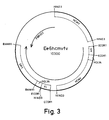
- FIG. 2 A construct with the genes arranged in tandem is shown in Figure 2. These constructs were tested by transient expression in COS 1 cells. Synthesis and secretion of variable domains was assayed by biosynthetically labelling the transfected cells with 35S-methionine (100 »Ci/106 cells/ml for 48 hours). The cell supernatants were subjected to immunoprecipitation with antisera reacting with either VL or VH framework epitopes.
- VH/VL construct was transfected into Chinese hamster ovary (CHO) cells by electroporation.
- VH and VL domains were detected in COS cell supernatants as 14 kD (cf. calculated mol. wt. of 12.6 kD) and 12 kD (cf. calculated mol. wt. of 11.8 kD) polypetides on both reducing and non-reducing SDS polyacrylamide gels. Apparently higher levels of expression of both domains were obtained from the dual VH/VL plasmid compared to the single VH or VL plasmids. VH was co-precipitated with VL from both labelled COS cell media by the antiserum specific for VL implying some degree of association of the domains.
- Figure 4 shows a fluorograph of an SDS polyacrylamide gel of B72.3 Fvs.
- CHO cells transfected with the vector of Figure 1 were labelled with 35 S methionine (100 »Ci/ml, 48h) and cell supernatants were subjected to immunoprecipitation using a rat antiserum specific for the B72.3 VL domain.
- Samples were analysed on 15% SDS polyacrylamide gels under reducing conditions. Tracks 1 to 5 show the results for five independent CHO cell lines. The numbers on the left refer to size markers.
- the B72.3 Fv polypeptides were isolated from the culture supernatant of one of these cell lines (Fv3, Track 3, Figure 4) by affinity chromatography on a mucin-Sepharose matrix. Mucin has been shown to mimic the B72.3 antigen [22].
- the mucin-Sepharose used was prepared by coupling bovine submaxillary mucin to CNBr-activated Sepharose by standard techniques at 5mg/ml of gel.
- Samples were serially diluted in microtitre plates coated with 5 »g ml bovine submaxillary gland mucin and incubated for 50h at 4°C. After washing with phosphate buffered saline, pH 7.2, containing 0.2% Tween 20, 100 » of a rabbit polyclonal antiserum raised to B72.3 (Fab′)2 was added to each well at a dilution of 1 in 2,000.
- This antiserum contains antibodies that recognise both B72.3 VH and VL and chains.
- the plates were incubated for 1h at room temperature, washed again and 100 »l goat anti-rabbit IgG Fc-horse radish peroxidase conjugate added to each well at a dilution of 1 in 5,000.
Landscapes
- Chemical & Material Sciences (AREA)
- Organic Chemistry (AREA)
- Health & Medical Sciences (AREA)
- Medicinal Chemistry (AREA)
- Proteomics, Peptides & Aminoacids (AREA)
- Biophysics (AREA)
- General Health & Medical Sciences (AREA)
- Genetics & Genomics (AREA)
- Life Sciences & Earth Sciences (AREA)
- Molecular Biology (AREA)
- Biochemistry (AREA)
- Immunology (AREA)
- Preparation Of Compounds By Using Micro-Organisms (AREA)
- Peptides Or Proteins (AREA)
- Medicines That Contain Protein Lipid Enzymes And Other Medicines (AREA)
- Medicines Containing Antibodies Or Antigens For Use As Internal Diagnostic Agents (AREA)
- Micro-Organisms Or Cultivation Processes Thereof (AREA)
Claims (7)
- Ein Verfahren zur Herstellung von Fv-Fragmenten, bei welchem die Ketten des Fv-Fragments von der Wirtszelle ausgeschieden und korrekt zusammengefügt werden, sodaß voll funktionsfähige Fv-Fragmente im Kulturüberstand produziert werden, welches Verfahren umfaßt:
Transformation einer eukaryotischen Wirtszelle mit einem eukaryotischen Expressionsvektor, der ein Operon mit einer DNA-Sequenz, die für den variablen Bereich nur einer leichten oder schweren Antikörperkette codiert, enthält,
Züchtung der transformierten Wirtszelle unter Bedingungen, die die Synthetisierung des von der DNA-Sequenz codierten Proteins bewirken; und
Sammlung des synthetisierten Proteins. - Das Verfahren nach Anspruch 1, bei welchem die Wirtszelle auch mit einem zweiten eukaryotischen Expressionsvektor transformiert wird, der ein Operon mit einer DNA-Sequenz, die für einen komplementären variablen Bereich einer schweren bzw. leichten Kette codiert, enthält.
- Das Verfahren nach Anspruch 1, bei welchem der erste Expressionsvektor ein zweites Operon mit einer DNA-Sequenz aufweist, die für einen komplementären variablen Bereich einer schweren bzw. leichten Kette codiert.
- Das Verfahren nach Anspruch 2 oder Anspruch 3, bei welchem der oder jeder variable Bereich als ein Fusionsprotein mit einem Effektorprotein, wie etwa einem Enzym, Ligand oder Toxin, das an sein C-terminales Ende fusioniert ist, exprimiert wird.
- Das Verfahren nach einem der Ansprüche 2 bis 4, bei welchem die oder jede DNA-Codierungssequenz gegen ihr 3'-Ende hin verändert sein kann, sodaß ein oder mehrere Cystein-Reste in Richtung zum C-terminalen Ende jedes variablen Bereichs produziert werden.
- Das Verfahren nach einem der Ansprüche 2 bis 4, bei welchem das Fv-Fragment durch Verwendung eines Vektors stabilisiert ist, der in dem Operon eine erste DNA-Sequenz, die für einen ersten variablen Bereich codiert, und eine zweite DNA-Sequenz, die für einen zweiten variablen Bereich codiert, aufweist, wobei die ersten und zweiten Sequenzen durch eine dritte DNA-Sequenz verknüpft sind, die für eine Verbindungspeptidsequenz codiert.
- Das Verfahren nach einem der Anspürche 1 bis 6, bei welchem die Codierungssequenz(en) von monoklonalen Antikörpern abgeleitet sind.
Applications Claiming Priority (6)
| Application Number | Priority Date | Filing Date | Title |
|---|---|---|---|
| GB888809050A GB8809050D0 (en) | 1988-04-16 | 1988-04-16 | Expression of antibody heavy & light chain variable domains as an fv-fragment |
| GB8809050 | 1988-04-16 | ||
| GB8811342 | 1988-05-13 | ||
| GB888811342A GB8811342D0 (en) | 1988-05-13 | 1988-05-13 | Expression of antibody heavy & light chain variable domains as active hetero-dimer in myeloma cells |
| GB888820284A GB8820284D0 (en) | 1988-08-26 | 1988-08-26 | Method for producing recombinant dna proteins |
| GB8820284 | 1988-08-26 |
Publications (2)
| Publication Number | Publication Date |
|---|---|
| EP0338745A1 EP0338745A1 (de) | 1989-10-25 |
| EP0338745B1 true EP0338745B1 (de) | 1995-03-01 |
Family
ID=27263864
Family Applications (1)
| Application Number | Title | Priority Date | Filing Date |
|---|---|---|---|
| EP89303767A Expired - Lifetime EP0338745B1 (de) | 1988-04-16 | 1989-04-17 | Verfahren zur Herstellung von Proteinen mittels rekombinanter DNA |
Country Status (9)
| Country | Link |
|---|---|
| EP (1) | EP0338745B1 (de) |
| JP (2) | JP3105898B2 (de) |
| AT (1) | ATE119198T1 (de) |
| AU (1) | AU627183B2 (de) |
| CA (1) | CA1341411C (de) |
| DE (1) | DE68921364T2 (de) |
| ES (1) | ES2070172T3 (de) |
| GR (1) | GR3015248T3 (de) |
| WO (1) | WO1989009825A1 (de) |
Cited By (2)
| Publication number | Priority date | Publication date | Assignee | Title |
|---|---|---|---|---|
| US9592289B2 (en) | 2012-03-26 | 2017-03-14 | Sanofi | Stable IgG4 based binding agent formulations |
| US11155638B2 (en) | 2018-05-08 | 2021-10-26 | Rhode Island Hospital | Anti-CHI3L1 antibodies for the detection and/or treatment of nonalcoholic fattly liver disease/nonalcoholic steatonhepatitis and subsequent complications |
Families Citing this family (51)
| Publication number | Priority date | Publication date | Assignee | Title |
|---|---|---|---|---|
| PT92900A (pt) * | 1989-01-24 | 1990-07-31 | Sistema de vectores de expressao para a producao de anticorpos monoclonais quimericos | |
| GB9021671D0 (en) * | 1990-10-05 | 1990-11-21 | Unilever Plc | Delivery of agents |
| GB9012995D0 (en) * | 1990-06-11 | 1990-08-01 | Celltech Ltd | Multivalent antigen-binding proteins |
| AU662311B2 (en) | 1991-02-05 | 1995-08-31 | Novartis Ag | Recombinant antibodies specific for a growth factor receptor |
| US5571894A (en) * | 1991-02-05 | 1996-11-05 | Ciba-Geigy Corporation | Recombinant antibodies specific for a growth factor receptor |
| EP0590058B1 (de) | 1991-06-14 | 2003-11-26 | Genentech, Inc. | Humanisierter Heregulin Antikörper |
| WO1994004679A1 (en) * | 1991-06-14 | 1994-03-03 | Genentech, Inc. | Method for making humanized antibodies |
| US6800738B1 (en) | 1991-06-14 | 2004-10-05 | Genentech, Inc. | Method for making humanized antibodies |
| US5939531A (en) * | 1991-07-15 | 1999-08-17 | Novartis Corp. | Recombinant antibodies specific for a growth factor receptor |
| EP0604580A1 (de) * | 1991-09-19 | 1994-07-06 | Genentech, Inc. | Expression in E.Coli von Antikörperfragmenten mit mindestens einem cystein in freier -SH Form. Anwendung in der Herstellung bifunktioneller Antikörper. |
| WO1994025591A1 (en) | 1993-04-29 | 1994-11-10 | Unilever N.V. | PRODUCTION OF ANTIBODIES OR (FUNCTIONALIZED) FRAGMENTS THEREOF DERIVED FROM HEAVY CHAIN IMMUNOGLOBULINS OF $i(CAMELIDAE) |
| US5747654A (en) * | 1993-06-14 | 1998-05-05 | The United States Of America As Represented By The Department Of Health And Human Services | Recombinant disulfide-stabilized polypeptide fragments having binding specificity |
| US6010861A (en) * | 1994-08-03 | 2000-01-04 | Dgi Biotechnologies, Llc | Target specific screens and their use for discovering small organic molecular pharmacophores |
| US5980895A (en) * | 1995-10-13 | 1999-11-09 | The United States Of America As Represented By The Department Of Health And Human Services | Immunotoxin containing a disulfide-stabilized antibody fragment joined to a Pseudomonas exotoxin that does not require proteolytic activation |
| ATE238349T1 (de) * | 1995-10-20 | 2003-05-15 | Novartis Pharma Gmbh | Verfahren zur herstellung eines einkettigen fv antikörperfragments |
| EP0909277B2 (de) | 1996-06-07 | 2008-12-24 | Poniard Pharmaceuticals, Inc. | Humanisierte antikörper die an das gleiche antigen wie antikörper nr-lu-13 binden und deren verwendung in "pretargeting" verfahren |
| JP2000164361A (ja) | 1998-11-25 | 2000-06-16 | Tdk Corp | 有機el素子 |
| EE200100603A (et) | 1999-05-14 | 2003-02-17 | Imclone Systems Incorporated | Inimese refraktaarsete kasvajate ravi epidermaalse kasvufaktori retseptori antagonistidega |
| US7740841B1 (en) | 2000-01-28 | 2010-06-22 | Sunnybrook Health Science Center | Therapeutic method for reducing angiogenesis |
| JP4819285B2 (ja) | 2000-05-16 | 2011-11-24 | トーマス・ジェファーソン・ユニバーシティー | 狂犬病ウイルス特異的ヒトモノクローナル中和抗体及び核酸及び関連する方法 |
| US7071319B2 (en) | 2000-05-16 | 2006-07-04 | Thomas Jefferson University | Recombinant antibodies, and compositions and methods for making and using the same |
| DK2508596T3 (en) | 2002-02-21 | 2015-10-19 | Inst Virology | MN / CA IX-specific monoclonal antibodies generated from MN / CA IX-poor mice, as well as methods of use. |
| US7435419B2 (en) | 2002-07-19 | 2008-10-14 | Beth Israel Deaconess Medical Center | Methods of diagnosing and treating pre-eclampsia or eclampsia |
| JP5650876B2 (ja) | 2002-07-19 | 2015-01-07 | ベス・イスラエル・ディーコニス・メディカル・センター | 子癇前症または子癇の診断方法および治療方法 |
| EP2365001A3 (de) | 2003-05-01 | 2012-03-28 | Imclone LLC | Vollständig humane Antikörper, die sich gegen den Wachstumfaktor-1-Rezeptor richten, der dem menschlichen Insulin ähnelt |
| ES2387809T3 (es) | 2004-03-19 | 2012-10-02 | Imclone Llc | Anticuerpo frente al receptor del factor de crecimiento epidérmico humano |
| JP5270161B2 (ja) | 2004-09-24 | 2013-08-21 | ベス イスラエル デアコネス メディカル センター | 妊娠合併症を診断および処置する方法 |
| EP2377555A3 (de) | 2004-11-18 | 2011-11-23 | Imclone LLC | Antikörper gegen den vaskulären endothelialen Wachstumsfaktorrezeptor-1 |
| EP1812064A4 (de) | 2004-11-19 | 2009-07-08 | Cornell Res Foundation Inc | Verwendung vaskulärer endothelwachstumsfaktor-rezeptor-1+-zellen bei der behandlung und überwachung von krebs und beim screening bei chemotherapie |
| CA2678008C (en) | 2005-06-17 | 2013-07-30 | Imclone Systems Incorporated | Methods of treating a secondary bone tumor with anti-pdgfralpha antibodies |
| DK1919954T3 (en) | 2005-08-30 | 2017-01-30 | Univ Miami | Immune modulating tumor necrosis factor receptor (TNFR25) - agonists, antagonists and immunotoxins |
| ZA200900545B (en) | 2006-07-18 | 2010-03-31 | Sanofi Aventis | Antagonist antibody against EPHA2 for the treatment of cancer |
| EP1914242A1 (de) | 2006-10-19 | 2008-04-23 | Sanofi-Aventis | Neue Antikörper gegen CD38 zur Behandlung von Krebs |
| KR100883430B1 (ko) | 2007-06-13 | 2009-02-12 | 한국생명공학연구원 | 혈관내피성장인자 수용체를 중화하는 인간 단클론항체 및그 용도 |
| EP2195023B1 (de) | 2007-08-29 | 2018-03-07 | Sanofi | Humanisierte anti-cxcr5-antikörper, derivate und anwendungsverfahren |
| EP2050764A1 (de) | 2007-10-15 | 2009-04-22 | sanofi-aventis | Neues polyvalentes bispezifisches Antikörperformat und Verwendung |
| UA99339C2 (ru) | 2008-03-12 | 2012-08-10 | Имклоун Ллк | Антитело, которое специфично связывает человеческий tyrp1 |
| WO2010027364A1 (en) | 2008-09-07 | 2010-03-11 | Glyconex Inc. | Anti-extended type i glycosphingolipid antibody, derivatives thereof and use |
| EP2467492A4 (de) | 2009-08-18 | 2013-01-09 | Harvard College | Verfahren und zusammensetzungen zur behandlung proliferativer und pathogener erkrankungen |
| UY32914A (es) | 2009-10-02 | 2011-04-29 | Sanofi Aventis | Anticuerpos que se usan específicamente al receptor epha2 |
| AR080154A1 (es) | 2010-02-10 | 2012-03-14 | Immunogen Inc | Anticuerpos cd20 y su utilizacion |
| WO2011103389A1 (en) | 2010-02-19 | 2011-08-25 | Cornell University | Method to treat autoimmune demyelinating diseases and other autoimmune or inflammatory diseases |
| AR080698A1 (es) | 2010-04-01 | 2012-05-02 | Imclone Llc | Anticuerpo o fragmento del mismo que especificamente enlaza la variante de csf -1r humano, composicion farmaceutica que lo comprende, su uso para la manufactura de un medicamento util para el tratamiento de cancer y metodo para determinar si un sujeto es candidato para tratamiento de cancer basado e |
| WO2011145085A2 (en) | 2010-05-21 | 2011-11-24 | Procognia (Israel) Ltd | Novel antibodies and methods of use for the treatment and diagnosis of cancer |
| WO2012125775A1 (en) | 2011-03-16 | 2012-09-20 | Sanofi | Uses of a dual v region antibody-like protein |
| TW201628647A (zh) | 2014-06-27 | 2016-08-16 | 賽諾菲公司 | 抗-il4-il13雙特異性抗體 |
| TW201825515A (zh) | 2017-01-04 | 2018-07-16 | 美商伊繆諾金公司 | Met抗體以及其免疫結合物及用途 |
| TWI808963B (zh) | 2017-03-22 | 2023-07-21 | 法商賽諾菲公司 | 使用人類化抗cxcr5抗體治療狼瘡 |
| WO2019207159A1 (en) | 2018-04-27 | 2019-10-31 | Fondazione Ebri Rita Levi-Montalcini | Antibody directed against a tau-derived neurotoxic peptide and uses thereof |
| WO2020014306A1 (en) | 2018-07-10 | 2020-01-16 | Immunogen, Inc. | Met antibodies and immunoconjugates and uses thereof |
| TWI883004B (zh) | 2019-05-24 | 2025-05-11 | 法商賽諾菲公司 | 治療全身性硬化症之方法 |
Citations (1)
| Publication number | Priority date | Publication date | Assignee | Title |
|---|---|---|---|---|
| EP0088994A2 (de) * | 1982-03-15 | 1983-09-21 | Schering Corporation | Hybride DNS, damit hergestellte Bindungszusammensetzung und Verfahren dafür |
Family Cites Families (2)
| Publication number | Priority date | Publication date | Assignee | Title |
|---|---|---|---|---|
| GB8607679D0 (en) * | 1986-03-27 | 1986-04-30 | Winter G P | Recombinant dna product |
| EP0281604B1 (de) * | 1986-09-02 | 1993-03-31 | Enzon Labs Inc. | Bindungsmoleküle mit einzelpolypeptidkette |
-
1989
- 1989-04-17 AT AT89303767T patent/ATE119198T1/de active
- 1989-04-17 JP JP01504561A patent/JP3105898B2/ja not_active Expired - Lifetime
- 1989-04-17 ES ES89303767T patent/ES2070172T3/es not_active Expired - Lifetime
- 1989-04-17 DE DE68921364T patent/DE68921364T2/de not_active Expired - Fee Related
- 1989-04-17 CA CA000596914A patent/CA1341411C/en not_active Expired - Fee Related
- 1989-04-17 EP EP89303767A patent/EP0338745B1/de not_active Expired - Lifetime
- 1989-04-17 WO PCT/GB1989/000399 patent/WO1989009825A1/en not_active Ceased
- 1989-04-17 AU AU35364/89A patent/AU627183B2/en not_active Ceased
-
1995
- 1995-03-02 GR GR940403951T patent/GR3015248T3/el unknown
-
1998
- 1998-11-12 JP JP10322472A patent/JPH11225758A/ja active Pending
Patent Citations (1)
| Publication number | Priority date | Publication date | Assignee | Title |
|---|---|---|---|---|
| EP0088994A2 (de) * | 1982-03-15 | 1983-09-21 | Schering Corporation | Hybride DNS, damit hergestellte Bindungszusammensetzung und Verfahren dafür |
Non-Patent Citations (3)
| Title |
|---|
| A. Klausner, Biotechnology, 4(1986), 12, 1041-1043 * |
| C. R. Wood et al., Nature, 1985, 314(4), 446-449 * |
| L. Hendershot et al., Immunology Today, 1987, 8(4), 111-114 * |
Cited By (3)
| Publication number | Priority date | Publication date | Assignee | Title |
|---|---|---|---|---|
| US9592289B2 (en) | 2012-03-26 | 2017-03-14 | Sanofi | Stable IgG4 based binding agent formulations |
| US11155638B2 (en) | 2018-05-08 | 2021-10-26 | Rhode Island Hospital | Anti-CHI3L1 antibodies for the detection and/or treatment of nonalcoholic fattly liver disease/nonalcoholic steatonhepatitis and subsequent complications |
| US12012465B2 (en) | 2018-05-08 | 2024-06-18 | Rhode Island Hospital | Anti-CHI3L1 antibodies for the detection and/or treatment of nonalcoholic fatty liver disease/nonalcoholic steatonhepatitis and subsequent complications |
Also Published As
| Publication number | Publication date |
|---|---|
| ES2070172T3 (es) | 1995-06-01 |
| CA1341411C (en) | 2002-12-17 |
| JPH11225758A (ja) | 1999-08-24 |
| ATE119198T1 (de) | 1995-03-15 |
| GR3015248T3 (en) | 1995-06-30 |
| JPH03500005A (ja) | 1991-01-10 |
| WO1989009825A1 (en) | 1989-10-19 |
| DE68921364D1 (de) | 1995-04-06 |
| AU627183B2 (en) | 1992-08-20 |
| JP3105898B2 (ja) | 2000-11-06 |
| AU3536489A (en) | 1989-11-03 |
| EP0338745A1 (de) | 1989-10-25 |
| DE68921364T2 (de) | 1995-06-29 |
Similar Documents
| Publication | Publication Date | Title |
|---|---|---|
| CA1341411C (en) | Method for producing fv fragments in eukaryotic cells | |
| US5091513A (en) | Biosynthetic antibody binding sites | |
| US5132405A (en) | Biosynthetic antibody binding sites | |
| US5476786A (en) | Biosynthetic antibody binding sites | |
| US5258498A (en) | Polypeptide linkers for production of biosynthetic proteins | |
| EP0640130B1 (de) | Mehrwertige Chimäre Proteine Anologe und Verfahren zu deren Anwendungen | |
| US5892019A (en) | Production of a single-gene-encoded immunoglobulin | |
| EP0194276B2 (de) | Herstellung von chimären antikörpern | |
| US4978745A (en) | Immunoreactive heterochain antibodies | |
| US20240209118A1 (en) | Polypeptide linker for preparing multispecific antibodies | |
| Yazaki et al. | Mammalian expression and hollow fiber bioreactor production of recombinant anti-CEA diabody and minibody for clinical applications | |
| US5965405A (en) | Method for producing Fv fragments in eukaryotic cells | |
| US9815891B2 (en) | Monospecific polypeptide reagents | |
| CA2087095A1 (en) | Binding domains | |
| Anand et al. | Synthesis and expression in Escherichia coli of cistronic DNA encoding an antibody fragment specific for a Salmonella serotype B O-antigen | |
| BG60687B1 (bg) | Специфични свързващи вещества | |
| CA2131355C (en) | Production of a single-gene-encoded immunoglobulin | |
| CA1341615C (en) | Targeted multifunctional proteins | |
| EP0370581A1 (de) | Anti-hCG-Antikörper |
Legal Events
| Date | Code | Title | Description |
|---|---|---|---|
| PUAI | Public reference made under article 153(3) epc to a published international application that has entered the european phase |
Free format text: ORIGINAL CODE: 0009012 |
|
| AK | Designated contracting states |
Kind code of ref document: A1 Designated state(s): AT BE CH DE ES FR GB GR IT LI LU NL SE |
|
| 17P | Request for examination filed |
Effective date: 19900403 |
|
| 17Q | First examination report despatched |
Effective date: 19920709 |
|
| GRAA | (expected) grant |
Free format text: ORIGINAL CODE: 0009210 |
|
| AK | Designated contracting states |
Kind code of ref document: B1 Designated state(s): AT BE CH DE ES FR GB GR IT LI LU NL SE |
|
| PG25 | Lapsed in a contracting state [announced via postgrant information from national office to epo] |
Ref country code: GR Free format text: LAPSE BECAUSE OF FAILURE TO SUBMIT A TRANSLATION OF THE DESCRIPTION OR TO PAY THE FEE WITHIN THE PRESCRIBED TIME-LIMIT Effective date: 19950301 |
|
| REF | Corresponds to: |
Ref document number: 119198 Country of ref document: AT Date of ref document: 19950315 Kind code of ref document: T |
|
| ITF | It: translation for a ep patent filed | ||
| REF | Corresponds to: |
Ref document number: 68921364 Country of ref document: DE Date of ref document: 19950406 |
|
| ET | Fr: translation filed | ||
| PG25 | Lapsed in a contracting state [announced via postgrant information from national office to epo] |
Ref country code: SE Effective date: 19950418 Ref country code: ES Free format text: LAPSE BECAUSE OF NON-PAYMENT OF DUE FEES Effective date: 19950418 |
|
| PG25 | Lapsed in a contracting state [announced via postgrant information from national office to epo] |
Ref country code: LU Free format text: LAPSE BECAUSE OF NON-PAYMENT OF DUE FEES Effective date: 19950430 Ref country code: BE Effective date: 19950430 |
|
| REG | Reference to a national code |
Ref country code: GR Ref legal event code: FG4A Free format text: 3015248 |
|
| REG | Reference to a national code |
Ref country code: ES Ref legal event code: FG2A Ref document number: 2070172 Country of ref document: ES Kind code of ref document: T3 |
|
| BERE | Be: lapsed |
Owner name: CELLTECH LTD Effective date: 19950430 |
|
| REG | Reference to a national code |
Ref country code: GR Ref legal event code: MM2A Free format text: 3015248 |
|
| PLBQ | Unpublished change to opponent data |
Free format text: ORIGINAL CODE: EPIDOS OPPO |
|
| PLBI | Opposition filed |
Free format text: ORIGINAL CODE: 0009260 |
|
| PLBF | Reply of patent proprietor to notice(s) of opposition |
Free format text: ORIGINAL CODE: EPIDOS OBSO |
|
| 26 | Opposition filed |
Opponent name: UNILEVER N.V. Effective date: 19951201 |
|
| EUG | Se: european patent has lapsed |
Ref document number: 89303767.1 |
|
| NLR1 | Nl: opposition has been filed with the epo |
Opponent name: UNILEVER N.V. |
|
| PLBF | Reply of patent proprietor to notice(s) of opposition |
Free format text: ORIGINAL CODE: EPIDOS OBSO |
|
| PLBF | Reply of patent proprietor to notice(s) of opposition |
Free format text: ORIGINAL CODE: EPIDOS OBSO |
|
| PLBF | Reply of patent proprietor to notice(s) of opposition |
Free format text: ORIGINAL CODE: EPIDOS OBSO |
|
| PLBL | Opposition procedure terminated |
Free format text: ORIGINAL CODE: EPIDOS OPPC |
|
| PGFP | Annual fee paid to national office [announced via postgrant information from national office to epo] |
Ref country code: AT Payment date: 19990415 Year of fee payment: 11 |
|
| PLBM | Termination of opposition procedure: date of legal effect published |
Free format text: ORIGINAL CODE: 0009276 |
|
| STAA | Information on the status of an ep patent application or granted ep patent |
Free format text: STATUS: OPPOSITION PROCEDURE CLOSED |
|
| 27C | Opposition proceedings terminated |
Effective date: 19990213 |
|
| NLR2 | Nl: decision of opposition | ||
| PG25 | Lapsed in a contracting state [announced via postgrant information from national office to epo] |
Ref country code: AT Free format text: LAPSE BECAUSE OF NON-PAYMENT OF DUE FEES Effective date: 20000417 |
|
| REG | Reference to a national code |
Ref country code: GB Ref legal event code: IF02 |
|
| PGFP | Annual fee paid to national office [announced via postgrant information from national office to epo] |
Ref country code: NL Payment date: 20020426 Year of fee payment: 14 |
|
| PGFP | Annual fee paid to national office [announced via postgrant information from national office to epo] |
Ref country code: CH Payment date: 20020430 Year of fee payment: 14 |
|
| PG25 | Lapsed in a contracting state [announced via postgrant information from national office to epo] |
Ref country code: LI Free format text: LAPSE BECAUSE OF NON-PAYMENT OF DUE FEES Effective date: 20030430 Ref country code: CH Free format text: LAPSE BECAUSE OF NON-PAYMENT OF DUE FEES Effective date: 20030430 |
|
| REG | Reference to a national code |
Ref country code: ES Ref legal event code: FD2A Effective date: 20030303 |
|
| PG25 | Lapsed in a contracting state [announced via postgrant information from national office to epo] |
Ref country code: NL Free format text: LAPSE BECAUSE OF NON-PAYMENT OF DUE FEES Effective date: 20031101 |
|
| NLV4 | Nl: lapsed or anulled due to non-payment of the annual fee |
Effective date: 20031101 |
|
| REG | Reference to a national code |
Ref country code: CH Ref legal event code: PL |
|
| PG25 | Lapsed in a contracting state [announced via postgrant information from national office to epo] |
Ref country code: IT Free format text: LAPSE BECAUSE OF NON-PAYMENT OF DUE FEES;WARNING: LAPSES OF ITALIAN PATENTS WITH EFFECTIVE DATE BEFORE 2007 MAY HAVE OCCURRED AT ANY TIME BEFORE 2007. THE CORRECT EFFECTIVE DATE MAY BE DIFFERENT FROM THE ONE RECORDED. Effective date: 20050417 |
|
| PGFP | Annual fee paid to national office [announced via postgrant information from national office to epo] |
Ref country code: FR Payment date: 20060410 Year of fee payment: 18 |
|
| PGFP | Annual fee paid to national office [announced via postgrant information from national office to epo] |
Ref country code: GB Payment date: 20060412 Year of fee payment: 18 |
|
| PGFP | Annual fee paid to national office [announced via postgrant information from national office to epo] |
Ref country code: DE Payment date: 20060413 Year of fee payment: 18 |
|
| GBPC | Gb: european patent ceased through non-payment of renewal fee |
Effective date: 20070417 |
|
| PG25 | Lapsed in a contracting state [announced via postgrant information from national office to epo] |
Ref country code: DE Free format text: LAPSE BECAUSE OF NON-PAYMENT OF DUE FEES Effective date: 20071101 |
|
| PG25 | Lapsed in a contracting state [announced via postgrant information from national office to epo] |
Ref country code: GB Free format text: LAPSE BECAUSE OF NON-PAYMENT OF DUE FEES Effective date: 20070417 |
|
| PG25 | Lapsed in a contracting state [announced via postgrant information from national office to epo] |
Ref country code: FR Free format text: LAPSE BECAUSE OF NON-PAYMENT OF DUE FEES Effective date: 20070430 |