EP0338352A2 - Salicylsäurederivate - Google Patents
Salicylsäurederivate Download PDFInfo
- Publication number
- EP0338352A2 EP0338352A2 EP89106225A EP89106225A EP0338352A2 EP 0338352 A2 EP0338352 A2 EP 0338352A2 EP 89106225 A EP89106225 A EP 89106225A EP 89106225 A EP89106225 A EP 89106225A EP 0338352 A2 EP0338352 A2 EP 0338352A2
- Authority
- EP
- European Patent Office
- Prior art keywords
- formula
- methyl
- thiazolyl
- acid
- hydroxy
- Prior art date
- Legal status (The legal status is an assumption and is not a legal conclusion. Google has not performed a legal analysis and makes no representation as to the accuracy of the status listed.)
- Withdrawn
Links
- 229940058287 salicylic acid derivative anticestodals Drugs 0.000 title claims abstract description 9
- 150000003872 salicylic acid derivatives Chemical class 0.000 title claims abstract description 9
- -1 4- (4-methyl-2-thiazolyl) piperazino, 4- (tetrahydro-2-furoyl) piperazino Chemical group 0.000 claims abstract description 49
- 239000002253 acid Substances 0.000 claims abstract description 32
- 150000003839 salts Chemical class 0.000 claims abstract description 22
- 125000004432 carbon atom Chemical group C* 0.000 claims abstract description 17
- 125000003545 alkoxy group Chemical group 0.000 claims abstract description 8
- 125000003282 alkyl amino group Chemical group 0.000 claims abstract description 5
- 150000001875 compounds Chemical class 0.000 claims description 35
- 238000000034 method Methods 0.000 claims description 14
- 238000002360 preparation method Methods 0.000 claims description 11
- 238000006243 chemical reaction Methods 0.000 claims description 9
- 239000004480 active ingredient Substances 0.000 claims description 6
- 239000000825 pharmaceutical preparation Substances 0.000 claims description 6
- 150000001408 amides Chemical class 0.000 claims description 5
- 150000002148 esters Chemical class 0.000 claims description 5
- 125000000217 alkyl group Chemical group 0.000 claims description 3
- 201000010099 disease Diseases 0.000 claims description 3
- 208000037265 diseases, disorders, signs and symptoms Diseases 0.000 claims description 3
- SSUPCQCULQLYEE-UHFFFAOYSA-N 2-hydroxy-5-[1-hydroxy-2-[4-(4-methyl-1,3-thiazol-2-yl)piperazin-1-yl]ethyl]benzamide Chemical compound CC1=CSC(N2CCN(CC(O)C=3C=C(C(O)=CC=3)C(N)=O)CC2)=N1 SSUPCQCULQLYEE-UHFFFAOYSA-N 0.000 claims description 2
- MDFFNEOEWAXZRQ-UHFFFAOYSA-N aminyl Chemical compound [NH2] MDFFNEOEWAXZRQ-UHFFFAOYSA-N 0.000 claims description 2
- 230000036772 blood pressure Effects 0.000 claims description 2
- 239000002552 dosage form Substances 0.000 claims description 2
- 125000004435 hydrogen atom Chemical group [H]* 0.000 claims description 2
- 125000002887 hydroxy group Chemical group [H]O* 0.000 claims description 2
- 239000007788 liquid Substances 0.000 claims 2
- 239000007787 solid Substances 0.000 claims 1
- 208000001953 Hypotension Diseases 0.000 abstract description 2
- 230000004087 circulation Effects 0.000 abstract description 2
- 230000000694 effects Effects 0.000 abstract description 2
- 208000021822 hypotensive Diseases 0.000 abstract description 2
- 230000001077 hypotensive effect Effects 0.000 abstract description 2
- 208000004880 Polyuria Diseases 0.000 abstract 1
- 230000001882 diuretic effect Effects 0.000 abstract 1
- AFVFQIVMOAPDHO-UHFFFAOYSA-N Methanesulfonic acid Chemical compound CS(O)(=O)=O AFVFQIVMOAPDHO-UHFFFAOYSA-N 0.000 description 46
- QTBSBXVTEAMEQO-UHFFFAOYSA-N Acetic acid Chemical compound CC(O)=O QTBSBXVTEAMEQO-UHFFFAOYSA-N 0.000 description 39
- 229940098779 methanesulfonic acid Drugs 0.000 description 23
- 239000000243 solution Substances 0.000 description 12
- LFQSCWFLJHTTHZ-UHFFFAOYSA-N Ethanol Chemical compound CCO LFQSCWFLJHTTHZ-UHFFFAOYSA-N 0.000 description 10
- WYURNTSHIVDZCO-UHFFFAOYSA-N Tetrahydrofuran Chemical compound C1CCOC1 WYURNTSHIVDZCO-UHFFFAOYSA-N 0.000 description 10
- RTZKZFJDLAIYFH-UHFFFAOYSA-N Diethyl ether Chemical compound CCOCC RTZKZFJDLAIYFH-UHFFFAOYSA-N 0.000 description 9
- OKKJLVBELUTLKV-UHFFFAOYSA-N Methanol Chemical compound OC OKKJLVBELUTLKV-UHFFFAOYSA-N 0.000 description 9
- ZMANZCXQSJIPKH-UHFFFAOYSA-N Triethylamine Chemical compound CCN(CC)CC ZMANZCXQSJIPKH-UHFFFAOYSA-N 0.000 description 9
- LSNNMFCWUKXFEE-UHFFFAOYSA-M Bisulfite Chemical compound OS([O-])=O LSNNMFCWUKXFEE-UHFFFAOYSA-M 0.000 description 8
- VEXZGXHMUGYJMC-UHFFFAOYSA-N Hydrochloric acid Chemical compound Cl VEXZGXHMUGYJMC-UHFFFAOYSA-N 0.000 description 8
- 239000003826 tablet Substances 0.000 description 8
- 239000000203 mixture Substances 0.000 description 7
- 239000000126 substance Substances 0.000 description 7
- 125000001495 ethyl group Chemical group [H]C([H])([H])C([H])([H])* 0.000 description 6
- UGWOIKOTDJQPST-UHFFFAOYSA-N 4-methyl-2-piperazin-1-yl-1,3-thiazole Chemical compound CC1=CSC(N2CCNCC2)=N1 UGWOIKOTDJQPST-UHFFFAOYSA-N 0.000 description 5
- 239000012279 sodium borohydride Substances 0.000 description 5
- 229910000033 sodium borohydride Inorganic materials 0.000 description 5
- HEMHJVSKTPXQMS-UHFFFAOYSA-M sodium hydroxide Inorganic materials [OH-].[Na+] HEMHJVSKTPXQMS-UHFFFAOYSA-M 0.000 description 5
- 239000007858 starting material Substances 0.000 description 5
- YLQBMQCUIZJEEH-UHFFFAOYSA-N tetrahydrofuran Natural products C=1C=COC=1 YLQBMQCUIZJEEH-UHFFFAOYSA-N 0.000 description 5
- BAVYZALUXZFZLV-UHFFFAOYSA-N Methylamine Chemical compound NC BAVYZALUXZFZLV-UHFFFAOYSA-N 0.000 description 4
- SKZKKFZAGNVIMN-UHFFFAOYSA-N Salicilamide Chemical compound NC(=O)C1=CC=CC=C1O SKZKKFZAGNVIMN-UHFFFAOYSA-N 0.000 description 4
- 150000007513 acids Chemical class 0.000 description 4
- VSCWAEJMTAWNJL-UHFFFAOYSA-K aluminium trichloride Chemical compound Cl[Al](Cl)Cl VSCWAEJMTAWNJL-UHFFFAOYSA-K 0.000 description 4
- 239000002775 capsule Substances 0.000 description 4
- 239000012442 inert solvent Substances 0.000 description 4
- JVTAAEKCZFNVCJ-UHFFFAOYSA-N lactic acid Chemical compound CC(O)C(O)=O JVTAAEKCZFNVCJ-UHFFFAOYSA-N 0.000 description 4
- HQKMJHAJHXVSDF-UHFFFAOYSA-L magnesium stearate Chemical compound [Mg+2].CCCCCCCCCCCCCCCCCC([O-])=O.CCCCCCCCCCCCCCCCCC([O-])=O HQKMJHAJHXVSDF-UHFFFAOYSA-L 0.000 description 4
- OSWPMRLSEDHDFF-UHFFFAOYSA-N methyl salicylate Chemical compound COC(=O)C1=CC=CC=C1O OSWPMRLSEDHDFF-UHFFFAOYSA-N 0.000 description 4
- 229960000581 salicylamide Drugs 0.000 description 4
- YGSDEFSMJLZEOE-UHFFFAOYSA-N salicylic acid Chemical compound OC(=O)C1=CC=CC=C1O YGSDEFSMJLZEOE-UHFFFAOYSA-N 0.000 description 4
- 229960004889 salicylic acid Drugs 0.000 description 4
- XLYOFNOQVPJJNP-UHFFFAOYSA-N water Substances O XLYOFNOQVPJJNP-UHFFFAOYSA-N 0.000 description 4
- 229910001868 water Inorganic materials 0.000 description 4
- LSTRKXWIZZZYAS-UHFFFAOYSA-N 2-bromoacetyl bromide Chemical compound BrCC(Br)=O LSTRKXWIZZZYAS-UHFFFAOYSA-N 0.000 description 3
- BCKXMQIYWWTZDP-UHFFFAOYSA-N 2-hydroxy-n-methylbenzamide Chemical compound CNC(=O)C1=CC=CC=C1O BCKXMQIYWWTZDP-UHFFFAOYSA-N 0.000 description 3
- UHOVQNZJYSORNB-UHFFFAOYSA-N Benzene Chemical compound C1=CC=CC=C1 UHOVQNZJYSORNB-UHFFFAOYSA-N 0.000 description 3
- XEKOWRVHYACXOJ-UHFFFAOYSA-N Ethyl acetate Chemical compound CCOC(C)=O XEKOWRVHYACXOJ-UHFFFAOYSA-N 0.000 description 3
- OFOBLEOULBTSOW-UHFFFAOYSA-N Malonic acid Chemical compound OC(=O)CC(O)=O OFOBLEOULBTSOW-UHFFFAOYSA-N 0.000 description 3
- KWYUFKZDYYNOTN-UHFFFAOYSA-M Potassium hydroxide Chemical compound [OH-].[K+] KWYUFKZDYYNOTN-UHFFFAOYSA-M 0.000 description 3
- QAOWNCQODCNURD-UHFFFAOYSA-N Sulfuric acid Chemical compound OS(O)(=O)=O QAOWNCQODCNURD-UHFFFAOYSA-N 0.000 description 3
- 150000001298 alcohols Chemical class 0.000 description 3
- 230000000747 cardiac effect Effects 0.000 description 3
- 239000003795 chemical substances by application Substances 0.000 description 3
- KRKNYBCHXYNGOX-UHFFFAOYSA-N citric acid Chemical compound OC(=O)CC(O)(C(O)=O)CC(O)=O KRKNYBCHXYNGOX-UHFFFAOYSA-N 0.000 description 3
- 239000003814 drug Substances 0.000 description 3
- RAXXELZNTBOGNW-UHFFFAOYSA-N imidazole Natural products C1=CNC=N1 RAXXELZNTBOGNW-UHFFFAOYSA-N 0.000 description 3
- CYTCUPMXTVLRFB-UHFFFAOYSA-N methyl 2-hydroxy-5-[1-hydroxy-2-[4-(4-methyl-1,3-thiazol-2-yl)piperazin-1-yl]ethyl]benzoate Chemical compound C1=C(O)C(C(=O)OC)=CC(C(O)CN2CCN(CC2)C=2SC=C(C)N=2)=C1 CYTCUPMXTVLRFB-UHFFFAOYSA-N 0.000 description 3
- 125000002496 methyl group Chemical group [H]C([H])([H])* 0.000 description 3
- 150000003254 radicals Chemical class 0.000 description 3
- CDBYLPFSWZWCQE-UHFFFAOYSA-L sodium carbonate Substances [Na+].[Na+].[O-]C([O-])=O CDBYLPFSWZWCQE-UHFFFAOYSA-L 0.000 description 3
- 239000002904 solvent Substances 0.000 description 3
- 239000000454 talc Substances 0.000 description 3
- 229910052623 talc Inorganic materials 0.000 description 3
- 238000010626 work up procedure Methods 0.000 description 3
- BJEPYKJPYRNKOW-REOHCLBHSA-N (S)-malic acid Chemical compound OC(=O)[C@@H](O)CC(O)=O BJEPYKJPYRNKOW-REOHCLBHSA-N 0.000 description 2
- RYHBNJHYFVUHQT-UHFFFAOYSA-N 1,4-Dioxane Chemical compound C1COCCO1 RYHBNJHYFVUHQT-UHFFFAOYSA-N 0.000 description 2
- UVCXFAWWUMKQOR-UHFFFAOYSA-N 5-(2-bromo-1-hydroxyethyl)-2-hydroxybenzamide Chemical compound NC(=O)C1=CC(C(O)CBr)=CC=C1O UVCXFAWWUMKQOR-UHFFFAOYSA-N 0.000 description 2
- VXWSXLSUWGZOHD-UHFFFAOYSA-N 5-(2-bromoacetyl)-2-hydroxybenzamide Chemical compound NC(=O)C1=CC(C(=O)CBr)=CC=C1O VXWSXLSUWGZOHD-UHFFFAOYSA-N 0.000 description 2
- XKRFYHLGVUSROY-UHFFFAOYSA-N Argon Chemical compound [Ar] XKRFYHLGVUSROY-UHFFFAOYSA-N 0.000 description 2
- CIWBSHSKHKDKBQ-JLAZNSOCSA-N Ascorbic acid Chemical compound OC[C@H](O)[C@H]1OC(=O)C(O)=C1O CIWBSHSKHKDKBQ-JLAZNSOCSA-N 0.000 description 2
- VTYYLEPIZMXCLO-UHFFFAOYSA-L Calcium carbonate Chemical compound [Ca+2].[O-]C([O-])=O VTYYLEPIZMXCLO-UHFFFAOYSA-L 0.000 description 2
- HEDRZPFGACZZDS-UHFFFAOYSA-N Chloroform Chemical compound ClC(Cl)Cl HEDRZPFGACZZDS-UHFFFAOYSA-N 0.000 description 2
- RGHNJXZEOKUKBD-SQOUGZDYSA-N D-gluconic acid Chemical compound OC[C@@H](O)[C@@H](O)[C@H](O)[C@@H](O)C(O)=O RGHNJXZEOKUKBD-SQOUGZDYSA-N 0.000 description 2
- FEWJPZIEWOKRBE-JCYAYHJZSA-N Dextrotartaric acid Chemical compound OC(=O)[C@H](O)[C@@H](O)C(O)=O FEWJPZIEWOKRBE-JCYAYHJZSA-N 0.000 description 2
- VZCYOOQTPOCHFL-OWOJBTEDSA-N Fumaric acid Chemical compound OC(=O)\C=C\C(O)=O VZCYOOQTPOCHFL-OWOJBTEDSA-N 0.000 description 2
- CEIXWJHURKEBMQ-UHFFFAOYSA-N Heliamine Chemical compound C1CNCC2=C1C=C(OC)C(OC)=C2 CEIXWJHURKEBMQ-UHFFFAOYSA-N 0.000 description 2
- UFHFLCQGNIYNRP-UHFFFAOYSA-N Hydrogen Chemical compound [H][H] UFHFLCQGNIYNRP-UHFFFAOYSA-N 0.000 description 2
- 206010020772 Hypertension Diseases 0.000 description 2
- DGAQECJNVWCQMB-PUAWFVPOSA-M Ilexoside XXIX Chemical compound C[C@@H]1CC[C@@]2(CC[C@@]3(C(=CC[C@H]4[C@]3(CC[C@@H]5[C@@]4(CC[C@@H](C5(C)C)OS(=O)(=O)[O-])C)C)[C@@H]2[C@]1(C)O)C)C(=O)O[C@H]6[C@@H]([C@H]([C@@H]([C@H](O6)CO)O)O)O.[Na+] DGAQECJNVWCQMB-PUAWFVPOSA-M 0.000 description 2
- KFZMGEQAYNKOFK-UHFFFAOYSA-N Isopropanol Chemical compound CC(C)O KFZMGEQAYNKOFK-UHFFFAOYSA-N 0.000 description 2
- GUBGYTABKSRVRQ-QKKXKWKRSA-N Lactose Natural products OC[C@H]1O[C@@H](O[C@H]2[C@H](O)[C@@H](O)C(O)O[C@@H]2CO)[C@H](O)[C@@H](O)[C@H]1O GUBGYTABKSRVRQ-QKKXKWKRSA-N 0.000 description 2
- 241001465754 Metazoa Species 0.000 description 2
- UFWIBTONFRDIAS-UHFFFAOYSA-N Naphthalene Chemical compound C1=CC=CC2=CC=CC=C21 UFWIBTONFRDIAS-UHFFFAOYSA-N 0.000 description 2
- PVNIIMVLHYAWGP-UHFFFAOYSA-N Niacin Chemical compound OC(=O)C1=CC=CN=C1 PVNIIMVLHYAWGP-UHFFFAOYSA-N 0.000 description 2
- NBIIXXVUZAFLBC-UHFFFAOYSA-N Phosphoric acid Chemical compound OP(O)(O)=O NBIIXXVUZAFLBC-UHFFFAOYSA-N 0.000 description 2
- 229910019020 PtO2 Inorganic materials 0.000 description 2
- JUJWROOIHBZHMG-UHFFFAOYSA-N Pyridine Chemical compound C1=CC=NC=C1 JUJWROOIHBZHMG-UHFFFAOYSA-N 0.000 description 2
- UIIMBOGNXHQVGW-UHFFFAOYSA-M Sodium bicarbonate Chemical compound [Na+].OC([O-])=O UIIMBOGNXHQVGW-UHFFFAOYSA-M 0.000 description 2
- 229920002472 Starch Polymers 0.000 description 2
- FEWJPZIEWOKRBE-UHFFFAOYSA-N Tartaric acid Natural products [H+].[H+].[O-]C(=O)C(O)C(O)C([O-])=O FEWJPZIEWOKRBE-UHFFFAOYSA-N 0.000 description 2
- YKIOKAURTKXMSB-UHFFFAOYSA-N adams's catalyst Chemical compound O=[Pt]=O YKIOKAURTKXMSB-UHFFFAOYSA-N 0.000 description 2
- BJEPYKJPYRNKOW-UHFFFAOYSA-N alpha-hydroxysuccinic acid Natural products OC(=O)C(O)CC(O)=O BJEPYKJPYRNKOW-UHFFFAOYSA-N 0.000 description 2
- WPYMKLBDIGXBTP-UHFFFAOYSA-N benzoic acid Chemical compound OC(=O)C1=CC=CC=C1 WPYMKLBDIGXBTP-UHFFFAOYSA-N 0.000 description 2
- 230000037396 body weight Effects 0.000 description 2
- 239000003638 chemical reducing agent Substances 0.000 description 2
- 239000003086 colorant Substances 0.000 description 2
- XBDQKXXYIPTUBI-UHFFFAOYSA-N dimethylselenoniopropionate Natural products CCC(O)=O XBDQKXXYIPTUBI-UHFFFAOYSA-N 0.000 description 2
- 150000002170 ethers Chemical class 0.000 description 2
- QMEZUZOCLYUADC-UHFFFAOYSA-N hydrate;dihydrochloride Chemical compound O.Cl.Cl QMEZUZOCLYUADC-UHFFFAOYSA-N 0.000 description 2
- 239000001257 hydrogen Substances 0.000 description 2
- 229910052739 hydrogen Inorganic materials 0.000 description 2
- 125000000468 ketone group Chemical group 0.000 description 2
- 239000004310 lactic acid Substances 0.000 description 2
- 235000014655 lactic acid Nutrition 0.000 description 2
- 239000008101 lactose Substances 0.000 description 2
- 235000019359 magnesium stearate Nutrition 0.000 description 2
- 239000001630 malic acid Substances 0.000 description 2
- 235000011090 malic acid Nutrition 0.000 description 2
- 238000004519 manufacturing process Methods 0.000 description 2
- BDAGIHXWWSANSR-UHFFFAOYSA-N methanoic acid Natural products OC=O BDAGIHXWWSANSR-UHFFFAOYSA-N 0.000 description 2
- 150000004702 methyl esters Chemical class 0.000 description 2
- 230000002988 nephrogenic effect Effects 0.000 description 2
- FJKROLUGYXJWQN-UHFFFAOYSA-N papa-hydroxy-benzoic acid Natural products OC(=O)C1=CC=C(O)C=C1 FJKROLUGYXJWQN-UHFFFAOYSA-N 0.000 description 2
- 235000011007 phosphoric acid Nutrition 0.000 description 2
- WLJVNTCWHIRURA-UHFFFAOYSA-N pimelic acid Chemical compound OC(=O)CCCCCC(O)=O WLJVNTCWHIRURA-UHFFFAOYSA-N 0.000 description 2
- BWHMMNNQKKPAPP-UHFFFAOYSA-L potassium carbonate Chemical compound [K+].[K+].[O-]C([O-])=O BWHMMNNQKKPAPP-UHFFFAOYSA-L 0.000 description 2
- 229910000029 sodium carbonate Inorganic materials 0.000 description 2
- 235000012222 talc Nutrition 0.000 description 2
- 239000011975 tartaric acid Substances 0.000 description 2
- 235000002906 tartaric acid Nutrition 0.000 description 2
- JOXIMZWYDAKGHI-UHFFFAOYSA-N toluene-4-sulfonic acid Chemical compound CC1=CC=C(S(O)(=O)=O)C=C1 JOXIMZWYDAKGHI-UHFFFAOYSA-N 0.000 description 2
- 230000000699 topical effect Effects 0.000 description 2
- VZCYOOQTPOCHFL-UHFFFAOYSA-N trans-butenedioic acid Natural products OC(=O)C=CC(O)=O VZCYOOQTPOCHFL-UHFFFAOYSA-N 0.000 description 2
- QBYIENPQHBMVBV-HFEGYEGKSA-N (2R)-2-hydroxy-2-phenylacetic acid Chemical compound O[C@@H](C(O)=O)c1ccccc1.O[C@@H](C(O)=O)c1ccccc1 QBYIENPQHBMVBV-HFEGYEGKSA-N 0.000 description 1
- DNISEZBAYYIQFB-PHDIDXHHSA-N (2r,3r)-2,3-diacetyloxybutanedioic acid Chemical compound CC(=O)O[C@@H](C(O)=O)[C@H](C(O)=O)OC(C)=O DNISEZBAYYIQFB-PHDIDXHHSA-N 0.000 description 1
- FQUYSHZXSKYCSY-UHFFFAOYSA-N 1,4-diazepane Chemical compound C1CNCCNC1 FQUYSHZXSKYCSY-UHFFFAOYSA-N 0.000 description 1
- WREHPEFXXFJIIJ-UHFFFAOYSA-N 1-(1h-indol-3-yl)-2-methylpropan-2-amine Chemical compound C1=CC=C2C(CC(C)(N)C)=CNC2=C1 WREHPEFXXFJIIJ-UHFFFAOYSA-N 0.000 description 1
- UKESBLFBQANJHH-UHFFFAOYSA-N 1-(Tetrahydro-2-furoyl)piperazine Chemical compound C1CNCCN1C(=O)C1CCCO1 UKESBLFBQANJHH-UHFFFAOYSA-N 0.000 description 1
- OXQGTIUCKGYOAA-UHFFFAOYSA-N 2-Ethylbutanoic acid Chemical compound CCC(CC)C(O)=O OXQGTIUCKGYOAA-UHFFFAOYSA-N 0.000 description 1
- KMGUEILFFWDGFV-UHFFFAOYSA-N 2-benzoyl-2-benzoyloxy-3-hydroxybutanedioic acid Chemical compound C=1C=CC=CC=1C(=O)C(C(C(O)=O)O)(C(O)=O)OC(=O)C1=CC=CC=C1 KMGUEILFFWDGFV-UHFFFAOYSA-N 0.000 description 1
- WXAWKKCDHDKTST-UHFFFAOYSA-N 2-hydroxy-5-(1-hydroxy-2-imidazol-1-ylethyl)benzamide Chemical compound C1=C(O)C(C(=O)N)=CC(C(O)CN2C=NC=C2)=C1 WXAWKKCDHDKTST-UHFFFAOYSA-N 0.000 description 1
- CLHINLRWHPAQRH-UHFFFAOYSA-N 2-hydroxy-5-[1-hydroxy-2-(2,4,5-tribromoimidazol-1-yl)ethyl]-n-methylbenzamide Chemical compound C1=C(O)C(C(=O)NC)=CC(C(O)CN2C(=C(Br)N=C2Br)Br)=C1 CLHINLRWHPAQRH-UHFFFAOYSA-N 0.000 description 1
- XGROIRJGOREROG-UHFFFAOYSA-N 2-hydroxy-5-[1-hydroxy-2-(2,4,5-tribromoimidazol-1-yl)ethyl]benzamide Chemical compound C1=C(O)C(C(=O)N)=CC(C(O)CN2C(=C(Br)N=C2Br)Br)=C1 XGROIRJGOREROG-UHFFFAOYSA-N 0.000 description 1
- CWBILOWZDFERJX-UHFFFAOYSA-N 2-hydroxy-5-[1-hydroxy-2-[4-(4-methyl-1,3-thiazol-2-yl)piperazin-1-yl]ethyl]-n-methylbenzamide Chemical compound C1=C(O)C(C(=O)NC)=CC(C(O)CN2CCN(CC2)C=2SC=C(C)N=2)=C1 CWBILOWZDFERJX-UHFFFAOYSA-N 0.000 description 1
- XMYZPXBYBWJCAW-UHFFFAOYSA-N 2-hydroxy-5-[1-hydroxy-2-[4-(4-methyl-1,3-thiazol-2-yl)piperazin-1-yl]ethyl]-n-propan-2-ylbenzamide Chemical compound C1=C(O)C(C(=O)NC(C)C)=CC(C(O)CN2CCN(CC2)C=2SC=C(C)N=2)=C1 XMYZPXBYBWJCAW-UHFFFAOYSA-N 0.000 description 1
- UYYCHFHCDNKLEB-UHFFFAOYSA-N 2-hydroxy-5-[1-hydroxy-2-[4-(4-methyl-1,3-thiazol-2-yl)piperazin-1-yl]ethyl]-n-propylbenzamide Chemical compound C1=C(O)C(C(=O)NCCC)=CC(C(O)CN2CCN(CC2)C=2SC=C(C)N=2)=C1 UYYCHFHCDNKLEB-UHFFFAOYSA-N 0.000 description 1
- RIGAIAHTZIQRLW-UHFFFAOYSA-N 2-hydroxy-5-[1-hydroxy-2-[4-(oxolane-2-carbonyl)piperazin-1-yl]ethyl]-n-methylbenzamide Chemical compound C1=C(O)C(C(=O)NC)=CC(C(O)CN2CCN(CC2)C(=O)C2OCCC2)=C1 RIGAIAHTZIQRLW-UHFFFAOYSA-N 0.000 description 1
- FPWVBYOTZDRJNM-UHFFFAOYSA-N 2-hydroxy-5-[1-hydroxy-2-[4-(oxolane-2-carbonyl)piperazin-1-yl]ethyl]benzamide Chemical compound C1=C(O)C(C(=O)N)=CC(C(O)CN2CCN(CC2)C(=O)C2OCCC2)=C1 FPWVBYOTZDRJNM-UHFFFAOYSA-N 0.000 description 1
- OQEZBNVQZZLCEC-UHFFFAOYSA-N 2-hydroxy-5-[1-hydroxy-2-[[1-(1h-indol-3-yl)-2-methylpropan-2-yl]amino]ethyl]-n-methylbenzamide Chemical compound C1=C(O)C(C(=O)NC)=CC(C(O)CNC(C)(C)CC=2C3=CC=CC=C3NC=2)=C1 OQEZBNVQZZLCEC-UHFFFAOYSA-N 0.000 description 1
- ZENOXIYBOKILFZ-UHFFFAOYSA-N 2-hydroxy-5-[1-hydroxy-2-[[1-(1h-indol-3-yl)-2-methylpropan-2-yl]amino]ethyl]benzamide Chemical compound C=1NC2=CC=CC=C2C=1CC(C)(C)NCC(O)C1=CC=C(O)C(C(N)=O)=C1 ZENOXIYBOKILFZ-UHFFFAOYSA-N 0.000 description 1
- AFDCJMFVCBMFJO-UHFFFAOYSA-N 2-methylpropyl 2-hydroxy-5-[1-hydroxy-2-[4-(4-methyl-1,3-thiazol-2-yl)piperazin-1-yl]ethyl]benzoate Chemical compound C1=C(O)C(C(=O)OCC(C)C)=CC(C(O)CN2CCN(CC2)C=2SC=C(C)N=2)=C1 AFDCJMFVCBMFJO-UHFFFAOYSA-N 0.000 description 1
- BMYNFMYTOJXKLE-UHFFFAOYSA-N 3-azaniumyl-2-hydroxypropanoate Chemical compound NCC(O)C(O)=O BMYNFMYTOJXKLE-UHFFFAOYSA-N 0.000 description 1
- OSWFIVFLDKOXQC-UHFFFAOYSA-N 4-(3-methoxyphenyl)aniline Chemical compound COC1=CC=CC(C=2C=CC(N)=CC=2)=C1 OSWFIVFLDKOXQC-UHFFFAOYSA-N 0.000 description 1
- AWCZHDQYNKDRCC-UHFFFAOYSA-N 5-(2-bromoacetyl)-2-hydroxybenzoic acid Chemical class OC(=O)C1=CC(C(=O)CBr)=CC=C1O AWCZHDQYNKDRCC-UHFFFAOYSA-N 0.000 description 1
- FVRGKSZPDNIHKY-UHFFFAOYSA-N 5-(2-bromoacetyl)-2-methoxybenzoic acid Chemical compound COC1=CC=C(C(=O)CBr)C=C1C(O)=O FVRGKSZPDNIHKY-UHFFFAOYSA-N 0.000 description 1
- QKKAVXMAXIITIO-UHFFFAOYSA-N 5-[2-(4-benzamidopiperidin-1-yl)-1-hydroxyethyl]-2-hydroxy-n-methylbenzamide Chemical compound C1=C(O)C(C(=O)NC)=CC(C(O)CN2CCC(CC2)NC(=O)C=2C=CC=CC=2)=C1 QKKAVXMAXIITIO-UHFFFAOYSA-N 0.000 description 1
- PMVJSGNOHXAQNJ-UHFFFAOYSA-N 5-[2-(4-benzamidopiperidin-1-yl)-1-hydroxyethyl]-2-hydroxybenzamide Chemical compound C1=C(O)C(C(=O)N)=CC(C(O)CN2CCC(CC2)NC(=O)C=2C=CC=CC=2)=C1 PMVJSGNOHXAQNJ-UHFFFAOYSA-N 0.000 description 1
- NLXLAEXVIDQMFP-UHFFFAOYSA-N Ammonia chloride Chemical compound [NH4+].[Cl-] NLXLAEXVIDQMFP-UHFFFAOYSA-N 0.000 description 1
- 101100277337 Arabidopsis thaliana DDM1 gene Proteins 0.000 description 1
- 241000416162 Astragalus gummifer Species 0.000 description 1
- 239000005711 Benzoic acid Substances 0.000 description 1
- VGCXGMAHQTYDJK-UHFFFAOYSA-N Chloroacetyl chloride Chemical compound ClCC(Cl)=O VGCXGMAHQTYDJK-UHFFFAOYSA-N 0.000 description 1
- JZUFKLXOESDKRF-UHFFFAOYSA-N Chlorothiazide Chemical compound C1=C(Cl)C(S(=O)(=O)N)=CC2=C1NCNS2(=O)=O JZUFKLXOESDKRF-UHFFFAOYSA-N 0.000 description 1
- 229920002261 Corn starch Polymers 0.000 description 1
- 206010011086 Coronary artery occlusion Diseases 0.000 description 1
- RGHNJXZEOKUKBD-UHFFFAOYSA-N D-gluconic acid Natural products OCC(O)C(O)C(O)C(O)C(O)=O RGHNJXZEOKUKBD-UHFFFAOYSA-N 0.000 description 1
- 108010010803 Gelatin Proteins 0.000 description 1
- 229910010084 LiAlH4 Inorganic materials 0.000 description 1
- 239000012448 Lithium borohydride Substances 0.000 description 1
- GRYLNZFGIOXLOG-UHFFFAOYSA-N Nitric acid Chemical compound O[N+]([O-])=O GRYLNZFGIOXLOG-UHFFFAOYSA-N 0.000 description 1
- 206010030113 Oedema Diseases 0.000 description 1
- KDLHZDBZIXYQEI-UHFFFAOYSA-N Palladium Chemical compound [Pd] KDLHZDBZIXYQEI-UHFFFAOYSA-N 0.000 description 1
- IWYDHOAUDWTVEP-UHFFFAOYSA-N R-2-phenyl-2-hydroxyacetic acid Natural products OC(=O)C(O)C1=CC=CC=C1 IWYDHOAUDWTVEP-UHFFFAOYSA-N 0.000 description 1
- KDYFGRWQOYBRFD-UHFFFAOYSA-N Succinic acid Natural products OC(=O)CCC(O)=O KDYFGRWQOYBRFD-UHFFFAOYSA-N 0.000 description 1
- 229930006000 Sucrose Natural products 0.000 description 1
- CZMRCDWAGMRECN-UGDNZRGBSA-N Sucrose Chemical compound O[C@H]1[C@H](O)[C@@H](CO)O[C@@]1(CO)O[C@@H]1[C@H](O)[C@@H](O)[C@H](O)[C@@H](CO)O1 CZMRCDWAGMRECN-UGDNZRGBSA-N 0.000 description 1
- 241000282887 Suidae Species 0.000 description 1
- 229920001615 Tragacanth Polymers 0.000 description 1
- 239000008186 active pharmaceutical agent Substances 0.000 description 1
- 230000010933 acylation Effects 0.000 description 1
- 238000005917 acylation reaction Methods 0.000 description 1
- 125000002723 alicyclic group Chemical group 0.000 description 1
- 125000001931 aliphatic group Chemical group 0.000 description 1
- 150000003973 alkyl amines Chemical class 0.000 description 1
- 235000019270 ammonium chloride Nutrition 0.000 description 1
- 239000003708 ampul Substances 0.000 description 1
- 239000007864 aqueous solution Substances 0.000 description 1
- 229910052786 argon Inorganic materials 0.000 description 1
- 230000004872 arterial blood pressure Effects 0.000 description 1
- 125000003118 aryl group Chemical group 0.000 description 1
- 125000005279 aryl sulfonyloxy group Chemical group 0.000 description 1
- 235000010323 ascorbic acid Nutrition 0.000 description 1
- 239000011668 ascorbic acid Substances 0.000 description 1
- 229960005070 ascorbic acid Drugs 0.000 description 1
- SRSXLGNVWSONIS-UHFFFAOYSA-N benzenesulfonic acid Chemical compound OS(=O)(=O)C1=CC=CC=C1 SRSXLGNVWSONIS-UHFFFAOYSA-N 0.000 description 1
- 229940092714 benzenesulfonic acid Drugs 0.000 description 1
- 235000010233 benzoic acid Nutrition 0.000 description 1
- 235000019445 benzyl alcohol Nutrition 0.000 description 1
- 150000003938 benzyl alcohols Chemical class 0.000 description 1
- 125000001797 benzyl group Chemical group [H]C1=C([H])C([H])=C(C([H])=C1[H])C([H])([H])* 0.000 description 1
- 230000015572 biosynthetic process Effects 0.000 description 1
- 230000017531 blood circulation Effects 0.000 description 1
- 238000009835 boiling Methods 0.000 description 1
- 239000000872 buffer Substances 0.000 description 1
- KDYFGRWQOYBRFD-NUQCWPJISA-N butanedioic acid Chemical compound O[14C](=O)CC[14C](O)=O KDYFGRWQOYBRFD-NUQCWPJISA-N 0.000 description 1
- MWKBHYOBERRUTN-UHFFFAOYSA-N butyl 2-hydroxy-5-[1-hydroxy-2-[4-(4-methyl-1,3-thiazol-2-yl)piperazin-1-yl]ethyl]benzoate Chemical compound C1=C(O)C(C(=O)OCCCC)=CC(C(O)CN2CCN(CC2)C=2SC=C(C)N=2)=C1 MWKBHYOBERRUTN-UHFFFAOYSA-N 0.000 description 1
- 229910000019 calcium carbonate Inorganic materials 0.000 description 1
- MIOPJNTWMNEORI-UHFFFAOYSA-N camphorsulfonic acid Chemical class C1CC2(CS(O)(=O)=O)C(=O)CC1C2(C)C MIOPJNTWMNEORI-UHFFFAOYSA-N 0.000 description 1
- 235000014633 carbohydrates Nutrition 0.000 description 1
- 150000001720 carbohydrates Chemical class 0.000 description 1
- JYYOBHFYCIDXHH-UHFFFAOYSA-N carbonic acid;hydrate Chemical compound O.OC(O)=O JYYOBHFYCIDXHH-UHFFFAOYSA-N 0.000 description 1
- 150000001732 carboxylic acid derivatives Chemical class 0.000 description 1
- 125000002843 carboxylic acid group Chemical group 0.000 description 1
- 230000005961 cardioprotection Effects 0.000 description 1
- 230000003293 cardioprotective effect Effects 0.000 description 1
- 239000003054 catalyst Substances 0.000 description 1
- 238000009903 catalytic hydrogenation reaction Methods 0.000 description 1
- 101150113676 chr1 gene Proteins 0.000 description 1
- 238000004587 chromatography analysis Methods 0.000 description 1
- 229960004106 citric acid Drugs 0.000 description 1
- 235000015165 citric acid Nutrition 0.000 description 1
- 239000011248 coating agent Substances 0.000 description 1
- 238000000576 coating method Methods 0.000 description 1
- 239000008120 corn starch Substances 0.000 description 1
- 208000029078 coronary artery disease Diseases 0.000 description 1
- 239000006071 cream Substances 0.000 description 1
- 238000002425 crystallisation Methods 0.000 description 1
- 230000008025 crystallization Effects 0.000 description 1
- UKPBEPCQTDRZSE-UHFFFAOYSA-N cyclizine hydrochloride Chemical compound Cl.C1CN(C)CCN1C(C=1C=CC=CC=1)C1=CC=CC=C1 UKPBEPCQTDRZSE-UHFFFAOYSA-N 0.000 description 1
- 238000007269 dehydrobromination reaction Methods 0.000 description 1
- 238000006704 dehydrohalogenation reaction Methods 0.000 description 1
- 235000005911 diet Nutrition 0.000 description 1
- 230000037213 diet Effects 0.000 description 1
- VQKLRVZQQYVIJW-UHFFFAOYSA-N dihydralazine Chemical compound C1=CC=C2C(NN)=NN=C(NN)C2=C1 VQKLRVZQQYVIJW-UHFFFAOYSA-N 0.000 description 1
- 229960002877 dihydralazine Drugs 0.000 description 1
- MOTZDAYCYVMXPC-UHFFFAOYSA-N dodecyl hydrogen sulfate Chemical compound CCCCCCCCCCCCOS(O)(=O)=O MOTZDAYCYVMXPC-UHFFFAOYSA-N 0.000 description 1
- 239000012154 double-distilled water Substances 0.000 description 1
- 239000008298 dragée Substances 0.000 description 1
- 239000000890 drug combination Substances 0.000 description 1
- 230000002526 effect on cardiovascular system Effects 0.000 description 1
- 239000003995 emulsifying agent Substances 0.000 description 1
- 239000000839 emulsion Substances 0.000 description 1
- 150000002118 epoxides Chemical class 0.000 description 1
- AZVNVKNMEUKXRX-UHFFFAOYSA-N ethyl 2-hydroxy-5-[1-hydroxy-2-[4-(4-methyl-1,3-thiazol-2-yl)piperazin-1-yl]ethyl]benzoate Chemical compound C1=C(O)C(C(=O)OCC)=CC(C(O)CN2CCN(CC2)C=2SC=C(C)N=2)=C1 AZVNVKNMEUKXRX-UHFFFAOYSA-N 0.000 description 1
- 230000029142 excretion Effects 0.000 description 1
- 239000000796 flavoring agent Substances 0.000 description 1
- 235000019634 flavors Nutrition 0.000 description 1
- 235000019253 formic acid Nutrition 0.000 description 1
- 238000001640 fractional crystallisation Methods 0.000 description 1
- 235000011389 fruit/vegetable juice Nutrition 0.000 description 1
- 239000001530 fumaric acid Substances 0.000 description 1
- 125000000524 functional group Chemical group 0.000 description 1
- 239000008273 gelatin Substances 0.000 description 1
- 229920000159 gelatin Polymers 0.000 description 1
- 239000007903 gelatin capsule Substances 0.000 description 1
- 235000019322 gelatine Nutrition 0.000 description 1
- 235000011852 gelatine desserts Nutrition 0.000 description 1
- 239000000174 gluconic acid Substances 0.000 description 1
- 235000012208 gluconic acid Nutrition 0.000 description 1
- 229950006191 gluconic acid Drugs 0.000 description 1
- 229940093915 gynecological organic acid Drugs 0.000 description 1
- 150000004820 halides Chemical class 0.000 description 1
- 150000003944 halohydrins Chemical class 0.000 description 1
- 125000000623 heterocyclic group Chemical group 0.000 description 1
- YPGCWEMNNLXISK-UHFFFAOYSA-N hydratropic acid Chemical compound OC(=O)C(C)C1=CC=CC=C1 YPGCWEMNNLXISK-UHFFFAOYSA-N 0.000 description 1
- 229960002003 hydrochlorothiazide Drugs 0.000 description 1
- 238000007327 hydrogenolysis reaction Methods 0.000 description 1
- BDAGIHXWWSANSR-NJFSPNSNSA-N hydroxyformaldehyde Chemical compound O[14CH]=O BDAGIHXWWSANSR-NJFSPNSNSA-N 0.000 description 1
- 230000001631 hypertensive effect Effects 0.000 description 1
- 239000007943 implant Substances 0.000 description 1
- 238000011065 in-situ storage Methods 0.000 description 1
- 239000000543 intermediate Substances 0.000 description 1
- 238000001990 intravenous administration Methods 0.000 description 1
- 208000028867 ischemia Diseases 0.000 description 1
- 239000012280 lithium aluminium hydride Substances 0.000 description 1
- 239000000314 lubricant Substances 0.000 description 1
- VZCYOOQTPOCHFL-UPHRSURJSA-N maleic acid Chemical compound OC(=O)\C=C/C(O)=O VZCYOOQTPOCHFL-UPHRSURJSA-N 0.000 description 1
- 239000011976 maleic acid Substances 0.000 description 1
- 229960002510 mandelic acid Drugs 0.000 description 1
- 229910052987 metal hydride Inorganic materials 0.000 description 1
- 150000004681 metal hydrides Chemical class 0.000 description 1
- UKVIEHSSVKSQBA-UHFFFAOYSA-N methane;palladium Chemical compound C.[Pd] UKVIEHSSVKSQBA-UHFFFAOYSA-N 0.000 description 1
- HEAHBGNJMUXELP-UHFFFAOYSA-N methyl 2-hydroxy-5-(1-hydroxy-2-imidazol-1-ylethyl)benzoate Chemical compound C1=C(O)C(C(=O)OC)=CC(C(O)CN2C=NC=C2)=C1 HEAHBGNJMUXELP-UHFFFAOYSA-N 0.000 description 1
- LPCATBDASDFBKC-UHFFFAOYSA-N methyl 2-hydroxy-5-[1-hydroxy-2-(2,4,5-tribromoimidazol-1-yl)ethyl]benzoate Chemical compound C1=C(O)C(C(=O)OC)=CC(C(O)CN2C(=C(Br)N=C2Br)Br)=C1 LPCATBDASDFBKC-UHFFFAOYSA-N 0.000 description 1
- LYTPZKBZSPLLOE-UHFFFAOYSA-N methyl 2-hydroxy-5-[1-hydroxy-2-[4-(4-methyl-1,3-thiazol-2-yl)piperazin-1-yl]propyl]benzoate Chemical compound C1=C(O)C(C(=O)OC)=CC(C(O)C(C)N2CCN(CC2)C=2SC=C(C)N=2)=C1 LYTPZKBZSPLLOE-UHFFFAOYSA-N 0.000 description 1
- YJVMCCNNTGWWIH-UHFFFAOYSA-N methyl 2-hydroxy-5-[1-hydroxy-2-[4-(oxolane-2-carbonyl)piperazin-1-yl]ethyl]benzoate Chemical compound C1=C(O)C(C(=O)OC)=CC(C(O)CN2CCN(CC2)C(=O)C2OCCC2)=C1 YJVMCCNNTGWWIH-UHFFFAOYSA-N 0.000 description 1
- MMEDLYBPWPHWGE-UHFFFAOYSA-N methyl 2-hydroxy-5-[1-hydroxy-2-[[1-(1H-indol-3-yl)-2-methylpropan-2-yl]amino]ethyl]benzoate Chemical compound C1=C(O)C(C(=O)OC)=CC(C(O)CNC(C)(C)CC=2C3=CC=CC=C3NC=2)=C1 MMEDLYBPWPHWGE-UHFFFAOYSA-N 0.000 description 1
- XLLZMVGSLQWSCZ-UHFFFAOYSA-N methyl 2-hydroxy-5-[2-[4-(oxolane-2-carbonyl)piperazin-1-yl]acetyl]benzoate Chemical compound C1=C(O)C(C(=O)OC)=CC(C(=O)CN2CCN(CC2)C(=O)C2OCCC2)=C1 XLLZMVGSLQWSCZ-UHFFFAOYSA-N 0.000 description 1
- UMVRPHWOWVKMRT-UHFFFAOYSA-N methyl 5-[2-(4-benzamidopiperidin-1-yl)-1-hydroxyethyl]-2-hydroxybenzoate Chemical compound C1=C(O)C(C(=O)OC)=CC(C(O)CN2CCC(CC2)NC(=O)C=2C=CC=CC=2)=C1 UMVRPHWOWVKMRT-UHFFFAOYSA-N 0.000 description 1
- 150000007522 mineralic acids Chemical class 0.000 description 1
- XLFWDASMENKTKL-UHFFFAOYSA-N molsidomine Chemical compound O1C(N=C([O-])OCC)=C[N+](N2CCOCC2)=N1 XLFWDASMENKTKL-UHFFFAOYSA-N 0.000 description 1
- 229960004027 molsidomine Drugs 0.000 description 1
- LNOPIUAQISRISI-UHFFFAOYSA-N n'-hydroxy-2-propan-2-ylsulfonylethanimidamide Chemical compound CC(C)S(=O)(=O)CC(N)=NO LNOPIUAQISRISI-UHFFFAOYSA-N 0.000 description 1
- JXBLULYPQMKYLZ-UHFFFAOYSA-N n-butyl-2-hydroxy-5-[1-hydroxy-2-[4-(4-methyl-1,3-thiazol-2-yl)piperazin-1-yl]ethyl]benzamide Chemical compound C1=C(O)C(C(=O)NCCCC)=CC(C(O)CN2CCN(CC2)C=2SC=C(C)N=2)=C1 JXBLULYPQMKYLZ-UHFFFAOYSA-N 0.000 description 1
- HRTYWMWBTNRYBQ-UHFFFAOYSA-N n-ethyl-2-hydroxy-5-[1-hydroxy-2-[4-(4-methyl-1,3-thiazol-2-yl)piperazin-1-yl]ethyl]benzamide Chemical compound C1=C(O)C(C(=O)NCC)=CC(C(O)CN2CCN(CC2)C=2SC=C(C)N=2)=C1 HRTYWMWBTNRYBQ-UHFFFAOYSA-N 0.000 description 1
- JMQDNLCNCDSHNC-UHFFFAOYSA-N n-piperidin-4-ylbenzamide Chemical compound C=1C=CC=CC=1C(=O)NC1CCNCC1 JMQDNLCNCDSHNC-UHFFFAOYSA-N 0.000 description 1
- 239000011664 nicotinic acid Substances 0.000 description 1
- 229960003512 nicotinic acid Drugs 0.000 description 1
- 235000001968 nicotinic acid Nutrition 0.000 description 1
- 229910017604 nitric acid Inorganic materials 0.000 description 1
- 229910000510 noble metal Inorganic materials 0.000 description 1
- 239000002674 ointment Substances 0.000 description 1
- 230000003287 optical effect Effects 0.000 description 1
- 150000007524 organic acids Chemical class 0.000 description 1
- 235000005985 organic acids Nutrition 0.000 description 1
- 239000003960 organic solvent Substances 0.000 description 1
- 230000003204 osmotic effect Effects 0.000 description 1
- 229910052763 palladium Inorganic materials 0.000 description 1
- 235000019271 petrolatum Nutrition 0.000 description 1
- 230000000144 pharmacologic effect Effects 0.000 description 1
- 150000003016 phosphoric acids Chemical class 0.000 description 1
- IUGYQRQAERSCNH-UHFFFAOYSA-N pivalic acid Chemical compound CC(C)(C)C(O)=O IUGYQRQAERSCNH-UHFFFAOYSA-N 0.000 description 1
- 229910052697 platinum Inorganic materials 0.000 description 1
- 229920001223 polyethylene glycol Polymers 0.000 description 1
- 229910000027 potassium carbonate Inorganic materials 0.000 description 1
- 239000000843 powder Substances 0.000 description 1
- 239000003755 preservative agent Substances 0.000 description 1
- PHMBATYFURIJGE-UHFFFAOYSA-N propan-2-yl 2-hydroxy-5-[1-hydroxy-2-[4-(4-methyl-1,3-thiazol-2-yl)piperazin-1-yl]ethyl]benzoate Chemical compound C1=C(O)C(C(=O)OC(C)C)=CC(C(O)CN2CCN(CC2)C=2SC=C(C)N=2)=C1 PHMBATYFURIJGE-UHFFFAOYSA-N 0.000 description 1
- 235000019260 propionic acid Nutrition 0.000 description 1
- UMJSCPRVCHMLSP-UHFFFAOYSA-N pyridine Natural products COC1=CC=CN=C1 UMJSCPRVCHMLSP-UHFFFAOYSA-N 0.000 description 1
- IUVKMZGDUIUOCP-BTNSXGMBSA-N quinbolone Chemical compound O([C@H]1CC[C@H]2[C@H]3[C@@H]([C@]4(C=CC(=O)C=C4CC3)C)CC[C@@]21C)C1=CCCC1 IUVKMZGDUIUOCP-BTNSXGMBSA-N 0.000 description 1
- 239000011541 reaction mixture Substances 0.000 description 1
- 238000001953 recrystallisation Methods 0.000 description 1
- 230000002441 reversible effect Effects 0.000 description 1
- 150000003902 salicylic acid esters Chemical class 0.000 description 1
- 229920006395 saturated elastomer Polymers 0.000 description 1
- 239000011734 sodium Substances 0.000 description 1
- 229910000030 sodium bicarbonate Inorganic materials 0.000 description 1
- 235000017557 sodium bicarbonate Nutrition 0.000 description 1
- 238000011699 spontaneously hypertensive rat Methods 0.000 description 1
- 239000003381 stabilizer Substances 0.000 description 1
- 239000008107 starch Substances 0.000 description 1
- 235000019698 starch Nutrition 0.000 description 1
- 229910000018 strontium carbonate Inorganic materials 0.000 description 1
- 239000005720 sucrose Substances 0.000 description 1
- 229960004793 sucrose Drugs 0.000 description 1
- 125000000542 sulfonic acid group Chemical group 0.000 description 1
- 239000000829 suppository Substances 0.000 description 1
- 239000000725 suspension Substances 0.000 description 1
- 238000003786 synthesis reaction Methods 0.000 description 1
- 239000006188 syrup Substances 0.000 description 1
- 235000020357 syrup Nutrition 0.000 description 1
- 229940033134 talc Drugs 0.000 description 1
- 230000001225 therapeutic effect Effects 0.000 description 1
- 238000002560 therapeutic procedure Methods 0.000 description 1
- 239000000196 tragacanth Substances 0.000 description 1
- 235000010487 tragacanth Nutrition 0.000 description 1
- 229940116362 tragacanth Drugs 0.000 description 1
- LMJSLTNSBFUCMU-UHFFFAOYSA-N trichlormethiazide Chemical compound C1=C(Cl)C(S(=O)(=O)N)=CC2=C1NC(C(Cl)Cl)NS2(=O)=O LMJSLTNSBFUCMU-UHFFFAOYSA-N 0.000 description 1
- 229960004813 trichlormethiazide Drugs 0.000 description 1
- 230000002792 vascular Effects 0.000 description 1
- 235000015112 vegetable and seed oil Nutrition 0.000 description 1
- 239000008158 vegetable oil Substances 0.000 description 1
- 239000011782 vitamin Substances 0.000 description 1
- 229940088594 vitamin Drugs 0.000 description 1
- 235000013343 vitamin Nutrition 0.000 description 1
- 229930003231 vitamin Natural products 0.000 description 1
- 239000000080 wetting agent Substances 0.000 description 1
- 229940100445 wheat starch Drugs 0.000 description 1
Classifications
-
- C—CHEMISTRY; METALLURGY
- C07—ORGANIC CHEMISTRY
- C07D—HETEROCYCLIC COMPOUNDS
- C07D277/00—Heterocyclic compounds containing 1,3-thiazole or hydrogenated 1,3-thiazole rings
- C07D277/02—Heterocyclic compounds containing 1,3-thiazole or hydrogenated 1,3-thiazole rings not condensed with other rings
- C07D277/20—Heterocyclic compounds containing 1,3-thiazole or hydrogenated 1,3-thiazole rings not condensed with other rings having two or three double bonds between ring members or between ring members and non-ring members
- C07D277/22—Heterocyclic compounds containing 1,3-thiazole or hydrogenated 1,3-thiazole rings not condensed with other rings having two or three double bonds between ring members or between ring members and non-ring members with only hydrogen atoms, hydrocarbon or substituted hydrocarbon radicals, directly attached to ring carbon atoms
- C07D277/28—Radicals substituted by nitrogen atoms
-
- C—CHEMISTRY; METALLURGY
- C07—ORGANIC CHEMISTRY
- C07D—HETEROCYCLIC COMPOUNDS
- C07D249/00—Heterocyclic compounds containing five-membered rings having three nitrogen atoms as the only ring hetero atoms
- C07D249/02—Heterocyclic compounds containing five-membered rings having three nitrogen atoms as the only ring hetero atoms not condensed with other rings
- C07D249/08—1,2,4-Triazoles; Hydrogenated 1,2,4-triazoles
-
- A—HUMAN NECESSITIES
- A61—MEDICAL OR VETERINARY SCIENCE; HYGIENE
- A61P—SPECIFIC THERAPEUTIC ACTIVITY OF CHEMICAL COMPOUNDS OR MEDICINAL PREPARATIONS
- A61P9/00—Drugs for disorders of the cardiovascular system
- A61P9/12—Antihypertensives
-
- C—CHEMISTRY; METALLURGY
- C07—ORGANIC CHEMISTRY
- C07D—HETEROCYCLIC COMPOUNDS
- C07D209/00—Heterocyclic compounds containing five-membered rings, condensed with other rings, with one nitrogen atom as the only ring hetero atom
- C07D209/02—Heterocyclic compounds containing five-membered rings, condensed with other rings, with one nitrogen atom as the only ring hetero atom condensed with one carbocyclic ring
- C07D209/04—Indoles; Hydrogenated indoles
- C07D209/10—Indoles; Hydrogenated indoles with substituted hydrocarbon radicals attached to carbon atoms of the hetero ring
- C07D209/14—Radicals substituted by nitrogen atoms, not forming part of a nitro radical
-
- C—CHEMISTRY; METALLURGY
- C07—ORGANIC CHEMISTRY
- C07D—HETEROCYCLIC COMPOUNDS
- C07D211/00—Heterocyclic compounds containing hydrogenated pyridine rings, not condensed with other rings
- C07D211/04—Heterocyclic compounds containing hydrogenated pyridine rings, not condensed with other rings with only hydrogen or carbon atoms directly attached to the ring nitrogen atom
- C07D211/06—Heterocyclic compounds containing hydrogenated pyridine rings, not condensed with other rings with only hydrogen or carbon atoms directly attached to the ring nitrogen atom having no double bonds between ring members or between ring members and non-ring members
- C07D211/36—Heterocyclic compounds containing hydrogenated pyridine rings, not condensed with other rings with only hydrogen or carbon atoms directly attached to the ring nitrogen atom having no double bonds between ring members or between ring members and non-ring members with hetero atoms or with carbon atoms having three bonds to hetero atoms with at the most one bond to halogen, e.g. ester or nitrile radicals, directly attached to ring carbon atoms
- C07D211/56—Nitrogen atoms
- C07D211/58—Nitrogen atoms attached in position 4
-
- C—CHEMISTRY; METALLURGY
- C07—ORGANIC CHEMISTRY
- C07D—HETEROCYCLIC COMPOUNDS
- C07D217/00—Heterocyclic compounds containing isoquinoline or hydrogenated isoquinoline ring systems
- C07D217/02—Heterocyclic compounds containing isoquinoline or hydrogenated isoquinoline ring systems with only hydrogen atoms or radicals containing only carbon and hydrogen atoms, directly attached to carbon atoms of the nitrogen-containing ring; Alkylene-bis-isoquinolines
- C07D217/04—Heterocyclic compounds containing isoquinoline or hydrogenated isoquinoline ring systems with only hydrogen atoms or radicals containing only carbon and hydrogen atoms, directly attached to carbon atoms of the nitrogen-containing ring; Alkylene-bis-isoquinolines with hydrocarbon or substituted hydrocarbon radicals attached to the ring nitrogen atom
-
- C—CHEMISTRY; METALLURGY
- C07—ORGANIC CHEMISTRY
- C07D—HETEROCYCLIC COMPOUNDS
- C07D231/00—Heterocyclic compounds containing 1,2-diazole or hydrogenated 1,2-diazole rings
- C07D231/02—Heterocyclic compounds containing 1,2-diazole or hydrogenated 1,2-diazole rings not condensed with other rings
- C07D231/10—Heterocyclic compounds containing 1,2-diazole or hydrogenated 1,2-diazole rings not condensed with other rings having two or three double bonds between ring members or between ring members and non-ring members
- C07D231/12—Heterocyclic compounds containing 1,2-diazole or hydrogenated 1,2-diazole rings not condensed with other rings having two or three double bonds between ring members or between ring members and non-ring members with only hydrogen atoms, hydrocarbon or substituted hydrocarbon radicals, directly attached to ring carbon atoms
-
- C—CHEMISTRY; METALLURGY
- C07—ORGANIC CHEMISTRY
- C07D—HETEROCYCLIC COMPOUNDS
- C07D233/00—Heterocyclic compounds containing 1,3-diazole or hydrogenated 1,3-diazole rings, not condensed with other rings
- C07D233/54—Heterocyclic compounds containing 1,3-diazole or hydrogenated 1,3-diazole rings, not condensed with other rings having two double bonds between ring members or between ring members and non-ring members
- C07D233/56—Heterocyclic compounds containing 1,3-diazole or hydrogenated 1,3-diazole rings, not condensed with other rings having two double bonds between ring members or between ring members and non-ring members with only hydrogen atoms or radicals containing only hydrogen and carbon atoms, attached to ring carbon atoms
-
- C—CHEMISTRY; METALLURGY
- C07—ORGANIC CHEMISTRY
- C07D—HETEROCYCLIC COMPOUNDS
- C07D233/00—Heterocyclic compounds containing 1,3-diazole or hydrogenated 1,3-diazole rings, not condensed with other rings
- C07D233/54—Heterocyclic compounds containing 1,3-diazole or hydrogenated 1,3-diazole rings, not condensed with other rings having two double bonds between ring members or between ring members and non-ring members
- C07D233/66—Heterocyclic compounds containing 1,3-diazole or hydrogenated 1,3-diazole rings, not condensed with other rings having two double bonds between ring members or between ring members and non-ring members with hetero atoms or with carbon atoms having three bonds to hetero atoms with at the most one bond to halogen, e.g. ester or nitrile radicals, directly attached to ring carbon atoms
- C07D233/68—Halogen atoms
-
- C—CHEMISTRY; METALLURGY
- C07—ORGANIC CHEMISTRY
- C07D—HETEROCYCLIC COMPOUNDS
- C07D277/00—Heterocyclic compounds containing 1,3-thiazole or hydrogenated 1,3-thiazole rings
- C07D277/02—Heterocyclic compounds containing 1,3-thiazole or hydrogenated 1,3-thiazole rings not condensed with other rings
- C07D277/20—Heterocyclic compounds containing 1,3-thiazole or hydrogenated 1,3-thiazole rings not condensed with other rings having two or three double bonds between ring members or between ring members and non-ring members
- C07D277/32—Heterocyclic compounds containing 1,3-thiazole or hydrogenated 1,3-thiazole rings not condensed with other rings having two or three double bonds between ring members or between ring members and non-ring members with hetero atoms or with carbon atoms having three bonds to hetero atoms with at the most one bond to halogen, e.g. ester or nitrile radicals, directly attached to ring carbon atoms
- C07D277/38—Nitrogen atoms
- C07D277/42—Amino or imino radicals substituted by hydrocarbon or substituted hydrocarbon radicals
-
- C—CHEMISTRY; METALLURGY
- C07—ORGANIC CHEMISTRY
- C07D—HETEROCYCLIC COMPOUNDS
- C07D307/00—Heterocyclic compounds containing five-membered rings having one oxygen atom as the only ring hetero atom
- C07D307/02—Heterocyclic compounds containing five-membered rings having one oxygen atom as the only ring hetero atom not condensed with other rings
- C07D307/04—Heterocyclic compounds containing five-membered rings having one oxygen atom as the only ring hetero atom not condensed with other rings having no double bonds between ring members or between ring members and non-ring members
- C07D307/18—Heterocyclic compounds containing five-membered rings having one oxygen atom as the only ring hetero atom not condensed with other rings having no double bonds between ring members or between ring members and non-ring members with hetero atoms or with carbon atoms having three bonds to hetero atoms with at the most one bond to halogen, e.g. ester or nitrile radicals, directly attached to ring carbon atoms
- C07D307/24—Carbon atoms having three bonds to hetero atoms with at the most one bond to halogen
Definitions
- the invention relates to new salicylic acid derivatives of the general formula I. wherein R1 H or CH3, R2 4- (4-methyl-2-thiazolyl) piperazino, 4- (tetrahydro-2-furoyl) piperazino, 4- (4-methyl-2-thiazolyl) homopiperazino, 4-benzamidopiperidino, 6,7-dimethoxy-1,2,3,4-tetrahydroisoquinolino, 1-imidazolyl, tribromo-1-imidazolyl or 2- (3-indolyl) -1,1-dimethyl-ethylamino and R3 alkoxy with 1-4 carbon atoms, NH2 or alkylamino with 1-4 carbon atoms mean, as well as their physiologically acceptable acid addition salts.
- the object of the invention was to find new compounds which can be used for the production of medicaments. This object was achieved by providing the compounds of the formula I.
- the substances reduce z. B. the blood pressure measured on the carotid loop of the awake mixed-breed dog (methodology see EC van LEERSUM, Pflügers Archive 142 , 377-395 (1911) in nephrogenic hypertensive animals (methodology see IH PAGE, Science 89 , 273-274 (1939) in a 10-day endurance test with oral doses that may be lower than 2 mg / kg / day, depending on the dose, to a reduced level.
- spontaneously hypertensive rats (strain SHR / NIH-MO / CHB-) who are awake in catheter-bearing (method see JR WEEKS and JA JONES, Proc.Soc.Exptl.Biol.Med. 104 , 646-648 (1960)) EMD) directly measured arterial blood pressure after single intragastric administration from 10 mg / kg depending on the dose.
- the cardiac burden can be deduced from the following cardiovascular effects observed in the anesthetized dog after intravenous administration: (1) increase in total vascular capacity (method: H. SUGA, et al. Pflügers Archiy, 361 , 95-98 (1975). ( 2) Reduction of afterload and decrease in cardiac output (method: K. STEPHAN, et al. Arzneistoffforschung, 25 , 1770-1776 (1975).)
- the increased ischemia tolerance of the heart (cardioprotection) by the substances according to the invention can be demonstrated on the anesthetized dog with the Reversible coronary artery occlusion method (PR MAROKO et al.
- the esters of formula I also serve as intermediates for the preparation of the amides of formula I.
- the invention relates to the compounds of the formula I and their physiologically acceptable acid addition salts.
- the radical R1 is preferably H.
- the radical R2 is preferably 4- (4-methyl-2-thiazolyl) piperazino.
- R3 preferably represents an NH2 group.
- the invention relates in particular to those compounds of the formula I in which at least one of the radicals mentioned has one of the preferred meanings indicated above.
- a preferred group of compounds corresponds to the formula I, in which R 1 and R 3 have the meanings indicated and R 2 is 4- (4-methyl-2-thiazolyl) piperazino, 4- (tetrahydro-2-furoyl) piperazino, 4- (4 -Methyl-2-thiazolyl) homopiperazino, 6,7-dimethoxy-1,2,3,4-tetrahydroisoquinolino, 1-imidazolyl, tribromo-1-imidazolyl or 2- (3-indolyl) -1,1-dimethyl- ethylamino means.
- X is preferably Cl, Br, J or arylsulfonyloxy having 6-10 C atoms, such as benzene or p-toluenesulfonyloxy.
- the compounds of the formula I can be prepared by methods known per se, as described in the literature (for example in the standard works such as Houben-Weyl, Methods of Organic Chemistry, Georg-Thieme-Verlag, Stuttgart) under reaction conditions as are known and suitable per se for the reactions described below. Use can also be made of variants which are known per se and are not mentioned here in detail.
- the starting materials can also be prepared in situ in such a way that they are not isolated from the reaction mixture, but instead are immediately converted further into the compounds of the formula I.
- the salicylic acid derivatives of the formula I are advantageously prepared from the compounds of the formulas II and III in the presence of an inert solvent, for.
- an inert solvent for.
- an alcohol such as methanol, ethanol or isopropanol or an ether such as diethyl ether, tetrahydrofuran or dioxane at temperatures between about 0 and 120 °, preferably between 20 and 100 °.
- a base such as triethylamine or pyridine. You can also work without a solvent or use an excess of base III as a solvent.
- the reduction can e.g. B. done by catalytic hydrogenation at temperatures between about 0 ° and about 200 ° and pressures between about 1 and 200 bar in an inert solvent, for. B. one of the alcohols or ethers mentioned, an ester such as ethyl acetate or a carboxylic acid such as acetic acid.
- Suitable catalysts are suitably noble metals such as Pt or Pd, which can be used in the form of oxides (e.g. PtO2, PdO), on a support (e.g. Pd on carbon, calcium carbonate or strontium carbonate) or in finely divided form.
- Keto groups can also be reduced with complex metal hydrides, although of course the other functional groups in the molecule must not be attacked.
- NaBH4 is particularly well suited as a reducing agent which can be used in one of the alcohols mentioned, if desired with the addition of further solvents such as water and / or tetrahydrofuran at temperatures between about -10 and +50 °.
- suitable reducing agents are e.g. B. LiBH4, Zn (BH4) 2, LiAlH4, triisobutylaluminium hydride in ethers such as tetrahydrofuran or dioxane.
- an inert solvent e.g. B. one of the specified alcohols
- a base of the formula I can be converted into the associated acid addition salt using an acid.
- Acids that provide physiologically acceptable salts are suitable for this reaction.
- So inorganic acids can be used, e.g. B. sulfuric acid, hydrohalic acids such as hydrochloric acid or hydrobromic acid, phosphoric acids such as orthophosphoric acid, nitric acid, sulfamic acid, further organic acids, in particular aliphatic, alicyclic, araliphatic, aromatic or heterocyclic mono- or polybasic carboxylic, sulfonic or sulfuric acids, such as formic acid, acetic acid, acetic acid, acetic acid, acetic acid, acetic acid, acetic acid, acetic acid, acetic acid, acetic acid, acetic acid, acetic acid, acetic acid, acetic acid, acetic acid, acetic acid, acetic acid, Propionic acid, pivalic acid, diethylacetic acid, malonic acid,
- the free bases of the formula I can be liberated from their salts by treatment with strong bases such as sodium or potassium hydroxide, sodium or potassium carbonate.
- the compounds of formula I can have one or more centers of asymmetry. They can therefore be obtained in their preparation as racemates or, if optically active starting materials are used, also in optically active form. If the compounds have two or more centers of asymmetry, they are generally obtained in the synthesis as mixtures of racemates from which the individual racemates can be isolated in pure form, for example by recrystallization from inert solvents. Racemates obtained can, if desired, be mechanically or chemically separated into their optical antipodes by methods known per se. Diastereomers are preferably formed from the racemate by reaction with an optically active release agent.
- Suitable release agents are, for example, optically active acids, such as the D and L forms of tartaric acid, dibenzoyl tartaric acid, diacetyl tartaric acid, camphorsulfonic acids, mandelic acid, malic acid or lactic acid.
- optically active acids such as the D and L forms of tartaric acid, dibenzoyl tartaric acid, diacetyl tartaric acid, camphorsulfonic acids, mandelic acid, malic acid or lactic acid.
- the various forms of the diastereomers can be separated in a manner known per se, for example by fractional crystallization, and the optically active compounds of the formula I can be liberated from the diastereomers in a manner known per se.
- the invention further relates to the use of the compounds of the formula I and their physiologically acceptable salts for the production of pharmaceutical preparations, in particular by a non-chemical route.
- they can be brought into a suitable dosage form together with at least one carrier or auxiliary and, if appropriate, in combination with one or more further active ingredient (s).
- the invention further relates to agents, in particular pharmaceutical preparations, containing at least one compound of the formula I and / or one of its physiologically acceptable acid addition salts.
- Suitable carrier substances are organic or inorganic substances which are suitable for enteral (e.g. oral), parenteral or topical application and do not react with the new compounds, for example water, vegetable oils, benzyl alcohols, polyethylene glycols, gelatin, carbohydrates such as Lactose or starch, magnesium stearate, talc, petroleum jelly. Tablets, coated tablets, capsules, syrups, juices, drops or suppositories are used in particular for enteral application, solutions, preferably oily or aqueous solutions, furthermore suspensions, emulsions or implants for parenteral application, and ointments, creams or powder for topical application.
- the new compounds can also be lyophilized and the lyophilizates obtained, for. B. can be used for the preparation of injectables.
- the specified preparations can be sterilized and / or contain auxiliaries such as lubricants, preservatives, stabilizers and / or wetting agents, emulsifiers, salts for influencing the osmotic pressure, buffer substances, colors, flavors and / or flavorings. If desired, they can also contain one or more other active ingredients, e.g. B. one or more vitamins.
- the invention further relates to the use of the compounds of the formula I and their physiologically acceptable acid addition salts in the therapeutic treatment of the human or animal body and in combating diseases, in particular all forms of hypertension and coronary heart diseases, and also cardiac, nephrogenic or hepatogenic Edema.
- the substances according to the invention are generally administered in analogy to known, commercially available preparations with a similar indication (e.g. molsidomine, dihydralazine, trichloromethiazide or hydrochlorothiazide), preferably in doses between about 1 and 100 mg, in particular between 5 and 50 mg per dosage unit.
- the daily dosage is preferably between about 0.02 and 5 mg / kg body weight.
- the specific dose for each particular patient depends on a wide variety of factors, for example on the effectiveness of the particular compound used, on the age, body weight, general health, gender, on the diet, on the time and route of administration, on the rate of excretion, drug combination and severity of the respective disease to which the therapy applies. Oral application is preferred.
- customary workup means: If necessary, water, sodium bicarbonate or sodium carbonate solution or dilute sodium hydroxide solution are added, the mixture is extracted with an organic solvent such as chloroform, the mixture is separated, the organic extract is evaporated and the mixture or the base or one of its salts is purified by chromatography and / or crystallization. Temperatures are given in degrees Celsius.
- a mixture of 1 kg of "A" dihydrochloride, 4 kg of lactose, 1.2 kg of corn starch, 0.2 kg of talc and 0.1 kg of magnesium stearate is pressed into tablets in a conventional manner such that each tablet contains 10 mg of active ingredient.
- Example B coated tablets
- Example A tablets are pressed, which are then coated in a conventional manner with a coating of sucrose, wheat starch, talc, tragacanth and colorant.
- a solution of 1 kg of "A" dihydrochloride in 30 l of double-distilled water is sterile filtered, filled into ampoules, lyophilized under sterile conditions and sealed sterile. Each ampoule contains 5 mg of active ingredient.
- tablets, dragees, capsules or ampoules which contain one or more of the other active compounds of the formula I and / or their physiologically acceptable acid addition salts.
Landscapes
- Organic Chemistry (AREA)
- Chemical & Material Sciences (AREA)
- Health & Medical Sciences (AREA)
- Medicinal Chemistry (AREA)
- General Chemical & Material Sciences (AREA)
- Cardiology (AREA)
- Chemical Kinetics & Catalysis (AREA)
- Life Sciences & Earth Sciences (AREA)
- Pharmacology & Pharmacy (AREA)
- Nuclear Medicine, Radiotherapy & Molecular Imaging (AREA)
- Engineering & Computer Science (AREA)
- Bioinformatics & Cheminformatics (AREA)
- Heart & Thoracic Surgery (AREA)
- Animal Behavior & Ethology (AREA)
- General Health & Medical Sciences (AREA)
- Public Health (AREA)
- Veterinary Medicine (AREA)
- Pharmaceuticals Containing Other Organic And Inorganic Compounds (AREA)
- Indole Compounds (AREA)
- Thiazole And Isothizaole Compounds (AREA)
- Other In-Based Heterocyclic Compounds (AREA)
- Furan Compounds (AREA)
- Plural Heterocyclic Compounds (AREA)
Abstract
Neue Salicylsäurederivate der allgemeinen Formel I
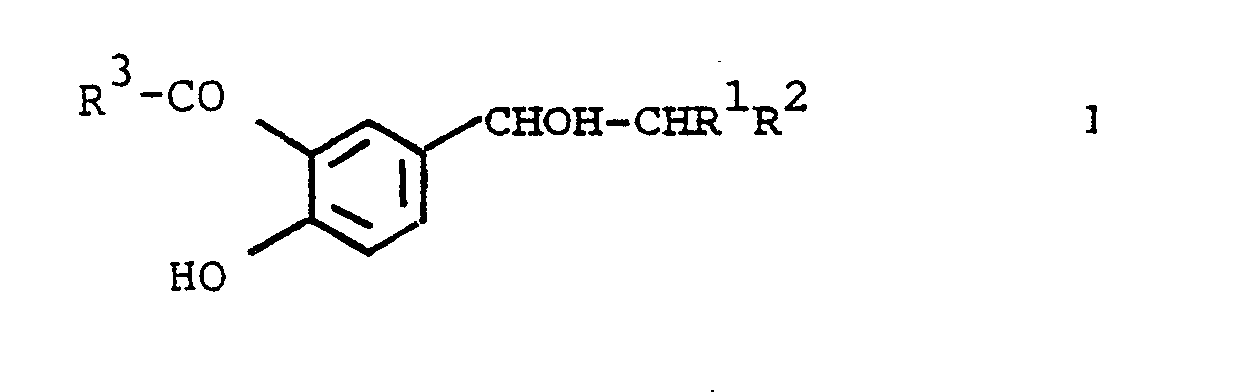
worin
R¹ H oder CH₃,
R² 4-(4-Methyl-2-thiazolyl)-piperazino, 4-(Tetrahydro-2-furoyl)-piperazino, 4-(4-Methyl-2-thiazolyl)-homopiperazino, 4-Benzamidopiperidino, 6,7-Dimethoxy-1,2,3,4-tetrahydroisochinolino, 1-Imidazolyl, Tribrom-1-imidazolyl oder 2-(3-Indolyl)-1,1-dimethyl-ethylamino und
R³ Alkoxy mit 1 - 4 C-Atomen, NH₂ oder
R¹ H oder CH₃,
R² 4-(4-Methyl-2-thiazolyl)-piperazino, 4-(Tetrahydro-2-furoyl)-piperazino, 4-(4-Methyl-2-thiazolyl)-homopiperazino, 4-Benzamidopiperidino, 6,7-Dimethoxy-1,2,3,4-tetrahydroisochinolino, 1-Imidazolyl, Tribrom-1-imidazolyl oder 2-(3-Indolyl)-1,1-dimethyl-ethylamino und
R³ Alkoxy mit 1 - 4 C-Atomen, NH₂ oder
Alkylamino mit 1 - 4 C-Atomen
bedeuten,
sowie deren physiologisch unbedenkliche Säureadditionssalze zeigen Wirkungen auf den Kreislauf, insbesondere blutdrucksenkende, herzentlastende und diuretische Wirkungen.
bedeuten,
sowie deren physiologisch unbedenkliche Säureadditionssalze zeigen Wirkungen auf den Kreislauf, insbesondere blutdrucksenkende, herzentlastende und diuretische Wirkungen.
Description
- Die Erfindung betrifft neue Salicylsäurederivate der allgemeinen Formel I

R¹ H oder CH₃,
R² 4-(4-Methyl-2-thiazolyl)-piperazino,
4-(Tetrahydro-2-furoyl)-piperazino,
4-(4-Methyl-2-thiazolyl)-homopiperazino,
4-Benzamidopiperidino,
6,7-Dimethoxy-1,2,3,4-tetrahydroisochinolino,
1-Imidazolyl, Tribrom-1-imidazolyl oder 2-(3-Indolyl)-1,1-dimethyl-ethylamino und
R³ Alkoxy mit 1 - 4 C-Atomen, NH₂ oder Alkylamino mit 1 - 4 C-Atomen
bedeuten,
sowie deren physiologisch unbedenkliche Säureadditionssalze. - Ähnliche Verbindungen sind in der DE-OS 2144 080 und in der DE-OS 23 02 717 beschrieben.
- Der Erfindung lag die Aufgabe zugrunde, neue Verbindungen aufzufinden, die zur Herstellung von Arzneimitteln verwendet werden können. Diese Aufgabe wurde durch die Bereitstellung der Verbindungen der Formel I gelöst.
- Es wurde gefunden, daß die Verbindungen der Formel I und ihre physiologisch unbedenklichen Säureadditionssalze bei guter Verträglichkeit wertvolle pharmakologische Eigenschaften besitzen. So zeigen sich beispielsweise Wirkungen auf den Kreislauf, insbesondere blutdrucksenkende und herzentlastende, somit kardioprotektive Wirkungen.
- Die Substanzen vermindern z. B. den an der Carotisschlinge des wachen mischrassigen Hundes gemessenen Blutdruck (Methodik vgl. E.C. van LEERSUM, Pflügers Archiv 142, 377-395 (1911) bei nephrogen hypertonen Tieren (Methodik vgl. I.H. PAGE, Science 89, 273-274 (1939) im 10-Tage-Dauerversuch bei oraler Gabe von Dosen, die niedriger als 2 mg/kg/Tag liegen können, dosisabhängig auf ein erniedrigtes Niveau.
- Weiterhin wird der bei katheter-tragenden (Methode vgl. J.R. WEEKS und J.A. JONES, Proc.Soc.Exptl.Biol.Med. 104, 646-648 (1960)) wachen spontan hypertonen Ratten (Stamm SHR/NIH-MO/CHB-EMD) direkt gemessene arterielle Blutdruck nach einmaliger intragastraler Gabe ab 10 mg/kg dosisabhängig gesenkt.
- Die herzentlastende Wirkung läßt sich aus den folgenden am narkotisierten Hund nach intravenöser Gabe beobachteten kardiovaskulären Wirkungen ableiten: (1) Zunahme der gesamt vaskulären Kapazität (Methode: H. SUGA, et al. Pflügers Archiy, 361, 95-98 (1975). (2) Nachlastsenkung und Abnahme der Herzleistung (Methode: K. STEPHAN, et al. Arzneimittelforschung, 25, 1770-1776 (1975)). Die durch die erfindungsgemäßen Substanzen gesteigerte Ischämie-Toleranz des Herzens (Kardioprotektion) läßt sich am narkotisierten Hund mit der Methode der reversiblen Coronararterien-Okklusion (P.R. MAROKO et al. Circulation, 43, 67-82 (1971)) und am narkotisierten Schwein mit eingeschränkter Coronardurchblutung (Methode: P.D. VERDOUW et al. European Heart Journal, 4, (suppl. C), 61-67 (1983)) nachweisen.
- Die Verbindungen der Formel I und ihre physiologisch unbedenklichen Säureadditionssalze können daher als Arzneimittelwirkstoffe verwendet werden. Insbesondere dienen die Ester der Formel I (R³ = Alkoxy mit 1-4 C-Atomen) auch als Zwischenprodukte zur Herstellung der Amide der Formel I.
- Gegenstand der Erfindung sind die Verbindungen der Formel I und deren physiologisch unbedenkliche Säureadditionssalze.
- In der Formel I bedeutet der Rest R¹ bevorzugt H. Der Rest R² ist bevorzugt 4-(4-Methyl-2-thiazolyl)piperazino. R³ steht vorzugsweise für eine NH₂-Gruppe.
- Dementsprechend sind Gegenstand der Erfindung insbesondere diejenigen Verbindungen der Formel I, in denen mindestens einer der genannten Reste eine der vorstehend angegebenen bevorzugten Bedeutungen hat. Eine bevorzugte Gruppe von Verbindungen entspricht der Formel I, worin R¹ und R³ die angegebenen Bedeutungen haben und R² 4-(4-Methyl-2-thiazolyl)-piperazino, 4-(Tetrahydro-2-furoyl)-piperazino, 4-(4-Methyl-2-thiazolyl)-homopiperazino, 6,7-Dimethoxy-1,2,3,4-tetrahydroisochinolino, 1-Imidazolyl, Tribrom-1-imidazolyl oder 2-(3-Indolyl)-1,1-dimethyl-ethylamino bedeutet.
- Gegenstand der Erfindung ist ferner ein Verfahren zur Herstellung der Verbindungen der Formel I sowie ihrer physiologisch unbedenklichen Säureadditionssalze, dadurch gekennzeichnet, daß man ein Salicylsäurederivat der allgemeinen Formel II

Z -CHOH-CHR¹-X oder
X Cl, Br, J oder eine reaktionsfähig funktionell abgewandelte Hydroxygruppe
bedeuten und
R¹ und R³ die angegebenenen Bedeutungen haben,
mit einer Base der allgemeinen Formel III
H-R² III
worin
R² die angegebene Bedeutung hat
umsetzt
oder daß man eine Verbindung, die sonst der Formel I entspricht, aber an Stelle eines oder mehrerer H-Atome eine oder mehrere reduzierbare Gruppen und/oder C-C-Bindungen und/oder C-N-Bindungen enthält, reduziert und/oder daß man gegebenenfalls einen Ester der Formel I (R³ = Alkoxy mit 1-4 C-Atomen) durch Reaktion mit einer Verbindung der Formel R⁴-NH₂, worin R⁴ H oder Alkyl mit 1-4 C-Atomen bedeutet, in ein Amid der Formel I (R₃ = NH₂ oder Alkylamino mit 1-4 C-Atomen) umwandelt und/oder eine Base der Formel I durch Behandeln mit einer Säure in eines ihrer physiologisch unbedenklichen Säureadditionssalze überführt. - In den Verbindungen der Formel II steht X vorzugsweise für Cl, Br, J oder Arylsulfonyloxy mit 6-10 C-Atomen wie Benzol- oder p-Toluolsulfonyloxy.
- Die Verbindungen der Formel I können nach an sich bekannten Methoden dargestellt werden, wie sie in der Literatur (z. B. in den Standardwerken wie Houben-Weyl, Methoden der Organischen Chemie, Georg-Thieme-Verlag, Stuttgart) beschrieben sind, und zwar unter Reaktionsbedingungen, wie sie für die nachfolgend beschriebenen Umsetzungen an sich bekannt und geeignet sind. Dabei kann man auch von an sich bekannten, hier nicht näher erwähnten Varianten Gebrauch machen.
- Die Ausgangsstoffe können gewünschtenfalls auch in situ hergestellt werden, derart, daß man sie aus dem Reaktionsgemisch nicht isoliert, sondern sofort weiter zu den Verbindungen der Formel I umsetzt.
- Eine Herstellung der Salicylsäurederivate der Formel I aus den Verbindungen der Formeln II und III erfolgt zweckmäßig in Gegenwart eines inerten Lösungsmittels, z. B. eines Alkohols wie Methanol, Ethanol oder Isopropanol oder eines Ethers wie Diethylether, Tetrahydrofuran oder Dioxan bei Temperaturen zwischen etwa 0 und 120 °, vorzugsweise zwischen 20 und 100 °. Es kann von Vorteil sein, eine Base wie Triethylamin oder Pyridin zuzusetzen. Man kann auch ohne Lösungsmittel arbeiten oder einen Überschuß der Base III als Lösungsmittel verwenden.
- Die Ausgangsstoffe der Formeln II und III sind größtenteils bekannt. Sofern sie nicht bekannt sind, können sie leicht in Analogie zu an sich bekannten Methoden hergestellt werden. Beispielsweise kann man Salicylsäurederivate der Formel o-R³-CO-C₆H₄-OH mit Chloracetylchlorid oder Bromacetylbromid/AlCl₃ zu den entsprechenden 5-Haloacetyl-salicylsäurederivaten acylieren und diese zu den 5-Haloethanolen der Formel II (Z = -CHOH-CH₂Cl bzw. -CHOH-CH₂Br) reduzieren. Entsprechend sind mit Halopropionylhalogeniden die 5-Halopropionylsalicylsäurederivate und die entsprechenden 5-Halopropanole zugänglich. Die Epoxide der Formel II
(Z =-CHCHR¹) sind aus den Halo-alkoholen durch Dehydrohalogenierung erhältlich.
- Bevorzugte Ausgangsstoffe zur Herstellung der Verbindungen der Formel I durch Reduktion entsprechen der Formel IV

Y =O oder (H, OH) und
R⁵ H oder eine hydrogenolytisch abspaltbare Gruppe, bevorzugt Benzyl,
bedeuten,
worin jedoch nicht gleichzeitig Y = (H, OH) und R⁵ = H sind. - Die Reduktion kann z. B. erfolgen durch katalytische Hydrierung bei Temperaturen zwischen etwa 0 ° und etwa 200 ° sowie Drucken zwischen etwa 1 und 200 bar in einem inerten Lösungsmittel, z. B. einem der genannten Alkohole oder Ether, einem Ester wie Ethylacetat oder einer Carbonsäure wie Essigsäure. Als Katalysatoren eignen sich zweckmäßig Edelmetalle wie Pt oder Pd, die in Form von Oxiden (z. B. PtO₂, PdO), auf einem Träger (z. B. Pd auf Kohle, Calciumcarbonat oder Strontiumcarbonat) oder in feinverteilter Form eingesetzt werden können. Ketogruppen können auch mit komplexen Metallhydriden reduziert werden, wobei natürlich die anderen funktionellen Gruppen im Molekül nicht angegriffen werden dürfen. Besonders gut eignet sich NaBH₄ als Reduktionsmittel, das in einem der genannten Alkohole, falls erwünscht unter Zusatz weiterer Lösungsmittel wie Wasser und/oder Tetrahydrofuran bei Temperaturen zwischen etwa -10 und +50 ° zur Anwendung kommen kann. Weitere geeignete Reduktionsmittel sind z. B. LiBH₄, Zn(BH₄)₂, LiAlH₄, Triisobutylaluminiumhydrid in Ethern wie Tetrahydrofuran oder Dioxan. Besonders Salicylsäureester der Formel I (R³ = Alkoxy mit 1-4 C-Atomen) lassen sich mit Vorteil auf diese Weise herstellen.
- Die Ausgangsstoffe der Formel IV (Y = =0) sind z. B. erhältlich durch Reaktion von Salicylsäurederivaten der Formel o-R³-CO-C₆H₄-OH mit Bromacetylbromid zu den entsprechenden 5-Bromacetyl-salicylsäurederivaten und Umsetzung mit III.
- Ein Ester der Formel I (R³ = Alkoxy mit 1-4 C-Atomen) kann mit einer Base der Formel R⁴-NH₂ in das entsprechende Amid der Formel I (R³ = NH₂ oder Alkyl mit 1-4 C-Atomen) umgewandelt werden, zweckmäßig in Gegenwart eines inerten Lösungsmittels, z. B. eines der angegebenen Alkohole, bei Temperaturen zwischen etwa -20 und +80 °.
- Eine Base der Formel I kann mit einer Säure in das zugehörige Säureadditionssalz übergeführt werden. Für diese Umsetzung kommen Säuren in Frage, die physiologisch unbedenkliche Salze liefern. So können anorganische Säuren verwendet werden, z. B. Schwefelsäure, Halogenwasserstoffsäuren wie Chlorwasserstoffsäure oder Bromwasserstoffsäure, Phosphorsäuren wie Orthophosphorsäure, Salpetersäure, Sulfaminsäure, ferner organische Säuren, im einzelnen aliphatische, alicyclische, araliphatische, aromatische oder heterocyclische ein- oder mehrbasige Carbon-, Sulfon- oder Schwefelsäuren, wie Ameisensäure, Essigsäure, Propionsäure, Pivalinsäure, Diäthylessigsäure, Malonsäure, Bernsteinsäure, Pimelinsäure, Fumarsäure, Maleinsäure, Milchsäure, Weinsäure, Aepfelsäure, Benzoesäure, Salicylsäure, 2-Phenylpropionsäure, Citronensäure, Gluconsäure, Ascorbinsäure, Nicotinsäure, Isonicotinsäure, Methan- oder Ethansulfonsäure, Ethandisulfonsäure, 2-Hydroxyethansulfonsäure, Benzolsulfonsäure, p-Toluolsulfonsäure, Naphthalin-mono- und -disulfonsäuren, Laurylschwefelsäure.
- Die freien Basen der Formel I können, falls gewünscht, aus ihren Salzen durch Behandlung mit starken Basen wie Natrium- oder Kaliumhydroxid, Natrium- oder Kaliumcarbonat in Freiheit gesetzt werden.
- Die Verbindungen der Formel I können ein oder mehrere Asymmetriezentren besitzen. Sie können daher bei ihrer Herstellung als Racemate oder, falls optisch aktive Ausgangstoffe verwendet werden, auch in optisch aktiver Form erhalten werden. Weisen die Verbindungen zwei oder mehr Asymmetriezentren auf, dann fallen sie bei der Synthese im allgemeinen als Gemische von Racematen an, aus denen man die einzelnen Racemate, beispielsweise durch Umkristallisieren aus inerten Lösungsmitteln, in reiner Form isolieren kann. Erhaltene Racemate können, falls erwünscht, nach an sich bekannten Methoden mechanisch oder chemisch in ihre optischen Antipoden getrennt werden. Vorzugsweise werden aus dem Racemat durch Umsetzung mit einem optisch aktiven Trennmittel Diastereomere gebildet. Als Trennmittel eignen sich z.B. optisch aktive Säuren, wie die D- und L-Formen von Weinsäure, Dibenzoylweinsäure, Diacetylweinsäure, Camphersulfonsäuren, Mandelsäure, Äpfelsäure oder Milchsäure. Die verschiedenen Formen der Diastereomeren können in an sich bekannter Weise, z.B. durch fraktionierte Kristallisation, getrennt, und die optisch aktiven Verbindungen der Formel I können in an sich bekannter Weise aus den Diastereomeren in Freiheit gesetzt werden.
- Gegenstand der Erfindung ist ferner die Verwendung der Verbindungen der Formel I und ihrer physiologisch unbedenklichen Salze zur Herstellung pharmazeutischer Zubereitungen, insbesondere auf nicht-chemischem Wege. Hierbei können sie zusammen mit mindestens einem Träger- oder Hilfsstoff und gegebenenfalls in Kombination mit einem oder mehreren weiteren Wirkstoff(en) in eine geeignete Dosierungsform gebracht werden.
- Gegenstand der Erfindung sind ferner Mittel, insbesondere pharmazeutische Zubereitungen, enthaltend mindestens eine Verbindung der Formel I und/oder eines ihrer physiologisch unbedenklichen Säureadditionssalze.
- Diese Zubereitungen können als Arzneimittel in der Human- oder Veterinärmedizin eingesetzt werden. Als Trägersubstanzen kommen organische oder anorganische Stoffe in Frage, die sich für die enterale (z. B. orale), parenterale oder topische Applikation eignen und mit den neuen Verbindungen nicht reagieren, beispielsweise Wasser, pflanzliche Öle, Benzylalkohole, Polyethylenglykole, Gelatine, Kohlehydrate wie Lactose oder Stärke, Magnesiumstearat, Talk, Vaseline. Zur enteralen Applikation dienen insbesondere Tabletten, Dragees, Kapseln, Sirupe, Säfte, Tropfen oder Suppositorien, zur parenteralen Applikation Lösungen, vorzugsweise ölige oder wässerige Lösungen, ferner Suspensionen, Emulsionen oder Implantate, für die topische Anwendung Salben, Cremes oder Puder.
- Die neuen Verbindungen können auch lyophilisiert und die erhaltenen Lyophilisate z. B. zur Herstellung von Injektionspräparaten verwendet werden. Die angegebenen Zubereitungen können sterilisiert sein und/oder Hilfsstoffe wie Gleit-, Konservierungs-, Stabilisierungs- und/oder Netzmittel, Emulgatoren, Salze zur Beeinflussung des osmotischen Druckes, Puffersubstanzen, Farb-, Geschmacks- und/oder Aromastoffe enthalten. Sie können, falls erwünscht, auch einen oder mehrere weitere Wirkstoffe enthalten, z. B. ein oder mehrere Vitamine.
- Gegenstand der Erfindung ist ferner die Verwendung der Verbindungen der Formel I und ihrer physiologisch unbedenklichen Säureadditionssalze bei der therapeutischen Behandlung des menschlichen oder tierischen Körpers und bei der Bekämpfung von Krankheiten, insbesondere von allen Formen der Hypertonie und koronaren Herzerkrankungen, ferner von kardialen, nephrogenen oder hepatogenen Ödemen.
- Dabei werden die erfindungsgemäßen Substanzen in der Regel in Analogie zu bekannten, im Handel befindlichen Präparaten ähnlicher Indikation (z. B. Molsidomin, Dihydralazin, Trichlormethiazid oder Hydrochlorothiazid) verabreicht, vorzugsweise in Dosierungen zwischen etwa 1 und 100 mg, insbesondere zwischen 5 und 50 mg pro Dosierungseinheit. Die tägliche Dosierung liegt vorzugsweise zwischen etwa 0,02 und 5 mg/kg Körpergewicht. Die spezielle Dosis für jeden bestimmten Patienten hängt jedoch von den verschiedensten Faktoren ab, beispielsweise von der Wirksamkeit der eingesetzten speziellen Verbindung, vom Alter, Körpergewicht, allgemeinen Gesundheitszustand, Geschlecht, von der Kost, vom Verabfolgungszeitpunkt und -weg, von der Ausscheidungsgeschwindigkeit, Arzneistoffkombination und Schwere der jeweiligen Erkrankung, welcher die Therapie gilt. Die orale Applikation ist bevorzugt.
- Jeder der in den folgenden Beispielen genannten Verbindungen der Formel I ist zur Herstellung von pharmazeutischen Zubereitungen besonders geeignet.
- In den nachfolgenden Beispielen bedeutet "übliche Aufarbeitung":
Man gibt, falls erforderlich, Wasser, Natriumbicarbonat- oder Natriumcarbonatlösung oder verdünnte Natronlauge hinzu, extrahiert mit einem organischen Lösungsmittel wie Chloroform, trennt ab, dampft den organischen Extrakt ein und reinigt durch Chromatographie und/oder Kristallisation der Base oder eines ihrer Salze. Temperaturen sind in Celsiusgraden angegeben. - Man löst 18,9 g 1-(4-Methyl-2-thiazolyl)-piperazin und 26 g 5-(2-Brom-1-hydroxyethyl)-salicylamid (erhältlich durch Acylierung von Salicylamid mit Bromacetylbromid/AlCl₃ zu 5-Bromacetyl-salicylamid und nachfolgende Reaktion mit NaBH₄) in 400 ml Ether, fügt 15 ml Triethylamin hinzu, kocht 2 Std., arbeitet wie üblich auf und erhält 5-[1-Hydroxy-2-(4-(4-Methyl-2-thiazolyl)-piperazino)-ethyl]-salicylamid ("A"), F. 182° Dihydrochlorid, F. 244-245°.
- Analog Beispiel 1 erhält man mit 1-Tetrahydrofuroylpiperazin, 4-(4-Methyl-2-thiazolyl)-homopiperazin, 4-Benzamidopiperidin, 6,7-Dimethoxy-1,2,3,4-tetrahydroisochinolin, Imidazol, Tribromimidazol, 2-(3-Indolyl)-1,1-dimethyl-ethylamin bzw. aus 5-(3-Brom-1-hydroxypropyl)-salicylamid mit 1-(4-Methyl-2-thiazolyl)-piperazin:
- 2. 5-[1-Hydroxy-2-(4-tetrahydrofuroyl-piperazino)ethyl]-salicylamid.
- 3. 5-[1-Hydroxy-2-(4-(4-methyl-2-thiazolyl)-homopiperazino)-ethyl]-salicylamid, F. 195°.
- 4. 5-[1-Hydroxy-2-(4-benzamidopiperidino)-ethyl]salicylamid, F. 202°.
- 5. 5-[1-Hydroxy-2-(6,7-dimethoxy-1,2,3,4-tetrahydroisochinolino)-ethyl]-salicylamid, F. 187°.
- 6. 5-[1-Hydroxy-2-(1-imidazolyl)-ethyl]-salicylamid.
- 7. 5-[1-Hydroxy-2-(tribrom-1-imidazolyl)-ethyl]salicylamid, F.216 °.
- 8. 5-[1-Hydroxy-2-(2-(3-indolyl)-1,1-dimethyl-ethylamino)-ethyl]-salicylamid, Hydrochlorid, F. 248°.
- 9. 5-[1-Hydroxy-2-(4-(4-methyl-2-thiazolyl)-piperazino)-propyl]-salicylamid, Dihydrochlorid-monohydrat, F. 186°.
- Eine Lösung von 18,9 g 4-(4-Methyl-2-thiazolyl)-piperazin und 17,9 g 5-Epoxyethyl-salicylamid [erhältlich durch Dehydrobromierung von 5-(2-Brom-1-hydroxyethyl)salicylamid] in 300 ml Tetrahydrofuran wird über Nacht stehengelassen. Nach üblicher Aufarbeitung erhält man "A", F. 182°.
- Analog sind die in Beispiel 2 bis 9 angegebenen Verbindungen erhältlich.
- Eine Lösung von 37,5 g 5-[4-(4-Methyl-2-thiazolyl)-piperazino-acetyl]-salicylsäuremethylester [F.120 °, erhältlich durch 2 std. Kochen von 4-(4-Methyl-2-thiazolyl)-piperazin mit 5-Bromacetyl-salicylsäuremethylester in Ether in Gegenwart von Triethylamin] in 100 ml Ethanol, 50 ml Wasser und 300 ml Tetrahydrofuran wird unter Argon bei -5 bis 0 ° portionsweise mit NaBH₄ bis zur vollendeten Umsetzung (DC-Kontrolle) versetzt. Man rührt noch 30 Min. bei 20 °, säuert mit Essigsäure an, engt ein, arbeitet wie üblich auf und erhält 5-[1-Hydroxy-2-(4-(4-methyl-2-thiazolyl)-piperazino)-ethyl]-salicylsäuremethylester, F. 121°. Dihydrochlorid, F. 186°.
- Analog Beispiel 11 erhält man aus
5-(4-Tetrahydrofuroyl-piperazino-acetyl)-salicylsäuremethylester
5-[4-(4-Methyl-2-thiazolyl)-homopiperazino-acetyl]-salicylsäuremethylester
5-(4-Benzamidopiperidino-acetyl)-salicylsäuremethylester (F. 158°)
5-(6,7-Dimethoxy-1,2,3,4-tetrahydroisochinolino-acetyl)-salicylsäuremethylester
5-(1-imidazolyl-acetyl)-salicylsäuremethylester (F.142°) 5-(Tribrom-1-imidazolyl-acetyl)-salicylsäuremethylester (F. 174°)
5-[2-(3-Indolyl)-1,1-dimethyl-ethylamino-acetyl]-salicylsäuremethylester
[2-(4-(4-Methyl-2-thiazolyl)-piperazino)-propionyl]-salicylsäuremethylester (Dihydrochlorid, F.191°)
mit NaBH₄: - 12. 5-[1-Hydroxy-2-(4-tetrahydrofuroyl-piperazino)-ethyl]-salicylsäuremethylester, Hydrochlorid, F.218°.
- 13. 5-[1-Hydroxy-2-(4-(4-methyl-2-thiazolyl)-homopiperazino)-ethyl]-salicylsäuremethylester, Dihydrochlorid-monohydrat, F. 154°.
- 14. 5-[1-Hydroxy-2-(4-benzamidopiperidino)-ethyl]-salicylsäuremethylester, Hydrochlorid, F. 246°.
- 15. 5-[1-Hydroxy-2-(6,7-dimethoxy-1,2,3,4-tetrahydroisochinolino)-ethyl]-salicylsäuremethylester.
- 16. 5-[1-Hydroxy-2-(1-imidazolyl)-ethyl]-salicylsäuremethylester.
- 17. 5-[1-Hydroxy-2-(tribrom-1-imidazolyl)-ethyl]-salicylsäuremethylester, F. 175°.
- 18. 5-[1-Hydroxy-2-(2-(3-indolyl)-1,1-dimethyl-ethylamino)-ethyl]-salicylsäuremethylester, Hydrochlorid, F. 201°.
- 19. 5-[1-Hydroxy-2-(4-(4-methyl-2-thiazolyl)-piperazino)-propyl]-salicylsäuremethylester, Dihydrochlorid, F. 186°.
- Analog Beispiel 11 erhält man aus den entsprechenden Ketoestern mit NaBH₄:
- 20. 5-[1-Hydroxy-2-(4-(4-methyl-2-thiazolyl)-piperazino)-ethyl]-salicylsäure-ethylester.
- 21. 5-[1-Hydroxy-2-(4-(4-methyl-2-thiazolyl)-piperazino)-ethyl]-salicylsäure-propylester, 22. 5-[1-Hydroxy-2-(4-(4-methyl-2-thiazolyl)-piperazino)-ethyl]-salicylsäure-isopropylester.
- 23. 5-[1-Hydroxy-2-(4-(4-methyl-2-thiazolyl)-piperazino)-ethyl]-salicylsäure-butylester.
- 24. 5-[1-Hydroxy-2-(4-(4-methyl-2-thiazolyl)-piperazino)-ethyl]-salicylsäure-isobutylester.
- 25. 5-[1-Hydroxy-2-(4-(4-methyl-2-thiazolyl)-piperazino)-ethyl]-salicylsäure-sek.-butylester.
- Man hydriert eine Lösung von 10 g 2-Benzyloxy-5-[1-hydroxy-2-(4-(4-methyl-2-thiazolyl)-piperazino)-ethyl]-benzamid in 200 ml Ethanol an PtO₂ bei 20 ° und 2 bar bis zur Aufnahme der berechneten Menge Wasserstoff, arbeitet wie üblich auf und erhält "A", F. 182°.
- Man hydriert eine Lösung von 10 g 5-[4-(4-Methyl-2-thiazolyl)-piperazino-acetyl]-salicylamid [erhältlich aus 4-(4-Methyl-2-thiazolyl)-piperazin und 5-Bromacetyl-salicylamid] in 200 ml Methanol an 1 g 10 %iger Pd-Kohle bei 40 ° und 1 bar bis zur Aufnahme der berechneten Menge Wasserstoff, filtriert, dampft ein und erhält "A", F. 182°.
- Eine Lösung von 10 g 5-[1-Hydroxy-2-(4-(4-Methyl-2-thiazolyl)-piperazino)-ethyl]-salicylsäuremethylester und 10 g NH₄Cl in einem Gemisch aus 100 ml gesättigter methanolischer NH₃-Lösung und 100 ml 25 %igen wässeriger NH₃-Lösung wird 48 Stunden bei 20 ° stehengelassen, eingeengt und wie üblich aufgearbeitet. Man erhält "A", F. 182°. Dihydrochlorid, F. 244-245°.
- Analog erhält man aus den in den Beispielen 12 bis 19 angegebenen Methylestern mit NH₃ die in den Beispielen 2 bis 9 angegebenen Amide.
- Eine Lösung von 200 mg Na in 120 ml Methanol wird mit 10 g 5-[1-Hydroxy-2-(4-(4-methyl-2-thiazolyl)-piperazino)-ethyl]-salicylsäuremethylester versetzt. Man leitet 30 Min. lang Methylamin ein, wobei man die Innentemperatur unterhalb 30 ° hält. Nach 12 std. Stehen engt man ein, arbeitet wie üblich auf und erhält 5-[1-Hydroxy-2-(4-(4-methyl-2-thiazolyl)-piperazino)-ethyl]-salicylsäure-N-methylamid, F. 252°.
- Analog Beispiel 29 erhält man aus den entsprechenden Methylestern mit Methylamin:
- 30. 5-[1-Hydroxy-2-(4-tetrahydrofuroyl-piperazino)-ethyl]-salicylsäure-N-methylamid.
- 31. 5-[1-Hydroxy-2-(4-(4-methyl-2-thiazolyl)-homopiperazino)-ethyl]-salicylsäure-N-methylamid.
- 32. 5-[1-Hydroxy-2-(4-benzamidopiperidino)-ethyl]salicylsäure N-methylamid.
- 33. 5-[1-Hydroxy-2-(6,7-dimethoxy-1,2,3,4-tetrahydroisochinolino)-ethyl]-salicylsäure-N-methylamid.
- 34. 5-[1-Hydroxy-2-(1-imidazolyl)-ethyl-salicylsäure-N-methylamid.
- 35. 5-[1-Hydroxy-2-(tribrom-1-imidazolyl)-ethyl]salicylsäure-N-methylamid.
- 36. 5-[1-Hydroxy-2-(2-(3-indolyl)-1,1-dimethyl-ethylamino)-ethyl]-salicylsäure-N-methylamid.
- 37. 5-[1-Hydroxy-2-(4-(4-methyl-2-thiazolyl)-piperazino-propyl]-salicylsäure-N-methylamid.
- Analog Beispiel 29 erhält man aus 5-[1-Hydroxy-2-(4-(4-methyl-2-thiazolyl)-piperazino)-ethyl]-salicylsäuremethylester mit den entsprechenden Alkylaminen:
- 38. 5-[1-Hydroxy-2-(4-(4-methyl-2-thiazolyl)-piperazino)-ethyl]-salicylsäure-N-ethylamid.
- 39. 5-[1-Hydroxy 2-(4 (4-methyl-2 thiazolyl)-piperazino)-ethyl]-salicylsäure-N-propylamid.
- 40. 5-[1-Hydroxy-2-(4-(4-methyl-2-thiazolyl)-piperazino)-ethyl]-salicylsäure-N-isopropylamid.
- 41. 5-[1-Hydroxy-2-(4-(4-methyl-2-thiazolyl)-piperazino)-ethyl]-salicylsäure-N-butylamid.
- Die nachstehenden Beispiele betreffen pharmazeutische Zubereitungen, die Verbindungen der Formel I enthalten:
- Ein Gemisch von 1 kg "A"-Dihydrochlorid, 4 kg Lactose, 1,2 kg Maisstärke, 0,2 kg Talk und 0,1 kg Magnesiumstearat wird in üblicher Weise zu Tabletten gepreßt, derart, daß jede Tablette 10 mg Wirkstoff enthält.
- Analog Beispiel A werden Tabletten gepreßt, die anschließend in üblicher Weise mit einem Überzug aus Saccharose, Weizenstärke, Talk, Tragant und Farbstoff überzogen werden.
- 5 kg "A"-Dihydrochlorid werden in üblicher Weise in Hartgelatinekapseln gefüllt, so daß jede Kapsel 20 mg des Wirkstoffs enthält.
- Eine Lösung von 1 kg "A"-Dihydrochlorid in 30 l zweifach destilliertem Wasser wird steril filtriert, in Ampullen abgefüllt, unter sterilen Bedingungen lyophilisiert und steril verschlossen. Jede Ampulle enthält 5 mg Wirkstoff.
- Analog sind Tabletten, Dragees, Kapseln oder Ampullen erhältlich, die einen oder mehrere der übrigen Wirkstoffe der Formel I und/oder ihre physiologisch unbedenklichen Säureadditionssalze enthalten.
Claims (7)
1. Salicylsäurederivate der allgemeinen Formel I

worin
R¹ H oder CH₃,
R² 4-(4-Methyl-2-thiazolyl)-piperazino, 4-(Tetrahydro-2-furoyl)-piperazino, 4-(4-Methyl-2-thiazolyl)-homopiperazino, 4-Benzamidopiperidino, 6,7-Dimethoxy-1,2,3,4-tetrahydroisochinolino, 1-Imidazolyl, Tribrom-1-imidazolyl oder 2-(3-Indolyl)-1,1-dimethyl-ethylamino und
R³ Alkoxy mit 1-4 C-Atomen, NH₂ oder Alkylamino mit 1-4 C-Atomen
bedeuten,
sowie deren physiologisch unbedenkliche Säureadditionssalze.
R¹ H oder CH₃,
R² 4-(4-Methyl-2-thiazolyl)-piperazino, 4-(Tetrahydro-2-furoyl)-piperazino, 4-(4-Methyl-2-thiazolyl)-homopiperazino, 4-Benzamidopiperidino, 6,7-Dimethoxy-1,2,3,4-tetrahydroisochinolino, 1-Imidazolyl, Tribrom-1-imidazolyl oder 2-(3-Indolyl)-1,1-dimethyl-ethylamino und
R³ Alkoxy mit 1-4 C-Atomen, NH₂ oder Alkylamino mit 1-4 C-Atomen
bedeuten,
sowie deren physiologisch unbedenkliche Säureadditionssalze.
2. 5-[1-Hydroxy-2-(4-(4-methyl-2-thiazolyl)-piperazino)-ethyl]-salicylamid und dessen physiologisch unbedenkliche Säureadditionssalze.
3. Verfahren zur Herstellung der Salicylsäurederivate der allgemeinen Formel I nach Anspruch 1 sowie ihrer physiologisch unbedenklichen Säureadditionssalze, dadurch gekennzeichnet, daß man ein Salicylsäurederivat der allgemeinen Formel II

worin
Z -CHOH-CHR¹-X oder 
und
X Cl, Br, J oder eine reaktionsfähig funktionell abgewandelte Hydroxygruppe
bedeuten und
R¹ und R³ die angegebenen Bedeutungen haben,
mit einer Base der allgemeinen Formel III
H-R² III
worin
R² die angegebene Bedeutung hat
umsetzt
oder daß man eine Verbindung, die sonst der Formel I entspricht, aber an Stelle eines oder mehrerer H-Atome eine oder mehrere reduzierbare Gruppen und/oder C-C-Bindungen und/oder C-N-Bindungen enthält, reduziert
und/oder daß man gegebenenfalls einen Ester der Formel I (R³ = Alkoxy mit 1-4 C-Atomen) durch Reaktion mit einer Verbindung der Formel R⁴-NH₂, worin R⁴ H oder Alkyl mit 1-4 C-Atomen bedeutet, in ein Amid der Formel I (R³ = NH₂ oder Alkylamino mit 1-4 C-Atomen) umwandelt und/oder eine Base der Formel I durch Behandeln mit einer Säure in eines ihrer physiologisch unbedenklichen Säureadditionssalze überführt.
Z -CHOH-CHR¹-X oder
X Cl, Br, J oder eine reaktionsfähig funktionell abgewandelte Hydroxygruppe
bedeuten und
R¹ und R³ die angegebenen Bedeutungen haben,
mit einer Base der allgemeinen Formel III
H-R² III
worin
R² die angegebene Bedeutung hat
umsetzt
oder daß man eine Verbindung, die sonst der Formel I entspricht, aber an Stelle eines oder mehrerer H-Atome eine oder mehrere reduzierbare Gruppen und/oder C-C-Bindungen und/oder C-N-Bindungen enthält, reduziert
und/oder daß man gegebenenfalls einen Ester der Formel I (R³ = Alkoxy mit 1-4 C-Atomen) durch Reaktion mit einer Verbindung der Formel R⁴-NH₂, worin R⁴ H oder Alkyl mit 1-4 C-Atomen bedeutet, in ein Amid der Formel I (R³ = NH₂ oder Alkylamino mit 1-4 C-Atomen) umwandelt und/oder eine Base der Formel I durch Behandeln mit einer Säure in eines ihrer physiologisch unbedenklichen Säureadditionssalze überführt.
4. Verfahren zur Herstellung pharmazeutischer Zubereitungen, dadurch gekennzeichnet, daß man eine Verbindung der Formel I und/oder eines ihrer physiologisch unbedenklichen Säureadditionssalze zusammen mit mindestens einem festen, flüssigen oder halbflüssigen Träger- oder Hilfsstoff und gegebenenfalls in Kombination mit einem oder mehreren weiteren Wirkstoff(en) in eine geeignete Dosierungsform bringt.
5. Pharmazeutische Zubereitung, gekennzeichnet durch einen Gehalt an mindestens einer Verbindung der Formel I und/oder einem ihrer physiologisch unbedenklichen Salze.
6. Verbindungen der Formel I nach Patentanspruch 1 zur Bekämpfung von Krankheiten.
7. Verwendung von Verbindungen der Formel I bei der Senkung des Blutdrucks.
Applications Claiming Priority (2)
| Application Number | Priority Date | Filing Date | Title |
|---|---|---|---|
| DE3812755 | 1988-04-16 | ||
| DE3812755A DE3812755A1 (de) | 1988-04-16 | 1988-04-16 | Salicylsaeurederivate |
Publications (2)
| Publication Number | Publication Date |
|---|---|
| EP0338352A2 true EP0338352A2 (de) | 1989-10-25 |
| EP0338352A3 EP0338352A3 (de) | 1990-03-14 |
Family
ID=6352163
Family Applications (1)
| Application Number | Title | Priority Date | Filing Date |
|---|---|---|---|
| EP89106225A Withdrawn EP0338352A3 (de) | 1988-04-16 | 1989-04-08 | Salicylsäurederivate |
Country Status (8)
| Country | Link |
|---|---|
| US (1) | US4987133A (de) |
| EP (1) | EP0338352A3 (de) |
| JP (1) | JPH01311064A (de) |
| KR (1) | KR890016026A (de) |
| AU (1) | AU3268889A (de) |
| DE (1) | DE3812755A1 (de) |
| HU (1) | HUT54678A (de) |
| ZA (1) | ZA892759B (de) |
Cited By (1)
| Publication number | Priority date | Publication date | Assignee | Title |
|---|---|---|---|---|
| WO2003106418A1 (ja) * | 2002-06-01 | 2003-12-24 | 住友製薬株式会社 | インドール、インダゾール、およびベンズアゾール類 |
Families Citing this family (4)
| Publication number | Priority date | Publication date | Assignee | Title |
|---|---|---|---|---|
| US7985743B1 (en) * | 2005-07-22 | 2011-07-26 | Gene A. Tabish | Topical pain reliever and method of making the same |
| IE20070928A1 (en) * | 2007-12-21 | 2009-09-30 | Giuliani Int Ltd | Multi target ligands |
| CN102557947B (zh) * | 2010-12-17 | 2015-07-15 | 上海医药工业研究院 | 一种5-溴乙酰水杨酸甲酯的制备方法 |
| CN106380409A (zh) * | 2015-08-27 | 2017-02-08 | 北京嘉事联博医药科技有限公司 | 一种左旋沙丁胺醇及其盐的制备方法 |
Family Cites Families (4)
| Publication number | Priority date | Publication date | Assignee | Title |
|---|---|---|---|---|
| DE1595923A1 (de) * | 1965-02-20 | 1969-11-27 | Merck Ag E | 1-Aralkyl-4-(thiazolyl-2)-piperazine und Verfahren zu ihrer Herstellung |
| DE2726513A1 (de) * | 1977-06-11 | 1978-12-21 | Sandoz Ag | Neue thiazolderivate und verfahren zu deren herstellung |
| GR69650B (de) * | 1978-07-20 | 1982-07-07 | Science Union & Cie | |
| US4255575A (en) * | 1979-05-04 | 1981-03-10 | Richardson-Merrell Inc. | 2-Hydroxy-5-(1-hydroxy-2-piperazinylethyl)-benzoic acid derivatives |
-
1988
- 1988-04-16 DE DE3812755A patent/DE3812755A1/de not_active Withdrawn
-
1989
- 1989-04-08 EP EP89106225A patent/EP0338352A3/de not_active Withdrawn
- 1989-04-11 AU AU32688/89A patent/AU3268889A/en not_active Abandoned
- 1989-04-14 JP JP1093244A patent/JPH01311064A/ja active Pending
- 1989-04-14 ZA ZA892759A patent/ZA892759B/xx unknown
- 1989-04-14 HU HU891860A patent/HUT54678A/hu unknown
- 1989-04-15 KR KR1019890005005A patent/KR890016026A/ko not_active Withdrawn
- 1989-04-17 US US07/338,822 patent/US4987133A/en not_active Expired - Fee Related
Cited By (1)
| Publication number | Priority date | Publication date | Assignee | Title |
|---|---|---|---|---|
| WO2003106418A1 (ja) * | 2002-06-01 | 2003-12-24 | 住友製薬株式会社 | インドール、インダゾール、およびベンズアゾール類 |
Also Published As
| Publication number | Publication date |
|---|---|
| ZA892759B (en) | 1989-12-27 |
| EP0338352A3 (de) | 1990-03-14 |
| KR890016026A (ko) | 1989-11-28 |
| AU3268889A (en) | 1989-10-19 |
| HUT54678A (en) | 1991-03-28 |
| DE3812755A1 (de) | 1989-10-26 |
| US4987133A (en) | 1991-01-22 |
| JPH01311064A (ja) | 1989-12-15 |
Similar Documents
| Publication | Publication Date | Title |
|---|---|---|
| DE69214755T2 (de) | Thiazolidin-2,4-Dionderivate, Verfahren zu deren Herstellung und sie enthaltende pharmazeutische Zusammensetzungen | |
| DE69107215T2 (de) | (2-imidazolin-2-ylamino)chinoxalinderivate und methoden in ihrer anwendung. | |
| EP1226143B1 (de) | Imidazopyridinderivate als phosphodiesterase vii-hemmer | |
| DE2238504B2 (de) | l-Phenoxy-3-alkylaminopropan-2-ol -Derivate | |
| DE2647095A1 (de) | Neue substituierte 4-aminopyrazole, verfahren zu deren herstellung und sie enthaltende arzneimittel | |
| DD201305A5 (de) | Verfahren zur herstellung von in 7-stellung substituierten benzopyranen | |
| EP0407844B1 (de) | Indolderivate | |
| EP0038343B1 (de) | Substituierte oxocarbonsäuren, verfahren zu ihrer herstellung, ihre verwendung und sie enthaltende arzneimittel | |
| EP0166183B1 (de) | Verwendung von Hydroxyindolderivaten zur Herstellung eines Arzneimittels zur Senkung des Blutdrucks | |
| EP0010156A1 (de) | 6-Arylpyridazin-3-one, diese enthaltende pharmazeutische Zubereitungen und Verfahren zu ihrer Herstellung | |
| DE4320801A1 (de) | 2-Hydroxyphenylsubstituierte 1,2,4-Triazole und 1,2,4-Oxadiazole, ihre Verwendung als pharmazeutische Wirkstoffe und sie enthaltende Arzneimittel | |
| DE68905406T2 (de) | Chinolin-verbindung. | |
| DE2221758A1 (de) | Yohimbinderivate,Verfahren zu ihrer Herstellung und ihre Verwendung | |
| DE3812755A1 (de) | Salicylsaeurederivate | |
| DE2827874A1 (de) | Indolalkylamine und verfahren zu ihrer herstellung | |
| DE69526413T2 (de) | Heterocyclische Carboxyalkylderivate | |
| DE69521895T2 (de) | Indolderivate als prodrugs von "5-ht1-like" rezeptor agonisten | |
| DE2734270C2 (de) | ||
| EP0001546A1 (de) | 2-Guanidinomethyl-indoline; Verfahren zu ihrer Herstellung und ihre pharmazeutische Verwendung | |
| EP0202461A1 (de) | Substituierte 2-(N-Alkinyl-N-phenylamino)imidazolinderivate, deren Säureadditionssalze, diese enthaltende Arzneimittel und Verfahren zu deren Herstellung | |
| DE1518444C (de) | erythro alpha Phenyl beta amino propanole, Verfahren zu ihrer Herstellung und solche Verbindungen enthaltende Arz neimittel | |
| DE3731913A1 (de) | Pharmazeutische praeparate enthaltend ein 7-diphenylmethylenbicycloheptan- oder 7-diphenylmethylenbicyclohepten-derivat, die verwendung dieser verbindungen als arzneimittel sowie neue 7-diphenylmethylenbicycloheptane und 7-diphenylmethylenbicloheptene und verfahren zu ihrer herstellung | |
| DE3014775C2 (de) | ||
| DE3712385A1 (de) | 2-(phenylimino)imidazolidine | |
| DE3307172A1 (de) | 3-azetidinylethyl-1-phenyl-2-imidazolidinon- derivate, verfahren zu ihrer herstellung und diese verbindungen enthaltende arzneimittel |
Legal Events
| Date | Code | Title | Description |
|---|---|---|---|
| PUAI | Public reference made under article 153(3) epc to a published international application that has entered the european phase |
Free format text: ORIGINAL CODE: 0009012 |
|
| AK | Designated contracting states |
Kind code of ref document: A2 Designated state(s): AT BE CH DE ES FR GB IT LI NL SE |
|
| PUAL | Search report despatched |
Free format text: ORIGINAL CODE: 0009013 |
|
| AK | Designated contracting states |
Kind code of ref document: A3 Designated state(s): AT BE CH DE ES FR GB IT LI NL SE |
|
| 17P | Request for examination filed |
Effective date: 19900817 |
|
| STAA | Information on the status of an ep patent application or granted ep patent |
Free format text: STATUS: THE APPLICATION IS DEEMED TO BE WITHDRAWN |
|
| 18D | Application deemed to be withdrawn |
Effective date: 19911105 |