EP0336818A2 - Procédé pour le raffinage des aminoacides - Google Patents
Procédé pour le raffinage des aminoacides Download PDFInfo
- Publication number
- EP0336818A2 EP0336818A2 EP89400870A EP89400870A EP0336818A2 EP 0336818 A2 EP0336818 A2 EP 0336818A2 EP 89400870 A EP89400870 A EP 89400870A EP 89400870 A EP89400870 A EP 89400870A EP 0336818 A2 EP0336818 A2 EP 0336818A2
- Authority
- EP
- European Patent Office
- Prior art keywords
- resins
- chelate
- amino acids
- acid
- amino
- Prior art date
- Legal status (The legal status is an assumption and is not a legal conclusion. Google has not performed a legal analysis and makes no representation as to the accuracy of the status listed.)
- Granted
Links
Images
Classifications
-
- C—CHEMISTRY; METALLURGY
- C07—ORGANIC CHEMISTRY
- C07C—ACYCLIC OR CARBOCYCLIC COMPOUNDS
- C07C227/00—Preparation of compounds containing amino and carboxyl groups bound to the same carbon skeleton
- C07C227/38—Separation; Purification; Stabilisation; Use of additives
- C07C227/40—Separation; Purification
-
- C—CHEMISTRY; METALLURGY
- C07—ORGANIC CHEMISTRY
- C07C—ACYCLIC OR CARBOCYCLIC COMPOUNDS
- C07C319/00—Preparation of thiols, sulfides, hydropolysulfides or polysulfides
- C07C319/26—Separation; Purification; Stabilisation; Use of additives
- C07C319/28—Separation; Purification
Definitions
- the present invention relates to a process for refining amino acids. More particularly, it relates to a process for refining amino acids by using chelate resins having chelate groups which coordinate metal ions.
- Amino acids are widely used for foods, feed, medicines, cosmetics and other commercial products.
- Amino acids are produced by fermentation processes, synthesis processes or extraction processes. Crude amino acids produced by these processes are usually refined in order to obtain the desired amino acids for commercial uses by separating from raw materials and by-products, such as undesired amino acids contaminated in the crude amino acids.
- the separation of the desired amino acids from the raw material or the by-products is generally conducted by a crystallization method utilizing the difference of solubilities.
- the crystallization method is usually conducted in aqueous solution, because solubility of amino acids in organic solvents usually used is small.
- repetition of the crystallization is needed in order to obtain the refined amino acid of high purity, since solubility of an amino acid is often very close to that of the other amino acid in aqueous solution. This makes the operation complicated.
- the crystallization method is hardly applied to for separation of, for example, leucine from isoleucine, structure isomer thereof.
- the third components such as ⁇ -naphthalene sulfonic acid or 2-bromo-5-toluene sulfonic acid are added to the amino acids to form salts of the respective amino acids, and then one salt is separated from another salt by taking advantage of the difference of respective solubilities (Fine Chemical, March 15, 1982, page 10). Accordingly, lots of time and many equipments and apparatuses are needed for refining amino acids. Equipment cost and running cost are very large.
- a refining process of an amino acid comprises bringing aqueous solution of amino acids into contact with chelate resins having aminocarboxylic acid groups or aminophosphonic acid groups which coordinate metal ions and then eluting the amino acid.
- the chelate resins usuable in the present invention are obtained by any of known methods. Any base resins and shapes may be used.
- Resins which are prepared by allowing amino resins or polyamino resins having one or more primary and/or secondary amino groups to react with a halogenated alkyl carboxylic acid compound such as monochloroacetic acid, monobromoacetic acid, monochloropropionic acid, monobromopropionic acid, alkali metal salts thereof or alkaline earch metal salts thereof.
- a halogenated alkyl carboxylic acid compound such as monochloroacetic acid, monobromoacetic acid, monochloropropionic acid, monobromopropionic acid, alkali metal salts thereof or alkaline earch metal salts thereof.
- the amino resins mentioned above are prepared by allowing ammonia, methylamine or ethylamine to react with polymers having amino-reactive groups such as nitrile group, a chloromethyl group, a sulfonylchloride group, a carbonylchloride group, an isocyanate group, an epoxy group, aldehyde group and halogen atom (chlorine, bromine and iodine).
- amino-reactive groups such as nitrile group, a chloromethyl group, a sulfonylchloride group, a carbonylchloride group, an isocyanate group, an epoxy group, aldehyde group and halogen atom (chlorine, bromine and iodine).
- the polyamino resins mentioned above are prepared by allowing polyamines such as ethylenediamine, trimethylenediamine, tetramethylenediamine, pentamethylenediamine, hexamethylenediamine, octamethylenediamine, nonamethylenediamine, diethylenetriamine, triethylenetetramine, tetraethylenepentamine, hydrazine or guanidine to react with the above mentioned polymer having amino-reactive groups.
- polyamines such as ethylenediamine, trimethylenediamine, tetramethylenediamine, pentamethylenediamine, hexamethylenediamine, octamethylenediamine, nonamethylenediamine, diethylenetriamine, triethylenetetramine, tetraethylenepentamine, hydrazine or guanidine
- Resins which are prepared by allowing the above mentioned amino resins or polyamino resins to react with acrylic acid, methacrylic acid, acetylene dicarboxylic acid, maleic acid, alkali metal salts thereof, alkaline earch metal salts thereof, methyl or ethyl esters thereof, or the like (hereinafter referred to as "acrylic acid compound" ).
- acrylic acid compound alkali metal salts thereof, alkaline earch metal salts thereof, methyl or ethyl esters thereof, or the like
- Resins which are prepared by allowing the above mentioned polymers having the amino-reactive groups to react with an amino acid such as glycine, alanine, iminodiacetic acid, iminodipropionic acid, ethylenediamine diacetic acid, ethylenediamine triacetic acid or the like.
- chelate resins such as "Sumichelate” MC-30, MC-75, MC-77, MC-78 (Trademarks for chelate resins manufactured by Sumitomo Chemical Co.), "Duolite” C-466 (manufactured by Duolite International Co.), “Diaion” CR-10 (manufactured by Mitsubishi Chemical Co.) and “Unicelex” OR-10, OR-20, OR-30, OR-40, OR-50 (manufactured by Unitika, Ltd.).
- Resins which are prepared by allowing amino resins or polyamino resins having one or more primary and/or secondary amino groups to react with alkyl phosphonation agents such as chloromethylphosphonic acid, chloroethylphosphonic acid or the like.
- Resins which are prepared by allowing the amino resins or polyamino resins to react with methylation agents such as formaldehyde and trioxymethylene, and phosphonation agents such as phosphorus trichloride, phosphorus acid, hypophosphite, methylphosphite, ethylphosphite in the presence of acid catalysts such as hydrochloric acid and sulfuric acid.
- methylation agents such as formaldehyde and trioxymethylene
- phosphonation agents such as phosphorus trichloride, phosphorus acid, hypophosphite, methylphosphite, ethylphosphite in the presence of acid catalysts such as hydrochloric acid and sulfuric acid.
- polyalkylene polyaminocarboxylic acid resins or polyalkylene polyaminophosphonic acid resins in which the backbone polymers are connected with polyalkylene polyamino groups and the groups are further connected with carboxylic acid groups or phosphonic acid groups.
- the resins are prepared by allowing polyamino acid to react with halogenated alkyl carboxylic acid compounds, acrylic acid compounds, amino acid compounds, alkylphosphonation agents or alkylenation agents and phosphonation agents. Little leakage of metal ions coordinated with the chelate groups and little contamination of refined amino acid therewith facilitates the efficiency of separation.
- Particularly preferred is chelate resins having polyalkylene polyaminocarboxylic acid groups or polyalkylene polyphosphonic acid groups connected with acrylic base polymers, from a view point of separation efficiency.
- any metal ions which coordinate with the chelate groups are used as long as the chelate groups adsorb the amino acid to be refined, but preferably transition metal ions.
- transition metal ions particularly, iron, cobalt, nickel, copper or zinc ions, i.e., ions of elements belonging to the fourth period of the Mendelejeff's periodic table, are preferable, because these metals are not expensive and the metal ions, if leaked and contaminated the refined amino acids, are removed easily.
- Coordination of the metal ions onto the chelate groups of the chelate resins are effected by passing aqueous solution of the metal ions through a column in which the chelate resins are packed. Alternatively, the chelate resins are dipped in aqueous solution of the metal ions and then stirred.
- An amount of the metal ions coordinated on the chelate groups has no special limitation, but usually it is not less than about 0.1 g atom per Kg resin up to saturation. If the amount is smaller than the above, refining efficiency decreases.
- aqueous solution of the metal ions are brought into contact with the chelate resins.
- concentration of the metal ions in the aqueous solution is determined by conducting preliminary experiments, because they vary depending on varieties of the metal ions and chelate resins to be used, concentration of the metal ions in the aqueous solution, amount of the chelate resins, temperature, etc.
- 1 to 100 l of aqueous solution containing 0.01 to 0.5 mol/l of metal salts of a mineral acid or an amine complex salt of a metal is brought into contact with 1 Kg of chelate resin for 0.1 to 24 hours.
- the chelate resins coordinating metal ions obtained by above mentioned method, with or without being washed with water, are brought into contact with aqueous solution of the amino acid to be refined.
- Any aqueous amino acid solution is used as long as affinities of the amino acids and impurities in the solution with the chelate groups in the resin which coordinate metal ion are different from each other.
- the amino acids are methionine, cystine, cystein, tyrosine, valine, phenylalanine, alanine, tryptophan, proline, serine, lysine, aminobutyric acid, leucine, isoleucine, etc.
- impurities are raw materials for synthesis of amino acids such as anthranilic acid, 2-hydroxy-4-methyl-thiobutyric acid, 2-hydroxy-3-phenyl-propionic acid, starch, molasses, acetic acid, n-paraffin, glucose, etc.
- the process of the present invention is able to be preferably applied for refining of histidine, serine, lysine, phenylalanine, methionine, leucine and isoleucine, particularly, leucine containing, as impurities, isoleucine, methionine, etc. which are by-products from hydrolysis of casein, keratin, hemoglobin or the like with acid, neutralization of the hydrolized compounds and purification.
- the amino acid solution to be contacted with the resins having the chelate groups mentioned above should be kept at pH of about 2 - 12, particularly 3 - 10. If the pH of the amino acid solution is smaller than about 2 or greater than about 12, affinity of the desired amino acid with the chelate resin becomes lower so that efficiency of the refining is reduced.
- Any method for bringing the chelate resins into contact with the amino acid solution may be used.
- amino acid solution is passed through a column in which the chelate resins are packed, or the chelate resins are dipped in the amino acid solution and then the resins are filtered.
- the former is preferable because an operation is easy.
- Preferable embodiment is that columns in which chelate resins being able to coordinate metal ions but having no metal ion coordinated are packed (hereinafter referred to as "after-column") are connected in series with columns in which the chelate resins coordinating metal ions are packed (hereinafter referred to as "previous-columns”), because contamination of the refined amino acid with the metal ions leaked from the previous-column is prevented.
- Chelate resins for the previous-columns are the same as those for the after-columns. Any chelate resins may be used as long as they are able to coordinate the metal ions. Since amount of the chelate resins in the after-columns varies depending on varieties of the chelate resins and metal ions, it is usually determined by preliminary experiments. Generally, the amount is 1/1 to 1/10 to the amount of the chelate resins in the previous-columns.
- Contacting temperature of the chelate reins coordinating metal ions with aqueous solution of amino acids has no special limitation, but generally it is about 0 °C to 100 °C.
- Contacting time has no special limitation, either. The contacting tempearture and time are determined by preliminary experiments.
- the process of the present invention is carried out as follows. (1) The chelate resins having chelate groups coordinating metal ions are brought into contact with the aqueous amino acid solution to be refined, in order to coordinate the amino acids on the chelate groups. In this step, other amino acids than the desired one and impurities are also adsorbed on the chelate resins. (2) The desired amino acid, other amino acids and impurities adsorbed on the chelate resins are eluted from the resins by using eluents. Then, the desired amino acid is separated from the other amino acids and impurities in accordance with a principle of chromatography in which difference in affinites to the chelate resins between the desired amino acid and the other amino acids or the impurities is used.
- Eluents to be used and amount thereof vary depending on varieties of amino acids, the chelate resins, etc. They are often determined by preliminary experiments. Although known developpers for high performance liquid chromatography are employed as the eluents, preferable are water, aqueous ammonia, aqueous solution of mineral acids, caustic alkali metals, caustic alkaline earth metals, or mixtures thereof, taking into account of easiness in recovery of the amino acids. Refined amino acids are obtained from the eluate by any of conventional methods such as deposition by concentration, drying, etc.
- Chelate resins from which the amino acids was removed are recycled for refining the amino acids. Alter technically, before being recycled, they are coordinated with metal ions, if necessary.
- amino acids of high purity are obtained very easily. Therefore, the process of the present invention is greatly economical.
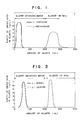
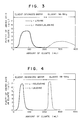
- Figures 1, 2, 3 and 4 represent relations between amounts of eluates and purities of amino acids in eluates in Examples 1, 2, 3 and 4, respectively.
- amino resin (a) A mixture of 600 g of acrylonitrile-divinylbenzene copolymer having crosslinking degree of 6 mol%, 5150 g of diethylenetriamine and 1290 g of water, was heated up to a temperature of 115 - 125 °C for 4 hours to effect an addition reaction. The resulting reaction product was filtered and washed with water to obtain 2420 g (undried) of amino resins (hereinafter referred to as amino resin (a)).
- chelate resin A A mixture of 242 g of amino resin (a), 144 g of acrylic acid and 36 g of water was held at a temperature of 40 - 60 °C for 12 hours thereby an addition reaction was carried out. The reaction pruduct was filtered and washed with water to obtain 302 g (undried) of chelate resins having polyaminocarboxylic acid groups (hereinafter referred to as chelate resin A).
- chelate resin A was brought into contact at a room temperature for 1 hour with 300 ml of aqueous solution which had been obtained by dissolving 0.1 mol of CuSO4 and 0.5 mol of NH3 into 1 l of water. The resulting product was filtered and washed with water to obtain chelate resin A coordinating 1.3 g of copper ions.
- the columns were filled with deionized water. Twenty ml of aqueous solution (pH 6.2) containing 10 g/l of L-histidine and 10 g/l of L-methionine was passed through the columns for 30 minutes, and then, as the first eluent, 200 ml of deionized water was passed for 2 hours, and subsequently, as the second eluent, 200 ml of 1N aqueous ammonia was passed for 2 hours. As shown in Fig.
- L-histidine (0.19 g) having purity of 98 % and containing not more than 0.1 ppm of copper ion and L-methionine (0.18 g) having purity of 99 % and containing not more than 0.1 ppm of copper ion were obtained from the first eluate and the second eluate, respectively. Yields of L-histidine and L-methionine were 93 % and 90 %, respectively.
- Example 2 The procedure of refining amino acids of Example 1 was repeated except that aqueous mixed solution of L-serine and L-leucine (Example 2), aqueous mixed solution of L-lysine and L-phenylalanine (Example 3), or aqueous mixed solution of L-isoleucine and L-leucine (Example 4) was used instead of the aqueous mixed solution of L-histidine and L-methionine.
- Example 3 aqueous mixed solution of L-lysine and L-phenylalanine
- Example 4 aqueous mixed solution of L-isoleucine and L-leucine
- Amino acids Amounts of refined amino acids (g) Purities of refined amino acids (%) Copper content* (ppm) 2 L-serin 0.18 98 not more than 1 L-leucine 0.19 99 " 1 3 L-lysine 0.19 99 " 1 L-phenylalanine 0.13 99 " 1 4 L-isoleucine 0.19 99 " 1 L-leucine 0.19 99 " 1 * Contained in the refined amino acids.
- the resulting reaction product was filtered and washed with water.
- the resin thus obtained was dipped in 500 g of 10 wt.% conc.
- chelate resin B aqueous solution of sodium hydroxide for 30 minutes at a room temperature, and then filtered and washed with water to obtain 339 g (undried) of chelate resins having polyaminocarboxylic acid groups (hereinafter referred to as chelate resin B).
- aqueous solution was prepared by dissolving 0.1 mol of CuSO4 and 0.5 mol of NH3 in 1 l of water (hereinafter referred to as solution A). Thirty ml of chelate resin B was brought into contact with 300 ml of the solution A for 1 hour at room temperature. The resin was then filtered and washed with water to obtain chelate resin B coordinating 1.2 g of copper ion.
- a column in which chelate resin B coordinating copper ion was packed (a previous-column) and another column (an after-column) in which 10 ml of chelate resin B having no metal ion coordinated was packed were connected in series. These columns were filled with deionized water, and 50 ml of aqueous solution of pH 3 containing 0.15 g/l of L-isoleucine, 1.5 g/l of L-leucine and 3 % of NaCl was packed through the columns for 30 minutes.
- the L-leucine mentioned herein had 90.9 % purity.
- the first eluent 200 ml of deionized water was passed for 2 hours, and subsequently, as the second eluent 200 ml of 0.5N aqueous ammonia solution was passed for 2 hours.
- an eluate referred to as the first eluate
- an eluate containing refined L-isoleucine having purity of 99.2 % was obtained
- an eluate referred to as the second eluate
- purity of each amino acid means as follows:
- chelate resin C 323 g (undried) of chelate resins having diethylenetriamine methylenephosphonic acid groups
- a column in which chelate resin C coordinating copper ion was packed (a previous-column) and an another column (an after-column) in which 10 ml of chelate resin C having no metal ion coordinated was packed were connected in series.
- the columns were filled with deionized water and then 100 ml of water (pH 4.7) wasted from a factories for producing methionine, containing 12 g/l of methionine, 0.6 g/l of N-methionylmethionine and 220 g/l of sodium sulfate was passed.
- Example 8 The procedures for refining amino acids in Example 8 were repeated except that varieties of the metal ions to be coordinated on the chelate resin C in place of Cu and their amounts were changed as shown in Table 4. The results are shown in Table 4.
- Table 4 Example Nos. Metals to be coordinated and amount coordinated/30 ml of chelate resin C (g) Purity of refined amino acids (%) N-methionyl-methionine in the first eluate Methionine in the second eluate 9 Ni2+ 0.4 95 99 10 Co2+ 0.6 91 98 11 Zn2+ 0.8 92 99 12 Fe2+ 1.3 89 99
- Example 7 The procedures for refining amino acids in Example 7 were repeated except that the chelate resins, D, E, F, G, H, I, J, K or I defined below were used instead of the chelate resin B.
- Example 7 The procedure of preparation for chelate resins in Example 7 was repeated except that 310 g (undried) of the amino resin (b) was used instead of 242 g of the amino resin (a). As a result, chelate resins (390 g, undried) having aminocarboxylic acid groups were obtained. This resin was named as chelate resin D.
- chelate resin F The procedure for preparation of chelate resin D was repeated except that 394 g of 80 wt.% conc. aqueous ethylenediamine solution was used instead of 300 g of the 20 wt.% conc. aqueous ammonia. As a result, 443 g (undried) of chelate resins having polyaminocarboxylic acid groups were obtained. This resin was named as chelate resin F.
- chelate resin G The procedure for preparation of chelate resin D was repeated except that 494 g of 80 wt.% conc. aqueous diethylenetriamine solution was used instead of 300 g of the 20 wt.% conc. aqueous ammonia. As a result, 447 g (undried) of chelate resins having polyaminocarboxylic acid groups were obtained. This resin was named as chelate resin G.
Landscapes
- Chemical & Material Sciences (AREA)
- Organic Chemistry (AREA)
- Organic Low-Molecular-Weight Compounds And Preparation Thereof (AREA)
- Treatment Of Water By Ion Exchange (AREA)
- Treatment Of Liquids With Adsorbents In General (AREA)
- Manufacture And Refinement Of Metals (AREA)
Applications Claiming Priority (2)
| Application Number | Priority Date | Filing Date | Title |
|---|---|---|---|
| JP63087551A JP2536586B2 (ja) | 1988-04-08 | 1988-04-08 | アミノ酸の分離精製法 |
| JP87551/88 | 1988-04-08 |
Publications (3)
| Publication Number | Publication Date |
|---|---|
| EP0336818A2 true EP0336818A2 (fr) | 1989-10-11 |
| EP0336818A3 EP0336818A3 (en) | 1990-12-19 |
| EP0336818B1 EP0336818B1 (fr) | 1994-08-31 |
Family
ID=13918124
Family Applications (1)
| Application Number | Title | Priority Date | Filing Date |
|---|---|---|---|
| EP89400870A Expired - Lifetime EP0336818B1 (fr) | 1988-04-08 | 1989-03-29 | Procédé pour le raffinage des aminoacides |
Country Status (4)
| Country | Link |
|---|---|
| US (1) | US4927541A (fr) |
| EP (1) | EP0336818B1 (fr) |
| JP (1) | JP2536586B2 (fr) |
| DE (1) | DE68917769T2 (fr) |
Cited By (2)
| Publication number | Priority date | Publication date | Assignee | Title |
|---|---|---|---|---|
| EP0428984A1 (fr) * | 1989-11-20 | 1991-05-29 | MITSUI TOATSU CHEMICALS, Inc. | Procédé de séparation d'acides aminés |
| CN105646256A (zh) * | 2016-03-20 | 2016-06-08 | 内蒙古阜丰生物科技有限公司 | 一种谷氨酸提取结晶工艺 |
Families Citing this family (3)
| Publication number | Priority date | Publication date | Assignee | Title |
|---|---|---|---|---|
| US5250188A (en) * | 1989-09-01 | 1993-10-05 | Brigham Young University | Process of removing and concentrating desired molecules from solutions |
| WO2007092827A2 (fr) * | 2006-02-08 | 2007-08-16 | Waters Investments Limited | Procede de separation ameliore |
| CN103102279B (zh) * | 2012-12-29 | 2015-03-04 | 上海新阳半导体材料股份有限公司 | 一种单乙醇胺的纯化方法 |
Family Cites Families (5)
| Publication number | Priority date | Publication date | Assignee | Title |
|---|---|---|---|---|
| US3630681A (en) * | 1963-09-03 | 1971-12-28 | Hitachi Ltd | Method of separating mixtures by liquid chromatography |
| DE1932190A1 (de) * | 1968-07-01 | 1970-01-08 | Inst Element Organische Verbin | Chromatographisches Verfahren zur Trennung optischer Isomere von Verbindungen,die Komplexe mit den Ionen der UEbergangsmetalle zu bilden Vermoegen |
| US4290893A (en) * | 1979-05-08 | 1981-09-22 | Yeda Research & Development Co. Ltd. | Separation of amino acids by liquid chromatography using chiral eluants |
| SE451802B (sv) * | 1984-05-10 | 1987-11-02 | Jerker Porath | Produkt for adsorption av metalljoner |
| JPH0751546B2 (ja) * | 1987-04-01 | 1995-06-05 | 味の素株式会社 | ロイシンの分離方法 |
-
1988
- 1988-04-08 JP JP63087551A patent/JP2536586B2/ja not_active Expired - Fee Related
-
1989
- 1989-03-29 DE DE68917769T patent/DE68917769T2/de not_active Expired - Fee Related
- 1989-03-29 EP EP89400870A patent/EP0336818B1/fr not_active Expired - Lifetime
- 1989-04-03 US US07/332,172 patent/US4927541A/en not_active Expired - Fee Related
Cited By (3)
| Publication number | Priority date | Publication date | Assignee | Title |
|---|---|---|---|---|
| EP0428984A1 (fr) * | 1989-11-20 | 1991-05-29 | MITSUI TOATSU CHEMICALS, Inc. | Procédé de séparation d'acides aminés |
| US5300653A (en) * | 1989-11-20 | 1994-04-05 | Mitsui Toatsu Chemicals, Incorporated | Separation method of amino acids |
| CN105646256A (zh) * | 2016-03-20 | 2016-06-08 | 内蒙古阜丰生物科技有限公司 | 一种谷氨酸提取结晶工艺 |
Also Published As
| Publication number | Publication date |
|---|---|
| JP2536586B2 (ja) | 1996-09-18 |
| DE68917769T2 (de) | 1995-01-05 |
| EP0336818B1 (fr) | 1994-08-31 |
| JPH01258652A (ja) | 1989-10-16 |
| US4927541A (en) | 1990-05-22 |
| EP0336818A3 (en) | 1990-12-19 |
| DE68917769D1 (de) | 1994-10-06 |
Similar Documents
| Publication | Publication Date | Title |
|---|---|---|
| JP4587694B2 (ja) | アミノ酸とイミノジカルボン酸を分離回収する方法 | |
| CN108484665B (zh) | 一种从酶转化液中分离提取l-草铵膦的方法 | |
| CA2178879C (fr) | Methode pour purifier la valine | |
| EP0336818B1 (fr) | Procédé pour le raffinage des aminoacides | |
| US4835309A (en) | Ion exchange recovery of L-lysine | |
| JP3273578B2 (ja) | オルニチンと酸性アミノ酸類又はケト酸類との塩の製造法 | |
| US3458568A (en) | Process for preparing an optically inactive amino acid from an optically active amino acid | |
| US4740615A (en) | Process for purified amino acids | |
| CN1113054C (zh) | 制备谷氨酸一钠的方法 | |
| US3813434A (en) | Preparation of pure glycine | |
| EP0770055B1 (fr) | Procede d'obtention d'acide [s,s]-ethylenediamine-n,n'-disuccinique a partir d'une solution saline dudit acide et d'acide l-aspartique | |
| JP2003221370A (ja) | グリシンと鉱酸アルカリ金属塩の製造方法 | |
| JP3874820B2 (ja) | タウリン類縁体の製造方法 | |
| JPH0780822B2 (ja) | アミノ酸の分離精製方法 | |
| JPH0558972A (ja) | アミノ酸の分離精製方法 | |
| US3748355A (en) | Crystallization process for the recovery of alkaline nitrilotriacetates | |
| JPS63192745A (ja) | L−アミノ酸の単離方法 | |
| JP2005298369A (ja) | 有機酸の分離製造方法 | |
| JP3243891B2 (ja) | ピルビン酸の精製方法 | |
| CN109485673B (zh) | 一种用离子交换树脂分离l-草铵膦和葡萄糖酸的方法 | |
| JPH03123764A (ja) | アミノ酸の分離精製法 | |
| JPH05229995A (ja) | ロイシンの分離精製方法 | |
| JP2003212829A (ja) | グリシンの精製方法 | |
| JPH0532599A (ja) | アミノ酸の分離精製方法 | |
| JPH0355464B2 (fr) |
Legal Events
| Date | Code | Title | Description |
|---|---|---|---|
| PUAI | Public reference made under article 153(3) epc to a published international application that has entered the european phase |
Free format text: ORIGINAL CODE: 0009012 |
|
| AK | Designated contracting states |
Kind code of ref document: A2 Designated state(s): DE FR GB |
|
| PUAL | Search report despatched |
Free format text: ORIGINAL CODE: 0009013 |
|
| AK | Designated contracting states |
Kind code of ref document: A3 Designated state(s): DE FR GB |
|
| 17P | Request for examination filed |
Effective date: 19901214 |
|
| 17Q | First examination report despatched |
Effective date: 19920925 |
|
| GRAA | (expected) grant |
Free format text: ORIGINAL CODE: 0009210 |
|
| AK | Designated contracting states |
Kind code of ref document: B1 Designated state(s): DE FR GB |
|
| REF | Corresponds to: |
Ref document number: 68917769 Country of ref document: DE Date of ref document: 19941006 |
|
| ET | Fr: translation filed | ||
| PLBE | No opposition filed within time limit |
Free format text: ORIGINAL CODE: 0009261 |
|
| STAA | Information on the status of an ep patent application or granted ep patent |
Free format text: STATUS: NO OPPOSITION FILED WITHIN TIME LIMIT |
|
| 26N | No opposition filed | ||
| PGFP | Annual fee paid to national office [announced via postgrant information from national office to epo] |
Ref country code: FR Payment date: 19980310 Year of fee payment: 10 |
|
| PGFP | Annual fee paid to national office [announced via postgrant information from national office to epo] |
Ref country code: GB Payment date: 19980320 Year of fee payment: 10 |
|
| PGFP | Annual fee paid to national office [announced via postgrant information from national office to epo] |
Ref country code: DE Payment date: 19980403 Year of fee payment: 10 |
|
| PG25 | Lapsed in a contracting state [announced via postgrant information from national office to epo] |
Ref country code: GB Free format text: LAPSE BECAUSE OF NON-PAYMENT OF DUE FEES Effective date: 19990329 |
|
| GBPC | Gb: european patent ceased through non-payment of renewal fee |
Effective date: 19990329 |
|
| PG25 | Lapsed in a contracting state [announced via postgrant information from national office to epo] |
Ref country code: FR Free format text: LAPSE BECAUSE OF NON-PAYMENT OF DUE FEES Effective date: 19991130 |
|
| REG | Reference to a national code |
Ref country code: FR Ref legal event code: ST |
|
| PG25 | Lapsed in a contracting state [announced via postgrant information from national office to epo] |
Ref country code: DE Free format text: LAPSE BECAUSE OF NON-PAYMENT OF DUE FEES Effective date: 20000101 |