EP0316342B1 - Iontotherapeutische vorrichtung mit dosiereinheit - Google Patents
Iontotherapeutische vorrichtung mit dosiereinheit Download PDFInfo
- Publication number
- EP0316342B1 EP0316342B1 EP87905065A EP87905065A EP0316342B1 EP 0316342 B1 EP0316342 B1 EP 0316342B1 EP 87905065 A EP87905065 A EP 87905065A EP 87905065 A EP87905065 A EP 87905065A EP 0316342 B1 EP0316342 B1 EP 0316342B1
- Authority
- EP
- European Patent Office
- Prior art keywords
- pharmaceutical
- insulin
- current
- periodic
- peptide
- Prior art date
- Legal status (The legal status is an assumption and is not a legal conclusion. Google has not performed a legal analysis and makes no representation as to the accuracy of the status listed.)
- Expired - Lifetime
Links
- 102000004877 Insulin Human genes 0.000 claims abstract description 101
- 108090001061 Insulin Proteins 0.000 claims abstract description 101
- 108090000765 processed proteins & peptides Proteins 0.000 claims abstract description 26
- 238000000034 method Methods 0.000 claims abstract description 15
- 230000008569 process Effects 0.000 claims abstract description 11
- NOESYZHRGYRDHS-UHFFFAOYSA-N insulin Chemical compound N1C(=O)C(NC(=O)C(CCC(N)=O)NC(=O)C(CCC(O)=O)NC(=O)C(C(C)C)NC(=O)C(NC(=O)CN)C(C)CC)CSSCC(C(NC(CO)C(=O)NC(CC(C)C)C(=O)NC(CC=2C=CC(O)=CC=2)C(=O)NC(CCC(N)=O)C(=O)NC(CC(C)C)C(=O)NC(CCC(O)=O)C(=O)NC(CC(N)=O)C(=O)NC(CC=2C=CC(O)=CC=2)C(=O)NC(CSSCC(NC(=O)C(C(C)C)NC(=O)C(CC(C)C)NC(=O)C(CC=2C=CC(O)=CC=2)NC(=O)C(CC(C)C)NC(=O)C(C)NC(=O)C(CCC(O)=O)NC(=O)C(C(C)C)NC(=O)C(CC(C)C)NC(=O)C(CC=2NC=NC=2)NC(=O)C(CO)NC(=O)CNC2=O)C(=O)NCC(=O)NC(CCC(O)=O)C(=O)NC(CCCNC(N)=N)C(=O)NCC(=O)NC(CC=3C=CC=CC=3)C(=O)NC(CC=3C=CC=CC=3)C(=O)NC(CC=3C=CC(O)=CC=3)C(=O)NC(C(C)O)C(=O)N3C(CCC3)C(=O)NC(CCCCN)C(=O)NC(C)C(O)=O)C(=O)NC(CC(N)=O)C(O)=O)=O)NC(=O)C(C(C)CC)NC(=O)C(CO)NC(=O)C(C(C)O)NC(=O)C1CSSCC2NC(=O)C(CC(C)C)NC(=O)C(NC(=O)C(CCC(N)=O)NC(=O)C(CC(N)=O)NC(=O)C(NC(=O)C(N)CC=1C=CC=CC=1)C(C)C)CC1=CN=CN1 NOESYZHRGYRDHS-UHFFFAOYSA-N 0.000 claims description 195
- 229940125396 insulin Drugs 0.000 claims description 98
- 230000000737 periodic effect Effects 0.000 claims description 94
- 239000000243 solution Substances 0.000 claims description 58
- 229960003726 vasopressin Drugs 0.000 claims description 35
- GXBMIBRIOWHPDT-UHFFFAOYSA-N Vasopressin Natural products N1C(=O)C(CC=2C=C(O)C=CC=2)NC(=O)C(N)CSSCC(C(=O)N2C(CCC2)C(=O)NC(CCCN=C(N)N)C(=O)NCC(N)=O)NC(=O)C(CC(N)=O)NC(=O)C(CCC(N)=O)NC(=O)C1CC1=CC=CC=C1 GXBMIBRIOWHPDT-UHFFFAOYSA-N 0.000 claims description 32
- 102000002852 Vasopressins Human genes 0.000 claims description 32
- 108010004977 Vasopressins Proteins 0.000 claims description 32
- KBZOIRJILGZLEJ-LGYYRGKSSA-N argipressin Chemical compound C([C@H]1C(=O)N[C@@H](CCC(N)=O)C(=O)N[C@@H](CC(N)=O)C(=O)N[C@@H](CSSC[C@@H](C(N[C@@H](CC=2C=CC(O)=CC=2)C(=O)N1)=O)N)C(=O)N1[C@@H](CCC1)C(=O)N[C@@H](CCCN=C(N)N)C(=O)NCC(N)=O)C1=CC=CC=C1 KBZOIRJILGZLEJ-LGYYRGKSSA-N 0.000 claims description 32
- 229920000642 polymer Polymers 0.000 claims description 30
- 239000011159 matrix material Substances 0.000 claims description 21
- 239000007864 aqueous solution Substances 0.000 claims description 17
- 125000002091 cationic group Chemical group 0.000 claims description 7
- 231100000245 skin permeability Toxicity 0.000 claims description 7
- 125000000129 anionic group Chemical group 0.000 claims description 5
- 230000005540 biological transmission Effects 0.000 claims description 3
- 239000008174 sterile solution Substances 0.000 claims description 3
- 239000003814 drug Substances 0.000 abstract description 71
- -1 for example Substances 0.000 abstract description 7
- 150000001875 compounds Chemical class 0.000 abstract description 5
- 239000004026 insulin derivative Substances 0.000 abstract description 5
- 230000001105 regulatory effect Effects 0.000 abstract description 3
- 238000011161 development Methods 0.000 abstract description 2
- 229920001477 hydrophilic polymer Polymers 0.000 abstract description 2
- 238000007910 systemic administration Methods 0.000 abstract description 2
- 210000003491 skin Anatomy 0.000 description 94
- 229940079593 drug Drugs 0.000 description 47
- WQZGKKKJIJFFOK-GASJEMHNSA-N Glucose Natural products OC[C@H]1OC(O)[C@H](O)[C@@H](O)[C@@H]1O WQZGKKKJIJFFOK-GASJEMHNSA-N 0.000 description 42
- 241000700159 Rattus Species 0.000 description 42
- 239000008103 glucose Substances 0.000 description 42
- 239000008280 blood Substances 0.000 description 41
- 210000004369 blood Anatomy 0.000 description 41
- 206010012601 diabetes mellitus Diseases 0.000 description 30
- 230000009467 reduction Effects 0.000 description 29
- 238000010586 diagram Methods 0.000 description 27
- 230000000694 effects Effects 0.000 description 17
- HEMHJVSKTPXQMS-UHFFFAOYSA-M Sodium hydroxide Chemical compound [OH-].[Na+] HEMHJVSKTPXQMS-UHFFFAOYSA-M 0.000 description 15
- XLYOFNOQVPJJNP-UHFFFAOYSA-N water Substances O XLYOFNOQVPJJNP-UHFFFAOYSA-N 0.000 description 15
- 239000012982 microporous membrane Substances 0.000 description 14
- 238000010521 absorption reaction Methods 0.000 description 13
- 239000003990 capacitor Substances 0.000 description 13
- 239000012528 membrane Substances 0.000 description 10
- 239000008363 phosphate buffer Substances 0.000 description 10
- AQHHHDLHHXJYJD-UHFFFAOYSA-N propranolol Chemical compound C1=CC=C2C(OCC(O)CNC(C)C)=CC=CC2=C1 AQHHHDLHHXJYJD-UHFFFAOYSA-N 0.000 description 10
- 210000000434 stratum corneum Anatomy 0.000 description 10
- VEXZGXHMUGYJMC-UHFFFAOYSA-N Hydrochloric acid Chemical compound Cl VEXZGXHMUGYJMC-UHFFFAOYSA-N 0.000 description 9
- 230000003187 abdominal effect Effects 0.000 description 9
- 230000002708 enhancing effect Effects 0.000 description 9
- 239000001866 hydroxypropyl methyl cellulose Substances 0.000 description 9
- 229920003088 hydroxypropyl methyl cellulose Polymers 0.000 description 9
- 235000010979 hydroxypropyl methyl cellulose Nutrition 0.000 description 9
- UFVKGYZPFZQRLF-UHFFFAOYSA-N hydroxypropyl methyl cellulose Chemical compound OC1C(O)C(OC)OC(CO)C1OC1C(O)C(O)C(OC2C(C(O)C(OC3C(C(O)C(O)C(CO)O3)O)C(CO)O2)O)C(CO)O1 UFVKGYZPFZQRLF-UHFFFAOYSA-N 0.000 description 9
- 210000002700 urine Anatomy 0.000 description 9
- 241000283973 Oryctolagus cuniculus Species 0.000 description 8
- 239000006185 dispersion Substances 0.000 description 8
- 239000003186 pharmaceutical solution Substances 0.000 description 8
- 238000003756 stirring Methods 0.000 description 8
- 230000008859 change Effects 0.000 description 7
- CGIGDMFJXJATDK-UHFFFAOYSA-N indomethacin Chemical compound CC1=C(CC(O)=O)C2=CC(OC)=CC=C2N1C(=O)C1=CC=C(Cl)C=C1 CGIGDMFJXJATDK-UHFFFAOYSA-N 0.000 description 7
- GHCZTIFQWKKGSB-UHFFFAOYSA-N 2-hydroxypropane-1,2,3-tricarboxylic acid;phosphoric acid Chemical compound OP(O)(O)=O.OC(=O)CC(O)(C(O)=O)CC(O)=O GHCZTIFQWKKGSB-UHFFFAOYSA-N 0.000 description 6
- 230000000052 comparative effect Effects 0.000 description 6
- 229960003712 propranolol Drugs 0.000 description 6
- 239000012047 saturated solution Substances 0.000 description 6
- 238000002560 therapeutic procedure Methods 0.000 description 6
- FBOZXECLQNJBKD-ZDUSSCGKSA-N L-methotrexate Chemical compound C=1N=C2N=C(N)N=C(N)C2=NC=1CN(C)C1=CC=C(C(=O)N[C@@H](CCC(O)=O)C(O)=O)C=C1 FBOZXECLQNJBKD-ZDUSSCGKSA-N 0.000 description 5
- 239000002220 antihypertensive agent Substances 0.000 description 5
- 229940127088 antihypertensive drug Drugs 0.000 description 5
- 239000007979 citrate buffer Substances 0.000 description 5
- 238000009792 diffusion process Methods 0.000 description 5
- XYYVYLMBEZUESM-UHFFFAOYSA-N dihydrocodeine Natural products C1C(N(CCC234)C)C2C=CC(=O)C3OC2=C4C1=CC=C2OC XYYVYLMBEZUESM-UHFFFAOYSA-N 0.000 description 5
- LLPOLZWFYMWNKH-CMKMFDCUSA-N hydrocodone Chemical compound C([C@H]1[C@H](N(CC[C@@]112)C)C3)CC(=O)[C@@H]1OC1=C2C3=CC=C1OC LLPOLZWFYMWNKH-CMKMFDCUSA-N 0.000 description 5
- 229960000240 hydrocodone Drugs 0.000 description 5
- OROGSEYTTFOCAN-UHFFFAOYSA-N hydrocodone Natural products C1C(N(CCC234)C)C2C=CC(O)C3OC2=C4C1=CC=C2OC OROGSEYTTFOCAN-UHFFFAOYSA-N 0.000 description 5
- 230000003345 hyperglycaemic effect Effects 0.000 description 5
- 239000002933 immunoreactive insulin Substances 0.000 description 5
- 239000007924 injection Substances 0.000 description 5
- 238000002347 injection Methods 0.000 description 5
- 229960000485 methotrexate Drugs 0.000 description 5
- 239000012466 permeate Substances 0.000 description 5
- 230000003285 pharmacodynamic effect Effects 0.000 description 5
- 239000008223 sterile water Substances 0.000 description 5
- LLPOLZWFYMWNKH-UHFFFAOYSA-N trans-dihydrocodeinone Natural products C1C(N(CCC234)C)C2CCC(=O)C3OC2=C4C1=CC=C2OC LLPOLZWFYMWNKH-UHFFFAOYSA-N 0.000 description 5
- SGTNSNPWRIOYBX-UHFFFAOYSA-N 2-(3,4-dimethoxyphenyl)-5-{[2-(3,4-dimethoxyphenyl)ethyl](methyl)amino}-2-(propan-2-yl)pentanenitrile Chemical compound C1=C(OC)C(OC)=CC=C1CCN(C)CCCC(C#N)(C(C)C)C1=CC=C(OC)C(OC)=C1 SGTNSNPWRIOYBX-UHFFFAOYSA-N 0.000 description 4
- 239000012062 aqueous buffer Substances 0.000 description 4
- 230000001186 cumulative effect Effects 0.000 description 4
- 230000001965 increasing effect Effects 0.000 description 4
- 229960000905 indomethacin Drugs 0.000 description 4
- 239000000203 mixture Substances 0.000 description 4
- 238000007920 subcutaneous administration Methods 0.000 description 4
- 230000037317 transdermal delivery Effects 0.000 description 4
- 229960001722 verapamil Drugs 0.000 description 4
- 102000003922 Calcium Channels Human genes 0.000 description 3
- 108090000312 Calcium Channels Proteins 0.000 description 3
- FAPWRFPIFSIZLT-UHFFFAOYSA-M Sodium chloride Chemical compound [Na+].[Cl-] FAPWRFPIFSIZLT-UHFFFAOYSA-M 0.000 description 3
- 230000004913 activation Effects 0.000 description 3
- 229940035676 analgesics Drugs 0.000 description 3
- 239000003242 anti bacterial agent Substances 0.000 description 3
- 229940124347 antiarthritic drug Drugs 0.000 description 3
- 239000002246 antineoplastic agent Substances 0.000 description 3
- 229940041181 antineoplastic drug Drugs 0.000 description 3
- 239000002876 beta blocker Substances 0.000 description 3
- 229940097320 beta blocking agent Drugs 0.000 description 3
- XMEVHPAGJVLHIG-FMZCEJRJSA-N chembl454950 Chemical compound [Cl-].C1=CC=C2[C@](O)(C)[C@H]3C[C@H]4[C@H]([NH+](C)C)C(O)=C(C(N)=O)C(=O)[C@@]4(O)C(O)=C3C(=O)C2=C1O XMEVHPAGJVLHIG-FMZCEJRJSA-N 0.000 description 3
- 239000012154 double-distilled water Substances 0.000 description 3
- 238000002474 experimental method Methods 0.000 description 3
- 239000000499 gel Substances 0.000 description 3
- 230000001939 inductive effect Effects 0.000 description 3
- 230000010354 integration Effects 0.000 description 3
- 239000004084 narcotic analgesic agent Substances 0.000 description 3
- 230000035699 permeability Effects 0.000 description 3
- 210000004243 sweat Anatomy 0.000 description 3
- 230000009885 systemic effect Effects 0.000 description 3
- 229960002180 tetracycline Drugs 0.000 description 3
- 230000001225 therapeutic effect Effects 0.000 description 3
- VEXZGXHMUGYJMC-UHFFFAOYSA-M Chloride anion Chemical compound [Cl-] VEXZGXHMUGYJMC-UHFFFAOYSA-M 0.000 description 2
- 108700012941 GNRH1 Proteins 0.000 description 2
- 239000000579 Gonadotropin-Releasing Hormone Substances 0.000 description 2
- 102400000050 Oxytocin Human genes 0.000 description 2
- 101800000989 Oxytocin Proteins 0.000 description 2
- XNOPRXBHLZRZKH-UHFFFAOYSA-N Oxytocin Natural products N1C(=O)C(N)CSSCC(C(=O)N2C(CCC2)C(=O)NC(CC(C)C)C(=O)NCC(N)=O)NC(=O)C(CC(N)=O)NC(=O)C(CCC(N)=O)NC(=O)C(C(C)CC)NC(=O)C1CC1=CC=C(O)C=C1 XNOPRXBHLZRZKH-UHFFFAOYSA-N 0.000 description 2
- NIJJYAXOARWZEE-UHFFFAOYSA-N Valproic acid Chemical compound CCCC(C(O)=O)CCC NIJJYAXOARWZEE-UHFFFAOYSA-N 0.000 description 2
- 239000002253 acid Substances 0.000 description 2
- 150000001413 amino acids Chemical group 0.000 description 2
- 230000002686 anti-diuretic effect Effects 0.000 description 2
- 239000003160 antidiuretic agent Substances 0.000 description 2
- 229940124538 antidiuretic agent Drugs 0.000 description 2
- 230000003115 biocidal effect Effects 0.000 description 2
- 230000036765 blood level Effects 0.000 description 2
- 239000008366 buffered solution Substances 0.000 description 2
- 238000001816 cooling Methods 0.000 description 2
- 238000013461 design Methods 0.000 description 2
- 238000010579 first pass effect Methods 0.000 description 2
- 238000001879 gelation Methods 0.000 description 2
- LNEPOXFFQSENCJ-UHFFFAOYSA-N haloperidol Chemical compound C1CC(O)(C=2C=CC(Cl)=CC=2)CCN1CCCC(=O)C1=CC=C(F)C=C1 LNEPOXFFQSENCJ-UHFFFAOYSA-N 0.000 description 2
- 239000000017 hydrogel Substances 0.000 description 2
- 150000002500 ions Chemical class 0.000 description 2
- 239000004973 liquid crystal related substance Substances 0.000 description 2
- 239000000463 material Substances 0.000 description 2
- 238000005259 measurement Methods 0.000 description 2
- 230000007246 mechanism Effects 0.000 description 2
- 229960001723 oxytocin Drugs 0.000 description 2
- XNOPRXBHLZRZKH-DSZYJQQASA-N oxytocin Chemical compound C([C@H]1C(=O)N[C@H](C(N[C@@H](CCC(N)=O)C(=O)N[C@@H](CC(N)=O)C(=O)N[C@@H](CSSC[C@H](N)C(=O)N1)C(=O)N1[C@@H](CCC1)C(=O)N[C@@H](CC(C)C)C(=O)NCC(N)=O)=O)[C@@H](C)CC)C1=CC=C(O)C=C1 XNOPRXBHLZRZKH-DSZYJQQASA-N 0.000 description 2
- QYSPLQLAKJAUJT-UHFFFAOYSA-N piroxicam Chemical compound OC=1C2=CC=CC=C2S(=O)(=O)N(C)C=1C(=O)NC1=CC=CC=N1 QYSPLQLAKJAUJT-UHFFFAOYSA-N 0.000 description 2
- 229960002702 piroxicam Drugs 0.000 description 2
- 229920001223 polyethylene glycol Polymers 0.000 description 2
- 238000003127 radioimmunoassay Methods 0.000 description 2
- 230000003637 steroidlike Effects 0.000 description 2
- 210000001519 tissue Anatomy 0.000 description 2
- 230000001988 toxicity Effects 0.000 description 2
- 231100000419 toxicity Toxicity 0.000 description 2
- 230000002792 vascular Effects 0.000 description 2
- QCHFTSOMWOSFHM-WPRPVWTQSA-N (+)-Pilocarpine Chemical compound C1OC(=O)[C@@H](CC)[C@H]1CC1=CN=CN1C QCHFTSOMWOSFHM-WPRPVWTQSA-N 0.000 description 1
- DNXIKVLOVZVMQF-UHFFFAOYSA-N (3beta,16beta,17alpha,18beta,20alpha)-17-hydroxy-11-methoxy-18-[(3,4,5-trimethoxybenzoyl)oxy]-yohimban-16-carboxylic acid, methyl ester Natural products C1C2CN3CCC(C4=CC=C(OC)C=C4N4)=C4C3CC2C(C(=O)OC)C(O)C1OC(=O)C1=CC(OC)=C(OC)C(OC)=C1 DNXIKVLOVZVMQF-UHFFFAOYSA-N 0.000 description 1
- DIWRORZWFLOCLC-HNNXBMFYSA-N (3s)-7-chloro-5-(2-chlorophenyl)-3-hydroxy-1,3-dihydro-1,4-benzodiazepin-2-one Chemical compound N([C@H](C(NC1=CC=C(Cl)C=C11)=O)O)=C1C1=CC=CC=C1Cl DIWRORZWFLOCLC-HNNXBMFYSA-N 0.000 description 1
- SGKRLCUYIXIAHR-AKNGSSGZSA-N (4s,4ar,5s,5ar,6r,12ar)-4-(dimethylamino)-1,5,10,11,12a-pentahydroxy-6-methyl-3,12-dioxo-4a,5,5a,6-tetrahydro-4h-tetracene-2-carboxamide Chemical compound C1=CC=C2[C@H](C)[C@@H]([C@H](O)[C@@H]3[C@](C(O)=C(C(N)=O)C(=O)[C@H]3N(C)C)(O)C3=O)C3=C(O)C2=C1O SGKRLCUYIXIAHR-AKNGSSGZSA-N 0.000 description 1
- FFTVPQUHLQBXQZ-KVUCHLLUSA-N (4s,4as,5ar,12ar)-4,7-bis(dimethylamino)-1,10,11,12a-tetrahydroxy-3,12-dioxo-4a,5,5a,6-tetrahydro-4h-tetracene-2-carboxamide Chemical compound C1C2=C(N(C)C)C=CC(O)=C2C(O)=C2[C@@H]1C[C@H]1[C@H](N(C)C)C(=O)C(C(N)=O)=C(O)[C@@]1(O)C2=O FFTVPQUHLQBXQZ-KVUCHLLUSA-N 0.000 description 1
- 229930186147 Cephalosporin Natural products 0.000 description 1
- RKWGIWYCVPQPMF-UHFFFAOYSA-N Chloropropamide Chemical compound CCCNC(=O)NS(=O)(=O)C1=CC=C(Cl)C=C1 RKWGIWYCVPQPMF-UHFFFAOYSA-N 0.000 description 1
- JZUFKLXOESDKRF-UHFFFAOYSA-N Chlorothiazide Chemical compound C1=C(Cl)C(S(=O)(=O)N)=CC2=C1NCNS2(=O)=O JZUFKLXOESDKRF-UHFFFAOYSA-N 0.000 description 1
- 201000003883 Cystic fibrosis Diseases 0.000 description 1
- 108010000437 Deamino Arginine Vasopressin Proteins 0.000 description 1
- 102400000321 Glucagon Human genes 0.000 description 1
- 108060003199 Glucagon Proteins 0.000 description 1
- HTTJABKRGRZYRN-UHFFFAOYSA-N Heparin Chemical compound OC1C(NC(=O)C)C(O)OC(COS(O)(=O)=O)C1OC1C(OS(O)(=O)=O)C(O)C(OC2C(C(OS(O)(=O)=O)C(OC3C(C(O)C(O)C(O3)C(O)=O)OS(O)(=O)=O)C(CO)O2)NS(O)(=O)=O)C(C(O)=O)O1 HTTJABKRGRZYRN-UHFFFAOYSA-N 0.000 description 1
- 229920002153 Hydroxypropyl cellulose Polymers 0.000 description 1
- HEFNNWSXXWATRW-UHFFFAOYSA-N Ibuprofen Chemical compound CC(C)CC1=CC=C(C(C)C(O)=O)C=C1 HEFNNWSXXWATRW-UHFFFAOYSA-N 0.000 description 1
- WHXSMMKQMYFTQS-UHFFFAOYSA-N Lithium Chemical compound [Li] WHXSMMKQMYFTQS-UHFFFAOYSA-N 0.000 description 1
- WHNWPMSKXPGLAX-UHFFFAOYSA-N N-Vinyl-2-pyrrolidone Chemical compound C=CN1CCCC1=O WHNWPMSKXPGLAX-UHFFFAOYSA-N 0.000 description 1
- CMWTZPSULFXXJA-UHFFFAOYSA-N Naproxen Natural products C1=C(C(C)C(O)=O)C=CC2=CC(OC)=CC=C21 CMWTZPSULFXXJA-UHFFFAOYSA-N 0.000 description 1
- 229930182555 Penicillin Natural products 0.000 description 1
- 239000004372 Polyvinyl alcohol Substances 0.000 description 1
- 108010005991 Pork Regular Insulin Proteins 0.000 description 1
- LCQMZZCPPSWADO-UHFFFAOYSA-N Reserpilin Natural products COC(=O)C1COCC2CN3CCc4c([nH]c5cc(OC)c(OC)cc45)C3CC12 LCQMZZCPPSWADO-UHFFFAOYSA-N 0.000 description 1
- QEVHRUUCFGRFIF-SFWBKIHZSA-N Reserpine Natural products O=C(OC)[C@@H]1[C@H](OC)[C@H](OC(=O)c2cc(OC)c(OC)c(OC)c2)C[C@H]2[C@@H]1C[C@H]1N(C2)CCc2c3c([nH]c12)cc(OC)cc3 QEVHRUUCFGRFIF-SFWBKIHZSA-N 0.000 description 1
- QCHFTSOMWOSFHM-UHFFFAOYSA-N SJ000285536 Natural products C1OC(=O)C(CC)C1CC1=CN=CN1C QCHFTSOMWOSFHM-UHFFFAOYSA-N 0.000 description 1
- FKNQFGJONOIPTF-UHFFFAOYSA-N Sodium cation Chemical compound [Na+] FKNQFGJONOIPTF-UHFFFAOYSA-N 0.000 description 1
- 229940100389 Sulfonylurea Drugs 0.000 description 1
- SEQDDYPDSLOBDC-UHFFFAOYSA-N Temazepam Chemical compound N=1C(O)C(=O)N(C)C2=CC=C(Cl)C=C2C=1C1=CC=CC=C1 SEQDDYPDSLOBDC-UHFFFAOYSA-N 0.000 description 1
- 239000004098 Tetracycline Substances 0.000 description 1
- KLBQZWRITKRQQV-UHFFFAOYSA-N Thioridazine Chemical compound C12=CC(SC)=CC=C2SC2=CC=CC=C2N1CCC1CCCCN1C KLBQZWRITKRQQV-UHFFFAOYSA-N 0.000 description 1
- GFBKORZTTCHDGY-UWVJOHFNSA-N Thiothixene Chemical compound C12=CC(S(=O)(=O)N(C)C)=CC=C2SC2=CC=CC=C2\C1=C\CCN1CCN(C)CC1 GFBKORZTTCHDGY-UWVJOHFNSA-N 0.000 description 1
- VGZSUPCWNCWDAN-UHFFFAOYSA-N acetohexamide Chemical compound C1=CC(C(=O)C)=CC=C1S(=O)(=O)NC(=O)NC1CCCCC1 VGZSUPCWNCWDAN-UHFFFAOYSA-N 0.000 description 1
- 229960001466 acetohexamide Drugs 0.000 description 1
- 239000000853 adhesive Substances 0.000 description 1
- 230000001070 adhesive effect Effects 0.000 description 1
- 229960004538 alprazolam Drugs 0.000 description 1
- VREFGVBLTWBCJP-UHFFFAOYSA-N alprazolam Chemical compound C12=CC(Cl)=CC=C2N2C(C)=NN=C2CN=C1C1=CC=CC=C1 VREFGVBLTWBCJP-UHFFFAOYSA-N 0.000 description 1
- DKNWSYNQZKUICI-UHFFFAOYSA-N amantadine Chemical compound C1C(C2)CC3CC2CC1(N)C3 DKNWSYNQZKUICI-UHFFFAOYSA-N 0.000 description 1
- 229960003805 amantadine Drugs 0.000 description 1
- 229960000723 ampicillin Drugs 0.000 description 1
- AVKUERGKIZMTKX-NJBDSQKTSA-N ampicillin Chemical compound C1([C@@H](N)C(=O)N[C@H]2[C@H]3SC([C@@H](N3C2=O)C(O)=O)(C)C)=CC=CC=C1 AVKUERGKIZMTKX-NJBDSQKTSA-N 0.000 description 1
- KLOHDWPABZXLGI-YWUHCJSESA-M ampicillin sodium Chemical compound [Na+].C1([C@@H](N)C(=O)N[C@H]2[C@H]3SC([C@@H](N3C2=O)C([O-])=O)(C)C)=CC=CC=C1 KLOHDWPABZXLGI-YWUHCJSESA-M 0.000 description 1
- 229960001931 ampicillin sodium Drugs 0.000 description 1
- 230000000844 anti-bacterial effect Effects 0.000 description 1
- 229940127003 anti-diabetic drug Drugs 0.000 description 1
- 230000003276 anti-hypertensive effect Effects 0.000 description 1
- 229940088710 antibiotic agent Drugs 0.000 description 1
- 239000003472 antidiabetic agent Substances 0.000 description 1
- 230000004888 barrier function Effects 0.000 description 1
- 230000004071 biological effect Effects 0.000 description 1
- 229960000074 biopharmaceutical Drugs 0.000 description 1
- 239000000872 buffer Substances 0.000 description 1
- 239000007853 buffer solution Substances 0.000 description 1
- FAKRSMQSSFJEIM-RQJHMYQMSA-N captopril Chemical compound SC[C@@H](C)C(=O)N1CCC[C@H]1C(O)=O FAKRSMQSSFJEIM-RQJHMYQMSA-N 0.000 description 1
- 229960000830 captopril Drugs 0.000 description 1
- RTYJTGSCYUUYAL-YCAHSCEMSA-L carbenicillin disodium Chemical compound [Na+].[Na+].N([C@H]1[C@H]2SC([C@@H](N2C1=O)C([O-])=O)(C)C)C(=O)C(C([O-])=O)C1=CC=CC=C1 RTYJTGSCYUUYAL-YCAHSCEMSA-L 0.000 description 1
- 229960005255 carbenicillin disodium Drugs 0.000 description 1
- 150000001768 cations Chemical class 0.000 description 1
- 229960004841 cefadroxil Drugs 0.000 description 1
- NBFNMSULHIODTC-CYJZLJNKSA-N cefadroxil monohydrate Chemical compound O.C1([C@@H](N)C(=O)N[C@H]2[C@@H]3N(C2=O)C(=C(CS3)C)C(O)=O)=CC=C(O)C=C1 NBFNMSULHIODTC-CYJZLJNKSA-N 0.000 description 1
- 229960000603 cefalotin Drugs 0.000 description 1
- XIURVHNZVLADCM-IUODEOHRSA-N cefalotin Chemical compound N([C@H]1[C@@H]2N(C1=O)C(=C(CS2)COC(=O)C)C(O)=O)C(=O)CC1=CC=CS1 XIURVHNZVLADCM-IUODEOHRSA-N 0.000 description 1
- FLKYBGKDCCEQQM-WYUVZMMLSA-M cefazolin sodium Chemical compound [Na+].S1C(C)=NN=C1SCC1=C(C([O-])=O)N2C(=O)[C@@H](NC(=O)CN3N=NN=C3)[C@H]2SC1 FLKYBGKDCCEQQM-WYUVZMMLSA-M 0.000 description 1
- 229960003408 cefazolin sodium Drugs 0.000 description 1
- 229940124587 cephalosporin Drugs 0.000 description 1
- 150000001780 cephalosporins Chemical class 0.000 description 1
- 238000006243 chemical reaction Methods 0.000 description 1
- 239000003795 chemical substances by application Substances 0.000 description 1
- 229960004782 chlordiazepoxide Drugs 0.000 description 1
- ANTSCNMPPGJYLG-UHFFFAOYSA-N chlordiazepoxide Chemical compound O=N=1CC(NC)=NC2=CC=C(Cl)C=C2C=1C1=CC=CC=C1 ANTSCNMPPGJYLG-UHFFFAOYSA-N 0.000 description 1
- 229960001761 chlorpropamide Drugs 0.000 description 1
- 229960001380 cimetidine Drugs 0.000 description 1
- CCGSUNCLSOWKJO-UHFFFAOYSA-N cimetidine Chemical compound N#CNC(=N/C)\NCCSCC1=NC=N[C]1C CCGSUNCLSOWKJO-UHFFFAOYSA-N 0.000 description 1
- 229960002227 clindamycin Drugs 0.000 description 1
- KDLRVYVGXIQJDK-AWPVFWJPSA-N clindamycin Chemical compound CN1C[C@H](CCC)C[C@H]1C(=O)N[C@H]([C@H](C)Cl)[C@@H]1[C@H](O)[C@H](O)[C@@H](O)[C@@H](SC)O1 KDLRVYVGXIQJDK-AWPVFWJPSA-N 0.000 description 1
- 230000001276 controlling effect Effects 0.000 description 1
- 239000013256 coordination polymer Substances 0.000 description 1
- 229960003572 cyclobenzaprine Drugs 0.000 description 1
- 230000006378 damage Effects 0.000 description 1
- 230000003247 decreasing effect Effects 0.000 description 1
- 230000001419 dependent effect Effects 0.000 description 1
- 210000004207 dermis Anatomy 0.000 description 1
- 229960004281 desmopressin Drugs 0.000 description 1
- NFLWUMRGJYTJIN-NXBWRCJVSA-N desmopressin Chemical compound C([C@H]1C(=O)N[C@H](C(N[C@@H](CC(N)=O)C(=O)N[C@@H](CSSCCC(=O)N[C@@H](CC=2C=CC(O)=CC=2)C(=O)N1)C(=O)N1[C@@H](CCC1)C(=O)N[C@@H](CCCNC(N)=N)C(=O)NCC(N)=O)=O)CCC(=O)N)C1=CC=CC=C1 NFLWUMRGJYTJIN-NXBWRCJVSA-N 0.000 description 1
- 238000003745 diagnosis Methods 0.000 description 1
- UVTNFZQICZKOEM-UHFFFAOYSA-N disopyramide Chemical compound C=1C=CC=NC=1C(C(N)=O)(CCN(C(C)C)C(C)C)C1=CC=CC=C1 UVTNFZQICZKOEM-UHFFFAOYSA-N 0.000 description 1
- 229960001066 disopyramide Drugs 0.000 description 1
- 239000004815 dispersion polymer Substances 0.000 description 1
- 239000012153 distilled water Substances 0.000 description 1
- 239000002552 dosage form Substances 0.000 description 1
- ODQWQRRAPPTVAG-GZTJUZNOSA-N doxepin Chemical compound C1OC2=CC=CC=C2C(=C/CCN(C)C)/C2=CC=CC=C21 ODQWQRRAPPTVAG-GZTJUZNOSA-N 0.000 description 1
- 229960005426 doxepin Drugs 0.000 description 1
- 229960003722 doxycycline Drugs 0.000 description 1
- 238000012377 drug delivery Methods 0.000 description 1
- 229960005341 fenoprofen calcium Drugs 0.000 description 1
- VHUXSAWXWSTUOD-UHFFFAOYSA-L fenoprofen calcium (anhydrous) Chemical compound [Ca+2].[O-]C(=O)C(C)C1=CC=CC(OC=2C=CC=CC=2)=C1.[O-]C(=O)C(C)C1=CC=CC(OC=2C=CC=CC=2)=C1 VHUXSAWXWSTUOD-UHFFFAOYSA-L 0.000 description 1
- 229960003528 flurazepam Drugs 0.000 description 1
- SAADBVWGJQAEFS-UHFFFAOYSA-N flurazepam Chemical compound N=1CC(=O)N(CCN(CC)CC)C2=CC=C(Cl)C=C2C=1C1=CC=CC=C1F SAADBVWGJQAEFS-UHFFFAOYSA-N 0.000 description 1
- 238000009472 formulation Methods 0.000 description 1
- 230000002496 gastric effect Effects 0.000 description 1
- 229960004666 glucagon Drugs 0.000 description 1
- MASNOZXLGMXCHN-ZLPAWPGGSA-N glucagon Chemical compound C([C@@H](C(=O)N[C@H](C(=O)N[C@@H](CCC(N)=O)C(=O)N[C@@H](CC=1C2=CC=CC=C2NC=1)C(=O)N[C@@H](CC(C)C)C(=O)N[C@@H](CCSC)C(=O)N[C@@H](CC(N)=O)C(=O)N[C@@H]([C@@H](C)O)C(O)=O)C(C)C)NC(=O)[C@H](CC(O)=O)NC(=O)[C@H](CCC(N)=O)NC(=O)[C@H](C)NC(=O)[C@H](CCCNC(N)=N)NC(=O)[C@H](CCCNC(N)=N)NC(=O)[C@H](CO)NC(=O)[C@H](CC(O)=O)NC(=O)[C@H](CC(C)C)NC(=O)[C@H](CC=1C=CC(O)=CC=1)NC(=O)[C@H](CCCCN)NC(=O)[C@H](CO)NC(=O)[C@H](CC=1C=CC(O)=CC=1)NC(=O)[C@H](CC(O)=O)NC(=O)[C@H](CO)NC(=O)[C@@H](NC(=O)[C@H](CC=1C=CC=CC=1)NC(=O)[C@@H](NC(=O)CNC(=O)[C@H](CCC(N)=O)NC(=O)[C@H](CO)NC(=O)[C@@H](N)CC=1NC=NC=1)[C@@H](C)O)[C@@H](C)O)C1=CC=CC=C1 MASNOZXLGMXCHN-ZLPAWPGGSA-N 0.000 description 1
- 239000000122 growth hormone Substances 0.000 description 1
- 229960003878 haloperidol Drugs 0.000 description 1
- 229960002897 heparin Drugs 0.000 description 1
- 229920000669 heparin Polymers 0.000 description 1
- 239000007970 homogeneous dispersion Substances 0.000 description 1
- 229960002003 hydrochlorothiazide Drugs 0.000 description 1
- 239000001863 hydroxypropyl cellulose Substances 0.000 description 1
- 235000010977 hydroxypropyl cellulose Nutrition 0.000 description 1
- 229960001680 ibuprofen Drugs 0.000 description 1
- 238000000338 in vitro Methods 0.000 description 1
- 230000036512 infertility Effects 0.000 description 1
- 238000011835 investigation Methods 0.000 description 1
- 229910052744 lithium Inorganic materials 0.000 description 1
- 230000007774 longterm Effects 0.000 description 1
- 229960004391 lorazepam Drugs 0.000 description 1
- 239000002207 metabolite Substances 0.000 description 1
- 229960004023 minocycline Drugs 0.000 description 1
- 229960002009 naproxen Drugs 0.000 description 1
- CMWTZPSULFXXJA-VIFPVBQESA-N naproxen Chemical compound C1=C([C@H](C)C(O)=O)C=CC2=CC(OC)=CC=C21 CMWTZPSULFXXJA-VIFPVBQESA-N 0.000 description 1
- 230000001019 normoglycemic effect Effects 0.000 description 1
- 230000010355 oscillation Effects 0.000 description 1
- ADIMAYPTOBDMTL-UHFFFAOYSA-N oxazepam Chemical compound C12=CC(Cl)=CC=C2NC(=O)C(O)N=C1C1=CC=CC=C1 ADIMAYPTOBDMTL-UHFFFAOYSA-N 0.000 description 1
- 229960004535 oxazepam Drugs 0.000 description 1
- 239000003002 pH adjusting agent Substances 0.000 description 1
- 150000002960 penicillins Chemical class 0.000 description 1
- 239000000813 peptide hormone Substances 0.000 description 1
- 239000008194 pharmaceutical composition Substances 0.000 description 1
- 229960001416 pilocarpine Drugs 0.000 description 1
- 239000000902 placebo Substances 0.000 description 1
- 229940068196 placebo Drugs 0.000 description 1
- 229920002189 poly(glycerol 1-O-monomethacrylate) polymer Polymers 0.000 description 1
- 229920002401 polyacrylamide Polymers 0.000 description 1
- 229920002338 polyhydroxyethylmethacrylate Polymers 0.000 description 1
- 229920002451 polyvinyl alcohol Polymers 0.000 description 1
- 102000004196 processed proteins & peptides Human genes 0.000 description 1
- GGWBHVILAJZWKJ-KJEVSKRMSA-N ranitidine hydrochloride Chemical compound [H+].[Cl-].[O-][N+](=O)\C=C(/NC)NCCSCC1=CC=C(CN(C)C)O1 GGWBHVILAJZWKJ-KJEVSKRMSA-N 0.000 description 1
- 230000001172 regenerating effect Effects 0.000 description 1
- 229960003147 reserpine Drugs 0.000 description 1
- BJOIZNZVOZKDIG-MDEJGZGSSA-N reserpine Chemical compound O([C@H]1[C@@H]([C@H]([C@H]2C[C@@H]3C4=C([C]5C=CC(OC)=CC5=N4)CCN3C[C@H]2C1)C(=O)OC)OC)C(=O)C1=CC(OC)=C(OC)C(OC)=C1 BJOIZNZVOZKDIG-MDEJGZGSSA-N 0.000 description 1
- MDMGHDFNKNZPAU-UHFFFAOYSA-N roserpine Natural products C1C2CN3CCC(C4=CC=C(OC)C=C4N4)=C4C3CC2C(OC(C)=O)C(OC)C1OC(=O)C1=CC(OC)=C(OC)C(OC)=C1 MDMGHDFNKNZPAU-UHFFFAOYSA-N 0.000 description 1
- 230000035945 sensitivity Effects 0.000 description 1
- 230000008591 skin barrier function Effects 0.000 description 1
- 229910001415 sodium ion Inorganic materials 0.000 description 1
- 238000010254 subcutaneous injection Methods 0.000 description 1
- 239000007929 subcutaneous injection Substances 0.000 description 1
- MNQYNQBOVCBZIQ-JQOFMKNESA-A sucralfate Chemical compound O[Al](O)OS(=O)(=O)O[C@@H]1[C@@H](OS(=O)(=O)O[Al](O)O)[C@H](OS(=O)(=O)O[Al](O)O)[C@@H](COS(=O)(=O)O[Al](O)O)O[C@H]1O[C@@]1(COS(=O)(=O)O[Al](O)O)[C@@H](OS(=O)(=O)O[Al](O)O)[C@H](OS(=O)(=O)O[Al](O)O)[C@@H](OS(=O)(=O)O[Al](O)O)O1 MNQYNQBOVCBZIQ-JQOFMKNESA-A 0.000 description 1
- 229960004291 sucralfate Drugs 0.000 description 1
- 229960005404 sulfamethoxazole Drugs 0.000 description 1
- MLKXDPUZXIRXEP-MFOYZWKCSA-N sulindac Chemical compound CC1=C(CC(O)=O)C2=CC(F)=CC=C2\C1=C/C1=CC=C(S(C)=O)C=C1 MLKXDPUZXIRXEP-MFOYZWKCSA-N 0.000 description 1
- 229960000894 sulindac Drugs 0.000 description 1
- JLKIGFTWXXRPMT-UHFFFAOYSA-N sulphamethoxazole Chemical compound O1C(C)=CC(NS(=O)(=O)C=2C=CC(N)=CC=2)=N1 JLKIGFTWXXRPMT-UHFFFAOYSA-N 0.000 description 1
- 230000035900 sweating Effects 0.000 description 1
- 230000001839 systemic circulation Effects 0.000 description 1
- 229960003188 temazepam Drugs 0.000 description 1
- 235000019364 tetracycline Nutrition 0.000 description 1
- 150000003522 tetracyclines Chemical class 0.000 description 1
- 229940040944 tetracyclines Drugs 0.000 description 1
- 229940124597 therapeutic agent Drugs 0.000 description 1
- 229960002784 thioridazine Drugs 0.000 description 1
- 229960005013 tiotixene Drugs 0.000 description 1
- 229960002277 tolazamide Drugs 0.000 description 1
- OUDSBRTVNLOZBN-UHFFFAOYSA-N tolazamide Chemical compound C1=CC(C)=CC=C1S(=O)(=O)NC(=O)NN1CCCCCC1 OUDSBRTVNLOZBN-UHFFFAOYSA-N 0.000 description 1
- 238000013271 transdermal drug delivery Methods 0.000 description 1
- 229960003386 triazolam Drugs 0.000 description 1
- JOFWLTCLBGQGBO-UHFFFAOYSA-N triazolam Chemical compound C12=CC(Cl)=CC=C2N2C(C)=NN=C2CN=C1C1=CC=CC=C1Cl JOFWLTCLBGQGBO-UHFFFAOYSA-N 0.000 description 1
- FJXYMVBFBYAWDR-UHFFFAOYSA-N tributyl(prop-1-enyl)stannane Chemical compound CCCC[Sn](CCCC)(CCCC)\C=C\C FJXYMVBFBYAWDR-UHFFFAOYSA-N 0.000 description 1
- 230000001960 triggered effect Effects 0.000 description 1
- 229960000604 valproic acid Drugs 0.000 description 1
- 229960004528 vincristine Drugs 0.000 description 1
- OGWKCGZFUXNPDA-XQKSVPLYSA-N vincristine Chemical compound C([N@]1C[C@@H](C[C@]2(C(=O)OC)C=3C(=CC4=C([C@]56[C@H]([C@@]([C@H](OC(C)=O)[C@]7(CC)C=CCN([C@H]67)CC5)(O)C(=O)OC)N4C=O)C=3)OC)C[C@@](C1)(O)CC)CC1=C2NC2=CC=CC=C12 OGWKCGZFUXNPDA-XQKSVPLYSA-N 0.000 description 1
- OGWKCGZFUXNPDA-UHFFFAOYSA-N vincristine Natural products C1C(CC)(O)CC(CC2(C(=O)OC)C=3C(=CC4=C(C56C(C(C(OC(C)=O)C7(CC)C=CCN(C67)CC5)(O)C(=O)OC)N4C=O)C=3)OC)CN1CCC1=C2NC2=CC=CC=C12 OGWKCGZFUXNPDA-UHFFFAOYSA-N 0.000 description 1
Images









Classifications
-
- A—HUMAN NECESSITIES
- A61—MEDICAL OR VETERINARY SCIENCE; HYGIENE
- A61N—ELECTROTHERAPY; MAGNETOTHERAPY; RADIATION THERAPY; ULTRASOUND THERAPY
- A61N1/00—Electrotherapy; Circuits therefor
- A61N1/18—Applying electric currents by contact electrodes
- A61N1/20—Applying electric currents by contact electrodes continuous direct currents
- A61N1/30—Apparatus for iontophoresis, i.e. transfer of media in ionic state by an electromotoric force into the body, or cataphoresis
-
- A—HUMAN NECESSITIES
- A61—MEDICAL OR VETERINARY SCIENCE; HYGIENE
- A61N—ELECTROTHERAPY; MAGNETOTHERAPY; RADIATION THERAPY; ULTRASOUND THERAPY
- A61N1/00—Electrotherapy; Circuits therefor
- A61N1/02—Details
- A61N1/04—Electrodes
- A61N1/0404—Electrodes for external use
- A61N1/0408—Use-related aspects
- A61N1/0428—Specially adapted for iontophoresis, e.g. AC, DC or including drug reservoirs
- A61N1/0448—Drug reservoir
-
- A—HUMAN NECESSITIES
- A61—MEDICAL OR VETERINARY SCIENCE; HYGIENE
- A61N—ELECTROTHERAPY; MAGNETOTHERAPY; RADIATION THERAPY; ULTRASOUND THERAPY
- A61N1/00—Electrotherapy; Circuits therefor
- A61N1/18—Applying electric currents by contact electrodes
- A61N1/20—Applying electric currents by contact electrodes continuous direct currents
- A61N1/30—Apparatus for iontophoresis, i.e. transfer of media in ionic state by an electromotoric force into the body, or cataphoresis
- A61N1/303—Constructional details
-
- A—HUMAN NECESSITIES
- A61—MEDICAL OR VETERINARY SCIENCE; HYGIENE
- A61N—ELECTROTHERAPY; MAGNETOTHERAPY; RADIATION THERAPY; ULTRASOUND THERAPY
- A61N1/00—Electrotherapy; Circuits therefor
- A61N1/02—Details
- A61N1/04—Electrodes
- A61N1/0404—Electrodes for external use
- A61N1/0408—Use-related aspects
- A61N1/0428—Specially adapted for iontophoresis, e.g. AC, DC or including drug reservoirs
- A61N1/0432—Anode and cathode
- A61N1/044—Shape of the electrode
Definitions
- This invention relates to development of an iontotherapeutic device for regulated transdermal systemic administration of ionizable pharmaceuticals (including ionizable biopharmaceuticals).
- the invention makes it possible to carry out an iontotherapeutic process for transdermal administration of ionizable pharmaceuticals, particularly those which are otherwise transdermally absorbed to a small degree or not at all.
- the invention also provides a polymeric unit dose in which an ionized pharmaceutical is dispersed.
- the unit dose is adapted to be assembled as a part or either the anode or the cathode, depending upon whether the ionized pharmaceutical is cationic or anionic, so that the ionized pharmaceutical will be delivered transdermally and then be absorbed systemically when the iontotherapeutic device is in operation.
- Many pharmaceuticals are required to be administered to patients by injection.
- a notable example is insulin, which cannot be administered orally to be effective in lowering the elevated blood sugar levels, which are too high in diabetics (i.e., > 126 mg/dL).
- Other pharmaceuticals may be administered orally, but in some cases, there is inefficient absorption into the blood stream to permit the pharmaceuticals to achieve their intended therapy.
- many orally administered pharmaceuticals undergo a high degree of destruction by the hepato-gastrointestinal first-pass metabolism. Often the metabolites of the first-pass metabolism cause unwanted biological activity or toxicity.
- EP-A-252732 which is Article 54(3)EPC prior art, discloses a transdermal drug delivery device which comprises a pH-controlled, hydrophilic medium in the form of a gel material shaped in the form of a disc.
- Drugs such as insuline or desmopressin, are administered by constant, variable or pulsed current in the range up to 10 mA.
- transdermal absorption of a number of pharmaceuticals particularly the macromolecular drugs such as insulin and cationic drugs like propranolol HCl, ha not been satisfactorily developed for adequate therapy, since they have not been absorbed transdermally to any significant degree.
- a device has been developed for administering transdermally a systemically effective amount of an ionizable pharmaceutical in sterile aqueous solution by iontotherapy.
- the present invention provides a transdermal periodic iontotherapeutic device for transdermally administering a systemically-effective amount of an ionized pharmaceutical comprising:
- the present invention provides a sterile unit dose adapted to be removably inserted into the receptacle of a reservoir electrode of a transdermal periodic iontotherapeutic device as described above, said unit dose to be used in electrical contact with intact skin to be iontotherapeutically treated to administer transdermally a systemically effective dose amount of a pharmaceutically effective and transdermally absorbable peptide; said unit dose containing a sterile solution of said peptide having an iontotherapeutically effective and physiologically acceptable pH at least about one pH unit lower or higher than the isoelectric point of said peptide so as to provide said pharmaceutical in ionized form; said unit dose adapted to permit said peptide to be released upon application to the reservoir electrode of a periodic DC current using a selected waveform in an iontotherapeutic process.
- the ionized pharmaceutical solution can be contained in a unit dose form such as disposable polymeric matrix unit dose form in which a dosage amount of an ionized pharmaceutical solution (pH at least 1.0, preferably 1.5 or about 2 pH units above or below the pKa or isoelectric pH of the ionizable pharmaceutical) is intermixed with a polymer which is characterised by being compatible with the pharmaceutical as well as the skin, hydrophilic, and capable of releasing the pharmaceutical for iontotherapeutic transdermal absorption.
- the unit dose form can also comprise a sterile solution of the ionized pharmaceutical contained within a closed reservoir unit dose form having a drug-releasing microporous membrane surface.
- the unit dose forms are assembled with a pharmaceutical reservoir electrode and are further adapted to permit the dissolved, ionised pharmaceutical to be delivered iontophoretically to the skin of the subject treated and to provide iontotherapeutic transdermal absorption of a systemically effective amount of the pharmaceutical.
- the unit dose forms are maintained covered to retain sterility until the desired time of iontotherapeutic administration.
- a pharmaceutical reservoir electrode which will receive such a unit dose form is used as a part of the iontotherapeutic device, such as provided by this invention, which is used to carry out the iontotherapeutic delivery and transdermal absorption of the ionized pharmaceutical.
- the pharmaceutical reservoir electrode is either a cathode or an anode depending upon whether the pharmaceutical is in anionic or cationic form, respectively.
- the iontotherapeutic device provides, in use, an iontotherapeutically effective and physiologically acceptable pulse current with a specific waveform having an amplitude up to about 10mA based on a reservoir electrode skin-contacting area or about 5 cm 2 and an effective frequency of at least about 10 Hz up to about 50 KHz until the subject treated has received a pharmacologically-effective systemic dosage of the ionized pharmaceutical.
- a unit dose form adapted for use in a pharmaceutical reservoir electrode and to be used in electrical contact with intact skin of a subject to be treated with the pharmaceutical.
- the unit dose can have a polymeric matrix in which the pharmaceutical is ionized and in solution and also contained and distributed within the polymeric matrix.
- the polymer of the matrix is compatible with the pharmaceutical as well as the skin, permits release of the pharmaceutical from the unit dose form, so it can be iontotherapeutically delivered for transdermal absorption.
- the polymer used is hydrophilic.
- the pharmaceutical in the unit dose form can be selected from pharmaceuticals which ordinarily are not transdermally absorbed through intact skin in an effective dosage amount, such pharmaceuticals including but not limited to insulins, vasopressin, heparin, growth hormones, glucagon, oxytocin, and other macromolecular drugs as well as a number of others which can be provided in ionized form.
- pharmaceuticals including but not limited to insulins, vasopressin, heparin, growth hormones, glucagon, oxytocin, and other macromolecular drugs as well as a number of others which can be provided in ionized form.
- a number of compounds which are naturally-occurring in humans, and which often are peptide in nature, are also included within this pharmaceutical group, many or which can be produced identically or as a related compound using DNA recombinant or other biological techniques.
- a novel iontotherapeutic device capable of transdermally administering a systemically effective amount of an ionized pharmaceutical.
- the device comprises:
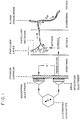
- FIG. 1 is a diagram portraying a device of the invention in operation to effect iontotherapeutic transdermal absorption of an ionized pharmaceutical and its uptake into the bloodstream of the subject treated.
- FIG. 2 is a block diagram of a transdermal periodic iontotherapeutic device coming within the invention.
- FIG. 3 is a detailed circuit diagram for the Power Supply shown in FIG. 2.
- FIG. 4 is a detailed circuit diagram for the Square-Wave Generator shown in FIG. 2.
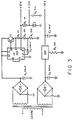
- FIG. 5 is a detailed circuit diagram for the Trapezoidal-Triangular Wave Generator shown in FIG. 2.
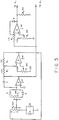
- FIG. 6 is a detailed circuit diagram for the Sinusoidal Signal Generator shown in FIG. 2.
- FIG. 7 is a detailed circuit diagram for the Output Circuit shown in FIG. 2.
- FIG. 8 is a block diagram of a wristwatch-type miniaturized periodic iontotherapeutic device coming within the invention, in which the drug reservoir electrode is positioned away from the main portion of iontotherapeutic device.
- FIG. 9 is a diagram illustrating the wristwatch-type miniaturized transdermal periodic iontotherapeutic system with the drug reservoir electrode positioned directly in the lower portion of the iontotherapeutic device and with multifunctional programmability.
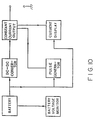
- FIG. 10 is a block diagram of a portable transdermal periodic iontotherapeutic device coming within the invention.
- FIG. 11 is a detailed circuit diagram of the device shown in FIG. 10.
- FIG. 12 is a block diagram of a multichannel transdermal periodic iontotherapeutic device coming within the invention.
- FIG. 13 is a detailed circuit diagram of the device shown in FIG. 12.
- FIG. 14 is a graph comparing the effects of periodic wave mode and DC mode on the transdermal absorption of insulin and on the reduction or blood glucose level (B.G.L.) in the diabetic hairless rats.
- FIG. 16 is a graph showing the effect of the frequency generated by the transdermal periodic iontotherapeutic system on the reduction in the blood glucose level (B.G.L.) in the diabetic hairless rats using insulin.
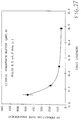
- FIG. 17 is a graph showing the effect of the on/off ratio in the transdermal periodic iontotherapeutic system on the reduction in the blood sugar level (B.G.L.) in the diabetic hairless rats using insulin.
- FIG. 18 is a graph showing the effect of the treatment duration by the transdermal periodic iontotherapeutic system with drug reservoir electrode at pH 3.6, on the reduction in the blood glucose level (B.G.L.) in the diabetic hairless rats using insulin.
- FIG. 19 is a graph showing the effect of the treatment duration by the transdermal periodic iontotherapeutic system, with drug reservoir electrode at pH 7.1, on the reduction in the blood glucose level (B.G.L.) in the diabetic hairless rats using insulin.
- FIG. 20 is a graph showing permeation of vasopressin facilitated by the transdermal periodic iontotherapeutic system compared to passive diffusion of a vasopressin solution at pH 5.0 through hairless rat skin.
- FIG. 21A is a graph showing permeation rate of insulin solution at pH 7.1 through hairless rat skin using no iontotherapy as compared to permeation rate shown in FIG. 21B when using iontotherapy (TIDD).
- TIDD iontotherapy
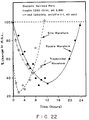
- FIG. 22 is a series of graphs showing the comparative effects of the change in waveform in lowering blood glucose level (B.G.L.) in diabetic hairless rats using transdermal periodic iontothorapeutic system using insulin solution at pH 3.68.
- FIG. 23A is a graph showing lowering of blood sugar level (B.G.L.) of hairless rats using transdermal periodic iontotherapeutic system on Day 1 using insulin solution at pH 3.68.
- FIG. 23B is a graph showing further lowering of the blood sugar levels of the same rats on Day 3 using transdermal periodic iontotherapeutic system without further administration of insulin, indicating that the insulin delivered transdermally on Day 1 is stored in the skin tissues and can be activated to become available for absorption into systemic circulation on Day 3 by TPIS.
- FIG. 24A is a pair of comparative graphs showing plasma immunoreactive insulin levels in diabetic rabbits after administration of insulin solution (pH 7.1) using transdermal periodic iontotherapeutic system (TPIS) compared with corresponding levels in diabetic rabbits using subcutaneous administration (SC). "SZ injection” indicates injections to render rabbits diabetic.
- TPIS transdermal periodic iontotherapeutic system
- FIG. 24B is a pair of comparative graphs corresponding to those of FIG. 24A showing the respective reduction of blood glucose levels (B.G.L.).
- the data show that blood glucose levels can be controlled at a highly constant level so as not to fall substantially, if at all, below normal level by TPIS.
- FIG. 25A is a pair of comparative graphs showing the increase in plasma insulin concentration after administration of insulin solution (pH 7.10) using transdermal periodic iontotherapeutic system (TPIS) compared to using transdermal ionotherapeutic system (TIDD) in which 4X current intensity and 2X administration times are used. TPIS administration shows more rapid attainment of increased plasma insulin concentrations.
- TPIS transdermal periodic iontotherapeutic system
- TIDD transdermal ionotherapeutic system
- FIG. 25B is a pair of comparative graphs corresponding to those of FIG. 25A showing the attained lowering of blood glucose levels (B.G.L.).
- the data show a near instanteous reduction of blood glucose level from the hyperglycemic level in the diabetic controls using transdermal periodic iontotherapeutic system (TPIS) whereas the reduction using transdermal iontotherapeutic system (TIDD) is lower than the normoglycemic level.
- TPIS transdermal periodic iontotherapeutic system
- TIDD transdermal iontotherapeutic system
- FIG. 26 is a pair of comparative graphs showing a desired reduction in urine output as indicated by urine osmolarity measurement in anesthetized rabbits using transdermal periodic iontotherapeutic system to administer vasopressin solution (pH 5.0).
- the corresponding graph shows that TPIS is more effective in reducing urine output than TIDD.
- FIG. 27 is a graph showing vasopressin permeation rate enhancement when the ionic strength of the vasopressin solution used in TPIS is decreased.
- FIG. 28 is a graph showing enhancement of skin permeation of vasopressin using TPIS with a short skin permeation lag time. The graph also shows reversibility of skin permeation within 2 hours after ceasing TPIS treatment and again enhancement of skin permeation after reinstituting TPIS.
- FIG. 1 is a diagram portraying a device of the invention in operation to deliver iontotherapeutically an ionized pharmaceutical and its uptake into the blood stream of the subject treated.
- the figure shows the iontotherapeutic device in electric contact with the skin.
- the pharmaceutical reservoir electrode in contact with the skin as well as the other electrode, which is referred to as the receptor electrode.
- the electrodes are in contact with the uppermost skin barrier, called stratum corneum.
- the pharmaceutical is transmitted through the stratum corneum and flows into the dermo-epidermal layer.
- the stratum corneum is the principal absorption rate limiting barrier.
- the first portion of the dermis layer is referred to as the papillary layer, which contains a capillary network of the vascular system.
- the capillary network takes up the transdermally absorbed pharmaceutical and the uptaken pharmaceutical is shown to flow from the capillary network into the main portion of the vascular system.
- FIG. 2 is a block diagram of a transdermal periodic iontotherapeutic device coming within the invention in which the power supply is derived either from the conversion of the alternate current (AC) from a 120 V-mains (or other available AC mains) into direct current or from a suitable battery.
- the power is turned on manually by a switch or automatically by a programmable timer.
- the device also consists of one or a combination of several electronic multifunction generators, a drug reservoir electrode and a receptor electrode.
- the multifunction generator is assembled with a power supply, to deliver direct current with periodic waveform of either square, triangular, trapezoidal or sinusodial shape, to an output circuit.
- the desired iontotherapeutically-effective waveform can be selected manually or preprogrammed through a switch (K 1 ), and the frequency of the output waveform cab be adjusted in the range of 10Hz-50KHz.
- the output circuit then provides a physiologically acceptable current, ranging up to 10 mA, to the pharmaceutical reservoir electrode which contains the ionized pharmaceutical to be delivered transdermally, and a receptor electrode in series.
- the device can be operated to deliver either DC current alone (periodically or continuously), or in combination with a periodic waveform.
- FIG. 3 is a detailed circuit diagram for the power supply shown in FIG. 2. It converts the AC current from a 120 V-mains to a DC current at ⁇ 15V and +27V through 2 voltage regulators, 957 and LM 723, respectively.
- C's and R's designate capacitors and resistors, respectively.
- the power supply is derived from 120 V-alternate current, it is stepped down by a step-down transformer and then full-wave rectified by a diode bridge rectifier.
- the transistor (T) boosts the output current of LM723 to the required level.
- Capacitors of 600 ⁇ F and 10 ⁇ F serve to smooth the output voltage.
- the other resistors and capacitor are required in the operation of the voltage regulation elements.
- FIG. 4 is a detailed circuit diagram for the square-wave generator shown in FIG. 2. It employs a microchip 555 timer.
- the capacitor C is charged through the potentiometer P 1 and P 2 and the diode D for t 1 seconds and discharged through potentiometer P 1 and diode D 2 for t 2 seconds.
- FIG. 5 is a detailed circuit diagram for the triangular-trapezoidal waveform generator shown in FIG. 2. It consists of an integrator (A) and a regenerative comparator (B) connected in a positive feedback loop. Precise triangular waves are formed by integration of the square wave which is feed back from the output of the comparator to the input of the integrator.
- the frequency (F) of the triangular wave is: where Vo + and Vo - are the higher and lower trip points of the comparator, respectively.
- Resistors R 1 and R 2 control the comparator trip points.
- Capacitor C is the integration capacitor. Potentiometer P 1 provides adjustment of the triangular wave offset. Potentiometers P 2 and P 3 adjust frequency and symmetry, respectively.
- the third op-amp circuit (C) acts as a damper. It produces a trapezoidal wave with the same frequency as the triangular wave. Potentiometer P 4 sets the clamping level.
- FIG. 6 is a detailed circuit diagram for the sinusoidal signal generator shown in FIG 2.
- the circuit of the generator uses two amplifiers: one (A) acts as a non-inverting integrator, and the other (B) acts as an inverting integrator. They are connected in cascade to form a feedback loop.
- Resistor R 1 is a feedback resistor.
- Capacitor C 1 is used to prevent high-frequency oscillations.
- FIG. 7 is a detailed circuit diagram for the Output Circuit shown in FIG. 2.
- the desired waveform is selected manually or automatically from the 3 generators through a switch (K 1 ) and sent to the inverting amplifier, from which the signal then goes to the output stage of two transistors.
- the output current (dose current) is adjusted by a potentiometer (P), as monitored by a current meter (A), and is delivered to the drug reservoir electrode (B).
- FIG. 8 is a diagram illustrating the wristwatch-type miniaturized transdermal periodic iontotherapeutic system with multifunction programmability. It is designed to have one or more nuclear batteries and two pieces of microchips: One is for the purpose or generating different waveforms, as outlined in FIGS. 4-6, and the other is for the purpose of controlling and to display the output current.
- the nuclear batteries provide the energy needed for long-term operation.
- the programmability may include selection of DC alone or in combination with a periodic waveform, a dose current for a particularly designated time period.
- the drug reservoir electrode is positioned outside the device.
- FIG. 9 shows an embodiment of another design of iontotherapeutic device coming within the invention. It shows two views of the device.
- the first view is a cross-sectional view showing the integrated circuitry, L.C. display, battery, drug reservoir electrode positioned directly in the lower central portion of the base and the receptor electrode encircling the drug reservoir electrode.
- the next view shows the bottom view of the device. In the center portion of the bottom view is shown the circular drug reservoir portion of the drug reservoir electrode.
- the drug or pharmaceutical dissolved in an aqueous solution is homogeneously dispersed in a polymer matrix unit dose as described herein.
- the pharmaceutical solution can also be contained in a reservoir-type unit dose having a microporous surface adapted to permit the drug to be transmitted.
- the receptor electrode as a circular ring positioned in spaced relationship tram the drug reservoir electrode.
- a liquid crystal display At the top of the cross-sectional view is shown a liquid crystal display. It can display a number of functions, including whether or not the device is in operations the type of periodic current and waveform being used and other pertinent information of the transdermal periodic iontotherapeutic drug delivery.
- the battery employed as the power source for this invention can be a lithium or other nuclear battery having a voltage, for example, of from 6 to 12 volts.
- FIG. 10 is a block diagram of a portable transdermal periodic iontotherapeutic device coming within the invention in which the power supply is derived from a battery source such as one or more 9V batteries.
- the power is turned on manually by a switch.
- the device can be equipped so that it can be turned on automatically by a programmable timer.
- the device also consists of one or a combination of several electronic multifunction generators, a drug reservoir electrode and a receptor electrode.
- the multifunction generator can provide periodic waveform of either square, triangular, trapezoidal or sinusodial shape, to an output circuit.
- the desired iontotherapeutically effective waveform can be selected manually and the frequency of the output waveform can be adjusted to a physiologically acceptable frequency of at least 10 Hz and up to about 50 KHz.
- the output circuit then provides a physiologically acceptable current, ranging up to 10 mA, to the pharmaceutical reservoir electrode, which contains the solution of the ionized pharmaceutical to be delivered transdermally, and a receptor electrode in series.
- the device can be operated to deliver either DC current alone (periodically or continuously), or in combination with a periodic waveform.
- FIG. 11 is a detailed circuit diagram for the portable transdermal periodic iontotherapeutic device shown in the block diagram of FIG. 10. Referring to FIG. 11, the following is a description of the circuits and their functioning:
- lC 1 , R 1 -R 4 , C 1 -C 3 , L1 and diode IN914 consist of a DC-to-DC converter which is incorporated in step-up application.
- the output voltage is elevated from 9V battery to 27V with the proper adjustment of R 4 .
- the output voltage of the battery is monitored by a battery voltage monitor which includes a zener diode D 1 , R 5 -R 7 , C 4 and C106Yl. When output of 9-V battery drops below minimum acceptable volume of 8.3V, LED lights to indicate the need for recharging.
- IC 2 , D 2 -D 5 , T 1 , C 5 , C 6 and R 8 are components of a triangle-wave generator.
- the charge and discharge currents for C 6 come through the diode bridge formed by D 2 -D 5 .
- Bridge D 2 -D 5 consists of four general purpose switching diodes with low-leakage characteristics, that serve to steer current in the proper direction through the current source made up of T 1 and R 8 .
- the pin 3 of IC 2 serves as a source of current for the timing network, and its state of high or low determines the direction of current flow into or out of C 6 for charge or discharge. Since both charge and discharge currents flow through the same current regulator circuit, the currents are equal and thus times of charge and discharge are equal. As a result, triangular waves are formed across C 6 .
- the circuit covers the frequency range of about 20 Hz to 30 KHz.
- the adjustment of the frequency is done with R 8 .
- the output of the triangle-wave generator is sent to the pin 3 of IC 3 which serves as a comparator.
- the voltage comparison is made between pin 2 and pin 3 of IC 3 .
- the square waves are formed at pin 7 of IC 3 with a duty cycle which is determined by the voltage of the voltage divider composed of R 10 -R 12 . The higher the voltage applied to pin 2 is, the shorter the "on" time of the square waves, and vice versa.
- the duty cycle of the square waves covers the range of 1/10 to 10/1.
- the square waves are amplified by T 2 -T 4 and sent to pin 11 or IC 4 .
- IC 923 is employed to serve as a current regulator.
- IC 923 is originally designed to be a voltage regulator with an output current limit resistor R across pin 10 and pin 3.
- the maximum output current is set as 0.6/R. This feature is adapted to form a current regulator. As soon as the condition (V out /R L )>I s is satisfied (where V out is the output voltage, R L , load resistance, and Is, output current preset), the output current will be kept at the preset level.
- R 21 is the minimum current limit resistor.
- R 22 is used to preset the desired output current.
- C 7 and R 20 are used to eliminate high frequency noise.
- Intersil 7106 interfaced with a liquid crystal display is the heart of the current monitor.
- R 23 is a shunt resistor.
- C 8 and R 24 consist of a RC oscillator which runs at about 48 KHz and is divided by four prior to being used as the system clock.
- C 10 and R 27 serve as an input filter.
- C 11 , C 12 and R 28 determine the display sensitivity.
- C 9 is for auto-zero function.
- the power is turned on manually by a switch or automatically by a programmable timer.
- the device also consists of one or a combination of several electronic multifunction generators, a drug reservoir electrode and a receptor electrode.
- the multifunction generator is assembled with a power supply, to deliver direct current with periodic waveform of either square, triangular, trapezoidal or sinusodial shape, to an output circuit.
- the desired iontotherapeutically effective waveform can be selected manually or preprogrammed through a switch (K 1 ), and the frequency of the output waveform can be adjusted in the range of 10 Hz - 50 KHz.
- the output circuit then provides a physiologically acceptable current, ranging up to 10 mA, to the pharmaceutical reservoir electrode, which contains the pharmaceutical formulation to be delivered transdermally, and a receptor electrode in series.
- the device can be operated to deliver either DC current alone (periodically or continuously), or in combination with a periodic waveform.
- FIG. 12 is a block diagram of a multichannel transdermal periodic iontotherapeutic device coming within the invention.
- FIG. 13 is a detailed circuit diagram for the multichannel transdermal periodic iontotherapeutic device shown in the block diagram of Figure 12. Referring to FIG. 13, the following is a description of the circuit, and their functioning:
- 120V AC line power is stepped dawn by the transformer TF and rectified by diode bridge BR 1 and BR 2 , respectively.
- the DC voltages are filtered by capacitors C 1 , C 2 and C 3 , C 4 , and fed into voltage regulators IC 11 and IC 12 , respectively.
- the output of IC 11 provides a 5V supply and the output of IC 12 provides a 27V supply.
- the timer consists of ten IC chips, two relays and other components, IC 8 provides a system clock.
- IC 1 , IC 3 and IC 5 are quad 2-input multiplexers which consist of four 2-input multiplexers with common select and enable inputs. When the select input is at logical "o", the four output pins assume the values of inputs of pin 1, 5, 14, 11, otherwise, inputs of pin 3, 6, 13, 10.
- the inputs of the first group represent the "off" time of the timer which has a maximum value of 999 minutes.
- the inputs of the second group represent the "on" time of the timer which has a maximum value of 99 minutes.
- the values of both "on" and “off” time needed are set through BCD thumbwheels.
- IC 2 , IC 4 and IC 6 are "decade-down" counters which receive preset values from multiplexers.
- the pin 15's of these counters will become logical "o" when the minimum count is reached.
- IC 9 a "AND” gate, will turn to be logical "l”.
- This pulse is inverted by IC 10 and goes to reset the system clock, reloads counters and converts IC 7 , which consists of two Flip-Flop's.
- the pin 3 and pin 5 turn to be logical "o", which opens two relays and turns on the red LED.
- the pin 2 and pin 6 turns to be logical "l", which will load the values representing the "on” time to pin 4, 7, 9, 12 of three multiplexers and turns off the green LED.
- the pin 3 and pin 5 turn to be logical “l”, which will load the values representing the "off” time to pin 4, 7, 9, 12 of three multiplexers and turns on the green LED.
- the whole cycle of both "on” and “off” is repeated for any desired length of time.
- the switch K 2 is used to interrupt the operation and trigger the timer.
- IC 13 diode bridge consisting of four IN 914 , T 1 , R 28 and C 5 -C 7 are components of a triangle wave generator.
- the charge and discharge currents for one of C 6 -C 17 come through the diode bridge formed by four IN 914 , which serve to steer current in the proper direction through the current source made up of T 1 and R 28 .
- the pin 3 of IC 2 serves as a source of current for the timing network, and its state of high or low determines the direction of current flow into or out of the capacitor for charge of discharge. Since both charge and discharge currents flow through the same current regulator circuit, the currents are equal and thus times of charge and discharge are equal. As a result, triangular waves are formed across the working capacitor C.
- the circuit covers the frequency range of about 10 H z to 30 KH z .
- the adjustment of the frequency is down by the selection of the proper capacitor through a multi-stop switch.
- the frequency of the triangle-waves can be expressed as f ⁇ 1 5R 28 C
- the output of the triangle-wave generator is sent to the pin 3 of IC 14 which serves as a comparator.
- the voltage comparison is made between pin 2 and pin 3 of IC 14 .
- the square waves are formed at pin 7 of IC 14 with a duty cycle which is determined by the voltage-divider composed of R 32 -R 34 . The higher the voltage applied to pin 2 is, the shorter the "on" time of the square waves, and vice versa.
- the duty cycle of the square waves covers the range of 1/10 to 10/1.
- the square-waves are amplified by T 2 and T 3 and then sent to three voltage follower T 4 - T 6 .
- IC 15 -IC 17 provide three-channel current outputs.
- Three IC 923 are employed to serve as current regulators.
- IC 923 is originally designed to be a voltage regulator with an output current limit resistor R across pin 10 and pin 3. The maximum current is set as 0.6/R. This feature is adapted to form a current regulator. As soon as the condition (V out /R L )>I s is satisfied (where V out is the output voltage, R L load resistance and I s output current preset), the output current will be kept at the preset level.
- R 40 , R 45 and R 50 are maximum current limit resistance respectively.
- R 41 , R 46 and R 51 are used to preset the desired current.
- C 19 -C 21 are used to eliminate high frequency noise.
- the output currents are monitored by a current meter A.
- the switch K 1 is used to select DC or pulse output.
- FIG. 16 is a graph showing the effect of the frequency generated by the Transdermal Periodic Iontotherapeutic System on the reduction of the elevated blood glucose level (% change in B.G.L.) in the diabetic hairless rats.
- the frequency of 2000 Hz produces a greater magnitude and a longer duration of reduction than the 1000 Hz.
- Fig 17 is a graph showing the effect of the on/off ratio in the Transdermal Periodic Iontotherapeutic System on the reduction of the elevated blood glucose level (% change in B.G.L.) in the diabetic hairless rats.
- the ratio By regulating the ratio, the magnitude and the duration of reduction in B.G.L in the diabetes can be controlled as desired.
- FIG. 18 is a graph showing the effect of the treatment duration by the Transdermal Periodic Iontotherapeutic System on the reduction or the elevated blood glucose level (% change in B.G.L.) in the diabetic hairless rats.
- pH 3.6 which is lower than the isoelectric point of insulin (pH 5.3)
- the dose current of 1 mA, on/off ratio of 8/1 and at a frequency of 2000 Hz the treatment duration of 20-40 minutes appears to be equally effective.
- FIG. 19 is a graph showing the effect of the treatment duration by the Transdermal Periodic Iontotherapeutic System on the reduction of the elevated blood glucose level (% change in B.G.L.) in the diabetic hairless rats.
- pH 7.1 which is higher than the isoelectric point of insulin (pH 5.3)
- the treatment duration produces a difference in the rate and the duration, but with equal effectiveness.
- FIG. 20 Example 11
- FIGS. 21A and 21B Example 12
- FIG. 22 Example 14
- FIG. 23 Example 15
- FIGS. 24A and 24B Example 16
- FIG. 25 Example 17
- FIG. 26 Example 18
- FIG. 27 Example 19
- FIG. 28 Example 20
- the pH of the aqueous solution is adjusted to an effective pH either below or above the pKa or the isoelectric point of the pharmaceutical. It is desirable to adjust the pH to an effective level of about 1 pH unit above or below the pKa or isoelectric point of the pharmaceutical, preferably to an effective pH level of at least 1.5 or at least 2 pH units below or above the pKa or isoelectric point of the pharmaceutical. With particular pharmaceuticals, it is preferable to so adjust the pH either below or above the pKa or isoelectric point. For example, with regard to insulins, it is preferable to adjust the pH below the isoelectric point, such as to about 1.0 pH units or lower below the isoelectric point, which for commercial insulins is about pH 5.3.
- the formed unit dose is placed in the receptacle portion provided in the pharmaceutical reservoir electrode, so that the ionized pharmaceutical can be transdermally absorbed. If the unit dose form is a preformed self-contained unit dose, it can be held in the receptacle portion of the reservoir electrode by customary means such as clamping, snapping into position, adhesive, or the like.
- One convenient form of the unit dose for the ionized pharmaceutical solution is to disperse uniformly the aqueous solution of the ionized pharmaceutical in a polymeric matrix.
- the polymeric unit dose must be characterized by being able to release the ionized pharmaceutical, when the iontotherapeutic device is in operation, so that the ionized pharmaceutical can be absorbed transdermally.
- the unit dose is in electrical contact with the skin of the subject treated when the iontotherapeutic device is in operation.
- the unit dose in the form of a polymeric matrix dosage unit there are a variety of polymers which can be used to make the polymeric matrix unit dose.
- the polymer must be essentially non-ionic, hyrophilic, and compatible with the ionized pharmaceutical and the skin.
- the polymer used in making the matrix must permit the ionized pharmaceutical to be released during the operation of the iontotherapeutic device.
- Polymers which are suitable in making the matrix are usually referred to as being in the category of hydrophilic polymers or hydrogels. These include the following illustrative cellulose-type and other polymers:
- certain viscosity-inducing agents may be incorporated to increase the viscosity of the drug reservoir.
- viscosity-inducing polyethylene glycols Polyethylene glycols having a molecular weight within the range of 1500 to 8000 are satisfactory.
- water such as sterile, distilled water
- the amount of the polymer used depends upon the type of polymer used and the viscosity imparted to the combination of water and polymer. Sufficient polymer should be used to result in a matrix which retains a sufficient structural integrity during storage and use.
- hydroxypropylmethylcellulose is used as a matrix-forming polymer, that an amount of about 1.5 to 10%, based upon the amount of water used, is sufficient. It has been found suitable to use about 2% of the hydroxypropylmethylcellulose. Quantities of other polymers used will vary depending upon the type and the molecular weight of the polymer used and the nature of the final matrix disc desired.
- the disc is made by first dispersing the polymer, generally referred to as a hydrogel-forming polymer, in water, such as a double distilled and sterile water, or a suitable aqueous solution, such as the aqueous solution of a pharmaceutical.
- a buffer can be incorporated to maintain a desired pH level. If the desired pH is on the acid side, it has been found acceptable to use a citrate buffer, especially in the pH range of about 3 to 5. If the desired pH is on the basic side, for example, a pH above 7 to about 9, it has been found satisfactory to use a phosphate buffer. It has been found that simple adjustment of the solution pH is satisfactorily carried out, generally speaking, by adding HCl or NaOH, as the case may be. For example, 0.5 molar HCl or NaOH has been found suitable. Other conventional means as known to those skilled in the art can be used to adjust the pH level.
- the mixture of water and polymer is rapidly stirred to bring about a homogeneous dispersion of the polymer in the water to form a gel.
- High speed stirrers such as those capable of rotating at 500-1000 rpm, suitably about 600 rpm, can be used. It has been found that any stirring mechanism, including a stirring magnet, can be employed. It is generally desired to carry out the dispersion at slightly elevated temperatures, such as at about 50-100°C, depending on the polymer used. In producing the dispersion of hydroxypropylmethylcellulose, it has been found that a temperature of about 80°C is suitable.
- the dispersion should be cooled to a temperature slightly above the gelation temperature of the polymer before the pharmaceutical dissolved in water at a suitable concentration is incorporated to form the drug reservoir.
- a suitable concentration is incorporated to form the drug reservoir.
- insulin it has been found that about 2 grams of insulin is satisfactorily dissolved in 100 ml of double-distilled, sterile water and the pH of the insulin solution is desirably adjusted to an acid pH, for example, to a pH of about 3.6 using 0.5N HCl or other satisfactory acid-pH-adjusting agents.
- a suitable amount or the acidified insulin solution is added to the dispersion of the polymer in water prior to cooling to the gelation temperature.
- a 2% solution of insulin is a satisfactory concentration to be added to a 2% dispersion of the polymer in water in equal volumes.
- the material is then suitably cooled in a refrigerator, at about 5°C, to cause a congealing of the insulin-containing polymer dispersion.
- ionic strength of the ionized pharmaceutical solutions at a low level, such as not more than about 0.5 or 0.3. It has been found that such low level of ionic strength can provide greater transdermal absorption, such as from peptide solutions, e.g., from vasopressin solutions.
- the drug-containing polymer discs suitably used with the iontotherapeutic device can be any suitable shape, such as rectangular, circular or square, and the size can range from 5 cm 2 to 30 cm 2 with a thickness of from about 0.05 to 0.4 cm, a preferred size being up to about 25 cm 2 in surface area and about 0.1-0.3 cm in thickness, a more preferred size being 10-20 cm 2 in area and 0.1-0.2 cm in thickness.
- the discs are suitably placed into a properly adapted form-fitting container, which then is aseptically closed as by use of a removable seal to cover the surface of the disc.
- the formed unit doses then can be placed as required into the receptable of the reservoir electrode.
- the unit doses must have means to form electrical contact with the terminus of the lead from the output circuit to the reservoir electrode.
- the pharmaceuticals suitable for delivery by this polymer disc can be the anti-diabetic drugs, such as insulins or sulfonyl ureas; the anti-diuretic peptide drugs, such as vasopressin; the calcium-channel blocker-type anti-hypertensive drugs, such as verapamil; the beta-blocker type antihypertensive drugs, such as propranolol; narcotic analgesic drugs, such as hydrocodone; non-steroidal anti-arthritic drugs, such as indomethacin; anti-bacterial antibiotics, such as tetracyclines, penicillins and cephalosporins; anti-neoplastic drugs, such as methotrexate; and the peptide hormones, such as luteinizing hormone-releasing hormone (LHRH), oxytocin, and the like.
- the anti-diabetic drugs such as insulins or sulfonyl ureas
- Pharmaceuticals suitable for use in the process of this invention can be selected from the following or other ionizable pharmaceuticals which are capable of being transdermally absorbed in the iontotherapeutic process, the following systemical -effective pharmaceuticals expected to be capable of delivery by an iontotherapeutic device as developed in this invention: Propranolol HCl, Ibuprofen, Indomethacin HCl, Lorazepam, Thioridazine HCl, Tolazamide, Doxycycline, Flurazepam, Minocycline, Disopyramide, Metoclopromide HCl, Cephalothin sodium, Thiothixene, Vincristine, Oxazepam, Valproic acid, Temazepam, Hydralizine HCl, Ampicillin sodium, Amantadine HCl, Acetohexamide, Haloperidol, Doxepin, Cyclobenzaprine HCl, Sucralfate, Cephalaxin, Cefazolin sodium
- the ionizable peptide pharmaceuticals used in the processes and the unit doses of this invention and administered by the devices of this invention are those which are pharmaceutically effective and transdermally absorbable.
- the peptides have at least five amino acid units and more desirably at least nine amino acid units.
- the appropriate unit dose containing the pharmaceutical required for the desired therapy is assembled in the receptacle portion of the pharmaceutical reservoir electrode.
- the pH of the insulin solution in the dosage unit is pH 3.6
- insulin is a cationic and therefore the dosage unit is assembled as a part of pharmaceutical reservoir electrode, which is the anode.
- the desired waveform is selected, such as a square waveform.
- the pharmaceutical reservoir electrode used preferably is adapted to receive a disposable unit dose, e.g., a polymeric matrix unit dose, and to make electric contact with the skin of the subject being treated. Such means is assembled in place.
- the other variables are selected or pre-selected, such as the frequency, the dose current and on/off ratio.
- the device is attached to the subject being treated as by a band attached to the device and adapted to be attached to and detached from the subject.
- the switch of the device is turned to "on" position and the device commences operation of the iontotherapeutic process, which causes the ionized pharmaceutical of reservoir electrode to be administered transdermally and iontotherapeutically to provide a systemic dosing.
- the particular waveform, mA, pharmaceutical reservoir electrode (i.e., cathode or anode), frequency, length of treatment and other factors will be selected depending upon the pharmaceutical being administered, the subject being treated and others.
- Some pharmaceuticals can be iontotherapeutically administered using either periodic DC mode or periodic wave mode.
- the periodic DC mode can be "on” for about 0.5 to about 10 minutes, preferably about 1 to about 5 minutes per hour. During the intervening period during the hour, the device is in "off” position. The "on” period can be more frequent or less frequent, if desired, to provide effective treatment, such as one "on” period every 30 minutes or every ninth minute.
- hydrocodone can be administered following this general procedure.
- the dose currents, the on/off ratios, the dosage units and the devices described above can be used or adapted to be used in the practice of the periodic DC mode process.
- a few hours duration of treatment each day following either procedure is ordinarily adequate, for example, 2 to 10 hours, depending upon factors such as the pharmaceutical, the subject being treated, the iontotherapeutic factors selected and the like.
- aqueous solution of insulin at concentration of 250 IU/ml is prepared by dissolving 96.9 mg (25.8 IU/mg) of pure insulin in 10 ml of double-distilled, sterile water and adjusted to pH 7.1 with 0.5N NaOH. Two ml of the insulin solution so prepared is tilled into a refillable dosage unit having a microporous membrane as the drug-releasing surface.
- An amount of 200 mg (25.8 IU/mg) of pure insulin is dissolved in 10 ml of double-distilled, sterile water and the pH is adjusted to 3.6 with 0.5N HCl.
- An amount of 200mg of hydroxypropylmethylcellulose is well dispersed in another 10 ml of double-distilled, sterile water using a magnetic stirrer with a stirring bar (5 cm in length) at a rotation speed of 600 rpm. The temperature is controlled at about 80°C. After the hydroxypropylmethylcellulose is dispersed homogeneously, the stirring is continued while the mixture is cooled to about 40°C.
- the insulin solution prepared above is then added to the dispersion or hydroxypropylmethylcellulose with intermittent stirring to avoid any denature of insulin molecules, using the same stirring mechanism as described above, at the same stirring rate of 600 rpm for a period of two minutes.
- the insulin/hydroxypropylmethylcellulose solution is then placed in a refrigerator for congealing to occur.
- the insulin-containing polymer matrix is cut into disc-shaped parts with the appropriate dimensions, such as 2.5 cm in diameter and 0.2 cm in thickness.
- the insulin-containing discs are stored at 5°C.
- the concentration of insulin in the discs is about 250 IU/gm.
- the insulin-containing polymeric matrix dosage forms are removed as needed and assembled into the pharmaceutical reservoir electrode.
- this insulin-containing polymeric matrix unit dose is made onto the abdominal skin of 3 diabetic hairless rats.
- the transdermal periodic iontotherapeutic system is then operated at 1 mA using an on/off ratio of 1/1, a frequency of 2000 Hz and a square wave mode, for 40 minutes.
- the result on the reduction in blood glucose level is shown in FIG. 15.
- aqueous solution of insulin at a concentration of 250 IU/ml is prepared by dissolving 193.8 mg (25.8 IU/mg) of pure porcine insulin in 20 ml of citrate buffer at pH 3.6. Two ml of the insulin solution so prepared is filled into a refillable dosage unit having a microporous membrane as the drug-releasing surface.
- This insulin-containing reservoir-type dosage unit is then assembled as a part of the pharmaceutical reservoir electrode of the iontotherapeutic device and applied successively on the abdominal skin of 9 diabetic hairless rats with the transdermal periodic iontotherapeutic system operating at 1 mA with square waveform mode to study the effect of frequency, on/off ratio and treatment duration on the reduction of blood glucose level. The results are shown and compared, respectively, in FIGS. 16, 17 and 18.
- the same insulin solution is prepared in the same way as in Example 1, except that a phosphate buffer at pH 7.1 is used to replace the double-distilled water.
- Two ml of the insulin solution so prepared is filled into a refillable dosage unit having a microporous membrane as the drug-releasing surface.
- This unit dose is applied to 3 diabetic hairless rats following the same operation procedures as in Example 3 to study the effect of treatment duration on the reduction of blood glucose level. The results are shown in FIG. 19.
- a saturated solution of hydrocodone (pKa 8.56), a narcotic analgesic drug, is prepared in citrate buffer at pH 4.0 and in phosphate buffer at pH 7.5.
- An aliquot of 3.5 ml of this hydrocodone solution is filled into the reservoir compartment, which is in contact with the stratum corneum surface of the hairless rat abdominal skin, of each Valia-Chien skin permeation cell with the receptor compartment containing equal volume of a pH 7.4 buffered isotonic (drug-free) saline solution.
- the transdermal periodic iontotherapeutic system is then mounted with its electrodes immersing in the skin permeation cell, one electrode in each of the two solution compartments.
- a saturated solution of methotrexate, an anti-neoplastic drug, is prepared in double-distilled water and adjusted to pH 8.0, which is higher than the pKa values of methotrexate (4.8 and 5.5).
- An aliquot of 3.5 ml of this methotrexate solution (2 mg/ml) is filled into the donor compartment, which is in contact with the stratum corneum surface of the hairless rat abdominal skin, of each Valia-Chien skin permeation cell with the receptor compartment containing equal volume of a pH 7.4 buffered isotonic (drug-free) saline solution.
- the transdermal periodic iontotherapeutic system is then mounted with its electrodes immersed in the skin permeation cell, one electrode in each of the two solution compartments.
- a DC current of 1 mA is applied for 10 minutes periodically on the hour for 5 hours with a frequency or 2000 Hz, a square wave form, and an on/off ratio of 4/1.
- Table II Enhancing Effect of Transdermal Periodic Iontotherapeutic System (TPIS) on the Skin Permeation of Methotrexate - An Anti-neoplastic Drug Time (hrs) Cumulative Amount of Drug Absorbed (mcg/cm 2 ) No TPIS With TPIS 1.33 0.0086 0.0820 2.33 0.0247 0.1373 3.33 0.0471 0.4223 4.16 0.0745 0.5705 5.16 0.1398 1.0835
- TPIS Transdermal Periodic Iontotherapeutic System
- a saturated solution of propranolol (pKa 9.45), a beta-blocker type anti-hypertensive drug, is prepared in citrate buffer at pH 3.68.
- the enhancing effect of the transdermal periodic iontotherapeutic system is studied under the same conditions as that outlined in Example 6.
- TPIS Transdermal Periodic Iontotherapeutic System
- a saturated solution of verapamil (pKa 8.9), a calcium-channel blocker-type anti-hypertensive drug, is prepared in citrate buffer at pH 3.68.
- the enhancing effect of the transdermal periodic iontotherapeutic system is studied under the same conditions as that outlined in Example 6.
- TPIS Transdermal Periodic Iontotherapeutic System
- a saturated solution of tetracycline HCl (pKa 3.3, 7.8 and 9.7), an antibiotic drug, is prepared in phosphate buffer at pH 9.0.
- the enhancing effect of the transdermal periodic iontotherapeutic system is investigated under the same conditions as that outlined in Example 6.
- TPIS Transdermal Periodic Iontotherapeutic System
- the enhancing effect of the transdermal periodic iontotherapeutic system is evaluated under the same conditions as that outlined in Example 6. The results are shown in Table VI.
- TPIS Transdermal Periodic Iontotherapeutic System
- Table VI Enhancing Effect of Transdermal Periodic Iontotherapeutic System (TPIS) on the Skin Permeation of Indomethacin - A Non-steroidal Anti-arthritic Drug TPIS* Skin Permeation Rate (mcg/cm 2 /hr) pH 2.5 pH 4.5 pH 5.5 No - - 1.47 Yes 0.76 0.44 6.30 *TPIS applied a DC current of 1.2 mA periodically at 5 min/hr, for 7 hours, with a frequency of 2000 Hz, a square waveform and an on/off ratio of 2/1.
- TPIS Transdermal Periodic Iontotherapeutic System
- vasopressin 50 mcg/ml containing 1.7 mcCi/ml H 3 -vasopressin
- citrate-phosphate buffer pH 5.0.
- An aliquot of 3.5 ml of this vasopressin solution is filled into the refillable dosage unit having a microporous membrane as the drug-releasing surface.
- the dosage unit is then assembled as a part of the pharmaceutical reservoir electrode of the iontotherapeutic device and membrane surface thereof is applied to the stratum corneum side of hairless rat skin mounted in the Valia-Chien skin permeation cell at 37°C. Samples are withdrawn at regular intervals and radioactivity is measured by scintillation counter to determine the amount of vasopressin which has been transdermally absorbed.
- TPIS transdermal periodic iontophoretic system
- aqueous solution of insulin (5.3 IU/ml containing 0.3 mcCi of I 125 -insulin) is prepared and adjusted to pH 7.1 using NaOH. An aliquot of 3.5 ml of this insulin solution is filled into the refillable dosage unit having a microporous membrane as the drug-releasing surface. The dosage unit is then assembled as a part of the pharmaceutical reservoir electrode of the iontotherapeutic device and membrane surface thereof is applied to the stratum corneum side of hairless rat skin mounted in the Valia-Chien skin permeation cell at 37°C. Samples are withdrawn at regular time intervals and radioactivity is measured by scintillation counter to determine the amount or insulin which has been transdermally absorbed.
- FIG. 21B shows comparison of insulin permeation data in FIG. 21A using no iontotherapy (O) over a 7-hr. period with permeation data of same insulin solution using TIDD iontotherapy.
- aqueous solution of insulin (5.3 IU/ml containing 0.3 mcCi of I 125 -insulin) is prepared and adjusted to pH 3.7, 5.2 or 7.1 using either HCl or NaOH solution.
- An aliquot of 3.5 ml of this insulin solution is filled into the refillable dosage unit having a microporous membrane as the drug-releasing surface.
- the dosage unit is then assembled as a part of the pharmaceutical reservoir electrode of the iontotherapeutic device and membrane surface thereof is applied to the stratum corneum side of hairless rat skin mounted in the Valia-Chien skin permeation cell at 37°C. Samples are withdrawn at regular time intervals and radio-activity is measured by scintillation counter to determine the amount of insulin which has been transdermally absorbed.
- Permeability coefficient is the ratio of the steady state rate of skin permeation of the pharmaceutical which is transdermally absorbed/the concentration of the pharmaceutical solution which is applied transdermally.
- the pharmaceutical in this experiment is insulin.
- the skin permeation profiles are enhanced with skin permeability coefficient increased to a range from 70.76 ( ⁇ 8.56)x 10 -7 to 242.59 ( ⁇ 18.43)x 10 -7 cm/hr, which show dependence on solution pH.
- the lower pH solution pH 3.7 shows greater increase in TPIS-facilitated skin permeability.
- aqueous buffer solution of insulin (250 IU/ml) is prepared in citrate-phosphate buffer at pH 3.68. An aliquot of 2.5 ml of this insulin solution is filled into the refillable dosage unit having a microporous membrane as the drug-releasing surface. The dosage unit is then assembled as a part of the pharmaceutical reservoir electrode of the iontotherapeutic device and membrane surface thereof is applied to the skin at abdominal region of 3 groups of anaesthetized, diabetic hairless rats. Blood samples are withdrawn at regular time intervals and glucose levels are measured by glucose analyzer. The reduction in glucose level from hyperglycemic state is the pharmacodynamic responses to the insulin absorbed transdermally.
- aqueous buffer solution of insulin (250 IU/ml) is prepared in citrate-phosphate buffer at pH 3.68. An aliquot of 2.5 ml of this insulin solution is filled into the refillable dosage unit having a microporous membrane as the drug-releasing surface. The dosage unit is then assembled as a part of the pharmaceutical reservoir electrode of the iontotherapeutic device and membrane surface thereof is applied to the skin at abdominal region of 5 anaesthetized, diabetic hairless rats. Blood samples are withdrawn at regular time intervals and glucose levels are measured by glucose analyzer. The reduction in glucose level from hyperglycemic state is the pharmacodynamic responses to the insulin absorbed transdermally.
- aqueous solution of insulin 500 IU/ml at pH 7.10 is used.
- An aliquot of 2.5 ml of this insulin solution is filled into the refillable dosage unit having a microporous membrane as the drug-releasing surface.
- the dosage unit is then assembled as a part of the pharmaceutical reservoir electrode of the iontotherapeutic device and membrane surface thereof is applied to the skin at dorsal region of 3 diabetic rabbits.
- Blood samples are withdrawn at regular time intervals and analyzed for immunoreactive insulin concentration by radioimmunoassay and for glucose levels by glucose analyzer. The reduction in glucose level from hyperglycemic state is the pharmacodynamic responses to the insulin transdermally absorbed.
- the plasma insulin profile (FIG. 24A) as well as the time course and the extent of reduction in blood glucose levels (FIG. 24B) in diabetic rabbits are compared with the results from the conventional subcutaneous administration of insulin.
- the data show that plasma insulin concentrations as well as blood glucose levels can be effectively controlled using TPIS system of this invention.
- FIG. 24B shows that by using the TPIS system of this inventory the blood glucose level (B.G.L.) can be appropriately reduced in a more controlled manner than by daily SC dosages so as to prevent B.G.L. to fall below normal levels.
- aqueous solution of insulin 500 IU/ml at pH 7.10 is used.
- An aliquot of 2.5 ml of this insulin solution is filled into the refillable dosage unit having a microporous membrane as the drug-releasing surface.
- the dosage unit is then assembled as a part of the pharmaceutical reservoir electrode of the iontotherapeutic device and membrane surface thereof is applied to the abdominal skin of 2 groups of diabetic rabbits.
- Blood samples are withdrwan at regular time intervals and analyzed for immunoreactive insulin concentration by radioimmunoassay and for glucose levels by glucose analyzer. The reduction in glucose level from hyperglycemic state is the pharmacodynamic responses to the insulin transdermally absorbed.
- TIDD transdermal iontophoretic delivery
- FIGS. 25A and B show that the TPIS system or this invention provides both a more rapid increase in plasma insulin concentration after administration and a more rapid reduction in blood glucose level than use of TIDD even though the corresponding current intensity in the TIDD system is 4 times as much (4 mA vs. 1mA) and administration is 2 times as great (80 minutes vs. 40 minutes) as in the TPIS system.
- vasopressin 40 IU/ml
- citrate-phosphate buffer pH 5.0
- Vasopressin is an anti-diuretic pharmaceutical, which is used by patients which have an excessive urine output. Vasopressin caused a reduction of urine output and an increase in ion content, such as sodium ion content. Ion content in he urine is determined by using osmolarity measurement. An aliquot of 3.5 ml of this vasopressin solution is filled into the refillable dosage unit having a microporous membrane as the drug-releasing surface.
- the dosage unit is then assembled as a part of the pharmaceutical reservoir electrode of the iontotherapeutic device and membrane surface thereof is applies to the abdominal skin of 2 groups of anesthetized rabbits. Blood samples are withdrawn and urine samples are collected at regular time intervals and urine osmolarity is measured by osmometer. The increases in osmolarity from the basal level are the pharmacodynamic responses to the vasopressin transdermally absorbed.
- vasopressin 50 mcg/ml containing 1.7 mcCi/ml H 3 -vasopressin
- citrate-phosphate buffer pH 7.4 with varying ionic strengths.
- An aliquot of 3.5 ml of this vasopressin solution is filled into the refillable dosage unit having a microporous membrane as the drug-releasing surface.
- the dosage unit is then assembled as a part of the pharmaceutical reservoir electrode of the iontotherapeutic device and membrane surface thereof is applied to the stratum corneum side of hairless rat skin mounted in the Valia-Chien skin permeation cell at 37°C. Samples are withdrawn at regular time intervals and radioactivity is measured by scintillation counter to determine the amount of vasopressin which has been transdermally absorbed.
- vasopressin permeates through the hairless rat skin at constant, but slow rate for 30 hours (1.32 ⁇ 0.38 ng/cm 2 /hr).
- the TPIS-facilitated skin permeation rate appears to be dependent upon the ionic strength of drug solution. The lower the ionic strength, the higher the rate of skin permeation and the greater the enhancement in skin permeability (FIG. 27).
- vasopressin 50 mcg/ml containing 1.7 mcCi/ml H 3 -vasopressin
- citrate-phosphate buffer pH 5.0 at ionic strength of 0.064.
- An aliquot of 3.5 ml of this vasopressin solution is filled into the refillable dosage unit having a microporous membrane as the drug-releasing surface.
- the dosage unit is then assembled as a part of the pharmaceutical reservoir electrode of the iontotherapeutic device and membrane surface thereof is applied to the stratum corneum side of hairless rat skin mounted in the Valia-Chien skin permeation cell at 37°C. Samples are withdrawn at regular time intervals and radioactivity is measured by scintillation counter to determine the amount of vasopressin which has been transdermally absorbed.
- vasopressin permeates through the hairless rat skin at constant, but slow rate for 30 hours (0.98 ⁇ 0.26 ng/cm 2 /hr).
- TPIS transdermal periodic iontophoretic system
- the skin permeation profiles are enhanced with rate increases from 0.98 ( ⁇ 0.26)ng/cm 2 /hr (referred to as "passive diffusion") to 757.3 ( ⁇ 53.2) ng/cm 2 /hr (FIG. 28), while the duration of time lag is reduced from 9 hours down to 0.40 ( ⁇ 0.06) hours.
- the data in FIG. 28 demonstrate the reversibility of skin permeability that in less than 2 hours after the TPIS treatment, the skin permeability returns to the rate before the TPIS treatment. Then, TPIS can be applied again to facilitate the skin permeation of vasopressin.
Landscapes
- Health & Medical Sciences (AREA)
- Engineering & Computer Science (AREA)
- Public Health (AREA)
- Nuclear Medicine, Radiotherapy & Molecular Imaging (AREA)
- Radiology & Medical Imaging (AREA)
- Life Sciences & Earth Sciences (AREA)
- Animal Behavior & Ethology (AREA)
- General Health & Medical Sciences (AREA)
- Biomedical Technology (AREA)
- Veterinary Medicine (AREA)
- Bioinformatics & Cheminformatics (AREA)
- Pharmacology & Pharmacy (AREA)
- Electrotherapy Devices (AREA)
- Medicines That Contain Protein Lipid Enzymes And Other Medicines (AREA)
- Catching Or Destruction (AREA)
- Media Introduction/Drainage Providing Device (AREA)
- Pharmaceuticals Containing Other Organic And Inorganic Compounds (AREA)
- Saccharide Compounds (AREA)
- Medicinal Preparation (AREA)
Claims (15)
- Transdermal und periodisch wirkende iontotherapeutische Vorrichtung zur transdermalen Einwirkung einer systemisch wirksamen Menge eines ionisierten Pharmazeutikums, umfassendi) eine Gleichstromversorgungseinrichtung, die einen iontotherapeutisch wirksamen und physiologisch verträglichen Gleichstrom im Bereich bis zu 10 mA liefern kann,ii) eine Einrichtung zum Erzeugen einer periodischen Gleichstromwellenform, in der ein Schaltkreis integriert ist, der 1) eine periodische Wellenform oder eine Kombination von solchen Wellenformen, 2) ein Ein/Aus Verhältnis von 1/50 zu 10/1 und eine Wiederholungsfrequenz von 10 Hz bis 50 kHz liefern kann,iii) einen Ausgangsschaltkreis, der a) die periodische Gleichstromwellenform liefern kann, b) die gelieferte Stromintensität überwacht, c) die Stromintensität innerhalb einer vorbestimmten maximalen und minimalen Höhe einstellt und aufrechterhält, und d) den Strom an eine Reservoirelektrode zur iontotherapeutischen, transdermalen Einwirkung des Pharmazeutikums liefert,iv) eine Pharmazeutikum-Reservoirelektrode, die als Kathode oder Anode in Abhängigkeit davon vorher ausgewählt werden kann, ob das ionisierte Pharmazeutikum in anionischer oder kationischer Form vorliegt, wobei diese Elektrode eine Behältnis zur Aufnahme einer Einheitsdosis dieses Pharmazeutikums aufweist, in welcher dieses Pharmazeutikum in wässriger Lösung bei einem pH-Wert von wenigstens 1,0 pH-Einheiten unter oder über dem isoelektrischen Punkt des Pharmazeutikums vorliegt, und wobei diese Elektrode mit dieser aufgenommenen Einheitsdosis in elektrischen Kontakt mit der intakten Haut gebracht werden kann, die iontotherapeutisch behandelt werden soll, und wobei diese Elektrode einen Anschluß aufweist, um den Gleichstrom aufzunehmen und ihn durch diese Einheitsdosis zu leiten, wobei diese Einheitsdosis in elektrischem Kontakt mit diesem Anschluß ist, undv) eine Rezeptorelektrode, die in elektrischen Kontakt mit der zu behandelnden intakten Haut treten kann und mit der Pharmazeutikum-Reservoirelektrode eine Kombination von anodischen und kathodischen Elektroden bildet.
- Vorrichtung nach Anspruch 1, wobei die periodische Wellenform rechteckig, dreieckig, sinusförmig, trapezförmig oder eine Kombination daraus ist.
- Vorrichtung nach Anspruch 1 oder Anspruch 2, wobei das Pharmazeutikum ein Peptid und der pH-Wert der Peptidlösung wenigsten 1,5 pH-Einheiten unter oder über dem isoelektrischen Punkt dieses Peptids ist.
- Vorrichtung nach Anspruch 1 oder Anspruch 2, wobei das Pharmazeutikum ein Peptid und der pH-Wert des Peptids wenigsten 2,0 pH-Einheiten unter oder über dem isoelektrischen Punkt dieses Peptids ist.
- Vorrichtung nach einem der vorhergehenden Ansprüche, wobei das Pharmazeutikum ein Peptid und das Peptid Insulin ist und der pH-Wert der Insulinlösung im Bereich von pH 3,0 bis pH 4,0 liegt.
- Vorrichtung nach Anspruch 5, wobei der pH-Wert der Insulinlösung etwa 3,6 beträgt.
- Vorrichtung nach einem der vorhergehenden Ansprüche, wobei die Stromintensität nicht mehr als 5 mA beträgt, basierend auf einer Reservoirelektrode/Hautkontaktfläche von etwa 5 cm2.
- Vorrichtung nach einem der vorhergehenden Ansprüche, wobei der periodische Gleichstrom eine Steuer- bzw. Einwirkzeit von weniger als etwa eine Stunde hat, gefolgt von mehrfachen Wiederholungen dieser periodischen Gleichstromeinwirkung, wobei diese periodischen Gleichstromeinwirkungen durch Intervalle beabstandet sind, die wenigtens so lang sind wie die periodischen Gleichstromeinwirkzeiten.
- Vorrichtung nach einem der vorhergehenden Ansprüche, wobei die Lösung eine Insulinlösung mit einem pH-Wert ist, der wenigstens 1,5 pH-Einheiten unter oder über dem isoelektrischen Punkt des Insulins liegt, wobei die Stromintensität nicht mehr als 2 mA ist, basierend auf einem Reservoirelektrode/Hautkontaktflächenbereich von etwa 5 cm2, die Einwirkzeiten nicht mehr als 40 Minuten sind und die Wiederholungsfrequenz wenigstens 1000 Hz ist.
- Vorrichtung nach einem der vorhergehenden Ansprüche, wobei die Lösung eine Insulinlösung mit einem pH-Wert ist, der wenigstens 1,5 pH-Einheiten unter oder über dem isoelektrischen Punkt des Insulins liegt, wobei das Insulin transdermal einwirkt bei einer Rate mit einem Hautpermeabilitätskoeffizienten von wenigstens 35 x 10-7 cm/h, gemessen in der Valia-Chien Zelle unter Verwendung einer Stromintensität von 1 mA, einem Ein/Aus Verhältnis von 1/1 und einer Wiederholungsfrequenz von 2000 Hz.
- Vorrichtung nach einem der vorhergehenden Ansprüche, wobei die Vorrichtung tragbar ist.
- Eine sterile Einheitsdosis, die herausnehmbar in das Behältnis einer Reservoirelektrode einer transdermal und periodisch wirkenden iontotherapeutischen Vorrichtung nach Anspruch 1 eingesetzt werden kann, wobei diese Einheitsdosis in elektrischem Kontakt mit der iontotherapeutisch zu behandelnden, intakten Haut verwendet werden soll, um transdermal eine systemisch effektive Dosismenge eines pharmazeutisch wirksamen und transdermal absorbierbaren Peptids einwirken zu lassen, wobei diese Einheitdosis eine sterile Lösung des Peptids mit einem iontotherapeutisch effektiven und physiologisch verträglichen pH-Wert von wenigstens etwa 1 pH-Einheit unter oder über dem isoelektrischen Punkt des Peptids enthält, damit das Pharmazeutikum in ionisierter Form vorliegt, wobei diese Einheitsdosis zuläßt, daß das Peptid bei Anlegen eines periodischen Gleichstroms unter Verwendung einer gewählten Wellenform an die Reservoirelektrode in einem iontotherapeutischen Prozeß freigegeben wird.
- Einheitsdosis nach Anspruch 12, wobei das Peptid in einer Polymermatrixscheibe enthalten und gleichmäßig verteilt ist, in der das verwendete Polymer, welches die Matrixscheibe bildet, im wesentlichen nicht-ionisch, hydrophil und im wesentlichen verträglich mit dem Peptid und der zu behandelnden intakten Haut ist.
- Einheitsdosis nach Anspruch 12 oder 13, bei der das Peptid Insulin ist.
- Einheitsdosis nach Anspruch 12 oder 13, bei der das Peptid Vasopressin ist.
Applications Claiming Priority (5)
| Application Number | Priority Date | Filing Date | Title |
|---|---|---|---|
| US89070286A | 1986-07-25 | 1986-07-25 | |
| US890702 | 1986-07-25 | ||
| US07/046,984 US5042975A (en) | 1986-07-25 | 1987-05-07 | Iontotherapeutic device and process and iontotherapeutic unit dose |
| US46984 | 1987-05-07 | ||
| PCT/US1987/001676 WO1988000846A1 (en) | 1986-07-25 | 1987-07-22 | Iontotherapeutic device and process and unit dose |
Publications (3)
| Publication Number | Publication Date |
|---|---|
| EP0316342A1 EP0316342A1 (de) | 1989-05-24 |
| EP0316342A4 EP0316342A4 (de) | 1989-06-14 |
| EP0316342B1 true EP0316342B1 (de) | 1996-09-25 |
Family
ID=26724501
Family Applications (1)
| Application Number | Title | Priority Date | Filing Date |
|---|---|---|---|
| EP87905065A Expired - Lifetime EP0316342B1 (de) | 1986-07-25 | 1987-07-22 | Iontotherapeutische vorrichtung mit dosiereinheit |
Country Status (11)
| Country | Link |
|---|---|
| US (1) | US5042975A (de) |
| EP (1) | EP0316342B1 (de) |
| JP (1) | JPH02500487A (de) |
| KR (1) | KR950008027B1 (de) |
| AT (1) | ATE143278T1 (de) |
| AU (1) | AU7751387A (de) |
| CA (1) | CA1326195C (de) |
| DE (1) | DE3751917T2 (de) |
| DK (1) | DK161688A (de) |
| NO (1) | NO881292L (de) |
| WO (1) | WO1988000846A1 (de) |
Families Citing this family (183)
| Publication number | Priority date | Publication date | Assignee | Title |
|---|---|---|---|---|
| US5651768A (en) * | 1983-08-18 | 1997-07-29 | Drug Delivery Systems, Inc. | Transdermal drug applicator and electrodes therefor |
| US5224928A (en) * | 1983-08-18 | 1993-07-06 | Drug Delivery Systems Inc. | Mounting system for transdermal drug applicator |
| US6956032B1 (en) | 1986-04-18 | 2005-10-18 | Carnegie Mellon University | Cyanine dyes as labeling reagents for detection of biological and other materials by luminescence methods |
| US5250022A (en) * | 1990-09-25 | 1993-10-05 | Rutgers, The State University Of New Jersey | Iontotherapeutic devices, reservoir electrode devices therefore, process and unit dose |
| US5961482A (en) * | 1986-07-25 | 1999-10-05 | Rutgers, The State University Of New Jersey | Iontotherapeutic device and process and iontotherapeutic unit dose |
| US5746711A (en) * | 1987-01-05 | 1998-05-05 | Drug Delivery Systems, Inc. | Programmable control and mounting system for transdermal drug applicator |
| US5362307A (en) | 1989-01-24 | 1994-11-08 | The Regents Of The University Of California | Method for the iontophoretic non-invasive-determination of the in vivo concentration level of an inorganic or organic substance |
| JP2907342B2 (ja) * | 1988-01-29 | 1999-06-21 | ザ リージェンツ オブ ザ ユニバーシティー オブ カリフォルニア | イオン滲透非侵襲的サンプリングまたは送出装置 |
| US4927408A (en) * | 1988-10-03 | 1990-05-22 | Alza Corporation | Electrotransport transdermal system |
| DE69228745T2 (de) * | 1989-05-10 | 1999-07-22 | Drug Delivery Systems Inc., New York, N.Y. | Elektrisches System mit mehreren Signalen zur transdermalen Medikamentenverabreichung |
| US5135478A (en) * | 1989-05-10 | 1992-08-04 | Drug Delivery Systems Inc. | Multi-signal electrical transdermal drug applicator |
| CA2071321C (en) * | 1989-05-10 | 2000-12-12 | Dan Sibalis | Multi-signal electrical transdermal drug applicator |
| US5320597A (en) * | 1991-02-08 | 1994-06-14 | Becton, Dickinson And Company | Device and method for renewing electrodes during iontophoresis |
| IT1244030B (it) * | 1989-12-21 | 1994-06-28 | Elan Corp Plc | Dispostitivo in due parti per la somministrazione controllata di un ingrediente |
| CH684725B5 (fr) * | 1989-12-26 | 1995-06-15 | Elan Corp Plc | Dispositif formé de deux unités pour l'administration sélective d'un médicament. |
| US6004309A (en) | 1990-03-30 | 1999-12-21 | Alza Corporation | Method and apparatus for controlled environment electrotransport |
| US5125894A (en) * | 1990-03-30 | 1992-06-30 | Alza Corporation | Method and apparatus for controlled environment electrotransport |
| US5236413B1 (en) * | 1990-05-07 | 1996-06-18 | Andrew J Feiring | Method and apparatus for inducing the permeation of medication into internal tissue |
| US5499971A (en) * | 1990-06-15 | 1996-03-19 | Cortrak Medical, Inc. | Method for iontophoretically delivering drug adjacent to a heart |
| US5362308A (en) * | 1990-09-25 | 1994-11-08 | Rutgers, The State University Of New Jersey | Disposable dosage unit for iontophoresis-facilitated transdermal delivery, related devices and processes |
| US6600950B1 (en) * | 1990-11-01 | 2003-07-29 | Robert Tapper | Iontophoretic treatment system |
| US6238381B1 (en) | 1990-11-01 | 2001-05-29 | Robert Tapper | Iontophoretic treatment system |
| US6235013B1 (en) | 1990-11-01 | 2001-05-22 | Robert Tapper | Iontophoretic treatment system |
| US6575957B1 (en) * | 1990-11-01 | 2003-06-10 | Robert Tapper | Iontophoretic treatment system |
| US6223076B1 (en) | 1990-11-01 | 2001-04-24 | Robert Tapper | Sweat control system |
| US6139537A (en) * | 1990-11-01 | 2000-10-31 | Tapper; Robert | Iontophoretic treatment system |
| US6582416B2 (en) | 1990-11-01 | 2003-06-24 | Robert Tapper | Iontophoretic treatment system |
| US5431625A (en) * | 1991-02-01 | 1995-07-11 | Empi, Inc. | Iontophoresis electronic device having a ramped output current |
| EP0604504A4 (de) * | 1991-08-26 | 1995-05-17 | Univ Rutgers | Iontotherapeutische vorrichtung und verfahren. |
| US5356632A (en) * | 1991-09-12 | 1994-10-18 | S.I. Scientific Innovations Ltd. | Transdermal drug delivery device |
| US5169864A (en) * | 1991-11-15 | 1992-12-08 | Baxter International Inc. | Unbuffered premixed ranitidine formulation |
| US5246417A (en) * | 1991-12-11 | 1993-09-21 | Alza Corporation | Indicator for iontophoresis system |
| US5256137A (en) * | 1992-03-10 | 1993-10-26 | Becton Dickinson And Company | Biphasic power source for use in an iontophoretic drug delivery system |
| CA2087087C (en) * | 1992-01-22 | 2000-07-18 | Burton H. Sage, Jr. | Molecules for iontophoretic delivery |
| US5756117A (en) * | 1992-04-08 | 1998-05-26 | International Medical Asscociates, Inc. | Multidose transdermal drug delivery system |
| US5405614A (en) * | 1992-04-08 | 1995-04-11 | International Medical Associates, Inc. | Electronic transdermal drug delivery system |
| US5230703A (en) * | 1992-04-09 | 1993-07-27 | Staodyn, Inc. | Wound infection resolution utilizing antibiotic agents and electrical stimulation |
| US6132419A (en) * | 1992-05-22 | 2000-10-17 | Genetronics, Inc. | Electroporetic gene and drug therapy |
| US5501662A (en) * | 1992-05-22 | 1996-03-26 | Genetronics, Inc. | Implantable electroporation method and apparatus for drug and gene delivery |
| WO1993025197A1 (en) * | 1992-06-12 | 1993-12-23 | Affymax Technologies N.V. | Compositions and methods for enhanced drug delivery |
| US5507724A (en) * | 1992-07-01 | 1996-04-16 | Genetronics, Inc. | Electroporation and iontophoresis apparatus and method for insertion of drugs and genes into cells |
| US6582728B1 (en) | 1992-07-08 | 2003-06-24 | Inhale Therapeutic Systems, Inc. | Spray drying of macromolecules to produce inhaleable dry powders |
| JPH08510720A (ja) * | 1993-01-27 | 1996-11-12 | アフィマックス テクノロジーズ ナームロゼ フェンノートシャップ | 経皮的薬物送り出しのための組成物及び方法 |
| US6024090A (en) | 1993-01-29 | 2000-02-15 | Aradigm Corporation | Method of treating a diabetic patient by aerosolized administration of insulin lispro |
| US7448375B2 (en) | 1993-01-29 | 2008-11-11 | Aradigm Corporation | Method of treating diabetes mellitus in a patient |
| US5533971A (en) * | 1993-09-03 | 1996-07-09 | Alza Corporation | Reduction of skin irritation during electrotransport |
| ATE211655T1 (de) * | 1993-09-22 | 2002-01-15 | Hisamitsu Pharmaceutical Co | Iontophoresematrix |
| US20050159698A1 (en) * | 1993-09-30 | 2005-07-21 | Vyteris, Inc. | Iontophoretic drug delivery device and reservoir and method of making same |
| US6051256A (en) | 1994-03-07 | 2000-04-18 | Inhale Therapeutic Systems | Dispersible macromolecule compositions and methods for their preparation and use |
| ES2218543T3 (es) * | 1994-03-07 | 2004-11-16 | Nektar Therapeutics | Procedimiento y preparacion para la administracion de insulina por via pulmonar. |
| KR0134151B1 (ko) * | 1994-05-23 | 1998-04-14 | 이형도 | 인슐린 패치 |
| US6290991B1 (en) | 1994-12-02 | 2001-09-18 | Quandrant Holdings Cambridge Limited | Solid dose delivery vehicle and methods of making same |
| US6428771B1 (en) * | 1995-05-15 | 2002-08-06 | Pharmaceutical Discovery Corporation | Method for drug delivery to the pulmonary system |
| IE960312A1 (en) * | 1995-06-02 | 1996-12-11 | Alza Corp | An electrotransport delivery device with voltage boosting¹circuit |
| US5983130A (en) * | 1995-06-07 | 1999-11-09 | Alza Corporation | Electrotransport agent delivery method and apparatus |
| US6385487B1 (en) | 1996-05-08 | 2002-05-07 | Biophoretic Therapeutic Systems, Llc | Methods for electrokinetic delivery of medicaments |
| US5676648A (en) | 1996-05-08 | 1997-10-14 | The Aps Organization, Llp | Iontophoretic drug delivery apparatus and method for use |
| US6718201B1 (en) * | 1996-06-07 | 2004-04-06 | Alza Corporation | Electrotransport agent delivery method and apparatus |
| US5797898A (en) * | 1996-07-02 | 1998-08-25 | Massachusetts Institute Of Technology | Microchip drug delivery devices |
| US7070590B1 (en) | 1996-07-02 | 2006-07-04 | Massachusetts Institute Of Technology | Microchip drug delivery devices |
| US20030203036A1 (en) | 2000-03-17 | 2003-10-30 | Gordon Marc S. | Systems and processes for spray drying hydrophobic drugs with hydrophilic excipients |
| WO1999024015A1 (en) * | 1997-11-12 | 1999-05-20 | Alza Corporation | Buffered drug formulations for transdermal electrotransport delivery |
| USRE37796E1 (en) | 1997-12-16 | 2002-07-23 | Biophoretic Therapeutic Systems, Llc | Methods for iontophoretic delivery of antiviral agents |
| WO2000002620A1 (en) * | 1998-07-13 | 2000-01-20 | Genetronics, Inc. | Method and apparatus for electrically assisted topical delivery of agents for cosmetic applications |
| DE69921489T2 (de) | 1998-08-31 | 2005-10-27 | Johnson & Johnson Consumer Companies, Inc. | Elektrotransportvorrichtung mit klingen |
| US6148231A (en) | 1998-09-15 | 2000-11-14 | Biophoretic Therapeutic Systems, Llc | Iontophoretic drug delivery electrodes and method |
| US6477410B1 (en) | 2000-05-31 | 2002-11-05 | Biophoretic Therapeutic Systems, Llc | Electrokinetic delivery of medicaments |
| US6792306B2 (en) | 2000-03-10 | 2004-09-14 | Biophoretic Therapeutic Systems, Llc | Finger-mounted electrokinetic delivery system for self-administration of medicaments and methods therefor |
| US7127285B2 (en) | 1999-03-12 | 2006-10-24 | Transport Pharmaceuticals Inc. | Systems and methods for electrokinetic delivery of a substance |
| US6553253B1 (en) * | 1999-03-12 | 2003-04-22 | Biophoretic Therapeutic Systems, Llc | Method and system for electrokinetic delivery of a substance |
| AU4239300A (en) | 1999-04-16 | 2000-11-02 | Johnson & Johnson Consumer Companies, Inc. | Electrotransport delivery system comprising internal sensors |
| EP1171194A1 (de) | 1999-04-16 | 2002-01-16 | JOHNSON & JOHNSON CONSUMER COMPANIES, INC. | Vorrichtung zur verabreichung von medikamenten mit einem zweikammerbehälter |
| US6385488B1 (en) * | 1999-05-20 | 2002-05-07 | Vyteris, Inc. | Circuits for increasing the reliability of an iontophoretic system |
| FI106364B (fi) | 1999-06-21 | 2001-01-31 | Lehtoluoto Eeva Liisa | Ihonpuhdistuslaite |
| EP2280004B1 (de) * | 1999-06-29 | 2016-04-20 | MannKind Corporation | Pharmazeutische zusammensetzungen enthaltend insulin komplexiert mit diketopiperazin |
| US9006175B2 (en) * | 1999-06-29 | 2015-04-14 | Mannkind Corporation | Potentiation of glucose elimination |
| AU6076200A (en) | 1999-07-08 | 2001-01-30 | Johnson & Johnson Consumer Companies, Inc. | Exothermic bandage |
| US6890553B1 (en) | 1999-07-08 | 2005-05-10 | Johnson & Johnson Consumer Companies, Inc. | Exothermic topical delivery device |
| ATE290364T1 (de) * | 1999-08-18 | 2005-03-15 | Microchips Inc | Thermisch aktivierbarer microchip als abgabevorrichtung für chemikalien |
| US7113821B1 (en) | 1999-08-25 | 2006-09-26 | Johnson & Johnson Consumer Companies, Inc. | Tissue electroperforation for enhanced drug delivery |
| US7133717B2 (en) * | 1999-08-25 | 2006-11-07 | Johnson & Johnson Consumer Companies, Inc. | Tissue electroperforation for enhanced drug delivery and diagnostic sampling |
| DE60027458T2 (de) | 1999-12-10 | 2007-07-05 | Massachusetts Institute Of Technology, Cambridge | Mikrochip-arzneistoffverabreichungssysteme und herstellungsverfahren |
| CA2400325A1 (en) | 2000-02-18 | 2001-08-23 | University Of Utah Research Foundation | Methods for delivering agents using alternating current |
| JP2003522613A (ja) | 2000-02-18 | 2003-07-29 | ユニバーシティ・オブ・ユタ・リサーチ・ファウンデーション | 交流を用いて物質を抽出する方法 |
| ES2420279T3 (es) * | 2000-03-02 | 2013-08-23 | Microchips, Inc. | Dispositivos microfabricados y métodos para almacenamiento y exposición selectiva de productos químicos |
| US7404815B2 (en) * | 2000-05-01 | 2008-07-29 | Lifescan, Inc. | Tissue ablation by shear force for sampling biological fluids and delivering active agents |
| WO2001091902A2 (en) | 2000-05-30 | 2001-12-06 | Massachusetts Institute Of Technology | Methods and devices for sealing microchip reservoir devices |
| US7575761B2 (en) | 2000-06-30 | 2009-08-18 | Novartis Pharma Ag | Spray drying process control of drying kinetics |
| AU2002211629A1 (en) * | 2000-10-10 | 2002-04-22 | Microchips, Inc. | Microchip reservoir devices using wireless transmission of power and data |
| US6773429B2 (en) | 2000-10-11 | 2004-08-10 | Microchips, Inc. | Microchip reservoir devices and facilitated corrosion of electrodes |
| CA2432438C (en) | 2001-01-09 | 2011-04-26 | Microchips, Inc. | Flexible microchip devices for ophthalmic and other applications |
| US20050177892A1 (en) * | 2001-02-12 | 2005-08-11 | Pioneer Hi-Bred International, Inc. | Maize Rar1-interactor polynucleotides and methods of use |
| US7137975B2 (en) * | 2001-02-13 | 2006-11-21 | Aciont, Inc. | Method for increasing the battery life of an alternating current iontophoresis device using a barrier-modifying agent |
| BR0116990A (pt) * | 2001-04-27 | 2004-03-02 | Biophoretic Therapeutics Syste | Método e sistema para liberação eletrocinética de uma substância |
| AU2007216942B2 (en) * | 2001-04-27 | 2010-05-13 | Nitric Biotherapeutics, Inc. | Method and system for electrokinetic delivery of a substance |
| WO2002099457A1 (en) * | 2001-05-31 | 2002-12-12 | Massachusetts Inst Technology | Microchip devices with improved reservoir opening |
| EP1494732B1 (de) | 2002-03-20 | 2008-01-30 | MannKind Corporation | Inhalationsgerät |
| US6823202B2 (en) * | 2002-04-01 | 2004-11-23 | Iomed, Inc. | Iontophoretic power supply |
| GB0216562D0 (en) | 2002-04-25 | 2002-08-28 | Bradford Particle Design Ltd | Particulate materials |
| US9339459B2 (en) | 2003-04-24 | 2016-05-17 | Nektar Therapeutics | Particulate materials |
| US7534241B2 (en) | 2002-09-23 | 2009-05-19 | Microchips, Inc. | Micro-reservoir osmotic release systems and microtube array device |
| US20060254912A1 (en) * | 2003-03-04 | 2006-11-16 | Amos Nussinovitch | System and method for treating biological tissue usiing curret electrical field |
| US20040265395A1 (en) * | 2003-06-30 | 2004-12-30 | Ying Sun | Device for delivery of reducing agents to barrier membranes |
| US7486989B2 (en) * | 2003-06-30 | 2009-02-03 | Johnson & Johnson Consumer Companies, Inc. | Device for delivery of oxidizing agents to barrier membranes |
| US7480530B2 (en) | 2003-06-30 | 2009-01-20 | Johnson & Johnson Consumer Companies, Inc. | Device for treatment of barrier membranes |
| US7477940B2 (en) * | 2003-06-30 | 2009-01-13 | J&J Consumer Companies, Inc. | Methods of administering an active agent to a human barrier membrane with galvanic generated electricity |
| US7479133B2 (en) * | 2003-06-30 | 2009-01-20 | Johnson & Johnson Consumer Companies, Inc. | Methods of treating acne and rosacea with galvanic generated electricity |
| US7476222B2 (en) * | 2003-06-30 | 2009-01-13 | Johnson & Johnson Consumer Companies, Inc. | Methods of reducing the appearance of pigmentation with galvanic generated electricity |
| US7507228B2 (en) * | 2003-06-30 | 2009-03-24 | Johnson & Johnson Consumer Companies, Inc. | Device containing a light emitting diode for treatment of barrier membranes |
| US7477941B2 (en) * | 2003-06-30 | 2009-01-13 | Johnson & Johnson Consumer Companies, Inc. | Methods of exfoliating the skin with electricity |
| US7477938B2 (en) * | 2003-06-30 | 2009-01-13 | Johnson & Johnson Cosumer Companies, Inc. | Device for delivery of active agents to barrier membranes |
| US7477939B2 (en) * | 2003-06-30 | 2009-01-13 | Johnson & Johnson Consumer Companies, Inc. | Methods of treating a wound with galvanic generated electricity |
| US8734421B2 (en) | 2003-06-30 | 2014-05-27 | Johnson & Johnson Consumer Companies, Inc. | Methods of treating pores on the skin with electricity |
| US20050055014A1 (en) * | 2003-08-04 | 2005-03-10 | Coppeta Jonathan R. | Methods for accelerated release of material from a reservoir device |
| US7338171B2 (en) * | 2003-10-27 | 2008-03-04 | Jen-Chuen Hsieh | Method and apparatus for visual drive control |
| JP2007512859A (ja) * | 2003-11-03 | 2007-05-24 | マイクロチップス・インコーポレーテッド | グルコースを感知するための医療デバイス |
| AU2005204378B2 (en) * | 2004-01-12 | 2009-01-22 | Mannkind Corporation | A method of reducing serum proinsulin levels in type 2 diabetics |
| PL2319500T3 (pl) * | 2004-03-12 | 2013-05-31 | Biodel Inc | Szybko działające kompozycje do dostarczania leku |
| US20080248999A1 (en) * | 2007-04-04 | 2008-10-09 | Biodel Inc. | Amylin formulations |
| US20080090753A1 (en) | 2004-03-12 | 2008-04-17 | Biodel, Inc. | Rapid Acting Injectable Insulin Compositions |
| WO2006015299A2 (en) * | 2004-07-30 | 2006-02-09 | Microchips, Inc. | Multi-reservoir device for transdermal drug delivery and sensing |
| DK1786784T3 (da) | 2004-08-20 | 2011-02-14 | Mannkind Corp | Katalyse af diketopiperazinsyntese |
| CN104436170B (zh) | 2004-08-23 | 2018-02-23 | 曼金德公司 | 用于药物输送的二酮哌嗪盐 |
| JP5107041B2 (ja) | 2004-09-01 | 2012-12-26 | マイクロチップス・インコーポレーテッド | レザバ内容物の制御された放出または曝露のための、マルチキャップレザバデバイス |
| US7413846B2 (en) * | 2004-11-15 | 2008-08-19 | Microchips, Inc. | Fabrication methods and structures for micro-reservoir devices |
| CA2595457A1 (en) | 2005-01-25 | 2006-08-03 | Microchips, Inc. | Control of drug release by transient modification of local microenvironments |
| US20080076975A1 (en) * | 2005-01-25 | 2008-03-27 | Microchips, Inc. | Method and implantable device with reservoir array for pre-clinical in vivo testing |
| AU2006290227B2 (en) | 2005-09-14 | 2012-08-02 | Mannkind Corporation | Method of drug formulation based on increasing the affinity of crystalline microparticle surfaces for active agents |
| US7713929B2 (en) | 2006-04-12 | 2010-05-11 | Biodel Inc. | Rapid acting and long acting insulin combination formulations |
| US8084420B2 (en) * | 2005-09-29 | 2011-12-27 | Biodel Inc. | Rapid acting and long acting insulin combination formulations |
| US20070086952A1 (en) * | 2005-09-29 | 2007-04-19 | Biodel, Inc. | Rapid Acting and Prolonged Acting Inhalable Insulin Preparations |
| KR20080096809A (ko) | 2006-02-22 | 2008-11-03 | 맨카인드 코포레이션 | 디케토피페라진 및 활성제를 포함하는 마이크로입자의 약학특성의 개선 방법 |
| JP2009533471A (ja) * | 2006-04-12 | 2009-09-17 | バイオデル, インコーポレイテッド | 即効型および長時間作用型組合せインスリン製剤 |
| EA023147B1 (ru) * | 2006-04-13 | 2016-04-29 | Тева Фармасьютикалс Интернешнл Гмбх | Трансдермальный пластырь для лечения мигрени |
| US20070275035A1 (en) * | 2006-05-24 | 2007-11-29 | Microchips, Inc. | Minimally Invasive Medical Implant Devices for Controlled Drug Delivery |
| KR100730582B1 (ko) * | 2006-11-20 | 2007-06-20 | 아람휴비스(주) | 이온토포레시스 장치 |
| US8197844B2 (en) | 2007-06-08 | 2012-06-12 | Activatek, Inc. | Active electrode for transdermal medicament administration |
| EP2162182A1 (de) * | 2007-06-15 | 2010-03-17 | Transport Pharmaceuticals, Inc. | Verfahren und system zur verringerung der stromkonzentration bei der elektrokinetischen arzneiabgabe |
| US8290581B2 (en) * | 2007-10-30 | 2012-10-16 | Mcneil-Ppc, Inc. | Microcurrent device with a sensory cue |
| US20090175840A1 (en) * | 2008-01-04 | 2009-07-09 | Biodel, Inc. | Insulin formulations for insulin release as a function of tissue glucose levels |
| US8862223B2 (en) | 2008-01-18 | 2014-10-14 | Activatek, Inc. | Active transdermal medicament patch and circuit board for same |
| US8485180B2 (en) | 2008-06-13 | 2013-07-16 | Mannkind Corporation | Dry powder drug delivery system |
| SG10201507036TA (en) | 2008-06-13 | 2015-10-29 | Mannkind Corp | A dry powder inhaler and system for drug delivery |
| EP2609954B1 (de) | 2008-06-20 | 2021-12-29 | MannKind Corporation | Interaktives Gerät für die Echtzeit-Profilierung von Inhalationsversuchen |
| TWI614024B (zh) | 2008-08-11 | 2018-02-11 | 曼凱公司 | 超快起作用胰島素之用途 |
| US8150525B2 (en) * | 2008-08-27 | 2012-04-03 | Johnson & Johnson Consumer Companies, Inc. | Treatment of hyperhydrosis |
| US8314106B2 (en) | 2008-12-29 | 2012-11-20 | Mannkind Corporation | Substituted diketopiperazine analogs for use as drug delivery agents |
| ES2526118T3 (es) * | 2008-12-30 | 2015-01-07 | Nupathe Inc. | Control electrónico de sistema de administración de fármacos |
| US9060927B2 (en) * | 2009-03-03 | 2015-06-23 | Biodel Inc. | Insulin formulations for rapid uptake |
| MX2011009512A (es) | 2009-03-11 | 2011-11-29 | Mannkind Corp | Aparato, sistema y metodo para medir la resistencia de un inhalador. |
| US20120089232A1 (en) | 2009-03-27 | 2012-04-12 | Jennifer Hagyoung Kang Choi | Medical devices with galvanic particulates |
| MY157166A (en) | 2009-06-12 | 2016-05-13 | Mankind Corp | Diketopiperazine microparticles with defined specific surface areas |
| CA2778698A1 (en) | 2009-11-03 | 2011-05-12 | Mannkind Corporation | An apparatus and method for simulating inhalation efforts |
| CN102711905B (zh) * | 2009-11-13 | 2015-06-17 | 强生消费者公司 | 流电皮肤治疗装置 |
| US8986279B2 (en) | 2010-02-10 | 2015-03-24 | Incube Labs, Llc | Methods and architecture for power optimization of iontophoretic transdermal drug delivery |
| IL223742A (en) | 2010-06-21 | 2016-06-30 | Mannkind Corp | A dry powder inhaler and preparation for it |
| CA2817824A1 (en) | 2010-11-23 | 2012-05-31 | Nupathe, Inc. | User-activated self-contained co-packaged iontophoretic drug delivery system |
| EP2694402B1 (de) | 2011-04-01 | 2017-03-22 | MannKind Corporation | Blisterverpackung für pharmakartuschen |
| WO2012174472A1 (en) | 2011-06-17 | 2012-12-20 | Mannkind Corporation | High capacity diketopiperazine microparticles |
| HK1200318A1 (en) | 2011-10-24 | 2015-08-07 | 曼金德公司 | Methods and compositions for treating pain |
| ITTO20120533A1 (it) * | 2012-06-19 | 2013-12-20 | Bruno Massimo Cetroni | Dispositivo per la veicolazione transdermica e/o intradermica |
| WO2013190489A1 (en) * | 2012-06-19 | 2013-12-27 | Cetroni Bruno Massimo | Device for transdermal and/or intradermal transport |
| EP2872205B1 (de) | 2012-07-12 | 2017-02-08 | MannKind Corporation | System zur verabreichung von arzneimitteln in trockenpulverform |
| US10159644B2 (en) | 2012-10-26 | 2018-12-25 | Mannkind Corporation | Inhalable vaccine compositions and methods |
| WO2014144895A1 (en) | 2013-03-15 | 2014-09-18 | Mannkind Corporation | Microcrystalline diketopiperazine compositions and methods |
| KR102465025B1 (ko) | 2013-07-18 | 2022-11-09 | 맨카인드 코포레이션 | 열-안정성 건조 분말 약제학적 조성물 및 방법 |
| EP3030294B1 (de) | 2013-08-05 | 2020-10-07 | MannKind Corporation | Insufflationsvorrichtung |
| US10307464B2 (en) | 2014-03-28 | 2019-06-04 | Mannkind Corporation | Use of ultrarapid acting insulin |
| US10561806B2 (en) | 2014-10-02 | 2020-02-18 | Mannkind Corporation | Mouthpiece cover for an inhaler |
| US9744209B2 (en) | 2015-01-30 | 2017-08-29 | Par Pharmaceutical, Inc. | Vasopressin formulations for use in treatment of hypotension |
| US9687526B2 (en) | 2015-01-30 | 2017-06-27 | Par Pharmaceutical, Inc. | Vasopressin formulations for use in treatment of hypotension |
| US9744239B2 (en) | 2015-01-30 | 2017-08-29 | Par Pharmaceutical, Inc. | Vasopressin formulations for use in treatment of hypotension |
| US9925233B2 (en) | 2015-01-30 | 2018-03-27 | Par Pharmaceutical, Inc. | Vasopressin formulations for use in treatment of hypotension |
| US9750785B2 (en) | 2015-01-30 | 2017-09-05 | Par Pharmaceutical, Inc. | Vasopressin formulations for use in treatment of hypotension |
| US9937223B2 (en) | 2015-01-30 | 2018-04-10 | Par Pharmaceutical, Inc. | Vasopressin formulations for use in treatment of hypotension |
| EP3181117A1 (de) * | 2015-12-15 | 2017-06-21 | L'oreal | Vitamin-c-zusammensetzung und ein verfahren zu deren verabreichung durch iontophorese |
| WO2017152092A1 (en) | 2016-03-03 | 2017-09-08 | P Tech, Llc | Systems and methods for delivery of therapeutic agents |
| CN107596551A (zh) * | 2017-09-05 | 2018-01-19 | 陈家林 | 一种电子针灸设备 |
| CN107596553A (zh) * | 2017-09-05 | 2018-01-19 | 陈家林 | 一种电子针灸设备 |
| CN107595597A (zh) * | 2017-09-05 | 2018-01-19 | 陈家林 | 一种电子针灸设备系统及其控制方法 |
| CN107595599A (zh) * | 2017-09-05 | 2018-01-19 | 陈家林 | 一种电子针灸设备系统及其控制方法 |
| CN107693940A (zh) * | 2017-09-05 | 2018-02-16 | 陈家林 | 一种电子针灸设备 |
| CN107693941A (zh) * | 2017-09-05 | 2018-02-16 | 陈家林 | 一种电子针灸设备系统及其控制方法 |
Family Cites Families (19)
| Publication number | Priority date | Publication date | Assignee | Title |
|---|---|---|---|---|
| US3077884A (en) * | 1957-06-13 | 1963-02-19 | Batrow Lab Inc | Electro-physiotherapy apparatus |
| US3163166A (en) * | 1961-04-28 | 1964-12-29 | Colgate Palmolive Co | Iontophoresis apparatus |
| US4141359A (en) * | 1976-08-16 | 1979-02-27 | University Of Utah | Epidermal iontophoresis device |
| JPS5347192A (en) * | 1976-10-13 | 1978-04-27 | Matsushita Electric Industrial Co Ltd | Device for introducing fluorine ion to tooth |
| SU936928A1 (ru) * | 1979-03-05 | 1982-06-23 | Киевский Научно-Исследовательский Институт Медицинских Проблем Физической Культуры | Способ проведени электрофореза лекарственных веществ и устройство дл его осуществлени |
| US4403984A (en) * | 1979-12-28 | 1983-09-13 | Biotek, Inc. | System for demand-based adminstration of insulin |
| US4383529A (en) * | 1980-11-03 | 1983-05-17 | Wescor, Inc. | Iontophoretic electrode device, method and gel insert |
| SU1088730A1 (ru) * | 1980-12-30 | 1984-04-30 | Свердловский Научно-Исследовательский Институт Курортологии И Физиотерапии | Способ лечени больных сахарным диабетом |
| US4416274A (en) * | 1981-02-23 | 1983-11-22 | Motion Control, Inc. | Ion mobility limiting iontophoretic bioelectrode |
| EP0060452B1 (de) * | 1981-03-05 | 1985-10-23 | Medtronic, Inc. | Iontotherapeutisches Gerät |
| FR2502015B1 (fr) * | 1981-03-17 | 1985-09-06 | Benoit Gino | Procede et appareil pour l'embellissement de la peau en vue d'obtenir un raffermissement de cette derniere, une suppression des rides et l'elimination de la cellulite |
| JPS5810066A (ja) * | 1981-07-10 | 1983-01-20 | 株式会社アドバンス | イオントフオレ−ゼ用プラスタ−構造体 |
| DE3130260C2 (de) * | 1981-07-31 | 1984-09-20 | Zahnräderfabrik Renk AG, 8900 Augsburg | Mechanisch schaltbares einfaches angetriebenes Planetengetriebe |
| JPS58124457A (ja) * | 1982-01-19 | 1983-07-25 | 林原 健 | イオン導入電子美顔器 |
| US4708716A (en) * | 1983-08-18 | 1987-11-24 | Drug Delivery Systems Inc. | Transdermal drug applicator |
| JPS6131169A (ja) * | 1984-07-23 | 1986-02-13 | 株式会社アドバンス | イオントフォレ−ゼ用デバイス |
| CA1262564A (en) * | 1983-09-01 | 1989-10-31 | Minoru Sasaki | Iontophoresis device |
| IE60941B1 (en) * | 1986-07-10 | 1994-09-07 | Elan Transdermal Ltd | Transdermal drug delivery device |
| US4786277A (en) * | 1986-11-21 | 1988-11-22 | Trustees Of Boston University | Electrodes, electrode assemblies, methods, and systems for tissue stimulation |
-
1987
- 1987-05-07 US US07/046,984 patent/US5042975A/en not_active Expired - Fee Related
- 1987-07-22 KR KR1019880700330A patent/KR950008027B1/ko not_active Expired - Fee Related
- 1987-07-22 DE DE3751917T patent/DE3751917T2/de not_active Expired - Fee Related
- 1987-07-22 JP JP62504484A patent/JPH02500487A/ja active Pending
- 1987-07-22 AU AU77513/87A patent/AU7751387A/en not_active Abandoned
- 1987-07-22 EP EP87905065A patent/EP0316342B1/de not_active Expired - Lifetime
- 1987-07-22 WO PCT/US1987/001676 patent/WO1988000846A1/en not_active Ceased
- 1987-07-22 AT AT87905065T patent/ATE143278T1/de active
- 1987-07-24 CA CA000542983A patent/CA1326195C/en not_active Expired - Fee Related
-
1988
- 1988-03-24 DK DK161688A patent/DK161688A/da not_active Application Discontinuation
- 1988-03-24 NO NO881292A patent/NO881292L/no unknown
Also Published As
| Publication number | Publication date |
|---|---|
| WO1988000846A1 (en) | 1988-02-11 |
| EP0316342A1 (de) | 1989-05-24 |
| KR880701573A (ko) | 1988-11-03 |
| EP0316342A4 (de) | 1989-06-14 |
| DK161688A (da) | 1988-05-24 |
| DK161688D0 (da) | 1988-03-24 |
| NO881292D0 (no) | 1988-03-24 |
| CA1326195C (en) | 1994-01-18 |
| DE3751917D1 (de) | 1996-10-31 |
| DE3751917T2 (de) | 1997-03-20 |
| US5042975A (en) | 1991-08-27 |
| ATE143278T1 (de) | 1996-10-15 |
| JPH02500487A (ja) | 1990-02-22 |
| KR950008027B1 (ko) | 1995-07-24 |
| AU7751387A (en) | 1988-02-24 |
| NO881292L (no) | 1988-05-13 |
Similar Documents
| Publication | Publication Date | Title |
|---|---|---|
| US5042975A (en) | Iontotherapeutic device and process and iontotherapeutic unit dose | |
| US5961482A (en) | Iontotherapeutic device and process and iontotherapeutic unit dose | |
| AU2563292A (en) | Iontotherapeutic device and process | |
| KR100376723B1 (ko) | 전기수송전달장치 | |
| US5795321A (en) | Iontophoretic drug delivery system, including removable controller | |
| KR950008026B1 (ko) | 피부를 통한 의약 투여장치 | |
| KR100482229B1 (ko) | 전기운반작용제전달방법및장치 | |
| CA2650412C (en) | Transdermal methods and systems for the delivery of anti-migraine compounds | |
| US6355025B1 (en) | Adjustable electrotransport drug delivery using a fixed output controller | |
| IE904437A1 (en) | Improved iontophoretic delivery method | |
| JPH04208166A (ja) | 有効成分の制御された放出のための二部分装置 | |
| EP0596036A1 (de) | Transdermale abgabevorrichtung. | |
| JP4362012B2 (ja) | 電流がプログラム調整されたイオン導入法 | |
| US5919156A (en) | Iontophoretic drug delivery system, including unit for dispensing patches | |
| US6375990B1 (en) | Method and devices for transdermal delivery of lithium | |
| Parasrampuria et al. | Percutaneous delivery of proteins and peptides using iontophoretic techniques | |
| CA2201378A1 (en) | Iontophoretic drug delivery system, including disposable patch and reusable, removable controller | |
| WO1996010441A9 (en) | Iontophoretic drug delivery system, including disposable patch and reusable, removable controller | |
| JPH0623060A (ja) | 電子薬物投与器 | |
| AU2006202742C1 (en) | Method and devices for transdermal delivery of lithium | |
| AU2015203213A1 (en) | Transdermal methods and systems for the delivery of anti-migraine compounds | |
| MXPA97004049A (en) | Electrotranspal supply device |
Legal Events
| Date | Code | Title | Description |
|---|---|---|---|
| PUAI | Public reference made under article 153(3) epc to a published international application that has entered the european phase |
Free format text: ORIGINAL CODE: 0009012 |
|
| 17P | Request for examination filed |
Effective date: 19890201 |
|
| AK | Designated contracting states |
Kind code of ref document: A1 Designated state(s): AT BE CH DE FR GB IT LI LU NL SE |
|
| A4 | Supplementary search report drawn up and despatched |
Effective date: 19890614 |
|
| RIN1 | Information on inventor provided before grant (corrected) |
Inventor name: SUN, YING Inventor name: SIDDIQUI, OVAIS Inventor name: SHI, WEI-MIN Inventor name: LIU, JUE-CHEN Inventor name: LI, KONG-JIANN Inventor name: CHIEN, YIE, W. |
|
| 17Q | First examination report despatched |
Effective date: 19921106 |
|
| GRAH | Despatch of communication of intention to grant a patent |
Free format text: ORIGINAL CODE: EPIDOS IGRA |
|
| GRAA | (expected) grant |
Free format text: ORIGINAL CODE: 0009210 |
|
| GRAH | Despatch of communication of intention to grant a patent |
Free format text: ORIGINAL CODE: EPIDOS IGRA |
|
| AK | Designated contracting states |
Kind code of ref document: B1 Designated state(s): AT BE CH DE FR GB IT LI LU NL SE |
|
| REF | Corresponds to: |
Ref document number: 143278 Country of ref document: AT Date of ref document: 19961015 Kind code of ref document: T |
|
| REF | Corresponds to: |
Ref document number: 3751917 Country of ref document: DE Date of ref document: 19961031 |
|
| REG | Reference to a national code |
Ref country code: CH Ref legal event code: NV Representative=s name: A. BRAUN, BRAUN, HERITIER, ESCHMANN AG PATENTANWAE |
|
| ET | Fr: translation filed | ||
| ITF | It: translation for a ep patent filed | ||
| PGFP | Annual fee paid to national office [announced via postgrant information from national office to epo] |
Ref country code: SE Payment date: 19970619 Year of fee payment: 11 |
|
| PGFP | Annual fee paid to national office [announced via postgrant information from national office to epo] |
Ref country code: AT Payment date: 19970623 Year of fee payment: 11 |
|
| PGFP | Annual fee paid to national office [announced via postgrant information from national office to epo] |
Ref country code: NL Payment date: 19970625 Year of fee payment: 11 Ref country code: CH Payment date: 19970625 Year of fee payment: 11 |
|
| PGFP | Annual fee paid to national office [announced via postgrant information from national office to epo] |
Ref country code: BE Payment date: 19970626 Year of fee payment: 11 |
|
| PLBE | No opposition filed within time limit |
Free format text: ORIGINAL CODE: 0009261 |
|
| STAA | Information on the status of an ep patent application or granted ep patent |
Free format text: STATUS: NO OPPOSITION FILED WITHIN TIME LIMIT |
|
| 26N | No opposition filed | ||
| PGFP | Annual fee paid to national office [announced via postgrant information from national office to epo] |
Ref country code: LU Payment date: 19971007 Year of fee payment: 11 |
|
| PGFP | Annual fee paid to national office [announced via postgrant information from national office to epo] |
Ref country code: GB Payment date: 19980716 Year of fee payment: 12 |
|
| PG25 | Lapsed in a contracting state [announced via postgrant information from national office to epo] |
Ref country code: LU Free format text: LAPSE BECAUSE OF NON-PAYMENT OF DUE FEES Effective date: 19980722 Ref country code: AT Free format text: LAPSE BECAUSE OF NON-PAYMENT OF DUE FEES Effective date: 19980722 |
|
| PG25 | Lapsed in a contracting state [announced via postgrant information from national office to epo] |
Ref country code: SE Free format text: LAPSE BECAUSE OF NON-PAYMENT OF DUE FEES Effective date: 19980723 |
|
| PGFP | Annual fee paid to national office [announced via postgrant information from national office to epo] |
Ref country code: FR Payment date: 19980727 Year of fee payment: 12 |
|
| PG25 | Lapsed in a contracting state [announced via postgrant information from national office to epo] |
Ref country code: LI Free format text: LAPSE BECAUSE OF NON-PAYMENT OF DUE FEES Effective date: 19980731 Ref country code: CH Free format text: LAPSE BECAUSE OF NON-PAYMENT OF DUE FEES Effective date: 19980731 Ref country code: BE Free format text: LAPSE BECAUSE OF NON-PAYMENT OF DUE FEES Effective date: 19980731 |
|
| PGFP | Annual fee paid to national office [announced via postgrant information from national office to epo] |
Ref country code: DE Payment date: 19980803 Year of fee payment: 12 |
|
| BERE | Be: lapsed |
Owner name: RUTGERS THE STATE UNIVERSITY OF NEW JERSEY Effective date: 19980731 |
|
| PG25 | Lapsed in a contracting state [announced via postgrant information from national office to epo] |
Ref country code: NL Free format text: LAPSE BECAUSE OF NON-PAYMENT OF DUE FEES Effective date: 19990201 |
|
| REG | Reference to a national code |
Ref country code: CH Ref legal event code: PL |
|
| EUG | Se: european patent has lapsed |
Ref document number: 87905065.6 |
|
| NLV4 | Nl: lapsed or anulled due to non-payment of the annual fee |
Effective date: 19990201 |
|
| PG25 | Lapsed in a contracting state [announced via postgrant information from national office to epo] |
Ref country code: GB Free format text: LAPSE BECAUSE OF NON-PAYMENT OF DUE FEES Effective date: 19990722 |
|
| PG25 | Lapsed in a contracting state [announced via postgrant information from national office to epo] |
Ref country code: FR Free format text: THE PATENT HAS BEEN ANNULLED BY A DECISION OF A NATIONAL AUTHORITY Effective date: 19990731 |
|
| GBPC | Gb: european patent ceased through non-payment of renewal fee |
Effective date: 19990722 |
|
| PG25 | Lapsed in a contracting state [announced via postgrant information from national office to epo] |
Ref country code: DE Free format text: LAPSE BECAUSE OF NON-PAYMENT OF DUE FEES Effective date: 20000503 |
|
| REG | Reference to a national code |
Ref country code: FR Ref legal event code: ST |
|
| PG25 | Lapsed in a contracting state [announced via postgrant information from national office to epo] |
Ref country code: IT Free format text: LAPSE BECAUSE OF NON-PAYMENT OF DUE FEES;WARNING: LAPSES OF ITALIAN PATENTS WITH EFFECTIVE DATE BEFORE 2007 MAY HAVE OCCURRED AT ANY TIME BEFORE 2007. THE CORRECT EFFECTIVE DATE MAY BE DIFFERENT FROM THE ONE RECORDED. Effective date: 20050722 |