EP0264752B1 - Verfahren zur Herstellung von N,N-Diaryl-harnstoffen - Google Patents
Verfahren zur Herstellung von N,N-Diaryl-harnstoffen Download PDFInfo
- Publication number
- EP0264752B1 EP0264752B1 EP87114817A EP87114817A EP0264752B1 EP 0264752 B1 EP0264752 B1 EP 0264752B1 EP 87114817 A EP87114817 A EP 87114817A EP 87114817 A EP87114817 A EP 87114817A EP 0264752 B1 EP0264752 B1 EP 0264752B1
- Authority
- EP
- European Patent Office
- Prior art keywords
- mol
- process according
- formula
- phenyl
- employed
- Prior art date
- Legal status (The legal status is an assumption and is not a legal conclusion. Google has not performed a legal analysis and makes no representation as to the accuracy of the status listed.)
- Expired - Lifetime
Links
- 238000000034 method Methods 0.000 title claims description 28
- 238000002360 preparation method Methods 0.000 title claims description 4
- 125000005266 diarylamine group Chemical group 0.000 claims description 18
- 239000012948 isocyanate Substances 0.000 claims description 18
- 150000002513 isocyanates Chemical class 0.000 claims description 18
- 150000007513 acids Chemical class 0.000 claims description 14
- 150000001875 compounds Chemical class 0.000 claims description 14
- 125000001997 phenyl group Chemical group [H]C1=C([H])C([H])=C(*)C([H])=C1[H] 0.000 claims description 13
- 125000003118 aryl group Chemical group 0.000 claims description 12
- 125000001624 naphthyl group Chemical group 0.000 claims description 9
- 239000002253 acid Substances 0.000 claims description 8
- 125000000217 alkyl group Chemical group 0.000 claims description 7
- 125000000484 butyl group Chemical group [H]C([*])([H])C([H])([H])C([H])([H])C([H])([H])[H] 0.000 claims description 6
- 125000001495 ethyl group Chemical group [H]C([H])([H])C([H])([H])* 0.000 claims description 6
- 125000002496 methyl group Chemical group [H]C([H])([H])* 0.000 claims description 6
- 125000001436 propyl group Chemical group [H]C([*])([H])C([H])([H])C([H])([H])[H] 0.000 claims description 6
- 125000003710 aryl alkyl group Chemical group 0.000 claims description 5
- 125000000959 isobutyl group Chemical group [H]C([H])([H])C([H])(C([H])([H])[H])C([H])([H])* 0.000 claims description 5
- 239000003701 inert diluent Substances 0.000 claims description 3
- 239000012442 inert solvent Substances 0.000 claims description 3
- 125000002347 octyl group Chemical group [H]C([*])([H])C([H])([H])C([H])([H])C([H])([H])C([H])([H])C([H])([H])C([H])([H])C([H])([H])[H] 0.000 claims description 3
- 125000003944 tolyl group Chemical group 0.000 claims description 3
- 125000000068 chlorophenyl group Chemical group 0.000 claims description 2
- YXFVVABEGXRONW-UHFFFAOYSA-N Toluene Chemical compound CC1=CC=CC=C1 YXFVVABEGXRONW-UHFFFAOYSA-N 0.000 description 30
- 238000006243 chemical reaction Methods 0.000 description 20
- DMBHHRLKUKUOEG-UHFFFAOYSA-N diphenylamine Chemical compound C=1C=CC=CC=1NC1=CC=CC=C1 DMBHHRLKUKUOEG-UHFFFAOYSA-N 0.000 description 18
- 239000003085 diluting agent Substances 0.000 description 10
- 239000002904 solvent Substances 0.000 description 10
- 239000000203 mixture Substances 0.000 description 9
- HAMGRBXTJNITHG-UHFFFAOYSA-N methyl isocyanate Chemical compound CN=C=O HAMGRBXTJNITHG-UHFFFAOYSA-N 0.000 description 8
- 125000004432 carbon atom Chemical group C* 0.000 description 7
- 238000003756 stirring Methods 0.000 description 7
- QTBSBXVTEAMEQO-UHFFFAOYSA-N Acetic acid Chemical compound CC(O)=O QTBSBXVTEAMEQO-UHFFFAOYSA-N 0.000 description 6
- JYFHYPJRHGVZDY-UHFFFAOYSA-N Dibutyl phosphate Chemical compound CCCCOP(O)(=O)OCCCC JYFHYPJRHGVZDY-UHFFFAOYSA-N 0.000 description 6
- NBIIXXVUZAFLBC-UHFFFAOYSA-N Phosphoric acid Chemical compound OP(O)(O)=O NBIIXXVUZAFLBC-UHFFFAOYSA-N 0.000 description 6
- 235000013877 carbamide Nutrition 0.000 description 6
- -1 methoxy, ethoxy, propoxy, isopropoxy, butoxy, isobutoxy Chemical group 0.000 description 6
- XSQUKJJJFZCRTK-UHFFFAOYSA-N Urea Chemical compound NC(N)=O XSQUKJJJFZCRTK-UHFFFAOYSA-N 0.000 description 5
- 239000004202 carbamide Substances 0.000 description 5
- WPYMKLBDIGXBTP-UHFFFAOYSA-N benzoic acid Chemical compound OC(=O)C1=CC=CC=C1 WPYMKLBDIGXBTP-UHFFFAOYSA-N 0.000 description 4
- 239000003054 catalyst Substances 0.000 description 4
- 229910052757 nitrogen Inorganic materials 0.000 description 4
- 125000001424 substituent group Chemical group 0.000 description 4
- JOXIMZWYDAKGHI-UHFFFAOYSA-N toluene-4-sulfonic acid Chemical compound CC1=CC=C(S(O)(=O)=O)C=C1 JOXIMZWYDAKGHI-UHFFFAOYSA-N 0.000 description 4
- IMFYAZJNDOZIFV-UHFFFAOYSA-N 3-methyl-1,1-diphenylurea Chemical compound C=1C=CC=CC=1N(C(=O)NC)C1=CC=CC=C1 IMFYAZJNDOZIFV-UHFFFAOYSA-N 0.000 description 3
- RTZKZFJDLAIYFH-UHFFFAOYSA-N Diethyl ether Chemical compound CCOCC RTZKZFJDLAIYFH-UHFFFAOYSA-N 0.000 description 3
- CTQNGGLPUBDAKN-UHFFFAOYSA-N O-Xylene Chemical compound CC1=CC=CC=C1C CTQNGGLPUBDAKN-UHFFFAOYSA-N 0.000 description 3
- QAOWNCQODCNURD-UHFFFAOYSA-N Sulfuric acid Chemical compound OS(O)(=O)=O QAOWNCQODCNURD-UHFFFAOYSA-N 0.000 description 3
- 125000001931 aliphatic group Chemical group 0.000 description 3
- 150000001412 amines Chemical class 0.000 description 3
- 238000001035 drying Methods 0.000 description 3
- 150000002148 esters Chemical class 0.000 description 3
- 238000001914 filtration Methods 0.000 description 3
- 239000011541 reaction mixture Substances 0.000 description 3
- 230000035484 reaction time Effects 0.000 description 3
- 238000005406 washing Methods 0.000 description 3
- 239000008096 xylene Substances 0.000 description 3
- 239000005711 Benzoic acid Substances 0.000 description 2
- WKBOTKDWSSQWDR-UHFFFAOYSA-N Bromine atom Chemical compound [Br] WKBOTKDWSSQWDR-UHFFFAOYSA-N 0.000 description 2
- ZAMOUSCENKQFHK-UHFFFAOYSA-N Chlorine atom Chemical compound [Cl] ZAMOUSCENKQFHK-UHFFFAOYSA-N 0.000 description 2
- HEDRZPFGACZZDS-UHFFFAOYSA-N Chloroform Chemical compound ClC(Cl)Cl HEDRZPFGACZZDS-UHFFFAOYSA-N 0.000 description 2
- SNRUBQQJIBEYMU-UHFFFAOYSA-N Dodecane Natural products CCCCCCCCCCCC SNRUBQQJIBEYMU-UHFFFAOYSA-N 0.000 description 2
- PXGOKWXKJXAPGV-UHFFFAOYSA-N Fluorine Chemical compound FF PXGOKWXKJXAPGV-UHFFFAOYSA-N 0.000 description 2
- AFVFQIVMOAPDHO-UHFFFAOYSA-N Methanesulfonic acid Chemical compound CS(O)(=O)=O AFVFQIVMOAPDHO-UHFFFAOYSA-N 0.000 description 2
- 235000011054 acetic acid Nutrition 0.000 description 2
- 230000002378 acidificating effect Effects 0.000 description 2
- 229910000147 aluminium phosphate Inorganic materials 0.000 description 2
- 235000010233 benzoic acid Nutrition 0.000 description 2
- GDTBXPJZTBHREO-UHFFFAOYSA-N bromine Substances BrBr GDTBXPJZTBHREO-UHFFFAOYSA-N 0.000 description 2
- 229910052794 bromium Inorganic materials 0.000 description 2
- 229910052801 chlorine Inorganic materials 0.000 description 2
- 239000000460 chlorine Substances 0.000 description 2
- 238000001816 cooling Methods 0.000 description 2
- XBDQKXXYIPTUBI-UHFFFAOYSA-N dimethylselenoniopropionate Natural products CCC(O)=O XBDQKXXYIPTUBI-UHFFFAOYSA-N 0.000 description 2
- 125000003438 dodecyl group Chemical group [H]C([H])([H])C([H])([H])C([H])([H])C([H])([H])C([H])([H])C([H])([H])C([H])([H])C([H])([H])C([H])([H])C([H])([H])C([H])([H])C([H])([H])* 0.000 description 2
- 125000006575 electron-withdrawing group Chemical group 0.000 description 2
- 239000000706 filtrate Substances 0.000 description 2
- 229910052731 fluorine Inorganic materials 0.000 description 2
- 239000011737 fluorine Substances 0.000 description 2
- 229910052736 halogen Inorganic materials 0.000 description 2
- 150000002367 halogens Chemical class 0.000 description 2
- 125000004051 hexyl group Chemical group [H]C([H])([H])C([H])([H])C([H])([H])C([H])([H])C([H])([H])C([H])([H])* 0.000 description 2
- 125000001449 isopropyl group Chemical group [H]C([H])([H])C([H])(*)C([H])([H])[H] 0.000 description 2
- 239000007788 liquid Substances 0.000 description 2
- HNHVTXYLRVGMHD-UHFFFAOYSA-N n-butyl isocyanate Chemical compound CCCCN=C=O HNHVTXYLRVGMHD-UHFFFAOYSA-N 0.000 description 2
- DGTNSSLYPYDJGL-UHFFFAOYSA-N phenyl isocyanate Chemical compound O=C=NC1=CC=CC=C1 DGTNSSLYPYDJGL-UHFFFAOYSA-N 0.000 description 2
- 239000000376 reactant Substances 0.000 description 2
- HKQGDIKHDDGEOE-UHFFFAOYSA-N 1,1,3-triphenylurea Chemical compound C=1C=CC=CC=1N(C=1C=CC=CC=1)C(=O)NC1=CC=CC=C1 HKQGDIKHDDGEOE-UHFFFAOYSA-N 0.000 description 1
- WONYVCKUEUULQN-UHFFFAOYSA-N 2-methyl-n-(2-methylphenyl)aniline Chemical compound CC1=CC=CC=C1NC1=CC=CC=C1C WONYVCKUEUULQN-UHFFFAOYSA-N 0.000 description 1
- WOPDLBNNBJCXFA-UHFFFAOYSA-N 3-butyl-1,1-diphenylurea Chemical compound C=1C=CC=CC=1N(C(=O)NCCCC)C1=CC=CC=C1 WOPDLBNNBJCXFA-UHFFFAOYSA-N 0.000 description 1
- 239000004215 Carbon black (E152) Substances 0.000 description 1
- VEXZGXHMUGYJMC-UHFFFAOYSA-N Hydrochloric acid Chemical class Cl VEXZGXHMUGYJMC-UHFFFAOYSA-N 0.000 description 1
- XQVWYOYUZDUNRW-UHFFFAOYSA-N N-Phenyl-1-naphthylamine Chemical compound C=1C=CC2=CC=CC=C2C=1NC1=CC=CC=C1 XQVWYOYUZDUNRW-UHFFFAOYSA-N 0.000 description 1
- WETWJCDKMRHUPV-UHFFFAOYSA-N acetyl chloride Chemical class CC(Cl)=O WETWJCDKMRHUPV-UHFFFAOYSA-N 0.000 description 1
- 239000012346 acetyl chloride Chemical class 0.000 description 1
- 125000002777 acetyl group Chemical group [H]C([H])([H])C(*)=O 0.000 description 1
- 150000001338 aliphatic hydrocarbons Chemical class 0.000 description 1
- 125000003545 alkoxy group Chemical group 0.000 description 1
- 125000005428 anthryl group Chemical group [H]C1=C([H])C([H])=C2C([H])=C3C(*)=C([H])C([H])=C([H])C3=C([H])C2=C1[H] 0.000 description 1
- 150000004945 aromatic hydrocarbons Chemical class 0.000 description 1
- 125000001797 benzyl group Chemical group [H]C1=C([H])C([H])=C(C([H])=C1[H])C([H])([H])* 0.000 description 1
- 238000009835 boiling Methods 0.000 description 1
- BNMJSBUIDQYHIN-UHFFFAOYSA-N butyl dihydrogen phosphate Chemical compound CCCCOP(O)(O)=O BNMJSBUIDQYHIN-UHFFFAOYSA-N 0.000 description 1
- 239000007795 chemical reaction product Substances 0.000 description 1
- 230000000052 comparative effect Effects 0.000 description 1
- 230000003111 delayed effect Effects 0.000 description 1
- 125000005059 halophenyl group Chemical group 0.000 description 1
- 238000010438 heat treatment Methods 0.000 description 1
- 239000004009 herbicide Substances 0.000 description 1
- 125000000623 heterocyclic group Chemical group 0.000 description 1
- 229930195733 hydrocarbon Natural products 0.000 description 1
- 125000004435 hydrogen atom Chemical group [H]* 0.000 description 1
- IXCSERBJSXMMFS-UHFFFAOYSA-N hydrogen chloride Substances Cl.Cl IXCSERBJSXMMFS-UHFFFAOYSA-N 0.000 description 1
- 229910000041 hydrogen chloride Inorganic materials 0.000 description 1
- 229910052500 inorganic mineral Chemical class 0.000 description 1
- 239000003456 ion exchange resin Substances 0.000 description 1
- 229920003303 ion-exchange polymer Polymers 0.000 description 1
- 238000004519 manufacturing process Methods 0.000 description 1
- 229940098779 methanesulfonic acid Drugs 0.000 description 1
- 239000011707 mineral Chemical class 0.000 description 1
- 150000007522 mineralic acids Chemical class 0.000 description 1
- 125000004998 naphthylethyl group Chemical group C1(=CC=CC2=CC=CC=C12)CC* 0.000 description 1
- 125000000449 nitro group Chemical group [O-][N+](*)=O 0.000 description 1
- 125000000286 phenylethyl group Chemical group [H]C1=C([H])C([H])=C(C([H])=C1[H])C([H])([H])C([H])([H])* 0.000 description 1
- 125000004344 phenylpropyl group Chemical group 0.000 description 1
- 150000003009 phosphonic acids Chemical class 0.000 description 1
- UHZYTMXLRWXGPK-UHFFFAOYSA-N phosphorus pentachloride Chemical class ClP(Cl)(Cl)(Cl)Cl UHZYTMXLRWXGPK-UHFFFAOYSA-N 0.000 description 1
- 150000007519 polyprotic acids Polymers 0.000 description 1
- 229920002635 polyurethane Polymers 0.000 description 1
- 239000004814 polyurethane Substances 0.000 description 1
- 239000002244 precipitate Substances 0.000 description 1
- 235000019260 propionic acid Nutrition 0.000 description 1
- IUVKMZGDUIUOCP-BTNSXGMBSA-N quinbolone Chemical compound O([C@H]1CC[C@H]2[C@H]3[C@@H]([C@]4(C=CC(=O)C=C4CC3)C)CC[C@@]21C)C1=CCCC1 IUVKMZGDUIUOCP-BTNSXGMBSA-N 0.000 description 1
- 229930195734 saturated hydrocarbon Natural products 0.000 description 1
- 238000000926 separation method Methods 0.000 description 1
- 238000007086 side reaction Methods 0.000 description 1
- 239000003381 stabilizer Substances 0.000 description 1
- 239000007858 starting material Substances 0.000 description 1
- 239000001117 sulphuric acid Substances 0.000 description 1
- 125000003866 trichloromethyl group Chemical group ClC(Cl)(Cl)* 0.000 description 1
- 125000002023 trifluoromethyl group Chemical group FC(F)(F)* 0.000 description 1
- 238000005829 trimerization reaction Methods 0.000 description 1
- 150000003672 ureas Chemical class 0.000 description 1
Classifications
-
- C—CHEMISTRY; METALLURGY
- C07—ORGANIC CHEMISTRY
- C07C—ACYCLIC OR CARBOCYCLIC COMPOUNDS
- C07C273/00—Preparation of urea or its derivatives, i.e. compounds containing any of the groups, the nitrogen atoms not being part of nitro or nitroso groups
- C07C273/18—Preparation of urea or its derivatives, i.e. compounds containing any of the groups, the nitrogen atoms not being part of nitro or nitroso groups of substituted ureas
- C07C273/1809—Preparation of urea or its derivatives, i.e. compounds containing any of the groups, the nitrogen atoms not being part of nitro or nitroso groups of substituted ureas with formation of the N-C(O)-N moiety
- C07C273/1818—Preparation of urea or its derivatives, i.e. compounds containing any of the groups, the nitrogen atoms not being part of nitro or nitroso groups of substituted ureas with formation of the N-C(O)-N moiety from -N=C=O and XNR'R"
- C07C273/1827—X being H
Definitions
- the invention relates to a process for the preparation of N, N-diarylureas by reacting diarylamines with isocyanates in the presence of acidic compounds.
- Aryl is mononuclear or polynuclear aryl, such as phenyl, naphthyl or anthryl, preferably phenyl or naphthyl.
- the aryl mentioned can be unsubstituted or substituted; 1 to 3, preferably 1 or 2, particularly preferably 1 substituent from the group of the lower alkyl groups having 1 to 4 carbon atoms (methyl, ethyl, propyl, isopropyl, butyl, isobutyl), the lower alkoxy groups having 1 to 4 carbon atoms (methoxy, ethoxy, propoxy, isopropoxy, butoxy, isobutoxy) or the halogens (fluorine, chlorine, bromine) in question.
- Other substituents can be: the nitro group, the nitrosyl group and the acetyl group.
- Alkyl is a straight-chain or branched saturated hydrocarbon radical with 1-12 C atoms, preferably 1-8 C atoms, particularly preferably 1-4 C atoms, such as methyl, ethyl, propyl, isopropyl, butyl, isobutyl, hexyl, octyl or Dodecyl.
- hydrocarbon radicals can also be substituted one or more times by halogen (fluorine, chlorine or bromine).
- haloalkyl radicals are, for example, trifluoromethyl, trichloromethyl, tribromomethyl, completely or partially fluorinated, chlorinated or brominated ethyl, propyl, butyl, hexyl, octyl or dodecyl.
- aralkyl examples include benzyl, phenylethyl, phenylpropyl, naphthyl (1- or 2-) methyl, naphthylethyl or their homologues.
- the aromatic nuclei in the aralkyl groups may have the same substituents as those listed above for aryl.
- diarylamines which can be used according to the invention are: diphenylamine, phenylnaphthylamine and ditolylamine, preferably diphenylamine.
- isocyanates which can be used according to the invention are: methyl isocyanate, butyl isocyanate, phenyl isocyanate, preferably methyl isocyanate.
- Examples of such acidic compounds which can be used according to the invention are: H 3 PO 4 , n-butyl phosphate, di-n-butyl phosphate, acetic acid, propionic acid, benzoic acid, methanesulfonic acid, p-toluenesulfonic acid and others.
- di-n-butyl phosphate di-n-butyl phosphate, acetic acid, benzoic acid and p-toluenesulfonic acid.
- the acid-reacting compounds mentioned can be recycled into a further reaction mixture of the process according to the invention. This return can also be done several times.
- Inert liquids which do not react with the reactants for example aliphatic or aromatic hydrocarbons or aliphatic or aromatic halogenated hydrocarbons, are suitable as solvents or diluents.
- solvents and / or diluents examples include: toluene, xylene, diethyl ether and chloroform.
- 0.001 to 0.3 mol, preferably 0.002 to 0.1 mol, particularly preferably 0.003 to 0.08 mol of the acid-reacting compound are used per mol of diarylamine.
- the solvent or diluent or a mixture of several of them is used in an amount of 50 to 2000, preferably 100 to 1000, particularly preferably 200 to 600 milliliters per mole of diarylamine.
- the process according to the invention is carried out at elevated temperature, for example at 40 to 160 ° C., preferably 80 to 140 ° C., particularly preferably 90 to 130 ° C.
- the process according to the invention in particular the order in which the reactants are added, can be carried out in different ways.
- the diarylamine together with the isocyanate and the acidic compound can be placed in an inert solvent or diluent, after which the reaction mixture is brought to the selected reaction temperature with stirring. If the selected reaction temperature is above that of the boiling point of the solvent or diluent, it is possible to work at elevated pressure in a manner known to the person skilled in the art. Otherwise, the method according to the invention is independent of the pressure. In many cases, the urea precipitates out during the reaction or after cooling to room temperature and can thus be isolated in a simple manner.
- the addition of the acidic compound can also be carried out by adding it with one of the reaction components or by introducing it in part and adding it in part.
- a reaction component can be placed in the solvent or diluent and the acid-reacting compound can be metered in together with the other reaction component. This metering can take place before, during or after heating to the reaction temperature.
- the addition of acidic compounds is possible without impairing the diarylamine or isocyanate used. This allows the reaction times to be shortened considerably and the reaction temperatures to be reduced when the otherwise slow-reacting diarylamines are reacted with isocyanates. Under these milder conditions, significantly better space-time yields are achieved.
- N, N-diaraylureas which can be prepared according to the invention are used as stabilizers (e.g. Akardit II®) or as herbicides in crop protection.
Landscapes
- Chemical & Material Sciences (AREA)
- Organic Chemistry (AREA)
- Organic Low-Molecular-Weight Compounds And Preparation Thereof (AREA)
- Low-Molecular Organic Synthesis Reactions Using Catalysts (AREA)
Description
- Die Erfindung betrifft ein Verfahren zur Herstellung von N,N-Diaryl-harnstoffen durch Umsetzung von Diarylaminen mit Isocyanaten in Gegenwart von sauer reagierenden Verbindungen.
- Die Herstellung von symmetrischen und unsymmetrischen Harnstoffen durch Umsetzung von Aminen mit Isocyanaten ist bereits bekannt (Houben-Weyl, Methoden der organischen Chemie, Band VI-II (1952), S. 157). Sofern es erforderlich ist, wird hierbei in Gegenwart von basischen Katalysatoren gearbeitet. Bei schwierig verlaufenden Umsetzungen, beispielsweise mit sterisch gehinderten Aminen oder solchen mit geringer Nukleophilie, wie Diarylaminen, sind auch in Gegenwart solcher basischer Katalysatoren drastische Reaktionsbedingungen erforderlich, wie extrem lange Reaktionszeiten, hohe Reaktionstemperaturen oder große Überschüsse an Isocyanat. Bei solchen verschärften Reaktionsbedingungen sind Nebenreaktionen nicht auszuschließen; beispielsweise setzt die in Gegenwart basischer Katalysatoren auftretende Trimerisierung des Methylisocyanats die Ausbeute an gewünschtem Harnstoff stark herab. Ferner ist bekannt (Chem. Ber. 115 (1982), S. 919; Chem. Ber.117, (1984), S. 1707), daß die Umsetzung der wenig reaktiven Diarylamine mit Isocyanaten gelingt, die eine stark elektronenanziehende Gruppe aufweisen, beispielsweise mit (CF3CO)NCO oder SFs-NCO. Solche Isocyanate sind technisch schwer handhabbar und die genannten elektronenanziehenden Gruppen sind anschließend nicht gegen andere gewünschte Substituenten austauschbar.
- Es wurde nun ein Verfahren zur Herstellung von N,N-Diarylharnstoffen der Formel

- R1 und R2 Aryl bedeuten und
- R3 Alkyl, Aralkyl oder Aryl bedeutet,
gefunden, das dadurch gekennzeichnet ist, daß man Diarylamine der Formel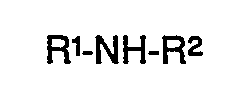

- R1, R2 und R3 die obige Bedeutung haben,
in Gegenwart sauer reagierender Verbindungen und gegebenenfalls in Gegenwart eines inerten Lösungs- und/oder Verdünnungsmittels bei erhöhter Temperatur umsetzt. - Aryl ist einkerniges oder mehrkerniges Aryl, wie Phenyl, Naphthyl oder Anthryl, bevorzugt Phenyl oder Naphthyl. Das genannte Aryl kann unsubstituiert oder substituiert sein; als Substituenten kommen 1 bis 3, bevorzugt 1 oder 2 Substituenten, besonders bevorzugt 1 Substituent aus der Gruppe der niederen Alkylgruppen mit 1 bis 4 C-Atomen (Methyl, Ethyl, Propyl, Isopropyl, Butyl, Isobutyl), der niederen Alkoxygruppen mit 1 bis 4 C-Atomen (Methoxy, Ethoxy, Propoxy, Isopropoxy, Butoxy, Isobutoxy) oder der Halogene (Fluor, Chlor, Brom) in Frage. Weitere Substituenten können sein: die Nitrogruppe, die Nitrosylgruppe sowie die Acetylgruppe.
- Alkyl ist ein geradkettiger oder verzweigter gesättigter Kohlenwasserstoffrest mit 1-12 C-Atomen, bevorzugt 1-8 C-Atomen, besonders bevorzugt 1-4 C-Atomen, wie Methyl, Ethyl, Propyl, Isopropyl, Butyl, Isobutyl, Hexyl, Octyl oder Dodecyl. Solche Kohlenwasserstoffreste können weiterhin ein- oder mehrfach durch Halogen (Fluor, Chlor oder Brom) substituiert sein. Solche Halogenalkylreste sind beispielsweise Trifluormethyl, Trichlormethyl, Tribrommethyl, ganz oder teilweise fluoriertes, chloriertes oder bromiertes Ethyl, Propyl, Butyl, Hexyl, Octyl oder Dodecyl.
- Als Aralkyl sei beispielsweise Benzyl, Phenylethyl, Phenyl-propyl, Naphthyl(1- oder 2-)-methyl, Naphthyl-ethyl oder deren Homologe genannt. Die aromatischen Kerne in den Aralkylgruppen können die gleichen Substituenten tragen, die oben für Aryl angeführt sind.
- Bevorzugte Diarylamine für das erfindungsgemäße Verfahren sind solche der Formel
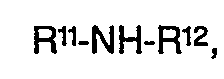
- R11 und R12 unabhängig voneinander sind und Phenyl, Naphthyl, C1 bis C4-Alkylphenyl oder d bis C4-Alkylnaphthyl bedeuten.
- Besonders bevorzugte Diarylamine für das erfindungsgemäße Verfahren sind solche der Formel

- R21 und R22 Phenyl bedeuten.
- Beispiele für erfindungsgemäß einsetzbare Diarylamine sind: Diphenylamin, Phenyl-naphthylamin und Ditolylamin, bevorzugt Diphenylamin.
- Bevorzugte Isocyanate für das erfindungsgemäße Verfahren sind solche der Formel

- R13 C1 bis CB-Alkyl, Phenyl, Naphthyl, C1 bis C4-AI- kylphenyl sowie Halogenphenyl bedeutet.
- Besonders bevorzugte Isocyanate für das erfindungsgemäße Verfahren sind solche der Formel
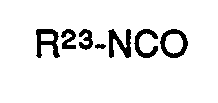
- R23 Methyl, Ethyl, Propyl, Butyl, Isobutyl, Phenyl, Chlorphenyl oder Tolyl bedeutet.
- Beispiele für erfindungsgemäß einsetzbare Isocyanate sind: Methylisocyanat, Butylisocyanat, Phenylisocyanat, bevorzugt Methylisocyanat.
- Das erfindungsgemäße Verfahren wird in Gegenwart einer oder mehrerer sauer reagierender Verbindungen durchgeführt. Als sauer reagierende Verbindungen werden in das erfindungsgemäße Verfahren solche eingesetzt, die dem sogenannten Brönsted-Typ (also eine Verbindung, die ein Proton abspalten kann) zuzurechnen sind. Die sauer reagierenden Verbindungen können anorganischer oder organischer Natur sein. Als sauer reagierende Verbindungen für das erfindungsgemäße Verfahren kommen demnach Verbindungsklassen wie die folgenden in Betracht:
- a) anorganische Säuren, wie Phosphorsäure;
- b) teilweise veresterte mehrbasische Säuren, die also noch eine Säurefunktion enthalten, wie Monoalkylester der Schwefelsäure, Mono- oder Dialkylester der Phosphorsäure, wobei die Alkylgruppe 1 bis 8 C-Atome, bevorzugt 1 bis 4 C-Atome enthält;
- c) aliphatische, aromatische oder heterocyclische Mono- oder Polycarbonsäuren;
- d) Teilester von organischen Polycarbonsäuren;
- e) aliphatische oder aromatische Sulfonsäuren oder Phosphonsäuren;
- f) sauer reagierende lonenaustauscherharze.
- Als Beispiele für solche erfindungsgemäß einsetzbaren sauer reagierenden Verbindungen seien genannt: H3P04, n-Butylphosphat, Di-n-butylphosphat, Essigsäure, Propionsäure, Benzoesäure, Methansulfonsäure, p-Toluolsulfonsäure und andere.
- Bevorzugt werden in das erfindungsgemäße Verfahren eingesetzt: Di-n-butylphosphat, Essigsäure, Benzoesäure und p-Toluolsulfonsäure.
- Die genannten sauer reagierenden Verbindungen können nach der Abtrennung der Reaktionsprodukte, gegebenenfalls im Gemisch mit nicht umgesetzten Ausgangsstoffen und gegebenenfalls im Gemisch mit Lösungs- oder Verdünnungsmittel in einen weiteren Reaktionsansatz des erfindungsgemäßen Verfahrens zurückgeführt werden. Diese Rückführung kann auch mehrfach erfolgen.
- Als Lösungs- bzw. Verdünnungsmittel kommen inerte Flüssigkeiten in Betracht, die mit den Reaktionsteilnehmern keine Reaktion eingehen, beispielsweise aliphatische oder aromatische Kohlenwasserstoffe oder aliphatische oder aromatische HalogenKohlenwasserstoffe.
- Beispiele für geeignete Lösungs- und/oder Verdünnungsmittel sind: Toluol, Xylol, Diethylether sowie Chloroform.
- Für das erfindungsgemäße Verfahren werden 0,8 bis 2 Mol, bevorzugt 0,9 bis 1,5 Mol, besonders bevorzugt 1.0 bis 1,2 Mol Isocyanat pro Mol Diarylamin eingesetzt.
- Für das erfindungsgemäße Verfahren werden 0,001 bis 0,3 Mol, bevorzugt 0,002 bis 0,1 Mol, besonders bevorzugt 0,003 bis 0,08 Mol der sauer reagierenden Verbindung pro Mol Diarylamin eingesetzt.
- Das Lösungs- oder Verdünnungsmittel oder ein Gemisch mehrerer von ihnen wird in einer Menge von 50 bis 2000, bevorzugt 100 bis 1000, besonders bevorzugt 200 bis 600 Milliliter pro Mol Diarylamin eingesetzt.
- Das erfindungsgemäße Verfahren wird bei erhöhter Temperatur, beispielsweise bei 40 bis 160°C, bevorzugt 80 bis 140°C, besonders bevorzugt 90 bis 130°C durchgeführt.
- Das erfindungsgemäße Verfahren, insbesondere die Reihenfolge der Zugabe der Reaktionspartner, kann nach verschiedenen Varianten durchgeführt werden. So kann beispielsweise das Diarylamin zusammen mit dem Isocyanat und der sauer reagierenden Verbindung in einem inerten Lösungs- bzw. Verdünnungsmittel vorgelegt werden, worauf der Reaktionsansatz unter Rühren auf die gewählte Reaktionstemperatur gebracht wird. Sollte die gewählte Reaktionstemperatur oberhalb der des Siedepunktes des Lösungs- bzw. Verdünnungsmittels liegen, kann in einer dem Fachmann bekannten Art und Weise bei erhöhtem Druck gearbeitet werden. Ansonsten ist das erfindungsgemäße Verfahren vom Druck unabhängig. In vielen Fällen fällt der Harnstoff während der Reaktion oder nach dem Abkühlen auf Raumtemperatur aus und kann so auf einfache Weise isoliert werden. Die Zugabe der sauer reagierenden Verbindung kann außer der beschriebenen Art jedoch auch so durchgeführt werden, daß sie mit einer der Reaktionskomponenten zugefügt wird oder teilweise vorgelegt und teilweise zugefügt wird. So kann es vorteilhaft sein, die sauer reagierende Verbindung mit einer Reaktionskomponente und dem Lösungs- bzw. Verdünnungsmittel vorzulegen und die andere Reaktionskomponente portionsweise zuzugeben. Weiterhin kann eine Reaktionskomponente im Lösungs- bzw. Verdünnungsmittel vorgelegt werden und die sauer reagierende Verbindung zusammen mit der anderen Reaktionskomponente zudosiert werden. Dieses Zudosieren kann vor, während oder nach dem Aufheizen auf die Reaktionstemperatur erfolgen.
- Weiterhin ist es grundsätzlich möglich, bei Reaktionsgemischen die auch ohne ein Lösungs- bzw. Verdünnungsmittel flüssig sind, auf dieses Lösungs- bzw. Verdünnungsmittel zu verzichten. Es ist jedoch bevorzugt, ein Lösungs- bzw. Verdünnungsmittel im Rahmen der oben angegebenen Mengen zu verwenden.
- Erfindungsgemäß ist der Zusatz von sauer reagierenden Verbindungen ohne Beeinträchtigung des eingesetzten Diarylamins oder des eingesetzten Isocyanats möglich. Dies erlaubt eine erhebliche Verkürzung der Reaktionszeiten und Herabsetzung der Reaktionstemperaturen bei der Umsetzung der ansonsten nur träge reagierenden Diarylamine mit Isocyanaten. Unter diesen milderen Bedingungen werden deutlich bessere Raum-Zeit-Ausbeuten erzielt.
- Es ist besonders überraschend, daß mit dem erfindungsgemäßen Verfahren solch gute Raum-Zeit-Ausbeuten an N,N-Diarylharnstoffen erzielt werden, da es beispielsweise aus Houben-Weyl, Methoden der organischen Chemie, Band VIII, Seite 129 (1952) sowie aus Becker, Braun; Kunststoff-Handbuch, 7 Polyurethane, Carl Hanser Verlag, München/Wien, Seite 8 (1983) bekannt ist, daß Verbindungen mit sauren Eigenschaften, z.B. Chlorwasserstoff, Acetylchlorid, Phosphorpentachlorid sowie andere Mineralsäuren, bei der Umsetzung von Isocyanaten mit Verbindungen mit aktiven Wasserstoffatomen, wie Amine, reaktionsverzögernd wirken. Es mußte also erwartet werden, daß die erfindungsgemäß eingesetzten sauer reagierenden Verbindungen die Umsetzung verzögern würden und so die Raum-Zeit-Ausbeute verminderten.
- Die erfindungsgemäß herstellbaren N,N-Diarayl- harnstoffe finden als Stabilisatoren (z.B. Akardit ll®) oder als Herbizide im Pflanzenschutz Anwendung.
- 0,5 Mol Diphenylamin wurden in 150 ml Toluol vorgelegt. Dazu gab man 0,53 Mol Methylisocyanat und 1 g sauer reagierender Verbindung (siehe Tabelle 1). Man erwärmte 8 Stunden unter Rühren auf 100°C, ließ auf Raumtemperatur abkühlen und filtrierte den gebildeten N-Methyl-N',N'-diphenyl- harnstoff ab. Der Harnstoff wurde mit 100 ml kaltem Toluol gewaschen. Ausbeute siehe Tabelle 1.
-

- Die unter Beispiel 1 beschriebene Umsetzung zu N-Methyl-N' ,N'-diphenylharnstoff erforderte ohne Zusatz an sauer reagierender Verbindung bei sonst gleichen Bedingungen eine Reaktionszeit von 3 Tagen um eine Ausbeute von 85 % (bezogen auf Diphenylamin) zu erlangen.
- 0,5 Mol a-Naphthyl-phenylamin wurden zusammen mit 0,53 Mol Methylisocyanat und 0,6 g Di-n-butylphosphat in 150 ml Toluol vorgelegt. Man erwärmte 24 Stunden unter Rühren auf 100° C und kühlte dann auf 10° C ab. Nach dem Abfiltrieren und Waschen mit 150 ml kaltem Toluol erhielt man nach dem Trocknen 0,4 Mol N-Methyl-N'-phenyl-N'-a-naphthyl-harnstoff. Fp.: 146°C/Ausbeute: 80 % d.Th.
- 0,5 Mol Diphenylamin wurden zusammen mit 0,53 Mol Phenylisocyanat und 0,6 g Di-n-butylphosphat in 150 ml Toluol vorgelegt. Man erwärmte 24 Stunden unter Rühren auf 100°C und kühlte dann auf Raumtemperatur ab. Bei ca. 30°C begann der Harnstoff auszukristallisieren. Nach dem Abfiltrieren und Waschen mit 150 ml kaltem Toluol erhielt man nach dem Trocknen 0,41 Mol N-Phenyl-N' ,N'- diphenylharnstoff. Fp.: 131° C/Ausbeute: 82 % d.Th.
- 0,5 Mol Diphenylamin wurden zusammen mit 0,53 Mol n-Butylisocyanat und 1 g Di-n-butylphosphat in 150 ml Xylol vorgelegt. Man erwärmte unter Rühren 24 Stunden auf 120° C und kühlte dann auf Raumtemperatur ab. Nach dem Abfiltrieren und Waschen mit 100 ml kaltem Xylol erhielt man nach dem Trocknen 0,3 Mol N-Butyl-N' ,N'-Diphenylharn- stoff. Fp.: 92° C/Ausbeute: 60 % d.Th.
- 0,5 Mol Diphenylamin wurden zusammen mit 0,53 Mol Methylisocyanat und 0,6 g Di-n-butylphosphat in 150 ml Toluol vorgelegt. Man erwärmte unter Rühren 10 Stunden auf 100°C. Nach dem Abkühlen auf Raumtemperatur saugte man den gebildeten N-Methyl-N' ,N'-diphenylharnstoff ab. Das Filtrat wurde mit Toluol auf 150 ml ergänzt und mit 0,5 Mol Diphenylamin und 0,53 Mol Methylisocyanat versetzt. Man erwärmte wiederum 10 Stunden unter Rühren auf 100° C und kühlte dann auf Raumtemperatur ab. Die Rückführung des Filtrates und die darauffolgende Zugabe von jeweils 0,5 Mol Diphenylamin und 0,53 Mol Methylisocyanat wurde noch dreimal wiederholt. Man erhielt nach diesen fünf Umsetzungen bei nur einmaliger Zugabe des Katalysators 2,4 Mol N-Methyi' ,N'-diphenylharnstoff. Der Harnstoff wurde nach jeder Umsetzung mit jeweils 100 ml kaltem Toluol gewaschen. Fp.: 170° C/Ausbeute: 96 % d.Th.
Claims (8)
dadurch gekennzeichnet, daß man Diarylamine der Formel
gekennzeichnet, daß Diarylamine der Formel R21-NH-R22,
gekennzeichnet, daß Isocyanate der Formel R13-NCO
gekennzeichnet, daß Isocyanate der Formel R23-NCO,
Applications Claiming Priority (2)
| Application Number | Priority Date | Filing Date | Title |
|---|---|---|---|
| DE19863636190 DE3636190A1 (de) | 1986-10-24 | 1986-10-24 | Verfahren zur herstellung von n,n-diaryl-harnstoffen |
| DE3636190 | 1986-10-24 |
Publications (2)
| Publication Number | Publication Date |
|---|---|
| EP0264752A1 EP0264752A1 (de) | 1988-04-27 |
| EP0264752B1 true EP0264752B1 (de) | 1990-08-29 |
Family
ID=6312378
Family Applications (1)
| Application Number | Title | Priority Date | Filing Date |
|---|---|---|---|
| EP87114817A Expired - Lifetime EP0264752B1 (de) | 1986-10-24 | 1987-10-10 | Verfahren zur Herstellung von N,N-Diaryl-harnstoffen |
Country Status (7)
| Country | Link |
|---|---|
| US (1) | US4820871A (de) |
| EP (1) | EP0264752B1 (de) |
| JP (1) | JPS63122660A (de) |
| CA (1) | CA1295340C (de) |
| DE (2) | DE3636190A1 (de) |
| DK (1) | DK555687A (de) |
| ES (1) | ES2016957B3 (de) |
Families Citing this family (32)
| Publication number | Priority date | Publication date | Assignee | Title |
|---|---|---|---|---|
| ATE115555T1 (de) * | 1989-07-28 | 1994-12-15 | Chemie Linz Gmbh | Verfahren zur herstellung unsymmetrisch substituierter harnstoffe. |
| US5248755A (en) * | 1989-07-28 | 1993-09-28 | Chemie Linz Gesellschaft M.B.H. | Process for the preparation of asymmetrically substituted ureas, carbamates or thiocarbamates |
| US5220061A (en) * | 1992-02-07 | 1993-06-15 | Arco Chemical Technology, L.P. | Selective process for the preparation of diphenylmethane bis-(dialkyl ureas |
| JP3372436B2 (ja) * | 1996-11-28 | 2003-02-04 | オークマ株式会社 | インバータの制御装置 |
| US6344476B1 (en) * | 1997-05-23 | 2002-02-05 | Bayer Corporation | Inhibition of p38 kinase activity by aryl ureas |
| US7517880B2 (en) | 1997-12-22 | 2009-04-14 | Bayer Pharmaceuticals Corporation | Inhibition of p38 kinase using symmetrical and unsymmetrical diphenyl ureas |
| US20080300281A1 (en) * | 1997-12-22 | 2008-12-04 | Jacques Dumas | Inhibition of p38 Kinase Activity Using Aryl and Heteroaryl Substituted Heterocyclic Ureas |
| US7329670B1 (en) | 1997-12-22 | 2008-02-12 | Bayer Pharmaceuticals Corporation | Inhibition of RAF kinase using aryl and heteroaryl substituted heterocyclic ureas |
| US20080269265A1 (en) * | 1998-12-22 | 2008-10-30 | Scott Miller | Inhibition Of Raf Kinase Using Symmetrical And Unsymmetrical Substituted Diphenyl Ureas |
| EP1140840B1 (de) | 1999-01-13 | 2006-03-22 | Bayer Pharmaceuticals Corp. | -g(v)-carboxyaryl substituierte diphenyl harnstoffe als raf kinase inhibitoren |
| US7928239B2 (en) | 1999-01-13 | 2011-04-19 | Bayer Healthcare Llc | Inhibition of RAF kinase using quinolyl, isoquinolyl or pyridyl ureas |
| CA2359244C (en) * | 1999-01-13 | 2013-10-08 | Bayer Healthcare Llc | .omega.-carboxy aryl substituted diphenyl ureas as p38 kinase inhibitors |
| US8124630B2 (en) | 1999-01-13 | 2012-02-28 | Bayer Healthcare Llc | ω-carboxyaryl substituted diphenyl ureas as raf kinase inhibitors |
| US7351834B1 (en) * | 1999-01-13 | 2008-04-01 | Bayer Pharmaceuticals Corporation | ω-Carboxyaryl substituted diphenyl ureas as raf kinase inhibitors |
| AU7353300A (en) | 1999-09-08 | 2001-04-10 | Guilford Pharmaceuticals Inc. | Non-peptidic cyclophilin binding compounds and their use |
| US7235576B1 (en) | 2001-01-12 | 2007-06-26 | Bayer Pharmaceuticals Corporation | Omega-carboxyaryl substituted diphenyl ureas as raf kinase inhibitors |
| MXPA03006666A (es) | 2001-01-25 | 2004-05-31 | Guilford Pharm Inc | Compuestos de union de ciclofilina carbociclicos trisubstituidos y su uso. |
| US7371763B2 (en) * | 2001-04-20 | 2008-05-13 | Bayer Pharmaceuticals Corporation | Inhibition of raf kinase using quinolyl, isoquinolyl or pyridyl ureas |
| AU2002351196A1 (en) * | 2001-12-03 | 2003-06-17 | Bayer Pharmaceuticals Corporation | Aryl urea compounds in combination with other cytostatic or cytotoxic agents for treating human cancers |
| US20080108672A1 (en) * | 2002-01-11 | 2008-05-08 | Bernd Riedl | Omega-Carboxyaryl Substituted Diphenyl Ureas As Raf Kinase Inhibitors |
| SI1580188T1 (sl) * | 2002-02-11 | 2012-02-29 | Bayer Healthcare Llc | Aril sečnine kot kinazni inhibitorji |
| EP2324825A1 (de) * | 2002-02-11 | 2011-05-25 | Bayer Healthcare LLC | Arylharnstoffe mit Angiogenese hemmender Aktivität |
| US20030216396A1 (en) * | 2002-02-11 | 2003-11-20 | Bayer Corporation | Pyridine, quinoline, and isoquinoline N-oxides as kinase inhibitors |
| WO2003068223A1 (en) * | 2002-02-11 | 2003-08-21 | Bayer Corporation | Aryl ureas with raf kinase and angiogenesis inhibiting activity |
| UY28213A1 (es) * | 2003-02-28 | 2004-09-30 | Bayer Pharmaceuticals Corp | Nuevos derivados de cianopiridina útiles en el tratamiento de cáncer y otros trastornos. |
| DE602004007382T2 (de) * | 2003-05-20 | 2008-04-17 | Bayer Pharmaceuticals Corp., West Haven | Diaryl-harnstoffe für durch pdgfr vermittelte krankheiten |
| DK1663978T3 (da) * | 2003-07-23 | 2008-04-07 | Bayer Pharmaceuticals Corp | Fluorsubstitueret omega-carboxyaryl-diphenylurinstof til behandling og forebyggelse af sygdomme og lidelser |
| JP2007535565A (ja) * | 2004-04-30 | 2007-12-06 | バイエル ファーマシューティカルス コーポレーション | 癌の治療に有用な置換ピラゾリル尿素誘導体 |
| CN102924336A (zh) * | 2012-09-28 | 2013-02-13 | 黎明化工研究设计院有限责任公司 | 一种制备n-甲基-n’,n’-二苯基脲的方法 |
| CN103232371B (zh) * | 2013-04-26 | 2014-11-26 | 黎明化工研究设计院有限责任公司 | 一种制备n-甲基-n’,n’-二苯基脲的方法 |
| US10927227B2 (en) * | 2017-07-11 | 2021-02-23 | Covestro Deutschland Ag | Flexible foam with halogen-free flame retardant |
| HUE061044T2 (hu) * | 2018-12-07 | 2023-06-28 | Dow Global Technologies Llc | Eljárás monoizocianátok karbamidokká konvertálására |
Family Cites Families (7)
| Publication number | Priority date | Publication date | Assignee | Title |
|---|---|---|---|---|
| US2683727A (en) * | 1954-07-13 | Secondary aromatic amines | ||
| CH513134A (de) * | 1968-06-10 | 1971-09-30 | Bayer Ag | Verfahren zur Herstellung von N-Arylharnstoffen |
| JPS5419937A (en) * | 1977-07-12 | 1979-02-15 | Showa Denko Kk | Preparation of urea substitution product |
| DE2928485A1 (de) * | 1979-07-14 | 1981-01-29 | Bayer Ag | Verwendung von harnstoffderivaten als arzneimittel bei der behandlung von fettstoffwechselstoerungen |
| GB2080808B (en) * | 1980-01-25 | 1984-01-04 | Reanal Finomvegyszergyar | Process for the preparation of n-aryl-n-(mono- or disubstituted)-urea derivatives |
| IT1137177B (it) * | 1981-06-02 | 1986-09-03 | Anic Spa | Processo per la preparazione di uree asimmetriche a partire da uretani ed ammine |
| US4473579A (en) * | 1982-01-26 | 1984-09-25 | American Cyanamid Company | Antiatherosclerotic tetrasubstituted ureas and thioureas |
-
1986
- 1986-10-24 DE DE19863636190 patent/DE3636190A1/de not_active Withdrawn
-
1987
- 1987-10-07 US US07/105,856 patent/US4820871A/en not_active Expired - Fee Related
- 1987-10-10 EP EP87114817A patent/EP0264752B1/de not_active Expired - Lifetime
- 1987-10-10 DE DE8787114817T patent/DE3764602D1/de not_active Expired - Lifetime
- 1987-10-10 ES ES87114817T patent/ES2016957B3/es not_active Expired - Lifetime
- 1987-10-21 JP JP62264043A patent/JPS63122660A/ja active Granted
- 1987-10-22 CA CA000549951A patent/CA1295340C/en not_active Expired - Lifetime
- 1987-10-23 DK DK555687A patent/DK555687A/da not_active Application Discontinuation
Also Published As
| Publication number | Publication date |
|---|---|
| US4820871A (en) | 1989-04-11 |
| EP0264752A1 (de) | 1988-04-27 |
| JPS63122660A (ja) | 1988-05-26 |
| JPH0360817B2 (de) | 1991-09-17 |
| CA1295340C (en) | 1992-02-04 |
| DE3636190A1 (de) | 1988-04-28 |
| DE3764602D1 (de) | 1990-10-04 |
| ES2016957B3 (es) | 1990-12-16 |
| DK555687A (da) | 1988-04-25 |
| DK555687D0 (da) | 1987-10-23 |
Similar Documents
| Publication | Publication Date | Title |
|---|---|---|
| EP0264752A1 (de) | Verfahren zur Herstellung von N,N-Diaryl-harnstoffen | |
| CH646156A5 (de) | Schwefelhaltige benzimidazol-derivate und verfahren zu ihrer herstellung. | |
| DE3141659A1 (de) | Verfahren zur herstellung von in o-stellung substituierten fluoraromaten | |
| EP0065668B1 (de) | Harnstoffderivate, ihre Herstellung und Verwendung | |
| DE1161905B (de) | Verfahren zur Herstellung von neuen Kondensationsprodukten tetramerer Halogencyane | |
| EP0004623A1 (de) | Verfahren zur Herstellung von aromatischen Aminen | |
| DE2336403A1 (de) | Verfahren zur herstellung von isocyanaten | |
| EP0552631B1 (de) | Alpha-Aryl-alpha-hydroxy-beta-imidazolinylpropionsäureamide | |
| DE2930247A1 (de) | Verfahren zur direkten gewinnung von im wesentlichen reinem triaethylendiamin in einer loesung | |
| DE1670711A1 (de) | Verfahren zur Herstellung von Thionothiolphosphor-(-phosphon-,-phosphin-)saeureestern | |
| EP0012982B1 (de) | N-Nitroaryl-N'-halogensulfonylharnstoffe, Verfahren zu ihrer Herstellung und ihre Verwendung zur Herstellung von Nitroarylharnstoffen | |
| EP0523619A2 (de) | Verfahren zur Herstellung von N-Cyanimidocarbonaten | |
| EP0294686B1 (de) | Verfahren zur Herstellung von Iminokohlensäurediarylestern | |
| DE2231157A1 (de) | Verfahren zur nitrierung von phenolverbindungen | |
| DE2714668A1 (de) | Verfahren zur herstellung organischer isocyanate | |
| DE2033611C3 (de) | Verfahren zur Herstellung von 1-(2-Thiazolyl)-2-oxotetrahydroimidazol | |
| EP0132734A2 (de) | Neopentylisocyanate und ihre Herstellung | |
| AT268323B (de) | Verfahren zur Herstellung von neuen 3,1-Benzothiazin-Derivaten und ihren Salzen | |
| EP0403889A1 (de) | Verfahren zur Herstellung von 4-Amino-1,2,4-triazol-5-onen | |
| EP0022942A1 (de) | Verfahren zur Herstellung von Diazoniumtetrafluoroboraten mittels Nitrosyltetrafluoroborat und deren Verwendung | |
| EP0156198A2 (de) | Verfahren zur Herstellung von Isocyanaten | |
| DE2134817A1 (de) | 6 Aminomethylpynmidine und Verfahren zu deren Herstellung | |
| EP3781552A1 (de) | Verfahren zur herstellung von estern n-acylierter aminosäuren mit säurelabilen keto-schutzgruppenfunktionen | |
| DE2742686A1 (de) | Enamine von 1-hydroperfluoralken- (1)-yl-carbonsaeureestern und verfahren zu deren herstellung | |
| WO1991001292A1 (de) | Verfahren zur herstellung von nitro-anilinen |
Legal Events
| Date | Code | Title | Description |
|---|---|---|---|
| PUAI | Public reference made under article 153(3) epc to a published international application that has entered the european phase |
Free format text: ORIGINAL CODE: 0009012 |
|
| 17P | Request for examination filed |
Effective date: 19871010 |
|
| AK | Designated contracting states |
Kind code of ref document: A1 Designated state(s): BE CH DE ES FR GB IT LI NL SE |
|
| 17Q | First examination report despatched |
Effective date: 19900202 |
|
| GRAA | (expected) grant |
Free format text: ORIGINAL CODE: 0009210 |
|
| AK | Designated contracting states |
Kind code of ref document: B1 Designated state(s): BE CH DE ES FR GB IT LI NL SE |
|
| REF | Corresponds to: |
Ref document number: 3764602 Country of ref document: DE Date of ref document: 19901004 |
|
| GBT | Gb: translation of ep patent filed (gb section 77(6)(a)/1977) | ||
| ET | Fr: translation filed | ||
| ITF | It: translation for a ep patent filed | ||
| PLBE | No opposition filed within time limit |
Free format text: ORIGINAL CODE: 0009261 |
|
| STAA | Information on the status of an ep patent application or granted ep patent |
Free format text: STATUS: NO OPPOSITION FILED WITHIN TIME LIMIT |
|
| 26N | No opposition filed | ||
| ITTA | It: last paid annual fee | ||
| EAL | Se: european patent in force in sweden |
Ref document number: 87114817.7 |
|
| PGFP | Annual fee paid to national office [announced via postgrant information from national office to epo] |
Ref country code: DE Payment date: 19960912 Year of fee payment: 10 |
|
| PGFP | Annual fee paid to national office [announced via postgrant information from national office to epo] |
Ref country code: SE Payment date: 19960917 Year of fee payment: 10 |
|
| PGFP | Annual fee paid to national office [announced via postgrant information from national office to epo] |
Ref country code: CH Payment date: 19960923 Year of fee payment: 10 |
|
| PGFP | Annual fee paid to national office [announced via postgrant information from national office to epo] |
Ref country code: GB Payment date: 19961001 Year of fee payment: 10 |
|
| PGFP | Annual fee paid to national office [announced via postgrant information from national office to epo] |
Ref country code: FR Payment date: 19961016 Year of fee payment: 10 Ref country code: ES Payment date: 19961016 Year of fee payment: 10 |
|
| PGFP | Annual fee paid to national office [announced via postgrant information from national office to epo] |
Ref country code: BE Payment date: 19961023 Year of fee payment: 10 |
|
| PGFP | Annual fee paid to national office [announced via postgrant information from national office to epo] |
Ref country code: NL Payment date: 19961031 Year of fee payment: 10 |
|
| PG25 | Lapsed in a contracting state [announced via postgrant information from national office to epo] |
Ref country code: GB Free format text: LAPSE BECAUSE OF NON-PAYMENT OF DUE FEES Effective date: 19971010 |
|
| PG25 | Lapsed in a contracting state [announced via postgrant information from national office to epo] |
Ref country code: SE Free format text: LAPSE BECAUSE OF NON-PAYMENT OF DUE FEES Effective date: 19971011 Ref country code: ES Free format text: LAPSE BECAUSE OF EXPIRATION OF PROTECTION Effective date: 19971011 |
|
| PG25 | Lapsed in a contracting state [announced via postgrant information from national office to epo] |
Ref country code: LI Free format text: LAPSE BECAUSE OF NON-PAYMENT OF DUE FEES Effective date: 19971031 Ref country code: FR Free format text: THE PATENT HAS BEEN ANNULLED BY A DECISION OF A NATIONAL AUTHORITY Effective date: 19971031 Ref country code: CH Free format text: LAPSE BECAUSE OF NON-PAYMENT OF DUE FEES Effective date: 19971031 Ref country code: BE Free format text: LAPSE BECAUSE OF NON-PAYMENT OF DUE FEES Effective date: 19971031 |
|
| BERE | Be: lapsed |
Owner name: BAYER A.G. Effective date: 19971031 |
|
| PG25 | Lapsed in a contracting state [announced via postgrant information from national office to epo] |
Ref country code: NL Free format text: LAPSE BECAUSE OF NON-PAYMENT OF DUE FEES Effective date: 19980501 |
|
| GBPC | Gb: european patent ceased through non-payment of renewal fee |
Effective date: 19971010 |
|
| REG | Reference to a national code |
Ref country code: CH Ref legal event code: PL |
|
| NLV4 | Nl: lapsed or anulled due to non-payment of the annual fee |
Effective date: 19980501 |
|
| PG25 | Lapsed in a contracting state [announced via postgrant information from national office to epo] |
Ref country code: DE Free format text: LAPSE BECAUSE OF NON-PAYMENT OF DUE FEES Effective date: 19980701 |
|
| EUG | Se: european patent has lapsed |
Ref document number: 87114817.7 |
|
| REG | Reference to a national code |
Ref country code: FR Ref legal event code: ST |
|
| REG | Reference to a national code |
Ref country code: ES Ref legal event code: FD2A Effective date: 20010201 |
|
| PG25 | Lapsed in a contracting state [announced via postgrant information from national office to epo] |
Ref country code: IT Free format text: LAPSE BECAUSE OF NON-PAYMENT OF DUE FEES Effective date: 20051010 |