EP0253115B1 - Pulverlacke, deren Herstellung und Verwendung - Google Patents
Pulverlacke, deren Herstellung und Verwendung Download PDFInfo
- Publication number
- EP0253115B1 EP0253115B1 EP87107875A EP87107875A EP0253115B1 EP 0253115 B1 EP0253115 B1 EP 0253115B1 EP 87107875 A EP87107875 A EP 87107875A EP 87107875 A EP87107875 A EP 87107875A EP 0253115 B1 EP0253115 B1 EP 0253115B1
- Authority
- EP
- European Patent Office
- Prior art keywords
- acid
- epoxy
- containing compounds
- powder coatings
- bis
- Prior art date
- Legal status (The legal status is an assumption and is not a legal conclusion. Google has not performed a legal analysis and makes no representation as to the accuracy of the status listed.)
- Expired - Lifetime
Links
- 238000000576 coating method Methods 0.000 title claims description 24
- 239000000843 powder Substances 0.000 title claims description 24
- 239000011248 coating agent Substances 0.000 title claims description 9
- 238000002360 preparation method Methods 0.000 title claims description 4
- UHOVQNZJYSORNB-UHFFFAOYSA-N Benzene Chemical class C1=CC=CC=C1 UHOVQNZJYSORNB-UHFFFAOYSA-N 0.000 claims description 18
- 239000002253 acid Substances 0.000 claims description 18
- 150000001875 compounds Chemical class 0.000 claims description 13
- 239000004593 Epoxy Substances 0.000 claims description 10
- 150000007513 acids Chemical class 0.000 claims description 9
- 150000003839 salts Chemical class 0.000 claims description 9
- 239000000654 additive Substances 0.000 claims description 8
- 125000001931 aliphatic group Chemical group 0.000 claims description 7
- 150000004985 diamines Chemical class 0.000 claims description 7
- 238000000034 method Methods 0.000 claims description 7
- 239000000203 mixture Substances 0.000 claims description 7
- 125000004432 carbon atom Chemical group C* 0.000 claims description 6
- 238000002844 melting Methods 0.000 claims description 5
- 230000008018 melting Effects 0.000 claims description 5
- 125000003700 epoxy group Chemical group 0.000 claims description 4
- 239000000126 substance Substances 0.000 claims description 4
- NAQMVNRVTILPCV-UHFFFAOYSA-N hexane-1,6-diamine Chemical class NCCCCCCN NAQMVNRVTILPCV-UHFFFAOYSA-N 0.000 claims description 3
- 150000003946 cyclohexylamines Chemical class 0.000 claims description 2
- RTWNYYOXLSILQN-UHFFFAOYSA-N methanediamine Chemical compound NCN RTWNYYOXLSILQN-UHFFFAOYSA-N 0.000 claims 1
- 229920001187 thermosetting polymer Polymers 0.000 claims 1
- 239000003822 epoxy resin Substances 0.000 description 14
- 229920000647 polyepoxide Polymers 0.000 description 14
- 239000004848 polyfunctional curative Substances 0.000 description 9
- LNEPOXFFQSENCJ-UHFFFAOYSA-N haloperidol Chemical compound C1CC(O)(C=2C=CC(Cl)=CC=2)CCN1CCCC(=O)C1=CC=C(F)C=C1 LNEPOXFFQSENCJ-UHFFFAOYSA-N 0.000 description 8
- -1 cyclic amidines Chemical class 0.000 description 7
- 238000004519 manufacturing process Methods 0.000 description 6
- 150000002924 oxiranes Chemical class 0.000 description 6
- 229920000728 polyester Polymers 0.000 description 6
- PEDCQBHIVMGVHV-UHFFFAOYSA-N Glycerine Chemical compound OCC(O)CO PEDCQBHIVMGVHV-UHFFFAOYSA-N 0.000 description 5
- IISBACLAFKSPIT-UHFFFAOYSA-N bisphenol A Chemical compound C=1C=C(O)C=CC=1C(C)(C)C1=CC=C(O)C=C1 IISBACLAFKSPIT-UHFFFAOYSA-N 0.000 description 5
- 239000003973 paint Substances 0.000 description 5
- 150000002009 diols Chemical class 0.000 description 4
- 229920002601 oligoester Polymers 0.000 description 4
- 239000000047 product Substances 0.000 description 4
- CYIDZMCFTVVTJO-UHFFFAOYSA-N pyromellitic acid Chemical compound OC(=O)C1=CC(C(O)=O)=C(C(O)=O)C=C1C(O)=O CYIDZMCFTVVTJO-UHFFFAOYSA-N 0.000 description 4
- CXMXRPHRNRROMY-UHFFFAOYSA-N sebacic acid Chemical compound OC(=O)CCCCCCCCC(O)=O CXMXRPHRNRROMY-UHFFFAOYSA-N 0.000 description 4
- ARCGXLSVLAOJQL-UHFFFAOYSA-N trimellitic acid Chemical compound OC(=O)C1=CC=C(C(O)=O)C(C(O)=O)=C1 ARCGXLSVLAOJQL-UHFFFAOYSA-N 0.000 description 4
- FTVFPPFZRRKJIH-UHFFFAOYSA-N 2,2,6,6-tetramethylpiperidin-4-amine Chemical compound CC1(C)CC(N)CC(C)(C)N1 FTVFPPFZRRKJIH-UHFFFAOYSA-N 0.000 description 3
- KAKZBPTYRLMSJV-UHFFFAOYSA-N Butadiene Chemical compound C=CC=C KAKZBPTYRLMSJV-UHFFFAOYSA-N 0.000 description 3
- QIGBRXMKCJKVMJ-UHFFFAOYSA-N Hydroquinone Chemical compound OC1=CC=C(O)C=C1 QIGBRXMKCJKVMJ-UHFFFAOYSA-N 0.000 description 3
- RRHGJUQNOFWUDK-UHFFFAOYSA-N Isoprene Chemical compound CC(=C)C=C RRHGJUQNOFWUDK-UHFFFAOYSA-N 0.000 description 3
- 125000003178 carboxy group Chemical group [H]OC(*)=O 0.000 description 3
- 238000006243 chemical reaction Methods 0.000 description 3
- 239000008199 coating composition Substances 0.000 description 3
- 125000004430 oxygen atom Chemical group O* 0.000 description 3
- 229920001225 polyester resin Polymers 0.000 description 3
- 239000004645 polyester resin Substances 0.000 description 3
- GHMLBKRAJCXXBS-UHFFFAOYSA-N resorcinol Chemical compound OC1=CC=CC(O)=C1 GHMLBKRAJCXXBS-UHFFFAOYSA-N 0.000 description 3
- XLYOFNOQVPJJNP-UHFFFAOYSA-N water Chemical compound O XLYOFNOQVPJJNP-UHFFFAOYSA-N 0.000 description 3
- HCNHNBLSNVSJTJ-UHFFFAOYSA-N 1,1-Bis(4-hydroxyphenyl)ethane Chemical compound C=1C=C(O)C=CC=1C(C)C1=CC=C(O)C=C1 HCNHNBLSNVSJTJ-UHFFFAOYSA-N 0.000 description 2
- MYRTYDVEIRVNKP-UHFFFAOYSA-N 1,2-Divinylbenzene Chemical compound C=CC1=CC=CC=C1C=C MYRTYDVEIRVNKP-UHFFFAOYSA-N 0.000 description 2
- SDRZFSPCVYEJTP-UHFFFAOYSA-N 1-ethenylcyclohexene Chemical compound C=CC1=CCCCC1 SDRZFSPCVYEJTP-UHFFFAOYSA-N 0.000 description 2
- DPQHRXRAZHNGRU-UHFFFAOYSA-N 2,4,4-trimethylhexane-1,6-diamine Chemical compound NCC(C)CC(C)(C)CCN DPQHRXRAZHNGRU-UHFFFAOYSA-N 0.000 description 2
- XYDPFSYMILTKAH-UHFFFAOYSA-N 2,6,6-trichloro-4-[2-(3,3,5-trichloro-4-hydroxycyclohexa-1,5-dien-1-yl)propan-2-yl]cyclohexa-2,4-dien-1-ol Chemical compound C=1C(Cl)(Cl)C(O)C(Cl)=CC=1C(C)(C)C1=CC(Cl)(Cl)C(O)C(Cl)=C1 XYDPFSYMILTKAH-UHFFFAOYSA-N 0.000 description 2
- WIFDRXSVRSCMMY-UHFFFAOYSA-N 2,6-dichloro-4-[(3,5-dichloro-4-hydroxyphenyl)methyl]phenol Chemical compound C1=C(Cl)C(O)=C(Cl)C=C1CC1=CC(Cl)=C(O)C(Cl)=C1 WIFDRXSVRSCMMY-UHFFFAOYSA-N 0.000 description 2
- YMTYZTXUZLQUSF-UHFFFAOYSA-N 3,3'-Dimethylbisphenol A Chemical compound C1=C(O)C(C)=CC(C(C)(C)C=2C=C(C)C(O)=CC=2)=C1 YMTYZTXUZLQUSF-UHFFFAOYSA-N 0.000 description 2
- BATCUENAARTUKW-UHFFFAOYSA-N 4-[(4-hydroxyphenyl)-diphenylmethyl]phenol Chemical compound C1=CC(O)=CC=C1C(C=1C=CC(O)=CC=1)(C=1C=CC=CC=1)C1=CC=CC=C1 BATCUENAARTUKW-UHFFFAOYSA-N 0.000 description 2
- RSSGMIIGVQRGDS-UHFFFAOYSA-N 4-[(4-hydroxyphenyl)-phenylmethyl]phenol Chemical compound C1=CC(O)=CC=C1C(C=1C=CC(O)=CC=1)C1=CC=CC=C1 RSSGMIIGVQRGDS-UHFFFAOYSA-N 0.000 description 2
- YZYGDZRBLOLVDY-UHFFFAOYSA-N 4-[cyclohexyl-(4-hydroxyphenyl)methyl]phenol Chemical compound C1=CC(O)=CC=C1C(C=1C=CC(O)=CC=1)C1CCCCC1 YZYGDZRBLOLVDY-UHFFFAOYSA-N 0.000 description 2
- CNPURSDMOWDNOQ-UHFFFAOYSA-N 4-methoxy-7h-pyrrolo[2,3-d]pyrimidin-2-amine Chemical compound COC1=NC(N)=NC2=C1C=CN2 CNPURSDMOWDNOQ-UHFFFAOYSA-N 0.000 description 2
- CURLTUGMZLYLDI-UHFFFAOYSA-N Carbon dioxide Chemical compound O=C=O CURLTUGMZLYLDI-UHFFFAOYSA-N 0.000 description 2
- MDNWOSOZYLHTCG-UHFFFAOYSA-N Dichlorophen Chemical compound OC1=CC=C(Cl)C=C1CC1=CC(Cl)=CC=C1O MDNWOSOZYLHTCG-UHFFFAOYSA-N 0.000 description 2
- LFQSCWFLJHTTHZ-UHFFFAOYSA-N Ethanol Chemical compound CCO LFQSCWFLJHTTHZ-UHFFFAOYSA-N 0.000 description 2
- VZCYOOQTPOCHFL-OWOJBTEDSA-N Fumaric acid Chemical compound OC(=O)\C=C\C(O)=O VZCYOOQTPOCHFL-OWOJBTEDSA-N 0.000 description 2
- VYPSYNLAJGMNEJ-UHFFFAOYSA-N Silicium dioxide Chemical compound O=[Si]=O VYPSYNLAJGMNEJ-UHFFFAOYSA-N 0.000 description 2
- KKEYFWRCBNTPAC-UHFFFAOYSA-N Terephthalic acid Chemical compound OC(=O)C1=CC=C(C(O)=O)C=C1 KKEYFWRCBNTPAC-UHFFFAOYSA-N 0.000 description 2
- GWEVSGVZZGPLCZ-UHFFFAOYSA-N Titan oxide Chemical compound O=[Ti]=O GWEVSGVZZGPLCZ-UHFFFAOYSA-N 0.000 description 2
- WNLRTRBMVRJNCN-UHFFFAOYSA-N adipic acid Chemical compound OC(=O)CCCCC(O)=O WNLRTRBMVRJNCN-UHFFFAOYSA-N 0.000 description 2
- 150000001412 amines Chemical class 0.000 description 2
- 125000003277 amino group Chemical group 0.000 description 2
- 125000003118 aryl group Chemical group 0.000 description 2
- TZCXTZWJZNENPQ-UHFFFAOYSA-L barium sulfate Chemical compound [Ba+2].[O-]S([O-])(=O)=O TZCXTZWJZNENPQ-UHFFFAOYSA-L 0.000 description 2
- GCAIEATUVJFSMC-UHFFFAOYSA-N benzene-1,2,3,4-tetracarboxylic acid Chemical compound OC(=O)C1=CC=C(C(O)=O)C(C(O)=O)=C1C(O)=O GCAIEATUVJFSMC-UHFFFAOYSA-N 0.000 description 2
- NHDLVKOYPQPGNT-UHFFFAOYSA-N benzene-1,2,3,5-tetracarboxylic acid Chemical compound OC(=O)C1=CC(C(O)=O)=C(C(O)=O)C(C(O)=O)=C1 NHDLVKOYPQPGNT-UHFFFAOYSA-N 0.000 description 2
- UJMDYLWCYJJYMO-UHFFFAOYSA-N benzene-1,2,3-tricarboxylic acid Chemical compound OC(=O)C1=CC=CC(C(O)=O)=C1C(O)=O UJMDYLWCYJJYMO-UHFFFAOYSA-N 0.000 description 2
- QMKYBPDZANOJGF-UHFFFAOYSA-N benzene-1,3,5-tricarboxylic acid Chemical compound OC(=O)C1=CC(C(O)=O)=CC(C(O)=O)=C1 QMKYBPDZANOJGF-UHFFFAOYSA-N 0.000 description 2
- OZBVOUJIBRYLRW-UHFFFAOYSA-N benzene-1,4-diol;methane Chemical compound C.OC1=CC=C(O)C=C1.OC1=CC=C(O)C=C1 OZBVOUJIBRYLRW-UHFFFAOYSA-N 0.000 description 2
- 150000001735 carboxylic acids Chemical class 0.000 description 2
- 239000003795 chemical substances by application Substances 0.000 description 2
- QFTYSVGGYOXFRQ-UHFFFAOYSA-N dodecane-1,12-diamine Chemical compound NCCCCCCCCCCCCN QFTYSVGGYOXFRQ-UHFFFAOYSA-N 0.000 description 2
- 230000000694 effects Effects 0.000 description 2
- 150000002170 ethers Chemical class 0.000 description 2
- 239000000945 filler Substances 0.000 description 2
- 235000011187 glycerol Nutrition 0.000 description 2
- 125000002887 hydroxy group Chemical group [H]O* 0.000 description 2
- QQVIHTHCMHWDBS-UHFFFAOYSA-N isophthalic acid Chemical compound OC(=O)C1=CC=CC(C(O)=O)=C1 QQVIHTHCMHWDBS-UHFFFAOYSA-N 0.000 description 2
- 239000000463 material Substances 0.000 description 2
- JAYXSROKFZAHRQ-UHFFFAOYSA-N n,n-bis(oxiran-2-ylmethyl)aniline Chemical compound C1OC1CN(C=1C=CC=CC=1)CC1CO1 JAYXSROKFZAHRQ-UHFFFAOYSA-N 0.000 description 2
- BDJRBEYXGGNYIS-UHFFFAOYSA-N nonanedioic acid Chemical compound OC(=O)CCCCCCCC(O)=O BDJRBEYXGGNYIS-UHFFFAOYSA-N 0.000 description 2
- TVMXDCGIABBOFY-UHFFFAOYSA-N octane Chemical compound CCCCCCCC TVMXDCGIABBOFY-UHFFFAOYSA-N 0.000 description 2
- XNGIFLGASWRNHJ-UHFFFAOYSA-N phthalic acid Chemical compound OC(=O)C1=CC=CC=C1C(O)=O XNGIFLGASWRNHJ-UHFFFAOYSA-N 0.000 description 2
- 229920002857 polybutadiene Polymers 0.000 description 2
- 229960001755 resorcinol Drugs 0.000 description 2
- 238000005245 sintering Methods 0.000 description 2
- 239000002904 solvent Substances 0.000 description 2
- 238000005507 spraying Methods 0.000 description 2
- 239000000758 substrate Substances 0.000 description 2
- VZCYOOQTPOCHFL-UHFFFAOYSA-N trans-butenedioic acid Natural products OC(=O)C=CC(O)=O VZCYOOQTPOCHFL-UHFFFAOYSA-N 0.000 description 2
- PUPZLCDOIYMWBV-UHFFFAOYSA-N (+/-)-1,3-Butanediol Chemical compound CC(O)CCO PUPZLCDOIYMWBV-UHFFFAOYSA-N 0.000 description 1
- RZUNIXAGSKNOIB-HSFFGMMNSA-N (1z,3e)-cyclododeca-1,3-diene Chemical compound C1CCCC\C=C/C=C/CCC1 RZUNIXAGSKNOIB-HSFFGMMNSA-N 0.000 description 1
- GGAUUQHSCNMCAU-ZXZARUISSA-N (2s,3r)-butane-1,2,3,4-tetracarboxylic acid Chemical compound OC(=O)C[C@H](C(O)=O)[C@H](C(O)=O)CC(O)=O GGAUUQHSCNMCAU-ZXZARUISSA-N 0.000 description 1
- FTTATHOUSOIFOQ-UHFFFAOYSA-N 1,2,3,4,6,7,8,8a-octahydropyrrolo[1,2-a]pyrazine Chemical compound C1NCCN2CCCC21 FTTATHOUSOIFOQ-UHFFFAOYSA-N 0.000 description 1
- OUPZKGBUJRBPGC-UHFFFAOYSA-N 1,3,5-tris(oxiran-2-ylmethyl)-1,3,5-triazinane-2,4,6-trione Chemical compound O=C1N(CC2OC2)C(=O)N(CC2OC2)C(=O)N1CC1CO1 OUPZKGBUJRBPGC-UHFFFAOYSA-N 0.000 description 1
- RTBFRGCFXZNCOE-UHFFFAOYSA-N 1-methylsulfonylpiperidin-4-one Chemical compound CS(=O)(=O)N1CCC(=O)CC1 RTBFRGCFXZNCOE-UHFFFAOYSA-N 0.000 description 1
- QFGCFKJIPBRJGM-UHFFFAOYSA-N 12-[(2-methylpropan-2-yl)oxy]-12-oxododecanoic acid Chemical compound CC(C)(C)OC(=O)CCCCCCCCCCC(O)=O QFGCFKJIPBRJGM-UHFFFAOYSA-N 0.000 description 1
- HECLRDQVFMWTQS-RGOKHQFPSA-N 1755-01-7 Chemical compound C1[C@H]2[C@@H]3CC=C[C@@H]3[C@@H]1C=C2 HECLRDQVFMWTQS-RGOKHQFPSA-N 0.000 description 1
- GBURUDXSBYGPBL-UHFFFAOYSA-N 2,2,3-trimethylhexanedioic acid Chemical compound OC(=O)C(C)(C)C(C)CCC(O)=O GBURUDXSBYGPBL-UHFFFAOYSA-N 0.000 description 1
- FZZMTSNZRBFGGU-UHFFFAOYSA-N 2-chloro-7-fluoroquinazolin-4-amine Chemical compound FC1=CC=C2C(N)=NC(Cl)=NC2=C1 FZZMTSNZRBFGGU-UHFFFAOYSA-N 0.000 description 1
- RNLHGQLZWXBQNY-UHFFFAOYSA-N 3-(aminomethyl)-3,5,5-trimethylcyclohexan-1-amine Chemical compound CC1(C)CC(N)CC(C)(CN)C1 RNLHGQLZWXBQNY-UHFFFAOYSA-N 0.000 description 1
- SQNMHJHUPDEXMS-UHFFFAOYSA-N 4-(1,2-dicarboxyethyl)-1,2,3,4-tetrahydronaphthalene-1,2-dicarboxylic acid Chemical compound C1=CC=C2C(C(CC(=O)O)C(O)=O)CC(C(O)=O)C(C(O)=O)C2=C1 SQNMHJHUPDEXMS-UHFFFAOYSA-N 0.000 description 1
- IGSBHTZEJMPDSZ-UHFFFAOYSA-N 4-[(4-amino-3-methylcyclohexyl)methyl]-2-methylcyclohexan-1-amine Chemical compound C1CC(N)C(C)CC1CC1CC(C)C(N)CC1 IGSBHTZEJMPDSZ-UHFFFAOYSA-N 0.000 description 1
- FBPFZTCFMRRESA-FSIIMWSLSA-N D-Glucitol Natural products OC[C@H](O)[C@H](O)[C@@H](O)[C@H](O)CO FBPFZTCFMRRESA-FSIIMWSLSA-N 0.000 description 1
- FBPFZTCFMRRESA-JGWLITMVSA-N D-glucitol Chemical compound OC[C@H](O)[C@@H](O)[C@H](O)[C@H](O)CO FBPFZTCFMRRESA-JGWLITMVSA-N 0.000 description 1
- 239000004594 Masterbatch (MB) Substances 0.000 description 1
- 229920000305 Nylon 6,10 Polymers 0.000 description 1
- ALQSHHUCVQOPAS-UHFFFAOYSA-N Pentane-1,5-diol Chemical compound OCCCCCO ALQSHHUCVQOPAS-UHFFFAOYSA-N 0.000 description 1
- ISWSIDIOOBJBQZ-UHFFFAOYSA-N Phenol Chemical compound OC1=CC=CC=C1 ISWSIDIOOBJBQZ-UHFFFAOYSA-N 0.000 description 1
- 239000005062 Polybutadiene Substances 0.000 description 1
- OFOBLEOULBTSOW-UHFFFAOYSA-N Propanedioic acid Natural products OC(=O)CC(O)=O OFOBLEOULBTSOW-UHFFFAOYSA-N 0.000 description 1
- 229910000831 Steel Inorganic materials 0.000 description 1
- KDYFGRWQOYBRFD-UHFFFAOYSA-N Succinic acid Natural products OC(=O)CCC(O)=O KDYFGRWQOYBRFD-UHFFFAOYSA-N 0.000 description 1
- XSQUKJJJFZCRTK-UHFFFAOYSA-N Urea Chemical compound NC(N)=O XSQUKJJJFZCRTK-UHFFFAOYSA-N 0.000 description 1
- 239000001361 adipic acid Substances 0.000 description 1
- 235000011037 adipic acid Nutrition 0.000 description 1
- 238000007605 air drying Methods 0.000 description 1
- 230000001476 alcoholic effect Effects 0.000 description 1
- 125000000217 alkyl group Chemical group 0.000 description 1
- 150000001409 amidines Chemical class 0.000 description 1
- JFCQEDHGNNZCLN-UHFFFAOYSA-N anhydrous glutaric acid Natural products OC(=O)CCCC(O)=O JFCQEDHGNNZCLN-UHFFFAOYSA-N 0.000 description 1
- 150000007514 bases Chemical class 0.000 description 1
- 150000001555 benzenes Chemical class 0.000 description 1
- 239000011230 binding agent Substances 0.000 description 1
- IMHDGJOMLMDPJN-UHFFFAOYSA-N biphenyl-2,2'-diol Chemical group OC1=CC=CC=C1C1=CC=CC=C1O IMHDGJOMLMDPJN-UHFFFAOYSA-N 0.000 description 1
- VCCBEIPGXKNHFW-UHFFFAOYSA-N biphenyl-4,4'-diol Chemical group C1=CC(O)=CC=C1C1=CC=C(O)C=C1 VCCBEIPGXKNHFW-UHFFFAOYSA-N 0.000 description 1
- OWBTYPJTUOEWEK-UHFFFAOYSA-N butane-2,3-diol Chemical compound CC(O)C(C)O OWBTYPJTUOEWEK-UHFFFAOYSA-N 0.000 description 1
- KDYFGRWQOYBRFD-NUQCWPJISA-N butanedioic acid Chemical compound O[14C](=O)CC[14C](O)=O KDYFGRWQOYBRFD-NUQCWPJISA-N 0.000 description 1
- 239000004202 carbamide Substances 0.000 description 1
- 239000001569 carbon dioxide Substances 0.000 description 1
- 229910002092 carbon dioxide Inorganic materials 0.000 description 1
- 239000003054 catalyst Substances 0.000 description 1
- 239000001913 cellulose Substances 0.000 description 1
- 229920002678 cellulose Polymers 0.000 description 1
- 239000000919 ceramic Substances 0.000 description 1
- 239000007795 chemical reaction product Substances 0.000 description 1
- 239000011362 coarse particle Substances 0.000 description 1
- 230000000052 comparative effect Effects 0.000 description 1
- 238000009833 condensation Methods 0.000 description 1
- 230000005494 condensation Effects 0.000 description 1
- RZUNIXAGSKNOIB-UHFFFAOYSA-N cyclododeca-1,3-diene Chemical class C1CCCCC=CC=CCCC1 RZUNIXAGSKNOIB-UHFFFAOYSA-N 0.000 description 1
- 239000008367 deionised water Substances 0.000 description 1
- 229910021641 deionized water Inorganic materials 0.000 description 1
- 230000006866 deterioration Effects 0.000 description 1
- 150000001991 dicarboxylic acids Chemical class 0.000 description 1
- 238000001035 drying Methods 0.000 description 1
- 239000000975 dye Substances 0.000 description 1
- 229920006334 epoxy coating Polymers 0.000 description 1
- 238000001125 extrusion Methods 0.000 description 1
- 238000009472 formulation Methods 0.000 description 1
- 239000001530 fumaric acid Substances 0.000 description 1
- 239000011521 glass Substances 0.000 description 1
- 230000009477 glass transition Effects 0.000 description 1
- 238000000227 grinding Methods 0.000 description 1
- 238000010438 heat treatment Methods 0.000 description 1
- 125000000623 heterocyclic group Chemical group 0.000 description 1
- OHMBHFSEKCCCBW-UHFFFAOYSA-N hexane-2,5-diol Chemical compound CC(O)CCC(C)O OHMBHFSEKCCCBW-UHFFFAOYSA-N 0.000 description 1
- 229930195733 hydrocarbon Natural products 0.000 description 1
- 150000002430 hydrocarbons Chemical class 0.000 description 1
- 238000009863 impact test Methods 0.000 description 1
- 239000012948 isocyanate Substances 0.000 description 1
- 150000002513 isocyanates Chemical class 0.000 description 1
- 239000007788 liquid Substances 0.000 description 1
- VZCYOOQTPOCHFL-UPHRSURJSA-N maleic acid Chemical compound OC(=O)\C=C/C(O)=O VZCYOOQTPOCHFL-UPHRSURJSA-N 0.000 description 1
- 239000011976 maleic acid Substances 0.000 description 1
- 239000000155 melt Substances 0.000 description 1
- 239000002184 metal Substances 0.000 description 1
- 229910052751 metal Inorganic materials 0.000 description 1
- 150000002739 metals Chemical class 0.000 description 1
- 238000002156 mixing Methods 0.000 description 1
- DFFZOPXDTCDZDP-UHFFFAOYSA-N naphthalene-1,5-dicarboxylic acid Chemical compound C1=CC=C2C(C(=O)O)=CC=CC2=C1C(O)=O DFFZOPXDTCDZDP-UHFFFAOYSA-N 0.000 description 1
- SLCVBVWXLSEKPL-UHFFFAOYSA-N neopentyl glycol Chemical compound OCC(C)(C)CO SLCVBVWXLSEKPL-UHFFFAOYSA-N 0.000 description 1
- 239000004482 other powder Substances 0.000 description 1
- 230000003647 oxidation Effects 0.000 description 1
- 238000007254 oxidation reaction Methods 0.000 description 1
- WXZMFSXDPGVJKK-UHFFFAOYSA-N pentaerythritol Chemical compound OCC(CO)(CO)CO WXZMFSXDPGVJKK-UHFFFAOYSA-N 0.000 description 1
- 150000002989 phenols Chemical class 0.000 description 1
- 239000000049 pigment Substances 0.000 description 1
- 239000004033 plastic Substances 0.000 description 1
- 229920003023 plastic Polymers 0.000 description 1
- 229920000768 polyamine Polymers 0.000 description 1
- 229920000642 polymer Polymers 0.000 description 1
- 229920002451 polyvinyl alcohol Polymers 0.000 description 1
- 235000019422 polyvinyl alcohol Nutrition 0.000 description 1
- 239000011541 reaction mixture Substances 0.000 description 1
- 229920005989 resin Polymers 0.000 description 1
- 239000011347 resin Substances 0.000 description 1
- 229920006395 saturated elastomer Polymers 0.000 description 1
- 239000000377 silicon dioxide Substances 0.000 description 1
- 235000012239 silicon dioxide Nutrition 0.000 description 1
- 239000007787 solid Substances 0.000 description 1
- 239000011973 solid acid Substances 0.000 description 1
- 239000000600 sorbitol Substances 0.000 description 1
- 239000003381 stabilizer Substances 0.000 description 1
- 239000010959 steel Substances 0.000 description 1
- 238000003756 stirring Methods 0.000 description 1
- 150000005846 sugar alcohols Polymers 0.000 description 1
- 238000010998 test method Methods 0.000 description 1
- 239000013008 thixotropic agent Substances 0.000 description 1
- 239000004408 titanium dioxide Substances 0.000 description 1
- 238000004448 titration Methods 0.000 description 1
- 239000001993 wax Substances 0.000 description 1
Classifications
-
- C—CHEMISTRY; METALLURGY
- C09—DYES; PAINTS; POLISHES; NATURAL RESINS; ADHESIVES; COMPOSITIONS NOT OTHERWISE PROVIDED FOR; APPLICATIONS OF MATERIALS NOT OTHERWISE PROVIDED FOR
- C09D—COATING COMPOSITIONS, e.g. PAINTS, VARNISHES OR LACQUERS; FILLING PASTES; CHEMICAL PAINT OR INK REMOVERS; INKS; CORRECTING FLUIDS; WOODSTAINS; PASTES OR SOLIDS FOR COLOURING OR PRINTING; USE OF MATERIALS THEREFOR
- C09D5/00—Coating compositions, e.g. paints, varnishes or lacquers, characterised by their physical nature or the effects produced; Filling pastes
- C09D5/03—Powdery paints
-
- C—CHEMISTRY; METALLURGY
- C08—ORGANIC MACROMOLECULAR COMPOUNDS; THEIR PREPARATION OR CHEMICAL WORKING-UP; COMPOSITIONS BASED THEREON
- C08G—MACROMOLECULAR COMPOUNDS OBTAINED OTHERWISE THAN BY REACTIONS ONLY INVOLVING UNSATURATED CARBON-TO-CARBON BONDS
- C08G59/00—Polycondensates containing more than one epoxy group per molecule; Macromolecules obtained by polymerising compounds containing more than one epoxy group per molecule using curing agents or catalysts which react with the epoxy groups
- C08G59/18—Macromolecules obtained by polymerising compounds containing more than one epoxy group per molecule using curing agents or catalysts which react with the epoxy groups ; e.g. general methods of curing
- C08G59/68—Macromolecules obtained by polymerising compounds containing more than one epoxy group per molecule using curing agents or catalysts which react with the epoxy groups ; e.g. general methods of curing characterised by the catalysts used
- C08G59/686—Macromolecules obtained by polymerising compounds containing more than one epoxy group per molecule using curing agents or catalysts which react with the epoxy groups ; e.g. general methods of curing characterised by the catalysts used containing nitrogen
-
- C—CHEMISTRY; METALLURGY
- C08—ORGANIC MACROMOLECULAR COMPOUNDS; THEIR PREPARATION OR CHEMICAL WORKING-UP; COMPOSITIONS BASED THEREON
- C08G—MACROMOLECULAR COMPOUNDS OBTAINED OTHERWISE THAN BY REACTIONS ONLY INVOLVING UNSATURATED CARBON-TO-CARBON BONDS
- C08G59/00—Polycondensates containing more than one epoxy group per molecule; Macromolecules obtained by polymerising compounds containing more than one epoxy group per molecule using curing agents or catalysts which react with the epoxy groups
- C08G59/18—Macromolecules obtained by polymerising compounds containing more than one epoxy group per molecule using curing agents or catalysts which react with the epoxy groups ; e.g. general methods of curing
- C08G59/40—Macromolecules obtained by polymerising compounds containing more than one epoxy group per molecule using curing agents or catalysts which react with the epoxy groups ; e.g. general methods of curing characterised by the curing agents used
- C08G59/50—Amines
- C08G59/5006—Amines aliphatic
-
- C—CHEMISTRY; METALLURGY
- C08—ORGANIC MACROMOLECULAR COMPOUNDS; THEIR PREPARATION OR CHEMICAL WORKING-UP; COMPOSITIONS BASED THEREON
- C08G—MACROMOLECULAR COMPOUNDS OBTAINED OTHERWISE THAN BY REACTIONS ONLY INVOLVING UNSATURATED CARBON-TO-CARBON BONDS
- C08G59/00—Polycondensates containing more than one epoxy group per molecule; Macromolecules obtained by polymerising compounds containing more than one epoxy group per molecule using curing agents or catalysts which react with the epoxy groups
- C08G59/18—Macromolecules obtained by polymerising compounds containing more than one epoxy group per molecule using curing agents or catalysts which react with the epoxy groups ; e.g. general methods of curing
- C08G59/40—Macromolecules obtained by polymerising compounds containing more than one epoxy group per molecule using curing agents or catalysts which react with the epoxy groups ; e.g. general methods of curing characterised by the curing agents used
- C08G59/50—Amines
- C08G59/5026—Amines cycloaliphatic
-
- C—CHEMISTRY; METALLURGY
- C08—ORGANIC MACROMOLECULAR COMPOUNDS; THEIR PREPARATION OR CHEMICAL WORKING-UP; COMPOSITIONS BASED THEREON
- C08G—MACROMOLECULAR COMPOUNDS OBTAINED OTHERWISE THAN BY REACTIONS ONLY INVOLVING UNSATURATED CARBON-TO-CARBON BONDS
- C08G59/00—Polycondensates containing more than one epoxy group per molecule; Macromolecules obtained by polymerising compounds containing more than one epoxy group per molecule using curing agents or catalysts which react with the epoxy groups
- C08G59/18—Macromolecules obtained by polymerising compounds containing more than one epoxy group per molecule using curing agents or catalysts which react with the epoxy groups ; e.g. general methods of curing
- C08G59/40—Macromolecules obtained by polymerising compounds containing more than one epoxy group per molecule using curing agents or catalysts which react with the epoxy groups ; e.g. general methods of curing characterised by the curing agents used
- C08G59/50—Amines
- C08G59/5093—Complexes of amines
-
- C—CHEMISTRY; METALLURGY
- C09—DYES; PAINTS; POLISHES; NATURAL RESINS; ADHESIVES; COMPOSITIONS NOT OTHERWISE PROVIDED FOR; APPLICATIONS OF MATERIALS NOT OTHERWISE PROVIDED FOR
- C09D—COATING COMPOSITIONS, e.g. PAINTS, VARNISHES OR LACQUERS; FILLING PASTES; CHEMICAL PAINT OR INK REMOVERS; INKS; CORRECTING FLUIDS; WOODSTAINS; PASTES OR SOLIDS FOR COLOURING OR PRINTING; USE OF MATERIALS THEREFOR
- C09D163/00—Coating compositions based on epoxy resins; Coating compositions based on derivatives of epoxy resins
-
- Y—GENERAL TAGGING OF NEW TECHNOLOGICAL DEVELOPMENTS; GENERAL TAGGING OF CROSS-SECTIONAL TECHNOLOGIES SPANNING OVER SEVERAL SECTIONS OF THE IPC; TECHNICAL SUBJECTS COVERED BY FORMER USPC CROSS-REFERENCE ART COLLECTIONS [XRACs] AND DIGESTS
- Y10—TECHNICAL SUBJECTS COVERED BY FORMER USPC
- Y10S—TECHNICAL SUBJECTS COVERED BY FORMER USPC CROSS-REFERENCE ART COLLECTIONS [XRACs] AND DIGESTS
- Y10S525/00—Synthetic resins or natural rubbers -- part of the class 520 series
- Y10S525/934—Powdered coating composition
Definitions
- the invention relates to powder coatings based on a mixture of substances composed of epoxy compounds and optionally polyesters and salts of benzene polycarboxylic acids with primary diamines as hardeners.
- Powder coatings of all kinds There is a great need in industry for powder coatings of all kinds. This is mainly because solvents can be dispensed with when used and only very small losses occur during use. Powder coatings are economical and environmentally friendly.
- the simplest principle of obtaining a matt surface is to add smaller or larger amounts of fillers, such as, for example, to the powder coating, depending on the extent of the desired matt effect.
- fillers such as, for example, to the powder coating, depending on the extent of the desired matt effect.
- these additives cause a deterioration in the technical properties of the film.
- DE-PS 23 24 696 presents a process for the production of coatings with a matt surface, in which a special hardener — the salt of cyclic amidines with certain polycarboxylic acids — is used. In fact, due to its excellent paint properties, only this process has been able to establish itself on the market; the process has since been improved several times (cf. DE-A 30 26 455, 30 26 456 and 35 11 998).
- JP-OS 82/61 020 describes addition products of dodecamethylene diamine with aliphatic dicarboxylic acids and carbon dioxide, which are said to bring about the curing of epoxy resins at temperatures between 90 and 120 ° C. Our tests show that under these conditions no paint films with satisfactory properties are obtained. In particular, no matt effect is achieved (see comparative tests). The expert is therefore prevented from using this system for epoxy coatings.
- DE-OS 33 28 134 describes powder coatings on the basis of mixtures of epoxy compounds, polycarboxylic acids and reaction products of triacetone diamine with epoxides, urea and isocyanates, which give matt coatings after curing.
- the triacetone diamine derivatives enable curing at temperatures above 160 ° C in acceptable treatment times. It is unfavorable that this system is limited to certain triacetone diamine derivatives which first have to be prepared and isolated in a preliminary reaction.
- Epoxides based on bisphenol A with an epoxy equivalent of 500 to 2,000 and a melting point of 70 to 140 ° C. have proven to be particularly suitable.
- Suitable polyesters which can be added in amounts of up to 45%, based on the weight of the epoxy compounds, include oligoester (cyclo) aliphatic or aromatic polycarboxylic acids with (cyclo) aliphatic diols, both components having 4 to 18 carbon atoms.
- Aliphatic, cycloaliphatic or aromatic di- or polycarboxylic acids on the one hand and aliphatic or cycloaliphatic diols on the other hand are used to produce the oligoesters.
- the carboxylic acids or diols contain 4 to 18 carbon atoms.
- individual carbon atoms can optionally also be replaced by oxygen atoms. The condition for this is that such an oxygen atom is separated from the hydroxyl group and / or another oxygen atom in the chain by at least 2 carbon atoms.
- diols such as diols such.
- B 1,3-, 1,4- or 2,3-butanediol, 1,5-pentanediol, 2,2-dimethyl-1,3-propanediol, 1,6- and 2,5-hexanediol and 1.12 -Dodecanediol in question.
- the carboxyl group-containing oligoesters have an acid number of 245 to 265, in particular 250 to 260.
- the softening points are generally in the range from 40 to 110 ° C., preferably in the range from 60 to 90 ° C. Their average molecular weight is typically below 2500.
- oligoesters The preparation of the oligoesters is known (Sorensen and Campbell - "Preparative Methods of Polymer Chemistry", Interscience Publishers Inc., New York, 1961, pp. 111-127). In general, the production takes place at temperatures up to 200 ° C by condensation in the melt. The course of the reaction can be followed by titration of the excess carboxyl groups, so that the end of the reaction can easily be determined.
- the benzene polycarboxylic acids contain 2 to 5, preferably 2 to 4, carboxyl groups bonded directly to the benzene nucleus. Phthalic acid, terephthalic acid (TPS), trimellitic acid (TMS) and pyromellitic acid (PMS) are preferred.
- the primary diamines have an aliphatic or cycloaliphatic structure with 4 to 18 carbon atoms.
- the salts are expediently prepared by reacting the benzene polycarboxylic acids with the diamines listed in aqueous or aqueous alcoholic solution at a temperature of about 50.degree.
- the amount of acid is adjusted so that there are at least one, preferably at most two, acid groups per amino group.
- the powder coating materials of the invention also contain 1,5-diazabicyclo [2.2.2.] Octane, preferably in an amount of 0.5 to 1%, based on the total weight of the formulation.
- additives such as leveling agents, pigments, dyes, fillers, catalysts, thixotropic agents, UV and oxidation stabilizers can also be used in the production of the powdery coating compositions.
- the amount of these additives can vary within a wide range, based on the amount of binder.
- the coating compositions are prepared, for example, by grinding, mixing and extruding the individual components (epoxy resins, hardeners and, if appropriate, additives) at 90 to 110 ° C. After extrusion, the mixture is cooled and ground to a grain size of less than 100 ⁇ m.
- the application to the substrates to be coated can be done by known methods, e.g. B. by electrostatic powder spraying, sintering or electrostatic sintering. Then that will applied coating agent cured for 5 to 35 minutes in the temperature range between 160 to 240 ° C, preferably 10 to 20 minutes between 180 to 220 ° C.
- All substrates which are stable at the specified curing temperatures are suitable for coating with the powdery coating compositions according to the invention, e.g. B. metals, glass, ceramic or plastic.
- the coatings produced using the hardeners according to the invention have a uniform structure and a matt sheen. According to the Gardner determination method (60 °), gloss levels up to 12 can be achieved. In an unexpected way, other paint properties remain at a high level.
- the paint properties were determined using the following test methods: Erichsen cupping in mm (DIN 53 156) Ball impact test according to Gardner (ASTM D 2794) Cross cut test (DIN 53 151) Gardner gloss level at 60 ° (ASTM D 523)
- 200 g of hardener is produced in a 1 liter three-necked flask equipped with a mechanical stirrer, a cooler, a powder funnel and a heating element.
- the water-soluble polyamines e.g. IPD, TMD
- deionized water demineralized water
- non-water-soluble amines e.g. dodecamethylene diamine, (Dia-12)
- the solid acids are then added to the solution in portions over the powder funnel with stirring.
- the reaction mixture is then stirred at 50 ° C. for 3 hours.
- the salt formed is isolated by stripping off the solvent on a rotary evaporator and then drying the solid residue under vacuum at 100 ° C. for five hours.
- the salts used as hardeners are first ground to a very fine powder using a high-speed rotor mill. This powder is then roughly mixed with the other powder coating components (epoxy resin and optionally polyester, titanium dioxide, 1,4-diazabicyclo [2.2.2.] - octane, leveling agent in the form of a 10% masterbatch, etc.) in a pre-mixer and in a bus Cocneter extruded at 100 ° C. The cooled extrudate is ground to a fine powder, the coarse particles over 100 ⁇ m being separated by a sieve. The powder thus obtained is applied to steel sheets in an electrostatic powder spraying system at a voltage of 60 KV and baked in a circulating air drying cabinet at temperatures between 180 and 220 ° C.
- the other powder coating components epoxy resin and optionally polyester, titanium dioxide, 1,4-diazabicyclo [2.2.2.] - octane, leveling agent in the form of a 10% masterbatch, etc.
- Epoxy resin 1 EP equivalent weight 850-940 EP value 0.10 - 0.11 Softening range 80 - 100 ° C
- Epoxy resin 2 EP equivalent weight 730 - 840 EP value 0.12 - 0.13
- Softening range 94-106 Polyester resin 1 (PE 1) Acid number 47-57 Glass transition temperature 58 ° C
- Epoxy resin 1 is a product from Shell AG, Hamburg, which is commercially available under the name Epikote® 1004.
- Epoxy resin 2 is a product of Dow Chemical Co., with the designation DER® 663U.
- the polyester resin 1 is a product from DSM RESINS, Zwolle, Netherlands, with the designation URALAC® 2228.
Landscapes
- Chemical & Material Sciences (AREA)
- Organic Chemistry (AREA)
- Health & Medical Sciences (AREA)
- Chemical Kinetics & Catalysis (AREA)
- Medicinal Chemistry (AREA)
- Polymers & Plastics (AREA)
- Life Sciences & Earth Sciences (AREA)
- Engineering & Computer Science (AREA)
- Materials Engineering (AREA)
- Wood Science & Technology (AREA)
- Paints Or Removers (AREA)
- Epoxy Resins (AREA)
- Compositions Of Macromolecular Compounds (AREA)
Description
- Gegenstand der Erfindung sind Pulverlacke auf der Grundlage eines Stoffgemisches aus Epoxidverbindungen und gegebenenfalls Polyestern und Salzen von Benzolpolycarbonsäuren mit primären Diaminen als Härter.
- In der Industrie besteht ein großer Bedarf an Pulverlacken aller Art. Dies liegt vor allem daran, daß man beim Einsatz auf Lösemittel verzichten kann und nur sehr geringe Verluste bei der Anwendung auftreten. Pulverlacke sind sparsam und umweltschonend.
- Die meisten bekannten Lacke ergeben glänzende Oberflächen. In jüngster Zeit ist man vor allem an matten Oberflächen interessiert. Auch aus sicherheitstechnischen Überlegungen ist es vielfach günstiger, matte Oberflächen zu erzeugen.
- Das einfachste Prinzip, eine matte Oberfläche zu erhalten, besteht darin, dem Pulverlack je nach Ausmaß des gewünschten Matteffekts kleinere oder größere Mengen Füllstoffe, wie z. B. Kreide, feinverteiltes Siliciumdioxid, Bariumsulfat, oder unverträgliche Zusatzstoffe, wie Wachse, Cellulosederivate, beizumischen. Diese Zusätze bewirken jedoch eine Verschlechterung der lacktechnischen Filmeigenschaften.
- In der DE-PS 23 24 696 wird ein Verfahren zur Herstellung von Überzügen mit matter Oberfläche vorgestellt, bei dem ein Spezialhärter -das Salz von cyclischen Amidinen mit bestimmten Polycarbonsäuren - zum Einsatz kommt. Tatsächlich hat sich aufgrund seiner hervorragenden lacktechnischen Eigenschaften nur dieses Verfahren auf dem Markt durchsetzen können; das Verfahren wurde inzwischen mehrfach verbessert (vgl. DE-A 30 26 455, 30 26 456 und 35 11 998).
- Dennoch weist dieses Verfahren einige grundsätzliche Nachteile auf. Die erforderlichen Amidine sind teuer und nicht immer in den notwendigen Mengen verfügbar. Es wäre wünschenswert, könnte man leichter zugängliche basische Verbindungen, etwa direkt flüssige Diamine, ingeeigneter Form als Härter für Epoxidharze einsetzen. Die Salze dieser Amine mit den üblichen Carbonsäuren sind jedoch im Gegensatz zu den Amidinsalzen so beständig, daß unter den in der Pulverlackindustrie üblichen Einbrennbedingungen keine hinreichende Härtung der Epoxidharze stattfindet.
- In der JP-OS 82/61 020 werden Additionsprodukte des Dodekamethylendiamins mit aliphatischen Dicarbonsäuren und Kohlendioxid beschrieben, die bereits bei Temperaturen zwischen 90 und 120 °C die Aushärtung von Epoxidharzen bewirken sollen. Unsere Versuche zeigen, daß unter diesen Bedingungen keine Lackfilme mit zufriedenstellenden Eigenschaften erhalten werden. Insbesondere wird kein Matteffekt erzielt (siehe Vergleichsversuche). Der Fachmann wird daher davon abgehalten, dieses System für Epoxidbeschichtungen einzusetzen.
- Die DE-OS 33 28 134 beschreibt Pulverlacke auf der Grundlage von Stoffgemischen von Epoxidverbindungen, Polycarbonsäuren und Umsetzungsprodukten des Triacetondiamins mit Epoxiden, Harnstoff und Isocyanaten, die nach Aushärtung matte Überzüge ergeben. Die Triacetondiaminderivate ermöglichen eine Aushärtung bereits bei Temperaturen oberhalb von 160 °C in akzeptablen Behandlungszeiten. Ungünstig ist, daß dieses System auf bestimmte Triacetondiaminderivate beschränkt ist, die zunächst in einer Vorreaktion hergestellt und isoliert werden müssen.
- Ziel der vorliegenden Erfindung war es, lagerstabile Pulverlacke aufzufinden, die folgenden Anforderungen gerecht werden sollten:
- 1. Die Härter sollten sowohl für Epoxidharze als auch für die sogenannten Hybridsysteme, d. h. Mischsysteme von Epoxid- und Polyesterharzen, anwendbar sein.
- 2. Als Härter sollten Substanzen eingesetzt werden, die leicht zugänglich, leicht herstellbar und in praktisch beliebigen Mengen verfügbar sind.
- 3. Die Aushärtung sollte vorzugsweise matte Oberflächen ergeben.
- Es wurden jetzt Pulverlacke gefunden, die diesen Anforderungen gerecht werden. Sie weisen eine Korngröße von weniger als 100 µm auf und stellen ein Stoffgemisch folgender Komponenten dar
- Epoxidverbindung mit im Durchschnitt mehr als einer Epoxidgruppe pro Molekül und einem Schmelzpunkt über 70 °C
- gegebenenfalls bis zu 45 % Polyester, bezogen auf das Gewicht der Epoxidverbindungen
- Salze von Benzolpolycarbonsäuren mit primären (cyclo)aliphatischen C4-18-Diaminen
- 1,5-Diazabicyclo[2.2.2.]-octan
- sowie übliche Zusätze.
- Der Vorteil der erfindungsgemäßen Pulverlacke liegt vor allem darin, daß man nicht auf spezielle N-haltige Verbindungen und Addukte angewiesen ist, die gegebenenfalls erst synthetisiert werden müssen, sondern daß man überaus gebräuchliche Verbindungen einsetzen kann, die kommerziell verfügbar sind.
- Die einsetzbaren Epoxidharze weisen durchschnittlich mehr als eine Epoxidgruppe pro Molekül auf. Sie haben einen Schmelzpunkt über 40 °C. Die Epoxidharze können sowohl gesättigt als auch ungesättigt, aliphatisch, cycloaliphatisch, araliphatisch oder heterocyclisch sein. Im einzelnen handelt es sich um
- Epoxide mehrfach ungesättigter Kohlenwasserstoffe, wie z. B. Vinylcyclohexen, Dicyclopentadien, Cyclohexadien-(1,3) und -(1,4), Cyclododecadiene und -triene, Isopren, Hexadien-(1,5), Butadien, Polybutadiene, Divinylbenzole und dergleichen,
- Epoxyether mehrwertiger Alkohole, wie z. B. Ethylen-, Propylen- und Butylenglykol, Glycerin, Pentaerythrit, Sorbit, Polyvinylalkohole und Thiodiglykole,
- Epoxyether mehrwertiger Phenole, wie Resorcin, Hydrochinon, Bis-(4-hydroxyphenol)-methan, Bis-(4-hydroxy-3,5-dichlorphenyl)-methan, 1,1-Bis-(4-hydroxyphenyl)-ethan, 2,2-Bis-(4-hydroxyphenyl)-propan, 2,2-Bis-(4-hydroxy-3-methylphenyl)-propan, 2,2-Bis-(4-hydroxy-3,5,5-trichlorphenyl)-propan, Bis-(4-hydroxyphenyl)-phenylmethan, Bis-(4-hydroxyphenyl)-diphenylmethan, Bis-(4-hydroxyphenyl)-cyclohexylmethan, 4,4ʹ-Dihydroxydiphenyl, 2,2ʹ-Dihydroxydiphenyl,
- N-haltige Epoxide, wie N,N-Diglycidylanilin, N,Nʹ-Dimethyldiglycidyl-4,4ʹ-diaminodiphenylmethan, Triglycidylisocyanurat.
- Als besonders geeignet haben sich Epoxide auf Bisphenol A-Basis mit einem Epoxid-Äquivalent von 500 bis 2 000 und einem Schmelzpunkt von 70 bis 140 °C erwiesen.
- Geeignete Polyester, die in Mengen bis zu 45 %, bezogen auf das Gewicht der Epoxidverbindungen, zugesetzt werden können, umfassen Oligoester (cyclo)aliphatischer oder aromatischer Polycarbonsäuren mit (cyclo)aliphatischen Diolen, wobei beide Komponenten 4 bis 18 C-Atome aufweisen.
- Zur Herstellung der Oligoester werden aliphatische, cycloaliphatische oder aromatische Di- oder Polycarbonsäuren einerseits und aliphatische oder cycloaliphatische Diole andererseits eingesetzt. Die Carbonsäuren bzw. Diole enthalten 4 bis 18 C-Atome. Im Falle der Diole können einzelne Kohlenstoffatome gegebenenfalls auch durch Sauerstoffatome ersetzt sein. Bedingung hierfür ist, daß ein solches Sauerstoffatom durch mindestens 2 Kohlenstoffatome von der Hydroxylgruppe und/oder einem weiteren Sauerstoffatom in der Kette getrennt ist.
- Als Dicarbonsäuren kommen z. B. infrage: Bernsteinsäure, Glutarsäure, Adipinsäure, Trimethyladipinsäure, Azelainsäure, Sebazinsäure, Decandisäure, Dodecandisäure, Fumarsäure, Maleinsäure und Isophthalsäure. Als Polycarbonsäure werden z. B. Benzol-1,3,5-tricarbonsäure, Benzol-1,2,4-tricarbonsäure, Benzol-1,2,3-tricarbonsäure, Naphthalin-1,5-dicarbonsäure, Benzophenon-4,4ʹ-dicarbonsäure, Butantetracarbonsäure, Cyclopentatetracarbonsäure, Pyromellithsäure, Benzol-1,2,3,4-tetracarbonsäure, Benzol-1,2,3,5-tetracarbonsäure, und 3,4-Dicarboxy-1,2,3,4-tetrahydronaphthalin-1-bernsteinsäure eingesetzt.
- Als Diole kommen z. B. 1,3-, 1,4- oder 2,3-Butandiol, 1,5-Pentandiol, 2,2-Dimethyl-1,3-propandiol, 1,6- und 2,5-Hexandiol sowie 1,12-Dodecandiol infrage.
- Die carboxylgruppenhaltigen Oligoester besitzen eine Säurezahl von 245 bis 265, insbesondere 250 bis 260. Die Erweichungspunkte liegen im allgemeinen im Bereich von 40 bis 110 °C, vorzugsweise im Bereich von 60 bis 90 °C. Typischerweise liegt ihre mittlere Molmasse unterhalb von 2 500.
- Die Herstellung der Oligoester ist bekannt (Sorensen u. Campbell -"Preparative Methods of Polymer Chemistry", Interscience Publishers Inc., New York, 1961, S. 111 - 127). Im allgemeinen erfolgt die Herstellung bei Temperaturen bis 200 °C durch Kondensation in der Schmelze. Der Reaktionsverlauf kann dabei durch Titration der überschüssigen Carboxylgruppen verfolgt werden, so daß das Ende der Reaktion leicht bestimmt werden kann.
- Die Benzolpolycarbonsäuren enthalten 2 bis 5, vorzugsweise 2 bis 4, unmittelbar an den Benzolkern gebundene Carboxylgruppen. Bevorzugt werden Phthalsäure, Terephthalsäure (TPS), Trimellithsäure (TMS) und Pyromellithsäure (PMS).
- Die primären Diamine weisen eine aliphatische oder cycloaliphatische Struktur mit 4 bis 18 C-Atomen auf.
- Besonders geeignet sind
- Derivate des Cyclohexylamins, die eine weitere aliphatisch oder cycloaliphatisch gebundene Aminogruppe enthalten, insbesondere Isophorondiamin (IPD) und 4,4ʹ-Diamino-3,3ʹ-dimethyldicyclohexyl-methan 5 (DDDM)
- aliphatische Diamine von der Struktur des Hexamathylendiamins, die gegebenenfalls durch mehrere niedere Alkylgruppen substituiert sein können, insbesondere 1,6-Diaminohexan (Dia-1,6) und 2,2,4- und/oder 2,4,4-Trimethylhexamethylendiamin (TMD).
- Die Herstellung der Salze erfolgt zweckmäßigerweise durch Umsetzung der Benzolpolycarbonsäuren mit den aufgeführten Diaminen in wäßriger bzw. wäßrig alkoholischer Lösung bei einer Temperatur von etwa 50 °C. Die Menge der Säure wird so eingestellt, daß auf eine Aminogruppe mindestens eine, vorzugsweise höchstens zwei Säuregruppen, kommen.
- Die erfindungsgemäßen Pulverlacke enthalten ferner 1,5-Diazabicyclo[2.2.2.]-octan, vorzugsweise in einer Menge von 0,5 bis 1 %, bezogen auf das Gesamtgewicht der Formulierung.
- Bei der Herstellung der pulverförmigen Überzugsmittel können weiterhin übliche Zusätze, wie Verlaufmittel, Pigmente, Farbstoffe, Füllstoffe, Katalysatoren, Thixotropiermittel, UV- und Oxidationsstabilisatoren, Verwendung finden. Die Menge dieser Zusätze kann, bezogen auf die Menge des Bindemittels, innerhalb einesweiten Bereichs schwanken.
- Die Herstellung der Überzugsmittel erfolgt beispielsweise in der Weise, daß man die einzelnen Komponenten (Epoxidharze, Härter und gegebenenfalls Zusätze) mahlt, mischt und bei 90 bis 110 °C extrudiert. Nach dem Extrudieren wird abgekühlt und auf eine Korngröße kleiner als 100 µm gemahlen.
- Die Applikation auf die zu überziehenden Substrate kann nach bekannten Methoden erfolgen, z. B. durch elektrostatisches Pulversprühen, Wirbelsintern oder elektrostatisches Wirbelsintern. Anschließend wird das aufgetragene Überzugsmittel 5 bis 35 Minuten im Temperaturbereich zwischen 160 bis 240 °C, vorzugsweise 10 bis 20 Minuten zwischen 180 bis 220 °C, ausgehärtet.
- Zur Beschichtung mit den erfindungsgemäßen pulverförmigen Überzugsmitteln eignen sich alle Substrate, die bei den angegebenen Härtungstemperaturen beständig sind, z. B. Metalle, Glas, Keramik oder Kunststoff.
- Die mit Hilfe der erfindungsgemäßen Härter hergestellten Überzüge weisen eine gleichmäßige Struktur und einen matten Glanz auf. Gemäß der Bestimmungsmethode nach Gardner (60°) können Glanzgrade bis 12 erreicht werden. In unerwarteter Weise bleiben andere lacktechnische Eigenschaften auf hohem Niveau.
- Die lacktechnischen Eigenschaften wurden mit Hilfe der nachstehenden Prüfmethoden bestimmt:
Tiefung nach Erichsen in mm (DIN 53 156)
Kugelschlagprüfung nach Gardner (ASTM D 2794)
Gitterschnittprüfung (DIN 53 151)
Glanzgrad nach Gardner bei 60° (ASTM D 523) - Die Herstellung von 200 g Härter erfolgt in einem 1-l-Dreihalskolben, ausgerüstet mit einem mechanischen Rührer, einem Kühler, einem Pulvertrichter und einem Heizpilz.
- Die wasserlöslichen Polyamine (z. B. IPD, TMD) werden in 400 ml voll entsalztem Wasser (VE-Wasser), nichtwasserlösliche Amine (z. B. Dodekamethylendiamin, (Dia-12)) in einem Gemisch aus 200 ml Ethanol und 200 ml VE-Wasser vorgelegt. Unter Rühren werden dann über den Pulvertrichter die festen Säuren portionsweise zu der Lösung gegeben. Anschließend wird das Reaktionsgemisch 3 Stunden bei 50 °C gerührt.
- Die Isolierung des entstandenen Salzes erfolgt durch Abziehen des Lösemittels am Rotationsverdampfer und anschließende fünfstündige Trocknung des festen Rückstandes unter Vakuum bei 100 °C.
- Die als Härter verwendeten Salze werden zunächst mit Hilfe einer Rotor-Schnellmühle zu einem sehr feinen Pulver vermahlen. Anschließend wird dieses Pulver mit den übrigen Pulverlackkomponenten (Epoxidharz und gegebenenfalls Polyester, Titandioxid, 1,4-Diazabicyclo[2.2.2.]-octan, Verlaufmittel in Form eines 10 %igen Masterbatches etc) in einem Vormischer grob gemischt und in einem Buss-Kokneter bei 100 °C extrudiert. Das abgekühlte Extrudat wird zu einem feinen Pulver vermahlen, wobei die Grobanteile über 100 µm durch ein Sieb abgetrennt werden. Das so erhaltene Pulver wird in einer elektrostatischen Pulverspritzanlage bei einer Spannung von 60 KV auf Stahlbleche appliziert und in einem Umlufttrockenschrank bei Temperaturen zwischen 180 und 220 °C eingebrannt.

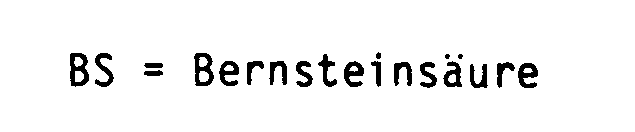
- Für die Herstellung der Pulverlacke werden folgende Epoxidharze und OH-gruppenhaltige Polyester eingesetzt:
Epoxidharz 1 (EP 1) EP-Äquivalentgewicht 850 - 940 EP-Wert 0,10 - 0,11 Erweichungsbereich 80 - 100 °C Epoxidharz 2 (EP 2) EP-Äquivalentgewicht 730 - 840 EP-Wert 0,12 - 0,13 Erweichungsbereich 94 - 106 Polyesterharz 1 (PE 1) Säurezahl 47 - 57 Glasumwandlungstemperatur 58 °C - Bei dem Epoxidharz 1 handelt es sich um ein Produkt der Fa. Shell AG, Hamburg, das unter dem Namen Epikote® 1004 im Handel erhältlich ist. Epoxidharz 2 ist ein Produkt der Fa. Dow Chemical Co., mit der Bezeichnung DER® 663U.
- Das Polyesterharz 1 ist ein Produkt der Fa. DSM RESINS, Zwolle, Niederlande, mit der Bezeichnung URALAC® 2228.


Claims (4)
- Lagerstabile Pulverlacke mit einer Korngröße kleiner als 100 µm, auf der Grundlage eines Stoffgemisches aus- Epoxidverbindungen mit im Durchschnitt mehr als einer Epoxidgruppe pro Molekül und einem Schmelzpunkt über 70 °C- Salzen von Benzolpolycarbonsäuren mit 2 bis 5 Säuregruppen mit N-haltigen Verbindungen- sowie üblichen Zusätzen,dadurch gekennzeichnet,
daß man als N-haltige Verbindungen primäre aliphatische und cycloaliphatische Diamine mit 4 bis 18 C-Atomen einsetzt und zusätzlich 1,5-Diazabicyclo[2.2.2.]-octan verwendet. - Pulverlacke gemäß Anspruch 1,
dadurch gekennzeichnet,
daß man als N-haltige Verbindungen Derivate des Cyclohexylamins einsetzt. - Pulverlacke gemäß Anspruch 1,
dadurch gekennzeichnet,
daß man als N-haltige Verbindungen gegebenenfalls alkylsubstituierte Hexamethylendiamine einsetzt. - Verfahren zur Herstellung von matten Überzügen,
dadurch gekennzeichnet,
daß man mindestens äquimolare Mengen einer Benzolpolycarbonsäure mit 2 bis 5 Säuregruppen mit einem primären Diamin gemäß der Definition in Ansprüchen 1 bis 3 umsetzt und das erhaltene Salz mit Epoxidverbindungen mit im Durchschnitt mehr als einer Epoxidgruppe pro Molekül und einem Schmelzpunkt über 70°C, 1,5-Diazabicyclo[2.2.2.]-octan und gegebenenfalls sonstigen üblichen Zusätzen, wobei das Gemisch eine Korngröße kleiner als 100 µm aufweist, bei einer Temperatur von 160 bis 240 °C innerhalb von 5 bis 35 Minuten, vorzugsweise bei einer Temperatur von 180 bis 220 °C innerhalb von 10 bis 20 Minuten, zu einem duroplastischen Lack aushärtet.
Applications Claiming Priority (2)
| Application Number | Priority Date | Filing Date | Title |
|---|---|---|---|
| DE3624078 | 1986-07-17 | ||
| DE19863624078 DE3624078A1 (de) | 1986-07-17 | 1986-07-17 | Pulverlacke, deren herstellung und verwendung |
Publications (3)
| Publication Number | Publication Date |
|---|---|
| EP0253115A2 EP0253115A2 (de) | 1988-01-20 |
| EP0253115A3 EP0253115A3 (en) | 1988-12-14 |
| EP0253115B1 true EP0253115B1 (de) | 1992-10-14 |
Family
ID=6305326
Family Applications (1)
| Application Number | Title | Priority Date | Filing Date |
|---|---|---|---|
| EP87107875A Expired - Lifetime EP0253115B1 (de) | 1986-07-17 | 1987-06-01 | Pulverlacke, deren Herstellung und Verwendung |
Country Status (10)
| Country | Link |
|---|---|
| US (1) | US5036144A (de) |
| EP (1) | EP0253115B1 (de) |
| JP (1) | JPS6323978A (de) |
| KR (1) | KR950009544B1 (de) |
| AU (1) | AU600287B2 (de) |
| BR (1) | BR8703715A (de) |
| CA (1) | CA1336634C (de) |
| DE (2) | DE3624078A1 (de) |
| FI (1) | FI85716C (de) |
| NO (1) | NO873004L (de) |
Families Citing this family (6)
| Publication number | Priority date | Publication date | Assignee | Title |
|---|---|---|---|---|
| JPH0471724U (de) * | 1990-10-30 | 1992-06-25 | ||
| EP0663414A1 (de) * | 1994-01-14 | 1995-07-19 | Hüls Aktiengesellschaft | Verfahren zur Herstellung von matten Epoxidharz- und Hybrid-Pulverbeschichtungen |
| DE4400929A1 (de) * | 1994-01-14 | 1995-07-20 | Huels Chemische Werke Ag | Verfahren zur Herstellung von matten Epoxidharzbeschichtungen |
| US6258920B1 (en) * | 1999-01-27 | 2001-07-10 | Air Products And Chemicals, Inc. | Polyamidoamine curing agents based on mixtures of fatty and aromatic carboxylic acids |
| US7030066B1 (en) | 2001-11-12 | 2006-04-18 | Charles Piskoti | Wetting composition for high temperature metal surfaces, and method of making the same |
| CN105820717A (zh) * | 2016-05-31 | 2016-08-03 | 宝华(黄山)新材料技术有限公司 | 一种韧性耐高温环氧粉末涂料 |
Family Cites Families (9)
| Publication number | Priority date | Publication date | Assignee | Title |
|---|---|---|---|---|
| US3272763A (en) * | 1959-02-11 | 1966-09-13 | Air Prod & Chem | Polymerization catalysis |
| GB1460505A (en) * | 1973-05-16 | 1977-01-06 | Veba Chemie Ag | Method of making matt coatings |
| DE2602412A1 (de) * | 1976-01-23 | 1977-07-28 | Bayer Ag | Lagerstabile, haertbare einkomponentenharze aus epoxidharzen und haertern |
| DE2851962A1 (de) * | 1978-03-18 | 1980-06-19 | Hoechst Ag | Verwendung eines wasserloeslichen reaktiven bindemittels fuer klebstoffe |
| US4312974A (en) * | 1980-04-18 | 1982-01-26 | National Starch And Chemical Corporation | Curing agents for epoxy resins |
| JPS5761020A (en) * | 1980-09-30 | 1982-04-13 | Ube Ind Ltd | Curing agent for epoxy resin |
| DE3311404A1 (de) * | 1983-03-29 | 1984-10-04 | Chemische Werke Hüls AG, 4370 Marl | Verfahren zur herstellung von mattlacken |
| DE3511998A1 (de) * | 1985-04-02 | 1986-10-09 | Hüls AG, 4370 Marl | Haerter fuer pulverfoermige ueberzugsmittel auf der basis von epoxyharzen |
| US4753058A (en) * | 1986-09-11 | 1988-06-28 | Donn Incorporated | Elevated floor panel and method of manufacturing same |
-
1986
- 1986-07-17 DE DE19863624078 patent/DE3624078A1/de not_active Withdrawn
-
1987
- 1987-05-21 US US07/052,379 patent/US5036144A/en not_active Expired - Fee Related
- 1987-06-01 DE DE8787107875T patent/DE3782197D1/de not_active Expired - Lifetime
- 1987-06-01 EP EP87107875A patent/EP0253115B1/de not_active Expired - Lifetime
- 1987-07-13 FI FI873081A patent/FI85716C/fi not_active IP Right Cessation
- 1987-07-15 CA CA000542113A patent/CA1336634C/en not_active Expired - Fee Related
- 1987-07-16 JP JP62176073A patent/JPS6323978A/ja active Pending
- 1987-07-16 AU AU75731/87A patent/AU600287B2/en not_active Ceased
- 1987-07-16 KR KR1019870007746A patent/KR950009544B1/ko not_active Expired - Lifetime
- 1987-07-16 BR BR8703715A patent/BR8703715A/pt unknown
- 1987-07-17 NO NO873004A patent/NO873004L/no unknown
Also Published As
| Publication number | Publication date |
|---|---|
| AU7573187A (en) | 1988-01-21 |
| EP0253115A3 (en) | 1988-12-14 |
| DE3624078A1 (de) | 1988-01-21 |
| NO873004L (no) | 1988-01-18 |
| FI873081L (fi) | 1988-01-18 |
| FI873081A0 (fi) | 1987-07-13 |
| EP0253115A2 (de) | 1988-01-20 |
| US5036144A (en) | 1991-07-30 |
| FI85716C (fi) | 1992-05-25 |
| AU600287B2 (en) | 1990-08-09 |
| KR950009544B1 (ko) | 1995-08-24 |
| BR8703715A (pt) | 1988-03-29 |
| CA1336634C (en) | 1995-08-08 |
| FI85716B (fi) | 1992-02-14 |
| DE3782197D1 (de) | 1992-11-19 |
| NO873004D0 (no) | 1987-07-17 |
| KR880001776A (ko) | 1988-04-26 |
| JPS6323978A (ja) | 1988-02-01 |
Similar Documents
| Publication | Publication Date | Title |
|---|---|---|
| EP0056167B1 (de) | Feste polymere Bindemittel für wärmehärtende Pulverlacke auf der Basis von carboxylgruppenhaltigen Polyurethanpräpolymeren mit verkappten Isocyanatgruppen, diese Bindemittel enthaltende Pulverlacke und lackierte Metallgegenstände | |
| EP0506617B1 (de) | Vernetzungsmittel für Pulverlacke auf Basis von Polyestern | |
| EP0385293A1 (de) | Hitzehärtbares Überzugsmittel für die kathodische Elektrotauchlackierung | |
| EP0253101B1 (de) | Pulverlacke, deren Herstellung und Verwendung | |
| EP0253115A2 (de) | Pulverlacke, deren Herstellung und Verwendung | |
| DE2838841A1 (de) | Pulverfoermiges beschichtungsmittel aus einem epoxidharz und einer carbonsaeure | |
| DE3328134C2 (de) | EP-Pulverlacke und Verfahren zur Herstellung matter Überzüge | |
| EP0215740A2 (de) | Verzweigte Polyester | |
| EP0085913B1 (de) | Reaktive carboxylgruppenhaltige Polymere, Verfahren zu ihrer Herstellung und ihre Verwendung als Bindemittelkomponente für Pulverlacke | |
| DE1494416B2 (de) | Verfahren zur Erzeugung von Lackbzw. Schutzüberzügen | |
| EP0663384B1 (de) | Salze der Pyromellitsäure, ein Verfahren zu ihrer Herstellung sowie deren Verwendung | |
| EP0663385A2 (de) | Salze der Pyromellitsäure, ein Verfahren zu ihrer Herstellung sowie deren Verwendung | |
| DE2640410C2 (de) | Lagerstabile, pulverförmige Überzugsmittel und ihre Verwendung | |
| EP0297030B1 (de) | Epoxidgruppenhaltige Polycycloacetale | |
| EP1922375A1 (de) | Hybrid-pulverlackzusammensetzung mit niedriger einbrenntemperatur für halbglänzende bis matte überzüge | |
| EP0175874B1 (de) | Carboxylgruppenhaltige Härter | |
| DE3610757C2 (de) | ||
| DE19806225A1 (de) | Epoxidharz- und Hybridpulverbeschichtungszusammensetzungen | |
| EP0663414A1 (de) | Verfahren zur Herstellung von matten Epoxidharz- und Hybrid-Pulverbeschichtungen | |
| DE3328132C2 (de) | EP-Pulverlacke, die mit Mischungen aus aromatischen Polycarbonsäuren und amidinblockierten Isocyanaten oder deren Addukten gehärtet werden, und ein Verfahren zur Herstellung matter Überzüge | |
| DE4400929A1 (de) | Verfahren zur Herstellung von matten Epoxidharzbeschichtungen | |
| EP0198226A2 (de) | Härter für pulverförmige Überzugsmittel auf der Basis von Epoxyharzen | |
| DE3328130C2 (de) | EP-Pulverlacke auf Basis von amidinblockierten IPDI-Addukten und ein Verfahren zur Herstellung matter Überzüge | |
| EP0785241A2 (de) | Effektpulverlacke, deren Herstellung und Verwendung | |
| DE19823427A1 (de) | Epoxidharz- und Hybrid-Pulverbeschichtungen |
Legal Events
| Date | Code | Title | Description |
|---|---|---|---|
| PUAI | Public reference made under article 153(3) epc to a published international application that has entered the european phase |
Free format text: ORIGINAL CODE: 0009012 |
|
| AK | Designated contracting states |
Kind code of ref document: A2 Designated state(s): BE CH DE FR GB IT LI NL SE |
|
| PUAL | Search report despatched |
Free format text: ORIGINAL CODE: 0009013 |
|
| AK | Designated contracting states |
Kind code of ref document: A3 Designated state(s): BE CH DE FR GB IT LI NL SE |
|
| 17P | Request for examination filed |
Effective date: 19881105 |
|
| 17Q | First examination report despatched |
Effective date: 19911115 |
|
| GRAA | (expected) grant |
Free format text: ORIGINAL CODE: 0009210 |
|
| AK | Designated contracting states |
Kind code of ref document: B1 Designated state(s): BE CH DE FR GB IT LI NL SE |
|
| ET | Fr: translation filed | ||
| GBT | Gb: translation of ep patent filed (gb section 77(6)(a)/1977) | ||
| REF | Corresponds to: |
Ref document number: 3782197 Country of ref document: DE Date of ref document: 19921119 |
|
| ITF | It: translation for a ep patent filed | ||
| PG25 | Lapsed in a contracting state [announced via postgrant information from national office to epo] |
Ref country code: SE Effective date: 19930602 |
|
| PG25 | Lapsed in a contracting state [announced via postgrant information from national office to epo] |
Ref country code: LI Effective date: 19930630 Ref country code: CH Effective date: 19930630 |
|
| PLBE | No opposition filed within time limit |
Free format text: ORIGINAL CODE: 0009261 |
|
| STAA | Information on the status of an ep patent application or granted ep patent |
Free format text: STATUS: NO OPPOSITION FILED WITHIN TIME LIMIT |
|
| 26N | No opposition filed | ||
| REG | Reference to a national code |
Ref country code: CH Ref legal event code: PL |
|
| PGFP | Annual fee paid to national office [announced via postgrant information from national office to epo] |
Ref country code: GB Payment date: 19940531 Year of fee payment: 8 |
|
| PGFP | Annual fee paid to national office [announced via postgrant information from national office to epo] |
Ref country code: BE Payment date: 19940608 Year of fee payment: 8 |
|
| PGFP | Annual fee paid to national office [announced via postgrant information from national office to epo] |
Ref country code: DE Payment date: 19940624 Year of fee payment: 8 |
|
| PGFP | Annual fee paid to national office [announced via postgrant information from national office to epo] |
Ref country code: FR Payment date: 19940630 Year of fee payment: 8 Ref country code: NL Payment date: 19940630 Year of fee payment: 8 |
|
| EUG | Se: european patent has lapsed |
Ref document number: 87107875.4 Effective date: 19940110 |
|
| PG25 | Lapsed in a contracting state [announced via postgrant information from national office to epo] |
Ref country code: GB Effective date: 19950601 |
|
| PG25 | Lapsed in a contracting state [announced via postgrant information from national office to epo] |
Ref country code: BE Effective date: 19950630 |
|
| BERE | Be: lapsed |
Owner name: HULS A.G. Effective date: 19950630 |
|
| PG25 | Lapsed in a contracting state [announced via postgrant information from national office to epo] |
Ref country code: NL Effective date: 19960101 |
|
| GBPC | Gb: european patent ceased through non-payment of renewal fee |
Effective date: 19950601 |
|
| NLV4 | Nl: lapsed or anulled due to non-payment of the annual fee |
Effective date: 19960101 |
|
| PG25 | Lapsed in a contracting state [announced via postgrant information from national office to epo] |
Ref country code: DE Effective date: 19960301 |
|
| PG25 | Lapsed in a contracting state [announced via postgrant information from national office to epo] |
Ref country code: FR Effective date: 19970731 |
|
| REG | Reference to a national code |
Ref country code: FR Ref legal event code: ST |
|
| PG25 | Lapsed in a contracting state [announced via postgrant information from national office to epo] |
Ref country code: IT Free format text: LAPSE BECAUSE OF NON-PAYMENT OF DUE FEES;WARNING: LAPSES OF ITALIAN PATENTS WITH EFFECTIVE DATE BEFORE 2007 MAY HAVE OCCURRED AT ANY TIME BEFORE 2007. THE CORRECT EFFECTIVE DATE MAY BE DIFFERENT FROM THE ONE RECORDED. Effective date: 20050601 |
|
| PG25 | Lapsed in a contracting state [announced via postgrant information from national office to epo] |
Ref country code: FR Effective date: 19950630 |