EP0226926A2 - Köderfuttermittel zur Züchtung von Fischen, insbesondere junge Aale und Verfahren zu ihrer Herstellung - Google Patents
Köderfuttermittel zur Züchtung von Fischen, insbesondere junge Aale und Verfahren zu ihrer Herstellung Download PDFInfo
- Publication number
- EP0226926A2 EP0226926A2 EP86117043A EP86117043A EP0226926A2 EP 0226926 A2 EP0226926 A2 EP 0226926A2 EP 86117043 A EP86117043 A EP 86117043A EP 86117043 A EP86117043 A EP 86117043A EP 0226926 A2 EP0226926 A2 EP 0226926A2
- Authority
- EP
- European Patent Office
- Prior art keywords
- baiting
- feed
- cattlefish
- elvers
- krill
- Prior art date
- Legal status (The legal status is an assumption and is not a legal conclusion. Google has not performed a legal analysis and makes no representation as to the accuracy of the status listed.)
- Withdrawn
Links
Images

Classifications
-
- A—HUMAN NECESSITIES
- A01—AGRICULTURE; FORESTRY; ANIMAL HUSBANDRY; HUNTING; TRAPPING; FISHING
- A01K—ANIMAL HUSBANDRY; AVICULTURE; APICULTURE; PISCICULTURE; FISHING; REARING OR BREEDING ANIMALS, NOT OTHERWISE PROVIDED FOR; NEW BREEDS OF ANIMALS
- A01K97/00—Accessories for angling
- A01K97/04—Containers for bait; Preparation of bait
- A01K97/045—Preparation of bait; Ingredients
-
- A—HUMAN NECESSITIES
- A23—FOODS OR FOODSTUFFS; TREATMENT THEREOF, NOT COVERED BY OTHER CLASSES
- A23K—FODDER
- A23K10/00—Animal feeding-stuffs
- A23K10/20—Animal feeding-stuffs from material of animal origin
- A23K10/22—Animal feeding-stuffs from material of animal origin from fish
-
- A—HUMAN NECESSITIES
- A23—FOODS OR FOODSTUFFS; TREATMENT THEREOF, NOT COVERED BY OTHER CLASSES
- A23K—FODDER
- A23K50/00—Feeding-stuffs specially adapted for particular animals
- A23K50/80—Feeding-stuffs specially adapted for particular animals for aquatic animals, e.g. fish, crustaceans or molluscs
-
- Y—GENERAL TAGGING OF NEW TECHNOLOGICAL DEVELOPMENTS; GENERAL TAGGING OF CROSS-SECTIONAL TECHNOLOGIES SPANNING OVER SEVERAL SECTIONS OF THE IPC; TECHNICAL SUBJECTS COVERED BY FORMER USPC CROSS-REFERENCE ART COLLECTIONS [XRACs] AND DIGESTS
- Y02—TECHNOLOGIES OR APPLICATIONS FOR MITIGATION OR ADAPTATION AGAINST CLIMATE CHANGE
- Y02A—TECHNOLOGIES FOR ADAPTATION TO CLIMATE CHANGE
- Y02A40/00—Adaptation technologies in agriculture, forestry, livestock or agroalimentary production
- Y02A40/80—Adaptation technologies in agriculture, forestry, livestock or agroalimentary production in fisheries management
- Y02A40/81—Aquaculture, e.g. of fish
- Y02A40/818—Alternative feeds for fish, e.g. in aquacultures
Definitions
- the present invention relates to a baiting feed for cultivating fish, especially elvers as a substitute for tubificidae and a method for preparing the same.
- Such a usual way by which eels take the habit of taking a feed is to train eels by providing, as a baiting feed, tubificidae providing a strong taste for elvers and to blend a small amount of a compound feed and gradually increase the amount of such feed while decreasing the amount of the tubificidae as the elvers are being trained.
- tubificidae designate those which naturally live and grow in brooks in various districts and which are most commonly used as baits for aquarium fish and also as baiting feeds for culture fish.
- tubificidae live and grow are dirty and for this reason, they carry a variety of germs. Therefore, if such tubificidae are fed to elvers, then they may convey diseases such as Paracolo disease, resulting in a reduced existence rate of elvers.
- tubificidae are natual products
- the output thereof depends upon the weather conditions such as the atmospheric temperature, the amount of rainfall or the like and hence, it is difficult to keep a demand and supply balance. More specifically, the demand for baiting feeds for elvers increases for a period of from November to March, and there is an anxiety about a variation in price and a short supply in this period.
- tubificidae are living creatures and hence, it is impossible to preserve them for a longer period. Even for a shorter period, the preservation of them requires the greatest possible care and many labors and further, many losses due to death, escape, etc. during preservation cannot be also ignored.
- the above objects are accomplished by providing a baiting feed for cultivating fish, especially elvers which comprises cattlefish as a predominant component, and krill and proper nutritive and attractive auxiliaries added thereto as minor components.
- a method for preparing a baiting feed for elvers comprising the steps of shredding frozen cattlefish into a size of 6/100 mm or less, mixing the shredded cattlefish with krill and other components such as nutritive and attractive auxiliaries, and forming the mixture into a paste.
- One feature of the present invention is in that krill is added to cattlefish.
- An artificial feed according to the present invention is excellent in taste and attractivity, and with such a feed it is possible to provide an increase in baiting rate and to promote the growth of elvers, leading to an increase in efficiency of eel cultivation.
- the preparing method according to the present invention is based on the shredding of a frozen cattlefish for production of a paste feed, and with such a method, it is possible to easily produce an artificial feed, at low cost, which is easy to eat for elvers.
- the cattlefish was cut into minced pieces in a meat chopper, and a cattlefish oil was added to the minced pieces to provide paste samples 1 to 4.
- the artificial feeds comprising the cattlefish as a predominant component itself have some taste and attractivity and exhibit a baiting rate of 72% in a day even without the addition of cattlefish as an attractive auxiliary.
- the addition of cattlefish oil causes an increase in baiting rate.
- the cattlefish oil is utilized to form the feed into a paste, and the addition thereof in three times amount is suitable, because the addition in five times amount has caused an elution to pollute water.
- the cattlefish oil contains Betain and it is believed that such Betain fulfils an attractive effect. Therefore, when any other component, such as a short-necked clam, containing Betain is incorporated, the amount of such component added should be moderated.
- the results of tests for the sample I of tubificidae and the sample II containing 3 parts of cattlefish oil added are illustrated in Fig.1.
- Example 1 illustrates an artificial feed prepared from the addition of krill to the above-described sample II. In this example, one embodiment of a preparing method is also described.
- the frozen cattlefish or product was pulverized in a meat chopper and then shredded into a sized of 0.03 to 0,06 mm in a mill called a mass collider.
- Krill pieces shredded into a size of 0,03 to 0,06 mm were added to the resulting product and they were mixed in a mixer such as a silent cutter while adding a cattlefish oil, thus providing paste samples II to VIII.
- the reason why the frozen cattle fish was used is that a feed is obtained free of a 0.06 mm or less long fiber in view of the size in mouth of an elver, i.e., that the frozen cattlefish is easy to pulverize and at this time, a long fiber is easy to cut.
- frozen cattlefish it is possible to prevent various germs or bacteria from propagating in the cattlefish or other incorporated components due to the raising of temperature with the generation of heat during pulverization and mixing.
- the addition of krill in a small amount causes the taste to be increased and the baiting rate to be enhanced.
- the krill incorporated in an amount of 20 parts or more the increase in taste is lower, and the amount exceeding 40 parts results in a taste inferior to that for tubificidae.
- the samples containing krill added in an amount of 30 parts or more are poor in adhering property, and the addition of krill in an amount exceeding 40 parts is apt to bring about the pollution of water.
- the amount of krill added in a range of 0 to 40 parts can be used and an amount of 20 parts or less is preferred.
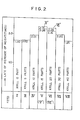
- test results represent the variations in weight (magnification) after the lapse of 10 days from the feeding of these samples to elvers occuring in Japan.
- the more preferred amount of krill added is of 10 to 30 parts from the viewpoint of growing ability and is of 5 to 15 parts from the viewpoint of adhering property and eventually, 10 to 15 parts are most preferred.
- Example 2 illustrates a feed prepared from the addition of krill to cattlefish, followed by the further addition of yolk as a nutritive auxiliary thereto.
- Example 2 As in Example 1, the most preferred amount of krill added is of 15 to 20 parts. Therefore, in this example, formulations as given in Table 6 were made on the basis of these samples.
- the yolk is the yellow of a hen's egg.
- the results for the growing ability are given in Table 7.
- the values of variation in weight are represented by magnifications.
- the yolk is not limited to the yellow of a hen's egg and any yolk may be used if being of a poultry. In this way, the addition of yolk enables the growth of elvers to be promoted, but it should be understood that other components may be added to the yolk alone or in combination, such as casein, defatted dry milk powder, fish eggs, animal's liver, short necked clam or the like.
- Example 2 Even a baiting feed for elvers as described in Example 2 can be prepared by a method similar to that in Example 1.
- a paste feed can be prepared by pulverizing frozen cattlefish in a meat chopper and then mashing the pulverized material into 0,03 to 0,06 mm in a mass collider, while mashing krill into 0,03 to 0,06 mm in a mass collider, then adding yolk to both the resulting materials, and throwing these mixtures into a silent cutter together with cattlefish oil.
- the resultant feed is colored into a light yellow due to the yolk used.
- the colored feed is convenient in that the elvers taking the feed can be viewed Alternatively, a coloring agent may be also added in order to further deeply color the feed.
- Example 3 illustratesanother embodiment of a preparing method for a feed resulting from the further freeze drying of a product formed into a pasteas described in the previous
- Example 1 cattlefish was shredded and mixed with other components, thus forming a feed product into a paste.
- the paste feed is difficult to preserve intact for long period because it is corruptible.
- the paste-formed feed was subjected to a freeze dryer where it was dried and solidified. Thereafter, the resulting solid material was pulverized into 100 meshes, and a suitable adhering agent was added thereto. After stirring and mixing, the mixture was placed into a vessel or sack of a selected volume and then properly vacuum packed to provide for marketing.
- the adhering agents which can be used include food additives such as guar gum, ⁇ - starch, wheat gluten, casein, corn starch, gelatin, sodium alginate, and/or sodium polyacrylate.
- the freeze drier used was a freeze drying device commercially available from Tcyo Giken, K.K.
- This device is of a type in which a pasts feed of a uniform thickness is placed onto a tray-like vessel which is then subjected to a vacuum drying at a temperature of - 30 C to + 20 C for about 7 hours and to a further vacuum drying at a temperature of + 20°C to 30°C.
- the use of this device enables a plate-shaped solid feed to be provided.
- any type may be utilized and hence, the description thereof is omitted herein.
- the vessel or sack-packed feed provided for marketing is of such a nature capable of being formed into a paste by the addition of water in an amount of 2 to 3 times by weight and can be preserved for a long period (more than several years).
Landscapes
- Life Sciences & Earth Sciences (AREA)
- Polymers & Plastics (AREA)
- Chemical & Material Sciences (AREA)
- Animal Husbandry (AREA)
- Engineering & Computer Science (AREA)
- Food Science & Technology (AREA)
- Marine Sciences & Fisheries (AREA)
- Environmental Sciences (AREA)
- Zoology (AREA)
- Biotechnology (AREA)
- Biomedical Technology (AREA)
- Health & Medical Sciences (AREA)
- Molecular Biology (AREA)
- Insects & Arthropods (AREA)
- Birds (AREA)
- Biodiversity & Conservation Biology (AREA)
- Physiology (AREA)
- Fodder In General (AREA)
- Feed For Specific Animals (AREA)
Applications Claiming Priority (2)
| Application Number | Priority Date | Filing Date | Title |
|---|---|---|---|
| JP60279144A JPS62138149A (ja) | 1985-12-13 | 1985-12-13 | シラスウナギの餌つけ用飼料及びその製造方法 |
| JP279144/85 | 1985-12-13 |
Publications (2)
| Publication Number | Publication Date |
|---|---|
| EP0226926A2 true EP0226926A2 (de) | 1987-07-01 |
| EP0226926A3 EP0226926A3 (de) | 1987-12-16 |
Family
ID=17607051
Family Applications (1)
| Application Number | Title | Priority Date | Filing Date |
|---|---|---|---|
| EP86117043A Withdrawn EP0226926A3 (de) | 1985-12-13 | 1986-12-08 | Köderfuttermittel zur Züchtung von Fischen, insbesondere junge Aale und Verfahren zu ihrer Herstellung |
Country Status (3)
| Country | Link |
|---|---|
| EP (1) | EP0226926A3 (de) |
| JP (1) | JPS62138149A (de) |
| DK (1) | DK598186A (de) |
Cited By (4)
| Publication number | Priority date | Publication date | Assignee | Title |
|---|---|---|---|---|
| FR2705196A1 (fr) * | 1993-05-13 | 1994-11-25 | Lopuszanski Michel | Amorce de pêche et procédé d'obtention d'une telle amorce. |
| WO2007139376A1 (en) * | 2006-05-02 | 2007-12-06 | Wimäca Beheer B.V. | Method for producing fish food, and fish food obtained using this method |
| WO2008084074A3 (en) * | 2007-01-10 | 2008-10-23 | Blue Limit As | Feed composition for aquatic organisms |
| CN103340187A (zh) * | 2013-06-14 | 2013-10-09 | 宁波大学 | 一种用于海钓的饵料及其制备方法 |
Families Citing this family (5)
| Publication number | Priority date | Publication date | Assignee | Title |
|---|---|---|---|---|
| JPH0659171B2 (ja) * | 1986-06-12 | 1994-08-10 | 日清製粉株式会社 | シラスウナギ用飼料の製造法 |
| JP5357829B2 (ja) * | 2010-05-14 | 2013-12-04 | 日本水産株式会社 | ウナギ仔魚飼料 |
| CN106538425A (zh) * | 2016-10-25 | 2017-03-29 | 王玉宽 | 一种提高黑鱼幼苗抗应激性的养殖方法 |
| JP6952978B2 (ja) * | 2017-03-21 | 2021-10-27 | 国立研究開発法人水産研究・教育機構 | ウナギ仔魚用飼料 |
| JP7688451B1 (ja) * | 2025-01-29 | 2025-06-04 | 大隅うなぎ販売有限会社 | ウナギの養殖方法 |
Family Cites Families (4)
| Publication number | Priority date | Publication date | Assignee | Title |
|---|---|---|---|---|
| JPS5338233A (en) * | 1976-09-20 | 1978-04-08 | Matsushita Electric Ind Co Ltd | Direct current level shift circuit |
| JPS5491498A (en) * | 1977-12-27 | 1979-07-19 | Nippon Paint Co Ltd | Production of bait for fishes and crustaceans |
| US4202905A (en) * | 1978-02-22 | 1980-05-13 | Mitsui Toatsu Chemicals Incorporated | Luminous material for use in fishery and method for the production thereof |
| JPS5871847A (ja) * | 1981-10-23 | 1983-04-28 | Riken Vitamin Co Ltd | 稚魚用配合飼料の製造法 |
-
1985
- 1985-12-13 JP JP60279144A patent/JPS62138149A/ja active Pending
-
1986
- 1986-12-08 EP EP86117043A patent/EP0226926A3/de not_active Withdrawn
- 1986-12-12 DK DK598186A patent/DK598186A/da not_active Application Discontinuation
Cited By (6)
| Publication number | Priority date | Publication date | Assignee | Title |
|---|---|---|---|---|
| FR2705196A1 (fr) * | 1993-05-13 | 1994-11-25 | Lopuszanski Michel | Amorce de pêche et procédé d'obtention d'une telle amorce. |
| ES2071594A1 (es) * | 1993-05-13 | 1995-06-16 | Michel Lopuszanski | Cebo de pesca y procedimiento de obtencion de tal cebo |
| WO2007139376A1 (en) * | 2006-05-02 | 2007-12-06 | Wimäca Beheer B.V. | Method for producing fish food, and fish food obtained using this method |
| WO2008084074A3 (en) * | 2007-01-10 | 2008-10-23 | Blue Limit As | Feed composition for aquatic organisms |
| CN103340187A (zh) * | 2013-06-14 | 2013-10-09 | 宁波大学 | 一种用于海钓的饵料及其制备方法 |
| CN103340187B (zh) * | 2013-06-14 | 2015-02-25 | 宁波大学 | 一种用于海钓的饵料及其制备方法 |
Also Published As
| Publication number | Publication date |
|---|---|
| EP0226926A3 (de) | 1987-12-16 |
| DK598186D0 (da) | 1986-12-12 |
| JPS62138149A (ja) | 1987-06-20 |
| DK598186A (da) | 1987-06-14 |
Similar Documents
| Publication | Publication Date | Title |
|---|---|---|
| Howell | A re-appraisal of the potential of the sole, Solea solea (L.), for commercial cultivation | |
| US3889007A (en) | Aquatic animal food composition | |
| Day et al. | The effect of dietary hydrolysed fish protein concentrate on the survival and growth of juvenile Dover sole, Solea solea (L.), during and after weaning | |
| CN113508766B (zh) | 一种大口黑鲈鱼苗驯食方法 | |
| JP5524431B1 (ja) | スッポン身肉のアミノ酸増加方法 | |
| JP6215074B2 (ja) | スッポン用飼料及び養殖スッポンの生産方法ならびにスッポン身肉のアミノ酸増加方法 | |
| JPS62138149A (ja) | シラスウナギの餌つけ用飼料及びその製造方法 | |
| RU2034492C1 (ru) | Искусственный корм "радуга" для аквариумных рыб | |
| Pigott et al. | Special feeds | |
| TWI552680B (zh) | The method of producing the turtle and the method of raising the amino acid in the turtle | |
| CN112913967A (zh) | 一种虾蟹鱼塘肥水膏以及用于培育水蛛生物的饵料及制备方法 | |
| Ismarica et al. | Providing different natural feeds on the growth rate of tor soro larvae | |
| CN102485020B (zh) | 一种方斑东风螺亲螺养成期的软体饵料及其生产方法 | |
| KR100325310B1 (ko) | 박각시나방 사육용 사료 조성물 및 이를 이용하여 박각시나방을집단 사육하는 방법 | |
| JPH11313617A (ja) | アロエを用いた養魚用天然飼料及びこれを用いた養魚用飼料 | |
| JPH02207757A (ja) | 魚用餌及びその製法 | |
| AU2011225157B2 (en) | Tuna-hatchling formula feed | |
| KR890004726B1 (ko) | 새끼뱀장어의 먹이 길들이기용 사료 및 그 제조방법 | |
| JP2016187337A (ja) | ウニ用畜養飼料 | |
| CN106578356A (zh) | 一种动物营养强化剂及其应用 | |
| RU2375911C2 (ru) | Влажный корм для подращивания молоди лососевых рыб в морских садках и способ его приготовления | |
| Kolesnyk et al. | Cultivation of dipterous (Diptera Linnaeus, 1758) insects, such as fruit flies, synanthropic flies larvae and chironomids larvae for fish feeding | |
| KR101815626B1 (ko) | 실뱀장어의 초기 냉동사료 | |
| RU2202222C2 (ru) | Способ приготовления комбикорма | |
| JPH0240298B2 (de) |
Legal Events
| Date | Code | Title | Description |
|---|---|---|---|
| PUAI | Public reference made under article 153(3) epc to a published international application that has entered the european phase |
Free format text: ORIGINAL CODE: 0009012 |
|
| 17P | Request for examination filed |
Effective date: 19861208 |
|
| AK | Designated contracting states |
Kind code of ref document: A2 Designated state(s): BE DE FR IT SE |
|
| RIN1 | Information on inventor provided before grant (corrected) |
Inventor name: HAYAMI, KAZUO Inventor name: KIKUTA, TOSHITAKA |
|
| PUAL | Search report despatched |
Free format text: ORIGINAL CODE: 0009013 |
|
| AK | Designated contracting states |
Kind code of ref document: A3 Designated state(s): BE DE FR IT SE |
|
| STAA | Information on the status of an ep patent application or granted ep patent |
Free format text: STATUS: THE APPLICATION IS DEEMED TO BE WITHDRAWN |
|
| 18D | Application deemed to be withdrawn |
Effective date: 19890703 |
|
| RIN1 | Information on inventor provided before grant (corrected) |
Inventor name: HAYAMI, KAZUO Inventor name: KIKUTA, TOSHITAKA |