EP0215346A2 - Poröse Polymerfasern - Google Patents
Poröse Polymerfasern Download PDFInfo
- Publication number
- EP0215346A2 EP0215346A2 EP86111796A EP86111796A EP0215346A2 EP 0215346 A2 EP0215346 A2 EP 0215346A2 EP 86111796 A EP86111796 A EP 86111796A EP 86111796 A EP86111796 A EP 86111796A EP 0215346 A2 EP0215346 A2 EP 0215346A2
- Authority
- EP
- European Patent Office
- Prior art keywords
- polymer
- groups
- fibers
- reactive
- acid
- Prior art date
- Legal status (The legal status is an assumption and is not a legal conclusion. Google has not performed a legal analysis and makes no representation as to the accuracy of the status listed.)
- Granted
Links
Images
Classifications
-
- D—TEXTILES; PAPER
- D01—NATURAL OR MAN-MADE THREADS OR FIBRES; SPINNING
- D01F—CHEMICAL FEATURES IN THE MANUFACTURE OF ARTIFICIAL FILAMENTS, THREADS, FIBRES, BRISTLES OR RIBBONS; APPARATUS SPECIALLY ADAPTED FOR THE MANUFACTURE OF CARBON FILAMENTS
- D01F11/00—Chemical after-treatment of artificial filaments or the like during manufacture
- D01F11/04—Chemical after-treatment of artificial filaments or the like during manufacture of synthetic polymers
-
- B—PERFORMING OPERATIONS; TRANSPORTING
- B01—PHYSICAL OR CHEMICAL PROCESSES OR APPARATUS IN GENERAL
- B01D—SEPARATION
- B01D39/00—Filtering material for liquid or gaseous fluids
- B01D39/08—Filter cloth, i.e. woven, knitted or interlaced material
- B01D39/083—Filter cloth, i.e. woven, knitted or interlaced material of organic material
-
- B—PERFORMING OPERATIONS; TRANSPORTING
- B01—PHYSICAL OR CHEMICAL PROCESSES OR APPARATUS IN GENERAL
- B01D—SEPARATION
- B01D39/00—Filtering material for liquid or gaseous fluids
- B01D39/14—Other self-supporting filtering material ; Other filtering material
- B01D39/16—Other self-supporting filtering material ; Other filtering material of organic material, e.g. synthetic fibres
- B01D39/1607—Other self-supporting filtering material ; Other filtering material of organic material, e.g. synthetic fibres the material being fibrous
- B01D39/1623—Other self-supporting filtering material ; Other filtering material of organic material, e.g. synthetic fibres the material being fibrous of synthetic origin
-
- B—PERFORMING OPERATIONS; TRANSPORTING
- B01—PHYSICAL OR CHEMICAL PROCESSES OR APPARATUS IN GENERAL
- B01D—SEPARATION
- B01D67/00—Processes specially adapted for manufacturing semi-permeable membranes for separation processes or apparatus
- B01D67/0002—Organic membrane manufacture
- B01D67/0023—Organic membrane manufacture by inducing porosity into non porous precursor membranes
-
- B—PERFORMING OPERATIONS; TRANSPORTING
- B01—PHYSICAL OR CHEMICAL PROCESSES OR APPARATUS IN GENERAL
- B01D—SEPARATION
- B01D67/00—Processes specially adapted for manufacturing semi-permeable membranes for separation processes or apparatus
- B01D67/0002—Organic membrane manufacture
- B01D67/0023—Organic membrane manufacture by inducing porosity into non porous precursor membranes
- B01D67/0025—Organic membrane manufacture by inducing porosity into non porous precursor membranes by mechanical treatment, e.g. pore-stretching
- B01D67/0027—Organic membrane manufacture by inducing porosity into non porous precursor membranes by mechanical treatment, e.g. pore-stretching by stretching
-
- B—PERFORMING OPERATIONS; TRANSPORTING
- B01—PHYSICAL OR CHEMICAL PROCESSES OR APPARATUS IN GENERAL
- B01D—SEPARATION
- B01D69/00—Semi-permeable membranes for separation processes or apparatus characterised by their form, structure or properties; Manufacturing processes specially adapted therefor
- B01D69/08—Hollow fibre membranes
-
- B—PERFORMING OPERATIONS; TRANSPORTING
- B01—PHYSICAL OR CHEMICAL PROCESSES OR APPARATUS IN GENERAL
- B01D—SEPARATION
- B01D71/00—Semi-permeable membranes for separation processes or apparatus characterised by the material; Manufacturing processes specially adapted therefor
- B01D71/06—Organic material
- B01D71/26—Polyalkenes
- B01D71/261—Polyethylene
-
- B—PERFORMING OPERATIONS; TRANSPORTING
- B01—PHYSICAL OR CHEMICAL PROCESSES OR APPARATUS IN GENERAL
- B01D—SEPARATION
- B01D71/00—Semi-permeable membranes for separation processes or apparatus characterised by the material; Manufacturing processes specially adapted therefor
- B01D71/06—Organic material
- B01D71/26—Polyalkenes
- B01D71/262—Polypropylene
-
- B—PERFORMING OPERATIONS; TRANSPORTING
- B01—PHYSICAL OR CHEMICAL PROCESSES OR APPARATUS IN GENERAL
- B01D—SEPARATION
- B01D71/00—Semi-permeable membranes for separation processes or apparatus characterised by the material; Manufacturing processes specially adapted therefor
- B01D71/06—Organic material
- B01D71/40—Polymers of unsaturated acids or derivatives thereof, e.g. salts, amides, imides, nitriles, anhydrides, esters
- B01D71/401—Polymers based on the polymerisation of acrylic acid, e.g. polyacrylate
-
- B—PERFORMING OPERATIONS; TRANSPORTING
- B01—PHYSICAL OR CHEMICAL PROCESSES OR APPARATUS IN GENERAL
- B01D—SEPARATION
- B01D71/00—Semi-permeable membranes for separation processes or apparatus characterised by the material; Manufacturing processes specially adapted therefor
- B01D71/06—Organic material
- B01D71/76—Macromolecular material not specifically provided for in a single one of groups B01D71/08 - B01D71/74
-
- D—TEXTILES; PAPER
- D01—NATURAL OR MAN-MADE THREADS OR FIBRES; SPINNING
- D01D—MECHANICAL METHODS OR APPARATUS IN THE MANUFACTURE OF ARTIFICIAL FILAMENTS, THREADS, FIBRES, BRISTLES OR RIBBONS
- D01D5/00—Formation of filaments, threads, or the like
- D01D5/24—Formation of filaments, threads, or the like with a hollow structure; Spinnerette packs therefor
- D01D5/247—Discontinuous hollow structure or microporous structure
-
- D—TEXTILES; PAPER
- D01—NATURAL OR MAN-MADE THREADS OR FIBRES; SPINNING
- D01D—MECHANICAL METHODS OR APPARATUS IN THE MANUFACTURE OF ARTIFICIAL FILAMENTS, THREADS, FIBRES, BRISTLES OR RIBBONS
- D01D5/00—Formation of filaments, threads, or the like
- D01D5/42—Formation of filaments, threads, or the like by cutting films into narrow ribbons or filaments or by fibrillation of films or filaments
-
- B—PERFORMING OPERATIONS; TRANSPORTING
- B01—PHYSICAL OR CHEMICAL PROCESSES OR APPARATUS IN GENERAL
- B01D—SEPARATION
- B01D2323/00—Details relating to membrane preparation
- B01D2323/15—Use of additives
- B01D2323/16—Swelling agents
-
- B—PERFORMING OPERATIONS; TRANSPORTING
- B01—PHYSICAL OR CHEMICAL PROCESSES OR APPARATUS IN GENERAL
- B01D—SEPARATION
- B01D2325/00—Details relating to properties of membranes
- B01D2325/14—Membrane materials having negatively charged functional groups
-
- B—PERFORMING OPERATIONS; TRANSPORTING
- B01—PHYSICAL OR CHEMICAL PROCESSES OR APPARATUS IN GENERAL
- B01D—SEPARATION
- B01D2325/00—Details relating to properties of membranes
- B01D2325/42—Ion-exchange membranes
-
- Y—GENERAL TAGGING OF NEW TECHNOLOGICAL DEVELOPMENTS; GENERAL TAGGING OF CROSS-SECTIONAL TECHNOLOGIES SPANNING OVER SEVERAL SECTIONS OF THE IPC; TECHNICAL SUBJECTS COVERED BY FORMER USPC CROSS-REFERENCE ART COLLECTIONS [XRACs] AND DIGESTS
- Y10—TECHNICAL SUBJECTS COVERED BY FORMER USPC
- Y10S—TECHNICAL SUBJECTS COVERED BY FORMER USPC CROSS-REFERENCE ART COLLECTIONS [XRACs] AND DIGESTS
- Y10S264/00—Plastic and nonmetallic article shaping or treating: processes
- Y10S264/05—Use of one or more blowing agents together
-
- Y—GENERAL TAGGING OF NEW TECHNOLOGICAL DEVELOPMENTS; GENERAL TAGGING OF CROSS-SECTIONAL TECHNOLOGIES SPANNING OVER SEVERAL SECTIONS OF THE IPC; TECHNICAL SUBJECTS COVERED BY FORMER USPC CROSS-REFERENCE ART COLLECTIONS [XRACs] AND DIGESTS
- Y10—TECHNICAL SUBJECTS COVERED BY FORMER USPC
- Y10S—TECHNICAL SUBJECTS COVERED BY FORMER USPC CROSS-REFERENCE ART COLLECTIONS [XRACs] AND DIGESTS
- Y10S264/00—Plastic and nonmetallic article shaping or treating: processes
- Y10S264/08—Fibrillating cellular materials
-
- Y—GENERAL TAGGING OF NEW TECHNOLOGICAL DEVELOPMENTS; GENERAL TAGGING OF CROSS-SECTIONAL TECHNOLOGIES SPANNING OVER SEVERAL SECTIONS OF THE IPC; TECHNICAL SUBJECTS COVERED BY FORMER USPC CROSS-REFERENCE ART COLLECTIONS [XRACs] AND DIGESTS
- Y10—TECHNICAL SUBJECTS COVERED BY FORMER USPC
- Y10S—TECHNICAL SUBJECTS COVERED BY FORMER USPC CROSS-REFERENCE ART COLLECTIONS [XRACs] AND DIGESTS
- Y10S264/00—Plastic and nonmetallic article shaping or treating: processes
- Y10S264/47—Processes of splitting film, webs or sheets
-
- Y—GENERAL TAGGING OF NEW TECHNOLOGICAL DEVELOPMENTS; GENERAL TAGGING OF CROSS-SECTIONAL TECHNOLOGIES SPANNING OVER SEVERAL SECTIONS OF THE IPC; TECHNICAL SUBJECTS COVERED BY FORMER USPC CROSS-REFERENCE ART COLLECTIONS [XRACs] AND DIGESTS
- Y10—TECHNICAL SUBJECTS COVERED BY FORMER USPC
- Y10T—TECHNICAL SUBJECTS COVERED BY FORMER US CLASSIFICATION
- Y10T428/00—Stock material or miscellaneous articles
- Y10T428/29—Coated or structually defined flake, particle, cell, strand, strand portion, rod, filament, macroscopic fiber or mass thereof
- Y10T428/2913—Rod, strand, filament or fiber
-
- Y—GENERAL TAGGING OF NEW TECHNOLOGICAL DEVELOPMENTS; GENERAL TAGGING OF CROSS-SECTIONAL TECHNOLOGIES SPANNING OVER SEVERAL SECTIONS OF THE IPC; TECHNICAL SUBJECTS COVERED BY FORMER USPC CROSS-REFERENCE ART COLLECTIONS [XRACs] AND DIGESTS
- Y10—TECHNICAL SUBJECTS COVERED BY FORMER USPC
- Y10T—TECHNICAL SUBJECTS COVERED BY FORMER US CLASSIFICATION
- Y10T428/00—Stock material or miscellaneous articles
- Y10T428/29—Coated or structually defined flake, particle, cell, strand, strand portion, rod, filament, macroscopic fiber or mass thereof
- Y10T428/2913—Rod, strand, filament or fiber
- Y10T428/2973—Particular cross section
-
- Y—GENERAL TAGGING OF NEW TECHNOLOGICAL DEVELOPMENTS; GENERAL TAGGING OF CROSS-SECTIONAL TECHNOLOGIES SPANNING OVER SEVERAL SECTIONS OF THE IPC; TECHNICAL SUBJECTS COVERED BY FORMER USPC CROSS-REFERENCE ART COLLECTIONS [XRACs] AND DIGESTS
- Y10—TECHNICAL SUBJECTS COVERED BY FORMER USPC
- Y10T—TECHNICAL SUBJECTS COVERED BY FORMER US CLASSIFICATION
- Y10T428/00—Stock material or miscellaneous articles
- Y10T428/29—Coated or structually defined flake, particle, cell, strand, strand portion, rod, filament, macroscopic fiber or mass thereof
- Y10T428/2913—Rod, strand, filament or fiber
- Y10T428/2973—Particular cross section
- Y10T428/2975—Tubular or cellular
Definitions
- Novel microporous fibers and filaments are prepared from normally solid, thermoplastic, orientable, organic polymers which have reactive or reactable groups pendant from the polymer chain, employing a process which involves reactions of said pendant groups while the polymer is in an oriented condition.
- thermoplastic polymers and resins which can be melt-extruded as monofilaments for the making of chopped fibers, or as continuous filaments. Many of these can be extruded as multifilaments or fine denier filaments. Fibers and filaments of large denier (generally greater than 15 denier) can usually be prepared from any thermoplastic polymer or resin which has a melt strength sufficient to withstand the tensile forces (gravitational or supergravitational) acting on the weakest portion of the extrudate.
- Olefin/unsaturated carboxylic acid copolymers in the form of pellets may be treated with an alcohol/caustic mixture causing the pellets to spontaneously convert into colloidal particles (U.S. 3,798,194) or the pellets may be treated in an amine and agitated to obtain small, non-colloidal, particles and fibers (U.S. 3,790,521).
- Such olefin/carboxylic acid copolymers are said to be hot-drawn as strands, the strands chopped into pellets, and the pellets digested with an alkali to obtain, upon shearing, small fibers (U.S. 3,801,551).
- EAA unsaturated organic carboxylic acids
- EAA acrylic acid
- Copolymers of ethylene and such acids can be made by grafting the acid onto polyethylene, by batch or continuous polymerization of mixtures of monomers of ethylene and the acid, by polymerization of mixtures of monomers of ethylene and the acid in a tubular reactor, and hydrolysis of copolymers of ethylene/alkyl acrylates which converts the ester groups to carboxylic acid groups.
- block copolymers can be made whereby chain segments of polyacrylic acid and chain segments of polyethylene form long polymer chains. Any of these known ethylene/acid copolymers are suitable for use in the present invention, so long as they are of sufficient molecular weight to be formed into solid particles, fibers or filaments.
- the purview of the present disclosure includes, inter alia, ethylenic polymers containing a plurality of carboxylic acid groups in their molecular structure.
- ethylene/unsaturated organic carboxylic acid (ECA) copolymers and terpolymers are within the purview of the present invention so long as the polymer is one which has reactive or reactable groups along the polymer chain as pendant side-groups which can be substantially reacted with a reagent, but where the polymer backbone substantially retains its molecular integrity.
- the strands undergo fibrillation into fibers which are extensively porous. Most of the pores are small enough to be considered micropores. These micropores permeate the length and breadth of the fibers. Even if the oriented strands are chopped into pellets before being treated with alkali and subjected to shearing or crushing, the so-formed fibers are extensively porous and are longer than fibers prepared from pellets of the same dimensions treated in accordance with U.S. 3,801,551.
- the present invention is a process for preparing porous configurations of a normally-solid, orientable olefin polymer having pendent, reactive or polar, side-groups along the polymer molecules, said side-groups being substantially reactable with a reagent at a temperature below that at which thermal stress-relaxation of the oriented molecules is substantially encountered, said process comprising the steps of
- the microporous particles or fibers will exhibit a surface area/weight ratio of at least 0.5 m 2 /gm, usually at least 2m 2 /gm, preferably at least 4 m 2 /gm, and can be as much as 15 m 2 /gm or more.
- the polymer is oriented at a temperature below that at which stress-relaxation is substantially encountered prior to treating the polymer with said chemical reagent in step (a).
- steps b and c above may be reversed, with the counter-reagent treatment preceding the physical force which causes the fibrillation.
- the present invention is a composition comprising oriented configurations of an olefin polymer having pendent, reactive or polar side-groups, and having microporosity substantially throughout said configuration.
- the present invention is a filter material comprising composited fibers or filaments of a polymer said polymer comprising an olefin polymer having pendant reactive or polar side-groups, and having microporosity.
- Orientation of the polymer causes the polymer molecules to align in a substantially parallel manner along the direction of orientation.
- the physical stress applied to the swelled polymer is commonly a shearing or crushing force which causes the polymer molecules to undergo sufficient separation so as to form fibers exhibiting microfibrillar texture.
- the optional step of treating the formed fibers with a counter-reagent results in void spaces (reticules) in the fibers.
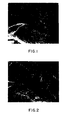
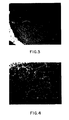
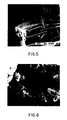
- Figures 1-6 are photomicrographs of various magnifications to illustrate the porosity of various embodiments of the present invention.
- the polymers for use in the present invention are normally solid olefin copolymers or terpolymers which are (1.) thermoplastic, (2.) extrudable in elongate form, such as sheets, tubes, strands, strips, ribbons or films, (3.) orientable (stretchable) to dimensionally stable form at temperatures below that at which stress relaxation of the oriented molecules can occur, (4.) contain reactive side-groups pendant from the polymer "backbone", (5.) contain little or no groups directly in the polymer backbone structure which are as reactive as the reactive pendant groups under the conditions of reaction.
- melt-solid it is meant that the polymers are of sufficient molecular weight to be solid at ambient temperatures.
- Thermoplastic means that the polymers can be heat-softened or melted at super- ambient temperatures.
- Extrudable means that the heat-softened or melted polymer can be forced through an orifice to form a continuous extrudate; this includes simultaneous extrusion of a plurality of strands to form multi-filaments.
- Orientable or “stretchable” means that the cooled extrudate, when subjected to sufficient tensile stress, will yield to the stress and become elongated in the direction of tensile stress.
- a "dimensionally stable form at temperatures below that at which stress relaxation can occur” means that after being oriented (elongated) under tensile stress, the polymer undergoes little, if any, elastic recoil as long as it is at a temperature below that at which "heat-shrinking" is encountered.
- normally-solid, thermoplastic, orientable organic polymers comprised of chain segments which conform essentially to at least one of the following graphic representations of formulae: where R represents repeating olefin polymer units forming the stable polymer chain by way of polymerized olefin monomers; n is a number, representing a plurality of the repeating chain segments, that is sufficient to provide normally-solid polymers which are extrudable; X represents substantially reactive or polar side-groups on the polymer; X' represents substantially reactive or polar side-groups that are different from X but may or may not be reactable with the same reagents that react with X; Y represents side-groups that are not reactable with the reagents which react with X.
- olefin polymers which have long chain molecular structures formed by the polymerization of monomers comprising at least one olefin or combinations of olefins, said molecular structures having pendant side-groups which may be substantially all alike or may not be all alike but which are reactive or reactable with a reagent which swells the polymer, and there may also be some pendant side-groups which are not reactive or reactable with the same reagent that is reactable with the said reagent.
- non-reactive side-groups may be non-olefin moieties of olefin monomers that are pendant from the polymer chain, such as the alkyl moiety of C 3 -C 12 olefins, e.g., propylene, butene, heptene, hexene, octene, dodecene, styrene, and the like, or may be branches of polymerized olefin units which are pendant from the main polymer chain.
- the carboxylic acid groups can be reacted with a reagent, such as aq. NaOH, under conditions wherein the Na salt of the carboxylic acid is formed, but substantially leaving the alkyl ester groups intact.
- a halogen group on a polymer chain can remain intact (unreacted) under conditions wherein the carboxylic acid group is reacted.
- the reagent is strong enough, and the reaction conditions stringent enough, even many of the "relatively non-reactive" groups, such as alkyl ester and halogen groups, may be caused to react.
- the neutralization of -COOH groups by reaction with NaOH is performed more readily than the saponification of -COOR groups with NaOH.
- the present novel process comprises: cold-drawing (orienting) the polymer at a temperature (usually ambient) below that at which stress relaxation of the stretched molecules is likely to be encountered; cutting, slicing, or chopping the oriented polymer to desired physical dimension, if needed; reacting the reactive side groups of the polymer with a reagent, thereby changing the side groups and swelling the polymer; subjecting the polymer to stress which causes fibrillation or strand separation of the polymer; using a counter-reagent to return the side groups to their original form or to some other suitable form, thereby creating voids in the polymer.
- the reaction with the counter-reagent can be done before subjecting the reacted polymer to fibrillation or strand separation stresses. If the beginning polymer at hand is one which has already been cold-drawn (oriented) then that initial step as outlined above need not be repeated.
- Another polymer of interest here is a terpolymer of ethylene/carbon monoxide/unsaturated carboxylic acid (e.g. acrylic or methacrylic acid) wherein the carbon monoxide provides carbonyl (ketone) groups along the chain and the acid provides reactive groups along the chain.
- carboxylic acid e.g. acrylic or methacrylic acid
- the figures (photomicrographs) provided with this disclosure are intended to be visual aids for use in describing and illustrating the porosity in various embodiments of the present invention.
- a black bar shown above a set of numbers. Only the left hand numbers (i.e. the 1, 10, or 100) are of relevance in studying the pore dimensions.
- the 1, 10, or 100 is the length of the black bar, given in microns.
- EAA ethylene/acrylic acid
- copolymers which are among the preferred polymers in the present invention, but the invention is not limited to such polymers. It will be apparent to readers of this disclosure, who are skilled in these relevant arts, that other solid orientable polymers having reactive side-groups may be employed in substantially the same manner as described with the descriptions and explanations provided for said EAA polymers.
- the highly porous polymers of the present invention are found to be quite useful in many applications where highly efficient separation of compounds or materials from fluid streams is desired. For instance, hardness values are efficiently removed from aqueous carriers, such as mineral water, brine, process streams, and the like.
- the fibers especially those wherein the side-groups are -COOH, have been found to be effective in removing metal cations from solution in aqueous medium and from solution in organic or hydrocarbon media where the polymer is not dissolved or otherwise deleteriously effected by the organic or hydrocarbon; this includes monovalent and polyvalent metal ions, including heavy metals, transition metals, noble metals, rare earth metals, actinide series metals, light metals, alkali metals, and alkaline earth metals.
- porous fibers of the present invention are readily adaptable into the fiber and filament art for the making of monofilaments, multi-filaments, fine denier fibers, staple fibers, corded fibers, and the like.
- Filaments of greater than 15 denier and fine denier fibers are prepared in accordance with the present invention ;
- fine denier generally means less than 15 denier and is so used here, though it should be realized that the extensive porosity of the instant fibers will have a noticeable effect on the relationship between fiber diameter and fiber weight expressed as "denier”, especially with the hollow fibers.
- "Denier” is the weight in grams of a filament 9000 meters in length.
- concentration of side-chain such as -COOH groups
- the lower will be the porosity and also the ability to draw fine denier fibers or multi-filaments is decreased, even though large denier monofilaments of polyethylene can usually be drawn (i.e., filaments of greater than 15 denier, especially greater than 30).
- the porous fibers of the present invention can be formed into non-woven articles, yarns, woven articles, knitted articles, ropes, braided articles, pile loops, and the like. Masses of the polymer fibers can be joined at point-to-point contact by the application of enough pressure to cause sintering or radio--frequency bonding, so long as the "heat-shrink" temperature is substantially avoided. A modicum of heat--shrinking may be beneficial, however, in obtaining a "tight squeeze" of fibers wrapped around a core or mandrel, while sacrificing only a small amount of the porosity by way of the heat-shrinking.
- Filaments of ECA polymer granules which are cold-drawn (oriented) can be processed into a mass of microporous fibers. Such orientation results in ribbon--like structures with pendent fibrils and slot-like porosity and extensive microporosity. Moreover cold--drawing results in fibers of sufficient length to form felts or non-woven mats. The fibrils give the non--wovens enchanced strength. Filaments which are not cold-drawn give a ground-wood like material (short fibers) which can be cast into fragile sheets (or mats).
- a novel feature of this non-woven "paper” is that it exhibits ion exchange properties. Cold-drawing allows tiny derivative microporous "ribbons" of several feet length to be mechanically separated from a filament which would otherwise merely disintegrate into a fibrous, particulate mass resembling ground wood.
- the derivative microporous ribbons can be twisted into a threadlike bundle and even woven into an ion exchange "cloth” completely distinct from a nonporous, particulate or fibrous mass.
- the advantages of an ion exchange "paper” or “cloth” over a loose particulate mass of polymer are obvious, especially where new uses of the non-woven "paper” or cloth derive from microporosity, usually absent in the non-oriented particulate mass.
- Microporous fibers from the cold-drawn, oriented polymer can be sheared or ground into short lengths, if desired for use in an ion exchange bed.
- microporous fibers exhibit good ion exchange properties
- non-porous particulate polymer form exhibits very poor ion exchange chemistry. This is because the barrier properties of polyolefins conceal the chemistry, except where microporosity exposes the functional groups directly to the environment.
- melt spun filaments of ECA polymer can be swollen to a microporous derivative form exhibiting ion exchange chemistry and even chopped into long fiber, which can be formed into a "pulp” or slurry.
- the non-wovens formed from melt spun fibers are weak, since no fibrils exist (in melt spun fibers) to entangle (fibril entanglement is responsible for good strength).
- the "fibers" are cylindrical in shape and exhibit a roughly circular cross-section compared to the ribbon--like structure which is favored by better strengths and also by better kinetics due to slot-like porosity of microporous ribbons.
- Extruded monofilaments may be treated in a continuous manner in accordance with the present novel process by cold-stretching (orienting) the monofilament (preferably to near its tensile-break strength), treating with caustic to swell the polymer and react the reagent with the reactive groups on the polymer, and passing the so-treated monofilament through crushing rollers, which causes fibrillation of the monofilament into a multifilament bundle of microfibrillar texture.
- Such long multifilaments may be used, as is, in preparing, e.g., woven materials or wrapping on a filter mandrel; or, beneficially, may be twisted into a thread and used in preparing, e.g., woven materials or wrapped on a filter mandrel.
- Such multifilaments provide benefits not found in ordinary melt-spun blown fiber, or spinnerette multifilaments because the instant fibers have fibrils along the surfaces of the fibers as well as having extensive microporosity.
- the present particles or fibers having extensive microporosity, provide greater access of reagents to the reactive groups on the polymer molecules, permitting as much as 90 percent or more of the reactive groups to be reacted with the reagent.
- the porosity is lost if the polymers become dissolved in a solvent or melted.
- an ethylene/ acrylic acid copolymer containing 20 weight percent acrylic acid and 80 percent ethylene, exhibiting a melt index of 300 was melt extruded into a continuous filament of 1/8" (0.32 cm) diameter, and quenched in water to room temperature.
- One-inch (2.54 cm) long segments were cut from the strand and swelled in 0.5N NaOH for 2 hours at 50-55°C.
- the segments were readily fibrillated by physical stress into fibers 1/32 to 1/16 inches (0.08 to 0.16 cm) long, having a length-to--diameter ratio of 10-15.
- the fibers were essentially non-porous.
- another strand as'above was prepared and cooled, but was cold-stretched (oriented) 100 percent (one foot stretched to 2 feet [30.5 cm stretched to 61 cm]). From this oriented strand were cut one-inch (2.54 cm) long segments which were swelled for 2 hours at 50-55°C in 0.5N NaOH. The segments were readily fibrillated by physical stress into fibers having a length-to-diameter ratio of 300-500 and the fibers were found to be extensively microporous. Fiber lengths of 1/8" (0.23 cm) were found to be easily fabricable into mats and sheets using paper-making techniques.
- a 10 gm filament of ethylene (80 percent)/acrylic and (20 percent) copolymer of 1/8" (0.32 cm) diameter was cold-drawn (by hand) by a factor of 1.5-2.0 and cut into 1" (2.54 cm) segments and placed in a swelling bath containing 0.5N NaOH at 55-60°C.
- the filament segments swelled for 4 hours, turned white (they had been essentially clear) and rubbery during swelling.
- the filaments were drained, washed with de-ionized water, and placed in a bottle with de-ionized water (5 percent polymer in water) and allowed to shake vigorously on a laboratory mechanical shaker overnight (16 hours).
- aqueous fiber slurry resulted with fibers ranging up to 1" (2.54 cm) in length.
- the slurry was cast onto a 100-mesh wire screen and the water was removed by suction (vacuum) applied to reverse side of the screen.
- the mat was allowed to air dry and was examined by microscopy. Fibers of 10-30 microns diameter were common with fibrils (branching) of 2 to 5 microns being very abundant.
- the fibers were found to be ribbon-like with fibrils composed of small appendage ribbons split from the parent ribbon, and were found to be extensively microporous. The so-formed mat was tough and very strong.
- These ribbon-like fine fibers having fibril appendages are very useful by way of the tiny fibrils which entangle and give rise to mats, sheets, and articles of exceptional strength without the need to apply supplemental bonding. Furthermore, these novel fibers are quite useful as a blend component with other fibers, such as wood fibers, cotton fibers, cellulose fibers, nylon fibers, wool fibers, polyester fibers, other olefin polymer fibers (e.g. polypropylene), mineral fibers (e.g. asbestos), fiberglass, and other natural or synthetic fibers.
- the bonding tenacity of the fibril appendages provides considerable strength to mats drawn from a slurry of the blended fibers and also to hot castings of such blends.
- the present fibers with the fibril appendages provide strongly bonded composites with non-fibrous pigments, fillers, polymers, resins, or other additives, such as clay, calcium carbonate, titanium dioxide, and other inorganics.
- the fibers are highly water-absorbent and readily dispersed into water to form a synthetic pulp resembling wood pulp; it also behaves much like quality wood pulp in formation of non-wovens.
- Non-woven products also resemble bleached, refined wood pulp (paper) under microscopic examination.
- Example 3 Microporous, Oriented Fibers Derived from Melt Spun Polymers
- An EAA copolymer (80 weight percent ethylene--20 weight percent acrylic acid and a 300 melt flow value) was extruded through a spinnerette die into a 500 micron diameter strand at 125°C and drawn to a 10 micron diameter filament (a drawdown ratio of 1:625, based on filament cross-section. The filament contained orientation resembling a cold-drawn filament.
- the melt spun fibers were cut from the core (of the haul off unit) in a sheet. The sheet was divided into strips parallel with the fiber length axis. The strips were then mechanically chopped into fibers of 7-10mm length. The fibers were placed in a Waring blender with water and dispersed, then recovered and redispersed in an excess of a solution containing 0.5N NaOH.
- the mixture containing 15 weight percent chopped fiber by weight, was stirred and heated at 60 to 65°C for 10-12 minutes.
- the swollen fibers were drained and thoroughly washed with deionized water and cast onto a 60 mesh stainless steel wire screen. Excess water was drawn off under vacuum and the mat was air dried.
- the white mat (or felt) exhibited very little strength, due to the absence of pendent fibrils, but did possess microporosity of a fibrillar or slot-like texture.
- the microporous chopped fibers were useful as intermediates for forming high melting (m.p. above 200°C) aluminum salt derivative fibers, formed by contacting the microporous chopped fibers with an aqueous solution containing 0.5 weight percent aluminum sulfate.
- the derivative fibers contained 1.3 weight percent aluminum by weight and were also microporous.
- These metal ionomers of these microporous polymers are novel and useful. They can be used for adding metal values to other materials or for subsequent exchanges of cations. They can also be molded into various shapes and configurations.
- the instant microporous polymers are capable of forming ionomers with polyvalent metals by cation exchange, whereas prior art involving EAA copolymers and divalent Mg and Ca have involved melt--compounding MgO and CaO into the polymer, thereby creating crosslinked polymer with the cross-link being essentially irreversible.
Landscapes
- Chemical & Material Sciences (AREA)
- Chemical Kinetics & Catalysis (AREA)
- Engineering & Computer Science (AREA)
- Textile Engineering (AREA)
- Mechanical Engineering (AREA)
- Manufacturing & Machinery (AREA)
- General Chemical & Material Sciences (AREA)
- Artificial Filaments (AREA)
- Paper (AREA)
- Chemical Or Physical Treatment Of Fibers (AREA)
- Addition Polymer Or Copolymer, Post-Treatments, Or Chemical Modifications (AREA)
Applications Claiming Priority (2)
| Application Number | Priority Date | Filing Date | Title |
|---|---|---|---|
| US06/776,534 US4766036A (en) | 1985-09-16 | 1985-09-16 | Process for producing porous fibers from orientable olefin polymers having cation-containing, pendent reactive side-groups and the resultant product |
| US776534 | 1985-09-16 |
Publications (3)
| Publication Number | Publication Date |
|---|---|
| EP0215346A2 true EP0215346A2 (de) | 1987-03-25 |
| EP0215346A3 EP0215346A3 (en) | 1988-10-05 |
| EP0215346B1 EP0215346B1 (de) | 1991-12-18 |
Family
ID=25107662
Family Applications (1)
| Application Number | Title | Priority Date | Filing Date |
|---|---|---|---|
| EP86111796A Expired - Lifetime EP0215346B1 (de) | 1985-09-16 | 1986-08-26 | Poröse Polymerfasern |
Country Status (7)
| Country | Link |
|---|---|
| US (1) | US4766036A (de) |
| EP (1) | EP0215346B1 (de) |
| JP (1) | JP2592807B2 (de) |
| KR (1) | KR940002377B1 (de) |
| AU (1) | AU596609B2 (de) |
| CA (1) | CA1315928C (de) |
| DE (1) | DE3682987D1 (de) |
Cited By (2)
| Publication number | Priority date | Publication date | Assignee | Title |
|---|---|---|---|---|
| EP0227893A3 (en) * | 1985-09-16 | 1989-02-22 | The Dow Chemical Company | Method of removing metal contaminants from solutions |
| EP0322975A3 (en) * | 1987-12-30 | 1990-05-02 | Shell Internationale Research Maatschappij B.V. | Polyketone membranes |
Families Citing this family (23)
| Publication number | Priority date | Publication date | Assignee | Title |
|---|---|---|---|---|
| US5133864A (en) * | 1985-09-16 | 1992-07-28 | The Dow Chemical Company | Filters employing particulate porous polymers |
| US5326629A (en) * | 1985-09-16 | 1994-07-05 | The Dow Chemical Company | Porous polymer fiber filters |
| US4980231A (en) * | 1988-02-19 | 1990-12-25 | Snyder Laboratories, Inc. | Process for coating polymer surfaces and coated products produced using such process |
| US4943460A (en) * | 1988-02-19 | 1990-07-24 | Snyder Laboratories, Inc. | Process for coating polymer surfaces and coated products produced using such process |
| AU624125B2 (en) * | 1988-02-19 | 1992-06-04 | Bristol-Myers Company | Process for coating polymer surfaces and coated products produced using such process |
| US5743940A (en) * | 1988-04-07 | 1998-04-28 | Japan Atomic Energy Research Institute | Process for producing gas adsorbent |
| US5108762A (en) * | 1989-04-19 | 1992-04-28 | Wm. Wrigley Jr. Company | Gradual release structures for chewing gum |
| US5154939A (en) * | 1989-04-19 | 1992-10-13 | Wm. Wrigley Jr. Company | Use of salt to improve extrusion encapsulation of chewing gum ingredients |
| US5229148A (en) * | 1989-04-19 | 1993-07-20 | Wm. Wrigley Jr. Company | Method of combining active ingredients with polyvinyl acetates |
| US4978537A (en) * | 1989-04-19 | 1990-12-18 | Wm. Wrigley Jr. Company | Gradual release structures for chewing gum |
| US5198251A (en) * | 1989-04-19 | 1993-03-30 | Wm. Wrigley Jr. Company | Gradual release structures for chewing gum |
| US5165944A (en) * | 1989-04-19 | 1992-11-24 | Wm. Wrigley Jr. Company | Gradual release structures for chewing gum |
| AU639645B2 (en) * | 1989-10-10 | 1993-07-29 | Wm. Wrigley Jr. Company | Gradual release structures made from fiber spinning techniques |
| CA2049680A1 (en) * | 1990-09-28 | 1992-03-29 | Irwin L. Newberg | Reconfigurable rf matching circuit |
| DE69125018T2 (de) * | 1990-10-12 | 1997-06-12 | Dow Chemical Co | Antimikrobielle hydrogele |
| US5128155A (en) * | 1990-12-20 | 1992-07-07 | Wm. Wrigley Jr. Company | Flavor releasing structures for chewing gum |
| US5447603A (en) * | 1993-07-09 | 1995-09-05 | The Dow Chemical Company | Process for removing metal ions from liquids |
| TW288051B (de) * | 1994-11-22 | 1996-10-11 | Ebara Corp | |
| US20080070274A1 (en) * | 2001-12-10 | 2008-03-20 | William Lee | High capacity, methods for separation, purification, concentration, immobilization and synthesis of compounds and applications based thereupon |
| US6835311B2 (en) * | 2002-01-31 | 2004-12-28 | Koslow Technologies Corporation | Microporous filter media, filtration systems containing same, and methods of making and using |
| US8908129B2 (en) * | 2007-12-28 | 2014-12-09 | Sabic Global Technologies B.V. | Reflective polymeric article and manufacture |
| US8440732B2 (en) * | 2008-03-25 | 2013-05-14 | Sabic Innovative Plastics Ip B.V. | Polymeric foams with nanocellular morphology and methods for making them |
| CN108894050B (zh) * | 2018-05-04 | 2020-10-27 | 河南工程学院 | 高效过滤用中空纤维膜非织造材料的制备方法和应用 |
Family Cites Families (12)
| Publication number | Priority date | Publication date | Assignee | Title |
|---|---|---|---|---|
| US3654679A (en) * | 1968-07-30 | 1972-04-11 | Allied Chem | Microvoiding with alkali metal hydroxide a heat fused fabric of polyamide with fiber occluded axially aligned polyester microfibers |
| US3819782A (en) * | 1969-09-17 | 1974-06-25 | Nippon Selfoc Co Ltd | Process for producing a light-conducting structure |
| US3796778A (en) * | 1969-05-01 | 1974-03-12 | American Cyanamid Co | Method for preparing fibrous polyolefin materials |
| US3801551A (en) * | 1972-07-05 | 1974-04-02 | Dow Chemical Co | Making fibrillar masses of acidic copolymers |
| JPS6014844B2 (ja) * | 1977-04-23 | 1985-04-16 | コ−デイス・ダウ・コ−ポレ−シヨン | 微孔性中空繊維およびその製造法 |
| US4281615A (en) * | 1977-10-31 | 1981-08-04 | Sedco, Inc. | Self-propelled semi-submersible service vessel |
| JPS54101917A (en) * | 1978-01-27 | 1979-08-10 | Teijin Ltd | Hollow fibers and their manufacture |
| CA1148706A (en) * | 1979-02-02 | 1983-06-28 | Robert W. Davison | Preparation of hydrophilic polyolefin fibers for use in papermaking |
| EP0022182B1 (de) * | 1979-06-11 | 1984-09-26 | Teijin Limited | Synthetischer Polyester-Papierfaserstoff und Verfahren zu seiner Herstellung |
| US4290987A (en) * | 1979-07-02 | 1981-09-22 | Celanese Corporation | Process for preparing microporous hollow fibers |
| US4423099A (en) * | 1980-07-28 | 1983-12-27 | Ciba-Geigy Corporation | Membrane modified hydrogels |
| DE3034660C2 (de) * | 1980-09-13 | 1982-09-16 | Hoechst Ag, 6000 Frankfurt | Verfahren zur Herstellung von quellfähigen Fäden, Fasern und geformten Gebilden aus Acrylpolymeren sowie die dabei erhaltenen Produkte |
-
1985
- 1985-09-16 US US06/776,534 patent/US4766036A/en not_active Expired - Lifetime
-
1986
- 1986-08-20 CA CA000516347A patent/CA1315928C/en not_active Expired - Fee Related
- 1986-08-26 EP EP86111796A patent/EP0215346B1/de not_active Expired - Lifetime
- 1986-08-26 DE DE8686111796T patent/DE3682987D1/de not_active Expired - Fee Related
- 1986-09-15 AU AU62699/86A patent/AU596609B2/en not_active Ceased
- 1986-09-16 KR KR1019860007783A patent/KR940002377B1/ko not_active Expired - Fee Related
- 1986-09-16 JP JP61217850A patent/JP2592807B2/ja not_active Expired - Fee Related
Cited By (2)
| Publication number | Priority date | Publication date | Assignee | Title |
|---|---|---|---|---|
| EP0227893A3 (en) * | 1985-09-16 | 1989-02-22 | The Dow Chemical Company | Method of removing metal contaminants from solutions |
| EP0322975A3 (en) * | 1987-12-30 | 1990-05-02 | Shell Internationale Research Maatschappij B.V. | Polyketone membranes |
Also Published As
| Publication number | Publication date |
|---|---|
| AU596609B2 (en) | 1990-05-10 |
| KR870003141A (ko) | 1987-04-15 |
| KR940002377B1 (ko) | 1994-03-24 |
| EP0215346A3 (en) | 1988-10-05 |
| DE3682987D1 (de) | 1992-01-30 |
| JP2592807B2 (ja) | 1997-03-19 |
| AU6269986A (en) | 1987-03-19 |
| JPS6290370A (ja) | 1987-04-24 |
| CA1315928C (en) | 1993-04-13 |
| US4766036A (en) | 1988-08-23 |
| EP0215346B1 (de) | 1991-12-18 |
Similar Documents
| Publication | Publication Date | Title |
|---|---|---|
| EP0215346B1 (de) | Poröse Polymerfasern | |
| US5133864A (en) | Filters employing particulate porous polymers | |
| US5176833A (en) | Filters employing particulate porous polymers | |
| KR0164585B1 (ko) | 말레산 무수물-그래프트된 폴리올레핀 섬유, 이의 제조방법 및 이를 포함하는 직물 | |
| US3097991A (en) | Synthetic fibrous products | |
| US6071451A (en) | Process for making a nonwoven, porous fabric from polymer composite materials | |
| US5320905A (en) | Ionomers of ethylene/carboxylic acid copolymers | |
| JPH0124888B2 (de) | ||
| US4612157A (en) | Method for production of high-tenacity, fine-denier polyvinyl alcohol fiber | |
| WO2008028134A1 (en) | Thermoplastic polymer microfibers, nanofibers and composites | |
| JPWO2008035637A1 (ja) | フィルター材及びその製造方法 | |
| US5326629A (en) | Porous polymer fiber filters | |
| Sen et al. | High-performance acrylic fibers | |
| JP5096203B2 (ja) | 耐熱性および強度に優れるポリプロピレン繊維の製造方法 | |
| JPS604284B2 (ja) | 親水性フイラメント類又は繊維類の製造法 | |
| JP4834688B2 (ja) | 耐熱性に優れるポリプロピレン繊維 | |
| US5589264A (en) | Unspun acrylic staple fibers | |
| CN113862818A (zh) | 一种可降解树脂用驻极材料的制备及应用方法 | |
| US4356234A (en) | Thermoplastic synthetic filaments and process for producing the same | |
| JP4820836B2 (ja) | ポリプロピレン繊維 | |
| DE2009971C3 (de) | Bikomponenten-Synthesefaden des Matrix/Fibrillen-Typs | |
| US3984514A (en) | Process for producing fine polyamide/polystyrene fibers | |
| US5091254A (en) | Polyvinyl alcohol monofilament yarns and process for producing the same | |
| JP2908083B2 (ja) | 耐久親水性を有するポリオレフィン繊維 | |
| JP2006322090A (ja) | バインダー繊維 |
Legal Events
| Date | Code | Title | Description |
|---|---|---|---|
| PUAI | Public reference made under article 153(3) epc to a published international application that has entered the european phase |
Free format text: ORIGINAL CODE: 0009012 |
|
| AK | Designated contracting states |
Kind code of ref document: A2 Designated state(s): BE DE FR GB IT NL |
|
| PUAL | Search report despatched |
Free format text: ORIGINAL CODE: 0009013 |
|
| RHK1 | Main classification (correction) |
Ipc: D01D 5/247 |
|
| AK | Designated contracting states |
Kind code of ref document: A3 Designated state(s): BE DE FR GB IT NL |
|
| 17P | Request for examination filed |
Effective date: 19881026 |
|
| 17Q | First examination report despatched |
Effective date: 19900518 |
|
| GRAA | (expected) grant |
Free format text: ORIGINAL CODE: 0009210 |
|
| AK | Designated contracting states |
Kind code of ref document: B1 Designated state(s): BE DE FR GB IT NL |
|
| ET | Fr: translation filed | ||
| REF | Corresponds to: |
Ref document number: 3682987 Country of ref document: DE Date of ref document: 19920130 |
|
| ITF | It: translation for a ep patent filed | ||
| PLBE | No opposition filed within time limit |
Free format text: ORIGINAL CODE: 0009261 |
|
| STAA | Information on the status of an ep patent application or granted ep patent |
Free format text: STATUS: NO OPPOSITION FILED WITHIN TIME LIMIT |
|
| 26N | No opposition filed | ||
| REG | Reference to a national code |
Ref country code: GB Ref legal event code: IF02 |
|
| PGFP | Annual fee paid to national office [announced via postgrant information from national office to epo] |
Ref country code: FR Payment date: 20020506 Year of fee payment: 17 |
|
| PGFP | Annual fee paid to national office [announced via postgrant information from national office to epo] |
Ref country code: NL Payment date: 20020618 Year of fee payment: 17 |
|
| PGFP | Annual fee paid to national office [announced via postgrant information from national office to epo] |
Ref country code: GB Payment date: 20020626 Year of fee payment: 17 |
|
| PGFP | Annual fee paid to national office [announced via postgrant information from national office to epo] |
Ref country code: BE Payment date: 20020703 Year of fee payment: 17 |
|
| PGFP | Annual fee paid to national office [announced via postgrant information from national office to epo] |
Ref country code: DE Payment date: 20020708 Year of fee payment: 17 |
|
| PG25 | Lapsed in a contracting state [announced via postgrant information from national office to epo] |
Ref country code: GB Free format text: LAPSE BECAUSE OF NON-PAYMENT OF DUE FEES Effective date: 20030826 |
|
| PG25 | Lapsed in a contracting state [announced via postgrant information from national office to epo] |
Ref country code: BE Free format text: LAPSE BECAUSE OF NON-PAYMENT OF DUE FEES Effective date: 20030831 |
|
| BERE | Be: lapsed |
Owner name: THE *DOW CHEMICAL CY Effective date: 20030831 |
|
| PG25 | Lapsed in a contracting state [announced via postgrant information from national office to epo] |
Ref country code: NL Free format text: LAPSE BECAUSE OF NON-PAYMENT OF DUE FEES Effective date: 20040301 |
|
| PG25 | Lapsed in a contracting state [announced via postgrant information from national office to epo] |
Ref country code: DE Free format text: LAPSE BECAUSE OF NON-PAYMENT OF DUE FEES Effective date: 20040302 |
|
| GBPC | Gb: european patent ceased through non-payment of renewal fee | ||
| PG25 | Lapsed in a contracting state [announced via postgrant information from national office to epo] |
Ref country code: FR Free format text: LAPSE BECAUSE OF NON-PAYMENT OF DUE FEES Effective date: 20040430 |
|
| NLV4 | Nl: lapsed or anulled due to non-payment of the annual fee |
Effective date: 20040301 |
|
| REG | Reference to a national code |
Ref country code: FR Ref legal event code: ST |
|
| PG25 | Lapsed in a contracting state [announced via postgrant information from national office to epo] |
Ref country code: IT Free format text: LAPSE BECAUSE OF NON-PAYMENT OF DUE FEES;WARNING: LAPSES OF ITALIAN PATENTS WITH EFFECTIVE DATE BEFORE 2007 MAY HAVE OCCURRED AT ANY TIME BEFORE 2007. THE CORRECT EFFECTIVE DATE MAY BE DIFFERENT FROM THE ONE RECORDED. Effective date: 20050826 |