EP0175249A2 - Neue Phenyl-acetonitril-Derivate - Google Patents
Neue Phenyl-acetonitril-Derivate Download PDFInfo
- Publication number
- EP0175249A2 EP0175249A2 EP85111351A EP85111351A EP0175249A2 EP 0175249 A2 EP0175249 A2 EP 0175249A2 EP 85111351 A EP85111351 A EP 85111351A EP 85111351 A EP85111351 A EP 85111351A EP 0175249 A2 EP0175249 A2 EP 0175249A2
- Authority
- EP
- European Patent Office
- Prior art keywords
- methyl
- ethyl
- nitro
- butyl
- cyano
- Prior art date
- Legal status (The legal status is an assumption and is not a legal conclusion. Google has not performed a legal analysis and makes no representation as to the accuracy of the status listed.)
- Withdrawn
Links
- 0 CC1C*CCC1 Chemical compound CC1C*CCC1 0.000 description 4
Classifications
-
- C—CHEMISTRY; METALLURGY
- C07—ORGANIC CHEMISTRY
- C07C—ACYCLIC OR CARBOCYCLIC COMPOUNDS
- C07C255/00—Carboxylic acid nitriles
-
- A—HUMAN NECESSITIES
- A61—MEDICAL OR VETERINARY SCIENCE; HYGIENE
- A61P—SPECIFIC THERAPEUTIC ACTIVITY OF CHEMICAL COMPOUNDS OR MEDICINAL PREPARATIONS
- A61P9/00—Drugs for disorders of the cardiovascular system
- A61P9/08—Vasodilators for multiple indications
-
- A—HUMAN NECESSITIES
- A61—MEDICAL OR VETERINARY SCIENCE; HYGIENE
- A61P—SPECIFIC THERAPEUTIC ACTIVITY OF CHEMICAL COMPOUNDS OR MEDICINAL PREPARATIONS
- A61P9/00—Drugs for disorders of the cardiovascular system
- A61P9/10—Drugs for disorders of the cardiovascular system for treating ischaemic or atherosclerotic diseases, e.g. antianginal drugs, coronary vasodilators, drugs for myocardial infarction, retinopathy, cerebrovascula insufficiency, renal arteriosclerosis
-
- A—HUMAN NECESSITIES
- A61—MEDICAL OR VETERINARY SCIENCE; HYGIENE
- A61P—SPECIFIC THERAPEUTIC ACTIVITY OF CHEMICAL COMPOUNDS OR MEDICINAL PREPARATIONS
- A61P9/00—Drugs for disorders of the cardiovascular system
- A61P9/12—Antihypertensives
-
- C—CHEMISTRY; METALLURGY
- C07—ORGANIC CHEMISTRY
- C07D—HETEROCYCLIC COMPOUNDS
- C07D211/00—Heterocyclic compounds containing hydrogenated pyridine rings, not condensed with other rings
- C07D211/04—Heterocyclic compounds containing hydrogenated pyridine rings, not condensed with other rings with only hydrogen or carbon atoms directly attached to the ring nitrogen atom
- C07D211/06—Heterocyclic compounds containing hydrogenated pyridine rings, not condensed with other rings with only hydrogen or carbon atoms directly attached to the ring nitrogen atom having no double bonds between ring members or between ring members and non-ring members
- C07D211/08—Heterocyclic compounds containing hydrogenated pyridine rings, not condensed with other rings with only hydrogen or carbon atoms directly attached to the ring nitrogen atom having no double bonds between ring members or between ring members and non-ring members with hydrocarbon or substituted hydrocarbon radicals directly attached to ring carbon atoms
- C07D211/18—Heterocyclic compounds containing hydrogenated pyridine rings, not condensed with other rings with only hydrogen or carbon atoms directly attached to the ring nitrogen atom having no double bonds between ring members or between ring members and non-ring members with hydrocarbon or substituted hydrocarbon radicals directly attached to ring carbon atoms with substituted hydrocarbon radicals attached to ring carbon atoms
- C07D211/20—Heterocyclic compounds containing hydrogenated pyridine rings, not condensed with other rings with only hydrogen or carbon atoms directly attached to the ring nitrogen atom having no double bonds between ring members or between ring members and non-ring members with hydrocarbon or substituted hydrocarbon radicals directly attached to ring carbon atoms with substituted hydrocarbon radicals attached to ring carbon atoms with hydrocarbon radicals, substituted by singly bound oxygen or sulphur atoms
- C07D211/22—Heterocyclic compounds containing hydrogenated pyridine rings, not condensed with other rings with only hydrogen or carbon atoms directly attached to the ring nitrogen atom having no double bonds between ring members or between ring members and non-ring members with hydrocarbon or substituted hydrocarbon radicals directly attached to ring carbon atoms with substituted hydrocarbon radicals attached to ring carbon atoms with hydrocarbon radicals, substituted by singly bound oxygen or sulphur atoms by oxygen atoms
Definitions
- the present invention relates to new phenyl acetonitrile derivatives, their pharmacologically acceptable salts, their preparation and medicaments containing them.
- physiologically acceptable acids are e.g. in question: hydrochloric acid, hydrobromic acid, sulfuric acid, phosphoric acid, acetic acid, malonic acid, succinic acid, fumaric acid, maleic acid, citric acid, tartaric acid, lactic acid, amidosulfonic acid, benzoic acid, oxalic acid, adipoic acid, acetic acid, salicyl acid.
- the new compounds according to the invention have at least one asymmetric carbon atom.
- the invention therefore relates to all possible diastereomer mixtures, racemates and all optically active forms of the compounds according to the invention.
- the compounds of general formula I have superior pharmacological properties to the compounds described in DE-PS 11 54810.
- the nitrate ester formation reaction of the compounds of general formula III, wherein R 9 represents hydrogen or an easily removable protective group can be carried out by reacting with a nitrate ester-forming reagent, such as fuming nitric acid and acetic anhydride or a mixture of fuming nitric acid and conc. Sulfuric acid at low temperatures in the presence or absence of an inert solvent.
- the reaction temperatures are between room temperature and -60 ° C, preferably between -10'C and -30'C.
- the molar ratio is between 1 and 10.
- Protecting groups of R 9 are preferably ester groups which are easily split off under the acidic conditions of the nitration reaction or are exchanged for the nitrate group.
- the benzoyloxy, alkoxycarbonyl, alkanoyl and sulfonyl groups are preferred. Groups that can be split off under basic conditions may have to be removed in a preliminary reaction.
- the nitrate ester formation reaction can also be carried out by halogenating the OR 9 group in a compound of the general formula III in which R 9 is hydrogen or an active ester, for example a sulfonyl group, and then reacting the reaction product with silver nitrate in the presence or Absence of a solvent at temperatures between room temperature and 100 C.
- the halogenation reaction can be carried out according to methods known in the literature by reacting a compound of general formula III with mesyl chloride or tosyl chloride in the presence of an acid-binding agent and then reacting the reaction product with an alkali halide in an organic solvent, e.g. Dimethylformamide, brings about reaction.
- the molar ratio of the mixing reaction between the halogen compound and silver nitrate is not critical. It can be between 1 and 10. This reaction is also usually carried out between 20 ° C and 100 ° C.
- the amide formation reaction of a compound of general formula IV with a compound of general formula V can be carried out by the two compounds in an inert solvent such as e.g. Tetrahydrofuran, dioxane, dimethylformamide or methylene chloride causes the reaction if R, in the general formula IV, represents a lower alkyl radical.
- the reaction can be carried out between room temperature and 100 ° C.
- the reaction time can be between one and 10 hours.
- the molar ratio of the reactants can be between 1 and 3.
- the amide formation reaction with a compound of the general formula V can be carried out with the aid of a coupling reagent such as dicyclohexylcarbodiimide or carbonyldiimidazole or by converting the carboxyl group in a compound of the general formula IV into an activated carboxylic acid derivative such as e.g. a carboxylic acid halide or mixed anhydride can be carried out by processes known per se.
- Inert organic solvents such as e.g. Tetrahydrofuran, dioxane, dimethylformamide or methylene chloride.
- the reaction temperatures are between -30 ° C and + 50 ° C.
- the reaction times are between 30 minutes and 10 hours.
- the molar ratio of the reactants can be between 1 and 5.
- the amide formation reaction of a compound of general formula IV with a compound of general formula V ' can be carried out by reacting the two compounds directly or in an inert solvent such as, for example, tetrahydrofuran, dioxane, dimethylformamide or methylene chloride in the event that R, in the general formula IV represents a lower alkyl radical and R 9 in the general formula V 'is hydrogen or a protective group.
- an inert solvent such as, for example, tetrahydrofuran, dioxane, dimethylformamide or methylene chloride
- the reaction can be carried out between room temperature and 100 ° C.
- the reaction time can be between one and 10 hours.
- the molar ratio of the reactants can be between 1 and 3.
- R 8 in the general formula IV is hydrogen
- the amide formation reaction with a compound of the general formula V 'with the aid of a coupling reagent such as dicyclohexylcarbodiimide or carbonyldiimidazole or by converting the carboxyl group in a ver Binding of the general formula IV in an activated carboxylic acid derivative, such as a carboxylic acid halide or mixed anhydride, for example with halogen formate can be carried out by methods known per se.
- Inert organic solvents such as tetrahydrofuran, dioxane, dimethylformamide or methylene chloride are used as solvents.
- the reaction temperatures are between -30 ° C and + 50 ° C.
- the reaction times are between 30 minutes and 10 hours.
- the molar ratio of the reactants can be between 1 and 5.
- amide formation reactions of a compound of the general formulas VII or VII 'with a compound of the general formula VI can in principle be carried out by the same methods as described for the amide formation reactions from a compound of the general formula IV with a compound of the general formulas V or V' .
- the compounds of the general formula VIII can be prepared, for example, by using a compound of the general formula X in which R 1 , R 2 , R 6 , Hal and m have the meanings given above and
- R 10 represents a benzyl group, with a compound of the general formula XI, in which R 3 , R 4 , R s , R 7 and n have the meanings given above, brings them to reaction by methods known per se and then cleaves off the benzyl group by hydrogenolysis.
- the compounds of general formula VIII can also be prepared by using a compound of general formula XII, wherein R, 'R 2, R 6 and R 10 have the abovementioned meanings, with a compound of general formula XIII, wherein R 3 , R 4 , R s , R 7 , Hal, m and n have the meanings given above, and then hydrogenolytically cleaves the benzyl group.
- the compounds of the general formula X are prepared analogously to generally known processes, for example by reacting a compound of the general formula XII with a compound of the general formula XIV, wherein Hal represents a chlorine or bromine atom by means of a phase transfer catalyzed reaction. Quaternary ammonium and phosphonium salts or crown ethers are used as catalysts.
- the compounds of the general formula XI I are also prepared analogously to known processes, for example by reacting a compound of the general formula XV wherein R 1 , R 2 u. R io have the meanings given above, with a compound of the general formula XVI where R 6 u. Hal have the meanings given above, with the aid of a phase transfer-catalyzed reaction. Quaternary ammonium and phosphonium salts or crown ethers are used as catalysts.
- alkyl also in alkoxy means a group with 1-6 C atoms, in particular the methyl, ethyl, propyl, i. Propyl and butyl group.
- cyclic alkyl groups are mono- and. Bicycles, especially c. Propyl, c. Pentyl et al. c. Understand Hexyl.
- Acylamino groups are to be understood as alkanoylamino groups with 1-6 C atoms, in particular the formyl and acetylamino groups.
- the new substances I according to the invention and their salts can be administered enterally or parenterally in liquid or solid form.
- Water is preferably used as the injection medium, which contains the additives which are customary in injection solutions, such as stabilizing agents, solubilizers or buffers.
- additives are, for example, tartrate and citrate buffers, ethanol, complexing agents (such as ethylenediaminetetraacetic acid and its non-toxic salts), high molecular weight polymers (such as liquid polyethylene oxide) for viscosity regulation.
- Solid carrier materials are eg starch, lactose, mannitol, methylcellulose, talc, highly dispersed silicic acids, hoehermolekulare F ettsaeuren (such as stearic acid), gelatine, agar-agar, calcium phosphate, magnesium stearate, animal and vegetable fats and solid high molecular polymers (such as polyethylene glycols), for oral Suitable preparations can optionally contain flavorings and sweeteners.
- a solution of 2.75 ml of triethylamine in 25 ml of methylene chloride is then added dropwise with stirring at -15 ° C.
- the mixture is stirred for a further 30 min at -15 ° C., the reaction solution is diluted with 50 ml of methylene chloride and washed several times with water.
- the methylene chloride phase is dried over sodium sulfate and evaporated.
- the residue is chromatographed on a silica gel column for further purification (220 g of silica gel 60; mobile phase: methylene chloride / 4% methanol).
- the column fractions obtained are evaporated, the residue is dissolved in methanol and the solution is mixed with a methanolic solution of 0.8 g of oxalic acid dihydrate.
- N-methyl-N- [2- (3-methoxy-4-benzyloxy) -ethyll-N- (y-chloropropyl) amine used in step 1 was shown as follows.
Landscapes
- Chemical & Material Sciences (AREA)
- Organic Chemistry (AREA)
- Health & Medical Sciences (AREA)
- Engineering & Computer Science (AREA)
- Bioinformatics & Cheminformatics (AREA)
- Animal Behavior & Ethology (AREA)
- Life Sciences & Earth Sciences (AREA)
- Cardiology (AREA)
- Heart & Thoracic Surgery (AREA)
- Chemical Kinetics & Catalysis (AREA)
- General Chemical & Material Sciences (AREA)
- Medicinal Chemistry (AREA)
- Nuclear Medicine, Radiotherapy & Molecular Imaging (AREA)
- Pharmacology & Pharmacy (AREA)
- Veterinary Medicine (AREA)
- Public Health (AREA)
- General Health & Medical Sciences (AREA)
- Urology & Nephrology (AREA)
- Vascular Medicine (AREA)
- Organic Low-Molecular-Weight Compounds And Preparation Thereof (AREA)
- Acyclic And Carbocyclic Compounds In Medicinal Compositions (AREA)
- Pharmaceuticals Containing Other Organic And Inorganic Compounds (AREA)
- Hydrogenated Pyridines (AREA)
Abstract

- R1, R2, R3, R4, R5 gleich oder verschieden sind und Wasserstoffatome, Halogenatome, Alkylgruppen, Alkoxygruppen, Nitrogruppen, Aminogruppen und Acylaminogruppen bedeuten, wobei auch jeweils zwei Reste in Nachbarstellung zusammen einen Methylendioxy- oder Ethylendioxy-Ring bilden können, A folgende Bedeutungen besitzt,
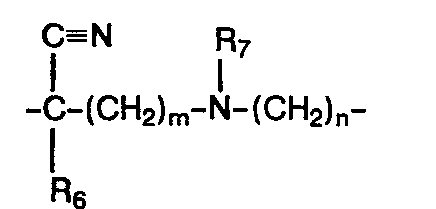
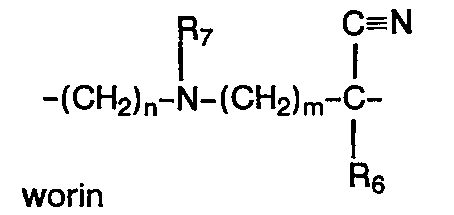
- R6 einen geradkettigen, cyclischen oder verzweigten, gesättigten oder ungesättigten Alkylrest mit 2-12 Kohlenstoffatomen und
- R7 ein Wasserstoffatom oder einen geradkettigen oder verzweigten, gesättigten Alkylrest mit 1-6 Kohlenstoffatomen darstellen, m und
- n gleich oder verschieden sind und die Zahlen 2 und 3 bedeuten und
- p die Zahlen 1 und 2 bedeutet,
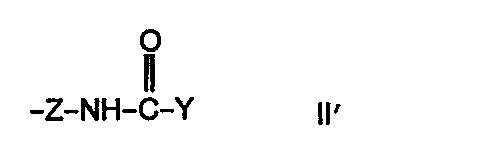
- X einen geradkettigen, cyclischen oder verzweigten Alkylrest mit 2-10 Kohlenstoffatomen, der gegebenenfalls noch durch eine Aminogruppe substituiert sein kann oder eine Gruppierung der allgemeinen Formeln II oder II'

Description
- Die vorliegende Erfindung betrifft neue Phenyl-acetonitril-Derivate, deren pharmakologisch vertraegliche Salze, ihre Herstellung sowie diese enthaltende Arzneimittel.
- Gegenstand der Erfindung sind neue Phenyl-acetonitril-Derivate der allgemeinen Formel I,

- R1, R2, R3, R4, Rs gleich oder verschieden sind und Wasserstoffatome, Halogenatome, Alkylgruppen, Alkoxygruppen, Nitrogruppen, Aminogruppen und Acylaminogruppen bedeuten, wobei auch jeweils zwei Reste in Nachbarstellung zusammen einen Methylendioxy- oder Ethylendioxy-Ring bilden können,
- A folgende Bedeutungen besitzt,


- R6 einen geradkettigen, cyclischen oder verzweigten, gesättigten oder ungesättigten Alkylrest mit 2-12 Kohlenstoffatomen und
- R7 ein Wasserstoffatom oder einen geradkettigen oder verzweigten, gesättigten Alkylrest mit 1-6 Kohlenstoffatomen darstellen,
- m und
- n gleich oder verschieden sind und die Zahlen 2 u. 3 bedeuten und
- p die Zahlen 1 und 2 bedeutet,
- X einen geradkettigen, cyclischen oder verzweigten Alkylrest mit 2-10 Kohlenstoffatomen, der gegebenenfalls noch durch eine Aminogruppe substituiert sein kann oder eine Gruppierung der allgemeinen Formeln II oder II'


- Als physiologisch vertraegliche Saeuren kommen z.B. in Frage: Salzsaeure, Bromwasserstoffsaeure, Schwefelsaeure, Phosphorsaeure, Essigsaeure, Malonsaeure, Bernsteinsaeure, Fumarsaeure, Maleinsaeure, Zitronensaeure, Weinsaeure, Milchsaeure, Amidosulfonsaeure, Benzoesaeure, Oxalsaeure, Adipinsaeure, Salicylsaeure, Naphthoesaeure und o-Acetoxybenzoesaeure.
- Die erfindungsgemaeßen neuen Verbindungen besitzen mindestens ein asymmetrisches Kohlenstoffatom. Gegenstand der Erfindung sind daher saemtliche moeglichen Diastereomerengemische, Racemate und saemtliche optisch aktive Formen der erfindungsgemaeBen Verbindungen.
- Es sind bereits eine Reihe aehnlicher Verbindungen bekannt (vgl. DE-PS 11 54810). Die erfindungsgemaeßen Verbindungen der allgemeinen Formel I unterscheiden sich jedoch von den dort beschriebenen Verbindungen, daß sie in mindestens einem der beiden Phenylkerne die Gruppe

- Die Verbindungen der allgemeinen Formel I besitzen gegenueber den in der DE-PS 11 54810 beschriebenen Verbindungen ueberlegene pharmakologische Eigenschaften.
- Untersuchungen an wachen Hunden mit Substanzen der DE-PS 11 54810 (z.B. Verapamil) zeigen einen dosisabhaengigen Abfall des arteriellen Blutdruckes und einen dosisabhaengigen Anstieg des rechten Vorhofdruckes, d.h. eine Nachlastsenkung aber einer Anhebung der Vorlast. Im Gegensatz dazu zeigen die beanspruchten Substanzen der allg. Formel I eine dosisabhaengige Senkung des arteriellen Blutdruckes und auch des Vorhofdruckes und damit der Vorlast. Dies ist als ein wichtiger therapeutischer Vorteil anzusehen, da eine Vorlastsenkung ein anerkannt wirksames Therapieprinzip bei verschiedenen Erkrankungen des Herz-Kreislaufsystemes ist, z.B. bei Angina pectoris oder Herzinsuffiziens usw..
- Weiterhin zeigen in vitro Untersuchungen an Blutgefaeßen, daß die Verbindungen der allg. Formel I im Gegensatz zu denen der Anmeldung DE-PS 1154810 den Gehalt an cyclischem Guanosinmonophosphat (c-GMP) erhoehen. Erhoehung des c-GMP-Gehaltes fuehrt nach heutiger Ansicht zur Gefaeßrelaxation, einem wichtigen Therapieprinzip bei Herzkreislauferkrankungen.
- Die erfindungsgemaeßen Verbindungen der allgemeinen Formel I, in der R1, R2, R3, R4, Rs, A, X und p die oben genannten Bedeutungen besitzen, können dargestellt werden, indem man
- a) eine Verbindung der allgemeinen Formel III,

- b) indem man eine Verbindung der allgemeinen Formel IV,


- c) indem man eine Verbindung der allgemeincn Formel VI,


- Verbindungen der allgemeinen Formel III werden erhalten, indem man eine Verbindung der allgemeinen Formel IV mit einer Verbindung der allgemeinen Formel V',


- Die Nitratester-Bildungsreaktion der Verbindungen der allgemeinen Formel III, worin R9 Wasserstoff oder eine leicht abspaltbare Schutzgruppe bedeutet, kann durchgeführt werden, indem man mit einem nitratesterbildenden Reagenz, wie rauchende Salpetersäure und Acetanhydrid oder einer Mischung aus rauchender Salpetersäure und konz. Schwefelsäure bei niedrigen Temperaturen in Gegenwart oder Abwesenheit eines inerten Lösungsmittels umsetzt. Die Reaktionstemperaturen liegen zwischen Raumtemperatur und -60•C, bevorzugt zwischen -10'C und -30'C. Das Molverhältnis liegt zwischen 1 und 10.
- Als Schutzgruppen von R9 kommen vorzugsweise Estergruppen in Frage, die unter den sauren Bedingungen der Nitratierungsreaktion leicht abgespalten bzw. gegen die Nitratgruppe ausgetauscht werden. Bevorzugt sind die Benzoyloxy-, Alkoxycarbonyl-, Alkanoyl- und Sulfonylgruppen. Basisch abspaltbare Gruppen müssen ggf. in einer Vorreaktion entfernt werden.
- Alternativ kann die Nitratester-Bildungsreaktion auch durchgeführt werden, indem man in einer Verbindung der allgemeinen Formel III, worin R9 Wasserstoff oder einen aktiven Ester, bspw. eine Sulfonylgruppe, bedeutet, die Gruppe OR9 halogeniert und anschließend das Reaktionsprodukt mit Silbernitrat in Gegenwart oder Abwesenheit eines Lösungsmittels bei Temperaturen zwischen Raumtemperatur und 100 C umsetzt.
- Die Halogenierungsreaktion kann nach Literatur bekannten Verfahren durchgeführt werden, indem man eine Verbindung der allgemeinen Formel III mit Mesylchlorid oder Tosylchlorid in Gegenwart eines säurebindenden Mittels umsetzt und anschließend das Reaktionsprodukt mit einen Alkalihalogenid in einem organischen Lösungsmittel, z.B. Dimethylformamid, zu Reaktion bringt. Das Molverhältnis der Mischungsreaktion zwischen der Halogenverbindung und Silbernitrat ist nicht kritisch. Es kann zwischen 1 und 10 hetragen. Auch diese Reaktion wird üblicherweise zwischen 20°C und 100°C durchgeführt.
- Die Amidbildungsreaktion einer Verbindung der allgemeinen Formel IV mit einer Verbindung der allgemeinen Formel V kann durchgefuehrt werden, indem man die beiden Verbindungen in einem inerten Loesungsmittel wie z.B. Tetrahydrofuran, Dioxan, Dimethylformamid oder Methylenchlorid zur Reaktion bringt fuer den Fall, daß R, in der allgemeinen Formel IV einen niederen Alkylrest darstellt. Die Reaktion kann zwischen Raumtemperatur und 100°C durchgefuehrt werden. Die Reaktionsdauer kann zwischen einer und 10 Stunden betragen. Das Molverhaeltnis derReaktanderkann zwischen 1 und 3 liegen.
- Fuer den Fall, daB R, in der allgemeinen Formel IV Wasserstoff darstellt, kann die Amidbildungsreaktion mit einer Verbindung der allgemeinen Formel V mit Hilfe eines Kupplungsreagenzes wie Dicyclohexylcarbodiimid oder Carbonyldiimidazol oder durch Ueberfuehrung der Carboxylgruppe in einer Verbindung der allgemeinen Formel IV in ein aktiviertes Carbonsaeurederivat wie z.B. ein Carbonsaeurehalogenid oder gemischtes Anhydrid nach an sich bekannten Verfahren durchgefuehrt werden. Als Loesungsmittel kommen inerte organische Loesungsmittel zur Anwendung wie z.B. Tetrahydrofuran, Dioxan, Dimethylformamid oder Methylenchlorid. Die Reaktionstemperaturen liegen zwischen -30°C und +50°C. Die Reaktionszeiten betragen zwischen 30 min und 10 Stunden. Das Molverhaeltnis der Reaktanden kann zwischen 1 und 5 liegen.
- Die Amidbildungsreaktion einer Verbindung der allgemeinen Formel IV mit einer Verbindung der allgemeinen Formel V' kann durchgefuehrt werden, indem man die beiden Verbindungen direkt oder in einem inerten Loesungsmittel wie z.B. Tetrahydrofuran, Dioxan, Dimethylformamid oder Methylenchlorid zur Reaktion bringt fuer den Fall, daß R, in der allgemeinen Formel IV einen niederen Alkylrest darstellt und R9 in der allgemeinen Formel V' Wasserstoff oder eine Schutzgruppe bedeutet.
- Die Reaktion kann zwischen Raumtemperatur und 100°C durchgefuehrt werden. Die Reaktionsdauer kann zwischen einer und 10 Stunden betragen. Das Molverhaeltnis der Reaktanden kann zwischen 1 und 3 liegen.
- Für den Fall, daß R8 in der allgemeinen Formel IV Wasserstoff darstellt, kann die Amidbildungsreaktion mit einer Verbindung der allgemeinen Formel V' mit Hilfe eines Kupplungsreagenzes wie Dicyclohexylcarbodiimid oder Carbonyldiimidazol oder durch Überführung der Carboxylgruppe in einer Verbindung der allgemeinen Formel IV in ein aktiviertes Carbonsäurederivat, wie z.B. ein Carbonsäurehalogenid oder gemischtes Anhydrid, z.B. mit Halogenameisensäureester, nach an sich bekannten Verfahren durchgeführt werden. Als Lösungsmittel kommen inerte organische Lösungsmittel zur Anwendung, wie z.B. Tetrahydrofuran, Dioxan, Dimethylformamid oder Methylenchlorid. Die Reaktionstemperaturen liegen zwischen -30°C und +50°C. Die Reaktionszeiten betragen zwischen 30 min und 10 Stunden. Das Molverhältnis der Reaktanden kann zwischen 1 und 5 liegen.
- Die Amidbildungsreaktionen einer Verbindung der allgemeinen Formeln VII oder VII' mit einer Verbindung der allgemeinen Formel VI können grundsätzlich nach den gleichen Verfahren, wie bei den Amidbildungsreaktionen aus einer Verbindung der allgemeinen Formel IV mit einer Verbindung der allgemeinen Formeln V oder V' beschrieben, durchgeführt werden.
- Die Verbindungen der allgemeinen Formeln III, IV u. VI koennen dargestellt werden, indem man eine Verbindung der allgemeinen Formel VIII,


- X' einen geradkettigen oder verzweigten Alkylrest mit 1-8 Kohlenstoffatomen, der gegebenenfalls noch durch eine Aminogruppe substituiert sein kann, darstellt, uns
- W eine Hydroxylgruppe, Aminogruppe, Carboxylgruppe oder Carbalkoxygruppe oder eine in diese nachtraeglich umwandelbare Atomgruppierung darstellt oder
- Die Verbindungen der allgemeinen Formel VIII koennen z.B. dargestellt werden, indem man eine Verbindung der allgemeinen Formel X,

- R10 eine Benzylgruppe bedeutet, mit einer Verbindung der allgemeinen Formel XI,

- Die Verbindungen der allgemeinen Formel VIII koennen auch dargestellt werden, indem man eine Verbindung der allgemeinen Formel XII,


- Die Verbindungen der Formeln III, IV, VI u. VIII sind neu und zum Teil ebenfalls pharmakologisch wirksam.
- Die Herstellung der Verbindungen der allgemeinen Formel X erfolgt analog zu allgemein bekannten Verfahren, z.B. durch Umsetzung einer Verbindung der allgemeinen Formel XII mit einer Verbindung der allgemeinen Formel XIV,

- Die Herstellung der Verbindungen der allgemeinen Formel XII erfolgt ebenfalls analog zu bekannten Verfahren z.B. durch Umsetzung einer Verbindung der allgemeinen Formel XV


- Halogen im Sinne dieser Anmeldung bedeutet Fluor, Chlor, Brom und Jod, wobei Fluor und Chlor bevorzugt sind. Alkyl auch in Alkoxy bedeutet, soweit nicht anders definiert, eine Gruppe mit 1-6 C-Atomen, insbesondere die Methyl, Ethyl, Propyl, i. Propyl und Butylgruppe.
- Unter cyclischen Alkylgruppen sind Mono- u. Bicyclen, insbesondere c. Propyl, c. Pentyl u. c. Hexyl zu verstehen.
- Besonders bevorzugt sind Verbindungen, in denen A in der Formel I die Gruppe

- Unter Acylaminogruppe sind Alkanoylaminogruppen mit 1-6 C-Atomen, insbesondere die Formyl- und Acetylaminogruppe zu verstehen.
- Die erfindungsgemaeßen neuen Substanzen I und ihre Salze koennen in fluessiger oder fester Form enteral oder parenteral appliziert werden. Als Injektionsmedium kommt vorzugsweise Wasser zur Anwendung, welches die bei Injektionsloesungen ueblichen Zusaetze wie Stabilisierungsmittel, Loesungsvermittler oder Puffer enthaelt. Derartige Zusaetze sind z.B. Tartrat- und Citratpuffer, Ethanol, Komplexbildner (wie Ethylendiamintetraessigsaeure und deren nicht-toxische Salze), hochmolekulare Polymere (wie fluessiges Polyethylenoxyd) zur Viskositaetsrequlierung. Feste Traegerstoffe sind z.B. Staerke, Lactose, Mannit, Methylcellulose, Talkum, hochdisperse Kieselsaeuren, hoehermolekulare Fettsaeuren (wie Stearinsaeure), Gelatine, Agar-Agar, Calciumphosphat, Magnesiumstearat, tierische und pflanzliche Fette und feste hochmolekulare Polymere (wie Polyethylenglykole), fuer orale Applikation geeignete Zubereitungen koennen gewuenschtenfalls Geschmacks- und Sueßstoffe enthalten.
- Die erfindungsgemäßen Verbindungen werden üblicherweise in Mengen von 50-500 mg pro Tag bezogen auf 75 kg Körpergewicht appliziert. Bevorzugt ist es, 2-3 mal pro Tag 1-2 Tabletten mit einem Wirkstoffgehalt von 20-200 mg zu verabreichen. Die Tabletten können auch retardiert sein, wodurch nur noch 1 mal pro Tag 1-2 Tabletten mit 50-500 mg Wirkstoff gegeben werden muß. Der Wirkstoff kann auch durch Injektion 1-8 mal pro Tag bzw. durch Dauerinfusion gegeben werden, wobei Mengen von 10-200 mg/Tag normalerweise ausreichen. Bevorzugte Verbindungen sind:
- 2-Methoxy-4-<1-cyano-1-(methylethyl)-4-[N-methyl-N-[2-(3,4-dimethoxy-phenyl)-ethyl]-amino-butyl]>-phenoxy-N-(3-nitro-oxy-propyl-1)-acetamid
- 2-Methoxy-4-<1-cyano-1-(methylethyl)-4-[N-methyl-N-[2-(3,4-dimethoxy-phenyl)-ethyl]-amino-butyl]>- phenoxyessigsaeure-4-(nitro-oxy-methyl)-piperidylamid
- 2-Methoxy-4-<1-cyano-1-(methylethyl)-4-[N-methyl-N-[2-(3,4-dimethoxy-phenyl)-ethyl]-amino-butyl]>-phenoxyessigsaeure-4(α-nitro-oxy-ethyl)-piperidylamid
- 2-Methoxy-4-<1-cyano-1-(methylethyl)-4-[N-methyl-N-[2-(3,4-dimethoxy-phenyl)-ethyl]-amino-butyl]>-phenoxy-N-(4-methyl-3-nitro-oxy-pentyl-2)-acetamid
- 2-Methoxy-4-<1-cyano-1-(methylethyl)-4-[N-methyl-N-[2-(3,4-dimethoxy-phenyl)-ethyl]-amino-butyl]>-phenoxy-N-(4,4-dimethyl-3-nitro-oxy-pentyl-2)-acetamid
- 2-Methoxy-4-<1-cyano-1-(methylethy1)-4-(N-methyl-N-[2(3,4-dimethoxy-phenyl)-ethyl]-amino-butyl]>-phcnoxy-N-(2,4-dimethyl-3-nitro-oxy-pentyl-2)-acetamid
- 2-Methoxy-4-<1-cyano-1-(methylethyl)-4-[N-methyl-N-[2-(3,4-dimethoxy-phenyl)-ethyl]-amino-butyl]>-phenoxy-N-(2,4,4-trimethyl-3-nitro-oxy-pentyl-2)-acetamid
- 2-Methoxy-4-<1-cyano-1-(methylethyl)-4-[N-methyl-N-[2-(3,4-dimethoxy-phenyl)-ethyl]-amino-butyl]>-phenoxy-N-(2,2-dimethyl-3-nitro-oxy-propyl-1)-acetamid
- 2-Chlor-3-ethyl-4-<1-cyano-1-(methylethyl)-3-[N-methyl-N-[2-(3,4-dimethyl-phenyl)ethyl]-amino-propyl ]>-phenoxy-N-(3-nitro-oxy-propyl-1)-acetamid
- 2-Methoxy-5-<1-cyano-1-(methylethyl)-4-[N-methyl-N-[2-(3,4-dimethoxy-phenyl)-ethyl]-amino-butyl]>-phenoxy-N-(3-nitro-oxy-propyl-1)-acetamid
- 2-Methoxy-5-<1-cyano-1-(methylethyl)-4-[N-methyl-N-[2-(3,4-dimethoxy-phenyl)-ethyl]-amino-butyl]>-phenoxyessigsaeure-4-(nitro-oxy-methyl)-piperidylamid
- 2-Methoxy-5-<1-cyano-1-(methylethyl)-4-[N-methyl-N-[2-(3,4-dimethoxy-phenyl)-ethyl]-amino-butyl]>-phenoxyessigsaeure-4-(a-nitro-oxy-ethyl)-piperidylamid
- 2-Methoxy-5-<1-cyano-1-(methylethyl)-4-[N-methyl-N-[2-(3,4-dimethoxy-phenyl)-ethyl]-amino-butyl]>-phenoxy-N-(4-methyl-3-nitro-oxy-pentyl-2)-acetamid
- 2-Methoxy-5-<1-cyano-1-(methylethyl)-4-[N-methyl-N-[2-(3,4-dimethoxy-phenyl)-ethyl]-amino-butyl]>-phenoxy-N-(4,4-dimethyl-3-nitro-oxy-pentyl-2)-acetamid
- 2-Methoxy-5-<1-cyano-1-(methylethyl)-4-[N-methyl-N-[2-(3,4-dimethoxy-phenyl)-ethyl]-amino-butyl]>-phenoxy-N-(2,4-dimethyl-3-nitro-oxy-pentyl-2)-acetamid
- 2-Methoxy-5-<1-cyano-1-(methylethyl)-4-[N-methyl-N-[2-(3,4-dimethoxy-phenyl)-ethyl]-amino-butyl]>-phenoxy-N-(2,4,4-trimethyl-3-nitro-oxy-pentyl-2)-acetamid
- 2-Methoxy-5-<1-cyano-1-(methylethyl)-4-[N-methyl-N-[2-(3,4-dimethoxy-phenyl)-ethyl]-amino-butyl]>-phenoxy-N-(2,2-dimethyl-3-nitro-oxy-propyl-1)-acetamid
- 2-Methoxy-5-<1-cyano-1-(c.hexyl)-4-[N-ethyl-N-[2-(3,4-methylendioxy-phenyl)-ethyl]-amino-butyl]>-phenoxy-N-(3-nitro-oxy-propyl-1)-acetamid
- 2-Methoxy-4-<2-[N-methyl-N-[4-cyano-4-(methylethyl)-4-(3,4-dimethoxy-phenyl)-butyl]-amino-ethyl] >-phenoxy-N-(3-nitro-oxy-propyl-1)-acetamid
- 2-Methoxy-4-<2-[N-methyl-N-[4-cyano-4-(methylethyl)-4-(3,4-dimethoxy-phenyl)-butyl]-amino-ethyl]>-phenoxyessigsaeure-4-(nitro-oxy-methyl)-piperidylamid
- 2-Methoxy-4-<2-[N-methyl-N-[4-cyano-4-(methylethyl)-4-(3,4-dimethoxy-phenyl)-butyl]-amino-ethyl]>-phenoxyessigsaeure-4-(a-nitro-oxy-ethyl)-piperidylamid
- 2-Methoxy-4-<2-[N-methyl-N-[4-cyano-4-(methylethyl)-4-(3,4-dimethoxy-phenyl)-butyl]-amino-ethyl]>-phenoxy-N-(4-methyl-3-nitro-oxy-pentyl-2)-acetamid
- 2-Methoxy-4-<2-[N-methyl-N-[4-cyano-4-(methylethyl)-4-(3,4-dimethoxy-phenyl)-butyl]-amino-ethyl]>- phenoxy-N-(4,4-dimethyl-3-nitro-oxy-pentyl-2)-acetamid
- 2-Methoxy-4-<2-(N-methyl-N-[4-cyano-4-(methylethyl)-4-(3,4-dimethoxy-phenyl)-butyl]-amino-ethyl]>-phenoxy-N-(2,4-dimethyl-3-nitro-oxy-pentyl-2)-acetamid
- 2-Methoxy-4-<2-(N-methyl-N-[4-cyano-4-(methylethyl)-4-(3,4-dimethoxy-phenyl)-butyl]-amino-ethyl]>-phenoxy-N-(2,4,4-trimethyl-3-nitro-oxy-pentyl-2)-acetamid
- 2-Methoxy-4-<2-(N-methyl-N-[4-cyano-4-(methylethyl)-4-(3,4-dimethoxy-phenyl)-butyl]-amino-ethyl]>-phenoxy-N-(2,2-dimethyl-3-nitro-oxy-propyl-1)-acetamid
- 2-Propoxy-4-<2-N-C4-cyano-4-(methylethyl)-4-(4-fluor-phenyl)-butyl]-aminoethyl]>-phenoxy-(2-nitro-oxy-ethyl-1)-acetamid
- 2-Methoxy-5-<2-[N-methyl-N-[4-cyano-4-(methylethyl)-4-(3,4-dimethoxy-phenyl)-butyl]-aaiino-ethyl]>-phenoxy-N-(3-nitro-oxy-propyl-1)-acetamid
- 2-Methoxy-5-<2-[N-methyl-N-[4-cyano-4-(methylethyl)-4-(3,4-dimethoxy-phenyl)-butyl]-amino-ethyl]>-phenoxyessigsaeure-4-(nitro-oxy-methyl)-piperidylamid
- 2-Methoxy-5-<2-[N-methyl-N-[4-cyano-4-(methylethyl)-4-(3,4-dimethoxy-phenyl)-butyl]-amino-ethyl]>-phenoxyessigsaeure-4-(a-nitro-oxy-ethyl)-piperidylamid
- 2-Methoxy-5-<2-[N-methyl-N-[4-cyano-4-(methylethyl)-4-(3,4-dimethoxy-phenyl)-butyl]-amino-ethyl]>-phenoxy-N-(4-methyl-3-nitro-oxy-pentyl-2)-acetamid
- 2-Methoxy-5-<2-[N-methyl-N-[4-cyano-4-(methylethyl)-4-(3,4-dimethoxy-phenyl)-butyl]-amino-ethyl]>-phenoxy-N-(4,4-dimethyl-3-nitro-oxy-pentyl-2)-acetamid
- 2-Methoxy-5-<2-(N-methyl-N-[4-cyano-4-(methylethyl)-4-(3,4-dimethoxy-phenyl)-butyl]-amino-ethyl]>phenoxy-N-(2,4-dimethyl-3-nitro-oxy-pentyl-2)-acetamid
- 2-Methoxy-5-<2-(N-methyl-N-[4-cyano-a-(methylethyl)-4-(3,4-dimethoxy-phenyl)-butyl]-amino-ethylJ>-phenoxy-N-(2,4,4-trimethyl-3-nitro-oxy-pentyl-2)-acetamid
- 2-Methoxy-5-<2-(N-methyl-N-[4-cyano-4-(methylethyl)-4-(3,4-dimethoxy-phenyl)-butyl]-amino-ethyl]>-phenoxy-N-(2,2-dimethyl-3-nitro-oxy-propyl-1)-acetamid
- 2-Methoxy-4-<2-(N-methyl-N-[4-cyano-4-(methylethyl)-4-(3-nitro-4-methoxy-phenyl)-butyl)-amino-ethyl]>-phenoxy-N-(2-nitro-oxy-propyl-1)-acetamid
- 2-Methoxy-4-<2-(M-methyl-N-[4-cyano-4-(methylethyl)-4-(3-amino-4-methoxy-phenyl)-butyl]-amino-ethyl]>-phenoxy-N-(2-nitro-oxy-propyl-1)-acetamid
- 2-Methoxy-4-<2-(N-methyl-N-[4-cyano-4-(methylethyl)-4-(3-acetamid-4-methoxy-phenyl)-butyl]-amino-ethyl]>-phenoxy-N-(2-nitro-oxy-propyl-1)-acetamid
- 2-Methoxy-5-<2-[N-methyl-N-[4-cyano-4-(methylethyl)-4-(3,4,5-trimethoxy-phenyl)-butyl]-amino-ethyl]>-phenoxy-N-(nitro-oxy-ethyl)-acetamid
- 2-Methoxy-5-<2-[N-methyl-N-[4-cyano-4-(methylethyl)-4-(3,4,5-trimethaxy-phenyl)-butyl]-amino-ethyl]>-phenoxy-N-(2-nitro-oxy-propyl)-acetamid
- 2-Methoxy-5-<2-[N-methyl-N-[4-cyano-4-(methylethyl)-4-(3,4,5-trimethoxy-phenyl)-butyl]-amino-ethyl]>-phenoxy-N-(3-nitro-oxy- butyl-2)-acetamid
- 2-Methoxy-5-<2-[N-methyl-N-[4-cyano-4-(methylethyl)-4-(3,4,5-trimethoxy-phenyl)-butyl]-amino-ethyl]>-phenoxy-N-(2-methyl-3-nitro-oxy-propyl-2)-acetamid
- 2-Methoxy-5-<2-(N-methyl-N-[4-cyano-4-(methylethyl)-4-(3,4,5-trimethoxy-phenyl)-butyl]-amino-ethyl]>-phenoxy-N-(1,3-bis- nitro-oxy-cyclohexyl-2)-acetamid
- 2-Methoxy-5-<2-[N-methyl-N-[4-cyano-4-(methylethyl)-4-(3,4,5-trimethoxy-phenyl)-butyl]-amino-ethyl]>-phenoxy-N-(3-nitro-oxy-propyl-1)-acetamid
- 2-Methoxy-5-<2-[N-methyl-N-[4-cyano-4-(methylethyl)-4-(3,4,5-trimethoxy-phenyl)-butyl]-amino-ethyl]>-phenoxyessigsaeure-4-(nitro-oxy-methyl)-piperidylamid
- 2-Methoxy-5-<2-[N-methyl-N-[4-cyano-4-(methylethyl)-4-(3,4,5-trimethoxy-phenyl)-butyl]-amino-ethyl]>-phenoxyessigsaeure-4-(a-nitro-oxy-ethyl)-piperidylamid
- 2-Methoxy-5-<2-[N-methyl-N-[4-cyano-4-(methylethyl)-4-(3,4,5-trimethoxy-phenyl)-butyl]-amino-ethyl]>-phenoxy-N-(4-methyl-3-nitro-oxy-pentyl-2)-acetamid
- 2-Methoxy-5-<2-[N-methyl-N-[4-cyano-4-(methylethyl)-4-(3,4,5-trimethoxy-phenyl)-butyl]-amino-ethyl]>-phenoxy-N-(4,4-dimethyl-3-nitro-oxy-pentyl-2)-acetamid
- 2-Methoxy-5-<2-[N-methyl-N-[4-cyano-4-(methylethyl)-4-(3,4,5-trimethoxy-phenyl)-butyl]-amino-ethyl]>-phenoxy-N-(2,4-dimethyl-3-nitro-oxy-pentyl-2)-acetamid
- 2-Methoxy-5-<2-[N-methyl-N-[4-cyano-9-tmethylethyl)-4-(3,4,5-trimethoxy-phenyl)-butyl]-amino-ethyl]>-phenoxy-N-(2,4,4-trimethyl-3-nitro-oxy-pentyl-2)-acetamid
- 2-Methoxy-5-<2-[N-methyl-N-[4-cyano-4-(methylethyl)-4-(3,4,5-trimethoxy-phenyl)-butyl]-amino-ethyl]>-phenoxy-N-(2,2-dimethyl-3-nitro-oxy-propyl-1)-acetamid
- 2-Methoxy-4-<2-[N-methyl-N-[4-cyano-4-(methylethyl)-4-(3,4,5-trimethoxy-phenyl)-butyl]-amino-ethyl]>-phenoxy-N-(3-nitro-oxy-propyl-1)-acetamid
- 2-Methoxy-4-<2-[N-methyl-N-[4-cyano-4-(methylethyl)-4-(3,4,5-trimethoxy-phenyl)-butyl]-amino-ethyl]>-phenoxyessigsaeure-4-(nitro-oxy-methyl)-piperidylamid
- 2-Methoxy-4-<2-[N-methyl-N-[4-cyano-4-(methylethyl)-4-(3,4,5-trimethoxy-phenyl)-butyl]-amino-ethyl]>-phenoxyessigsaeure-4-(a-nitro-oxy-ethyl)-piperidylamid
- 2-Methoxy-4-<2-[N-methyl-N-(4-cyano-4-(methylethyl)-4-(3,4,5-trimethoxy-phenyl)-butyl]-amino-ethyl]>-phenoxy-N-(4-methyl-3-nitro-oxy-pentyl-2)-acetamid
- 2-Methoxy-4-<2-[N-methyl-N-14-cyano-4-(methylethyl)-4-(3,4,5-trimethoxy-phenyl)-butyl]-amino-ethyl]>-phenoxy-N-(4,4-dimethyl-3-nitro-oxy-pentyl-2)-acetamid
- 2-Methoxy-4-<2-[N-methyl-N-[4-cyano-4-(methylethyl)-4-(3,4,5-trimethoxy-phenyl)-butyl]-amino-ethyl]>-phenoxy-N-(2,4-dimethyl-3-nitro-oxy-pentyl-2)-acetamid
- 2-Methoxy-4-<2-[N-methyl-N-[4-cyano-4-(methylethyl)-4-(3,4,5-trimethoxy-phenyl)-butyl]-amino-ethyl]>-phenoxy-N-(2,4,4-trimethyl-3-nitro-oxy-pentyl-2)-acetamid
- 2-Methoxy-4-<2-[N-methyl-N-[4-cyano-4-(methylethyl)-4-(3,4,5-trimethoxy-phenyl)-butyl]-amino-ethyl]>-phenoxy-N-(2,2-dimethyl-3-nitro-oxy-propyl-1)-acetamid
- 3-<2-[N-methyl-N-[4-cyano-4-dodecyl-4-(3,4,5-trimethoxy-phenyl)-butyl]-amino-ethyl]>-phenoxy-N-(2-nitro-oxy-proypl)-acetamid
- 3-<2-[N-methyl-N-[4-cyano-4-dodecyl-4-(3,4,5-trimethoxy-phenyl)-butyl]-amino-ethyl]>-phenoxy-N-(3-nitro-oxy-butyl-2)-acetamid
- 3-<2-[N-methyl-N-[4-cyano-4-dodecyl-4-(3,4,5-trimethoxy-phenyl)-butyl]-amino-ethyl]>-phenoxy-N-(3-nitro-oxy-propyl-1)-acetamid
- 3-<2-[N-methyl-N-(4-cyano-4-dodecyl-4-(3,4,5-trimethoxy-phenyl)-butyl]-amino-ethyl]>-phenoxyessigsaeure-4-(nitro-oxy-methyl)-piperidylamid
- 3-<2-(N-methyl-N-(4-cyano-4-dodecyl-4-(3,4,5-trimethoxy-phenyl)-butyl]-amino-ethyl]>-phenoxyessigsaeure-4-(α-nitro-oxy-ethyl)-piperidylamid
- 3-<2-(N-methyl-N-[4-cyano-4-dodecyl-4-(3,4,5-trimethoxy-phenyl)-butyl ]-amino-ethyl]>-phenoxy-N-(4-methyl-3-nitro-oxy-pentyl-2)-acetamid
- 3-<2-[N-methyl-N-[4-cyano-4-dodecyl-4-(3,4,5-trimethoxy-phenyl)-butyl]-amino-ethyl]>-phenoxy-N-(4,4-dimethyl-3-nitro-oxy- pentyl-2)-acetamid
- 3-<2-[N-methyl-N-[4-cyano-4-dodecyl-4-(3,4,5-trimethoxy-phenyl)-butyl]-amino-ethyl]>-phenoxy-N-(2,4-dimethyl-3-nitro-oxy- pentyl-2)-acetamid
- 3-<2-[N-methyl-N-[4-cyano-4-dodecyl-4-(3,4,5-trimethoxy-phenyl)-butyl]-amino-ethyl]>-phenoxy-N-(2,4,4-trimethyl-3-nitro-oxy- pentyl-2)-acetamid
- 3-<2-[N-methyl-N-[4-cyano-4-dodecyl-4-(3,4,5-trimethoxy-phenyl)-butyl]-amino-ethyl]>-phenoxy-N-(2,2-dimethyl-3-nitro-oxy-propyl-1)-acetamid
- 4-<2-[N-msthyl-N-[4-cyano-4-dodecyl-4-(3,4,5-trimethoxyphenyl)-butyl]-amino-ethyl]>-phenoxy-N-(nitro-oxy-ethyl)-acetamid
- 4-<2-[N-methyl-N-[4-cyano-4-dodecyl-4-(3,4,5-trimethoxyphenyl)-butyl]-amino-ethyl]>-phenoxy-N-(2-nitro-oxy-propyl)-acetamid
- 4-<2-[N-methyl-N-[4-cyano-4-dodecyl-4-(3,4,5-trimethoxyphenyl)-butyl]-amino-ethyl]>-phenoxy-N-(3-nitro-oxy-butyl-2)-acetamid
- 4-<2-[N-methyl-N-[4-cyano-4-dodecyl-4-(3,4,5-trimethoxyphenyl)-butyl]-amino-ethyl]>-phenoxy-N-(3-nitro-oxy-propyl-1)-acetamid
- 4-<2-[N-methyl-N-[4-cyano-4-dodecyl-4-(3,4,5-trimethoxyphenyl)-butyl]-amino-ethyl]>-phenoxyessigsaeure-4-(nitro-oxy-methyl)-piperidylamid
- 4-<2-[N-methyl-N-[4-cyano-4-dodecyl-4-(3,4,5-trimethoxyphenyl)-butyl]-amino-ethyl]>-phenoxyessigsaeure-4-(a-nitro-oxy-ethyl)-piperidylamid
- 4-<2-[N-methyl-N-[4-cyano-4-dodecyl-4-(3,4,5-trimethoxy-phenyl)-butyl]-amino-ethyl]>-phenoxy-N-(4-methyl-3-nitro-oxy-pentyl-2)-acetamid
- 4-<2-[N-methyl-N-[4-cyano-4-dodecyl-4-(3,4,5-trimethoxyphenyl)-butyl]-amino-ethyl]>-phenoxy-N-(4,4-dimethyl-3-nitro-oxy-pentyl-2)-acetamid
- 4-<2-[N-methyl-N-[4-cyano-4-dodecyl-4-(3,4,5-trimethoxyphenyl)-butyl]-amino-ethyl]>-phenoxy-N-(2,4-dimethyl-3-nitro-oxy-pentyl-2)-acetamid
- 4-<2-[N-methyl-N-[4-cyano-4-dodecyl-4-(3,4,5-trimethoxyphenyl)-butyl]-amino-ethyl]>-phenoxy-N-(2,4,4-trimethyl-3-nitro-oxy-pentyl-2)-acetamid
- 4-<2-[N-methyl-N-[4-cyano-4-dodecyl-4-(3,4,5-trimethoxyphenyl)-butyl]-amino-ethyl]>-phenoxy-N-(2,2-dimethyi-3-nitro-oxy-propyl-1)-acetamid
- 3-<2-[N-methyl-N-(4-cyano-4-dodecyl-4-(3,4-dimethoxy-phenyl)-butyl]-amino-ethyl]>-phenoxy-N-(3-nitro-oxy-butyl-2)-acetamid
- 3-<2-[N-methyl-N-(4-cyano-4-dodecyl-4-(3,4-dimethoxy-phenyl)-butyl]-amino-ethyl]>-phenoxy-N-(3-nitro-oxy-propyl-1)-acetamid
- 3-<2-[N-methyl-N-(4-cyano-4-dodecyl-4-(3,4-dimethoxy-phenyl)-butyl]-amino-ethyl]>-phenoxyessigsaeure-4-(nitro-oxy-methyl)-piperidylamid
- 3-<2-[N-methyl-N-(4-cyano-4-dodecyl-4-(3,4-dimethoxy-phenyl)-butyl]-amino-ethyl]>-phenoxyessigsaeure-4-(a-nitro-oxy-ethyl)-piperidylamid
- 3-<2-[N-methyl-N-(4-cyano-4-dodecyl-4-(3,4-dimethoxy-phenyl)-butyl]-amino-ethyl]>-phenoxy-N-(4-methyl-3-nitro-oxy-pentyl-2)-acetamid
- 3-<2-[N-methyl-N-[4-cyano-4-dodecyl-4-(3,4-dimethoxy-phenyl)-butyl]-amino-ethyl]>-phenoxy-N-(4,4-dimethyl-3-nitro-oxy- pentyl-2)-acetamid
- 3-<2-[N-methyl-N-[4-cyano-4-dodecyl-4-(3,4-dimethoxy-phenyl)-butyl]-amino-ethyl]>-phenoxy-N-(2,4-dimethyl-3-nitro-oxy- pentyl-2)-acetamid
- 3-<2-[N-methyl-N-[4-cyano-4-dodecyl-4-(3,4-dimethoxy-phenyl)-butyl]-amino-ethyl]>-phenoxy-N-(2,4,4-trimethyl-3-nitro-oxy- pentyl-2)-acetamid
- 3-<3-[N-methyl-N-[4-cyano-4-dodecyl-4-(3,4-dimethoxy-phenyl)-butyl]-amino-ethyl]>-phenoxy-N-(2,2-dimethyl-3-nitro-oxy-propyl-1)-acetamid
- 4-<2-[N-methyl-N-[4-cyano-4-dodecyl-4-(3,4-dimethoxy-phenyl)-butyl]-amino-ethyl]>-phenoxy-N-(nitro-oxy-ethyl)-acetamid
- 4-<2-[N-methyl-N-[4-cyano-4-dodecyl-4-(3,4-dimethoxy-phenyl)-butyl]-amino-ethyl]>-phenoxy-N-(2-nitro-oxy-propyl)-acetamid
- 4-<2-[N-methyl-N-[4-cyano-4-dodecyl-4-(3,1-dimethoxy-phenyl)-butyl]-amino-ethyl]>-phenoxy-N-(3-nitro-oxy-butyl-2)-aeetamid
- 4-<2-[N-methyl-N-[4-cyano-4-dodecyl-4-(3,4-dimethoxy-phenyl)-butyl]-amino-ethyl]>-phenoxy-N-(3-nitro-oxy-propyl-1)-acetamid
- 4-<2-[N-methyl-N-[4-cyano-4-dodecyl-4-(3,4-dimethoxy-phenyl)-butyl]-amino-ethyl)>-phenoxyessigsaeure-4-(nitro-oxy-methyl)-piperidylamid
- 4-<2-[N-methyl-N-[4-cyano-4-dodecyl-4-(3,4-dimethoxy-phenyl)-butyl]-amino-ethyl]>-phenoxyessigsaeure-4-(α-nitro-oxy-ethyl)-piperidylamid
- 4-<2-[N-methyl-N-[4-cyano-4-dodecyl-4-(3,4-dimethoxy-phenyl)-butyl]-amino-ethyl]>-phenoxy-N-(4-methyl-3-nitro-oxy-pentyl-2)-acetamid
- 4-<2-[N-methyl-N-[4-cyano-4-dodecyl-4-(3,4-dimethoxy-phenyl)-butyl]-amino-ethyl]>-phenoxy-N-(4,4-dimethyl-3-nitro-oxy- pentyl-2)-acetamid
- 4-<2-[N-methyl-N-[4-cyano-4-dodecyl-4-(3,4-dimethoxy-phenyl)-butyl]-amino-ethyl]>-phenoxy-N-(2,4-dimethyl-3-nitro-oxy- pentyl-2)-acetamid
- 4-<2-[N-methyl-N-[4-cyano-4-dodecyl-4-(3,4-dimethoxy-phenyl)-butyl]-amino-ethyl]>-phenoxy-N-(2,4,4,-trimethyl-3-nitro-oxy- pentyl-2)-acetamid
- 4-<2-[N-methyl-N-[4-cyano-4-dodecyl-4-(3,4-dimethoxy-phenyl)-butyl]-amino-ethyl]>-phenoxy-N-(2,2-dimethyl-3-nitro-oxy-propyl-1)-acetamid
- 4-<2-[N-methyl-N-[4-cyano-4-hexyl-4-(3,4,5-trimethoxy-phenyl)-butyl]-amino-ethyl]>-phenoxy-N-(nitro-oxy-ethyl)-acetamid
- 4-<2-[N-methyl-N-[4-cyano-4-hexyl-4-(3,4,5-trimethoxy-phenyl)-butyl]-amino-ethyl]>-phenoxy-N-(2-nitro-oxy-propyl)-acetamid
- 4-<2-[N-methyl-N-[4-cyano-4-hexyl-4-(3,4,5-trimethoxy-phenyl)-butyl]-amino-ethyl]>-phenoxy-N-(3-nitro-oxy-butyl-2)-acetamid
- 4-<2-[N-methyl-N-[4-cyano-4-hexyl-4-(3,4,5-tritaethoxy-phenyl)-butyl]-amino-ethyl]>-phenoxy-N-(3-nitro-oxy-propyl-1]-acetamid
- 4-<2-[N-methyl-N-[4-cyano-4-hexyl-4-(3,4,5-trimethoxy-phenyl)-butyl]-amino-ethyl]>-phenoxyessigsaeure-4-(nitro-oxy-methyl)-piperidylamid
- 4-<2-[N-methyl-N-[4-cyano-4-hexyl-4-(3,4,5-trimethoxy-phenyl)-butyl]-amino-ethyl]>-phenoxyessigsaeure-4-(a-nitro-oxy-ethyl)-piperidylamid
- 4-<2-[N-methyl-N-[4-cyano-4-hexyl-4-(3,4,5-trimethoxy-phenyl)-butyl]-amino-ethyl]>-phenoxy-N-(4-methyl-3-nitro-oxy-pentyl-2)-acetamid
- 4-<2-[N-methyl-N-[4-cyano-4-hexyl-4-(3,4,5-trimethoxy-phenyl)-butyl]-amino-ethyl]>-phenoxy-N-(4,4-dimethyl-3-nitro-oxy-pentyl-2)-acetamid
- 4-<2-[N-methyl-N-[4-cyano-4-hexyl-4-(3,4,5-trimethoxy-phenyl)-butyl]-amino-ethyl]>-phenoxy-N-(2,4-dimethyl-3-nitro-oxy- pentyl-2)-acetamid
- 4-<2-[N-methyl-N-[4-cyano-4-hexyl-4-(3,4,5-trimethoxy-phenyl)-butyl]-amino-ethyl]>-phenoxy-N-(2,4,4-trimethyl-3-nitro-oxy- pentyl-2)-acetamid
- 4-<2-[N-methyl-N-[4-cyano-4-hexyl-4-(3,4,5-trimethoxy-phenyl)-butyl]-amino-ethyl]>-phenoxy-N-(2,2-dimethyl-3-nitro-oxy-propyl-1)-acetamid
- 4-<2-[N-methyl-N-[4-cyano-4-dodecyl-4-(3,4-dimethoxy-phenyl)-butyl]-amino-ethyl]>-phenoxy-N-(nitro-oxy-ethyl)-acetamid
- 4-<2-[N-methyl-N-[4-cyano-4-dodecyl-4-(3,4-dimethoxy-phenyl)-butyl]-amino-ethyl]>-phenoxy-N-(2-nitro-oxy-propyl)-acetamid
- 3-<2-[N-methyl-N-[4-cyano-4-hexyl-4-(3,4-dimethoxy-phenyl)-butyl]-amino-ethyl]>-phenoxy-N-(3-nitro-oxy-butyl-2)-acetamid
- 3-<2-[N-methyl-N-[4-cyano-4-hexyl-4-(3,4-dimethoxy-phenyl)-butyl]-amino-ethyl]>-phenoxy-N-(3-nitro-oxy-propyl-1)-acetamid
- 3-<2-[N-methyl-N-[4-cyano-4-hexyl-4-(3,4-dimethoxy-phenyl)-butyl]-amino-ethyl]>-phenoxyessigsaeure-4-(nitro-oxy-methyl)-piperidylamid
- 3-<2-[N-methyl-N-[4-cyano-4-hexyl-4-(3,4-dimethoxy-phenyl)-butyl]-amino-ethyl]>-phenoxyessigsaeure-4-(a-nitro-oxy-ethyl)-piperidylamid
- 3-<2-[N-methyl-N-[4-cyano-4-hexyl-4-(3,4-dimethoxy-phenyl)-butyl]-amino-ethyl]>-phenoxy-N-(4-methyl-3-nitro-oxy-pentyl-2)-acetamid
- 3-<2-[N-methyl-N-[4-cyano-4-dodecyl-4-(3,4-dimethoxy-phenyl)-butyl]-amino-ethyl]>-phenoxy-N-(4,4-dimethyl-3-nitro-oxy- pentyl-2)-acetamid
- 3-<2-[N-methyl-N-[4-cyano-4-dodecyl-4-(3,4-dimethoxy-phenyl)-butyl]-amino-ethyl]>-phenoxy-N-(2,4-dimethyl-3-nitro-oxy- pentyl-2)-acetamid
- 3-<2-[N-methyl-N-[4-cyano-4-dodecyl-4-(3,4-dimethoxy-phenyl)-butyl]-amino-ethyl]>-phenoxy-N-(2,4,4-trimethyl-3-nitro-oxy- pentyl-2)-acetamid
- 3-<2-[N-methyl-N-[4-cyano-4-dodecyl-4-(3,4-dimethoxy-phenyl)-butyl]-amino-ethyl]>-phenoxy-N-(2,2-dimethyl-3-nitro-oxy-propyl-1)-acetamid
- 4-<1-cyano-1-hexyl-4-[N-methyl-N-[2-(3-methoxy-phenyl)-ethyl]-amino-butyll>-phenoxy-N-(nitro-oxy-ethyl)-acetamid
- 4-<1-cyano-1-hexyl-4-[N-methyl-N-[2-(3-methoxy-phenyl)-ethyl)-amino-butyl]>-phenoxy-N-(2-nitro-oxy-propyl)-acetamid
- 4-<1-cyano-1-hexyl-4-[N-methyl-N-[2-(3-methoxy-phenyl)-ethyl]-amino-butyl]>-phenoxy-N-(3-nitro-oxy-propyl-1)-acetamid
- 4-<1-cyano-1-hexyl-4-[N-methyl-N-[2-(3-methoxy-phenyl)-ethyl]-amino-butyl]>-phenoxyessigsaeure-4-(nitro-oxy-methyl)-piperidylamid
- 4-<1-cyano-1-hexyl-4-[N-methyl-N-[2-(3-methoxy-phenyl)-ethyl]-amino-butyl]>-phenoxyessigsaeure-4-(α-nitro-oxy-ethyl)-piperidylamid
- 4-<1-cyano-1-hexyl-4-[N-methyl-N-[2-(3-methoxy-phenyl)-ethyl]-amino-butyl]>-phenoxy-N-(4-methyl-3-nitro-oxy-pentyl-2)-acetamid
- 4-<1-cyano-1-hexyl-4-[N-methyl-N-[2-(3-methoxy-phenyl)-ethyl]-amino-butyl]>-phenoxy-N-(4,4-dimethyl-3-nitro-oxy-pentyl-2)-acetamid
- 4-<1-cyano-1-hexyl-4-[N-methyl-N-[2-(3-methoxy-phenyl)-ethyl]-amino-butyl]>-phenoxy-N-(2,4-dimethyl-3-nitro-oxy-pentyl-2)-acetamid
- 4-<1-cyano-1-hexyl-4-[N-methyl-N-[2-(3-methoxy-phenyl)-ethyl]-amino-butyl]>-phenoxy-N-(2,4,4-trimethyl-3-nitro-oxy-pentyl-2)-acetamid
- 4-<1-cyano-1-hexyl-4-[N-methyl-N-[2-(3-methoxy-phenyl)-ethyl]-amino-butyl]>-phenoxy-N-(2,2-dimethyl-3-nitro-oxy-propyl-1)-acetamid
- 4-<1-cyaao-1-hexyl-4-[N-methyl-N-[2-(4-methoxy-phenyl)-ethyl]-amino-butyl]>-phenoxy-N-(nitro-oxy-ethyl)-acetamid
- 4-<1-cyano-1-hexyl-4-[N-methyl-N-[2-(4-methoxy-phenyl)-ethyl]-amino-butyl]>-phenoxy-N-(2-nitro-oxy-propyl)-acetamid
- 4-<1-cyano-1-hexyl-4-[N-methyl-N-[2-(4-methoxy-phenyl)-ethyl]-amino-butyl]>-phenoxy-N-(3-nitro-oxy-propyl-1)-acetamid
- 4-<1-cyano-1-hexyl-4-[N-methyl-N-[2-(4-methoxy-phenyl)-ethyl]-amino-butyl]>-phenoxyessigsaeure-4-(nitro-oxy-methyl)-piperidylamid
- 4-<1-cyano-1-hexyl-4-[N-methyl-N-[2-(4-methoxy-phenyl)-ethyl]-amino-butyl]>-phenoxyessigsaeure-4-(a-nitro-oxy-ethyl)-piperidylamid
- 4-<1-cyano-1-hexyl-4-[N-methyl-N-[2-(4-methoxy-phenyl)-ethyl]-amino-butyl]>-phenoxy-N-(4-methyl-3-nitro-oxy-pentyl-2)-acetamid
- 4-<1-cyano-1-hexyl-4-[N-methyl-N-[2-(4-methoxy-phenyl)-ethyl]-amino-butyl]>-phenoxy-N-(4,4-dimethyl-3-nitro-oxy-pentyl-2)-acetamid
- 4-<1-cyano-1-hexyl-4-[N-methyl-N-[2-(4-methoxy-phenyl)-ethyl]-amino-butyl]>-phenoxy-N-(2,4-dimethyl-3-nitro-oxy-pentyl-2)-acetamid
- 4-<1-cyano-1-hexyl-4-[N-methyl-N-[2-(4-methoxy-phenyl)-ethyl]-amino-butyl]>-phenoxy-N-(2,4,4-trimethyl-3-nitro-oxy-pentyl-2)-acetamid
- 4-<1-cyano-1-hexyl-4-[N-methyl-N-[2-(4-methoxy-phenyl)-ethyl]-amino-butyl]>-phenoxy-N-(2,2-dimethyl-3-nitro-oxy-propyl-1)-acetamid
- 3-<1-cyano-1-hexyl-4-[N-methyl-N-[2-(3-methoxy-phenyl)-ethyl]-amino-butyl]>-phenoxy-N-(nitro-oxy-ethyl)-acetamid
- 3-<1-cyano-1-hexyl-4-[N-methyl-N-[2-(3-methoxy-phenyl)-ethyl)-amino-butyl]>-phenoxy-N-(2-nitro-oxy-propyl)-acetamid
- 3-<1-cyano-1-hexyl-4-[N-methyl-N-[2-(3-methoxy-phenyl)-ethyl]-amino-butyl]>-phenoxy-N-(3-nitro-oxy-propyl-1)-acetamid
- 3-<1-cyano-1-hexyl-4-[N-methyl-N-[2-(3-methoxy-phenyl)-ethyl]-amino-butyl]>-phenoxyessigsaeure-4-(nitro-oxy-methyl)-piperidylamid
- 3-<1-cyano-1-hexyl-4-[N-methyl-N-[2-(3-methoxy-phenyl)-ethyl]-amino-butyl]>-phenoxyessigsaeure-4-(α-nitro-oxy-ethyl)-piperidylamid
- 3-<1-cyano-1-hexyl-4-[N-methyl-N-[2-(3-methoxy-phenyl)-ethyl]-amino-butyl]>-phenoxy-N-(4-methyl-3-nitro-oxy-pentyl-2)-acetamid
- 3-<1-cyano-1-hexyl-4-[N-methyl-N-[2-(3-methoxy-phenyl)-ethyl]-amino-butyl]>-phenoxy-N-(4,4-dimethyl-3-nitro-oxy-pentyl-2)-acetamid
- 3-<1-cyano-1-hexyl-4-[N-methyl-N-[2-(3-methoxy-phenyl)-ethyl]-amino-butyl]>-phenoxy-N-(2,4-dimethyl-3-nitro-oxy-pentyl-2)-acetamid
- 3-<1-cyano-1-hexyl-4-[N-methyl-N-[2-(3-methoxy-phenyl)-ethyl]-amino-butyl]>-phenoxy-N-(2,4,4-trimethyl-3-nitro-oxy-pentyl-2)-acetamid
- 3-<1-cyano-1-hexyl-4-[N-methyl-N-[2-(3-methoxy-phenyl)-ethyl]-amino-butyl]>-phenoxy-N-(2,2-dimethyl-3-nitro-oxy-propyl-1)-acetamid
- 3-<1-cyano-1-hexyl-4-[N-methyl-N-[2-(4-methoxy-phenyl)-ethyl]-amino-butyl]>-phenoxy-N-(nitro-oxy-ethyl)-acetamid
- 3-<1-cyano-1-hexyl-4-[N-methyl-N-[Z-(4-methoxy-phenyl)-ethyl]-amino-butyl]>-phenoxy-N-(2-nitro-oxy-propyl)-acetamid
- 3-<1-cyano-1-hexyl-4-[N-methyl-N-[2-(4-methoxy-phenyl)-ethyl- amino-butyl]>-phenoxy-N-(3-nitro-oxy-propyl-1)-acetamid
- 3-<1-cyano-1-hexyl-4-[N-methyl-N-[2-(4-methoxy-phenyl)-ethyl]-amino-butyl]>-phenoxyessigsaeure-4-(nitro-oxy-methyl)-piperidylamid
- 3-<1-cyano-1-hexyl-4-[N-methyl-N-(2-(4-methoxy-phenyl)-ethyl]-amino-butyl]>-phenoxyessigsaeure-4-(a-nitro-oxy-ethyl)-piperidylamid
- 3-<1-cyano-1-hexyl-4-[N-methyl-N-[2-(4-methoxy-phenyl)-ethyl]-amino-butyl]>-phenoxy-N-(4-methyl-3-nitro-oxy-pentyl-2)-acetamid
- 3-<1-cyano-1-hexyl-4-[N-methyl-N-[2-(4-methoxy-phenyl)-ethyl]-amino-butyl]>-phenoxy-N-(4,4-dimethyl-3-nitro-oxy-pentyl-2)-acetamid
- 3-<1-cyano-1-hexyl-4-[N-methyl-N-[2-(4-methoxy-phenyl)-ethyl]-amino-butyl]>-phenoxy-N-(2,4-dimethyl-3-nitro-oxy-pentyl-2)-acetamid
- 3-<1-cyano-1-hexyl-4-[N-methyl-N-[2-(4-methoxy-phenyl)-ethyl]-amino-butyl]>-phenoxy-N-(2,4,4-trimethyl-3-nitro-oxy-pentyl-2)-acetamid
- 3-<1-cyano-1-hexyl-4-[N-methyl-N-[2-(4-methoxy-phenyl)-ethyl]-amino-butyl]>-phenoxy-N-(2,2-dimethyl-3-nitro-oxy-propyl-1)-acetamid
- α-Isopropyl-α-[(N-methyl-N-homoveratryl)-amino-γ-propyl]-3-methoxy-4-(2-nitro-oxy-ethoxy)-phenylacetonitril
- α-Isopropyl-α[(N-methyl-N-homoveratryl)-amino-γ-propyl]-3-methoxy-4-(2-nitro-oxy-propoxy)-phenylacetonitril
- α-Isopropyl-α-[(N-methyl-N-homoveratryl)-amino-γ-propyl]-3-methoxy-4-(3-amino-2-nitro-oxy-propoxy)-phenylacetonitril
- α-Isopropyl-α-[(N-methyl-N-homoveratryl)-amino-γ-propyl]-3-methoxy-4-(3-dimethylamino-2-nitro-oxy-propoxy)-phenylacto- nitril
- α-Isopropyl-α-[(N-methyl-N-homoveratryl)-amino-γ-propyl]-3-(2-nitro-oxy-ethoxy)-4-methoxy-phenylacetonitril
- α-Isopropyl-α-[(N-methyl-N-homoveratryl)-amino-γ-propyl]-3-(2-nitro-oxy-propoxy)-4-methoxy-phenylacetonitril
- α-Isopropyl-α-[(N-methyl-N-homoveratryl)-amino-γ-propyl]-3-(3-amino-2-nitro-oxy-propoxy)-4-methoxy-phenylacetonitril
- α-Isopropyl-α-[(N-methyl-N-homoveratryl)-amino-γ-propyl]-3-(3-dimethylamino-2-nitro-oxy-propoxy)-4-methoxy-phenylacto- nitril
- a-Isopropyl-a-<[N-methyl-N-[2-(3-methoxy-4-(2-nitro-oxy-ethyoxy)-phenyl)ethyl]]-amino-γ-propyl>-3,4-dimethoxy-phenylacetonitril
- a-Isopropyl-a-<[N-methyl-N-[2-(3-methoxy-4-(2-nitro-oxy- propoxy)phenyl)-ethyl]]-amino-y-propyl>-3,4-dimethoxy-phenyl- acetonitril
- a-Isopropyl-a-<[N-methyl-N-[2-(3-methoxy-4-(3-amino-2-nitro-oxy-propoxy)phenyl)-ethyl]]-amino-γ-propyl>-3,4-dimethoxy-phenylacetonitril
- α-Isopropyl-α-<[N-methyl-N-[2-(3-methoxy-4-(3-dimethylamino-2-nitro-oxy-propoxy)phenyl)-ethyl]]-amino-γ-propyl>-3,4-dimethoxy-phenylacetonitril
- a-Isopropyl-a-<[N-methyl-N-[2-(4-methoxy-3-(2-nitro-oxy-ethoxy)-phenyl)-ethyl]]-amino-Y-propyl>-3,4-dimethoxy-phenylacetonitril
- α-Isopropyl-α-<[N-methyl-N-[2-(4-methoxy-3-(2-nitro-oxy-propoxy)-phenyl)-ethyl]]-amino-γ-propyl-3,4-dimethoxy-phenylacetonitril
- α-Isogropyl-α-<[N-methyl-N-[2-(4-methoxy-3-(3-amino-2-nitro-oxy-propoxy)-phenyl)-ethyl]]-amino-γ-propyl>-3,4-dimethoxy-phenylacetonitril
- α-Isopropyl-α-<[N-methyl-N-[2-(4-methoxy-3-(3-dimethylamino-2-nitro-oxy-propoxy)-phenyl)-ethyl]]-amino-γ-propyl>-3,4-dimethoxy-phenylacetonitril
- 2-(Nitro-oxy)-N-<2-methoxy-4-<1-cyano-1-(methylethyl)-4-[N-methyl-N-[2-(3,4-dimethoxy-phenyl)ethyl]-amino-butyl]>- phenoxy-ethyl-2>-propionsäureamid
- 4-(Nitro-oxy)-N-<2-methoxy-4-<1-cyano-1-(methylethyl)-4-[N-methyl-N-[2-(3,4-dimethoxy-phenyl)-ethyl]-amino-butyl]>- phenoxy-ethyl-2>-buttersäureamid
- 3-(Nitro-oxy)-2,2-dimethyl-N-<2-methoxy-4-<1-cyano-1-(methylethyl)-4-[N-methyl-N-[2-(3,4-dimethoxy-phenyl)-ethyl]-amino-butyl]>-phenoxy-ethyl-2>-buttersäureamid
- 2-(Nitro-oxy)-N-<2-methoxy-4-<1-cyano-1-(methylethyl)-4-[N-methyl-N-[2-(3,4-dimethoxy-phenyl)-ethyl]-amino-butyl]>- phenoxy-ethyl-2>-cyclohexan-carbonsäureamid
- 4-(Nitro-oxy)-N-<2-methoxy-4-<1-cyano-1-(methylethyl)-4-[N-methyl-N-[2-(3,4-dimethoxy-phenyl)-ethyl]-amino-butyl]>- phenoxy-ethyl-2>-cyclohexancarbonsäureamid
- 2-(Nitro-oxy)-N-<2-methoxy-4-<2-<N-methyl-N-[4-cyano-4-(methylethyl)-4-(3,4-dimethoxy-phenyl)butyl]-aminoethyl>>- phenoxy-ethyl-2>-propionsäureamid
- 4-(Nitro-oxy)-N-<2-methoxy-4-<2-<N-methyl-N-[4-cyano-4-(methylethyl)-4-(3,4-dimethoxy-phenyl)-butyl]-amino-ethyl>>- phenoxy-ethyl-2>buttersäureamid
- 3-(Nitro-oxy)-2,2-dimethyl-N-<2-methoxy-4-<2-<N-methyl-N-[4-cyano-4-(methylethyl)-4-(3,4-dimethoxy-phenyl)-butyl]-amino-ethyl>>-phenoxy-ethyl-2>-buttersäureamid
- 2-(Nitro-oxy)-N-<2-methoxy-4-<2-<N-methyl-N-[4-cyano-4-(methylethyl)-4-(3,4-dimethoxy-phenyl)-butyl]-amino-ethyl>>- phenoxy-ethyl-2>-cyclohexancarbonsäureamid
- 4-(Nitro-oxy)-N-<2-methoxy-4-<2-<N-methyl-N-[4-cyano-4-(methylethyl)-4-(3,4-dimethoxy-phenyl)-butyl]-amino-ethyl>>- phenoxy-ethyl-2>-cyclohexancarbonsäureamid
- Weiterhin bevorzugt sind die analogen Verbindungen, die an Stelle der "Nitro-oxy"-Gruppe eine Hydroxy-gruppe besitzen als Ausgangsstoffe, sowie ggf. als pharmakologisch wirksame Substanzen.
- In den folgenden Tabellen sind weitere, im Sinne der Erfindung brauchbare Verbindungen der Übersichtlichkeit wegen tabellarisch wiedergegeben. Auf die Wiedergabe der entsprechenden Substanznamen, die der Fachmann ohne weiteres ergänzen kann, wurde verzichtet.


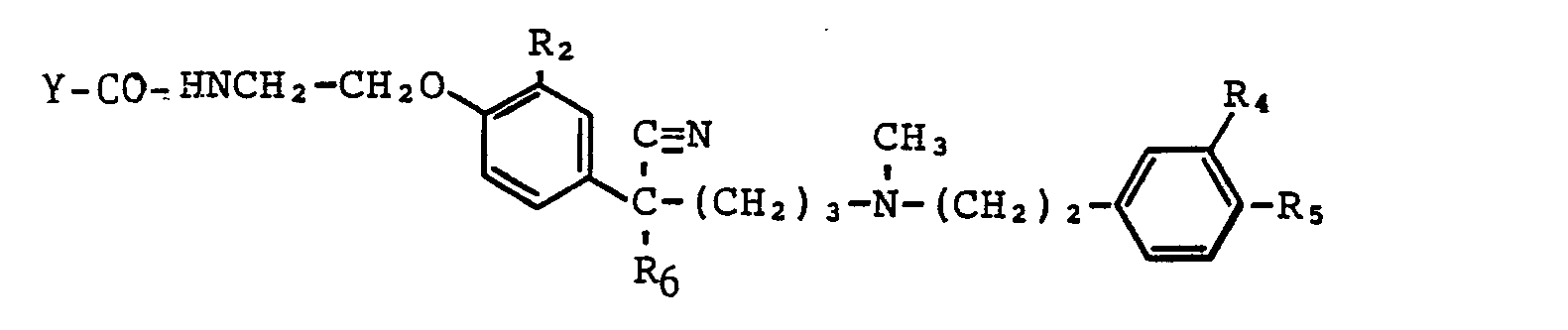


- 3 g 2-Methoxy-4-<1-cyano-1-(methylethyl)-4-[N-methyl-N-[2-(3,4-dimethoxy-phenyl)-ethyl]-amino-butyl]>-phenoxyessigsaeure werden in einer Mischung aus 60 ml Methylenchlorid und 1.27 ml Triethylamin geloest. Hierzu tropft man unter Ruehren bei -15°C eine Loesung von 1 ml Chlorameisensaeureethylester in 30 ml Methylenchlorid. Nach beendeter Zugabe ruehrt man noch 45 min bei -15°C weiter und gibt dann 1.6 g Nitro-oxyethyl-ammonium- nitrat zu. Anschließend tropft man unter Ruehren bei -15°C eine Loesung von 2.75 ml Triethylamin in 25 ml Methylenchlorid zu. Man ruehrt noch 30 min bei -15°C weiter, verduennt die Reaktionsloesung mit 50 ml Methylenchlorid und waescht mehrmals mit Wasser. Die Methylenchloridphase wird ueber Natriumsulfat getrocknet und eingedampft.
- Der Rueckstand wird zur weiteren Reinigung an einer Kieselgelsaeule chromatographiert (220 g Kieselgel-60; Laufmittel: Methylenchlorid/4 % Methanol). Die erhaltenen Saeulenfraktionen werden eingedampft, der Rueckstand in Methanol geloest und die Loesung mit einer methanolischer Loesung von 0.8 g Oxalsaeure-Dihydrat versetzt. Die Loesung wird eingedampft und der Rueckstand mit Diisopropylether behandelt. Man erhaelt 3.75 g (= 87 % d.Th.) Kristalle vom Schmp: 124-125°C (Z).
- Analog wurden dargestellt:
- 2-Methoxy-4-<1-cyano-1-(methylethyl)-4-[N-methyl-N-12-(3,4-dimethoxy-phenyl)-ethyl]-amino-butyl]>-phenoxy-N-(2-nitro-oxy-propyl)-acetamid-Oxalat Schmp: 115-116°C (Z)
- 2-Methoxy-4-<1-cyano-1-(methylethyl)-4-[N-methyl-N-[2-(3,4-dimethoxy-phenyl)-ethyl]-amino-butyl]>-phenoxy-N-(3-nitro-oxy- butyl-2)-acetamid-Oxalat Schmp: 136-137°C (Z)
- 2-Methoxy-4-<1-cyano-1-(methylethyl)-4-[N-methyl-N-[2-(3,4-dimethoxy-phenyl)-ethyl]-amino-butyl]>-phenoxy-N-(2-methyl-3-nitro-oxy-propyl-2)-acetamid
- 2-Methoxy-4-<1-cyano-1-(methylethyl)-4-[N-methyl-N-[2-(3,4-dimethoxy-phenyl)-ethyl]-amino-butyl]>-phenoxy-N-(1,3-bis- nitro-oxy-cyclohexyl-2)-acetamid
- 2-Methoxy-4-<1-cyano-1-(methylethyl)-4-[N-methyl-N-[2-(3,4-dimethoxy-phenyl)-ethyl]-amino-butyl]>-phenoxy-N,N-bis-(nitro-oxy-ethyl)-acetamid-oxalat-Dihydrat Schmp: 105-107°C (Z)
- 2-Methoxy-4-<1-cyano-1-(methylethyl)-4-[N-methyl-N-[2-(3,4-dimethoxy-phenyl)-ethyl]-amino-butyl]>-phenoxy-N,N-bis-(2-nitro-oxy-propyl)-acetamid-oxalat-Hydrat Schmp: 118-120°C (Z)
- Die als Ausgangsprodukt benoetigte 2-Methoxy-4-<1-cyano-1-(methylethyl)-4-[N-methyl-N-[2-(3,4-dimethoxy-phenyl)-ethyl]-amino-butyl]>-phenoxyessigsaeure wurde wie folgt hergestellt.
- 150 g 3-Methoxy-4-benzyloxy-benzylcyanid werden zusammen mit 470 ml 50proz. Natronlauge, 76 ml 2-Brompropan und 6 g Benzyltributylammonium-bromid 5 Stdn. bei 55°C geruehrt. Dann gießt man die Reaktionsmischung auf 4 Liter Wasser und extrahiert mehrmals mit Methylenchlorid. Die vereinigten Methylenchloridphasen werden ueber Natriumsulfat getrocknet, eingedampft und der Rueckstand im Hochvakuum destilliert.
- Man erhaelt 155 g (= 90 % d.Th.) 3-Methoxy-4-benzyloxy-α-isopropyl-benzylcyanid.
- Kp.: 184-186°C/6.10-2mm ; Schmp: 68-70°C.
- 36.6 g 3-Methoxy-4-benzyloxy-a-isopropyl-benzylcyanid werden in 150 ml absol. Dimethylformamid geloest. Hierzu gibt man 30.3 g (N-Methyl-N-homoveratryl)-amino-y-chlorpropan und erwaermt die Mischung auf 50°C. Hierzu gibt man im Verlauf einer Stunde unter Ruehren 5.7 g 55proz. Natriumhdrid. Nach beendeter Zugabe ruehrt man noch zwei Stunden bei 50°C weiter und gießt dann das Reaktionsgemisch auf 4 Liter Wasser. Man extrahiert mehrmals mit Methylenchlorid, trocknet die vereinigten Methylenchloridphasen ueber Natriumsulfat und dampft zur Trockne ein. Der Rueckstand wird zur Reinigung an einer Kieselgelsaeule chromatographiert (1.2 kg Kieselgel; Elutionsmittel: Methylenchlorid/2 % Methanol).
- Nach dem Eindampfen der Saeulenfraktionen erhaelt man 45 g (= 70 % d.Th.) α-Isopropyl-α-[(N-methyl-N-homoveratryl)-amino- y-propyll-3-methoxy-4-benzyloxy-phenylacetonitril als oeliges Produkt.
- 45 g α-Isopropyl-α-[(N-methyl-N-homoveratryl)-amino-γ-propyl]-3-methoxy-4-benzyloxy-phenylacetonitril werden in 400 ml Methanol geloest und nach Zugabe von 4 g Pd/C (10proz.)-Katalysator hydriert. Nach Aufnahme der berechneten Menge an Wasserstoff wird vom Katalysator abfiltriert und eingedampft. Man erhaelt 36 g (= 97 % d.Th.) a-Isopropyl-a-[(N-methyl-N-homoveratryl)-amino-y-propyl]-3-methoxy-4-hydroxy-phenyl- acetonitril als oeliges Produkt.
- 34.5 g α-Isopropyl-α-[(N-methyl-N-homoveratryl)-amino-γ-propyl)-3-methoxy-4-hydroxy-phenylacetonitril werden in 200 ml Dimethyl- formamid geloest und unter Ruehren bei Raumtemperatur mit 3.5 g Natriumhydrid (55proz.) versetzt. Man ruehrt noch 15 min weiter und tropft dann eine Loesung von 9.8 ml Bromessigsaeureethyl- ester in 50 ml Dimethylformamid zu. Die Temperatur soll hierbei 30°C nicht uebersteigen. Nach beendeter Zugabe ruehrt man noch 1 Stunde weiter, gießt das Reaktionsgemisch auf 4 Liter Wasser und extrahiert mehrmals mit Methylenchlorid. Die vereinigten Methylenchloridphasen werden ueber Natriumsulfat getrocknet und dann eingedampft. Der Rueckstand wird zur Reinigung an einer Kieselgelsaeule chromatographiert. (1.2 kg Kieselgel; Elutionsmittel: Methylenchlorid/3 % Methanol).
- Nach dem Eindampfen der Saeulenfraktionen erhaelt man 33.3 g (= 81 % d.Th.) 2-Methoxy-4-<1-cyano-1-(methylethyl)-4-[N-methyl-N-[2-(3,4-dimethoxy-phenyl)-ethyl]-amino-butyl]>-phenoxyessig- saeureethvlester als oeliges Produkt.
- 2-Methoxy-4-<1-cyano-1-(methylethyl)-4-<N-methyl-N-<2-(3,4-dimethoxy-phenyl)-ethyl/-amino-butyl/-phenoxyessigsäureethyl- ester werden in 150 ml Ethanol gelöst. Hierzu tropft man unter Ruehren bei Raumtemperatur 125 ml 1 N . Natronlauge. Nach beendeter Zugabe ruehrt man noch 1 Stunde bei Raumtemperatur weiter und dampft dann den Alkohol ab. Dann gibt man 125 ml 1 N Salzsaeure zu und extrahiert mehrmals mit Methylenchlorid.
- Die vereinigten Methylenchloridphasen werden ueber Natriumsulfat getrocknet und eingedampft. Man erhaelt 29.5 g (= 94 % d.Th.) 2-Methoxy-4-<1-cyano-1-(methylethyl-4-[N-methyl-N-[2-(3,4-dimethoxy-phenyl)-ethyl]-amino-butyl] >-phenoxyessigsaeure als oeliges Produkt.
- 4.5 g 2-Methoxy-5-<1-cyano-1-(methylethyl)-4-[N-methyl-N-[2-(3,4-dimethoxy-phenyl)-ethyl]-amino-butyl]>-phenoxyessigsaeure werden in einer Mischung aus 80 ml Methylenchlorid und 1.9 ml Triethylamin geloest. Hierzu tropft man unter Ruehren bei -15°C eine Loesung von 1.35 ml Chlorameisensaeureethylester in 30 ml Methylenchlorid. Nach beendeter Zugabe ruehrt man noch 45 min bei -15°C weiter und gibt dann 2.3 g Nitro-oxyethyl-ammonium- nitrat zu. Anschließend tropft man unter Ruehren bei -15°C eine Loesung von 3.8 ml Triethylamin in 25 ml Methylenchlorid zu. Man ruehrt noch 30 min bei -15°C weiter, verduennt die Reaktionsloesung mit 50 ml Methylenchlorid und waescht mehrmals mit Wasser. Die Methylenchloridphase wird ueber Natriumsulfat getrocknet und eingedampft. Der Rueckstand wird zur Reinigung an einer Kieselgelsaeule chromatographiert. (250 g Kieselgel; Elutionsmittel: Methylenchlorid/3 % Methanol).
- Die erhaltenen Saeulenfraktionen werden eingedampft, der Rueckstand in Methanol geloest und die Loesung mit einer methanolischen Loesung von 1.25 g Oxalsaeure-Dihydrat versetzt. Die Loesung wird eingedampft und der Rueckstand mit Diisopropylether behandelt. Man erhaelt 4.9 g (= 78 % d.Th.) Kristalle vom Schmp. 127-129°C (Z).
- Analog wurden dargestellt:
- 2-Methoxy-5-<1-cyano-1-(methylethyl-4-(N-methyl-N-(2-(3,4-dimethoxy-phenyl)-ethyl]-amino-butyl]>-phenoxy-N-(2-nitro-oxy-propyl)-acetamid-oxalat-Hydrat. Schmp. 132-134°C (Z).
- 2-Methoxy-5-<1-cyano-1-(methylethyl)-4-/
N -methyl-N-/2 -(3,4-dimethoxy-phenyl)-ethyl]-amino-butyl]>-phenoxy-N-(3-nitro-oxy- butyl-2)-acetamid-oxalat-Dihydrat. Schmp. 123-125°C (Z). - 2-Methoxy-5-<1-cyano-1-(methylethyl)-4-[N-methyl-N-[2-(3,4-dimethoxy-phenyl)-ethyl]-amino-butyl]>-phenoxy-N-(2-methyl-3-nitro-oxy-propyl-2)-acetamid-oxalat-Hydrat. Schmp. 125-127°C (Z) .
- 2-Methoxy-5-<1-cyano-1-(methylethyl)-4-[N-methyl-N-[2-(3,4-dimethoxy-phenyl)-ethyl]-amino-butyl]>-phenoxy-N-(1,3-bis- nitro-oxy-cyclohexyl-2)-acetamid-oxalat-Hydrat. Schmp. 140-142°C (Z).
- 2-Methoxy-5-<1-cyano-1-(methylethyl)-4-[N-methyl-N-[2-(3,4-dimethoxy-phenyl)-ethyll-amino-butyll>-phenoxy-N,N-bis-(nitro-oxy-ethyl)-acetamid-oxalat-Hydrat. Schmp. 105-107°C (Z).
- 2-Methoxy-5-<1-cyano-1-(methylethyl)-4-[N-methyl-N-[2-(3,4-dimethoxy-phenyl)-ethyl]-amino-butyl]>-phenoxy-N,N-bis-(2-nitro-oxy-propyl)-acetamid-oxalat-Hydrat. Schmp. 118-120°C (Z).
- Die als Ausgangsmaterial benoetigte 2-Methoxy-5-<1-cyano-1-( methylethyl)-4-[N-methyl-N-[2-(3,4-dimethoxy-phenyl)-ethyl]-amino-butyl]>-phenoxyessigsaeure wurde analog der 2-Methoxy-4-<1-cyano-1-(methylethyl)-4-[N-methyl-N-[2-(3,4-dimethoxy-phenyl)-ethyl]-amino-butyl]>-phenoxyessigsaeure dargestellt, nur daß anstelle von 3-Methoxy-4-benzyloxy-benzylcyanid das 3-Benzyloxy-4-methoxy-benzylcyanid als Ausgangsmaterial benutzt wurde und mit 2-Nitro-oxy-propyl-ammoniumnitrat umgesetzt wird.
- 2-Methoxy-4-<2-[N-methyl-N-[4-cyano-4-(methylethyl)-4-(3,4-dimethoxy-phenyl)-butyl]-amino-ethyl]>-phenoxy-N-(nitro-oxy-ethyl)-acetamid-oxalat-Hydrat
- 3 g 2-Methoxy-4-<2-[N-methyl-N-[4-cyano-4-(methylethyl)-4-(3,4-dimethoxy-phenyl)-butyl]-amino-ethyl]>-phenoxyessigsaeure werden in einer Mischung aus 60 ml Methylenchlorid und 1.3 ml Triethylamin geloest. Hierzu tropft man unter Ruehren bei -15°C eine
- Loesung von 1 ml Chlorameisensaeureethylester in 30 ml Methylenchlorid. Nach beendeter Zugabe ruehrt man noch 45 min bei -15°C weiter, gibt 1.6 g Nitro-oxy-ethyl-ammonium-nitrat zu und tropft dann eine Loesung von 2.9 ml Triethylamin in 30 ml Methylenchlorid zu. Man ruehrt noch 30 min bei -15°C weiter, verduennt die Reaktionsloesung mit 50 ml Methylenchlorid und waescht mehrmals mit Wasser. Die Methylenchloridphase wird ueber Natriumsulfat getrocknet und eingedampft. Der Rueckstand wird zu weiteren Reinigung an einer Kieselgelsaeule chromatographiert. (220 g Kieselgel; Elutionsmittel: Methanol/4 % Methylenchlorid).
- Die erhaltenen Saeulenfraktionen werden eingedampft, der Rueckstand in Methanol geloest und die Loesung mit einer methanolischen Loesung von 850 mg Oxalsaeure-Dihydrat versetzt. Die Loesung wird eingedampft und der Rueckstand mit Diisopropylether behandelt. Man erhaelt 3.7 g (= 85 % d.Th.) Kristalle vom Schmp. 132°C (Z).
- Analog wurden dargestellt:
- 2-Methoxy-4-<2-[N-methyl-N-[4-cyano-4-(methylethyl)-4-(3,4-dimethoxy-phenyl)-butyl]-amino-ethyl]>-phenoxy-N-(2-nitro-oxy-propyl)-acetamid-oxalat-Hydrat. Schmp. 135-136°C (Z).
- 2-Methoxy-4-<2-[N-methyl-N-[4-cyano-4-(methylethyl)-4-(3,4-dimethoxy-phenyl)-butyl]-amino-ethyl]>-phenoxy-N-(3-nitro-oxy- butyl-2)-acetamid-oxalat-Hydrat. Schmp. 132-134°C (Z).
- 2-Methoxy-4-<2-[N-methyl-N-[4-cyano-4-(methylethyl)-4-(3,4-dimethoxy-phenyl)-butyl]-amino-ethyl]>-phenoxy-N-(2-methyl-3-nitro-oxy-propyl-2)-acetamid-oxalat-Hydrat. Schmp. 122-124°C (Z).
- 2-Methoxy-4-<2-[N-methyl-N-[4-cyano-4-(methylethyl)-4-(3,4-dimethoxy-phenyl)-butyl]-amino-ethyl]>-phenoxy-N-(1,3-bis- nitro-oxy-cyclohexyl-2)-acetamid-Oxalat. Schmp. 90-92°C (Z).
- 2-Methoxy-4-<2-[N-methyl-N-[4-cyano-4-(methylethyl)-4-(3,4-dimethoxy-phenyl)-butyl]-amino-ethyl]>-phenoxy-N,N-bis-(nitro-oxy-ethyl)-acetamid-oxalat-Hydrat. Schmp. 110-112°C (Z).
- 2-Methoxy-4-<2-[N-methyl-N-[4-cyano-4-(methylethyl)-4-(3,4-dimethoxy-phenyl)-butyl]-amino-ethyll>-phenoxy-N,N-bis-(2-nitro-oxy-propyl)-acetamid-oxalat-Di-hydrat. Schmp. 110-112°C (Z).
- 2-Methoxy-4-<2-[N-methyl-N-[4-cyano-4-(methylethyl)-4-(3,4,5-trimethoxy-phenyl)-butyl]-amino-ethyl]>-phenoxy-N-(nitro-oxy-ethyl)acetamid-oxalat-Dihydrat. Schmp. 128-130°C (Z).
- 2-Methoxy-4-<2-[N-methyl-N-(4-cyano-4-(methylethyl)-4-(3,4,5-trimethoxy-phenyl)-butyl]-amino-ethyl]>-phenoxy-N-(2-nitro-oxy-propyl)-acetamid-oxalat-Dihydrat. Schmp. 135-136°C (Z).
- 2-Methoxy-4-<2-[N-methyl-N-(4-cyano-4-(methylethyl)-4-(3,4,5-trimethoxy-phenyl)-butyl]-amino-ethyl]>-phenoxy-N-(3-nitro-oxy- butyl-2)-acetamid-oxalat-Dihydrat. Schmp. 123-124°C (Z).
- 2-Methoxy-4-<2-[N-methyl-N-(4-cyano-4-(methylethyl)-4-(3,4,5-trimethoxy-phenyl)-butyl]-amino-ethyl]>-phenoxy-N-(1,3-bis- nitro-oxy-cyclohexyl-2)-acetamid-Oxalat. Schmp. 147-149°C (Z).
- Die als Ausgangsmaterial benoetigte 2-Methoxy-4-<2-[N-methyl-N-[4-cyano-4-(methylethyl)-4-(3,4-dimethoxy-phenyl)-butyl]-amino-ethyl]>-phenoxyessigsaeure wurde wie folgt dargestellt.
- 48.5 g α-Isopropyl-3,4-dimethoxy-phenylacetonitril werden in 200 ml Dimethylformamid geloest. Hierzu gibt man 40.8 g N-Methyl-N-[2-(3-Methoxy-4-benzyloxy)-ethyl]-N-(γ-chlor-propyl)-amin und erwaermt die Loesung auf 50°C. Hierzu fuegt man im Verlauf einer Stunde 8.15 g Natriumhydrid (55 proz.). Nach beendeter Zugabe ruehrt man noch 3 Stunden bei 50°C weiter, gießt das Reaktionsgemisch auf 4 Liter Wasser und extrahiert mehrmals mit Methylenchlorid. Die vereinigten Methylenchloridphasen werden mit Wasser gewaschen, ueber Natriumsulfat getrocknet und eingedampft. Der Rueckstand wird zur Reinigung an einer Kieselgelsaeule chromatographiert. (1.8 kg Kieselgel; Elutionsmittel: Methylenchlorid/ 3 % Methanol).
- Nach Eindampfen der Saeulenfraktionen erhaelt man 52.8 g (= 86 % d.Th.) α-Isopropyl-α-<[N-methyl-N-(2-(3-methoxy-4-benzyloxy)-ethyl]]-amino-Y-propyl>-3,4-dimethoxy-phenylacetonitril als oeliges Produkt.
- 47.9 g α-Isoproyγ-α-<[N-methyl-N-[2-(3-methoxy-4-benzyloxy)-ethyl]]-amino-y-propyl>-3,4-dimethoxy-phenyl-acetonitril werden in 400 ml Methanol geloest und nach Zugabe von 2 g Pd/C (10proz.) Katalysator hydriert. Nach Aufnahme der berechneten Menge an Wasserstoff wird vom Katalysator abfiltriert und eingedampft. Man erhaelt 38 g (= 95 % d.Th.) a-Isopropyl-a-<[N-methyl-N-[2-(3-methoxy-4-hydroxy)-ethyl]]-amino-y-propyl>-3,4-dimethoxy-phenyl-acetonitril als oeliges Produkt.
- 37.7 g α-Isopropyl-α-<[N-methyl-N-[2-(3-methoxy-4-hydroxy)-ethyl]]-amino-y-propyl>-3,4-dimethoxy-phenylacetonitril werden in 200 ml absol. Dimethylformamid geloest und unter Ruehren mit 3.7 g Natriumhydrid (53proz.) versetzt. Man ruehrt noch 15 min weiter und tropft dann eine Loesung von 10.7 g Bromessigsaeureethylester in 100 ml Dimethylformamid zu. Die Temperatur soll hierbei 30°C nicht iuebersteigen. Nach beendeter Zugabe ruehrt man noch 1 Stunde weiter, gießt das Reaktionsgemisch auf 4 Liter Wasser und extrahiert mehrmals mit Methylenchlorid. Die vereinigten Methylenchloridphasen werden mit Wasser gewaschen, ueber Natriumsulfat getrocknet und eingedampft. Der Rueckstand wird zur Reinigung an einer Kieselgelsaeule chromatographiert. (1.2 kg Kieselgel; Elutionsmittel: Methylenchlorid/3 % Methanol).
- Nach dem Eindampfen der Saeulenfraktionen erhaelt man 36.6 g (= 81 % d.Th.) 2-Methoxy-4-<2-[N-methyl-N-[4-cyano-4-(methyl- ethyl)-4-(3,4-dimethoxy-phenyl)-butyl]-amino-ethyl]>-phenoxy- essigsaeureethylester als oeliges Produkt.
- 36.5 g 2-Methoxy-4-<2-[N-methyl-N-[4-cyano-4-(methylethyl)-4-(3,4-dimethoxy-phenyl)-butyl]-amino-ethyl]>-phenoxyessigsaeureethylester werden in 150 ml Ethanol geloest. Hierzu tropft man bei Raumtemperatur unter Ruehren 140 ml 1 N Natronlauge. Man ruehrt noch 1 Stunde weiter, gibt dann 140 ml 1 N Salzsaeure zu und dampft den Alkohol ab. Die waeBrige Phase wird mit Methylchlorid extrahiert. Die Methylenchloridphase wird ueber Natriumsulfat getrocknet und eingedampft. Man erhaelt 33.7 g (= 97 % d.Th.) 2-Methoxy-4-<2-[N-methyl-N-[4-cyano-4-(methyl- ethyl)-4-(3,4-dimethoxy-phenyl)-butyl]-amino-ethyl]>-phenoxyessigsaeure als oeliges Produkt.
- Das in Stufe 1 eingesetzte N-Methyl-N-[2-(3-methoxy-4-benzyl- oxy)-ethyll-N-(y-chlor-propyl)-amin wurde wie folgt dargestellt.
- 148 g 3-Methoxy-4-benzyloxy-benzylcyanid werden in 2.5 Liter Methanol geloest und nach Zugabe von 350 ml fluessigem Ammoniak und 16 g Raney-Nickel bei 100°C und 80 atm. hydriert. Die Hydrierung ist nach 4 Stunden beendet. Man filtriert vom Katalysator ab, dampft ein und reinigt den Rueckstand durch Chromatographie an einer Kieselgelsaeule. (1.6 kg Kieselgel: Elutionsmittel: Methylenchlorid/5 % Isopropylamin).
- Nach dem Eindampfen der Saeulenfraktionen erhaelt man 126 g (- 84 % d.Th.) 3-Methoxy-4-benzyloxy-B-phenyl-ethyl-amin. Dieses wird in 500 ml Toluol geloest und nach Zugabe von 48.5 ml Benzaldehyd am Wasserabscheider erhitzt. Nach beendeter Wasserabscheidung laeßt man auf Raumtemperatur abkuehlen und gibt 46 ml Dimethylsulfat zu. Anschließend wird 30 min am Rueckfluß erhitzt. Man kuehlt auf Raumtemperatur ab. Hierbei bilden sich zwei Schichten. Die obere Toluolschicht wird abgetrennt und verworfen. Die untere Schicht wird mit 500 ml 80proz. Ethanol versetzt und anschließend 30 min am RueckfluB erhitzt. Dann wird vom Alkohol abdestilliert und der Rueckstand in Methylenchlorid aufgenommen. Die Methylenchloridphase wird mit konz. Salzsaeure extrahiert und dann verworfen.
- Die waeßrige Phase wird unter Kuehlung mit konz. Natronlauge alkalisch gestellt, wobei sich ein Oel abscheidet. Dieses wird in Methylenchlorid aufgenommen, die Methylenchloridphase ueber Natriumsulfat getrocknet und eingedampft. Man erhaelt 106 g (= 80 % d.Th.) 3-Methoxy-4-benzyloxy-ß-phenyl-N-methyl-ethylamin als oeliges Produkt.
- Dieses wird in 500 ml Dimethylformamid geloest und nach Zugabe von 132 g Pottasche und 52 ml 1-Brom-3-chlor-propan 5 Stunden bei Raumtemperatur geruehrt. Dann wird das Reaktionsgemisch mit Methylenchlorid verduennt und der unloesliche Rueckstand abgesaugt. Das Filtrat wird mit Wasser verduennt und mehrmals mit Methylenchlorid extrahiert. Die Methylenchloridphasen werden vereinigt, ueber Natriumsulfat getrocknet und eingedampft. Der Rueckstand wird zur Reinigung an einer Kieselgelsaeule chromatographiert. (1.2 kg Kieselgel; Elutionsmittel: Methylenchlorid/3 % Methanol). Nach dem Eindampfen der Saeulenfraktionen erhaelt man 48.5 g (= 36 % d.Th.) N-Methyl-N-[2-(3-methoxy-4-benzyloxy)-ethyl]-N-(v-chlor-propyl)-amim als oeliges Produkt.
- 4.5 g 2-Methoxy-5-<2-(N-methyl-N-[4-cyano-4-(methylethyl)-4-(3,4-dimethoxy-phenyl)-butyl]-amino-ethyl]>-phenoxyessigsaeure werden in einer Mischung aus 80 ml Methylenchlorid und 1.9 ml Triethylamin geloest. Hierzu tropft man unter Ruehren bei -15°C eine Loesung von 1.4 ml Chlorameisensaeureethylester in 30 ml Methylenchlorid. Nach beendeter Zugabe ruehrt man noch 45 min bei -15°C weiter, gibt 2.3 g Nitro-oxy-ethyl-ammonium-nitrat zu und tropft dann eine Loesung von 3.8 ml Triethylamin in 30 ml absol. Methylenchlorid zu. Man ruehrt noch 30 min bei -15°C weiter, verduennt die Reaktionsloesung mit 50 ml Methylenchlorid und waescht mehrmals mit Wasser. Die Methylenchloridphase wird ueber Natriumsulfat getrocknet und eingedampft. Der Rueckstand wird zur weiteren Reinigung an einer Kieselgelsaeule chromatographiert. (220 g Kieselgel; Elutionsmittel: Methylenchlorid/3 % Methanol). Die Saeulenfraktionen werden eingedampft, der Rueckstand in Methanol geloest und die Loesung mit einer methanolischen Loesung von 1.2 g Oxalsaeure-Dihydrat versetzt. Die Loesung wird eingedampft und mit Diisopropylether behandelt. Man erhaelt 4.5 g (= 74 % d.Th.) Kristalle vom Schmp. 128-130°C (Z).
- Analog wurden hergestellt:
- 2-Methoxy-5-<2-[N-methyl-N-[4-cyano-4-(methylethyl)-4-(3,4-dimethoxy-phenyl)-butyl]-amino-ethyl]>-phenoxy-N-(2-nitro-oxy-propyl)-acetamid-oxalat-Hydrat. Schmp. 133-135°C (Z).
- 2-Methoxy-5-<2-[N-methyl-N-[4-cyano-4-(methylethyl)-4-(3,4-dimethoxy-phenyl)-butyl]-amino-ethyl]>-phenoxy-N-(3-nitro-oxy-butyl-2)-acetamid-oxalat-Di-Hydrat. Schmp. 123-125°C.
- 2-Methoxy-5-<2-[N-methyl-N-[4-cyano-4-(methylethyl)-4-(3,4-dimethoxy-phenyl)-butyl]-amino-ethyl]>-phenoxy-N-(2-methyl-3-nitro-oxy-propyl-2)-acetamid-oxalat-Hydrat.
- Schmp. 128-130°C (Z).
- 2-Methoxy-5-<2-[N-methyl-N-[4-cyano-4-(methylethyl)-4-(3,4-dimethoxy-phenyl)-butyl)-amino-ethyl]>-phenoxy-N-(1,3-bis- nitro-oxy-cyclohexyl-2)-acetamid-oxalat-Hydrat.
- Schmp. 143-145°C (Z).
- 2-Methoxy-5-<2-[N-methyl-N-[4-cyano-4-(methylethyl)-4-(3,4-dimethoxy-phenyl)-butyl]-amino-ethyl]>-phenoxy-N,N-bis-(nitro-oxy-ethyl)-acetamid-oxalat-Hydrat. Schmp. 110-112°C (Z).
- 2-Methoxy-5-<2-[N-methyl-N-[4-cyano-4-(methylethyl)-4-(3,4-dimethoxy-phenyl)-butyl]-amino-ethyl]>-phenoxy-N,N-bis-(2-nitro-oxy-propyl)-acetamid-oxalat-Hydrat. Schmp. 118-120°C (Z).
- Die als Ausgangsmaterial benoetigte 2-Methoxy-5-<2-[N-methyl-N-[4-cyano-4-(methylethyl)-4-(3,4-dimethoxy-phenyl)-butyl]-amino-ethyl]>-phenoxyessigsaeure wurde analog der 2-Methoxy-4- <2-[N-methyl-N-[4-cyano-4-(methylethyl)-4-(3,4-dimethoxy-phenyl)-butyl]-amino-ethyl]>-phenoxyessigsaeure dargestellt.
- Analog wurden dargestellt:
- 3-<2-[N-Methyl-N-[4-cyano-4-dodecyl-4-(3,4-dimethoxy-phenyl)-butyl]-amino-ethyl]>-phenoxy-N-(nitro-oxy-ethyl)-acetamid-Oxalat. Schmp. 134-136°C (Z).
- 3-<2-[N-methyl-N-[4-cyano-4-dodecyl-4-(3,4-dimethoxy-phenyl)-butyl]-amino-ethyl]>-phenoxy-N-(2-nitro-oxy-propyl)-acetamid-oxalat-Hydrat. Schmp. 140-142°C (Z).
- 3-<2-[N-methyl-N-[4-cyano-4-dodecyl-4-(3,4,5-trimethoxyphenyl)-butyl]-amino-ethyl]>-phenoxy-N-(2-nitro-oxy-ethyl)-acetamid-oxalat-Hydrat. Schmp. 127-129°C (Z).
- 3-<1-cyano-1-hexyl-4-[N-methyl-N-[2-(3-methoxy-phenyl)-ethyl)-amino-butyl]>-phenoxy-N-(2-nitro-oxy-oropyl)-acetamid-Oxalat. Schmp. 134-136°C.
- 3-<1-cyano-1-hexyl-4-[N-methys-N-[2-(3-methoxy-phenyl)-ethyl]-amino-butyl]>-phenoxy-N-(nitro-oxy-ethyl)-acetamid-Oxalat. Schmp. bollg.
- 2-Methoxy-5-<1-cyano-1-(methylethyl)-4-[N-methyl-N-(2-(3,4-dimethoxy-phenyl)-ethyl]-amino-butyl]>-phenoxy-N-(2,2-dimethyl-3-nitro-oxy-propyl-1)-acetamid-Oxalat-di-Hydrat.
- Schmp. 140 C"(7).
- 2-Methoxy-5-<2-(N-methyl-N-[4-cyano-4-(methylethyl)-4-(3,4-dimethoxy-phenyl)-butyl]-amino-ethyl]>-phenoxy-N-(2,2-dimethyl-3-nitro-oxy-propyl-1)-acetamid-Oxalat-di-Hydrat.
- Schmp. 140°C (Z).
- 2-Methoxy-4-<1-cyano-1-(methylethyl)-4-[N-methyl-N-[2-(3,4-dimethoxy-phenyl)-ethyl]-amino-butyl]>-phenoxy-N-(2,2-dimethyl-3-nitro-oxy-propyl-1)-acetamid-Oxalat-di-Hydrat.
- Schmp, 140°C (Z).
- 2-Methoxy-5-<2-[N-methyl-N-[4-cyano-4-(methylethyl)-4-(3,4-dimethoxy-phenyl)-butyl]-amino-ethyl]>-phenoxy-N-(3-nitro-oxy-propyl-1)-acetamid-Oxalat-di-Hydrat.
- Schmp. 132-135 C"(Z).
- 2-Methoxy-5-<2-[N-methyl-N-[4-cyano-4-(methylethyl)-4-(3,4-dimethoxy-phenyl)-butyl]-amino-ethyl]>-phenoxyessigsaeure-4-(a-nitro-oxy-ethyl)-piperidylamid-Citrat-Hydrat.
- Schmp, 142-145°C (Z).
- 2-Methoxy-5-<2-[N-methyl-N-[4-cyano-4-(methylethyl)-4-(3,4-dimethoxy-phenyl)-butyl]-amino-ethyl]>-phenoxyessigsaeure-4-(nitro-oxy-methyl)-piperidylamid-Citrat-Hydrat.
- Schmp. 146-147°C (Z).
- 2-Methoxy-4-<2-[N-methyl-N-[4-cyano-4-(methylethyl)-4-(3,4-dimethoxy-phenyl)-butyl]-amino-ethyl]>-phenoxyessigsaeure-4-(nitro-oxy-methyl)-piperidylamid-Citrat-Hydrat.
- Schmp. 144-146°C (Z).
- 2-Methoxy-4-<2-[N-methyl-N-[4-cyano-4-(methylethyl)-4-(3,4-dimethoxy-phenyl)-butyl]-amino-ethyl]>-phenoxyessigsaeure-4-(a-nitro-oxy-ethyl)-piperidylamid-Citrat-Hydrat.
- Schmp. 143-144°C (Z).
- 2-Methoxy-5-<1-cyano-1-(methylethyl)-4-[N-methyl-N-[2-(3,4-dimethoxy-phenyl)-ethyl]-amino-butyl]>-phenoxyessigsaeure-4-(nitro-oxy-methyl)-piperidylamid-Citrat-Hydrat.
- Schmp. 142-1450C(Z).
- 2-Methoxy-5-<1-cyano-1-(methylethyl)-4-[N-methyl-N-[2-(3,4-dimethoxy-phenyl)-ethyl]-amino-butyl]>-phenoxyessigsaeure-4-(a-nitro-oxy-ethyl)-piperidylamid-Citrat-Hydrat.
- Schmp. 144-1460C (Z).
- 2-Methoxy-5-<2-[N-methyl-N-[4-cyano-4-(methylethyl)-4-(3,4,5-trimethoxy-phenyl)-butyl)-amino-ethyl]>-phenoxy-N-(3-nitro-oxy-propyl-1)-acetamid-Citrat-Hydrat.
- Schmp. 141-142°C (Z).
- 2-Methoxy-5-<2-[N-methyl-N-[4-cyano-4-(methylethyl)-4-(3,4,5-trimethoxy-phenyl)-butyl]-amino-ethyl]>-phenoxyessigsaeure-4-(nitro-oxy-methyl)-piperidylamid-Citrat-Hydrat.
- Schmp. 139-142°C (Z).
- 2-Methoxy-4-<2-[N-methyl-N-[4-cyano-4-(methylethyl)-4-(3,4,5-trimethoxy-phenyl)-butyl]-amino-ethyl]>-phenoxyessigsaeure-4-(a-nitro-oxy-ethyl)-piperidylamid-Citrat-Hydrat.
- Schmp. 143-144°C (Z).
- 2-Methoxy-4-<2-[N-methyl-N-(4-cyano-4-(methylethyl)-4-(3,4,5-trimethoxy-phenyl)-butyl]-amino-ethyl]>-phenoxyessigsaeure-4-(nitro-oxy-methyl) -piperidylamid-Citrat-Hydrat.
- Schmp. 142-144°C (Z).
- 2-Methoxy-4-<1-cyano-1-(methylethyl)-4-[N-methyl-N-[2-(3,4-dimethoxy-phenyl)-ethyl]-amino-butyl]>- phenoxyessigsaeure-4-(nitro-oxy-methyl)-piperidylamid-Citrat-Hydrat.
- Schmp. 145-147°C (Z).
- 2-Methoxy-4-<1-cyano-1-(methylethyl)-4-[N-methyl-N-[2-(3,4-dimethoxy-phenyl)-ethyl]-amino-butyl]>-phenoxyessigsaeure-4(a-nitro-oxy-ethyl)-piperidylamid-Citrat-Hydrat.
- Schmp. 143-145°C (Z).
- 3-<2-[N-methyl-N-(4-cyano-4-hexyl-4-(3-methoxy-phenyl)-butyl)-amino-ethyl]>-phenoxy-N-(nitro-oxy-ethyl)-acetamid-oxalat-Hydrat Fp: 134-135°C Z
- 3<2-[N-methyl-N-(4-cyano-4-hexyl-4-(3-methoxy-phenyl)-butyl)-amino-ethyl]>-phenoxy-N-(2-nitro-oxy-propyl)-acetamid-oxalat-Hydrat Fp: 136-137°C Z
- 2-Methoxy-4-<2-[N-methyl-N-[4-cyano-4-(methylethyl)-4-(3,4-dimethoxy-phenyl)-butyl]-amino-ethyl]>-phenoxy-N-(S(+)-2-nitro-oxy-propyl)-acetamid-oxalat-Hydrat,
- Fp. 134-135°C Z
- 2-Methoxy-4-<2-[N-methyl-N-[4-cyano-4-(methylethyl)-4-(3,4-dimethoxy-phenyl)-butyl]-amino-ethyl]>-phenoxy-N-(R(-)-2-nitro-oxy-propyl)-acetamid-oxalat-Hydrat.
- Fp. 126-128°C Z
- 2-Methoxy-4-<2-[N-methyl-N-[4-cyano-4-(methylethyl)-4-(3,4-dimethoxy-phenyl)-butyl]-amino-ethyl]>-phenoxy-N-[methyl-(2-nitro-oxy-cyclohexyl)]-citrat-Hydrat,
- Fp. 144-146°C Z
- 2-Methoxy-5-<1-cyano-1-(methylethyl)-4-[N-methyl-N-[2-(3,4-dimethoxy-phenyl)-ethyl]-amino-butyl]>-phenoxy-N-[methyl-(2-nitro-oxy-cyclohexyl)]-acetamid-citrat-Hydrat. Fp. 142-143°C Z.
- 2-Methoxy-5-<2-[N-methyl-N-[4-cyano-4-(methylethyl)-4-(3,4-dimethoxy-phenyl)-butyl]-amino-ethyl]>phenoxy-N-[methyl-(2-nitro-oxy-cyclohexyl)]-acetamid-citrat-Hydrat. Fp. 8Q°C Z.
- Die als Ausgangsmaterial benötigten Phenoxy-essigsäuren werden analog den beschriebenen Beispielen dargestellt.
sowie deren Salze mit physiologisch verträglichen Säuren.
die erhaltenen Verbindungen ggf. mit Säuren oder Basen in die entsprechenden Salze überführt oder daraus freisetzt.
ein Kohlenstoffatom von X' und W zusammen einen Epoxidring bilden koennen.
Claims (4)


sowie deren Salze mit physiologisch verträglichen Säuren.
dadurch gekennzeichnet, daß man

und R9 Wasserstoff oder eine leicht abspaltbare Gruppe darstellt
einer Nitratester-Bildungsreaktion unterwirft, oder

einer Amidbildungsreaktion mit einer Verbindung der allgemeinen Formel V,


die erhaltenen Verbindungen ggf. mit Säuren oder Basen in die entsprechenden Salze überführt oder daraus freisetzt.
Applications Claiming Priority (2)
| Application Number | Priority Date | Filing Date | Title |
|---|---|---|---|
| DE3433383 | 1984-09-12 | ||
| DE19843433383 DE3433383A1 (de) | 1984-09-12 | 1984-09-12 | Neue phenyl-acetonitril-derivate |
Publications (2)
| Publication Number | Publication Date |
|---|---|
| EP0175249A2 true EP0175249A2 (de) | 1986-03-26 |
| EP0175249A3 EP0175249A3 (de) | 1987-08-19 |
Family
ID=6245162
Family Applications (1)
| Application Number | Title | Priority Date | Filing Date |
|---|---|---|---|
| EP85111351A Withdrawn EP0175249A3 (de) | 1984-09-12 | 1985-09-09 | Neue Phenyl-acetonitril-Derivate |
Country Status (16)
| Country | Link |
|---|---|
| US (1) | US4612313A (de) |
| EP (1) | EP0175249A3 (de) |
| JP (1) | JPS6185355A (de) |
| AU (1) | AU562730B2 (de) |
| CA (1) | CA1248533A (de) |
| CS (1) | CS255894B2 (de) |
| DD (1) | DD237504A5 (de) |
| DE (1) | DE3433383A1 (de) |
| DK (1) | DK413685A (de) |
| ES (1) | ES8604861A1 (de) |
| FI (1) | FI853343L (de) |
| GR (1) | GR852167B (de) |
| HU (1) | HU195644B (de) |
| IL (1) | IL76327A (de) |
| SU (1) | SU1508956A3 (de) |
| ZA (1) | ZA856942B (de) |
Families Citing this family (7)
| Publication number | Priority date | Publication date | Assignee | Title |
|---|---|---|---|---|
| US4612329A (en) * | 1984-10-17 | 1986-09-16 | Hokuriku Pharmaceutical Co., Ltd. | Pharmaceutical alpha-aminoalkyl-alpha-alkylphenylacetonitriles |
| DE3642331A1 (de) * | 1986-12-11 | 1988-06-23 | Basf Ag | Basisch substituierte phenylacetonitrile, ihre herstellung und diese enthaltende arzneimittel |
| GB8717068D0 (en) * | 1987-07-20 | 1987-08-26 | Fujisawa Pharmaceutical Co | Nitric ester derivative |
| NL9001955A (nl) * | 1990-09-05 | 1992-04-01 | Cedona Pharm Bv | Nieuwe thiazolidinederivaten. |
| US6263940B1 (en) | 1999-04-21 | 2001-07-24 | Axon Corporation | In-line continuous feed sleeve labeling machine and method |
| TW200821303A (en) * | 2006-08-08 | 2008-05-16 | Speedel Experimenta Ag | Organic compounds |
| SI2170050T1 (sl) | 2007-06-20 | 2014-12-31 | Milestone Pharmaceuticals Inc. | Fenilalkilaminski blokatorji kalcijevih kanalov s kratkotrajnim delovanjem in njihova uporaba |
Family Cites Families (3)
| Publication number | Priority date | Publication date | Assignee | Title |
|---|---|---|---|---|
| DE1154810B (de) * | 1961-04-01 | 1963-09-26 | Knoll Ag | Verfahren zur Herstellung basisch substituierter Phenylacetonitrile |
| US4340603A (en) * | 1980-08-13 | 1982-07-20 | Interx Research Corporation | Novel inotropic prodrugs |
| DE3144150A1 (de) * | 1981-04-10 | 1982-12-09 | Basf Ag, 6700 Ludwigshafen | (omega)-cyan-1,(omega)-diphenyl-azaalkan-derivate, ihre herstellung und diese enthaltende arzneimittel |
-
1984
- 1984-09-12 DE DE19843433383 patent/DE3433383A1/de not_active Withdrawn
-
1985
- 1985-08-30 FI FI853343A patent/FI853343L/fi not_active Application Discontinuation
- 1985-09-05 AU AU47099/85A patent/AU562730B2/en not_active Ceased
- 1985-09-06 GR GR852167A patent/GR852167B/el unknown
- 1985-09-06 DD DD85280400A patent/DD237504A5/de unknown
- 1985-09-08 IL IL76327A patent/IL76327A/xx unknown
- 1985-09-09 EP EP85111351A patent/EP0175249A3/de not_active Withdrawn
- 1985-09-10 US US06/774,354 patent/US4612313A/en not_active Expired - Fee Related
- 1985-09-11 CA CA000490499A patent/CA1248533A/en not_active Expired
- 1985-09-11 DK DK413685A patent/DK413685A/da not_active Application Discontinuation
- 1985-09-11 ZA ZA856942A patent/ZA856942B/xx unknown
- 1985-09-11 HU HU853427A patent/HU195644B/hu unknown
- 1985-09-11 SU SU853955485A patent/SU1508956A3/ru active
- 1985-09-12 JP JP60200738A patent/JPS6185355A/ja active Pending
- 1985-09-12 CS CS856522A patent/CS255894B2/cs unknown
- 1985-09-12 ES ES546908A patent/ES8604861A1/es not_active Expired
Also Published As
| Publication number | Publication date |
|---|---|
| DD237504A5 (de) | 1986-07-16 |
| ES546908A0 (es) | 1986-03-16 |
| DK413685A (da) | 1986-03-13 |
| ES8604861A1 (es) | 1986-03-16 |
| CA1248533A (en) | 1989-01-10 |
| HU195644B (en) | 1988-06-28 |
| HUT38302A (en) | 1986-05-28 |
| IL76327A (en) | 1989-06-30 |
| JPS6185355A (ja) | 1986-04-30 |
| AU562730B2 (en) | 1987-06-18 |
| FI853343A0 (fi) | 1985-08-30 |
| GR852167B (de) | 1986-01-03 |
| US4612313A (en) | 1986-09-16 |
| SU1508956A3 (ru) | 1989-09-15 |
| FI853343A7 (fi) | 1986-03-13 |
| CS255894B2 (en) | 1988-03-15 |
| AU4709985A (en) | 1986-03-20 |
| DK413685D0 (da) | 1985-09-11 |
| CS652285A2 (en) | 1987-07-16 |
| DE3433383A1 (de) | 1986-03-20 |
| ZA856942B (en) | 1986-05-28 |
| FI853343L (fi) | 1986-03-13 |
| IL76327A0 (en) | 1986-01-31 |
| EP0175249A3 (de) | 1987-08-19 |
Similar Documents
| Publication | Publication Date | Title |
|---|---|---|
| DE2558501C2 (de) | ||
| EP0064158B1 (de) | Omega-Cyan-1, omega-diphenyl-azaalkan-derivate, ihre Herstellung und diese enthaltende Arzneimittel | |
| DE19636689A1 (de) | Neue Benzamidinderivate | |
| EP0114374A1 (de) | Substituierte 4-Aminomethylenchromane bzw. -chromene, Verfahren zu ihrer Herstellung sowie ihre Verwendung in Arzneimitteln | |
| EP1286957B1 (de) | Diphenylmethanderivate | |
| DE2006978C3 (de) | N- [l-(3-Trifluonnetnyl-phenyl)-propyl-(2)] -glycinderivate, Verfahren zu ihrer Herstellung und diese enthaltende Arzneimittel | |
| EP0271013B1 (de) | Basisch substituierte Phenylacetonitrile, ihre Herstellung und diese enthaltende Arzneimittel | |
| CH646426A5 (en) | Process for the preparation of hydantoin derivatives | |
| EP0157267A2 (de) | Substituierte Benzopyrane, Verfahren zu ihrer Herstellung sowie ihre Verwendung in Arzneimitteln | |
| EP0259782B1 (de) | Neue Naphtalin- und Indanderivate, diese Verbindungen enthaltende Arzneimittel und Verfahren zu deren Herstellung | |
| EP0090369A1 (de) | Salicylsäurederivate, Verfahren zu ihrer Herstellung, pharmazeutische Präparate auf Basis dieser Verbindungen und ihre Verwendung | |
| EP0082461B1 (de) | Substituierte Phenoxyalkanolamine und Phenoxyalkanol-cycloalkylamine, Verfahren zu ihrer Herstellung, diese Verbindungen enthaltende pharmazeutische Zubereitungen und Zwischenprodukte | |
| EP0231003B1 (de) | Basisch substituierte Phenylacetonitrile, ihre Herstellung und diese enthaltende Arzneimittel | |
| DE3433383A1 (de) | Neue phenyl-acetonitril-derivate | |
| EP0491263B1 (de) | Phenylalkylaminoalkyl-Verbindungen sowie Verfahren zu ihrer Herstellung und diese Verbindungen enthaltende Arzneimittel | |
| DE2723051A1 (de) | N-(acyl)-p-amino-n'-(monosubstit.)- benzamide sowie diese enthaltende arzneimittel | |
| DE2656088A1 (de) | Neues benzylalkoholderivat und verfahren zu seiner herstellung | |
| DE3807813A1 (de) | Neue benzocycloheptenderivate, diese verbindungen enthaltende arzneimittel und verfahren zu deren herstellung | |
| CH618433A5 (de) | ||
| EP0005821A1 (de) | Indanaminderivate, Verfahren zur Herstellung derselben und Arzneimittel, welche diese enthalten | |
| DE2517020B2 (de) | N- eckige klammer auf 1-(3-trifluormethyl-phenyl)-prop-2-yl eckige klammer zu -glycin-ester, verfahren zu ihrer herstellung und diese ester enthaltende arzneimittel | |
| CH636076A5 (de) | Benzylalkoholderivate und verfahren zu deren herstellung. | |
| DE1949987B2 (de) | Neue alpha-phenylfettsaeureverbindungen | |
| DE3806321A1 (de) | Neue trisubstituierte amine, verfahren zu ihrer herstellung sowie arzneimittel, die diese verbindungen enthalten | |
| EP0293716A2 (de) | Polyhydrobenz(c,d)indolsulfonamide |
Legal Events
| Date | Code | Title | Description |
|---|---|---|---|
| PUAI | Public reference made under article 153(3) epc to a published international application that has entered the european phase |
Free format text: ORIGINAL CODE: 0009012 |
|
| 17P | Request for examination filed |
Effective date: 19850909 |
|
| AK | Designated contracting states |
Kind code of ref document: A2 Designated state(s): AT BE CH DE FR GB IT LI LU NL SE |
|
| PUAL | Search report despatched |
Free format text: ORIGINAL CODE: 0009013 |
|
| AK | Designated contracting states |
Kind code of ref document: A3 Designated state(s): AT BE CH DE FR GB IT LI LU NL SE |
|
| 17Q | First examination report despatched |
Effective date: 19890126 |
|
| STAA | Information on the status of an ep patent application or granted ep patent |
Free format text: STATUS: THE APPLICATION IS DEEMED TO BE WITHDRAWN |
|
| 18D | Application deemed to be withdrawn |
Effective date: 19890606 |
|
| RIN1 | Information on inventor provided before grant (corrected) |
Inventor name: MUELLER-BECKMANN, BERND, DR. Inventor name: BARTSCH, WOLFGANG, DR.MED.VET Inventor name: LEINERT, HERBERT, DR. ING. Inventor name: STREIN, KLAUS, PROF. Inventor name: KAMPE, WOLFGANG, DR.RER.NAT. |