EP0171084A2 - Pharmazeutische Mikroemulsionen des Öl-in-Wasser-Typs - Google Patents
Pharmazeutische Mikroemulsionen des Öl-in-Wasser-Typs Download PDFInfo
- Publication number
- EP0171084A2 EP0171084A2 EP85110009A EP85110009A EP0171084A2 EP 0171084 A2 EP0171084 A2 EP 0171084A2 EP 85110009 A EP85110009 A EP 85110009A EP 85110009 A EP85110009 A EP 85110009A EP 0171084 A2 EP0171084 A2 EP 0171084A2
- Authority
- EP
- European Patent Office
- Prior art keywords
- emulsion
- micro
- oil
- biphenylylacetate
- acid ester
- Prior art date
- Legal status (The legal status is an assumption and is not a legal conclusion. Google has not performed a legal analysis and makes no representation as to the accuracy of the status listed.)
- Granted
Links
- 0 *C(C=C1)=CCC1c1ccccc1 Chemical compound *C(C=C1)=CCC1c1ccccc1 0.000 description 1
Images



Classifications
-
- A—HUMAN NECESSITIES
- A61—MEDICAL OR VETERINARY SCIENCE; HYGIENE
- A61K—PREPARATIONS FOR MEDICAL, DENTAL OR TOILETRY PURPOSES
- A61K31/00—Medicinal preparations containing organic active ingredients
- A61K31/21—Esters, e.g. nitroglycerine, selenocyanates
- A61K31/215—Esters, e.g. nitroglycerine, selenocyanates of carboxylic acids
- A61K31/22—Esters, e.g. nitroglycerine, selenocyanates of carboxylic acids of acyclic acids, e.g. pravastatin
-
- A—HUMAN NECESSITIES
- A61—MEDICAL OR VETERINARY SCIENCE; HYGIENE
- A61K—PREPARATIONS FOR MEDICAL, DENTAL OR TOILETRY PURPOSES
- A61K9/00—Medicinal preparations characterised by special physical form
- A61K9/10—Dispersions; Emulsions
- A61K9/107—Emulsions ; Emulsion preconcentrates; Micelles
- A61K9/1075—Microemulsions or submicron emulsions; Preconcentrates or solids thereof; Micelles, e.g. made of phospholipids or block copolymers
-
- A—HUMAN NECESSITIES
- A61—MEDICAL OR VETERINARY SCIENCE; HYGIENE
- A61P—SPECIFIC THERAPEUTIC ACTIVITY OF CHEMICAL COMPOUNDS OR MEDICINAL PREPARATIONS
- A61P25/00—Drugs for disorders of the nervous system
- A61P25/04—Centrally acting analgesics, e.g. opioids
-
- A—HUMAN NECESSITIES
- A61—MEDICAL OR VETERINARY SCIENCE; HYGIENE
- A61P—SPECIFIC THERAPEUTIC ACTIVITY OF CHEMICAL COMPOUNDS OR MEDICINAL PREPARATIONS
- A61P29/00—Non-central analgesic, antipyretic or antiinflammatory agents, e.g. antirheumatic agents; Non-steroidal antiinflammatory drugs [NSAID]
Definitions
- This invention relates to a novel pharmaceutical composition which has excellent anti-inflammatory, analgesic and antipyretic activities and can also be administered parenterally, a method of treating inflammation, pain, and fever by using the composition, and a process for preparation of the composition.
- 4-Biphenylylacetic acid is a known compound having strong anti-inflammatory, analgesic and antipyretic activities (see U. S. Patent 3,784,704). It is known, however, that oral or parenteral administration of 4-biphenylylacetic acid may sometimes be accompanied by ulceration or bleeding of the digestive organs. Hence, in spite of its excellent antiinflammatory, analgesic and antipyretic activities, it has not yet been used in clinical therapy as a practical drug.
- 4-(4-biphenyl)-4-oxobutyric acid (common name: fenbufen; tradename NAPANOlw, CINOPAL® of the following formula was developed on the basis of the pro-drug theory (see Arzneistoffmaschine, 30 (1), 693-746, 1980), and this compound has been widely used clinically as an orally administrable anti-inflammatory, analgesic and antipyretic agents.
- Fenbufen exhibits its anti-inflammatory, analgesic and antipyretic effects after it is converted to 4-biphenylylacetic acid within the body. Metabolization to the active substance, 4-biphenylylacetic acid, requires time and its effects appear somewhat slowly.
- the side-effects_of fenbufen on the digestive organs are considerably reduced as compared with conventional non-steroidal anti-inflammatory agents. But it is better to use with caution when applied to patients with a history of peptic ulcer or administered in large amounts.
- lipid particles like liposome
- This therapy utilizes the property of lipid particles, like liposome, to be taken into the reticulo- endothelial system or inflamed cells.
- lipid particles act as a drug carrier to carry the drug selectively to a specific site where the effect of the drug is exhibited concentratingly.
- emulsions obtained by incorporating dexamethasone palmitate, ibuprofen, flufenamic acid, indomethacine ester, prostaglandin E1, and ketoprofen or bits alkyl esters in lipid particles and emulsifying the lipid particles in water have been proposed [see, for example, A. Yanagawa, Japanese Journal of Inflammation, vol. 2, No. 3, Summer (1982), pages 251-257, Japanese Laid-Open Patent Publications Nos. 16818/1982, 59912/1983, 201712/1983, 222014/1983, and 13720/19841.
- dexamethasone palmitate and prostaglandin E1 are lipid soluble and have successfully been formed into stable lipid emulsions. They are being clinically tested for administration to humans.
- the other drugs do not have sufficient solubility in oils or fats such as soybean oil.
- lipid emulsions having low concentrations of drug for animal tests can be prepared from these drugs, but no stable lipid emulsion having a sufficient concentration of the active compound to produce a satisfactory clinical effect has been obtained from them. Hence, the work to develop such lipid emulsions has been suspended.
- the present invention provides a phamaceutical composition which meets the aforesaid requirements.
- It is an object of this invention to provide a pharmaceutical oil-in-water type micro-emulsion comprising fine particles of an oil or fat containing an effective amount of a 4-biphenylylacetic acid ester of the formula wherein R represents an alkyl group, an aqueous medium and a physiologically acceptable emulsifier for dispersing said fine particles in said aqueous medium.
- Another object of this invention is to provide a method of treating inflammation, pain and/or fever in a mammal, which comprises parenterally administering the aforesaid pharmaceutical oil-in-water type micro-emulsion to the mammal.
- Still another object of this invention is to provide a process for preparing the aforesaid pharmaceutical oil-in-water type micro-emulsion, which comprises dissolving an effective amount of the 4-biphenylylacetic acid ester of formula I in oil or fat optionally under heat, adding a predetermined amount of an emulsifier and as required other additives such as an emulsifying aid as required, a stabilizer and an isotonizing agent, stirring the mixture under heat to form a uniform mixture, adding water, then treating the mixture by a homogenizer to prepare a crude oil-in-water type emulsion, and thereafter homogenizing the crude emulsion by a high-energy homogenizer under high pressure.
- the 4-biphenylylacetic acid ester of formula I used in this invention has a strong affinity for, and are well miscible with, oils or fats such as soybean oil, and form stable micro-emulsion containing the 4-biphenylylacetic acid ester in clinically effective concentrations.
- oils or fats such as soybean oil
- micro-emulsion containing the 4-biphenylylacetic acid ester When the resulting micro-emulsion containing the 4-biphenylylacetic acid ester is administered to a mammal, it exhibits much stronger anti-inflammatory, analgesic and antipyretic activities than when the 4-biphenylylacetic acid itself is administered in solution or suspension forms.
- its side effects such as disturbance in the digestive organs are drastically reduced, and its high activities appear rapidly and last over an extended period of time.
- the micro-emulsion of this invention has greater stability than the lipid emulsion of 4-biphenylylacetic acid itself.
- the 4-biphenylylacetic acid ester of formula (I) dissolved in lipid particles is distributed efficiently to a site of inflammation and hydrolyzed in situ by the action of esterase to 4-biphenylylacetic acid, the active substance, and consequently exhibits its excellent effects.
- the emulsion of the present invention is a systemically administrable micro-emulsion which has enabled 4-biphenylylacetic acid to be used in clinical therapy for the first time. It is a valuable preparation which greatly contributes to the medical field, especially in the therapy of inflammation, pain and fever.
- R represents alkyl groups, for example alkyl groups having 1 to 18 carbon atoms such as methyl, ethyl, n-propyl, isopropyl, n-butyl, isobutyl, sec-butyl, tert-butyl, n-pentyl, isoamyl, n-pentyl, n-hexyl, octyl, nonyl, decyl, dodecyl, tetradecyl, hexadecyl and octadecyl.
- Lower alkyl groups such as methyl and ethyl are preferred, and the ethyl group is most preferred.
- lower used in the present specification, means that a group or compound qualified by this term has not more than 6, preferably not more than 4, carbon atoms.
- the pharmaceutical micro-emulsion of this invention is prepared by introducing the compound of formula (I) into particles of an oil or fat used in the preparation of ordinary lipid emulsions.
- it can be easily prepared by dissolving the compound of formula (I) in fine particles of the oil or fat, and dispersing the fine particles in water using an emulsifier to form an oil-in-water emulsion.
- the oil or fat which can be used in preparing the pharmaceutical micro-emulsion of this invention includes any pharmaceutically acceptable oil and fat which are normally used.
- specific examples include vegetable oils such as soybean oil, cottonseed oil, rapeseed oil and safflower oil; triglycerides of medium-chain fatty acids having 8 to 12 carbon atoms (such as caprylic acid, capric acid and lauric acid), normally abbreviated as MCT; and mono- or di-glycrides of fatty acids having 6 to 18 carbon atoms (such as caproic acid, capric acid, myristic acid, palmitic acid, linoleic acid and stearic acid). They may be used either singly or in combination.
- soybean oils and Panacet 810 are preferably used, and pharmaceutically acceptable soybean oil fitting the standards of medicines stipulated in Japanese Pharmacopoeia is most preferred.
- the amount of such an oil or fat is not strictly limited, and can be varied widely depending upon the type or amount of the pharmacologically effective compound of formula (I) and/or the other ingredients. Generally, it is 1 to 50 % (w/v), preferably 3 to 30 % (w/v), more preferably 5 to 20 % (w/v).
- the emulsifier used to disperse the fine particles of the oil or fat stably in an aqueous medium may be at least one compound selected from physiologically acceptable phospholipids and nonionic surface-active agents, preferably the physiologically acceptable phospholipids.
- physiologically acceptable phospholipids include yolk phospholipid, vegetable oil phospholipids such as soybean phospholipid, and phosphatidyl choline.
- nonionic surface-active agents examples include polyoxyalkylene copolymers (for example, polyoxyethylene-polyoxypropylene copolymers having an average molecular weight of 1,000 to 20,000), and hydrogenated castor oil polyoxyalkylene derivatives [such as hydrogenated castor oil polyoxyethylene-(40)-ether and hydrogenated castor oil polyoxyethylene-(20)-ether].
- polyoxyalkylene copolymers for example, polyoxyethylene-polyoxypropylene copolymers having an average molecular weight of 1,000 to 20,000
- hydrogenated castor oil polyoxyalkylene derivatives such as hydrogenated castor oil polyoxyethylene-(40)-ether and hydrogenated castor oil polyoxyethylene-(20)-ether.
- these emulsifiers can be used either singly or in combi- - nation.
- the emulsifiers used in this invention generally have an HLB of 6 to 15, preferably 10 to 14.
- yolk phospholipid and vegetable phospholipids such as soybean phospholipid are preferred.
- the vegetable oil phospholipids are most suitable because they have a better emulsifying power and can form more uniform, finer and more stable phospholipid particles than the yolk phospholipid.
- the vegetable oil phospholipids are purified to such an extent that the phosphatidyl choline content reaches at least 50 % by weight, preferably at least 80 % by weight.
- the soybean oil phospholipid so purified may have an iodine value of generally 30 to 50, preferably about 40.
- the emulsifier is used in an amount sufficient to disperse the oil or fat particles containing the 4-biphenylylacetic acid ester in an aqueous medium and maintain them stably in it.
- its amount is generally 0.05 to 25 % (w/v), preferably 0.2 to 6 % (w/v), more preferably 0.6 to 2.4 % (w/v).
- the suitable amount of the emulsifier is 6 to 24 parts by weight, especially 6 to 15 parts by weight, per 100 parts by weight of the oil or fat.
- a moderate amount of distilled water or deionized water may be used as the aqueous dispersion medium.
- a small amount of a pharma eutically acceptable water-miscible organic solvent such as ethanol may be incorporated.
- an isotonizing agent and other additives such as an emulsification aid and a stabilizer may further be incorporated in the micro-emulsion of the present ivnention.
- isotonizing agent examples include glycerol, sugar alcohols such as sorbitol and xylitol; monosaccharides such as glucose and fructose; disaccharides such as maltose; and amino acids such as L-alanine, L-valine and glycine. Of these, glycerol is especially suitable.
- the isotonizing agent is added to adjust the osmotic pressure of the micro-emulsion to a value nearly equal to that of a body fluid.
- the amount of the isotonizing agent is such that its final concentration in the micro-emulsion is 0.1 to 0.5 mole/liter, preferably 0.25 to 0.35 mole/liter. More specifically, it can be incorporated usually in the following proportions depending upon the type of the isotonizing agent.
- emulsifying aid examples include fatty acids having 10 to 20 carbon atoms (such as stearic acid, palmitic acid, linoleic acid and linolenic acid) and salts thereof (such as sodium and potassium salts), phosphatidyl ethanolamine, phosphatidyl serine and stearylamine. It may be used generally in an amount of up to 0.4 % (w/v), preferably 0.01 to 0.2 % (w/v).
- the fatty acid or its salt can be advantageously used in an amount of 0.01 to 0.1 % (w/v), and phosphatidyl ethanolamine, phosphatidyl serine and stearylamine may be advanageously used in an amount of 0.05 to 0.3 % (w/v), especially 0.1 to 0.2 % (w/v).
- Cholesterol or tocopherol may be used as a stabilizer.
- cholesterol may be used generally in an amount of up to 1.2 % (w/v), preferably 0.2 to 0.4 % (w/v), and tocopherol may conveniently be used in an amount of up to 2.5 % (w/v), preferably 0.2 to 0.8 % (w/v).
- Albumin, its fatty acid amide derivatives, and polysaccharides or their fatty acid ester derivatives may also be used as the stabilizer.
- albumin is desirably one derived from a human when preparing a pharmaceutical micro-emulsion for humans.
- the fatty acid amide derivatives thereof may, for example, be compounds obtained by amidating 5 to 40 % of the entire amino groups present in albumin with fatty acids having 14 to 18 carbon atoms (such as palmitic acid and stearic acid).
- the polysaccharides include dextran, pullulan and hydroxyethyl starch.
- the fatty acid ester derivatives of these polysaccharides may be compounds obtained by, for example, esterifying 5 to 40 % of the entire hydroxyl groups present in the polysaccharides with fatty acids having 14 to 18 carbon atoms such as palmitic acid and stearic acid.
- the stabilizer may be added generally in an amount of 0.02 to 5 % (w/v), preferably 0.2 to 2.5 % (w/v).
- micro-emulsion of this invention may be prepared by using emulsifying methods known per se. Ordinary homogenizers may be used as an emulsifying machine. To prepare a stable lipid micro-emulsion, it is convenient to use two types of homogenizer.
- the micro-emulsion of this invention may be prepared by dissolving an effective amount of the 4-biphenylylacetic acid ester in the oil or fat such as pharmaceutically acceptable soybean oil optionally under heat, adding a predetermined amount of an emulsifier such as refined soybean phospholipid and as required an isotonizing agent and other additives such as an emulsification aid or a stabilizer, stirring the mixture under heat to make a uniform mixture, adding water, and treating the mixture in a homogenizer to prepare a crude emulsion of the oil-in-water type, and thereafter, homogenizing the crude emulsion by a pressurized homogenizer such as Gaulin high-energy homogenizer.
- the stabilizer and the isotonizing agent may be added to the resutling micro- emulsion.
- the above emulsifying operation is carried out generally until the dispersed oil or fat particles in the resulting emulsion have a mean particle diameter of not more than about 1 micron, preferably not more than 0.3 micron, more preferably 0.1 to 0.15 micron.
- the 4-biphenylylacetic acid ester of formula (I) as a pharmacologically active ingredient is conveniently used so that its concentration generally becomes 0.01 to 50 % (w/v), preferably 0.01 to 10 % (w/v), more preferably 1 to 5 % (w/v).
- micro-emulsion of this invention so prepared may be lyophilized.
- the powder obtained by lyophilization can be converted back to the original micro-emulsion when it is dissolved in water.
- micro-emulsion also denotes such a lyophilized form of the micro-emulsion.
- a pharmaceutical oil-in-water type micro-emulsion consisting essentially of 5 to 50 % (w/v) of fine particles of an oil or fat containing 0.01 to 10 % (w/v) of the 4-biphenylylacetic acid ester of formula (I), 0.05 to 25 % (w/v) of a physiologically acceptable emulsifier, an isotonizing agent in an amount sufficient to isotonize the emulsion, a water.
- a pharmaceutical oil-in-water micro-emulsion consisting essentially of 5 to 30 % (w/v) of fine particles of soybean oil having dissolved therein 1 to 5 % (w/v) of ethyl 4-biphenylylacetate, 0.5 to 2.5 % (w/v) of purified soybean oil phospholipid, 1 to 5 % (w/v) of glycerol, and the remainder being water.
- the micro-emulsion of this invention containing the 4-biphenylylacetic acid ester has excellent transferability to a site of inflammation (incorporation in inflamed cells) when administered parenterally by injection, for example.
- the pharmacologically effective compound exhibits its pharmacological effect strongly and concentratedly at the the site of inflammation for an extended period of time. In ddition, its side effects and toxicity on the digestive organs are very little.
- the micro-emulsion has excellent stability and is very useful as an anti-inflammatory, analgesic and antipyretic agent.
- the emulsion containing methyl 4-biphenylylacetate or ethyl 4-biphenylylacetate in a concentration of 2 % (w/v), calculated as 4-biphenylylacetic acid prepared by Example 1 or 2 given hereinafter was diluted to 40, 80, and 160 times, with physiological saline, and each of the solutions was administered at a dose of 10 ml per kg of the animal.
- an aqueous solution of sodium 4-biphenylylacetate was used as a control drug.
- the volume of the left hind paw of each rat was measured with a plethysmometer (supplied by Ugo Basile Company).
- a 1% carrageenin solution as an inflammation inducer was injected subcutaneously into the left hind paw of each rat to induce paw edema.
- the volume of the paw of the rat was measured before the administration of carrageenin and every hour after the administration up to 6 hours.
- the test drug was used in three doses of 1.25 mg/kg, 2.5 mg/kg, and 5.0 mg/kg.
- Sodium 4-biphenylylacetate as a control drug was used in two doses of 2.5 mg/kg and 5.0 mg/kg.
- the test drugs were intravenously administered 2 hours after the injection of carrageenin.
- the edema inhibition rate were calculated by the following equation.
- micro-emulsion of this invention containing methyl 4-biphenylylacetate showed a signifcant edema inhibitive effect at any of the doses from 1 hour after the administration of the drug. Its activity lasted until 4 hours after the administration of the drug (6 hours after carrageenin administration).
- the micro-emulsion of this invention containing ethyl 4-biphenylylacetate showed a significant edema inhibitive effect at doses of 2.5 mg/kg and 5.0 mg/kg from 2 hours after the administration of the drug and its effect was long-lasting.
- sodium 4-biphenylylacetate as a control drug showed a less effect than that of the above micro-emulsion.
- Venolipid® (Morishita Pharmaceutical Co., Ltd.) was used as a vehicle control.
- control drugs a solution or suspension of ethyl 4-biphenylylacetate in physiological saline containing 0.5% Cremophor EL" (Sigma Chemical Company, a solubilizing agent), 0.2 % of polyethylene glycol 400 and 10% of dimethyl sulfoxide, a physiological saline solution of sodium 4-biphenylylacetate and a physiological saline solution of Aspirin DL-lysine [Venopirin®, Green Cross Co.l were used.
- the vehicle control of the control drugs the above solvents were used.
- a 1% carrageenin solution in physiological saline was injected subcutaneously in an amount of 0.05 ml into the planter surface of the left hind paw of each rat via a 25 gauge needle fitted to a 0.25 ml syringe.
- the rats were randomized on the basis of the edema volume, and intravenous administration of the drugs and vehicles followed immediately.
- the volume of the left hind paw was measured by a plethysmometer (Ugo Basile) prior to the injection of the carrageenin solution and at 2, 3, 4, 5 and 6 hours after the carrageenin injection. As the volume of edema, an increase in the paw volume was taken.
- the micro-emulsion of this invention in intravenous injection showed an excellent anti-inflammatory activity against the carrageenin-induced paw edema in a dose range of 1.25 to 10.0 mg/kg, calculated as 4-biphenylylacetic acid.
- the ED 30 value was 4.2 mg/kg, calculated as 4-biphenylylacetic acid.
- the physiological saline solution of ethyl or sodium 4-biphenylylacetate which is different from the micro-emulsion of this invention, showed an anti-inflammatory effect in a dose range of 2.5 to 10.0 mg/kg, calculated as 4-biphenylylacetic acid, but its ED 30 was 15.8 and 10.5 mg/kg.
- micro-emulsion of this invention shows two to three times as strong an effect as the ordinary solution form.
- Micro-emulsions containing methyl 4-biphenylylacetate and ethyl 4-biphenylylacetate in a concentration of 2 % (w/v) calculated as 4-biphenylylacetic acid were diluted with Venolipid® (Morishita Pharmaceutical Co., Ltd.) to 20, 40 and 80 times, and administered at a dose of 10 ml per kg of the animals. Venolipid was used as the vehicle control.
- a suspension containing 0.6 mg of heated dead cells of Mycobacterium but y ricum in liquid paraffin as an adjuvant was injected into the left hind paw of each rat.
- Each of the test drugs was administered into the tail vein for 5 days starting from the 15th to 19th day after the injection of the adjuvant.
- the volume of the hind paw was measured by a plethysmometer (supplied by Ugo Basile Company) at the specified times till the 25th day after the injection of the adjuvant.
- the edema inhibition rate was calculated in accordance with the same calculation formula as in [Test 11 of A-l.
- Rats were anesthetized with ether inhalation, and 0.6 mg of Mycobacterium butyricum suspended in 0.1 ml of white paraffin oil was immediately injected intradermally into the planter surface of the left hind paw of each rat via a 27 gauge needle fitted to a 0.5 ml syringe (day 0).
- On the 14th day after the adjuvant injection arthritis-established rats selected by development of secondary lesions were used. Volumes of both hind paws in arthritis-established rats were measured by a plethysmometer (UGO BASILE), and the rats were randomized on the basis of the edema volume in the adjuvant-injected paw.
- UGO BASILE plethysmometer
- micro-emulsions of this invention showed an excellent anti-inflammatory action on adjuvant-induced arthritis in rats in intravenous administration in doses of 1.25 to 10.0 mg/kg calculafted as 4-biphenylylacetic acid.
- the ED 20 was 5.8 mg/kg calculated as 4-biphenylylacetic acid.
- micro-emulsionof this invention has about 3 times as great an effect as an ordinary solution form of the active compound.
- A-3 Analgesic Activity (acetic acid stretching method)
- mice body weight about 18 g
- 10 per group
- Micro-emulsions containing 2 % (w/v), calculated as 4-biphenylylacetic acid, of methyl 4-biphenylylacetate and ethyl 4-biphenylylacetate respectively were each diluted with Venolipid to 4, 8, and 16 times, and administered at a dose of 0.1 ml/lOg of body weight.
- Venolipid® was used as a vehicle control.
- test drugs were administered into the tail vein of each mouse, and 5 minutes later, 0.6% acetic acid (0.l ml/10 g) was intraperitoneally administered. The number of stretchings for 10 minutes was measured, and the inhibition rate against the vehicle control group was calculated.
- a 40% suspension of dried brewers yeast in physiological saline was injected (0.25 ml/rat) subcutaneously into the planter surface of the left hind paw of each rat. Three hours later, the walking gait on a wire mesh platform was assessed for each rat.
- micro-emulsions of this invention showed an effect on an abnormal gait of the inflamed paw in doses of 2.5 to 10.0 mg/kg calculated as 4-biphenylylacetic acid, and its ED 50 value was 4.8 mg/kg calculated as 4-biphenylylacetic acid.
- micro-emulsions of this invention showed a significant antipyretic activity on brewer's yeast- induced fever in doses of 1.25 to 10.0 mg/kg calculated as 4-biphenylylacetic acid.
- Ethyl or sodium 4-biphenylylacetate in an ordinary solution form also showed a significant antipyretic activity in doses of 2.5 to 10.0 mg/kg, calculated as 4-biphenylylacetic acid.
- the ED 50 of the micro-emulsion of this invention was 1.5 mg/kg, whereas ethyl 4-biphenylylacetate and sodium 4-biphenylylacetate showed an ED 50 of 3.1 and 2.6 mg/kg.
- micro-emulsion of this invention has 2 times as good an effect as the ordinary solution forms of ethyl and sodium 4-biphenylyl- acetates.
- Wistar-strain male rats (body weight 60-220 g), 6 per group.
- test drug wass administered into the tail vein in a dose of 10 mg/kg, calculated as 4-biphenylylacetic acid.
- the rats were periodically killed, and the major organs were extracted.
- concentration of the drug in the tissues were measured by the conventional HPLC method.
- concentration within the tissue was calculated as 4-biphenylylacetic acid.
- micro-emulsions containing the 4-biphenyl- acetic acid ester provided by this invention were tested for 6 months for stability.
- the content was measured by high-performance liquid chromatography (device: 655-15 made by Hitachi Limited), and the particle size was measured by a light-transmission type particle size distribution analyzer (CAPA-500, made by Horiba Limited).
- the results are shown in Table 8.
- a stability test at room temperature (25 °C) for 6 months no change was observed in content, appearance, pH and particle diameter. Accordingly, the micro-emulsion of this invention is very stable pharmaceutically.
- Lipo BPAA Micro-emulsion containing ethyl 4-biphenylylacetate prepared in Example 2; administered once in a dose of 40 mg/2 ml, calculated as 4-biphenylylacetic acid, by intravenous injection.
- Decadron® sodium dexamethasone phosphate, a steroidal anti-inflammatory drug produced by Merck-Banyu Company, administered once in a dose of 4 mg/l ml
- Venopyrin® aspirin DL-lysine, a salicylate- type preparation made by Green Cross Company; 900 mg
- Figure 3 shows the 10 step scales of the analgesic effects of the micro-emulsion of this invention (Lipo BPAA) and Decadron in patients with neuralgia.
- Figure 4 shows the 10 step scales of the analgesic effects of Lipo BPAA and Decadron on patients with calculosis.
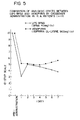
- Figure 5 shows the 10-step scales of lipo BPAA and Venopirine- as the degree of alleviation of pain in patients with chronic rheumatoid arthritis.
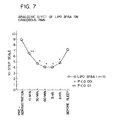
- Figures 6 and 7 showed the 10-step scales of Lipo BPAA as the degree of allevation of pain in patiens with acute upper repiratory tract inflammation and patients with cancerous pain.
- the micro-emulsion of this invention had a marked effect on urolithic pain and neuralgia on which steroidal agents show little or no effect, and showed higher effectiveness on chronic rheumatoid arthritis than Venopyrin®. It also showed a marked effect on pharyngalgia of a patient with acute upper respiratory tract inflammation.
- the analgesic effect of the micro-emulsion of this invention is characterized by its rapid manifestation and durability. Particularly, sialolithiasis pain was completely removed in 10 to 20 minutes after injection.
- micro-emulsion of this invention showed no side effects.
- the micro-emulsion of this invention containing the 4-biphenylylacetic acid ester has excellent distribution (incopopration to a site of inflammation with reduced side effects and toxicity).
- the pharmacological effect of the active ingredient of the micro-emulsion is exhibited effectively and strongly over an extended period of time.
- the micron-emulsion is stable, it is very useful clinically as a liquid injectable preparation for anti-inflammatory, analgesic and antipyretic purposes.
- Injection parenteral, e.g., intravenous, intra-articular, etc.
- eye-dropping, etc. can be cited as routes of administration of this micro-emulsion.
- the dosage varies according to the administration route, prescription, patient's symptoms, etc., but a usual dose for adults is 5 mg to 50 mg (as 4-biphenylylacetic acid) each time, once to three times a day.
- This dosage can be exceeded according to the severity of the condition, body weight, sex and type of disease of a patient, the physician's judgement, etc.
- this emulsion brings about a marked improvement in rheumatoid arthritis, osteoarthritis, lumbago, frozen shoulder, neck/shoulder/arm syndrome, posto- operative and traumatic inflammation and pain, cancerous pain, herpes zoster, gout attack, tendinitis/ tenosynovitis, neuralgia, myalgia, pain after tooth extraction, conjunctivitis, ueveitis, etc.
- Example 1 was repeated except that 4.52 g of ethyl 4-biphenylylacetate was used instead of 4.28 g of methyl 4-biphenylylacetate. Thus, a micro-emulsion containing ethyl 4-biphenylylacetate was obtained.
- the dispersed lipid particles in the micro- emulsion had a mean particle diameter of 0.15 micron, and it did not contain particles having a size of at least 1 micron.
- Example 1 was repeated except that purified yolk phospholipid was used instead of the purified soybean phospholipid. A micro-emulsion containing methyl 4-biphenylylacetate was obtained.
- Ethyl 4-biphenylylacetate (0.43 g corresponding to 0.4 g of 4-biphenylylacetic acid) was added to 20 g of soybean oil described in the Japanese Pharmacopoeia, and the mixture was heated to form a solution.
- To the solution were added 2.0 g of Pluronic F-68w (a polyoxy- ethylene/polyoxypropylene ether-type nonionic surface-active agent made by Asahi-Denka Kogyo K. K.) and a suitable amount of distilled water.
- the mixture was stirred by a polytron homogenizer to preapre a crude emulsion.
- the crude emulsion was emulsified under high pressure by a Gaulin high-energy homogenizer, and distilled water was added to make 200 ml.
- a micro-emulsion containing ethyl 4-biphenylylacetate was obtained.
- the dispersed lipid particles in the micro-emulsion had a mean diameter of 0.15 micron, and it did not contain particles having a size of at least 1 micron.
- Ethyl 4-biphenylylacetate (0.43 g) was added to 10 g of soybean oil described in the Japanese Pharmacopoeia and 10 g of MCT, and dissolved under heat.
- Purified soybean phospholipid (1.2 g), 1.2 g of purified yolk phospholipid and 5 g of glycerol were added, and the mixture was vigorously stirred under heat.
- a suitable amount of water was added, and the mixture was stirred by a polytron homogenizer to form a crude emulsion.
- the crude emulsion was emulsified under high pressure by a Gaulin high-energy homogenizer. Distilled water was added to make 200 ml.
- the dispersed lipid particles in the micro- emulsion had a mean particle diameter of 0.15 micron, and it did not contain particles having a size of at least 1 micron.
- Example 1 was repeated except that the amounts of soybean oil, methyl 4-biphenylylacetate, purified soybean phospholipid, and glycerin were changed to 100 g, 53.5 g, 7.5 g and 12.5 g, respectively. There was obtained 250 ml of a micro-emulsion containing methyl 4-biphenylylacetate in a high concentration. The dispersed lipid particles in the micro-emulsion had a mean particle diameter of 0.15 micron, and it did not contain particles having a size of at least 1 micron.
- Ethyl 4-biphenylylacetate (0.43 g) was dissolved in 20 g of soybean oil described in the Japanese Pharmacopoeia under heat. To the solution were added 2.4 g of purified soybean phospholipid, 0.6 g of cholesterol and 5 g of glycerol, and the mixture was vigorously stirred under heat. A suitable amount of distilled water was added, and the mixture was stirred by a Polytoron homogenizer to prepare a crude emulsion and then emulsified under high pressure by a Gaulin high-energy homogenizer. Distilled water was added to make 200 ml. A micro-emulsion containing ethyl 4-biphenylylacetate was obtained. The dispersed lipid particles in the micro- emulsion had a mean particle size of 0.14 micron, and it did not contain particles having a size of at least 1 micron.
- Example 7 was repeated except that 0.04 g of sodium palmitate was added instead of 0.6 g of cholesterol. A micro-emulsion containing ethyl 4-biphenylylacetate was obtained.
- Example 7 was repeated except that 0.4 g of 0-palmitoyl dextran (molecular weight 40000) was added instead of 0.6 g of cholesterol. A micro-emulsion containing ethyl 4-biphenylylacetate was obtained.
- Ethyl 4-biphenylylacetate (0.2825 g corresponding to 0.25 g of 4-biphenylylacetic acid) was added to 100 g of soybean oil described in the Japanese Pharmacopoeia, and dissolved under heat.
- To the solution were added 24 g of purified soybean phospholipid and 50 g of glycerol, and the mixture was vigorously sirred under heat.
- a suitable amount of distilled water was added to the solution, and the mixture was stirred by a polytron homogenizer to prepare a crude emulsion.
- the crude emulsion was then emulsified under high pressure by a Gaulin high-energy homogenizer, and distilled water was added to make 1000 ml.
- a micro- emulsion containing ethyl 4-biphynylylacetate was obtained.
- the dispersed particles in the micro-emulsion had a mean particle diameter of 0.16 micron, and it did not contain particles with a particle diameter of at least 1 micron.
- Example 11 was repeated except that the amount of ethyl 4-biphenylylacetate was changed to 0.565 g. A micro-emulsion containing ethyl 4-biphenylylacetate was obtained. The dispersed lipid particles in the micro- emulsion had a mean particle diameter of 0.18 micron, and it did not contain particles having a size of at least 1 micron.
- Example 11 was repeated except that the amount of ethyl 4-biphenylylacetate was changed to 1.13 g.
- a micro-emulsion containing ethyl 4-biphenylylacetate was prepared.
- the dispersed lipid particles in the micro- emulsion had a mean particle diameter of 0.14 micron, and it did not contain particles having a size of at least 1 micron.
- Example 11 was repeated except that the amount of ethyl 4-biphenylylacetate was changed to 2.26 g. A micro-emulsion containing ethyl 4-biphenylylacetate was obtained. The dispersed particles in the micro-emulsion had a mean particle diameter of 0.13 micron, and it did not containing particles having a size of at least 1 micron.
- Example 11 was repeated except that the amount of ethyl 4-biphenylylacetate was changed to 33.9 g. A micro-emulsion containing ethyl 4-biphenylylacetate was obtained. The dispersed particles in the micro-emulsion had an average particle diameter of 0.13 micron, and it did not containing particles having a size of at least 1 micron.
- Example 11 was repeated except that the amount of ethyl 4-biphenylylacetate was changed to 45.2 g. A micro-emulsion containing ethyl 4-biphenylylacetate was obtained. The dispersed particles in the micro-emulsion had a mean particle diameter of 0.13 micron, and it did not containing particles having a size of at least 1 micron.
Landscapes
- Health & Medical Sciences (AREA)
- Life Sciences & Earth Sciences (AREA)
- Chemical & Material Sciences (AREA)
- Medicinal Chemistry (AREA)
- Veterinary Medicine (AREA)
- Public Health (AREA)
- General Health & Medical Sciences (AREA)
- Animal Behavior & Ethology (AREA)
- Pharmacology & Pharmacy (AREA)
- Epidemiology (AREA)
- Organic Chemistry (AREA)
- Emergency Medicine (AREA)
- General Chemical & Material Sciences (AREA)
- Chemical Kinetics & Catalysis (AREA)
- Nuclear Medicine, Radiotherapy & Molecular Imaging (AREA)
- Pain & Pain Management (AREA)
- Dispersion Chemistry (AREA)
- Molecular Biology (AREA)
- Biophysics (AREA)
- Engineering & Computer Science (AREA)
- Bioinformatics & Cheminformatics (AREA)
- Biomedical Technology (AREA)
- Neurology (AREA)
- Neurosurgery (AREA)
- Rheumatology (AREA)
- Acyclic And Carbocyclic Compounds In Medicinal Compositions (AREA)
- Medicinal Preparation (AREA)
Applications Claiming Priority (2)
| Application Number | Priority Date | Filing Date | Title |
|---|---|---|---|
| JP166612/84 | 1984-08-10 | ||
| JP59166612A JPH0647533B2 (ja) | 1984-08-10 | 1984-08-10 | 4−ビフエニリル酢酸系化合物含有脂肪乳剤 |
Publications (3)
| Publication Number | Publication Date |
|---|---|
| EP0171084A2 true EP0171084A2 (de) | 1986-02-12 |
| EP0171084A3 EP0171084A3 (en) | 1987-04-08 |
| EP0171084B1 EP0171084B1 (de) | 1991-06-05 |
Family
ID=15834533
Family Applications (1)
| Application Number | Title | Priority Date | Filing Date |
|---|---|---|---|
| EP85110009A Expired - Lifetime EP0171084B1 (de) | 1984-08-10 | 1985-08-08 | Pharmazeutische Mikroemulsionen des Öl-in-Wasser-Typs |
Country Status (6)
| Country | Link |
|---|---|
| US (1) | US4647586A (de) |
| EP (1) | EP0171084B1 (de) |
| JP (1) | JPH0647533B2 (de) |
| AU (1) | AU583837B2 (de) |
| CA (1) | CA1263604A (de) |
| DE (1) | DE3583083D1 (de) |
Cited By (10)
| Publication number | Priority date | Publication date | Assignee | Title |
|---|---|---|---|---|
| EP0211258A3 (de) * | 1985-07-29 | 1987-11-19 | Abbott Laboratories | Mikroemulsionen |
| EP0257454A1 (de) * | 1986-08-18 | 1988-03-02 | Morishita Pharmaceutical Co. Ltd. | Öl-in-Wasser-Fettemulsion von 1-[2-(2,4-Dichlorphenyl)-3-methyl-1-pentenyl]-1H-imidazol |
| FR2630327A1 (fr) * | 1988-04-26 | 1989-10-27 | American Cyanamid Co | Preparation liposomale d'acide 4-biphenylylacetique utile en therapie intra-articulaire |
| EP0355604A3 (de) * | 1988-08-11 | 1991-06-05 | Lederle (Japan) Ltd. | Aktivitätspotenziator gegen Krebs |
| EP0361928A3 (de) * | 1988-09-29 | 1991-06-05 | Shiseido Company Limited | Emulgierte Zusammensetzung |
| EP0429248A3 (en) * | 1989-11-20 | 1991-08-07 | Shiseido Company Limited | Emulsified composition |
| EP0535327A1 (de) * | 1991-10-01 | 1993-04-07 | American Cyanamid Company | Felbinac enthaltendes Arzneimittel |
| EP0556394A4 (de) * | 1990-11-06 | 1994-03-17 | Nippon Shinyaku Co Ltd | Lyophilisierte zubereitung sowie deren herstellung. |
| EP0630286A4 (de) * | 1992-03-16 | 1995-06-07 | Yissum Res Dev Co | Automatischer injektor mit zwei kammern. |
| EP0696452A1 (de) * | 1994-08-08 | 1996-02-14 | Laboratorios Cusi, S.A. | Nanoemulsion von dem Öl-in-Wasser Typ, gebrauchbar als ein ophthalmischen Vehikel und Verfahren zur seiner Herstellung |
Families Citing this family (24)
| Publication number | Priority date | Publication date | Assignee | Title |
|---|---|---|---|---|
| US4874588A (en) | 1984-03-29 | 1989-10-17 | Diatec Polymers | Method and apparatus for rapidly dissolving polymers in water |
| US4816247A (en) * | 1985-09-11 | 1989-03-28 | American Cyanamid Company | Emulsion compositions for administration of sparingly water soluble ionizable hydrophobic drugs |
| US4784845A (en) * | 1985-09-16 | 1988-11-15 | American Cyanamid Company | Emulsion compostions for the parenteral administration of sparingly water soluble ionizable hydrophobic drugs |
| CA1338736C (fr) * | 1986-12-05 | 1996-11-26 | Roger Baurain | Microcristaux comportant une substance active presentant une affinite pour les phospholipides, et au moins un phospholipide, procede de preparation |
| US5032384A (en) * | 1989-01-27 | 1991-07-16 | Block Drug Company, Inc. | Compositions and method for the treatment of disease |
| US5104656A (en) * | 1989-06-16 | 1992-04-14 | Seth Pyare L | Percutaneous treatment with a high potency non-steroidal anti-inflammatory agent |
| US5032400A (en) * | 1989-11-02 | 1991-07-16 | Erie Laboratories | Shark liver oil and garlic oil topical analgesic |
| IL101007A (en) * | 1992-02-18 | 1997-08-14 | Pharmos Ltd | Dry stable compositions prepared by lyophilization |
| AU675930B2 (en) * | 1992-02-18 | 1997-02-27 | Pharmos Corp. | Dry compositions for preparing submicron emulsions |
| IL101387A (en) * | 1992-03-26 | 1999-11-30 | Pharmos Ltd | Emulsion with enhanced topical and/or transdermal systemic effect utilizing submicron oil droplets |
| JPH06157294A (ja) * | 1992-11-19 | 1994-06-03 | Tanabe Seiyaku Co Ltd | 脂肪微粒子製剤 |
| US6113921A (en) * | 1993-03-23 | 2000-09-05 | Pharmos Corp. | Topical and transdermal delivery system utilizing submicron oil spheres |
| SE9303281D0 (sv) * | 1993-10-07 | 1993-10-07 | Astra Ab | New formulation |
| US5961970A (en) * | 1993-10-29 | 1999-10-05 | Pharmos Corporation | Submicron emulsions as vaccine adjuvants |
| ES2277339T3 (es) * | 1995-11-30 | 2007-07-01 | Juridical Foundation The Chemo-Sero-Therapeutic Research Institute | Vacuna con adyuvante de aceite y metodo para su preparacion. |
| CA2262578A1 (en) * | 1996-08-07 | 1998-02-12 | Kunio Ito | Fat emulsion containing xanthine derivative |
| EP1248628A4 (de) * | 1999-12-14 | 2004-08-04 | Sky High Llc | PHOSPHOLIPID-ZUSAMMENSETZUNGEN ALS ENTZüNDUNGSHEMMER |
| CN100367951C (zh) * | 2005-12-16 | 2008-02-13 | 石药集团恩必普药业有限公司 | 丁苯酞静脉乳剂及其应用 |
| US9918934B2 (en) * | 2006-12-12 | 2018-03-20 | Edgar Joel Acosta-Zara | Linker-based lecithin microemulsion delivery vehicles |
| US20090286832A1 (en) * | 2008-05-15 | 2009-11-19 | Kiichiro Nabeta | Narcotic emulsion formulations for treatment of surgical pain |
| AU2010218424B2 (en) * | 2009-02-26 | 2014-02-13 | Techno Guard Co., Ltd. | Narcotic emulsion formulations for treatment of cancer pain |
| SG176229A1 (en) | 2009-06-05 | 2011-12-29 | Sunev Pharma Solution Ltd | Topical micro-emulsions for the treatment of rheumatic disorders |
| WO2012003441A1 (en) * | 2010-07-02 | 2012-01-05 | Isp Investments Inc. | Self-emulsifying oil |
| CN111840553A (zh) | 2019-04-15 | 2020-10-30 | 湖州依诺唯新药物制剂有限公司 | 脂性药物制剂及其应用 |
Family Cites Families (6)
| Publication number | Priority date | Publication date | Assignee | Title |
|---|---|---|---|---|
| CA725596A (en) * | 1960-08-26 | 1966-01-11 | J. Wretlind Arvid | Method of preparing intravenously injectable fat emulsions free from side reactions or complications |
| NL6815027A (de) * | 1967-10-26 | 1969-04-29 | ||
| US4073943A (en) * | 1974-09-11 | 1978-02-14 | Apoteksvarucentralen Vitrum Ab | Method of enhancing the administration of pharmalogically active agents |
| US4168308A (en) * | 1976-03-12 | 1979-09-18 | Apoteksvarucentralen Vitrum Ab | Composition for enhancing the administration of pharmacologically active agents |
| DE2914788A1 (de) * | 1979-04-11 | 1980-10-16 | Nattermann A & Cie | Parenteral applizierbare, stabile arzneimittelloesungen mit entzuendungshemmender wirkung |
| JPS601122A (ja) * | 1983-06-20 | 1985-01-07 | Green Cross Corp:The | ビフエニリルプロピオン酸誘導体脂肪乳剤 |
-
1984
- 1984-08-10 JP JP59166612A patent/JPH0647533B2/ja not_active Expired - Lifetime
-
1985
- 1985-08-07 CA CA000488186A patent/CA1263604A/en not_active Expired
- 1985-08-07 AU AU45850/85A patent/AU583837B2/en not_active Ceased
- 1985-08-08 EP EP85110009A patent/EP0171084B1/de not_active Expired - Lifetime
- 1985-08-08 DE DE8585110009T patent/DE3583083D1/de not_active Expired - Lifetime
- 1985-08-08 US US06/763,790 patent/US4647586A/en not_active Expired - Fee Related
Cited By (14)
| Publication number | Priority date | Publication date | Assignee | Title |
|---|---|---|---|---|
| EP0211258A3 (de) * | 1985-07-29 | 1987-11-19 | Abbott Laboratories | Mikroemulsionen |
| EP0257454A1 (de) * | 1986-08-18 | 1988-03-02 | Morishita Pharmaceutical Co. Ltd. | Öl-in-Wasser-Fettemulsion von 1-[2-(2,4-Dichlorphenyl)-3-methyl-1-pentenyl]-1H-imidazol |
| FR2630327A1 (fr) * | 1988-04-26 | 1989-10-27 | American Cyanamid Co | Preparation liposomale d'acide 4-biphenylylacetique utile en therapie intra-articulaire |
| EP0355604A3 (de) * | 1988-08-11 | 1991-06-05 | Lederle (Japan) Ltd. | Aktivitätspotenziator gegen Krebs |
| EP0361928A3 (de) * | 1988-09-29 | 1991-06-05 | Shiseido Company Limited | Emulgierte Zusammensetzung |
| US5098606A (en) * | 1989-11-20 | 1992-03-24 | Shiseido Company Ltd. | Emulsified composition |
| EP0429248A3 (en) * | 1989-11-20 | 1991-08-07 | Shiseido Company Limited | Emulsified composition |
| EP0556394A4 (de) * | 1990-11-06 | 1994-03-17 | Nippon Shinyaku Co Ltd | Lyophilisierte zubereitung sowie deren herstellung. |
| US5635491A (en) * | 1990-11-06 | 1997-06-03 | Nippon Shinyaku Co., Ltd. | Lyophilized fatty emulsions and a process for the production thereof |
| EP0535327A1 (de) * | 1991-10-01 | 1993-04-07 | American Cyanamid Company | Felbinac enthaltendes Arzneimittel |
| EP0630286A4 (de) * | 1992-03-16 | 1995-06-07 | Yissum Res Dev Co | Automatischer injektor mit zwei kammern. |
| US6007826A (en) * | 1992-03-16 | 1999-12-28 | Yisum Research Development Company Of The Hebrew University Of Jerusalem | Oil-in-water emulsions of positively charged particles |
| EP0696452A1 (de) * | 1994-08-08 | 1996-02-14 | Laboratorios Cusi, S.A. | Nanoemulsion von dem Öl-in-Wasser Typ, gebrauchbar als ein ophthalmischen Vehikel und Verfahren zur seiner Herstellung |
| US5698219A (en) * | 1994-08-08 | 1997-12-16 | Laboratorios Cusi, S.A. | Nanoemulsion of the oil water type, useful as an ophthalmic vehicle and process for the preparation thereof |
Also Published As
| Publication number | Publication date |
|---|---|
| AU583837B2 (en) | 1989-05-11 |
| DE3583083D1 (de) | 1991-07-11 |
| US4647586A (en) | 1987-03-03 |
| EP0171084A3 (en) | 1987-04-08 |
| JPS6144809A (ja) | 1986-03-04 |
| JPH0647533B2 (ja) | 1994-06-22 |
| EP0171084B1 (de) | 1991-06-05 |
| AU4585085A (en) | 1986-02-13 |
| CA1263604A (en) | 1989-12-05 |
Similar Documents
| Publication | Publication Date | Title |
|---|---|---|
| EP0171084B1 (de) | Pharmazeutische Mikroemulsionen des Öl-in-Wasser-Typs | |
| EP0041772B1 (de) | Fett-Emulsion, die ein Steroid enthält | |
| EP0129435B1 (de) | Flurbiprofenester und diesen enthaltende Emulsion | |
| US5314685A (en) | Anhydrous formulations for administering lipophilic agents | |
| EP0233849B1 (de) | Zubereitung von Pregnanolol in einer stabilen Öl-in-Wasser-Emulsion | |
| CA1212324A (en) | Fat emulsion containing prostaglandin | |
| JPH02203A (ja) | 薬物担体 | |
| BR112012015433B1 (pt) | Composição farmacêutica substancialmente anidra para aplicação cutânea | |
| JPS62270521A (ja) | フルルビプロフエン眼投与製剤 | |
| EP0418004B1 (de) | Vorbeugendes und therapeutisches Mittel gegen Hepatitis | |
| CA2025018A1 (en) | Compositions containing thymopentin for topical treatment of skin disorders | |
| NO312432B1 (no) | Farmasöytisk emulsjon som er egnet for parenteral administrering av bioaktive steroider | |
| JPH04300833A (ja) | プロスタグランジンe1 含有脂肪乳剤充填噴霧剤 | |
| JPH0138767B2 (de) | ||
| JPS61289038A (ja) | 抗癌剤 | |
| US20040138193A1 (en) | Oestrogen fatty acid monoester as a hypolipidaemic and antidiabetic agent | |
| JPS6033366B2 (ja) | 安定化されたトルナフテ−ト含有乳剤 | |
| JP2848529B2 (ja) | 外用剤 | |
| US20030068338A1 (en) | Pharmaceutical emulsions for retroviral protease inhibitors | |
| JPH0489430A (ja) | 低血圧維持剤 | |
| JPS59141518A (ja) | プロスタグランジン脂肪乳剤 | |
| WO2002009670A1 (en) | Liquid or semi-solid pharmaceutical excipient and pharmaceutical composition comprising the same | |
| JPH0368009B2 (de) |
Legal Events
| Date | Code | Title | Description |
|---|---|---|---|
| PUAI | Public reference made under article 153(3) epc to a published international application that has entered the european phase |
Free format text: ORIGINAL CODE: 0009012 |
|
| AK | Designated contracting states |
Designated state(s): BE CH DE FR GB IT LI NL SE |
|
| PUAL | Search report despatched |
Free format text: ORIGINAL CODE: 0009013 |
|
| AK | Designated contracting states |
Kind code of ref document: A3 Designated state(s): BE CH DE FR GB IT LI NL SE |
|
| 17P | Request for examination filed |
Effective date: 19870724 |
|
| 17Q | First examination report despatched |
Effective date: 19880729 |
|
| GRAA | (expected) grant |
Free format text: ORIGINAL CODE: 0009210 |
|
| AK | Designated contracting states |
Kind code of ref document: B1 Designated state(s): BE CH DE FR GB IT LI NL SE |
|
| ITF | It: translation for a ep patent filed | ||
| REF | Corresponds to: |
Ref document number: 3583083 Country of ref document: DE Date of ref document: 19910711 |
|
| ET | Fr: translation filed | ||
| PLBE | No opposition filed within time limit |
Free format text: ORIGINAL CODE: 0009261 |
|
| STAA | Information on the status of an ep patent application or granted ep patent |
Free format text: STATUS: NO OPPOSITION FILED WITHIN TIME LIMIT |
|
| 26N | No opposition filed | ||
| PGFP | Annual fee paid to national office [announced via postgrant information from national office to epo] |
Ref country code: SE Payment date: 19930707 Year of fee payment: 9 |
|
| PGFP | Annual fee paid to national office [announced via postgrant information from national office to epo] |
Ref country code: GB Payment date: 19930728 Year of fee payment: 9 |
|
| PGFP | Annual fee paid to national office [announced via postgrant information from national office to epo] |
Ref country code: FR Payment date: 19930817 Year of fee payment: 9 |
|
| PGFP | Annual fee paid to national office [announced via postgrant information from national office to epo] |
Ref country code: BE Payment date: 19930818 Year of fee payment: 9 |
|
| PGFP | Annual fee paid to national office [announced via postgrant information from national office to epo] |
Ref country code: DE Payment date: 19930826 Year of fee payment: 9 |
|
| PGFP | Annual fee paid to national office [announced via postgrant information from national office to epo] |
Ref country code: NL Payment date: 19930831 Year of fee payment: 9 Ref country code: CH Payment date: 19930831 Year of fee payment: 9 |
|
| PG25 | Lapsed in a contracting state [announced via postgrant information from national office to epo] |
Ref country code: GB Effective date: 19940808 |
|
| PG25 | Lapsed in a contracting state [announced via postgrant information from national office to epo] |
Ref country code: SE Effective date: 19940809 |
|
| PG25 | Lapsed in a contracting state [announced via postgrant information from national office to epo] |
Ref country code: LI Effective date: 19940831 Ref country code: CH Effective date: 19940831 Ref country code: BE Effective date: 19940831 |
|
| EAL | Se: european patent in force in sweden |
Ref document number: 85110009.9 |
|
| BERE | Be: lapsed |
Owner name: MORISHITA PHARMACEUTICAL CO. LTD Effective date: 19940831 Owner name: LEDERLE (JAPAN) LTD Effective date: 19940831 |
|
| PG25 | Lapsed in a contracting state [announced via postgrant information from national office to epo] |
Ref country code: NL Effective date: 19950301 |
|
| GBPC | Gb: european patent ceased through non-payment of renewal fee |
Effective date: 19940808 |
|
| NLV4 | Nl: lapsed or anulled due to non-payment of the annual fee | ||
| PG25 | Lapsed in a contracting state [announced via postgrant information from national office to epo] |
Ref country code: FR Effective date: 19950428 |
|
| REG | Reference to a national code |
Ref country code: CH Ref legal event code: PL |
|
| PG25 | Lapsed in a contracting state [announced via postgrant information from national office to epo] |
Ref country code: DE Effective date: 19950503 |
|
| EUG | Se: european patent has lapsed |
Ref document number: 85110009.9 |
|
| REG | Reference to a national code |
Ref country code: FR Ref legal event code: ST |