EP0165630B1 - Verfahren zur Herstellung einer chlorierten, bromierten, radiobromierten, jodierten und/oder radiojodierten aromatischen oder heteroaromatischen Verbindung, sowie ein Kit zur Herstellung einer auf diese Verbindung gegründete diagnostische Zusammensetzung - Google Patents
Verfahren zur Herstellung einer chlorierten, bromierten, radiobromierten, jodierten und/oder radiojodierten aromatischen oder heteroaromatischen Verbindung, sowie ein Kit zur Herstellung einer auf diese Verbindung gegründete diagnostische Zusammensetzung Download PDFInfo
- Publication number
- EP0165630B1 EP0165630B1 EP85200798A EP85200798A EP0165630B1 EP 0165630 B1 EP0165630 B1 EP 0165630B1 EP 85200798 A EP85200798 A EP 85200798A EP 85200798 A EP85200798 A EP 85200798A EP 0165630 B1 EP0165630 B1 EP 0165630B1
- Authority
- EP
- European Patent Office
- Prior art keywords
- acid
- iodine
- water
- preparing
- soluble
- Prior art date
- Legal status (The legal status is an assumption and is not a legal conclusion. Google has not performed a legal analysis and makes no representation as to the accuracy of the status listed.)
- Expired
Links
Images
Classifications
-
- C—CHEMISTRY; METALLURGY
- C07—ORGANIC CHEMISTRY
- C07C—ACYCLIC OR CARBOCYCLIC COMPOUNDS
- C07C63/00—Compounds having carboxyl groups bound to a carbon atoms of six-membered aromatic rings
- C07C63/68—Compounds having carboxyl groups bound to a carbon atoms of six-membered aromatic rings containing halogen
- C07C63/70—Monocarboxylic acids
-
- A—HUMAN NECESSITIES
- A61—MEDICAL OR VETERINARY SCIENCE; HYGIENE
- A61K—PREPARATIONS FOR MEDICAL, DENTAL OR TOILETRY PURPOSES
- A61K51/00—Preparations containing radioactive substances for use in therapy or testing in vivo
- A61K51/02—Preparations containing radioactive substances for use in therapy or testing in vivo characterised by the carrier, i.e. characterised by the agent or material covalently linked or complexing the radioactive nucleus
- A61K51/04—Organic compounds
-
- A—HUMAN NECESSITIES
- A61—MEDICAL OR VETERINARY SCIENCE; HYGIENE
- A61K—PREPARATIONS FOR MEDICAL, DENTAL OR TOILETRY PURPOSES
- A61K51/00—Preparations containing radioactive substances for use in therapy or testing in vivo
- A61K51/12—Preparations containing radioactive substances for use in therapy or testing in vivo characterised by a special physical form, e.g. emulsion, microcapsules, liposomes, characterized by a special physical form, e.g. emulsions, dispersions, microcapsules
- A61K51/1282—Devices used in vivo and carrying the radioactive therapeutic or diagnostic agent, therapeutic or in vivo diagnostic kits, stents
-
- A—HUMAN NECESSITIES
- A61—MEDICAL OR VETERINARY SCIENCE; HYGIENE
- A61M—DEVICES FOR INTRODUCING MEDIA INTO, OR ONTO, THE BODY; DEVICES FOR TRANSDUCING BODY MEDIA OR FOR TAKING MEDIA FROM THE BODY; DEVICES FOR PRODUCING OR ENDING SLEEP OR STUPOR
- A61M5/00—Devices for bringing media into the body in a subcutaneous, intra-vascular or intramuscular way; Accessories therefor, e.g. filling or cleaning devices, arm-rests
- A61M5/178—Syringes
- A61M5/31—Details
-
- C—CHEMISTRY; METALLURGY
- C07—ORGANIC CHEMISTRY
- C07B—GENERAL METHODS OF ORGANIC CHEMISTRY; APPARATUS THEREFOR
- C07B39/00—Halogenation
-
- C—CHEMISTRY; METALLURGY
- C07—ORGANIC CHEMISTRY
- C07C—ACYCLIC OR CARBOCYCLIC COMPOUNDS
- C07C45/00—Preparation of compounds having >C = O groups bound only to carbon or hydrogen atoms; Preparation of chelates of such compounds
- C07C45/61—Preparation of compounds having >C = O groups bound only to carbon or hydrogen atoms; Preparation of chelates of such compounds by reactions not involving the formation of >C = O groups
- C07C45/63—Preparation of compounds having >C = O groups bound only to carbon or hydrogen atoms; Preparation of chelates of such compounds by reactions not involving the formation of >C = O groups by introduction of halogen; by substitution of halogen atoms by other halogen atoms
-
- C—CHEMISTRY; METALLURGY
- C07—ORGANIC CHEMISTRY
- C07C—ACYCLIC OR CARBOCYCLIC COMPOUNDS
- C07C51/00—Preparation of carboxylic acids or their salts, halides or anhydrides
- C07C51/347—Preparation of carboxylic acids or their salts, halides or anhydrides by reactions not involving formation of carboxyl groups
-
- C—CHEMISTRY; METALLURGY
- C07—ORGANIC CHEMISTRY
- C07C—ACYCLIC OR CARBOCYCLIC COMPOUNDS
- C07C51/00—Preparation of carboxylic acids or their salts, halides or anhydrides
- C07C51/347—Preparation of carboxylic acids or their salts, halides or anhydrides by reactions not involving formation of carboxyl groups
- C07C51/363—Preparation of carboxylic acids or their salts, halides or anhydrides by reactions not involving formation of carboxyl groups by introduction of halogen; by substitution of halogen atoms by other halogen atoms
-
- C—CHEMISTRY; METALLURGY
- C07—ORGANIC CHEMISTRY
- C07C—ACYCLIC OR CARBOCYCLIC COMPOUNDS
- C07C57/00—Unsaturated compounds having carboxyl groups bound to acyclic carbon atoms
- C07C57/52—Unsaturated compounds having carboxyl groups bound to acyclic carbon atoms containing halogen
- C07C57/58—Unsaturated compounds having carboxyl groups bound to acyclic carbon atoms containing halogen containing six-membered aromatic rings
-
- A—HUMAN NECESSITIES
- A61—MEDICAL OR VETERINARY SCIENCE; HYGIENE
- A61K—PREPARATIONS FOR MEDICAL, DENTAL OR TOILETRY PURPOSES
- A61K2123/00—Preparations for testing in vivo
-
- C—CHEMISTRY; METALLURGY
- C07—ORGANIC CHEMISTRY
- C07B—GENERAL METHODS OF ORGANIC CHEMISTRY; APPARATUS THEREFOR
- C07B2200/00—Indexing scheme relating to specific properties of organic compounds
- C07B2200/05—Isotopically modified compounds, e.g. labelled
Definitions
- the invention relates to a method of preparing a chlorinated, brominated, radiobrominated, iodinated and/or radioiodinated aromatic or heteroaromatic compound, in which the (hetero)aromatic nucleus optionally comprises one or more additional substituents, by reacting the corresponding halogenated or diazonium-substituted compound in the presence of a water- soluble acid and copper ions as a catalyst with a likewise water-soluble chloride, bromide, radiobromide, iodide or radioiodide.
- Radiolabelled compounds may be used, for example, for the examination into deviations in shape and function of internal organs and into the presence and location of pathological processes in the body.
- a composition in which the radiolabelled compound is present can be administered to the patient, for example, in the form of an injectable liquid.
- detection device for example, a gamma camera
- images can be obtained by observing or recording the emitted radiation, of, for example, the organ, the body fluid or the pathological process in which the radiolabelled compound is incorporated.
- a radiolabelled compound suitable for this purpose is radioiodinated o-iodohippuric acid or a salt thereof.
- This radiolabelled compound has been found to be particularly suitable for examining the renal function.
- the readily available sodium salt of o-iodohippuric acid, labelled with iodine-131, is often used for this purpose. Because the radiation characteristics of iodine-131 are less favourable and the half-life of said radioisotope is comparatively long for use in radiodiagnostics for examining the renal function, it has more recently been suggested to use iodine-123 labelled o-iodohippuric acid or a salt thereof.
- lodine-123 has a compartively short half-life, namely approximately 13 hours, as a result of which compounds of this radioisotope are on the one hand very suitable, for example, for examining the renal function but on the other hand may present logistic problems after the isotope has been produced in a cyclotron.
- Hawkins et al. described in Eur. J. Nucl. Med. 1982,7, pp. 58-61 a fast method of preparing iodine-123-o-iodohippuric acid.
- the said authors have suggested a kit preparation method in which the user himself, i.e.
- kits can prepare the radiolabelled compound by using a so-called kit.
- This kit comprises all the constituents which are necessary for the preparation, and usually instructions for use.
- a kit described by Hawkins et al. comprises the following constituents: acetate buffer, o-iodohippuric acid in 50% ethanol, an aqueous solution of copper sulphate and an aqueous solution of iodine-123 labelled sodium iodide.
- the combined ingredients were heated in an autoclave for 15 minutes at 121°C, producing the desired iodine-121-o-iodohippuric acid in a yield of 94%; 5% free iodine-123 was still present.
- the same result could be obtained by using a kit in a freeze-dried form in which a phosphate buffer was preferred to an acetate buffer.
- the disadvantage of the above-described method is the still incomplete conversion to the desired radiolabelled compound.
- the remaining free iodine-123 does not take part in the intended examination, but goes entirely to the thyroid gland which is thus burdened unnecessarily.
- radioiodinated amphetamine and derivatives thereof also presents great problems, as appears from European Patent Specification 11858. After a technically unattractive preparation method in ethanol as a solvent in a closed tube at 121°C, the resulting product must be subjected to several purification steps.
- Mills has described in Int. J. Appl. Rad. Isot., Vol. 33,1982, pp. 467-468, the radioiodination of diatrizoic acid by reacting iodine-123 labelled sodiumiodide with diatrizoic acid in the presence of copper sulphate at a pH between 3 and 4.
- the reaction conditions described by Mills vis. heating for 15 minutes at 125°C, the desired radiolabelled product could be obtained in an average yield of only 82%. So also in this case the conversion is rather incomplete and the reaction temperature required, viz. 125°C, is unfavourable for kit purposes (see further).
- this object can be achieved by performing the substitution reaction mentioned in the opening paragraph in the presence of one or more reduction agents, which are stable in acid medium, in a quantity exceeding the quantity of the catalyst used. It has been found surprisingly that as a result of this the yield of the product formed in the substitution reaction can be considerably increased, even up to approximately 100% in the preparation of e.g. radioiodinated o-iodohippuric acid, amphetamine derivatives, iodinated thyrosine, diatrizoic acid, iodinated benzylguanidine, and iodinated benzyl- propanediamine derivatives.
- radioiodinated o-iodohippuric acid amphetamine derivatives, iodinated thyrosine, diatrizoic acid, iodinated benzylguanidine, and iodinated benzyl- propanediamine derivatives.
- the invention relates more in particular to the preparation of a brominated, radiobrominated, iodinated or radioiodinated aromatic or heteroaromatic compound, in which the (hetero)aromatic nucleus is a benzene nucleus, a naphthalene nucleus, a pyridine nucleus, a pyrimidine nucleus, a quinoline nucleus or an indole nucleus which comprises one or more additional substituents.
- the invention is particularly suitable for the preparation of radiolabelled compounds from the corresponding non-labelled compounds, the invention is by no means restricted thereto.
- (Hetero)aromatic compounds substituted with chlorine or non-labelled bromine or iodine can also be prepared from the corresponding halogen compounds or diazonium compounds by using the method according to the invention.
- Suitable non-radiolabelled iodine compounds which can be prepared by using the method according to the invention are iodine-containing contrast media, for example iophendylate and other ones on the basis of 2-, 2,4- or 2,4,6- substituted 1,3,5-triiodobenzene, for example, acetrizoic acid, adipiodone, amidotrizoic acid or diatrizoic acid, bunamiodyl, phenobutiodil, ioben- zamic acid, iocarmic acid, iocetamic acid, iodamide, iodoxamic acid, ioglycamic acid, iopanoic acid, iopodic acid, iothalamic acid, iox
- Suitable, non-radiolabelled compounds which can be prepared according to the invention from the corresponding halogen compounds of diazonium compounds are starting substances for radioiodinated diagnostics, for example o-iodohippuric acid or salts thereof, iodoamphetamine or derivatives thereof, iodo-w-phenyl fatty acids or salts thereof and rose bengal.
- the invention is excellently suitable for the preparation of radiolabelled bromine or radiolabelled iodine compounds by reacting the corresponding non-radiolabelled bromine or iodine compounds in acid medium in the presence of a reduction agent with a watersoluble radiolabelled bromide or iodide.
- a watersoluble bromide or iodide is preferably chosen an alkali metal bromide or iodide, for example, a sodium bromide or iodide or a potassium bromide or iodide.
- Radioisotopes suitable for this purpose are bromine-77, iodine-123, iodine-125 and iodine-131; as described hereinbefore, the best suitable of these iodine isotopes for use in radiodiagnostic compounds is iodine-123. Therefore, a iodine-123 labelled sodium iodide solution or potassium iodide solution is preferably chosen for the substitution reaction.
- radioiodinated important diagnostics can simply and in a high yield be prepared in this manner, for example, radioiodinated o-hippuric acid and salts thereof, labelled iodoamphetamine and derivatives thereof, labelled iodo-w-phenyl fatty acids and salts thereof, labelled iodinated thyrosines, such as labelled mono-, di-, tri- and tetraiodothyrosine, labelled 1,3,5-triiodobenzene derivatives, such as labelled diatrizoic acid and salts thereof, labelled halogenated benzylguanidine, such as m-iodobenzylguanidine, and labelled N,N,N'-trimethyl-N'-(2-hydroxy-3-methyl-5-iodobenzyl)-1,3-propanediamine.
- iodinated o-hippuric acid and salts thereof labelled iodoamphetamine and derivatives thereof
- N-lower alkylsubstituted iodoamphetamines important for diagnostic purposes are labelled N-lower alkylsubstituted iodoamphetamines, for example, N-isopropyl-iodoamphetamine.
- Other interesting halogen-containing compounds which may be radioiodinated according to the invention are: rose bengal, N-iodoquinolyn-N N'-dimethyl- propanediamine, p-iodosulphonamide, N-iodophenylsulphonyl-N'-ethylurea, glibenclamed 3-iodo-4-aminophenylethylamine, N,N-dimethy- liodobenzylamine, substituted or non-substituted iodopyridines or iodopyridine-oxides, mono- and triiodobenzoic acid, N-[3-
- Reduction agents which are very suitable for use in the method according to the invention are Sn(II) salts.
- Sn(II) salts are preferably used one more antioxidants, of example, metallic tin, ascorbic acid, citric acid, a monosaccharide or gentisic acid.
- antioxidants metallic tin, ascorbic acid, citric acid, a monosaccharide or gentisic acid.
- ascorbic acid has been found to be particularly suitable for use together with a 8n(II) salt; when ascorbic acid is used, this acid may in addition have the function of water-soluble acid.
- ascorbic acid in addition to SN111) salts, other reduction agents stable in acid medium may successfully be used, for example, ascorbic acid, isoascorbic acid, citric acid, a monosaccharide, or a sulphite.
- ascorbic acid as a reduction agent is to be preferred due to its extremely favourable influence on the desired substitution reaction, the read availability and the suitability to use it in pharmaceutical compositions; moreover, ascorbic acid may serve as the water-soluble acid required for the reaction.
- radioiodinated o-iodo-hippuric acid or salts thereof, iodoamphetamine or derivatives thereof, iodo- -phenyl fatty acids or salts thereof, iodobenzylguanidine, iodobenzyl- propanediamine derivatives, and iodothyrosines can be prepared substantially quantitatively by reacting the corresponding non-radioactive bromine- or iodine-substituted compounds in the presence of a water-soluble acid and of copper ions as a catalyst with likewise water-soluble radioactive iodide, provided the reaction is carried out in the presence of ascorbic acid as a reduction agent.
- radioiodinated o-iodohippuric acid or salts thereof the catalyst may even be absent to still get a substantially quantitative result of the desired reaction. It is therefore to be considered a particular aspect of the invention that radioiodinated o-iodohuppuric acid or salts thereof can successfully be prepared by a simple reaction of the corresponding compound substituted with non-radioactive bromine or iodine with a water- soluble radioactive iodide in the presence of ascorbic acid as a reduction agent.
- the reaction according to the invention can be readily carried out in an aqueous solution which comprises, if so desired, salts and one or more water-miscible organic solvents, for example, ethanol, methanol or acetone.
- organic solvents, as well as other auxiliary substances to improve the solubility have the disadvantage, however, of being potentially toxic. It is of great advantage that the reaction mixture can be directly introduced as a pharmaceutical composition in the blood stream of the living being without any further purification-for example, distilling-off organic solvent.
- reaction mixture is less suitable to be used as such as a radiodiagnostic.
- a particular advantage of the reaction according to the invention is that it gives a substantially quantitative result in a solution which is entirely free or substantially entirely free from organic solvent.
- the resulting reaction mixture can therefore be used directly for pharmaceutical applications by administering it, for example, intravenously or subcutaneously to a living being.
- the reaction is therefore preferably carried out in a sterile solution having a pH suitable for physiological application.
- the reaction can be carried out at a temperature which is suitable for use in a clinic or a clinical laboratory. This is important in particular for the preparation of compounds labelled with radioactive bromine or iodine. These compounds, having a comparatively short life in connection with natural decay of the radioisotope used, can then be prepared in situ by the user and be used immediately thereafter. It has been found that the desired substitution reaction proceeds excellently at a temperature of approximately 121°C, a temperature at which compositions for intravenous or subcutaneous administration have to be sterilized. Although some clinics or clinical laboratories have the disposal of an autoclave with which sterilizations at 121°C can be carried out, this is not the general rule.
- the reaction according to the invention for the preparation of radioactive compounds is excellently suitable for a kit preparation.
- a so-called "cold" kit in which all the ingredients for the preparation reaction are present with the exception of the radioactive iodide or bromide, is placed available to the user.
- the radioactive material is placed to the user's disposal separately.
- the user himself can now perform the reaction according to the invention by taking the kit destined for preparing the radiolabelled compound which he desires and mixing the ingredients thereof with the radiolabelled iodide or bromide, by heating the resulting mixture for a short period of time, for example at 100°C, a composition suitable for diagnostic examination is obtained.
- a formulation liquid may be added to the mixture prior to or after heating.
- the ingredients are preferably present in the kit in a freeze-dried form; this is in favour of the stability.
- the invention relates also and in particular to a kit for preparing a composition suitable for radiodiagnostic examination.
- the said kit comprises a reduction agent as described hereinbefore.
- the kit furthermore comprises instructions for use with a prescription for carrying out the method.
- the invention also related to a kit for preparing radioiodinated o-iodohippuric acid or a salt thereof, comprising the non-labelled compound, if desired a pharmaceutically acceptable formulation liquid andor auxiliary substances, and ascorbic acid as a reduction agent.
- This kit also comprises instructions for use.
- reaction product thus obtained was then brought at pH 10 to 11 with a 1 molar NaOH solution and chromatographed over a micro column with Prep. Bondapack C18 (55-105 ⁇ ; reg. trademark) packing.
- the column was then rinsed with 10 ml of H 2 0 and the N-isopropyl-p-I-amphetamine was eluted quantitatively with 2-3 ml of acidified ethanol.
- radiobromine-labelled amphetamine derivative could be prepared under substantially the same conditions.
- lodine-123 labelled N-isopropyl-para-iodoamphetamine could also be obtained by starting from N-isopropyl-parabromoamphetamine, by reaction it with iodine-123 labelled sodium iodide.
- 0.2 mg of ortho-iodohippuric acid, 2 mg ascorbic acid, 1-3 ⁇ mol CuS0 4 , 0.5 ml H 2 0 and radioactive iodide (50 ⁇ l of a sodium iodide solution labelled with iodine-123; activity 25 mCi) were mixed in a closed vial and heated at substantially 100°C for 5 minutes.
- reaction has been carried out with the same result using a iodine-131 labelled sodium iodide solution.
- the desired iodine-123 labelled product was obtained in a labelling efficiency of more than 90%, while substantially no by-products were formed.
- Kit preparation for an injectable radioiodinated N-isopropyl-p-iodoamphetamine solution, as well as the use of said solution
- the mixture was added under nitrogen to a sterile closed vial, after which 0.5 ml of sterile oxygen-free water and 10 ⁇ l iodine-123 labelled sodium iodide solution were successively added (5 mCi).
- the vial was heated at 100°C for 30 minutes.
- the labelling efficiency of the resulting composition was determined by means of radio-HPLC and was over 99%. Non-labelled by-products could not be detected (UV). When no sterile solutions were used, the composition was sterilized afterwards by filtration over a 0.22 ⁇ filter; the composition then did not differ from the above one.
- the sterilized composition was administered intravenously to a patient in a quantity of 2.5 mCi.
- Excellent scintigraphic images of the brains were obtained by means of a gamma camera.
- a sterile aqueous solution comprising 4 mg of ascorbic acid, 14 mg of NaCI and 5 mg of Na 2 CO 3 ⁇ 10H 2 O.
- Kit preparation for an injectable radioiodinated N-isopropyl-p-iodoamphetamine (IAMP) solution as well as the use of said solution.
- IAMP radioiodinated N-isopropyl-p-iodoamphetamine
- the mixture was added through a 0.22 p sterilizing filter to a sterile and apyrogen vial, then freeze-dried in a sterile nitrogen atmosphere and septum-closed under these conditions.
- the obtained solution was isotonic and of injectable pH.
- the labelling efficiency of the resulting composition was over 99% (average of 20 experiments). Non-labelled by-products could not be detected (UV detection).
- composition was administered intravenously to a patient in a quantity of 2 to 4 mCi.
- Excellent scintigraphic images of the brains were obtained with both a planar (2 mCi) and SPECT (4 mCi) y-camera.
- composition was found stable for at least 24 hours.
- the clinical preparation was carried out in two steps:
- composition administrated was used with success for non invasive kidney studies (1 mCi intravenously injected).
- MIBG radioiodinated m-iodobenzylguanidine
- the clinical preparation was carried out in two steps:
- composition administered intravenously (4 mCi per 70 kg body weight) was used with success for the y-scintigraphic diagnosis of neuroblastoma and pheochromocytoma.
- Kit preparation for an injectable radioiodinated p-iodophenyl-pentadecanoic acid (PIPPA) solution preparation for an injectable radioiodinated p-iodophenyl-pentadecanoic acid (PIPPA) solution.
- PIPPA radioiodinated p-iodophenyl-pentadecanoic acid
- the septum-closed vial was heated at 100°C during 30 minutes. A labelling yield of 98.5% was obtained.
- Kit preparation for an injectable radioiodinated N,N,N'-trimethyl-N'-(2-hydroxy-3-methyl-5-iodobenzyl)-1,3-propanediamine (HIPDM) solution as well as the use of said solution.
- HPDM radioiodinated N,N,N'-trimethyl-N'-(2-hydroxy-3-methyl-5-iodobenzyl)-1,3-propanediamine
- composition is administered intravenously to a patient (2 to 5 mCi amounts) for brainscintig- raphy.
- di-iodothyrosine labelled under identical conditions as described for mono-iodothyrosine (example XIII). A labelling yield of at least 99% was obtained within 2 minutes.
- the above mixture was heated at 100°C in a septum-closed vial during 10-15 minutes. A labelling yield higher than 99% was obtained. No labelled or unlabelled side-products could be detected.
- diatrizoic acid was radiolabelled according to the method described by Mills (Int. J. Appl. Rad. Isot., Vo. 33, 1982, pp. 467-468).
- the mixture was heated for 15 minutes at 125°C.
- phosphate buffer (6.185 gram of dibasic sodiumphos- phate per 100 ml water) was added to adjust the pH to 7.0.
- the solution was stirred for two minutes and passed through a 0.22 micron filter.
- the radiochemical purity was determined on HPLC using a Hewlett Packard RP8 10 ⁇ (dic- hrosorb) column and methanol/water/acetic acid 5/95/0.15 as the mobile phase.
- Sn(II) can also achieve the reduction of entities with a higher oxidation state than radioiodide, such as radioiodate, which can be present in amounts up to more than 2-3% in commercially available radioiodide solutions. It renders those species available as iodide for the nucleophilic exchange reaction, e.g. the exchange of iodine by radiolabelled iodine, thus allowing to obtain the high labelling yields mentioned in the Examples before.
- radioiodide such as radioiodate
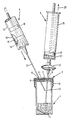
- a vial is denoted with an internally conical bottom 2.
- the vial is sealingly closed with a stopper 3.
- Stopper 3 of vial 1 comprises a pierceable rubber disk 6, at the upper side covered by an aluminium sheet 7 wherein two apertures 8 and 9 are recessed.
- a screw cap 10 with a central aperture 11 keeps the rubber disk 6 and the aluminium sheet 7 tightly clamped on the upper edge of vial 1.
- the reaction mixture e.g. the kit preparation together with the radioiodide solution, is accommodated in the vial and the reaction is carried out by heating the reaction mixture at the desired temperature, e.g. 100°C.
- the vial comprises a solution of the product, e.g.
- the supply syringe is denoted with reference numeral 4, the injection syringe with 5.
- Both syringes are provided with hollow needles 12 and 13 respectively, which can be stuck through the apertures 8 and 9 in the aluminium sheet and through the rubber disk to allow communication of the interior of the syringes with that of the vial.
- the syringes further comprise cylindrical barrels 14 and 15 respectively, in which plungers 16 and 17 respectively, are movably positioned.
- Supply syringe 4 is intended for accommodating a formulation liquid, e.g. an isotonic solution, and is provided with an aperture 18 in the side wall of its barrel 14.
- the aperture 18 has such a distance from the needle mount, i.e. the mounting means of the needle to the barrel, that in the original position the plunger 16 separates the aperture 18 from the room 19 wherein the formulation liquid is accommodated, whereas said room 19 can be allowed to communicate with the atmospheric pressure outside the syringe via the aperture by withdrawing plunger 16 up to above aperture 18. This latter position of the plunger 16 is denoted in the Figure in dotted lines.
- Injection syringe 5 can accommodate the injectable composition in room 21 and is provided with a sterilizing filter 22, e.g. -of 0.22 p detachably connected between injection needle 13 and the needle mount for mounting the needle to barrel 15.
- a sterilizing filter 22 e.g. -of 0.22 p detachably connected between injection needle 13 and the needle mount for mounting the needle to barrel 15.
- the stopper 3 of vial 1 is pierced (at 8) by needle 12 of supply syringe 4.
- the supply syringe contains in room 19 a formulation liquid, e.g. an isotonic solution.
- the supply syringe is then positioned as shown in the Figure; the needle tip does not contact the solution in the vial.
- the needle 13 of injection syringe 15 is stuck through stopper 3 of vial 1 (at 9).
- the injection syringe is also positioned as shown in the Figure; the needle extends into the solution to the conical bottom of the vial so that the needle tip (nearly) contacts this bottom. Injection syringe 15 is empty.
- plunger 16 of syringe 4 is withdrawn up to above aperture 18 (dotted lines), resulting in a communication between the formulation liquid in this syringe with the atmospheric pressure.
- the formulation liquid flows through the hollow needle 12 into the vial (see the arrow) and can easily be mixed with the contents of the vial by shaking this vial.
- the injectable composition thus obtained is then transferred from the vial into the injection syringe 5 by withdrawing plunger 17 in the direction of arrow 20.
- the composition reaches said room 21 via sterilizing filter 22.
- aperture 18 of supply syringe 4 can be provided with a sterilizing filter. Then sterilizing filter 22 may be omitted. This embodiment is preferably used when the contents of vial 1 are already in a sterile condition.
- Sterilizing filters may be omitted completely, when the equipment is installed in a sterile room, e.g. in a laminar flow unit.
Landscapes
- Chemical & Material Sciences (AREA)
- Organic Chemistry (AREA)
- Health & Medical Sciences (AREA)
- Life Sciences & Earth Sciences (AREA)
- Veterinary Medicine (AREA)
- Physics & Mathematics (AREA)
- Optics & Photonics (AREA)
- Public Health (AREA)
- General Health & Medical Sciences (AREA)
- Animal Behavior & Ethology (AREA)
- Chemical Kinetics & Catalysis (AREA)
- Engineering & Computer Science (AREA)
- Heart & Thoracic Surgery (AREA)
- Pharmacology & Pharmacy (AREA)
- Medicinal Chemistry (AREA)
- Epidemiology (AREA)
- Oil, Petroleum & Natural Gas (AREA)
- Vascular Medicine (AREA)
- Proteomics, Peptides & Aminoacids (AREA)
- Dispersion Chemistry (AREA)
- Anesthesiology (AREA)
- Biomedical Technology (AREA)
- Hematology (AREA)
- Medicines Containing Antibodies Or Antigens For Use As Internal Diagnostic Agents (AREA)
- Organic Low-Molecular-Weight Compounds And Preparation Thereof (AREA)
- Low-Molecular Organic Synthesis Reactions Using Catalysts (AREA)
- Infusion, Injection, And Reservoir Apparatuses (AREA)
- Medical Preparation Storing Or Oral Administration Devices (AREA)
Claims (16)
Priority Applications (1)
| Application Number | Priority Date | Filing Date | Title |
|---|---|---|---|
| AT85200798T ATE47315T1 (de) | 1984-05-24 | 1985-05-20 | Verfahren zur herstellung einer chlorierten, bromierten, radiobromierten, jodierten und/oder radiojodierten aromatischen oder heteroaromatischen verbindung, sowie ein kit zur herstellung einer auf diese verbindung gegruendete diagnostische zusammensetzung. |
Applications Claiming Priority (4)
| Application Number | Priority Date | Filing Date | Title |
|---|---|---|---|
| BE212997 | 1984-05-24 | ||
| BE0/212997A BE899739A (nl) | 1984-05-24 | 1984-05-24 | Werkwijze voor het controleren van de substitutie op aromatische kern,en, werkwijze en apparatuur ter bereiding van samenstelling voor scintigrafisch onderzoek. |
| NL8402138 | 1984-07-05 | ||
| NL8402138 | 1984-07-05 |
Publications (3)
| Publication Number | Publication Date |
|---|---|
| EP0165630A2 EP0165630A2 (de) | 1985-12-27 |
| EP0165630A3 EP0165630A3 (en) | 1986-01-08 |
| EP0165630B1 true EP0165630B1 (de) | 1989-10-18 |
Family
ID=25654100
Family Applications (1)
| Application Number | Title | Priority Date | Filing Date |
|---|---|---|---|
| EP85200798A Expired EP0165630B1 (de) | 1984-05-24 | 1985-05-20 | Verfahren zur Herstellung einer chlorierten, bromierten, radiobromierten, jodierten und/oder radiojodierten aromatischen oder heteroaromatischen Verbindung, sowie ein Kit zur Herstellung einer auf diese Verbindung gegründete diagnostische Zusammensetzung |
Country Status (6)
| Country | Link |
|---|---|
| US (2) | US4942231A (de) |
| EP (1) | EP0165630B1 (de) |
| JP (6) | JPH06102079B2 (de) |
| AT (1) | ATE47315T1 (de) |
| AU (1) | AU576861B2 (de) |
| DE (1) | DE3573725D1 (de) |
Families Citing this family (32)
| Publication number | Priority date | Publication date | Assignee | Title |
|---|---|---|---|---|
| US4942231A (en) * | 1984-05-24 | 1990-07-17 | Mallinckrodt, Inc. | Method of preparing a chlorinated, brominated, radio-brominated, iodinated and/or radioiodinated aromatic or heteroaromatic compound |
| EP0460118A1 (de) * | 1989-03-23 | 1991-12-11 | Mallinckrodt International Corporation | Radioaktive mit jod oder brom markierte piperidinverbindung sowie verfahren und zusammensetzung, die diese enthält |
| US5312592A (en) * | 1990-06-13 | 1994-05-17 | Scanditronix Ab | Disposable kit for preparation |
| AU2175492A (en) * | 1991-04-22 | 1992-11-17 | Mallinckrodt Medical, Inc. | Method for detecting and localizing tissues having neurokinine 1 receptors |
| DK0600992T3 (da) * | 1991-08-29 | 2000-10-09 | Mallinckrodt Medical Inc | Anvendelse af gentissyre eller gentisylalkohol til stabilisering af radiomærkede peptider og proteiner |
| US5698179A (en) * | 1992-02-25 | 1997-12-16 | Neuro Imaging Technologies, Llc | Iodinated neuroprobe for mapping monoamine reuptake sites |
| US5750089A (en) * | 1996-01-11 | 1998-05-12 | Neuro Imaging Technologies, Llc | Halogenated neuroprobe for mapping monoamine reuptake sites |
| US5310912A (en) * | 1992-02-25 | 1994-05-10 | Research Biochemicals Limited Partnership | Iodinated neuroprobe for mapping monoamine reuptake sites |
| US5342926A (en) * | 1993-06-08 | 1994-08-30 | The Regents Of The University Of California | Analogs of cytochalasin B as radiopharmaceuticals for nuclear imaging of trans-membrane glucose transport |
| US5529189A (en) * | 1995-08-02 | 1996-06-25 | Daxor Corporation | Syringe assembly for quantitative measurement of radioactive injectate and kit having same |
| AU7164996A (en) * | 1995-10-10 | 1997-04-30 | Jimmie L. Johnson | Constituent delivery system |
| US5808146A (en) * | 1995-11-09 | 1998-09-15 | Emory University | Amino acid analogs for tumor imaging |
| ATE526995T1 (de) * | 1995-12-01 | 2011-10-15 | Molecular Insight Pharm Inc | Stereoisomers von fettsäureanalogen für diagnostische bildgebung |
| US5989835A (en) | 1997-02-27 | 1999-11-23 | Cellomics, Inc. | System for cell-based screening |
| EP1073609A4 (de) * | 1998-03-30 | 2002-08-28 | Sloan Kettering Inst Cancer | Bismuth-213-generator und seine anwendung |
| CA2350587C (en) * | 1998-11-13 | 2004-04-27 | Cellomics, Inc. | Methods and system for efficient collection and storage of experimental data |
| US6307045B1 (en) * | 1999-07-05 | 2001-10-23 | Sumitomo Chemical Company, Limited | Process for producing halogenated benzene compound |
| JP4161487B2 (ja) * | 1999-11-01 | 2008-10-08 | ソニー株式会社 | データ復号装置及び方法 |
| EP1252598A2 (de) | 2000-01-25 | 2002-10-30 | Cellomics, Inc. | Verfahren und system zur automatischen wissenfsolgerung von physikalisch-chemischen interaktionen |
| US7514067B2 (en) | 2000-04-25 | 2009-04-07 | President And Fellows Of Harvard College | Methods for tumor diagnosis and therapy |
| JP4615165B2 (ja) * | 2001-09-27 | 2011-01-19 | 株式会社細川洋行 | 液体用袋の製造方法 |
| US7189856B2 (en) | 2001-12-28 | 2007-03-13 | Gideon Shapiro | Non-peptide somatostatin receptor ligands |
| DE60333830D1 (de) * | 2002-04-30 | 2010-09-30 | Univ Emory | Verbindungen zur abbildung von tumoren |
| USD554764S1 (en) * | 2005-03-22 | 2007-11-06 | Gerretz Herbert A | Extraction vial |
| USD554763S1 (en) * | 2005-03-22 | 2007-11-06 | Gerretz Herbert A | Extraction vial |
| US7837982B2 (en) * | 2005-06-23 | 2010-11-23 | Emory University | Imaging agents |
| US20060292073A1 (en) * | 2005-06-23 | 2006-12-28 | Emory University | Stereoselective Synthesis of Amino Acid Analogs for Tumor Imaging |
| GB0514087D0 (en) * | 2005-07-11 | 2005-08-17 | Ge Healthcare Ltd | Stabilised radiopharmaceutical compositions |
| EP1977769A1 (de) * | 2007-04-04 | 2008-10-08 | Atomic Energy Council - Institute of Nuclear Energy Research | Kit zur Herstellung eines radioaktiven Iod-Markers beinhaltend lyophilisiertes Meta-Iodobenzylguanidin (MIBG), Herstellungsverfahren dafür sowie Methode zur radioaktiven markierung des MIBG. |
| US8246752B2 (en) | 2008-01-25 | 2012-08-21 | Clear Catheter Systems, Inc. | Methods and devices to clear obstructions from medical tubes |
| US9403624B2 (en) | 2009-08-24 | 2016-08-02 | Beekley Corporation | Device and method for dispensing a beverage and imaging contrast agent |
| USD714644S1 (en) * | 2012-09-26 | 2014-10-07 | Target Brands, Inc. | Bottle |
Family Cites Families (12)
| Publication number | Priority date | Publication date | Assignee | Title |
|---|---|---|---|---|
| BE720365A (de) * | 1967-09-11 | 1969-02-17 | ||
| US3814769A (en) * | 1969-05-01 | 1974-06-04 | Mallinckrodt Chemical Works | Catalyzed radioiodine exchange |
| US3859429A (en) * | 1972-07-07 | 1975-01-07 | Horst Hermann Elias | M-iodohippuric acid labelled with radioactive iodine and process for its preparation |
| US4031198A (en) * | 1972-08-30 | 1977-06-21 | Minnesota Mining And Manufacturing Company | Technetium-labeled complexes, production and use thereof |
| US4032625A (en) * | 1973-06-11 | 1977-06-28 | Research Corporation | Bone-seeking technetium-99m complex |
| JPS5932457B2 (ja) * | 1978-11-29 | 1984-08-09 | エフ・ホフマン−ラ・ロシユ・ウント・コンパニ−・アクチエンゲゼルシヤフト | 放射性ヨウ素化アミン |
| US4298591A (en) * | 1979-04-03 | 1981-11-03 | The United States Of America As Represented By The United States Department Of Energy | Instantaneous radioiodination of rose bengal at room temperature and a cold kit therefor |
| EP0071858A1 (de) * | 1981-08-06 | 1983-02-16 | Miles Laboratories, Inc. | Silierkonservierung mit Propionsäure erzeugenden Mikroorganismen |
| FR2511870A1 (fr) * | 1981-08-28 | 1983-03-04 | Guerbet Sa | Procede pour augmenter la tolerance des produits opacifiants, composes utilisables a cet effet et produits opacifiants les contenant |
| JPS5896031A (ja) * | 1981-12-03 | 1983-06-07 | Nippon Mejifuijitsukusu Kk | 放射性診断剤およびその製造用組成物 |
| BE899739A (nl) * | 1984-05-24 | 1984-11-26 | Univ Bruxelles | Werkwijze voor het controleren van de substitutie op aromatische kern,en, werkwijze en apparatuur ter bereiding van samenstelling voor scintigrafisch onderzoek. |
| US4942231A (en) * | 1984-05-24 | 1990-07-17 | Mallinckrodt, Inc. | Method of preparing a chlorinated, brominated, radio-brominated, iodinated and/or radioiodinated aromatic or heteroaromatic compound |
-
1985
- 1985-05-17 US US06/735,037 patent/US4942231A/en not_active Expired - Fee Related
- 1985-05-20 EP EP85200798A patent/EP0165630B1/de not_active Expired
- 1985-05-20 DE DE8585200798T patent/DE3573725D1/de not_active Expired
- 1985-05-20 AT AT85200798T patent/ATE47315T1/de not_active IP Right Cessation
- 1985-05-21 AU AU42727/85A patent/AU576861B2/en not_active Ceased
- 1985-05-21 JP JP5-154585A patent/JPH06102079B2/ja not_active Expired - Lifetime
-
1990
- 1990-08-17 US US07/569,058 patent/US5021220A/en not_active Expired - Fee Related
-
1993
- 1993-06-02 JP JP5154583A patent/JPH06211698A/ja active Pending
- 1993-06-02 JP JP5154586A patent/JPH06237999A/ja active Pending
- 1993-06-02 JP JP5154587A patent/JPH06211700A/ja active Pending
- 1993-06-02 JP JP5154584A patent/JP2513573B2/ja not_active Expired - Lifetime
- 1993-06-02 JP JP5154588A patent/JPH06199704A/ja active Pending
Also Published As
| Publication number | Publication date |
|---|---|
| JPH06211698A (ja) | 1994-08-02 |
| JPH06237999A (ja) | 1994-08-30 |
| JPH06102079B2 (ja) | 1994-12-14 |
| EP0165630A3 (en) | 1986-01-08 |
| JPH06197942A (ja) | 1994-07-19 |
| JPH06199704A (ja) | 1994-07-19 |
| DE3573725D1 (en) | 1989-11-23 |
| US4942231A (en) | 1990-07-17 |
| US5021220A (en) | 1991-06-04 |
| EP0165630A2 (de) | 1985-12-27 |
| JPH06211700A (ja) | 1994-08-02 |
| JPH06211699A (ja) | 1994-08-02 |
| ATE47315T1 (de) | 1989-11-15 |
| JPH06102079B1 (de) | 1994-12-14 |
| AU576861B2 (en) | 1988-09-08 |
| JP2513573B2 (ja) | 1996-07-03 |
| AU4272785A (en) | 1985-11-28 |
Similar Documents
| Publication | Publication Date | Title |
|---|---|---|
| EP0165630B1 (de) | Verfahren zur Herstellung einer chlorierten, bromierten, radiobromierten, jodierten und/oder radiojodierten aromatischen oder heteroaromatischen Verbindung, sowie ein Kit zur Herstellung einer auf diese Verbindung gegründete diagnostische Zusammensetzung | |
| Oh et al. | Synthesis of 99mTc-ciprofloxacin by different methods and its biodistribution | |
| US4316883A (en) | Radioactive composition | |
| DE69232134T2 (de) | Bilderzeugung von infektionen | |
| CA1186624A (en) | Radioactive diagnostic agent and non-radioactive carrier therefor | |
| JPH06501450A (ja) | シクロペンタジエニルカルボニル―99mTc錯体、その製造法および診断学への該化合物の使用 | |
| JPH0584290B2 (de) | ||
| US4298591A (en) | Instantaneous radioiodination of rose bengal at room temperature and a cold kit therefor | |
| US4193979A (en) | Sodium 3-[[[2-(2-methyl-5-nitro-1H-imidazol-1-yl)ethyl]-amino]carbonyl]-2-pyridinecarboxylic acid and related compounds labeled with technetium-99m | |
| US4454107A (en) | Tc99m-Phenida, radioscintigraphic agent for diagnosis of hepatoniliary disease | |
| Chaly et al. | Synthesis of 6-[18F] fluorodopamine with a synthetic unit made up of primarily sterile disposable components and operated by a master slave manipulator | |
| US4617184A (en) | 99m Tc-1,2-dihydroxy-1,2-bis(dihydroxyphosphinyl)ethane complex for skeleton scanning | |
| Robbins et al. | Synthesis and kinetics of [18F] 4′-fluoroantipyrine in normal mice | |
| US3814769A (en) | Catalyzed radioiodine exchange | |
| US4584186A (en) | Radiolabelled metallocene derivatives | |
| JP2014511338A (ja) | 放射性ヨウ素化グアニジン | |
| CA1186225A (en) | Radioactive diagnostic agent and its preparation | |
| SK531690A3 (en) | Admission-cement non-radioactive amplifier for making of stable enantiometric form of diagnostic of kidneys function | |
| WO1990011093A1 (en) | Radioactive iodine- or bromine labelled piperidine compound as well as method of preparing same and composition comprising said compound | |
| JPH0871413A (ja) | 芳香族フルオロ体とニトロ体の分離 | |
| EP3962881A1 (de) | Verfahren zur radiojodinierung oder radioastatination eines biomoleküls | |
| Okada et al. | Tellurium-labeled fatty-acid analogs: Relationship of heteroatom position to myocardial kinetics | |
| EP2651457B1 (de) | Radioiodierte fettsäuren | |
| WO1989006980A1 (en) | Radiopharmaceuticals | |
| Lamb et al. | A COMMERCIAL VIEWPOINT FOR THE PRODUCTION OF NEW RADIOPHARMACEUTICALS |
Legal Events
| Date | Code | Title | Description |
|---|---|---|---|
| PUAI | Public reference made under article 153(3) epc to a published international application that has entered the european phase |
Free format text: ORIGINAL CODE: 0009012 |
|
| PUAL | Search report despatched |
Free format text: ORIGINAL CODE: 0009013 |
|
| AK | Designated contracting states |
Designated state(s): AT BE CH DE FR GB IT LI NL SE |
|
| AK | Designated contracting states |
Designated state(s): AT BE CH DE FR GB IT LI NL SE |
|
| 17P | Request for examination filed |
Effective date: 19860610 |
|
| 17Q | First examination report despatched |
Effective date: 19880414 |
|
| GRAA | (expected) grant |
Free format text: ORIGINAL CODE: 0009210 |
|
| AK | Designated contracting states |
Kind code of ref document: B1 Designated state(s): AT BE CH DE FR GB IT LI NL SE |
|
| REF | Corresponds to: |
Ref document number: 47315 Country of ref document: AT Date of ref document: 19891115 Kind code of ref document: T |
|
| ITF | It: translation for a ep patent filed | ||
| REF | Corresponds to: |
Ref document number: 3573725 Country of ref document: DE Date of ref document: 19891123 |
|
| ET | Fr: translation filed | ||
| PLBE | No opposition filed within time limit |
Free format text: ORIGINAL CODE: 0009261 |
|
| STAA | Information on the status of an ep patent application or granted ep patent |
Free format text: STATUS: NO OPPOSITION FILED WITHIN TIME LIMIT |
|
| 26N | No opposition filed | ||
| ITTA | It: last paid annual fee | ||
| PGFP | Annual fee paid to national office [announced via postgrant information from national office to epo] |
Ref country code: CH Payment date: 19940414 Year of fee payment: 10 |
|
| PGFP | Annual fee paid to national office [announced via postgrant information from national office to epo] |
Ref country code: SE Payment date: 19940415 Year of fee payment: 10 |
|
| PGFP | Annual fee paid to national office [announced via postgrant information from national office to epo] |
Ref country code: AT Payment date: 19940418 Year of fee payment: 10 |
|
| EAL | Se: european patent in force in sweden |
Ref document number: 85200798.8 |
|
| PG25 | Lapsed in a contracting state [announced via postgrant information from national office to epo] |
Ref country code: AT Effective date: 19950520 |
|
| PG25 | Lapsed in a contracting state [announced via postgrant information from national office to epo] |
Ref country code: SE Effective date: 19950521 |
|
| PG25 | Lapsed in a contracting state [announced via postgrant information from national office to epo] |
Ref country code: LI Effective date: 19950531 Ref country code: CH Effective date: 19950531 |
|
| REG | Reference to a national code |
Ref country code: CH Ref legal event code: PL |
|
| EUG | Se: european patent has lapsed |
Ref document number: 85200798.8 |
|
| REG | Reference to a national code |
Ref country code: GB Ref legal event code: IF02 |
|
| PGFP | Annual fee paid to national office [announced via postgrant information from national office to epo] |
Ref country code: NL Payment date: 20040429 Year of fee payment: 20 |
|
| PGFP | Annual fee paid to national office [announced via postgrant information from national office to epo] |
Ref country code: GB Payment date: 20040512 Year of fee payment: 20 |
|
| PGFP | Annual fee paid to national office [announced via postgrant information from national office to epo] |
Ref country code: FR Payment date: 20040519 Year of fee payment: 20 |
|
| PGFP | Annual fee paid to national office [announced via postgrant information from national office to epo] |
Ref country code: BE Payment date: 20040622 Year of fee payment: 20 |
|
| PGFP | Annual fee paid to national office [announced via postgrant information from national office to epo] |
Ref country code: DE Payment date: 20040630 Year of fee payment: 20 |
|
| PG25 | Lapsed in a contracting state [announced via postgrant information from national office to epo] |
Ref country code: GB Free format text: LAPSE BECAUSE OF EXPIRATION OF PROTECTION Effective date: 20050519 |
|
| PG25 | Lapsed in a contracting state [announced via postgrant information from national office to epo] |
Ref country code: NL Free format text: LAPSE BECAUSE OF EXPIRATION OF PROTECTION Effective date: 20050520 |
|
| BE20 | Be: patent expired |
Owner name: *MALLINCKRODT INC.(A MISSOURI CORP.) Effective date: 20050520 |
|
| REG | Reference to a national code |
Ref country code: GB Ref legal event code: PE20 |
|
| NLV7 | Nl: ceased due to reaching the maximum lifetime of a patent |
Effective date: 20050520 |
|
| BE20 | Be: patent expired |
Owner name: *MALLINCKRODT INC.(A MISSOURI CORP.) Effective date: 20050520 |