EP0147574A2 - Verfahren zur Nutzung von Betriebsmitteln zwischen mehreren Arbeitsplätzen - Google Patents
Verfahren zur Nutzung von Betriebsmitteln zwischen mehreren Arbeitsplätzen Download PDFInfo
- Publication number
- EP0147574A2 EP0147574A2 EP84113319A EP84113319A EP0147574A2 EP 0147574 A2 EP0147574 A2 EP 0147574A2 EP 84113319 A EP84113319 A EP 84113319A EP 84113319 A EP84113319 A EP 84113319A EP 0147574 A2 EP0147574 A2 EP 0147574A2
- Authority
- EP
- European Patent Office
- Prior art keywords
- workstation
- resources
- operator
- workstations
- utilized
- Prior art date
- Legal status (The legal status is an assumption and is not a legal conclusion. Google has not performed a legal analysis and makes no representation as to the accuracy of the status listed.)
- Granted
Links
Images

Classifications
-
- G—PHYSICS
- G06—COMPUTING OR CALCULATING; COUNTING
- G06F—ELECTRIC DIGITAL DATA PROCESSING
- G06F9/00—Arrangements for program control, e.g. control units
- G06F9/06—Arrangements for program control, e.g. control units using stored programs, i.e. using an internal store of processing equipment to receive or retain programs
- G06F9/46—Multiprogramming arrangements
- G06F9/52—Program synchronisation; Mutual exclusion, e.g. by means of semaphores
-
- G—PHYSICS
- G06—COMPUTING OR CALCULATING; COUNTING
- G06F—ELECTRIC DIGITAL DATA PROCESSING
- G06F15/00—Digital computers in general; Data processing equipment in general
- G06F15/16—Combinations of two or more digital computers each having at least an arithmetic unit, a program unit and a register, e.g. for a simultaneous processing of several programs
- G06F15/161—Computing infrastructure, e.g. computer clusters, blade chassis or hardware partitioning
Definitions
- This invention relates generally to a method of sharing resources associated with intelligent workstations in data processing systems, and more specifically to a method for utilizing available workstation resources without requiring the knowledge or presence of an operator associated with certain ones of the workstations having resources which are utilized.
- workstations including processors, random access memory, magnetic media storage (and possibly a printer) are referred to as intelligent workstations and are capable of performing some of the data processing tasks at the workstation without utilizing the central computer for all processing capability.
- a technique is provided to effectively utilize the resources of a workstation without requiring an operator to be present at that workstation. Additionally, resources of a workstation
- This invention relates generally to a method of sharing resources associated with intelligent workstations in data processing systems, and more specifically to a method for utilizing available workstation resources without requiring the knowledge or presence of an operator associated with certain ones of the workstations having resources which are utilized.
- workstations including processors, random access memory, magnetic media storage (and possibly a printer) are referred to as intelligent workstations and are capable of performing some of the data processing tasks at the workstation without utilizing the central computer for all processing capability.
- a technique is provided to effectively utilize the resources of a workstation without requiring an operator to be present at that workstation. Additionally, resources of a workstation
- This invention relates generally to a method of sharing resources associated with intelligent workstations in data processing systems, and more specifically to a method for utilizing available workstation resources without requiring the knowledge or presence of an operator associated with certain ones of the workstations having resources which are utilized.
- workstations including processors, random access memory, magnetic media storage (and possibly a printer) are referred to as intelligent workstations and are capable of performing some of the data processing tasks at the workstation without utilizing the central computer for all processing capability.
- a technique is provided to effectively utilize the resources of a workstation without requiring an operator to be present at that workstation. Additionally, resources of a workstation can be shared with other workstations even if an operator is actively using the workstation containing the resources to be shared, when it is determined that the workstation has excess resources beyond those needed by the applications being invoked by the operator.
- the method of the invention allows an operator at a first workstation to cause a queue of jobs to be started at a second workstation if no operator is actively using (logged onto) the second workstation. Additionally, if an operator is logged onto the second workstation, resources beyond those needed for the jobs being processed by the operator on the second workstation can be utilized by the operator of the first workstation. Messages are displayed on the screen of the second workstation to warn anyone who might power off the machine that jobs are running on that workstation, even though it may be the case that no operator is logged onto the second workstation.
- a queue of jobs waiting for resources to process the queue can be automatically started when the system identifies a powered on workstation having the resources needed to run the queue before an operator is logged onto that workstation.
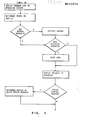
- FIG. 1 This figure shows the logical steps executed when a workstation is powered on.
- the first step is the initial program load.-of the operating system. Any necessary hardware diagnostics are performed during this step and after the initial program load the operating system takes over management of the workstation.
- This profile can contain many specifications required for system operation. Only those specifications which are relevant to this invention are discussed in the present context, such as servers to be started, jobs to be automatically initiated, and devices or memory to be reserved for the interactive user.
- a server is a program or portion of a program which allows an application such as printing or storing and retrieving from a file to take place.
- the server software includes a queuing function capable of taking a request to execute the application, knowing where the request came from, starting the application when able and sending a reply back to the requester when the application is complete or when it is clear that the application cannot be completed.
- This additional function of the server is automatic and non-interactive, as is well known to those skilled in the art.
- workstation resources which may be shared include, but are not limited to memory and processor cycles and I/O devices including disks, diskettes, printers, and communications ports.
- the operating system checks to see if any servers are to be started. If so, servers are activated. This allows for sharing of the allowable excess resources specified to be shared, without requiring an operator to be present on the server workstation to initiate the server. More specifically, a printer can be made available for use by any other workstation. The server to which the printer is connected will accept requests for service from other workstations on a local area network to which the server for the printer is connected, from a- teleprocessing line to which the server is connected, as well as locally. All requests are handled the same regardless of their origin. Requests from any one of the sources can be serviced without the presence of an operator at the server workstation.
- the operating system After the servers are activated (if any were requested), the operating system then checks to see if any jobs are specified for auto-initiation. This is particularly useful for communications jobs.
- An electronic mail application for example, may be started. This application can request all mail be delivered so that when the users log onto the system the desired mail will already be available. Job initiation requests can subsequently be received from workstations on the local area network, from the teleprocessing line, as well as locally. Again, all requests are handled the same regardless of their origin.
- jobs may be initiated at a particular time of day. This allows batch type jobs to be run at night when no operator is present. For example, an inventory update can be run'after all of the day's input has been received. Then the inventory master file can be backed up on a diskette.
- a third specification in the power on profile is that of the workstation resources reserved for an interactive user of the workstation if and when a user logs onto that workstation.
- This parameter specifies how much memory and/or what devices are not to be shared with other workstations. This ensures that an interactive user can always log onto his or her assigned workstation and perform his or her work. In other words, the workstation's resources cannot be shared by other workstations to the extent that the workstation becomes unusable to the interactive user.
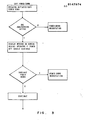
- a message is displayed at a second workstation having resources utilized by a first workstation, whether or not an operator is logged onto the second workstation. The message will instruct anyone at the second workstation not to turn off that workstation. The message will also indicate whether or not an operator is logged onto the second workstation.
- the message routing routine is responsive to whether or not workstations have users logged on. Thus, in some cases a message waiting to be serviced might appear or disappear on particular workstation displays as users log on or off of workstations before the message is responded to.
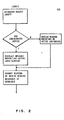
- FI G . 2 shows the steps performed when an interactive user logs off of a workstation.
- the operating system will check to see if there are any servers active or if there are any jobs currently in execution.. If not, the workstation displays a message indicating that no active jobs or queues remain to be processed. If servers and/or jobs are active a message is displayed on the workstation informing any potential users of that workstation of the activity and not to power off the workstation. This message remains on the display until another interactive user logs onto that workstation or until all resources being utilized at that workstation are released.
- Device service messages which would have been routed to the user who just logged off will now be routed to the next option in the device service list. Therefore, as mentioned above a device service table may be set up so that if an operator is present on the server workstation, that operator receives the device service message. Otherwise, it is routed to another specified location.
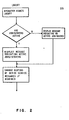
- FIG. 3 shows the steps performed when a user initiates soft power down.
- Soft power down can be implemented in one of two ways. First the hardware can be implemented to pass control to the operating system whenever the power off switch is pressed. Or, secondly, a software command can be provided. The operating system checks to see if there are any servers active or if there are any jobs currently in execution. If not the power down request is honored. If servers and/or jobs are active the operating system will display a message asking if power off is still requested. If the request is continued, all jobs are ended as soon as possible. After all jobs have finished the power is turned off on the workstation. If not requested, the workstation continues execution as normal.
- a technique has been shown to effectively utilize the processor, memory,, and I/O resources of a workstation without requiring an , g perator to be present at that workstation. Additionally, resources of that workstation can be shared with other workstations even if an operator is actively using the workstation containing the resources to be shared. Thus, an operator at a first workstation can cause a queue of jobs to be started at a second workstation, whether or not an operator is logged onto the second workstation, if the second workstation includes sufficient resources to assist in the jobs queued by the operator of the first workstation.
- the invention provides for the display of messages on affected workstations if the resources of those workstations are being utilized beyond the use by the local, logged on operator.
- the invention also provides for the display of device service messages in a manner that best assures the attention of an operator assigned to service the device.
- a routine is also included to require an additional decision by the operator to power down the workstation when resources of the workstation are being utilized by other workstations for active jobs.
Landscapes
- Engineering & Computer Science (AREA)
- Theoretical Computer Science (AREA)
- Physics & Mathematics (AREA)
- Computer Hardware Design (AREA)
- General Engineering & Computer Science (AREA)
- Software Systems (AREA)
- General Physics & Mathematics (AREA)
- Mathematical Physics (AREA)
- Power Sources (AREA)
- Computer And Data Communications (AREA)
Applications Claiming Priority (2)
| Application Number | Priority Date | Filing Date | Title |
|---|---|---|---|
| US06/568,007 US4731750A (en) | 1984-01-04 | 1984-01-04 | Workstation resource sharing |
| US568007 | 2009-09-28 |
Publications (3)
| Publication Number | Publication Date |
|---|---|
| EP0147574A2 true EP0147574A2 (de) | 1985-07-10 |
| EP0147574A3 EP0147574A3 (en) | 1987-08-05 |
| EP0147574B1 EP0147574B1 (de) | 1991-01-16 |
Family
ID=24269531
Family Applications (1)
| Application Number | Title | Priority Date | Filing Date |
|---|---|---|---|
| EP84113319A Expired EP0147574B1 (de) | 1984-01-04 | 1984-11-06 | Verfahren zur Nutzung von Betriebsmitteln zwischen mehreren Arbeitsplätzen |
Country Status (4)
| Country | Link |
|---|---|
| US (1) | US4731750A (de) |
| EP (1) | EP0147574B1 (de) |
| JP (1) | JPS60147862A (de) |
| DE (1) | DE3483958D1 (de) |
Cited By (9)
| Publication number | Priority date | Publication date | Assignee | Title |
|---|---|---|---|---|
| EP0321694A3 (de) * | 1987-12-21 | 1991-10-02 | Bull HN Information Systems Inc. | Verfahren für ein Datenverarbeitungssystem mit Verwendung von nichtkompatiblen Zentralverarbeitungseinheit/ Betriebssystem- Kombinationen |
| EP0321724A3 (de) * | 1987-12-21 | 1991-10-09 | Bull HN Information Systems Inc. | Vorrichtung und Verfahren zur Durchführung von änderbarer Betriebsmittelaufteilung in einem Datenverarbeitungssystem mit zentralen Datenverarbeitungseinheiten mit verschiedenen Betriebssystemen |
| EP0321723A3 (de) * | 1987-12-21 | 1991-10-30 | Bull HN Information Systems Inc. | Vorrichtung für ein Datenverarbeitungssystem mit gleichmengiger Beziehung zwischen einer Vielzahl von zentralen Datenverarbeitungseinheiten |
| US5257374A (en) * | 1987-11-18 | 1993-10-26 | International Business Machines Corporation | Bus flow control mechanism |
| GB2286067A (en) * | 1993-12-23 | 1995-08-02 | Motorola Inc | A processor system |
| US6479578B2 (en) | 1995-10-27 | 2002-11-12 | Daikin Industries, Ltd. | Resin composition |
| US9413817B2 (en) | 2001-03-14 | 2016-08-09 | Microsoft Technology Licensing, Llc | Executing dynamically assigned functions while providing services |
| US9460421B2 (en) | 2001-03-14 | 2016-10-04 | Microsoft Technology Licensing, Llc | Distributing notifications to multiple recipients via a broadcast list |
| US9886309B2 (en) | 2002-06-28 | 2018-02-06 | Microsoft Technology Licensing, Llc | Identity-based distributed computing for device resources |
Families Citing this family (17)
| Publication number | Priority date | Publication date | Assignee | Title |
|---|---|---|---|---|
| US4924434A (en) * | 1985-10-15 | 1990-05-08 | International Business Machines Corporation | Sharing word-processing functions among multiple processors |
| JPS63170780A (ja) * | 1986-10-03 | 1988-07-14 | インタランド・コーポレーション | 一体化したマルチ・ディスプレイ型のオーバーレイ制御式通信ワークステーション |
| JPS63113714A (ja) * | 1986-10-31 | 1988-05-18 | Nec Corp | 閉域通信網 |
| US5073852A (en) * | 1988-12-16 | 1991-12-17 | Cayman Systems, Inc. | Network protocol translator including method and apparatus for reducing interprocess communication and data exchange overhead |
| US5142678A (en) * | 1988-12-21 | 1992-08-25 | International Business Machines Corporation | Method for a requesting user to use a marker to associate a document with an end user action |
| US5093918A (en) * | 1988-12-22 | 1992-03-03 | International Business Machines Corporation | System using independent attribute lists to show status of shared mail object among respective users |
| US5053947A (en) * | 1989-09-29 | 1991-10-01 | Allegro Microsystems, Inc. | Extended multistation bus system and method |
| US5317744A (en) * | 1991-11-15 | 1994-05-31 | The United States Of America As Represented By The Secretary Of The Air Force | Method for configuring a computer server to operate with network operating system software to prevent memory address conflicts between workstations |
| JP2868141B2 (ja) * | 1992-03-16 | 1999-03-10 | 株式会社日立製作所 | ディスクアレイ装置 |
| US5805897A (en) * | 1992-07-31 | 1998-09-08 | International Business Machines Corporation | System and method for remote software configuration and distribution |
| US5819091A (en) * | 1994-12-22 | 1998-10-06 | Arendt; James Wendell | User level control of degree of client-side processing |
| US5841269A (en) * | 1997-08-01 | 1998-11-24 | Pitney Bowes Inc. | Power-down circuit |
| US6003069A (en) * | 1997-12-16 | 1999-12-14 | Lexmark International, Inc. | Client/server printer driver system |
| US6970263B2 (en) * | 2000-06-30 | 2005-11-29 | Canon Kabushiki Kaisha | Print system, printing method, and server |
| US20030055958A1 (en) * | 2001-09-20 | 2003-03-20 | Russell Richard Francis | Method for automatically creating network printer ports on a workstation |
| JP2006287746A (ja) * | 2005-04-01 | 2006-10-19 | Canon Inc | 画像処理装置及び画像処理装置の制御方法 |
| JP4845703B2 (ja) * | 2006-12-15 | 2011-12-28 | キヤノン株式会社 | 画像処理装置及びその制御方法、並びにプログラム |
Family Cites Families (16)
| Publication number | Priority date | Publication date | Assignee | Title |
|---|---|---|---|---|
| US3618045A (en) * | 1969-05-05 | 1971-11-02 | Honeywell Inf Systems | Management control subsystem for multiprogrammed data processing system |
| US3707725A (en) * | 1970-06-19 | 1972-12-26 | Ibm | Program execution tracing system improvements |
| US3792447A (en) * | 1973-03-12 | 1974-02-12 | Ahlstrom La Marche & Co Inc | Display device control system |
| US4145739A (en) * | 1977-06-20 | 1979-03-20 | Wang Laboratories, Inc. | Distributed data processing system |
| GB2023314B (en) * | 1978-06-15 | 1982-10-06 | Ibm | Digital data processing systems |
| US4439781A (en) * | 1980-07-28 | 1984-03-27 | Ricoh Company, Ltd. | Image recording method and apparatus |
| US4413328A (en) * | 1981-03-06 | 1983-11-01 | International Business Machines Corporation | Storage subsystems employing removable media and having a digital display on each recorder |
| CA1184310A (en) * | 1981-02-25 | 1985-03-19 | Mize Johnson, Jr. | Multi-processor office system complex |
| US4525806A (en) * | 1981-03-26 | 1985-06-25 | International Business Machines Corporation | Printer sharing by plurality of display units in word processing system |
| US4435766A (en) * | 1981-06-16 | 1984-03-06 | International Business Machines Corporation | Nested resource control using locking and unlocking routines with use counter for plural processes |
| US4458331A (en) * | 1981-10-09 | 1984-07-03 | International Business Machines Corporation | Interactive display terminal with alternating data processing and text processing sessions with text processing status line operable during data processing session |
| US4553202A (en) * | 1982-05-06 | 1985-11-12 | International Business Machines Corporation | User controlled dialog resource switching in a multi-tasking word processor |
| US4545015A (en) * | 1982-12-27 | 1985-10-01 | Pitney Bowes Inc. | Word processing system with foreground/background capability |
| US4574284A (en) * | 1983-01-26 | 1986-03-04 | Trw Inc. | Communication bus interface unit |
| US4517637A (en) * | 1983-04-21 | 1985-05-14 | Inconix Corporation | Distributed measurement and control system for industrial processes |
| US4633430A (en) * | 1983-10-03 | 1986-12-30 | Wang Laboratories, Inc. | Control structure for a document processing system |
-
1984
- 1984-01-04 US US06/568,007 patent/US4731750A/en not_active Expired - Lifetime
- 1984-10-20 JP JP59219410A patent/JPS60147862A/ja active Granted
- 1984-11-06 EP EP84113319A patent/EP0147574B1/de not_active Expired
- 1984-11-06 DE DE8484113319T patent/DE3483958D1/de not_active Expired - Lifetime
Cited By (10)
| Publication number | Priority date | Publication date | Assignee | Title |
|---|---|---|---|---|
| US5257374A (en) * | 1987-11-18 | 1993-10-26 | International Business Machines Corporation | Bus flow control mechanism |
| EP0321694A3 (de) * | 1987-12-21 | 1991-10-02 | Bull HN Information Systems Inc. | Verfahren für ein Datenverarbeitungssystem mit Verwendung von nichtkompatiblen Zentralverarbeitungseinheit/ Betriebssystem- Kombinationen |
| EP0321724A3 (de) * | 1987-12-21 | 1991-10-09 | Bull HN Information Systems Inc. | Vorrichtung und Verfahren zur Durchführung von änderbarer Betriebsmittelaufteilung in einem Datenverarbeitungssystem mit zentralen Datenverarbeitungseinheiten mit verschiedenen Betriebssystemen |
| EP0321723A3 (de) * | 1987-12-21 | 1991-10-30 | Bull HN Information Systems Inc. | Vorrichtung für ein Datenverarbeitungssystem mit gleichmengiger Beziehung zwischen einer Vielzahl von zentralen Datenverarbeitungseinheiten |
| US5230065A (en) * | 1987-12-21 | 1993-07-20 | Bull Hn Information Systems Inc. | Apparatus and method for a data processing system having a peer relationship among a plurality of central processing units |
| GB2286067A (en) * | 1993-12-23 | 1995-08-02 | Motorola Inc | A processor system |
| US6479578B2 (en) | 1995-10-27 | 2002-11-12 | Daikin Industries, Ltd. | Resin composition |
| US9413817B2 (en) | 2001-03-14 | 2016-08-09 | Microsoft Technology Licensing, Llc | Executing dynamically assigned functions while providing services |
| US9460421B2 (en) | 2001-03-14 | 2016-10-04 | Microsoft Technology Licensing, Llc | Distributing notifications to multiple recipients via a broadcast list |
| US9886309B2 (en) | 2002-06-28 | 2018-02-06 | Microsoft Technology Licensing, Llc | Identity-based distributed computing for device resources |
Also Published As
| Publication number | Publication date |
|---|---|
| DE3483958D1 (de) | 1991-02-21 |
| JPS60147862A (ja) | 1985-08-03 |
| EP0147574B1 (de) | 1991-01-16 |
| JPH036539B2 (de) | 1991-01-30 |
| EP0147574A3 (en) | 1987-08-05 |
| US4731750A (en) | 1988-03-15 |
Similar Documents
| Publication | Publication Date | Title |
|---|---|---|
| EP0147574B1 (de) | Verfahren zur Nutzung von Betriebsmitteln zwischen mehreren Arbeitsplätzen | |
| EP0362107B1 (de) | Verfahren für die simultane Ablaufverwaltung eines verteilten Anwenderprogramms in einem Hostrechner und in einer grossen Anzahl von intelligenten Benutzerstationen in einem SNA-Netzwerk | |
| EP0362106B1 (de) | Verfahren für die Ausführungsablauffolgeplanung von verteilten Anwendungsprogrammen an voreinstellbaren Zeiten in einer SNA LU 6.2-Netzwerkumgebung | |
| US5062037A (en) | Method to provide concurrent execution of distributed application programs by a host computer and an intelligent work station on an sna network | |
| EP0362105B1 (de) | Verfahren zur Verarbeitung von Programmteilen eines verteilten Anwendungsprogramms durch einen Hauptrechner und einen intelligenten Arbeitsplatz in einer SNA LU 6.2-Netzwerkumgebung | |
| US4991089A (en) | Method for establishing current terminal addresses for system users processing distributed application programs in an SNA LU 6.2 network environment | |
| JP3940171B2 (ja) | 統合化アプリケーション・インタフェース・マネージャ | |
| US5526492A (en) | System having arbitrary master computer for selecting server and switching server to another server when selected processor malfunctions based upon priority order in connection request | |
| JP3478538B2 (ja) | 共通ルーチンを用いた移植性の資源共用ファイルサーバ | |
| EP0694837A1 (de) | Dynamischer Arbeitsbelastungsausgleich | |
| US4930069A (en) | Mechanism and method for transferring data between bus units having varying master and slave DMA capabilities | |
| JPH0682347B2 (ja) | 分散処理システム及び分散処理連携方法 | |
| US5684992A (en) | User console and computer operating system asynchronous interaction interface | |
| EP0724210A1 (de) | System und Verfahren zur Betriebsverwaltung von Rechnerausgabegeräten | |
| US6457064B1 (en) | Method and apparatus for detecting input directed to a thread in a multi-threaded process | |
| US5511194A (en) | Processing system and processing method capable of dynamically replacing job environment | |
| EP0317468B1 (de) | Flusssteuerungssystem für Bus | |
| JPH0630078B2 (ja) | 端末装置初期ロ−ド制御方式 | |
| US5436888A (en) | Communication path control method and communication device | |
| JPH05265955A (ja) | 計算機システムとジョブ実行方法 | |
| JPH05314070A (ja) | メッセージキュー管理方式 | |
| JP3021539B2 (ja) | クライアント・サーバ方式におけるサーバ制御装置 | |
| JP3082704B2 (ja) | 通信装置管理方式 | |
| JPS6385938A (ja) | プログラムの多重並行動作制御装置 | |
| JPH07168794A (ja) | 計算機システムのジョブ管理方法 |
Legal Events
| Date | Code | Title | Description |
|---|---|---|---|
| PUAI | Public reference made under article 153(3) epc to a published international application that has entered the european phase |
Free format text: ORIGINAL CODE: 0009012 |
|
| AK | Designated contracting states |
Designated state(s): DE FR GB IT |
|
| 17P | Request for examination filed |
Effective date: 19851126 |
|
| PUAL | Search report despatched |
Free format text: ORIGINAL CODE: 0009013 |
|
| AK | Designated contracting states |
Kind code of ref document: A3 Designated state(s): DE FR GB IT |
|
| 17Q | First examination report despatched |
Effective date: 19890713 |
|
| GRAA | (expected) grant |
Free format text: ORIGINAL CODE: 0009210 |
|
| AK | Designated contracting states |
Kind code of ref document: B1 Designated state(s): DE FR GB IT |
|
| REF | Corresponds to: |
Ref document number: 3483958 Country of ref document: DE Date of ref document: 19910221 |
|
| ET | Fr: translation filed | ||
| ITF | It: translation for a ep patent filed | ||
| PLBE | No opposition filed within time limit |
Free format text: ORIGINAL CODE: 0009261 |
|
| STAA | Information on the status of an ep patent application or granted ep patent |
Free format text: STATUS: NO OPPOSITION FILED WITHIN TIME LIMIT |
|
| 26N | No opposition filed | ||
| PGFP | Annual fee paid to national office [announced via postgrant information from national office to epo] |
Ref country code: GB Payment date: 19951024 Year of fee payment: 12 |
|
| PGFP | Annual fee paid to national office [announced via postgrant information from national office to epo] |
Ref country code: FR Payment date: 19951107 Year of fee payment: 12 |
|
| PGFP | Annual fee paid to national office [announced via postgrant information from national office to epo] |
Ref country code: DE Payment date: 19951123 Year of fee payment: 12 |
|
| PG25 | Lapsed in a contracting state [announced via postgrant information from national office to epo] |
Ref country code: GB Effective date: 19961106 |
|
| GBPC | Gb: european patent ceased through non-payment of renewal fee |
Effective date: 19961106 |
|
| PG25 | Lapsed in a contracting state [announced via postgrant information from national office to epo] |
Ref country code: FR Effective date: 19970731 |
|
| PG25 | Lapsed in a contracting state [announced via postgrant information from national office to epo] |
Ref country code: DE Effective date: 19970801 |
|
| REG | Reference to a national code |
Ref country code: FR Ref legal event code: ST |