EP0058909B1 - Durch Bestrahlung härtbare Polyorganosiloxanmasse und ihre Verwendung zur Bildung von Trennüberzügen - Google Patents
Durch Bestrahlung härtbare Polyorganosiloxanmasse und ihre Verwendung zur Bildung von Trennüberzügen Download PDFInfo
- Publication number
- EP0058909B1 EP0058909B1 EP82101109A EP82101109A EP0058909B1 EP 0058909 B1 EP0058909 B1 EP 0058909B1 EP 82101109 A EP82101109 A EP 82101109A EP 82101109 A EP82101109 A EP 82101109A EP 0058909 B1 EP0058909 B1 EP 0058909B1
- Authority
- EP
- European Patent Office
- Prior art keywords
- groups
- polyorganosiloxane
- radiation
- carbon atoms
- compositions
- Prior art date
- Legal status (The legal status is an assumption and is not a legal conclusion. Google has not performed a legal analysis and makes no representation as to the accuracy of the status listed.)
- Expired
Links
- 239000000203 mixture Substances 0.000 title claims abstract description 24
- 229920001296 polysiloxane Polymers 0.000 title description 2
- 238000000465 moulding Methods 0.000 claims abstract description 16
- 125000004432 carbon atom Chemical group C* 0.000 claims abstract description 15
- 125000002947 alkylene group Chemical group 0.000 claims abstract description 9
- 125000004435 hydrogen atom Chemical group [H]* 0.000 claims abstract description 9
- 230000005855 radiation Effects 0.000 claims abstract description 9
- 125000002496 methyl group Chemical group [H]C([H])([H])* 0.000 claims abstract description 8
- 239000007788 liquid Substances 0.000 claims abstract description 5
- 239000000178 monomer Substances 0.000 claims abstract description 4
- 239000003504 photosensitizing agent Substances 0.000 claims abstract description 4
- 125000000391 vinyl group Chemical group [H]C([*])=C([H])[H] 0.000 claims abstract description 4
- 229920002554 vinyl polymer Polymers 0.000 claims abstract description 4
- 239000001257 hydrogen Substances 0.000 claims abstract description 3
- 229910052739 hydrogen Inorganic materials 0.000 claims abstract description 3
- 238000000576 coating method Methods 0.000 claims description 10
- 238000004519 manufacturing process Methods 0.000 claims description 3
- UFHFLCQGNIYNRP-UHFFFAOYSA-N Hydrogen Chemical compound [H][H] UFHFLCQGNIYNRP-UHFFFAOYSA-N 0.000 abstract description 2
- OKKJLVBELUTLKV-UHFFFAOYSA-N Methanol Chemical compound OC OKKJLVBELUTLKV-UHFFFAOYSA-N 0.000 description 15
- 239000000853 adhesive Substances 0.000 description 5
- 230000001070 adhesive effect Effects 0.000 description 5
- 239000011248 coating agent Substances 0.000 description 5
- 239000000543 intermediate Substances 0.000 description 5
- 239000000123 paper Substances 0.000 description 5
- 150000002009 diols Chemical class 0.000 description 4
- -1 hydroxyalkyl acrylate Chemical compound 0.000 description 4
- ZMANZCXQSJIPKH-UHFFFAOYSA-N Triethylamine Chemical compound CCN(CC)CC ZMANZCXQSJIPKH-UHFFFAOYSA-N 0.000 description 3
- ISAOCJYIOMOJEB-UHFFFAOYSA-N benzoin Chemical compound C=1C=CC=CC=1C(O)C(=O)C1=CC=CC=C1 ISAOCJYIOMOJEB-UHFFFAOYSA-N 0.000 description 3
- 238000006243 chemical reaction Methods 0.000 description 3
- 238000006266 etherification reaction Methods 0.000 description 3
- 125000005358 mercaptoalkyl group Chemical group 0.000 description 3
- 238000000034 method Methods 0.000 description 3
- 125000000956 methoxy group Chemical group [H]C([H])([H])O* 0.000 description 3
- RLJWTAURUFQFJP-UHFFFAOYSA-N propan-2-ol;titanium Chemical compound [Ti].CC(C)O.CC(C)O.CC(C)O.CC(C)O RLJWTAURUFQFJP-UHFFFAOYSA-N 0.000 description 3
- VXUYXOFXAQZZMF-UHFFFAOYSA-N tetraisopropyl titanate Substances CC(C)O[Ti](OC(C)C)(OC(C)C)OC(C)C VXUYXOFXAQZZMF-UHFFFAOYSA-N 0.000 description 3
- MYRTYDVEIRVNKP-UHFFFAOYSA-N 1,2-Divinylbenzene Chemical compound C=CC1=CC=CC=C1C=C MYRTYDVEIRVNKP-UHFFFAOYSA-N 0.000 description 2
- QPXVRLXJHPTCPW-UHFFFAOYSA-N 2-hydroxy-2-methyl-1-(4-propan-2-ylphenyl)propan-1-one Chemical compound CC(C)C1=CC=C(C(=O)C(C)(C)O)C=C1 QPXVRLXJHPTCPW-UHFFFAOYSA-N 0.000 description 2
- XMLYCEVDHLAQEL-UHFFFAOYSA-N 2-hydroxy-2-methyl-1-phenylpropan-1-one Chemical compound CC(C)(O)C(=O)C1=CC=CC=C1 XMLYCEVDHLAQEL-UHFFFAOYSA-N 0.000 description 2
- OMIGHNLMNHATMP-UHFFFAOYSA-N 2-hydroxyethyl prop-2-enoate Chemical compound OCCOC(=O)C=C OMIGHNLMNHATMP-UHFFFAOYSA-N 0.000 description 2
- NSPPRYXGGYQMPY-UHFFFAOYSA-N 3-Methylbuten-2-ol-1 Natural products CC(C)C(O)=C NSPPRYXGGYQMPY-UHFFFAOYSA-N 0.000 description 2
- VVBLNCFGVYUYGU-UHFFFAOYSA-N 4,4'-Bis(dimethylamino)benzophenone Chemical compound C1=CC(N(C)C)=CC=C1C(=O)C1=CC=C(N(C)C)C=C1 VVBLNCFGVYUYGU-UHFFFAOYSA-N 0.000 description 2
- SOGAXMICEFXMKE-UHFFFAOYSA-N Butylmethacrylate Chemical compound CCCCOC(=O)C(C)=C SOGAXMICEFXMKE-UHFFFAOYSA-N 0.000 description 2
- QIGBRXMKCJKVMJ-UHFFFAOYSA-N Hydroquinone Chemical compound OC1=CC=C(O)C=C1 QIGBRXMKCJKVMJ-UHFFFAOYSA-N 0.000 description 2
- XUIMIQQOPSSXEZ-UHFFFAOYSA-N Silicon Chemical group [Si] XUIMIQQOPSSXEZ-UHFFFAOYSA-N 0.000 description 2
- 244000028419 Styrax benzoin Species 0.000 description 2
- 235000000126 Styrax benzoin Nutrition 0.000 description 2
- PPBRXRYQALVLMV-UHFFFAOYSA-N Styrene Chemical compound C=CC1=CC=CC=C1 PPBRXRYQALVLMV-UHFFFAOYSA-N 0.000 description 2
- 235000008411 Sumatra benzointree Nutrition 0.000 description 2
- 239000000654 additive Substances 0.000 description 2
- 230000001476 alcoholic effect Effects 0.000 description 2
- 125000003545 alkoxy group Chemical group 0.000 description 2
- 150000001412 amines Chemical class 0.000 description 2
- 229960002130 benzoin Drugs 0.000 description 2
- CDQSJQSWAWPGKG-UHFFFAOYSA-N butane-1,1-diol Chemical compound CCCC(O)O CDQSJQSWAWPGKG-UHFFFAOYSA-N 0.000 description 2
- 150000001875 compounds Chemical class 0.000 description 2
- 239000003085 diluting agent Substances 0.000 description 2
- 150000002148 esters Chemical class 0.000 description 2
- 235000019382 gum benzoic Nutrition 0.000 description 2
- 125000002887 hydroxy group Chemical group [H]O* 0.000 description 2
- QSHDDOUJBYECFT-UHFFFAOYSA-N mercury Chemical compound [Hg] QSHDDOUJBYECFT-UHFFFAOYSA-N 0.000 description 2
- TVDSBUOJIPERQY-UHFFFAOYSA-N prop-2-yn-1-ol Chemical compound OCC#C TVDSBUOJIPERQY-UHFFFAOYSA-N 0.000 description 2
- 238000000926 separation method Methods 0.000 description 2
- 239000003381 stabilizer Substances 0.000 description 2
- JNELGWHKGNBSMD-UHFFFAOYSA-N xanthone Chemical compound C1=CC=C2C(=O)C3=CC=CC=C3OC2=C1 JNELGWHKGNBSMD-UHFFFAOYSA-N 0.000 description 2
- NWRZGFYWENINNX-UHFFFAOYSA-N 1,1,2-tris(ethenyl)cyclohexane Chemical compound C=CC1CCCCC1(C=C)C=C NWRZGFYWENINNX-UHFFFAOYSA-N 0.000 description 1
- MYWOJODOMFBVCB-UHFFFAOYSA-N 1,2,6-trimethylphenanthrene Chemical compound CC1=CC=C2C3=CC(C)=CC=C3C=CC2=C1C MYWOJODOMFBVCB-UHFFFAOYSA-N 0.000 description 1
- KOMNUTZXSVSERR-UHFFFAOYSA-N 1,3,5-tris(prop-2-enyl)-1,3,5-triazinane-2,4,6-trione Chemical compound C=CCN1C(=O)N(CC=C)C(=O)N(CC=C)C1=O KOMNUTZXSVSERR-UHFFFAOYSA-N 0.000 description 1
- IMDHDEPPVWETOI-UHFFFAOYSA-N 1-(4-tert-butylphenyl)-2,2,2-trichloroethanone Chemical compound CC(C)(C)C1=CC=C(C(=O)C(Cl)(Cl)Cl)C=C1 IMDHDEPPVWETOI-UHFFFAOYSA-N 0.000 description 1
- DURPTKYDGMDSBL-UHFFFAOYSA-N 1-butoxybutane Chemical compound CCCCOCCCC DURPTKYDGMDSBL-UHFFFAOYSA-N 0.000 description 1
- OSSNTDFYBPYIEC-UHFFFAOYSA-N 1-ethenylimidazole Chemical compound C=CN1C=CN=C1 OSSNTDFYBPYIEC-UHFFFAOYSA-N 0.000 description 1
- VOBUAPTXJKMNCT-UHFFFAOYSA-N 1-prop-2-enoyloxyhexyl prop-2-enoate Chemical compound CCCCCC(OC(=O)C=C)OC(=O)C=C VOBUAPTXJKMNCT-UHFFFAOYSA-N 0.000 description 1
- WJFKNYWRSNBZNX-UHFFFAOYSA-N 10H-phenothiazine Chemical compound C1=CC=C2NC3=CC=CC=C3SC2=C1 WJFKNYWRSNBZNX-UHFFFAOYSA-N 0.000 description 1
- PIZHFBODNLEQBL-UHFFFAOYSA-N 2,2-diethoxy-1-phenylethanone Chemical compound CCOC(OCC)C(=O)C1=CC=CC=C1 PIZHFBODNLEQBL-UHFFFAOYSA-N 0.000 description 1
- KWVGIHKZDCUPEU-UHFFFAOYSA-N 2,2-dimethoxy-2-phenylacetophenone Chemical compound C=1C=CC=CC=1C(OC)(OC)C(=O)C1=CC=CC=C1 KWVGIHKZDCUPEU-UHFFFAOYSA-N 0.000 description 1
- GOXQRTZXKQZDDN-UHFFFAOYSA-N 2-Ethylhexyl acrylate Chemical compound CCCCC(CC)COC(=O)C=C GOXQRTZXKQZDDN-UHFFFAOYSA-N 0.000 description 1
- JCSUKMHAFJKRQL-UHFFFAOYSA-N 2-benzylthioxanthen-9-one Chemical compound C1=C2C(=O)C3=CC=CC=C3SC2=CC=C1CC1=CC=CC=C1 JCSUKMHAFJKRQL-UHFFFAOYSA-N 0.000 description 1
- ZCDADJXRUCOCJE-UHFFFAOYSA-N 2-chlorothioxanthen-9-one Chemical compound C1=CC=C2C(=O)C3=CC(Cl)=CC=C3SC2=C1 ZCDADJXRUCOCJE-UHFFFAOYSA-N 0.000 description 1
- KMNCBSZOIQAUFX-UHFFFAOYSA-N 2-ethoxy-1,2-diphenylethanone Chemical group C=1C=CC=CC=1C(OCC)C(=O)C1=CC=CC=C1 KMNCBSZOIQAUFX-UHFFFAOYSA-N 0.000 description 1
- WDQMWEYDKDCEHT-UHFFFAOYSA-N 2-ethylhexyl 2-methylprop-2-enoate Chemical compound CCCCC(CC)COC(=O)C(C)=C WDQMWEYDKDCEHT-UHFFFAOYSA-N 0.000 description 1
- RUMACXVDVNRZJZ-UHFFFAOYSA-N 2-methylpropyl 2-methylprop-2-enoate Chemical compound CC(C)COC(=O)C(C)=C RUMACXVDVNRZJZ-UHFFFAOYSA-N 0.000 description 1
- CFVWNXQPGQOHRJ-UHFFFAOYSA-N 2-methylpropyl prop-2-enoate Chemical compound CC(C)COC(=O)C=C CFVWNXQPGQOHRJ-UHFFFAOYSA-N 0.000 description 1
- MYISVPVWAQRUTL-UHFFFAOYSA-N 2-methylthioxanthen-9-one Chemical compound C1=CC=C2C(=O)C3=CC(C)=CC=C3SC2=C1 MYISVPVWAQRUTL-UHFFFAOYSA-N 0.000 description 1
- LYCFDQXCAQWYHS-UHFFFAOYSA-N 2-phenylthioxanthen-9-one Chemical compound C1=C2C(=O)C3=CC=CC=C3SC2=CC=C1C1=CC=CC=C1 LYCFDQXCAQWYHS-UHFFFAOYSA-N 0.000 description 1
- GNSFRPWPOGYVLO-UHFFFAOYSA-N 3-hydroxypropyl 2-methylprop-2-enoate Chemical compound CC(=C)C(=O)OCCCO GNSFRPWPOGYVLO-UHFFFAOYSA-N 0.000 description 1
- QZPSOSOOLFHYRR-UHFFFAOYSA-N 3-hydroxypropyl prop-2-enoate Chemical compound OCCCOC(=O)C=C QZPSOSOOLFHYRR-UHFFFAOYSA-N 0.000 description 1
- NDWUBGAGUCISDV-UHFFFAOYSA-N 4-hydroxybutyl prop-2-enoate Chemical compound OCCCCOC(=O)C=C NDWUBGAGUCISDV-UHFFFAOYSA-N 0.000 description 1
- JHWGFJBTMHEZME-UHFFFAOYSA-N 4-prop-2-enoyloxybutyl prop-2-enoate Chemical compound C=CC(=O)OCCCCOC(=O)C=C JHWGFJBTMHEZME-UHFFFAOYSA-N 0.000 description 1
- IKVYHNPVKUNCJM-UHFFFAOYSA-N 4-propan-2-ylthioxanthen-9-one Chemical compound S1C2=CC=CC=C2C(=O)C2=C1C(C(C)C)=CC=C2 IKVYHNPVKUNCJM-UHFFFAOYSA-N 0.000 description 1
- XESZUVZBAMCAEJ-UHFFFAOYSA-N 4-tert-butylcatechol Chemical compound CC(C)(C)C1=CC=C(O)C(O)=C1 XESZUVZBAMCAEJ-UHFFFAOYSA-N 0.000 description 1
- HRPVXLWXLXDGHG-UHFFFAOYSA-N Acrylamide Chemical compound NC(=O)C=C HRPVXLWXLXDGHG-UHFFFAOYSA-N 0.000 description 1
- NIXOWILDQLNWCW-UHFFFAOYSA-M Acrylate Chemical compound [O-]C(=O)C=C NIXOWILDQLNWCW-UHFFFAOYSA-M 0.000 description 1
- NLHHRLWOUZZQLW-UHFFFAOYSA-N Acrylonitrile Chemical compound C=CC#N NLHHRLWOUZZQLW-UHFFFAOYSA-N 0.000 description 1
- LFQSCWFLJHTTHZ-UHFFFAOYSA-N Ethanol Chemical compound CCO LFQSCWFLJHTTHZ-UHFFFAOYSA-N 0.000 description 1
- CERQOIWHTDAKMF-UHFFFAOYSA-M Methacrylate Chemical compound CC(=C)C([O-])=O CERQOIWHTDAKMF-UHFFFAOYSA-M 0.000 description 1
- VVQNEPGJFQJSBK-UHFFFAOYSA-N Methyl methacrylate Chemical compound COC(=O)C(C)=C VVQNEPGJFQJSBK-UHFFFAOYSA-N 0.000 description 1
- WHNWPMSKXPGLAX-UHFFFAOYSA-N N-Vinyl-2-pyrrolidone Chemical compound C=CN1CCCC1=O WHNWPMSKXPGLAX-UHFFFAOYSA-N 0.000 description 1
- UEEJHVSXFDXPFK-UHFFFAOYSA-N N-dimethylaminoethanol Chemical compound CN(C)CCO UEEJHVSXFDXPFK-UHFFFAOYSA-N 0.000 description 1
- 206010034972 Photosensitivity reaction Diseases 0.000 description 1
- RTAQQCXQSZGOHL-UHFFFAOYSA-N Titanium Chemical compound [Ti] RTAQQCXQSZGOHL-UHFFFAOYSA-N 0.000 description 1
- DAKWPKUUDNSNPN-UHFFFAOYSA-N Trimethylolpropane triacrylate Chemical compound C=CC(=O)OCC(CC)(COC(=O)C=C)COC(=O)C=C DAKWPKUUDNSNPN-UHFFFAOYSA-N 0.000 description 1
- XTXRWKRVRITETP-UHFFFAOYSA-N Vinyl acetate Chemical compound CC(=O)OC=C XTXRWKRVRITETP-UHFFFAOYSA-N 0.000 description 1
- CIUQDSCDWFSTQR-UHFFFAOYSA-N [C]1=CC=CC=C1 Chemical compound [C]1=CC=CC=C1 CIUQDSCDWFSTQR-UHFFFAOYSA-N 0.000 description 1
- 150000008062 acetophenones Chemical class 0.000 description 1
- 239000002253 acid Substances 0.000 description 1
- ATMLPEJAVWINOF-UHFFFAOYSA-N acrylic acid acrylic acid Chemical compound OC(=O)C=C.OC(=O)C=C ATMLPEJAVWINOF-UHFFFAOYSA-N 0.000 description 1
- 239000003522 acrylic cement Substances 0.000 description 1
- 150000001298 alcohols Chemical class 0.000 description 1
- PYKYMHQGRFAEBM-UHFFFAOYSA-N anthraquinone Natural products CCC(=O)c1c(O)c2C(=O)C3C(C=CC=C3O)C(=O)c2cc1CC(=O)OC PYKYMHQGRFAEBM-UHFFFAOYSA-N 0.000 description 1
- 150000004056 anthraquinones Chemical class 0.000 description 1
- 150000008365 aromatic ketones Chemical class 0.000 description 1
- WURBFLDFSFBTLW-UHFFFAOYSA-N benzil Chemical compound C=1C=CC=CC=1C(=O)C(=O)C1=CC=CC=C1 WURBFLDFSFBTLW-UHFFFAOYSA-N 0.000 description 1
- RWCCWEUUXYIKHB-UHFFFAOYSA-N benzophenone Chemical compound C=1C=CC=CC=1C(=O)C1=CC=CC=C1 RWCCWEUUXYIKHB-UHFFFAOYSA-N 0.000 description 1
- 239000012965 benzophenone Substances 0.000 description 1
- 230000001680 brushing effect Effects 0.000 description 1
- 125000004106 butoxy group Chemical group [*]OC([H])([H])C([H])([H])C(C([H])([H])[H])([H])[H] 0.000 description 1
- CQEYYJKEWSMYFG-UHFFFAOYSA-N butyl acrylate Chemical compound CCCCOC(=O)C=C CQEYYJKEWSMYFG-UHFFFAOYSA-N 0.000 description 1
- 239000006227 byproduct Substances 0.000 description 1
- 239000003054 catalyst Substances 0.000 description 1
- 229960002887 deanol Drugs 0.000 description 1
- 239000012972 dimethylethanolamine Substances 0.000 description 1
- 239000000975 dye Substances 0.000 description 1
- 230000000694 effects Effects 0.000 description 1
- 230000008030 elimination Effects 0.000 description 1
- 238000003379 elimination reaction Methods 0.000 description 1
- BLCTWBJQROOONQ-UHFFFAOYSA-N ethenyl prop-2-enoate Chemical compound C=COC(=O)C=C BLCTWBJQROOONQ-UHFFFAOYSA-N 0.000 description 1
- UIWXSTHGICQLQT-UHFFFAOYSA-N ethenyl propanoate Chemical compound CCC(=O)OC=C UIWXSTHGICQLQT-UHFFFAOYSA-N 0.000 description 1
- 239000000945 filler Substances 0.000 description 1
- YLQWCDOCJODRMT-UHFFFAOYSA-N fluoren-9-one Chemical compound C1=CC=C2C(=O)C3=CC=CC=C3C2=C1 YLQWCDOCJODRMT-UHFFFAOYSA-N 0.000 description 1
- 125000001449 isopropyl group Chemical group [H]C([H])([H])C([H])(*)C([H])([H])[H] 0.000 description 1
- 150000002576 ketones Chemical class 0.000 description 1
- PBOSTUDLECTMNL-UHFFFAOYSA-N lauryl acrylate Chemical compound CCCCCCCCCCCCOC(=O)C=C PBOSTUDLECTMNL-UHFFFAOYSA-N 0.000 description 1
- 239000000463 material Substances 0.000 description 1
- 229910052753 mercury Inorganic materials 0.000 description 1
- 229910052751 metal Inorganic materials 0.000 description 1
- 239000002184 metal Substances 0.000 description 1
- 150000002739 metals Chemical class 0.000 description 1
- YDKNBNOOCSNPNS-UHFFFAOYSA-N methyl 1,3-benzoxazole-2-carboxylate Chemical compound C1=CC=C2OC(C(=O)OC)=NC2=C1 YDKNBNOOCSNPNS-UHFFFAOYSA-N 0.000 description 1
- KKFHAJHLJHVUDM-UHFFFAOYSA-N n-vinylcarbazole Chemical compound C1=CC=C2N(C=C)C3=CC=CC=C3C2=C1 KKFHAJHLJHVUDM-UHFFFAOYSA-N 0.000 description 1
- 150000002923 oximes Chemical class 0.000 description 1
- 239000001301 oxygen Substances 0.000 description 1
- 229910052760 oxygen Inorganic materials 0.000 description 1
- NWVVVBRKAWDGAB-UHFFFAOYSA-N p-methoxyphenol Chemical compound COC1=CC=C(O)C=C1 NWVVVBRKAWDGAB-UHFFFAOYSA-N 0.000 description 1
- FZUGPQWGEGAKET-UHFFFAOYSA-N parbenate Chemical compound CCOC(=O)C1=CC=C(N(C)C)C=C1 FZUGPQWGEGAKET-UHFFFAOYSA-N 0.000 description 1
- 229950000688 phenothiazine Drugs 0.000 description 1
- 239000000049 pigment Substances 0.000 description 1
- 229920003023 plastic Polymers 0.000 description 1
- 239000004033 plastic Substances 0.000 description 1
- 230000002028 premature Effects 0.000 description 1
- 238000002360 preparation method Methods 0.000 description 1
- HJWLCRVIBGQPNF-UHFFFAOYSA-N prop-2-enylbenzene Chemical compound C=CCC1=CC=CC=C1 HJWLCRVIBGQPNF-UHFFFAOYSA-N 0.000 description 1
- MWWATHDPGQKSAR-UHFFFAOYSA-N propyne Chemical compound CC#C MWWATHDPGQKSAR-UHFFFAOYSA-N 0.000 description 1
- 239000011541 reaction mixture Substances 0.000 description 1
- 238000005096 rolling process Methods 0.000 description 1
- 239000007787 solid Substances 0.000 description 1
- 239000002904 solvent Substances 0.000 description 1
- 238000005507 spraying Methods 0.000 description 1
- 238000003756 stirring Methods 0.000 description 1
- 239000000126 substance Substances 0.000 description 1
- 238000010345 tape casting Methods 0.000 description 1
- ISXSCDLOGDJUNJ-UHFFFAOYSA-N tert-butyl prop-2-enoate Chemical compound CC(C)(C)OC(=O)C=C ISXSCDLOGDJUNJ-UHFFFAOYSA-N 0.000 description 1
- YRHRIQCWCFGUEQ-UHFFFAOYSA-N thioxanthen-9-one Chemical class C1=CC=C2C(=O)C3=CC=CC=C3SC2=C1 YRHRIQCWCFGUEQ-UHFFFAOYSA-N 0.000 description 1
- 239000010936 titanium Substances 0.000 description 1
- 229910052719 titanium Inorganic materials 0.000 description 1
- CNHDIAIOKMXOLK-UHFFFAOYSA-N toluquinol Chemical compound CC1=CC(O)=CC=C1O CNHDIAIOKMXOLK-UHFFFAOYSA-N 0.000 description 1
- 239000002023 wood Substances 0.000 description 1
Classifications
-
- C—CHEMISTRY; METALLURGY
- C08—ORGANIC MACROMOLECULAR COMPOUNDS; THEIR PREPARATION OR CHEMICAL WORKING-UP; COMPOSITIONS BASED THEREON
- C08G—MACROMOLECULAR COMPOUNDS OBTAINED OTHERWISE THAN BY REACTIONS ONLY INVOLVING UNSATURATED CARBON-TO-CARBON BONDS
- C08G77/00—Macromolecular compounds obtained by reactions forming a linkage containing silicon with or without sulfur, nitrogen, oxygen or carbon in the main chain of the macromolecule
- C08G77/48—Macromolecular compounds obtained by reactions forming a linkage containing silicon with or without sulfur, nitrogen, oxygen or carbon in the main chain of the macromolecule in which at least two but not all the silicon atoms are connected by linkages other than oxygen atoms
- C08G77/50—Macromolecular compounds obtained by reactions forming a linkage containing silicon with or without sulfur, nitrogen, oxygen or carbon in the main chain of the macromolecule in which at least two but not all the silicon atoms are connected by linkages other than oxygen atoms by carbon linkages
-
- C—CHEMISTRY; METALLURGY
- C08—ORGANIC MACROMOLECULAR COMPOUNDS; THEIR PREPARATION OR CHEMICAL WORKING-UP; COMPOSITIONS BASED THEREON
- C08G—MACROMOLECULAR COMPOUNDS OBTAINED OTHERWISE THAN BY REACTIONS ONLY INVOLVING UNSATURATED CARBON-TO-CARBON BONDS
- C08G77/00—Macromolecular compounds obtained by reactions forming a linkage containing silicon with or without sulfur, nitrogen, oxygen or carbon in the main chain of the macromolecule
- C08G77/04—Polysiloxanes
- C08G77/38—Polysiloxanes modified by chemical after-treatment
-
- C—CHEMISTRY; METALLURGY
- C09—DYES; PAINTS; POLISHES; NATURAL RESINS; ADHESIVES; COMPOSITIONS NOT OTHERWISE PROVIDED FOR; APPLICATIONS OF MATERIALS NOT OTHERWISE PROVIDED FOR
- C09D—COATING COMPOSITIONS, e.g. PAINTS, VARNISHES OR LACQUERS; FILLING PASTES; CHEMICAL PAINT OR INK REMOVERS; INKS; CORRECTING FLUIDS; WOODSTAINS; PASTES OR SOLIDS FOR COLOURING OR PRINTING; USE OF MATERIALS THEREFOR
- C09D183/00—Coating compositions based on macromolecular compounds obtained by reactions forming in the main chain of the macromolecule a linkage containing silicon, with or without sulfur, nitrogen, oxygen, or carbon only; Coating compositions based on derivatives of such polymers
- C09D183/04—Polysiloxanes
- C09D183/06—Polysiloxanes containing silicon bound to oxygen-containing groups
-
- C—CHEMISTRY; METALLURGY
- C09—DYES; PAINTS; POLISHES; NATURAL RESINS; ADHESIVES; COMPOSITIONS NOT OTHERWISE PROVIDED FOR; APPLICATIONS OF MATERIALS NOT OTHERWISE PROVIDED FOR
- C09D—COATING COMPOSITIONS, e.g. PAINTS, VARNISHES OR LACQUERS; FILLING PASTES; CHEMICAL PAINT OR INK REMOVERS; INKS; CORRECTING FLUIDS; WOODSTAINS; PASTES OR SOLIDS FOR COLOURING OR PRINTING; USE OF MATERIALS THEREFOR
- C09D183/00—Coating compositions based on macromolecular compounds obtained by reactions forming in the main chain of the macromolecule a linkage containing silicon, with or without sulfur, nitrogen, oxygen, or carbon only; Coating compositions based on derivatives of such polymers
- C09D183/14—Coating compositions based on macromolecular compounds obtained by reactions forming in the main chain of the macromolecule a linkage containing silicon, with or without sulfur, nitrogen, oxygen, or carbon only; Coating compositions based on derivatives of such polymers in which at least two but not all the silicon atoms are connected by linkages other than oxygen atoms
Definitions
- Polydiorganosiloxane molding compositions are widely used for coating objects, in particular paper, for the production of release coatings which bring about separation of adhesive materials.
- the known polydiorganosiloxane molding compositions contain liquid polydiorganosiloxanes with unsaturated carbon-carbon bonds or polydiorganosiloxanes without such unsaturated bonds in combination with copolymerizable compounds with unsaturated bonds.
- the known molding compositions generally contain photosensitizers. These molding compositions are expediently solvent-free, but they can also be known as reactive diluents, ie. H. contain liquid compounds which react with the polydiorganosiloxanes by increasing the molecular size.
- polydiorganosiloxane molding compositions which contain polydiorganosiloxanes with mercaptoalkyl groups as an essential component.
- the mercaptoalkyl groups contained therein have the disadvantage that these molding compositions have an unpleasant odor even in the smallest concentrations.
- GB-A-2 039 287 describes radiation-curable polyorganosiloxanes which contain (meth) acryloyloxyalkyl or mercaptoalkyl groups bonded to the silicon atoms and can be used together with benzoin, xanthone or thioxanthone derivatives for the production of release coatings.
- benzoin, xanthone or thioxanthone derivatives for the production of release coatings.
- the separating effect of coatings produced therefrom against adhesives is insufficient.
- the object of the invention was therefore to provide polyorganosiloxane molding compositions which are very environmentally friendly, can be cured by low energy expenditure (radiation), are easy to process and have excellent release properties compared to adhesives.
- the present invention accordingly relates to a radiation-curable polyorganosiloxane molding composition which contains liquid polyorganosiloxanes, photosensitizers and optionally vinyl monomers, which is characterized in that the polyorganosiloxane contains one or more groups of the formula in the molecule in which R in each case represents the same or different alkylene groups with 1 to 9 C atoms and the sum of the C atoms of the 2 alkylene groups in groups of the formulas I and II is 2 to 10, R 1 for hydrogen or the methyl group and R 2 for 2 Is hydrogen atoms or 2 methyl groups, at least one of the symbols R 1 and R 2 representing hydrogen atoms.
- the polyorganosiloxanes used according to the invention can be prepared in a simple manner by reacting diols or alcohols which contain the groups of the formulas I, II, III or IV with commercially available polydiorganosiloxanes which contain groups in their molecule which correspond to the groups alcoholic groups of the aforementioned diols or monoalcohols can react.
- the polydiorganosiloxanes preferably contain alkoxy groups, advantageously with 1 to 8, preferably 1 to 4, carbon atoms, methoxy and butoxy groups being particularly preferred.
- This reaction is carried out at elevated temperature and expediently with the addition of conventional etherification catalysts. Examples include tetraisopropyl titanate or other esters of titanium or zirconic acid.
- the polyorganosiloxanes used according to the invention preferably have a molecular weight of at least about 600, particularly preferably of at least about 1,500.
- the upper limit of the molecular weight is advantageously about 5,000, preferably about 3,000.
- the polyorganosiloxanes additionally contain a group of the formula wherein R stands for the same or different alkylene groups with 1 to 9 carbon atoms and X stands for a hydrogen atom or the methyl group, with on average a maximum of one group of formula V per 2 molecules of the polyorganosiloxane. In other words: on average there is at most half a group of the formula V per molecule of the polyorganosiloxane.
- These groups can be incorporated into the polyorganosiloxane molecule by reacting a corresponding hydroxyalkyl acrylate or methacrylate with the polyorganosiloxane under etherification conditions, the polyorganosiloxane having, as described above, must have groups which can react with the hydroxyl groups of this reaction component.
- the polydiorganosiloxanes used to prepare the polyorganosiloxanes according to the invention. can advantageously be used contain about 3 to 15 silicon atoms per molecule with the corresponding oxygen bonds.
- the preferred polyorganosiloxanes are represented by the following general structural formula: wherein n is a number of at least 1 and A is either an alkyl radical having 1 to 8 carbon atoms, preferably having 1 to 4 carbon atoms, or a phenyl radical, or an alkoxy radical having 1 to 8 carbon atoms, preferably having 1 to 4 carbon atoms.
- the functionality of the polyorganosiloxanes is determined by the number of alkoxy groups contained in the molecule.
- the functionality of the polyorganosiloxanes is 2 to 6, preferably 2 to 4.
- the molecular weight of the polyorganosiloxanes used according to the invention is 550 to 3,000, preferably 550 to 2,000 and is determined by the number n and the radicals A.
- vinyl monomers which are often also referred to as reactive diluents, are methyl methacrylate, butyl acrylate, butyl methacrylate, isobutyl acrylate, isobutyl methacrylate, tert-butyl acrylate, 2-ethylhexyl acrylate, 2-ethylhexyl methacrylate, lauryl acrylate, hydroxyl ethyl acrylate, dihydrodyl acrylate, dihydrodyl acrylate acrylate, hydroxypropyl acrylate, hydroxypropyl methacrylate, butanediol monoacrylate, ⁇ thandioldiacrylat, butanediol diacrylate, Triäthylenglykoldiacrylat, Tetraäthylenglykoldiacrylat, Polyäthylenglykoldiacrylat, hexanediol diacrylate, neopentyl glycol diacrylate,
- the curing by exposure to high-energy radiation is carried out using energy sources known per se for this purpose.
- energy sources known per se for this purpose.
- Examples are high-pressure mercury vapor lamps, expediently with a power of approximately 80 to 100 watts cm- 1 , other radiation sources with a proportion of UV radiation, actinic radiation, electron radiation, expediently with a power of approximately 100 to 350 KV.
- the applied mixtures contain conventional photoinitiators.
- benzoin alkyl ethers such as benzoin ethyl, isopropyl and n-butyl ether; Acetophenone derivatives such as diethoxyacetophenone, p-tert-butyltrichloroacetophenone, 4-phenoxytrichloroacetophenone; Acyloxime esters such as 1-phenyl-1,2-propanedione-2- (O-ethoxycarbonyl) oxime; Ketals such as benzil dimethyl ketal; Thioxanthones such as 2-chlorothioxanthone, 2-methylthioxanthone, 4-isopropylthioxanthone, 2-phenylthioxanthone, 2-benzylthioxanthone, 2-acetytthioxanthone; Ketone / amine combination; aromatic ketones such as benzophenone, benzil, anthra
- Amines such as triethylamine, dimethylethanolamine, ethyl 4-dimethylaminobenzoate; Michler's ketone; Dibenzosuberon, 6, 11-dihydrodibenzothiepin-11-one (9.10), fluorenone, 1- (4-isopropylphenyl) -2-hydroxy-2-methylpropan-1-one, 2-hydroxy-2-methyl-1-phenyl-propane -1-on.
- Usual stabilizers for the molding composition which prevent unwanted premature curing, are, for. B. hydroquinone, hydroquinone monomethyl ether, p-tert-butyl catechol, toluhydroquinone, phenothiazine.
- the molding compositions according to the invention can, as is known from the prior art, contain conventional additives such as pigments, dyes, fillers, additives, in particular stabilizers.
- the molding compositions according to the invention can be applied to paper, wood, metals, plastics or other solid supports, on which they form films which have an excellent separating action against adhesive substances.
- the molding compositions according to the invention are particularly preferred for coating paper for producing separating coatings. As a rule, it is sufficient to apply 0.1 to 3.0 g per square meter of support. As a rule, the amount is around 0.5 to 1 g per square meter.
- the application is carried out according to the known methods of the prior art, for example by rolling, brushing, knife coating, spraying.
- DOW CORNING 8 01-3037 Intermediate is a commercially available methoxy-functional methylphenylpolysiloxane with a methoxy equivalent weight of 194 and a methoxy content of 16% by weight.
- Example 2 100 parts of the polyorganosiloxane prepared according to Example 2 are mixed with 3 parts of 1- (4-isopropylphenyl) -2-hydroxy-2-methylpropan-1-one and 3 parts of 2-hydroxy-2-methyl-1-phenyl-propane-1- on offset and applied by roller application in a concurrent process to 67 g heavy silicone base paper, which is coated on both sides and sharply satinized, so that a coating of 0.8 g per m 2 results.
- the coating is irradiated and cured at a belt speed of 15 m / min with 3 high-pressure mercury lamps, each with a power of 80 watts / cm and arranged at a distance of 70 mm from the object to be irradiated.
- a solvent-containing acrylic adhesive is applied in an application amount of approximately 15 g per m 2 to 100 g heavy, simply coated paper and dried. Then a 20 mm wide strip is cut out and pressed with the separating coating produced by irradiation. Then the adhesive strip is pulled off with a tearing device at a speed of 100 mm / min at an angle of 90 ° C. The force required to separate was 15 Newtons / meter.
Landscapes
- Chemical & Material Sciences (AREA)
- Chemical Kinetics & Catalysis (AREA)
- Organic Chemistry (AREA)
- Engineering & Computer Science (AREA)
- Medicinal Chemistry (AREA)
- Polymers & Plastics (AREA)
- Health & Medical Sciences (AREA)
- Life Sciences & Earth Sciences (AREA)
- Materials Engineering (AREA)
- Wood Science & Technology (AREA)
- General Chemical & Material Sciences (AREA)
- Paints Or Removers (AREA)
- Macromonomer-Based Addition Polymer (AREA)
- Silicon Polymers (AREA)
- Lubricants (AREA)
- Polymerisation Methods In General (AREA)
Description
- Polydiorganosiloxan-Formmassen werden in großem Umfang zum Beschichten von Gegenständen, insbesondere Papier, verwendet zur Herstellung von Trennüberzügen, die eine Trennung von klebenden Materialien bewirken. Die bekannten Polydiorganosiloxan-Formmassen enthalten flüssige Polydiorganosiloxane mit ungesättigten Kohlenstoff-Kohlenstoff-Bindungen oder Polydiorganosiloxane ohne derartige ungesättigte Bindungen in Kombination mit copolymerisierbaren Verbindungen mit ungesättigten Bindungen. Außerdem enthalten die bekannten Formmassen im allgemeinen Photosensibilisatoren. Zweckmäßig sind diese Formmassen lösungsmittelfrei, sie können aber auch sogenannte Reaktiwerdünner, d. h. flüssige Verbindungen, die mit den Polydiorganosiloxanen unter Molekülvergrößerung reagieren, enthalten.
- Aus der DE-AS 2651009 sind Polydiorganosiloxan-Formmassen bekannt, die als wesentliche Komponente Polydiorganosiloxane mit Mercaptoalkylgruppen enthalten. Die darin enthaltenen Mercaptoalkylgruppen bringen jedoch den Nachteil mit sich, daß diese Formmassen selbst in geringsten Konzentrationen einen unangenehmen Geruch haben.
- In der GB-A-2 039 287 sind durch Bestrahlung härtbare Polyorganosiloxane beschrieben, die an die Siliciumatome gebundene (Meth)Acryloyloxyalkyl- oder Mercaptoalkyl-Gruppen enthalten und zusammen mit Benzoin-, Xanthon- oder Thioxanthonderivaten für die Herstellung von Trennüberzügen verwendet werden können. Die Trennwirkung daraus hergestellter Überzüge gegenüber Klebstoffen ist jedoch unzureichend.
- Aufgabe der Erfindung war es daher, Polyorganosiloxan-Formmassen zu schaffen, die sehr umweltfreundlich sind, durch einen geringen Energieaufwand (Bestrahlung) härtbar sind, sich gut verarbeiten lassen und vorzügliche Trennwirkung gegenüber Klebstoffen besitzen.
- Es wurde nun gefunden, daß diese Aufgabenstellung in überraschen einfacher Weise dadurch gelöst werden kann, daß man Polyorganosiloxane verwendet, die im Molekül Gruppen der nachfolgend genannten Formeln enthalten.
- Gegenstand der vorliegenden Erfindung ist demgemäß eine durch Bestrahlung härtbare Polyorganosiloxanformmasse, die flüssige Polyorganosiloxane, Photosensibisilatoren und gegebenenfalls Vinylmonomere enthält, die dadurch gekennzeichnet ist, daß das Polyorganosiloxan im Molekül eine oder mehrere Gruppen der Formel enthält



- Die gemäß der Erfindung verwendeten Polyorganosiloxane können in einfacher Weise dadurch hergestellt werden, daß man Diole bzw. Alkohole, welche die Gruppen der Formeln I, II, III oder IV enthalten, mit handelsüblichen Polydiorganosiloxanen umsetzt, die in ihrem Molekül Gruppen enthalten, welche mit den alkoholischen Gruppen der vorgenannten Diole oder Monoalkohole reagieren können. Bevorzugt enthalten in diesem Sinne die Polydiorganosiloxane Alkoxygruppen, zweckmäßig mit 1 bis 8, bevorzugt 1 bis 4 C-Atomen, wobei Methoxy- und Butoxygruppen besonders bevorzugt sind. Diese reagieren mit den alkoholischen Gruppen der vorgenannten Diole oder Monoalkohole unter Abspaltung von z. B. Methanol. Diese Umsetzung wird bei erhöhter Temperatur und zweckmäßig unter Zusatz üblicher Umätherungskatalysatoren durchgeführt. Beispiele hierfür sind Tetraisopropyltitanat oder andere Ester der Titan- oder Zirkonsäure.
- Die Temperatur, bei der die Umätherung durchgeführt wird, beträgt zweckmäßig mindestens etwa 50°C, vorzugsweise mindestens etwa 70 °C. Die obere Grenze liegt zweckmäßig bei etwa 190 °C, vorzugsweise bei etwa 170°C. Der abgespaltene Alkohol destilliert aus dem System ab. Das Symbol R steht in den Gruppen der Formeln I und II bevorzugt für Alkylenreste mit 1 bis 3 C-Atomen, und in den Formeln III und IV bevorzugt für Alkylenreste mit 1 bis 7 C-Atomen. In der Formel III sind besonders bevorzugt Alkylengruppen mit 1 bis 3 C-Atomen. Die Alkylengruppen können linear oder verzweigt sein. Beispiele für Diole und Monoalkohole, die die Gruppen I bis IV enthalten, werden nachfolgend genannt :
- Alkendiole enthaltend Gruppen der Formel I Buten-2-diol-1,4

- Alkindiole enthaltend Gruppen der Formel II Butin-2-diol-1,4

- Hexin-3-diol-2,5
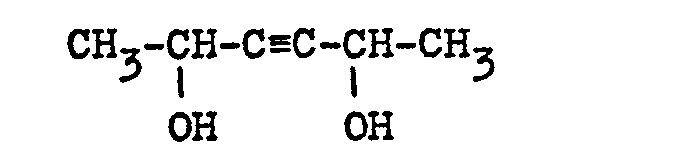
- 2,5-Dimethyl-hexin-3-diol-1,6

- Alkenole enthaltend Gruppen der Formel III Buten-1-ol-3
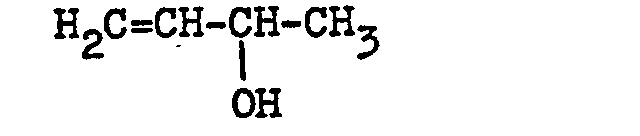
- 3-Methylbuten-3-ol-1

- 3-Methylbuten-2-ol-1

- 2-Methylbuten-3-ol-2

- Alkinole enthaltend Gruppen der Formel IV Butin-1-ol-3

- 2-Methylbutin-3-ol-2
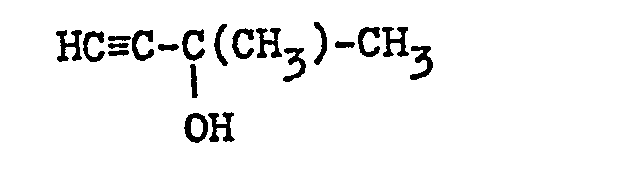
- 3-Methylenpentin-1-ol-3

- 3,4-Dimethylpentin-1-ol-3

- 3-Ethylpentin-1-ol-3

- 3-lsopropyl-4-methylpentin-1-ol-3

- 3-Methylhexin-1-ol-3

- 3-Propylhexin-1-ol-3

- Propargylalkohol (2-Propin..1-ol) HC≡C―CH2―OH
- Die gemäß der Erfindung verwendeten Polyorganosiloxane haben bevorzugt ein Molekulargewicht von mindestens etwa 600, besonders bevorzugt von mindestens etwa 1 500. Die obere Grenze des Molekulargewichts liegt zweckmäßig bei etwa 5 000, bevorzugt bei etwa 3 000.
- Nach einer Ausführungsform der Erfindung enthalten die Polyorganosiloxane zusätzlich eine Gruppe der Formel

- Die Polydiorganosiloxane, die zur Herstellung der Polyorganosiloxane gemäß der Erfindung. verwendet werden können, enthalten vorteilhaft etwa 3 bis 15 Siliciumatome je Molekül mit den entsprechenden Sauerstoffbindungen. Die bevorzugten Polyorganosiloxane werden durch die nachfolgende allgemeine Strukturformel wiedergegeben :

- Das Molekulargewicht der erfindungsgemäß verwendeten Polyorganosiloxane beträgt 550 bis 3 000, vorzugsweise 550 bis 2000 und wird durch die Zahl n und die Reste A bestimmt.
- Beispiele für Vinylmonomere, die häufig auch als reaktive Verdünner bezeichnet werden, sind Methylmethacrylat, Butylacrylat, Butylmethacrylat, Iso-Butylacrylat, Iso-Butylmethacrylat, tert.-Butylacrylat, 2-Äthylhexylacrylat, 2-Äthylhexylmethacrylat, Laurylacrylat, Dihydrodicyclopentadienylacrylat, Äthyldiglykolacrylat, Hydroxyäthylacrylat, Hydroxyäthylmethacrylat, Hydroxypropylacrylat, Hydroxypropylmethacrylat, Butandiolmonoacrylat, Äthandioldiacrylat, Butandioldiacrylat, Triäthylenglykoldiacrylat, Tetraäthylenglykoldiacrylat, Polyäthylenglykoldiacrylat, Hexandioldiacrylat, Neopentylglykoldiacrylat, 3-Methylpentadioldiacrylat, Trimethylolpropantriacrylat, Pentacrythrittriacrylat, Pentaerythrittetraacrylat, Vinylacetat, Vinylpropionat, Vinylacrylat, Vinylcarbazol, N-Vinylpyrrolidon, 1-Vinylimidazol, Trivinylcyclohexan, Triallylisocyanurat, Styrol, Vinyltoluol, Divinylbenzol, Acrylamid und Acrylnitril.
- Die Härtung durch Einwirkung energiereicher Strahlung erfolgt unter Verwendung von für diesen Zweck an sich bekannten Energiequellen. Beispiele sind Quecksilberdampf-Hochdruckstrahler, zweckmäßig mit einer Leistung von etwa 80 bis 100 Watt cm-1, sonstige Strahlungsquellen mit einem Anteil an UV-Strahlung, aktinische Strahlung, Elektronen-Strahlung, zweckmäßig mit einer Leistung von etwa 100 bis 350 KV.
- Wenn mit UV-Strahlung gehärtet wird, enthalten die applizierten Gemische übliche Photoinitiatoren. Beispiele hierfür sind Benzoinalkyläther wie Benzoinäthyl-, isopropyl- und -n-butyläther; Acetophenon-Derivate wie Diäthoxyacetophenon, p.-tert.-Butyltrichloracetophenon, 4-Phenoxytrichloracetophenon; Acyloximester wie 1-Phenyl-1,2-propandion-2-(O-äthoxycarbonyl) oxim ; Ketale wie Benzildimethylketal ; Thioxanthone wie 2-Chlorthioxanthon, 2-Methylthioxanthon, 4-lsopropylthioxanthon, 2-Phenylthioxanthon, 2-Benzylthioxanthon, 2-Acetytthioxanthon ; Keton/Amin-Kombination ; aromatischen Ketone wie Benzophenon, Benzil, Anthrachinon ; tert. Amine wie Triäthylamin, Dimethyläthanolamin, Äthyl-4-di- methylaminobenzoat; Michler's Keton ; Dibenzosuberon, 6, 11-Dihydrodibenzothiepin-11-on (9.10), Fluorenon, 1-(4-Isopropylphenyl)-2-hydroxy-2-methylpropan-1-on, 2-Hydroxy-2-methyl-1-phenyl-propan-1-on.
- Übliche Stabilisatoren für die Formmasse, die eine unerwünschte vorzeitige Härtung verhindern, sind z. B. Hydrochinon, Hydrochinonmonomethyläther, p-tert.-Butylbrenzkatechin, Toluhydrochinon, Phenothiazin.
- Die Formmassen gemäß der Erfindung können, wie aus dem Stand der Technik bekannt ist, übliche Zusatzstoffe wie Pigmente, Farbstoffe, Füllstoffe, Additive, insbesondere Stabilisatoren, enthalten.
- Die erfindungsgemäßen Formmassen können auf Papier, Holz, Metalle, Kunststoffe oder sonstige feste Träger aufgebracht werden, auf denen sie Filme bilden, die eine vorzügliche Trennwirkung gegenüber klebenden Stoffen aufweisen. Besonders bevorzugt sind die Formmassen gemäß der Erfindung zur Beschichtung von Papier zur Erzeugung von Trennüberzügen. In der Regel reicht es aus, wenn 0,1 bis 3,0 g pro qm Trägerstöff aufgebracht werden. In der Regel liegt die Menge bei etwa 0,5 bis 1 g pro qm.
- Der Auftrag erfolgt nach den bekannten Verfahren des Stands der Technik, beispielsweise durch Walzen, Streichen, Rakeln, Spritzen.
-

- Ein mit Rührer, Thermometer, Auskreiser und Kondensator ausgestatteter Dreihalsschliff-Kolben wurde mit 675,0 g DOW CORNING8 Q1-3037 Intermediate und 88,0 g Buten-2-diol-1,4 beschickt und auf 70 °C aufgeheizt. Dann wurde eine Mischung aus 75,0 g DOW CORNING8 Q1-3037 Intermediate und 1,5 g Tetraisopropyltitanat hinzugefügt und die Temperatur innerhalb von 30 Minuten auf 160 °C erhöht, wobei während dieser Zeit das Methanol abdestillierte und im Auskreiser aufgefangen wurde. Nachdem 64,0 g Methanol abgeschieden waren, wurde das Reaktionsgemisch auf 120°C abgekühlt und mit 172,0 g Butandiol-1,4-diacrylat und 20,0 g Hydroxyäthylacrylat verdünnt. Viskosität : 213 mPa. s/25 °C.
- DOW CORNING8 01-3037 Intermediate ist ein handelsübliches methoxyfunktionelles Methylphenylpolysiloxan mit einem Methoxyäquivalentgewicht von 194 und einem Methoxygehalt von 16 Gew:-%.
-

- In einen mit Rührer, Thermometer, Auskreiser und Kondensator ausgerüsteten Dreihalsschliff-Kolben wurden 675,0 g DOW CORNING® Q1-3037 Intermediate und 86,0 g Butin-2-diol-1,4 vorgelegt und unter Rühren auf 70°C geheizt. Dann wurde eine Mischung aus 75,0 DOW CORNING® Q1-3037 Intermediate und 1,5 g Tetraisopropyltitanat zugesetzt und innerhalb von 30 Minuten auf 160 °C geheizt. Das als Nebenprodukt gebildete Methanol wurde im Auskreiser aufgefangen und ausgewogen. Nach 1 Stunde waren 64,0 g Methanol abgeschieden worden, was einer nahezu vollständigen Umsetzung des verfügbaren Hydroxylgruppen-Angebots entspricht. Im Anschluß daran wurde auf 120 °C abgekühlt und mit 86,0 g Butandiol-1,4-diacrylat verdünnt. Viskosität : 869 mPa. s/25 °C.
-

- Die Herstellung erfolgte wie in Beispiel 1 angegeben. Viskosität: 319 mPa. s/25 °C.
- 100 Teile des nach Beispiel 2 hergestellten Polyorganosiloxans werden mit 3 Teilen 1-(4-Isopropylphenyl)-2-hydroxy-2-methylpropan-1-on und 3 Teilen 2-Hydroxy-2-methyl-1-phenyl-propan-1-on versetzt und durch Walzenauftrag im Mitlaufverfahren auf 67 g schweres Silikon-Rohpapier, das beidseitig gestrichen und scharf sattiniert ist, aufgetragen, daß sich eine Beschichtung von 0,8 g pro m2 ergibt. Die Beschichtung wird mit einer Bandgeschwindigkeit von 15 m/min mit 3 Quecksilberhochdrucklampen, die eine Leistung von je 80 Watt/cm aufweisen und im Abstand von 70 mm vom Bestrahlungsobjekt angeordnet sind, bestrahlt und ausgehärtet. Zur Ermittlung der Trenneigenschaften wird ein lösungsmittelhaltiger Acrylkleber in einer Auftragsmenge von etwa 15 g pro m2 auf 100 g schweres einfach gestrichenes Papier aufgetragen und getrocknet. Dann wird ein 20 mm breiter Streifen herausgeschnitten und mit dem durch Bestrahlung hergestellten Trennüberzug verpreßt. Dann wird der Klebstoffstreifen mit einem Reißgerät mit einer Geschwindigkeit von 100 mm/min unter einem Winkel von 90 °C abgezogen. Die zum Trennen erforderliche Kraft betrug 15 Newton/Meter.
- 100 Teile des nach Beispiel 3 hergestellten Polyorganosiloxans wurden wie im Anwendungsbeispiel 1 beschrieben photosensibilisiert, appliziert und durch Bestrahlung mit einer Bandgeschwindigkeit von 20 m/min ausgehärtet. Der bei diesem Versuch ermittelte Trennwert betrug Null Newton/Meter.
Claims (4)




Priority Applications (1)
| Application Number | Priority Date | Filing Date | Title |
|---|---|---|---|
| AT82101109T ATE10200T1 (de) | 1981-02-19 | 1982-02-16 | Durch bestrahlung haertbare polyorganosiloxanmasse und ihre verwendung zur bildung von trennueberzuegen. |
Applications Claiming Priority (2)
| Application Number | Priority Date | Filing Date | Title |
|---|---|---|---|
| DE3106059 | 1981-02-19 | ||
| DE19813106059 DE3106059A1 (de) | 1981-02-19 | 1981-02-19 | Durch bestrahlung haertbare polyorganosiloxanmasse und ihre verwendung zur bildung von trennueberzuegen |
Publications (2)
| Publication Number | Publication Date |
|---|---|
| EP0058909A1 EP0058909A1 (de) | 1982-09-01 |
| EP0058909B1 true EP0058909B1 (de) | 1984-11-07 |
Family
ID=6125216
Family Applications (1)
| Application Number | Title | Priority Date | Filing Date |
|---|---|---|---|
| EP82101109A Expired EP0058909B1 (de) | 1981-02-19 | 1982-02-16 | Durch Bestrahlung härtbare Polyorganosiloxanmasse und ihre Verwendung zur Bildung von Trennüberzügen |
Country Status (4)
| Country | Link |
|---|---|
| EP (1) | EP0058909B1 (de) |
| JP (1) | JPS57153019A (de) |
| AT (1) | ATE10200T1 (de) |
| DE (2) | DE3106059A1 (de) |
Families Citing this family (7)
| Publication number | Priority date | Publication date | Assignee | Title |
|---|---|---|---|---|
| JPS6054842A (ja) * | 1983-09-06 | 1985-03-29 | 日本製紙株式会社 | 感熱発色粘着ラベルとその製造法 |
| JPH0631371B2 (ja) * | 1985-09-11 | 1994-04-27 | 東亞合成化学工業株式会社 | 離型用コ−テイング剤 |
| FR2590173B1 (fr) * | 1985-11-15 | 1994-05-27 | Mead Release Prod Inc | Doublure permeable ou garniture protectrice et son procede de production |
| DE69208085T2 (de) * | 1991-03-20 | 1996-11-14 | Minnesota Mining & Mfg | Strahlenhärtbare Vinyl/Silikon-Trennmittelüberzug |
| US5331020A (en) * | 1991-11-14 | 1994-07-19 | Dow Corning Limited | Organosilicon compounds and compositions containing them |
| GB9124247D0 (en) * | 1991-11-14 | 1992-01-08 | Dow Corning | Novel organosilicon compounds and compositions containing them |
| JPH05214106A (ja) * | 1992-01-31 | 1993-08-24 | Nippon Dow Corning Kk | ポリ(シルエチニレンジシロキサン)及びその製造方法 |
Family Cites Families (1)
| Publication number | Priority date | Publication date | Assignee | Title |
|---|---|---|---|---|
| FR2447386A1 (fr) * | 1979-01-24 | 1980-08-22 | Rhone Poulenc Ind | Compositions organopolysiloxaniques photopolymerisables |
-
1981
- 1981-02-19 DE DE19813106059 patent/DE3106059A1/de not_active Withdrawn
-
1982
- 1982-02-16 DE DE8282101109T patent/DE3261157D1/de not_active Expired
- 1982-02-16 EP EP82101109A patent/EP0058909B1/de not_active Expired
- 1982-02-16 AT AT82101109T patent/ATE10200T1/de not_active IP Right Cessation
- 1982-02-17 JP JP57022909A patent/JPS57153019A/ja active Pending
Also Published As
| Publication number | Publication date |
|---|---|
| JPS57153019A (en) | 1982-09-21 |
| DE3261157D1 (en) | 1984-12-13 |
| EP0058909A1 (de) | 1982-09-01 |
| ATE10200T1 (de) | 1984-11-15 |
| DE3106059A1 (de) | 1982-09-02 |
Similar Documents
| Publication | Publication Date | Title |
|---|---|---|
| DE2622126C3 (de) | Verwendung einer durch Bestrahlung hartbaren Beschichtungsmasse auf Polydiorganosiloxanbasis zur Herstellung von Trennüberzügen auf Trägermaterialien | |
| EP0644222B1 (de) | Mit Acrylatgruppen modifizierte Organopolysiloxane | |
| EP3168274B1 (de) | Härtbare polymere | |
| EP3168273B1 (de) | Härtbare polymere | |
| DE69609854T2 (de) | Fotoinitiator | |
| DE2651009B2 (de) | Durch Bestrahlung härtbare PoIydiorganosiloxanmasse und ihre Verwendung zur Bildung von Trennüberzügen | |
| DE2850611C2 (de) | Durch Strahlung härtbare Polydiorganosiloxanformmassen und deren Verwendung zur Verbesserung der Abtrennbarkeit von Klebstoffen von festen Substraten | |
| DE3512179A1 (de) | Fotoinitiatoren fuer die fotopolymerisation in waessrigen systemen | |
| DE2922932A1 (de) | Oligomere methacrylsubstituierte alkylsiloxane | |
| EP0979851A2 (de) | Strahlenhärtbare Beschichtungsmassen | |
| DE19615489A1 (de) | UV-härtbare Epoxysilicon-Mischungszusammensetzungen | |
| EP0097333A2 (de) | Neue Organopolysiloxane, Verfahren zu ihrer Herstellung und Verwendung dieser Organopolysiloxane | |
| DE3323913A1 (de) | Polyisobutylenbernsteinsaeurehalbester, ihre herstellung und durch bestrahlung in ein klebmittel ueberfuehrbare zubereitungen, welche diese verbindungen enthalten | |
| DE2522756A1 (de) | Photopolymerisierfaehige gemische | |
| EP0186099A2 (de) | Vernetzbare Organopolysiloxane, Verfahren zu ihrer Herstellung und Verwendung dieser Organopolysiloxane | |
| DE3044301A1 (de) | Acrylierte urethansiliconreaktionsprodukte und diese enthaltende, strahlungshaertbare ueberzuege | |
| WO2021058263A1 (de) | Silikon(meth)acrylate, verfahren zu ihrer herstellung und ihre verwendung in härtbaren zusammensetzungen | |
| DE10248111A1 (de) | Verwendung von Photoinitiatoren vom Typ Hydroxyalkylphenon in strahlenhärtbaren Organopolysiloxanen für die Herstellung von abhäsiven Beschichtungen | |
| EP0058909A1 (de) | Durch Bestrahlung härtbare Polyorganosiloxanmasse und ihre Verwendung zur Bildung von Trennüberzügen | |
| DE3685938T2 (de) | Durch bestrahlung haertbare verduennungsmittel. | |
| DE69406583T2 (de) | Strahlungshärtbare Organopolysiloxane Zusammensetzung | |
| EP0462389A2 (de) | Härtbare Organopolysiloxane mit über SiOC-Gruppen gebundenen Oxyalkylenethergruppen, ihre Herstellung und Verwendung | |
| EP1382651A1 (de) | Verwendung von Antioxidantien in strahlenhärtbaren Beschichtungsmassen für die Herstellung von abhäsiven Beschichtungen | |
| EP0169295A2 (de) | Organopolysiloxane, Verfahren zu ihrer Herstellung und Verwendung dieser Organopolysiloxane | |
| DE2757086A1 (de) | Polycarbonate mit acrylat- bzw. methacrylat-endgruppen, ihre herstellung und verwendung |
Legal Events
| Date | Code | Title | Description |
|---|---|---|---|
| PUAI | Public reference made under article 153(3) epc to a published international application that has entered the european phase |
Free format text: ORIGINAL CODE: 0009012 |
|
| AK | Designated contracting states |
Designated state(s): AT BE CH DE FR GB IT NL SE |
|
| 17P | Request for examination filed |
Effective date: 19830216 |
|
| GRAA | (expected) grant |
Free format text: ORIGINAL CODE: 0009210 |
|
| AK | Designated contracting states |
Designated state(s): AT BE CH DE FR GB IT LI NL SE |
|
| PG25 | Lapsed in a contracting state [announced via postgrant information from national office to epo] |
Ref country code: SE Effective date: 19841107 Ref country code: NL Effective date: 19841107 Ref country code: IT Free format text: LAPSE BECAUSE OF FAILURE TO SUBMIT A TRANSLATION OF THE DESCRIPTION OR TO PAY THE FEE WITHIN THE PRESCRIBED TIME-LIMIT;WARNING: LAPSES OF ITALIAN PATENTS WITH EFFECTIVE DATE BEFORE 2007 MAY HAVE OCCURRED AT ANY TIME BEFORE 2007. THE CORRECT EFFECTIVE DATE MAY BE DIFFERENT FROM THE ONE RECORDED. Effective date: 19841107 Ref country code: FR Free format text: THE PATENT HAS BEEN ANNULLED BY A DECISION OF A NATIONAL AUTHORITY Effective date: 19841107 Ref country code: BE Effective date: 19841107 |
|
| REF | Corresponds to: |
Ref document number: 10200 Country of ref document: AT Date of ref document: 19841115 Kind code of ref document: T |
|
| REF | Corresponds to: |
Ref document number: 3261157 Country of ref document: DE Date of ref document: 19841213 |
|
| PG25 | Lapsed in a contracting state [announced via postgrant information from national office to epo] |
Ref country code: AT Effective date: 19850216 |
|
| PGFP | Annual fee paid to national office [announced via postgrant information from national office to epo] |
Ref country code: DE Payment date: 19850315 Year of fee payment: 4 |
|
| NLV1 | Nl: lapsed or annulled due to failure to fulfill the requirements of art. 29p and 29m of the patents act | ||
| PLBE | No opposition filed within time limit |
Free format text: ORIGINAL CODE: 0009261 |
|
| STAA | Information on the status of an ep patent application or granted ep patent |
Free format text: STATUS: NO OPPOSITION FILED WITHIN TIME LIMIT |
|
| EN | Fr: translation not filed | ||
| 26N | No opposition filed | ||
| PG25 | Lapsed in a contracting state [announced via postgrant information from national office to epo] |
Ref country code: LI Effective date: 19860228 Ref country code: CH Effective date: 19860228 |
|
| GBPC | Gb: european patent ceased through non-payment of renewal fee | ||
| REG | Reference to a national code |
Ref country code: CH Ref legal event code: PL |
|
| PG25 | Lapsed in a contracting state [announced via postgrant information from national office to epo] |
Ref country code: DE Effective date: 19861101 |
|
| PG25 | Lapsed in a contracting state [announced via postgrant information from national office to epo] |
Ref country code: GB Effective date: 19881121 |