EP0055507B1 - Method for suspension polymerization of styrenic monomers - Google Patents
Method for suspension polymerization of styrenic monomers Download PDFInfo
- Publication number
- EP0055507B1 EP0055507B1 EP81304698A EP81304698A EP0055507B1 EP 0055507 B1 EP0055507 B1 EP 0055507B1 EP 81304698 A EP81304698 A EP 81304698A EP 81304698 A EP81304698 A EP 81304698A EP 0055507 B1 EP0055507 B1 EP 0055507B1
- Authority
- EP
- European Patent Office
- Prior art keywords
- polymerization
- suspension
- styrenic
- initiator
- free radical
- Prior art date
- Legal status (The legal status is an assumption and is not a legal conclusion. Google has not performed a legal analysis and makes no representation as to the accuracy of the status listed.)
- Expired
Links
- 239000000178 monomer Substances 0.000 title claims description 53
- 238000000034 method Methods 0.000 title claims description 20
- 238000010557 suspension polymerization reaction Methods 0.000 title claims description 10
- 239000003999 initiator Substances 0.000 claims description 53
- 238000006116 polymerization reaction Methods 0.000 claims description 46
- 239000000725 suspension Substances 0.000 claims description 37
- 150000003254 radicals Chemical class 0.000 claims description 35
- 238000006243 chemical reaction Methods 0.000 claims description 23
- PPBRXRYQALVLMV-UHFFFAOYSA-N Styrene Chemical compound C=CC1=CC=CC=C1 PPBRXRYQALVLMV-UHFFFAOYSA-N 0.000 claims description 16
- JLBJTVDPSNHSKJ-UHFFFAOYSA-N 4-Methylstyrene Chemical compound CC1=CC=C(C=C)C=C1 JLBJTVDPSNHSKJ-UHFFFAOYSA-N 0.000 claims description 15
- XLYOFNOQVPJJNP-UHFFFAOYSA-N water Substances O XLYOFNOQVPJJNP-UHFFFAOYSA-N 0.000 claims description 12
- SWAXTRYEYUTSAP-UHFFFAOYSA-N tert-butyl ethaneperoxoate Chemical compound CC(=O)OOC(C)(C)C SWAXTRYEYUTSAP-UHFFFAOYSA-N 0.000 claims description 11
- OMPJBNCRMGITSC-UHFFFAOYSA-N Benzoylperoxide Chemical compound C=1C=CC=CC=1C(=O)OOC(=O)C1=CC=CC=C1 OMPJBNCRMGITSC-UHFFFAOYSA-N 0.000 claims description 9
- 239000004342 Benzoyl peroxide Substances 0.000 claims description 8
- 235000019400 benzoyl peroxide Nutrition 0.000 claims description 8
- 230000000977 initiatory effect Effects 0.000 claims description 5
- 125000000391 vinyl group Chemical group [H]C([*])=C([H])[H] 0.000 claims description 4
- 229920002554 vinyl polymer Polymers 0.000 claims description 4
- JZHGRUMIRATHIU-UHFFFAOYSA-N 1-ethenyl-3-methylbenzene Chemical compound CC1=CC=CC(C=C)=C1 JZHGRUMIRATHIU-UHFFFAOYSA-N 0.000 claims description 3
- 238000009826 distribution Methods 0.000 claims description 3
- 229920000314 poly p-methyl styrene Polymers 0.000 claims description 3
- GJBRNHKUVLOCEB-UHFFFAOYSA-N tert-butyl benzenecarboperoxoate Chemical compound CC(C)(C)OOC(=O)C1=CC=CC=C1 GJBRNHKUVLOCEB-UHFFFAOYSA-N 0.000 claims description 3
- KTZVZZJJVJQZHV-UHFFFAOYSA-N 1-chloro-4-ethenylbenzene Chemical compound ClC1=CC=C(C=C)C=C1 KTZVZZJJVJQZHV-UHFFFAOYSA-N 0.000 claims description 2
- YIVJZNGAASQVEM-UHFFFAOYSA-N Lauroyl peroxide Chemical group CCCCCCCCCCCC(=O)OOC(=O)CCCCCCCCCCC YIVJZNGAASQVEM-UHFFFAOYSA-N 0.000 claims description 2
- 230000000379 polymerizing effect Effects 0.000 claims description 2
- HJWLCRVIBGQPNF-UHFFFAOYSA-N prop-2-enylbenzene Chemical compound C=CCC1=CC=CC=C1 HJWLCRVIBGQPNF-UHFFFAOYSA-N 0.000 claims description 2
- 125000003011 styrenyl group Chemical group [H]\C(*)=C(/[H])C1=C([H])C([H])=C([H])C([H])=C1[H] 0.000 claims 1
- 229920000642 polymer Polymers 0.000 description 17
- OKKJLVBELUTLKV-UHFFFAOYSA-N Methanol Chemical compound OC OKKJLVBELUTLKV-UHFFFAOYSA-N 0.000 description 12
- YMWUJEATGCHHMB-UHFFFAOYSA-N Dichloromethane Chemical compound ClCCl YMWUJEATGCHHMB-UHFFFAOYSA-N 0.000 description 9
- 239000000243 solution Substances 0.000 description 9
- 238000007792 addition Methods 0.000 description 5
- 238000001816 cooling Methods 0.000 description 4
- 239000001506 calcium phosphate Substances 0.000 description 3
- 238000007720 emulsion polymerization reaction Methods 0.000 description 3
- 238000010438 heat treatment Methods 0.000 description 3
- 238000002156 mixing Methods 0.000 description 3
- 239000000203 mixture Substances 0.000 description 3
- 229920002451 polyvinyl alcohol Polymers 0.000 description 3
- 238000003756 stirring Methods 0.000 description 3
- 125000000542 sulfonic acid group Chemical group 0.000 description 3
- 239000004094 surface-active agent Substances 0.000 description 3
- QORWJWZARLRLPR-UHFFFAOYSA-H tricalcium bis(phosphate) Chemical compound [Ca+2].[Ca+2].[Ca+2].[O-]P([O-])([O-])=O.[O-]P([O-])([O-])=O QORWJWZARLRLPR-UHFFFAOYSA-H 0.000 description 3
- 229940078499 tricalcium phosphate Drugs 0.000 description 3
- 229910000391 tricalcium phosphate Inorganic materials 0.000 description 3
- 235000019731 tricalcium phosphate Nutrition 0.000 description 3
- IJGRMHOSHXDMSA-UHFFFAOYSA-N Atomic nitrogen Chemical compound N#N IJGRMHOSHXDMSA-UHFFFAOYSA-N 0.000 description 2
- IMROMDMJAWUWLK-UHFFFAOYSA-N Ethenol Chemical compound OC=C IMROMDMJAWUWLK-UHFFFAOYSA-N 0.000 description 2
- 239000004606 Fillers/Extenders Substances 0.000 description 2
- 239000000654 additive Substances 0.000 description 2
- 230000004888 barrier function Effects 0.000 description 2
- 238000012662 bulk polymerization Methods 0.000 description 2
- 239000003795 chemical substances by application Substances 0.000 description 2
- 238000000354 decomposition reaction Methods 0.000 description 2
- 239000006185 dispersion Substances 0.000 description 2
- 229920001519 homopolymer Polymers 0.000 description 2
- 238000010348 incorporation Methods 0.000 description 2
- 230000003993 interaction Effects 0.000 description 2
- 239000000155 melt Substances 0.000 description 2
- SSDSCDGVMJFTEQ-UHFFFAOYSA-N octadecyl 3-(3,5-ditert-butyl-4-hydroxyphenyl)propanoate Chemical compound CCCCCCCCCCCCCCCCCCOC(=O)CCC1=CC(C(C)(C)C)=C(O)C(C(C)(C)C)=C1 SSDSCDGVMJFTEQ-UHFFFAOYSA-N 0.000 description 2
- 125000000864 peroxy group Chemical group O(O*)* 0.000 description 2
- 239000003381 stabilizer Substances 0.000 description 2
- 239000000375 suspending agent Substances 0.000 description 2
- 238000012722 thermally initiated polymerization Methods 0.000 description 2
- DSCFFEYYQKSRSV-UHFFFAOYSA-N 1L-O1-methyl-muco-inositol Natural products COC1C(O)C(O)C(O)C(O)C1O DSCFFEYYQKSRSV-UHFFFAOYSA-N 0.000 description 1
- NLHHRLWOUZZQLW-UHFFFAOYSA-N Acrylonitrile Chemical compound C=CC#N NLHHRLWOUZZQLW-UHFFFAOYSA-N 0.000 description 1
- 239000004721 Polyphenylene oxide Substances 0.000 description 1
- 239000004793 Polystyrene Substances 0.000 description 1
- 239000004372 Polyvinyl alcohol Substances 0.000 description 1
- 102100029290 Transthyretin Human genes 0.000 description 1
- 108050000089 Transthyretin Proteins 0.000 description 1
- NIXOWILDQLNWCW-UHFFFAOYSA-N acrylic acid group Chemical group C(C=C)(=O)O NIXOWILDQLNWCW-UHFFFAOYSA-N 0.000 description 1
- 150000001298 alcohols Chemical class 0.000 description 1
- 150000008055 alkyl aryl sulfonates Chemical class 0.000 description 1
- 125000000129 anionic group Chemical group 0.000 description 1
- 125000003609 aryl vinyl group Chemical group 0.000 description 1
- 239000001045 blue dye Substances 0.000 description 1
- -1 bulk Substances 0.000 description 1
- 239000003054 catalyst Substances 0.000 description 1
- 230000003197 catalytic effect Effects 0.000 description 1
- 125000002091 cationic group Chemical group 0.000 description 1
- 239000003086 colorant Substances 0.000 description 1
- 239000000975 dye Substances 0.000 description 1
- 239000000839 emulsion Substances 0.000 description 1
- 238000001704 evaporation Methods 0.000 description 1
- 238000001125 extrusion Methods 0.000 description 1
- 238000010528 free radical solution polymerization reaction Methods 0.000 description 1
- 238000005227 gel permeation chromatography Methods 0.000 description 1
- 239000007924 injection Substances 0.000 description 1
- 238000002347 injection Methods 0.000 description 1
- 239000002480 mineral oil Substances 0.000 description 1
- 235000010446 mineral oil Nutrition 0.000 description 1
- 229910052757 nitrogen Inorganic materials 0.000 description 1
- 239000002245 particle Substances 0.000 description 1
- 239000002530 phenolic antioxidant Substances 0.000 description 1
- 229920000570 polyether Polymers 0.000 description 1
- 229920002223 polystyrene Polymers 0.000 description 1
- USHAGKDGDHPEEY-UHFFFAOYSA-L potassium persulfate Chemical compound [K+].[K+].[O-]S(=O)(=O)OOS([O-])(=O)=O USHAGKDGDHPEEY-UHFFFAOYSA-L 0.000 description 1
- 238000002360 preparation method Methods 0.000 description 1
- 230000000717 retained effect Effects 0.000 description 1
- 239000002904 solvent Substances 0.000 description 1
- 239000000126 substance Substances 0.000 description 1
- STCOOQWBFONSKY-UHFFFAOYSA-N tributyl phosphate Chemical compound CCCCOP(=O)(OCCCC)OCCCC STCOOQWBFONSKY-UHFFFAOYSA-N 0.000 description 1
- 238000005406 washing Methods 0.000 description 1
Images

Classifications
-
- C—CHEMISTRY; METALLURGY
- C08—ORGANIC MACROMOLECULAR COMPOUNDS; THEIR PREPARATION OR CHEMICAL WORKING-UP; COMPOSITIONS BASED THEREON
- C08F—MACROMOLECULAR COMPOUNDS OBTAINED BY REACTIONS ONLY INVOLVING CARBON-TO-CARBON UNSATURATED BONDS
- C08F12/00—Homopolymers and copolymers of compounds having one or more unsaturated aliphatic radicals, each having only one carbon-to-carbon double bond, and at least one being terminated by an aromatic carbocyclic ring
Definitions
- This invention relates to the suspension polymerization of styrenic monomers.
- styrene and other styrenic monomers may be polymerized by a variety of techniques, for example solution, bulk, emulsion, and suspension polymerization. In each of these techniques, polymerization results from a free radical-induced, chain-propagation mechanism.
- thermal initiation a technique often referred to as thermal initiation
- free radical initiators also generate free radicals by thermally-induced decomposition and accordingly, both the "thermally-induced” and the “initiator-induced” techniques are thermal in the sense that they both involve heating of the polymerization system.
- initiator-induced polymerization generally takes place at a lower temperature than thermally-initiated polymerization since free radicals are generated predominately from initiator decomposition rather than from the interaction of styrenic monomers, particularly in the initial stages of the polymerization.
- the rate at which polymerization proceeds increases as the concentration of free radicals in the styrenic monomers increases.
- concentration of free radicals generated by a given quantity of styrenic monomers or free radical initiators increases as the temperature increases. Accordingly, increasing the temperature generally tends to increase the rate of reaction at least immediately after the temperature is increased. However, if the temperature is held constant, the polymerization rate will tend to decrease with time because, as the polymerization proceeds, less styrenic monomer and/or free radical initiator will remain to generate more free radicals. Accordingly, in order to drive the polymerization to completion, it is known to increase the temperature as the reaction proceeds. It is also known to use a plurality of free radical initiators which decompose at different temperatures. When such a plurality of free radical initiators is used, the temperature may be maintained until one free radical initiator is substantially decomposed, and then increased to decompose one or more of the remaining initiators.
- Free radicals can also be generated by incrementally incorporating free radical initiators into the styrenic monomers as the polymerization progresses. Such an incremental incorporation is known in the case of bulk and emulsion polymerizations. However, in the case of suspension polymerizations, special problems are presented with incremental additions of free radical initiators, due to the manner in which styrenic monomers are polymerized in suspension.
- styrenic monomers are present as droplets dispersed throughout a continuous water phase.
- the free radical initiators are soluble in styrenic monomers, they are substantially insoluble in water. Accordingly, it is customary to incorporate all of the initiator into the styrenic monomers before the polymerization is started.
- U.S. Patent No. 2,907,756 suggests that incremental addition of initiators may be made during the suspension polymerization of styrene but only during the initial stages of the polymerization. More particularly, it states that it is necessary to add all of the initiator before polymerization has progressed to such an extent that intimate mixing of catalyst and styrene monomer is precluded. Specifically, addition of initiator is terminated when the suspension reaches a temperature of about 115°C, corresponding to about 49 percent conversion.
- initiator can indeed be effectually added during the later stages of a suspension polymerization, when such addition is made in accordance with the present invention.
- a method for the suspension polymerization of one or more styrenic monomers, optionally together with up to 25% by weight, based on the total monomers, of one or more non-styrenic, vinyl monomers comprising the steps of
- styrenic monomers is used herein in its conventional sense to designate aryl vinyl monomers, for example styrene, ring-substituted alkyl styrenes and ring-substituted halo-styrenes.
- Preferred styrenic monomers include styrene, paramethylstyrene, metamethylstyrene, vinyl toluenes (a mixture of paramethylstyrene and metamethylstyrene), para-t-butylstyrene and parachlorostyrene, an especially preferred styrenic monomer being paramethylstyrene.
- the polymerization system may also contain up to 25% by weight, based on the total monomers, of one or more copolymerizable non-styrenic, vinyl monomers.
- non-styrenic vinyl monomers include acrylic monomers such as acrylonitrile.
- the suspension in which polymerization is carried out may be prepared by mixing the monomer(s) with water and a minor amount of a stabilizer or suspending agent such as tricalcium phosphate. Accordingly, a small quantity (for example 0.001 to 0.05% by weight of the total charge) of a surface-active agent is preferably used to reduce surface tension.
- a surface-active agent such as tricalcium phosphate.
- Nonionic, anionic or cationic surface active agents may be used, including alkyl aryl sulfonates and octylphenoxy polyether alcohols.
- a preferred surface active agent is partially sulfonated paramethylstyrene extender which contains about 10 mole percent sulfonic acid groups.
- the water to monomer ratio of the suspension may be, for example, from about 1:1.2 to about 3:1.
- the desired droplet size of the monomer may be achieved by an appropriate rate of stirring of the suspension.
- the droplets will be from 0.5 mm to 0.5,um in diameter, for example from 0.15 to 0.25 mm in diameter, or of sufficient size to obtain polymer particles more than 90% of which are retained on a 100 mesh screen.
- the suspension may also contain other additives.
- mineral oil may be included to aid in extrusion of the resulting polymer and/or an expanding agent may be present.
- a coloring agent or dye may be included in the suspension. More especially, in the case of paramethylstyrene, a blueing agent may be used to overcome the characteristic yellow coloration of the resulting polymer.
- additives which stabilize the polymers which are produced from the suspension are also possible to include additives which stabilize the polymers which are produced from the suspension.
- One such stabilizer is phenolic antioxidants, for example Irganox 1076 (Ciba-Geigy, Registered Trade Mark).
- the suspension polymerization takes place in two separate stages; the first stage is a thermally-induced polymerization and the second stage is an initiator-induced polymerization.
- the styrenic monomer is polymerized by heating in the absence of a free radical initiator.
- the temperature to which the suspension is heated depends upon the particular styrenic monomer(s) to be polymerized as well as the desired rate of polymerization to be achieved.
- the temperature of the suspension may be from about 120°C to about 150°C during the thermally-initiated stage. Most preferably, the temperature is about 130°-140°C for these monomers.
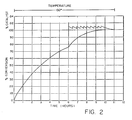
- the temperature of the suspension should preferably be sufficient to achieve a rate of polymerization such that a conversion of from 50% to 90% (based on the total monomers) is achieved within a time period of 2 to 8 hours.
- the rate of polymerization is permitted gradually to decrease, but should remain fairly constant during this period.
- the rate of polymerization may be between 30% conversion per hour and 5% conversion per hour at any time during the thermally-initiated stage. Accordingly, in the case of styrene or paramethylstyrene a temperature of as low as, for example 120°C may be sufficient to initiate polymerization in the absence of a free radical initiator, but the rate of polymerization at this temperature may be undesirably slow.
- the resulting polymer may have an undesirably low molecular weight, characterized by, for example a high melt index. Suspension instability problems may also be encountered when the temperature of the suspension is undesirably high.
- the end of the thermally-initiated stage of the polymerization may be expressed in terms of the percent conversion achieved. More particularly, the thermally-initiated stage ends after the conversion is at least about 50% but before the conversion reaches about 90%. Preferably, the thermally-initiated stage ends after 60-80% conversion of the monomer.
- the remainder of the polymerization is induced by incorporation of at least one substantially water-insoluble free radical initiator into the suspension.
- free radical initiators include organic peroxy compounds such as lauroyl peroxide, benzoyl peroxide, t-butylperbenzoate, and t-butylperoxyacetate. Although these organic peroxy compounds are not necessarily absolutely water-insoluble, particularly when used at the elevated temperatures contemplated by the present invention, nonetheless, they are substantially water-insoluble and are quite distinguishable from the water-soluble initiators used in emulsion polymerization, such as potassium persulfate.
- the substantially water-insoluble initiators are preferably added to the suspension of styrenic monomer(s) and polymer(s) as suspensions or solutions in water-miscible solvents.
- a suspension of an initiator is a suspension of benzoyl peroxide in methylene chloride containing a suspending agent such as "Gelvatol" (Monsanto) which is polyvinyl alcohol.
- a solution of an initiator is a solution of t-butylperoxyacetate dissolved in methanol.
- the temperature of the suspension containing the free radical initiator should not be so high as to generate excessive free radicals, resulting in a low molecular weight product. Accordingly, it may be desirable to cool the suspension before the free radical initiator is incorporated therein. This cooling may be achieved for example, by means of cooling coils. Preferably, however, the temperature of the suspension at the end of the thermally initiated stage and the nature of the free radical initiator are such that the initiator can be added to the suspension without cooling. Thus, for example, when paramethylstyrene is thermally polymerized at 130°C, t-butylperoxyacetate may be added to the suspension without prior cooling and the polymerization may be continued at 130°C. Accordingly, it is possible to conduct the two-stage process in an isothermal or substantially isothermal fashion.
- the temperature of the suspension should be adjusted to or maintained at a temperature sufficient to achieve a desired rate of polymerization.
- the temperature and amount of initiator should be sufficient to achieve the substantial completion of the polymerization within a period of from 2 to 8 hours.
- the rate of polymerization during the free radical-induced polymerization stage may be maintained between 3% and 25% conversion per hour.
- one or more initiators may be used in the initiator-induced stage of the polymerization. These initiators may be added all at once at the beginning of this stage but are preferably added in a continuous or an incremental fashion. Thus, for example, t-butylperoxyacetate may be added at brief intervals (for example, at about 25 minute intervals) while the suspension is maintained at a temperature of about 130°C.
- the polymerization of the styrenic monomer or monomers is substantially completed. More particularly, the conversion is suitably at least about 99% and preferably at least about 99.9%.
- the polymer may then be isolated from the suspension by any convenient means, such as washing.
- polymers produced in accordance with the present invention may have a relatively narrow range of molecular weights. This range may be expressed quantitatively in terms of the molecular weight distribution (MWD) of the polymer, which is the ratio of the weight average molecular weight (M w ) to the number average molecular weight (M N ). More particularly, the MWD for paramethylstyrene homopolymers, produced according to the present invention, may be about 3 or less.
- MWD molecular weight distribution
- the die swell index for a paramethylstyrene homopolymer produced according to the present invention may be from 1.4 to 1.6.
- the resulting polymer may typically have a MWD of from 5 to 10 and a die swell index of from 1.8 to 2.0.
- initiator levels can be reduced by from 50 to 90% over conventional processes in which initiator is added to the suspension at the beginning of the polymerization. Furthermore, cycle times can be reduced by up to 25% for batch preparations of comparable styrenic polymers. Moreover, molecular weights and distributions may be more easily controlled to narrow limits.
- a suspension of 315 g of paramethylstyrene in 330 g of water was prepared using 6.4 g of tricalcium phosphate and 32 mg of polyparamethylstyrene containing 10 mol percent sulfonic acid groups.
- This suspension in a 1-liter autoclave was stirred at 600 rpm using a 2.5 inch (6.35 cm) diameter pitched blade stirrer and was heated at 140°C for 4 hours without added initiator. At the end of this time the suspension was cooled to 85°C and a dispersion of 0.16 g of benzoyl peroxide (BP) in water was added thereto.
- BP benzoyl peroxide
- This dispersion was prepared by dissolving the benzoyl peroxide in methylene chloride, adding the solution to 15 ml of water containing 9 mg of "Gelvatol" and evaporating off the methylene chloride.
- a 2 liter autoclave was charged with 630 g of paramethylstyrene, 660 ml of water, 32 mg of Irganox 1076, 1.2 mg of Perox blue dye (Morton Chemical Company), about 80 mg of polyparamethylstyrene extender containing 10 mol percent sulfonic acid groups and 12.4 g of tricalcium phosphate.
- This mixture was purged with nitrogen and heated to 130°C while stirring at 600 rpm. After 6 hours at 130°C, 0.72 ml of a 10% solution of Lupersol 70 (a 70% solution of t-butylperoxyacetate) in methanol was injected into the autoclave.
Landscapes
- Chemical & Material Sciences (AREA)
- Health & Medical Sciences (AREA)
- Chemical Kinetics & Catalysis (AREA)
- Medicinal Chemistry (AREA)
- Polymers & Plastics (AREA)
- Organic Chemistry (AREA)
- Polymerisation Methods In General (AREA)
- Addition Polymer Or Copolymer, Post-Treatments, Or Chemical Modifications (AREA)
Applications Claiming Priority (2)
| Application Number | Priority Date | Filing Date | Title |
|---|---|---|---|
| US22165580A | 1980-12-31 | 1980-12-31 | |
| US221655 | 1980-12-31 |
Publications (2)
| Publication Number | Publication Date |
|---|---|
| EP0055507A1 EP0055507A1 (en) | 1982-07-07 |
| EP0055507B1 true EP0055507B1 (en) | 1984-08-22 |
Family
ID=22828737
Family Applications (1)
| Application Number | Title | Priority Date | Filing Date |
|---|---|---|---|
| EP81304698A Expired EP0055507B1 (en) | 1980-12-31 | 1981-10-09 | Method for suspension polymerization of styrenic monomers |
Country Status (7)
| Country | Link |
|---|---|
| EP (1) | EP0055507B1 (enExample) |
| JP (1) | JPS57135811A (enExample) |
| AU (1) | AU550034B2 (enExample) |
| CA (1) | CA1209744A (enExample) |
| DE (1) | DE3165698D1 (enExample) |
| ES (1) | ES8206558A1 (enExample) |
| ZA (1) | ZA816962B (enExample) |
Families Citing this family (3)
| Publication number | Priority date | Publication date | Assignee | Title |
|---|---|---|---|---|
| US4692472A (en) * | 1986-05-05 | 1987-09-08 | Atlantic Richfield Company | Divinylbenzene in expandable beads for cup molding |
| DE4232194A1 (de) * | 1992-09-25 | 1994-03-31 | Roehm Gmbh | Verfahren zur Verringerung des Restmonomerengehaltes bei der Herstellung von Perlpolymerisaten |
| FR3117487B1 (fr) * | 2020-12-10 | 2022-12-23 | Arkema France | Polymérisation en suspension des alcoxyamines avec des monomères styréniques et (meth) acryliques. |
Family Cites Families (1)
| Publication number | Priority date | Publication date | Assignee | Title |
|---|---|---|---|---|
| NL123461C (enExample) * | 1958-02-03 |
-
1981
- 1981-10-06 CA CA000387359A patent/CA1209744A/en not_active Expired
- 1981-10-07 ZA ZA816962A patent/ZA816962B/xx unknown
- 1981-10-07 AU AU76118/81A patent/AU550034B2/en not_active Ceased
- 1981-10-09 DE DE8181304698T patent/DE3165698D1/de not_active Expired
- 1981-10-09 EP EP81304698A patent/EP0055507B1/en not_active Expired
- 1981-11-11 ES ES507019A patent/ES8206558A1/es not_active Expired
- 1981-12-28 JP JP56210104A patent/JPS57135811A/ja active Granted
Also Published As
| Publication number | Publication date |
|---|---|
| JPS6342921B2 (enExample) | 1988-08-26 |
| EP0055507A1 (en) | 1982-07-07 |
| ZA816962B (en) | 1983-05-25 |
| ES507019A0 (es) | 1982-08-16 |
| CA1209744A (en) | 1986-08-12 |
| ES8206558A1 (es) | 1982-08-16 |
| AU550034B2 (en) | 1986-02-27 |
| DE3165698D1 (en) | 1984-09-27 |
| JPS57135811A (en) | 1982-08-21 |
| AU7611881A (en) | 1982-07-08 |
Similar Documents
| Publication | Publication Date | Title |
|---|---|---|
| US5854364A (en) | Process for the controlled radical polymerization or copolymerization of (meth)acrylic, vinyl, vinylidene and diene monomers, and (co)polymers obtained | |
| EP0068024B2 (en) | Process for continuous bulk copolymerization of vinyl monomers | |
| KR101093477B1 (ko) | 스티렌을 중합시키기 위한 퍼옥사이드 투여 공정을포함하는 현탁 방법 | |
| CA2039561A1 (en) | Method of producing polymers | |
| US4367320A (en) | Process for suspension polymerization of styrenic monomers | |
| US4125695A (en) | Polymerization process with reduced cycle time employing polyfunctional free radical initiators | |
| US4125696A (en) | Polymerization process using di-t-butyl diperoxycarbonate as a finishing catalyst | |
| CA1072244A (en) | Method of making broader molecular weight distribution polystyrene | |
| JP5066322B2 (ja) | 発泡性スチレンポリマーの製法 | |
| KR20010073180A (ko) | 중합화 반응시 매우 빠른 개시제의 지속적인 주입방법 | |
| EP0990004B1 (en) | Improved acid catalyzed polymerization | |
| EP0055507A1 (en) | Method for suspension polymerization of styrenic monomers | |
| US2907756A (en) | Styrene polymerization process | |
| US5990255A (en) | High molecular weight polysytrene production by vinyl acid catalyzed free radical polymerization | |
| CA1193797A (en) | Process for preparing poly(p-methylstyrene) | |
| US3790542A (en) | Method for polymerizing vinyl chloride | |
| KR20010083906A (ko) | 산화 환원 중합화 방법 | |
| JPH07116262B2 (ja) | α−メチルスチレン共重合体の製造方法 | |
| KR19980071612A (ko) | 비닐중합체의 제조방법 | |
| Matyjaszewski | Molecular events in atom transfer radical polymerization of styrene and methyl acrylate | |
| US2716111A (en) | Polymerization of vinyl chloride with a benzenesulfonyl chloride modifier | |
| KR101189282B1 (ko) | 발포성 폴리스티렌수지의 제조방법 | |
| JP3487095B2 (ja) | スチレン系重合体の製造方法 | |
| SU313360A1 (ru) | Способ получения гомополимеров и сополимеров винилароматических соединений | |
| JP3319483B2 (ja) | 耐熱分解性を有するメタクリル樹脂及びその製造方法 |
Legal Events
| Date | Code | Title | Description |
|---|---|---|---|
| PUAI | Public reference made under article 153(3) epc to a published international application that has entered the european phase |
Free format text: ORIGINAL CODE: 0009012 |
|
| AK | Designated contracting states |
Designated state(s): BE DE FR GB IT NL |
|
| 17P | Request for examination filed |
Effective date: 19821210 |
|
| ITF | It: translation for a ep patent filed | ||
| GRAA | (expected) grant |
Free format text: ORIGINAL CODE: 0009210 |
|
| AK | Designated contracting states |
Designated state(s): BE DE FR GB IT NL |
|
| PGFP | Annual fee paid to national office [announced via postgrant information from national office to epo] |
Ref country code: FR Payment date: 19840920 Year of fee payment: 4 |
|
| REF | Corresponds to: |
Ref document number: 3165698 Country of ref document: DE Date of ref document: 19840927 |
|
| PGFP | Annual fee paid to national office [announced via postgrant information from national office to epo] |
Ref country code: BE Payment date: 19840930 Year of fee payment: 4 |
|
| ET | Fr: translation filed | ||
| PLBE | No opposition filed within time limit |
Free format text: ORIGINAL CODE: 0009261 |
|
| STAA | Information on the status of an ep patent application or granted ep patent |
Free format text: STATUS: NO OPPOSITION FILED WITHIN TIME LIMIT |
|
| 26N | No opposition filed | ||
| PGFP | Annual fee paid to national office [announced via postgrant information from national office to epo] |
Ref country code: NL Payment date: 19871031 Year of fee payment: 7 |
|
| PGFP | Annual fee paid to national office [announced via postgrant information from national office to epo] |
Ref country code: DE Payment date: 19880927 Year of fee payment: 8 |
|
| PG25 | Lapsed in a contracting state [announced via postgrant information from national office to epo] |
Ref country code: GB Effective date: 19891009 |
|
| PG25 | Lapsed in a contracting state [announced via postgrant information from national office to epo] |
Ref country code: BE Effective date: 19891031 |
|
| BERE | Be: lapsed |
Owner name: MOBIL OIL CORP. Effective date: 19891031 |
|
| PG25 | Lapsed in a contracting state [announced via postgrant information from national office to epo] |
Ref country code: NL Effective date: 19900501 |
|
| GBPC | Gb: european patent ceased through non-payment of renewal fee | ||
| NLV4 | Nl: lapsed or anulled due to non-payment of the annual fee | ||
| PG25 | Lapsed in a contracting state [announced via postgrant information from national office to epo] |
Ref country code: FR Effective date: 19900629 |
|
| PG25 | Lapsed in a contracting state [announced via postgrant information from national office to epo] |
Ref country code: DE Effective date: 19900703 |
|
| REG | Reference to a national code |
Ref country code: FR Ref legal event code: ST |