EP0015227B1 - Neue Prostacyclin-Derivate und Verfahren zu ihrer Herstellung - Google Patents
Neue Prostacyclin-Derivate und Verfahren zu ihrer Herstellung Download PDFInfo
- Publication number
- EP0015227B1 EP0015227B1 EP80730010A EP80730010A EP0015227B1 EP 0015227 B1 EP0015227 B1 EP 0015227B1 EP 80730010 A EP80730010 A EP 80730010A EP 80730010 A EP80730010 A EP 80730010A EP 0015227 B1 EP0015227 B1 EP 0015227B1
- Authority
- EP
- European Patent Office
- Prior art keywords
- group
- acid
- alkyl
- dihydroxy
- free
- Prior art date
- Legal status (The legal status is an assumption and is not a legal conclusion. Google has not performed a legal analysis and makes no representation as to the accuracy of the status listed.)
- Expired
Links
- 238000000034 method Methods 0.000 title claims description 11
- 230000008569 process Effects 0.000 title claims description 5
- 238000002360 preparation method Methods 0.000 title description 3
- -1 carboxy, hydroxy Chemical group 0.000 claims abstract description 54
- 125000002887 hydroxy group Chemical group [H]O* 0.000 claims abstract description 15
- 125000000217 alkyl group Chemical group 0.000 claims abstract description 12
- 125000004432 carbon atom Chemical group C* 0.000 claims abstract description 12
- 150000003839 salts Chemical class 0.000 claims abstract description 9
- 125000004435 hydrogen atom Chemical group [H]* 0.000 claims abstract description 8
- 125000001997 phenyl group Chemical group [H]C1=C([H])C([H])=C(*)C([H])=C1[H] 0.000 claims abstract description 5
- 229910052739 hydrogen Inorganic materials 0.000 claims abstract description 4
- 239000001257 hydrogen Substances 0.000 claims abstract description 4
- UKVVPDHLUHAJNZ-PMACEKPBSA-N prostane Chemical class CCCCCCCC[C@H]1CCC[C@@H]1CCCCCCC UKVVPDHLUHAJNZ-PMACEKPBSA-N 0.000 claims abstract 3
- 239000002253 acid Substances 0.000 claims description 55
- 150000001875 compounds Chemical class 0.000 claims description 33
- 125000003178 carboxy group Chemical group [H]OC(*)=O 0.000 claims description 8
- 239000003814 drug Substances 0.000 claims description 7
- 125000001412 tetrahydropyranyl group Chemical group 0.000 claims description 7
- 239000012442 inert solvent Substances 0.000 claims description 6
- 125000000753 cycloalkyl group Chemical group 0.000 claims description 4
- LENZDBCJOHFCAS-UHFFFAOYSA-N tris Chemical class OCC(N)(CO)CO LENZDBCJOHFCAS-UHFFFAOYSA-N 0.000 claims description 4
- 239000000969 carrier Substances 0.000 claims description 2
- 238000004519 manufacturing process Methods 0.000 claims description 2
- 238000007669 thermal treatment Methods 0.000 claims description 2
- RTZKZFJDLAIYFH-UHFFFAOYSA-N Diethyl ether Chemical compound CCOCC RTZKZFJDLAIYFH-UHFFFAOYSA-N 0.000 abstract description 41
- 150000003180 prostaglandins Chemical class 0.000 abstract description 7
- 229940094443 oxytocics prostaglandins Drugs 0.000 abstract description 6
- 125000002252 acyl group Chemical group 0.000 abstract description 3
- UFHFLCQGNIYNRP-UHFFFAOYSA-N Hydrogen Chemical compound [H][H] UFHFLCQGNIYNRP-UHFFFAOYSA-N 0.000 abstract description 2
- 125000000041 C6-C10 aryl group Chemical group 0.000 abstract 4
- 125000004178 (C1-C4) alkyl group Chemical group 0.000 abstract 3
- 125000000229 (C1-C4)alkoxy group Chemical group 0.000 abstract 3
- 125000005843 halogen group Chemical group 0.000 abstract 3
- 125000000008 (C1-C10) alkyl group Chemical group 0.000 abstract 2
- 125000006546 (C4-C10) cycloalkyl group Chemical group 0.000 abstract 2
- 125000004218 chloromethyl group Chemical group [H]C([H])(Cl)* 0.000 abstract 2
- 125000004216 fluoromethyl group Chemical group [H]C([H])(F)* 0.000 abstract 2
- 125000002023 trifluoromethyl group Chemical group FC(F)(F)* 0.000 abstract 2
- 229910052736 halogen Inorganic materials 0.000 abstract 1
- 238000001727 in vivo Methods 0.000 abstract 1
- 229910052757 nitrogen Inorganic materials 0.000 abstract 1
- 229910052760 oxygen Inorganic materials 0.000 abstract 1
- 125000006413 ring segment Chemical group 0.000 abstract 1
- 229910052717 sulfur Inorganic materials 0.000 abstract 1
- XEKOWRVHYACXOJ-UHFFFAOYSA-N Ethyl acetate Chemical compound CCOC(C)=O XEKOWRVHYACXOJ-UHFFFAOYSA-N 0.000 description 39
- YMWUJEATGCHHMB-UHFFFAOYSA-N Dichloromethane Chemical compound ClCCl YMWUJEATGCHHMB-UHFFFAOYSA-N 0.000 description 33
- 239000000243 solution Substances 0.000 description 32
- 150000004702 methyl esters Chemical class 0.000 description 28
- XLYOFNOQVPJJNP-UHFFFAOYSA-N water Substances O XLYOFNOQVPJJNP-UHFFFAOYSA-N 0.000 description 25
- CSNNHWWHGAXBCP-UHFFFAOYSA-L Magnesium sulfate Chemical compound [Mg+2].[O-][S+2]([O-])([O-])[O-] CSNNHWWHGAXBCP-UHFFFAOYSA-L 0.000 description 24
- 239000000203 mixture Substances 0.000 description 20
- LFQSCWFLJHTTHZ-UHFFFAOYSA-N Ethanol Chemical compound CCO LFQSCWFLJHTTHZ-UHFFFAOYSA-N 0.000 description 16
- OFBQJSOFQDEBGM-UHFFFAOYSA-N Pentane Chemical compound CCCCC OFBQJSOFQDEBGM-UHFFFAOYSA-N 0.000 description 16
- JUJWROOIHBZHMG-UHFFFAOYSA-N Pyridine Chemical compound C1=CC=NC=C1 JUJWROOIHBZHMG-UHFFFAOYSA-N 0.000 description 16
- 239000012230 colorless oil Substances 0.000 description 16
- OKKJLVBELUTLKV-UHFFFAOYSA-N Methanol Chemical compound OC OKKJLVBELUTLKV-UHFFFAOYSA-N 0.000 description 15
- 239000003921 oil Substances 0.000 description 15
- YYROPELSRYBVMQ-UHFFFAOYSA-N 4-toluenesulfonyl chloride Chemical compound CC1=CC=C(S(Cl)(=O)=O)C=C1 YYROPELSRYBVMQ-UHFFFAOYSA-N 0.000 description 14
- XKRFYHLGVUSROY-UHFFFAOYSA-N Argon Chemical compound [Ar] XKRFYHLGVUSROY-UHFFFAOYSA-N 0.000 description 14
- WYURNTSHIVDZCO-UHFFFAOYSA-N Tetrahydrofuran Chemical compound C1CCOC1 WYURNTSHIVDZCO-UHFFFAOYSA-N 0.000 description 14
- QTBSBXVTEAMEQO-UHFFFAOYSA-N Acetic acid Chemical compound CC(O)=O QTBSBXVTEAMEQO-UHFFFAOYSA-N 0.000 description 13
- VYPSYNLAJGMNEJ-UHFFFAOYSA-N Silicium dioxide Chemical compound O=[Si]=O VYPSYNLAJGMNEJ-UHFFFAOYSA-N 0.000 description 13
- 239000000741 silica gel Substances 0.000 description 13
- 229910002027 silica gel Inorganic materials 0.000 description 13
- JOXIMZWYDAKGHI-UHFFFAOYSA-N toluene-4-sulfonic acid Chemical compound CC1=CC=C(S(O)(=O)=O)C=C1 JOXIMZWYDAKGHI-UHFFFAOYSA-N 0.000 description 13
- 229910052943 magnesium sulfate Inorganic materials 0.000 description 12
- 235000019341 magnesium sulphate Nutrition 0.000 description 12
- VLKZOEOYAKHREP-UHFFFAOYSA-N n-Hexane Chemical compound CCCCCC VLKZOEOYAKHREP-UHFFFAOYSA-N 0.000 description 12
- PXIPVTKHYLBLMZ-UHFFFAOYSA-N Sodium azide Chemical compound [Na+].[N-]=[N+]=[N-] PXIPVTKHYLBLMZ-UHFFFAOYSA-N 0.000 description 10
- UIIMBOGNXHQVGW-UHFFFAOYSA-M Sodium bicarbonate Chemical compound [Na+].OC([O-])=O UIIMBOGNXHQVGW-UHFFFAOYSA-M 0.000 description 10
- QAOWNCQODCNURD-UHFFFAOYSA-N Sulfuric acid Chemical compound OS(O)(=O)=O QAOWNCQODCNURD-UHFFFAOYSA-N 0.000 description 10
- IAZDPXIOMUYVGZ-UHFFFAOYSA-N Dimethylsulphoxide Chemical compound CS(C)=O IAZDPXIOMUYVGZ-UHFFFAOYSA-N 0.000 description 8
- KFZMGEQAYNKOFK-UHFFFAOYSA-N Isopropanol Chemical compound CC(C)O KFZMGEQAYNKOFK-UHFFFAOYSA-N 0.000 description 8
- 238000006243 chemical reaction Methods 0.000 description 8
- UMJSCPRVCHMLSP-UHFFFAOYSA-N pyridine Natural products COC1=CC=CN=C1 UMJSCPRVCHMLSP-UHFFFAOYSA-N 0.000 description 8
- 239000002904 solvent Substances 0.000 description 8
- KWYUFKZDYYNOTN-UHFFFAOYSA-M Potassium hydroxide Chemical compound [OH-].[K+] KWYUFKZDYYNOTN-UHFFFAOYSA-M 0.000 description 7
- FAPWRFPIFSIZLT-UHFFFAOYSA-M Sodium chloride Chemical compound [Na+].[Cl-] FAPWRFPIFSIZLT-UHFFFAOYSA-M 0.000 description 7
- 229910052786 argon Inorganic materials 0.000 description 7
- YLQBMQCUIZJEEH-UHFFFAOYSA-N tetrahydrofuran Natural products C=1C=COC=1 YLQBMQCUIZJEEH-UHFFFAOYSA-N 0.000 description 7
- CSCPPACGZOOCGX-UHFFFAOYSA-N Acetone Chemical compound CC(C)=O CSCPPACGZOOCGX-UHFFFAOYSA-N 0.000 description 6
- HEDRZPFGACZZDS-UHFFFAOYSA-N Chloroform Chemical compound ClC(Cl)Cl HEDRZPFGACZZDS-UHFFFAOYSA-N 0.000 description 6
- 238000004587 chromatography analysis Methods 0.000 description 6
- 239000012074 organic phase Substances 0.000 description 6
- YXHKONLOYHBTNS-UHFFFAOYSA-N Diazomethane Chemical compound C=[N+]=[N-] YXHKONLOYHBTNS-UHFFFAOYSA-N 0.000 description 5
- ZMXDDKWLCZADIW-UHFFFAOYSA-N N,N-Dimethylformamide Chemical compound CN(C)C=O ZMXDDKWLCZADIW-UHFFFAOYSA-N 0.000 description 5
- AZFNGPAYDKGCRB-XCPIVNJJSA-M [(1s,2s)-2-amino-1,2-diphenylethyl]-(4-methylphenyl)sulfonylazanide;chlororuthenium(1+);1-methyl-4-propan-2-ylbenzene Chemical compound [Ru+]Cl.CC(C)C1=CC=C(C)C=C1.C1=CC(C)=CC=C1S(=O)(=O)[N-][C@@H](C=1C=CC=CC=1)[C@@H](N)C1=CC=CC=C1 AZFNGPAYDKGCRB-XCPIVNJJSA-M 0.000 description 5
- 150000001732 carboxylic acid derivatives Chemical class 0.000 description 5
- 230000000694 effects Effects 0.000 description 5
- GNOIPBMMFNIUFM-UHFFFAOYSA-N hexamethylphosphoric triamide Chemical compound CN(C)P(=O)(N(C)C)N(C)C GNOIPBMMFNIUFM-UHFFFAOYSA-N 0.000 description 5
- 239000004304 potassium nitrite Substances 0.000 description 5
- 235000010289 potassium nitrite Nutrition 0.000 description 5
- 235000017557 sodium bicarbonate Nutrition 0.000 description 5
- 229910000030 sodium bicarbonate Inorganic materials 0.000 description 5
- 239000007858 starting material Substances 0.000 description 5
- 150000001540 azides Chemical class 0.000 description 4
- 239000002585 base Substances 0.000 description 4
- 230000036772 blood pressure Effects 0.000 description 4
- 239000012267 brine Substances 0.000 description 4
- 238000001704 evaporation Methods 0.000 description 4
- 150000004679 hydroxides Chemical class 0.000 description 4
- 210000000056 organ Anatomy 0.000 description 4
- 230000009467 reduction Effects 0.000 description 4
- 239000011780 sodium chloride Substances 0.000 description 4
- HPALAKNZSZLMCH-UHFFFAOYSA-M sodium;chloride;hydrate Chemical compound O.[Na+].[Cl-] HPALAKNZSZLMCH-UHFFFAOYSA-M 0.000 description 4
- WEVYAHXRMPXWCK-UHFFFAOYSA-N Acetonitrile Chemical compound CC#N WEVYAHXRMPXWCK-UHFFFAOYSA-N 0.000 description 3
- 241000283973 Oryctolagus cuniculus Species 0.000 description 3
- ZMANZCXQSJIPKH-UHFFFAOYSA-N Triethylamine Chemical compound CCN(CC)CC ZMANZCXQSJIPKH-UHFFFAOYSA-N 0.000 description 3
- KRKNYBCHXYNGOX-UHFFFAOYSA-N citric acid Chemical compound OC(=O)CC(O)(C(O)=O)CC(O)=O KRKNYBCHXYNGOX-UHFFFAOYSA-N 0.000 description 3
- 229940079593 drug Drugs 0.000 description 3
- 125000001033 ether group Chemical group 0.000 description 3
- 125000001495 ethyl group Chemical group [H]C([H])([H])C([H])([H])* 0.000 description 3
- 229930195733 hydrocarbon Natural products 0.000 description 3
- 230000005764 inhibitory process Effects 0.000 description 3
- 125000002496 methyl group Chemical group [H]C([H])([H])* 0.000 description 3
- 150000003815 prostacyclins Chemical class 0.000 description 3
- 208000010110 spontaneous platelet aggregation Diseases 0.000 description 3
- WSLDOOZREJYCGB-UHFFFAOYSA-N 1,2-Dichloroethane Chemical compound ClCCCl WSLDOOZREJYCGB-UHFFFAOYSA-N 0.000 description 2
- RYHBNJHYFVUHQT-UHFFFAOYSA-N 1,4-Dioxane Chemical compound C1COCCO1 RYHBNJHYFVUHQT-UHFFFAOYSA-N 0.000 description 2
- HUHXLHLWASNVDB-UHFFFAOYSA-N 2-(oxan-2-yloxy)oxane Chemical compound O1CCCCC1OC1OCCCC1 HUHXLHLWASNVDB-UHFFFAOYSA-N 0.000 description 2
- HZAXFHJVJLSVMW-UHFFFAOYSA-N 2-Aminoethan-1-ol Chemical compound NCCO HZAXFHJVJLSVMW-UHFFFAOYSA-N 0.000 description 2
- QGZKDVFQNNGYKY-UHFFFAOYSA-N Ammonia Chemical compound N QGZKDVFQNNGYKY-UHFFFAOYSA-N 0.000 description 2
- UHOVQNZJYSORNB-UHFFFAOYSA-N Benzene Chemical compound C1=CC=CC=C1 UHOVQNZJYSORNB-UHFFFAOYSA-N 0.000 description 2
- 0 CC=C[C@@]1[C@](*)CC2C=C(CCCC*)CC12 Chemical compound CC=C[C@@]1[C@](*)CC2C=C(CCCC*)CC12 0.000 description 2
- VTYYLEPIZMXCLO-UHFFFAOYSA-L Calcium carbonate Chemical compound [Ca+2].[O-]C([O-])=O VTYYLEPIZMXCLO-UHFFFAOYSA-L 0.000 description 2
- BUDQDWGNQVEFAC-UHFFFAOYSA-N Dihydropyran Chemical compound C1COC=CC1 BUDQDWGNQVEFAC-UHFFFAOYSA-N 0.000 description 2
- XTHFKEDIFFGKHM-UHFFFAOYSA-N Dimethoxyethane Chemical compound COCCOC XTHFKEDIFFGKHM-UHFFFAOYSA-N 0.000 description 2
- YNAVUWVOSKDBBP-UHFFFAOYSA-N Morpholine Chemical compound C1COCCN1 YNAVUWVOSKDBBP-UHFFFAOYSA-N 0.000 description 2
- LRHPLDYGYMQRHN-UHFFFAOYSA-N N-Butanol Chemical compound CCCCO LRHPLDYGYMQRHN-UHFFFAOYSA-N 0.000 description 2
- 150000007513 acids Chemical class 0.000 description 2
- 150000001298 alcohols Chemical class 0.000 description 2
- 150000001412 amines Chemical class 0.000 description 2
- 229940006138 antiglaucoma drug and miotics prostaglandin analogues Drugs 0.000 description 2
- 239000007864 aqueous solution Substances 0.000 description 2
- AYJRCSIUFZENHW-UHFFFAOYSA-L barium carbonate Chemical compound [Ba+2].[O-]C([O-])=O AYJRCSIUFZENHW-UHFFFAOYSA-L 0.000 description 2
- 230000015572 biosynthetic process Effects 0.000 description 2
- 125000000484 butyl group Chemical group [H]C([*])([H])C([H])([H])C([H])([H])C([H])([H])[H] 0.000 description 2
- AXCZMVOFGPJBDE-UHFFFAOYSA-L calcium dihydroxide Chemical compound [OH-].[OH-].[Ca+2] AXCZMVOFGPJBDE-UHFFFAOYSA-L 0.000 description 2
- 239000000920 calcium hydroxide Substances 0.000 description 2
- 229910001861 calcium hydroxide Inorganic materials 0.000 description 2
- 150000004649 carbonic acid derivatives Chemical class 0.000 description 2
- 238000003776 cleavage reaction Methods 0.000 description 2
- 239000012043 crude product Substances 0.000 description 2
- XBDQKXXYIPTUBI-UHFFFAOYSA-N dimethylselenoniopropionate Natural products CCC(O)=O XBDQKXXYIPTUBI-UHFFFAOYSA-N 0.000 description 2
- 150000002009 diols Chemical class 0.000 description 2
- 239000003480 eluent Substances 0.000 description 2
- 125000004185 ester group Chemical group 0.000 description 2
- 230000032050 esterification Effects 0.000 description 2
- 238000005886 esterification reaction Methods 0.000 description 2
- 230000008020 evaporation Effects 0.000 description 2
- 150000007529 inorganic bases Chemical class 0.000 description 2
- 125000000959 isobutyl group Chemical group [H]C([H])([H])C([H])(C([H])([H])[H])C([H])([H])* 0.000 description 2
- 239000003960 organic solvent Substances 0.000 description 2
- 125000001436 propyl group Chemical group [H]C([*])([H])C([H])([H])C([H])([H])[H] 0.000 description 2
- 210000002307 prostate Anatomy 0.000 description 2
- 238000000746 purification Methods 0.000 description 2
- 238000007127 saponification reaction Methods 0.000 description 2
- 230000007017 scission Effects 0.000 description 2
- HEMHJVSKTPXQMS-UHFFFAOYSA-M sodium hydroxide Inorganic materials [OH-].[Na+] HEMHJVSKTPXQMS-UHFFFAOYSA-M 0.000 description 2
- 239000007787 solid Substances 0.000 description 2
- 239000000126 substance Substances 0.000 description 2
- 238000006467 substitution reaction Methods 0.000 description 2
- FPGGTKZVZWFYPV-UHFFFAOYSA-M tetrabutylammonium fluoride Chemical compound [F-].CCCC[N+](CCCC)(CCCC)CCCC FPGGTKZVZWFYPV-UHFFFAOYSA-M 0.000 description 2
- VZGDMQKNWNREIO-UHFFFAOYSA-N tetrachloromethane Chemical compound ClC(Cl)(Cl)Cl VZGDMQKNWNREIO-UHFFFAOYSA-N 0.000 description 2
- SFLSHLFXELFNJZ-QMMMGPOBSA-N (-)-norepinephrine Chemical compound NC[C@H](O)C1=CC=C(O)C(O)=C1 SFLSHLFXELFNJZ-QMMMGPOBSA-N 0.000 description 1
- PFJVIOBMBDFBCJ-UHFFFAOYSA-N (1z)-1-diazobutane Chemical compound CCCC=[N+]=[N-] PFJVIOBMBDFBCJ-UHFFFAOYSA-N 0.000 description 1
- GJWHXWMUGWZNTO-UHFFFAOYSA-N 2,2-dimethylpropane Chemical compound [CH2]C(C)(C)C GJWHXWMUGWZNTO-UHFFFAOYSA-N 0.000 description 1
- NGNBDVOYPDDBFK-UHFFFAOYSA-N 2-[2,4-di(pentan-2-yl)phenoxy]acetyl chloride Chemical compound CCCC(C)C1=CC=C(OCC(Cl)=O)C(C(C)CCC)=C1 NGNBDVOYPDDBFK-UHFFFAOYSA-N 0.000 description 1
- 206010006482 Bronchospasm Diseases 0.000 description 1
- 239000004215 Carbon black (E152) Substances 0.000 description 1
- 241000700199 Cavia porcellus Species 0.000 description 1
- 206010012735 Diarrhoea Diseases 0.000 description 1
- QOSSAOTZNIDXMA-UHFFFAOYSA-N Dicylcohexylcarbodiimide Chemical compound C1CCCCC1N=C=NC1CCCCC1 QOSSAOTZNIDXMA-UHFFFAOYSA-N 0.000 description 1
- 206010020772 Hypertension Diseases 0.000 description 1
- 208000001953 Hypotension Diseases 0.000 description 1
- DGAQECJNVWCQMB-PUAWFVPOSA-M Ilexoside XXIX Chemical compound C[C@@H]1CC[C@@]2(CC[C@@]3(C(=CC[C@H]4[C@]3(CC[C@@H]5[C@@]4(CC[C@@H](C5(C)C)OS(=O)(=O)[O-])C)C)[C@@H]2[C@]1(C)O)C)C(=O)O[C@H]6[C@@H]([C@H]([C@@H]([C@H](O6)CO)O)O)O.[Na+] DGAQECJNVWCQMB-PUAWFVPOSA-M 0.000 description 1
- SECXISVLQFMRJM-UHFFFAOYSA-N N-Methylpyrrolidone Chemical compound CN1CCCC1=O SECXISVLQFMRJM-UHFFFAOYSA-N 0.000 description 1
- MBBZMMPHUWSWHV-BDVNFPICSA-N N-methylglucamine Chemical compound CNC[C@H](O)[C@@H](O)[C@H](O)[C@H](O)CO MBBZMMPHUWSWHV-BDVNFPICSA-N 0.000 description 1
- ZLMJMSJWJFRBEC-UHFFFAOYSA-N Potassium Chemical compound [K] ZLMJMSJWJFRBEC-UHFFFAOYSA-N 0.000 description 1
- XBDQKXXYIPTUBI-UHFFFAOYSA-M Propionate Chemical compound CCC([O-])=O XBDQKXXYIPTUBI-UHFFFAOYSA-M 0.000 description 1
- 241000700159 Rattus Species 0.000 description 1
- GSEJCLTVZPLZKY-UHFFFAOYSA-N Triethanolamine Chemical compound OCCN(CCO)CCO GSEJCLTVZPLZKY-UHFFFAOYSA-N 0.000 description 1
- FZNCGRZWXLXZSZ-CIQUZCHMSA-N Voglibose Chemical compound OCC(CO)N[C@H]1C[C@](O)(CO)[C@@H](O)[C@H](O)[C@H]1O FZNCGRZWXLXZSZ-CIQUZCHMSA-N 0.000 description 1
- KXKVLQRXCPHEJC-UHFFFAOYSA-N acetic acid trimethyl ester Natural products COC(C)=O KXKVLQRXCPHEJC-UHFFFAOYSA-N 0.000 description 1
- 125000002777 acetyl group Chemical group [H]C([H])([H])C(*)=O 0.000 description 1
- 150000008065 acid anhydrides Chemical class 0.000 description 1
- 230000002378 acidificating effect Effects 0.000 description 1
- 230000009471 action Effects 0.000 description 1
- 239000003513 alkali Substances 0.000 description 1
- 229910001854 alkali hydroxide Inorganic materials 0.000 description 1
- 229910052783 alkali metal Inorganic materials 0.000 description 1
- 150000008044 alkali metal hydroxides Chemical class 0.000 description 1
- 150000001340 alkali metals Chemical class 0.000 description 1
- 229910052784 alkaline earth metal Inorganic materials 0.000 description 1
- 229910021529 ammonia Inorganic materials 0.000 description 1
- 230000003266 anti-allergic effect Effects 0.000 description 1
- 230000003276 anti-hypertensive effect Effects 0.000 description 1
- 230000001028 anti-proliverative effect Effects 0.000 description 1
- 229940030600 antihypertensive agent Drugs 0.000 description 1
- 239000002220 antihypertensive agent Substances 0.000 description 1
- 239000000010 aprotic solvent Substances 0.000 description 1
- 206010003119 arrhythmia Diseases 0.000 description 1
- 125000003118 aryl group Chemical group 0.000 description 1
- 125000003236 benzoyl group Chemical group [H]C1=C([H])C([H])=C(C([H])=C1[H])C(*)=O 0.000 description 1
- 230000017531 blood circulation Effects 0.000 description 1
- 210000004204 blood vessel Anatomy 0.000 description 1
- 230000037396 body weight Effects 0.000 description 1
- 230000007885 bronchoconstriction Effects 0.000 description 1
- 230000003182 bronchodilatating effect Effects 0.000 description 1
- 125000004063 butyryl group Chemical group O=C([*])C([H])([H])C([H])([H])C([H])([H])[H] 0.000 description 1
- 229910000019 calcium carbonate Inorganic materials 0.000 description 1
- 239000002775 capsule Substances 0.000 description 1
- 239000003054 catalyst Substances 0.000 description 1
- 230000003727 cerebral blood flow Effects 0.000 description 1
- 239000003795 chemical substances by application Substances 0.000 description 1
- 230000008602 contraction Effects 0.000 description 1
- 125000000113 cyclohexyl group Chemical group [H]C1([H])C([H])([H])C([H])([H])C([H])(*)C([H])([H])C1([H])[H] 0.000 description 1
- 125000001511 cyclopentyl group Chemical group [H]C1([H])C([H])([H])C([H])([H])C([H])(*)C1([H])[H] 0.000 description 1
- ZBCBWPMODOFKDW-UHFFFAOYSA-N diethanolamine Chemical compound OCCNCCO ZBCBWPMODOFKDW-UHFFFAOYSA-N 0.000 description 1
- 230000000916 dilatatory effect Effects 0.000 description 1
- KAQKFAOMNZTLHT-VVUHWYTRSA-N epoprostenol Chemical compound O1C(=CCCCC(O)=O)C[C@@H]2[C@@H](/C=C/[C@@H](O)CCCCC)[C@H](O)C[C@@H]21 KAQKFAOMNZTLHT-VVUHWYTRSA-N 0.000 description 1
- 229960001123 epoprostenol Drugs 0.000 description 1
- 150000002148 esters Chemical class 0.000 description 1
- 238000006266 etherification reaction Methods 0.000 description 1
- 150000002170 ethers Chemical class 0.000 description 1
- 125000002534 ethynyl group Chemical group [H]C#C* 0.000 description 1
- 230000027119 gastric acid secretion Effects 0.000 description 1
- 230000001631 hypertensive effect Effects 0.000 description 1
- 208000021822 hypotensive Diseases 0.000 description 1
- 230000001077 hypotensive effect Effects 0.000 description 1
- 210000003405 ileum Anatomy 0.000 description 1
- 230000002401 inhibitory effect Effects 0.000 description 1
- 229910017053 inorganic salt Inorganic materials 0.000 description 1
- 125000001972 isopentyl group Chemical group [H]C([H])([H])C([H])(C([H])([H])[H])C([H])([H])C([H])([H])* 0.000 description 1
- 125000001449 isopropyl group Chemical group [H]C([H])([H])C([H])(*)C([H])([H])[H] 0.000 description 1
- 230000002045 lasting effect Effects 0.000 description 1
- 230000004048 modification Effects 0.000 description 1
- 238000012986 modification Methods 0.000 description 1
- 230000003387 muscular Effects 0.000 description 1
- 238000006386 neutralization reaction Methods 0.000 description 1
- 229960002748 norepinephrine Drugs 0.000 description 1
- SFLSHLFXELFNJZ-UHFFFAOYSA-N norepinephrine Natural products NCC(O)C1=CC=C(O)C(O)=C1 SFLSHLFXELFNJZ-UHFFFAOYSA-N 0.000 description 1
- 150000007524 organic acids Chemical class 0.000 description 1
- 150000007530 organic bases Chemical class 0.000 description 1
- KVNYFPKFSJIPBJ-UHFFFAOYSA-N ortho-diethylbenzene Natural products CCC1=CC=CC=C1CC KVNYFPKFSJIPBJ-UHFFFAOYSA-N 0.000 description 1
- 238000007911 parenteral administration Methods 0.000 description 1
- 125000001147 pentyl group Chemical group C(CCCC)* 0.000 description 1
- 230000002093 peripheral effect Effects 0.000 description 1
- 229910052700 potassium Inorganic materials 0.000 description 1
- 239000011591 potassium Substances 0.000 description 1
- 159000000001 potassium salts Chemical class 0.000 description 1
- 235000019260 propionic acid Nutrition 0.000 description 1
- 125000001501 propionyl group Chemical group O=C([*])C([H])([H])C([H])([H])[H] 0.000 description 1
- 125000006239 protecting group Chemical group 0.000 description 1
- 230000002685 pulmonary effect Effects 0.000 description 1
- 230000036593 pulmonary vascular resistance Effects 0.000 description 1
- IUVKMZGDUIUOCP-BTNSXGMBSA-N quinbolone Chemical compound O([C@H]1CC[C@H]2[C@H]3[C@@H]([C@]4(C=CC(=O)C=C4CC3)C)CC[C@@]21C)C1=CCCC1 IUVKMZGDUIUOCP-BTNSXGMBSA-N 0.000 description 1
- 150000003254 radicals Chemical class 0.000 description 1
- 230000002829 reductive effect Effects 0.000 description 1
- 230000008327 renal blood flow Effects 0.000 description 1
- DCKVNWZUADLDEH-UHFFFAOYSA-N sec-butyl acetate Chemical compound CCC(C)OC(C)=O DCKVNWZUADLDEH-UHFFFAOYSA-N 0.000 description 1
- 210000002460 smooth muscle Anatomy 0.000 description 1
- 159000000000 sodium salts Chemical class 0.000 description 1
- 238000001228 spectrum Methods 0.000 description 1
- 230000000638 stimulation Effects 0.000 description 1
- 238000003756 stirring Methods 0.000 description 1
- 238000005728 strengthening Methods 0.000 description 1
- 230000009885 systemic effect Effects 0.000 description 1
- 125000000999 tert-butyl group Chemical group [H]C([H])([H])C(*)(C([H])([H])[H])C([H])([H])[H] 0.000 description 1
- 125000003718 tetrahydrofuranyl group Chemical group 0.000 description 1
- 238000004809 thin layer chromatography Methods 0.000 description 1
- 210000001519 tissue Anatomy 0.000 description 1
- 238000012876 topography Methods 0.000 description 1
- 210000003437 trachea Anatomy 0.000 description 1
- 125000000026 trimethylsilyl group Chemical group [H]C([H])([H])[Si]([*])(C([H])([H])[H])C([H])([H])[H] 0.000 description 1
- 230000002792 vascular Effects 0.000 description 1
- 230000003313 weakening effect Effects 0.000 description 1
Classifications
-
- C—CHEMISTRY; METALLURGY
- C07—ORGANIC CHEMISTRY
- C07D—HETEROCYCLIC COMPOUNDS
- C07D209/00—Heterocyclic compounds containing five-membered rings, condensed with other rings, with one nitrogen atom as the only ring hetero atom
- C07D209/02—Heterocyclic compounds containing five-membered rings, condensed with other rings, with one nitrogen atom as the only ring hetero atom condensed with one carbocyclic ring
- C07D209/52—Heterocyclic compounds containing five-membered rings, condensed with other rings, with one nitrogen atom as the only ring hetero atom condensed with one carbocyclic ring condensed with a ring other than six-membered
-
- A—HUMAN NECESSITIES
- A61—MEDICAL OR VETERINARY SCIENCE; HYGIENE
- A61P—SPECIFIC THERAPEUTIC ACTIVITY OF CHEMICAL COMPOUNDS OR MEDICINAL PREPARATIONS
- A61P11/00—Drugs for disorders of the respiratory system
- A61P11/08—Bronchodilators
-
- A—HUMAN NECESSITIES
- A61—MEDICAL OR VETERINARY SCIENCE; HYGIENE
- A61P—SPECIFIC THERAPEUTIC ACTIVITY OF CHEMICAL COMPOUNDS OR MEDICINAL PREPARATIONS
- A61P43/00—Drugs for specific purposes, not provided for in groups A61P1/00-A61P41/00
-
- A—HUMAN NECESSITIES
- A61—MEDICAL OR VETERINARY SCIENCE; HYGIENE
- A61P—SPECIFIC THERAPEUTIC ACTIVITY OF CHEMICAL COMPOUNDS OR MEDICINAL PREPARATIONS
- A61P7/00—Drugs for disorders of the blood or the extracellular fluid
- A61P7/02—Antithrombotic agents; Anticoagulants; Platelet aggregation inhibitors
-
- A—HUMAN NECESSITIES
- A61—MEDICAL OR VETERINARY SCIENCE; HYGIENE
- A61P—SPECIFIC THERAPEUTIC ACTIVITY OF CHEMICAL COMPOUNDS OR MEDICINAL PREPARATIONS
- A61P9/00—Drugs for disorders of the cardiovascular system
- A61P9/12—Antihypertensives
-
- C—CHEMISTRY; METALLURGY
- C07—ORGANIC CHEMISTRY
- C07C—ACYCLIC OR CARBOCYCLIC COMPOUNDS
- C07C405/00—Compounds containing a five-membered ring having two side-chains in ortho position to each other, and having oxygen atoms directly attached to the ring in ortho position to one of the side-chains, one side-chain containing, not directly attached to the ring, a carbon atom having three bonds to hetero atoms with at the most one bond to halogen, and the other side-chain having oxygen atoms attached in gamma-position to the ring, e.g. prostaglandins ; Analogues or derivatives thereof
-
- C—CHEMISTRY; METALLURGY
- C07—ORGANIC CHEMISTRY
- C07C—ACYCLIC OR CARBOCYCLIC COMPOUNDS
- C07C405/00—Compounds containing a five-membered ring having two side-chains in ortho position to each other, and having oxygen atoms directly attached to the ring in ortho position to one of the side-chains, one side-chain containing, not directly attached to the ring, a carbon atom having three bonds to hetero atoms with at the most one bond to halogen, and the other side-chain having oxygen atoms attached in gamma-position to the ring, e.g. prostaglandins ; Analogues or derivatives thereof
- C07C405/0008—Analogues having the carboxyl group in the side-chains replaced by other functional groups
- C07C405/0041—Analogues having the carboxyl group in the side-chains replaced by other functional groups containing nitrogen
Definitions
- the invention relates to new prostacyclin derivatives, processes for their preparation and their use as medicaments.
- Prostacyclin (PGI 2 ), one of the main factors in platelet aggregation, has a dilating effect on various blood vessels (Science 196, 1072) and is therefore to be regarded as a means of lowering blood pressure.
- PGI 2 does not have the stability necessary for a drug. The half-life of PGI 2 at physiological pH values and at room temperature is only a few minutes.
- 6-nitriloprostaglandins are reported in a publication by Upjohn (G.L. Bundy et al., Tetrahedron Letters 1978, 1371) and in DE-OS 2 826 096.
- the azaprostacyclins from Tetrahedron Letters, 1978, 1371 contain neither an 18-In group nor a 16.17 substitution and have a strengthening effect against the noradrenaline-induced contraction in rabbits, while the azaprostacyclins according to the invention have a weakening effect in this test.
- DE-OS 2 118 686, DE-OS 2517801 and FR 2 204 422 describe prostaglandins which either have an In group in the 18- or 16-position or are substituted in the 15-position with an acetylene group.
- the compounds according to the invention have an antihypertensive and bronchodilatory effect. They are also suitable for inhibiting platelet aggregation.
- alkyl group R straight or branched alkyl groups with 1-4 C atoms are to be considered, such as methyl, ethyl, propyl, butyl, isobutyl, tert-butyl.
- the cycloalkyl group R can contain 5 and 6 carbon atoms in the ring.
- the rings can be substituted by alkyl groups with 1-4 carbon atoms. Examples include cyclopentyl, cyclohexyl and methylcyclohexyl.
- the hydroxyl groups R 2 and in W can be functionally modified. for example by etherification or esterification, where the free or modified hydroxyl groups in W can be a or ⁇ , with free hydroxyl groups being preferred.
- the radicals known to the person skilled in the art are suitable as ether and acyl radicals. Easily removable ether residues such as, for example, the tetrahydropyranyl, tetrahydrofuranyl, a-ethoxyethyl, trimethylsilyl, dimethyl-tert-butylsilyl and tribenzylsilyl residue are preferred.
- suitable acyl radicals are: acetyl, propionyl, butyryl, benzoyl.
- Suitable alkyl groups R 3 , R 4 , R 5 , R 6 are straight-chain and branched-chain alkyl radicals having 1-5 carbon atoms, such as, for example, methyl, ethyl, propyl, isopropyl, butyl, isobutyl, tert.- Butyl, pentyl, isopentyl and neopentyl radical.
- the methyl and the ethyl group are preferred.
- Examples include: alkali hydroxides, such as sodium and potassium hydroxide, alkaline earth hydroxides, such as calcium hydroxide, ammonia, amines, such as ethanolamine, diethanolamine, triethanolamine, N-methylglucamine, morpholine, tris (hydroxymethyl) methylamine, etc.
- the invention further relates to a process for the preparation of the prostate derivatives of the general formula I according to the invention, characterized in that a compound of the general formula II, wherein R ,, R 2 , R 3 , R 4 , R s , R 6 and W have the above meanings subjected to thermal treatment in an inert solvent and, if appropriate, then subsequently releases protected hydroxyl groups and / or esterifies, etherifies and free hydroxyl groups / or a free carboxyl group is esterified and / or an esterified carboxyl group is saponified or a carboxyl group is converted into a salt with a physiologically compatible base.
- the thermal reaction of the compound of general formula II is carried out at temperatures of 20-150 ° C, preferably 40-120 ° C.
- the following inert solvents are suitable for the preferred temperature range: ethyl acetate, methyl acetate, tetrahydrofuran, dimethoxyethane, carbon tetrachloride, methylene chloride, 1,2-dichloroethane, dimethylformamide, etc.
- the saponification of the prostaglandin esters is carried out according to the methods known to the person skilled in the art, for example using basic catalysts.
- the ester group in which R represents an alkyl group with 1-10 C atoms, is introduced by the methods known to the person skilled in the art.
- the carboxy compounds are reacted, for example, with diazo hydrocarbons in a manner known per se.
- the esterification with diazo hydrocarbons takes place, for example, by adding a solution of the diazo hydrocarbon in an inert solvent, preferably in diethyl ether, with the carboxy compound in the same or in another inert solvent, such as, for. B. methylene chloride mixed.
- the reaction has ended in 1 to 30 minutes, the solvent is removed and the ester is purified in the customary manner.
- Diazolkanes are either known or can be prepared by known methods [Org. Reactions Vol. 8, pages 389-394 (1954)].
- ester group R "in which R represents a substituted or unsubstituted aryl group takes place according to the methods known to the person skilled in the art.
- the carboxy compounds with the corresponding arylhydroxy compounds with dicyclohexylcarbodiimide in the presence of a suitable base, for example pyridine or triethylamine, in an inert solvent
- suitable solvents are methylene chloride, ethylene chloride, chloroform, ethyl acetate, tetrahydrofuran, preferably chloroform, and the reaction is carried out at temperatures between -30 and + 50 ° C., preferably at + 10 ° C.
- the prostaglandin derivatives of the general formula I with R in the meaning of a hydrogen atom, can be converted into salts with suitable amounts of the corresponding inorganic bases with neutralization.
- suitable amounts of the corresponding inorganic bases with neutralization for example, when the corresponding PG acids are dissolved in water which contains the stoichiometric amount of the base, after evaporating off the water or after adding a water-miscible solvent, for example alcohol or acetone, the solid inorganic salt is obtained.
- the PG acid is dissolved, for example, in a suitable solvent, for example ethanol, acetone, diethyl ether or benzene, and at least the stoichiometric amount of the amine is added to this solution.
- a suitable solvent for example ethanol, acetone, diethyl ether or benzene
- the salt is usually obtained in solid form or is isolated in a conventional manner after evaporation of the solvent.
- the functional modification of the free OH groups takes place according to the methods known to the person skilled in the art.
- the reaction is carried out, for example, with dihydropyran in methylene chloride or chloroform using an acidic condensing agent such as p-toluenesulfonic acid.
- the dihydropyran is used in excess, preferably in 2 to 10 times the theoretical amount.
- the reaction is usually complete at 0-30 ° C after 15-30 minutes.
- the acyl protective groups are introduced by reacting a compound of the general formula I in a manner known per se with a carboxylic acid derivative, such as, for example, acid chloride, acid anhydride and the like.
- a functionally modified OH group is released to the compounds of general formula 1 by known methods.
- ether protecting groups are cleaved in an aqueous solution of an organic acid such as acetic acid, propionic acid and others.
- an organic acid such as acetic acid, propionic acid and others.
- a water-miscible inert organic solvent is expediently added.
- Suitable organic solvents are, for example, alcohols, such as methanol and ethanol, and ethers, such as dimethoxyethane, dioxane and tetrahydrofuran. Tetrahydrofuran is preferred.
- the cleavage is preferably carried out at temperatures between 20 and 80 ° C.
- the silyl ether protective groups are cleaved off, for example, using tetrabutylammonium fluoride.
- Suitable solvents are, for example, tetrahydrofuran, diethyl ether, dioxane, methylene chloride, etc.
- the cleavage is preferably carried out at temperatures between 0 and 80 ° C.
- the saponification of the acyl groups takes place, for example, with alkali metal or alkaline earth metal carbonates or hydroxides in an alcohol or the aqueous solution of an alcohol.
- Aliphatic alcohols such as, for example, methanol, ethanol, butanol, etc., come into consideration as alcohols preferably methanol.
- Potassium and sodium salts may be mentioned as alkali carbonates and hydroxides, but the potassium salts are preferred.
- Suitable alkaline earth carbonates and hydroxides are, for example, calcium carbonate, calcium hydroxide and barium carbonate.
- the reaction takes place at -10 to 70 ° C, preferably at 25 ° C.
- the azide of the general formula II used as the starting material for the process described above can be prepared by using an alcohol of the general formula III (DE-OS 2 729 960), in which free hydroxyl groups in R 2 and W are protected, for example as tetrahydropyranyl ether, converted into the tosylate of the general formula IV using p-toluenesulfonic acid chloride. Reaction with potassium nitrite in dimethyl sulfoxide gives the 9-ß-configured alcohol V, which is mixed with p-toluene sulfonic acid chloride in the presence of pyridine to the tosylate of the general formula VI. At this stage, the tetrahydropyranyl ether protecting groups can optionally be split off.
- a polar, aprotic solvent such as DMF, N-methylpyrrolidone or preferably HMPT (hexamethylphosphoric acid triamide)
- the new prostacyclin derivatives of the general formula are valuable pharmaceuticals, since they have a better specificity and, above all, a much longer activity compared to corresponding prostaglandins with a similar spectrum of activity. Compared to PGI 2 , they are characterized by greater stability. The good tissue specificity of the new prostaglandins can be seen in the examination on smooth muscular organs, such as on the guinea pig ileum or on the isolated rabbit trachea, where a much lower stimulation can be observed than when applying natural prostaglandins of the E, A or F type.
- the new prostaglandin analogues have the properties typical of prostacyclins, such as. B.
- the compounds according to the invention show a greater hypotensive and longer-lasting effect than PGE 2 and PGA 2 without triggering cardiac arrhythmias like PGE 2 diarrhea or PGA 2 .
- the compounds according to the invention show a stronger and considerably longer lasting reduction in blood pressure compared to PGE 2 and PGA 2 , without affecting other smooth muscle organs or organ functions.
- Sterile, injectable, aqueous or oily solutions are used for parenteral administration.
- Tablets, coated tablets or capsules, for example, are suitable for oral administration.
- the invention thus also relates to medicaments based on the compounds of the general formula I and customary auxiliaries and carriers.
- the active compounds according to the invention are to be used in conjunction with the auxiliaries known and customary in galenics, e.g. B. serve for the production of antihypertensives.
- IR 3400, 2950, 1730, 1440, 975 / cm.
- IR 3610, 3430, 2963, 2940, 1730, 1603, 1363, 1178, 975 / cm.
- a solution of 80 mg of the diol prepared according to Example 1d in 1.6 ml of hexamethylphosphoric triamide is mixed with 10.8 mg of sodium azide and stirred at 40 ° C. for 6 hours.
- 6 ml of a 20% sodium chloride solution are added, the mixture is extracted 5 times with a mixture of ether / pentane (3 + 1), the organic phase is shaken twice with 3 ml of water each time, dried with magnesium sulfate and evaporated in vacuo.
- the title compound is obtained as a uniform oil by thin layer chromatography.
- IR 3400, 2960, 2110, 1730, 975 / cm.
- IR 3600, 3400 (wide), 2110, 1715, 1605, 976 / cm.
- IR 3600, 3400 (wide), 2942, 2860, 1720, 1640, 1025, 1080, 976 / cm.
- IR 2960, 2878, 1733, 1605, 1492, 1370, 1178, 975 / cm.
- IR 3410, 2950, 1732, 1440, 976 / cm.
- a solution of 2.5 of the 9 ⁇ -alcohol prepared according to Example 2b in 15 ml of pyridine is mixed with 1.7 g of p-toluenesulfonyl chloride at 0 ° C. and left to stand for 24 hours at room temperature.
- 0.5 ml of water is added and the mixture is left to stand at room temperature for a further hour.
- the mixture is then diluted with ether, shaken successively with ice-cold 3% sulfuric acid, sodium bicarbonate solution and water, dried over magnesium sulfate and evaporated in vacuo. 3 g of 9 ⁇ -tosylate are obtained as an oil.
- IR 3600, 3400, 2958, 1735, 1605, 1368, 978 / cm.
- IR 3600, 3420, 2958, 2110, 1735, 978 / cm.
- Example 2e 200 mg of the azide prepared according to Example 2e are treated with methanolic potassium hydroxide solution as in Example 1f.
- the crude product is chromatographed on silica gel with ethyl acetate. 150 mg of the acid are obtained as a colorless oil.
- IR 3600, 3410, 2952, 2110, 1710, 978 / cm.
- IR 3600, 3400 (wide), 2950, 2860, 1715, 1640, 1020, 978 / cm.
- IR 2960, 2868, 1735, 1602, 1360, 1175, 975 / cm.
- IR 2960, 2860, 1735, 1601, 1365, 1175, 980 / cm.
- IR 3600, 3420, 2955, 1735, 1601, 1360, 1175, 978 / cm.
- a solution of 1.1 g of the compound prepared according to Example 3d in 20 ml of hexamethylphosphoric triamide is heated to 40 ° C. for 6 hours with 150 mg of sodium azide. It is diluted with 150 ml of brine, shaken several times with ether / pentane mixture (3: 1), the organic phase is washed with water, dried over magnesium sulfate and evaporated in vacuo. The crude product is purified on silica gel with hexane / ethyl acetate mixtures and 700 mg of the 9a-azide is obtained as an oil.
- IR 3520, 2960, 2110, 1735, 978 / cm.
- Example 3e 500 mg of the compound obtained according to Example 3e are saponified analogously to Example 1f. 400 mg of the above-mentioned carboxylic acid are obtained as a colorless oil.
- IR 3600, 3400 (wide), 2955, 2110, 1712, 978 / cm.
- IR 3600, 3400, 2950, 2845, 1712, 1640, 978 / cm.
- IR 2960, 2865, 1735, 1601, 1365, 1175, 975 / cm.
- Example 4a 2.2 g of the tosylate prepared according to Example 4a are reacted with potassium nitrite analogously to Example 1b. 1.3 g of 9 ⁇ -alcohol are obtained as a colorless oil.
- Example 1c Analogously to Example 1c, 1.7 g of the 9 ⁇ -tosylate is obtained as an oil from 1.3 g of the 9 ⁇ -alcohol prepared according to Example 4b.
- IR 2960, 2860, 1735, 1601, 1370, 1175, 978 / cm.
- Example 4c Analogously to Example 1d, 1.7 g of the substance prepared according to Example 4c gives 1 g of the 11,15-diol as a colorless oil.
- IR 3600, 3450, 2960, 1735, 1601, 1365, 1178, 975 / cm.
- Example 4d 1 g of the compound prepared according to Example 4d is reacted with sodium azide in analogy to Example 1c. 600 mg of the 9-azido compound are obtained as a colorless oil.
- IR 3600, 2955, 2110, 1735, 975 / cm.
- IR 3600, 3420 (wide), 2960, 2110, 1710, 975 / cm.
- IR 3450, 2960, 1735, 1642, 978 / cm.
- Example 2 Analogously to Example 5, from (13E) - (11R, 15S, 16RS) -11,15-dihydroxy-16-methyl-9 ⁇ , 6-nitrilo-13-prosten-18-in-acid (see Example 2) the title compound as an oil.
- IR 3420, 2955, 1735, 1640, 975 / cm.
- IR 3430 (broad), 2960, 1737, 1640, 977 / cm.
Landscapes
- Chemical & Material Sciences (AREA)
- Organic Chemistry (AREA)
- Health & Medical Sciences (AREA)
- Life Sciences & Earth Sciences (AREA)
- General Health & Medical Sciences (AREA)
- Veterinary Medicine (AREA)
- Chemical Kinetics & Catalysis (AREA)
- General Chemical & Material Sciences (AREA)
- Medicinal Chemistry (AREA)
- Nuclear Medicine, Radiotherapy & Molecular Imaging (AREA)
- Bioinformatics & Cheminformatics (AREA)
- Pharmacology & Pharmacy (AREA)
- Engineering & Computer Science (AREA)
- Animal Behavior & Ethology (AREA)
- Public Health (AREA)
- Heart & Thoracic Surgery (AREA)
- Cardiology (AREA)
- Diabetes (AREA)
- Hematology (AREA)
- Pulmonology (AREA)
- Pharmaceuticals Containing Other Organic And Inorganic Compounds (AREA)
- Organic Low-Molecular-Weight Compounds And Preparation Thereof (AREA)
- Acyclic And Carbocyclic Compounds In Medicinal Compositions (AREA)
- Indole Compounds (AREA)
Description
- Die Erfindung betrifft neue Prostacyclin-Derivate, Verfahren zu ihrer Herstellung sowie ihre Verwendung als Arzneimittel.
- Prostacyclin (PGI2), einer der Hauptfaktoren bei der Blutplättchenaggregation, wirkt dilatierend auf verschiedene Blutgefässe (Science 196, 1072) und ist daher als Mittel zur Blutdrucksenkung anzusehen. PGI2 besitzt jedoch nicht die für ein Arzneimittel notwendige Stabilität. So beträgt die Halbwertzeit von PGI2 bei physiologischen pH-Werten und bei Raumtemperatur nur wenige Minuten.
- In einer Publikation der Firma Upjohn (G.L. Bundy et al.), Tetrahedron Letters 1978, 1371) sowie in der DE-OS 2 826 096 wird über 9a,6-Nitrilo- prostaglandine berichtet.
- Die Azaprostacycline aus Tetrahedron Letters, 1978, 1371 enthalten weder eine 18-In-Gruppierung noch eine 16,17-Substitution und wirken verstärkend gegen die Noradrenalin-induzierte Kontraktion am Kaninchen, während die erfindungsgemässen Azaprostacycline in diesem Test abschwächend wirken.
- Aus M. Negwer (Organ.-chem. Arzneimittel und ihre Synonyma), 5. Auflage, Akademie-Verlag Berlin, 1978, S. 1251, und aus Fortschritte der Arzneimittelforschung (E. Jucker), Vol. 17, Bd. 17, S. 469 (1973) sind Prostaglandine mit einer 13-In-Struktur bzw. 16,16-Dimethyl-Substitution bekannt.
- In DE-OS 2 118 686, DE-OS 2517801 und FR 2 204 422 werden Prostaglandine beschrieben, die entweder in 18- oder 16-Stellung eine In-Gruppierung aufweisen oder in 15-Stellung mit einer Acetylengruppe substituiert sind.
- Es wurde nun gefunden, dass durch Einführung von Dreifachbindungen und gegebenenfalls Alkylgruppen in der unteren Kette des 9-Desoxy-9a,6- nitrilo-PGF eine längere Wirkungsdauer, grössere Selektivität und bessere Wirksamkeit erzielt werden kann.
- Die erfindungsgemässen Verbindungen wirken blutdrucksenkend und bronchodilatorisch. Sie sind ausserdem zur Inhibierung der Thrombozytenaggregation geeignet.
- Die Erfindung betrifft Prostanderivate der allgemeinen Formel

- R, Wasserstoff, Alkyl mit 1-4 C-Atomen, Cycloalkyl mit 5 oder 6 C-Atomen oder Phenyl,
- W eine freie oder durch Tetrahydropyranyl substituierte Hydroxymethylengruppe oder eine freie oder durch Tetrahydropyranylsubstituierte
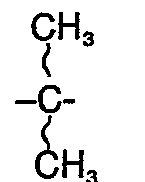
- R2 eine freie oder durch Tetrahydropyranyl substituierte Hydroxygruppe und falls R, die Bedeutung eines Wasserstoffatoms hat, deren Salze mit physiologisch verträglichen Basen bedeuten.
- Als Alkylgruppe R, sind gerade oder verzweigte Alkylgruppen mit 1-4 C-Atomen zu betrachten, wie beispielsweise Methyl, Äthyl, Propyl, Butyl, Isobutyl, tert.-Butyl.
- Die Cycloalkylgruppe R, kann im Ring 5 und 6 Kohlenstoffatome enthalten. Die Ringe können durch Alkylgruppen mit 1-4 Kohlenstoffatomen substituiert sein. Beispielsweise seien genannt Cyclopentyl-, Cyclohexyl, Methylcyclohexyl.
- Die Hydroxygruppen R2 und in W können funktionell abgewandelt sein,. beispielsweise durch Verätherung oder Veresterung, wobei die freien oder abgewandelten Hydroxygruppen in W a- oder β-ständig sein können, wobei freie Hydroxygruppen bevorzugt sind. Als Äther- und Acylreste kommen die dem Fachmann bekannten Reste in Betracht. Bevorzugt sind leicht abspaltbare Ätherreste wie beispielsweise der Tetrahydropyranyl-, Tetrahydrofuranyl-, a-Äthoxyäthyl-, Trimethylsilyl-, Dimethyl-tert.-butylsilyl- und Tribenzyl-silylrest. Als Acylreste kommen beispielsweise in Frage: Acetyl, Propionyl, Butyryl, Benzoyl.
- Als Alkylgruppen R3, R4, R5, R6 kommen gerad-und verzweigtkettige Alkylreste mit 1-5 Kohlenstoffatomen in Betracht wie beispielsweise der Methyl-, Äthyl-, Propyl-, Isopropyl-, Butyl-, lsobutyl-, tert.-Butyl-, Pentyl, Isopentyl- und Neopentyl-Rest. Bevorzugt sind die Methyl- und die Äthylgruppe.
- Zur Salzbildung mit den freien Säuren (R, = H) sind anorganische und organische Basen geeignet, wie sie dem Fachmann zur Bildung physiologisch verträglicher Salze bekannt sind. Beispielsweise seien genannt: Alkalihydroxide, wie Natrium- und Kaliumhydroxid, Erdalkalihydroxide, wie Calciumhydroxid, Ammoniak, Amine, wie Äthanolamin, Diäthanolamin, Triäthanolamin, N-Methylglucamin, Morpholin, Tris-(hydroxymethyl)-methylamin usw.
- Die Erfindung betrifft ferner ein Verfahren zur Herstellung der erfindungsgemässen Prostanderivate der allgemeinen Formel I, dadurch gekennzeichnet, dass man in an sich bekannter Weise eine Verbindung der allgemeinen Formel II,

- Die thermische Umsetzung der Verbindung der allgemeinen Formel II wird bei Temperaturen von 20-150 °C, vorzugsweise 40-120 °C, vorgenommen. Für den bevorzugten Temperaturbereich kommen beispielsweise folgende inerte Lösungsmittel in Frage: Essigsäureäthylester, Essigsäuremethylester, Tetrahydrofuran, Dimethoxyäthan, Tetrachlorkohlenstoff, Methylenchlorid, 1,2-Dichloräthan, Dimethylformamid usw.
- Die Verseifung der Prostaglandinester wird nach den dem Fachmann bekannten Methoden durchgeführt, beispielsweise mit basischen Katalysatoren. Die Einführung der Estergruppe, bei welcher R, eine Alkylgruppe mit 1-10 C-Atomen darstellt, erfolgt nach den dem Fachmann bekannten Methoden. Die Carboxyverbindungen werden beispielsweise mit Diazokohlenwasserstoffen in an sich bekannter Weise umgesetzt. Die Veresterung mit Diazokohlenwasserstoffen erfolgt zum Beispiel dadurch, dass man eine Lösung des Diazokohlenwasserstoffes in einem inerten Lösungsmittel, vorzugsweise in Diäthyläther mit der Carboxyverbindung in dem gleichen oder in einem anderen inerten Lösungsmittel, wie z. B. Methylenchlorid, vermischt. Nach beendeter Umsetzung in 1 bis 30 Minuten wird das Lösungsmittel entfernt und der Ester in üblicher Weise gereinigt. Diazolkane sind entweder bekannt oder können nach bekannten Methoden hergestellt werden [Org. Reactions Bd. 8, Seiten 389-394 (1954)].
- Die Einführung der Estergruppe R" bei welcher R, eine substituierte oder unsubstituierte Arylgruppe darstellt, erfolgt nach den dem Fachmann bekannten Methoden. Beispielsweise werden die Carboxyverbindungen mit den entsprechenden Arylhydroxyverbindungen mit Dicyclohexylcarbodiimid in Gegenwart einer geeigneten Base, beispielsweise Pyridin oder Triäthylamin, in einem inerten Lösungsmittel umgesetzt. Als Lösungsmittel kommen Methylenchlorid, Äthylenchlorid, Chloroform, Essigester, Tetrahydrofuran, vorzugsweise Chloroform, in Frage. Die Reaktion wird bei Temperaturen zwischen -30 und +50°C, vorzugsweise bei +10°C, durchgeführt.
- Die Prostaglandin-Derivate der allgemeinen Formel I mit R, in der Bedeutung eines Wasserstoffatoms können mit geeigneten Mengen der entsprechenden anorganischen Basen unter Neutralisierung in Salze überführt werden. Beispielsweise erhält man beim Lösen der entsprechenden PG-Säuren in Wasser, welches die stöchiometrische Menge der Base enthält, nach Abdampfen des Wassers oder nach Zugabe eines mit Wasser mischbaren Lösungsmittels, zum Beispiel Alkohol oder Aceton, das feste anorganische Salz.
- Zur Herstellung eines Aminsalzes, die in üblicher Weise erfolgt, wird die PG-Säure zum Beispiel in einem geeigneten Lösungsmittel, beispielsweise Äthanol, Aceton, Diäthyläther oder Benzol gelöst und mindestens die stöchiometrische Menge des Amins dieser Lösung zugesetzt. Dabei fällt das Salz gewöhnlich in fester Form an oder wird nach Verdampfen des Lösungsmittels in üblicher Weise isoliert.
- Die funktionelle Abwandlung der freien OH-Gruppen erfolgt nach den dem Fachmann bekannten Methoden. Zur Einführung der Ätherschutzgruppen wird beispielsweise mit Dihydropyran in Methylenchlorid oder Chloroform unter Verwendung eines sauren Kondensationsmittels, wie zum Beispiel p-Toluolsulfonsäure, umgesetzt. Das Dihydropyran wird im Überschuss angewandt, vorzugsweise in der 2- bis 10fachen Menge des theoretischen Bedarfs. Die Umsetzung ist normalerweise bei 0-30°C nach 15-30 Minuten beendet. Die Einführung der Acylschutzgruppen erfolgt, indem man eine Verbindung der allgemeinen Formel I in an sich bekannter Weise mit einem Carbonsäurederivat, wie zum Beispiel Säurechlorid, Säureanhydrid u.a., umsetzt.
- Die Freisetzung einer funktionell abgewandelten OH-Gruppe zu den Verbindungen der allgemeinen Formel 1 erfolgt nach bekannten Methoden. Beispielsweise wird die Abspaltung von Ätherschutzgruppen in einer wässrigen Lösung einer organischen Säure, wie zum Beispiel Essigsäure, Propionsäure u.a., durchgeführt. Zur Verbesserung der Löslichkeit wird zweckmässigerweise ein mit Wasser mischbares inertes organisches Lösungsmittel zugesetzt. Geeignete organische Lösungsmittel sind zum Beispiel Alkohole, wie Methanol und Äthanol, und Äther, wie Dimethoxyäthan, Dioxan und Tetrahydrofuran. Tetrahydrofuran wird bevorzugt angewendet. Die Abspaltung wird vorzugsweise bei Temperaturen zwischen 20 und 80°C durchgeführt.
- Die Abspaltung der Silylätherschutzgruppen erfolgt beispielsweise mit Tetrabutylammoniumfluorid. Als Lösungsmittel sind beispielsweise geeignet Tetrahydrofuran, Diäthyläther, Dioxan, Methylenchlorid usw. Die Abspaltung wird vorzugsweise bei Temperaturen zwischen 0 und 80°C durchgeführt.
- Die Verseifung der Acylgruppen erfoigt beispielsweise mit Alkali- oder Erdalkalicarbonaten oder-hydroxyden in einem Alkohol oder der wässrigen Lösung eines Alkohols. Als Alkohole kommen aliphatische Alkohole in Betracht, wie zum Beispiel Methanol, Äthanol, Butanol usw., vorzugsweise Methanol. Als Alkalicarbonate und -hydroxyde seien Kalium-und Natriumsalze genannt, bevorzugt sind jedoch die Kaliumsalze. Als Erdalkalicarbonate und -hydroxyde sind beispielsweise geeignet Calciumcarbonat, Calciumhydroxyd und Bariumcarbonat. Die Umsetzung erfolgt bei -10 bis 70 °C, vorzugsweise bei 25 °C.
- Das als Ausgangsmaterial für das vorstehend beschriebene Verfahren verwendete Azid der allgemeinen Formel II kann hergestellt werden, indem man einen Alkohol der allgemeinen Formel III


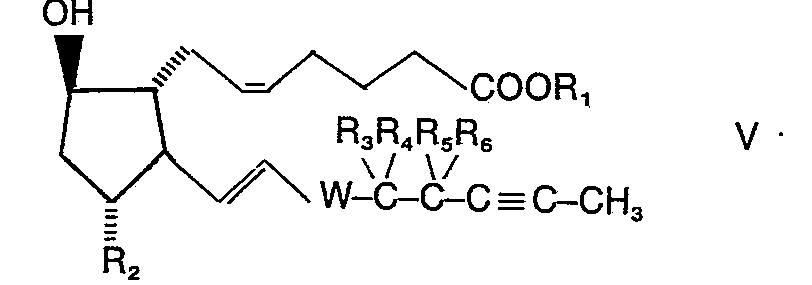

- Die neuen Prostacyclinderivate der allgemeinen Formel sind wertvolle Pharmaka, da sie bei ähnlichem Wirkungsspektrum gegenüber entsprechenden Prostaglandinen eine bessere Spezifität und vor allem eine wesentlich längere Wirksamkeit besitzen. Im Vergleich zu PGI2 zeichnen sie sich durch grössere Stabilität aus. Die gute Gewebsspezifität der neuen Prostaglandine zeigt sich bei der Untersuchung an glattmuskulären Organen, wie z.B. am Meerschweinchenileum oder an der isolierten Kaninchentrachea, wo eine wesentlich geringere Stimulation zu beobachten ist als bei der Applikation natürlicher Prostaglandine vom E-, A- oder F-Typ. Die neuen Prostaglandin-Analoga besitzen die für Prostacycline typischen Eigenschaften, wie z. B. Senkung des peripheren arteriellen und koronaren vaskulären Widerstandes und damit Senkung des systemischen Blutdrucks, ohne zugleich Schlagvolumen und koronare Durchblutung zu senken. Inhibierung der Thrombozytenaggregation und Inhibierung der Bronchokonstriktion, Hemmung der Magensäuresekretion, antiallergische Eigenschaften, Senkung des pulmonaren vaskulären Widerstandes und des pulmonaren Blutdruckes, Forderung der Nierendurchblutung, Erhöhung der zerebralen Durchblutung. Ausserdem besitzen die neuen Prostaglandinanaloga antiproliferative Eigenschaften.
- Bei intravenöser Injektion an wachen, hypertonen Ratten in Dosen von 5, 20 und 100 µg/kg Körpergewicht zeigen die erfindungsgemässen Verbindungen eine stärkere blutdrucksenkende und länger anhaltende Wirkung als PGE2 und PGA2, ohne wie PGE2 Durchfälle oder PGA2 kardiale Arrhythmien auszulösen.
- Bei intravenöser Injektion an narkotisierten Kaninchen zeigen die erfindungsgemässen Verbindungen im Vergleich zu PGE2 und PGA2 eine stärkere und erheblich länger anhaltende Blutdrucksenkung, ohne dass andere glattmuskuläre Organe oder Organfunktionen beeinflusst werden.
- Für die parenterale Verabreichung werden sterile, injizierbare, wässrige oder ölige Lösungen benutzt. Für die orale Applikation sind beispielsweise Tabletten, Dragees oder Kapseln geeignet.
- Die Erfindung betrifft damit auch Arzneimittel auf Basis der Verbindungen der allgemeinen Formel I und üblicher Hilfs- und Trägerstoffe.
- Die erfindungsgemässen Wirkstoffe sollen in Verbindung mit den in der Galenik bekannten und üblichen Hilfsstoffen z. B. zur Herstellung von Blutdrucksenkern dienen.
- Eine Lösung von 365 mg (5Z,13E)-(9S,11R,15S)-9-Azido-11,15-dihydroxy-5,13-prostadien-18-in-säure in 30 ml Essigsäureäthylester rührt man 27 Stunden bei 70-80°C unter Argon. Anschliessend. dampft man im Vakuum ein und chromatographiert den Rückstand an Kieselgel. Mit Methylenchlorid/lsopropanol (1 + 1) erhält man 230 mg der Titelverbindung als viskoses Öl.
- IR (CHCI3): 3610, 3400 (breit), 2940, 2862, 1720, 1640, 1023, 1078, 975/cm.
- Das Ausgangsmaterial für die obige Titelverbindung wird wie folgt hergestellt:
- Zu einer Lösung von 2 g (5Z,13E)-(9S,11R,15S)-11,15-Bis-(tetrahydropyran-2-yloxy)-9-hydroxy-5,13-prostadien-18-in-säuremethylester (hergestellt aus der entsprechenden Säure mit ätherischer Diazomethanlösung) in 4 ml Pyridin fügt man bei 0°C 1,38 g p-Toluolsulfonylchlorid, rührt 6 Stunden bei Raumtemperatur und lässt anschliessend 60 Stunden bei 5°C stehen. Man verdünnt dann mit Äther, schüttelt nacheinander einmal mit Wasser, einmal mit eiskalter 3%iger Schwefelsäure, einmal mit Wasser, einmal mit 5%iger Natriumbicarbonatlösung, zweimal mit Wasser, trocknet über Magnesiumsulfat und dampft im Vakuum ein. Dabei erhält man 2,45 g der Titelsubstanz als farbloses Öl. IR: 2960, 2880, 1732, 1605, 1493, 1370, 1178, 977/cm.
- Zu einer Lösung von 2,4 g des nach Beispiel la hergestellten Tosylats in 50 ml Dimethylsulfoxid fügt man 5,1 g Kaliumnitrit und rührt 4 Stunden bei 65°C. Anschliessend giesst man auf eine 20%ige Natriumchloridlösung, extrahiert 5 x mit je 50 ml einer Mischung aus Pentan/Äther (1 + 1), wäscht die organische Phase dreimal mit je 50 ml Wasser, trocknet über Magnesiumsulfat und dampft im Vakuum ein. Nach Chromatographie des Rückstandes an Kieselgel erhält man mit Äther/Pentan (8+2), 1,25 des invertierten Alkohols als farbloses Öl.
- IR: 3400, 2950, 1730, 1440, 975/cm.
- Zu einer Lösung von 0,9 g des nach Beispiel lb hergestellten 9-ß-Alkohols in 5 ml Pyridin fügt man bei 0°C 622 mg p-Toluolsulfonylchlorid und rührt 21 Stunden bei Raumtemperatur unter Argon. Anschliessend verdünnt man mit Äther und schüttelt nacheinander mit Wasser, eiskalter 3%iger Schwefelsäure, Wasser, 5%iger Natriumbicarbonatlösung, 3 x mit Wasser. Man trocknet über Magnesiumsulfat und dampft im Vakuum ein. Dabei erhält man 1,09 g des Tosylats als farbloses Öl. IR: 2962, 1732, 1605, 1493, 1370, 975/cm.
- 1,06 g des nach Beispiel 1c hergestellten Tosylats rührt man 20 Stunden mit 30 ml einer Mischung aus Essigsäure/Wasser/Tetrahydrofuran. (65+35+10) unter Argon. Man dampft im Vakuum und reinigt den Rückstand durch präparative Schichtchromatographie. Mit Äther als Laufmittel erhält man 485 mg der Titelverbindung als farbloses Öl.
- IR: 3610, 3430, 2963, 2940, 1730, 1603, 1363, 1178, 975/cm.
- Eine Lösung aus 80 mg des nach Beispiel 1d hergestellten Diols in 1,6 ml Hexamethylphosphorsäuretriamid versetzt man mit 10,8 mg Natriumazid und rührt 6 Stunden bei 40°C. Man versetzt mit 6 ml einer 20%igen Kochsalzlösung, extrahiert 5 x mit einer Mischung aus Äther/Pentan (3 + 1), schüttelt die organische Phase 2 x mit je 3 ml Wasser, trocknet mit Magnesiumsulfat und dampft im Vakuum ein. Dabei erhält man die Titelverbindung als dünnschichtchromatographisch einheitliches Öl.
- IR: 3400, 2960, 2110, 1730, 975/cm.
- 70 mg des nach Beispiel 1e hergestellten Azids versetzt man mit 2 ml einer Lösung aus 50 mg Kaliumhydroxid in 1,65 ml Methanol und 0,35 ml Wasser und rührt 4 Stunden bei Raumtemperatur unter Argon. Anschliessend kühlt man auf 5°C, säuert mit 10%iger Zitronensäurelösung auf pH 6 an, extrahiert dreimal mit Methylenchlorid, wäscht den organischen Extrakt zweimal mit je 5 ml Sole, trocknet über Magnesiumsulfat und dampft im Vakuum ein. Nach Chromatographie des Rückstandes an Kieselgel erhält man mit Essigester 39 mg der Titelverbindung als farbloses Öl.
- IR: 3600, 3400 (breit), 2110, 1715, 1605, 976/cm.
- Eine Lösung von 520 mg (5Z,13E)-(9S,11R,15S,-16RS)-9-Azido-11,15-dihydroxy-16-methyl-5,13- prostadien-18-in-säure in 50 ml Essigsäureäthylester rührt man 26 Stunden bei 70-80°C unter Argon. Anschliessend dampft man im Vakuum ein und chromatographiert den Rückstand an Kieselgel. Mit Methylenchlorid/lsopropanol (1 + 1) erhält man 380 mg der Titelverbindung als farbloses Öl.
- IR: 3600, 3400 (breit), 2942, 2860, 1720, 1640, 1025, 1080, 976/cm.
- Das Ausgangsmaterial für die obige Titelverbindung wird wie folgt hergestellt:
- Zu einer Lösung von 3,05 g (5Z,13E)-(9S,11R,-15S,16RS)-11,15-Bis-(tetrahydropyran-2-yloxy)-9-hydroxy-16-methyl-5,13-prostadien-18-insäure- methylester (hergestellt aus der entsprechenden Säure mit ätherischer Diazomethanlösung) in 6 ml Pyridin fügt man bei 0°C 2,15 g p-Toluolsulfonylchlorid, rührt 6 Stunden bei Raumtemperatur und lässt anschliessend 60 Stunden bei 5°C stehen. Man verdünnt mit Äther, schüttelt nacheinander 1 x mit Wasser, 1 x mit eiskalter 3%iger Schwefelsäure, 1 x mit Wasser, 1 x mit5%igerNatrium- bicarbonatlösung, 2 x mit Wasser, trocknet über Magnesiumsulfat und dampft im Vakuum ein. Dabei erhält man 3,7 g des Tosylats als farbloses Öl:
- IR: 2960, 2878, 1733, 1605, 1492, 1370, 1178, 975/cm.
- Zu einer Lösung von 3,6 g des nach Beispiel 2a hergestellten Tosylats in 70 ml Dimethylsulfoxid fügt man 6,8 g Kaliumnitrit und rührt 4 Stunden bei 65 °C unter Argon. Anschliessend giesst man auf eine 20%ige Natriumchloridlösung, extrahiert 5 x mit je 70 ml einer Mischung aus Pentan/Äther (1 + 1), wäscht die organische Phase dreimal mit je 60 ml Wasser, trocknet über Magnesiumsulfat und dampft im Vakuum ein. Nach Chromatographie des Rückstandes an Kieselgel erhält man mit Äther/Pentan (8+2) 2,5 des invertierten Alkohols als farbloses Öl.
- IR: 3410, 2950, 1732, 1440, 976/cm.
- Eine Lösung von 2,5 des nach Beispiel 2b hergestellten 9ß-Alkohols in 15 ml Pyridin versetzt man bei 0°C mit 1,7 g p-Toluolsulfonylchlorid und lässt 24 Stunden bei Raumtemperatur stehen. Man versetzt mit 0,5 ml Wasser und lässt eine weitere Stunde bei Raumtemperatur stehen. Anschliessend verdünnt man mit Äther, schüttelt nacheinander mit eiskalter 3%iger Schwefelsäure, Natriumbicarbonatlösung und Wasser, trocknet über Magnesiumsulfat und dampft im Vakuum ein. Man erhält 3 g des 9ß-Tosylats als Öl.
- IR: 2955, 1735, 1605, 1492, 1370, 975/cm.
- 2,90 g des nach Beispiel 2c hergestellten 9ß-Tosylats rührt man 24 Stunden mit 80 ml einer Mischung aus Essigsäure/Wasser/Tetrahydrofuran (65/35/10), dampft im Vakuum ein und reinigt den Rückstand durch Chromatographie über Kieselgel mit Hexan/Essigester-Gemischen. Dabei erhält man 1,40 g des 11,15-Diols als farbloses Öl.
- IR: 3600, 3400, 2958, 1735, 1605, 1368, 978/cm.
- 1 g des nach Beispiel 2d hergestellten Diols in 20 ml Hexamethylphosphorsäuretriamid und 130 mg Natriumazid werden 6 Stunden bei 40°C gerührt. Man kühlt ab, versetzt mit 100 ml Kochsalzlösung und extrahiert mehrmals mit Äther/ Pentan (3+1), wäscht die organische Phase mit Wasser, trocknet über Magnesiumsulfat und dampft im Vakuum ein. Man erhält die 9-Azidoverbindung als viskoses Öl.
- IR: 3600, 3420, 2958, 2110, 1735, 978/cm.
- 200 mg des nach Beispiel 2e hergestellten Azids werden mit methanolischer Kalilauge wie in Beispiel 1f behandelt. Das Rohprodukt wird über Kieselgel mit Essigester chromatographiert. Man erhält 150 mg der Säure als farbloses Öl.
- IR: 3600, 3410, 2952, 2110, 1710, 978/cm.
- Eine Lösung von 300 mg (5Z,13E)-(9S,11R,15R)-9-Azido-11,15-dihydroxy-16,16-dimethyl-5,13-pro- stadien-18-in-säure in 25 ml Essigsäureäthylester erhitzt man 24 Stunden auf 70-75°C unter Argon. Nach Verdampfen des Lösungsmittels im Vakuum chromatographiert man den Rückstand an Kieselgel. Mit Methylenchlorid/10-30% Isopropanol erhielt man 200 mg der Titelverbindung als Öl.
- IR: 3600, 3400 (breit), 2950, 2860, 1715, 1640, 1020, 978/cm.
- Das Ausgangsmaterial für die obige Titelverbindung wird wie folgt hergestellt:
- 3 g (5Z,13E)-(9S,11R,15R)-11,15-Bis-(tetrahydropyran-2-yloxy)-16,16-dimethyl-9-hydroxy-5,13- prostadien-18-in-säuremethylester (hergestellt aus der Carbonsäure mit ätherischer Diazomethanlösung), gelöst in 10 ml Pyridin, versetzt man bei 0°C mit 2,09 g p-Toluolsulfonylchlorid und rührt anschliessend 48 Stunden bei +5°C. Man versetzt mit 0,5 ml Wasser, rührt eine weitere Stunde, verdünnt mit 200 ml Äther und wäscht nacheinander mit eiskalter 10%iger Schwefelsäure, Natriumbicarbonatlösung und Wasser, trocknet über Magnesiumsulfat und dampft im Vakuum ein. Man erhält 4 g des 9a-Tosylats, das ohne weitere Reinigung weiter verwendet wird.
- IR: 2960, 2868, 1735, 1602, 1360, 1175, 975/cm.
- 3,8 g des nach Beispiel 3a erhaltenen Tosylats und 7,6 g Kaliumnitrit werden mit 80 ml Dimethylsulfoxid 4 Stunden bei 65 °C gerührt, man verdünnt dann mit Sole, extrahiert mehrmals mit Äther/Pentan-Mischung (1 + 1), wäscht die organische Phase mit Sole, trocknet über Magnesiumsulfat und dampft im Vakuum ein. Nach Chromatographie über Kieselgel mit Hexan/Essigester-Gradienten erhält man 1,65 g des 9ß-Alkohols als farbloses Öl.
- IR: 3540, 2950, 2860, 1735, 980/cm.
- Eine Lösung von 1,50 des nach Beispiel 3b erhaltenen 9ß-Alkohols in 10 ml Pyridin wird bei 0°C mit 1,045 g p-Toluolsulfonylchlorid versetzt, rührt 20 Stunden bei Raumtemperatur, versetzt mit 0,2 ml Wasser und arbeitet wie in Beispiel 3a beschrieben auf. Man erhält 2,1 g des 9ß-Tosylats als Öl.
- IR: 2960, 2860, 1735, 1601, 1365, 1175, 980/cm.
- 2 g des nach Beispiel 3c erhaltenen 9ß-Tosylats werden zur Abspaltung der Tetrahydropyranylätherschutzgruppen mit Essigsäure analog Beispiel 1d behandelt.
- Nach Reinigung über Kieselgel mit Hexan/Essigester-Gradienten erhält man 1,1 g des 11,15-Diols als Öl.
- IR: 3600, 3420, 2955, 1735, 1601, 1360, 1175, 978/cm.
- Eine Lösung von 1,1 g der nach Beispiel 3d hergestellten Verbindung in 20 ml Hexamethylphosphorsäuretriamid wird mit 150 mg Natriumazid 6 Stunden auf 40°C erhitzt. Man verdünnt mit 150 ml Sole, schüttelt mehrmals mit Äther/Pentan-Mischung (3:1) aus, wäscht die organische Phase mit Wasser, trocknet über Magnesiumsulfat und dampft im Vakuum ein. Das Rohprodukt reinigt man über Kieselgel mit Hexan/Essigester-Gemischen und erhält 700 mg des 9a-Azids als Öl.
- IR: 3520, 2960, 2110, 1735, 978/cm.
- 500 mg der nach Beispiel 3e erhaltenen Verbindung werden analog Beispiel 1f verseift. Man erhält 400 mg der oben angegebenen Carbonsäure als farbloses Öl.
- IR: 3600, 3400 (breit), 2955, 2110, 1712, 978/cm.
- 200 mg (5S,13E)-(9S,11R,15RS)-9-Azido-11,15-dihydroxy-15-methyl-5,13-prostadien-18-in-säure werden in 20 ml Essigsäureäthylester 24 Stunden auf 70°C erhitzt. Nach Verdampfen des Lösungsmittels chromatographiert man an Kieselgel mit Methylenchlorid/10-30% Isopropanol und erhält 120 mg der Titelverbindung als Öl.
- IR: 3600, 3400, 2950, 2845, 1712, 1640, 978/cm.
- Das Ausgangsmaterial für die obige Titelverbindung wird wie folgt hergestellt:
- 2 g (5Z,13E)-(9S,11R,15RS)-11,15-Bis-(tetrahydropyran-2-yloxy)-9-hydroxy-15-methyl-5,13-pro- stadien-18-in-säure-methylester (hergestellt aus der Carbonsäure mit Diazomethan) werden in Analogie zu Beispiel la in 2,3 g öliges 9a-Tosylat überführt.
- IR: 2960, 2865, 1735, 1601, 1365, 1175, 975/cm.
- 2,2 g des nach Beispiel 4a hergestellten Tosylats werden in Analogie zu Beispiel 1b mit Kaliumnitrit umgesetzt. Man erhält 1,3 g des 9ß-Alkohols als farbloses Öl.
- IR: 3450, 2955, 1735, 978/cm.
- In Analogie zu Beispiel lc erhält man aus 1,3 g des nach Beispiel 4b hergestellten 9ß-Alkohols 1,7 g des 9ß-Tosylats als Öl.
- IR: 2960, 2860, 1735, 1601, 1370, 1175, 978/cm.
- In Analogie zu Beispiel 1d erhält man aus 1,7 g der nach Beispiel 4c hergestellten Substanz 1 g des 11,15-Diols als farbloses Öl.
- IR: 3600, 3450, 2960, 1735, 1601, 1365, 1178, 975/cm.
- 1 g der nach Beispiel 4d hergestellten Verbindung wird in Analogie zu Beispiel 1c mit Natriumazid umgesetzt. Man erhält 600 mg der 9-Azidoverbindung als farbloses Öl.
- IR: 3600, 2955, 2110, 1735, 975/cm.
- 600 mg der nach Beispiel 4e hergestellten Verbindung werden in Analogie zu Beispiel 1f verseift, man erhält 500 mg der Carbonsäure als Öl.
- IR: 3600, 3420 (breit), 2960, 2110, 1710, 975/cm.
- Eine Lösung von 150 mg (13E)-(11R,15S)-11,15-Dihydroxy-9a-nitrilo-13-prosten-18-in-säure (siehe Beispiel 1) in 10 ml Methylenchlorid versetzt man bei -10°C tropfenweise mit einer ätherischen Diazomethanlösung bis zur bleibenden Gelbfärbung, dampft im Vakuum ein und reinigt den Rückstand durch präparative Schichtchromatographie an Kieselgelplatten mit Essigester/Methanol (9+1) als Laufmittel. Man erhält 120 mg der Titelverbindung als farbloses Öl.
- IR: 3450, 2960, 1735, 1642, 978/cm.
- In Analogie zu Beispiel 5 erhält man aus (13E)-(11R,15S,16RS)-11,15-Dihydroxy-16-methyl-9α,6- nitrilo-13-prosten-18-in-säure (siehe Beispiel 2) die Titelverbindung als Öl.
- IR: 3450, 2955, 1735, 1640, 978/cm.
- In Analogie zu Beispiel 5 erhält man aus (13E)-(11R,15R)-11,15-Dihydroxy-(16,16-dimethyl-9α,6- nitrilo-13-prosten-18-in-säure (siehe Beispiel 3) die Titelverbindung als Öl.
- IR: 3420, 2955, 1735, 1640, 975/cm.
- In Analogie zu Beispiel erhält man aus (13E)-(11R,15RS)-11,15-Dihydroxy-15-methyl-9α,6-nitri- lo-13-prosten-18-in-säure (siehe Beispiel 4) die Titelverbindung als Öl.
- IR: 3450, 2955, 1735, 1640, 978/cm.
- Zu einer Lösung von 181 mg (13E)-(11R,15S,-16RS)-11,15-Dihydroxy-16-methyl-9a,6-nitrilo-13- prosten-18-in-säure (siehe Beispiel 2) in 30 ml Acetonitril gibt man bei 65°C eine Lösung von 62 mg Tris(hydroxymethyl)-aminomethan in 0,2 ml Wasser. Unter Rühren lässt man abkühlen, dekantiert nach 16 Stunden und trocknet den Rückstand bei 25°C/0,1 Torr. Dabei erhält man 160 mg der Titelverbindung als wachsartige Masse.
- In Analogie zu Beispiel 5 erhält man aus der nach Beispiel 2 hergestellten Säure mit Diazobutan die Titelverbindung als Öl.
- IR: 3430 (breit), 2960, 1737, 1640, 977/cm.
Claims (5)


Priority Applications (1)
| Application Number | Priority Date | Filing Date | Title |
|---|---|---|---|
| AT80730010T ATE3420T1 (de) | 1979-02-20 | 1980-02-15 | Neue prostacyclin-derivate und verfahren zu ihrer herstellung. |
Applications Claiming Priority (2)
| Application Number | Priority Date | Filing Date | Title |
|---|---|---|---|
| DE2907118 | 1979-02-20 | ||
| DE19792907118 DE2907118A1 (de) | 1979-02-20 | 1979-02-20 | Neue prostacyclin-derivate und verfahren zu ihrer herstellung |
Publications (2)
| Publication Number | Publication Date |
|---|---|
| EP0015227A1 EP0015227A1 (de) | 1980-09-03 |
| EP0015227B1 true EP0015227B1 (de) | 1983-05-18 |
Family
ID=6063771
Family Applications (1)
| Application Number | Title | Priority Date | Filing Date |
|---|---|---|---|
| EP80730010A Expired EP0015227B1 (de) | 1979-02-20 | 1980-02-15 | Neue Prostacyclin-Derivate und Verfahren zu ihrer Herstellung |
Country Status (14)
| Country | Link |
|---|---|
| US (1) | US4315013A (de) |
| EP (1) | EP0015227B1 (de) |
| JP (1) | JPS55122759A (de) |
| AT (1) | ATE3420T1 (de) |
| AU (1) | AU540077B2 (de) |
| CA (1) | CA1155114A (de) |
| CS (1) | CS216217B2 (de) |
| DE (2) | DE2907118A1 (de) |
| DK (1) | DK154294C (de) |
| ES (1) | ES488775A1 (de) |
| HU (1) | HU183114B (de) |
| IE (1) | IE49406B1 (de) |
| IL (1) | IL59434A (de) |
| SU (1) | SU976846A3 (de) |
Families Citing this family (7)
| Publication number | Priority date | Publication date | Assignee | Title |
|---|---|---|---|---|
| US4294759A (en) * | 1979-11-15 | 1981-10-13 | The Upjohn Company | Structural analogues of 5,6,-dihydro PG1 |
| DE3107100A1 (de) * | 1981-02-20 | 1982-09-09 | Schering Ag, 1000 Berlin Und 4619 Bergkamen | Azaprostacycline, verfahren zu ihrer herstellung und ihre pharmazeutische verwendung |
| EP0063538B1 (de) * | 1981-04-13 | 1986-08-06 | Schering Aktiengesellschaft | Neue Prostaglandine und Prostacycline, Verfahren zu ihrer Herstellung und ihre Verwendung als Arzneimittel |
| JPS6130519A (ja) * | 1984-07-23 | 1986-02-12 | Dainippon Pharmaceut Co Ltd | 脳神経細胞の酸素欠乏性疾患治療剤 |
| DE3708537A1 (de) * | 1987-03-13 | 1988-09-22 | Schering Ag | 6-oxoprostaglandin-e-derivate, verfahren zu ihrer herstellung und ihre pharmazeutische verwendung |
| CA2643364C (en) | 2006-03-09 | 2017-06-06 | Salix Pharmaceuticals, Inc. | Rifaximin anti-rectal dysfunction preparation |
| CA2781580A1 (en) | 2009-11-23 | 2011-05-26 | Cipla Limited | Topical foam composition |
Citations (3)
| Publication number | Priority date | Publication date | Assignee | Title |
|---|---|---|---|---|
| DE2118686A1 (de) * | 1970-04-20 | 1971-11-11 | The Upjohn Co., Kalamazoo, Mich. (V.StA.) | Prostaglandinverbindungen und Verfahren zu ihrer Herstellung |
| FR2204422A1 (de) * | 1972-10-27 | 1974-05-24 | American Home Prod | |
| DE2517801A1 (de) * | 1974-04-22 | 1975-10-30 | Ici Ltd | Prostansaeurederivate und verfahren zur herstellung derselben |
Family Cites Families (2)
| Publication number | Priority date | Publication date | Assignee | Title |
|---|---|---|---|---|
| US4097489A (en) * | 1977-06-17 | 1978-06-27 | The Upjohn Company | 9-Deoxy-9α,6-nitrilo or 6,9α-imino-PGF compounds |
| US4211706A (en) * | 1978-10-13 | 1980-07-08 | The Upjohn Company | 9-Deoxy-9α,6-nitrilo or 6,9α-imino-17,18-didehydro-PGF compounds |
-
1979
- 1979-02-20 DE DE19792907118 patent/DE2907118A1/de not_active Withdrawn
-
1980
- 1980-02-15 EP EP80730010A patent/EP0015227B1/de not_active Expired
- 1980-02-15 DE DE8080730010T patent/DE3063231D1/de not_active Expired
- 1980-02-15 AT AT80730010T patent/ATE3420T1/de not_active IP Right Cessation
- 1980-02-18 SU SU802882703A patent/SU976846A3/ru active
- 1980-02-18 CA CA000345902A patent/CA1155114A/en not_active Expired
- 1980-02-19 DK DK071680A patent/DK154294C/da not_active IP Right Cessation
- 1980-02-19 US US06/122,794 patent/US4315013A/en not_active Expired - Lifetime
- 1980-02-19 HU HU80382A patent/HU183114B/hu unknown
- 1980-02-20 ES ES488775A patent/ES488775A1/es not_active Expired
- 1980-02-20 AU AU55749/80A patent/AU540077B2/en not_active Ceased
- 1980-02-20 IE IE326/80A patent/IE49406B1/en unknown
- 1980-02-20 CS CS801186A patent/CS216217B2/cs unknown
- 1980-02-20 IL IL59434A patent/IL59434A/xx unknown
- 1980-02-20 JP JP1928880A patent/JPS55122759A/ja active Granted
Patent Citations (3)
| Publication number | Priority date | Publication date | Assignee | Title |
|---|---|---|---|---|
| DE2118686A1 (de) * | 1970-04-20 | 1971-11-11 | The Upjohn Co., Kalamazoo, Mich. (V.StA.) | Prostaglandinverbindungen und Verfahren zu ihrer Herstellung |
| FR2204422A1 (de) * | 1972-10-27 | 1974-05-24 | American Home Prod | |
| DE2517801A1 (de) * | 1974-04-22 | 1975-10-30 | Ici Ltd | Prostansaeurederivate und verfahren zur herstellung derselben |
Non-Patent Citations (2)
| Title |
|---|
| Fortschritte in d. Arzneimittelforschung, Basel 1973, Bd. 17, S. 469 * |
| M. NEGWER: Organ.-chem. Arzneimittel, Berlin 1978, S. 1251 * |
Also Published As
| Publication number | Publication date |
|---|---|
| JPS55122759A (en) | 1980-09-20 |
| IE800326L (en) | 1980-08-20 |
| IE49406B1 (en) | 1985-10-02 |
| DE3063231D1 (en) | 1983-07-07 |
| JPS6248668B2 (de) | 1987-10-15 |
| DE2907118A1 (de) | 1980-09-04 |
| ATE3420T1 (de) | 1983-06-15 |
| AU5574980A (en) | 1980-08-28 |
| IL59434A0 (en) | 1980-05-30 |
| ES488775A1 (es) | 1980-09-16 |
| CS216217B2 (en) | 1982-10-29 |
| US4315013A (en) | 1982-02-09 |
| DK154294B (da) | 1988-10-31 |
| SU976846A3 (ru) | 1982-11-23 |
| DK154294C (da) | 1989-07-03 |
| IL59434A (en) | 1984-07-31 |
| CA1155114A (en) | 1983-10-11 |
| AU540077B2 (en) | 1984-11-01 |
| HU183114B (en) | 1984-04-28 |
| DK71680A (da) | 1980-08-21 |
| EP0015227A1 (de) | 1980-09-03 |
Similar Documents
| Publication | Publication Date | Title |
|---|---|---|
| EP0299914B2 (de) | 9-Halogen-(Z)-prostaglandinderivate, Verfahren zu ihrer Herstellung und ihre Verwendung als Arzneimittel | |
| EP0059158B1 (de) | Azaprostacycline, Verfahren zu ihrer Herstellung und ihre pharmazeutische Verwendung | |
| EP0055208B1 (de) | Neue Carbacycline, Verfahren zu ihrer Herstellung und ihre Verwendung als Arzneimittel | |
| EP0011591B1 (de) | Neue Prostanderivate, ihre Herstellung und sie enthaltende Arzneimittel | |
| EP0030377B1 (de) | 9-Chlor-prostaglandinderivate, Verfahren zur Herstellung und Verwendung als Arzneimittel | |
| EP0002234B1 (de) | Neue Prostacyclinderivate, ihre Herstellung und Anwendung | |
| EP0069696B1 (de) | 9-Fluor-prostaglandinderivate, Verfahren zur Herstellung und Verwendung als Arzneimittel | |
| EP0198829B1 (de) | 9-halogen-prostaglandinderivate, verfahren zu ihrer herstellung und ihre verwendung als arzneimittel | |
| DE2734791C2 (de) | ||
| EP0015227B1 (de) | Neue Prostacyclin-Derivate und Verfahren zu ihrer Herstellung | |
| EP0099538A1 (de) | Neue Carbacycline, Verfahren zu ihrer Herstellung und ihre Verwendung als Arzneimittel | |
| DE2729960A1 (de) | Neue acetylenprostaglandine und verfahren zu ihrer herstellung | |
| EP0057660B1 (de) | Neue Prostacyclin-Derivate, Verfahren zu ihrer Herstellung sowie ihre Verwendung als Arzneimittel | |
| EP0510154B1 (de) | 9-HALOGEN-11(Beta)-HYDROXY-PROSTAGLANDINDERIVATE, VERFAHREN ZU IHRER HERSTELLUNG UND IHRE VERWENDUNG ALS ARZNEIMITTEL | |
| EP0069049B1 (de) | Delta 8,9-Prostaglandinderivate, Verfahren zu ihrer Herstellung und ihre Verwendung als Arzneimittel | |
| EP0094951B1 (de) | Neue prostacycline und verfahren zu ihrer herstellung | |
| EP0284547B1 (de) | 6-Oxoprostaglandin-E-Derivate, Verfahren zu ihrer Herstellung und Arzneimittel | |
| EP0051597B1 (de) | Neue prostacyclinderivate und ihre herstellung | |
| EP0051557B1 (de) | 5-Cyan-prostacyclinderivate, Verfahren zu ihrer Herstellung und ihrer Verwendung als Arzneimittel | |
| EP0113311B1 (de) | 5-Fluorcarbacycline, Verfahren zu ihrer Herstellung und ihre Verwendung als Arzneimittel | |
| EP0098794B1 (de) | Neue Carbacycline, Verfahren zu ihrer Herstellung und ihre Verwendung als Arzneimittel | |
| EP0434832B1 (de) | D8- und D9-PROSTAGLANDIN-DERIVATE, VERFAHREN ZU IHRER HERSTELLUNG UND IHRE PHARMAZEUTISCHE VERWENDUNG | |
| EP0058632B1 (de) | (13E)-(8R,11R,12R)-11,15-Dihydroxy-16,19-dimethyl-9-oxo-13,18-prostadiensäuren sowie deren Salze, Verfahren zu ihrer Herstellung und diese enthaltende pharmazeutische Zusammensetzungen | |
| DE2801846A1 (de) | Neue prostacyclinderivate und verfahren zu ihrer herstellung | |
| DE2508826A1 (de) | Neue 1,3-benzodioxan-prostansaeurederivate und verfahren zu ihrer herstellung |
Legal Events
| Date | Code | Title | Description |
|---|---|---|---|
| PUAI | Public reference made under article 153(3) epc to a published international application that has entered the european phase |
Free format text: ORIGINAL CODE: 0009012 |
|
| 17P | Request for examination filed | ||
| AK | Designated contracting states |
Designated state(s): AT BE CH DE FR GB IT LU NL SE |
|
| ITF | It: translation for a ep patent filed | ||
| GRAA | (expected) grant |
Free format text: ORIGINAL CODE: 0009210 |
|
| AK | Designated contracting states |
Designated state(s): AT BE CH DE FR GB IT LU NL SE |
|
| REF | Corresponds to: |
Ref document number: 3420 Country of ref document: AT Date of ref document: 19830615 Kind code of ref document: T |
|
| REF | Corresponds to: |
Ref document number: 3063231 Country of ref document: DE Date of ref document: 19830707 |
|
| ET | Fr: translation filed | ||
| PG25 | Lapsed in a contracting state [announced via postgrant information from national office to epo] |
Ref country code: LU Free format text: LAPSE BECAUSE OF NON-PAYMENT OF DUE FEES Effective date: 19840229 |
|
| PLBE | No opposition filed within time limit |
Free format text: ORIGINAL CODE: 0009261 |
|
| STAA | Information on the status of an ep patent application or granted ep patent |
Free format text: STATUS: NO OPPOSITION FILED WITHIN TIME LIMIT |
|
| PGFP | Annual fee paid to national office [announced via postgrant information from national office to epo] |
Ref country code: SE Payment date: 19840331 Year of fee payment: 5 Ref country code: BE Payment date: 19840331 Year of fee payment: 5 |
|
| 26N | No opposition filed | ||
| PGFP | Annual fee paid to national office [announced via postgrant information from national office to epo] |
Ref country code: LU Payment date: 19860303 Year of fee payment: 7 |
|
| PGFP | Annual fee paid to national office [announced via postgrant information from national office to epo] |
Ref country code: AT Payment date: 19870112 Year of fee payment: 8 |
|
| PGFP | Annual fee paid to national office [announced via postgrant information from national office to epo] |
Ref country code: NL Payment date: 19870228 Year of fee payment: 8 |
|
| PGFP | Annual fee paid to national office [announced via postgrant information from national office to epo] |
Ref country code: CH Payment date: 19890119 Year of fee payment: 10 |
|
| PG25 | Lapsed in a contracting state [announced via postgrant information from national office to epo] |
Ref country code: AT Effective date: 19890215 |
|
| PG25 | Lapsed in a contracting state [announced via postgrant information from national office to epo] |
Ref country code: SE Effective date: 19890216 |
|
| ITTA | It: last paid annual fee | ||
| PG25 | Lapsed in a contracting state [announced via postgrant information from national office to epo] |
Ref country code: BE Effective date: 19890228 |
|
| BERE | Be: lapsed |
Owner name: SCHERING A.G. BERLIN UND BERGKAMEN Effective date: 19890228 |
|
| PG25 | Lapsed in a contracting state [announced via postgrant information from national office to epo] |
Ref country code: NL Effective date: 19890901 |
|
| NLV4 | Nl: lapsed or anulled due to non-payment of the annual fee | ||
| PG25 | Lapsed in a contracting state [announced via postgrant information from national office to epo] |
Ref country code: CH Effective date: 19900228 |
|
| REG | Reference to a national code |
Ref country code: CH Ref legal event code: PL |
|
| PGFP | Annual fee paid to national office [announced via postgrant information from national office to epo] |
Ref country code: FR Payment date: 19920110 Year of fee payment: 13 |
|
| PGFP | Annual fee paid to national office [announced via postgrant information from national office to epo] |
Ref country code: GB Payment date: 19920115 Year of fee payment: 13 |
|
| PGFP | Annual fee paid to national office [announced via postgrant information from national office to epo] |
Ref country code: DE Payment date: 19920120 Year of fee payment: 13 |
|
| PG25 | Lapsed in a contracting state [announced via postgrant information from national office to epo] |
Ref country code: GB Effective date: 19930215 |
|
| GBPC | Gb: european patent ceased through non-payment of renewal fee |
Effective date: 19930215 |
|
| PG25 | Lapsed in a contracting state [announced via postgrant information from national office to epo] |
Ref country code: FR Effective date: 19931029 |
|
| PG25 | Lapsed in a contracting state [announced via postgrant information from national office to epo] |
Ref country code: DE Effective date: 19931103 |
|
| REG | Reference to a national code |
Ref country code: FR Ref legal event code: ST |
|
| EUG | Se: european patent has lapsed |
Ref document number: 80730010.8 Effective date: 19900118 |