WO2025084142A1 - 包装用フィルム、包装材および包装体 - Google Patents
包装用フィルム、包装材および包装体 Download PDFInfo
- Publication number
- WO2025084142A1 WO2025084142A1 PCT/JP2024/035291 JP2024035291W WO2025084142A1 WO 2025084142 A1 WO2025084142 A1 WO 2025084142A1 JP 2024035291 W JP2024035291 W JP 2024035291W WO 2025084142 A1 WO2025084142 A1 WO 2025084142A1
- Authority
- WO
- WIPO (PCT)
- Prior art keywords
- less
- film
- packaging film
- polyethylene
- polyethylene film
- Prior art date
- Legal status (The legal status is an assumption and is not a legal conclusion. Google has not performed a legal analysis and makes no representation as to the accuracy of the status listed.)
- Ceased
Links
Images
Classifications
-
- B—PERFORMING OPERATIONS; TRANSPORTING
- B32—LAYERED PRODUCTS
- B32B—LAYERED PRODUCTS, i.e. PRODUCTS BUILT-UP OF STRATA OF FLAT OR NON-FLAT, e.g. CELLULAR OR HONEYCOMB, FORM
- B32B27/00—Layered products comprising a layer of synthetic resin
- B32B27/32—Layered products comprising a layer of synthetic resin comprising polyolefins
-
- B—PERFORMING OPERATIONS; TRANSPORTING
- B65—CONVEYING; PACKING; STORING; HANDLING THIN OR FILAMENTARY MATERIAL
- B65D—CONTAINERS FOR STORAGE OR TRANSPORT OF ARTICLES OR MATERIALS, e.g. BAGS, BARRELS, BOTTLES, BOXES, CANS, CARTONS, CRATES, DRUMS, JARS, TANKS, HOPPERS, FORWARDING CONTAINERS; ACCESSORIES, CLOSURES, OR FITTINGS THEREFOR; PACKAGING ELEMENTS; PACKAGES
- B65D65/00—Wrappers or flexible covers; Packaging materials of special type or form
- B65D65/38—Packaging materials of special type or form
- B65D65/40—Applications of laminates for particular packaging purposes
Definitions
- the present invention relates to packaging films, packaging materials, and packaging bodies.
- Patent Document 1 describes a method for producing a transparent film, which is characterized by subjecting a composition obtained by blending 50 to 80 parts by weight of high-density polyethylene having a density of 0.94 g/ cm3 or more and a melt index of 1 g/10 minutes or less , 10 to 30 parts by weight of a branched low-density polyethylene having a density of 0.93 g/cm3 or less and a melt index of 3 g/10 minutes or less, and 10 to 30 parts by weight of a linear low-density polyethylene having a density of 0.93 g/cm3 or less and a melt index of 3 g/10 minutes or less, under conditions in which the cooling rate index ⁇ represented by a specific formula is 4 or less, for the purpose of simultaneously improving the transparency and tear strength of a film mainly made of high-density polyethylene resin.
- the present invention provides a packaging film with an improved balance of hand-tearability and heat-sealability.
- a packaging film comprising, in this order, one or more polyethylene films (a) selected from the group consisting of unstretched polyethylene films and uniaxially stretched polyethylene films, a biaxially oriented polyethylene film (b), and one or more polyethylene films (c) selected from the group consisting of unstretched polyethylene films and uniaxially oriented polyethylene films, can improve the balance of hand-tearability and heat-sealability, and have completed the present invention.
- the present invention provides the following packaging films, packaging materials, and packages.
- One or more polyethylene films (a) selected from the group consisting of non-oriented polyethylene films and uniaxially oriented polyethylene films; (b) a biaxially oriented polyethylene film; (c) one or more polyethylene films selected from the group consisting of non-oriented polyethylene films and uniaxially oriented polyethylene films; In this order, provide the packaging film.
- the polyethylene film (c) comprises a non-oriented polyethylene film.
- [4] The packaging film according to any one of [1] to [3], wherein the density of the polyethylene film (a) measured in accordance with JIS K 7112:1999 is 0.917 g/cm 3 or more and 0.970 g/cm 3 or less.
- [5] The packaging film according to any one of [1] to [4], wherein the density of the biaxially oriented polyethylene film (b) measured in accordance with JIS K 7112:1999 is 0.917 g/cm 3 or more and 0.970 g/cm 3 or less.
- [6] The packaging film according to any one of [1] to [5], wherein the polyethylene film (a) has a thickness of 5 ⁇ m or more and 50 ⁇ m or less.
- a ratio A/B of a thickness A of the polyethylene film (a) to a thickness B of the biaxially oriented polyethylene film (b) is 0.3 or more and 3.0 or less.
- Method 1 The packaging film is cut into a test piece having a width of 15 mm and a length of 70 mm. The maximum peel strength of the test piece is then measured using a Tensilon universal testing machine at a tensile speed of 300 mm/min and a temperature of 23° C., and this value is taken as the laminate strength (N/15 mm). [18] The packaging film according to any one of [1] to [17], wherein the heat seal strength of the packaging film in the MD direction is 30 N/15 mm or more and the heat seal strength in the TD direction is 25 N/15 mm or more, according to the following method 2. (Method 2) The packaging film is cut into two pieces of 70 mm wide x 70 mm long to prepare two test pieces.
- the two test pieces are then stacked so that the polyethylene film (c) faces each other, and then heat sealed using a heat seal tester under the conditions of an upper temperature (heat seal temperature) of 140°C, a lower temperature of 25°C, a seal pressure of 0.2 MPa, and a seal time of 1 second.
- the heat-sealed test piece is then taken out and cut to a width of 15 mm.
- the heat-sealed test piece with a width of 15 mm is then measured for the maximum peel strength using a Tensilon universal testing machine under the conditions of a tensile speed of 300 mm/min and a temperature of 23°C, and this is taken as the heat seal strength (N/15 mm).
- the packaging film is cut into a test piece having a width of 63.5 mm and a length of 50 mm.
- the tear strength (mN) of the test piece is then measured using a light-load tear tester under the conditions of a pendulum weight of 720 g, a cut length of 12.7 mm, and a pendulum lift angle of 90°.
- a packaging material comprising the packaging film according to any one of [1] to [19].
- the present invention provides packaging films, packaging materials, and packages that have an improved balance of hand-tearability and heat-sealability.
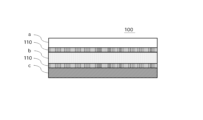
- FIG. 1 is a schematic cross-sectional view showing an example of a structure of a packaging film according to an embodiment of the present invention.
- a to B indicating a numerical range means greater than or equal to A and less than or equal to B, unless otherwise specified.
- FIG. 1 is a schematic cross-sectional view showing an example of the structure of a packaging film 100 according to an embodiment of the present invention.
- the packaging film 100 of this embodiment comprises, in this order, one or more polyethylene films (a) selected from the group consisting of unstretched polyethylene films and uniaxially oriented polyethylene films, a biaxially oriented polyethylene film (b), and one or more polyethylene films (c) selected from the group consisting of unstretched polyethylene films and uniaxially oriented polyethylene films.
- a multilayer film having one or more polyethylene films selected from the group consisting of non-stretched polyethylene films and uniaxially oriented polyethylene films on both sides of a biaxially oriented polyethylene film has a better balance of performance in terms of hand-tearability and heat-sealability than a multilayer film having one or more polyethylene films selected from the group consisting of non-stretched polyethylene films and uniaxially oriented polyethylene films on only one side of a biaxially oriented polyethylene film.
- a packaging film 100 comprising, in this order, one or more polyethylene films (a) selected from the group consisting of unstretched polyethylene films and uniaxially oriented polyethylene films, a biaxially oriented polyethylene film (b), and one or more polyethylene films (c) selected from the group consisting of unstretched polyethylene films and uniaxially oriented polyethylene films, can improve the performance balance between hand-tearability and heat-sealability, and have completed the present invention.
- the polyethylene film (a) preferably comprises a uniaxially oriented polyethylene film.
- the polyethylene film (c) preferably includes a non-oriented polyethylene film.
- the polyethylene film (a) comprises a uniaxially oriented polyethylene film and the polyethylene film (c) comprises a non-oriented polyethylene film.
- the density of the polyethylene film (a), measured in accordance with JIS K 7112:1999, is, from the viewpoint of further improving the balance of performance among hand tearability, heat sealability, rigidity, heat resistance, and impact resistance, preferably 0.917 g/cm 3 or more, more preferably 0.920 g/cm 3 or more, even more preferably 0.923 g/cm 3 or more, even more preferably 0.926 g/cm 3 or more, even more preferably 0.929 g/cm 3 or more, even more preferably 0.932 g/cm 3 or more, even more preferably 0.935 g/cm 3 or more, even more preferably 0.938 g/cm 3 or more, and is preferably 0.970 g/cm 3 or less, more preferably 0.965 g/cm 3 or less, even more preferably 0.960 g/cm 3 or less, even more preferably 0.955 g/cm 3 or less, and even more
- the density of the biaxially oriented polyethylene film (b), measured in accordance with JIS K 7112:1999, is, from the viewpoint of further improving the balance of performance among hand tearability, heat sealability, heat resistance, impact resistance, flexibility, moldability, and transparency, preferably 0.917 g/cm 3 or more, more preferably 0.920 g/cm 3 or more, even more preferably 0.923 g/cm 3 or more, even more preferably 0.926 g/cm 3 or more, and even more preferably 0.928 g/cm 3 or more, and is preferably 0.970 g/cm 3 or less, more preferably 0.960 g/cm 3 or less, even more preferably 0.955 g/cm 3 or less, even more preferably 0.950 g/cm 3 or less, even more preferably 0.945 g/cm 3 or less, even more preferably 0.940 g/cm 3 or less, and even more preferably 0.936 g/
- the density of the polyethylene film (c), measured in accordance with JIS K 7112:1999, is, from the viewpoint of further improving the balance of performance among hand-tearability, heat-sealability, flexibility, moldability, and transparency, preferably 0.870 g/cm or more , more preferably 0.880 g/cm or more , even more preferably 0.890 g/cm or more , even more preferably 0.900 g/cm or more , even more preferably 0.905 g/cm or more , even more preferably 0.910 g/cm or more , even more preferably 0.913 g/cm or more , even more preferably 0.916 g/cm or more , and preferably 0.930 g/cm or less, more preferably 0.926 g/cm or less , even more preferably 0.923 g/cm or less , and even more preferably 0.920 g/cm or less .
- the thickness of the polyethylene film (a) is preferably 5 ⁇ m or more, more preferably 10 ⁇ m or more, even more preferably 15 ⁇ m or more, from the viewpoint of further improving the balance of performance among hand tearability, heat sealability, film-forming ability, sealability, cost, impact resistance, bag-making ability, light weight, and transparency, and is preferably 50 ⁇ m or less, more preferably 40 ⁇ m or less, even more preferably 35 ⁇ m or less, even more preferably 30 ⁇ m or less.
- the thickness of the biaxially oriented polyethylene film (b) is preferably 5 ⁇ m or more, more preferably 10 ⁇ m or more, even more preferably 15 ⁇ m or more, even more preferably 20 ⁇ m or more, from the viewpoint of further improving the balance of performance among hand tearability, heat sealability, film formability, sealability, cost, impact resistance, bag formability, light weight, and transparency, and is preferably 50 ⁇ m or less, more preferably 45 ⁇ m or less, even more preferably 40 ⁇ m or less, even more preferably 35 ⁇ m or less.
- the thickness of the polyethylene film (c) is preferably 10 ⁇ m or more, more preferably 30 ⁇ m or more, even more preferably 40 ⁇ m or more, even more preferably 50 ⁇ m or more, even more preferably 55 ⁇ m or more, even more preferably 60 ⁇ m or more, and is preferably 200 ⁇ m or less, more preferably 170 ⁇ m or less, even more preferably 150 ⁇ m or less, even more preferably 140 ⁇ m or less, even more preferably 130 ⁇ m or less, even more preferably 120 ⁇ m or less, even more preferably 110 ⁇ m or less.
- the ratio A/B of the thickness A of the polyethylene film (a) to the thickness B of the biaxially oriented polyethylene film (b) is preferably 0.3 or more, more preferably 0.4 or more, even more preferably 0.5 or more, and even more preferably 0.6 or more, from the viewpoint of further improving the balance of performance among hand tearability, heat sealability, film-forming ability, sealability, cost, impact resistance, bag-making ability, light weight, and transparency, and is preferably 3.0 or less, more preferably 2.5 or less, even more preferably 2.0 or less, even more preferably 1.7 or less, even more preferably 1.4 or less, and even more preferably 1.2 or less.
- the ratio C/B of the thickness C of the polyethylene film (c) to the thickness B of the biaxially oriented polyethylene film (b) is preferably 1.1 or more, more preferably 1.5 or more, even more preferably 1.8 or more, even more preferably 2.0 or more, even more preferably 2.2 or more, from the viewpoint of further improving the balance of performance among hand tearability, heat sealability, film-forming ability, sealability, cost, impact resistance, bag-making ability, light weight, and transparency, and is preferably 10.0 or less, more preferably 8.0 or less, even more preferably 7.0 or less, even more preferably 6.0 or less, even more preferably 5.0 or less, even more preferably 4.5 or less.
- the thickness of the packaging film 100 of this embodiment is preferably 20 ⁇ m or more, more preferably 50 ⁇ m or more, even more preferably 70 ⁇ m or more, even more preferably 90 ⁇ m or more, even more preferably 100 ⁇ m or more, even more preferably 110 ⁇ m or more, even more preferably 120 ⁇ m or more, from the viewpoint of further improving the performance balance of hand tearability, heat sealability, film formability, sealability, cost, impact resistance, bag formability, light weight, and transparency, and is preferably 300 ⁇ m or less, more preferably 250 ⁇ m or less, even more preferably 220 ⁇ m or less, even more preferably 200 ⁇ m or less, even more preferably 180 ⁇ m or less, even more preferably 170 ⁇ m or less, even more preferably 160 ⁇ m or less.
- the packaging film 100 of this embodiment preferably further includes an adhesive layer 110 at least between the polyethylene film (a) and the biaxially oriented polyethylene film (b) and between the biaxially oriented polyethylene film (b) and the polyethylene film (c), and more preferably further includes an adhesive layer 110 in both.
- the thickness of the adhesive layer 110 is preferably 0.1 ⁇ m or more, more preferably 0.5 ⁇ m or more, even more preferably 1.0 ⁇ m or more, even more preferably 1.5 ⁇ m or more, even more preferably 2.0 ⁇ m or more, even more preferably 2.5 ⁇ m or more, and is preferably 10.0 ⁇ m or less, more preferably 8.0 ⁇ m or less, even more preferably 6.0 ⁇ m or less, even more preferably 5.0 ⁇ m or less, even more preferably 4.0 ⁇ m or less, even more preferably 3.5 ⁇ m or less, from the viewpoint of further improving the performance balance of hand tearability, heat sealability, film-forming ability, and lamination strength.
- the adhesive layer 110 preferably includes one or more adhesives selected from the group consisting of urethane-based adhesives, acid-modified polyolefin-based adhesives, polyester-based adhesives, polyether-based adhesives, and polyamide-based adhesives, and more preferably includes a polyester-based adhesive.
- the polyethylene film (a) is preferably the outermost layer from the viewpoint of further improving the balance of hand-tearability and heat-sealability.
- the polyethylene film (c) is preferably the innermost layer from the viewpoint of further improving the balance of hand-tearability and heat-sealability.
- the packaging film 100 of this embodiment preferably comprises polyethylene film (a), biaxially oriented polyethylene film (b), and polyethylene film (c) in this order, with polyethylene film (a) as the outermost layer and polyethylene film (c) as the innermost layer, and more preferably has a layer structure of polyethylene film (a)/biaxially oriented polyethylene film (b)/polyethylene film (c), and even more preferably has a layer structure of polyethylene film (a)/adhesive layer 110/biaxially oriented polyethylene film (b)/adhesive layer 110/polyethylene film (c).
- the tensile modulus in the MD direction of the packaging film 100 of this embodiment is preferably 170 MPa or more, more preferably 200 MPa or more, even more preferably 230 MPa or more, even more preferably 260 MPa or more, even more preferably 290 MPa or more, even more preferably 320 MPa or more, even more preferably 340 MPa or more, and is preferably 500 MPa or less, more preferably 470 MPa or less, even more preferably 440 MPa or less, even more preferably 410 MPa or less, even more preferably 380 MPa or less, even more preferably 360 MPa or less, from the viewpoint of further improving the performance balance of hand tearability, heat sealability, and impact resistance.
- the tensile modulus in the TD direction of the packaging film 100 of this embodiment is preferably 160 MPa or more, more preferably 200 MPa or more, even more preferably 240 MPa or more, even more preferably 280 MPa or more, even more preferably 310 MPa or more, even more preferably 340 MPa or more, even more preferably 370 MPa or more, and is preferably 600 MPa or less, more preferably 560 MPa or less, even more preferably 520 MPa or less, even more preferably 480 MPa or less, even more preferably 450 MPa or less, even more preferably 420 MPa or less, from the viewpoint of further improving the performance balance of hand tearability, heat sealability, and impact resistance.
- the total value of the tensile modulus in the MD direction and the tensile modulus in the TD direction of the packaging film 100 of this embodiment, measured in accordance with JIS K7127:1999 using a tensile tester under conditions of a measurement temperature of 23 ⁇ 2°C, 50 ⁇ 5% RH, and a tensile speed of 5 mm/min, is preferably 330 MPa or more, more preferably 400 MPa or more, even more preferably 450 MPa or more, even more preferably 500 MPa or more, even more preferably 550 MPa or more, even more preferably 600 MPa or more, even more preferably 650 MPa or more, even more preferably 700 MPa or more, and is preferably 1100 MPa or less, more preferably 1000 MPa or less, even more preferably 950 MPa or less, even more preferably 900 MPa or less, even more preferably 850 MPa or less, even more preferably 800 MPa or less, even more preferably 770 MPa or less, from the viewpoint of further
- the breaking stress in the MD direction of the packaging film 100 of this embodiment is preferably 20 MPa or more, more preferably 23 MPa or more, even more preferably 25 MPa or more, even more preferably 27 MPa or more, even more preferably 30 MPa or more, and is preferably 50 MPa or less, more preferably 45 MPa or less, even more preferably 43 MPa or less, even more preferably 40 MPa or less, even more preferably 38 MPa or less, from the viewpoint of further improving the performance balance of hand tearability, heat sealability, and impact resistance.
- the stress at break in the TD direction of the packaging film 100 of this embodiment is preferably 10 MPa or more, more preferably 13 MPa or more, even more preferably 15 MPa or more, and even more preferably 18 MPa or more, from the viewpoint of further improving the performance balance of hand tearability, heat sealability, and impact resistance, and is preferably 40 MPa or less, more preferably 35 MPa or less, even more preferably 33 MPa or less, even more preferably 30 MPa or less, and even more preferably 28 MPa or less.
- the total value of the MD breaking point stress and the TD breaking point stress of the packaging film 100 of this embodiment, measured in accordance with JIS K7127:1999 using a tensile tester under conditions of a measurement temperature of 23 ⁇ 2°C, 50 ⁇ 5% RH, and a tensile speed of 5 mm/min, is preferably 30 MPa or more, more preferably 35 MPa or more, even more preferably 38 MPa or more, even more preferably 40 MPa or more, even more preferably 45 MPa or more, even more preferably 47 MPa or more, even more preferably 50 MPa or more, and is preferably 90 MPa or less, more preferably 85 MPa or less, even more preferably 80 MPa or less, even more preferably 75 MPa or less, even more preferably 70 MPa or less, even more preferably 65 MPa or less, from the viewpoint of further improving the performance balance of hand tearability, heat sealability, and impact resistance.
- the elongation at break in the MD direction of the packaging film 100 of this embodiment is preferably 50% or more, more preferably 70% or more, even more preferably 80% or more, even more preferably 90% or more, even more preferably 95% or more, even more preferably 100% or more, even more preferably 105% or more, even more preferably 110% or more, and is preferably 200% or less, more preferably 180% or less, even more preferably 160% or less, even more preferably 150% or less, even more preferably 140% or less, even more preferably 135% or less, even more preferably 130% or less, and even more preferably 125% or less, from the viewpoint of further improving the performance balance of hand tearability, heat sealability, heat resistance, and impact resistance.
- the elongation at break in the TD direction of the packaging film 100 of this embodiment is preferably 50% or more, more preferably 70% or more, even more preferably 80% or more, even more preferably 90% or more, even more preferably 100% or more, even more preferably 105% or more, even more preferably 110% or more, even more preferably 115% or more, and is preferably 200% or less, more preferably 180% or less, even more preferably 170% or less, even more preferably 160% or less, even more preferably 155% or less, even more preferably 150% or less, even more preferably 145% or less, even more preferably 140% or less, from the viewpoint of further improving the performance balance of hand tearability, heat sealability, heat resistance, and impact resistance.
- the total value of the MD elongation at break and the TD elongation at break of the packaging film 100 of this embodiment measured in accordance with JIS K7127:1999 using a tensile tester under conditions of a measurement temperature of 23 ⁇ 2°C, 50 ⁇ 5% RH, and a tensile speed of 5 mm/min, is preferably 100% or more, more preferably 130% or more, even more preferably 150% or more, even more preferably 170% or more, and even more preferably 180% or more, from the viewpoint of further improving the performance balance of hand tearability, heat sealability, heat resistance, and impact resistance.
- It is preferably 190% or more, more preferably 200% or more, even more preferably 210% or more, even more preferably 220% or more, even more preferably 225% or more, and is preferably 400% or less, more preferably 370% or less, even more preferably 350% or less, even more preferably 330% or less, even more preferably 310% or less, even more preferably 300% or less, even more preferably 290% or less, even more preferably 280% or less, even more preferably 270% or less, even more preferably 260% or less.
- the lamination strength in the MD direction of the packaging film 100 of this embodiment by the following method 1 is preferably 3.0 N/15 mm or more, more preferably 4.0 N/15 mm or more, even more preferably 5.0 N/15 mm or more, even more preferably 6.0 N/15 mm or more, even more preferably 7.0 N/15 mm or more, even more preferably 8.0 N/15 mm or more, even more preferably 9.0 N/15 mm or more, from the viewpoint of further improving the performance balance of hand tearability, heat sealability, and impact resistance.
- the upper limit of the lamination strength in the MD direction of the packaging film 100 of this embodiment is not particularly limited, but may be, for example, 30.0 N/15 mm or less, 25.0 N/15 mm or less, 20.0 N/15 mm or less, 15.0 N/15 mm or less, or 12.0 N/15 mm or less.
- Method 1 The packaging film is cut into a test piece having a width of 15 mm and a length of 70 mm. The maximum peel strength of the test piece is then measured using a Tensilon universal testing machine at a tensile speed of 300 mm/min and a temperature of 23° C., and this is taken as the lamination strength (N/15 mm).
- the heat seal strength in the MD direction of the packaging film 100 of this embodiment by the following method 2 is preferably 30 N/15 mm or more, more preferably 35 N/15 mm or more, even more preferably 40 N/15 mm or more, even more preferably 45 N/15 mm or more, even more preferably 50 N/15 mm or more, even more preferably 55 N/15 mm or more, and even more preferably 60 N/15 mm or more.
- the upper limit of the heat seal strength in the MD direction of the packaging film 100 of this embodiment is not particularly limited, but may be, for example, 150 N/15 mm or less, 120 N/15 mm or less, 100 N/15 mm or less, 90 N/15 mm or less, or 80 N/15 mm or less.
- Method 2 The packaging film is cut into two pieces of 70 mm wide x 70 mm long to prepare two test pieces. The two test pieces are then stacked so that the polyethylene film (c) faces each other, and then heat sealed using a heat seal tester under the conditions of an upper temperature (heat seal temperature) of 140°C, a lower temperature of 25°C, a seal pressure of 0.2 MPa, and a seal time of 1 second. The heat-sealed test piece is then taken out and cut to a width of 15 mm.
- the heat-sealed test piece with a width of 15 mm is then measured for the maximum peel strength using a Tensilon universal testing machine at a tensile speed of 300 mm/min and a temperature of 23°C, and this is taken as the heat seal strength (N/15 mm).
- the heat seal strength in the TD direction of the packaging film 100 of this embodiment by the above method 2 is preferably 25 N/15 mm or more, more preferably 30 N/15 mm or more, even more preferably 35 N/15 mm or more, even more preferably 40 N/15 mm or more, and even more preferably 45 N/15 mm or more, from the viewpoint of further improving the heat sealability.
- the upper limit of the heat seal strength in the TD direction of the packaging film 100 of this embodiment is not particularly limited, but may be, for example, 100 N/15 mm or less, 80 N/15 mm or less, 70 N/15 mm or less, or 60 N/15 mm or less.
- the total value of the heat seal strength in the MD direction and the heat seal strength in the TD direction of the packaging film 100 of this embodiment by the above method 2 is preferably 55 N/15 mm or more, more preferably 70 N/15 mm or more, even more preferably 80 N/15 mm or more, even more preferably 90 N/15 mm or more, even more preferably 100 N/15 mm or more, even more preferably 105 N/15 mm or more, and even more preferably 110 N/15 mm or more, from the viewpoint of further improving the heat sealability.
- the upper limit of the total value of the heat seal strength in the MD direction and the heat seal strength in the TD direction of the packaging film 100 of this embodiment is not particularly limited, but may be, for example, 250 N/15 mm or less, 200 N/15 mm or less, 170 N/15 mm or less, 150 N/15 mm or less, or 130 N/15 mm or less.
- the tear strength in the MD direction of the packaging film 100 of this embodiment is, from the viewpoint of further improving the performance balance between hand-tearability and impact resistance, preferably 100 mN or more, more preferably 300 mN or more, even more preferably 500 mN or more, even more preferably 600 mN or more, even more preferably 700 mN or more, even more preferably 800 mN or more, and is preferably 3000 mN or less, more preferably 2500 mN or less, even more preferably 2000 mN or less, even more preferably 1700 mN or less, even more preferably 1500 mN or less, even more preferably 1300 mN or less, even more preferably 1200 mN or less, and even more preferably 1100 mN or less.
- the packaging film 100 of this embodiment is cut into a test piece having a width of 63.5 mm and a length of 50 mm.
- the test piece is then subjected to a light-load tear test under the conditions of a pendulum weight of 720 g, a cut length of 12.7 mm, and a pendulum lift angle of 90° to measure the tear strength (mN).
- the tear strength in the TD direction of the packaging film 100 of this embodiment is preferably 100 mN or more, more preferably 300 mN or more, even more preferably 500 mN or more, even more preferably 700 mN or more, even more preferably 800 mN or more, even more preferably 900 mN or more, even more preferably 950 mN or more, and is preferably 2000 mN or less, more preferably 1800 mN or less, even more preferably 1600 mN or less, even more preferably 1500 mN or less, even more preferably 1400 mN or less, even more preferably 1300 mN or less.
- the tear strength in the TD direction of the packaging film 100 of this embodiment is equal to or greater than the above lower limit, the impact resistance is improved, and when it is equal to or less than the above upper limit, the hand tearability is improved.
- the total value of the MD tear strength and TD tear strength of the packaging film 100 of this embodiment, measured by the above method 3, is preferably 200 mN or more, more preferably 500 mN or more, even more preferably 800 mN or more, even more preferably 1100 mN or more, even more preferably 1400 mN or more, even more preferably 1600 mN or more, even more preferably 1800 mN or more, and is preferably 5000 mN or less, more preferably 4500 mN or less, even more preferably 4000 mN or less, even more preferably 3500 mN or less, even more preferably 3000 mN or less, even more preferably 2700 mN or less, even more preferably 2500 mN or less, and even more preferably 2300 mN or less.
- the sum of the MD tear strength and TD tear strength of the packaging film 100 of this embodiment is equal to or greater than the above-mentioned lower limit, the impact resistance is improved, and when it is equal to or less than the above-mentioned upper limit, the hand-tearability is improved.
- the packaging film 100 of this embodiment can be obtained, for example, by laminating a polyethylene film (a) and a biaxially oriented polyethylene film (b), and then further laminating a polyethylene film (c) on the side of the biaxially oriented polyethylene film (b).
- Examples of methods for laminating the polyethylene film (a), the biaxially oriented polyethylene film (b), and the polyethylene film (c) include dry lamination, solventless lamination, extrusion lamination, etc., with dry lamination being preferred.
- dry lamination By laminating each layer by dry lamination, the polyethylene film (a), the biaxially oriented polyethylene film (b), and the polyethylene film (c) can be laminated while maintaining the performance of each layer.
- the adhesive used for dry lamination from the viewpoint of further improving the balance of performance in terms of hand tearability, heat sealability, film-forming ability, and laminate strength, it is preferable to use one or more adhesives selected from the group consisting of urethane adhesives, acid-modified polyolefin adhesives, polyester adhesives, polyether adhesives, and polyamide adhesives, and it is more preferable to use a polyester adhesive.
- the polyethylene film (a), the biaxially oriented polyethylene film (b), and the polyethylene film (c) are laminated by dry lamination, it is preferable to perform corona treatment on at least the surface of the polyethylene film (a) that will be bonded to another layer and on both surfaces of the biaxially oriented polyethylene film (b) before performing the dry lamination. This improves the adhesion between the layers and improves the laminate strength of the packaging film 100.
- the aging temperature is preferably 20° C. or higher, more preferably 30° C. or higher, even more preferably 35° C. or higher, and preferably 60° C. or lower, more preferably 50° C. or lower, even more preferably 45° C. or lower.
- the aging time is preferably 20 hours or more, more preferably 30 hours or more, and even more preferably 40 hours or more, and is preferably 90 hours or less, more preferably 70 hours or less, and even more preferably 60 hours or less.
- the polyethylene film (a) of the present embodiment preferably comprises a high-density polyethylene layer and a linear low-density polyethylene layer, and more preferably comprises a high-density polyethylene layer 1, a linear low-density polyethylene layer, and a high-density polyethylene layer 2, in this order.
- the total amount of the high density polyethylene layer 1 and the high density polyethylene layer 2 is preferably 10% by mass or more, more preferably 20% by mass or more, even more preferably 25% by mass or more, even more preferably 30% by mass or more, even more preferably 35% by mass or more, even more preferably 40% by mass or more, and even more preferably 45% by mass or more, based on the entire polyethylene film (a), from the viewpoint of further improving the performance balance of transparency, rigidity, heat resistance, and slip property, and is preferably 85% by mass or less, more preferably 80% by mass or less, even more preferably 75% by mass or less, even more preferably 70% by mass or less, even more preferably 65% by mass or less, even more preferably 60% by mass or less, and even more preferably 55% by mass or less, from the viewpoint of further improving the laminate strength by appropriately blending the linear low density polyethylene layer.
- the high-density polyethylene layer 1 and the high-density polyethylene layer 2 may be formed using the same material or different materials. However, if different materials are used, it is preferable that the high-density polyethylene layer 1 and the high-density polyethylene layer 2 satisfy the following configuration.
- the content of high-density polyethylene in high-density polyethylene layer 1 and high-density polyethylene layer 2 is preferably 80% by mass or more, more preferably 85% by mass or more, even more preferably 90% by mass or more, even more preferably 95% by mass or more, and even more preferably 98% by mass or more, based on the entire high-density polyethylene layer 1 and high-density polyethylene layer 2, respectively.
- the density of the high-density polyethylene layer 1 and the high-density polyethylene layer 2, measured in accordance with JIS K 7112:1999, is preferably 0.940 g/cm or more , more preferably 0.943 g/cm or more , and even more preferably 0.945 g/cm or more, from the viewpoint of achieving a better balance of performance among heat resistance, transparency, mechanical properties, and rigidity, and is preferably 0.970 g/cm or less , more preferably 0.968 g/cm or less , even more preferably 0.965 g/cm or less, even more preferably 0.960 g/cm or less, even more preferably 0.955 g/cm or less , and even more preferably 0.950 g/cm or less , from the viewpoint of achieving a better balance of performance among laminate strength and film formability .
- the density of the high density polyethylene constituting the high density polyethylene layer 1 and the high density polyethylene layer 2, as measured in accordance with JIS K 7112:1999, is preferably 0.940 g/cm or more , more preferably 0.943 g/cm or more, and even more preferably 0.945 g/cm or more , from the viewpoint of achieving a better performance balance between heat resistance, transparency, mechanical properties, and rigidity, and is preferably 0.970 g/cm or less , more preferably 0.968 g/cm or less , even more preferably 0.965 g/cm or less, even more preferably 0.960 g/cm or less , even more preferably 0.955 g/cm or less, and even more preferably 0.950 g/cm or less , from the viewpoint of achieving a better performance balance between laminate strength and film formability .
- the melt flow rates (MFR) of the high density polyethylene layer 1 and the high density polyethylene layer 2, measured in accordance with ASTM D1238 under conditions of 190°C and a load of 2.16 kg, are each preferably 0.01 g/10 min or more, more preferably 0.1 g/10 min or more, even more preferably 0.5 g/10 min or more, and even more preferably 1.0 g/10 min or more, from the viewpoint of further improving the balance of performance between fluidity and moldability, and are each preferably 20 g/10 min or less, more preferably 10 g/10 min or less, even more preferably 5 g/10 min or less, even more preferably 3 g/10 min or less, and even more preferably 2 g/10 min or less, from the viewpoint of improving the stiffness of the polyethylene film (a) while maintaining the hand-tearability of the polyethylene film (a).
- the melting points of the high-density polyethylene layer 1 and the high-density polyethylene layer 2, as measured by a differential scanning calorimeter (DSC), are preferably 120° C. or higher, more preferably 125° C. or higher, and preferably 135° C. or lower, from the viewpoint of further improving the balance of performance such as thermal dimensional stability, heat resistance, mechanical properties, rigidity, bag-formability, fluidity, and moldability.
- the melt flow rate (MFR) of the high density polyethylene constituting the high density polyethylene layer 1 and the high density polyethylene layer 2, measured in accordance with ASTM D1238 under conditions of 190°C and a load of 2.16 kg, is preferably 0.01 g/10 min or more, more preferably 0.1 g/10 min or more, even more preferably 0.5 g/10 min or more, and even more preferably 1.0 g/10 min or more, from the viewpoint of further improving the balance of performance between fluidity and moldability, and is preferably 20 g/10 min or less, more preferably 10 g/10 min or less, even more preferably 5 g/10 min or less, even more preferably 3 g/10 min or less, and even more preferably 2 g/10 min or less, from the viewpoint of improving the stiffness of the polyethylene film (a) while maintaining the hand-tearability of the polyethylene film (a).
- the melting points of the high density polyethylene constituting the high density polyethylene layer 1 and the high density polyethylene layer 2, as measured by a differential scanning calorimeter (DSC), are preferably 120°C or higher, more preferably 125°C or higher, and preferably 135°C or lower, from the viewpoint of further improving the performance balance of thermal dimensional stability, heat resistance, mechanical properties, rigidity, bag-formability, fluidity, and moldability.
- the density, MFR and melting point of the high-density polyethylene layer can be measured values for a mixture obtained by melt-blending two or more types of polyethylene using a known method.
- the melting point of the high-density polyethylene layer can be the peak temperature of the maximum melting peak.
- the content of linear low density polyethylene in the linear low density polyethylene layer is preferably 80% by mass or more, more preferably 85% by mass or more, even more preferably 90% by mass or more, even more preferably 95% by mass or more, and even more preferably 98% by mass or more, based on the entire linear low density polyethylene layer, from the viewpoint of suppressing oriented crystallization of the surface layer of the polyethylene film (a) and further improving the laminate strength.
- There is no upper limit to the content of linear low density polyethylene in the linear low density polyethylene layer but it is, for example, 100% by mass or less.
- the density of the linear low-density polyethylene layer is preferably 0.910 g/cm or more , more preferably 0.915 g/cm or more, even more preferably 0.920 g/cm or more , and still more preferably 0.925 g/cm or more, from the viewpoint of further improving the performance balance of the mechanical properties, rigidity, and flexibility, and is preferably less than 0.940 g/cm, more preferably 0.933 g/cm or less , and still more preferably 0.930 g/cm or less , from the viewpoint of further improving the performance balance of the laminate strength and flexibility.
- the density of the linear low-density polyethylene constituting the linear low-density polyethylene layer is preferably 0.910 g/cm or more , more preferably 0.915 g/cm or more, even more preferably 0.920 g/cm or more , and still more preferably 0.925 g/cm or more, from the viewpoint of further improving the performance balance of the mechanical properties, rigidity, and flexibility, and is preferably less than 0.940 g/cm, more preferably 0.933 g/cm or less, and still more preferably 0.930 g/cm or less , from the viewpoint of further improving the performance balance of the laminate strength and flexibility.
- the melt flow rate (MFR) of the linear low density polyethylene layer is preferably 0.01 g/10 min or more, more preferably 0.1 g/10 min or more, even more preferably 0.5 g/10 min or more, and still more preferably 1.0 g/10 min or more, from the viewpoint of further improving processability, and is preferably 20 g/10 min or less, more preferably 10 g/10 min or less, even more preferably 5 g/10 min or less, even more preferably 3 g/10 min or less, and still more preferably 2 g/10 min or less, from the viewpoint of improving the stiffness of the polyethylene film (a) while maintaining the hand-tearability of the polyethylene film (a).
- the melting point of the linear low-density polyethylene layer is preferably 120° C. or higher, more preferably 125° C. or higher, from the viewpoint of improving heat resistance and stiffness while maintaining processability and adhesiveness, and is preferably 135° C. or lower, more preferably 130° C. or lower, from the viewpoint of improving adhesiveness while maintaining heat resistance.
- DSC differential scanning calorimeter
- the melt flow rate (MFR) of the linear low-density polyethylene constituting the linear low-density polyethylene layer is preferably 0.01 g/10 min or more, more preferably 0.1 g/10 min or more, even more preferably 0.5 g/10 min or more, and still more preferably 1.0 g/10 min or more, from the viewpoint of further improving processability, and is preferably 20 g/10 min or less, more preferably 10 g/10 min or less, even more preferably 5 g/10 min or less, even more preferably 3 g/10 min or less, and still more preferably 2 g/10 min or less, from the viewpoint of improving the stiffness of the polyethylene film (a) while maintaining the hand-tearability of the polyethylene film (a).
- the melting point of the linear low-density polyethylene constituting the linear low-density polyethylene layer is preferably 120° C. or higher, more preferably 125° C. or higher, from the viewpoints of improving heat resistance and stiffness while maintaining processability and adhesiveness, and is preferably 135° C. or lower, more preferably 130° C. or lower, from the viewpoints of improving adhesiveness while maintaining heat resistance.
- DSC differential scanning calorimeter
- the density, MFR and melting point of the linear low density polyethylene layer can be measured values for a mixture obtained by melt blending two or more types of polyethylene using a known method.
- the melting point of the linear low density polyethylene layer can be the peak temperature of the maximum melting peak.
- the high density polyethylene layer 1, the high density polyethylene layer 2 and the linear low density polyethylene layer may contain various additives within the scope of the present invention.
- additives include heat stabilizers, weather stabilizers, antioxidants, UV absorbers, lubricants, slip agents, nucleating agents, antiblocking agents, antistatic agents, antifogging agents, pigments, dyes, inorganic or organic fillers, etc.
- the thicknesses of the high-density polyethylene layer 1 and the high-density polyethylene layer 2 are each preferably 1 ⁇ m or more, more preferably 3 ⁇ m or more, and preferably 17 ⁇ m or less, more preferably 13 ⁇ m or less, even more preferably 10 ⁇ m or less, and even more preferably 7 ⁇ m or less.
- the thicknesses of the high-density polyethylene layer 1 and the high-density polyethylene layer 2 may be the same or different, but are preferably the same from the viewpoint of making the amount of distortion on the front and back of the polyethylene film (a) uniform on the high-density polyethylene layer 1 side and the high-density polyethylene layer 2 side.
- the thickness of the linear low density polyethylene layer is preferably 2 ⁇ m or more, more preferably 5 ⁇ m or more, and preferably 30 ⁇ m or less, more preferably 25 ⁇ m or less, even more preferably 20 ⁇ m or less, and even more preferably 15 ⁇ m or less.
- the polyethylene film (a) of the present embodiment is preferably uniaxially stretched from the viewpoint of further improving the balance of performances including hand-tearability, heat-sealability, twistability, impact resistance, transparency and sealability.
- the polyethylene film (a) can be obtained, for example, by co-extrusion molding a high-density polyethylene resin for forming the high-density polyethylene layer 1, a linear low-density polyethylene resin for forming the linear low-density polyethylene layer, and a high-density polyethylene resin for forming the high-density polyethylene layer 2, in that order, into a film, and stretching the resulting film using a known film production method such as a uniaxial stretching method.
- the molding device and molding conditions are not particularly limited, and conventionally known molding devices and molding conditions can be used.
- a T-die extruder, a multi-layer T-die extruder, an inflation molding machine, a multi-layer inflation molding machine, etc. can be used.
- the conditions for the uniaxial stretching method may be, for example, those for producing a known stretched polyethylene film. More specifically, in the case of the uniaxial stretching method, for example, the longitudinal stretching temperature may be set to 100° C. to 145° C., and the longitudinal stretching ratio may be set to a range of 4.5 to 6 times.
- the biaxially oriented polyethylene film (b) of the present embodiment preferably comprises two types of linear low-density polyethylene layers 1 and 2 having different densities, and more preferably comprises a linear low-density polyethylene layer 1, a linear low-density polyethylene layer 1 and a linear low-density polyethylene layer 2, in this order.
- the linear low density polyethylene layer 1 and the linear low density polyethylene layer 2 may be formed using the same material or different materials. However, if different materials are used, it is preferable that the linear low density polyethylene layer 1 and the linear low density polyethylene layer 2 satisfy the following configuration.
- the content of linear low-density polyethylene in the linear low-density polyethylene layer 1 is preferably 80% by mass or more, more preferably 85% by mass or more, even more preferably 90% by mass or more, even more preferably 95% by mass or more, and even more preferably 98% by mass or more, based on the entire linear low-density polyethylene layer 1.
- the density of the linear low-density polyethylene layer 1, measured in accordance with JIS K 7112:1999, is preferably 0.910 g/cm or more, more preferably 0.915 g/cm or more , even more preferably 0.920 g/cm or more , even more preferably 0.923 g/cm or more, and even more preferably 0.925 g/cm or more , from the viewpoint of achieving a better balance of performance among mechanical properties, rigidity, and flexibility, and is preferably 0.955 g/cm or less , more preferably 0.945 g/cm or less , even more preferably 0.940 g/cm or less, even more preferably 0.935 g/cm or less , and even more preferably 0.930 g/cm or less , from the viewpoint of achieving a better balance of performance among laminate strength and flexibility.
- the density of the linear low-density polyethylene constituting the linear low-density polyethylene layer 1, measured in accordance with JIS K 7112:1999, is preferably 0.910 g/cm or more, more preferably 0.915 g/cm or more , even more preferably 0.920 g/cm or more, even more preferably 0.923 g/cm or more , and even more preferably 0.925 g/cm or more, from the viewpoint of achieving a better performance balance of mechanical properties, rigidity, and flexibility, and is preferably 0.955 g/cm or less , more preferably 0.945 g/cm or less , even more preferably 0.940 g/cm or less, even more preferably 0.935 g/cm or less, and even more preferably 0.930 g/cm or less , from the viewpoint of achieving a better performance balance of laminate strength and flexibility.
- the melt flow rate (MFR) of the linear low-density polyethylene layer 1, measured in accordance with ASTM D1238 under conditions of 190°C and a load of 2.16 kg, is preferably 0.01 g/10 min or more, more preferably 0.1 g/10 min or more, even more preferably 1.0 g/10 min or more, and even more preferably 1.5 g/10 min or more, from the viewpoint of further improving processability, and is preferably 20 g/10 min or less, more preferably 10 g/10 min or less, even more preferably 5 g/10 min or less, and even more preferably 3 g/10 min or less, from the viewpoint of improving the stiffness of the biaxially oriented polyethylene film (b) while maintaining the hand-tearability of the biaxially oriented polyethylene film (b).
- the melting point of the linear low-density polyethylene layer 1, as measured by a differential scanning calorimeter (DSC), is preferably 110° C. or higher, more preferably 120° C. or higher, and even more preferably 125° C. or higher, from the viewpoints of improving heat resistance and stiffness while maintaining processability and adhesiveness, and is preferably 135° C. or lower, and more preferably 130° C. or lower.
- the melt flow rate (MFR) of the linear low-density polyethylene constituting the linear low-density polyethylene layer 1, measured in accordance with ASTM D1238 under conditions of 190°C and a load of 2.16 kg, is preferably 0.01 g/10 min or more, more preferably 0.1 g/10 min or more, even more preferably 1.0 g/10 min or more, and even more preferably 1.5 g/10 min or more, from the viewpoint of further improving processability, and is preferably 20 g/10 min or less, more preferably 10 g/10 min or less, even more preferably 5 g/10 min or less, and even more preferably 3 g/10 min or less, from the viewpoint of improving the stiffness of the biaxially oriented polyethylene film (b) while maintaining the hand-tearability of the biaxially oriented polyethylene film (b).
- the melting point of the linear low-density polyethylene constituting the linear low-density polyethylene layer 1, as measured by a differential scanning calorimeter (DSC), is preferably 110° C. or higher, more preferably 120° C. or higher, and even more preferably 125° C. or higher, from the viewpoints of improving heat resistance and stiffness while maintaining processability and adhesiveness, and is preferably 135° C. or lower, and more preferably 130° C. or lower.
- the density, MFR and melting point of the linear low density polyethylene layer can be measured values for a mixture obtained by melt blending two or more types of polyethylene using a known method.
- the melting point of the linear low density polyethylene layer can be the peak temperature of the maximum melting peak.
- the content of linear low-density polyethylene in the linear low-density polyethylene layer 2 is preferably 80% by mass or more, more preferably 85% by mass or more, even more preferably 90% by mass or more, even more preferably 95% by mass or more, and even more preferably 98% by mass or more, based on the entire linear low-density polyethylene layer 2, from the viewpoint of suppressing oriented crystallization of the surface layer of the biaxially oriented polyethylene film (b) and further improving the laminate strength.
- the density of the linear low-density polyethylene layer 2, measured in accordance with JIS K 7112:1999, is preferably 0.905 g/cm or more , more preferably 0.910 g/cm or more , even more preferably 0.915 g/cm or more, and still more preferably 0.920 g/cm or more, from the viewpoint of further improving the performance balance of the mechanical properties, rigidity, and flexibility, and is preferably 0.955 g/cm or less , more preferably 0.945 g/cm or less , even more preferably 0.940 g/cm or less , even more preferably 0.935 g/cm or less , even more preferably 0.930 g/cm or less, and still more preferably 0.925 g/cm or less , from the viewpoint of further improving the performance balance of the laminate strength and flexibility.
- the density of the linear low-density polyethylene constituting the linear low-density polyethylene layer 2, as measured in accordance with JIS K 7112:1999, is preferably 0.905 g/cm or more , more preferably 0.910 g/cm or more, even more preferably 0.915 g/cm or more , and still more preferably 0.920 g/cm or more , from the viewpoint of further improving the performance balance of the mechanical properties, rigidity, and flexibility, and is preferably 0.955 g/cm or less , more preferably 0.945 g/cm or less , even more preferably 0.940 g/cm or less , even more preferably 0.935 g/cm or less , even more preferably 0.930 g/cm or less , and still more preferably 0.925 g/cm or less , from the viewpoint of further improving the performance balance of the laminate strength and flexibility.
- the melt flow rate (MFR) of the linear low-density polyethylene layer 2, measured in accordance with ASTM D1238 under conditions of 190°C and a load of 2.16 kg, is preferably 0.05 g/10 min or more, more preferably 0.5 g/10 min or more, and even more preferably 2.0 g/10 min or more, from the viewpoint of further improving processability, and is preferably 20 g/10 min or less, more preferably 10 g/10 min or less, even more preferably 7 g/10 min or less, and even more preferably 4 g/10 min or less, from the viewpoint of improving the stiffness of the biaxially oriented polyethylene film (b) while maintaining the hand-tearability of the biaxially oriented polyethylene film (b).
- the melting point of the linear low-density polyethylene layer 2, as measured by a differential scanning calorimeter (DSC), is preferably 105° C. or higher, more preferably 110° C. or higher, even more preferably 115° C. or higher, and even more preferably 120° C. or higher, from the viewpoint of improving heat resistance and stiffness while maintaining processability and adhesiveness, and is preferably 135° C. or lower, more preferably 130° C. or lower, and even more preferably 125° C. or lower, from the viewpoint of improving adhesiveness while maintaining heat resistance.
- the melt flow rate (MFR) of the linear low-density polyethylene constituting the linear low-density polyethylene layer 2, measured in accordance with ASTM D1238 under conditions of 190°C and a load of 2.16 kg, is preferably 0.05 g/10 min or more, more preferably 0.5 g/10 min or more, and even more preferably 2.0 g/10 min or more, from the viewpoint of further improving processability, and is preferably 20 g/10 min or less, more preferably 10 g/10 min or less, even more preferably 7 g/10 min or less, and even more preferably 4 g/10 min or less, from the viewpoint of improving the stiffness of the biaxially oriented polyethylene film (b) while maintaining the hand-tearability of the biaxially oriented polyethylene film (b).
- the melting point of the linear low-density polyethylene constituting the linear low-density polyethylene layer 2, as measured by a differential scanning calorimeter (DSC), is, from the viewpoints of improving heat resistance and stiffness while maintaining processability and adhesiveness, preferably 105° C. or higher, more preferably 110° C. or higher, even more preferably 115° C. or higher, and even more preferably 120° C. or higher, from the viewpoints of improving adhesiveness while maintaining heat resistance, preferably 135° C. or lower, more preferably 130° C. or lower, and even more preferably 125° C. or lower.
- the density, MFR and melting point of the linear low-density polyethylene layer 2 can be measured values for a mixture obtained by melt-blending two or more types of polyethylene using a known method.
- the melting point of the linear low-density polyethylene layer 2 can be the peak temperature of the maximum melting peak.
- Linear low-density polyethylene layer 1 and linear low-density polyethylene layer 2 may contain various additives within the scope that does not impair the object of the present invention.
- additives include heat stabilizers, weather stabilizers, antioxidants, UV absorbers, lubricants, slip agents, nucleating agents, antiblocking agents, antistatic agents, antifogging agents, pigments, dyes, inorganic or organic fillers, etc.
- the thickness of the linear low density polyethylene layer 1 is preferably 0.5 ⁇ m or more, more preferably 2 ⁇ m or more, even more preferably 5 ⁇ m or more, and is preferably 50 ⁇ m or less, more preferably 30 ⁇ m or less.
- the thickness of the linear low density polyethylene layer 2 is preferably 0.5 ⁇ m or more, more preferably 2 ⁇ m or more, even more preferably 5 ⁇ m or more, and is preferably 50 ⁇ m or less, more preferably 30 ⁇ m or less, even more preferably 10 ⁇ m or less, even more preferably 5 ⁇ m or less.
- the biaxially stretched polyethylene film (b) of the present embodiment can be obtained by various known methods, for example, by extruding or co-extruding the linear low-density polyethylene forming the linear low-density polyethylene layer 1 and the linear low-density polyethylene forming the linear low-density polyethylene layer 2, and biaxially stretching the films in the machine direction (MD) and transverse direction (TD) within the above ranges by a tubular method or a flat method (tenter method).
- the biaxial stretching may be simultaneous biaxial stretching or sequential biaxial stretching.
- the biaxially stretched polyethylene film (b) obtained by the flat method is preferred because it has better transparency.
- the film is usually obtained by stretching a sheet obtained by extrusion molding 2 to 12 times, preferably 3 to 10 times, in the machine direction at a temperature range of 90 to 125°C, and then stretching 3 to 15 times, preferably 5 to 15 times, in the transverse direction at a temperature range of 90 to 140°C.
- the stretch ratio can be greater in the transverse (TD) direction than in the longitudinal (MD) direction.
- the polyethylene film (c) of the present embodiment preferably includes a low-density polyethylene layer, and more preferably is a single layer of a low-density polyethylene layer.
- the density of the low-density polyethylene layer is preferably 0.870 g/cm or more , more preferably 0.880 g/cm or more, even more preferably 0.890 g/cm or more, even more preferably 0.900 g/cm or more, even more preferably 0.905 g/cm or more , even more preferably 0.910 g/cm or more , and even more preferably 0.915 g/cm or more , from the viewpoint of achieving a better performance balance between laminate strength and film formability, and is preferably 0.940 g/cm or less, more preferably 0.935 g/cm or less , even more preferably 0.930 g/cm or less , even more preferably 0.925 g/cm or less, and even more preferably 0.920 g/cm or less , from the viewpoint of achieving a better performance balance between laminate strength and film formability.
- the density of the low-density polyethylene constituting the low-density polyethylene layer is preferably 0.870 g/cm or more, more preferably 0.880 g/cm or more , even more preferably 0.890 g/cm or more, even more preferably 0.900 g/cm or more , even more preferably 0.905 g/cm or more , even more preferably 0.910 g/cm or more , and even more preferably 0.915 g/cm or more , from the viewpoint of a better performance balance between laminate strength and film formability, and is preferably 0.940 g/cm or less , more preferably 0.935 g/cm or less , even more preferably 0.930 g/cm or less, even more preferably 0.925 g/cm or less , and even more preferably 0.920 g/cm or less , from the viewpoint of a better performance balance between laminate strength and film form
- the melt flow rate (MFR) of the low-density polyethylene layer is preferably 0.1 g/10 min or more, more preferably 1.0 g/10 min or more, even more preferably 2.0 g/10 min or more, and still more preferably 3.0 g/10 min or more, from the viewpoint of further improving the balance of performance between fluidity and moldability; and from the viewpoint of improving the stiffness of the polyethylene film (c) while maintaining the hand-tearability of the polyethylene film (c), is preferably 20.0 g/10 min or less, more preferably 15.0 g/10 min or less, even more preferably 10.0 g/10 min or less, even more preferably 7.0 g/10 min or less, and still more preferably 5.0 g/10 min or less.
- the melting point of the low-density polyethylene layer is preferably 90° C. or higher, more preferably 100° C. or higher, and even more preferably 110° C. or higher, from the viewpoint of improving heat resistance and stiffness while maintaining processability and adhesiveness, and is preferably 130° C. or lower, more preferably 120° C. or lower, from the viewpoint of improving adhesiveness while maintaining heat resistance.
- DSC differential scanning calorimeter
- the melt flow rate (MFR) of the low-density polyethylene constituting the low-density polyethylene layer is preferably 0.1 g/10 min or more, more preferably 1.0 g/10 min or more, even more preferably 2.0 g/10 min or more, and even more preferably 3.0 g/10 min or more, from the viewpoint of further improving the balance of performance between fluidity and moldability, and is preferably 20.0 g/10 min or less, more preferably 15.0 g/10 min or less, even more preferably 10.0 g/10 min or less, even more preferably 7.0 g/10 min or less, and even more preferably 5.0 g/10 min or less, from the viewpoint of improving the stiffness of the polyethylene film (c) while maintaining the hand-tearability of the polyethylene film (c).
- the melting point of the low-density polyethylene constituting the low-density polyethylene layer is preferably 90° C. or higher, more preferably 100° C. or higher, and even more preferably 110° C. or higher, from the viewpoint of improving heat resistance and stiffness while maintaining processability and adhesiveness, and is preferably 130° C. or lower, more preferably 120° C. or lower, from the viewpoint of improving adhesiveness while maintaining heat resistance.
- DSC differential scanning calorimeter
- the polyethylene film (c) of the present embodiment is preferably not stretched, from the viewpoint of further improving the balance of performance among hand-tearability, heat-sealability, cost, and dimensional stability.
- the polyethylene film (c) can be obtained, for example, by extruding a low-density polyethylene resin for forming the low-density polyethylene layer into a film shape.
- the molding device and molding conditions are not particularly limited, and conventionally known molding devices and molding conditions can be used.
- a T-die extruder, a multi-layer T-die extruder, an inflation molding machine, a multi-layer inflation molding machine, etc. can be used.
- the packaging material of the present embodiment includes the packaging film 100 of the present embodiment.
- the packaging material of this embodiment has an improved balance of hand-tearability and heat-sealability.
- the packaging material of this embodiment may be made using only the packaging film 100 of this embodiment, or may be made by laminating other layers.
- the other layers may further include one or more selected from the group consisting of an inorganic layer, a base layer, a coating layer, an adhesive layer, and a heat seal layer. From the viewpoint of ease of recycling, when these layers are laminated, they are preferably formed of a polyethylene-based resin.
- the package of the present embodiment includes the packaging material of the present embodiment and an article inside the packaging material, and the polyethylene film (a) is on the outer side and the polyethylene film (c) is on the article side.
- the performance balance between hand-tearability and heat sealability can be further improved.
- only a portion of the package may be made of the packaging material of this embodiment, or substantially the entire package may be made of the packaging material of this embodiment.
- the method for producing the package of this embodiment is not particularly limited. Any method known in the field of packaging materials/packages, such as heat sealing or melt cutting, can be used as appropriate.
- a differential scanning calorimeter (product name: Q200DSC manufactured by TA Instruments) was used to perform differential scanning calorimetry under a nitrogen stream, which consisted of a process of increasing the temperature from -50°C to 250°C at a temperature increase rate of 5°C/min and a process of decreasing the temperature from 250°C to -50°C at a temperature decrease rate of 5°C/min, and the peak temperature of the maximum melting peak in the obtained DSC curve was taken as the melting point (°C).
- High density polyethylene 1 (HDPE1), density: 0.949 g/cm 3 , MFR: 1.1 g/10 min, melting point: 130° C.
- Linear low density polyethylene 1 (LLDPE1), density: 0.928 g/cm 3 , MFR: 1.7 g/10 min, melting point: 127° C.
- Linear low density polyethylene 2 (LLDPE2), density: 0.927 g/cm 3 , MFR: 1.9 g/10 min, melting point: 127° C.
- Linear low density polyethylene 3 (LLDPE3), density: 0.922 g/cm 3 , MFR: 2.7 g/10 min, melting point: 122° C.
- HDPE1 high density polyethylene 1
- LLDPE1 linear low density polyethylene 1
- HDPE1 high density polyethylene 1
- HDPE1 high density polyethylene 1
- LLDPE1 linear low density polyethylene 1
- HDPE1 high density polyethylene 1
- the cast sheet was then subjected to a uniaxial stretching treatment to produce a polyethylene film (a) having a thickness of 20 ⁇ m or 25 ⁇ m.
- the density of the obtained polyethylene film (a) was 0.940 g / cm 3.
- the extrusion conditions and uniaxial stretching conditions are shown below.
- ⁇ Polyethylene film (c)> a non-oriented polyethylene film (TUX MC-S, manufactured by Mitsui Chemicals Tocello, density: 0.918 g/cm 3 , MFR: 3.8 g/10 min, melting point: 113° C., thickness: 25 ⁇ m, 70 ⁇ m, 100 ⁇ m) was used.
- TUX MC-S non-oriented polyethylene film
- Example 1 First, one side of a 20 ⁇ m polyethylene film (a) and both sides of a 30 ⁇ m biaxially oriented polyethylene film (b) were subjected to a corona treatment. Next, a polyester-based adhesive (Takelac A310, manufactured by Mitsui Chemicals) was used to dry-laminate the corona-treated side of the polyethylene film (a) with the biaxially oriented polyethylene film (b), and the film was then aged at 40° C. for 48 hours to obtain a bilayer film.
- a polyester-based adhesive Takelac A310, manufactured by Mitsui Chemicals
- a polyester-based adhesive (Takelac A310, manufactured by Mitsui Chemicals) was used to dry-laminate the biaxially oriented polyethylene film (b) side of the obtained bilayer film with a 70 ⁇ m polyethylene film (c), and the film was then aged at 40° C. for 48 hours.
- a packaging film of Example 1 having a layer structure of polyethylene film (a)/adhesive layer/biaxially oriented polyethylene film (b)/adhesive layer/polyethylene film (c) was obtained.
- the thickness of each adhesive layer was 3 ⁇ m.
- Example 2 A packaging film of Example 2 was obtained in the same manner as in Example 1, except that a 25 ⁇ m polyethylene film (a), a 25 ⁇ m biaxially oriented polyethylene film (b), and a 100 ⁇ m polyethylene film (c) were used.
- Comparative Example 1 First, one side of a 25 ⁇ m polyethylene film (a) was subjected to a corona treatment. Next, the corona-treated side of the polyethylene film (a) was dry-laminated with a 100 ⁇ m polyethylene film (c) using a polyester-based adhesive (Takelac A310, manufactured by Mitsui Chemicals, Inc.), and then aged at 40° C. for 48 hours. As a result, a packaging film of Comparative Example 1 having a layer structure of polyethylene film (a)/adhesive layer/polyethylene film (c) was obtained. The thickness of the adhesive layer was 3 ⁇ m.
- Comparative Example 2 A 25 ⁇ m polyethylene film (c) and a 100 ⁇ m polyethylene film (c) were dry laminated using a polyester adhesive (Takelac A310, manufactured by Mitsui Chemicals, Inc.), and then aged for 48 hours at 40° C. As a result, a packaging film of Comparative Example 2 having a layer structure of polyethylene film (c)/adhesive layer/polyethylene film (c) was obtained. The thickness of the adhesive layer was 3 ⁇ m.
- the side of the polyethylene film (a) of the obtained two-layer film was similarly dry-laminated with a 100 ⁇ m polyethylene film (c) using a polyester-based adhesive (Takelac A310, manufactured by Mitsui Chemicals, Inc.), and further aged at 40° C. for 48 hours.
- a packaging film of Comparative Example 3 having a layer structure of biaxially oriented polyethylene film (b)/adhesive layer/polyethylene film (a)/adhesive layer/polyethylene film (c) was obtained.
- the thickness of the adhesive layer was 3 ⁇ m.
- ⁇ Tensile modulus, stress at break, elongation at break> The packaging films of each Example and Comparative Example were cut to a width of 15 mm and a length of 150 mm to prepare test pieces. The test pieces were then measured for tensile modulus, stress at break, and elongation at break in the MD and TD directions, respectively, in accordance with JIS K7127:1999 using a tensile tester (Orientec Co., Ltd., RTC-1225) at a measurement temperature of 23 ⁇ 2°C, 50 ⁇ 5% RH, and a tensile speed of 5 mm/min. The results are shown in Table 1.
- the maximum peel strength of the heat-sealed test piece of 15 mm width was then measured using a Tensilon universal testing machine (RTC-1225, manufactured by Orientec Co., Ltd.) under the conditions of a tensile speed of 300 mm/min and a temperature of 23° C., and this was taken as the heat seal strength (N/15 mm) in the MD or TD direction.
- RTC-1225 Tensilon universal testing machine
- ⁇ Tear strength> The packaging films of each Example and Comparative Example were cut to a width of 63.5 mm and a length of 50 mm to prepare test pieces. The test pieces were then subjected to measurement of tear strength (mN) in the MD and TD directions using a light-load tear tester (manufactured by Toyo Seiki Seisakusho, Model-D) under the conditions of a pendulum weight of 720 g, a cut length of 12.7 mm, and a pendulum lift angle of 90°. The results are shown in Table 1.
- Packaging film 110 Adhesive layer a Polyethylene film (a) b Biaxially oriented polyethylene film (b) C. Polyethylene film (c)
Landscapes
- Engineering & Computer Science (AREA)
- Mechanical Engineering (AREA)
- Wrappers (AREA)
- Manufacture Of Macromolecular Shaped Articles (AREA)
- Laminated Bodies (AREA)
Priority Applications (1)
| Application Number | Priority Date | Filing Date | Title |
|---|---|---|---|
| JP2025553052A JPWO2025084142A1 (cg-RX-API-DMAC7.html) | 2023-10-20 | 2024-10-02 |
Applications Claiming Priority (2)
| Application Number | Priority Date | Filing Date | Title |
|---|---|---|---|
| JP2023-181356 | 2023-10-20 | ||
| JP2023181356 | 2023-10-20 |
Publications (1)
| Publication Number | Publication Date |
|---|---|
| WO2025084142A1 true WO2025084142A1 (ja) | 2025-04-24 |
Family
ID=95448303
Family Applications (1)
| Application Number | Title | Priority Date | Filing Date |
|---|---|---|---|
| PCT/JP2024/035291 Ceased WO2025084142A1 (ja) | 2023-10-20 | 2024-10-02 | 包装用フィルム、包装材および包装体 |
Country Status (3)
| Country | Link |
|---|---|
| JP (1) | JPWO2025084142A1 (cg-RX-API-DMAC7.html) |
| TW (1) | TW202517453A (cg-RX-API-DMAC7.html) |
| WO (1) | WO2025084142A1 (cg-RX-API-DMAC7.html) |
Citations (3)
| Publication number | Priority date | Publication date | Assignee | Title |
|---|---|---|---|---|
| JP2020055157A (ja) * | 2018-09-28 | 2020-04-09 | 大日本印刷株式会社 | 積層体、包装材料、包装袋およびスタンドパウチ |
| JP2020192811A (ja) * | 2015-03-26 | 2020-12-03 | 東洋紡株式会社 | ポリエチレン系フィルム |
| WO2022154053A1 (ja) * | 2021-01-18 | 2022-07-21 | 藤森工業株式会社 | 積層体および包装袋 |
-
2024
- 2024-10-02 JP JP2025553052A patent/JPWO2025084142A1/ja active Pending
- 2024-10-02 WO PCT/JP2024/035291 patent/WO2025084142A1/ja not_active Ceased
- 2024-10-08 TW TW113138170A patent/TW202517453A/zh unknown
Patent Citations (3)
| Publication number | Priority date | Publication date | Assignee | Title |
|---|---|---|---|---|
| JP2020192811A (ja) * | 2015-03-26 | 2020-12-03 | 東洋紡株式会社 | ポリエチレン系フィルム |
| JP2020055157A (ja) * | 2018-09-28 | 2020-04-09 | 大日本印刷株式会社 | 積層体、包装材料、包装袋およびスタンドパウチ |
| WO2022154053A1 (ja) * | 2021-01-18 | 2022-07-21 | 藤森工業株式会社 | 積層体および包装袋 |
Also Published As
| Publication number | Publication date |
|---|---|
| TW202517453A (zh) | 2025-05-01 |
| JPWO2025084142A1 (cg-RX-API-DMAC7.html) | 2025-04-24 |
Similar Documents
| Publication | Publication Date | Title |
|---|---|---|
| JP5869569B2 (ja) | 直線性のある引き裂き特性を持つヒートシール可能フィルム | |
| JP4720562B2 (ja) | 共押出多層フィルム及び該フィルムを用いた包装材 | |
| JP5755240B2 (ja) | ポリオレフィン複合フィルム | |
| JP2020519487A (ja) | リサイクル適合性で簡単に引き裂くことができかつ良好なバリア作用を持つ包装用積層材及びそれの製造法 | |
| TWI843774B (zh) | 層壓結構及合併有其之軟包裝材料 | |
| TWI808097B (zh) | 積層延伸聚醯胺膜 | |
| CN115362198B (zh) | 聚烯烃系树脂薄膜和使用其的层叠体 | |
| KR20080044762A (ko) | 포장용 필름 | |
| JP4935123B2 (ja) | 積層ポリプロピレン系無延伸フィルム | |
| JP4670744B2 (ja) | 共押出多層フィルム及び該フィルムからなる包装材 | |
| CN118159417A (zh) | 包装材料用树脂层叠体 | |
| JP2023009437A (ja) | 電池包装用積層体 | |
| JP2022173753A (ja) | 多層フィルム、包装材及び包装体 | |
| JP2007045048A (ja) | ポリプロピレン系複合無延伸フィルム | |
| JP2025085268A (ja) | 二軸延伸ポリエチレンフィルム、包装材および包装体 | |
| JP4552143B2 (ja) | ポリプロピレン系複合無延伸フィルム | |
| JP6189906B2 (ja) | 多層フィルム及び該多層フィルムの製造方法 | |
| TW202517453A (zh) | 包裝用膜、包裝材料和包裝體 | |
| JP2023015849A (ja) | 真空断熱材外装用積層体 | |
| JPH11198311A (ja) | 多層シーラントフィルム及びそれを用いた複合包装材 | |
| JP4239067B2 (ja) | 積層ポリプロピレン系樹脂フイルム及びそれを用いた包装体 | |
| JP2007238155A (ja) | 含気ボイル用包装体 | |
| WO2024071085A1 (ja) | 延伸ポリエチレンフィルム、包装材および食品包装体 | |
| JP2024051698A (ja) | 延伸ポリエチレンフィルム、包装材および食品包装体 | |
| JP2024051697A (ja) | 延伸ポリエチレンフィルム、包装材および食品包装体 |
Legal Events
| Date | Code | Title | Description |
|---|---|---|---|
| 121 | Ep: the epo has been informed by wipo that ep was designated in this application |
Ref document number: 24879568 Country of ref document: EP Kind code of ref document: A1 |
|
| ENP | Entry into the national phase |
Ref document number: 2025553052 Country of ref document: JP Kind code of ref document: A |
|
| NENP | Non-entry into the national phase |
Ref country code: DE |