WO2025041220A1 - 走行支援装置、走行支援方法及び記録媒体 - Google Patents
走行支援装置、走行支援方法及び記録媒体 Download PDFInfo
- Publication number
- WO2025041220A1 WO2025041220A1 PCT/JP2023/029973 JP2023029973W WO2025041220A1 WO 2025041220 A1 WO2025041220 A1 WO 2025041220A1 JP 2023029973 W JP2023029973 W JP 2023029973W WO 2025041220 A1 WO2025041220 A1 WO 2025041220A1
- Authority
- WO
- WIPO (PCT)
- Prior art keywords
- driving
- lane
- vehicle
- route
- recommendation level
- Prior art date
- Legal status (The legal status is an assumption and is not a legal conclusion. Google has not performed a legal analysis and makes no representation as to the accuracy of the status listed.)
- Pending
Links
Images







Classifications
-
- G—PHYSICS
- G08—SIGNALLING
- G08G—TRAFFIC CONTROL SYSTEMS
- G08G1/00—Traffic control systems for road vehicles
- G08G1/09—Arrangements for giving variable traffic instructions
-
- G—PHYSICS
- G08—SIGNALLING
- G08G—TRAFFIC CONTROL SYSTEMS
- G08G1/00—Traffic control systems for road vehicles
- G08G1/16—Anti-collision systems
Definitions
- the present invention relates to a driving assistance device, a driving assistance method, and a recording medium.
- Patent Document 1 discloses an example of a driving assistance device that assists a moving object in driving.
- this driving assistance device determines the driving difficulty level, which indicates the difficulty of driving a moving object, into at least three or more stages based on moving object information including at least the position, speed, and orientation of the moving object, and sensing information including at least the positions and speeds of obstacles around the moving object. Then, this driving assistance device sets assistance information to be used for driving assistance of the moving object according to the determined driving difficulty level. Specifically, it is described that this driving assistance device performs control by manual driving or administrative control when the driving difficulty level is high.
- the present disclosure aims to provide a driving assistance device, a driving assistance method, and a recording medium that can prompt a target vehicle to respond according to road conditions.
- a driving assistance device includes an acquisition unit that acquires object information for each lane in a specified road section, a calculation unit that calculates a recommendation level for each lane for a vehicle that has a function for switching between an autonomous driving mode and a non-autonomous driving mode based on the object information, and a transmission unit that transmits the recommendation level for each lane to the vehicle entering the specified road section.
- a driving assistance method acquires object information for each lane in a specified road section, calculates a recommendation level for each lane for a vehicle having a function for switching between an autonomous driving mode and a non-autonomous driving mode based on the object information, and transmits the recommendation level for each lane to the vehicle entering the specified road section.
- This disclosure makes it possible to prompt the target vehicle to respond according to road conditions.
- FIG. 1 is a diagram illustrating a configuration of an embodiment of the present disclosure. 4 is a flow diagram illustrating the operation of one embodiment of the present disclosure.
- FIG. 13 is a diagram for explaining the operation of an embodiment of the present disclosure.
- FIG. 13 is a diagram for explaining the operation of an embodiment of the present disclosure.
- FIG. 13 is another diagram for explaining another operation of the embodiment of the present disclosure.
- FIG. 1 is a diagram illustrating a first configuration of the present disclosure.
- FIG. 2 is a diagram showing an example of a route created by the driving assistance device of the present disclosure.
- 1 is a diagram for explaining an example of driving support information created by a driving support device of the present disclosure;
- FIG. 2 is a sequence diagram showing the operation of the present disclosure.
- connection lines between blocks in the drawings and the like referred to in the following description include both bidirectional and unidirectional.
- One-way arrows are used to diagrammatically indicate the flow of the main signal (data), and do not exclude bidirectionality.
- the program is executed via a computer device, which includes, for example, a processor, a storage device, an input device, a communication interface, and a display device as necessary.
- the present disclosure can be realized by a driving support device 10 including an acquisition unit 11, a calculation unit 12, and a transmission unit 13, as shown in FIG. 1. More specifically, the acquisition unit 11 acquires object information for each lane of a predetermined road section.
- the object information is information on the type and position of an object OBJ, such as other moving objects that may impede the passage of a vehicle on the road, obstacles on the road, and people, and information on the lane in which the object OBJ is located.
- the object information can be acquired by photographing the road with the camera C in FIG. 1 and recognizing the object.
- various object detection sensors can be used instead of the camera C.
- the driving support device 10 instead of the driving support device 10 directly acquiring an image from the camera C, the driving support device 10 can acquire object information for each lane created by another device, such as a camera installed in the vehicle.
- the calculation unit 12 calculates the recommendation level for each lane for a specific vehicle based on the object information.
- the specific vehicle has a function for switching between an autonomous driving mode and a non-autonomous driving mode.
- the recommendation level for each lane is a quantitative expression of the ease of driving for the specific vehicle using a predetermined criterion.
- the transmission unit 13 transmits the recommendation level for each lane to the specific vehicle TV that is entering the specified road section.
- the vehicle TV that receives the recommendation level for each lane drives while referring to the recommendation level for each lane.
- the arrows in Figure 4 show the driving route taken based on the rule of avoiding lanes (segments) with low recommendation levels. In this way, by providing driving support information to the vehicle TV, it becomes possible for the vehicle TV to make autonomous decisions and drive stably.
- the vehicle TV that receives the driving support information may switch from the non-automatic driving mode to the automatic driving mode if the recommendation levels of all lanes are no longer below a predetermined threshold, i.e., if there is even one lane with a high recommendation level. This makes it possible to reduce the load on the control side.
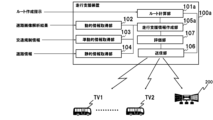
- FIG. 6 is a diagram showing one configuration of the present disclosure. Referring to Fig. 6, a configuration including a driving assistance device 100 capable of transmitting route information and driving assistance information to a vehicle TV and a control center 200 that controls the vehicle TV is shown.
- the driving support device 100 includes a route calculation unit 101, a dynamic information acquisition unit 102, a semi-dynamic information acquisition unit 103, a static information acquisition unit 104, a driving support information creation unit 105, and a transmission unit 106.
- the route calculation unit 101 calculates a driving route (path) from the departure point to the destination based on a route calculation instruction for determining a path from the position of the vehicle TV to which the service is to be provided to the destination, and sends the route to the driving support information creation unit 105.
- the route calculation instruction may be obtained from the vehicle TV, or may be received from the control center 200 that controls the operation of the vehicle TV.
- Such a route calculation unit 101 can be constructed using a route search engine used in car navigation systems, etc.
- Figure 7 is an example of the route calculation by the route calculation unit 101 from the position of the vehicle TV to the destination G.
- the route calculation unit 101 may calculate multiple paths from the position of the vehicle TV to the destination, and send them to the driving support information creation unit 105.
- the dynamic information acquisition unit 102, the semi-dynamic information acquisition unit 103, and the static information acquisition unit 104 acquire dynamic information, semi-dynamic information, and static information, respectively, from external devices, and send them to the driving support information creation unit 105.
- this dynamic information, semi-dynamic information, and static information for example, a dynamic map created for an automated driving or advanced driving support system may be used.
- the dynamic information, semi-dynamic information, and static information are managed by the control center 200, the dynamic information, semi-dynamic information, and static information may be acquired from the control center 200.
- FIG. 8 is a diagram for explaining the relationship between the dynamic information, semi-dynamic information, and static information and the driving support information created by the driving support device 100.
- the static information in the bottom row of FIG. 8 is information on immovable objects such as roads, structures and lanes on roads, and permanent regulations.
- the semi-dynamic information in the second row from the bottom of FIG. 8 is information on objects that change every hour to one minute, such as traffic regulations due to construction and congestion predictions.
- the dynamic information in the third row from the bottom of FIG. 8 is information on objects that change in real time, such as the positions of vehicles and pedestrians and traffic signal indications.
- the driving support device 100 may additionally use information obtained from images captured by a camera or the like connected to the device. Therefore, the dynamic information acquisition unit 102, the semi-dynamic information acquisition unit 103, and the static information acquisition unit 104 correspond to the acquisition unit 11 described above.
- the driving support information creation unit 105 uses the dynamic information, semi-dynamic information, and static information described above to create driving support information indicating the degree of recommendation for each lane on the driving route (path) of the vehicle TV.
- This driving support information can take the form of a map showing the ease of driving for each lane in several stages, as shown in the top row of Figure 8. This ease of driving can be obtained by calculating a score indicating the ease of driving for the vehicle TV from the types and positions of various objects contained in the dynamic information, semi-dynamic information, and static information, and ranking the vehicle according to this score. In the example of Figure 8, a map showing the ease of driving for the vehicle TV in four stages of shading is shown. By providing such driving support information to the vehicle TV, it becomes possible to allow the vehicle TV to drive safely. Therefore, the driving support information creation unit 105 corresponds to the calculation unit 12 described above.
- the transmitting unit 106 transmits the driving support information created as described above to the vehicle TV. Furthermore, the transmitting unit 106 transmits a notification to the control center 200 if the ease of driving on the driving route does not satisfy a predetermined condition.
- This predetermined condition may be that there is a section in the created driving route where the recommendation level of all lanes is below a predetermined threshold.
- the control center 200 can provide various types of support to the vehicle TV.
- this notification may include an image or schematic diagram of the road section that is determined not to satisfy the predetermined condition.
- FIG. 9 is a sequence diagram showing one operation of the present disclosure.
- the driving assistance device 100 calculates a driving route (path) from the departure point to the destination in response to receiving a route calculation instruction or the like (step S001).
- the driving assistance device 100 creates a recommended map for each lane of the road along the driving route (path) as driving assistance information (step S002-1).
- the driving assistance device 100 transmits a recommended map for each lane of the road on the created driving route (path) to the vehicle TV (step S003-1).
- FIG. 10 is an example of a recommended map for each lane of the road created by the driving assistance device 100 for the driving route (path) shown in FIG. 7.
- the darkly shaded areas represent lanes with a low degree of recommendation
- the lightly shaded areas represent lanes with a high degree of recommendation.
- the driving assistance information may be in the form of a map that shows the level of recommendation for each lane.
- the vehicle TV receives the recommended map for each lane of the road along the travel route and drives while referring to the recommended map (step S004-1).
- the driving assistance device 100 repeats the above process at predetermined time intervals until the vehicle TV reaches the destination, thereby supporting the driving of the vehicle TV.
- FIG. 11 shows the driving route actually taken by the vehicle TV using the recommended map for each lane of the road in FIG. 10. In this way, by selecting a lightly shaded area and driving, it is possible to safely reach the destination.
- the route actually selected by the vehicle TV may differ from the recommended map for each lane of the road in FIG. 10 and the driving route derived from this recommended map.
- the recommended map for each lane of the road may include a section in which all lanes in the section to the destination are low in recommendation.
- the area indicated by the thick arrow is shaded heavily, indicating that the two lanes above and below have a low recommendation.
- the driving assistance device 100 transmits a notification to the control center 200 requesting driving assistance.
- the control center 200 having received the notification, switches the vehicle TV from automatic driving mode to remote control mode and operates the vehicle TV. In this way, it becomes possible to respond to worsening road conditions that cannot be handled by changing lanes.
- the control center 200 may operate to automatically switch to remote control mode in response to the notification.
- the recommended maps for each lane of the road can not only be provided to the vehicle TV, but can also be used as information to determine whether or not assistance is required for the vehicle TV.
- FIG. 13 is a diagram showing another configuration of the present disclosure.
- the first difference from the configuration shown in FIG. 6 is that an evaluation unit 107 is added to the driving support device 100a.
- the second difference is that the operation of the route calculation unit 101a and the driving support information creation unit 105a is different, and the driving route is reviewed according to the evaluation of the evaluation unit 107.
- the other configurations are the same as those in FIG. 6, so the following description will focus on the differences.
- the evaluation unit 107 evaluates the driving support information created by the driving support information creation unit 105a. Specifically, the evaluation unit 107 evaluates whether or not there is a high possibility that a predetermined number or more of vehicles will simultaneously travel through a section with a low recommendation level. If it is determined that there is a high possibility that a predetermined number or more of vehicles will simultaneously travel through a section with a low recommendation level, the evaluation unit 107 requests the route calculation unit 101a to select vehicles traveling through a section with a low recommendation level and change the travel route.
- the driving support information creation unit 105a may create driving support information based on the static information and quasi-static information shown in FIG. 8.
- dynamic information is not suitable for long-term prediction because it can change in a very short period of time.
- information categorized as dynamic information that can be predicted with a relatively high degree of accuracy such as traffic light indications and vehicles activating their turn signals, may be used to create driving support information.
- the route calculation unit 101a calculates the driving route (path) from each of the positions of the vehicles TV1-TV2 to each of the destinations based on the route calculation instruction, and sends it to the driving support information creation unit 105a. In addition, when the route calculation unit 101a receives a request to change the driving route from the evaluation unit 107, it changes the driving route (path) of the specified vehicle and sends it to the driving support information creation unit 105a.
- the driving support information creation unit 105a uses the dynamic information, semi-dynamic information, and static information described above to create driving support information indicating the recommendation level for each lane on the driving route (path) of the multiple vehicles TV1-TV2. In addition, when there is a request from the evaluation unit 107 to change the driving route, the driving support information creation unit 105a creates driving support information indicating the recommendation level for each lane on the driving route (path) after the change.
- FIG. 14 is a sequence diagram showing another operation of the present disclosure.
- the driving assistance device 100a calculates driving routes (paths) from the departure points to the destinations of multiple vehicles TV1-TV2 in response to receiving a route calculation instruction or the like (step S101).
- the driving assistance device 100a creates a recommended map for each lane of the roads on each driving route (path) as driving assistance information (step S102-1).
- FIG. 15 is a diagram showing a situation in which it has been determined that there is a high possibility that a predetermined number or more vehicles will simultaneously travel through a section with a low recommendation level.
- the recommendation level of two lanes is low in sections A and B, and the simulation results show that vehicles TV1 and TV2 will simultaneously travel through sections with low recommendation levels.
- driving assistance device 100a instructs route calculation unit 101a to change the driving route (path).
- the arrows in FIG. 16 show the new driving route (path) of vehicle TV1 created in response to the instruction to change the driving route (path).
- the driving assistance device 100a creates a recommended map for each lane of the changed driving route (path) (step S106-1).
- FIG. 17 shows a recommended map for each lane of the changed driving route (path).
- the vehicle whose driving route is to be changed may be selected based on a certain criterion, such as the vehicle with the shortest total distance of sections with a low recommendation level or the vehicle with the longest total distance of sections with a low recommendation level.
- the driving assistance device 100a transmits a recommended map for each lane of the road on each driving route (path) to the vehicles TV1 to TV2 (step S107-1).
- the driving route (path) as shown in FIG. 18, the possibility that both vehicles TV1 to TV2 will simultaneously drive through a section with a low recommendation level is low.
- the number of vehicles TV1-TV2 is described as two, but there is no limit to the number of vehicles. For example, it is also possible to manage five or more vehicles, and limit the number of vehicles traveling simultaneously through sections with a low recommendation level to two or less.
- the driving assistance device 100 transmits a notification to the control center 200 requesting driving assistance, as in the first embodiment.
- the control center 200 which receives the notification, switches at least one of the vehicle TV1-TV2 from the automatic driving mode to the remote control mode and operates the vehicle TV. In this way, it becomes possible to respond to worsening road conditions that cannot be addressed by changing the driving route.
- the driving route (path) is changed when there is a high possibility that a predetermined number or more of vehicles will simultaneously travel through a section with a low recommendation level.
- the method of reducing the possibility that a predetermined number or more of vehicles will simultaneously travel through a section with a low recommendation level is not limited to this.
- the driving support device 100a can notify the control center 200 (a predetermined terminal), and the control center 200 can change the speed of the vehicles TV1 to TV2, so that a predetermined number or more of vehicles will not simultaneously travel through a section with a low recommendation level.
- the driving route (path) transmitted to the vehicles TV1 to TV2 can be provided with speed information, and at least one of the vehicles TV1 to TV2 can be made to increase or decrease speed, thereby reducing the possibility of simultaneously traveling through a section with a low recommendation level.
- FIG. 19 shows an example in which the vehicle TV1 is instructed to decelerate before section A, and the vehicle TV2 is instructed to increase speed before and after section B. The number of vehicles traveling through a section with a low recommendation level at the same time can also be adjusted by such speed instructions.
- FIG. 20 is a diagram showing another configuration of the present disclosure.
- the difference from the configuration shown in FIG. 6 is that the operation of the route calculation unit 101b and the driving support information creation unit 105b is different. Specifically, the driving support information creation unit 105b first creates a recommended map for each lane of the road, and then the route calculation unit 101b calculates a driving route (path) by referring to the recommended map for each lane of the road. Since the other configurations are the same as those of FIG. 6, the following description will focus on the differences.
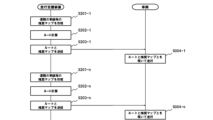
- FIG. 21 is a sequence diagram showing another operation of the present disclosure.
- the driving assistance device 100b creates, as driving assistance information, a recommended map for each lane of roads in a specified area (step S201-1).
- FIG. 22 is an example of a recommended map for each lane of roads in the specified area.
- the driving assistance device 100b refers to the recommendation map for each lane of the roads in the specified area, selects lanes with a high recommendation level, and calculates a driving route (path) from the departure point to the destination (step S202-1).
- Figure 23 shows an example of a driving route (path) created by selecting lanes with a high recommendation level using the recommendation map for each lane of the roads in the specified area.
- a driving route (path) may be created that has a section where the recommendation level of all lanes is below a specified threshold.
- the driving assistance device 100b notifies a specified terminal such as a terminal of the control center 200.
- the driving assistance device 100b transmits the driving route (path) and the recommended map for each lane of the road to the vehicle TV (step S203-1).
- the vehicle TV receives the recommended map for each lane of the road along the driving route (path), and drives while referring to the driving route (path) and the recommended map (step S204-1).
- the driving assistance device 100b repeats the above process at predetermined time intervals to assist the driving of the vehicle TV until the vehicle TV reaches the destination.
- the driving assistance device 100b may also be provided with a function equivalent to the evaluation unit 107, as in the second embodiment.
- the route calculation unit 101b may then determine whether or not it is possible to calculate a driving route that satisfies the condition that the multiple vehicles do not simultaneously travel through sections with a recommendation level below a predetermined threshold. If it is determined as a result of the determination that the condition that the multiple vehicles do not simultaneously travel through sections with a recommendation level below a predetermined threshold cannot be satisfied, the driving assistance device 100b notifies a predetermined terminal, such as a terminal in the control center 200.
- the driving assistance device has been described as creating a recommended map for each lane of the driving route (path) as driving assistance information, but the form of the driving assistance information is not limited to this.
- the driving assistance device it is also possible for the driving assistance device to create a recommended map for each lane of the roads in an entire specific area (see FIG. 22) and transmit the necessary parts of the map to the vehicle TV, TV1 to TV2.
- each component of each device represents a functional block.
- a part or all of each component of each device is realized by an arbitrary combination of an information processing device 900 and a program as shown in Fig. 22.
- Fig. 22 is a block diagram showing an example of a hardware configuration of the information processing device 900 that realizes each component of each device.
- the information processing device 900 includes, as an example, the following configuration.
- each device in each embodiment are realized by the CPU 901 acquiring and executing a program 904 that realizes these functions. That is, the CPU 901 in FIG. 22 executes an information acquisition program and a recommendation level calculation program, and performs an update process for each calculation parameter stored in the RAM 903, storage device 905, etc.
- the program 904 that realizes the function of each component of each device is, for example, stored in advance in the storage device 905 or ROM 902, and is read by the CPU 901 as necessary.
- the program 904 may be supplied to the CPU 901 via the communication network 909, or may be stored in advance in the recording medium 906, and the drive device 907 may read the program and supply it to the CPU 901.
- each device may be implemented by any combination of a separate information processing device 900 and a program for each component.
- multiple components of each device may be implemented by any combination of a single information processing device 900 and a program.
- each part (processing means, function) of the driving support device shown in the first to third embodiments can be implemented by a computer program that causes a processor mounted on the device to execute each of the above-mentioned processes using its hardware.
- each device is realized by other general-purpose or dedicated circuits, processors, etc., or a combination of these. These may be configured by a single chip, or may be configured by multiple chips connected via a bus.
- each device may be realized by a combination of the above-mentioned circuits and programs.
- the multiple information processing devices, circuits, etc. may be centrally located or distributed.
- the information processing devices, circuits, etc. may be realized as a client-server system, cloud computing system, etc., in a form in which each is connected via a communication network.
- the driving assistance device further includes: a route calculation unit that calculates candidate driving routes based on a current location of the vehicle and a destination of the vehicle; A transmission unit that transmits the calculated driving route to the vehicle; A configuration can be adopted that includes a notification unit that notifies a predetermined terminal when a travel route including a section in which the recommendation level of all lanes is equal to or lower than a predetermined threshold is transmitted.
- the driving assistance device further includes an evaluation unit that evaluates whether the driving route satisfies a condition that the plurality of vehicles do not simultaneously travel through a section having a recommendation level equal to or lower than a predetermined threshold value, When the travel route does not satisfy the condition, the notification unit may be configured to give a notification to the predetermined terminal.
- the evaluation unit of the above-described driving assistance device may be configured to instruct the route calculation unit to change the driving route of at least one vehicle when a driving route that satisfies the condition cannot be generated.
- the driving support device according to claim 1 , further comprising a route calculation unit that calculates a driving route to a destination for which a lane is specified, based on the recommendation level for each lane.
- a route calculation unit that calculates a driving route to a destination for which a lane is specified, based on the recommendation level for each lane.
- the driving support device further comprising: when a driving route including a section in which the recommendation level of all lanes is equal to or lower than a predetermined threshold is transmitted, a notification is sent to a predetermined terminal.
- the transmission unit of the driving assistance device described above may be configured to transmit the recommendation level for each lane in a map format that indicates the level of recommendation level for each lane.
Landscapes
- Physics & Mathematics (AREA)
- General Physics & Mathematics (AREA)
- Traffic Control Systems (AREA)
Abstract
対象の車両に道路の状況に応じた対応を促すことができる走行支援装置、走行支援方法及び記録媒体の提供。 走行支援装置は、所定の道路区間の車線毎のオブジェクト情報を取得する取得部と、前記オブジェクト情報を基に、自動運転モードと非自動運転モードとを切り替える機能を備える車両向けの前記車線毎の推奨度を算出する算出部と、前記所定の道路区間に進入する前記車両に対し、前記車線毎の推奨度を送信する送信部と、を備える。
Description
本発明は、走行支援装置、走行支援方法及び記録媒体に関する。
特許文献1に、移動体の走行を支援する走行支援装置の一例が開示されている。同文献によると、この走行支援装置は、移動体の位置、速度、および方位を少なくとも含む移動体情報と、移動体の周辺の障害物の位置、速度を少なくとも含むセンシング情報と、に基づいて、移動体の走行の難しさを表す走行難易度を少なくとも3段階以上で判定する。そして、この走行支援装置は、判定した前記走行難易度に応じて、前記移動体の走行支援に利用する支援情報を設定する。具体的には、この走行支援装置は、走行難易度が高い場合、手動運転または管制制御による制御を行うことが記載されている。
特許文献1のように、走行支援装置側で走行難易度を計算し、支援情報を設定する方法では、道路の状況が悪くなると、手動運転または管制制御の対象となる車両が急増する。例えば、周辺道路に歩行者や自転車が増えたり、多数の障害物が落下したりした状況下では、同時に多数の移動体について、手動運転または管制制御の必要があると判断することになる。しかしながら、管制制御を行う側(以下、「管制側」)のリソースは有限であり、同時の多数の車両の支援が難しくなってしまう可能性がある。
本開示は、対象の車両に道路の状況に応じた対応を促すことのできる走行支援装置、走行支援方法及び記録媒体を提供することを目的とする。
第1の視点によれば、所定の道路区間の車線毎のオブジェクト情報を取得する取得部と、前記オブジェクト情報を基に、自動運転モードと非自動運転モードとを切り替える機能を備える車両向けの前記車線毎の推奨度を算出する算出部と、前記所定の道路区間に進入する前記車両に対し、前記車線毎の推奨度を送信する送信部と、を備える走行支援装置が提供される。
第2の視点によれば、所定の道路区間の車線毎のオブジェクト情報を取得し、前記オブジェクト情報を基に、自動運転モードと非自動運転モードとを切り替える機能を備える車両向けの前記車線毎の推奨度を算出し、前記所定の道路区間に進入する前記車両に対し、前記車線毎の推奨度を送信する、走行支援方法が提供される。
第3の視点によれば、所定の道路区間の車線毎のオブジェクト情報を取得する処理と、前記オブジェクト情報を基に、自動運転モードと非自動運転モードとを切り替える機能を備える車両向けの前記車線毎の推奨度を算出する処理と、前記所定の道路区間に進入する前記車両に対し、前記車線毎の推奨度を送信する処理と、を実行させるプログラムを記録した記録媒体が提供される。
本開示によれば、対象の車両に道路の状況が応じた対応を促すことが可能となる。
はじめに本開示の一実施形態の概要について図面を参照して説明する。なお、この概要に付記した図面参照符号は、理解を助けるための一例として各要素に便宜上付記したものであり、本開示を図示の態様に限定することを意図するものではない。また、以降の説明で参照する図面等のブロック間の接続線は、双方向及び単方向の双方を含む。一方向矢印については、主たる信号(データ)の流れを模式的に示すものであり、双方向性を排除するものではない。プログラムはコンピュータ装置を介して実行され、コンピュータ装置は、例えば、プロセッサ、記憶装置、入力装置、通信インターフェース、及び必要に応じ表示装置を備える。また、このコンピュータ装置は、通信インターフェースを介して装置内又は外部の機器(コンピュータを含む)と、有線、無線を問わず、通信可能に構成される。また、図中の各ブロックの入出力の接続点には、ポート乃至インターフェースがあるが図示を省略する。
本開示は、その一実施形態において、図1に示すように、取得部11と、算出部12と、送信部13と、を備える走行支援装置10にて実現できる。より具体的には、取得部11は、所定の道路区間の車線毎のオブジェクト情報を取得する。ここで、オブジェクト情報とは、道路上の車両の通行の妨げとなりうる他の移動体、道路上の障害物、人物等のオブジェクトOBJの種類や位置、オブジェクトOBJが位置する車線に関する情報である。これらのオブジェクト情報は、例えば、図1のカメラCで道路を撮影し、物体を画像認識することで取得することができる。もちろん、カメラCに代えて各種の物体検出用のセンサーを用いることもできる。また、走行支援装置10が直接カメラCの画像を取得するのではなく、車両に設置されたカメラ等の他の装置が作成した車線毎のオブジェクト情報を、走行支援装置10が取得する形態も採ることができる。
算出部12は、前記オブジェクト情報を基に、特定の車両向けの前記車線毎の推奨度を算出する。ここで、特定の車両は、自動運転モードと非自動運転モードとを切り替える機能を備える。ここで、車線毎の推奨度とは、当該特定の車両にとっての走行のし易さを、所定の基準を用いて定量的に表したものである。
送信部13は、前記所定の道路区間に進入する前記特定の車両TVに対し、前記車線毎の推奨度を送信する。
上記のように構成された走行支援装置10は、次のように動作する。まず、走行支援装置10は、所定の道路区間の車線毎のオブジェクト情報を取得する(図2のステップS01)。次に、走行支援装置10は、前記オブジェクト情報を基に、前記車両TV向けの前記車線毎の推奨度を算出する(図2のステップS02)。走行支援装置10は、前記所定の道路区間に進入する前記車両TVに対し、前記車線毎の推奨度を送信する(図2のステップS03)。
図3は、本開示の一実施形態の動作を説明するための図である。図3の下段は、片側2車線の道路を示している。図3の例では、1台の車両と歩行者の存在を示すオブジェクト情報が得られている。走行支援装置10は、このようなオブジェクト情報に基づいて、車線毎の推奨度を算出する。図3の例では、1台の車両と歩行者の前後数メートルのセグメントを推奨度:低とし、その他の道路区間を推奨度:高とした車線毎の推奨度を算出している。走行支援装置10は、このようにして算出した前記車線毎の推奨度を、この道路区間に進入する前記車両TVに対し送信する。
前記車線毎の推奨度を受信した車両TVは、車線毎の推奨度を参照して走行する。図4の矢線は、推奨度の低い車線(セグメント)を避けて通行するとのルールに基づいて採られた走行経路を示している。このように、車両TVに走行支援情報を提供することで、車両TVに自律的な判断を行わせ、安定した走行をさせることが可能となる。
なお、道路の状況によっては、推奨度が高い車線が存在しない、即ち、すべての車線の前記推奨度が所定の閾値以下であるというケースも起こりうる。例えば、図5のように、複数の歩行者が横断歩道を横断中であり、その直前で左右の車線に車両が停車しているケースがある。このような場合、走行支援情報を受け取った車両TVは、(1)自動運転モードのまま減速し、歩行者の横断完了まで停車する、(2)自動運転モードから非自動運転モードに切り替え、管制側の制御に走行を委ねる等の対処を行う。このように、道路の状況に応じた走行支援情報を提供することで、車両TV側に判断を行わせ、より安全な対応を促すことが可能となる。また逆に、走行支援情報を受け取った車両TVは、すべての車線の前記推奨度が所定の閾値以下でなくなった場合、即ち、前記推奨度の高い車線が1つでもある場合、非自動運転モードから自動運転モードに切り替えてもよい。これにより管制側の負荷を軽減することが可能となる。
[第1の実施形態]
続いて、オブジェクト情報として動的情報、準動的情報及び静的情報を用いて走行支援を行うよう構成した第1の実施形態について説明する。図6は、本開示の一構成を示す図である。図6を参照すると、車両TVに対し、経路情報及び走行支援情報を送信可能な走行支援装置100と、車両TVの管制を行う管制センタ200とを含む構成が示されている。
続いて、オブジェクト情報として動的情報、準動的情報及び静的情報を用いて走行支援を行うよう構成した第1の実施形態について説明する。図6は、本開示の一構成を示す図である。図6を参照すると、車両TVに対し、経路情報及び走行支援情報を送信可能な走行支援装置100と、車両TVの管制を行う管制センタ200とを含む構成が示されている。
走行支援装置100は、ルート計算部101と、動的情報取得部102と、準動的情報取得部103と、静的情報取得部104と、走行支援情報作成部105と、送信部106とを備えている。
ルート計算部101は、サービス提供対象の車両TVの位置から目的地までの経路を求めるルート計算指示に基づいて出発地から目的地までの走行ルート(経路)を計算し、走行支援情報作成部105に送る。なお、ルート計算指示は、車両TVから取得してもよいし、車両TVの運行を管制する管制センタ200から受け取ってもよい。このようなルート計算部101は、カーナビゲーションシステムなどで用いられている経路検索エンジンを用いて構築することができる。図7は、ルート計算部101による車両TVの位置から目的地Gまでの経路の計算例である。なお、ルート計算部101は、車両TVの位置から目的地までの経路として複数の経路を計算し、走行支援情報作成部105に送ってもよい。
動的情報取得部102、準動的情報取得部103及び静的情報取得部104は、外部の装置から、それぞれ動的情報、準動的情報及び静的情報を取得し、走行支援情報作成部105に送る。これらの動的情報、準動的情報及び静的情報として、例えば、自動運転や先進運転支援システムのために作成されたダイナミックマップを用いてもよい。また、管制センタ200で、動的情報、準動的情報及び静的情報を管理している場合、管制センタ200から、動的情報、準動的情報及び静的情報を取得してもよい。
図8は、上記動的情報、準動的情報及び静的情報と、走行支援装置100が作成する走行支援情報との関係を説明するための図である。図8の最下段の静的情報は、道路や道路上の構造物や車線、恒久的な規制などの動かないオブジェクトの情報である。図8の下から2段目の準動的情報は、工事などによる交通規制や渋滞予測など1時間~1分程度の頻度で変化するオブジェクトの情報である。図8の下から3段目の動的情報は、車両や歩行者等の位置や信号現示などリアルタイムに変化するオブジェクトの情報である。また、上記準動的情報及び動的情報として、走行支援装置100が、同装置に接続されたカメラ等で撮影された画像から得られた情報を追加的に用いてもよい。したがって、動的情報取得部102、準動的情報取得部103及び静的情報取得部104が上記した取得部11に相当する。
走行支援情報作成部105は、上記した動的情報、準動的情報及び静的情報を用いて、車両TVの走行ルート(経路)上の車線毎の推奨度を示した走行支援情報を作成する。この走行支援情報は、例えば、図8の最上段に示したような、車線毎に、走行しやすさをいくつかの段階で表したマップの形態を採ることもできる。この走行しやすさは、動的情報、準動的情報及び静的情報に含まれる各種のオブジェクトの種類や位置等から車両TVにとっての走行のしやすさを示すスコアを計算し、このスコアでランク分けすることで得ることができる。図8の例では、車両TVにとっての走行のしやすさを4段階の濃淡で表したマップが示されている。このような走行支援情報を、車両TVに提供することで、車両TVに安全な運行を行わせることができるようになる。したがって、走行支援情報作成部105が上記した算出部12に相当する。
送信部106は、車両TVに対し、上記のようにして作成された走行支援情報を送信する。また、送信部106は、走行ルート上の走行しやすさが所定の条件を満たさない場合、管制センタ200に通知を送信する。この所定の条件としては、作成した走行ルートのすべての車線の推奨度が所定の閾値以下の区間が存在する場合とすることできる。管制センタ200は、この通知を受け取ることで、車両TVに対する各種の支援を行うことができる。また、この通知には、前記所定の条件を満たさないと判断した道路区間の画像や模式図等が含まれていてもよい。
続いて、本実施形態の動作について図面を参照して詳細に説明する。図9は、本開示の一動作を表したシーケンス図である。図9を参照すると、まず、走行支援装置100は、ルート計算指示の受信等を契機として、出発地から目的地までの走行ルート(経路)を計算する(ステップS001)。
次に、走行支援装置100は、走行支援情報として、前記走行ルート(経路)上の道路の車線毎の推奨マップを作成する(ステップS002-1)。
次に、走行支援装置100は、車両TVに対し、前記作成した走行ルート(経路)上の道路の車線毎の推奨マップを送信する(ステップS003-1)。図10は、走行支援装置100が図7に示した走行ルート(経路)に対して作成した道路の車線毎の推奨マップの例である。図中の車線のうち、網かけの濃い領域が推奨度の低い車線を表し、網かけの薄い領域が推奨度の高い車線を表している。このように、走行支援情報は、前記車線毎に前記推奨度の高低を表した地図形式の形態であってもよい。
前記走行ルート(経路)上の道路の車線毎の推奨マップを受信した車両TVは、この推奨マップを参照して走行する(ステップS004-1)。
走行支援装置100は、車両TVが目的地に到達するまで、所定の時間間隔で、以上の処理を繰り返し、車両TVの走行を支援する。図11は、図10の道路の車線毎の推奨マップを用いて、車両TVが実際に取った走行経路を表している。このように、網かけの薄い領域を選択して走行することで、安全に目的地まで到達することができる。もちろん、道路の車線毎の推奨マップは、刻刻と変化するため、実際に車両TVが選択する経路は、図10の道路の車線毎の推奨マップと、この推奨マップから導かれる走行経路とは異なりうる。
また、道路の車線毎の推奨マップ上、目的地までの区間のすべての車線が推奨度の低い区間が含まれる場合がある。図12の例では、太矢線で示す箇所で、上下の2車線が推奨度の低いことを示す網かけの濃い状態となっている。この場合、走行支援装置100は、管制センタ200に対して、走行支援を要請する通知を送信する。前記通知を受けた管制センタ200は、車両TVを自動運転モードから遠隔操縦モードに切り替え、車両TVを操作する。このようにすることで、車線の変更では対応しきれない道路状況の悪化に対応することが可能となる。また、前記通知に応答することで、管制センタ200が自動的に遠隔操縦モードに切り替えるように動作してもよい。
もちろん、道路の車線毎の推奨マップを受信した車両TV側から、管制センタ200に対して、遠隔操縦モードに切り替えを要請するようにしてもよい。なお、遠隔操縦モードは、管制センタ200のオペレータが手動で車両TVを直接操作する形態のほか、車両TVに搭載されたコンピュータに指示を与える形態を採ることもできる。例えば、図12のケースでは、オペレータが車両TVの速度を減速することで、推奨度の低い領域を通過するといった対処を行うことができる。また、オペレータが車両TVを停止させ、状況の変化を待つといった対処を行うこともできる。
このように、道路の車線毎の推奨マップは、車両TVに提供するだけでなく、車両TVに対する支援の要否を判断するための情報として使用することもできる。
[第2の実施形態]
続いて、走行支援情報を用いた複数の車両TV1~TV2の運行管理を行う第2の実施形態について説明する。図13は、本開示の別の構成を示す図である。図6に示した構成との第1の相違点は、走行支援装置100aに、評価部107が追加されている点である。第2の相違点は、ルート計算部101a及び走行支援情報作成部105aの動作が異なり、評価部107の評価に応じ、走行ルートの見直しを行う点である。その他の構成は、図6の構成と同様であるので、以下、その相違点を中心に説明する。
続いて、走行支援情報を用いた複数の車両TV1~TV2の運行管理を行う第2の実施形態について説明する。図13は、本開示の別の構成を示す図である。図6に示した構成との第1の相違点は、走行支援装置100aに、評価部107が追加されている点である。第2の相違点は、ルート計算部101a及び走行支援情報作成部105aの動作が異なり、評価部107の評価に応じ、走行ルートの見直しを行う点である。その他の構成は、図6の構成と同様であるので、以下、その相違点を中心に説明する。
評価部107は、走行支援情報作成部105aが作成した走行支援情報を評価する。具体的には、評価部107は、所定数以上の車両が同時に推奨度の低い区間を走行する可能性が高いか否かを評価する。前記評価の結果、所定数以上の車両が同時に推奨度の低い区間を走行する可能性が高いと判断した場合、評価部107は、ルート計算部101aに対して、推奨度の低い区間を走行する車両を選択し、走行ルートの変更を要求する。なお、本実施形態では、走行支援情報作成部105aは、図8に示した静的情報と準静的情報に基づいて、走行支援情報を作成するようにしてもよい。動的情報は、ごく短期で変化しうるため、長期の予測に向かないためである。もちろん、動的情報にカテゴライズされる情報のうち、例えば、信号現示やウインカーを出している車両等の比較的精度の高い予測が可能なものについては走行支援情報の作成に用いるようにしてもよい。
ルート計算部101aは、ルート計算指示に基づいて、車両TV1~TV2のそれぞれ位置からそれぞれの目的地までの走行ルート(経路)を計算し、走行支援情報作成部105aに送る。また、ルート計算部101aは、評価部107から、走行ルートの変更要求を受けると、指定された車両の走行ルート(経路)を変更し、走行支援情報作成部105aに送る。
走行支援情報作成部105aは、上記した動的情報、準動的情報及び静的情報を用いて、複数の車両TV1~TV2の走行ルート(経路)上の車線毎の推奨度を示した走行支援情報を作成する。また、走行支援情報作成部105aは、評価部107から、走行ルートの変更要求があった場合、変更後の走行ルート(経路)上の車線毎の推奨度を示した走行支援情報を作成する。
続いて、本実施形態の動作について図面を参照して詳細に説明する。図14は、本開示の別の動作を表したシーケンス図である。まず、走行支援装置100aは、ルート計算指示の受信等を契機として、複数の車両TV1~TV2の出発地から目的地までの走行ルート(経路)を計算する(ステップS101)。
次に、走行支援装置100aは、走行支援情報として、前記各走行ルート(経路)上の道路の車線毎の推奨マップを作成する(ステップS102-1)。
次に、走行支援装置100aは、前記各走行ルート(経路)上の道路の車線毎の推奨マップを用いてシミュレーションを行い、所定数以上の車両が同時に推奨度の低い区間を走行する可能性が高いか否かを評価する(ステップS103-1)。
前記評価の結果、所定数以上の車両が同時に推奨度の低い区間を走行する可能性が高いと判断した場合(ステップS104-1のYes)、走行支援装置100aは、走行ルート(経路)の変更を行う(ステップS105-1)。
図15は、所定数以上の車両が同時に推奨度の低い区間を走行する可能性が高いと判定された状況を示す図である。図15の例では、区間Aと区間Bにおいて、2つの車線の推奨度が低くなっているため、シミュレーションの結果、車両TV1~TV2が同時に推奨度の低い区間を走行する状況となっている。このような場合、走行支援装置100aは、ルート計算部101aに対し、走行ルート(経路)の変更を指示する。図16の矢線は、走行ルート(経路)の変更指示により作成された車両TV1の新しい走行ルート(経路)を示している。
さらに、走行支援装置100aは、変更後の走行ルート(経路)の車線毎の推奨マップを作成する(ステップS106-1)。図17は、変更後の走行ルート(経路)の車線毎の推奨マップを示している。なお、走行ルートの変更対象となる車両は、推奨度の低い区間の総区間が短い方、推奨度の低い区間の総区間が長い方等の一定の基準により選択すればよい。
次に、走行支援装置100aは、車両TV1~TV2に対し、前記各走行ルート(経路)上の道路の車線毎の推奨マップを送信する(ステップS107-1)。図18に示すように変更後の走行ルート(経路)の場合、車両TV1~TV2の双方が同時に推奨度の低い区間を走行する可能性は低くなっている。
前記走行ルート(経路)上の道路の車線毎の推奨マップを受信した車両TV1~TV2は、それぞれ推奨マップを参照して走行する(ステップS108-1)。
以上説明したように、本実施形態によれば、複数の車両TV1~TV2の同時に推奨度の低い区間を走行する可能性が少ないため、管制センタ200の人員が少ない場合でも対処することが可能となる。なお、上記した説明では、車両TV1~TV2の台数は2台であるものとして説明したが、車両の台数に制限はない。例えば、5台以上の車両を管理の対象とし、同時に推奨度の低い区間を走行する車両の数を2台以内に抑えるといった管理も可能である。
なお、走行ルート(経路)の変更を行っても、所定数以上の車両が同時に推奨度の低い区間を走行する状態を解消できないことが判明する場合もある。この場合、走行支援装置100は、第1の実施形態と同様に、管制センタ200に対して、走行支援を要請する通知を送信する。前記通知を受けた管制センタ200は、車両TV1~TV2の少なくとも一方を、自動運転モードから遠隔操縦モードに切り替え、車両TVを操作する。このようにすることで、走行ルートの変更では対応しきれない道路状況の悪化に対応することが可能となる。
また、上記した実施形態では、所定数以上の車両が同時に推奨度の低い区間を走行する可能性が高い場合に、走行ルート(経路)の変更を行うものとして説明したが、所定数以上の車両が同時に推奨度の低い区間を走行する可能性を減らす方法はこれに限られない。例えば、走行支援装置100aが管制センタ200(所定の端末)に通知を行い、管制センタ200が車両TV1~TV2の速度を変更することで、所定数以上の車両が同時に推奨度の低い区間を走行しないように対処することもできる。また、車両TV1~TV2に送信する走行ルート(経路)に速度情報を持たせて、車両TV1~TV2の少なくとも一方に、増速又は減速を行わせて、同時に推奨度の低い区間を走行する可能性を減らすこともできる。図19は、車両TV1に区間Aの手前で減速を指示し、車両TV2に区間Bの前後で増速を指示した例である。このような速度の指示によっても、同時に推奨度の低い区間を走行する車両の数を調整することができる。
[第3の実施形態]
続いて、先に走行支援情報を作成してから走行ルートを計算するようにした第3の実施形態について説明する。図20は、本開示の別の構成を示す図である。図6に示した構成との相違点は、ルート計算部101b及び走行支援情報作成部105bの動作が異なる点である。具体的には、走行支援情報作成部105bが先に道路の車線毎の推奨マップを作成し、そのあとに、ルート計算部101bが道路の車線毎の推奨マップを参照して走行ルート(経路)を計算する点である。その他の構成は、図6の構成と同様であるので、以下、その相違点を中心に説明する。
続いて、先に走行支援情報を作成してから走行ルートを計算するようにした第3の実施形態について説明する。図20は、本開示の別の構成を示す図である。図6に示した構成との相違点は、ルート計算部101b及び走行支援情報作成部105bの動作が異なる点である。具体的には、走行支援情報作成部105bが先に道路の車線毎の推奨マップを作成し、そのあとに、ルート計算部101bが道路の車線毎の推奨マップを参照して走行ルート(経路)を計算する点である。その他の構成は、図6の構成と同様であるので、以下、その相違点を中心に説明する。
続いて、本実施形態の動作について図面を参照して詳細に説明する。図21は、本開示の別の動作を表したシーケンス図である。図21を参照すると、まず、走行支援装置100bは、走行支援情報として、所定のエリアの道路の車線毎の推奨マップを作成する(ステップS201-1)。図22は、上記所定のエリアの道路の車線毎の推奨マップの例である。
走行支援装置100bは、前記所定のエリアの道路の車線毎の推奨マップを参照して、推奨度の高い車線を選択し、出発地から目的地までの走行ルート(経路)を計算する(ステップS202-1)。図23は、上記所定のエリアの道路の車線毎の推奨マップを用いて、推奨度の高い車線を選択して作成した走行ルート(経路)の例である。このとき、すべての車線の前記推奨度が所定の閾値以下である区間を持つ走行ルート(経路)が作成される場合がある。この場合、走行支援装置100bは、管制センタ200の端末等の所定の端末に対して通知を行う。
次に、走行支援装置100bは、車両TVに対し、前記走行ルート(経路)と、前記道路の車線毎の推奨マップとを送信する(ステップS203-1)。
前記走行ルート(経路)上の道路の車線毎の推奨マップを受信した車両TVは、この走行ルート(経路)と推奨マップを参照して走行する(ステップS204-1)。
走行支援装置100bは、車両TVが目的地に到達するまで、所定の時間間隔で、以上の処理を繰り返し、車両TVの走行を支援する。
本実施形態においても、走行支援装置100bに、第2の実施形態と同様に評価部107相当の機能を設けてもよい。そして、前記ルート計算部101bが、前記複数の車両が同時に、所定の閾値以下の推奨度の区間を走行しないとの条件を満たす走行ルートを計算できるか否かを判定してもよい。そして、前記判定の結果、複数の車両が同時に、所定の閾値以下の推奨度の区間を走行しないとの条件を満たせないと判定した場合、走行支援装置100bは、管制センタ200の端末等の所定の端末に対して通知を行う。
以上、本開示の各実施形態を説明したが、本開示は、上記した実施形態に限定されるものではなく、本開示の基本的技術的思想を逸脱しない範囲で、更なる変形・置換・調整を加えることができる。例えば、各図面に示したネットワーク構成、各要素の構成、データの表現形態は、本開示の理解を助けるための一例であり、これらの図面に示した構成に限定されるものではない。
例えば、上記した第1~第3の実施形態では、走行支援装置が、走行支援情報として、走行ルート(経路)の車線毎の推奨マップを作成するものとして説明したが、走行支援情報の形態はこれに限られない。例えば、走行支援装置が、特定のエリア全体の道路の車線毎の推奨マップを作成し(図22参照)、車両TV、TV1~TV2に対し、その中の必要な部分を送信する形態も採用可能である。
また、上記した第1~第3の実施形態では、走行支援情報として、濃淡2段階で推奨度を表した道路の車線毎の推奨マップを用いて説明したが、推奨度の段階は3段階以上であってもよい。例えば、図8に示したように推奨度の段階が4段階であり、走行のし易さが最も高いものを4、走行のし易さが最も低いものを1とすることもできる。この場合、走行支援装置100が、管制センタ200に通知を行ったり、走行ルート(経路)の変更を行う閾値を、1又は2以下としたりすることができる。
(ハードウェア構成について)
本開示の各実施形態において、各装置の各構成要素は、機能単位のブロックを示している。各装置の各構成要素の一部又は全部は、例えば図22に示すような情報処理装置900とプログラムとの任意の組み合わせにより実現される。図22は、各装置の各構成要素を実現する情報処理装置900のハードウェア構成の一例を示すブロック図である。情報処理装置900は、一例として、以下のような構成を含む。
・CPU(Central Processing Unit)901
・ROM(Read Only Memory)902
・RAM(Random Access Memory)903
・RAM903にロードされるプログラム904
・プログラム904を格納する記憶装置905
・記録媒体906の読み書きを行うドライブ装置907
・通信ネットワーク909と接続する通信インターフェース908
・データの入出力を行う入出力インターフェース910
・各構成要素を接続するバス911
本開示の各実施形態において、各装置の各構成要素は、機能単位のブロックを示している。各装置の各構成要素の一部又は全部は、例えば図22に示すような情報処理装置900とプログラムとの任意の組み合わせにより実現される。図22は、各装置の各構成要素を実現する情報処理装置900のハードウェア構成の一例を示すブロック図である。情報処理装置900は、一例として、以下のような構成を含む。
・CPU(Central Processing Unit)901
・ROM(Read Only Memory)902
・RAM(Random Access Memory)903
・RAM903にロードされるプログラム904
・プログラム904を格納する記憶装置905
・記録媒体906の読み書きを行うドライブ装置907
・通信ネットワーク909と接続する通信インターフェース908
・データの入出力を行う入出力インターフェース910
・各構成要素を接続するバス911
各実施形態における各装置の各構成要素は、これらの機能を実現するプログラム904をCPU901が取得して実行することで実現される。すなわち、図22のCPU901にて、情報取得プログラムや推奨度算出プログラムを実行し、RAM903や記憶装置905等に保持された各計算パラメーターの更新処理を実施させればよい。各装置の各構成要素の機能を実現するプログラム904は、例えば、予め記憶装置905やROM902に格納されており、必要に応じてCPU901が読み出す。なお、プログラム904は、通信ネットワーク909を介してCPU901に供給されてもよいし、予め記録媒体906に格納されており、ドライブ装置907が当該プログラムを読み出してCPU901に供給してもよい。
各装置の実現方法には、様々な変形例がある。例えば、各装置は、構成要素毎にそれぞれ別個の情報処理装置900とプログラムとの任意の組み合わせにより実現されてもよい。また、各装置が備える複数の構成要素が、一つの情報処理装置900とプログラムとの任意の組み合わせにより実現されてもよい。即ち、上記した第1~第3の実施形態に示した走行支援装置の各部(処理手段、機能)は、同装置に搭載されたプロセッサに、そのハードウェアを用いて、上記した各処理を実行させるコンピュータプログラムにより実現することができる。
また、各装置の各構成要素の一部又は全部は、その他の汎用または専用の回路、プロセッサ等やこれらの組み合わせによって実現される。これらは、単一のチップによって構成されてもよいし、バスを介して接続される複数のチップによって構成されてもよい。
各装置の各構成要素の一部又は全部は、上述した回路等とプログラムとの組み合わせによって実現されてもよい。
各装置の各構成要素の一部又は全部が複数の情報処理装置や回路等により実現される場合には、複数の情報処理装置や回路等は、集中配置されてもよいし、分散配置されてもよい。例えば、情報処理装置や回路等は、クライアントアンドサーバシステム、クラウドコンピューティングシステム等、各々が通信ネットワークを介して接続される形態として実現されてもよい。
なお、上述した各実施の形態は、本開示の好適な実施の形態であり、上記各実施の形態にのみ本開示の範囲を限定するものではない。即ち、本開示の要旨を逸脱しない範囲において当業者が上記各実施の形態の修正や代用を行い、種々の変更を施した形態を構築することが可能である。
上記の実施の形態の一部又は全部は、以下の付記のようにも記載されうるが、以下には限られない。
[付記1]
所定の道路区間の車線毎のオブジェクト情報を取得する取得部と、
前記オブジェクト情報を基に、自動運転モードと非自動運転モードとを切り替える機能を備える車両向けの前記車線毎の推奨度を算出する算出部と、
前記車線毎の推奨度を示した走行支援情報を送信する送信部と、
を備える走行支援装置。
[付記2]
上記した走行支援装置の前記送信部は、前記車両に対し、前記走行支援情報を送信し、
前記走行支援情報を受信した車両に、前記車線毎の推奨度に基づいて、自動運転モードと非自動運転モードとのいずれかを選択させる構成を採ることができる。
[付記3]
上記した走行支援装置は、さらに、
前記車両の現在地及び前記車両の目的地を基に候補となる走行ルートを計算するルート計算部と、
前記車両に対し、前記計算した走行ルートを送信する送信部と、
すべての車線の前記推奨度が所定の閾値以下の区間が存在する走行ルートを送信した場合、所定の端末に対して通知する通知部と、を備える構成を採ることができる。
[付記4]
上記した走行支援装置は、さらに、前記複数の車両が同時に、所定の閾値以下の推奨度の区間を走行しないとの条件を満たす走行ルートとなっているか否かを評価する評価部を備え、
前記走行ルートが、前記条件を満たすものとなっていない場合に、前記通知部は、前記所定の端末に対して通知を行う構成を採ることができる。
[付記5]
上記した走行支援装置の前記評価部は、前記条件を満たす走行ルートを作成できない場合、前記ルート計算部に、少なくとも1台の車両の走行ルートの変更を指示する構成を採ることができる。
[付記6]
さらに、前記車線毎の推奨度に基づいて、車線を指定した目的地までの走行ルートを計算するルート計算部を備える請求項1の走行支援装置。
[付記7]
さらに、すべての車線の前記推奨度が所定の閾値以下の区間が存在する走行ルートを送信した場合、所定の端末に対して通知する請求項6の走行支援装置。
[付記8]
上記した走行支援装置の前記送信部は、前記車線毎に前記推奨度の高低を表した地図形式で、前記車線毎の推奨度を送信する構成を採ることができる。
[付記9]
所定の道路区間の車線毎のオブジェクト情報を取得し、
前記オブジェクト情報を基に、自動運転モードと非自動運転モードとを切り替える機能を備える車両向けの前記車線毎の推奨度を算出し、
前記所定の道路区間に進入する前記車両に対し、前記車線毎の推奨度を送信する、
走行支援方法。
[付記10]
所定の道路区間の車線毎のオブジェクト情報を取得する処理と、
前記オブジェクト情報を基に、自動運転モードと非自動運転モードとを切り替える機能を備える車両向けの前記車線毎の推奨度を算出する処理と、
前記所定の道路区間に進入する前記車両に対し、前記車線毎の推奨度を送信する処理と、
を実行させるプログラムを記録した記録媒体。
なお、上記各付記に記載の形態は、それぞれ必要な修正を施した上で、互いに組み合わせることができる。例えば、前記付記2に記載の内容と、前記付記3に記載の内容と、を兼ね備えた構成も、本明細書の開示範囲に含まれている。
また、上記付記9、付記10の形態は、付記1と同様に、付記2~付記8の形態に展開することが可能である。
所定の道路区間の車線毎のオブジェクト情報を取得する取得部と、
前記オブジェクト情報を基に、自動運転モードと非自動運転モードとを切り替える機能を備える車両向けの前記車線毎の推奨度を算出する算出部と、
前記車線毎の推奨度を示した走行支援情報を送信する送信部と、
を備える走行支援装置。
[付記2]
上記した走行支援装置の前記送信部は、前記車両に対し、前記走行支援情報を送信し、
前記走行支援情報を受信した車両に、前記車線毎の推奨度に基づいて、自動運転モードと非自動運転モードとのいずれかを選択させる構成を採ることができる。
[付記3]
上記した走行支援装置は、さらに、
前記車両の現在地及び前記車両の目的地を基に候補となる走行ルートを計算するルート計算部と、
前記車両に対し、前記計算した走行ルートを送信する送信部と、
すべての車線の前記推奨度が所定の閾値以下の区間が存在する走行ルートを送信した場合、所定の端末に対して通知する通知部と、を備える構成を採ることができる。
[付記4]
上記した走行支援装置は、さらに、前記複数の車両が同時に、所定の閾値以下の推奨度の区間を走行しないとの条件を満たす走行ルートとなっているか否かを評価する評価部を備え、
前記走行ルートが、前記条件を満たすものとなっていない場合に、前記通知部は、前記所定の端末に対して通知を行う構成を採ることができる。
[付記5]
上記した走行支援装置の前記評価部は、前記条件を満たす走行ルートを作成できない場合、前記ルート計算部に、少なくとも1台の車両の走行ルートの変更を指示する構成を採ることができる。
[付記6]
さらに、前記車線毎の推奨度に基づいて、車線を指定した目的地までの走行ルートを計算するルート計算部を備える請求項1の走行支援装置。
[付記7]
さらに、すべての車線の前記推奨度が所定の閾値以下の区間が存在する走行ルートを送信した場合、所定の端末に対して通知する請求項6の走行支援装置。
[付記8]
上記した走行支援装置の前記送信部は、前記車線毎に前記推奨度の高低を表した地図形式で、前記車線毎の推奨度を送信する構成を採ることができる。
[付記9]
所定の道路区間の車線毎のオブジェクト情報を取得し、
前記オブジェクト情報を基に、自動運転モードと非自動運転モードとを切り替える機能を備える車両向けの前記車線毎の推奨度を算出し、
前記所定の道路区間に進入する前記車両に対し、前記車線毎の推奨度を送信する、
走行支援方法。
[付記10]
所定の道路区間の車線毎のオブジェクト情報を取得する処理と、
前記オブジェクト情報を基に、自動運転モードと非自動運転モードとを切り替える機能を備える車両向けの前記車線毎の推奨度を算出する処理と、
前記所定の道路区間に進入する前記車両に対し、前記車線毎の推奨度を送信する処理と、
を実行させるプログラムを記録した記録媒体。
なお、上記各付記に記載の形態は、それぞれ必要な修正を施した上で、互いに組み合わせることができる。例えば、前記付記2に記載の内容と、前記付記3に記載の内容と、を兼ね備えた構成も、本明細書の開示範囲に含まれている。
また、上記付記9、付記10の形態は、付記1と同様に、付記2~付記8の形態に展開することが可能である。
なお、上記の特許文献の各開示は、本書に引用をもって繰り込み記載されているものとし、必要に応じて本開示の基礎ないし一部として用いることが出来るものとする。本開示(請求の範囲を含む)の枠内において、さらにその基本的技術思想に基づいて、実施形態ないし実施例の変更・調整が可能である。また、本開示の枠内において種々の開示要素(各請求項の各要素、各実施形態ないし実施例の各要素、各図面の各要素等を含む)の多様な組み合わせ、ないし選択(部分的削除を含む)が可能である。すなわち、本開示は、請求の範囲を含む全開示、技術的思想にしたがって当業者であればなし得るであろう各種変形、修正を含むことは勿論である。特に、本書に記載した数値範囲については、当該範囲内に含まれる任意の数値ないし小範囲が、別段の記載のない場合でも具体的に記載されているものと解釈されるべきである。さらに、上記引用した文献の各開示事項は、必要に応じ、本開示の趣旨に則り、本開示の一部として、その一部又は全部を、本書の記載事項と組み合わせて用いることも、本願の開示事項に含まれるものと、みなされる。
10、100 走行支援装置
11 取得部
12 算出部
13 送信部
101 ルート計算部
102 動的情報取得部
103 準動的情報取得部
104 静的情報取得部
105 走行支援情報作成部
106 送信部
200 管制センタ
900 情報処理装置
901 CPU(Central Processing Unit)
902 ROM(Read Only Memory)
903 RAM(Random Access Memory)
904 プログラム
905 記憶装置
906 記録媒体
907 ドライブ装置
908 通信インターフェース
909 通信ネットワーク
910 入出力インターフェース
911 バス
C カメラ
G 目的地
OBJ オブジェクト
TV、TV1、TV2 車両
11 取得部
12 算出部
13 送信部
101 ルート計算部
102 動的情報取得部
103 準動的情報取得部
104 静的情報取得部
105 走行支援情報作成部
106 送信部
200 管制センタ
900 情報処理装置
901 CPU(Central Processing Unit)
902 ROM(Read Only Memory)
903 RAM(Random Access Memory)
904 プログラム
905 記憶装置
906 記録媒体
907 ドライブ装置
908 通信インターフェース
909 通信ネットワーク
910 入出力インターフェース
911 バス
C カメラ
G 目的地
OBJ オブジェクト
TV、TV1、TV2 車両
Claims (10)
- 所定の道路区間の車線毎のオブジェクト情報を取得する取得部と、
前記オブジェクト情報を基に、自動運転モードと非自動運転モードとを切り替える機能を備える車両向けの前記車線毎の推奨度を算出する算出部と、
前記車線毎の推奨度を示した走行支援情報を送信する送信部と、
を備える走行支援装置。 - 前記送信部は、前記車両に対し、前記走行支援情報を送信し、
前記走行支援情報を受信した車両に、前記車線毎の推奨度に基づいて、自動運転モードと非自動運転モードとのいずれかを選択させる請求項1の走行支援装置。 - さらに、前記車両の現在地及び前記車両の目的地を基に候補となる走行ルートを計算するルート計算部と、
前記車両に対し、前記計算した走行ルートを送信する送信部を備え、
すべての車線の前記推奨度が所定の閾値以下の区間が存在する走行ルートを送信した場合、所定の端末に対して通知する請求項1又は2の走行支援装置。 - さらに、前記複数の車両が同時に、所定の閾値以下の推奨度の区間を走行しないとの条件を満たす走行ルートとなっているか否かを評価する評価部を備え、
前記走行ルートが、前記条件を満たすものとなっていない場合に、前記通知部は、前記所定の端末に対して通知を行う請求項3の走行支援装置。 - 前記評価部は、前記条件を満たす走行ルートを作成できない場合、前記ルート計算部に、少なくとも1台の車両の走行ルートの変更を指示する、
請求項4の走行支援装置。 - さらに、前記車線毎の推奨度に基づいて、車線を指定した目的地までの走行ルートを計算するルート計算部を備える請求項1の走行支援装置。
- さらに、すべての車線の前記推奨度が所定の閾値以下の区間が存在する走行ルートを送信した場合、所定の端末に対して通知する請求項6の走行支援装置。
- 前記送信部は、前記車線毎に前記推奨度の高低を表した地図形式で、前記車線毎の推奨度を送信する請求項1から7いずれか一の走行支援装置。
- 所定の道路区間の車線毎のオブジェクト情報を取得し、
前記オブジェクト情報を基に、自動運転モードと非自動運転モードとを切り替える機能を備える車両向けの前記車線毎の推奨度を算出し、
前記所定の道路区間に進入する前記車両に対し、前記車線毎の推奨度を送信する、
走行支援方法。 - 所定の道路区間の車線毎のオブジェクト情報を取得する処理と、
前記オブジェクト情報を基に、自動運転モードと非自動運転モードとを切り替える機能を備える車両向けの前記車線毎の推奨度を算出する処理と、
前記所定の道路区間に進入する前記車両に対し、前記車線毎の推奨度を送信する処理と、
を実行させるプログラムを記録した記録媒体。
Priority Applications (3)
| Application Number | Priority Date | Filing Date | Title |
|---|---|---|---|
| PCT/JP2023/029973 WO2025041220A1 (ja) | 2023-08-21 | 2023-08-21 | 走行支援装置、走行支援方法及び記録媒体 |
| JP2025541181A JPWO2025041220A5 (ja) | 2023-08-21 | 走行支援装置、走行支援方法及びプログラム | |
| CN202380101589.1A CN121713223A (zh) | 2023-08-21 | 2023-08-21 | 行驶辅助装置、行驶辅助方法和记录介质 |
Applications Claiming Priority (1)
| Application Number | Priority Date | Filing Date | Title |
|---|---|---|---|
| PCT/JP2023/029973 WO2025041220A1 (ja) | 2023-08-21 | 2023-08-21 | 走行支援装置、走行支援方法及び記録媒体 |
Publications (1)
| Publication Number | Publication Date |
|---|---|
| WO2025041220A1 true WO2025041220A1 (ja) | 2025-02-27 |
Family
ID=94731808
Family Applications (1)
| Application Number | Title | Priority Date | Filing Date |
|---|---|---|---|
| PCT/JP2023/029973 Pending WO2025041220A1 (ja) | 2023-08-21 | 2023-08-21 | 走行支援装置、走行支援方法及び記録媒体 |
Country Status (2)
| Country | Link |
|---|---|
| CN (1) | CN121713223A (ja) |
| WO (1) | WO2025041220A1 (ja) |
Citations (3)
| Publication number | Priority date | Publication date | Assignee | Title |
|---|---|---|---|---|
| JP2017151041A (ja) * | 2016-02-26 | 2017-08-31 | 株式会社デンソー | 走行支援装置及びセンタ |
| JP2019090627A (ja) * | 2017-11-10 | 2019-06-13 | 本田技研工業株式会社 | 表示システム、表示方法、およびプログラム |
| JP2022107907A (ja) * | 2021-01-12 | 2022-07-25 | 本田技研工業株式会社 | 推奨レーンを判定する車両システム |
-
2023
- 2023-08-21 WO PCT/JP2023/029973 patent/WO2025041220A1/ja active Pending
- 2023-08-21 CN CN202380101589.1A patent/CN121713223A/zh active Pending
Patent Citations (3)
| Publication number | Priority date | Publication date | Assignee | Title |
|---|---|---|---|---|
| JP2017151041A (ja) * | 2016-02-26 | 2017-08-31 | 株式会社デンソー | 走行支援装置及びセンタ |
| JP2019090627A (ja) * | 2017-11-10 | 2019-06-13 | 本田技研工業株式会社 | 表示システム、表示方法、およびプログラム |
| JP2022107907A (ja) * | 2021-01-12 | 2022-07-25 | 本田技研工業株式会社 | 推奨レーンを判定する車両システム |
Also Published As
| Publication number | Publication date |
|---|---|
| CN121713223A (zh) | 2026-03-20 |
| JPWO2025041220A1 (ja) | 2025-02-27 |
Similar Documents
| Publication | Publication Date | Title |
|---|---|---|
| US12422267B2 (en) | Navigation method and apparatus | |
| US12223410B2 (en) | Lane selection using machine learning | |
| US20210191394A1 (en) | Systems and methods for presenting curated autonomy-system information of a vehicle | |
| US10254121B2 (en) | Dynamic routing for self-driving vehicles | |
| RU2754705C1 (ru) | Способ помощи при вождении и устройство помощи при вождении | |
| RU2726238C2 (ru) | Автономное транспортное средство с поддержкой направления | |
| JP6771566B2 (ja) | 操作権限管理装置 | |
| KR102518680B1 (ko) | 속력 프로파일 추정 | |
| US12116006B2 (en) | Dynamic route information interface | |
| US10540895B2 (en) | Management of mobile objects | |
| US20180267537A1 (en) | Hierarchical motion planning for autonomous vehicles | |
| RU2661963C1 (ru) | Устройство вычисления маршрута движения | |
| US11378950B2 (en) | Remote system for an autonomous vehicle | |
| US20230324188A1 (en) | Autonomous vehicle fleet scheduling to maximize efficiency | |
| US11626012B2 (en) | Hierarchical integrated traffic management system for managing vehicles | |
| KR102562381B1 (ko) | 차량 호라이즌에서 오브젝트를 컨텍스트화 하기 위한 시스템 및 방법 | |
| JP2022515420A (ja) | 自動車の支援方法 | |
| JP7687273B2 (ja) | 車両制御装置、車両制御方法、車両制御用コンピュータプログラム及び優先度設定装置ならびに車両制御システム | |
| JP2025170429A (ja) | 車載情報処理装置、自動運転システムおよび車載システム | |
| KR20230072294A (ko) | 교차로에서의 군집주행 방법 및 그를 위한 차량 제어장치 | |
| JP7761453B2 (ja) | 運行管理システム | |
| JP7605004B2 (ja) | 管制装置、及び管制システム | |
| WO2021171979A1 (ja) | 交通流制御システム、制御装置、制御方法及びコンピュータプログラム | |
| JP2022090190A (ja) | 走行支援方法及び走行支援装置 | |
| CN121713223A (zh) | 行驶辅助装置、行驶辅助方法和记录介质 |
Legal Events
| Date | Code | Title | Description |
|---|---|---|---|
| 121 | Ep: the epo has been informed by wipo that ep was designated in this application |
Ref document number: 23949681 Country of ref document: EP Kind code of ref document: A1 |
|
| ENP | Entry into the national phase |
Ref document number: 2025541181 Country of ref document: JP Kind code of ref document: A |
|
| WWE | Wipo information: entry into national phase |
Ref document number: 2025541181 Country of ref document: JP |