WO2025013867A1 - レモン光劣化臭を抑制する物質のスクリーニング方法およびレモン光劣化臭の抑制方法 - Google Patents
レモン光劣化臭を抑制する物質のスクリーニング方法およびレモン光劣化臭の抑制方法 Download PDFInfo
- Publication number
- WO2025013867A1 WO2025013867A1 PCT/JP2024/024807 JP2024024807W WO2025013867A1 WO 2025013867 A1 WO2025013867 A1 WO 2025013867A1 JP 2024024807 W JP2024024807 W JP 2024024807W WO 2025013867 A1 WO2025013867 A1 WO 2025013867A1
- Authority
- WO
- WIPO (PCT)
- Prior art keywords
- ppb
- ppm
- olfactory receptor
- lemon
- ppt
- Prior art date
- Legal status (The legal status is an assumption and is not a legal conclusion. Google has not performed a legal analysis and makes no representation as to the accuracy of the status listed.)
- Ceased
Links
Images



Classifications
-
- A—HUMAN NECESSITIES
- A23—FOODS OR FOODSTUFFS; TREATMENT THEREOF, NOT COVERED BY OTHER CLASSES
- A23L—FOODS, FOODSTUFFS OR NON-ALCOHOLIC BEVERAGES, NOT OTHERWISE PROVIDED FOR; PREPARATION OR TREATMENT THEREOF
- A23L33/00—Modifying nutritive qualities of foods; Dietetic products; Preparation or treatment thereof
- A23L33/10—Modifying nutritive qualities of foods; Dietetic products; Preparation or treatment thereof using additives
-
- C—CHEMISTRY; METALLURGY
- C07—ORGANIC CHEMISTRY
- C07K—PEPTIDES
- C07K14/00—Peptides having more than 20 amino acids; Gastrins; Somatostatins; Melanotropins; Derivatives thereof
- C07K14/435—Peptides having more than 20 amino acids; Gastrins; Somatostatins; Melanotropins; Derivatives thereof from animals; from humans
-
- C—CHEMISTRY; METALLURGY
- C07—ORGANIC CHEMISTRY
- C07K—PEPTIDES
- C07K14/00—Peptides having more than 20 amino acids; Gastrins; Somatostatins; Melanotropins; Derivatives thereof
- C07K14/435—Peptides having more than 20 amino acids; Gastrins; Somatostatins; Melanotropins; Derivatives thereof from animals; from humans
- C07K14/705—Receptors; Cell surface antigens; Cell surface determinants
-
- C—CHEMISTRY; METALLURGY
- C12—BIOCHEMISTRY; BEER; SPIRITS; WINE; VINEGAR; MICROBIOLOGY; ENZYMOLOGY; MUTATION OR GENETIC ENGINEERING
- C12N—MICROORGANISMS OR ENZYMES; COMPOSITIONS THEREOF; PROPAGATING, PRESERVING, OR MAINTAINING MICROORGANISMS; MUTATION OR GENETIC ENGINEERING; CULTURE MEDIA
- C12N5/00—Undifferentiated human, animal or plant cells, e.g. cell lines; Tissues; Cultivation or maintenance thereof; Culture media therefor
- C12N5/10—Cells modified by introduction of foreign genetic material
-
- C—CHEMISTRY; METALLURGY
- C12—BIOCHEMISTRY; BEER; SPIRITS; WINE; VINEGAR; MICROBIOLOGY; ENZYMOLOGY; MUTATION OR GENETIC ENGINEERING
- C12Q—MEASURING OR TESTING PROCESSES INVOLVING ENZYMES, NUCLEIC ACIDS OR MICROORGANISMS; COMPOSITIONS OR TEST PAPERS THEREFOR; PROCESSES OF PREPARING SUCH COMPOSITIONS; CONDITION-RESPONSIVE CONTROL IN MICROBIOLOGICAL OR ENZYMOLOGICAL PROCESSES
- C12Q1/00—Measuring or testing processes involving enzymes, nucleic acids or microorganisms; Compositions therefor; Processes of preparing such compositions
- C12Q1/02—Measuring or testing processes involving enzymes, nucleic acids or microorganisms; Compositions therefor; Processes of preparing such compositions involving viable microorganisms
-
- G—PHYSICS
- G01—MEASURING; TESTING
- G01N—INVESTIGATING OR ANALYSING MATERIALS BY DETERMINING THEIR CHEMICAL OR PHYSICAL PROPERTIES
- G01N33/00—Investigating or analysing materials by specific methods not covered by groups G01N1/00 - G01N31/00
- G01N33/15—Medicinal preparations ; Physical properties thereof, e.g. dissolubility
-
- G—PHYSICS
- G01—MEASURING; TESTING
- G01N—INVESTIGATING OR ANALYSING MATERIALS BY DETERMINING THEIR CHEMICAL OR PHYSICAL PROPERTIES
- G01N33/00—Investigating or analysing materials by specific methods not covered by groups G01N1/00 - G01N31/00
- G01N33/48—Biological material, e.g. blood, urine; Haemocytometers
- G01N33/50—Chemical analysis of biological material, e.g. blood, urine; Testing involving biospecific ligand binding methods; Immunological testing
Definitions
- the present invention relates to a technique for suppressing the light-deterioration odor of lemon. Specifically, the present invention relates to a method for screening a substance that suppresses the light-deterioration odor of lemon and a method for suppressing the light-deterioration odor of lemon.
- Citral is an aroma component that exhibits a lemon flavor, and is contained in citrus fruits such as lemons and herbs such as lemongrass. Citral or ingredients containing it, such as lemon juice, are used by being added to foods such as beverages. Citral can change, for example, when exposed to light, resulting in a deterioration odor (off-flavor). Deterioration odors caused by light are also called "photodeterioration odors.” Substances that cause citral-derived photodeterioration odors include photocitral A and photocitral B. For this reason, there is a need for the development of technology to suppress the photodeterioration odors derived from citral.
- One such method is a method for screening substances that suppress malodors such as those of nonanoic acid, hexanoic acid, and isovaleric acid using olfactory receptors such as OR51I2 (Patent Documents 1 and 2).
- Patent Publication No. 2012-050411 Patent Publication No. 2012-050781
- the present invention aims to provide a technique for suppressing the light-deterioration odor of lemons, such as the light-deterioration odor derived from citral. Specifically, the present invention aims to provide a method for screening substances that suppress the light-deterioration odor of lemons, and a method for suppressing the light-deterioration odor of lemons.
- olfactory receptors OR51I2 and OR2C1 respond to components that produce the light-deterioration odor of lemons, such as photocitral A, photocitral B, and 2-decenal, and that the light-deterioration odor of lemons can be suppressed by various components screened using inhibition of the response of the olfactory receptors as an indicator, thus completing the present invention.
- a method for screening a substance that suppresses lemon light deterioration odor comprising the steps of: The following steps (A) to (C): (A) contacting an olfactory receptor with an olfactory receptor activator in the presence of a test substance; (B) measuring the response of the olfactory receptor to the olfactory receptor activator; and (C) identifying the test substance as a substance that suppresses the lemon light deterioration odor based on the response.
- the test substance is identified as a substance that suppresses the lemon light deterioration odor,
- the method wherein the olfactory receptor is OR51I2 or OR2C1.
- the method (specifically described in [1]) wherein the response is activation of the olfactory receptor.
- the method (specifically, the method described in [1] or [2]) above, wherein the olfactory receptor is used in a form supported on a cell, a cell membrane, an artificial lipid bilayer vesicle, or an artificial lipid bilayer membrane.
- [6] The method (specifically, the method described in any one of [1] to [5]) in which the steps (B) and (C) are carried out by the following steps (B1) and (C1), respectively: (B1) measuring the degree D1 of activation of the olfactory receptor when the step (A) is carried out; (C1) A step of identifying the test substance as a substance that suppresses lemon light deterioration odor based on the degree of activation D1.
- step (C1) is carried out by the following step (C2): (C2) A step of identifying the test substance as a substance that suppresses the lemon light deterioration odor based on the difference between the degree of activation D1 and the degree of activation D2 of the olfactory receptor under control conditions.
- control condition is the following condition (C2-1) or (C2-2): (C2-1) a condition in which the olfactory receptor is contacted with the olfactory receptor activator in the absence of the test substance; (C2-2) Conditions under which the olfactory receptor is contacted with the olfactory receptor activator in the presence of the test substance, wherein the concentration of the test substance is lower than the concentration of the test substance in step (A).
- the method (specifically, the method described in [7] or [8]) further comprises a step of measuring the degree of activation D2.
- the test substance is identified as a substance that suppresses the lemon light deterioration odor (specifically, the method described in any one of [7] to [9]).
- the method specifically, any one of [7] to [10] wherein the test substance is identified as a substance that suppresses lemon light deterioration odor when the ratio of the degree of activation D1 to the degree of activation D2 is less than 60%.
- the method specifically, the method according to any one of [1] to [11] wherein the response is measured using intracellular cAMP concentration as an indicator.
- OR51I2 is a protein described in the following (a), (b), or (c): (a) a protein comprising the amino acid sequence set forth in SEQ ID NO:2; (b) a protein comprising an amino acid sequence including a substitution, deletion, insertion, and/or addition of 1 to 10 amino acid residues in the amino acid sequence shown in SEQ ID NO: 2, and having responsiveness to the olfactory receptor activator; (c) a protein comprising an amino acid sequence having 80% or more identity to the amino acid sequence shown in SEQ ID NO: 2 and having responsiveness to the olfactory receptor activator.
- OR2C1 is a protein described in the following (a), (b), or (c): (a) a protein comprising the amino acid sequence set forth in SEQ ID NO:4; (b) a protein comprising an amino acid sequence including a substitution, deletion, insertion, and/or addition of 1 to 10 amino acid residues in the amino acid sequence shown in SEQ ID NO: 4, and having responsiveness to the olfactory receptor activator; (c) a protein comprising an amino acid sequence having 80% or more identity to the amino acid sequence shown in SEQ ID NO: 4 and having responsiveness to the olfactory receptor activator.
- the method further includes a step of evaluating whether the identified substance that suppresses the lemon light deterioration odor has a function of suppressing the lemon light deterioration odor.
- the method (specifically, the method described in [19]) above, wherein the evaluation is carried out by sensory evaluation.
- a composition for suppressing lemon light deterioration odor in food comprising: A composition comprising the following components (A) and/or (B): (A) at least one component selected from the group consisting of sclareol, trans,trans-2,4-decadienal, 5-methyl-2-phenyl-2-hexenal, terpinolene, cinnamyl cinnamate, propyl gallate, 2-butyl-2-octenal, ⁇ -naphthyl anthranilate, black pepper oleoresin, butylated hydroxyanisole, undecanoic acid, 2-phenyl-2-butenal, sclareolide, omega-6-hexadecene lactone, ⁇ -elemene, allyl isothiocyanate, benzenemethanethiol, E- ⁇ -damascone, and 3-mercaptohexyl acetate; (B) at least one component selected from the group consisting
- a composition for use in the manufacture of a food product comprising: A composition comprising the following components (A) and/or (B): (A) at least one component selected from the group consisting of sclareol, trans,trans-2,4-decadienal, 5-methyl-2-phenyl-2-hexenal, terpinolene, cinnamyl cinnamate, propyl gallate, 2-butyl-2-octenal, ⁇ -naphthyl anthranilate, black pepper oleoresin, butylated hydroxyanisole, undecanoic acid, 2-phenyl-2-butenal, sclareolide, omega-6-hexadecene lactone, ⁇ -elemene, allyl isothiocyanate, benzenemethanethiol, E- ⁇ -damascone, and 3-mercaptohexyl acetate; (B) at least one component selected from the group consisting of trans,
- composition (specifically, the composition described in [22]) wherein the food is a food in which lemon light deterioration odor is suppressed.
- the food product contains a component that exhibits a lemon photodegradation odor and/or a component that can produce a lemon photodegradation odor (specifically, the composition described in any one of [21] to [23]).
- the composition (specifically, the composition described in [24]) in which the component that exhibits the lemon light deterioration odor is at least one component selected from the group consisting of photocitral A, photocitral B, and 2-decenal.
- the composition (specifically, the composition described in [24] or [25]) in which the component that can produce a component that exhibits the lemon light deterioration odor is citral.
- the composition contains the component (A), and the lemon light degradation odor is photocitral A odor and/or photocitral B odor (specifically, the composition described in any one of [21] and [23] to [26]).
- the composition contains the component (B), and the lemon photodegradation odor is a 2-decenal odor (specifically, the composition described in any one of [21] and [23] to [26]).
- a method for suppressing lemon light deterioration odor in food comprising: A method comprising the steps of adding the following components (A) and/or (B) to a food ingredient: (A) at least one component selected from the group consisting of sclareol, trans,trans-2,4-decadienal, 5-methyl-2-phenyl-2-hexenal, terpinolene, cinnamyl cinnamate, propyl gallate, 2-butyl-2-octenal, ⁇ -naphthyl anthranilate, black pepper oleoresin, butylated hydroxyanisole, undecanoic acid, 2-phenyl-2-butenal, sclareolide, omega-6-hexadecene lactone, ⁇ -elemene,
- a method for producing a food product comprising: A method comprising the steps of adding the following components (A) and/or (B) to a food ingredient: (A) at least one component selected from the group consisting of sclareol, trans,trans-2,4-decadienal, 5-methyl-2-phenyl-2-hexenal, terpinolene, cinnamyl cinnamate, propyl gallate, 2-butyl-2-octenal, ⁇ -naphthyl anthranilate, black pepper oleoresin, butylated hydroxyanisole, undecanoic acid, 2-phenyl-2-butenal, sclareolide, omega-6-hexadecene lactone, ⁇ -elemene, allyl isothiocyanate, benzenemethanethiol, E- ⁇ -damascone, and 3-mercaptohexyl acetate; (B) at least one component selected from the group consisting of
- the method in which the component capable of producing a component exhibiting the lemon light deterioration odor is citral.
- the method includes a step of adding the component (A) to a food ingredient, and the lemon light degradation odor is photocitral A odor and/or photocitral B odor.
- the method includes a step of adding the component (B) to a food ingredient, and the lemon photodegradation odor is a 2-decenal odor.
- the present invention makes it possible to efficiently screen for substances that suppress the light deterioration odor of lemons. Also, in one aspect, the present invention makes it possible to suppress the light deterioration odor of lemons.
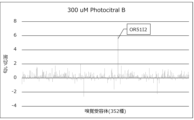
- the response (vertical axis) is shown as the "olfactory receptor activity" value.
- the response (vertical axis) is shown as the "olfactory receptor activity” value.
- a graph (n 3) showing the concentration dependence of the response of the olfactory receptor OR51I2 to photocitral A.
- the response (vertical axis) is shown as a "fold increase” value.
- the response (vertical axis) is shown as a "fold increase” value.
- the first embodiment of the method of the present invention is a screening method for substances that suppress lemon light deterioration odor using olfactory receptors (OR).
- the first embodiment of the method of the present invention is also referred to as the "screening method of the present invention".
- a substance that suppresses lemon light deterioration odor can be identified (i.e., whether the test substance is a substance that suppresses lemon light deterioration odor) using olfactory receptors.
- a substance that suppresses lemon light deterioration odor can be identified (i.e., whether the test substance is a substance that suppresses lemon light deterioration odor) based on the response of the olfactory receptor to an olfactory receptor activating substance in the presence of the test substance.
- a substance that suppresses lemon light deterioration odor can be identified (i.e., whether the test substance is a substance that suppresses lemon light deterioration odor) based on the inhibition of the response of the olfactory receptor to an olfactory receptor activating substance by the test substance.
- the screening method of the present invention specifically includes the steps of: (A) contacting an olfactory receptor with an olfactory receptor activating substance in the presence of a test substance; (B) measuring the response of the olfactory receptor to the olfactory receptor activating substance; and (C) identifying the test substance as a substance that suppresses lemon light-deterioration odor based on the response, and may be a screening method for a substance that suppresses lemon light-deterioration odor, in which the test substance is identified as a substance that suppresses lemon light-deterioration odor if the response is inhibited by the test substance.
- the term “lemon light-deterioration odor” may mean an odor that is generated when a component that may be contained in a lemon changes due to light.
- the term “lemon light-deterioration odor” may mean an odor that is generated when a component that may be contained in a lemon changes due to light.
- the term “odor” may mean retronasal aroma (i.e., an odor felt from the throat to the nasal cavity when eating food) and/or orthonasal aroma (i.e., an odor smelled directly from the nose).
- a change due to light is also called "photodeterioration”.
- the lemon light-deterioration odor may be an unpleasant odor.
- Examples of components that exhibit the lemon light-deterioration odor include photocitral A, photocitral B, and 2-decenal. That is, examples of the lemon light-deterioration odor include photocitral A odor, photocitral B odor, and 2-decenal odor.
- Examples of the lemon light-deterioration odor include photocitral A odor, photocitral B odor, and 2-decenal odor.
- “Photocitral A odor”, “photocitral B odor”, and “2-decenal odor” refer to the odors exhibited by photocitral A, photocitral B, and 2-decenal, respectively.
- Specific examples of photocitral A odor and photocitral B odor include metallic odor.
- photocitral A odor or photocitral B odor for example, the metallic odor may be suppressed.
- 2-decenal odor include a smell like burnt vinyl. That is, by suppressing the 2-decenal odor, for example, the smell like burnt vinyl may be suppressed.
- Both photocitral A and photocitral B can be generated from, for example, citral. That is, an example of a component that can be contained in lemon that changes due to light to produce a lemon photodegradation odor is citral.
- the substance that suppresses the lemon light degradation odor is not particularly limited as long as it can suppress the lemon light degradation odor (i.e., has the function of suppressing the lemon light degradation odor).
- the function of suppressing the lemon light degradation odor is also called a "masking function".
- the substance that suppresses the lemon light degradation odor may be composed of a single component (i.e., a pure substance) or may be composed of a combination of two or more components (i.e., a mixture).
- a “mixture” is also called a "composition”.
- the substance that suppresses the lemon light degradation odor is a mixture, the number of types and composition ratio of the components that make up the mixture are not particularly limited.
- each component that makes up the mixture may or may not suppress the lemon light degradation odor by itself.
- test substance refers to a substance used in the screening method of the present invention as a candidate substance for suppressing the light deterioration odor of lemon.
- the test substance is not particularly limited.
- the test substance may be a single component (i.e., a pure substance) or a combination of two or more components (i.e., a mixture). When the test substance is a mixture, the number of types and composition ratio of the components constituting the mixture are not particularly limited.
- the test substance may be a known substance or a new substance.
- the test substance may be a natural product or an artificial product.
- the test substance may be, for example, a compound library created using combinatorial chemistry technology.
- test substance examples include alcohols, ketones, aldehydes, ethers, esters, hydrocarbons, sugars, organic acids, nucleic acids, amino acids, peptides, lipids, and various other organic or inorganic components.
- test substance examples include, in particular, existing food additives.
- existing food additives refers to substances that have already been approved for use as food additives.
- the test substance may be one type of test substance, or two or more types of test substances may be used in combination.
- the test substance may be selected to include, for example, the substances exemplified above, such as existing food additives.
- the test substance may be, for example, one existing food additive, two or more food additives in combination, or one or more food additives in combination with one or more other components.
- the combination of components as a whole is a substance that suppresses the light deterioration odor of lemon.
- Examples of "bringing two or more components into contact with the olfactory receptor together" include a case where a test substance that is a mixture is brought into contact with the olfactory receptor, and a case where two or more test substances are brought into contact with the olfactory receptor together.
- Olfactory receptor activator means a substance that activates an olfactory receptor.
- An olfactory receptor activator is also called an "agonist".
- An olfactory receptor activator can be selected according to the type of olfactory receptor.
- the olfactory receptor activator is not particularly limited as long as it can activate the olfactory receptor.
- An olfactory receptor activator may be composed of a single component (i.e., a pure substance) or may be composed of a combination of two or more components (i.e., a mixture).
- each component constituting the mixture may or may not activate the olfactory receptor by itself as long as the mixture activates the olfactory receptor.
- the number of types and composition ratio of the components constituting the mixture are not particularly limited.
- An olfactory receptor activator may be a known substance or a new substance.
- An olfactory receptor activator may be a natural product or an artificial product.
- An olfactory receptor activator may or may not be known to be able to activate an olfactory receptor.
- the olfactory receptor activator for example, one that can activate the olfactory receptor may be selected from the test substances exemplified above.
- the olfactory receptor activator for each olfactory receptor a component that exhibits a lemon light deterioration odor corresponding to each olfactory receptor may be used. Specific examples of the olfactory receptor activator for each olfactory receptor will be described later.
- Olfactory receptors OR51I2 or OR2C1 are used as olfactory receptors.
- "olfactory receptor” means OR51I2 or OR2C1 unless otherwise specified.
- Genes that code for olfactory receptors are also called “olfactory receptor genes.”
- OR51I2 refers to an olfactory receptor classified as Olfactory Receptor Family 51 Subfamily I Member 2.
- the gene encoding OR51I2 is also called "OR51I2 gene".
- Examples of the lemon light-degradation odor when the olfactory receptor is OR51I2 include photocitral A odor and photocitral B odor.
- examples of components that exhibit the lemon light-degradation odor corresponding to OR51I2 include photocitral A and photocitral B. Both photocitral A and photocitral B are also examples of olfactory receptor activators of OR51I2.
- OR51I2 is responsive to olfactory receptor activators of OR51I2.
- OR51I2 may be responsive to only one of the olfactory receptor activators of OR51I2 as exemplified above, or may be responsive to two or more of the olfactory receptor activators of OR51I2 as exemplified above. Typically, OR51I2 may be responsive to all of the olfactory receptor activators of OR51I2 listed above. As OR51I2, one type of OR51I2 may be used, or two or more types of OR51I2 may be used in combination.
- OR2C1 refers to an olfactory receptor classified as Olfactory Receptor Family 2 Subfamily C Member 1.
- the gene encoding OR2C1 is also called the "OR2C1 gene.”
- OR2C1 the odor of lemon light degradation can be exemplified by the odor of 2-decenal.
- 2-decenal is also an example of an olfactory receptor activator for OR2C1.
- examples of olfactory receptor activators for OR2C1 include 4-vinylphenol, methyl octyl sulfide, n-pentane, 1,8-cineole, amyl caprylate, 4-heptanone, n-decane, 1-heptanal, trans-2-decenal, isoamyl methyl ketone, allyl mercaptan, trans-2-nonenal, phenethyl alcohol, 4,5-epoxydecenal, benzenemethanethiol, (Z)-6-nonenal, 3-methyl-2-butene-1-thiol, skatole, p-isopropylphenol, isoquinoline, carvone, benzaldehyde, and ⁇ -octalactone.
- OR2C1 examples include, in particular, 3-methyl-2-butene-1-thiol.
- OR2C1 has responsiveness to olfactory receptor activators for OR2C1.
- OR2C1 may be responsive to only one of the olfactory receptor activators of OR2C1 as exemplified above, or may be responsive to two or more of the olfactory receptor activators of OR2C1 as exemplified above.
- OR2C1 may typically be responsive to all of the olfactory receptor activators of OR2C1 as exemplified above.
- one type of OR2C1 may be used, or two or more types of OR2C1 may be used in combination.
- the olfactory receptor activator used may or may not be a component that exhibits the lemon light degradation odor that is the target of suppression.
- photocitral A may be used as the olfactory receptor activator to screen for a substance that suppresses the photocitral A odor, or a substance that suppresses the photocitral B odor may be screened.
- the olfactory receptor activator used may in particular be a component that exhibits the lemon light degradation odor that is the target of suppression.
- Olfactory receptor genes and olfactory receptors include those of various organisms.
- Organisms include, for example, animals such as mammals. Specific examples of animals such as mammals include Homo sapiens (human), Mus musculus (mouse), Rattus norvegicus (rat), Canis lupus familiaris (dog), Felis catus (cat), Bos taurus (cow), Sus scrofa (pig), Pan troglodytes (chimpanzee), Macaca fascicularis (cynomolgus monkey), and Equus caballus (horse). Mammals include, in particular, humans.
- nucleotide sequences of olfactory receptor genes and amino acid sequences of olfactory receptors of various organisms can be obtained from public databases such as NCBI and Ensembl.
- the nucleotide sequence of the human OR51I2 gene and the amino acid sequence of OR51I2 are shown in SEQ ID NO: 1 and SEQ ID NO: 2, respectively.
- the base sequence of the human OR2C1 gene and the amino acid sequence of OR2C1 are shown in SEQ ID NOs: 3 and 4, respectively.
- the olfactory receptor gene may be, for example, a gene having a known or natural nucleotide sequence of an olfactory receptor gene as described above (for example, the nucleotide sequence of an olfactory receptor gene of the above-mentioned organism registered with NCBI, or the nucleotide sequence of SEQ ID NO: 1 or 3).
- the olfactory receptor may also be, for example, a protein having a known or natural amino acid sequence of an olfactory receptor as described above (for example, the amino acid sequence of an olfactory receptor of the above-mentioned organism registered with NCBI, or the amino acid sequence of SEQ ID NO: 2 or 4).
- a gene has a nucleotide sequence
- a gene contains the nucleotide sequence, unless otherwise specified, and also includes cases where the gene consists of the nucleotide sequence.
- a protein has an amino acid sequence means that a protein contains the amino acid sequence, unless otherwise specified, and also includes cases where the protein consists of the amino acid sequence.
- the olfactory receptor may be, for example, a chimeric protein of two or more olfactory receptors of different origins. That is, OR51I2 includes, for example, chimeric proteins of two or more OR51I2s of different origins. Also, OR2C1 includes, for example, chimeric proteins of two or more OR2C1s of different origins. Such chimeric proteins are also called "chimeric olfactory receptors.” In other words, "chimeric olfactory receptor" means a protein having a chimeric sequence of an olfactory receptor (i.e., a protein having a chimeric sequence of two or more olfactory receptors of different origins).
- Chromatin sequence of olfactory receptor means a chimeric sequence of an amino acid sequence of an olfactory receptor (i.e., a chimeric sequence of an amino acid sequence of two or more olfactory receptors of different origins).
- "Chimera sequence of olfactory receptor” specifically means an amino acid sequence of an olfactory receptor, a partial sequence of which is replaced with a partial sequence of an amino acid sequence of an olfactory receptor of one or more other origins. The substitution of amino acid sequences in the construction of chimeric olfactory receptors can be carried out between corresponding sites in the amino acid sequences of olfactory receptors.
- Corresponding sites in the amino acid sequences of olfactory receptors refers to sites arranged at corresponding positions in the alignment of the amino acid sequences of those olfactory receptors.
- Examples of chimeric olfactory receptors include chimeric proteins of olfactory receptors of the organisms exemplified above (i.e., chimeric proteins of olfactory receptors of two or more organisms selected from the organisms exemplified above).
- Specific examples of chimeric olfactory receptors include chimeric olfactory receptors of mammals (i.e., chimeric proteins of olfactory receptors of two or more mammals).
- the olfactory receptor may be, for example, a protein having a chimeric sequence of the amino acid sequence of the olfactory receptor of the organism exemplified above (specifically, a chimeric sequence of the amino acid sequence of the olfactory receptor of two or more organisms selected from the organisms exemplified above).
- Chimeric olfactory receptors for each olfactory receptor can be selected that are responsive to olfactory receptor activators for each olfactory receptor (e.g., photocitral A and photocitral B for the OR51I2 chimeric olfactory receptor, and 2-decenal and 3-methyl-2-butene-1-thiol for the OR2C1 chimeric olfactory receptor).
- olfactory receptor activators for each olfactory receptor e.g., photocitral A and photocitral B for the OR51I2 chimeric olfactory receptor, and 2-decenal and 3-methyl-2-butene-1-thiol for the OR2C1 chimeric olfactory receptor.
- the number of organisms from which the olfactory receptors constituting the chimeric olfactory receptor are derived is not particularly limited.
- the number of organisms from which the olfactory receptors constituting the chimeric olfactory receptor are derived may be two, three or more.
- composition ratio of the olfactory receptors derived from each organism in the chimeric olfactory receptor is not particularly limited.
- the composition ratio of the olfactory receptors derived from each organism can be set appropriately within a range in which the total composition ratio of the olfactory receptors derived from each organism constituting the chimeric olfactory receptor does not exceed 100%.
- composition ratio of the olfactory receptors derived from each organism may be, for example, 1% or more, 3% or more, 5% or more, 10% or more, 20% or more, 40% or more, 50% or more, 60% or more, 70% or more, 80% or more, 90% or more, 95% or more, 97% or more, or 99% or more, or 99% or less, 97% or less, 95% or less, 90% or less, 80% or less, 70% or less, 60% or less, 50% or less, 40% or less, 30% or less, 20% or less, 10% or less, 5% or less, 3% or less, or 1% or less, or a combination thereof that does not contradict.
- Constant ratio of olfactory receptors derived from each organism refers to the ratio of the number of amino acid residues in the olfactory receptor derived from each organism to the total number of amino acid residues constituting the chimeric olfactory receptor. Note that if the amino acid residues constituting the chimeric olfactory receptor correspond to a conserved sequence in the olfactory receptors derived from each organism constituting the chimeric olfactory receptor, the amino acid residues may be considered to be derived from any of those organisms.
- the distribution pattern of the olfactory receptors derived from each organism in a chimeric olfactory receptor is not particularly limited.
- the olfactory receptors derived from each organism may be present in one location, or may be present dispersedly in two or more locations.
- a chimeric olfactory receptor is designed by replacing the internal amino acid sequence of an olfactory receptor derived from one organism (olfactory receptor A) with the amino acid sequence of an olfactory receptor derived from another organism (olfactory receptor B), the amino acid sequence of olfactory receptor A will remain dispersed at the N-terminus and C-terminus of the chimeric olfactory receptor.
- examples of olfactory receptor genes include chimeric olfactory receptor genes.
- the descriptions of chimeric olfactory receptors can also be applied mutatis mutandis to chimeric olfactory receptor genes.
- the olfactory receptor gene may be a variant of the olfactory receptor gene exemplified above (e.g., a variant of a gene having the nucleotide sequence of the olfactory receptor gene of the organism exemplified above or a chimeric sequence thereof) so long as the original function is maintained.
- the olfactory receptor may be a variant of the olfactory receptor exemplified above (e.g., a variant of a protein having the amino acid sequence of the olfactory receptor of the organism exemplified above or a chimeric sequence thereof) so long as the original function is maintained.
- Such a variant that maintains the original function may be referred to as a "conservative variant".
- OR51I2 gene and OR2C1 gene include the OR51I2 gene and OR2C1 gene exemplified above, as well as their conservative variants.
- OR51I2 and OR2C1 include the OR51I2 and OR2C1 exemplified above, as well as their conservative variants.
- Conservative variants include, for example, the olfactory receptor genes and olfactory receptors exemplified above, as well as homologs and artificially modified forms.
- the olfactory receptor gene identified in the originating biological species is not limited to the olfactory receptor gene itself found in the biological species, but includes genes having the base sequence of the olfactory receptor gene found in the biological species, and conservative variants thereof.
- the olfactory receptor identified in the originating biological species is not limited to the olfactory receptor itself found in the biological species, but includes proteins having the amino acid sequence of the olfactory receptor found in the biological species, and conservative variants thereof. These conservative variants may or may not be found in the biological species.
- the term "mammalian olfactory receptor" includes proteins having the amino acid sequence of the olfactory receptor found in mammals, and conservative variants thereof.
- the term "mammalian chimeric olfactory receptor” includes proteins having a chimeric sequence of the amino acid sequence of the olfactory receptor found in mammals, and conservative variants thereof.
- the olfactory receptor constituting the "mammalian chimeric olfactory receptor” is not limited to the olfactory receptor itself found in mammals, but may be a conservative variant thereof.
- the original function is maintained means that a gene or protein variant has a function (activity or property) that corresponds to the function (activity or property) of the original gene or protein.
- the original function is maintained with respect to a gene means that a gene variant encodes a protein whose original function is maintained.
- each olfactory receptor gene may mean that a gene variant encodes an olfactory receptor that is responsive to olfactory receptor activators for each olfactory receptor (e.g., photocitral A or photocitral B for the OR51I2 gene, 2-decenal or 3-methyl-2-butene-1-thiol for the OR2C1 gene).
- olfactory receptor variant has responsiveness to olfactory receptor activators for each olfactory receptor (e.g., photocitral A and photocitral B for OR51I2, and 2-decenal and 3-methyl-2-butene-1-thiol for OR2C1).
- Whether an olfactory receptor is responsive to an olfactory receptor activator can be confirmed, for example, by measuring the response (e.g., activation) of the olfactory receptor when the olfactory receptor is contacted with an olfactory receptor activator.
- Olfactory receptor gene homologs or olfactory receptor homologs can be easily obtained from public databases, for example, by BLAST or FASTA searches using the nucleotide sequences of the olfactory receptor genes exemplified above or the amino acid sequences of the olfactory receptors exemplified above as query sequences.
- olfactory receptor gene homologs can be obtained, for example, by PCR using chromosomes of various organisms as templates and oligonucleotides prepared based on the nucleotide sequences of these known olfactory receptor genes as primers.
- the olfactory receptor gene may be a gene that encodes a protein having an amino acid sequence in which one or several amino acids at one or several positions in the above amino acid sequence (for example, the amino acid sequence of the olfactory receptor of the organism exemplified above or a chimeric sequence thereof) have been substituted, deleted, inserted, and/or added.
- the encoded protein may have an extended or shortened N-terminus and/or C-terminus.
- the above “one or several” varies depending on the position and type of amino acid residue in the three-dimensional structure of the protein, but specifically means, for example, 1 to 50, 1 to 40, 1 to 30, preferably 1 to 20, more preferably 1 to 10, even more preferably 1 to 5, and particularly preferably 1 to 3.
- substitutions, deletions, insertions, and/or additions of one or several amino acids are conservative mutations that maintain the normal function of the protein.
- a typical example of a conservative mutation is conservative substitution.
- a conservative substitution is a mutation in which Phe, Trp, and Tyr are substituted with each other when the substitution site is an aromatic amino acid, Leu, Ile, and Val are substituted with each other when the substitution site is a hydrophobic amino acid, Gln and Asn are substituted with each other when the substitution site is a polar amino acid, Lys, Arg, and His are substituted with each other when the substitution site is a basic amino acid, Asp and Glu are substituted with each other when the substitution site is an acidic amino acid, and Ser and Thr are substituted with each other when the substitution site is an amino acid with a hydroxyl group.
- substitutions that are considered to be conservative substitutions include substitutions of Ala to Ser or Thr, substitutions of Arg to Gln, His, or Lys, substitutions of Asn to Glu, Gln, Lys, His, or Asp, substitutions of Asp to Asn, Glu, or Gln, substitutions of Cys to Ser or Ala, substitutions of Gln to Asn, Glu, Lys, His, Asp, or Arg, substitutions of Glu to Gly, Asn, Gln, Lys, or Asp, substitutions of Gly to Pro, substitutions of His to Asn, Lys, Gln, Arg, or Tyr, substitutions of Il Examples of substitutions include substitutions of Lys with Leu, Met, Val, or Phe, substitutions of Leu with Ile, Met, Val, or Phe, substitutions of Lys with Asn, Glu, Gln, His, or Arg, substitutions of Met with Ile, Leu, Val, or Phe, substitutions of Phe, substitution
- the olfactory receptor gene may be a gene encoding a protein having an amino acid sequence that has, for example, 50% or more, 65% or more, 80% or more, preferably 90% or more, more preferably 95% or more, even more preferably 97% or more, and particularly preferably 99% or more identity to the entire amino acid sequence described above, so long as the original function is maintained.
- the olfactory receptor gene may be a gene, such as DNA, that hybridizes under stringent conditions with a probe that can be prepared from the above base sequence (e.g., the base sequence of the olfactory receptor gene of the organism exemplified above or a chimeric sequence thereof), such as a complementary sequence to all or part of the above base sequence, so long as the original function is maintained.
- stringent conditions refer to conditions under which so-called specific hybrids are formed and non-specific hybrids are not formed.
- DNAs with high identity for example DNAs with an identity of 50% or more, 65% or more, 80% or more, preferably 90% or more, more preferably 95% or more, even more preferably 97% or more, and particularly preferably 99% or more, hybridize with each other, and DNAs with lower identity do not hybridize with each other; or a condition in which washing is performed once, preferably 2 to 3 times, at a salt concentration and temperature equivalent to the washing conditions for normal Southern hybridization, which are 60°C, 1xSSC, 0.1% SDS, preferably 60°C, 0.1xSSC, 0.1% SDS, more preferably 68°C, 0.1xSSC, 0.1% SDS.
- a salt concentration and temperature equivalent to the washing conditions for normal Southern hybridization which are 60°C, 1xSSC, 0.1% SDS, preferably 60°C, 0.1xSSC, 0.1% SDS, more preferably 68°C, 0.1xSSC, 0.1% SDS.
- the probe used in the hybridization may be a part of the complementary sequence of the gene.
- a probe can be prepared by PCR using oligonucleotides prepared based on a known gene sequence as primers and a DNA fragment containing the above-mentioned gene as a template.
- a DNA fragment of about 300 bp in length can be used as the probe.
- washing conditions for the hybridization include 50°C, 2xSSC, and 0.1% SDS.
- the olfactory receptor gene may be one in which any codon has been replaced with an equivalent codon.
- the olfactory receptor gene may be, for example, a variant of the olfactory receptor gene exemplified above due to the degeneracy of the genetic code.
- the olfactory receptor gene may be modified to have an optimal codon depending on the codon usage frequency of the host used.
- the term "gene” is not limited to DNA, and may include any polynucleotide as long as it codes for a protein of interest.
- "olfactory receptor gene” may mean any polynucleotide that codes for an olfactory receptor.
- the olfactory receptor gene may be DNA, RNA, or a combination thereof.
- the olfactory receptor gene may be single-stranded or double-stranded.
- the olfactory receptor gene may be single-stranded DNA or single-stranded RNA.
- the olfactory receptor gene may be double-stranded DNA, double-stranded RNA, or a hybrid strand consisting of a DNA strand and an RNA strand.
- the olfactory receptor gene may contain both DNA residues and RNA residues in a single polynucleotide strand.
- the description of DNA such as the nucleotide sequence exemplified above may be appropriately interpreted in accordance with RNA.
- the olfactory receptor gene may or may not contain an intron.
- the form of the olfactory receptor gene can be appropriately selected depending on various conditions such as its mode of use.
- the olfactory receptor may contain other amino acid sequences in addition to the amino acid sequence of the olfactory receptor as described above.
- the olfactory receptor may be a fusion protein of the amino acid sequence of the olfactory receptor as described above with other amino acid sequences.
- the other amino acid sequences are not particularly limited as long as the olfactory receptor has responsiveness to an olfactory receptor activator. Examples of the other amino acid sequences include tag sequences such as His tags and V5 epitope tags.
- the other amino acid sequences may be linked, for example, to the N-terminus or C-terminus, or both, of the olfactory receptor.
- the olfactory receptor can be used in any form that can be used to screen for substances that suppress the light-degraded odor of lemon. That is, specifically, the olfactory receptor can be used in any form as long as the olfactory receptor can come into contact with the test substance and is responsive to an olfactory receptor activating substance.
- the form in which the olfactory receptor is used can be appropriately set depending on various conditions such as the embodiment of the screening method of the present invention.
- the olfactory receptor may be used in a form isolated to a desired degree, such as a purified product or a crude product, or in a form contained in a material.
- the olfactory receptor may be used, specifically, in a form supported by a structure.
- Examples of the structure include cells, cell membranes, artificial lipid bilayer vesicles, and artificial lipid bilayer membranes.
- Examples of the structure include cells, in particular.
- the olfactory receptor may be used in the form of a structure having (supporting) an olfactory receptor, such as a cell having an olfactory receptor, a cell membrane having an olfactory receptor, an artificial lipid bilayer vesicle having an olfactory receptor, or an artificial lipid bilayer membrane having an olfactory receptor.
- an olfactory receptor such as a cell having an olfactory receptor, a cell membrane having an olfactory receptor, an artificial lipid bilayer vesicle having an olfactory receptor, or an artificial lipid bilayer membrane having an olfactory receptor.
- These structures having an olfactory receptor may also be used, for example, in a form isolated to a desired degree, or in a form contained in a material.
- the olfactory receptor may also constitute a part of an instrument. That is, the olfactory receptor may also be used, for example, in the form of an instrument equipped with
- Examples of devices equipped with olfactory receptors include devices with immobilized olfactory receptors and devices equipped with structures (such as lipid bilayer membranes) having olfactory receptors.
- Examples of devices equipped with lipid bilayer membranes include chips on which lipid bilayer membranes are arranged (WO2005/000558; Watanabe R. et al., Arrayed lipid bilayer chambers allow single-molecule analysis of membrane transporter activity. Nat Commun. 2014 Jul 24;5:4519.; Kamiya K. et al., Preparation of artificial cell membrane a and an ion channel measurement device with a lipid bilayer prepared by the droplet contact method (Kawano R.
- Olfactory receptors can be produced, for example, by expressing an olfactory receptor gene. Expression of the olfactory receptor gene may be carried out, for example, using cells or a cell-free protein synthesis system. For expression of the olfactory receptor gene using cells, please refer to the explanation of cells having olfactory receptors described below. The expressed olfactory receptor can be obtained appropriately in the form described above and used in the screening method of the present invention.
- Cells having olfactory receptors are also referred to as "cells of the present invention.”
- Olfactory receptors can function by localizing to, for example, the cell membrane.
- cells of the present invention may have olfactory receptors, for example, in the cell membrane.
- Olfactory receptors are expressed from olfactory receptor genes.
- the cells of the present invention have olfactory receptor genes.
- the cells of the present invention have olfactory receptor genes in an expressible manner. It is sufficient for the cells of the present invention to have the olfactory receptor genes until the cells express the olfactory receptors.
- the cells of the present invention may or may not have the olfactory receptor genes after the expression of the olfactory receptors.
- the cells of the present invention are cells that have expressed the olfactory receptor genes, and are also cells that have expressed the olfactory receptors. It is to be noted that "expression of the olfactory receptor genes" and "expression of the olfactory receptors" can be used synonymously.
- the cells of the present invention may have one copy of an olfactory receptor gene, or may have two or more copies of an olfactory receptor gene.
- the cells of the present invention may inherently have an olfactory receptor gene, or may be modified to have an olfactory receptor gene.
- Cells that inherently have olfactory receptor genes include cells of organisms from which the above-mentioned olfactory receptor genes are derived, such as taste cells of mammals such as humans. Cells that inherently have olfactory receptor genes can be obtained, for example, from organisms or tissues that contain the cells.
- Cells that have been modified to have olfactory receptor genes include cells into which olfactory receptor genes have been introduced.
- the cells of the present invention and cells used to obtain them are collectively referred to as "host cells.”
- the host cell is not particularly limited as long as it can express a functional olfactory receptor and can be used to screen for a substance that suppresses the light deterioration odor of lemon.
- Examples of the host cell include bacterial cells, fungal cells, plant cells, insect cells, and animal cells.
- Preferred host cells include eukaryotic cells such as fungal cells, plant cells, insect cells, and animal cells. More preferred host cells include animal cells.
- Examples of animals include mammals, birds, and amphibians. Examples of mammals include rodents and primates. Examples of rodents include Chinese hamsters, hamsters, mice, rats, and guinea pigs. Examples of primates include humans, monkeys, and chimpanzees. Examples of birds include chickens.
- Examples of amphibians include Xenopus frogs.
- the tissue or cells from which the host cell is derived are not particularly limited. Examples of tissues or cells from which host cells are derived include ovaries, kidneys, adrenal glands, tongue epithelium, olfactory epithelium, pineal gland, thyroid gland, and melanocytes.
- Examples of Chinese hamster cells include Chinese hamster ovary-derived cell lines (CHO). Specific examples of CHO include CHO-DG44 and CHO-K1. Examples of human cells include human embryonic kidney cell-derived cell lines (HEK). Specific examples of HEK include HEK293 and HEK293T. Examples of monkey cells include African green monkey kidney cell-derived cell lines (COS).
- COS include COS-1.
- Xenopus cells include Xenopus oocytes.
- insect cells include Spodoptera frugiperda-derived cells such as Sf9, Sf21, and SF+, and Trichoplusia ni-derived cells such as High-Five.
- the host cells may be individual, independent cells (e.g., free cells) or may form an aggregate such as a tissue.
- Olfactory receptor genes can be obtained by cloning from organisms that have the olfactory receptor genes. Nucleic acids such as genomic DNA or cDNA that contain the genes can be used for cloning. Olfactory receptor genes can also be obtained by chemical synthesis (Gene, 60(1), 115-127 (1987)).
- the obtained olfactory receptor gene can be used as is or after appropriate modification. That is, by modifying the olfactory receptor gene, its variant can be obtained.
- Gene modification can be performed by known techniques. For example, a desired mutation can be introduced into a target site in DNA by site-directed mutagenesis. That is, for example, the coding region of a gene can be modified by site-directed mutagenesis so that the encoded protein contains substitutions, deletions, insertions, and/or additions of amino acid residues at specific sites.
- Site-specific mutagenesis methods include PCR (Higuchi, R., 61, in PCR technology, Erlich, H. A. Eds., Stockton press (1989); Carter, P., Meth.
- the form in which the olfactory receptor gene is introduced into the host cell is not particularly limited.
- the olfactory receptor gene only needs to be retained in the host cell in an expressible manner.
- the olfactory receptor gene when the olfactory receptor gene is introduced in a form that requires transcription of DNA or the like, the olfactory receptor gene only needs to be retained in the host cell in an expressible manner under the control of a promoter that functions in the host cell.
- the olfactory receptor gene may be present extrachromosomally or may be introduced onto the chromosome. When two or more genes are introduced, each gene only needs to be retained in the host cell in an expressible manner.
- the promoter for expressing the olfactory receptor gene is not particularly limited as long as it functions in the host cell.
- a "promoter that functions in the host cell” refers to a promoter that has promoter activity in the host cell.
- the promoter may be a promoter derived from the host cell or a heterologous promoter.
- the promoter may be a promoter specific to the olfactory receptor gene or a promoter of another gene.
- the promoter may be a stronger promoter than the specific promoter of the olfactory receptor gene.
- promoters that function in animal cells include the SV40 promoter, the EF1a promoter, the RSV promoter, the CMV promoter, and the SRalpha promoter.
- highly active promoters of existing promoters may be obtained and used by using various reporter genes.
- Methods for evaluating promoter strength and examples of strong promoters are described in Goldstein et al.'s paper (Prokaryotic promoters in biotechnology. Biotechnol. Annu. Rev., 1, 105-128 (1995)) and the like.
- the olfactory receptor gene can be introduced into a host cell, for example, using a vector containing the gene.
- a vector containing an olfactory receptor gene is also called an "olfactory receptor gene expression vector.”
- An olfactory receptor gene expression vector can be constructed, for example, by linking a DNA fragment containing the olfactory receptor gene to a vector.
- the olfactory receptor gene expression vector can be introduced into a host cell by introducing the olfactory receptor gene expression vector into the host cell.
- the vector may have a marker such as a drug resistance gene.
- the vector may also have an expression regulatory sequence such as a promoter for expressing the inserted gene.
- the vector can be appropriately selected depending on various conditions such as the type of host cell and the introduction form of the olfactory receptor gene.
- vectors that can be used to introduce genes into animal cells include plasmid vectors and virus vectors.
- virus vectors include retrovirus vectors and adenovirus vectors.
- plasmid vectors include pcDNA series vectors (pcDNA3.1, etc.; Thermo Fisher Scientific), pBApo-CMV series vectors (Takara Bio), and pCI-neo (Promega).
- the vector may be integrated into the chromosome of the host cell, may autonomously replicate extrachromosomally, or may be temporarily retained extrachromosomally in the host cell.
- a vector having a viral replication origin such as the SV40 replication origin may autonomously replicate extrachromosomally in an animal cell.
- the pcDNA series vectors have the SV40 replication origin and may autonomously replicate extrachromosomally in host cells (COS-1, HEK293T, etc.) that express the SV40 large T antigen.
- the olfactory receptor gene can also be introduced into a host cell by, for example, introducing a nucleic acid fragment containing the gene into the host cell.
- a nucleic acid fragment containing an olfactory receptor gene is also called an "olfactory receptor gene fragment.”
- Such fragments include linear DNA and linear RNA. Examples of linear RNA include mRNA and cRNA.
- the method for introducing nucleic acids such as vectors and nucleic acid fragments into host cells can be selected appropriately depending on various conditions such as the type of host cells.
- methods for introducing nucleic acids such as vectors and nucleic acid fragments into host cells such as animal cells include the DEAE dextran method, calcium phosphate method, lipofection method, electroporation method, and microinjection method.
- the vector when the vector is a viral vector, the vector can be introduced into the host cell by infecting the host cell with the vector (virus).
- cells that inherently have an olfactory receptor gene may be modified to increase the expression of the olfactory receptor gene.
- Increased gene expression means that the expression level of the gene per cell is increased compared to unmodified cells.
- Unmodified cells here means control cells that have not been modified to increase the expression of the target gene. Examples of unmodified cells include wild-type cells and original modified cells.
- Methods for increasing the expression of the olfactory receptor gene include increasing the copy number of the olfactory receptor gene and improving the transcription efficiency and translation efficiency of the olfactory receptor gene. The copy number of the olfactory receptor gene can be increased by introducing the olfactory receptor gene into the host cell.
- the introduction of the olfactory receptor gene can be carried out as described above.
- the introduced olfactory receptor gene may be derived from the host cell or may be derived from a different species.
- the transcription efficiency and translation efficiency of the olfactory receptor gene can be improved by modifying the expression regulatory sequence of the gene, such as a promoter.
- the transcription efficiency of the olfactory receptor gene can be improved by replacing the promoter of the olfactory receptor gene with a stronger promoter.
- the cells of the present invention may have any other properties as long as they can be used to screen for substances that suppress the light-degraded odor of lemon.
- Such properties include, for example, properties that are useful for measuring the response of olfactory receptors to olfactory receptor activators.
- the description of the properties of the cells of the present invention can also be applied mutatis mutandis to cases where olfactory receptors are used in other embodiments. Examples of cases where olfactory receptors are used in other embodiments include cases where artificial lipid bilayer vesicles, cell membranes, or artificial lipid bilayer membranes having olfactory receptors are used.
- the cells of the present invention may or may not have, for example, olfactory receptors other than the selected olfactory receptor (also referred to as "other olfactory receptors"). In some cases, it may be preferable for the cells of the present invention not to have other olfactory receptors. Examples of cells that do not have other olfactory receptors include cells that do not have a gene encoding another olfactory receptor, and cells that have a gene encoding another olfactory receptor but do not express said gene.
- the cells of the present invention may, for example, not inherently have other olfactory receptors, or may be modified so that they do not have other olfactory receptors. Modifying cells so that they do not have other olfactory receptors can be achieved, for example, by knocking out the gene encoding the other olfactory receptor.
- the cells of the present invention may also have, for example, a protein involved in signal transduction.
- the cells of the present invention may have a gene encoding a protein involved in signal transduction.
- proteins involved in signal transduction include G proteins (e.g., Golf), G protein activators (e.g., Ric8B), adenylate cyclase, and calcium channels.
- Golf includes, for example, animal Golf, such as human Golf (GenBank accession No. NP_892023).
- Ric8B includes, for example, animal Ric8B, such as rat Ric8B (GenBank accession No. NP_783188).
- the cells of the present invention may also have, for example, components corresponding to the parameters to be measured.
- Such components include a probe, such as a calcium indicator, and a reporter gene, such as a luciferase gene.
- a probe such as a calcium indicator
- a reporter gene such as a luciferase gene.
- the cells of the present invention may have a gene encoding the probe.
- the cells of the present invention may also have, for example, a protein that promotes membrane expression of an olfactory receptor.
- the cells of the present invention may have a gene encoding such a protein.
- RTP1s RTP1s (Zhuang H and Matsunami H, J Biol Chem 282, 15284-15293 (2007)).
- RTP1s include animal RTP1s such as human RTP1s (GenBank accession No. AAT70680), mouse RTP1s (GenBank accession No. ABU23737), and bat RTP1s (amino acid sequence from the methionine residue at position 37 to the C-terminus of GenBank accession No. XP_006765914).
- the amino acid sequence of mouse RTP1s has 93.3% identity with the amino acid sequence of human RTP1s.
- the amino acid sequence of bat RTP1s (partial sequence above) has 90.7% identity with the amino acid sequence of human RTP1s.
- the cells of the present invention may inherently have the properties exemplified above, or may be modified to have the properties exemplified above.
- the description of cell modification related to olfactory receptor genes, such as the introduction of olfactory receptor genes, can be applied mutatis mutandis to the cell modification.
- the genes exemplified above may be genes derived from the host cell, or may be genes derived from a different species. Furthermore, the genes exemplified above may or may not be of the same origin as the olfactory receptor gene. When introducing two or more genes, it is sufficient that each gene is retained in the host cell in an expressible manner.
- genes may be retained on a single expression vector, or all of the genes may be retained on a chromosome. Furthermore, the genes may be retained separately on multiple expression vectors, or may be retained separately on a single or multiple expression vectors and on a chromosome.
- the genes exemplified above and the proteins encoded thereby may have, for example, the nucleotide sequences and amino acid sequences of known genes and proteins, respectively. Furthermore, the genes exemplified above and the proteins encoded thereby may be, for example, conservative variants of known genes and proteins, respectively. For conservative variants of genes and proteins, the descriptions regarding conservative variants of olfactory receptor genes and olfactory receptors can be applied mutatis mutandis.
- a cell having an olfactory receptor gene can be used as a cell having an olfactory receptor (cell of the present invention) as it is, or by expressing the olfactory receptor gene appropriately. That is, when a cell having an olfactory receptor gene has already expressed the olfactory receptor gene, the cell may be used as it is as a cell having an olfactory receptor (cell of the present invention). In addition, a cell having an olfactory receptor (cell of the present invention) can be obtained by expressing the olfactory receptor gene in a cell having an olfactory receptor gene.
- the olfactory receptor gene can be expressed by culturing a cell having an olfactory receptor gene, thereby obtaining a cell having an olfactory receptor (cell of the present invention). Specifically, for example, after the introduction (for example, transfection) of the olfactory receptor gene, the culture of the host cell can be continued to express the olfactory receptor gene.
- the medium composition and culture conditions are not particularly limited as long as the cell having the olfactory receptor gene can be maintained (for example, grown) and the olfactory receptor gene is expressed. During culture, the cell having the olfactory receptor gene may or may not grow.
- the medium composition and culture conditions can be appropriately set according to various conditions such as the type of host cell.
- the culture can be performed using a normal medium and normal conditions used for culturing cells such as animal cells, either as is or with appropriate modifications.
- media that can be used for culturing animal cells include Opti-MEM medium (Thermo Fisher Scientific), DMEM medium, RPMI 1640 medium, and CD293 medium.
- the culture can be performed by static culture at, for example, 36°C to 38°C in an atmosphere containing CO2 such as 5% CO2 .
- a selection agent or an expression inducer can be used as necessary.
- olfactory receptors can be confirmed by measuring the response of the olfactory receptor to an olfactory receptor activator (for example, activation of the olfactory receptor by an olfactory receptor activator).
- the expression of olfactory receptors can also be confirmed by measuring the amount of mRNA transcribed from the olfactory receptor gene or by detecting the olfactory receptor by Western blotting using an antibody.
- the cells of the present invention can be used in the screening method of the present invention, for example, as is (as contained in the culture) or after being recovered from the medium. Furthermore, the culture or the cells recovered therefrom may be used in the screening method of the present invention, for example, after being appropriately treated by washing, concentrating, diluting, fixing, etc. In this way, the cells of the present invention may be used, for example, in a form isolated to a desired degree, or in a form contained in a material such as a culture. The same applies to other structures having olfactory receptors.
- Cell membranes having olfactory receptors can be prepared, for example, from the cells of the present invention. Specifically, cell membranes having olfactory receptors can be obtained, for example, as a membrane fraction obtained when the cells of the present invention are disrupted. Cell membranes having olfactory receptors can be used, for example, as they are or dispersed in an artificial lipid bilayer membrane. Cell membranes having olfactory receptors can be used in the form of vesicles (i.e., vesicles prepared from the cell membrane).
- artificial lipid bilayer vesicles or artificial lipid bilayer membranes having olfactory receptors by utilizing olfactory receptors.
- synthetic lipid bilayer vesicles or artificial lipid bilayer membranes having olfactory receptors by incorporating olfactory receptors into pre-prepared artificial lipid bilayer vesicles or artificial lipid bilayer membranes.
- synthetic lipid bilayer vesicles or artificial lipid bilayer membranes having olfactory receptors by preparing olfactory receptors in artificial lipid bilayer vesicles or artificial lipid bilayer membranes using olfactory receptors as raw materials.
- an appropriate form of olfactory receptor such as a membrane fraction having olfactory receptors
- Artificial lipid bilayer vesicles and artificial lipid bilayer membranes can be manufactured, for example, by known means.
- methods for producing artificial lipid bilayer membranes include the Montal-Mueller method and the droplet contact method (Kawano R. et al., Automated Parallel Recordings of Topologically Identified Single Ion Channels, Scientific Reports, 3, No. 1995 (2013)).
- US2018-0095071 discloses the preparation of artificial lipid bilayer membranes using crudely purified membrane fractions obtained from cultured cells.
- the artificial lipid bilayer membrane vesicles may have olfactory receptors, for example, in their membranes.
- Examples of lipid bilayer membrane vesicles include liposomes.
- Membranes such as cell membranes and artificial lipid bilayer membranes can be used, for example, to generate a space separated by the membrane.
- a membrane can be used, for example, to separate two spaces, such as two wells. That is, such a membrane can be used to provide a reaction system having two spaces, such as two wells, in which the two spaces are separated from each other by the membrane. Such two spaces only need to have at least a portion of their boundary separated by such a membrane.
- Such a reaction system can be provided, for example, as a device as described above.
- Screening Method of the Present Invention can be carried out in vitro.
- Step (A) is a step of contacting the olfactory receptor with an olfactory receptor activator in the presence of a test substance. That is, first, the olfactory receptor can be contacted with an olfactory receptor activator in the presence of a test substance. In other words, the olfactory receptor can be contacted with a test substance in the presence of an olfactory receptor activator. In other words, the olfactory receptor can be contacted with an olfactory receptor activator and a test substance.
- the expressions "contacting the olfactory receptor with an olfactory receptor activator in the presence of a test substance”, “contacting the olfactory receptor with a test substance in the presence of an olfactory receptor activator”, and “contacting the olfactory receptor with an olfactory receptor activator and a test substance” can be used interchangeably.
- the olfactory receptor activator and the test substance are collectively referred to as "both substances”.
- reaction system The system in which contact between the olfactory receptors and both substances takes place is also called the "reaction system.”
- the contact between the olfactory receptor and both substances can be carried out in a suitable liquid.
- the liquid in which the contact between the olfactory receptor and both substances is carried out is also called the "reaction liquid".
- the reaction system can be a reaction liquid.
- the olfactory receptor can be brought into contact with both substances by coexisting the olfactory receptor and both substances in a suitable reaction liquid.
- the olfactory receptor can be brought into contact with both substances by dissolving, suspending, dispersing, etc.
- the olfactory receptor e.g., a form such as that exemplified above, such as a cell having an olfactory receptor
- a suitable liquid medium examples include aqueous media such as water and aqueous buffer solutions.
- the olfactory receptor activator may be added to the reaction system after the contact between the test substance and the olfactory receptor has started, or the test substance may be added to the reaction system after the contact between the olfactory receptor activator and the olfactory receptor has started.
- the test substance and the olfactory receptor activator are mixed in advance and then brought into contact with the olfactory receptor.
- the reaction conditions are not particularly limited as long as screening for a substance that suppresses the light degradation odor of lemon is possible.
- the reaction conditions can be appropriately set depending on various conditions such as the form of use of the olfactory receptor, the type of test substance, and the method of measuring the response of the olfactory receptor.
- the reaction conditions may be, for example, known reaction conditions for measuring interactions between substances such as interactions between proteins and ligands, either as is or with appropriate modifications.
- the concentration of the test substance may be, for example, 0.01 nM to 500 mM, 10 nM to 100 mM, 1 ⁇ M to 10 mM, or 3 ⁇ M to 1 mM.
- the concentration of the olfactory receptor activator may be, for example, 0.01 nM to 500 mM, 10 nM to 100 mM, 1 ⁇ M to 10 mM, or 3 ⁇ M to 1 mM.
- the concentration of the olfactory receptor may be, for example, 1 pg/mL to 10 mg/mL.
- the concentration of the cells having olfactory receptors may be, for example, 10 cell/mL to 10,000,000 cell/mL.
- the contact between the olfactory receptor and both substances may or may not be terminated at an appropriate time point.
- the contact between the olfactory receptor and both substances may typically be continued until the response of the olfactory receptor to the olfactory receptor activator is measured.
- the duration of contact between the olfactory receptor and both substances may be, for example, 0.1 seconds or more, 0.5 seconds or more, 1 second or more, 5 seconds or more, 10 seconds or more, 30 seconds or more, 1 minute or more, 5 minutes or more, 10 minutes or more, 30 minutes or more, 1 hour or more, or 2 hours or more, or 24 hours or less, 12 hours or less, 6 hours or less, 2 hours or less, or 1 hour or less, or a compatible combination thereof.
- the duration of contact between the olfactory receptor and both substances may be, for example, 1 hour to 6 hours.
- the reaction system may contain other components in addition to the olfactory receptor (e.g., in the form exemplified above, such as cells having an olfactory receptor) and both substances, as long as it is possible to screen for a substance that suppresses the light-degraded odor of lemon.
- the other components can be appropriately set depending on various conditions such as the form of use of the olfactory receptor, the type of test substance, and the method of measuring the response of the olfactory receptor.
- examples of other components include salts such as calcium salts, carbon sources such as glucose, other medium components, and pH buffers.
- Step (B) is a step of measuring the response of the olfactory receptor to the olfactory receptor activator. That is, the response of the olfactory receptor to the olfactory receptor activator can then be measured.
- the response of the olfactory receptor to the olfactory receptor activator is also referred to as "the olfactory receptor activator eliciting a response of the olfactory receptor.”
- the response of the olfactory receptor to the olfactory receptor activator serves as an index for evaluating response inhibition by a test substance, as described below. Therefore, “measuring the response of the olfactory receptor to the olfactory receptor activator” may specifically mean measuring response inhibition by the test substance.
- "Response inhibition by the test substance” means that the response of the olfactory receptor to the olfactory receptor activator is inhibited by the test substance.
- An example of the response of olfactory receptors to olfactory receptor activators is the activation of olfactory receptors by olfactory receptor activators.
- the timing for measuring the olfactory receptor response to an olfactory receptor activator is not particularly limited, so long as it is the time point at which the response inhibition by the test substance occurs to a measurable extent when the test substance is a substance that suppresses the light degradation odor of lemon.
- the timing for measuring the olfactory receptor response to the test substance can be set appropriately depending on various conditions such as the form of use of the olfactory receptor, the types of both substances, and the method for measuring the olfactory receptor response.
- the timing for measuring the olfactory receptor response to an olfactory receptor activator may be any appropriate time point from the time when contact between the olfactory receptor and both substances begins to the time when the response inhibition by the test substance disappears.
- the timing for measuring the olfactory receptor response to an olfactory receptor activator may be, for example, the time point at which the response inhibition by the test substance is maximum.
- the timing for measuring the response of the olfactory receptor to the olfactory receptor activator may be, for example, 0.1 seconds or more, 0.5 seconds or more, 1 second or more, 5 seconds or more, 10 seconds or more, 30 seconds or more, 1 minute or more, 5 minutes or more, 10 minutes or more, 30 minutes or more, 1 hour or more, or 2 hours or more, or up to 24 hours, up to 12 hours, up to 6 hours, up to 2 hours, or up to 1 hour, or any combination thereof that is not contradictory.
- the timing for measuring the response of the olfactory receptor to the olfactory receptor activator may be, for example, 1 hour or more to 6 hours after the contact between the olfactory receptor and both substances begins.
- Step (C) is a step of identifying the test substance as a substance that suppresses the light-deterioration odor of lemon based on the response of the olfactory receptor to the olfactory receptor activator. That is, it is then possible to identify whether the test substance is a substance that suppresses the light-deterioration odor of lemon based on the response of the olfactory receptor to the olfactory receptor activator. That is, it is possible to identify the test substance as a substance that suppresses the light-deterioration odor of lemon based on the response of the olfactory receptor to the olfactory receptor activator.
- response inhibition by a test substance can be evaluated based on the response of the olfactory receptor to an olfactory receptor activator, and further, a test substance can be identified as a substance that suppresses the light-degraded lemon odor based on the response inhibition by the test substance. More specifically, when response inhibition by a test substance is observed, that is, when the response of the olfactory receptor to an olfactory receptor activator is inhibited by the test substance, the test substance can be identified as a substance that suppresses the light-degraded lemon odor.
- the test substance when activation of the olfactory receptor by an olfactory receptor activator is inhibited by the test substance, the test substance can be identified as a substance that suppresses the light-degraded lemon odor. Inhibition of activation of the olfactory receptor by an olfactory receptor activator by a test substance is also referred to as “inhibition of activation by the test substance” or "inactivation of the olfactory receptor by the test substance.”
- the inactivation of the olfactory receptor by the test substance can be determined using as an index the degree of activation of the olfactory receptor (degree of activation D1) when the above-mentioned step (A) is carried out (i.e., under conditions in which the olfactory receptor is brought into contact with the olfactory receptor activating substance in the presence of the test substance). That is, the above-mentioned step (B) may be, for example, (B1) a step of measuring the degree of activation D1. Furthermore, the above-mentioned step (C) may be, for example, (C1) a step of identifying whether the test substance is a substance that suppresses the light deterioration odor of lemon based on the degree of activation D1.
- the inactivation of the olfactory receptor by the test substance can be determined by comparing the degree of activation of the olfactory receptor (degree of activation D1) when the above-mentioned step (A) is carried out (i.e., under conditions in which the olfactory receptor is brought into contact with the olfactory receptor activating substance in the presence of the test substance) with the degree of activation of the olfactory receptor under control conditions (degree of activation D2).
- the above-mentioned step (C1) may be, for example, (C2) a step of identifying whether the test substance is a substance that suppresses the light deterioration odor of lemon based on the difference between the degree of activation D1 and the degree of activation D2.
- Control conditions refers to the following conditions (C2-1) or (C2-2): (C2-1) a condition in which an olfactory receptor is contacted with an olfactory receptor activator in the absence of a test substance; (C2-2) Conditions under which an olfactory receptor is contacted with an olfactory receptor activator in the presence of a test substance, wherein the concentration of the test substance is lower than the concentration of the test substance in the above step (A).
- the inactivation of olfactory receptors by a test substance can be determined, for example, by using as an indicator the difference in the degree of activation of olfactory receptors due to the presence or absence or difference in concentration of the test substance in the presence of an olfactory receptor activating substance.
- the above condition (C2-1) is a condition before the olfactory receptor is contacted with the test substance, and includes a condition in which the olfactory receptor is contacted with the olfactory receptor activator.
- the above condition (C2-1) is a condition after the olfactory receptor is contacted with the olfactory receptor activator and the test substance, and includes a condition in which the test substance is substantially (for example, completely) removed from the reaction system, and the response inhibition by the test substance is substantially (for example, completely) eliminated.
- the concentration of the test substance in the above condition (C2-2) is not particularly limited as long as it is a concentration at which a measurable difference is observed between the activation degree D1 and the activation degree D2.
- the concentration of the test substance in the above condition (C2-2) may be, for example, 90% or less, 70% or less, 50% or less, 30% or less, 20% or less, 10% or less, 5% or less, or 1% or less of the concentration of the test substance in the above step (A).
- the control condition is not particularly limited as long as it allows the response inhibition by the test substance to be evaluated, other than the presence or absence or concentration of the test substance.
- the control conditions may be, for example, the same as the conditions in step (A) above, except for the presence or absence or concentration of the test substance.
- the screening method of the present invention may include a step of measuring the degree of activation D2.
- the degree of activation D1 and the degree of activation D2 may be measured with a time lag in a single reaction system, or may be measured simultaneously or with a time lag in separate reaction systems.
- the degree of activation D2 may be measured before or after the degree of activation D1.
- a test substance may be added to the reaction system and the degree of activation D1 may be measured.
- the degree of activation D1 When the degree of activation D1 is low, it may be determined that the test substance has inactivated the olfactory receptor. Specifically, when the degree of activation D1 is lower than the degree of activation D2, it may be determined that the test substance has inactivated the olfactory receptor. For example, when the ratio of the degree of activation D1 to the degree of activation D2 is less than 80%, less than 70%, less than 60%, less than 50%, less than 40%, less than 30%, less than 20%, or less than 10%, it may be determined that the test substance has inactivated the olfactory receptor. This ratio is also referred to as the "residual activity rate.” The value obtained by subtracting the residual activity rate from 100% is also referred to as the “inhibition rate of activity.” Specific examples of the inhibition rate of activity include the inhibition rates described in the Examples.
- the method for measuring the response of the olfactory receptor to an olfactory receptor activator is not particularly limited.
- the method for measuring the response of the olfactory receptor to an olfactory receptor activator can be selected appropriately depending on various conditions such as the form of use of the olfactory receptor and the type of response to be measured.
- the response of the olfactory receptor to an olfactory receptor activator can be measured, for example, by an appropriate method that can measure the activation of the olfactory receptor by an olfactory receptor activator.
- the method for measuring the activation of olfactory receptors by olfactory receptor activators is not particularly limited.
- the activation of olfactory receptors by olfactory receptor activators can be measured, for example, by known methods for measuring the activity of receptors such as olfactory receptors. Such methods include, for example, methods for measuring intracellular calcium concentration and methods for measuring intracellular cAMP concentration. That is, the activation of olfactory receptors by olfactory receptor activators can be measured, for example, using intracellular calcium concentration or intracellular cAMP concentration as an indicator.
- the activation of olfactory receptors by olfactory receptor activators can be measured, specifically, for example, using cells having olfactory receptors, using intracellular calcium concentration or intracellular cAMP concentration as an indicator.
- intracellular G proteins e.g., Golf
- olfactory receptors when activated by odor components, they couple with intracellular G proteins (e.g., Golf) to activate adenylate cyclase, thereby increasing the amount of intracellular cAMP (Kajiya K. et al., Molecular bases of odor discrimination: Reconstitution of olfactory receptors that recognize overlapping sets of odorants. Journal of Neuroscience, 2001, 21:6018-6025).
- Examples of methods for measuring intracellular cAMP concentrations include ELISA and reporter assays.
- Examples of reporter assays include luciferase assays.
- intracellular cAMP concentrations can be measured using a reporter gene (e.g., luciferase gene) that is constructed to be expressed depending on the cAMP concentration.
- Examples of methods for measuring intracellular calcium concentrations include calcium imaging. In calcium imaging, intracellular calcium concentrations can be measured using a calcium indicator.
- Examples of calcium indicators include calcium-sensitive fluorescent dyes and calcium-sensitive fluorescent proteins. Examples of calcium-sensitive fluorescent dyes include Fura 2 and Fluo 4. Examples of calcium-sensitive fluorescent proteins include Cameleon, TN-XL, GCaMP, and G-GECO.
- Calcium concentration may mean the free calcium ion concentration.
- olfactory receptor activation using cells having olfactory receptors can also be applied mutatis mutandis to cases where olfactory receptors are used in other embodiments.
- cases where olfactory receptors are used in other embodiments include cases where artificial lipid bilayer vesicles, cell membranes, or artificial lipid bilayer membranes having olfactory receptors are used.
- cases where olfactory receptors are used in other embodiments include cases where the olfactory receptors are used in a form having an internal space.
- artificial lipid bilayer vesicles having olfactory receptors can be used to measure olfactory receptor activation in the same manner as when cells having olfactory receptors are used.
- the word "cell” in the description of the measurement of olfactory receptor activation using cells having olfactory receptors can be read as "artificial lipid bilayer vesicles.”
- a membrane such as a cell membrane or an artificial lipid bilayer membrane having an olfactory receptor can be used to generate a space divided by the membrane, and the activation of the olfactory receptor can be measured in the same manner as when a cell having an olfactory receptor is used.
- the activation of the olfactory receptor can be measured in the same manner as when a cell having an olfactory receptor is used.
- the space divided by the membrane can be regarded as the inside of the cell (also called the “internal space”).
- one of the two spaces can be regarded as the inside of the cell (also called the “internal space"), and the other can be regarded as the outside of the cell (also called the “external space”).
- the one containing both substances can be regarded as the external space.
- the terms "intracellular calcium concentration” and “intracellular cAMP concentration” in the description of the measurement of olfactory receptor activation using cells having olfactory receptors can be read as "calcium concentration in the internal space” and "cAMP concentration in the internal space,” respectively.
- the measurable parameters can be selected depending on the manner in which the olfactory receptor is used.
- measuring a certain parameter and using it as an index for measuring the response of the olfactory receptor to an olfactory receptor activator means that as long as the response can be measured, specifically, as long as the inhibition of the response by the test substance can be evaluated based on the response (i.e., it can be determined whether the inhibition of the response by the test substance is observed), it is sufficient to obtain and use data reflecting the parameter, and it is not necessary to obtain the value of the parameter itself. In other words, when data reflecting a certain parameter is obtained, it is not necessary to calculate the value of the parameter itself from the data.
- intracellular cAMP concentration when measuring intracellular cAMP concentration by luciferase assay and using it as an index for measuring the activation of the olfactory receptor by an olfactory receptor activator, it is sufficient to obtain and use data reflecting the intracellular cAMP concentration (e.g., luminescence intensity) as long as the activation can be measured, specifically, as long as the inactivation of the olfactory receptor by the test substance can be evaluated based on the activation (i.e., it can be determined whether the inactivation of the olfactory receptor by the test substance is observed), and it is not necessary to calculate the intracellular cAMP concentration itself from the data.
- intracellular cAMP concentration e.g., luminescence intensity
- measuring the response of the olfactory receptor to an olfactory receptor activator means obtaining data that reflects the response and that can be used to evaluate response inhibition by a test substance.
- the "response of the olfactory receptor to an olfactory receptor activator" used as an index for evaluating response inhibition by a test substance means data that reflects the response and that can be used to evaluate response inhibition by a test substance.
- Such data can be, for example, data obtained by implementing a method for measuring the response of the olfactory receptor to an olfactory receptor activator (for example, parameters such as those exemplified above and data reflecting them), which can be used as is or after appropriate processing.
- the screening method of the present invention may further include a step of evaluating the masking function of the identified substance that suppresses the lemon light deterioration odor (i.e., evaluating whether the identified substance that suppresses the lemon light deterioration odor has a masking function).
- evaluating the masking function of the identified substance that suppresses the lemon light deterioration odor it can be confirmed whether the substance that suppresses the lemon light deterioration odor actually suppresses the lemon light deterioration odor.
- the masking function of the identified substance that suppresses the lemon light deterioration odor can be evaluated, for example, by a known method for evaluating the aroma of a substance. Such a method includes sensory evaluation (evaluation by sensory test). Specifically, the masking function of the identified substance that suppresses the lemon light deterioration odor can be evaluated, for example, by comparing the lemon light deterioration odor in the presence of a substance that suppresses lemon light deterioration odor and the lemon light deterioration odor in the absence of the substance that suppresses lemon light deterioration odor for an object that exhibits lemon light deterioration odor (for example, a food containing a component that exhibits lemon light deterioration odor).
- the screening method of the present invention makes it possible to efficiently screen for substances that suppress lemon light deterioration odor by utilizing olfactory receptors. Therefore, the screening method of the present invention can greatly improve the efficiency of developing inhibitors of lemon light deterioration odor.
- the use of the screened substance that suppresses the lemon light deterioration odor is not particularly limited.
- the substance that suppresses the lemon light deterioration odor can be used, for example, by blending it with an object for which it is desired to suppress the lemon light deterioration odor.
- Such objects include objects that already have a lemon light deterioration odor (for example, foods that contain ingredients that have a lemon light deterioration odor) and objects that may have a lemon light deterioration odor in the future (for example, foods that contain ingredients that may produce ingredients that have a lemon light deterioration odor).
- the description regarding the suppression of lemon light deterioration odor using an active ingredient in " ⁇ 2> Suppression of lemon light deterioration odor" described below can be applied mutatis mutandis.
- the substance that suppresses lemon light deterioration odor can also be used, for example, as a raw material for the development of a new substance that suppresses lemon light deterioration odor.
- the following component (A) is used as an active ingredient in suppressing the odor of lemon deteriorating from light: (A) at least one component selected from the group consisting of propyl gallate, 2-butyl-2-octenal, 5-methyl-2-phenyl-2-hexenal, trans,trans-2,4-decadienal, ⁇ -naphthyl anthranilate, terpinolene, black pepper oleoresin, butylated hydroxyanisole, sclareol, undecanoic acid, 2-phenyl-2-butenal, cinnamyl cinnamate, sclareolide, omega-6-hexadecene lactone, ⁇ -elemene, allyl isothiocyanate, benzenemethanethiol, E- ⁇ -damascone, and 3-mercaptohexyl a
- component (A) one type of component may be used, or two or more types of components may be used in combination. There are no particular limitations on the combination of components selected as component (A).
- the component (A) may be any component that inactivates the olfactory receptor OR51I2. That is, the component (A) may be specifically the following component (A): (A) a component that inactivates the olfactory receptor OR51I2, the component being at least one selected from the group consisting of propyl gallate, 2-butyl-2-octenal, 5-methyl-2-phenyl-2-hexenal, trans,trans-2,4-decadienal, ⁇ -naphthyl anthranilate, terpinolene, black pepper oleoresin, butylated hydroxyanisole, sclareol, undecanoic acid, 2-phenyl-2-butenal, cinnamyl cinnamate, sclareolide, omega-6-hexadecene lactone, ⁇ -elemene, allyl isothiocyanate, benzenemethanethiol, E- ⁇ -damascone, and 3-
- the following component (B) is used as an active ingredient in suppressing the light deterioration odor of lemon: (B) At least one component selected from the group consisting of bis(2-methyl-3-furyl)disulfide, 2-methyl-3-furanthiol, N-(4-hydroxy-3-methoxybenzyl)nonanamide, (3R/3S)-3-sulfanylpentan-2-one, 1-pentan-3-one, trans,trans-2,4-decadienal, 5-methyl-2-phenyl-2-hexenal, cinnamyl cinnamate, tridecylic acid, and diallyl trisulfide.
- B At least one component selected from the group consisting of bis(2-methyl-3-furyl)disulfide, 2-methyl-3-furanthiol, N-(4-hydroxy-3-methoxybenzyl)nonanamide, (3R/3S)-3-sulfanylpentan-2-one, 1-pentan-3-
- Component (B) in particular includes bis(2-methyl-3-furyl) disulfide.
- component (B) one type of component may be used, or two or more types of components may be used in combination. There are no particular limitations on the combination of components selected as component (B).
- Component (B) may be a component that inactivates the olfactory receptor OR2C1.
- component (B) may be the following component (B): (B) At least one component selected from the group consisting of bis(2-methyl-3-furyl)disulfide, 2-methyl-3-furanthiol, N-(4-hydroxy-3-methoxybenzyl)nonanamide, (3R/3S)-3-sulfanylpentan-2-one, 1-pentan-3-one, trans,trans-2,4-decadienal, 5-methyl-2-phenyl-2-hexenal, cinnamyl cinnamate, tridecylic acid, and diallyl trisulfide, which is a component that inactivates the olfactory receptor OR2C1.
- a certain component inactivates the olfactory receptor OR51I2 or OR2C1 means that the inactivation of the olfactory receptor OR51I2 or OR2C1 by the component is observed under appropriate conditions.
- the olfactory receptor OR51I2 or OR2C1 and its inactivation are as described above in " ⁇ 1> Screening of substances that suppress the light-deterioration odor of lemon.” Suitable conditions include those described in “ ⁇ 1> Screening of substances that suppress the light-deterioration odor of lemon.” Specific suitable conditions include those described in the Examples.
- a certain component inactivates the olfactory receptor OR51I2 or OR2C1 may mean that the inactivation of the olfactory receptor OR51I2 or OR2C1 by the component is observed, for example, at least under the conditions described in the Examples.
- Components (A) and (B) are collectively referred to as the "active ingredients.” As the active ingredient, only component (A) may be used, only component (B) may be used, or components (A) and (B) may be used in combination.
- "suppression of lemon light deterioration odor” also includes the complete disappearance of lemon light deterioration odor.
- the masking effect can be determined by measuring and comparing the lemon light deterioration odor in food when the active ingredient is used and when the active ingredient is not used. In other words, it can be determined that a masking effect has been obtained when the intensity of the lemon light deterioration odor in food is smaller when the active ingredient is used compared to when the active ingredient is not used.
- Measurement and comparison of deterioration odors, such as lemon light deterioration odor can be carried out, for example, by sensory evaluation by a specialist panel.
- the odor of lemons degraded by light is as described above in " ⁇ 1> Screening of substances that suppress the odor of lemons degraded by light.”
- component (A) the odor of photocitral A and/or the odor of photocitral B may be particularly suppressed.
- component (B) the odor of 2-decenal may be particularly suppressed.
- Deterioration odors such as lemon light deterioration odor may be classified into, for example, initial deterioration odor, middle deterioration odor, and after deterioration odor.
- initial deterioration odor a liquid (liquid food)
- “initial”, “middle”, and “after” refer to the deterioration odor felt from 0 to 1 second, 1 to 3 seconds, and 3 to 5 seconds after ingestion (after putting the food in the mouth), respectively.
- initial”, “middle”, and “after” refer to the deterioration odor felt from 0 to 4 seconds, 4 to 10 seconds, and 10 to 15 seconds after ingestion (after putting the food in the mouth), respectively.
- solid refers to a form other than a liquid, and includes pastes, gels, and the like.
- an active ingredient for example, initial deterioration odor, middle deterioration odor, after deterioration odor, or a combination thereof may be suppressed.
- the active ingredient When an active ingredient can form a salt, the active ingredient may be used in its free form, in its salt, or in a combination thereof.
- the term “active ingredient” may mean the active ingredient in its free form, or its salt, or a combination thereof, unless otherwise specified.
- the term “undecanoic acid” may mean undecanoic acid in its free form, or its salt, or a combination thereof, unless otherwise specified.
- the salt There are no particular limitations on the salt, so long as it provides a masking effect and is orally ingestible.
- salts of active ingredients the description of salts of ingredients that can produce ingredients that exhibit a lemon photodegradation odor described below may be applied mutatis mutandis.
- the active ingredient may be a commercially available product or may be obtained by appropriate manufacturing. There is no particular limitation on the manufacturing method of the active ingredient.
- the active ingredient may be manufactured, for example, by chemical synthesis, enzyme reaction, fermentation, extraction, or a combination thereof.
- the active ingredient may be purified to a desired degree or may not be purified. That is, the active ingredient may be a purified product or a material containing the active ingredient.
- the active ingredient may be, for example, a material containing the active ingredient at 1% (w/w) or more, 5% (w/w) or more, 10% (w/w) or more, 30% (w/w) or more, 50% (w/w) or more, 70% (w/w) or more, 90% (w/w) or more, or 95% (w/w) or more.
- the amount of active ingredient e.g., content (concentration) or amount used
- the amount of active ingredient is calculated based on the amount of the active ingredient itself in the materials.
- composition of the present invention is a composition containing an active ingredient.
- the composition of the present invention is a composition containing the following component (A): (A) at least one component selected from the group consisting of propyl gallate, 2-butyl-2-octenal, 5-methyl-2-phenyl-2-hexenal, trans,trans-2,4-decadienal, ⁇ -naphthyl anthranilate, terpinolene, black pepper oleoresin, butylated hydroxyanisole, sclareol, undecanoic acid, 2-phenyl-2-butenal, cinnamyl cinnamate, sclareolide, omega-6-hexadecene lactone, ⁇ -elemene, allyl isothiocyanate, benzenemethanethiol, E- ⁇ -damascone, and 3-mercaptohexyl acetate.
- component (A) at least one component selected from the group consisting of propyl gallate, 2-butyl-2-octen
- the composition of the present invention may specifically be a composition containing the following component (A): (A) a component that inactivates the olfactory receptor OR51I2, the component being at least one selected from the group consisting of propyl gallate, 2-butyl-2-octenal, 5-methyl-2-phenyl-2-hexenal, trans,trans-2,4-decadienal, ⁇ -naphthyl anthranilate, terpinolene, black pepper oleoresin, butylated hydroxyanisole, sclareol, undecanoic acid, 2-phenyl-2-butenal, cinnamyl cinnamate, sclareolide, omega-6-hexadecene lactone, ⁇ -elemene, allyl isothiocyanate, benzenemethanethiol, E- ⁇ -damascone, and 3-mercaptohexyl acetate.
- component being at least one selected from the
- the composition of the present invention is a composition containing the following component (B): (B) At least one component selected from the group consisting of bis(2-methyl-3-furyl)disulfide, 2-methyl-3-furanthiol, N-(4-hydroxy-3-methoxybenzyl)nonanamide, (3R/3S)-3-sulfanylpentan-2-one, 1-pentan-3-one, trans,trans-2,4-decadienal, 5-methyl-2-phenyl-2-hexenal, cinnamyl cinnamate, tridecylic acid, and diallyl trisulfide.
- component (B) At least one component selected from the group consisting of bis(2-methyl-3-furyl)disulfide, 2-methyl-3-furanthiol, N-(4-hydroxy-3-methoxybenzyl)nonanamide, (3R/3S)-3-sulfanylpentan-2-one, 1-pentan-3-one, trans,
- the composition of the present invention may specifically be a composition containing the following component (B): (B) At least one component selected from the group consisting of bis(2-methyl-3-furyl)disulfide, 2-methyl-3-furanthiol, N-(4-hydroxy-3-methoxybenzyl)nonanamide, (3R/3S)-3-sulfanylpentan-2-one, 1-pentan-3-one, trans,trans-2,4-decadienal, 5-methyl-2-phenyl-2-hexenal, cinnamyl cinnamate, tridecylic acid, and diallyl trisulfide, which is a component that inactivates the olfactory receptor OR2C1.
- component (B) At least one component selected from the group consisting of bis(2-methyl-3-furyl)disulfide, 2-methyl-3-furanthiol, N-(4-hydroxy-3-methoxybenzyl)nonanamide, (3R/3S)-3-
- composition of the present invention containing component (B) may in particular be a composition containing bis(2-methyl-3-furyl) disulfide.
- the composition of the present invention may be used to suppress the light-degraded odor of lemon in food. That is, the composition of the present invention may be, for example, a composition for suppressing the light-degraded odor of lemon in food.
- the composition of the present invention containing component (A) may be used in particular to suppress the photocitral A odor and/or photocitral B odor in food. That is, the composition of the present invention containing component (A) may be, in particular, a composition for suppressing the photocitral A odor and/or photocitral B odor in food.
- composition of the present invention containing component (B) may be, in particular, a composition for suppressing the 2-decenal odor in food. That is, the composition of the present invention containing component (B) may be, in particular, a composition for suppressing the 2-decenal odor in food.
- the composition of the present invention may be used in the production of food products (specifically, in the production of food products in which the lemon light deterioration odor is suppressed).
- the composition of the present invention may be, for example, a composition for the production of food products (specifically, in the production of food products in which the lemon light deterioration odor is suppressed).
- the composition of the present invention may be, for example, a seasoning.
- the composition of the present invention may be, for example, a seasoning for suppressing the lemon light deterioration odor in food, or a seasoning for food production (specifically, production of food in which the lemon light deterioration odor is suppressed).
- composition of the present invention may be used to suppress lemon light deterioration odor in food or to manufacture food in the manner described in the second embodiment of the method of the present invention described below.
- composition of the present invention may consist of an active ingredient, or may contain ingredients other than the active ingredient.
- the composition of the present invention may exclude a composition consisting of an active ingredient.
- the ingredient other than the active ingredient one type of ingredient may be used, or two or more types of ingredients may be used in combination.
- Ingredients other than the active ingredient are not particularly limited as long as they do not impair the masking effect. Ingredients other than the active ingredient can be selected appropriately depending on various conditions, such as the type of food. Examples of ingredients other than the active ingredient include ingredients that are blended into foods or medicines. Specific examples of ingredients other than the active ingredient include the food ingredients described below.
- composition of the present invention can be produced, for example, by appropriately mixing the active ingredient and, optionally, other ingredients.
- composition of the present invention may be formulated as appropriate, for example.
- additives may be used as appropriate.
- additives include excipients, binders, disintegrants, lubricants, stabilizers, flavorings, diluents, surfactants, and solvents.
- Additives can be selected as appropriate depending on various conditions, such as the shape of the composition of the present invention.
- the shape of the composition of the present invention is not particularly limited.
- the composition of the present invention may be in any shape, such as a powder, flakes, tablet, paste, liquid, etc.
- the content and content ratio of each component (i.e., the active ingredient and optionally other ingredients) in the composition of the present invention are not particularly limited as long as a masking effect is obtained.
- the content and content ratio of each component in the composition of the present invention can be appropriately set according to various conditions such as the mode of use of the composition of the present invention.
- the content of the active ingredient in the composition of the present invention is greater than 0% (w/w) and less than 100% (w/w).
- the content of the active ingredient in the composition of the present invention is, for example, 1 ppt (w/w) or more, 10 ppt (w/w) or more, 100 ppt (w/w) or more, 1 ppb (w/w) or more, 10 ppb (w/w) or more, 100 ppb (w/w) or more, 1 ppm (w/w) or more, 10 ppm (w/w) or more, 100 ppm (w/w) or more, 1000 ppm (w/w) or more, 1% (w/w) or more, 2% (w/w) or more, 5% (w/w) or more, or 10% (w/w) or more.
- ⁇ or may be 100% (w/w) or less, less than 100% (w/w), 99.9% (w/w) or less, 90% (w/w) or less, 50% (w/w) or less, 20% (w/w) or less, 10% (w/w) or less, 5% (w/w) or less, 2% (w/w) or less, 1% (w/w) or less, 1000 ppm (w/w) or less, 100 ppm (w/w) or less, 10 ppm (w/w) or less, or 1 ppm (w/w) or less, or any non-consistent combination thereof.
- the content of the active ingredient in the composition of the present invention may be, for example, 1 ppt (w/w) to 1 ppm (w/w), 1 ppm (w/w) to 10 ppm (w/w), 10 ppm (w/w) to 100 ppm (w/w), 100 ppm (w/w) to 1000 ppm (w/w), 1000 ppm (w/w) to 1% (w/w), 1% (w/w) to 10% (w/w), or 10% (w/w) to 20% (w/w).
- the content of the active ingredient in the composition of the present invention may be, for example, 1 ppt (w/w) to 10% (w/w), 1 ppt (w/w) to 1% (w/w), or 1 ppt (w/w) to 1000 ppm (w/w).
- the contents of those two or more active ingredients in the composition of the present invention may be set independently or in total within the range of the contents of the active ingredients in the composition of the present invention exemplified above (however, the total content of those two or more active ingredients in the composition of the present invention is 100% (w/w) or less).
- the "content of the active ingredients in the composition of the present invention" means the total content of those two or more active ingredients in the composition of the present invention, unless otherwise specified.
- each component i.e., the active ingredient and optionally other ingredients
- the content of each component (i.e., the active ingredient and optionally other ingredients) in the composition of the present invention can be set, for example, so as to obtain the amount of each component added in the second embodiment of the method of the present invention described below.
- composition of the present invention may be mixed together and contained in the composition of the present invention, or may be contained separately or in any combination.
- the composition of the present invention may be provided as a set of components each packaged separately. In such a case, the components contained in the set may be used together as appropriate when in use.
- the second aspect of the method of the present invention is a method comprising a step of utilizing an active ingredient.
- a second aspect of the method of the present invention is a method comprising the step of utilizing the following component (A): (A) at least one component selected from the group consisting of propyl gallate, 2-butyl-2-octenal, 5-methyl-2-phenyl-2-hexenal, trans,trans-2,4-decadienal, ⁇ -naphthyl anthranilate, terpinolene, black pepper oleoresin, butylated hydroxyanisole, sclareol, undecanoic acid, 2-phenyl-2-butenal, cinnamyl cinnamate, sclareolide, omega-6-hexadecene lactone, ⁇ -elemene, allyl isothiocyanate, benzenemethanethiol, E- ⁇ -damascone, and 3-mercaptohexyl acetate.
- component (A) at least one component selected from the group consisting of propyl gallate
- the second embodiment of the method of the present invention may specifically be a method comprising a step of utilizing the following component (A): (A) a component that inactivates the olfactory receptor OR51I2, the component being at least one selected from the group consisting of propyl gallate, 2-butyl-2-octenal, 5-methyl-2-phenyl-2-hexenal, trans,trans-2,4-decadienal, ⁇ -naphthyl anthranilate, terpinolene, black pepper oleoresin, butylated hydroxyanisole, sclareol, undecanoic acid, 2-phenyl-2-butenal, cinnamyl cinnamate, sclareolide, omega-6-hexadecene lactone, ⁇ -elemene, allyl isothiocyanate, benzenemethanethiol, E- ⁇ -damascone, and 3-mercaptohexyl
- a second embodiment of the method of the present invention is a method comprising the step of utilizing the following component (B): (B) At least one component selected from the group consisting of bis(2-methyl-3-furyl)disulfide, 2-methyl-3-furanthiol, N-(4-hydroxy-3-methoxybenzyl)nonanamide, (3R/3S)-3-sulfanylpentan-2-one, 1-pentan-3-one, trans,trans-2,4-decadienal, 5-methyl-2-phenyl-2-hexenal, cinnamyl cinnamate, tridecylic acid, and diallyl trisulfide.
- component (B) At least one component selected from the group consisting of bis(2-methyl-3-furyl)disulfide, 2-methyl-3-furanthiol, N-(4-hydroxy-3-methoxybenzyl)nonanamide, (3R/3S)-3-sulfanylpentan-2-one,
- the second embodiment of the method of the present invention may specifically be a method comprising a step of utilizing the following component (B): (B) At least one component selected from the group consisting of bis(2-methyl-3-furyl)disulfide, 2-methyl-3-furanthiol, N-(4-hydroxy-3-methoxybenzyl)nonanamide, (3R/3S)-3-sulfanylpentan-2-one, 1-pentan-3-one, trans,trans-2,4-decadienal, 5-methyl-2-phenyl-2-hexenal, cinnamyl cinnamate, tridecylic acid, and diallyl trisulfide, which is a component that inactivates the olfactory receptor OR2C1.
- component (B) At least one component selected from the group consisting of bis(2-methyl-3-furyl)disulfide, 2-methyl-3-furanthiol, N-(4-hydroxy-3-methoxybenzyl)non
- the method of the present invention that includes a step of using component (B) may in particular be a method that includes a step of using bis(2-methyl-3-furyl) disulfide.
- the second aspect of the method of the present invention can suppress the lemon light deterioration odor in food, i.e., a masking effect is obtained.
- the second aspect of the method of the present invention may be implemented to suppress the lemon light deterioration odor in food. That is, the second aspect of the method of the present invention may be, for example, a method for suppressing the lemon light deterioration odor in food. This method is also referred to as the "masking method of the present invention.”
- the method of the present invention which includes a step of utilizing component (A), may be particularly used to suppress the photocitral A odor and/or photocitral B odor in food.
- the method of the present invention which includes a step of utilizing component (A), may be particularly used to suppress the photocitral A odor and/or photocitral B odor in food.
- the method of the present invention which includes a step of utilizing component (B), may be particularly used to suppress the 2-decenal odor in food. That is, the method of the present invention, which includes a step of utilizing component (B), may be particularly used to suppress the 2-decenal odor in food.
- the second aspect of the method of the present invention may be carried out for the production of food (specifically, the production of food in which the lemon light deterioration odor is suppressed). That is, the second aspect of the method of the present invention may be, for example, a method for producing food (specifically, the production of food in which the lemon light deterioration odor is suppressed). This method is also referred to as the "food production method of the present invention”.
- the active ingredient can be added to food ingredients during food production to suppress lemon light deterioration odor or be used in food production. That is, an example of using the active ingredient is adding the active ingredient to food ingredients. That is, the second aspect of the method of the present invention may specifically be, for example, a method of suppressing lemon light deterioration odor in food, which includes adding the active ingredient to food ingredients. Also, the second aspect of the method of the present invention may specifically be, for example, a method of producing food (specifically, producing food with suppressed lemon light deterioration odor) which includes adding the active ingredient to food ingredients. "Adding" is also called "blending.”
- the active ingredient may be utilized in the second aspect of the method of the present invention, for example, in the form of a composition of the present invention. That is, "utilization of an active ingredient” also includes utilization of a composition of the present invention. For example, “addition of an active ingredient” also includes addition of a composition of the present invention.
- the food obtained by the second aspect of the method of the present invention is also referred to as the "food of the present invention.”
- the food of the present invention is a food in which the light deterioration odor of lemon is suppressed.
- the food of the present invention is a food to which an active ingredient has been added.
- the suppression of lemon light deterioration odor or the production of food products may be carried out in the same manner as the production of normal foods, for example, except that an active ingredient is used.
- the suppression of lemon light deterioration odor or the production of food products may be carried out using the same ingredients and under the same production conditions as normal foods, for example, except that an active ingredient is used.
- the ingredients and production conditions of the food products may both be modified as appropriate and used for the suppression of lemon light deterioration odor or the production of food products.
- the food is not particularly limited as long as it is desired to suppress the lemon photodegradation odor.
- the food may be one that already exhibits a lemon photodegradation odor, or one that may exhibit a lemon photodegradation odor in the future.
- Foods that already exhibit a lemon photodegradation odor include foods that contain components that exhibit a lemon photodegradation odor.
- Foods that may exhibit a lemon photodegradation odor in the future include foods that contain components that can produce components that exhibit a lemon photodegradation odor. That is, the food may contain components that exhibit a lemon photodegradation odor and/or components that can produce components that exhibit a lemon photodegradation odor.
- components that exhibit a lemon photodegradation odor include photocitral A, photocitral B, and 2-decenal. Both photocitral A and photocitral B can be generated from citral, for example. That is, an example of a component that can produce a component that exhibits a lemon photodegradation odor is citral. A component that can produce a component that exhibits a lemon photodegradation odor can, for example, change due to light to produce a component that exhibits a lemon photodegradation odor.
- a component (e.g., citral) that can produce a component that exhibits a lemon light deterioration odor contained in a food product may be, for example, a refined product of the component, or a material that contains the component.
- materials that contain a component (e.g., citral) that can produce a component that exhibits a lemon light deterioration odor include citrus fruits such as lemons and mandarins, and herbs such as lemongrass.
- Citrus fruits may be, for example, the whole fruit or a part of the fruit. Examples of parts of the fruit include fruit juice, pulp, peel, and essential oils. Citrus fruits particularly include lemon juice.
- Herbs may be, for example, the whole plant body or a part of the plant body.
- Foods also include beverages.
- Foods also include seasonings.
- Foods may be, for example, liquids or solids. Specific examples of foods include beverages such as soft drinks, alcoholic drinks, and soups; confectioneries such as jellies, ice cream, candies, cakes, tarts, mousses, bavarois, and gums; processed fruit products such as dried fruits; and seasonings such as dressings, sauces, lemon juice, ponzu sauce, and jams.
- soft drinks may refer to non-alcoholic drinks (drinks with an alcohol concentration of less than 1%) excluding milk and dairy products.
- Specific examples of soft drinks include water, fruit juices, vegetable juices, teas (black tea, etc.), coffee drinks (coffee, etc.), carbonated drinks, sports drinks, and jelly drinks.
- Specific examples of soups include Tom Yum Goong.
- Specific examples of foods include the above-mentioned foods that contain a component that exhibits a lemon photodegradation odor and/or a component that can produce a lemon photodegradation odor.
- Specific examples of foods include the above-mentioned foods that are produced by adding citrus fruits (e.g., lemons such as lemon juice). Further, examples of foods include the above-mentioned foods produced by adding citral (e.g., refined citral products and materials containing citral, such as lemon juice).
- the manner in which the food is provided is not particularly limited.
- the food may be provided in a form that can be eaten as is, or in a form that requires preparation before or at the time of eating, such as a concentrated product or dried product.
- the food may be provided in any container, such as a retort pouch, a paper pack, a plastic bottle such as a PET bottle, a metal can such as a steel can or an aluminum can, or a glass bottle.
- the food may be provided in a non-light-shielding container, such as a PET bottle or a glass bottle.
- the food may be a beverage provided in a non-light-shielding container such as a PET bottle or a glass bottle.
- the food is not limited to general foods, but also includes so-called health foods or medical foods, such as nutritional supplements, nutritional functional foods, and foods for specified health uses. That is, for example, the foods exemplified above may be provided as general foods, or as health foods or medical foods.
- Food ingredients refers to food materials used to produce food. There are no particular limitations on the food ingredients as long as they can produce food. Food ingredients can be selected appropriately depending on various conditions, such as the type of food. Food ingredients include ingredients that can be commonly used in the production of foods, such as those exemplified above. Specific examples of food ingredients include grains such as wheat flour; seasoning ingredients such as sugars, inorganic salts, organic acids, nucleic acids, amino acids, and protein hydrolysates; dairy products such as milk, cheese, and butter; fruits; vegetables; eggs; spices; flavorings; oils and fats; alcohol; dietary fiber; and pH buffers.
- seasoning ingredients such as sugars, inorganic salts, organic acids, nucleic acids, amino acids, and protein hydrolysates
- dairy products such as milk, cheese, and butter
- fruits vegetables
- eggs spices
- flavorings oils and fats
- alcohol dietary fiber
- pH buffers pH buffers.
- the active ingredient may be added to the food raw material at any stage of the food manufacturing process as long as the masking effect is obtained.
- the "food raw material” to which the active ingredient is added may be at any stage of the food manufacturing process.
- the "food raw material” to which the active ingredient is added may include a finished food before the active ingredient is added.
- the active ingredient may be added to the food raw material as it is, or after being appropriately prepared into a desired form such as a solution. "Addition of active ingredient” may collectively refer to the operation of making the active ingredient coexist with the food raw material.
- ingredients other than the active ingredient may also be added to the food raw material as appropriate.
- the description of the addition of the active ingredient may also be applied mutatis mutandis to the addition of ingredients other than the active ingredient.
- Each ingredient i.e., the active ingredient and optionally other ingredients
- the amount and ratio of each component (i.e., the active ingredient and optionally other ingredients) added in the second embodiment of the method of the present invention are not particularly limited as long as a masking effect is obtained.
- the amount and ratio of each component added in the second embodiment of the method of the present invention can be appropriately set depending on various conditions such as the type of food raw material and the type of food.
- the active ingredient may be added to the food ingredients so that the ingestible concentration of the active ingredient is within a desired range (e.g., the ingestible concentration range of the active ingredient described below).
- the ingested concentration of the active ingredient is, for example, 0.01 ppt (w/w) or more, 0.02 ppt (w/w) or more, 0.05 ppt (w/w) or more, 0.1 ppt (w/w) or more, 0.2 ppt (w/w) or more, 0.5 ppt (w/w) or more, 1 ppt (w/w) or more, 2 ppt (w/w) or more, 5 ppt (w/w) or more, 10 ppt (w/w) or more, 20 ppt (w/w) or more, 50 ppt (w/w) or more, 100 ppt (w/w) or more, 200 ppt (w/w) or more, 500 ppt (w/w) or more, 1 ppb (w/w) or more, 2 ppb (w/w) or more, 5 ppb (w/w) or more, 10 ppb (w /w), 20 ppb(w/
- Specific ingestion concentrations of the active ingredient are, for example, 0.01 ppt(w/w) to 0.02 ppt(w/w), 0.02 ppt(w/w) to 0.05 ppt(w/w), 0.05 ppt(w/w) to 0.1 ppt(w/w), 0.1 ppt(w/w) to 0.2 ppt(w/w), 0.2 ppt(w/w) to 0.5 ppt(w/w), 0.5 ppt(w/w) to 1 ppt(w/w), 1 ppt(w/w), 1 ppt(w/w), 1 ppt(w/w) to 2 ppt(w/w), 2 ppt(w/w) to 5 ppt(w/w), 5 ppt(w/w) to 10 ppt(w/w).
- the ingestible concentration of the active ingredient may be, for example, 0.01 ppt (w/w) to 20,000 ppm (w/w), 0.1 ppt (w/w) to 2,000 ppm (w/w), 1 ppt (w/w) to 200 ppm (w/w), or 10 ppt (w/w) to 20 ppm (w/w).
- the ingestible concentrations of the two or more active ingredients may be set independently or in total within the range of the ingestible concentrations of the active ingredients exemplified above.
- the "ingestible concentration of the active ingredient” refers to the total ingestible concentration of the two or more active ingredients, unless otherwise specified.
- the ingestible concentration of 3-mercaptohexyl acetate may be, for example, within the range of the ingestible concentrations of the active ingredients exemplified above.
- the intake concentration of 3-mercaptohexyl acetate is, for example, 0.01 ppt (w/w) or more, 0.02 ppt (w/w) or more, 0.05 ppt (w/w) or more, 0.1 ppt (w/w) or more, 0.2 ppt (w/w) or more, 0.5 ppt (w/w) or more, 1 ppt (w/w) or more, 2 ppt (w/w) or more, 5 ppt (w/w) or more, 10 ppt (w/w) or more, 20 ppt (w/w) or more, 50 ppt (w/w) or more, 100 ppt (w/w) or more, 200 ppt (w/w) or more, 500 ppt (w/w) or more,
- Specific intake concentrations of 3-mercaptohexyl acetate are, for example, 0.01 ppt(w/w) to 0.02 ppt(w/w), 0.02 ppt(w/w) to 0.05 ppt(w/w), 0.05 ppt(w/w) to 0.1 ppt(w/w), 0.1 ppt(w/w) to 0.2 ppt(w/w), 0.2 ppt(w/w) to 0.5 ppt(w/w), 0.5 ppt(w/w) to 1 ppt(w/w), 1 ppt(w/w), 1 ppt(w/w), 1 ppt(w/w) to 2 ppt(w/w), 2 ppt(w/w) to 5 ppt(w/w), 5 ppt(w/w), 5 ppt(w/w), 5 ppt(w/w), 5 ppt(w/w), 5 ppt(w/w), 5 ppt(w/
- the ingested concentration of 3-mercaptohexyl acetate may be, for example, 0.01 ppt (w/w) to 10 ppb (w/w), 0.1 ppt (w/w) to 1 ppb (w/w), or 1 ppt (w/w) to 100 ppt (w/w).
- the ingested concentration of omega-6-hexadecene lactone may be, for example, within the range of the ingested concentrations of the active ingredients exemplified above.
- the intake concentration of omega-6 hexadecene lactone may be, for example, 0.02 ppt (w/w) or more, 0.05 ppt (w/w) or more, 0.1 ppt (w/w) or more, 0.2 ppt (w/w) or more, 0.5 ppt (w/w) or more, 1 ppt (w/w) or more, 2 ppt (w/w) or more, 5 ppt (w/w) or more, 10 ppt (w/w) or more, 20 ppt (w/w) or more, 50 ppt (w/w) or more, 100 ppt (w/w) or more, 200 ppt (w/w) or more, 500 ppt (w/w) or more, 1 ppb (w/w) or
- Specific intake concentrations of omega-6 hexadecene lactone are, for example, 0.02 ppt(w/w) to 0.05 ppt(w/w), 0.05 ppt(w/w) to 0.1 ppt(w/w), 0.1 ppt(w/w) to 0.2 ppt(w/w), 0.2 ppt(w/w) to 0.5 ppt(w/w), 0.5 ppt(w/w) to 1 ppt(w/w), 1 ppt(w/w), 1 ppt(w/w) to 2 ppt(w/w), 2 ppt(w/w) to 5 ppt(w/w), 5 ppt(w/w) to 10 ppt(w/w), 10 ppt(w/w).
- the amount of ppt(w/w) may be between 20 ppt(w/w), 20 ppt(w/w) and 50 ppt(w/w), 50 ppt(w/w) and 100 ppt(w/w), 100 ppt(w/w) and 200 ppt(w/w), 200 ppt(w/w) and 500 ppt(w/w), 500 ppt(w/w) and 1 ppb(w/w), 1 ppb(w/w) and 2 ppb(w/w), 2 ppb(w/w) and 5 ppb(w/w), 5 ppb(w/w) and 10 ppb(w/w) and 20 ppb(w/w).
- the ingested concentration of omega-6 hexadecene lactone may be, for example, 0.02 ppt (w/w) to 10 ppm (w/w), 0.2 ppt (w/w) to 1 ppm (w/w), or 2 ppt (w/w) to 100 ppb (w/w).
- the ingested concentration of benzenemethanethiol may be, for example, within the range of the ingested concentrations of the active ingredients exemplified above.
- the intake concentration of benzenemethanethiol may be, for example, 0.1 ppt (w/w) or more, 0.2 ppt (w/w) or more, 0.5 ppt (w/w) or more, 1 ppt (w/w) or more, 2 ppt (w/w) or more, 5 ppt (w/w) or more, 10 ppt (w/w) or more, 20 ppt (w/w) or more, 50 ppt (w/w) or more, 100 ppt (w/w) or more, 200 ppt (w/w) or more, 500 ppt (w/w) or more, 1 ppb (w/w) or more, 2 ppb (w/w) or more, 5 ppb (w/w) or more, 10 ppb
- Specific intake concentrations of benzenemethanethiol are, for example, 0.1 ppt(w/w) to 0.2 ppt(w/w), 0.2 ppt(w/w) to 0.5 ppt(w/w), 0.5 ppt(w/w) to 1 ppt(w/w), 1 ppt(w/w) to 2 ppt(w/w), 2 ppt(w/w) to 5 ppt(w/w), 5 ppt(w/w) to 10 ppt(w/w), 10 ppt(w/w) to 20 ppt(w/w), 20 ppt(w/w) to 50 ppt(w/w), 50 ppt(w/w) to 100 ppt(w/w).
- the range may be ppt(w/w), 100 ppt(w/w) to 200 ppt(w/w), 200 ppt(w/w) to 500 ppt(w/w), 500 ppt(w/w) to 1 ppb(w/w), 1 ppb(w/w) to 2 ppb(w/w), 2 ppb(w/w) to 5 ppb(w/w), 5 ppb(w/w) to 10 ppb(w/w), 10 ppb(w/w) to 20 ppb(w/w), 20 ppb(w/w) to 50 ppb(w/w), or 50 ppb(w/w) to 100 ppb(w/w).
- the benzenemethanethiol intake concentration may be, for example, 0.1 ppt (w/w) to 100 ppb (w/w), 1 ppt (w/w) to 10 ppb (w/w), or 10 ppt (w/w) to 1 ppb (w/w).
- the ingested concentration of cinnamyl cinnamate may be, for example, within the range of the ingested concentrations of the active ingredients exemplified above.
- the ingested concentration of cinnamyl cinnamate may be, for example, 2 ppt (w/w) or more, 5 ppt (w/w) or more, 10 ppt (w/w) or more, 20 ppt (w/w) or more, 50 ppt (w/w) or more, 100 ppt (w/w) or more, 200 ppt (w/w) or more, 500 ppt (w/w) or more, 1 ppb (w/w) or more, 2 ppb(w/w), 5 ppb(w/w), 10 ppb(w/w), 20 ppb(w/w), 50 ppb(w/w), 100 ppb(w/w), 200 ppb(w/w), 500 ppb(w/w), or 1
- Specific ingestion concentrations of cinnamyl cinnamate are, for example, 2 ppt(w/w) to 5 ppt(w/w), 5 ppt(w/w) to 10 ppt(w/w), 10 ppt(w/w) to 20 ppt(w/w), 20 ppt(w/w) to 50 ppt(w/w), 50 ppt(w/w) to 100 ppt(w/w), 100 ppt(w/w) to 200 ppt(w/w), 200 ppt(w/w) to 500 ppt(w/w), 500 ppt(w/w) to 1 ppb(w/w), 1 ppb(w/w) to 2
- the range may be ppb(w/w), 2 ppb(w/w) to 5 ppb(w/w), 5 ppb(w/w) to 10 ppb(w/w), 10 ppb(w/w) to 20 ppb(w/
- the ingested concentration of cinnamyl cinnamate may be, for example, 2 ppt (w/w) to 2 ppm (w/w), 20 ppt (w/w) to 200 ppb (w/w), or 200 ppt (w/w) to 20 ppb (w/w).
- the ingested concentration of trans,trans-2,4-decadienal or E- ⁇ -damascone may be, for example, within the range of the ingested concentrations of the active ingredients exemplified above.
- the ingested concentration of trans,trans-2,4-decadienal or E- ⁇ -damascone may be, for example, 2 ppt (w/w) or more, 5 ppt (w/w) or more, 10 ppt (w/w) or more, 20 ppt (w/w) or more, 50 ppt (w/w) or more, 100 ppt (w/w) or more, 200 ppt (w/w) or more, 500 ppt (w/w) or more.
- the ingestion concentration of trans,trans-2,4-decadienal or E- ⁇ -damascone may be, for example, 2 ppt(w/w) to 5 ppt(w/w), 5 ppt(w/w) to 10 ppt(w/w), 10 ppt(w/w) to 20 ppt(w/w), 20 ppt(w/w) to 50 ppt(w/w), 50 ppt(w/w) to 100 ppt(w/w), 100 ppt(w/w) to 200 ppt(w/w), 200 ppt(w/w) to 500 ppt(w/w), 500 ppt(w/w) to 1 ppb(w/w), 1 ppb(w/w) to 2
- the range may be ppb(w/w), 2 ppb(w/w) to 5 ppb(w/w), 5 ppb(w/w) to 10 ppb(w/w), 10 ppb(w
- the ingestion concentration of trans,trans-2,4-decadienal or E- ⁇ -damascone may be, for example, 2 ppt (w/w) to 5 ppm (w/w), 20 ppt (w/w) to 500 ppb (w/w), or 200 ppt (w/w) to 50 ppb (w/w).
- the consumption concentration of black pepper oleoresin may be, for example, within the range of the consumption concentrations of the active ingredients exemplified above.
- the consumption concentration of black pepper oleoresin may be, for example, 100 ppt(w/w) or more, 200 ppt(w/w) or more, 500 ppt(w/w) or more, 1 ppb(w/w) or more, 2 ppb(w/w) or more, 5 ppb(w/w) or more, 10 ppb(w/w) or more, 20 ppb(w/w) or more, 50 ppb(w/w) or more, 100 ppb(w/w) or more, 200 ppb(w/w) or more, 500 ppb(w/w) or more, 1 ppm(w/w) or more, 2 ppm(w/w) or more, 5 ppm(w/w) or more, 10 ppm(w/w) or more, 20 ppm(w/
- Concentrations of black pepper oleoresin in the diet include, for example, 100 ppt(w/w) to 200 ppt(w/w), 200 ppt(w/w) to 500 ppt(w/w), 500 ppt(w/w) to 1 ppb(w/w), 1 ppb(w/w) to 2 ppb(w/w), 2 ppb(w/w) to 5 ppb(w/w), 5 ppb(w/w) to 10 ppb(w/w), 10 ppb(w/w) to 20 ppb(w/w), 20 ppb(w/w) to 50 ppb(w/w), 50 ppb(w/w) to 100 ppb pb(w/w), 100 ppb(w/w) to 200 ppb(w/w), 200 ppb(w/w) to 500 ppb(w/w), 500 ppb(w/w) to 1 ppm(w/w), 1 ppm(
- the consumption concentration of black pepper oleoresin may be, for example, 100 ppt(w/w) to 100 ppm(w/w), 1 ppb(w/w) to 10 ppm(w/w), or 10 ppb(w/w) to 1 ppm(w/w).
- the ingested concentration of terpinolene or allyl isothiocyanate may be, for example, within the range of the ingested concentrations of the active ingredients exemplified above.
- the intake concentration of terpinolene or allyl isothiocyanate is, for example, 200 ppt (w/w) or more, 500 ppt (w/w) or more, 1 ppb (w/w) or more, 2 ppb (w/w) or more, 5 ppb (w/w) or more, 10 ppb (w/w) or more, 20 ppb (w/w) or more, 50 ppb (w/w) or more, 100 ppb (w/w) or more, 200 ppb (w/w) or more, 500 ppb (w/w) or more, 1 ppm (w/w) or more, 2 ppm (w/w) or more, 5 ppm (w/w) or more, 10 ppm (w/w) or
- Specific ingestion concentrations of terpinolene or allyl isothiocyanate are, for example, 200 ppt(w/w) to 500 ppt(w/w), 500 ppt(w/w) to 1 ppb(w/w), 1 ppb(w/w) to 2 ppb(w/w), 2 ppb(w/w) to 5 ppb(w/w), 5 ppb(w/w) to 10 ppb(w/w), 10 ppb(w/w) to 20 ppb(w/w), 20 ppb(w/w) to 50 ppb(w/w), 50 ppb(w/w) to 100 ppb(w/w), 100 ppb(w/w).
- the ingested concentration of terpinolene or allyl isothiocyanate may be, for example, 200 ppt (w/w) to 200 ppm (w/w), 2 ppb (w/w) to 20 ppm (w/w), or 20 ppb (w/w) to 2 ppm (w/w).
- the ingested concentration of 2-phenyl-2-butenal may be, for example, within the range of the ingested concentrations of the active ingredients exemplified above.
- the ingested concentration of 2-phenyl-2-butenal may be, for example, 200 ppt (w/w) or more, 500 ppt (w/w) or more, 1 ppb (w/w) or more, 2 ppb (w/w) or more, 5 ppb (w/w) or more, 10 ppb (w/w) or more, 20 ppb (w/w) or more, 50 ppb (w/w) or more, 100 ppb (w/w) or more, 200 ppb(w/w) or more, 500 ppb(w/w) or more, 1 ppm(w/w) or more, 2 ppm(w/w) or more, 5 ppm(w/w) or more, 10 ppm(w/w) or more, 20 ppm(w
- ingested concentrations of 2-phenyl-2-butenal include 200 ppt(w/w) to 500 ppt(w/w), 500 ppt(w/w) to 1 ppb(w/w), 1 ppb(w/w) to 2 ppb(w/w), 2 ppb(w/w) to 5 ppb(w/w), 5 ppb(w/w) to 10 ppb(w/w), 10 ppb(w/w) to 20 ppb(w/w), 20 ppb(w/w) to 50 ppb(w/w), 50 ppb(w/w), 50 ppb(w/w) to 100 ppb(w/w), 100 ppb(w/w) to 200 ppb(w/w), 20 It may be 0 ppb(w/w) to 500 ppb(w/w), 500 ppb(w/w) to 1 ppm(w/w), 1 ppm(w/w) to 2 ppm
- the ingested concentration of 2-phenyl-2-butenal may be, for example, 200 ppt (w/w) to 500 ppm (w/w), 2 ppb (w/w) to 50 ppm (w/w), or 20 ppb (w/w) to 5 ppm (w/w).
- the ingested concentration of 2-butyl-2-octenal, sclareolide, or ⁇ -elemene may be, for example, within the range of the ingested concentrations of the active ingredients exemplified above.
- the ingested concentration of 2-butyl-2-octenal, sclareolide, or ⁇ -elemene may be, for example, 500 ppt (w/w) or more, 1 ppb (w/w) or more, 2 ppb (w/w) or more, 5 ppb (w/w) or more, 10 ppb (w/w) or more, 20 ppb (w/w) or more, 50 ppb (w/w) or more, 100 ppb (w/w) or more.
- Specific ingestion concentrations of 2-butyl-2-octenal, sclareolide, or ⁇ -elemene are, for example, 500 ppt (w/w) to 1 ppb (w/w), 1 ppb (w/w) to 2 ppb (w/w), 2 ppb (w/w) to 5 ppb (w/w), 5 ppb (w/w) to 10 ppb (w/w), 10 ppb (w/w) to 20 ppb (w/w), 20 ppb (w/w) to 50 ppb (w/w), 50 ppb (w/w) to 100 ppb (w/w), 100 ppb (w/w) to 200 ppb (w/w), 200 ppb (w/w) to 500 ppb (w/w), 500 ppb(w/w) to 1 ppm(w/w), 1 ppm(w/w) to 2 ppm(w/w), 2 ppm(w/w)
- the ingested concentration of 2-butyl-2-octenal, sclareolide, or ⁇ -elemene may be, for example, 500 ppt (w/w) to 1000 ppm (w/w), 5 ppb (w/w) to 100 ppm (w/w), or 50 ppb (w/w) to 10 ppm (w/w).
- the ingested concentration of undecanoic acid may be, for example, within the range of the ingested concentrations of the active ingredients exemplified above.
- the intake concentration of undecanoic acid may be, for example, 1 ppb (w/w) or more, 2 ppb (w/w) or more, 5 ppb (w/w) or more, 10 ppb (w/w) or more, 20 ppb (w/w) or more, 50 ppb (w/w) or more, 100 ppb (w/w) or more, 200 ppb (w/w) or more, 500 ppb (w/w) or more, 1 ppm (w/w) or more, 2 ppm (w/w) or more, 5 ppm (w/w) or more, 10 ppm (w/w) or more, 20 ppm (w/w) or more, 50 ppm (w/w) or more, 100 ppm (w/w) or more, 200 ppm (
- Specific ingestion concentrations of undecanoic acid are, for example, 1 ppb (w/w) to 2 ppb (w/w), 2 ppb (w/w) to 5 ppb (w/w), 5 ppb (w/w) to 10 ppb (w/w), 10 ppb (w/w) to 20 ppb (w/w), 20 ppb (w/w) to 50 ppb (w/w), 50 ppb (w/w) to 100 ppb (w/w), 100 ppb (w/w) to 200 ppb (w/w), 200 ppb (w/w) to 500 ppb (w/w), 500 ppb (w/w) to 1 ppm ( The range may be 1 ppm(w/w) to 2 ppm(w/w), 2 ppm(w/w) to 5 ppm(w/w), 5 ppm(w/w) to 10 ppm(w/w), 10 ppm(w/w) to
- the ingested concentration of undecanoic acid may be, for example, 1 ppb (w/w) to 1000 ppm (w/w), 10 ppb (w/w) to 100 ppm (w/w), or 100 ppb (w/w) to 10 ppm (w/w).
- the ingested concentration of ⁇ -naphthyl anthranilate may be, for example, within the range of the ingested concentrations of the active ingredients exemplified above.
- the ingested concentration of ⁇ -naphthyl anthranilate may be, for example, 2 ppb (w/w) or more, 5 ppb (w/w) or more, 10 ppb (w/w) or more, 20 ppb (w/w) or more, 50 ppb (w/w) or more, 100 ppb (w/w) or more, 200 ppb (w/w) or more, 500 ppb (w/w) or more, 1 ppm (w/w) or more, 2 ppm (w/w) or more, 5 ppm (w/w) or more, 10 ppm (w/w) or more, 20 ppm (w/w) or more, 50 ppm (w/w) or more, 100 ppm (w
- Specific ingestion concentrations of ⁇ -naphthyl anthranilate are, for example, 2 ppb (w/w) to 5 ppb (w/w), 5 ppb (w/w) to 10 ppb (w/w), 10 ppb (w/w) to 20 ppb (w/w), 20 ppb (w/w) to 50 ppb (w/w), 50 ppb (w/w) to 100 ppb (w/w), 100 ppb (w/w) to 200 ppb (w/w), 200 ppb (w/w) to 500 ppb (w/w), 500 ppb (w/w) to 1 ppm (w/w), 1 ppm (w/w) to 2 ppm.
- the ingested concentration of ⁇ -naphthyl anthranilate may be, for example, 2 ppb (w/w) to 2000 ppm (w/w), 20 ppb (w/w) to 200 ppm (w/w), or 200 ppb (w/w) to 20 ppm (w/w).
- the ingested concentration of 5-methyl-2-phenyl-2-hexenal or propyl gallate may be, for example, within the range of the ingested concentrations of the active ingredients exemplified above.
- the ingested concentration of 5-methyl-2-phenyl-2-hexenal or propyl gallate may be, for example, 2 ppb (w/w) or more, 5 ppb (w/w) or more, 10 ppb (w/w) or more, 20 ppb (w/w) or more, 50 ppb (w/w) or more, 100 ppb (w/w) or more, 200 ppb (w/w) or more, 500 ppb (w/w) or more.
- ingested concentrations of 5-methyl-2-phenyl-2-hexenal or propyl gallate include 2 ppb (w/w) to 5 ppb (w/w), 5 ppb (w/w) to 10 ppb (w/w), 10 ppb (w/w) to 20 ppb (w/w), 20 ppb (w/w) to 50 ppb (w/w), 50 ppb (w/w) to 100 ppb (w/w), 100 ppb (w/w) to 200 ppb (w/w), 200 ppb (w/w) to 500 ppb (w/w), 500 ppb (w/w) to 1 ppm (w/w), and 1 ppm (w/w) to 2 ppm (w/w).
- the ingested concentration of 5-methyl-2-phenyl-2-hexenal or propyl gallate may be, for example, 2 ppb (w/w) to 5000 ppm (w/w), 20 ppb (w/w) to 500 ppm (w/w), or 200 ppb (w/w) to 50 ppm (w/w).
- the ingested concentration of sclareol may be, for example, within the range of the ingested concentrations of the active ingredients exemplified above.
- the ingested concentration of sclareol may be, for example, 5 ppb (w/w) or more, 10 ppb (w/w) or more, 20 ppb (w/w) or more, 50 ppb (w/w) or more, 100 ppb (w/w) or more, 200 ppb (w/w) or more, 500 ppb (w/w) or more, 1 ppm (w/w) or more, 2 ppm (w/w) or more, 5 ppm ( or more than 10 ppm(w/w), 10 ppm(w/w), 20 ppm(w/w), 50 ppm(w/w), 100 ppm(w/w), 200 ppm(w/w), 500 ppm(w/w), 1000 ppm(w/w), 2000 ppm
- Specific ingestion concentrations of sclareol are, for example, 5 ppb (w/w) to 10 ppb (w/w), 10 ppb (w/w) to 20 ppb (w/w), 20 ppb (w/w) to 50 ppb (w/w), 50 ppb (w/w) to 100 ppb (w/w), 100 ppb (w/w) to 200 ppb (w/w), 200 ppb (w/w) to 500 ppb (w/w), 500 ppb (w/w) to 1 ppm (w/w), 1 ppm (w/w) to 2 ppm (w/w), 2 ppm (w/w) to 5 ppm (w/w), 5 ppm (w/w) to 10 ppm(w/w), 10 ppm(w/w) to 20 ppm(w/w), 20 ppm(w/w) to 50 ppm(w/w), 50 ppm(w/w),
- the ingested concentration of sclareol may be, for example, 5 ppb (w/w) to 10,000 ppm (w/w), 50 ppb (w/w) to 1,000 ppm (w/w), or 500 ppb (w/w) to 100 ppm (w/w).
- the ingestible concentration of butylated hydroxyanisole may be, for example, within the range of the ingestible concentrations of the active ingredients exemplified above.
- the ingested concentration of butylated hydroxyanisole may be, for example, 20 ppb (w/w) or more, 50 ppb (w/w) or more, 100 ppb (w/w) or more, 200 ppb (w/w) or more, 500 ppb (w/w) or more, 1 ppm (w/w) or more, 2 ppm (w/w) or more, 5 ppm (w/w) or more, 10 ppm (w/w) or more, 20 ppm (w/w) or more, 50 ppm (w/w) or more, 100 ppm (w/w) or more, 200 ppm (w/w) or more, 500 ppm (w/w) or more, 1000 ppm (w/w) or more, 2000 ppm (w/w
- Specific ingestion concentrations of butylated hydroxyanisole are, for example, 20 ppb (w/w) to 50 ppb (w/w), 50 ppb (w/w) to 100 ppb (w/w), 100 ppb (w/w) to 200 ppb (w/w), 200 ppb (w/w) to 500 ppb (w/w), 500 ppb (w/w) to 1 ppm (w/w), 1 ppm (w/w) to 2 ppm (w/w), 2 ppm (w/w) to 5 ppm (w/w), 5 ppm (w/w) to 10 ppm (w/w), 10 ppm (w/w) to 20 ppm (w/w), 20 It may be ppm(w/w) to 50 ppm(w/w), 50 ppm(w/w) to 100 ppm(w/w), 100 ppm(w/w) to 200 ppm(w/w), 200 ppm
- the ingested concentration of butylated hydroxyanisole may be, for example, 20 ppb (w/w) to 20,000 ppm (w/w), 200 ppb (w/w) to 2,000 ppm (w/w), or 2 ppm (w/w) to 200 ppm (w/w).
- the ingested concentration of bis(2-methyl-3-furyl) disulfide may be, for example, within the range of the ingested concentrations of the active ingredients exemplified above.
- the intake concentration of bis(2-methyl-3-furyl) disulfide is, for example, 0.5 ppt (w/w) or more, 1 ppt (w/w) or more, 2 ppt (w/w) or more, 5 ppt (w/w) or more, 10 ppt (w/w) or more, 20 ppt (w/w) or more, 50 ppt (w/w) or more, 100 ppt (w/w) or more, 200 ppt (w/w) or more, 500 ppt (w/w) or more, 1 ppb (w/w) or more, 2 ppb (w/w) or more, 5 ppb (w/w) or more, 10 ppb (w/w) or more, 20 ppb (w/w) or more
- the intake concentration of bis(2-methyl-3-furyl) disulfide is, for example, 0.5 ppt(w/w) to 1 ppt(w/w), 1 ppt(w/w) to 2 ppt(w/w), 2 ppt(w/w) to 5 ppt(w/w), 5 ppt(w/w) to 10 ppt(w/w), 10 ppt(w/w) to 20 ppt(w/w), 20 ppt(w/w) to 50 ppt(w/w), 50 ppt(w/w) to 100 ppt(w/w), 100 ppt(w/w) to 200 ppt(w/w), 200 ppt(w/w).
- the ingested concentration of bis(2-methyl-3-furyl) disulfide may be, for example, 0.5 ppt (w/w) to 500 ppb (w/w), 5 ppt (w/w) to 50 ppb (w/w), or 50 ppt (w/w) to 5 ppb (w/w).
- the ingested concentration of 2-methyl-3-furanthiol, N-(4-hydroxy-3-methoxybenzyl)nonanamide, (3R/3S)-3-sulfanylpentan-2-one, 1-pentan-3-one, trans,trans-2,4-decadienal, 5-methyl-2-phenyl-2-hexenal, cinnamyl cinnamate, tridecylic acid, or diallyl trisulfide may be, for example, within the range of the ingested concentration of the active ingredient exemplified above.
- the ingested concentration of the active ingredient may be, for example, 100 times or less than the threshold concentration of the active ingredient, 10 times or less than the threshold concentration, 5 times or less than the threshold concentration, 2 times or less than the threshold concentration, or less than the threshold concentration.
- the ingested concentration of the active ingredient may be, for example, within the range of the ingested concentrations of the active ingredient exemplified above, and may be 100 times or less than the threshold concentration of the active ingredient, 10 times or less than the threshold concentration, 5 times or less than the threshold concentration, 2 times or less than the threshold concentration, or less than the threshold concentration.
- Theshold concentration of active ingredient refers to the maximum concentration of active ingredient at which the flavor and taste of the active ingredient itself is not felt when an aqueous solution containing the active ingredient alone is ingested.
- Examples of the threshold concentration of active ingredient include the threshold concentrations described in the Examples.
- composition of the present invention can be added so as to obtain the amount of the active ingredient exemplified above.
- Ingredients other than the active ingredient may be added to the food ingredients, for example, so that the ingested concentration of the ingredients other than the active ingredient falls within a desired range (for example, the range below).
- the food of the present invention may contain a component (e.g., citral) that can produce a component that exhibits a lemon photodegradation odor.
- the food of the present invention may contain one or more components that can produce a component that exhibits a lemon photodegradation odor. That is, the food of the present invention may be manufactured to contain a component that can produce a component that exhibits a lemon photodegradation odor.
- a food containing a component that can produce a component that exhibits a lemon photodegradation odor can be manufactured, for example, by adding a component that can produce a lemon photodegradation odor.
- the second aspect of the method of the present invention may further include adding a component that can produce a component that exhibits a lemon photodegradation odor to the raw materials of the food.
- a food containing a component that can produce a component that exhibits a lemon photodegradation odor can be manufactured, for example, by adding the component itself that can produce a lemon photodegradation odor, or by adding a material that contains a component that can produce a lemon photodegradation odor.
- the component that can produce a lemon photodegradation odor may be a commercially available product, or may be obtained by appropriate manufacturing. There is no particular limitation on the method of producing the component capable of producing the component exhibiting the lemon photodegradation odor.
- the component capable of producing the component exhibiting the lemon photodegradation odor can be produced, for example, by chemical synthesis, enzyme reaction, fermentation, extraction, or a combination thereof.
- the addition of the component capable of producing the component exhibiting the lemon photodegradation odor can be carried out in the same manner as the addition of the active ingredient.
- the component capable of producing the component exhibiting the lemon photodegradation odor may be added to the food raw material, for example, so that the content of the component capable of producing the component exhibiting the lemon photodegradation odor in the food of the present invention is within a desired range (for example, the content range described below).
- the food containing the component capable of producing the component exhibiting the lemon photodegradation odor can be produced, for example, by using a food raw material containing the component capable of producing the component exhibiting the lemon photodegradation odor. That is, the food raw material may contain the component capable of producing the component exhibiting the lemon photodegradation odor.
- the component capable of producing a component exhibiting a lemon light-degradation odor may be used in its free form, as its salt, or as a combination thereof.
- the term "component capable of producing a component exhibiting a lemon light-degradation odor” may mean a component capable of producing a component exhibiting a lemon light-degradation odor in its free form, or its salt, or a combination thereof, unless otherwise specified.
- Free form means a form that does not form a salt.
- the component capable of producing a component exhibiting a lemon light-degradation odor when a component capable of producing a component exhibiting a lemon light-degradation odor can form a hydrate, the component capable of producing a component exhibiting a lemon light-degradation odor may be used in its non-hydrate form, as its hydrate, or as a combination thereof.
- the term "component capable of producing a component exhibiting a lemon light-degradation odor" may include non-hydrates and hydrates, unless otherwise specified.
- Components that can produce a lemon light deterioration odor may be in any form, such as ions, when used.
- salts of acidic groups such as carboxyl groups include ammonium salts, salts with alkali metals such as sodium and potassium, salts with alkaline earth metals such as calcium and magnesium, aluminum salts, zinc salts, salts with organic amines such as triethylamine, ethanolamine, morpholine, pyrrolidine, piperidine, piperazine, and dicyclohexylamine, and salts with basic amino acids such as arginine and lysine.
- alkali metals such as sodium and potassium
- alkaline earth metals such as calcium and magnesium
- aluminum salts such as aluminum salts
- zinc salts salts with organic amines such as triethylamine, ethanolamine, morpholine, pyrrolidine, piperidine, piperazine, and dicyclohexylamine
- salts with basic amino acids such as arginine and lysine.
- salts of basic groups such as amino groups include salts with inorganic acids such as hydrochloric acid, sulfuric acid, phosphoric acid, nitric acid, and hydrobromic acid; salts with organic carboxylic acids such as acetic acid, citric acid, benzoic acid, maleic acid, fumaric acid, tartaric acid, succinic acid, tannic acid, butyric acid, hybenzic acid, pamoic acid, enanthic acid, decanoic acid, teoclic acid, salicylic acid, lactic acid, oxalic acid, mandelic acid, malic acid, methylmalonic acid, and adipic acid; and salts with organic sulfonic acids such as methanesulfonic acid, benzenesulfonic acid, and p-toluenesulfonic acid.
- One type of salt may be used, or two or more types of salts may be used in combination.
- the amount of a component that may produce a lemon light-deterioration odor is calculated based on the amount of the component itself that may produce lemon light-deterioration odor in the material in which a component that may produce lemon light-deterioration odor is used.
- the amount of a component that may produce lemon light-deterioration odor is calculated based on the mass of the salt or hydrate converted to an equimolar mass of unhydrated free form. The same applies to components that produce lemon light-deterioration odor.
- the content of the component that can produce a lemon light deterioration odor in the food of the present invention may be, for example, in terms of consumption concentration, 100 ppt (w/w) or more, 200 ppt (w/w) or more, 500 ppt (w/w) or more, 1 ppb (w/w) or more, 2 ppb (w/w) or more, 5 ppb (w/w) or more, 10 ppb(w/w) or more, 20 ppb(w/w) or more, 50 ppb(w/w) or more, 100 ppb(w/w) or more, 200 ppb(w/w) or more, 500 ppb(w/w) or more, 1 ppm(w/w) or more, 2 ppm(w/w) or more, 5 ppm(w/w) or more, 10 ppm(
- the content of a component (e.g., citral) that may produce a component exhibiting a lemon light deterioration odor in the food of the present invention may be, specifically, for example, as an ingestible concentration, 100 ppt(w/w) to 200 ppt(w/w), 200 ppt(w/w) to 500 ppt(w/w), 500 ppt(w/w) to 1 ppb(w/w), 1 ppb(w/w) to 2 ppb(w/w), 2 ppb(w/w) to 5 ppb(w/w), 5 ppb(w/w) to 10 ppb(w/w), 10 ppb(w/w) to 20 ppb(w/w), 20 ppb(w/w) to 50 ppb(w/w), 50 ppb(w/w) to 100 ppb(w/w), 100 ppb(w/w).
- a component e.g., citral
- the content of a component (e.g., citral) that can produce a lemon light-deterioration odor in the food product of the present invention may be, specifically, for example, in an ingestible concentration of 100 ppt (w/w) to 1000 ppm (w/w), 1 ppb (w/w) to 1000 ppm (w/w), 10 ppb (w/w) to 1000 ppm (w/w), or 100 ppb (w/w) to 1000 ppm (w/w).
- the ingestible concentrations of those two or more components may be set independently or in total within the ingestible concentration range of the components that can produce a lemon light-deterioration odor exemplified above.
- the "eating concentration of components that can produce components that give off a lemon light-deterioration odor” means the total eating concentration of those two or more components, unless otherwise specified.
- the content of components that can produce components that give off a lemon light-deterioration odor in the food of the present invention exemplified above may be read as the sum of the content of components that can produce components that give off a lemon light-deterioration odor and the content of components that give off a lemon light-deterioration odor in the food of the present invention.
- the food of the present invention may contain a component that exhibits a lemon photodegradation odor (e.g., photocitral A, photocitral B, or 2-decenal).
- the food of the present invention may contain one or more components that exhibit a lemon photodegradation odor. That is, the food of the present invention may be manufactured to contain a component that exhibits a lemon photodegradation odor.
- a food containing a component that exhibits a lemon photodegradation odor can be manufactured, for example, by adding a component that exhibits a lemon photodegradation odor. That is, the second aspect of the method of the present invention may further include adding a component that exhibits a lemon photodegradation odor to the raw material of the food.
- a food containing a component that exhibits a lemon photodegradation odor may be manufactured, for example, by adding the component itself that exhibits a lemon photodegradation odor, or may be manufactured by adding a material that contains a component that exhibits a lemon photodegradation odor, such as a seasoning that contains a component that exhibits a lemon photodegradation odor.
- the component that exhibits a lemon photodegradation odor may be a commercially available product, or may be obtained by appropriate manufacturing. There are no particular limitations on the method of manufacturing the component that exhibits a lemon photodegradation odor.
- the component exhibiting the lemon photodegradation odor can be produced, for example, by chemical synthesis, enzyme reaction, fermentation, extraction, or a combination thereof.
- the component exhibiting the lemon photodegradation odor can be added in the same manner as the addition of the active ingredient.
- the component exhibiting the lemon photodegradation odor may be added to the food raw material, for example, so that the content of the component exhibiting the lemon photodegradation odor in the food of the present invention is within a desired range (for example, the content range described below).
- the food containing the component exhibiting the lemon photodegradation odor can be produced, for example, by using a food raw material containing the component exhibiting the lemon photodegradation odor. That is, the food raw material may contain the component exhibiting the lemon photodegradation odor.
- the component exhibiting the lemon photodegradation odor may be generated, for example, during the production process of the food of the present invention. Furthermore, the component exhibiting the lemon photodegradation odor may be generated, for example, after the production process of the food of the present invention is carried out (for example, during storage of the food of the present invention).
- the content of the component that exhibits a lemon photodeterioration odor in the food of the present invention may be, for example, in terms of consumption concentration, 1 ppt (w/w) or more, 2 ppt (w/w) or more, 5 ppt (w/w) or more, 10 ppt (w/w) or more, 20 ppt (w/w) or more, 50 ppt (w/w) or more, 100 ppt (w/w) or more, 2 00 ppt(w/w), 500 ppt(w/w), 1 ppb(w/w), 2 ppb(w/w), 5 ppb(w/w), 10 ppb(w/w), 20 ppb(w/w), 50 ppb(w/w), 100 ppb(w/w), 200 ppb
- the content of the components exhibiting a lemon light deterioration odor in the food products of the present invention may be, specifically, for example, in the following eating concentrations: 1 ppt(w/w) to 2 ppt(w/w), 2 ppt(w/w) to 5 ppt(w/w), 5 ppt(w/w) to 10 ppt(w/w), 10 ppt(w/w) to 20 ppt(w/w), 20 ppt(w/w) to 50 ppt(w/w).
- the content of the components exhibiting a lemon photodeterioration odor in the foods of the present invention may be, for example, in terms of ingestible concentrations, 1 ppt (w/w) to 100 ppm (w/w), 10 ppt (w/w) to 100 ppm (w/w), 100 ppt (w/w) to 100 ppm (w/w), 1 ppb (w/w) to 100 ppm (w/w), 10 ppb (w/w) to 10 ppm (w/w), or 50 ppb (w/w) to 2 ppm (w/w).
- the ingestible concentrations of those two or more components may be set independently or in total within the ingestible concentration ranges of the components exhibiting a lemon photodeterioration odor exemplified above.
- the "ingestion concentration of the components that exhibit a lemon light deterioration odor" refers to the total ingestion concentration of those two or more components, unless otherwise specified.
- the present invention also discloses the use of the active ingredient in the above-mentioned applications. That is, the present invention discloses, for example, the use of the active ingredient for suppressing lemon light deterioration odor in food or for producing food, and the use of the active ingredient in the production of a composition for suppressing lemon light deterioration odor in food or for producing food.
- the present invention also discloses active ingredients for use in the applications exemplified above. That is, the present invention discloses, for example, an active ingredient for use in suppressing lemon light deterioration odor in food or in the manufacture of food, and an active ingredient for use in suppressing lemon light deterioration odor in food or in the manufacture of a composition for use in the manufacture of food.
- Example 1 Screening for substances suppressing the light-degraded odor of lemon using olfactory receptors ⁇ 1> Preparation of cells expressing human olfactory receptors ⁇ 1-1> Preparation of expression vectors for human olfactory receptors
- the olfactory receptors are 352 types of human olfactory receptors (OR1A1, OR1A2, OR1B1, OR1C1, OR1D2, OR1D5, OR1E1, OR1F1, OR1F12, OR1G1, OR1I1, OR1J1, OR1J2, OR1J4, OR1K1, OR1L1, OR1L3, OR1L4, OR1L8, OR1M1, OR1N1, OR1N2, OR1Q1, OR1R1P, OR1S1, OR2A1, OR2A2, OR2A4, OR2A5, OR2A12, OR2A14, OR2A25, OR2AE1, OR2AG1, OR2AG2, OR2AJ1P, OR2AK2, OR2AP1, OR2AT4,
- 352 human olfactory receptor genes were purchased from the TrueClone cDNA Clone collection (OriGene). Subcloning fragments of each of the 352 human olfactory receptor genes were amplified by PCR using primers designed based on sequence information registered in GenBank and the purchased human olfactory receptor genes as templates. The amplified subcloning fragments of each gene were subcloned downstream of the Rho tag sequence of the Rho-pME18S vector (K. Kajiya et al., Journal of Neuroscience 15 August 2001, 21 (16) 6018-6025) using the EcoRI and XhoI sites to obtain 352 expression vectors for human olfactory receptors.
- HEK293T cells expressing each of the 352 types of olfactory receptors were prepared by the following procedure.
- An expression vector mixture with the composition shown in Table 1 was prepared.
- pcDNA3.1-microbat RTP1s is an expression vector for bat RTP1s
- pcDNA3.1-Golf is an expression vector for human Golf
- pcDNA3.1-Ric8B is an expression vector for rat Ric8B (JP Patent Publication 2019-037197).
- the expression vector mixture was left to stand in a clean bench for 20 minutes and then added to HEK293T cells (2.5-3.5 x 10⁶ cells/10 cm dish) that had been seeded in a 10 cm dish the day before.
- HEK293T cells After culturing for 5 hours in an incubator maintained at 37°C and 5% CO2 , 100 ⁇ l of HEK293T cells (2.5 ⁇ 105 cells/ml) were seeded into each well of a 96-well plate (BD) and cultured overnight in an incubator maintained at 37°C and 5% CO2 . In this way, a culture of HEK293T cells expressing each of the 352 types of olfactory receptors was obtained.
- control cells As a control, the expression vector of the human olfactory receptor in the expression vector mixture was replaced with the empty vector Rho-pME18S, and the same procedure was carried out to obtain a culture of HEK293T cells (hereinafter also referred to as "control cells") into which the empty vector Rho-pME18S had been introduced.
- Luciferase Assay The olfactory receptor expressed in HEK293T cells activates adenylate cyclase in conjunction with Golf, thereby increasing the amount of intracellular cAMP.
- a luciferase reporter gene assay was used to measure the response of the olfactory receptor to the test substance, which monitors the increase in the amount of intracellular cAMP as an increase in the luminescence value derived from firefly luciferase.
- the "luciferase reporter gene assay” is also called “luciferase assay.”
- Firefly luciferase is expressed from the firefly luciferase gene carried in the pGL4.29[luc2P/CRE/Hygro] Vector in a manner dependent on the amount of intracellular cAMP.
- the luminescence value derived from Renilla luciferase was used as an internal standard to correct errors in the gene transfer efficiency and cell number of each well.
- Renilla luciferase is constitutively expressed from the Renilla luciferase gene carried in the pGL4.74[hRluc/TK] Vector under the control of the CMV promoter.
- the medium was removed from the culture of HEK293T cells expressing each of the 352 types of olfactory receptors obtained in ⁇ 1-2> above, and 60 ⁇ L of 300 ⁇ M photocitral A solution or 300 ⁇ M photocitral B solution was added to each to obtain a reaction solution.
- the photocitral A solution and photocitral B solution were prepared by dissolving photocitral A and photocitral B in CD293 (Life Technologies, Inc.).
- the reaction solution was placed in an incubator maintained at 37°C and 5% CO2 , and the cells were cultured for 3 hours to fully express the firefly luciferase gene in the cells.
- the luminescence value derived from firefly luciferase in the cells was measured and used as the "Luc value”.
- the luminescence value derived from Renilla luciferase in the cells was measured and used as the "hRLuc value”.
- the luminescence value derived from each luciferase was measured using the Dual-Glo TM luciferase assay system (Promega) according to the product's operating manual.
- the luminescence value (Luc value) derived from firefly luciferase induced by photocitral A or photocitral B stimulation was divided by the luminescence value (hRluc value) derived from Renilla luciferase in the same well to obtain the "Luc/hRluc value.”
- the Luc/hRluc value in cells stimulated with photocitral A or photocitral B was divided by the Luc/hRluc value in cells not stimulated with photocitral A or photocitral B to obtain the "fold increase.”
- the fold increase in cells transfected with an olfactory receptor expression vector was divided by the fold increase in control cells (cells transfected with the empty vector Rho-pME18S) to obtain the "normalized response.”
- the common logarithm of the normalized response was used as the "olfactory receptor activity," a quantitative index of the response strength of the olfactory receptor to photocitral A or photocitral B.
- the medium was removed from the culture of HEK293T cells expressing OR51I2 obtained in ⁇ 1-2> above, and 60 ⁇ L of a test substance/photocitral A mixed solution (containing 100 ⁇ M of the test substance and 300 ⁇ M of photocitral A) or a photocitral A solution (containing 300 ⁇ M of photocitral A) was added to prepare a reaction solution.
- a test substance/photocitral A mixed solution containing 100 ⁇ M of the test substance and 300 ⁇ M of photocitral A
- a photocitral A solution containing 300 ⁇ M of photocitral A
- the luminescence value derived from the firefly luciferase in the cells was measured and used as the "Luc value”.
- the luminescence value derived from the firefly luciferase was measured using the Dual-Glo TM luciferase assay system (Promega) according to the product's operating manual.
- the inhibition rate of the receptor response by the test substance was calculated as follows.
- the Luc value (X) of the cells stimulated with photocitral A alone was subtracted by the Luc value (Y) of the cells not stimulated with photocitral A.
- the Luc value (Z) of the cells stimulated with a mixture of photocitral A and the test substance was subtracted by the Luc value (Y) of the cells not stimulated with photocitral A.
- the concentration dependency of the inhibitory activity was examined for test substances that showed receptor activity inhibitory activity.
- the concentrations of the test substances were 0.3, 1, 3, 10, 30, or 100 ⁇ M.
- the receptor response to photocitral A (300 ⁇ M) in the presence of each concentration of the test substance was measured as a relative response intensity, with the receptor response intensity to photocitral A (300 ⁇ M) in the absence of the test substance being taken as 100%. From the results, the 50% inhibitory concentration ( IC50 value, ⁇ M) of each test substance was calculated. The results are shown in Table 2.
- Example 2 Evaluation of the effect of masking the lemon light deterioration odor
- the 19 types of compounds that showed inhibitory activity against the olfactory receptor response in Example 1 were evaluated for their effect of masking the lemon light deterioration odor using Fanta Premier Lemon (manufactured by Coca-Cola Bottlers Japan, Inc.) as the evaluation system.
- a refrigerated Fanta Premier Lemon was used as a positive control (PC).
- a Fanta Premier Lemon was irradiated with 8000 Lux light at 5°C for 3 days as a negative control (NC).
- NC negative control
- Each compound shown in Tables 3 and 4 was added to the NC to prepare an evaluation sample.
- the concentration of each compound was twice the maximum concentration (for convenience of explanation, this is called the "threshold") at which the flavor and taste of the compound itself was not felt when an aqueous solution containing each compound alone was held in the mouth and swallowed, among the multiple concentrations previously evaluated.
- the concentration was the same as the threshold or 1/2 the threshold.
- the lemon light degradation odor was evaluated as a retronasal aroma and/or an orthonasal aroma.
- retronasal aroma the lemon light degradation odor intensity was evaluated when each evaluation sample was held in the mouth and swallowed naturally.
- orthonasal aroma the lemon light degradation odor intensity was evaluated when each evaluation sample was sniffed with the nose.
- the lemon light degradation odor intensity was scored in the range of 1 to 5 points in 0.1 point increments by a panel of three experts based on the following evaluation criteria.
- the lemon light degradation odor intensity was scored in the range of 1 to 5 points in 0.1 point increments by a panel of three experts based on the following evaluation criteria, and the average score of all the experts was calculated.
- Example 3 Evaluation of the effect of masking the lemon light deterioration odor
- the 19 types of compounds that showed inhibitory activity against the olfactory receptor response in Example 1 were evaluated for their effect of masking the lemon light deterioration odor using Fanta Premier Lemon (manufactured by Coca-Cola Bottlers Japan, Inc.) as an evaluation system.
- the lemon light-deterioration odor was evaluated as a retronasal aroma and/or an orthonasal aroma.
- retronasal aroma the lemon light-deterioration odor intensity was evaluated when each evaluation sample was held in the mouth and swallowed naturally.
- orthonasal aroma the lemon light-deterioration odor intensity was evaluated when each evaluation sample was sniffed with the nose. Based on the following evaluation criteria, a three-member expert panel rated the lemon light-deterioration odor intensity from 1 to 5 points in 0.1 point increments, and the average of the scores of all the expert panel members was calculated.
- Example 4 Screening of substances suppressing lemon light-deterioration odor using olfactory receptors ⁇ 1> Identification of components that cause lemon light-deterioration odor When Fanta Premier Lemon obtained in Example 2 was subjected to GC-MS analysis before and after light irradiation, 2-decenal appeared upon light irradiation. In other words, 2-decenal was presumed to be a new component that causes lemon light-deterioration odor. 2-decenal has an odor similar to that of burnt vinyl.
- OR2C1 responded to 4-vinylphenol, methyl octyl sulfide, n-pentane, 1,8-cineole, amyl caprylate, 4-heptanone, n-decane, 1-heptanal, trans-2-decenal, isoamyl methyl ketone, allyl mercaptan, trans-2-nonenal, phenethyl alcohol, 4,5-epoxydecenal, benzenemethanethiol, (Z)-6-nonenal, 3-methyl-2-butene-1-thiol, skatole, p-isopropylphenol, isoquinoline, carvone, benzaldehyde, and ⁇ -octalactone.
- the medium was removed from the culture of HEK293T cells expressing OR2C1 obtained in Example 1 ⁇ 1-2>, and 60 ⁇ L of a test substance/3-methyl-2-butene-1-thiol mixed solution (containing 100 ⁇ M of the test substance and 300 ⁇ M of 3-methyl-2-butene-1-thiol) or a 3-methyl-2-butene-1-thiol solution (containing 300 ⁇ M of 3-methyl-2-butene-1-thiol) was added to prepare a reaction solution. Each solution was prepared by dissolving the corresponding component in CD293 (Life Technologies, Inc.). The cells were cultured in a CO2 incubator at 37°C for 3 hours to allow the firefly luciferase gene to be fully expressed in the cells.
- the luminescence value derived from the firefly luciferase in the cells was measured and used as the "Luc value.”
- the luminescence value derived from the firefly luciferase was measured using a Dual-Glo TM luciferase assay system (Promega) according to the product's operating manual.
- the inhibition rate of the receptor response by the test substance was calculated as follows.
- the Luc value (X) in the cells stimulated with 3-methyl-2-butene-1-thiol alone was subtracted by the Luc value (Y) in the cells not stimulated with 3-methyl-2-butene-1-thiol.
- the Luc value (Z) in the cells stimulated with a mixture of 3-methyl-2-butene-1-thiol and the test substance was subtracted by the Luc value (Y) in the cells not stimulated with 3-methyl-2-butene-1-thiol.
- concentration dependency of the inhibitory activity was examined for test substances that showed receptor activity inhibitory activity.
- concentrations of the test substances were 0.3, 1, 3, 10, 30, or 100 ⁇ M.
- the receptor response to 3-methyl-2-butene-1-thiol (300 ⁇ M) in the presence of each concentration of the test substance was measured as a relative response intensity, with the receptor response intensity to 3-methyl-2-butene-1-thiol (300 ⁇ M) in the absence of the test substance being taken as 100%. From the results, the 50% inhibitory concentration (IC 50 value, ⁇ M) of each test substance was calculated. As a result, bis(2-methyl-3-furyl) disulfide showed an IC 50 value of 97 ⁇ M.
- Example 5 Evaluation of the effect of masking the lemon light-deterioration odor
- the effect of masking the lemon light-deterioration odor of bis(2-methyl-3-furyl) disulfide which showed inhibitory activity against the olfactory receptor response in Example 4, was evaluated using Fanta Premier Lemon (manufactured by Coca-Cola Bottlers Japan, Inc.) as an evaluation system.
- a refrigerated Fanta Premier Lemon was used as a positive control (PC).
- a negative control (NC) was prepared by adding 2-decenal to Fanta Premier Lemon to a concentration of 0.05 ppm.
- Bis(2-methyl-3-furyl) disulfide was added to NC to a concentration of 0.0005 ppm to prepare an evaluation sample.
- the concentration of bis(2-methyl-3-furyl) disulfide added was twice the maximum concentration (for convenience of explanation, this is referred to as the "threshold") at which the flavor and taste of bis(2-methyl-3-furyl) disulfide itself was not felt when an aqueous solution containing bis(2-methyl-3-furyl) disulfide alone was held in the mouth and swallowed, among the multiple concentrations previously evaluated.
- the intensity of the lemon light-deterioration odor was evaluated when the evaluation sample was placed in the mouth and swallowed naturally. Based on the following evaluation criteria, three expert panel members rated the lemon light-deterioration odor intensity from 1 to 5 points in 0.1 point increments, and the average of the scores of all the expert panel members was calculated.
- SEQ ID NO: 1 Base sequence of human OR51I2 gene 2: Amino acid sequence of human OR51I2 protein 3: Base sequence of human OR2C1 gene 4: Amino acid sequence of human OR2C1 protein
Landscapes
- Health & Medical Sciences (AREA)
- Life Sciences & Earth Sciences (AREA)
- Chemical & Material Sciences (AREA)
- Engineering & Computer Science (AREA)
- Organic Chemistry (AREA)
- Biochemistry (AREA)
- General Health & Medical Sciences (AREA)
- Genetics & Genomics (AREA)
- Molecular Biology (AREA)
- Zoology (AREA)
- Immunology (AREA)
- Bioinformatics & Cheminformatics (AREA)
- Proteomics, Peptides & Aminoacids (AREA)
- Medicinal Chemistry (AREA)
- Biotechnology (AREA)
- Wood Science & Technology (AREA)
- Biophysics (AREA)
- Biomedical Technology (AREA)
- Physics & Mathematics (AREA)
- Analytical Chemistry (AREA)
- Cell Biology (AREA)
- Microbiology (AREA)
- Food Science & Technology (AREA)
- General Engineering & Computer Science (AREA)
- Hematology (AREA)
- Urology & Nephrology (AREA)
- Pathology (AREA)
- General Physics & Mathematics (AREA)
- Toxicology (AREA)
- Gastroenterology & Hepatology (AREA)
- Pharmacology & Pharmacy (AREA)
- Mycology (AREA)
- Nutrition Science (AREA)
- Polymers & Plastics (AREA)
- Seasonings (AREA)
Priority Applications (1)
| Application Number | Priority Date | Filing Date | Title |
|---|---|---|---|
| JP2025532782A JPWO2025013867A1 (https=) | 2023-07-10 | 2024-07-09 |
Applications Claiming Priority (2)
| Application Number | Priority Date | Filing Date | Title |
|---|---|---|---|
| JP2023113138 | 2023-07-10 | ||
| JP2023-113138 | 2023-07-10 |
Publications (1)
| Publication Number | Publication Date |
|---|---|
| WO2025013867A1 true WO2025013867A1 (ja) | 2025-01-16 |
Family
ID=94215861
Family Applications (1)
| Application Number | Title | Priority Date | Filing Date |
|---|---|---|---|
| PCT/JP2024/024807 Ceased WO2025013867A1 (ja) | 2023-07-10 | 2024-07-09 | レモン光劣化臭を抑制する物質のスクリーニング方法およびレモン光劣化臭の抑制方法 |
Country Status (2)
| Country | Link |
|---|---|
| JP (1) | JPWO2025013867A1 (https=) |
| WO (1) | WO2025013867A1 (https=) |
Citations (14)
| Publication number | Priority date | Publication date | Assignee | Title |
|---|---|---|---|---|
| JP2007039610A (ja) * | 2005-08-05 | 2007-02-15 | Asahi Breweries Ltd | レモンフレーバーの香気劣化抑制方法およびその飲料 |
| JP2012050411A (ja) * | 2010-09-03 | 2012-03-15 | Kao Corp | 悪臭抑制剤の探索方法 |
| US20130336910A1 (en) * | 2011-02-09 | 2013-12-19 | Chemcom S.A. | Olfactory receptors involved in the perception of sweat carboxylic acids and the use thereof |
| JP2018068132A (ja) * | 2016-10-25 | 2018-05-10 | 日本フレーバー工業株式会社 | 柑橘系香味飲料中の1−オクテン−3−オンの生成抑制方法 |
| JP2020513564A (ja) * | 2016-12-14 | 2020-05-14 | 高砂香料工業株式会社 | 悪臭中和剤を同定するための方法 |
| JP2020110046A (ja) * | 2019-01-08 | 2020-07-27 | 長岡香料株式会社 | オフフレーバー抑制剤 |
| JP2021047133A (ja) * | 2019-09-20 | 2021-03-25 | 小川香料株式会社 | 飲食品が有するオフフレーバーを有効にマスキング可能な香気成分の探索方法 |
| WO2021085590A1 (ja) * | 2019-11-01 | 2021-05-06 | 高砂香料工業株式会社 | 悪臭抑制素材のスクリーニング方法 |
| WO2021235360A1 (ja) * | 2020-05-18 | 2021-11-25 | 高砂香料工業株式会社 | 香料組成物および飲食品 |
| JP2022025044A (ja) * | 2020-07-28 | 2022-02-09 | 高砂香料工業株式会社 | 悪臭抑制素材のスクリーニング方法 |
| JP2023007735A (ja) * | 2021-07-02 | 2023-01-19 | アサヒ飲料株式会社 | 飲料及び光劣化臭のマスキング方法 |
| JP2023084478A (ja) * | 2021-12-07 | 2023-06-19 | 花王株式会社 | アルデヒドを原因とするにおいの抑制剤の評価及び/又は選択方法 |
| WO2023149442A1 (ja) * | 2022-02-03 | 2023-08-10 | 味の素株式会社 | p-クレゾール臭の抑制方法 |
| WO2023149441A1 (ja) * | 2022-02-03 | 2023-08-10 | 味の素株式会社 | 4-メチルアセトフェノン臭を抑制する物質のスクリーニング方法および4-メチルアセトフェノン臭の抑制方法 |
-
2024
- 2024-07-09 JP JP2025532782A patent/JPWO2025013867A1/ja active Pending
- 2024-07-09 WO PCT/JP2024/024807 patent/WO2025013867A1/ja not_active Ceased
Patent Citations (14)
| Publication number | Priority date | Publication date | Assignee | Title |
|---|---|---|---|---|
| JP2007039610A (ja) * | 2005-08-05 | 2007-02-15 | Asahi Breweries Ltd | レモンフレーバーの香気劣化抑制方法およびその飲料 |
| JP2012050411A (ja) * | 2010-09-03 | 2012-03-15 | Kao Corp | 悪臭抑制剤の探索方法 |
| US20130336910A1 (en) * | 2011-02-09 | 2013-12-19 | Chemcom S.A. | Olfactory receptors involved in the perception of sweat carboxylic acids and the use thereof |
| JP2018068132A (ja) * | 2016-10-25 | 2018-05-10 | 日本フレーバー工業株式会社 | 柑橘系香味飲料中の1−オクテン−3−オンの生成抑制方法 |
| JP2020513564A (ja) * | 2016-12-14 | 2020-05-14 | 高砂香料工業株式会社 | 悪臭中和剤を同定するための方法 |
| JP2020110046A (ja) * | 2019-01-08 | 2020-07-27 | 長岡香料株式会社 | オフフレーバー抑制剤 |
| JP2021047133A (ja) * | 2019-09-20 | 2021-03-25 | 小川香料株式会社 | 飲食品が有するオフフレーバーを有効にマスキング可能な香気成分の探索方法 |
| WO2021085590A1 (ja) * | 2019-11-01 | 2021-05-06 | 高砂香料工業株式会社 | 悪臭抑制素材のスクリーニング方法 |
| WO2021235360A1 (ja) * | 2020-05-18 | 2021-11-25 | 高砂香料工業株式会社 | 香料組成物および飲食品 |
| JP2022025044A (ja) * | 2020-07-28 | 2022-02-09 | 高砂香料工業株式会社 | 悪臭抑制素材のスクリーニング方法 |
| JP2023007735A (ja) * | 2021-07-02 | 2023-01-19 | アサヒ飲料株式会社 | 飲料及び光劣化臭のマスキング方法 |
| JP2023084478A (ja) * | 2021-12-07 | 2023-06-19 | 花王株式会社 | アルデヒドを原因とするにおいの抑制剤の評価及び/又は選択方法 |
| WO2023149442A1 (ja) * | 2022-02-03 | 2023-08-10 | 味の素株式会社 | p-クレゾール臭の抑制方法 |
| WO2023149441A1 (ja) * | 2022-02-03 | 2023-08-10 | 味の素株式会社 | 4-メチルアセトフェノン臭を抑制する物質のスクリーニング方法および4-メチルアセトフェノン臭の抑制方法 |
Non-Patent Citations (6)
| Title |
|---|
| ANONYMOUS: "2.6.16 Masking agents (deodorant, odor-preventing, deodorizing agents", COLLECTION OF WELL-KNOWN AND COMMONLY USED TECHNIQUES (FRAGRANCES) PART I GENERAL FRAGRANCES, JPO, JP, JP, pages 230 - 250, XP009561243, Retrieved from the Internet <URL:https://www.jffma-jp.org/wp/wp-content/themes/jffma/img/profile/overview/ct_part01_07.pdf> * |
| IJICHI, CHIORI: "Building the olfactory receptor activity database and digitalization of smell", BIO CLINICA, HOKURYUKAN, TOKYO, JP, vol. 37, no. 2, 10 February 2022 (2022-02-10), JP , pages 166 - 172, XP009560984, ISSN: 0919-8237 * |
| NEDERLANDS WILMA WESSELINK, VOOR INSTITUUT, OONDERZOEK ZUIVEL, DE JONG CATRIENUS, BURSEG KERSTIN M M, GMBH OHLY: "THE OLFACTOSCAN®: IN-VIVO SCREENING FOR OFF-FLAVOUR SOLUTIONS", 22 March 2014 (2014-03-22), XP093261671 * |
| NEDERLANDS WILMA WESSELINK, VOOR INSTITUUT, OONDERZOEK ZUIVEL, DE JONG CATRIENUS, BURSEG KERSTIN M M, GMBH OHLY: "THE OLFACTOSCAN®: IN-VIVO SCREENING FOR OFF-FLAVOUR SOLUTIONS", JOURNAL OF AGRICULTURAL AND FOOD CHEMISTRY, vol. 69, no. 10, 22 March 2014 (2014-03-22), pages 3175 - 3188, XP093261674 * |
| OCHIAI, HIROTO: "Masking materials against the off-flavor", SHOKUHIN NO HOSO - PACKAGING OF FOODSTUFF, HOSO SHOKUHIN GIJUTSU KYOKAI, NAGOYA, JP, vol. 50, no. 2, 15 February 2019 (2019-02-15), JP , pages 33 - 37, XP009560834, ISSN: 0285-4449 * |
| UENO, TOSHIO: "The degradation of citral in acidic drinks and the methods of its inhibition", KORYO, JAPAN PERFUMERY FLAVOURING ASSOCIATION, TOKYO, JP, no. 233, 30 March 2007 (2007-03-30), JP , pages 107 - 115, XP009560981, ISSN: 0368-6558 * |
Also Published As
| Publication number | Publication date |
|---|---|
| JPWO2025013867A1 (https=) | 2025-01-16 |
Similar Documents
| Publication | Publication Date | Title |
|---|---|---|
| US20240385174A1 (en) | Method for screening substance that suppresses 4-methylacetophenone odor, and method for suppressing 4-methyl acetophenone odor | |
| WO2023074766A1 (ja) | アミノ酸臭を抑制する物質のスクリーニング方法およびアミノ酸臭の抑制方法 | |
| US20240219394A1 (en) | Method for measuring response of olfactory receptor to substance | |
| He et al. | Identification of compounds contributing to trigeminal pungency of baijiu by sensory evaluation, quantitative measurements, correlation analysis, and sensory verification testing | |
| WO2023013792A1 (ja) | 目的の香気特性を有する物質のスクリーニング方法 | |
| JP5465656B2 (ja) | 調節物質を同定するための方法 | |
| TWI565417B (zh) | Can be given thick flavor agent | |
| JP2016540522A (ja) | 植物デヒドロゲナーゼを用いるオイゲノールからのフェルラ酸の微生物発酵を介してバニリンを製造する方法 | |
| US8512965B2 (en) | Methods of identifying ligands to sour-taste receptors comprising PKD1L3 and PKDPKD2L1 | |
| JP2019074379A (ja) | 生ニンニク様香料素材のスクリーニング方法 | |
| JP2019037197A (ja) | ロースト様香料素材のスクリーニング方法 | |
| WO2025013867A1 (ja) | レモン光劣化臭を抑制する物質のスクリーニング方法およびレモン光劣化臭の抑制方法 | |
| JP2019129772A (ja) | 2−ヘプタノンの匂いを抑制する物質のスクリーニング方法 | |
| JP2025019033A (ja) | 脂質劣化臭抑制素材のスクリーニング方法、脂質劣化臭抑制剤、上記剤を含有する飲食品の製造方法、及び上記剤を含有する飲食品 | |
| JP2021136880A (ja) | 嗅覚トレーニングに用いるにおい成分組成物の提供及びその利用 | |
| JP2019010058A (ja) | フェノリック香料素材のスクリーニング方法 | |
| Citterio et al. | Structural features of thyroglobulin linked to protein trafficking | |
| WO2024225382A1 (ja) | トリメチルアミン臭を抑制する物質のスクリーニング方法およびトリメチルアミン臭の抑制方法 | |
| Maben et al. | Dual topology of the melanocortin-2 receptor accessory protein is stable | |
| JP2025177197A (ja) | オフフレーバーを抑制する物質のスクリーニング方法およびオフフレーバーの抑制方法 | |
| JP2019129773A (ja) | 2−ノナノンの匂いを抑制する物質のスクリーニング方法 | |
| JP7326832B2 (ja) | 油脂の口腔内感覚を増強する物質のスクリーニング方法 | |
| JP2025047887A (ja) | 物質の標的機能を予測する方法 | |
| Latorre et al. | O-GlcNAcylation mediates the control of cytosolic phosphoenolpyruvate carboxykinase activity via Pgc1α | |
| WO2025183058A1 (ja) | 植物由来タンパク質含有食品における異味・異風味をマスキングする物質のスクリーニング方法および異味・異風味のマスキング用の組成物 |
Legal Events
| Date | Code | Title | Description |
|---|---|---|---|
| 121 | Ep: the epo has been informed by wipo that ep was designated in this application |
Ref document number: 24839757 Country of ref document: EP Kind code of ref document: A1 |
|
| ENP | Entry into the national phase |
Ref document number: 2025532782 Country of ref document: JP Kind code of ref document: A |
|
| WWE | Wipo information: entry into national phase |
Ref document number: 2025532782 Country of ref document: JP |
|
| NENP | Non-entry into the national phase |
Ref country code: DE |