WO2024262195A1 - ブロック共重合体、組成物およびこれらを用いた物品 - Google Patents
ブロック共重合体、組成物およびこれらを用いた物品 Download PDFInfo
- Publication number
- WO2024262195A1 WO2024262195A1 PCT/JP2024/017799 JP2024017799W WO2024262195A1 WO 2024262195 A1 WO2024262195 A1 WO 2024262195A1 JP 2024017799 W JP2024017799 W JP 2024017799W WO 2024262195 A1 WO2024262195 A1 WO 2024262195A1
- Authority
- WO
- WIPO (PCT)
- Prior art keywords
- block copolymer
- block
- acrylate
- formula
- meth
- Prior art date
- Legal status (The legal status is an assumption and is not a legal conclusion. Google has not performed a legal analysis and makes no representation as to the accuracy of the status listed.)
- Ceased
Links
Images

Classifications
-
- C—CHEMISTRY; METALLURGY
- C08—ORGANIC MACROMOLECULAR COMPOUNDS; THEIR PREPARATION OR CHEMICAL WORKING-UP; COMPOSITIONS BASED THEREON
- C08F—MACROMOLECULAR COMPOUNDS OBTAINED BY REACTIONS ONLY INVOLVING CARBON-TO-CARBON UNSATURATED BONDS
- C08F220/00—Copolymers of compounds having one or more unsaturated aliphatic radicals, each having only one carbon-to-carbon double bond, and only one being terminated by only one carboxyl radical or a salt, anhydride ester, amide, imide or nitrile thereof
- C08F220/02—Monocarboxylic acids having less than ten carbon atoms; Derivatives thereof
- C08F220/10—Esters
-
- C—CHEMISTRY; METALLURGY
- C08—ORGANIC MACROMOLECULAR COMPOUNDS; THEIR PREPARATION OR CHEMICAL WORKING-UP; COMPOSITIONS BASED THEREON
- C08F—MACROMOLECULAR COMPOUNDS OBTAINED BY REACTIONS ONLY INVOLVING CARBON-TO-CARBON UNSATURATED BONDS
- C08F8/00—Chemical modification by after-treatment
-
- C—CHEMISTRY; METALLURGY
- C09—DYES; PAINTS; POLISHES; NATURAL RESINS; ADHESIVES; COMPOSITIONS NOT OTHERWISE PROVIDED FOR; APPLICATIONS OF MATERIALS NOT OTHERWISE PROVIDED FOR
- C09D—COATING COMPOSITIONS, e.g. PAINTS, VARNISHES OR LACQUERS; FILLING PASTES; CHEMICAL PAINT OR INK REMOVERS; INKS; CORRECTING FLUIDS; WOODSTAINS; PASTES OR SOLIDS FOR COLOURING OR PRINTING; USE OF MATERIALS THEREFOR
- C09D133/00—Coating compositions based on homopolymers or copolymers of compounds having one or more unsaturated aliphatic radicals, each having only one carbon-to-carbon double bond, and at least one being terminated by only one carboxyl radical, or of salts, anhydrides, esters, amides, imides, or nitriles thereof; Coating compositions based on derivatives of such polymers
- C09D133/04—Homopolymers or copolymers of esters
- C09D133/14—Homopolymers or copolymers of esters of esters containing halogen, nitrogen, sulfur or oxygen atoms in addition to the carboxy oxygen
-
- C—CHEMISTRY; METALLURGY
- C09—DYES; PAINTS; POLISHES; NATURAL RESINS; ADHESIVES; COMPOSITIONS NOT OTHERWISE PROVIDED FOR; APPLICATIONS OF MATERIALS NOT OTHERWISE PROVIDED FOR
- C09D—COATING COMPOSITIONS, e.g. PAINTS, VARNISHES OR LACQUERS; FILLING PASTES; CHEMICAL PAINT OR INK REMOVERS; INKS; CORRECTING FLUIDS; WOODSTAINS; PASTES OR SOLIDS FOR COLOURING OR PRINTING; USE OF MATERIALS THEREFOR
- C09D153/00—Coating compositions based on block copolymers containing at least one sequence of a polymer obtained by reactions only involving carbon-to-carbon unsaturated bonds; Coating compositions based on derivatives of such polymers
Definitions
- the present invention relates to a block copolymer, a composition, and an article using the same that are suitable for use as a liquid-repellent coating material that does not contain or has reduced PFAS (Per and polyfluoroalkyl Substances).
- PFAS Per and polyfluoroalkyl Substances
- PFAS which has been used in many applications as a water- and oil-repellent material
- PFAS which has been used in many applications as a water- and oil-repellent material
- Patent Document 1 has been reported as such a material.
- This prior document discloses that packing (crystallinity) of long-chain alkyl groups contributes to liquid repellency.
- Non-Patent Document 1 and other documents have also been published as examples of materials in which such long-chain alkyl groups pack (crystallize).
- the polymer disclosed in Patent Document 2 has been reported as a fluorine-containing surface treatment agent that has a lower environmental impact.
- Patent Documents 1 and 2 evaluate the liquid repellency of materials. However, to fully express the liquid repellency and prevent its deterioration, it is necessary to improve the material's solubility in solvents and its coatability and adhesion to the target object, such as a substrate, to which the liquid repellency is to be imparted.
- the present invention discloses a technology that uses a material that does not contain fluorine or that has as little fluorine as possible, and that has high liquid repellency while at the same time improving the coatability and adhesion to the substrate or other object to be coated.
- the present invention is as follows.
- a block copolymer one of the blocks being a block composed of structural units including a structural unit represented by formula (1), the abundance ratio of the structural units constituting this block being 0.05 to 0.7 in terms of molar ratio relative to the structural units constituting the entire block copolymer.
- X 1 is -O- or -NH-
- R 1 is an alkylene or phenylene having 2 to 12 carbon atoms
- Y 1 is -NHCOO- or -NHCONH-
- R 2 is a linear hydrocarbon group having 6 to 30 carbon atoms, a branched hydrocarbon group having 6 to 30 carbon atoms, or a cyclic hydrocarbon group having 6 to 30 carbon atoms, which may contain -O- or an unsaturated bond, and in which hydrogen on a carbon atom two or more away from Y 1 may be replaced by fluorine
- R 3 is hydrogen or methyl.
- a composition comprising the block copolymer described in any one of [1] to [5] and a solvent.
- the present invention makes it possible to provide a material that has a low environmental impact and contains as little fluorine as possible, and that has high liquid repellency as well as excellent coatability and adhesion to substrates and other objects to be coated.
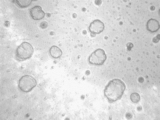
- 1 is a photograph of a film formed on a glass substrate using composition 1 of [Example 42].
- the width of the photograph is about 1 ⁇ m.
- 2 is a photograph of a film formed on a glass substrate using a composition containing the homopolymer of [Comparative Example 1].
- the width of the photograph is about 1 ⁇ m.
- the block copolymer of the present invention is characterized in that one of the blocks is a block consisting of a structural unit containing a structural unit represented by formula (1).
- the block consisting of a structural unit containing a structural unit represented by formula (1) exhibits liquid repellency.
- the molar ratio of the structural units constituting the block is on average 0.05 to 0.7, preferably 0.1 to 0.5, and more preferably 0.1 to 0.4, relative to the structural units constituting the entire block copolymer.
- X 1 is -O- or -NH-
- R 1 is an alkylene or phenylene having 2 to 12 carbon atoms
- Y 1 is -NHCOO- or -NHCONH-
- R 2 is a linear hydrocarbon group having 6 to 30 carbon atoms, a branched hydrocarbon group having 6 to 30 carbon atoms, or a cyclic hydrocarbon group having 6 to 30 carbon atoms, which may contain -O- or an unsaturated bond, and in which hydrogen on a carbon atom two or more away from Y 1 may be replaced by fluorine
- R 3 is hydrogen or methyl.
- R3 is preferably hydrogen.
- Y1 is preferably --NHCONH--.
- R 2 is a linear hydrocarbon group having 6 to 30 carbon atoms, a branched hydrocarbon group having 6 to 30 carbon atoms, or a cyclic hydrocarbon group having 6 to 30 carbon atoms, which may contain -O- or an unsaturated bond.
- the hydrocarbon group in order to exhibit liquid repellency, it is preferable that the hydrocarbon group contains a linear alkyl group having 6 or more carbon atoms.
- R 2 when water or a hydrocarbon compound is to be repelled, it is preferable that R 2 contains a linear alkyl group having 12 or more carbon atoms.
- CH 3 -O-CH 2 -O- in which oxygens are not adjacent to each other is more preferable than CH 3 -O-O-CH 2 - in which oxygens are adjacent to each other.
- hydrogen on the carbon of the hydrocarbon group of R2 may be replaced with fluorine.
- the position to be replaced is hydrogen on a carbon that is two or more carbon atoms away from Y1 .
- it is preferable that hydrogen on a carbon that is farther away from Y1 is replaced. It is most preferable that hydrogen on a carbon at the terminal opposite to Y1 is replaced.
- Suitable examples of the constitutional unit represented by formula (1) include structures represented by the following formulas (1-1) to (1-29).
- a block (hereinafter, sometimes referred to as block (A)) consisting of a structural unit containing a structural unit represented by formula (1) may be composed of a plurality of structural units represented by formula (1) in order to obtain a desired liquid repellency.
- block (A) consisting of a structural unit containing a structural unit represented by formula (1)
- R2 either one of fluorine-containing and fluorine-free alkyl may be selected for R2 .
- a block consisting of structural units including a structural unit represented by formula (1) may contain a small amount of structural units other than those represented by formula (1).
- the ratio of the number of structural units of the structural units other than those represented by formula (1) to the total number of structural units of the block (A) is preferably 0.2 or less on average. In this case, in order to maintain liquid repellency, it is more preferably 0.15 or less, and even more preferably 0.1 or less.
- a preferred lower limit of the ratio of the number of structural units is 0.01, a more preferred lower limit is 0.001, and an even more preferred lower limit is 0.
- the structural units other than those represented by formula (1) are preferably structural units of a precursor-derived structure before obtaining the structural units represented by formula (1), and specifically, structural units of a structure represented by the following formula (1-p).
- X 1 is -O- or -NH-
- R 1 is an alkylene or phenylene having 2 to 12 carbon atoms
- R 3 is hydrogen or methyl
- Y p is -NCO or a protected -NCO.
- a block copolymer in which one of the blocks is a block consisting of structural units including the structural unit represented by formula (1) may be an AB diblock copolymer consisting of block (A) and block (B), or an ABA triblock copolymer consisting of block (A), block (B) and block (A).
- an AB diblock copolymer is preferable.
- block (B) there is no limitation on the selection of the block other than the block consisting of the structural unit represented by formula (1), i.e., block (B).
- block (B) in order to exhibit liquid repellency in the block copolymer of the present invention, it is preferable to select a block (B) that satisfies the following relationship when the polymer consisting of only the structural unit represented by formula (1) constituting block (A) is designated as A', and the polymer consisting of only the structural unit other than that represented by formula (1) constituting the other block (B) is designated as B'.
- A' the polymer consisting of only the structural unit other than that represented by formula (1) constituting the other block (B)
- the block (B) is involved in the solvent solubility, coatability, and adhesion to a coating target such as a substrate.
- a constitutional unit represented by the following formula (2) is a constitutional unit constituting the block (B).
- R 3 is hydrogen or methyl
- R 10 is a group selected from the structures represented by formulas (20) to (23) below, pyridyl, or -CN.
- X 11 is -O-, -NH-, or -NR 11 -
- R 11 is hydrogen, a linear alkyl having 1 to 8 carbon atoms, a branched alkyl having 3 to 8 carbon atoms, or a cyclic alkyl having 3 to 8 carbon atoms, or phenyl
- non-adjacent -CH 2 - of the alkyl may be replaced with -O-, -NMe-, or -NMe 2 + -
- -CH 2 - of the alkyl may be replaced with -CO-
- hydrogen on non-adjacent carbon of the alkyl may be replaced with -OH or -N(CH 3 ) 2
- -CH 3 of the alkyl may be replaced with -CO 2 H, -CO 2 - , -SO 3 - , or -SO 3 K
- R 12 is -H, -CH 3 , -OCH 3 , -OH,
- the structural unit constituting the block (B) is selected from a plurality of structural units selected from a combination of a structural unit represented by formula (2) and a group having a structure represented by formula (20) as R10 .
- the block copolymer of the present invention can be produced by a known method.
- the structural unit of the structure represented by formula (1) can be derived by using a (meth)acrylic monomer having -NCO or a protected -NCO as its precursor.
- Examples of such monomers include 2-isocyanatoethyl acrylate (Karenz (registered trademark) AOI), 2-[(3,5-dimethylpyrazolyl)carbamoyl]ethyl acrylate, 2-(O-(1'methylpropylideneamino)carboxyamino)ethyl acrylate, 2-isocyanatoethyl methacrylate (Karenz (registered trademark) MOI), 2-((3,5-dimethylpyrazolyl)carbamoyl)ethyl methacrylate (Karenz (registered trademark) MOI-BP), and 2-(O-(1'methylpropylideneamino)carboxyamino)ethyl methacrylate (Karenz (registered trademark) MOI-BM).
- Karenz (registered trademark) AOI 2-[(3,5-dimethylpyrazolyl)carbamoyl]ethyl acryl
- “Karenz” is a trade name manufactured by Resonac Corporation.
- (meth)acrylic means acrylic or methacrylic
- (meth)acrylate means acrylate or methacrylate
- (meth)acryloyloxy means acryloyloxy or methacryloyloxy.
- the method of obtaining a precursor by block copolymerization using the above-mentioned (meth)acrylic monomer having -NCO or protected -NCO, and then converting it to the structure represented by formula (1) is preferred as a method for producing the block copolymer of the present invention, since it is easy to produce. At this time, it is preferable to use a (meth)acrylic monomer having a protected -NCO as a raw material in order to avoid gelation during polymerization.
- ATRP atom transfer radical polymerization
- NMP nitroxide-mediated radical polymerization
- RAFT reversible addition-fragmentation chain transfer
- a known (meth)acrylic acid derivative can be used as the monomer that provides block (B) in the block copolymer of the present invention.
- known compounds include alkyl (meth)acrylates having 1 to 8 carbon atoms, propargyl (meth)acrylate, allyl (meth)acrylate, cyclohexyl (meth)acrylate, 1-adamantyl (meth)acrylate, phenyl (meth)acrylate, benzyl (meth)acrylate, 2-methoxyethyl (meth)acrylate, 2-ethoxyethyl (meth)acrylate, diethylene glycol monomethyl ether (meth)acrylate, tetrahydrofurfuryl (meth)acrylate, dicyclopentanyl (meth)acrylate, isobornyl (meth)acrylate, 2-phenoxyethyl (meth)acrylate, oxotetrahydrofuran-3-yl (meth)acrylate, ethylene glyco
- a known styrene derivative can be used as the monomer that gives block (B) in the block copolymer of the present invention.
- Such known compounds include styrene, ⁇ -methylstyrene, styrene in which the hydrogen on the benzene ring is replaced with one to three methyls, 2- and 4-acetoxystyrene, 4-methoxystyrene, 4-carboxystyrene, trimethoxy(4-vinylphenyl)silane, and sodium 4-vinylbenzenesulfonate.
- Acrylonitrile, vinylpyridine, N-vinylpyrrolidinone, and 1-vinylimidazole can also be suitably used as monomers that provide block (B) in the block copolymer of the present invention.
- the polymerization initiator may be a thermal radical polymerization initiator, a photoradical polymerization initiator, or the like, depending on the polymerization method of these monomers.
- Preferred thermal radical polymerization initiators include peroxide-based polymerization initiators such as benzoyl peroxide, diisopropyl peroxydicarbonate, t-butylperoxy-2-ethylhexanoate, t-butylperoxypivalate, di-t-butylperoxide (DTBPO), t-butylperoxydiisobutyrate, and lauroyl peroxide, and azo-based polymerization initiators such as 2,2'-azobis(2-methylpropionate)dimethyl (MAIB), azobisisobutyronitrile (AIBN), and azobiscyclohexanecarbonitrile (ACN).
- peroxide-based polymerization initiators such as benzoyl peroxide, diisopropyl peroxydicarbonate, t-butylperoxy-2-ethylhexanoate, t-butylperoxypivalate, di-t-butylper
- peroxide polymerization initiators include benzoyl peroxide available from various companies, as well as products manufactured by Tokyo Chemical Industry Co., Ltd. under the trade name "Dicumyl Peroxide,” and products manufactured by NOF Corp. under the trade names "Percumyl D, Niper BMT, Perhexa 25Z.”
- azo polymerization initiators include products manufactured by Fujifilm Wako Pure Chemical Industries, Ltd. under the trade names "V-40, V-50, V-59, V-65, V-70, V-501, V-601," as well as products manufactured by AIBN, available from various companies.
- azo polymerization initiators can be suitably used for both thermal radical polymerization and photoradical polymerization.
- the photoradical polymerization initiator is not particularly limited, and known ones can be used, such as 4-methoxyphenyl-2,4-bis(trichloromethyl)triazine, 2-(4-butoxystyryl)-5-trichloromethyl-1,3,4-oxadiazole, 9-phenylacridine, 9,10-benzphenazine, benzophenone/Michler's ketone mixture, hexaarylbiimidazole/mercaptobenzimidazole mixture, 1-(4-isopropylphenyl)-2-hydroxy-2-methylpropan-1-one, benzyl dimethyl ketal, 2-methyl-1-[4-(methylthio)phenyl]-2-morpholinopropan-1-one, 2,4-diethylxanthone/methyl p-dimethylaminobenzoate mixture, and benzophenone/methyltriethanolamine mixture.
- known ones can be used, such as 4-methoxyphenyl-2,4-bis
- the weight average molecular weight (Mw) of the block copolymer of the present invention is preferably 1000 or more, more preferably 5000 or more.
- Mw is preferably 1,000,000 or less, more preferably 500,000 or less. The most preferable range is 10,000 to 100,000.
- the dispersion value of the average molecular weight for example, Mw/Mn, which is the ratio of the weight average molecular weight (Mw) to the number average molecular weight (Mn), generally approaches 1 when the above-mentioned precision polymerization is carried out. If polymerization is carried out under conditions that show a value approaching 1, a proper block copolymer will be obtained.
- the block copolymer of the present invention has a tendency to increase Mw/Mn due to the large interaction between the polymer chains. Therefore, from the viewpoint of the quality of the block copolymer, Mw/Mn is preferably 1 to 10, more preferably 1 to 5.
- the block copolymer of the present invention may be produced, for example, by separately producing a homopolymer consisting of the structural unit represented by formula (1) and another homopolymer other than the structural unit and linking them together. Examples of such a production method include the method described in Radical Polymerization Handbook, NTS Publishing, 2010, etc.
- the conversion of the precursor block copolymer to the structure represented by formula (1) can also be carried out according to a known method.
- a block copolymer in which Y 1 in formula (1) is -NHCONH- it can be obtained by reacting a commercially available or known compound having -NH 2 with the precursor block copolymer.
- commercially available or known compounds having -NH 2 include alkylamines having 6 or more carbon atoms and aniline derivatives substituted with alkyl or alkoxy.
- the amount of these compounds having -NH 2 added during the reaction is 0.8 or more in molar ratio to the -NCO equivalent in the block copolymer.
- the upper limit of the amount of the compound having -NH 2 used is preferably 2.0 or less in the above molar ratio, more preferably 1.5 or less, and most preferably 1.2 or less, in order to easily purify the block copolymer.
- the molar ratio of -NCO equivalents in the block copolymer can be calculated from the amount of the block copolymer used, the ratio of blocks present in the block copolymer, and the molecular weight of the structural unit containing the -NCO equivalent.
- the ratio of blocks present in the block copolymer can be determined by measurement such as 1H -NMR, as described below.
- a block copolymer in which Y 1 in formula (1) is -NHCOO- it can be obtained by reacting a commercially available or known compound having -OH with a precursor block copolymer. Since the reactivity of a compound having -OH with an -NCO equivalent is low compared to a compound having -NH 2 , the amount of the compound having -OH added during the reaction is preferably 1.0 or more in molar ratio to the -NCO equivalent in the block copolymer. Similarly, the upper limit of the amount of the compound having -OH used is preferably 3.0 or less in the above molar ratio, and most preferably 2.0 or less, in order to easily purify the block copolymer.
- a urethanization catalyst In order to improve the reaction rate, it is preferable to add a urethanization catalyst to the reaction solution.
- the urethanization catalyst include dibutyltin dilaurate.
- the amount of the urethanization catalyst added is preferably 0.1% by weight or more, more preferably 0.5% by weight or more, based on the weight of the block copolymer, in order to improve the reactivity.
- it in order to easily purify the block copolymer, it is preferably 2% by weight or less, more preferably 1% by weight or less, based on the weight of the block copolymer.
- the reaction temperature at the time of conversion to the structure represented by the above formula (1) is preferably 80° C. or higher in the case of a block copolymer in which Y 1 is -NHCONH- in order to rapidly proceed with the reaction. Also, 120° C. or lower is preferred in order to prevent decomposition of the block copolymer. 100° C. is the most preferred reaction temperature. Also, the higher the temperature, the shorter the conversion time. In order to obtain a sufficient conversion rate, the reaction time is preferably 30 minutes or more at 100° C., and in order to prevent decomposition of the block copolymer, it is preferred to be 2 hours or less. The most preferred reaction time is 1 hour.
- the reaction temperature is preferably 100° C. or higher. Also, in order to prevent decomposition of the block copolymer, it is preferred to be 140° C. or lower. 120° C. is the most preferred reaction temperature.
- the reaction time is preferably 1 hour or more under the condition of 120° C. in order to obtain a sufficient conversion rate, and it is preferred to be 8 hours or less in order to prevent decomposition of the block copolymer. The most preferred reaction time is 4 hours.
- the solvent used in the conversion to the structure represented by formula (1) may be a solvent that is non-reactive or has low reactivity with the precursor block copolymer.
- a solvent that dissolves both the precursor block copolymer and the block copolymer of the present invention is preferred.
- solvents examples include hydrocarbon solvents such as toluene and xylene, ester solvents such as n-propyl acetate, butyl acetate, sec-butyl acetate, methoxybutyl acetate, amyl acetate, ethylene glycol monoethyl ether acetate, propylene glycol monomethyl ether acetate, and ⁇ -butyrolactone, ether solvents such as tetrahydrofuran (THF), 1,4-dioxane, anisole, diethylene glycol ethyl methyl ether, diethylene glycol dimethyl ether, ethylene glycol diethyl ether, diethylene glycol diethyl ether, and dipropylene glycol dimethyl ether, dimethylformamide, diethylformamide, dimethylacetamide, N-methyl-2-pyrrolidone, dimethylsulfoxide, ethyl methyl carbonate, and diethyl carbonate.
- the composition of the present invention containing the block copolymer of the present invention comprises the block copolymer of the present invention, a solvent, and additives added as necessary.
- a solvent there is no limitation on the solvent, and it can be appropriately selected from known solvents. In this case, it is preferable to use a mixed solvent in order to maintain the solubility of the block copolymer of the present invention and improve the coatability to the substrate or other object to be coated.
- a solvent in addition to the above-mentioned hydrocarbon solvents, ester solvents, and ether solvents, alcohol solvents can also be suitably used.
- composition of the present invention may contain additives.
- additives include crosslinkers, surfactants, emulsifiers, coupling agents, antioxidants, radical stabilizers (polymerization inhibitors), antistatic agents, and hydrolysis stabilizers.
- a crosslinking agent By adding a crosslinking agent to the composition of the present invention, mechanical deterioration and deterioration over time of the coating film can be prevented.
- a known low molecular weight or polymer compound can be used.
- Suitable examples of such crosslinking agents include various alkylene type diamines, polyamines, diaminobenzenes, polyols, alkylenedithiols, and polythiol compounds.
- crosslinking agents various alkylene type diamines, polyamines, and diaminobenzenes are more preferable because the crosslinking reaction proceeds quickly.
- the amino group of such an amine compound may be protected with a group that is eliminated by heat, such as t-butoxycarbonyl.
- crosslinking agents include polyfunctional isocyanate compounds.
- polyfunctional isocyanate compounds For example, toluene diisocyanate, diphenylmethane diisocyanate, and hexamethylene diisocyanate.
- the -NCO of the polyfunctional isocyanate compound may be protected.
- the amount of crosslinking agent is preferably 30% by weight or less, more preferably 1 to 20% by weight, and most preferably 2 to 10% by weight, based on the weight of the block copolymer of the present invention, in order to suppress deterioration of liquid repellency and obtain the desired effect.
- the surfactant is used to improve the wettability, leveling property, and coatability of the substrate.
- the surfactant include silicone surfactants, acrylic surfactants, and fluorine surfactants. Specific examples include BYK-342, BYK-350, BYK-352, BYK-354, BYK-356, BYK-381, BYK-392, BYK-394, BYK-3441, BYK-3440, and BYK-3550 (all trade names: manufactured by BYK Japan Co., Ltd.).
- silicone-based surface conditioners can be used, such as BYK-UV3500, BYK-UV-3570 (both trade names: manufactured by BYK Japan Co., Ltd.), TEGO
- polyether ether esters include Rad2100, 2200N, 2250, 2500, 2600, and 2700 (all trade names: manufactured by Evonik Degussa Japan Co., Ltd.), X-22-2445, X-22-2455, X-22-2457, X-22-2458, X-22-2459, X-22-1602, X-22-1603, X-22-1615, X-22-1616, X-22-1618, X-22-1619, X-22-2404, X-22-2474, X-22-174DX, X-22-8201, X-22-2426, X-22-164A, and X-22-164C (all trade names: manufactured by Shin-Etsu Chemical Co., Ltd.).
- the amount of these surfactants added to the composition is
- composition of the present invention may contain a coupling agent to improve adhesion to the substrate or other object to be coated.
- silane coupling agents include vinyltrialkoxysilane, 3-isocyanatepropyltriethoxysilane, N-(2-aminoethyl)3-aminopropyltrialkoxysilane, N-(1,3-dimethylbutylidene)-3-(trialkoxysilyl)-1-propanamine, 3-glycidoxypropyltrialkoxysilane, 3-chlorotrialkoxysilane, 3-acryloxypropyltrimethoxysilane, and 3-methacryloxypropyltrialkoxysilane.
- dialkoxymethylsilanes in which one of the alkoxy (three) in the above alkoxysilanes is replaced with methyl can also be used as silane coupling agents.
- These silane coupling agents may be used alone or in combination of two or more.
- These silane coupling agents may also be commercially available.
- the amount of these coupling agents added to the composition is preferably 0.1 to 5% by weight, more preferably 0.5 to 1% by weight, based on the weight of the block copolymer of the present invention.
- antioxidants that can be used in the present invention.
- examples include 3,5-di(t-butyl)-4-hydroxytoluene (BHT), hydroquinone, methylene blue, diphenylpicric hydrazide (DPPH), phenothiazine, nitroso compounds such as N,N-dimethyl-4-nitrosoaniline, o-hydroxybenzophenone, and benzothiazine derivatives such as 2H-1,3-benzothiazine-2,4-(3H)dione.
- BHT 3,5-di(t-butyl)-4-hydroxytoluene
- DPPH diphenylpicric hydrazide
- phenothiazine nitroso compounds such as N,N-dimethyl-4-nitrosoaniline, o-hydroxybenzophenone
- benzothiazine derivatives such as 2H-1,3-benzothiazine-2,4-(3H)dione.
- the composition of the present invention may contain ultraviolet absorbers, light stabilizers (radical scavengers), antioxidants, etc.
- ultraviolet absorbers include TINUVIN PS, TINUVIN P, TINUVIN 99-2, TINUVIN 109, TINUVIN 213, TINUVIN 234, TINUVIN 326, TINUVIN 328, TINUVIN 329, TINUVIN 384-2, TINUVIN 571, TINUVIN 900, TINUVIN 928, TINUVIN 1130, TINUVIN 400, TINUVIN 405, TINUVIN 460, TINUVIN 479, TINUVIN 5236, Adeka STAB LA-32, Adeka STAB LA-34, Adeka STAB LA-36, Adeka STAB LA-31, Adeka STAB 1413, and Adeka STAB LA-51.
- Tinuvin is a trade name manufactured by BASF Japan Ltd.
- Adekastab is a trade name manufactured by ADEKA Corporation.
- These ultraviolet absorbents may be used alone or in combination of two or more. These ultraviolet absorbents may also be commercially available products.
- Light stabilizers include, for example, Tinuvin 111FDL, Tinuvin 123, Tinuvin 144, Tinuvin 152, Tinuvin 292, Tinuvin 622, Tinuvin 770, Tinuvin 765, Tinuvin 780, Tinuvin 905, Tinuvin 5100, Tinuvin 5050, 5060, Tinuvin 5151, Kimasobu 119FL, Kimasobu 944FL, Kimasobu 944LD, and Adekasta.
- Such stabilizers include ADK STAB LA-52, ADK STAB LA-57, ADK STAB LA-62, ADK STAB LA-67, ADK STAB LA-63P, ADK STAB LA-68LD, ADK STAB LA-77, ADK STAB LA-82, ADK STAB LA-87, Cytec's trade name: Cyasorb UV-3346, and Goodrich's trade name: Goodlight UV-3034. "Kimasorb” is a trade name manufactured by BASF Japan Ltd. These light stabilizers may be used alone or in combination of two or more. These light stabilizers may also be commercially available products.
- the amount of each of these antioxidants, UV absorbers, and light stabilizers added to the composition is preferably 0.01 to 5% by weight, and more preferably 0.05 to 1% by weight, based on the weight of the block copolymer of the present invention.
- hydrolysis stabilizer it is also suitable to add a hydrolysis stabilizer to the composition of the present invention in order to suppress hydrolysis of polyacrylic acid esters and the like and to prevent deterioration over time or due to the environment.
- hydrolysis stabilizers include Carbodilite (registered trademark) manufactured by Nisshinbo Chemical Inc., Carbodista (registered trademark) manufactured by Teijin Limited, and Stavaxol (registered trademark) manufactured by Lanxess KK.
- the performance of the liquid-repellent coating material obtained from the composition of the present invention can be further improved by forming a controlled unevenness on the surface of the liquid-repellent coating material when the liquid-repellent coating material is made into a film.
- a self-association formed by the liquid-repellent coating material obtained from the composition of the present invention can be utilized. That is, in the liquid-repellent coating material obtained from the composition of the present invention, the block copolymer forms a spherical association in an appropriate solution. By utilizing this spherical association, it is possible to create a controlled unevenness.
- a block copolymer in which Y 1 in formula (1) is -NHCONH- is preferred from the viewpoint of forming the association.
- a low polarity solvent such as toluene
- a high polarity solvent such as alcohol
- the article of the present invention having the composition of the present invention applied to the surface thereof, can be obtained by applying the composition to a substrate and removing the solvent.
- Coating methods include coating using a dispenser, spin coating, roll coating, caten coating, flow coating, printing, microgravure coating, gravure coating, wire bar coating, dip coating, spray coating, meniscus coating, and inkjet coating.
- the method for removing the solvent is not particularly limited, but heat treatment is preferable. There are no particular limitations on the temperature conditions, but when applying to substrates with low heat resistance such as fibers or paper, mild conditions of around 130°C can be used to achieve sufficiently good liquid repellency.
- the composition of the present invention exhibits little deterioration over time in terms of liquid repellency, and has high durability against heat, etc.
- a treatment to the substrate in advance that will help the composition of the present invention adhere.
- Such treatments include UV ashing using ozone and plasma treatment.
- an adhesive or crosslinking agent to the substrate.
- the textile product when a textile product is used as the substrate, the textile product can be treated by attaching a crosslinking agent to the textile product and heating it.
- crosslinking agents include methylol melamine and compounds having one or more isocyanate groups or blocked isocyanate groups.
- the composition of the present invention is then applied to the textile product and dried by heating. In this case, in order to improve durability, it is preferable to use a composition of the present invention that contains a functional group capable of reacting with the above-mentioned crosslinking agent.
- Examples of compounds having one or more isocyanate groups include monoisocyanates such as butyl isocyanate, phenyl isocyanate, tolyl isocyanate, and naphthalene isocyanate, diisocyanates such as tolylene diisocyanate, diphenylmethane diisocyanate, tetramethylxylylene diisocyanate, and hydrogenated diphenylmethane diisocyanate, as well as trimers and trimethylolpropane adducts, which are isocyanurate rings of these compounds.
- monoisocyanates such as butyl isocyanate, phenyl isocyanate, tolyl isocyanate, and naphthalene isocyanate
- diisocyanates such as tolylene diisocyanate, diphenylmethane diisocyanate, tetramethylxylylene diisocyanate, and hydrogenated diphenylmethane diisocyanate
- Examples of compounds having one or more blocked isocyanate groups include compounds in which the isocyanate groups of the above-mentioned compounds having isocyanate groups are protected with a blocking agent.
- blocking agents used in this case include organic blocking agents such as secondary or tertiary alcohols, active methylene compounds, phenols, oximes, and lactams, and bisulfites such as sodium bisulfite and potassium bisulfite.
- the above-mentioned crosslinking agents may be used alone or in combination.
- the treatment of a textile product with a crosslinking agent can be carried out, for example, by immersing the textile product in a treatment liquid in which the crosslinking agent is dissolved in an organic solvent or emulsified and dispersed in water.
- the crosslinking agent is then fixed to the substrate by a heat treatment or the like.
- the fixation of the crosslinking agent may be carried out before or simultaneously with the treatment of the substrate with the composition of the present invention.
- the crosslinking agent is fixed by heating, it is preferable to carry out the heating at a temperature of 110 to 180°C for 1 to 5 minutes.
- the substrate to which the composition of the present invention can impart liquid repellency is not particularly limited, and glass, metal, plastic, paper, and fiber can be suitably used.
- the material for textile products is not particularly limited, and examples include polyolefin resins such as polyethylene and polypropylene, polyester resins such as polyethylene terephthalate and polylactic acid, polyamide resins such as nylon 6 and nylon 6,6, polyurethane resins, fluorine resins such as polyvinylidene fluoride and polytetrafluoroethylene, polysulfone, polyethersulfone, and cellulose materials such as cellulose and cellulose acetate. These may be used alone or in combination of two or more.
- ⁇ Substrate> A glass substrate, Eagle XG (registered trademark) (trade name, manufactured by CORNING, 0.5 mm thick), was cut into a 40 mm square. The surface of the substrate was washed with acetone and ultrapure water, dried in an oven at 120° C. for 1 hour, and cooled to room temperature.
- Filter paper Qualitative filter paper (No. 2, ADVANTEC (registered trademark)) (product name manufactured by Toyo Roshi Kaisha, Ltd.) was used as is.
- Nonwoven fabric Spunbond Eltas (registered trademark) (product name, manufactured by Asahi Kasei Corporation, basis weight 30 g) was purchased and used as it was.
- Block Copolymer 1 (a block copolymer including a structural unit in which X1 is -O-, R1 is ethylene, Y1 is -NHCONH-, R2 is nC8H17- , and R3 is hydrogen in the formula (1), and another block is polymethyl acrylate )
- the block abundance ratio (r, molar ratio, see the formula below) of the structural unit represented by formula (1-p) in the sample was 0.2.
- the polymerization rate of methyl acrylate was 90%.
- the polymerization rate of methyl acrylate was determined from the abundance ratio of the monomer and polymer of methyl acrylate using 1 H-NMR.
- r A / (A + B)
- A Abundance ratio calculated from the integral value of 1H derived from the structural unit represented by formula (1-p)
- B Abundance ratio calculated from the integral value of 1H derived from polymethyl acrylate (block B)
- the above block abundance ratio (r, molar ratio) corresponds to the abundance ratio (molar ratio) of the structural units constituting a block composed of structural units including the structural unit represented by formula (1) relative to the structural units constituting the entire block copolymer of the present invention.
- BCP Abundance ratio calculated from integral value of 1 H derived from conversion site
- Pre Abundance ratio calculated from integral value of 1 H derived from protected NCO
- Block copolymers 2 to 8 were produced in the same manner as in Example 1 above, except for changing the type and amount of alkylamine added. That is, instead of n-octylamine, n-dodecylamine was used in Examples 2, 4, 5 and 7, n-hexadecylamine was used in Examples 3 and 8, and n-octadecylamine was used in Example 6, and the amounts added were changed to match the chemical equivalents. The results are shown in Table 1.
- Example 1 is also shown in Table 1. In Table 1, the numbers in the Example/Copolymer column indicate both the example number and the block copolymer number.
- Block copolymers having a block composed of a structural unit including a structural unit in which X1 is -O-, R1 is ethylene, Y1 is -NHCONH-, and R3 is hydrogen in the formula (1), and another block is polymethyl acrylate.
- Block Copolymer 9 (a block copolymer having a block composed of structural units including a structural unit in which X1 is -O-, R1 is ethylene, Y1 is -NHCONH-, R2 is n- C8H17- , and R3 is hydrogen in formula (1), and another block is a block composed of structural units of methyl acrylate and 2-hydroxyethyl acrylate)
- Block copolymer 9 was obtained in the same manner as in Example 1, except that methyl acrylate was replaced with a mixture of methyl acrylate and 2-hydroxyethyl acrylate (methyl acrylate; 1.32 ml (14.44 mmol) and 2-hydroxyethyl acrylate 0.65 ml (6.19 mmol)).
- the Mw of the synthesized block copolymer 9 was 51,700, Mw/Mn was 1.81, r was 0.2, and ⁇ was 1.
- Block copolymers 10 to 12 were produced in the same manner as in Example 9 above, except for changing the type and amount of alkylamine added. That is, instead of n-octylamine, n-dodecylamine was used in Example 10, n-hexadecylamine in Example 11, and n-octadecylamine in Example 12, and the amounts added were changed to match the chemical equivalents. The results are shown in Table 2.
- Example 9 is also shown in Table 2. In Table 2, the numbers in the Example/Copolymer column indicate both the example number and the block copolymer number.
- Block Copolymer 13 (a block copolymer having a block composed of structural units including a structural unit in which X1 is -O-, R1 is ethylene, Y1 is -NHCONH-, R2 is n- C18H37- , and R3 is hydrogen in the formula (1), and another block is a block composed of structural units of methyl acrylate and 4-hydroxybutyl acrylate)
- Block copolymer 13 was obtained in the same manner as in Example 1, except that methyl acrylate was replaced with a mixture of methyl acrylate and 4-hydroxybutyl acrylate (methyl acrylate; 1.48 ml (16.50 mmol) and 4-hydroxybutyl acrylate 0.57 ml (4.13 mmol)).
- the Mw of the synthesized block copolymer 13 was 79,600, Mw/Mn was 2.21, r was 0.2, and ⁇ was 1.
- Block Copolymer 14 (a block copolymer having a block composed of structural units including a structural unit in which X1 is -O-, R1 is ethylene, Y1 is -NHCONH-, R2 is n- C18H37- , and R3 is hydrogen in the formula (1), and another block is a block composed of structural units of methyl acrylate and n-dodecyl acrylate)
- Block copolymer 14 was obtained in the same manner as in Example 1, except that a mixture of methyl acrylate and n-dodecyl acrylate (methyl acrylate; 1.32 ml (10.32 mmol) and n-dodecyl acrylate 2.82 ml (10.32 mmol)) was used instead of methyl acrylate.
- the Mw of the synthesized block copolymer 14 was 76,900, the Mw/Mn was 1.93, r was 0.2, and ⁇ was 1.
- Block Copolymer 15 (a block copolymer having a block composed of structural units including a structural unit in which X1 is -O-, R1 is ethylene, Y1 is -NHCONH-, R2 is nC8H17- , and R3 is hydrogen in the formula (1), and another block is polymethyl methacrylate)
- Block copolymer 13 was obtained in the same manner as in Example 1, except that methyl methacrylate was used instead of methyl acrylate (2.20 ml (20.7 mmol)).
- the Mw of the synthesized block copolymer 15 was 49,200, Mw/Mn was 1.98, r was 0.48, and ⁇ was 1.
- Block copolymers 16 and 17 were produced in the same manner as in Example 15 above, except for changing the type and amount of alkylamine added. That is, instead of n-octylamine, n-dodecylamine was used in Example 16, and n-hexadecylamine was used in Example 17, and the amounts added were changed to match the chemical equivalents. The results are shown in Table 3.
- Example 13 is also shown in Table 3. In Table 3, the numbers in the Example/Copolymer column indicate both the example number and the block copolymer number.
- Block copolymers having a block composed of a structural unit including a structural unit in which X1 is -O-, R1 is ethylene, Y1 is -NHCONH-, and R3 is hydrogen in the formula (1), and another block is polymethyl methacrylate.
- Block Copolymer 18 (a block copolymer including a block of structural units containing a structural unit in which X1 is -O-, R1 is ethylene, Y1 is -NHCOO-, R2 is nC8H17- , and R3 is hydrogen in formula (1), and another block is polymethyl acrylate)
- the precursor block copolymer synthesized according to Example 1 was used and functional group conversion was performed to obtain the product. That is, 2 g of the reaction solution of the precursor block copolymer was weighed out, 0.16 g (1.2 mmol) of n-octanol and 7.5 mg (0.012 mmol) of dibutyltin dilaurate were added, and the mixture was reacted in anisole (5 ml) at 120° C. for 8 hours. After cooling the reaction solution to room temperature, it was reprecipitated in heptane and stirred for 1 hour. The resulting precipitate was filtered by suction, added to acetonitrile, stirred for 1 hour, and then filtered.
- the obtained polymer powder was vacuum dried at room temperature for 8 hours. From 1 H-NMR measurement, the conversion rate ( ⁇ ) of the protected NCO site to urethane was about 0.8. The Mw of the synthesized block copolymer 18 was 48,500 and the Mw/Mn was 1.85.
- Block copolymers 19 and 20 were produced in the same manner as in Example 18 above, except for changing the type and amount of alcohol added. That is, instead of n-octanol, n-dodecanol was used in Example 19, and n-hexadecanol was used in Example 20, and the amounts added were changed to match the chemical equivalents. The results are shown in Table 4.
- Example 18 is also shown in Table 4. In Table 4, the numbers in the Example/Copolymer column indicate both the example number and the block copolymer number.
- Block copolymers having a block composed of a structural unit including a structural unit in which X 1 is -O-, R 1 is ethylene, Y 1 is -NHCOO-, and R 3 is hydrogen in the formula (1), and another block is polymethyl acrylate.
- Block Copolymer 21 (a block copolymer having a block composed of structural units including a structural unit in which X 1 is -O-, R 1 is ethylene, Y 1 is -NHCONH-, R 2 is nC 18 H 37 -, and R 3 is hydrogen in the formula (1), and another block is polystyrene)
- a block copolymer 21 was obtained in the same manner as in Example 1, except that 2.36 ml (20.6 mmol) of styrene was used instead of methyl acrylate.
- the Mw of the synthesized block copolymer 21 was 46,700, the Mw/Mn was 2.37, r was 0.7, and ⁇ was 1.
- Example 22 Preparation of Composition 1 0.25 g of the block copolymer 1 obtained in Example 1 was dispensed into a sample bottle, and 1.50 g of toluene was added and dissolved by heating. 0.75 g of isopropanol was added to this solution to obtain Composition 1, a polymer solution with a concentration of 10 wt%.
- compositions 2 to 21 which are polymer solutions with a concentration of about 10% by weight, were prepared in the same manner as in Example 22 (Table 5). At this time, after preparing the polymer solutions, each compound of the crosslinking agent and the urethanization catalyst was added to the compositions in the respective amounts shown in Table 5. The addition was performed at room temperature. Example 22 is also shown in Table 5.
- Example 42 Preparation of a measuring article 1 and contact angle measurement Composition 1 was spin-coated on a glass substrate as a substrate.
- the rotation speed of the glass substrate was 1000 rpm.
- the glass substrate was heated on a hot plate at 120°C for 15 minutes to remove the solvent, and a film made of the block copolymer of the present invention was obtained.
- the film sample had no holes due to coating omissions, and was in a clean film state, with excellent coating properties and adhesion to the glass substrate as the substrate.
- a photograph of the film prepared on the glass substrate observed with a step gauge is shown in Figure 1.
- the film thickness of the sample was 1.61 ⁇ m.
- the contact angle of hexadecane of the sample was 38.5 degrees. In this way, the composition containing the block copolymer of the present invention and a solvent was applied to the glass substrate as a substrate, and the solvent was removed to prepare an article of the present invention, and the contact angle was measured using this measuring article.
- Example 43 to [Example 61] Film samples were prepared on glass substrates in the same manner as in Example 42, except that composition 1 was replaced with the composition shown in the table below. The results of the physical property measurements are shown in the table below. The results of Example 42 are shown again in Table 5. As with Example 42, the film samples of Examples 43 to 61 were in a clean film state without holes due to coating omissions, and had excellent coatability and adhesion to the glass substrate as a base material.
- FIG. 2 A photograph of the film produced on a glass substrate is shown in FIG. 2.
- the film thickness of the sample was 1.81 ⁇ m.
- the contact angle of hexadecane of the sample was 43.4 degrees.
- the polymer was made into a polymer solution in the same manner as in Example 22 (random copolymer composition).
- the composition was used and applied to a glass substrate in the same manner as in Example 42.
- the film thickness of the sample was 2.27 ⁇ m.
- the contact angle of this sample with hexadecane was 34.1 degrees, which indicated poor liquid repellency.
- Example 62 Preparation of measurement article 2 and contact angle measurement
- the composition 6 obtained in Example 47 was left at room temperature overnight, precipitation of the block copolymer association occurred.
- the composition in which this precipitation occurred was dropped onto a glass substrate as a substrate and left at room temperature for 1 hour, and a film sample 55 with an uneven surface was obtained.
- the contact angle of the sample with hexadecane was measured in the same manner as in Example 42, and was found to be 87.7 degrees.
- Example 63 Preparation of measurement article 3 and contact angle measurement Composition 3 obtained in Example 44 or composition 6 obtained in Example 47 was impregnated into filter paper as a substrate, and each was heated in an oven at 120°C for 15 minutes to remove the solvent.
- the contact angles of hexadecane of these filter paper samples 56 and 57 were measured in the same manner as in Example 42, and were found to be 64.7 and 62.2 degrees.
- Example 65 Preparation of measurement article 4 and contact angle measurement
- a nonwoven fabric substrate was impregnated with composition 3 obtained in Example 44 or composition 6 obtained in Example 47, and each was heated in an oven at 100°C for 15 minutes to remove the solvent.
- the contact angles of hexadecane of these nonwoven fabric samples 58 and 59 were measured in the same manner as in Example 42, and were found to be 60.1 and 66.5 degrees.
- the film made using the block copolymer of the present invention has high liquid repellency and at the same time has high coatability and adhesion to the object to be coated.
- Membranes and other articles made using materials made of compositions containing the block copolymers of the present invention have high liquid repellency, despite the fact that the materials contain minimal fluorine. At the same time, they also have excellent coatability and adhesion to the objects to be coated.
- the technology of the present invention contributes to reducing the environmental burden and is extremely useful in industry.
Landscapes
- Chemical & Material Sciences (AREA)
- Organic Chemistry (AREA)
- Chemical Kinetics & Catalysis (AREA)
- Life Sciences & Earth Sciences (AREA)
- Engineering & Computer Science (AREA)
- Materials Engineering (AREA)
- Wood Science & Technology (AREA)
- Health & Medical Sciences (AREA)
- Medicinal Chemistry (AREA)
- Polymers & Plastics (AREA)
- General Chemical & Material Sciences (AREA)
- Paints Or Removers (AREA)
Priority Applications (3)
| Application Number | Priority Date | Filing Date | Title |
|---|---|---|---|
| CN202480010562.6A CN120641512A (zh) | 2023-06-19 | 2024-05-14 | 嵌段共聚物、组合物及使用它们的物品 |
| EP24825604.2A EP4729587A1 (en) | 2023-06-19 | 2024-05-14 | Block copolymer, composition, and article using same |
| JP2025527571A JPWO2024262195A1 (https=) | 2023-06-19 | 2024-05-14 |
Applications Claiming Priority (4)
| Application Number | Priority Date | Filing Date | Title |
|---|---|---|---|
| JP2023099953 | 2023-06-19 | ||
| JP2023-099953 | 2023-06-19 | ||
| JP2023-149334 | 2023-09-14 | ||
| JP2023149334 | 2023-09-14 |
Publications (1)
| Publication Number | Publication Date |
|---|---|
| WO2024262195A1 true WO2024262195A1 (ja) | 2024-12-26 |
Family
ID=93935109
Family Applications (1)
| Application Number | Title | Priority Date | Filing Date |
|---|---|---|---|
| PCT/JP2024/017799 Ceased WO2024262195A1 (ja) | 2023-06-19 | 2024-05-14 | ブロック共重合体、組成物およびこれらを用いた物品 |
Country Status (4)
| Country | Link |
|---|---|
| EP (1) | EP4729587A1 (https=) |
| JP (1) | JPWO2024262195A1 (https=) |
| CN (1) | CN120641512A (https=) |
| WO (1) | WO2024262195A1 (https=) |
Citations (4)
| Publication number | Priority date | Publication date | Assignee | Title |
|---|---|---|---|---|
| JP2006151967A (ja) | 2004-10-29 | 2006-06-15 | Showa Denko Kk | ブロックイソシアネート化合物の製造方法 |
| WO2020067448A1 (ja) * | 2018-09-28 | 2020-04-02 | ダイキン工業株式会社 | 非フッ素ブロック共重合体 |
| WO2020196373A1 (ja) * | 2019-03-25 | 2020-10-01 | 日油株式会社 | ブロック共重合体、剥離剤組成物、剥離層、および剥離シート |
| JP2022159191A (ja) | 2021-03-31 | 2022-10-17 | ダイキン工業株式会社 | 水素結合部位含有耐油性化合物 |
-
2024
- 2024-05-14 JP JP2025527571A patent/JPWO2024262195A1/ja active Pending
- 2024-05-14 EP EP24825604.2A patent/EP4729587A1/en active Pending
- 2024-05-14 WO PCT/JP2024/017799 patent/WO2024262195A1/ja not_active Ceased
- 2024-05-14 CN CN202480010562.6A patent/CN120641512A/zh active Pending
Patent Citations (5)
| Publication number | Priority date | Publication date | Assignee | Title |
|---|---|---|---|---|
| JP2006151967A (ja) | 2004-10-29 | 2006-06-15 | Showa Denko Kk | ブロックイソシアネート化合物の製造方法 |
| JP4879557B2 (ja) | 2004-10-29 | 2012-02-22 | 昭和電工株式会社 | ブロックイソシアネート化合物の製造方法 |
| WO2020067448A1 (ja) * | 2018-09-28 | 2020-04-02 | ダイキン工業株式会社 | 非フッ素ブロック共重合体 |
| WO2020196373A1 (ja) * | 2019-03-25 | 2020-10-01 | 日油株式会社 | ブロック共重合体、剥離剤組成物、剥離層、および剥離シート |
| JP2022159191A (ja) | 2021-03-31 | 2022-10-17 | ダイキン工業株式会社 | 水素結合部位含有耐油性化合物 |
Non-Patent Citations (3)
| Title |
|---|
| "In-plane oriented highly ordered lamellar structure formation of poly(N-dodecylacrylamide) induced by humid annealing", RSC ADVANCE, vol. 7, 2017, pages 6631 |
| "Precision Radical Polymerization Guidebook (Merck), Organic Chemistry Information Journal", vol. 56, 2016, FUJIFILM WAKO PURE CHEMICAL CORPORATION |
| "Radical Polymerization Handbook", 2010, NTS PUBLISHING |
Also Published As
| Publication number | Publication date |
|---|---|
| EP4729587A1 (en) | 2026-04-22 |
| JPWO2024262195A1 (https=) | 2024-12-26 |
| CN120641512A (zh) | 2025-09-12 |
Similar Documents
| Publication | Publication Date | Title |
|---|---|---|
| JP5815235B2 (ja) | ハードコーティング組成物およびこれを含む積層体 | |
| TW202104464A (zh) | 用於顯示裝置之聚合物 | |
| AU2016243367B9 (en) | Durable anti-fingerprint polymers and coating compositions | |
| EP3219769B1 (en) | Composition for powder coating material, powder coating material and coated article | |
| JP5394003B2 (ja) | 共重合体 | |
| JP5216554B2 (ja) | 共重合体 | |
| JP7540036B2 (ja) | 撥液剤、撥液組成物、硬化樹脂及び物品 | |
| JP2009275068A (ja) | 共重合体 | |
| WO2024262195A1 (ja) | ブロック共重合体、組成物およびこれらを用いた物品 | |
| JP2016150996A (ja) | 離型フィルム用塗料組成物および離型フィルム | |
| JP2025172714A (ja) | ブロック共重合体、組成物およびこれを用いた物品 | |
| JP2026005203A (ja) | ランダム共重合体、組成物およびこれを用いた物品 | |
| JP2023177507A (ja) | 親水性塗料組成物 | |
| JP5411589B2 (ja) | 共重合体、該共重合体を含む樹脂組成物及びその硬化物 | |
| JP2025029422A (ja) | ウレア誘導体の重合体を含むゲル | |
| JP7854866B2 (ja) | 含フッ素共重合体、表面調整剤、レベリング剤、コーティング剤及び物品 | |
| CN112996663A (zh) | 嵌段共聚物、剥离剂组合物、剥离层及剥离片 | |
| JP4984508B2 (ja) | 透明複合体、ガラス繊維布の表面処理方法および透明複合体の製造方法 | |
| KR100542003B1 (ko) | 불소계 폴리이소시아네이트와 이를 포함하는 고경도 및고발수성 코팅 조성물 | |
| KR102610988B1 (ko) | 불소계 고분자, 이를 포함하는 불소계 고분자 조성물 및 이를 이용한 불소계 고분자막 | |
| JP5180027B2 (ja) | 硬化性樹脂組成物 | |
| WO2024135432A1 (ja) | 粘着フィルム | |
| JP5431013B2 (ja) | 共重合体、該共重合体を含む組成物及びその硬化物 | |
| WO2023195375A1 (ja) | 含フッ素重合体の製造方法、含フッ素重合体、塗料及び塗膜付き基材 | |
| CN101755008A (zh) | 固化性树脂组合物以及固化物 |
Legal Events
| Date | Code | Title | Description |
|---|---|---|---|
| 121 | Ep: the epo has been informed by wipo that ep was designated in this application |
Ref document number: 24825604 Country of ref document: EP Kind code of ref document: A1 |
|
| WWE | Wipo information: entry into national phase |
Ref document number: 2025527571 Country of ref document: JP |
|
| WWE | Wipo information: entry into national phase |
Ref document number: 202480010562.6 Country of ref document: CN |
|
| WWP | Wipo information: published in national office |
Ref document number: 202480010562.6 Country of ref document: CN |
|
| ENP | Entry into the national phase |
Ref document number: 2024825604 Country of ref document: EP Effective date: 20260119 |
|
| WWE | Wipo information: entry into national phase |
Ref document number: 2024825604 Country of ref document: EP |
|
| NENP | Non-entry into the national phase |
Ref country code: DE |
|
| ENP | Entry into the national phase |
Ref document number: 2024825604 Country of ref document: EP Effective date: 20260119 |
|
| ENP | Entry into the national phase |
Ref document number: 2024825604 Country of ref document: EP Effective date: 20260119 |
|
| ENP | Entry into the national phase |
Ref document number: 2024825604 Country of ref document: EP Effective date: 20260119 |