WO2024195722A1 - 医療用コーティング剤及び医療機器 - Google Patents
医療用コーティング剤及び医療機器 Download PDFInfo
- Publication number
- WO2024195722A1 WO2024195722A1 PCT/JP2024/010241 JP2024010241W WO2024195722A1 WO 2024195722 A1 WO2024195722 A1 WO 2024195722A1 JP 2024010241 W JP2024010241 W JP 2024010241W WO 2024195722 A1 WO2024195722 A1 WO 2024195722A1
- Authority
- WO
- WIPO (PCT)
- Prior art keywords
- polymer
- meth
- coating agent
- acrylate
- substrate
- Prior art date
- Legal status (The legal status is an assumption and is not a legal conclusion. Google has not performed a legal analysis and makes no representation as to the accuracy of the status listed.)
- Ceased
Links
Images
Classifications
-
- A—HUMAN NECESSITIES
- A61—MEDICAL OR VETERINARY SCIENCE; HYGIENE
- A61L—METHODS OR APPARATUS FOR STERILISING MATERIALS OR OBJECTS IN GENERAL; DISINFECTION, STERILISATION OR DEODORISATION OF AIR; CHEMICAL ASPECTS OF BANDAGES, DRESSINGS, ABSORBENT PADS OR SURGICAL ARTICLES; MATERIALS FOR BANDAGES, DRESSINGS, ABSORBENT PADS OR SURGICAL ARTICLES
- A61L27/00—Materials for grafts or prostheses or for coating grafts or prostheses
- A61L27/28—Materials for coating prostheses
- A61L27/34—Macromolecular materials
-
- A—HUMAN NECESSITIES
- A61—MEDICAL OR VETERINARY SCIENCE; HYGIENE
- A61L—METHODS OR APPARATUS FOR STERILISING MATERIALS OR OBJECTS IN GENERAL; DISINFECTION, STERILISATION OR DEODORISATION OF AIR; CHEMICAL ASPECTS OF BANDAGES, DRESSINGS, ABSORBENT PADS OR SURGICAL ARTICLES; MATERIALS FOR BANDAGES, DRESSINGS, ABSORBENT PADS OR SURGICAL ARTICLES
- A61L29/00—Materials for catheters, medical tubing, cannulae, or endoscopes or for coating catheters
- A61L29/08—Materials for coatings
-
- A—HUMAN NECESSITIES
- A61—MEDICAL OR VETERINARY SCIENCE; HYGIENE
- A61L—METHODS OR APPARATUS FOR STERILISING MATERIALS OR OBJECTS IN GENERAL; DISINFECTION, STERILISATION OR DEODORISATION OF AIR; CHEMICAL ASPECTS OF BANDAGES, DRESSINGS, ABSORBENT PADS OR SURGICAL ARTICLES; MATERIALS FOR BANDAGES, DRESSINGS, ABSORBENT PADS OR SURGICAL ARTICLES
- A61L31/00—Materials for other surgical articles, e.g. stents, stent-grafts, shunts, surgical drapes, guide wires, materials for adhesion prevention, occluding devices, surgical gloves, tissue fixation devices
- A61L31/08—Materials for coatings
- A61L31/10—Macromolecular materials
-
- A—HUMAN NECESSITIES
- A61—MEDICAL OR VETERINARY SCIENCE; HYGIENE
- A61L—METHODS OR APPARATUS FOR STERILISING MATERIALS OR OBJECTS IN GENERAL; DISINFECTION, STERILISATION OR DEODORISATION OF AIR; CHEMICAL ASPECTS OF BANDAGES, DRESSINGS, ABSORBENT PADS OR SURGICAL ARTICLES; MATERIALS FOR BANDAGES, DRESSINGS, ABSORBENT PADS OR SURGICAL ARTICLES
- A61L33/00—Antithrombogenic treatment of surgical articles, e.g. sutures, catheters, prostheses, or of articles for the manipulation or conditioning of blood; Materials for such treatment
- A61L33/06—Use of macromolecular materials
Definitions
- Medical devices are made from a variety of materials, including synthetic polymers, ceramics, glass, and metals.
- the body may recognize the medical device as a foreign body, which may impair the function of the medical device or affect the body.
- a component in the blood may recognize the medical device as a foreign body, activating the biological defense function of the component and causing a blood clot.
- attention has been focused on imparting biocompatibility to the surface of medical devices using biocompatible synthetic polymers (see, for example, Patent Document 1).
- Patent Document 1 discloses the use of a polymer having structural units derived from 2-methoxyethyl acrylate as a biocompatible medical material.
- hydrophobic substrates such as polyolefin substrates are commonly used as substrates for medical devices.
- the biocompatible synthetic polymer may not adhere to the substrate surface, making it impossible to impart biocompatibility to the surface of the medical device.
- a process of surface modification of the substrate is required, and there is a concern that the manufacturing process of the medical device may become complicated.
- the present disclosure has been made in light of these circumstances, and its purpose is to provide a medical coating agent that can impart excellent antithrombotic properties to the surface of a hydrophobic substrate.
- the present inventors have conducted extensive research to solve the above problems and have discovered that by introducing a specific structural unit into a biocompatible polymer, it is possible to improve the adhesion between the polymer and a hydrophobic substrate while maintaining the antithrombotic properties of the polymer. Specifically, the present disclosure provides the following means.
- M1 structural unit derived from an ethylenically unsaturated monomer having a urethane bond or a urea bond
- M2 structural unit derived from an ethylenically unsaturated monomer having an alkyl group (excluding alkyl groups in alkoxyalkyl groups) or an alkoxyalkyl group, the SP value of the homopolymer being 10.0 or less.
- the structural unit (M2) is derived from at least one selected from the group consisting of (meth)acrylic acid alkyl esters having an alkyl group having 3 or more carbon atoms and (meth)acrylic acid alkoxyalkyl esters having 5 or more carbon atoms.
- the content of the structural unit (M2) is 10 mass % or more based on all structural units contained in the polymer.
- a medical device comprising a substrate coated with the medical coating agent according to any one of [1] to [8] above.
- the substrate is a polyolefin substrate.
- the medical coating agent disclosed herein can impart excellent antithrombotic properties to the surface of a hydrophobic substrate.
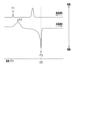
- FIG. 1 is a diagram showing an example of a DSC curve of a polymer containing intermediate water during hydration in a saturated water-containing state.
- (meth)acrylic means acrylic and/or methacrylic
- (meth)acrylate means acrylate and/or methacrylate
- the medical coating agent of the present disclosure contains a polymer (hereinafter also referred to as “polymer (P)”) that includes a structural unit (M1) derived from an ethylenically unsaturated monomer having a urethane bond or a urea bond, and a structural unit (M2) derived from an ethylenically unsaturated monomer having an alkyl group (excluding alkyl groups in alkoxyalkyl groups) or an alkoxyalkyl group, and the SP value of the homopolymer is 10.0 or less.
- P polymer
- the polymer (P) may contain the structural unit (M1) and the structural unit (M2).
- the polymer (P) is preferably a (meth)acrylic polymer in terms of being able to easily increase the reaction rate of the monomer and being easy to produce industrially.
- the polymer (P) is preferably such that the proportion of structural units derived from (meth)acrylic monomers in all structural units derived from the monomers constituting the polymer (P) exceeds 50% by mass, more preferably 60% by mass or more, even more preferably 70% by mass or more, even more preferably 80% by mass or more, and even more preferably 90% by mass or more.
- the structural unit (M1) contained in the polymer (P) is a structural unit derived from an ethylenically unsaturated monomer having a urethane bond or a urea bond (hereinafter, also referred to as "monomer (A1)"). Since the polymer (P) contains the structural unit (M1), it becomes in a state containing a large amount of intermediate water upon hydration, and it is considered that this causes the polymer (P) to exhibit good antithrombotic properties.
- the water that interacts with the polymer (P) can take three forms, “free water,” “nonfreezing water,” and “intermediate water,” depending on the strength of the interaction with the polymer.
- “free water” refers to water that has a weak interaction with the polymer and a freezing point of 0°C.
- Nonfreezing water refers to water that has a strong interaction with the polymer and no detectable freezing point.
- “Intermediate water” refers to water that has an intermediate interaction with the polymer between free water and nonfreezing water (i.e., that interacts relatively slowly with the polymer) and has a freezing point below 0°C. It is believed that the biocompatibility of a polymer is related to the presence of intermediate water in a hydrated polymer (see, for example, paragraphs 0003 and 0004 of JP 2016-35000 A).
- the body's defense mechanism when cells in the body recognize a foreign body, the body's defense mechanism is activated, causing a rejection reaction. Therefore, when a medical device comes into contact with biological components or tissues during treatment or surgery, if the body recognizes the medical device as a foreign body, the body's defense mechanism will be activated and this may interfere with treatment. For example, if a medical device comes into contact with blood, the body's defense mechanism will be activated and a blood clot will be formed, inhibiting the function of the medical device and affecting the body.
- polymers that have intermediate water on their surface are less likely to be recognized as foreign bodies by the body, and are thought to exhibit excellent antithrombotic properties.
- platelets and fibrinogen are known as blood components involved in the formation of thrombi.
- Platelets are blood cells that are activated by foreign matter and form thrombi (platelet thrombi) by aggregating on the foreign matter, and contribute to primary hemostasis in the process of hemostasis.
- Fibrinogen which is coagulation factor I, is a protein that is converted to fibrin in the final stage of blood clotting to form coagulated thrombi, and contributes to secondary hemostasis in the process of hemostasis.
- This fibrinogen is one of the main components in blood that is involved in the formation of thrombi, and it is considered that one of the important factors for imparting biocompatibility (more specifically, antithrombotic properties) to medical devices is that fibrinogen is less likely to be adsorbed onto polymers.
- polymers containing the structural unit (M1) are likely to retain intermediate water during hydration, which can be said to sufficiently suppress the adsorption of fibrinogen to the polymer.
- the specific structure of the monomer (A1) that constitutes the structural unit (M1) will be described in detail below.
- the monomer (A1) is preferably a compound capable of introducing a structure having a urethane bond or a urea bond into the side chain of a polymer, and is preferably a (meth)acrylic monomer having a urethane bond or a urea bond.
- the monomer (A1) is a (meth)acrylic monomer, it is preferable because the reaction rate of the monomer can be easily increased.
- an ethylenically unsaturated monomer having a urethane bond and an ethylenically unsaturated monomer having a urea bond are each described. Note that one type of monomer (A1) may be used alone, or two or more types may be used.
- R 1 is a hydrogen atom or a methyl group
- R 2 is an alkylene group having 1 to 5 carbon atoms or a group represented by "-(R 5 O) m -R 6 -" (wherein R 5 is an alkylene group having 1 to 3 carbon atoms, R 6 is an alkylene group having 1 to 3 carbon atoms, and m is an integer from 1 to 3)
- R 3 is an alkylene group having 1 to 3 carbon atoms, any hydrogen atom of
- any hydrogen atom in the alkylene group is more preferably substituted with an alkoxy group having 1 to 4 carbon atoms, and even more preferably with an alkoxy group having 1 or 2 carbon atoms.
- R4 in general formula (I) is more preferably an alkoxy group having 1 to 4 carbon atoms, and even more preferably an alkoxy group having 1 or 2 carbon atoms.
- (methoxycarbonyl)aminoalkyl (meth)acrylates include (methoxycarbonyl)aminomethyl (meth)acrylate, 2-((methoxycarbonyl)amino)ethyl (meth)acrylate, and 3-((methoxycarbonyl)amino)propyl (meth)acrylate.
- 2-((methoxycarbonyl)amino)ethyl acrylate is preferably used because it can sufficiently lower the glass transition temperature of the polymer (P) in a saturated water-containing state.
- Specific examples of the compound represented by the above general formula (I) include 2-(((2-methoxyethoxy)carbonyl)amino)ethyl (meth)acrylate, 2-(((2-ethoxyethoxy)carbonyl)amino)ethyl (meth)acrylate, 2-(((2-propoxyethoxy)carbonyl)amino)ethyl (meth)acrylate, 2-((((1,3-dimethoxypropan-2-yl)oxy)carbonyl)amino)ethyl (meth)acrylate, 2-( Examples include (((1,3-diethoxypropan-2-yl)oxy)carbonyl)amino)ethyl (meth)acrylate, 2-((((1-methoxy-3-ethoxypropan-2-yl)oxy)carbonyl)amino)ethyl (meth)acrylate, 6-oxo-2,5,10-trioxa-7-azadodecan-12-y
- R 7 is a hydrogen atom or a methyl group
- R 8 is an alkylene group having 2 to 5 carbon atoms
- R 9 is an alkylene group having 1 to 3 carbon atoms
- R 10 is an alkyl group having 1 to 12 carbon atoms
- n is an integer from 0 to 2, with the proviso that the total number of carbon atoms in "-(R 9 O)n-" (i.e., the total number of carbon atoms in n R 9s ) and the total number of carbon atoms in R 10 is 4 or more.)
- n in the general formula (II) is 2, two R 9s may be the same or different.
- n in general formula (II) is preferably 1 or 2, and more preferably 1.
- R 10 in general formula (II) is more preferably an alkyl group having 1 to 5 carbon atoms, and even more preferably an alkyl group having 1 or 2 carbon atoms.
- Specific examples of the compound represented by the above general formula (II) include 2-(3-(2-ethoxyethyl)ureido)ethyl (meth)acrylate, 2-(3-(3-methoxypropyl)ureido)ethyl (meth)acrylate, 2-(3-(3-ethoxypropyl)ureido)ethyl (meth)acrylate, 2-(3-(4-methoxybutyl)ureido)ethyl (meth)acrylate, 3-(3-(2-ethoxyethyl)ureido ) propyl (meth)acrylate, 3-(3-(3-methoxypropyl)ureido)propyl (meth)acrylate, 4-(3-(2-ethoxyethyl)ureido)butyl (meth)acrylate, 2-(3-(n-butyl)ureido)ethyl (meth)acrylate, 2-(3
- the monomer (A1-2) is preferably a compound in which n in general formula (II) is 1 and R 10 is an alkyl group having 1 to 5 carbon atoms, and more preferably a compound in which n in general formula (II) is 1 and R 10 is an alkyl group having 1 or 2 carbon atoms.
- the polymer (P) preferably contains a structural unit (M1) derived from the monomer (A1-1), since this allows for the production of a polymer with excellent anti-adsorption properties to fibrinogen.
- the polymer (P) preferably contains 10% by mass or more of the structural unit (M1) relative to the total structural units contained in the polymer (P).
- the proportion of the structural unit (M1) in the polymer (P) is within the above range, the coating agent can be applied to a substrate to sufficiently suppress the adsorption of fibrinogen, which is preferable in that a medical device with excellent antithrombotic properties can be obtained.
- the proportion of the structural unit (M1) in the polymer (P) is more preferably 20% by mass or more, even more preferably 30% by mass or more, and even more preferably 40% by mass or more relative to the total structural units contained in the polymer (P).
- the proportion of the structural unit (M1) in the polymer (P) is preferably 95% by mass or less, and more preferably 90% by mass or less, relative to the total structural units contained in the polymer (P), from the viewpoint of ensuring adhesion to hydrophobic substrates.
- the structural unit (M2) is a structural unit derived from an ethylenically unsaturated monomer (hereinafter also referred to as "monomer (A2)") having an alkyl group (excluding the alkyl group in the alkoxyalkyl group) or an alkoxyalkyl group, the SP value of which is 10.0 or less.
- monomer (A2) ethylenically unsaturated monomer
- R hydrophobic group
- the number of carbon atoms of the alkyl group of the structural unit (M2) is preferably 3 or more, more preferably 4 or more, even more preferably 8 or more, even more preferably 10 or more, and even more preferably 12 or more, in order to improve the adhesion of the polymer (P) to a hydrophobic substrate.
- the number of carbon atoms of the alkyl group of the structural unit (M2) is, for example, 40 or less, preferably 30 or less, in order to ensure resistance to adsorption to fibrinogen.
- the alkyl group of the structural unit (M2) may be either linear or branched. In order to increase the adhesion of the polymer (P) to a hydrophobic substrate and improve the coatability of the coating agent, it is preferable that the polymer (P) is linear.
- the number of carbon atoms of the alkoxyalkyl group of the structural unit (M2) is preferably 5 or more, more preferably 7 or more, even more preferably 10 or more, even more preferably 11 or more, and even more preferably 13 or more, in order to improve the adhesion of the polymer (P) to the hydrophobic substrate.
- the upper limit of the number of carbon atoms of the alkoxyalkyl group of the structural unit (M2) is, for example, 40 or less, preferably 30 or less, in order to ensure resistance to adsorption to fibrinogen.
- the alkoxyalkyl group of the structural unit (M2) preferably has 1 to 4 carbon atoms in the alkoxy group portion, more preferably 1 to 3 carbon atoms, even more preferably 1 or 2 carbon atoms, and even more preferably 1 carbon atom.
- the alkoxyalkyl group of the structural unit (M2) is preferably linear.
- the hydrophobic group (R) in the structural unit (M2) is preferably an alkyl group having 3 or more carbon atoms or an alkoxyalkyl group having 5 or more carbon atoms, more preferably an alkyl group having 4 or more carbon atoms or an alkoxyalkyl group having 7 or more carbon atoms, even more preferably an alkyl group having 8 or more carbon atoms or an alkoxyalkyl group having 10 or more carbon atoms, even more preferably an alkyl group having 10 or more carbon atoms or an alkoxyalkyl group having 11 or more carbon atoms, and even more preferably an alkyl group having 12 or more carbon atoms or an alkoxyalkyl group having 13 or more carbon atoms.
- the structural unit (M2) has a hydrophobic group (R) at the end of the side chain of the polymer. More specifically, it is preferable that the hydrophobic group (R) in the structural unit (M2) is bonded to an atom constituting the side chain of the polymer.
- the SP value of the homopolymer of the monomer (A2) is 10.0 or less. If the SP value of the homopolymer of the monomer (A2) is greater than 10.0, the adhesion of the polymer to the hydrophobic substrate cannot be sufficiently ensured, and the applicability of the medical coating agent is reduced. From this viewpoint, the SP value of the homopolymer of the monomer (A2) is preferably 9.9 or less, more preferably 9.8 or less, even more preferably 9.7 or less, even more preferably 9.5 or less, and even more preferably 9.3 or less.
- the lower limit of the SP value of the homopolymer of the monomer (A2) is not particularly limited, but from the viewpoint of ensuring anti-adsorption to fibrinogen, it is, for example, 6.0 or more, preferably 7.0 or more.
- the SP value of the homopolymer of the monomer is a value calculated by the Fedors method for each homopolymer (unit: [cal/cm 3 ] 1/2 ).
- Monomer (A2) may be any monomer that is copolymerizable with monomer (A1).
- monomer (A2) is preferably a (meth)acrylic monomer having a hydrophobic group (R), and among these, it is preferably at least one selected from the group consisting of (meth)acrylic acid alkyl esters and (meth)acrylic acid alkoxyalkyl esters.
- monomer (A2) examples include alkyl (meth)acrylate esters such as methyl methacrylate, ethyl methacrylate, isopropyl (meth)acrylate, n-propyl (meth)acrylate, n-butyl (meth)acrylate, isobutyl (meth)acrylate, tert-butyl (meth)acrylate, n-pentyl (meth)acrylate, n-hexyl (meth)acrylate, n-heptyl (meth)acrylate, n-octyl (meth)acrylate, and 2-ethylhexyl (meth)acrylate, n-nonyl (meth)acrylate, isononyl (meth)acrylate, decyl (meth)acrylate, undecyl (meth)acrylate, lauryl (meth)acrylate, and tridecyl (meth)acrylate.
- acrylates examples include tetradecyl (meth)acrylate, pentadecyl (meth)acrylate, hexadecyl (meth)acrylate, heptadecyl (meth)acrylate, stearyl (meth)acrylate, nonadecyl (meth)acrylate, eicosyl (meth)acrylate, heneicosyl (meth)acrylate, behenyl (meth)acrylate, tetracosyl (meth)acrylate, hexacosyl (meth)acrylate, octacosyl (meth)acrylate, triacontyl (meth)acrylate, dotriacontyl (meth)acrylate, tetratriacontyl (meth)acrylate, hexatriacontyl (meth)acrylate, octatriacontyl (meth)acrylate, and tetracontyl (meth)
- Examples of (meth)acrylic acid alkoxyalkyl esters include n-propoxyethyl (meth)acrylate, n-butoxyethyl (meth)acrylate, 3-methoxypropyl (meth)acrylate, 3-ethoxypropyl (meth)acrylate, n-propoxypropyl (meth)acrylate, n-butoxypropyl (meth)acrylate, methoxybutyl (meth)acrylate, ethoxybutyl (meth)acrylate, n-propoxybutyl (meth)acrylate, n-butoxybutyl (meth)acrylate, methoxypentyl (meth)acrylate, ethoxypentyl (meth)acrylate, and n-propoxypentyl (meth)acrylate.
- the monomer (M2) is preferably at least one selected from the group consisting of (meth)acrylic acid alkyl esters having an alkyl group with 3 or more carbon atoms and (meth)acrylic acid alkoxyalkyl esters having an alkoxyalkyl group with 5 or more carbon atoms, more preferably at least one selected from the group consisting of (meth)acrylic acid alkyl esters having an alkyl group with 4 or more carbon atoms and (meth)acrylic acid alkoxyalkyl esters having an alkoxyalkyl group with 7 or more carbon atoms, and even more preferably at least one selected from the group consisting of (meth)acrylic acid alkyl esters having an alkyl group with 8 or more carbon atoms and (meth)acrylic acid alkoxyalkyl esters having an alkoxyalkyl group with 10 or more
- the monomer (M2) is preferably at least one selected from the group consisting of (meth)acrylic acid alkyl esters having an alkyl group with 8 or more carbon atoms.
- the polymer (P) preferably contains 5% by mass or more of the structural unit (M2) relative to the total structural units contained in the polymer (P).
- the proportion of the structural unit (M2) in the polymer (P) is within the above range, it is preferable in that the adhesion of the polymer (P) to a hydrophobic substrate can be further increased.
- the proportion of the structural unit (M2) in the polymer (P) is more preferably 10% by mass or more, and even more preferably 20% by mass or more, relative to the total structural units contained in the polymer (P).
- the proportion of the structural unit (M2) in the polymer (P) is preferably 90% by mass or less, more preferably 80% by mass or less, and even more preferably 70% by mass or less, relative to the total structural units contained in the polymer (P).
- the mass ratio ((M1)/(M2)) of the structural unit (M1) to the structural unit (M2) contained in the polymer (P) is preferably in the range of 95/5 to 10/90, more preferably in the range of 90/10 to 20/80, even more preferably in the range of 80/20 to 20/80, and even more preferably in the range of 80/20 to 30/70, from the viewpoint of obtaining a polymer that has a good balance between resistance to adsorption of fibrinogen and adhesion to a hydrophobic substrate.
- the polymer (P) may be composed of a structural unit (M1) and a structural unit (M2).
- the polymer (P) may further contain a structural unit (hereinafter also referred to as "other structural unit") different from the structural unit (M1) and the structural unit (M2) within a range that does not impair the effects of the present disclosure, for example, for the purpose of adjusting the glass transition temperature of the polymer (P).
- the monomer constituting the other structural unit may be a monomer that is copolymerizable with the monomer (A1) and the monomer (A2).
- Examples of such monomers include (meth)acrylic acid, methyl acrylate, ethyl acrylate, 2-methoxyethyl acrylate, hydroxyethyl (meth)acrylate, acrylonitrile, and styrene. Note that, as the monomer constituting the other structural unit, one type may be used alone, or two or more types may be used.
- the proportion of the other structural units in the polymer (P) is preferably 20% by mass or less, more preferably 10% by mass or less, even more preferably 5% by mass or less, and even more preferably 1% by mass or less, based on the total structural units contained in the polymer (P), from the viewpoint of ensuring anti-adsorption properties of fibrinogen and adhesion to hydrophobic substrates.
- the polymer (P) may be a random copolymer, or may be a block copolymer, a graft copolymer, or the like. Of these, a random copolymer is preferable, since it can provide the polymer (P) with superior properties in terms of both its resistance to adsorption to fibrinogen and its adhesion to hydrophobic substrates.
- the polymerization method for producing the polymer (P) is not particularly limited.
- the polymer (P) can be obtained by polymerizing the monomers using a known radical polymerization method such as solution polymerization, suspension polymerization, emulsion polymerization, or bulk polymerization.
- a polymerization initiator e.g., an azo compound
- the mixture is heated to 40 to 250°C to polymerize, thereby obtaining the desired polymer.
- known methods can be used for the treatment.
- isolating and/or purifying the polymer (P) by a reprecipitation method a water-insoluble polymer may be recovered in high purity by using an aqueous solvent.
- the weight average molecular weight (Mw) of the polymer (P) is preferably in the range of 2,000 to 2,000,000. When the Mw is 2,000 or more, the mechanical strength of the coating film formed on the substrate using the present coating agent can be sufficiently ensured. Furthermore, when the Mw is 2,000,000 or less, the viscosity of the present coating agent can be prevented from becoming too high, and good coatability and handleability can be easily ensured.
- the Mw of the polymer (P) is more preferably 5,000 or more, even more preferably 10,000 or more, even more preferably 30,000 or more, and even more preferably 50,000 or more.
- the upper limit of the Mw of the polymer (P) is more preferably 1,500,000 or less, and even more preferably 1,000,000 or less.
- the Mw of the polymer is a standard polystyrene equivalent value obtained using gel permeation chromatography (GPC).
- FIG. 1 shows an example of a DSC curve of a polymer having intermediate water at the time of hydration in a saturated water-containing state. Note that water that melts at about 0°C during the heating process is defined as "free water”.
- FIG. 1 shows a DSC curve of a polymer containing sufficient water, when the temperature is lowered and raised in the temperature range from -100°C to 40°C at a heating rate of 5°C/min using a differential scanning calorimeter (DSC).
- DSC differential scanning calorimeter
- the low-temperature crystallization peak during the temperature decrease process is due to the low-temperature crystal formation of intermediate water that is close to free water
- the low-temperature crystallization peak during the temperature increase process is due to intermediate water that could not be frozen during the temperature decrease process, and both are classified as intermediate water.
- an endothermic peak with a peak top at 0°C is observed due to the melting of ice crystallized from free water and intermediate water (see P3 in Figure 1).
- the lower temperature side of the endothermic peak of P3 is a melting peak due to the melting of ice crystallized from intermediate water, and the higher temperature side is a melting peak due to the melting of ice crystallized from free water.
- this specification defines the water-containing state of a polymer when the endothermic peak top due to ice melting appears at 0°C in a DSC curve obtained by heating a water-containing polymer at a rate of 5°C/min as a "saturated water-containing state".
- the polymer (P) preferably has a glass transition temperature of -30°C or lower in a saturated water-containing state.
- the glass transition temperature of the polymer (P) in a saturated water-containing state is -30°C or lower, the anti-adsorption property of fibrinogen in the polymer (P) can be improved.
- the glass transition temperature of the polymer (P) in a saturated water-containing state is preferably -35°C or lower, and more preferably -40°C or lower.
- the lower limit of the glass transition temperature of the polymer (P) in a saturated water-containing state is not particularly limited, but is, for example, -100°C or higher.
- the polymer (P) exhibits high adhesion to the hydrophobic substrate, and thus exhibits good coatability, and in a state where the surface of the hydrophobic substrate is covered, the polymer (P) exhibits high hydrophilicity at the contact surface with water (water interface) by contact with water while ensuring adhesion to the substrate surface.
- the coatability of the polymer (P) can be evaluated, for example, by the degree of coating (whether coating can be performed or not and the coating rate) when a film is formed on the surface of the hydrophobic substrate by spin coating.
- the hydrophilicity at the water interface of the polymer (P) in a state where the surface of the hydrophobic substrate is covered (hereinafter also referred to as “surface hydrophilicity”) can be evaluated, for example, by measuring the air bubble contact angle (hereinafter also referred to as “air bubble contact angle ⁇ ") when air bubbles are brought into contact with the polymer (P) covering the substrate surface in water. Note that the closer the air bubble contact angle ⁇ is to 180 degrees, the higher the hydrophilicity of the contact surface of the air bubbles (i.e., the water interface of the polymer (P)).
- the air bubble contact angle ⁇ is preferably 110 degrees or more.
- the air bubble contact angle ⁇ is more preferably 115 degrees or more, even more preferably 120 degrees or more, even more preferably 125 degrees or more, even more preferably 130 degrees or more, and even more preferably 135 degrees or more.
- the upper limit of the air bubble contact angle ⁇ is not particularly limited, but may be, for example, 160 degrees or less, or 155 degrees or less.
- the bubble contact angle ⁇ is a value measured by the water bubble method.
- a 0.2 (w/v)% polymer solution prepared by dissolving the polymer to be evaluated in a solvent is applied by spin coating onto a polypropylene substrate, the solvent is removed from the polypropylene substrate to form a polymer film on the polypropylene substrate, and the polymer film is immersed in water for 5 minutes, and then air bubbles are brought into contact with the polymer film in water to measure the bubble contact angle ⁇ . Details of the method for measuring the bubble contact angle ⁇ follow the method described in the examples below.
- the content of polymer (P) is preferably 50 parts by mass or more, more preferably 70 parts by mass or more, even more preferably 80 parts by mass or more, even more preferably 90 parts by mass or more, and even more preferably 95 parts by mass or more, per 100 parts by mass of the total amount of solids contained in this coating agent (i.e., components other than the solvent in the medical coating agent).
- the content of polymer (P) is advantageous in that it exhibits excellent antithrombotic properties and can impart stable biocompatibility to the substrate.
- the present coating agent may further contain components other than the polymer (P) (hereinafter also referred to as "other components") depending on the purpose of use, etc.
- the present coating agent is a liquid
- one embodiment of the present coating agent is a polymer composition in which the polymer (P) is dissolved or dispersed in a solvent as necessary.
- a solvent capable of dissolving the polymer (P) is preferably used as the solvent.
- the solvent contained in the coating agent is preferably an organic solvent. Specific examples thereof include alcohols such as methanol, ethanol, n-propanol, and isopropanol; ketones such as acetone and methyl ethyl ketone; ethers such as ethylene glycol monomethyl ether, propylene glycol monomethyl ether, tetrahydrofuran, and dioxane; esters such as ethylene glycol monomethyl ether acetate and ethyl acetate; amides such as N,N-dimethylformamide (DMF) and N,N-dimethylacetamide; hydrocarbons such as n-hexane, cyclohexane, toluene, and xylene; and dimethyl sulfoxide.
- the solvent may be used alone or in combination of two or more.
- compositions that may be blended into the coating agent include, in addition to solvents, various drugs such as antibacterial agents, anti-inflammatory agents, and antioxidants.
- various drugs such as antibacterial agents, anti-inflammatory agents, and antioxidants.
- One or more of the other components may be used.
- the content of the other components may be appropriately selected according to each component, as long as it does not impair the effects of the present disclosure.
- the solids concentration in the medical coating agent (here, the ratio of the mass of the components other than the solvent in the medical coating agent to the volume of the solvent used in preparing the medical coating agent) is not particularly limited, but is preferably 0.001 to 30 (w/v)%.
- the solids concentration 0.001 (w/v)% or more, a coating film having sufficient thickness and mechanical strength can be formed on the substrate. If the solids concentration is 30 (w/v)% or less, good coatability can be ensured and a coating film of uniform thickness can be easily formed.
- the solids concentration of the present coating agent is more preferably 0.01 to 25 (w/v)%, and even more preferably 0.05 to 20 (w/v)%.
- This coating agent contains a polymer (P) that has good adhesion to hydrophobic substrates. This allows this coating agent to exhibit excellent coatability to hydrophobic substrates.
- the surface coating rate of this coating agent on a hydrophobic substrate can be calculated, for example, by a composition analysis of the surface layer portion (hereinafter also referred to as the "coating side surface portion") of a coating substrate with a coating film obtained by applying a solution containing the polymer (P) to a hydrophobic substrate (e.g., a polypropylene substrate) by spin coating, using X-ray photoelectron spectroscopy (XPS).
- XPS X-ray photoelectron spectroscopy
- the mass fraction of the polymer (P) is high in the composition analysis of the coating side surface portion using XPS.
- the composition analysis of the coating side surface layer portion by XPS will show a high mass fraction of the components constituting the substrate (e.g., polypropylene in a polypropylene substrate).
- Details of the composition analysis method of the coating side surface layer portion by XPS are as described in the examples below.
- the composition ratio (mass fraction W A ) of the polymer (P) in the coating side surface layer portion is the mass fraction of the polymer (P) relative to the total mass of the polymer (P) in the coating side surface layer portion and the resin constituting the substrate, and is specifically expressed by the following formula:
- the mass fraction W A of the coating side surface layer portion determined by XPS is taken as the surface coating ratio.
- W A (mass of polymer (P))/(total mass of polymer (P) and resin constituting the substrate)
- the surface coverage rate of the coating agent on the polypropylene substrate is preferably 20% by mass or more, more preferably 40% by mass or more, even more preferably 60% by mass or more, even more preferably 70% by mass or more, and even more preferably 80% by mass or more, from the viewpoint of imparting excellent antithrombotic properties to the substrate surface.
- the polymer (P) contained in the coating agent can impart excellent antithrombotic properties to the surface of a hydrophobic substrate while having a structural unit (M2) with relatively high hydrophobicity is not clear, but the following is thought to be the case.
- the structural unit (M2) of the polymer (P) is thought to improve the affinity of the polymer (P) with the hydrophobic substrate.
- the hydrophobic substrate (coating substrate) on which a coating film is formed by applying the coating agent to the surface of the hydrophobic substrate is brought into contact with moisture
- the chemical structure of the polymer (P) constituting the coating film is changed, for example, by reorientation at the water interface, and the structural unit (M1) is likely to appear at the water interface with higher affinity.
- the polymer (P) containing a large amount of intermediate water on its surface during hydration which is believed to impart excellent antithrombotic properties to the substrate surface.
- the coating film formed on the hydrophobic substrate by this coating agent is not easily peeled off even when it comes into contact with water, making it useful in that it can impart sustained antithrombotic properties to the hydrophobic substrate.
- the medical device of the present disclosure is formed by coating a substrate with the above-mentioned coating agent.
- the medical device of the present disclosure has a part or whole surface covered with the polymer (P) contained in the coating agent. Therefore, the medical device of the present disclosure has high anti-adsorption properties for fibrinogen and excellent anti-thrombogenic properties.
- the substrate of the medical device to which the coating agent is applied is not particularly limited.
- materials constituting the substrate of the medical device include various materials such as resin, rubber, metal, glass, and ceramic.
- resin include various resin materials such as polycarbonate, polyethylene terephthalate, polyvinyl chloride, polyolefin, polyurethane, poly(meth)acrylate, polystyrene, polyacetal, polysulfone, polyethersulfone, fluorine-based resins (polyvinylidene fluoride, polyethylene tetrafluoride, etc.), acrylonitrile-butadiene-styrene (ABS) resin, polyamide, and ethylene-vinyl acetate resin.
- rubber include silicone rubber and urethane rubber.
- metals include various metal materials such as stainless steel, titanium, and aluminum.
- the material constituting the substrate of the medical device may be a mixture of two or more materials.
- the present coating agent exhibits good coatability on hydrophobic substrates due to the inclusion of polymer (P). Therefore, among the above-mentioned substrates, substrates with high hydrophobicity can be preferably used as substrates to which the present coating agent is applied, and polyolefin substrates can be more preferably used.
- polyolefin substrates include polyethylene, polypropylene, polybutene, polyisobutene, polymethylpentene, propylene/ethylene copolymers, propylene/1-butene copolymers, propylene/ethylene/1-butene copolymers, and propylene/ethylene/1-octene copolymers.
- substrates containing ethylene or propylene homopolymers or copolymers thereof as the main components are widely used as substrates for medical devices, and the present coating agent is suitable in that it can impart excellent antithrombotic properties to such general-purpose substrates.
- the method for coating the substrate surface with the coating agent is not particularly limited.
- the coating agent when the coating agent is in a solution state, the coating agent is applied to the substrate surface, and the solvent is removed by heating or other means, thereby obtaining a medical device in which at least a portion of the substrate surface is coated with the polymer (P).
- the coating method can be appropriately selected depending on the shape of the substrate and the intended use.
- coating methods include bar coating, applicator, doctor blade, dip coating, roll coating, spin coating, flow coating, knife coating, comma coating, reverse coating, die coating, lip coating, gravure coating, microgravure coating, and ink jet coating.
- the amount of coating of the coating agent can be appropriately selected depending on the application and material of the medical device so that the thickness of the coating film formed by the coating agent is within the desired range.
- spin coating, dip coating, and flow coating are preferred because they are relatively easy to adjust to a practical film thickness (for example, a film thickness of about 20 to 200 nm).
- the medical device whose substrate surface is coated with this coating agent is not particularly limited, and can be applied to various medical devices.
- specific examples include various medical devices such as stents, catheters, blood bags, transfusion instruments, surgical instruments, dental instruments, blood circulation devices, blood purification devices, plasma separation devices, artificial blood vessels, and artificial organs (e.g., artificial heart-lung machines, artificial kidneys, etc.).
- this coating agent may be used as an antibacterial and antifouling coating agent. Considering that this coating agent can impart excellent antithrombotic properties to the substrate surface, this coating agent can be preferably applied as a material for coating the substrate of medical devices that are used in direct contact with blood.
- Synthesis of ethylenically unsaturated monomers having urethane or urea bonds (Synthesis Example 1: Synthesis of 2-(((2-methoxyethoxy)carbonyl)amino)ethyl acrylate) A stirrer was added to a 300 mL three-neck flask, and 50 mL of tetrahydrofuran (hereinafter also referred to as "THF") (manufactured by FUJIFILM Wako Pure Chemical Industries, Ltd.) as a solvent, 0.09 g of dibutyltin dilaurate (manufactured by FUJIFILM Wako Pure Chemical Industries, Ltd.) as a catalyst, and 6.28 g of 2-methoxyethanol (manufactured by FUJIFILM Wako Pure Chemical Industries, Ltd.) as a raw material alcohol were added, and a thermometer, a 50 mL dropping funnel, and a three-way cock were attached.
- the collected sample was purified by silica gel column chromatography using a solvent in which hexane/ethyl acetate were mixed in a volume ratio of 1:1 to obtain 2-(((2-methoxyethoxy)carbonyl)amino)ethyl acrylate (hereinafter also referred to as "MEOCNA").
- MEOCNA 2-(((2-methoxyethoxy)carbonyl)amino)ethyl acrylate
- Synthesis Example 2 Synthesis of 2-(3-(2-ethoxyethyl)ureido)ethyl acrylate A stirrer was added to a 300 mL three-neck flask, and 50 mL of THF (manufactured by FUJIFILM Wako Pure Chemical Industries, Ltd.) as a solvent and 10.58 g of AOI as an isocyanate compound were added. Then, a thermometer, a 100 mL dropping funnel, and a three-way cock were attached.
- THF manufactured by FUJIFILM Wako Pure Chemical Industries, Ltd.
- the internal liquid was transferred to a 200 mL separatory funnel to separate the organic layer from the aqueous layer.
- 30 mL of ethyl acetate (manufactured by Fujifilm Wako Pure Chemical Industries, Ltd., special grade) was added to the aqueous layer and shaken to extract the aqueous layer, and this operation was repeated twice.
- 30 mL of saturated saline was added to the collected organic layer, shaken, washed, and this operation was repeated twice.
- 30 mg of anhydrous sodium sulfate (manufactured by Fujifilm Wako Pure Chemical Industries, Ltd.) was added to the washed organic layer, stirred for 1 hour, and dehydrated.
- Tg glass transition temperature
- the polymer was cooled from 40°C to -100°C at a temperature increase/decrease rate of 5°C/min, held at -100°C for 5 minutes, and then heated to 40°C to determine the glass transition temperature (Tg) of the polymer in a saturated water-containing state.
- Tg glass transition temperature
- the glass transition temperature (Tg) of the polymer in the saturated water content state was determined from the DSC curve when the peak top of the endothermic heat due to ice melting appears at 0° C.
- Tg glass transition temperature
- ⁇ Measurement of bubble contact angle in water> Each polymer was dissolved in a solvent to prepare a 0.2 (w/v)% polymer solution.
- acetone was used for the polymers obtained in the following Production Examples 1 and 8, ethanol for the polymer obtained in Production Example 2, a solvent obtained by mixing methanol and acetone in a mass ratio of 9:1 for the polymer obtained in Production Example 3, ethyl acetate for the polymers obtained in Production Examples 4 and 6, THF for the polymer obtained in Production Example 7, and methanol for the polymers obtained in Production Example 5, Comparative Production Example 1, and Comparative Production Example 2.
- a polypropylene (PP) substrate (size: 1.8 cm square, thickness: 2 mm, Showa Denko Materials, polypropylene, PP-N-BN) was thoroughly washed with methanol, and then 85 ⁇ L of each of the polymer solutions prepared above was used to spin coat the PP substrate.
- the spin coating conditions were 500 rpm, 5 s ⁇ 1,500 rpm, 10 s ⁇ 1,500 to 4,000 rpm (slope), 5 s ⁇ 4,000 rpm, 10 s ⁇ 4,000 to 0 rpm (slope), 5 s. Thereafter, the substrate was air-dried at room temperature (25° C.) for 3 days to obtain a coating substrate for evaluation for each polymer solution.
- Each of the obtained coating substrates for evaluation was fixed to a sample stand of a three-state kit (manufactured by Kyowa Interface Science Co., Ltd.) and immersed in a transparent cell filled with pure water under room temperature (25 ° C.) conditions.
- a reverse needle included in the kit was attached to the syringe of a contact angle meter (manufactured by Kyowa Interface Science Co., Ltd., model number DropMaster DM-501SA), and 2 ⁇ L of air bubbles were discharged from the tip of the needle of the syringe, thereby attaching the air bubbles to the surface of the coating substrate for evaluation immersed in water on the side on which the medical coating agent was applied. Thereafter, the angle formed by the air bubbles and the surface of the coating substrate for evaluation (air bubble contact angle) was measured using a contact angle meter 30 seconds after the air bubbles were attached. Note that the closer the air bubble contact angle is to 180 degrees, the higher the hydrophilicity of the contact surface of the air bubbles is evaluated to be.
- a stirrer was placed in the test tube, a thermometer was attached to the side tube, and a three-way cock was attached to the main tube.
- a syringe needle was inserted from the three-way cock, and argon was blown into the solution at 100 mL/min for 30 minutes to deoxygenate it.
- the three-way cock was closed, and the test tube was sealed.
- the test tube was inserted into a heat block set at 60°C to start polymerization. The temperature of the heat block was appropriately adjusted so that the internal temperature was 60°C. After 3 hours, the test tube was cooled in an ice bath to stop the polymerization.
- the reaction solution was subjected to reprecipitation purification twice using a solvent obtained by mixing hexane and ethyl acetate in a mass ratio of 5:5 as the reprecipitation purification solvent. Thereafter, the recovered polymer was subjected to reprecipitation purification using pure water as the aqueous reprecipitation purification solvent to obtain polymer A.
- the weight average molecular weight was 125,000.
- the Tg was ⁇ 48° C.
- the bubble contact angle 5 minutes after immersion in water was 110°.
- Polymer B was obtained by the same operation as in Production Example 1, except that 2.5 g of MEOCNA and 1.2 g of dodecyl acrylate (manufactured by FUJIFILM Wako Pure Chemical Industries, Ltd., hereinafter also referred to as "LA") were used as monomers, 0.271 g of V-65 initiator as a radical initiator, 18.5 g of ethyl acetate as a solvent, and a solvent in which hexane and ethyl acetate were mixed in a mass ratio of 6:4 as a reprecipitation purification solvent were used.
- the weight average molecular weight was 128,000.
- Tg was -53°C
- the bubble contact angle 5 minutes after immersion in water was 120 degrees.
- Polymer D was obtained by the same operation as in Production Example 1, except that 2.5 g of MEOCNA and 1.6 g of STA were used as monomers, 0.283 g of V-65 initiator as a radical initiator, 20.5 g of ethyl acetate as a solvent, and a hexane solvent as a solvent for reprecipitation purification were used.
- Polymer D was measured by GPC and found to have a weight average molecular weight of 74,000. In addition, Tg was ⁇ 43° C., and the bubble contact angle 5 minutes after immersion in water was 133°.
- Polymer E was obtained by the same operation as in Production Example 1, except that 3.0 g of MEOCNA as a monomer, 0.6 g of docosyl acrylate (manufactured by Tokyo Chemical Industry Co., Ltd., hereinafter also referred to as "BeA"), 0.152 g of V-65 initiator as a radical initiator, 14.3 g of ethyl acetate as a solvent, and a solvent in which hexane and ethyl acetate were mixed in a mass ratio of 5:5 as a reprecipitation purification solvent were used.
- the weight average molecular weight was 254,000.
- Tg was -44 ° C.
- the bubble contact angle 5 minutes after immersion in water was 138 degrees.
- Polymer F was obtained by the same operation as in Production Example 1, except that 2.5 g of MEOCNA and 1.1 g of BeA were used as monomers, 0.143 g of V-65 initiator as a radical initiator, 14.4 g of ethyl acetate as a solvent, and a solvent in which hexane and ethyl acetate were mixed in a mass ratio of 9:1 as a reprecipitation purification solvent were used.
- the weight average molecular weight was 186,000.
- Tg was -42°C
- the bubble contact angle 5 minutes after immersion in water was 135°.
- Polymer G was obtained by the same operation as in Production Example 1, except that 2.0 g of MEOCNA and 1.5 g of BeA were used as monomers, 0.131 g of V-65 initiator as a radical initiator, 14.0 g of ethyl acetate as a solvent, and methanol as a solvent for reprecipitation purification were used. Polymer G was measured by GPC and found to have a weight average molecular weight of 74,000. In addition, Tg was ⁇ 46° C., and the bubble contact angle 5 minutes after immersion in water was 131°.
- Polymer H was obtained by the same operation as in Production Example 1, except that 2.5 g of EEA-UA and 1.6 g of STA were used as monomers, 0.156 g of V-65 initiator as a radical initiator, 20 g of ethyl acetate as a solvent, and hexane as a solvent for reprecipitation purification were used. Polymer H was measured by GPC and found to have a weight average molecular weight of 98,000. In addition, Tg was ⁇ 48° C., and the bubble contact angle 5 minutes after immersion in water was 141°.
- ⁇ Surface coating rate of PP substrate by spin coating> In order to evaluate the coatability of each polymer to a PP substrate, a coating substrate for evaluation was prepared by "thin film spin coating" which allows adjustment to a practical film thickness, and the surface coating rate was calculated by the following method. After thoroughly washing a PP substrate (size: 3 cm square, thickness: 2 mm, manufactured by Showa Denko Materials, polypropylene, PP-N-BN) with methanol, 235 ⁇ L of each medical coating agent was applied to the PP substrate by spin coating.
- the spin coating conditions were 500 rpm, 5 s ⁇ 1,500 rpm, 10 s ⁇ 1,500 to 4,000 rpm (slope), 5 s ⁇ 4,000 rpm, 10 s ⁇ 4,000 to 0 rpm (slope), 5 s. Thereafter, the substrate was air-dried at room temperature (25° C.) for 3 days, and further vacuum-dried at 25° C. and 4 Pa for 3 days to obtain a coating substrate for evaluation for each medical coating agent.
- the mass fraction of the polymer in the surface layer part on the side where the medical coating agent was applied (i.e., the coating side surface layer part) of the evaluation coated substrate was calculated from the peak area ratio of O1s derived from oxygen atoms and C1s derived from carbon atoms measured using an X-ray photoelectron spectrometer. Note that the components present in the coating side surface layer part of the evaluation coated substrate were calculated as the polymer in the medical coating agent and PP, which is a constituent component of the substrate.
- the XPS measurement was carried out under the following conditions.
- X-ray incident angle to the sample 0° (angle relative to the normal to the sample measurement surface)
- the polymer in the medical coating agent i.e., Polymers A to J produced in Production Examples 1 to 8 and Comparative Production Examples 1 and 2
- Polymer (A) the polymer in the medical coating agent
- PP (B) the polypropylene that is a component of the base material
- the ratio of the number of oxygen atoms to the number of carbon atoms calculated from the peak area ratio of O1s and C1s by XPS measurement is expressed as the ratio of the number of oxygen atoms to the number of carbon atoms present per unit mass of the coating side surface layer portion of the coating substrate for evaluation made of each polymer (A) and/or PP (B), as shown in the following formula (1).
- (O/C) A+B ratio of the number of oxygen atoms to the number of carbon atoms calculated from the peak area ratio of O1s and C1s determined from XPS measurement of the surface layer portion on the coating side
- W A mass fraction of polymer (A) relative to the total amount of polymer (A) and PP
- M w-A weighted average molecular weight of all constituent monomer units of polymer (A) M w-B : molecular weight of constituent monomer unit of PP (B)
- N O-A number of oxygen atoms contained in the average monomer structural formula of all constituent monomers constituting polymer (A)
- N O-B number of oxygen atoms contained in the structural formula of the constituent monomer of PP (B)
- N C-A number of carbon atoms contained in the average monomer structural formula of all constituent monomers constituting polymer (A)
- N C-B number of carbon atoms contained in the structural formula of the constituent monomer of PP
- the ratio of the number of carbon atoms to the number of oxygen atoms calculated from the peak area ratio of O1s to C1s determined by XPS measurement of the coating side surface layer portion of each of polymer (A) and PP (B) alone is represented by the following formulas (2) and (3), respectively.
- (O/C) A the ratio of the number of oxygen atoms to the number of carbon atoms calculated from the peak area ratio of O1s and C1s obtained by XPS measurement of the surface layer portion of the coating side of the polymer (A) alone
- (O/C) B the ratio of the number of oxygen atoms to the number of carbon atoms calculated from the peak area ratio of O1s and C1s determined by XPS measurement of the coating side surface layer portion of PP(B) alone.
- the following formula (4) is derived from the above formulas (1) to (3), and the mass fraction (W A ) of polymer (A) relative to the total amount of polymer (A) and PP(B) is calculated using this.
- the mass fraction (W B ) of PP(B) is calculated from the value of W A obtained above and the following formula (5).
- WB Mass fraction of PP(B) relative to the total amount of polymer (A) and PP(B)
- WA is taken as the surface coating rate, and the larger this value, the higher the coatability of the medical coating agent on the PP substrate is judged to be.
- ⁇ Fibrinogen adsorption test of coated substrate by cast coat (MicroBCA assay)>
- a coating substrate for evaluation was prepared by "thick film cast coating" so that the surface coating rate of the medical coating agent was 100 mass %.
- 15 ⁇ L of each medical coating agent was dropped into each well of a 96-well plate (Corning General Assay Plate, Polypropylene 96-well Perfect Plate, Flat Bottom, Non-sterile), and left to dry for 3 days to obtain a coating substrate for evaluation.
- Comparative Example 3 In the fibrinogen adsorption test, the test was carried out in the same manner as in Examples 1 to 8 and Comparative Examples 1 and 2, except that the 96-well plate was not coated with a medical coating agent.
- MEOCNA 2-(((2-methoxyethoxy)carbonyl)amino)ethyl acrylate (Synthesis Example 1)
- EEA-UA 2-(3-(2-ethoxyethyl)ureido)ethyl acrylate (Synthesis Example 2)
- BA n-butyl acrylate (homopolymer SP value: 9.8, alkyl group carbon number: 4), butyl acrylate manufactured by Fujifilm Wako Pure Chemical Industries, Ltd.
- LA n-lauryl acrylate (homopolymer SP value: 9.2, alkyl group carbon number: 12), dodecyl acrylate manufactured by Fujifilm Wako Pure Chemical Industries, Ltd.
- STA n-stearyl acrylate (homopolymer SP value: 9.0, alkyl group carbon number: 18), stearyl acrylate manufactured by Fujifilm Wako Pure Chemical Industries, Ltd.
- BeA n-behenyl acrylate (homopolymer SP value: 8.9, alkyl group carbon number: 22), docosyl acrylate manufactured by Tokyo Chemical Industry Co., Ltd.
- MEA 2-methoxyethyl acrylate, 2-methoxyethyl acrylate manufactured by Fujifilm Wako Pure Chemical Industries, Ltd.
- the SP values of the homopolymers of each monomer are R.F. The calculation was performed according to the method described in "Polymer Engineering and Science" 14(2), 147 (1974) by Fedors.
- the polymers A to H are in a state of coating the substrate surface and come into contact with water, it is presumed that the structural unit (M1) in the polymers A to H is more likely to appear at the water interface side than the substrate surface side, and the presence of the structural unit (M1) causes more intermediate water to cover the substrate surface, thereby showing excellent anti-adsorption properties against fibrinogen (FIB). Furthermore, the polymers A to H showed small changes over time in the measured bubble contact angle in water. This suggests that polymers A to H that cover the substrate surface are unlikely to peel off from the substrate surface even when in contact with moisture for a long period of time, and can provide the substrate surface with sustained anti-adsorption properties.
- the structural unit (M1) in the polymers A to H is more likely to appear at the water interface side than the substrate surface side, and the presence of the structural unit (M1) causes more intermediate water to cover the substrate surface, thereby showing excellent anti-adsorption properties against fibrinogen (FIB).
- FIB fibrinogen
Landscapes
- Health & Medical Sciences (AREA)
- Epidemiology (AREA)
- Life Sciences & Earth Sciences (AREA)
- Animal Behavior & Ethology (AREA)
- General Health & Medical Sciences (AREA)
- Public Health (AREA)
- Veterinary Medicine (AREA)
- Chemical & Material Sciences (AREA)
- Surgery (AREA)
- Hematology (AREA)
- Materials Engineering (AREA)
- Engineering & Computer Science (AREA)
- Heart & Thoracic Surgery (AREA)
- Vascular Medicine (AREA)
- Dermatology (AREA)
- Medicinal Chemistry (AREA)
- Oral & Maxillofacial Surgery (AREA)
- Transplantation (AREA)
- Materials For Medical Uses (AREA)
- Addition Polymer Or Copolymer, Post-Treatments, Or Chemical Modifications (AREA)
Priority Applications (2)
| Application Number | Priority Date | Filing Date | Title |
|---|---|---|---|
| CN202480020210.9A CN120826246A (zh) | 2023-03-22 | 2024-03-15 | 医疗用涂布剂和医疗设备 |
| JP2025508392A JPWO2024195722A1 (https=) | 2023-03-22 | 2024-03-15 |
Applications Claiming Priority (2)
| Application Number | Priority Date | Filing Date | Title |
|---|---|---|---|
| JP2023-045851 | 2023-03-22 | ||
| JP2023045851 | 2023-03-22 |
Publications (1)
| Publication Number | Publication Date |
|---|---|
| WO2024195722A1 true WO2024195722A1 (ja) | 2024-09-26 |
Family
ID=92841561
Family Applications (1)
| Application Number | Title | Priority Date | Filing Date |
|---|---|---|---|
| PCT/JP2024/010241 Ceased WO2024195722A1 (ja) | 2023-03-22 | 2024-03-15 | 医療用コーティング剤及び医療機器 |
Country Status (3)
| Country | Link |
|---|---|
| JP (1) | JPWO2024195722A1 (https=) |
| CN (1) | CN120826246A (https=) |
| WO (1) | WO2024195722A1 (https=) |
Citations (7)
| Publication number | Priority date | Publication date | Assignee | Title |
|---|---|---|---|---|
| JPH04152952A (ja) * | 1990-10-18 | 1992-05-26 | Terumo Corp | 生体適合性医用材料 |
| JP2001000533A (ja) * | 1999-06-22 | 2001-01-09 | Terumo Corp | 生体適合性医用材料 |
| JP2004161954A (ja) * | 2002-11-15 | 2004-06-10 | Terumo Corp | 血液適合性高分子およびそれを用いた医療用器具 |
| JP2022157235A (ja) * | 2021-03-31 | 2022-10-14 | 国立大学法人九州大学 | ポリマー組成物 |
| WO2023054499A1 (ja) * | 2021-09-30 | 2023-04-06 | 東亞合成株式会社 | 医療用コーティング剤及び医療機器 |
| WO2023054500A1 (ja) * | 2021-09-30 | 2023-04-06 | 東亞合成株式会社 | 医療用コーティング剤及び医療機器 |
| WO2023162926A1 (ja) * | 2022-02-25 | 2023-08-31 | 東亞合成株式会社 | 医療用コーティング剤及び医療機器 |
-
2024
- 2024-03-15 WO PCT/JP2024/010241 patent/WO2024195722A1/ja not_active Ceased
- 2024-03-15 JP JP2025508392A patent/JPWO2024195722A1/ja active Pending
- 2024-03-15 CN CN202480020210.9A patent/CN120826246A/zh active Pending
Patent Citations (7)
| Publication number | Priority date | Publication date | Assignee | Title |
|---|---|---|---|---|
| JPH04152952A (ja) * | 1990-10-18 | 1992-05-26 | Terumo Corp | 生体適合性医用材料 |
| JP2001000533A (ja) * | 1999-06-22 | 2001-01-09 | Terumo Corp | 生体適合性医用材料 |
| JP2004161954A (ja) * | 2002-11-15 | 2004-06-10 | Terumo Corp | 血液適合性高分子およびそれを用いた医療用器具 |
| JP2022157235A (ja) * | 2021-03-31 | 2022-10-14 | 国立大学法人九州大学 | ポリマー組成物 |
| WO2023054499A1 (ja) * | 2021-09-30 | 2023-04-06 | 東亞合成株式会社 | 医療用コーティング剤及び医療機器 |
| WO2023054500A1 (ja) * | 2021-09-30 | 2023-04-06 | 東亞合成株式会社 | 医療用コーティング剤及び医療機器 |
| WO2023162926A1 (ja) * | 2022-02-25 | 2023-08-31 | 東亞合成株式会社 | 医療用コーティング剤及び医療機器 |
Non-Patent Citations (3)
| Title |
|---|
| HANADA, TOMOHIRO ET AL.: "Synthesis and antithrombogenesity of segmented polyurethane which graft polymerized (methacryloyloxy) ethyl phosphorylcholine and methacrylate", ABSTRACTS OF THE 27TH SYMPOSIUM ON MEDICAL POLYMERS, vol. 27, 1 January 1998 (1998-01-01), pages 9 - 10, XP009558817 * |
| TANIGUCHI, SHOTA ET AL.: "Synthesis of new acrylic polymers with excellent antithrombotic properties", IRYOU KIKIGAKU = THE JAPANESE JOURNAL OF MEDICAL INSTRUMENTATION, JAPANESE SOCIETY OF MEDICAL INSTRUMENTATION, JP, vol. 92, no. 2, 1 January 2022 (2022-01-01), JP , pages 199, XP009558084, ISSN: 1882-4978 * |
| TOMITA, TAKEHIRO ET AL.: "1Pe-077: Hemocompatibilities and properties for polyurethaneureas grafted acrylate containing fluorine", POLYMER PREPRINTS, JAPAN, vol. 48, no. 3, 1 January 1999 (1999-01-01), pages 569, XP009558720 * |
Also Published As
| Publication number | Publication date |
|---|---|
| CN120826246A (zh) | 2025-10-21 |
| JPWO2024195722A1 (https=) | 2024-09-26 |
Similar Documents
| Publication | Publication Date | Title |
|---|---|---|
| CA2914616C (en) | Ion complex material having function of inhibiting adhesion of biological substance and method for manufacturing the same | |
| CN103781812B (zh) | 嵌段共聚物的涂膜、以及抗血栓涂层剂 | |
| JP7235139B2 (ja) | 薄膜段差被覆性を有するコーティング膜、該膜を備える構造基体 | |
| CN104039949B (zh) | 细胞粘附抑制剂 | |
| CA2970451A1 (en) | Ion complex material having function of inhibiting adhesion of biological substance and method for manufacturing the same | |
| KR100258305B1 (ko) | 고분자재료, 의학재료 및 액상 고분자 조성물(polymeric material, medical material and liquid polymer composition) | |
| CN108699191B (zh) | 共聚物、利用其的抗血栓涂布剂和医疗用具 | |
| WO2024195722A1 (ja) | 医療用コーティング剤及び医療機器 | |
| EP3269747B1 (en) | Antithrombotic block copolymer | |
| WO2023054500A1 (ja) | 医療用コーティング剤及び医療機器 | |
| WO2023054499A1 (ja) | 医療用コーティング剤及び医療機器 | |
| JP2025127904A (ja) | 医療用コーティング剤及び医療機器 | |
| JP6828876B2 (ja) | 星型ポリマーおよびその設計方法 | |
| WO2023162926A1 (ja) | 医療用コーティング剤及び医療機器 | |
| JP2025127905A (ja) | 医療用コーティング剤及び医療機器 | |
| Tan et al. | Temperature-triggered attachment and detachment of general human bio-foulants on zwitterionic polydimethylsiloxane | |
| JP7790242B2 (ja) | 親水化処理剤および親水化物品 | |
| JP6781595B2 (ja) | 重合体の表面親水化処理方法、表面親水化物品の製造方法および表面親水化物品 | |
| WO2023013410A1 (ja) | 高分子組成物 | |
| JP2024077387A (ja) | 細胞分離材及び診断機器 | |
| TWI800039B (zh) | 一種生物惰性材料及其應用在防止金屬表面沾黏生物分子的方法 | |
| JP7663197B2 (ja) | 医療用コーティング剤及び医療機器 | |
| WO2023190383A1 (ja) | ポリマー組成物 | |
| JP7459616B2 (ja) | 共重合体、医療用コーティング剤及び医療機器 | |
| JP2002322320A (ja) | ポリオレフィン系複合材料、その製造方法及び成型体 |
Legal Events
| Date | Code | Title | Description |
|---|---|---|---|
| 121 | Ep: the epo has been informed by wipo that ep was designated in this application |
Ref document number: 24774858 Country of ref document: EP Kind code of ref document: A1 |
|
| ENP | Entry into the national phase |
Ref document number: 2025508392 Country of ref document: JP Kind code of ref document: A |
|
| WWE | Wipo information: entry into national phase |
Ref document number: 2025508392 Country of ref document: JP |
|
| WWE | Wipo information: entry into national phase |
Ref document number: 202480020210.9 Country of ref document: CN |
|
| WWP | Wipo information: published in national office |
Ref document number: 202480020210.9 Country of ref document: CN |
|
| NENP | Non-entry into the national phase |
Ref country code: DE |
|
| 122 | Ep: pct application non-entry in european phase |
Ref document number: 24774858 Country of ref document: EP Kind code of ref document: A1 |