WO2024189780A1 - 陳列位置表示装置、陳列位置表示方法、および記録媒体 - Google Patents
陳列位置表示装置、陳列位置表示方法、および記録媒体 Download PDFInfo
- Publication number
- WO2024189780A1 WO2024189780A1 PCT/JP2023/009886 JP2023009886W WO2024189780A1 WO 2024189780 A1 WO2024189780 A1 WO 2024189780A1 JP 2023009886 W JP2023009886 W JP 2023009886W WO 2024189780 A1 WO2024189780 A1 WO 2024189780A1
- Authority
- WO
- WIPO (PCT)
- Prior art keywords
- product
- display
- information
- display position
- customer
- Prior art date
- Legal status (The legal status is an assumption and is not a legal conclusion. Google has not performed a legal analysis and makes no representation as to the accuracy of the status listed.)
- Ceased
Links
Images




Classifications
-
- G—PHYSICS
- G06—COMPUTING OR CALCULATING; COUNTING
- G06Q—INFORMATION AND COMMUNICATION TECHNOLOGY [ICT] SPECIALLY ADAPTED FOR ADMINISTRATIVE, COMMERCIAL, FINANCIAL, MANAGERIAL OR SUPERVISORY PURPOSES; SYSTEMS OR METHODS SPECIALLY ADAPTED FOR ADMINISTRATIVE, COMMERCIAL, FINANCIAL, MANAGERIAL OR SUPERVISORY PURPOSES, NOT OTHERWISE PROVIDED FOR
- G06Q30/00—Commerce
- G06Q30/01—Customer relationship services
- G06Q30/015—Providing customer assistance, e.g. assisting a customer within a business location or via helpdesk
Definitions
- This disclosure relates to a display position display device, a display position display method, and a recording medium.
- Patent Document 1 describes an invention for a product information notification system that transmits display location information of the product a customer is looking for to the customer's mobile information terminal.
- the same product may be displayed in multiple locations. In such cases, customers may not be aware of the multiple display locations.
- the purpose of this disclosure is to provide a display position display device, a display position display method, and a display position display program that can improve customer convenience.
- the display position display device has a product information acquisition unit that acquires information about the product that the customer wishes to purchase, a location information acquisition unit that acquires display location information of the product that is displayed in multiple locations for the product that the customer wishes to purchase, and an output unit that outputs map information that displays the product's display location and the route from the customer's current location to the display location.
- the display position display method acquires information about a product that a customer wishes to purchase, acquires display position information for the product that is displayed in multiple positions, and outputs map information that shows the display position of the product and the route from the customer's current location to the display position.
- a recording medium stores a display position display program that causes a computer to execute the steps of acquiring information about a product that a customer wishes to purchase, acquiring display position information about the product that is displayed in multiple positions, and outputting map information that displays the product's display position and the route from the customer's current location to the display position.
- This disclosure makes it possible to improve customer convenience.
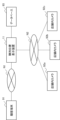
- FIG. 1 is a block diagram showing a configuration of a display position display system according to the present invention.
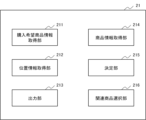
- 1 is a block diagram showing a configuration of a display position display device according to the present invention;
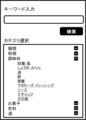
- 1 is a diagram showing an example of a display screen of a customer terminal in the display position display system according to the present invention.
- FIG. 1 is a diagram showing an example of a screen display output by a display position display device according to the present invention;
- 1 is a diagram showing an example of product information acquired by a display position display device according to the present invention;
- 1 is a diagram showing an example of a screen display output by a display position display device according to the present invention;
- 4 is a flowchart showing a processing operation of the display position display device according to the present invention.
- 1 is a block diagram showing a configuration of a display position display device according to the present invention
- 1 is a diagram showing an example of a screen display output by a display position display device according to the present invention
- 4 is a flowchart showing a processing operation of the display position display device according to the present invention.
- 1 is a diagram showing an example of a hardware configuration of a display position display device according to the present invention
- FIG. 1 is a diagram showing an example of the configuration of a display position display system including a display position display device 11 in the first embodiment.
- the display position display system is connected to the display position display device 11, a customer terminal 91, in-store cameras 92a, 92b, 92c, and a database 93.
- the customer terminal 91 is a mobile terminal owned by a customer who uses the store.
- the customer terminal 91 and the display position display device 11 are connected via a network N1.
- the number of customer terminals 91 is not limited to one.
- the display position display device 11 can be connected to multiple customer terminals 91 via the network N1. A customer can know the display position of a product by using the customer terminal 91.
- the in-store cameras 92a, 92b, 92c are installed in the store and capture images of the inside of the store.
- the in-store cameras 92a, 92b, 92c are installed in positions that allow them to capture images of areas within the store, such as around the display shelves, around the entrances and exits, or around the cash registers.
- the number of cameras is not limited to three. The number of cameras required for the store may be installed.
- the in-store cameras 92a, 92b, 92c are connected to the display position display device 11 via the network N2 or directly. The images captured by the in-store cameras 92a, 92b, 92c can be acquired by the display position display device 11.
- Database 93 stores information about products displayed in the store and information about customers. Details of the information about products displayed in the store and information about customers will be described later. In addition to information about products displayed in the store and information about customers, information about the store may also be stored. Database 93 may be provided outside display position display device 11 or may be included in display position display device 11.
- the display position display system may also include an in-store terminal (not shown).
- the in-store terminal is a terminal installed in the store and operated by the customer.
- the in-store terminal and the display position display device 11 are connected via the network N2 or directly.
- the in-store terminal allows the customer to know the display position of the product.
- FIG. 2 is a block diagram showing the configuration of the display position display device.
- the display position display device 11 mainly comprises a product information acquisition unit 111 that acquires information about the product that the customer wishes to purchase, a position information acquisition unit 112 that acquires display position information of the product that is displayed in multiple positions for the product that the customer wishes to purchase, and an output unit 113 that outputs map information that displays the display position of the product and the route from the current location to the display position.
- the display position display device 11 may include at least one of the product information acquisition unit 114 and the determination unit 115. In the following description, the display position display device 11 is assumed to include the product information acquisition unit 114 and the determination unit 115.
- the desired product information acquisition unit 111 is one aspect of a desired product information acquisition means for acquiring information about a product that a customer wishes to purchase.
- a desired product is a product for which the customer wishes to know the display location in the store. In other words, it includes not only products that the customer is considering purchasing at the store, but also products that the customer is not considering purchasing but would like to know the display location of. Examples include products that the customer is unsure about purchasing, and products that the customer will not purchase but would like to see in person.
- Information about the product desired to be purchased may include, for example, product attribute information such as the product name, manufacturer, or category. Other examples include information about product characteristics such as flavor, color, or size. Information about the product desired to be purchased is not limited to this.
- FIG. 3 is a diagram showing an example of a display screen of the customer terminal 91.
- the customer can input attribute information or features of the product in a search field.
- the field for inputting attribute information or features of the product is shown as a keyword input field.
- a search button is provided on the screen. The customer presses the search button.
- the customer terminal 91 Upon pressing the button, the customer terminal 91 transmits the input contents by the customer to the display position display device 11. Then, the desired product information acquisition unit 111 acquires the input contents of the customer as information about the desired product. In addition, it is also possible to select a category of the desired product from a list of categories provided in advance. When the customer selects a category on the screen, the customer terminal 91 transmits the input contents to the display position display device 11.
- the screen displayed on the customer terminal 91 is not limited to this. All that is needed is for customers to enter information about the product they wish to purchase.
- an in-store terminal (not shown) may be used instead of the customer terminal 91. It is also possible for the customer to input information about the product they wish to purchase into the in-store terminal.
- the product with that name is the product desired to be purchased.
- attribute information other than the product name or information about the product's features is input, the product that matches the input content is set as the product desired to be purchased.
- the product desired to be purchased may include multiple products.
- a case where a customer inputs "salt” will be explained.
- a customer inputs "salt” multiple products with different manufacturers, contents, or types of salt, for example, will correspond to the product desired to be purchased.
- a category is input, products belonging to that category will be the product desired to be purchased.
- a publicly known method is used to identify the product desired to be purchased from the content input by the customer.
- the product information acquisition unit 111 acquires information about the product desired to be purchased by the customer based on product information detected from a video of the customer's actions.
- the in-store camera captures the customer looking at the display shelves.
- the product information acquisition unit 111 then acquires the captured video from the in-store camera.
- the product information acquisition unit 111 detects the product desired to be purchased by the customer using the video. Specifically, the product desired to be purchased is detected from the customer's actions. For example, if a customer stays in front of the same display shelf for a certain period of time, the product displayed on that display shelf is detected as the product desired to be purchased.
- the product information acquisition unit 111 may regard the product as the product desired to be purchased.
- a method of using customer information can be considered as a method of acquiring information on a product desired to be purchased.
- the product desired information acquisition unit 111 acquires information on a product desired to be purchased by a customer based on product information predicted using the customer information.
- the customer information includes at least one of the following: purchase history, information on a product the customer is considering purchasing, and customer attribute information.
- the customer attribute information includes the customer's age, gender, or family structure.
- the customer information is not limited to the above.
- the customer information is stored in the database 93, and the product desired information acquisition unit 111 reads out the customer information from the database 93. Alternatively, the customer may log in using the customer terminal 91, causing the product desired information acquisition unit 111 to acquire the customer information from the customer terminal 91.
- Predicting the desired product will be described, for example, when a purchase history is used as customer information. If the purchase history contains a product that the customer has purchased multiple times, the desired product information acquisition unit 111 may predict that this product is the desired product. In addition, if the customer information includes information on a product that the customer is considering purchasing, the desired product information acquisition unit 111 may predict that the product that the customer is considering purchasing is the desired product. If customer attribute information is used as the customer information, the desired product information acquisition unit 111 may predict the desired product based on the sales of customers that fit the attributes. A publicly known method is used to predict the desired product based on customer information.
- the purchase-requested product information acquisition unit 111 acquires information about the purchase-requested product using any one of the above methods.
- the purchase-requested product information acquisition unit 111 may also acquire information about the purchase-requested product using multiple methods.
- the location information acquisition unit 112 is one aspect of location information acquisition means that acquires display location information of products displayed in multiple locations for the products desired to be purchased.
- the location information acquisition unit 112 acquires the display location information of the products desired to be purchased acquired by the product desired to be purchased information acquisition unit 111.
- a case where the product desired to be purchased has multiple display locations corresponds to a case where the same product is displayed in multiple locations. For example, a product with an approaching expiration date may be placed in a location other than its usual display location.
- products related to a seasonal event may be displayed in a sales area where products related to that event are collected.
- the desired product may include multiple products.
- information about the product desired by the customer is acquired by product category.
- the location information acquisition unit 112 acquires the display position information of each product belonging to that category. This is not limited to the above example, and when the desired product is displayed in multiple locations, the location information acquisition unit 112 acquires multiple display position information.
- the output unit 113 is one aspect of an output means that outputs map information that displays the display positions of products and the route from the current location to the display positions. Based on the location information acquired by the location information acquisition unit 112, the output unit 113 outputs map information that displays the display positions of products and the route from the current location to the display positions.
- FIG. 4 is a diagram showing an example of a screen display output by output unit 113.
- FIG. 4 is a map of the entire store, and shows map information when there are two display positions for the same product.
- the locations indicated with " ⁇ " are areas where cash registers are installed.
- the current location and two display positions are displayed on a map of the store.
- the current location is shown in a speech bubble, and the display positions are displayed with pins.
- the route from the current location to the display positions is displayed with an arrow.
- the shortest route from the current location to each display position is displayed.
- the display on the map is an example, and is not limited to this. Additionally, a well-known method is used to find the route from the current location to the display positions.
- the output unit 113 outputs the map information to the customer terminal 91.
- the output unit 113 may output the map information to the in-store terminal.
- the output unit 113 outputs map information showing the display position of the product and the route from the current location to the display position.
- the above is an explanation of the main components of the display position display device 11, namely the purchase request product information acquisition unit 111, the position information acquisition unit 112, and the output unit 113.
- the product information acquisition unit 114 is one aspect of a product information acquisition means that acquires product information for each display position of the product desired to be purchased. When there are multiple display positions for the product desired to be purchased, the product information acquisition unit 114 acquires product information displayed at each display position.
- Product information includes, for example, at least one of the product name, price, number in stock, manufacturing company, manufacturing date and time, best-before date, or expiration date. Product information is not limited to the above.
- Product information may also include product category, size, content volume, release date, or sales number.
- the product information acquisition unit 114 only needs to acquire information required as product information depending on the product being handled.
- Product information is stored in the database 93 in advance.
- the display position information acquired by the above-mentioned position information acquisition unit 112 may be stored in the database 93 as being included in the product information. In the following, it is explained that the display position information is also included in the product information.
- FIG. 5 shows an example of product information acquired by the product information acquisition unit 114.
- the example shown in FIG. 5 shows product information when the product information acquisition unit 114 receives an input of "kimchi hotpot base" as information about the product desired to be purchased.
- the product information shown in FIG. 5 includes the product name, category, display position, price, stock quantity, manufacturing company, best-before date or expiry date, and content volume.
- the product information acquisition unit 114 may also acquire other product information.
- the product name is the same, "Kimchi Hot Pot Base”, but since it is displayed in two different locations, the product information acquisition unit 114 shows the product information for each display location. That is, the “Kimchi Hot Pot Base” in the top row is displayed in display location "E-5”, priced at 298 yen, and has 10 units in stock. The expiration date of these 10 units is May 10, 2023. On the other hand, the “Kimchi Hot Pot Base” in the bottom row is displayed in display location "E-11”, priced at 238 yen, and has 2 units in stock. The expiration date of these two units is March 23, 2023.
- the product information acquisition unit 114 When the product information acquisition unit 114 receives information about a product desired to be purchased by category, the product information acquisition unit 114 acquires product information for each display position for the products included in that category. Furthermore, when the product desired to be purchased is displayed in only one display position, the product information acquisition unit 114 may acquire product information for that one display position.
- the determination unit 115 is one aspect of a determination means for determining the display content of the display positions based on the product information. When there are multiple display positions for the product desired to be purchased, the determination unit 115 determines the display content of the display positions on the map. As the display content, the determination unit 115 determines the number of display positions to be displayed, the display positions to be displayed, and the route to be displayed.
- the number of display positions to be displayed indicates how many of the multiple display positions are to be displayed.
- the determination unit 115 may determine to display one display position.
- the determination unit 115 may also determine to display a predetermined number of display positions. Alternatively, the determination unit 115 may determine to display all display positions. Furthermore, when there is one display position for the product desired to be purchased, the determination unit 115 determines the number of display positions to be displayed to be one.
- the determination unit 115 determines the number of display positions to display based on an input by the customer to the customer terminal 91. Specifically, the customer inputs the number of display positions that the customer wants to be displayed to the customer terminal 91. The customer terminal 91 transmits the information on the number of display positions input by the customer to the display position display device 11. The determination unit 115 determines the number of display positions that the customer wants to be displayed, which is included in the received information on the number of display positions, as the number of display positions to be displayed. Alternatively, the number of display positions to be displayed may be set in advance by a store clerk.
- the determination of the display positions to be displayed means that the determination unit 115 determines which display positions to display according to the number of display positions to be displayed.
- the product information acquired by the product information acquisition unit 114 is used to determine the display positions.
- the product information includes at least one of the product name, display position, price, number in stock, manufacturing company, manufacturing date and time, best-before date, use-by date, category, size, content, or release date.
- the display positions are determined using one or more of these product information.
- the determination unit 115 may determine the display positions in ascending order of price, or may determine the display positions in ascending order of price.
- the determination unit 115 may determine the display positions in ascending order of date and time, or may determine the display positions in descending order of date and time.
- the determination unit 115 may determine the display position in descending order of the number of items.
- the determination unit 115 may determine the display position in ascending order of the number of items.
- a discount rate calculated from the price of the item may be used as the criterion.
- a judgment criterion calculated from the display position included in the product information can be used.
- the criterion can be the distance from the current location, the distance from the cash register, the distance from the entrance, or the distance from the exit.
- the determination unit 115 may determine the display position in order of the shortest distance among the above.
- the determination unit 115 may also determine the display position in order of the longest distance.
- the determination unit 115 may determine, as the display position to be displayed, a display position that can be reached from the current location by passing through a wide passageway, or a display position that can be reached from the current location without changing floors.
- display positions may be determined in order of the number of types of similar products displayed around each display position. For example, a display location that gathers newly released products may not have any products of the same category as the product desired to be purchased displayed nearby. On the other hand, there may be display positions elsewhere in the store that gather products of the same category as the product desired to be purchased. In this case, for customers who wish to compare the product desired to be purchased with other products, it is useful to display display positions where products of the same category are displayed nearby.
- Similar products include, for example, products in the same category, products made by the same manufacturer, or products with part of the same name.
- the determination unit 115 may use images from an in-store camera to determine the display position.
- the determination unit 115 detects the congestion state at each display position from images captured by the in-store camera. Then, the determination unit 115 determines the display position to be displayed according to the congestion state.
- the determination unit 115 may determine a display position that is not crowded as the display position to be displayed. Alternatively, the determination unit 115 may determine a display position that is crowded as the display position to be displayed.
- the determination unit 115 may determine the congestion state relatively for multiple display positions. Furthermore, the determination unit 115 may determine that a display position is crowded when there are more than a predetermined number of customers.
- a priority order can be set in advance for each display position. For example, there may be a display position where the store clerk wants to gather customers. The store clerk registers the display position where the store clerk wants to gather customers in advance in the database 93. Then, if the display position is included among multiple display positions, the determination unit 115 may determine that display location as the display position to be displayed.
- the decision unit 115 uses one of the above judgment criteria.
- the decision unit 115 may also use multiple judgment criteria from among the above judgment criteria.
- the judgment criteria to be used may be set by the customer. Specifically, the customer inputs the desired judgment criteria into the customer terminal 91. The decision unit 115 then receives information on the judgment criteria input by the customer from the customer terminal 91.
- the determination unit 115 may also set and use criteria based on customer information. For example, a case will be described where a customer's purchase history shows that discounted items have been purchased a predetermined number of times or more. In this case, it is assumed that the customer places importance on the price of the item, and the determination unit 115 may determine that the criterion is the price of the item. Alternatively, if a predetermined number or more items have been purchased within a predetermined number of days from the release date, the release date may be used as the criterion.
- the method of setting the judgment criteria is not limited to the above.
- criteria related to date and time or price are used as the judgment criteria, it is also possible to set either ascending or descending order. In that case, ascending or descending order can be set in the same way as for setting the judgment criteria described above.
- the determination unit 115 determining the route to be displayed means that the determination unit 115 determines how to display the route from the current location to the display position. Specifically, the shortest route from the current location to each display position can be displayed for each display position. In addition, the shortest route that passes through all of the displayed display positions can also be displayed.
- the route to be displayed may be determined based on the criteria used in determining the display positions to be displayed as described above. For example, a case will be described in which the display positions to be displayed are determined based on the price at each display position.
- the determination unit 115 determines the number of display positions to be displayed as two.
- the determination unit 115 ranks the prices at each of the two display positions to be displayed.
- the determination unit 115 may then determine that only the route to the display position where the product with the lowest price is displayed is to be displayed. In this case, the determination unit 115 determines that the route to the display position where the product with the second lowest price is displayed is not to be displayed.
- the determination unit 115 may determine that the route to the display position where the product with the lowest price is displayed is to be highlighted.
- the determination unit 115 may determine to display one display position.
- the output unit 113 may output map information that displays the product information for each display position in addition to the display position of the product and the route from the current location to the display position.
- product information is at least one of the following: product name, display location, price, stock quantity, manufacturing company, production date and time, best before date, use by date, category, size, content volume, or release date.
- the output unit 113 may output map information that displays examples of how to use the product. For example, it may display recipes or cooking photos that use the product desired to be purchased. Furthermore, when the product desired to be purchased information acquisition unit 111 receives information about the product desired to be purchased by inputting a category by the customer, the output unit 113 may output map information that displays a popularity ranking in that category. Furthermore, the output unit 113 may output map information that displays information about popular products in that category.
- the output unit 113 may output map information that displays information corresponding to the judgment criteria used by the aforementioned decision unit 115. Specifically, when price is used as the judgment criteria, the reason for the different price may be displayed. For example, possible reasons may be that the expiration date is approaching, the packaging is dirty, or it was a display item. In addition, when the inventory quantity is used as the judgment criteria, the output unit 113 may output map information that displays the reason for low inventory or high inventory at that display location.
- the content displayed on the map output by the output unit 113 may be changed depending on the judgment criteria used by the decision unit 115 described above. For example, if price is used as the judgment criterion, the output unit 113 can output map information that displays the price of the desired product at each display location and the reason for the difference in price. In addition, if a best-before date or expiration date is used as the judgment criterion, the output unit 113 can output map information that displays the best-before date or expiration date and the production date and time.
- the content to be displayed on the map output by the output unit 113 can be set by the customer.
- the store clerk may set in advance the content to be displayed on the map output by the output unit 113.
- the judgment criteria may be associated in advance with the content to be displayed on the map.
- the above describes the contents displayed on the map information output by the output unit 113 when the display position display device 11 is equipped with the product information acquisition unit 114 and the determination unit 115.
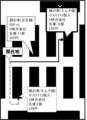
- FIG. 6 shows an example of map information output by the output unit 113 when the display position display device 11 includes the product information acquisition unit 114 and the determination unit 115.
- the example shown in FIG. 6 is a case where the product information acquisition unit 114 receives an input of "kimchi hotpot base" as information about the product desired to be purchased.
- the product display position information and product information acquired by the position information acquisition unit 112 and the product information acquisition unit 114 are the contents shown in FIG. 5 above.
- the determination unit 115 has decided to display two display positions and to highlight the display position with the lowest price. In other words, price is used as the criterion. Therefore, in FIG. 6, the arrow showing the route to the display position with the lowest price is thick.
- the display contents of the highlighting are not limited to this example.
- Product information at each display position is also displayed.
- the determination unit 115 has decided the display contents using price as the criterion. Therefore, the product information includes the price of the product at each display location.
- Other product information displayed includes the content volume, manufacturer, and number of items in stock. However, the product information displayed is not limited to these.
- the display position display device 11 includes a product information acquisition unit 114 and a determination unit 115 in addition to a purchase request product information acquisition unit 111, a position information acquisition unit 112, and an output unit 113.
- step S101 the product information acquisition unit 111 acquires information about the product that the customer wishes to purchase.
- step S102 the location information acquisition unit 112 acquires display location information about the product that the customer wishes to purchase.
- step S103 the product information acquisition unit 114 acquires product information for each display position. If the display position display device 11 does not include a product information acquisition unit 114, the process proceeds from step S102 to step S104.
- step S104 the determination unit 115 determines the display position information to be displayed based on the product information. If the display position display device 11 does not include a determination unit 115, the process proceeds from step S102 or step S103 to step S105.
- step S105 the output unit 113 outputs map information that displays the display position of the desired product, the route, and product information for each display position.
- the output unit 113 outputs map information that displays the display position of the desired product and the route.
- the display position display device 11 in this embodiment has a product information acquisition unit 111 that acquires information about the product that the customer wishes to purchase, a location information acquisition unit 112 that acquires display location information of the product that is displayed in multiple locations for the product that the customer wishes to purchase, and an output unit 113 that outputs map information that displays the product's display location and the route from the current location to the display location.
- the customer can know the display locations of multiple products that the customer wishes to purchase.
- a product that is close to its expiration date may be placed in a location different from its normal display location.
- a product related to a seasonal event may be displayed in a sales area where products related to that event are collected.
- the customer may walk around the store looking for the display location of the product. Even if the customer is able to find the display location, they may have to take a long detour to get there.
- the customer can know multiple display locations, so the customer can easily reach the display location, which improves customer convenience.
- the display position display device 11 in this embodiment may further include a determination unit 115 that determines the display position to be displayed.
- the determination unit 115 determines the display content of the display position to be displayed on the map.
- the customer can confirm the display position determined based on the display position information acquired by the position information acquisition unit 112. In other words, it is possible to save the customer the trouble of searching around the store. Therefore, it is possible to improve customer convenience.
- the store can also improve customer satisfaction regarding store use. This is because the store can provide the determined display position without causing the customer any trouble.
- the display position display device 11 in this embodiment may further include a product information acquisition unit 114 that acquires product information for each of the display positions related to the product desired to be purchased, and the determination unit 115 may determine the display position to be displayed based on the product information acquired by the product information acquisition unit 114.
- the customer can confirm the display position determined based on the product information. This can save the customer the trouble of having to search around the store. Furthermore, it can also save the customer the trouble of having to compare and consider the product information at each display position. This can therefore improve customer convenience.
- the output unit 113 outputs map information that displays the display location of the product desired to be purchased and the route from the current location to the display location, as well as product information for each display location.
- map information that displays the display location of the product desired to be purchased and the route from the current location to the display location, as well as product information for each display location.
- the product information acquired by the product information acquisition unit 114 includes at least one of the name, price, stock quantity, manufacturing company, manufacturing date and time, and best-before date or expiration date of the product desired to be purchased.
- the determination unit 115 determines the display content of the display position based on the above product information. Therefore, by having the product information include at least one of the above, it is possible to determine the display content of an appropriate display position for the customer.
- the product information acquisition unit 111 acquires information about the product the customer wishes to purchase by accepting information about the product the customer wishes to purchase inputted by the customer.
- the product information acquisition unit 111 is able to acquire accurate information about the product the customer wishes to purchase. Therefore, the display position display device 11 is able to output an appropriate display about the product for which the customer wishes to know the display position, thereby improving customer convenience.
- the product information acquisition unit 111 detects the product a customer wishes to purchase based on video footage of the customer's actions, and acquires information about the product. Because the product a customer wishes to purchase is detected from the customer's actions, no input operation is required by the customer. This saves the customer time and effort, making it possible to improve customer convenience.
- the purchase desired product information acquisition unit 111 predicts the desired product based on customer information and acquires information about the product the customer wishes to purchase. For example, purchase history or information about products under consideration for purchase is used as purchase information.
- the display position display device 11 displays the display position of a product included in the purchase history, the customer may repurchase that product. Also, by displaying the display position of a product under consideration for purchase, it is possible to create an opportunity for the customer to directly pick up the product. Therefore, the display position display device 11 can encourage customers to make purchases. Furthermore, it is possible for the customer to know multiple display positions of products with a purchase history or products under consideration for purchase, which can improve customer convenience or satisfaction.
- the determination unit 115 determines the display position to be displayed on the map according to the congestion state at the display position detected from the video of the customer's actions. Specifically, the determination unit 115 may determine an uncrowded display position as the display position to be displayed. In a crowded display position, there is a possibility that a customer may not be able to carefully consider purchasing an item. In addition, there is a possibility that a customer may wish to avoid crowding. In such a case, the determination unit 115 can determine to display an uncrowded display position. As a result, it is possible to improve the convenience or satisfaction of customers. In addition, the determination unit 115 may determine a crowded display position as the display position to be displayed. Products displayed in a place where there are many customers may seem to be popular. Therefore, the determination unit 115 can determine a crowded display position as the display position to be displayed. As a result, it is possible to encourage sales to customers.
- the determination unit 115 in this embodiment determines the shortest route to each of the multiple display positions as the route to be displayed. By displaying the shortest route to each display position, the display position display device 11 allows the customer to travel via the shortest route to the product they wish to purchase. Therefore, the display position display device 11 in this embodiment can improve customer convenience.
- the determination unit 115 determines the shortest route that passes through all of the multiple display positions as the route to be displayed. By displaying the route that passes through all of the multiple display positions, the customer can check all of the products and consider purchasing them. In addition, because the shortest route is displayed, the customer does not need to search for locations themselves, and can move around more efficiently. Therefore, it is possible to improve customer convenience.
- FIG. 8 is a block diagram showing an example of the configuration of a display position display device 21 according to the second embodiment.
- the display position display device 21 according to this embodiment further includes a related product selection unit 216, as compared to the display position display device 11 according to the first embodiment.
- the purchase desired product information acquisition unit 111 corresponds to the purchase desired product information acquisition unit 211
- the position information acquisition unit 112 corresponds to the position information acquisition unit 212
- the output unit 113 corresponds to the output unit 213
- the product information acquisition unit 114 corresponds to the product information acquisition unit 214
- the determination unit 115 corresponds to the determination unit 215.
- the related product selection unit 216 is one aspect of a related product selection means for selecting products related to the product desired to be purchased.
- the related product selection unit 216 selects products related to the product desired to be purchased.
- the related product selection unit 216 uses information on products displayed in the store that is stored in advance in the database 93.
- a related product is, for example, a product that is displayed near a route included in the map information output by the output unit 213 and is similar to the product desired to be purchased. If the display location included in the product information is a specified distance from the route, it is determined that the product is displayed near the route.
- examples of similar products include products with part of the same product name, products made by the same manufacturer, or products in the same category.
- Other related products include products that are displayed near the route and that the customer has previously purchased or products that the customer is considering purchasing.
- Information stored in database 93 can be used for the purchase history or information on products that the customer is considering purchasing.
- the related product selection unit 216 can select new products and seasonal products based on the release dates included in the product information. Additionally, information on recommended products, new products, or seasonal products may be stored in advance in the database 93. When the route included in the map information passes near a product that has been registered in advance as a recommended product, new product, or seasonal product, the related product selection unit 216 can select that product as a related product.
- the related product selection unit 216 may also select products that are displayed near the product desired to be purchased as related products. For example, products that are displayed near the product desired to be purchased and that the customer has a purchase history of can be selected as related products. Furthermore, when there are multiple related products, the determination unit 215 may determine the display content of the related products, in the same way as for the product desired to be purchased. In other words, the determination unit 215 determines the number of display positions in which the related products are to be displayed, and the display positions in which they are to be displayed. The display content determined by the determination unit 215 may be different for the product desired to be purchased and the related products, or it may be the same.
- the related product selection unit 216 can also select related products when the product desired to be purchased is not on display in the store.
- a case in which the product desired to be purchased is not on display in the store can be, for example, when the product desired to be purchased accepted by the product desired to be purchased information acquisition unit 111 is sold out.
- Another example is when the product desired to be purchased is a product that is not available in the store.
- the related product selection unit 216 can select products related to the product desired to be purchased.
- Steps S101 and S201, steps S102 and S202, steps S103 and S203, and steps S104 and S204 correspond to each other.
- step S205 the related product selection unit 216 selects products related to the product desired to be purchased.
- step S206 the output unit 213 outputs map information that further displays the display positions of the related products. That is, the map information displays the display position of the product desired to be purchased, the route from the current location to the display position of the product desired to be purchased, product information of the product desired to be purchased, and the display positions of the related products. In addition, product information of the related products may also be displayed.
- the product information included in the map information output by the output unit 213 may be the same for the product desired to be purchased and the related products, or it may be different.
- the product desired to be purchased is not on display, at least one of the following may be displayed: the display location of related products only, product information, or a route from the current location to the display location of the related products.
- FIG. 9 shows an example of map information that displays the display locations of related products and product information of related products.
- the display related to the product desired to be purchased is the same as the example shown in FIG. 6.
- the related product selection unit 216 has selected "Hot pot base (soy milk hot pot)" as the related product.
- "Hot pot base (soy milk hot pot)” is displayed near the route and is a product that the customer has previously purchased. Therefore, the display locations of the related products and the product information are displayed on the map.
- the product information related to the related products is the same as that of the product desired to be purchased, and includes the product name, content, manufacturing company, stock quantity, and price.
- the display position display device 21 has a related product selection unit 216 that selects products related to the product desired to be purchased, and the output unit 213 outputs map information that further displays the display positions of related products.
- Customers can also know the display positions of products related to the product desired to be purchased. This increases the variety of products that customers can consider purchasing, and potentially allows them to purchase better products. This can therefore improve customer convenience. Furthermore, for stores, the possibility that customers will also purchase related products can lead to sales promotion and increased sales.
- the display position display device 21 is displayed near the path from the current location to the display position of the product desired to be purchased, and selects products that the customer has purchased in the customer's purchase history as related products. By displaying products that have been purchased in the past, the display position display device 21 can encourage customers to make purchases. This allows the store to increase sales.
- the display position display device 21 is displayed near the route from the current location to the display position of the product desired to be purchased, and selects as related products products that are included in the information of the product the customer is considering purchasing. Because the products that the customer is considering purchasing are displayed near the route, the customer can check the products he or she is considering purchasing while moving to the display position of the product desired to be purchased. This eliminates the need for the customer to search for the display position of the product he or she is considering purchasing, thereby improving customer convenience. Furthermore, by displaying products that customers are considering purchasing, a store can encourage purchases and increase sales.
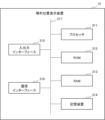
- FIG. 11 is a diagram showing an example of a hardware configuration of the display position display device 31 in the present disclosure.
- the display position display device 31 is realized by a computer.
- the display position display device 31 includes a processor 311, a ROM (Read Only Memory) 312, a RAM (Random Access Memory) 313, a storage device 314 such as a hard disk for storing programs, an input/output interface 315 for inputting and outputting data, and a communication interface 316 for network connection. Each component is connected via a bus 317.
- Processor 311 runs an operating system to control the entire computer. Examples of processor 311 include a CPU (Central Processing Unit), a DSP (Digital Signal Processor), and a GPU (Graphics Processing Unit). The processor loads programs stored in, for example, ROM 312 or storage device 314. Processor 311 then executes each process coded in the program. Processor 311 may execute processes or instructions in the illustrated flowchart based on the program.
- processor 311 includes a CPU (Central Processing Unit), a DSP (Digital Signal Processor), and a GPU (Graphics Processing Unit).
- the processor loads programs stored in, for example, ROM 312 or storage device 314. Processor 311 then executes each process coded in the program. Processor 311 may execute processes or instructions in the illustrated flowchart based on the program.
- ROM 312 stores application programs, programs related to each embodiment, etc.
- RAM 313 is used as a work area for processor 311.
- the storage device 314 may be, for example, a semiconductor memory such as a flash memory, or a hard disk driver (HDD).
- the storage device 314 stores, for example, an operating system (OS) program, application programs, programs related to each embodiment, etc.
- OS operating system
- the input/output interface 315 is connected to peripheral devices (not shown).
- the connection method may be wired or wireless.
- peripheral devices include output devices such as a display, and input devices such as a mouse and keyboard.
- the communication interface 316 is connected to a communication network (not shown) such as a LAN (Local Network) or a WAN (Wide Area Network) via a wireless or wired communication line.
- a communication network such as a LAN (Local Network) or a WAN (Wide Area Network) via a wireless or wired communication line.
- the communication network may be composed of multiple communication networks. This allows the computer to be connected to an external device via the communication network.
- a purchase request information acquisition means for acquiring information regarding a product that a customer wishes to purchase;
- a position information acquisition means for acquiring display position information of the product displayed at a plurality of positions with respect to the product desired to be purchased; an output means for outputting map information showing the display position of the product and a route from the current location to the display position;
- a display position display device having the above structure.
- Appendix 2 Further comprising a determination means for determining the display position to be displayed. 2.
- the display device further includes a product information acquiring unit for acquiring product information of each of the display positions related to the product desired to be purchased, The display position display device according to claim 2, wherein the determining means determines the display position to be displayed based on the product information.
- the output means outputs the map information displaying the product information for each of the display positions. 4.
- a display position display device as described in appendix 3. (Appendix 5)
- the product information includes at least one of the product name, price, stock quantity, manufacturer, production date and time, best-before date, or expiration date. 5.
- the means for acquiring information on the product you wish to purchase is as follows: The display position display device according to any one of claims 1 to 5, further comprising: acquiring information about the product desired by the customer based on information about the product desired by the customer inputted by the customer. (Appendix 7) The means for acquiring information on the product you wish to purchase is as follows: The display position display device according to any one of claims 1 to 6, further comprising: acquiring information about the product desired to be purchased by the customer based on product information detected from a video of the customer's actions.
- the means for acquiring information on the product you wish to purchase is as follows: A display position display device as described in any one of appendices 1 to 7, which obtains information regarding the product desired to be purchased by the customer based on product information predicted using the customer information. (Appendix 9) The display position display device according to any one of appendices 1 to 8, wherein the determination means determines, as the display contents, the number of the display positions to be displayed, the display positions to be displayed, and the route to be displayed. (Appendix 10) The display position display device according to Appendix 98, wherein the determination means determines the display position to be displayed according to a congestion state at the display position detected from the image.
- a display position display device according to any one of claims 1 to 13.
- Appendix 15 The display position display device according to claim 13, wherein the related product selection means selects, as a related product, a product that is displayed near the route and is similar to the product desired to be purchased.
- Appendix 16 The display position display device according to claim 14 or 15, wherein the related product selection means selects, as a related product, a product that is displayed near the route and that the customer has a purchase history of.
- Appendix 17 The display position display device according to any one of appendices 14 to 16, wherein the related product selection means selects a product displayed near the route that is different from the product desired to be purchased as a related product.
- (Appendix 18) Obtain information about the products customers want to purchase, Acquire display location information of the product displayed at a plurality of positions for the product desired to be purchased; outputting map information showing the display location of the product and a route from the current location to the display location; Display position display method. (Appendix 19) Obtaining information regarding a product that a customer wishes to purchase; acquiring display position information of the product displayed at a plurality of positions for the product desired to be purchased; outputting map information showing the display position of the product and a route from the current location to the display position; A recording medium storing a display position display program for causing a computer to execute the above.
- Display position display device 111 211 Purchase desired product information acquisition unit 112, 212 Position information acquisition unit 113, 213 Output unit 114, 214 Product information acquisition unit 115, 215 Decision unit 216 Related product selection unit 311 Processor 312 ROM 313 RAM 314 Storage device 315 Input/output interface 316 Communication interface 317 Bus 91 Customer terminal 91a, 91b, 91c In-store camera 93 Database N1, N2 Network
Landscapes
- Business, Economics & Management (AREA)
- Accounting & Taxation (AREA)
- Development Economics (AREA)
- Economics (AREA)
- Finance (AREA)
- Marketing (AREA)
- Strategic Management (AREA)
- Physics & Mathematics (AREA)
- General Business, Economics & Management (AREA)
- General Physics & Mathematics (AREA)
- Engineering & Computer Science (AREA)
- Theoretical Computer Science (AREA)
- Management, Administration, Business Operations System, And Electronic Commerce (AREA)
Priority Applications (2)
| Application Number | Priority Date | Filing Date | Title |
|---|---|---|---|
| JP2025506321A JPWO2024189780A1 (https=) | 2023-03-14 | 2023-03-14 | |
| PCT/JP2023/009886 WO2024189780A1 (ja) | 2023-03-14 | 2023-03-14 | 陳列位置表示装置、陳列位置表示方法、および記録媒体 |
Applications Claiming Priority (1)
| Application Number | Priority Date | Filing Date | Title |
|---|---|---|---|
| PCT/JP2023/009886 WO2024189780A1 (ja) | 2023-03-14 | 2023-03-14 | 陳列位置表示装置、陳列位置表示方法、および記録媒体 |
Publications (1)
| Publication Number | Publication Date |
|---|---|
| WO2024189780A1 true WO2024189780A1 (ja) | 2024-09-19 |
Family
ID=92754691
Family Applications (1)
| Application Number | Title | Priority Date | Filing Date |
|---|---|---|---|
| PCT/JP2023/009886 Ceased WO2024189780A1 (ja) | 2023-03-14 | 2023-03-14 | 陳列位置表示装置、陳列位置表示方法、および記録媒体 |
Country Status (2)
| Country | Link |
|---|---|
| JP (1) | JPWO2024189780A1 (https=) |
| WO (1) | WO2024189780A1 (https=) |
Citations (9)
| Publication number | Priority date | Publication date | Assignee | Title |
|---|---|---|---|---|
| JP2002169921A (ja) * | 2000-12-01 | 2002-06-14 | Fuji Xerox Co Ltd | 買い物支援システム及び施設巡回支援システム |
| JP2008145383A (ja) * | 2006-12-13 | 2008-06-26 | Fujitsu Ltd | 買物経路誘導システム |
| KR20090016837A (ko) * | 2007-08-13 | 2009-02-18 | 주식회사 이엠따블유안테나 | 스마트 카트를 이용한 쇼핑 시스템 및 쇼핑 방법 |
| JP2011242924A (ja) * | 2010-05-17 | 2011-12-01 | Sharp Corp | 店舗内案内システムおよび店舗内案内方法 |
| JP2012185581A (ja) * | 2011-03-03 | 2012-09-27 | Toshiba Tec Corp | 買物アシストシステム、買物アシスト端末装置及び制御プログラム |
| JP2015210745A (ja) * | 2014-04-30 | 2015-11-24 | シャープ株式会社 | 商品検索システムおよびプログラム |
| JP2017174222A (ja) * | 2016-03-24 | 2017-09-28 | カシオ計算機株式会社 | 案内出力装置、案内出力方法及びプログラム |
| KR101994205B1 (ko) * | 2018-05-25 | 2019-09-30 | 주식회사 리테일앤인사이트 | 스마트 쇼핑 카트 및 이를 이용한 쇼핑 관리 시스템 |
| JP2019220089A (ja) * | 2018-06-22 | 2019-12-26 | 東芝テック株式会社 | 情報処理装置およびプログラム |
-
2023
- 2023-03-14 JP JP2025506321A patent/JPWO2024189780A1/ja active Pending
- 2023-03-14 WO PCT/JP2023/009886 patent/WO2024189780A1/ja not_active Ceased
Patent Citations (9)
| Publication number | Priority date | Publication date | Assignee | Title |
|---|---|---|---|---|
| JP2002169921A (ja) * | 2000-12-01 | 2002-06-14 | Fuji Xerox Co Ltd | 買い物支援システム及び施設巡回支援システム |
| JP2008145383A (ja) * | 2006-12-13 | 2008-06-26 | Fujitsu Ltd | 買物経路誘導システム |
| KR20090016837A (ko) * | 2007-08-13 | 2009-02-18 | 주식회사 이엠따블유안테나 | 스마트 카트를 이용한 쇼핑 시스템 및 쇼핑 방법 |
| JP2011242924A (ja) * | 2010-05-17 | 2011-12-01 | Sharp Corp | 店舗内案内システムおよび店舗内案内方法 |
| JP2012185581A (ja) * | 2011-03-03 | 2012-09-27 | Toshiba Tec Corp | 買物アシストシステム、買物アシスト端末装置及び制御プログラム |
| JP2015210745A (ja) * | 2014-04-30 | 2015-11-24 | シャープ株式会社 | 商品検索システムおよびプログラム |
| JP2017174222A (ja) * | 2016-03-24 | 2017-09-28 | カシオ計算機株式会社 | 案内出力装置、案内出力方法及びプログラム |
| KR101994205B1 (ko) * | 2018-05-25 | 2019-09-30 | 주식회사 리테일앤인사이트 | 스마트 쇼핑 카트 및 이를 이용한 쇼핑 관리 시스템 |
| JP2019220089A (ja) * | 2018-06-22 | 2019-12-26 | 東芝テック株式会社 | 情報処理装置およびプログラム |
Also Published As
| Publication number | Publication date |
|---|---|
| JPWO2024189780A1 (https=) | 2024-09-19 |
Similar Documents
| Publication | Publication Date | Title |
|---|---|---|
| JP7586161B2 (ja) | 情報処理システム、商品推薦方法、およびプログラム | |
| US20150012381A1 (en) | Systems, methods and computer readable media for online shopping | |
| US20130103539A1 (en) | Intelligent shopping assistant | |
| JP6284122B2 (ja) | 移動経路店舗検索システム、その検索方法及び検索プログラム | |
| US20190213607A1 (en) | Shopper Traffic Flow Visualization Based on Point of Sale (POS) Transaction Data | |
| WO2016174878A1 (ja) | 行動分析システム及び行動分析方法 | |
| JP2017102859A (ja) | 情報提供装置、管理用クライアント、情報提供方法、プログラム | |
| JP2019057086A (ja) | 商品販売データ管理装置、商品販売データ管理システム及びプログラム | |
| JP6473194B2 (ja) | 売り上げ推計システム | |
| JP7295919B2 (ja) | 在庫情報通知装置、及び在庫情報通知方法 | |
| KR101741824B1 (ko) | 쇼핑 서비스 제공 시스템 및 쇼핑 서비스 제공 방법 | |
| JP2013025386A (ja) | 商品情報提供装置、商品情報提供方法及びプログラム | |
| JP2006215647A (ja) | Posシステムにおける注文管理プログラム | |
| CN108460133B (zh) | 利用移动终端进行导购的方法及导购装置 | |
| WO2024189780A1 (ja) | 陳列位置表示装置、陳列位置表示方法、および記録媒体 | |
| JP6963711B1 (ja) | 販売支援装置、販売支援システム、販売支援方法、およびプログラム | |
| JP2025026275A (ja) | 顧客情報管理システム | |
| JP7574866B2 (ja) | システム、方法、およびプログラム | |
| KR20150003072A (ko) | 거래 조건 추천 서비스 제공 방법 및 장치 | |
| JP6694091B1 (ja) | 提供装置、提供方法および提供プログラム | |
| JP7383411B2 (ja) | 要求情報群最適化方法 | |
| JP4416265B2 (ja) | 販売店情報表示システム | |
| KR102650648B1 (ko) | 판매 데이터 표시 장치 및 방법 | |
| KR102917402B1 (ko) | 아이템 정보 제공을 위한 전자 장치 및 그 동작 방법 | |
| JP7001864B1 (ja) | 販売支援装置、販売支援システム、販売支援方法、およびプログラム |
Legal Events
| Date | Code | Title | Description |
|---|---|---|---|
| 121 | Ep: the epo has been informed by wipo that ep was designated in this application |
Ref document number: 23927401 Country of ref document: EP Kind code of ref document: A1 |
|
| ENP | Entry into the national phase |
Ref document number: 2025506321 Country of ref document: JP Kind code of ref document: A |
|
| WWE | Wipo information: entry into national phase |
Ref document number: 2025506321 Country of ref document: JP |
|
| NENP | Non-entry into the national phase |
Ref country code: DE |
|
| 122 | Ep: pct application non-entry in european phase |
Ref document number: 23927401 Country of ref document: EP Kind code of ref document: A1 |