WO2024171896A1 - 繊維強化樹脂の成形体およびその製造方法 - Google Patents
繊維強化樹脂の成形体およびその製造方法 Download PDFInfo
- Publication number
- WO2024171896A1 WO2024171896A1 PCT/JP2024/003907 JP2024003907W WO2024171896A1 WO 2024171896 A1 WO2024171896 A1 WO 2024171896A1 JP 2024003907 W JP2024003907 W JP 2024003907W WO 2024171896 A1 WO2024171896 A1 WO 2024171896A1
- Authority
- WO
- WIPO (PCT)
- Prior art keywords
- reinforced resin
- fiber
- reinforcing fibers
- fiber reinforced
- resin layer
- Prior art date
- Legal status (The legal status is an assumption and is not a legal conclusion. Google has not performed a legal analysis and makes no representation as to the accuracy of the status listed.)
- Ceased
Links
Images




Classifications
-
- B—PERFORMING OPERATIONS; TRANSPORTING
- B29—WORKING OF PLASTICS; WORKING OF SUBSTANCES IN A PLASTIC STATE IN GENERAL
- B29B—PREPARATION OR PRETREATMENT OF THE MATERIAL TO BE SHAPED; MAKING GRANULES OR PREFORMS; RECOVERY OF PLASTICS OR OTHER CONSTITUENTS OF WASTE MATERIAL CONTAINING PLASTICS
- B29B11/00—Making preforms
- B29B11/14—Making preforms characterised by structure or composition
- B29B11/16—Making preforms characterised by structure or composition comprising fillers or reinforcement
-
- B—PERFORMING OPERATIONS; TRANSPORTING
- B29—WORKING OF PLASTICS; WORKING OF SUBSTANCES IN A PLASTIC STATE IN GENERAL
- B29C—SHAPING OR JOINING OF PLASTICS; SHAPING OF MATERIAL IN A PLASTIC STATE, NOT OTHERWISE PROVIDED FOR; AFTER-TREATMENT OF THE SHAPED PRODUCTS, e.g. REPAIRING
- B29C43/00—Compression moulding, i.e. applying external pressure to flow the moulding material; Apparatus therefor
- B29C43/02—Compression moulding, i.e. applying external pressure to flow the moulding material; Apparatus therefor of articles of definite length, i.e. discrete articles
- B29C43/20—Making multilayered or multicoloured articles
-
- B—PERFORMING OPERATIONS; TRANSPORTING
- B29—WORKING OF PLASTICS; WORKING OF SUBSTANCES IN A PLASTIC STATE IN GENERAL
- B29C—SHAPING OR JOINING OF PLASTICS; SHAPING OF MATERIAL IN A PLASTIC STATE, NOT OTHERWISE PROVIDED FOR; AFTER-TREATMENT OF THE SHAPED PRODUCTS, e.g. REPAIRING
- B29C43/00—Compression moulding, i.e. applying external pressure to flow the moulding material; Apparatus therefor
- B29C43/32—Component parts, details or accessories; Auxiliary operations
- B29C43/36—Moulds for making articles of definite length, i.e. discrete articles
-
- B—PERFORMING OPERATIONS; TRANSPORTING
- B29—WORKING OF PLASTICS; WORKING OF SUBSTANCES IN A PLASTIC STATE IN GENERAL
- B29C—SHAPING OR JOINING OF PLASTICS; SHAPING OF MATERIAL IN A PLASTIC STATE, NOT OTHERWISE PROVIDED FOR; AFTER-TREATMENT OF THE SHAPED PRODUCTS, e.g. REPAIRING
- B29C70/00—Shaping composites, i.e. plastics material comprising reinforcements, fillers or preformed parts, e.g. inserts
- B29C70/04—Shaping composites, i.e. plastics material comprising reinforcements, fillers or preformed parts, e.g. inserts comprising reinforcements only, e.g. self-reinforcing plastics
- B29C70/06—Fibrous reinforcements only
- B29C70/10—Fibrous reinforcements only characterised by the structure of fibrous reinforcements, e.g. hollow fibres
- B29C70/16—Fibrous reinforcements only characterised by the structure of fibrous reinforcements, e.g. hollow fibres using fibres of substantial or continuous length
- B29C70/20—Fibrous reinforcements only characterised by the structure of fibrous reinforcements, e.g. hollow fibres using fibres of substantial or continuous length oriented in a single direction, e.g. roofing or other parallel fibres
-
- B—PERFORMING OPERATIONS; TRANSPORTING
- B29—WORKING OF PLASTICS; WORKING OF SUBSTANCES IN A PLASTIC STATE IN GENERAL
- B29C—SHAPING OR JOINING OF PLASTICS; SHAPING OF MATERIAL IN A PLASTIC STATE, NOT OTHERWISE PROVIDED FOR; AFTER-TREATMENT OF THE SHAPED PRODUCTS, e.g. REPAIRING
- B29C70/00—Shaping composites, i.e. plastics material comprising reinforcements, fillers or preformed parts, e.g. inserts
- B29C70/04—Shaping composites, i.e. plastics material comprising reinforcements, fillers or preformed parts, e.g. inserts comprising reinforcements only, e.g. self-reinforcing plastics
- B29C70/28—Shaping operations therefor
- B29C70/40—Shaping or impregnating by compression not applied
- B29C70/42—Shaping or impregnating by compression not applied for producing articles of definite length, i.e. discrete articles
- B29C70/46—Shaping or impregnating by compression not applied for producing articles of definite length, i.e. discrete articles using matched moulds, e.g. for deforming sheet moulding compounds [SMC] or prepregs
-
- B—PERFORMING OPERATIONS; TRANSPORTING
- B32—LAYERED PRODUCTS
- B32B—LAYERED PRODUCTS, i.e. PRODUCTS BUILT-UP OF STRATA OF FLAT OR NON-FLAT, e.g. CELLULAR OR HONEYCOMB, FORM
- B32B27/00—Layered products comprising a layer of synthetic resin
- B32B27/04—Layered products comprising a layer of synthetic resin as impregnant, bonding, or embedding substance
-
- B—PERFORMING OPERATIONS; TRANSPORTING
- B29—WORKING OF PLASTICS; WORKING OF SUBSTANCES IN A PLASTIC STATE IN GENERAL
- B29K—INDEXING SCHEME ASSOCIATED WITH SUBCLASSES B29B, B29C OR B29D, RELATING TO MOULDING MATERIALS OR TO MATERIALS FOR MOULDS, REINFORCEMENTS, FILLERS OR PREFORMED PARTS, e.g. INSERTS
- B29K2105/00—Condition, form or state of moulded material or of the material to be shaped
- B29K2105/06—Condition, form or state of moulded material or of the material to be shaped containing reinforcements, fillers or inserts
- B29K2105/08—Condition, form or state of moulded material or of the material to be shaped containing reinforcements, fillers or inserts of continuous length, e.g. cords, rovings, mats, fabrics, strands or yarns
- B29K2105/10—Cords, strands or rovings, e.g. oriented cords, strands or rovings
Definitions
- the present invention relates to a fiber-reinforced resin molded body and a method for manufacturing the same.
- a thin-film fiber-reinforced resin (hereinafter simply referred to as "Uni-Direction (UD) sheet”) is known that contains multiple reinforcing fibers oriented in one direction and a resin composition (matrix resin) impregnated into the reinforcing fibers.
- UD sheet is used as a variety of reinforcing materials due to its high strength.
- one method for increasing the strength of a molded article obtained by molding a resin composition is to provide the molded article with protrusions (ribs).
- ribs protrusions
- UD sheets have the problem that their moldability (shapeability) when stamped or pressed is relatively low. For this reason, it is difficult to form tall ribs by molding a UD sheet.
- Patent Document 1 describes a method for manufacturing a molded body with ribs, in which a UD sheet (or a sheet cut from a UD sheet) is molded inside a mold having a cavity with a space corresponding to the rib portion, the UD sheet is slightly deformed toward the rib portion, and another resin material is filled (injected) into the remaining space in the rib portion.
- Patent Document 1 describes that with this method, the lower side of the rib portion is molded integrally with the UD sheet, increasing the bonding strength of the rib portion, while the injected resin material ensures the height of the rib portion.
- Patent Document 1 also arranges UD sheets with slits in the reinforcing fibers, or randomly arranges UD sheets cut into chips. In Patent Document 1, short cut reinforcing fibers are arranged on the rib portion side of the UD sheet in this way, making it easier for the reinforcing fibers to flow under the rib portion, thereby increasing the bonding strength of the rib portion.
- Patent Document 2 also describes a method for producing a molded product with ribs, in which a UD sheet is placed inside a mold and a thermoplastic resin composition is injected from the side opposite to the side where the ribs are formed, causing the thermoplastic resin composition to fill the cavity on the rib side by injection pressure between the reinforcing fibers that make up the UD sheet.
- Patent Document 2 describes that the flow pressure of the resin composition when forming the rib portion causes the UD sheet to bend, resulting in a shape that is bonded along the upright wall of the rib portion.
- Patent Document 2 describes the results of an experiment in which a thermoplastic resin composition containing glass fibers was injected to form a rib portion.
- the rib portion As the rib portion is provided to increase the strength of the molded body, it is natural that the rib portion itself is required to have high strength. To increase the strength of the rib portion, it is desirable to use fiber-reinforced resin for the rib portion as well. However, according to the knowledge of the present inventors, the strength of the rib portion formed by injection as described in Patent Documents 1 and 2 was not as high as expected, even when fiber-reinforced resin was used.
- the present invention was developed in consideration of the problems with the conventional technology described above, and aims to provide a fiber-reinforced resin molded body that can form a rib portion of a specified height made of fiber-reinforced resin on the surface of a UD sheet without the need to inject fiber-reinforced resin, and a manufacturing method thereof.
- One embodiment of the present invention for solving the above problem relates to a fiber-reinforced resin molded body according to the following [1] to [10].
- a first fiber reinforced resin layer including a plurality of reinforcing fibers oriented in one direction and a matrix resin
- a rib portion including a plurality of reinforcing fibers and a matrix resin protruding from a surface of the first fiber reinforced resin layer to a side opposite to the second fiber reinforced resin layer, Fiber-reinforced resin molding.
- the first fiber reinforced resin layer, the second fiber reinforced resin layer, and the rib portion are integrally molded, [1] A fiber-reinforced resin molded body. [3] The first fiber reinforced resin layer has a displacement portion in which the orientation of the arranged multiple reinforcing fibers is displaced at a portion where the rib portion is formed, The fiber-reinforced resin molded body according to [1] or [2]. [4] The average fiber length of the reinforcing fibers contained in the second fiber reinforced resin layer and the average fiber length of the reinforcing fibers contained in the rib portion are substantially the same. The fiber-reinforced resin molded body according to any one of [1] to [3].
- a part of the reinforcing fibers contained in the rib portion exists across the rib portion and the first fiber reinforced resin layer, [1] to [4].
- the height of the rib portion is 5 mm or more. [1] to [5].
- the thickness of the first fiber reinforced resin layer is 40 ⁇ m or more and 3000 ⁇ m or less, [1] to [6], a fiber-reinforced resin molded body.
- the thickness of the second fiber reinforced resin layer is 300 ⁇ m or more and 4000 ⁇ m or less. [1] to [7].
- the first fiber reinforced resin layer, the second fiber reinforced resin layer, and the rib portion all contain a polyolefin resin as the matrix resin, [1] to [8].
- a fiber-reinforced resin molded body [10]
- the reinforcing fibers contained in the second fiber reinforced resin layer have an average fiber length of 1 mm or more and 40 mm or less. [1] to [9], a fiber-reinforced resin molded body.
- Another embodiment of the present invention for solving the above problems relates to the following methods for producing a fiber-reinforced resin molded body [11] to [14].
- the mold has a cavity portion for molding a molded body having a rib portion by the molding step,
- the placing step the first fiber reinforced resin is placed on the cavity portion side with respect to the second fiber reinforced resin.
- a method for producing a fiber-reinforced resin molded body [12]
- the plurality of second fiber reinforced resins are arranged inside the mold so that the mass per unit area of the reinforcing fibers of the plurality of second fiber reinforced resins is 270 g / m 2 or more and 3600 g / m 2 or less.
- the placing step the first fiber reinforced resin having a thickness of 0.01 mm or more and 0.5 mm or less is placed inside the mold.
- the plurality of second fiber reinforced resins having an average fiber length of the reinforcing fibers of 1 mm or more and 40 mm or less are arranged inside the mold.
- the present invention provides a fiber-reinforced resin molded body and a method for manufacturing the same, which can form a rib portion of a specified height made of fiber-reinforced resin on the surface of a UD sheet without injecting fiber-reinforced resin.
- FIG. 1 is a perspective view showing an exemplary configuration of a fiber-reinforced resin molded body according to one embodiment of the present invention.
- FIG. 2A is a schematic cross-sectional view of a molded body taken along line 2A-2A in FIG. 1, showing a cross-section in the in-plane direction (X-Y direction in FIG. 1) of the first fiber-reinforced resin layer
- FIG. 2B is a schematic cross-sectional view of a molded body taken along line 2B-2B in FIG. 1, showing a cross-section in the in-plane direction (X-Y direction in FIG. 1) of the second fiber-reinforced resin layer.
- FIG. 3 is a schematic cross-sectional view of the rib portion taken along line 3-3 in FIG.
- FIG. 4 is an enlarged cross-sectional view of a portion of the first fiber-reinforced resin layer shown in FIG. 2A that contacts the rib portion.
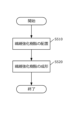
- FIG. 5 is a flow chart of a method for producing the above-mentioned fiber-reinforced resin molded article according to another embodiment of the present invention.
- FIG. 6 is a perspective view showing a schematic shape of a mold used for producing a molded body in another embodiment of the present invention.
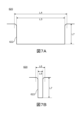
- 7A is a cross-sectional view of the cavity portion taken along line 7A-7A in FIG. 6, showing a cross-section in the longitudinal direction of the cavity portion (X-Z direction in FIG.
- FIG. 7B is a cross-sectional view of the cavity portion taken along line 7B-7B in FIG. 6, showing a cross-section in the width direction of the cavity portion (Y-Z direction in FIG. 6).
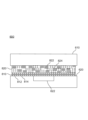
- FIG. 8 is a schematic cross-sectional view of a mold illustrating the arrangement of the first fiber reinforced resin and the second fiber reinforced resin in the mold in step S510.
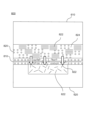
- FIG. 9 is a schematic cross-sectional view of the mold in the same cross section as FIG. 7, illustrating the state in which the first fiber reinforced resin and the second fiber reinforced resin are molded in step S520.
- FIG. 10 is a schematic cross-sectional view of the mold in the same cross section as FIG. 7, illustrating the state in which the first fiber reinforced resin and the second fiber reinforced resin are molded in step S520.
- FIG. 1 is a perspective view showing an exemplary configuration of a fiber-reinforced resin molded body according to one embodiment of the present invention.
- the fiber-reinforced resin molded body 100 has a first fiber-reinforced resin layer 110 and a second fiber-reinforced resin layer 120, which have different fiber lengths and orientation states, and a rib portion 130 that is disposed in contact with the surface of the first fiber-reinforced resin layer 110 and protrudes from the surface of the first fiber-reinforced resin layer 110 to the side opposite the second fiber-reinforced resin layer 120.
- the first fiber-reinforced resin layer 110 and the second fiber-reinforced resin layer 120 are both sheet-shaped fiber-reinforced resins, which are stacked in the thickness direction of the sheets (Z direction in FIG. 1).
- the rib portion 130 is a protruding portion made of fiber-reinforced resin that is molded integrally with the first fiber-reinforced resin layer 110 and the second fiber-reinforced resin layer 120.
- the molded body 100 can be manufactured by laminating a fiber reinforced resin (first fiber reinforced resin) that is the material of the first fiber reinforced resin layer 110 and a fiber reinforced resin (second fiber reinforced resin) that is the material of the second fiber reinforced resin layer 120, and press molding the laminate inside a mold that has a space in the shape of the rib portion 130 on the first fiber reinforced resin side. During pressing, the matrix resin of the second fiber reinforced resin melts and flows through the first fiber reinforced resin (between the reinforcing fibers 112 contained in the first fiber reinforced resin) together with the reinforcing fibers of the second fiber reinforced resin.
- first fiber reinforced resin that is the material of the first fiber reinforced resin layer 110
- second fiber reinforced resin that is the material of the second fiber reinforced resin layer 120
- the matrix resin and reinforcing fibers of the second fiber reinforced resin that have flowed through, as well as the matrix resin of the first fiber reinforced resin that has been pushed out by the flow fill the space in the shape of the rib portion 130, forming the rib portion 130.
- FIG. 2A is a cross-sectional view of molded body 100 taken along line 2A-2A in FIG. 1, showing a cross-section in the in-plane direction (X-Y direction in FIG. 1) of first fiber-reinforced resin layer 110.
- FIG. 2B is a cross-sectional view of molded body 100 taken along line 2B-2B in FIG. 1, showing a cross-section in the in-plane direction (X-Y direction in FIG. 1) of second fiber-reinforced resin layer 120.
- the first fiber reinforced resin layer 110 includes a plurality of reinforcing fibers 112 oriented in one direction (Y direction in FIG. 2A ) and a matrix resin 114 impregnated into the reinforcing fibers 112 (see FIG. 2A ). Note that the first fiber reinforced resin layer 110 may have the reinforcing fibers 112 partially cut by making slits in the reinforcing fibers 112.
- the first fiber-reinforced resin layer 110 can be formed from a thin-film fiber-reinforced resin (UD sheet) containing a plurality of reinforcing fibers 112 oriented in one direction and a resin composition (matrix resin 114) impregnated into the reinforcing fibers.
- UD sheet thin-film fiber-reinforced resin
- matrix resin 114 resin composition impregnated into the reinforcing fibers.
- the first fiber-reinforced resin layer 110 consisting of a single layer may be formed using one UD sheet, or the first fiber-reinforced resin layer 110 consisting of multiple layers may be formed using multiple UD sheets.
- each layer (layers derived from each UD sheet) included in the first fiber-reinforced resin layer 110 may be stacked so that the angles at which the reinforcing fibers 112 are oriented are the same, or the angles at which the reinforcing fibers 112 are oriented may be different for each layer. From the viewpoint of increasing the strength of the first fiber-reinforced resin layer 110 against loads applied from multiple directions, it is preferable that the first fiber-reinforced resin layer 110 has multiple layers in which the angles at which the reinforcing fibers 112 are oriented are different for each layer.
- the multiple layers may include only one or multiple layers in which the angles at which the reinforcing fibers 112 are oriented are different in only one direction (for example, one or multiple layers in which the angles at which the reinforcing fibers 112 are oriented are 90° relative to the reference layer (0°)), or may include one or multiple layers in which the angles at which the reinforcing fibers 112 are oriented are different in different directions from each other (for example, one or multiple layers in which the angles at which the reinforcing fibers 112 are oriented are 45°, 90°, and 135° relative to the reference layer (0°)).
- the orientation angles of the reinforcing fibers 112 contained in each layer are pseudo-isotropic (i.e., so that when the first fiber-reinforced resin layer 110 is viewed as a whole, layers in which the reinforcing fibers 112 are oriented equally in each direction are arranged) (for example, 0°/90°/0°, 0°/45°/90°/135°/135°/90°/45°/0°, etc.).
- the angle at which the reinforcing fibers 112 are oriented in the layer that is closest to the rib portion among the layers included in the first fiber-reinforced resin layer 110 is approximately the same as the longitudinal direction of the rib portion 130. In this specification, approximately the same means that the smaller value is within a range of 10% of the larger value of the two.
- the first fiber reinforced resin layer 110 has a layer in which the angle at which the reinforcing fibers 112 are oriented is different from the longitudinal direction of the rib portion 130. It is considered that in such a layer, the reinforcing fibers 112 contained in the layer act as wedges that connect the reinforcing fibers present across the first fiber reinforced resin layer 110 and the rib portion 130, making the reinforcing fibers of the rib portion 130 less likely to collapse and the rib portion 130 less likely to be destroyed.
- the strength of the rib portion 130 is likely to be increased.
- the first fiber-reinforced resin layer 110 includes a layer in which the angle at which the reinforcing fibers 112 are oriented is the same as the longitudinal direction of the rib portion 130, or a layer in which the angle is 90° to the longitudinal direction of the rib portion 130, the appearance of the rib portion is likely to be good.
- the number of layers of the first fiber reinforced resin layer 110 is preferably 2 to 24.
- the fiber length (average fiber length) of the reinforcing fibers 112 can be 15 mm or more, preferably 20 mm or more, more preferably 100 mm or more, and even more preferably 500 mm or more.
- the upper limit of the fiber length of the reinforcing fibers 112 can be appropriately determined depending on the shape and size of the molded body 100, and can be, for example, 50 m or less.
- the average diameter of the reinforcing fibers 112 is preferably 1 ⁇ m or more and 20 ⁇ m or less, and more preferably 4 ⁇ m or more and 10 ⁇ m or less.
- the type of reinforcing fiber 112 is not particularly limited, and carbon fiber, glass fiber, aramid fiber, alumina fiber, silicon carbide fiber, boron fiber, metal fiber, and the like can be used as the reinforcing fiber. Of these, carbon fiber and glass fiber are preferred, and carbon fiber is more preferred.
- the reinforcing fibers 112 may be sized with a sizing agent.
- the sizing agent is not particularly limited, but modified polyolefins are preferred, and modified polyolefins containing metal carboxylates are even more preferred.
- the modified polyolefins are, for example, unmodified polyolefins in which a carboxylic acid group, a carboxylic anhydride group, or a carboxylic ester group is grafted onto the polymer chain, and a salt is formed between the functional group and a metal cation.
- the unmodified polyolefin is preferably an ethylene-based polymer having 50 mol% or more of structural units derived from ethylene, or a propylene-based polymer having 50 mol% or more of structural units derived from propylene.
- the ethylene-based polymer include ethylene homopolymers and copolymers of ethylene and ⁇ -olefins having 3 to 10 carbon atoms.
- the propylene-based polymers include propylene homopolymers and copolymers of propylene and ethylene or ⁇ -olefins having 4 to 10 carbon atoms.
- the unmodified polyolefin is preferably homopolypropylene, homopolyethylene, ethylene-propylene copolymer, propylene-1-butene copolymer, or ethylene-propylene-1-butene copolymer.
- the ⁇ -olefins constituting these unmodified polyolefins and modified polyolefins may be derived from fossil fuels, may be derived from biomass raw materials, or may be mixtures thereof.
- the reinforcing fibers 112 are oriented and arranged in one direction and are present in the matrix resin 114.
- the material of the matrix resin 114 is not particularly limited, and may be a thermoplastic resin or a thermosetting resin.
- the matrix resin 114 may be a crystalline resin or a non-crystalline resin.
- These thermoplastic resins and thermosetting resins may be derived from fossil fuels, may be derived from biomass raw materials, or may be a mixture of these.
- thermoplastic resins examples include polyolefin resins such as polyethylene, polypropylene, polybutene, and poly4-methyl-1-pentene, polyamide resins, polyester resins, polystyrene resins, thermoplastic polyimide resins, polyamideimide resins, polycarbonate resins, polyphenylene ether resins, polyphenylene sulfide resins, polyacetal resins, acrylic resins, polyetherimide resins, polysulfone resins, polyether ketone resins, polyether ether ketone resins, polyarylate resins, polyether nitrile resins, polyvinyl chloride resins, ABS resins, and fluororesins.
- polyolefin resins such as polyethylene, polypropylene, polybutene, and poly4-methyl-1-pentene
- polyamide resins such as polyethylene, polypropylene, polybutene, and poly4-methyl-1-pentene
- polyester resins such as polyethylene, polyprop
- thermosetting resins examples include epoxy resins, phenolic resins, melamine resins, urea resins, diallyl phthalate resins, silicone resins, urethane resins, furan resins, ketone resins, xylene resins, thermosetting polyimide resins, unsaturated polyester resins, and diallyl terephthalate resins.
- thermoplastic resins are preferred from the viewpoint of further increasing the moldability of the first fiber-reinforced resin layer 110 and making it easier for the reinforcing fibers and matrix resin derived from the second fiber-reinforced resin layer 120 to pass between the reinforcing fibers 112 during molding of the molded body 100.
- thermoplastic resins polyamide resins and polyolefin resins are preferred, and from the viewpoint of enabling molding at lower temperatures and further increasing production efficiency, polyolefin resins are more preferred, and polypropylene is even more preferred.
- the matrix resin 114 may be a resin composition containing an additive.
- the additive include known fillers (inorganic fillers, organic fillers), pigments, dyes, weather resistance stabilizers, heat resistance stabilizers, antistatic agents, antislip agents, antioxidants, antifungal agents, antibacterial agents, flame retardants, and softeners.
- the matrix resin 114 is preferably a resin composition containing a dye that absorbs the laser of the irradiated wavelength.
- the dye may be any dye that absorbs light of any wavelength between 300 nm and 3000 nm, and is preferably carbon black.
- the matrix resin 114 may also contain other components, such as resins other than those mentioned above or short fibers shorter than the reinforcing fibers 112.
- the matrix resin 114 preferably has a melt flow rate (MFR) of 100 g/10 min or more, and more preferably 130 g/10 min or more and 500 g/10 min or less, as measured in accordance with ASTM D1238 at 230°C and a load of 2.16 kg. If the MFR is within this range, it becomes easier for the reinforcing fibers and matrix resin from the second fiber-reinforced resin layer 120 to pass between the reinforcing fibers 112 during molding of the molded body 100, making it easier to form a higher rib portion 130.
- MFR melt flow rate
- the content of the reinforcing fibers 112 relative to the total volume of the first fiber reinforced resin layer 110 is preferably 10 volume % or more and 70 volume % or less, more preferably 15 volume % or more and 60 volume % or less, and even more preferably 20 volume % or more and 60 volume % or less.
- Vf fiber volume fraction
- the thickness of the first fiber reinforced resin layer 110 is preferably 40 ⁇ m or more and 3000 ⁇ m or less, more preferably 100 ⁇ m or more and 2000 ⁇ m or less, even more preferably 150 ⁇ m or more and 1500 ⁇ m or less, and particularly preferably 300 ⁇ m or more and 1200 ⁇ m or less.
- the second fiber reinforced resin layer 120 is formed by randomly arranging blocks 126 including a plurality of reinforcing fibers 122 oriented in one direction and a matrix resin 124 (see FIG. 2B).
- the second fiber reinforced resin layer 120 imparts a marble-like appearance to the molded body 100 by the randomly arranged plurality of blocks.
- the second fiber reinforced resin layer 120 also serves as the material for the rib portion 130 during molding.
- the second fiber-reinforced resin layer 120 can be made by cutting a UD sheet into small pieces to form chopped sheets, and then forming a randomly arranged plurality of chopped sheets into a sheet shape using a known press molding machine or the like (hereinafter, simply referred to as a "random sheet"). At this time, each chopped sheet becomes each block 126 in the second fiber-reinforced resin layer 120.
- the chopped sheet may have any shape that corresponds to the fiber length and distribution of the reinforcing fibers 122 in each block 126.
- the width of the chopped sheet in the direction perpendicular to the orientation direction of the reinforcing fibers is preferably 3 mm or more and 50 mm or less. If the width in the above direction is 3 mm or more, both the moldability of the chopped sheet and the shapeability of the molded body 100 can be improved. If the width in the above direction is 50 mm or less, the strength of the molded body can be further increased. From the above viewpoint, it is more preferable that the width in the above direction is 10 mm or more and 25 mm or less.
- the length of the chopped sheet in the orientation direction of the reinforcing fibers is 5 mm or more and 50 mm or less. If the length in the above direction is 5 mm or more, the strength of the molded body can be further increased. If the length in the above direction is 50 mm or less, the moldability of the chopped sheet, the shapeability of the molded body 100, and the appearance of the molded body can all be improved. From the above viewpoints, it is more preferable that the length in the above direction is 10 mm or more and 30 mm or less.
- the ratio of the length of the chopped sheet in the direction of orientation of the reinforcing fibers to the width in the direction perpendicular to the orientation of the reinforcing fibers is preferably 0.5 or more and 5.0 or less.
- the aspect ratio is 0.5 or more, the chopped sheet is less likely to break and the strength of the molded product tends to be improved.
- the aspect ratio is 5.0 or less, the fibers are shorter and moldability tends to be further improved. From the above viewpoint, it is more preferable that the aspect ratio is 1.0 or more and 3.0 or less.
- Chopped sheets can be laid out randomly (so that the fiber orientation direction varies for each chopped sheet) without any gaps inside the mold of a press molding machine, for example, and press molded to obtain a random sheet in which the reinforcing fibers are oriented in the in-plane direction and the orientation direction in the in-plane direction is random.
- chopped sheets can also be laid out non-randomly (so that the fiber orientation direction is all the same, or the fiber orientation direction of each chopped sheet is different, but overall there is orientation in the fiber orientation direction) and press molded to make the arrangement of each block 126 in the second fiber reinforced resin layer 120 non-random.
- the fiber length (average fiber length) of the reinforcing fibers 122 contained in each block 126 is shorter than the fiber length (average fiber length) of the reinforcing fibers 112 contained in the first fiber reinforced resin layer 110.
- the fiber length of the reinforcing fibers 122 is typically 50 mm or less, preferably 1 mm or more and 40 mm or less, more preferably 3 mm or more and 40 mm or less, and even more preferably 6 mm or more and 35 mm or less. The longer the fiber length of the reinforcing fibers 122, the higher the strength of the molded body 100 and the rib portion 130.
- the average diameter of the reinforcing fibers 122 is preferably 1 ⁇ m or more and 20 ⁇ m or less, and more preferably 4 ⁇ m or more and 10 ⁇ m or less.
- the type of reinforcing fiber 122 is not particularly limited, and carbon fiber, glass fiber, aramid fiber, alumina fiber, silicon carbide fiber, boron fiber, metal fiber, and the like can be used as the reinforcing fiber. Of these, carbon fiber and glass fiber are preferred, and carbon fiber is more preferred because it is less likely to be cut when passing between the reinforcing fibers 112 contained in the first fiber-reinforced resin layer 110 during molding, and it is easier to fill the rib portion 130 with long reinforcing fibers 122 to increase the strength of the rib portion 130.
- the reinforcing fibers 122 contained in the second fiber-reinforced resin layer 120 may be the same type of reinforcing fibers as the reinforcing fibers 112 contained in the first fiber-reinforced resin layer 110, or may be a different type of reinforcing fiber, but it is preferable that they are the same type of reinforcing fibers.
- the reinforcing fibers 122 may be sized with a sizing agent.
- the sizing agent is not particularly limited, and for example, the various sizing agents described for the reinforcing fibers 112 contained in the first fiber-reinforced resin layer 110 can be used in the same manner.
- the reinforcing fibers 122 are oriented in one direction within each block 126 and are present in the matrix resin 124.
- the material of the matrix resin 124 is not particularly limited, and may be a thermoplastic resin or a thermosetting resin.
- the matrix resin 124 may be a crystalline resin or a non-crystalline resin.
- the various resins described for the matrix resin 114 contained in the first fiber reinforced resin layer 110 can be used in the same manner.
- thermoplastic resins are preferred from the viewpoint of making it easier to pass between the reinforcing fibers 112 contained in the first fiber reinforced resin layer 110 when molding the molded body 100.
- the thermoplastic resins polyamide resins and polyolefin resins are preferred, and polyolefin resins are more preferred from the viewpoint of enabling molding at lower temperatures and further increasing production efficiency, and polypropylene is even more preferred.
- the matrix resin 124 contained in the second fiber reinforced resin layer 120 may be the same type of resin as the matrix resin 114 contained in the first fiber reinforced resin layer 110, or may be a different type of resin. However, from the viewpoint of improving the fusion properties between the first fiber reinforced resin layer 110 and the second fiber reinforced resin layer 120, and between the first fiber reinforced resin layer 110 and the rib portion 130, it is preferable that the matrix resin 124 and the matrix resin 114 are both polypropylene.
- the matrix resin 124 may contain other components such as various additives, resins other than those mentioned above, and short fibers having a length shorter than that of the reinforcing fibers 122.
- the melt flow rate (MFR) of the matrix resin 124 is preferably equal to or greater than the above-mentioned MFR of the matrix resin 114 contained in the first fiber reinforced resin layer 110.
- MFR melt flow rate
- the matrix resin 124 preferably has a melt flow rate (MFR) of 150 g/10 min or more, and more preferably 180 g/10 min or more and 600 g/10 min or less, as measured in accordance with ASTM D1238 at 230°C and a load of 2.16 kg. If the MFR is within this range, it becomes easier for the reinforcing fibers and matrix resin from the second fiber-reinforced resin layer 120 to pass between the reinforcing fibers 112 during molding of the molded body 100, making it easier to form a higher rib portion 130.
- MFR melt flow rate
- the content of the reinforcing fibers 122 relative to the total volume of the second fiber reinforced resin layer 120 is preferably 10 volume % or more and 65 volume % or less, more preferably 10 volume % or more and 60 volume % or less, and even more preferably 15 volume % or more and 55 volume % or less.
- Vf fiber volume fraction
- the mass of the reinforcing fibers 122 per unit area of the second fiber-reinforced resin layer 120 is preferably 270 g/m 2 or more and 3600 g/m 2 or less, more preferably 350 g/m 2 or more and 2400 g/m 2 or less, and even more preferably 400 g/m 2 or more and 1500 g/m 2 or less.
- the greater the mass of the reinforcing fibers 122 per unit area the easier it is to fill the rib portion 130 with more reinforcing fibers, and the strength of the rib portion 130 is increased.
- the smaller the mass of the reinforcing fibers 122 per unit area the less likely scratches or cracks will occur in the rib portion 130 during molding, and the better the appearance of the rib portion 130.
- the thickness of the second fiber reinforced resin layer 120 is preferably 300 ⁇ m or more and 4000 ⁇ m or less, more preferably 300 ⁇ m or more and 3000 ⁇ m or less, even more preferably 400 ⁇ m or more and 2000 ⁇ m or less, and particularly preferably 400 ⁇ m or more and 1200 ⁇ m or less.
- the thinner the second fiber reinforced resin layer 120 is, the thinner the molded body 100 can be made, and the wider the range of uses for the molded body 100 can be.
- the rib portion 130 is a convex structure formed on the first fiber reinforced resin side by the second fiber reinforced resin material (reinforced fibers 122 and matrix resin 124) flowing between the reinforcing fibers 112 of the first fiber reinforced resin during molding of the molded body 100.
- the first fiber reinforced resin layer 110, the second fiber reinforced resin layer 120, and the rib portion 130 are integrally formed by the above-mentioned manufacturing method. In other words, no clear bonding interface is generated between the first fiber reinforced resin layer 110 and the rib portion 130, and between the first fiber reinforced resin layer 110 and the second fiber reinforced resin layer 120.
- FIG. 3 is a cross-sectional view of the rib portion 130 taken along line 3-3 in FIG. 1, showing a cross-section of the rib portion 130 in the in-plane direction (X-Z direction in FIG. 1).
- FIG. 3 also shows a cross-section of a portion of the first fiber reinforced resin layer 110 (the first fiber reinforced resin layer 110 shown in FIG. 3 has multiple layers with different orientation directions of the reinforcing fibers 112).
- the second fiber reinforced resin layer 120 is not shown in FIG. 3.
- the rib portion 130 includes a plurality of reinforcing fibers 132 and a matrix resin 134 impregnated into the reinforcing fibers 132 (see FIG. 3).
- the reinforcing fibers 132 are basically randomly distributed and arranged, but may be oriented in one direction in the rib portion 130 (for example, a direction away from the first fiber-reinforced resin layer 110; Z direction in FIG. 3).
- the orientation in this case does not require the reinforcing fibers to be oriented in the same direction as in each block 126 in the first fiber-reinforced resin layer 110 and the second fiber-reinforced resin layer 120, and although the orientation directions of the respective fibers are offset, the reinforcing fibers 132 are arranged so that orientation occurs in the fiber orientation direction when viewed overall.
- the reinforcing fibers 132 are uniformly arranged throughout the rib portion 130, and the matrix resin 134 is uniformly impregnated throughout the rib portion 130.
- the arrangement of the reinforcing fibers 132 and the matrix resin 134 is not limited to this.
- the density of the reinforcing fibers 132 may vary between the tip side (the side farther from the first fiber reinforced resin layer 110) and the base side (the side closer to the first fiber reinforced resin layer 110) of the rib portion 130 (for example, the density of the reinforcing fibers 132 may be higher at the tip side of the rib portion 130 and lower at the base side of the rib portion 130, or the density of the reinforcing fibers 132 may be lower at the tip side of the rib portion 130 and higher at the base side of the rib portion 130).
- the composition of the matrix resin 134 may change stepwise between the tip and base of the rib portion 130 (for example, the tip of the rib portion 130 may have a composition similar to the matrix resin 114 contained in the first fiber reinforced resin layer 110, and the base of the rib portion 130 may have a composition similar to the matrix resin 124 contained in the second fiber reinforced resin layer 120).
- the arrangement of these reinforcing fibers 132 and matrix resin 134 can be changed by the molding conditions (pressure, temperature, time, etc.).
- the fiber length (average fiber length) of the reinforcing fibers 132 is shorter than the fiber length (average fiber length) of the reinforcing fibers 112 contained in the first fiber reinforced resin layer 110.
- the fiber length (average fiber length) of the reinforcing fibers 132 is approximately the same as the fiber length (average fiber length) of the reinforcing fibers 122 contained in the second fiber reinforced resin layer 120.
- the fiber length of the reinforcing fibers 132 is typically 50 mm or less, preferably 1 mm or more and 40 mm or less, more preferably 3 mm or more and 40 mm or less, and even more preferably 6 mm or more and 35 mm or less.
- the longer the fiber length of the reinforcing fibers 132 the stronger the strength of the rib portion 130.
- the shorter the fiber length of the reinforcing fibers 132 the stronger the strength of the rib portion 130.
- the average diameter of the reinforcing fibers 132 is approximately the same as the average diameter of the reinforcing fibers 122 contained in the second fiber-reinforced resin layer 120, and is preferably 1 ⁇ m or more and 20 ⁇ m or less, and more preferably 4 ⁇ m or more and 10 ⁇ m or less.
- the type of reinforcing fiber 132 is not particularly limited, and carbon fiber, glass fiber, aramid fiber, alumina fiber, silicon carbide fiber, boron fiber, metal fiber, and the like can be used as the reinforcing fiber. Of these, carbon fiber and glass fiber are preferred, and carbon fiber is more preferred.
- the reinforcing fibers 132 contained in the rib portion 130 are the same type of reinforcing fibers as the reinforcing fibers 122 contained in the second fiber-reinforced resin layer 120.
- the reinforcing fibers 132 contained in the rib portion 130 may be the same type of reinforcing fibers as the reinforcing fibers 112 contained in the first fiber-reinforced resin layer 110, or may be a different type of reinforcing fiber, but it is preferable that they are the same type of reinforcing fibers.
- the reinforcing fibers 132 may be sized with a sizing agent, similar to the reinforcing fibers 122 contained in the second fiber-reinforced resin layer 120.
- the matrix resin 134 is the same type of resin as the matrix resin 114 contained in the first fiber reinforced resin layer 110, or the same type of resin as the matrix resin 124 contained in the second fiber reinforced resin layer 120, or a mixture of these matrix resins 114 and 124.
- the content of the reinforcing fibers 132 relative to the total volume of the rib portion 130 is preferably 10 volume % or more and 65 volume % or less, more preferably 10 volume % or more and 60 volume % or less, and even more preferably 15 volume % or more and 55 volume % or less.
- the Vf of the rib portion 130 may be smaller than the Vf of the second fiber reinforced resin layer 120.
- the mass of the reinforcing fibers 132 per unit area of the rib portion 130 is preferably 13,000 g/ m2 or more and 66,000 g/ m2 or less, more preferably 18,000 g/ m2 or more and 56,000 g/ m2 or less, and even more preferably 23,000 g/ m2 or more and 46,000 g/ m2 or less.
- the length of the reinforcing fibers 132 contained in the rib portion 130 and the amount of reinforcing fibers 132 used in calculating Vf can be calculated by heating the matrix resin 134 at the base of the rib portion 130 to a temperature above its melting point but not affecting the reinforcing fibers 132 to melt the matrix resin 134, pulling the rib portion 130 out of the molded body 100, and measuring the reinforcing fibers 132 obtained by removing the matrix resin 134 by heating the pulled-out rib portion 130 or treating it with an organic resin.
- the fiber length may be taken as the average length of 100 reinforcing fibers 132 obtained in this manner.
- some of the reinforcing fibers 122 that flow from the second fiber-reinforced resin may not pass completely through the first fiber-reinforced resin layer 110 and may be left behind inside the first fiber-reinforced resin layer 110, or may be arranged across the rib portion 130 and the first fiber-reinforced resin layer 110 (reinforced fiber 132a shown in Figure 3).
- Figure 4 is an enlarged cross-sectional view of the portion of the first fiber reinforced resin layer 110 shown in Figure 2A that contacts the rib portion 130.
- the reinforcing fibers 122 when the reinforcing fibers 122 pass through, some of the reinforcing fibers 112 may be partially bent and the orientation may be partially displaced (displacement portion 112b shown in Figure 4).
- the reinforcing fibers 122 and matrix resin 124 of the second fiber reinforced resin pass through this displacement portion 112b where the reinforcing fibers 112 are bent.
- the shape, size and position of the rib portion 130 can be determined appropriately depending on the application of the molded body 100.
- the height of the rib portion 130 (the length from the connection point with the first fiber-reinforced resin layer 110 to the tip of the rib portion 130) is preferably 5 mm or more, more preferably 10 mm or more, and even more preferably 12 mm or more.
- the upper limit of the height of the rib portion 130 can be, for example, 50 mm or less.
- the length of the rib portion 130 (the length of the long side of the rib portion 130 in a plane parallel to the surface of the first fiber-reinforced resin layer 110) is preferably 100 mm or less, more preferably 80 mm or less, and even more preferably 60 mm or less. There is no particular lower limit to the length of the rib portion 130, but it can be, for example, 5 mm or more.
- the thickness of the rib portion 130 is preferably 3 mm or less, more preferably 2.5 mm or less, and even more preferably 2 mm or less. There is no particular lower limit to the thickness of the rib portion 130, but it can be, for example, 1 mm or more.
- the molded body according to this embodiment has a configuration in which the second fiber reinforced resin layer 120, the first fiber reinforced resin layer 110, and the rib portion 130 are laminated in this order.
- Other layers may be disposed between these layers and the rib portion, but it is preferable that these layers and the rib portion are laminated in direct contact with each other without disposing the other layers.
- the molded body 100 may have other layers on the outside of these layers and the rib portion.
- the molded body 100 may have a transparent or semi-transparent protective layer on the outer surface of the second fiber reinforced resin layer 120 (the side opposite the rib portion 130) to protect the appearance of the second fiber reinforced resin layer 120, to the extent that the pattern of the second fiber reinforced resin layer 120 is visible.
- the protective layer may be, for example, a thin film layer made of resin.
- FIG. 5 is a flowchart of a method for producing the above-described fiber-reinforced resin molded article 100 according to another embodiment of the present invention.
- the molded body 100 is manufactured by a process of stacking and arranging the first fiber-reinforced resin and the second fiber-reinforced resin in a molding die (process S510), and a process of molding the arranged first fiber-reinforced resin and the second fiber-reinforced resin inside the die (process S520).
- Step S510 Arrangement of fiber reinforced resin
- the first fiber reinforced resin and the second fiber reinforced resin are arranged in a layered manner in a molding die.
- FIG. 6 is a perspective view showing a schematic shape of a mold 600 used to manufacture the molded body 100 in this embodiment.
- the mold 600 has a core mold 610 and a cavity mold 620 arranged opposite each other, and is configured so that the mold can be closed and opened by moving the core mold 610 and the cavity mold 620 toward and away from each other.
- the center of the molding surface of the cavity mold 620 has a cavity portion 622 that is the same shape as the rib portion 130 to be formed. As shown in FIG. 6, the cavity portion 622 is a roughly rectangular parallelepiped space that opens to the molding surface of the cavity mold 620.
- Figure 7A is a cross-sectional view of cavity portion 622 taken along line 7A-7A in Figure 6, showing a cross-section of cavity portion 622 in the longitudinal direction (X-Z direction in Figure 6).
- Figure 7B is a cross-sectional view of cavity portion 622 taken along line 7B-7B in Figure 6, showing a cross-section of cavity portion 622 in the width direction (Y-Z direction in Figure 6).
- cavity portion 622 has a rounded edge at the opening. Note that the shape of cavity portion 622 is not limited to this, and can be determined arbitrarily depending on the shape of rib portion 130 of molded body 100 to be manufactured.
- FIG. 8 is a schematic cross-sectional view of a mold 600 showing how the first and second fiber reinforced resins are placed in the mold in this process.
- a first fiber reinforced resin 810 containing a plurality of reinforcing fibers 812 oriented in one direction and a matrix resin 814 is placed on the molding surface of a cavity mold 620 so as to be in contact with the opening of the cavity portion 622.
- a second fiber reinforced resin 820 consisting of an assembly of a plurality of blocks 826 smaller in size than the first fiber reinforced resin, containing a plurality of reinforcing fibers 822 oriented in one direction and a matrix resin 824, is placed in layers on the surface of the first fiber reinforced resin 810 (the surface opposite the cavity portion 622).
- the first fiber reinforced resin 810 is typically a UD sheet, and is the material of the first fiber reinforced resin layer 110 in the molded body 100.
- the second fiber reinforced resin 820 is typically an assembly of chopped sheets obtained by cutting the UD sheet into small pieces, and is the material of the second fiber reinforced resin layer 120 in the molded body 100. Therefore, the reinforcing fibers 812 and matrix resin 814 contained in the first fiber reinforced resin 810 can be the reinforcing fibers 112 and matrix resin 114 that may be contained in the first fiber reinforced resin layer 110 described above, and the reinforcing fibers 822 and matrix resin 824 contained in the second fiber reinforced resin 820 can be the reinforcing fibers 122 and matrix resin 124 that may be contained in the second fiber reinforced resin layer 120 described above.
- the size of the chopped sheets (blocks 826) can be within the range described for the second fiber reinforced resin layer 120.
- the molded body 100 may include multiple layers with different orientation directions of the reinforcing fibers 112 inside the first fiber reinforced resin layer 110.
- multiple UD sheets may be laminated so that the orientation direction of the reinforcing fibers differs for each layer to form the first fiber reinforced resin layer 110.
- the thickness of the first fiber reinforced resin 810 is preferably 0.04 mm or more and 3 mm or less, more preferably 0.1 mm or more and 2 mm or less, even more preferably 0.15 mm or more and 1.5 mm or less, and particularly preferably 0.3 mm or more and 1.2 mm or less.
- the thickness of the first fiber-reinforced resin 810 can be adjusted by the number of UD sheets to be stacked. At this time, the stacked UD sheets may be fused to each other in advance by heat pressing or the like, or multiple UD sheets that are not fused to each other may be placed inside the mold 600.
- the thickness of the second fiber reinforced resin 820 is preferably greater than the thickness of the first fiber reinforced resin 810.
- the second fiber reinforced resin layer 120 can be sufficiently formed after flowing into the rib portion 130, and the marble-like appearance of the molded body 100 imparted by the second fiber reinforced resin layer 120 can be clearly formed.
- the first fiber reinforced resin 810 thinner, the strength of the rib portion 130 can be increased.
- the thickness of the second fiber reinforced resin 820 may be smaller than the thickness of the first fiber reinforced resin 810.
- the thickness of the second fiber-reinforced resin 820 is preferably 0.3 mm or more and 4 mm or less, more preferably 0.3 mm or more and 2.5 mm or less, even more preferably 0.4 mm or more and 2 mm or less, and particularly preferably 0.4 mm or more and 1.2 mm or less.
- the thickness of the second fiber reinforced resin 820 can be adjusted by the number of chopped sheets, etc.
- the chopped sheets may be fused together in advance by heat pressing or the like to form a random sheet, and the random sheet may be placed inside the mold 600 (on top of the first fiber reinforced resin 810), or multiple chopped sheets that are not fused together may be laid out randomly on top of the first fiber reinforced resin 810 and placed inside the mold 600.
- the mass of the reinforcing fibers 822 per unit area of the arranged second fiber reinforced resin 820 is preferably 270 g/m 2 or more and 3600 g/m 2 or less, more preferably 350 g/m 2 or more and 2400 g/m 2 or less, and even more preferably 400 g/m 2 or more and 1500 g/m 2 or less.
- the greater the mass of the reinforcing fibers 122 per unit area the easier it is to fill the rib portion 130 with more reinforcing fibers, and the strength of the rib portion 130 is increased. In addition, scratches and cracks on the rib portion 130 are less likely to occur during molding, and the appearance of the rib portion 130 is improved.
- Step S520 Molding of fiber reinforced resin
- the first fiber reinforced resin 810 and the second fiber reinforced resin 820 placed inside the mold 600 in the previous step are pressurized inside the mold 600 to be molded.
- Figures 9 and 10 are schematic cross-sectional views of the mold 600 in the same section as Figure 7, showing how the first fiber-reinforced resin 810 and the second fiber-reinforced resin 820 are molded in this process.
- the mold is clamped, the inside of the mold 600 is heated by a heating unit (not shown), and the core mold 610 and the cavity mold 620 are pressed in a direction toward each other to pressurize the inside of the mold 600 (see Figure 9).
- the reinforcing fibers 822 flow into the cavity portion 622 while spreading the spaces between the reinforcing fibers 812 contained in the first fiber reinforced resin 810, so that at the portion corresponding to the cavity portion 622, a part of the reinforcing fibers 812 is partially bent and the orientation is partially displaced (see FIG. 4).
- reinforcing fibers 822 flow into cavity portion 622 together with matrix resin 824 (and matrix resin 814) (see FIG. 10). These reinforcing fibers 822 are hardly cut when they flow in, so they maintain approximately the same length as when they were contained in second fiber-reinforced resin 820.
- the reinforcing fibers are cut by pressure during flow inside the injector or during injection, making it difficult to fill the rib portion 130 with long reinforcing fibers.
- the fiber length of the reinforcing fibers that can be filled into the rib portion 130 when injected is limited to about 2.5 mm.
- the rib portion 130 is formed without injection, so the reinforcing fibers are less likely to be cut, making it easier to fill the rib portion 130 with long reinforcing fibers.
- the shear resistance of the reinforcing fibers 812 of the first fiber reinforced resin 810 suppresses the movement of the reinforcing fibers 822 and the matrix resin 824 in the in-plane direction, while promoting the movement of the reinforcing fibers 812 in the thickness direction through the fibers, so it is thought that it is easy to form a rib portion 130 of sufficient height.
- first fiber reinforced resin 810 has low formability because it contains the reinforcing fibers 812, which are long fibers.
- the heating temperature in this process may be a temperature at which the matrix resin 814 of the first fiber reinforced resin 810 and the matrix resin 824 of the second fiber reinforced resin 820 melt, and if these matrix resins are thermoplastic resins, may be a temperature at which the thermoplastic resin melts, and may be set to a temperature equal to or higher than the melting point of the matrix resin and not higher than 50°C higher than the melting point. If the matrix resin is a thermosetting resin, the heating temperature may be a temperature at which the thermosetting resin hardens, and may be set to a temperature equal to or higher than the hardening temperature of the matrix resin and not higher than 50°C higher than the hardening temperature.
- the melting point of the matrix resin mentioned above means the higher of the melting point of the matrix resin 814 of the first fiber reinforced resin 810 and the melting point of the matrix resin 824 of the second fiber reinforced resin 820.
- the above-mentioned curing temperature of the matrix resin refers to the higher of the curing temperature of the matrix resin 814 of the first fiber-reinforced resin 810 and the curing temperature of the matrix resin 824 of the second fiber-reinforced resin 820.
- the pressure can be 0.5 MPa or more and 20 MPa or less.
- the method of applying pressure is not limited to the press molding method using a press molding machine. Other methods of applying pressure include the press molding method using a double belt press machine and the autoclave method using an autoclave device.
- the molded body may include other layers between the rib portion and the first fiber-reinforced resin layer, and between the first fiber-reinforced resin layer and the second fiber-reinforced resin layer, that have a different configuration from these layers.
- the other layers included are ones that are unlikely to impede the flow of the reinforcing fibers to the rib portion, and can be various resin layers, such as a resin layer that does not contain reinforcing fibers or a resin layer that contains short reinforcing fibers.
- the molded body may also include other layers having a different configuration from the above layers outside the rib portion, in a portion of the first fiber-reinforced resin layer where the rib portion is not provided, or outside the second fiber-reinforced resin layer.
- the first fiber reinforced resin 810 and the second fiber reinforced resin 820 are heated inside the mold 600, but the first fiber reinforced resin 810 and the second fiber reinforced resin 820 may be placed in the mold 600 after being heated to a melting point or higher outside the mold 600. In other words, the first fiber reinforced resin 810 and the second fiber reinforced resin 820 may be heated before steps S510 and S520.
- the molded body has only one rib portion, but the molded body may have multiple rib portions.
- the multiple rib portions may all extend in the same direction, or may extend in different directions.
- the multiple rib portions may also be arranged so as to intersect.
- the end of the rib portion may be in contact with the wall portion.
- the manufacturing method of the above-mentioned molded body is not limited to including only these steps, and may include other steps as long as the desired molded body is produced.
- the fiber-reinforced resin molded body can be used in any application, but is useful as a load absorbing material in applications where a load is applied from a predetermined direction after being formed into a three-dimensional shape.
- the fiber-reinforced resin molded body when used to fit the rib portion 130 into another member and assemble it to the other member, the fiber-reinforced resin molded body has high durability because the rib portion has high strength.
- UD sheet (first fiber reinforced resin)
- a UD sheet manufactured by Mitsui Chemicals, Inc., TAFNEX
- This UD sheet was a UD sheet containing polypropylene and carbon fiber, with a fiber volume fraction (Vf) of 50% by volume and a thickness of 0.15 mm.
- the melting point of this polypropylene measured by the DSC method in accordance with JIS K 7121 was 168 ° C.
- the melt flow rate (MFR) measured at 230 ° C. and a load of 2160 g in accordance with ASTM D-1238 was 200.0 g / 10 min.
- the UD sheet was cut to a length of 12.5 mm in the direction perpendicular to the orientation direction of the reinforcing fibers, and then cut to a length of 3.0 mm in the direction along the orientation direction of the reinforcing fibers using a tape cutter H510 manufactured by Hashima Co., Ltd. to obtain a chopped sheet.
- 50.3 g of chopped sheet was laid out in a mold having a length of 220 mm and a width of 220 mm so that the fiber direction was random.
- a mini test press manufactured by Toyo Seiki Seisakusho Co., Ltd., the laid chopped sheet was preheated at a temperature of 175 ° C.
- Random sheet 2 was obtained in the same manner as in the preparation of random sheet 1, except that the length in the direction along the orientation direction of the reinforcing fibers was 9.0 mm.
- Random sheet 3 was obtained in the same manner as in the preparation of random sheet 1, except that the length in the direction along the orientation direction of the reinforcing fibers was 15.0 mm.
- Random sheet 4 was obtained in the same manner as in the preparation of random sheet 1, except that the length in the direction along the orientation direction of the reinforcing fibers was 30.0 mm.
- Random sheet 5 was obtained in the same manner as in the preparation of random sheet 3, except that the amount of chopped sheet laid out in the mold was 62.9 g.
- Random sheet 6 was obtained in the same manner as in the preparation of random sheet 3, except that the amount of chopped sheet laid out in the mold was 37.8 g.
- Random sheet 7 was obtained in the same manner as in the preparation of random sheet 1, except that the length in the direction along the orientation direction of the reinforcing fibers was 55.0 mm.
- the random sheet and the UD sheet were preheated at a temperature of 175°C and a pressure of 3 MPa for 8 minutes, bumped 5 times at a temperature of 175°C and a pressure of 10 MPa, pressed at a temperature of 175°C and a pressure of 10 MPa for 2 minutes, and cooled at 15°C and 10 MPa for 3 minutes to obtain laminate 1.
- the laminate 1 was placed in the mold shown in Figures 6 and 7 so that the UD sheet side was the rib side and the random sheet side was the opposite side to the rib. At this time, the laminate 1 was placed so that the direction in which the reinforcing fibers of the UD sheet in contact with the random sheet of the two UD sheets were oriented (0° direction) coincided with the longitudinal direction of the rib of the mold (so that the directions in which the reinforcing fibers of the two UD sheets were oriented were 0° and 90° with respect to the longitudinal direction of the rib, in order from the random sheet side).
- the laminate 1 was heated at 240°C for 2 minutes using a DH832 oven manufactured by Yamato Scientific Co., Ltd., and then pressed for 1 minute at a mold temperature of 145°C and a pressure of 5 MPa using a 250t press machine manufactured by Ogihara Co., Ltd., and cooled to a mold temperature of 90°C at a cooling rate of 17°C/min while maintaining the pressure, to obtain a shaped body (molded body 1).
- the mold used had a molding surface size of 220 mm in the vertical direction (longitudinal direction of the rib, L1 in Fig. 6) and 220 mm in the horizontal direction (width direction of the rib, L2 in Fig. 6), and the shape of the cavity for forming the rib was such that, in the longitudinal direction of the rib, the length of the rib (L3 in Fig. 7A) was 20 mm, the length of the base of the rib (L4 in Fig. 7A) was 22 mm, in the width direction of the rib (L5 in Fig. 7B) was 2 mm, the width of the base of the rib (L6 in Fig. 7B) was 4 mm, and the height of the rib (L7 in Figs. 7A and 7B) was 15 mm.
- Molded body 5 was obtained in the same manner as for molding 3, except that laminate 3 was placed in the mold so that the direction in which the reinforcing fibers of the UD sheet in contact with the random sheet were oriented (0° direction) was 45° to the longitudinal direction of the rib of the mold (so that the directions in which the reinforcing fibers of the two UD sheets were oriented were 45° and -45°, in that order from the random sheet side, to the longitudinal direction of the rib).
- the molded body 6 was obtained in the same manner as the molded body 3, except that the laminate 3 was placed in the mold so that the orientation direction (0° direction) of the reinforcing fibers of the UD sheet in contact with the random sheet was 90° to the longitudinal direction of the rib of the mold (so that the orientation directions of the reinforcing fibers of the two UD sheets were 90° and 0° to the longitudinal direction of the rib, in order from the random sheet side).
- Laminate 7 was obtained in the same manner as in the preparation of laminate 1.
- the laminate 7 was placed in the mold shown in Figures 6 and 7 so that the UD sheet side was on the rib side and the random sheet side was on the opposite side to the rib. At this time, the laminate 7 was placed so that the direction in which the reinforcing fibers of the UD sheet in contact with the random sheet among the four UD sheets were oriented (0° direction) coincided with the longitudinal direction of the rib of the mold (so that the directions in which the reinforcing fibers of the four UD sheets were 0°, 90°, 0°, and 90° with respect to the longitudinal direction of the rib, in order from the random sheet side). The rest of the process was the same as for the preparation of the molded body 1, and the molded body 7 was obtained.
- Laminate 8 was obtained in the same manner as in the preparation of laminate 1 except for the above.
- the laminate 8 was placed in the mold shown in Figures 6 and 7 so that the UD sheet side was on the rib side and the random sheet side was on the opposite side to the rib. At this time, the laminate 8 was placed so that the direction in which the reinforcing fibers of the UD sheet in contact with the random sheet among the eight UD sheets were oriented (0° direction) coincided with the longitudinal direction of the rib of the mold (so that the directions in which the reinforcing fibers of the eight UD sheets were 0°, 90°, 0°, 90°, 0°, 90°, 0°, and 90° with respect to the longitudinal direction of the rib, in order from the random sheet side).
- the molded body 8 was obtained in the same manner as in the preparation of the molded body 1 in other respects.
- molded body 12 (Comparative Example 2)
- the laminate 3 was placed in the mold shown in Figures 6 and 7 so that the random sheet side was on the rib side and the UD sheet side was on the opposite side to the rib.
- the laminate 3 was placed so that the direction in which the reinforcing fibers of the UD sheet on the rib side of the two UD sheets were oriented (0° direction) coincided with the longitudinal direction of the rib of the mold (so that the directions in which the reinforcing fibers of the two UD sheets were oriented were 0° and 90° with respect to the longitudinal direction of the rib, in that order from the opposite side to the rib).
- the molded body 12 was obtained in the same manner as in the preparation of the molded body 1 in other respects.
- Laminate 13 was obtained in the same manner as in the preparation of laminate 1.
- molded body 14 (Comparative Example 4) A random sheet 5 was placed in the mold shown in Fig. 6 and Fig. 7. Otherwise, a molded body 14 was obtained in the same manner as in the production of the molded body 1.
- Evaluation 3-1 Height of rib portion The height of the rib portion of each molded article was measured visually using a ruler, and the height of the rib portion of each molded article was evaluated according to the following criteria. ⁇ The height of the rib is 15 mm. ⁇ The height of the rib is 10 mm or more and less than 15 mm. ⁇ The height of the rib is less than 10 mm.
- Vf of rib part The rib part was cut from the root of the obtained molded body using a reciprocating saw (EZ47A1PN2G manufactured by Panasonic Corporation), and the total weight (g) of the rib part was measured. Next, the resin was pyrolyzed by heating at 500°C for 30 minutes using a muffle furnace (FC300 manufactured by Yamato Scientific Co., Ltd.), and the weight was measured again to calculate the fiber content (g) in the rib. The resin content (g) was also calculated assuming that the only component other than the reinforcing fiber was the resin component, and the density of the reinforcing fiber was set to 1.8 g/ cm3 , the density of the resin component was set to 0.9 g/ cm3 , and Vf was obtained.
- Breaking load of rib portion For those in which the height of the rib portion was evaluated as " ⁇ ", a molded body was cut out to a size of 80 mm in width and 80 mm in length, centered on the rib portion. The cut molded body was fixed at 20 mm from both ends in a direction perpendicular to the longitudinal direction of the rib portion, and a compressive load was applied at a speed of 2 mm/min to a range of 5 mm in width and 5 mm in length at the upper end of the longitudinal center of the rib portion. The amount of load applied from the start of the load until the load dropped was taken as the breaking load of the rib portion. For the evaluation of the breaking load, a STRONGRAPH VE55D manufactured by Toyo Seiki Co., Ltd. was used.
- the breaking load of the rib portion of each molded article was evaluated according to the following criteria.
- the breaking load is 420N or more.
- the breaking load is 300N or more and less than 420N.
- the breaking load is 180N or more and less than 300N.
- the breaking load is less than 180N.
- the layer structures of molded bodies 1 to 14 (the stacking order of the materials used in the production, the fiber length in the random sheet, the thickness of the random sheet, the mass per unit area of the reinforcing fibers contained in the random sheet, and the thickness of the UD sheet) and the results of the above evaluation are shown in Tables 1 to 3. Note that “RC” in Tables 1 to 3 indicates random sheet, and “UDS” indicates UD sheet, respectively.
- the orientation angle of the second layer shown in Tables 1 to 3 indicates the angle that the orientation direction of the reinforcing fibers of the multiple UD sheets that make up the second layer makes with the longitudinal direction of the rib, with the upper side in the table being the side opposite the rib and the lower side in the table being the rib side, and indicating that the UD sheets were stacked in the order that the angle made by the reinforcing fibers is the angle shown in the table.
- a molded article having a first fiber-reinforced resin layer containing a plurality of reinforcing fibers and a matrix resin oriented in one direction, and a second fiber-reinforced resin layer in which blocks containing a plurality of reinforcing fibers and a matrix resin oriented in one direction are arranged is configured such that a rib portion containing a plurality of reinforcing fibers and a matrix resin protrudes from the surface of the first fiber-reinforced resin layer on the side opposite the second fiber-reinforced resin layer, making it possible to form a rib portion of a predetermined height, and it was found that there is almost no breakage of the reinforcing fibers.
- the fiber-reinforced resin molded body of the present invention has high strength in the rib portion, which increases its strength. Therefore, the present invention is expected to open up the possibility of using fiber-reinforced resin for a wider variety of applications and contribute to the development of various fields related to fiber-reinforced resin.
- Fiber-reinforced resin molded body 110 First fiber-reinforced resin layer 112 Reinforced fiber 112b Displacement portion 114 Matrix resin 120 Second fiber-reinforced resin layer 122 Reinforced fiber 124 Matrix resin 126 Block 130 Rib portion 132, 132a Reinforced fiber 134 Matrix resin 600 Mold 610 Core mold 620 Cavity mold 622 Cavity portion 810 First fiber-reinforced resin 812 Reinforced fiber 814 Matrix resin 820 Second fiber-reinforced resin 822 Reinforced fiber 824 Matrix resin 826 Block
Landscapes
- Engineering & Computer Science (AREA)
- Mechanical Engineering (AREA)
- Chemical & Material Sciences (AREA)
- Composite Materials (AREA)
- Textile Engineering (AREA)
- Laminated Bodies (AREA)
- Casting Or Compression Moulding Of Plastics Or The Like (AREA)
Priority Applications (2)
| Application Number | Priority Date | Filing Date | Title |
|---|---|---|---|
| JP2025501080A JPWO2024171896A1 (https=) | 2023-02-13 | 2024-02-06 | |
| CN202480009330.9A CN120603705A (zh) | 2023-02-13 | 2024-02-06 | 纤维增强树脂的成型体及其制造方法 |
Applications Claiming Priority (2)
| Application Number | Priority Date | Filing Date | Title |
|---|---|---|---|
| JP2023020022 | 2023-02-13 | ||
| JP2023-020022 | 2023-02-13 |
Publications (1)
| Publication Number | Publication Date |
|---|---|
| WO2024171896A1 true WO2024171896A1 (ja) | 2024-08-22 |
Family
ID=92421796
Family Applications (1)
| Application Number | Title | Priority Date | Filing Date |
|---|---|---|---|
| PCT/JP2024/003907 Ceased WO2024171896A1 (ja) | 2023-02-13 | 2024-02-06 | 繊維強化樹脂の成形体およびその製造方法 |
Country Status (4)
| Country | Link |
|---|---|
| JP (1) | JPWO2024171896A1 (https=) |
| CN (1) | CN120603705A (https=) |
| TW (1) | TW202440309A (https=) |
| WO (1) | WO2024171896A1 (https=) |
Citations (16)
| Publication number | Priority date | Publication date | Assignee | Title |
|---|---|---|---|---|
| JPS5695633A (en) * | 1979-12-28 | 1981-08-03 | Asahi Fiber Glass Co Ltd | Manufacture of glass-fiber reinforced resin mold |
| JPS6143542A (ja) * | 1984-08-06 | 1986-03-03 | Mazda Motor Corp | Frp部品の製造方法 |
| JPS61287711A (ja) * | 1985-06-17 | 1986-12-18 | Nissan Motor Co Ltd | Smc積層体による成形方法 |
| JP2012148443A (ja) * | 2011-01-18 | 2012-08-09 | Toyota Motor Corp | リブ付き構造の繊維強化樹脂材とその製造方法 |
| JP2013169647A (ja) | 2012-02-17 | 2013-09-02 | Toray Ind Inc | 複合成形体および製造方法 |
| JP2013176984A (ja) * | 2012-02-07 | 2013-09-09 | Toray Ind Inc | リブ構造を有する成形品の製造方法 |
| WO2014103711A1 (ja) * | 2012-12-26 | 2014-07-03 | 東レ株式会社 | 中空構造を有する成形体およびその製造方法 |
| JP2015003504A (ja) * | 2013-06-24 | 2015-01-08 | 三菱レイヨン株式会社 | 成型品およびその製造方法 |
| JP2017080930A (ja) | 2015-10-23 | 2017-05-18 | 三菱レイヨン株式会社 | 繊維強化樹脂成形品およびその製造方法 |
| WO2017115640A1 (ja) * | 2015-12-28 | 2017-07-06 | 東レ株式会社 | サンドイッチ構造体および成形体、並びにそれらの製造方法 |
| JP2017177435A (ja) * | 2016-03-29 | 2017-10-05 | 佐橋工業株式会社 | 複合繊維強化樹脂基材及び成形品の製造方法 |
| JP2018070711A (ja) * | 2016-10-26 | 2018-05-10 | パナソニックIpマネジメント株式会社 | 樹脂成形品およびその製造方法 |
| WO2019031111A1 (ja) * | 2017-08-10 | 2019-02-14 | 東レ株式会社 | プリプレグ積層体、プリプレグ積層体を用いた繊維強化プラスチックの製造方法及び繊維強化プラスチック |
| CN110315660A (zh) * | 2018-03-28 | 2019-10-11 | 福美化学工业株式会社 | 准各向同性补强片材、frp成型体和frp成型体的制造方法 |
| JP2021030695A (ja) * | 2019-08-29 | 2021-03-01 | 国立大学法人岐阜大学 | 成形品の製造方法 |
| JP2023020022A (ja) | 2021-07-30 | 2023-02-09 | 株式会社東芝 | 磁気ヘッド及び磁気記録装置 |
-
2024
- 2024-02-06 CN CN202480009330.9A patent/CN120603705A/zh not_active Withdrawn
- 2024-02-06 JP JP2025501080A patent/JPWO2024171896A1/ja active Pending
- 2024-02-06 WO PCT/JP2024/003907 patent/WO2024171896A1/ja not_active Ceased
- 2024-02-07 TW TW113104948A patent/TW202440309A/zh unknown
Patent Citations (16)
| Publication number | Priority date | Publication date | Assignee | Title |
|---|---|---|---|---|
| JPS5695633A (en) * | 1979-12-28 | 1981-08-03 | Asahi Fiber Glass Co Ltd | Manufacture of glass-fiber reinforced resin mold |
| JPS6143542A (ja) * | 1984-08-06 | 1986-03-03 | Mazda Motor Corp | Frp部品の製造方法 |
| JPS61287711A (ja) * | 1985-06-17 | 1986-12-18 | Nissan Motor Co Ltd | Smc積層体による成形方法 |
| JP2012148443A (ja) * | 2011-01-18 | 2012-08-09 | Toyota Motor Corp | リブ付き構造の繊維強化樹脂材とその製造方法 |
| JP2013176984A (ja) * | 2012-02-07 | 2013-09-09 | Toray Ind Inc | リブ構造を有する成形品の製造方法 |
| JP2013169647A (ja) | 2012-02-17 | 2013-09-02 | Toray Ind Inc | 複合成形体および製造方法 |
| WO2014103711A1 (ja) * | 2012-12-26 | 2014-07-03 | 東レ株式会社 | 中空構造を有する成形体およびその製造方法 |
| JP2015003504A (ja) * | 2013-06-24 | 2015-01-08 | 三菱レイヨン株式会社 | 成型品およびその製造方法 |
| JP2017080930A (ja) | 2015-10-23 | 2017-05-18 | 三菱レイヨン株式会社 | 繊維強化樹脂成形品およびその製造方法 |
| WO2017115640A1 (ja) * | 2015-12-28 | 2017-07-06 | 東レ株式会社 | サンドイッチ構造体および成形体、並びにそれらの製造方法 |
| JP2017177435A (ja) * | 2016-03-29 | 2017-10-05 | 佐橋工業株式会社 | 複合繊維強化樹脂基材及び成形品の製造方法 |
| JP2018070711A (ja) * | 2016-10-26 | 2018-05-10 | パナソニックIpマネジメント株式会社 | 樹脂成形品およびその製造方法 |
| WO2019031111A1 (ja) * | 2017-08-10 | 2019-02-14 | 東レ株式会社 | プリプレグ積層体、プリプレグ積層体を用いた繊維強化プラスチックの製造方法及び繊維強化プラスチック |
| CN110315660A (zh) * | 2018-03-28 | 2019-10-11 | 福美化学工业株式会社 | 准各向同性补强片材、frp成型体和frp成型体的制造方法 |
| JP2021030695A (ja) * | 2019-08-29 | 2021-03-01 | 国立大学法人岐阜大学 | 成形品の製造方法 |
| JP2023020022A (ja) | 2021-07-30 | 2023-02-09 | 株式会社東芝 | 磁気ヘッド及び磁気記録装置 |
Also Published As
| Publication number | Publication date |
|---|---|
| TW202440309A (zh) | 2024-10-16 |
| CN120603705A (zh) | 2025-09-05 |
| JPWO2024171896A1 (https=) | 2024-08-22 |
Similar Documents
| Publication | Publication Date | Title |
|---|---|---|
| JP5604590B2 (ja) | 接合体 | |
| EP2966117B1 (en) | Carbon-fiber-reinforced thermoplastic-resin composite material and molded body using same | |
| US4443507A (en) | Heat-moldable laminate and process for molding said laminated structures | |
| CN1106931C (zh) | 含有结构和非结构纤维的复合物 | |
| WO2011099611A1 (ja) | 繊維強化樹脂用シート及びこれを用いた繊維強化樹脂成形体 | |
| US20180071957A1 (en) | Fiber-reinforced composite material molded article and method for manufacturing same | |
| JP6801321B2 (ja) | リブ成形用積層基材 | |
| JP5510720B2 (ja) | 複合部材及びその製造方法 | |
| JP2020049925A (ja) | 炭素繊維強化熱可塑性樹脂複合材の製造方法 | |
| KR20180126762A (ko) | 하이브리드형 섬유강화 복합재료 | |
| KR102284616B1 (ko) | 자동차 부품용 하이브리드 섬유강화 복합재 | |
| WO2024171896A1 (ja) | 繊維強化樹脂の成形体およびその製造方法 | |
| CN100395099C (zh) | 复合物 | |
| US12515417B2 (en) | Hybrid fiber based molding thermoplastic article and process of forming same | |
| KR102029382B1 (ko) | 복합재 및 이의 제조방법 | |
| JP2013169647A (ja) | 複合成形体および製造方法 | |
| KR102063602B1 (ko) | 섬유 강화 복합재 시트 및 이의 제조방법 | |
| KR101951205B1 (ko) | 섬유 강화 복합재 및 이의 제조방법 | |
| JP6477114B2 (ja) | 繊維強化熱可塑性樹脂積層体及びその製造方法 | |
| KR950005953A (ko) | 액정중합체복합재 및 그 성형방법 | |
| TW202335822A (zh) | 具有曲面幾何體之強化合成產品 | |
| KR102253104B1 (ko) | 섬유강화 복합재 및 그 제조 방법 | |
| JP2024070037A (ja) | 複合材料製パネル構造体の製造方法 | |
| JP2021178432A (ja) | 複合成形品および溝付き樹脂成形品 |
Legal Events
| Date | Code | Title | Description |
|---|---|---|---|
| 121 | Ep: the epo has been informed by wipo that ep was designated in this application |
Ref document number: 24756744 Country of ref document: EP Kind code of ref document: A1 |
|
| ENP | Entry into the national phase |
Ref document number: 2025501080 Country of ref document: JP Kind code of ref document: A |
|
| WWE | Wipo information: entry into national phase |
Ref document number: 2025501080 Country of ref document: JP |
|
| WWE | Wipo information: entry into national phase |
Ref document number: 202480009330.9 Country of ref document: CN |
|
| WWP | Wipo information: published in national office |
Ref document number: 202480009330.9 Country of ref document: CN |
|
| WWE | Wipo information: entry into national phase |
Ref document number: 2024756744 Country of ref document: EP |
|
| NENP | Non-entry into the national phase |
Ref country code: DE |
|
| ENP | Entry into the national phase |
Ref document number: 2024756744 Country of ref document: EP Effective date: 20250915 |
|
| WWW | Wipo information: withdrawn in national office |
Ref document number: 2024756744 Country of ref document: EP |
|
| WWP | Wipo information: published in national office |
Ref document number: 2024756744 Country of ref document: EP |