WO2024166704A1 - プログラム、及びゲーム装置 - Google Patents
プログラム、及びゲーム装置 Download PDFInfo
- Publication number
- WO2024166704A1 WO2024166704A1 PCT/JP2024/002287 JP2024002287W WO2024166704A1 WO 2024166704 A1 WO2024166704 A1 WO 2024166704A1 JP 2024002287 W JP2024002287 W JP 2024002287W WO 2024166704 A1 WO2024166704 A1 WO 2024166704A1
- Authority
- WO
- WIPO (PCT)
- Prior art keywords
- game
- unit
- parameter
- game element
- battle
- Prior art date
- Legal status (The legal status is an assumption and is not a legal conclusion. Google has not performed a legal analysis and makes no representation as to the accuracy of the status listed.)
- Ceased
Links
Images





Classifications
-
- A—HUMAN NECESSITIES
- A63—SPORTS; GAMES; AMUSEMENTS
- A63F—CARD, BOARD, OR ROULETTE GAMES; INDOOR GAMES USING SMALL MOVING PLAYING BODIES; VIDEO GAMES; GAMES NOT OTHERWISE PROVIDED FOR
- A63F13/00—Video games, i.e. games using an electronically generated display having two or more dimensions
- A63F13/50—Controlling the output signals based on the game progress
- A63F13/52—Controlling the output signals based on the game progress involving aspects of the displayed game scene
-
- A—HUMAN NECESSITIES
- A63—SPORTS; GAMES; AMUSEMENTS
- A63F—CARD, BOARD, OR ROULETTE GAMES; INDOOR GAMES USING SMALL MOVING PLAYING BODIES; VIDEO GAMES; GAMES NOT OTHERWISE PROVIDED FOR
- A63F13/00—Video games, i.e. games using an electronically generated display having two or more dimensions
- A63F13/55—Controlling game characters or game objects based on the game progress
- A63F13/58—Controlling game characters or game objects based on the game progress by computing conditions of game characters, e.g. stamina, strength, motivation or energy level
-
- A—HUMAN NECESSITIES
- A63—SPORTS; GAMES; AMUSEMENTS
- A63F—CARD, BOARD, OR ROULETTE GAMES; INDOOR GAMES USING SMALL MOVING PLAYING BODIES; VIDEO GAMES; GAMES NOT OTHERWISE PROVIDED FOR
- A63F13/00—Video games, i.e. games using an electronically generated display having two or more dimensions
- A63F13/60—Generating or modifying game content before or while executing the game program, e.g. authoring tools specially adapted for game development or game-integrated level editor
- A63F13/69—Generating or modifying game content before or while executing the game program, e.g. authoring tools specially adapted for game development or game-integrated level editor by enabling or updating specific game elements, e.g. unlocking hidden features, items, levels or versions
-
- A—HUMAN NECESSITIES
- A63—SPORTS; GAMES; AMUSEMENTS
- A63F—CARD, BOARD, OR ROULETTE GAMES; INDOOR GAMES USING SMALL MOVING PLAYING BODIES; VIDEO GAMES; GAMES NOT OTHERWISE PROVIDED FOR
- A63F13/00—Video games, i.e. games using an electronically generated display having two or more dimensions
- A63F13/80—Special adaptations for executing a specific game genre or game mode
Definitions
- the present invention relates to a program and a game device.
- the present invention aims to provide a program and a game device that provide a game that does not lose interest.
- One aspect of the present invention is a program for causing a computer to execute a game, the program causing the computer to function as game element registration means for registering game elements to be featured in the game, parameter change means for changing parameters of the registered game elements, and game element state management means for changing the transition time required for the game elements to transition from an unbattlable state, in which the game elements are unable to battle, to a battleable state, in which the game elements are able to battle, on the condition that the parameters of the game elements have been changed.
- One aspect of the present invention is a game device that includes game element registration means for registering game elements to be included in a game, parameter change means for changing parameters of the registered game elements, and game element state management means for changing a transition time required for the game elements to transition from an unbattlable state, in which the game elements are unable to battle, to a battleable state, in which the game elements are able to battle, on the condition that the parameters of the game elements have been changed.
- the present invention makes it possible to provide a game that does not lose its interest.
- FIG. 1 is a diagram showing the system configuration of a game system according to this embodiment.
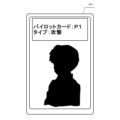
- FIG. 2 is a diagram showing an example of a game card P1 in which the first game element is a pilot, and character information of the pilot type is an attack type.
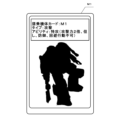
- FIG. 3 is a diagram showing an example of a game card M1 in which the second game element is a ship to be boarded, and character information of the ship type is an attack type.
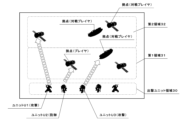
- FIG. 4 is a diagram showing an example of a game field in the competitive game of this embodiment.
- FIG. 5 is a front external view of the game device 1 according to the embodiment of the present invention.
- FIG. 6 is a block diagram showing a functional configuration of the game device 1 according to the embodiment of the present invention.
- FIG. 7 is a diagram showing an example of the game element database 190.
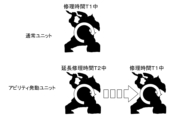
- FIG. 8 is a diagram for explaining the difference between the transition time of a normal unit and the transition time of an ability activation unit.
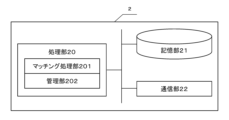
- FIG. 9 is a block diagram showing the functional configuration of the server 2 according to the embodiment of the present invention.
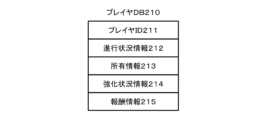
- FIG. 10 is a diagram showing an example of the player database 211.
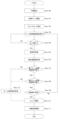
- FIG. 11 is a flowchart showing the operation of the game device 1.
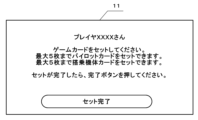
- FIG. 12 shows an example of the game element registration screen.
- FIG. 13 is a flowchart showing the operation of activating abilities and changing parameters.
- FIG. 14 is a diagram showing an example of a notification that an ability can be activated.
- FIG. 15 is a diagram showing an example of an operation for activating an ability.
- FIG. 16 shows an example of a presentation image when an ability is activated.
- FIG. 17 shows an example of a presentation image for a unit that is activating an ability.
- FIG. 18 is a flow chart of the operation of managing the state of the unit.
- FIG. 19 is a diagram showing an example of a representation image according to a transition time T. In FIG.
- Fig. 1 is a diagram showing the system configuration of a game system according to this embodiment.
- the game system is configured to include one or more game devices 1 and a server 2.
- the one or more game devices 1 and the server 2 can be connected to a communication line N and can communicate with each other.
- the communication line N means a communication path that allows data communication.
- the communication line N includes a dedicated line (dedicated cable) for direct connection, a LAN such as Ethernet (registered trademark), a telephone communication network, a cable network, the Internet, and other communication networks, and the communication method can be either wired or wireless.
- the game device 1 is a computer capable of executing a game program, and is connected to a communication line N via a wireless communication base station or the like, and can perform data communication with the server 2.
- the game device 1 is, for example, an arcade game device, a smartphone, a mobile phone, a portable game device, a stationary home game device, a personal computer, a tablet computer, a controller for a stationary home game device, etc. Basically, there are multiple game devices 1, and each is operated by a player.
- the server 2 is a server system including one or more server devices and storage devices.
- the server 2 provides various services for operating the game of this embodiment, and can manage data necessary for operating the game, and distribute game programs and data necessary for executing the game on the game device 1.
- the server 2 updates the information managed for each player based on the details of that use (game play history).
- such a system configuration allows a competitive game between players using multiple game devices 1 to be realized via the server 2 and communication line N, but the game is not limited to competitive games between players (vs. humans), and also includes cases where one of the players is a non-player character provided by the server 2. Furthermore, games for which a play experience is provided on the game device 1 are not limited to competitive games between players, and may include games configured for one person.
- an example of the present invention is applied to a game device that executes a competitive game in which a screen on which game elements are arranged on a game field is displayed, as an example of a game device.
- the present invention can be applied to any device that is capable of executing a game in which a screen on which game elements are arranged on a game field is displayed.
- the fighting game features multiple types of game elements.
- the game elements are characters (characters, mounts, items, etc.) and are represented as images, virtual or physical objects, etc. Images include still images and videos.
- An example of a virtual or physical object is a game card, which is an object with physical volume (real object). Note that the object is not limited to a game card, but is not limited to a game card as long as the object is configured to be able to identify the game element associated with the object.
- the object may be, for example, a shaped object such as a figure having the appearance of a game element.
- the multiple types of items are all tangible game cards, and each is described as being associated with one game element that appears in a competitive game in which a play experience is provided on the game device 1.
- the game element to which a game card is associated can be identified by acquiring identification information (element ID) for identifying the game element attached to the game card by a game element reading unit described below.
- the identification information (element ID) may be added to the game card by, for example, printing or otherwise attaching a one-dimensional or multi-dimensional code obtained by converting the identification information for identifying the game element to the game card, or by recording the identification information on a tag or IC chip for near field communication (NFC) included in the game card.
- NFC near field communication
- each player can use multiple game elements, and by obtaining information from a game card prior to the start of the game (before the sequence in which the game elements are actually operated begins), the game elements associated with that game card can be registered as game elements that will appear in the game (to be used by the player).
- first game element is the pilot
- second game element is the aircraft operated by the pilot.
- each of the first game element and the second game element is divided into multiple types.
- the types of pilots which are the first game elements, include, for example, an attack type (first type) and a defense type (second type).
- the attack type is a type that has the main purpose of attacking the opposing player's game elements and attacks the opposing player's game elements without protecting the player's other game elements.
- the defense type is a type that has the main purpose of defending the player's other game elements and attacks the opposing player's game elements to protect the player's other game elements.
- the types and numbers are merely examples and are not limited to these types and numbers.
- there may be multiple attack types depending on the types of the opposing player's game elements such as an attack type that can only attack X type of game elements of the opposing player and an attack type that can only attack Y type of game elements of the opposing player.
- Types of aircraft used as second game elements include, for example, attack type (first type) and defense type (second type).
- the attack type is a type that has the main purpose of attacking the opposing player's game elements and attacks the opposing player's game elements without protecting the player's other game elements.
- the defense type is a type that has the main purpose of defending the player's other game elements and attacks the opposing player's game elements to protect the player's other game elements.
- a range type (third type) according to the range of the weapon that can be used by the aircraft may be provided.
- the weapon that can be used is a long-range weapon, it is a long-range type, and if the weapon that can be used is a close-range weapon, it is a close-range type.
- the types and numbers are merely examples and are not limited to these types and numbers.
- the second game element may have two types: a defensive type and a long-range type.
- a piloted aircraft of this type can attack game elements located far away from the opposing player using a long-range weapon in order to protect the player's other game elements.
- first game element and the second game element have various parameters (level, hit points, attack power, defense power, terrain suitability, weapon used, etc.) appropriate to that type, in addition to character information of the type or kind of the first game element or the second game element.
- an attack type would have parameters specialized for attack. These various parameters may be changed as the battle game progresses.
- first game elements or second game elements have special abilities called abilities. These abilities are abilities that are used to develop the game in an advantageous way, and are abilities that strengthen game elements. For example, an ability can increase the attack power of the opposing player against the game elements for a specified period of time when a certain activation condition is met. There are abilities that are activated automatically when the activation condition is met, and abilities that are activated at the player's discretion when the activation condition is met. In addition, some abilities can be activated only once during a match, and some can be activated multiple times.
- transition time is longer than the transition time for game elements that do not normally activate abilities.
- FIG. 2 is a diagram showing an example of a game card P1 in which the first game element is a pilot, whose character information type is attack type.
- the game element reading unit reads the identification information, etc., written on the game card P1, allowing the game device 1 to obtain the character information and abilities of the game card P1.
- FIG. 3 is a diagram showing an example of a game card M1 in which the second game element is a pilot, whose type is attack type, and whose character information type is special attack (attack power is doubled, but defense and evasive action are not possible).
- the game element reading unit reads the identification information, etc., written on the game card M1, allowing the game device 1 to obtain the character information and abilities of the game card M1.
- a game element called a unit (hereinafter sometimes referred to as a squadron) appears.
- This unit is made up of a combination of the pilot, which is the first game element, and the aircraft, which is the second game element.
- the player can associate and register the pilot as the element that operates the aircraft in the battle game. In this way, the player can make a unit consisting of a pilot and an aircraft appear in the battle game.
- the capabilities of a unit can be, for example, the sum of the character information (various parameters) of the pilot, which is the first game element constituting the unit, and the character information (various parameters) of the aircraft, which is the second game element.
- a unit has behavioral characteristics that stipulate (or restrict) what actions it can take in a battle in a fighting game.
- the behavioral characteristics of the unit are subordinate (dependent) to at least one of the components, the pilot type (classification), which is the first game element, or the aircraft type (classification), which is the second game element.
- the type (type) of the aircraft piloted will not be reflected, and the behavioral characteristics will reflect the type of the pilot. For example, if the type of the pilot that makes up the unit is a defensive type and the type of the aircraft piloted that makes up the unit is an offensive type, the type of the aircraft piloted will not be reflected, and the unit's behavioral characteristics will be such that the main purpose is to protect the player's game elements, and attacks on the opposing player's game elements are limited to protecting the player's other game elements.
- the type (type) of the aircraft piloted which is the second game element
- the type (type) of the pilot will not be reflected, and the behavioral characteristics will reflect the type of the aircraft piloted.
- the behavioral characteristics of a unit dependent on both the pilot type (type), which is the first game element, and the aircraft type (type), which is the second game element is effective when the pilot type (type), which is the first game element, and the aircraft type (type), which is the second game element, are completely different.
- the pilot type (type), which is the first game element may be of attack type and defense type
- the aircraft type (type), which is the second game element may be of range type.
- the behavioral characteristics of a unit combining a defense type pilot with a long-range type aircraft will be such that it uses a long-range weapon to attack the game elements of the opposing player at a distance in order to defend against the player's other game elements. In this way, a game with a high level of strategy can be provided to the player.
- abilities possessed by the first game element or the second game element can be added as the capabilities of the unit.
- a unit whose component is the pilot's aircraft of the second game element can have the ability of the pilot's aircraft of the second game element.
- a unit whose component is game card P1 (pilot) of Figure 2 and game card M1 (aircraft) of Figure 3 can have the ability of game card M1 (aircraft).
- the battle game of this embodiment progresses by deploying (placing) the units (troops) registered for each player on a game field of a specified size, and performing movement and attack actions (the execution of these actions is accepted by the operation input unit, which will be described later).
- FIG. 4 is a diagram showing an example of a game field in the battle game of this embodiment.
- the game field includes a deployment unit area 30, a first area 31, and a second area 32.
- the deployment unit area 30 is where units that can be deployed (appear) are placed.
- the first area 31 is the area of the player himself, where the player's base and other bases (game elements) are placed.
- the second area 32 is the area of the opposing player, where the opposing player's base and other bases (game elements) are placed.
- Other game elements include bases such as battleships that can move between the areas. The player who destroys the opposing player's base (reduces its durability to 0) as a result of an attack action by any unit is the winner of the battle game.
- each player when an opposing player's unit attempts to attack the base associated with the opposing player, each player must place units to intercept (defense) the attacking action and disrupt the attacking action, or control the attacking action of their units to destroy the opposing player's base before the opposing player's units can do so.
- the type of unit is a defensive type
- the unit is a unit for defending a base such as the player's base, and the base such as the player's base is placed in the first area 31, and as a result, defensive type units can only move within the first area 31.
- the type of unit is an attacking type
- the unit is a unit for attacking a base such as the opposing player's battleship that is attacking the opposing player's base or the base of the player's base, and the base of the opposing player's base is placed in the second area 32, and the opposing player's battleship or other base can enter (be placed) in the first area 31, and as a result, attacking type units can move in both the first area 31 and the second area 32.
- FIG. 5 is a front external view of the game device 1 according to the embodiment of the present invention.
- the game device 1 is equipped with a display unit 11 (display 11) on which information necessary for progressing in the game, such as menus, and the game field are displayed, first game element reading units 12-1 to 12-5 for registering a first game element (pilot) to be caused to appear in the fighting game from game cards held by the players, and second game element reading units 13-1 to 13-5 for registering a second game element (pilot aircraft) to be caused to appear in the fighting game from game cards held by the players.
- display unit 11 display 11
- first game element reading units 12-1 to 12-5 for registering a first game element (pilot) to be caused to appear in the fighting game from game cards held by the players
- second game element reading units 13-1 to 13-5 for registering a second game element (pilot aircraft) to be caused to appear in the fighting game from game cards held by the players.
- the first game element reading units 12 1 to 12 5 are readers that read character information of pilots, which are the first game elements to be made to appear in the game, from game cards.
- the game device 1 of this embodiment is provided with five first game element reading units 12 1 to 12 5 so that up to a maximum (upper limit) of five pilots can be registered as game elements to be used.
- a player sets (places) a game card P of a pilot (first game element) to be made to appear in the battle game from among game cards he owns in the first game element reading units 12 1 to 12 5 , whereby the first game element reading units 12 1 to 12 5 can read identification information and the like of the game card of the pilot (first game element).
- the second game element reading units 13 1 to 13 5 are readers that read character information of a boarded unit, which is a second game element to be caused to appear in a game, from a game card.
- the game device 1 of this embodiment is provided with five second game element reading units 13 1 to 13 5 so that a maximum (upper limit) of five boarded units can be registered as game elements to be used.
- a player sets (places) a game card of a boarded unit (second game element) to be caused to appear in a battle game from among game cards he owns in the second game element reading units 13 1 to 13 5 , whereby the second game element reading units 13 1 to 13 5 can read identification information and the like of the game card of the boarded unit (second game element).
- players can start a battle game by organizing up to five units (squads), which are game elements that consist of one registered pilot and one piloted unit.
- squads are game elements that consist of one registered pilot and one piloted unit.
- the maximum number of pilots that can be registered for a unit (squad) is the same as the maximum number of pilots that can be registered (upper limit), which is set to five.
- each of the game elements that make up the unit (squad) does not necessarily need to be registered based on information obtained from the game cards.
- game elements prepared on the game device 1 side are additionally registered, and the maximum number of aircraft and pilots are registered, forming a squadron of five.
- the number of units (squads) to be registered may be set to multiple, less than the maximum number.
- one pilot is associated with one aircraft and registered as one unit, but the implementation of the present invention is not limited to this.
- the game elements that make up one unit may be associated with multiple pilots for one aircraft, or one pilot for multiple aircraft.
- FIG. 6 is a block diagram showing the functional configuration of the game device 1 according to the embodiment of the present invention.
- the game device 1 comprises a processing unit 10, a display unit 11, first game element reading units 12.sub.1 to 12.sub.5 , second game element reading units 13.sub.1 to 13.5 , an operation input unit 14, a cost detection unit 15, a user information reading unit 16, a sound output unit 17, a communication unit 18, and a memory unit 19.
- the processing unit 10 comprehensively controls the operation of the game device 1 based on the programs and data stored in the memory unit 19, the first game element reading unit 12, the second game element reading unit 13, and operation input signals from the operation input unit 14, etc.
- the functions of the processing unit 10 can be realized by electronic components such as a microprocessor such as a CPU or GPU, an ASIC, and an IC memory.
- the control unit 10 reads out the operation programs of each unit recorded in the recording unit 19, for example, and controls the operation of each unit by expanding them in memory and executing them.
- the processing unit 10 has, as its main functional units, a game element acquisition unit 110, a unit configuration unit 111, a game execution unit 112, a parameter change unit 113, and a state management unit 114. These units will be described later.
- the display unit 11 displays various game screens based on the image signals output from the processing unit 10.
- the functions of the display unit 11 can be realized by a display device such as a flat panel display such as a liquid crystal display, a projector, or a head-mounted display.
- the display unit 11 corresponds to the display 11.
- the first game element reading units 12 1 to 12 5 are five first game element reading units, which are the upper limit of the number of registered first game elements, and are readers that read character information of pilots, which are the first game elements to be made to appear in the game, from game cards held by players. Reading of the first game elements from game cards is possible, for example, by printing a one-dimensional or multi-dimensional code obtained by converting the identification information, etc. of the game card on the game card, and reading the one-dimensional or multi-dimensional code.
- the identification information, etc. of the game card is recorded in a tag or IC chip for near field communication (NFC) included in the game card, the information is read from the tag or IC chip.
- the second game element reading units 13 1 to 13 5 are five second game element reading units, which are the upper limit of the number of registered second game elements, and are readers that read character information of the aircraft to be boarded, which is the second game element to be made to appear in the game, from the game card held by the player. Reading of the second game element from the game card is possible, for example, by printing a one-dimensional or multi-dimensional code obtained by converting the identification information of the game card on the game card, and reading the one-dimensional or multi-dimensional code.
- the identification information of the game card is recorded on a tag or IC chip for near field communication (NFC) included in the game card, the information is read from the tag or IC chip.
- a unit is composed of the first game element read by the first game element reading units 12 1 to 12 5 and the second game element read by the second game element reading units 13 1 to 13 5 , and as described above, one unit is a combination of a pilot, which is one first game element, and a plane, which is one second game element.
- the first game element reading units 12 1 to 12 5 and the second game element reading units 13 1 to 13 5 are arranged so that at least one side of the first game element reading unit 12 1 to 12 5 and one side of the second game element reading unit 13 1 to 13 5 that make up a pair are adjacent to each other.
- the lower side of the first game element reading unit 12 1 and the upper side of the second game element reading unit 13 1 are arranged so that they are adjacent to each other to form a pair.
- the operation input unit 14 allows the player to input various operations related to the game, and outputs an operation input signal corresponding to the operation input to the processing unit 10.
- the functions of the operation input unit 14 can be realized by, for example, elements that are directly operated by the player's fingers, such as a touch panel, touch operation pad, home button, button switch, joystick, or trackball, as well as elements that detect movement or posture, such as an acceleration sensor, angular velocity sensor, tilt sensor, or geomagnetic sensor. In this embodiment, this corresponds to a touch operation panel attached to the display unit 11.
- the price detection unit 15 detects that a price has been paid on the game device 1.
- the payment of the price may be determined, for example, by detecting that a specified amount of coins or an equivalent coin has been inserted into an insertion slot (not shown) of the game device 1, or by detecting the completion of a settlement process based on communication with a chip related to a specified electronic money.
- the game device 1 of this embodiment will be described as starting to provide a service, including the provision of a series of game play experiences, based on the payment of a price related to the start of service provision. Furthermore, the payment of the price is configured to be detectable even after the start of service provision.
- the user information reading unit 16 acquires information from an item on which a player ID (player identification information) is recorded in order to identify the player using the game device 1.
- the item on which the player ID is recorded is a player card configured in the form of a card.
- the sound output unit 17 is a speaker or the like for outputting sound effects and the like related to the game based on the sound signal output from the processing unit 10.
- the communication unit 18 is a communication interface with an external device.
- the communication unit 18 can connect to an external device via a communication line N (whether wired or wireless) and enable sending and receiving of data.
- the communication unit 18 converts information input as the object to be sent into data of a predetermined format, and sends it to an external device such as the server 2 via the communication line N.
- the communication unit 18 also receives information from an external device via, for example, the communication line N.
- the recording medium 19 is a recording device capable of holding data, such as a non-volatile memory or HDD. In addition to the operating programs of each part of the game device 1, the recording medium 19 stores information on parameters required for the operation of each part, various graphics data used in the fighting game executed by the game device 1, and the like.
- the recording medium 19 stores a game element database 190 (game element DB 190).
- the game element DB 190 is a database that manages information (element information) on each of the game elements that appear in the game.
- a player places a game card on the first game element reading units 12.sub.1 to 12.sub.5 and the second game element reading units 13.sub.2 to 13.sub.5 during game play, and causes information to be acquired, thereby making the game element associated with the game card appear in the game.
- the element information managed for one game element includes type information 192 indicating a type in the game assigned to the game element in association with an element ID (identification information) 191 that uniquely identifies the game element, drawing information 193 including graphics data and the like used to generate a screen when the game element appears in the game, parameter information (character information) 194 describing the name, attributes, etc. of the game element as well as parameters and the like determined for each element level of the game element, and ability information 195 describing activation conditions and activated effects, etc.
- the parameter information 194 and ability information 195 are information referenced in the game in which the game element appears, and are involved in controlling the progress of the game.
- the game element DB 190 stores graphics data, parameter information, ability information, etc., and the element information includes these pieces of data, but the implementation of the present invention is not limited to this.
- the element information may also include information indicating the storage location of each piece of information.
- the game element acquisition unit 110 the unit configuration unit 111, the game execution unit 112, the parameter change unit 113, and the state management unit 114.
- the game element acquisition unit 110 acquires element IDs 191 of the game cards read by the first game element reading units 12.sub.1 to 12.sub.5 and the second game element reading units 13.sub.1 to 13.sub.5 . At this time, it also acquires reading unit IDs for identifying the first game element reading units 12.sub.1 to 12.sub.5 and the second game element reading units 13.sub.1 to 13.sub.5 that read the element IDs 191 of the game cards (hereinafter, the reading unit IDs of the first game element reading units 12.sub.1 to 12.sub.5 will be referred to as 12.sub.1 to 12.sub.5 , and the reading unit IDs of the second game element reading units 13.sub.1 to 13.sub.5 will be referred to as 13.sub.1 to 13.sub.5 ).
- the game element acquisition unit 110 acquires type information 192, drawing information 193, parameter information 194, and ability information 195 associated with the element IDs 191 of the acquired game cards from the game element DB 190. Then, game element acquisition unit 110 associates the reading unit ID with game element ID 191, type information 192, drawing information 193, parameter information 194 and ability information 195, and outputs them to unit configuration unit 111 and game execution unit 112. Note that first game element reading units 12.sub.1 to 12.sub.5 and game element acquisition unit 110 function as first game element registration means. Also, second game element reading units 13.sub.1 to 13.sub.5 and game element acquisition unit 110 function as second game element registration means.
- the unit configuration unit 111 receives the reading unit ID, element ID 191, type information 192, drawing information 193, and parameter information 194 from the game element acquisition unit 110, and configures one unit (squad) from a pair of a pilot, which is a first game element, and a plane, which is a second game element.
- the unit configuration unit 111 identifies the pair of the first game element and the second game element from the reading unit ID.
- combinations of reading unit IDs correspond to the game elements that configure one unit.
- the unit configuration unit 111 identifies the first game element and the second game element to be a pair by identifying the element ID 191 associated with the reading unit ID of each pair. Then, the unit configuration unit 111 configures a unit using the type information 192, the drawing information 193, and the parameter information 194 associated with the element ID 191.
- the ability of the unit is, for example, the total value of the character information (various parameters) of the pilot, which is the first game element constituting the unit, and the character information (various parameters) of the boarding machine, which is the second game element.
- other information associated with the player ID read from the player card by the user information reading unit 16 for example, the player's level, correction parameters of each game element, etc., may be reflected in the ability of the unit.
- the behavioral characteristics of the unit are made to be subordinate (dependent) to at least one of the type (type) of the pilot, which is the first game element, or the type (type) of the boarding machine, which is the second game element, which are components.
- the parameters set for each unit when the unit is configured are referred to as initial parameters.
- the game execution unit 112 controls a series of games (including the display of game images) from the start to the end of the competitive game, and starts the competitive game when the price detection unit 15 detects the payment of the price.
- the units (units) configured by the unit configuration unit 111 are placed on the game field, and the progress of the battle is controlled according to the operation input made by the player to the units (units).
- the game execution unit 112 uses various parameters of each unit in the battle to calculate attack and defense, and judges whether the unit is in a battle-ready or battle-unready state. Then, when it is judged that the unit is in a battle-unready state, it notifies the parameter change unit 113 and the state management unit 114 of the identification information that identifies the unit.
- a battle-ready state is a state in which the player can operate the unit
- a battle-unready state is a state in which the player cannot operate the unit.
- the game management unit 112 also displays various effect images that can identify the battle-ready and battle-unready states of the unit, the activation of abilities, and other such states.
- the parameter change unit 113 controls the change of the initial parameters of the unit set by the unit configuration unit 111.
- a typical example of a change of initial parameters is the activation of an ability possessed by a unit.
- An ability can be activated automatically when the activation conditions are met (automatic activation), or it can be activated at the player's discretion when the activation conditions are met (voluntary activation).
- the parameter change unit 113 judges whether the unit satisfies the activation conditions. Then, in the case of an automatically activated ability, the parameter change unit 113 activates the ability and changes the initial parameters of the unit to parameters that match the content of the ability.
- the parameter change unit 113 waits for the player's operation on the unit (operation to specify the unit and activate the ability), and when the operation is performed, the parameter change unit 113 activates the ability and changes the initial parameters of the unit to parameters that match the content of the ability.
- the parameter change is, for example, to increase the attack power or defense power parameters of the unit, but is not limited to these.
- the parameter modification unit 113 also performs processing to change the parameters of the modified unit to their initial parameters upon receiving notification from the game execution unit 112 that the unit is unable to play a battle.
- the state management unit 114 manages the transition of units from a non-battle state to a battle-ready state.
- units are in a battle-ready state, but as they battle against the opposing player's units, they become non-battle-ready due to destruction or defeat.
- the units that have become non-battle-ready must be repaired.
- a predetermined time is required for the unit to return to a battle-ready state again.
- the time required for this unit to return to a battle-ready state again is referred to as the transition time T.
- the transition time T differs depending on the state in which the unit was in the battle-ready state.
- the transition time T of a unit with an activated ability (ability-activating unit) is longer than the transition time T of a normal unit without the activation of an ability (normal unit).
- Figure 8 is a diagram for explaining the difference between the transition time of a normal unit and the transition time of an ability activation unit.
- a normal unit or an ability activation unit When a normal unit or an ability activation unit is defeated, it enters a battle-ineligible state. This state means that the player cannot control the unit.
- the state management unit 114 calculates the transition time T of the unit that has entered the battle-ineligible state.
- the transition time T of a normal unit is time T1.
- the state management unit 114 places the normal unit in a battle-ineligible state for transition time T1 after it is defeated. Then, when transition time T1 has elapsed, the state management unit 114 notifies the game execution unit 112 to place the normal unit in a battle-ineligible state.
- the transition time T of an ability activation unit is the transition time T1 of the normal unit plus an extension time T2 for the ability.
- the state management unit 114 sets the transition time T of the ability activation unit to (T1 + T2). Then, when the transition time (T1+T2) has elapsed, the state management unit 114 notifies the game execution unit 112 to put the normal unit into a battle-ready state.
- transition time (repair time) of ability-activating units longer than the transition time (repair time) of normal units, it is possible to prevent the game balance from being disrupted by units with powerful abilities appearing for a long period of time, and it is also possible for players to consider strategies for how to make the most of units with abilities while fighting, thereby making the game more interesting.
- FIG. 9 is a block diagram showing the functional configuration of the server 2 according to the embodiment of the present invention.
- the server 2 includes a processing unit 20, a storage unit 21, and a communication unit 22.
- the processing unit 20 is, for example, a CPU, and controls the operation of each block of the server 2. Specifically, the processing unit 20 controls the operation of each block by, for example, reading out the operation program of each block recorded in the recording unit 21, expanding it in memory, and executing it.
- the processing unit 20 has, as its main functional units, a matching processing unit 201 and a management unit 202.
- the matching processing unit 201 performs matching processing for a competitive game (human-versus-human battle) between players provided in the game system of this embodiment.
- a session is established for, for example, two game devices 1 that have sent matching requests at the same time among the game devices 1 connected to the server 2, and transition to a state in which information communication related to the competitive game is possible.
- the management unit 202 manages the evaluation of the player related to the game based on the play content of the game played on the game device 1. More specifically, the management unit 202 evaluates the player based on the play content for each competitive game play, and generates or updates evaluation information for the player information related to the player, which will be described later.
- the recording unit 21 is a recording device capable of holding data, such as a non-volatile memory or HDD.
- the recording unit 21 stores information such as parameters required for the operation of each block, in addition to the operation programs of each block held by the server 2.
- the recording unit 21 also stores a player database 210 (player DB210).
- the player DB 210 is a database that manages information (player information) indicating game usage status associated with each user (player) for a game for which a play experience is provided on the game device 1.
- the player information is information for managing the usage history of game play functions for each player and various game elements that are available to the player.
- the player information is updated sequentially according to the results of a game played using a player card on the game device 1, and is provided to the game device 1 when the player card is used again. This makes it possible to provide game play on the game device 1 in a state that reflects the previous game play.
- the player information may include, for example, progress status information 212 indicating the progress of the game play of the player, ownership information 213 indicating game elements that are available for use in the game by the player, enhancement status information 214 indicating the enhancement status of each of the available game elements, and reward information 215 indicating rewards granted to the player (which may be other types of game elements), associated with a player ID 211 that identifies the player.
- the progress status information 212 may include evaluation information evaluating the player's playing status in addition to progress information indicating to what stage a predetermined story has progressed and performance information indicating the performance of a battle game.
- the ownership information 213 is configured by sequentially adding the element IDs 191 of game elements associated with game cards used by the player when playing the game, i.e., game elements that are available to the player, and the strengthening status information 214 may be configured to manage element levels as indicators of parameters that have changed due to strengthening, in association with the element IDs 191 of game elements that have at least been strengthened (changed from the initial state).
- the strengthening status information 214 is described as being updated when the play result of a game played on the game device 1 is obtained, but it may be updated in response to, for example, obtaining information on the training result due to the use of a training function on the game device 1.
- the communication unit 22 is a communication interface with an external device.
- the communication unit 22 can connect to an external device via a communication line N (whether wired or wireless) and enable sending and receiving of data.
- the communication unit 22 converts information input as the object to be sent, for example, into data in a predetermined format, and sends it to an external device such as the game device 1 via the communication line N.
- the communication unit 22 also receives information from an external device, for example, via the communication line N.
- Fig. 11 is a flowchart showing the operation of the game device 1.
- the maximum number (upper limit) of cards that can be registered in the battle game is five for both pilot cards (first game element) and boarded aircraft cards (second game element).
- Step 101 When starting a competitive game, a player inserts a predetermined amount of coins or an equivalent coin into an insertion slot on the game device 1 as the payment for the service of the competitive game.
- the payment detection unit 15 detects the payment (Step 100)
- the game execution unit 113 starts executing the service of the competitive game (Step 101).
- the player has the player card read by the user information reading unit 16 (Step 102).
- the user information reading unit 16 reads the player ID 211 from the player's player card and transmits the player ID 211 to the server 2, thereby receiving from the server 2 the progress status information 212, ownership information 213, strengthening status information 214, reward information 215, etc. associated with the player ID 311. This information is passed to the processing unit 10.
- the game execution unit 112 displays a game element registration screen (Step 102).
- FIG. 12 is a diagram showing an example of the game element registration screen.
- a dialogue box is displayed to inform the player that up to five pilot cards and boarding machine cards can be set (placed) in the first game element reading units 12 1 to 12 5 and the second game element reading units 13 1 to 13 5 among the game cards owned by the player XXXX, and to press the set completion button when the setting (placement) is completed.
- the player sets (places) the pilot card of the pilot he/she wants to appear in the battle game in the first game element reading units 12 1 to 12 5 among the game cards owned by the player, and sets (places) the boarding machine card of the boarding machine he/she wants to appear in the battle game in the second game element reading units 13 1 to 13 5. Then, when the setting (placement) of the game cards is completed, the player presses the set completion button.
- the first game element reading units 12 1 to 12 5 and the second game element reading units 13 1 to 13 5 read the element ID printed on the game card, and the read element ID is output to the game element acquisition unit 110 together with the reading unit IDs of the first game element reading units 12 1 to 12 5 and the second game element reading units 13 1 to 13 5 (Step 105).
- the game element acquisition unit 110 acquires the element ID and the reading unit ID of the set (placed) game card.
- the game element acquisition unit 110 then acquires type information 192, drawing information 193, parameter information 194, and ability information 195 associated with the element ID 191 of the acquired game card from the game element DB 190, associates the reading unit ID, element ID 191, type information 192, drawing information 193, parameter information 194, and ability information 195, and outputs them to the game execution unit 112 and the unit configuration unit 111 (Step 106).
- the game execution unit 112 counts the number of reading unit IDs of the first game element reading units 12 1 to 12 5 among the reading unit IDs, and judges whether the first game elements have reached the maximum number (upper limit) that can be registered (Step 107). For example, if the player sets (places) pilot cards in all of the first game element reading units 12 1 to 12 5 , the number of reading unit IDs is five, 12 1 to 12 5 , and the maximum number (upper limit) that can be registered has been reached.
- the game executing unit 112 counts the number of reading unit IDs of the second game element reading units 13.sub.1 to 13.sub.5 among the reading unit IDs, and determines whether the maximum number (upper limit) of the second game elements has been registered (Step 108). For example, if the player has set (placed) boarding unit cards in all of the second game element reading units 13.sub.1 to 13.sub.5 , the number of reading unit IDs is five, 13.sub.1 to 13.sub.5 , and the maximum number (upper limit) that can be registered has been reached.
- the game execution unit 112 displays a battle approval button (Step 109), and once the player's approval for the battle has been obtained, the unit configuration unit 111 uses the reading unit ID, element ID 191, type information 192, drawing information 193, parameter information 194, and ability information 195 acquired from the game element acquisition unit 110 to configure a unit (squad) from the pair of the pilot, which is the first game element, and the aircraft, which is the second game element (Step 110).
- Step 107, Step 108 the game execution unit 112 performs a process to replenish game elements according to the player's level, etc., as appropriate (Step 112), and forms a unit (Step 110).
- the game execution unit 112 starts the battle processing (Step 111).
- FIG. 13 is a flowchart of the operation of activating an ability and changing parameters.
- the ability is assumed to be activated at the player's discretion when the activation conditions are met, and an example will be described in which the attack power of the game element is doubled from activation (battle-ready state) until it becomes an unbattle-ready state (defeat), but defensive or evasive action cannot be taken against attacks by the opposing player's units, etc.
- this ability will be explained as being able to be activated only once during a battle, but it may be possible to make it so that it can be activated multiple times.
- the parameter modification unit 113 determines the conditions for activating the abilities of units with abilities (Step 200).
- the conditions for activating an ability are, for example, that the cost held by the player, the amount of time elapsed since the start of the match, etc., meet a certain capacity. Note that the conditions for activating an ability may differ depending on the type of ability.
- Step 201 If a unit with an ability meets the conditions for activating the ability (Step 201), the parameter modification unit 113 displays that the unit can activate the ability (Step 202).
- Figure 14 is a diagram showing an example of a notification that an ability can be activated. In the example of Figure 14, an ability activation notification 300 is displayed to show the unit that can activate the ability.
- the parameter modification unit 113 determines whether an operation to activate an ability has been performed for a unit that can activate an ability (Step 203).
- Figure 15 is a diagram showing an example of an operation to activate an ability. In the example of Figure 15, the player drags (operates) the unit's icon upwards to specify the unit that will activate the ability and the activation of the ability.
- the parameter modification unit 113 modifies the initial parameters of the unit for which the ability has been activated (Step 205).
- the parameter modification differs for each ability, but in this example, for example, the unit's initial attack power parameter is modified to double.
- the parameter modification unit 113 then notifies the game execution unit 112 of the parameter modification (Step 206).
- the game execution unit 112 which has received notification of the parameter change, displays an effect image of the ability being activated for the unit that has activated the ability (Step 207).
- Figure 16 is a diagram showing an example of an effect image when an ability is activated. In the example of Figure 16, the effect image notifies the player that an ability has been activated and that attack power has doubled (parameter change).
- Figure 17 is a diagram showing an example of an effect image for a unit that is currently activating an ability. This effect image continues to be displayed while the ability is activated so that the unit activating the ability can be visually distinguished from other normal units that are not activating abilities.
- the parameter modification unit 113 determines the state of the unit (Step 208). The state is determined as to whether the unit that has activated the ability is in a battle-ready state or a battle-unready state. The state of each unit is notified by the game execution unit 112.
- the parameter change unit 113 maintains the changed parameters (Step 210) and continues to determine the state (Step 208). On the other hand, if the unit that has activated the ability is in a battle-unreadable state (Step 209), the parameter change unit 113 changes the parameters to the initial parameters (Step 211) and notifies the game execution unit 112 of the parameter change (Step 212).
- the game execution unit 112 having received notification of the parameter change, stops displaying the performance image to the unit (Step 213).
- Figure 18 is a flowchart of the operation of unit status management.
- the state management unit 114 receives a report from the game execution unit 112 about a unit that is no longer able to participate in a battle (Step 300). The state management unit 114 then determines whether or not the unit's ability has been activated (Step 301).
- the state management unit 114 sets the transition time T (repair time) required for the unit to transition from an incapable of battle state to a capable of battle as T1 (Step 303).
- the state management unit 114 adds T2 to T1 (T1 + T2) in order to lengthen the transition time T (repair time) required for the unit to return from an incapable of battle state to a capable of battle (Step 304).
- FIG. 19 is a diagram showing an example of a presentation image corresponding to the transition time T.
- normal units and ability activation units are displayed so that the length of repair time can be distinguished.
- repair time T1 is clearly indicated, the progress of repair time is displayed with a circular arrow, and the repair time ends when the arrow touches the other end.
- repair time T1 and extended repair time T2 are distinguished, and first extended repair time T2 is clearly indicated, the progress of repair time is displayed with a circular arrow, and when the arrow touches the other end and extended repair time T2 ends, next, repair time T1 is clearly indicated, the progress of repair time is displayed with a circular arrow, and the repair time ends when the arrow touches the other end. Displaying it this way is convenient for players, as it lets them know the current repair status of the unit and distinguishes it from other units that can be used in battle.
- the state management unit 114 compares the transition time T of the unit with the elapsed time (Step 305), and when the elapsed time exceeds the transition time T (Step 306), transitions the unit to a battle-ready state (Step 307). The state management unit 114 then notifies the game execution unit 112 of the unit that is now battle-ready (Step 308).
- the extension time T2 in the transition time of the unit when the ability is activated is fixed.
- the extension time T2 may be variable according to the parameter that is increasing.
- the extension time T2 may be a product of the parameter increase rate and a constant time.
- the parameter may increase in stages, multiple corresponding extension times T2 may be set, and the extension time T2 corresponding to the increase in the parameter may be adopted.
- a program for causing a computer to execute a game The computer, a game element registration means for registering game elements to be included in the game; a parameter changing means for changing parameters of the registered game elements; a game element state management means for changing a transition time required for the game element to transition from an incapable of battle state in which the game element is incapable of battle to a capable of battle state in which the game element is incapable of battle, as a condition that a parameter of the game element has been changed;
- the change in the parameter is a change in a parameter that is advantageous for the progress of the battle;
- the change in the transition time is a change to a transition time that is longer than a transition time of a game element whose parameter is not changed. 3.
- the parameter changing means is capable of changing the parameter set in the game element only once in one battle; 12. A program according to any one of claims 1 to 11.
- the battle-incapable state is a state in which the operation means is inoperable
- the battle-ready state is a state in which the player can operate the game machine by using the operation means. 12.
- Appendix 15 causing the computer to further function as a presentation means for presenting a presentation image presenting a game element whose parameter has been changed;
- the presentation action is a presentation image that presents that a parameter has been changed.
- the game elements are composed of a plurality of types of game elements, and a combination of these game elements forms a unit used in a battle. 17.
- a game device comprising:
Landscapes
- Engineering & Computer Science (AREA)
- Multimedia (AREA)
- Theoretical Computer Science (AREA)
- Human Computer Interaction (AREA)
- Management, Administration, Business Operations System, And Electronic Commerce (AREA)
Abstract
【課題】興趣性を薄れさせないゲームを提供すること。 【課題を解決するための手段】プログラムは、コンピュータを、ゲームに登場させるゲーム要素を登録するゲーム要素登録手段、登録されたゲーム要素のパラメータを変更するパラメータ変更手段、ゲーム要素のパラメータが変更されたこと条件として、ゲーム要素が対戦不可能な対戦不可能状態からゲーム要素が対戦可能な対戦可能状態に遷移するのに要する遷移時間を変更するゲーム要素状態管理手段、として機能させる。
Description
本発明は、プログラム、及びゲーム装置に関する。
ゲーム内のキャラクターに関するパラメータを変化させるゲームが存在する。(例えば、特許文献1)。このようなゲームにおいて、通常、パラメータを変化させることはキャラクターを強化することになる。
しかし、パラメータを変化させた後の扱いによって、ゲームバランスが崩れてしまう場合があり、結果として、プレイヤのゲームに対する興趣性が薄れてしまう場合があった。
そこで、本発明は興趣性を薄れさせないゲームを提供するプログラム及びゲーム装置を提供することにある。
本発明の一態様は、ゲームをコンピュータに実行させるプログラムであって、コンピュータを、ゲームに登場させるゲーム要素を登録するゲーム要素登録手段、登録されたゲーム要素のパラメータを変更するパラメータ変更手段、ゲーム要素のパラメータが変更されたこと条件として、ゲーム要素が対戦不可能な対戦不可能状態からゲーム要素が対戦可能な対戦可能状態に遷移するのに要する遷移時間を変更するゲーム要素状態管理手段、として機能させるプログラムである。
本発明の一態様は、ゲームに登場させるゲーム要素を登録するゲーム要素登録手段と、登録されたゲーム要素のパラメータを変更するパラメータ変更手段と、ゲーム要素のパラメータが変更されたこと条件として、ゲーム要素が対戦不可能な対戦不可能状態からゲーム要素が対戦可能な対戦可能状態に遷移するのに要する遷移時間を変更するゲーム要素状態管理手段と、を備えるゲーム装置である。
本発明によれば、興趣性を薄れさせないゲームを提供することができる。
本発明の実施の形態を説明する。
<全体構成>
図1は本実施形態に係るゲームシステムのシステム構成を示した図である。図1に示すように、ゲームシステムは、1以上のゲーム装置1とサーバ2とを備えて構成される。1以上のゲーム装置1とサーバ2とは、通信回線Nに接続可能で、相互に通信可能である。通信回線Nは、データ通信が可能な通信路を意味する。すなわち、通信回線Nは、直接接続のための専用線(専用ケーブル)やイーサネット(登録商標)等によるLANの他、電話通信網やケーブル網、インターネット等の通信網を含み、通信方法については有線/無線を問わない。
図1は本実施形態に係るゲームシステムのシステム構成を示した図である。図1に示すように、ゲームシステムは、1以上のゲーム装置1とサーバ2とを備えて構成される。1以上のゲーム装置1とサーバ2とは、通信回線Nに接続可能で、相互に通信可能である。通信回線Nは、データ通信が可能な通信路を意味する。すなわち、通信回線Nは、直接接続のための専用線(専用ケーブル)やイーサネット(登録商標)等によるLANの他、電話通信網やケーブル網、インターネット等の通信網を含み、通信方法については有線/無線を問わない。
ゲーム装置1は、ゲームプログラムを実行することのできるコンピュータであり、無線通信基地局等を介して通信回線Nに接続し、サーバ2とデータ通信を行うことができる。ゲーム装置1は、例えば、業務用ゲーム装置(アーケードゲーム装置)、スマートフォンや、携帯電話機、携帯型ゲーム装置、据置型家庭用ゲーム装置、パソコン、タブレット型コンピュータ、据置型家庭用ゲーム装置のコントローラ等である。ゲーム装置1は、基本的には、複数存在し、各プレイヤにより操作される。
サーバ2は、単数又は複数のサーバ装置や記憶装置等を含んで構成されたサーバシステムである。サーバ2は、本実施形態のゲームを運営するための各種サービスを提供し、ゲームの運営に必要なデータの管理や、ゲーム装置1でのゲームの実行に必要なゲームプログラムやデータの配信等を行うことができる。また詳細は後述するが、サーバ2は、ゲーム装置1の利用に際してプレイヤが識別された場合、即ち、いずれのプレイヤであるかが識別された状態で、対戦ゲームのサービス提供が行われた場合に、その利用内容(ゲームのプレイ履歴)に基づいて各プレイヤについて管理する情報を更新する。
本実施形態では、このようなシステム構成により、サーバ2及び通信回線Nを介して、複数のゲーム装置1を利用するプレイヤ間での対戦ゲームが実現可能に構成されるものであるが、プレイヤ間(対人間)での対戦ゲームに限られるものではなく、プレイヤの一方がサーバ2により提供されるノンプレイヤキャラクターである場合も含む。また、ゲーム装置1においてプレイ体験が提供されるゲームは、プレイヤ間の対戦ゲームに限られるものではなく、1人用に構成されたゲームを含むものであってよい。
以下に説明する実施の形態において、ゲーム装置の一例としての、ゲームフィールドにゲーム要素を配置した画面を表示させて進行する対戦ゲームを実行するゲーム装置に、本発明を適用した例を説明する。しかし、本発明は、ゲームフィールドにゲーム要素を配置した画面を表示して進行するゲームを実行することが可能な任意の機器に適用可能である。
<ゲーム要素及び対戦ゲームの概要>
以下の本実施形態における構成などの理解を容易にするために、本実施の形態に係る対戦ゲームに使用されるゲーム要素及び対戦ゲームの概要について説明する。
以下の本実施形態における構成などの理解を容易にするために、本実施の形態に係る対戦ゲームに使用されるゲーム要素及び対戦ゲームの概要について説明する。
本実施の形態に係る対戦ゲームは、複数種別のゲーム要素が登場する。ゲーム要素はキャラクター(キャラクター、搭乗物、アイテム等)であり、画像、仮想的又は実体のある物品等に化体して表現される。画像は、静止画及び動画を含む。仮想的又は実体のある物品の一例としては、例えば、物理的な体積を有する物品(現実物品)であるゲームカードである。尚、物品は、ゲームカードに限られることなく、物品に対応付けられたゲーム要素を特定可能に構成された物品であれば、ゲームカードに限られるものではない。物品は、例えばゲーム要素の外観を有するフィギュア等の造形物であってもよい。
本実施形態では、複数の種別の物品はいずれも有体物であるゲームカードであり、それぞれ、ゲーム装置1においてプレイ体験が提供される対戦ゲームに登場する1つのゲーム要素が対応付けられているものとして説明する。ゲームカードがいずれのゲーム要素に対応付けられているかは、該ゲームカードに付されたゲーム要素を特定するための識別情報(要素ID)を後述するゲーム要素読取部が取得することで特定できる。ゲームカードへの識別情報(要素ID)の付加は、例えば、ゲーム要素を特定するための識別情報を変換して得られた1次元あるいは多次元のコードがゲームカードに印刷等で付されることにより実現されるものであってもよいし、ゲームカードに内包される近距離通信(NFC:Near Field Communication)用のタグやICチップに記録される等、他の方式で実現されるものであってもよい。
対戦ゲームでは、各プレイヤは複数のゲーム要素を使用することが可能であり、ゲームの開始に先立って(実際にゲーム要素を操作して進行するシーケンスが開始する前に)、ゲームカードから情報取得をさせることで、該ゲームカードに対応付けられたゲーム要素をゲームに登場させる(プレイヤが使用する)ゲーム要素として登録することができる。
本実施形態では、プレイヤがゲームに登場させるゲーム要素は複数あるが、主に、第1ゲーム要素と第2ゲーム要素との二つがある。そして、第1ゲーム要素はパイロットであり、第2ゲーム要素はパイロットが操作する搭乗機体である。更に、第1ゲーム要素と第2ゲーム要素のそれぞれは、複数の種別に分かれている。
第1ゲーム要素であるパイロットの種別としては、例えば、攻撃タイプ(第1種別)と、防御タイプ(第2種別)がある。攻撃タイプは、対戦プレイヤのゲーム要素を攻撃することを主目的とし、プレイヤの他のゲーム要素を守ることなく対戦プレイヤのゲーム要素を攻撃するタイプである。防御タイプは、プレイヤの他のゲーム要素を防御することを主目的とし、プレイヤの他のゲーム要素を守るために対戦プレイヤのゲーム要素を攻撃する。尚、種別やその数は一例であり、これらの種別、数に限られない。例えば、対戦プレイヤのX種別のゲーム要素にのみ攻撃できる攻撃タイプ、対戦プレイヤのY種別のゲーム要素にのみ攻撃できる攻撃タイプのように、対戦プレイヤのゲーム要素の種別に応じて攻撃できるタイプを複数設けても良い。
第2ゲーム要素として搭乗機体の種別としては、例えば、攻撃タイプ(第1種別)と、防御タイプ(第2種別)がある。攻撃タイプは、対戦プレイヤのゲーム要素を攻撃することを主目的とし、プレイヤの他のゲーム要素を守ることなく対戦プレイヤのゲーム要素を攻撃するタイプである。防御タイプは、プレイヤの他のゲーム要素を防御することを主目的とし、プレイヤの他のゲーム要素を守るために対戦プレイヤのゲーム要素を攻撃する。更なる種別として、搭乗機体が使用できる武器の射程距離に応じた射程タイプ(第3種別)を設けても良い。例えば、使用できる武器が遠距離用の武器である場合は遠距離タイプ、使用できる武器が近距離用の武器である場合は近距離タイプ等である。尚、種別やその数は一例であり、これらの種別、数に限られない。
これらの種別は、各ゲーム要素と各種別とが一対一にかならずしも対応している必要はなく、一対多であっても良い。例えば、第2ゲーム要素である搭乗機体は、防御タイプと遠距離タイプとの二つの種別を持つようにしても良い。このようなタイプを持つ搭乗機体は、プレイヤの他のゲーム要素を守るために、対戦プレイヤの遠くに位置するゲーム要素を射程の長い武器を使用して攻撃することができる。
また、第1ゲーム要素と第2ゲーム要素とは、第1ゲーム要素又は第2ゲーム要素の種類やタイプのキャラクター情報以外に、そのタイプに適した各種のパラメータ(レベル、ヒットポイント、攻撃力、防御力、地形適正、使用武器等)を持つ。例えば、攻撃タイプならば、攻撃に特化したパラメータとなる。これらの各種のパラメータは、対戦ゲームの進行に伴って変化させても良い。
更に、第1ゲーム要素又は第2ゲーム要素の中には、アビリティと呼ばれる特殊能力を持つものがある。そのアビリティは、ゲームの進行を有利に展開するために発揮する能力であり、ゲーム要素を強化する能力である。例えば、ある発動条件を満たした場合、対戦プレイヤのゲーム要素に対する攻撃力を、所定の期間、上昇することができる能力等である。アビリティの発動は、発動条件を満たした場合に自動的に発動するものと、発動条件を満たした場合にプレイヤの操作により任意に発動するものと、がある。また、このアビリティは、対戦中に1度しか発動できないものや、複数回発動できるものある。また、このアビリティを発動後、対戦プレイヤのゲーム要素からの攻撃等により対戦不可能状態(撃破)となった場合であっても、所定時間(遷移時間)が経ることにより、再び対戦可能状態に戻る(遷移する)ことが可能である。但し、その遷移時間は、通常のアビリティを発動しないゲーム要素の遷移時間に比べて長いものとなる。
図2は、第1ゲーム要素がパイロットであり、その種別が攻撃タイプのキャラクター情報を持つ場合のゲームカードP1の一例を示した図である。ゲームカードP1に記載さている識別情報等をゲーム要素読取部が読み取ることで、ゲーム装置1は、そのゲームカードP1のキャラクター情報やアビリティを取得可能である。図3は、第2ゲーム要素が搭乗機体であり、その種別が攻撃タイプであり、アビリティとして特攻(攻撃力が2倍、但し、防御、回避行動不可)のキャラクター情報を持つ場合のゲームカードM1の一例を示した図である。ゲームカードM1に記載さている識別情報等をゲーム要素読取部が読み取ることで、ゲーム装置1は、そのゲームカードM1のキャラクター情報やアビリティを取得可能である。
更に、本実施形態の対戦ゲームでは、ユニット(以下、部隊と記載する場合がある)と称するゲーム要素が登場する。このユニットは、第1ゲーム要素であるパイロットと第2ゲーム要素である搭乗機体とを構成要素とし、その組み合わせにより構成されるものである。すなわち、プレイヤは、対戦ゲームにおいて該搭乗機体を作動させる要素としてパイロットを関連付けて登録することができる。これにより、プレイヤは、搭乗機体とパイロットとを一組とするユニットを対戦ゲームに登場させることができる。
ユニットの能力は、例えば、ユニットを構成する第1ゲーム要素であるパイロットのキャラクター情報(各種パラメータ)と、第2ゲーム要素である搭乗機体のキャラクター情報(各種パラメータ)と、の合計値とすることができる。更に、ユニットは、対戦ゲームの対戦において、どのような行動を取ることができるかを規定(又は行動の制限)する行動特性を持つ。そのユニットの行動特性は、構成要素である、第1ゲーム要素であるパイロットのタイプ(種別)又は第2ゲーム要素である搭乗機体のタイプ(種別)の少なくともいずれかに従属(依存)する。
ユニットの行動特性を第1ゲーム要素であるパイロットのタイプ(種別)のみに従属させる場合は、搭乗機体のタイプ(種別)が反映されず、パイロットのタイプが反映された行動特性となる。例えば、ユニットを構成するパイロットのタイプが防御タイプであり、ユニットを構成する搭乗機体のタイプが攻撃タイプである場合、搭乗機体のタイプは反映されず、ユニットの行動特性は、プレイヤのゲーム要素を守ることを主目的とし、対戦プレイヤのゲーム要素への攻撃がプレイヤの他のゲーム要素を守るために限定されるような行動特性となる。また、ユニットの行動特性を第2ゲーム要素である搭乗機体のタイプ(種別)のみに従属させる場合は、パイロットのタイプ(種別)が反映されず、搭乗機体のタイプが反映された行動特性となる。
このように、ユニットの行動特性をゲーム要素の一方の種別のみに従属させる場合、プレイヤはパイロット及び搭乗機体のタイプを考慮し、ユニットを構成するパイロット及び搭乗機体を選択する必要がある。何故なら、ユニットの能力は、例えば、構成要素となるゲーム要素(パイロットと搭乗機体)のキャラクター情報の合計値であるため、タイプを誤って選択すると、ユニットの能力を発揮することができないからである。一方、構成要素となるゲーム要素(パイロットと搭乗機体)のタイプを適正に選択した場合、例えば、パイロットのタイプと搭乗機体のタイプとが同一の防御タイプのような場合は、そのユニットの行動特性に合致した能力を発揮することができる。
一方、ユニットの行動特性を、構成要素である、第1ゲーム要素であるパイロットのタイプ(種別)と第2ゲーム要素である搭乗機体のタイプ(種別)との双方に従属(依存)させる場合は、第1ゲーム要素であるパイロットのタイプ(種別)と第2ゲーム要素である搭乗機体のタイプ(種別)とが全く異なるような場合に有効である。例えば、第1ゲーム要素であるパイロットのタイプに攻撃タイプと防御タイプとが存在し、第2ゲーム要素である搭乗機体のタイプが射程タイプである場合などである。このような場合、防御タイプのパイロットと遠距離タイプの搭乗機体との組み合わせのユニットの行動特性は、プレイヤの他のゲーム要素を防御するために、射程の長い武器を使用して遠くの対戦プレイヤのゲーム要素を攻撃するような行動特性となる。このようにすることで、高い戦略性を持つゲームをプレイヤに提供することができる。
更に、ユニットの能力として、第1ゲーム要素又は第2ゲーム要素が持つアビリティを加えることができる。例えば、第2ゲーム要素の搭乗機体がアビリティを持つ場合、その第2ゲーム要素の搭乗機体を構成要素とするユニットは、第2ゲーム要素の搭乗機体のアビリティを持つことができる。例えば、図2のゲームカードP1(パイロット)と図3のゲームカードM1(搭乗機体)とを構成要素とするユニットは、ゲームカードM1(搭乗機体)のアビリティを持つことができる。
次に、対戦ゲームの概略を説明する。
本実施形態の対戦ゲームは、各プレイヤについて登録されたユニット(部隊)を所定の広さのゲームフィールドに展開(配置)させながら、移動・攻撃行動を行う(これら行動の実施は後述する操作入力部が受け付ける)ことで進行する。
図4は本実施形態の対戦ゲームにおけるゲームフィールドの一例を示した図である。以下に示す1つの態様では、ゲームフィールドには、出撃ユニット領域30と、第1領域31と、第2領域32と、が存在する。出撃ユニット領域30は、出撃(登場)可能なユニットが配置される。第1領域31は、自プレイヤの領域であり、自プレイヤの基地等の拠点(ゲーム要素)が配置される。第2領域32は、対戦プレイヤの領域であり、対戦プレイヤの基地等の拠点(ゲーム要素)が配置される。他のゲーム要素として、各領域間を移動できる戦艦のような拠点もある。そして、いずれかのユニットによる攻撃行動の結果として相手プレイヤの拠点を破壊させた(耐久値を0にさせた)プレイヤが、対戦ゲームの勝者となる。
故に、各プレイヤは、自身に対応付けられた拠点に対して攻撃行動を行おうとする対戦プレイヤのユニットに対して、当該攻撃行動を妨害するためにユニットを配置して迎撃行動(防御行動)を行う、あるいは、対戦プレイヤのユニットよりも早く対戦プレイヤの拠点を破壊するためにユニットの攻撃行動を制御することが必要になる。
ここで、重要なことは、ユニットのタイプによって移動できる領域が異なるという点である。例えば、ユニットのタイプが防御タイプである場合、そのユニットはプレイヤの基地等の拠点を防衛するためのユニットであり、プレイヤの基地等の拠点は第1領域31に配置されるため、結果として、防御タイプのユニットは第1領域31内のみ移動可能である。一方、ユニットのタイプが攻撃タイプである場合、そのユニットは、対戦プレイヤの基地や自プレイヤの基地の拠点を攻撃してくる対戦プレイヤの戦艦等の拠点を攻撃するユニットであり、対戦プレイヤの基地の拠点は第2領域32に配置され、対戦プレイヤの戦艦等の拠点は第1領域31に侵入可能(配置可能)であるため、結果として、攻撃タイプのユニットは第1領域31と第2領域32との双方の領域を移動可能である。
対戦ゲームの開始時点では、対戦プレイヤの登録したユニットの情報は判明していない状態となっている。プレイヤは、対戦ゲームの開始後の任意のタイミングで、自身について登録したユニットのそれぞれをゲームフィールドに展開可能であり、対戦プレイヤにはゲームフィールドへのユニットの展開がなされた時点で、当該ユニットがどのようなゲーム要素(搭乗機体及びパイロット)で構成されているかが通知される。このように構成することで、対戦プレイヤのユニットや行動を見極めながら戦略的にゲームを展開させる興趣性をプレイヤに提供することができる。
<ゲーム装置1の構成>
図5は本発明の実施形態に係るゲーム装置1の正面の外観図である。
ゲーム装置1は、メニュー等のゲームに進行に必要な情報やゲームフィールド等が表示される表示部11(ディスプレイ11)と、プレイヤが保有するゲームカードから、対戦ゲームに登場させる第1ゲーム要素(パイロット)を登録するための第1ゲーム要素読取部121~125と、プレイヤが保有するゲームカードから、対戦ゲームに登場させる第2ゲーム要素(搭乗機体)を登録するための第2ゲーム要素読取部131~135と、を備えている。
図5は本発明の実施形態に係るゲーム装置1の正面の外観図である。
ゲーム装置1は、メニュー等のゲームに進行に必要な情報やゲームフィールド等が表示される表示部11(ディスプレイ11)と、プレイヤが保有するゲームカードから、対戦ゲームに登場させる第1ゲーム要素(パイロット)を登録するための第1ゲーム要素読取部121~125と、プレイヤが保有するゲームカードから、対戦ゲームに登場させる第2ゲーム要素(搭乗機体)を登録するための第2ゲーム要素読取部131~135と、を備えている。
第1ゲーム要素読取部121~125は、ゲームカードからゲームに登場させる第1ゲーム要素であるパイロットのキャラクター情報を読み取るリーダである。本実施形態のゲーム装置1は、最大(上限)5体までのパイロットを使用ゲーム要素として登録可能とするため、5つの第1ゲーム要素読取部121~125が設置されている。プレイヤは、保有するゲームカードから対戦ゲームに登場させるパイロット(第1ゲーム要素)のゲームカードPを、第1ゲーム要素読取部121~125にセット(配置)することによって、第1ゲーム要素読取部121~125はパイロット(第1ゲーム要素)のゲームカードの識別情報等を読み取ることができる。
第2ゲーム要素読取部131~135は、ゲームカードからゲームに登場させる第2ゲーム要素である搭乗機体のキャラクター情報を読み取るリーダである。本実施形態のゲーム装置1は、最大(上限)5体までの搭乗機体を使用ゲーム要素として登録可能とするため、5つの第2ゲーム要素読取部131~135が設置されている。プレイヤは、保有するゲームカードから対戦ゲームに登場させる搭乗機体(第2ゲーム要素)のゲームカードを、第2ゲーム要素読取部131~135にセット(配置)することによって、第2ゲーム要素読取部131~135は搭乗機体(第2ゲーム要素)のゲームカードの識別情報等を読み取ることができる。
そして、登録されたパイロット1体と搭乗機体1体とを一組とする使用ゲーム要素であるユニット(部隊)を最大5組編成して、対戦ゲームを開始することができる。即ち、ユニット(部隊)について、搭乗機体の登録可能な最大数とパイロットの登録可能な最大数(上限数)とは同数であり、5に設定されている。
なお、例えば、プレイヤがゲーム装置1の利用を開始して間もない場合やプレイヤがゲームカードを携行していなかった場合等、情報取得可能なゲームカードの数が搭乗機体やパイロットそれぞれの最大数(上限数)に満たない場合には、ユニット(部隊)を構成するゲーム要素のそれぞれは必ずしもゲームカードからの情報取得に基づいて登録されるものである必要はない。この場合、ゲーム装置1側で用意したゲーム要素が追加で登録され、搭乗機体とパイロットのいずれも最大数登録され、5組の部隊が構成されればよい。また、例えば登録に際してコスト等の概念が導入される態様では、登録されるユニット(部隊)数が最大数より少ない複数に設定されるものであってもよい。
また、本実施形態では1体の搭乗機体に対して、1人のパイロットを関連付けて1ユニットとして登録するものとして説明するが、本発明の実施はこれに限られるものではない。即ち、1ユニットを構成するゲーム要素は、1体の搭乗機体に対して複数人のパイロットが、あるいは、複数体の搭乗機体に対して1人のパイロットが関連付けられるものであってもよい。
図6は本発明の実施形態に係るゲーム装置1の機能構成を示すブロック図である。
ゲーム装置1は、処理部10と、表示部11と、第1ゲーム要素読取部121~125と、第2ゲーム要素読取部131~135と、操作入力部14と、代価検出部15と、ユーザ情報読取部16と、音出力部17と、通信部18と、記憶部19と、を備える。
ゲーム装置1は、処理部10と、表示部11と、第1ゲーム要素読取部121~125と、第2ゲーム要素読取部131~135と、操作入力部14と、代価検出部15と、ユーザ情報読取部16と、音出力部17と、通信部18と、記憶部19と、を備える。
処理部10は、記憶部19に格納されるプログラムやデータ、第1ゲーム要素読取部12、第2ゲーム要素読取部13、操作入力部14からの操作入力信号等に基づいてゲーム装置1の動作を統括的に制御する。処理部10の機能は、例えば、CPUやGPU等のマイクロプロセッサ、ASIC、ICメモリ等の電子部品によって実現できる。具体的には制御部10は、例えば記録部19に記録されている各部の動作プログラムを読み出し、メモリに展開して実行することにより各部の動作を制御する。処理部10は、主な機能部として、ゲーム要素取得部110と、ユニット構成部111と、ゲーム実行部112と、パラメータ変更部113と、状態管理部114と、を備える。これらの部については後述する。
表示部11は、処理部10から出力される画像信号に基づいて各種ゲーム画面を表示する。表示部11の機能は、例えば、液晶などのフラットパネルディスプレイ、プロジェクター、ヘッドマウントディスプレイといった表示装置によって実現できる。図5では、表示部11は、ディスプレイ11に該当する。
第1ゲーム要素読取部121~125は、上述した通り、第1ゲーム要素の登録数の上限である五つの第1ゲーム要素読取部であり、プレイヤが保有するゲームカードからゲームに登場させる第1ゲーム要素であるパイロットのキャラクター情報を読み取るリーダである。ゲームカードから第1ゲーム要素の読み取りは、例えば、ゲームカードの識別情報等を変換して得られた1次元又は多次元のコードがゲームカードに印刷等され、その1次元又は多次元のコードを読み取ることにより可能である。また、ゲームカードの識別情報等がゲームカードに内包される近距離通信(NFC:Near Field Communication)用のタグやICチップに記録されている場合は、それらのタグやICチップから読み取る。読み取った情報は、自装置の識別情報である読取部ID(例えば、読取部ID=121等)とともに処理部10に出力される。
第2ゲーム要素読取部131~135は、上述した通り、第2ゲーム要素の登録数の上限である五つの第2ゲーム要素読取部であり、プレイヤが保有するゲームカードからゲームに登場させる第2ゲーム要素である搭乗機体のキャラクター情報を読み取るリーダである。ゲームカードから第2ゲーム要素の読み取りは、例えば、ゲームカードの識別情報等を変換して得られた1次元又は多次元のコードがゲームカードに印刷等され、その1次元又は多次元のコードを読み取ることにより可能である。また、ゲームカードの識別情報等がゲームカードに内包される近距離通信(NFC:Near Field Communication)用のタグやICチップに記録されている場合は、それらのタグやICチップから読み取る。読み取った情報は、自装置の識別情報である読取部ID(例えば、読取部ID=131等)とともに処理部10に出力される。
第1ゲーム要素読取部121~125が読み取った第1ゲーム要素と第2ゲーム要素読取部131~135が読み取った第2ゲーム要素とからユニットが構成されるのであるが、上述したしたように、一つのユニットは一つの第1ゲーム要素であるパイロットと一つの第2ゲーム要素である搭乗機体との組み合わせである。そこで、ユニットを構成する第1ゲーム要素であるパイロットと第2ゲーム要素である搭乗機体との組み合わせが、プレイヤに対して識別し易いように、第1ゲーム要素読取部121~125と第2ゲーム要素読取部131~135とは、組となる第1ゲーム要素読取部121~125の一辺と第2ゲーム要素読取部131~135の一辺とが少なくとも隣接するように配置される。例えば、第1ゲーム要素読取部121の下辺と第2ゲーム要素読取部131の上辺とが隣接して上下で一組となるように配置されている。これにより、第1ゲーム要素読取部121により読み取られたゲームカードのパイロットと第2ゲーム要素読取部131により読み取られたゲームカードの搭乗機体とが一つ組となり、ユニットが構成されることが、プレイヤに容易に理解できる。他の第1ゲーム要素読取部122~125と第2ゲーム要素読取部132~135との組み合わせも同様である。
操作入力部14は、プレイヤがゲームに関する各種操作を入力するためのものであり、操作入力に応じた操作入力信号を処理部10に出力する。操作入力部14の機能は、例えば、タッチパネル、タッチ操作パッド、ホームボタン、ボタンスイッチや、ジョイスティック、トラックボールといった直接プレイヤが指で操作する素子はもちろん、加速度センサや角速度センサ、傾斜センサ、地磁気センサといった、運動や姿勢を検知する素子等によっても実現できる。本実施形態では、表示部11に添えつけられたタッチ操作パネルがこれに該当する。
代価検出部15は、ゲーム装置1において代価の支払いがなされたことを検出する。代価の支払いは、例えばゲーム装置1が有する不図示の投入口に所定の金額の硬貨や相当するコインが投入されたこと、あるいは所定の電子マネーに係るチップとの通信に基づく決算処理の完了等を検出することにより判断されるものであってよい。本実施形態のゲーム装置1は、サービス提供開始に係る代価の支払いに基づいて、一連のゲームのプレイ体験の提供を含むサービスの提供を開始するものとして説明する。また代価の支払いは、サービス提供の開始後も検出可能に構成される。
ユーザ情報読取部16は、ゲーム装置1を利用するプレイヤを識別するために、プレイヤID(プレイヤ識別情報)を記録した物品からの情報取得を行う。本実施形態ではプレイヤIDを記録した物品は、カードの態様で構成されたプレイヤカードである。
音出力部17は、処理部10から出力される音信号に基づいてゲームに関する効果音等を音出力するためのスピーカ等である。
通信部18は、外部装置との通信インタフェースである。通信部18は、通信回線N(有線・無線を問わない)を介して外部装置と接続し、データの送受信を可能とすることができる。通信部18は、例えば送信対象として入力された情報を所定の形式のデータに変換し、通信回線Nを介してサーバ2等の外部装置に送信する。また通信部18は、例えば通信回線Nを介して外部装置から情報を受信する。
記録媒体19は、例えば不揮発性メモリやHDD等の、データを保持可能な記録装置である。記録媒体19は、ゲーム装置1が有する各部の動作プログラムに加え、各部の動作において必要となるパラメータの情報や、ゲーム装置1が実行する対戦ゲームに使用される各種のグラフィックスデータ等を記憶する。
また、記録媒体19には、ゲーム要素データベース190(ゲーム要素DB190)が格納されている。ゲーム要素DB190は、ゲームに登場するゲーム要素の各々についての情報(要素情報)を管理するデータベースである。本実施形態のゲーム装置1では、プレイヤはゲームプレイ時にゲームカードを、第1ゲーム要素読取部121~125及び第2ゲーム要素読取部132~135に配置して情報の取得を行わせることで、該ゲームカードに対応付けられたゲーム要素をゲームに登場させることができる。1体のゲーム要素について管理される要素情報は、例えば図7に示されるように、ゲーム要素を一意に特定する要素ID(識別情報)191に関連付けて、該ゲーム要素に対して割り当てられたゲームにおける種別(タイプ)を示す種別情報192、該ゲーム要素をゲームに登場させる際の画面生成に用いられるグラフィックスデータ等を含む描画用情報193、及び該ゲーム要素の名称、属性等に加え、該ゲーム要素の要素レベルごとに定められたパラメータ等を記述したパラメータ情報(キャラクター情報)194と、発動条件及び発動する効果等を記述したアビリティ情報195と、を含む。パラメータ情報194及びアビリティ情報195は、ゲーム要素を登場させるゲームにおいて参照される情報であり、該ゲームの進行制御に関与する。
尚、本実施形態ではゲーム要素DB190に、グラフィックスデータ、パラメータ情報、アビリティ情報等が格納され、要素情報がこれらのデータを含むものとして説明するが、本発明の実施はこれに限られるものではない。要素情報には、各情報のデータの格納場所を示す情報が含まれるものであってもよい。
次に、処理部10の主な機能部である、ゲーム要素取得部110と、ユニット構成部111と、ゲーム実行部112と、パラメータ変更部113と、状態管理部114と、について説明する。
ゲーム要素取得部110は、第1ゲーム要素読取部121~125及び第2ゲーム要素読取部131~135が読み取ったゲームカードの要素ID191を取得する。このとき、ゲームカードの要素ID191を読み取った第1ゲーム要素読取部121~125及び第2ゲーム要素読取部131~135を識別する読取部ID(以下、第1ゲーム要素読取部121~125の読取部IDを121~125とし、第2ゲーム要素読取部131~135の読取部IDを131~135として説明する)も取得する。ゲーム要素取得部110は、取得したゲームカードの要素ID191に関連付けられている種別情報192、描画用情報193、パラメータ情報194及びアビリティ情報195を、ゲーム要素DB190から取得する。そして、ゲーム要素取得部110は、読取部IDと、ゲーム要素ID191、種別情報192、描画用情報193、パラメータ情報194及びアビリティ情報195と、を関連付けて、ユニット構成部111及びゲーム実行部112に出力する。尚、第1ゲーム要素読取部121~125とゲーム要素取得部110とにより、第1ゲーム要素登録手段として機能を発揮する。また、第2ゲーム要素読取部131~135とゲーム要素取得部110とにより、第2ゲーム要素登録手段として機能を発揮する。
ユニット構成部111は、ゲーム要素取得部110から、読取部ID、要素ID191、種別情報192、描画用情報193及びパラメータ情報194を受信し、組となる第1ゲーム要素であるパイロットと第2ゲーム要素である搭乗機体とから一つのユニット(部隊)を構成する。ユニット構成部111は、読取部IDから組となる第1ゲーム要素と第2ゲーム要素とを特定する。本実施形態においては、(読取部ID:121,読取部ID:131)、(読取部ID:122,読取部ID:132)、(読取部ID:123,読取部ID:133)、(読取部ID:124,読取部ID:134)、(読取部ID:125,読取部ID:135)の読取部IDの組合せが、一つのユニットを構成するゲーム要素に対応する。ユニット構成部111は、各組の読取部IDに関連付けられた要素ID191を特定することによって、組となる第1ゲーム要素と第2ゲーム要素とを特定する。そして、ユニット構成部111は、その要素ID191に関連付けられた種別情報192、描画用情報193及びパラメータ情報194を用いて、ユニットを構成する。ユニットの能力は、例えば、ユニットを構成する第1ゲーム要素であるパイロットのキャラクター情報(各種パラメータ)と、第2ゲーム要素である搭乗機体のキャラクター情報(各種パラメータ)と、の合計値となる。更に、ユーザ情報読取部16によりプレイヤカードから読み出されたプレイヤIDに関連付けられている他の情報、例えば、プレイヤのレベル、各ゲーム要素の補正パラメータ等を、ユニットの能力に反映させるようにしても良い。また、ユニットの行動特性は、構成要素である、第1ゲーム要素であるパイロットのタイプ(種別)又は第2ゲーム要素である搭乗機体のタイプ(種別)の少なくともいずれかに従属(依存)させる。尚、ユニット構成時に各ユニットに設定されるパラメータを初期パラメータと記載する。
ゲーム実行部112は、対戦ゲームの開始から終了までの一連のゲーム(ゲーム画像の表示も含む)を制御するものであり、代価検出部15が代価の支払いを検出すると、対戦ゲームを開始する。対戦ゲームの対戦は、ユニット構成部111が構成したユニット(部隊)をゲームフィールドに配置し、プレイヤがユニット(部隊)に対してなされた操作入力に応じて、対戦の進行を制御する。また、ゲーム実行部112は、対戦において、各ユニットの各種パラメータを用いて、攻撃、防御の計算を行い、ユニットの対戦可能状態及び対戦不可能状態を判定する。そして、ユニットが対戦不可能状態と判定されると、そのユニットを識別する識別情報をパラメータ変更部113及び状態管理部114に通知する。尚、対戦可能状態とはプレイヤがユニットを操作できる状態であり、対戦不可能状態とはプレイヤがユニットを操作できない状態である。また、ゲーム管理部112は、ユニットの対戦可能状態及び対戦不可能状態や、アビリティの発動等、他のその状態を識別可能な各種演出画像も表示する。
パラメータ変更部113は、ユニット構成部111により設定されたユニットの初期パラメータの変更を制御するものである。初期パラメータの変更の代表的な例としては、ユニットが持つアビリティの発動である。アビリティの発動は、発動条件を満たした場合に自動的に発動するもの(自動発動)と、発動条件を満たした場合にプレイヤの操作により任意に発動するもの(任意発動)と、がある。パラメータ変更部113は、ユニットが発動条件を満たすか否かを判定する。そして、自動発動のアビリティの場合は、アビリティを発動させ、ユニットの初期パラメータをアビリティの内容に合致したパラメータに変更する。一方、任意発動のアビリティの場合は、プレイヤのユニットに対する操作(ユニットを指定し、アビリティの発動させる操作)を待ち、その操作が行われると、アビリティを発動させ、ユニットの初期パラメータをアビリティの内容に合致したパラメータに変更する。尚、パラメータの変更は、例えば、ユニットの攻撃力や防御力のパラメータを上昇させるものであるが、これらに限られない。また、パラメータ変更部113は、ゲーム実行部112により通知されるユニットの対戦不可能状態の通知を受けて、変更したユニットのパラメータを初期パラメータに変更する処理も行う。
状態管理部114は、ユニットの対戦不可能状態から対戦可能状態への遷移を管理する。ユニットは、ゲームが開始時には対戦可能状態であるが、対戦プレイヤのユニット等と対戦を行うにつれて破壊や撃破等により対戦不可能状態となる。これらのユニットの対戦不可能状態から対戦可能状態に戻すためには、対戦不可能状態となったユニットの修理が必要となる。そこで、本実施の形態では、ユニットの修理を演出するために、ユニットが再び対戦可能状態に戻るまでに所定時間を要するものとする。このユニットが再び対戦可能状態に戻るまで要する時間を遷移時間Tと称する。遷移時間Tは、ユニットがどのような状態で対戦可能状態であったかによって異なる。本実施の形態では、アビリティの発動を伴わない通常のユニット(通常ユニット)の遷移時間Tよりも、アビリティが発動されたユニット(アビリティ発動ユニット)の遷移時間Tの方が長い。
図8は通常ユニットの遷移時間とアビリティ発動ユニットの遷移時間との相違を説明するための図である。通常ユニットとアビリティ発動ユニットとは、撃破されると対戦不可能状態となる。この状態はプレイヤによる操作ができない状態である。状態管理部114は、対戦不可能状態となったユニットの遷移時間Tを計算する。通常ユニットの遷移時間Tは時間T1である。状態管理部114は、撃破されてから遷移時間T1の間、通常ユニットを対戦不可能状態とする。そして、遷移時間T1が経過すると、状態管理部114は、通常ユニットを対戦可能状態とするようにゲーム実行部112に通知する。一方、アビリティ発動ユニットの遷移時間Tは、通常ユニットの遷移時間T1に加えて、アビリティ分の延長時間T2を加える。すなわち、状態管理部114は、アビリティ発動ユニットの遷移時間Tを(T1+T2)とする。そして、遷移時間(T1+T2)が経過すると、状態管理部114は、通常ユニットを対戦可能状態とするようにゲーム実行部112に通知する。このように、アビリティ発動ユニットの遷移時間(修理時間)を通常ユニットの遷移時間(修理時間)よりも長くすることにより、強力なアビリティを持つユニットが長い間登場することによるゲームバランスの崩れを防止するとともに、プレイヤはいかにアビリティを持つユニットを生かしながら対戦するか戦略を考えなければならず、ゲームの興趣性を高めることができる。
次に、本実施形態に係るサーバ2について説明する。図9は本発明の実施形態に係るサーバ2の機能構成を示すブロック図である。サーバ2は、処理部20と、記憶部21と、通信部22と、を備える。
処理部20は、例えばCPUであり、サーバ2が有する各ブロックの動作を制御する。具体的には処理部20は、例えば、記録部21に記録されている各ブロックの動作プログラムを読み出し、メモリに展開して実行することにより各ブロックの動作を制御する。処理部20は、主な機能部として、マッチング処理部201と、管理部202と、を備える。
マッチング処理部201は、本実施形態のゲームシステムにおいて提供されるプレイヤ間の対戦ゲーム(対人対戦)について、マッチングの処理を行う。マッチングの処理により、サーバ2に接続中のゲーム装置1のうち、例えば同時期にマッチング要求を送信した2台のゲーム装置1についてセッションを設けられ、対戦ゲームに係る情報通信が可能な状態に遷移される。
管理部202は、ゲーム装置1において行われたゲームのプレイ内容に基づいて、ゲームに係るプレイヤの評価を管理する。より詳しくは、管理部202は、1回の対戦ゲームプレイごとにプレイ内容に基づいてプレイヤの評価を行い、後述する該プレイヤに係るプレイヤ情報の評価情報を生成または更新する。
記録部21は、例えば不揮発性メモリやHDD等の、データを保持可能な記録装置である。記録部21は、サーバ2が有する各ブロックの動作プログラムに加え、各ブロックの動作において必要となるパラメータ等の情報を記憶する。また、記録部21は、プレイヤデータベース210(プレイヤDB210)を記憶している。
プレイヤDB210は、本実施形態のゲームシステムにおいて、ゲーム装置1でプレイ体験が提供されるゲームについて、各利用者(プレイヤ)に対応付けられたゲームに係る利用状況を示す情報(プレイヤ情報)を管理するデータベースである。プレイヤ情報は、各プレイヤについて、ゲームプレイの機能の利用履歴や、該プレイヤについて使用可能となっている各種ゲーム要素を管理するための情報である。プレイヤ情報は、ゲーム装置1においてプレイヤカードを使用した上で行われたゲームのプレイ結果に応じて順次更新され、該プレイヤカードが再度使用される際にはゲーム装置1に提供される。これにより、当該ゲーム装置1において、先のゲームプレイを反映した状態でのゲームプレイが提供可能となる。
本実施形態ではプレイヤ情報は、例えば、図10に示されるように、プレイヤを識別するプレイヤID211に関連付けて、該プレイヤのゲームプレイの進行状況を示す進行状況情報212、該プレイヤについてゲームで使用可能となっているゲーム要素を示す所有情報213、使用可能となっているゲーム要素各々の強化状況を示す強化状況情報214、及び、該プレイヤに対して付与された報酬(他の種別のゲーム要素であってもよい)を示す報酬情報215を含むものであってよい。
ここで、進行状況情報212は、所定のストーリーのいずれの段階まで進行したかを示す進行情報、対戦ゲームの戦績を示す戦績情報等に加え、プレイヤのプレイ状況を評価した評価情報を含むものであってよい。所有情報213は、プレイヤがゲームプレイに際して使用したゲームカードに対応付けられたゲーム要素、即ち、該プレイヤが使用可能な状態にあるゲーム要素の要素ID191が順次追加されて構成され、強化状況情報214は、少なくとも強化が行われている(初期状態からの変更がなされている)ゲーム要素について、該ゲーム要素の要素ID191に関連付けて、強化により変動したパラメータを示す指標としての要素レベルを管理するように構成されるものであってよい。強化状況情報214は、本実施形態では発明の理解を容易にならしめるべく、ゲーム装置1において行われたゲームのプレイ結果が得られた場合に、内容の更新がなされるものとして説明するが、例えばゲーム装置1に際して育成に係る機能が利用されたことによる育成結果の情報が得られたこと等に応じて更新がなされるものであってよい。
通信部22は、外部装置との通信インタフェースである。通信部22は、通信回線N(有線・無線を問わない)を介して外部装置と接続し、データの送受信を可能とすることができる。通信部22は、例えば送信対象として入力された情報を所定の形式のデータに変換し、通信回線Nを介してゲーム装置1等の外部装置に送信する。また通信部22は、例えば通信回線Nを介して外部装置から情報を受信する。
<ゲーム装置1の動作>
ゲーム装置1の動作を説明する。図11はゲーム装置1の動作フローチャートである。尚、以下の説明において、対戦ゲームに登録できるカードの最大枚数(上限数)は、パイロットカード(第1ゲーム要素)、搭乗機体カード(第2ゲーム要素)ともに、5枚とする。
ゲーム装置1の動作を説明する。図11はゲーム装置1の動作フローチャートである。尚、以下の説明において、対戦ゲームに登録できるカードの最大枚数(上限数)は、パイロットカード(第1ゲーム要素)、搭乗機体カード(第2ゲーム要素)ともに、5枚とする。
プレイヤは、対戦ゲームの開始にあたり、ゲーム装置1が有する投入口に、対戦ゲームのサービス実行の代価となる所定の金額の硬貨や相当するコインを投入する。代価検出部15が代価を検出すると(Step 100)、ゲーム実行部113が対戦ゲームのサービスの実行を開始する(Step 101)。
続いて、プレイヤはプレイヤカードを、ユーザ情報読取部16に読み取らせる(Step 102)。ユーザ情報読取部16は、プレイヤのプレイヤカードから、プレイヤID211を読み取り、プレイヤID211をサーバ2に送信することにより、サーバ2から、プレイヤID311に関連付けられている進行状況情報212、所有情報213、強化状況情報214、報酬情報215等を受信する。これらの情報は、処理部10に渡される。
ゲーム実行部112は、ゲーム要素登録画面を表示する(Step 102)。図12はゲーム要素登録画面の一例を示した図である。図12のゲーム要素登録画面では、プレイヤXXXXが保有するゲームカードのうち、パイロットカード、搭乗機体カードを、それぞれ最大5枚まで、第1ゲーム要素読取部121~125及び第2ゲーム要素読取部131~135にセット(配置)できること、セット(配置)が完了した場合にセット完了ボタンを押下することを通知するダイアログボックスと、が表示されている。プレイヤは、自己が保有するゲームカードのうち、対戦ゲームに登場させたいパイロットのパイロットカードを第1ゲーム要素読取部121~125にセット(配置)し、対戦ゲームに登場させたい搭乗機体の搭乗機体カードを第2ゲーム要素読取部131~135にセット(配置)する。そして、プレイヤは、ゲームカードのセット(配置)が完了すると、セット完了ボタンを押下する。
セット完了ボタンが押下されると(Step 104)、第1ゲーム要素読取部121~125及び第2ゲーム要素読取部131~135はゲームカードに印刷された要素IDを読み取り、読み取った要素IDはその第1ゲーム要素読取部121~125及び第2ゲーム要素読取部131~135の読取部IDとともにゲーム要素取得部110に出力される(Step 105)
ゲーム要素取得部110はセット(配置)されたゲームカードの要素ID及び読取部IDを取得する。そして、ゲーム要素取得部110は、取得したゲームカードの要素ID191に関連付けられている種別情報192、描画用情報193、パラメータ情報194及びアビリティ情報195を、ゲーム要素DB190から取得し、読取部IDと、要素ID191と、種別情報192と、描画用情報193と、パラメータ情報194と、アビリティ情報195と、を関連付けて、ゲーム実行部112とユニット構成部111に出力する(Step 106)。
ゲーム実行部112は、読取部IDのうち第1ゲーム要素読取部121~125の読取部IDの個数をカウントし、第1ゲーム要素が登録可能な最大数(上限数)に達しているかを判定する(Step 107)。例えば、プレイヤは全ての第1ゲーム要素読取部121~125にパイロットカードがセット(配置)されたものとすると、読取部IDは121~125の5個であり、登録可能な最大数(上限数)に達している。
ゲーム実行部112は、第1ゲーム要素読取部の読取部IDの個数が登録可能な最大数(上限数)に達している場合、読取部IDのうち第2ゲーム要素読取部131~135の読取部IDの個数をカウントし、第2ゲーム要素が登録可能な最大数(上限数)に達しているかを判定する(Step 108)。例えば、プレイヤは全ての第2ゲーム要素読取部131~135に搭乗機体カードがセット(配置)されたものとすると、読取部IDは131~135の5個であり、登録可能な最大数(上限数)に達している。
ゲーム実行部112は、第2ゲーム要素が登録可能な最大数(上限数)に達している場合、対戦承認ボタンを表示し(Step 109)、プレイヤによる対戦の承認が得られると、ユニット構成部111は、ゲーム要素取得部110から取得した、読取部ID、要素ID191、種別情報192、描画用情報193、パラメータ情報194及びアビリティ情報195を用いて、組となる第1ゲーム要素であるパイロットと第2ゲーム要素である搭乗機体とから一つのユニット(部隊)を構成する(Step 110)。
尚、第1ゲーム要素又は第2ゲーム要素の登録数が登録最大数(本例では5)に達していない場合(Step 107、Step 108)、ゲーム実行部112により、適時、プレイヤのレベル等に応じたゲーム要素を補充する処理を行い(Step 112)、ユニットを構成する(Step 110)。
ユニット構成部111によりユニットの構成が完了すると、ゲーム実行部112は対戦処理を開始する(Step 111)。
次に、アビリティを持つユニットのアビリティの発動とパラメータの変更との動作を説明する。図13はアビリティの発動とパラメータの変更との動作のフローチャートである。尚、以下の説明では、一部の第2ゲーム要素がアビリティを持ち、その第2ゲーム要素を構成要素とするユニットもそのアビリティを持つ例を説明する。そして、そのアビリティは、発動条件を満たした場合にプレイヤの操作により任意に発動するものとし、発動(対戦可能状態)から対戦不可能な対戦不可能状態(撃破)になるまで、そのゲーム要素の攻撃力を2倍に上昇させるが、対戦プレイヤのユニット等の攻撃に対する防御行動又は回避行動をとれない能力である例を説明する。尚、このアビリティは、対戦中に1度しか発動できないものとして説明するが、複数回発動できるようにしても良い。
パラメータ変更部113は、アビリティを持つユニットのアビリティの発動条件の判定を行う(Step 200)。アビリティの発動条件は、例えば、プレイヤが保有するコスト、対戦開始からの経過時間などが一定の容量を満たすことである。尚、アビリティの発動条件は、アビリティの種別毎に異なるものであって良い。
アビリティを持つユニットがアビリティの発動条件を満たす場合(Step 201)、パラメータ変更部113は、そのユニットがアビリティを発動可能であることを表示する(Step 202)。図14はアビリティが発動可能であることを告知する一例を示した図である。図14の例では、アビリティが発動可能であるユニットを示すようにアビリティ発動告知300を表示している。
パラメータ変更部113は、アビリティが発動可能であるユニットに対してアビリティ発動の操作があるかを判定する(Step 203)。図15はアビリティの発動させる操作の一例を示す図である。図15の例では、ユニットのアイコンを、プレイヤが上にドラッグ(操作)することにより、アビリティを発動させるユニットとアビリティの発動を指定する。
アビリティ発動の操作がある場合(Step 204)、パラメータ変更部113は、アビリティが発動されたユニットの初期パラメータを変更する(Step 205)。パラメータの変更はそのアビリティ毎に異なるが、例えば、本例では、ユニットの初期攻撃力のパラメータを2倍に変更する。そして、パラメータ変更部113はゲーム実行部112にパラメータの変更を通知する(Step 206)。
パラメータの変更の通知を受けたゲーム実行部112は、アビリティが発動したユニットに対して、アビリティ発動の演出画像を表示する(Step 207)。図16はアビリティ発動時の演出画像の一例を示した図である。図16の例では、アビリティが発動したこと、攻撃力が2倍(パラメータの変更)になったことを告知する演出画像である。図17はアビリティ発動中のユニットに対する演出画像の一例を示す図である。この演出画像は、アビリティ発動中のユニットと他のアビリティを発動していない通常ユニットとが視覚的に区別がつくように、アビリティが発動している間、表示し続ける。
パラメータ変更部113は、ユニットの状態判定を行う(Step 208)。状態の判定は、アビリティが発動したユニットが対戦可能状態であるか、又は、対戦不可能状態であるかの判定である。各ユニットの状態は、ゲーム実行部112により通知される。
パラメータ変更部113は、アビリティが発動したユニットが対戦可能状態である場合(Step 209)、その変更後のパラメータを維持し(Step 210)、状態判定を継続する(Step 208)。一方、アビリティが発動したユニットが対戦不可能状態である場合(Step 209)、パラメータを初期パラメータに変更し(Step 211)、ゲーム実行部112にパラメータの変更を通知する(Step 212)。
パラメータの変更の通知を受けたゲーム実行部112は、ユニットに対して演出画像の表示を中止する(Step 213)。
次に、ユニットの状態管理の動作について説明する。図18はユニットの状態管理の動作のフローチャートである。
状態管理部114は、ゲーム実行部112により、対戦不可能状態となったユニットの報告を受信する(Step 300)。そして、状態管理部114は、そのユニットのアビリティ発動の有無の判定を行う(Step 301)。
そのユニットがアビリティを発動していない通常ユニットである場合(Step 302)、状態管理部114は、対戦不可能状態から対戦可能状態に遷移するまでに要する遷移時間T(修理時間)をT1とする(Step 303)。一方、そのユニットがアビリティを発動したアビリティ発動ユニットの場合(Step 302)、状態管理部114は、対戦不可能状態から対戦可能状態に復帰するまでに要する遷移時間T(修理時間)を長くするため、T1にT2を加えた(T1+T2)とする(Step 304)。
このとき、状態管理部114は、遷移時間Tをゲーム管理部112に通知し、ゲーム管理部112は、その遷移時間Tに応じた演出画像を表示しても良い。図19は遷移時間Tに応じた演出画像の一例を示した図である。図19の例では、通常ユニットとアビリティ発動ユニットとを、修理時間の長短を区別できるように表示した例である。通常ユニットの場合は、修理時間T1であることを明示し、修理時間の経過を円形の矢印で表示し、矢印が他端に接すれば修理時間の終了となる。アビリティ発動ユニットの場合は、修理時間T1と延長修理時間T2とを区別し、まず、延長修理時間T2であることを明示し、修理時間の経過を円形の矢印で表示し、矢印が他端に接して延長修理時間T2が終了すると、続いて、修理時間T1であることを明示し、修理時間の経過を円形の矢印で表示し、矢印が他端に接すれば修理時間の終了となる。このように表示することにより、現在のユニットの修理状況がわかり、また、他の対戦可能なユニットと区別ができ、プレイヤにとっては都合が良い。
状態管理部114は、ユニットの遷移時間Tと経過時間とを比較し(Step 305)、経過時間が遷移時間Tを超えると(Step 306)、そのユニットを対戦可能状態に遷移させる(Step 307)。そして、対戦可能状態となったユニットを、ゲーム実行部112に通知する(Step 308)。
以上で、ゲームの動作の説明を終了する。
本実施の形態は、通常のユニット(ゲーム要素)がアビリティを発動することにより、ユニット(ゲーム要素)のパラメータを変更してユニット(ゲーム要素)をアビリティ発動ユニットとして強化させるが、そのアビリティ発動ユニットが撃破されて対戦不可能な状態になった場合、対戦不可能状態から対戦可能状態に遷移させる遷移時間(修理時間)を通常ユニットの遷移時間(修理時間)よりも長くしている。これにより、強力なアビリティを持つユニットが再び対戦可能状態になる時間を調整し、ゲームバランスの崩れを防止する。また、上述のように構成することにより、プレイヤはいかにアビリティを持つユニットを生かしながら対戦するかを考えなければならず、高い戦略性を持つゲームを提供することができる。結果として、本実施の形態によれば、ゲームの興趣性を高めることができる。
<第1の実施の形態の変形例1>
第1の実施の形態では、第1ゲーム要素と第2ゲーム要素とから構成されるユニットが攻撃又は防御の主体となるゲーム要素になる例を説明した。しかし、単体のゲーム要素が単独で攻撃又は防御の主体となるゲームでも適用可能である。
第1の実施の形態では、第1ゲーム要素と第2ゲーム要素とから構成されるユニットが攻撃又は防御の主体となるゲーム要素になる例を説明した。しかし、単体のゲーム要素が単独で攻撃又は防御の主体となるゲームでも適用可能である。
<第1の実施の形態の変形例2>
上述した実施の形態では、アビリティ発動のユニットの遷移時間における延長時間T2が固定である場合を説明した。しかし、延長時間T2を上昇するパラメータに応じて可変にしても良い。例えば、パラメータの上昇率と定数となる時間との乗算値を、延長時間T2としても良い。また、パラメータの上昇を段階的にし、それに対応する延長時間T2を複数設定し、パラメータの上昇に対応する延長時間T2を採用するようにしても良い。
上述した実施の形態では、アビリティ発動のユニットの遷移時間における延長時間T2が固定である場合を説明した。しかし、延長時間T2を上昇するパラメータに応じて可変にしても良い。例えば、パラメータの上昇率と定数となる時間との乗算値を、延長時間T2としても良い。また、パラメータの上昇を段階的にし、それに対応する延長時間T2を複数設定し、パラメータの上昇に対応する延長時間T2を採用するようにしても良い。
このような構成にすることにより、パラメータの上昇が大きいアビリティのユニット(ゲーム要素)は、多くの遷移時間(修理時間)を要することになるので、ゲームバランスの維持という点では好ましい。
上記の実施の形態の一部又は全部は、以下の付記のようにも記載されるが、以下には限られない。
[付記1]
ゲームをコンピュータに実行させるプログラムであって、
前記コンピュータを、
ゲームに登場させるゲーム要素を登録するゲーム要素登録手段、
登録されたゲーム要素のパラメータを変更するパラメータ変更手段、
ゲーム要素のパラメータが変更されたこと条件として、ゲーム要素が対戦不可能な対戦不可能状態からゲーム要素が対戦可能な対戦可能状態に遷移するのに要する遷移時間を変更するゲーム要素状態管理手段、
として機能させるプログラム。
ゲームをコンピュータに実行させるプログラムであって、
前記コンピュータを、
ゲームに登場させるゲーム要素を登録するゲーム要素登録手段、
登録されたゲーム要素のパラメータを変更するパラメータ変更手段、
ゲーム要素のパラメータが変更されたこと条件として、ゲーム要素が対戦不可能な対戦不可能状態からゲーム要素が対戦可能な対戦可能状態に遷移するのに要する遷移時間を変更するゲーム要素状態管理手段、
として機能させるプログラム。
[付記2]
前記コンピュータを、ゲーム要素を操作可能な操作手段として更に機能させ、
前記パラメータ変更手段は、前記操作手段により、パラメータを変更するゲーム要素を指定する操作を条件として、指定されたゲーム要素のパラメータを変更する、
付記1に記載のプログラム。
前記コンピュータを、ゲーム要素を操作可能な操作手段として更に機能させ、
前記パラメータ変更手段は、前記操作手段により、パラメータを変更するゲーム要素を指定する操作を条件として、指定されたゲーム要素のパラメータを変更する、
付記1に記載のプログラム。
[付記3]
前記パラメータの変更は、対戦の進行を有利にするパラメータの変更であり、
前記遷移時間の変更は、パラメータを変更しないゲーム要素の遷移時間よりも長い遷移時間とする変更である、
付記1又は付記2に記載のプログラム。
前記パラメータの変更は、対戦の進行を有利にするパラメータの変更であり、
前記遷移時間の変更は、パラメータを変更しないゲーム要素の遷移時間よりも長い遷移時間とする変更である、
付記1又は付記2に記載のプログラム。
[付記4]
前記パラメータ変更手段は、パラメータの変更後からゲーム要素が前記対戦不可能状態になるまで、変更後のパラメータを維持する、
付記1から付記3のいずれかに記載のプログラム。
前記パラメータ変更手段は、パラメータの変更後からゲーム要素が前記対戦不可能状態になるまで、変更後のパラメータを維持する、
付記1から付記3のいずれかに記載のプログラム。
[付記5]
前記パラメータの変更は、ゲーム要素を強化する変更である、
付記1から付記4のいずれかに記載のプログラム。
前記パラメータの変更は、ゲーム要素を強化する変更である、
付記1から付記4のいずれかに記載のプログラム。
[付記6]
前記パラメータは、対戦相手のゲーム要素への攻撃力を含んでいる、
付記1から付記5のいずれかに記載のプログラム。
前記パラメータは、対戦相手のゲーム要素への攻撃力を含んでいる、
付記1から付記5のいずれかに記載のプログラム。
[付記7]
前記パラメータの変更は、パラメータの上昇を含む、
付記1から付記6のいずれかに記載のプログラム。
前記パラメータの変更は、パラメータの上昇を含む、
付記1から付記6のいずれかに記載のプログラム。
[付記8]
前記ゲーム要素状態管理手段は、パラメータの上昇の度合いに応じて、前記遷移時間を長くする、
付記1から付記7のいずれかに記載のプログラム。
前記ゲーム要素状態管理手段は、パラメータの上昇の度合いに応じて、前記遷移時間を長くする、
付記1から付記7のいずれかに記載のプログラム。
[付記9]
前記パラメータ変更手段は、ゲーム要素が前記対戦不可能状態になった場合、変更後のパラメータを変更前のパラメータに戻す、
付記1から付記8のいずれかに記載のプログラム。
前記パラメータ変更手段は、ゲーム要素が前記対戦不可能状態になった場合、変更後のパラメータを変更前のパラメータに戻す、
付記1から付記8のいずれかに記載のプログラム。
[付記10]
前記パラメータ変更手段は、ゲーム要素が前記対戦可能状態になった場合、変更後のパラメータを変更前のパラメータに戻す、
付記1から付記9のいずれかに記載のプログラム。
前記パラメータ変更手段は、ゲーム要素が前記対戦可能状態になった場合、変更後のパラメータを変更前のパラメータに戻す、
付記1から付記9のいずれかに記載のプログラム。
[付記11]
前記パラメータ変更手段は、一度の対戦において、一度のみ、ゲーム要素に設定されたパラメータを変更可能である、
付記1から付記11のいずれかに記載のプログラム。
前記パラメータ変更手段は、一度の対戦において、一度のみ、ゲーム要素に設定されたパラメータを変更可能である、
付記1から付記11のいずれかに記載のプログラム。
[付記12]
前記対戦不可能状態は、前記操作手段により操作不可能な状態であり、
前記対戦可能状態は、前記操作手段により操作可能な状態である、
付記1から付記11のいずれかに記載のプログラム。
前記対戦不可能状態は、前記操作手段により操作不可能な状態であり、
前記対戦可能状態は、前記操作手段により操作可能な状態である、
付記1から付記11のいずれかに記載のプログラム。
[付記13]
前記コンピュータを、
前記対戦不可能状態のゲーム要素と、前記対戦可能状態のゲーム要素と、を視覚的に区別して提示する提示手段
として更に機能させる付記1から付記12のいずれかに記載のプログラム。
前記コンピュータを、
前記対戦不可能状態のゲーム要素と、前記対戦可能状態のゲーム要素と、を視覚的に区別して提示する提示手段
として更に機能させる付記1から付記12のいずれかに記載のプログラム。
[付記14]
前記コンピュータを、
パラメータが変更されたゲーム要素と、パラメータが変更されていないゲーム要素と、を視覚的に区別して提示する提示手段
として更に機能させる付記1から付記13のいずれかに記載のプログラム。
前記コンピュータを、
パラメータが変更されたゲーム要素と、パラメータが変更されていないゲーム要素と、を視覚的に区別して提示する提示手段
として更に機能させる付記1から付記13のいずれかに記載のプログラム。
[付記15]
前記コンピュータを、パラメータが変更されたゲーム要素を演出する演出画像を提示する提示手段として更に機能させ、
前記演出動作は、パラメータが変更されたことを演出する演出画像である、
付記1から付記14のいずれかに記載のプログラム。
前記コンピュータを、パラメータが変更されたゲーム要素を演出する演出画像を提示する提示手段として更に機能させ、
前記演出動作は、パラメータが変更されたことを演出する演出画像である、
付記1から付記14のいずれかに記載のプログラム。
[付記16]
前記コンピュータを、ゲーム要素を用いた対戦を実行可能な対戦実行手段として更に機能させ、
前記対戦実行手段は、パラメータが変更されているゲーム要素について、対戦における防御、及び回避の少なくとも何れかの動作を不可能に制御する、
付記1から付記15のいずれかに記載のプログラム。
前記コンピュータを、ゲーム要素を用いた対戦を実行可能な対戦実行手段として更に機能させ、
前記対戦実行手段は、パラメータが変更されているゲーム要素について、対戦における防御、及び回避の少なくとも何れかの動作を不可能に制御する、
付記1から付記15のいずれかに記載のプログラム。
[付記17]
前記ゲーム要素は、複数種別のゲーム要素を構成要素とし、その組み合わせにより、対戦に使用されるユニットである、
付記1から付記16のいずれかに記載のプログラム。
前記ゲーム要素は、複数種別のゲーム要素を構成要素とし、その組み合わせにより、対戦に使用されるユニットである、
付記1から付記16のいずれかに記載のプログラム。
[付記18]
ゲームに登場させるゲーム要素を登録するゲーム要素登録手段と、
登録されたゲーム要素のパラメータを変更するパラメータ変更手段と、
ゲーム要素のパラメータが変更されたこと条件として、ゲーム要素が対戦不可能な対戦不可能状態からゲーム要素が対戦可能な対戦可能状態に遷移するのに要する遷移時間を変更するゲーム要素状態管理手段と、
を備えるゲーム装置。
ゲームに登場させるゲーム要素を登録するゲーム要素登録手段と、
登録されたゲーム要素のパラメータを変更するパラメータ変更手段と、
ゲーム要素のパラメータが変更されたこと条件として、ゲーム要素が対戦不可能な対戦不可能状態からゲーム要素が対戦可能な対戦可能状態に遷移するのに要する遷移時間を変更するゲーム要素状態管理手段と、
を備えるゲーム装置。
以上、好ましい実施の形態をあげて本発明を説明したが、本発明は必ずしも上記実施の形態に限定されるものではなく、その技術的思想の範囲内において様々に変形し実施することが出来る。
1 ゲーム装置
2 サーバ
10 処理部
11 表示部
121~125 第1ゲーム要素読取部
131~135 第2ゲーム要素読取部
14 操作入力部
15 代価検出部
16 ユーザ情報読取部
17 音出力部
18 通信部
19 記憶部
110 ゲーム要素取得部
111 ユニット構成部
112 ゲーム実行部
113 パラメータ変更部
114 状態管理部
2 サーバ
10 処理部
11 表示部
121~125 第1ゲーム要素読取部
131~135 第2ゲーム要素読取部
14 操作入力部
15 代価検出部
16 ユーザ情報読取部
17 音出力部
18 通信部
19 記憶部
110 ゲーム要素取得部
111 ユニット構成部
112 ゲーム実行部
113 パラメータ変更部
114 状態管理部
Claims (18)
- ゲームをコンピュータに実行させるプログラムであって、
前記コンピュータを、
ゲームに登場させるゲーム要素を登録するゲーム要素登録手段、
登録されたゲーム要素のパラメータを変更するパラメータ変更手段、
ゲーム要素のパラメータが変更されたこと条件として、ゲーム要素が対戦不可能な対戦不可能状態からゲーム要素が対戦可能な対戦可能状態に遷移するのに要する遷移時間を変更するゲーム要素状態管理手段、
として機能させるプログラム。 - 前記コンピュータを、ゲーム要素を操作可能な操作手段として更に機能させ、
前記パラメータ変更手段は、前記操作手段により、パラメータを変更するゲーム要素を指定する操作を条件として、指定されたゲーム要素のパラメータを変更する、
請求項1に記載のプログラム。 - 前記パラメータの変更は、対戦の進行を有利にするパラメータの変更であり、
前記遷移時間の変更は、パラメータを変更しないゲーム要素の遷移時間よりも長い遷移時間とする変更である、
請求項1又は請求項2に記載のプログラム。 - 前記パラメータ変更手段は、パラメータの変更後からゲーム要素が前記対戦不可能状態になるまで、変更後のパラメータを維持する、
請求項3に記載のプログラム。 - 前記パラメータの変更は、ゲーム要素を強化する変更である、
請求項3に記載のプログラム。 - 前記パラメータは、対戦相手のゲーム要素への攻撃力を含んでいる、
請求項3に記載のプログラム。 - 前記パラメータの変更は、パラメータの上昇を含む、
請求項5に記載のプログラム。 - 前記ゲーム要素状態管理手段は、パラメータの上昇の度合いに応じて、前記遷移時間を長くする、
請求項7に記載のプログラム。 - 前記パラメータ変更手段は、ゲーム要素が前記対戦不可能状態になった場合、変更後のパラメータを変更前のパラメータに戻す、
請求項3に記載のプログラム。 - 前記パラメータ変更手段は、ゲーム要素が前記対戦可能状態になった場合、変更後のパラメータを変更前のパラメータに戻す、
請求項3に記載のプログラム。 - 前記パラメータ変更手段は、一度の対戦において、一度のみ、ゲーム要素に設定されたパラメータを変更可能である、
請求項3に記載のプログラム。 - 前記対戦不可能状態は、前記操作手段により操作不可能な状態であり、
前記対戦可能状態は、前記操作手段により操作可能な状態である、
請求項2に記載のプログラム。 - 前記コンピュータを、
前記対戦不可能状態のゲーム要素と、前記対戦可能状態のゲーム要素と、を視覚的に区別して提示する提示手段
として更に機能させる請求項1に記載のプログラム。 - 前記コンピュータを、
パラメータが変更されたゲーム要素と、パラメータが変更されていないゲーム要素と、を視覚的に区別して提示する提示手段
として更に機能させる請求項1に記載のプログラム。 - 前記コンピュータを、パラメータが変更されたゲーム要素を演出する演出画像を提示する提示手段として更に機能させ、
前記演出動作は、パラメータが変更されたことを演出する演出画像である、
請求項1に記載のプログラム。 - 前記コンピュータを、ゲーム要素を用いた対戦を実行可能な対戦実行手段として更に機能させ、
前記対戦実行手段は、パラメータが変更されているゲーム要素について、対戦における防御、及び回避の少なくとも何れかの動作を不可能に制御する、
請求項1に記載のプログラム。 - 前記ゲーム要素は、複数種別のゲーム要素を構成要素とし、その組み合わせにより、対戦に使用されるユニットである、
請求項1に記載のプログラム。 - ゲームに登場させるゲーム要素を登録するゲーム要素登録手段と、
登録されたゲーム要素のパラメータを変更するパラメータ変更手段と、
ゲーム要素のパラメータが変更されたこと条件として、ゲーム要素が対戦不可能な対戦不可能状態からゲーム要素が対戦可能な対戦可能状態に遷移するのに要する遷移時間を変更するゲーム要素状態管理手段と、
を備えるゲーム装置。
Applications Claiming Priority (2)
| Application Number | Priority Date | Filing Date | Title |
|---|---|---|---|
| JP2023019547A JP7492045B1 (ja) | 2023-02-10 | 2023-02-10 | プログラム、及びゲーム装置 |
| JP2023-019547 | 2023-02-10 |
Publications (1)
| Publication Number | Publication Date |
|---|---|
| WO2024166704A1 true WO2024166704A1 (ja) | 2024-08-15 |
Family
ID=91194199
Family Applications (1)
| Application Number | Title | Priority Date | Filing Date |
|---|---|---|---|
| PCT/JP2024/002287 Ceased WO2024166704A1 (ja) | 2023-02-10 | 2024-01-25 | プログラム、及びゲーム装置 |
Country Status (2)
| Country | Link |
|---|---|
| JP (2) | JP7492045B1 (ja) |
| WO (1) | WO2024166704A1 (ja) |
Citations (7)
| Publication number | Priority date | Publication date | Assignee | Title |
|---|---|---|---|---|
| JP5497233B1 (ja) * | 2013-07-31 | 2014-05-21 | グリー株式会社 | プログラム、ゲームサーバ、及びゲームシステムの制御方法 |
| JP5678146B2 (ja) * | 2013-07-31 | 2015-02-25 | グリー株式会社 | プログラム、情報処理装置、及び情報処理装置の制御方法 |
| JP5989373B2 (ja) * | 2012-03-26 | 2016-09-07 | 株式会社バンダイナムコエンターテインメント | プログラム、情報記憶媒体、ゲーム装置、およびサーバシステム |
| JP6727501B2 (ja) * | 2017-06-09 | 2020-07-22 | 株式会社コナミデジタルエンタテインメント | ゲームシステム、及びプログラム |
| JP2020162987A (ja) * | 2019-03-29 | 2020-10-08 | 株式会社バンダイナムコエンターテインメント | プログラム及びゲームシステム |
| JP2021062075A (ja) * | 2019-10-15 | 2021-04-22 | 株式会社バンダイナムコエンターテインメント | コンピュータシステム、サーバシステム及びプログラム |
| JP6998286B2 (ja) * | 2018-10-16 | 2022-01-18 | 任天堂株式会社 | 情報処理プログラム、情報処理装置、情報処理システム、および、情報処理方法 |
-
2023
- 2023-02-10 JP JP2023019547A patent/JP7492045B1/ja active Active
-
2024
- 2024-01-25 WO PCT/JP2024/002287 patent/WO2024166704A1/ja not_active Ceased
- 2024-05-15 JP JP2024079203A patent/JP2024114693A/ja active Pending
Patent Citations (7)
| Publication number | Priority date | Publication date | Assignee | Title |
|---|---|---|---|---|
| JP5989373B2 (ja) * | 2012-03-26 | 2016-09-07 | 株式会社バンダイナムコエンターテインメント | プログラム、情報記憶媒体、ゲーム装置、およびサーバシステム |
| JP5497233B1 (ja) * | 2013-07-31 | 2014-05-21 | グリー株式会社 | プログラム、ゲームサーバ、及びゲームシステムの制御方法 |
| JP5678146B2 (ja) * | 2013-07-31 | 2015-02-25 | グリー株式会社 | プログラム、情報処理装置、及び情報処理装置の制御方法 |
| JP6727501B2 (ja) * | 2017-06-09 | 2020-07-22 | 株式会社コナミデジタルエンタテインメント | ゲームシステム、及びプログラム |
| JP6998286B2 (ja) * | 2018-10-16 | 2022-01-18 | 任天堂株式会社 | 情報処理プログラム、情報処理装置、情報処理システム、および、情報処理方法 |
| JP2020162987A (ja) * | 2019-03-29 | 2020-10-08 | 株式会社バンダイナムコエンターテインメント | プログラム及びゲームシステム |
| JP2021062075A (ja) * | 2019-10-15 | 2021-04-22 | 株式会社バンダイナムコエンターテインメント | コンピュータシステム、サーバシステム及びプログラム |
Also Published As
| Publication number | Publication date |
|---|---|
| JP2024114107A (ja) | 2024-08-23 |
| JP7492045B1 (ja) | 2024-05-28 |
| JP2024114693A (ja) | 2024-08-23 |
Similar Documents
| Publication | Publication Date | Title |
|---|---|---|
| TWI600455B (zh) | Game program and game device | |
| US11752437B2 (en) | Method for providing battle game, server device, and computer-readable recording medium | |
| JP7320648B1 (ja) | プログラム及びゲーム装置 | |
| CN109414617A (zh) | 游戏装置、游戏用物品以及程序 | |
| US11998847B2 (en) | Video game with reward based on use of new character | |
| JP7512463B1 (ja) | プログラム、及びゲーム装置 | |
| WO2022158386A1 (ja) | ゲームシステム、サーバ、プログラム、抽選イベント実行方法 | |
| JP7492045B1 (ja) | プログラム、及びゲーム装置 | |
| JP7604534B2 (ja) | プログラム、及びゲーム装置 | |
| JP7733034B2 (ja) | プログラム、及び、ゲーム装置 | |
| JP7693770B2 (ja) | プログラム、及びゲーム装置 | |
| JP7721588B2 (ja) | プログラム、及びゲーム装置 | |
| JP7693733B2 (ja) | プログラム、及びゲーム装置 | |
| JP2026062371A (ja) | プログラム、及びゲーム装置 | |
| JP2026032760A (ja) | プログラム、ゲーム装置、ゲーム管理装置、及びゲームシステム | |
| JP2026032759A (ja) | プログラム、及びゲーム装置 | |
| JP2026032757A (ja) | ゲーム装置、及びプログラム | |
| JP2026032758A (ja) | プログラム、ゲーム装置、及びゲーム管理装置 | |
| WO2025158843A1 (ja) | プログラム、ゲーム装置、ゲーム管理装置及びゲームシステム |
Legal Events
| Date | Code | Title | Description |
|---|---|---|---|
| 121 | Ep: the epo has been informed by wipo that ep was designated in this application |
Ref document number: 24753148 Country of ref document: EP Kind code of ref document: A1 |
|
| NENP | Non-entry into the national phase |
Ref country code: DE |
|
| 122 | Ep: pct application non-entry in european phase |
Ref document number: 24753148 Country of ref document: EP Kind code of ref document: A1 |